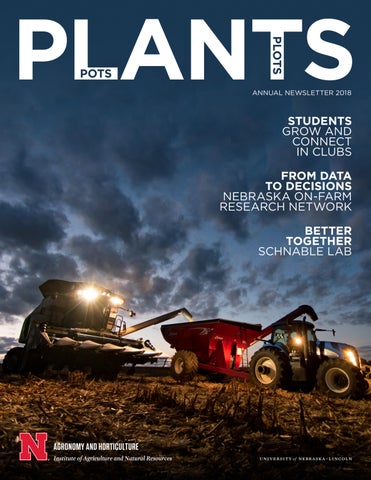
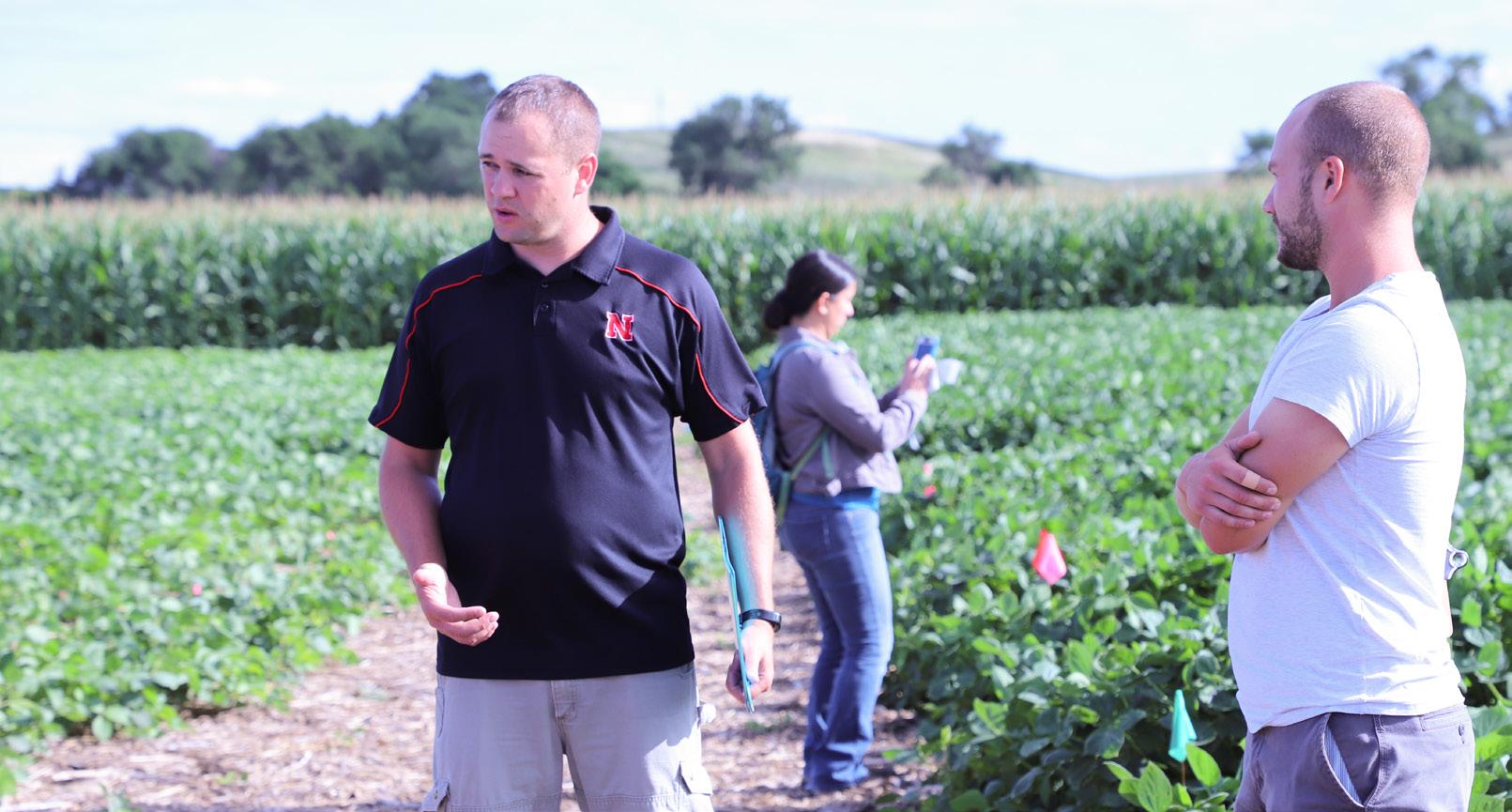
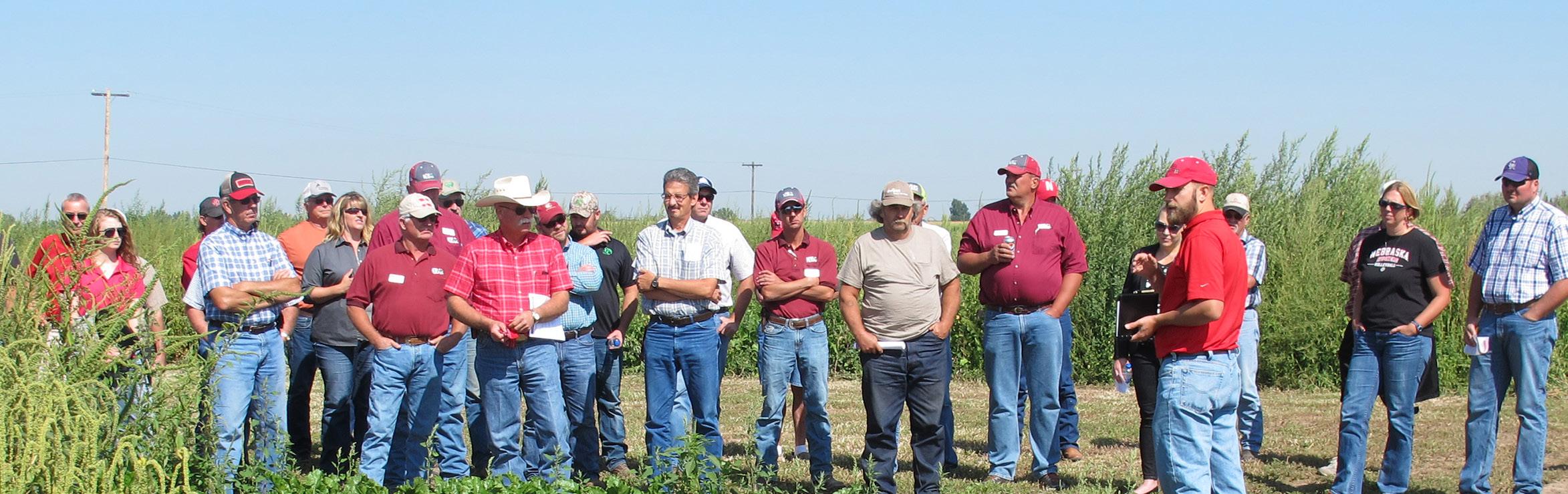
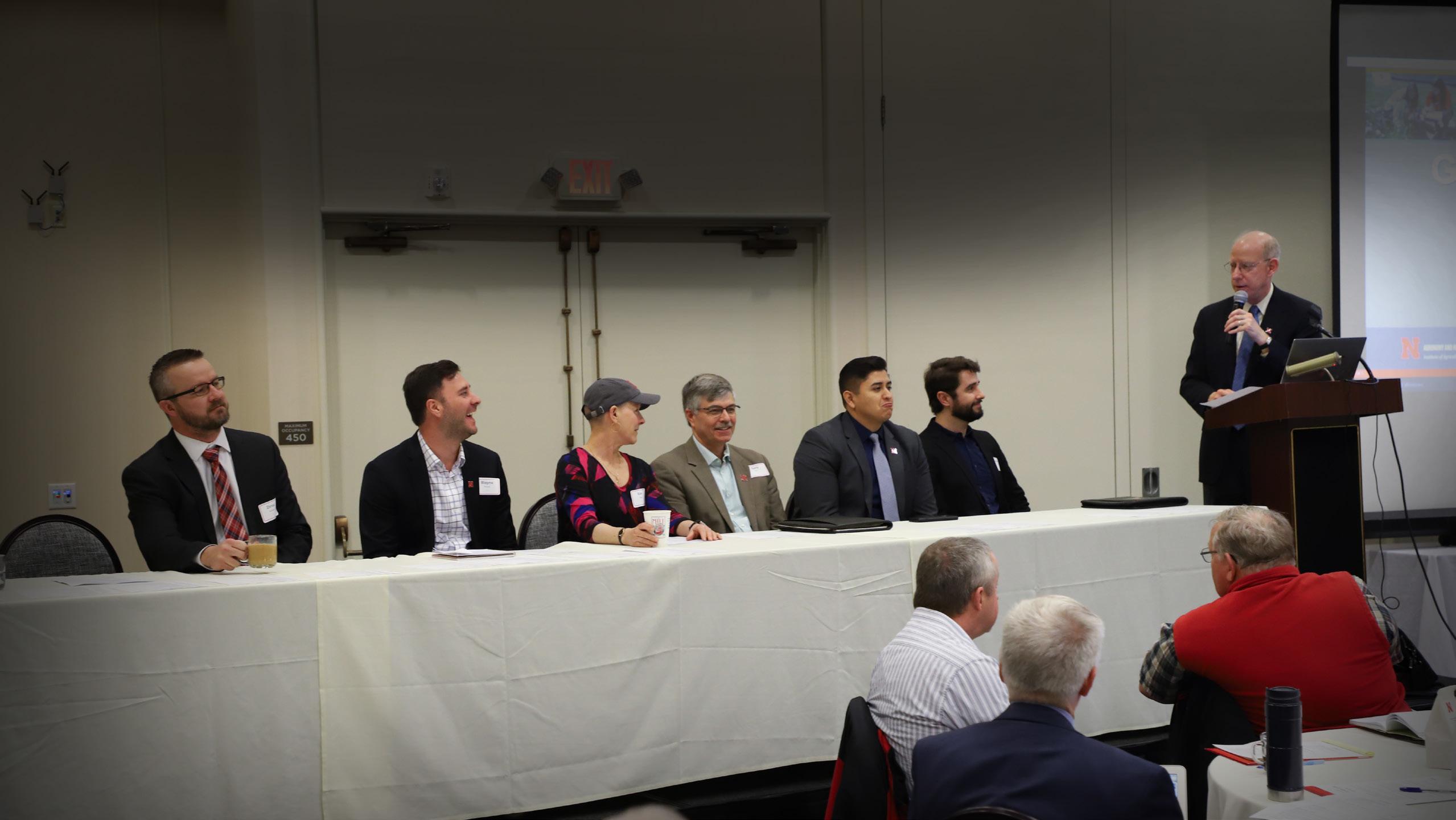
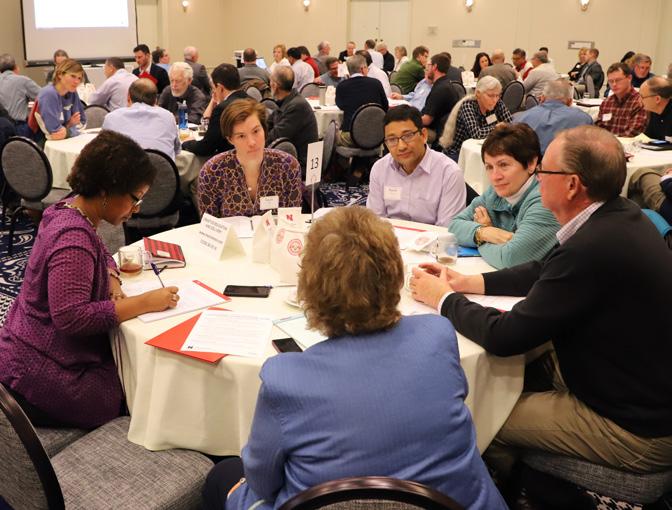
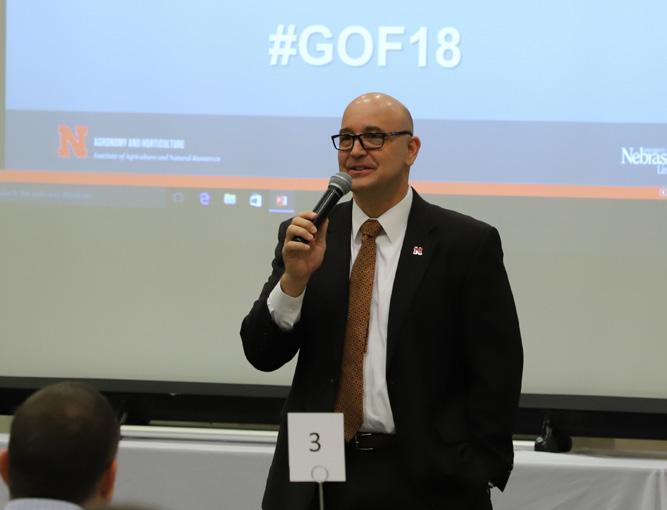
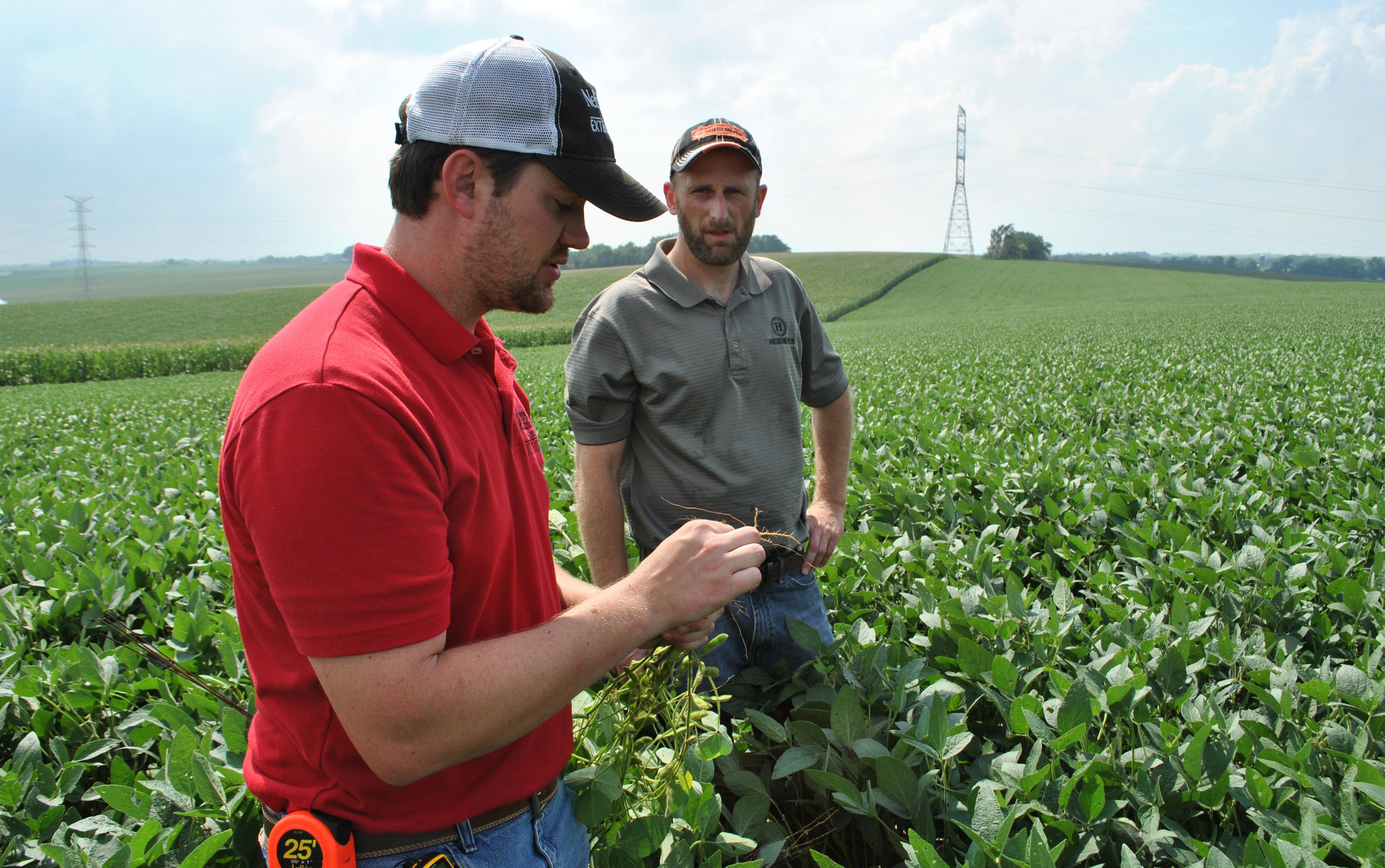
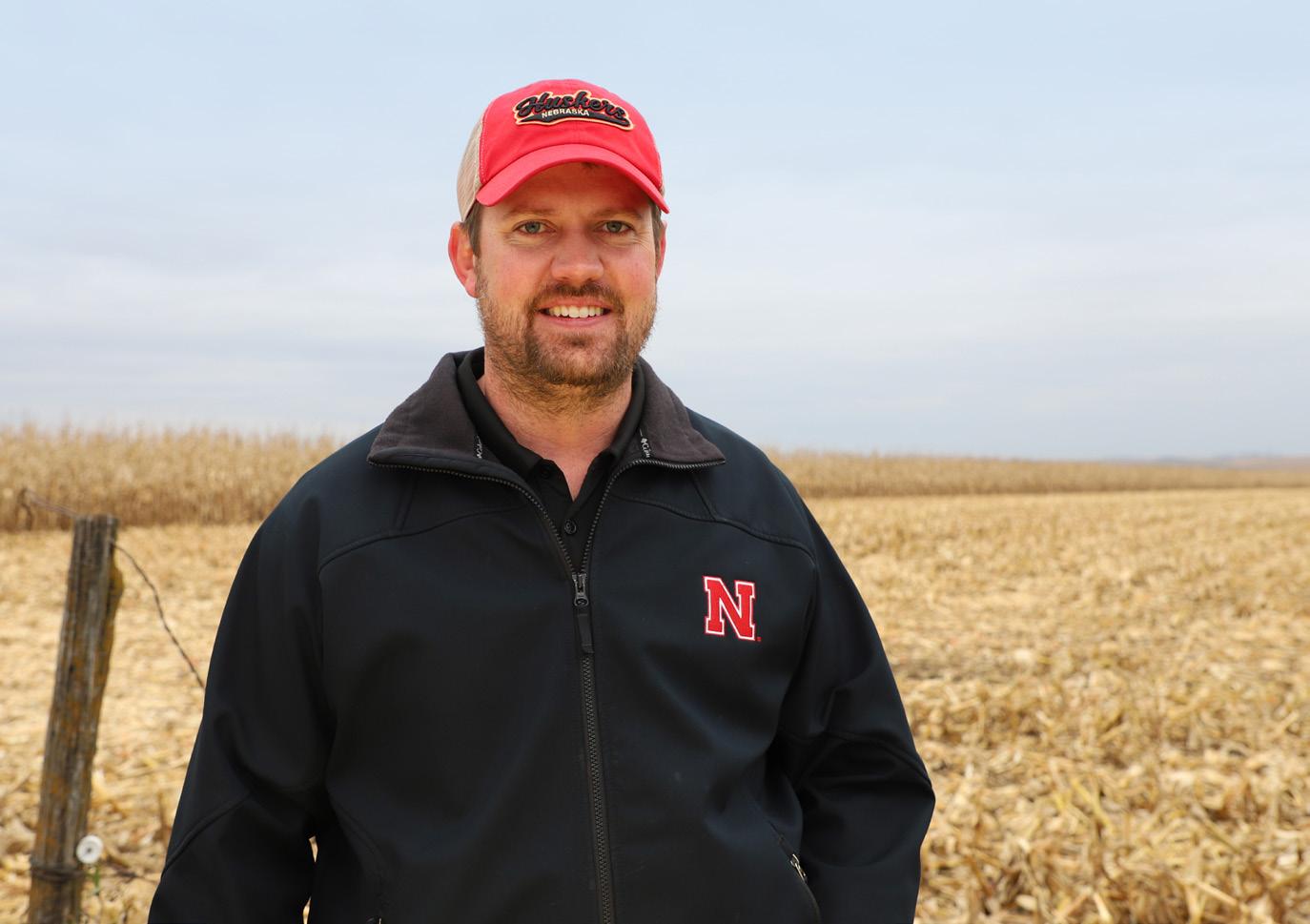
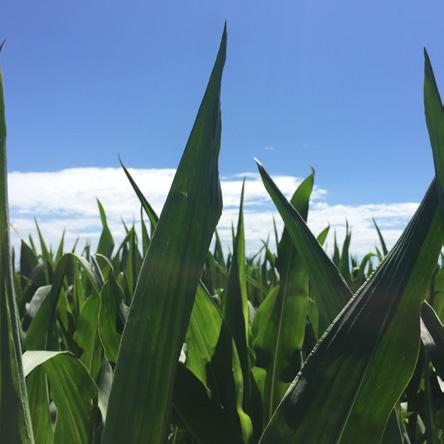
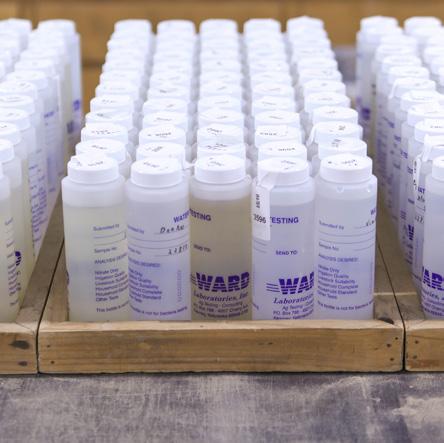
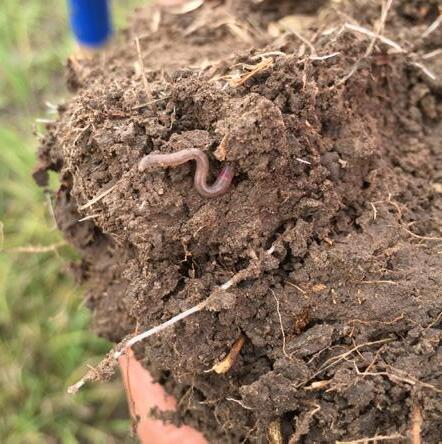
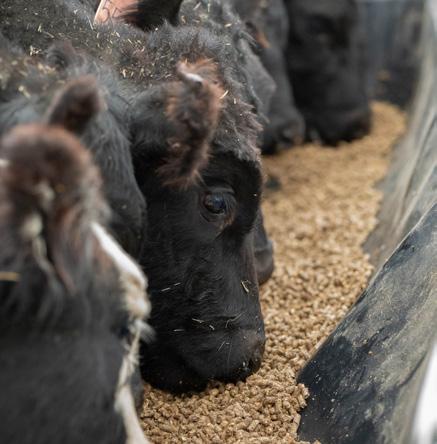
STUDENTS GROW AND CONNECT IN CLUBS FROM DATA TO DECISIONS NEBRASKA ON-FARM RESEARCH NETWORK BETTER TOGETHER SCHNABLE LAB
Create the future you want.
We put in the hard work at the University of Nebraska–Lincoln — the grit behind the glory.
In the Department of Agronomy and Horticulture we empower students to connect with people, cultivate ideas, discover new opportunities and acquire the skills necessary to feed and enrich the lives of a growing global population.
UNDERGRADUATE
go.unl.edu/learnplants
GRADUATE go.unl.edu/agrohortgrad
GRADUATE ONLINE
agrohortonline.unl.edu
Contact us today to learn more about unlocking your potential at Nebraska. 402-472-2811 | @UNLAgroHort
POTS PLOTS AND PLANTS
Department of Agronomy and Horticulture Annual Newsletter 2018
Institute of Agriculture and Natural Resources University of Nebraska–Lincoln
EDITORS
Fran Benne
Lana Johnson
Martha Mamo
COPY EDITOR
Chantel Koerwitz
DESIGN
Fran Benne
PHOTOGRAPHY
Craig Chandler
Lana Johnson
Greg Nathan
ADVERTISING
Lana Johnson
CONTACT
402-472-2811 agrohort@unl.edu agronomy.unl.edu 202 Keim Hall Lincoln, NE 68583–0915
SOCIAL MEDIA @UNLAgroHort
COVER PHOTO
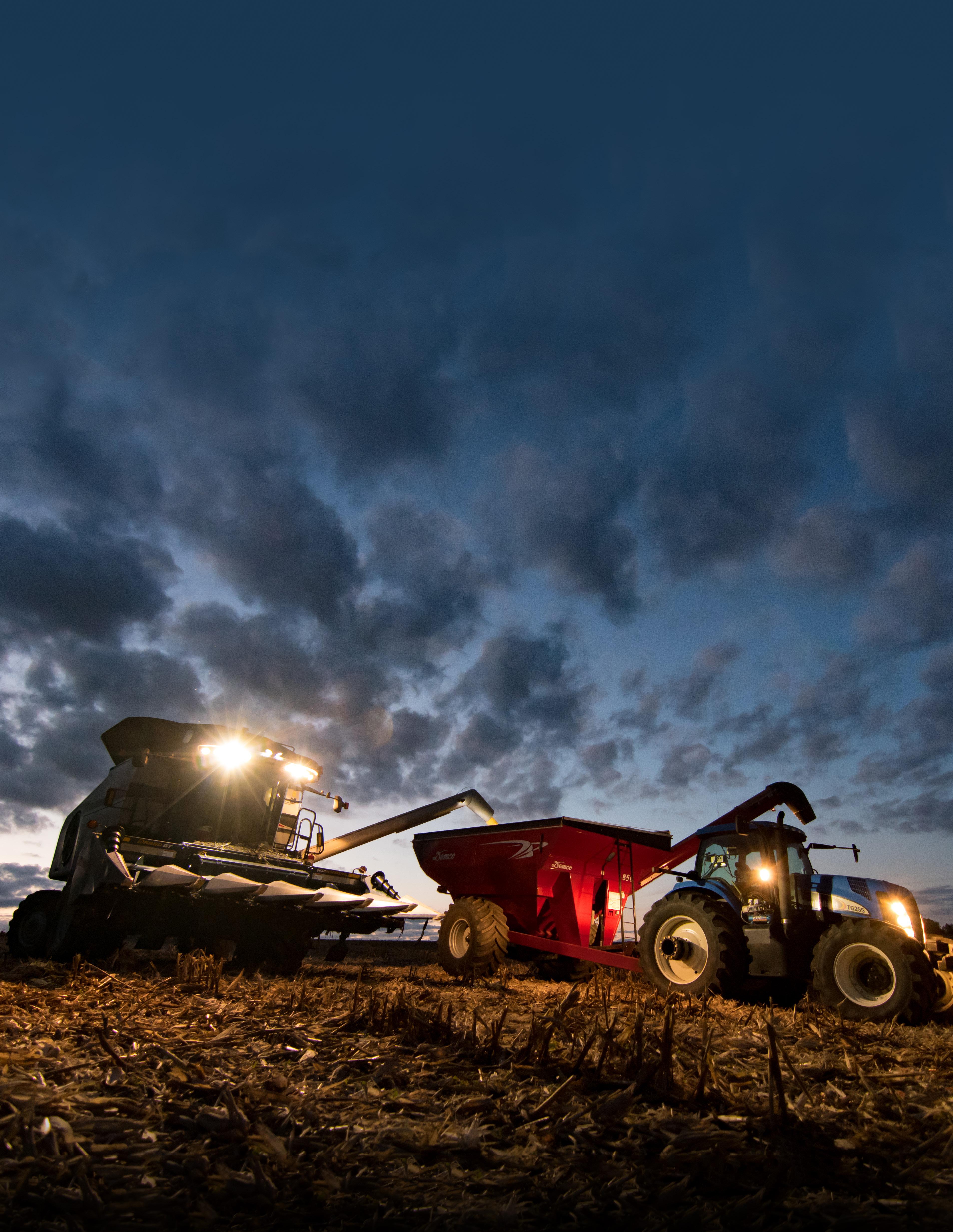
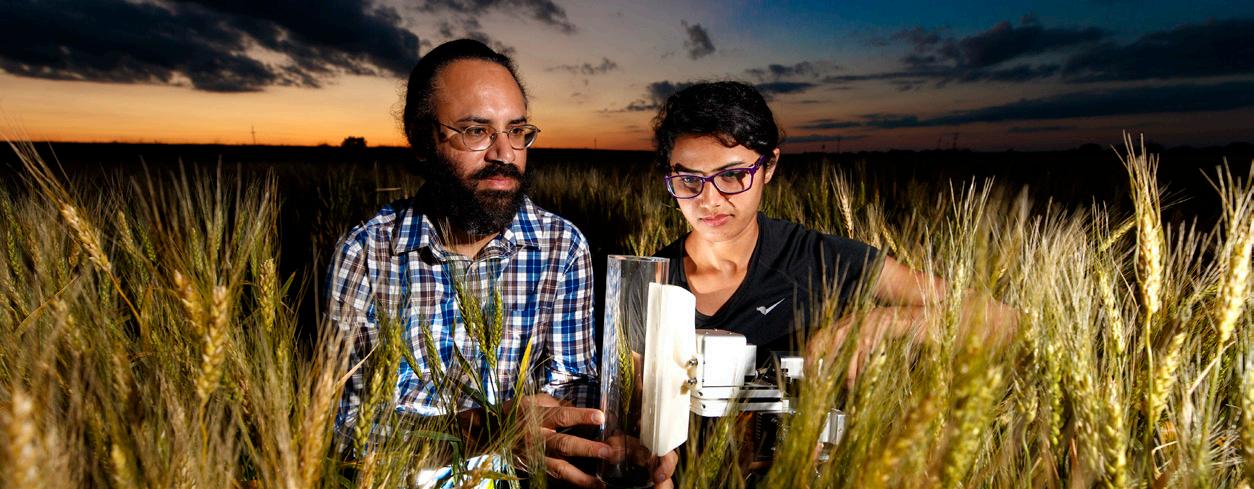
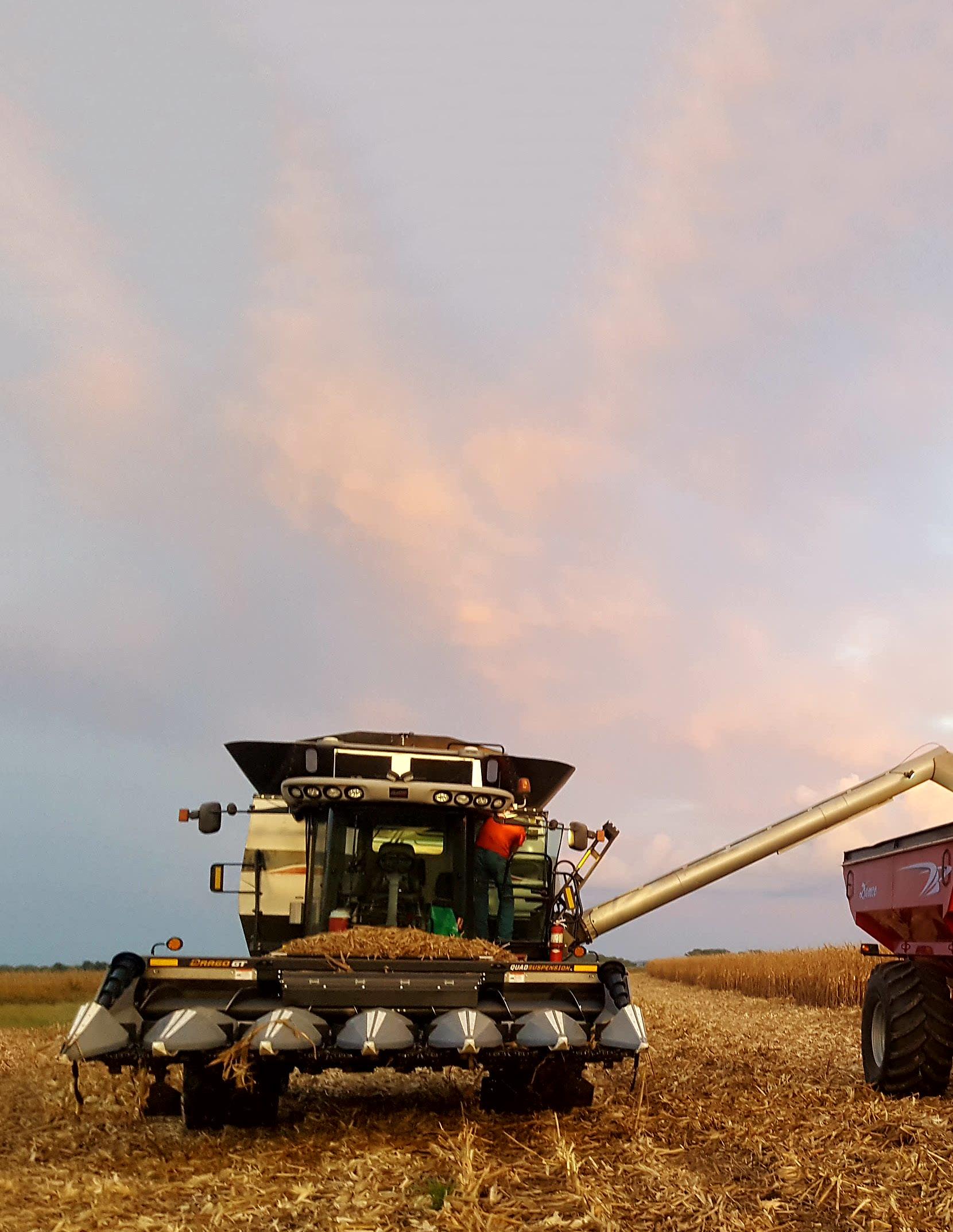
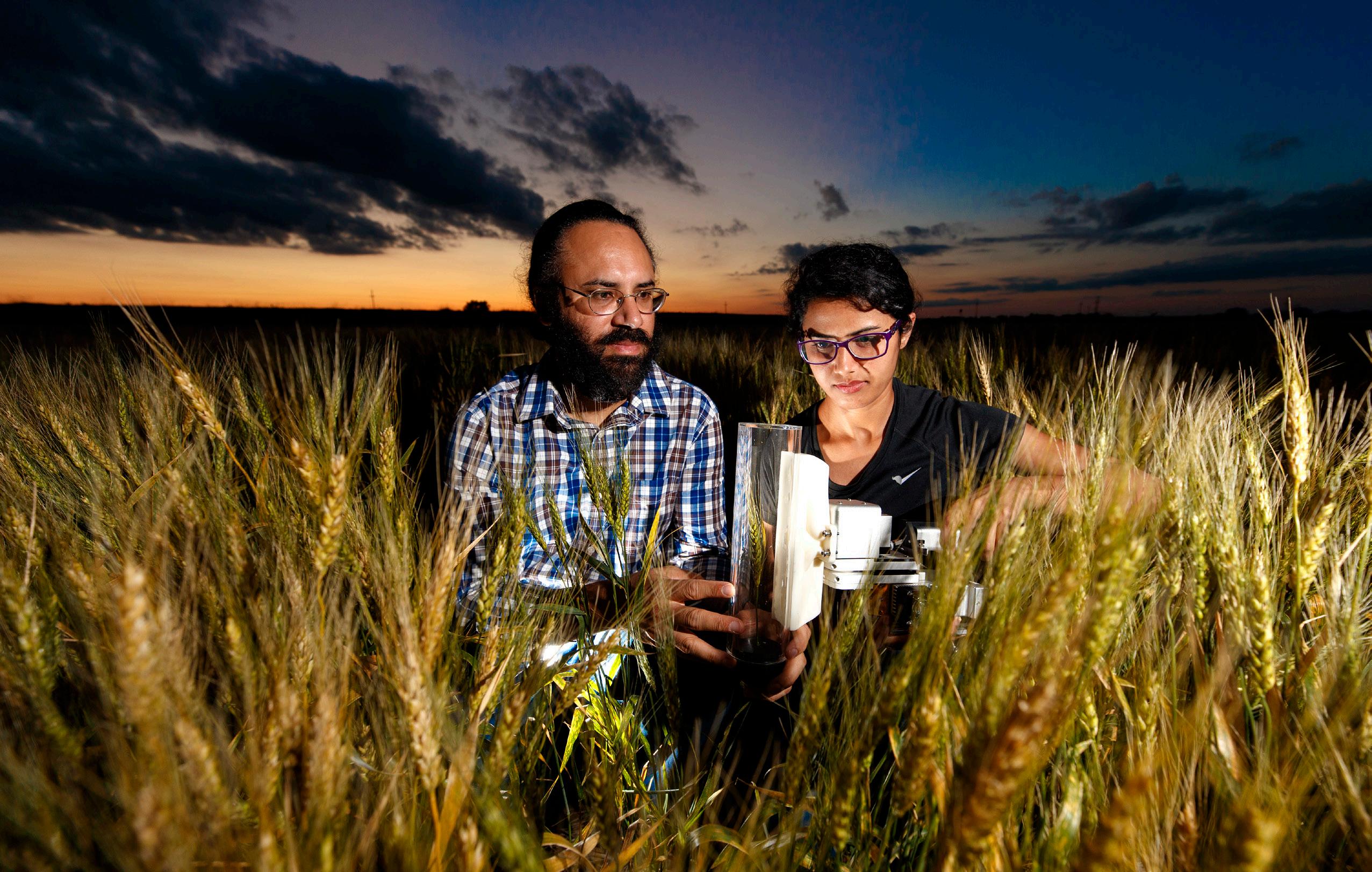
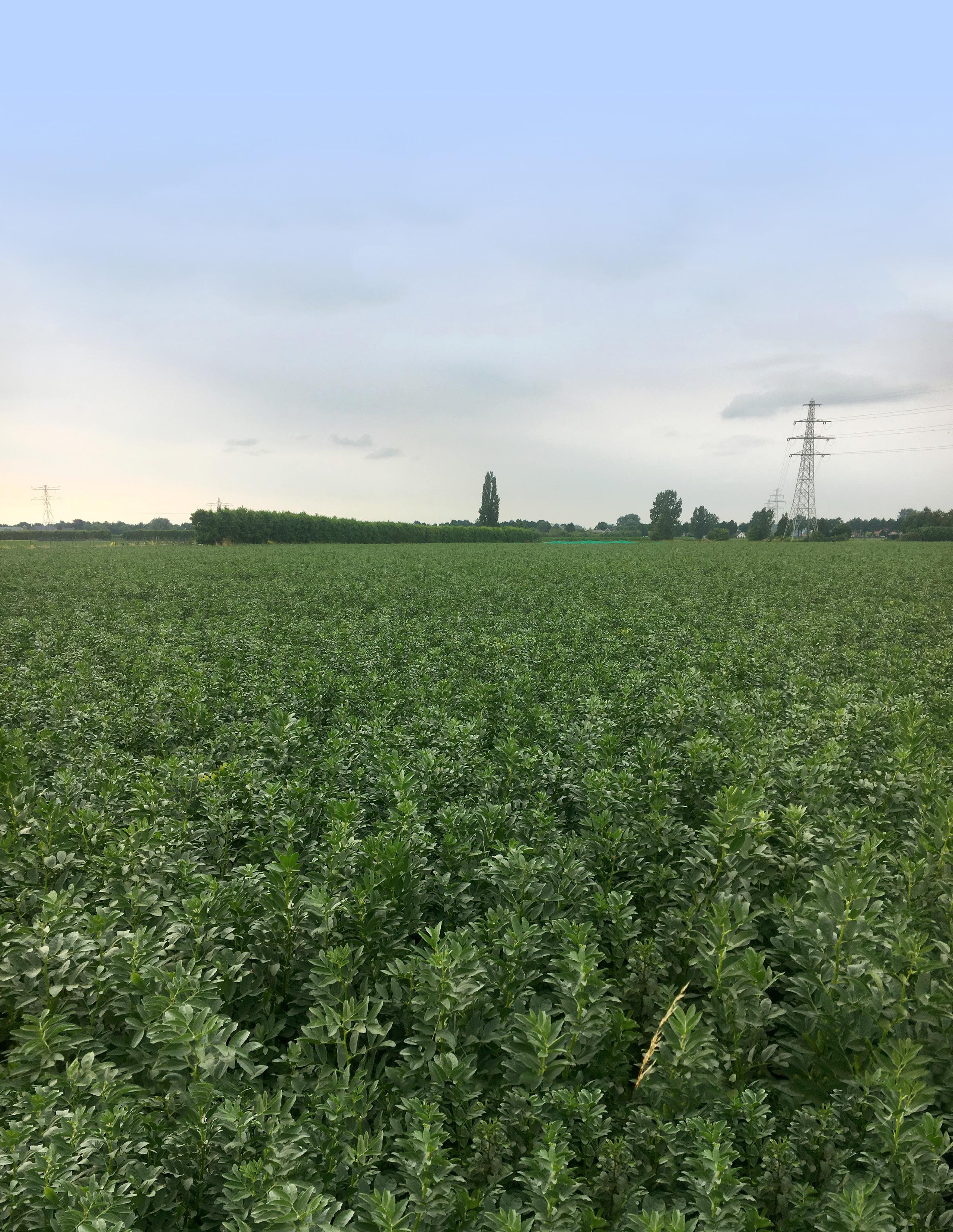
Laura Thompson It’s harvest-time at dusk on a Nebraska On-Farm Research Network test plot in Richardson County.
2018
Staff Awards
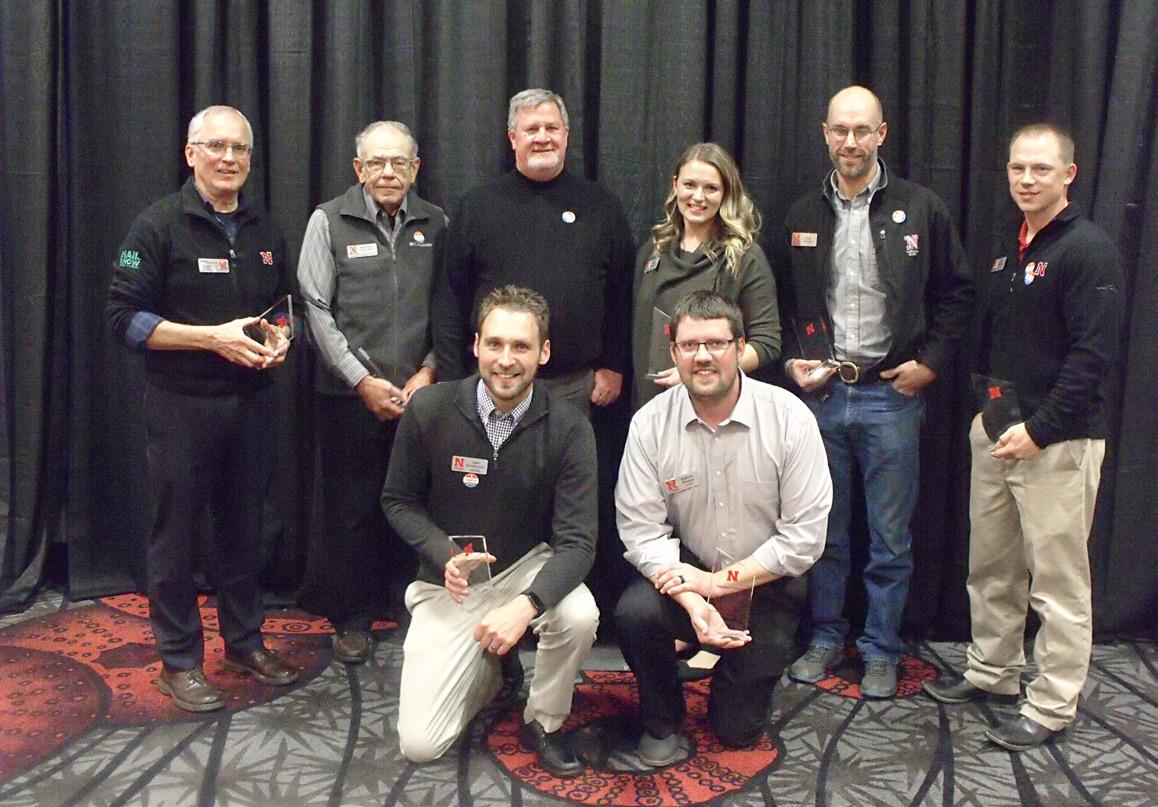
Elizabeth Conley: Horticulture Club and Pi Alpha Xi President’s Citation
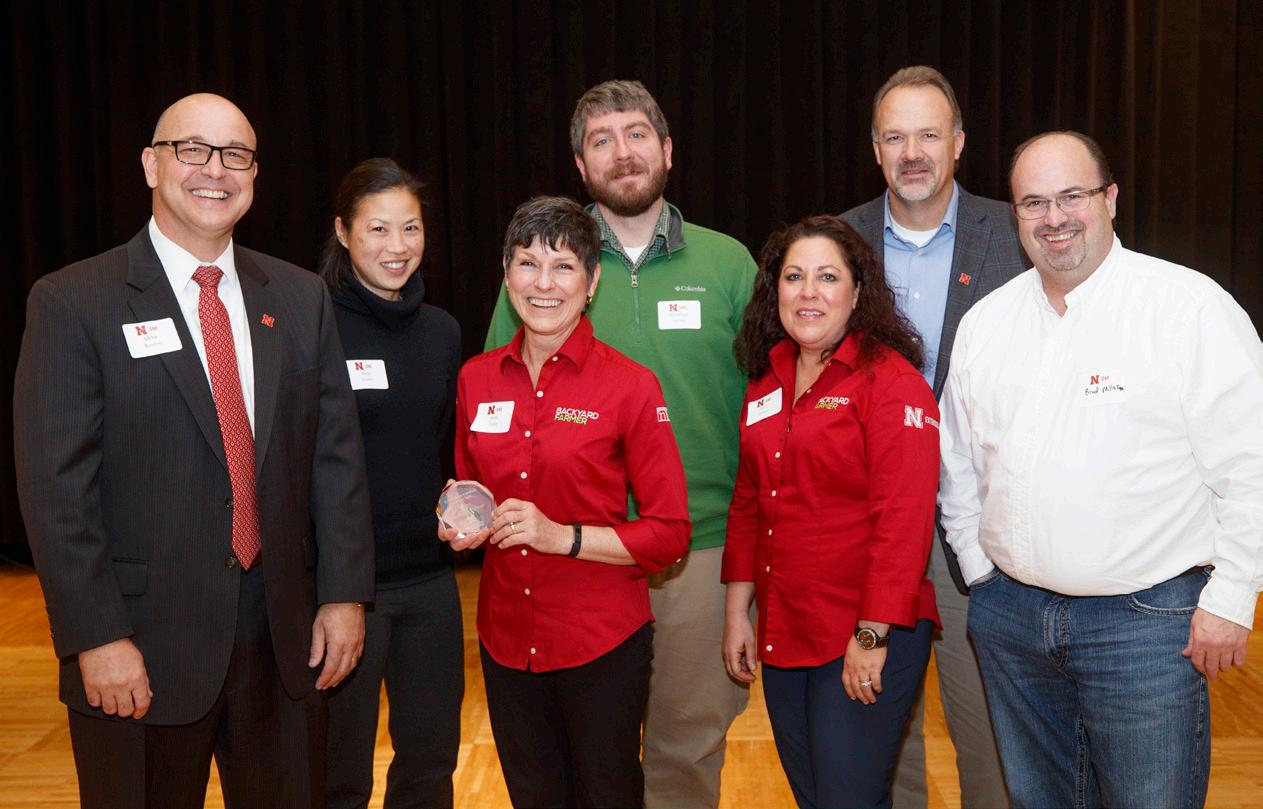
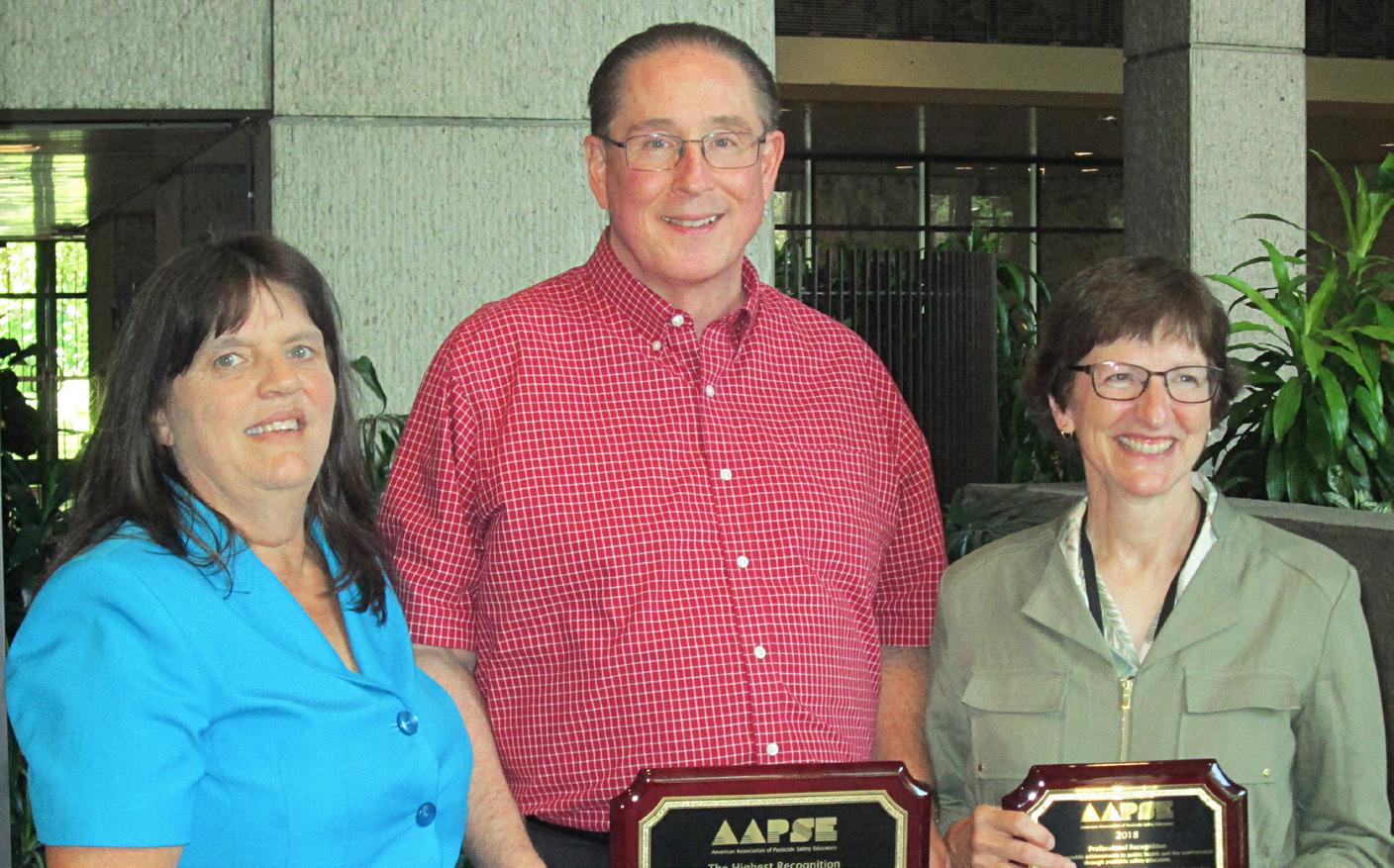
Jan Hygnstrom: American Association of Pesticide Safety Educators Professional Recognition Award
Mitchell Montgomery: Nebraska Crop Improvement Association Presidential Award of Excellence
Josh Reznicek: Staff Advisory Committee Special Contributions Awards
Heather Steffens: SAC Special Contributions Awards
Undergraduate
Alumni Advisory Council
Julie Abendroth
Heather Byers
Kelly Daniels
Matt Giese
Doyle Onnen
Rob Robinson
Bart Ruth
David Vetter
Ray Ward
“This department continues to be the largest and among the most productive in the University of Nebraska system.”
Richard Ferguson
THE PAST YEAR, AND ACTUALLY THE PAST YEAR AND A HALF, HAS FLOWN BY AS I’VE SERVED AS INTERIM HEAD. Our faculty are engaged with colleagues from across IANR as well as many other institutions in creative teaching, impactful extension and cutting-edge research. This department continues to be the largest and among the most productive in the University of Nebraska system. For example, the Department of Agronomy and Horticulture had the second-highest grant income of any department at UNL last year. However, our undergraduate student numbers have declined in recent years due to a variety of factors but most likely the depressed ag economy. To address this trend, we welcomed a full-time undergraduate recruiter (Tai Pleasant) to our staff in July and established a team approach to undergraduate advising by combining the skills of a professional adviser (Anne Streich) with faculty advisers.
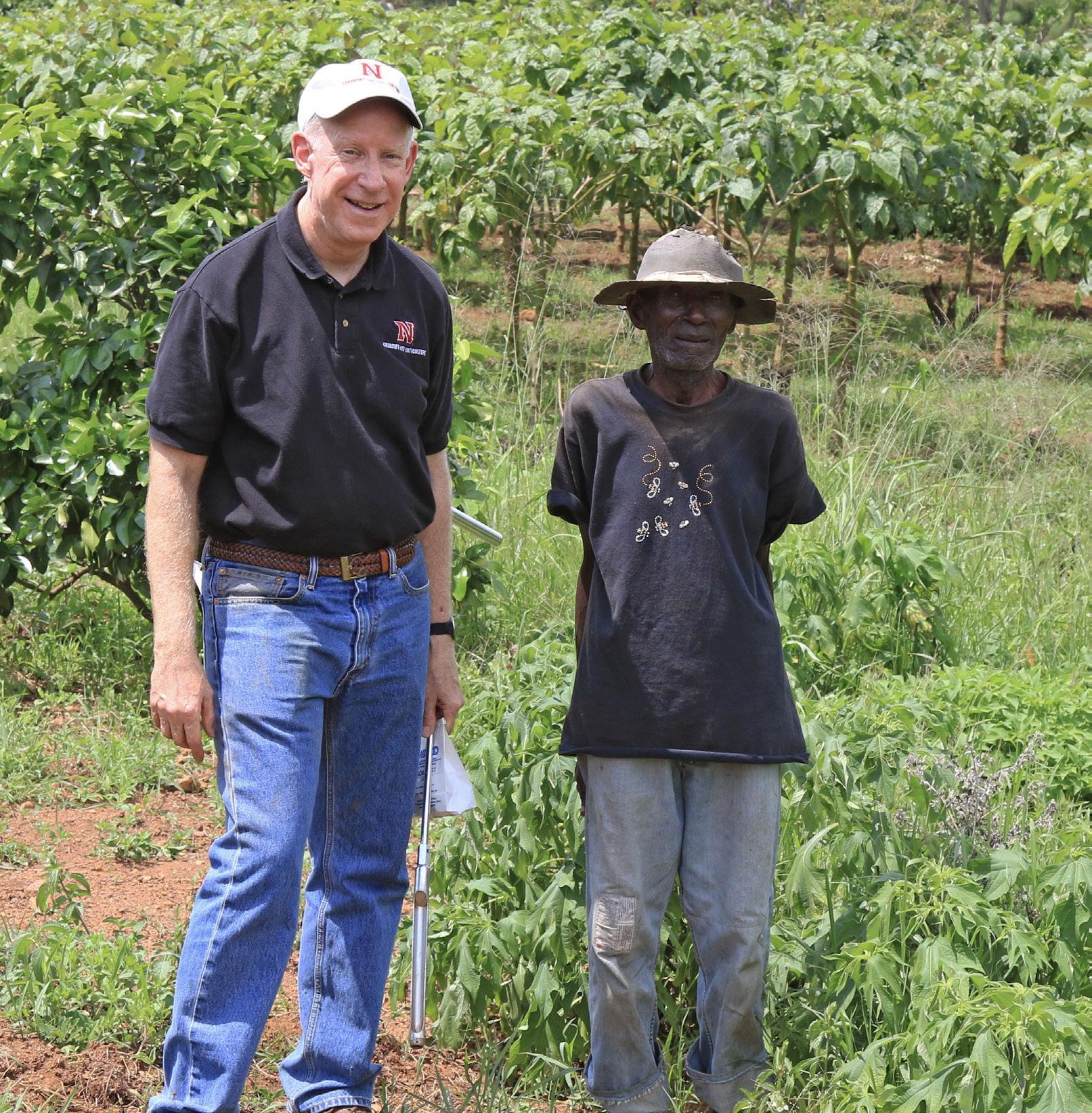
It is certainly with mixed feelings that I transition out of the Interim Head role, and away from the department, to take on the role of Vice Chancellor of the Rwanda Institute for Conservation Agriculture. The Department of Agronomy and Horticulture has been my home for the past 33 ½ years. There are some exciting initiatives on the horizon for the university and the Department of Agronomy and Horticulture that I regret I will not be a part of. While I will be physically away from the department, I will remain affiliated with the university, and I will stay in contact with faculty, staff and stakeholders. From time to time, I’ll also rely on expert advice from faculty in this department as we build a new institution of higher education in agriculture for Rwanda. Thanks for the opportunity to help guide this department in various roles over the last seven years!
Sincerely,
Richard B. Ferguson Professor and Interim Department Head
WE SPIN ON A GLOBAL AXIS. One season shifts to another, punctually, on a specific time and day but often phases, imperceptibly, into the next. Soils and landscapes are nudged yet at slower rates unless manipulated. Crops seemingly march through developmental stages, the beat set by genetics, environment and management.
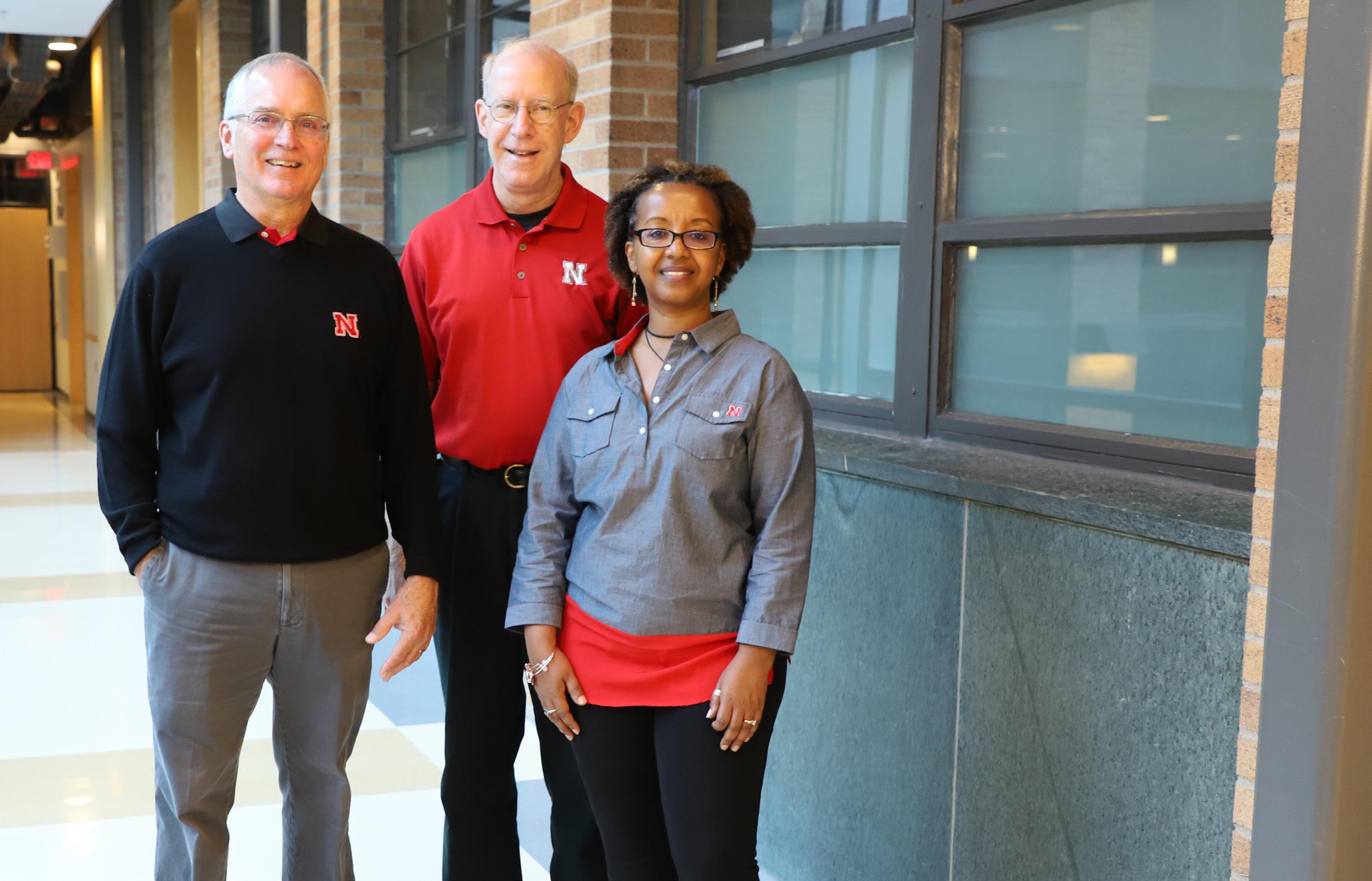
Richard Ferguson, Martha Mamo, and I have directed changes in the department over the last year and a half. Some of it is evidenced in this annual newsletter. Indeed, it’s the season for more changes! Dr. Ferguson heads off to a Vice Chancellor role in Rwanda, Dr. Mamo steps up to the Department Head, and I intend to retire — rather redirect — at midyear. It’s been one of the blessings of life to work closely with these two gifted people!
Like you, though, I hope that not all things change. We should continue to:
• Help others in producing food, fiber, forage and fuel.
• Preserve and even enhance the world around us.
• Train and develop students well for the work force.
• Serve Nebraska’s citizens with integrity and an outward focus.
• Work within teams across disciplines.
• Respect others as yourself.
• Ask questions, seek truth!
Some have said that change is inevitable, but growth is optional. Grow, develop and live up to your giftings!
Sincerely,
Roger Elmore Professor and Interim Associate Department Head
2018 WAS A YEAR HIGHLIGHTED BY LEARNING, DEEPER CURRICULUM WORK AND TRANSITIONS. I had the opportunity to work alongside Richard Ferguson and Roger Elmore, and it has been my absolute privilege to collaborate with these dedicated servant leaders. Their thoughtfulness and care of the department faculty, staff, students and stakeholders they served was inspirational. I shared last year that the department was working on our undergraduate curriculum, and we have made significant progress developing common learning outcomes. The goal to communicate how each course is designed to address specific learning outcomes has been achieved. This mapping exercise provided the opportunity for faculty to describe where in the curriculum their courses fit in preparing students to be professionals. The 2018 achievement will shape the ongoing work of a common core of courses and experiences that is designed to ensure students have the essential foundational knowledge and competencies. Inspired by the N150 goals, we envision providing flexibility for students to co-create or customize their learning experiences to achieve their professional goals.
Finally, as I transition to the role of Department Head of Agronomy and Horticulture for the next three years, I am honored to build on the successful foundation of my predecessors. Part of this transition included drafting strategic priorities necessary to maintain our strong programs and enhance the department’s three mission areas – teaching, research and extension.
After serving 18 years as a faculty member, I am pleased to serve as the new Department Head. I look forward to engaging with faculty, staff, students and stakeholders across Nebraska and beyond!
Sincerely,
Martha Mamo Professor and Interim Associate Department Head
Roger Elmore
Martha Mamo
Danielle Lopez Administrative Associate
BORN AND RAISED IN SAN ANTONIO, TEXAS, I AM OFTEN ASKED HOW I ENDED UP IN NEBRASKA. I came to Lincoln for college after hearing how much my sister was enjoying her time at the University of Nebraska–Lincoln. I received my Bachelor of Arts in international relations with minors in Japanese language and Asian studies.
After graduation I moved back home and found an amazing job on the Riverwalk doing corporate event planning at the Hyatt Regency, where I got to know Phil Collins and each of the Spurs on a personal basis.
A year later I once again followed in my sister’s footsteps and returned to Lincoln to work for the Office of Admissions at the university. In this role I was able to supervise a great group of student leaders. I loved seeing each of them grow professionally and as students.
Two years later, I was fortunate to join Agronomy and Horticulture. I work with graduate students from the time they apply to the moment they receive their degrees. I enjoy coming to work every day and getting to know each student, staff or faculty member even better while also solving problems and answering difficult questions. I love working with students, and I hope to continue doing that in some capacity throughout my career. This
Dean Krull Research Technologist I
year I took the plunge in furthering my education and began pursuing a master’s degree in journalism.
The rest of my family still resides in San Antonio, so I enjoy traveling back home to soak up some Texas warmth, enjoy authentic Mexican food and visit Whataburger. My sister and I always make it a point to travel back during Fiesta so that we can go to the parades and fairs with our cousins. Here in Nebraska, we often travel to Norfolk to visit my sister’s in-laws, whom we both refer to as our “Nebraska Family.”
In my free time, I enjoy watching figure skating. I was a competitive figure skater for 12 years before my ice dance partner left to join the touring company of Disney on Ice. Although I would not consider myself a talented chef, I enjoy trying out new recipes and mixing together unique ingredients. I love that I am often able to get fresh ingredients grown by members of the department.
in most ag communities, large producers needed help, so I took a job outside our family farm.
I received a comprehensive business degree from Kearney State College. It became apparent that working indoors wasn’t for me, so I went back to work for large farmers in the Hastings area.
In 1980, I accepted a one-year research technician job for the Hall County Water Quality Special Project to address high nitrates in groundwater. I proudly say that I’m on my 38th anniversary of that one-year job. Central Platte NRD board and staff have been very supportive, and I thank them for opportunities I’ve had to help producers.
My notable projects are implementing the CPNRDUNL Nitrogen and Irrigation Management Demonstration Project, the longest-existing demo project in Nebraska; Crop & Irrigation Demand Network; Project SENSE; and cover crop work to bring new technology and management strategies to the ag sector. The biggest reward of my 38 years has been meeting many quality ag producers.
PURCHASE MY FIRST CAR. As is the case
My wife Nancy is an in-home caregiver. Our daughter, Ashley, and her husband own and operate C-N Ag. They’ve blessed us with grandsons Graham and Maxton. Our son, Mitchell, graduated from the University of Nebraska–Lincoln with an agronomy degree and manages an aerial application business.
John Dillingham
Assistant Business Manager
I OFTEN TELL MY FRIENDS AND FAMILY THAT I GET TO TRAVEL THE WORLD — THE AMERICAS, ASIA, EUROPE AND OCCASIONALLY A REMOTE ISLAND IN THE INDIAN OCEAN — WITHOUT LEAVING MY OFFICE. By interacting with everyone in the Department of Agronomy and Horticulture, I have learned so much about the world we live in and how different our individual experiences have been. Working with people from across the world at the pinnacle of their professional career has been a truly rewarding experience.
At this point in my life, I think I can officially call myself a native Nebraskan. My family moved to Omaha 30 years ago. I graduated from Millard West High School in Omaha, played college baseball and graduated from the University of Nebraska at Omaha. Now I’m in my 13th year at UNL working in the HAPPI Business Center. Sports have been a constant throughout my life. Looking back on it, I am not sure if I found baseball or if it found me, but I have been actively involved in baseball since I was 6 years old and have never left the
John Wang Research Technologist II
I WAS BORN
IN A NORTHWEST PROVINCE
OF CHINA. My parents were teachers at a school in town, so I grew up on the campus where I attended elementary school and high school. When I was in school, I helped my parents raise garden produce and chickens. At that time, my dream job was to be a doctor for humans. I never thought about other areas, such as agriculture.
“Unfortunately,” I went to a forestry university instead of medical school because of some special regulations applied at that time. After I earned a bachelor’s degree
game. If you see me outside of work, it will likely be at the local baseball field where I am usually coaching youth or running tournaments. Lately, I have been able to incorporate sports with spending quality time with my most favorite people: wife Jenny, daughter Addy and two sons, Jack and Henry. It’s great when you can combine all the things you love into one experience. When I do actually take a trip somewhere, it most likely involves the ocean, a beach and a tiki umbrella.
in forest protection, I found a position as a research assistant working on pest insect management at a provincial forest institute in my hometown.
Four years later, I decided to further my education and continuously pursued my master’s degree and Ph.D. After becoming a doctor (in agriculture, alas, not medicine), I worked in various labs in different countries, including Canada (Ontario) and the United States (Alabama and Nebraska). My research activities mainly focused on the mechanism of insecticide resistance in insects such as termites, mosquitoes and houseflies by using molecular biology, biochemistry and bioinformatics.
At the end of 2005, I accepted a position as a postdoc in a toxicology lab in the Department of Entomology at the University of Nebraska–Lincoln. There, I was involved in the management of corn borer and rootworms, including developing new control strategy.
In June of 2016, I joined a soybean research group as a technologist II and lab manager in the Department of Agronomy and Horticulture working on soybean genetics and genomes. My duties include developing protocol, helping students, keeping the lab running functionally and making people feel safe when they’re working in the lab.
Lincoln is a great place to live, and the university is a good place to work. It has a wonderful environment. So far, I have been working in agriculture for over 15 years, and I feel great about being a doctor in agriculture.
I have been married to my wonderful wife (she works in Animal Science at Nebraska) for over 18 years, and we have a beautiful daughter. After work, I spend a lot of time working on my house and being involved in several after-school programs with my daughter. When time allows, I hang out with friends and family and enjoy community activities.
CONNECT in CLUBS GROW and Students
AHGSA wins award, grows giant watermelons
by Thais Egreja, AHGSA president
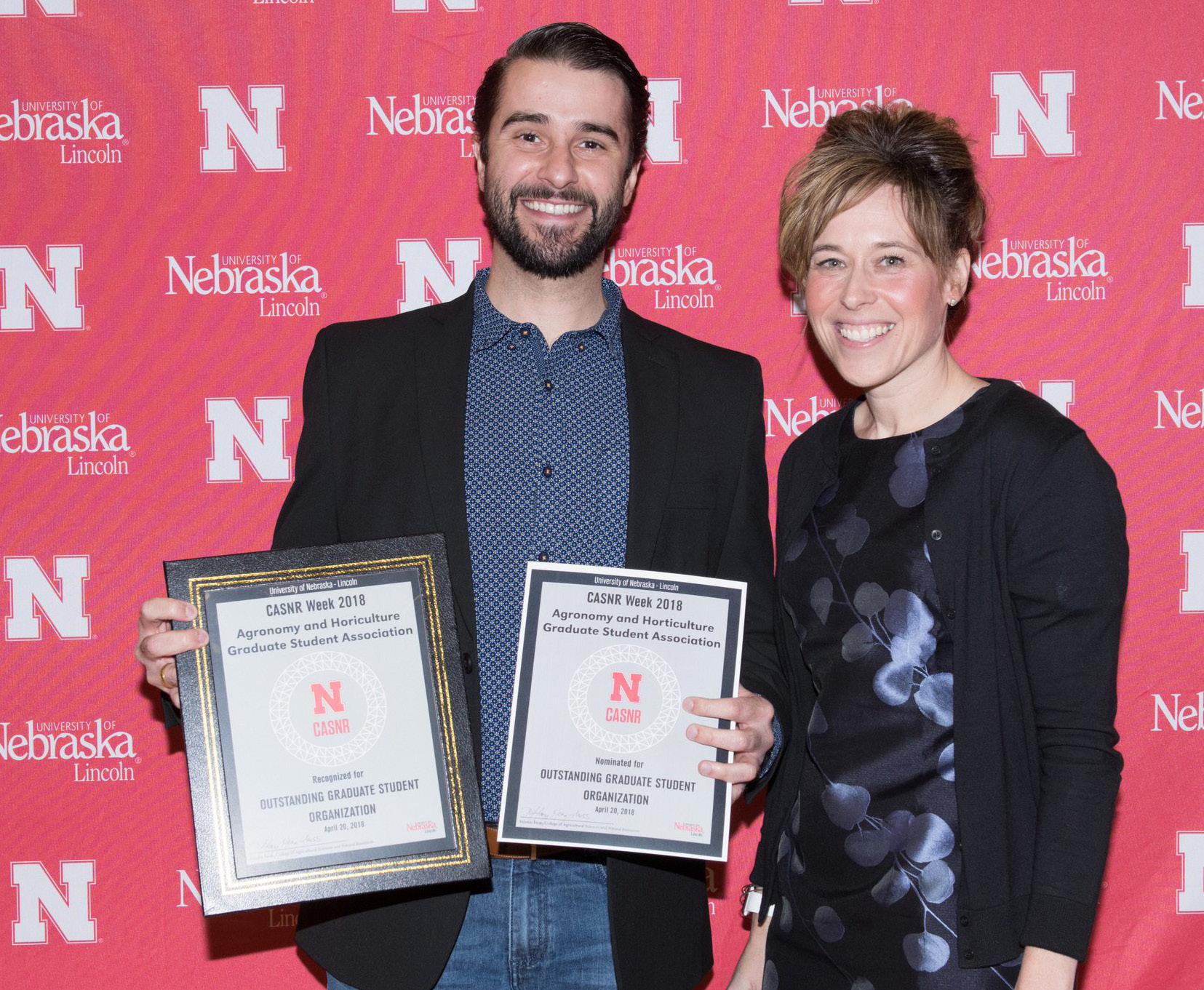
THE AGRONOMY AND HORTICULTURE GRADUATE STUDENT ASSOCIATION RECEIVED THE 2018 OUTSTANDING GRADUATE STUDENT ORGANIZATION AWARD DURING CASNR WEEK. This recognition is the result of many generations of officers’ and members’ hard work and support received from the department.
AHGSA promotes several events throughout the year to foster interactions and build closer relationships among graduate students, faculty and staff. The main events include Spring Banquet, Fall Barbecue, Christmas Party, Appreciation Coffee and Wine Tasting. Graduate students also meet once a month to plan activities and share cultural experiences and food. In addition, every other month a guest speaker is invited to present a topic related to graduate school and career development.
This past summer, Ben Samuelson led the Giant Watermelon Competition with seeds provided by the Common Soil Seed Library in Omaha. At the end of the competition the club had a Watermelon Festival where the winners received their awards, members enjoyed fresh giant watermelons and seeds were collected for the seed library.
Furthermore, members have partnered with Sam Wortman’s lab and with T.J. McAndrew to harvest sweet corn and then distribute it on campus. This is the club’s biggest fundraising event, and the donations are used to keep the association functioning and offering activities.
In order to promote professional development and networking opportunities, AHGSA organizes
industry tours. In October, students visited the Bayer Water Utilization Learning Center in Gothenburg, Nebraska, and the BASF research station in Beaver Crossing, Nebraska.
AHGSA would like to thank all those who provided their continued support, especially its advisers Paul Read and Brian Waters, Interim Department Head Richard Ferguson and also Annie Vance, Lana Johnson, T.J. McAndrew and Josh Reznicek. AHGSA couldn’t have had another successful year without these individuals.
Current officers are Thais Egreja, president; Mary Happ, vice president; Hannah Stoll, treasurer; and Mark Kerk, secretary. Follow AHGSA on Twitter (@ahgsa_unl) and Facebook (UNL AHGSA).
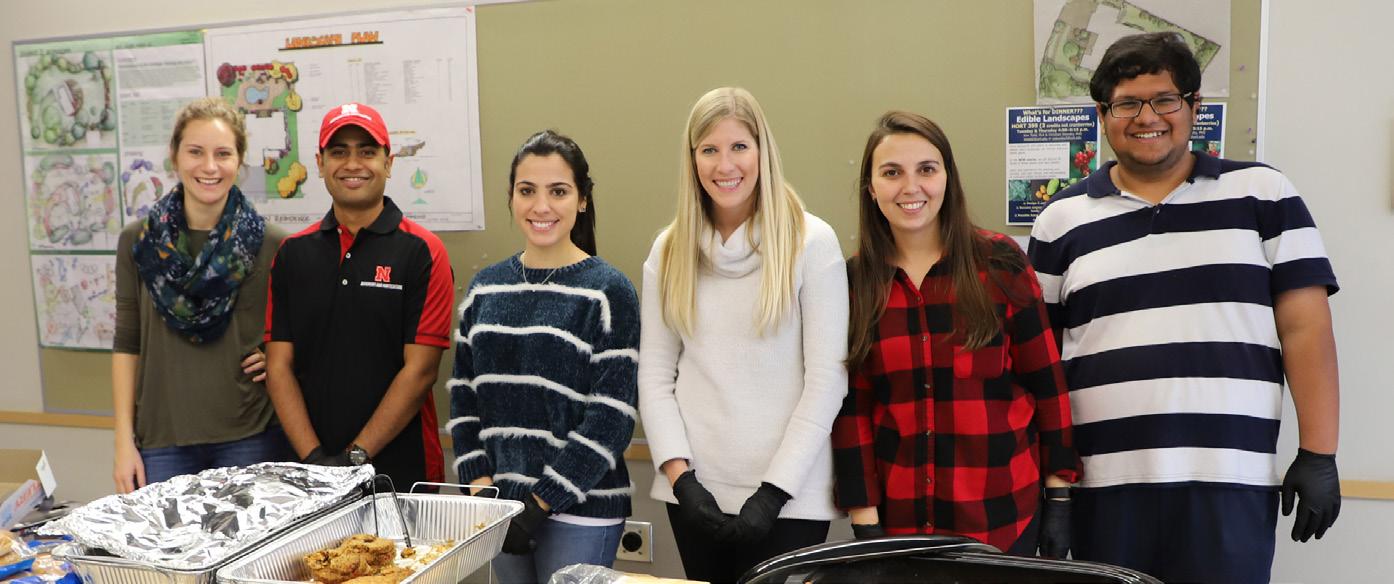
Samantha Teten (left) accepts the first-place award for the Giant Watermelon Competition on behalf of the Agronomy Club from AHGSA member Ben Samuelson. BELOW: AHGSA members host their annual fall barbecue for the department. Food servers are Hannah Stoll (from left), Rituraj Khound, Estefania Polli, Samantha McConaughy, Thais Egreja and Sourav Pal.
Agronomy club prepares members for challenges in ag
by Moriah Heerten, assistant treasurer
DURING A TIME OF AGRICULTURAL CHALLENGES, AGRONOMY CLUB CONTINUES TO PREPARE MEMBERS FOR THE UPS AND DOWNS IN THE AGRICULTURAL INDUSTRY. By creating valuable networking opportunities with business professionals along with providing career development and industry experiences, the club continues to grow and support its members.
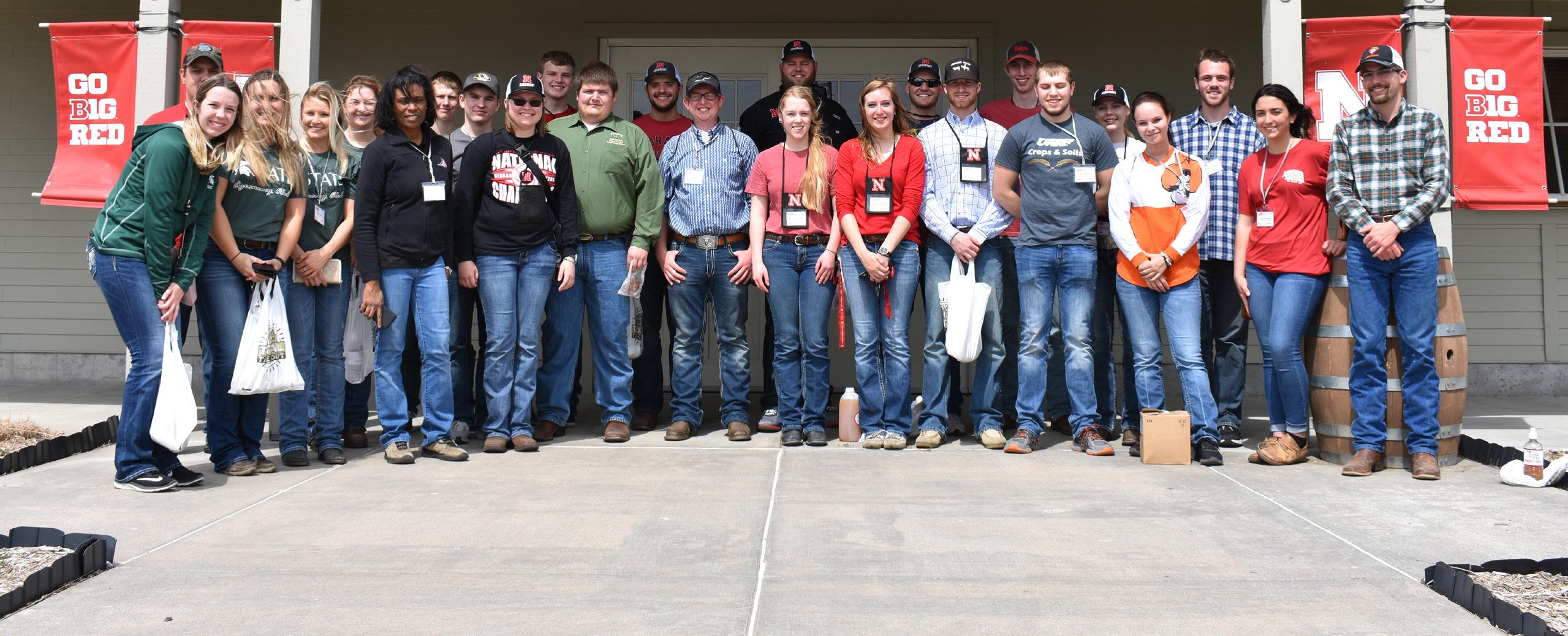
Agronomy Club hosted the Students of Agronomy, Soils, and Environmental Sciences regional conference April 12–14 in Lincoln. More than 150 students attended the three-day event for undergraduate students in agronomy, soils and environmental studies from across the United States. This was an opportunity for students to hear from speakers, attend Nebraska agricultural industry tours and network with others who share an interest in agriculture.
During the year, various industry speakers and crop tours kept members involved and engaged. Speakers shared with students about their respective companies, presented internship and career opportunities and gave tips for a successful career.
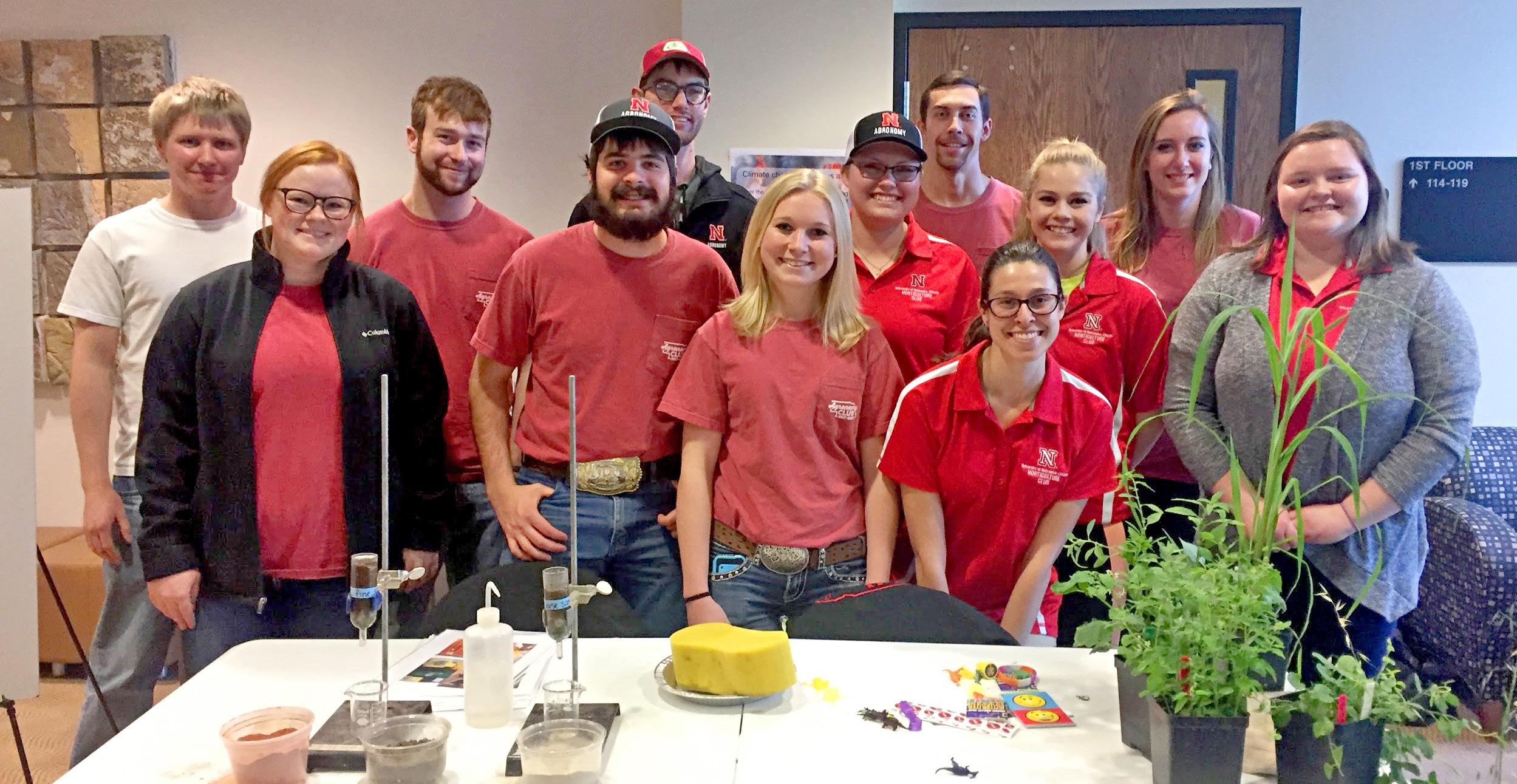
Agronomy Club and Horticulture Club teamed up to educate elementary students about soil importance, plant characteristics and Nebraska crops at CASNR Community Night during CASNR Week in April.
In May, club members Michaela Cunningham, Rodger Farr, Kolby Grint and Samantha Teten were awarded scholarships by the American Society of Agronomy, Crop Science Society of America and Soil Science Society of America. Cunningham, Farr and Grint were awarded Golden Opportunity (GO) Scholarships, and Teten won a Greenfield Scholarship.
With these scholarships all expenses were paid for these awardees to attend the ASA–CSSA conference Nov. 3–6 in Baltimore, Maryland, and participate in sessions designed specifically for the scholars. Nine Agronomy Club members attended the conference and represented the University of Nebraska–Lincoln in research and club activity poster presentations, public speeches, research oral presentations and the crops judging showcase.
The club came home with three runner-up awards including the Presidents’ Trophy; the Quiz Bowl Team of Farr, Grint, Dalton Johnson and Ryan Langemeier; and the Crops Judging Team of Farr, Grint, Langemeier and Teten.
This fall, the club participated in a watermelon growing contest with other CASNR clubs and came in first place with the largest watermelon at 122.5 pounds!
Following up on last year’s crop tour, students traveled to Bruning, Nebraska, for a technology development research plot and hybrid/variety tour given by Doug Jones and Ken Kniep, Bayer CropScience technology development representatives. Club members were exposed to the research side of seed production, and they were able to ask questions about the representatives’ careers and explore various hybrids.
Agronomy Club is looking forward to another great year and continued success! Current officers are Teten, president; Farr, vice president; Rebecca McKay, secretary; Grint, treasurer; Moriah Heerten, assistant treasurer; and Cunningham, historian. Meghan Sindelar, assistant professor of practice, and Chris Proctor, assistant extension educator, are the club advisers.
Courtesy Photo
Agronomy Club members educate elementary students about soil importance, plant characteristics and Nebraska crops at CASNR Community Night during CASNR Week in April.
Horticulture Club grows membership, involvement and connections
by Morgan Von Seggern, Horticulture Club president
HORTICULTURE CLUB STARTED OFF THE YEAR WITH A VALENTINE’S DAY SUCCULENT SALE FOR STUDENTS ON THE UNIVERSITY OF NEBRASKA–LINCOLN CAMPUSES. This pop-up sale brought joy to hundreds of students and faculty by selling plants when it was still dreary outside.
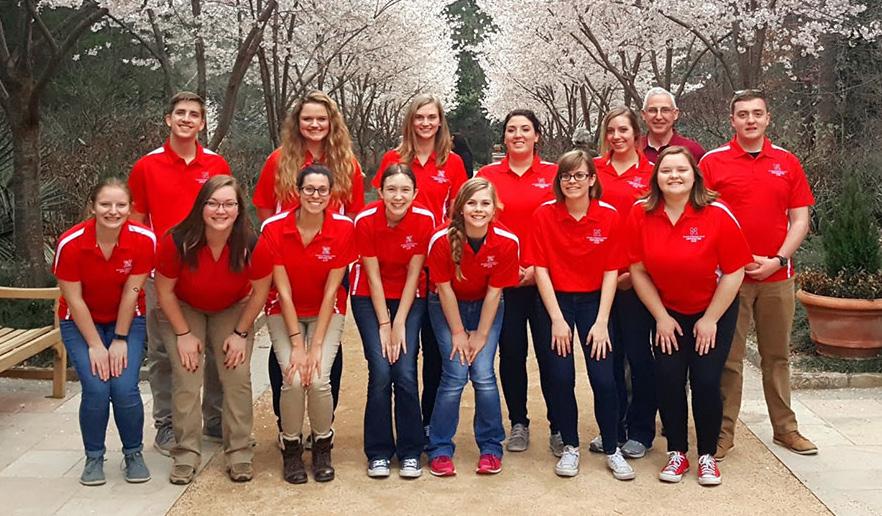
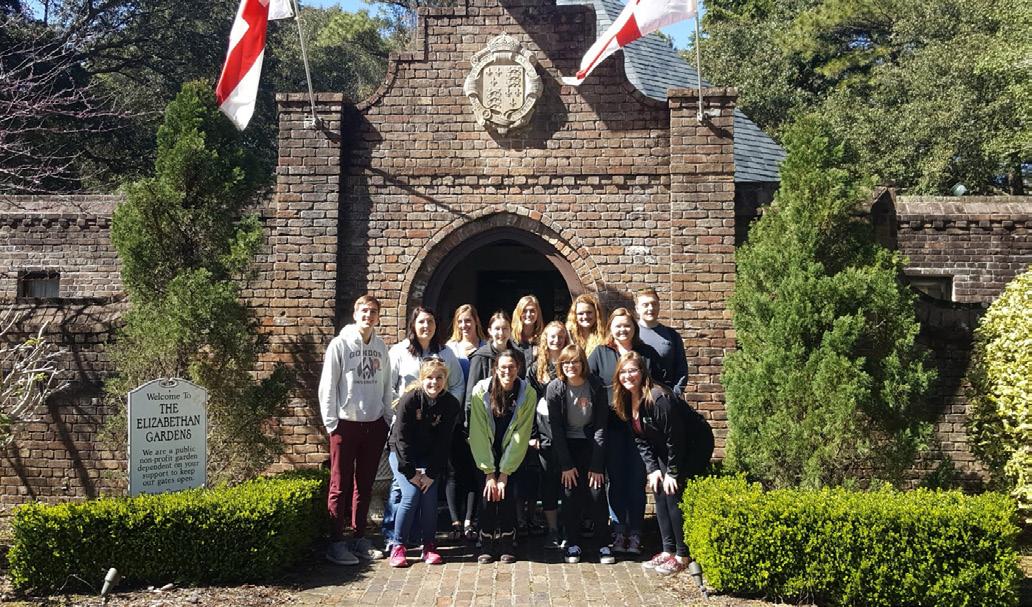
Over spring break, 13 club members traveled to North Carolina, where they toured The Elizabethan Gardens, Medicago, Cyn-Mar and Sarah P. Duke Gardens. In addition, members built connections with students and faculty at North Carolina State University through greenhouse tours and lunch with its horticulture club members. This was a great opportunity for networking and learning about the horticulture industry in another part of the country.
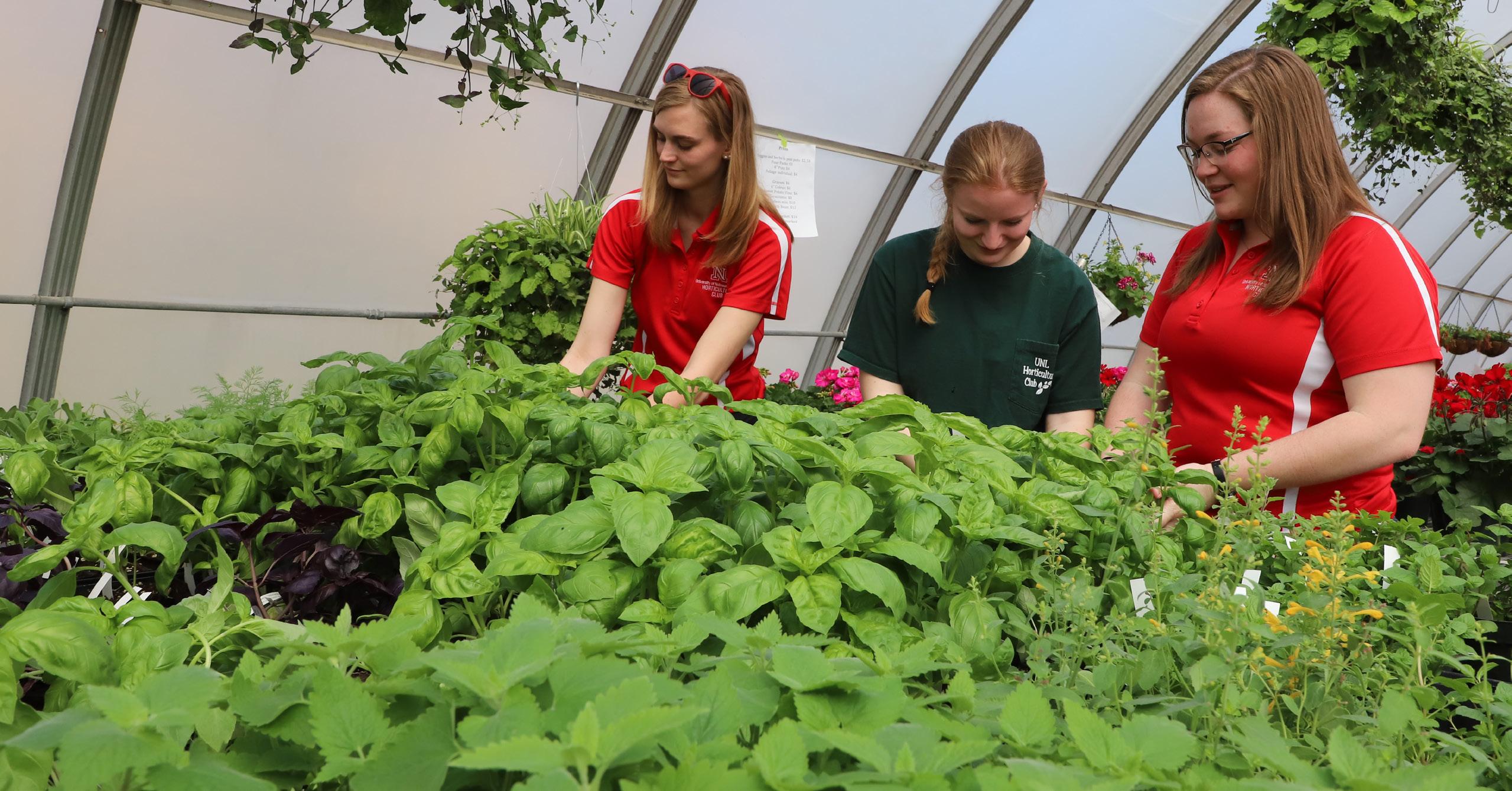
The spring bedding plant sale this year exceeded its record sales from last year. Plants sold included annual flowers, vegetables and herbs along with planters designed for graduation in May. This annual event provides an opportunity for members to gain hands-on experience growing plants from seed and marketing them to the public.
Horticulture Club took a quick trip over fall break to Kansas City, Missouri, where members toured Bird’s Botanicals, Historic Weston Orchard & Vineyard and Powell Gardens.
The club invested in its members this year by providing opportunities for growing their horticultural knowledge.
Guest speakers included Sam Wortman, assistant professor, and Christian Elowsky, assistant professor of practice, in the Department of Agronomy and Horticulture. Wortman talked about opportunities to be innovative through production and research in horticulture, while Elowsky shared his experiences with forensic botany.
Members also created foam floral arrangements, planted houseplants and toured the Sunken Gardens in Lincoln.
Horticulture Club is continuing to seek growth in knowledge and relationships this upcoming year through touring industry production facilities, gaining professional development skills and building relationships within its club. Current officers are Morgan Von Seggern, president; Kaitlin Taylor, vice president; Christine Barta, secretary and treasurer; and Katie Steffen, lead grower. Stacy Adams is the club adviser.
Make sure to like UNL Horticulture Club on Facebook and follow @unlhortclub on Instagram to keep up with important updates about the club’s sales and activities.
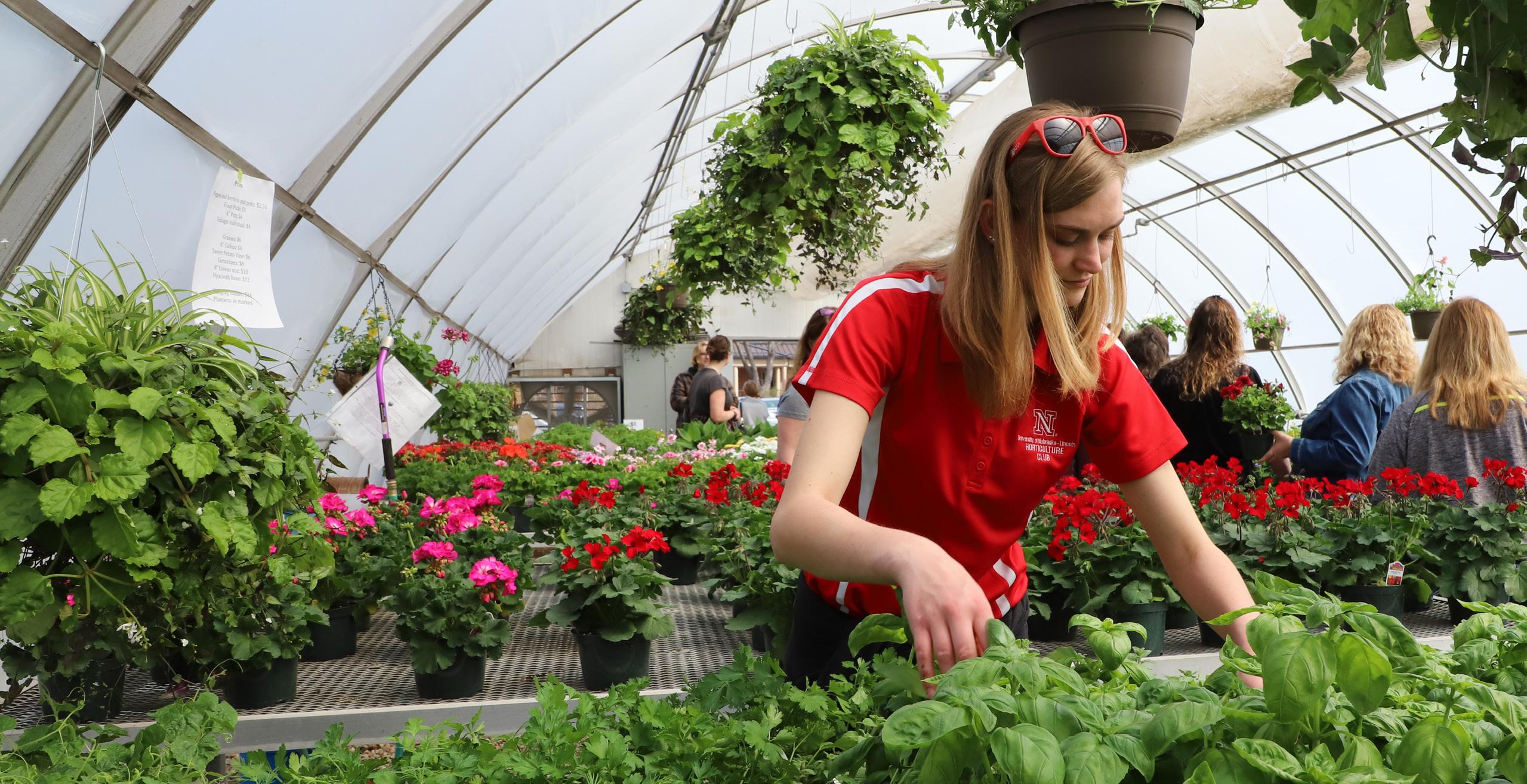
Horticulture Club member Amber Weyers works the annual spring sale. BELOW: Club members tour the Sarah P. Duke Gardens on the Duke University campus in Durham, North Carolina. BELOW RIGHT: Club members tour The Elizabethan Gardens in Dare County, North Carolina.
Courtesy Photo
Courtesy Photo
9 students inducted into horticulture national honor society
by Ben Searl, Pi Alpha Xi – Alpha-Gamma president
PI ALPHA XI IS A NATIONAL HONOR SOCIETY THAT RECOGNIZES JUNIORS, SENIORS AND GRADUATE STUDENTS THAT STUDY HORTICULTURE AND HAVE OBTAINED HIGH SCHOLASTIC ACCOMPLISHMENT.
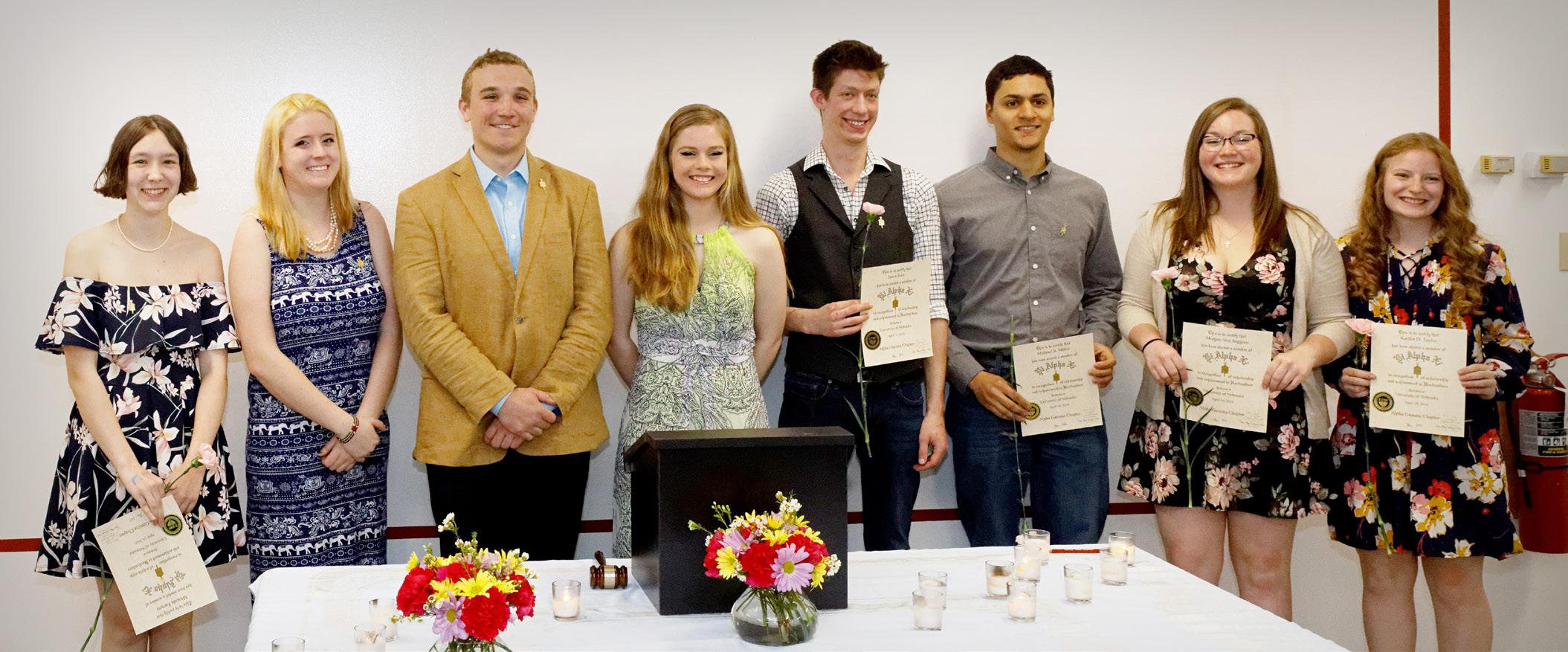
Pi Alpha Xi is dedicated to promoting knowledge, passion and care for the horticultural industry, including the areas of ornamentals, floriculture, plant health, vegetables and fruit, turf, landscape design and plant research. Each spring semester, qualified students are initiated into the society for lifetime membership. This past April, nine new members were given the honor of joining the society. The initiation included the election of new officers and, to celebrate the occasion, a luncheon for the inductees, members, family and friends.
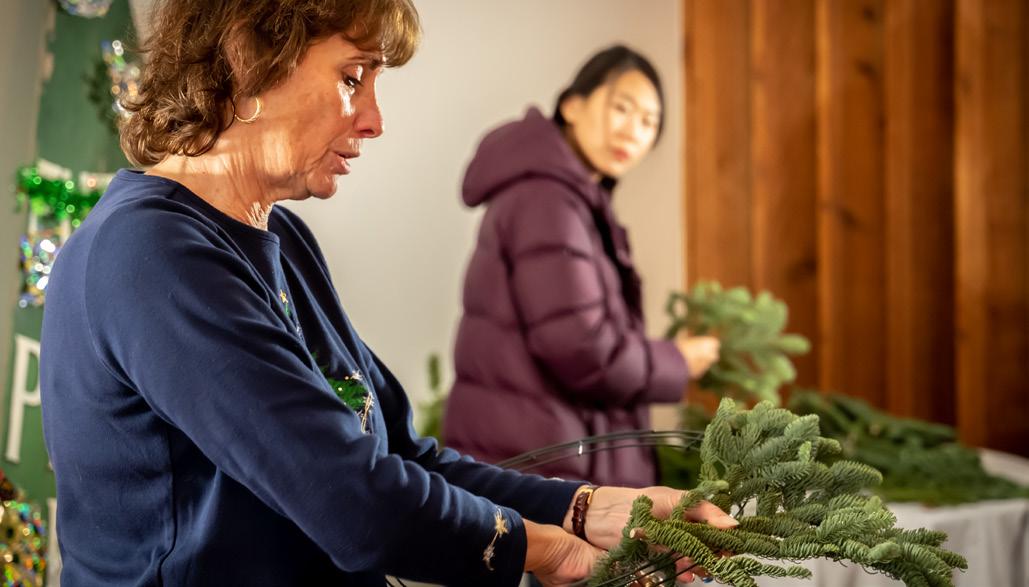
The Nebraska chapter, Alpha-Gamma, hosts an annual wreath-making workshop. Full of holiday spirit, community and a love for plants, this event provides an opportunity for people to use their creativity to make their own highquality holiday wreaths. This year’s event was Dec. 8 at
Prairie Pines Nature Preserve northeast of Lincoln.
Pi Alpha Xi – Alpha-Gamma meets two or three times each semester in preparation for the wreath-making class and spring initiation. At this time, the Nebraska chapter of Pi Alpha Xi also makes two awards. The first is a scholarship given to a student within the society who best displays the society’s principles. The second is the President’s Citation, which recognizes an individual who has done exceptional work in or for horticulture.
The society also takes care of the plaque wall opposite Room 274 and 275 Plant Sciences Hall. This wall displays the achievements of students and others including scholarship and dean’s list recognitions.
Pi Alpha Xi – Alpha-Gamma is directed by advisers Ellen Paparozzi and Dave Lambe and led by officers Luqi Li (secretary/treasurer), Olivia Fiala (vice president) and Ben Searl (president). Pi Alpha Xi — Always to Excel!
BELOW: Pi Alpha Xi – Alpha-Gamma hosts an annual wreath-making workshop. This year’s event was Dec. 8 at Prairie Pines near Lincoln. Ellen Paparozzi, professor and adviser, instructs participants in the art of wreath-making.
BOTTOM: April 14 the Nebraska chapter inducted its 350th member with its new class and elected officers. New inductees are Amanda Earnest (from left), Zoe Gildersleeve, Ben Searl, Olivia Fiala, Jason Ries, Michael Miller, Morgan Von Seggern and Kaitlin Taylor. Alexander Monette not pictured.
Courtesy
Photo
Luqi Li
Luqi Li
International meeting, inaugural native plant sale highlight year for Range Management Club
by Evan Laible, Range Management Club president
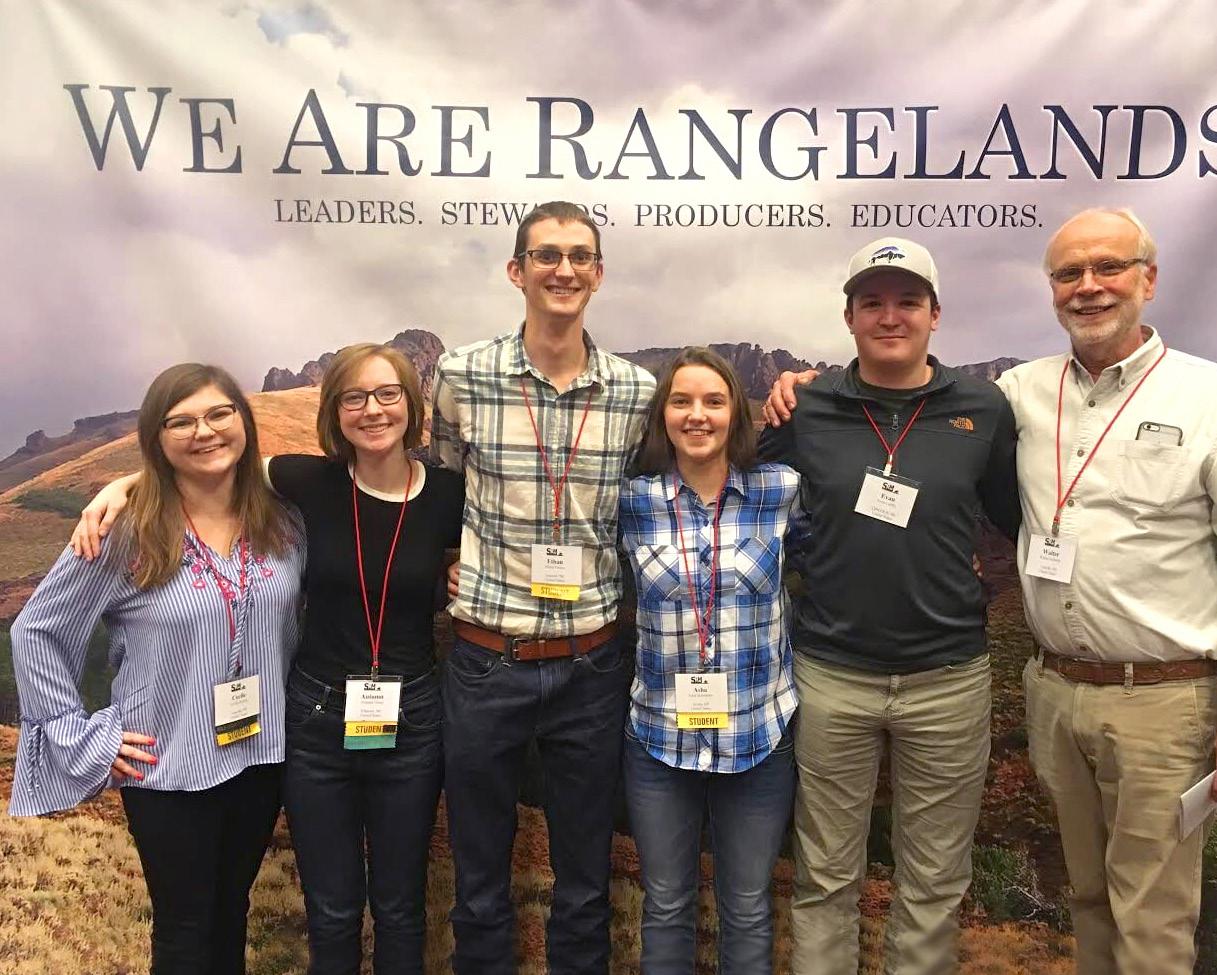
EACH YEAR DURING SECOND SEMESTER, THE RANGE MANAGEMENT CLUB ATTENDS THE INTERNATIONAL MEETING OF THE SOCIETY FOR RANGE MANAGEMENT. The aim of attending is to give students an experience at networking with professionals, an opportunity to attend seminars and stay current on rangeland issues and research, and the chance to improve their knowledge of rangeland ecology and management by participating in various competitions.
The 2018 annual meeting was in Reno, Nevada, where the club competed in the plant identification contest, undergraduate range management exam and
extemporaneous speaking contest. Nebraska placed sixth out of 25 teams in the undergraduate range management exam, and Cecile Renfro finished in eighth place out of 210 individuals. The club also went hiking at Lake Tahoe, where they learned about the different landscapes and array of plants that grow in the area.
In April, members toured James Arthur Vineyards. There they learned about the different techniques involved in growing grapes as well as how the vineyard manages pests and weeds and keeps the grapes clean from diseases.
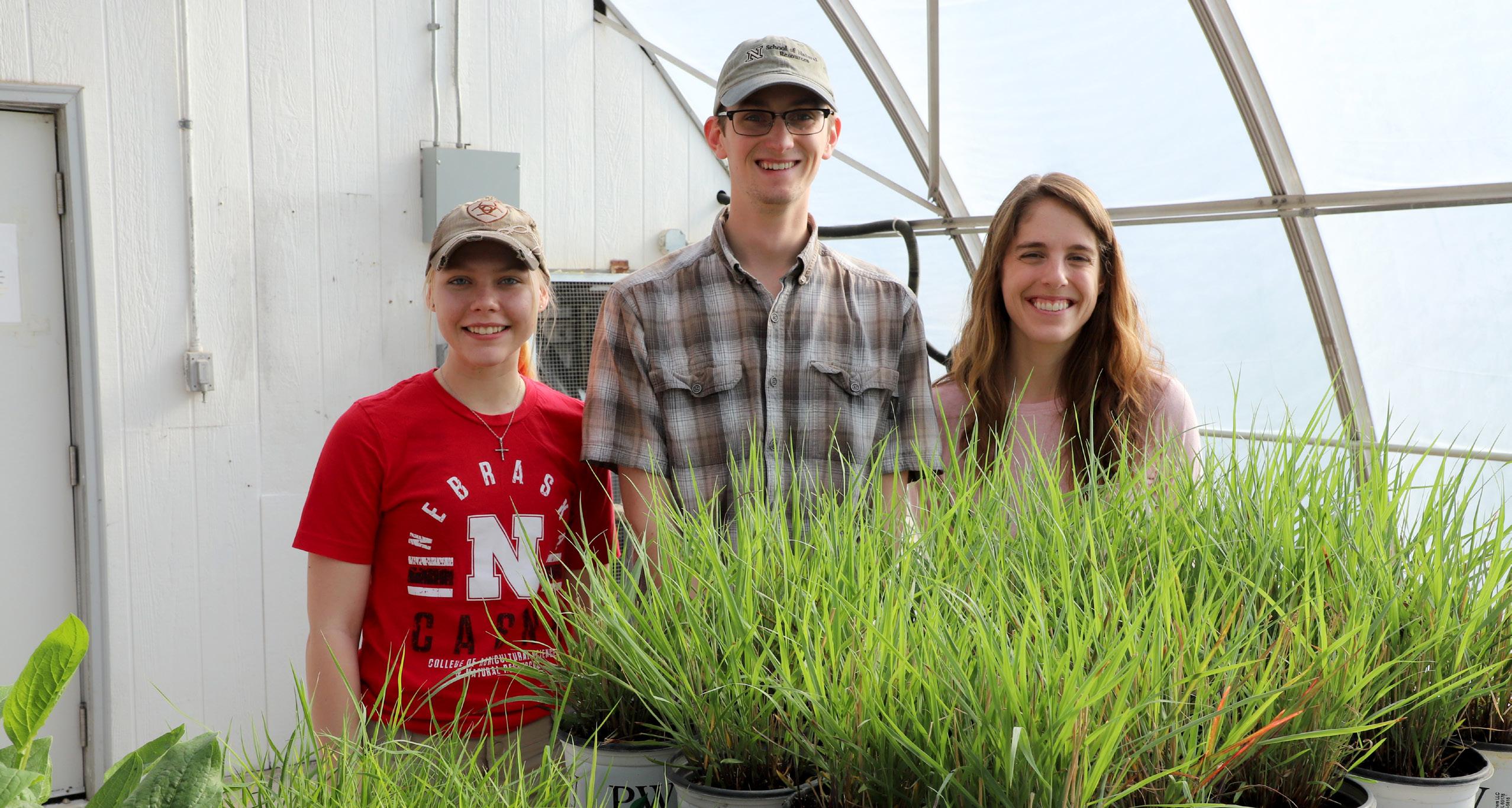
In May, the club had its first native plant sale. Club members grew native
grasses and forbs in the greenhouse and then sold the plants to the public.
During the fall semester, the club prepared for and attended the Nebraska Section Meeting for the Society for Range Management, Oct. 17–18 in North Platte.
The club continues to work hard to recruit new members, develop members’ skills for the next international meeting, and come up with new and fun events for the club to participate in.
Current officers are Evan Laible, president; Asha Scheideler, vice president; and Nick Sanders, primary programmer.
Range Management Club members
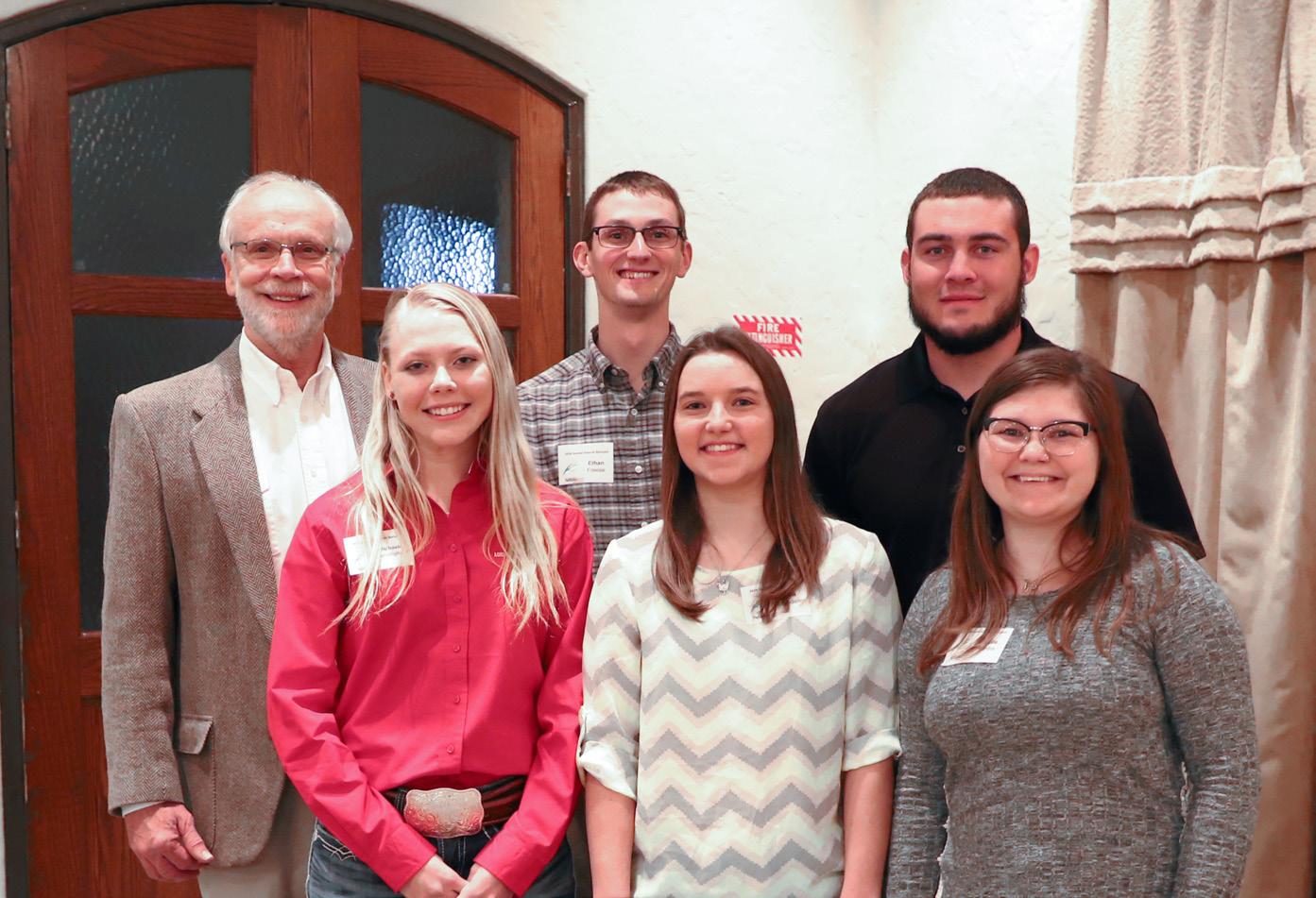
Michaela Cunningham (from left), Ethan Freese and co-adviser Cheryl Dunn sell native grasses and forbs at the club sale. ABOVE: Club members attend the 2018 Agronomy and Horticulture Awards Banquet in April with club adviser
Walt Schacht (back, from left), Ethan Freese, Nick Sanders, Michaela Cunningham (front, from left), Asha Scheideler and Cecile Renfro.
Club hosts regional SASES conference
by Fran Benne, design and communications specialist
THE UNIVERSITY OF NEBRASKA–LINCOLN
AGRONOMY CLUB HOSTED THE 2018 STUDENTS OF AGRONOMY, SOILS, AND ENVIRONMENTAL SCIENCES REGIONAL CONFERENCE, “WHERE AGRICULTURE MEETS INNOVATION,” APRIL 12–14 IN LINCOLN.
SASES is the student organization of the American Society of Agronomy.
One hundred seventy students from across the United States attended the three-day event for undergraduate students in agronomy, soils and environmental studies. It was an opportunity for students to network with others who share an interest in agriculture and to learn about the agricultural industry in Nebraska.
According to Agronomy Club president Samantha Teten, the club gained a lot from hosting the event. “We went from 15 very active members to 30,” said Teten. “Even if they couldn’t attend, so many members volunteered their time to prepare for and work at the conference.”
With a diverse group of speakers, tours, a crop judging competition and fun social events, SASES in Lincoln was a big hit, according to Agronomy Club student organizers. “I really enjoyed seeing the interaction between the schools — the networking, socials and the dance,” Moriah Heerten said.
Speakers included Interim Department Head and Professor Richard Ferguson; Professor Tom Clemente; Adjunct Professor of Practice Tom Hoegemeyer; Associate Professor Greg Kruger; Assistant Professor Santosh Pitla; Assistant Professor Justin McMechan; Josh Miller of BASF; Bob Kacvinsky of Syngenta; and Corey Brubaker, Mike Kucera and Aaron Hird of USDA-NRCS.
When the weather turned bad and sessions were moved from the Eastern Nebraska Research and Extension Center to Plant Sciences Hall on East Campus, facilities, catering and transportation had to be rearranged. The club members didn’t skip a beat.
The students noted that many of the companies where they toured facilities are very innovative and try unique things. “The AltEn ethanol plant we toured in Mead, Nebraska, uses recycled seed corn from various companies in the area who can no longer sell it as product. It’s the only one in the world to do this,” Katie Harrell said.
“When we created these tours, we really wanted to show off the diversity of Nebraska agronomy,” Rodger Farr said.
“I was never bored,” Harrell said. “We went from research to corn processing, pesticide application to a vineyard,
and it was all completely different, yet connected.
For some students, attending the SASES sessions upheld their career goals. “Talking with Justin McMechan and Bob Kacvinsky reaffirmed that this is what I want to go into,” Shawn McDonald said.
When asked about the future of agriculture, the Agronomy Club members agreed that the ag industry is going to have to get more diverse, especially in Nebraska.
Farr noted that the typical commodity prices are going down, and he’s starting to see more diversification with value-added products and small crops.
“Companies are adapting to change to find the best way to solve the problems we’re facing,” Kolby Grint said.
“In ag, it can get emotional. Food is such a personal experience, especially on the family farm,” Harell said. “If you’re in the ag industry, you’re always advocating for agriculture and educating people.”
Through their education and other agronomy-related activities such as SASES, Nebraska is preparing these students to be the next generation of ag industry leaders.
TOP: SASES students tour Kimmel Orchard & Vineyard in Nebraska City. MIDDLE: Students tour the greenhouse at Lauritzen Gardens in Omaha. ABOVE: Students tour the Bayer Crop Science seed production facility in Waco, Nebraska.
Courtesy Photos
UNDERGRADUATE STUDENT
SPOTLIGHT: SHAWN MCDONALD
“ Spending all summer abroad on a team of extension educators and specialists made me realize the impact extension can have and just how respected Nebraska is around the world.”
Shawn McDonald
Opportunities for travel ignite undergrad’s passion for research and education
by Shawn McDonald, plant biology graduate
I AM A BORN AND RAISED NEBRASKAN. Growing up on the farm near Phillips, I always knew I was going to be involved in agriculture one way or another. Toward that end, I started my college career in plant biology at the University of Nebraska–Lincoln in the fall of 2014. Throughout my undergraduate years, many incredible opportunities took me throughout the country and around the world. These past few years have been a joy with my involvement as both a member and officer in Agronomy Club going to regional and national Students of Agronomy, Soils and Environmental Sciences conferences and being a part of a great team that hosted regional SASES 2018 here at Nebraska.
Arguably one of the most beneficial things I did was being a member of the Nebraska Crops Judging Team. That experience gave me the chance to compete
against and network with peers all around the country — some that I guarantee I’ll see down the road.
This summer I had the opportunity of a lifetime to work with Nebraska Extension on the Yangling-Nebraska Demonstration Farm in Yangling, China. Spending all summer abroad on a team of extension educators and specialists made me realize the impact extension can have and just how respected Nebraska is around the world. Experiences like this have made me realize my passion for research and education, and I hope to one day join Nebraska Extension as an educator. Throughout my academic career, I have had the honor to work with some of the best faculty this University has to offer. After graduating in December with my bachelor’s, I plan on continuing my academic journey as a master’s student in weed science.
UNDERGRADUATE STUDENT AWARDS 2018
Agronomy Club: Second-place
American Society of Agronomy and Crop Science Society of America with the Canadian Society of Agronomy International Meeting – Students of Agronomy, Soils, and Environmental Studies Session – President’s Trophy, presented by Samantha Teten
Bryant Biskup: Second-place team
North American Colleges and Teachers of Agriculture Judging Conference
National Collegiate Competition –Precision Agriculture, Third-place team Oklahoma Panhandle State University Regional Collegiate Competition – Crops Judging
Isidor Ceperkovic: First-place North Central Weed Science Society Undergraduate Poster – Equipment and Application Methods
Michaela Cunningham: ASA–CSSA–Soil Science Society of America Golden Opportunity Scholar
Rodger Farr: Milton E. Mohr Awards Program for Biotechnology Scholarship, ASA–CSSA–SSSA Golden Opportunity Scholar, Second-place team NACTA Judging Conference
National Collegiate Competition –Precision Agriculture, Second-place team ASA–CSSA–CSA Meeting SASES
Session – Quiz Bowl, Second-place team ASA–CSSA–CSA Meeting SASES Session – Crops Judging, Third-place team NACTA Judging Conference
National Collegiate Competition –Crops Judging, Third-place NACTA Judging Conference National Collegiate Competition – Precision Agricultural Individual Analysis, Third-place team Kansas State University Regional Crops Judging – Four-year Academic Crops, Thirdplace team Oklahoma Panhandle State University Regional Collegiate Competition – Crops Judging
Megan Franklin: Martin Massengale Outstanding Senior Award
Kolby Grint: ASA–CSSA–SSSA
Golden Opportunity Scholar, Firstplace team Region V Soil Judging Competition, Second-place team ASA–CSSA–CSA Meeting SASES
Session – Quiz Bowl, Second-place team ASA–CSSA–CSA Meeting SASES
Session – Crops Judging, Third-place Region V Soil Judging Competition
– Individual Competition, Thirdplace team Region V Soil Judging Group Contest, Third-place team NACTA Judging Conference National Collegiate Competition – Crops Judging, Third-place team Kansas State University Regional Crops Judging – Four-year Academic Crops
Moriah Heerten: Third-place team University of Nebraska–Lincoln SASES Collegiate Competition – Crops Judging Horticulture Club: Plaque in honor of providing funds to renovate and provide furnishings for Room 274 Plant Sciences Hall
National Collegiate Competition – Precision Agriculture, Thirdplace team University of Nebraska–Lincoln SASES Collegiate Competition – Crops Judging
Chad Lammers: Milton E. Mohr Awards Program for Biotechnology Scholarship
Ryan Langemeier: First-place
NACTA Judging Conference National Collegiate Competition – Agronomic Exam, Second-place team ASA–CSSA–CSA Meeting SASES Session – Quiz Bowl, Second-place team ASA–CSSA–CSA Meeting SASES Session – Crops Judging, Third-place ASA–CSSA–CSA Meeting SASES Session – Crops Judging, Third-place team
NACTA Judging Conference National Collegiate Competition – Crops Judging, Third-place team University of Nebraska–Lincoln SASES Collegiate Competition – Crops Judging
Olivia Fiala: Joseph Shinoda Award
Jasmine Mausbach: Second-place
NCWSS Undergraduate Poster –Agronomic Crops II Soybean
Shawn McDonald: Third-place team Kansas State University
Regional Crops Judging – Fouryear Academic Crops
Nathan Peterson: Agronomy Club Outstanding Student Member award
Cecile Renfro: Range Club Trail Box Award
Andrea Rilakovic: Second-place
NCWSS Undergraduate Poster –Equipment and Application Methods
Samantha Teten: ASA–CSSA–SSSA Greenfield Scholar, Semifinalist University of Nebraska–Lincoln’s 2018 Outstanding Student Leadership Award, First-place Region V Soil Judging Competition – Individual Competition, First-place Region V Soil Judging Competition – Individual Competition, Second-place team
ASA–CSSA–CSA Meeting SASES Session – Crops Judging, Third-place team Region V Soil Judging Group Contest, Third-place team Oklahoma Panhandle State University Regional Crops Judging – Four-year Academic Crops Contest, Third-place team NACTA Judging Conference National Collegiate Competition – Crops Judging, Third-place team Kansas State University Regional Crops Judging – Four-year Academic Crops, Third-place team Oklahoma Panhandle State University Regional Collegiate Competition – Crops Judging
Aliksander York: Third-place team University of Nebraska–Lincoln SASES Collegiate Competition – Crops Judging
National Collegiate Competition –Precision Agricultural Individual Analysis, Third-place NACTA Judging Conference National Collegiate Competition – Precision Agricultural Individual Overall
A list of all student awards can be found online at agronomy.unl.edu/ student-awards#undergrad.
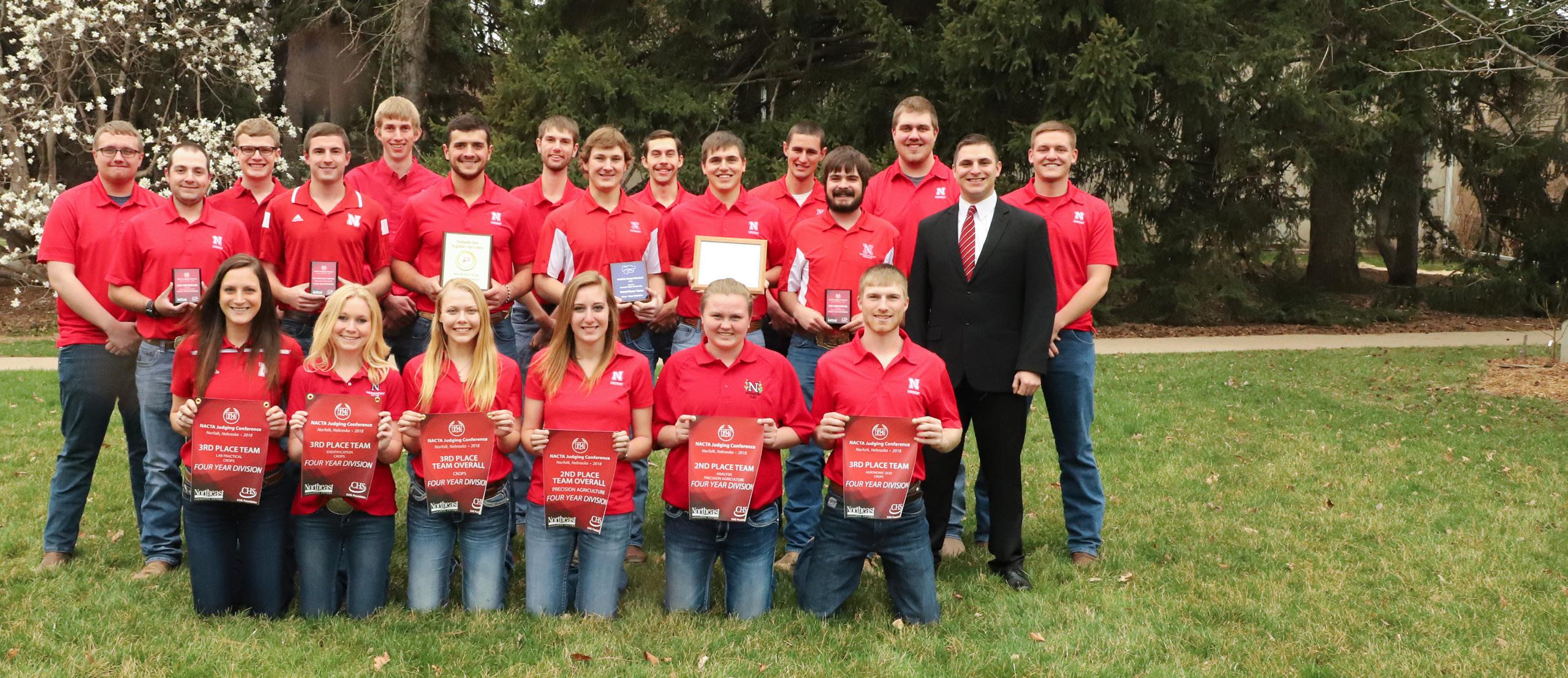
The Crops Judging Team displays the hardware they earned at nationals. Back row: Alex Baumert (from left), Jared Stander, Chad Lammers, Kolby Grint, Nathan Peterson, Ryan Langemeier, Shawn McDonald and Alik York. Middle row: Dalton Johnson
Mitch Zobel, Jake Krings, Bryant Biskup, Caleb Eckel, Rodger Farr and Coach Adam Striegel. Front Row: Cassie Mosel
Moriah Heerten, Michaela Cunningham, Samantha Teten, Nicole Laue, and Alec Meyer. Ian Fuchtman, Ben Hintz and Ben Miles
THE UNIVERSITY OF NEBRASKA–LINCOLN CROPS JUDGING TEAM TOOK THIRD AT THE OKLAHOMA PANHANDLE STATE UNIVERSITY REGIONAL COLLEGIATE COMPETITION IN GOODWELL, OKLAHOMA, IN FEBRUARY 2018. In March the team placed third at the Kansas State University Regional Collegiate Competition in Manhattan, Kansas, against 13 other Midwest institutions. Nebraska placed third at the SASES Collegiate Crops Judging Competition April 14 in Lincoln. Nebraska took top honors at the North American Colleges and Teachers of Agriculture Judging Conference National Collegiate Competition April 19 and 21 at Northeast Community College in Norfolk, Nebraska. The team placed second in Precision Agriculture and third in Crops Judging.
THE AGRONOMY AND HORTICULTURE GRADUATE STUDENT ASSOCIATION WAS AWARDED THE OUTSTANDING GRADUATE STUDENT ORGANIZATION AWARD DURING CASNR WEEK. AHGSA continues to be a diverse, connected community involved in leadership, advancement and career opportunities.
MEGAN FRANKLIN, A SENIOR HORTICULTURE MAJOR, WAS AWARDED THE MARTIN MASSENGALE OUTSTANDING SENIOR AWARD AT THE DEPARTMENT OF AGRONOMY AND HORTICULTURE AWARDS BANQUET MARCH 27, 2018. Franklin graduated in May with a bachelor’s degree in plant biology and began doctoral studies in the fall researching plant metabolic engineering. The award honors Massengale, the president and chancellor emeritus and founding director of the Center for Grassland Studies and Foundation Distinguished Professor.
(from left),
(from left),
are not pictured.
RIGHT: Leonardo Bastos (left) accepts the Outstanding Graduate Student Organization Award on behalf of AHGSA from CASNR Dean Tiffany Heng-Moss.
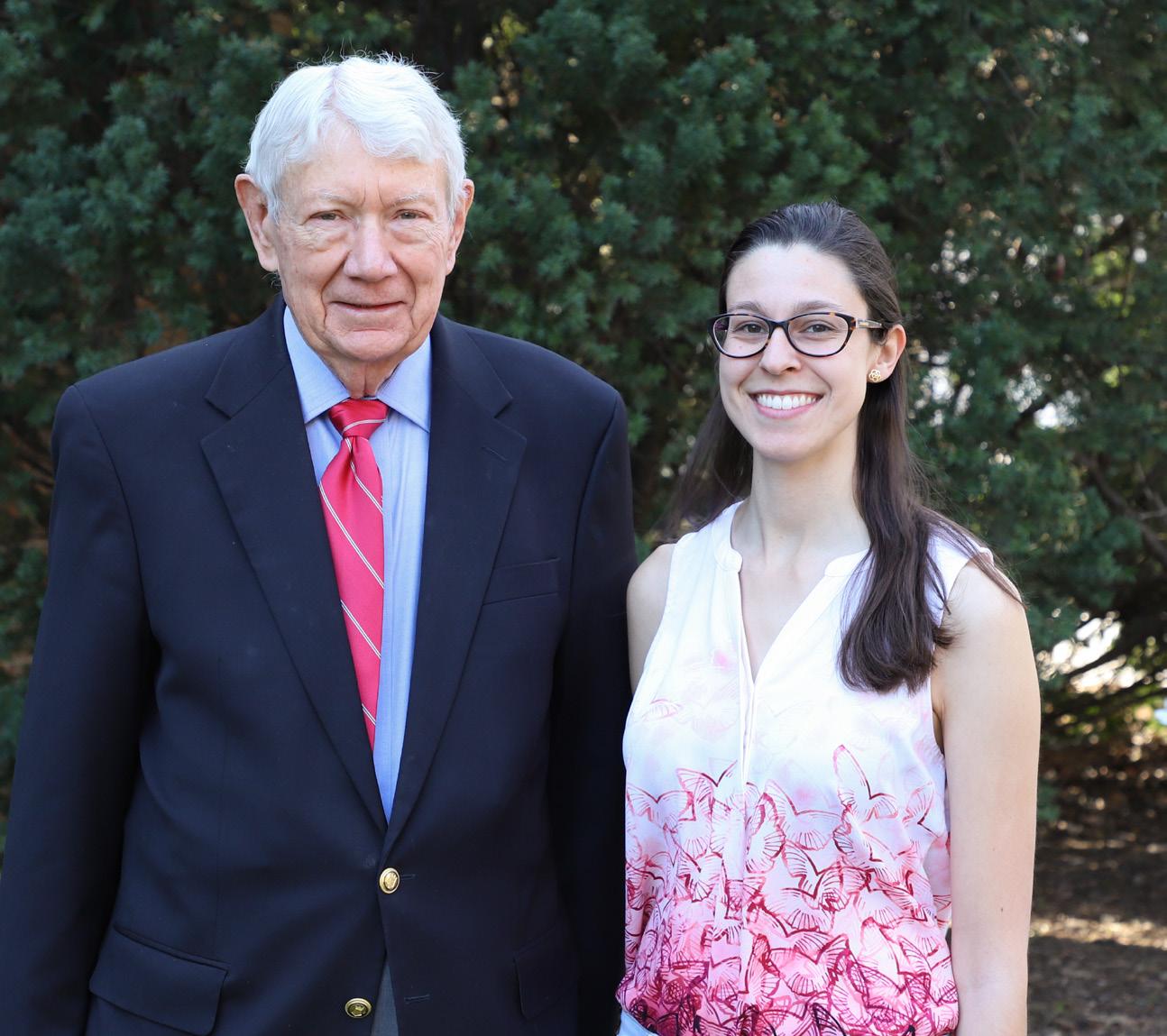
Martin Massengale (left) and Megan Franklin
Greg Nathan
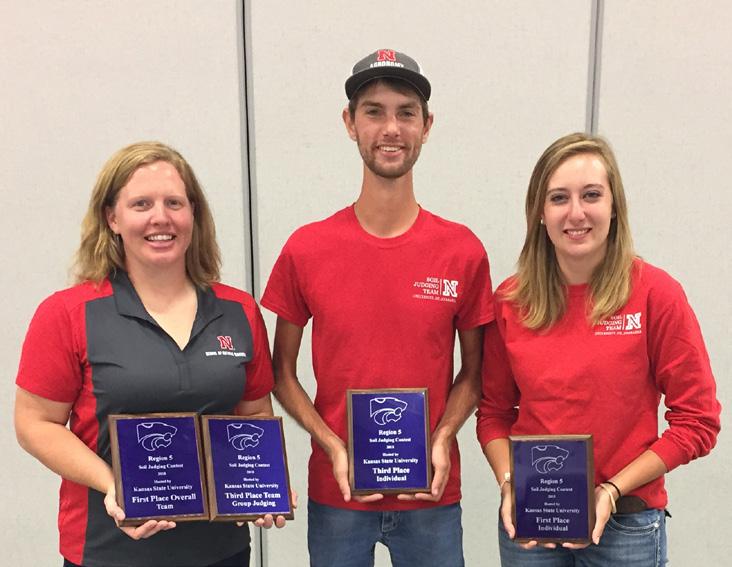
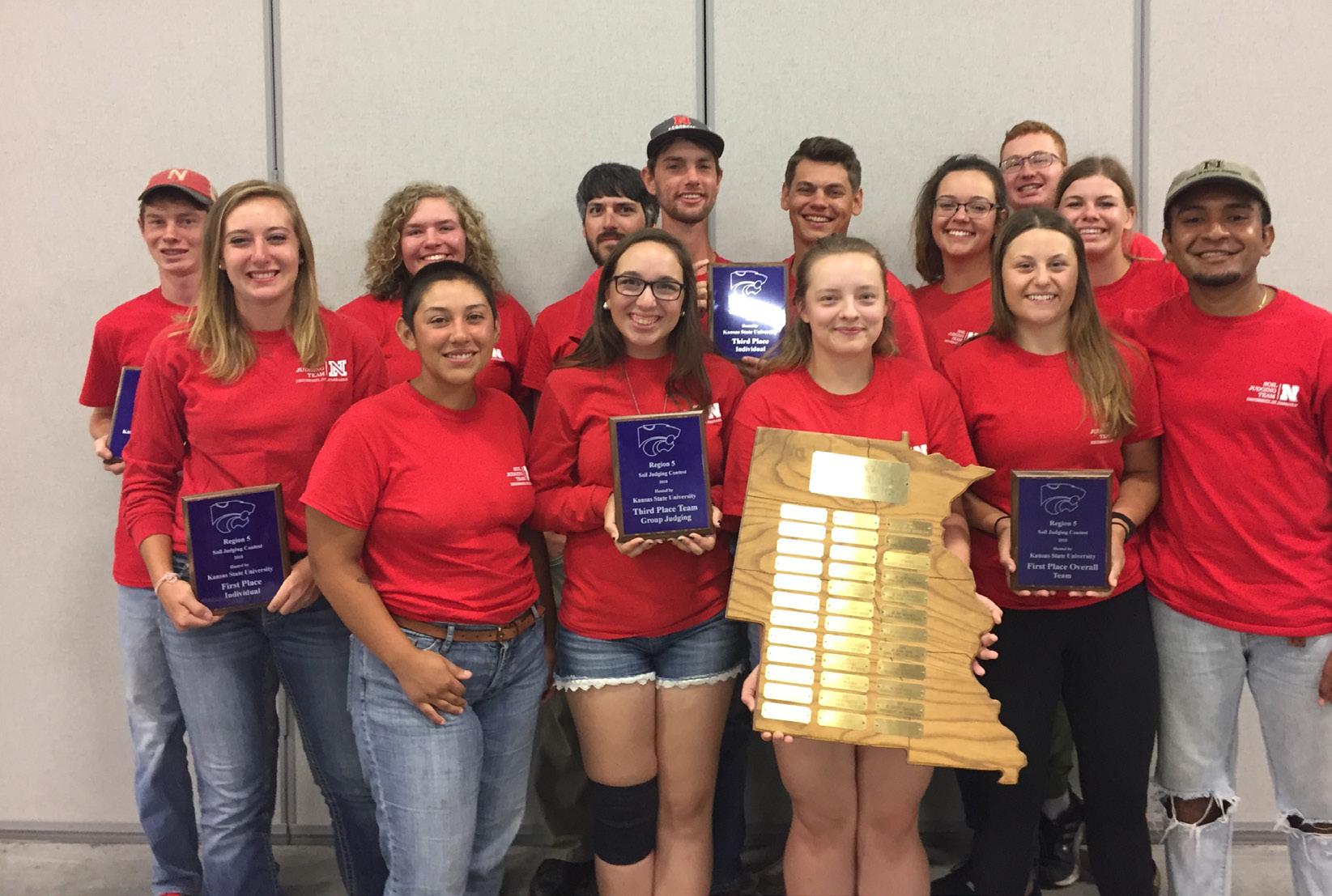
THE UNIVERSITY OF NEBRASKALINCOLN SOIL JUDGING TEAM DUG RIGHT INTO THE REGION 5 SOIL JUDGING COMPETITION FROM SEPT. 17 TO 21 IN MANHATTAN, KANSAS, AND BEAT SEVEN OTHER TEAMS FOR A FIRST-PLACE OVERALL WIN, THREE INDIVIDUAL AWARDS AND A THIRD-PLACE TEAM FINISH.
The win puts the team, made up of 14 students from the School of Natural Resources and the Department of Agronomy and Horticulture, in a top position for the 2019 National Collegiate Soils Contest set for April 14–19 at California Polytechnic State University in San Luis Obispo, California.
MEMBERS OF THE UNIVERSITY OF NEBRASKA–LINCOLN RANGE MANAGEMENT CLUB COMPETED IN THE UNDERGRADUATE RANGE MANAGEMENT EXAM AT THE ANNUAL MEETING OF THE SOCIETY FOR RANGE MANAGEMENT IN RENO, NEVADA, IN FEBRUARY 2018. Competing against over 200 students and teams from 25 universities (from central and western United States and Canada) the Nebraska team placed sixth and Cecile Renfro, a plant biology major (conservation and ecology option), placed eighth individually.
RIGHT: Members Cecile Renfro (from left), Autumn Dunn, Ethan Freese, Asha Scheideler, Evan Laible, and adviser Walt Schacht, attend the International Meeting of the Society for Range Management in Reno, Nevada.
ABOVE: Members of the winning Region 5 Soil Judging Team include Bryan Petersen (back row, from left), Katie Boden, Michael Darling, Kolby Grint, Riley Hackbart, Nicole Strand, Levi McKercher, Marisa Mika, Samantha Teten (front row, from left), Cadence Hernandez, Clare Wilton, Rebekah Simmons, Ema Muslic and Aldi Airori.
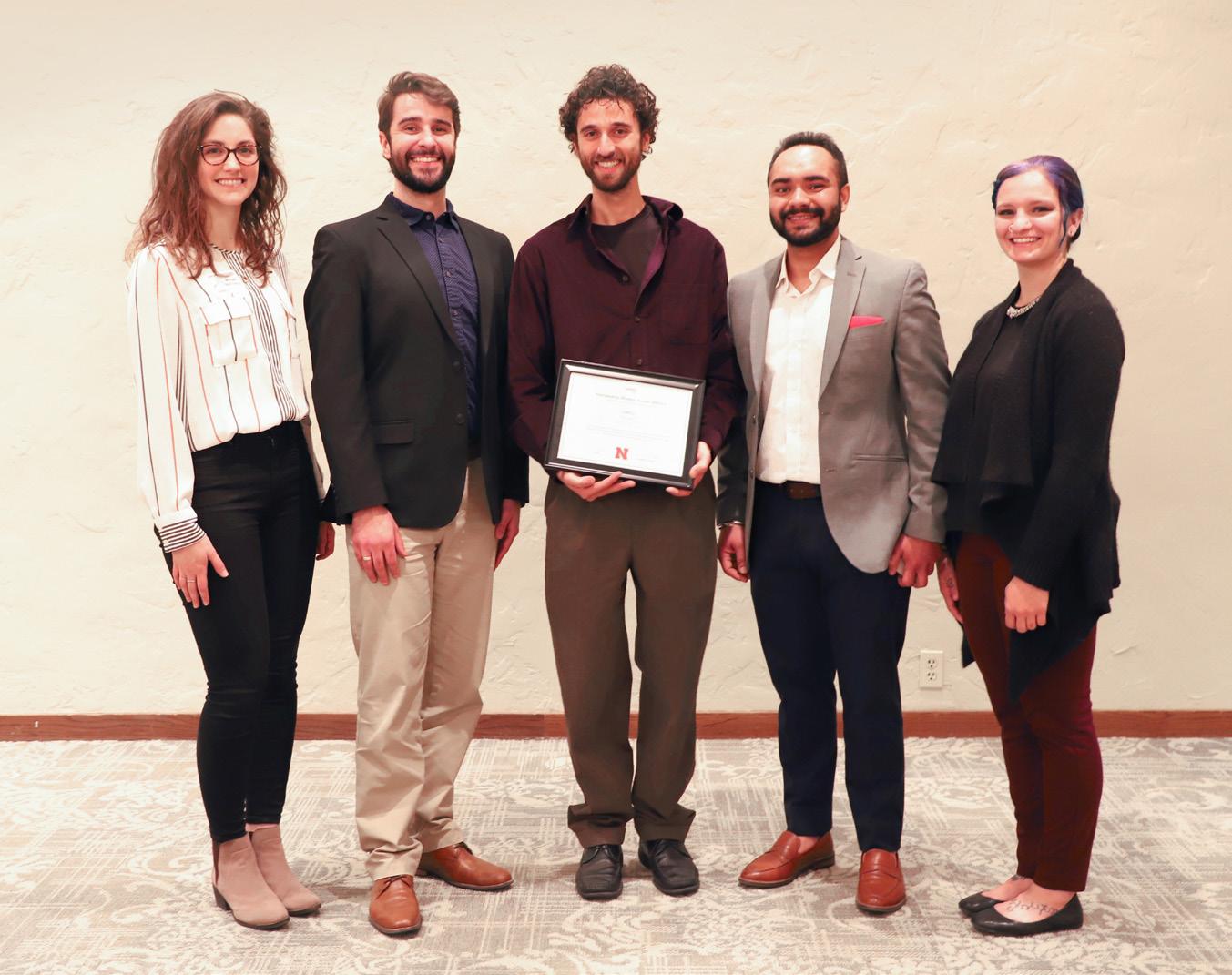
BEN SAMUELSON WAS AWARDED THE AGRONOMY AND HORTICULTURE GRADUATE STUDENT ASSOCIATION OUTSTANDING MEMBER AWARD AT THE DEPARTMENT OF AGRONOMY AND HORTICULTURE AWARDS BANQUET MARCH 27, 2018. A master’s student in horticulture specializing in soil microbiology, Samuelson was honored for his proactive attitude, leadership, involvement and valuable contributions to AHGSA and the department.
Courtesy Photo Courtesy Photo
Ben Samuelson (center) receives the AHGSA Outstanding Member Award from 2017–2018 AHGSA officers Morgan McPherson (from left), Leonardo Bastos, Jaspinder Singh and Mary Happ.
GRADUATE STUDENT AWARDS 2018
Ethann Barnes: Third-place
Weed Science Society of America
Ph.D. Paper Presentation
Madhav Bhatta: Borlaug Global Rust Initiative Competitive Student Research Program Award, Crop Science Society of America Gerald O. Mott Meritorious Graduate Student Award in Crop Science, Widaman Distinguished Graduate Assistantship
Clint Beiermann: Second-place Weeds of Agronomic Crops Graduate Student Paper Contest
Brooke Blessington: U.S. Borlaug Summer Institute on Global Food Security
Daniel Carvalho: Henry M. Beachell Fellowship
Thais Egreja: Milton E. Mohr Fellowship–Biotechnology Degree Program Recipient
Nikita Gambhir: First-place North Central American Phytopathological Society Poster Presentation
Nicholas Garst: Al Moseman International Fellowship Award, Daugherty Water for Food Global Institute Graduate Student Funding Support
Jesaelen Gizotti de Moraes: Second-place North Central
Weed Science Society Research Student Video Contest
Mary Happ: U.S. Borlaug Summer Institute on Global Food Security, Othmer Fellowship
Luqi Li: Pi Alpha Xi Scholarship
Samuel Koeshall: Third-place American Society of Agronomy
Semi-Arid Dryland Cropping Systems Graduate Student Poster
Samantha McConaughy: ASA–CSSA–Soil Science Society of America Future Leaders in Science Award
Osler Ortez-Amador: ASA Nelson Yield-Limiting Factors Graduate Scholarship, Daugherty Water for Food Global Institute Graduate Student Funding Support, International Plant Nutrition Institute Scholar Award, Third-place ASA–CSSA–Canadian Society of Agronomy
Ph.D. Oral Competition – Applied Soybean Research Division
Dinesh Panday: North Central Extension-Industry Soil Fertility Conference Outstanding Graduate Student Award, Milton E. Mohr Fellowship–Biotechnology Degree Program Recipient, Maize-Asia Youth Innovators Award
Estefânia G. Polli: First-place NCWSS Society Extension/Education
Graduate Student Video Contest
Raquel Rocha: Widaman
Distinguished Graduate Assistantship
Jaspreet Sandhu: Hardin
Distinguished Graduate Fellowship, Milton E. Mohr Fellowship
Mitchell (Ben) Samuelson: Agronomy and Horticulture
Graduate Student Association Outstanding Member Award
Aaron Shropshire: Holling Family Award Program for Teaching Excellence – Teaching Assistant Teaching Excellence Award
Adam Striegel: Milton E. Mohr Fellowship
Alexandre Tonon Rosa: Shear-Miles Fellowship, North Central Region
SARE Graduate Student Grant, Firstplace NCWSS Graduate Student Poster – Agronomic Crops I - Corn, Second-place ASA–CSSA–CSA
A list of all student awards can be found online at agronomy. unl.edu/student-awards.
GRADUATE STUDENT SPOTLIGHT: LEANDRA MARSHALL
“...I am grateful to have direct access to expert researchers and to work in an uncommonly cooperative research community.”
Leandra Marshall
Marshall chooses Nebraska’s unromanticized agriculture and uncommonly cooperative community
by Leandra Marshall, agronomy graduate student
I HAD JUST RETURNED HOME FROM MY FIRST YEAR OF COLLEGE IN SANTA BARBARA, CALIFORNIA, WHEN AN ARTICLE IN THE LATEST NEW HORIZONS FFA MAGAZINE CAUGHT MY EYE. The article featured a University of Nebraska–Lincoln student-entrepreneur in Imperial, Nebraska, and the success story of his farrier business. As simple as it sounds, my interest in Nebraska grew as I turned the pages of the story detailing a student and an institution supporting both agriculture and education. Though I wasn’t ungrateful for the opportunity to attend Westmont College (I earned
B.S. degrees in biology and chemistry in the spring of 2017), I realized how much I missed a community that knew agriculture without romanticism.
After a visit to UNL that entailed four professor meetings and, unbeknownst to me, one conversation with a dean emeritus of CASNR, I completed a total of three Ph.D. applications — all to different departments within the university. In the end, I accepted a position in the Department of Agronomy and Horticulture starting in the fall of 2017.
I am now a year and a half into my Ph.D. program under the advisement of David Holding. Our project focuses
on producing certain maize hybrids to identify genes that improve kernel traits such as vitreousness (hardness and glassiness) and relative amino acid content. I have taken classes in genome sequencing, plant breeding, bioinformatics, and ruminant nutrition. And this semester I am a teaching assistant for an undergraduate plant science course. At first, adjusting to the professionalism and seriousness of this environment was challenging, but I am grateful to have direct access to expert researchers and to work in an uncommonly cooperative research community.
Teaching Impacts
IN THE DEPARTMENT OF AGRONOMY AND HORTICULTURE
Diversity of team-taught course offers something for everyone
by Michael Kaiser, assistant professor; Meghan Sindelar, assistant professor of practice; and Rebecca Young, assistant professor of practice
SOIL RESOURCES HAS BEEN A TEAM-TAUGHT, STUDENT-FOCUSED COURSE FOR THE PAST 30 YEARS. The current team consists of several new faculty members who bring the same passion for student learning and continue to use the model established by Bob Sorensen, emeritus professor.
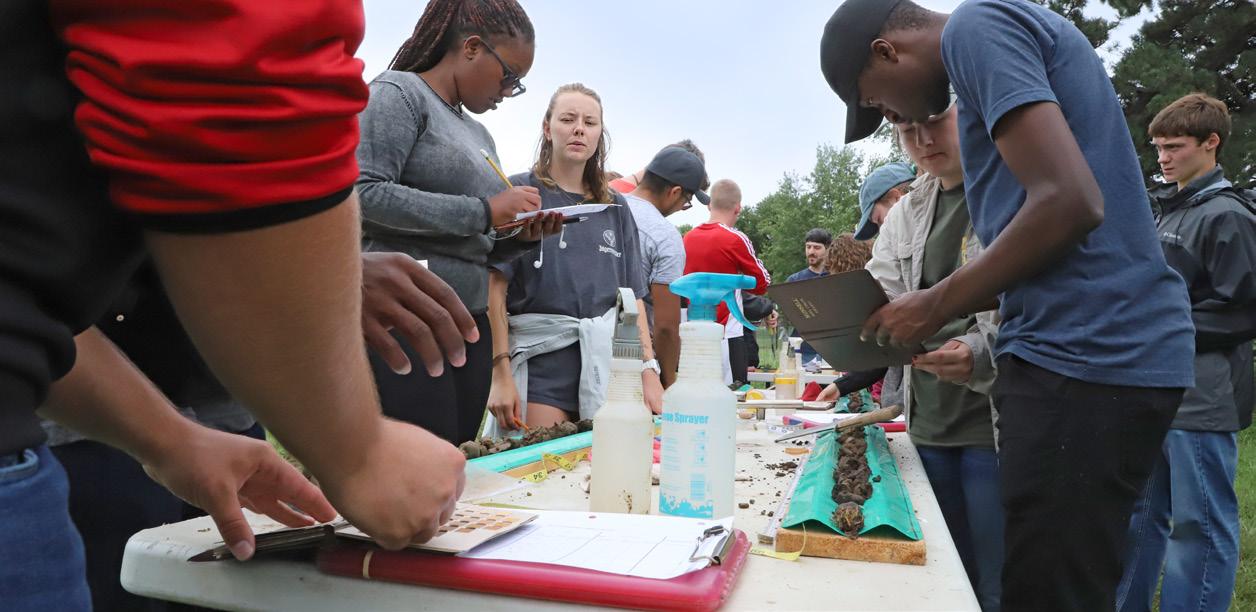
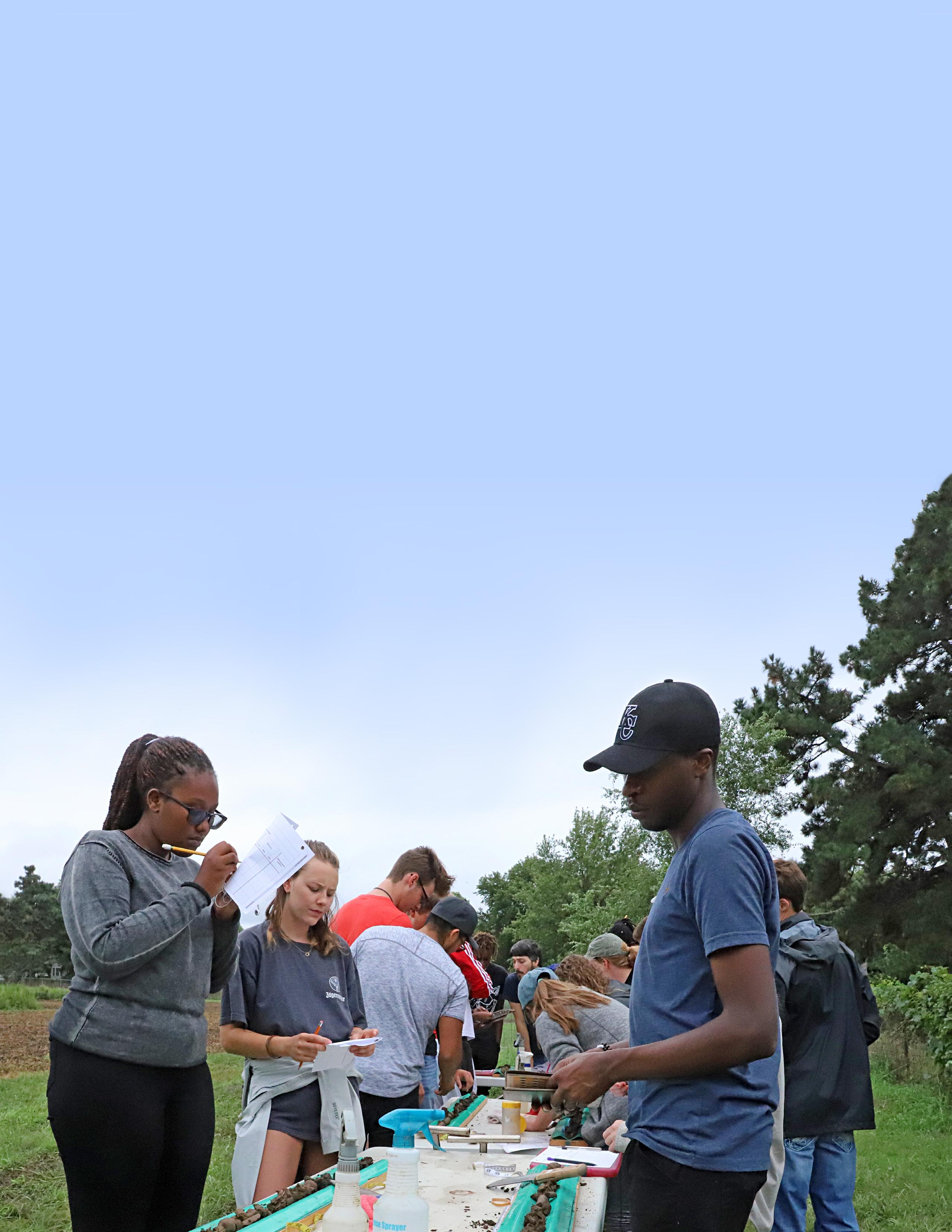
The four-credit course uses only one hour for traditional lecture each week and instead focuses on two 2-hour labs, where students observe soils, conduct experiments and discuss soil management case studies as teams. This peer-teaching model increases classroom engagement and encourages students to share their understanding of and experience with soil science
principles. In addition, each group of students gets its own soil core on which to explore the chemical, physical and biological soil properties taught throughout the semester.
A foundational course for students in the Department of Agronomy and Horticulture, Soil Resources also serves students from several other departments across campus. In serving our majors, the content of the course addresses all six of the department’s student learning outcomes. For example, SLO 1 (Appreciation of Nature) is addressed during the first week of Soil Resources as students learn the many functions of soil and discover soil’s role in the global ecosystem.
The team-teaching method works well for current instructors
Michael Kaiser, Meghan Sindelar and Rebecca Young, as each brings a different perspective to the course. First the team establishes the lab activities for each semester and publishes a course packet. Then the team meets each week to develop approaches for classroom discussion that will engage students of diverse majors and backgrounds. Overall, the diversity of teaching staff, range of course topics and variety of classroom activities make Soil Resources a course from which all students can benefit.
FOR OVER A DECADE, THE FUNDAMENTALS AND APPLICATION OF PLANT BIOLOGY HAVE BEEN THE CORE TEACHING FOCUS FOR THE FACULTY, GRADUATE STUDENTS AND UNDERGRADUATE TEACHING ASSISTANTS WHO TEAM UP TO DELIVER PLANT SCIENCE (AGRONOMY/HORTICULTURE
131). A mix of delivery approaches and innovations has created a steady demand for Plant Science for more than 300 University of Nebraska–Lincoln students a year seeking to fulfill their science core. Plant Science 131 is also the start of biology learning for all majors in the Department of Agronomy and Horticulture.
Big classes made smaller
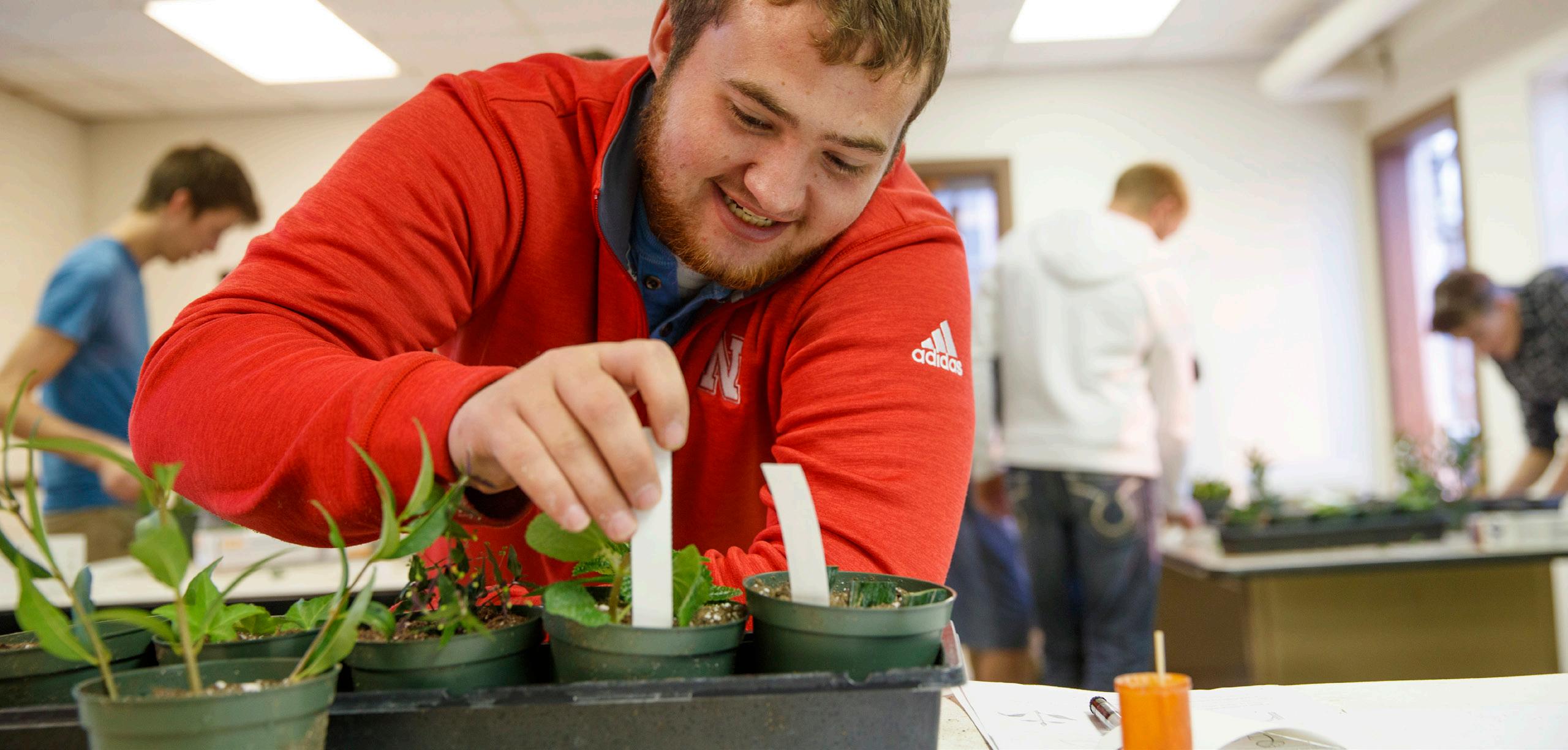
About one-third of the students who take Plant Science each year are in a large lecture section of the course. However, when Professor Don Lee started teaching Plant Science over 13 years ago, he decided to bring the most successful learning strategy from the department’s genetics course into play. One of the weekly lectures was exchanged for a two-hour recitation that features interaction of TAs, oral questions and a chance to conduct a plant science experiment in the greenhouse.
This approach makes the classroom smaller. Learners are far more engaged when they work with plants and each other. The recitations are energized by talented teaching assistants who
Plant Science 131: One course, three ways
by David Holding, associate professor; Don Lee, professor; Leah Sandall, distance education coordinator; and Anne Streich, associate professor of practice
are majors in horticulture, agronomy, plant biology and education or who are graduate students in the department.
Classes where professors know students by name
The success of small classroom engagement is now repeated by Associate Professors Brian Waters and David Holding in sections of 30–40 students in Keim Hall (on East Campus) and the Beadle Center (on City Campus). Waters and Holding, with the help of their teaching assistants, blend lecture with hands-on learning through team activities and experiments.
This class structure places students in a position to work and communicate like plant biologists as they experience the scientific process. Writing, reviewing and evaluating research is a core learning outcome for students. The small sections of Plant Science provide a unique opportunity to learn science from a research expert who can call on students by name.
Online classes that fit everyone’s schedule
Leah Sandall, distance education coordinator, and Anne Streich, associate professor of practice, have further expanded the reach of Plant Science by creating and delivering an online version of the course to as many as 70 students. Most of the online Plant Science students live in Lincoln but
need to find courses that fit in their schedule. The students taking Plant Science online also include Nebraska Now high school students and those completing a University of Nebraska–Lincoln degree as a distance student. Students taking Plant Science online continue to make progress in their program and experience the same learning outcomes as students in face-to-face sections. Online students use technology to connect with their teachers and teaching assistants to share their thinking and questions every week. And because plants can grow anywhere, the online students run their own plant growing experiments!
Shared materials, coauthored eBook provide unity
While the Plant Science teaching teams use different tactics to create and deliver their course sections, they unify their teaching by sharing lectures, quizzes and exams and by coauthoring the eBook used in the course. The Plant Science eBook is organized into 15 lessons which follow the learning flow through the semester in all sections of the course. Students take quizzes in the eBook while working through these lessons to activate the “learning by reading” experience. The online format of the eBook provides the platform for video and interactive animation to enhance students’ homework learning.
Craig Chandler
Creating a legacy and leaving one
by Kim Todd, associate professor, extension landscape specialist, professional landscape architect
Ag. Comm. Bldg.
FEW EXPERIENCES ARE MORE EXCITING THAN BEING INVOLVED IN A LANDSCAPE DESIGN/ BUILD/MANAGE PROJECT WITH MULTIPLE CLIENTS WHO HAVE AN INSPIRING VISION AND BOTH SHORT-TERM AND LONGRANGE PRIORITIES.
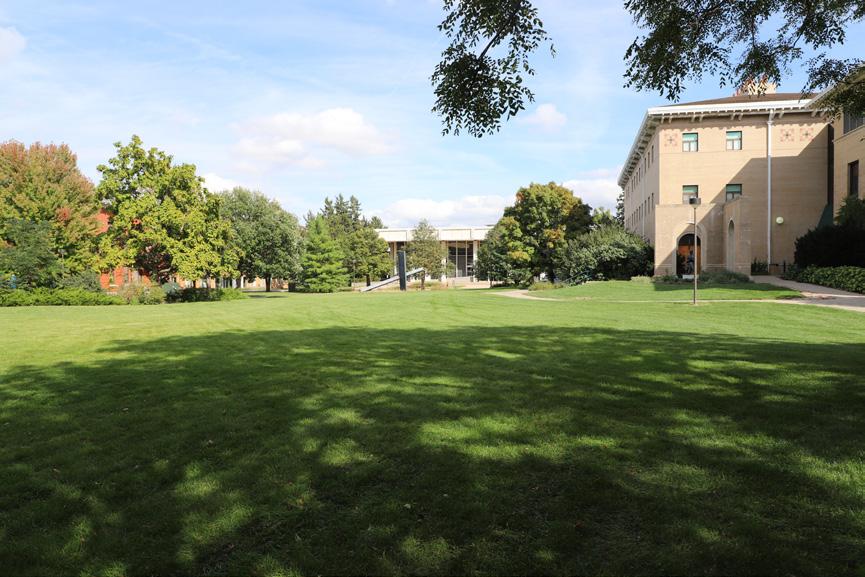
The Meadows and Legacy Plaza, bounded by C.Y. Thompson Library, Filley Hall, the Mall and the Nebraska East Union, is such a project, and it became even more interesting when in fall 2017 students in Horticulture 467 Planting Design engaged in true collaboration across majors and campuses to develop and present concepts or the space. Landscape design and management, architecture, and community and regional planning students gained an awareness of the importance of including each discipline in the process of designing and implementing new construction, renovation or landscape restoration.
As the “real” clients, students were given the freedom to be highly creative as they considered how to respond to the major renovation of the three buildings and design the space for its connectivity to the rest of the campus, despite not having final building plans. Their work, which was presented to a professional and administrative panel, became the basis for further refinement in Horticulture 469 Senior Landscape Design in spring 2018.
The fall 2018 planting design class also designed the north side of the Nebraska East Union using ideas from previous semesters. Since landscapes are never finished, subsequent classes will expand their learning and contribute their thoughts to what is now known as The Meadows — thereby participating in the creation of a legacy, leaving their own mark on the campus, and benefiting from an inclusive and rich project.
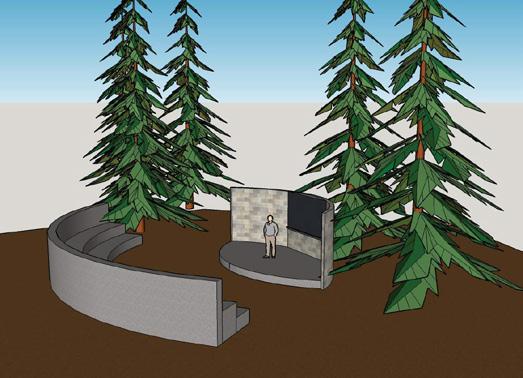
Student design plans for The Meadows and Legacy Plaza on the University of Nebraska–Lincoln East Campus.
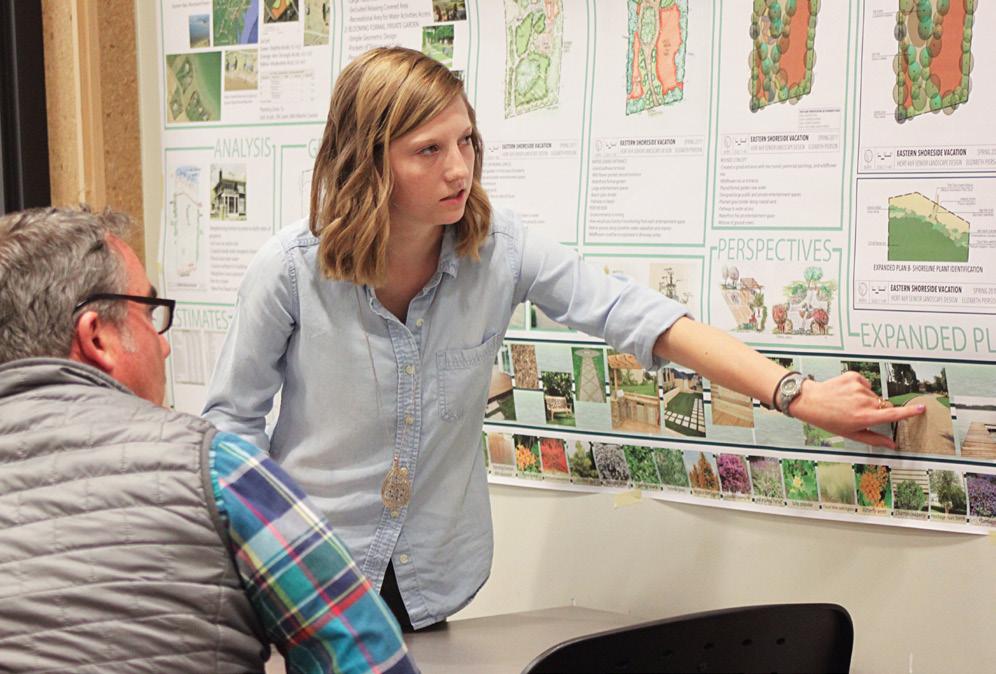
TOP ABOVE: Green space on East Campus where The Meadows and Legacy Plaza will be constructed. ABOVE: A Horticulture 469 Senior Landscape Design student presents her final project. Horticulture 467 Planting Design students present their design plans to a client.
Kim Todd
Our commitment to growers doesn’t stop when the season ends. We’re in it for the long haul — providing support, insights and industry-leading products to help you achieve success, year after year.
Unique partnership provides apprentice opportunity for turf students
by Bill Kreuser, assistant professor and extension turfgrass specialist
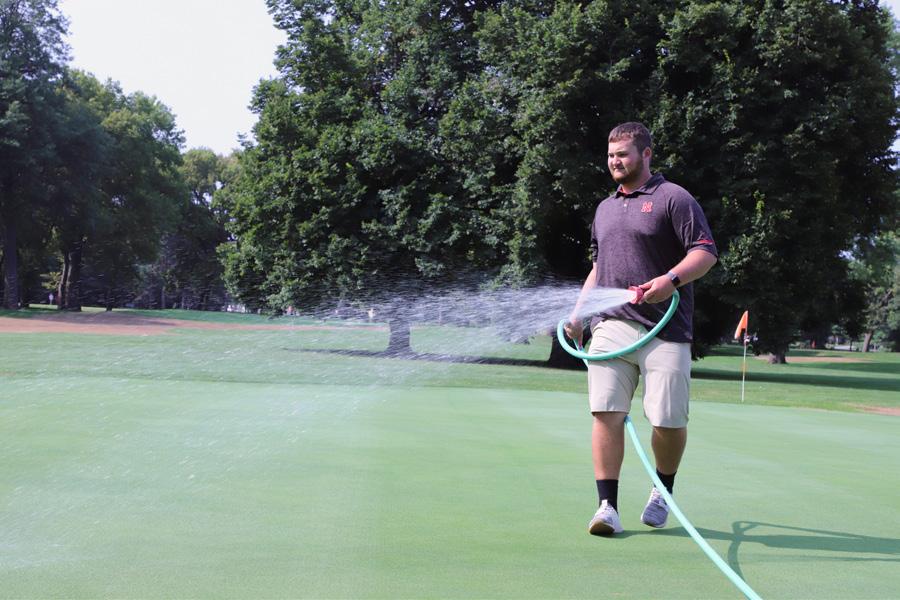
THE NEBRASKA TURFGRASS PROGRAM HAS PARTNERED WITH LINCOLN PARKS AND RECREATION TO PROVIDE A UNIQUE LEARNING OPPORTUNITY FOR ITS TURF AND LANDSCAPE MANAGEMENT STUDENTS. Advanced students in the program are placed in charge of all aspects of turf care at Jim Ager Memorial Golf Course.
“It’s a great opportunity for our students to hone their skills and build confidence before they start their careers as turfgrass professionals,” said Bill Kreuser, assistant professor and extension turfgrass specialist. The Golf Course Superintendents Association of America has granted the students the title of Apprentice Superintendent to indicate their increased level of responsibility. The students get support from the turfgrass faculty, graduate student and staff as they practice their craft.
Andrew Getty was selected to serve as the inaugural course manager at the Ager golf course. He started in March 2018 and has excelled. Last winter he worked with recent May grad Kenton Friston to develop a management plan within the course’s budget. Getty quickly improved the conditioning of the course’s putting greens and sand bunkers. He has also gained experience managing a small crew and interacting with golfers and PGA professionals at Ager. In the fall, Getty started an aggressive fairway renovation project. The old grass species were removed, and new diseasetolerant species were planted in late August.
A program like this needs industry support to be truly successful. The turfgrass industry partners have donated product, tools, equipment and even an irrigation control system to this apprenticeship program. These donations allow students to use state-of-the-art technology while refining their management style. “We are extremely excited for this new partnership with the Ager golf course. It is a unique learning opportunity for our students,” Kreuser said.
Nebraska turfgrass & landscape management alumnus Andrew Getty, who served as the course manager at the Jim Ager Memorial Golf Course in Lincoln, cuts a cup on a putting green.
ABOVE TOP: Bill Kreuser (from left), turfgrass & landscape management students Jordan Hames, Ben Searl and Kyle Lengfelder (lower right) look at the green profile at the Jim Ager Memorial Golf Course. ABOVE: Hames hand waters hot spots on an Ager putting green.
Andrew Getty
Expanding cover crop adoption in Nebraska THINKING BEYOND SOIL HEALTH
by Katja Koehler-Cole, research assistant professor; Roger Elmore, professor, Heuermann Chair and Daugherty Water for Food Global Institute Faculty Fellow; and Humberto Blanco, associate professor
IN 2014, A TEAM OF UNIVERSITY OF NEBRASKA–LINCOLN RESEARCHERS UNDER PROFESSOR ROGER ELMORE AND ASSOCIATE PROFESSOR HUMBERTO BLANCO CAME TOGETHER WITH THE NEBRASKA CORN AND SOYBEAN BOARDS TO INITIATE A MULTISITE PROJECT TO INVESTIGATE THE FEASIBILITY OF COVER CROPPING IN NEBRASKA CORN AND SOYBEAN ROTATIONS. Nebraska has unique environmental and agronomic characteristics that set it apart from other states, particularly from those in the east. The state receives less annual precipitation, experiences drier and colder winters, and has more crop land in no-till.
Would cover crops be able to grow enough to improve soil health? How would they impact soil water and main crop yields? To answer such questions, experiments were set up at four university research farms with funding from both commodity boards. The team, now led by Katja Koehler-Cole, research assistant professor, found that cover crops improved some soil health indicators. Cover crops had minimal effects on soil aggregation and particulate organic matter after four years. Cover crops did not affect soil water but reduced corn and soybean yields in half the site years. (There were a total of 12 site years — three sites, four years at each site.)
After taking these results to farmers in numerous extension events, it became apparent just how many more questions remain about cover cropping in Nebraska. While soil health is important to farmers, they need some monetary incentive to grow cover crops. This financial benefit is most often achieved by using the cover crops for forage.
The team research focus is shifting from “Do cover crops work in Nebraska?” to “How can we make cover crops work in Nebraska?” Looking forward, the team is now exploring how to adapt corn and soybean systems for cover crops while reducing production input costs with cover crops.
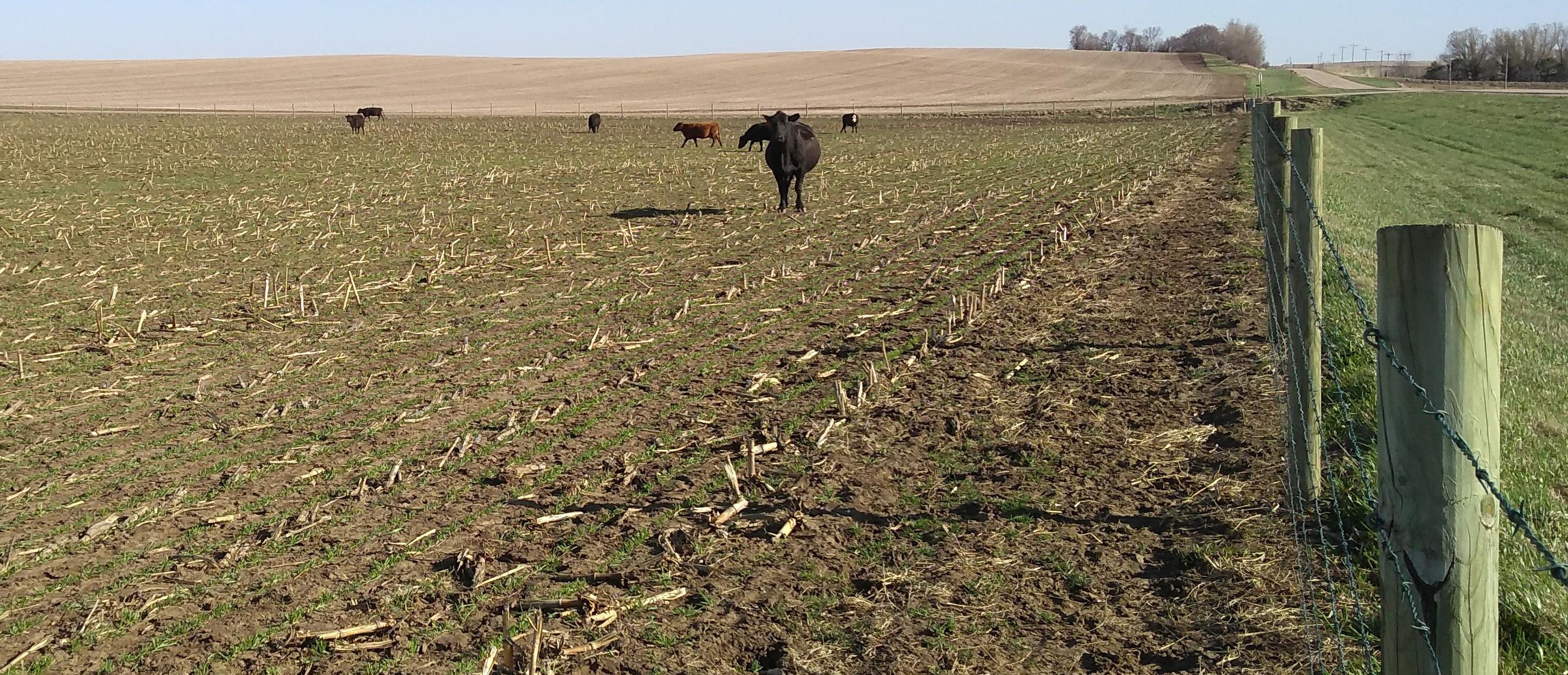
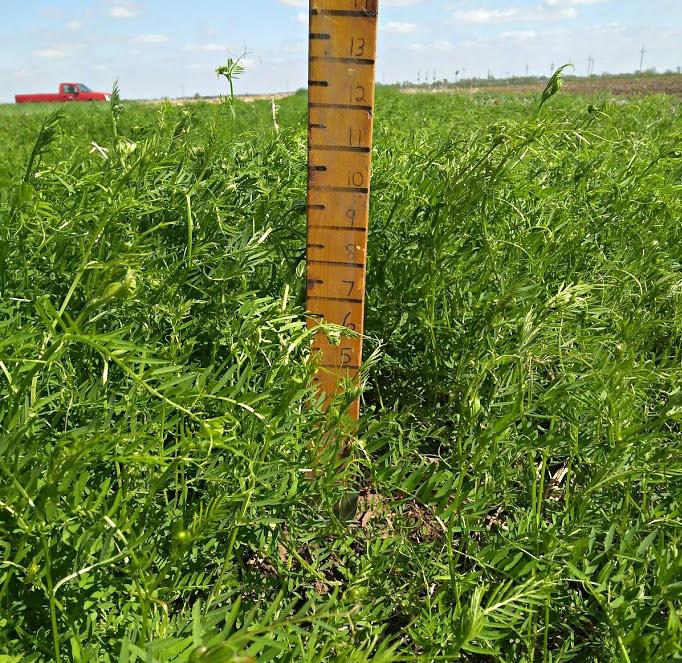
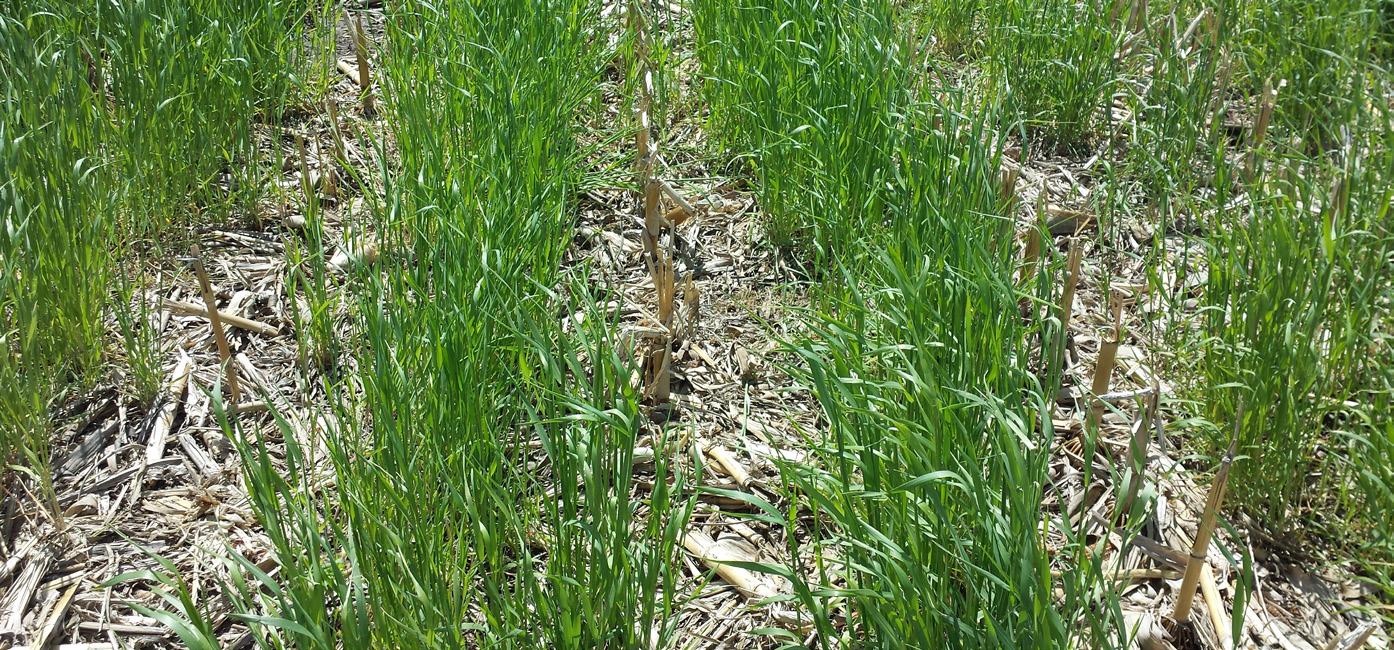
LEFT: Hairy vetch is a legume cover crop that can provide nitrogen to the subsequent main crop. RIGHT: This cereal rye was broadcast planted into corn in September 2017 and terminated in May 2018 prior to planting soybeans. Both photos were taken May 9, 2018, at the Eastern Nebraska Research and Extension Center near Mead.
Courtesy Photos
From data to decisions: Nebraska On-Farm Research Network helps farmers find answers
by Laura Thompson and Keith Glewen, extension educators and Nebraska On-Farm Research Network coordinators
FARMERS IN NEBRASKA HAVE HAD ACCESS TO A VALUABLE RESOURCE — THE NEBRASKA ONFARM RESEARCH NETWORK — FOR OVER 28 YEARS.
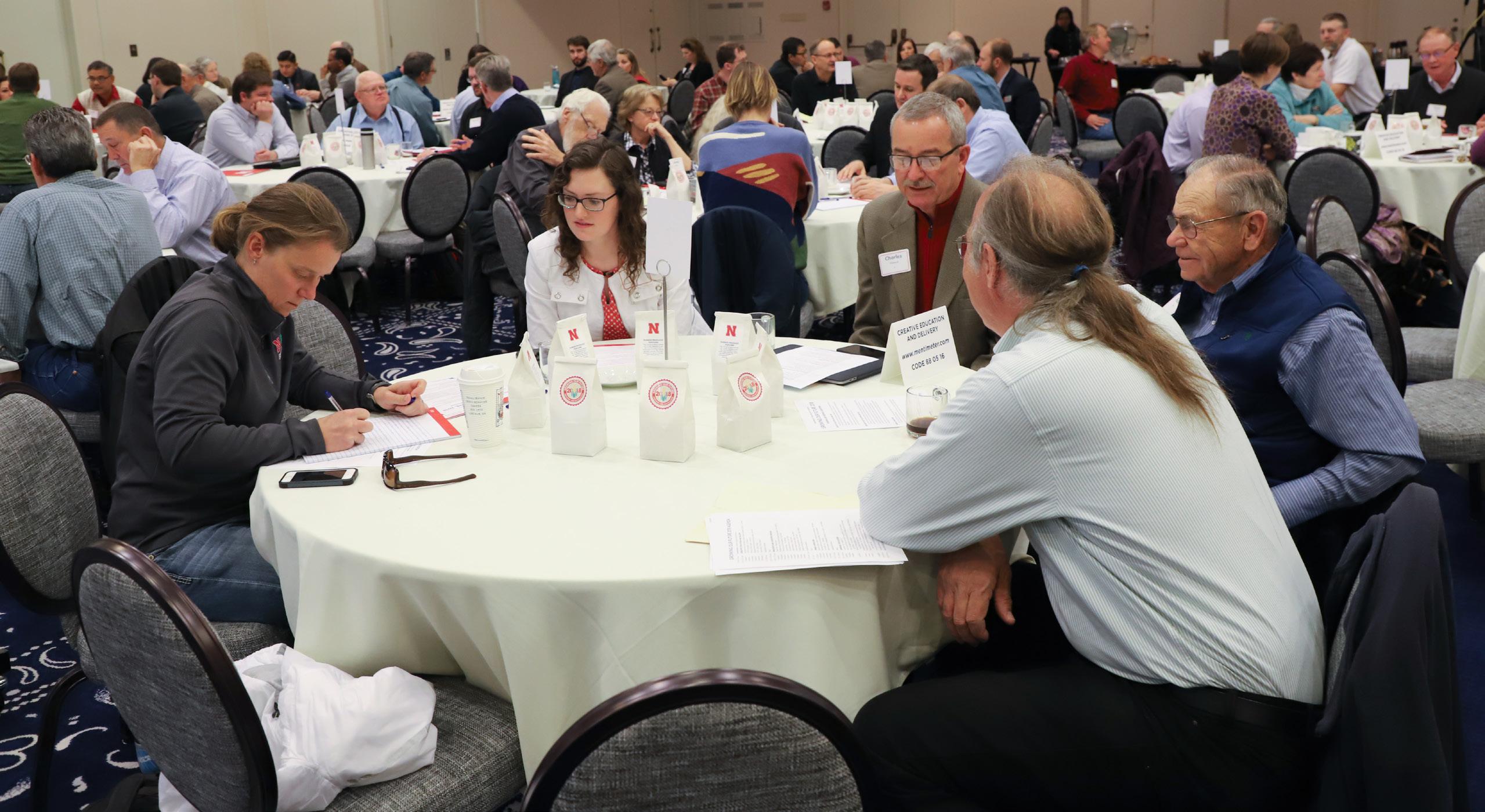
The focus of the research network is to assist farmers in conducting research on their own operations. This farmer-driven research is a way for participating farmers to get answers to questions that impact their farm’s productivity, profitability and sustainability. The trials are conducted using appropriate research methods required for meaningful results. The results of the previous year’s research are shared at annual meetings around the state each winter. Data from completed studies is pooled, allowing other farmers and crop advisors to benefit from the collective efforts of these participating farmers.
Originating in a single county in eastern Nebraska, the program has grown to a statewide effort. There are typically over 80 research studies completed each year. Participating farmers select numerous topics including seed treatments, soil fertility products and plans, crop varieties, cover crop implementation, row spacing, seeding rates, fungicides and more. Over the years, farmers have expressed the value of their participation in the program, saying they appreciate having an unbiased and reliable way to get information and that they value the interaction with other farmers and extension educators. By utilizing
the information gained through on-farm research to make management changes, participating farmers increased their profitability by more than $20/acre on average.
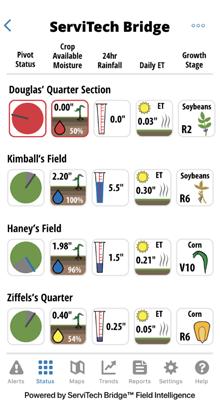
Today’s participants utilize the latest in agriculture technologies. GPS guidance systems are used to place treatments within the field; trials are monitored with drone, airplane or satellite imagery; and yield monitors are used to collect production data. The increased use of precision technologies is allowing for more in-depth understanding of the treatments that farmers are researching, allowing them to discover where certain products or practices work in their fields. While the technology to conduct on-farm research has changed over time, the mission remains the same — to help farmers make decisions that will make them more productive, profitable and sustainable.
Learn more about the Nebraska On-Farm Research Network at cropwatch.unl.edu/on-farm-research, download the annual reports of trials conducted and their results and access the database of completed on-farm research studies at resultsfinder.unl.edu.
The Nebraska On-Farm Research Network is a program of Nebraska Extension and is sponsored by the Nebraska Corn Board, the Nebraska Corn Growers Association, the Nebraska Soybean Board and the Dry Bean Commission.
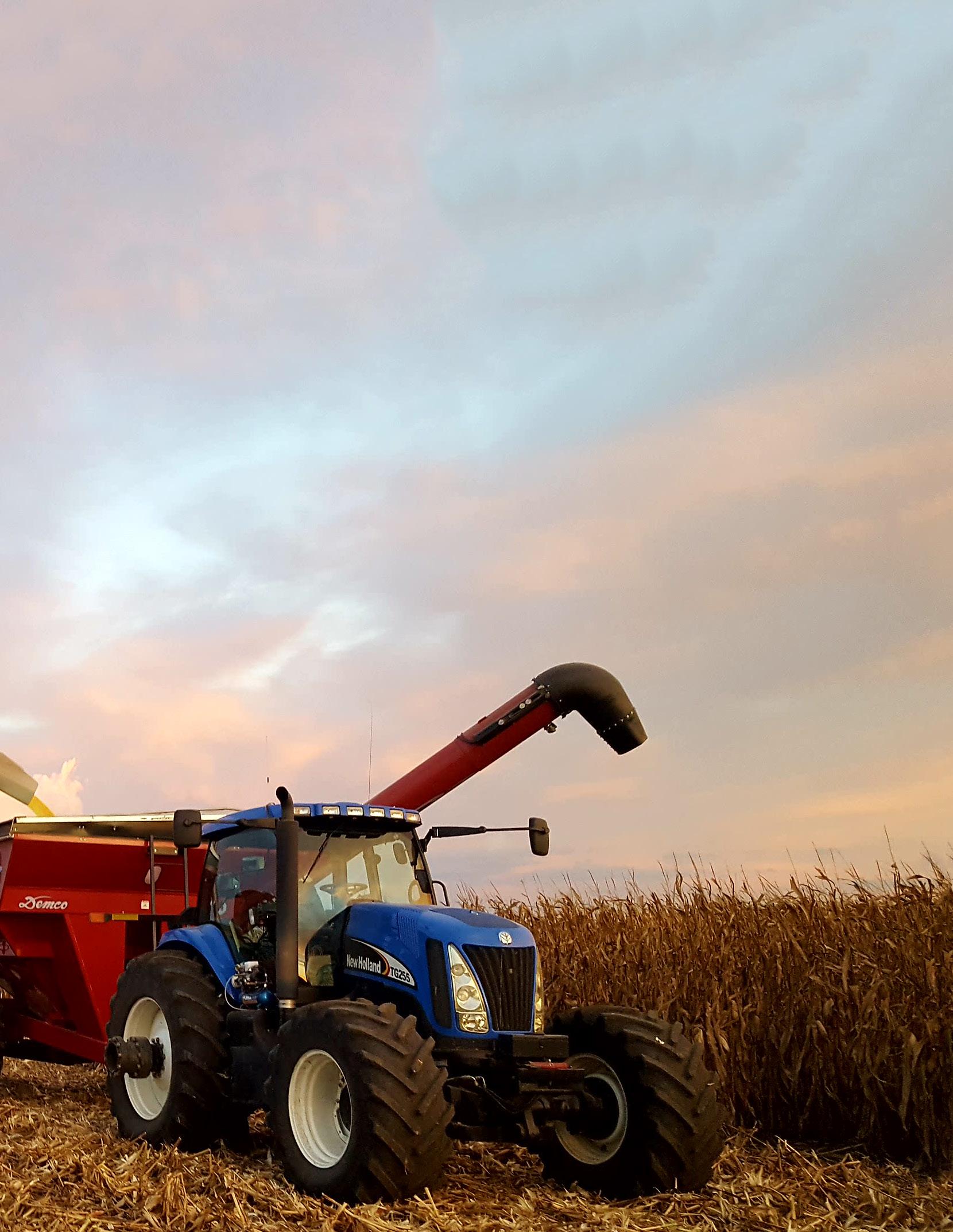
Farmer Dean Stevens harvests a Nebraska On-Farm Research Network test plot in Richardson County. Laura Thompson and Gary Lesoing assist with harvesting the plot which utilized a drone and sensor to direct nitrogen management.
DEPARTMENT OF AGRONOMY AND HORTICULTURE FACULTY HAVE BEEN INVOLVED WITH THE ON-FARM RESEARCH NETWORK SINCE ITS INCEPTION IN 1989.
In the last three years, Andrea Basche, Humberto Blanco, Roger Elmore, Richard Ferguson, Brian Krienke, Dean Krull, Chris Proctor, Daren Redfearn, Emeritus Charles Shapiro and Charles Wortmann have been involved with the network in some way.
Basche has recently been brought into the network through the Soil Health Initiative. NRCS-USDA and the university, along with Redfearn, are gathering yield and soils data from 17 farmers across the state who are experimenting with various cover crop practices including different cover crop species, different planting dates and grazing cover crops.
Blanco and Proctor worked on a corn board-funded project looking at cover crops to reduce soil erosion and nitrate leaching.
Elmore has consulted with Thompson and the group over the years at the annual meeting where preliminary results are discussed. On other occasions he has provided ideas on treatments and field experimental designs.
Ferguson, Krienke and Krull are largely involved through Project SENSE which runs through the Nebraska On-Farm Research Network. Ferguson was the lead PI. Thompson and Glewen are also a part of the team.
Krienke provides soils related expertise at faculty planning meetings and serves as a peer reviewer.
Proctor worked with extension educators Gary Lesoing and Laura Thompson on a project testing different corn hybrid maturity groups in a field near Falls City, Nebraska. He assisted with peer review of the on-farm research update booklet and on some of the statistical analysis for a few projects.
When the network first started, Shapiro assisted with design issues, data collection and analysis.
Wortmann’s role has been as a technical adviser.
Laura Thompson
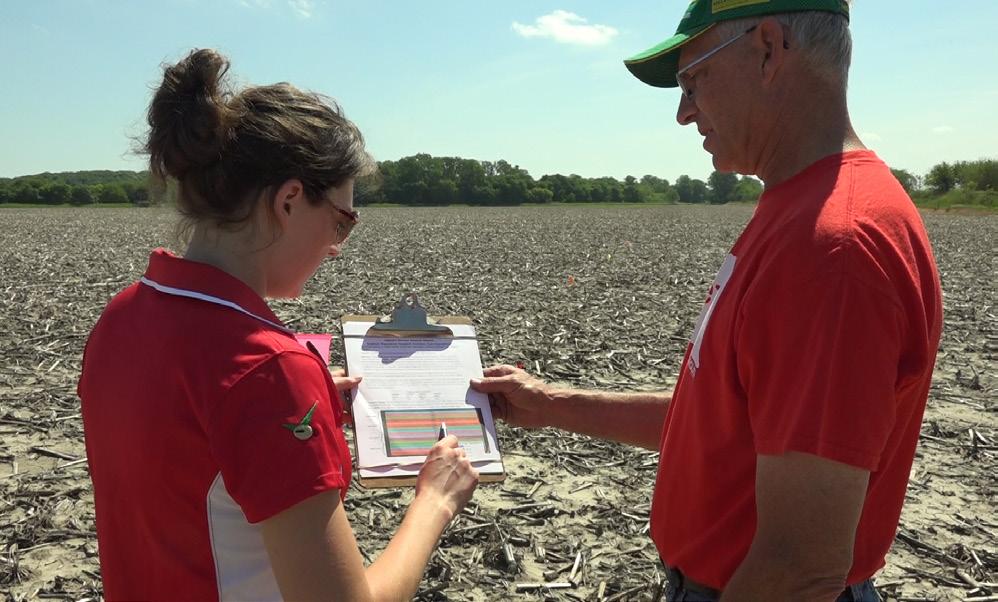
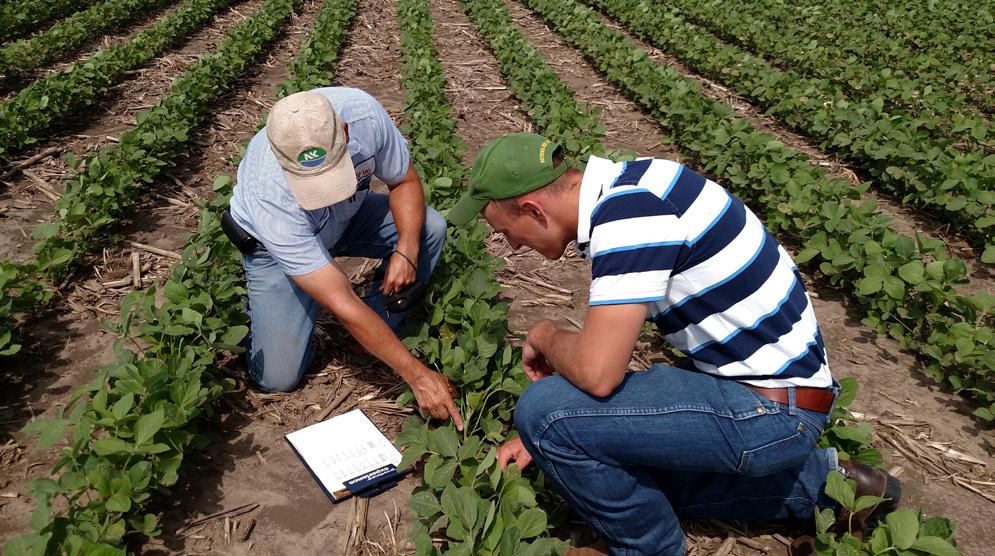
TOP: Nebraska Extension Educator Laura Thompson (left), and farmer Dean Stevens go over the research plan for a soybean seeding rate study. ABOVE: Consultant Steve Olson (left), shows agronomy student and summer intern Joey Geisler how to collect data from an on-farm research study on determining the optimum soybean planting population.
Nathan Thompson
Keith Glewen
EPA reps tour Nebraska ahead of dicamba registration decision
by Greg Kruger, associate professor, weed science and pesticide technology, West Central Research and Extension Center
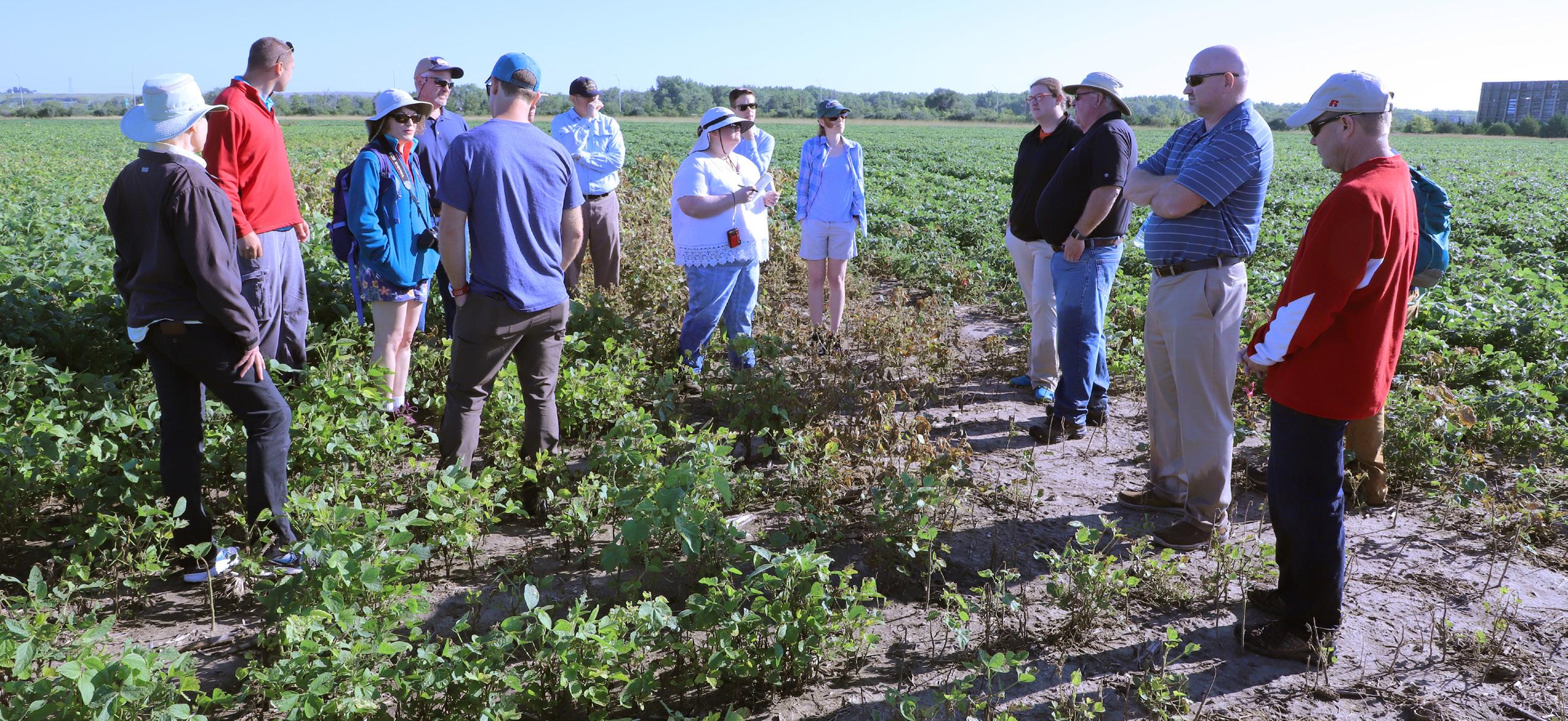
FOR THE U.S. ENVIRONMENTAL PROTECTION AGENCY’S OFFICE OF PESTICIDE PROGRAMS, MAKING REGISTRATION DECISIONS ON PESTICIDES IS BUSINESS AS USUAL. While crop protection products are critical for the production of many commodity crops, both conventional and organic, the EPA evaluates both the benefits and the risks of these products before they are registered or reregistered for use. Few products have been more controversial in the herbicide market than dicamba and atrazine. So with a reregistration decision on dicamba looming, a dozen EPA employees from the national office in Washington D.C. and the Region 7 office in Kansas City hit the road the week of July 30, 2018, to tour Nebraska and western Iowa to better understand how the two herbicides are being used, where they are being used and
what unintended consequences have resulted from the use of the products.
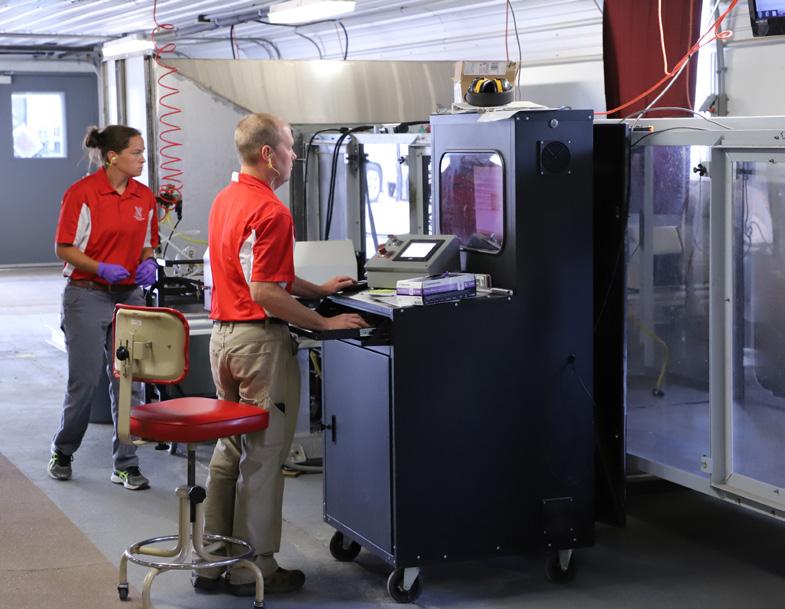
The tour started by looking at some of the research related to drift and offtarget movement at the West Central Research and Extension Center’s Pesticide Application Technology Laboratory near North Platte, Nebraska. From there, the group, along with Greg Kruger, Jesaelen Moraes and Bruno Vieira, worked its way east. The next few stops along the route were to visit with some of the agronomists, retail managers, growers and other key stakeholders — all with different experiences related to the use of dicamba — as well as to see various operations that are making pesticide applications or selling crop protection products.
En route to Lincoln, the group had the opportunity to see several incredibly clean soybean fields due to weed control from the use of dicamba
and, conversely, several soybean fields that showed dicamba symptomology. In Lincoln, an open stakeholder meeting allowed the group to hear from individuals on both sides of the issue. In particular, the group heard about the possible impact of dicamba on the trees of Nebraska.
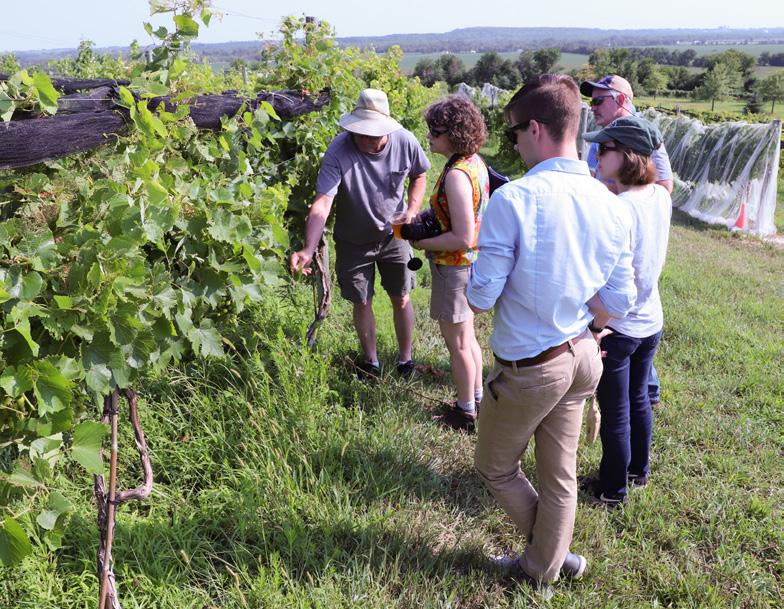
Next, the group traveled to Soaring Wings Vineyard near Springfield, Nebraska, to meet with its owners. At the vineyard, representatives from both Nebraska and Iowa departments of agriculture talked about how the use of dicamba and atrazine has affected them in their positions, including discussions about cases involving off-target movement of dicamba that they have had to follow up on the last two years.
The week wrapped up with a couple of farm and field stops in western Iowa, where the group saw the impact that atrazine has had on
corn production and environmental stewardship. The group had the opportunity see drones in use, operate farm equipment including a 120-foot boom sprayer, and see firsthand how pesticides were being used at the farm gate. The group then finished the day looking at a communitywide resistance management effort.
In the end, the individuals that made the trip were better equipped to represent Nebraska’s diverse interests in agriculture in its decision making. On Oct. 31, 2018, the EPA published its decision to extend the registrations for over-the-top applications of dicamba on dicamba-tolerant soybeans to Dec. 20, 2020, with some required changes to the labels on the products.
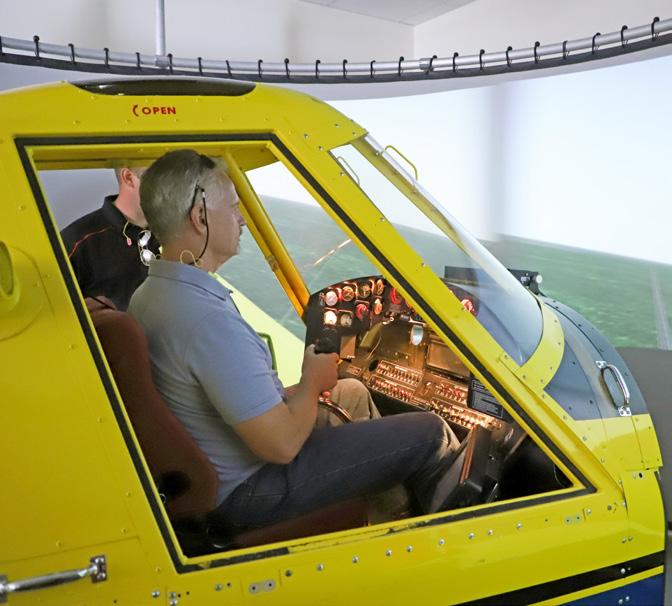
ABOVE LEFT: EPA reps tour three fields around the North Platte area where LEFT: Kasey Schroeder (left) and Jeff Golus demonstrate the wind tunnel at the West Central Research and Extension Center’s Pesticide Application Technology Laboratory near North Platte, Nebraska. Spray plane simulator The reps tour Soaring Wings Vineyard near Springfield, Nebraska. ABOVE:
Leveraging diversity to tackle herbicide-resistant weeds
by Nevin Lawrence, assistant professor, weed management specialist, Panhandle Research and Extension Center
LONG BEFORE HERBICIDES WERE FIRST USED, WEED SPECIES HAVE BEEN ADAPTING TO SURVIVE WITH CROPS. IF A FARMER GROWS WINTER WHEAT YEAR AFTER YEAR, YOU CAN COUNT ON WINTER ANNUAL WEEDS TO BECOME THE PREDOMINATE WEED. Similarly, if a farmer moves to no-till production or a perennial crop like alfalfa, you can expect Canada thistle or another perennial weed to become more common over time. The same is true with herbicides. If the same types of herbicides are used year after year, weeds may eventually evolve resistance to those herbicides. So what can a farmer do to ensure long-term weed control?
One of the great things about working in the Panhandle of Nebraska is the diversity of crops and production systems. In any given year, Assistant Professor Nevin Lawrence may be conducting field research in potato, wheat, peas, dry edible bean, sunflowers, soybeans, corn, alfalfa, sugarbeet
or chicory. A big focus of Lawrence’s research is leveraging the diversity of crops and production practices present in the Panhandle to develop weed control programs that might involve altering crop rotation, tillage systems, irrigation frequency and herbicide choices over several years.
For the past four years, an ongoing field trial has been taking place in Scottsbluff, Nebraska, Wyoming and Montana to evaluate how crop rotation diversity, tillage system and herbicide program contribute to the management of ALSresistant kochia. Mixing multiple herbicide modes of action each year (compared to strict reliance on a single herbicide class) reduced kochia density by 36 percent, whereas a rotation including corn, sugarbeet, dry beans and wheat (compared to continuous corn) reduced kochia density by 55 percent. While each individual strategy may not seem to make large changes on its own, combining herbicide program, crop rotation and tillage system together reduced kochia density by 88 percent in four years compared to the control plots.
The field component of this research program is over, and now Lawrence and his collaborators are busy analyzing the results to develop practical guidelines for farmers that include the influence of economic factors. Meanwhile, a second project has started to model how irrigation use and climate influence kochia emergence across the High Plains.
Nevin Lawrence
Courtesy Photo
Better together
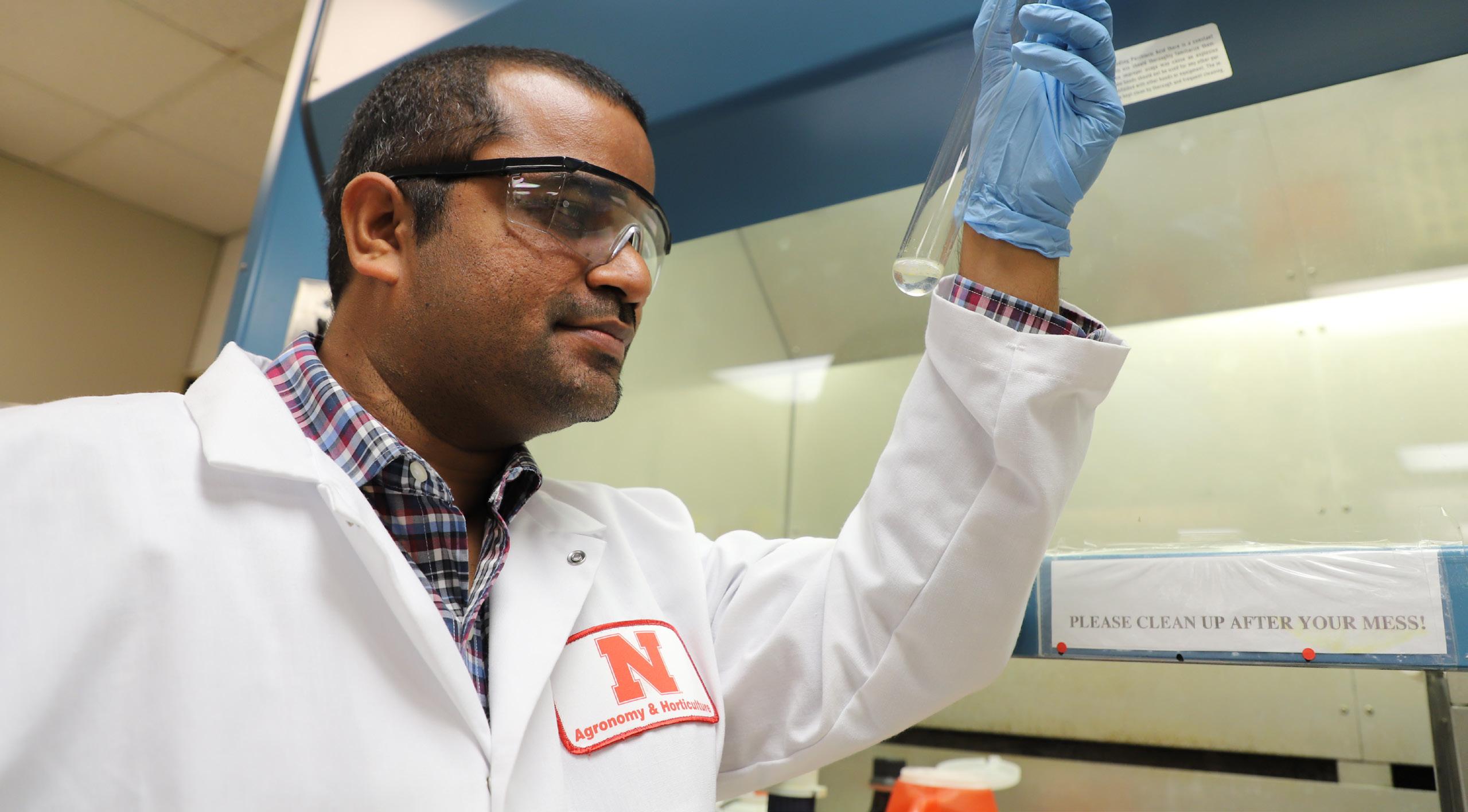
Schnable Lab focuses on corn and sorghum genomes
by James Schnable, assistant professor, computational biology
YOU MIGHT NOT GUESS IT FROM COMPARING THE PLANTS AT MATURITY, BUT THE GENOMES OF CORN AND SORGHUM ARE ACTUALLY QUITE SIMILAR. However, in many cases where sorghum has one gene, corn has two different ones to do the same thing. Assistant Professor James Schnable was recently awarded a new grant from the National Science Foundation to understand the role these pairs of genes play in allowing corn plants to develop separate male and female parts (the tassel and ear) while most of corn’s relatives, including sorghum, can only make one type of reproductive part that has to play both roles.
There are a number of other projects in Schnable’s lab funded by the USDA, NSF, ARPA-E and the Nebraska Corn Growers Association, but what all of them have in common is a focus on learning more by studying corn
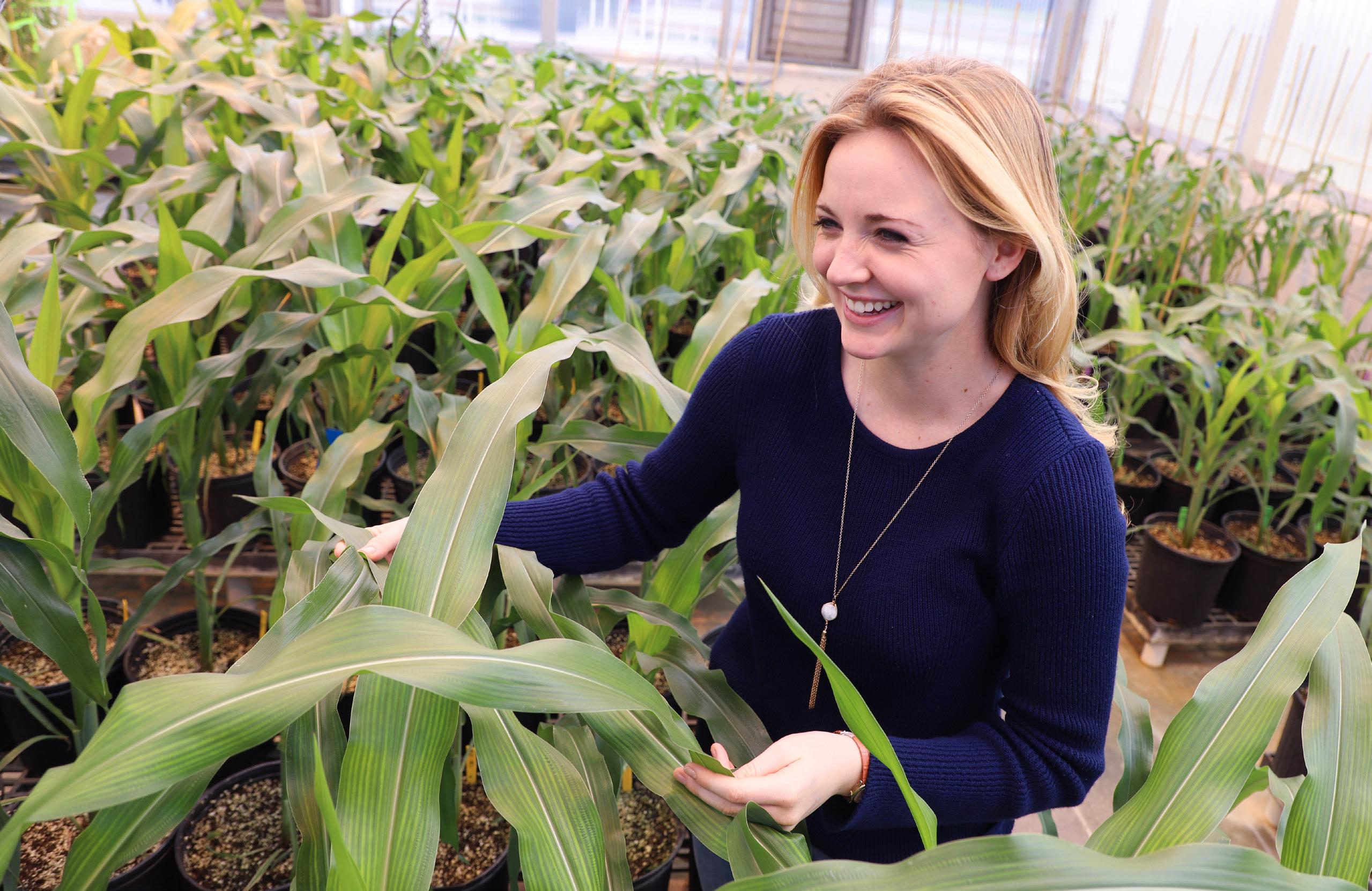
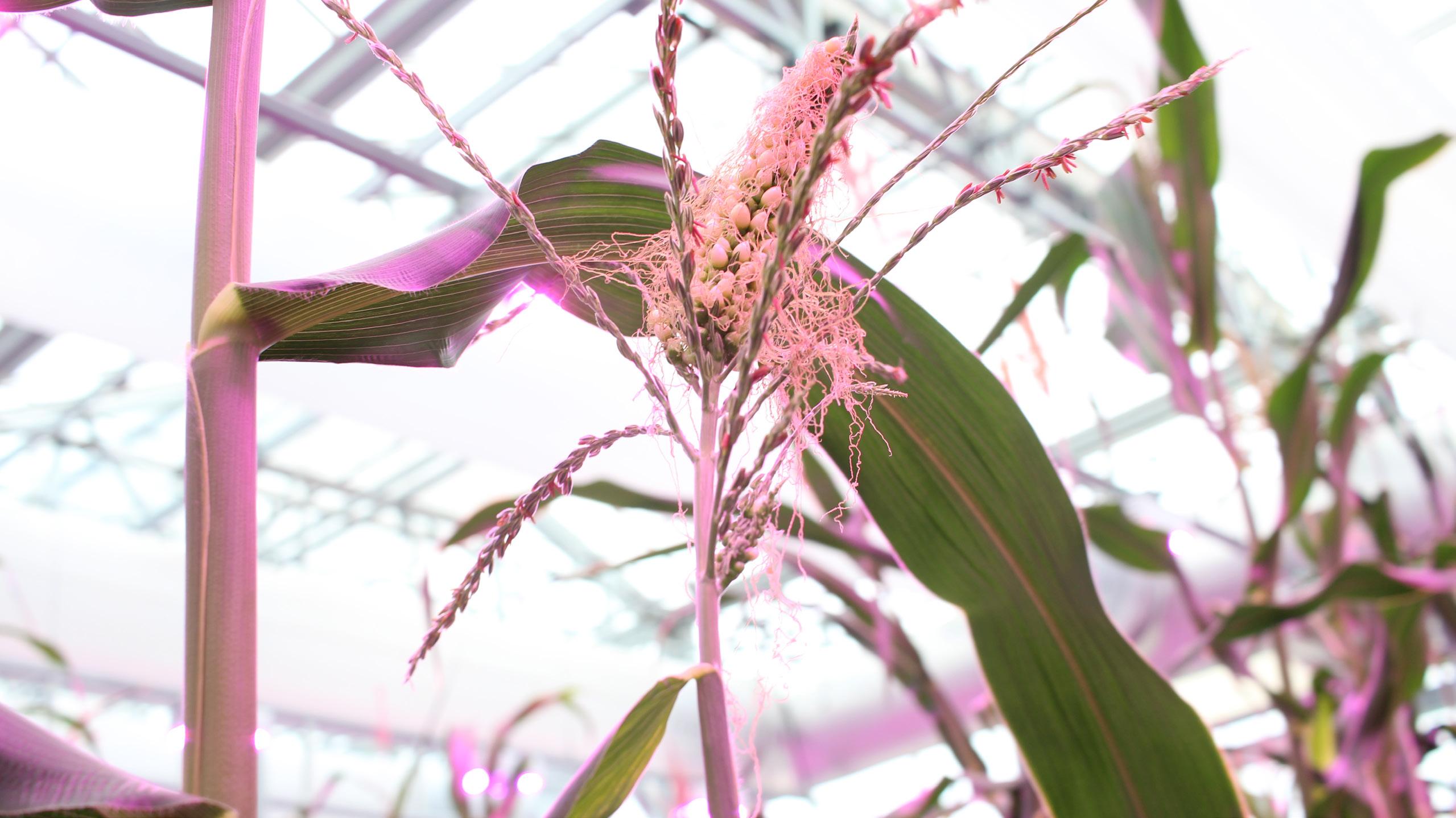
A corn plant sits in the Greenhouse Innovation Center on Nebraska Innovation Campus where corn and sorghum plants grow side by side. The greenouse features a highthroughput plant phenotyping system.
and sorghum together than by studying either crop alone. Christine Smith, research technologist, helps to manage the lab’s field program growing plots of one or both crops right on East Campus as well as near the Nebraska towns of Wahoo, Mead and Grant. Those plots are used for quantitative genetics research, identifying genes which control variation in agronomically relevant traits of either crop or both, but the plots also operate as a testbed for developing and testing new tools for plant phenotyping.
Two collaborators from the Department of Biological Systems Engineering — Assistant Professors Yufeng Ge and Yeyin Shi — have been scanning leaves and plants on the ground and imaging whole fields from the air. That data comes back to students in the Schnable lab who are working with statisticians, computer scientists and mathematicians to figure out the best and most efficient ways to use simultaneous measurements of dozens of plant traits collected at many different times throughout the growing season to understand the effects of variation in specific genes.
“The great thing about the time when I was hired at UNL,” Schnable said, “is that I started at the same time as a bunch of other new hires. This created an atmosphere sort of like the first day of high school. No one knows each other, and no one knows which table to sit at. In school that is the easiest time to build new friendships, and in science it’s an amazing opportunity to build new collaborations with people in fields that biologists don’t normally interact with at all.”
James Schnable
IMPROVING WHEAT AND RICE YIELDS UNDER STRESS
by Harkamal Walia, associate professor, plant physiology crop genomics, plant molecular physiology
WITH A $5.78 MILLION NATIONAL SCIENCE FOUNDATION GRANT, HARKAMAL WALIA AND A MULTIDISCIPLINARY TEAM OF UNIVERSITY OF NEBRASKA–LINCOLN RESEARCHERS ARE EXPLORING THE AFFECTS OF HIGH NIGHTTIME TEMPERATURES ON WHEAT AND RICE. This threestate partnership project is creating the foundational knowledge needed to improve wheat and rice yields under stressful environments.
Trends at the global-, regionaland farm-level point to an increase in minimum night temperatures that is significantly higher than the rate of increase in maximum day temperatures. Increases in night temperatures significantly decrease the grain yield and quality of major
crops such as rice and wheat, which together provide over 50 percent of the caloric intake for humans worldwide.
To ensure global food security, there is an urgent need to improve crop resilience to high night temperature stress-induced yield and quality losses. This project is building upon complementary expertise and infrastructure in Nebraska, Kansas and Arkansas to develop novel research infrastructure and make discoveries that ultimately lead to development of higher yielding and resilient cultivars for the U.S. farmers.
This program is building genome to phenome linkages using automated image-based phenomics approaches in combination with transcriptomics and metabolomics applied to wheat and rice diversity
panels. Gene and pathways discovered from this approach will be functionally tested for their role in improving the temperature resilience in rice and wheat.
This research will create opportunities to collaborate with key industry partners to ensure that promising discoveries are translated into applications with economic benefit for farmers.
Planned workforce development activities will focus on mentoring six early career faculty members; training of postdocs, graduate students and undergraduate students; and broadening the participation of underrepresented minorities and the underserved rural population in STEM fields.
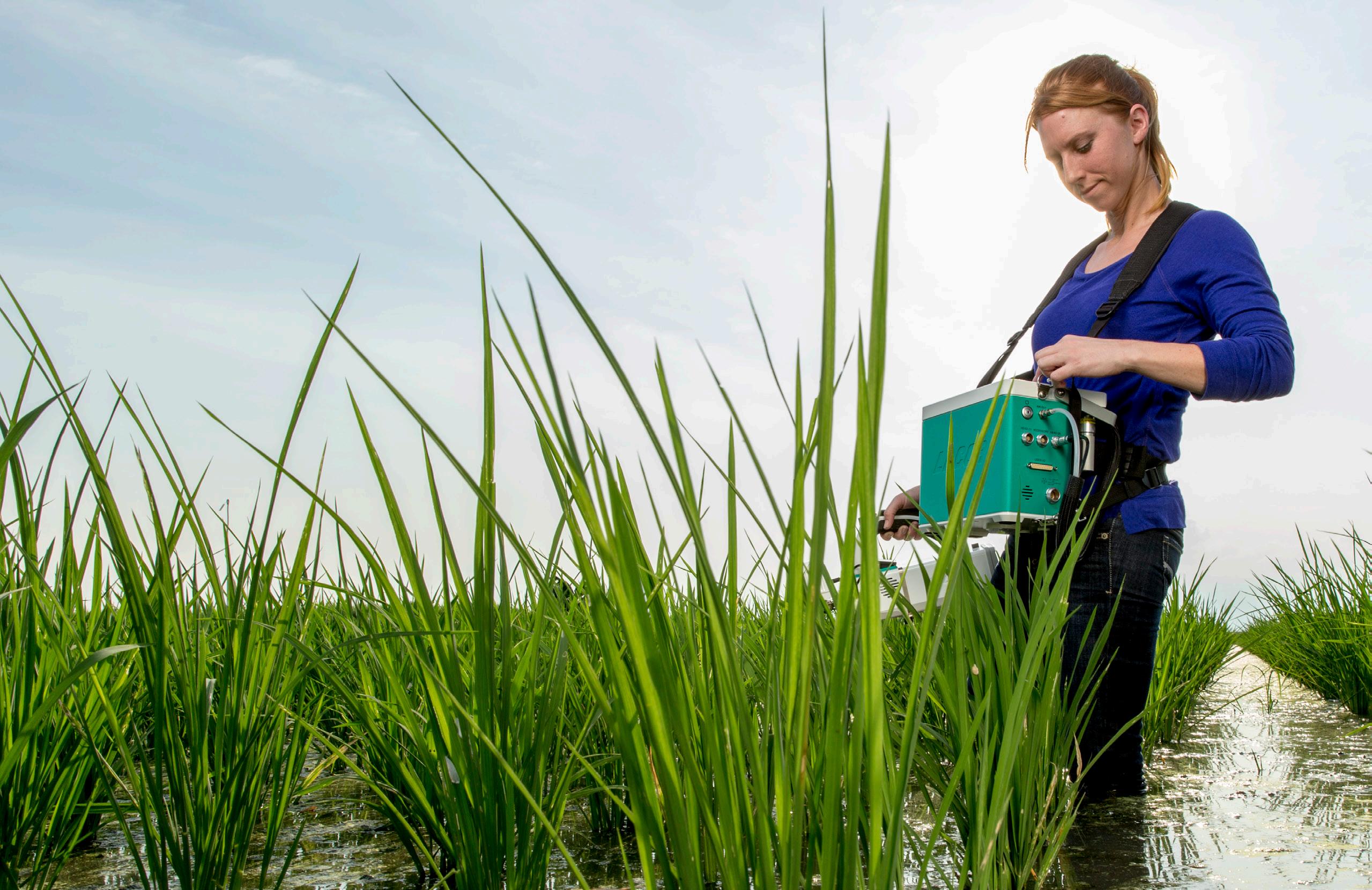
Harkamal Walia (left) and Jaspreet Kaur Sandhu, a graduate research assistant, measure the carbon being expired by a head of wheat.
Craig Chandler
CROPS VS. WEEDS
Improved simulation model helps predict outcome of competition under changing global conditions
by John Lindquist, associate department head and professor, plant ecology
A faba bean field near Wageningen, Netherlands. LEFT: Wageningen University and Research Atlas Building and the sower statue, rises up out of an agriculturally depleted field as the site for the Centrum de Born, its new, consolidated campus north of Wageningen, the Netherlands created in part to express the university’s developing commitment to environmental research. BELOW LEFT: Educational and restaurant facilities, and Wageningen University and Research library, are housed in the Forum. BELOW: John Lindquist and family members take a bike tour between Wageningen and Renkum, Netherlands.
AGRONOMY AND HORTICULTURE PROFESSOR
JOHN LINDQUIST, A WEED ECOLOGIST, COMPLETED A SIX-MONTH FACULTY DEVELOPMENT LEAVE WORKING WITH THE CENTRE FOR CROP SYSTEMS ANALYSIS AT WAGENINGEN UNIVERSITY AND RESEARCH IN THE NETHERLANDS.
WUR is ranked No. 1 worldwide in the agricultural sciences by U.S. News & World Report. The CSA mission is to contribute to the development of high-quality plant production and sustainable agro-ecosystems through research and teaching. The group’s core expertise is the quantification of complex interactions between plants, management and the environment using sophisticated simulation modeling tools.
Global change, and particularly the continuous rise in CO2 concentration and temperature, will have a major impact on the interaction between plant species in both natural and agricultural ecosystems. Competition between crops and weeds not only represents a process with
agricultural significance, but it could also serve as a model study to better appreciate the potential consequences of global change for plant community composition in general.
INTERCOM, the WUR simulation model that covers interplant competition, forms an excellent starting point for studying the effects of global change. The photosynthesis routines of this model are, however, insufficient to capture the differences in response of C3 and C4 species to increased atmospheric CO2 levels with a sufficient level of accuracy. The GECROS model, developed by CSA scientists, is state-of-the-art with respect to photosynthesis.
Lindquist’s goal was to incorporate the detailed photosynthesis routines of the GECROS model into INTERCOM. A model with this capability has not existed anywhere in the world and can contribute substantially to knowledge of how crops and weeds will interact under a changing climate. Further, the model may be used to hypothesize new approaches to improving the resilience of cropping systems.
Courtesy Photos
GROWING
2018 OUR FUTURE
AGRONOMYAND
by Lana Koepke Johnson, design and communciations specialist
THE DEPARTMENT OF AGRONOMY AND HORTICULTURE HOSTED THE GROWING OUR FUTURE 2018 CONFERENCE ON MARCH 27 AT THE GRADUATE HOTEL IN LINCOLN, NEBRASKA.
From breakthrough research to student involvement, a day of presentations and discussions provided a glimpse of the activities, programs, research and growth within the department to alumni, stakeholders, University of Nebraska administrators, faculty, staff and students.
Mike Boehm, Harlan Vice Chancellor of the Institute of Agriculture and Natural Resources and vice president of agriculture and natural resources for the Nebraska system, provided opening remarks. Boehm asked participants to think how the four words yield, resiliency, adaptability and profit look for the department, the university, Nebraska and the world. In relation to those four words, he asked the department to consider where they are, to identify where they have excellence and distinctive strengths, and to develop the most audacious and bold road map needed to feed and fuel the world. Richard Ferguson, interim department head, served as moderator.
The conference featured presentations and discussions centered around four themes: Creative Education and Delivery, Resilience and Ecosystem Services, Urban Landscapes and Emerging Cropping Systems. Between each section of presentations, stakeholders were tasked with discussing the presentations and brainstorming on how to improve these aspects of the department.
Creative Education and Delivery presentations explored how the department does extension delivery and classroom instruction and how we impact learners with creative instruction.
• Leonardo Bastos, Agronomy and Horticulture Graduate Student Association past president, highlighted activities of AHGSA.
• Salvador Ramirez, Doctor of Plant Health student and Applied Plant Systems graduate student coordinator, spoke about the great experiential learning for undergraduate students from around the nation that occurred during the summer APS-USDA internships.
• Gary Hein, director of Doctor of Plant Health, spoke about the DPH program and how long-term sustainability of agricultural production systems will only be possible if we are more effective at applying our knowledge and technology.
Rhae Drijber, professor
Attendees participate in discussions. Mike Boehm, IANR Vice Chancellor
Growing Our Future 2018 speakers Dirac Twidwell (from left), Blayne Sharp, Kim Todd, Gary Hein, Salvador Ramirez and Leonardo Bastos are introduced by moderator Richard Ferguson (right).
• Kim Todd, associate professor and extension horticulture specialist, presented pictures of the Backyard Farmer Garden and Evasco Garden, Rain Chain Garden and Keim Courtyard and described how they are used to teach students, the community and the state.
• Blayne Sharpe, Global Engagement director, presented information on the CASNR Undergraduate Scholarship Program. CUSP offers Rwandan students an opportunity to pursue an integrated science degree and experiential learning with many Nebraska agronomy and horticulture faculty during summer internships.
• Dirac Twidwell, associate professor, presented situations where agroecology students learn and are part of the solution as examples of the creativity in education and delivery used in course-based learning communities for real-world problems. Resilience and Ecosystem Services included presentations on resilience research in weed science and management, crop physiology, climate, external economic support and cropping systems.
• Ethan Freese, Range Management Club past president, said the club offers students from diverse majors opportunities to develop professional skills and to attend national society meetings and competitions.
• Dirac Twidwell, associate professor, discussed how human activities are contributing to the loss of resilience and shifts to less desirable ecological systems. The National Science Foundation National Research Training Grant in Agricultural Resilience jumpstarts a permanent interdisciplinary training program in resilience for ag-dominated systems.
• Greg Kruger, associate professor, talked about research and extension work in understanding how we kill weeds with herbicides, how we use pesticides in our cropping systems and how to maximize applications while mitigating unintended effects.
• Tim Arkebauer, professor, discussed soil carbon sequestration in row crops in the relationships of leaf and canopy optical properties, how much carbon is being fixed, how productive that canopy is and what the effects of stress on those relationships are.
• Rhae Drijber, professor, discussed the work in investigating ecosystem processes in the soil food web and building resilience in the soil through management and novel approaches and harnessing the microbiome.
• Martha Shulski, state climatologist and director of the Nebraska State Climate Office, shared historic and current climate data and future climate resilience considerations.
• Brad Lubben, extension associate professor, discussed key economic principles to help guide the way researchers, professionals and producers explore management decisions for agricultural production and resilience.
• Cody Creech, assistant professor, talked about his research with wheat and the importance of managed residue in resilience of western Nebraska dryland cropping systems.
• Twidwell provided a final summary of this section and stated, “I believe that the University of Nebraska is well positioned to really launch as a national leader in the science and application of the resilience concept.”
Urban Landscapes presentations included a look at the volunteer work across the state through Nebraska Extension Master Gardener program; breeding work in turf, hops and millet; demonstration of the Greenkeeper app; and research updates in biodegradable mulches and cover crops.
• Terri James, assistant extension educator, talked about the 835 active Nebraska Master Gardener volunteers and the 14,000 hours of education faculty gave to the program in 2017. As part of extension’s Cultivating Health Our Way program, 9 tons of produce were donated.
• Keenan Amundsen, associate professor, discussed breeding work in turf, hops and ornamental pearl millet that will work well in Nebraska.
• Bill Kreuser, assistant professor and extension turfgrass specialist, shared the Greenkeeper app. This app can help bridge the gap between researchers and users about turfgrass management and provide impact assessment from data analytics.
• Sam Wortman, assistant professor, discussed using Nebraska’s wealth of bioresources to develop sustainable fertilizer and weed control products for vegetable production. Examples include corn gluten meal and soybean meal for integrated nitrogen and weed management and polylactic acid mulch fabrics that are made from corn.
Emerging Cropping Systems presentations focused on yield trends, plant molecular genetics of grain protein quality, dry bean systems, range systems, modeling of yield and nitrogen, integrating cover crops into Nebraska cropping systems, and food security and cropping systems.
• Rodger Farr, Agronomy Club vice president (2018–19) and junior agronomy major, said the club emphasizes career-building experiences for students with speakers, field days, tours of agricultural companies and attendance at national meetings. The club also teaches soil science to elementary students.
• Patricio Grassini, associate professor, discussed how meeting food demand without massive conversion of natural ecosystems into agriculture depends on the degree to which current yield trajectories are sufficient to meet expected crop demand during coming decades.
• David Holding, associate professor, talked about CRISPR/CAS9 gene editing technology used to shut down kafirin storage proteins to improve sorghum grain
digestibility and protein quality and increase the crop’s potential utility in resource-efficient agriculture.
• Cody Creech, assistant professor, discussed the western Nebraska dry bean industry and the research he, Carlos Urrea, associate professor, and Bijesh Maharjanare, assistant professor, are working on to take dry bean production from irrigated ground to dryland acres.
• Mitchell Stephenson, assistant professor, talked about rangeland systems research he, Jerry Volesky, professor, and Walter Schacht, Sunkist Fiesta Bowl Professor of Agronomy, are working on in regard to cattle’s importance for altering spatial heterogeneity on rangelands.
• Haishun Yang, associate professor, shared that Optimal N rate for corn varies significantly from one year to another. The Hybrid-Maize and Maize-N models can help adjust N rate for a specific season to improve profitability and reduce N losses.
• Katja Koehler-Cole, postdoctoral research associate, and Humberto Blanco, associate professor, discussed their research on integrating cover crops into Nebraska cropping systems to mitigate loss of soil organic matter and soil nutrients during fallow times to lead to a more sustainable system.
• Stephen Baenziger, professor and Wheat Growers Presidential Chair, spoke about the daunting challenge facing humanity to create a food-secure world. He said the solution will require all of our creativity to be successful. Failure cannot be an option.
Impacting Lives Through Science
From global climate change to cutting edge cancer research, researchers rely on LI-COR technology to help answer their questions. From our home office in Lincoln, Nebraska we design, manufacture, and market innovative products and solutions for scientists around the world.
Learn more about how we’re impacting lives: www.licor.com
Field Imagery
Pivot Status
Growth & Weather Modeling
Rainfall Monitoring
Soil Moisture
LEADING WHERE NEEDED Ferguson steps into new role in Rwanda
by Fran Benne, design and communications specialist
RICHARD FERGUSON HAS ALWAYS HAD A PASSION FOR TEACHING AND EDUCATION, WHETHER THAT WAS IN THE CLASSROOM OR AMONG NEBRASKANS. After 34 years serving the University of Nebraska–Lincoln in the Department of Agronomy and Horticulture, the professor of soil science has stepped into a new role as vice chancellor for the Rwanda Institute for Conservation Agriculture in East Africa.
On Jan. 24, Ferguson packed up his belongings and moved to the “Land of a Thousand Hills” to embark on his assignment to provide leadership and direction to the newly formed RICA. RICA is an English language institution dedicated to educating and inspiring a new generation of
innovators in agriculture in Rwanda. Establishing the institute has been a joint effort of the Government of Rwanda and the Howard G. Buffett Foundation, with the University of Nebraska–Lincoln providing leadership in curriculum development and technical advising.
The fourth-smallest country in Africa, Rwanda has one of the highest population densities in the world but remains largely rural with about 90 percent of the population involved in agriculture in some way. RICA is part of a global movement of innovation in agriculture. Students will earn a bachelor’s degree in conservation agriculture in a three-year, internationally recognized program. They will engage in curricular and co-
curricular learning opportunities emphasizing conservation agriculture and One Health principles, oral and written communication, leadership and entrepreneurship.
As vice chancellor, Ferguson provides direction for the institution, manages fiscal resources and leads development of research and extension programs.
In October 2018, Ferguson began faculty and staff recruitment with a goal of having 23 faculty and approximately 45 nonacademic staff on board by the end of 2019. He has overseen student recruitment and said they have received several thousand applications from students in Rwanda for scholarships. Full scholarships will be awarded to 84 students each
Richard Ferguson (left), after completing soil sampling, stands in a RICA campus field with a resident of the area who worked on the site as an employee when it was originally a government ag research station. RIGHT: Early phases of construction on campus.
Courtesy Photos
year, with the hopes of having 250 students total by the third year.
The application process runs parallel to the process for students applying to the College of Agricultural Sciences and Natural Resources Undergraduate Scholarship Program that takes place on the University of Nebraska–Lincoln East Campus. Students can choose to apply to either — stay in Rwanda and earn a Bachelor of Science in conservation agriculture in three years from RICA or travel to the United States and earn a Bachelor of Science in integrated science in four years from CASNR.
Hosting up to 200 students in CUSP, CASNR will be welcoming the last freshman class to the university next fall 2019.
RICA will focus heavily on experiential learning and is set to open in July with classes starting the first or second week in September.
“From day one RICA students will be very hands-on,” Ferguson said. “They’ll also have the advantage of entering the marketplace sooner after graduation.”
The number of students is set at 84 to accommodate 21 students at each of the four farms where first-year students will be living and learning. These will be smallholder farms much like what is seen in Africa where farmers own small plots of land on which they grow subsistence crops and one or two cash crops.
Around the world, it’s estimated there are about 475 million farms less than two hectares in size. These smallholder farms operate on 12 percent of the world’s agricultural land and provide up to 80 percent of the food supply in Asia and sub-Saharan Africa.* For smallholder farmers, access to resources, markets and agricultural education is often inadequate.
“It’s our hope that RICA will develop innovative problem solvers who will go on to serve their communities in Rwanda and eventually East Africa,” Ferguson said.
RICA’s goal is to have a partially self-sustaining campus. The institution will be solar powered, and students will raise chickens, milk cows, and
grow crops and vegetables at each farm. Not all food will be produced on the farms, but students will study and engage with six agricultural enterprise systems: small ruminants, dairy, poultry and swine, row and forage crops, vegetable and tree crops, and irrigation and mechanization. It is likely that beef cattle production will be added as an enterprise in the future.
Ferguson has conducted research, delivered extension programs, and taught in the areas of soil fertility and precision agriculture since 1985. He joined the university as an assistant professor and began serving in administration for the department as associate head in 2012 and later as interim department head in 2017.
He holds a bachelor’s degree in biology and chemistry from Friends University and master’s and doctoral degrees in agronomy from Kansas State University.
More detail and ongoing updates about RICA can be found at the institute website at rica.rw.
*Source: fao.org
Digital renderings of the facilities on the RICA campus include a partial aerial view of campus (top left, clockwise), an interior view of the dormitory for second- and third-year students, the cafeteria area in the Campus Centre and an exterior view of the Campus Centre which will house administrative offices and the cafeteria.
Courtesy Photos
Postdoctoral researcher aims to increase plants’ nutritional value
by Raghuprakash Kastoori Ramamurthy, postdoctoral research associate
I GREW UP IN SRINIVASAPURA, A SMALL TOWN IN INDIA THAT IS A MAJOR HUB FOR WORLD-FAMOUS MANGOES IN ADDITION TO BEING A POPULAR MARKET FOR TOMATOES. From my childhood, I was always intrigued by the diversity of fruits and vegetables in terms of their size, shape, taste, etc. It was not until I attended the University of Agricultural Sciences, Bengaluru, India, for my bachelor’s degree that I could connect the basis of morphological variation (phenotypes) in plants and plant parts to plant genetics and breeding. I got my first field research experience while doing my master’s at SV agricultural college Tirupati working on genetic diversity in Guar (cluster bean) for morphological, quality and physiological traits.
To further advance my knowledge and skills in science, I pursued my Ph.D. at the University of Nebraska–Lincoln. This was the best decision of my life. First, because of student-friendly faculty and mentors who always had ideas to solve my research problems. Second, because of the resources available to conduct advanced research in a timely and efficient way.
Throughout my doctoral and postdoctoral training period, my goal has been to understand the genes and processes that affect mineral uptake and accumulation in edible plant parts. Cereals, legumes and fruits are important sources of protein, dietary minerals and vitamins. However, the density of important minerals in plant-based food sources is insufficient to fulfill the recommended dietary requirements. Consequently, about one-third of the world’s population suffers from micronutrient malnutrition, specifically due to iron and zinc deficiency in their diet. Although diet diversification and oral supplementation of some of these nutrients is an option, they are not feasible in developing and underdeveloped countries, either due to lack of resources or to rigid government policies. By discovering genes and processes that mobilize important nutrients into the edible plant parts, we can develop improved crop
varieties through plant breeding and genetic engineering. Outside of work, I spend time with my family, which includes my beautiful wife, our 2-year-old daughter and our 2-month-old son. Over the course of my stay in Lincoln, I have made a lot of good friends who have become a part of my larger family. I keep connected with plants by growing some vegetables in my backyard and trying new recipes with them.
PROMOTION AND TENURE
Patricio Grassini
Promoted to associate professor and granted tenure
Hired: 2011, Ph.D. 2010 from the University of Nebraska–Lincoln.
Grassini is an extension cropping system specialist. His research interests center on crop yield potential, yield-gap analysis, resource- and energy-use efficiency in cropping systems, and crop modeling. He co-leads the Global Yield Gap and Water Productivity Atlas that provides estimates of gaps between actual and potential yield for major cropping systems as well as crop water productivity. He also leads the Yield Forecasting Center which provides real-time corn yield forecasts across a large number of locations in the United States.
Amit Jhala
Promoted to associate professor and granted tenure
Hired: 2012, Ph.D. 2009 from the University of Alberta, Canada. Jhala is an extension weed management specialist. His research is focused on quantifying pollenmediated gene flow from herbicide-resistant to susceptible crops/ weeds and management of glyphosate-resistant weeds in corn-soybean cropping systems. Jhala is currently conducting field experiments to evaluate new herbicides for weed control and risk assessment of multiple herbicide-resistant crops. He is leading and/or contributing to several weed management focused extension meetings and field days to help clientele for effective and economical weed management.
Dirac Twidwell
Promoted to associate professor and granted tenure
Hired: 2013, Ph.D. 2012 from Texas A&M University. Twidwell is an ecologist focused on the sustainability of rangeland, forest and agricultural systems. His program has brought to light new changes occurring in Great Plains systems that impact the quality of life of current and future generations. This has led to a creative and innovative program on large-scale resilience science and planning, which has sparked diverse partnerships spanning university, agency and landowner experts that work together to re-evaluate existing policies and programs and halt key sources of environmental degradation.
Haishun Yang
Granted tenure
Hired: 2012, Ph.D. 1996 from Wageningen University, The Netherlands. Yang is an associate professor and crop simulation modeler. His expertise is in development of computer simulation models and computerized decision support tools for crop management. He has led and helped develop a suite of computer models and apps, including HybridMaize, Maize-N, CornSoyWater, BESS, DK C&N and SoySim. These tools have been widely used by producers, crop advisers, educators and researchers not only in the United States but also in other countries. Yang’s research focuses on modeling of crop growth and yield, soil nutrient management and carbon cycling, and life cycle analysis of bioenergy systems on energy balance and greenhouse gas emissions; and field research on crop water use efficiency.
FACULTY AWARDS 2018
Backyard Farmer: Omtvedt Innovation Award – department faculty on team include Terri James, Bill Kreuser, Matt Sousek, Kim Todd
Hail Know: Excellence in Extension Team Award – department faculty on team include Roger Elmore, Chris Proctor, Daren Redfearn
Stacy Adams: UNL Teaching Council and Parents Association Certificate of Recognition for Contribution to Students
Roger Elmore: Service Award for contributions to UNL’s South Central Ag Lab
Richard Ferguson: Fertilizer Industry Roundtable Recognition Award, Service Award for contributions to UNL’s South Central Ag Lab
Charles Francis: UNL Teaching Council and Parents Association Certificate of Recognition for Contribution to Students, Nebraska Sustainable Agriculture Society Sustainable Agriculture Educator of the Year, North Central Sustainable Agriculture Research and Education Hero Recognition
Roch Gaussoin: Elected to Executive Committee of the United States Department of Agriculture National Agricultural Research, Extension, Education, and Economics Advisory Board
John Guretzky: UNL Teaching Council and Parents Association Certificate of Recognition for Contribution to Students
Amit Jhala: Weed Science Society of America Outstanding Reviewer Award, Canadian Journal of Plant Science Outstanding Associate Editor Award
Bill Kreuser: NUTech Ventures Emerging Innovator of the Year Award
Don Lee: UNL Teaching Council and Parents Association Certificate of Recognition for Contribution to Students
Clyde Ogg: Nebraska State Pest Control Association Distinguished Service Award, American Association of Pesticide Safety Educators (AAPSE) Fellow Award
Ellen Paparozzi: Northeastern Regional Association of State Agricultural
ASA President
BACKYARD FARMER RECEIVED THE OMTVEDT INNOVATION AWARD FOR TEAM AT AN IANR AWARDS LUNCHEON ON NOV. 30. IANR Harlan Vice Chancellor Mike Boehm presented the award. The award recognizes innovative faculty members, or a team led by faculty, who have demonstrated exceptional abilities and innovation in the areas of teaching, research or extension education.
Backyard Farmer receives the Omtvedt Innovation Award for Team. Pictured are IANR Harlan Vice Chancellor Mike Boehm
Experiment Station Directors Award for Excellence in Multi-state Research
Paul Read: Chair-elect American Society for Enology and Viticulture–Eastern Section
Daniel Schachtman: UNL Teaching Council and Parents Association Certificate of Recognition for Contribution to Students
James Schnable: Maize Genetics Executive Committee Marcus Rhoades Early-Career Maize Genetics Award
Mitchell Stephenson: Society for Range Management Outstanding Young Range Professional Award
Richard Sutton: Council of Educators in Landscape Architecture Excellence in Research and Creative Work Award, Senior Level
Harkamal Walia: Vice Chair of the Midwest Section of the American Society of Plant Biologists (ASPB)
Charles Wortmann: American Society of Agronomy International Agronomy Award
CHARLES WORTMANN, PROFESSOR AND EXTENSION SOIL AND NUTRIENT MANAGEMENT
SPECIALIST, RECEIVED THE AMERICAN SOCIETY OF AGRONOMY INTERNATIONAL AGRONOMY AWARD NOV. 5 AT THE ASA AND CROP SCIENCE SOCIETY OF AMERICA MEETING IN BALTIMORE, MARYLAND. Wortmann’s prestigious career has focused on improving nutrient management, soil conservation and the environmental integrity of crop production systems in sub-Saharan Africa and to a lesser extent in Latin America and the Caribbean.
(from left), Jody Green, Kim Todd, Jonathan Larson, Terri James, Loren Giesler and Brad Mills.
(left) presents Charles Wortmann with the ASA International Agronomy Award.
Craig Chandler
Mitchell Stephenson (left), receives the 2018 Society for Range Management Outstanding Young Range Professional Award from SRM 2017 President Larry Howery.
BILL KREUSER, ASSISTANT PROFESSOR AND EXTENSION TURFGRASS SPECIALIST, WAS PRESENTED THE EMERGING INNOVATOR OF THE YEAR AWARD DURING THE NUTECH VENTURES 2018 INNOVATOR CELEBRATION NOV. 6 AT NEBRASKA INNOVATION CAMPUS. Kreuser created GreenKeeper, a decision support software tool based on research from university turf experts to help turfgrass professionals manage and schedule the application of fertilizers and other turf products. Working with Nutech Ventures, Kreuser launched a startup company, TurfGrade, to continually improve the user experience, add the latest research and cover growing operating expenses.
HAIL KNOW, A PROJECT DEVELOPED BY A TEAM OF INVENTIVE NEBRASKA EXTENSION FACULTY, RECEIVED THE EXCELLENCE IN EXTENSION TEAM AWARD AT THE NEBRASKA EXTENSION FALL CONFERENCE NOV. 27 IN KEARNEY. Hail Know was developed and launched in January 2018 to create timely and relevant programming to answer growers’ questions when hail storms strike.
Hail Know team members Roger Elmore (back row, from left), Robert Klein, Daren Redfern, Ashley Mueller, Chris Proctor, Tyler Williams, Justin McMechan (front row, from left) and Nathan Mueller, receive the Excellence in Extension Team award.
MITCHELL STEPHENSON, AN ASSISTANT PROFESSOR IN RANGELAND ECOLOGY AND MANAGEMENT AT THE PANHANDLE RESEARCH AND EXTENSION CENTER, RECEIVED AN OUTSTANDING YOUNG RANGE PROFESSIONAL AWARD AT THE SOCIETY FOR RANGE MANAGEMENT’S 71ST ANNUAL MEETING IN RENO, NEVADA. Stephenson’s research has focused on areas with potential impact on managing grazing lands throughout central and western North America.
CLYDE OGG, PESTICIDE SAFETY EDUCATION COORDINATOR, RECEIVED THE AMERICAN ASSOCIATION OF PESTICIDE SAFETY EDUCATORS FELLOW AWARD AND JAN HYGNSTROM, PSEP PROJECT MANAGER, RECEIVED THE AAPSE PROFESSIONAL RECOGNITION AWARD. The awards were presented Aug. 21 during the 2018 National Pesticide Applicator Certification and Safety Education Workshop in San Antonio, Texas.
AAPSE President Kerry Richards (from left), presents Clyde Ogg and Jan Hygnstrom with national awards.
Bill Kreuser
Courtesy Photo
NEW FACULTY HIRES
Assistant Professor
MICHAEL KAISER JOINED THE DEPARTMENT OF AGRONOMY AND HORTICULTURE JAN. 1 AS AN ASSISTANT PROFESSOR IN APPLIED SOIL CHEMISTRY.
Kaiser has a 75 percent teaching and 25 percent research appointment. He teaches the undergraduate soil resources course Agronomy/ Horticulture/Soil 153. His research focuses on the effects of compost/biochar mixtures on the formation of soil aggregates and the storage of organic matter in surface and subsurface soil.
Kaiser was born in Wernigerode, a small town in central Germany. He earned a diploma in geoecology and a doctorate in natural sciences from the University of Potsdam, Germany. He also completed habilitation, a qualification to conduct self-contained university teaching, in soil chemistry from the University of Kassel, Germany.
Prior to moving to Nebraska, he worked at the Leibniz-Centre for Agricultural Landscape Research near Berlin, Germany, at the University of California, Merced, and at the University of Kassel.
While at the University of Kassel, Kaiser applied at Nebraska and made his first visit to Lincoln in June 2017. He and his family arrived in Lincoln in late December. Unlike his family, he likes the strong winter conditions compared to the unusually warm and rainy weather in Germany. They have since enjoyed the nicer weather and exploring Nebraska.
Research Assistant Professor
KATJA KOEHLER-COLE STARTED AS A POSTDOC IN THE DEPARTMENT OF AGRONOMY AND HORTICULTURE IN AUGUST OF 2015 AND JOINED THE DEPARTMENT FACULTY DEC. 1 AS A RESEARCH ASSISTANT PROFESSOR.
She said she enjoys being a part of an innovative, diverse, and progressive department at the heart of Nebraska agriculture.
No stranger to the University of Nebraska–Lincoln, Koehler-Cole chose Nebraska for graduate school and earned a Master of Science and doctorate in natural resources with a focus on applied ecology from the School of Natural Resources.
Now, she is working with cover crops in corn and soybean systems to improve soil health and reduce nutrient losses to the environment while ensuring high crop productivity.
Koehler-Cole grew up on a dairy farm in the village of Gottesgrün, Germany, and earned a Bachelor of Science degree from Hohenheim University in Stuttgart, Germany.
Outside of work, she said she likes to grow as many plants as possible in her yard, patio and house and she is especially proud of her limes, kumquats, peach tree and blueberries. She spends most of her time with her family, which includes four daughters, and tries to keep the kids connected to their farm roots by working in their backyard garden.
Michael Kaiser
Katja Koehler-Cole
Associate Professor
MARC LIBAULT JOINED THE DEPARTMENT OF AGRONOMY AND HORTICULTURE JULY 1 AS AN ASSOCIATE PROFESSOR AND ROOT BIOLOGIST LOCATED IN THE BEADLE CENTER.
Libault’s expertise is in molecular and cellular plant biology and in plant root single cell and cell-type approaches. He is currently analyzing the molecular response of single cell-types isolated from different crop species including soybean and maize in response to biotic and abiotic stresses.
Libault came from the University of Oklahoma, where he was as an assistant and then an associate professor in the Department of Microbiology and Plant Biology.
He was born and raised in Paris, France, one mile from the Eiffel Tower and has always had an interest in understanding the molecular complexity of plants as well as their capability to adapt to their environment. He holds a bachelor’s degree from Paris 7 Denis Diderot University, France; a master’s degree from Paris 6 Pierre and Marie Curie University, France; and a doctorate from Paris Sud-Orsay University, France, in molecular and cellular plant physiology.
Outside of work, Libault said he enjoys spending time with his wife Sandra and their three sons, Alexandre, Quentin and Mathis. He also likes European history and politics, golf and running — even if he can’t compete with his older sons anymore.
Assistant Professor
REBECCA YOUNG JOINED THE DEPARTMENT OF AGRONOMY AND HORTICULTURE JULY 15 AS AN ASSISTANT PROFESSOR OF PRACTICE IN SOIL SCIENCE. She teaches resident and online Agronomy/Natural Resources/Soil 153 Soil Resources courses. Since earning her doctorate in 2015, Young had been lecturing in the University of Nebraska–Lincoln School of Natural Resources for the Soil Evaluation and Great Plains Field Pedology courses. She also lectured in the Program of Geography for the Elements of Physical Geography and Geography Field Tour courses.
Young is initially from Mishicot, Wisconsin, a small farming village near the Lake Michigan shoreline. The graduate program at the university’s School of Natural Resources, studying the activation history of dunes in a small Nebraska dune field, is what first brought her to the state in 2009.
She earned a Bachelor of Science in geography from the University of WisconsinPlatteville and a Master of Science and a doctorate in natural resource sciences with a specialization in soil science from Nebraska. In her spare time, Young enjoys camping, traveling, gardening and cooking. She is also an avid crafter and likes helping her partner design and build wood furniture, create new home-brews and attend to their honeybees.
Rebecca Young
Marc Libault
RETIREMENTS
Charles Shapiro – 34 Years
CHARLES SHAPIRO, PROFESSOR OF AGRONOMY AND HORTICULTURE, RETIRED
JAN. 5, 2018, AFTER 34 YEARS AT THE UNIVERSITY OF NEBRASKA–LINCOLN.
Shapiro was an extension soil scientist and crop nutritionist located at the Northeast Research and Extension Center’s Haskell Agricultural Laboratory in Concord, Nebraska.
His entire Nebraska career focused on improving the efficiency of corn and soybean growth through improved nutrient efficiency – getting more nutrients into a crop results in higher yields for Nebraska crop producers and to the producer and less potential loss to the environment.
He led Nebraska research and extension efforts on nitrogen fertilizer-use efficiency and water quality impacts from fertilizer use, organic cropping systems and efficient use of livestock manure resources.
Shapiro’s research and extension interests also included hail damage, manure management, organic farming, phosphorus nutrition, cover crops and even the fate of cattle implant chemicals in the environment.
His many publications on swine manure effluent effects on crops and buffer strips for reducing phosphorus in runoff are frequently referenced in other research publications.
Shapiro helped establish Nebraska’s Comprehensive Nutrient Management Planning team and from 2000–2018, helped hundreds of livestock operations comply with federal and state environmental regulations.
He led a statewide education effort on returning Farm Service Agency Conservation Reserve Program land to crop production in the mid-1990s and again in 2013. His statewide team provided tours, video conferences, publications and meetings for attendees.
In addition, Shapiro has established three long-term research projects to understand the longer-term implications of tillage, rotations and phosphorus management decisions.
Among his numerous awards was recognition of Fellow by the American Society of Agronomy in 2005. He also authored or co-authored countless peer-reviewed journal publications, book chapters and extension circulars.
Shapiro’s love of the outdoors and science and an interest in world hunger led him to pursue a career in agriculture even though he was born and raised in a suburb north of New York City. Inspired as a teen by a Purdue University professor at a summer leadership course on agricultural development in rural Mexico, he attended Cornell
University and earned a bachelor’s degree in general agriculture. After graduation, he spent a year working on a dairy farm and a processing vegetable farm before moving to Nebraska to work for the Lancaster County Noxious Weed Board. He then attended graduate school at the University of Nebraska–Lincoln under the supervision of the late agronomy professor, Albert “Dale” Flowerday, completing a master’s degree in 1978 and a doctorate in 1982.
Shapiro then moved to Ecuador and worked as a research scientist for Castle & Cooke, Inc., owner of Dole brand bananas. In 1984, he returned to Nebraska as an assistant professor of research and extension at the Haskell Agricultural Laboratory, where he remained until his retirement.
Richard Sutton – 43 Years
RICHARD SUTTON, PROFESSOR OF AGRONOMY AND HORTICULTURE AND THE PROGRAM IN LANDSCAPE ARCHITECTURE, RETIRED JUNE 30 AFTER 43 YEARS AT THE UNIVERSITY OF NEBRASKA–LINCOLN. Sutton began his career at Nebraska in 1975 with a teaching appointment in what was then the Department of Horticulture. He was promoted to full professor in 2008 and held teaching and research appointments in the Department of Agronomy and Horticulture.
He and his family have been involved in teaching, research and extension in the College of Agricultural Sciences and Natural Resources for nearly 100 years beginning with Sutton’s grandfather, Paul Stewart. Stewart was a faculty member in the Department of Agronomy and in extension from 1917–1938, and Philip Sutton, Richard Sutton’s father, served in extension from 1943–1978.
During Richard Sutton’s tenure, he was the primary instructor and adviser for the landscape design option within the horticulture degree program in the Department of Agronomy and Horticulture. He taught courses in Landscape and Environmental Appreciation, Landscape Plants I, Introduction to Landscape Design, Introduction to Landscape Contracting and Introduction to Landscape Construction.
As part of his joint appointment in the College of Architecture at Nebraska, he also taught Introduction to Landscape Ecology for Landscape Architects, Introduction to Green Infrastructure, and advised the Beta Eta chapter of the Landscape Architecture Honor Society, Sigma Lambda Alpha.
Sutton holds a bachelor’s degree in forest biology from Colorado State University, a Master of Landscape Architecture from Utah State University and a doctorate in land resources from the University of Wisconsin-Madison.
He was an original charter member of the Nebraska Statewide Arboretum in 1976, a fellow of the Center for Great Plains Studies, a Fellow of the American Society of Landscape Architects and the managing editor of the peer-reviewed Journal of Living Architecture.
His research has focused on native plants, landscape ecology, design and sustainable green infrastructure. One of his significant projects involved green roofs, which are comprised of vegetation and a growing substrate over a roof’s waterproofing membrane and offer a broad suite of benefits such as reduced runoff and decreased temperatures in cities. Sutton’s green roof research examined materials and techniques to improve and enhance the establishment and use of native grasses and forbs on green roofs.
The American Society of Landscape Architects presented Sutton with a Research Honor Award for his “Seeding Green Roofs for Greater Biodiversity and Lower Costs” project. He received the 2016 Green Roof Researcher of the Year from Green Roofs for Healthy Cities for conceiving, editing and contributing to the book “Green Roof Ecosystems.”
The Council of Educators in Landscape Architecture awarded Sutton the 2018 Excellence in Research and Creative Work Award, Senior Level. Sutton is currently at work on the book “Reading the Nebraska Landscape.”
Trained as a scientist, Mueller said he can’t overstate the importance of communication skills in his dayto-day work. “I find myself writing, listening and speaking more than I ever anticipated.”
study.
Nebraska Extension: The intersection of agriculture and education
And, for Nathan Mueller, the road home
by Chantel Koerwitz, contributor
EXTENSION EDUCATOR NATHAN MUELLER GREW UP ON A 1,200-ACRE DAIRY FARM NEAR WINSLOW, NEBRASKA. His family also grew alfalfa, oats, corn and soybeans. “I usually helped out by fixing fence and hauling manure,” Mueller said. “But my parents prioritized education. For me, it was school, then sports, then the farm.”
Beginning the journey with Nebraska
With such an emphasis on education, it’s no surprise that Mueller left the family farm for college in Lincoln. Mueller earned two degrees from Nebraska: a bachelor’s in 2005 and a master’s in 2007. When it came to deciding on a major, Mueller opted for agronomy both times. He said he thought farming would give him more days off than his dad had milking cows.
Mueller remembers the moment when he first contemplated graduate school. He was in Soils 366 and his professor, perhaps observing his potential as a scientist, asked him if he ever thought about continuing on for a master’s degree. That professor was Martha Mamo, and she, as well as her husband Daniel Ginting, served on Mueller’s committee for his thesis. With a grant from the Department of Environmental Quality, Mueller assessed streambank erosion, including phosphorus movement, of the Wagon Train watershed.
Seeking experience across the Midwest
In 2006 Mueller married his wife Ashley. From 2007 to 2009 while she pursued her master’s at Purdue University, Mueller worked for the Soil
Extension Educator Nathan Mueller (left) and farmer Ryan Siefken assess a soybean on-farm research
Laura Thompson
SPOTLIGHT: NATHAN MUELLER
Conservation Division of the Indiana State Department of Agriculture as a resource specialist team leader.
The next stop for the couple was Manhattan, Kansas, where Mueller earned his Ph.D. in agronomy from Kansas State University in 2012. His dissertation focused on soil fertility for corn and soybeans.
For two years, Mueller was an assistant professor and extension agronomist at South Dakota State University in Brookings. There, he came to realize that he most enjoyed the interaction with producers on the extension side of the job. The extension position was statewide, though, and Mueller found himself putting on a lot of miles as he traveled the state.
Returning home via extension opportunities
purpose. While reorganization within Nebraska Extension moved responsibility for ag tech to one of 18 statewide issue teams, Mueller continues to manage the site at croptechcafe. org, which includes local weather reports, grain bids, cash rent rates, Twitter feeds for Mueller and fellow extension educator Aaron Nygren, loads of information on cropping systems and precision ag data management, and occasional surveys (the latest is about seeding a cover crop).
One page of the blog, titled Winter Wheat Cafe, provides extensive resources for farmers thinking about adding this crop to their rotation. It’s an idea that’s gaining traction in northeast Nebraska. “We’ve gone from two farmers planting wheat to seven, and the number of acres has increased from 50 to 250,” he said. Having worked with winter wheat in Kansas and South Dakota, Mueller has the expertise to help local producers maximize their profitability.
When an opportunity with Nebraska Extension became available in the region where Mueller grew up, he didn’t hesitate to come home. Now he’s a cropping systems extension educator for Dodge and Washington counties. He and Ashley along with their two sons, Garrison and Kase, live across the street from the high school in Fremont and less than 10 minutes from the Dodge County Extension Office, where the Muellers work. “It’s hard to believe we’ve been here going on 5 years. That’s more than twice as long as we lived anywhere else,” he said.
When Mueller joined Nebraska Extension in June 2014, his job description included an agricultural technology element. So he created the Crop Tech Cafe, an online resource for producers and a mechanism for Mueller to disseminate information quickly. The blog’s tagline “Know your crop, know your tech, know your bottom line . . . feeding you agronomic information for your farm in northeast Nebraska” sums up its audience, content and
Mueller estimates that 90–95 percent of his job is programming. “My busy time is December through March. That’s my planting season,” he said. One of the biggest education events he organizes is the annual Fremont Corn Expo, a free event attended by hundreds of area producers. One of the presentations at this year’s expo was Hail Know—a title developed by Mueller’s wife, who is a disaster recovery coordinator for Nebraska Extension and occasionally works with Mueller on projects related to natural disasters that affect agriculture, such as hail storms.
During the spring and fall when producers are in the field, Mueller’s focus shifts to site visits and onfarm research. One team that benefits from Mueller’s expertise is Project SENSE. Led by Richard Ferguson, the On-Farm Research Network project seeks to improve the efficiency of nitrogen fertilizer use in irrigated corn.
Unlike the farmers he serves, Mueller can’t measure success by profit margins and bushels per acre. Instead, he relies upon spreadsheets and Google analytics to meticulously track inquiries, tally surveys, count participants and calculate website traffic. By all accounts, Mueller is indeed finding success in his field. In fact, he was listed in 2017 as one of 10 exceptional extension specialists in an online article of Successful Farming.
Mueller’s dad and two uncles, together with a cousin and a couple of hired hands, still operate the family farm that straddles the county line between Dodge and Washington counties. Mueller, meanwhile, has settled into his role as extension educator for cropping systems. It’s a perfect fit for the native son who understands ag, appreciates small-town life, and has a knack for making science pay off for producers.
Nathan Mueller
IN REMEMBRANCE
Gerald “Jerry” Dean Eastin
1931 – Dec. 8, 2018
Professor Emeritus
Gerald “Jerry” Dean Eastin, age 87, died Dec. 8, 2018. Eastin earned bachelor’s and master’s degrees from the University of Nebraska–Lincoln and a doctorate from Purdue University. He started his career at Nebraska in 1961 as an assistant professor and then took a plant physiologist position with the USDAAgricultural Research Service. He returned to the university in the agronomy department and was promoted to associate professor in 1967 and professor in 1970.
Eastin was an environmental crop stress physiologist and worked on pinpointing crop developmental limitations in order to develop field stress screening techniques based on sensitive developmental stages dictating the seed number and seed weight components of yield. His research resulted in the release of two stress resistant populations and four stress resistant/high yield lines from 1997–1999. He also authored or co-authored numerous journals, publications and book chapters. He taught Physiology of Grain Yield and was an invited lecturer on crop physiology. He also advised, directed and supervised many graduate students.
Eastin was a member of the American Society of Agronomy, Crop Science Society of America, Sigma XI (Scientific Research Honor Society) and Gamma Sigma Delta (Honor Society of Agriculture.) He was selected to be a U.S. National Academy of Sciences –National Research Council Research Associate from 1960–1961. In 1973 he became a New Zealand Plant Physiology Division Climate Laboratory Fellow in the New Zealand Department of Scientific and Industrial Research. He was honored as an ASA Fellow in 1976 and a CSSA Fellow in 1985. He was also the coordinator for Nebraska’s INTSORMIL projects from 1978–1985. He retired in 2004 and was granted emeritus status.
Joseph “Joe” W. Keaschall
April 20, 1956 – May 15, 2018
Professor of Practice
Joseph “Joe” W. Keaschall, age 62, died May 15, 2018. Keaschall grew up on a farm near Ravenna, Nebraska. He earned a bachelor’s degree in agronomy with high distinction from the University of Nebraska–Lincoln. He earned a master’s degree in plant breeding and genetics at Nebraska and went on to earn a doctorate in plant breeding and genetics at Purdue University in sorghum breeding.
After graduating from Purdue University, he became a corn breeder for Pioneer Hi-Bred International, Inc. at Windfall, Indiana where he worked for 11 years. He later became a research director for DuPont Pioneer for 19 years. Keaschall then had the opportunity to relocate to Lincoln as a research lead for DuPont Pioneer in the Western Business Unit regional office. He was the corn product program director for Latin America and the Southern/Western United States. He also served on the leadership team for the Ag Traits group which focused on the identification and integration of engineered genes for drought, nitrogen-use efficiency and yield enhancement.
Keaschall joined the Department of Agronomy and Horticulture faculty, Aug. 15, 2016, as a plant breeding professor of practice. He taught graduate courses in plant breeding including Heterosis, Cross-Pollinated Crop Breeding and Haploids & Doubled Haploids in Breeding.
Keaschall was a member of Phi Eta Sigma (Freshman National Honor Society) and Gamma Sigma Delta. He received the Pioneer Million Unit Club award in 1991, the DuPont Pioneer Achievement in Research Award in 2012 and the Bolton Carothers Award in 2014.
IN REMEMBRANCE
Russell Moomaw
July 7, 1928 – Dec. 2, 2018
Professor Emeritus Russell Scott Moomaw, age 90, died Dec. 2, 2018. Moomaw grew up at Moomaw’s Corner, four miles north of Bayard, Nebraska. He was the youngest of four children born to western Nebraska pioneers. He graduated from Bayard High School and from Kansas State University. He returned to the family farm and businesses near Bayard until 1954 when he became a student and then graduated from Ozark Christian College in Joplin, Missouri. He and his family moved to Riverton, Wyoming, where he became minister of the Christian Church.
In 1964 he became a graduate student at Colorado State University and earned a master’s degree in agronomy. Following graduate school, Moomaw became a county extension agent in York, Nebraska. In 1968, he started his career in the department as an agronomist and weed specialist at the University of Nebraska–Lincoln Northeast Research and Extension Center in Concord, Nebraska.
Moomaw’s research focused on systems of weed control in crop production for eastern Nebraska; evaluation of grain crop variety performance in Nebraska; systems for controlling weeds with emphasis on velvetleaf; shattercane and leafy spurge; and management practices for renovation and/or improvement of pastures in northeast and eastern Nebraska.
Moomaw conducted many extension programs and authored or co-authored over 100 professional journal articles and other publications including extension service newsletters and publications.
He retired in 1992 as a professor of agronomy, extension crops and weeds specialist with 26 years of service and granted emeritus status.
Moomaw was a member of the American Society of Agronomy, Crop Science Society of America, Council of Agricultural Science and Technology, Nebraska Cooperative Extension Associations and the North Central Weed Control Conference Board of Directors.
Gary Varvel
May 3, 1949 – Dec. 8, 2018
Professor Emeritus Gary Varvel, age 69, died Oct. 8, 2018. He grew up on a farm near Gordon, Nebraska. Varvel received his bachelor’s degree from Chadron State College in 1971 and earned a doctorate in agronomy from the University of Nebraska–Lincoln in 1977. He worked at the University of Minnesota Northwest Experiment Station until 1983 before he took a soil scientist position at the USDA-Agricultural Research Service on Nebraska East Campus and became an adjunct associate professor in the agronomy department.
Varvel’s expertise was in cropping systems, especially with respect to their long-term management effects on carbon sequestration, N use efficiency, nitrate leaching and yield stability (or variability.) He served as ARS project leader involved in determining the effects of crop and fertilizer management techniques in conservation production systems in both irrigated and dryland agriculture. His research contributed significantly to understanding fertilizer N requirements and utilization, C sequestration, and yield variability in cropping systems.
His expertise resulted in numerous speaking invitations at state and regional meetings including Regional Crop Update meetings for Agriliance in both Nebraska and Kansas and the Illinois Fertilizer & Chemical Association Meeting in Peoria. He also served as an associate editor for Agronomy Journal and Soil Science Society of America Journal.
Membership in honorary academic societies included Sigma Xi, Gamma Sigma Delta, Alpha Lambda Delta (Freshman National Honor Society), Kappa Mu Epsilon (National Undergraduate Mathematics Honor Society) and Blue Key Honor Society. During his 39 years in agricultural research, he received the designation of Fellow in the American Society of Agronomy and the Soil Science Society of America. He was promoted to adjunct professor in 2012, retired in 2014 and was granted emeritus status in the Department of Agronomy and Horticulture.
The seed was planted in childhood. Scholarships helped it grow.
Morgan Von Seggern spent many evenings and weekends at a local farmers market selling her family’s produce and educating customers about how their food was grown. That planted a seed. But it was her high school biology class where horticulture truly sprouted. “We only spent a few weeks on plants, but I was hooked,” she says. “Plants are extremely fascinating to me.” Because of several scholarships awarded to Morgan, that fascination is turning into a career.
Please make a donation to help students like Morgan. When you help students, you are also contributing to the health and growth of our state for decades to come. Call 800-432-3216 or visit nufoundation.org/agronomyandhorticulture for more information or to make a gift.