Corn, soybeans, and... grapes? Research branches out
Nebraska through the lens
Photo contest captures our home state

Take your vitamin (K)
The Basset Laboratory makes a novel discovery
Corn, soybeans, and... grapes? Research branches out
Nebraska through the lens
Photo contest captures our home state
Take your vitamin (K)
The Basset Laboratory makes a novel discovery

Dr. Mark Lagrimini
Lincoln, NE 68583-0915
Phone: (402) 472–2811
FAX: (402) 472–7904
E-mail: agrohort@unl.edu
Web sites: www.agronomy.unl.edu www.horticulture.unl.edu
On the Cover:
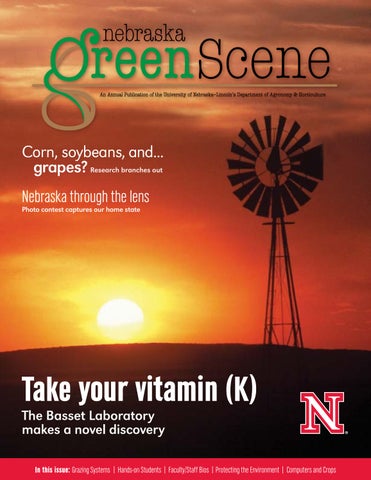
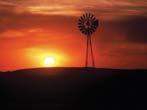
Nebraska through the lens: The cover photo “Windmill Sunset” was taken by Christ Bauer, earning 1st place in the 2008 Agronomy & Horticulture photo contest See all of the winning photos on Page 6
Corn, Soybeans, and... Grapes?: Graduate student Christina Huck is working on nontraditional research in Nebraska on Page 10
take your vitamin (K): Dr Giles Basset’s laboratory has uncovered a novel enzyme Learn what that means for the nutritional quality of various crops on Page 15
Editing and layout:
Aaron Franco, Mikah Tacha, Carola Strauss, and Charlene Wendt
©2009
Department of Agronomy & Horticulture University of Nebraska–Lincoln Institute of Agriculture and Natural Resources
To subscribe, unsubscribe, or change your address, please send your name, request, and complete new address to:
Editor
Dept. of Agronomy & Horticulture
UNL PO Box 830915
Lincoln, NE 68583–0915 or via email: agrohort@unl.edu
Find our PDF newsletter on the Web at www agronomy unl edu/newoutreach/alumni html
The University of Nebraska–Lincoln does not discriminate based on gender, age, disability, race, color, religion, marital status, veteran’s status, national or ethnic origin, or sexual orientation.

This past year was one of great anxiety and great anticipation of things to come. What became the issue of the year was the economic downturn and the potential impact on the university. While we waited for the state legislature to approve the budget and receive notice of the cuts from the Chancellor, we read stories of devastating cuts in programs and personnel at our sister institutions. Fortunately, the economic downturn for the most part missed Nebraska and most of the Northern Great Plains in 2008-9. The University received a 1% increase in the allocation from the state (as opposed to a cut). Tuition was also increased by 4%—the lowest increase in many years.
The University cut several million dollars in programs and the department is facing a significant cut in technical support over the next two years. The good news is that we are still hiring new faculty and growing the programs necessary to address the needs of our students and clientele.
Great anticipation surrounds us for the completion of the renovation of Keim Hall. Regardless of the budget concerns, the University is in a growth stage. There are many buildings on campus under construction and undergoing renovation. The renovation of our very own Keim Hall is progressing on schedule for a July 2010 opening. The new Keim Hall will have state-of-the-art classrooms and laboratories, and a new conference room that leads out to the landscaped courtyard. Coincidently the centennial for the Department of Agronomy & Horticulture is also upon us. To celebrate both occasions we are having a gala event in September 2010. Please plan on attending to connect with old friends and teachers and see what we have done with Keim Hall.
We had several new hires this year. Dr. Brian Waters, a molecular geneticist, will research the accumulation of mineral nutrients in the edible portions of plants to improve human nutrition. Brian will be teaching genetics and plant nutrition. Additionally, Dr. David Holding, a molecular geneticist, was hired to research maize protein quality to improve the nutritional profile in corn. David will be teaching plant science and genetics. Dr. Adam Liska, an industrial ecologist, was hired jointly with Biological Systems Engineering to teach in the Energy Sciences minor and research models for life-cycle analysis in bioenergy systems. Starting in September 2009, Dr. John Guretzky, a grassland ecologist, will research plant communities in pastures and teach range and forages. Dr. Tim Shaver, a soil scientist, works on nutrient management in dryland and irrigated crops across Western Nebraska. In March 2010 Dr. Zachary Reicher from Purdue University will be joining our faculty as a turfgrass management specialist. His wife, Kim Wilson, will head the Landscape Architecture Program. Dr. Tom Hoegemeyer, a renowned maize
“The new Keim Hall will have state-of-the-art classrooms and laboratories, and a new conference room that leads out to the landscaped courtyard.
”geneticist, joined our department to contribute to our teaching program in breeding. We are interviewing for a weed ecologist to be located at the West Central Research and Development Center to develop control measures for invasive species consuming precious water resources and obstructing waterways. We are currently advertising for a plant stress physiologist to study the mechanisms by which plants compensate for drought and heat stress, and a maize quantitative geneticist/genomicist to discover new genes of agronomic importance. And finally, the interview process has begun to identify a cereal chemist, shared jointly with Food Science. This individual will supervise the Seed Quality Lab. In the past year there were two retirements, Dr. Richard Waldren and Dr. Dale Lindgren, and we wish them both well. We are also anticipating a large new undergraduate class this fall with strong growth in Agronomy majors and Turf & Landscape Management majors. With our continued recruitment efforts and the increasing relevance of plant, soil, and environmental sciences, we expect enrollment to continue to increase.

By Tri D. Setiyono
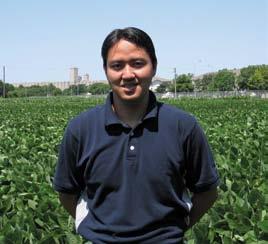
Ibegan my Ph.D. program in the fall of 2003 focusing on the understanding of soybean growth at near optimum conditions and developing a soybean growth model. The project was funded by the Nebraska Soybean Board and was led by Dr. Achim Dobermann and Dr. James Specht. Even though I had a background in crop physiology, which helped in the agronomy aspect of the project, it was quite challenging overall because the modeling and software development aspects were new to me. Fortunately, I had the opportunity to develop the skills needed for the project. Excellent mentoring by my advisors, also including Dr. Kenneth Cassman and Dr. Albert Weiss, combined with great programs and facilities offered by UNL played an important role in my academic work. Support from fellow graduate students and postdoctoral associates was also very instrumental.
During my Ph.D. program, I developed a soybean phenology software called SOYDEV (Field Crop Research, 2007, 100:257-271).
“As I continue to learn and develop computer programming skills... it is my desire to also share my experience with others who are interested in this area.
A complete soybean growth and yield model was developed later with the nonwindows version finalized by the end of my Ph.D. program in May 2007. Recently, the windows version of the model (SoySim) was validated against experimental data in the Midwest, collaborating with researchers from Iowa State University and Purdue University. The results were quite promising and the software will be released soon. The software predicts developmental stages, growth, yield, and water use of soybean as influenced by weather and agronomic management. It can facilitate growers and researchers to fine tuning management for optimizing yield and is also useful as a learning tool to observe the complex interactions of abiotic factors influencing soybean growth and yield. The SoySim model was written in an object Pascal language using Delphi® 2007 for Win32.
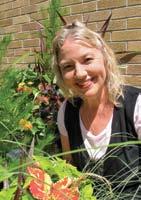
B”loom where you’re planted. Moving around in a somewhatnomadic life and having to make a living in six different states, the above philosophy is something I’ve embraced and implemented over the years. When I came to the Department of Agronomy & Horticulture at the University last year and witnessed this same philosophy being exemplified by many around me, I knew I’d feel right at home.
In my first year as an office associate for this department, I’ve met some incredible individuals who have impacted my life in more ways than I can express. I’ve experienced first-hand the teamwork and family atmosphere management strives to foster within this organization. I’ve been exposed to the brilliant minds and generous spirits of those who are privileged to be in positions that can make a difference in people’s lives here and around the world.
In my small arena, as I organize our department’s Friday speaker series, manage the flow of information coming and going, serve as back-up to the assistant for the department head, address the needs of staff, students, and faculty, spearhead special projects and interact with fellow gardeners at our garden plots in the community gardens, we are all in agreement. We want to enhance life as we know it, for ourselves and for others.
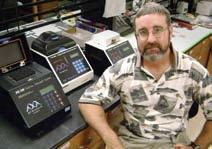
Ijoined the department in January of 1993. I was teaching at a community college when I got a call from Dr. Jim Specht inquiring if I would like continue down the research path or if teaching was my calling. Seventeen years, a million DNA extractions, 16 graduate students and 50-some student workers later, I realize that I have been both.
Having had the opportunity to teach and mentor some notable young minds in the laboratory over the past years has been very rewarding experience for me. Although our projects and tasks are varied in the lab, the ultimate goal is to improve the soybean plant. Our laboratory was instrumental in the compilation of data and the publication of the first public comprehensive integrated soybean genetic map which has been utilized by soybean researchers the world over. In fact, it was crucial for orienting the whole genome sequence which will soon be published. From hoes to lasers in the morning, to irrigating and electrophoresis in the afternoon, it has been this combination and the talented group of people I have worked with in the soybean crew that has made my career at UNL a great one.
Since January 2009, I have implemented the phenology and water use components of the SoySim model in the Water Agriculture and Energy Initiative (WEAI) project led by Dr. James Specht. The project aims in developing a Web site application for implementing a watersaving strategy in irrigated soybeans. Collaboration from colleagues at the High Plain Regional Climate Center (HPRCC) was very crucial in this project. In June 2009, the beta-version of the irrigation aid web site was completed and soon after it was tested by 20 or more collaborating farmers in Nebraska. The Web site application was developed using PHP Scripting language along with MySQL database technology. At the beginning of my Postdoctoral work, I engaged in an exciting and challenging Maize project funded by the International Plant Nutrition Institute (IPNI). This project was led by Dr. Daniel Walters with the goal of developing a software to estimate nitrogen fertilizer requirement for maize that can be applied globally to major maize growing region. My most memorable moment on this project was our effort in formulating a cubic solver algorithm. The approach (Mathematical Gazette, 1993, 77:354-359) was a rather nontraditional yet very creative, as a trigonometric concept was ap-
plied to solve an arithmetic problem. This was another example that I have experienced that shows the occasional need to go outside the box to effectively solve certain challenging issues. My recent research activities also include working on a National Science Foundation funded project led by Dr. Peter Vitousek (Stanford University) and Dr. Cassman. The project focuses on the application of crop modeling to understand the effect of climate, soil, and agronomic management in the sustainable rainfed cropping system in Leeward Kohala, Hawaii during the pre-European contact.
My experience at UNL indicates how valuable support of colleagues was in my professional development. As I continue to learn and develop computer programming skills pertinent to Ag-Climate applications, it is my desire to also share my experience with others who are interested in this area. I strongly believe that application of computer programming in crop and ecological modeling has been and will continue to play a significant role contributing to the research efforts in maximizing crop yield, optimizing agricultural resources use efficiency, as well as improving our understanding of the crop-environments interactions.
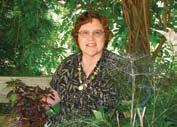
Iwas hired in April 2000 as secretary for plant breeding, genetics, and crop variety testing faculty. I helped with marketing distance courses several years. I still work with crop variety testing. Recently, my job began changing to assist more with curriculum, teaching, and outcomes assessment. That role is still
developing. My background includes a Ph.D. in educational psychology from UNL.
From 1989-91, at the University of Kansas, I conducted research and evaluation for a five-state distance learning consortium.
From 1993-95, I worked at the University of Edinburgh in Scotland, writing content for educational software that was personalized for learners’ study skills and approaches.
In my early years here, the department was developing a new online educational resource for distance and resident students which is now called the “Plant and Soil Sciences eLibrary.” Students’ evaluations were puzzling at first. I suggested assessing their learning styles might clarify the evaluation results. As a small part of my work, I got to use my skills to help the developers prioritize improvements to help less-confident learners, while keeping
flexibility to allow all learners to develop their personal approaches. I am proud of this team effort. We also contributed to five national conferences and three journals. These articles help attract new grants, which often require assessment. A later study, developed with CIT staff and faculty from other departments, measured time spent using animations, quizzes, and lesson content. Less-confident learners spent significantly more time using the animations than the other two groups, and they reported learning more. Next, we will look at whether online application lessons help students develop their approaches to science learning.
Outside my job, I was a caregiver, but my parents both died recently. I inherited their perennial collection and love of plants. I have a big extended family in Nebraska.

Promoted to Associate Professor of Practice. Hired: 2000. M.S., University of Nebraska-Lincoln, 1998; B.S., University of Nebraska-Lincoln, 1986. Area of focus: Teaching the AGRO/HORT/SOIL 153 course in both fall and spring, and NRES Recitation in the fall.
Promoted to Full Professor. Hired: 1996. Ph.D., North Carolina State University, 1993; M.S., Oklahoma State University, 1989; B.S., Indiana University of Pennsylvania, 1985. Area of focus: Implementing genetic engineering for functional genomics and plant germplasm enhancement targeting value added and disease control traits.
Dr. John Guretzky
Grassland Systems Ecologist
Lincoln
September 2009
Dr. tom Hoegemeyer
Plant Breeding, Professor of Practice
Lincoln
January 2009
Dr. David Holding
Horticultural Molecular Geneticist
Lincoln
January 2009
Dr. Dipak Santra
Alternative Crops Breeding Specialist
PHREC
November 2008
Dr. t im Shaver
Nutrient Management Specialist
WCREC
September 2009
Dr. Brian Waters
Horticultural Molecular Geneticist
Lincoln
November 2008
Our students are the future of the green industry. We are relying on them to be problem solvers and forward thinkers. To meet our educational challenges, we are offering you the opportunity to contribute to the University of Nebraska Foundation in support of the Department of Agronomy and Horticulture and its students. Together we can make a difference in the life of each student. Please make gifts payable to the University of Nebraska Foundation, 1010 Lincoln Mall, Suite 300, P.O. Box 82555, Lincoln, NE 68501-2555.
If you have questions about giving opportunities, please contact Dr. Mark Lagrimini, Professor and Head, Department of Agronomy and Horticulture, at (402)472–1555 or mlagrimini2@unl.edu. You may also contact Ann Bruntz, Director of Development, IANR, University of Nebraska Foundation, at (402)458–1176 or abruntz@nufoundation.org.
By Sandy Smart
Iwas a research technologist in the Department of Agronomy from 1992 to 2001 and worked for Dr. Lowell Moser and Dr. Walt Schacht. During this period, I also worked on my Ph.D. part time under the guidance of Dr. Ken Vogel and Dr. Moser. I remember my stay in Lincoln with great fondness. I met my wife Diane in Omaha, and we had our first daughter Rachel in 1999. Since then we’ve added Ian (7) and Livy (4) to our family. Upon graduation in the summer of 2001 with a Ph.D. in Range Management, I joined the faculty in the Department of Animal and Range Sciences at South Dakota State University with research and teaching responsibilities. The transition from a research technologist/graduate student to faculty member went smoothly because of the mentoring I received from Dr. Moser and Dr. Schacht. I was blessed to be a part of a strong research program at UNL where I helped 26 graduate students during my 9 year stay.
Currently, I am an associate professor of range science and my research and teaching focuses on how to manage grasslands to produce different ecosystem goods and services. South Dakota, like many of the Great Plains states, is a transition state with tallgrass prairie in the eastern quarter and mixedgrass prairie in the remaining portion. During the first 5 years at SDSU, I conducted research at the Cottonwood and Antelope research stations which were approximately 5 and 8 hours drive from Brookings, respectively. Traveling to these outlying stations was beneficial for me to get acquainted with the geography and plant communities of South Dakota. This also was helpful to connect with students in the classroom because I knew the locations of the various hometowns. My research is now focused in eastern South Dakota in
the tallgrass prairies located in the Prairie Coteau (I-29 corridor) and mixed prairies of the James River valley. This has cut down the overnight travel immensely. I am studying grazing and burning strategies to enhance floristic diversity and increase structural heterogeneity across grazing landscapes.
South Dakota State University has had a long, rich range management program. We are especially blessed by the support of the South Dakota Section for the Society for Range Management (SRM) which has a large endowment that provides scholarships for range science majors and financial support for Range Club to travel to the annual SRM meetings. Since my tenure at SDSU, I have found great joy in seeing my advisees working as professionals for various state and federal agencies. I always seem to reconnect with a few former students at field tours or professional meetings.
My plan is to stay at SDSU in Brookings. I enjoy the academic life and have even served on academic senate and various university committees. This past spring I was honored to receive the Early Career Teaching Award from the Range Science Education Council of SRM. I feel so blessed to be at SDSU, and I am extremely grateful for the people at UNL that played a role in mentoring me.
Sandy Smart, Ph.D. 2001
Associate Professor/Range Scientist Department of Animal and Range Sciences
South Dakota State University PO Box 2170 Brookings, SD 57007-0392
By Mitch Stephenson
Iwas mid-way through my high school career in 1998 when the initial planning for a grazing system study began at UNL’s Barta Brother’s Ranch in north central Nebraska. Now, over 10 years later, I am working with Dr. Walt Schacht and Dr. Jerry Volesky as an M.S. graduate student to analyze the effects of different grazing systems on herbage production, botanical composition, and livestock performance in the Sandhills region of Nebraska.
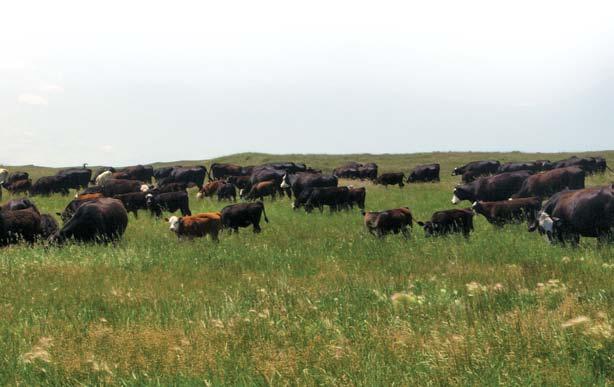
Grazing systems have evolved since the early 20th century in an effort by land owners and managers to increase production while improving rangeland health. Several different systems have been utilized on ranches in the Sandhills, but little research has been done in this region to quantify the superiority, if any, of one grazing system over another. This study compared two grazing systems that are commonly recommended in Nebraska, an 8-pasture short duration grazing (SDG) and a 4-pasture deferred rotation (DR) grazing system.
The SDG system is characterized by rapid movements of cattle during the growing season through 8 or more pastures with multiple grazing and non-grazing periods. The basis of this grazing system is to graze pastures quickly while grass is growing to utilize the grass before it reaches maturity. Furthermore, 2 or more short grazing periods/seasons rather than one longer grazing period is proposed to keep a higher proportion of the grass stand in a vegetative, more nutritious state and allow grasses to replenish root reserves between defoliation. The DR grazing system is based on the movement of cattle through 3 to 5 pastures so that one pasture is deferred until key forage species have reached maturity in early fall. Each pasture is grazed only once during the growing season for 30 to 45 days. Because there are fewer pastures and movements of cattle, the DR system is less management intensive and less costly to implement and operate than SDG.
Herbage production data was gathered in June and August of each year by collecting plant material in 240 (120 for each system) 1-m2 cattle exclosures that were moved every spring to cap-
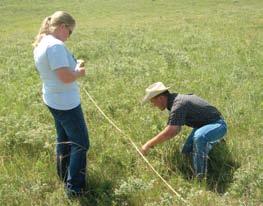
ture the previous years’ grazing treatment effects. Plant material was clipped at ground level, separated into plant groups, dried, and weighed. Botanical composition was collected at the beginning, mid-point, and end of the study by collecting frequency of occurrence of all plant species on three hundred transects placed randomly throughout the ranch. Spayed heifers were used to evaluate the differences in livestock gains. Heifers were weighed at the beginning and end of each grazing season in the last 3 years of the study. Weight gains of the individual heifers were divided by the number of grazing days to determine the average daily gain.
Last year was the 10th and final year of the study, and we are in the process of analyzing the data. We are finding that the DR system produced slightly more herbage than the SDG system over the course study, but there was little difference in botanical composition and cattle weight gains between the grazing systems. The data is also allowing us to determine topographic effects on botanical composition and effect of timing of grazing on herbage production. While there are many variables that are associated with the success of a grazing system, this data initially suggests that the input of additional fence, water, and labor required of a SDG system does not provide a significant increase in benefits over a DR grazing system.

As an M.S. candidate in horticulture, I have worked for the past two years under the supervision of Dr. Paul Read who heads the University of Nebraska–Lincoln Viticulture Program. With a B.S. from the University of Illinois in Urbana-Champaign in Natural Resources and Environmental Science, I had anticipated studying native prairie plants until Dr. Read asked: “Have you ever considered working with grapes?” My fascination with wine and grapes began. For my master’s project I investigated the effects of light on wine grape quality.
My research objective was to explore the relationships between trellis style, canopy light environment, and fruit quality. I conducted my study at Czechland Vineyard, a commercial vineyard between Crete and Wilber. The site was ready and waiting for a trellis comparison study, with established ‘Frontenac’ grapevines already trained to 5 different trellis styles.
“I’ve found myself moonlighting as an unofficial spokeswoman for the Nebraska grape and wine industry.
”‘Frontenac’ is an important red wine grape cultivar in Nebraska and throughout the Midwest. It is extremely cold-hardy, and its vigorous growth is resistant to some of the fungal diseases that plague grapes in the area. The idea for this research came about because growers were asking which trellis, or training system, works best for ‘Frontenac’.
Different cultivars have different growth habits, so a trellis that works for one is not necessarily appropriate for another. Training systems influence the vigor of grapevines’ growth, the structure of the canopy (distribution of leaves and shoots), and the microclimate (light, wind, and humidity) within the canopy. By changing the canopy microclimate, trellises can help or hinder growth, photosynthesis, disease incidence, fruit yield, and fruit quality. In general, open canopies have better microclimate conditions, higher yield, better quality fruit, and fewer disease problems than dense canopies. To compare light levels in the different trellises, I measured the solar radiation in the fruit zones (within the canopies) of the vines at my test plot, and compared those values to the amount of total radiation that the vineyard was receiving. The light measurements had to be taken on clear sunny days, at several intervals throughout the growing season. At the end of the season, I analyzed fruit samples from the different trellises and found that the grapes’ sugar content, pH, and acidity were all positively correlated with the amount of light that was available in the fruit zone. The only parameters I measured which did not have significant differences between the trellises were the concentrations of phenolic and flavonoid compounds. As well as providing many health benefits, these are important flavor and aroma constituents of grapes and wine.
I also tested a canopy analysis method called point quadrat, which is a quick, easy way to measure the density of vines’ canopies. To perform point quadrat analysis, simply insert a long stick through the canopy, record the number of times the stick touches a leaf or cluster, and repeat throughout the vineyard. The point quadrat results corroborated the findings of my light study, which is good news for growers: they can use point quadrat to quickly and accurately characterize the canopy density of their vines.
One trellis style in particular, Geneva Double Curtain (GDC),
By Christina Huck
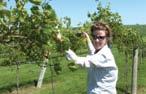
Graduate student Christina Huck does non-traditional work with her hands-on research in viticulture. Her study was conducted at Czechland Vineyard between Crete and Wilber using different methods to test the effects of light levels on wine grape quality.
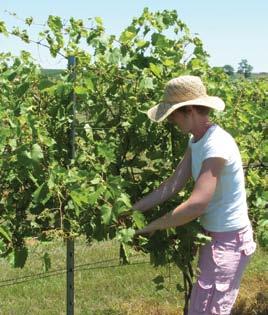
stood out in almost every category that we measured. Geneva Double Curtain is a horizontally divided training system; each row of vines actually has two separate, parallel canopies about five feet high. In my study, the ‘Frontenac’ vines grown on GDC had among the best light levels, sugar content, pH, and acidity, and they had the highest yield.
I had the opportunity to give a presentation at a growers’ conference in March, and it was both exciting and rewarding to be able to give recommendations based on the results of my research.
When I started my master’s program in 2007, I had no idea my research area would be such a conversation-starter. I thought I would be spending all my time learning about the biology of grapevines, but I’ve found myself moonlighting as an unofficial spokeswoman for the Nebraska grape and wine industry. My friends from out-of-state were incredulous when I told them what I planned to study: “People grow grapes in Nebraska? Are you sure?” While too many locals are surprised to hear that high-quality wine is being produced in their home state, increasing numbers of people are familiar with the industry and some have even visited a winery or two. There are currently 23 wineries in Nebraska, and many more vineyards. And with Nebraska wines available at liquor shops, grocery stores, and other retailers across the state, public awareness of the industry will continue to grow.
By Kelly Brink
Although I have been working as a research technologist for Dr. Walter Schacht and Dr. Bruce Anderson since April 2006, my first experiences with the Range and Forage Science research group were several years before. I was largely unaware that the Sandhills of Nebraska existed when I was encouraged to visit with Dr. Schacht about a summer work position at the Gudmundsen Sandhills Laboratory. That summer was an eye-opening experience for me as I helped three of his graduate students on research projects in a most unfamiliar and intriguing environment. Even though I did not grow up in an agricultural production environment (I was raised in Lincoln), family influences and the desire to do something “different” lead me to pursue an education and career involving beef cattle production systems.
As an undergraduate student in the Grazing Livestock Systems major, I focused primarily on production-oriented courses. I coupled my major with the Feedlot Management Internship Program through the Animal Science Department, desiring my education to cover all phases of beef cattle production. Also during this formative time, I engaged in applied internships and work experiences during the academic year in both grazing- and finishing-beef cattle production systems. After graduating with my B.S. degree, I entered the labor force in a position with a cattle-feeding operation.
Experiences in those first few years of my professional career quickly put doubts in my mind of a career focused primarily on cattle feeding. I came to the full realization that I wanted a career in ranch management focusing on sustainable livestock production systems on native rangelands.
After learning of my interest in an M.S. degree, Dr. Walter Schacht offered me an opening to interview for a research technologist position with him and Dr. Bruce
Anderson. Through the past three years, I have been exposed to projects involving nitrogen cycling within grazed pastures, interseeded-legume studies, roadside revegetation, forage variety trials, and grazing systems studies in the Sandhills mixed prairie. My M.S. study involves predic-
“That summer was an eyeopening experience for me... in a most unfamiliar and intriguing environment.
”tion of leadplant utilization in the eastern Sandhills given time of year and amount/ quality of total herbage.
The practices which I have applied in managing Dr. Schacht’s projects will prove useful post-graduation as I still desire to pursue a career in ranch management, or a closely related field. The application of science-based principles coupled with artful practical management is what makes ranch management very interesting to me.

• All-Purpose Lubricants
Surfactants and Emulsifiers
Technical-Grade Soybeans Oils
Dielectric Fluids
Industrial Coatings
Candles
Deodorized Soybean Oils
Adhesives
Crayons
Agricultural Adjuvants
Technical-Grade Soybeans Oils
By Dr. Gilles Basset
DDust Suppresssants
Industrial Solvents

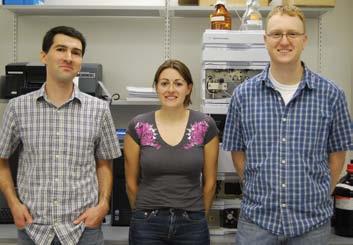
Research in the Basset laboratory is funded by the National Science Foundation, the Center for Plant Science Innovation and the Nebraska Tobacco Settlement Biomedical Research Development Funds. Joshua R. Widhalm is a recipient of Ph.D. fellowship from the Department of Agronomy and Horticulture. contact: gbasset2@unl.edu

Unrefined Soybean Oils
Waxes
Adhesives
Agricultural Adjuvants • Dielectric Fluids
Industrial Lubricants


Personal Care
Two-
cycle Engine Oil • Auto Care • Bar Chain Oils • Diesel Additives • Engine Oils • Hydraulic Fluids • Soy Biodiesel
• Blown Soybean Oils • Industrial Plastics • Industrial Proteins • Industrial Solvents • Refined and Deodorized Soybean Oils
• Surfactants and Emulsifiers
• Technical-Grade Soybeans Oils
• Unrefined Soybean Oils • Waxes • Ad-
r. Gilles Basset joined the Department of Agronomy & Horticulture at UNL in October 2006. His research focuses on the biosynthesis of plant vitamins and cofactors. These compounds, which often exist only in trace quantities in plant tissues, play a cardinal role for human and animal health. Plants, for instance, synthesize 11 of the 13 vitamins that humans require from their diet. In the US, plant-based foods represent the main dietary sources of several vitamins, including vitamin B9 (folic acid), vitamin C (ascorbic acid), vitamin K1 (phylloquinone) and vitamin E (tocopherols). Historically, the study of plant vitamins and of their cognate biosynthetic enzymes has been difficult, owing to their low abundance and high instability. As a result, and despite the importance of plant vitamins in human nutrition and for the plants themselves, our understanding of vitamin metabolism in plants is fragmentary. In order to fill these gaps in our knowledge, the Basset laboratory uses novel bioinformatics tools based on phylogenomics (also called comparative genomics). The basic premise of such an approach is that genes that are involved in the same cellular function tend to physically associate in genomes. For instance, genes that are required for the biosynthesis of the same molecule are often found in clusters in certain organisms. Sometimes—as is often the case in plants—they fuse together. They are also either present together in the organisms that synthesize a particular compound, or by contrast, are all absent in the organisms that cannot synthesize it. By detecting the existence of such conserved genomic associations and occurrences across lineages, phylogenomics permit the inference of novel enzymatic functions providing that the role of at least one of the corresponding genes is known. In other words, if gene a, b, c, and d are physically associated, and that gene a is known to be important for the synthesis of molecule X, it is very likely that gene b, c, and d are required in the making of X as well. Basically, it is ‘guilt-by-association’ reasoning. In combination with the more traditional tools of reverse genetics, enzymology, and analytical chemistry, phylogenomics is extremely powerful at dissecting metabolic pathways.
NuPride Genet ics Net work, LLC “A Nebraska Grower Marketing Group”
Marketing: Elite Certified Wheat Varieties, Select NuPride Brand Conventional, Liberty Link7 and Roundup Ready7 Soybean Lines
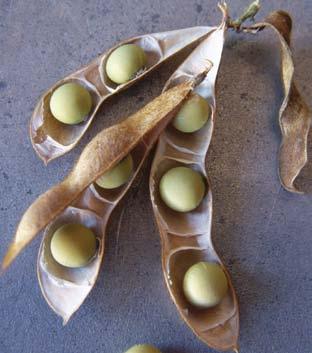
Yes, Soybeans are found just about everywhere these days. They are no longer just for food or fuel. Soybeans are a key ingredient in many consumer and industrial products that not only improve the quality of the product but make life better for you and the environment while helping out our farmers.
402-441-3240 www.nebraskasoybeans.org
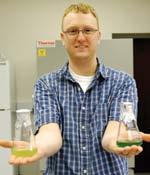
Using this integrative strategy, the Basset group identified and characterized a novel vitamin K1 biosynthetic enzyme in cyanobacteria, which are the evolutionary progenitor of plant chloroplasts. The results have been recently published in the Proceedings of the National Academy of Sciences of the USA (http:// www.pnas.org/content/106/14/5599.long). The study is part of the research project of Joshua R. Widhalm, a graduate student in the Basset laboratory. The Basset group is now implementing this knowledge to improve the nutritional quality of certain staple crops that are naturally poor in vitamin K.
Partners of the NuPride Genetics Network are on-farm seed professionals. We are dedicated to providing superior service and high quality seed of adapted varieties with superior genetics and proven performance to meet your specific crop production needs.
For more information or to locate an Affiliate in your area, please contact us at: (402)472-1444
P.O. Box 830911 Lincoln, NE 68583-0911
By Tim Arkebauer
Throughout the Great Plains the rich soils that developed under grasslands have been exposed to conditions resulting in the loss of organic matter. Much of the carbon (C) contained in this organic matter has entered the atmosphere in the form of carbon dioxide (CO2). Recently, there is growing concern over increasing atmospheric CO2 concentration and its potential effects on global climate. Several faculty members in the Department of Agronomy and Horticulture are currently studying carbon fluxes and pools in agricultural systems in order to discern their role in the global carbon cycle and investigate how agricultural management decisions might mitigate further increases in atmospheric CO2 concentrations. Because the soil is the long-term pool of carbon in annual crop production systems this topic is often referred to as “soil carbon sequestration” research.
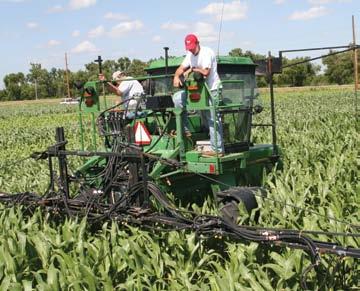
In 2001 researchers from UNL established the Carbon Sequestration Field Research Facility at the University of Nebraska Agricultural Research and Development Center near Ithaca, Nebraska. Funding to establish and maintain the facility and support the field research has come primarily from the United States Department of Energy. Researchers include Drs. Shashi Verma, Ken Cassman, Dan Walters, Achim Dobermann, Jean Knops, Elizabeth Walter-Shea, Anatoly Gitelson and Tim Arkebauer. The facility consists of three study sites of about 160 acres each. Two sites are equipped with centerpivot irrigation systems. We are presently studying three cropping systems; namely, an irrigated continuous maize system, an irrigated maize-soybean rotation and a rainfed maize-soybean rotation. Since initiation in 2001, all sites have been under no-till (except continuous maize, futher details below). Crop management practices have been employed in accordance with standard best management practices prescribed for production-scale maize systems.
Results indicate that the systems become a net sink for CO2 (i.e., CO2 is moving from the atmosphere to the agricultural system) in the second or third week of June (about 30 to 35 days after planting for maize and
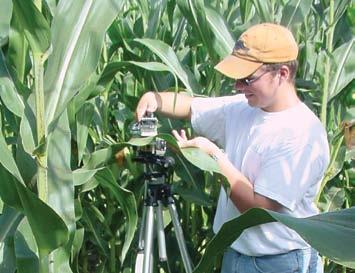
25 to 30 days after planting for soybean).
The maize fields remain a CO2 sink for about 100 to 110 days and have a maximum net ecosystem productivity (NEP— the total quantity of carbon moving from the atmosphere to the system) of about 15-20 g C m-2 d-1. The soybean fields are a CO2 sink for about 80 days before returning to a source of CO2 in September to early October. The peak daily NEP for soybean is about 5-7 g C m-2 d-1.
In considering the annual C balance of an agricultural system as estimated from NEP, the C removed with grain harvest must be considered. Our assumption is that C exported in grain harvest has a relatively short half-life and does not contribute to longterm C sequestration. For irrigated fields, the CO2 released from irrigation (obtained from groundwater) is also considered. The annual integrated NEP, considering grain removal and irrigation water, is called the net biome productivity (NBP). Initial results indicate that rainfed maize is a C sink with an NBP of 100 to 180 g C m-2 yr-1. The NBP of irrigated maize varies from -180 to 100 g C m-2 yr-1. Both rainfed and soybean fields are significant sources of C with a NBP of -180 to -280 g C m-2 yr-1. Results from the first years documented
By Darrin Roberts
Ideclining yields with continuous irrigated maize because of difficulties in achieving uniform and adequate plant populations due to the heavy litter layer resulting from no-till. To address these constraints in our irrigated continuous maize system, starting in the fall of 2005, we began to utilize a conservation-plow that does not completely invert the topsoil layer as happens with conventional plowing. The conservation-plow minimizes soil disturbance by vertically distributing about 2/3 of the crop residue within the surface 0.20 – 0.25 m depth, while 1/3 remains on the soil surface. A small dose of N fertilizer is applied to the maize residue before the post-harvest conservation-plow operation. We hypothesize that the N application to maize stover and its incorporation with a conservation-plow will result in a net soil carbon sequestration. Our most recent results support this hypothesis. We are eager to continue the UNL CSP experiments to further increase our understanding of the role agroecosystems play in the global carbon cycle and, moreover, to explore other cropping system management options that will influence carbon cycling and soil carbon sequestration in these economically important systems.
n recent years there has been a growing concern about the potential environmental hazards of large uniform nitrogen fertilizer applications across agricultural fields. Current nitrogen management practices have resulted in much of this nitrogen fertilizer being left in the soil, ultimately leading to surface and groundwater contamination. With rising energy and other input costs, it is essential for today’s agriculture producers to efficiently manage fertilizer application. Additionally, increased biofuels production requires efficient management of crop inputs. Precision agriculture tools and technologies can potentially provide increased efficiency in crop production. For the past three years, I have worked under the direction of Drs. Richard Ferguson and John Shanahan on a collaborative project between UNL and USDA-ARS Agroecosystem Management Research Unit as part of research for my Ph.D. in Agronomy. My research has focused on how to combat the potential environmental hazards of large amounts of nitrogen fertilizer applied to cornfields. Specifically, I studied active canopy reflectance sensors as a tool to accurately assess corn nitrogen stress during the growing season, and apply additional nitrogen where it was needed in the field. I evaluated an algo-
rithm that converts sensor output data into a nitrogen application rate, and the possible incorporation of soils information to help fine tune the algorithm. In 2007 and 2008, I conducted on-farm research in six fields in central Nebraska representing a variety of spatial patterns in soil characteristics. In each of these fields I tested the current algorithm against a uniform nitrogen application strategy, and I also collected various soil data layers and remotely sensed images.
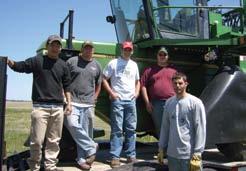
Using soil variables to establish nitrogen management zones within each field, I found that the delineated zones appropriately characterized spatial patterns in both in-season crop response and yield. Compared to uniform nitrogen application, integrating management zones, and sensor-based nitrogen application resulted in substantial nitrogen savings for silt loam soils with eroded slopes. However, for coarser texture soils I found that the current sensor-based nitrogen application algorithm may require further calibration and for fields with no spatial variability there appears to be no benefit to using the algo-
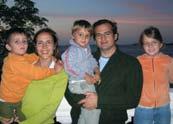
It was a warm and dry afternoon of May 2000 when I arrived in Lincoln. My wife Mariana and my one-year-old daughter Camila came along with me, carrying a suitcase full of illusions and desires to increase my knowledge.
In a cold and snowy December four years later, we moved back to our home country, Argentina. By then , we had already had a second child named Joaquin – a little Husker. This time, we returned home with a suitcase full of great memories about our life in Lincoln. We left good friends in Lincoln, in Keim Hall, and in the Seed Lab. I have visited in three times since graduating. I got a Ph.D. in Plant Breeding and Genetics with experience in a soybean breeding program. The knowledge and experience gathered showed me new paths in my career and opened doors in Argentina. My first position after graduating was as Technical Manager of Renes-
rithm. Collectively, my research results from these studies show promise for integrating active sensor-based nitrogen application and static soil-based management zones to increase nitrogen use efficiency and economic return for producers over current nitrogen management strategies.
I am grateful to have had the opportunity to work with such great people and study at this fine school. I recently defended my Ph.D. dissertation and accepted a position as an assistant professor at Mississippi State University with a research focus in corn agronomics. Even though I will be trading in the Big 12 and Big Red for the SEC and Bulldogs, I am proud to call myself a Cornhusker. Go Big Red!
By Federico Vartorelli
sen LLC, a JV between Monsanto and Cargill, working with highvalue corn and soybeans. After that position, I became the High Oil Corn breeder within Monsanto and contributed to the Renessen project. For my first job with Renessen LLC, it was really important all the experience that I got working in high value soybean with Dr. George Graef during my Ph.D. thesis.
After two years of working with High Oil Corn, I worked as Commercial Breeder for Dekalb brand within Monsanto. A year later, I took the position of Corn Breeding Lead for Latin America South, leading Monsanto Corn Breeding efforts for Argentina, Chile, Bolivia, Uruguay and Paraguay.
I enjoy my job and life in my home country. Mariana and I live with our three kids in Pergamino, a city of 100,000 people in the Corn Belt of Argentina.
I feel a lot of appreciation for Dr. George Graef, UNL graduate professors, the seed lab people, all of UNL, and our friends that gave us four beautiful years in Lincoln. My appreciation and regards to all of them. To all those Agronomy graduate students, I hope you enjoy the combination of the high education level with the diversity in nationalities of the students which make UNL students competitive in a complex international environment.

Agronomy and Horticulture students aren’t afraid to dig in and get their hands dirty. But right now they need your help.
Scholarship funds have been created to attract the most outstanding undergraduates to the program. And several funds exist to support graduate students as they travel to important and informative professional meetings and seminars. And more.
For a complete list of funds, to learn more, or to give, contact Ann Bruntz, Director of Development IANR, University of Nebraska Foundation at abruntz@nufoundation.org, 402-458-1176.