L. Mark Lagrimini, Head

Greetings to our alumni, friends and supporters of the Department of Agronomy & Horticulture at the University of Nebraska–Lincoln. This has been an amazing year for me and our faculty, staff and students.
My family and I would like to thank all those in Lincoln and throughout the state for your support and encouragement during the past year. A cross-country move is never easy on the family, but the folks in the University community went out of their way to make us feel welcome. In the pages ahead you will hear about some of the cutting-edge research taking place right here in Nebraska to improve the productivity, safety, and profitability for producers and their families. You will hear about new initiatives in the Department in the areas of Biofuels, Environmental Stewardship, Organic Agriculture, and Sustainable Landscapes. A new major in Plant Biology has recently been approved by the Regents, and will be available to students spring semester 2007. Work has also begun on a new major in Turf & Landscape Management, and options in Organic Horticulture and Biofuels.
The Department will be taking on new recruiting efforts this year. Our unit is working closely with the international marketing/communications firm of Swanson-Russell Associates to develop new recruitment strategies and promotional materials. We will have higher visibility throughout the state. Stop by and visit us at Husker Harvest Days, the Nebraska State Fair, or the Big Red Road Show. The University “Big Red” building at Husker Harvest Days in Grand Island has received a new facelift, and our very own Horticulture faculty have installed demonstration gardens
on the cover:
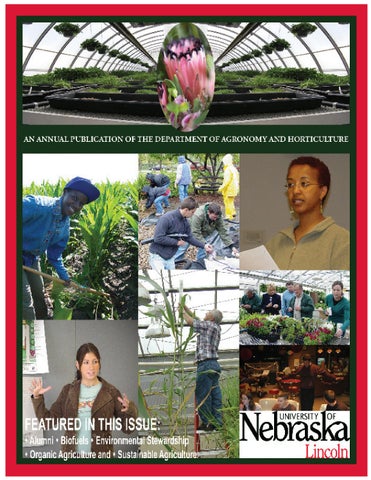
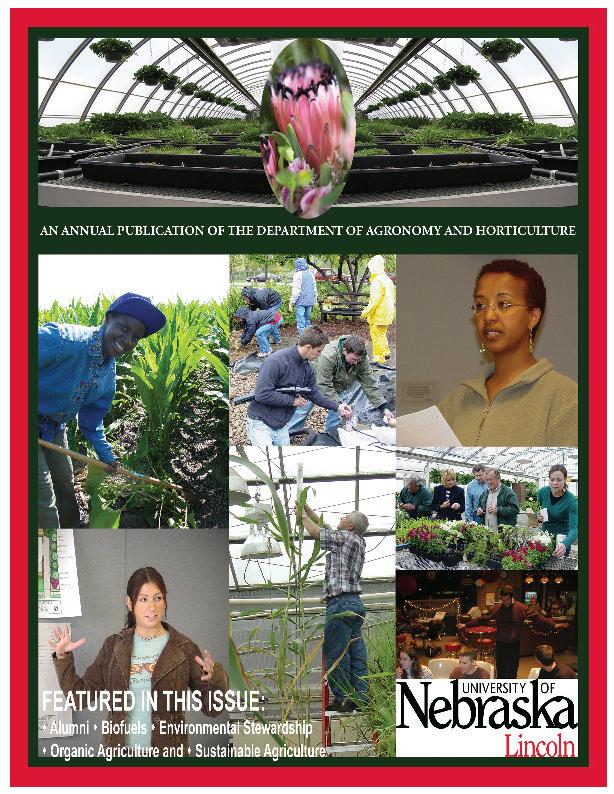
Collage of several 2006 publication themes, visual compilation designed/created by Carola Strauss.
an official annual publication of the department of agronomy and horticulture
department head: L. Mark Lagrimini
editor: Carola Strauss
graphics/layout, photography and visual design: Carola Strauss
design and production: Carola Strauss
© 2006 department of agronomy and horticulture, university of nebraska–lincoln and the institute of agriculture and natural resources.
contributors not otherwise recognized: Marlene Busse, Brenda Gibson, Linda Maser, Cheryl Moncure, Terrance Riordan, Sue Walker and Charlene Wendt.
Special thanks to Dennis McCallister, Robert C. Sorensen and all others not mentioned.
t0 change address, subscribe or unsubscribe: Send your name and your complete new address to Editor, Department of Agronomy and Horticulture, PO BOX 830915, Lincoln, NE 68583-0915, USA.
This publication can be found on the Internet at http://agronomy.unl.edu or hort.unl.edu Click on “Departmental Newsletters.”
around the site. Our graduates continue to find jobs plentiful in the areas of crop consulting, landscape design, agronomic sales and marketing, and landscape/turf installation and management. We will be asking for your help in getting this message out to students.
We are excited to hear that the Nebraska state legislature has appropriated funds to renovate Keim Hall. The building will be taken down to bare floors and walls and will receive new windows and a new air handling system to keep the building cool in summer and warm in winter. We will have new laboratories and classrooms, new student gathering areas, and conference rooms. Architect selection will occur this fall and construction should begin by January 2008. Additionally, the Nebraska Foundation has initiated a fund drive to finance state-of-the-art teaching greenhouses east of Keim Hall. Also in the plan is a public access conservatory to house native plants of the Great Plains. The new greenhouses and conservatory will be accessible through a connector to Plant Sciences/Keim Hall.
There are some new faces in the Department. We are pleased to welcome Dr. Mark Bernards and his family to Lincoln. Mark is the new Weed Science Specialist for the South Central Region. Please give Mark a hearty Nebraska welcome when you see him. In January we will be adding another faculty member jointly through the Center for Plant Science Innovation to research metabolic pathways in plants. This individual will be housed in the Beadle Center.
Please stop by the Department when your travels take you to Lincoln. We will show you our plans for the new teaching greenhouses and the renovation of Keim Hall. Remember, your education does not conclude when you receive your diploma. It is a lifelong process, and we will always be there for you.
Continued best wishes,
L. Mark Lagrimini, Professor and Head Department of Agronomy and Horticulture

Pitch Us Your Story Ideas!
Have a great idea for a theme?
Is there a program or major you’d like to know more about?
What have you been up to since you graduated?
Do you know an Agronomy and Horticulture alumnus, student or faculty member who who has impacted your life?
Tell us about it!
We’d love to hear from you. Send your ideas to AgroHort@unl.edu or write to us at: publication editor department of agronomy and horticulture p o box 830915 university of nebraska–lincoln lincoln, ne 68583-0915
Photo by Brett Hampton, IANR
E-mail:
Photo by Brett Hampton, IANR
Research Reveals Secrets
by James Stubbendieck and Kay L. Kottas
When Old Jules Sandoz lay dying at his Sandhills ranch in 1928, he liked to have his favorite flower nearby, a relatively common plant called bluebells. While he dozed, his daughter Flora would remove the flowers, fearing their heady fragrance would trouble his breathing. He always wanted the bluebells back when he awoke. Mysteriously, the species soon disappeared from the Sandoz Ranch.
Raymond Pool, Professor of Botany at the University of Nebraska, reported the plant as common in blowouts in 1913 and extinct only 27 years later. It wasn’t extinct. A few survived. Investigation of a rediscovery by UNL Department of Agronomy researchers in the early 1980s eventually located 600 of the plants – making blowout penstemon (Penstemon haydenii) the rarest plant endemic to the Great Plains. It was soon named to the federal Endangered Species List where it remains as the only Nebraska plant so listed. Many landowners have searched their property for blowout penstemon and contacted us when they thought they had found it. Unfortunately, their discovery enthusiasm was usually short-lived. We verified that only three of 114 reports of blowout penstemon were correct, and we were aware of two of those populations. The third was a rather large and important find.
It earned its common name from its habitat. Blowouts, one of the most striking features in the Sandhills, were once common. These sites of active wind erosion form when the fragile vegetative cover is disturbed, exposing the soil to the forces of the wind. Over a few years, the blowout deepens, forming a crater varying in size from several square meters to a few hectares. Blowout penstemon grows only in this extremely harsh, seemingly uninhabitable environment where few other species can grow.
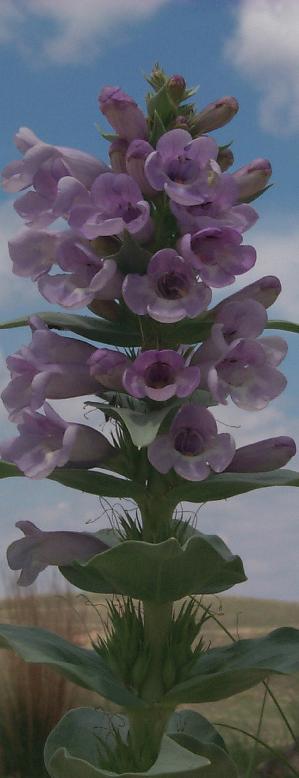
A combination of factors may have lead to the reported decline of blowout penstemon. The drought of the 1930s was the major natural event occurring in the region during this period. While it was not as severe in the Sandhills as in other parts of the state, it may have been responsible for part of the decline. An insect introduced for biological control of another species may have moved from its target species to blowout penstemon. And earlier, prairie fires frequently burned large areas of the Sandhills, leaving the soil exposed to the erosive action of the wind favoring blowouts. With wildfire control and improved range management, fewer blowouts were available, and the distance between blowouts was too great for the wind to move seeds from one blowout to the next.
The recovery plan approved by the US Fish and Wildlife Service called for
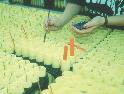
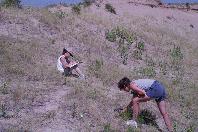
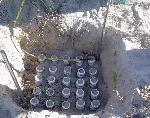
Penstemon single stalk, photo by James Stubbendieck as well as demographic studies and planting from tubes. Pictured: Michelle Parde, graduate research assistant, and Kay Kottas, research specialist. Planting of seed burial photo by Kay Kottas.
of the Sandhills’ Fairest Flower
increasing the numbers of plants. Along with other criteria, the species would be a candidate for reclassification to Threatened if the numbers could be increased to 10,000 plants and considered for delisting if numbers reached 15,000. We set out to learn how to propagate blowout penstemon, but it gave up its secrets slowly. Initially, we were allowed to harvest only a limited number of seeds from a few of the 600 plants, and our first propagation attempts failed because only 4% of the seeds germinated.
We concentrated on breaking dormancy of the seeds. We scarified (broke the seed coat) because it was very thick. The seed coat protects the seed embryo as the seeds are moved by the wind in the sandpaper-like environment. Scarification alone was not the answer, nor were standard techniques such as winter stratification. Finally, we determined that a combination of scarification and washing the seeds in flowing water for 30 minutes would improve germination to about 95%. The need for flowing water may indicate the presence of a watersoluble germination inhibitor that prevents germination unless there had been adequate rainfall.
We acquired 10,000 seeds (the number produced by only a dozen flowering stems) in each of two years, applied a number of germination-enhancing treatments and planted them in Sandhills blowouts. From 20,000 seeds, only three seedlings emerged, and all three died. In both years, moisture conditions were not favorable for seed germination and establishment. Obviously, we needed a different approach. We decided to try to propagate seedlings in the greenhouse and transplant them in the Sandhills. The expectation was that they would build the seed bank (seeds in the soil), germination and establishment would occur in years when moisture conditions were favorable. Over the course of several years, we grew seedlings in the greenhouse to establish new blowout penstemon populations. Seedlings are taken to the Sandhills and transplanted in early May. Many of our planted populations are located on private lands. We have guarded their exact locations to minimize non-research influences. Survival after one year averages about 25% and a few more plants die during the second year. Adding supplemental water at the time of planting or occasionally during the first growing season does not increase survival, but a rain within two or three weeks after transplanting is critical.
A few of the plants flower one year after transplanting and many flower in subsequent years. Each flowering stalk produces about 750 seeds, and the plants average more than three flowering stalks. The seeds fall to the sand in autumn where many are eaten by small mammals and birds. Others are mixed into the sand by the wind and, thus, enter the seed bank. After spring rains, it is not uncommon to find blowout penstemon seedlings in the transplant sites. Transplanting and seedling recruitment has increased the population to more than 14,000, qualifying blowout penstemon for reclassification to Threatened and approaching the number necessary for delisting the species.
The success of these introduced populations has enabled us to investigate whether they are sustainable. We are looking at life stages, mortality, seed bank, herbivory, disease, and cata-
strophic events in population trends. By marking individual plants and burying seeds in capsules, we can monitor life history events. What we learn allows us to make adjustments in previously held views. We have a better idea of the number of seeds produced per plant, the potential for germination and seedling recruitment, and the potential for seed bank survival. This information will help predict the minimum viable population for this species.
Why is it important to preserve blowout penstemon? Plants evolved to adapt to many different changes in their environment over many millions of years. Much more recently, human use of the planet is causing widespread and rapid changes in a much shorter period of time. Plants do not have the capacity for rapid change through natural evolution. We need to reconcile social interests including economics with ecological management of natural communities. What we learn about the biological processes critical to sustaining one species may ultimately be applied to many others.
Flora Sandoz contacted us in the late 1980s and asked if blowout penstemon could be returned to the Sandoz Ranch. We worked with Bill Moser, a student from Lincoln, on his Eagle Scout project to grow and reestablish blowout penstemon on the ranch. It remains there today. Blowout penstemon is a unique part of Nebraska history. It is ironic that today’s good range management is in part responsible for its decline. Nebraska is fortunate that many Sandhills ranchers and government agencies are willing to manage a portion of their land to preserve Old Jules’ favorite flower.
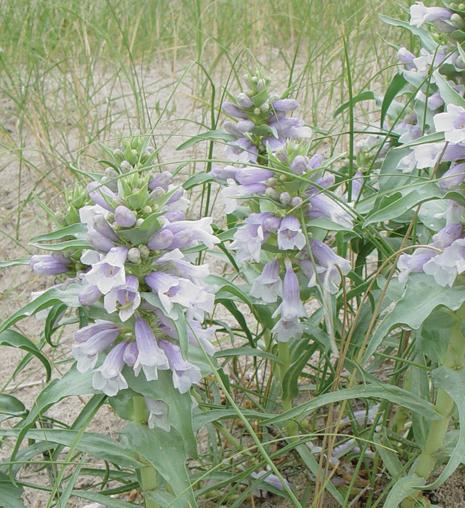
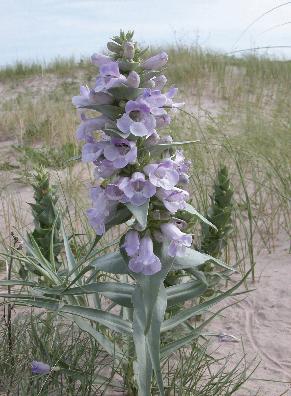
Penstemon photos below and right by Kay Kottas.
by Ismail Dweikat
The sweet side of sorghum,
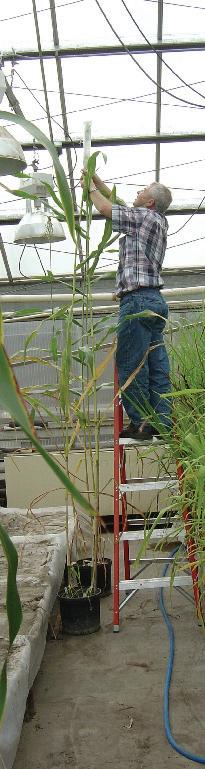
Sweet Sorghum (Sorghum bicolor (L.) Moench) is one of many types of cultivated sorghum, noted for its high sugar content in the stem juice. Some lines attain juice yields of 78% of total plant biomass comprised of 15-23% soluble fermentable sugar (comparable to sugar cane). The sugar is composed mainly of sucrose (70-80%), fructose and glucose. Sweet sorghum, or “sorgo,” differs from grain sorghum mainly in its low grain yields, its stalks, and its taller ranging in height from 3 to 5 m. It reproduces by seed and produces tillers, but it has no rhizomes. A perennial grass under tropical conditions, it is winter-killed in areas where frost occurs. Some sweet sorghum varieties are grown for syrup production, while others are grown for forage (silage).
It was introduced to the United States from Africa in the early part of the seventeenth century, but was not grown extensively in this country until the 1850s, when the forage variety Black Amber (also called “Chinese sugarcane”) was introduced from France. Since then, many other varieties have been introduced from other countries or developed domestically.
Sweet sorghum is adapted to widely differing climatic and soil conditions. Although grown from Alabama to Minnesota, its most extensive cultivation is in the southeastern states. A warm-season crop that matures early under high temperatures and short days, it is not only a “high energy crop” because of its high photosynthetic rate, but “the camel among crops” for its drought resistance. It tolerates drought and high-temperature stress better than many crops. Adding to its versatility, sweet sorghum grows well but it does not grow well on soils ranging from heavy clay to light sand.
The crop was grown primarily for syrup until the settlement of the semiarid West created a demand for drought-resistant forage crops. By the 1950s, about 90% of the acreage of sweet sorghums in the United States was grown for forage. Still, interest in sorghum syrup is renewed whenever a shortage of sugar results in higher sugar prices.
Recently, interest has grown in sweet sorghum potential for ethanol production. It may also supply by-products from bagasse, the remaining part of the stems after juice extraction, such as pyrolytic oils, quality fuels, pellets of carbon, synthesis gas and lignocellulosic materials. Sweet Sorghum and more likely fiber Sorghum can be used for production for paper. An interesting energetic application may be electricity production through combustion of total biomass. Further, the stillage from sweet sorghum after the extraction of juice has a higher biological value than the bagasse from sugarcane when used as fodder for animals, as it is rich in micronutrients and minerals. It could also be processed as a feed for ruminant animals. Apart from these, stillage contains similar levels of cellulose as sugarcane bagasse, therefore has a good prospect as a raw material for pulp product.
Since the 1973 oil crisis, there have been numerous studies investigating alternative sources of energy. While fossil fuels, both imported and domestics, continue to be principal sources of energy in the USA, they are exhaustible and generally non-renewable. Thus, biomass conversion for energy has been a popular research topic due, in part, to the renewability of biomass as an energy feedstock because many agricultural production processes already in place in the USA produce large amounts of biomass as a by-product.
Although ethanol’s popularity is growing, today’s inefficient production methods and conversion technologies mean that this fuel will only produce modest environmental and economic benefits and may affect food security. The largest obstacle to biofuel production is land availability. Expanding cropland for energy production will likely worsen the already intense competition for land between agriculture, forests, and urban sprawl.
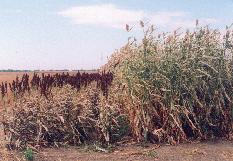
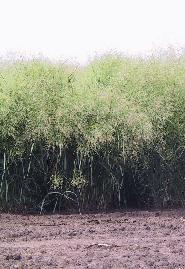
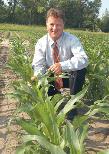
Large photo: riding it high! Ismail Dweikat. Sweet sorghum plants are taller than grain sorghum ranging in height from 3-5 m. A ladder was used to perform hybridization. Small photo directly left, grain sorhum: 5 ft, sweet sorghum: white corn.
turn to Sorghum page 7
a solution to our energy woes
Sorghum, from page 6
With temperatures rising and water tables falling worldwide, global food supply and demand are precariously balanced. World grain reserves are near all-time lows, and there is little idle cropland to be brought back into cultivation. Shifting food crops to fuel production could further tighten food supplies and raise prices, pitting affluent automobile owners against low-income food consumers. Placing greater emphasis on land efficiency will be essential to making the best use of ethanol. If ethanol is to become a major part of the world fuel supply without competing with food and forests, it’s primary source will not be grains or even sugar crops; it will be moreabundant and land-efficient crops.
Also important is the amount of energy used to produce ethanol. In the early days of ethanol, for every one unit of energy it took to plant, harvest, and process ethanol, it only gave back 0.92 units of energy. It had a negative “energy balance” of 1 unit in for 0.92 out (1:0.92). However, since those days, steady improvements have been made in corn yield, efficiency of harvesting, and the efficiency of ethanol processing. The latest studies show corn ethanol with a positive energy balance of 1:1.64; a 64% net increase in energy. Corn ethanol today is made by converting the starch in corn to sugars and then into alcohol in a process of fermenting. Sugar beets are a better source, producing nearly two units of energy for every unit used in production. Sugarcane is by far the most efficient of the current feed stocks yielding eight times as much energy as is needed to produce the ethanol. Sweet sorghum is comparable to sugarcane with a ratio of 1:7. Stalks of sweet sorghum contain fermentable sugars in the sap that are capable of producing 400-800 gallons of ethanol per acre, or about twice that from corn grain and avoids the energy intensive steam cooking step of ethanol production from grain. Further, the stover from sweet sorghum after the extraction of juice can be used for fuel for distilling the ethanol. Given their positive energy balances and higher yields, it makes more sense to produce ethanol from sugar crops than from grains. Ethanol derived from crops other than corn would increase farm diversity and sustainability. Sweet sorghum, which is biologically competitive with corn, has been shown to have a more beneficial energy balance than corn. Such considerations regarding efficient use of resources increase the economic potential of sweet sorghum, which has enormous growth rates. More specifically, use of sweet sorghum as a biomass crop for fuel ethanol, could significantly affect rural economies and add value by incorporation of energy crops into farm plans, increased employment opportunities resulting from local feedstock production and processing, and decreased government subsidies.
must be large enough to handle the entire crop in a matter of weeks, and the conversion to ethanol or other energy products must be spread out over a sufficient time period to keep unit capital investment low. Studies on methods of fermentation and distillation indicate the technical and economic feasibility for on-farm fermentation of the sugar of sweet sorghum forage to ethanol and for the distillation of the ethanol to an ethanol-water solution that could be transported to a central facility for making fuel-grade ethanol.
Given that water availability is poised to become a major constraint to agricultural production in coming years, cultivation of corn becomes difficult. Sweet sorghum would be a logical crop option in lieu of corn in such situations. Sweet sorghum can be grown with less irrigation and rainfall and inputs compared to corn. In addition to sweet-stalk, grain yield of 2 to 6.0 t ha-1 (which can be used as food or feed) could be harvested from sweet sorghum.
The wide range of variability for Brix reading (from 13 to 24%), sucrose % (from 7.2 to 15.5), stalk yield (from 24 to 120 t ha-1) and biomass yield (from 36 to 150 t ha-1) in sweet sorghum indicates the high potential for genetic improvement to produce high sweet-stalk yield coupled with high sucrose % sweet sorghum lines. Genotypic differences for extractable juice, total sugar content, and fermentation
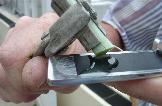
efficiency and alcohol production have also been reported. The predominant role of non-additive gene action for plant height, stem girth, total soluble solids, millable sweet-stalk yield and extractable juice yield indicates the importance of breeding for heterosis for improving these traits. The University of Nebraska maintains a unique repository of over 200 lines of sorghum suitable for bioethanol evaluation. A wide range of maturity classes is required in order to extend the harvest period to meet the requirements of the processing factories.
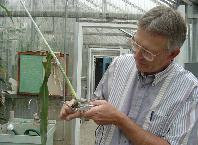
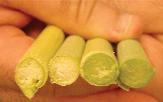
Above: John Rajewski a research manager, determining the sugar content in the stem juice using a refractometer. Second shot (right): measuring sugar content. Lower third shot shows a grain sorghum and sweet sorgham closeup.
The directly fermentable sugars in the stalk present a challenge in that they are unstable compared with starch. Whether sweet sorghum can become viable energy crops will depend on solving this serious seasonality problem. Processing facilities
Education is when you read the fine print. Experience is what you get if you don’t. —Pete Seeger
The development of Switchgrass into a Biomass Fuel Crop
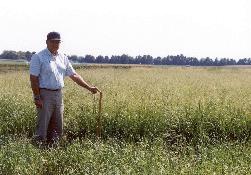
Iby Kenneth P. vogel, research Geneticist and research Leader, USDA-ArS and Adjunct Professor of Agronomy and horticulture
n his 2006 State of the Union address, President Bush advocated the use of renewable energy crops such as switchgrass and other biomass crops to solve national energy problems. Switchgrass has been identified as a biomass energy crop because it can produce high biomass yields on marginal land that is not suitable for grain crop production and provides many conservation benefits. The cellulose and hemi-cellulose of the biomass from switchgrass cell walls can be broken down into simple sugars that can be used to produce ethanol. Most people are not aware that a visionary University of Nebraska agronomy department head and an early scientist stationed in the agronomy department were instrumental in developing this native prairie grass into a warm-season pasture grass and a future biomass energy crop.
Initial research on switchgrass at the University of Nebraska began because of department head, Dr. Franklin Keim. He recognized the value of the prairie grasses and initiated action to begin breeding work with them and other forage grasses. He learned that the principal at the Davenport, Nebraska high school was using prairie grasses in his biology classes. Dr. Keim met with the young teacher, Laurence C. Newell, and convinced him to quit his high school teaching and administrative position and work on a M.S. program on a graduate assistantship at the University of Nebraska. This was in 1931 during the depression era which is an indicator of Dr. Keim’s persuasiveness.
L.C. Newell completed his M.S. degree in 1933 and worked as an extension agent in Saunders and Stanton County for one year and then Dr. Keim enabled him to get a position collecting seed of native grasses for USDA. While in this position he began working on a Ph.D. at the University of Nebraska. Newell then had a series of positions based at Lincoln in the agronomy department which enabled him to finish his Ph.D. These positions were equivalent to current temporary positions funded by grants. In 1936, Newell became an assistant
agronomist with the Bureau of Plant Industry, USDA which enabled him to continue his work with both native and introduced grasses. He was stationed at Lincoln, NE in the agronomy department. He received his Ph.D. in 1940. The position and its support was a combination of both USDA and University of Nebraska support. Dr. Keim was undoubtedly instrumental in getting both the temporary and permanent support funds for the research. The scientist, Dr. Newell, was a USDA employee and USDA also provided operating funds and vehicles. The University of Nebraska provided technician and secretarial support and financial support through both Hatch Act funds and Regional Research Projects. The Grass Breeding Project has remained a cooperative USDA and University of Nebraska project although all the personnel on the project are now USDA employees. Currently, the primary support of the University of Nebraska is research facilities, research infrastructure, and collaborating staff.
The main focus of Dr. Newell’s initial research was to develop plant materials that could be used to revegetate large areas of the Central Great Plains and the Midwest that had been devastated by the great drought of the 1930s. For many of the native grasses such as switchgrass, he first had to collect and evaluate plant materials. To use this material, he and other agronomists had to develop all associated agronomic technologies including seed harvesting and processing, planting, and other management practices. Because of the immediate need for the information, much of the initial research went directly to production guidelines and bulletins without going to journal publications. The first switchgrass cultivar from this program was Nebraska 28 switchgrass which was jointly released by USDA and the University of Nebraska in 1949. Dr. Newell provided many of the first seed growers with direct advice on seed production. In 1967, Dr. Newell released Pathfinder switchgrass which had significantly higher yields than Nebraska 28.
In addition to these switchgrass cultivars, Dr. Newell and his graduate students conducted some of the first genetic studies on switchgrass and also developed the isolation requirements for seed production of switchgrass and other native grasses. He was the first to identify the photoperiod effects of latitude on the adaptation of native grasses on which cultivar adaptation recommendations are now based. In addition to his research on switchgrass, he also developed cultivars of big bluestem, sand bluestem, indiangrass, little bluestem, side-oats grama, sand lovegrass, prairie sandreed, smooth bromegrass, and western, tall, intermediate, and crested wheatgrasses. He retired in the spring of 1975 after forty years of work.
turn to Switchgrass page 9
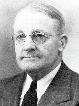
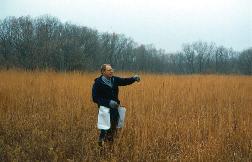
Upper figure: Ken Vogel evaluating first year stands on a field in an economic trial. Second figure: Franklin D. Keim, born in Hardy, NE 1886, PSTC, UN 1909, M.S. 1918, Ph.D. Cornell, 1927. 1905-1911 HS teacher, 1914-1952 UN Agronomy teacher & mentor.
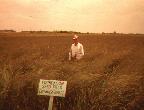
Above: Laurence C. Newell, research agronomist, USDA & adjunct professor of agronomy, UN. He is shown in the Foundation Seed Field of Slate Intermediate Wheatgrass.
Switchgrass, from page 8
Other early switchgrass work was largely conducted at USDA Soil Conservation Service (now Natural Resource Conservation Service) Plant Materials Centers, and at a few land grant universities including South Dakota State University and Oklahoma State University. Early cultivars that resulted from these programs include Blackwell, Caddo, Cave-in-Rock, Summer, and Kanlow.
I was hired to replace Dr. Newell in the fall of 1974 and our positions overlapped by about six months. I was finishing a Ph.D. dissertation on wheat breeding at UNL when I was recruited to apply for the position by Dr. Herman Gorz who was the USDA-ARS Research Leader of the Forage and Sorghum Unit. The overlap was intentional so that I could spend time with Dr. Newell reviewing all of his field nurseries. It was during these sessions that I obtained the previous information on the history of the project.
The focus of the research shifted in the late 1970s to a focus on improving the quality of grasses for use by ruminant animals primarily beef cattle in addition to improving forage yield. Additional emphasis was on improving establishment. An artificial rumen procedure, in vitro dry matter digestibility (IVDMD) was used to identify switchgrass plants with improved digestibility. This cooperative research with ARS and University of Nebraska scientists resulted in the development of the switchgrass cultivar Trailblazer which had high IVDMD and produced higher average daily gains and gains per acre when grazed by beef yearling than Pathfinder. Other cooperative research resulted in the herbicide atrazine being labeled for use in switchgrass establishment. Basic genetic research was also conducted in addition to the breeding work.
In 1990, we became aware of the U.S. Department of Energy’s (DOE) interest in the potential of developing switchgrass into a biomass energy crop. I contacted the DOE program managers at the Oak Ridge National Laboratory and a series of interagency agreements were initiated that provided funding for developing switchgrass into a biomass energy crop for the Central Great Plains and the Midwest. This funding continued until 2002 when the DOE funding
was terminated and we began receiving USDA funding for the research.
In the first phase of this research, we evaluated all available cultivars and elite strains at three Midwestern locations, Mead, NE, Ames, IA, and West Lafayette, IN. Results indicated that it was possible to develop switchgrass cultivars with high biomass yields that are stable over broad geographical regions. These results also indicated that existing switchgrass cultivars developed for use as forage grasses had the potential to produce ethanol yield of over 500 gallons/acre. In addition, switchgrass germplasm collected from Midwest prairies in 1989 was evaluated at the three locations and superior germplasm was identified and classified. In the next phases, a series of genetic studies were completed that developed basic information that is being used to improve breeding methods, germplasm utilization, and to potentially develop hybrid cultivars. These included the first molecular genetic studies on switchgrass. As part of this research, the cultivar Shawnee was released in 1995. Management research that has been completed includes N fertility and harvest management studies, herbicide tolerance and stand establishment studies, mycorrhizal studies, and a large multi-state on-farm economic cost of production study. As a result of this research, a basic set of management guidelines and cultivars are in place for producing switchgrass as a biomass energy crop in the Central Great Plains and the Midwest. Our current research goals are listed in Table 1 below.
The current USDA-ARS scientists on this project who are housed in the Department of Agronomy and Horticulture include Dr. Rob Mitchell who is focusing on management, Dr. Gautam Sarath, molecular biology and biochemistry, and myself. Support staff includes Steve Masterson, Pat Callahan, Kevin Grams, Marty Schmer, and Nate Palmer. We continue to interact with university staff on specific experiments where pooled expertise enables complex problems to be efficiently addressed.
Top centered: experimental switchgrass hybrids at Mead, Nebraska. Yield potential in 10 tons/acre. Left: Ken Vogel collects native grass from a remnant prairie in Missouri. Directly above and to right: switchgrass field in eastern South Dakota which was part of a regional economic study. Each big round bale could be converted into a 50 gallon barrel of ethanol. Far right (above) Table 1.
The promise of Renewable energy agriculture in nebraska
by Kenneth G. Cassman, Professor of Agronomy and Director, Nebraska Center for Energy Sciences Research
Energy prices have risen dramatically over the past few years as a result of rapid economic growth in the world’s most populous countries—China and India, and because of the devastation caused by hurricanes Katrina and Rita to energy supply infrastructure in the Gulf coast states. While the severity of hurricane damage is not likely to be repeated, there is no question that global oil demand for oil is outpacing the discovery of new supply, which means high energy prices are probably here to stay. Unfortunately, the USA economy is vulnerable to high energy prices because we import a majority of our oil requirements from abroad.
In response to the high energy prices, and with the goal of reducing our dependence on foreign oil, Congress passed the 2005 Energy Security Act, which mandates that USA biofuel production increase from 4.5 billion gallons in 2005, to at least 7.5 billion gallons within seven years (2012). While this amount of biofuel production will only represent a relatively small portion of total gasoline demand, it will reduce our need for imported oil by about 8%. Coupled with energy conservation programs, expansion of biodiesel production capacity from soybean and other oilseed crops, and improvements in car gasoline efficiency, biofuels promise to become a critical component of our national energy security strategy.
Most of the increased ethanol production will be produced from corn grain (and to a lesser extent from sorghum), because commercial technology for converting the carbohydrate in grain to ethanol is well developed and cost-competitive when oil is above $45-50 per barrel. In addition, the distillers’ grain by-product that is left behind after ethanol fermentation is a nutritious and highly palatable feed that can be used at up to 40% of cattle feedlot rations. Therefore, Nebraska has a comparative advantage for investment in the grain-ethanol industry because we have highly reliable corn and soybean production capacity from more than 8 million acres of irrigated farmland, and the largest cattle-feeding industry. No other Corn Belt states enjoy both reliable corn supply and a large cattle feeding industry.
These comparative advantages have not gone unnoticed by investors who are funding a tremendous expansion of
ethanol production capacity in Nebraska. Although Nebraska is currently a distant third in annual grain-ethanol production today, the ethanol capacity of new plants under construction will leapfrog the projected capacity of #2 Illinois by 2008. In fact, the rate of expansion in Nebraska may overtake the ethanol production capacity of #1 Iowa within the next five years.
Regardless of whether Nebraska is first or second nationally, the increase in grain ethanol production will make the ethanol industry the second largest industry in the state behind cattle. It will require a tremendous increase in corn utilization even when accounting for the replacement value of the distillers’ grain by-product in livestock feed. Current installed Nebraska ethanol production capacity is about 565 million gallons per year or 0.565 billion gallons/yr. With plants currently under construction, annual Nebraska capacity will nearly double to 1.061 billion gallons/yr by the end of 2007, which will require about 40% of all corn produced within the state. Moreover, there is another 1.900

billion gallons/yr of additional capacity that is in various stages of planning and permitting throughout the state. While it is unlikely that all of this additional capacity will be built out, current prices and incentive structures make grain-ethanol a highly profitable venture, which makes it more likely than not that Nebraska ethanol production capacity will climb above 1.5 billion gallons/yr within the next 3-4 years.
The new ethanol plants will contribute to rural economic vitality by providing good jobs in rural areas and by increasing the base prices paid for grains such as corn and sorghum. At the same time, the increased demand for grain will help focus attention on sustaining increases in
Photo by Brett Hampton, IANR
renewable energy, from page 10
corn and sorghum yields to ensure adequate grain supply for both biofuels and livestock production, as well as for other uses such as corn syrup, bioplastics, and for export markets.
The focus on productivity means exciting times for crop producers, professionals in agricultural industries, agronomy students, and faculty because there are a number of critical issues that must be addressed to fully realize the potential of renewable energy agriculture.
How can we sustain or even accelerate crop yields while dealing with reduced water availability for irrigated agriculture due to chronic drought and increasing restrictions on access to ground and surface water supplies?
Can we increase yields while reducing nutrient losses, protecting soil and water quality, and contributing to a net reduction in greenhouse gas emissions?
Is it possible to “design” new energy crops through genetic engineering, or to improve the energy yield of existing biofuel crops?
The good news is that our recent research has shown that it is possible to produce high grain yields with very high efficiency for water and nutrients, which in turn results in a large net energy surplus when the energy content of all inputs and outputs are considered.
Ultimately, however, the key question is how much grain can we produce in a sustainable fashion to support an expanded biofuel industry without causing grain shortages for other users? To answer this question will require talented students and faculty who are excited about the potential to solve our nation’s energy security problems, and adequate funding support to explore new avenues of innovation in crop genetics, crop production ecology, animal science, biosystems engineering, chemistry, and physics. With adequate investment in research and education, it should be possible to produce more than 10 billion gallons of ethanol from grain without disrupting other markets, and Nebraska could be the national leader in meeting this challenge.
feedstock. We are fortunate to have a talented USDA-ARS research team located in our department with state-ofthe-art programs on the genetic improvement and management of switchgrass. Therefore, we are well positioned to take advantage of this additional option for renewable energy agriculture.
We are also fortunate to have a new center at UNL focused on the energy sciences. The Nebraska Center for Energy Sciences Research was established in May 2006 with funding of $5 million provided by the Nebraska Public Power District (NPPD). Most of this funding will go towards research grants with the goal of developing research and education programs in energy sciences to provide new or significantly enhanced energy resources. Renewable energy agriculture will be an important component of this work, and we are fortunate to have generous support from the NPPD to implement this program.
In summary, we have entered a very exciting time for agriculture as it is called upon to help reduce dependence on fossil fuels in general, and imported oil in particular, in addition to its traditional role in producing food and feed. Students entering agronomy today will have the chance to lead this transition and help ensure a positive energy future.

Research is also in progress to develop cost-effective technologies for conversion of cellulosic (i.e., biomass) materials to ethanol. Cellulosic materials include corn stover, perennial grasses such as switchgrass, and wood. While promising over the long-term, even optimistic estimates place full development of this technology 10-30 years out. Although corn stover has been suggested as the most readily available biomass feedstock, there is concern for maintaining soil quality if too much stover were removed because of its ability to protect soil from erosion and degradation in conservation tillage systems. In contrast, switchgrass, which is a native perennial grass, appears to be a much better option for sustainable production of cellulosic

Agriculture Biotechnology Pipeline at the University of nebraska
by Tom Clemente
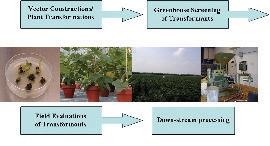
Plant genetic engineering has received much attention as a means to improve germplasm of crop plants. Evaluating plant traits derived from biotechnology requires extensive fieldtesting, beyond the characterization of the target phenotype, to ensure the agronomic qualities of the experimental material have not been compromised. Field tests conducted on regulated transgenic
material must be carried out in accordance with Federal guidelines governing the movement and release of regulated transgenic seed. The Federal guidelines are crafted to limit the possibility of an unexpected contamination into the environment or food chain. The University of Nebraska has recently strengthened its regulated transgenic trait field-testing capabilities by building infrastructure to ensure identity preservation, containment and chain of custody tracking of the regulated seed. These resources include a field coordinator who is responsible for training of personnel and oversight of all field-testing of the regulated material, isolated storage facility, separate planting and harvesting equipment and dedicated acreage. This infrastructure permits the researcher to evaluate transgenic traits from the lab bench to the field under strict identity preservation. More recently we have established a down-stream processing center for preparation of experimental feed and oil extrusion. This infrastructure, collectively referred to as the agriculture biotechnology pipeline, uniquely positions the University in the area of agriculture biotechnology and will serve as a strong complement to IANR’s teaching, research and extension missions.
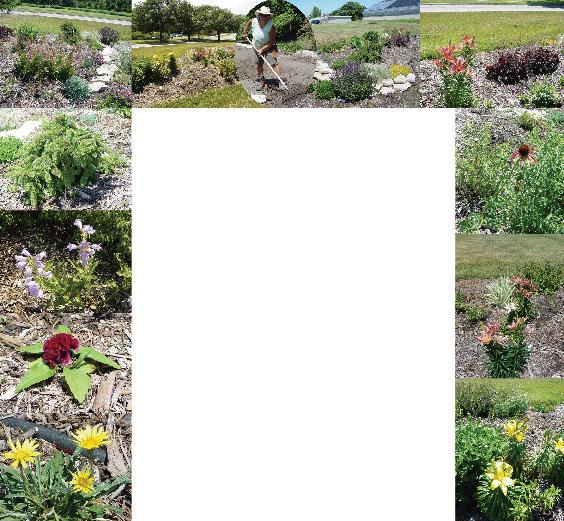
the RUth WiLLSie EvASco DemonStrAtion AnD
TeAchinG GArDen
Excerpted from an article by
Kim Todd
The mission of the Ruth Willsie Evasco Demonstration and Teaching Garden is to allow learners to experience the beauty and diversity of the plant kingdom in a well-designed and managed, hands-on, inspiring, and aesthetic demonstration and teaching garden. It will be an ideal venue for demonstrating and interpreting particular research findings, and supporting the distribution of these findings by means of distance education outlets. The area can be used as a trial site for shrub and herbaceous plantings as well as a demonstration and display garden.
Design of the space and selection and placement of plant materials and hardscape elements will be the responsibility of horticulture faculty most involved in its use in consultation with Landscape Services, as will management of the garden. Because the Evasco Garden will be based on a solid master plan developed by senior landscape design students, future improvements will further enhance the space as a part of the vision. Our long-range vision may include seating, paved areas to support larger groups of people as well as vertical structures. The Evasco Garden will be identified with a plaque mounted on a stone, similar to that used in East Campus’s Yeutter Garden.
The design and management of the Evasco Garden will provide hands-on opportunities for undergraduate student learning and lifelong learning through a combination of formal classroom assignments and projects made available to clubs and organizations. Student internships will provide another opportunity to link learning with hands-on experience.
Staff Awards 2005-2006
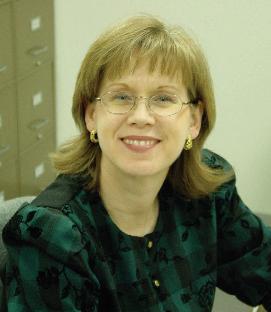
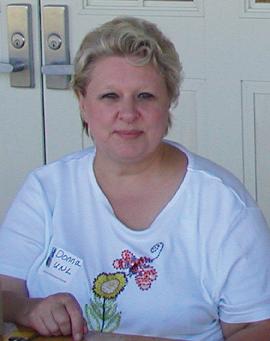
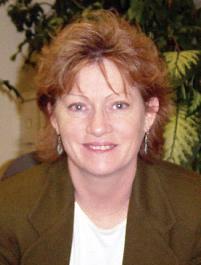
Featured above are our departmental as well as departmental IANR staff award recipients:
Mary Shipman (center) received the department’s Employee Recognition Award for outstanding service;
Donna Michel (lower left) received the department’s Employee Recognition Award for outstanding service;
Sherri Machacek (upper right) earned IANR’s Outstanding Employee Award for Office/Service staff (May 2006);
Kathi Cockrill (lower right) earned IANR’s Outstanding Employee Award for Office/Service staff (February 2006).
Photos and visual layout by Carola Strauss.
GUDmUnDSen SAnDhiLLS LAB orAtory
WhitmAn, neBrASKA
by Jerry D. Volesky
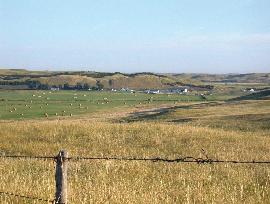
Gudmundsen Sandhills Laboratory (GSL) is located in the heart of the Nebraska Sandhills in Grant, Hooker and Cherry counties, near Whitman. Administrative support for GSL comes from West Central Research & Extension Center in North Platte. In 1978, Elmer “Pete” and Abbie Gudmundsen gave the former Rafter C Ranch to the University of Nebraska Foundation.
Many improvements have been made to convert the Rafter C from a commercial ranch to a research orientated facility. Livestock watering sites, chutes, fences, sorting pens, scales, calving barn, shop, equipment storage, and a home and dormitory were added.
Since GSL’s inception, ecologically diverse research and educational programs have developed. Joint projects with animal, range, soil, veterinary, economics, entomology, geology, hydrology, forestry and wildlife have increased our understanding of the Sandhills ecosystem. GSL research has resulted in advances in range livestock nutrition, beef cattle reproduction, grazing systems, rangeland ecology, low cost cattle management, groundwater issues and wildlife management. GSL has become an integral part in developing economically and environmentally sustainable plant/animal systems in the Nebraska Sandhills and other range environments.
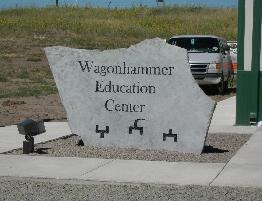
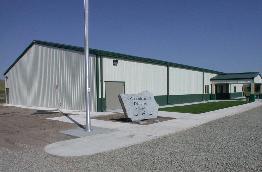
Additionally, the Wagonhammer Education Center was recently built and will provide classroom and laboratory space to meet the growing need for instruction and cattle and plant demonstrations. The Wagonhammer Education Center will also permit further development of outreach programs.
The new Center will accommodate up to 300 people for agricultural events and courses throughout the year and provides additional research and teaching space for faculty and graduate students.
Two gifts totaling $500,000 to the University of Nebraska Foundation made the project possible. Elaine Wolf of
Albion and her husband, James Wolf, provided the lead project gift in 2001. A recent bequest from the estate of Ray Bohy of Davey enables the project to move forward.
In recognition of this support, the NU Board of Regents voted to name the new center the Wagonhammer Education Center, a name the Wolf family selected after its Wagonhammer Cattle Company. The center’s main auditorium will be named the Ray Bohy Conference Room in commemoration of Ray Bohy’s 30 years of support and service to IANR.
The architectural firm of Joseph R. Hewgley and Associates of North Platte designed the facility with input from West Central’s faculty and Bob Skates, facilities project manager.
Please visit their Web site at http://westcentral.unl.edu/ GSL/ for further information.
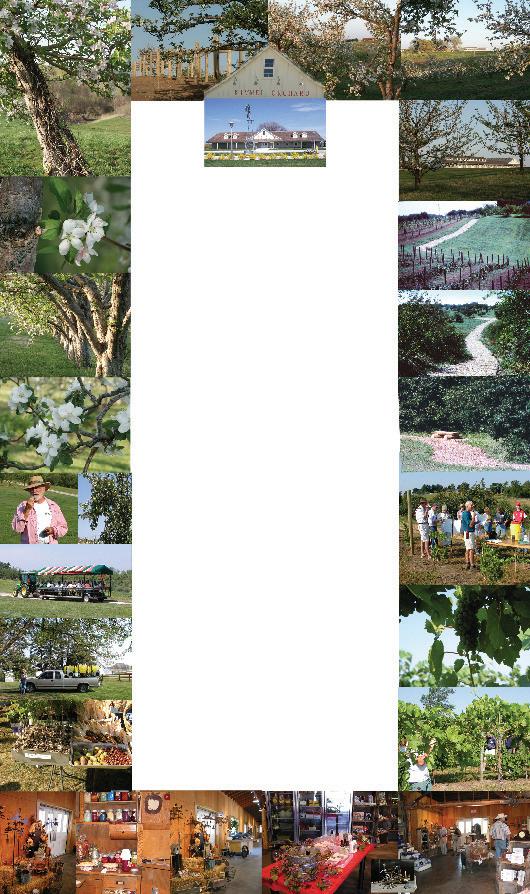
TKChe University of Nebraska’s Kimmel Center, a 9,200-square foot education and research facility, was constructed in 2005. A collaboration of University of Nebraska Cooperative Extension, the Kimmel Charitable Foundation, and the National Arbor Day Foundation, KERC features a large classroom for educational programs that also serves as a university satellite classroom and includes office space and viticulture and specialty forest crop laboratories that the university’s Institute of Agriculture and Natural Resources (IANR) researchers use for ongoing studies.
The center is a joint effort of the Kimmel Foundation and the university. The private Kimmel Foundation funded construction and owns the building. The university provides staff for Cooperative Extension educational programming and research.
The educational programs offered through the center focus primarily on agritourism, viticulture, specialty forest products and sustainable agriculture. Projects emphasize developing value-added products and markets for Nebraska and the region along with land stewardship.
University faculty already have test plots for grapes and for marketable woody plants at the orchard and offer educational field days and programs. Opportunities are being explored to expand agritourism as a source of added income for farmers and to educate people about agriculture’s importance.
The Kimmels, lifelong Nebraska City residents, operated their orchard and farms in Otoe County and were active in civic and community leadership. They created the philanthropic Kimmel Foundation to continue their commitment to enhancing the quality of life in Nebraska and Iowa through education, arts, agriculture, humanities and human services. It became active after Richard Kimmel’s death in 1996.
For more information, please visit their Web site at www.kimmelorchard.com or call (402) 873-5293.
ome To
immeL !
courtesy of Kimmel Orchard. Visual layou t by Carola Strauss.
Reinventing curriculum
by Dennis McCallister and Don Lee
Curriculum (definition): A program of courses that meets the requirements for a degree in a particular field of study; (http://www.k-state.edu/grad/catalog/glosabbr.htm, KSU Graduate School).
Our curricula in agronomy and horticulture are changing for many different reasons. There is new knowledge being generated every year that we have to address in our classes, all the while keeping what is still valid about what we have taught. Our department is no longer “Horticulture” and “Agronomy” rather it is a single “Department of Agronomy and Horticulture.” If that new reality isn’t incorporated into our classes, then we are probably not recognizing it in anything else we do. Our students are not the same as the students of a previous generation, even of a previous decade. Their learning styles and needs are different from any other group of student we have seen before and our curriculum should embrace that. Similarly, the career opportunities for our graduates are different in many ways than even just a few years ago, with science and technology becoming more important than ever before. Curricula also change because the faculty change. We have new interests that we are excited about enough to bring into our teaching or because we think something is an important advance in our field. Finally, our curricula sometimes change because of external forces such as the need for accountability. For all of these reasons, but especially to serve our students better, faculty in the Department of Agronomy and Horticul-
ture are beginning a bottom-up review of the curricula of the majors offered by the department. To do an effective job, we need to look in many directions for guidance. Of course the faculty itself is one resource. Faculty should have a good idea of important directions in our fields. We also have contacts with potential employers of our graduates. We aren’t serving them very well if the curriculum is not meeting the needs of the marketplace. Our current students can also offer advice on curricular development. They may come from family farms and ranches, they may have jobs during the school year or in the summer at a local garden store, they may be self-employed entrepreneurs. With all of these experiences, our students can offer insights on what they need and want to learn that the faculty could only guess at. Finally, to the degree that we can, we should design a curriculum that will meet the needs of society, by producing graduates who are not only well-educated and employable, but who understand the “big issues” of the world in which they will live, who can analyze those issues, and make reasoned decisions about them. A good curriculum should help our students become citizens and leaders in whatever community they choose to live.
So how can we go about “remaking” a curriculum? Too often, because courses are the most obvious part of the cur-
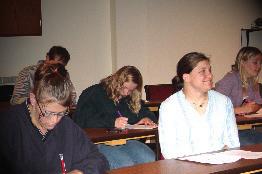
Above: Martha Mamo provides lecture materials in an AGRO 366 lab.
Top right: Students learn range concepts in a RANGE 340 lecture. Directly above: Dale Lindgren provides insights to students in the newly developed Flowers and Vegetable breeding class.
curriculum, from page 16
riculum, that’s taken as the starting point“What courses should we create?” But there are problems with that approach. One problem is that we seldom think beyond what we are doing right now. Creativity is lost because we are so caught up in the present. A second and related problem with focusing on the course part of the curriculum is that we end up with a bunch of disconnected parts. It’s a little like having a dozen different engineering teams design a new car in isolation from each other. One team may have a great powertrain, but it won’t fit on the chassis that another team had in mind. And even a great car may not move off the showroom floor if no one’s done a market analysis. For that reason, the approach we’ve chosen to take is based on what some sources call “backward design.” The rationale for this is stated by Stephen R. Covey in his hugely popular “The Seven Habits of Highly Effective People:”
“To begin with the end in mind means to start with a clear understanding of your destination. It means to know where you’re going so that you better understand where you are now so that the steps you take are always in the right direction.”
Or, to put it more colloquially, “if you don’t know where you’re going, you probably won’t end up in the right place.”
The steps in backward design are deceptively simple: First, identify the desired results of the curriculum; second, determine the acceptable evidence that the clientele (the students in this case) are achieving those results; and third, plan learning experiences and instruction that will move people in the direction of the predetermined results. You can see why the design is “backward.” Rather than starting with courses or learning experiences, we start with the ends - the results or objectives of learning. The second step is often the toughest: What evidence must we collect to verify that we are meeting our goals? This has often been the weak part of university curricula. Even if we start with appropriate objectives in mind, the “evidence” step is skipped over so that all we end up with is a fuzzy sense that our students are developing as they should, but we’re not quite sure. A related problem is that the best curricular objective is pretty useless if it is impossible to assess that our students have achieved the objective. Only after we’ve designed assessments do we use our skills as professional educators to develop curricula, not just classes but learning experiences, which may take place outside the classroom, to achieve educational objectives in measurable ways.
As an example, let’s look at written communication. It ranks up there with motherhood and apple pie that good writing skills are important for most people to succeed in nearly any work environment. But how to state that as an objective? Maybe something like “graduates with degrees in horticulture or agronomy will be able to write documents appropriate to their first employers’ requirements.” If we take that as a legitimate objective, we next have to decide on performance standards (the evidence that our students can write appropriately). Traditionally, we have included a writing-intensive course or two in the list of requirements for our majors. But is that really evidence of what the objective demands? Is a “C” evidence of minimum competency? What about a creative writing course - will that impart the same skills as technical writing? Does isolating writing in courses offered by another department send the message that writing isn’t really important for success in the profession, even though we say it is? You can see that evidence of meeting an educational objective isn’t as easy as we might think. Finally, the courses, pieces of courses, or out of class educational experiences must integrate and reinforce each other. In the case of writing, that means that every course should have some amount of appropriate writing embedded in it, not just added on.
You can see we have quite a job ahead of us. And we can’t do it alone. The first step of backward design, identifying the desired results of the curriculum, will require input from a variety of sources. You, as our alumni, supporters, critics, employers of our graduates, regardless of your role or position, can offer valuable insights into what our new curriculum should do. We already have begun, and will continue to survey stakeholder groups. If we don’t get in touch with you directly, please let us know what you think. With great ideas, we can have a great curriculum. We look forward to hearing from you.
Don Lee (dlee1@unl.edu)
Dennis
McCallister (dmccallister2@unl.edu)
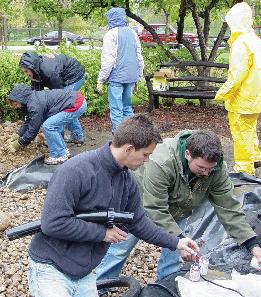
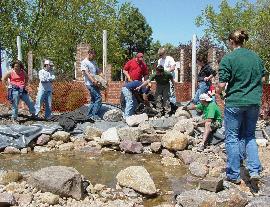
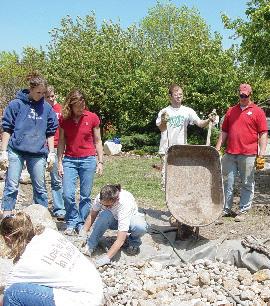
Above: Kim Todd instructs her landscape management students on how to build a pond at the south end of State Fair Park.
teaching today’s students to become tomorrow’s leaders
by Chuck Francis and Dennis McCallister
Educational programs in agronomy and horticulture are evolving to meet the needs of a wide range of students, many of whom today come from non-farm backgrounds. Enrollment in some traditional crops and soils courses continues to decline as students seek an education beyond production agriculture. While we must continue to provide the basic information and skills to graduate credible professional horticulturists and agronomists, many of our current students are going into other parts of the food system, into natural resource management, and into a wide range of other professions. How are we going to meet this demand?
One strategy is to expand the concept of agronomy and horticulture to include a range of options within the department. We now offer specializations in soil science, crop or horticultural production, business, landscape design and management, turfgrass science, graduate studies preparation, and agroecology, among others. Many of the basic courses in these curricula are the same, while specialized courses become the focus of the student’s third and fourth years. Professional Golf Management and Grazing Livestock Systems are majors with extensive participation by department faculty. These and other areas represent the integrative potentials that agronomy and horticulture have to offer. Our students can take a systems approach to study component plant species and their management, economics, environmental impacts, and social dimensions in a way that has not been a part of the traditional study of agriculture. No other discipline in the College of Agricultural Sciences and Natural Resources provides the integrative perspective that embraces whole systems, their impacts, and consequences.
We are also attracting students from outside the majors with courses such as Floral Design; Vines, Wines, and You;
Organic Farming; and Urbanization of Rural Landscapes. These courses often appeal to students majoring in other areas, including arts and sciences, who are concerned about the esthetics of plants, where and how food is produced, how this basic human need can be sustained, long-term food security, distribution of benefits from alternative food systems, and land use decisions. For example, the urbanization course has been successful in attracting students from majors in architecture and community and regional planning.
Perhaps most importantly, our teaching faculty are involved with instructors from other states and countries in developing new learning and advising approaches. For example, the group advising approach for first year students and separate groups for incoming transfer students has been very well received and has contributed to student retention. Problem-based learning and action education have been integral to capstone courses in agroecology, production systems, horticultural business management, and range science. The intern program has been especially important to our graduates, and we have begun to require an internship for graduation. A multi-state course in agroecosystems analysis has been in place since 1998 in cooperation with Iowa State University and the University of Minnesota. Farmers are important instructors during the structured learning activities of this course. A decadelong cooperative program with the Nordic Region has resulted in a fruitful student exchange, in faculty involvement in teaching in Norway, and in numerous publications on participatory learning in agroecology – the ecology of food systems. These are just a few of the innovations being used to keep the teaching program in agronomy and horticulture attractive for preparing students to be tomorrow’s leaders in agronomy, horticulture, and food systems.
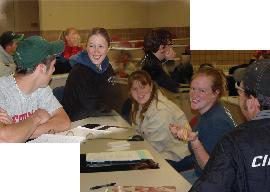
Above: Walter Schacht’s range management students enjoy lecture, presentations, and interactions.
Above: Keith Glewen answers crop questions for Tracy Mullen and Brad Schlegel, Lincoln Public Schools science teachers, at the ARDC in Mead, NE on a teacher training tour arranged by Charles Wortmann.
Range ManageMent CLuB NewS
by Rodney Lamb, 2005-2006 president

UNL’s Range Club had another interesting and eventful year! Serving as officers this year were: Rodney Lamb-president, Jessica Warner-vice president, Melissa Thompson-secretary, Merilynn Hirschtreasurer, and Dan Towey and Austin Bontrager-public relations officers. Walt Schacht served as our faithful advisor for his twelfth consecutive year. We started off the year right with our annual Agronomy Club/Range Club BBQ. We held this at Peter Pan Park, a few blocks south of East Campus. This is a great way to start off the school year and invite new recruits for the upcoming year.
Early October found us at the annual meeting of the Nebraska Section of Society for Range Management (SRM) in Valentine, Nebraska. We were able to meet up with students from Chadron State College and have our annual Crazy Auction. The Crazy Auction is our largest fundraiser for the year. Thank you to everyone who was able to attend the meeting and support our club! While at the meeting, we also toured the Niobrara Valley Preserve, owned and managed by The Nature Conservancy.
The highlight of the year was the SRM annual meeting in February in Vancouver, British Columbia, Canada. The Club spent much time preparing for the meeting. Seven club members, two graduate students, and Dr. Schacht flew from Omaha to Seattle, Washington, and then drove rental cars to Vancouver. While at the meeting, we were very active in student events: seven students took the URME (Undergraduate Range Management Exam), two students participated in the Plant ID contest, three students competed in the Undergraduate Public Speaking Contest, and everyone attended student luncheons, business meetings, and employment workshops. Jessica Warner was the president of the International Student Conclave and represented
students at numerous SRM functions. She also organized numerous student activities, including the Undergraduate Public Speaking Contest, Tapping the Top, Undergraduate Paper Session, and business meetings. Merilynn Hirsch and Shelly Taylor were elected secretary and reporter, respectively, of the International Student Conclave for 2006/07. Throughout the meeting, the students maintained a display booth, and sold books and t-shirts to help finance the trip. We also toured Vancouver and some of us spent a day in Seattle on our return trip to Nebraska.
We concluded the school year in April with the annual Department of Agronomy and Horticulture banquet. At the banquet, we recognized Jessica Warner as the 2006 Trail Boss. This award is voted on by the students and is given to the outstanding club member. We also recognized graduating seniors and our parents for supporting us for the year. New officers were also installed. They were: Merilynn Hirsch-president, Jessica Milby-vice president, Shelly Taylor-secretary, and Lars Anderson-treasurer.
The Range Management Club had a great year and we are looking forward to the upcoming year! Thank you to everyone who supported us this past year! It is greatly appreciated!
new visiting researchers and research scholars
Dr. Adam Liska is working with Dr. Kenneth Cassman on research involving the Ecological Intensification Project, the Maize Limited Irrigation Project, and the Soybean Irrigation Optimization Project.
mr. Anderson mello from Brazil, is working with Dr. Ellen Paparozzi conducting research in floriculture on penstemon.
Above: Range Management Club at the SRM meeting in Vancouver, B.C.
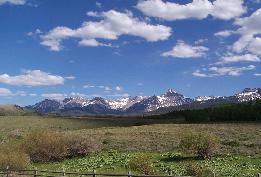
Above: Picturesque Ralph Lauren’s Ranch (RLR) in Colorado.
COrganic Farming Research
onsumers are purchasing organic produce all over the country and the world, with an increase of about 20% per year for the past two decades. Organic products are both supply- and demand-driven. Organic production has the potential to improve farmer’s profits, maintain more people in rural communities, create niche markets and reconnect urban/suburban citizens with their rural cousins. Consumers want high quality food, raised in a manner consistent with their concerns about the environment, and they want to know that their food and tax dollars are going to a system that will be able to provide for them long into the future. Regardless of how one feels about the need for and the value of organic farming, it is clear that there are many who want organic products and are willing to buy it at a premium. This growing demand for organics is encouraging more farmers to grow and sell organic food.
The Agronomy and Horticulture Department has a unique opportunity to help develop organic practices, work with farmers to design organic systems, and enhance the supply to the benefit of both the farmer and the consumer. As a department committed to plant and soil science, extending information and developing new ideas, we need to explore all viable opportunities to serve both farmers and consumers.
A team of seven IANR faculty from several disciplines are working with numerous collaborators under a grant from USDA to further develop an integrated organic agriculture presence in research, extension, and resident instruction. For detailed objectives see a brief summary on the web at: http://organic.unl.edu. Several independent projects have been in process for many years. Chuck Francis is teaching agroecology. In the spring, 2006 semester, a three-module course was offered on-line by Peter Skelton and Deana Namuth about organic agriculture. For the past three summers special workshops were offered in conjunction with the Nebraska Sustainable Agricultural Society and the Organic Crop Improvement Association. The workbook and other materials are available on the web http://cari.unl.edu/OrganicFarming2005-final.doc. The late Warren Sahs initiated organic farming research thirty years ago that compares 2 and 4-year conventional rotations to organic farming sequences with and without manure. These are just a few examples of individual projects related to organic agriculture. The objective of this project is to coordinate these individual efforts so that there is synergy among the parts, and to assure that information produced will be extended to clients and the scientific community.
The initial effort is focused on developing certified organic fields at four University of Nebraska research centers: Agricultural Research and Development Center at Mead, Haskell Agricultural Laboratory at Concord, South Central Agricultural Laboratory at Clay Center, and High Plains Agricultural Laboratory at Sidney. The decision to work across the state is based on several reasons. Nebraska has a unique combination of agroecozones, and for organic agriculture to be successful, practices and systems need to be developed that are suitable for many different conditions. The process to become certified can best be learned by doing it. As researchers, extension specialists, and teachers, our ability to communicate the process to others is enhanced by the experience. In addition, working with the certifiers helps them understand the constraints and concerns we have as university faculty.
The most important reason is to conduct research that is relevant to the organic farming community. In order for our research results to be valuable and acceptable to organic farmers, the research has to be conducted under conditions that are similar to those found
Charles Shapiro, Chuck Francis, and Liz Sarno
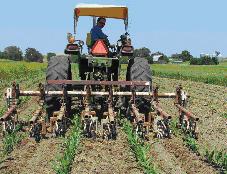
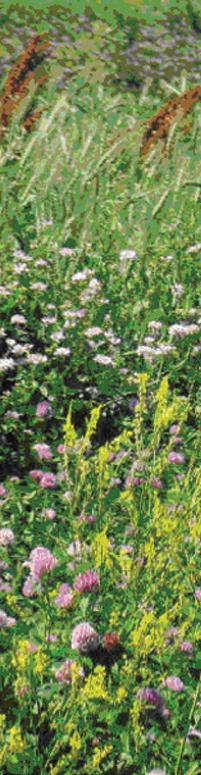
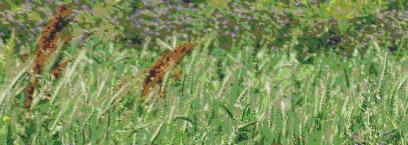
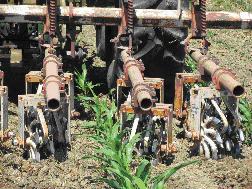
Photo top left: Larry Stanislav shown cultivating corn. Frame pictured to the left and across top are green manure crop of legumes in strip cropping system.
Initiated Statewide
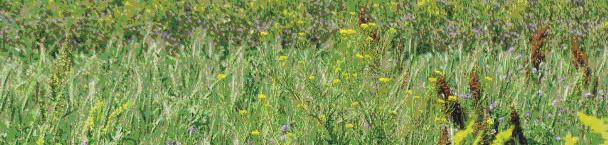
on organic farms. In addition to the core group of principal investigators, many other faculty members have expressed interest in either cooperating on research or extension projects. The 20-30 acres of organically certified farmland at each location will be available in the future for others to conduct replicated field work that addresses problems found on organic farms. We have a citizen’s advisory group that will help us accomplish this and our other goals. Much of the practical research and confirmation of results will be carried out on farms with key cooperators. This will assure relevance and applicability.
As we work towards being certified, a three-year process, we are developing important information about the transitioning process. Most organic producers report that this transition process is the most difficult time for them. It is a learning and adjustment period for both the farmer and the land. Documentation of this process will be helpful to conventional farmers making the decision about whether to make a change to organic production.
There are many unknowns in organic farming that provide opportunities to study the interactions of soils, crops, weeds, microorganisms and management decision processes in an organic farming system. Several of the researchers are from the School of Natural Resources and they will be documenting the impact on wildlife at the research laboratories and on established organic farms.
The pictures on these pages give a glimpse at the need for a range of crops and the use of mechanical cultivation.
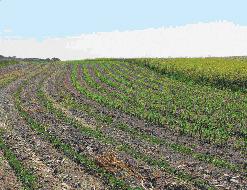
Above, early season view of strip cropping.
Above: close up of early season cultivation.
Lowell e. Moser retires
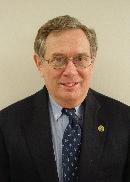
Lowell E. Moser retired in September 2005, as the Sunkist Fiesta Bowl Professor of Agronomy after a 38-year career. A native of Ohio, Dr. Moser received his B.S. degree from the Ohio State University in 1962, a M.S. degree from Kansas State University in 1964, and a Ph.D. from the Ohio State University in 1967. After three years as an assistant professor at Ohio State University he joined the University of Nebraska faculty in a teaching/research assignment in forage and range physiology and management. He taught undergraduate and graduate courses and conducted research in the forage and range area. He has advised numerous student groups, including the UNL Agronomy Club, Graduate Student Association, and Alpha Zeta. His research emphasis has been in the morphology of grass seedlings and plants as it interacts with management practices and has involved many graduate students. Dr. Moser has been author/coauthor of 67 journal articles and 16 book chapters. He has been chair of the editorial committees for Cool-Season Forage Grasses and Warm-Season (C4 ) Grasses, ASA, CSSA, ASA Monographs 34 and 45. He has received numerous awards, including distinguished teaching and advising awards, Fellow of the ASA, CSSA, AAAS, and NACTA, the International Award for Distinguished Agricultural Achievement from Gamma Sigma Delta, and an Alumni Distinguished Service Award from Kansas State University. Dr. Moser has been active in the ASA, and CSSA, serving on numerous committees and as an associate and technical editor for the Agronomy Journal. He has served on the Boards of Directors for CSSA and ASA, has been the president of the North Central Branch of ASA, president of CSSA in 1999, and ASA in 2004. He served as the international president of Gamma Sigma Delta from 1986-1988.
Lowell and his wife, Lovell, will continue to live in Lincoln, Nebraska. In retirement he looks forward to pursuing hobbies and spending time with family, which includes daughter, Carrie Heermann and family of Lincoln, and son, William Moser, of the Washington, D.C. area. Dr. Moser will remain affiliated with the University of Nebraska as professor emeritus.
The key is not to prioritize what’s on your schedule, but to schedule your priorities. —Stephen R. Covey
Mark Bernards joins faculty
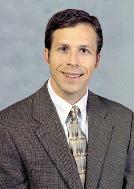
Mark Bernards joined the Department of Agronomy and Horticulture’s Extension Weed Science team on October 1, 2005 as the Irrigated Weed Specialist and is based on East Campus here in Lincoln, Nebraska. His research will be centered at the South Central Agricultural Laboratory near Clay Center. Dr. Bernards’ appointment is 50% extension and 50% research. His responsibilities include weed management in irrigated cropping systems, off-target movement of herbicides, and the impact of weeds and weed management on efficient irrigation water use.
Dr. Bernards received his Ph.D. in Crop and Soil Sciences from Michigan State University in 2004. His research emphasis was soybean cropping systems with projects addressing irrigation scheduling in soybean and the effect of manganese fertilizers on glyphosate activity. Following graduation, he worked as a research associate at Michigan State University in the Cropping Systems and Weed Science programs.
Mark was raised in Spanish Fork, Utah and discovered agronomy his freshman year of college. He became fascinated with the science, and earned both B.S. and M.S. degrees in Agronomy from Brigham Young University.
“I am excited to be at the University of Nebraska–Lincoln and part of the Weed Science team,” said Bernards. “I look forward to meeting many of you, learning much about agriculture in Nebraska, and working to contribute to its success. I hope you will feel free to contact me with your ideas and questions. I may be reached at (402) 472-1534 or by email at mbernards2@unl.edu.”
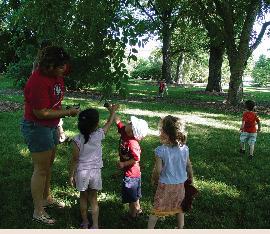
Catch the action — join us in Agronomy and Horticulture! Some of our future students are currently enrolled in Ruth Staples Child Development Laboratory here on East Campus.
Cyril Bish, 84, dies March 23, 2006
Aprofessor emeritus of Agronomy and Horticulture at UNL, Bish retired in the late 1970s. He served 35 years for the University of Nebraska Extension in Hamilton, Adams and Lancaster counties. A professorship in horticulture was established in his honor at UNL. The East Campus nut tree orchard bears Bish’s name.
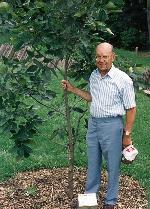
In retirement, Bish focused on growing nuts, his primary hobby. He worked to develop hybrid nut trees capable of surviving Nebraska winters and helped create black walnuts with large kernels.
He served as president of both the Nebraska Nutgrowers Association and the national Northern Nutgrowers Association. He also helped forge the Heartland Nuts N’ More cooperative.
As an Extension agent in Lancaster County, Bish helped organize a water conservation district, a weed district, a crop improvement association and a rural water improvement district.
Bish is survived by his wife, LaVerne J. (Turner), two daughters and a granddaughter.
Sotero Salac 1933-2006
Sotero (Terry) Salac, 73, a long-time faculty member of the UNL Department of Horticulture (1967-1994) died February 7, 2006. During his long career at UNL, he was involved in teaching undergraduates, guiding the research of graduate students, conducting research and providing service to the Department, the University at large, and to our clientele and the profession at the national level. He was admired and respected by his many undergraduate students. Dr. Salac’s course on plant propagation was widely appreciated. He was also a member of a team that taught a plant propagation course at UNO.
Dr. Salac was a pioneering and innovative researcher. Salac was one of the first to investigate the usefulness of prairie wildflowers under low maintenance conditions for landscape, particularly for beautifying the grassy border of the interstate. He did important research on Liatris to improve its usefulness as a cut flower.
He was the first to investigate the use of renewable plant materials as substitutes for peat in potting mixes and for soil amendments. His emphasis was mainly on alfalfa hay wheat straw combination in potting mixes. Alfalfa and hay are readily available in Nebraska. This work is regarded as highly imaginative and innovative and meets the needs of our time. He obtained a US patent (#4,767,440) for this development.
Dr. Salac was regarded as a wise, kind and gentle person who always gave unselfishly of his time to the service of others. He was the faculty supervisor of the horticulture garden, and greenhouse manager for many years. He served well on department committees such as FIPSE (a project to reward teaching), curriculum and facilities. He was the department representative to the University Senate for three years. He was also a long time member of the “Membership Committee” of the American Society for Horticultural Science.
Sotero Salac was born in the Philippines and received his bachelor’s degree there in 1955. He received his master’s (1960) and doctorate (1967) degrees at Texas A&M University before coming to UNL.
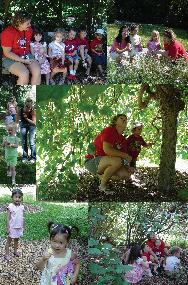
Above: our future students and leaders. Children 2-5 years involved as a community of learners, enrolled in Ruth Staples Child Development Laboratory, College of Education & Human Sciences at UNL’s East Campus.
NewS FROM ALuMnI
by Robert C. Sorensen and Carola Strauss
Greetings alumni! We are extremely pleased with the responses we received this year. When the call for help was issued, each of you responded. Some of you even provided photographs. Thank you so much! We appreciate your help, interest, and participation.
Kimberly erusha (M.S. ’86, Ph.D. ’90) completed her degrees in the Department of Horticulture, specializing in turfgrass management. She joined the United States Golf Association, headquartered in Far Hills, New Jersey in 1990 as manager of technical communications and was named director of education in 1994.
Her primary responsibilities include the coordination and oversight of the Green Section’s education and communication programs pertaining to the results of the USGA turfgrass environmental research programs and serving as associate editor of the Green Section Record, a bi-
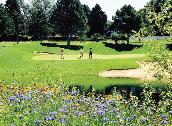
monthly magazine on golf course management and turfgrass science. Golf courses have a significant commitment to protecting the environment, and much of her work involves participation on various industry committees and speaking on behalf of the USGA’s environmental activities. Kimberly returned to the UNL campus in 2000 when she was selected to participate in the University of Nebraska’s Master’s Week program. She still gets a chance to cross paths on occasion with fellow UNL grad students Gwen Stahnke (professor at Washington State University), Tom Salaiz (extension turfgrass specialist with the University of Idaho), and Dave Kopec (University of Arizona), and has the pleasure of working at the USGA with fellow Cornhusker alumni Genger Fahleson, Ann Guiberson, and Laura Saf.
She and her husband, John Kunnert, live in Basking Ridge, New Jersey.
Jim Girardin (B.S. Agronomy 1983) and Deb (Ballenger), UNL Class of 1984, were married two weeks after Deb’s graduation. They lived in Lincoln just north of East Campus. Jim worked for Dr. Shearman and took post-graduate courses in horticulture with a turfgrass emphasis and Deb worked at Hillcrest Country Club. In the spring of 1985, with all class work completed (but no thesis), they moved back to their hometown of Broken Bow where Jim was hired as the superintendent at Broken Bow Country Club. Jim reports that the most significant family event which occurred while in Broken Bow was the birth of their daughter, Tiffany. Tiffany is now a junior at UNL working toward her B.S. in nursing.
In April of 1986, the family moved to Grand Island where Jim was employed as assistant superintendent at Riverside Golf Club. After two years of training with long-time superintendent Earl Gaskill, Jim took over as superintendent. He states that his education in agronomy was put to good use in this role since an understanding of how plants grow and why they respond as they do is critical in providing a good golf playing surface.
Jim reports that two very significant events occurred while they were in Grand Island. The first was the birth of their son, Logan, in 1988. Logan will be a senior at Broken Bow High School next fall. The second was the flooding of the golf course in 1993. After a heavy snow melt in March, and heavy rains in June and July, the Wood River flooded more than sixty acres of the golf course for two weeks. The flood created many challenges and many long hours.
Another significant event occurred in their lives in November, 1994. After eight years in Grand Island, the Girardin family moved back to Broken Bow where Jim went to work in the family business, Arrow Seed Company. He believes his education and experience with turfgrass provided excellent preparation for sales of turf product lines of seed, chemicals, and fertilizers and that the solid agronomy education he received at UNL served the company and customers well over the past eleven years.
Jim has many good comments about University staff and their effectiveness in Nebraska. Further, he invites anyone taking the scenic drive along Highway 2 through the Sandhills to stop in and say hello. He offers a cup of coffee and a tour of the Arrow Seed Company plant.
osman Gülşen attended UNL earning his Ph.D. degree in turf science. After his graduation in December 2004, he returned to his former position as a researcher at Alata Horticultural Research Institute, Mersin, Turkey. The institute is located by the Mediterranean Sea on a two-mile naturally conserved beach site consisting of research plots and labs. Osman says it is a fabulous place to live and work.
Above: Colorado Springs golfing tournament. Photo provided by Kimberly Erusha. turn to Alumni page 25
alumni, from page 24
Gülşen says he is kept busy exploring plant genomes. His focus is on citrus genomes and making linkage mappings of mandarins, aiming the control of fruit quality traits and disease resistance. Osman is part of the citrus variety improvement team in Turkey and helps others to understand citrus genomes at the molecular level. Under his leadership, his team has developed several types of seedless and ‘Mal secco’ resistant lemon varieties. These new varieties will ultimately replace the traditional ones.
Osman has been highly successful in his approach to variety improvement using molecular tools to breed cultivars. He continues [ongoing] collaborations with Dr. Robert (Bob) C. Shearman, professor and ITC specialist in the Department of Agronomy and Horticulture. Because of the education and expertise he acquired while at UNL, Osman has become one of Turkey’s leading pioneer turf researchers.
Osman states that his wife Fatma and children, Sumeyra, Askin, and Kerem gained valuable international experience in both Lincoln, Nebraska for Osman’s doctorate program and Riverside, California where Osman earned his M.S. degree. Osman says they were happy living in Lincoln and attending UNL and appreciated the warm feeling of community here as well as the friendships they formed.
Joe Keaschall writes: I thoroughly enjoyed my time at UNL with completion of my B.S. (Agronomy) in 1978 and M.S. (Plant Breeding and Genetics-soybean/Jim Specht) in 1980. I completed my Ph.D. in Plant Breeding and Genetics at Purdue University (sorghum/Axtell) in 1983 and began my career with Pioneer Hi-Bred International. Pioneer has been a fantastic company to work for with generous support for research. I served as a corn research scientist in Windfall, Indiana for several years; became the Eastern Region coordinator in 1992. I moved to Des Moines (Johnston), Iowa in 1994 and was named the corn research director for the Central Corn Belt and Southern Europe and have continued as a corn research director over the past 12 years. The new technologies for improving the genetics of our crop and the knowledge that we are gaining is moving ahead rapidly. The genetic rate of improvement will be increasing significantly as we utilize these technologies and information to create new hybrids and varieties that are more valuable to our worldwide
customer. My wife Deb and I have 3 boys, Chris (25), Ryan (22), and Travis (20). My hobbies include golfing, sports, and church activities.
Gary muehlbauer grew up in Pullman, Washington, graduating from Washington State University in 1986 with a degree in biology. As an undergraduate, he worked with Dr. Andris Kleinhofs on his barley genetics project. (Dr. Kleinhofs was also a graduate of the University of Nebraska–Lincoln.) Charlene Chan and Gary were married in spring 1987 and moved to Lincoln, Nebraska to begin work on his M.S. program under the guidance of Dr. James Specht and his soybean genetic mapping project. Gary says this was great fun and his first real exposure to conducting independent research.
Muehlbauer graduated from UNL in 1989 with an M.S. in plant breeding. They moved to St. Paul, Minnesota to begin work on his Ph.D. program at the University of Minnesota under the direction of Dr. David Somers. Gary focused his research on the molecular genetic characterization of an amino acid biosynthetic pathway in maize and earned his doctorate degree in 1994.
Muehlbauer traveled to Berkeley, California and became a postdoctoral research associate at the University of California at Berkley. He states that Berkeley is true to its advertisements of having great food, coffee, scenery, and interesting people! His postdoctoral research focused on examining maize leaf development.
In 1997 Gary was hired as an assistant professor in the Department of Agronomy and Plant Genetics at the University of Minnesota. Gary and his family were pleased to move back to Minnesota and enjoyed becoming reacquainted with old friends, places and things. Their third child Jackson was born in 1998. In 2002-2003, Gary and his family took a sabbatical to Scotland where he worked at the Scottish Crop Research Institute. Gary worked in Scotland with Dr. Robbie Waugh on barley genomics. He says Scotland is a beautiful country and that one year was simply not enough time to see or do everything. He and his family spent many weekends exploring castles and abbeys, hiking along beaches and in the highlands.
Currently, Gary is an associate professor and endowed chair in molecular genetics at the University of Minnesota. His research focuses on wheat and barley molecular genetics with a primary emphasis on Fusarium head blight. He states that Fusarium head blight is a major disease problem on wheat and barley crops in Minnesota as well as around the world. His group is working to develop genetic tools to enhance resistance to this disease.
The Muehlbauers have three children and their family is doing well.
turn to Alumni, page 26
Joe Keaschall
alumni, from page 25

cal Qualset (B.S. Technical Science in Agriculture 1958) was graduated from Newman Grove High School in 1954 and entered UNL that same year. Cal states that he remembers the help and guidance he received from the Agronomy faculty. He knew them all. Personal finance was a continuing problem during those days and department faculty provided employment ($0.75/hr.). His most memorable experience was a summer at the Scotts Bluff Experiment Station where he assisted with a great northern bean irrigation study. His longest job (3 years) was with Bill Kehr on the alfalfa breeding project. Cal credits this experience with heading him toward plant breeding and genetics as his career. He tells several tales about his many experiences which space limitations prevent repeating here, unfortunately.
Cal reports many pleasant memories of his days in Keim Hall and enjoys the nostalgia of returning there for visits. Many years later he was honored to serve on a departmental review team. Ken Cassman and Steve Baenziger nominated Cal for an alumni recognition award a few years ago and he reports being most humbled and pleased by the entire program. He also wishes to note that the tradition T.H. Goodding introduced in the Agronomy 1 class has been upheld and has evolved through the changing modes of agronomy. After graduation, Cal went on to graduate study at the University of California-Davis, and received a M.S. in Agronomy in 1960 and a Ph.D. in Genetics in 1964. Cal has devoted more than forty years to the study of genetics, plant breeding, and genetic resources research. Over the years, with some fifty graduate students and other colleagues, nearly twenty varieties of wheat, triticale, and oats were released and some 200 research papers and reports were published. In the 1970s and 1980s, wheat yields in California were doubled and the area planted to wheat increased three-fold with the introduction of new varieties from Mexico and from products of his breeding programs. Although officially retired from the University of California-Davis in 1994, Cal continues to serve as Emeritus Professor and Research Professor at UC-Davis and coordinates research on plant genomics. He serves on several boards and committees, recently completing service on the Board of Trustees of the International Rice Research institute. He has organized research projects in Turkey, Mexico and Italy, and with a small team, founded the Auksuciai Foundation which is developing a research and demonstration farm in Lithuania.
During his career, Cal has received two Fulbright awards for study in Australia and Yugoslavia and several citations, including the William F. Brown (Missouri Botanical Garden) and Charles A. Black (Council for Agricultural Science and Technology) awards for career accomplishments in plant genetic resources. He has also received a citation for support of wheat in Mexico by INIFAP, and an award for service as a public plant breeder by the U. S. Council of Commercial Plant Breeders.
He is Fellow and former President of the American Society of Agronomy and the Crop Science Society of America. He served the Davis campus as Department Chair, Associate Dean, and Director of the Foundation Seed and Plant Materials Service in the College of Agriculture and Environmental Sciences. He served for seventeen years as the founding director of the California Genetic Resources Conservation Program. Presently he serves as Interim Director of the Agricultural Sustainability Institute at UC-Davis.
Jason Steffen (B.S. Agronomy 1993) was born in Yankton, South Dakota, and grew up in the northeast part of Nebraska on a family farm near Crofton. He was graduated from Crofton Community High School and received his Bachelors degree in Agronomy at the University of Nebraska–Lincoln.
After graduation, he started his professional career as a sales representative for Great Plains Cooperative in Stromsburg, Nebraska. He helped farmers develop crop protection and fertilizer programs and managed the summer crop scouting program. After a couple of years, he moved on to another sales position at Blue Valley Cooperative in Tamora, Nebraska.
During his second year at Blue Valley, he used his computer experience and agronomy education to start a precision ag program. During this time, he was introduced to the Global Positioning System (GPS). Jason learned as many of the different aspects of precision agriculture as he could and shared his knowledge with producers in his area.
In 1997, Central Farmers Cooperative in O’Neill was developing a precision ag department. They offered the position of new technologies manager to Jason. In this position, he developed the policies and set up the equipment that allowed Central Farmers Cooperative to provide precision ag services to their customers. Central Farmers also became dealers of Ag Leader and Trimble equipment which allowed them to provide the tools directly to the producers to use on their farms.
Cal Qualset
Jason Steffen
alumni, from page 26
Because of the great support and help of the agronomy employees at Central Farmers Cooperative, the precision ag program was very successful. In 2004, Central Farmers Cooperative merged with two more cooperatives to form Central Valley Ag Cooperative. Since Jason had worked to develop and implement the network and computer infrastructure while he was doing the precision ag work at Central Farmers, he was asked to move to the Information Technology Division with the new company. He worked with a small crew to help connect more than forty locations using various wireless and ground-based networks to allow all employees to access a central server.
In 2006, Jason decided to return to a precision ag field and took a job as the field service representative for AutoFarm. This was a major change since the job took him to California. He is now responsible for assisting the AutoFarm dealers in southern California, Arizona and New Mexico in troubleshooting problems with AutoFarm systems. AutoFarm produces equipment that allows tractors, sprayers, and other equipment to use GPS to drive themselves through the field with a minimum of human intervention. They also produce a system that allows GPS to guide a scraper so it can level a field for optimum water distribution.
Jason is also currently working toward his Masters degree in Agronomy from Kansas State University, which allows a distance masters program.
Jason has been married for ten years to a Stromsburg, Nebraska native. Jennifer teaches English as a Second Language. They have two daughters, Rachel, age 9, and Ashley, age 4.
Kevin tomka received a Bachelor of Science degree in Agriculture from the University of Nebraska in 1985 and went to work for the Dow Chemical Company. Over the past 21 years he’s held several positions at Dow concentrated in sales, communications, marketing, government, and public affairs. In 1994, Kevin earned a Master of Business Administration degree from Indiana Wesleyan University. He’s lived in Michigan, Minnesota, and Indiana and is currently a regional sales manager for Dow AgroSciences residing in Overland Park, Kansas.
Over the past twelve years, and in addition to his career, Kevin has been busy raising a family. In 1994, he married his wife Julie. Their first child, Cameron was born in April 1997 followed by the birth of their daughter Anna, in July 1999, and their third child, Bryce, born in September 2001.
Kevin says his roots are still very deep in Nebraska agriculture and his work responsibilities are providing him opportunities to travel the entire state. You’ve heard the saying “once a Nebraskan, always a Nebraskan?” It rings true for Kevin! He states that he frequently encounters friends and agricultural professionals that he had the opportunity to study with while in college. He says it’s just like “being at home.”
Kevin says it has been very enjoyable for him to recruit at the University of Nebraska over the past six years. The talent pool of these young adults continues to impress him. He says “we were all there at one time — looking for an employer.” Kevin’s visits back to campus have also allowed him to stay in contact with several professors. He says it’s a joy to visit about the past and talk about the future of agriculture with each of them.
Work and pleasure have provided Kevin the opportunity to travel extensively in the United States, Europe and South America. Tomka continues to enjoy landscape design, gardening, fishing, hunting and classic car collecting.
new post doctoral research associates
Dr. minyoung Kim, from South Korea, is working with Dr. Jeanette Thurston-Enriquez on bioaerosol transport.
research
associates and visiting scientists who have departed
Dr. Senog-Soo Kang, visiting scientist, returned to Korea after working with Dr. Jim Schepers on monitoring crop stresses, especially nitrogen.
Dr. imitzy Khan accepted an engineering in New Jersey after working with Dr. Roy Spalding on processes for denitrification at municipal wells.
Dr. Fanming Kong, research associate, has returned to China after working with Dr. Thomas Clemente on independent scholarly research activities in the area of gene expression in transgenic soybeans and wheat.
Dr. ricardo melgar, visiting scientist, returned to Argentina after working with Dr. Achim Dobermann on corn and soybean production practices under high-yielding conditions.
Dr. indra Sandal, post doctoral research associate, returned to India after working with Dr. Thomas Clemente on research activities in the area of gene expression in transgenic soybeans and wheat.
Dr. tony vyn returned to Purdue after working with Drs. Kenneth Cassman, Daniel Walters, James Specht, Haishun Yang, and Achim Dobermann on high-yield corn and soybean research.
Minds are like parachutes—they only function when open. —Thomas Dewar
agronomy Club news
by Cole Anderson, 2005-2006 president
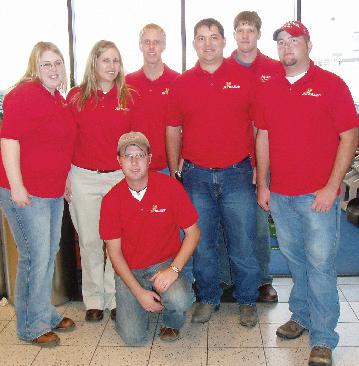
UNL Agronomy Club had a great 20052006 school year. Club members participated in fund raising, social events, listened to various speakers from the agriculture industry, and attended the regional and national club meetings. The officers for the 2005-2006 year were Cole Anderson, president, Kevin Keller, vice-president, Daniel Olsen, treasurer, Karl Brauer, assistant treasurer, Lisa Rosener, recording secretary, Clint Osborne, correspondence secretary, and Janelle Schoen, historian. Our senior advisor was Dr. Richard Waldren and junior advisor was Dr. Martha Mamo.
We kicked off the year with a joint barbeque with the Range Management Club at Peter Pan Park. This is our opportunity to welcome back the old members and give prospective members a chance to meet with faculty, club officers, members, and advisors. We received a great turnout and it started our year off with a lot of enthusiasm. The Students of Agronomy, Soils, and Environmental Sciences (SASES) national meeting in Salt Lake City, Utah
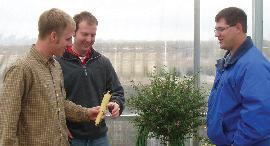
turned out to be another successful event for us. Two of our club members were national officers for the meeting. Kevin Keller was the recording secretary and Blayne Renner was the vice-president. Natalie Sukup represented our club very well in the speech contest and was elected to a national office. John Krohn, Kevin Keller, and Clint Osborne presented in the research symposium contest. We toured various places around Salt Lake City and went bowling for a social. Some of our members found the time to go watch and listen to the Mormon Tabernacle Choir. We had seven total attending members: Janelle Schoen, Natalie Sukup, Kevin Keller, John Krohn, Clint Osborne, Blayne Renner, and Cole Anderson.
We went on two tours this year. The first one was to the Case-New Holland combine manufacturing facility in Grand Island. The second tour was to Meyer Vineyard in Superior, Nebraska.
The SASES north regional meetings were held in Minneapolis, Minnesota. We went on several tours that included Rohr Malting, Summit Brewery, Bushel Boy, H. Brooks & Company, and many other places.
The club enjoyed success again in our second year with our Lawnmower Clinic fundraiser in cooperation with two
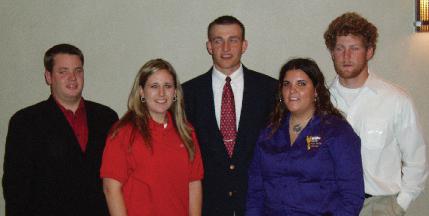
other clubs, the Mechanized Systems Management Club, and the Agronomy and Horticulture Graduate Students Association. We serviced push mowers for the communityapproximately 50 - and raised about $1,200 after expenses. We are looking forward to continuing this fundraiser. It is a lot of fun for us to be able to do some work with our hands instead of just with our heads.
The officers for the 2006-2007 year are Clint Osborne, president, Natalie Sukup, vice-president, Janelle Schoen, treasurer, Kurt Brauer, assistant treasurer, Andrew Langemeier, recording secretary, Phillip Stollberg, correspondence secretary, and Garrett Koester, historian. Our senior advisor will be Dr. Richard Waldren.
The Agronomy Club is very proud of the accomplishments we have achieved throughout the year. A brand new school year is approaching and we are excited and looking forward to new ideas and events that are being planned for the 2006-2007 year.
All photos reflected on this page are of club members and officers who attended the 2006 SASES national meeting in Salt Lake City, Utah.
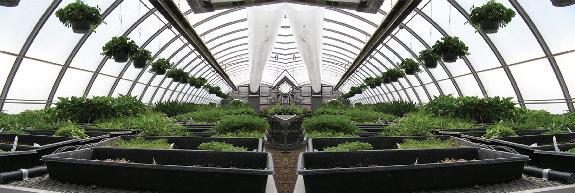
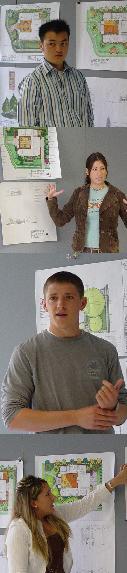
by Dan Long, 2005-2006 president
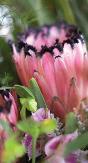
HThe Horticulture Club contains an assortment of many different majors within the horticulture program ranging from production, landscape design to even animal science. By being active in the club, members get hands-on greenhouse experience and see how plants grow and are moved in greenhouse production.
We hold bi-weekly meetings where we try to provide food for our members. Officers have meetings every week to discuss the various issues that come up and need to be dealt with. We have about 15 very active members, although our email list contains nearly 100. Our goal is to expose students to the broad industry of horticulture through speakers, travel, and hands-on projects. This gives students a background of skills to use in their professional careers.
The club recently attended the Mid-American Collegiate Horticulture Society contests at Illinois University Urbana-Champaign. Ryan Pekarek won the science knowledge exam for a second year in a row. For our fall trip we visited Monrovia Nursery outside of Portland, Oregon then continued on down the coast where we visited the ocean (some students for the first time) and took in the sights of Oregon. Upon arriving back in Portland, we visited the Portland Japanese Gardens.
Since no dues are collected from members, four sales are held throughout the year. The Fall Foliage sale, Poinsettia and Valentines Day sale take place on both City and East Campus. The Spring Garden Expo is held only on East Campus and draws patrons from all over the eastern part of the state. This sale is a great experience for members to learn hands-on how a crop of bedding plants, pe-
ORtICuLtuRe CLuB NewS
rennials, and veggies are grown and how they must be made ready for a 2–day sale. There’s no option of waiting and selling things the following week.
During the banquet held in April, new officers and scholarships are announced as well as recognition of hard-working individuals. This year’s speaker was Mark Fritz from O’Neill, Nebraska. About 50 people attended for socialization, recognition, and great food. The club’s main philanthropic activity is the production of about 80 flats of vegetable seedlings for a project that benefits immigrant farmers and the not-so-wealthy in Lincoln. Just a quick note: 80 flats will probably plant about 2 acres of vegetable gardenthat’s a little over the size of a football field!!!! Also, the club donates plants and plant materials to area nursing homes, and homeless shelters to help brighten the holidays with poinsettias or in the spring with flowers. Last year, a dance was held in conjunction with the newly formed Diversified Ag Club to help earn money for the new club and get them started. This was a great success with many students attending.
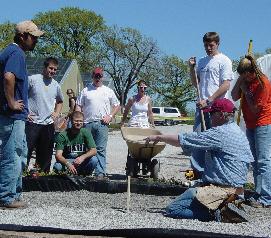
Photo on top: growing greenhouse geraniums and portea flower by Seng Yee Wong, a former graduate student. Left: HORT 266 Introduction to Landscape Design student presentations. Above: Richard Sutton’s landscape design students working on a project behind Plant Science Hall.
agronomy & Horticulture graduate Student association (aHgSa)
by Paul Hodgen, president 2005-2006
The past year has been a very busy one for members of the Agronomy and Horticulture Graduate Student Association (AHGSA).
The club started the fall semester with the traditional new graduate student orientation meeting. This year’s orientation was unique since our new department head, Dr. Mark Lagrimini, delivered the welcome speech and charged all graduate students to actively participate in the events hosted by AHGSA.
The first field trip of the school year was to James Arthur Vineyards and was attended by 25 graduate students. This trip was very special because founder, Jim Jeffers, led our tour. In addition, Mr. Jeffers addressed the students on his experiences in the wine business and related those experiences to ways for students to more easily become successful in life. Students were able to see all aspects of James Arthur Vineyards, from current field research to harvest, fermentation, and a little “quality control” testing. We would like to thank Mr. Jeffers for his gracious hospitality!
AHGSA hosted a fall hamburger lunch in the courtyard of Plant Science and Keim Hall. The lunch was attended by approximately 40 people including students, staff, and faculty. AHGSA feels that events like this are crucial to developing and maintaining a sense of ‘community’ in the department. There is nothing that will bring people together for a social event like an open grill and lots of good food! Then, to finish up the semester, about 15 students attended the first ever holiday bowling party at our East Campus Union. It was an enjoyable event and we hope to continue the tradition again next year!
In the spring, six students traveled to the North Central Regional ASA meetings, which were held at Pioneer World Headquarters, located in Johnston, Iowa. The students that attended this meeting had the opportunity to tour Pioneer’s facilities or John Deere’s Des Moines Works plant. After the meetings, the students traveled to and toured Kinze Manufacturing, located in Williamsburg, Iowa. This trip exposed students to some of the latest developments in seed technology and production practices employed by leading equipment manufacturers in the country.
There were many guest speakers that addressed club members at the beginning of regular business meetings. AHGSA was privileged to have Dr. Lagrimini speak to the members. Other guest speakers included Drs. John Markwell (UNL) and Dan Davidson (Data Transmission Network (DTN)). Also addressing the club was Dr. Jim Schepers, with USDA-ARS, who gave the students helpful hints on preparing posters for presenting research findings at professional meetings. Jill Brown, with UNL’s Career Services came to discuss how to prepare cover letters, resume, and curriculum vitae. AHGSA members also had the opportunity to meet with Agronomic Science Foundation’s
Bonnie Lueck to discuss and provide feedback on how ASA, CSSA, and SSSA can better serve the graduate student members.
The second annual lawnmower tune-up clinic was a success once again! The AHGSA coordinated and participated in this fundraising event with both the Agronomy and Mechanized Systems Management Clubs. The three clubs serviced nearly 45 lawnmowers and hope to expand their numbers next year! This event provides graduate students with an opportunity to network with fellow students. A donation of four canned food items gave the customer five dollars off of the cost of service for their lawnmower. This food drive resulted in the collection of nearly a hundred pounds of food for Lincoln’s Food Bank. There were approximately 20 students that participated in the event.
Last year, the AHGSA began to recognize that most graduate students only receive funding to travel to one or two professional meetings during their tenure in the department. The opportunity to travel to professional meetings is a crucial part of a graduate student’s career because it allows students to develop personal networks and meet others that are working in the same areas/fields. One of the biggest obstacles that keeps students from attending professional meetings is the financial burden for transportation, lodging, and registration expenses. Therefore, the AHGSA initiated a Student Travel Foundation with the purpose of financially assisting students in the department to attend professional meetings that are not already sponsored. The AHGSA is currently looking for ways to find additional financial support to grow this fund.
One of the most rewarding achievements of this past year was the first annual Department of Agronomy and Horticulture Student Awards banquet, held April 22, 2006. Nearly 100 people attended this event which was held at the Wick Alumni Center. This banquet was the realization and combined efforts of all the student clubs in the department. The banquet’s purpose was to recognize the success and achievements of students and club activities in our department. AHGSA is pleased to announce that next year, two students will receive awards for the outstanding M.S. thesis and Ph.D. dissertation that were completed in the 2006 calendar year. The ‘Student Awards Banquet’ is currently scheduled for April 21, 2007. More information can be found on the Web site at www.agronomy.unl.edu/ahgsa/ banquet.html.
The incoming executives of the AHGSA are Courtney Thomas–president, Sarah Sewell–vice president, and Josh Widlhalm–secretary/treasurer. The new team is excited and has many goals in mind for the coming year. One of these is to search for ‘lost’ graduate student alumni. If you have new contact information or know of other alumni that do,
turn to AhGSA, page 31
please send an email to unl_ahgsa@yahoo.com. One of the main purposes of the AHGSA is to serve as a connection between past, present, and most importantly, future students of our department. Additionally, the new executive team hopes to energize the club and improve graduate student participation in the events and activities throughout the year. Another useful tool in this upcoming campaign will be the AHGSA’s Web site.
The AHGSA’s Web site has undergone major revisions since August of 2004. Since then, the Web site is being viewed by two new people every day. This is extremely exciting because every day, at least two new people are con-
necting to and looking for information about the activities, research, and general information about graduate students in our department. The Web site offers potential or perspective students the opportunity to connect with current students in the Department of Agronomy and Horticulture and learn more about opportunities available to them. If you would like to know more about the club and its upcoming events, please logon to www.agronomy.unl. edu/ahgsa or drop us an email at unl_ahgsa@yahoo.com. We would enjoy hearing from you!
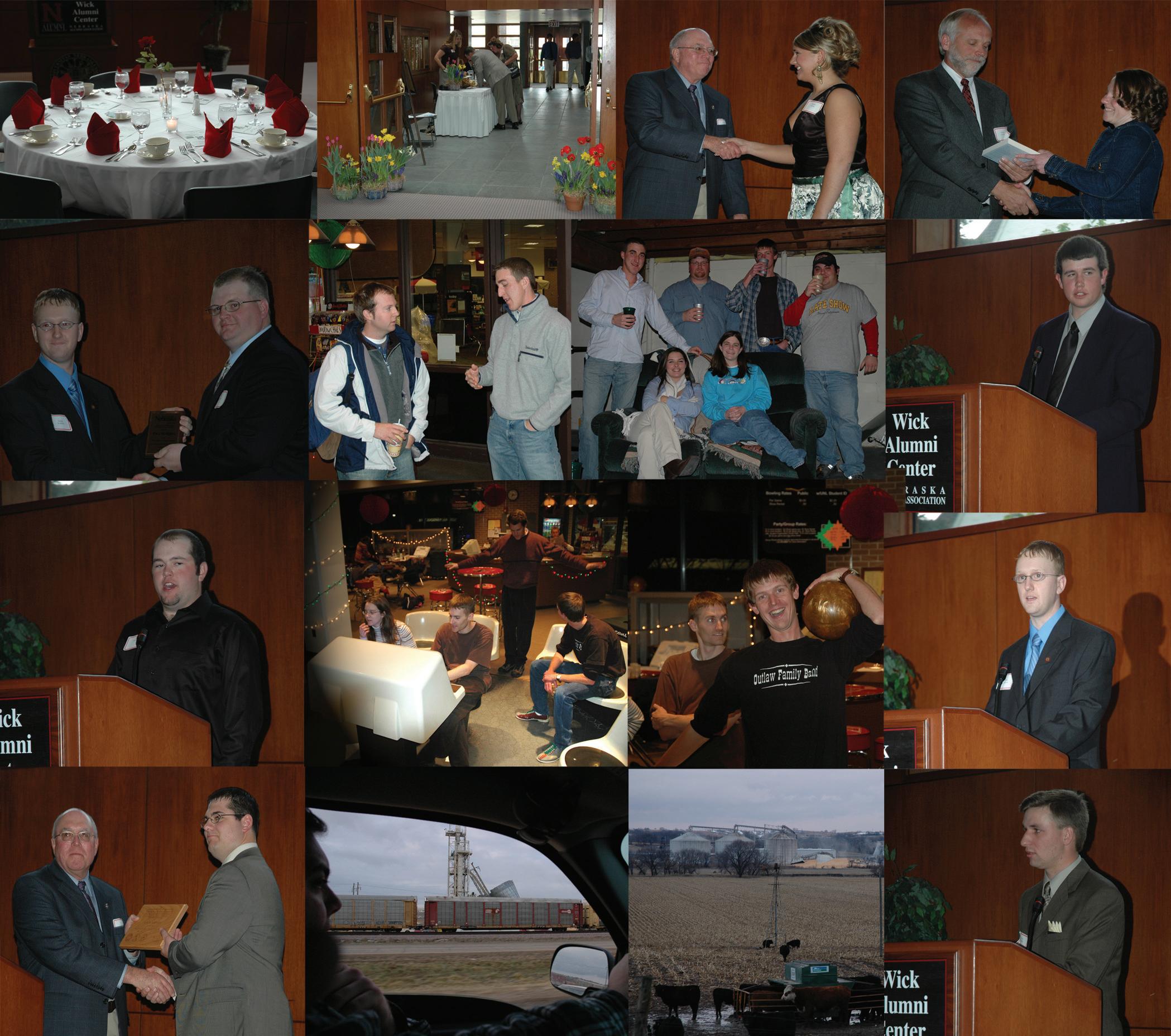
Above: a storyboard of events, honors, and ‘happenings’ featuring numerous AHGSA graduate students.
The AHGSA Wick Center banquet, bowling party, a home party celebration, and the Iowa corn bins trek.
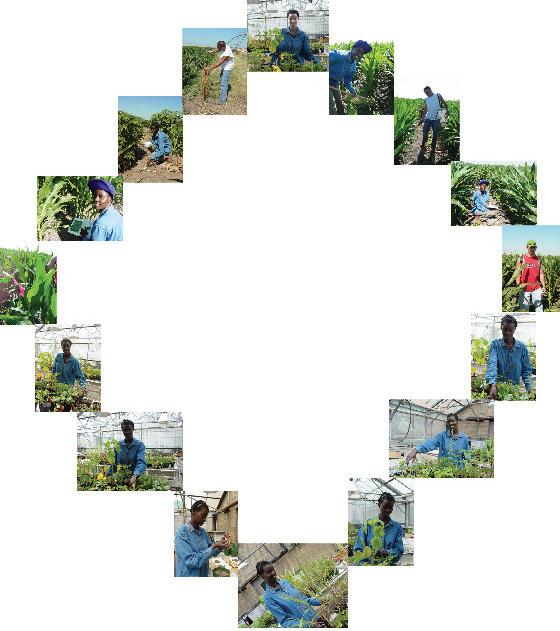
by Jane Okalebo, Ph.D. candidate
Whenever I introduce myself to anyone and tell them I study weed science, I expect to be asked . . . and what is ‘Weed Science’? I am Jane Okalebo and I am a weed science graduate student with Dr. John Lindquist. Weeds are plants that you will find in locations where you do not want them. Can you identify some of these weed species? Weeds can be found competing with desirable plants in your lawn, in crop fields, on roadsides, etc. Weeds compete for resources: light, water, and soil nutrients. Additionally, weeds can produce a large number of seeds that may result in potentially large future populations that can cause serious economic loss. It is vital to identify weeds correctly, understand their biology, ecology, and physiological characteristics in order to make recommendations on how to manage them. There are several methods available for weed management. Chemical and mechanical methods that involve the use of herbicides and hoeing are commonly utilized.
My research topic is centered on the biological control of Abutilon theophrasti (velvetleaf, buttonweed), a weedy relative of cotton that commonly infests corn and soybean fields in Nebraska. This summer (2006) I am conducting field experiments at the Agricultural Research and Development Center farm near Mead, Nebraska, on the effects of soil fungal pathogen on velvetleaf population biology and its interference with corn. I intend to isolate the pathogens that infect velvetleaf causing it to wilt and die. I am also studying the soil attributes that contribute to velvetleaf weed suppressiveness. If you are interested in weed science, visit our Web site for more information (http://agronomy.unl.edu/).
The Weed Science peer group is recruiting students interested in weed management, weedy and invasive species biology, weed-crop competition or weed ecophysiology.
Photos, layout and visual design by Carola Strauss.
F aCuLty AwaRdS & ReCO gnItIOnS
Kenneth cassman was elected Fellow of the American Association for the Advancement of Science, 2005.
charles Francis was elected Fellow of the American Association for the Advancement of Science, 2005.
roch Gaussoin received the American Society of Agronomy Fellow, 2005.
Don Lee received the Omtvedt Innovation Award, 2005; the UNL Teaching Council/Parents Association Recognition for Contributions to Students.
Drew Lyon received the American Society of Agronomy Fellow, 2005.
Alexander martin received the Holling Family Award Program for Teaching Excellence, Senior Faculty Teaching Excellence Award.
Stephen mason received the Darrell W. Nelson Excellence in Graduate Student Advising Award sponsored by the College of Agricultural Sciences and Natural Resources, 2006.
martin massengale received the Wagonmaster Award at the 2006 Statehood Dinner, sponsored by the NEBRASKAland Foundation and presented by the Governor.
Darrell W. nelson received the Agronomic Service Award, 2005.
charles Wortmann
Soil Science
Assistant Professor 1/2/01 - 6/30/06
Associate Professor 7/1/06 - present
John Shanahan received the American Society of Agronomy Fellow, 2005.
charles Shapiro received the American Society of Agronomy Fellow, 2005.
robert Shearman received the 2006 United States Golf Association Green Section Award.
James Stubbendieck received the UNL Teaching Council/Parents Association Recognition for Contributions to Students.
Kim todd received the UNL Teaching Council/Parents Association Recognition for Contributions to Students; the Holling Family Award Program for Teaching Excellence, Junior Faculty Teaching Excellence Award.
richard Waldren received the UNL Teaching Council/Parents Association Recognition for Contributions to Students.
robert Wilson received the Outstanding Extension Award from the Weed Science Society of America, 2006.
charles Wortmann was awarded the African Crop Science Society Award for Outstanding Contribution to the Society and Scientific Development in Africa.

martha mamo
Soil Chemistry/Biochemistry
Assistant Professor 5/1/00 -6/30/06
Associate Professor 7/1/06 - present
B.S. Agronomy and horticulture graduates
AUGUSt 2005
Horticulture
Jessica Lynn Kelling, Roca, NE
Daniel Lloyd Nolan, Tekamah, NE
DecemBer 2005
Agronomy
Kevin DeWayne Boyd, McCook, NE
Gregory Alan Gartrell, Columbus, NE
Kip Michael Gillispie, Lincoln, NE
Corey Lynn Heitmann, Chester, NE
Horticulture
Christopher John Borman, Lincoln, NE
Nicolette Marie Brenton, Grand Island, NE
Geoffrey Louis Humphrey, Giltner, NE
Todd Michael Jarecke, Hershey, NE
Amanda Frances Kunasek, Bee, NE
Jennifer Lynn Mohlman, Crete, NE
Kristan Marie Peters, Hay Springs, NE
Michael Edward Sheely, Lincoln, NE
Sean Nicholas Sloey, Raymond, NE
Aaron Michael Stephenson, Omaha, NE
Shawn Carl Tordrup, Superior, NE
Kristina Louise Vlcek, Chapman, NE
mAy 2006
Agronomy
Karl Nelson Brauer, Sidney, NE
Ryan James Fairley, Fairbury, NE
Kevin Nicholas Keller, Spencer, NE
John Charles Krohn, Albion, NE ***
James Martin Kunzman, Albion, NE
Nathan James Malmstrom, Scotia, NE
John Allan Steinkraus, Plainview, NE
Neil Scott Stubblefield, Shelton, NE
Keith Francis Tighe, Homer, NE
Horticulture
Drew Louis Anderson, St. Paul, NE
Leslie Renae Burchell, Kearney, NE **
Misty Marie Chanek, Ganado, TX
Michelle Lee Dipple, Seward, NE *
Benjamin Titus Fann, Broken Bow, NE
Chelsea Lynne Gehring, Aberdeen, SD **
Timothy Bay Gilligan, Fremont, NE
Mercer Landon Gunnels, LaVista, NE
Nicholas Jordan Irwin, Omaha, NE
Elizabeth Marie Keep, Lincoln, NE
Burton Michael Kilgore, Omaha, NE
Nicole Marie Leiser, Grand Island, NE
Brett Allan Nunnenkamp, Sutton, NE
Ryan Andrew Pekarek, Dwight, NE ***
Cody Alan Peratt, Omaha, NE
Karen Cawood Richards, Omaha, NE
Charles J Schmid, Sioux Falls, SD
Rebecca Jane Shane, Atkinson, NE
Jacob Neal Sittner, Lincoln, NE
Kristina Lynn Thompson, Grand Island, NE
Ladonna Marie Yandell, Arlington, NE
* with Distinction
** with High Distinction
*** with Highest Distinction
m.S. and Ph.D. Agronomy and horticulture graduates
AUGUSt 2005—m.S.
Angela M. Bastidas Gutierrez, M.S., Colombia
Advised by J.E. Specht and A.R. Dobermann
Soybean growth, development, and yield – the effect of planting date.
Helene Eckert, M.S., France
Advised by T.E. Clemente
Development of novel input and output traits in soybean.
Nanga Mady K. Kaye, M.S., Chad
Advised by S.C. Mason
Nodulating and non-nodulating soybean rotation influence on soil NO3-N, soil H2O, sorghum growth, grain yield and quality.
Ryan J. Yule, M.S., Nebraska
Advised by S. Mackenzie non-thesis
AUGUSt 2005—Ph.D.
Felipe de Jesus Legorreta-Padilla, Ph.D., Mexico
Advised by D.T. Walters
The impact of maize and soybean cropping systems on carbon and nitrogen dynamics in soil organic matter.
Eric M. Mousel, Ph.D., Nebraska
Advised by W.H. Schacht and P.E. Reece
Ecology and management of Sandhills rangeland: fall grazing of uplands and ecosystem dynamics of subirrigated meadows
DecemBer 2005—m.S.
Douglas G. Felter, M.S., Missouri
Advised by D.J. Lyon and T.J. Arkebauer
Enhancing sustainability by adding a dynamic component to the cropping systems of the semiarid central great plains.
Sean S. Fintel, M.S., Nebraska
Advised by G.L. Graef and D.M. Namuth non-thesis
Juan P. Garcia, M.S., Colombia
Advised by C.S. Wortmann & M. Mamo
Occasional tillage in no-till systems: effect on vesicular arbuscular mycorrhizal colonization.
Leah L. Sandall, M.S., Nebraska
Advised by D.J. Lee
The development and assessment of interactive computer animations in plant breeding and genetics education.
DecemBer 2005—Ph.D.
Joseph M Debebe, Ph.D., Ethiopia
Advised by L.E. Moser and J.L. Stubbendieck
Warm-season grass germination and seedling development as affected by seed priming.
Chatuporn Kuleung, Ph.D., Thailand
Advised by P.S. Baenziger and I. Dweikat
Transferability of SSR markers in the grass family.
mAy 2006—m.S.
Ty McClellan, M.S., Kansas
Advised by R.E. Gaussoin & R.C. Shearman
Nutrient and organic matter status and dynamics of aging golf course putting greens.
Gregory G. Miller, M.S., Nebraska
Advised by M. Mamo and R.A. Drijber
Sorghum and mycorrhizal responses to liming strategies in pH stratified soil.
Malissa L. Underwood, M.S., Missouri
Advised by J. Stubbendieck
Restoring and enhancing diversity of tallgrass prairie vegetation.
William D. Whisenhunt, M.S., Nebraska
Advised by L.E. Moser and P.E. Reece
Subsequent-year yield of mixed-grass prairie as affected by defoliation and precipitation.
mAy 2006—Ph.D.
Walter P. Suza, Ph.D., Tanzania
Advised by P.E. Staswick
Exploring the role of jasmonic acid amido-synthetases in plant wound response.
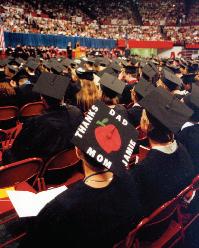
Agronomy and horticulture scholarships and fellowships for academic year 2006-2007
UnDerGrADUAte
Agronomy Department Freshman Scholarship
J. Ross Gibbens
Daren P. Galloway
Agronomy Freshman Scholarship
Daren P. Galloway
Bayer Environmental Science Scholarship
Charles J. Schmid (2005-2006)
Henry M. Beachell Agronomy
Tyler J. Hughes
Thomas J. O=Brien
Jonathon R. Stech
Ralph A. Elliott Memorial Scholarship
Steven W. Fleer
Robert G. Swartzendruber
John Evasco and Ruth Willsie Evasco Memorial Scholarship
Jacob F. Hoxmeier
Federated Garden Clubs of Nebraska
Stephanie E. Blum
Robert W., David W., and James R. Fleming
Memorial Scholarship
Scott M. Dworak
Thomas H. Goodding Memorial Scholarship - Incoming Freshmen Students
Neal A. Mattox
Thomas H. Goodding Memorial ScholarshipUpperclass Students
Lars C. Anderson
Girardin Family Scholarship
Janelle M. Schoen
F.D. Keim Memorial Scholarship
Ryan S. Nickerson
Craig S. Marsh
Henry J. Kroese Production Scholarship in Agronomy
Blake R. Sinsdelar
Elton Lux Memorial Scholarship
Phillip N. Thrailkill
Jessica D. Ritter
Sara J. Mack
Charles and Alma Marshall Educationl
Leadership Scholarship
Russell J. Kavan
Kenneth L. Miller Memorial Scholarship
Eric T. Williams
Dick Monson Agronomy Scholarship
Andrew M. Langemeier
Clint M. Osborne
Nebraska Golf Course Superintendents
Association Scholarship
Eric T. Williams (2005-2006)
Bradley W. Cheney (2005-2006)
Nebraska Independent Crop Consulting
Association Scholarship
Clint M. Osborne
Nebraska Seedsmen Scholarship
Steven R. Howser (2005-2006)
Nebraska Turfgrass Foundation Scholarship
Jared T. Kalina (2005-2006)
Dr. Robert H. Olsen Memorial Scholarship
Michael J. Burgert
Spring 2006 Commencement Ceremony
Photo courtesy of UNL Photography
Scholarships, from page 36
Dr. Maurice L. and Katharine A. Peterson Scholarship
Adam P. Pohlmeier
Alexander E. Lush
Andrew G. Jobman
Steven W. Fleer
Russell J. Kavan
Blake R. Sindelar
Kurtis L. Brauer
Ryan S. Nickerson
Maria Passo Phillips Horticulture Scholarship
Daniel J. Moore
Professor J.C. Russel Memorial Scholarship
Jessica L. Milby
Steven R. Howser
Adam P. Pohlmeier
Russell J. Kavan
Servi-Tech Scholarship
Ryan S. Nickerson (2005-2006)
Dale and Marian Brainard Smith Scholarship
Alexander E. Lush
Lisa L. Rosener
Jared M. Mauler
Andrew R. Keck
Bret L. Leibhart
Philip A. Stollberg
Stock Seed Farms - Dr. Laurence C. Newell Scholarship
Sandra K. Schaeffer
Daniel P. Olsen
Keith and Alvina Strough Memorial Scholarship
Aaron P. Andersen
John C. Swinbank Memorial Agronomy Scholarship
Kurtis L. Brauer
Dennis Thompson - Crop Improvement Scholarship
Neal A. Mattox
Clara S. Tillotson Memorial Scholarship
Sheila A. Meyer
Philip N. Thrailkill
Jessica D. Ritter
Daniel J. Moore
Jared T. Kalina
Trans-Mississippi Golf Association Scholarship
Jared T. Kalina (2005-2006)
Bradley W. Cheney (2005-2006)
Roger D. Uhlinger Memorial Scholarship
Sara J. Mack
Stephanie E. Blum
Jessica D. Ritter
Daniel J. Moore
Orville A. Vogel Agronomy Scholarship
Cole A. Anderson
Janelle M. Schoen
Keith Weidler Memorial Scholarship
Eric T. Williams
Wayne C. Whitney Memorial Scholarship
Sheila A. Meyer
Dr. and Mrs. C.C. Wiggans Memorial Scholarship
Amy K. Lathrop
Jonathan M. Jacobs
Daniel S. Long
Wylie R. Ward Scholarshp
Andrew G. Jobman
Kurtis L. Brauer
GrADUAte FeLLoWShiPS
Henry M. Beachell Academic Support Fund Fellowship
Maria Susana Grigera (2005-2006), M.S., Soil & Water
Walter Suza (2005-2006), Ph.D., Plant Breeding & Genetics
Bukey Memorial Graduate Fellowship
Nathan Mueller, (2006-2007), M.S., Soil & Water
Chancellor’s Doctoral Fellowship
Desalegn Serba (2006-2007), Ph.D., Plant Breeding & Genetics
Noemi Guidin-Garcia (2006-2007), Ph.D., Crop Physiology & Production
Mary and Charles C. Cooper/Emma I. Sharpless Fellowship Fund
Nicholas Crowley (2006-2007), M.S., Plant Breeding & Genetics
Curtis Endowed Fellowship
Darrin Roberts (2006-2007), Ph.D., Soil & Water
DAAD Scholarship from the German Academic Exchange Service
J. Andrés Quincke (2005), Ph.D. Soil & Water
W.R. Chapline Fellowship
Neal Bryan (2005-2006), Ph.D., Range & Forage
Hardin Fellowship
Veronica Ciganda (2005-2006), Ph.D., Soil & Water
Larson Fellowship
Abraham Olude (2006-2007, renewal), Ph.D., Plant Breeding & Genetics
Milton Mohr Fellowship – Biotechnology
Vikas Shedge (2005-2006), Ph.D., Plant Breeding & Genetics
William Rittenour (2006-2007), M.S., Horticulture
Moseman Fellowship
Stephen Opiyo (2005-2006), Ph.D., Plant Breeding & Genetics
Gerald O. Mott Meritorious Graduate Student Award
In Crop Science
Tri Setiyono (2006), M.S., Plant Breeding & Genetics
Othmer Fellowship
Neal Bryan (2006-2007, renewal), Ph.D., Range & Forage
Shear-Miles Fellowship
Ty McClellan (2005-2006), M.S., Horticulture
Watson Fellowship, Golf Course Superintendents Association of America
Ty McClellan (2005-2006), M.S., Horticulture
Widaman Trust Distinguished Graduate Student Assistant
J. Andrés Quincke (2005-2006), Ph.D., Soil & Water
Tri Setiyono (2005-2006), Ph.D., Plant Breeding & Genetics
Walter Suza (2005-2006), Ph.D., Plant Breeding & Genetics










Invest In theIr future
Student deStinationS
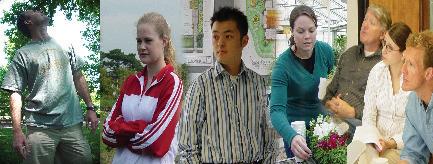
Thinking Forward
Consider this:
Agronomy and Horticulture Graduate Student Development Fund #8700
Thomas H. Goodding Memorial Scholarship Fund #2847
Agronomy Discretionary Fund #2146
Also consider:
Horticulture Discretionary Fund #3233
Agronomy Research Fund #1472
Endowment for Environmental Horticulture Fund #4714
For questions:
Four years at a university can strain family budgets.To meet our educational challenges, we are offering you the opportunity to contribute to one or more of the following funds. Together we can make a difference in their lives. All it takes is a degree of planning. Won’t you help?
Developed to help supplement, support and encourage Agronomy and Horticulture graduate students’ travel to professional meetings throughout the year.
Developed to supports undergraduate scholarships for outstanding students. This memorial fund is named in honor of Dr. Thomas H. Goodding who was a truly outstanding teacher in the College of Agriculture and the Department of Agronomy in particular.
Developed to provide a flexible source of funding to enrich and enhance our Agronomy student programs in the College of Agricultural and Natural Resources (CASNR).
Developed to provide support for activities specifically for floriculture and ornamental crops, vegetable crops, and turf and grass management
Developed to provide support for Agronomy activities including special equipment, faculty development, student program support and funds for specialized research endeavors.
Specifically set up for programs that will enhance the education and research in environmental horticulture sciences, the fund is used, but not limited to, student assistance, support for equipment, operational items, and specialized research endeavors.
If you have questions about other giving opportunities, please contact Dr. Mark Lagrimini, Professor and Head, Department of Agronomy and Horticulture, 402-472-1555, mlagrimini 2@unl.edu or Ann Bruntz, Director of Development IANR, University of Nebraska Foundation, 402-458-1176, abruntz@nufoundation.org.
Please mail to:
University of Nebraska Foundation
1010 Lincoln Mall, Suite 300
P. O. Box 82555
Lincoln, NE 68501-2555

agronomy and horticulture department
P.O. Box 830915
Lincoln, NE 68583-0915
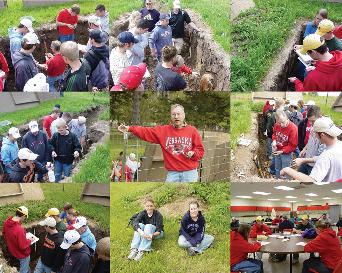
Photos and visual design by Carola Strauss
Dennis McCallister instructs students in techniques for evaluating soil formation and use in an AGRO/HORT/SOIL 153 (Soil Resources) field trip.