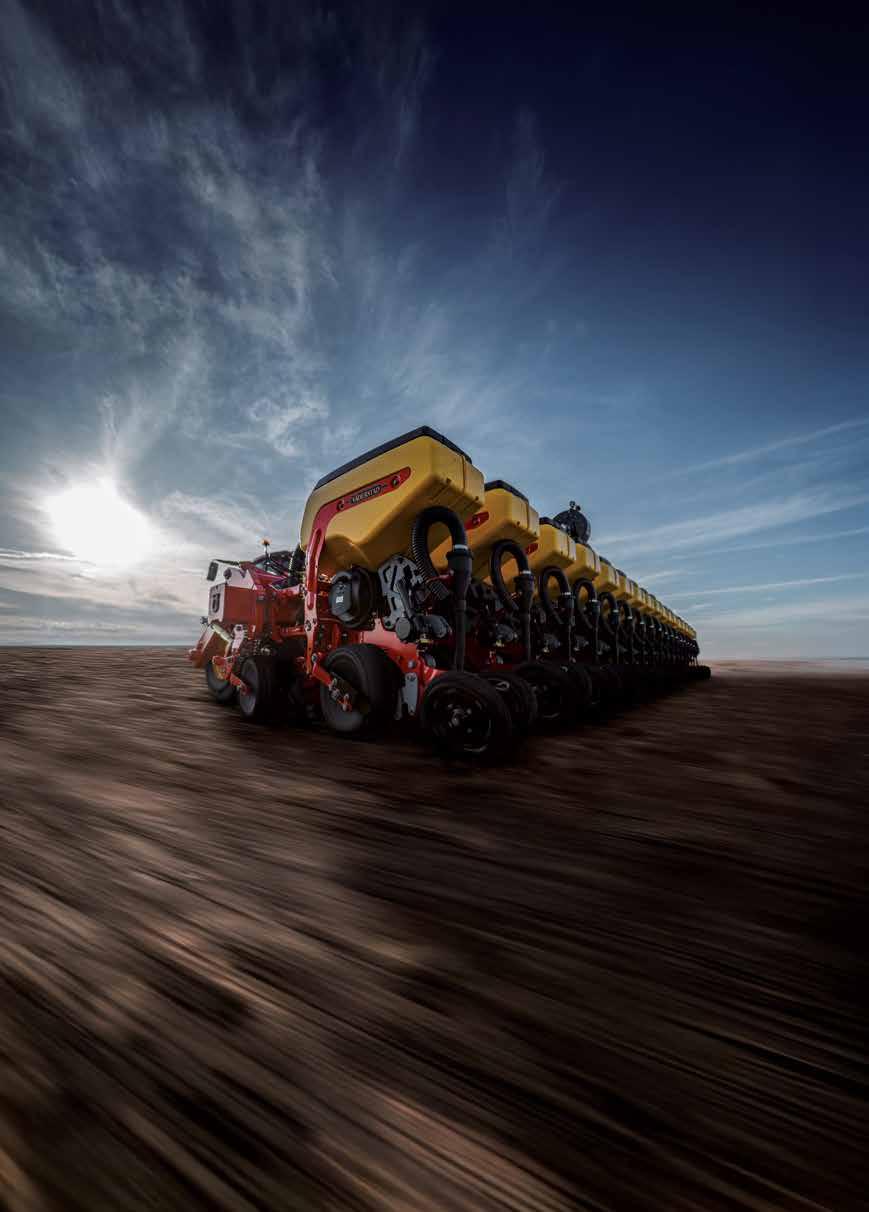
From day one, our focus has been clear: deliver unmatched planting precision, simplify operation, and maximise field performance. After years of development, testing, and fine-tuning, we’re ready for the new generation row unit – taking the next step in agronomic precision, user-experience and field performance.
INDUSTRY NEWS
2 New opportunities through adaptation and collaboration in arable farming
4 Challenging times but a unified sector
6 Pest patterns emerge but paddock checks remain critical
8 Scientists tap ancient genes to tackle "unprecedented" resistance breakdown
10 From feedback to action, regional strategy builds in year two
12 New Zealand arable at a crossroads heading into spring
14 From curious outsider to clover specialist
16 Fast start on intake signals intent at Harraways
18 Strong early backing for local grains
SEEDS
22 The next generation of SCID is on its way
23 New research highlights resistance risk in black grass incursions
SUSTAINABILITY
24 Know your balance before you spend
27 Researchers trial digital arable planning system for future regulations
28 Ways to reduce reliance on herbicide under investigation TECHNOLOGY
30 Combine workshops deliver big harvest gains as sprayer events launch in August
33 AI may take the guesswork out of fungicide decisions
34 AI driven insights bring precision to irrigation CEREALS
37 Grain breeder delivers a wave of new varieties to market
38 A tough season, and a model that quietly worked
40 Homegrown cereal innovation brings new choices for arable farmers
41 Robust feed barley variety for grain and whole crop silage MAIZE
PUBLISHED BY:
AgriMedia Ltd PO Box 36753, Merivale Christchurch 8146 www.agrimedia.co.nz www.novachem.co.nz
Publishers of Rural Contractor & Large Scale Farmer, AgriBusiness, AgriVet, NZ Cropping Yearbook, Australian AG Contractor & Large Scale Farmer, NZ Novachem Agrichemical Manual.
EDITOR
43 Pioneer hybrids —100 years in the making
44 Gisborne maize mill rebuild on track for next harvest
CONTRIBUTORS
46 New insecticide now offers extended application window too
50 Early control sets the season
51 Early control and season-long care key to cereal success
52 The art and science behind NIR calibration
54 Fresh chemistry strengthens weed control in springsown cereals
55 Meet the new standard in potato seed treatment
56 Smarter rules, stronger future — what legislative reform must deliver
57 Building resilience into wheat fungicide programmes
58 Let the soil pay its share of the fertiliser bill
59 Big gains in pickup work drive combine upgrade
60 Unlock yield potential with better weed management
61 Local solutions designed for New Zealand food producers
62 Turn variable pre-em results into dependable weed control
63 Dive into the lifeblood of your spray programmes
65 When one roller has to do more than one job
66 Water variability, infrastructure and the future of arable production
67 Optical technology cleans up for local processor
68 High capacity harvester proves its worth in wet conditions
69 Aphid resistance management in cereals – don't let history repeat itself
71 COMPANY LISTINGS
86 FIELD CONTACTS
96 SEED CERTIFICATION
Kathy Davis
p. 027 4347 108
e. kathy@thelastword.net.nz
PRODUCTION & DESIGN
Hannah Kincaid
e. art@agrimedia.co.nz
CIRCULATION
e. admin@agrimedia.co.nz
ADVERTISING MANAGER
Michael Lightbourne p. 021 403 853
e. michael@agrimedia.co.nz
ADVERTISING SALES
Brendan Challies p. 022 397 2076
e. brendan@agrimedia.co.nz
Printed by Blueprint Ltd
CHAIRMAN’S

Last season, hail, wind and rain had a massive impact on harvest yield and harvest opportunities for growers in several regions.
WORDS: Steven Bierema, Chairman, Foundation for Arable Research (FAR)
Two or three years of poor harvests and low crop prices, on top of increased costs of production have had a negative impact on the arable sector in general.
Industry confidence is low and for many it is hard to see a positive future.
However, history has shown that in times like this, innovation and adapting farm systems and business models can create new opportunities.
FAR is constantly considering its role in this space, determining what sort of research and extension best meets the needs of growers and the broader industry.
Our principal obligation is to support arable growers through carrying out or accessing relevant research and delivering that knowledge to growers with the aim of strengthening their businesses, but we do a lot more.
FAR and Eat New Zealand’s NZ Grown Grains Certification Trademark is a good news story.
This provenance label identifies breakfast cereals, plant-based milks, craft beers, baked goods and animal feeds made from New Zealandharvested grains and seeds.
I would like to thank Ivan Lawrie and Angela Clifford for their work on this initiative, and also the businesses who have committed their support. I think we should all support this initiative to make it a success.
Arable returns are front of mind
The third round of combine workshops once again reminded us that optimal crops can lose economically significant quantities of grain or seed due to incorrect harvester settings.
The upcoming sprayer workshops promise to provide equally important information on sprayer use, chemical efficiency and efficacy, and best practice. Thankfully, we haven’t had to deal with any new biosecurity incursions in the past year. However, this doesn’t mean the risk has gone away.
Resilience covers everything from diverse rotations to managing pesticide resistance and the predicted limited availability of chemistry in the future.
As an independent research organisation, we are able to supply data and expertise to other groups, to inform and sense check a range of economic and environmental submissions, policies and strategies.
Over the past few months, as part of our strategy development process, we have met with growers, merchants, the dairy, sheep and beef and horticulture industries along with Federated Farmers and the Ministry for Primary Industries. These meetings have raised awareness of arable’s role within New Zealand’s inter-linked farming and export sectors, and have raised a number of ideas for working together to support our industry in the current environment.
for all growers.
FAR has a cost of production spreadsheet on its website which allows growers to calculate the cost of production for different crops on their own properties, using their own, or default pricings.
I urge you to use this tool and the knowledge it provides to gain a better understanding of the actual value of contract prices that are being offered for the coming season.
On the technology side, the Ask FARAI app is gaining more traction and makes the extensive amount of data and information held by FAR more accessible to all.
Documents are continually being added to Ask FAR’s knowledge base, so if you haven’t already used this tool, get on to the FAR website and have a go. It’s quick and easy to use.
Although recent weed and pest incursions may have moved to the back of many growers’ minds, it is important to stay alert to prevent costly future events. And now, back to the weather. FAR research trials also suffered damage this season, with several having to be discontinued. Resilient cropping has been and will continue to be a very important part of FAR’s research programme. Resilience covers everything from diverse rotations to managing pesticide resistance and the predicted limited availability of chemistry in the future.
New technologies like mechanical and/or laser weeders may become a more common sight, helping to manage both weeds and herbicide resistance.
At FAR we know we can’t change the market, but we are determined to support arable growers with sound research and extension so they can make sound decisions with the necessary information.

A powerful, flexible solo fungicide that actively protects for longer For more information please call the Syngenta Technical Advice Line on 0800 333 336

CEO’S REPORT
As I write this column, I am close to completing a year as FAR CEO, having joined on 1 July 2025.
WORDS: Scott Champion, CEO Foundation for Arable Research
It’s been a challenging time for the arable sector but despite the poor harvest weather in several regions and the current difficult operating environment, I have been struck by growers’ energy and passion to push through the challenges and create a stronger future for arable.
It’s important that you know that FAR and a number of other industry and government groups are working hard to identify and develop tools and pathways to support that future.
In late July FAR will be launching a new strategy for the period 2026—2031.
We’ll be looking to keep it simple ... building on our core research, development and extension strengths to support arable farmers and the broader industry.
Arable farmers will continue to be at the centre of what we do.
FAR continues to receive strong guidance from your seven grower-led Arable Research Groups (ARGs) around research, development and extension planning and programmes.
Our regional events and other activities, such as podcasts and videos, also provide valuable information and insights to arable farmers and the broader industry.
We are considering options for building on this base to ensure our delivery reflects the needs of all growers and arable farming systems across the country.
Given the integration of other crops and animals within arable systems, farmers have also asked FAR to think about how we can bring more of a systems focus to our work.
To support this we have started discussions with other sectors as to how we might work together more closely.
In the past year we have planned and delivered several events alongside vegetable and pastoral sector groups; we hope to increase those numbers in the future.
Another frequent request is that we extend our delivery into nonagronomic areas, such as financial and business skill development.
This is also a work in progress.
In this column last year, my predecessor, Alison Stewart, noted calls for FAR to become more involved with policy and advocacy
Given the integration of other crops and animals within arable systems, farmers have also asked FAR to think about how we can bring more of a systems focus to our work.
for the arable sector.
The present tough industry conditions mean we are still receiving such requests; however, as Alison noted, this work doesn’t fall within FAR’s mandate.
What we can do is work with farmer organisations such as Federated Farmers’ Arable Industry Group, and industry collectives such as the Arable Food Industry Council (AFIC).
By supporting them with FAR research data and information, we help progress issues of importance to all in arable while maintaining our independence.
This independence is crucial on those occasions when we are called to speak on issues for the sector.


For example, it is critically important that the arable sector and its contribution to export earnings, domestic food supply and the export-focused livestock sectors is understood and valued, right across the food and fibre sector, and in government.
Our independence allows us to work with these groups to build this understanding without moving into dedicated and expensive advocacy.
To finish, I’d like to note the growing momentum of the NZ Grown Grains initiative. Launched in October 2025, this new programme is promoting businesses using New Zealand-grown grains across both human food products and also livestock supplementary feed.
The programme’s logo is starting to appear on packaging and vehicles, and a website www.nzgrowngrains.nz has been launched.
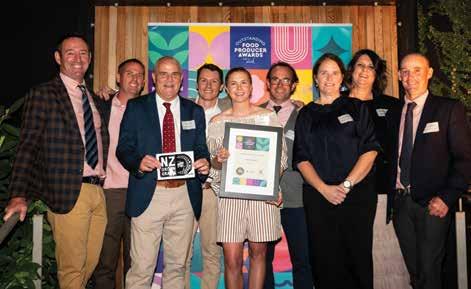
Congratulations to Wairarapabased Monty and Sons, programme licensees and winners of the Gold Award at the recent Outstanding Food Producer Awards, and the Wairarapa grain growers who have also been involved, connecting the farm product to the finished consumer product.
Thank you, again, for welcoming me into the world of arable.
I look forward to connecting with you further as we work together towards a successful future for arable.
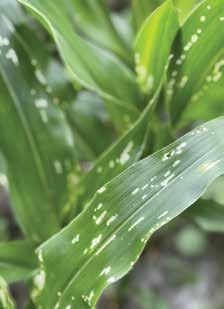
stands out and is easy to spot if a young maize crop has
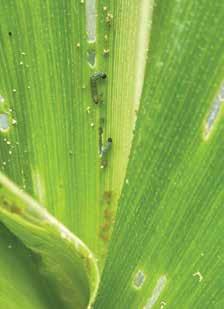
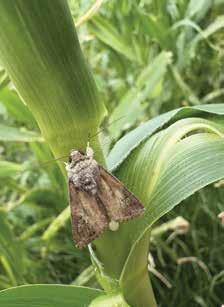
Continued data collection and model development are beginning to provide useful seasonal prompts for fall armyworm (FAW), but nothing replaces getting out into crops and assessing what is happening in each paddock.
That is a consistent message from Foundation for Arable Research biosecurity officer Ash Mills as the fourth season of monitoring for the pest in New Zealand maize and sweetcorn comes to its end,
After an unpredictable start following the pest’s arrival in 2022, patterns are starting to emerge. Ash says data collected under the Sustainable Food and Fibre Futures project have helped build a clearer picture of how populations behave.
Temperature remains a primary factor, with relatively mild winters over the past two years likely contributing to higher spring populations.
“FAW activity and distribution has settled into a bit of a pattern,” he says, “and is now very much temperature driven, with winter conditions either suppressing or allowing populations to persist.”
There is still some uncertainty around overwintering hosts, although C4 grasses such as kikuyu in warmer northern regions are likely candidates, supported by international literature.
In practical terms, most risk aligns with the timing of maize establishment.
In much of the country, crops are in the ground by mid-November, and that early vegetative stage remains the most vulnerable.
Damage is relative
Ash says one larva in a young seedling can cause significant damage, whereas the same level of infestation later in the season is far less impactful.
Late planted crops - typically delayed by weather conditions - continue to present challenges. Crops established into December or January often coincide with a second generation of moths, particularly in northern regions, increasing the risk of egg laying and subsequent larval pressure. Ash says that this season, these later plantings have shown 'reasonably high' infestations, close to 50% in some instances.
Economic thresholds remain an important guide, with intervention recommended at more than 5% infestation at the seedling stage and 20% in early whorl.
Sparta is still the only product currently registered for FAW control in maize and sweetcorn in New Zealand, and when applied at the correct timing it has delivered positive results.
Timing is critical, however: “In the case of affected late sown crops last year, it took a lot of scouting early on for the agronomists to identify the infestations and track them before spraying at the perfect time.”
Monitoring and modelling are increasingly being used to support these decisions.
Data from pheromone traps and field observations is being combined with climate modelling to predict development stages and potential egg laying periods.
“We are exploring how growers and agronomists finding FAW in crops could load their location and caterpillar growth stage into the model, and it will project instar development around two weeks ahead based on weather forecasting,” he said.
The model can also be used to back trace likely dates when adult FAW moths may have laid egg masses in the crop.
Growers could potentially use the platform over ongoing seasons to create a personalised alert tool.
When pheromone trapping observations are factored in, the model is helping to refine scouting windows.
“It will give us good predictions of when eggs might be laid, to help focus on what time is critical to be in paddock scouting. Farmers and growers are always busy; this is one way we might be able to help prompt scouting urgency at the right time.”
However, he emphasises the limitations of any predictive tool.
“Nothing will ever compete with scouting your own crops, walking right through paddocks and not looking at just one area.”
A notable development over the past two seasons has been the increasing role of natural enemies.
The parasitoid wasp Cotesia ruficrus, originally released in New Zeland in the 1970s and now widespread across the country, is showing a strong response to FAW.
Monitoring in Northland has recorded parasitism rates of up to 30% of collected larvae, which he says is very encouraging.
“It took a season or two for us to start noticing its effect, but we’ve seen it’s doing a fantastic job.”
While parasitism rates may vary by region and season, this level of biological control is a significant factor in understanding FAW dynamics in New Zealand systems.
The final season of the current project will focus on bringing these strands together.
Priorities include refining the model and continuing data collection.
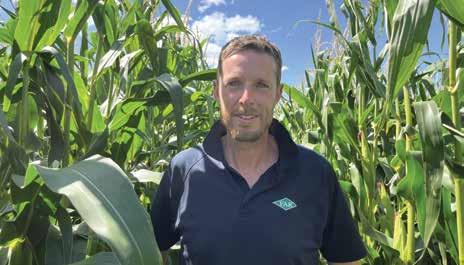
The aim is to combine field observations, thresholds, chemical tools and biological control into a practical framework for growers.
“The insect, biological and environmental systems within maize crops are complex.
“The arrival of FAW has added another pest into this system, where it may interact with other caterpillar pests, crop growth stages, weather conditions and natural enemies.”
Feedback from growers and agronomists will be an important part of this process as thresholds and recommendations are reviewed and refined.

While a full maize IPM strategy sits beyond the immediate scope of this SFFF project, the project is helping to identify important knowledge gaps.
These include how FAW interacts with other pests and beneficial species in New Zealand maize systems. Over time, this may support the development of a future project focused on broader maize IPM.
For now, the message remains clear.
Models and data can guide decisions and highlight risk periods, but consistent, thorough crop scouting and record keeping remains the most reliable way to detect and manage FAW in maize and sweetcorn crops.
Maximise coverage, efficiencies and savings
Du-Wett® delivers superior spreading using less water. That saves time, labour, and fuel. And because Du-Wett optimises efficacy, you get the most out of every cent you spend on your spray programme.

Wheat in the United Kingdom is under threat from a newly identified strain of the yellow rust pathogen, prompting an urgent mobilisation of research institutes to protect harvests.
The new strain, identified in 2025, has overcome a key resistance gene that was protecting many major UK wheat varieties from yellow rust infection.
The breakdown of this resistance gene, Yr15, leaves more than 50% of the UK’s wheat acreage vulnerable to infection from the fungal pathogen.
This includes the top three selling varieties which alone account for a third of the UK wheat market.
The race is now on to find new resistance genes to breed into modern wheat varieties.
To meet this threat, the UK Research and Innovation (UKRI) and the Department for Environment, Food and Rural Affairs (Defra), have announced the award of a Rapid Response grant to a research collaboration, co-ordinated by the John Innes Centre.
This new research leverages hidden diversity in the heritage Watkins collection of wheat landraces to identify new resistance genes urgently needed to protect UK farmers.
Researchers at the John Innes Centre have already shown that this collection contains genetics that can confer resistance to this new yellow rust strain.
This project will harness the latest
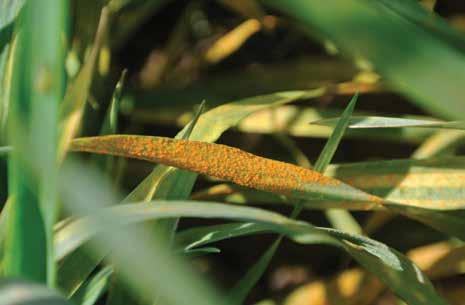
genomic tools to unlock these resistance sources for breeders to incorporate into modern wheat varieties.
Unprecedented breakdown
Professor Diane Saunders, group leader at the centre, heads the project.
“Witnessing such a large-scale breakdown in yellow rust resistance in 2025 was unprecedented,” she says.
“However, the recently unlocked diversity in ancient wheat landraces provides us, the research community, with a fantastic resource of unutilised genetic disease resistance that can be rapidly mobilised to respond to this emergent threat and ultimately, protect the UK’s wheat harvest.”
The new Rapid Response project brings together rust pathology and wheat genetic and genomic expertise of the John Innes Centre, the long-standing wheat disease monitoring capability of Niab, and importantly stakeholder engagement through the Defra Wheat Genetic Improvement Network led by Rothamsted Research.
“Responding to this emerging threat demands that we work collaboratively, and with agility,” says centre director Professor Cristóbal Uauy.
“The John Innes Centre is proud to coordinate this project, working handin-hand with Rothamsted Research and the National Institute of Agricultural Botany (Naib) to support the UK’s ability to protect harvests.
“This project exemplifies how the UK’s scientists, plant breeders and industry can mobilise, collaborate and react rapidly to respond to a shared challenge.”
Once genes are identified in the heritage Watkins collection, this information will be used to enhance modern varieties of wheat and increase the resilience of the UK’s wheat crops. Without this intervention, the UK’s wheat harvest will become heavily dependent on the application of fungicide to control the disease.
Dr Kostya Kanyuka, Niab head of pathology, says it will use its experience and strength in two key areas: Finding
Fendt IDEAL Combines
Class 7 – 10 Models
476 – 779hp

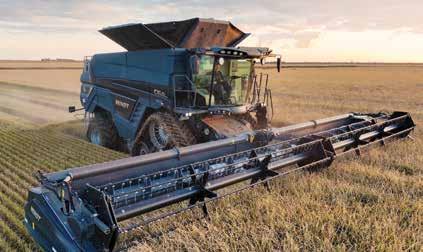
Precision engineered. Intelligently designed. Built to deliver a stronger bottom line.
The Fendt IDEAL combine helps put your operation into the black — with uncompromising grain quality, minimal losses and maximum uptime, even in the toughest conditions.
With industry-leading rotor technology, superior cleaning performance and intuitive operator control, IDEAL isn’t just another combine — it’s the benchmark for profitable harvesting.

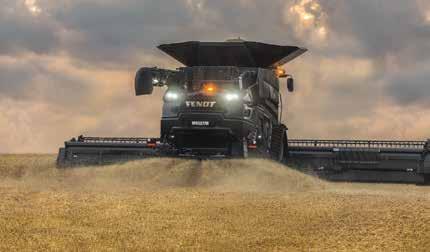
With a range of combines spanning class 7, 8, 9 & 10 models, Fendt IDEAL gives you more power and more productivity with less effort. Experience clever features such as the IDEALDrive that provides joystick-steering for simple and intuitive operation.
No matter your crop, harvest better returns by running an advanced combine from Fendt. It’s different. It’s better. It’s IDEAL.
Leaders drive Fendt.
Philippa Rawlinson wants to hear from more farmers as FAR’s regional strategy moves into its second year, and her message to levy payers is simple: Get in contact, speak up and help shape what happens next.
“Iwant more FAR growers and levy payers to be talking to fellow growers through the Arable Research Groups (ARGs) about their extension and research ideas. My goal is that growers feel confident about telling ARGs what their priorities are,” she says.
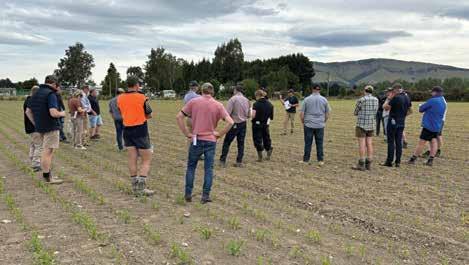
One year on from launch, the regional approach is bedding in across the country, with facilitators now active in every region working alongside Arable Research Groups to turn farmer feedback into practical extension activity.
Philippa, FAR’s regional facilitator for South Canterbury and national coordinator, says the biggest shift has been getting closer to growers and actively listening to what they need on farm.
“We’ve identified that what works well is having someone on the ground in the regions to support extension topics that are driven by growers themselves."
A feedback loop is now being embedded as a core part of how regional extension operates.
“We want to hear from growers about what they think of our events, what they have learned and what they will take home and apply.”
Alongside direct conversations, surveys are helping build a clearer picture of priorities across the arable sector.
Given the integration of other crops and animals within arable systems, farmers have also asked FAR to think about how we can bring more of a systems focus to our work.
Around 700 growers are contacted each year, with strong response rates helping guide future work.
“We are not happy with just delivering a good event. We’re going to seek more feedback from growers about what we could do better to inform ongoing project management,” Philippa says.
“People in the arable industry are so passionate. It’s such a privilege to be involved and I love hearing from growers.”
Across the regions, common themes are emerging for 2026-27.
After a run of challenging seasons, growers are asking for more support around financial performance and cost control.
Workshops focused on cost of production and business resilience are now a priority, with plans to deliver them nationwide over the coming year.
Other areas of interest include
fertiliser use, soil knowledge and understanding global pressures that could affect input availability.
There is also strong demand for practical skills, from governance and communication through to risk management and environmental planning.
The way information is delivered is evolving too.
FAR is expanding beyond traditional field days to include webinars, podcasts and virtual field walks that capture real on-farm conversations and make them accessible to more growers.
Looking ahead, Philippa says the foundations are in place but the strategy will only succeed if growers continue to engage.
“If there is something you want FAR to be doing in your region, say it. These plans are built from grower input and they will keep improving the more people get involved,” she says.
new yellow rust resistance genes in wild relatives of wheat and monitoring the UK yellow rust population for early signs of fungicide resistance.
“This collaboration will help us respond more quickly to new rust races and support the long-term resilience of UK wheat.”
Beyond the UK, the project links to the International Maize and Wheat Improvement Center (CIMMYT) will
ensure new sources of yellow rust resistance can also be incorporated into international breeding programmes as these strains continue to spread further around the world.
Yellow or stripe rust affects wheat crops throughout New Zealand, and yield losses can be as high as 15-40%.
It’s caused by a wind-borne fungus, which quickly spreads during the wheat growing season.
Infection can severely impact wheat harvests for susceptible varieties.
The best defence against yellow rust infection is to grow wheat varieties containing genes that provide innate genetic resistance to the fungus.
However, like all pathogens, the yellow rust fungus is always evolving, with new strains emerging that can overcome the resistance introduced into crops.
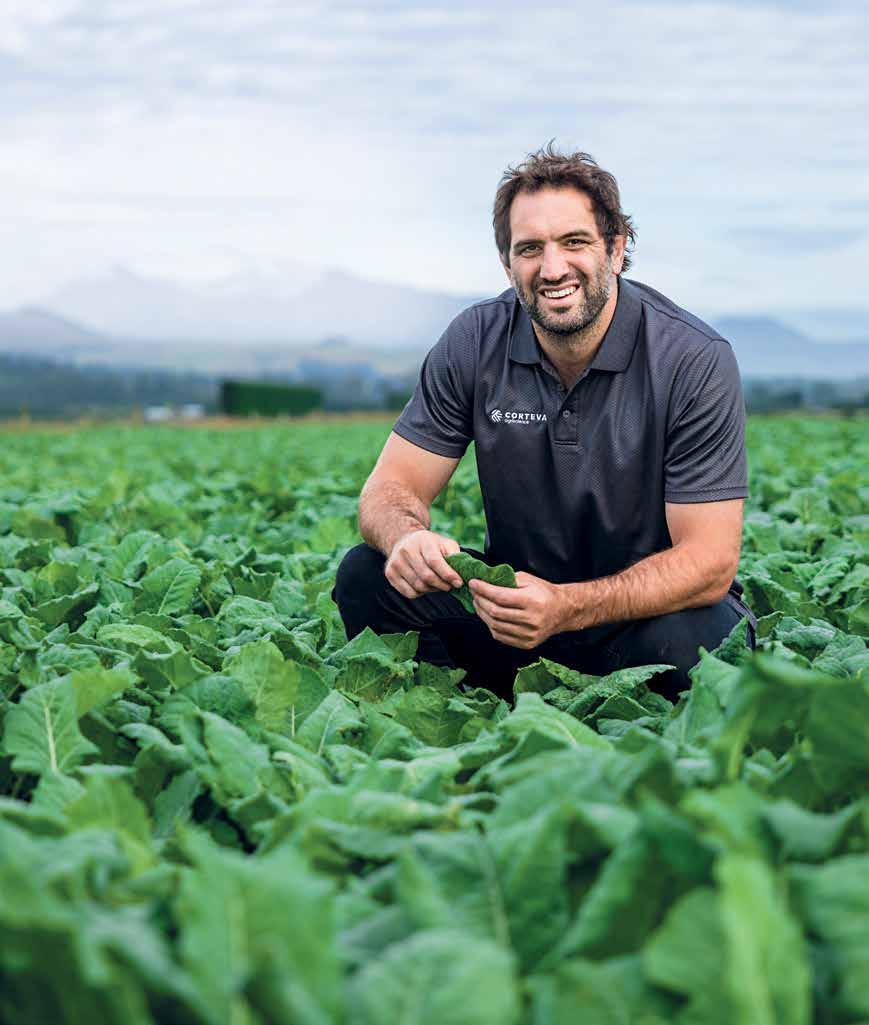
Samuel Whitelock – Plant Science Graduate, Lincoln University.
I’ve had some great teammates over the years and my friends at Corteva Agriscience are up there with the best of them.
Their suite of world class products – including Tordon ® Brushkiller XT, Tordon ® PastureBoss ®, Korvetto ®, Sparta ®, Transform ® and TwinGuard ® – helps farmers achieve truly exceptional results.
Corteva are on a mission to enrich lives for generations to come – and that’s exactly the kind of company I want on my side.

For more information talk to your agricultural merchant or call 0800 803 939 today.
Always read the label before use.
New Zealand’s arable sector is confronting one of its most challenging periods in decades, but growers are also signalling a willingness to adapt, and even optimism about the long-term outlook.
Insights from Federated Farmers arable chair David Birkett highlight an industry under intense short-term pressure, yet still fundamentally viable if key structural issues are addressed.
For many arable farmers, the past two seasons have been exceptionally difficult.
Poor harvests have compounded rising input costs, creating a cumulative financial squeeze.
As David puts it, “you’d have to go back to the late 1980s to find a worse period in terms of grower sentiment.”
Unlike earlier downturns, today’s challenge is less about high interest rates and more about inflation outpacing returns.
Crop prices have lifted only modestly over the past two years, while the cost of fuel, fertiliser, machinery and labour has surged.
Nitrogen, for example, has climbed from around $900/t to $1200/t, with further uncertainty heading into spring.
Global factors have now further amplified this pressure.
Conflict in the Middle East has driven up fuel costs, which ripple through every aspect of production, from cultivation to freight.
At the same time, global grain markets have remained relatively well supplied, limiting price upside.
The result is a sector squeezed between high costs and flat commodity pricing.
In response, many growers are reassessing risk and changing their immediate production focus, David says.
“As arable farmers, we are lucky in that we can change our systems quite easily. The simplest way is adjusting what crops go into the rotation.”
One clear trend is a move away from high-risk, high-value crops, particularly vegetable seeds like carrot, radish and spinach, towards more resilient options like cereals.
The logic is simple: “When a vegetable seed crop fails because of poor weather at harvest, you end up with no return at all, whereas with a failed wheat crop you may still get half your expected income.”
Adding more animals is another relatively quick and easy adaptation, and this has already driven a notable shift towards more mixed systems.
Some farms are moving from an 80: 20 crop-to-livestock split towards closer to 60:40, with increased emphasis on
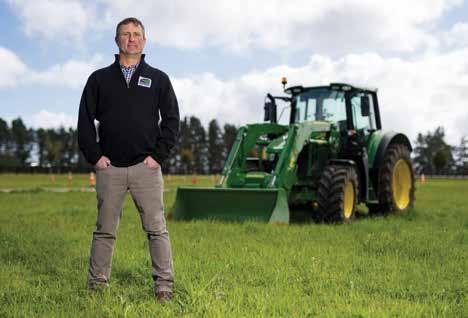
carrying dairy drystock, winter dairy grazers, and/or trading lambs and cattle.
“More basic Nui ryegrass has been sown this autumn than in the past two or three decades. Growers can wait until closing date for those crops before deciding whether to graze them, or keep them for seed.”
Crucially, crop rotation and livestock changes are reversible, often in the space of a season.
Unlike dairy conversion, which requires significant capital and longterm commitment, adjusting crop rotations or integrating livestock allows farmers to pivot back into cropping when conditions improve.
Nonetheless, permanent land-use change is already underway.
Dairy conversions in Canterbury have increased, reflecting both the financial pressure on cropping and the perceived stability of dairy returns.
For some, this is a strategic exit; for others, it’s a hedge.
However, David notes full conversion is expensive and slow, with decisions typically made years in advance.
This means further change is likely still to come, particularly as the current season’s financial realities become clearer.
The risk for the wider sector is the loss of critical mass.
Arable farming underpins seed production, feed supply and support for the livestock industry. Significant shrinkage could lead to rationalisation of infrastructure, such as seed cleaning plants and storage facilities.
“To me, our current position is very much like that of the meat industry a few years ago, which saw some big changes in meat processing capacity.”
Beyond on-farm decisions, structural challenges within the value chain are coming to a head. Growers increasingly argue that risk has been pushed disproportionately onto them, particularly through contract terms.
In some cases, ownership transfer and payment are delayed until product reaches overseas buyers, exposing farmers to risks beyond their control, such as shipping disruptions.
At the same time, payment timing has shifted for some contracts.
Cashflow is emerging as a critical pinch point this season, especially for growers who would have previously
relied on being paid for process crops by Wattie's soon after late spring harvest.
With two tough harvests behind them and significant capital tied up in livestock or inputs, many farms face a tightening liquidity position.
Despite these challenges, David says there are signs of progress.
Recent industry consultation meetings have highlighted a new willingness among both farmers and seed companies to address longstanding issues.
“I was expecting a few people to be fired up at those meetings, but overall there was a lot of mutual acknowledgement of the issues facing growers, and the companies contracting their crops.
“Both sides recognise the relationship between us is fundamentally symbiotic and that neither of us can succeed without the other. Two bad harvests have really driven that home to all parties.”
The other positive outcome?
“After those consultations our plan is to sit down with the companies, find the areas of commonality and work together
to try and solve these issues. It will take a year or so, but my hope is that we can get to a place where both sides end up in a better position.”
Key priorities include more equitable contract terms, better cost-sharing mechanisms and ensuring growers can remain profitable.
While the short-term outlook is tight, the fundamentals of NZ’s arable sector remain compelling.
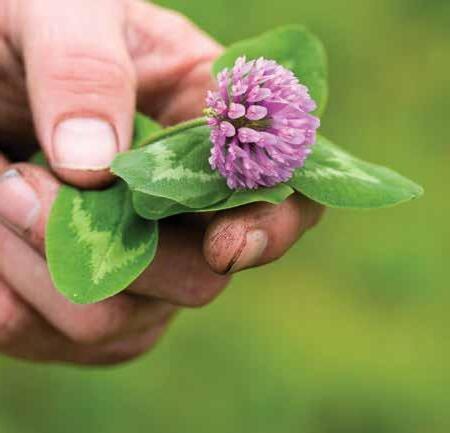
Globally, NZ holds a strong position in high-value seed production, including white clover and vegetable seeds, with a reputation for quality that is difficult to replicate.
However, reduced land availability means these products may become scarcer, potentially strengthening growers’ bargaining power.
There is also untapped opportunity in the domestic market.
NZ imports millions of tonnes of animal feed annually, worth billions of dollars, despite having the capability to produce more domestically.
Capturing even a portion of that demand could significantly lift returns for arable farmers.
Importantly, the current downturn does not require a massive structural overhaul to reverse.
“It’s not going to take much to turn this around,” David says.
A shift in global grain prices, a favourable season, or improved contract terms could quickly restore profitability.
The months ahead will be pivotal.
Spring planting decisions, fertiliser pricing, and ongoing land-use changes will signal how deeply recent pressures have reshaped the sector.
For growers, the focus will remain on managing risk, preserving cashflow and retaining flexibility.
For the wider industry, the challenge is to rebuild trust, rebalance risk and ensure the value chain supports sustainable returns.
The message from Davis is clear: While the arable sector is under strain, it is far from broken.
With collaboration, better pricing structures and a sharper focus on domestic and premium markets, NZ’s arable industry can not only recover, but potentially emerge stronger.
A major improvement in red clover persistence within grazing systems
High yield potential over time
Semi-prostrate growth habit Low
A few years ago Fiona Anderson had little direct connection to the arable sector.
Now she has graduated with a PhD focused squarely on white clover seed production and has stepped into a research role that is both highly technical and firmly grounded in on-farm reality. It has been a fast track, but one driven by curiosity and a willingness to follow questions wherever they lead.
Fiona joined the FAR graduate programme at the end of 2020 after completing a Bachelor of Agricultural Science with Honours at Lincoln University.
Her Honours research, supported by a FAR postgraduate scholarship, examined soil phosphorus fertility and nitrous oxide. It also introduced her to an industry she admits she had not engaged with before.
“It was one of the industries that I hadn’t had anything to do with, and I wanted to learn more,” Fiona says.
The graduate programme gave her exposure across herbage, cereals and environmental work, along with the practicalities of extension and events.
That variety, combined with the expectation that graduates take responsibility for projects, proved pivotal.
One such project on the nitrogen balance in white clover seed crops set her on a new track.
“I discovered more questions than answers, and thought it would be really cool to pursue that.”
That curiosity led her back to Lincoln to complete a PhD, supported by scholarships from both the Seed Industry Research Centre and the university.
Her thesis focused on the growth, development and nitrogen dynamics of white clover grown for seed.
While most technical information
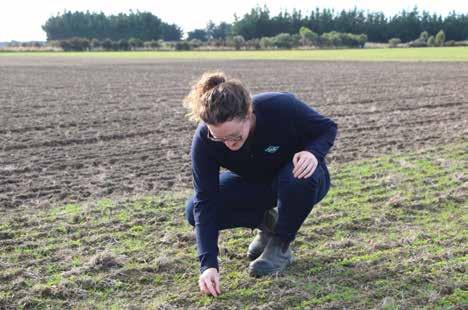
on white clover is in a pasture context, Fiona’s work has helped quantify what happens when it is taken through to seed production.
“We needed to know how the plants grow and develop in a seed crop context versus pasture,” she explains.
“It was about applying really indepth numbers to how each part of the plant grows during the cropping process and using that to inform our agronomy and improve modelling.”
A key part of the research was tracking nitrogen through the system.
Fiona quantified how much nitrogen accumulates in different plant components and how that changes when a crop is allowed to set seed.
She also followed what happens after harvest, when large amounts of residue remain in the paddock.
“Of the total biomass grown you maybe take 10% away as seed, and 90% is left over as residue,” she says.
“In a ten tonnes of dry matter per hectare crop that equates to around 200 kilograms of nitrogen, and what we found is that within fifty days of harvest, about 70% of that nitrogen had been released.”
Those numbers have practical implications.
Growers and agronomists have long recognised the rotational benefits of clover, particularly ahead of depletive crops like cereals, but Fiona’s work helps quantify the scale and timing of nitrogen supply.
The relatively rapid release reflects the low carbon to nitrogen ratio of clover residues, which supports rapid microbial breakdown.
For arable farm systems, it pays to consider the value of nitrogen in crop residue alongside measuring soil mineral nitrogen before making
fertiliser decisions.
“At FAR we’re always saying check your soil mineral nitrogen and consider that before making a plan,” she notes. “It’s best practice and in some cases it can save quite a lot of money.”
Fiona’s pathway into agriculture began on the family sheep farm near Riverton in Southland, but it was a growing interest in science at school that shaped her approach.
“I like the detail, getting out and observing nature, applying numbers to it, answering questions that need to be answered,” she says.
That combination of observation and analysis remains central to her work.
Now part of the FAR herbage team, following the departure of Richard Chynoweth last year, Fiona is building on her doctoral research.
This season she is leading a trial on harvest timing strategies for white clover, tracking crop development to help predict the most economical harvest window within the constraints of weather and wider farm operations.
“I’m pretty excited about that; it’s my big project this year,” she says, noting it builds on work done by FAR 20 years ago but brings new tools and data to the question.
Alongside that, she is contributing to vegetable research, including work on alternatives to pre-harvest desiccation in crops like red beet and radish.
It is a mix that reflects both her scientific grounding and the practical focus of FAR’s programme.
From an outsider looking in to a researcher generating new knowledge for the sector, Fiona’s journey has been quick, but it carries a clear thread. Ask good questions, follow the data, and make sure the answers are useful where it counts.







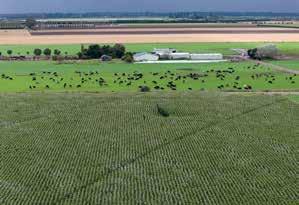
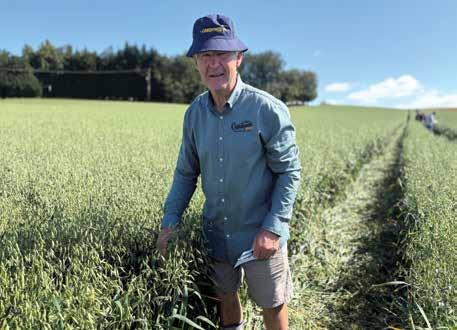
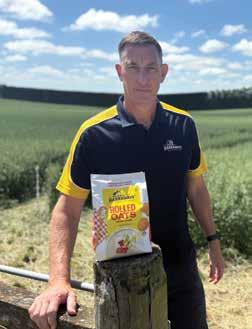
Southern oat grower Graeme Gardyne does not hesitate when asked what has made the biggest difference so far in Harraways’ major upgrade at its Dunedin mill site.
“The speed of the unloading! That’s been a thing for suppliers for a long time. They did that first.”
Starting with this has struck a chord across the supply chain.
The new grain intake system is already cutting average unloading times from about two hours to around 30 minutes.
For growers and transport operators watching costs closely, that has been an immediate and practical gain.
Harraways chief executive Henry Hawkins says the response has been clear.
“It’s been very well received by the logistics company and growers, especially when fuel equals more money.”
The upgraded intake is part of a wider multi-year programme that will see $11–12 million invested to lift capacity, improve efficiency and keep the Dunedin mill competitive.
The project is about protecting a long-standing rural supply chain while positioning the whole business for growth, Henry says.
But by starting with something growers had repeatedly asked for, the company has set the tone for how it plans to roll out the rest of the work.
Trust runs both ways
Graeme Gardyne, a fifth generation oat grower who farms near Gore and chairs the Oat Industry Group, says the investment sends a strong message to the southern growing base.
“It’s tremendous to see a family commitment of this scale, putting capital into such a big upgrade.
“For them to do that, they’re showing their trust in the growers. It’s a two way thing.”
He describes the oat sector in the south as one built on mutual dependence.
For many farms, oats are a core part of the rotation and the only milling cereal option readily available in the region.
“We can grow milling wheat, but we do have an edge in growing oats that regions north of Dunedin would struggle to achieve.”
Cooler temperatures in the south, plus longer daylight hours and heavier soils combine to deliver consistent milling quality.
Oats also play a role agronomically, helping manage take-all disease in feed wheat systems.
“They’re complementary,” Graeme says.
That foundation has supported a
steady lift in demand as oats have moved beyond a traditional market segment.
“They have become an ingredient rather than just a breakfast food. They’re used in biscuits, muesli and beverages.
“Oats seem to have health benefits, and that’s where the market is quietly growing.”
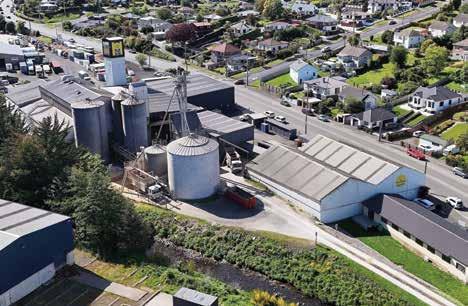
The intake and silo redevelopment has been one of the most visible pieces of work so far.
Old infrastructure has been replaced, including the intake pit and elevators, with the aim of making grain flow faster and more efficiently through the site.
There have been some practical hurdles along the way, Henry Hawkins says: “We had slight delays with removing silos and the ground conditions.”
But the key outcome is already being realised.
Faster turnaround times are reducing truck queues and lowering costs at a time when margins are tight.
Graeme Gardyne says it is exactly the kind of practical improvement growers had been looking for.
“Harraways have been open to suggestions by growers, and has liaised with us throughout the process.”
The next major step on the mill site is a new pre-cleaning plant, now around two months from completion, although Hawkins notes timing could slip slightly.
“We’re onto the last phase of putting in our pre-cleaner plant. It’s not a new thing for some growers, who already
have these facilities on farm, but it is new for Harraways.”
The rationale is straightforward.
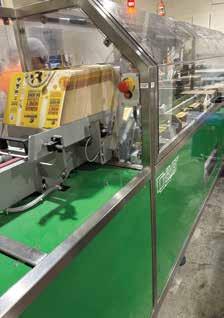
With less on-site grain storage than before, cleaning grain before storage will improve flow through the mill and make better use of available capacity as well as ensuring oats are in better condition for storage.
Currently about 40% of incoming grain is pre-cleaned before it arrives.
The new plant will handle the rest, lifting consistency across the intake.
Growers have also been responding by investing off site.
Graeme Gardyne’s family, which produces about 2,500 tonnes of oats a year, has recently expanded its own storage, drying and pre-cleaning capacity to support that shift.
Alongside the intake and handling upgrades, a major seismic strengthening programme is underway in the main mill building.
The work began earlier this year and is expected to continue for more than 12 months.
Hawkins says that programme remains on schedule.
Old cinder block walls are being removed and replaced with fire rated cladding, done wall by wall and floor by floor.
The work is being carried out while the mill remains operational, with sections upgraded progressively. It is a complex exercise but seen as critical to future proofing the site.
The largest single investment in the programme will be new milling equipment housed in a purpose-built building.
That project is back in the planning and feasibility stage after hitting some challenges.
“We’ve come across some soft ground, and had to review costings and feasibility as a result. It’s not ideal but these things do happen when you’re building on an old, historic site, and one that is very full already.”
Ground conditions and foundation requirements are now being reassessed to ensure the design is fit for purpose.
That means the full lift in expected milling capacity is still some way off.
Graeme Gardyne says growers understand the staged approach.
“The whole thing will take some time,
but overall growers are encouraged by the progress so far.”
When that additional milling capacity does come on stream, it will open up options for both Harraways and its suppliers, he says.
“Higher capacity is important; it will allow Harraways to take on more markets and more opportunities, and hopefully filter down to growers in the shape of more oats required.
“It’s got to be taken a step at a time.”
The wider context is also front of mind.
Graeme points to recent closures in other parts of the food processing sector, such as Heinz-Wattie's and McCains, as a reminder of the value of local ownership and long-term commitment.
“When you see what else has been in the news, it shows that New Zealand ownership of industry is so important.”
The latest harvest has tested growers, with a long and uneven season, Henry Hawkins says.
“It’s been a long season for growers, it was awkward for them at the start and midway through, and harvesting has run quite late.”
Despite that, quality has generally come through well, providing a solid base for the year ahead.
Looking forward, both growers and processors are watching global and domestic pressures closely, particularly costs and international uncertainty.
“We appreciate and know there’s a lot of pressure on growers, including costs of production, and the on-going effects of war in the Middle East. We share the same pressures,” Henry says.
Contracts are typically offered in August, and there is some caution about how those external factors could influence pricing and demand.
“We’re hoping the situation will be clearer by then.”
For now, the focus remains on delivering each stage of the upgrade in turn.
The early emphasis on intake and grain handling has delivered tangible gains, while more complex work continues in the background.
Graeme Gardyne says that approach builds confidence, and represents an industry that displays a lot of good will in seeking to work together for mutual benefit.
Henry Hawkins is overseeing the work, supported by Hanlons Engineering and quantity surveyors Chas George and Sons.
The New Zealand Grown Grains programme has moved from concept to reality in a remarkably short time, delivering fresh optimism to the arable sector.
Launched at the end of October in Auckland, the initiative brings together government representatives, industry leaders, chefs and food advocates to champion domestically grown grains and seeds.
FAR developed the certification trademark and logo to help consumers easily identify products made from NZ grains.
Eat NZ has worked closely alongside FAR to roll out the programme. Since its launch, uptake has been swift.
"We have managed to bring to reality something that had been in the making for a good seven years," says Ivan Lawrie, FAR general manager of business operations.
"People are already seeing the value and jumping on board to sign up because they see that it can bring benefit to the individual products they are promoting."
Twenty-five companies signed up quickly
Twenty-five companies have already signed up, well ahead of expectations.
This includes major players such as Harraways, Pure Oil NZ, oat milk producers Otis and All Good, as well as a range of artisan bread manufacturers from Auckland and Christchurch. Maltsters, brewers and others across the supply chain are also being welcomed.
The newly launched website nzgrowngrains.nz lists participating companies and provides toolkits and guidance for both businesses and consumers.
Auditing is handled by Asure Quality to ensure products genuinely contain NZ grown grains.
Ivan says response has exceeded targets.
"We’ve been blown away with the support we’ve had. We expected those numbers achieved over a year, and instead we exceeded that goal within six months.”
The programme aims to build bigger and more stable demand for NZ grains across multiple sectors.
This goes well beyond food into feed grains, beverages, oils and even industrial uses.
"Scale is important so we also need some of the bigger players to come on board, who have impact on grain volumes traded in NZ," Ivan says.
Focus on value and consumer choice
The initiative highlights clear advantages of local grains, including lower carbon footprint, superior freshness and quality.
FAR has drawn on detailed consumer research, showing shoppers are willing to pay a small premium, typically between 20 and 50 cents on a loaf of bread, when they know it is guaranteed NZ grain.
Ivan stresses the approach is not about forcing higher prices.
"We have got to be very careful that NZ Grown Grains is not about pushing the price of food up but shifting consumer preferences where possible."
The grain component usually forms only a small part of the final product cost, so any increase has minimal impact on the overall shopping basket.
Companies such as Gladfield Malt already demonstrate the value of using 100% NZ grain.
The broader goal is to create longterm demand that supports growers and encourages diversity in cropping rotations.
Cereals remain essential in arable systems for higher value production and resilient land use.
Early signs are encouraging, Ivan says.
“With strong industry backing and growing consumer interest in provenance and food security, the programme is well positioned to strengthen the arable sector in the years ahead.”
Premium maltster glad to be involved
Gladfield Malt has emerged as one of the strongest early backers of the NZ Grown Grains initiative.
The family-owned maltings business signed up in March 2026, just months after the programme launch, and has embraced it with genuine enthusiasm.
Doug and Gabi Michael, who established Gladfield Malt 22 years ago on a farm near Dunsandel in Canterbury, see the programme as vital for building a stronger local mindset around backing NZ growers.
"We knew all about the programme, and we want to get well and truly behind it," Doug says. "New Zealanders need to develop that psyche of supporting local production."
The Michael family are fifthgeneration barley growers.
Doug grew up on a mixed cropping farm in the region and continues to grow malting barley today.
Gladfield sources grain from nearly 150 contracted growers and employs 14 full-time staff.
The business produces more than 50 types of high-quality, hand-crafted
malts for beer, whisky and homebrew markets, both domestically and overseas, including significant exports to India and Australia.
Positive outlook drives commitment
Doug and Gabi bring a glass-half-full energy to the arable sector. Rather than dwelling on challenges, they focus on opportunities.
"Gabi and I are really positive people. We don't tend to look at the current situation as a problem. We look at it in terms of opportunity," Doug says.
They point to recent investments, such as Talley's substantial expansion in Ashburton, as signs of potential growth in processing capacity. Former McCain growers in Hawke’s Bay are also exploring their own processing business.
While some arable land in Canterbury has recently converted to dairy, the Michaels' believe this creates fresh demand for feed grains.
Doug also sees global supply dynamics as a potential benefit for NZ growers.
Arable plantings are reportedly scaling back in Australia, because of
fuel and fertiliser costs, which may tighten supplies rather than create surpluses that end up in the NZ market.
He also raises the frustrating reality of domestic logistics.
"The next initiative should build a tunnel under Cook Strait! It shouldn’t be cheaper to get malt and flour to
Auckland from Geelong than out of Canterbury."
Building resilience through local choice
Gladfield's success stems from its relatively small scale and agility. As the business grows, the family has
diversified operations, with two of their children now working alongside them and a third keen to join.
This family energy and adaptability have helped the company thrive from what started as a bare lucerne paddock.
The Michaels believe the NZ Grown Grains trademark gives supermarket shoppers a clear choice.
"They need to realise if you don't support local, they will lose it," Doug says.
While not everyone can afford even a small premium, those who can should have the information to make an
informed decision.
For Gladfield, using 100% NZ grain aligns perfectly with their value proposition of quality, consistency and service. Their malts are selected for superior malting properties, resulting in clean, plump and flavourful products.
Doug and Gabi see the programme as key to long-term sector health. By strengthening demand for local grains, it supports growers, encourages diversity in cropping rotations and builds resilience across the arable industry.
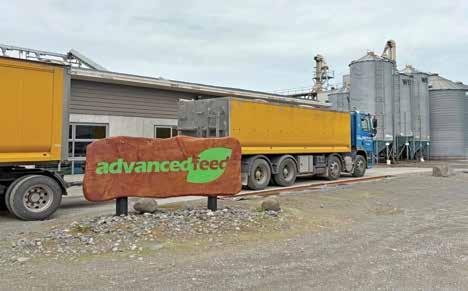
Canterbury livestock feed manufacturer Advanced Feed was another early backer of the NZ Grown Grains programme.
Based near Methven, in the centre of Canterbury Plains’ arable country, general manager Neville Prendergast says the mill only uses domestically grown grains, with about 95% of its output destined for the dairy industry.
It mills 15,000 tonnes of domestic grain a year and has an ambitious target to get to 60,000 tonnes in the next five years.
The business was keen to support the initiative because keeping grain production local benefits both arable growers and dairy farmers.
“Domestic grain is not only better nutritionally but keeps more money circulating within the local community instead of overseas markets.
“We want an equal balance of arable and dairy in Canterbury, so there needs to be value in grain. Otherwise we will all be milking cows,” Neville says.
Fewer arable farmers will mean higher feed and grazing costs for dairy farmers.
Feed wheat is the primary rolled grain used because of its high starch, low fibre and strong performance in the mill.
Alongside locally-grown wheat and barley, Advanced Feed also sources NZ rapeseed meal and peas as part of its feed formulations.
NZ imports around 2.7 million tonnes of Palm Kernel Expeller (PKE) annually, primarily for dairy cattle feed, making it the world's largest importer of this palm oil by-product from countries like Indonesia and Malaysia.
More farmer education is needed around the benefits of grain feeding in pastoral dairy systems, says Neville.
“Farmers see the cost of the grain bill as being large and look for cheaper options, but they don’t see the missed opportunity for milk production.”
Grain should complement a strong pasture base and not replace grass or act as a quick fix for feed deficits.
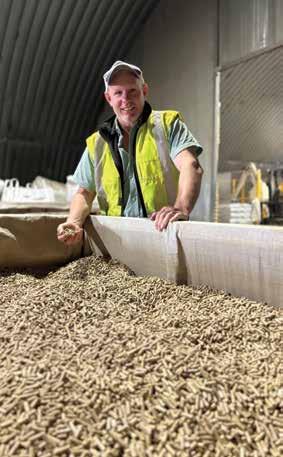
Advanced Feed uses a hammer mill which produces a finer product than rolling, improving starch availability for the cow.
On-farm rolling can leave grains uncracked, reducing their nutritional value.
The mill has recently invested in upgrades that have increased its production capacity three-fold.
By feeding grain in a pelleted form, minerals and trace elements can be incorporated into the diet on a daily basis.
For arable growers, Neville says that new wheat cultivars are performing better in the mill and delivering more consistent results.
While high protein levels are desirable, consistently achieving 1213% cent protein is challenging.
“We would rather that farmers grow good feed varieties rather than getting hung up on protein levels.”
Barley, although slower to mill, remains a valuable feed, particularly during mating and for building condition later in autumn.
“More education and understanding on how grain helps milk yield and profitability will allow dairy farmers to realise the true value of locally grown grain,” Neville says.
The biggest crop yields – and profits – start with the best protection. Trust Sharpen® and Arietta® to set up more productive maize and sweet corn crops whilst strengthening your herbicide resistance management program for the seasons ahead.
Pre-emergent control of tough weeds
Sharpen up your pre em options in maize. NEW FlexiRate now registered
Trials show that the new 100 g/ha rate of Sharpen + acetochlor delivers better broadleaf weed control and yield protection than atrazine + acetochlor. The original 150 g/ha rate remains the gold-standard for targeting high yields or managing high weed pressure.
Post-em control of BLW & grass weeds
New Zealand is recognised as a world leader in producing vegetable and brassica seeds.
WORDS: Richard van Garderen & John Foley, SCID Working Group
Our vegetable seeds are exported across the globe, playing an important role in global food security and providing export earnings of more than $150 million.
Meantime, over 300,000 ha of forage brassicas are grown annually to support the domestic pastoral industry.
Today vegetable and brassica seed production has developed into a sophisticated, high value segment of the NZ arable industry.
A successful vegetable seed export industry depends on many factors.
Our ideal climate, latitude, fertile soils and reliable irrigation create the perfect foundation. This is strengthened by highly skilled seed growers, experienced agronomists, and significant investment in specialised equipment and infrastructure.
Seed companies secure opportunities with global partners who rely on NZ growers to consistently deliver highquality, genetically pure seed crops.
This last factor is a pillar of NZ’s vegetable and brassica seed industry.
High value seed crops, especially hybrids, must be produced to very high genetic purity standards and these are contractual requirements, hence a major focus of the industry.
Genetic purity of seed crops relies on three principles – the genetic stability of traits selected by the plant breeders, the previous cropping histories (field histories) to prevent volunteers, and the distance that crops of the same species are from each other (isolation distance) to prevent cross pollination.
Some species have long-lived seed, necessitating a gap of as long 15 years between planting crops of the same species in the same paddock.
Isolation distance is more complex, as this requires mapping distances between vegetable seed crops of the same species that stretch beyond a typical seed growers’ property.
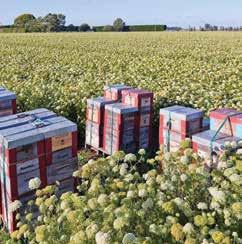
Pollen can travel vast distances beet pollen is known to travel up to 8 km, while honeybees may carry pollen up to 3 km away from their target crop.
In 1998 the vegetable seed industry began developing a digital platform capable of managing the seed crop isolation requirements in real time.
The underlying principle of the system was to identify where ‘conflicts’ were generated through crop placement but not resolve them.
The ‘conflicts’ are essentially those crops of the same species placed too close to each other and where a genetic outcross has a high degree of occurring.
The system generated these conflicts based on a crossing table that identifies which species cross with which species and at what distance the crop is ‘safe’ from another crop of the same species.
With the help of the MAF Sustainable Farming Fund project under the direction of, and co-funded by, the
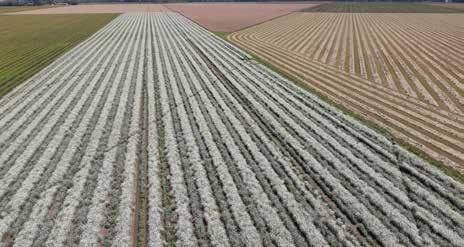
Foundation for Arable Research, the Seed Crop Isolation Distance Scheme (SCID) was developed.
This was potentially the first real-time geospatial crop isolation management tool in the world.
The original steering committee delivered to the industry an outstanding platform that served the industry for more than 25 years.
Fast forward to today, and time has finally caught up with the now vulnerable SCID system. It has reached the end of its life and necessitated a new steering group to oversee the build of a new SCID platform fit for the 21st century.
The SCID Working Group, made up of industry stakeholders and chaired by Richard van Garderen (South Pacific Seeds), has been steering the project for the last 12 months.
The new system comes under the jurisdiction of the NZ Seed Authority.
The industry Code of Practice has been updated to reflect the changing industry.
Stratos, a Christchurch-based software firm, was chosen as the partner to build the new system and the build phase is well underway.
One of the complexities of building the SCID platform is that the time to deploy falls in a narrow window.
For SCID this is between ‘seasons’, the build, testing and successful deployment needs to be done by the middle of this year – a very short runway indeed.
Pleasingly the project is on track to meet its timelines, and vegetable seed growers can look forward to using a modern, secure, user-friendly platform for their crops, ensuring the continuing enhancement of NZ’s reputation as a leading producer of high-quality vegetable and brassica seeds.
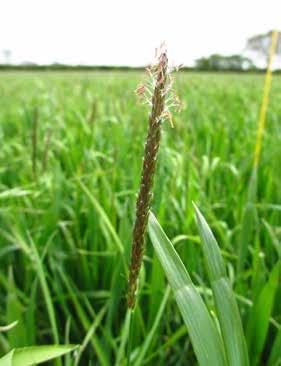
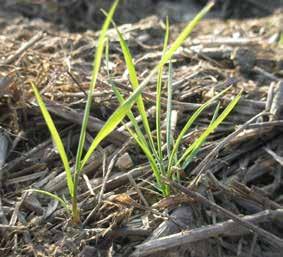
New Zealand’s arable industry should approach any future black grass detections with heightened caution, scientists say.
They’ve confirmed some of the black grass populations that have entered the country already carry resistance to a common group of herbicides.
This finding strengthens the case for rigorous biosecurity practices to prevent further incursions, they say.
Their work has recently been published in the journal of the New Zealand Plant Protection Society.
Black grass, scientifically known as Alopecurus myosuroides, is a major problem in European arable systems, where it has developed resistance to multiple herbicide modes of action.
The weed competes strongly with crops and has caused significant profit losses for farmers overseas.
In New Zealand, it remains an unwanted organism subject to incursion responses.
Despite tight border controls, three separate incursions have established on farms over the past 20 years, all linked to contaminated imported seed lots of ryegrass or linseed.
Researchers from the Bioeconomy Science Institute, Foundation for Arable Research and the Ministry for Primary Industries tested seed from two of these incursions for resistance to Othello OD, a herbicide product containing iodosulfuron and mesosulfuron.
These are acetohydroxyacid synthase, or AHAS, inhibitors, also known as Group 2 herbicides. They are widely used against black grass in Europe but were never intended as a sole solution in New Zealand.
Results of the resistance testing were concerning.
The population linked to French linseed seed imported in 2021, known as FR2021, showed a high level of resistance. It required more than 250 g of active ingredient/ha to achieve 90% control. That is 25 times the New Zealand label rate of 10 g/ha.
The other population, traced to United
Kingdom ryegrass seed imported in 2007 and known as UK2007, was less resistant but still needed nearly twice the label rate to reach 90% mortality.
These findings indicate black grass arriving in New Zealand via contaminated seed can no longer be assumed to be fully susceptible to AHASinhibitor herbicides.
As resistance continues to increase in Europe, future incursions are increasingly likely to arrive already carrying resistance traits.
For farmers and agronomists, the practical message is clear.
AHAS-inhibitor herbicides should not be the primary tool relied upon during any black-grass incursion response in New Zealand.
Instead, responses need to draw on a full range of control tactics, including cultural methods such as competitive cropping, timely cultivation and crop rotation.
Where chemical options are needed, different modes of action must be used and rotated carefully to avoid further selecting for resistance.
Prevention remains the most effective strategy, the authors say.
“Herbicide resistance should be explicitly considered when deciding to import seeds, in seed certification, border protection, and incursion response decision-making…
“Seed companies play an important role in reducing weed contamination and herbicide resistance risks.
“Introducing herbicide-resistant weeds through contaminated seed can impose high costs on growers and seed producers through increased weed management, seed cleaning, certification issues, and potential market-access restrictions.
“To reduce risks, the industry should use seed that is locally produced, cleaned, and certified, or sourced from low-risk regions, with stringent inspection standards. Ongoing research
and surveillance of herbicide resistance in seed contaminants will further help protect New Zealand’s agricultural systems.”
The research highlights the ongoing risk that herbicide-resistant weeds can hitchhike into the country on imported seed.
Similar threats exist with other problematic species not yet established here.
By maintaining strong biosecurity awareness at every level of the supply chain, from seed importers through to individual growers, New Zealand can better protect its arable systems from the kind of weed management challenges that plague many overseas farming regions.
• A third incursion of black grass was detected in May 2025 in a south Canterbury perennial ryegrass seed crop. It remains unclear whether this latest outbreak was linked to a perennial ryegrass seed lot imported from the United States in December 2023. As of March 2026, monitoring of farms connected to the incursion had found no further black grass plants.
If you haven’t already latched onto tools to optimise your soil supply of nitrogen, there’s never been a better season to jump in.
That’s the advice from FAR senior environmental research Abie Horrocks as growers head towards spring not knowing how much urea fertiliser will cost in coming months, or even how readily available it will be.
Global supply chains and geopolitics may be far beyond your influence.
But your soil nitrogen bank is literally under your boots, Abie says, and knowing the current balance could well add some much-needed certainty to an otherwise volatile outlook.
“We know growers have been trying to secure urea fertiliser earlier than normal; there has been widespread concern about price later in the season and some of the projections that have circulated are alarming.”
Urea fertiliser was one of the very first major commodities, after oil, to see significant global supply disruptions and price spikes following the February’s escalation of conflict in the Middle East.
Up to half of global urea exports, and significant ammonia and LNG feedstock, originate from or transit the Persian Gulf region and urea production in itself is highly energy intensive.
A massive urea contract put out by India in April, seeking 2.5 million tonnes for shipment from June, saw prices close to US$1,000 per tonne, nearly double
that paid for India’s previous contract in February.
United States Department of Agriculture data and multiple farmer surveys confirm American growers will produce less corn and more soybeans this year, with a near one-for-one swap widely attributed to nitrogen fertiliser economics.
In the UK, no similar swing away from high nitrogen crops to pulses has been reported, but many growers are cutting application rates, and focusing on more efficient use of urea to cope with higher costs.
Both Ballance Agri-Nutrients and Ravensdown have urged normal ordering patterns for autumn and winter, with supply secured for the current season.
They encourage early planning and discussions with fertiliser reps for spring, but empathise that prices will be set closer to shipment time.
Abie says while the flow-on effects of the Middle East conflict in terms of both fuel and fertiliser are the last thing many growers need this season, there is opportunity here to further fine-tune their systems for lasting improvement.
For a start, it’s a chance for anyone
not already measuring soil nitrogen and incorporating it into their crop and fertiliser planning to take advantage of all the research work that has quantified the economics and benefits of doing so.
“Our trials at FAR have shown factoring soil nitrogen into nitrogen fertiliser decisions can save between $200–250 a hectare without compromising production.
“There is still so much opportunity for us to tighten up on bio-economic rates of nitrogen that hopefully growers won’t feel the need to change crops based on relative nitrogen requirements.”
Likewise, growers have easy access to FAR tools such as N Smart and the N Calculator to help. Being N Smart means matching fertiliser inputs with soil nitrogen supply during periods of active crop uptake.
Soil testing shows how much of your crop’s nitrogen demand can come from the soil, while decision tools help ensure only the nitrogen made available during crop uptake is factored into fertiliser planning.
Given the challenging harvest and its effect on yields, some crops may not have been able to utilise nitrogen that was applied in 2025-26, which is all the more reason to check, Abie says.
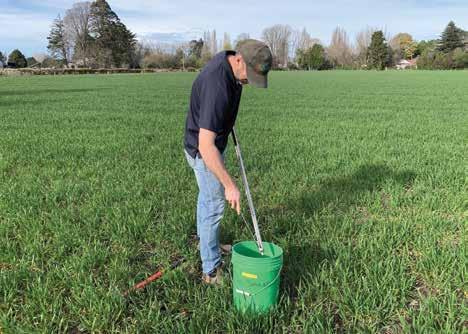
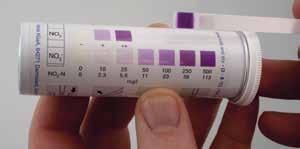
And if you’re watching your spending, the Quick N test is a practical, affordable way to assess soil nitrate levels.
“A full laboratory mineral N test costs around fifty to sixty dollars per sample, but the quick test strips cost just two to five dollars per sample.
“The method measures nitrate, not ammonium, but the result can still be used in nitrogen calculators in place of a lab value.”
For more information about optimising soil nitrogen in your system visit www.far.org.nz.

Long-lasting disease control in wheat crops.
Proven rust control in ryegrass seed crops, with a short 14 day withholding period.
For more information please call the Syngenta Technical Advice Line on 0800 333 336 FREE NOZZLES
Solo SDHI formulation for tank mix flexibility. Ryegrass endophyte safety confirmed.

Southland farmers may have had a last-minute reprieve from a stressful farm plan compliance deadline, but they will still need to submit plans.
To assist them, and other growers in the future, FAR has tested an arable-centric planning approach.
Senior environmental researcher Abie Horrocks says that until just a few weeks ago Southland farmers were facing a 27 May deadline to submit a farm plan for certification.
Many held plans back hoping to get clarity about national freshwater farm planning requirements, and on 18 May, the Government extended their deadline to late November next year.
“Fresh water reform will affect all growers in New Zealand when the new regulations switch on, and we want to know how best to support all cropping regions,” Abie says.
“Because Southland was facing a unique situation, we felt it was a really good opportunity for us to use that region as a case study for how best to pull together a plan that satisfied local council requirements and specifically considered arable land use.
“We developed a process using a digital tool, so that plans could be tweaked if needed to meet future FWFP requirements and ensure regional and national requirements can be met in the one place.”
Environment Southland had guidelines and an example farm plan available, but it was pastoral.
So, for this exercise, with funding from an MPI Integrated Farm Planning project, Abie and the FAR team worked with Ballance Agri-Nutrients and used the QCONZ digital system to create an example Farm Environment Management Plan based on an actual, anonymous Southland mixed cropping farm.
Abie says care was taken to use a representative system that other growers could easily relate to.
The example farm is just over 700 ha, of which approximately 375 ha is cropped annually, most in spring and winter barley and winter wheat, with 25 ha used for intensive winter grazing, typically sown in kale or swedes.
The example plan notes the farm’s
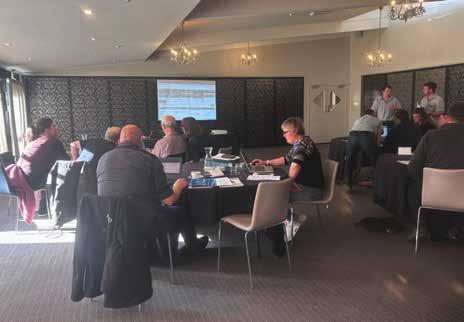
Getting a head start – Gore workshop helped growers prepare for future plan requirements.
inherent risks, from flooding to pathogen loss through run-off; identifies and assesses property-specific risks to fresh water and lists 15 actions and associated mitigations developed to address these.
It was used as part of a two-day southern workshop facilitated by Ballance Agri-Nutrients where growers learned how to build their own digital plans, and is now posted as a resource on the FAR website.
Abie says the pilot workshop was well attended and well received, with growers acknowledging the value of starting the process now, even though their deadline has been extended more than 12 months.
She stresses QCONZ is just one way for growers to prepare their paperwork; a digitised plan will be easier to modify as required when the fine print becomes clear on national requirements, but they can also use consultants to help with some or all of the documentation, or they can do it themselves manually or digitally.
“Any digital tool needs to accommodate the nature of cropping systems, the unique way rotations are utilised as a management tool, where decisions around rotations depend on a range of factors, like pests, diseases,
herbicides/weeds, markets, contracts, timing and climate.”
The point is that no matter how you build it, a good Farm Environment Management Plan is an opportunity for all growers to tell their farm story, show where risks exist and why certain decisions are made.
“It can be overwhelming to contemplate, but one of the takeaways from the Gore workshops was that a plan is most effective when the farmer is the one thinking through the whole process,” she says.
“A good plan is something to be positive about. It’s a way of saying I’m proud of what I’m doing with my land, and here is why.”
The Southland exercise also demonstrates how a farm plan can be used to explain decision-making on an arable or mixed cropping farm, where multiple moving parts influence outcomes and decisions that at first sight might not appear obvious.
“The main thing is to have a plan which highlights intent and mitigation strategies that balance environmental risk reduction with practical agronomic realities.
“Environmental planning on arable
A large-scale research project is establishing a diverse and sustainable toolkit of weed management strategies for cropping farmers in the face of rising rates of herbicide resistance.
The $2.6 million project named ‘Integrated weed management in a world of herbicide resistance’ is led by the Foundation for Arable Research; it involves both arable and vegetable growers and runs for four years.
Reliance on chemicals is high in cropping systems, but research shows declining herbicide effectiveness as a result of herbicide resistance, says FAR researcher Matilda Gunnarsson. There is also a growing risk of importing herbicide resistant weeds, such as highly invasive black grass.
"We need to shift toward a more integrated approach, rather than relying solely on herbicides as the main solution.
“It's about understanding all the tools available and choosing the ones that best fit your farm and your system.
“Weeds will adapt and eventually
overcome any single method of control– not just herbicides– so the key is building as much diversity into the system as possible."
While even five to 10 years ago, growers were reluctant to acknowledge they had a problem, the stigma of having herbicide resistance has fallen away as the scale of the problem in New Zealand becomes apparent.
In conjunction with researchers and the wider industry, growers are now actively and openly seeking ways to manage the problem.
A 2019–2023 herbicide screening programme showed South Canterbury recorded the highest levels of herbicide resistance, with 71% of farms surveyed recording at least one instance of a herbicide resistant weed.
Of Mid Canterbury farms surveyed, 60% recorded herbicide resistance, Southland 59% and Waikato 61%.
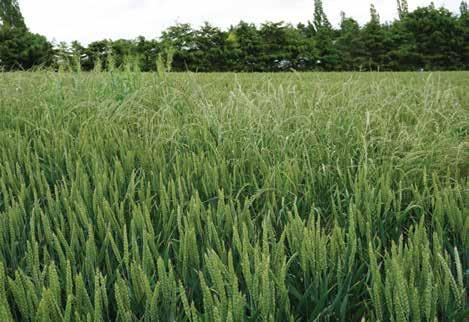
As part of the new project, this information gathering is being repeated. Sampling in North Canterbury and Selwyn District has been completed and testing is underway. Results are expected in the next few months.
“These surveys are also testing for pre-emergence herbicides, in addition to the post-emergence herbicides covered in the earlier surveillance programme,” Matilda says.
Weed samples have been taken from fence lines to monitor for glyphosate resistance, as this is where resistance to this widely used herbicide is most likely to start, she says.
Growers have also responded to a call to send in weeds growing in their crops, for herbicide resistance testing.
Growers and industry partners submitted 163 samples from across the country. The most frequently submitted weed species were wild oat, followed by ryegrass and phalaris.
In the random survey, 42 farms across North Canterbury and the Selwyn District (2026) were sampled, resulting in 1,275 samples collected across 52 weed species.
The top 10 species collected were wild oat, sow thistle, ryegrass, hawksbeard, fathen, prairie grass, phalaris, wireweed, willow weed and soft brome.
Samples were taken from the following crops: Wheat, barley, potatoes, peas, brassicas, red clover and white clover.
Uncontrolled grass weeds reduce grain yields. In this research trial wheat treated for weeds is in the foreground with a weedy untreated plot behind.
farms requires site specific mitigations and the flexibility to address challenges unique to arable systems.
“These include the often ephemeral nature of critical source areas, the
diversity of crop rotations, and the way they are deliberately used as management tools for both agronomic and environmental outcomes.”
FAR will be publishing support
documents to help growers through all stages of the Freshwater Planning process, whether they are starting from scratch or are already part way through.
In a 2021 FAR crop production survey, cropping farmers identified that weed management remains their primary agronomic challenge.
The most common resistant weed is ryegrass (Lolium species), with just five ryegrass plants/m 2 reducing wheat yields by 5%.
Regions often have their own difficult-to-control weeds.
“Regions where we grow a lot of ryegrass and have shorter rotations is where we have the bigger problems,” Matilda says.
FAR general manager research, development and extension Andrew Pitman says the programme will help farm businesses maintain market access and profitability while ensuring the sustainability of weed management practice by reducing the risk of herbicide resistance.
The funding is enabling FAR to expand on the research work it is already doing in this area. Projects include long-term integrated weed management trials and large-scale on-farm trials.
Funding for the project comes from the Ministry for Primary Industries’ Primary Sector Growth fund; the Seed
Industry Research Centre and Vegetable Research & Innovation Board.
Researchers from FAR, as well as weed experts from the Bioeconomy Science Institute, will:
• Undertake a seasonal, industrywide herbicide resistance surveillance programme providing updated information on herbicide resistance in key weeds in NZ cropping systems.
• Reassess and develop cultural weed control methods, such as enhancing crop competition and diversifying rotations.
• Identify and evaluate new technologies and machinery for in-crop weed management, assessing their potential return on investment. These potential new technologies include drones, satellite imagery, camera systems for inter-row hoeing and spraying and digital decision-making tools.
• Create best management guides for non-crop areas, such as fence lines, that pose a significant risk for herbicide resistance due to repeated glyphosate use.
Information and results will be shared at field events, workshops and
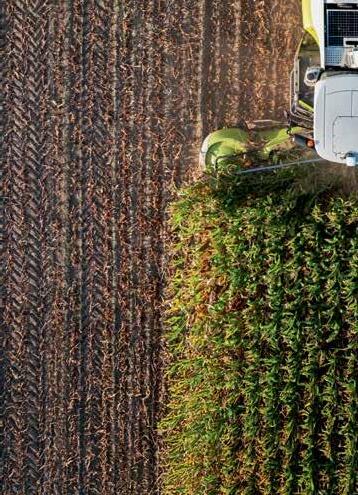
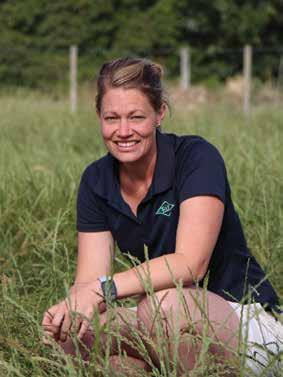
What makes a CLAAS LEXION or CLAAS JAGUAR harvester truly special?
on-farm demonstrations as well as a digital IWM toolbox.
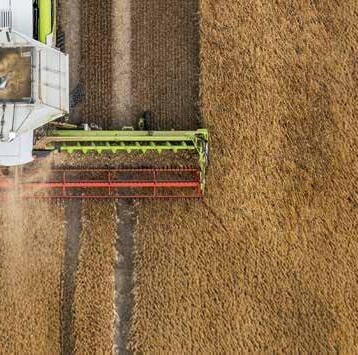
It’s more than the machines themselves, it’s the expert service, the deep know-how, and the innovative technology that backs you every step of the way.
When you invest in a CLAAS harvester, whether for green or gold, you’re investing in a partnership that’s focused on your success and on helping you get the very best from every harvest.
Get more than a machine. Talk to the team and book a demo
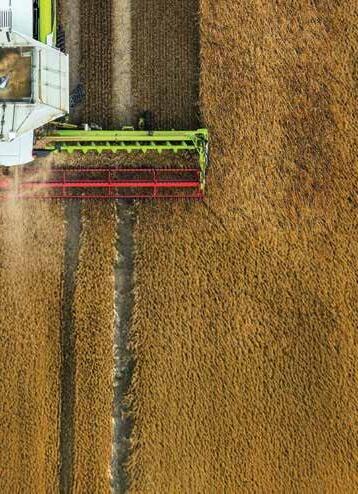
Mark your diaries - FAR’s hugely popular combine harvester workshops are back for a third season, with expanded in-field support across both islands and an exciting new programme of sprayer application workshops launching in August.
The initiative, which began as a small pilot in 2023, has grown into one of the most practical and impactful extension projects in New Zealand arable farming.
Last year it took out the Technology Innovation Award at the 2025 Primary Industries NZ Awards, recognising the real cost savings and yield gains it has delivered to growers.
FAR technology manager Chris Smith, the driving force behind the project, says the response continues to exceed expectations.
“What started as something that had never been tried in NZ has now run for three seasons,” Chris says.
“The turnout, the willingness of growers to make changes, and the results we’re seeing in the paddock have been genuinely surprising – in a very good way.”
The first workshops in 2023 attracted 210 growers across three South Island events – more than expected.
Many left the sessions and immediately started adjusting their machines with angle grinders and spanners. The follow-up in-field visits that summer showed just how powerful the right tweaks could be.
This season FAR has already completed in-field monitoring in Canterbury, Southland, Waikato and Gisborne.
Two teams of independent specialists have visited around 70 machines so far.
In Gisborne in May, for example, a grower harvesting lodged maize was running at 4.5 km/h and losing approximately 250–300 kg out the front and 135 kg out the back.
Australian specialist Brett Asphar (facilitated by Primary Sales Australia)
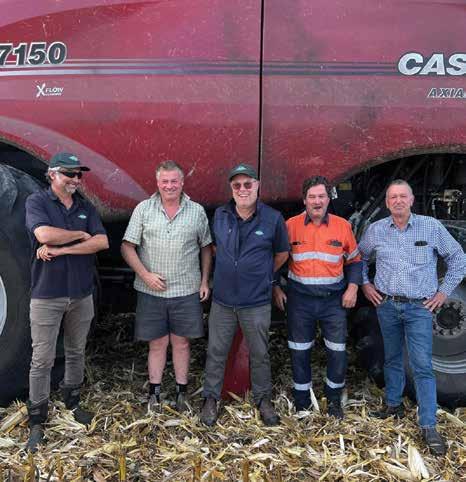
adjusted the front and threshing mechanism.
Front losses dropped to 100 kg and rear losses to just 10 kg.
Another Gisborne grower took a spare set of concaves, cut out every other bar to double the gap (from 18 mm bar/18 mm gap to 18 mm bar/36 mm gap), lifted his speed from 5.5 km/h to 7 km/h, and reduced rotor losses from 70 kg to almost zero.
In the Waikato, a Claas machine was losing 230 kg maize grain out the back.
A small speed reduction and a couple of threshing adjustments brought that down to 10 kg.
“These are real NZ conditions –lodged crops, varying grain quality, different terrains,” Chris says.
“The improvements aren’t marginal. They’re game-changing for harvest efficiency.”
Many growers are also discovering their combine loss sensors are not as accurate as they thought.
The sensors often register material
volume rather than actual grain loss.
Using simple homemade drop trays (some made from metal beehive lids) and FAR’s loss calculator has helped growers get accurate measurements and make confident decisions.
Chris believes the ‘instant payback’ is the key. Growers can see immediate improvements in harvest speed, fuel use, and grain saved.
“We had one grower reduce fuel consumption by 30%. Another trimmed seventy hours off his harvest. Speeds have increased from 3 km/h to 4.5 km/h with no extra losses, and many have lifted output from forty tonnes per hour to fifty or fiftyfive tonnes,” he says.
With diesel prices rising, the economics have become even more compelling.
A large modern combine can consume around 100 L per hour, with operating costs of $700–$800 per hour or more.
Increasing speed by 25% while only slightly increasing losses can significantly lower the cost per hectare harvested.
The project won the 2025 Primary Industries NZ Technology Innovation Award for bringing an independent, fresh perspective to combine setup.
FAR sourced specialists from Australia and Canada for the work.
Experts such as Kassie van der Westhuizen (John Deere), Brett Asphar (Case/Claas), and Murray Skayman (New Holland/Case) have delivered both workshops and in-paddock support.
The programme combines two elements:
• Pre-harvest workshops in December, where growers bring their machines for hands-on training.
• In-field visits during harvest, where specialists go to the paddock, measure losses and fine-tune on the go.
“We push the machines faster until losses appear so growers can see the sweet spot,” Chris explains.
“It’s about balancing hectares per hour against losses, especially with today’s fuel costs.”
FAR has also adapted a workbook from Australia’s GRDC, which is now
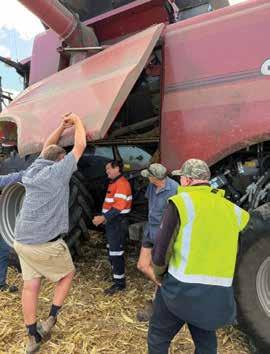
issued to NZ growers.
New sprayer workshops – grower driven
Following the success of the combine programme, FAR is expanding into another high-impact area – sprayer application efficiency.
Two sets of workshops will run in August with Canadian experts Tom Wolfe and Jason Deveau from Sprayers 101:
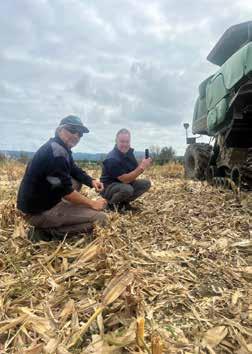
Hands-on monitoring and fixes deliver instant payback.
• South Island: 3–7 August
• North Island: 10–14 August
Each 2-3 hour session will cover nozzle selection, spray quality, droplet size, water volumes, low water volume spraying, and alternative methods such as drone application.
Interest was sparked after JP Pratt’s talk on low water volumes at the Chertsey arable day. Chris says growers are hungry for practical, cutting-edge information.
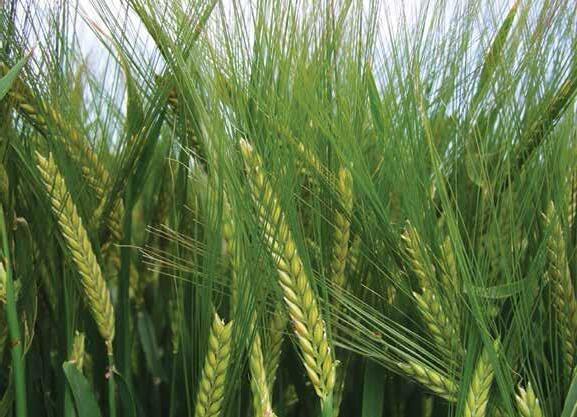

Features
• Leading spring barley in FAR CPT trials with great yields and consistency.
• Suited to all sowing times and conditions in both spring and autumn.
• Good all-round disease resistance profile especially powdery mildew and net blotch.

“A huge amount of money goes through the sprayer and it has a massive impact on crop outcomes,” he notes.
“Low water volume spraying is common overseas because it lets you cover more hectares per tank load, but it must be done correctly. We’re giving growers the confidence and knowledge to try it safely, including understanding off-label implications.”
Building a local database
Chris and the team continue to collect real data from participants.
Growers who have attended workshops or had in-field visits are encouraged to share their before-andafter results.
“Through the FAR WhatsApp groups growers are sharing and FAR is building a database of combine settings that actually work in NZ conditions,” Chris says.
“Screenshots of your combine screen, plus crop type, region and machine details are really helpful. Your information stays anonymous if you wish.”
Email your details to Chris at
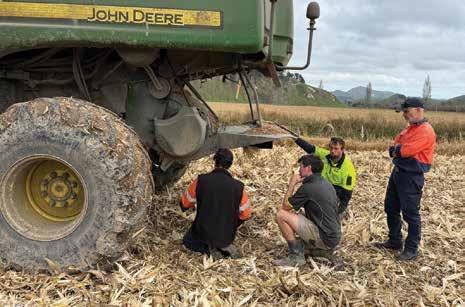
chris.smith@far.org.nz.
With three successful seasons of combine work completed, the programme is expanding into new areas.
Cultivation, drills and planting efficiency are already tentatively budgeted for next season. Early work is also underway on using machine data more effectively and exploring drone applications.
The combine and upcoming sprayer
projects show what’s possible when extension work is practical, hands-on, and driven by grower needs.
As Chris Smith puts it, the goal is simple: Help growers get more out of the expensive machinery that passes through their paddocks every season.
If you missed the earlier workshops or want to be involved in the August sprayer events, keep an eye on FAR communications or contact Chris directly.
The payback, as many have already discovered, can be almost instant.
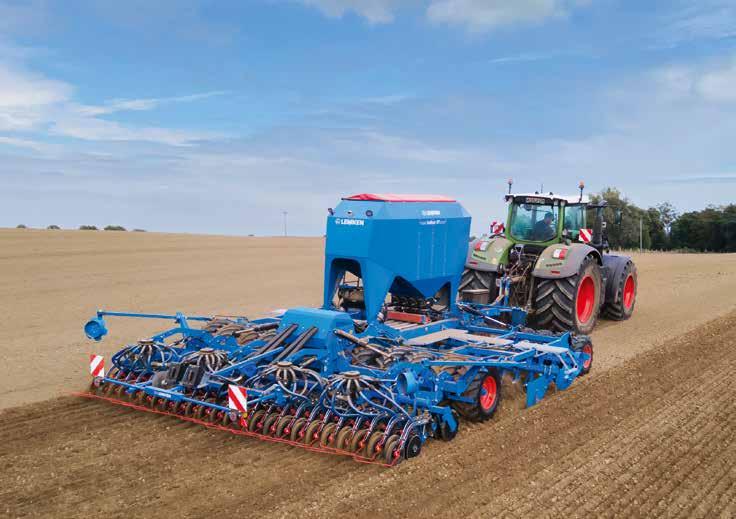
The LEMKEN Solitair DT guarantees the best ield emergence thanks to the parallelogram-guided double disc coulters in combination with the leading trapeze packer roller. Ensure high yields and therefore economic success
An AI-powered spore detector, BioScout, is expected to attract considerable interest from Australian growers and agronomists keen to improve fungicide application decisions.
The technology is an automated disease surveillance system that detects airborne disease-causing spores.
Growers have free access to the system in 2026 to provide feedback while GRDC invests in the technology’s research and development.
BioScout head of science Dr Michelle Demers says the key to the system’s effectiveness is it detects airborne spores before crop symptoms appear, which removes the guesswork about whether to apply a fungicide.
“The optimal time to apply a fungicide is when spores are landing on crops or during the initial infection stages before the crop shows symptoms.
“Once symptoms are visible, fungicides are less effective, and yield loss is inevitable,” she says.
BioScout integrates an air sampler, a spore trap and a high-resolution microscope camera into a robot.
After 236 images of the air sample are collected, artificial intelligence (AI) is deployed to identify and count spores from the sample.
“A pathologist might spend an hour counting spores from one image,” Michelle says.
“Our system can look for more than
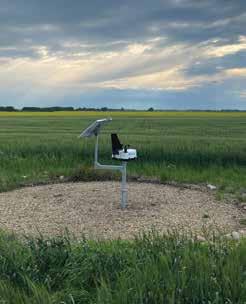
twenty spore types simultaneously across 100,000 images in a fraction of a second. It’s fast and scalable.”
She says the aim is to help growers have confidence to avoid spraying when spores are not present.
“If rust spore levels are severe, for example, a fungicide would protect wheat against the pathogen. But if rust spore levels are low, treatment can confidently be avoided.”
The network currently detects rust, blackleg, powdery mildew, botrytis and alternaria spores.
Sixty units have been deployed across Australia as part of a network established with GRDC investment.
Free data access is provided on the BioScout website after account registration.
An upgrade planned for 2026 aims to monitor for further diseases.
In 2024 and 2025, BioScout was run alongside the South Australian Research and Development Institute
Plant Health Surveillance Sentinel units (developed as part of the national iMapPESTS product).
These units use DNA analysis to identify spores.

Michelle Demers says there is a strong agreement between the systems, but BioScout’s turnaround time is much faster.
“BioScout provides data daily, while the Sentinels require samples to be collected and sent to a lab, which can take several weeks.”
In future, users of BioScout will be able to set mobile alerts for severe spore loads. A link will direct users to a dashboard.
In 2025, demonstration trials with co-investment from GRDC, Birchip Cropping Group and Field Applied Research Australia tested BioScout alongside a range of traditional fungicide decision-making practices.
BioScout pathologists instructed trial staff to spray wheat with a fungicide only when spore levels for rust, powdery mildew and septoria were high.
If no spores were detected, no fungicide was used. This was compared against a range of treatments in New South Wales and Victorian trials.
With drier-than-average spring conditions, using BioScout led to fewer fungicides applied, as very few diseasecausing spores were present.
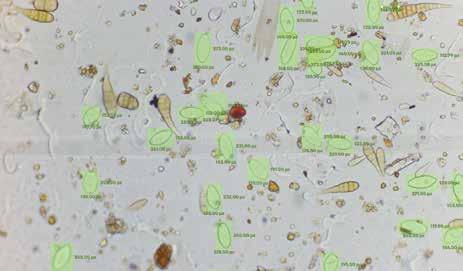
Knowing exactly when and where to water crops could soon be much easier for farmers.
Anew AI system is being developed by University of Canterbury to give farmers more accurate, near real-time insights into soil moisture at field scale.
Led by Professor Matthew Wilson and researcher Xander Cai from the Geospatial Research Institute, the project aims to address a longstanding challenge in agriculture: knowing exactly how much water is in the soil, when and where it is needed.
“Water is one of the most critical and constrained resources in agriculture,” Matthew Wilson says.
“Right now, farmers are often making decisions based on limited or incomplete data. This project is about giving them the information they need to use water more efficiently and sustainably.”
The research team is developing the ANZ Soil Moisture Data Assimilation System (ANZ-SMDAS), a new monitoring platform that combines ground sensors, satellite signals and advanced modelling.
Unlike traditional approaches, which rely on either point-based sensors or low-resolution satellite data, the system will deliver highly accurate, field-scale soil moisture estimates multiple times a day.
“This is about bridging the gap between what’s happening in the soil and what farmers can actually see and act on,” Matthew Wilson says.
“We’re using signals from global navigation satellites, like GPS, that reflect off the land surface. By analysing those signals with AI, we can determine how much water is in the soil.”
The project brings together researchers from University of Canterbury and the University of Newcastle in Australia, alongside partners including Monash University and the Soil Cooperative Research Centre.
Canterbury PhD student Xander Cai says the system has the potential to support a wide range of agricultural sectors, from dairy and grazing to arable and irrigated
cropping systems.
“Better soil moisture data means better decisions,” he says.
“For cropping systems, it can improve irrigation timing and reduce water waste. Ultimately, it supports both productivity and sustainability.”
By improving the accuracy and accessibility of soil moisture data, the team aims to support more resilient farming systems and reduce the environmental impact of irrigation.
“We’re not just developing a new technology, we’re building a system that will be publicly accessible and can be used day-to-day by farmers,” Matthew Wilson says.
“The goal is to deliver practical tools that make a real difference on the ground.”
The project builds on earlier MBIE-funded research and is now moving into a larger, multi-year collaborative phase, with the aim of delivering a fully operational platform and publicly accessible soil moisture data products.
The new pre-emergent herbicide with three modes of action.
Protect yield potential from the start with TOWER®, registered for use in spring wheat and barley. Applied at or soon after sowing, TOWER® provides early-season control of broadleaf weeds and selected grasses, while supporting resistance management.
Contact your local retail rep, ADAMA commercial manager or visit ADAMA.com


Over a decade of New Zealand wheat breeding and several decades of overseas cultivar evaluation has finally come to fruition for PGG Wrightson Grain, with exciting new cultivar releases over the past two to three years.
This includes the new winter feed wheat Skybolt; new feed grain triticale Ristretto and new premium milling wheat Aston.
All of these emerged from the continued screening of new genetics from overseas and the company’s own in-house milling wheat breeding programme.
Grain product development manager Nick Brooks says the past couple of years during which the company released multiple new cultivars with proven measurable performance gains have been both exciting and very rewarding for the PGG Wrightson Grain team.
“You wouldn’t normally be in a position to release so many new options at once.
“But the programme has reached maturity, where the pipeline is very full, with many exciting potential new cultivars.
“We also appreciate the past two seasons have been challenging for arable farmers and we want growers to be able to benefit from these advances (i.e. yield, disease and pest resistance etc) without delay.
“We added a substantive wheat breeding effort over ten years ago.”
In milling wheat, as with all new cereals PGG Wrightson Grain releases to NZ growers, cultivars must demonstrate genuine gains to even be considered for market launch, Nick says.
“Grain yield is still first, second and third priority! If a new breeding or overseas line is not competitive for yield, there’s no point continuing with it.
“After that comes quality, as determined by end use; and disease and pest resistance.”
It would be good for growers to be able to dial back on intensive chemical inputs, he says, and the recent new feed wheat release Skybolt, with robust disease resistance, has helped contribute to this direction significantly.
“We also have some other exciting new innovations we are working on which should bring significant benefits to NZ arable farmers.”
However, there is no domestic breeding in barley and therefore all the barley germplasm is imported.
Barley travels well to NZ and enters the company’s own extensive evaluation programmes for the commercial release of feed and malting cultivars.
“The PGW Grain programme also involves a significant effort into agronomy trials as we aim to provide growers with technical support and not just release cultivars into the market without support to get the best outcomes for growers and end users.”
So what could be available in future seasons? Nick says growers will have the chance to put three potential new cultivars through their paces as limited releases next autumn.
LG Caprice is an exciting new winter barley cultivar.
It has been developed through the PGW Grain screening process and originated as an imported line from Limagrain in the UK.
It yields significantly more (10% and higher some years) than older cultivar Surge, which in itself has been a very successful cv the past five years, with good yields and short strong straw.
Currently LG Caprice is on the UK recommended list (candidate cultivar) but not a commercial cultivar, which demonstrates the speed at which PGW Grain has been running to bring a new cultivar to market.
It will also be the first cultivar released into the market with BYDV tolerance, and after the last seasons significant aphid pressure, this will be a welcome trait to have in a new cultivar.
Belter (KSB2419) is an exciting new
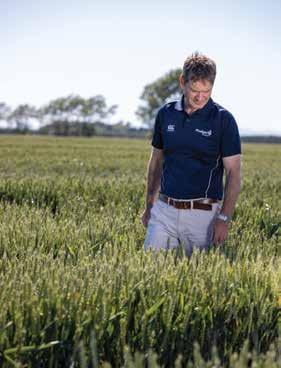
spring barley which is non-GN and a ‘true’ multi-purpose spring barley.
Belter is set to be a big cultivar in the UK market and was bred by Paul Bury who was with Syngenta for many years and is now working for French company Secobra Research in the UK.
Belter performed very well in the CPT/ FAR spring barley trials and is setting the bar for not only yield, but overall agronomics.
It has proven itself recently in UK trials and for end-users such as potential brewing and distilling.
KFW2401 is an autumn-sown feed wheat originally bred by PGW Grain’s overseas partner Limagrain, and subsequently put through rigorous NZ screening before being selected for potential commercial release next year.
A strong performer in the company’s own trial programme, it is now in FAR/ CPT trials this year and features both enhanced yield and disease resistance (especially leaf rust) over the parent line KFW2201, from which KWF2401 was reselected.
It is a longer maturity type, therefore an extra year has been taken to make sure it continues its strong performance and is complementary to Skybolt in the feed wheat market in terms of regional and/or management-specific adaptation.
Also in the development pipeline, Steve Shorter has recently finished a project to develop NZ-adapted soft wheat cultivars that will meet all of NZ’s soft milling end-use requirements – not only biscuits, but other products such as sauce mixes, ice-cream wafers and noodles. New cultivars will flow out of this programme but it will take some work to replace the very successful Voltron wheat.
For more detail contact Nick Brooks at PGG Wrightson Grain.
Barley yellow dwarf virus came hard and early this season, and for many growers it felt like it came out of nowhere.
Crops that had looked full of promise through winter and early spring ended up carrying more disease than expected, and fingers were quickly pointed at the decision tools guiding management.
For the Foundation for Arable Research, that meant a hard look at its own systems.
In particular, Aphid Chat, the webbased tool designed to help growers gauge aphid pressure and BYDV risk, was put under more scrutiny than ever before.
As FAR research leader Jo Drummond puts it, “this is the severest test for the model, in at least twenty years.”
The result is a more nuanced picture of what happened, and a few clear lessons for growers heading into the next season.
The frustrating part is that it did not start badly. In fact, early conditions looked promising.
Establishment was generally good and many crops were tracking towards high yields.
“We had a really good start agronomically,” Jo says.
“Pre-Christmas there was no reason to suggest the season was not going to be an absolute cracker.”
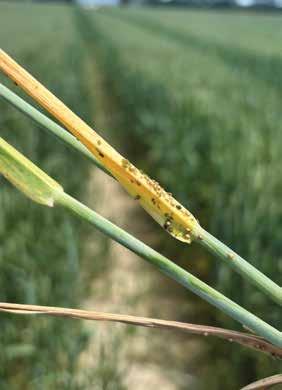
Even at trial level, there were standout performances.
Yields pushed well into double figures in some locations, reinforcing just how much potential was in crops before things turned.
But the season quickly became one of the most difficult in recent memory.
Trials were lost to waterlogging, pest damage and disease. And running through much of that story was BYDV.
Across regions, symptoms were widely reported and often severe.
While BYDV was not the only culprit behind disappointing yields, it was a consistent feature in a year stacked with challenges.
One of the difficulties with BYDV is that it rarely presents cleanly in the paddock.
Symptoms overlap with a range of other issues, making diagnosis far from straightforward.
“It does look like quite a lot of other things,” Jo explains, pointing to similarities with nutrient deficiencies, take-all and stem-based diseases like fusarium ."
That uncertainty fed into the postharvest frustration.
Growers were dealing with underperforming crops but were not always certain what had driven the losses.
Aphids, disease and weather all intertwined.
In some cases, there were even reports of aphids feeding on heads, raising questions about whether that could have contributed to disease.
Jo notes that this pathway is extremely rare, although it was discussed more this season than usual.
With BYDV showing up more strongly than expected, many growers began to question the tools they had relied on.
The core complaint was simple.
Monitoring trap results suggested low aphid pressure, leading some growers to hold off on insecticide.
But later, crops showed significant
virus symptoms.
“We had heaps of pushback from growers,” Jo says. “The core message was: It didn’t work because the trap results said there was no risk and I didn’t spray, and now my crops are riddled with virus.”
Rather than dismiss those concerns, FAR took them seriously.
The team went back through the data, rebuilding the season to understand where perception and reality had diverged.
“We were 100% on board with finding reasons why things didn’t happen as they should have,” she says.
The key to understanding the season lay in separating different parts of the risk story.
Aphid Chat combines two main elements, observed aphid numbers and a temperature-based model of reproduction risk.
Trap counts of winged aphids remained relatively low through parts of early spring. On their own, those numbers suggested limited risk.
But temperature told a different story.
FAR analysis of thermal accumulation showed two distinct periods of very high reproductive potential, from mid-September and again in early October.
In fact, those windows ranked among the highest in around 25 years of records in Canterbury.
“That means there was a risk, that the winged aphid numbers might not have picked up, but Aphid Chat did provide some sense of warning,” Jo says.
In other words, the signal was there, but it required users to look beyond headline trap counts and dig into the underlying conditions.
The missing piece
The bigger limitation was biological rather than technical.
Aphid Chat, like most monitoring systems, captures winged aphid flights. What it cannot measure effectively is the build-up of wingless aphids within the crop.
Those wingless populations are critical because they drive secondary spread of BYDV once the virus is established.
“What it can’t do, and neither can any other model, is gauge what the wingless populations are doing,” Jo says.
That means boots-on-the-ground monitoring remains essential.
Direct searching in crops is still the only reliable way to detect those populations before they cause widespread secondary infection.
Another takeaway from the season was just how patchy BYDV pressure can be, even over short distances.
Diagnostic testing using PCR methods showed marked variation between sites.
Some paddocks returned seven positives out of eight samples, while others nearby had only one or two. In northern Southland, no BYDV was detected at all.
That variability makes decisionmaking even harder.
It also reinforces the need to combine regional tools with paddocklevel observations.
So did Aphid Chat fail? The answer, according to FAR, is no. But it also was not perfect.
“While it wasn’t an A plus, it wasn’t a fail either,” Jo says.
The model identified conditions that were highly favourable for aphid
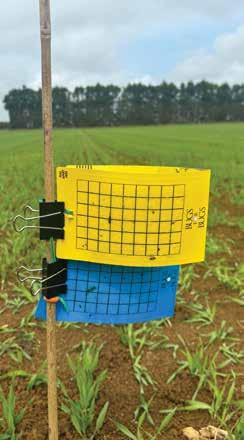
reproduction, even in a season that pushed beyond anything seen in two decades.
That is a positive.
At the same time, the experience highlighted gaps in how information is
Counting every aphid, every week
Behind the data sits a lot of boots-on-the-ground effort.
FAR senior field officer
Ben Harvey has led the aphid monitoring network, counting winged aphids and beneficials across multiple South Island sites, week in and week out.
It is detailed, laborious, repetitive work, but it underpins everything Aphid Chat delivers, Jo says. Support has also come from collaborators including Andrea Fox at Advanced Ag in the south, helping extend coverage and build a clearer regional picture.
As Jo notes, it is labour intensive, but critical.
Without that field monitoring, the model simply would not exist or function as it does today.
The aphid monitor paddock network has been supported by funding from A Lighter Touch.
interpreted and used.
“One of the lessons for us is in communication,” she says. “Just because the information is there doesn’t mean people are going to use it.”
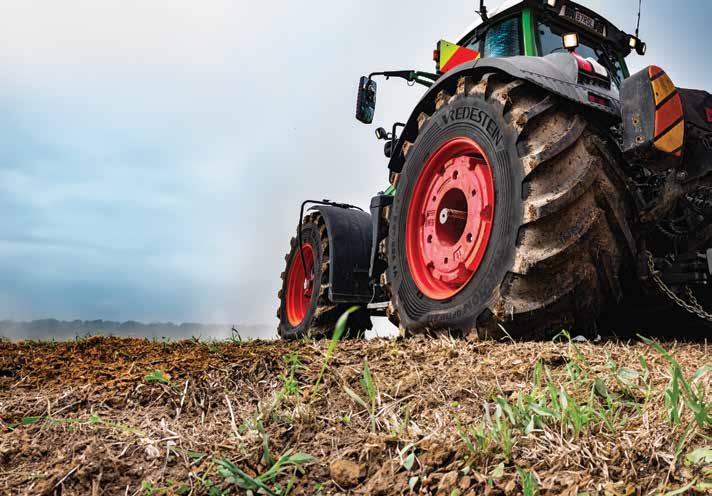
Luisetti Seeds and The Bioeconomy Science Institute (BSI, formally Plant and Food Research) enjoy a very successful partnership with the cereal breeding programme which has been in place for over 25 years.
WORDS: Luisetti Seeds
During that time we have released more than 20 commercial cultivars to the market.
In the early days, Regency was a massive step change in yield and quality for the mills, and we continue to be at the forefront of cereal breeding today.
We are particularly excited about our new release milling wheat Kimberley.
This is a milling grade 1 wheat performing very strongly both in the autumn and spring planting slot. It is giving very good results, sitting at the top of the trials at sites across the country.
BSI and Luisetti Seeds are known for our dominance in the milling wheat space, with Reliance setting the standard for many years, and continuing to be the main premium milling variety for the mills today.
Our feed barley portfolio is also very strong, with the release of Baxter last year and the new release of Amplify this spring.
Amplify is a great new high yielding barley which has topped trials both in the North Island as well as the South.
We are excited to release it to market and very optimistic about its future.
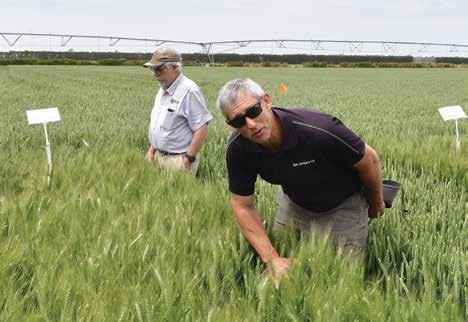

The breeding industry and BSI are not immune to the challenges that the arable industry are facing.
Support for material from NZ breeding programmes will help ensure a steady pipeline of new locally bred cultivars coming to market.
Luisetti Seeds continues to look at other avenues to help and support the New Zealand arable industry.
One of these is working with some of our strategic partners in the arable industry and offering sub licenses to BSI-bred material.
Amplify barley (CRBA180) is now available via our ICD partners to market exclusively.
This will allow for a larger audience of arable farmers to get better access to this variety.
Another recent initiative to support NZ Grown Grains is the development of a new calf pellet made from solely NZ sourced grain.
Under the Grain + brand, Luisetti Seeds will be bringing to market a 16% and a 20% protein pellet this season.
The pellets contain a mixture of wheat, barley, peas, faba beans, maize grain, OSR and sunflower meal, as well as minerals, molasses and coccidiostat.
For more information on Luisetti seeds' cereal cultivars or Grain + calf pellets contact your local Luisetti Seeds rep or phone 03 313 7176
For growers and agronomists, the implications are clear.
Decision tools like Aphid Chat remain valuable, but they are only one piece of the puzzle.
Temperature trends, crop growth stage and field observations all need to
sit alongside model outputs. Jo sums it up with a simple example from the season.
One grower noted unusually warm conditions in late winter and felt uneasy, despite low aphid counts. He chose to act.
“He said he was wearing shorts in late August and it made him nervous,” she says.
That instinct turned out to be useful.
“Be more like the guy in the shorts!” Jo adds.
It is a light-hearted line, but it captures the core message.
Models can guide decisions, but they cannot replace judgement, or field observation.
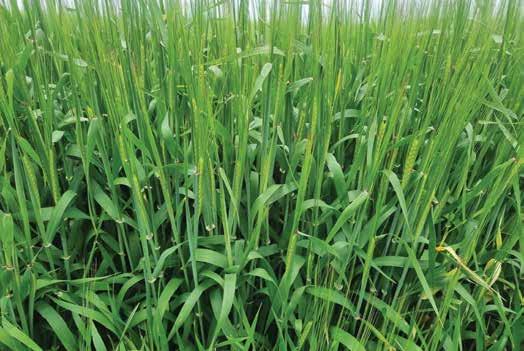
From the breeding programme that brought New Zealand growers SY Transformer and SY Silhouette spring barleys, Cropmark Seeds is excited to once again supply SY Dolomite to the New Zealand market this season.
SY Dolomite is a reliable yielding feed barley variety from Syngenta’s world leading United Kingdom barley breeding programme.
Developed in NZ in conjunction with Cropmark Seeds as head licensee, SY Dolomite started life in the UK as one ear selected out of 20,000 back in 2014.
It is a cross between Laureate and Piper, and has been in 42 replicated trials all over NZ, numerous full paddock evaluations and seed production paddocks prior to its commercialisation, Cropmark says.
With medium height, medium maturity, and moderate-stiff straw, SY
Dolomite was selected for its ease of management and reliable yield across all environments.
“It has the genetic ability to yield over twelve tonnes per hectare in high yield potential environments by taking advantage of good growing conditions.
“However, it can also produce reliable yields, good grain size and test weights when yield potential is reduced due to dry weather,” Cropmark says.
SY Dolomite will produce a reliable high yield at any sowing time and can be sown from May through to early November, with plant growth regulator and fungicide inputs tailored to the
different sowing times.
While being an excellent option for grain production, it is also well suited as a whole crop silage variety.
“High quality silage is achievable due to its high grain yield, good straw production and good resistance to most diseases, including scald and mildew.”
Dolomite has performed well in all Cereal Performance Trials (CPTs) to date, which have been independently run on commercial arable farms throughout NZ under the organisation of the CPT committee.
Cropmark says the data from these trials, which is published by FAR, represents trial sites across a range of both irrigated and dryland areas throughout Southland, Canterbury, and Manawatu in the North Island over an average of four years.
The trials are sown amongst commercial crops and are treated with the same management inputs and subject to the same climatic conditions.
This gives end-users confidence that varieties that perform at the top of these trials have been rigorously tested and evaluated for yield, grain quality and tolerance to disease throughout a wide range of farm environments.
“We are again anticipating high demand for sowing seed of the new variety this spring.”
SY Dolomite is available in either 500-kg or 25-kg bags and can be treated with Poncho and/or Kinto Duo seed treatments.
For more detail talk to your agronomist.


Delivering a complete suite of crop protection solutions for today’s arable growers.
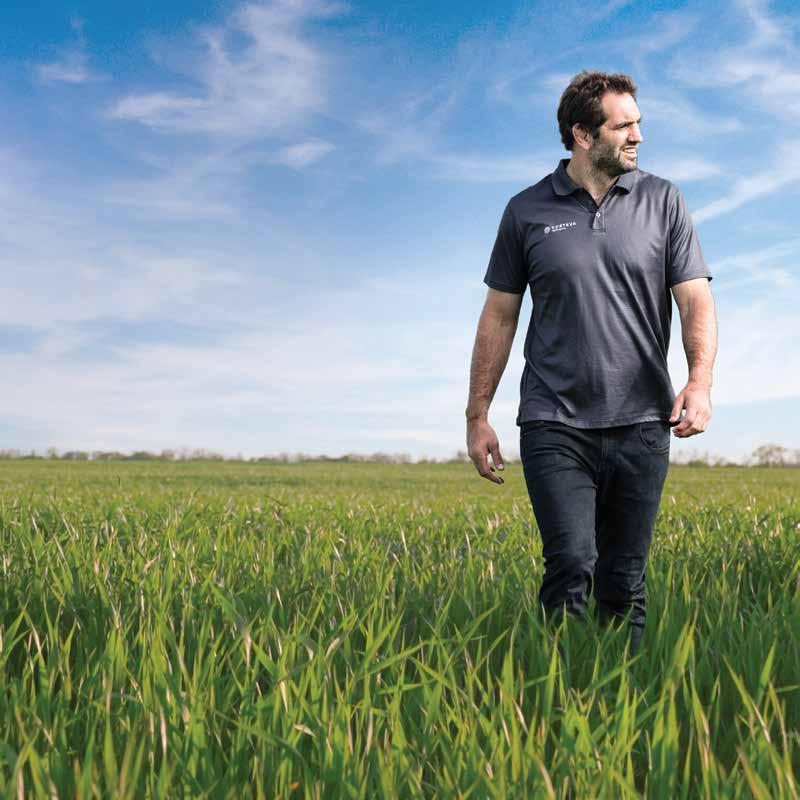
Our portfolio of powerful, proven products has helped farmers from one end of the country to the other create and maintain thriving businesses, and has earned us a reputation as New Zealand’s arable protection specialists.
Our suite of innovative crop protection solutions provide local farmers with everything they need to win the war on weeds, pests and diseases.

Visit corteva.co.nz to view our range of online arable resources.
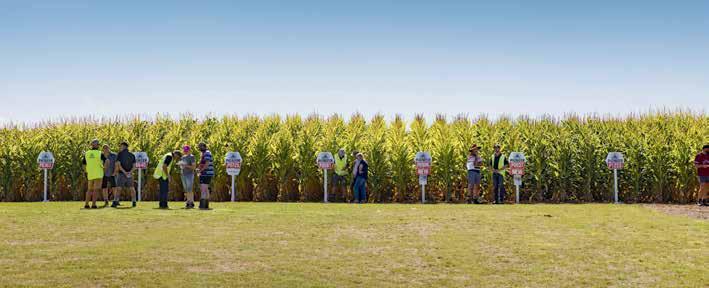
Every year new elite hybrids are sourced from Pioneer’s global breeding network.
WORDS: Genetic Technologies
This network is supported by experienced researchers and a world-class germplasm library that has been developing well-adapted high-performing hybrids for 100 years.
Such elite genetics are tested in over 300 silage and grain maize trials in all New Zealand growing regions.
Local testing and positioning of maize hybrids are cornerstone to Pioneer brand maize hybrids delivering world-class performance.
They are positioned and supported in the field by our experienced field team, who work alongside local merchants and contractors to ensure your success.
Every new product has been rigorously evaluated through our comprehensive hybrid trialling programme, and only those that demonstrate agronomic, yield or quality advantages under NZ conditions are brought to market.
This disciplined approach gives us confidence introduced hybrids deliver genuine on-farm value.
With an extensive line-up of hybrids, we are confident you will find the right product for your paddock. This season, we are pleased to introduce four new silage hybrids across a wide maturity range:
• P9091 (90 CRM). An important maturity option between P8711 and P92575 that combines strong emergence, early growth, standability
and foliar health while higher yielding than P9400.
• P0283 (102 CRM) has strong emergence, early growth together with a sound all-round agronomic offering and top of-the-line silage starch and digestibility ratings.
• P0450 (104 CRM). A useful addition to the AQUAmaxx range with outstanding standability, foliar health and silage quality.
• P17822 (115 CRM). A full-season hybrid with notable drought, northern leaf blight and staygreen ratings with much higher yield potential than P1837. These new hybrids join P0710 and P1185, which were released last season, further strengthening our silage line-up.
Hybrid selection is important, as it has an important impact on management of the crop, yield, enduse quality, cost per tonne, return per hectare and profitability.
Growers should begin by identifying a group of hybrids which have the correct maturity and high ratings for the agronomic and disease resistance traits that are important in your area. Early growth, drought tolerance, and root and stalk strength are good traits to start with.
In making the call on hybrid maturity remember to consider your expected planting date and what influence this will have on harvest timing, delivery commitments and
quality requirements of end-users.
With the availability of a range of high-yielding short-maturing hybrids there are an increasing number of growers planting these hybrids to enable earlier harvest, timely planting of the following grass or cover crop, while enhancing annual return per hectare.
Proper disease management is critical to preserving crop yields, with the first line of defence being genetic resistance.
This will be especially important in areas that have experienced significant disease incidence last season.
In such cases, it is recommended that hybrids with a Pioneer 6 rating or higher should be considered.
From those hybrids that meet your maturity, agronomic and disease resistance requirements, select 3 or 4 hybrids that are expected to meet your growing objectives.
The final hybrid selection step should be based upon an analysis of summary yield data.
Side-by-side comparisons conducted over several seasons at 20 or more locations, in your growing region, will give an excellent measure of yield performance
Such an approach will help ensure stable yields from one season to the next.
Whether you’re farming in Northland, the lower South Island or anywhere in between, we are confident you will find the right product for your paddock amongst this season’s outstanding Pioneer hybrid line-up.
For further information on planning your next crop, please contact your merchant, contractor or Pioneer representative.
Corson Grain says the rebuild of its Awapuni site is entering its next phase as the company works to restore and modernise maize processing capacity lost when a fire destroyed its maize gritting mill in March 2023.
Chief executive Brett Thompson says the investment reflects Corson Grain’s long-term commitment to the East Coast region, local growers and the wider maize industry.
“The Corson family has had a presence in Gisborne for over a century now and, given the excellent quality of maize grown in the region, it was never an option not to rebuild here,” he says.
The rebuild project began in January 2025 with the recladding and repurposing of a former seed-cleaning warehouse at Corson’s Awapuni drying site.
That work was completed by mid2025, followed by structural upgrades and removal of legacy equipment to prepare the building for installation of new plant.
Corson’s engineering team then travelled to China to inspect milling equipment at manufacturing sites before it was purchased through
New processing equipment being installed this year.
Auckland-based milling company GrainTech, Brett says.
GrainTech worked closely with Corson on the overall plant design, including the use of the existing refurbished tower within the building.
Local engineering firms McCannics and Universal Engineering have supported the project through structural work, assembly and equipment placement.
The first tranche of equipment arrived late in 2025 and was installed over summer.
The machinery includes grain sifting and colour-sorting technology designed to improve cleaning of whole maize and popcorn supplied to snack-food customers.
Among the new technology is a Meyer AI colour sorter that uses deeplearning capability to significantly improve the sorting accuracy of light, mouldy and discoloured broken maize.
Its UV sorting system can also identify aflatoxin-infected particles to help ensure product meets strict quality standards.
The next phase will install grits milling equipment, expected to arrive in August, with commissioning
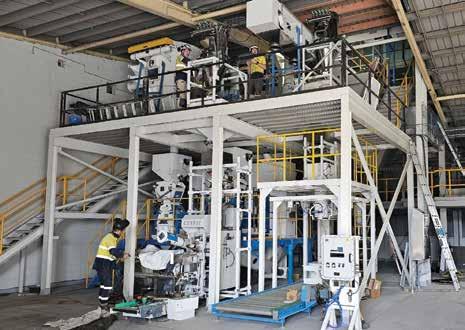
targeted ahead of the March harvest.
Thompson says completing the build will be a long-term boost for the East Coast maize industry, local growers and the wider regional economy.
The finished mill will have a much greater capacity that will allow Corson to scale its export business, particularly to other food manufacturers in SouthEast Asia, where it has an existing sales footprint in key markets.
Demand for milled maize ingredients remains strong, particularly with maize flour that has a wide variety of applications.
“The fact we can also point to sustainable growing practices with strong identity programmes from paddock to plate is important from a food safety perspective to these customers.
“Equally the fact that maize grown here is still GMO free is also an important factor in their purchasing decisions and is a unique selling point that we must preserve.
“At a time when manufacturing is struggling, to be able to build a state-ofthe-art milling facility in Gisborne that will set the business up for decades to come is something quite special.
“We have to thank our grower base, customers, suppliers and other stakeholders who have supported us and made this possible,” he says.
For enquiries about growing maize, contact Richard Hyland on 021 243 6325.
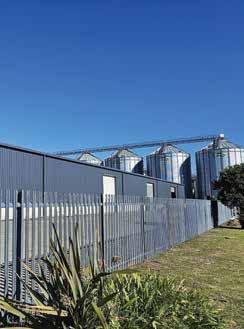

The launch of Sivanto prime in spring 2025 couldn’t have come at a better time for agronomists, contractors and farmers, with many considering what their options would be after the withdrawal of chlorpyrifos.
WORDS: Neil Waddingham, Bayer New Zealand
Many chose to adopt Sivanto prime (Group 4D), with its uptake exceeding Bayer’s expectations.
Post season, when Bayer sought feedback on its performance, the comments received were very positive.
The recent registration of Sivanto prime for the pre-emergence control of Nysius has also been welcomed.
This means the high-tech insect control option now has an extended and very practical application window, from pre-emergence through to the 8-leaf stage of the crop.
The large number of dairy conversions underway or planned are increasing the need to grow dairy support crops.
With farmers expecting consistent production of high-yielding, quality forage, these crops need to be grown with the attention to detail that arable crops receive.
And this attention needs to start early, with several pests keen to make a meal of fodder crops during establishment.
Which is where Sivanto prime steps in, delivering extremely effective control of Nysius, springtails and green peach
aphid during crop establishment.
Sivanto prime acts against insect pests in several ways, which means that they do not necessarily have to feed on treated plants to be controlled.
This includes direct or indirect contact with the product as well as when pests feed on the treated crop.
Two important factors helping to deliver a high level of control by Sivanto prime are:
• It delivers translaminar control, which means it controls insects on both sides of the leaf, and
• Recent work has conclusively demonstrated that it will control Nysius walking across treated soil*.
Nysius and springtails feed on the plant, causing physical damage resulting in dead or distorted plants.
With green peach aphids, the main threat is virus transmission.
There is growing awareness that viruses, which are aphid transmitted, are having a significant impact on plant health, fodder quality and yield.
Once a virus-infected aphid feeds on a plant, virus transmission
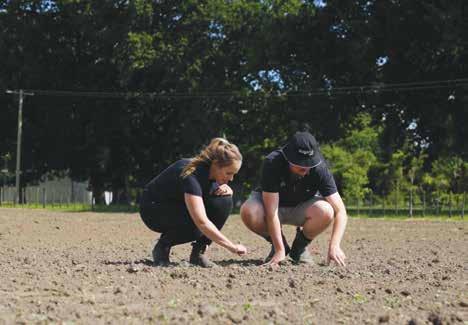
occurs rapidly, and because aphids move between plants when feeding, transmission between plants readily occurs.
However, Sivanto prime acts quickly to control pests and stop them feeding, effectively reducing virus transmission.
Sivanto prime is very straightforward and convenient to use.
Formulated as a soluble concentrate, it disperses rapidly in water to give an almost colourless, low-odour spray solution and it is available in both a 3-L and 10-L pack.
As a soluble concentrate formulation, Sivanto prime has proved to be compatible with a range of herbicides and plant nutrients.
Having minimal impact on beneficials, including honeybees, if used according to label recommendations, Sivanto prime can be confidently integrated into IPM programmes.
Beneficials are your partner for pest control, and it is never too early in the season to protect them.
They help by prolonging pest control and diminishing the risk that pest populations flare up when insecticide activity begins to diminish.
There is a constant threat of insecticide resistance developing, and an effective way to reduce this is by using insecticides with different modes of action in your spray programme.
Sivanto prime is the only Group 4D insecticide registered in New Zealand and therefore diversifies your insecticide choice.
It is based on the active ingredient Flupyradifurone.
Ask your agrochemical adviser or your Bayer regional business manager for more information, download the user guide or i-Guide from the Bayer website, or visit YouTube to watch the Bayer team explain Sivanto prime.
* Trial work commissioned by Bayer demonstrated that Nysius walking across treated soil is controlled by Sivanto prime. Bayer trial IP26NZLFSNJS19.
Scouting forage brassicas for establishment pests.
Helping pre-emergence herbicides to get into the right zone for weed control
• Trials with Undertaker showed a lift in herbicidal effect and of bare ground when partnered with tested pre-emergence herbicides
• Undertaker can be used safely on forage brassica (Rape), wheat and maize
Feature
Better deposition and spread on soil surfaces
Reduced photodegradation and volatilisation
Safe to use with tested pre-em herbicides on a range of crops
Benefit
Improved coverage = more certainty
Better protection of herbicide active
Convenient and low-cost
Bio-degradable plant-based oil Sustainability
Helps with both too little and too much rainfall
More certainty in lessthan-ideal conditions

Contact the AgNova Technologies NZ Ltd team for more information:
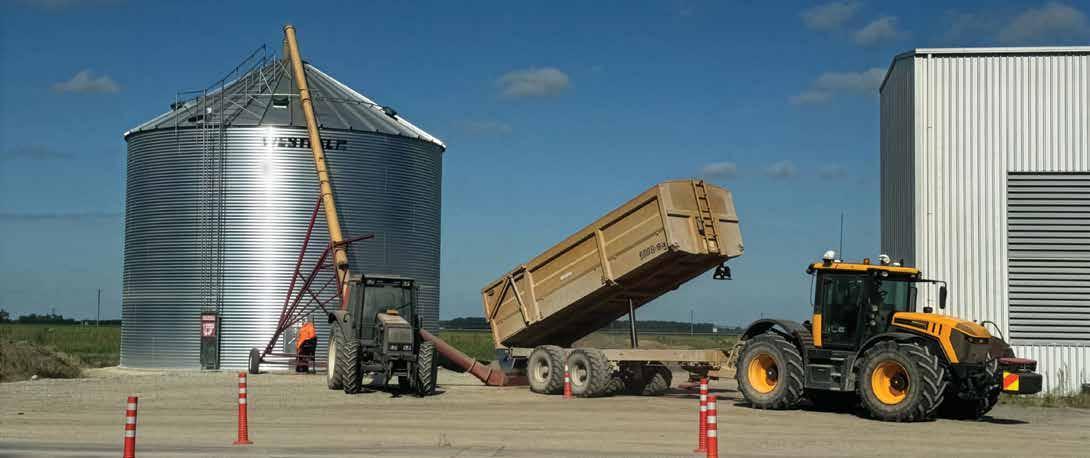
3607 Silo and 13”x64” Auger, South Canterbury.
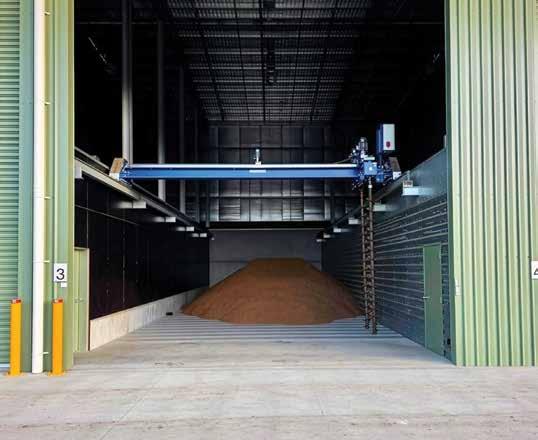
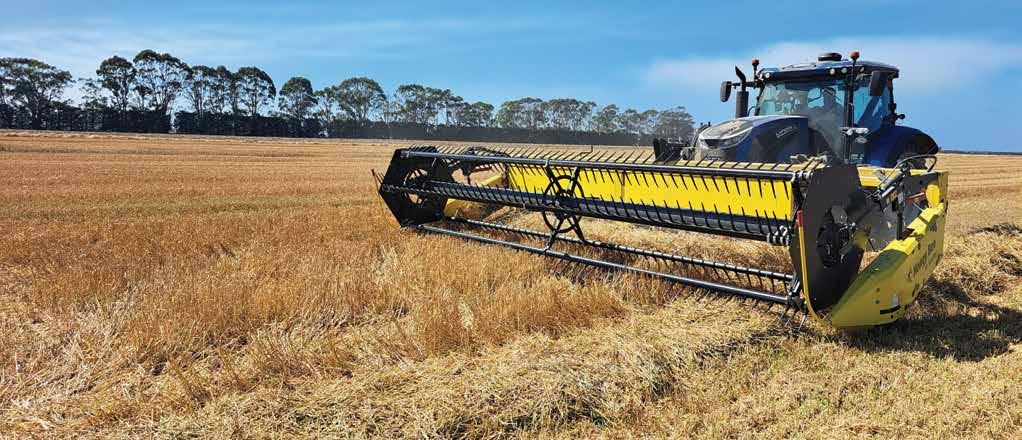
- HEAD OFFICE 16 Railway Terrace East Rakaia 7743 Mid Canterbury
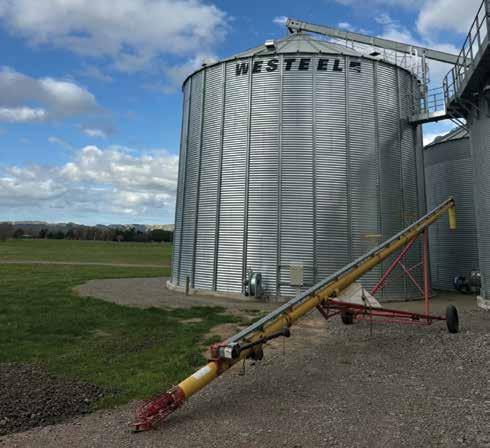
Nitrogen (N) fertiliser pricing remains volatile heading into the 2026-27 season, driven by ongoing global uncertainty.
WORDS: Will Talbot, Ravensdown Scientific Officer
Additionally, increasing efficiency pressures mean growers are asking a sensible question: Can we be more exact with applied N without risking yield?
Soils can supply large amounts of plant available N – anywhere from 40 to 300 kg N/ha per year, depending on soil type and history. Understanding soil N supply is critical, as N fertiliser fills the gap between soil N supply and crop N requirement if target yields are to be achieved.
But, until recently, soil N supply was difficult to predict reliably, so N decisions often erred on the side of caution.
However, significant effort has gone into improving estimates of soil N supply.
The Potentially Mineralisable Nitrogen (PMN) test has been a major step forward.
This test when combined with local long-term, average climate conditions, is used to predict soil N release rates over the growing season.
Together with mineral N (immediately plant available N), this provides an estimate of total soil N supply over this period.
To build confidence, farmers and advisers understandably want to see evidence that the test and its predictions work for their crops and local conditions.
While the PMN test has been validated in cereal systems such as wheat, it had not previously been tested for winter forage brassicas, despite brassicas being included in the original calibration work.
To test this approach in winter forage brassicas, the Fertiliser Association of New Zealand (FANZ) funded replicated field trials (2024/25) run by Bioeconomy Science Institute (formerly Plant & Food Research) to assess whether PMN + mineral N could improve estimates of soil N supply and fertiliser recommendations.
Kale crops were grown at two contrasting sites: Lincoln (irrigated cropping soil, low PMN) and Gore (dryland, long-term pasture soil,
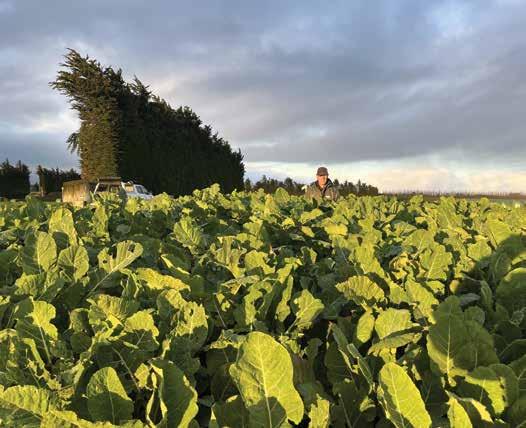
high PMN), with different N fertiliser strategies applied.
Across both sites, crops that received no fertiliser N took up almost exactly what was predicted by the PMN + Mineral N tests to be the soil N supply (142–173 kg N/ha uptake vs 137–165 kg N/ ha predicted).
This gives confidence that tools like PMN + Mineral N can provide a realistic estimate of soil N supply.
Where total N supply (soil + fertiliser) matched crop N demand, yields were the same, even compared with higher N treatments, provided the yield target was appropriate and sufficient N was applied early.
If total available N (soil + fertiliser) is only enough to grow a 13 t DM/ha crop, that becomes the ceiling – even if the season turns out better than expected.
Crops can only achieve the yield they are set up for.
Underestimating yield potential can cap production; while overestimating it can lead to unnecessary N fertiliser use.
Even where total N supply was adequate, crops with low N early in the season showed reduced early growth.
This delayed canopy closure, which increased weed pressure and competition.
Where adequate N was available early, crops established faster and shaded out weeds sooner, reducing competition for resources (e.g. nutrients, water and light).
The key point: Accounting for soil N supply does not remove the need for good N timing. Early crop demand still needs to be met.
High-yielding cereal crops don’t just happen; every plant harvested months from now relies on you to make sure it has the right environment to reach its genetic potential, from start to finish.
And that means ticking all the management boxes, from pre-emergence herbicides to plant growth regulators, says Nufarm business development manager Jeff Hurst.
“Great results begin with a good set up. Yield protection starts even before sowing, and lasts throughout the life of the crop.”
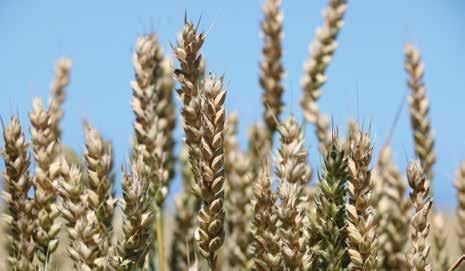
Step one? Avadex Xtra, a residual thiocarbamate (Group 15) pre-plant incorporated pre-emergence herbicide, for selective wild oat control plus suppression claim of ryegrass in wheat.
Jeff says Avadex Xtra provides the additional benefit of a resistance management programme.
“Avadex Xtra offers an ‘old’ solution reinvigorated to manage an all too common problem, resistant weeds.
“To ensure nothing slips through the cracks, Avadex Xtra should always be used in a programme with another herbicide to ensure complete control of grass weeds.”
Wild oats and ryegrass have both had
resistance cases recorded against Group 1 and 2 herbicides
Wild oats resistant to Group 1 herbicides were found in four of five regions surveyed between 2019 and 2023 by FAR in conjunction with AgResearch, with the highest percentage of resistance recorded in Mid Canterbury.
A single farm surveyed had wild oats resistant to both Group 1 and Group 2 herbicides.
For broadleaf weed control, products such as Nufarm Image (Group 4 and 6), Trimec (Group 4), Duplosan Super (Group 4), Duplosan KV (Group 4) and Agritone 750 (Group 4) are widely used to minimise weed competition from weeds.
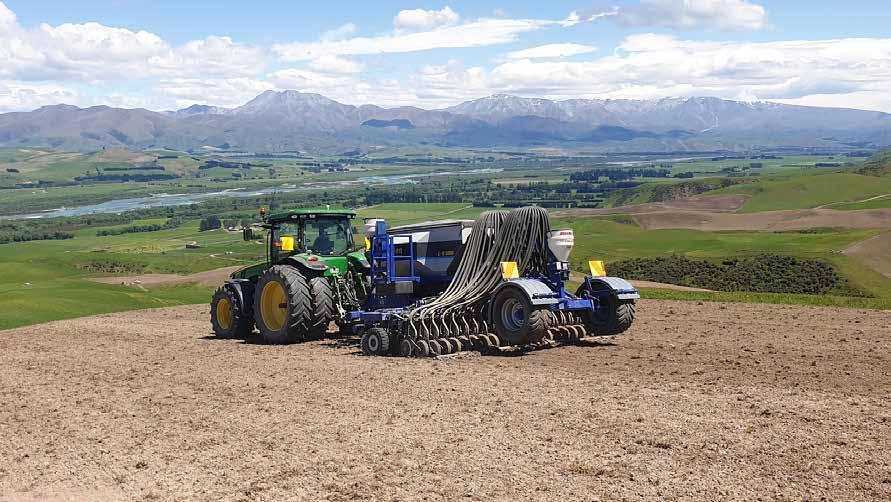

CONTRIBUTORS
Innovation in agricultural testing is about more than just speed; it’s about confidence in every result.
WORDS: Hill Labs
The use of Near Infrared Spectroscopy (NIR) is one example of a technology that allows quick and accurate analysis of soil and feed samples.
The power of NIR lies not only in speed and efficiency but in the strength of the calibration behind it.
Our commitment to ensuring farmers and agronomists can make decisions with confidence includes decades of data, rigorous validation and a continuous commitment to accuracy.
Near infrared refers to the region of light just beyond the visible spectrum, between 700 and 3000 nanometres in wavelength.
This region corresponds to the energy of molecular vibrations in organic materials.
Different molecules absorb NIR light in distinct ways, depending on their chemical structure.
Organic compounds containing O–H, C–H, N–H, and C–O bonds absorb NIR radiation strongly.
This makes NIR a valuable technique for analysing organic materials like plants, feed and soils with high organic matter.
In contrast, NIR is generally less effective for analysing inorganic compounds, which do not contain these bonds.
When a sample is scanned, the instrument records an absorbance spectrum.
This is effectively a spectral fingerprint of the material. That spectrum is then interpreted using advanced mathematical and statistical modelling techniques, known as chemometrics, to predict the chemical composition of the sample.
This process starts with collecting thousands of spectra, each representing the light signature of a sample and pairing those spectra with high quality reference chemistry values generated using traditional laboratory methods.
By combining these two data sets, robust calibration models that underpin every NIR result are created.
The calibration process is much like teaching the instrument a language.
By comparing a wide range of samples with known analyte values and their corresponding spectra, the model learns how to predict the chemistry of a new unknown sample.
Building reliable calibrations is both a science and an art.
There are many ways to build a model, but what matters is how well it performs and how reliably it predicts results for new, real-world samples.
One of the greatest strengths of NIR calibration libraries built using NZ-derived samples rather than overseas databases is because NIR is fundamentally a comparative technology.
The instrument compares the spectral fingerprint of an unknown sample against previously analysed samples with known chemistry values. The relevance of those reference samples, therefore, has a direct impact on prediction accuracy.
New Zealand soils are highly distinctive in a global context with unique characteristics.
These properties influence how near infrared light is absorbed and scattered through a sample.
A calibration developed using North American or European soils, plants and feeds may not adequately represent the spectral behaviour of New Zealand samples.
Even where chemistry appears similar, differences in the underlying sample matrix can reduce prediction accuracy or introduce bias when overseas calibrations are applied locally.
This is particularly important for parameters such as soil carbon and nitrogen, where the composition of organic matter strongly influences spectral response.
A NZ-specific library enables the model to better account for the unique characteristics of our pastoral systems and soil organic matter fractions and improves both the robustness and reliability of predictions across the country.
At Hill Labs, we use a Local Weighted Modelling (LWM) approach to interpret samples.
This method searches our database to find the several hundred samples most similar to the new sample being analysed.
These nearest neighbours are then used to build a mini calibration model specific to that sample, with greater weighting applied to the most similar spectra.
This provides both flexibility and precision, ensuring each new sample is interpreted in the most relevant context.
One of the key challenges with NIR analysis is ensuring a new sample truly fits within the calibration model.
Any powdered sample can be scanned by an NIR instrument and will produce a number, but that doesn’t
“All are best applied to small, actively growing weeds prior to the crop reaching stem extension,” Jeff points out.
Once weed competition is dealt with, it is essential to safeguard yield using fungicides and plant growth regulators.
Fungicides like Joust (prothioconazole, Group 3), Tazer
(axoxystrobin, Group 11) and Hornet (tebuconazole, Group 3) are excellent mix partners as part of a disease management programme.
“Plant growth regulators are the final piece of the puzzle to ensure yield is protected.
“Stabilan 750SL (chlormequatchloride) helps shorten the internode
length in both wheat and barley, reducing the risk of lodging in crops.
“Applied at GS30-32 can help to reduce the risk of lodging. Growers of intensive crops can use Stabilan 750SL to optimise nitrogen inputs for yield.”
For more details contact your agronomist or Nufarm business development manager.
automatically mean the result is meaningful.
Reliable prediction requires sufficient representation of both the analyte concentration and the sample matrix (sample type) within the calibration library.
NIR and wet chemistry methods each play an important role and are best viewed as complementary technologies.
Traditional wet chemistry methods directly measure the analyte of interest and are generally regarded as the reference standard for analytical accuracy.
They are reliable across a wide range of sample types and remain essential for calibration development, verification and quality assurance.
However, wet chemistry methods can be relatively slow, labour intensive and costly, particularly where large sample volumes are involved.
NIR analysis enables rapid turnaround times and high-throughput analysis, which is particularly valuable for agricultural decision-making where timeliness is critical.
NIR is an indirect analytical method
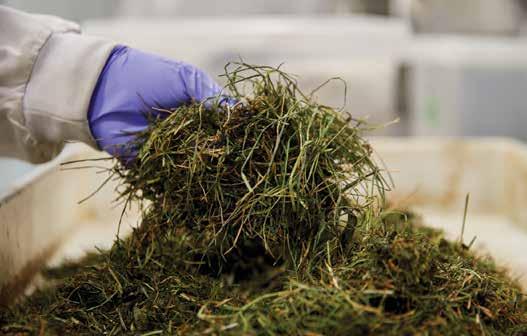
and its accuracy depends entirely on the strength and ongoing maintenance of the calibration model.
We have robust checks to detect and flag outliers before results are released.
Calibration development is never a ‘set and forget’ exercise for Hill Labs.
Instrument monitoring, seasonal variation, changing pasture composition and new sample types all require ongoing validation and refinement of the calibration library.
Continuous addition of new reference chemistry data ensures the models remain accurate and representative of New Zealand samples.
As with any indirect laboratory
method, NIR analyses may involve a small trade-off in accuracy compared with reference chemistry methods.
Hill Labs applies rigorous internal quality processes to minimise this and ensure results remain fit for purpose.
NIR also offers sustainability advantages. Because routine analysis requires no chemical reagents, it reduces chemical consumption and laboratory waste generation compared with traditional wet chemistry testing.
We are actively exploring new parameters that can be reliably measured using NIR, expanding our range of fast and accurate testing options available to NZ’s agricultural sector.

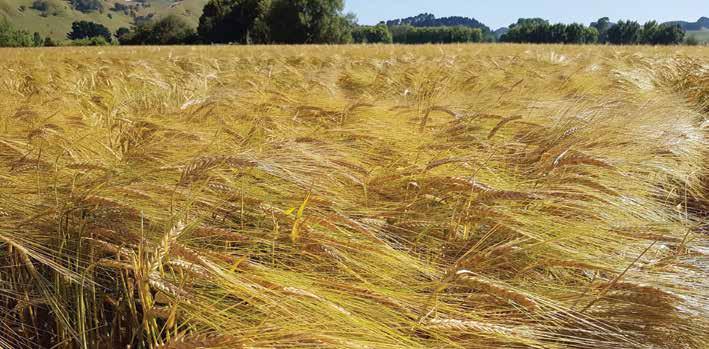
Minimise weeds, maximise yield potential.
An innovative new pre-emergent herbicide from Adama New Zealand is giving growers access to new chemistry for weed control in both autumn and spring-sown wheat and barley, following its launch in autumn 2026.
While Tower has already been adopted in autumn cereal programmes, it also offers a strong fit in spring-sown crops such as spring barley and spring wheat, where early weed control is critical to crop establishment and yield potential.
Tower combines three complementary actives (chlorotoluron, pendimethalin and diflufenican) in a unique suspension concentrate (SC) formulation.
Together, the company says, these actives deliver broad-spectrum weed control while introducing multiple herbicide modes of action into cereal programmes.
Chlorotoluron, a Group 5 herbicide, is registered for the first time in New Zealand as part of the Tower formulation. Pendimethalin, a Group 3 herbicide widely used in other crops, is now also registered for the first time in wheat and barley through Tower.
Adama NZ portfolio manager Hamish Mulcock says Tower provides an important new option for growers establishing spring crops.
“Spring-sown cereals can face strong
early weed pressure and controlling that at the start of the season is key,” he says.
“Tower provides a reliable preemergent foundation that supports clean crop establishment and early vigour.”
Applied at or soon after sowing, Tower is absorbed through the roots and shoots of germinating weeds. Susceptible plants are controlled at or shortly after emergence, reducing the need for early corrective action.
New Zealand trials show Tower controls a wide range of weeds, including chickweed, field pansy, speedwell, fathen, wireweed, shepherd’s purse, black nightshade, parsley piert and annual poa.
It also provides useful suppression of cleavers, groundsel, Italian ryegrass and perennial ryegrass, supporting overall weed control programmes.
Hamish says one of the key benefits of using Tower in a spring programme is the ability to move weed control earlier and simplify in-season management.
“By reducing early weed pressure, growers can take some of the load off post-emergence applications during peak workload periods,” he says.
“Spray programmes quickly become crowded with nitrogen applications, fungicide passes, growth regulators and other herbicides. Starting clean gives growers more flexibility on timing and helps ensure those key later-season applications aren’t compromised.”
The combination of chlorotoluron, pendimethalin and diflufenican also
strengthens resistance management by introducing multiple modes of action early in the programme.
“Including Tower helps diversify herbicide use and reduces pressure on post-emergence herbicides,” Hamish says.
“That’s an important step in slowing resistance development and protecting the performance of existing herbicides.”
While Tower is new to the New Zealand market, it is well established in the UK and Europe and has undergone extensive local evaluation since 2016.
Trials have demonstrated consistent performance across a range of soil types and seasonal conditions.
Hamish says this reliability is particularly valuable in spring, where establishment windows can be tight and conditions variable.
“Having a dependable pre-emergent option gives growers confidence that weed control is in place from the outset,” he says.
With Tower, Adama NZ is delivering more than just a new product; it also is offering a practical way to improve early weed control, better manage workload and strengthen resistance strategies across cereal systems.
As weed pressures evolve and cropping systems intensify, Tower provides a robust solution backed by global experience and local trial data.
For more information, talk to your agronomist or Adama NZ commercial manager.
New Zealand potato growers now have access to a powerful new tool in their crop protection toolkit.
WORDS: Syngenta New Zealand
Syngenta New Zealand proudly announces the registration of Vibrance Premium, a nextgeneration fungicide seed treatment specifically designed to optimise potato establishment and protect against many key soil-borne diseases and help maximise marketable yields.
Vibrance Premium combines the specialised SDHI (succinate dehydrogenase inhibitor) sedaxane,

specifically developed as a seed treatment, with fludioxonil to provide a dual-mode-of-action formulation that enhances both root health and plant vigour.
This combination offers the broadest spectrum disease control available.
It provides robust defence against Rhizoctonia solani (black scurf), silver scurf, black dot, fusarium and gangrene, while also providing suppression of common scab.
"The early stages of a potato crop’s life are the most critical," says Paul
Hassan, technical services lead at Syngenta.
"Vibrance Premium ensures that the plant develops a stronger, more resilient root system from day one.
“This leads to better water and, nutrient uptake, more uniform emergence and ultimately, more consistent tuber sizing at harvest."
“By controlling these pathogens early, Vibrance Premium helps prevent the ‘gappy’ stands that can significantly reduce yield potential in commercial potato operations.”
• Reduce the amount of chemicals used by only applying in the desired area
• Turn compensation delivers 100% spray coverage everywhere, regardless of travel speed or location of crop in comparison to boom movement
• Spray pressure is measured by StrictSprayPlus by change in speed of liquid through each nozzle plus spray pattern droplet size

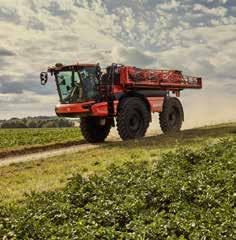
• Prevent overlapping and overdosing with single nozzle shut-off
• Pressure independent speed control enables the crop to receive the desired amount irrespective of the flow speed
• Fast switching nozzle opens and closes up to 100 times per second with StrictSprayPlus
• Increase longevity of the valves with a more precise spray pattern, whilst still achieving optimal coverage

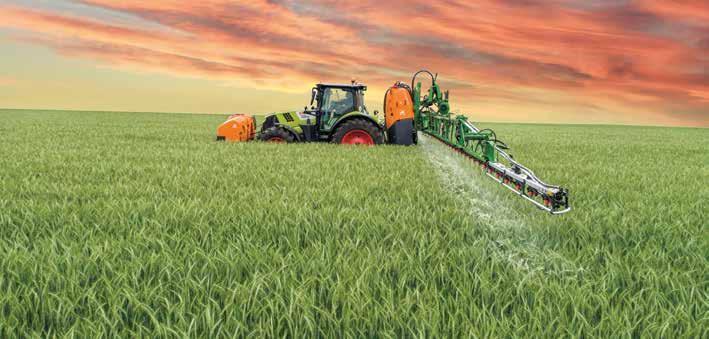
The most significant changes to legislation governing agricultural and horticultural products in years finally landed in May 2026.
WORDS: Animal and Plant Health NZ
The ACVM and HSNO Act
Amendment Bills mark a pivotal moment.
But they are also a test: Can they strike the right balance to manage risk and enable access to innovation, protecting New Zealand’s security of supply?
Regulatory delays have seen companies exit research and development in New Zealand, and this affects all products — organic and synthetic, biologicals, the next generation of tools for our farmers, growers and veterinarians.
For some companies the question
“We would still recommend the use of Amistar as an in-furrow treatment at planting for soil borne control of black scurf and suppression of silver scurf.
“The combination of both products h as given outstanding disease control and marketable yield results in our field trials,” says Hassan.
The registration of Vibrance Premium follows extensive local trials across key potato-gr owing regions, including Canterbury and Pukekohe.
is no longer do we register in New Zealand, but simply, do we supply New Zealand at all?
Cabinet’s intent for the two bills is clear: a proportionate, efficient, transparent and certain approval process.
Animal and Plant Health NZ members are also clear on what success looks like
• A steady stream of approvals – predictable, transparent, timely pathways for new products and new label use approvals.
• Real progress on red - tape reduction – a less complex application
process reflecting recognition of trusted regulators data and approaches for lower risk applications.
• Industry feedback incorporated into solutions and legislative proposals, so they are workable, enabling and enduring.
Innovation has always been questioned before it is accepted.
This is not about a free pass; it is about balanced, risk-proportionate legislation, drawing on lived experience and lessons from the RMA and Medicines Act reforms.
Our trading partners have modernised their risk science and how they apply the precautionary principle.
These bills are New Zealand’s opportunity to do the same.
Backing innovation means giving companies the certainty to keep investing in research and development in New Zealand, with smarter rules and transparent timeframes.
This legislative reform, and the secondary regulation to follow, can modernise our framework for a stronger future, if we can strike the right balance.
These trials demonstrated that treated seeds improved vigour and increased tuber set in the crops they produced.
Vibrance Premium offers unique flexibility for a potato tuber seed treatment, with application possible at either pre-storage or pre-planting of the tubers.
The liquid formulation is designed for ease of use in modern seed treatment applicators, ensuring
consistent coverage of the seed tubers, a critical factor in achieving the full protective benefits of the product.
Growers are encouraged to contact their local Syngenta territory manager or technical adviser to discuss how Vibrance Premium can be integrated into their crop programme to secure better yields and higher-quality potatoes.
Vibrance Premium will be available for the 2026 planting season.
Managing Septoria in wheat means building programmes that protect the chemistry available today.
Questar (Group 21) brings a different mode of action to that mix, giving growers and agronomists another option to help manage resistance while maintaining control.
Ash Pace, Corteva Agriscience territory sales manager for Canterbury and West Coast, says identifying potential disease risk early is critical.
“You need to recognise your pressure level,” he says. “And that means feet in paddocks! It’s not something that can be done from the ute.”
Septoria has a latent phase, so visible symptoms are not the starting point for action.
“If you see visual signs, it’s already been there for a month, and moved through the crop.”
Conditions drive how quickly Septoria develops: “If we have a wet winter, then a warm wet spring, this disease is going to speed up, hence we need to be on our game.”
Questar contains a novel active with a different target site to other Septoria fungicides.
That makes it a useful addition alongside existing chemistry, rather than a replacement.
Ash says it can be positioned flexibly depending on programme design and disease pressure.
“We can use Questar as a solo product at T1 or with a partner at T2.”
This flexibility allows it to fit into established programmes while bringing diversity of chemistry. Using different modes of action within the programme helps reduce selection pressure on any one group.
Morgan Mansell, Corteva technical specialist, says that a different mode of action is central to its role.
“Questar is a great tool for resistance and disease management.
“This is very important in New Zealand, so we don’t end up in the same position as in the UK.”
One application strategy
Maintaining the effectiveness of new chemistry relies on how it is used.
Questar is positioned as a single application within the season.
Morgan says this approach supports both Questar’s longevity and the wider fungicide programme.
It also encourages careful timing around key Septoria infection windows.
Questar is designed to work alongside other fungicides, giving growers flexibility when building mixes.
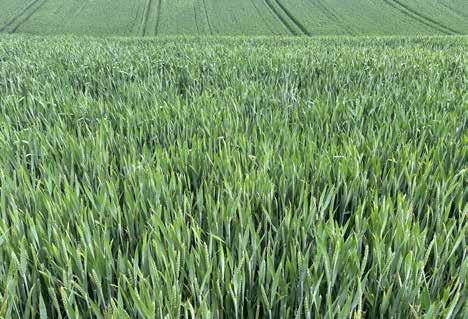
Questar – key points
• Innovative resistance management tool – different MOA against a new target site in Septoria
• Natural origin – derived from a soil microbe
• Residual protectant, and curative activity
• Flexible application timing – up to T3
• Advanced formulation technology – improved retention and redistribution across plant surface as well as local plant mobility
• Favourable toxological profile –low mammalian toxicity, low persistence in the environment
That compatibility supports its use as a partner in mixtures where programmes are targeting Septoria alongside other diseases.
The unique active ingredient Inatreq is the first member of a new class of cereal fungicides, the picolinamides (Group 21).
Questar is the first naturally derived fungicide brought to market by Corteva Agriscience; Inatreq is produced by fermentation of a naturally occurring soil bacterium first discovered at Osaka University in Japan.
It has no cross resistance with existing Septoria fungicides, which underpins its value in resistance management strategies.
Building programmes that last
Both Ash and Morgan emphasise that Questar sits within a broader approach to Septoria control.
Cultivar choice, timely applications, correct rates and good crop monitoring remain essential.
So too does looking beyond the immediate status quo which may appear to be working fine.
“No one gets too worried when their sprays are still effective, but in fact that’s actually the critical time to review your current programme and make the changes necessary to ensure it remains sustainable in future years,” Morgan says.
For more information, contact your agronomist or rural merchant, or visit www.corteva.co.nz
Weed pressure in cereals is building across many arable rotations, and decisions made early will shape crop performance through to harvest.
Both Morgan Mansell, technical specialist with Corteva Agriscience, and territory sales manager Ash Pace point to timing and product choice as the key levers for growers this season.
They say regardless of crop cultivar or target weed species, clean crops are integral to achieving high yields, and shortcutting weed control usually has a nasty way of biting back months down the track.
With many growers eyeing costs carefully, one proven way to get full bang for their herbicide buck is to tick all the boxes in terms of application technique, with the bonus being best practice also reduces the risk of herbicide resistance further developing.
Fumitory continues to be one of the most troublesome broadleaf weeds in cereal systems.
Ash’s advice is simple: “Mention fumitory and the next word is Paradigm. The two are synonymous for a lot of growers and if they’re not, they should be!”
Paradigm (Group 2 and 4) has built a solid reputation for reliability on this species, he says.
Morgan reinforces the importance of accurate targeting, and picking the right product for the right weed – in a cereal context, Paradigm for broadleaf species, and Rexade (Group 2 and 4) for grass weeds with some broadleaf coverage.
Rexade for example has a strong fit
where brome, ryegrass and wild oats are present.
Brome in particular can have a large impact on yield.
“Brome can really deplete yield in cereals,” Ash says.
“Using Rexade can also help clean paddocks up to minimise brome infestation in ryegrass seed crops later in the rotation.” Paradigm and Rexade both contain Arylex Active which is a Group 4 mode of action herbicide. Arylex active belongs to a unique subgroup which controls difficult to control broadleaf weeds not controlled by other group 4 herbicides.
The combination of Arylex with the other actives in both Paradigm and Rexade provides robust control against target weeds.
Both Morgan and Ash stress spray timing must align with weed growth stage rather than calendar date.
Applying too late can reduce effectiveness and increase the risk of resistance.
Morgan cautions against stretching spray windows for Paradigm in particular.
“If you’re consistently putting it on quite big plants, outside of the label recommended growth stages, and thus applying sub lethal doses, you risk building resistance,” she says.
Paradigm has a wide application window, from three leaf to emergence of flag leaf, but performance is strongest on
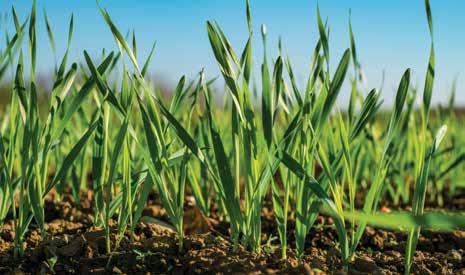
small, actively growing seedling weeds.
In other words, tiny plants with two true leaves, which does not always align with farmers’ own definition of ‘small’, she says.
Rexade is best used early, again when weeds are most vulnerable.
Unlike Paradigm, Ash says, a followup application is usually required within a four-week period to achieve best results, because weeds typically germinate unevenly over a wide time interval.
Cold conditions can also influence how quickly results appear.
Morgan says this applies to Rexade because it is systemic and moves through the plant.
“Weeds will often turn yellow before plant collapse. If it’s cold, growth slows and you may not see plants die for several weeks.”
Maintaining herbicide effectiveness is a major focus when using both herbicides.
Morgan highlights the role of mixing modes of action and not pushing products beyond their optimal use pattern.
Paradigm is used at a low rate, and requires the addition of Uptake Spraying Oil, so growers should always follow label directions for application.
Likewise, Rexade requires a higher rate of non-ionic surfactant than other similar products.
Both products offer flexibility with tank mixing, allowing integration with other herbicides or insecticides where required.
Morgan encourages growers to use available support.
“If they do have questions, get in touch with your local territory sale manager. They are always there to help, and we have lots of technical resources available.”
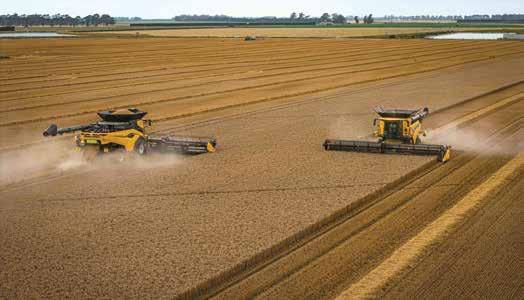
Fairfield Farms is investing in two New Holland CR11 next generation combines to do the work of three existing machines on its large Canterbury grain and seed operation.
After trialling the CR11 alongside its current CR10.90 combines in a wet, stop-start harvest, the business confirmed it will upgrade to the new model from 2026.
Based just north of Ashburton, Fairfield Farms has been operating for six years and farms around 4,050 ha, including roughly 2,200 ha in arable production.
Its core business is grain and seed, particularly grass seed, followed by grain, brassica and clover seed, alongside processed vegetables and beef finishing.
The 2025 harvest put Fairfield Farms under pressure, with repeated rain leaving only a few short harvest windows.
Managing director Aaron Chudleigh spent his time in the paddock personally
Try before you buy – the new combines in action at Fairfield Farms.
trialling the CR11 in heavy, high-value pickup crops to see how it performed when conditions were at their toughest.
Across key crops he recorded the CR11 delivering around 1.7 times the capacity in wheat, 1.9 times in clover and up to 2.2 times in grass seed, while maintaining a clean sample and low losses.
“The biggest gains for us have been in the pickup work,” Aaron says.
“Around sixty to sixty-five percent of our harvest is lifting windrowed grass, brassica and other small seeds, so I was really focused on how the CR11 coped with those heavy, high value crops on large pickup fronts.
“With the CR11 we can pick up two windrow rows at our normal harvesting speed, and in grass seed it’s basically doing the work of two machines,” he says.
“In a wet season like this one every extra minute counts. There were times when the CR11 could go out thirty to sixty minutes earlier in marginal
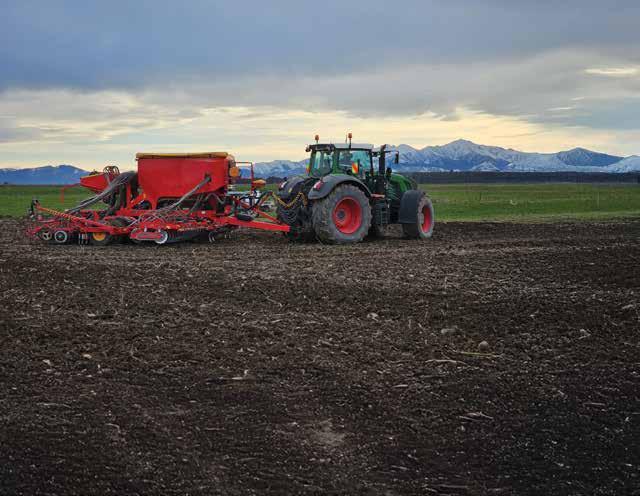




A new selective broadleaf herbicide from Nufarm broadens its forage brassica portfolio and introduces an alternative option for farmers looking to maximise their crops this season, the company says.
Omnia (Group 4) contains 30 g/L of aminopyralid and is also labelled for use in pasture and forage plantain.
Nufarm business development manager Michael Bennet says it will be on the shelf in time for crops sown this spring, and complements the company’s existing forage brassica offering of Director CS (Group 3) for post-plant, preemergence, and Kamba 750, Prestige, Archer (all Group 4) and SeQuence (Group 1).
Robust weed control is foundational for profitable crops, he says.
“Whether your farmers are growing
summer turnips, forage rape, kale or swedes this year, the same key principle applies to every crop: The higher their final yield in kilograms of dry matter per hectare (kg DM/ha), the cheaper the cost of feed.
“The big issue with early yield losses caused by weeds in brassicas is they can happen very quickly, and they are permanent.
“That’s why it is so important you or your farmers walk those crops frequently in early establishment and scout for any potential problems before they can become serious.”
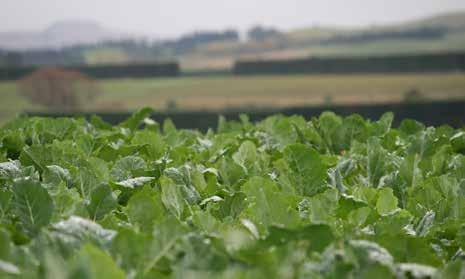

In brassicas and plantain, Omnia is particularly useful against amaranthus, willow weed, water pepper and fumitory, plus the usual suspects –nightshade and fat hen.
Bennet says post-emergence weed surveillance and control is time and money well spent for any forage crop, but the window of opportunity is not a wide one – after weeds reach a certain size and/or the crop canopy starts to close, herbicides become less effective.
“The goal is to spray weed seedlings at the correct stage, which is two to four true leaves. The crop will typically have two to four true leaves at this stage.”
He predicts Omnia will be a welcome option for farmers sowing kale mixed with plantain for both summer finishing and winter grazing.
Omnia is compatible with most insecticides and grass weed herbicides recommended for use in forage brassicas and forage plantain.
In these crops it must always be mixed with Bonza Gold.
conditions, pick up two rows and still do a tidy job, which was the difference between getting a paddock done before the next rain or not.”
Beyond raw capacity, Aaron points to the CR11’s updated design as an important part of its value to Fairfield Farms.
“The direct drive is a big step forward,” he says.
“They’ve gone away from a lot of belts and pulleys, so you’re not losing horsepower or torque through complicated drives, and from a maintenance and reliability point of view that’s a major upgrade for us.”
Cochranes, a 75-year-old familyfounded agricultural machinery dealership and the largest New Holland dealer in the South Island, worked alongside Fairfield Farms as well as other large-scale growers to trial the new CR11 in demanding small-seed conditions.
Cochranes group sales manager Barth Landy says Fairfield Farms, with its scale and mix of crops and hybrids, was the ideal location to push the new combine to its limits in small seeds.
“We trialled the CR11 in some of the toughest small seed conditions, including new variety perennial ryegrass that hasn’t been harvested
before, to really test whether the machine is truly fit for purpose, with early results showing the CR11 is performing exceptionally well,” Barth says.
“The scale of small seed production here in New Zealand is larger than almost anywhere else in the world, so these trials were some of the most demanding CR11 small seed tests done to date.
“They’re giving us real-world data to prove how the machine performs in small seeds and to help validate its potential for large-scale growers across NZ, and globally,” he says.
Delivering local crop protection solutions to New Zealand farmers and horticulturalists is at the core of Arxada NZ.
WORDS: Arxada
Collaboration across research and development, manufacturing and the commercial team at a local level allows us to focus on what is important to the local farmer or grower, providing practical solutions specific to all crop types.
Being innovative and collaborative in delivering crop protection solutions stems back to 1988 for Arxada NZ.
Originally, Arxada was a local, Taranaki-based crop protection business specialising in turf management and protection.
Since then, our portfolio has dramatically diversified into broad acre cropping and high-value horticulture.
Arxada may not be a company that is well recognised, however, our brands such as Headstart, Axcela, Saxon, Quantum and Jive are becoming household names when it comes to tried and proven crop protection products for food producers.
Arxada has significant resources here in New Zealand, unlike any other crop protection business.
Most of our product range of over 70 products are developed and
manufactured right here in New Zealand.
With a base in New Plymouth, these resources include manufacturing sites, state of the art formulation and analytical laboratories, and a dedicated field science site in Hawke’s Bay conducting screening and efficacy trials, alongside other national sites.
The Arxada NZ team is focused on making farming and growing more sustainable, cost effective and with increased efficacy.
Our dedicated formulation team can enhance an existing product or active ingredient by co-formulating the actives into the same container, designing a built-in adjuvant system including oils, surfactants and safeners, or creating newer methods in manufacturing to optimise performance in the field.
A good example of this is Headstart, where an existing active ingredient exists on the market in granular form, which requires other adjuvants and oils to be added.
Arxada took this active and formulated it into a liquid product, incorporating the complete oil and adjuvant system, creating a robust new
product which is simpler to use, crop safe at any stage, and proven to be more effective in-field, with its additional crop and weed claims versus other products based on the same active.
In addition to this, the local Arxada team has other global relationships, enabling access to newer proprietary molecules.
These innovative new molecules, offering new resistance management solutions, are rigorously tested locally to demonstrate their efficacy versus market standards.
Once proven, the registration process begins, which is managed completely in-house.
Arxada’s crop protection identity exists because of its passionate and local people, all of whom are connected by their understanding of food production
Their value in the market is unparalleled when considering their resources and dedication to the production of products which add real value.
The entire process from ideas through to a usable product is catered to locally, designed for local use.
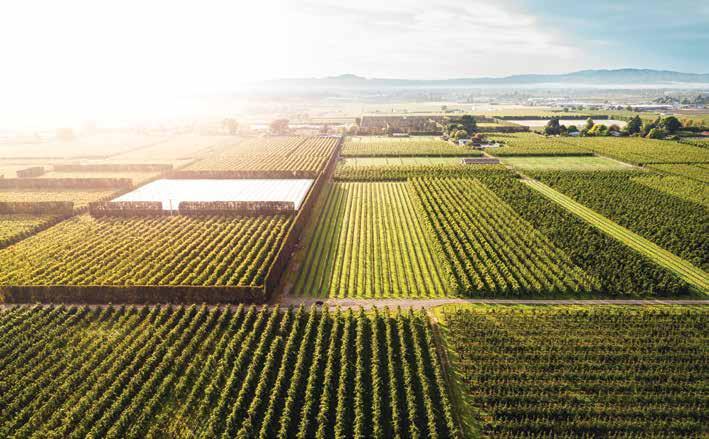
New Zealand farmers facing inconsistent results from soil-applied residual herbicides now have a powerful new tool.
AgNova has introduced Undertaker, based on a renewable plant-based oil, with an adjuvant package added to create a product specifically designed to improve the deposition, distribution and reliability of pre-emergence herbicides while decreasing potential drift and environmental losses.
Pre-emergence residual herbicides are a cornerstone of early-season weed control in crops such as maize, forage brassicas, wheat, and others.
However, their performance is frequently compromised by environmental conditions.
Dry soils prevent proper activation and uptake, while excessive rainfall can cause run-off or leaching through the soil profile.
Exposure to sunlight may lead to photodegradation of the active ingredient of some herbicides, and poor spray coverage or drift means much of the product never reaches the target zone where weeds germinate.
Undertaker addresses these challenges directly.
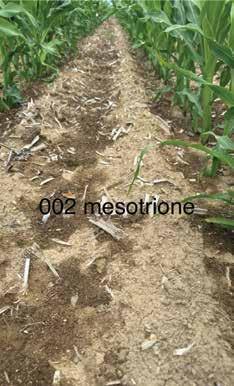
When mixed with soil-applied herbicides, it helps form uniformly sized spray droplets that can resist evaporation and reducing drift.
More importantly, it enhances droplet deposition and spread on the soil surface, ensuring the active ingredient is placed precisely in the weed germination zone for optimal uptake.
Its plant oil base gives it a strong affinity for both soil particles and many lipophilic (oil-loving) herbicide chemistries, helping to hold the herbicide in place.
This reduces variability caused by weather extremes and limits losses through volatilisation and photodegradation.
Unlike traditional mineral oil-based adjuvants, Undertaker is largely derived from renewable plant sources which are biodegradable, making it a more environmentally responsible choice.
Undertaker is compatible with most commonly used pre-emergence herbicides, including acetochlor, alachlor, atrazine, saflufenacil,
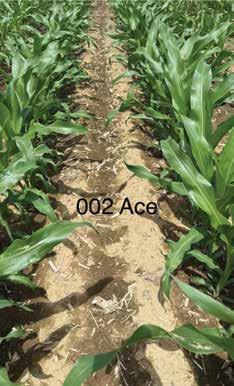
dimethenamid, clomazone, mesotrione, diflufenican and flufenacet.
For specific tank-mix recommendations, AgNova NZ advises checking with their team.
Trials conducted in maize, forage brassicas (rape), wheat and other crops have shown the efficacy of Undertaker with no adverse effect on crop safety.
By maximising the performance of residual herbicides, Undertaker helps protect valuable crop protection chemistry and supports better product stewardship.
This is particularly important as farmers seek to reduce reliance on post-emergence applications, which are often more expensive and come with higher risk when weed pressure escalates and competes aggressively with the crop.
Beyond performance, Undertaker delivers clear economic and sustainability benefits.
It is cost-effective and helps ensure that every dollar spent on herbicides works harder. Developed from proven technology and marketleading products used in the UK, it represents a green solution – replacing petroleum-based oils with a renewable, biodegradable alternative.
AgNova’s introduction of Undertaker reflects a growing focus on precision and environmental responsibility in New Zealand agriculture.
By improving herbicide placement and persistence in the soil, it offers farmers greater confidence in their pre-emergence programmes and better protection of both potential yields and the environment.
“It was really exciting for the AgNova NZ team as we walked through the trial and demonstration sites,” says David Chamberlin, country manager.
“You could clearly see the difference between the pre-em herbicide alone and the herbicide + Undertaker plots.
“We saw a definite improvement in the Undertaker + plots, and while a <5–10% difference in weed cover doesn’t look very impressive on a graph, in the field that level of weed reduction is a clear improvement.”
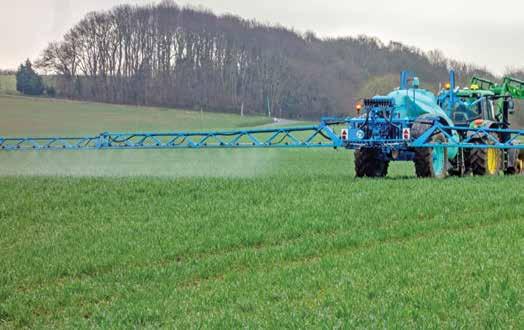
Water typically makes up around 90% of the contents in a spray tank. It literally is the lifeblood of spray programmes.
What we often forget is that water is an active chemical - an inorganic compound.
Pieter Van Der Westhuizen, adjuvant lead and regional manager for the upper North Island at UPL New Zealand, says that familiarity means we overlook water’s impact on spray performance and efficacy, and the resulting impact on crop performance and yield.
“For example, water’s pH - acid or alkaline - can vary enormously, even over one property. People sometimes say the
spray isn’t performing, but it’s actually to do with the water.
“Some chemicals do not necessarily work very well with alkaline water. In most cases we want to lower the water’s pH.
“Water pH is easily rectified by adding in the correct amount of an acidification adjuvant like Li-700.
“If water has positively charged ions like calcium, magnesium or iron dissolved in it (hard water) that can react with some of the negatively charged herbicides, including glyphosate.”
Pieter recommends water conditioner and ion scavenger X-Change to optimise spray performance.
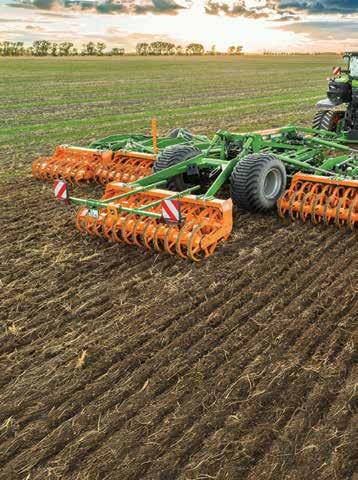
Adjuvants help ensure water characteristics and quality don’t compromise spray performance.
X-Change, a proprietary blend of organic and inorganic compounds, acts as a ‘sacrificial’ product, changing hard water into soft by locking up free ions.
“Testing water pH and hardness before spraying is important and is as easy as using a spa pool testing strip.”
The physical properties of a water droplet is also important to consider.
“With water as the spray carrier, you don't want too large a droplet or too small a droplet. You need it to be just perfect.
“Small droplets tend to be too light to be affected by gravity and just drift about. So, your insecticide, fungicide or herbicide doesn’t get on target.
“It's really important to be mindful that drift is not just about avoiding waste, it’s also about being a good steward of the land.”
Pieter says products including multipurpose Li-1000 or Unison can help ensure that the active ends up where it should.
Conversely, Pieter says, large droplets can simply bounce off the target, if they
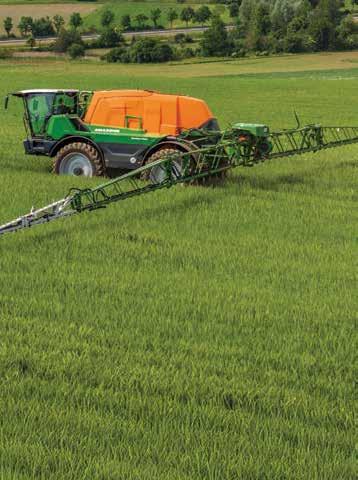
don’t have the correct adjuvant in the tank.
“We want the active to stick to the target surface – not end up on the ground and be lost. Adjuvants help make the droplets fit for purpose, exactly right for the task.”
Pieter says apart from drift control agents Li-1000 and Unison, adjuvants also include spreaders (Actiwett, Ranger), super spreaders (Du-Wett) and stickers (Du-Wett WeatherMax, Bond Xtra).
Droplet surface tension is another challenge.
“In nature, a drop of water on a leaf is perfectly rounded and just sits there.
“To enable spray actives to do their job we need that droplet to flatten out and spread so it covers much more of the target area.
“Adjuvants spread that droplet out to fifteen to twenty-five times the size, covering up to twenty-five times more surface area, and giving twenty-five times quicker uptake.
“To get inside the plant, you also need penetration, where the herbicide, fungicide or insecticide gets through the cuticle (waxy layer) on the outside of the plant. Or the stomata, the plant’s ‘beathing’ apparatus.”
A good example of the impact of the latter, he says, is spraying gorse.
“Gorse is a survivor. It’s not easy to kill. There is a thick wax layer on gorse and a small leaf surface area in relation to the size of the plant.
“The ideal way to control gorse is to add an organosilicone like Slikka, Ad-Hance or Satur8 in the tank with the herbicide.
“A good quality organo-silicone reduces the surface tension of the water to such an extent that the water flows into the stomata of the gorse plant, pulling the active ingredient in with it.”
Pieter recommends checking if your agricultural spray is oil or water based.
“If you’re using a water-based chemical, then use a water-based adjuvant. It you’re using an oil-based chemical, use an oil-based adjuvant with it.”
Crop oils, crop oil concentrates and methylated seed oils, Pieter explains, ‘melt’ the waxy cuticle layer on plants and are vital to achieve efficacy for some lipophilic/oil loving herbicides, insecticides and fungicides.
Using these same adjuvants with hydrophilic/water-loving herbicides, insecticides and fungicides can
severely compromise the efficacy of the spray application.
Water-loving chemistry does not readily move through a melted layer of wax.
“Using a water-loving herbicide with an oil-based drift retardant is a guaranteed recipe for disaster.”
Coverage is absolutely essential, especially for protectant insecticides and fungicides, where any exposed surface has the potential to be the site of infection.
For decades, the vegetable, apple, grape and kiwifruit industries have been using Du-Wett Super-Spreader to achieve coverage and simultaneously lower water rates.
The kiwifruit industry uses on average half the conventional water rate by adding Du-Wett Super-Spreader to their tanks.
Spray contractor Graham Greer from Greer Groundspraying in Marton says using Du-Wett Super-Spreader means his team can go with lower water rates and, at the same time, get better coverage.
“He says this is especially important now that the company is incorporating drones. You can actually even see the difference Du-Wett coverage makes on the leaves.”

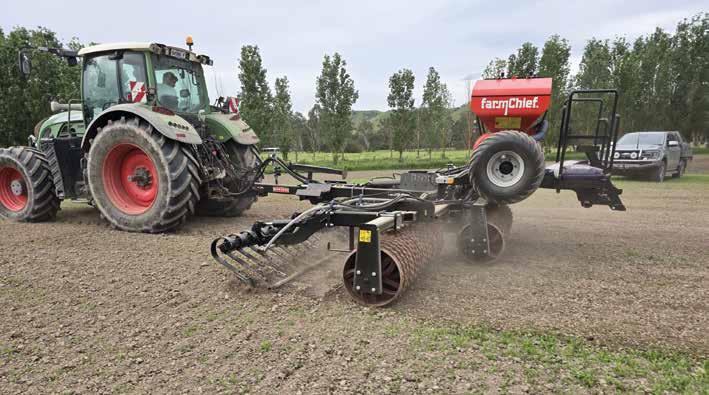
There is a growing expectation in New Zealand farming that machinery should not just do a job, but solve a problem.
WORDS: Farmchief
With tighter weather windows, higher input costs and pressure to minimise passes, establishment equipment is increasingly judged not by how well it performs in perfect conditions but by how effectively it adapts to the realities of the paddock.
That shift in thinking sits behind the development of Farmchief’s Integra system, which builds on the proven Rollmax platform but moves the roller drill concept in a more practical direction.
The starting point for the Integra was not engineering theory but farmer feedback.
Paddle roller drills have long been valued for their ability to level and prepare a paddock quickly, creating a tidy seedbed and consolidating the soil in a single pass.
In areas with reliable rainfall they often deliver strong results, and their role as secondary cultivators makes them particularly useful ahead of sowing programmes where efficiency matters.
Yet operators also identified a consistent frustration.
While paddles do an excellent job
of preparing the surface, they do not always pull soil back across the seed in the same way harrows do, and that difference can affect strike reliability when conditions are less forgiving.
The obvious solution is a harrow roller drill, which does improve seed coverage, but that approach comes with its own compromise.
Harrow-only machines tend to become single-purpose tools, losing the broader usefulness of a paddle roller for levelling and preparing paddocks ahead of drilling.
For contractors and mixed farms trying to minimise duplication in the fleet, that trade-off has never been ideal.
What many operators wanted was a machine that could retain the paddle roller’s ability to prepare and consolidate ground, while also providing the seed coverage associated with a harrow drill.
The Integra is Farmchief’s answer to that request.
At the heart of the system is the Rollmax hydraulic paddle platform, which uses six synchronised rams to maintain consistent control across the full working width.
That gives the operator the same levelling and consolidation performance that has made paddle rollers so effective as secondary cultivators, ensuring paddocks can still be prepared quickly and efficiently ahead of sowing.
Where the Integra moves beyond a standard paddle roller drill is in how it handles the final stage of establishment.
Mounted behind the hydraulic paddles are two rows of heavy 12mm chain harrows. Once the seed is applied, those harrows can be brought into play to draw soil back across the seed and improve coverage, helping to deliver a more consistent strike without the need for a separate pass or a dedicated harrow machine.
The effect is to turn what was once a choice between preparation and coverage into a combined operation. The machine can level and consolidate like a paddle roller, then finish and cover like a harrow drill, giving the operator greater control over the seedbed while still maintaining efficiency across the job. In practice that flexibility is what allows the Integra to operate as both a highly effective roller and a dependable roller drill, depending on how it is configured.
Reliable water remains a key foundation underpinning New Zealand’s arable sector.
WORDS: Irrigation NZ
Whether for growing cereals, seed crops, or supporting mixed farming systems, irrigation increasingly provides the stability needed to manage seasonal variability, maintain crop quality and support investment confidence.
Over the past year IrrigationNZ has continued to focus strongly on leadership and advocacy work aimed at ensuring the regulatory and policy environment better reflects the realities of food production and long-term water management in New Zealand.
One theme IrrigationNZ has consistently raised is that New Zealand’s challenge is not necessarily water scarcity, but water variability, especially when demand for water is high.
Arable growers are well aware rainfall is unevenly distributed both geographically and seasonally.
Much of New Zealand’s rainfall occurs during winter and on the western side of the country, while irrigation demand peaks in summer and predominantly across eastern regions.
If policy frameworks incorrectly assume scarcity of water everywhere, the system naturally focuses on constraining resource use.
On the other hand, if the issue is understood as uneven supply of reliable water, then the conversation logically shifts to include water storage, transfer, and long-term infrastructure planning.
Through that, we achieve greater efficiency and enable better decisionmaking for current operators and future generations.
For arable growers this is particularly important.
Around 80% of New Zealand’s arable grain and seed producers use irrigation in some form. Reliable access to water supports crop consistency, establishment timing, yield security and the ability to transition towards higher value production systems.
An important milestone for the sector during the past year has been irrigation infrastructure being recognised within the National Infrastructure Plan tabled with Cabinet.
For the first time, irrigation now sits alongside other nationally significant infrastructure asset classes within New Zealand’s long-term infrastructure planning framework.
This acknowledges the maturity and importance of irrigation infrastructure as part of New Zealand’s future economic and environmental resilience.
It also helps ensure the irrigation sector has a seat at the table as infrastructure policy, investment priorities and long-term funding pathways are discussed across a 30-year planning horizon.

IrrigationNZ has been working closely with government agencies, regional interests and wider primary sector organisations to help establish the platform for a plausible pipeline of future water storage and distribution opportunities.
Lessons from Tasmania Irrigation continue to provide useful insight into how large, multi-decade infrastructure programmes can be planned and delivered successfully.
A shared approach to infrastructure planning, environmental management, financing and stakeholder engagement creates both confidence and momentum.
It also helps move projects beyond individual proposals towards a more strategic national conversation about resilience, productivity and regional development.
While public discussion often focuses on large dams, resilience can also involve smaller community schemes, on-farm storage ponds, managed aquifer recharge, wetland enhancement and more efficient conveyance systems.
In parallel, a collaborative approach has been evident through the resource management reform process.
IrrigationNZ has worked closely alongside wider primary sector bodies through a ‘Team Ag’ approach, helping ensure practical farming and growing realities are represented consistently to officials across the reforms.
Through this period IrrigationNZ has strengthened its engagement with the Foundation for Arable Research, recognising the importance of bringing together policy and practical farm system knowledge.
Those relationships are becoming increasingly important as New Zealand works through major long-term decisions around freshwater management that will shape rural production systems for decades to come.
IrrigationNZ remains strongly optimistic that investing in water capture, storage and distribution, alongside high quality irrigation training, will continue delivering positive outcomes for arable farmers, the wider primary sector and NZ communities.
There has been a substantial leap in ejector, camera and AI programming technology in optical sorting offerings over the last few years, making the decision for Luisetti Seeds' significant investment to increase the speed and accuracy of its seed cleaning services for its customers a simple one.
After extensive research into the best optical sorting technology on the market, including a visit to manufacturers in Europe by operations manager Mark Frampton to see their preferred options in action, they have chosen the 3U Vision Fenix 5HD.
The Fenix 5HD sorter uses a complex system of 10 highdefinition RGBI cameras identifying deformities and contaminants such as weed
seeds, sclerotia and damaged seed, shooting them out of the main product flow with precision bursts of air.
Commissioned in March the Fenix 5HD optical sorting line has a throughput of up to one tonne of clover per hour and well over 10 tonne per hour of peas.
With five sorting chutes configured with four as primary sorting and the fifth chute resorting the rejects from the four main chutes
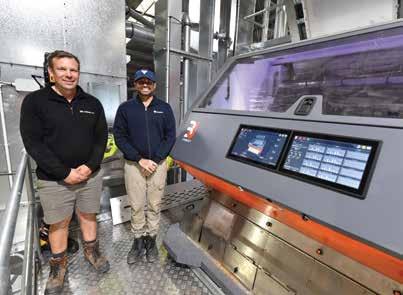
giving another opportunity to ensure the most good seed goes into the bag.
But the real benefit of the Fenix 5HD comes where weed seeds and contaminants previously extremely difficult or impossible to remove by conventional equipment can now be expertly programmed by the experienced Luisetti team to be ejected from the seed lot, minimising losses
and ensuring seed lots meet contract and certification requirements: maximising returns for their growers.
Luisetti Seeds and its customers are already realising the above benefits of their investment utilising this technology with increased throughput with minimal losses and first time pass rates expediting seed to market in a challenging cleaning season.




It took some time for Wakanui farmer Eric Watson to get the tracks dirty on his newly-purchased Case IH AF10 combine, but it was worth the wait, he says, and the challenging conditions really put the new machine through its paces.
Eric’s 490 ha farm is just east of Ashburton.
Like many other parts of the country, it was a wet summer in the region, taking a toll on the annual crop harvest.
Eric, who runs Rangitata Holdings with his wife Maxine, grew up on a mixed farming property in the area, but bought his own farm, a cropping operation, almost 35 years ago.
It was a great move, the Ashburton local earning a global reputation for exceptional crop management after breaking the Guinness World Record for highest wheat yield not once, but twice.
He achieved 17.398 t/ha in 2020, after breaking his own previous 2017 record of 16.791 t/ha, both achieved using irrigation and high-intensity management.
As well as wheat, the Watsons grow barley, ryecorn (which they’ve gone back to after a long hiatus due to the good prices), haricot beans for the first time in some years, grass for seed, and vegetable seed crops like hybrid radish and spinach.
The new Case IH AF10 replaces a Case IH Axial-Flow 9250 combine, with Eric deciding to invest in the latest Case IH harvester series after reading about its specifications and wanting to increase harvest capacity after challenging harvests in the previous three years.
“The implication of a late harvest has repercussions for next year’s crop yields – late sowing affects plant development resulting in poorer returns. So the increased capacity of the AF series really assists when you're up against the clock
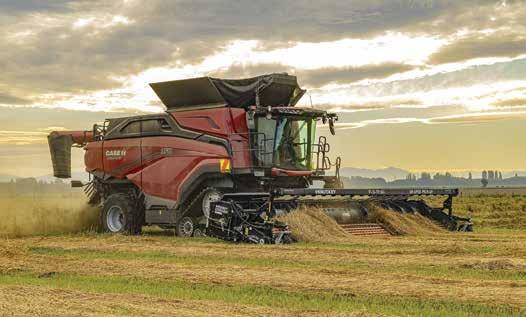
and trying to get it done faster and more efficiently,” he says.
Constant rain made for another challenging harvest this year, with the Watson farm receiving 260 mm from the beginning of January to the end of February.
To put that into perspective, their average annual rainfall is about 600 mm.
So it took some time to be able to get into the paddocks, but when he could finally get the AF10 – with its MacDon 35-ft front - on the job, he was impressed with what he saw and was able to achieve.
“With the likes of the ryecorn, which grows taller than the wheat, it went really well.
“I was surprised how well it handled the green straw, especially in the ryecorn as well as in the wheat. Some of the wheat straw was a bit green, but especially in the ryecorn, it certainly did exceed my expectations,” Eric says.
“One of our ryegrasses was swathed straight after about forty millimetres of rain and the row was quite wet underneath when we harvested it.
“It never really dried much in the swathe and I was surprised how well it handled the wet, damp ryegrass as well.”
Eric appreciates the significant investment he’s made in the AF10, and knew it had to justify the expense, but the amount of crop he’s been able to get through in limited periods of time confirm he’s made the right call.
“A couple of times during harvest, I was asked how much I’d got done over the likes of a weekend, and I’d say, ‘oh, I've done all that, and that’ and they would be really impressed with just how much we’d got off, and the speed with which we’d been able to do it,” he says.
The AF10’s 775 horsepower makes it Case IH's highest horsepower and biggest capacity combine to date.
Its grain-handling capacity has been enhanced with an industry-leading 20,000-L grain tank.
The AFXL rotor on the AF10 is longer
than previous series, meaning 50% more separation to process high-yielding crops.
Greater control and consistency in harvest are achieved through tailored visibility in the dual Pro 1200 displays as well as real-time machine monitoring, remote view of in-cab displays and visualisation of agronomic data layers through FieldOps.
Part of the AF series’ optimisation is also evident in Case IH’s Harvest Command system, designed to enhance harvest efficiency and productivity.
Harvest Command automation monitors everything from ground speed and engine load, to feed rate control and sieve settings, which are based on the feedback received from the loss sensors, a grain camera and sieve pressure sensors.
Eric says losses during harvest were lower, and he found the AF10 reasonably user-friendly when it came to learning to operate it.
He appreciates the advantages of the new, larger Pro 1200 screen, and the advancement in the automation features, which allowed him to monitor in real time the machine’s performance and progress.
The extra horsepower in the heavy straw crops he grows paid dividends as well.
Rain and lack of sunshine during critical growing periods meant below average yields this year, he says, but on the positive side the AF10 has helped his current cultivation and planting schedule.
He’s confident though that whatever the next harvest season throws at the business, he’s got the right machine for any conditions.
“The AF10 has been a great investment for us.
“It’s handled a variety of crops – and in pretty atrocious weather conditions at times – really well and in a year when yields were impacted, we needed every advantage we could get to maximise returns. It’s ticked every box.”
Last autumn caught many growers out. Warmer-than-usual conditions kept aphids flying later into the season, resulting in widespread Barley Yellow Dwarf Virus (BYDV) infection across cereal crops.
WORDS: Syngenta
With a super El Niño forecast to deliver a potentially warmer winter this year, the risk of elevated aphid pressure and increased BYDV infection is a significant threat.
Now is the time to act.
BYDV is spread by cereal aphids and can cause significant yield losses in all cereal crops, particularly in autumnsown crops.
Symptoms like leaf yellowing, reddening, and stunting often don't appear until three weeks after infection, meaning the damage is done before you see it.
Cereals are most vulnerable from tillering through to GS 31, and warmer winter conditions are likely to sustain aphid populations for longer, widening the window for both initial and secondary infection within the crop.
FAR's Aphid Watch monitoring programme is a valuable tool for understanding aphid flight activity in your region.
Use this data alongside regular crop inspections to time your applications accurately.
Apply an insecticide promptly if aphids are present; don't assume one spray is enough during a high-pressure season.
Many autumn-sown crops are established with neonicotinoid seed treatments, which provide protection for around six weeks to approximately GS 21.
It's important to recognise that neonicotinoids are Group 4 insecticides.
Once seed treatment protection wanes, your first foliar application should come from a different mode of action group – not another Group 4.
Starting your foliar programme with Karate Zeon, a Group 3 synthetic pyrethroid (SP) insecticide, is a logical and effective first step providing fast knockdown, repellency and antifeeding activity on aphids.
Karate Zeon applied at 20–40 ml/ ha offers proven persistence of up to 25 days based on FAR trial results in autumn-sown wheat, thanks to lower temperatures and reduced UV degradation.
More than one application can be applied, but relying on it alone builds resistance risk.
The critical rule: DO NOT rotate Karate Zeon with other Group 3 SP insecticides.
Alternating with a product from the same mode of action will not slow the development of resistance within aphid populations.
Instead, alternate Karate Zeon with an aphicide from a different mode of action group.
Pirimor insecticide belongs to Group 1 and can be applied at 200–250 g/ha for selective aphid control via contact, translaminar and fumigant activity.
Pirimor is most effective above 15°C, making it best suited as temperatures start to rise later into spring.
Beneficial insect populations are relatively low at the early growth stage of cereals when the risk of BYDV
infection is greatest.
The use of Karate Zeon early in the season is therefore unlikely to have a significant impact on beneficial insect populations.
Pirimor is highly selective to aphids and can be used safely later in the season when beneficial insects are more prevalent in the crop.
The bottom line
With a super El Niño forecast and the memory of last season's BYDV losses still fresh, this is not a year to be reactive.
Use Aphid Watch data, start monitoring early, sequence your modes of action from the very first foliar application and keep gaps between sprays tight during the high pressure periods. Karate Zeon and Pirimor used in rotation will give you a proven programme – but only when the timing and sequencing are right.
For more details, contact your local Syngenta territory sales manager.
Symptoms of BYDVinfected wheat plants.
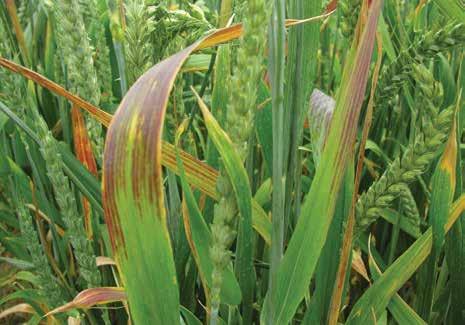
Free recycling of seed, feed, and fertiliser plastic bags for New Zealand farmers and growers


FREE AND EASY
No cost to you and simple to return
NATIONWIDE ACCESS
Over 200 collection sites across NZ
BUILT FOR CIRCULARITY
Keeping plastic in use and out of landfill
STRONGER TOGETHER
Building a sustainable future for farming
FIND OUT HOW EASY IT IS AT agrecovery.co.nz
An alphabetical listing of companies supplying a wide range of products and services to New Zealand Arable growers and industry.
A4AG LTD
Manawatu (Head office), Waikato, Canterbury & Southland
P: 0800 424 100
E: info@4ag.co.nz
www.4ag.co.nz
Products & Services: A comprehensive range of Cultivation, tillage & seeding equipment, including primary offset discs, grubbers, soil looseners, prerippers, rolling aerators, power-harrows, disc/ripper combinations, multi-discs, stubble cultivators, folding cambridge rollers, direct drills, roller-drills, air seeders, cultivation drills, strip-till units, precision planters, fert distribution systems, land levelers, Hardox Trailers for silage or rock work, mulching & topping mowers, cultivation wear parts. Specialist advice for the best machine to suit your requirements.
ACCIDENT COMPENSATION CORPORATION (ACC)
PO Box 242, Wellington 6140
P: 0800 222 776
www.acc.co.nz
ADAMA NEW ZEALAND LTD
Level 1, 93 Bolt Road, Annesbrook, Nelson
PO Box 1799, Nelson 7040 P: 03 543 8275
E: nzinfo@adama.com www.adama.com
Products & Services: Agriculture & horticulture crop protection chemistry.
ADRIA CROP PROTECTION
PO Box 535, Kumeu 0841
P: 09 412 9817
E: len@adria.nz www.adria.nz
Contact: Len Stulich
Products & Services: Marketers of a full range of agricultural & horticultural chemicals.
ADVANCE AGRICULTURE
14 Tamworth Lane, Gore 9710
P: 03 203 9100
E: janine@advanceag.co.nz
www.advanceag.co.nz
Contact: Janine Smith
Products & Services: Specialist suppliers of agrichemicals, seed, spray equipment & precision ag.
AG PARTS NZ
42 Thames Street, Morrinsville 3300
P: 07 889 7107
E: steve@agparts.nz
www.agparts.nz
Contact: Steve Elgar
M: 021 070 7081
Products & Services: Late model tractor dismantler.
AGCO NZ LTD
840 Arthur Porter Drive, Burbush, Hamilton
PO Box 764, Waikato Mail Centre, Hamilton 3240
P: 07 974 1780
www.masseyferguson.co.nz www.fendt.com.au www.valtra.com
Products & Services: Through our nationwide network of locally owned dealerships, AGCO offers a complete range of agricultural machinery including tractors, hay, harvesting & materials handling equipment from world-renowned brands such as Massey Ferguson, Fendt & Valtra. High performing & quality machinery ideally suited to New Zealand farmers that are supported up by a professional & highly skilled dealer network.
AGRECOVERY
111 The Terrace, Wellington Central, Wellington PO Box 25642, Wellington 6140
P: 0800 247 326
E: info@agrecovery.org.nz www.agrecovery.co.nz
Contact: Tony Wilson
Products & Services: Agrecovery is NZ’s solution for the disposal of unwanted agrichemicals, & the recycling of empty containers, drums, IBCs & small seed, feed & fertiliser bags. Supported by over 100 brands of agrichemicals, dairy hygiene & animal health products, the Agrecovery programme is available to all farmers & growers at over 160 sites nationwide. Our focus is on providing sustainable options for more farm plastics & achieving better environmental outcomes for rural communities.
1375 Springs Road, Lincoln PO Box 69168, Lincoln 7640
P: 0800 183 358
E: info@agricom.co.nz
www.agricom.co.nz
Contact: Mark Brown
Products & Services: Agricom researches, develops & markets a wide range of proprietary pasture & forage crop seeds to the agricultural industry.
487 Tancreds Road, Lincoln PO Box 69035, Lincoln 7640
P: 03 325 3311
E: a.pullin@agrimm.co.nz
www.agrimm.co.nz
Products & Services: Agrimm develops & manufactures biological plant protection products based on the beneficial fungus Trichoderma. Agrimm provides safe, environmentally sustainable plant health & protection products for vineyards, orchards, glass house & field crops. A range of ACVM registered & BioGro certified products available.
AGRIQUIP
30 Hurlstone Drive, Waiwhakaiho, New Plymouth PO Box 578, New Plymouth 4340
P: 06 759 8402
E: sales@agriquip.co.nz
www.agriquip.co.nz
Contact: Mark Hamilton
Products & Services: Spreadmaster fertiliser spreaders, firewood processors, firewood saw benches, woodsplitters, concrete mixers, chipper/shredders, trenchers, transport trays, tractor mounted edgers, stump grinders, Bomford/McConnel/spearhead hedgecutters, verge mowers, radiocontrolled slope mowers, tuchel rotary sweepers, vacuum machines, Agriquip PTO driven generators. Spearhead Multicut rotary mowers, major mowers, Mulcher mower, Boom mowers, Hedge mulchers.
AGRION CROP SOLUTIONS
119 Carbine Road, Mount Wellington, Auckland 1060
P: 09 884 6358
F: 09 270 0250
E: malcolm.meads@agrion.co.nz www.agrion.co.nz
Contact: Malcolm Meads
Products & Services: Manufacturers, leading adjuvant technology for broadacre, horticulture, viticulture, forestry. Specialising in environmentally responsible adjuvants for agricultural & aquatic situations.
AITCHISON AGRI
36 Ratanui Street, Aorangi, Feilding PO Box 4114, Manawatu Mail Centre, Palmerston North 4442
P: 06 357 9323
E: info@farmgear.co.nz www.aitchisonagri.com
M: 021 433 129
Products & Services: Aitchison manufacture an extensive range of seed drills, fertiliser spreaders & accessories. The Grassfarmer, Seedmatic & Airpro seed drill models are available with the coulter disc & T-Boot tine openers or Concave Disc openers.
13 Range Street, Ashburton PO Box 71, Ashburton 7740 P: 03 308 4094
E: craig@allencustomdrills.co.nz www.allencustomdrills.co.nz
Products & Services: Agricultural direct air seeder drill manufacturer & specialist.
ALPINE BUILDINGS NZ LTD
P: 0800 428 453
E: sales@alpinebuildings.co.nz www.alpinebuildings.co.nz
Products & Services: Birdproof & Clearspan kitset sheds & buildings nationwide.
9 John Morten Place, Rolleston 7614
P: 0800 100 668
E: arl.lab@arllab.co.nz www.arllab.co.nz
Products & Services: ARL is New Zealand’s leading soil, plant, feed, and fertiliser analytical laboratory. In a sector where timing, accuracy and relevant data is critical, ARL exists to dig deeper - offering efficient, flexible and precise testing that empowers confident and clear decision making. IANZ accredited labe (ISO 17025) and a member of the NZ Association of consulting laboratories and ASPAC (Australian Soil and Plant Analytical Council).
ANIMAL AND PLANT HEALTH
ASSOCIATION OF NZ
PO Box 5069, Wellington 6140
P: 027 341 2834
E: enquiry@aphanz.co.nz www.aphanz.co.nz
Products & Services: Providing the One Voice for members of New Zealand’s animal health and crop protection industry.
AQUALINC RESEARCH LTD
PO Box 42128, Tower Junction, Christchurch 8149
P: 03 964 6521
E: info@aqualinc.co.nz www.aqualinc.co.nz
Contact: Matt Bubb
Products & Services: Water resource consultants. Irrigation management & system evaluations. Soil moisture monitoring & telemetry systems. Resource consents & compliance.
ARABLE FOOD INDUSTRY COUNCIL
PO Box 23143, Hornby, Christchurch 8441
P: 03 349 8430
www.afic.co.nz
Contact: Sarah Clark
ARABLE INDUSTRY GROUP
Federated Farmers
PO Box 447, Waikato Mail Centre, Hamilton 3240
P: 0800 327 646
E: 0800@fedfarm.org.nz
www.fedfarm.org.nz
ARIKI SEEDS LTD
117 Halkett Road, RD 6, Christchurch 7676
E: arjen@arikiseed.com www.arikiseed.com
Contact: Arjen Buter - Managing Director
M: 021 652 219
E: arjen@arikiseed.com
Contact: Jan Buter - Associate Director
M: 022 184 6438
E: jan.buter@arikiseed.comz
Products & Services: Specialists in vegetable seed multiplication, both field and protected production.
ARXADA NZ LTD
13-15 Hudson Road, Bell Block, New Plymouth PO Box 8110, New Plymouth 4340
P: 06 755 9234
F: 06 755 1174
E: office-newplymouth@arxada.com www.arxada.co.nz
Products & Services: Locally researched, developed and manufactured agrichemical products in New Zealand. All products produced and distributed including: Herbicides: Arxada Activated Amitrole, Beetrix, Bruno, Dynamo, Headstart, Ignite, Jazz, Jive, Komodo, Millennium, Neeko Oleo, Oxy 500SC, Polka, Prominent, Pycus, Quantum, Saxon, Spark, Stratos, Tag G2, Taipan CS, Terb 500, Twister, Victory Gold, Vixen, Yield.
Fungicides: AgCopp 75, Apex, Barrachlor 720, Cannon, Cobra, Companion Gold, CuSol, Dodine, Esteem, Foschek, Mondo, Neptune, Nexus, Pinnacle, Protek, Speartek, Taratek 5F, Topsin M.
Insecticides: Alpasso, Axcela, Cyhella, Mortar, Pylon, Sniper.
Specialty: Advance Gold, Amplify, Axcela, Brurnout, Companion Gold, Lifegard, Oasis, Squall.
Foliar Fertilisers: (Headland) Boron150, Jett, Ksolve, MagSuper 80, Mo-Bo, Molybdenum 250, Multiple Pro, SeaMaxx, Vanir, Zinc 150.
ASUREQUALITY LTD LINCOLN
PO Box 85006, Lincoln University, Lincoln 7647
P: 021 983 552
F: 03 325 7088
E: rouke.bakker@asurequality.com www.asurequality.com
Contact: Rouke Bakke
Products & Services: A comprehensive range of plant disease diagnostic services including seed health testing, potato virus testing & seed endophyte testing, plant export verification services, plant health surveys.
PALMERSTON NORTH
PO Box 609, Palmerston North Central, Palmerston North 4440
P: 06 351 7940 Ext: 2
E: seedlab@asurequality.com www.asurequality.com
Products & Services: A comprehensive range of seed testing & diagnostic services.
AURORA PROCESS EQUIPMENT
PO Box 9573, Waikato Mail Centre, Hamilton 3240
P: 0800 557 733
P: 07 847 5315
F: 07 847 5316
E: sales@aurora-process.com www.aurora-process.com
Contact: Mike Goddin
Products & Services: Bag & sack filling & closing - sales & servicing. Portable machines - industrial machines. Thread supplies. Palletizing systems - robotic or conventional options for bag/box/crate/carton. Bagging systems - valve & open mouth bag filling, closing & handling.
AUSTINS FOUNDRY
131 King Street, Kensington, Timaru 7910
P: 03 688 8963
AH: 027 273 3975
F: 03 688 3942
E: austinsfoundry@xtra.co.nz www.austinsfoundry.co.nz
Contact: Ken Austin
Products & Services: Cambridge rollers & roller drills from 2.5 to 9m.
BA PUMPS & SPRAYERS
89 Hautapu Road, Cambridge PO Box 5272, Hamilton 3242
P: 0800 833 538
E: orders@bapsnz.com www.bapumpsandsprayers.co.nz
Contact: Paul France
Products & Services: BA Pumps & Sprayers (formerly Bertolini Australasia) are a local manufacturer of a full range of specialist linkage, trailed & deck mounted sprayers for the agriculture, horticulture & viticulture industries. NZ distributor of Bertolini pumps, TeeJet agricultural spraying accessories, TeeJet Midtech GPS guidance systems, Arag componentry & Shurflo pumps. All BA Pumps & Sprayers products are available nationwide through our specialist dealer network.
BALLANCE AGRI-NUTRIENTS LTD
Private Bag 12503, Tauranga Mail Centre, Tauranga 3143
P: 0800 222 090
E: CustomerServices-Mount@ ballance.co.nz www.ballance.co.nz
Products & Services: Ballance Agri-Nutrients is a NZ farmer owned co-operative that helps customers farm more productively, profitably & sustainably.
From our core business of fertiliser manufacturing, supply & advice, we have grown to offer a full range of science-backed nutrient products & services. This enables us to help farmers & growers achieve soil nutrition, animal nutrition & productivity with a minimal environmental footprint. Our agri-nutrient advice is complemented by digital tools that help boost farm performance. Key arable products include SustaiN, YaraMila Complex, YaraMila 8-11-20, YaraMila Actyva S & the Cropzeal range.
BARENBRUG NEW ZEALAND
2547 Old West Coast Road, RD 1, Christchurch 7671
P: 03 318 8514
F: 03 318 8549
E: jgardner@barenbrug.co.nz www.barenbrug.co.nz
Contact: Jake Gardner
Products & Services: Proprietary forage breeding, sales & marketing, domestically & export. 4front, Array, Maxsyn, Rohan, Governor & Tyson perennial ryegrass. Shogun & Forge hybrid ryegrass, Tabu Plus Italian ryegrass, Racer annual ryegrass. Bareno pasture brome, Redefine cocksfoot. Apex, Ruru & Kotuku white clover. Morrow red clover, Campeda sub clover, 501 chicory, Hattrick forage oat, Dynamo turnip, Interval forage rape, Reviva leafy rape, Bombardier kale & Invitation swede. Robbos fodder beet. Captain plantain. Zulu II annual clover, Laser Persian clover, Agricote seed treatment, NEA12, NEA2, NEA4, NEA & AR37 endophytes.
BASF NEW ZEALAND LTD
Shed 5E City Works Depot, 77 Cook Street, Auckland Central, Auckland 1010
P: 09 255 4300
P: 09 255 4331
E: robert.svadlenak@basf.com www.crop-solutions.basf.co.nz
Contact: Robert Svadlenak - Head of Business Management - Agricultural Solutions, New Zealand
M: 027 263 0489
E: robert.svadlenak@basf.com
Products & Services: Global agricultural chemical company, committed to providing market-leading solutions & advice to help growers get the most out of each season.
Herbicides: Basagran, Buster, Frontier-P, Pulsar, Sharpen, Stomp Xtra. Fungicides: Belanty, Colliss, Comet, Delan, Kumulus DF, Imtrex, Opus, Polyram DF, Pristine, Revylution, Revystar, Sercadis, Vivando, Zampro.
Insecticides: Fendona, Ripcord, Ripcord Xtra, Termidor 100SC.
Other: Cycocel, Selontra, Storm Secure, Terpal, Regalis Xtra.
Seed treaments: Kinto Duo, Poncho, Poncho Votivo, Systiva.
BAYER CROP SCIENCE
B: HIVE Building, 74 Taharoto Road, Takapuna, Auckland www.cropscience.bayer.co.nz
Contact: Neil Waddingham M: 021 755 326
Products & Services: Suppliers of crop protection products, including: Herbicides: Artist, Betanal Forte, Betanal quattro, Firebird, Hussar, Nortron, Othello, Puma S, Roundup UltraMAX & Sakura.
Fungicides: Aviator Xpro, Delaro, Folicur, Luna Experience, Proline, Prosaro, VIMOY iblon.
Insecticides: Movento OD, SIVANTO prime & Velum Prime.
Seed Treatment Arable: Gaucho, Raxil Star.
BIOECONOMY
(NEW ZEALAND INSTITUTE FOR BIOECONOMY SCIENCE LIMITED)
Tuhiraki, 19 Ellesmere Junction Road, Lincoln Private Bag 4749, Christchurch 8140 P: 03 321 8800 www.bioeconomyscience.co.nz
Products & Services: The Bioeconomy Science Institute brings together New Zealand’s four leading bioeconomy research institutes, AgResearch, Manaaki Whenua – Landcare Research, Plant & Food Research and Scion, into a single organisation. We are more than 2,300 people,
including more than 1,500 scientists and researchers, located across Aotearoa New Zealand and around the world.
Together, our world-class science can advance innovation in agriculture, horticulture, forestry, aquaculture, biotechnology and manufacturing; protect and enhance ecosystems from biosecurity threats and climate risks; and develop new bio-based technologies and products.
BIO-START LTD
17 Reta Crescent, RD 1, Paeroa 3671
P: 0800 274 524
E: info@biostart.co.nz
www.biostart.co.nz
BioStart is a leading New Zealand biological AgriTech company that has developed a proprietary range of biological farming solutions that foster healthier plants, soils and animals. BioStart’s range is designed to be reliable and easy to use by farmers and growers looking for biological products to improve productivity and quality. Products & Services: Products include forage preservatives HayKing, SilageKing & SilageKingHV, MaizeKing & MaizeKingHV, BioShield Grass Grub control, soil biostimulants, Mycorrcin & Digester, biofertilizer, Biostart N, and crop protection products, TripleX, Terracin and Karbyon.
BLAIRS SUPERTYRE DISTRIBUTORS
LTD
PO Box 14, Geraldine 7956
P: 0800 80 90 96
P: 03 693 8122
E: blairs@blairs.co.nz
www.blairs.co.nz
Contact: Warren Blair
Products & Services: Tyres - Brands include Trelleborg, Tianli, Kumho, Petlas, Goodride, Westlake, Wanda.
BRANDT RENTAL AND LEASING LTD
1318 Omahu Road, Twyford, Hastings PO Box 2098, Hastings 4156
P: 06 879 9907
F: 06 879 9902
Contact: Bill Barker
M: 027 458 7461
Products & Services: Tractor rental & leasing. Casual hire, charged by the hour. Long term leasing charged by the month.
BRIDGESTONE NEW ZEALAND LTD
PO Box 91440, Victoria Street West, Auckland 1142
P: 0800 802 080
P: 09 573 5700
www.bridgestone.co.nz
Contact: Jason Tennat - South Island M: 021 431 846
E: jason.tennant@bridgestone.co.nz
Contact: Jason Graham - North Island M: 021 364 383
E: jason.graham@bridgestone.co.nz
Products & Services: Bridgestone & Firestone agricultural tyres & related services.
BROWNRIGG AGRI GEAR LTD
768 Pirongia Road, RD 6, Te Awamutu 3876
P: 021 942 125
E: gavinbrownrigg@hotmail.com www.brownriggagrigear.co.nz
Contact: Gavin Brownrigg
Products & Services: NZ distributor for Slurrykat, Donnelly Trailers & SLS trailers.
CCARRFIELDS GRAIN AND SEED
60-62 Cass Street, Ashburton PO Box 19, Ashburton 7740
P: 03 307 6979
F: 03 307 6960
E: grainandseed@carrfields.co.nz www.carrfields.co.nz
Contact: Glenn Moore
Products & Services: Producers & exporters of grain, seeds & pulses. Specialist producer of vining/garden pea seed & multipliers of overseas cultivars & vegetable seeds for reexport. Procurement, marketing & sales of feed & milling cereals as well as cereal seed suppliers.
Stantec Building, Level 2/105 Carlton Gore Road, Newmarket, Auckland PO Box 99873, Newmarket, Auckland 1149
P: 0800 CASTROL (227 876)
E: orders@castrol.co.nz www.castrol.com/nz
Products & Services: Lubricants and fluids for agricultural equipment, commercial vehicle, motorcycle, passenger car, and more.
2 Kermode Street, Ashburton PO Box 337, Ashburton 7740
P: 03 308 7166
E: info@cates.co.nz www.cates.co.nz
Contact: Stuart Begg
Products & Services: Grain, seed & agri-chemical merchants including small seeds, cereals, brassica & pulses for both domestic & international markets.
CLARKES SEED & FEED LTD
55 Annan Street, West Invercargill, Invercargill 9810
P: 0800 621 431
P: 03 214 3104
E: office@clarkes.net.nz www.clarkes.net.nz
Contact: Garry Clarke
M: 027 453 4066
Products & Services: Seed cleaning & treating, seed supplies & screening, pasture mixtures, brassica seeds, stock feed manufacturers, all dairy & calf feeds.
COCKSFOOT GROWERS ASSOCIATION
PO Box 16574, Hornby, Christchurch 8441
P: 03 347 7950
Contact: Brent Stirling (Cropmark Seeds Ltd)
Products & Services: Growers of Cocksfoot. Marketer - seeds.
CONTINENTAL FARM TYRES
PO Box 1590, Invercargill 9840
P: 0800 275 897
E: info@continentalfarmtyres.co.nz www.continentalfarmtyres.co.nz
CORSON GRAIN LTD
PO Box 1046, Gisborne 4040
P: 021 633 167
E: info@corson.co.nz www.corson.co.nz
Products & Services: Food grade maize millers, maize grain merchants & hominy meal.
CORSON MAIZE
PO Box 69132, Lincoln 7640
P: 0800 4 MAIZE (0800 462 493) www.corsonmaize.co.nz
Contact: Graeme Austin - National Business Manager
M: 027 433 0161
Products & Services: Suppliers of premium maize hybrid seed.
CORTEVA AGRISCIENCE
Private Bag 2017, New Plymouth 4340
P: 0800 803 939
E: NZCustomerService@Corteva.com www.corteva.co.nz
Products & Services: Products & Services: Manufacturers of agricultural crop protection chemical: Herbicides: Milestone, Rexade GoDri, Korvetto, Paradigm, Tordon PastureBoss, Tordon Brushkiller XT, Tordon 2G Gold, Gallant Ultra, Kerb 500F, Versatill Powerflo, Starane Xtra, Preside, Radiate, T-MAX, Vigilant II.
Fungicides: Questar, Acanto, Kocide
OPTI, Zorvec Enicade, Fontelis, Talendo.
Insecticides: TwinGuard, Transform, Prodigy, Sparta, Entrust SC Naturalyte. Surfactants: Uptake Spraying Oil.
CRIDGE SEEDS LTD
Railway Terrace, Doyleston, Canterbury
PO Box 3, Doyleston 7548
P: 03 324 3951
E: cridgeseeds@xtra.co.nz www.cridgeseeds.co.nz
Contact: Nick Reid
M: 022 083 3579
Products & Services: Wholesalers & retailers of top-quality ryegrass & clovers (including annual clover). Mixes to suit all pasture requirements. Cleaning specialists.
CROPLANDS
1422 Omahu Road, Twyford, Hastings 4175
P: 0800 106 898
F: 0800 117 711
www.croplands.com/nz/
Contact: Rob Marshall - NZ Regional Manager / South Island
Vic Barlow - Lower North Island and Gisborne
Ashley Robinson - Upper North Island and Taranaki
Products & Services: Manufacturer & importers of all types of agricultural & horticultural spraying equipment.
Stockists of leading brands of components & parts, including spray controllers, pumps, tanks, Raven GPS technology, nozzles, fittings, selfpropelled sprayers & autonomous sprayers.
CROPMARK SEEDS LTD
PO Box 16574, Hornby, Christchurch 8441
P: 0800 4 CROPMARK (0800 427 676)
P: 03 347 7950
www.cropmarkseeds.com
Contact: Callum Davidson
Products & Services: The breeding, marketing & sale of a range of forage grasses, clovers & brassicas into global markets; forage endophyte research & development; specialist crop seed multiplication & nursery work.
DDARFIELD SEED LTD
87 Horndon Street, Darfield 7571
P: 03 318 8595
E: admin@darfieldseed.co.nz
Contact: Troy Collings
Products & Services: Seed cleaning & seed treating.
DE SANGOSSE NEW ZEALAND LTD
PO Box 729, Tauranga 3144
P: 07 571 0908
E: infonz@desangosse.com www.desangosse.co.nz
Contact: Kieran Fowler
M: 021 473 458
Products & Services: Plant Nutrition, Biologicals, Specialties.
Starter fertiliser: Microstar PZ and Microstar Plus
Foliar nutrition: Azofol NS, Actiflow Multicrop, Brassimax, Fixa B, Boronia Mo, Thiomax C, Fixa Mn, Moly (Mo), Pancal.
Plant stress management products, frost prevention & mitigation: Fertigofol Ultra, Reflect, Sealeaf. Organic inputs: Actigreen, Borozinc, Mg85S, Amylis, Trichomax, Qualical Pro.
Utility products: Tanksafe spray equipment cleaner/decontaminant, Foamfix prevention & elimination of foaming. Adjuvants.
Biological Fertilisers: Baseos Duo, N-Leaf Duo, Amylis, Trichomax, Connectis.
DONAGHYS CROP LTD
PO Box 1075, Christchurch 8140
P: 03 338 6509
E: Sales@donaghyscrop.co.nz www.donaghyscrop.co.nz
Contact: Customer Service Products & Services: Bale wrap, Balenet, silage covers, bale twine, silage tubes & bags plus horticultural twines.
Let us know if you have any crop packaging requirements & our nationwide team will assist you.
239 Alford Forest Road, Allenton, Ashburton 7700
P: 03 307 7445
E: info@euroagri.co.nz www.euroagri.co.nz
Contact: James McCloy, Seaun Lovell, John Brady
Products & Services: Exclusive NZ importers & service agents for Househam sprayers, Bredal spreaders, HEVA cultivation & drilling equipment, Mzuri striptillage, Billericay spray nozzles & Agreto agricultural electronics. In addition, we are the dealers & service agents for Lemken cultivation & drilling equipment, McConnel, & Ag Leader precision farming technology.
FFAR
Foundation for Arable Research
PO Box 23133, Hornby, Christchurch 8441
P: 03 345 5783
E: far@far.org.nz www.far.org.nz
Contact: Scott Chapman
Products & Services: Responsible for the investment of grower levy funds & other grants & industry investments for research & information transfer to provide benefits to NZ arable growers.
INVERCARGILL BRANCH
51 North Road, Prestonville, Invercargill
PO Box 619, Invercargill 9840
P: 0800 327 624
P: 03 215 7750
E: ben@farmchief.co.nz
www.farmchief.co.nz
Contact: Ben Abernethy
GORE DEPOT
231 Main Street, Gore 9710
P: 0800 327 624
CHRISTCHURCH BRANCH
10 Curraghs Road, Rolleston PO Box 16069, Hornby, Christchurch 8441
P: 03 349 4450
E: todd@farmchief.co.nz
Contact: Todd Murray
PALMERTSON NORTH BRANCH
6 Noel Rodgers Place, Milson, Palmerston North 4414
P: 06 354 6404
E: tony@farmchief.co.nz
Contact: Tony Pedley
WAIKATO BRANCH
P: 07 444 4544
E: alano@farmchief.co.nz
Contact: Alan Ogden
FARMGARD LTD
10 Toiawaka Road, Drury 2579
P: 09 275 5555
F: 09 256 2220
E: sales@farmgard.co.nz www.farmgard.co.nz
Contact: Scott Capper
Products & Services: Celli rotary hoes, power harrows, spikes rotors & spaders. Berti stubble mulchers, gorse mulchers, forestry mulchers, digger mounted mulchers, orchard mulchers/mowers, park mowers & toppers. Farmgard grader blades & pre rippers. Stanhay precision planters. RZ RANGE Discs, multi discs, rippers, rollers, cultivators,
Min Till equipment. Overum ploughs. ABBEY muck spreaders, slurry tankers, Grainstor grain storage equipment.
FARMLANDS CO-OPERATIVE
535 Wairakei Road, Burnside, Christchurch
PO Box 271, Christchurch 8140
P: 0800 200 600
E: ask@farmlands.co.nz www.farmlands.co.nz
Products & Services: Supplier of agricultural, horticultural and nutritional products to rural, lifestyle & commercial customers.
FERN ENERGY LTD
L3/10 Show Place, Addington, Christchurch 8024
P: 0800 99 99 89
E: enquiries@fernenergy.co.nz www.fernenergy.co.nz
Products & Services: Bulk Fuel & Lubricant Specialists.
FMC NEW ZEALAND LTD
PO Box 64199, Botany, Auckland 2163
P: 0800 658 080 www.fmccrop.nz
Contact: Sandra Read
Products & Services: Marketers of agrichemical products, including: Herbicide: Authority, Glean, Granstar, Foxtrot, Hammer Force, Harmony, Magister, Shark.
Fungicide: Octave, Rovral Aquaflo, Sportak.
Insecticide: Altacor, Avaunt, Benevia, Coragen, Exirel, Fyfanon, Steward eVo, Tripsol.
FMG | FARMERS MUTUAL GROUP
FMG House, 284-292 Church Street, Palmerston North PO Box 1943, Palmerston North Central, Palmerston North 4440
P: 0800 366 466
E: info@fmg.co.nz www.fmg.co.nz
Products & Services: Seasonal cover, including fire only cover is available for a variety of crops – maize, barley, and certain fodder crops, seed crops, and vegetables – as well as top-up cover for the United Wheat Growers Scheme.
FONTERRA FARM SOURCE
Level 1, 17 Home Straight, Te Rapa, Hamilton PO Box 9045, Waikato Mail Centre, Hamilton 3240
P: 0800 731 266
F: 0800 731 329
E: nzfss.customerservice@fonterra. com www.nzfarmsource.co.nz/store
FRASER GRAIN & SEED LTD
PO Box 220, Rangiora 7440
E: fraser05@xtra.co.nz
Contact: Alan Fraser
M: 0274 329 273
Products & Services: Grain & Seed Merchant. Agricultural Chemicals.
FUELCHIEF LTD
185 Kirk Road, Templeton, Christchurch PO Box 160175 Hornby, Christchurch 8441
P: 03 384 2380
E: rowan.smithers@fuelchieftanks.com www.fuelchieftanks.com
Products & Services: Manufacturers of FUELCHIEF & SEBCO diesel stations, oil recovery units & blue stations for adblue.
GGENETIC TECHNOLOGIES LTD
PO Box 105303, Auckland City, Auckland 1143
P: 0800 PIONEER (0800 746 633)
P: 09 307 0000
E: marketing@genetic.co.nz www.pioneer.co.nz
Products & Services: NZ producers & distributors of Pioneer brand seeds & related forage products.
Maize: Hybrid maize for grain & silage. Forage: Lucerne, hybrid forage sorghum, microbial silage inoculants & inoculant application systems. Agronomy, animal nutrition & farm systems management; seed treatment; maize planter calibration.
GILTRAP AG
100 Hilton Highway, Washdyke, Timaru 7910
P: 03 688 2029
E: info@giltrapag.co.nz www.giltrapag.co.nz
Contact: Matt Moodie
M: 021 880 114
Products & Services: Manufacturers, exporters & distributors of Duncan seed drills.
GOUGH AGRITECH LTD
2003 Coaltrack Road, RD 1, Christchurch 7671
P: 03 318 8132
E: jo@goughagritech.co.nz www.goughagritech.co.nz
Contact: Doug Gough
M: 027 480 2604
Products & Services: Importers & distributors of:
Flach & LeRoy Crop Drying & Ventilation Equipment: For grain & seeds, onions, potatoes, bulbs. Drive on ventilated timber flooring, fans, heaters, consultation & design.
Brandt Agricultural Products Ltd: Swing away Augers, Conventional Augers, Grain Vacs, Grain Belt
Conveyors, Heavy Harrows.
Twister Silos: Hopper and flat bottom, full size range.
“Never Spill Spout”: Auger-mounted full silo alarm.
Cestari: Grain Carts/Chaser Bins.
Grain Air Tubes: Non-powered silo aeration.
Richiger Grain Bagging Equipment: Grain bag loaders, grain bag unloaders, grain bags.
Laumetris: Grain trailers, Bale platform trailers, Silage trailers with moving floor, Construction trailers.
GPS CONTROL SYSTEMS LTD
PO Box 16228, Bethlehem, Tauranga 3147
P: 0800 Trimble (0800 874 625)
E: gpscsl@icloud.com
Contact: John Ahearn
Products & Services: RTK Correction
Signal - We operate a GNSS reference station network that broadcasts RTK correction signals to the farming regions in NZ. Customers pay a yearly subscription for access to the signal & this also includes free technical support. The RTK correction signal can be used by Trimble, Topcon & Leica GPS systems, John Deere, Fendt, Massey, CAT, Claas, New Holland & Case factory installed RTK systems.
GRAY ENGINEERING SOLUTIONS
20 Watson Street, Ashburton 7700
P: 03 308 8335
E: info@engsolutions.co.nz www.engsolutions.co.nz
Contact: Luke Maginness & Hayden Bonnington
Products & Services: Grain augers, heavy water ballast rollers, spiral welded steel pipe, general engineering & machining.
GRAYMONT (NZ) LTD
Level 4, 214 Collingwood Street, Hamilton Lake, Hamilton 3204 P: 0800 245 463
E: kowen@graymont.com www.graymont.com
Contact: Kylie Owen Products & Services: Quicklime, Aerolime, Hydrated lime, Aggregates, Calcimate & Agricultural lime.
GREVILLIA AG NZ LTD
23B Manuka Street, Hokowhitu, Palmerston North 4410
P: 06 354 1030
www.grevilliaag.com.au
Products & Services: Rapid Plus, spray adjuvant will enhance the effectiveness of certain herbicides, insecticides & defoliants. Si-Lac silage inoculants. Pro-mark Foam Marker, heavy duty foam blob marker pink & white. ON-Target, water modifier to reduce droplet bounce & drift for better chemical deposition &
retention. Pro-Max, an Advanced high specification spray adjuvant especially designed for use in hard water. ProKleen Granular, an all-in-one pesticide decontaminant. Pro-Dye Red, a nontoxic vegetable-based marker dye.
HH&T AGRONOMICS
69 Kawakawa Road, Feilding PO Box 321, Feilding 4740
P: 06 323 5091
E: info@hnt.co.nz www.hnt.co.nz
Contact: Maria Walters
Products & Services: Retail & wholesale pastoral & arable seed, crop protection & seed applied technologies. Nationwide agronomy team providing crop planning, management & inputs. Research, development & distribution of seed applied technologies to New Zealand & overseas markets.
HARDI AUSTRALIA
P: 027 672 7727
E: ross.dickson@hardi.com www.hardi.net.nz
Contact: Ross Dickson - NZ Territory Manager
Products & Services: All sprayer parts & services. We have a sprayer to suit any market or application you need. Self-propelled sprayers, Trailer sprayers, Linkages sprayers, Engine drive sprayers, 12 volt & hand sprayers, Trailer mistblowers, Linkage mistblowers.
HARRAWAY & SONS LTD
165 Main South Road, Green Island, Dunedin PO Box 13040, Green Island, Dunedin 9052
P: 03 488 3073
E: info@harraways.co.nz www.harraways.co.nz
Contact: Henry Hawkins - CEO
Products & Services: Finest quality, NZ grown & milled oat breakfast cereal products.
HIDE SPRAYING LTD
211 Mt Thomas Road, RD 1, Rangiora 7471
P: 03 313 5278
www.hidespraying.co.nz
Contact: Andrew Hide
M: 0274 372 006
Products & Services: All boom & gun spraying - weeds, crops, industrial, gorse & broom etc. Self-propelled sprayers. Liquid & solid fertilisers.
HILL LABS
28 Duke Street, Frankton, Hamilton Private Bag 3205, Waikato Mail Centre, Hamilton 3240
P: 0508 HILL LAB (0508 44 555 22)
E: ag.csm@hill-labs.co.nz
www.hill-labs.co.nz
Contact: Client Services Manager
Products & Services: Soil testing, plant (leaf) testing, pesticide residue analysis, feedstuff analysis & water quality testing.
HINDS SEED CLEANING 2026
LIMITED
PO Box 13, Hinds 7747
P: 03 303 7083
E: corey@hindsseed.co.nz
Contact: Corey Reid-Macfarlane Products & Services: Seed cleaning & dressing.
HUSTLER EQUIPMENT LTD
1287 Omahu Road, Twyford, Hastings 4175
P: 0800 487 853
P: 06 879 7926
E: sales@hustlerequipment.com www.hustlerequipment.com
Products & Services: Market leading farm equipment that is innovative, easy to use, & built to last. Bale handlers, bale feeders, Combi feed wagons, silage wagons, mounted boom sprayers, tip trailers, loader attachments & more. Accredited dealers nationwide.
HW INDUSTRIES LTD
84 Hautapu Road, RD 1, Cambridge 3493
P: 0800 726 677
P: 07 823 4418
E: derek@hwmaxi.com www.hwmaxi.com
Contact: Derek Hoyle
Products & Services: Manufacturers of: MAXI Scrapers, MAXI Trailers, MAXI Rippers.
IINNOVATIVE EQUIPMENT LTD
PO Box 69056, Lincoln 7640
E: sales@iel.nz
www.innovativeequip.co.nz
Contact: Alastair Kermode
M: 027 432 1966
Products & Services: Vegetable handling & harvester spare parts, sieving webs, hedgehog webs, joiners, rollers, drive sprockets etc.
IRRIGATION NEW ZEALAND
PO Box 8014, Wellington 6140
P: 04 595 6848
E: admin@irrigationnz.co.nz www.irrigationnz.co.nz
Contact: Karen Williams
Products & Services: IrrigationNZ is a voluntary-membership, not-for-profit organisation whose mission is to create an environment for the responsible use of water for food and fibre production.
JOHN DEERE LTD
E: 23marketing@johndeere.com www.johndeere.co.nz
Products & Services: Full range of John Deere products including tractors, loaders, combines, planters, seeders, windrowers, forage harvesters, sprayers, round & square balers, mower conditioners, scrapers & precision ag equipment. John Deere Financial.
JP MARSHALL ENGINEERING
Bristol Place, Te Rapa, Hamilton PO Box 10306, Te Rapa, Hamilton 3241
P: 07 849 2982
www.jpmarshall.co.nz
Contact: Mike McMillan
M: 021 823 729
E: mikem@jpmarshall.co.nz
Contact: Gary Collins - South Island
M: 0274 394 201
E: gcrecollins@xtra.co.nz
Products & Services: Chief Agri elevators, conveyors & augers. Chief Agri grain & meal silos. LAW continuous mixed flow grain dryers. Caldwell fans & heaters. Caldwell flush floor & full floor aeration systems. Zheng Cheng milling equipment. RMS Roller Mills.
8 Marsden Bay Drive, Marsden Point, Whangarei 0118
P: 0800 536 466
www.kemin.com
Contact: Michael Stobart (National Sales Manager)
M: 021 298 7129
Products & Services: Manufacturer and supplier of feed supplements and additives for all monogastric and ruminant stock classes and feed-milling efficiency improvement programs. Surfactant technologies in feedmills to boost production outputs and operational efficiencies. Also mould inhibitors, antimicrobials and disinfectants, antioxidants, natural pigments, bio-emulsifiers, enzymes, organic minerals, probiotics, immune system modulator, organic acids, essential oils, & feed acidifiers, protected butyrate and calcium chloride, odour control, pellet binders, encapsulated rumen by-pass amino acids, silage preservatives.
KENSO NEW ZEALAND LTD
2 Bond Crescent, Forrest Hill, Auckland 0620
P: 0800 536 766
E: contact@kenso.co.nz
www.kenso.co.nz
Products & Services: Manufacturers, formulators & wholesalers of a wide range of herbicides, insecticides, fungicides, adjuvants & plant growth regulants for NZ’s farmers, growers & foresters.
KEY INDUSTRIES LTD
PO Box 65070, Mairangi Bay, Auckland 0754
P: 0800 539 463
P: 09 917 1791
E: sales@keyindustries.co.nz www.keyindustries.co.nz
Contact: Andre Visser - General Manager
Products & Services: Suppliers of specialty agrichemicals & hardware for horticulture, agriculture & industrial pest control.
KIWI SEED CO (MARLB) LTD
527 Old Renwick Road, RD 2, Blenheim 7272
P: 03 578 0468
F: 03 578 0806
E: bruce@kiwiseed.co.nz www.kiwiseed.co.nz
Contact: Bruce Clark
M: 027 4322 750
Products & Services: Pasture & vineyard seeds, seed cleaning, cover crops, regenerative agriculture seed mixes, stock feed, multiplication & grain processing.
LLANDPOWER NEW ZEALAND LTD
58 West Coast Road, Yaldhurst, Christchurch 7676
P: 03 357 6000
E: marketing@landpower.co.nz www.landpower.co
NZ Distributors for: CLAAS Tractors, Combine Harvesters, Forage Harvesters, Grass Harvesting Equipment and Balers, Wheeloaders and Telehandlers, AMAZONE
Spreaders, Sprayers, Cultivators and Seeding Technology, through the CLAAS Harvest Centre network, and distributors of GRIMME, SPUDNIK and ASA LIFT Potato, Beet and Vegetable Handling, Planting and Harvesting Equipment through Landpower Vegetable Centre.
LEESTON SEEDS LTD
8 Station Street, Leeston 7632
P: 03 324 3806
E: leestonseeds@xtra.co.nz
Contact: Kevin Kennett
M: 027 325 5082
Products & Services: Seed cleaning, storage & treatment.
LINDSAY NZ
PO Box 895, Palmerston North Central, Palmerston North 4440
P: 0800 438 627
P: 06 212 0550
E: office.nz@lindsay.com www.zimmaticanz.com
Contact: Denis Gavin
Products & Services: Variable rate irrigation, FieldNet remote irrigator control, Zimmatic pivots & laterals.
LUISETTI SEEDS LTD
RANGIORA BRANCH
20 Ashley Street, Rangiora PO Box 77, Rangiora 7440
P: 03 313 7176
E: admin@luisettiseeds.co.nz
ASHBURTON BRANCH
188 Dobson Street, Ashburton
P: 03 313 7176
E: ashburton.office@luisettiseeds.co.nz www.luisettiseeds.co.nz
Products & Services: Grain & seed processing, suppliers of quality pasture & forage seed, contract growing, marketers of grain, seed & pulses, registered gaucho applicators. Agricultural chemical suppliers.
MACFARLANE RURAL BUSINESS LTD (MRB)
189 Alford Forest Road, Allenton, Ashburton
PO Box 418, Ashburton 7740
P: 03 307 8099
E: anton@mrb.co.nz
www.mrb.co.nz
Contact: Anton Nicholls
M: 027 586 0246
Products & Services: Independent agronomic advice. Cost of production & accounts analysis. Financial planning. Land lease/purchase analysis. Strategic advice including irrigation development.
MALTEUROP
SOUTH ISLAND
8 Glassworks Road, Netherby, Ashburton
PO Box 501, Ashburton 7740
P: 03 308 9129
F: 03 308 9169
www.malteurop.com
Contact: Brett McFarlane
M: 027 432 8273
NORTH ISLAND
56 Wings Line, Marton 4787
P: 06 327 0077
F: 06 327 0078
www.malteurop.com
Contact: Glen Simmonds
M: 0274 346 245
Products & Services: Contractors of malting barley.
MCCAIN FOODS (NZ) LTD
62 Meadows Road, Washdyke, Timaru
PO Box 2066, Washdyke, Timaru 7941
P: 03 687 4070
Contact: Allan Machakaire
Products & Services: Processors & marketers of fries.
MERIDIAN ENERGY
PO Box 2128, Christchurch 8140
P: 0800 496 777
E: hello@meridian.co.nz
www.meridianenergy.co.nz
METSERVICE
PO Box 722, Wellington 6140
P: 0275 638 626
E: peter.fisher@metservice.com www.metservice.com
Contact: Peter Fisher
Products & Services: Farm-specific weather forecasts, observations, weather briefings, warnings & indices. Soil moisture, earth temperature observations.
MIDLANDS SEED LTD
393-405 West Street, Allenton, Ashburton
PO Box 65, Ashburton 7740
P: 03 308 1265
E: office@midlands.co.nz www.midlands.co.nz
Products & Services: Seed production and seed multiplication specialists. Producers and exporters of grain, forage & clover seed, pulses, oil seeds, and food grade arable products.
MINISTRY FOR PRIMARY INDUSTRIES
AUCKLAND
231 Morrin Road, Saint Johns, Auckland
PO Box 2095, Shortland Street, Auckland 1140
P: 0800 809 966
P: 09 909 3015
F: 09 909 5739
E: Lalith.Kumarasinghe@mpi.govt.nz www.mpi.govt.nz
Contact: Lalith Kumarasinghe Products & Services: Diagnostic & Surveillance Services - Plant Health & Environment Laboratory.
CHRISTCHURCH
14 Sir William Pickering Drive, Burnside, Christchurch
PO Box 14018, Christchurch Airport, Christchurch 8544
P: 03 943 3220
F: 03 943 3222
E: Lalith.Kumarasinghe@mpi.govt.nz www.mpi.govt.nz
Contact: Lalith Kumarasinghe Products & Services: Diagnostic & Surveillance Services.
MOLLOY AGRICULTURE LTD
PO Box 85, Methven 7745
P: 03 302 8098
E: office@molloyag.co.nz
www.molloyag.co.nz
Contact: Henry Ross
M: 027 565 2661
Products & Services: Independent agronomy services. Crop and pasture spraying. Ag-chem supplier. Manufacturer and supplier of Ravensdown FlowFert N. Ballance AgriNutrients liquid fertiliser consignment store. Bateman self-propelled sprayer sales, service and repairs. Syngenta nozzle supplier. Agrecovery collection site. Plasback collector.
NEW ZEALAND ARABLE
60 Ryans Road, Yaldhurst, Christchurch
PO Box 16101, Hornby, Christchurch 8441
P: 03 342 6070
F: 03 342 6074
Contact: Bede McCloy
M: 027 242 6070
Products & Services: Independent arable research & advice.
NEW ZEALAND GOOD AGRICULTURAL PRACTICE (NZGAP) PO Box 10232, Wellington 6140
P: 04 470 5867
E: info@nzgap.co.nz www.nzgap.co.nz
Products & Services: NZGAP
certification provides a traceable, accountable assurance system from crop to customer for the production of fruit, vegetables, arable crops & flowers. Certification provides assurance that best practices are in place for the production, packaging & distribution of NZ produce & it reduces the risk of worker health, food safety & environmental issues.
NEW ZEALAND SEED POTATO CERTIFICATION AUTHORITY
PO Box 10232, Wellington 6140
P: 027 276 6664
E: Cyril.Hickman@potatoesnz.co.nz www.potatoesnz.co.nz
Contact: Cyril Hickman - Secretary Products & Services: Certifying authority for potato seed crops.
NEW ZEALAND SEEDLAB
60 Ryans Road, Yaldhurst, Christchurch
PO Box 16101, Sockburn, Christchurch 8042
P: 03 342 8860
Contact: Decima McCloy
Products & Services: Independent seed testing laboratory.
NEW ZEALAND SEEDS AUTHORITY (INC)
PO Box 23143, Hornby, Christchurch 8441
Contact: George Gerard
M: 027 447 4807
E: ggerard@pggwrightsonseeds.co.nz
Contact: Sharon Dawe (Secretary)
P: 03 349 8430
E: Sharon.dawe@seeindustrynz.co.nz
NORWEST SEED LTD
PO Box 6017, Allenton, Ashburton 7742
P: 03 307 7393
E: tara@norwestseed.co.nz www.norwestseed.co.nz
Contact: Tara Knowles
M: 027 245 7125
Products & Services: Forage seeds & herbs. Specialised seed multiplications. Cover crop options.
NORWEST SEED PROCESSING LTD
582 Highbank Cairnbrae Road, RD 12, Rakaia 7782
www.norwestseed.co.nz
Contact: Cara Wilson
P: 03 302 1724
Contact: Simon Cooksley
M: 027 668 1118
Products & Services: Seed cleaning, Food Grade Seed Cleaning, blending, bag storage, moisture testing, registered seed sampling.
NORWOOD
888 Tremaine Avenue, Roslyn Palmerston North PO Box 1265, Palmerston North Central, Palmerston North 4440
P: 0800 NORWOOD (0800 667 9663) www.norwood.co.nz
Products & Services: Kuhn grass harvesting, soil preparation, seeding, fertilisation, bedding, feeding & manure spreading equipment; Landini tractors; Ferrari specialised compact tractors; Breviagri power harrows, mulchers & rotary hoes; Pichon slurry tankers, mixers & muck spreaders; Sky Agriculture seeding equipment, trailed & mounted fertiliser spreaders. Vredo overseeders.
NOVACHEM AGRICHEMICAL MANUAL
PO Box 36753, Merivale, Christchurch 8146
P: 03 329 6555
E: agrichem@agrimedia.co.nz www.novachem.co.nz
Contact: Peter Holden
Orders: admin@agrimedia.co.nz
Products & Services: The complete guide to agrichemicals registered for use in NZ.
NUFARM NZ
PO Box 22407, Otahuhu, Auckland 1640
P: 0800 683 276 (0800 NUFARM) E: nzinfo@nufarm.com www.nufarm.co.nz
Products & Services: World leading developers & manufacturers of seeds & crop protection solutions. Products include:
Herbicides: Agritone 750, Archer 750, Associate 600WDG, Baton 800WSG, Biffo, Charter, 750WDG, Chateau, Conquest, Crest 520, CRUCIAL, Debut, Dictate 480, Director CS, Dockstar, Duplosan KV, Duplosan Super, Flowable Atrazine, Goal Advanced, Kamba 750, Kyte 700WG, Latro WG, Nail 600EC, Nufarm Image, Nufarm MCPB 400, Nu-Trazine 900DF, Omnia, Prestige, Primiera 480SC, Ramrod, Relay Super S, Roustabout 840, Sempra, SeQuence, Sero 750 WG, Sprinter 700DS, Thistrol Plus, Tribal Gold, Trimec, Valdo 800WG. WeedMaster G360, WeedMaster TS470, WeedMaster Dry.
Fungicides: Amishield, Botector, Captan 600 Flo, ChampION++, Digger EW, Hornet 430SC, Intuity, Joust, Nando, Prolectus, Sumisclex 500SC, Tazer, Thiram 40F.
Insecticides: Admiral, Attack, Dew 600, Diazinon 20G, Dimilin 2L, DiPel DF, Endgame, Grandevo, Kaiso 50WG, Mainman, Nuprid 350SC, SlugOut.
Adjuvants: Amigo, Bonza Gold, Contact Xcel, Flume, Foam Marker, Foam Wrecker, Freeway, Pulse Penetrant, Red Marker Dye, Supersil, Tank & Equipment Cleaner. Plant Growth Regulators: Payback, ProGibb SG, ReTain, Stabilan 750SL. Seed Treatments: NipsIT INSIDE, Senator 600, Vitaflo 200.
Other: Selcote Ultra.
NZ MOISTURE METERS
1078 Newtons Road, RD 5, Christchurch 7675
P: 0800 213 343
E: rob@moisturemeters.co.nz www.moisturemeters.co.nz
Contact: Rob McGregor
M: 021 334 469
Products & Services: NZ agents for Protimeter & Dickey-john grain moisture meters.
OORIGINAG
PO Box 673, Cambridge 3450
P: 07 823 7582
E: info@originag.co.nz
www.originag.co.nz
Contact: David Donnelly
M: 021 775 572
Products & Services: OriginAg Ltd is an importing cooperative owned by farm machinery retailers nationwide. Providing a full range of quality farm machinery including Pottinger forage
& cultivation equipment, Joskin slurry tankers, muck spreaders & construction trailers, Bogballe fertilizer spreaders, Alpego cultivation equipment, Hatzenbichler air seeders & harrows, & Gascon cultivation equipment.
ORION AGRISCIENCE LTD
PO Box 39071, Harewood, Christchurch 8545
P: 0800 674 6627
P: 03 928 2386
F: 03 928 2387
www.orionagriscience.co.nz
Contact: Jason Trethewey
Products & Services: Marketers of agricultural chemicals including: Herbicides: Ace, Ammo Max, Assett, Atragranz, Atraflow, Bandit, Bash, Beacon, Beetall PD, Beetron PM, Blast, Brush Off, Charger, Chlor-Back, Chord, Claw, Colt, Corral,Corsair, Crusader, Cutter, Desiquat, Dominator, Element, Fenican, Gesamil, Deal 510, Deal 360, Cropstar 680 Glyphosate, Hurricane, Orion Metamitron, Mustang, Orion Nico Ultra,Orion MCPA 750, PQ200, Progard, Quasar, Release KT, Simatop, Sylon, Tandem, Terminator G4, Thistle Killem Ultra, Tillmate, Tyrant, Triumph 2G, Triumph Brushkiller, Triumph Gold, Triumph Gel, Viper, Void, Weedenz Rapid. Fungicides: Blizzard 720SC, Carafe, Convoy, Compass, Kando, Manco, Pilot, Pro-P, Saprol.
Insecticides: Actellic 50EC, Actellic Dust, Ambush, Applaud, Chlor-P 480EC, Cypher, Diazinon 600EW, Gesapon 20G, GrainMaster Supersmoke, Orion Methomyl, Porinex, Prohive.
Adjuvants: Kiwi Cover, Megawet, Silmaxx, Spreadout, Synoil, Synergy Foamer, Synergy No Foam, Synergy Red Dye, Synergy Tank Cleaner, Synergy Wetter Sticker.
Other: Align, Dusk, PastureGibb Liquid.
OSBORNE SALES & LEASE
PO Box 401, Morrinsville 3340 P: 0800 990 014
E: nick@powerandearth.co.nz www.powerandearth.com
Contact: Nick Ravlich or Brett Brindle
Products & Services: Tractors available for sale & long or short-term leases.
OSGRO SEED SERVICES
3 Manchester Street, RD 4, Blenheim 7274
P: 03 577 8323
E: sales@osgroseed.co.nz www.osgroseed.co.nz
Contact: Jeremy Oswald
M: 027 263 9885
Contact: Ashleigh Palmer (Field Rep) M: 027 263 1236
Products & Services: Seed dressing, treating, pasture seed mixes & grain. Vineyard blend.
PPGG WRIGHTSON GRAIN
PO Box 69132, Lincoln 7640
P: 0508 GRAINS (0508 472 467) www.pggwrightsongrain.co.nz
Products & Services: Bulk & bagged grain & pulse products. Crop procurement, marketing, & supply chain activities. Product development & sales of cereal & maize seed products.
PGG WRIGHTSON LTDRURAL SUPPLIES
PO Box 292, Christchurch 8140 P: 0800 102 276 www.pggwrightson.co.nz
PGG WRIGHTSON SEEDS LTD
PO Box 69132, Lincoln 7640 P: 0800 805 505
E: info@pggwrightsonseeds.co.nz www.pggwrightsonseeds.com
Contact: Charlie Longley - Sales & Marketing Manager
M: 027 569 4229
Products & Services: Proprietary grass & forage seed company.
PH7
4 Tawharau Lane, East Tamaki, Auckland PO Box 259041, Botany, Auckland 2163
P: 0800 323 223
E: enquiries@ph7.co.nz www.ph7.co.nz
Contact: Darryl Burn Products & Services: pH7 is New Zealand’s Leader in Hazchem Safety Solutions. We provide safety equipment for farm workers dealing with hazardous substances including chemical suits, negative pressure & powered respirators, chemical gloves, hazardous goods cabinets, spill pallets & kits. Our products are available through leading rural suppliers nationwide.
PLANT DIAGNOSTICS LTD
185 Kirk Road, Templeton, Christchurch
P: 03 377 9026
E: enquiries@plantdiagnostics.co.nz www.plantdiagnostics.co.nz
Contact: Mark Braithwaite
M: 027 947 9450
Contact: Lewis Brathwaite M: 027 486 9026
Products & Services: Plant disease diagnostic services & advice. Plant pathogen identification. Phytophthora testing from plants & soil. Plant health research projects. Plant disease crop surveys. Disease assessment & fungicide trials. Fungicide resistance screening. Plant tissue culture.
Innovation Park, 185 Kirk Road, Templeton, Christchurch PO Box 23117, Hornby, Christchurch 8441
P: 03 325 7031
E: info@plantresearch.co.nz www.plantresearch.co.nz
Contact: Adrian Russell M: 021 887 887
Products & Services: Proprietary plant breeding, pulses including food (ingredient) & feed peas, cereals (forage & food) & specialty crops. Specialist R&D services including tissue culture, seed testing, international cultivar development & testing, PVR consultancy. Beet dry matter testing. Plant based protein specialists. Oats for food & beverages. Aphanomyces root rot for pea paddocks testing.
PLASMA BIOTEC SOLUTIONS LTD
48 Franklin Road, Pukekohe PO Box 14537, Panmure, Auckland 1741
P: 09 634 0142
E: info@plasmabiotec.co.nz www.plasmabiotec.co.nz
Contact: Steve Rubie, Rui Jiang
Products & Services: Fertiliser solutions, fish-based concentrates. Proto Humic soil conditioner.
PMR GRAIN SYSTEMS LTD
150 Peters Street, Hinds, Ashburton 7773
P: 03 303 7266
E: admin@pmr.co.nz www.pmr.co.nz
Contact: Tom Burke
Products & Services: Design, supply & installation of all types of grain handling, storage & drying systems inclusive of dairy, pig & poultry feed systems. A fully comprehensive range of seed cleaning equipment.
POPE TEXTILE BAG & PACKAGING
LTD
55 Byron Street, Sydenham, Christchurch 8023
P: 03 961 3535
M: 027 212 9553
E: scott.cozens@popesnz.co.nz www.popesnz.co.nz
Contact: Scott Cozens
Products & Services: WPP Bags, Hessian & Jute Bags, Onion Bags, Bulk Bags, Baler twines, Net wrap, Silage Film, Pit silage covers. Paper sacks, pouches, flexible packaging.
POWER FARMING ASHBURTON
233 Alford Forest Road, Allenton, Ashburton 7700
P: 03 307 7153
E: sjackson@powerfarming.co.nz
www.powerfarmingashburton.co.nz
Contact: Simon Jackson
Products & Services: Farm machinery
Sales, service & parts 24/7. Products - Deutz Fahr, Kioti, JCB, Kverneland, McHale, Vaderstad, Agrifac, Fliegl, Jaylor, Maschio Gaspardo, Versatile, Kramp & LVI.
POWER FARMING CANTERBURY
1 George Holmes Road, Rolleston 7614
P: 03 349 5975
F: 03 349 5499
E: jimmy.leigh@powerfarming.co.nz www.powerfarmingcanterbury.co.nz
Contact: Jimmy Leigh
Products & Services: Farm machinery sales, service & parts 24/7. Deutz Fahr, Kioti, JCB AG & Construction, Kverneland, McHale, Vaderstad, Maschio, Gaspardo, APV, Versatile, Vicon, Howard, Jaylor, Fliegl, Humus, & KRAMP Spare Parts. We also have a myriad of other products available through our dealerships.
POWER FARMING WHOLESALE LTD
86 Thames Street, Morrinsville 3300
P: 07 902 2200 www.powerfarming.co.nz
Contact: Bevin Wolland
Products & Services: Farm Machinery Sales, Service & Parts 24/7. Deutz-Fahr, Jaylor, JCB, Kioti, Kverneland, Maschio Gaspardo, McHale, Vaderstad.
PRECISION FARMING LTD
151 Waterloo Road, Hornby, Christchurch
PO Box 9011, Tower Junction, Christchurch 8149
P: 0800 477 001
E: info@precisionfarming.co.nz www.precisionfarming.co.nz
Contact: Gordon Meachen, Managing Director
Products & Services: Precision
Farming’s farm management information system provides cropping, horticulture, dairy, dry stock & mixed farming businesses with data on which to make informed management decisions. This includes farm mapping, nutrient management, NPK loadings, soil moisture data, safety data, irrigation schedules, effluent data, spray diary, stock diary & more. Precision Farming data can be integrated with fertiliser & lime suppliers for nutrient management, compliance & sustainability, & for farmers applying their own fertiliser, Precision supplies a tablet based selfspreading app for guidance, electronic recording, & aggregation of data with other applied nutrients from commercial contractors, effluent, whey & other sources. Precision Farming provides Ag Leader Technology for GPS guidance, auto steer, precision planting, granular & spray applications & yield monitoring; software for cropping management
includes variable rate application & yield mapping; Precision Solo for farm health & safety; Precision Water for water monitoring, control & reporting & Precision Irrigation for predictive irrigation scheduling.
PROAG PRODUCTS LTD
34 Darragh Road, Feilding
30 Darragh Road, RD 5, Feilding 4775
P: 06 323 4670
www.proagproducts.co.nz
Products & Services: Proag Products Ltd is a NZ family owned company focusing on high performance forage consumables including Bale Wrap, Bale Net, Silage Covers and Baler Twine. Serving farmers and contractors nationwide with products that have been field-tested and refined for New Zealands unique conditions. We deliver directly to your yard, making it easy and convenient. With a wide range of products tailored to suit varying needs, our expert team is ready to help you find the right solution — get in touch today.
PRF MOULDBOARDS LTD
131F Roberts Avenue, RD 14, Whanganui 4584
P: 0800 2 Plough (0800 275 6844)
E: vaughan@prf.co.nz
www.prf.co.nz
Contact: Vaughan Dawson
M: 021 402 013
Products & Services: Manufacture, stock & distribute direct NZ Made Plastic mouldboards for plough brands such as Kverneland, Overum, Kuhn, Lemken & Gregorie Besson. PRF also manufacture to order mouldboards for Klough, Pottinger, Howard, Case & John Deere. We also manufacture custom mouldboards to suit your requirements that fit your plough.
PRIMARY INSIGHT
28 Cornwall Lane, Kirwee 7571
P: 027 496 6314
E: andrew@primaryinsight.co.nz www.primaryinsight.co.nz
Contact: Andrew Curtis
Products & Services: Soil moisture sensors & telemetry; Irrigation Scheduling services; Farm planning services; Nutrient management advisory services.
RAGT NEW ZEALAND LTD
PO Box 16625, Hornby, Christchurch 8441
P: 0508 733 336
P: 03 344 1690
E: office@ragt.nz
www.ragt.nz
Contact: James White
Products & Services: RAGT is a globally respected seed business, with a mission to be the partner of the agricultural world, creating innovative solutions for the challenges of tomorrow.
10 Robinson Street, Ashburton 7700
P: 03 307 9049
E: admin@rainer.co.nz
www.rainer.co.nz
Contact: Gavin Briggs, Tom Duncan Products & Services: Manufacturers & distributors of Briggs, Irrigation & effluent boom irrigators, & 2018’s award winning Vibra Screen. Suppliers of Zimmatic Pivots & Laterals, Pumps, PVC, Effluent Systems, Angus Irrigation Hose, Irrigation & Effluent System Design, Flow testing & suppliers of Water meters, Fertigation systems & Data loggers.
RAKAIA SEED CLEANING
195 Rakaia Barrhill Methven Road, Rakaia 7784
P: 03 302 7017
Contact: Craig Rodgers & Earle Cornelius
Products & Services: Grain & seed cleaning.
PO Box 2032, Washdyke, Timaru 7941
P: 03 688 2478
E: sales@rataequipment.com www.rataequipment.com
Products & Services: Manufacturer of soil aeration & cultivation equipment. Manufacturer of Front-End Loader attachments including silage grabs, bale forks, silage forks, shear grabs, wrapped bale clamps, quick hitches, buckets, pallet forks, log forks, GP buckets, & bulk buckets etc. Rata Offset & Tandem Discs, Vee Rakes. Manufacturer of Vogal ATV & 3PTL Fertiliser Spreaders.
PO Box 1049, Christchurch 8140
P: 0800 100 123
www.ravensdown.co.nz
Products & Services: As a farmerowned co-operative, we are relentless in our commitment to supporting our customers to achieve their productivity & sustainability goals - because when our customers succeed, we all succeed. We test for, advise, buy, manufacture, ship, store, spread, measure and map food-creating nutrients and fertiliser in a truly integrated way. Using technology, science, & smart people, we work in partnership with our farmers to provide the nutrients & agronomic solutions they need, handin-hand with innovative environmental products & services. Ravensdown is proud to stand for ‘Smarter farming for a better New Zealand.’
53 JB Cullen Drive, Newland, Ashburton 7700
P: 03 308 7910
E: info@reithagri.nz
www.reithagri.nz
Contact: Grant Reith
Products & Services: Importer/retailer of: Ecorobotix Ultra High Precision spot sprayer. Dewulf vegetable planting, harvesting and handling equipment. Downs Crop Vision optical sorting equipment. Garford precision guided hoes & sprayers. Zurn trial plot combines and agricultural research equipment. Richard Western Grain, Bale trailers & Muck spreaders. Grizzly discs. Ryetec subsoilers, weight boxes. Evers folding cambridge rollers. Scotts Precision Manufacturing vegetable handling equipment. Genuine and aftermarket parts for cultivation, sowing and vegetable machinery. South Island dealer for Lockwood harvesters, Topair onion harvesters.
16 Railway Terrace East, Rakaia PO Box 25, Rakaia 7743
P: 0800 474 567
P: 03 302 7305
E: hayden@relgroup.co.nz www.relgroup.co.nz
Contact: Hayden Kuyf
Products & Services: Alvan-Blanch grain dryers; Batco grain conveyors; Degelman rock pickers & rakes; Drive-over drying floors; Drying shed construction; Edwards grain-guard fans & aeration systems; Elevators; NFS grain crush-ers/roller mills & Disk mills; REL grain & meal silos; REL water-ballast Rollers; REM grain vacs; Schmelzer full range of aeration & drying floor equipment; Shivvers in-silo auto grain drying systems; Skandia conveyors; Westeel grain & meal silos; Westfield & wheatheart grain & utility augers; Westfield drill-fill augers; seed cleaning & dust extraction equipment.
RICHARDS CUSTOM MACHINERY LTD
PO Box 106, Methven 7745
P: 03 302 8756
Contact: Geoff Richards
Products & Services: Custom building of spray rigs. Supplier of sprayer componentry.
RURALCO NZ LTD
PO Box 433, Ashburton 7740
P: 0800 787 256
P: 03 307 5100
F: 03 307 6721
E: ruralco@ruralco.co.nz
www.ruralco.co.nz
Contact: John Scott, Ruralco Seed Sales Manager
M: 027 227 7048
E: John.Scott@ruralco.co.nz
Products & Services: Grain & seed merchants; pasture, brassicas, cereals, pulses & maize retail sales; agricultural chemicals; fertiliser supplies.
SEED AND GRAIN NEW ZEALAND INCORPORATED
PO Box 23143, Hornby, Christchurch 8441
E: sarah.clark@sgnz.co.nz www.nzgsta.co.nz
Contact: Sarah Clark
M: 027 323 4307 sarah.clark@sgnz.co.nz
SSEED INNOVATIONS
12 Alpito Place, Pukekohe
PO Box 804, Pukekohe 2340
P: 0800 77 22 70
F: 09 239 0896
E: sales@seedinnovations.co.nz www.seedinnovations.co.nz
Contact: Steve McCraith
Products & Services: Seed treatment services including film coating, encrusting & pelleting of seed.
SEEDLANDS LTD
79 Elginshire Street, Washdyke, Timaru
PO Box 2067, Washdyke, Timaru 7941
P: 03 688 2800
E: james@seedlands.co.nz www.seedlands.co.nz
Contact: James Anderson
Products & Services: Your first choice for seed services, unlocking the full value of every seed for every customer. Seedlands provides specialist seed and grain postharvest services – cleaning, dressing, treatment, drying, testing and storage – delivering quality, consistency and market-ready seed.
SGS NEW ZEALAND LTD
PO Box 13518, Onehunga, Auckland 1643 P: 09 634 3637 www.sgs.com/en-nz
Contact: Hugh McMillan - NZ General Manager, Agricultural Commodities M: 027 573 5701
Products & Services: MPI/IVASystems Evaluation & Audit, End Point Consignment Inspection, Export Certificate Verification, Pest Surveys, OAP- Potato Cyst Nematode Compliance Pro-gramme, GlobalGAP, NZGAP, BRC, SQF, Woolworths, ISO/ FSSC22000, other GFSI, Tesco Natures Choice WQA & Coles compliance audits; Claims assessment, MPI FSA HACCP, Food Safety, & WSMP Audits;
Quality/Quantity Certification of Agricultural & Horticultural products, Ethical, Social & Animal Welfare Audits, Sustainable Forestry FSC FM & PEFC schemes, FSC CoC & Controlled wood schemes.
SILVAN NEW ZEALAND PTY LTD
22 Sunshine Avenue, Te Rapa, Hamilton 3200
P: 07 849 6030
E: infonz@silvanaust.com
www.silvannz.co.nz
Products & Services: Spraying equipment & accessories including Comet pumps, Arag, Geoline, Tee Jet, diesel storage & transfer units.
SMITH SEEDS LTD
10 JB Cullen Drive, Newland, Ashburton
PO Box 358, Ashburton 7740
P: 03 308 2700
www.smithseeds.co.nz
Contact: Dayle Jemmett
Products & Services: Specialists in seed multiplication for export worldwide.
SOUTH ISLAND SEED DRESSING & STORAGE CO LTD
7 Smallbone Drive, Ashburton 7700
P: 03 307 8383
E: office@siseed.co.nz www.siseed.co.nz
Contact: Brent Clarke or Sam Clarke Products & Services: Seed dressing, drying, treatment, testing & storage requirements. Container loading & cartage.
SOUTH OTAGO GRAIN CO LTD
PO Box 77, Balclutha 9240
P: 03 418 1197
F: 03 418 1197
E: sograin@xtra.co.nz www.sograin.co.nz
Contact: Cory Loper
Products & Services: Grain drying & storage, full range of stock foods.
SOUTH PACIFIC SEEDS (NZ) LTD
PO Box 113, Methven 7745
P: 03 302 8115
E: nzoffice@spsnz.co.nz
www.southpacificseeds.co.nz
Contact: Jeremy Johnson
Products & Services: Specialists in vegetable seed multiplication.
SOUTHERN SEED TECHNOLOGY LTD
PO Box 42, Leeston 7656
P: 03 329 1750
E: info@sst.co.nz
www.sst.co.nz
Products & Services: Involved with arable nurseries, elite seed production & agronomic trials.
SOUTHLAND GRAIN & SEED LTD
PO Box 7114, South Invercargill, Invercargill 9844
P: 03 218 7326
F: 03 218 7326
www.southlandgrainandseed.com
Contact: Kevin Kubala
Products & Services: Grain & seed suppliers, seed dressing, in store grain dressing & treating plant.
SPECIALTY SEED LTD
10 Centrum Lane, Rolleston PO Box 86043, Rolleston West, Rolleston 7658
P: 0800 727 8873
P: 03 348 5555
E: mail@specseed.co.nz www.specseed.co.nz
Contact: Stephen Finch or David Percival
Products & Services: The supply of pasture, brassica, silage crop, fodder beet, maize to farmers throughout NZ. Independent, free & expert pastoral advice.
SYNGENTA CROP PROTECTION LTD
PO Box 109404, Newmarket, Auckland 1149
P: 09 306 1500
E: nzau.info@syngenta.com www.syngenta.co.nz
Contact: Raeleen Watherston Products & Services: Agricultural chemicals & nozzle technology including: Herbicides: Boxer Gold, Gramoxone, Preeglone, Reglone, Touchdown IQ, Twinax Xtra.
Fungicides: Amistar, Bravo Weatherstik, Elatus Plus, Miravis, Miravis Flexi, Ridomil Gold MZ, Score, Seguris Flexi, Switch.
Insecticides: Actara, Ampligo, Avid, Chess, Karate Zeon, Minecto Star, Pirimor, Solvigo.
Plant Growth Regulators: Moddus Evo. Nozzles: Amistar AI, In-Furrow, Defy 3D.
TTABULA
PO Box 90, Mosgiel 9053
P: 0800 482 285 (0800 4 Tabul(a))
E: info@tabula.live www.tabula.live
Products & Services: Tabula’s GPS guided proof of application & job management system brings certainty to your operations & your reporting - GPS Guidance & Job Management System provides task allocation, live job sharing, variable rate application & reporting, autoboom section control, rich data collection, new touchscreen technology providing efficient task management & proof of placement.
TAEGE ENGINEERING
West Coast Road, Sheffield 7500
P: 03 318 3824
E: sales@taege.com www.taege.com
Contact: Trevor Goodeve
M: 027 222 6050
Products & Services: Manufacturers of Seed Drills, both gravity & air, which span 1.2 to 8 metres for both Direct Drilling & Cultivated ground. Post Drivers from 500lb to 850lb monkey weights, Cultivators Tyre Rollers & other bespoke builds. All General Agricultural Repairs, Maintenance & Services.
TAEGE GROUP
27 Foremans Road, Islington, Christchurch 8042
P: 03 318 3824
E: sales@taege.com www.taege.com
Contact: Trevor Goodeve
M: 027 222 6050
Products & Services: Manufacturers of Seed Drills, both gravity & air, which span 1.2 to 8 metres for both Direct Drilling & Cultivated ground. Post Drivers from 500lb to 850lb monkey weights, Cultivators Tyre Rollers & other bespoke builds. All General Agricultural Repairs, Maintenance & Services.
TALBOT AGRICULTURAL MACHINERY LTD
Divanvale, 21 Divan Road, RD 5, Timaru 7975
Contact: Jeremy Talbot
M: 021 571 893
Contact: Bob Talbot
M: 027 290 6973
Products & Services: SAM (Sands) self-propelled sprayers, KRM drills, Acremaster (NZ) designed & built harrows, cul-tivators & subsoilers + a wide range of new & used equipment from Europe/UK. Sinar grain & seed testing equipment. RADWAG moisture testers.
TEEJET AUSTRALASIA PTY LTD
9 Mildura Way, Charlton, VIC 3525, Australia
P: +61 3 5223 3020
E: info.australia@teejet.com www.teejet.com
Contact: Peter Alexander, Jake Lanyon
Products & Services: TeeJet Australasia Pty Ltd markets the complete range of spraying systems & TeeJet Technologies products. These include spray nozzles, guns, strainers, valves, electronic application controls, direct injection equipment & guidance technology for use in arable, horticultural & turf industries. Available throughout NZ from sprayer manufactures & their dealers, TeeJet products include the latest in spray
application technology, drift reduction nozzles as well as precision agriculture systems.
TEMUKA SEED (1984) LTD
5-9 Sealy Street, Temuka PO Box 78, Temuka 7948
P: 03 615 7913
E: admin@temukaseed.co.nz
Contact: Greig Bailey
Products & Services: Seed dressing, treating & marketing, stock food manufacturer, retail grain & seeds.
TERRA CAT
22 Innovation Road, Islington, Christchurch PO Box 16168, Hornby, Christchurch 8441
P: 0800 93 39 39
E: support@terracat.co.nz www.terracat.co.nz
Contact: Richard Clark
Products & Services: Nationwide branch network providing parts & service support for Cat equipment. New & used Cat equipment sales including excavators, wheel loaders, motor graders, track type tractors, scrapers, compactors, telehandlers & work tools. Power Systems division provides sales & support of Cat generators.
TOTAL AG CONTROL
187 Alford Forest Road, Allenton, Ashburton 7700
P: 027 455 2272
E: tony@totalagcontrol.co.nz
www.totalagcontrol.co.nz
Contact: Tony Houston
Products & Services: Agricultural technology solutions that boost farm efficiency and productivity. Specialising in spreading, spraying, weighing, and drilling systems, we work with leading brands including Topcon, Tabula, JWE, CHC Navigation, and RDS Systems. Based in Ashburton and servicing New Zealand-wide.
TOWNSEND SEEDS INTERNATIONAL LTD
1153 Springs Road, RD 6, Christchurch 7676
P: 03 325 2306
F: 03 325 2316
E: admin@seeds4u.co.nz
www.seeds4u.co.nz
Contact: Nikki Bunz
Products & Services: Specialist producers of forage & vegetable seeds.
TRANSQUIP - TRANSPORT
EQUIPMENT & SAFETY
2 Edmonton Road, Hornby South, Christchurch 8042
P: 03 344 3131
E: sales@transquip.co.nz
www.transquip.co.nz
Contact: Richard Townshend
TRS TYRE & WHEEL
1 Imlay Place, Castlecliff, Wanganui 4501
P: 0508 899 899
E: tws.nz.sales@yokohama-tws.com www.trstyreandwheel.co.nz
Contact: Ivan Burrows
Products & Services: NZ Leaders in Agricultural tyre & wheel solutions. Specialists in row crop wheel design & manufacture. Distributor of the renowned Snaplok Dual wheel system. NZ home of Trelleborg, Mitas & Cultor agricultural tyre brands.
TULLOCH FARM MACHINES
300 High Street, Solway, Masterton PO Box 200, Masterton 5840
P: 06 370 0390
E: b.faulknor@tulloch.nz
www.tulloch.nz
Contact: Brian Faulknor
Products & Services: Importers & distributors of farm machinery: Supreme: Feed processors. Bema: Sweepers.
Eurobagging: Machines for bagging grass, maize & whole crop silage. Bags to suit.
Carre: Strip tilling, Grass Mangement, weeding & cultivation equipment.
TURNBULL GRAIN & SEED LTD
1 Strathallan Street, Timaru 7910
P: 03 684 5184
E: office@turnbullgrainandseed. co.nz
www.turnbullgrainandseed.com
Contact: Murray Duff
Products & Services: Retail quality pasture & forage seeds with free technical advice. Retail agrichemical chemical with free technical advice. Marketing of cereals & seeds. Fertiliser sales.
UUNITED WHEATGROWERS (NZ) LTD
PO Box 39195, Harewood, Christchurch 8545
P: 03 365 0881
E: info@uwg.co.nz www.uwg.co.nz
Contact: David Seath
UPL LTD NEW ZEALAND
PO Box 51584, Pakuranga, Auckland 2140
P: 0800 100 325
E: enquiry.nz@upl-ltd.com www.uplcorp.com/nz
Products & Services: Research, development & marketers of plant protection products including: Adjuvants: Actiwett, Ad-Hance, Armobreak M2, Bond Xtra, Browndown Zap-D, Du-Wett, Du-Wett Organic, Du-
Wett Stainless, Du-Wett WeatherMax, Engulf, Foam Master, Li-700, Li-1000, Max-Spred, Oil-Mate II, Parka, Peptoil, Pod-lock, Punch, Ranger, Rapid Senescence, Satur8, Sidekick, Slikka, Unison, ZC Stopp.
Herbicides: Aquathol K, Aquathol SUPER K, Asulox, Bammer, Bladex SC, Centurion Xtra, Chloronion, Katana, Major SC, Merit, Monarch, X-Tree Wet & Dry.
Fungicides: Aureo Gold, Bacstar, Capetec, Clenza, Dithane Rainshield, Flute, Kasumin, Kenja, K-Pow, Kusabi, Manzate Evolution, Microthiol Disperss, Mizar Granuflo, Nebijin 5SC, Organic JMS Stylet-Oil, Penncozeb, Property, Ranman, Thiram 80 WDG, Unishield. Insecticides: Assail, Clenza, Omite 30W, Orthene WSG, Ovation 50 WDG, Silo Dust, Silo EC, Silo Smoke.
Biosolutions: Aureo Gold, Bacstar Clenza, Desire Monitoring Range, DuWett Organic, Isomate Mating Disruption Dispensers, K-Pow, Microthiol Disperss, Organic JMS Stylet-Oil, Parka, Surround, Unishield, Zeba.
Biostimulants: BM-Start, Calibra, Calibra Carbo.
Seed Treatments: Rancona Dimension. Bird Repellents: Flock-Off.
Plant Growth Regulators: Super Sprout Stop.
Soil Conditioner: Zeba.
Water Conditioner: X-Change.
Tank Cleaners: All Clear 2X.
Marker Dyes: Trakka Blue, Trakka Brite, Trakka Foam Marker, Trakka Red.
VVANTAGE NEW ZEALAND
Level 1, 167 Main Street, Methven 7730
P: 0800 482 682 (0800 4 VANTAGE)
E: info@vantage-nz.com www.vantage-nz.com
Contact: Jemma Mulvihill, Business Manager
Products & Services: Precision Agriculture Specialists. NZ dealers for Trimble precision guidance & steering solutions, corrections services & TAS farm software as well as providing farm system precision ag services, solutions & expertise to NZ farmers. Vantage NZ also offers soil moisture monitoring & farm telemetry solutions & are industry leaders in EM Soil Surveying & Precision Nutrient Management.
VPMAXX (NZ SEED HOUSES LTD)
PO Box 106298, Auckland City, Auckland 1143
P: 0800 VPMAXX
www.vpmaxx.co.nz
Products & Services: VPMaxx is NZ’s newest maize brand, since 2014 VPMaxx have been developing the
brand & product offering. All of VPMaxx hybrids have been trialed, tested & proven here with NZ maize growers. Service a range of both maize silage & maize grain hybrids to suit the needs of your farm.
VREDESTEIN FARM TYRES
PO Box 1590, Invercargill 9840
P: 0800 275 897
E: info@vredesteintyres.co.nz www.vredesteintyres.co.nz
104 Claret Ash Drive, Tauhara, Taupo 3330
P: 07 376 9911
F: 07 376 9913
E: parts@walterscheid.co.nz www.walterscheid.co.nz
Contact: Chris Rathbone
Products & Services: Walterscheid PTO shafts, clutches & components. Computerised static torque bench for cali-brating clutches. Tractor attachment systems (hydraulic top links, weld on hooks, ball bushes etc). Towing systems for agriculture, K80 ball, quick release pin & forced steering. Agmaster, a new mid-range PTO shaft at a competitive price. We service & calibrate (computerized) PTO clutches (cam & radial pin). We deal with all farm machinery dealers from throughout NZ.
WEARPARTS
34 Darragh Road, Feilding
30 Darragh Road, RD 5, Feilding 4775
P: 0800 00 31 32
www.wearparts.co.nz
Products & Services: Wearparts offers a wide range of high-quality agricultural machinery replacement parts for ground cultivation, seed drilling and planting, grass harvesting, mulching, and much more. Our extensive catalogue of parts covers all leading brands. Committed to improving your productivity and profitability, we deliver solutions that reduce downtime, lower wear costs, and boost equipment performance. We understand your unique challenges and supply reliable parts that keep your operations running strong. If you’re seeking expert advice, outstanding service and top-quality parts, the Wearparts Team is ready to help - contact us today!
150 Ingram Road, Rukuhia, Hamilton PO Box 136, Te Awamutu 3840
P: 07 872 0010
E: jason.thompson@webbline.co.nz www.webbline.co.nz
Contact: Jason Thompson
Products & Services: Forage harvesting equipment, agricultural trailers, slurry equipment.
YYARA FERTILIZERS (NZ) LTD
PO Box 8746, Havelock North 4157
P: 06 877 6600
E: nz.enquiries@yara.com www.yara.co.nz
Contact: Glen Baylis
Products & Services: Manufacturers of plant nutrient products and biostimulants.
Certificate Who should do it?
Basic
Prerequisite:
None
Standard
Prerequisite:
Growsafe Basic (or equivalent knowledge) plus one season’s spraying
Growsafe recommends that all staff using agrichemicals attend a Growsafe Basic course and at least one person from each workplace hold a Growsafe Standard certificate.
• First time agrichemical users
• Those operating under supervision
• Agrichemical users working with little or no supervision
• Those with responsibility for a workplace where agrichemicals are used
• Those managing or supervising agrichemical users
Higher level specialist certificates:
Prerequisite: Growsafe Standard (or equivalent knowledge and experience)
Advanced Managers, team leaders and decision makers who are managing large scale or higher risk operations
RCA Spraying contractors who spray for hire or reward
Calibrator Those who calibrate agrichemical spray equipment for hire or reward
Supplier Rural retail staff with responsibility for bulk storage or selling agrichemicals
What does it cover?
Practical, task-related knowledge and skills with a focus on personal safety
Safe and responsible use of agrichemicals, risk management and an understanding of regulatory and market requirements
Can be used as evidence towards WorkSafe’s Certified Handler certificate (only required for products classed as Acute toxicity category 1 or 2)
Specialised knowledge to meet market and regulatory requirements in the specific roles
An alphabetical listing of companies supplying a wide range of products and services to New Zealand arable growers and industry.
Cameron Smith 021 324 269
Product Specialist Upper North
Darren Raikes 021 228 3419
Product Specialist Lower North & Upper South
Hamish Raikes 021 228 4257
Product Specialist Lower South
Grant Morrish 021 192 6293
National Sales Manager
Doug Speers 021 424 179
Commercial Manager Hamilton
Steve Huxtable 027 225 5431
Regional Manager North Island (Central/ North)
Penny Strong 021 736 697
Commercial Manager Top of the South Island
Alan Steel 021 252 0951
Commercial Manager Canterbury
Hamish Mulcock 021 424 752
Portfolio Manager
Richard Bowden 027 245 6473
Technical Services and Development Manager
Phil Gillon 0274 788 195
North Island Territory Manager
Arnie Haydon 0274 779 500
Hawkes Bay/Gisborne Territory Manager
Graeme Fulton 0274 893 500
South Island Territory Manager
Janine Smith 027 475 9216
General Manager
Paul Sinclair 027 284 4479
Machinery and Precision Ag Specialist
Daniel Knowles 027 221 5551
Technical Field Rep Manager
Martin Sloane 027 221 5557
Arable Manager
Jarrod Lindsay 027 511 3112
Arable Specialist
Andrea Fox 027 442 1556
Arable Field Rep Southland
Garth Shanks 027 396 0040
Arable Field Rep South Otago/Southland
Chris Wilson 027 221 2206
Field Rep Eastern/Northern Southland
Rob Wilson 027 221 2214
Field Rep Eastern/Northern Southland
Nick Bunting 027 418 0988
Field Rep Eastern Southland
Jordan Anderson 027 221 2226
Field Rep Eastern Southland/ West Otago
Grant Anderson 027 567 7078
Field Rep West Otago
Richard Williams 027 444 7000
Field Rep Northern Southland
Paula McMillin 027 221 5560
Field Rep Northern Southland
Craig Thomson 027 221 5558
Field Rep Northern Southland
Lane Cuthbert 027 221 5553
Field Rep Central/Northern Southland
Mike Magennity 027 236 6349
Field Rep Central/Western Southland
Grant Lawson 027 221 2234
Field Rep Western Southland
Scott Laurence 027 231 3552
Field Rep Southern/Western Southland
Simon Walker 027 221 5559
Field Rep Otago/South Otago
Merran Case 027 463 7726
Field Rep Otago/South Otago
Lilly Dixon 027 328 6957
Field Rep Otago/South Otago
Chelsea King 027 221 5555
Field Rep South Otago
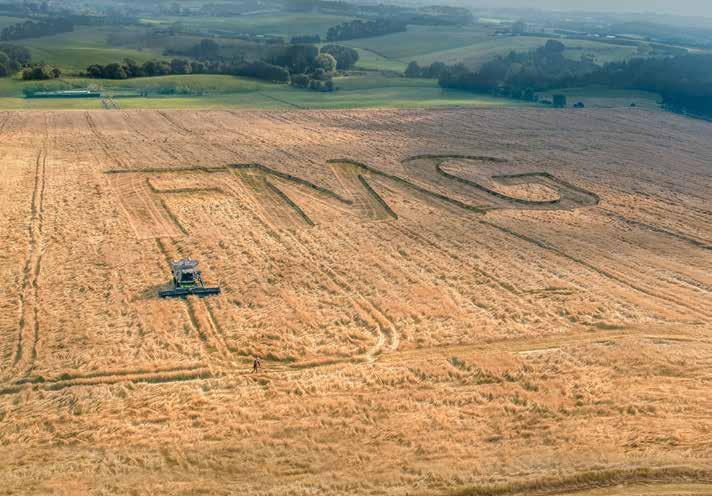
Mark Brown 027 220 4110
Australasian Brand Manager
Allister Moorhead 027 433 7739
Portfolio Manager
Glenn Judson 027 490 2033
Animal Nutritionist
Kaylee Spain 027 952 2845
Nutrition Scientist
Cassey Shearer 027 247 9189
Upper North Island Sales Manager
Jaimin Benton 027 706 6309
Central North Island Sales Manager
Georgia Massie 027 705 0664
Lower North Island Sales Manager
Monty White 027 343 2342
East Coast North Island Sales Manager / Industry Support
Dylan Moratti 027 550 4085
Western North Island Sales Manager/North Island Sales Lead
Kris Bailey 027 229 5776
Northern South Island Sales Manager
Matt Cooper 027 590 8064
Central South Island Sales Manager
Annalise Williams 027 282 1984
Otago Sales Manager/Regional Agronomist
Jim Beer 027 226 2777
Southern South Island Sales Manager
Angee Nagra 027 216 8970
Upper North Island Extension Agronomist
Ashling Welch 027 338 2650
Lower North Island Extension Agronomist
Kylie Dobbs 027 335 3311
Research Extension Specialist
Greg Dunshea 027 670 9776
Forage Systems Agronomist
Holly Stokes 027 229 7131
Northern South Island Extension Agronomist
Rebekah Wood 027 531 9643
Central South Island Extension Agronomist
Sam Anderson 027 405 7195
Southern South Island Extension Agronomist
Jessica Dunbar 027 309 6543
Agronomy Project Coordinator
Sarah McKenzie 027 704 6684
Extension Manager
AGRION CROP SOLUTIONS
Malcolm Meads 021 732 078
NZ Sales Manager
ALLEN CUSTOM DRILLS
Craig Allen 021 861 440
Director/Design & Sales
AQUALINC RESEARCH LTD
Darcy Aker 021 227 4473
Soil moisture monitoring, flow meter verification & telemetry.
Matt Bubb 027 660 6108
Resource consents and compliance
ARXADA NZ LTD
John Trott 027 280 0232
NZ Commercial Manager & Territory Manager for top half regions of South Island
Jason Payne 027 280 0975
NZ Marketing Manager & Territory Manager for Eastern half regions of North Island
Alan Wells 027 280 0983
Territory Manager for Western and Northern regions of North Island
Sam Macpherson 027 280 0979
Territory Manager for Southern half regions of South Island
Stephen McKennie 027 677 7163
Technical Services and Development Manager
ASUREQUALITY LTD
LINCOLN - PLANT HEALTH LABORATORY
Rouke Bakker 021 983 552
Laboratory Manager - Plant Health Lab
Lincoln
Chris Hardy 027 230 8918
Administrator - Plant Health Laboratory
Nicholas Cummings 027 280 2365
Scientist - Plant Health Lab Lincoln
Harry Huang 021 162 9235
Analyst - Plant Health Lab Lincoln
Nellie Chan 021 211 3905
Analyst - Plant Health Lab Lincoln
Leigh Wyatt
Analyst - Plant Health Lab Lincoln
Nazanin Noorifar
Scientist - Plant Health Lab Lincoln
Jin-Hua Li 027 306 9559
Scientist - Plant Health Lab
LINCOLN - FIELD SERVICES, AUDITS & INSPECTIONS
Erin Buckland 027 201 7749
Area Manager Horticulture
Julie Hyde 021 703 412
Area Coordinator North Canterbury
Donna Evans 027 643 7593
Area Coordinator Mid Canterbury inland
Nyssa Glare 027 260 4820
Area Coordinator Mid Canterbury coastal
Gunjan Gera 027 299 0378
PVR/OECD Field Trial Team Leader Lincoln
Liz McEwan 027 225 3463
Area Coordinator Ashburton River South
AUDITING SERVICES
Daniel Shields 027 370 4948
Operational Assurance ManagerHorticulture
Erin Buckland 027 201 7749
Area Manager - Horticulture
Justin Salter 021 967 844
Technical Specialist - Seeds
SEED CERTIFICATION BUREAU
Thomas Green 06 351 7962 Team Leader
BBARENBRUG
Jake Gardner 021 820 398
National Sales Manager
Julie Gaukrodger 021 775 387
Area Manager Northland/Waikato/King
Country
Paul Hames 021 908 177
Area Manager BOP/Central Plateau/North East Waikato
Jeremy Klingender 021 540 673
Area Manager East Coast North Island
Bruce Paterson 021 495 594
Area Manager Taranaki/Manawatu/ Horowhenua
Craig Weir 021 912 280
Area Manager Upper South Island
Shannon Morton 021 220 3716
Area Manager Otago & South Canterbury
Jeremy Fraser 021 948 154
Area Manager Southland
Mark Shand 021 312 427
Pasture Systems Team Leader
Jordan Shrimpton 021 312 764
Pasture Systems Agronomist Upper South Island
Gemma Hansen 021 103 6810
Agronomist Upper North Island
BASF NEW ZEALAND LTD
Robert Svadlenak 027 263 0489
Head of Business Management Ag Solutions
New Zealand
Damien Hooper 027 380 8089
Technical Development Manager
Sophie Geyrhofer 027 212 0813
Regulatory Affairs Manager
Brendan Arnet 027 204 0246
National Key Account Manager
Tim Herman 027 490 3359
Technical Services Specialist
Molly Green 027 336 5544
Territory Manager - Upper Nth
Jeff Smith 021 730 438
Territory Manager - Lower Nth/Upper Sth
Colin Dunstan 027 222 7205
Territory Manager - Canterbury
Simon Von Tunzelman 027 237 4402
Territory Manager - Otago & Southland
BAYER CROP SCIENCE
Phil Bertram 021 426 825
Regional Business Manager Hamilton
Marc Fox 021 426 823
Regional Business Manager Hastings Susie Dalgety 021 426 824
Regional Business Manager Palmerston North
Daniel Suddaby 021 426 822
Regional Business Manager Dunedin
Jonathon Shields 021 154 0298
Technical Solutions Agronomist New Zealand
BIOECONOMY SCIENCE INSTITUTE
LINCOLN
Alex McGrath 03 321 8800
Sector Manager
BIO-START LTD
Wayne Robinson 027 526 0000 North Island
Dave Chambers 021 764 247 Upper South Island
Aaron Scarlett 021 733 110
Lower South Island
BLAIRS SUPERTYRE DISTRIBUTORS
LTD
Jarrod Scott 027 664 4549 NZ Sales Manager
BROWNRIGG AGRI GEAR LTD
David Stafford 027 501 8566
Sales & Service Methven/South Island
CARRFIELDS GRAIN AND SEED
Glenn Moore 021 403 849
General Manager Grain & Seed
Rachael Robinson 027 435 1978
Grain Trading Manager / Agronomist
Phil Smith 027 889 5815
Cereal Seed Product Manager
Andrew Lilley 027 511 4895
International Sales & Product Manager
Leanne Doherty 021 823 672
Production Manager
Mark O’Grady 027 839 9105
International Seed Production Sales Manager
Izaak McDonald 027 202 0261
Trading Manager
Luke Evans 027 869 6831
R&D
Mark McDonald 027 262 4861
Arable Agronomist South Canterbury
Sophie Green 027 272 0296
Arable Agronomist North Canterbury
James Hastings 027 889 3286
Arable Agronomist Mid Canterbury
Rebecca Brooker 027 211 6644
Arable Agronomist Mid Canterbury
Johnny Doyle 027 439 3383
Pastoral Agronomist Mid Canterbury
Logan Tasker 027 267 4861
Pastoral Agronomist Mid Canterbury
Dan Pavey 027 214 9045
Pastoral Agronomist Central Otago
Jamie Tapp 027 856 9999
Pastoral Agronomist North Canterbury
Nicole Holliday 027 341 5769
Pastoral Agronomist South Canterbury
Kate Kappelle 027 324 2630
Arable Agronomist
Neil Dunderdale 027 275 5852
Agronomist Southland
Katie Gunn 027 561 7733
Pastoral Agronomist - Central Otago
Glen Terry 021 0846 6002
Agronomist - Lower North Island
CATES
Stuart Begg 03 308 7166
General Manager Head Office
Corey Hastie 027 433 5793
Small Seed Manager/Agronomist Ashburton
Martin Reid 027 432 3269
Produce Manager/Agronomist Ellesmere
Nick Williams 027 273 2786
Agronomist Ashburton
Darcy Moore 027 210 6556
Agronomist Ashburton
Morgan Hunt 027 479 6094
Agronomist Ashburton
Matt Winter 027 542 4927
Agronomist Ashburton
Liam McCormack 027 295 5035
Agronomist Ashburton
Ramon Hurst 03 308 7166
Warehouse Manager Ashburton
Millar Newlands 027 280 5780
Agronomist
Robert Love 027 355 1931
Warehouse Manager Rakaia
CORSON GRAIN LTD
Richard Hyland 021 243 6325
Maize Grain
CORSON MAIZE
Craig Booth 027 213 1628
Sales Agronomist Northland/North
Auckland
Robbie Corin 027 351 7543
Sales Agronomist South Auckland/North & Eastern Waikato
Dana Lile 027 256 1048
Sales Agronomist Central & Western Waikato/King Country
Arthur Short 027 643 2360
Sales Agronomist Bay of Plenty/South Waikato
Andrew Emslie 027 839 7317
Sales Agronomist Gisborne/Hawke’s Bay
Cameron Hussey 027 290 3737
Sales Agronomist Taranaki/Rangitikei
Kieran Halbert 027 200 2628
Sales Agronomist Manawatu/Wairarapa/ Southern Hawke’s Bay
Chris Sanders 027 596 3574
Sales Agronomist South Island
Mike Turner 027 406 6228
National Research Manager
Matt Denton-Giles 027 700 5397
Technical Specialist
Ian Kirkland 027 446 0952
Territory Manager Northern North Island
Ryan Jackson 027 445 1782
Territory Manager Western North Island
Alysha Brick 027 839 4748
Territory Manager Eastern and Lower North Island
Jess Ross 027 354 4169
Territory Manager Nelson/Marlborough
Ash Pace 027 445 1801
Territory Manager Canterbury/West Coast
Huw Murray 027 445 1799
Territory Manager Otago/Southland
CROPMARK SEEDS LTD
Glen Jarvis 027 432 5570
CEO
Kate Calder 021 829 902
Marketing Manager
Brent Stirling 027 432 7865
International Sales Manager
Callum Davidson 027 648 8935
NZ Sales Manager
Matthew Deighton 022 1840 550
Technical Manager
Tim Cookson 027 434 4458
Technical Advisor
Nick Cameron 027 232 6664
Plant Breeder
Stephane Montel 027 432 7864
Research Director
James Kinsman 027 250 9964
Assistant Plant Breeder
Matthew Hicks 027 432 5567
Research Agronomist
Sara Rogers 027 442 2747
Trials Agronomist Upper North Island
James Bryan 027 235 4989
Customer Relations Manager North Island
Liam Martin 027 555 6813
Customer Relations Manager South Island
Carol Maginness 027 432 4891
Senior Production Agronomist
Bradley Jarvis 027 648 8934
Production Agronomist
Richard Moate 027 432 7868
Trials Agronomist South Island
Matthew Kidby 027 230 1783
Technical Sales Specialist Lower North Island
Phil Johnston 027 801 1316
Technical Sales Specialist Upper South Island
Callum Mitchell 027 236 5552
Technical Sales Specialist Lower South Island
DE SANGOSSE NEW ZEALAND LTD
Stuart Miller 021 288 2703
Managing Director
Shane Dyer 021 242 6217
Upper North Island Territory Manager
Wayne Walton 027 336 0191
Lower North Island/Upper South Island
Territory Manager
Kieran Fowler 021 473 458
Lower South Island Territory Manager
Darren Thomas +61 417 156 977
Biosolutions Business Manager
Liam Donaghy +61 438 015 554
Crop Specialties Category Manager
Emily Darling 027 716 0869
Technical & Product Development Manager F
Steven Bierema 021 755 198
FAR Board Chairman
Scott Champion 021 822 094
Chief Executive
Andrew Pitman 027 252 5722
GM Research & Extension
Anna Heslop 021 960 058
Communications and Events
Ivan Lawrie 027 432 8245
GM Business Operations
FARMGARD LTD
Scott Capper 021 228 3162
Mike Thomas 021 516 551
FARMLANDS CO-OPERATIVE
Elena Duter 027 674 1212
Head of Agronomy & Canterbury region
Chris Baker 027 223 7899
Agronomist - Northland
Brian Richards 027 210 7862
Agronomist - Taupo/Bay of Plenty
Wazza Pope 027 542 3480
Agronomist - Manawatu/Taranaki
Gerrard Pile 027 315 4053
Agronomist - Otago
Karl White 027 434 3885
Technical Field Sales specialised in Agronomy - Otago
Jeni Wadsworth 027 217 4563
Technical Field Sales specialised in Agronomy - East Coast North Island
FERN ENERGY LTD
RURAL SALES TEAM
Amanda Broughton 027 406 6226
Rural Sales Manager Northland
Brad Rufus 027 245 2399
Rural Sales Manager Auckland/North Waikato
Kelly Brears 027 208 4388
Rural Sales Manager King Country
Glenn Ward 027 704 7884
Rural Sales Manager Tauranga/Bay of Plenty
Tim Redstone 027 446 8934
Rural Sales Manager South Waikato
John Jowsey 027 334 5568
Rural Sales Manager East Coast
Peter Woodward 027 579 8258
Rural Sales Manager Manawatu
Bernie Illston 027 702 0105
Rural Sales Manager Wairarapa
Tom Sherborne 027 237 4304
Rural Sales Manager Eastern Waikato
Greg Rowlands 027 449 9982
Rural Sales Manager Taranaki/Central North Island
Maisie Davison 027 593 6229
Rural Sales Manager Marlborough
Rob Taylor 027 555 3381
Rural Sales Manager North Canterbury
Pete Manson 027 404 7343
Rural Sales Manager Canterbury
Clare Suzuki 027 512 6309
Rural Sales Manager Central Otago
Reece Winter 027 554 4859
Rural Sales Manager Otago
Grant Longhurst 027 334 5568
Rural Sales Manager - Hawkes Bay
Russell Smart 027 642 5877
Rural Sales Manager Eastern Southland
Keith Harris 027 245 2397
Rural Sales Manager Western Southland
COMMERCIAL SALES TEAM
Paul Topper 027 558 3308
Commercial Sales Manager Upper North Island
Michael Price 027 666 0089
Commercial Sales Manager Waikato
Richard Weir 027 774 4446
Commercial Sales Manager Taranaki/ Wanganui
Darryl Watson 027 545 4563
Commercial Sales Manager Wellington/ Wairarapa/Manawatu
Phil Gavin 027 279 4020
Commercial Sales Manager Blenheim/ Tasman/West Coast
Zach Lilburne 027 609 9948
Commercial Sales Manager Canterbury
Scott Ayto 027 705 5931
Commercial Sales Manager Southland
FONTERRA FARM SOURCE
NORTH/WEST NORTHLAND
Ryan Baxter 027 285 9075
Regional Manager
Scott Parker 021 798 483
Co-operative Services Area Manager
Fiona Fenton 027 317 0148
Farm Relationship Advisor
Jo Bryant 027 270 2705
Farm Relationship Advisor
George Kruger 027 504 4156
Sustainable Dairying Advisor - Far North
Helen Moodie 027 244 9125
Sustainable Dairying Advisor - Dargaville/ Ruawai
Mike Mitchell 027 224 1386
Sustainable Dairying Advisor - Whangarei North
Bridget Johnson 027 200 4431
Sustainable Dairying Advisor - Tangiteroria/ Dargaville West
Zoe Ander 027 285 7088
Technical Sales Representative - Dargaville
Fleur Scelly 027 233 1683
Technical Sales Representative - Waipapa/ Kaikohe/Kaitaia
Bryant Martin 027 272 2562
Technical Sales Representative - Ruawai
CENTRAL/SOUTH NORTHLAND
Shanelle Wray 027 555 1239
Regional Manager
Ben Herbert 027 214 7350
Sustainable Dairying Advisor - Whangarei
South
Nikita McCahon 027 208 7746
Sustainable Dairying Advisor - Whangarei
South
Kim Simpson 027 285 7094
Technical Sales Representative - Whangarei
Kerrin Luond 027 270 3981
Technical Sales RepresentativeMaungaturoto/Wellsford/Helensville
NORTH WAIKATO
Domini Connolly 021 260 3018
Regional Manager
Jill Pauling 027 221 7639
Co-operative Services Area Manager
Veronica Jenkins 027 248 6872
Farm Relationship Advisor
Vaughn Holdt 027 278 7370
Sustainable Dairying Advisor - Pukekohe
Jen Ritchie 027 209 7057
Sustainable Dairying Advisor - Hamilton/ Taupiri
Dilbir Singh 027 807 7265
Technical Sales Representative - Taupiri
Brett Wallace 027 607 5898
Technical Sales Representative - Hamilton
Mel Leefe 027 240 6377
Technical Sales Representative - Pukekohe/ Waiuku
EAST WAIKATO
Kirsty Skinner 027 839 4873
Regional Manager
Ciaran Tully 027 541 0854
Co-operative Services Area ManagerMorrinsville
John Wilson 021 547 480
Co-operative Services Area ManagerMatamata
Ella Provis 027 615 8468
Sustainable Dairying Advisor - Morrinsville
Stephanie Bish 027 809 8375
Sustainable Dairying Advisor - Matamata
Rachael Henderson 027 704 5323
Technical Sales Representative - Morrinsville
Sarah Thomas 027 245 7000
Technical Sales Representative - Matamata
Weston Kranenburg 027 248 4477
Technical Sales Representative - Matamata
Janette McKay 021 930 825
Co-operative Services Area Manager
Bernardo Balladares 021 926 650
Sustainable Dairying Advisor
Nicola Sandbrook 027 218 1314
Sustainable Dairying Advisor
Brian McMillan 027 225 5523
Technical Sales Representative
Ryan Jackson 027 225 5524
Technical Sales Representative
SOUTH WAIKATO
Mike Powell 021 840 355
Regional Manager
Peter O’Shea 021 546 580
Co-operative Services Area ManagerPutaruru/Tokoroa
Abbey Thompson 027 263 3099
Sustainable Dairying Associate - South Waikato
Te Atatu Falwasser 027 704 9664
Technical Sales Representative
Andy Mourits 027 202 7648
Sustainable Dairying Advisor - South Waikato
Alesha Cooper 027 427 3138
Sustainable Dairying Specialist
Brad Cullen 027 681 1250
Technical Sales Representative -
Cambridge
Chris Hurlston 027 284 4704
Technical Sales Representative - Tokoroa
WEST WAIKATO
TBA
Regional Manager
Sarah Dirks 027 429 6392
Co-operative Services Area Manager - Te Awamutu East/Otorohanga
Mary-Anne Shearman 027 283 2061
Co-operative Services Area ManagerTe Awamutu West/Otorohanga
Rachel Nooijen 027 375 2003
Sustainable Dairying AdvisorTe Awamutu
Matthew Holwill 027 592 7498
Sustainable Dairying Advisor - Otorohanga
Nathan Mark 027 492 2957
Technical Sales RepresentativeTe Awamutu East
Bri Bonnar 027 233 1675
Technical Sales Representative - Te Awamutu West
Victoria Power 027 228 3950
Technical Sales RepresentativeOtorohanga
Jarno Sammet 027 494 5433
Technical Ag Specialist
NORTHERN BAY OF PLENTY
Nigel O’Flaherty 027 245 3459
Regional Manager
Jen Carter 027 204 4603
Co-operative Services Area ManagerNorthern BOP
Vicki Wallace 027 406 3105
Farmer Support Advisor
Lau Tauroa 027 251 6263
Farm Relationship Advisor
Karl Rossiter 021 498 505
Sustainable Dairying Specialist
Kate Howser 027 789 0114
Sustainable Dairying Advisor
Daniel Stoupe 027 839 2051
Technical Sales Representative - Rotorua
Jackson Blake 027 234 5998
Technical Sales Representative - Te Puke
EASTERN BAY OF PLENTY
Adam Borriello 027 248 9279
Regional Manager
Greg Malcolm 027 325 7463
Co-operative Services Area Manager
Tania Jones 027 279 8189
Sustainable Dairying Advisor
Nick Doney 027 355 2355
Sustainable Dairying Advisor
Derek Gibson 027 483 4395
Technical Sales Representative
CENTRAL PLATEAU
Brett Alexander 021 546 595
Regional Manager
Emily Savage 021 242 2158
Co-operative Services Area Manager
Gavin Brears 027 226 8348
Technical Sales Representative
Michelle Payne 027 807 5330
Technical Sales Representative
SOUTH TARANAKI
Cliff Duggan 027 839 1598
Regional Manager
Darryl Heibner 027 414 8358
Co-operative Services Area Manager
Debbie Jenkins 027 405 7729
Farmer Support Advisor
Sophie Arnoux 027 233 9314
Sustainable Dairying Advisor
Carina Chaves 027 543 6140
Sustainable Dairying Advisor
Kathy Milne 027 540 4754
Technical Sales Representative - Waverley/ Hawera
Corryn Soothill 027 511 4871
Technical Sales Representative - Hawera
Dean Kane 027 204 4395
Technical Sales Representative - Kaponga
CENTRAL TARANAKI
Russell Smith 027 364 9223
Regional Manager
Paul Radich 021 961 679
Co-operative Services Area Manager
Nicola Heath 027 243 9531
Sustainable Dairying Advisor
Matt Simpson 027 705 2235
Sustainable Dairying Advisor
Neville Giddy 027 477 2641
Technical Sales Representative - Waitara
Kirsty Sharp 027 224 5137
Technical Sales Representative - Inglewood
Chris Price 027 675 0953
Technical Sales Representative - Stratford
David Sattler 027 209 9375
Technical Sales Representative - Stratford
COASTAL TARANAKI
Kevin Taylor 021 243 2510
Regional Manager
Amy Gatenby 027 565 0721
Co-operative Services Area Manager
Katie Coulam 027 406 5334
Sustainable Dairying Advisor
Daryl Gibson 027 481 2289
Sustainable Dairying Advisor
Kelsey Vanner 027 673 2306
Technical Sales Representative - Okato
Shaun Morresey 027 233 1348
Technical Sales Representative - Opunake
CENTRAL DISTRICTS
Luke McKee 027 258 3064
Regional Manager
Holli Twentyman 027 540 4190
Co-operative Services Area Manager
Steve Holdaway 027 211 5134
Farmer Support Advisor
Brittany Frew 027 240 3388
Farm Relationship Advisor
Emma Joyce 021 660 716
Sustainable Dairying Advisor
Jenna Schrader 027 325 4951
Sustainable Dairying Associate
Abbey Rivers 027 807 0409
Technical Sales Representative
Paul Mercer 027 356 4117
Technical Sales Representative
Craig Viles 027 617 1797
Technical Sales Representative
Linda Hally 027 236 4897
Technical Sales Representative
Grant Rudman 027 235 8983
Regional Manager
Tony Haslett 021 961 067
Co-operative Services Area Manager
Nicole Robinson 027 426 4416
Sustainable Dairying Advisor
Jess Morrison 027 263 9373
Technical Sales Representative - Wairarapa
Belinda Barclay 027 292 8096
Technical Sales Representative - Dannevirke
Val Hollister 027 221 7623
Technical Sales Representative - Pahiatua
Kenny Henderson 027 318 6981
Technical Sales Representative - Hawkes Bay
TASMAN/MARLBOROUGH
Sam McCulloch TBA
Regional Manager
Neil Cooper 027 889 3889
Co-operative Services Area Manager
Jane Mitchell 027 482 9603
Sustainable Dairying Advisor - Top of the South
Libby Sutherland 021 220 8283
Sustainable Dairying Advisor - Culverden
Phil Rains 027 254 231
Technical Sales Representative - Culverden
NORTH CANTERBURY
Daniel Heine 027 238 8152
Regional Manager
Chris Irvine 021 817 652
Co-operative Services Area Manager
Marie Hicks 027 424 0799
Farm Relationship Advisor
Sean Spencer 027 216 1685
Sustainable Dairying Advisor
Rachel Butt 027 363 6308
Technical Sales Representative - Rangiora
Bill Cook 027 340 5064
Technical Sales Representative - Leeston
Lisa Morrison 027 511 4886
Technical Sales Representative - Rakaia
MID CANTERBURY
Luke Spence 027 294 1334
Regional Manager
Olivia Olsen 027 874 0169
Co-operative Services Area Manager
Eraina Temple 027 216 8328
Co-operative Services Area Manager
Meg Warrender 027 257 0924
Farm Support and Relationship Advisor
Lisa Peers-Adams 027 591 0290
Sustainable Dairying Advisor - Ashburton/ Methven
Bronwyn Gilchrist 027 453 4358
Technical Sales Representative - Ashburton
Colette Jackson 027 313 0138
Technical Sales Representative - Methven
Cristian Zavala Ruiz 027 555 8976
Technical Sales Representative - Ashburton
Lisa Morrison 027 511 4886
Technical Sales Representative - Rakaia
Russell Hamilton 027 209 0703
Technical Ag Specialist
SOUTH CANTERBURY/NORTH OTAGO
Jarrod Crossan 027 215 8434
Regional Manager
Cam Neale 027 841 1085
Co-operative Services Area Manager
Jason Sanders 027 293 4360
Co-operative Services Area Manager
Meg Warrender 027 257 0924
Farm Support and Relationship Advisor
Hannah Rooney 027 224 5374
Sustainable Dairying Advisor - South Canterbury
Anna Dyer 027 316 7584
Sustainable Dairying Advisor - South Canterbury/North Otago
Kirsty Simmonds 027 405 2964
Sustainable Dairying Advisor - South
Canterbury
Mark Enticott 027 351 5863
Technical Sales Representative - Temuka
Mark Douglas 027 704 8429
Technical Sales Representative - Oamaru
Diane Heinz 027 220 3790
Technical Sales Representative - Waimate
OTAGO/NORTHERN SOUTHLAND
Katie McEwan 027 581 7619
Regional Manager
Shayne Kelly 027 226 8540
Co-operative Services Area Manager
Shannon Topp 027 809 8368
Co-operative Services Area Manager
Meg Warrender 027 257 0924
Farm Support and Relationship Advisor
Brian Goodger 027 703 6550
Sustainable Dairying Advisor - West Otago/ Northern Southland
Bruce Allan 027 605 4344
Sustainable Dairying Advisor - South Otago/ Eastern Southland
Rory Purvis 027 511 4880
Technical Sales Representative - Balclutha
Tim Grant 027 435 3596
Technical Sales Representative - Balclutha/ Gore
Bryden Rufford 027 247 7913
Technical Sales Representative - Gore
EASTERN SOUTHLAND
Jamie Callahan 027 405 8184
Regional Manager
Paul Newell 027 208 2973
Co-operative Services Area Manager
Taryn Latta 027 272 1289
Farmer Support and Relationship Advisor
Nicole Cousins 027 343 4723
Sustainable Dairying Specialist - Eastern Southland
Ann Callahan 027 546 8776
Technical Sales Representative - Eastern Southland
Anna Hamilton 027 310 3276
Sustainable Dairying Associate - Invercargill/ Winton
Gareth Kean 027 407 7774
Technical Ag Specialist
Kate Lindsay 027 251 9823
Technical Sales Representative - North/ West Winton
Leeanne Hall 027 268 0644
Technical Sales Representative - Northern Southland
Neville Knight 027 220 3806
Technical Sales Representative - South/East Winton
WESTERN SOUTHLAND
Laura Fahey 027 688 9867
Regional Manager
Kieran O’Connor 027 232 7149
Sustainable Dairying Advisor - Central & Northern Southland
Kimberly Edge 027 220 5348
Sustainable Dairying Advisor - Western Southland
Garry Cornes
027 678 0661
Technical Sales Representative - Invercargill
Lauren MacPherson 027 301 2680
Technical Sales Representative - Invercargill/ Otautau
Lindsay Youngman 027 839 9432
Technical Sales Representative - Otautau
FMC NEW ZEALAND LTD
Hayden Toy 027 442 4990
Country Sales Manager/Area Business Manager NI
Nick George 027 700 9563
Area Business Manager Upper SI
Stan McKay 027 432 3222
Area Business Manager Lower SI
FRASER GRAIN & SEED LTD
Alan Fraser 027 432 9273 Rangiora
GGENETIC TECHNOLOGIES LTD
NORTHLAND & NORTH AUCKLAND
Brent Bishop 027 554 3315
Regional Manager North Waikato & Northland
Shaun Ruddell 027 507 4881
Area Manager Dargaville & Far North
Mark Bradley 027 298 3134
Area Manager Whangarei & Wellsford
Gil Dallas 027 275 2147
Area Manager South Auckland & North Waikato
WAIKATO
Craig Maxwell 027 224 0917
Regional Manager Central Waikato & Bay of Plenty Warren Coulson 027 838 7869
Area Manager Hauraki Plains, Coromandel & Morrinsville East
Matte Kirk 027 222 2403
Area Manager Hamilton, Taupiri & Morrinsville West
Grant Douglas 027 554 3316
Area Manager Matamata & Morrinsville South
Logan Scott 027 471 0116
Area Manager Te Awamutu East & South Waikato
Matt Towers 027 255 3048
Area Manager Te Awamutu West
Ben Gordon 027 422 7604
Area Manager South Waikato & Central Plateau
Sophie Rider 027 214 9084
Area Manager King Country
BAY OF PLENTY
Craig Maxwell 027 224 0917
Regional Manager Central Waikato & Bay of Plenty
Kajil Singh-Sandhu 027 220 3848
Area Manager Bay of Plenty
TARANAKI
David McDonald 027 276 5439
Regional Manager Taranaki & Rangitikei
Alan Bunning 027 206 0147
Area Manager North Taranaki
Kim Sharpe 027 528 0012
Area Manager South Taranaki
LOWER NORTH ISLAND & EAST COAST
Mark Burke 027 451 3987
Regional Manager Lower North Island
Simon Begley 027 590 8072
Area Manager North Hawke’s Bay & East Coast
Fergus McNaught 027 555 9017
Field Officer Lower North Island
Charlotte Wilsher 027 839 1578
Area Manager Hawke’s Bay, Tararua & Wairarapa
Richard Templeton 027 239 0279
Area Manager Southern Manawatu & Horowhenua
SOUTH ISLAND
David McDonald 027 276 5439
Regional Manager South Island
Duncan Gillanders 027 555 9016
Area Manager Mid Canterbury & West Coast
Rachel Bell 027 839 7657
Area Manager Canterbury
Daryl Moore 027 767 1119
Area Manager South Canterbury & North Otago
KEY ACCOUNT CONTACTS
Matt Dalley 027 508 1719
Farm Systems Manager Tarakanki and Lower North Island
Wade Bell 027 702 7049
Farm Systems Manager Northland, Waikato and Bay of Plenty
Grant Matthews 027 342 9529
Farm Systems Manager South Island
GILTRAP AG
Matt Moodie 021 880 114
New Zealand Sales Manager
GPS CONTROL SYSTEMS LTD
For technical support please contact
Vantage NZ
Russell Van De Laak 021 874 622
Upper North Island
Wade Riley 021 874 602
Central North Island
Cam Burmeister 027 261 0708
Central North Island
Shane Blampied 027 380 5332
South Island
James Story 027 627 4605
South Island
GREVILLIA AG LTD
Jason Harris 027 284 1425
Southern North Island
Nick Pilcher 027 521 8991
Northern North Island
TBA 027 284 1440
Northern South Island
Jared Ellis 027 284 1401
Southern South Island
HH&T AGRONOMICS
Paul Oliver 0274 422 953
Managing Director/Wairarapa
Duncan Thomas 021 959 010
Business Manager/Rangitikei
Craig Blunden 0275 885 918
Production Manager
Fred Milford-Cottam 0276 420 015
South Island Manager
Hannah Wallace 0276 422 920
Waikato
Martin Johnson 0274 656 037 Waikato
Grant McDonald 0272 452 447
Waikato
Mat Dorward 0276 422 957
Hawkes Bay
James Buckley 0276 422 955
Manawatu
Eddie Walker 027 537 4866
Manawatu/Wanganui
David Treder 0276 422 922
Tararua
Warren Wright 027 2 11 8947
Technical Sales Representative - North Island
Peter Visser 027 434 1944
Technical Sales Representative - South Island
LUISETTI SEEDS LTD
AGRONOMISTS
John McCaw 027 280 4082
Business Development & Training LeadCentral Canterbury
Shane King 027 209 9885
Production Manager & Agronomist - Central Canterbury
Andrew Johnston 027 433 4876 Farm Systems
Jono Young 027 404 0540
Cereal Pulses Manager
James Davidson 027 305 9773
Grain Trading Manager
Tony Pascoe 027 229 6419
Regional Sales Manager
Michael Stanley 027 569 6967
Agronomist - North Canterbury
Caleb Pomare-Edwards 027 723 1931
Lead Pastoral Agronomist - Central/North
Canterbury
Jo Ford 027 223 0695
Agronomist - Lower North/Mid Canterbury
Andrew Airey 0272 558 766
Agronomist - Mid/North Canterbury
Kerry Thomas 027 439 6104
Agronomist - Central/Mid Canterbury
Nick Jenkins 027 441 1106
Agronomist - Central Canterbury
Jack Harnett 027 807 2854
Agronomist - Mid/South Canterbury
Simon Fleetwood 027 466 0030
Agronomist - Mid/South Canterbury
Stephen Booth 027 555 8595
Agronomist - South Canterbury/Otago
Ella Richards 027 283 0974
Agronomist - South Canterbury
LTD (MRB)
Anton Nicholls 0275 860 246
Independent Agronomy
Charles Wood 027 403 9278
General Manager
Ross Wilson 027 439 9377
Production Manager
Brad Stara 027 287 6920
Field Consultant
Brent Middleton 027 441 2466
Field Consultant
Andrew Doyle 027 559 8200
Field Consultant (Central Otago)
Michael Bruce 027 807 4101
Field Consultant
Harry Green 027 340 7645
Field Consultant
Craig Harrison 027 320 3435
Quality Control Manager
Michael Syme 027 435 4719
Processing Manager
Duncan King 027 433 3352
Agricultural Contracting Manager
Matt McCully 027 839 5390
Beekeeping Manager
Jo Townsend 027 596 0078
R&D Manager
Steve Williams 027 553 0846
Sales Manager - Remultiplication
Peter Burton 027 444 5122
Sales Manager - Grain
Brett Colgan 027 686 7328
Sales Manager - Pulses
Sam Luscombe 027 807 9357
Sales Manager - Oilseeds & Pulses
Isabelle Talbot 027 256 8799
Sales & Crop Administration
MOLLOY AGRICULTURE LTD
Dayle Warren 027 436 2452
Agronomist - Mid Canterbury
Sam Boal 027 225 7402
Agronomist - Mid Canterbury
Martina Padrutt 027 286 3489
Agronomist - Mid Canterbury
NNUFARM NZ
NORTH ISLAND BUSINESS DEVELOPMENT
MANAGERS & TECHNICAL SPECIALISTS
Richard Bell 0274 949 015
North Island Sales Lead; Manawatu/Taranaki
Joe Heng 0274 949 012
Northland/Auckland
Katie Morrison 0274 425 840
Hauraki/Coromandel/East Waikato/Bay of Plenty/Gisborne
Jason Marriott 0274 949 009 West Waikato/King Country/North Taranaki
Paul Greenbank 0274 425 835 Hawkes Bay/Wairarapa
Justin France 0276 072 209 North Island Technical Specialist
SOUTH ISLAND BUSINESS DEVELOPMENT
MANAGERS & TECHNICAL SPECIALISTS
Mike Cox 0274 354 271
South Island Sales Lead; South Canterbury/ North Otago
Patrick Bissett 0277 000 066
Nelson/Marlborough/West Coast/North Canterbury
Jeff Hurst 0277 008 011
Mid/North Canterbury
Michael Bennet 0274 425 838
Otago/Southland
Maddy Hampton 0274 752 322
South Island Technical Specialist
OORION AGRISCIENCE LTD
Bruce Sutton 021 337 977
Upper North Island
Bruce Sutton 022 375 9977
Gisborne/Marlborough/Nelson
Rosa Miller 021 281 3285
Canterbury/West Coast
Luke Holmes 021 636 654
Otago/Southland
Jason Tretheway 021 440 429 Head Office Technical Support
PPGG WRIGHTSON GRAIN
Kevin Flaxman 027 266 7077
Grain Regional Manager - Upper North Island
Andy Wilson 027 596 3575
Grain Regional Manager - South Island and Lower North Island
Mark Evans 027 241 6725
Grain Trader
Ian Ormandy 027 593 9536
Cereal Seed Manager
Nick Brooks 027 596 3972
Product Development Manager
PGG WRIGHTSON - RURAL
SUPPLIES
NORTH ISLAND
Simon Dodds 027 595 8268
Cambridge (TFR)
Wayne Robinson 027 292 8966
Carterton (TFR)
Alastair McConnachie 027 335 6282
Dargaville (TFR)
Kerry Davidson 027 218 1606
Eketahuna (TFR)
Julie Briden TBA
Fielding (TFR)
Hamish McCallum 027 712 7018
Fielding (TFR)
Brett Law 027 218 5030
Gisborne (TFR)
Jamie Yates 027 207 1300
Gisborne (TFR)
Wes Pearce 027 597 5824
Hastings (TFR)
Warren Johnson 027 592 7511
Hastings (TFR)
Paul Holden 027 434 7678
Hastings (TFR)
Belinda Wilson 027 836 1806
Hawera (TFR)
Bradley Stone 027 463 5390
Hawera (TFR)
Sophie Holst 027 807 9741
Helensville (TFR)
Olivia Rhodes 027 329 2899
Hunterville (TFR)
Sharne Purchase 027 704 8806
Huntly (TFR)
Ella Hickey 027 705 6932
Huntly/Te Kauwhata (TFR)
Mike Dyball 027 590 1430
Katikati (TFR)
Kody Boyce 027 448 0725
Marton (TFR)
Bodean McGhie 027 244 9958
Martinborough (TFR)
Jo Balfour 027 294 9680
Martinborough (TFR)
Gavin Harris 027 600 4382
Masterton (TFR)
Mark Enevoldsen 027 590 1435
Matamata/Putaruru (TFR)
Pete Smart 027 407 1438
Matamata (TFR)
Brad Lovell 027 477 4232
Matamata
Max Cumpstone 027 223 5123
Morrinsville (TFR)
Scott Daubney 027 235 6454
Morrinsville (TFR)
Keith Donald 027 258 4598
Ohakune (TFR)
McKenzie Smith TBA
Otorohanga (TFR)
Doug Burnell 027 595 8232
Piopio (TFR)
Becky Bain 027 558 2634
Pukekohe (TFR)
Chris Hall 027 406 5770
Stratford (TFR)
Cameron McDonald 027 290 1840
Stratford (TFR)
Michael Mercer 027 203 8296
Rotorua (TFR)
Emma Bibby 027 590 1036
Taihape (TFR)
Edie Neill 027 702 1025
Taumarunui (TFR)
Darryl Jones 027 230 9237
Taupo (TFR)
Sarah Wilson 027 365 5311
Taupo (TFR)
Mark Bulwer 027 707 9356
Te Awamutu (TFR)
Leigh Falleni 027 403 7027
Te Awamutu (TFR)
Bex Whitehead 027 267 9102
Te Awamutu (TFR)
Russell Smith 027 590 4921
Te Kuiti (TFR)
Kyle Parkes 027 213 1818
Te Puke (TFR)
Leon Emery 027 203 8016
Waipapa/Kerikeri (TFR)
James Parsons 027 807 8538
Waipukurau (TFR)
Ollie Wilson 027 225 6462
Waipukurau (TFR)
Anthony Bell 027 811 2866
Wanganui (TFR)
Liam Marshall 027 601 6567
Wanganui (TFR)
Michele Smith 027 675 1188
Wellsford (TFR)
Martin Topp 027 226 2901
Whangarei (TFR)
SOUTH ISLAND
Henry Wardell 027 296 7811
Alexandra (TFR)
Mark Grimward 027 601 2085
Ranfurly (TFR)
Mark Clyne 027 531 2964
Amberley (TFR)
Sarah Dalzell 027 434 4076
Amberley (TFR)
Phill Bloomfield 027 431 4046
Ashburton (TFR)
Dan Copland 027 477 4046
Ashburton (TFR)
Kadys Grant 027 563 9213
Balclutha (TFR)
Rachael Davis 027 598 1720
Blenheim/Kaikoura (TFR)
Andrew McWhannell 027 672 7008
Cheviot (TFR)
Gerard McCarthy 027 473 0614
Cromwell (TFR)
James Fuller 027 247 3764
Darfield (TFR)
Hamish Marshall 027 434 4097
Culverden (TFR)
Dylan Benny 027 504 4654
Culverden (TFR)
Gerry O’Neil 027 431 4057
Fairlie (TFR)
Maree Ferriman-Smith 027 591 8420
Fairlie (TFR)
Ben Chambers 027 434 4077
Geraldine (TFR)
Ben O’Kane 027 276 7875
Geraldine (Trainee TFR)
Roger Collins 027 435 0740
Gore (TFR)
Paul Henry 027 837 6330
Gore/Tapanui (TFR)
Lester Howden 027 504 1144
Gore (TFR)
Matt Gaunson 027 290 3452
Greymouth (TFR)
Christopher O’Malley 027 454 3618
Greymouth (TFR)
John Hellewell 027 253 0851
Heriot (TFR)
Trevor Todd TBA
Invercargill (TFR)
Megan Shirley 027 889 3440
Invercargill (TFR)
Jaimee Elder 027 432 0422
Invercargill/Tuatapere (TFR)
Paul Botha 027 226 3018
Oamaru (TFR)
Robert Trott 027 591 8437
Leeston (TFR)
Jeff McFarlane 027 598 9947
Lumsden/Te Anau (TFR)
Jason Robson 027 590 2501 Lumsden/Te Anau (TFR)
Mitch Carter 027 885 0286
Methven/Rakaia (TFR)
Annie Stephens 027 242 1077
Milton (TFR)
Andrew Young 027 235 6999
Motueka/Richmond (TFR)
Mark Prosser 027 598 9948
Murchison (TFR)
Robin Jamieson 027 231 2313
Oamaru (TFR)
Paul Verdonk 027 235 0051
Oamaru (TFR)
Allan Carlene 027 212 5707
Otautau (TFR)
Courtney Hume TBA
Otautau (TFR)
Paul Sullivan 027 284 5838 Otautau (TFR)
Luke Turfus 027 265 5427 Outram (TFR)
Dean Harrison 027 459 1005
Palmerston (TFR)
Kaleb Bolton 027 448 6269
Rangiora (TFR)
Tony Sanders 027 839 7081
Roxburgh (TFR)
Todd Anderson 027 705 6624
Southland (TFR)
Graeme McCleely 027 590 7502
Takaka (TFR)
Andrew Drummond 027 836 7958
Temuka/Timaru (TFR)
Andrew Brosnahan 027 595 6457
Timaru (TFR)
Liam Taylor 027 309 9556
Waimate (TFR)
David Wheeley 027 263 3233
Winton (TFR)
Allister Gibson 027 538 8064
Winton (TFR)
Allister Gauldie 027 434 5213
Wyndham (TFR)
ARABLE BUSINESS UNIT
Graeme Jones 027 431 0840
Arable Business Manager Ashburton
Shane Butler 027 477 4134
Arable Business Team Manager Ashburton
Chris Sparks 027 546 3652
Arable Representative Wairarapa/ Marlborough
Jack Gibson 027 259 4221
Arable Representative Leeston
Kate McCormick 027 559 0071
Arable Representative Darfield
Tom Adams 027 222 4829
Arable Representative Darfield
Justin Inwood 027 590 8065
Arable Representative Darfield
Todd Ealam 027 595 6470
Arable Representative Methven
Tom Middleton 027 836 5010
Arable Representative Methven
Sean Mulligan 027 432 4026
Arable Representative Rakaia
George Harding 027 247 8220
Arable Representative Ashburton/Rakaia
Chris Lock 027 837 7283
Arable Representative Ashburton
Hamish Schmack 027 590 4008
Arable Representative Ashburton
Ben Innes 027 205 5627
Arable Representative Ashburton
William Ward 027 479 1481
Arable Representative Mayfield
Alice Keir 027 431 4048
Arable Representative Temuka/Geraldine
Mark Currie 027 595 6459
Senior Arable Representative Timaru
Jack Millar 027 233 2691
Arable Representative Timaru/Temuka/ Fairlie
Sam Crossley 027 705 8137
Arable Representative Waimate/Oamaru
Genna Smith 027 546 3184
Arable Representative Central Otago
Nick Hishon 027 229 6697
Arable Representative Southland
Buddy Gutsell 027 311 5748
Arable Representative Southland
NORTH ISLAND - SALES AND FORAGE AGRONOMISTS
Sam Wiltshire 027 201 4597
Area Sales Agronomist Northland/Northern Waikato
Greg Zeuren 027 503 0629
Area Sales Agronomist South Waikato/Bay of Plenty
Lydia Proffit 027 801 8020
Extension Agronomy Team Leader Waikato
Chelsea Alabaster 027 595 3313
Area Sales Agronomist Eastern North Island
TBA 027 595 3314
Area Sales Agronomist Western Lower North Island
SOUTH ISLAND - SALES AND FORAGE AGRONOMISTS
Chris Sanders 027 596 3574
Extension Agronomist Northern South Island
Charlotte Tinsley 027 680 0910
Forage Agronomist Upper South Island
Richard Goldie 027 502 6182
Area Sales Agronomist Central South Island
Mike Fairbairn 027 201 9327
Area Sales Agronomist Southern South Island
Brian Young 027 590 1640
Area Sales Agronomist Southern South Island
Stu Hunter 027 248 6910
Technical Extension Agronomist
Dr Lucy Bell 027 215 8350
Area Sales Agronomist Otago/Central Otago
Ethan Butcher 027 404 7452
Forage Systems Specialist Gore
TECHNICAL TEAM
Wayne Nichol 027 596 3975
National Technical Manager
Charlotte Westwood 027 554 4541
Veterinary Nutritionist
PGG WRIGHTSON TURF
Brian Griffiths 027 430 2992
NZ Sales and Marketing Manager
Ian Garfield 027 487 4002
Greater Auckland
Tom Littlewood 027 344 6439
Auckland/Northland
Julian Holden 027 289 2244
Waikato/BOP/Coromandel
Karen Crake 027 430 2995
Waikato/Taranaki
Leo Barber 021 405 427
Wellington/Manawatu/Hawkes Bay/ Wairarapa
Kevin Timms 027 210 8572
Wellington/Lower North Island
Brendon O’Hara 027 332 5644
South Island Sales Manager – Gisborne/ Tasman/Marlborough/Christchurch
Andy McWhirter 027 801 0034
Canterbury
Craig Middleton 027 294 9261
Christchurch/South/Mid Canterbury
Ben Finn 027 649 4943
Otago/Southland
Joe Johnson 027 596 3565
DuraVeg Business Development Manager
Will Bowden 027 206 5598
Agronomist Product Development Manager
Customer Service 0800 PGW TURF
Nationwide
PMR GRAIN SYSTEMS LTD
Tom Burke 027 514 6606
Sales Manager
POPE TEXTILE BAG & PACKAGING
LTD
Scott Cozens 027 212 9553
Southern Region Sales
Bruce Underwood 027 494 1468
Northern Region Sales
POWER FARMING ASHBURTON
Simon Jackson 027 512 7205
Dealer Principal Mid Canterbury
POWER FARMING CANTERBURY
Geoff McCabe 021 220 9544
Dealer Principal Canterbury
Joel Parris 027 435 0884
Sales Canterbury
Jimmy Leigh 027 405 6941
Sales North Canterbury
Angus Handisides 027 234 0630 Sales
POWER FARMING WHOLESALE LTD
CULTIVATION & SEEDING SPECIALISTS
Bevin Wolland 027 576 7095
General Manager Machinery
Mike Griffiths 027 536 5088
Product Specialist South Island
Rory Forde 027 433 7766
Product Specialist North Island
PRECISION FARMING LTD
Matthew Stanford 021 483 359
Corporate Farms Manager
Aaron Wilson 021 483 316
Customer Services Manager
PRF MOULDBOARDS LTD
Vaughan Dawson 021 402 013
Managing Director
PRIMARY INSIGHT
Andrew Curtis 027 496 6314
Consultant/Lower South Island
PURE OIL NEW ZEALAND LTD
Keith Gundry 027 225 6461
Agronomy Manager
Finn Paterson 027 535 8955
Agronomist Canterbury
Paige Morton 027 211 8205
Agronomist Southland
RRAGT NEW ZEALAND LTD
James White 027 287 8870
Commercial Director
Liam Donnelly 027 618 5499
Technical Manager & International Sales
Jessica Chapman 027 329 5028
Brand and Communication Lead
Sam Lucas 021 758 079
Forage Systems Manager
Blair Cotching 027 861 7219
Field Solutions Manager
Niall Laffan 027 733 3361
Field Solutions Specialist - Central South Island
Charlotte Jones 027 733 3360
Field Solutions Specialist - Lower South Island
Shane Brownlie 027 700 9482
Field Solutions Specialist - Lower North Island
Steve Thomas 027 250 0194
Field Solutions Specialist – Central North Island
Clint Bell 027 873 4622
Seed Production Agronomist
REL GROUP
Hayden Kuyf 027 711 3719
General Manager
Michael Crew 027 281 1916
Grain Storage and Handling Sales
Mark Jessep 027 439 8000
National Feed Systems Specialist
Ross Soper 027 285 5997
Business Development Manager
SSGS NEW ZEALAND LTD
Peter Ward 027 540 9542
Independent Verification Agency
Bruno Garcia 027 239 5456
Auckland/Pukekohe
Peter Ward 027 540 9542
Napier/BOP
Sue Young 027 541 4475
Nelson/Marlborough
Fay Trezise 027 706 4447
Canterbury
SMITH SEEDS LTD
Grant Smith 027 432 8654
Managing Director
Dayle Jemmett 027 438 0684
General Manager
Steve Forrester 027 241 5973
Sales Manager
Wayne McDowell 027 247 4999
Agronomist
Gary Compton 027 620 8351
Agronomist
Brad Quinlan 027 900 0410
Production Supervisor
Jo Copland 027 336 3932
Agronomist
Mason McGrath 027 274 1772
Logistics Manager
Angus Jemmett 027 495 8883
Trainee Agronomist
SOUTH PACIFIC SEEDS (NZ) LTD
Jeremy Johnson 027 269 0400
Managing Director
Richard van Garderen 027 229 6664
General Manager Production
Hamish Gilpin 027 438 2140
Field Dept Manager
Steve Dunlop 027 445 1954
Field Manager North Canterbury
Annabelle Jones 027 558 1139
Field Manager Oxford/North Canterbury
Birch Jenkinson 027 807 3547
Field Manager Selwyn
Jordie Plunkett 027 252 8871
Field Manager Selwyn
James Taylor 027 201 7601
Field Manager Lincoln/Southbridge
Hamish Gray 021 235 9100
Field Manager Lincoln/Southbridge
Jane Fitzpatrick 027 441 1256
Field Manager Methven/Lyndhurst/Hororata
Sophie Lilley 027 558 1139
Field Manager Methven
Chris Cavanagh 027 435 7715
Field Manager Winchmore/Ashburton/Dorie
Mellory Watson 027 436 0770
Field Manager Pendarves/Dorie
Phil Peek 027 493 4345
Field Manager Ashburton
Jonathan Hanrahan 027 438 8690
Field Manager South Canterbury
Wouter Myburgh 027 567 0993
Field Manager South Canterbury
Sam Locke 027 871 9836
Field Manager Hawkes Bay
Innes Hanrahan 027 225 5884
Field Manager Hawkes Bay
Ricky Brown 027 554 3009 Research
SYNGENTA CROP PROTECTION LTD
Nicola Smith 027 494 9013
NZ Country Manager Auckland
Raeleen Watherston 021 611 664
Customer Marketing Lead Auckland
Ross McCallum 027 494 2662
Territory Sales Manager Ashburton
Maria Quevedo 021 984 079
Territory Sales Manager Ashburton
Dean Perry 021 428 674
Territory Sales Manager Napier
Andrew McIntosh 027 366 5858
Territory Sales Manager Tauranga
TTABULA
Scott Marillier 027 489 2120
North Island Sales Manager
Wicus Pelser 027 560 1237
Central South Island Sales Manager
Alexis Robin 027 474 4615
Lower South Island Sales Manager
TEMUKA SEED (1984) LTD
Greig Bailey 027 449 9062
Manager
TOWNSEND SEEDS INTERNATIONAL LTD
Kym Townsend 027 522 3060
Field Rep
Hayden Argyle 027 534 4534
Field Rep
Tim Dale 027 332 4174
Field Rep
Ryan Ford 027 265 6588
Field Rep
TURNBULL GRAIN & SEED LTD
Murray Duff 027 434 4326
Agronomist Timaru
Hamish Holland 027 434 4569
Agronomist Fairlie
Brittany Talbot 027 249 4751
Agronomist Pleasant Point/Geraldine
Anna Hayward 027 434 4116
Agronomist Temuka
Jess Williams 027 434 4356
Agronomist Waimate/Hakataramea
Sam Thacker 021 0839 3321
Agronomist Waimate
UPL LTD NEW ZEALAND
Alex Easton 027 578 0016
Regional Manager Northern South Island
Lauren Jones 021 987 735
Regional Manager Central South Island
Greg McIntyre 021 519 772
Regional Manager Southern South Island
Ryan Pierce 027 286 5685
Regional Manager Lower North Island
Pieter van der Westhuizen 021 392 740
Regional Manager Upper North Island and Adjuvant Lead
VANTAGE NEW ZEALAND
Jemma Mulvihill 021 796 124
Managing Director
VPMAXX (NZ SEED HOUSES LTD)
Barry Smallridge 027 801 9992
Account Manager Bay of Plenty, Manawatu & East Coast
Alan MacDougall 027 204 4418
Account Manager Waikato, King Country, Taranaki
Alastair McConnachie 027 201 3677
Account Manager Northland, South Auckland
YYARA FERTILIZERS (NZ) LTD
Glen Baylis 021 555 214
Country Manager
David Spencer 021 471 591
Agronomy & Crop Solutions Manager
Mark Redshaw 021 471 722
North Island Sales Agronomist
Jai Prakash 021 626 740
North Island Sales Agronomist
Tim Brooker 021 537 309
South Island Sales Agronomist
New Zealand MPI Seed Varietal Certification Scheme - Closing Dates
March
June
July
September
First Monday
First Monday
November
First Monday
First Monday
December
First Monday
Beet (spring sown crops)
Kale
Annual Clovers - Legumes
Beet (autumn sown crops)
Fodder Radish (autumn sown crops)
Hybrid Clover
Rape (autumn sown crops)
Raphanobrassica (autumn sown crops)
Strawberry Clover* (change of variety - see below)
Swede
Turnip
White Clover* (change of variety - see below)
Cocksfoot
Pea (sown prior to 1 July)
Red Clover (autumn sown)
Serradella
Brome Grass (Bromus sp.)
Browntop
Caucasian Clover
Chicory
Dogstail
Fescue (Festuca sp.)
Festulolium
Lentil
Lotus
Lupin
Phalaris
Plantain
Poa
Ryegrass
Timothy
White Clover* (see below)
Yorkshire Fog
Barley
Bean
Fodder Radish (spring sown crops)
Linseed
Lucerne
Mustard
Oat
Pea (if sown after 1 July)
Phacelia
Rape (spring sown crops)
Red Clover
Ryecorn (spring sown crops)
Strawberry Clover*
Triticale
Wheat
Hemp (Cannabis sativa) by the 20 of December
Maize
I. * White Clover/Strawberry Clover - If sowing is a change of cultivar in Nucleus, Breeders or Basic class, application for certification must be made by the first Monday in June.
II. Where a public holiday falls on a Monday specified, the closing date is extended one day to the Tuesday immediately following.
III. Overseas cultivars of species for which there is a set closing date should, where possible, be entered by that date, otherwise within 14 days of sowing. For other species where there is no set closing date the crop must be entered within 14 days of sowing.

To love and succeed at farming, you have to enjoy solving problems. The next potential setback is never far away. The entire farming community must work together to hit new heights in order to overcome the biggest challenge of all: feeding a growing population with reduced access to farmland.
Fortunately, we now have better solutions than ever before to help you to continue to make great decisions, while doing what you love.
The challenge is big, but so too is the appetite for success.
For heinous crimes against forage crop yields!

End the damage from these three vile vermin in your forage brassica and fodder beet crops with SIVANTO prime. SIVANTO prime contains flupyradifurone, a powerful new insecticide providing rapid control of Nysius, green peach aphid and springtail.
+ Rapid and effective control of key establishment pests from pre-emergence to 8 true leaves in forage brassicas and fodder beet
+ Can be effectively integrated into IPM programmes
+ Innovative, odourless, liquid formulation that penetrates the plant quickly
+ Can be applied by helicopter
Learn more at cropscience.bayer.co.nz