13,500
270

INDUSTRY NEWS
Fresh support drives growth in iconic competition
SPRING PROMOTIONS
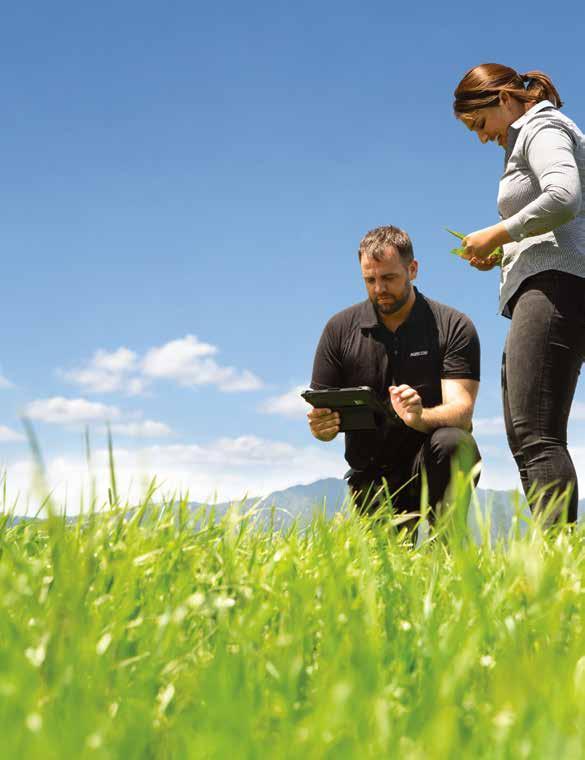
Red meat farmers see promise in leafy new forage rape cultivar
PRODUCT UPDATE
New option for Psa control in kiwifruit

13,500
270
INDUSTRY NEWS
Fresh support drives growth in iconic competition
SPRING PROMOTIONS
Red meat farmers see promise in leafy new forage rape cultivar
PRODUCT UPDATE
New option for Psa control in kiwifruit
APTIVIS® fungicide powered by ADEPIDYN® technology
Next generation control of Black Spot and Powdery Mildew in pipfruit



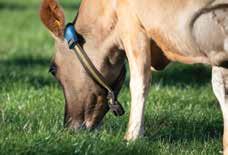
WEARABLES
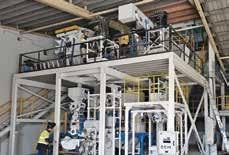
GISBORNE MAIZE MILL REBUILD ON TRACK


Editor Kathy Davis 0274 347 108 kathy@thelastword.net.nz
Publisher Lisa Phelan 021 782 228 lisa@agrimedia.co.nz
Advertising Manager Brendan Challies 022 397 2076 brendan@agrimedia.co.nz
Production & Design Amanda Vroombout 027 7788 274 production@agrimedia.co.nz
Accounts & Admin Hilary Armstrong 027 443 3477 accounts@agrimedia.co.nz
Printed by Blueprint 2022 Limited 03 348 0538 michael@blueprintmedia.nz
No part of this publication may be reproduced in any form without the prior written permission of the publisher. Opinions expressed in this publication are not necessarily that of the publisher and suggest independent advice be sought before acting on information or suggestions contained herein. CONTRIBUTIONS
Editorial and photographic contributions are welcomed and should be sent directly to the editor, Kathy Davis. Editing of submissions is at the sole discretion of the editor and will accept no responsibility for unsolicited material. AgriMedia Ltd
PO Box 36753, Merivale, Christchurch 8146 agrimedia.co.New Zealand | novachem.co.New Zealand
Welcome back to AgriBusiness for July/August. If you and your clients are not yet in the thick of lambing and calving, it won’t be far off so here’s to a great start to another season.
You can always tell where we are in the election cycle by the number of political and Government press releases issued during the National Fieldays at Mystery Creek, and this year my in-box practically blew up in the space of a few days. Most new initiatives have been well covered already, but one that really stood out for me was the announcement of continued Government funding for rural catchment groups. Just over $40 million will be invested over the next four years through the Ministry for Primary Industries.
Catchment groups as a whole have done amazing work which often doesn’t get the attention it deserves, and backing their efforts is money well spent, at least as far as this particular taxpayer is concerned.
The 2026 Primary Industry Awards were announced just as we went to print, with the Champion Award going to Rural Support Trust stalwart Neil Bateup in recognition of his decades spent looking after farmers and rural families through challenging times.
Dairy industry titan Jim van der Poel was a popular winner of the Outstanding Contribution to Primary Industries Award; Beef + Lamb New Zealand’s Kate Acland was named Rural Woman of the Year; and young Waikato dairy farmer Danielle Hovmand claimed the Emerging Leader Award for her involvement with both Young Farmers and Federated Farmers. In other news, we look at another unusual foreign land purchase this issue, and get the inside story on what’s thought to be

the longest running crop competition of its type.
Find out what goes into one of our major plant breeders’ research and development programme in the special focus on spring promotions, and read the latest findings from the dairy industry’s low emission sires genetics programme in animal advisor.
We’ll be back in September with everything you need to know about parasite management, plus the usual round-up of product and supplier news.
Stay warm! Improve the overall performance of your knockdown herbicide including the speed of burndown with Hammer ® Force.


Teaming up with retail and digital service players will transform rural mental health, the Rural Support Trust says.
“We can now offer easier access to professional support when previously it may not have been possible due to access, cost and travel time,” says chair Michelle Ruddell.
“It’s a game changer for communities where getting to a counsellor might mean a two-hour round trip.”
The three-year partnership, announced at National Fieldays, involves Farmlands and digital wellbeing platform ignite, and will offer a free online mental health and wellbeing service for farmers and growers across New Zealand.
It will provide more than 1500 sessions through vetted counsellors, psychologists, career coaches, nutritionists and other wellbeing professionals who will be available online, by phone or in person via the ignite platform.
Technology provider ignite says the partnership is an opportunity to help
provide support to a part of society that has traditionally been underserved.
“This is about helping rural communities connect to specialist mental health and wellbeing support areas that aren’t offered locally,” says director Sarina Finucane.
“This platform also offers more than just counselling.
“It’s holistic wellbeing, and alongside mental health providers users can book a session with a dietician, a business coach, or a financial mentor.
“It’s about resilience and growth, not just crisis support.”
Farmlands CEO Tanya Houghton says the co-op is proud to support the initiative.
“At Farmlands we know rural never rests, and rural communities shouldn’t face the tough times alone.
“Our shareholders are farmers, growers and their families. Standing alongside them when life gets hard is
A pilot programme targeting Year 9 and 10 students and getting them hands-on with wool has been hailed a success, with hopes of a full roll-out to come.
Students at six secondary schools had their woolly thinking challenged in the final term of 2025, in subjects that included art, science, and English.
Teachers have commended the programme, reporting high engagement from students, rich curriculum-linked content and lessons that are enjoyable to teach.
The pilot rounds out a three-year Campaign for Wool New Zealand (CFWNew Zealand) strategy that has invested strongly into education at all levels.
Chair Ryan Cosgrove says having already established education programmes for early childhood, primary and tertiary students, there was an obvious gap to plug.
“We’d had such great success with the Wool in Schools initiative for primary schools and our containers that travel the
country inviting young learners to touch, feel and experience New Zealand strong wool,” says Cosgrove.
“More than 33,000 Kiwi children have been through one of the containers in the 10 years since inception.”
At the other end of the spectrum, Wool Dynamics launched in 2024 encourages tertiary product design and architecture students to experiment as they create everything from wine packaging to clothes pegs using woollen fibre.
“There was an opportunity at secondary school level and strong interest in CFWNZ’s establishing a programme to encourage this key adolescent cohort to learn about wool.”
Participating schools each received a wool innovation kit, containing everything from woollen carpet and twine, to bandages and tennis ball felt.
what a co-operative does.
The barriers to mental health support in rural New Zealand are real: distance, cost, time off the farm, the discomfort of walking into a waiting room where everyone knows your name. This partnership takes those barriers away.
“With ignite’s technology, farmers choose how they get support: in person or online, wherever they are. Even if that’s the middle of a paddock.”
Rural Support Trust operates across 14 regions in New Zealand, providing free, confidential, one-on-one support to rural families.
To support teachers, ready-to-use classroom resources, curriculum-aligned activities and case studies showcasing wool’s role across science, technology, textiles and sustainability in New Zealand were also included in the programme. This initiative formed a central part of CFWNZ’s three year strategic direction, which came to a close at the end of 2025.
Times may have been tough for arable growers lately, but that wasn’t enough to stop dozens of them entering what’s thought to be the longest running crop contest of its kind last summer.
The iconic Mid Canterbury A&P Associations Wheat Competition began 30 years ago in Methven, and has run every year since.
Co-initiated and supported from the outset by Bayer, it’s not only survived but expanded to include Mayfield and Ashburton, with Cochranes coming on board as a sponsor two years ago, and Corteva Agriscience joining last year. More than 50 growers put up 64 paddocks of milling and feed wheat for the 2025/26 awards, continuing what those involved in the contest say is a history of strong support for a unique community event.
With a total prize pool from sponsors now in excess of $40,000, they say the competition is well-placed for a strong future, and growers in the newest region to join (Ashburton) were so keen to get on board they were phoning on the initial day of judging last year to see if they could still enter.
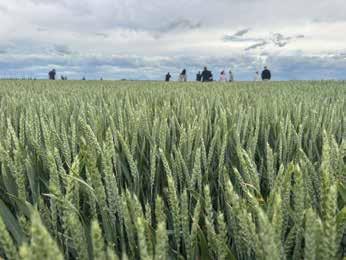
The three best milling wheat crops across all three districts were entered by Craig and Sarah Clucas, Mayfield; Andrew and Jo Innes, Ashburton and Jeremy and Kate Simpson, Ashburton; all of whom grew Aston wheat. The three best feed wheat crops were all grown in Methven by Ian and Matt Marr; Richard, Fiona and George Maw and Murray and Gemma Redmond, with the first two growing Skybolt and the Redmonds growing Kinetic. Judging is a very thorough, two-step process, starting with a physical paddock inspection
of all entries in December then followed by a second visit in January to cut samples for scientific yield analysis.
Local industry agronomists and reps from Bayer, Ravensdown, Yarra, Carrfields, Luisetti Seeds, PGGW Grain and Seeds, Ballance AgriNutrients, Molloy Agriculture, Lincoln University, Corteva, Ruralco, BASF and Syngenta all take part in the judging.
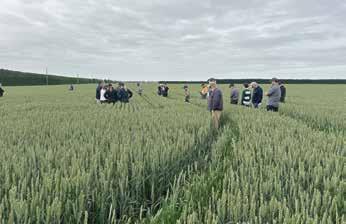
Corteva territory manager Ash Pace was among them for 2025/26, and say as always, the crop visits were a big drawcard for growers.
“At times we’ve had more farmer utes come along for the paddock walks than we have paddocks to judge – they love it,” Ash Pace says.
“It’s really well supported.”
Ruralco senior agronomist
Nicola Pace has helped run the competition for more than a decade, and says one of the best things about it is that it offers growers a chance to get off their own properties, catch up with their peers, and see a wide range of different cultivars in commercial conditions.
It has also built a strong following among those who supply and service the arable industry in Mid Canterbury.
“It’s a lot of work, especially when it comes to the yield analysis, but it’s also a lot of fun, and we’re very grateful for the support of our sponsors which has helped it continue to grow in recent years.”
Corteva marketing manager
Nicole Morris says the company is glad to be involved as a new backer, and is quick
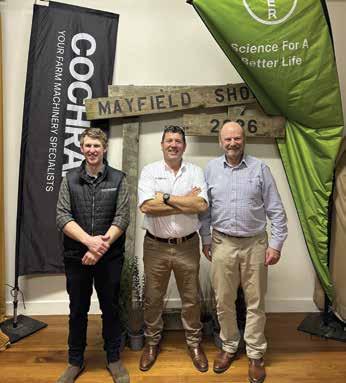
to acknowledge Bayer’s long legacy as founding supporter, along with Cochranes’ more recent involvement.
“From our perspective, we welcome the opportunity to
join them in backing the arable industry in Mid Canterbury. All those involved have created a great community event that many agronomists follow, and many growers participate in.”
Delivering a complete suite of crop protection solutions for today’s arable growers.
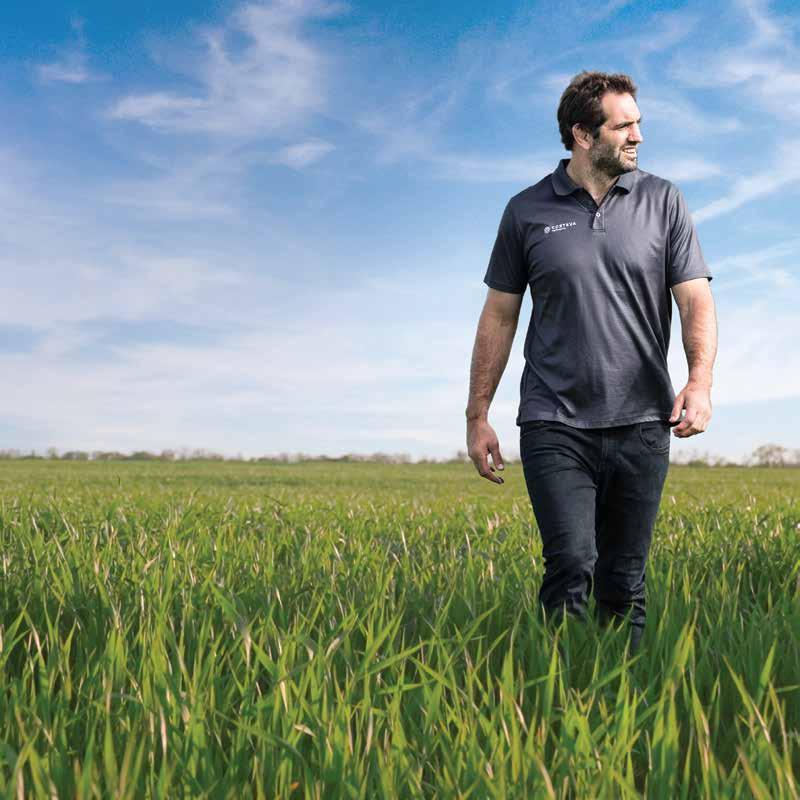
Our portfolio of powerful, proven products has helped farmers from one end of the country to the other create and maintain thriving businesses, and has earned us a reputation as New Zealand’s arable protection specialists.
Our suite of innovative crop protection solutions provide local farmers with everything they need to win the war on weeds, pests and diseases.

Visit corteva.co.nz to view our range of online arable resources.
When you hear the words ‘intensive beef feedlot’ you might think of something like Five Star Beef’s longrunning operation in Canterbury.
That is, dead flat, easily serviced, barely 20km from the nearest meat processing plant, and surrounded by thousands of hectares of land capable of generating a constant supply of both feed and young cattle.
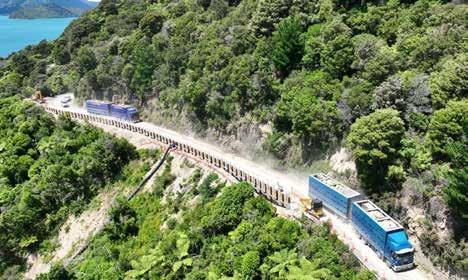
You probably don’t think of a remote block of land in the Marlborough Sounds where the only vehicular access is 40 km of narrow, winding road still not fully fixed after being virtually destroyed by storm damage in 2021 and 2022.
And that’s just the Kenepuru Road, which starts at Linkwater between Havelock and Picton.
To truck cattle from Linkwater to the closest possible beef processing site in Blenheim is about the same distance again.
According to Land Information New Zealand, however, the foreign buyer who recently paid $4.25 million for a 288 ha sheep and beef farm at Kenepuru Head plans to convert the land ‘into an intensive feedlot farming system utilising barn systems for feeding and housing cattle.’
Sjerp William Ysselstein’s purchase was
approved by the Overseas Investment Office (OIO) in April under the sensitive land – farm land benefit test.
“The key benefits that will likely result from this investment are economic benefits in the form of increased production and export receipts, creation of employment and additional capital expenditure,” the office says.
Ysselstein, who according to the New Zealand Companies Register lives in Hawaii, must complete the development by 30 April 2030 to meet the conditions of his purchase approval.
If he doesn’t, the OIO says its compliance team will investigate to find out why, and decide the most appropriate enforcement action.
Marlborough District Council says no resource consent application has been received for the property.
The property is zoned Coastal Environment Zone, where farming is a permitted activity.
However, the Proposed Marlborough Environment Plan definition of farming specifically excludes intensive farming.
“Intensive farming is not specifically provided for in the Coastal Environment Zone and, if the operation meets that definition, it would be considered a discretionary activity requiring resource
consent,” the council says.
The OIO says Ysselstein has an ‘extensive background’ in dairy and beef farming in North America.
Publicly available information indicates he founded Meadowvale Dairy in Iowa with a small herd in the early 1990s.
As of last year that business was reported to be milking 11,000 cows and Ysselstein’s farming interests have expanded from the Midwest to Southern California, New Mexico and Arizona.
In early April, just after the OIO approved his Sounds purchase, he incorporated Magic Valley Farm Ltd in New Zealand, teaming up with Blenheim accountant Matt Kerr as the mandatory New Zealand-resident director required by law in New Zealand for nonresident business owners.
Kerr has close ties to the Marlborough business community. He is currently a director of Marlborough Lines, chairperson of both Marlborough Airport and Marlborough District Council Holdings; and a director of Marlborough Grape Growers Cooperative.
He is also part-owner of WK Ltd and Arapawa Seafarms.
• As of June, vehicle length and weight restrictions remain on the Kenepuru Road. A permit is required for large vehicles like stock trucks, and they must be piloted.
All eyes are on fruit quality and pricing as New Zealand’s largest ever kiwifruit harvest moves from orchard to market.
With picking complete after a three-month campaign, attention is shifting to how the record crop performs on supermarket shelves in New Zealand and overseas, and whether strong returns can be maintained. About 225 million trays have been
harvested this season, surpassing the previous record of 216 million trays in 2025, which generated $3.56 billion in fruit and service payments.
Only small volumes remain on orchards, with each tray averaging around 30 fruit.
Green, gold and red varieties are now flowing through coolstores and into global supply chains, where growers will be watching closely for signals on quality and price.
Early indications suggest fruit quality is
tracking well, though a clearer assessment will emerge later in the year.
Maintaining condition from orchard to consumer remains a critical focus, particularly as the industry continues working to address quality challenges seen in recent seasons.
New Zealand Kiwifruit Growers Inc. chief executive Colin Bond says the scale of the crop reflected a significant collective effort.
“I would like to thank everyone involved in orchard and packhouse operations for their hard work in picking and packing this exceptionally large crop.
“Harvest is a true team effort, and everyone across the supply chain plays a critical role in ensuring its success.”
Bond says fruit has so far reached international markets successfully despite ongoing global disruption, though growers would be monitoring performance carefully as volumes build.
The season has delivered mixed fortunes across varieties.
Around five million trays of red fruit were picked early and sold by mid-May.
SunGold volumes reached nearly 162 million trays and continue to ship offshore.
Green kiwifruit has faced more

uncertainty, with delayed maturity slowing harvest and yields down more than 14 per cent on last year.
While per tray returns have been strong, reduced volumes may weigh on overall profitability.
“In a world that is becoming increasingly fractured, with supply chain risks and
trade barriers, we’ve worked together to create a value chain that is best in class.
“The value we see today is not accidental. It is the result of a system that works, and one we must protect,” Bond says.
Growers expect clearer returns by September, with five-year forecasts remaining strong across all varieties.
Just as balanced nutrition is essential for people, it’s just as important for the crops and pastures that drive New Zealand’s rural economy. Every nutrient plays a part in plant growth, resilience, and yield – but it’s how these nutrients work together as a system that really makes the difference. For farmers and growers, this means looking beyond just single products for ultimate uptake and stress management, so they can get the best results from their land.
As you know, amino acids, for example, are the building blocks of protein and play a key role in both plant and animal health. In plants, they help with nutrient transport, enzyme activity, and stress tolerance – directly impacting crop quality and productivity.
At Sipcam, we’re bringing our new approach to plant nutrition. One that’s proven globally and backed by science and evidence. Refined in the field, its designed for real-world results.
Keep an eye out for our upcoming nutrition product range, launching this season.
Talk to us about how Sipcam can help your farmers and growers grow stronger, healthier crops and pasture.
this month we look at...

Launched into the New Zealand autumn cereal market earlier this year, Tower is already generating strong interest amongst agronomists and growers planning springsown barley and wheat programmes.
Many are seeing an excellent fit for Tower in spring crops, where early-season broadleaf weed pressure can be intense and spray workloads quickly become compressed.
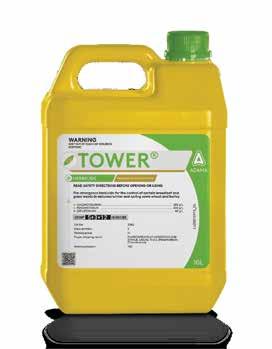
Tower is a new pre-emergent herbicide for wheat and barley, bringing three complementary actives together in one product: Chlorotoluron (Group 5), pendimethalin (Group 3) and diflufenican (Group 12).
The combination delivers strong control of a wide range of broadleaf weeds and selected grass weeds in autumn and spring planted cereal crops.
Alan Steel, Adama Canterbury commercial
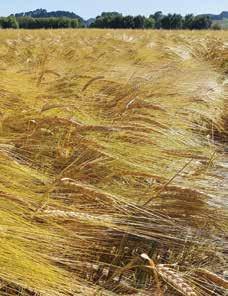
manager, says Tower represents an important advancement for New Zealand cereal growers, particularly in spring-sown wheat and barley crops where broadleaf weed pressure can be intense.
“Spring crops can face significant weed competition early in the season, especially from broadleaf weeds.
“Tower gives growers the ability to get ahead of that pressure before weeds emerge and begin competing with the crop,” he says.
“Tower is particularly effective on polygonum weeds, a group that has often fallen between the cracks of traditional pre-emergent programmes.”
Steel says Tower also delivers an important resistance management benefit by introducing alternative chemistry to cereal programmes.
“This is the first time chlorotoluron has been available to New Zealand cereal growers, and it also brings pendimethalin into cereals, which some growers will already know from use in other crops.
“Many spring cereal programmes rely heavily on post-emergent Group 2 and Group 4 herbicides.
“Tower provides an alternative mode of action strategy earlier in the season, helping support integrated resistance management and protecting the long-term effectiveness of existing chemistry.”
Tower works by absorption through the roots and shoots of germinating weeds, delivering residual weed control from the start of the crop.
“That early timing has real practical advantages,” Steel says.
“Applying a pre-emergent herbicide allows growers to take care of a major portion of the weed burden up front, before spring workloads become compressed.
“As spring progresses, spray programmes quickly become crowded with nitrogen applications, fungicides, plant growth regulators and other herbicides.
“Weather windows can narrow, while labour and machinery are often under pressure. Using Tower early allows growers to tick off an important job before the peak workload period arrives.”
He says this flexibility not only improves weed control outcomes but also helps smooth workloads across the season.
Pre-emergent herbicides also play an important role in protecting yield potential by removing weed competition during early crop establishment.
Controlling weeds at germination reduces competition for nutrients, moisture and light at a critical stage of crop growth.
Steel says achieving consistent results with residual herbicides comes down to preparation and attention to detail.
“To get the best from pre-emergent herbicides, you need a quality seedbed, even spray coverage and incorporation of herbicide by rainfall or irrigation. The goal is to create a consistent herbicide film across the soil surface.”
To enhance efficacy and residual weed control, he recommends applying Tower to a well-prepared seedbed free of large soil clods, previous crop residue and excessive trash.
“If direct drilling aim to minimise heavy residue from the previous crop. Existing weeds should also be controlled before application, either through cultivation or by using a non-selective herbicide such as Polaris (glyphosate).”
Light to moderate rainfall after application helps activate Tower by incorporating the herbicide into the soil profile.
“When applied correctly, products like Tower become a valuable foundation for season-long weed management in cereals.”
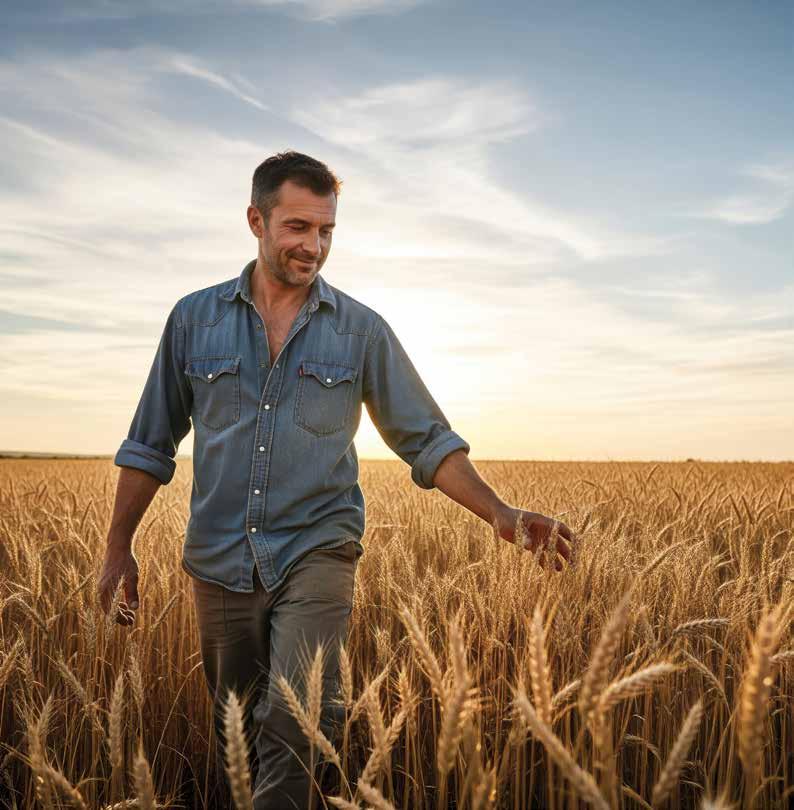
The new pre-emergent herbicide with three modes of action.
Protect yield potential from the start with TOWER®, registered for use in spring wheat and barley. Applied at or soon after sowing, TOWER® provides early-season control of broadleaf weeds and selected grasses, while supporting resistance management.
Contact your local ADAMA commercial manager or visit ADAMA.com

It’s been a long time coming, but the first locally bred forage rape from one of New Zealand’s leading plant breeding companies is worth the wait, it says.
Reviva, from Barenbrug, has been over 15 years in development and testing, and began with a clear goal of achieving a cultivar that would deliver reliable yield, multiple grazings and high animal performance on NZ farms.
Elite parent plants were selected under tough conditions for their vigour, growth, and leafiness along with disease and pest tolerance.
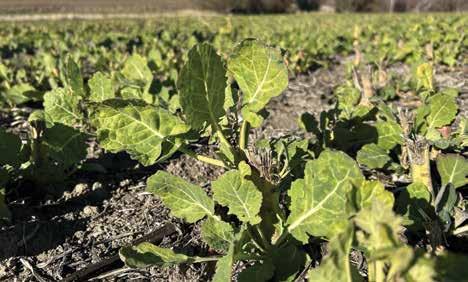
Barenbrug pasture specialist Graham Kerr says the result is a summer rape that produces ample yields of leafy, high energy forage which is particularly wellsuited to lambs.
“Some older rapes, or those crossed with kale, tend to elongate as they mature, meaning there can be a quite a bit of stem at the bottom of the crop.
“Reviva is different in that it is very leafy right to the ground. That’s good for animal utilisation, especially for lambs with their smaller mouths. It also means there’s less stem and the following grazing – and less residue left behind when it come time to sow back into pasture or the next crop.”
Trials have shown the new cultivar has a very high proportion of leaf, averaging approximately 48 per cent at the first grazing, Kerr says.
Typically maturing in 70 to 90 days, Reviva will hold its feed quality well for 90 days.
Barenbrug asked red meat farmers in
several parts of the country to try the new cultivar last spring as a final real-world evaluation before commercial launch this season.
Guido Cousins in Manawatu has used forage rape for many years to keep high quality feed coming through summer on a busy system breeding and finishing both lambs and bull beef.
Good re-growth is a priority, regardless of cultivar, he says: “We’re always aiming for a multi-graze crop, not a single bulk or one-off graze.”
Last spring was difficult for crop establishment in general, and he did worry at one stage lambs wouldn’t eat Reviva because the ducks much preferred another cultivar next door, but as it turned out, palatability was not an issue.
“Re-growth was good; we grazed it twice with the lambs, and then direct drilled oats into it to carry through as a bulk feed for our cattle. From what we’ve seen we would grow it again.
King Country sheep and beef farmer and stud breeder Russell Proffit came at the crop from a very different perspective, trying it for the first time to drive weight gain in young cattle during a period when otherwise they won’t grow.
“Our biggest challenge here is during February, March and April. Between the humidity, facial eczema and poor grass

quality, we’ve historically had zero weight gain in cattle no matter what we do.
“But we wanted to kill those animals before their second winter, so last season with some steers that are part of a trial with Beef+Lamb NZ and NZ Shorthorns to fatten we tried summer autumn crops of rape and kale.
“We decided to graze them on rape during February, and kale during March and April.”
As well as voluntarily grazing Reviva down close to the ground, (with a lot less stem on Reviva compared with another rape side by side) the steers did well on the crop, possibly better than they did on kale subsequently, and the lack of residue made cultivation easier after the crop was finished.
In the middle of the Maniototo, where lack of rain is the biggest potential challenge to sheep and beef breeding and finishing for Matt McSkimming, forage rape is a staple crop for its hardiness.
Up to 45 ha was sown in total last spring, using a range of different cultivars.
The small trial paddock of Reviva was planted three weeks later because of weather, but that didn’t hold it back.
“It went gangbusters, grew as high as the fence. I was a bit worried the lambs wouldn’t get through it because the stems might have got woody, but they chewed it right down.”
McSkimming says he also noticed earlier sown paddocks of other forage rape cultivars were more affected by aphids.
A new selective broadleaf herbicide from Nufarm broadens its forage brassica portfolio and introduces an alternative option for farmers looking to maximise their crops this season, the company says.
Omnia (Group 4) contains 30 grams per litre of aminopyralid and is also labelled for use in pasture and forage plantain.
Nufarm business development manager
Michael Bennet says it will be on the shelf in time for crops sown this spring, and complements the company’s existing forage brassica offering of Director CS (Group 3) for post-plant, pre-emergence, and Kamba 750, Prestige, Archer (all Group 4) and SeQuence (Group 1).
Robust weed control is foundational for profitable crops, he says.
“Whether your farmers are growing summer turnips, forage rape, kale or swedes this year, the same key principle applies to every crop: The higher their final yield in kilograms of dry matter per ha (kg DM/ha), the cheaper the cost of feed.
“The big issue with early yield losses caused by weeds in brassicas is they can happen very quickly, and they are permanent.
“That’s why it is so important you or your farmers walk those crops frequently
in early establishment and scout for any potential problems before they can become serious.”
In brassicas and plantain, Omnia is particularly useful against amaranthus, willow weed, water pepper, and fumitory, plus the usual suspects – nightshade and fat hen.
Bennet says post-emergence weed surveillance and control is time and money well spent for any forage crop, but the window of opportunity is not a wide one - after weeds reach a certain size and/or the crop canopy starts to close, herbicides become less effective.
“The goal is to spray weed seedlings at the correct stage, which is 2-4 true leaves. The crop will typically have 2-4 true leaves at this stage.”
He predicts Omnia will be a welcome option for farmers sowing kale mixed with plantain for both summer finishing and winter grazing.
Omnia is compatible with most insecticides and grass weed herbicides
“Weather and weeds” is Robert Mead’s summary of the two biggest challenges for maize growers in the Taranaki region.
And the two are related, as he explains, because the relatively cool growing environment means that the maize crop’s canopy remains open longer than in warmer regions: “The canopy doesn’t shut early enough, so weeds obviously start to come through.”
It’s now eight years since Mead and his dad Andy switched from keeping a dairy herd to concentrating on growing maize on their
third-generation family farm near Hāwera.
That’s been a very successful change overall, but he says the weed situation has been getting progressively worse.
In 2024, the young crop was ‘just filthy, covered in weeds’.
Luckily the Meads had done some trial work with Sharpen that gave them an indication of how well it could fit into their programme.

recommended for use in forage brassicas and forage plantain.
In these crops it must always be mixed with Bonza Gold.

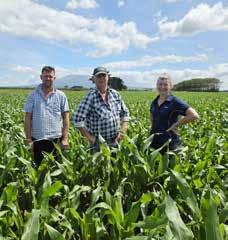
Robert and Andy Mead, with PGW technical field representative Belinda Wilson.
So in 2025, they switched to using Sharpen for their pre-emergence weed control for the first time and found it produced a ‘massive improvement’.
Robert Mead says that they were mainly
Imagine measuring the performance of 24,000 different paddocks every year.
This is what makes up the day job of Agricom’s five national agronomists.
Across 91 trials nationwide, 24,000 plots are harvested annually by an Agricom agronomist and resultant samples are dried down in ovens to provide a dry matter percentage from which kg DM/ha can be worked out. Other recordings include persistence scores, periodic quality analysis and disease scoring and if the trial is grazed pulling scores.
Each plot can be viewed as a tiny, replicated paddock covering different regions, soil types and climates.
It’s this hands-on investment from Agricom that generates confidence in our products and helps our team recommend them in the most effective way to meet farm system needs.
Agricom’s trial systems are run to a very high standard.
While much of our focus is on fully replicated and measured trials that provide reliable outcomes and accurate messaging, our work extends through to large-scale demonstrations (often replicated) not for intensive measurement but to collect observations and interactions with insects and animal grazing.
Five regional agronomists drive this programme, supported by a further five people providing expertise in project management, technical support, and extension in product performance and farm systems fit.
This significant investment by Agricom is seen as a major value proposition for farmers seeking consistent results from Agricom’s product range.
From alternative species trials in Northland, endophyte trials in the Waikato, and lamb finishing trials in Manawatu and Hawke’s Bay, to dryland research in Canterbury and
winter feed insights from Southland, we cover all of New Zealand with our wide and varied research effort.
The results not only support seed resellers and farmers themselves, but can advance industry knowledge and understanding of the potential of plant breeding in New Zealand forage systems.
One extensive piece of work, for example, that has highlighted the power of clovers and the importance of genetic gain in clover breeding is the Relish Advantage trial series.
This is based on three trials in Manawatū, North Canterbury and northern Southland which examined the effects of different forage combinations of hybrid ryegrass and Relish red clover plus differing nitrogen rates.
Written up and published in the Journal of New Zealand Grasslands in 2024, it found that the inclusion of modern red clover genetics to a hybrid ryegrass significantly increased annual and seasonal productivity and quality compared to hybrid ryegrass alone.
At the same time, it reinforced the fact that using nitrogen fertiliser in pasture systems can increase both the nutritional value and quantity of pastures, and that Relish can still offer an advantage to productivity over and above nitrogen alone.
Another recent set of data released from Agricom highlighted that similar to the Relish result, white clover can increase pasture productivity potential dramatically.
However, this work also highlighted that genetic gain in white clover was significant and the gap between the old traditional Huia white clover and modern white clover cultivars was significant
So who are the people behind all this ongoing effort? Our five extension agronomists are Angee Nagra, upper North Island; Ashling Welch, lower North Island; Holly Stokes, upper South Island; Rebekah Wood, central South Island; and Sam Anderson, southern South Island.
Annalise Williams is Otago regional agronomist; Greg Dunshea is forage systems agronomist; Kylie Dobbs research extension specialist; Jessica Dunbar agronomy project co-ordinator; Allister Moorhead portfolio manager; and Sarah McKenzie extension manager.
If you’d like to learn more, you can find various Agrinotes and technical documents on our website which highlight and share some of our other findings over the years.
targeting bindweed as well as ‘all the other nasties that come with it’.
Using Sharpen and acetochlor instead of atrazine and acetochlor kept all the weeds at bay much more effectively.
The maize was sown on 20 October.
Eight weeks later, on 15 December, Andy Mead says there were a lot less weeds in the crop than at the same
stage the year before.
“Tiny seedlings,” Robert Mead chips in, “just a few weeds here and there, nothing too major.”
He goes on to describe the big pay-off in cost and time savings that much better pre-emergent weed control delivered.
“The post-emergent spraying was kept to a minimum: 30 hectares compared to
at least 100 the year before.”
In challenging growing conditions where early weed competition has been an increasing problem, Sharpen helped to keep the crop very clean through establishment and massively reduce the need for followup spraying.
No wonder Robert describes its performance as outstanding.
Words: Arxada
Cyhella, containing 250g/L lambda-cyhalothrin in the form of capsule suspension, is a must-have product in the spray shed.
That’s even more the case now with its additional crop claims.
If we have learned anything from the previous seasons, it’s that plagues of pests are lying in wait to eat or completely wipe out your customers’ new crops, especially the likes of greasy cutworm – and the populations are continuing to build.
Arxada understands the need to protect these crops and how important they are to farmers’ systems.
In addition to the products’ existing extensive label, covering forage brassicas and clovers to name a few, Arxada’s local dedicated field science, regulatory and commercial teams, have now been able to extend the use of Cyhella for the control of these pests in forage herbs, plantain and plantain/clover swards, and kumara.
Cyhella has the edge on competitor products based on the same active ingredient, as it is manufactured in
New Plymouth with Arxada’s in-line Encaps technology.
This innovative technology is a microencapsulation process where the molecule is encased in a capsule, for uniform delivery.
This enhances user safety, aids crop safety, provides good tank mix compatibility and shelf stability, without compromising field efficacy.
With a label rate of 40 ml per ha for most crops, Cyhella delivers quick knockdown of pests, but also provides excellent residual activity.
The contact mode of action this active delivers means the insects are affected whether the pest is sprayed directly, ingests the treated crop or encounters the applied product.
Cyhella is available in 200ml, 1L and now 5L pack sizes, so there is a container suitable for all farm sizes and purposes.
In addition, Cyhella is also suitable for public

health situations, for the control of ants, cockroaches, spiders and other unwanted pests.
It is also registered for use in amenity turf, where pests may be causing damage. For more information regarding Cyhella®, refer to Arxada New Zealand’s website, or contact your local territory manager.

Outstanding Consistency.
Proven and trusted by kiwi farmers for almost two decades.
Trusted drum after drum, season after season.
Superb Results. From the formulation flow through to the performance in the field
Magister® CS Herbicide is built for consistency—because when time’s tight and conditions are unpredictable, you need a product that performs without question.
That’s why more Kiwi farmers trust Magister® CS to deliver when it matters most.

Nufarm’s biological fungicide Botector now has a label extension for Psa control in kiwifruit, giving growers a valuable new tool for managing the industry’s most significant disease.
Business development manager Katie Morrison says the new claim builds on Botector’s existing activity against Sclerotinia, providing one product that targets two major kiwifruit diseases.
“Botector is a protective fungicide that fills micro-scratches on the kiwifruit plant surface through competitive exclusion,” Morrison explains.
“A key benefit is its excellent compatibility, offering flexible application windows.”
Early users have welcomed the new label extension.
Morrison says reps and packhouses have described it as ‘game changing’ because of the flexibility, ease of use, and convenience of having one biological that works effectively against both Sclerotinia and Psa.
Nufarm received the label extension late last year and acted quickly to import further product so it could be utilised during the 2025/26 cropping season. This enabled early use through reps and packhouses even though they received the label extension once the season had started.
The 2026 season represents the first full commercial launch.
As Morrison puts it: “Botector is a biological that works for your programme, not against it.”

The product contains two live strains of the naturally occurring yeast-like fungus Aureobasidium pullulans (DSM 14940 and DSM 14941).
It works by rapidly colonising wounds and micro-scratches on plant surfaces, outcompeting pathogens for space and nutrients so they cannot establish. This creates a physical barrier that reduces the number of open sites available for Psa infection.
Psa remains the most economically damaging bacterial disease affecting kiwifruit in New Zealand.
It enters the plant through natural openings or wounds and is spread by wind, rain splash, and contaminated tools or people.
Once established, it can cause leaf spotting, shoot dieback, flower drop, cane collapse, and in severe cases overall vine decline or death.
Botector, while not a bactericide, plays a valuable supporting role in integrated disease management by colonising potential entry points and limiting infection sites, Morrison says.
The product can be applied from bud burst through to six weeks post-flowering.
Applications are made at seven to 10 day intervals as required, with the shorter interval under high disease pressure when vines are growing rapidly.
Thorough coverage is essential for good control.
The addition of a compatible wetting agent may be used to improve coverage but is not required.
Water rates per hectare should be adjusted to suit canopy growth stage and density.
Botector is BioGro approved, has no withhold period when used according to label directions and supports resistance management as an alternative mode of action with very low resistance risk. Because it acts through competitive exclusion rather than directly attacking the pathogen, the risk of resistance developing is minimal.
Morrison says the benefit of two strains is significant.
Different Aureobasidium pullulans strains thrive under varying environmental conditions. Having both DSM 14940 and DSM 14941 in Botector provides broader protection and adaptability

Katie Morrison.
across a wider range of temperatures. This allows the product to establish and remain active in conditions where singlestrain products may struggle.
Data shows the strains maintain growth and viability effectively between 4°C and 30°C, with accelerated growth rates around 15–30°C.
Once applied, Botector works quickly to colonise wounds – think of it as applying a dressing or forming a scab.
“We often get queried on a rainfast period,” Morrison says.
“Growers should always endeavour to get product on in front of the rain and with enough time for the product to colonise, humidity and temperature will influence how quickly the product can colonise.”
As a general rule of thumb, it has a 24hour rainfast period, with best results if it can dry for at least four hours before rain. The organism produces an extracellular polysaccharide (pullulan gum) that helps it stick to surfaces and seal micro-scratches. Botector can be safely mixed with copperbased products when needed, a major advantage over many other biologicals, she adds.
This compatibility stems from the strains’ origins in orchards where copper was regularly used.
When using incompatible products, allow a three-day interval before or after applying Botector.


Botector® is the only biofungicide giving Kiwifruit growers a cutting-edge alternative to protect against Sclerotinia and now Psa.
So keep your growers’ guard up this season with Botector, a certified solution for organics.
For more information, contact your Nufarm Business Development Manager or visit us at nufarm.co.nz/botector
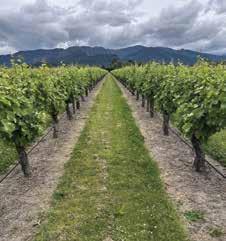
Richard Barnes, Coles Contracting viticultural operations manager, knows the wine industry in New Zealand and Australia like the back of his hand.
Marlborough-based, he works with people with vineyards ranging from 3 hectares to over 100 hectares.
“It’s a very dynamic business.”
Barnes has managed blocks with glyphosate resistant ryegrass, but it wasn’t a big step up as he’d previously encountered the issue in Australia.
He’d tried other herbicides, before Katana, with varied success.
“Often it added extra passes.”
He says he applied on the Sustainable Winegrowers New Zealand (SWNZ) website to use Katana on a block that had glyphosate resistant ryegrass.
“It was an easy process. We applied Katana pre bud burst and found its five-month residual effect cut out an extra herbicide pass. It was successful and the client was happy.”
Containing 250 g/kg flazasulfuron in the form of a water dispersible granule, Katana provides long-term residual control of problem weeds.
UPL New Zealand regional manager upper South Island, Alex Easton, says Katana’s results are exciting. “It’s going to be massive in terms of savings on fuel and staff time, as it can provide control for up to five months.
“Long-lasting efficacy means vineyards can focus labour and resources on other jobs. Katana also has a long and flexible application window, and we’ve seen it work well in some tough conditions.”
In feedback from a reseller, a client reported using Katana immediately after registration, with impressive results on resistant ryegrass and other weeds.
“It can save one to two passes of spray. Some results have been really outstanding. The following year, growers have also found the weed pressure was decreased.”
Rapidly absorbed by roots and shoots, Katana inhibits Acetolactate Synthase (ALS), a key enzyme of base amino acid production.
As a result, downstream synthesis of vital
A safety push across sheep, beef and dairy farms has revealed significant gaps in hazardous substances management – and clear, practical ways to fix them, thanks to WorkSafe New Zealand.
Inspectors completed 680 assessments nationwide between October and December 2025.
The findings are now public, giving farmers across the country practical insights into where the sector needs to improve, and how WorkSafe can help.
WorkSafe’s project lead, Carl Baker, says the assessments were designed to understand what’s happening on farms, not to catch people out.
“We went in to have honest conversations with farmers and figure out where we can help them lift their game. The response
plant proteins is stopped, and the plant dies. When used on germinating seedlings, Katana acts in the soil to prevent further plant growth and emergence.
Katana is a residual herbicide.
As such the soil needs to be clear of significant plant material before using it.
If weeds are present it can be mixed with a knockdown herbicide.
If weeds are significant, apply a knockdown herbicide first, then use Katana once weeds have collapsed.
More than 15 Katana trials were conducted in Marlborough, Hawke’s Bay and Gisborne throughout 2016-2021.
In addition, pot trials were carried out at Massey University to confirm its efficacy on glyphosate resistant ryegrass.
Glyphosate remains one of the most widely used herbicides in New Zealand and can be mixed with Katana.
Prior to use SWNZ members must apply for written permission before using Katana.
from the sector has been overwhelmingly positive.”
Hazardous substances emerged as the highest-risk area, with 39 per cent of assessments requiring improvement.
Of improvement notices issued, 94 per cent related to missing safety data sheets or chemical inventories – a relatively straightforward fix with significant safety benefits.
Machinery and vehicle safety also featured. Inadequate guarding on power take-off (PTO) shafts was a common machinery issue (16 per cent of assessments required improvement, rising to 25 per cent in the South Island).
Farm vehicles, tractors, side-by-sides and quad bikes all featured – 14 per cent of assessments required improvement in this area.
Most businesses assessed (81 per cent) had fewer than five employees, a reminder that even small operations carry real risk.
Carl Baker says many of the improvements identified are straightforward and low-cost.
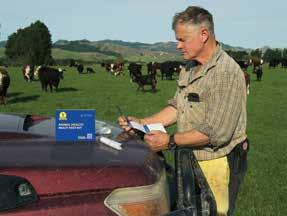
Recent FECPACK faecal egg count (FEC) testing has uncovered significant hidden parasite burdens in beef cattle in West Otago, despite stock appearing healthy, Techion says.
Testing carried out early May on rising one-year-old cattle identified egg counts exceeding 500 eggs per gram, well above expected thresholds, indicating a level of parasitism that will impact animal performance and contaminate autumn pasture.
The results were revealing and surprised the farm owners.
Techion is currently refining its new Worm ID Test for cattle and ran the samples through the new technology.
FECPAK uses high-resolution imaging to identify the species of parasite present. Results are available within hours of imaging, a significant time saving on traditional larval culture species testing, which usually takes 10 days for results.
Of note was the high representation of Haemonchus on some properties.
One of the farmers also tested their R2 heifers; the results showed these older animals had moderate FEC counts, meaning they will be contributing to additional pasture contamination.
FECPAK was developed by Techion and the company’s founder and managing director Greg Mirams says the findings reflect a perfect storm of seasonal conditions.
“Through summer, we’ve seen sustained moisture and strong pasture growth across the country. Stock have grown strongly because they’ve been well fed, but at the same time, parasites have thrived.
“Longer, lusher pasture has protected larvae from sunlight and without strong UV exposure, parasite survival rates have been high.”
As farms move through autumn, these conditions translate to increased parasite exposure for all young stock grazing on pasture.
Critically, Mirams says the parasite burden is often invisible to farmers.
“The cattle we tested looked to be in great condition.
“However, when the FEC results came back, parasite levels were high enough to significantly impact growth.
“That’s the challenge with cattle, they often don’t show obvious clinical signs of parasites. They just grow slower.”
At the levels observed, Mirams says production losses can be substantial.
“At those egg counts, we know animals can be losing 50–70 per cent of their potential daily weight gain.
“If that’s been happening over a month or so, the direct cost in today’s market can easily be $80 to $100 per head in lost performance and that’s before farmers account for the cost of the extra feed required.”
The uneven performance within a mob can also provide a clue.
“Often farmers will focus on the best animals, but the real question is how even the mob is. You’ll typically find a lighter or tail end of cattle that aren’t performing as well as the rest, and that’s where parasites
are often having the biggest impact.”
Mirams says the message for beef farmers is to FEC test early before performance drops.
“By the time you can see a problem, it’s already affecting growth. FEC testing gives farmers a clear, objective measure of parasite burden so they can act early and protect performance and value.”
He also highlights the longer-term impact of failing to identify high parasite burdens.
“When animals are carrying and shedding high egg counts, they are contaminating pasture and contributing to the high pasture parasite larval levels. That has ongoing implications not just for current stock, but for future grazing management.” Mirams encourages beef farmers to act now and FEC test.
“Conditions mean the parasite challenge is higher than many farmers expect. The best thing farmers can do is undertake FEC testing to understand where they’re at. It’s simple, accessible, and gives the information needed to make the right decisions.”
FECPAK Multi Test Kits are available at Farmlands stores throughout New Zealand and it’s a simple process for farmers to collect a test kit and send their beef cattle FEC samples to the lab for analysis.

“Keeping full and up-to-date records of hazardous substances on farms can prevent serious and often long-term harm.
“Safety data sheets and inventories are vital. They tell you how to manage chemicals and help emergency services respond. Without them, we don’t know the risks.
“Keeping vehicles serviced, regularly checking brakes and tyres, ensuring workers
wear seatbelts and helmets, and making sure PTOs are properly guarded are relatively simple measures. But they can save lives.”
WorkSafe has a range of resources to help farmers act on these findings, including new online learning modules on hazardous substances covering inventory management, risk assessment, and emergency planning.
Carl Baker acknowledged the farmers who
participated in the assessments, along with industry partners Safer Farms, Federated Farmers and DairyNZ.
“We know farmers take the safety of everyone on their properties seriously.
“We’re here to support that – and we’re all working toward the same goal, for everyone who works on a farm to get home safely at the end of the day.”
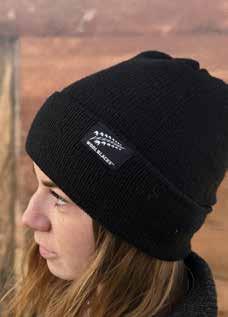
Iconic New Zealand apparel brand Norsewear has found a way to keep sports supporters’ heads toasty with its new Wool Blacks beanie, available in time for winter.
Crafted from Wool Integrity New Zealand certified traceable New Zealand wool and designed for the good sports who love to get out in support of their favourite team – braving arctic mornings, shadowy afternoons, and freezing stadiums – the beanie is soft, warm and the perfect addition to the Kiwi winter wardrobe.
“We wanted to launch the Wool Blacks beanie as a way of celebrating the parents, grandparents, coaches, volunteers and supporters who turn up week after week to cheer on rugby, football, netball, hockey and other winter sports across New Zealand,” says Norsewear managing director Tim Deane.
“But it’s also something you can stuff in your pocket and take to Eden Park.”
And Norsewear is going a step further to help keep grassroots sport thriving – 10 per cent of Wool Blacks beanie sales will be donated to School Sport New Zealand. Tim says the idea was inspired by years spent on the sidelines himself, as a dad of four now adult children.
“I’m well aware that once the temperature drops, you find yourself standing there, chilled to the bone, and wishing you’d remembered your beanie.”
But there was another reason, too.
Last year, sports fans contacted Norsewear to voice their disappointment that official, branded rugby supporters’ beanies were cheap, synthetic, highly flammable and manufactured offshore.
“At Norsewear we’ve always backed New Zealand wool and the farmers who produce it – not to mention the fact that many of those farmers are turning out our toughest sportspeople!
“So we put a call out via an open letter, suggesting that there might be room for a woollen supporter beanie in New Zealand sport. When that idea didn’t fly, we decided to make one ourselves.”
The Wool Blacks beanie reflects the company’s longstanding commitment to natural fibre and the people who love it as much as Norsewear does, Tim says.
“For decades we’ve made products for people who work and play outdoors.
“New Zealand produces the world’s best wool and we think it deserves to be celebrated! This beanie is a fun way to champion wool while supporting the communities that keep grassroots sport alive.”
School Sport New Zealand CEO Michael Summerell says funding generated by sales of the beanie will help create opportunities
Words: FMC New Zealand
For New Zealand’s fodder beet and forage brassica growers, timing is everything— and so is confidence in your crop protection.
That’s why Magister CS Herbicide continues to be the trusted choice across the country, delivering consistent performance in the paddock season after season. With its advanced capsule suspension
(CS) formulation, Magister CS offers smooth mixing, even coverage, and reliable control of key broadleaf weeds like wireweed, willow weed, cornbind, cleavers and shepherd’s purse.
Developed using FMC’s global formulation
for secondary school sport from Kaitaia to Bluff.
“It’s wonderful to see an honest New Zealand brand like Norsewear backing sport in this way and celebrating the people who turn up, no matter the weather.”
expertise, the CS technology ensures the active ingredient is delivered precisely and consistently every time.
It’s a formulation that’s stood the test of time – tried, tested, and trusted by Kiwi farmers to get the job done season after season.
In a market where new products come and go, Magister CS has remained a staple because it simply works.
Henry Ross, general manager of Molloy Agriculture, knows the value of reliability when the pressure is on.
“We always use and recommend Magister CS,” he says, “as we can’t afford any downtime due to potential formulation issues, so we stick with what we know and trust to help us get the job done time and time again.”
The Fieldays Innovation Awards continue to highlight the depth and diversity of innovation emerging from New Zealand’s primary industries, those behind the event say.
Nearly 60 entries were received in total, with close to half of these in the popular prototype category.
Nineteen entries were chosen for final judging across four categories.
The Prototype Award, supported by Sprout Agritech and Blender Design, went to Scanabull for its newly launched Scanabull WeighApp.
This uses 3D LiDAR and AI to deliver accurate, real-time cattle liveweights via a simple phone scan.
Category head judge Juliet Ansell says the judges agreed it was a highly relevant and scalable solution, noting the team’s improvements in accuracy and enhancements to the user interface.
The Early-Stage Award, supported by Map of Ag, recognised both emerging innovation and practical application.
Elm Lab Skincare was highly commended for its A2 Colostrum Baby Lotion, developed using colostrum sourced from a single, traceable family
dairy farm in Mosgiel.
Category head judge Emma Poole says they praised the product’s strong family values and innovative use of a rural byproduct.
The category winner was Hamilton-based elert for its elert EQ device, a wearable technology designed to monitor equine health.
Judges described it as a compelling realworld solution.
Wellington-based Enivo was judged Young Innovator of the Year for its biodegradable plant pots made from New Zealand forestry and primary industry waste.
Category head judge Rosie Spragg noted the high calibre of entries, with Enivo ultimately standing out for its consistent values across the business, a carefully considered supply and distribution chain, and strong engagement with customers and partners.
They also highlighted Enivo’s ability to pivot in response to commercial pressures
and the scope for it to achieve its environmental impact goals and diversify beyond the initial product.
The Growth and Scale Award, supported by PwC, went to Trussed Systems for its Truss House Portal Frame.
Category head judge Katherine Sandford said highlights included the company’s strong intellectual property position, with patents secured in multiple countries, along with established commercial partnerships.
“Congratulations to all our entrants who are helping drive progress across the sector,” says Steve Chappell, programme manager for the New Zealand National Fieldays Society.
“Many of the challenges facing our primary industries are global.
“It is encouraging to see New Zealand innovators developing solutions that not only address local needs but also have relevance and impact on the world stage.”
That trust is echoed by mixed arable farmer and Mid Canterbury Federated Farmers vice chair, Darryl Oldham, who relies on Magister CS to stay ahead of weed pressure.
“It’s a formulation we trust to work where it matters most,” he explains, “helping us to get the jump on weeds, especially speedwell in our brassicas.”
Agronomists also back its performance.
Nick Williams, director and agronomist at Cates, highlights the product’s consistency: “We use and recommend
Magister CS because of its excellent formulation and reliable performance in the field.
“It helps us deliver reliable results for our growers season after season.”
From the Wairarapa through Canterbury, Otago and down to Southland, Magister CS continues to earn its place in New Zealand’s cropping systems.
When conditions are unpredictable and timing is tight, it’s the herbicide growers turn to with confidence – because when it matters most, Magister CS delivers.
FarmIQ Systems is promoting a new land management app on the basis it offers a simple, low barrier way for farmers and growers to get started with digital tools.
Chief executive Gavin McEwen says the app has been designed as a painless and easy entry point.
“We know from experience and research the barriers and concerns that prevent farmers and growers from adopting or even trying new technology, but we also know the huge benefits that smart digital tools provide,” he says.
The app, called Grow, was launched at Mystery Creek Fieldays where it featured in the Innovation Hub as part of the Innovation Awards.
It is primarily a mobile app with additional web functionality and is built to give users a clear view of their whole operation.
Grow brings together mapping, health and safety, staff management, planning tools such as a diary, calendar and lists, land event tracking and animal recording in one place.
The core version is free, with additional features available through paid add ons or upgrade options.
McEwen says removing upfront cost was important.
“Having a free version was essential for us to reduce barriers of farmers and growers seeing the benefits of digital technologies.”
He says FarmIQ’s background in farm


software development has shaped the product.
“Our team has been building farm management software for over a decade, so we understand the huge difference in time savings, accuracy and performance a good farm management tool can make in a farm or land-based business.”
The system is designed as a mobile first tool so information is always current in the field.
“Grow is a mobile-first tool, meaning everyone in your team will have the latest information in their pocket, as things change, in real time.”
It has been developed for a wide range of land-based sectors including dairy, pastoral, horticulture and viticulture, as well as smaller or more specialised operations such as beekeeping and poultry.
FarmIQ head of sales and marketing Russell MacKay says voice functionality is expected to be a strong drawcard.
“Using some clever AI technology, Grow lets users record a voice note or task on the app, without having to type it in.
“It’s a pain when your hands are covered in who knows what and you need to write something down, so the AI voice features make it much easier. Simply talk to the app


and Grow will create a task, assign it to a staff member if needed and add it to the diary. Easy as.”
The app has been built so users can start small and add features as required, rather than taking on a full system from the outset.
If more capability is needed, users can move to a FarmIQ package.
McEwen says the aim is to complement rather than replace practical experience on farm. “These benefits apply to both individual operations as well as the New Zealand agriculture industry as whole growth in production and profit could be significant if more Kiwi land-based businesses embraced digital tools and technology,” he says.
“There is no replacing the connection and gutfeel that comes with working the land and we don’t want to.
“We just want to help farmers and growers embrace technology that lightens the load a little and lets them get on with the job they love.”



Words: Syngenta New Zealand
New Zealand potato growers now have access to a powerful new tool in their crop protection toolkit.

Syngenta New Zealand proudly announces the registration of Vibrance Premium, a next-generation fungicide seed treatment specifically designed to optimise potato establishment and protect against many key soil-borne diseases and help maximise marketable yields.
Vibrance Premium combines the specialised SDHI (succinate dehydrogenase inhibitor) sedaxane specifically developed as a seed
treatment with fludioxonil to provide a dualmode-of-action formulation that enhances both root health and plant vigour.
This combination offers the broadest spectrum disease control available.
It provides robust defence against Rhizoctonia solani (black scurf), silver scurf, black dot, fusarium and gangrene, while also providing suppression of common scab.
“The early stages of a potato crop’s life
are the most critical,” says Paul Hassan, technical services lead at Syngenta.
“Vibrance Premium ensures that the plant develops a stronger, more resilient root system from day one.
“This leads to better water and nutrient uptake, more uniform emergence and ultimately, more consistent tuber sizing at harvest.”
“By controlling these pathogens early, Vibrance Premium helps prevent the ‘gappy’ stands that can significantly reduce yield potential in commercial potato operations.
“We would still recommend the use of Amistar as an in-furrow treatment at planting for soil-borne control of black scurf and suppression of silver scurf.
“The combination of both products has given outstanding disease control and marketable yield results in our field trials,” says Hassan.
The registration of Vibrance Premium follows extensive local trials across key potato-growing regions, including Canterbury and Pukekohe.
These trials demonstrated that treated seeds improved vigour and increased tuber set in the crops they produced.
Vibrance Premium offers unique flexibility for a potato tuber seed treatment, with application possible at either pre-storage or pre-planting of the tubers.
The liquid formulation is designed for ease of use in modern seed treatment applicators, ensuring consistent coverage of the seed tubers, a critical factor in achieving the full protective benefits of the product.
Growers are encouraged to contact their local Syngenta territory manager or technical advisor to discuss how Vibrance Premium can be integrated into their crop programme to secure better yields and higher-quality potatoes.
Vibrance Premium will be available for the 2026 planting season.
Kapuni will keep producing local urea fertiliser for the rest of this year, Ballance Agri-Nutrients says.
The co-op has secured gas supply through to the end of December for the Taranaki plant, which manufactures about one third of New Zealand’s total urea.
“We acknowledge the support of our suppliers in making this possible,” says CEO Kelvin Wickham.
“We remain active in the gas market for longer-term gas supply. We acknowledge the Government’s support and welcome the measures recently announced to improve
gas market transparency and provide better visibility of supply and demand.”
While Ballance’s immediate priority is securing natural gas supply to continue operating New Zealand’s only urea manufacturing plant, at the same time it is progressing an energy transition plan.
This would support ongoing nutrient production, retain jobs and capability by moving towards renewable production, Wickham says.
“Maintaining locally manufactured nutrients remains a priority as an important part of the nutrient supply mix and to preserve future options.
“In an increasingly uncertain global environment, secure access to fertiliser is critical for farmers and the wider economy. The uncertainty caused by the conflict in the Middle East highlights how critical local manufacturing resilience is for New Zealand.”
New Zealand farmers have earned a global edge by consistently yet cautiously taking advantage of emerging agri-technology.
The result, says Alexandra-based Findex advisor Nigel Smellie, is a lesson for every business: A solid business case, careful capital allocation, and resistance to fanciful promises in favour of demonstrable value, is the well-trodden path to success.
“Most farmers are not short on ideas for new tech to try, but they are short on certainty. If they cannot clearly see the payback, or get support when it breaks, it is hard to justify the spend.”
Smellie says this pattern is consistent across the sector.
High enthusiasm and keen interest are only actioned when real results such as return on investment, improved capability, reduced risk, or better crop yields are on the table. That caution is justified. Many technologies
for tech’s sake. The best results start with a business case that includes well-defined problems, set baselines, and a controlled rollout, including support and training for staff members.
“That is how you turn the promise of ‘innovation’ into measurable ROI. And it is as applicable on the farm as it is anywhere else.”
He argues that the most successful adopters of new technology are those who don’t go it alone. “Farmers who regularly talk with advisors, peers, and industry groups are better able to filter hype from value, understand risks, and build a business case before committing capital.”
Smellie says technology has had an impact across the agri sector, including on accountancy. “What once centred on compliance and tax has expanded into forecasting, capex planning, workforce

management, and technology evaluation,” he explains.
Recalling endless hours spent poring over manual cashbooks 25 years ago, automation, digital systems and artificial intelligence now means accountants, human resources specialists, and many others upon whom farmers rely have themselves elevated their value propositions.
“While we don’t work the fields, the principle is consistent, and those benefits accrue to the farmer.
“Adopting technology means improving what we do and how we do it; incremental improvements across a range of the industries that serve primary producers roll up into substantial benefits.”

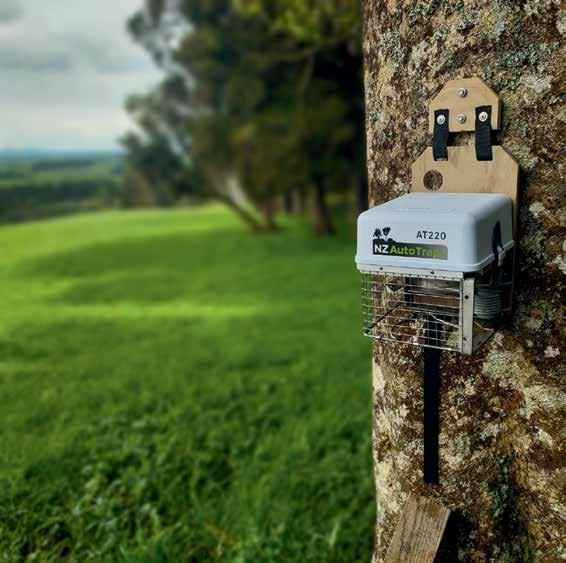
Predator control technology is moving fast. New traps can reset and lure themselves, freeing you up for everything else the farm throws at you.
Get farm-ready predator control guidance and advice at: predatorfreenz.org/farms

For heinous crimes against forage crop yields!
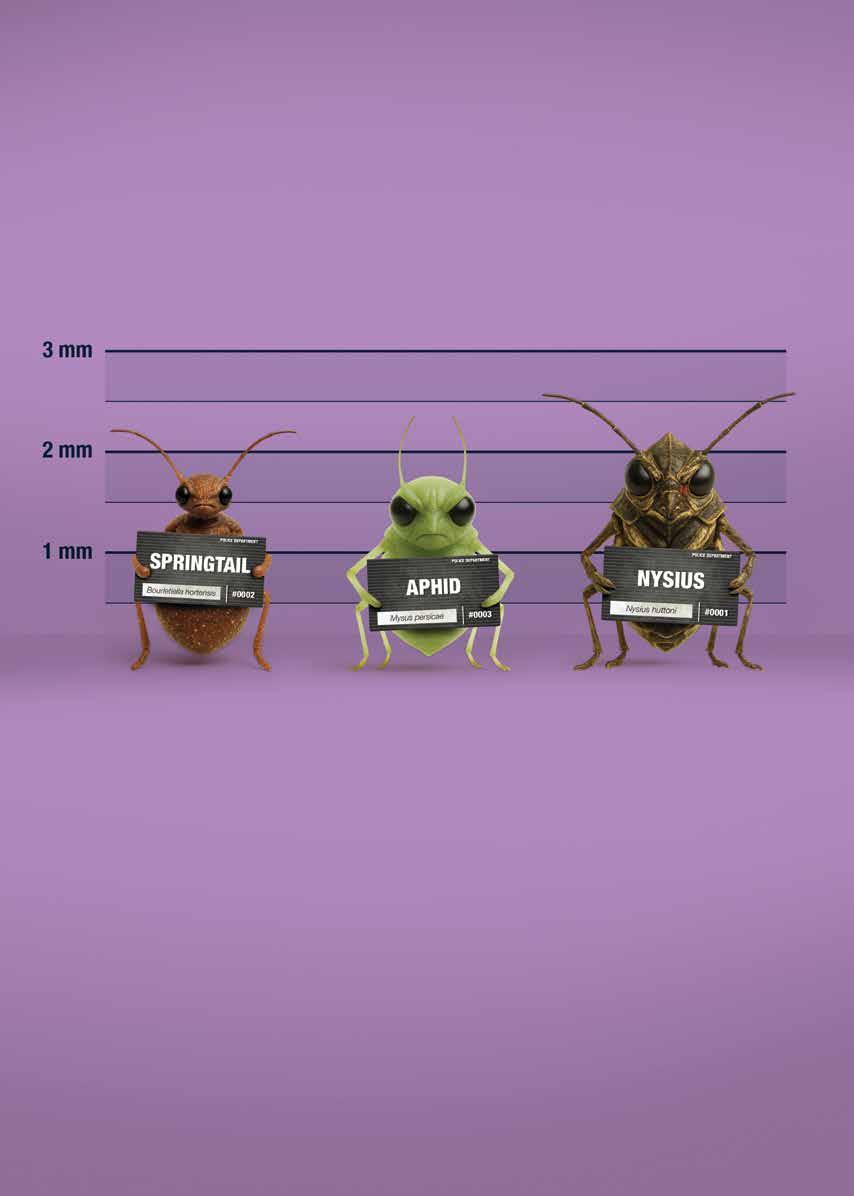
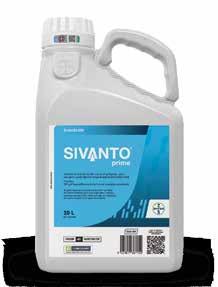
End the damage from these three vile vermin in your forage brassica and fodder beet crops with SIVANTO prime. SIVANTO prime contains flupyradifurone, a powerful new insecticide providing rapid control of Nysius, green peach aphid and springtail.
+ Rapid and effective control of key establishment pests from pre-emergence to 8 true leaves in forage brassicas and fodder beet
+ Can be effectively integrated into IPM programmes
+ Innovative, odourless, liquid formulation that penetrates the plant quickly
+ Can be applied by helicopter
Learn more at cropscience.bayer.co.nz
A multi-year genetic research programme has found the low methane trait identified in dairy bulls does not express itself once their daughters enter lactation.
The joint project between LIC, CRV and the Ag Emissions Centre, which is fully government funded, was hailed as worldleading research when launched.
So far it has cost more than $11 million over five years, with $8.3 million coming from the Ag Emissions Centre and LIC contributing a further $3 million to build the methane barn at its Rukuhia Innovation farm.
LIC says the outcome is disappointing, and will take months to analyse and understand, but does not mark a dead end.
Rather it provides ‘clear direction’ on where to go next.
“First, we have learned that methane traits in bulls are heritable, and this knowledge is already being applied within our dairy beef breeding programmes,” it says.
“Second, it shows us that genetics still can have a meaningful role to play in reducing gross methane emissions but need to be studied through a different approach.”
Such an approach is likely to focus on measuring larger numbers of lactating cows for methane production to generate DNA-based selection criteria.
“We still believe that reducing gross emissions is an important part of the ongoing sustainability of New Zealand’s dairy sector,” LIC says.
Close to 400 daughters from low and high emitting sires were assessed in the latest phase of the programme last year from the time they began lactation.
They were all barn housed and fed silage and grain.
According to the original project timeline, if this stage proved successful, 2026 was to have seen all artificial breeding bulls from LIC and CRV capable of having a methane breeding value, allowing farmers to select bulls who would product low methane-emitting cows.
While this has not been achieved, LIC says ‘in the longer term’ the work so far has provided information that will make a material difference on farm to dairy producers’ efforts to mitigate methane emissions.
“We have identified that 20 per cent of the variation we see for methane production is genetically controlled. This gives us confidence to continue research to deliver lower methane genetics in the future.”
The executive director of the Ag Emissions Centre, Naomi Parker,
agrees the findings are still valuable.
“For beef and sheep, we are still confident in the approach, and we will be feeding the insights from this trial into work underway in these areas.”
Since 2020 it is estimated government and industry have spent between $250 million and $450 million on dairy methane mitigation in New Zealand, including genetics, inhibitors, vaccines, probiotics, low emissions pastures and testing facilities.
According to a methane and science target review prepared for the Ministry for the Environment late 2024, New Zealand’s methane emissions including dairy comprise a fraction of one percent of the world’s total.
Countries which have deployed commercial scale methane breeding values for their dairy sires include Canada, the Netherlands, and Ireland.


A DairyNZ-led study has found no evidence that wearables for oestrus detection improve or worsen key reproductive metrics after adoption in spring calving pasture-based dairy herds.
The large-scale research project analysed data from 141 commercial herds that adopted wearables and compared them with 1158 matched reference herds without the technology.
Matching considered location, herd size, planned start of calving and milk production.
Data covered two years before and two years after adoption.
DairyNZ senior scientist Dr Paul Edwards and colleagues from DairyNZ and EpiVets recently published their findings in the New Zealand Journal of Agricultural Research.
Wearable uptake on New Zealand dairy farms has increased considerably from 3 per cent in 2018 to 18 per cent in 2023, representing over 820,000 cows.
“These technologies require significant investment by dairy farmers, who, to date, have been making such investment decisions with a lack of independent, publicly available information on expected changes to herd reproductive performance following their adoption.
“With the current adoption level, there should be sufficient real-world reproductive performance data available to better inform this investment decision for farmers considering adopting wearables.
“Accordingly, the aim of this study was to determine the changes to reproductive performance that farmers could expect when adopting wearables.”
The study found wearable herds already showed stronger reproductive performance before adoption.
They achieved a 1.1 percentage point higher six-week calving rate and 2.9 percentage point higher three-week submission rate than reference herds.
This pre-adoption advantage was maintained after adoption.
“Overall, there was no evidence to support improvement, or deterioration, in reproductive performance following the adoption of wearables,” the authors report.
Adoption of wearables did change farmer practices.
Wearable herds extended their artificial insemination (AI) period.
In the second year after adoption 80 per cent of wearable herds used AI for more than 42 days compared with around
41 to 42 per cent of reference herds.
This longer AI window offers potential benefits.
Farmers can use higher genetic merit sires for more calves or select sires with shorter gestation lengths to support better calving patterns.
However, the extended AI period affected some metrics.
Overall non-return rate declined in wearable herds likely due to recording of longer return intervals that would have been missed with shorter AI followed by natural mating.
An adjusted non-return rate focused on the first three weeks showed no significant change.
The estimated six-week in-calf rate also reflected the pre-existing differences rather than any post-adoption gain.
The authors conclude companies marketing wearable technologies ‘should be careful about how they talk about the reproductive performance of farmers with their technology relative to an average so as not to imply that any differences are a result of adoption’.
They also say farmers should not factor improved reproductive performance into return on investment calculations for wearables.
Instead they should focus on labour
savings, easier heat detection and management benefits.
Maintaining performance while reducing reliance on skilled labour for visual oestrus detection is itself a positive outcome.
The study used passively collected calving and AI records from the Dairy Industry Good Animal Database.
It covered herds adopting wearables from 2018 onward.
Brands included several commercial systems.
Reference herds were screened to exclude any with wearable integration.
Higher performing herds were more likely to adopt the technology, suggesting proactive managers see value in automation.
The study did not assess labour savings or other management benefits directly. It focused solely on reproductive outcomes.
Further work may explore additional returns such as grazing management or heat stress detection.
Results are specific to spring calving pasture-based systems in New Zealand.
The authors point out oestrus detection is only one factor in reproductive success, and that good reproductive performance depends on multiple drivers.
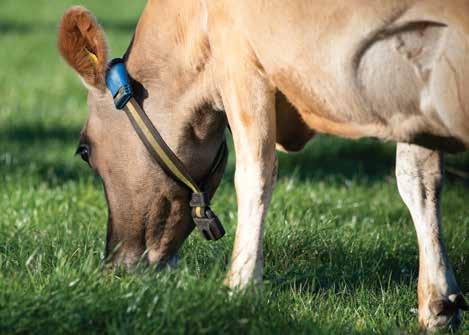
Words: Biostart
Every farmer is working towards the same outcome-robust stock, strong growth, and consistent productivity.
Yet this begins earlier than many realise, within the first days of a calf’s life, when the foundations of lifelong performance are established. Newborn calves face multiple challenges. Their gut and immune systems
are still developing, leaving them vulnerable to disease and environmental stress.
Limited access to colostrum, inconsistent feeding, exposure to pathogens such as E.coliand salmonella, and rapid diet changes all add pressure.
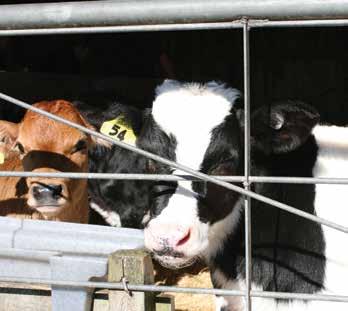
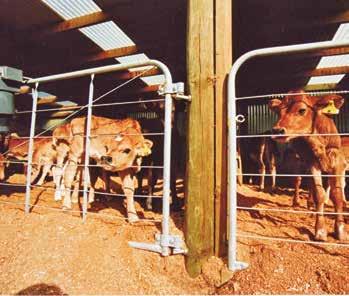
Combined with unpredictable spring weather, these factors highlight the importance of early-life management.
According to Dr Jerome Demmer of Biostart, the key lies in gut biology.
“Ruminants with healthy gut microbes are more resilient, grow faster, and produce more,” he says. “Supporting gut health-especially early-can transform animal performance.”
The first three weeks are critical.
During this time, milk bypasses the rumen and goes directly to the abomasum, as the rumen is not yet functional. While colostrum provides essential immunity, it is not always enough on its own.
Establishing beneficial gut microbes early helps protect against disease and supports the calf until its immune system matures.
It also encourages rumen development, preparing the animal for the shift to pasture and solid feed.
Feed additives are increasingly used to support animal health, but they work differently.
• Probiotics introduce live microbes into the gut.
• Prebiotics stimulate the growth of microbes already present.
Prebiotics support the animal’s natural biology, enhancing existing microbial populations rather than replacing them.
Biostart’s prebiotic approach uses fermentation extracts, oligosaccharides, enzymes, plant compounds, and micronutrients to activate beneficial microbes.
Its calf product is designed to improve milk digestion, support early rumen
development, reduce scours, and help calves cope with stress.
Trial results show 16 per cent increase in live weight and 18 per cent improvement in growth rate within 21 days.
Gut health remains critical beyond weaning.
As lambs and cattle transition to pasture, rumen microbes drive feed conversion into nutrients for growth, milk, and meat production.
However, these microbes are sensitive to feed changes, environmental stress, and treatments such as antibiotics or drenches.
Targeted prebiotic support helps maintain microbial balance during these periods.
Trials show dairy cows produced higher milk solids, with increases of 5 per cent in November, 4 per cent in December, and 3 per cent in February using Biostart’s LactoPlus.
The principle is simplestrengthen the animal’s natural systems rather than reacting to problems later.
Supporting gut biology can reduce reliance on interventions, improve feed efficiency, and increase resilience to stress and disease.
“Providing optimal natural gut biology through prebiotics has a huge positive effect on health and growth for ruminants, with absolutely no downside,” Jerome Demmer says.
For New Zealand farmers, where pasture-based systems dominate and environmental variability is a constant, supporting the unseen workforce within the rumen may be one of the most practical and profitable decisions they can make.
Farmers and beekeepers can work together for the coexistence of agriculture and bees.
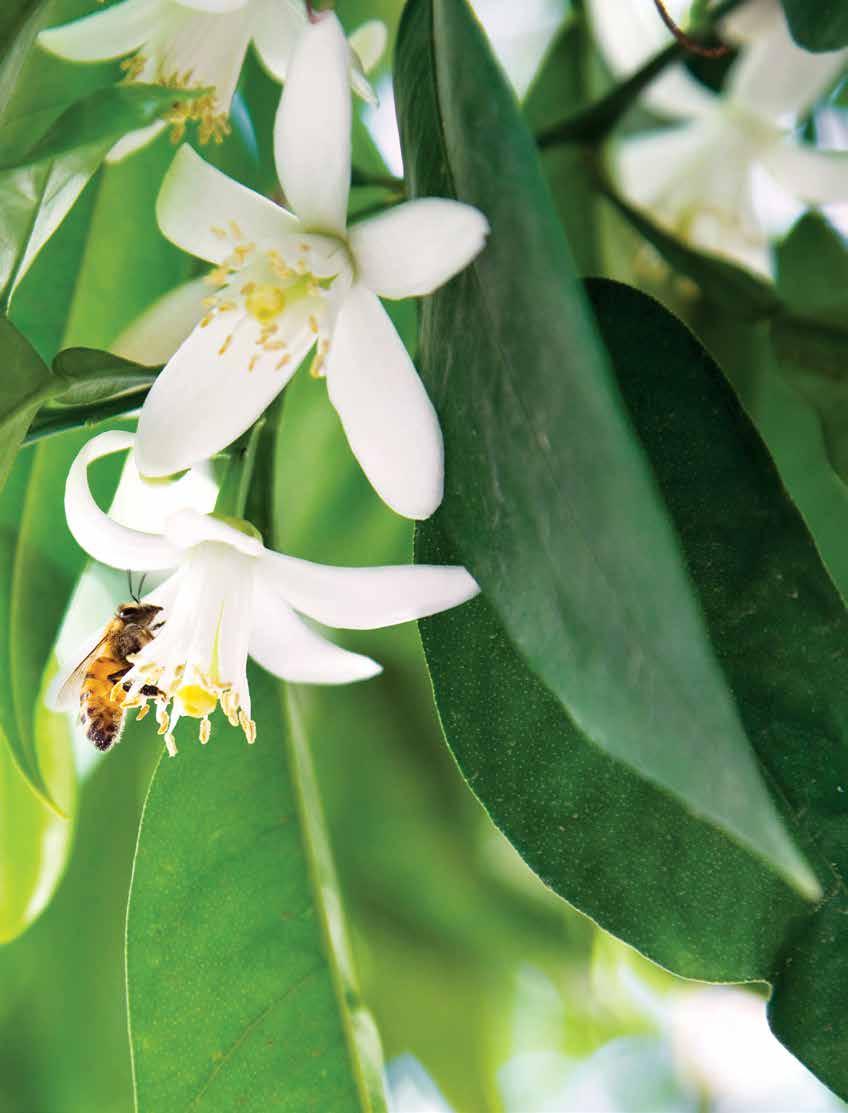

Improve pollinator habits by planting flower boarders and maintaining hedgerows and unsprayed headlands.
Implement an integrated pest management plan to apply pesticides only when necessary.
Coordinate in advance with local beekeepers before spraying so nearby hives can be moved or otherwise protected.
Use genuine products only and alert authorities of counterfeit or illegal pesticides that have unknown impacts on wildlife.
Follow the instructions on the label to ensure you use the recommended dose. Avoid spraying in windy conditions to prevent spray drift.
Use drift-reduction application equipment that is well maintained and calibrated.
Avoid contamination from spray liquids when mixing, and properly dispose of waste and other used materials.
Avoid spraying pesticides when bees are foraging and plants are flowering.
Minimise dust from treated seed by carefully pouring it out of bags. Use seed planting machinery that eliminates the production of dust, and clean seed equipment regurally.
Palm kernel is back on the menu for Landcorp Farming cows on conventional farms in the central North Island and on the West Coast, the state-owned enterprise says.
It released the news in response to an Official Information Act request from Greenpeace to support informed public discussion and avoid misunderstanding or speculation about its farming practices.
Bringing back the supplement has not been a quick or easy decision, says CEO Mark Leslie.
“We have worked through it carefully over several years, with robust discussion and debate.
“Ultimately, we have had to make a balanced decision considering sustainability, commercial realities, impacts of climate variability and animal welfare facing our business while setting ourselves up for the long term.
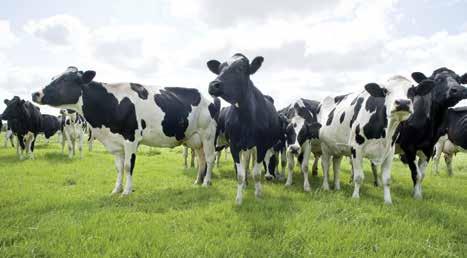
“Being bold is one of our values, and in this case, it means making a considered decision that supports a sustainable and resilient farming model.”
The country’s largest farmer phased palm kernel expeller out of its farming systems in 2016.
At the time, it was believed the decision would be cost neutral and supported by premiums for PKE-free conventional milk. Those premiums have not materialised, while alternative supplementary feeds have become significantly more expensive.
PKE was first reintroduced on some conventional dairy farms in April 2025, after a drought was declared in the central North Island.
Since December 2025, it has been available as a flexible supplementary feed option on conventional dairy farms in that
region to help manage ongoing feed and cost pressures.
Its use is also being considered for conventional dairy farms on the West Coast of the South Island.
Leslie says the organisation recognises palm-based products raise strong views.
“For this reason, we have sought assurance on supply chains and workforce conditions from suppliers and only source from those who participate in the Roundtable on Sustainable Palm Oil (RSPO).”
He says organic farms do not and will not use PKE.
Landcorp remains New Zealand’s largest supplier of organic milk, and organic production continues to be the pathway where genuine PKE-free premiums are realised.

Trialled
Developed Manufactured


Rob Clayton says practical, farmer-led innovation is what drew him to Gallagher and will shape how he leads its global Animal Management business.
Clayton took up the chief executive role early last month, stepping in as the company pushes to build on strong growth and expand its agritech footprint in key markets.
He says New Zealand’s track record of solving real on-farm problems gives the business a platform to scale proven solutions offshore.
“The New Zealand farmer has always been innovative and inquisitive, constantly looking for ways to improve,” he says. “Solutions developed and proven here carry a farmer approved stamp when launched to the rest of the world.”
Clayton grew up on a mixed wheat, sheep and cattle property near Coonamble in north west New South Wales and brings to Gallagher 25 years with Nutrien, including senior roles in Australia and the United States.
That background, he says, keeps the focus on tools that save time and improve decision making.
“Successful agritech starts with the
problems farmers are trying to solve,”
Clayton says. “The technology that gets adopted is what makes life easier, improves efficiency and helps farmers make better decisions.”
He says exposure to different production systems has shaped his approach.
“Every time I am on farm, whether in China, the Americas, Australia or Europe, I learn something new.
“You can take those insights and combine them with Gallagher innovation to create new opportunities for farmers.”
Gallagher Animal Management has lifted growth over the past year while expanding its capability and footprint, including new activity in Brazil and acquisitions in Europe and South Africa.
The business has also increased momentum behind its eShepherd platform.
Clayton says connected tools are increasingly part of a wider farm operating system rather than standalone products.
“Gallagher’s solutions are part of a
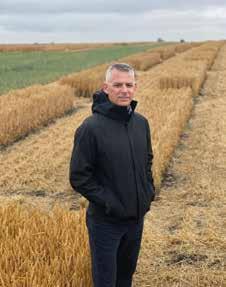
broader, interconnected system,” he says. “That level of integration is not common in animal management and it is where we can add real value.”
Group chief executive Kahl Betham says the appointment comes as demand grows for data-driven systems that improve labour efficiency and animal performance.
He says Clayton’s experience at scale and familiarity with the sector will support further expansion.
Clayton will join the group executive leadership team and lead a global operation of more than 550 staff working with farmers in more than 160 countries. He will be based in Melbourne with regular time in New Zealand and key markets.
Corson Grain says the rebuild of its Awapuni site is entering its next phase as the company works to restore and modernise maize processing capacity lost when a fire destroyed its maize gritting mill in March 2023.
Chief executive Brett Thompson says the investment reflects Corson Grain’s long-term commitment to the East Coast region, local growers and the wider maize industry.
“The Corson family has had a presence in Gisborne for over a century now and, given the excellent quality of maize grown in the region, it was never an option not to rebuild here,” he says.
The rebuild project began in January 2025 with the recladding and repurposing of a former seed-cleaning warehouse at Corson’s Awapuni drying site. That work was completed by mid-2025, followed by structural upgrades and removal of legacy equipment to prepare the building for installation of new plant.
Corson’s engineering team then travelled to China to
inspect milling equipment at manufacturing sites before it was purchased through Auckland-based milling company GrainTech, Thompson says.
GrainTech worked closely with Corson on the overall plant design, including the use of the existing refurbished tower within the building.
Local engineering firms McCannics and Universal
Engineering have supported the project through structural work, assembly and equipment placement.
The first tranche of equipment arrived late in 2025 and was installed over summer.
The machinery includes grain sifting and colour-sorting technology designed to improve cleaning of whole maize and popcorn supplied to snack-food customers.
His family-owned and operated business, Kells Wool, has been headquartered in Hawke’s Bay for the past 40 years and takes pride in the fact that they reliably shepherd high-quality wool through the sales process and achieve good prices.
The founder and company director says Kells Wool remains committed to Napier, in spite of the fact two of the biggest wool brokers in the country have departed, centralising their operations in the South Island.
It’s what both the buyers and growers want, he says – their support providing a mandate to continue delivering a focused service from a Hawke’s Bay base.
“At first I was thinking I’d follow along and move south.
“It seemed that was where the market would be. But it was the buyers who helped me change my mind.”
Kells’ customers shared his concerns on how expensive operating out of Christchurch would be for both broker and buyer.
The cost of freight via the Cook Strait ferry had climbed more than 60 per cent due to fuel prices, and transit times for samples
to be shipped from Napier to Christchurch was three days, if there were no ferry disruptions, ballooning out to two weeks when capacity was tight.
“Whereas we were able to pick up a clip off some trading lambs on a Thursday morning, have it in the Monday catalogue and sell on Tuesday.”
Because Kells Wool’s catalogue is small, “out of towners are able to fly up from Christchurch or drive from Wellington, view the wool in the morning, buy at auction that afternoon and still be home for dinner,” he says.
At the firm’s first auction as the sole Hawke’s Bay broker, the mood was buoyant, with multiple buyers expressing their gratitude that Kells Wool had stood its ground and remained in the region.
“Exporters showed their support, and the biggest and best lot achieved the highest clean price of 619 cents. Full credit goes to the grower electing to shear two months early to reduce weather damage – his average return per bale was $857.”
A major factor in Kells’ longevity, he believes, is that his buyers can inspect the wool as soon as it is in the door. They

see each sample, they know it’s been tested, and they trust in Kells Wool’s independence from trading in the market.
“Our efficiency in post-sale services to our buyers keeps them keen to source wool through us, too,” he says.
The firm isn’t resting on its laurels, however, and Richard Kells says he and his team will continue to innovate.
They’re already utilising video technology to reach a wider audience.
“We’re planning a number of improvements to our warehouse in Pandora and an investment in laboursaving plant and technology. There will also be an expansion into wool product development, marketing and retail.
“With the ability to source wool from a larger segment of the North Island, and local wool grower support, we will maintain regular Napier auctions indefinitely.”
Among the new technology is a Meyer AI colour sorter that uses deep-learning capability to significantly improve the sorting accuracy of light, mouldy and discoloured broken maize. Its UV sorting system can also identify aflatoxin-infected particles to help ensure product meets strict quality standards. The next phase will install grits milling equipment, expected to arrive in August, with commissioning targeted ahead of the March harvest.
Thompson says completing the build will be a long-term boost for the East Coast maize industry, local growers and the wider regional economy.
The finished mill will have a much greater capacity that will allow Corson to scale its export business, particularly
to other food manufacturers in South-East Asia where it has an existing sales footprint in key markets.
Demand for milled maize ingredients remains strong, particularly with maize flour that has a wide variety of applications.
“The fact we can also point to sustainable growing practices with strong identity programmes from paddock to plate is important from a food safety perspective to these customers.
“Equally the fact that maize grown here is still GMO-free is also an important factor in their purchasing decisions and is a unique selling point that we must preserve.
“At a time when manufacturing is struggling, to be able to build a state-of-the-art milling facility
in Gisborne that will set the business up for decades to come is something quite special.
“We have to thank our grower
base, customers, suppliers and other stakeholders who have supported us and made this possible,” he says.
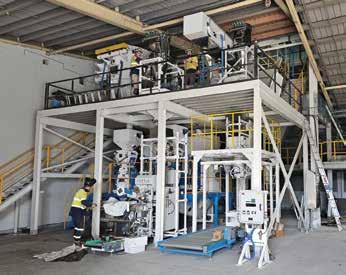
Investing more than $100 million in new facilities at Finegand will deliver material operating savings and a more resilient earnings base with strong long-term returns at both site and network level, Silver Fern Farms says.
Plans to redevelop the South Otago meat processing plant include creating new freezing capacity, automated cold storage, sorting systems and modern load-out infrastructure.
Chief executive Dan Boulton says the project is the largest single capital investment ever undertaken by the company and signals a strong vote of confidence in the sector, community, and Silver Fern Farms’ site network.
“This is a capital intensive investment with a rapid network level payback and a clear uplift in returns on capital employed,” he says.
The investment has been enabled by disciplined financial management after the company returned to profit following two years of operating losses.

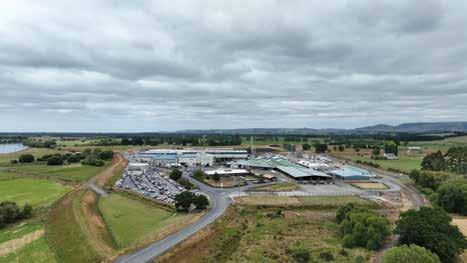
Retained earnings have strengthened the balance sheet and helped ensure capital was available for reinvestment.
“That approach has positioned us to invest at scale today, building durable, long-term value for shareholders,” Boulton says.
The project forms part of an ongoing programme of investment across the company’s site network to strengthen resilience, efficiency and long-term competitiveness.
Boulton says the redevelopment will also deliver a step change in product quality and customer outcomes, supporting Silver Fern Farms’ premium market positioning.
“Customers will see tangible benefits, including improved carton presentation through reduced handling and damage, and greater shelf life utilisation through more accurate, responsive order fulfilment.
“These improvements directly support our premium strategy and build long-term brand value,” he says.
Automation and modern facility design will significantly improve workplace safety
and sustainability outcomes.
“Automation will reduce manual handling and forklift movements, creating a safer working environment for our people while supporting the transition into higher skill, technology enabled roles,” Boulton says.
“Modern refrigeration systems and smarter layouts will also improve energy efficiency and reduce unnecessary handling and transport over time.”
Construction will be carefully staged to minimise disruption to existing operations, with commissioning planned from 2027 aligned with lower volume periods.
Silver Fern Farms Finegand, located five minutes south of Balclutha, is one of the largest sites in the company’s network of 14 facilities.
It employs up to 1200 people at peak season and processes beef, sheepmeat and veal. The site first opened in June 1912 under the South Otago Freezing Company.
Silver Fern Farms is New Zealand’s largest processor and marketer of beef, lamb, mutton, venison and associated products.
Dunedin-based Scott Technology has secured over NZ$12 million of materials handling and logistics contracts across Europe and North America, supporting continued growth with key customers and expansion into adjacent food processing sectors.
The contracts include an extension order with Dutch vegetable processor Bakker, a new palletising installation for a largescale frozen potato facility in Canada, and an integrated palletising and automated guided vehicle solution for a major poultry processor within the JBS Group in Georgia, USA.
“The automation of global food production is a structural shift, and it’s
accelerating,” says CEO Mike Christman.
The Bakker contract extends an existing multi-line automation project through the installation of central pallet conveyor systems connecting multiple production zones, demonstrating continued growth within Scott’s installed base.
The Canadian frozen potato processor project comprises a new multiline palletising installation for an existing
Meat processors Anzco Foods and Greenlea Group have agreed for the former to acquire the latter, pending Commerce Commission and Overseas Investment Office approval.
They say the result will be a bigger, stronger and more diversified red meat business that combines the best of both, focused on creating more value for Kiwi farmers on world markets.
If the deal is approved, Anzco intends to run Greenlea as a standalone entity, maintaining the Greenlea brand and existing agreements with employees, farmers and customers.
Greenlea Premier Meats managing director Tony Egan says the proposed sale is about securing Greenlea’s legacy and finding the right buyer at the right time as the family-owned business shaped its succession plan.
“Greenlea has a long and proud history in the meat industry as a successful business that has been built over more than 30 years.
“Securing the business’ long-term success and growth has been a key priority in succession planning. We have carefully considered a range of options that explored the best outcomes for Greenlea’s team, farmers and customers.”
He says Anzco is a trusted entity with a long track-record of investing in its businesses and in New Zealand, and it is the right partner to take the business forward.
“Anzco shares a similar operational culture, values and respect for people, farmers and local communities, and brings the right complementary, strategic and operational capability that will create future growth for our team and our farmers.
“Importantly, the Greenlea brand will remain, and the Greenlea Foundation Trust will continue its important community support work.”
Tony Egan will continue to be involved in
strategic global customer, reinforcing Scott’s key account management approach in a core food processing sector.
The US protein project, with a major poultry processor in the JBS Group, includes four palletising systems and four NexBot automated guided vehicle solutions, further strengthening Scott’s
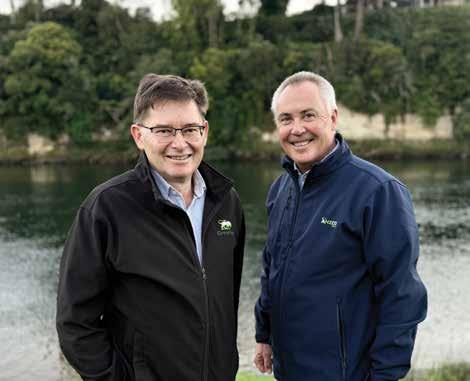
the business as an advisor and will be on the Greenlea board.
Peter Conley, Anzco Foods chief executive, says Greenlea is a successful, well-run business that his company has admired for a long time.
“There is strong strategic and operational alignment between the two businesses, with complementary products, export markets and operating footprints across New Zealand.
“We’re looking forward to working with and supporting the Greenlea team and farmers to continue supplying premium quality red meat products to key
relationship with JBS and expanding its presence within the North American protein sector.
The contracts continue strong momentum established in the first half of the current year for the materials handling and logistics part of the company, which reported revenue of $65 million (up 21%
customers in New Zealand and globally.”
He says Greenlea brings knowledge in areas that Anzco can learn and grow from, with an operating footprint mostly based in the northern half of the North Island.
Anzco, with its South Island and lower North Island focus, will bring capability and strengths in areas that will support Greenlea’s growth, particularly in valueadd processing.
“If the transaction is approved, we will take our time with the integration process to ensure we successfully transition and maximise the strengths for both businesses.”
on pcp) and net margin of 26% (up three percentage points on pcp).
During the period, the group secured new contracts across Europe, Australia and North America, including projects with PepsiCo, Danone, Essity, EMPWR, Farm Frites, Boeing and Gallo.
First impressions count on farm and according to CRV’s newest team leader, Pete Manson, they often set the tone for the entire relationship.
After more than two decades working in rural sales in animal health and the fuel industry, Manson has come full circle, returning to livestock and dairy genetics. He has brought with him a strong focus on building trust with farmers from day one.
“Our job is to listen to farmers, help them solve their problems and achieve the goals they want for their farm business.
“First impressions count. If you do what you say you’re going to do, that’s what builds trust,” he says.
Now based in Lincoln and leading CRV’s South Island sales team, Manson is focused on getting out on farm and supporting farmers across North Canterbury and through the upper South Island.
With dairy systems continuing to evolve, he says farmers are looking for practical support that helps them lift both productivity and long-term performance. Manson brings years of experience in the primary sector and a passion for rural communities.
Growing up in Central Otago and then Canterbury, he gained a five-year cadetship straight out of high school which included a herd test and an artificial breeding run. It cemented his connection to working in the rural industry.
“It’s the people who you deal with in the rural sector who make it great. I used to go out and stay with farming families as a herd tester and I still have connections to those farmers.”
His move to CRV was driven by both opportunity and alignment with the company’s values, particularly its farmerfirst approach and focus on building strong, trusted relationships.
“I knew the company had a great reputation along with a strong bull team.
“My first contact with CRV was actually with managing director James Smallwood. James is an extremely genuine and open person. Despite leading the business, he’s incredibly approachable.
“He welcomes being challenged and takes time to see things from your perspective.
It’s clear the CRV team values that, and it filters through the team in the way they work with farmers.”
Leading a team which is spread across a large geographic area, Manson is focused on making sure farmers have consistent support, no matter where they are.
“It can be a lonely job so I make sure I’m picking up the phone regularly and getting the team together once a month.”
His strong team mentality comes from his ties to rugby.
“I’m from a rugby family and have a background in coaching and it’s all about how to support each other and work best together as a team.”
Manson sees significant opportunity for growth in the upper South Island and his team is well placed to support those farmers.
“My team lives and breathes this job. It’s not just a Monday to Friday deal. They’re in it 24/7 and if you’re passionate about what you’re doing, it shows and farmers pick up on that.”
For the first time in 26 years, Perrin Ag has appointed an agribusiness consultant in Hawke’s Bay.
Vicky Ferris is a regional local, based in Waipawa.
She grew up on her family’s sheep and beef farm in Wairoa and went dairying after high school.
Her diverse career in the primary sector – including appointments at Halter, First Light Wagyu New Zealand and Spring Sheep Dairy – has seen her develop a strong background in livestock supply, agribusiness and commercial operations, the company says.
Ferris has worked closely with farmers, processors and wider industry stakeholders, building a practical understanding of how on-farm decisions flow through the supply chain and influence commercial outcomes and is
passionate about doing work that adds real value back to farmers.
“Being part of Perrin Ag means I’m backed by an exceptional team, so I get the opportunity to keep learning while bringing my experience together in a consulting role that helps Hawke’s Bay businesses make confident decisions,” she says.
“I see a real gap in the region for independent advisory support. And if I can help fill that gap, that will be hugely rewarding.”
Although headquartered in Rotorua, Perrin Ag has worked alongside Hawke’s Bay farmers for decades, and says this recent appointment reinforces its commitment to the region.

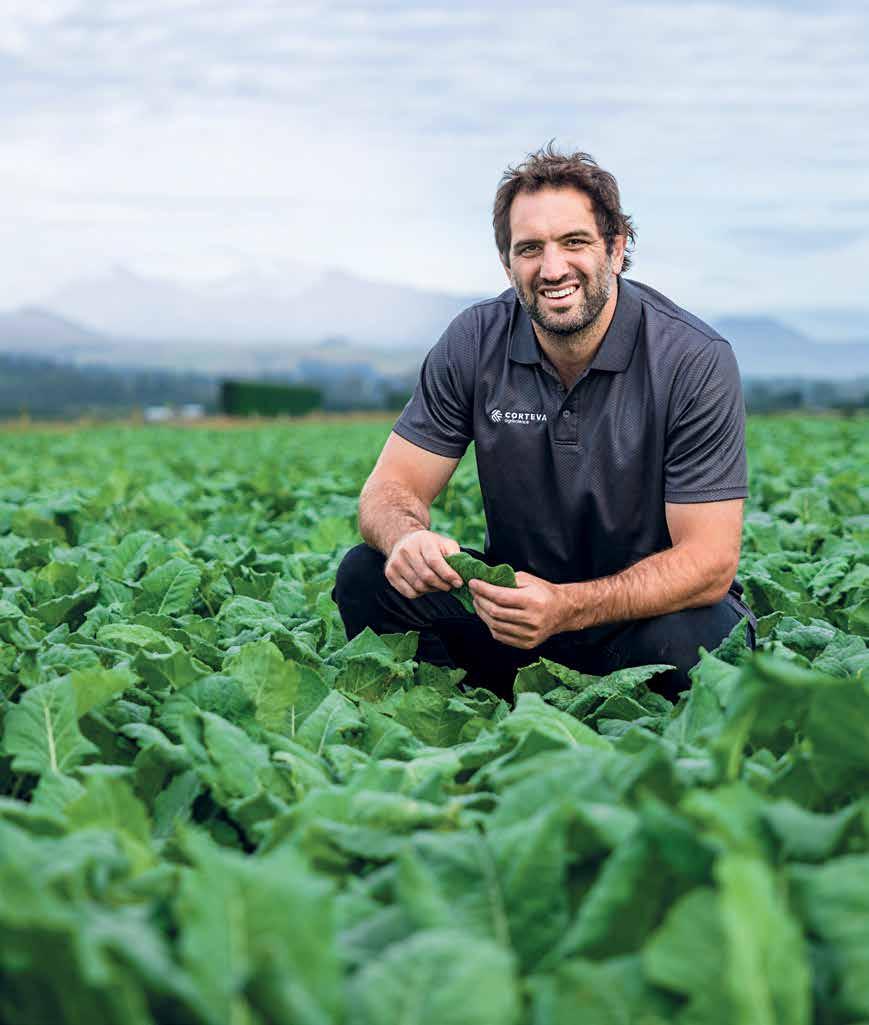
Samuel Whitelock – Plant Science Graduate, Lincoln University.
I’ve had some great teammates over the years and my friends at Corteva Agriscience are up there with the best of them.
Their suite of world class products – including Tordon ® Brushkiller XT, Tordon ® PastureBoss ®, Korvetto ®, Sparta ®, Transform ® and TwinGuard ® – helps farmers achieve truly exceptional results.
Corteva are on a mission to enrich lives for generations to come – and that’s exactly the kind of company I want on my side.

For more information talk to your agricultural merchant or call 0800 803 939 today. Always read the label before use.
For Carley Pryce, wool has never been ‘just a job’. It’s been a thread running through her working life since she was a teenager, shaping her skills, her confidence, and her connection to rural New Zealand.
Now, after years of building experience across the agricultural sector, Pryce has taken the next step in her career, recently promoted into a new role as a wool rep for PGW, based in Hawke’s Bay.
It’s a role that suits her perfectly-part relationship-builder, part industry advocate, and part problem-solver, along with plenty of kilometres on the road in between.
And while she may be new to the wool rep team, her journey through the wool industry has been years in the making.
Pryce was introduced to wool at 15 years old, taking on her very first job as a wool handler. While many young people her age were focused on sleeping in and social plans, she was still wiping the early morning sleep from her eyes while learning the rhythm and discipline of the shearing season.
“It was just meant to be something I did in the holidays. Up early and into the sheds at 6 am, where I had to learn everything from scratch.”
But what started as a steep learning curve quickly became something she loved, and a holiday job turned into a lifelong interest.
Carley grew up without the traditional farming background many assume is essential for a rural career. From the moment she stepped into a woolshed, she was hooked.
However, despite her drive to have a career in agriculture, she recalls facing doubt from others when she decided to leave school early after gaining her NCEA qualifications. At sixteen, she was selected for the pilot programme of Growing Future Farmers, which gave her the chance to deepen her practical farming knowledge while continuing her education.
As a shepherd in the Wairarapa, she completed agricultural NCEA papers alongside full-time farm work, and was asked to stay on the farm as part of the team. She then moved into agricultural retail, gaining experience with Farmlands and eventually relocating to Hawke’s Bay when Cyclone Gabrielle hit, helping wherever she was needed.
From there, she progressed into a 2IC role at Napier Farmlands, managing staff, improving systems and operations, and further
developing customer service skills.
Then came a new opportunity, joining the PGG Wrightson Wool team at the Napier Woolstore first as an inwards administrator, then as a wool rep.
Now her days are largely spent out on the farms around Hawke’s Bay, meeting growers, building relationships, and supporting clients with everything from wool clip preparation to marketing and logistics. And she is loving every minute of it.
“Farmers are the people I get along with the most. They’re down-to-earth and I just find it so easy to relate to them.”
She is also passionate about wool’s place in a modern world.
“Synthetics just simply don’t compare and it deserves far more notoriety for what it can achieve. It’s such a great natural fibre and extremely versatile. I wish more people knew that.”
Justin Coetzee, export account manager for Bloch & Behrens (PGW Wool’s export arm) and Pryce’s Napier-based mentor, says her promotion is a win not just for the team, but for the future of the wool industry.
“It’s fantastic to have a young person who is able to see the bigger picture and work within the team to work towards achieving those goals.”
Horticulture New Zealand has launched a network of regional reps to give growers a strong voice and a more direct link to advocacy and practical support.
Initially part of a pilot, these rep positions are now being rolled out permanently, with further roles potentially being added over time.
The five reps cover Gisborne (Tessa Rodden); Central Otago and Southland (Chelsea Donnelly); Canterbury (David Hickman); lower North and upper South Islands (Matt Thorn); and Northland, Auckland and Waikato (Arjune Dahya).
Chief executive Kate Scott says dedicated local contacts who understand local conditions, challenges and opportunities will help ensure

growers’ views are consistently heard.
“The representatives will also gather onthe-ground intelligence and feed this back to HortNZ to keep advocacy work relevant and evidence-based.
“This includes identifying emerging issues early.”
The reps will also strengthen practical support by linking growers with workshops, events, networks and capability-building opportunities, while helping them navigate issues as they arise.
“A strong local presence will be especially valuable during severe weather events,
when trusted relationships and regional knowledge can speed up support and information-sharing.”
Regional representatives will carry out regular grower visits, support forums, maintain event calendars and liaise with wider industry stakeholders.
They will also help communicate HortNZ and industry action plan priorities, gather feedback on submissions and link growers with product groups and HortNZ’s policy, assurance and engagement teams.

• Over 110 new listings
• 70 discontinued products
• Numerous product label updates (new weed, pest & disease claims)
• All product labels reviewed for regulatory content and updated to GSH terminology.
The definitive guide to agrichemicals registered for use in New Zealand.
A comprehensive alphabetical listing of products, active ingredients, crop & weed tables, weed & pest identification and much, much more all in one single publication. It really is the definitive agrichemical guide and the only one you’ll ever need.
Purchase a manual to receive a FREE 12-month subscription to our subscriber only website.
The website is continually updated and contains product listings, a fully searchable online product manual, a powerful search engine of weeds, diseases & pests, including photo galleries with all the agrichemical options to use on individual crops as well as up-to-date SDS’s, Haznotes and product labels, plus posts about industry news and information.
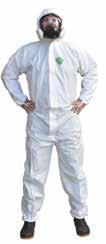
SureShield Coveralls supplied by pH7, provides both protection and comfort with exceptional liquid and particulate protection.
Category III, Type 5, Type 6 certified coveralls.
Ideal for asbestos removal, spray painting, low hazard pesticide spraying, boat building, dusty areas and general light industry.
These are best suited to spraying diluted chemicals such as round up for the fence lines, general maintenances on farm, or when spraying from a airconditioned cab. One size fits all. Supplied by pH7.
* Available to those who order directly from www.novachem.co.nz - while stocks last.
Print up-to-date SDS’s & Haznotes from novachem.co.nz to ensure you are compliant.
UPL New Zealand has appointed Paul Dunn as head of sales, bringing more than three decades of industry experience to the business as it continues to build momentum across the New Zealand crop protection market.
Dunn joins UPL New Zealand following a long career with DuPont and FMC, where he held senior roles across New Zealand, the APAC region and global markets.
His background spans commercial leadership, portfolio and lifecycle management, and product and relationship management at a global level.
Well known within the industry, the company says Dunn is regarded as a strategic and results-driven leader with deep technical and commercial expertise.
He has led cross cultural teams, delivered complex projects and driven strong outcomes for both customers and organisations across diverse markets.
In his role as head of sales, Dunn will lead UPL New Zealand’s sales team.
He will also oversee the marketing function,
reflecting his experience across portfolio strategy and lifecycle management.
The combined role is aimed at strengthening alignment between sales and marketing to support growth across UPL’s key portfolios, including biosolutions and new product launches.
Sarah Dewes, country manager, says his appointment adds significant depth to the leadership team.
“Paul brings an exceptional breadth of experience across local, regional and global crop protection markets.
“His strategic approach, strong commercial capability and expertise in portfolio and lifecycle management will be a real asset to UPL New Zealand.
“Aligning sales and marketing under Paul’s leadership will further support our growth
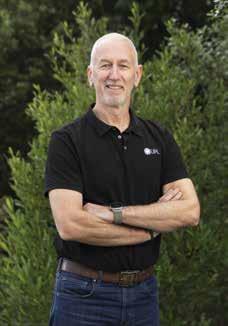
ambitions and the value we deliver to customers.”
The move reflects UPL New Zealand’s continued focus on strengthening leadership capability to support growers and customers in an evolving and increasingly complex agricultural environment, she says.
Well-known Gisborne-based agribusiness executive
“The depth of experience he brings to the table will be invaluable, particularly in developing markets and understanding the dynamics of local maize growing market in Gisborne,” the company says.
Burke spent over 30 years with LeaderBrand, starting as a tractor driver and finishing up as chief executive for 14 years before stepping down at the end of 2024.
He is described as having been pivotal in changing the company’s direction from export to the domestic market, and instrumental in development and construction of LeaderBrand’s state-ofthe-art processing plant, head office, and distribution centre as well as the development of its Future Farm’s greenhouse.
Currently a director of Gisborne Holdings, the commerical arm of Gisborne District Council, he also runs an agribusiness consultancy business.
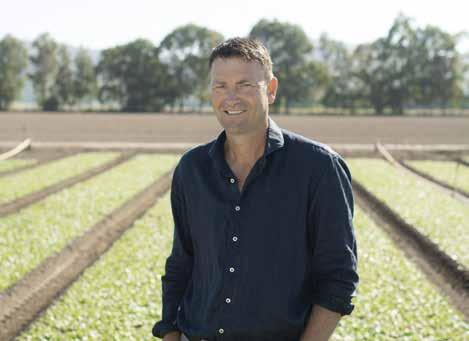
Burke.
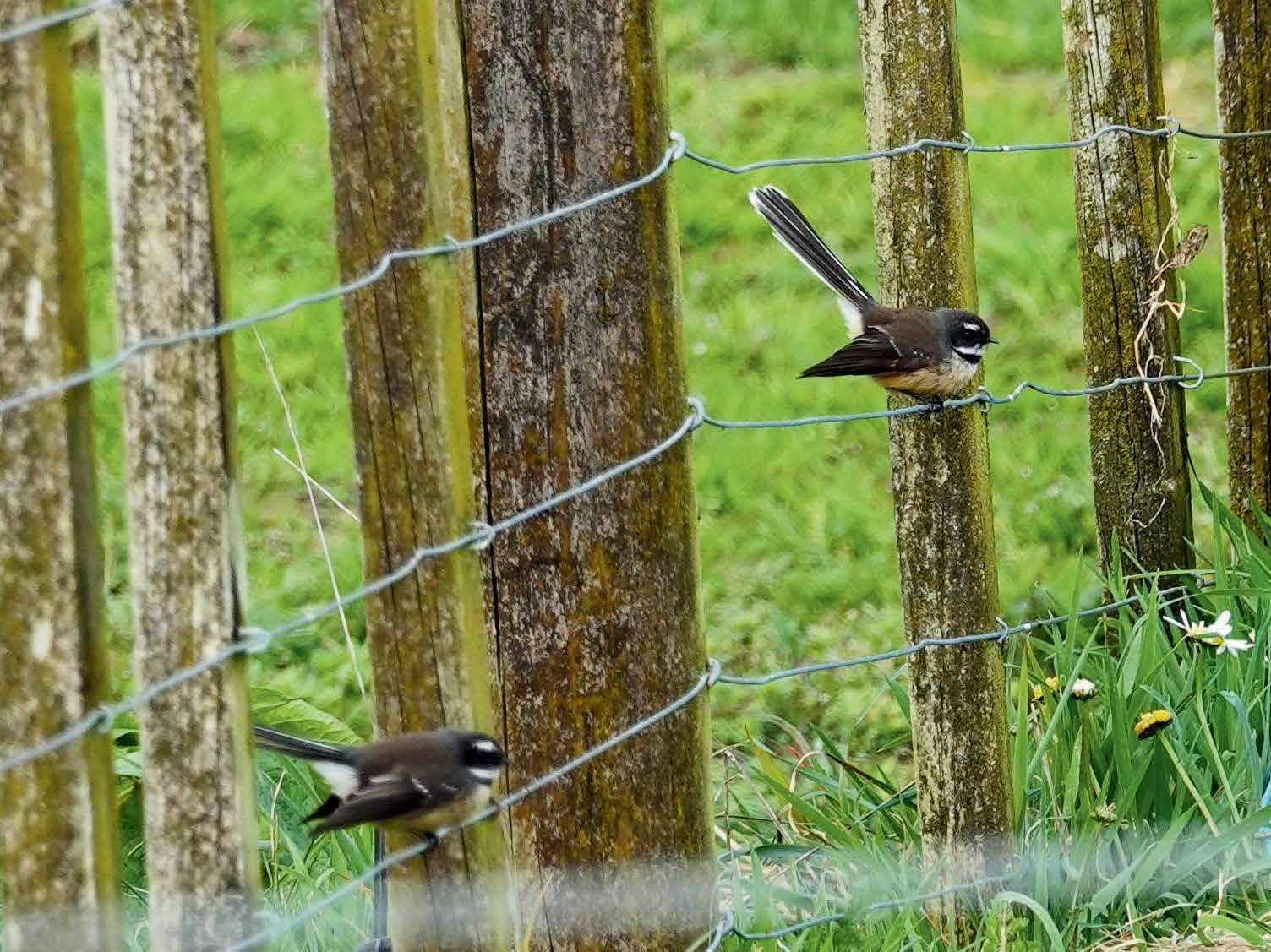


Hawke’s Bay-based Jeremy Klingender has been appointed Barenbrug’s new area manager for the East Coast of the North Island.
He takes over from Paul Sharp, who retired in April.
A fifth-generation Hawke’ s Bay local who grew up on Maraekakaho, Klingender brings a wealth of practical, hands-on experience to the role.
After leaving school he spent time overseas greenkeeping before returning home to work as a fencing contractor for around a decade.
He then joined Wrightson in Ohakune in 2008, where skilled seed reps helped spark his strong interest in agronomy.
Klingender spent 12 years with Ravensdown, including six years delivering agronomy advice across the East Coast, followed by a period in the seed business.
After a three-year break from agronomy, he’s excited to be back in the industry with Barenbrug, a company he has long
admired for its exceptional genetics, professional approach, and ability to punch well above its weight.
“I’ve always respected how Barenbrug conducts itself and the quality of their products,” he says.
“The genetics are outstanding, and it’s a brand I’m proud to represent.”
In his new role, Klingender will work across both red meat and dairy sectors, supporting merchants and farmers with practical advice on dryland farming, legumes, cropping rotations, and getting the most from homegrown feed.
He’s looking forward to reconnecting with familiar faces across the East Coast, including catching up at field days and events such as the recent Waipoa cadets open day.
Outside of work, he is busy with a major
renovation of his 100-year-old bungalow and enjoys spending time with his grandchildren in Havelock North.
With an El Niño weather pattern forecast, Klingender says its important merchant reps and other rural professionals help farmers prepare early.
“Farmers really need to have more than one plan in place,” he says.
“As reps and agronomists, we play a key role in providing sound, practical guidance so farmers can make timely decisions and build resilient farm systems.”
Jeremy Klingender can be reached at 021 540673 or jklingender@barenbrug.co.nz.

• Over 110 new listings
• 70 discontinued products
• Numerous product label updates (new weed, pest & disease claims)
• All product labels reviewed for regulatory content and updated to GSH terminology.
Storing Chemicals?
Print up-to-date SDS’s & Haznotes from novachem.co.nz to ensure you are compliant.


* Available to those who order directly from www.novachem.co.nz - while stocks last.
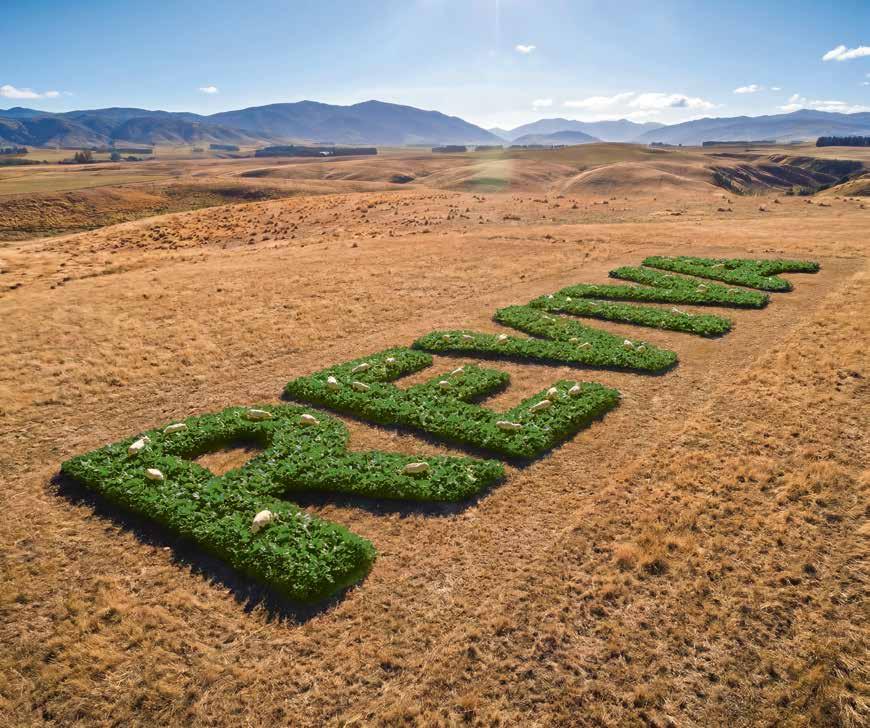
The biggest crop yields – and profits – start with the best protection. Trust Sharpen® and Arietta® to set up more productive maize and sweet corn crops whilst strengthening your herbicide resistance management program for the seasons ahead.

Pre-emergent control of tough weeds
Sharpen up your pre em options in maize. NEW FlexiRate now registered
Trials show that the new 100 g/ha rate of Sharpen + acetochlor delivers better broadleaf weed control and yield protection than atrazine + acetochlor. The original 150 g/ha rate remains the gold-standard for targeting high yields or managing high weed pressure.
Post-em control of BLW & grass weeds