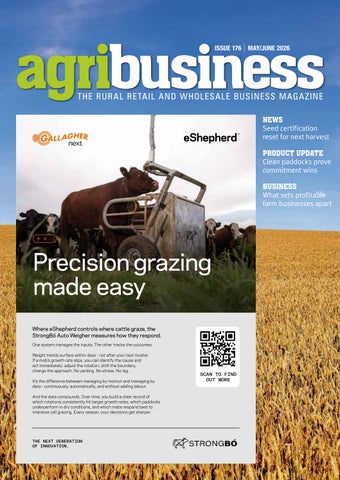
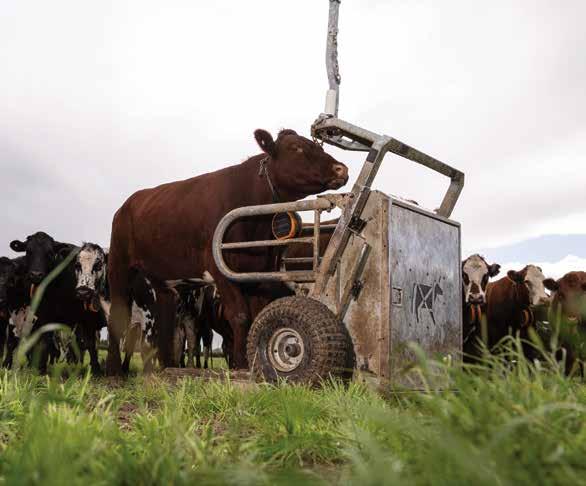
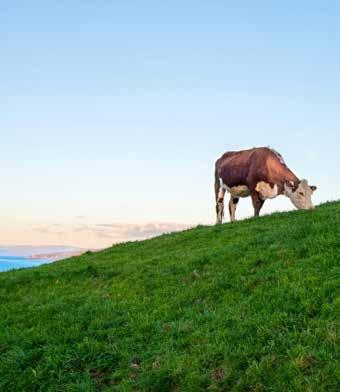
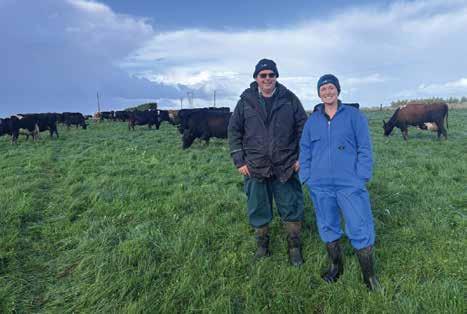
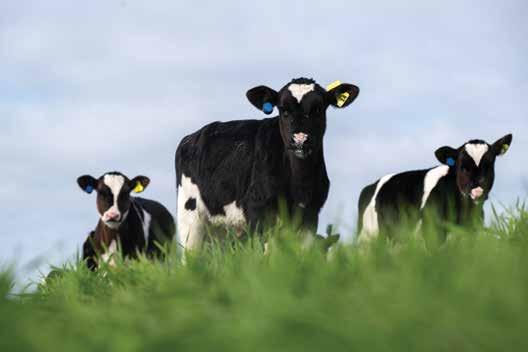
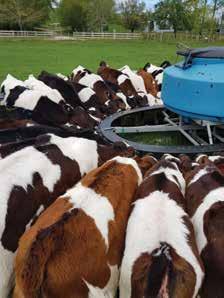
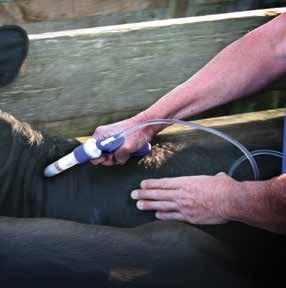
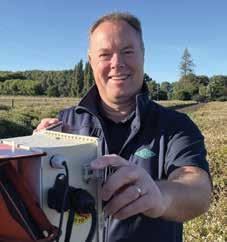
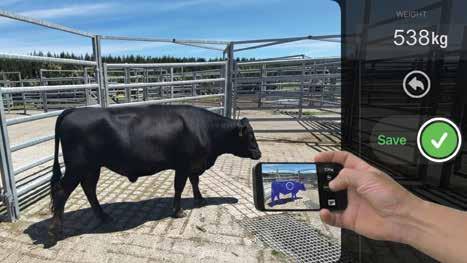
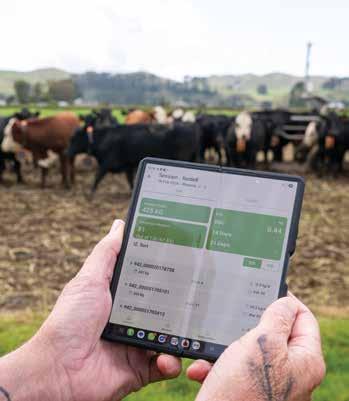
Where eShepherd controls where cattle graze, the StrongBó Auto Weigher measures how they respond.
One system manages the inputs. The other tracks the outcomes.
Weight trends surface within days - not after your next muster. If a mob’s growth rate slips, you can identify the cause and act immediately: adjust the rotation, shift the boundary, change the approach. No yarding. No stress. No lag.
It’s the difference between managing by instinct and managing by data - continuously, automatically, and without adding labour.
And the data compounds. Over time, you build a clear record of which rotations consistently hit target growth rates, which paddocks underperform in dry conditions, and which mobs respond best to intensive cell grazing. Every season, your decisions get sharper.
SCAN TO FIND OUT MORE
NEWS
Seed certification reset for next harvest
PRODUCT UPDATE
Clean paddocks prove commitment wins
BUSINESS
What sets profitable farm businesses apart
THE NEXT GENERATION OF INNOVATION.
What are weeds costing farmers?
Maximise their home grown feed with Nufarm’s phenoxies range to control weeds. Eat more of what you grow. Calculate what their returns might be at Grassmanship.nz
SCAN ME
ADVISOR WILL SMART SENSORS GIVE SHEEP A VOICE?
SOUTHERN
PEOPLE FROM FAMILY FARM TO AGRONOMY ROLE FOR OTAGO SCIENTIST
Editor Kathy Davis 0274 347 108 kathy@thelastword.net.nz
Publisher Lisa Phelan 021 782 228 lisa@agrimedia.co.nz
No part of this publication may be reproduced in any form without the prior written permission of the publisher. Opinions expressed in this publication are not necessarily that of the publisher and suggest independent advice be sought before acting on information or suggestions contained herein.
CONTRIBUTIONS
Editorial and photographic contributions are welcomed and should be sent directly to the editor, Kathy Davis. Editing of submissions is at the sole discretion of the editor and will accept no responsibility for unsolicited material. AgriMedia Ltd PO Box 36753, Merivale, Christchurch 8146 agrimedia.co.nz | novachem.co.nz
Hi everyone.
Welcome back to AgriBusiness for May June. Hopefully you and your clients have been able to navigate all the current uncertainty around fuel, imported inputs and logistics without too much stress and disruption.
Like many, I was heartened by the recent announcement from Victorian Hydrogen that it plans to develop a $3 billion urea fertiliser project in Southland.
The professional protest clique was very quick to slam the project, but all that does is prove yet again how hopelessly deluded those people are about the realities of energy, food security and self-sufficiency on a tiny island nation at the very end of the world’s supply chain.
It made me revisit Think Big, and Rob Muldoon’s foresight. He gets a bad rap, that man, but if he hadn’t barrelled ahead with some of those projects, where would we be now? Looking at you, Kapuni!
This issue I also looked (closely) at the weirdest Overseas Investment Office
Plant health and nutrition
foreign land sale approval notice I’ve ever seen. I suspect the secret might have been revealed as we went to print, with the news that French fashion house Chanel is investing in Lammermoor Station in the Maniototo.
Despite the self-congratulatory ministerial announcement about this deal, all details of Case 202500272 remain redacted as I write this, which leads me to conclude that our legal right to know who is buying this country’s single most valuable asset comes far behind the government’s compulsion to grandstand about accelerating foreign investment.
Coincidentally, at the same time Case 202500272 came to light, I found online amid other similar sales pitches distributed
info@sipcam.co.nz www.sipcam.co.nz
overseas an American piece titled ‘The billionaire’s playbook: How to buy sensitive NZ land and get away with it’.
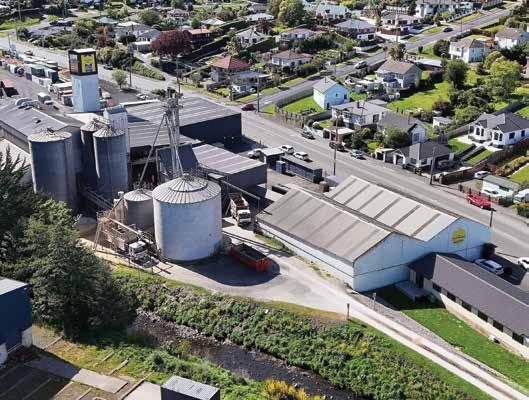
Thank goodness then for companies like Harraways! Locally owned, and pumping millions into its milling facilities in Dunedin – head to page 28 for the full story.
We also have our annual special feature on calving in this issue, starting page 12; a great NZ innovation story on page 23 and plenty of movers and shakers in our people section.
Enjoy! We’ll be back in July.
An
essential system for growth
Just as balanced nutrition is essential for people, it’s just as important for the crops and pastures that drive New Zealand’s rural economy. Every nutrient plays a part in plant growth, resilience, and yield – but it’s how these nutrients work together as a system that really makes the difference. For farmers and growers, this means looking beyond just single products for ultimate uptake and stress management, so they can get the best results from their land.
As you know, amino acids, for example, are the building blocks of protein and play a key role in both plant and animal health. In plants, they help with nutrient transport, enzyme activity, and stress tolerance – directly impacting crop quality and productivity.
At Sipcam, we’re bringing our new approach to plant nutrition. One that’s proven globally and backed by science and evidence. Refined in the field, its designed for real-world results.
Keep an eye out for our upcoming nutrition product range, launching this season.
Talk to us about how Sipcam can help your farmers and growers grow stronger, healthier crops and pasture.
Seed certification reset for next harvest
Seed harvested next season will be the first to be fully certified under a new national digital system, marking a major change for how the industry operates in New Zealand.
The Seed Certification Information System, known as SCIS, has now been completed and formally approved for use by the Ministry for Primary Industries.
From the 2026–27 cropping season, all certified seed crops will be administered through the new system.
NZ Seed Authority chair George Gerard says the change removes long standing risks tied to the old certification platform.
“The new SCIS replaces the existing legacy system, which had become outdated, unsupported, and no longer met modern digital security expectations,” Gerard says.
“It introduces a fully online, role based digital environment, eliminating all manual paper based processes previously used in seed certification administration.”
According to a Business and Economic Research (BERL) report commissioned by the Arable Food Industry Council late last year, seed crops generated $865 million in sales in 2024, added $389 million to GDP and accounted for 2329 full time jobs.
The $7 million SCIS project has been six years in the making and was led by the NZ Seed Authority with more than $2 million in funding from the Ministry for Primary Industries’ Sustainable Food and Fibre Futures fund.
Gerard says the system has been built to protect the integrity of seed certification into the future.
“This is about futureproofing seed certification for growers, processors and exporters,” he says.
“Security, traceability and accuracy are critical for maintaining confidence in NZ certified seed.”
SCIS is a fully digital platform that manages the administration of certified
seed crops from paddock mapping through to approval and record keeping.
One of its key features is use of geospatial technology to map certified seed crops, improving visibility and reducing the risk of error.
The system has been developed under the oversight of a steering group made up of the NZ Seed Authority, AsureQuality and the Ministry for Primary Industries, each with a defined role in seed certification.
MPI remains the regulator of the OECD seed varietal certification scheme in NZ.
AsureQuality delivers contracted seed certification services and operates as the country’s sole independent verification agency for official seed certification schemes.
The NZ Seed Authority provides governance and policy direction, representing growers, processors and seed companies through its industry based executive.
The system is currently in a pilot phase with selected industry users, running on crops harvested in 2026.
From the following season, all certified seed crops will move under SCIS, making next season’s harvest the first to be fully managed through the new system from start to finish.
The move is expected to reduce paperwork, improve audit visibility and strengthen compliance with international standards, particularly under the OECD varietal assurance framework.
Gerard says the new system also gives the industry better tools to demonstrate credibility in export markets.
“Certification underpins trust,” he says.
“This system strengthens the integrity of NZ seed certification at a time when overseas markets are paying closer attention to assurance and traceability.”
For growers, the shift will mean changes to how certification information is submitted and managed, but the underlying standards remain the same.
Industry bodies say the digital system is designed to be more intuitive and consistent, while removing duplication and manual handling.
George Gerard.
From farm fibre to fashion print
Strong wool is being put to use in a new way, as a Christchurch-based company partners with outdoor clothing brand Kathmandu to turn coarse wool into printing pigment for garments.
Wool Source has developed a patented process that converts strong wool into a colourant used in screen printing inks.
The innovation is being applied in a newly released graphic t shirt made from 100 per cent merino, giving wool a role not just in fabric but also in the design printed on it.
Wool Source chief executive Tom Hooper says the collaboration is an important milestone as the company takes its technology beyond the laboratory and into commercial use.
“It shows you can use our wool-based pigments in traditional commercial printing processes, at scale, and still deliver a high quality product made with more environmentally responsible materials,” Hooper says.
The pigments are derived almost entirely
from renewable biological sources and provide an alternative to synthetic and fossil fuel based inks commonly used in the clothing industry.
Once converted, the wool pigment is blended into liquid inks suitable for screen printing.
Kathmandu has used the technology on a new T-shirt design inspired by South Island river landscapes, linking the garment back to its natural origins.
Kathmandu head of product innovation and product sustainability Manu Rastogi says the project demonstrates how innovation can add value to natural fibres while supporting sustainability goals.
“This shows how innovation and sustainability can work together for the benefit of the industry and helps unlock
new value for New Zealand strong wool,” Rastogi says.
The printing technology is the result of several years of research through a programme focused on finding new uses for strong wool.
That work involved scientists, wool growers and participants across the wider wool supply chain, with support from industry and government agencies.
For wool growers, the development offers another potential pathway for traditionally lower value strong wool, at a time when diversified markets and new applications are increasingly important for the future of the fibre.
Hush-hush foreign land deal raises plenty of questions
What could be so sensitive about any piece of New Zealand farm land – or its new foreign owner - that every detail of it changing hands in February remains an apparently unprecedented secret?
Such sales in themselves are not uncommon.
Neither is gaining governmental approval to sidestep legally mandated advertising of NZ farm land for at least 30 days on the local market before it is sold to foreign interests.
Likewise, certain details (typically the price paid) are often withheld.
But Case 202500272 on the public Land Information NZ registry of recent overseas investment decisions is in a class of its own.
Location, land area, buyer, vendor, price, and background covering both existing and proposed land use are all withheld under the Official Information Act, on the grounds of commercial interests and privacy.
For context, not one of the 50+ other foreign investment applications approved by LINZ officials under the same general criteria from February 2025 through February 2026 was sanitised to the same degree.
In fact, it’s hard to find any similar type of approved investment as completely redacted as this one, even as far back as 2005.
Documentation for an exemption from farm land advertising approved in August 2025 for the same property is nearly as opaque, with most details redacted.
AgriBusiness asked LINZ if the case related
to any Landcorp Farming properties, but it would not comment.
It did say that it had nothing to do with the lease on Molesworth, which is currently being contested by five applicants, including Ngai Tahu.
(Any foreign interests in Molesworth would have to receive Overseas Investment Office approval.)
“Information about this transaction has been temporarily withheld as we consider release at this time would be likely to unreasonably prejudice the commercial position of the applicant …,” LINZ says. “We expect the information to be released within the next few months.”
Wherever it is, whoever has bought it, and whatever its intended use, Case 202500272 involves an area of land larger than 5 ha LINZ officials have approved for foreign investment under the ‘benefit to NZ –farmland’ pathway.
The legal test for this is quite specific. Above and beyond general benefits that any foreign investment must satisfy, this pathway must show foreign interest will deliver substantial benefit to NZ in terms of economics and/or involvement by New Zealanders.
Further, such benefits must be substantially higher than would occur without the overseas investment.
Someone wanting to buy a high performing NZ farm, for example, would have to prove it will produce much more and/or create many more jobs under their ownership than it already is, either as a farm or turned to some other use.
These criteria – along with the legal requirement to advertise farm land locally before offering it overseas – are imposed to reflect the special significance of productive farm land to NZ.
The only current clue as to the purpose and possible outcome of this purchase can be found in the advertising exemption, which lists three reasons those involved were allowed to keep it off the local market.
Two reasons are redacted; the third says the buyer has specific property requirements for the purpose of its investment that are unique to the land and vendor, and is likely to be commercially prejudiced if advertising of the shares discloses its due diligence that is leveraged by competitors.
As far as can be ascertained, LINZ approved close to 50 of these advertising exemptions under the same benefit to NZ – farmland pathway during the four years spanning 2022 to 2025.
Only four of these have been redacted, and none to the same degree as Case 202500272.
New chemistry still stuck in the system
Progress in clearing the years-long backlog of hazardous substance approvals remains slow in the areas that matter most to primary producers, despite the Environmental Protection Authority reporting improvements in overall throughput.
The authority’s latest quarterly performance report shows that only one application for a Category C product - containing chemistry new to New Zealandwas approved in the October to December 2025 quarter. This was Tower, a cereal herbicide from Adama, which first lodged its application for the product back in September 2020.
Along with UPL’s horticultural fungicide Rhapsody, approved in July 2025 after a four and a half year wait, the EPA has ticked off just two Category C approvals for the first half of the 2025–26 year, well short of expectations. It had previously signalled a target of six Category C approvals across the full year, a figure the industry has been watching closely given the importance of new active ingredients for managing resistance and changing market expectations.
Category C applications are the most complex and generally involve new active ingredients, often for fungicides, insecticides
or herbicides used in agriculture and horticulture.
These products typically require full quantitative risk assessments and are central to the future crop protection toolbox.
Category B applications, meantime, typically involve substances with existing active ingredients or known components where some data is already available.
The EPA approved one of these in the second quarter, for a nonagricultural use.
At the end of December 2025, there were 84 release applications sitting in the EPA queue, with 69 requiring action from the regulator itself.
Of those, 20 applications were classified as ‘in queue’ and not yet actively under assessment.
Several of the longest running applications have been waiting for years.
A vertebrate toxic agent application lodged in July 2020 has been in the system for more than five years.
An agricultural herbicide
application lodged in September 2020 has been waiting just over five years.
Another Category C herbicide application, lodged in February 2021, has now been in the system for nearly four years and ten months.
For growers, these long timelines are not abstract statistics.
Many of the products waiting for approval are designed to address resistance issues or replace older chemistry that is under mounting regulatory and market pressure.
In the current year, the EPA has identified six Category C applications and three Category B applications as priority cases.
The Category C pipeline includes agricultural herbicides, fungicides and insecticides, several containing new active ingredients not previously approved in NZ. The Category B list includes agricultural insecticides for maize, sweetcorn and forage crops, as well as non agricultural insecticides.
Beyond those targeted
cases, there are a further two Category C and five Category B applications that have been formally received and are at varying stages of assessment.
Additional applications remain in pre application stages, some awaiting data, others waiting for EPA pathway decisions due to limited specialist capacity.
As at the end of December, there were at least seven Category B applications formally received and under assessment, including fungicides for horticultural use, insecticides for brassicas and fumigants for soil borne pests.
Several of these have already been waiting between two and three years.
The longest Category B application still active was lodged in mid 2020 and has now been in the system for almost five and a half years.
While the EPA points to resource constraints and historic staffing shortages, the gap between stated targets and actual delivery remains a concern for the rural sector.
The authority acknowledges the capacity of toxicologists and ecotoxicologists continues to be the limiting factor for assessing products with new active ingredients.
Rapid assessments and lower risk approvals have increased, but these do little to address the shortage of new chemistry available to growers.
For suppliers seeking to bring new chemistry to the NZ market, as well as producers themselves, the slow pace of Category B and C approvals remains the central issue.
• One new active ingredient was approved by the EPA late March (see page 16), bringing total Category C applications to three of the six targeted for FY 2025/26.
It’s in your power to protect it from introduced predators and preserve it for future generations
Without predator control, these habitats and the native wildlife that depends on them will continue to decline — even with stock exclusion. Our toolbox will guide you through how to manage pests in these unique spaces.
predatorfreenz.org/farms
Supply chains and expertise stay in local hands after purchase
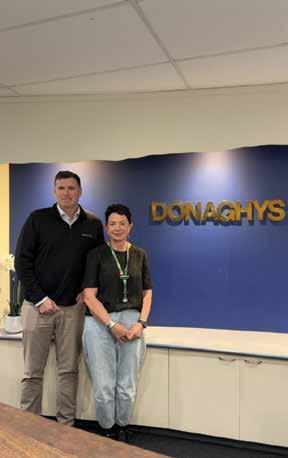
Donaghys Agriculture will continue to supply animal health and other products to existing retail customers after being bought by Farmlands for an unknown sum last month.
The deal, effective immediately, does not impact jobs at Donaghys’ current operation, says chief executive Jed Marfell.
“Our manufacturing and lab operations in Dunedin remain a really important part of the business.
“In fact we’re anticipating increasing production through our Dunedin factory and employing more local people to meet demand. Along with our Dunedin site, our Christchurch head office continues to support the wider operation.
“Our team remains in place, we continue to operate standalone supplying all our existing customers, and we’re staying focused on developing and delivering practical products for New Zealand conditions.”
Rope and cordage are not included in the transaction.
Marfell describes the change as a very positive step for the agriculture business, which employs 65 staff and supplies more than 70 animal health, crop protection and dairy hygiene products to retailers nationwide.
“Farmlands knows our business well and understands the value of the capability we’ve built here over a long time.
“That includes the expertise of our people, our product development work, and the
importance of local manufacturing.”
Farmlands chief executive Tanya Houghton describes the purchase as a partnership and says it is good news for Kiwi farmers at a time when reliable supply chains, technical expertise and innovation are increasingly important.
“Farmers are facing more complex challenges – from animal health and parasite resistance through to productivity and environmental performance,” she says.
“By bringing Donaghy’s and Farmlands closer together we can invest even more strongly in the research, innovation and technical capability that farmers rely on to meet those challenges.
“Importantly, it keeps Donaghys’ expertise, product development and manufacturing capability in NZ hands, supporting solutions that are designed for our farming systems and our conditions.”
Two years ago Farmlands purchased Seales Winslow from Ballance AgriNutrients, with the fertiliser co-operative receiving more than $25 million for the business, according to its 2025 annual report.
In 2013, Farmlands acquired the NRM brand and NZ milling assets from Viterra in partnership with Mainfeeds. Financial details of this transaction remain unknown.
Increased protein demand prompts urgent donation appeal
New Zealand is being called on to step up as Meet the Need launches an urgent nationwide donation drive to respond to growing food insecurity.
With demand for support at an alltime high, more than 150 community organisations are currently waiting for access to essential protein, leaving many families without the nutritious food they need.
Meet the Need board chair Nick Fisher says the situation is critical.
“For years, farming families have been
the quiet backbone connecting rural and urban NZ, donating livestock that helps put milk and mince on the tables of families doing it tough.
“But right now, there are children who haven’t had mince for months. Families are stretching tins and toast, going without the protein many of us take for granted.”
While farmer support remains vital, Meet
the Need is now urgently calling on all Kiwis to get behind the cause, particularly through financial donations.
“Demand is higher than ever, and donations have slowed significantly,” Fisher says.
“To continue feeding families who depend on us, we need support from both rural and urban NZ - now more than ever.”
Jed Marfell and Tanya Houghton.
Billions of hort income rides on rocky roads
A new report reveals New Zealand’s horticulture sector depends heavily on a mere handful of inter-regional routes for transporting produce worth billions.
The analysis by Infometrics and EC Consult was commissioned for the Aotearoa Horticulture Action Plan and spans each stage of the supply chain.
It estimates 23 per cent of horticultural produce moves between regions for packing or distribution, totalling 553,800 tonnes a year.
The top nine inter-regional movements each support over $50 million in produce value. Together they account for 89 per cent of such flows totalling $1.376 billion.
For example, the flow between Waikato and Bay of Plenty is worth $238 million. Northland to Auckland follows at $224 million.
Hawke’s Bay to Auckland is valued at $215 million, and Otago to Canterbury comes in at $179 million.
These routes highlight vulnerabilities in the supply chain, report authors note, because
most produce is transported by road. They say significant detours would be needed if key highways like State Highway 5 from Napier to Taupo or State Highway 2 from Gisborne to Opotiki were unavailable.
As of mid March, the Waioweka Gorge on SH2 was still under daytime stop/go control after being closed entirely for three weeks following severe weather in January.
The gorge remained closed at night, and NZ Transport Authority says recovery work will take months.
This one route supports up to $112 million of horticultural produce movement out of Gisborne.
Meantime, Waikato roads alone transit 50 per cent of inter-regional produce movements.
The ‘golden triangle’ of Auckland, Waikato and Bay of Plenty concentrates production, packing and distribution.
Bay of Plenty and Hawke’s Bay are the largest growing regions, with the former producing $4.1 billion of produce from 14,200 hectares, and the latter, $1.3 billion from 17,200 hectares.
Overall, the sample covers 24 products worth $7.97 billion from 2.4 million tonnes and 69,600 hectares planted.
Kiwifruit dominates at $4.9 billion from 828,000 tonnes. Apples and pears add $1.7 billion.
The report warns perishability makes the sector sensitive to delays.
For many crops the post-harvest window to packhouse is critical - often just a matter of hours.
Disruptions from road closures, extreme weather, ferry issues or port congestion could cascade into losses, making reliable transport essential to maximise value.
NZ Fruitgrowers Charitable Trust and HortNZ funded the report.
Making gear that actually works on the farm
Words: Jaeden Manufacturing.
In New Zealand agriculture, most innovation does not start in a boardroom.
It starts on-farm, with someone trying to solve a problem that’s slowing them down, or thinking, surely there’s a better way to get this done.
The challenge is what comes next.
For many farmers and small agricultural businesses, turning an idea into a working product is harder than it should be.
Offshore manufacturing has its place, but it often requires fully developed designs in the form of a prototype or sample, large minimum order quantities, and long lead times.
That leaves very little room for testing, refining, or adjusting once the product is in use.
And in farming, that matters. There is always a level of trial and error when you put something new in front of hardworking people and ask them to use it day in and day out. If it doesn’t genuinely make the
job easier, they will abandon it quickly. That is where local manufacturing continues to play an important role.
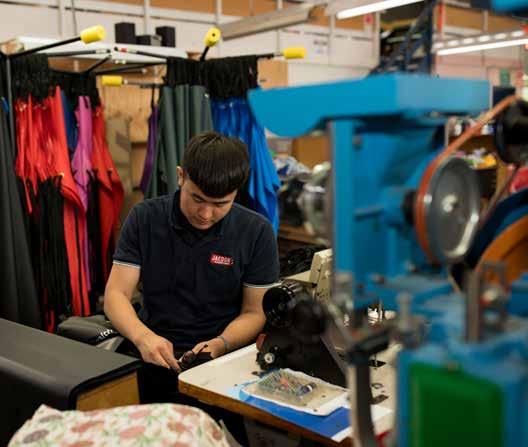
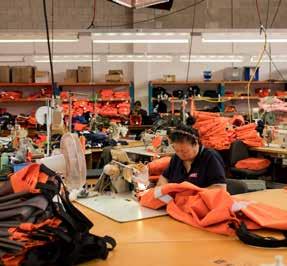
At Jaedon, we manufacture in Manukau, Auckland, and our focus has always been on working alongside people to bring ideas to life, rather than expecting everything to be fully resolved before the process begins. We take the time to understand how something will actually be used, who will be using it, and the conditions it will be exposed to. We use pattern-making software, high-tech cutting machines, and the experience of a highly skilled team. The goal is not just to make something that works in theory, but something that holds up in practice and becomes part of how the job is done.
A recent example of this approach in action is our work with Robert Holmes from Alleva on the QUADSEAL project.
The formulation itself was already proven, but the challenge sat around the application.
Robert had developed an innovative teat sealant system and an application tool, and what he needed was a practical way for farmers to carry and use that tool efficiently throughout the dry-off process. It wasn’t simply a case of holding something in place. The belt, holster, and pouch system needed to position the applicator correctly, reduce strain on the body, and allow for a smooth, uninterrupted workflow.
His way of working aligned closely with ours. He was meticulous about getting it right, not just for the sake of the product, but for the person using it.
Getting there required several rounds of development.
Because the work was done locally, those changes could happen quickly, with ideas tested, adjusted and improved without long delays or large commitments upfront. That ability to produce in smaller runs also made a difference.
That same thinking carries through our broader work in the dairy sector. Over time, farmers have come to rely on gear that not only meets the requirement on paper, but actually performs in the conditions it is used in.
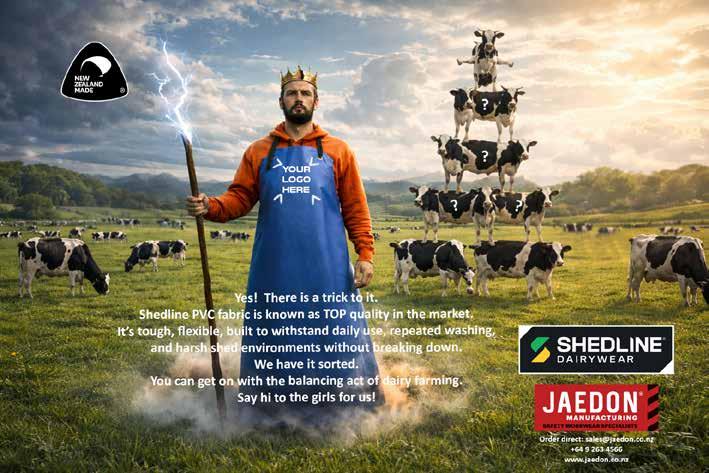
Durability is part of that, but so is comfort and movement. Materials need to be strong without becoming rigid or restrictive, because if something feels like it is working against you, it won’t stay in use for long. Our aprons are pliable and hardwearing, not sitting around the body like stiff cardboard cut-outs. It’s all in the PVC we use for our trusted Shedline aprons.
We also produce a range of other dairy products, including milking sleeves, traditional dry-off belts and pouches. We are developing ideas in the equestrian field as well.
The reason we continue to manufacture in NZ is simple. Innovation does not happen in isolation. It comes through conversation, through testing, and through working closely with the people who are actually using the product.
BEE RESPONSIBLE
Farmers and beekeepers can work together for the coexistence of agriculture and bees.
Improve pollinator habits by planting flower boarders and maintaining hedgerows and unsprayed headlands.
Implement an integrated pest management plan to apply pesticides only when necessary.
Coordinate in advance with local beekeepers before spraying so nearby hives can be moved or otherwise protected.
Use genuine products only and alert authorities of counterfeit or illegal pesticides that have unknown impacts on wildlife.
Follow the instructions on the label to ensure you use the recommended dose. Avoid spraying in windy conditions to prevent spray drift.
Use drift-reduction application equipment that is well maintained and calibrated.
Avoid contamination from spray liquids when mixing, and properly dispose of waste and other used materials.
Avoid spraying pesticides when bees are foraging and plants are flowering.
Minimise dust from treated seed by carefully pouring it out of bags. Use seed planting machinery that eliminates the production of dust, and clean seed equipment regurally.
this month we look at...
CALVING
Turning bobbies into a billion dollar asset
Non-replacement dairy calves could become much more valuable if a new three year, government-backed industry programme succeeds.
Dairy Beef Opportunities (DBO) is a $20.9 million effort to turn these calves into a stronger revenue stream for New Zealand farmers.
Up to two million surplus calves are estimated to be born on NZ farms each year, many of which are still killed as bobbies despite increasing industry efforts to add value through improved beef genetics.
Over $10 million of funding is coming from government, with economic benefits estimated to be worth $1.25 billion to the economy annually by 2050.
“Agriculture is the backbone of our economy – a successful sector means thriving communities, growth, secure jobs and a prosperous NZ,” says Agriculture Minister Todd McClay.
“This investment demonstrates our commitment to building the future by
delivering practical, on-farm pathways that benefit farmers, processors and rural communities.
The programme will deliver better integration between dairy and beef systems meaning new and strengthened supply chains, improved profitability, and greater confidence for farmers making breeding and management decisions.
Nathan Guy, independent chair of the Meat Industry Association, highlights the export growth angle.
“Dairy beef opportunities will help lift the value stream for the sector, and this programme creates opportunities for processors and exporters to tap into,” he says.
“This is another example of industry and government working together to create better outcomes for the benefit of the wider sector and export returns.”
The programme targets three key focus areas.
The first is improving efficiency through genetics and systems by enhancing calf breeding, rearing and finishing to boost productivity, profitability and farmer confidence.
The second is smarter breeding and lactation strategies to increase the proportion of calves entering beef systems while still meeting dairy and beef production needs.
And the third is developing new pathways and value chains by creating innovative products and supply chain solutions for young dairy beef, helping processors manage livestock more efficiently and opening fresh revenue streams for farmers.
DBO is backed by government funding
through the Ministry for Primary Industries Primary Sector Growth Fund.
It is a collaboration between DairyNZ, Beef + Lamb NZ, the Meat Industry Association, Dairy Companies Association of NZ members, and MPI.
Simon Limmer, chair of the DBO Governance Group, emphasises crosssector benefits.
“The programme will strengthen integration between dairy and beef systems, enhance supply chain efficiency, and open new revenue streams for farmers, helping the pastoral sector continue to drive NZ’s economic and primary sector success,” he says.
“It will support NZ’s reputation for producing premium, sustainable and ethically raised food, while creating tangible economic benefits for those working in the pastoral sector.”
Landcorp Farming, which milks approximately 40,000 cows across more than 40 dairy farms, is among the highest profile NZ businesses working to eliminate bobby calves from its system.
It aims to rear 100 per cent of surplus calves by 2030, and 85 per cent by the end of 2028.
The state owned enterprise expects to rear 72 per cent of non replacement calves born in 2025, up from 66 per cent the year before.
Meantime Daniel Carson, founder of Miti, recently won the Australian Dairy Conference Innovator Award in Melbourne, recognising his company’s work turning surplus NZ dairy calves into a sustainable, high-value protein snack.
This follows earlier wins, like the EarlyStage Innovation Award at Fieldays 2025.
Southland couple adds value to every calf
On a fifth-generation Southland dairy farm, Suzanne and Maurice Hanning have reshaped their breeding strategy using sexed semen for the first time across the whole herd.
Milking around 650 cows, the Hannings run a mostly crossbred herd trending slightly toward Jersey, a balance that reflects efficiency and adaptability within their system.
For the past five years, they have quietly built confidence using sexed semen in their heifers. Results were encouraging - promising conception rates and a consistent lift in heifer calf numbers.
But the real test came this season, when they decided to take a bigger step.
“The in-calf rates we noticed from sexed semen in the heifers were positive,”
Suzanne Hanning says. “So, we thought, let’s actually bite the bullet and try this across the herd.”
That decision marked a significant shift, not only in their mating strategy, but in how they capture value from every calf born.
The first 340 of their cows were inseminated with sexed semen, with the goal of producing around 90 per cent heifer calves from that group. Around 65 lower Production Worth (PW) cows, or those with poorer udders, were bred to beef.
It was a calculated split, designed to lift the value of every calf while still accelerating genetic gain within the herd. By the end of the second week of AB, they had a 64 per cent herd conception rate from using fresh sexed semen.
Remaining cows were mated to conventional semen, followed by short gestation Hereford, before Hereford bulls were introduced after six weeks to catch any cows that had been missed.
Suzanne Hanning says she worked out they would end up with around 300 nonreplacement calves.
“We knew if we were going to invest more into our AB we had to make that up somewhere. So, by doubling the value of those calves through breeding beef, that would go a long way toward covering the extra AB cost.”
But the strategy isn’t just about improvements for this season.
By breeding replacements primarily from the most fertile cows, the Hannings’ expectation is that herd fertility and calving patterns will continue to tighten over time.
It’s early days yet. But initial data is positive with their six week in-calf rate up 9 per cent on last year.
Before mating even began, Suzanne Hanning says they focused on getting the fundamentals right.
“We revisited every single detail and aspect of our mating approach to see if there were areas we could do better.”
Body condition score was closely monitored through winter, with three-yearolds wintered separately so they could be managed more carefully.
Historically, that age group had a lower incalf rate, so the team focused on ensuring they entered mating in ideal condition.
Other steps included blood testing for trace elements; adjusting mineral supplements, including additional iodine; and multiple rounds of MetriChecking after calving.
They used heat detection patches and observed cows carefully before mating.
They also implemented a dedicated ‘picker’ system during mating which involved the same person standing on the platform every day for six weeks, identifying cows on heat.
“It sounds tedious, but if you’re spending an extra $10,000 on AB, you want to make sure you’re mating the right cows.”
Short returns were double checked, the herd was drenched with Cydectin in September, and lime flour dusting continued through to Christmas.
The Hannings also started doing Johne’s
testing about four years ago.
“We stepped up doing the basics really well to support strong conception rates with sexed semen. We prepared everything for mating so the only thing that could influence the in-calf result is the semen itself.”
Since converting back to dairying nearly 20 years ago, the couple has consistently focused on improving their herd by culling the bottom and breeding their best animals.
“The best way to genetically improve your herd is to cull the bottom,” Suzanne Hanning says.
“Ever since we’ve been dairying, we have taken the bottom out continuously. We’ve done 25 per cent replacements and sold surplus heifer calves.”
The Hannings’ breeding focus has largely centered on Breeding Worth (BW) and trusting national breeding systems to balance multiple traits rather than chasing individual characteristics.
“When you focus too narrowly on one thing, you can lose sight of everything else,” she says.
“If companies have been focused on breeding for hundreds of years and different people have been working in those companies and trying their best all that time, there can’t be too much rubbish left!”
Maurice and Suzanne Hanning.
Help your farmers rear their best calves ever
If you haven’t yet brought yourself back up to speed with best practice calf rearing, a quick review of the essentials this month means you’ll be on point with customer support when the rush begins.
As DairyNZ points out, the core principle here is that giving replacement heifer calves the best possible start sets them up for a long, productive life in the herd. Extra care and effort invested in those first weeks will pay dividends for years to come.
Well grown heifers simply make better milking cows, and that strong foundation begins from the very day they are born, it says.
First priority? High quality colostrum right from the start.
All calves must receive adequate fresh colostrum within the first 12 hours of life. They should continue on colostrum or a colostrum substitute for at least the first four days.
To ensure they absorb enough antibodies, your farmers should aim to feed at least four to six litres of gold colostrum in those first 12 hours.
Because a calf’s abomasum can only hold about one and a half to two litres at a time, the advice is to provide multiple smaller feeds during that critical window.
High quality gold colostrum registers a Brix reading greater than 22.
Brix readers are affordable and very quick and easy to use on-farm.
Next – gentle, careful handling at all times. This is a must.
Quiet movements and patient interactions help build trust and reduce stress for the young animals.
Managers can support the whole team by using DairyNZ intervention guidelines as a practical training tool.
This allows everyone to discuss calving scenarios together, understand expected procedures, and know exactly when to call for help.
Filling in the farm’s key contact numbers and keeping a laminated copy with the calving kit helps the team stay confident and consistent, it adds.
This positive approach to handling ensures calves receive the kind, steady care they need from the time they’re born. Don’t forget shelter! All calves need protection from extremes of weather, particularly wind, rain and cold.
They should have access to a dry, clean and sheltered enclosure as soon as possible after birth.
The setup must minimise any risk of injury from slipping or sharp objects.
Bedding areas need to stay comfortable, clean and dry, with good ventilation so that ammonia gas does not build up. Exposed concrete, bare earth or mud simply will not do.
No-one wants sick calves, but if disease or illness crops up, DairyNZ advises keeping the isolation or sick bay area well separated from other pens with its own access to contain the issue.
It says some farmers find it helpful to provide dedicated personal protective equipment for the calf shed area.
This reduces the chance of carrying bugs from the rest of the farm and can even avoid the need to scrub gumboots constantly.
Feeding calves well supports rapid growth and rumen development so they can reach weaning weights efficiently.
Milk or milk replacer should be offered at consistent times each day to reduce stress. For replacements, providing grain based meal alongside the milk helps the rumen mature faster and supports earlier weaning.
Disbudding should ideally take place at two to three weeks of age, before the horn bud attaches to the skull bone.
Local anaesthetic is required for any disbudding method at any age. Additional pain relief after the local wears off can reduce discomfort and help calves recover more quickly.
DairyNZ advises farmers talk to their vet or contractor about the best options, and use the organisation’s guidelines for disbudding.
Order Now Keep up-to-date
• Over 110 new listings
• 70 discontinued products
• Numerous product label updates (new weed, pest & disease claims)
• All product labels reviewed for regulatory content and updated to GSH terminology.
The definitive guide to agrichemicals registered for use in New Zealand.
A comprehensive alphabetical listing of products, active ingredients, crop & weed tables, weed & pest identification and much, much more all in one single publication. It really is the definitive agrichemical guide and the only one you’ll ever need.
Purchase a manual to receive a FREE 12-month subscription to our subscriber only website.
The website is continually updated and contains product listings, a fully searchable online product manual, a powerful search engine of weeds, diseases & pests, including photo galleries with all the agrichemical options to use on individual crops as well as up-to-date SDS’s, Haznotes and product labels, plus posts about industry news and information.
Order Now to receive your FREE pair of SureShield Coveralls
SureShield Coveralls supplied by pH7, provides both protection and comfort with exceptional liquid and particulate protection.
Category III, Type 5, Type 6 certified coveralls.
Ideal for asbestos removal, spray painting, low hazard pesticide spraying, boat building, dusty areas and general light industry.
These are best suited to spraying diluted chemicals such as round up for the fence lines, general maintenances on farm, or when spraying from a airconditioned cab.
One size fits all. Supplied by pH7.
* Available to those who order directly from www.novachem.co.nz - while stocks last.
Storing Chemicals?
Print up-to-date SDS’s & Haznotes from novachem.co.nz to ensure you are compliant.
Clean paddocks prove commitment wins
Seeing Californian thistle control working in real paddocks is giving farmers renewed confidence that one of the country’s most persistent pasture weeds can be beaten.
Corteva Agriscience territory manager Alysha Brick says results from a recent collaborative field day in Wairarapa have shown growers that a structured, staged programme can deliver real change.
“For farmers there is nothing quite like seeing it for themselves, seeing it in their backyard,” Brick says.
“It really brings the message home when they can see what’s been achieved and how it can work within their own farming system.”
This particular event was held on sheep and beef farmer Simon Campbell’s property near Masterton, one of the original partner farms in a nationwide Corteva and PGG Wrightson project targeting Californian thistles.
About 40 people attended, mostly farmers along with contractors and rural professionals.
“The farm was looking great after implementing the three step programme,” Brick says. “We had everyone out in the paddock talking through what had been done and why it worked. Probably every farmer there got a chance to ask questions and talk it through.”
Campbell’s property was put forward for the programme by PGG Wrightson technical field representative Gavin Harris. The farm has long battled Californian thistles.
“Simon had a historical issue,” she says. “He remembers his dad having a weed wiper on the tractor for years and they never really got on top of it.”
An initial 30 hectares has been treated so far, with another 30 ha planned over the next couple of years.
Brick says one of the strongest messages for growers is that the programme does not require treating the whole farm at once.
“That’s been a big mindset shift,” she says.
“You can start with a small area, do the whole programme properly, then move on from there. Seeing what can be achieved in an 18 month period has really surprised people. It’s not as hard as they thought.”
The word’s spreading further than the lower North Island, however.
At a recent Southland field day on a sheep and beef farm near Mataura, Corteva technical specialist Morgan Mansell
says interest was just as high.
“We had over 40 people there, which was awesome,” Mansell says. “It’s a massive problem and a lot of people have been trying to control it for years, spending a lot of money and getting frustrated.”
The Mataura farm paddock chosen for the demonstration had such severe thistle pressure it needed to be regrassed, and was a perfect candidate for the programme.
After just one spray of Tordon PastureBoss, thistle density dropped from an average of 29 stems per square metre down to about two.
“That’s after one spray and the programme isn’t even finished yet,” Mansell says. “The increase in pasture utilisation has been massive.”
She says one of the key risks is stopping too early.
“With two stems per square metre, a lot of people would say that’s good enough and walk away.
“That’s where it all starts to fall over.
This is the most vital point to continue the programme and really finish the job.”
Education has been a major focus at the field days, particularly around how Californian thistles behave below ground.
“The root system can go down 2.5 metres,” Mansell says. “If you’re topping, you’re just encouraging more shoots. You need chemistry that gets down into the roots. Tordon PastureBoss does that, it travels down into the growth nodes, stopping the shoots coming back.”
The field days form part of a wider national project launched 12 months ago by Corteva and PGG Wrightson, involving seven case study farms across the North and South Islands. Farmers follow a three spray programme over 18 months, with detailed monitoring of thistle density, clover content and pasture recovery.
Brick says enquiry has increased sharply, particularly in Wairarapa.
“Gavin has been really busy with new and existing enquiries,” she says. “The message is simple. You need to deal with your Calis, and there is actually a programme out there that works.”
Corteva and PGG Wrightson plan to continue the programme, with more farms expected to join this season and further open days likely as final results are compiled.
Simon Campbell’s showcase paddock, after the programme.
Symposium reveals fast track to better crop tools
New Zealand has a real opportunity to fast track lessons around adoption of biological crop protection solutions given its small size and connected sectors.
That’s the view of A Lighter Touch programme director Livia Esterhazy, one of several presenters at the inaugural New Zealand Biological Symposium held in Tauranga recently.
Esterhazy says innovative technologies discussed at the symposium could provide new crop protection solutions to growers, and it was exciting to see biologicals being a focus for research and development here in NZ, reflecting global trends.
“Biologicals development is on the increase here in NZ as it is globally.
“There is a real opportunity to turn around some of the key industry challenges including market access and resistance management, and extend the number of tools in the grower’s tool box through effective integration and adoption of biological solutions.”
NZ also faces similar challenges to those seen internationally in learning to how to integrate biologicals into crop protection programmes after decades of reliance on synthetic chemistry.
“Growers are good at leaning into new technology but the key is to ensure it’s extended in the right way so we minimise the risk of products and solutions being developed but not adopted on farms and orchards.”
Esterhazy presented about biologicalrelated work in the A Lighter Touch programme to an industry audience of 120, made up of scientists, growers, agronomists, advisors, policy makers, product group partners, and crop protection companies.
She discussed a variety of tools and solutions, ranging from use of biological
control agents and efficacy trials of biological products through to regulatory work undertaken to facilitate improvements for registration of new biological products to enable more timely access for NZ growers.
Lessons learned from incorporating new biologicals into kiwifruit crop protection programmes was the focus of a presentation by Zespri orchard quality services manager Melanie Walker and a kiwifruit grower.
Moving to use of biologicals came with challenges, and took time, but was worth the effort in the longer term, they said.
The symposium provided an opportunity for researchers and investors to network with start-ups and commercial businesses developing biological tools, and brought together sector groups and other industry partners for a biologicals-focused discussion.
Buildings, sheds and food storage areas can attract large numbers of rodents, so ongoing effort is required to reduce trap or bait shyness. Our toolbox will guide you through how to manage pests across your buildings and storage areas.
Livia Esterhazy.
EPA clears new tool for beet crops
A new herbicide has been approved for use in beet crops grown for livestock feed, giving farmers another option for controlling problem broadleaved weeds, like velvetleaf.
The Environmental Protection Authority has approved Trifix Herbicide for use in NZ after assessing an application from FMC NZ to import or manufacture the product.
Trifix is a water dispersible granule containing the active ingredient
triflusulfuron methyl at 500 g per kg.
The chemical has not previously been used here and is new to the NZ market.
The application for its approval was first lodged with the EPA in February 2021, meaning it has taken more than five years to be decided upon.
FMC says Trifix will improve control of velvetleaf in beet crops, helping lift feed yields per hectare and improve overall crop quality.
The company says this will deliver both economic and operational benefits for farmers and the wider primary sector.
Environmental Protection Authority hazardous substances applications manager Dr Lauren Fleury says the decision followed a thorough assessment and consultation process.
The approval was made after people were given the opportunity to provide information and have their say, she says.
The authority received 12 submissions on Trifix.
Supporters included Farmlands, Agricom, Luisetti Seeds, Turnball Grain and Seed, PGG Wrightson, North Otago Pastoral, Cates Grain and Seed and Advance Agriculture.
Apiculture NZ raised concerns about the effect of the active ingredient on bees and hives; Physicians and Scientists for Global Responsibility opposed the application
outright, and Ngai Tahu wanted application controls tightened so that a buffer zone of 30 metres applied to areas of native plants, and the product could not be used around standing water.
Because the chemical has never before been used in NZ, Lauren Fleury says the authority carried out a rigorous assessment, including analysis of risks and benefits and the product’s potential effects on human health and the environment.
This process helps ensure New Zealanders and the environment remain protected, she says.
Trifix can only be applied by professionals in commercial settings and must be used with ground-based application methods, Fleury says.
Triflusulfuron methyl is already approved for use in Canada and the United States. Before it can be used on-farm, Trifix must also receive approval from the Ministry for Primary Industries as an agricultural compound.
“The EPA is committed to increasing the number of new and novel hazardous substances available, particularly for agriculture and horticulture,” Fleury says.
“We understand the importance of these types of new substances and that their availability is highly desirable. We continue to work hard to provide timely access to new products.”
Pilot looks to smooth way for ag innovations
Australian and New Zealand regulators are testing a new joint registration pathway aimed at speeding up access to agricultural chemicals and veterinary medicines on both sides of the Tasman.
The pilot, now open for expressions of interest, allows manufacturers to apply for joint product assessments rather than running separate approval processes in each country.
It is being run by NZ Food Safety and the Australian Pesticides and Veterinary Medicines Authority. The agencies say the initiative is designed to remove regulatory delays that can slow the availability of new crop protection products and animal health treatments for farmers and veterinarians.
NZ Food Safety deputy director-general
Small changes can deliver big savings on arable farms
Concerns about fuel and fertiliser prices are increasing at the same time that arable growers are heading into their busy, input heavy planting season.
While they have little control over pricing, FAR technology manager Chris Smith says they can make the most of a range of tools to ensure that inputs are being used as efficiently as possible; noting that many options are already available in tractor cabs or farm offices.
“One of the most reliable places to start is with guidance and auto steer.
“Manual driving inevitably means overlaps, often five to ten percent across a typical day’s work. Auto steer trims that down dramatically, usually to between one and three per cent. This small adjustment in accuracy brings a surprisingly large payoff.
“Straighter passes don’t just look tidier, they reduce throttle variation, lower operator fatigue, and keep machinery working more efficiently.
“The gains become even more pronounced when visibility drops, whether that’s spraying at night, working with wide implements, or operating in the flat, hazy light that often blankets the Canterbury Plains.
“Most farmers who move from manual steering to a decent guidance system can expect to burn five to twelve per cent less diesel across a season.”
Smith says such technology doesn’t have to be expensive.
“Not all GPS systems are equal, but choosing the right level of accuracy can prevent unnecessary spending.
“SouthPAN, which is free and works anywhere with a clear sky view, is already accurate enough for mapping tasks and jobs that don’t demand precision.
Vincent Arbuckle says the two countries already share similar regulatory systems, making joint assessments a practical next step.
He says streamlining approvals will help reduce obstacles for primary producers and rural communities, while making Australia and NZ a more attractive market for companies developing new products. The pilot is open to manufacturers with new products intended for registration in both countries, as well as companies that
“At the next level up, services like CentrePoint RTX offer near RTK accuracy once they have converged, making them ideal for spreading or spraying where consistent two to three centimetre repeatability is valuable.
“Farmers wanting instant, high accuracy performance for tasks like precision planting or strip till will still find RTK hard to beat; although it’s worth remembering that RTK will never pay for itself through fuel savings alone.
“Its value comes from a combination of factors including time savings, reduced overlap, lower fatigue, and the ability to manage inputs more precisely.”
Product placement is the other thing growers should be thinking about in terms of input efficiency.
Smith notes that even a basic guidance system typically knocks two to seven per cent off chemical or fertiliser use, while adding section control tightens this further, often delivering total savings of more than 10 per cent once overlap is removed on headlands and around awkward field shapes.
“The real step change comes from variable rate application (VRA).
“Across a set of typical New Zealand paddocks, nitrogen savings of five to 20 per cent aren’t unusual, while phosphate and potash can drop by 10 to 25 per cent.”
Lime is often the standout, with well mapped paddocks showing reductions of 20 to 50 per cent as over supplied zones are corrected rather than blanket treated.
Seed savings are normally smaller but can still add up, Smith notes.
already have products approved in one market and want to progress more quickly in the other.
Rather than duplicating scientific assessments, the two regulators will increase their reliance on each other’s work, cutting down on repetition and processing time.
A limited number of applications will be selected from the expressions of interest received and assessed jointly under the pilot.
He says to make VRA genuinely effective, several pieces need to work together. The cost of upgrading to VRA capable equipment is usually around $20,000 over a standard machine, but in years when fertiliser prices spike, payback can come surprisingly quickly.
Machinery setup is another area where savings can be made, says Smith.
“Many jobs on an arable farm simply don’t require a large tractor, yet the temptation to jump on the most comfortable or most powerful machine is strong. Matching horsepower to the actual job can cut fuel use by 20 to 40 per cent on lighter tasks.
“The difference between a 100 horsepower tractor burning eight to 10 litres an hour and a 200 horsepower machine burning up to 20 litres adds up quickly.
Tyre pressures are also important; correcting inflation can save five to 10 percent in fuel during light work and up to 20 percent for heavy machinery. Lower pressures in the paddock reduce wheel slip and improve traction, while higher road pressures reduce rolling resistance on the way home.
The key message? Small refinements, applied consistently, can deliver significant savings. All growers can implement some of the ideas listed above and, over time, move towards using them to their full potential.
The groundwork for the collaboration was laid late last year when the two agencies signed an updated memorandum of understanding strengthening their long standing working relationship. Since then, officials have been aligning their processes to prepare for shared assessments.
Regulators say the pilot will allow them to test and refine joint assessment systems, while giving participating companies an opportunity to move products through the approval pipeline faster.
Chris Smith.
A grass breeding barrier finally gives way
Interest is already building among farmers and plant scientists following a quiet but significant grass breeding breakthrough that could eventually reshape future pastures.
While it will not deliver change in the paddock any time soon, researchers say the achievement is important enough to be watched closely. The work centres on a successful hybrid between cocksfoot and ryegrass that is able to produce fertile seed. That may sound modest, but it is something plant breeders around the world have been trying and failing to achieve for more than three decades. Previous attempts produced weak, infertile plants that went nowhere, and many researchers concluded the biological barrier was simply too high.
Scientists at the Bioeconomy
Science Institute in New Zealand have now shown that barrier can be crossed.
Hybrid plants are growing in a Palmerston North greenhouse and, for the first time, are producing viable seed.
International research groups and pastoral farmers are already expressing interest, while Grasslanz Technology is supporting future work to explore possible commercial pathways.
The appeal is obvious.
Cocksfoot and ryegrass are cornerstone species in NZ farming systems, each with strengths that farmers know well.
Cocksfoot brings persistence and drought tolerance. Ryegrass delivers feed quality and ease of establishment. Combining those traits in a single grass has long been a breeding goal, especially as climate pressure increases. The breakthrough followed years of careful, high risk research led by plant geneticist
Dr Wajid Hussain, who applied lessons from complex clover breeding to the grass challenge.
The team used a technique known as embryo rescue. When the two grasses are crossed, an embryo can form but normally dies because it lacks a food source.
By removing the embryo early and growing it on an artificial nutrient medium, the scientists were able to nurse it through to a viable plant
Avoiding rookie spray mistakes (even by professionals)
that later produced seed. Researchers stress this is proof of concept rather than a product.
The current plants are not ready for paddock use and much work remains to stabilise fertility, assess agronomic performance and develop later generation hybrids.
A three species grass hybrid is also planned as part of the next phase.
Dr Marty Faville, plant genetics science team leader, says the path from scientific breakthrough to farm gate is long and requires multiple generations of refinement and close collaboration with breeders and farmers.
Still, for those involved, the result is a career highlight and a door opening that many believed was locked.
Keeping spray on target and using it to its best advantage is a science, especially with regional councils cracking-down on spray drift.
In addition there’s the economic reality of needing to extract every last drop of value from the spray applied.
For decades, UPL NZ (formerly Etec Crop Solutions) has provided the agricultural sector with over 20 targeted adjuvants which enhance spray performance.
Pieter Van Der Westhuizen, UPL NZ adjuvant lead and regional manager upper North Island, says a surprising number of people stumble at the first hurdle.
“You have to read the label carefully – even if you’re really familiar with a product.”
He says it’s particularly important to look at timings for re-entry, withholding and plant back periods.
“These can be very specific and can vary, even if you’re using the same product
over a variety of crops.
“It’s also important to choose products that are fit for purpose, and that includes adjuvants - the products that make sprays spread, stick or get into plants. If you’re using a water-based chemical, then use a water-based adjuvant. It you’re using an oil-based chemical, pair it with an oil-based adjuvant.”
Van Der Westhuizen says foaming in the spray tank is another spray efficacy robber, though there is an easy and effective solution - Foam Master. He says it only takes a tiny amount to save the waste that comes from foaming.
Probably the best known of UPL’s adjuvants is Du-Wett.
Van Der Westhuizen recommends using the
super spreader for optimal crop coverage.
“It saves time, reduces waste and, critically, there’s going to be a better outcome. Du-Wett will pay for itself.”
Du-Wett ensures spray gets exactly where it needs to be (effective deposition), extends spray application windows, and maximises spray programme’s ROI. Importantly, it also helps prevent negatively impacting neighbouring crops.
Other key adjuvants are Li-1000 and Unison - surfactant, penetrant, and drift retardant, in one.
Van Der Westhuizen says the surfactants enhance the activity and penetration of herbicides and other crop protection products.
“Either Li-1000 or Unison is the perfect
Dr Wajid Hussain.
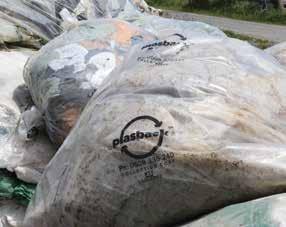
A defining step for farm plastic recycling
Words: Plasback.
The government’s approval of a regulated national rural recycling scheme marks a defining moment for New Zealand’s primary sector.
For years, agri-plastic recycling has relied on voluntary participation, industry leadership and farmer commitment.
Now, regulation formalises what many in the sector have already been doing — taking responsibility for the plastics used on-farm and ensuring they are managed properly at end of life.
So, what happens now?
The new regulations bring existing programmes together under one nationwide framework.
It ensures all producers contribute fairly to the cost of collecting and processing agrichemical containers and farm plastics.
This removes the imbalance of ‘free riders’ — where some products entered the market without contributing to recovery costs — and creates a more equitable, transparent system.
For farmers, the message is simple. The system becomes stronger, more consistent and more accountable. Access to recycling remains straightforward.
The infrastructure, processes and collection networks farmers are familiar with continue — but under a regulated structure designed to improve performance across the board.
For most farmers, not much changes operationally — but a lot improves structurally:
• The scheme is nationally aligned
• Funding is shared fairly across consumers of the product
• Long-term certainty is strengthened
• Investment in education and infrastructure increases.
NZ farmers have long demonstrated a commitment to responsible land stewardship. Participation in recycling programmes has reflected that.
Regulation now supports those efforts with stronger backing and industry-wide accountability.
It also means controlling contamination becomes even more critical.
When a scheme is regulated, performance matters — and clean plastic streams are essential to ensuring material can be recycled effectively and economically.
Plasback’s role evolves — but its purpose remains the same.
For over 20 years, Plasback has built systems, education programmes and recycling pathways for agricultural plastics.
That groundwork now becomes part of a nationally mandated structure.
Under the new framework, Plasback continues to:
• Provide collection solutions for key farm plastics
• Deliver contamination education
• Support rural communities
• Drive innovation in recycled product outcomes.
The difference is that regulation strengthens the system around that work — improving fairness, performance and long-term sustainability.
This is not a reset. It is a step forward. Progress like this does not happen without industry backing.
Companies such as Donaghys Crop
Baling, Agpac, Webbline and ProAg have demonstrated leadership by supporting responsible recycling initiatives. Their commitment helps ensure the plastics entering NZ farms are backed by a pathway for recovery.
As the sector moves into this next phase, responsible purchasing decisions matter. When farmers choose to support organisations that actively back recycling schemes, they help strengthen the entire system — from product supply through to end-of-life recovery.
It becomes a closed loop, not just a transaction.
The move to a mandated scheme signals maturity in NZ’s approach to agriplastic management. It recognises the responsibility of producers; the leadership of industry and the commitment of farmers. It also creates a more durable foundation for rural recycling in the years ahead.
Plasback remains committed to educating, supporting and working alongside farmers and industry partners to ensure agri-plastic recycling continues to improve — cleaner streams, stronger systems and better outcomes for NZ’s land and environment.
The framework is now in place. What happens next depends on all of us.
partner, particularly for spray-out, knockdown herbicides such as glyphosate, enhancing activity and penetration.”
Another issue when using glyphosate is ‘hard’ water which has one of the biggest negative impacts on spray performance.
“X-Change changes hard water into soft by locking up free ions, which would otherwise deactivate products.”
To check water hardness, he recommends pool water testers.
Water hardness of 150 ppm is considered moderately hard and requires correction.
Last but not least, he says the adjuvant All Clear is the insurance policy spray contractors and farmers can’t afford not to have.
“Even tiny quantities of the wrong chemical left in the spray tank can have a huge impact.”
Avoid cleaning spray tanks with laundry powder or ammonia.
“They’re not going to remove every trace of spray – that’s not what they’re formulated to do.”
Residue damage.
Broader beet range gives more flexibility
Cropmark Seeds has expanded its fodder beet portfolio with the introduction of four new varieties, further strengthening what is now the most extensive fodder beet range available in New Zealand.
The new additions - Erasmo, Palermo, Guillermo and Firmo - showcase the latest in fodder beet genetics and offer a range of bulb dry matter percentages from low to high.
This provides farmers with greater flexibility to select varieties that best suit their farm systems and feeding strategies, the company says.
These new varieties complement its existing fodder beet line-up, which already includes well-established performers such as Geronimo, along with the versatile Anselmo and Kokomo in the low-medium dry matter category.
These varieties can be utilised in the same way as low DM types while delivering higher yields, making them a strong option for farmers seeking both performance and flexibility.
“We work closely with international breeding partner KWS to bring the latest fodder beet genetics to NZ farms,” the company says.
“All varieties are thoroughly trialled to ensure they deliver reliable performance under NZ conditions.”
For rural retailers and field representatives, reliability is critical.
“The performance of the varieties you recommend reflects directly on you and your business.
“Our fodder beet range has been
developed with this in mind, focusing on consistent yield, strong establishment and uniform crops farmers can rely on.”
High seed quality, advanced seed treatments and pellet technology all contribute to reliable germination and even crop establishment, helping reduce risk for both farmers and the
retailers advising them.
“With varieties spanning low through to high dry matter options, our diverse portfolio means that no matter the farm system, there is a quality Cropmark fodder beet to suit.”
Supply of the new varieties is limited this season.
proven performance for New Zealand’s land professionals
Clever weighing lands on farms
Accurate cattle weights have long mattered to beef farmers, but getting them has often meant extra time, labour and stress on stock.
Now a new weighing technology being trialled around the country is moving from futuristic concept to something farmers, vets and processors can look at in practical terms.
Scanabull has developed a system that estimates liveweight in about a second from a 3D scan captured by either an iPhone Pro or a fixed camera unit called the Scanabull Weigh Point.
The company says the scan is processed on either device using proprietary neural networks so farmers do not need coverage or cloud connections in the paddock.
The approach aims to replace much of the guesswork in buying selling and drafting decisions by giving quick objective weights without yarding stock and running them through a crush.
The startup was founded in April 2024 by Dan Bull who grew up on a farm and later managed livestock.
He has since been joined by co founders with backgrounds in farming veterinary science and artificial intelligence.
Trials and demonstrations are underway with industry partners across NZ, including Silver Fern Farms, as Scanabull also explores opportunities in Australia and other major beef regions by year end.
Bull says many cattle are still bought and sold on visual estimates and when those estimates miss the mark the financial impact can hit farmers, traders and processors.
He says the goal is to give the beef sector a fast reliable way to understand what is happening with animals in real time so decisions can be made on measured performance rather than assumption.
The phone app offers quick spot checks in yards, pens or near gateways while the Weigh Point is intended to capture regular pass by measurements in the paddock for trend tracking.
The system generates a detailed point
cloud of the animal, then a deep learning model analyses body shape and structure to estimate liveweight with results displayed on the device within roughly a second.
Scanabull reports that accuracy on individual animals is already over 93 per cent and that mob level accuracy is higher again with performance improving as more scans are added to the training set.
The technology has been trained using over 100,000 animal data points, enabling it to continuously improve as more livestock scans are captured.
Running this level of machine learning directly on a mobile device required significant technical innovation, the founders say.
Because farms often operate in remote areas without reliable connectivity, the system was designed to run entirely ondevice using edge computing rather than relying on cloud infrastructure.
“No one is running neural networks at this speed on edge devices for livestock applications. Scanabull has developed our own proprietary architecture and training models to make it possible,” explains Bull.
Co founder and chief commercial officer
Dr Ursula Haywood, who worked for a decade in rural veterinary practice before moving into agritech, says fast objective measurements can help farmers manage animals more effectively and choose better timing for sales.
Haywood says the same capability can provide useful transparency for livestock traders, veterinarians and processors who often have limited reliable data on animals before they reach the plant.
Scanabull announced a NZ$1.1 million raise led by Sprout Agritech, with support from Enterprise Angels and Callaghan Innovation’s Deep Tech Incubator programme.
Investment will fund further development of Scanabull’s models, additional data collection, and preparation for broader commercial rollout after the current phase of trials and demonstrations.
Future versions are planned to extend beyond liveweight to include measures such as carcass weight prediction and body condition scoring so more of the supply chain can act on consistent farm data.
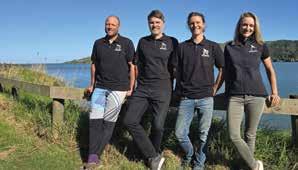
From left, Scanabull founders Paul Sealock, Dan Bull, Daniel Stuart-Jones and Ursula Haywood.
Fert security (still) starts at home
Cast your mind back to 1982. Rob Muldoon is Prime Minister of New Zealand, and a flagship project in his ambitious, heavily criticised Think Big infrastructure build-out is just cranking up in Taranaki.
Forty-plus years and more than 8 million tonnes of urea fertiliser later, the fact that NZ primary producers still retain on-shore manufacturing capability for this critical input is one of the few brighter spots in an otherwise murky current outlook.
The path ahead for diesel and fertiliser in general is highly uncertain this season.
But without Think Big, and the ammoniaurea plant at Kapuni suppling about one third of NZ’s total urea, Kiwi farmers and growers would be even more dependent on imported nitrogen fertiliser than they already are.
Ballance Agri-Nutrients has owned and operated the plant since 1992, and CEO Kelvin Wickham says recent commentary suggesting it will close imminently does not reflect the business’ perspective on its longer-term outlook.
“Ballance’s long term gas contract ended in September last year. However, since then we’ve secured additional gas in multiple tranches from a range of suppliers.
“The most recent extended operations through to the end of June.”
Wickham says the co-op remains very active in the gas market and, through ongoing engagement across the sector, is becoming more assured about the likelihood of securing longer-term supply.
“This allows us to approach the future with growing confidence rather than pre determined assumptions about closure.
“With this in mind, we are actively working on a transition plan that would enable continued local nutrient production, retain jobs and capability, and move production towards a renewable future.
“Our priority remains very much on maintaining locally manufactured nutrients as part of the nutrient supply mix and preserving future options.
“In an increasingly uncertain global environment, secure access to fertiliser matters for farmers and for the wider economy.
“The uncertainty caused by the situation in the Middle East highlights how critical local resilience is for NZ.”
Balance, with Hiringa Energy, Todd, PKW Maori Incorporation and the Ministry of Business, Innovation and Employment, recently announced the planned Kapuni wind energy project has reached an important financial milestone.
Hiringa was due to start building the wind farm from early March 2026, with the first stage focused on civil enabling work at the location of wind turbines.
The project is expected to be generating renewable electricity and green hydrogen in 2027.
Kelvin Wickham.
Thank you, Think Big.
Working in unison, creating a closed feedback loop
Words: Gallagher Animal Management.
Where eShepherd controls where cattle graze, the StrongBó Auto Weigher measures how they respond.
One system manages the inputs. The other tracks the outcomes.
Weight trends surface within days - not after your next muster. If a mob’s growth rate slips, you can identify the cause and act immediately: adjust the rotation, shift the boundary, change the approach. No yarding. No stress. No lag. It’s the difference between managing by instinct and managing by data - continuously, automatically, and without adding labour. And the data compounds. Over time, you build a clear record of which rotations consistently hit target growth rates, which paddocks underperform in dry conditions, and which mobs respond best to intensive cell grazing. Every season, your decisions get sharper.
When Wairarapa beef farmer Dion
Kilmister and his wife Ali had to spend six months in Australia for medical treatment, it could have derailed their intensive beef finishing operation. Instead, it became proof of concept.
Using eShepherd and the Auto Weigher, Dion Kilmister managed his entire grazing system remotely, shifting virtual fences and making feed decisions daily, based on live weight data, all from the Gold Coast. The numbers tell the story.
Before the two systems, Kilmister estimates his operation was growing around 14 tonnes of feed but only utilising 78 per cent of it.
At one point, cattle dropped from 1.5 kg per day to 0.2 kg per day when a crop ran out. Monthly manual weighing didn’t catch it in time, and a whole month of
liveweight gain was lost.
The Auto Weigher now flags those changes in near real-time, so he can act immediately. There’s a practical elegance to how the systems work together too. When animals hit target weight on the Auto Weigher, Kilmister simply turns off their neckbands in eShepherd and they walk out of the virtual fence on their own. No mustering 150–200 head through the yards. Just the animals that are ready, moving forward, while the rest stay put.
“The combination of eShepherd and AutoWeigher for us is about closing that gap. We’re pretty much remote farming, but getting all the information on a day-today basis that’s required to be a good farmer.”
Will smart sensors give sheep a voice?
Sheep farmers have always relied on stock sense: knowing when animals are thriving and when something is just not right.
New research suggests that technology may soon help sharpen that instinct, giving sheep a quiet but constant way to ‘tell’ farmers how they are coping in real time.
A major New Zealand review published in the New Zealand Journal of Agricultural Research brings together the latest local work on sensor technology and sheep welfare.
Led by AgResearch scientist Karin Schütz and colleagues, the paper looks at how small wearable sensors can monitor behaviour and physiology in extensively farmed sheep, with the aim of spotting problems earlier and improving both welfare and productivity.
At the heart of the research is the idea that behaviour changes first.
Before sheep show obvious signs of illness, they often graze less, lie down more, move differently, or alter their daily routines.
On large farms, those subtle changes can be hard to see, particularly when mobs are spread across big paddocks.
Sensors offer a way to keep an eye on individual animals without extra labour or handling.
Much of the work has focused on
accelerometers, small devices that measure movement. Fitted to collars, legs or ear tags, they can accurately identify common behaviours such as grazing, ruminating, standing and lying.
NZ trials have shown accuracies above 80 per cent, which is good enough to build reliable pictures of how sheep are spending their day and night.
This matters because behaviour patterns can act as early warning signs.
In parasite studies, lambs challenged with internal worms showed clear changes well before they looked unwell.
They spent less time feeding and more time lying down as the parasite burden increased.
That kind of information could help farmers intervene earlier and more selectively, rather than relying on blanket treatments across the whole mob.
There are also promising findings around facial eczema, a disease that costs the industry hundreds of millions of dollars each year.
Researchers found that accelerometers could detect repeated head-shaking behaviour, which has long been associated
with discomfort during high spore periods. While the technology is still being refined, it raises the possibility of earlier alerts when risk is rising.
Heat stress is another growing concern, particularly as summers become warmer.
Sheep under heat load can breathe extremely fast, making respiration rate difficult to measure by eye.
New trials using acoustic sensors show that breathing rate can be recorded accurately by sound alone.
These lightweight sensors could eventually be built into collars, providing farmers with real-time information to help manage shade, water and grazing during hot conditions.
Sensor technology is also shedding light on lambing behaviour.
GPS collars have been used to track ewe movement before, during and after lambing. Changes in movement patterns can indicate when lambing has occurred, and early work suggests that post-lambing behaviour may be linked to lamb growth rates.
While GPS systems still face challenges such as battery life and durability, the research shows clear potential.
The authors are careful to point out that technology must be practical to succeed on sheep farms.
Devices need to be robust, affordable, easy to fit and comfortable for animals.
Data must be accurate and simple, delivering clear signals rather than overwhelming farmers with numbers.
Sheep systems also differ from dairy, with less infrastructure, fewer daily checks and large flock sizes, so tools need to be designed with those realities in mind.
While most sensor technology for sheep is still under development, progress is rapid. Costs are coming down, accuracy is improving, and systems are becoming easier to use. The research shows that sheep behaviour can be measured reliably and linked to real welfare and production outcomes.
The message from the science is clear. By listening more closely to what sheep behaviour is telling us, farmers could act earlier, target treatments better, reduce losses and improve animal wellbeing.
Sensors won’t replace good stockmanship, but they may soon become another useful tool in the kit - helping sheep speak up before small problems turn into big ones.
The four drench tips your farmers need most
Words: Zoetis.
When it comes to livestock parasite management, the stakes are highanimal productivity, their welfare, and farm profitability all depend on effective control strategies.
Animal health advisors play a vital role in guiding farmers toward sustainable, science-driven practices.
One powerful framework for parasite management distills best practice principles into the acronym FARMED, which stands for Feed, Avoid, Refugia, Monitoring and Effective Drench.
For retailers supporting farmers, the key is to focus on the first four steps, which offer lasting benefits beyond simply recommending a drench.
Here’s how you can help clients make every part of their parasite control as robust as possible, starting with feed. Nutrition is their first defense against parasites.
The focus should be on feeding young or susceptible stock well, with good quality and a suitable quantity of leafy feed. Well-fed animals have stronger immune systems and tolerate some parasite burden with less productivity loss. Encourage clients to:
• Plant leafy crops - not only do they contain more protein but they are generally less suitable for larvae to thrive in or to transfer to animals.
• Focus on vulnerable groups (young stock, pregnant animals, sick or poor conditioned animals).
• Avoid overstocking - this reduces competition for feed and lowers stress, both crucial for resilience.
• Use pasture rotation to ensure there’s enough quality forage. Hungry animals graze closer to the ground, increasing parasite exposure.
When discussing feed additives, supplements, or pasture management, remind farmers that investing in nutrition is investing in parasite protection. Next? Avoiding unnecessary exposure to larvae.
Strategic grazing is central to parasite control. Many problems stem from poor pasture management and grazing highrisk animals in the same area.Rotational grazing is a useful tool. Moving young and susceptible stock regularly to fresh paddocks means they are only nipping
the tops of the feed and leaving good residuals. This reduces their chance of ingesting parasite larvae which mostly live in the bottom of the sward.
Integrated grazing is another key tactic. Grazing cattle and sheep together, or alternating them, reduces parasite buildup (most worms are host-specific).
Use older animals to regain quality in the feed; this is not a job for calves or lambs.
Lamb finishing and heifer grazing blocks are high risk for both parasite challenge and resistance to develop, so farmers need to use other tools as well.
For example, new and returning animals should be quarantined and drenched before joining home flocks. They may have highly resistant parasites on board.
Additional fencing, water troughs, and paddock setups can facilitate rotation and separation of stock classes and enable better control of feed.
The R in FARMED stands for refugia, which means deliberately leaving some worms untreated to slow resistance. It’s counterintuitive for production, but essential to help delay drench resistance. Key points here for your clients include not drenching every animal, every time.
Leaving the heavy, healthy, most resilient animals untreated also leaves susceptible worms to reproduce.
Instead of blanket drenching, remind farmers to focus drenches on vulnerable groups like lambs or heavily infected stock or those under stress, like low condition score pregnant ewes.
Extending intervals between drenches will also increase the refugia, but faecal egg monitoring is essential!
The fourth step, monitoring, means farmers can back decisions with data. Blind drenching is a recipe for resistance and may be a waste of money and time.
Typical times to check are 10-14 days after a drench (to check the drench or drench process worked) and before the normal monthly drench (to decide if a drench is needed now, or if the interval can be
pushed out if the burden isn’t high).
This one can also show how successful the ‘Avoid’ strategy has been.
FEC kits are increasing in use so offer them to farmers when you sell the drench or give advice.
Finally, when treatment is needed, remind farmers to prioritise effective drench. There will always be a need for drench, but as the last tool used, not the first. Drenches should be treated like the scarce valuable resource they are!
Any drench is valuable if it is effective on a farm, so farmers should at least do a drenching check to assess their process and drench. Recommend products based on that farm’s recent efficacy results (from FEC tests).
By focusing on Feed, Avoid, Refugia and Monitoring, advisors and retailers can help farmers establish resilient animal health systems, reduce dependency on chemicals, and protect drench effectiveness for the long term.
Make FARM the foundation—then use ED only when truly needed. This is not just good science; it’s good business, for farmers and retailers alike.
F stands for Feed.
Southern miller is feeling its oats
Harraways is backing the future of oat processing in the lower South Island with a major, multi year investment programme to lift capacity, improve efficiency and keep its Dunedin mill competitive for decades to come.
The company is partway through a capital upgrade at its Green Island site that will see total spending reach about $11–12 million over three to four years.
For chief executive Henry Hawkins, the project is about protecting a long-standing rural supply chain while positioning the business for growth.
Planning for the programme began two years prior to any machinery arriving on site.
Shareholders signed off funding almost a year ahead of the first work starting in November 2025, giving the company confidence to stage the upgrades carefully while keeping the mill running.
One of the first visible changes has been
that improve branding and shelf presence.
“Sachets have been a real game changer for us,” says Hawkins. “With the new facing we expect to gain more shelf presence.
“Going through this update allowed us to re-evaluate the product quality and health benefits and we have reduced our sugar levels in much of the sachet range, while keeping the product exactly the same quality our customers expect.”
While the Australian built machinery still needs some manual input, longer term plans include automating the full packing process from box to pallet.
At the same time, Harraways replaced an ageing boiler with a new unit that arrived
the automation of Harraways’ sachet line for retail products.
Previously a labour intensive process, the new line now produces sachets on a fully automated system.
Consumers will notice updated packaging on supermarket shelves, with larger boxes
in December and was commissioned by February.
Built in Christchurch by MHM, the boiler provides extra steam capacity to support future growth. Steam is essential to the milling process, and both boilers are fuelled entirely by oat husk by
product generated on site.
That upgrade reflects a wider focus on future proofing the operation.
A major current project is transforming the grain intake and silo farm.
Old silos are being replaced, along with a full replacement of the intake pit and elevators.
The aim is to dramatically speed up unloading for growers and transport operators.
“Drivers used to spend an average of two hours tipping off a load,” says Hawkins.
“With the new system we expect that to drop to about 30 minutes.”
This $1.5 million plus project is being handled by REL and is about 70 per cent complete, with finishing targeted this month.
Next comes one of the most complex pieces of the programme, a seismic upgrade of the main mill building.
Work began in February and will take more than 12 months, with the mill operating throughout. Old cinder block walls are being removed and replaced with fire rated cladding, done wall by wall and floor by floor.
Looking further ahead, the largest single investment will be new milling equipment, requiring a new purpose built building.
That project is still being scoped but is expected to cost $5–6 million and take about 18 months to complete.
Space has already been set aside near a creek that once powered the original mill.
Hawkins is overseeing the work, supported by Hanlons Engineering and quantity surveyors Chas George and Sons.
Growers have responded positively to the upgrades.
Oats remain an important part of Southland growers’ crop rotations, and Hawkins says farmers value having a reliable local processor.
“They need a good outlet and we’ve kept them well informed,” he says. “It’s about growing together.”
Asked about the recent Heinz Wattie’s announcement, Hawkins says it is “very disappointing” to see another NZ business folding.
“I am very sympathetic for those affected, but it is becoming harder and harder to do business in NZ, and I while I personally don’t like it, I can understand the company’s position.”
A stronger voice for vegetable growers
The vegetable industry is reshaping how it represents itself, with a new structure designed to bring growers together under one banner while keeping existing product groups intact.
As of 1 April, vegetable growers across New Zealand will be represented by a new umbrella organisation called the NZ Vegetable Council.
The council has been formed by Onions NZ, Process Vegetables NZ, TomatoesNZ and Vegetables NZ, with support from Horticulture NZ.
Rather than creating an additional layer of bureaucracy, the change refines the current model to improve efficiency and influence.
Transition Board chair Kevin Wilcox says the aim is to focus effort and ensure the levies collected from growers go further. The vegetable sector is worth about $1.1 billion a year, but has often presented itself as four or five smaller industries. That fragmentation has made it harder to engage with government and regulators. Wilcox says coming together as a unified sector, while keeping individual boards and levies in place, gives growers the best of both worlds.
He says the industry is at a crossroads. Growers are under pressure from policy settings that do not support vegetable
production, while the cost of growing vegetables continues to rise.
Margins are being squeezed and long term viability is being challenged.
Without greater certainty and a return to profitability, growers cannot realistically be expected to keep investing in production for domestic and export markets.
Wilcox says a more unified sector can tell its story more effectively and better demonstrate its importance to the wider economy.
NZVeg will operate as an umbrella organisation by repurposing Horticulture Executive Services Limited, which already employs staff working across some vegetable product groups. The intention is to streamline services rather than expand organisational layers.
Existing product group boards and levy structures will remain in place, maintaining accountability back to growers.
Those groups will work together through NZVeg to ensure the vegetable sector is heard and listened to in Wellington.
The organisation will work across grower
support, policy, research and extension, biosecurity and market access, with the aim of building a resilient industry that feeds the nation and competes internationally.
It is currently governed by a transition board, supported by an operations manager, while recruitment begins for a chief executive.
Under the new arrangement, outdoor crop growers and covered cropping growers will continue to be supported through dedicated business managers, ensuring continuity for both systems. Process vegetable growers will also continue working with their existing point of contact.
One of the practical benefits for growers is a clearer structure, with staff operating within a single entity so there is no confusion about who to approach for help. The consolidated approach also reduces duplication, particularly in government and policy engagement, while creating the scale to employ specialist staff in priority areas such as trade and biosecurity.
The deal includes the sale of associated logistics operations to Fonterra.
Known as D Shed on Back Beach Road, the 34,200 square meter warehouse with a 12,000 square meter yard is primarily used for packing Fonterra’s Edendale product for export.
Effective from late last year, the site is now fully under Fonterra’s control and renamed Fonterra Port Chalmers. It functions as a key pack point in the cooperative’s supply chain.
Sixteen skilled employees from Port Otago have transitioned to direct employment with Fonterra.
The arrangement allows Port Otago to
Long-term lease boosts dairy export future CEO honoured for business turnaround
focus on core port operations. It also gives Fonterra greater control over its supply chain up to the wharf, which in turn could improve efficiencies and reduce costs for the dairy giant.
Port Otago chief executive Kevin Winders described it as beneficial for both parties. He noted it enables Fonterra to manage the site as one of its nationwide in-house distribution centres.
Fonterra’s director of global supply chain Santiago Aon highlighted the site’s importance in the lower South Island supply chain network.
He said the acquisition enhances efficiency and strengthens overall operations.
It also commits to ongoing collaboration with Port Otago and a smooth transition for stakeholders.
Edendale in Southland is one of Fonterra’s largest and oldest manufacturing sites, taking milk mostly from farms in Southland and Otago.
It processes approximately 2.4 billion litres of milk per season, and is estimated to export about 420,000 tonnes of finished product plus 30,000 tonnes of ingredients every year to more than 70 global markets. Fonterra has shipped Edendale product from Port Otago since the early 2000s. Southport at Bluff is closer to the plant but its container shipping capacity is limited.
In addition, Ruralco was recognised as highly commended in excellence in retail and hospitality, a great acknowledgement of the work happening across its retail operation, the dedication of its team, and the loyalty of the farming families Ruralco serves.
Since stepping into the role in 2023, Aitken has led Ruralco through a significant reset, restoring profitability, reducing debt, strengthening operations and community connections, and reaffirming the co-operative’s local focus.
Under his leadership, Ruralco has returned to profit for FY25, rebuilt shareholder confidence, and sharpened its strategy around delivering real value for Mid Canterbury farmers.
Aitken says the award reflects the collective effort of the Ruralco team.
“Strong leadership is never about one
person. It’s about people working together toward a shared purpose. I’m proud of what our team has achieved for our shareholders and our community.”
Chair Sir David Carter says Aitken’s leadership has been both disciplined and community focused.
“Tony has led with clarity, transparency and a genuine commitment to our shareholders. He has restored confidence in the co-operative while ensuring Ruralco remains proudly farmer-owned and locally focused.
“We are very proud to have watched Tony’s progression into the respected CEO he is today, and the leadership he continues to bring to our co-operative.”
Ruralco remains committed to long-term sustainability, financial discipline, and strengthening its role in Mid Canterbury’s rural economy.
Ruralco CEO Tony Aitken has been awarded excellence in business leadership at the recent ANZ Business of the Year Awards in Ashburton.
Good news for lower South Island dairy producers - Port Otago has announced a significant 35-year lease agreement with Fonterra for its dairy export warehouse in Port Chalmers.
Fonterra Edendale.
Tony Aitken.
What sets profitable farm businesses apart
Building a profitable farming business has never been simple.
But new analysis by ANZ Bank of more than 4000 farm and orchard businesses across New Zealand offers some clear clues about what separates top performers from the rest.
The analysis spans dairy, red meat, kiwifruit, arable and pipfruit sectors, comparing financial performance over the 2020–2024 period with the five years prior.
Taking a long term view smooths out seasonal swings and price volatility, providing a clearer picture of how different systems perform through both good years and tough ones.
One of the strongest messages is that revenue growth alone does not guarantee profitability.
While product prices can make a difference in good years, they are largely outside farmers’ control, the report says.
What matters more over the long run is how effectively a business turns land, stock or crops into saleable product.
Production efficiency, timing of decisions and attention to detail consistently distinguish higher performing farms.
Kiwifruit stands out in the numbers, with significant gains in income over the past decade. While strong export pricing has helped, the ANZ analysis shows production gains have been just as important.
Orchards that focused on canopy management, crop timing and hands on decision making at critical points achieved far greater returns than those relying on price alone.
Even within a sector dominated by Sungold, variety choice was only part of the story. System evolution
and operator skill played a major role.
Dairy shows a similar pattern. Despite tighter environmental rules and rising costs, the sector delivered solid improvements in profitability, particularly among top performers. Gains came from better per cow performance, improved animal health and fertility, and a continued focus on maximising home grown feed.
Efficient pasture utilisation remains a cornerstone of profitable dairy systems, reinforcing the value of genetics, soil management and good timing.
Cost control is another recurring theme, but not in the simplistic sense of spending less. Across all sectors, the past five years have seen sharp increases in farm working expenses, driven by inflation, labour shortages and higher input costs.
The most resilient businesses were those able to align spending with production and income cycles, rather than cutting indiscriminately.
Red meat farming provides a clear example.
While average returns have been under pressure, top performers continued to outperform by managing costs tightly in low income years and making incremental system changes rather than wholesale shifts.
Genetic gains, pasture utilisation and selective diversification — including forestry income in some cases — helped lift resilience.
The gap between average and top red meat farms remains wide, highlighting both the challenge and the
opportunity within the sector.
Arable and pipfruit businesses face their own complexities.
Arable farms have lifted earnings but often at the cost of higher capital investment, particularly in machinery, irrigation and technology. The challenge going forward is ensuring those investments continue to generate sufficient returns as input prices rise.
Pipfruit growers, meanwhile, have been hit hard by labour shortages and extreme weather, underscoring the vulnerability of some systems to external shocks. Growers investing in new varieties and downstream infrastructure are beginning to see signs of recovery.
Across all sectors, the analysis shows, one principle holds true: profit comes from combining revenue growth with
disciplined cost management. Cash remains king. Businesses that generate strong cash surpluses have more confidence to invest, adapt and ride out downturns.
Over time, that creates a self reinforcing cycle of improvement.
Perhaps the most important takeaway from the ANZ data is that high performance is rarely accidental.
Top farms and orchards tend to share common traits — clear goals, strong advice networks, disciplined management and the confidence to invest even when conditions are uncertain. The numbers show NZ farming has enormous potential. Unlocking it depends less on chasing price highs and more on getting the fundamentals right, season after season.
From family farm to agronomy role for Otago scientist
Lucy Bell has joined PGG Wrightson Seeds as sales agronomist for Otago and Central Otago, based in Dunedin.
Bell, 28, brings a strong mix of hands-on farming experience and specialised soil science research to the role.
She grew up on her family’s 4500 ha sheep and beef property, Shag Valley Station, in the Pig Route between Palmerston and Ranfurly.
The extensive tussock hill country block, running Angus/Angus cross cattle and Romney sheep, has been in the family for generations and sparked her deep interest in high country soils.
After completing a Bachelor of Agricultural Science with first-class honours in soil science at Lincoln University under Professor Jim Moir, Bell spent a year in the fertiliser industry before returning for doctoral studies.
Her PhD, which took over three years full time, investigated soil aluminium and legume survival in Central Otago hill country.
New Zealand has about 500,000 hectares of low pH soils in the high country, with significant areas in Central Otago showing high concentrations of exchangeable aluminium.
As soil pH drops, nutrient availability shifts, reducing beneficial elements such as phosphorus while increasing toxic aluminium that particularly affects legumes. These plants serve as the main nitrogen source in many high country grasslands, making the issue critical for pastoral farming. Bell’s research was the first to demonstrate that aluminium solubility in the topsoil is largely controlled by organically bound aluminium, especially in high-carbon soils.
The work built on earlier honours projects and was funded through the Struthers Trust along with scholarships including Graduate Women New Zealand, the Burnett Research
Waikato grower recognised as future ag leader
Waikato horticulturalist Karn Dhaliwal is proof that innovation, hard work and a willingness to back yourself can open doors in rural New Zealand.
The 32-year-old from Te Hoe has been named the local 2026 winner of the prestigious Zanda McDonald Award, which recognises emerging leaders shaping the future of the primary industries across NZ and Australia.
Founder and owner of Ohinewai Harvest and Dhaliwal Ag, Dhaliwal has built a diverse horticultural and cropping business with a reputation for getting things done.
His approach blends practical growing knowledge with a strong commercial mindset, and a commitment to creating opportunities for others coming through the industry.
Judges highlighted his entrepreneurial
drive, leadership within the vegetable sector and passion for helping the next generation find a place in horticulture.
Award chairman Shane McManaway says Dhaliwal represents the kind of forward thinking leadership the industry needs.
“Karn’s entrepreneurial approach to horticulture highlights the opportunities that exist for those willing to innovate and grow within the sector,” he says.
As part of the award, Dhaliwal will receive a tailored professional development package, including a mentoring trip across Australia and NZ, $10,000 towards further education or training, media coaching and access to an extensive trans Tasman network of rural leaders.
Scholarship and McMillan Brown Agricultural Research Scholarship.
After submitting her thesis she returned home to work on the farm and do some travel before the opportunity at PGG Wrightson Seeds arose in mid-January.
She says she is excited to apply her knowledge with customers and farmers.
“I am really looking forward to supporting clients to fit the right products to farm systems and help farmers achieve their goals,” she said.
Her territory covers coastal Otago through to inland Central Otago, from Outram up to Palmerston and beyond, an area she knows well from both family ties and her research. She has found the PGG Wrightson Seeds team knowledgeable and collaborative, with farmers keen to improve their systems.
Bell did not initially see herself pursuing a PhD when she first arrived at Lincoln, but a genuine passion for the topic drew her in. She is now enthusiastic about translating science into practical on-farm outcomes across the region she loves.
Established in 2014, the Zanda McDonald Award honours young professionals aged 21 to 35 who are making a significant contribution to the primary industries. The second 2026 award recipient is Australian civil engineer Bryce Neyland, who works with Select Harvests on large scale almond orchard and processing developments in New South Wales.
For Dhaliwal, the recognition is another milestone in a career grounded in the land — and firmly focused on the future of NZ food production.
Karn Dhaliwal.
Lucy Bell.
Senior appointments drive agritech growth
New Zealand agritech company HortPlus has announced key appointments to its senior leadership team as it positions itself for growth and international expansion.
Director Mike Barley has been appointed chief executive officer.
Cody Ellingham has been named chief strategy officer.
Bailey Jewell has taken up the position of chief technology officer.
The three bring decades of experience in the technology and horticulture industries.
They have a deep understanding of HortPlus, its customers and the global agri-tech landscape.
“I’m delighted with the expertise we’ve assembled, not just across our leadership team, but across the entire business,” Barley says.
“The coming year holds significant opportunities for international growth, expansion of our weather station network and groundbreaking new integrations between our flagship MetWatch weather and disease portal and other leading technologies and services.”
Last year HortPlus expanded its services to Fresh Berry Company by enhancing the well-known NZ berry producer’s industry-
leading berry harvest planning tool, developed by HortPlus to make harvest planning and forecasting easier.
This follows recent collaborations with other major corporates, including Constellation Brands which harnesses HortPlus data to support crop protection decisions that improve sustainability, reduce crop losses and boost profitability.
“It’s a buzz to be providing services to household names that are growing the crops that so many people in NZ, and internationally, know well,” Barley says.
“As the twin waves of AI and data-driven technology continue to converge and more people embrace the value of data for sound horticultural and business decision making, I’m confident the tools we provide will only get more popular, and more powerful.”
Established in Hawke’s Bay more than 25 years ago, HortPlus now has offices in Hawke’s Bay and Wellington, with customers in horticulture regions globally as far away as Italy.
It manages a network of more than 1000 weather stations across Australia and NZ and offers a wide array of consultancy and environmental data services.
That includes its well-known online platform, MetWatch, used by thousands of growers in a wide variety of different horticultural sectors, as well as researchers and science bodies such as the Bioeconomy Science Institute and Foundation for Arable Research, among others.
New wine head appointed at time of serious industry pressures
She will take up the role at the end of July 2026, and comes with more than 20 years of senior leadership experience in the global wine industry across NZ, the United Kingdom and Europe.
The move comes at a time of heightened global uncertainty and serious pressures for growers and winemakers.
Jelicich is currently global director responsible marketing and sales at Pernod Ricard in Paris.
She will leave that position and return home to NZ to be based at the NZ Winegrowers head office in Auckland.
NZ Winegrowers chair Fabian Yukich says the board sought a leader with deep industry knowledge, a global perspective, strong
stakeholder skills and strategic clarity. Jelicich stood out as the ideal candidate.
She combines a thorough understanding of the NZ wine industry with extensive international experience, and has strong credentials in complex global environments, policy, trade and building alignment among diverse stakeholders.
Yukich says the board is delighted with her deep connection to NZ and her passion for its wines.
Her appointment follows retirement of longserving chief executive Philip Gregan after more than 40 years with the organisation.
“The NZ wine industry is globally respected, and plays an important role in our nation’s economy and communities,” Jelicich says.
“I am looking forward to serving and supporting the interests of our members and working closely with the board and the NZW team to support the industry through its current challenges, and opportunities, and positioning it strongly for the future.”
Cody Ellingham.
Anishka Jelicich.
Mike Barley.
New Zealand Winegrowers has appointed Anishka Jelicich as its next CEO.
Proud of agriculture, ready to give back
A third-year agribusiness student from a Taranaki dairy farming family has been named the second recipient of the Dr Warren Parker and Pamu agricultural scholarship.
William John Poole is studying at Massey University and was selected for the scholarship in recognition of his leadership potential, commitment to agriculture and alignment with the values of state owned farmer Landcorp.
Raised on a dairy farm, Poole says agriculture has always been central to his life and shaped his work ethic.
Growing up on a dairy farm gave him a strong connection to the land, and studying agribusiness is helping him better understand how he can contribute to the sector in a meaningful way.
Poole says receiving the scholarship has given him confidence to keep pushing himself.
He is particularly interested in the role large scale farming organisations can play in testing new ideas and adapting to change, and is exploring the opportunity to complete a summer placement with Pamu to gain hands on experience in a new part of the country.
He’s proud of NZ agriculture and its global
reputation, and is looking forward to starting his career, learning from others and contributing back to the sector.
The scholarship was established in 2024 to honour the legacy of the late Dr Warren Parker, a former board chair, and was awarded for the first time last year.
The inaugural recipient, Oliver Cayley, completed his final year of a Bachelor of Agribusiness at Massey University in 2025, alongside a two month placement on a Pamu dairy unit near Taupo, where he worked as part of the Endurance team.
Cayley has since begun a two-year graduate programme with Fonterra in Christchurch.
Pamu chief executive Mark Leslie says the scholarship is about more than financial support.
It backs talented young people, giving them real world experience and helping them build confidence and connections in the sector, he says, adding that both Poole and Cayley reflect the values Parker stood for.
Forestry specialist supports market expansion
Crop protection provider Kenso NZ is pleased to announce the appointment of Andrew Pattullo, who takes the position of New Zealand forestry sales manager.
Pattullo joins the company to strengthen its agrichemical focus in the national forestry industry.
He brings with him over 25 years of experience working within the domestic forestry sector, providing both agrichemical technical support and sales management across a wide range of forest management operations.
He has conducted numerous agrichemical trials in forestry and holds an extensive understanding of all the key components that underpin effective weed, pest, and disease control in NZ forests.
“We are delighted to have Andrew onboard,” says Kenso NZ general manager Andrew Fulford.
“His knowledge and experience will be invaluable as we continue to grow our presence in the forestry sector.
“Andrew’s appointment enables Kenso NZ to offer a highly recognised technical capability to our distributor customers and the wider forestry industry.
“And it strengthens Kenso’s dedicated and focused agrichemical supply service, backed by proven, reliable formulations, a comprehensive product range and
Andrew Pattullo.
unsurpassed technical experience and expertise.”
Andrew Pattullo can be contacted on 027 269 9559 or at andrew.pattullo@kenso.co.nz.
Oliver Cayley.
William Poole with his dad.
Proven operator appointed chief executive
Rural Leaders’ new chief executive comes to the role after more than 25 years working alongside farmers, growers and agribusinesses in New Zealand and offshore.
James Ryan also brings a depth of practical experience that spans consulting, environmental policy and community leadership, the organisation says.
Ryan joins Rural Leaders from consultancy firm Beca, where he led a national business focused on environmental solutions for public and private sector clients.
Before that, he was general manager of the NZ Farm Environment Trust, working closely with farmers and industry groups to lift on-farm sustainability and environmental performance.
His career also includes a senior policy leadership role with DairyNZ, where he represented dairy farmers in discussions with both local and central government. Earlier roles took him overseas, with leadership positions held in Dublin and
TERRITORY MANAGER
CENTRAL & LOWER NORTH ISLAND | Ceva Animal Health
London, giving him an international perspective on agricultural systems and regulation.
Ryan is an alumnus of the Kellogg Rural Leadership Programme and says the experience played a significant role in shaping his own leadership journey.
He is keen to see Rural Leaders continue to support people across the sector as it responds to rapid change.
He takes on the role at a time when rural industries are navigating complex environmental, economic and social pressures, alongside opportunities for innovation and growth.
Strong leadership is critical to the future success of rural communities and the wider food and fibre sector, he says.
His position is effective 23 June.
At Ceva, we’re passionate about making a difference in the lives of animals, people, and communities. As a global leader in animal health, we combine innovation, science, and care to deliver solutions that support veterinarians, farmers, and pet owners.
We are seeking a Territory Manager to join our team. You will ideally be located in central North Island covering the region from Taranaki across to Gisborne down to Wellington. In this role you will have the opportunity to work with professionals across the major species groups livestock, cat & dog, and equine. This is an exciting opportunity for an ambitious professional who wants to work at the intersection of science, people, and animal care.
WHAT YOU’LL DO
Build and maintain strong partnerships with veterinary clinics, animal health professionals, and key industry stakeholders
Promote and support Ceva’s portfolio of innovative animal health products
• Deliver engaging product training, education, and technical support to customers
• Identify growth opportunities in your territory and implement sales strategies to achieve targets
Contribute to Ceva’s mission of improving the health and wellbeing of animals
WHO WE’RE LOOKING FOR
We’re open to a range of backgrounds and experiences.
You may be:
• An experienced sales professional with a track record in the animal health, pharmaceutical, or related industries
A veterinarian (or vet nurse) seeking a career that leverages your clinical knowledge in a commercial role
• A professional with strong connections in the veterinary community and a passion for animal health
• Someone who thrives on building relationships, influencing others, and driving results
WHAT YOU’LL BRING
• Passion for animals and commitment to animal health
Strong communication, presentation, and interpersonal skills
• The ability to work independently while being a collaborative team player
• Motivation to achieve targets and deliver value for customers
A proactive and curious mindset, eager to learn and grow
If you’re looking for a role that combines science, people, and purpose — we’d love to hear from you.
WHY CEVA?
• Be part of a supportive, global company with a strong local presence
Opportunities for career development and learning
• A culture that values innovation, collaboration, and wellbeing
• The chance to make a meaningful impact in the veterinary and animal health industry
To apply please email your resume in the strictest confidence to helen.lee@ceva.com or
James Ryan.
Red meat backing boosts future leaders
Beef + Lamb New Zealand was ‘blown away’ by the quality and number of applications for its inaugural 2026 Agricultural Student Scholarships.
That’s according to Olivia Weatherburn, national extension programme manager, who says the initiative is a vital investment in the red meat sector’s future.
Ten recipients have been announced for the scholarship, which is valued at $1500 each and is awarded to students who have completed at least one year of agriculturalrelated tertiary study.
Eligible institutions include Massey University, Lincoln University, Otago University and Telford Polytechnic.
The funding goes towards their ongoing studies.
Scholars also gain mentorship opportunities with B+LNZ leaders. Interactive sessions help build industry connections, practical insight and professional confidence.
“Supporting future talent is essential to the ongoing success and sustainability of New Zealand’s sheep
2026 Is Out NowDON’T MISS OUT!
and beef sector,” Weatherburn says.
“This year’s recipients show real passion, determination, and a genuine desire to make a positive impact in our industry.”
The 2026 scholarship recipients are:
· Cameron Beck, Lincoln University, Bachelor of Agriculture
· Alice Crofskey, Massey University, Bachelor of Veterinary Science
· Tilly Davies, Telford, Diploma in Agriculture
· Tristan Gaffaney, Otago University, Bachelor of Laws and Bachelor of Commerce Majoring in Economics, Minoring in Agricultural Innovation
· Abbey Grant, Lincoln University,
Bachelor of Agriculture
· Jacob Judge, Otago University, Bachelor of Applied Science Majoring in Agricultural Innovation
· Taya Lewis, Lincoln University, Bachelor of Commerce Agriculture
· Penny Ranger, Lincoln University, Bachelor of Commerce (Agriculture)
· Fraser Wilson, Lincoln University, Bachelor of Commerce (Agriculture), Minoring in Supply Chain Management and Finance Science
· Amelia Tyre, Telford, Diploma in Agriculture (Level 5).
Applications for the scholarship will reopen in 2027.
Novachem
Samuel Whitelock, farmer.
Samuel Whitelock – Plant Science Graduate, Lincoln University.
I’ve had some great teammates over the years and my friends at Corteva Agriscience are up there with the best of them.
Their suite of world class products – including Tordon ® Brushkiller XT, Tordon ® PastureBoss ®, Korvetto ®, Sparta ®, Transform ® and TwinGuard ® – helps farmers achieve truly exceptional results.
Corteva are on a mission to enrich lives for generations to come – and that’s exactly the kind of company I want on my side.
For more information talk to your agricultural merchant or call 0800 803 939 today. Always read the label before use.
The biggest job requires the best solutions
To love and succeed at farming, you have to enjoy solving problems. The next potential setback is never far away. The entire farming community must work together to hit new heights in order to overcome the biggest challenge of all: feeding a growing population with reduced access to farmland.
Fortunately, we now have better solutions than ever before to help you to continue to make great decisions, while doing what you love. The challenge is big, but so too is the appetite for success.