FEATURE What’s new in sprayers and sprayer technology
PROFILE
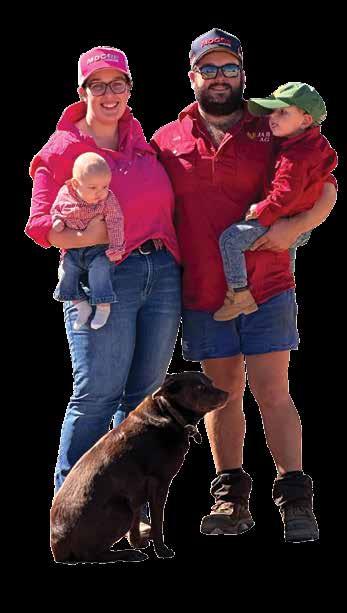
All in for farming life –Brodie and Kevin Game
& LARGE SCALE FARMER
NEWS
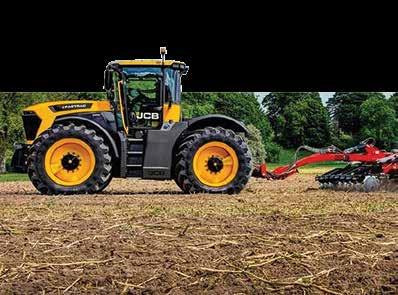
JCB wins a ‘Tractor of the Year’ award for all-new Fastrac



FEATURE What’s new in sprayers and sprayer technology
PROFILE
All in for farming life –Brodie and Kevin Game
NEWS
JCB wins a ‘Tractor of the Year’ award for all-new Fastrac
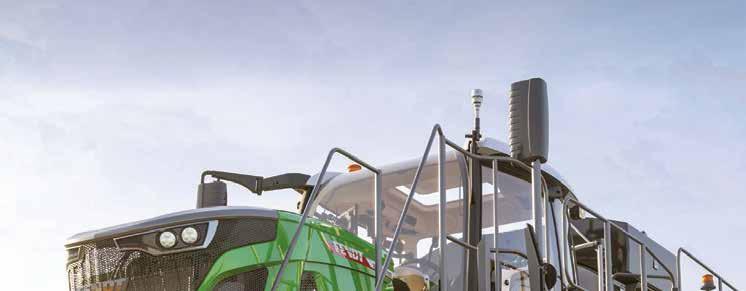



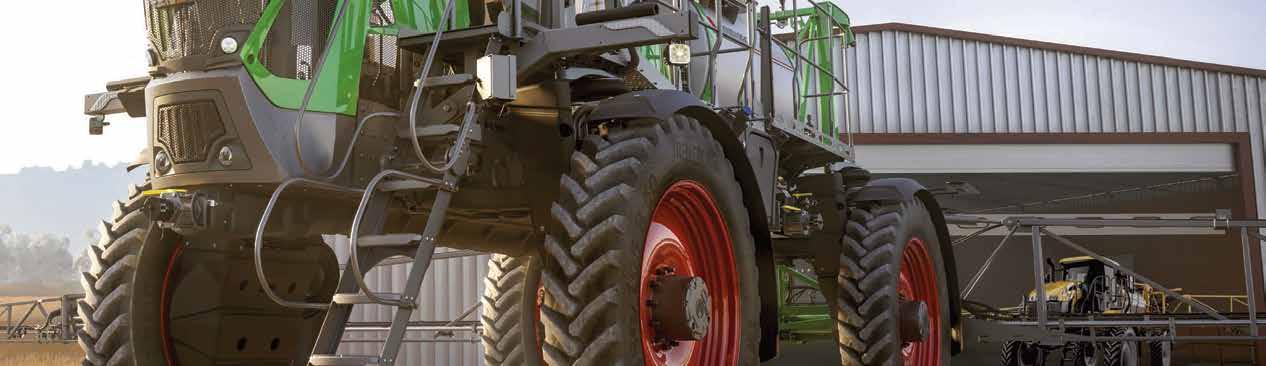
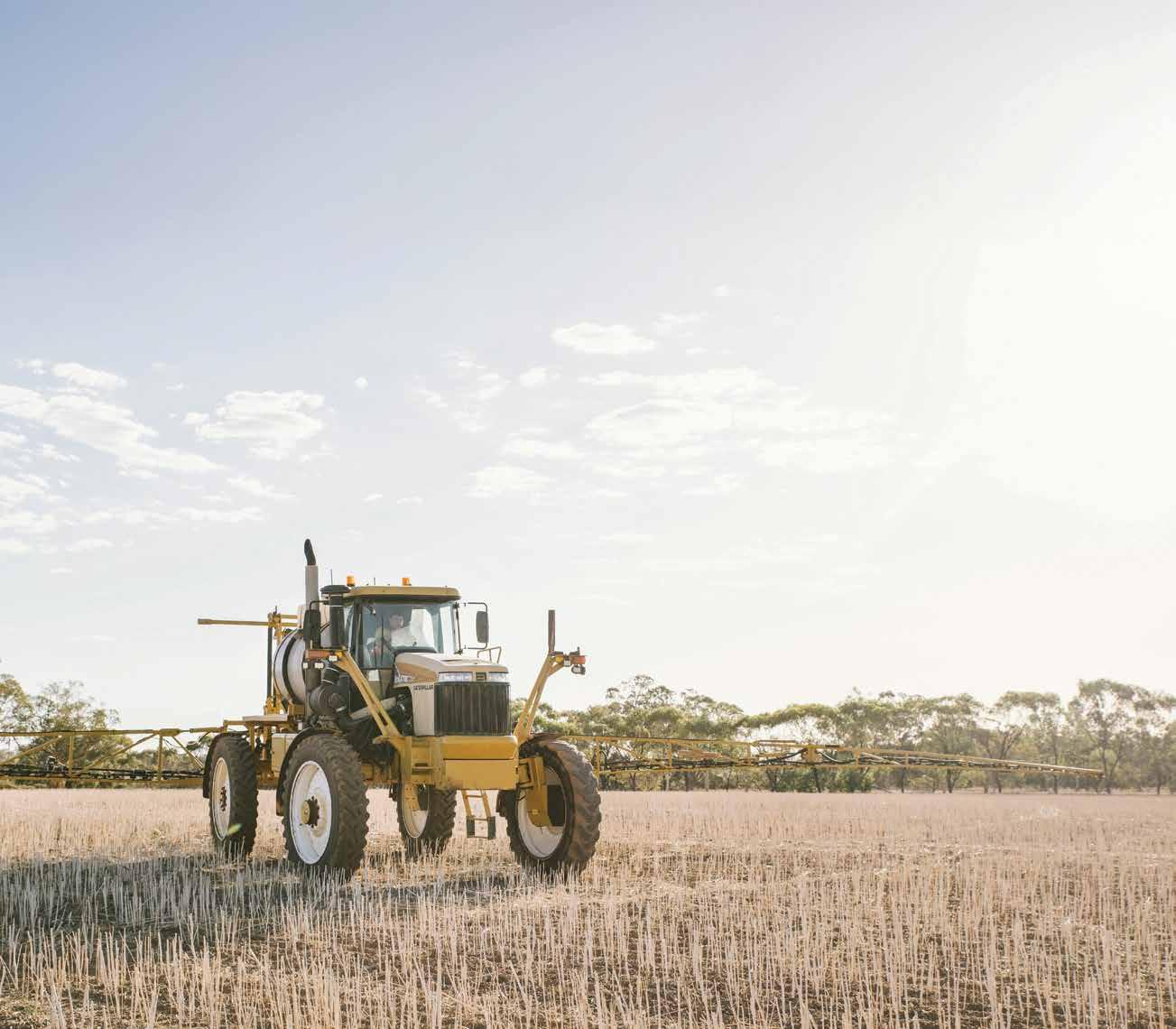
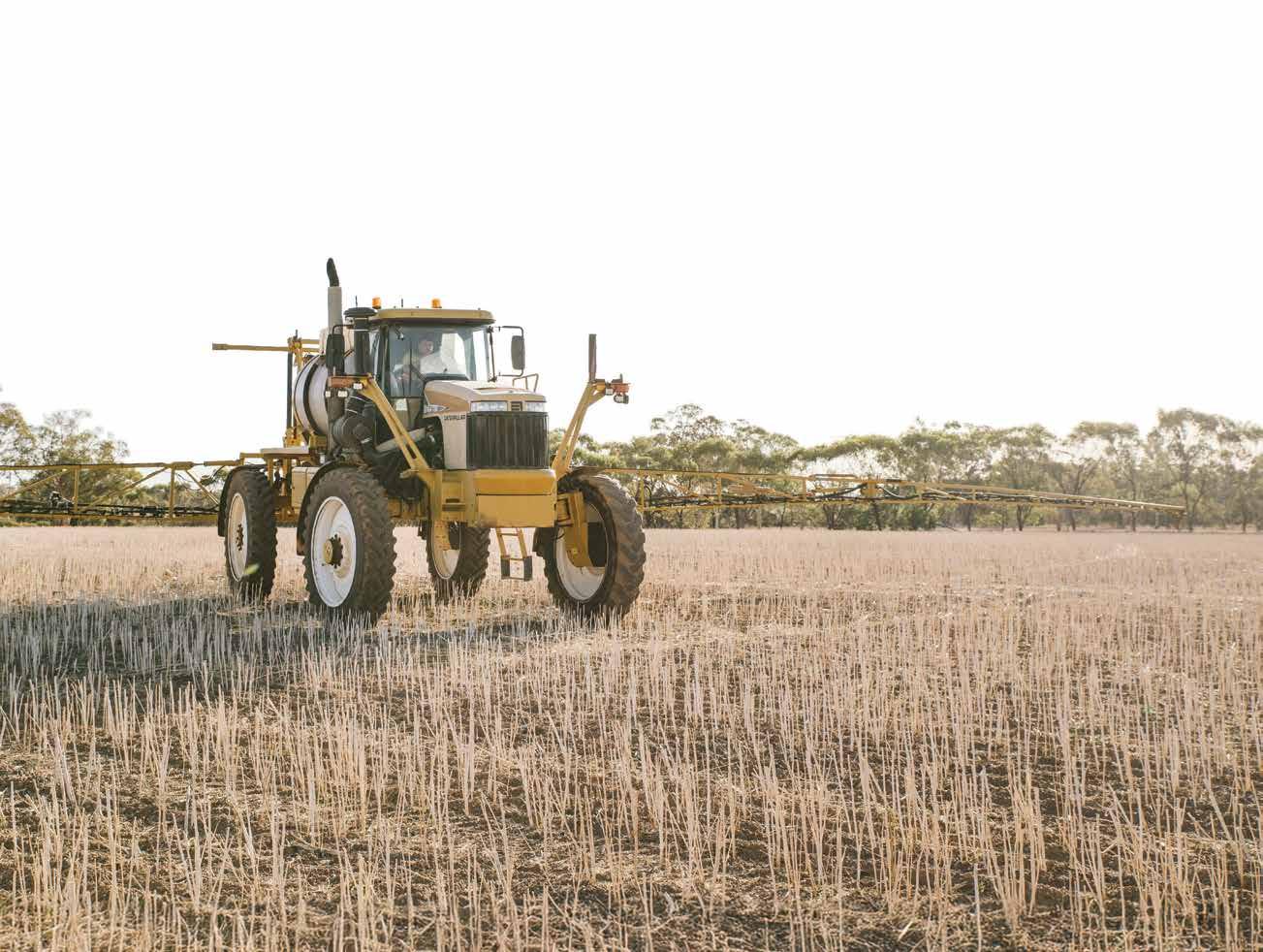
For many years, Rogator has earned a reputation as a quality sprayer that delivers outstanding results in keeping crops clean.
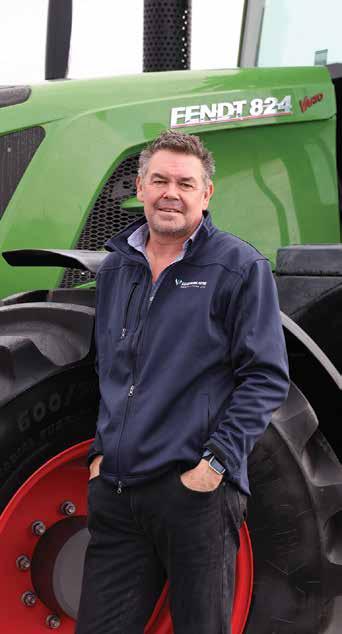
Now, Rogator joins the Fendt family, an evolution that brings together Rogator’s proven performance with a premium Fendt style, including a higher horsepower offering, a new Fendt styled cab with excellent visibility and increased technology.
The Fendt Rogator went from great to greater. And now it’s your turn to do the same.
For more information contact your local Fendt dealer or visit fendt.com/au/


Leaders drive Fendt.
PO Box 36753
Merivale, Christchurch 8146
ph: +64 3 329 6555 www.agrimedia.co.nz PUBLISHERS
Publishers of Rural Contractor & Large Scale Farmer, AgriBusiness, AgriVet, NZ Cropping, Australian AG Contractor & Large Scale Farmer, NZ Novachem Manual.
03 JCB wins ‘sustainable tractor of the year’ award for all-new Fastrac
04 Two sets of new wheels better than one for large WA vegetable business managing vast distances, multiple farms
06 Bringing the cane in on time
08 All your farm admin in one app
09 Expert 750: New Pöttinger ISOBUS control terminal
EDITOR
Scott Wilson
Mob: +64 21 725 061
Email: scott@agrimedia.co.nz
ADVERTISING SALES
Pulse – Media Sales
Justin Bowler
Ph: 0429 699 553
Email: justin.bowler@mmg.com.au
CIRCULATION
DDI: +64 3 329 6555
Email: admin@agrimedia.co.nz
PRODUCTION, LAYOUT & DESIGN
Mark Winstanley
Email: agc_art@agrimedia.co.nz
Contributors: Delwyn Dickey
Printed by PrintGraphics Pty Ltd
AC © AUSTRALIAN AG CONTRACTOR AND LARGE
SCALE FARMER - No part of this publication may be reproduced in any form without the prior written permission of the publisher. Opinions expressed in this publication are not necessarily that of the publisher and suggest independent advice be sought before acting on information or suggestions contained herein.
CONTRIBUTIONS - Editorial and photographic contributions are welcomed and should be sent directly to AML. Editing of submissions is at the sole discretion of the editor and will accept no responsibility for unsolicited material.
10 Forecasting and analysis functions for calculable, optimised grassland harvesting
11 Groundwater location: A science-based approach for Australian agriculture
12 Contractor’s mobility drives business success
16 All in for farming life – Brodie and Kevin Game
22 Across the ditch: Keeping it in the family: the evolution of Hughes Contracting
28 What’s new in sprayers and spraying technology
38 What’s new in precision agriculture
EQUIPMENT
50 The Diamond series: Setting a new standard for broadacre seeding
51 New TYM T25 tractor: Don’t let its size fool you!
52 CR10 ‘monster in the paddock’ debuts at Dalby
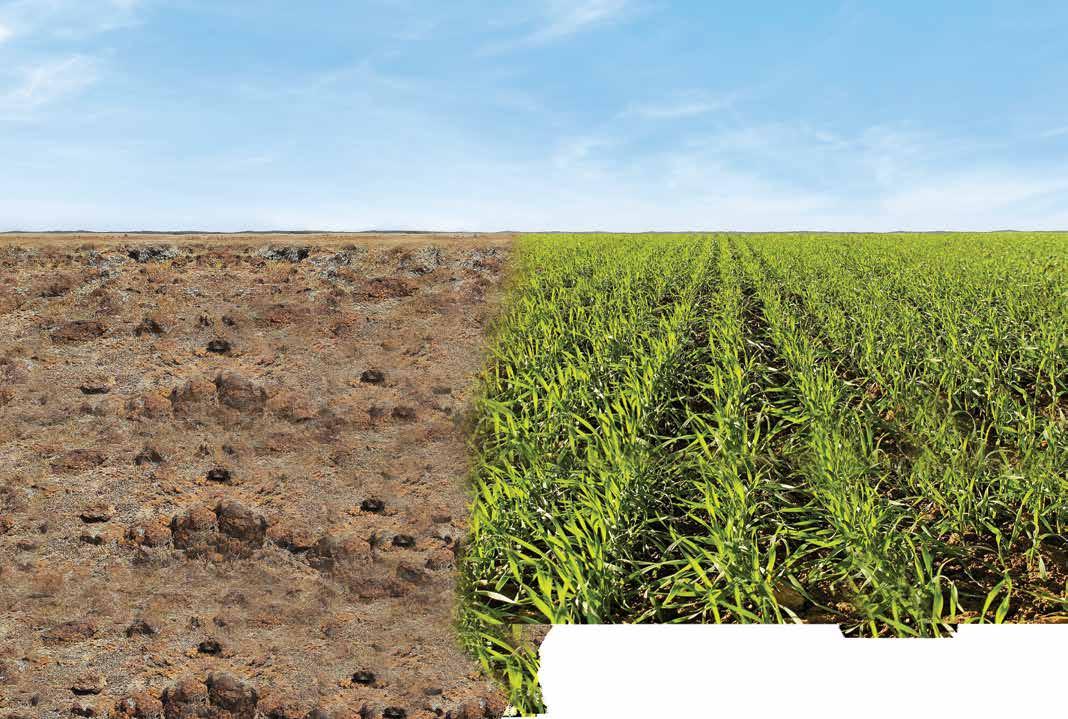
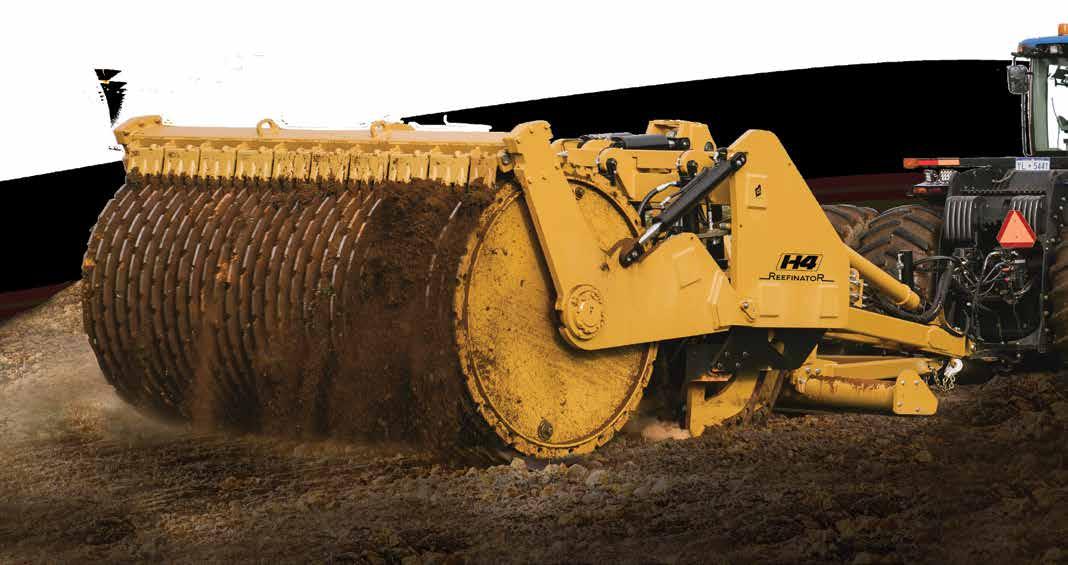
54 Reefinator contractor in high demand for amazing results
56 Strautmann Magnon 11 short-cut loader wagon
WELCOME TO 2026, WHERE AUSTRALIAN AGRICULTURE CONTINUES TO PROVE THAT IF YOU CAN’T PREDICT THE WEATHER, YOU MIGHT AS WELL LAUGH ABOUT IT.
As we kick off another year, the mood across our farming sectors is as varied as the country itself. In Western Australia’s wheatbelt, optimism seems to be running high after decent autumn rains have farmers whistling while they service their headers – a sound as rare as hen’s teeth in recent years. Meanwhile, their counterparts in parts of Queensland are eyeing the sky with that peculiar mix of hope and scepticism that comes from too many false starts. One grazier told us he’s installed a rain gauge with a magnifying glass, just in case.
The dairy sector enters 2026 with cautious confidence, juggling farm-gate prices that finally seem to acknowledge that milk doesn’t spontaneously appear in bottles. Down in Tasmania and Gippsland, producers are allowing themselves the luxury of forward planning - though most still keep their fingers crossed while doing it.
Up north, the cotton growers are riding a wave of strong demand, their fields a sea of white gold that’s making accountants smile almost as widely as the farmers themselves.
Horticulture presents its usual patchwork: stone fruit producers in the Riverina are bullish after a stellar season, while vegetable growers continue their eternal quest to convince consumers that produce should cost more than a takeaway coffee. Somewhere, an avocado farmer is still trying to work out how their crop went from liquid gold to barely worth the water bill and back again, all within 18 months.
The wine industry soldiers on with characteristic resilience, adapting to changing markets with the kind of creativity that comes from generations of making something beautiful out of dirt and sunshine. And let’s not forget our sugar cane farmers, who’ve weathered everything from cyclones to price fluctuations with the kind of stoicism that makes the rest of us look like complainers.
What unites us all, from the Top End to Tasmania, from cotton to cattle, is this: Australian farmers remain unmatched in their
ability to adapt, innovate, and get on with it. We’re stubborn, resourceful, and just optimistic enough to plant another crop.
Here’s to 2026 - may your yields be high, your costs be reasonable, and your sense of humour remain intact.







• 8000L main product tank
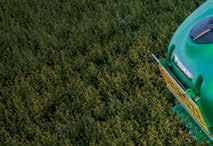
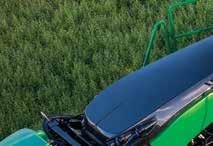
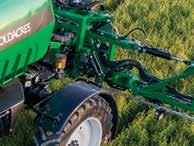
Transform your spraying operation with Goldacres ground breaking G8 Crop Cruiser Series 3.
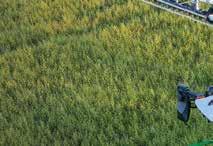
• 1500L Front Tank
• TriTech RivX boom 36-42m or TriTech V boom 48m
• FastFill - liquid induction and distribution

• Dynamic drive - highly efficient mechanical 4 wheel drive system

• G-Hub 2.0 Goldacres Integrated System
• Increased operator comfort

• Twin Product capability
• Weedetect® green on brown or green on green camera technology (optional) combined with new application systems





Findyour closest dealer

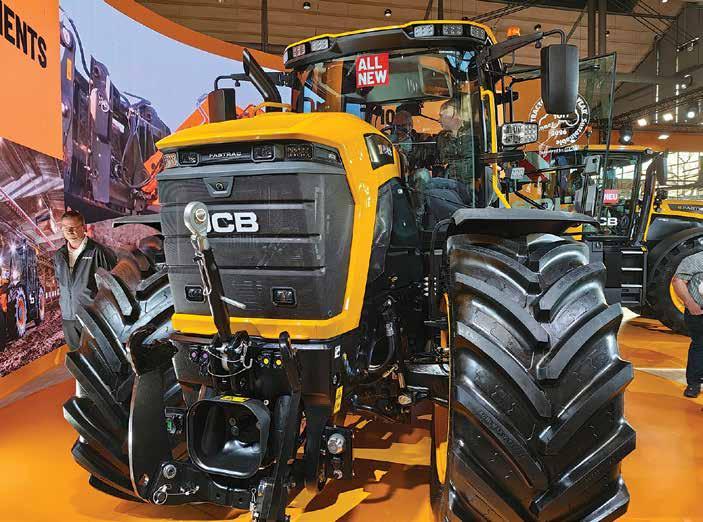
JCB HAS WON A COVETED ‘TRACTOR OF THE YEAR’ AWARD FOR ITS ALLNEW HIGH-POWER FASTRAC 6300 IN RECOGNITION OF THE TRACTOR’S COMBINATION OF INDUSTRYLEADING FEATURES, ABILITIES AND PERFORMANCE.
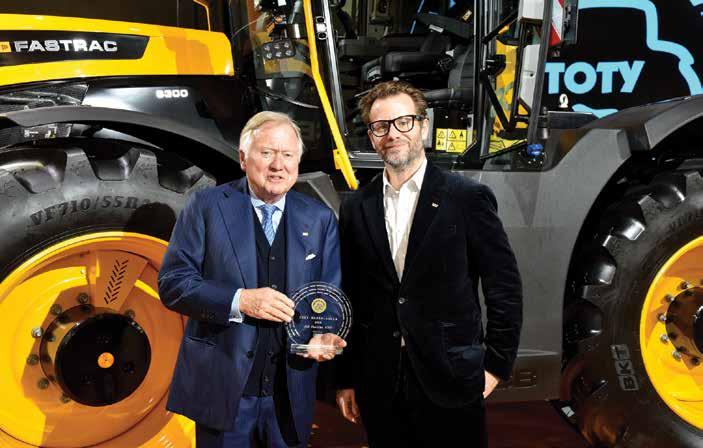
The prestigious award, presented at Agritechnica recently, was secured in the Sustainable Tractor of the Year category, marking a second win for JCB; in 2023, the Fastrac 4220 iCON won the same award.
JCB Deputy Chairman George Bamford said: “Many congratulations to the JCB team involved in developing the new Fastrac 6300; it really is a masterpiece of engineering that underscores JCB’s passion for innovation and for developing productive, efficient machinery.”
The new 335hp Fastrac 6300 was described by the international judging panel as “rede-
fining the balance between performance, efficiency and sustainability.” The jury of machinery specialists with practical farming
JCB CHAIRMAN ANTHONY BAMFORD (LEFT) AND JCB DEPUTY CHAIRMAN GEORGE BAMFORD PICTURED WITH THE TRACTOR OF THE YEAR AWARD FOR THE FASTRAC 6300.
experience recognised the Fastrac 6300 as “an example of sustainable innovation that combines intelligent engineering, digital connectivity and care for the soil, to deliver productivity with responsibility”.
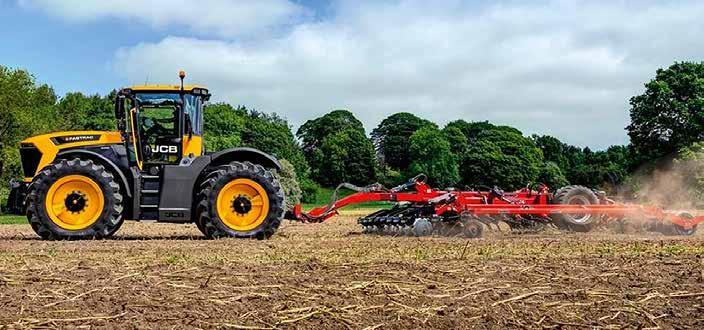
JCB’s newly-launched Fastrac 6000 Series provides farmers and contractors with a feature-laden, highly productive tractor suited to a multitude of field and transport tasks. It stays true to JCB’s innovative and ground-breaking concept that defines all Fastracs while introducing new features such as the central tyre inflation management system, which enables operators to quickly set optimum pressures for road travel and to minimise soil compaction in the field.
As with all Fastracs, the unique all-round suspension – when conventional tractors have a rigid rear axle – provides unmatched levels of operator comfort, while the iCON digital control interface makes it easy to configure tractor and implement systems. Both help make an operator’s day working on a Fastrac more productive and a lot less tiring.
The unique double-acting suspension front and rear is also key to the Fastrac’s traction in the field for heavy draft work such as ploughing and cultivating, and to its legal high speed – 66kph – when driving on the road.
JCB’s Smart Transmission Control system also contributes to the Fastrac 6300’s sustainability credentials by managing the powertrain – the engine and transmission – in a way that ensures optimum performance with the least fuel consumption.
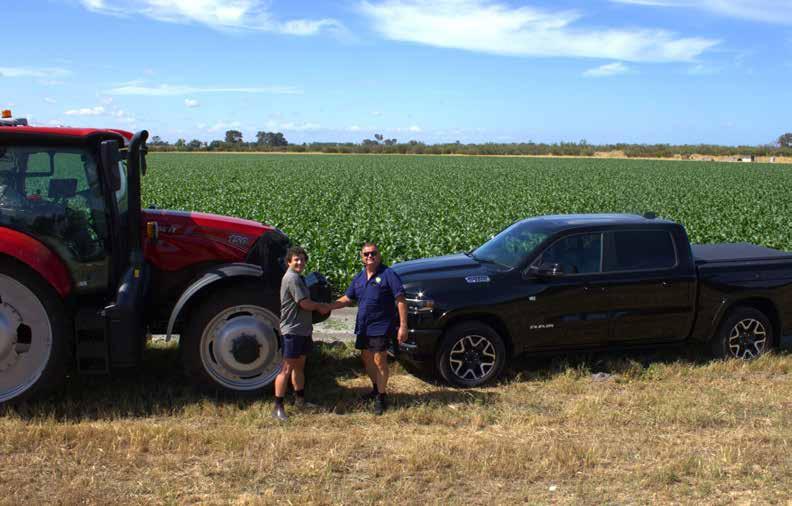
THE TRANDOS FAMILY RUNS A LARGE-SCALE FARMING OPERATION IN WESTERN AUSTRALIA AND WITH FOUR PROPERTIES ACROSS THE STATE, THERE’S A LOT OF TRAVEL INVOLVED. BUT THAT PART OF THE JOB JUST GOT A BIT EASIER WITH AN UNEXPECTED NEW ADDITION TO THEIR LARGE MACHINERY AND VEHICLE FLEET.
Arthur Trandos, with brother Jim and cousin Michael, run West Australian Corn Growers, the largest grower of sweet corn and beans in the state, with Arthur travelling thousands of kilometres a year between their properties in Perth, Gingin and Broome. But now he’s got a new RAM to make the regular trips a bit more comfortable, courtesy of a new Case IH tractor the business purchased earlier this year. By ordering a new Case IH Maxxum 150 from their local dealer, Boekeman Machinery, in Northam, between April 1 and July 31, they were entered in a competition that offered the chance to win a 2025 RAM pickup truck, although Arthur said he didn’t realise that at the time.
“I was actually at our Broome farm when Aaron Bett (CNH Business Director – Agriculture ANZ) rang to tell me I’d won it, but I thought it was a hoax at first, so I hung up. I actually hung up twice before I finally realised it was genuine and we’d won a RAM. I didn’t even know we’d been entered,” Arthur said, thanking Boekemans for putting them into the draw.
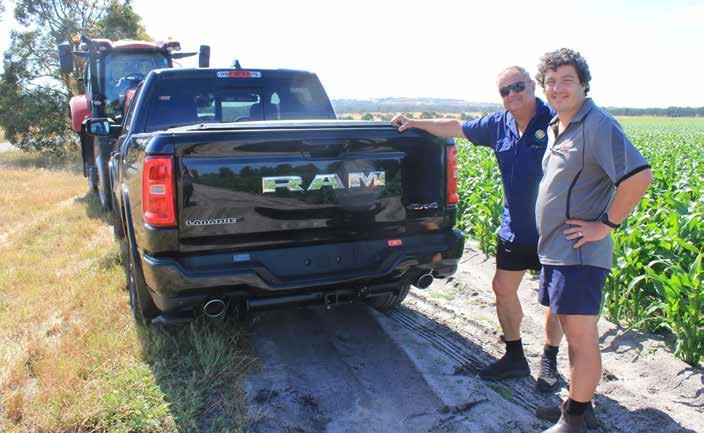
The RAM was delivered earlier in October and by the end of the month Arthur had already put about 4000km kilometres on it, going from one end of the state to the other, checking on the various aspects of the vast business that supplies several million ears of corn to the country’s major supermarket chains a week.
Between four farms at Neerabup, Gingin, Beermullah and Broome, West Australian Corn Growers supplies corn and green beans year round, also exporting to Singapore, Hong Kong and Dubai. Packing is done at a facility on another property in Perth, which employs about 130 staff.
The business has a long and proud history in WA, having its beginnings in 1939, after Dimitrios Trandos migrated to Australia in
search of a better life for his family. Dimitrios was Arthur’s grandfather, and 86 years and four generations later, the running of the business is still very much a family affair.
The business also has a long history with Case IH, today operating about 50 Case IH tractors and a number of round balers. They run everything from 100hp Maxxums up to 400hp Magnums, and said the strong relationship they’d developed with Boekeman Machinery and the Case IH brand was a big reason for the longevity with the brand.
“We have a full-time mechanic, but we know we can call our dealer if there’s an issue and they’ll look after us. If anything ever happens and we need to get moving again quickly, then they’re there for us. They provide a good service,” Arthur said.
“And the machinery is getting better all the time – bigger, faster, quieter, with more technology. The tractors and balers work well for our business, creating efficiencies and improving productivity.”
While rain is not relied on for the irrigated corn and bean crops, seasonal conditions are still important in terms of temperatures and pest management considerations, and Arthur said they’d enjoyed a good year to date.
“The seasons this year have been good –summer and winter, not too extreme – but of course there’s always challenges, that’s farming. There’s always something, but you find a way and just keep going,” Arthur said.
You deserve technology that’s both compatible with your existing fleet and easy to use. That’s why PTx Trimble leads the way in engineering solutions –including displays, steering systems and guidance control – that allow you to connect your farm, your way for seamless work all season long
This farmer uses: GFX-1060™ display with Precision-IQ™, Autopilot ® steering system, NAV-900 guidance controller, and Trimble ® CenterPoint ® RTX correction service. Scan to learn more and contact a local dealer.
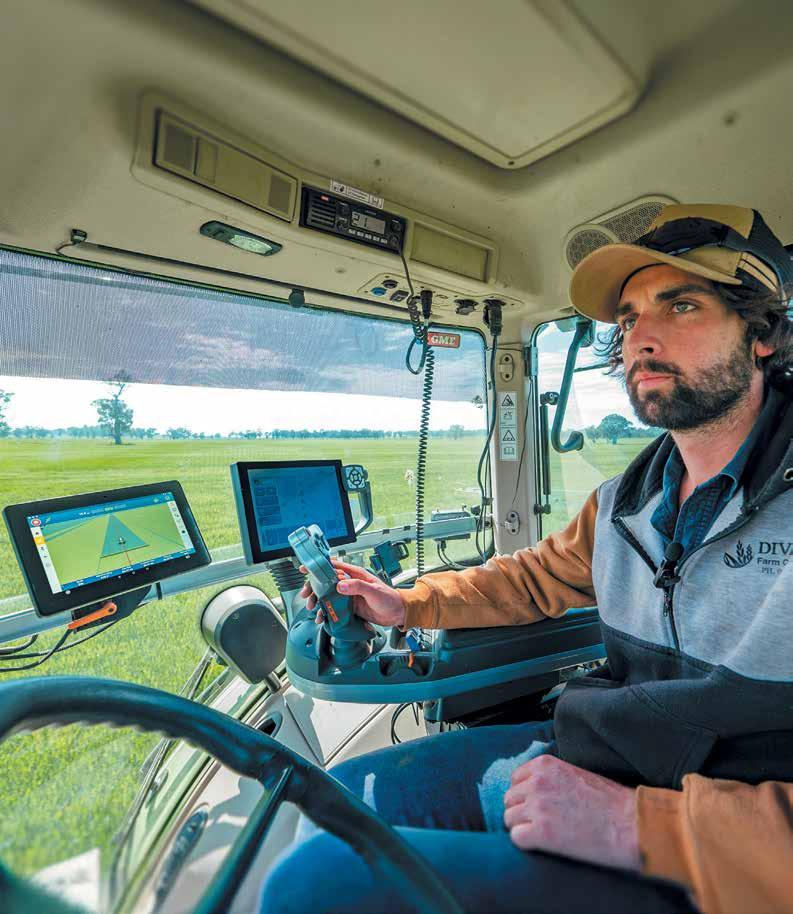
AS QUEENSLAND’S ANNUAL SUGARCANE CRUSH WRAPS UP FOR THE YEAR – IN STARK CONTRAST TO LAST YEAR WHEN CONSTANT RAIN CAUSED FRUSTRATING DELAYS – CANE FARMERS LIKE GARY STOCKHAM ARE BREATHING A SIGH OF RELIEF.
“Last year, with the rain, we finished crushing mid-January, so this year we actually finished last year’s crushing,” Gary said. In contrast to last season, Gary and his team wrapped up their harvest in the first week of November.
“In terms of yield, it wasn’t too bad. It was probably down a little bit towards the end. We were cutting some cane that was cut late last year. Then the rain’s come in and it knocks it around a bit. But an early finish this year should make a good year for next year.”
Gary started cane harvesting in 1978, and has been farming himself in the Burdekin region of North Queensland since the mid 80s, on a property he bought about 30km north of Ayr. He established Gary Stockham Harvesting which employs about 20 people during the harvest season, running four Case IH Austoft sugarcane harvesters and a fleet of Case IH Magnum, Puma and Maxxum tractors.
Gary and son Ashley had about 300ha of their own cane in this year, while also contract harvesting for up to 20 local growers.
Gary’s third generation in the Burdekin, his grandfather and father both cane farmers. After leaving school, he did an apprenticeship as a fitter and turner in Giru, before buying his own farm and his first cane harvester, a Toft Robot 364 Mk II. In 2025, he was up to harvester number 23, a Case IH Austoft 9000, which carries on the Toft name but is in stark contrast to his first machine almost 50 years ago.
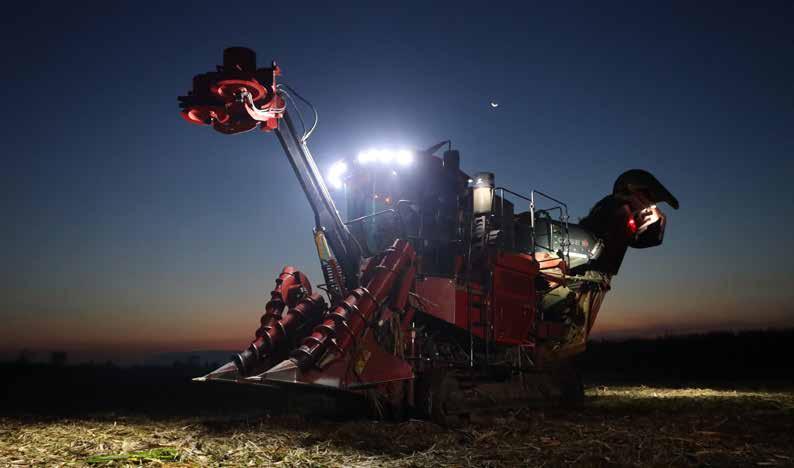
Toft harvesters were pioneered by Joseph and Harold Toft in Bundaberg from the 1940s, becoming a world leader in the field before rebranding as Austoft. The company was bought by Case IH in 1996 and the Austoft has been manufactured by the global brand ever since.
Between Gary’s first harvester and his 23rd harvester, there’s been an enormous amount of change in the design, performance, comfort and technology.
“They’re much more user-friendly now. Easier to operate and you can just about bring them home and go cutting with them, without a lot of modifications like in the old days. These modern harvesters are obviously faster now, too, and the technology they have does benefit our business in terms of accuracy and efficiency,” Gary said.
“Comfort-wise, the difference is massive. Some of the original ones had no air conditioning in them. They’re also a lot quieter and more comfortable now, so you can do more hours a day.”
Marc Smith, Crop Harvesting Portfolio Manager for Case IH ANZ, said that the Case IH Austoft 9000 harvester takes sugarcane harvesting to ‘a new level’.
“The Austoft 9000 has redefined the industry’s expectations of harvesting efficiency and performance, machine reliability and ease of operation,” he said.
“These machines have undergone more
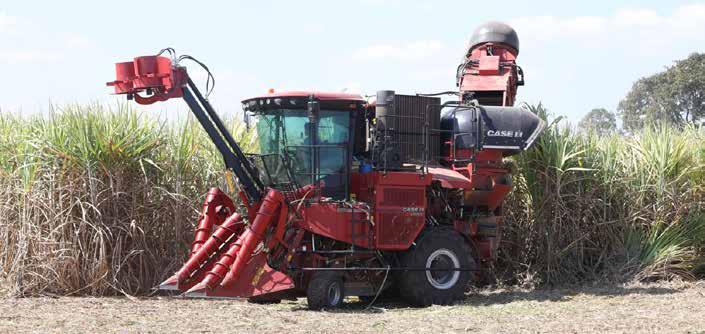
than 30,000 hours of field and bench testing, resulting in a powerful engine and intelligent hydraulic system that ultimately deliver greater harvesting capacity and lower operating costs.”
Among the Stockham harvesting fleet today are several Austoft 9000 Series harvesters, the latest from Case IH. Features include:
- 420hp 11lt Cursor engine with lower working RPM and smart cruise option, giving better peak torque, lower fuel consumption than previous models, and its position behind the cab means a quieter in-cab experience for the operator;
- New harvest feed rate control, allowing for greater control of the length of the billet to help optimise bin weights to the mill and reduce cane juice loss;
- Fuel tank and hydraulic tanks down low to enhance stability by lowering the center of gravity of the machine;
- Module chassis giving better strength; and
- Auto Tracker function that minimises the inputs required to turn at the end of the field, and helps reduce operator fatigue.
Gary said they’d stuck with the Austoft because it met their performance and reliability needs and their local dealer, Brown and Hurley in Ayr, provided the service and expertise their business demanded.
Gary grew up in a farming business, and it was probably inevitable he would return to cane farming. Forty-seven years on, and his love of farming remains, despite the challenges.
“I just enjoy it. Farming’s what I know, and it’s a good life. It’s hard work, but I don’t mind it. Now my son, Ashley, has just about taken over and he’s the next generation, and I enjoy watching him running things and knowing the business is in good hands.”

FARMERS AND CONTRACTORS LOOKING TO HAVE ALL THEIR ADMIN IN ONE SPOT AND TO ELIMINATE PAPERWORK NEED LOOK NO FURTHER THAN THE AG-DRIVE APP.
Ag-drive allows you to streamline the process of recording jobs, from assigning jobs to operators to sending invoices to customers.
Ag-drive gives users clear and precise instructions from field mapping to pre-start health and safety checks, timesheets and invoicing to give the contractor, farmer and operator peace of mind, with instant data access at any time.
With GPS recording, it makes it easy to view, track and record day-to-day jobs through a smartphone or tablet, with any
EMPLOYEES CAN SAVE JOBS AND LUKE CAN REVIEW IT FROM THE OFFICE, AND APPROVE IT FOR INVOICING.
job customisable to suit any farming or contracting service.
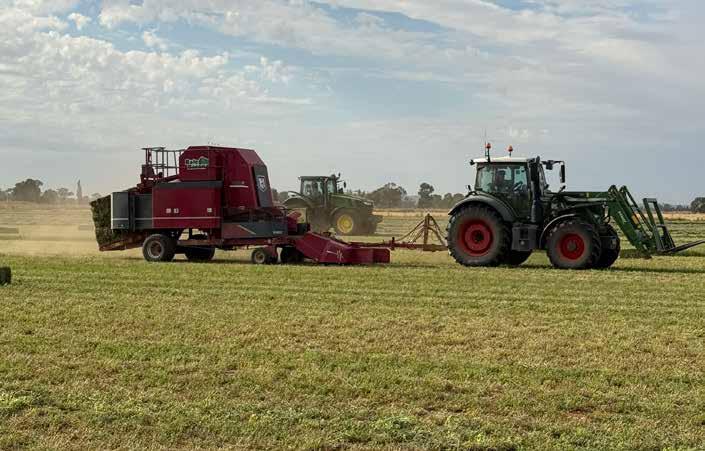
Hay and silage contractor Ben Wallis from Wallis Agricultural Services in Inverloch,
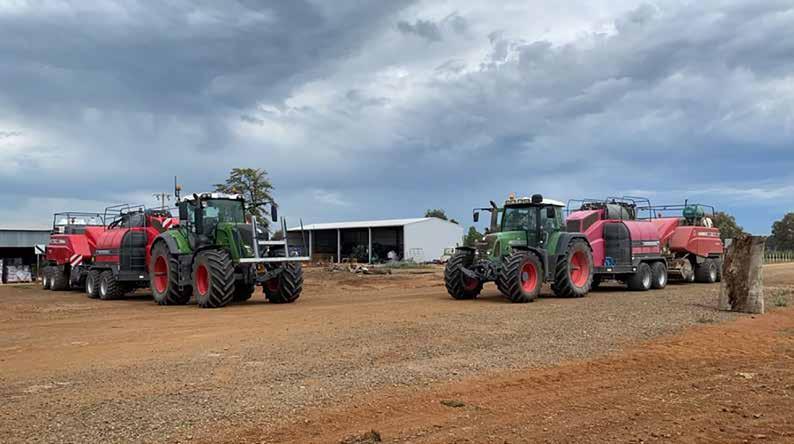
Victoria, does cultivation, spraying, effluent, round bales, and hay and silage for dairy and beef clients.
Ben has eight full time staff with three others helping out when things get tight.
Ben runs a sizeable operation, with five Fendt tractors and 11 Massey Fergusons in his yard to tow bale wrappers, power harrows, effluent tankers, pickup wagons and spray units.
He started using Ag-drive to simplify invoicing, saying he would previously diarise tasks by hand and, as a result, missed things.
“All the operators are on the app. Once they complete a job, they can plug in their hours, hectares, or bale counts. It makes it easy.”
Besides invoicing, Ag-drive helps with keeping spray records, with GPS tracking on phones able to log exactly where spray is applied.
Spray records (especially important for his dairy clients) get audited on where spray is applied, what specific chemicals are used, what the weather was on a specific day and more.
Once he saw it worked for spray records, he simply integrated it into the rest of his business.
One of the main benefits of Ag-drive is that a new member of the team does not have to know the area or a specific farm they operate in because, with farm paddocks mapped on the app, an operator only needs to follow what the app has mapped.
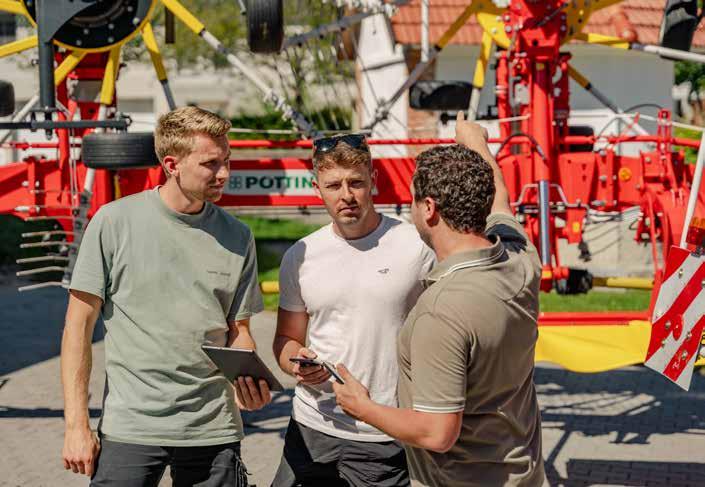
LUKE SAYS WHEN A SHOUT OUT TO WILL DUNN, MANAGING DIRECTOR OF AG-DRIVE, WAS NECESSARY, WILL JUMPED INTO THE TRACTOR WITH HIM WHEN HE WAS BALING WITH A BIG SQUARE BALER AND EXPLAINED THE APP TO HIM.
Pöttinger, agricultural technology and digital systems professional, launched its new Expert 750 control terminal at Agritechnica 2025. The 7-inch 16:9 touchscreen has a modern, generously proportioned look, is clearly legible in daylight, at night and even at an angle, and is easy on the eye. The ambient light sensor and illuminated buttons also make the terminal ready for action in any light conditions.
Thanks to the ergonomic grip, the unit is comfortable to operate. With the double row of operating buttons along the right-hand edge, it is designed to be used with one hand. The keypad has raised keys and orientation marks for easy haptic orientation.
This Pöttinger control terminal works with ISOBUS-capable machines made by a wide range of brands and manufacturers. The ter-
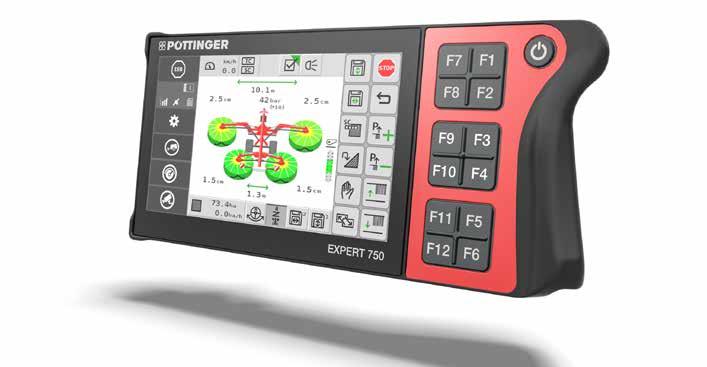
minal can also be used to operate multiple ISOBUS-equipped machines simultaneously.
The Expert 750 Pro has a single pair Ethernet interface. It enables the use of digital
NORTHERN VICTORIA HAY AND SILAGE CONTRACTOR LUKE FELMINGHAM SAYS AG-DRIVE ALLOWS HIM TO IMPORT A CUSTOMER’S XML FILE CONTAINING ALL THEIR PADDOCK DETAILS, WHICH HE PULLS INTO THE AG-DRIVE APP, GIVING HIM THE FULL FARM LAYOUT AND JOB INFORMATION AT THEIR FINGERTIPS.
At this time of year, when seasonal staff often help out, this means Ben has peace of mind when sending new staff off to a job.
records for two seasons, and has just completed a season of using it for hay and silage.
He says another benefit is that the app integrates into Xero, making invoicing much easier.
camera systems. These can significantly enhance safety on the road, especially with integrated personnel detection. Thanks to the Ethernet interface, the terminal is ready for high-speed ISOBUS.
Availability of the Expert 750 and Expert 750 PRO is scheduled for 2026/27.
The app is a true all-in-oner, that cuts out the tediousness of paper work.
The app has a number of key tools:
- The app allows you to view, track and record day to day jobs through your smartphone or tablet through GPS recording.
- Team jobs are also easier, with the progress of individual team members all under the same job, for example when foraging, muckspreading or spreading slurry.
- The app allows you to draw up invoices, or simply integrate your account with common accounting software such as Xero, Sage online or Quickbooks.
- Easily keep track of the hours worked for your farm business by your operators, through the easy-to-use time sheeting section. Holidays and sick days can also be recorded.
- The timesheet function allows operators to log hours worked, as well as holidays and sick leave, giving managers a clear overview of labour use across the business.
- With everything recorded digitally, contractors can easily review work history, check profitability, and ensure compliance with record-keeping requirements. Ag-drive was developed in the UK by contractors who saw a need for a straightforward tool to manage the growing administrative demands of modern contracting. It has since gained traction internationally among both farmers and agricultural service providers seeking to cut down on paperwork and duplication.
HARVEST ASSIST FROM PÖTTINGER ORGANISES
PROCESSES, DISPLAYS FARMS AND FIELDS, PLANS THE HARVESTING SEQUENCE, DIRECTS HARVEST MACHINES, AND COORDINATES DELIVERY TO THE CLAMP.
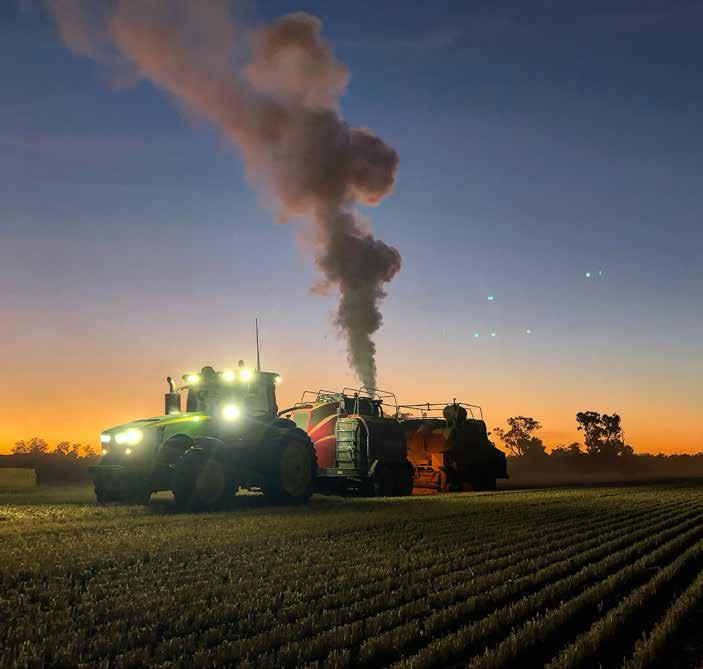
This intuitive app is the simple answer to the complex question of ‘Who does what, when, and where, to maximise forage harvesting efficiency?’ It forecasts grassland yields in real time, displays the location of bales, swath patterns, swath condition, and much more. It is also possible to analyse and evaluate the status of each machine as well as data from the field.
This information is shared with each driver in the harvest team whenever they need it. The result is a significant increase in the performance of follow-up machines, leading to an improvement in the entire process, which is clearly displayed as machine utilisation, time savings and harvesting efficiency.
With the 4.0 release, which will be rolled out in Germany in March 2026, the app will receive a new forecast feature. Release 4.1 –which will be rolled out worldwide in August 2026 includes new features like forecasting, analysis and connectivity.
Harvest Assist forecast rakes in a stack of data
The new Harvest Assist forecast function collects and supplies valuable data even before harvesting begins. Yield and dry matter content are forecast using current satellite and climate data.
It can even simulate crop development five days into the future. The data is clearly pre-
Supporters say one of its key advantages is its adaptability.
Because jobs can be tailored to suit any service, from fencing and cartage to baling or spraying, it fits businesses of all sizes.
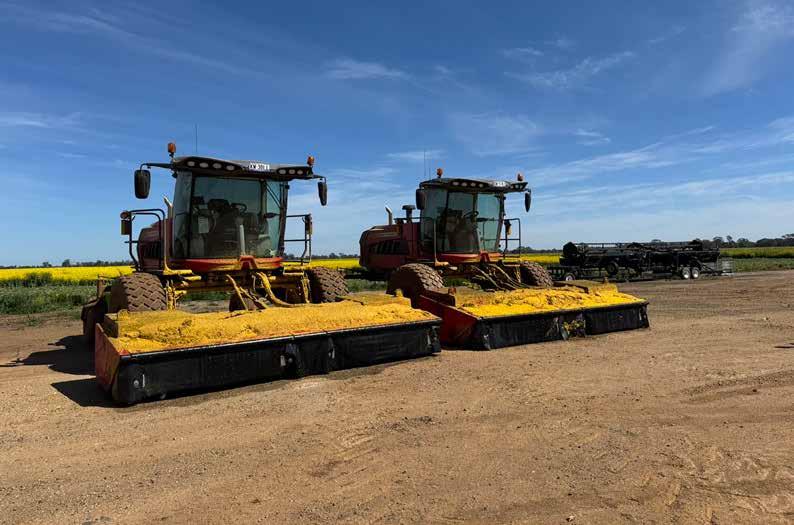
Northern Victoria hay and silage contractor Luke Felmingham says Ag-drive allows him to import a customer’s XML file containing all their paddock details, which he or a staff member can then pull straight into the Ag-drive app, giving them the full farm layout and job information at their fingertips.
He or an employee can then create a job, and add paddocks they will work on, right from their seat in the tractor.
sented and can be displayed with just one click. Recommendations are provided in real time for the storage space needed, silage additive requirements, mowing sequence, and tedder deployment for optimised drying in the field.
Everyone in the harvest team benefits from live machine data
Machines that are equipped with the Pöttinger Connect telemetry unit transmit field data such as the number of swaths, swath condition, warnings of critical points in the swath with a risk of dragging, bale locations and bale moisture to the harvest team.
In planning mode, Harvest Assist coordinates the deployment of machines in the harvest team to get maximum efficiency and
The Ag-drive app allows him to log the equipment they will use, such as the tractor they are driving or gear they are towing, with all actions logged from the start to the end of the job.
“The app allows us to create meticulous proof of work, for example, showing the travel path in a paddock, which helps everyone when any questions about a specific job ever comes up,” Luke says.
The app also allows him to put in notes on the job, such as any obstacles in a paddock.
“Employees can save jobs and I can review it from the office, and approve it for invoicing. With the previous app we used we had to do it
optimum machine utilisation. The app navigates the drivers to each field, and because machines are tracked, each team member can see where the others are at any time. Coordination is simple and intuitive because it is just like using one of the popular messaging apps.
Harvest Assist Analysis provides continuous documentation
The new analysis function supports farmers, contractors and machinery rings in making things much easier when it comes to invoicing, mandatory documentation, process monitoring, driving time, yield data and evaluating profit margins.
The Harvest Asisst app works on all standard smartphones.
all on a desktop computer, now we do it from anywhere,” he says.
The app allows greater flexibility on jobs.
For example, Luke says if a client phones you when you are already on a job, perhaps because they want you to bale hay in the night to beat coming rain, then you simply make an alteration to the job on the go.
“It can all be done from the field on the phone, that’s the best feature,” he says.
Luke says customer support from Will Dunn, Managing Director of Ag-drive, helped sell the app, with Will jumping into the tractor with him when he was baling with a big square baler one day and explaining the app’s ins and outs right on the job.
SUPPORTING LARGE-SALE AGRICULTURAL PRODUCTIVITY THROUGH BETTER WATER SECURITY.
Sustainable Water Pty Ltd was established with a clear mandate: to help Australia’s agricultural sector secure reliable, longterm access to groundwater.
Founded by Jim Conley and Ross Martiensen, the company set out to address one of the most important challenges facing primary producers—identifying dependable water sources in a landscape constantly hit by climatic extremes. They started the company with the purpose of ensuring Australian farms, pastoral holdings, and commercial land users have the information they need to make confident, cost-effective decisions about groundwater development.
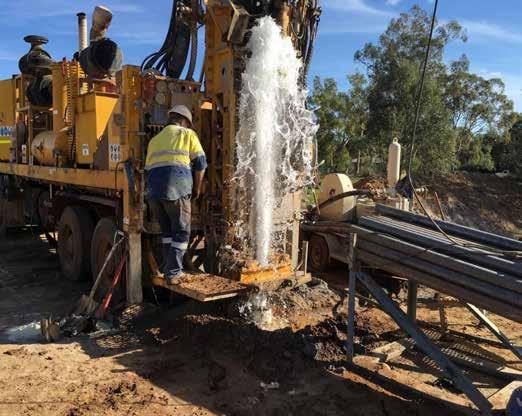
After extensive research, the founders discovered that vast groundwater resources do exist beneath the surface – if you know where to look and how deep to go. Unfortunately locating reliable underground water sources accurately requires more than traditional methods or guesswork. They invested heavily in modern geophysical techniques, integrating advanced data analysis with field-based surveying to map subsurface structures and identify high-probability drilling zones. This approach has helped hundreds of landholders across Australia reduce drilling risk,
improve bore success rates and strengthen their long-term water security.
The first action is a Potential Groundwater Assessment (PGA) establishing if there is in fact underground water available on a property. If not, they don’t waste anyone’s time. If water is there then knowing that every property has unique geological characteristics, Sustainable Water follows a structured, multi-stage assessment process.
The first stage:
Maps are created from airborne, satellite and on-theground data sets using advanced analytical technologies. Fracture Trace Analysis (FTA) locates potential water bore sites over deep fractured-rock groundwater resources coming up near the surface.
The second stage:
The team does on-site ground surveying deploying special instruments calibrated for water search to verify and hone the results of the first stage mapping and analysis. Precise drilling locations are physically staked on a property. Then the client and driller receive a complete final report with 2D and 3D data giving expected drilling depths accompanying the property’s maps and bore site coordinates.
FEEDBACK FROM LANDHOLDERS SPEAKS FOR ITSELF:
“This potable water now supports 1,500 head of cattle across 13,000 acres. I no longer worry about the predicted bad times.” – Jim, QLD
“Sustainable Water predicted water quantities and quality at multiple depths using high-tech methods – and delivered.” –Dave, NSW
“I believe we would not have had the success we did without Sustainable Water’s adoption of scientific methods of locating high-probability drilling zones, combined with significantly increased drilling depths for our area. Jim and Ross were fantastic to deal with — very professional and reliable. They appear to have built up some workable water exploration methodology that warrants being widely adopted. I’d highly recommend Sustainable Water.” – David, Qld
Land mapping and groundwater evaluation: Complete bore location services; using desktop water analysis that utilizes the full set of technology and a detailed geophysical field survey.
Groundwater exploration: Geophysical mapping, fracture traces analysis and identifies High Probability Zones (HPZ’s).
Driller coordination: Sustainable Water Pty. Ltd. can recommend drillers from their network of licensed, trusted drillers and those who are also committed to sustainability. This coordination ensures that their scientific assessments are translated into practical solutions on the ground, and Sustainable Water see the project through to the end.
Drillers play a crucial role in implementing water solutions. Their expertise aligned with Sustainable Water’s data-driven technology makes for a partnership that has maximised the success of water projects.
For the agricultural community, Australia’s weather has always been a force to reckon with— ever changing and unpredictable. As the continent experiences heavy rainfall in some regions and prolonged droughts in others, adapting to this environment is a challenge, particularly to those dependent on the land for survival. Drought and floods alike can be deadly.
Companies like Sustainable Water Pty. Ltd. are being turned to for help to cope with Australia’s ever-changing environment. Bringing scientific technology and good old-fashioned hard work to the table, Sustainable Water continues to deliver genuine solutions to water issues Australian wide.
AGRICULTURAL CONTRACTOR JACK BARTLETT SAYS A LUCKY BREAK WHEN HE WAS JUST OUT OF SCHOOL GOT HIS BUSINESS TO WHERE IT IS TODAY.
Jack and his wife Mel own and operate JAB AG, working from Gunnedah in New South Wales.
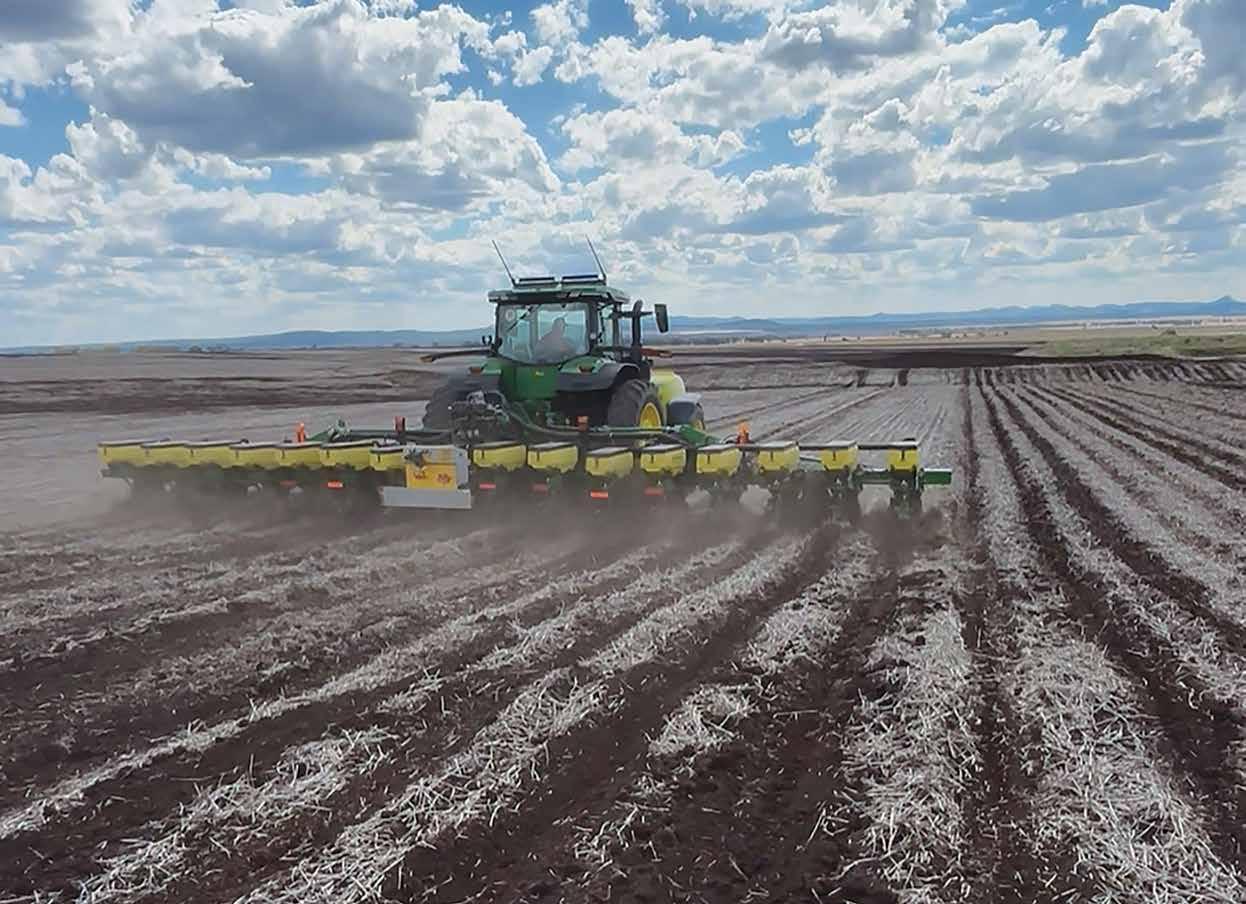
He services large scale broad acre cropping farmers, who need cotton and dry land cereals such as wheat, canola, barley and oats put in the ground and fertilised.
Around 90% of Jack’s work is cotton related.
They run two 12 metre Schulte FX-742 slashers, with slashing making up the bulk of his income, one 12 metre summer crop planter, one Bredal urea spreader, one speed tiller and multiple John Deere tractors. He also carts grain and machinery anywhere between Southern Victoria to Central Queensland.
Jack, now 29, left school in year nine and “did a couple of trades”, and then worked in weed and pest control across South Aus-
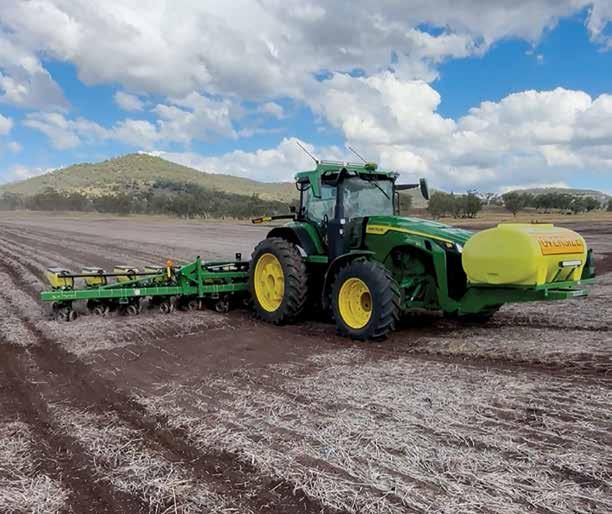
JACK OPTED FOR THE LQS70 LIQUID MODULE AND LIQUID SECTION CONTROLLER SIMPLY FOR THE EASE OF NOT HAVING TO TOW AIR CARTS.
tralia. His love of machinery got him into this job, he says.
His lucky break came when, in 2014, he bought an excavator from an auction.
“It went for cheap, I put a stupid [low] bid on it and won it, and away we went.”
He says he was lucky because building relationships in the industry is tricky for new entrants, but he had a neighbour who had an earth moving com-
JACK SERVICES LARGE SCALE BROAD ACRE CROPPING FARMERS WHO NEED COTTON AND DRY LAND CEREALS SUCH AS WHEAT, CANOLAS, BARLEY AND OATS PUT IN THE GROUND AND FERTILISED.
pany who started passing jobs to him.
“It kicked off from there.”
He always liked farming and bought a John Deere header in 2016, moving away from earth moving.
“That was the start of contracting.”
A drought in 2018-2020 almost brought his business to a close, but he pushed through and, in
2020, he bought his first tractor.
Jack’s work takes him from Southern Queensland to Central Victoria. Working different regions means he faces different challenges, but he says he just works around those.
“Having such a broad footprint means we can basically
pick where we go, depending on weather.”
If one area gets rain, taking time to dry out, he can head somewhere else.
“It means we don’t stop; we chuck the gear on the truck and make it work that way.”
One industry challenge every-



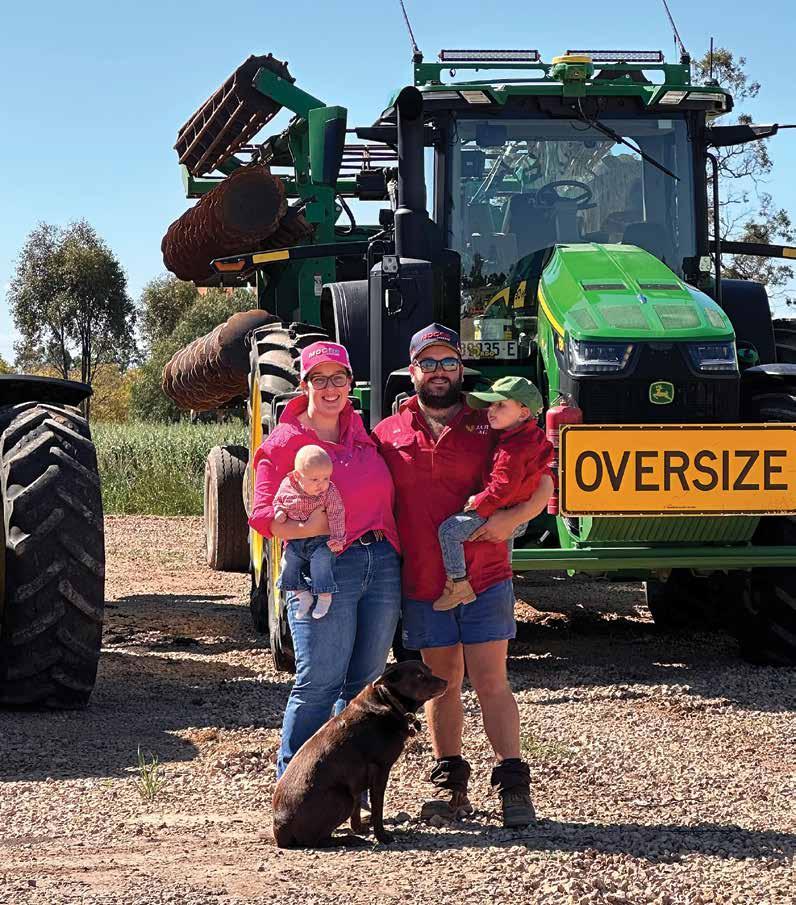
JACK AND WIFE MEL BARTLETT OWN AND OPERATE JAB AG, WORKING FROM GUNNEDAH IN NEW SOUTH WALES. HERE THEY ARE WITH, FROM LEFT, HARVEY AND SPENCER.
one faces is rising costs, and being mobile is one way of beating these costs. He says to be efficient, gear also has to be bigger, covering more ground in a shorter timeframe, and operations have to be run on a tight schedule. Practically it also means all his gear needs to fit on one truck so he can move in one go, and not have to head back somewhere to pick up gear. He also tows gear, freeing up time and labour.
“The little things we do saves money.”
His biggest cost is labour, costing $45-$50 an hour; this rate was around $35 an hour three years ago.
One of the pieces of kit that he has begun to really rely on is the LQS70 liquid module and liquid section controlled by Liquid Systems.
Jack says clients are almost equally split between those who want to use liquid fertiliser, and those that prefer granular. As a contractor he made the decision to go liquid, and opted for the LQS70 liquid module and liquid section controller simply for the ease of not having to tow air carts. The system was retrofitted to his John Deere gear.
“Being able to move your

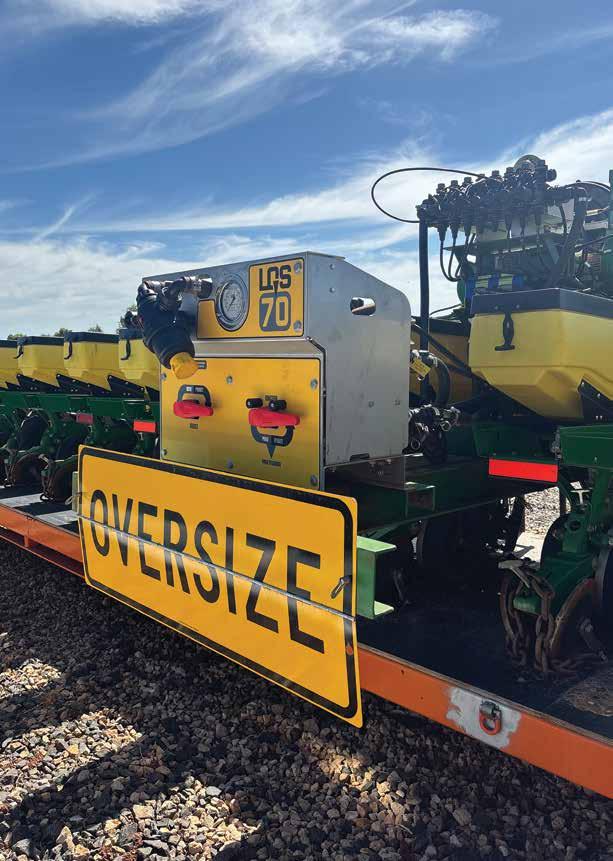
THE LQS70 FROM LIQUID SYSTEMS MAKES JACK’S WORK MORE PRECISE.
equipment from property to property without having to tow an aircart is massive.
“We’ve got a front nose tank on the tractor; we just unhook the bar off the back, put it on the trailer, and then we can go pretty much anywhere.”
Besides ease of movement, using the system has many other additional benefits.
The LQS70 is a single liquid auto-rate pump and control module. It provides enough capacity for applying liquids at rates with good tank circulation for up to 4000L tank capacity, and is engineered to deliver target rates in-furrow.
Jack says the system is precise, with the added benefit of being foolproof.
A pressure transducer and pump speed sensor makes on-screen monitoring possible.
“It’s all there on the screen,” he says.
The system provides full section control, allowing him to shut off units, which then shuts off
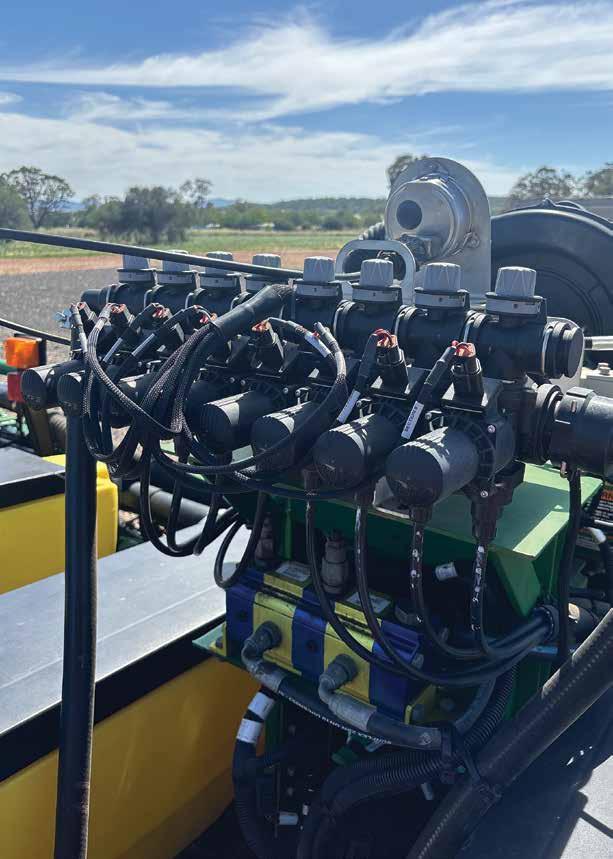
rows. This means the hectares planted are more accurate, he says.
“It’s a very technical system, but somehow they’ve kept it simple.”
The unit allows target inputs in-furrow with measured and controlled placement in the soil. It is also easy to install or, as Jack puts it, a complicated system made easy.
The unit can also be upgraded to section control, like Jack’s is, and to multiple liquids or chemical injection. It accurately controls flow rate to cater for variable rate application, variations in operating speed and shutting off sections automatically.
Because there’s input use efficiency with section control, variable rate application and improved rate control responsiveness, farmers save money in the end. He can lay down as little as 25-litres of liquid fertiliser per hectare.
Jack says the system lets him “change speed on the go”, making it easier to simply drive the tractor, “and not have to try and keep to a speed”.
He adds that “not having to stick to a speed like other units”
also reduces equipment strain.
Because the guesswork is removed and application is more precise, using the unit allows for a more sustainable business, both for the farmer and for Jack. Being able to see bar pressure from the cabin is another benefit, he says.
Jack checks for blockages every 30 hectares, something he says is merely a procedure, not a necessity.
“It’s the ease of it. You type the number litres you want to put down into the screen and away you go.”
The unit is also reliable, with Jack saying he hasn’t had any major blockages in the system.
“It’s worth its weight in gold, purely by not having to spend the time constantly setting it up.”
Jack says it’s not easy for new entrants to start contracting, with both the cost of new and second hand gear skyrocketing.
The first tractor he bought under his own banner was a John Deere 8530. It had 10,000 hours on the clock and he paid $55,000 for it.
He then bought a John Deere 8345R for $110,000, a John Deere 8345R for $150,000, and a John
THE LQS70 ACCURATELY CONTROLS FLOW RATE TO CATER FOR VARIABLE RATE APPLICATION, VARIATIONS IN OPERATING SPEED AND SHUTTING OFF SECTIONS AUTOMATICALLY.
Deere 8370R for $200,000. He sold the 8530R for $95,000 when it had 13,500 hours on it.
He also sold the other gear for much more than he bought it for, all after he had put many extra thousands of hours on them.
“A new tractor back in the day was around $300,000. The last one I purchased was pushing around $700,000.
“I was lucky to get in prior to the Covid pandemic, putting hours on tractors and making money from selling them; that saved my contracting, if I wasn’t able to do that, the business would not have grown so much in such a short time.”
Jack says in the future he just hopes to keep contracting.
He did not have a father growing up, losing his dad early in life, and says he hopes to keep cracking on, until his boys decide if they want to take over or not.
Scan to learn more
IT TAKES GRIT AND DETERMINATION TO BECOME FARM OWNERS WITHOUT A FAMILY FARM TO FALL BACK ON.
Brodie Game was thrown in the deep end of farm management at a very young age, after inexperience and bad luck saw her and husband Kevin nearly lose it all at the beginning of their dairying careers.
When she was 10, moving onto a 25-acre lifestyle property at Cootamundra in New South Wales was the beginning of a love for country living and livestock for Brodie.
The move had seen her mother fulfil her dream of keeping horses.
But despite her best efforts to instil the same enthusiasm in her daughter, Brodie was much more interested in their cattle.
This interest was encouraged by her father who had been a stock and station agent at one time, and firmly held the view
REALISING SHE WAS MORE INTERESTED IN CATTLE THAN HORSES HAS LEAD BRODIE GAME DOWN THE PATH TO FARM OWNERSHIP.
that horses spend money while cattle make money.
The Santa Gertrudis steer Brodie got for Christmas one year was one of the first animals she showed on her own.
“Once I realized horses weren’t for me, there was plenty of space for cows and shows every weekend because we didn’t have that commitment of a full time farm.”
This saw her involved with Hoof and Hook competitions for livestock animals and meat on the hook at secondary school.
As she looked to the future it took some time for Brodie to
TAKING A CHANCE EARLY ON HAS SEEN THE DREAM OF FARM OWNERSHIP BECAME A REALITY FOR BRODIE AND KEVIN GAME.
figure out what kind of a job she could do that would see her able to build a career around country life and livestock.
She toyed with stock and station agency work like her father.
Veterinary science appealed for a time but Brodie found she wasn’t interested in dealing with small animals nor felt she had the
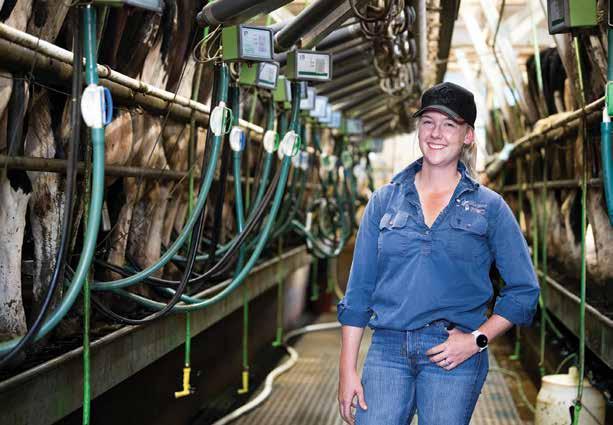
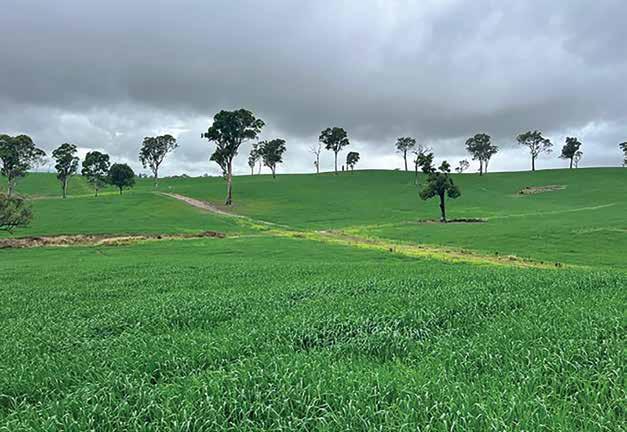
ABLE TO LOOK AT MORE LONG TERM RETURNS WITH FARM OWNERSHIP HAS SEEN A CHANGE IN MANAGEMENT INCLUDING PLANTING MORE TREES FOR SHADE AND BIODIVERSITY.
emotional capacity for putting animals down and dealing with distraught owners.
Her pathway became clearer when she started doing ‘work experience’ in year 10 at school.
The Cootamundra area wasn’t really dairy country but when Brodie did a stint on a dairy farm, she found it ticked a lot of boxes.
She enjoyed the close daily
contact with the cows and the immediacy of decisions in the operation. Some veterinary type work was also involved with the job, and there were other areas in the dairy industry she could get involved with.
Looking seriously at dairying as a career, it wasn’t long before Kevin Game, who was working in the industry, came on the scene. Kevin also didn’t have a family farm to fall back on but was determined to eventually own a dairy farm.
Soon, they were planning their dairy future together.
Brodie had began working full-
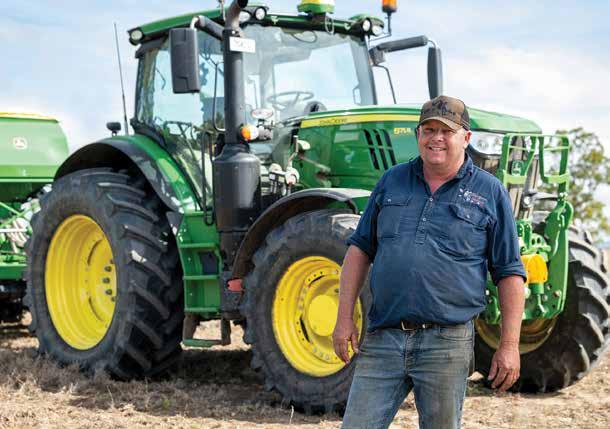
time in livestock administration for an agricultural business in Wagga Wagga, while Kevin was working as a farm hand and doing contract fertiliser spreading.
To get a foot in the door they decided they would both work hard and save as much as they could.
They also started raising calves on small leased parcels of grazing land locally, initially with the purchase of two dairy cows and using the milk to rear any bobby calves they could find.
“An Angus cross dairy calf was always the premium, but we reared a lot of Holstein calves as well.”

KEVIN’S
SKILLS HAVE
THE COUPLE FAIRLY SELFSUFFICIENT AND ONLY NEEDING CONTRACTORS FOR THEIR MAIZE SILAGE.
In 2012, after two solid years of saving, they felt they had enough in the bank that they could start looking at share farming or leasing.
Brodie credits Kevin’s tenacity with finding a farm.
“He was the one who was sort of just driving down farm driveways knocking on doors to see where we could find that next opportunity, whether it be a



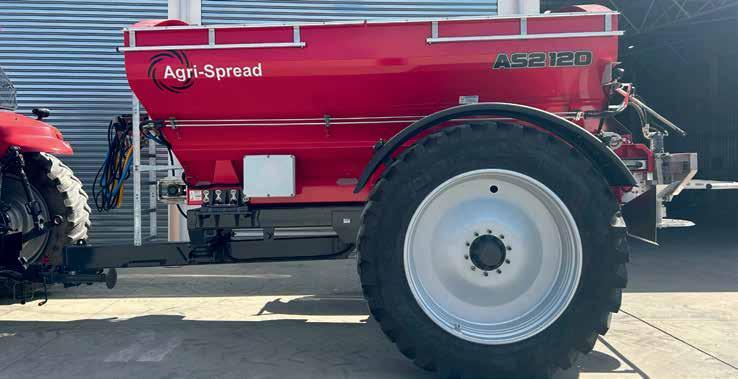


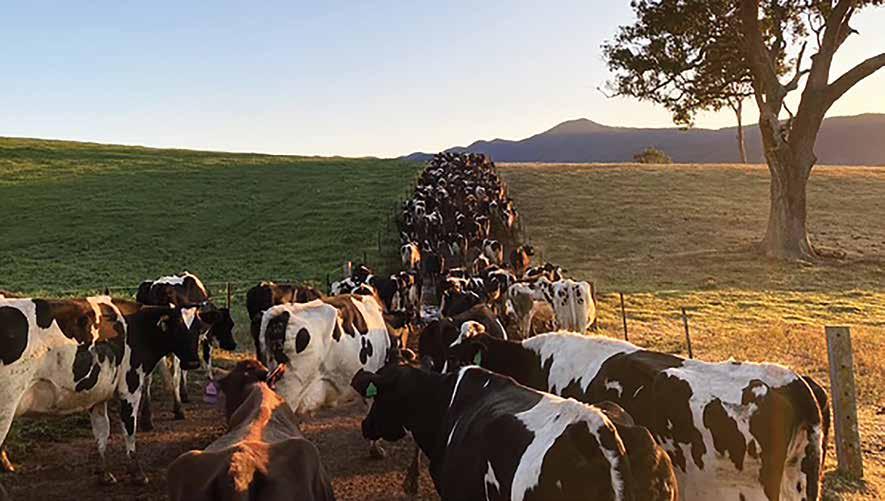
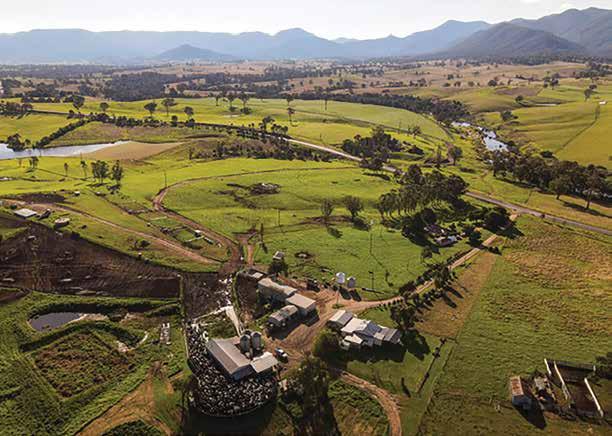
EFFORTS TO REDUCE THEIR CARBON FOOTPRINT IS SEEING BRODIE AND KEVIN BECOMING MUCH MORE EFFICIENT WITH NITROGEN FERTILISER ON THEIR BEMBOKA FARM AS WELL AS LOOKING FOR ALTERNATIVES.
share farm or a lease. It was really his focus and drive that got us to that next step.”
Having grown up in Bega, four and a half hours drive away near the coast, Kevin was keen to get back to the area. He managed to find a farm there that had a lease coming to an end, as the farm needed a bit of work.
After spending their savings on 60 cows, these were trucked to the farm, with the farm owner buying another 140 locally.
But they had no sooner arrived and settled in when disaster struck. Their animals started to get sick and dying with theileriosis.
“In the first five months, we
lost 30 cows with that. We had some amazing support in the local vets that sort of helped us through that period.”
But the problems didn’t end there, with a very dry, hard summer and low milk prices.
On top of that, they hadn’t had a formal share farming agreement drawn up with the owner,
who then decided he didn’t want to continue with the arrangement.
“So the gentleman that owns the farm cancelled and we completely understood, but it was a shit time.”
It was a real ‘fork in the road’ moment for the couple. Devastated at the thought of their dream ending just as it was beginning and after so much hard work, they looked hard for a Plan B.
This saw them reach an agreement with the farm owner to vendor finance the whole herd.
“We went into full staff management, all of the quality assurance, all the HR, all the financial management. Yeah, we just jumped in headfirst.”
The gamble saw Brodie putting all her admin experience to use and learning a lot more in a very short time to run the financial and administration side of the farm - at just 22 years of age.
Blackjack Holsteins was underway.
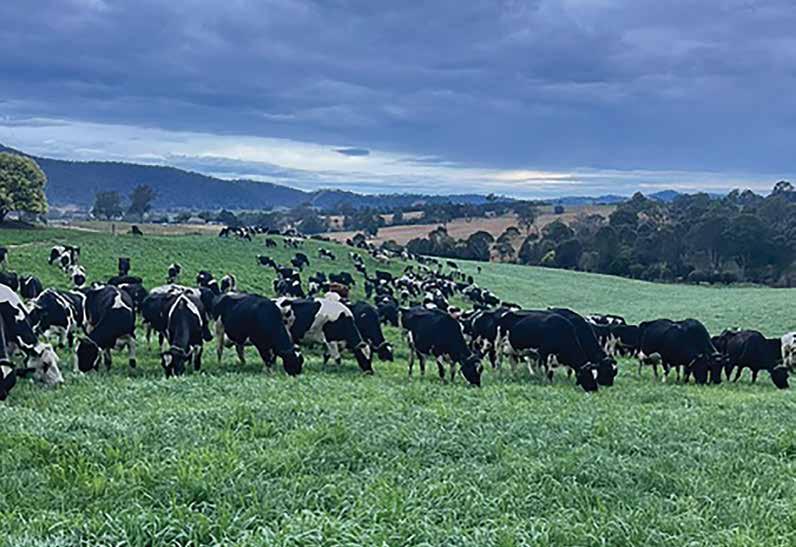
AFTER STARTING OUT WITH A MODEST 60 COWS THE CURRENT MILKING HERD NUMBERS 400 HEAD.
Over the next three years they worked hard and made good progress with the run down property, continuing to grow on young stock.
Another local farmer had been quietly keeping an eye on what they were doing and when they decided not to renew the lease as they had by now outgrown the farm, he offered them the lease on his farm not far away at Bemboka.
Their herd had increased from 270 cows to 400 cows when they were hit hard by another big drought in 2018. This led to another ‘fork in the road’ moment.
Efforts to stay afloat had seen them drop a second farm they had begun leasing and selling half their herd. But it still didn’t rain and then some significant bush fires started.
Struggling to recover from that drought saw them once again contemplate leaving the industry.
But instead they decided to throw their hat in the ring and try to get into the Focus Farm men-
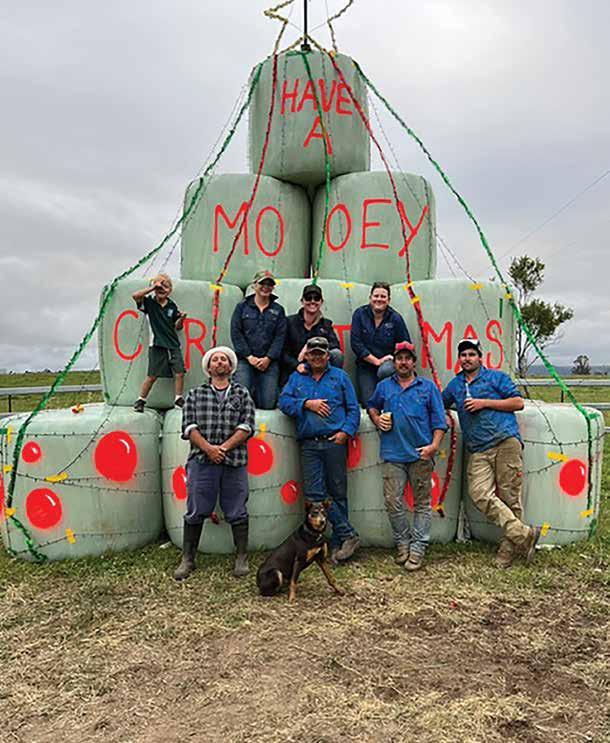
KEVIN AND BRODIE ARE LIVING THE KIND OF FARMING LIFE THEY ALWAYS WANTED FOR THEMSELVES AND THEIR CHILDREN HARRY AND ROY.
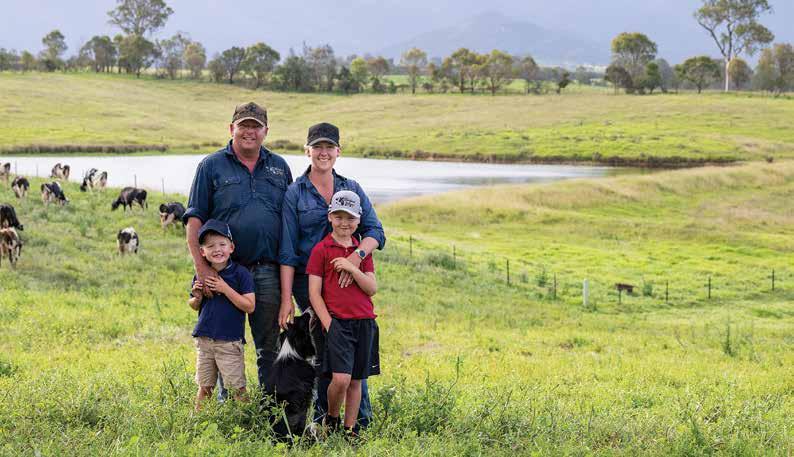
toring programme with Dairy New South Wales.
“We won that opportunity and we got two and a half years with a sort of a peer-supported group of our choosing, with a facilitator that every six weeks met on the farm.
“It did mean that we had to share everything - all our financial records, physical records, everything. We also had to hold about four open days. So, nothing was hidden.”
By the end of the programme, after making a lot of changes including selling unnecessary assets, not only were their milking cow numbers back up but their finances were solid enough they were able to buy the farm.
Having ownership has made a big difference not only to their peace of mind but also to the way they farm.
While there is still a mortgage to pay and the inevitable ‘bottom line’, they can now invest in the farm in a way that they wouldn’t
THE COUPLE ARE TRYING OUT NEW PASTURE MIXES TO NOT ONLY BOOST PRODUCTION BUT ALSO IMPROVE ANIMAL AND SOIL HEALTH, REDUCE EROSION, AND MAKE THE PASTURE MORE RESILIENT TO DROUGHT.8.
have done while they were still leasing.
“When you’re leasing a farm you need to sort of work out your payback period as to whether you’re going to get your money back in the time that you’re leasing that farm.
“Now that we know that our home farm is ours and we’re a little bit more secure, we’re able
to do a bit more over longer payback periods.”
This has seen management changes to build climate resilience into the operation along with looking at ways to make a product that is more attractive to consumers - that’s been produced as sustainably as they can, Brodie reckons.
This has seen carbon and emis-
sions become part of their farming vernacular.
“Carbon emissions are becoming such a hot topic. They’re becoming more and more of an issue that it’s not going to be a choice of whether we are on board with [reducing] carbon emissions. Pretty soon it’s going to be a requirement to be able to supply a product.

“We’re on a path now of trying to adapt.”
Operating as a ‘partial mixed ration’ farm, fresh pasture is included in their feeding system along with silage and some grain.
Pasture management is Kevin’s area and has seen him make changes to help retain soil structure, reduce erosion and retain water, including the use of deep ripping.
A more diverse mix of pasture
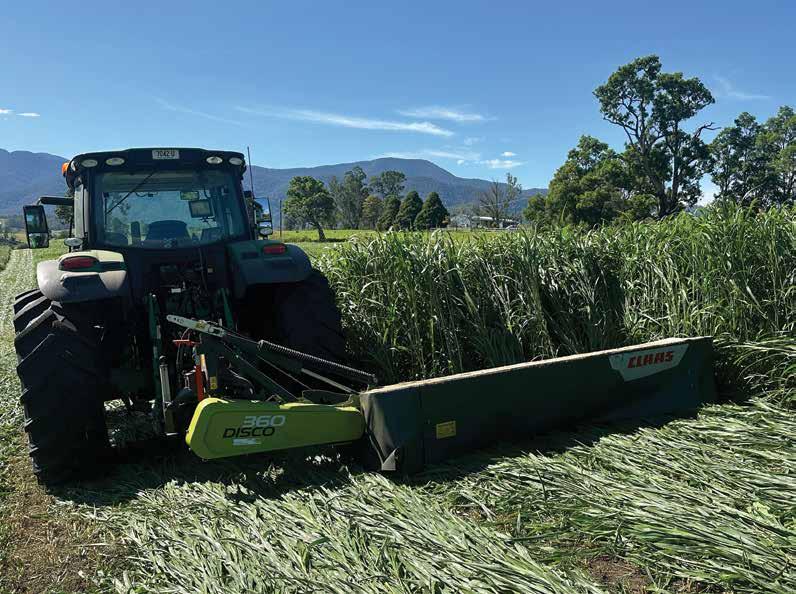
ALONG WITH SIDE AND FRONT MOWERS, THE STABLE OF CLAAS ATTACHMENTS ON-FARM INCLUDE A BALE WRAPPER COMBO, TWIN ROTOR RAKE AND TEDDER.
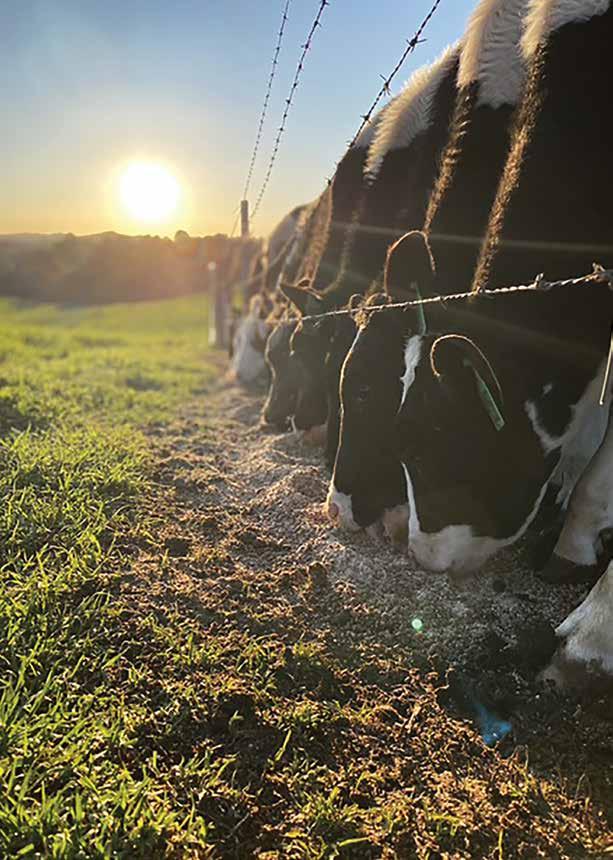
THE MILKING HERD OF HOLSTEIN COWS ENJOY A DIVERSE DIET.
seed is also used which includes four different clovers, chicory, phalaris, lucerne, and a perennial ryegrass. As well as drawing up helpful minerals, the deeper rooting perennials in the mix make the pasture more resilient to drought and erosion, while also adding carbon and encouraging more diverse soil life.
“I do understand that farmers can get a bad rap, but that 30 centimetres or however much topsoil is on your paddock is what our livelihood depends on. So, if anyone’s going to look after it, it’s going to be us.”
Concerns around the carbon footprint of synthetic fertilisers has seen the couple exploring farm effluent and other options for fertilizer which they hope will reduce their footprint, increase microbial activity in the soil along with soil carbon, and reduce input costs.
Synthetic fertiliser use in agriculture, especially urea/nitrogen, is responsible for around five per cent of global greenhouse gas emissions. While manufacture accounts for a third of these emissions, use on agricultural land accounts for the remaining two thirds. Over use is widespread among farmers and increasing nitrogen-use effi-
ciency is generally seen as the most effective strategy to reduce these emissions without reducing production.
“I was very naive as to the contribution that synthetic fertilisers actually have on our carbon emissions - we didn’t realize how big that contribution was.”
Along with reducing emissions, Brodie and Kevin also want to improve their biodiversity around the farm while maintaining and increasing production. This has seen them planting trees and different plant species as they can afford it.
Along with increasing biodiversity, this also helps to provide more shade for the animals.
Along with animal welfare concerns - cows start experiencing heat stress once the temperature increases past 20 degrees - this also sees a reduction in milk production as they don’t eat as much.
Along with the home farm with a milking platform of 174 hectares and 430 cows, the couple also now lease a second 250 hectare farm on their boundary to grow silage, run dairy heifers and dry stock.
While the climate may be considered mild temperature wise, it is fairly volatile in terms of rainfall, Brodie reckons.
“We’re often described as being six weeks between a drought and a flood,” she says. This sees grain production off the table and needing to be brought in.
“You really have to plan to have at least 12 months feed reserves up your sleeve. But also having your pastures and your fertiliser program ready so that if it does rain you are ready to just go for it because it is very hit-and-miss.”
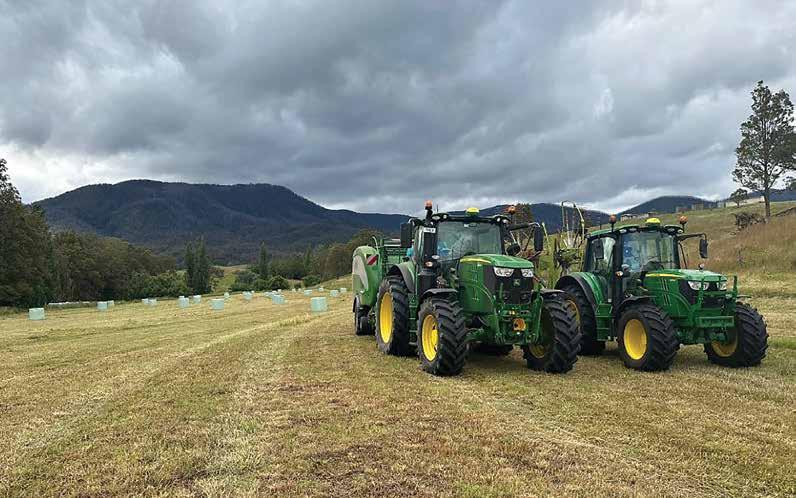
Not having the luxury of being able to wait for contractors, along with Kevin being mechanically minded so they don’t usually have to pay to fix equipment, the couple have invested in their own farm planting/ harvesting equipment. Centred around their John Deere tractors – a 6110M, a 6R 215 and a smaller 950, their attachments are mostly Claas.
“We do all our own [cropping work] with the exception of maize silage. This really affects our labour costs but we are able to
make a higher quality product because we have the gear ready to go when the grass is at its peak.”
Having the gear also sees them happy to help out and contract on small farms close to them with spraying, sowing and silage-making, but they don’t have time for more and also don’t want to get off side with the local contractors they use themselves.
Along with tractors, John Deere’s operation site and satellite connections are also used extensively in their paddock management.
“All our records are on it and it’s very simple for staff to use as well. We can record yields, application rates, rainfall, and mark out different hazards in paddocks.
“It just makes it really easy If you’ve got a changeover of staff in the tractor. They can just have a map that goes exactly to the paddock that they should be in. There’s a job already created and they can just go out and do the task.
“That is filtered back to me in
the office and it then fits into all our quality assurance programs. So I’ve got withholding reports, applications, wind speeds – it just ticks a lot of boxes and makes life a lot easier.”
They have also been trialling another satellite based program Pasture.io, which looks at pasture growth rates, leaf emergence and grazing availability.
The dairy program is run
through Easy Dairy with other production meters in the dairy linking into that including their SenseHub cow collars.
With Brodie looking after the admin and animal side of things and Kevin the machinery and pasture they make a pretty good team.
And while their farm may be fairly middle-of-the-road size wise for the area, it is a farm they
have worked hard for with a hand up through advice rather than succession.
Going ‘all in’ early on has paid off for the couple and sees them enjoying the kind of country life they always wanted.
And should their sons, nineyear-old Roy and Harry at six, also decide to go farming in the future they are likely to have an easier path.
WHEN BRIAN HUGHES FIRST SET OUT CONTRACTING ACROSS SOUTHLAND IN THE MID‑1980S, THERE WAS LITTLE TIME TO THINK ABOUT WHERE THE ROAD MIGHT LEAD.

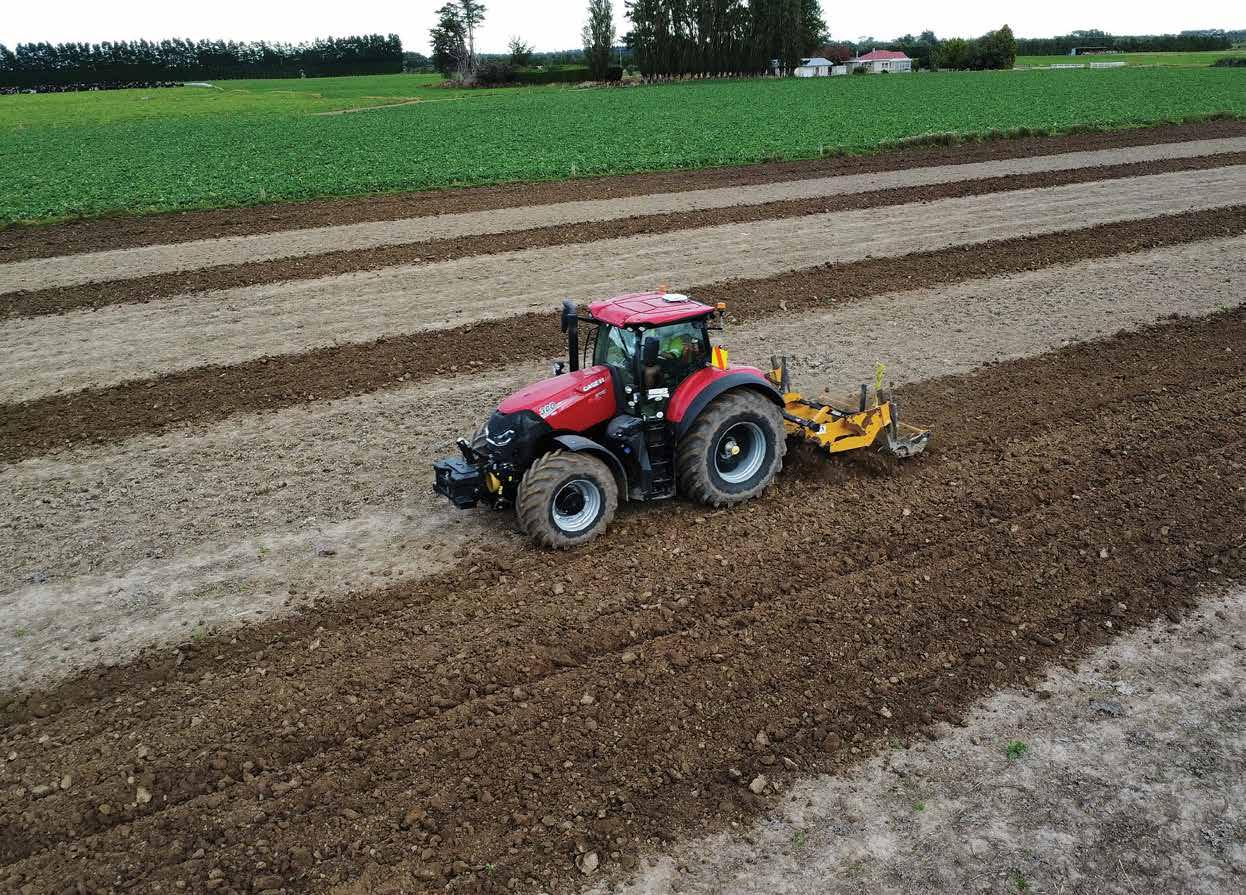
CULTIVATION STILL COMES BACK TO EXPERIENCE ON THE SOIL. MATCHING THE METHOD TO THE CONDITIONS IS WHAT KEEPS PADDOCKS TIDY, PRODUCTIVE AND READY FOR THE NEXT STEP.





What began as one man with a tractor and a belief in doing things properly has grown into one of Southland’s most respected rural contracting operations, employing up to forty people during the peak season. From modest beginnings on the eastern outskirts of Invercargill, the business now operates out of depots in both Waimatua and Browns, reaching clients across the province with a full suite of cultivation, planting, harvesting, cartage, excavation and effluent services. The name on the door remains the same, but these days it is Brian’s son
Chris who leads the charge. For Chris, contracting was never a question of if, but when. He left school to live the dream as an agricultural contractor, following the same path that had shaped his father’s life, but carving it through a world transformed

















PROFILED IN NZ’S RURAL CONTRACTOR & LARGE SCALE FARMER DECEMBER-JANUARY 2026, WE VISIT HUGHES CONTRACTING IN SOUTHLAND, NEW ZEALAND. across ditch the
The work was hard, the hours long and the margins thin. It was a time when most jobs were won on handshakes and reputation, when the smell of diesel and freshly cut grass carried a certain pride and when every new season demanded another leap of faith. Yet even then Brian understood that real success in contracting would never come from chasing the cheapest job. “It costs a certain amount of money to do a job,” he said at the time. “If you do it for less, you end up struggling. You are just working for wages. You might as well work for someone else because you are not going to be there in the long run.”










Those words spoken more than two decades ago, still sit at the heart of Hughes Contracting.
THE GEAR HAS CHANGED SINCE BRIAN’S DAY, BUT THE HEART OF THE JOB REMAINS THE SAME - START WITH GOOD PRODUCT, TREAT IT WITH CARE AND STAND BEHIND THE RESULT.
by technology and scale. Where Brian’s early years were defined by mechanical instinct and determination, Chris’s generation has grown up with guidance systems, GPS tracking and precision application. He knows firsthand how far the industry has come and what it takes to stay ahead.
“Technology has had a major impact on the industry since I started,” Chris says. “GPS tracking and guidance are a major plus for accuracy and fuel savings and newer, more efficient machinery ensures the job is completed on time and to a high standard.”
That focus on quality is no accident. Brian’s philosophy has always been that you build a business by standing behind your work, not by cutting corners. “Machinery depreciates from the day you buy it,” he said in those earlier years. “Land is the opposite, which is why we have also heavily invested in highly productive farmland that is a perfect fit for an ag contracting business.” True to that belief, Brian and his wife Lyn invested profits into farmland rather than trying to be the biggest contractor around. Those farms still play a key role today, growing high quality pasture for silage, baleage or hay that Hughes Contracting sells on to local farmers. A few clients winter cows and R1 calves on the Hughes’ properties, continuing a relationship that stretches back through decades of trust.
It is that ability to see beyond the next season that has kept

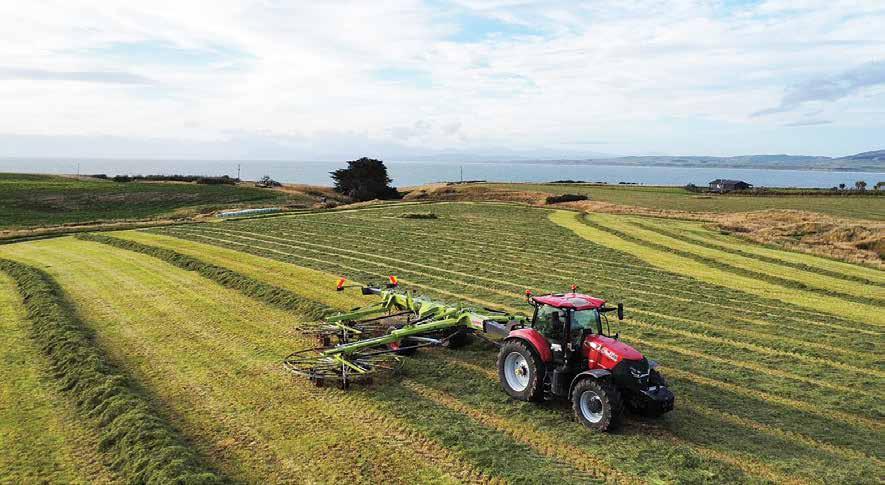
the business both grounded and growing. Diversifying into farming gave stability through the quieter months and allowed the company to hold on to skilled staff. That same foresight carries into Chris’s tenure, where a team of experienced managers handle different sides of the business with a depth of expertise few can match.
Among them is Matt McCartney, who oversees baling and cultivation. Matt has been with Hughes Contracting for over five years and has plenty of handson experience behind the wheel. He brings the same commitment to service that Brian once spoke of, making sure every paddock is left tidy and every bale sealed right.
In the silage corner, Sam Oliver has become a familiar face across Southland. Originally from Northern Ireland, Sam joined over two decades ago and has been part of the family ever
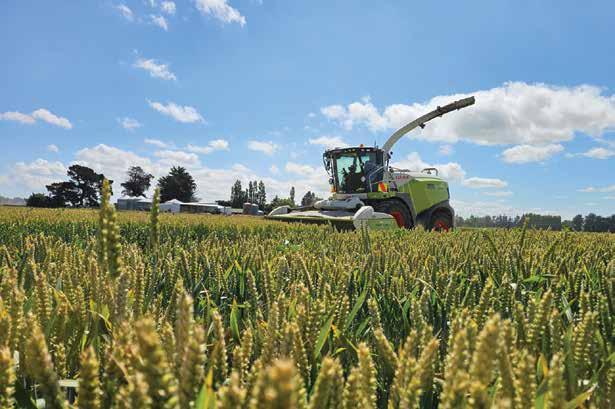
since. He knows local conditions as well as anyone and manages a fleet that can handle everything from mowing and tedding to raking and harvesting. With three large capacity Claas forage harvesters at the company’s disposal, Sam and his crew can move fast when the weather turns and every hour counts.
“Claas is a market leader when it comes to self-propelled machines,” Brian once said. Hughes Contracting has just purchased the latest 950 Claas Jaguar for the season which will increase reliability and performance. The comfort and precision of modern machines would have been hard to imagine in those early years, yet the core of the job is the same: long hours, short weather windows and the satisfaction of a well made stack.
As Chris puts it, “You can have all the technology in the world, but when the weather closes in, it still comes down to people will-




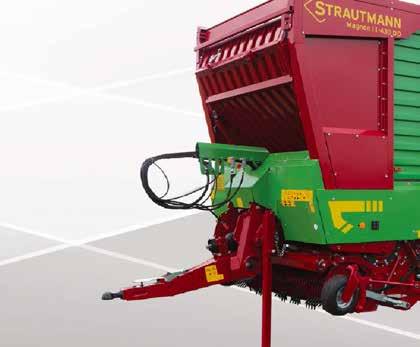
84-knife Exact-Cut system’s
• Patented Continuous-Flow-System for outstanding performance with low power demand
• Advanced Flex-Load Pickup is
NO TWO DAYS ARE THE SAME IN CONTRACTING. FROM COASTAL COUNTRY TO INLAND FARMS, THE TEAM TAKES PRIDE IN LEAVING TIDY ROWS AND WELL-FINISHED WORK WHEREVER THE JOB TAKES THEM.
ing to get the job done. That has not changed and never will.”
Hughes Contracting today stretches well beyond forage and cultivation. The team provides excavation and lane construction, muck spreading and general cartage. An umbilical slurry system can pump effluent up to 2.5 kilometres, applying valuable nutrients to paddocks that once sat outside irrigation reach. Flow meters ensure accurate application, turning a waste challenge into a soil asset. With thirteen and twenty-one tonne diggers and experienced




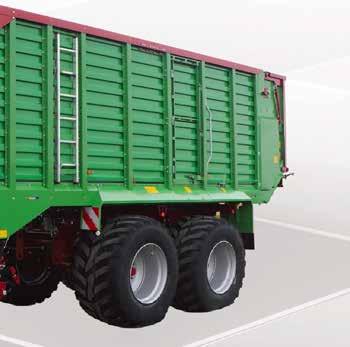












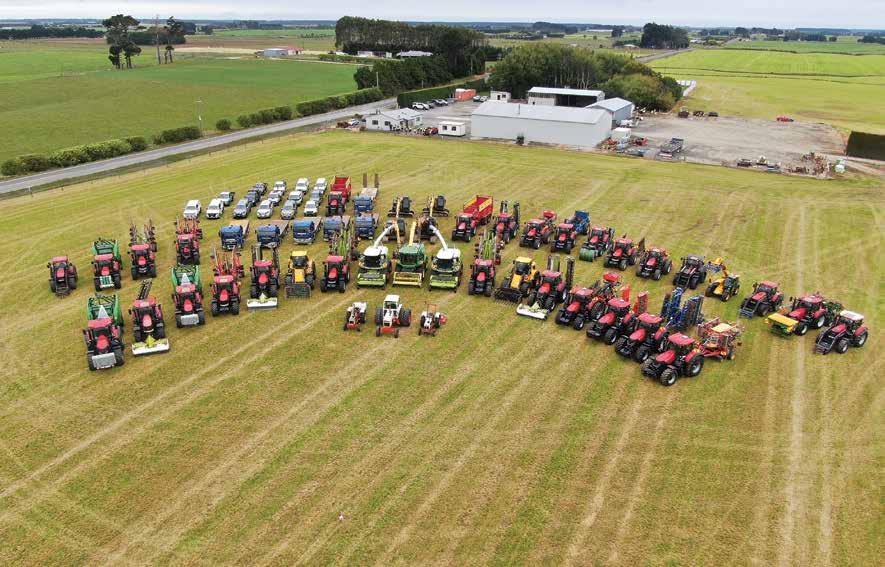
A FLEET BUILT ON NEARLY FORTY YEARS OF HARD WORK AND STEADY GROWTH, REFLECTING THE EXPERIENCE, SCALE AND CAPABILITY THAT HUGHES CONTRACTING BRINGS TO SOUTHLAND FARMERS TODAY.
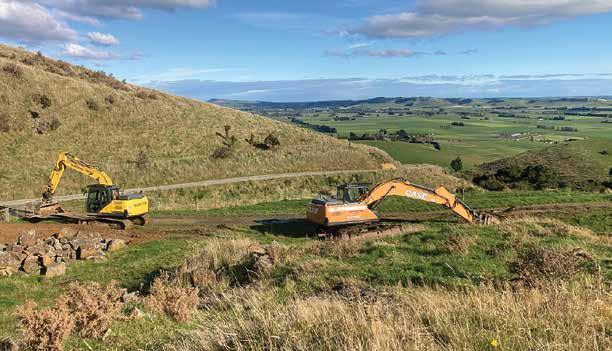
DIVERSIFYING INTO EXCAVATION AND LANE CONSTRUCTION HAS STRENGTHENED THE BUSINESS, GIVING FARMERS PRACTICAL SOLUTIONS THAT IMPROVE ACCESS, DRAINAGE AND LONG-TERM FARM PERFORMANCE.
operators on hand, the company also takes care of farm drainage, site works and dairy effluent pond construction. It is a natural evolution for a business that has always looked to solve problems for clients rather than simply offer a list of services.
For Chris, that variety is part of the appeal. No two days are the same. One minute the crew is harvesting silage, the next they are carting rock or planting beet. The aim is simple - help people make their farms work better. On the feed front, Hughes Contracting has become a one stop shop. With five farms producing high quality silage and baleage, the company can supply, har-
vest and transport feed from paddock to pit. Certified mobile weighbridges give accuracy and assurance, while oxygen barrier pit covers help protect quality through to feeding out.
It is a far cry from the days when a single buck rake tractor and a few hired trucks had to keep pace with the mowers. Today, truck and trailer units handle bulk transport, which also carry out a variety of other general transport needs. A heavy transporter for machinery moves up to twenty-five tonnes, and shift the excavators and other equipment as and when required keeping tractor time on the road to a minimum.
As the company has grown, the importance of people has only increased. Southland’s contracting sector relies on experience and Hughes Contracting has built a reputation for holding on to good operators by investing in them. Seasonal staff return year after year, drawn by the camaraderie and professionalism that come from a well-run outfit.
The Browns depot, under Nor-
man Allan’s watch, ensures clients across northern and central Southland receive the same reliable service that has become the company’s hallmark. The footprint reflects a balance between scale and service, large enough to tackle the biggest jobs, close enough to know every gate and gravel road.
Through all that change Brian remains involved as director, keeping a steady eye on the business he built from scratch. Though no longer in day-to-day management, his influence runs deep. He still believes in the same fundamentals; look after your people, invest wisely and never forget that reputation is everything. Service and backup were the reasons the business stuck with certain brand partners in the past and that loyalty has been repaid many times over. Local dealers stepped up when needed, including after an accident on the road years ago that could have crippled a smaller outfit. Relationships matter in Southland. They always have.
Succession is never straightforward in contracting. The industry has changed since Brian’s early days with rising costs, compliance rules and environmental pressures adding new layers of complexity. The Hughes family has managed the transition with the same pragmatism that built thebusiness.
Chris leads from the cab not the office, keeping a hands-on understanding of every job. “You can’t sit in an office all day and get a feel for what is going on around the province. You have to be actively out and about seeing what is going on in your surrounds, whether it be checking on operators at a job or having a chat to a farmer on the side of the road.”
He has surrounded himself with a team who share his drive, and passion. “We have some excellent staff who keep the wheels of our business in motion; without excellent staff you are buggered. They are the face of our company and I expect them to take the same pride in each job as I would do.” Which means the company’s future rests not only on a family name but on a culture of excellence and trust.
He knows the challenges ahead, the squeeze on margins the volatility of seasons and the constant expectation to do more with less. He also sees opportunity. A new generation of farmers is coming through who value service, reliability and innovation. They want contractors who can work with them, not just turn up. That is where the business fits in. Experience matters, gear matters, attitude matters.
Looking ahead, Chris is optimistic. He sees automation and data shaping the future but not replacing the instincts that good
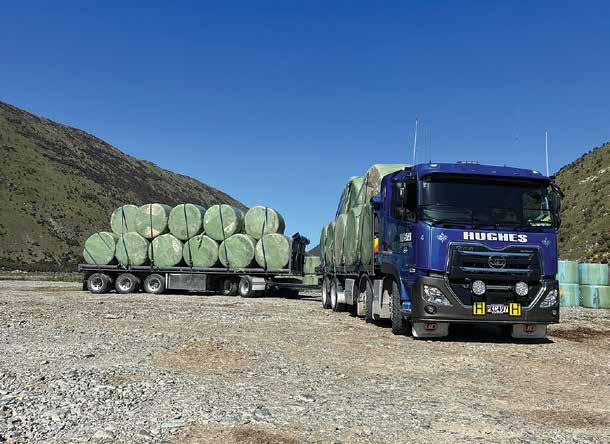
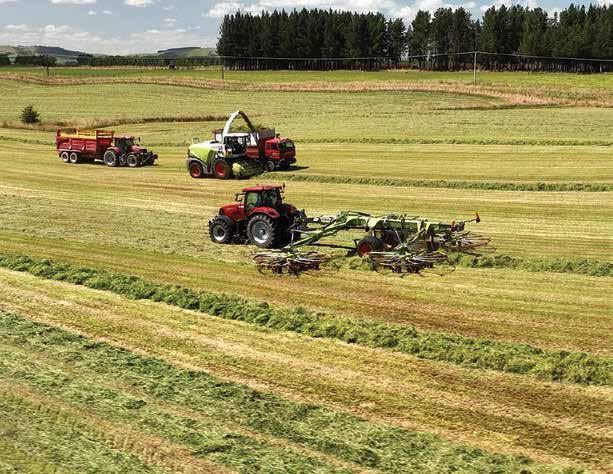
SILAGE IS A TEAM GAME. IT TAKES SKILL, TIMING AND TRUST ACROSS THE CREW TO KEEP MACHINES MOVING AND BUILD A PIT THAT WILL FEED CLEAN AND CONSISTENT THROUGH WINTER.
contractors rely on. Technology will keep changing, but you will always need people who care about doing the job right. That is what Brian taught him, and it still stands today.
“Our farmers are world leaders in their field, they are grasping
the smarter not harder attitude and our business needs to follow that mantra as well or we will inevitably be left behind. Do the same thing, get the same results, doesn’t cut it anymore. We are always looking at ways to perfect and better our business.”
The effluent and excavation work has become a quiet cornerstone. Many farms now expect accurate nutrientapplication and tidy site works as standard. The umbilical system allows application at scale without chewing up lanes and paddocks, and the vacuum tanker gives the team flexibility where pumping is not
possible. Side discharge and rear discharge muck spreaders provide an even pattern that farmers can trust. It is practical, it is efficient and it speaks to the way the business has evolved, not flashy just effective.
Feed supply has grown in the same pragmatic way. Owning and managing pastureland gives control over quality and timing. Dry matter testing gives clients confidence, and the weighbridge confirms what is on the docket.
Some seasons the Hughes team will harvest and sell to long standing clients, other seasons they will step in to fill gaps when weather knocks a plan off track. Having that buffer has helped many customers bridge shortfalls and has helped keep staff busy through the full year.
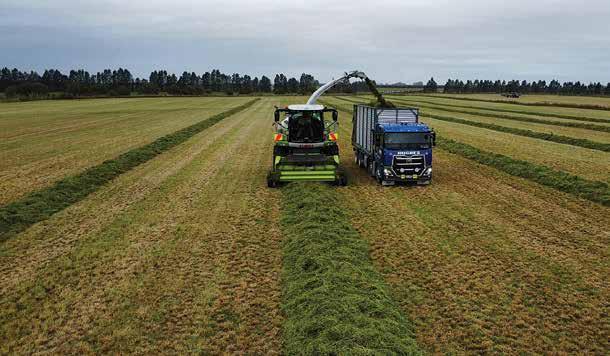
WHEN WEATHER WINDOWS ARE TIGHT, EFFICIENCY COUNTS. HUGHES CONTRACTING RUNS THE GEAR AND THE TEAM TO MOVE FAST, KEEP THE CHOPPER FED AND GET SILAGE HOME IN TOP CONDITION.
On the cultivation side, experience counts. From ploughing and power harrowing to direct drilling and rolling, the team matches method to soil and season. Precision planters deliver beet and swede with the spacing and depth that set crops up for success. Air seeders cover ground for grass with a steady even spread. It is the quiet detail that makes the difference, the set up
!"#$%&'()*&+#$(,"-+,.(,/"&+(/"&$,("0)(,1//%&$("2"*-"3-+(0%4
!"#$"%&#$'($)&*#+,$-"&+.&#+$/*%&$0*.12*341#&5$ 4/&$*66$71#7"+&$8*#+/*66$81649+7#&*5,5&+9:.&5$2"#$ ;1+4#*69*.$;:#931641#&< =/&$8*#+/*66$81649+7#&*5$5&69%&#+$7#"%&.$ 7"#0*.3&$*.5$%&#+*49694)$>94/$"%&#$??((($ 1.94+$9.$4/&$29&65$*3#"++$;1+4#*69*,$@*3A&5$17$@)$ +17	"#$31+4"0&#$+&#%93&$*.5$+177"#4< 81649+7#&*5$0*3/9.&+$*#&$*%*96*@6&$>94/$ *5%*.3&5$2&*41#&+$+13/$*+$4/&$BC$+79..&#$+)+4&0$ 2"#$*331#*4&$+7#&*5$7*44&#.+$17$4"$CD0$*.5$4/&$ 6*4&+4$%&#+9".$C$9'8$+7#&*5&#$3".4#"66&#,$6*1.3/&5$ 9.$E1.&$F(FG,$9.36159.:$*$.&>$*14"H3*69@#*49".$ 2&*41#&< ="$59+31++$)"1#$2፩+&#$+7#&*59.:$#&I19#&0&.4+,$ 3*66$-"&+.&#+$4"5*)$4"$+7&*A$59#&346)$4"$"1#$ 5&593*4&5$+*6&+,$+7*#&$7*#4+$*.5$+177"#4$4&*0<
in the yard before daybreak, the check on seed and fertiliser, the tidy pass at the headland. Farming notices the small things and so does contracting.
Chris gives a lot of credit to the crew. It takes skill to rake heavy Southland crops into neat rows, judgement to balance trucks and trailers to keep a chopper fed without queuing and patience to build a pit that will feed out clean in August. It takes the same care to shape a lane that will carry stock and tankers without pooling, or to build an effluent pond that will stand up to the years. The best operators bring pride to the job, and they teach it to the next person. That is how a business becomes more than one season deep.
Community has always been part of the story. The company supports local events and charities as well as sponsoring two local rugby clubs. Woodlands and Riverton, and pitches in
when the district needs a hand. Staff bring their families to endof-season functions and clients often drop by for a coffee when the rush is over. The business has grown, but the culture has stayed small and approachable. That matters when you are working at pace under pressure. Problems get solved faster when people know each other and trust each other.
For Brian, watching Chris lead has been a mix of pride and perspective. He sees the tools his son has at hand, from GPS maps to telematics and remote diagnostics and he recognises the same stubborn streak that kept the wheels turning in lean years. The game has changed, but the stakes have not. Get the crop in on time. Leave the paddock tidy. Stand behind your word.
There is also a wider responsibility that comes with succession. The next generation is inheriting more than iron; they
are inheriting relationships and expectations. Farmers have relied on Hughes Contracting for decades because the family has earned that trust the hard way. Chris understands that the brand on the door is only as strong as the job you do today. That is why he still leads from the front and why he still takes the phone at odd hours when a weather window opens and plans need to shuffle.
The Southland economy has always leaned on people who can turn weather and willpower into productive days. Contractors sit in the middle of that story. They take on the risk of big machines and small margins so that farmers can focus on stock and soil. When things go right a district moves forward. When things go wrong, the fixes are practical and swift. It is a system built on mutual dependence and respect. Hughes Contracting has played its part for
KEEP THE BUSINESS MOVING FORWARD, WITH PRECISION PLANTING HELPING FARMERS SET THEIR CROPS UP THE RIGHT WAY FROM DAY ONE.
IN THE END, THE MEASURE OF A CONTRACTING BUSINESS IS NOT HOW MANY MACHINES IT OWNS BUT HOW MANY FARMERS TRUST IT.
nearly forty years and intends to keep doing so.
Some of Brian’s early lines have aged very well. “Making good silage is not rocket science,” he said. “The biggest secret is you have to start with good product.” The same is true of running a business. Start with good people, give them good tools and hold a clear line on quality. The rest follows.
Another line rings familiar today. “Machinery depreciates from the day you buy it. Land is the opposite.” That simple truth helped shape the company’s direction and helped it ride out tough seasons. It also created the platform for Chris to grow a bigger, broader service without losing focus.
In the end, the measure of a contracting business is not how many machines it owns but how many farmers trust it. Hughes Contracting doesn’t want to be the biggest it wants to be the best, the best it can be for its clients, for its staff and for its community. On that score Hughes Contracting sits in a good place. The team understands Southland weather and Southland expectations. The phones still ring for the same reasons they did in the 1980s. People want a job done properly by people who know what they are doing and who will be there next year when the cycle begins again.
Nearly forty years on from those early days, Hughes Contracting stands as proof that experience counts not only in knowing how to get a job done, but in understanding what makes a business last. The next generation may do it with GPS screens and telematics, but the heartbeat remains red and steady just as it always was. And for all the change across New Zealand agriculture, that heartbeat is still what keeps the grass down, the pits full and the wheels turning when the weather gives you a narrow chance and the district needs you to take it.

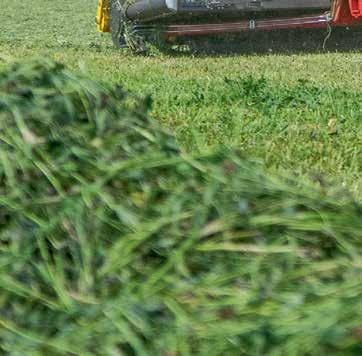

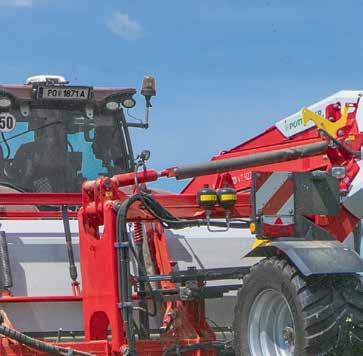
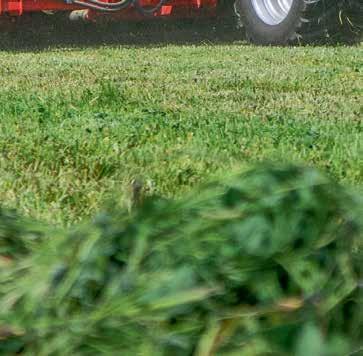

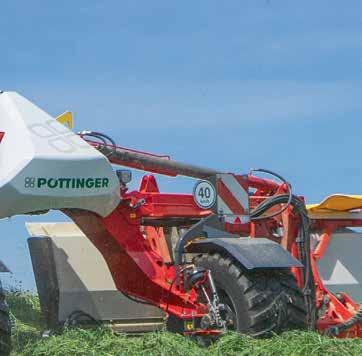

MERGENTO VT 9220
MERGENTO VT 9220
Clean forage without disintegration losses even with leafy crops such as clover or alfalfa
High pick-up performance and perfect crop transfer to the conveyor belt thanks to the six rows of controlled pick-up tines
Clean forage without disintegration losses even with leafy crops such as clover or alfalfa
High pick-up performance and perfect crop transfer to the conveyor belt thanks to the six rows of controlled pick-up tines
Perfect crop flow along the pick-up thanks to the adjustable, damped crop swath roller with baffle curtain
Perfect crop flow along the pick-up thanks to the adjustable, damped crop swath roller with baffle curtain
Flexible swath placement: Centre swath – side swath merged left or right – two individual swaths – flexibly adjustable swath width
Flexible swath placement: Centre swath – side swath merged left or right – two individual swaths – flexibly adjustable swath width
The best ground tracking – wide tracking rollers close to the pick-up – both merger belt units have three-dimensional freedom of movement
The best ground tracking – wide tracking rollers close to the pick-up – both merger belt units have three-dimensional freedom of movement
For more information on our product line contact us at (03) 8353 2770, www.poettinger.com.au
For more information on our product line contact us at (03) 8353 2770, www.poettinger.com.au
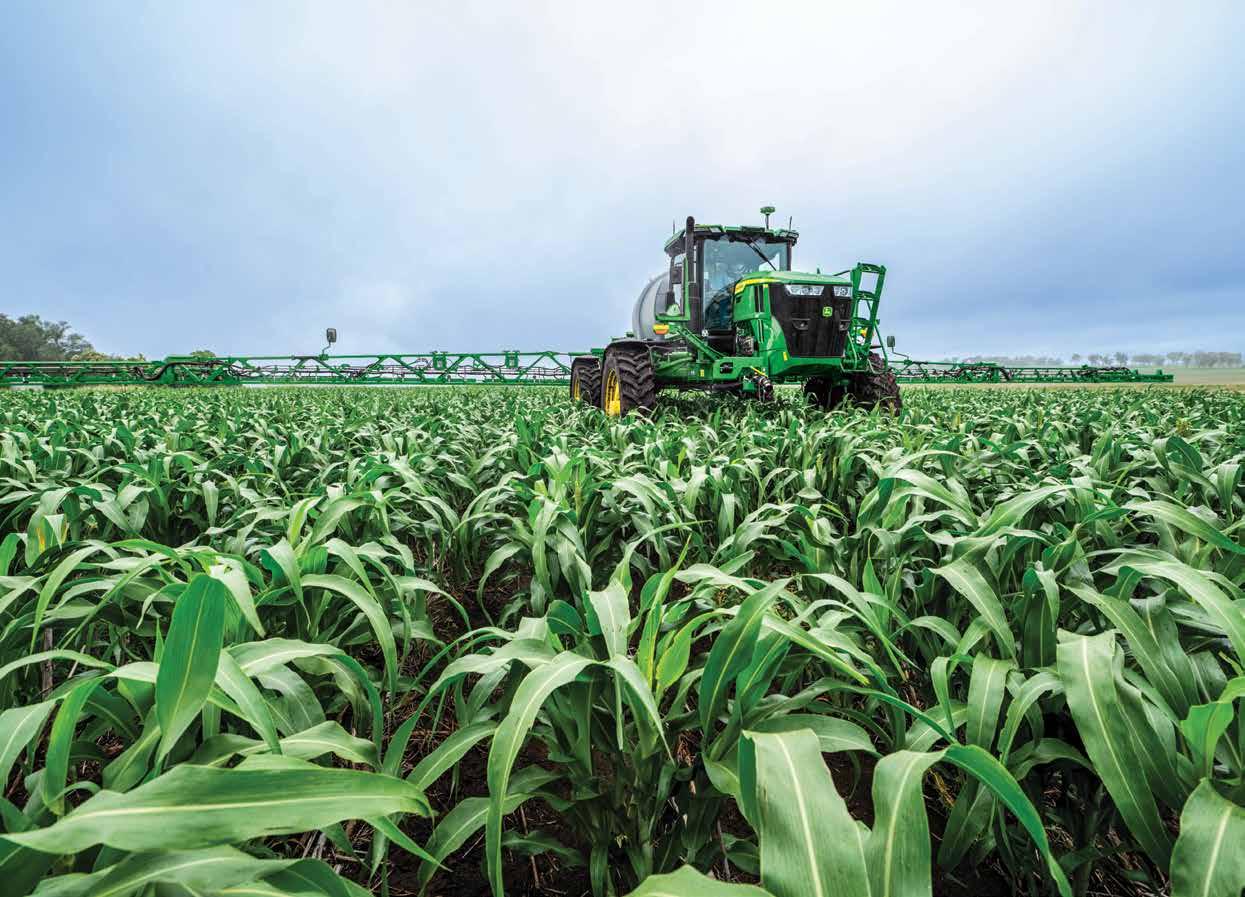
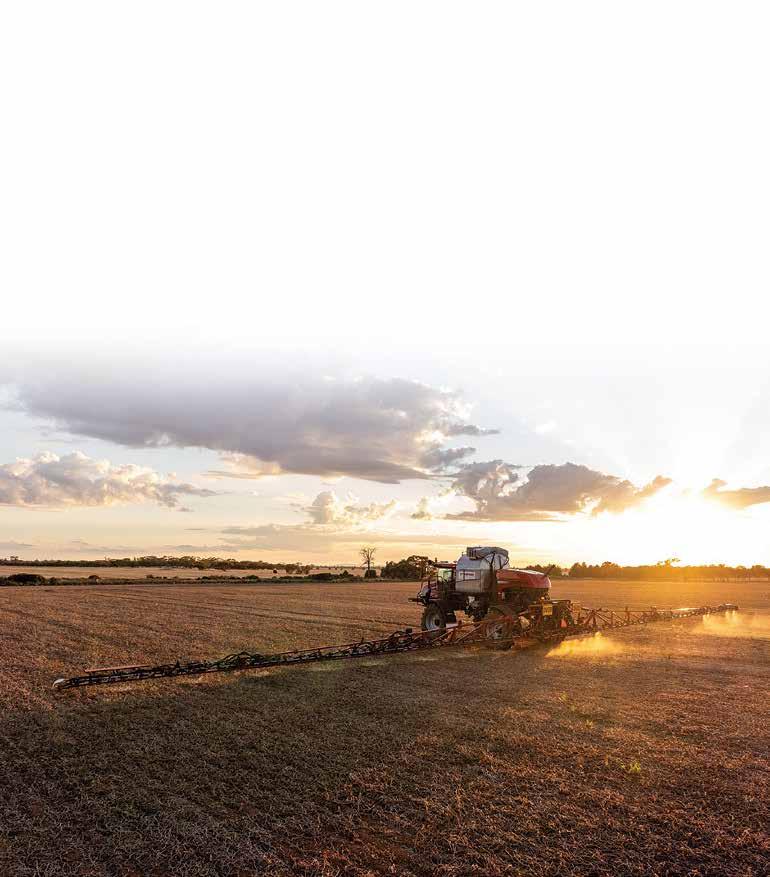
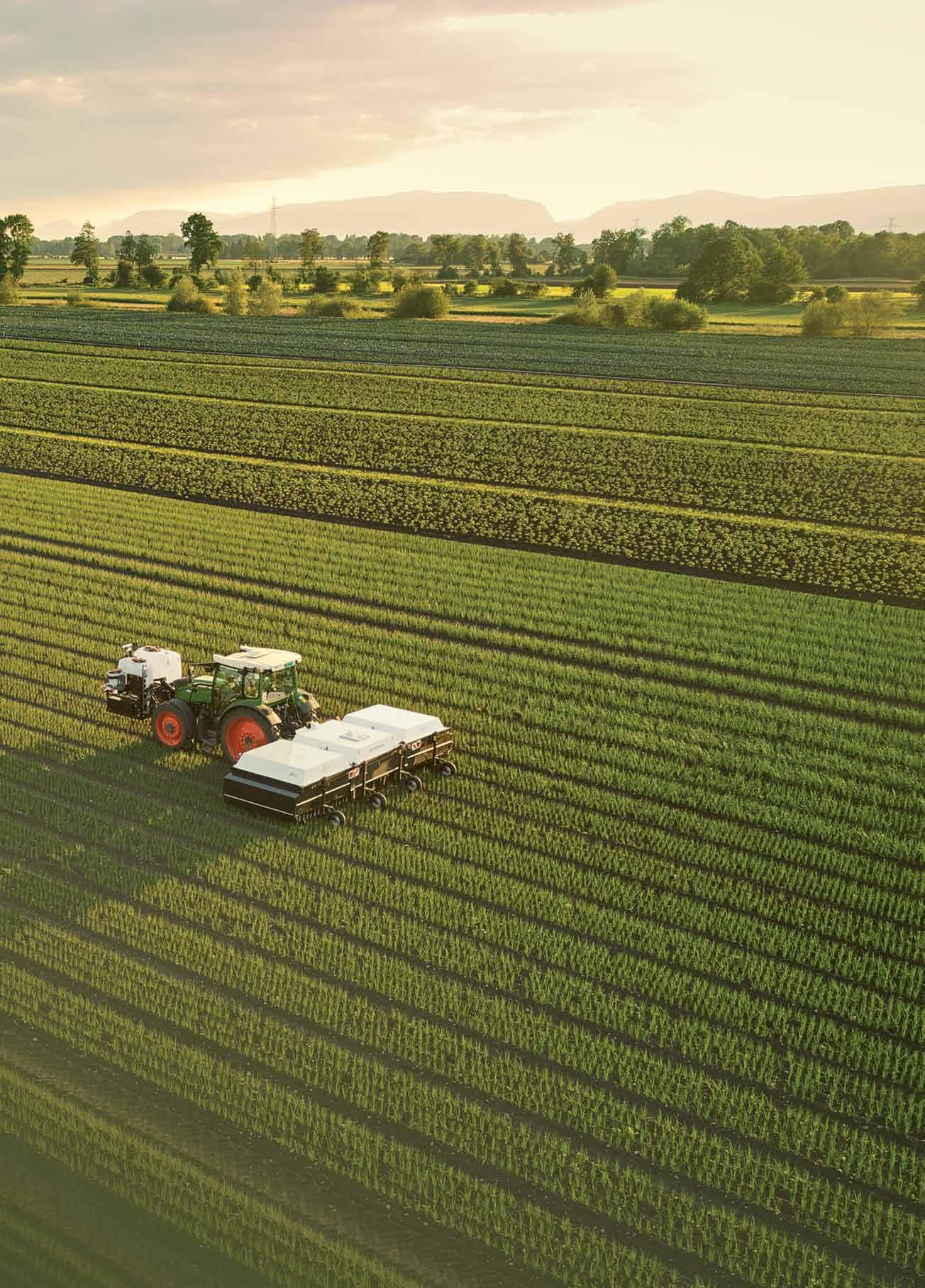
AS SPRAYING TECHNOLOGY GETS MORE SOPHISTICATED, IT GIVES FARMERS AND CONTRACTORS THE ABILITY TO APPLY CHEMICALS MORE ACCURATELY AND AT FASTER SPEEDS. HERE ARE THE LEADING PRODUCTS AVAILABLE IN AUSTRALIA FOR APPLYING CROP PROTECTION AND FOLIAR FERTILISERS.
NEW SPRAYER UPDATES MAXIMISING YIELDS AND MINIMISING COSTS
Australian farmers have played a crucial role in testing improvements to John Deere’s See & Spray™ Select, which now has in-season variable rate capabilities via AutoTrac™ automation and ExactApply™ technologies.
John Deere Australia and New Zealand Production and Precision Ag Marketing Manager, Royce Bell, said the updates, which were announced recently at Commodity Classic in Denver,
Colorado, would provide farmers with more options to improve application consistency and accuracy across the whole crop and growing cycle.
“Application equipment makes an average of three passes
over the same paddock during a growing season so it’s vital to maximise the effectiveness of each application,” Royce said.
“These updates will help farmers manage input costs and crop damage – two highly impactful things that help improve a farmer’s bottom line.”
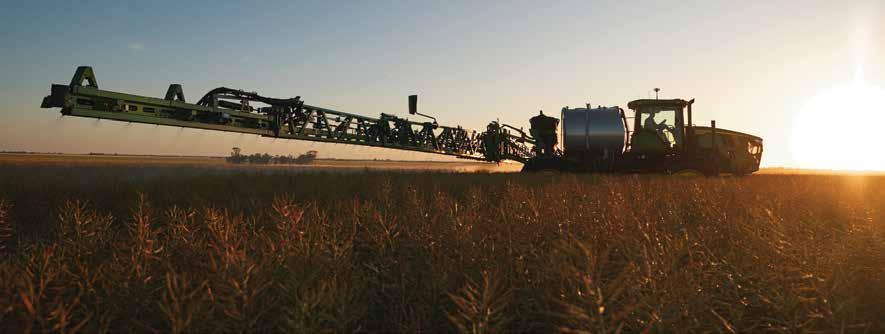
See & Spray Select variable rate updates
The See & Spray technology updates have been shown to improve chemistry application in testing and validation in Australian farming conditions.
“See & Spray Select has historically been used to control weeds in fallow paddocks, but the new variable rate capabilities unlock the opportunity for precise application and product savings through in-season fungicide, desiccant, pre-harvest passes and more,” Royce said.
“Local farmers have been instrumental in the development of these latest updates, with testing undertaken in uniquely Australian conditions at locations in Western Australia, New South Wales and Victoria, and across multiple crop types.”
Farmers can now see the percentage of green biomass each spray camera detects across the boom, with the ability to vary the volume of product applied from each nozzle. These variable rate capabilities require a G5 or G5Plus CommandCenter™ display.
“The new variable rate option
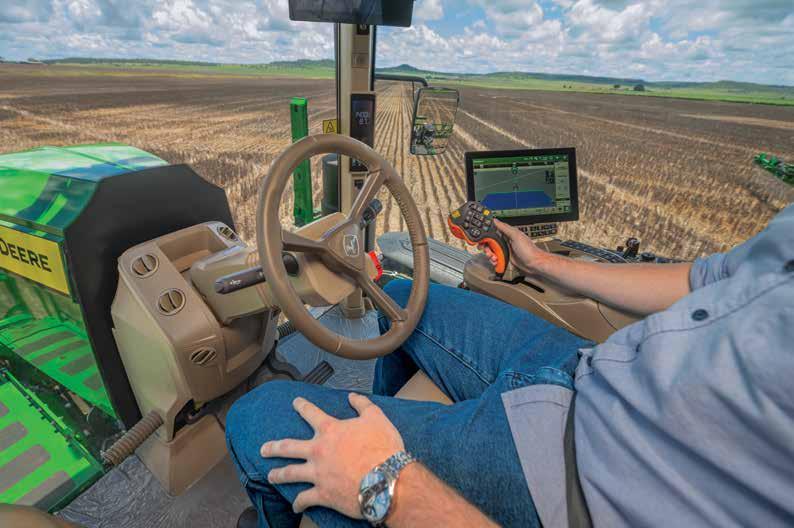
with See & Spray technology gives small grain farmers the versatility to leverage the chemical label limits and vary the volume applied, based on the in-field biomass variations,” Royce said.
“Every field has variations of crop growth and biomass that has traditionally been treated at a blanket rate. This additional See & Spray Select feature
allows the farmer to apply the product at a rate relative to the crop density – this can either reduce total volume applied, or apply the same volume but with a higher quality result, or a combination of both.”
See & Spray Select will be available from the factory on model year 2026 John Deere 400 and 600 Series Sprayers with 27.4 m
(90 ft.), 30.5 m (100 ft.) or 36.6 m (120 ft.) steel booms.
For older machines See & Spray Select will also be available as a precision upgrade kit and the ExactApply upgrade kit will allow for even more older machines to utlise the latest technologies. Depending on the model year, the upgrade paths and technology features may differ.










EFFICIENT IN-FURROW INOCULATION: BOOST NODULATION AND LEGUME PERFORMANCE
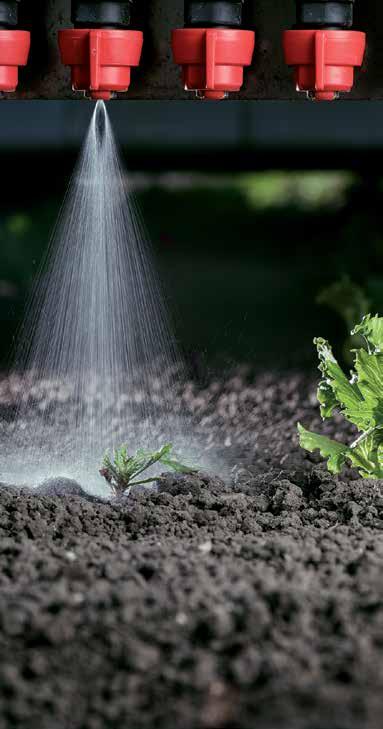
Legumes depend on rhizobia bacteria to form root nodules and fix atmospheric nitrogen. Delivering live inoculants directly into the seed furrow during planting places the bacteria precisely where it’s needed—right alongside emerging roots—resulting in improved nodulation, better plant establishment and greater nitrogen fixation. This method is now widely adopted across Australian broadacre cropping for pulses such as vetch, lupins, chickpeas, and faba beans. No more pre-inoculating the seed, no more blockages, no more wasted seed and better strike rate.
Early adopter: NSW grower Lee Lonergan says liquid inoculation has transformed his chickpea program. Previously, seed treated via auger with peat slurry often split or hardened, reducing germination and requiring
increased handling. By switching to in-furrow injection through his Liquid System, Lee improved germination rates and reduced his fungicide costs.
“Inoculating through the Liquid System coats the seed and inoculates the soil—it creates the perfect little world for the seed to germinate,” he says. His chickpeas now emerge faster and more uniformly, with significantly reduced early yellowing. In a wet season, yields hit 3.5 t/ ha—around triple the usual.
QLD grower Dan Skerman uses freeze-dried inoculants, mixed and water-injected in-furrow for chickpeas and mungbeans. “Not having to pre-inoculate seed is so neat,” Dan says. “Once you’ve done it, you’re like, why the hell was I doing it the other way?” Liquid injection has streamlined his planting operation, resulting in consistently healthier and more vigorous crops.
NSW grower Tom Johnstone has moved to on-farm application of freeze-dried ‘Easy Rhiz’ inoculants. Delivered through his Liquid System, it avoids blockages often caused by peat slurries. “It’s easy—just add water,
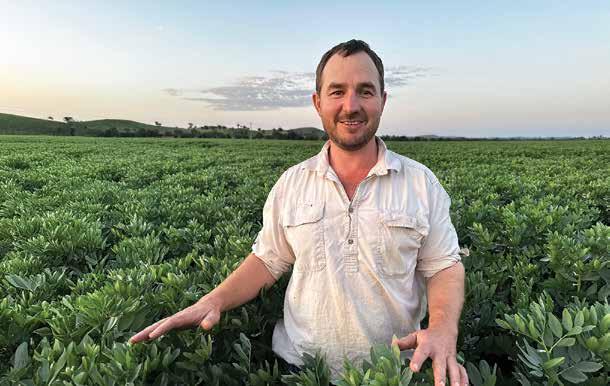
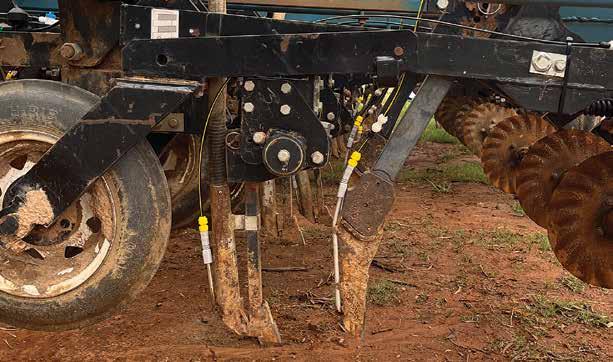
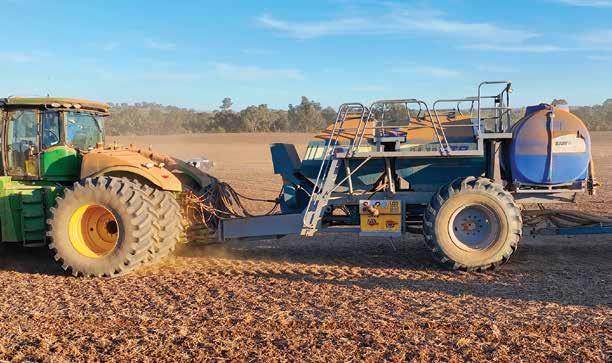
shake, and it flows well through the system,” Tom explains. He’s had “plenty of nodulation” on his beans and found the process both time-saving and reliable.
- Peat-based slurry: Traditional format with live rhizobia grown in peat and mixed with water. Effective, but prone to blockages and short shelf life.
- Freeze-dried powders: Convenient dry inoculants, rehydrated before application. Cleaner, longer-lasting, and flow better through equipment.
- Liquid inoculants: Mixed with water and injected directly into the furrow. Requires clean, chlorine-free water and timely application to preserve viability.
- Precise placement: Apply inoculant directly in the furrow on or with the seed to maximise root colonisation.
- Product compatibility: Avoid
mixing inoculants with trace elements, fertilisers or pesticides that may harm rhizobia. Apply in a separate stream.
- Clean equipment: Use clean tanks and flush lines between products to prevent blockages and contamination.
- Environmental conditions: Apply inoculants in moist soil conditions and avoid exposure to extreme temperatures to preserve bacterial efficacy. Cover with soil.
- Water quality: Use only clean, non-chlorinated, or saline-free water—chlorine and heavy metals can kill rhizobia.
- Protect viability: Use diaphragm pumps and keep operating pressure below 2.5 bar to prevent damage to live biologicals.
- Accurate target rate: Reliable application equipment that evenly delivers the inoculant. With the right application equipment and practices, in-furrow inoculation makes legume establishment easier, faster, and more consistent—delivering healthier plants, improved nitrogen fixation, and better overall returns.
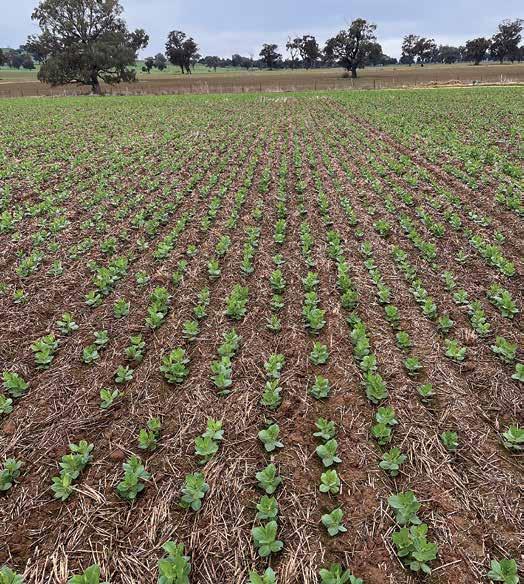
Every grower carries an idea of the perfect season. The one where everything just works. Even establishment, timely rains, enough spray days, fertiliser a touch cheaper, a soft spring, and a straight run through harvest with everything in the bin before Christmas.
That season is real enough in the mind to be motivating — and rare enough in reality to be mythical.
Most growers will get 40 to 60 chances at it, depending on how early they started and how long till they plan to finish. No one knows which year will be the year.
Seasons arrive with different personalities: a start like 1995, rains like 2022, a finish someone’s grandfather remembers from 1958 — all unique in their own way with their own milestones, tragedies and wins.
The point is not to wait for perfection. The point is to build a system that performs in the seasons you actually get.
If the last two seasons have shown anything, it is that modern systems are capable of remarkable things.
Crops were harvested through drought-affected areas that would have failed entirely 30 or 40 years ago. Better genetics, better agronomy, and better technology made the difference.
Progress over perfection matters. A resilient system carries its own margin for error. That’s where harvest comes in.
As Peter Newman has said many times, “We spend all year killing weeds, only to reward the survivors at harvest so we have something to spray next year.”
Combines were built to process grain, not to defend against weed escape. But the back of the machine is where a quiet leak can undermine a whole decade of good decisions.
Seed Terminator builds one thing: a mill that pulverises weed seeds as they exit the combine. There are no extra passes, no sprays, no soil disturbance.
“Harvest is the only time you physically collect weeds in one place,” says co-founder Dr Nick Berry.
“You can either stop the spread or spread the problem. There’s no in-between.”
Ten harvests in, the concept is no longer novel. It is part of the system for many.
The latest AeroImpact 5 generation — built and tested at the company’s R&D hub in Lonsdale, SA — replaces tungsten wear bars with deep heat treatment and cryogenic quenching. The result is lower inertia, longer wear, and consistent kill on ryegrass across tough crops, late finishes and dry starts.
“This isn’t just an upgrade. It’s a rethink of how we apply force, manage wear and give farmers better return per horsepower,” says Nick.
The platform has evolved as well with Case IH and New Holland operators running the updated SmoothFeed 2 system, reporting impressive processing with fewer compromises.
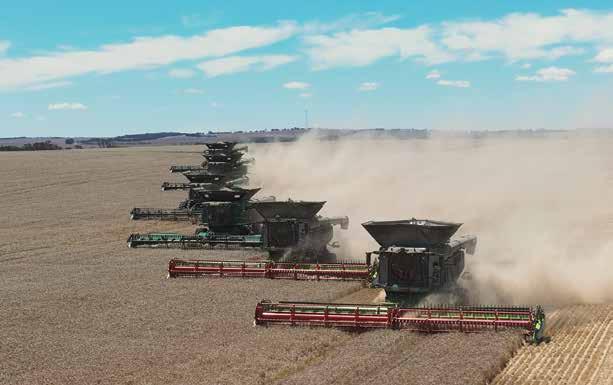
On the Yorke Peninsula, adoption is up around 40%. Western Australia has long been an early adopter of mill technology, purely because they have been well aware of the benefits of Harvest Weed Seed Control as a backline defence in the system.
Ash Teasdale, a long-time mill operator from Victoria, put it plainly:
“We can definitely see the Seed Terminator working, with paddocks very clean and few rye-grass plants coming up after rain.
“In the first year there were a couple of strips we had missed with the Seed Terminator and so you could see them pretty clearly where the rye-grass had germinated, whereas in the rest of the paddock it was all much cleaner.
“It is getting increasingly harder to kill rye grass with some of the older chemicals such as glyphosate, so in a way the Seed Terminator is our last line of defence, cleaning up any weeds that escape all our other efforts.”
It’s no longer a question of whether it works. It’s a question
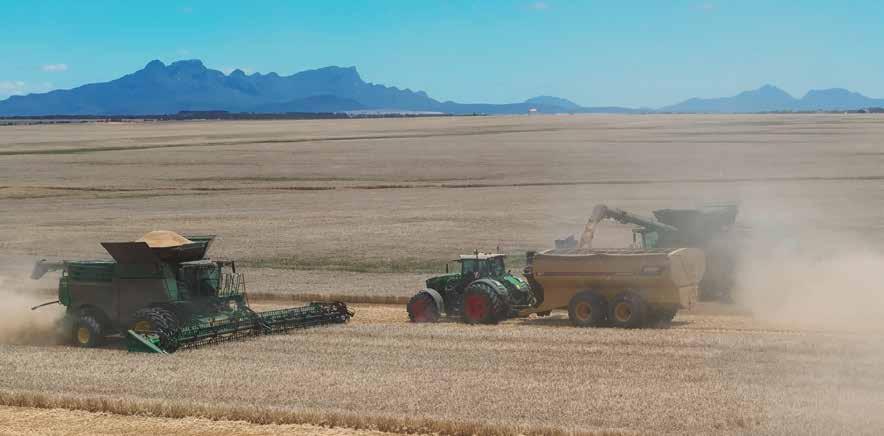
of how quickly it pays back.
The RIM model from AHRI and CSIRO makes this clear. Even moderate reductions at harvest dramatically alter the weed seed bank trajectory. Four to six years is typically enough to push it toward zero — not just for one paddock, but for the system.
Nick sees the mindset shift as crucial.
“This idea that 50% kill isn’t worth doing — that needs smashing. You’re acting on 100% of what enters the mill. It changes the whole equation.”
Rotation freedom is a different kind of insurance
Rotation planning is not about repeating a crop script. It’s about keeping flexibility.
Mechanical seed control stops weeds becoming the reason you have to grow a certain crop. Less carryover. Fewer volunteers and weeds stealing crucial early season moisture, even less mouse pressure. More room to choose.
An agronomist put it this way: “If you’re already winning, interrogate your system. Because this game changes fast.”
Spot spraying, competitive crops, pre-ems, grazing, mills — it’s an integrated play. A Terminator doesn’t replace chemistry. It makes the chemistry work longer. It’s not a silver bullet, but it is a handy tool in the toolbox. Just like the perfect season isn’t guaranteed. But good decisions compound.
Australian made, still made here
One constant over ten seasons has been geography. Seed Terminator builds its machines
To reduce the amount of plant protection agent needed, Amazone offers AmaSelect Spot, an individual nozzle control system that offers part-area, site-specific weed control based on highly accurate spot application maps for the UX 01 trailed sprayer and Pantera self-propelled sprayer with AmaSelect individual nozzle switching.
AmaSelect Spot allows you to spray only in the sections where weeds appear. AmaSelect electric individual nozzle switching in the UX trailed sprayer and Pantera plays a key role in the success of AmaSelect Spot, reducing the use of crop agents by up to 80%.
As the first step, the field to be treated is scanned (using a drone, satellite or sensor boom) and a spot application map created. Depending on the service provider, various processes are used for scanning the area in this first step, such as overflying with a drone, by satellite or via special sensor booms.
In the second step, weeds are spot-treated across the surface
area. All that is required for this is to load the spot application map in the AmaTron 4 ISOBUS operator terminal.
Unlike blanket treatment approaches, AmaSelect individual nozzle switching lets you treat only those areas where there are actually weeds.
Benefits of AmaSelect Spot:
- Precise spot treatment of weeds with a standard Amazone crop protection sprayer.
- Reduction in plant protection agent usage by up to 80% depending on the degree of weed infestation.
- Protection of the environment.
- Minimal residual quantities thanks to exact planning of the application rate on the basis of the spot application maps.
- Prevention of resistance buildup thanks to small spot applications with 100% plant protection agent concentration.
To utilise AmaSelect Spot, AmaSelect has a 50cm partwidth section prerequisite, utilising GPS through a compatible map service provider.
The recommendation for noz-
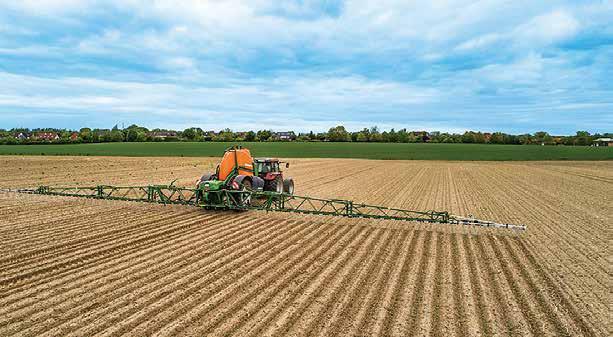
in Lonsdale, south of Adelaide, drawing on local manufacturing expertise — much of it an inheritance from the old car industry. Local suppliers, local jobs, local ingenuity.
“We prototype in the morning and have parts on a machine in the afternoon,” says Nick.
“That’s the advantage of making it here. We are able to learn faster.”
And the story doesn’t stop at the fence line. Machines run in
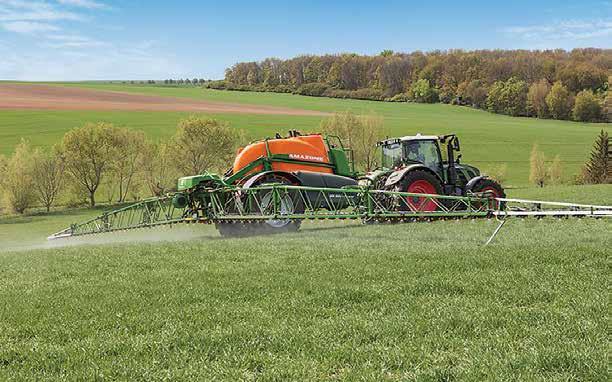
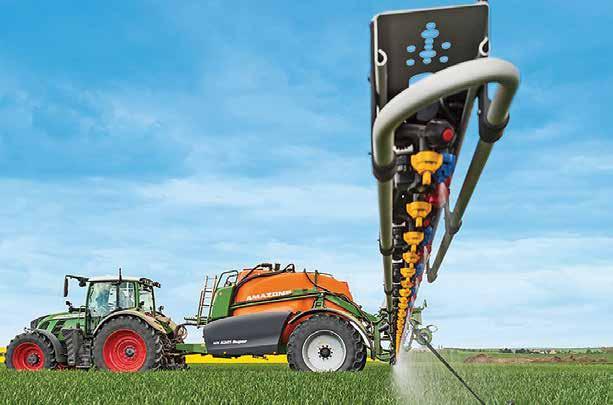
zle alignment of the SpotFan 40-02 / -03 with a choice of 25cm or 50cm nozzle spacing is possible. 40°or 80°/ 90° nozzles must be chosen as 40°nozzles produce a sharper nozzle edge zone. Nozzles without injectors react faster.
AmaSelect provides customers with:
- 50 cm part-width section with automatic GPS part-width section control.
- Automatic adjustment of the nozzle size for changing forward speeds and application rates.
- Flexible switching of the nozzles from the cab when the weather conditions change
or when conditions change between the field edge and the inside of the field.
- Time savings and more comfort for the driver.
- Perfect lighting at night thanks to LED single nozzle illumination.
- Minimal residual quantities and uniform flow speeds thanks to DUS pro.
- Broad application spectrum.
- AmaSelectCurveControl.
- AmaSelectSpot.
- AmaSelectRow.
For users running the AmaTron 4 you can either export the information as a PDF directly from the screen or as ISOXML for upload into your preferred FIMS system.
North America, Europe and Canada. But the innovation is still being forged from home.
A farming business doesn’t need perfection. What it needs is enough good decisions, stacked over enough years, to make its own luck.
Mill tech is one of those decisions. It protects the seedbank when everything else is
stretched. It tidies up the survivors.
It makes rotation easier, not harder. And when that truly good season arrives — the one everyone remembers — it lets growers take full advantage without dragging the weed problem forward.
No farming business can rely on perfect conditions. But you can build a system that is resilient across the conditions you get. Progress over perfection is
worth working toward.
Seed Terminator’s Early Order Program runs until March 2026. It gives time to speak with dealers, plan, and install before next year’s decisions lock in.
“You might be thanking yourself in four years when the seed bank is close to zero,” says Nick. For more information, contact your local dealer or visit seedterminator.com.au.
Croplands, Nufarm’s emerging solutions spray equipment platform, and Kilter have partnered on a distribution agreement bringing Kilter’s autonomous ultra high precision robot, AX-1, to vegetable farmers in Australia and New Zealand, with testing and evaluation being undertaken across key Australian vegetable growing regions.
Kilter’s AX-1 is among the next generation of ultra-high precision machinery, which includes its patented Single Drop Technology (SDT) and autonomous crop-protection for the vegetable market.
As Kilter’s SDT is an advanced AI solution on an autonomous robot platform, the robot applies herbicide to weeds only, depositing droplets every six millimetres into the target area. The AX-1 captures and analyses imagery of the crop, then applies droplets directly on the weeds, saving farmers chemical inputs.
As a light-weight autonomous solution, the AX-1 allows early application of critical sprays on soft soils while also releasing labour, so farmers can focus on high value tasks within the farming operation.
The AX-1 works well in fleets, can easily move between locations and the classifier can switch between varying crop types.
Anders Brevik, CEO, Kilter said tests in Europe showed a significant increase in crop yields.
“This yield increase comes as the AX-1 controls hard-to-treat weeds without causing phytotoxic effects on the crop,” he said.
Sean Mulvaney, General Manager, Croplands, said he had high ambitions for the partnership, along with upcoming research for the new machines on Australian soil.
“Kilter’s technology is unique and unrivalled in the marketplace,” Mulvaney said.
“The first AX-1 machines have arrived in Australia and we are looking forward to adding
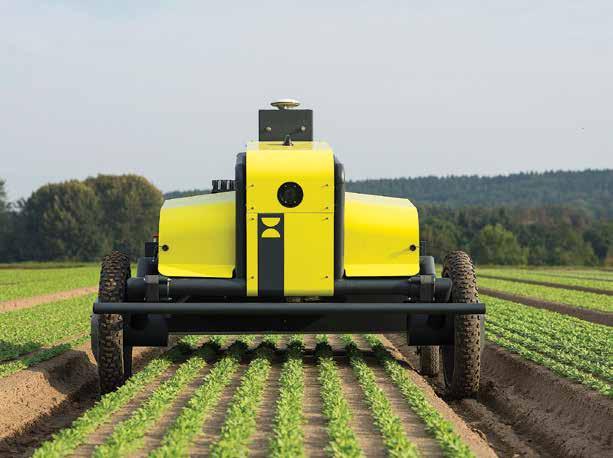
another sustainable solution to the Australian and New Zealand Croplands fleet.
“For the horticulture industry, this new addition complements Croplands’ existing autonomous solution platform, the Robotics Plus Prospr for the viticulture and tree crop market.”
The AX-1 is currently operating in Europe and holds AI classifieds/classifiers (SN to confirm a definition) on 21 different vegetables, including root vegetables and leafy greens. Kilter and
Croplands were recently awarded a Hort Innovations Grant to conduct testing and imagery collection in Australian conditions, including weeds, soils and crop types in Western Australia, South Australia and Queensland.
Partner growers are required now for collaboration so if you are interested in this groundbreaking technology, please register your interest with your local Croplands Territory Manager today.
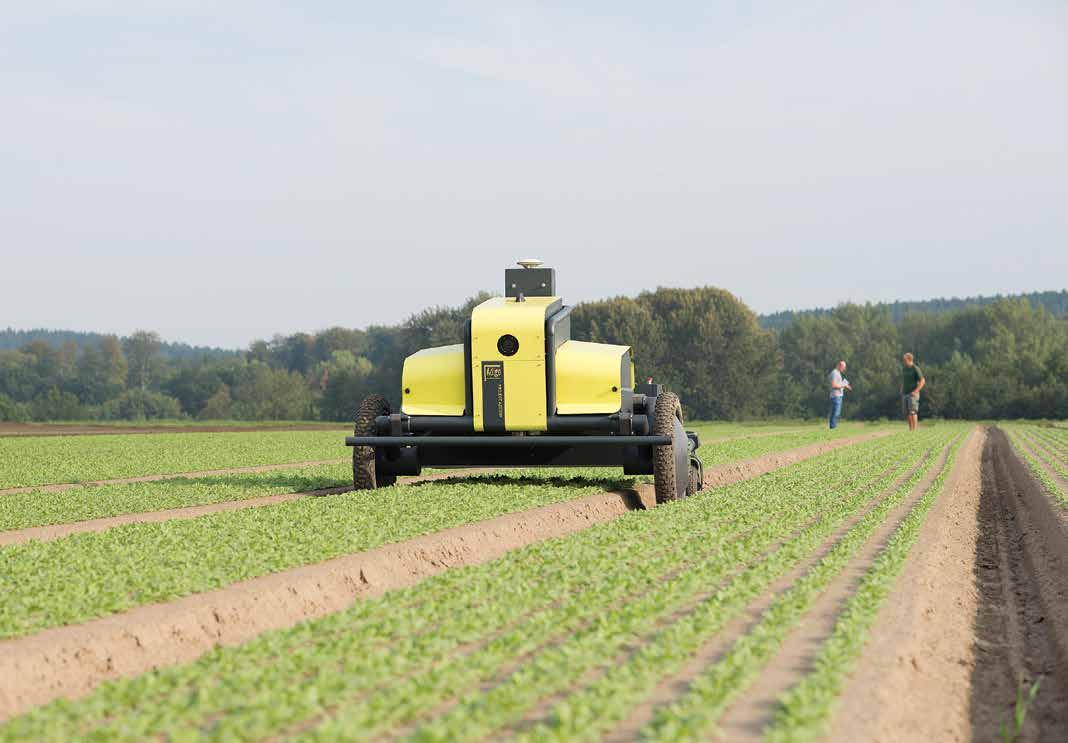
The Massey Ferguson® 500R Series sprayers offer fast, efficient, and easy-to-use spraying solutions for farmers worldwide.
Built on over 60 years of Agco experience in application technology, the MF 500R Series sprayers are based on the 9100 MF and Rogator 1100 and combine durability and flexibility, giving operators more control and confidence in their daily operations.
Designed with user-friendliness in mind, the MF 500R Series features an intuitive layout that balances cutting-edge technology with simple operation, ensuring smooth and efficient spraying. The tractor-style cab is spacious and ergonomic, inspired by the award-winning MF S Series tractors, providing exceptional comfort for long working hours.
With nearly 360-degree visibility, operators can easily monitor
booms and tires without straining. The cab is also designed to reduce vibration and noise, enhancing operator comfort throughout the day. Built into the chassis, the sprayer’s flexible self-levelling, C-Channel design ensures all four wheels maintain optimal ground contact, even during the full 762mm of suspension travel.
The Smart AWD all-wheeldrive system provides Agco’s industry leading power-toground traction, ensuring consistent coverage while reducing pump pressure at lower engine speeds. This results in lower fuel consumption, extended engine life, extended transmission life, a wider peak power RPM range and more reliable spraying performance in a wider range of conditions than some of its competitors.
The MF 500R Series comes equipped with MF telemetry, boom height control and MF guidance as standard. Should
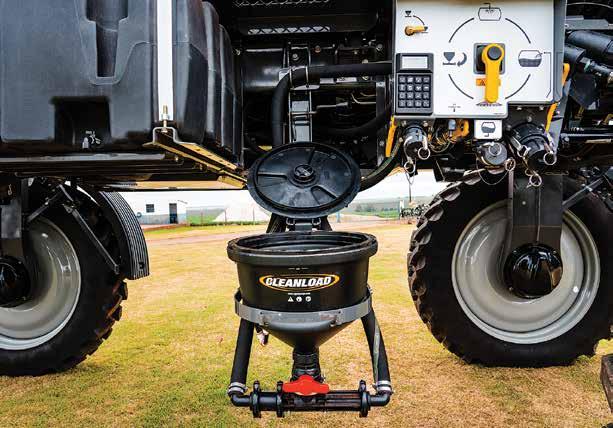
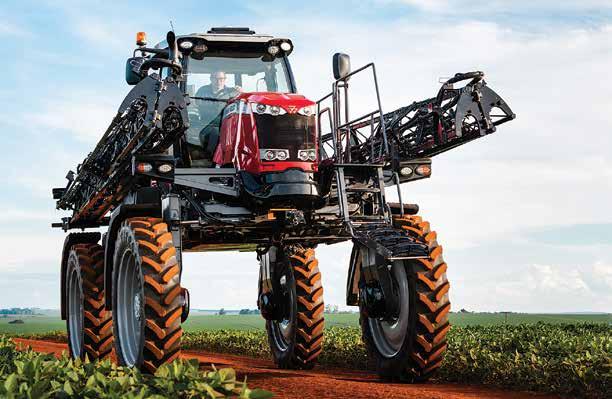
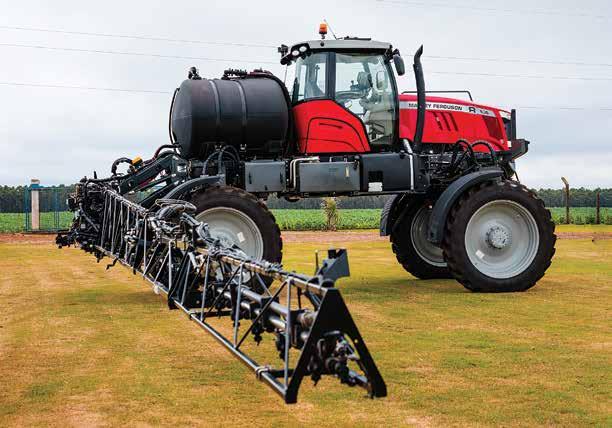
you need even greater precision, it’s easily upgradeable to RTK accuracy.
Maintenance is made simple with easily accessible service points, boom systems that require no lubrication, and a ‘Liquid Logic’ boom recirculate feature that eliminates endcap cleanouts, ensuring a hassle-free ownership experience.
The boom itself is fitted with nine air operated nozzle control valves or 36 electronic nozzle control valves for ultimate section control accuracy.
Owning an MF 500R Series sprayer means you can apply product at the optimal time,
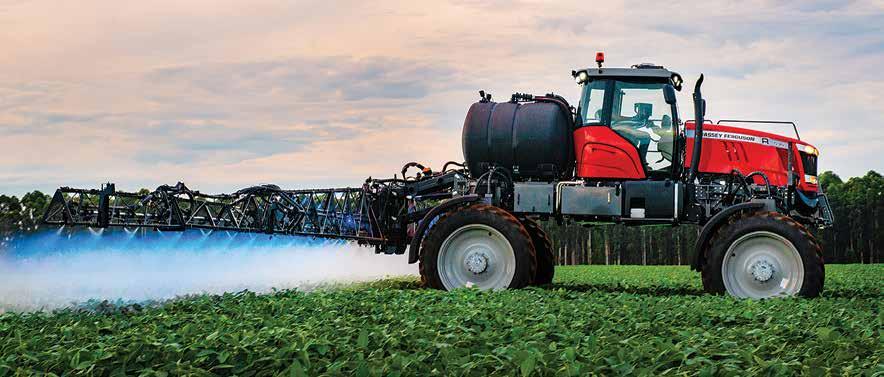
maximizing yield potential and minimizing chemical waste. With its user-friendly design and low total cost of ownership, the MF 500R gives operators the confidence to spray when and where it’s needed, without relying on custom applicators.
The LiquidLogic ® system, standard on every model, primes the sprayer in under 50 seconds without wasting chemicals. Choose between 3000L or 3500L tanks, each equipped with a rotating rinse nozzle, a 350-litre freshwater tank, a 40-litre handwash tank, adjustable agitation, and high- and low-level tank sensors.
The easy-to-use reload station includes a 2” and 3” camlock fill point, an optional 568 l/minute reload pump, a 26.5l HyPro chemical eductor, and an air connection for nozzle cleaning. To track performance, all spray data can be recorded on the terminal and easily saved to a USB drive or downloaded via wireless to PTx Farm Engage for accurate record keeping and analysis.
The MF 500R Series provides the control, flexibility, and efficiency you need to get the job done with confidence, every time.
Goldacres is quietly shaping a revolution. Their latest innovations — the G8 Crop Cruiser Series 3, the AgXeed autonomous sprayer integration, and the Weedetect® NIR weed-detection system — combine to deliver a powerful message: the future of spraying is smarter, more precise, and more sustainable.
A new benchmark in sprayer performance
Goldacres’ G8 Crop Cruiser Series 3 is not just another self-propelled sprayer — it’s a statement.
Built for performance, the G8-S3 boasts an 8,000 L tank with optional 1500L front tank, cutting-edge driveline design, and a refined operator experience. Its structural strength is matched by comfort: a premium, quiet cabin, climate control, and a control interface that brings all essential functions to the fore. As Goldacres describes it, there are “no shortcuts, no limits — just performance”.
What truly distinguishes the G8-S3 isn’t just its scale, but its intelligence. Goldacres has integrated advanced spot-spraying technologies with the option of Weedetect Bilberry (Green on Brown / Green on Green) or Wee-
detect NIR (Green On brown) systems.
An additional 1500L front tank can be optioned to allow either extra capacity or twin product application.
There are several new nozzle systems available to completement the spot spraying systems.
Operators can choose a main spray line in either three tier system, 3TS or 3TS Pro or Pulse width modulation.
For spot spraying systems there’s the choice of plumbing standard, plumbing plus or plumbing dual.
Goldacres’ partnership with AgXeed marks a bold step toward farm automation. By marrying Goldacres’ Prairie trailing sprayers (with capacities up to 6,500 L) with the AgXeed AgBot 5.115T2, Goldacres offers a fully autonomous spraying solution. The AgBot is no toy; it runs on a powerful 115 kW diesel engine, drives on variable-width tracks, and can operate up to 13.5 km/h.
This is more than adding a robot to a sprayer — it’s rethinking the way spraying is done. Without a driver, human error is minimized, fatigue is removed, and operators can deploy their time elsewhere. Crucially,
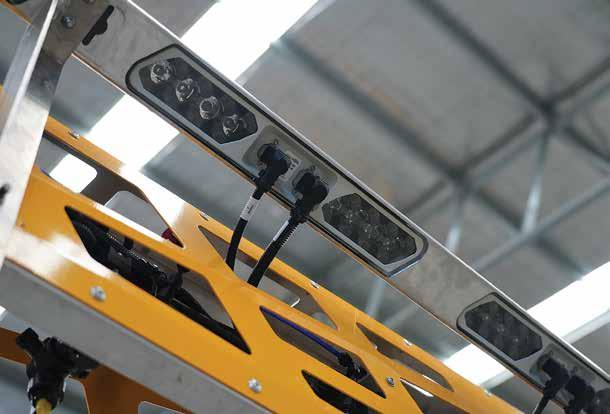
because the Prairie Pro sprayer remains largely standard, Goldacres maintains proven capacity and reliability while extending its reach into the autonomous future.
Perhaps the most persuasive piece of Goldacres’ precision-agriculture offer is Weedetect® NIR, a system that leverages near-infrared (NIR) sensing to spot weeds against the background of bare soil (Green-on-Brown detection). The promise? Up to 90% reduction in chemical use — a staggering figure in an industry where input costs and environmental pressure are intensifying.
Technologically, the system is elegant. Sensors scan the soil
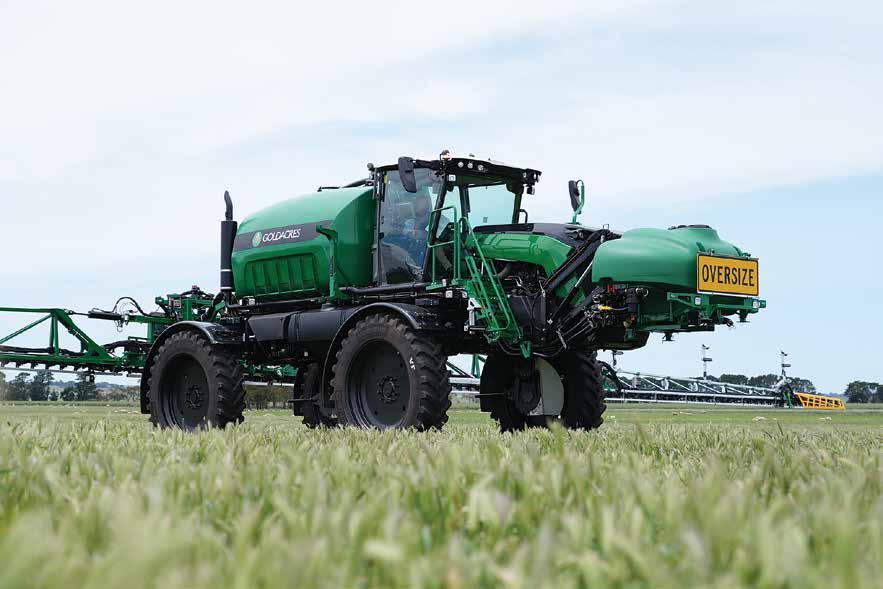
as the sprayer moves (up to 25 km/h), and individual solenoid valves open or close according to detection, applying herbicide only where needed.
The bigger picture: efficiency, sustainability and farm economics
Together, these three innovations — G8-S3, AgXeed, and Weedetect NIR — represent a shift. They allow farmers to spray more precisely, waste less chemical, and operate more efficiently. From an economic standpoint, reduced herbicide usage and fewer refills mean lower costs; from an environmental perspective, limiting chemical drift and volume is an obvious win.
Moreover, by automating key processes, Goldacres empowers farmers to scale operations without scaling labour in the same way. The autonomous AgBot frees up human resources, while Weedetect allows for more targeted applications, reducing over-spray and chemical overuse.
A vision for the next generation Goldacres is not merely selling sprayers — it’s offering a vision of the farm of tomorrow. The G8 Crop Cruiser delivers raw capacity and comfort, the AgXeed integration brings autonomy, and Weedetect NIR provides surgical precision in chemical application. Together, they reflect Goldacres’ ambition: to help farmers cover more ground, conserve more input, and farm smarter — not just harder.
If the future of agriculture lies in doing more with less, then Goldacres may well be showing us the way.
SenseSpray ® green-on-brownspot spraying technology, first released on 50 Series Patriot ® models, is now available to owners of Case IH 30 and 40 Series Patriot sprayers.
SenseSpray uses intelligent cameras to detect growing plants on a soil or stubble background, and when a weed is detected, the system rapidly triggers individual nozzles to spray weeds with pinpoint accuracy.
Case IH announced its collaboration with Australian technology company, Agtecnic, on the
integrated weed control solution in August 2023.
Under the collaboration, SenseSpray was incorporated into purpose-built kits that customers could have fitted to Case IH Patriot 50 Series sprayers. Case IH and SenseSpray have since developed new kits to support older generation Patriot 30 and 40 Series sprayers, making advanced weed control technology available to more operators.
“When the collaboration was announced, there were four kits designed for the 50 Series: the 36-metre tri-fold and the 41m bi-fold, either with AIM Command Flex 2 or without AIM Command Flex 2. Since then, we now have kits that support older 30
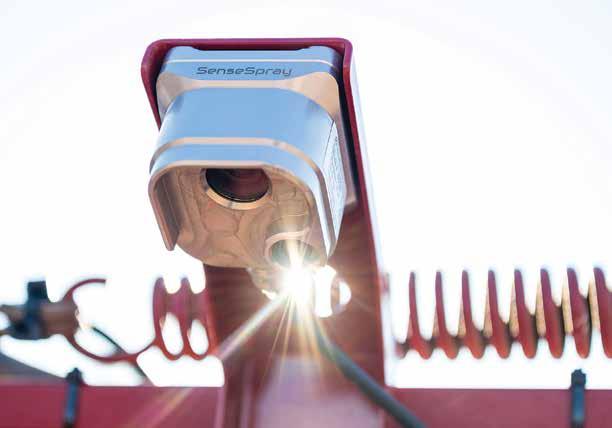
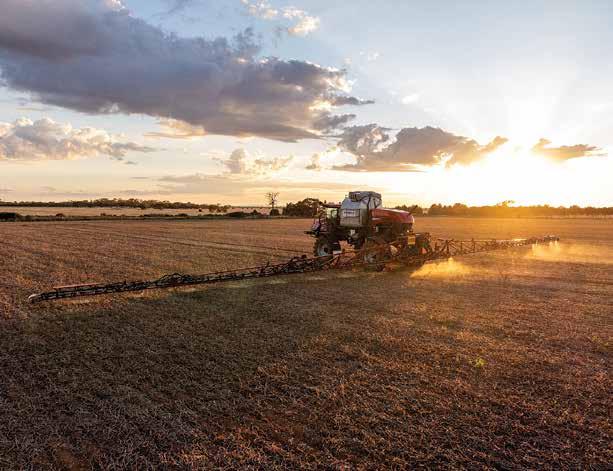
THE
and 40 Series Patriots as well,” said SenseSpray Business Manager, Richard Blanshard.
Richard said there had been a good take-up of the SenseSpray technology in the past couple of years, with customers praising a variety of factors benefiting their business operations.
“First and foremost, they’re saving on their input costs because they’re only spraying where there are weeds. And with that comes increased efficiencies as well. The other thing they comment on is the simplicity. It’s a really simple and easy system to use. And they like being able to switch from broad blanket spraying to spot-spraying mode, really at the touch of a button,” Richard said.
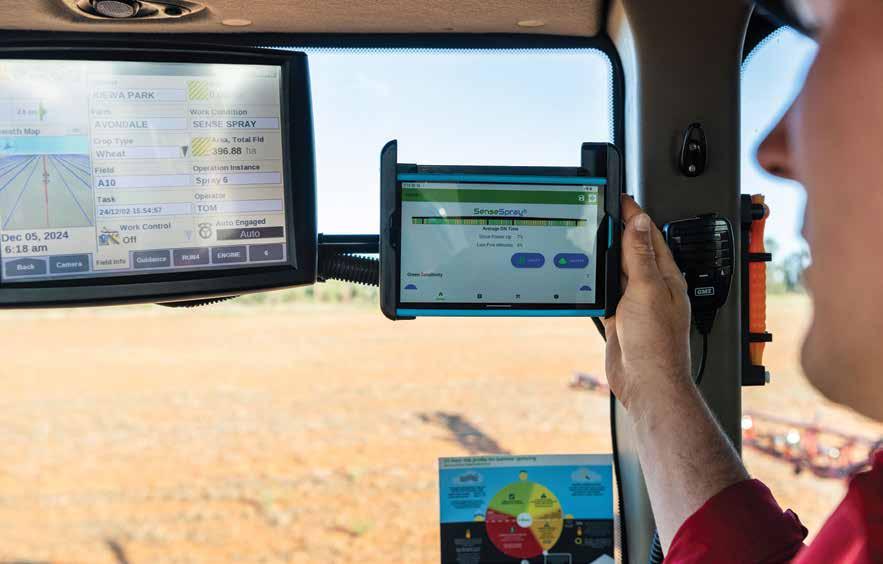
“It takes less than 30 seconds, unlike other systems where there’s a lot more complexity around it and it does take longer to switch between the two modes. With our system, it’s just a matter of switching modes, setting your variable rate pressure, and your speed, and away you go.”
Richard said customers also appreciated the increase in their weed management options.
“If you’re blanket spraying, there’s a lot of chemical and cost involved in that. If you’re able to spot spray, then there’s the flexibility of using a more expensive chemical they may not normally use in a blanket spraying situation. So, this technology is really giving them another tool in their toolbox,” he said.
Wade Smith, Case IH Product & Portfolio Manager – Crop Production, said expanding SenseSpray compatibility to earlier Patriot models marks a significant step forward in making advanced weed control technology more accessible.
“By expanding SenseSpray to earlier Patriot models, we’re enabling more growers to take advantage of precision spraying without needing to upgrade their entire fleet,” Wade said.
“This technology has proven its value in reducing chemical use and improving weed targeting. Now, those benefits are accessible to a wider range of operators.”
Local Case IH dealers can order and fit SenseSpray kits to applicable Patriot sprayer models. For more information visit caseih. com.
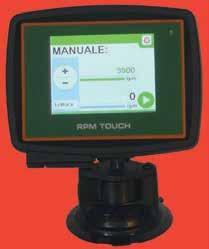
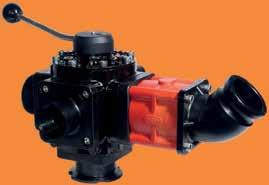
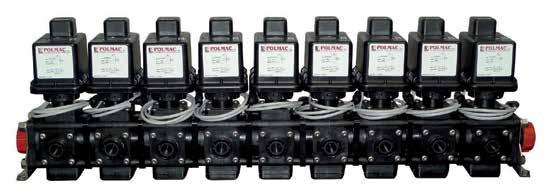
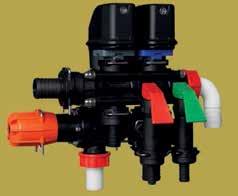

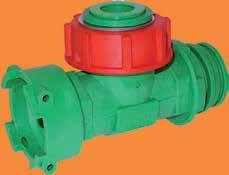
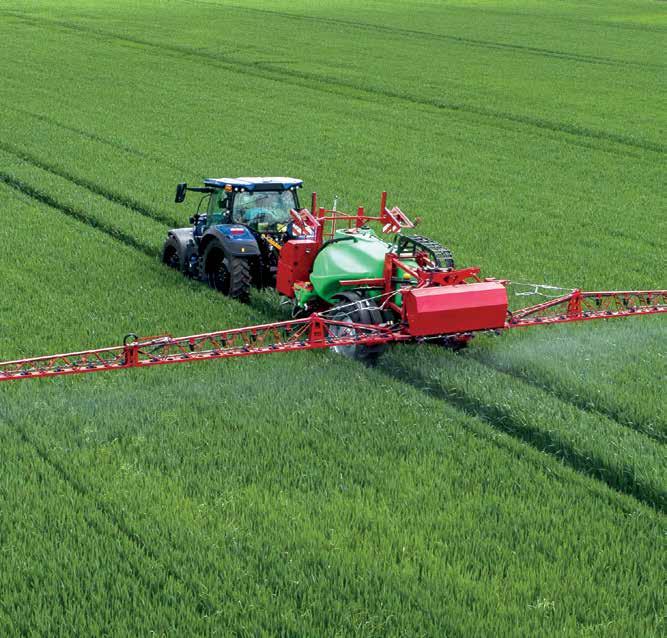
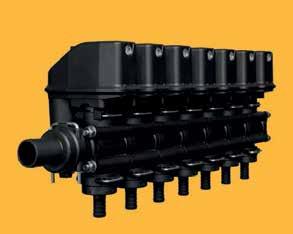
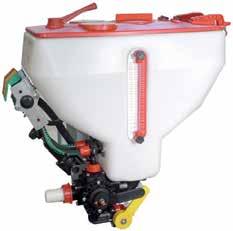
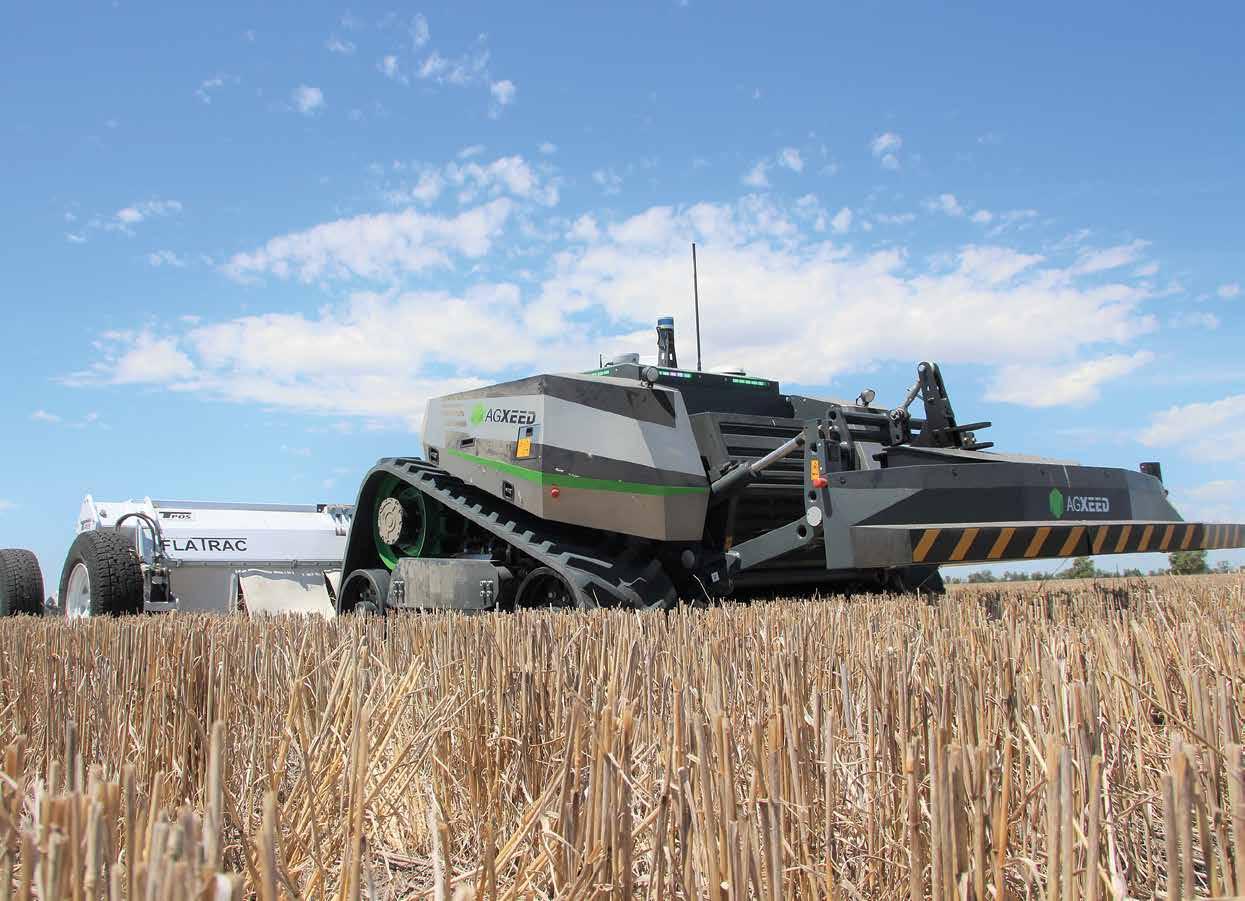
NEW TECHNOLOGY GIVES CONTRACTORS AND FARMERS THE POWER TO ACHIEVE HIGHER YIELDS WITH FEWER INPUTS WHILE PROTECTING THE ENVIRONMENT. IN THIS FEATURE THE INDUSTRY’S LEADING MANUFACTURERS AND DISTRIBUTORS PROVIDE DETAILS ABOUT THEIR GUIDANCE SYSTEMS, SECTION CONTROL, MAPPING, TELEMATICS, ISOBUS AND OTHER PRECISION FARMING PRODUCTS.
LEADING THE WAY: AGXEED, WHERE AUTOMATION AND PRECISION MEET
AgXeed is shaping the future of farming with smart, autonomous technology, built to solve today’s pressing challenges: reducing soil compaction, labour quality and availability, and the need for increasing efficiency.
Claas and Amazone, as AgX-
eed partners and shareholders, invested in autonomous agricultural machinery to help shape the future of farming worldwide. Their commitment supports systems ranging from universal AgBots, semi-automated tractors, smart implements, and conventional manned tractors to harvesting machines—driving financial investment, ongoing development, commercializa-
tion, and the creation of industry standards for advanced automation and autonomy.
AgXeed technologies are helping to tackle the global challenges of sustainable food production with the emphasis on protecting the soil, conserving resources and addressing the shortage of skilled labour. AgXeed’s AgBots are user-friendly, but also lightweight and thus able to work below the thresh-
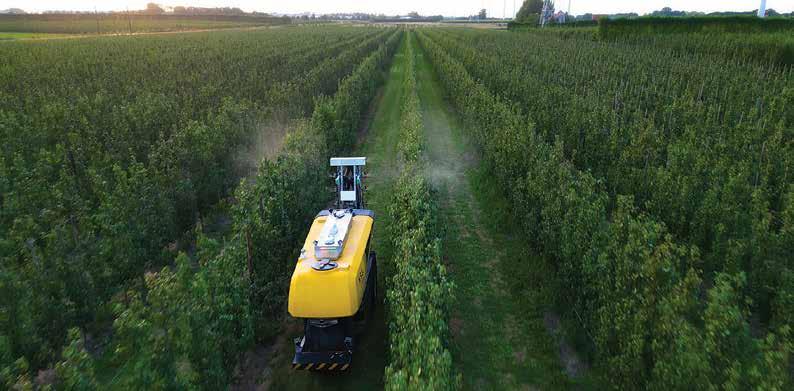
old for irreversible soil compaction. This prevents further soil degradation, promotes healthy plant growth and leads to higher yields. The use of AgXeed software and data modelling enables farmers to proactively control and optimise their operations by seamlessly combining all phases of the seasonal farming cycle.
The AgXeed product range currently comprises three commercially available AgBots with different chassis designs and engine outputs ranging from 75 to 156 hp, which are currently available in over 20 countries, including Australia, Canada and major European regions.
Global agriculture is embracing a new era where autonomy and precision farming deliver higher efficiency, lower input costs, and improved sustainability. At the forefront of this transformation is AgXeed, a company redefining how farmers and contractors work.
AgXeed has already developed a number of AgBot platforms, and has achieved global robotic recognition with two consecutive Tractor of the Year (TOTYBot) awards:
2025 – AgBot 5.115T2: The inaugural TOTYBot award went
to AgXeed’s AgBot 5.115T2, a tracked autonomous tractor for open-field operations. It combines a 115 kW diesel engine, 610 Nm torque, and up to 20 hours of runtime, with soil-friendly tracks and advanced autonomy features like RTK GPS, lidar, and radar.
2026 – AgBot 2.055W3: At Agritechnica this month, AgXeed repeated its success with the AgBot 2.055W3, a compact three-wheel model designed for orchards and vineyards. Powered by a 75 hp Deutz engine, it offers 20-hour endurance, geofencing, and full remote monitoring—ideal for high-value crops.
AgXeed expanded its range with three major innovations at last year’s Agritechnica event, held in November.
- AgBot T2-7 Series: A 230 hp diesel-electric powerhouse with 910 Nm torque, 9 t rear lift, and adjustable track widths for soil protection. Fully autonomous and integrated with TraXwise.
- VCU (Vehicle Control Unit): Connects your existing fleet with TraXwise, turning standard vehicles into part of one smart
system. Mounted on top of the cab and connected via ISOBUS TIM it is more than a steering system. The VCU ensures your fleet can run highly automated pre-planned operations exactly as intended.
- TCU (Tool Control Unit): Makes any implement intelligent and traceable. The TCU monitors the critical functions of your implements during field operations, detecting issues instantly and translating them into real-time alerts through TraXwise.
At the centre of AgXeed’s ecosystem is TraXwise, the heart of autonomy. A smart platform that connects pre-planning, live monitoring, and data management into one system. Farmers can define routing lines, speeds, and implement settings before entering the field, monitor progress remotely, and analyse results automatically.
TraXwise is more than a planning tool, it’s a game changer for farm management.
Automating routine tasks and ensuring flawless execution, it frees farmers from the constant pressure of being in the field. Instead, they can focus on working on their business rather than in it. The five-step workflow (setting up your farm digitally,
pre-planning tasks for consistency, sending plans to AgBots or VCU tractors, meaning you can execuite with confidence and analyse and improve results) means farmers gain the time and mental space to make smarter, more informed decisions. They can analyse performance data, plan future operations and explore new opportunities without sacrificing day-to-day productivity.
This shift doesn’t just improve efficiency, it transforms work-life balance.
Farmers can reduce stress, reclaim personal time, and still maintain full control over every operation. Autonomy through TraXwise means farming on your own terms, with confidence and clarity.
Autonomy means freedom and control. giving farmers back what counts: healthy soil, strong crops, and a business built to last. This isn’t tomorrow’s future-based solution, it is here, working already in fields today. AgXeed is proving how smart, autonomous technology empowers farmers with freedom and progress in the field.
Contact Agxeed@Landpower. com.au to find out more about the AgXeed today.
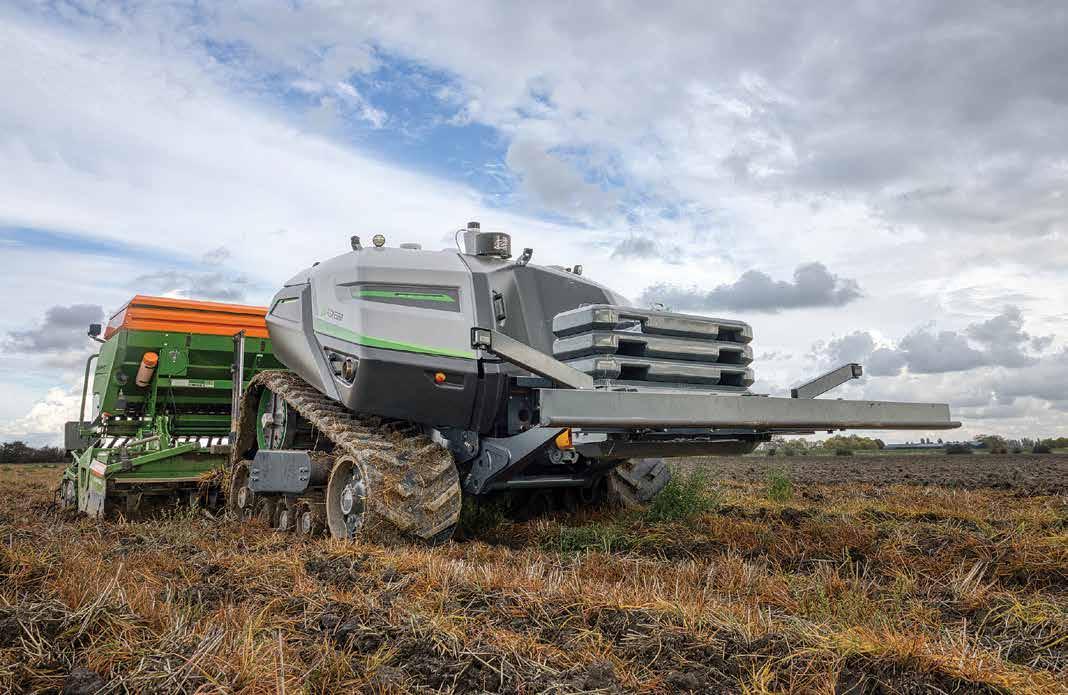
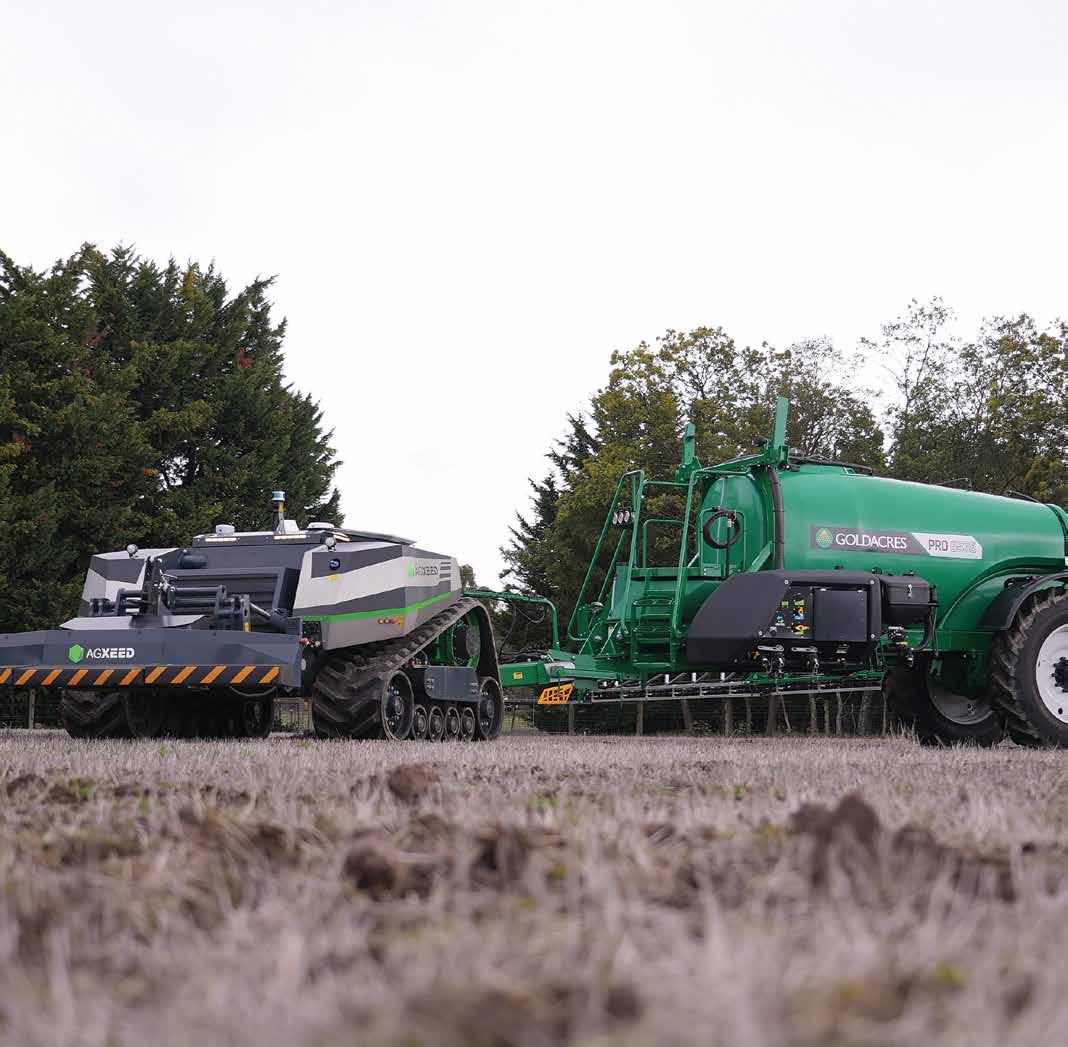
The Agxeed T2 5 Series is an advanced autonomous crawler tractor built for large-scale farming with a strong emphasis on soil protection and operational efficiency.
Powered by a 4.1 L Deutz diesel engine delivering approximately 156 hp through a diesel-electric drivetrain, it can run for over 20 hours on a single fuel cycle.
Its adjustable track width and ultra-low ground pressure make it ideal for Controlled Traffic Farming (CTF) systems, even in challenging wet conditions. The machine supports standard 3-point implements, offers load-sensing hydraulics, and features a bi-directional electrically
driven PTO for maximum versatility.
What truly sets the T2 5 Series apart is its autonomy and precision. Equipped with PPP and RTK GNSS for accurate fail-safe navigation, along with lidar, radar, and ultrasonic sensors for safety, it ensures reliable and secure operation.
Farmers can plan, monitor, and manage tasks remotely via the AgXeed TraXwise portal and app, reducing labour requirements while improving consistency and productivity. This makes it an ideal solution for vegetable and broadacre farming operations seeking automation.
The T2 5 Series also includes ISOBUS integration, enabling
seamless communication with standard ISOBUS-compatible implements.
Building on this capability, AgXeed—together with Landpower—has partnered with Goldacres to integrate their mounted and trailed sprayers into the TraXwise platform.
This allows operators to remotely view and control spraying operations, creating a streamlined, precision-driven workflow that boosts efficiency and flexibility.
TraXwise is more than a planning tool—it’s a game changer for farm management.
By automating routine tasks and ensuring flawless execution, it frees farmers from the
constant pressure of being in the field. Instead, they can focus on working on their business rather than in it.
With TraXwise, farmers gain the time and mental space to make smarter, more informed decisions—analyzing performance data, planning future operations, and exploring new opportunities without sacrificing day-to-day productivity.
This shift doesn’t just improve efficiency—it transforms worklife balance. Farmers can reduce stress, reclaim personal time, and still maintain full control over every operation. Autonomy through TraXwise means farming on your own terms, with confidence and clarity.
Advanced ISOBUS protocol promises to eliminate missed strips and maximize productivity in mowing operations
Massey Ferguson is set to change the way contractors and farmers approach hay making with the introduction of Tractor Implement Management (TIM), an advanced ISOBUS protocol that enables seamless communication between tractor and implement for unprecedented operational efficiency.
At its core, TIM represents a fundamental shift in how machinery works together in the field. Rather than operating as separate units that require constant operator adjustment, TIM allows the implement to control certain tractor functions or perform additional tasks based on tractor movement and operational requirements. The result is a truly integrated system that thinks and responds automatically to field conditions.
For contractors and farmers running front and rear mower combinations, TIM addresses one of the most frustrating challenges in hay making – the missed strips of crop when
turning at headlands. It’s a problem that has plagued operators for decades and traditionally required significant overlap between mower decks to compensate, effectively reducing working width and cutting into productivity with every pass.
The mathematics of this inefficiency add up quickly across a season. Even a modest reduction in effective cutting width translates to additional passes, increased fuel consumption, more machine hours, and ultimately, higher operating costs per hectare.
With TIM-enabled Massey Ferguson tractors paired with compatible implements such as the current MF DM10114 mower, this compromise becomes unnecessary.
The system automatically sideshifts the front mower left or right during cornering, maintaining perfect alignment throughout the turn and eliminating those costly missed patches. Operators can now utilise the full operating width of their equipment without leaving valuable crop behind.
The benefits of TIM extend beyond headland management. When working on sloping ground - a common reality in many hay-making regions - the rear grouper belts on the MF DM10114 will automatically side-shift to accommodate the terrain, main-
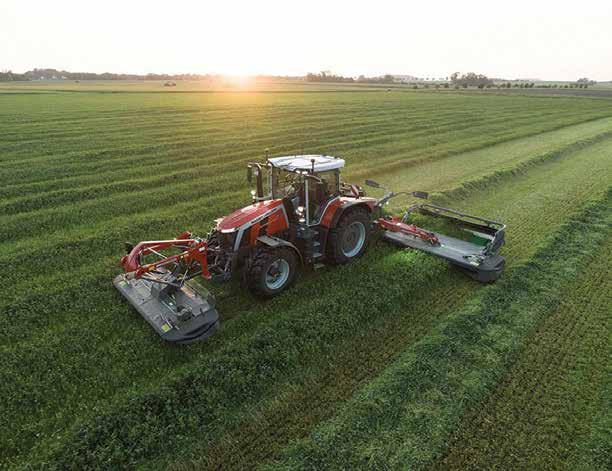
taining optimal swath formation regardless of the slope.
For contractors working across diverse properties, the TIMequipped MF DM10114 comes as a comprehensive package when specified with the technology. Section control functionality delivers improved efficiency in irregularly shaped paddocks, while enhanced accuracy at headlands reduces wasted effort and ensures clean, professional results that clients expect.
The implications for contract operators are significant. TIM technology translates directly into measurable productivity gains—more hectares covered per day, reduced fuel consumption per hectare, and decreased wear on equipment through optimized operation. For busi-
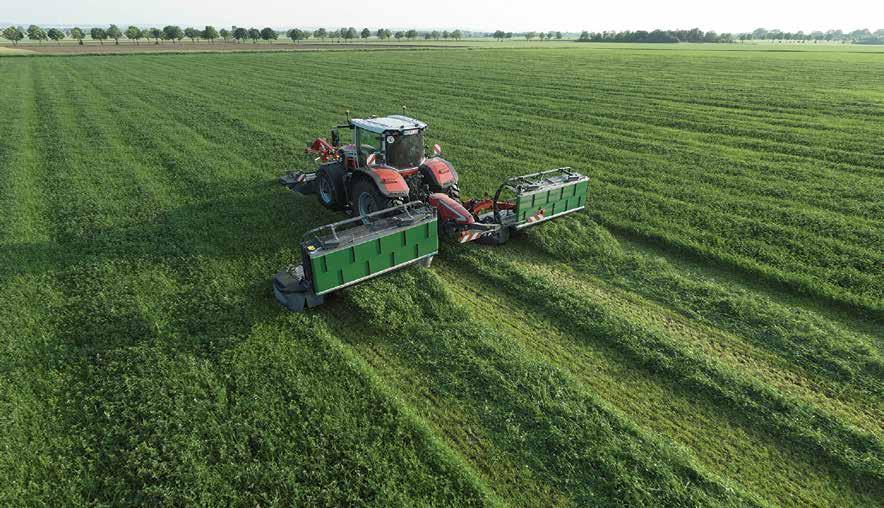
nesses where margins are measured in efficiency gains and client satisfaction, these advantages represent a genuine competitive edge.
Beyond the numbers, there’s the human factor. Operators spend long hours in the cab during peak season, and the mental load of constantly adjusting for missed strips and overlap adds fatigue to an already demanding job. TIM removes this burden, allowing operators to focus on overall operation quality and machine performance rather than micro-managing implement position through every turn.
Massey Ferguson’s commitment to TIM technology reflects a broader industry trend toward integrated, intelligent machinery systems that reduce operator workload while improving outcomes.
As the company continues to expand TIM compatibility across its implement range, contractors and farmers can expect this level of automation and efficiency to become standard practice rather than the premium option.
The technology represents practical innovation focused on real-world farming challenges— the kind of advancement that delivers immediate return on investment through improved productivity and reduced operating stress.
Further details on the official release timeline for TIM technology and the full range of compatible Massey Ferguson implements are expected in coming months.
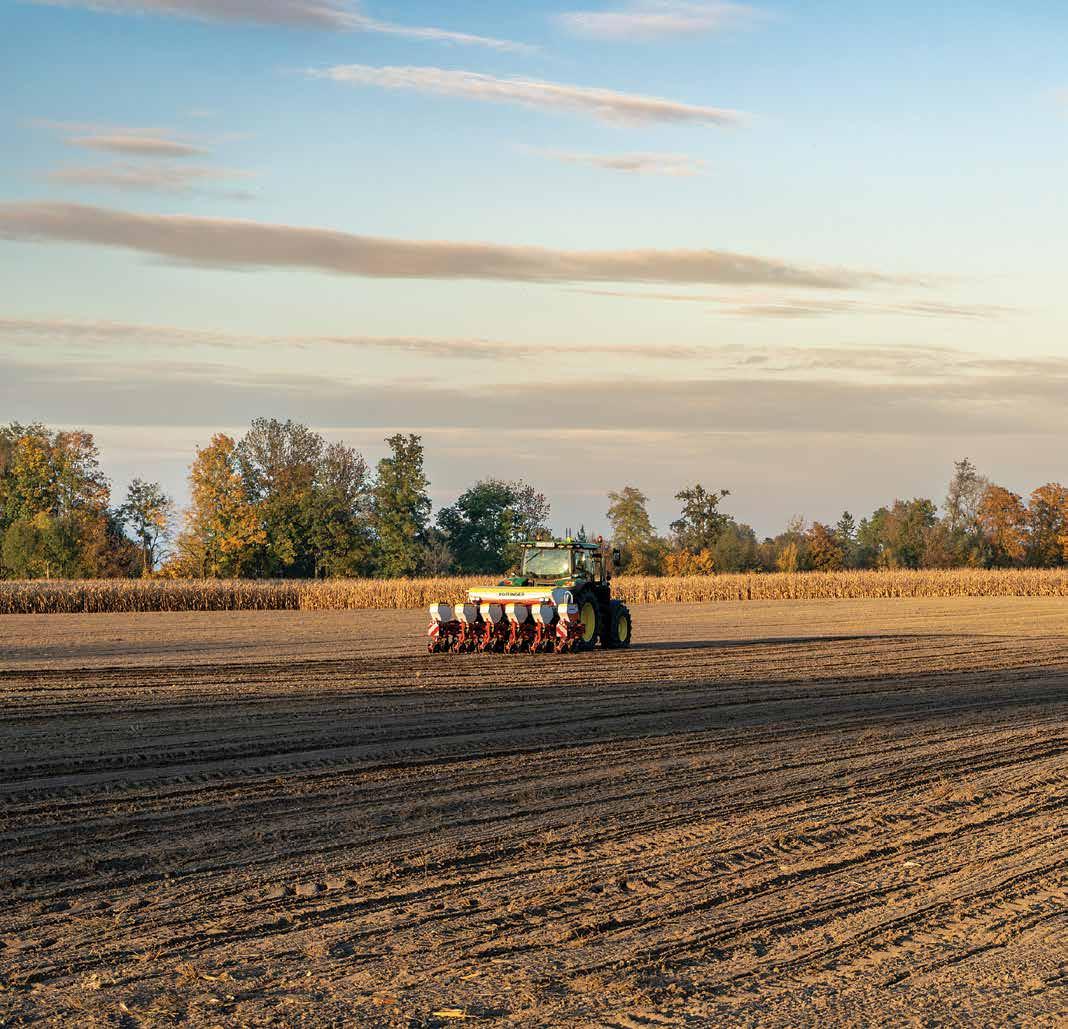
Pöttinger launches prototype of its precision planter
The Puro H 3000 sees Pöttinger make a strong entry into precision planter technology. Ingenious features such as the Dual Disc coulters and adaptable residue clearing tools make this a versatile machine.
The heart of the Puro H 3000 is the metering unit. To achieve the optimum seed placement depth, as well as the best longitudinal and lateral seed distribution, the machine is equipped with a sturdy toolbar and reliable coulter units.
A special composite in the synthetic casing makes the metering unit strong and resistant to
torsion in all ambient conditions, ensuring reliable operation and an extended service life.
The settings are easily accessible and can be adjusted without the need for tools. The metering unit has a two-part design that makes it easy to use.
The cover can be removed without tools, making it quick to change the seed plate and easy to carry out maintenance work.
The 68-litre seed hopper is made of synthetic material and is equipped with a shut-off plate underneath to allow the seed plates to be changed even when the hopper is full.
Up to 900,000 maize seeds fit into the generously sized seed
hopper, enabling the Puro to achieve an extremely high output when planting in six rows.
Large drive wheels ensure reliable traction and smooth operation, even in difficult soil conditions.
For deployment with a fertiliser hopper (1,300 litres), the machine features spring-mounted fertiliser coulters, each equipped with a double-disc coulter. The position of each band of fertiliser can be set individually, independently of the seed row.
The Puro H 3000 has a working width of 4.5 m (transport width 3 m). It has six planter units, and the coulter pressure is 180 kg. With its row spacing of 75 cm, the machine is ideal for sunflower
seeds, maize and sorghum.
Since taking over MaterMacc in 2022, Pöttinger has successfully developed its San Vito (Italy) location into a centre of excellence for precision planter technology.
The new Puro brings together MaterMacc’s many years of experience with Pöttinger’s agricultural engineering expertise and high quality standards.
The agricultural technology specialist from Grieskirchen (Upper Austria) presented the PURO H 3000, which delivers precision, reliability, high output and maximum ease of use, to the public for the first time in Hanover, at Agritechnica 2025.
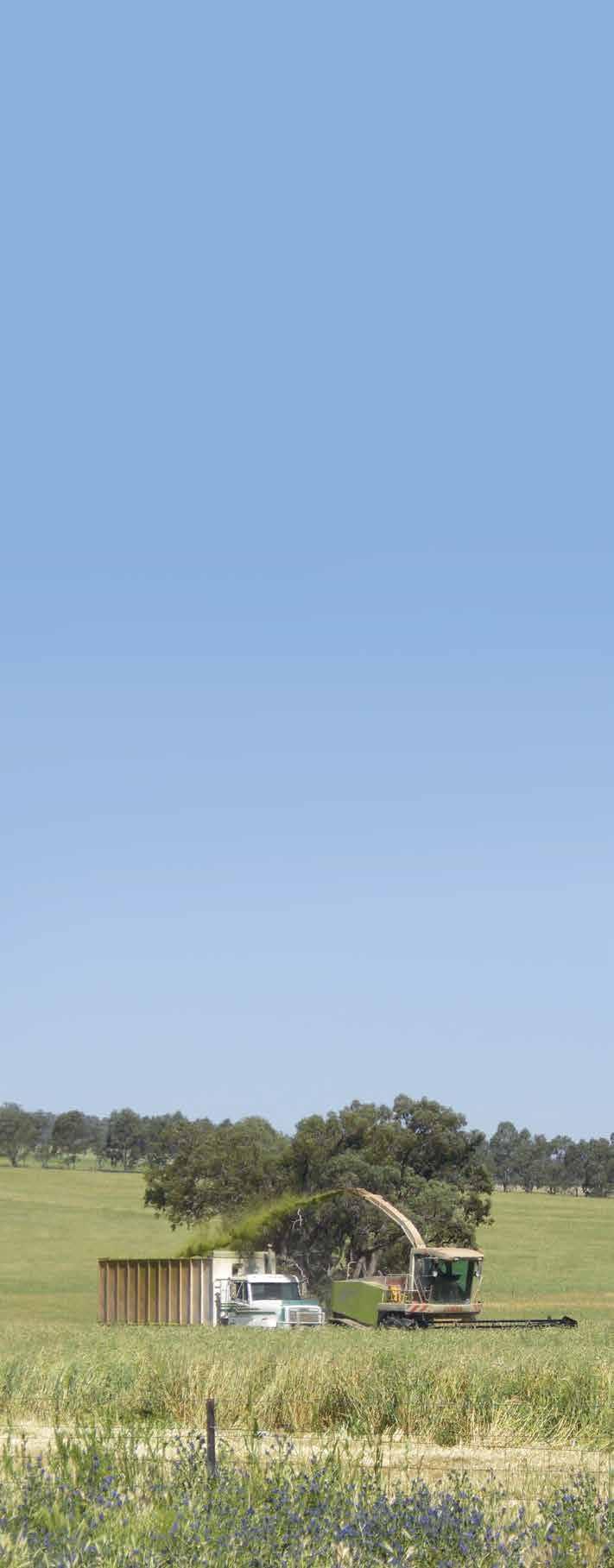
› It’s available free of charge to readers who qualify under the publisher’s criteria and who supply proof of occupation.
› All the latest news, views and information from the industry.
If you are not a registered reader but would like to receive a regular bi-monthly copy, please fill in the details below of your contracting or farming business and post this form to us.
Alternatively, you can fill in the subscription form on our website: www.agcontractormag.com
Australian AgContractor is available free of charge to readers who qualify under the publisher’s criteria and who supply proof of occupation (ie. printed letterhead, business card, invoice etc.) and to others upon payment of the $50.00 annual Australian Subscription (Rest of the World: $65.40 AUD).
› In-depth profiles on contractors and farmers from all across Australia.
› Six issues per year, delivered direct to your door.
› Subscriptions from as low as $50.00 annually to non-industry subscribers.
Please email admin@agrimedia.co.nz or phone +64 3 329 6555 to arrange payment if you are a non-industry subscriber.
Name:
Business/Farm Name:
Postal Address:
Postcode:
Country:
Phone:
Email:
coNTracTor
Main contracting services offered:
Criteria: Broadacre - over 1000ha and/or Sheep or Beef - over 12,000 stock units and/or Dairy - milk over 400 cows (owner or sharemilker)
Total farm ha: No. of dairy cows: No. of beef cattle: No. of sheep: Area in arable crop:
Please sign here if you wish to receive a regular copy of this publication and send the form, together with proof of occupation or cheque to: aML, Po Box 37151, christchurch 8245, New Zealand.
Signature:
Date:
Roesner of Harvey, Western Australia, the manufacturer of the Marshall Multispread, has been in operation since 1900.
Founded by Arthur E. Roesner in Harvey, Western Australia.
In 1956 Arthurs son Roy was approached by Arthur Marshall to build a prototype fertiliser spreader, and by 1961 the first sales of the Marshall spreader were made to the local fertiliser company, CSML (now CSBP)
Today the company is run by Managing Director, Jeffrey Roesner, the grandson of founder Arthur Roesner. Jeff’s two sons, Matthew and Mark are also involved in the business.
Roesner continues to innovate and proves popular with Australian farmers
The company continues to innovate and the Version 3, i4M spreader controller, launched in June 2025 and originally released in 2017, has proved popular with Australian farmers, enabling a cost effective solution for variable rate spreading, machine auto-shut off and coverage mapping. The Version 3 system includes a new auto-calibration feature.
The auto-calibration feature works by taking high speed readings from the spreader loadcell’s as the machine is moving across the field.
If the calibration factor changes due to fertilizer properties such as moisture content or bulk density, the controller will detect the change from the loadcell readings and compensate accordingly. Instead of waiting until the end of the load to detect the calibration factor error, the controller will immediately make adjustments to ensure the correct application rate is applied.
“There is no need to carry out a catch test, as the i4M control will automatically determine the fertilizer calibration factor when the spreader starts work” said Matt Roesner.
D3 Spinner available on new and late model Marshall Multispread machines
Launched in 2022, the D3 spinner system has been independently verified by the Kondinin Group based on the industry standard ACCUSpread testing procedure.
Spread widths up to 36m for Urea and 12m for lime were recorded using the D3 setup.
The D3 spinner system is the result of three year’s detailed
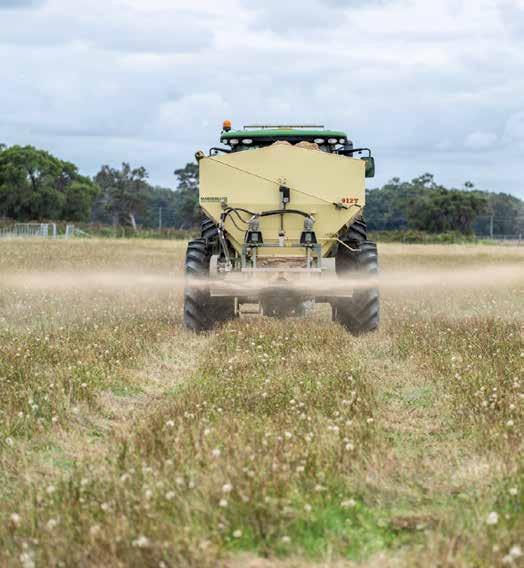
research and development, design and field testing in a range of different field conditions.
The D3 design features a re-designed chute with individual deflectors for granular and non-granulated materials, that ensures accurate placement of the fertilizer onto the spinner disc.
When spreading granular products, a plastic cone is bolted to the centre of the disc to better control the dropzone and prevent re-circulation of particles on the spinner disc.
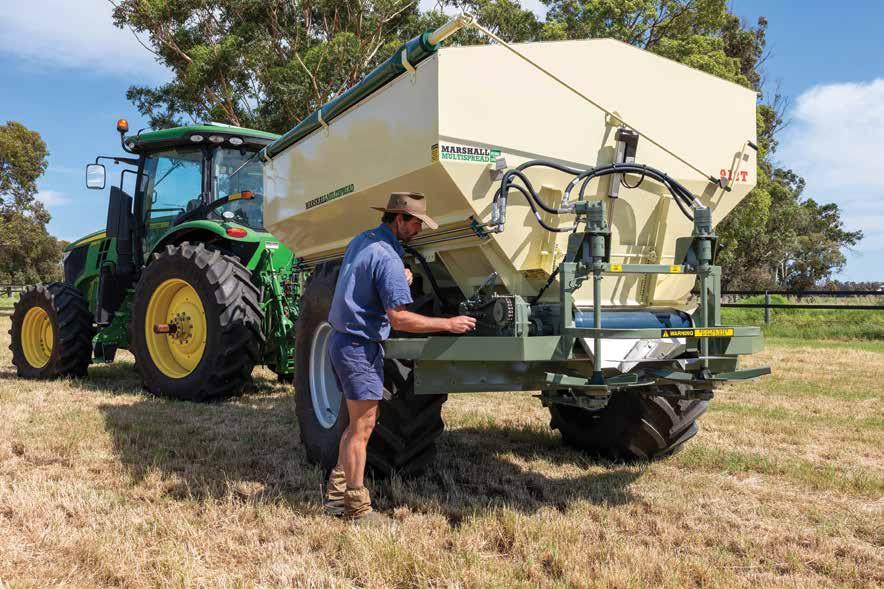
The D3 granular fertilizer vanes were re-designed using computer-based simulations, factory and field testing. There are four vane positions to enable fine tuning of the distribution pattern.
Over the past 3 seasons, Roesner’s engineering team have undertaken field testing across Western Australia with the D3 system to better understand its performance in realworld conditions and with different types of fertiliser. These test results are available from Roesner Pty Ltd or through your local Multispread dealer.
Aside from the spinner upgrade, field test kits are now available to provide confidence of machine performance in the paddock. The field test kit consists of a set of plastic test trays that capture the fertiliser as the spreader traverses over them. The fertiliser is collected and placed in a set of test tubes for visual inspection. The field test kits are a valuable tool for ensuring the correct spinner setup and understanding fertiliser variability.
The D3 system is available as a retro-fit kit for Multispread machines manufactured after 2012. To check the compatibility of your existing spreader, contact Roesner Pty Ltd or your local Multispread dealer.
For more information on the Marshall Spreader, D3 Spinner and i4M Controller call now on 1800 651 288 or visit roesner. com.au.
Since adopting a liquid injection system, the Kratzmann family from Clifton, QLD, has gained greater control and flexibility over their nitrogen program.
Before 2023, they relied on anhydrous ammonia. When production ceased, their choices narrowed to liquid N or urea— and they were reluctant to return to granular fertiliser.
“Liquid N is a little more expensive, but the handling, transport and ease of filling, it stacked up,” Jacob said.
The family crops sorghum and winter cereals and began their transition in July 2023 with the installation of a Liquid Systems (SA) LQS120 module. They replaced the old gas tank on their trailing cart with a 3000 L poly tank and added a 6-section control module. LQS Stacker manifolds and delivery lines were fitted to both their Excel single-disc planter and Orthman 1tRIPr striptill bar, allowing the liquid cart to switch quickly between sowing and tillage equipment.
Jacob’s background in precision agriculture helped simplify the move. “I’d seen LQS systems before and knew they were reliable and well supported. The manuals and backup gave us the confidence to invest.”
There were early challenges,
including pressure issues at higher UAN rates on the strip-till.
“The LQS team replicated our setup in their test facility and figured out that we needed larger lines to regulate pressure. Their support saved us days of trial and error,” Jacob said.
The family is still refining nitrogen rates. In their first season, they applied 100–300 L/ha depending on crop and fallow conditions. Winter crops now receive around 100 L/ha, and summer sorghum planted into long fallow receives higher rates, 150L/ha. UAN is applied in February/March using the strip-till for the following summer crop, while the single-disc applies N ahead of winter cereals. This timing helps manage seedbed condition, moisture retention and herbicide carryover.
With their upfront application strategy, they no longer need in-season fertiliser spreading. Previous attempts at top-dressing sorghum had caused crop burn, so they now rely entirely on the initial application for their summer program.
Strip-tilling remains essential for managing their heavy Vertosols (black soils), helping break up soil, improve structure at planting and give seedlings early access to moisture.
Even early in their transition, Jacob has seen clear gains in efficiency and safety. The LQS Section Control, run through
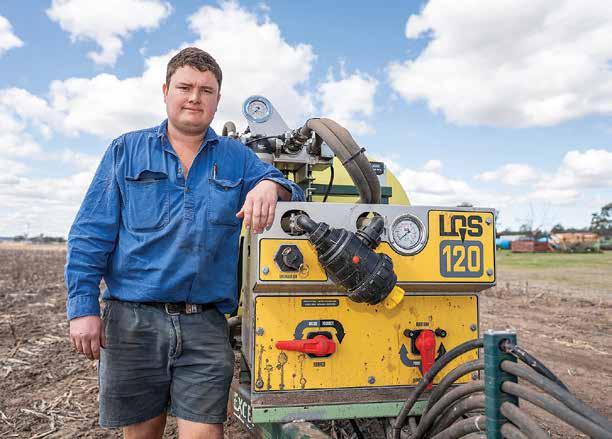
a GreenStar controller, has reduced overlap and waste— particularly important in paddocks shaped around rivers and lagoons.
“We identified that even with small savings in fertiliser, over time we could justify the investment”, says Jacob.
On-farm bulk storage has also delivered major benefits. Three interconnected 16,000 L tanks allow delivery of 29,000 L of UAN at a time. “It keeps us going without waiting on trucks, and delivery drivers always comment on how easy it is to use,” Jacob said. Compared with the hazards of handling gas nurse tanks, the system is simpler and far safer.
This flexibility has already paid off enabling them to pivot quickly in response to season conditions. In a season following a poor winter crop and dry spring, forecast rain allowed them to pivot into a late sorghum crop.
“We already had liquid on hand, so we could fertilise and plant straight away.”
Their filling system—a flattop trailer with an 11,000 L water tank—allows fast, mobile refilling between paddocks, cutting refill time to around 10 minutes. “It’s a one-man job now—less mucking around and more time in the tractor,” Jacob said.
A 250L flush tank on the back of the trailer ensures nightly flushing is quick and easy, preventing corrosion and reducing maintenance down time.
Jacob recommends that anyone moving to liquids prioritise flexibility. “Set it up so you can use the system across multiple implements. You don’t need a pump on everything. Think about what you’ll need in the future and let the system grow with you.”
For the Kratzmanns, that approach has maximised value, reduced equipment duplication and delivered a safer, more precise nitrogen system that supports both their cropping program and long-term strategy.
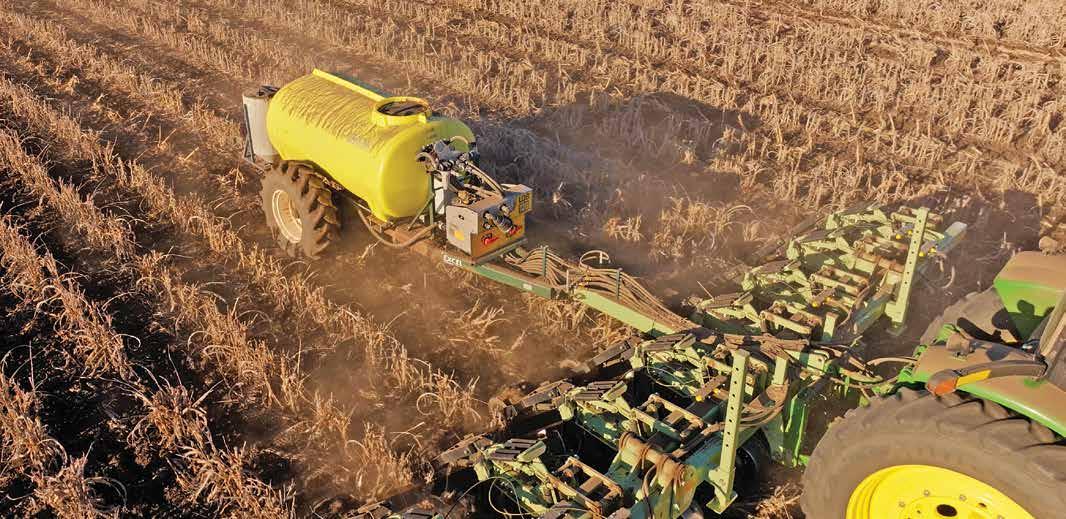
When it comes to running multiple machinery applications and implements, less really is more for Brookstead district farmer Peter Black.
While many tractors today run three or even four displays, Peter uses an integrated after-market system that gives him all-in-one control of steering, planting, application and yield monitoring across his entire machinery fleet.
Peter farms 1500 hectares of winter and summer crops with his wife, Michelle, and son and daughter-in-law, Matthew and Danica, about 60 km south-west of Toowoomba. A third-generation farmer, he returned to the family property, Cecilvale, after Dalby Agricultural College in the mid-1980s. The Blacks were early adopters, shifting to zero-till in the 1990s and controlled-traffic farming in the early 2000s, driven in large part by the adoption of automated steering technology.
“We started with AutoFarm guidance systems in 2003 and then Ag Leader after they purchased AutoFarm in 2009,” Peter says. “AutoFarm was way ahead of anything else at the time, and Ag Leader has continued to improve the technology with every generation of SteerCommand. We’ve had a very good run with Ag Leader and great service from our local dealer, so we’ve never had a reason to change.”
That long-standing commitment extends to the team supporting them.
For more than two decades,
the Blacks have worked with Dalby-based Ag Knowledge Australia, renamed Darling Downs Precision in 2022. Today, Ag Leader’s SteerCommand automated steering is fitted across their fleet—including their John Deere 8370RT, 8270R and 8330 tractors, Case IH Patriot 4430 sprayer and Case IH Axial Flow 7240 harvester. The combine also carries an InCommand display for autosteer and yield monitoring.
Peter has never been tempted to unlock factory-fitted systems on new machinery.
“We try to buy the best of what we need, and we happen to like green tractors, red sprayers and harvesters, and Ag Leader,” he says. “What frustrates me is seeing farmers wrestling with tech that doesn’t work or won’t talk to other displays. We use Ag Leader because it works and it makes things easy. And once you buy it, it’s yours. No yearly subscriptions.”
At the centre of the Ag Leader platform is the InCommand display, a high-visibility touchscreen that controls steering, application, and yield monitoring, complete with four camera inputs and split-screen capability.
“It’s extremely user-friendly,” Peter says. “It does what we want, it’s easy to upgrade and it doesn’t slow down as you add more functions.”
That simplicity extends to the rest of their equipment. Alongside SteerCommand, the
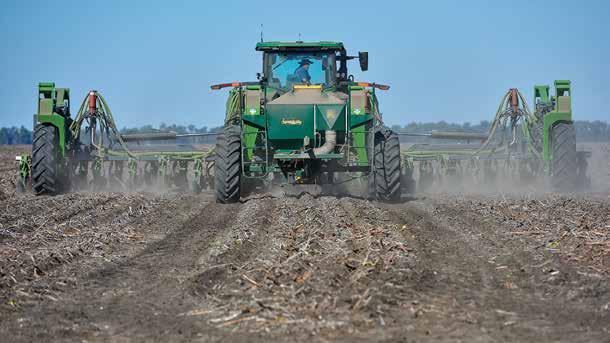
Blacks use Ag Leader’s planting and application products with their 16-row Norseman planter, 16-row Orthman 1tRIPr strip-till bar, 12 m BOSS disc planter, and Simplicity 4000TR airseeder. They adopted strip-tillage in 2012.
“Strip-till is a great compromise between zero-till and cultivation,” Peter says. “You get a beautiful seedbed, perfect fertiliser placement and better water infiltration, but only disturb a third of the soil surface.”
Their Norseman planter features SureForce hydraulic downforce and SureDrive electric drives.
“We wanted individual row control, downforce regulation and swath control,” Peter says. “We could’ve chosen another brand that had everything built in, but we wanted to stick with our InCommand display, so we went with Norseman. Some people are happy with three or four displays in the cab. We want a maximum of two, ideally just one, like in our sprayer.”
SureForce automatically adjusts downforce 200 times per second, delivering consistent planting depth across changing soil conditions.
“If you’re upgrading a planter, SureForce is the best money you
can spend,” Peter says. “It stops sidewall compaction and keeps the trench from turning into a brick. That affects emergence, root development and yield.”
SureDrive maintains a constant planting rate and delivers precise row-by-row shutoff.
“A lot of our paddocks aren’t square, so overlap can be a real issue,” Peter says. “AutoSwath prevents double planting and gives you a nice even crop. It’s reliable and easy to use.”
The Blacks also rely on AgFiniti for connectivity and SMS for data analysis. AgFiniti automatically syncs guidance lines, maps, machine data and satellite imagery across connected machines. Yield and application maps flow straight into SMS to support prescription creation.
“When you turn the header off, all the data just shoots to the cloud,” Peter says. “I download it in the office and move it to SMS. It’s just so easy. SMS keeps all my planting, spraying and harvest records. No writing anything down.”
The next step for the Blacks is adopting field prescriptions.
“We’ve got all the gear for variable rate. We just need someone with the time and ability to interpret the yield data,” Peter says.
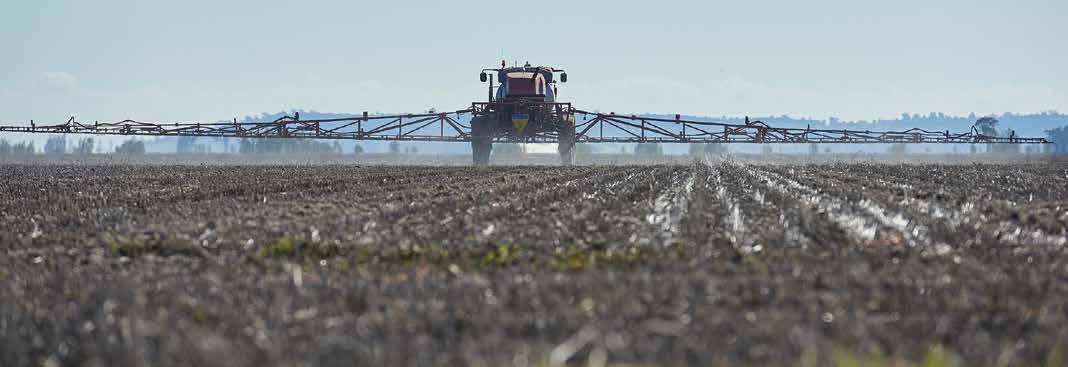
Summer is notoriously hot and dry in Australia. Don’t wait –We have licensed drillers standing by to help secure reliable groundwater.
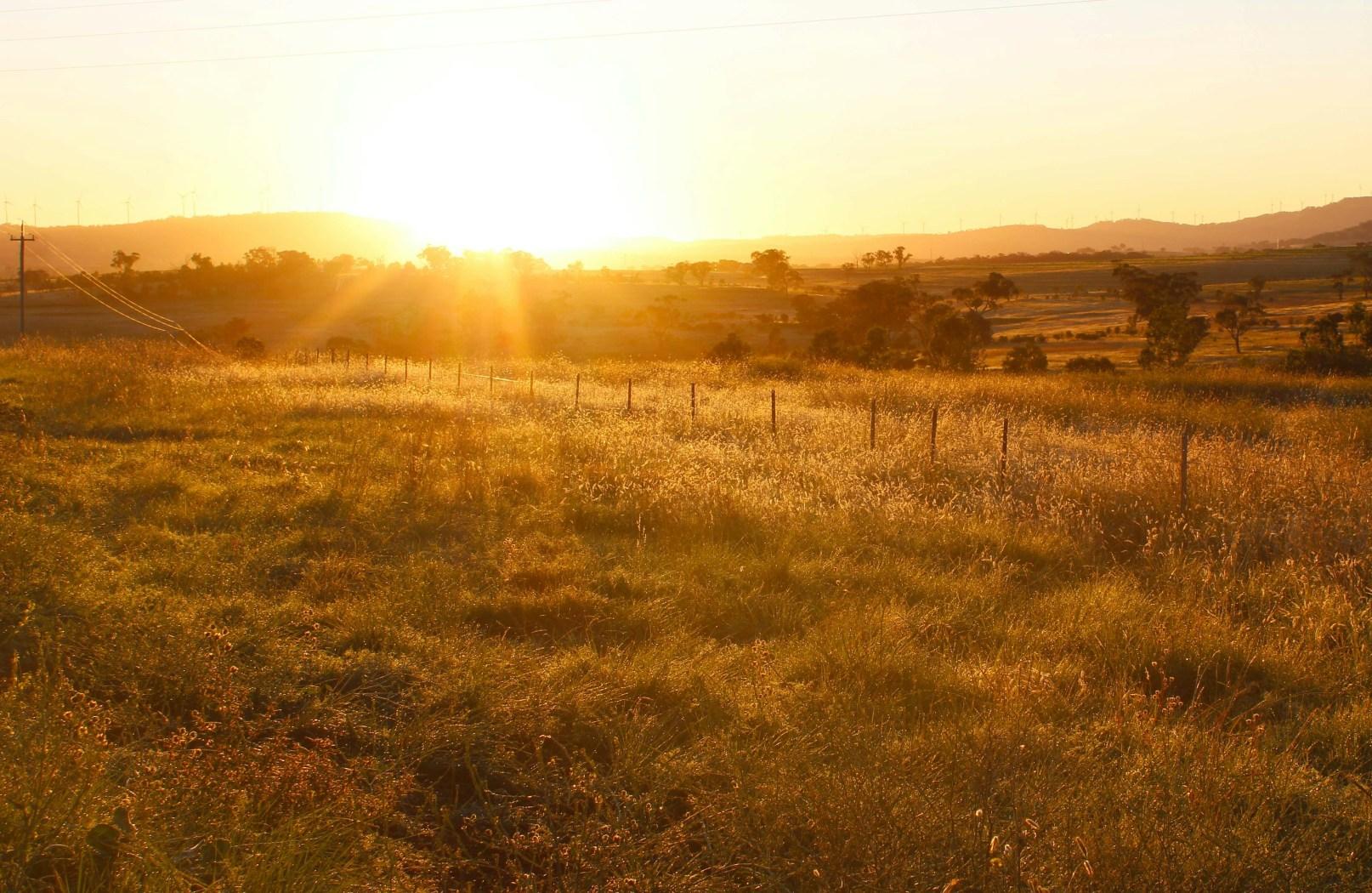

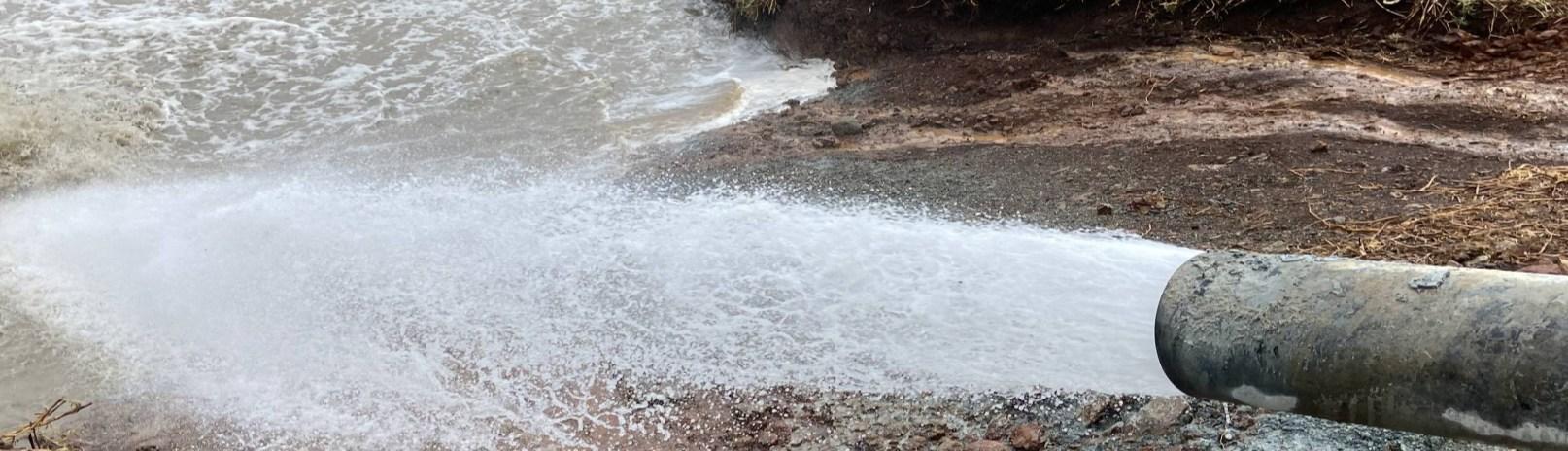
Providing long-term drought resilience strategies and implementation
its deeper geological water bearing structures and geophysical data.
Stage 0: Start with a FREE Potential Groundwater Assessment that gives you a clear picture of your property’s water potential.
Stage 1: We create detailed maps and use advanced analysis to pinpoint the most promising bore sites.
Stage 2: Our team visits your property with specialized instruments to confirm results, mark exact drilling locations and depths, and provide a Complete Final Report.
Stage 3: We can connect you with a trusted, licensed driller, if you don’t have one and we guide the process from start to finish, ensuring you get the best possible water outcome
Most farmers will tell you that technology only matters when it quietly gets out of the way—when it helps the job run smoother without demanding extra attention. That principle has guided Valtra’s approach to smart farming for years, and it’s why one recent European field study ended up confirming something Valtra operators already knew: this is a tractor designed to feel instinctive.
Three respected agricultural publications joined forces in Denmark to compare the latest autoguidance and automated headland systems across seven leading tractor brands.
Their task wasn’t to crown the flashiest tech, but to see which system genuinely supports the operator in the cab. In that realworld environment, the Valtra Q285 didn’t just edge ahead - it set a new benchmark for usability, scoring higher than every competitor by a wide margin.
The reviewers noted that while all modern tractors now offer solid guidance packages, Valtra’s system stood apart because it behaved the way a driver expects it to. The SmartTouch
interface responded quickly, loaded in seconds, and presented tools in a layout that needed virtually no learning curve. Instead of burying functions in layers of menus, Valtra kept the essentials visible and the interface uncluttered. Even the smallest touches – like consistent on-screen help prompts— helped operators stay focused on the work rather than on the screen.
That same philosophy flows into Valtra’s automated turning and headland management.
SmartTurn, working alongside Auto U-Pilot and Valtra Guide, removes nearly all the manual steps that usually happen at field edges. Once the field boundary is defined and the turning radius calibrated, the tractor handles the transitions with a level of precision that simply isn’t possible by hand. The driver stays in the seat, but no longer has to wrestle the steering wheel at the end of each row. The result is cleaner lines, repeatable accuracy, reduced compaction, and a lot less fatigue.
Four turning styles are available - U-turn, part-field, K-turn, and Y-turn - giving operators flexibility that matches whatever
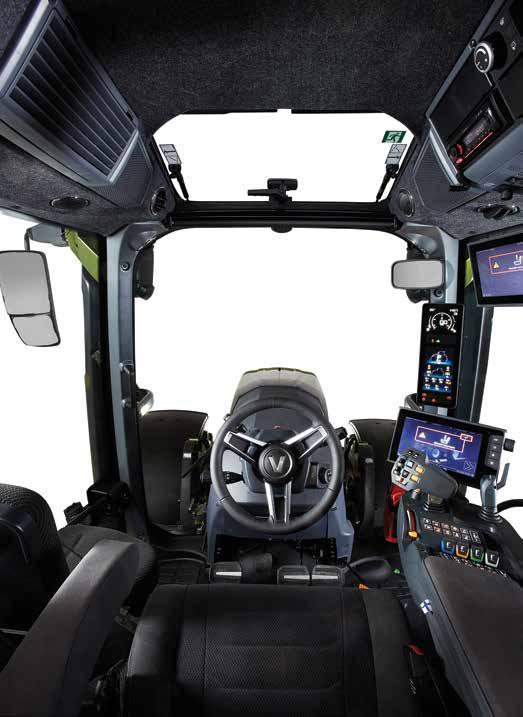
the field and implement demand. Some require generous headlands, others barely any. Mounted tools, trailed tools, mixed setups - the system adjusts seamlessly to each, acting as a quiet partner rather than another system to manage.
That same idea of invisible precision is expanding even further through Valtra’s latest Section
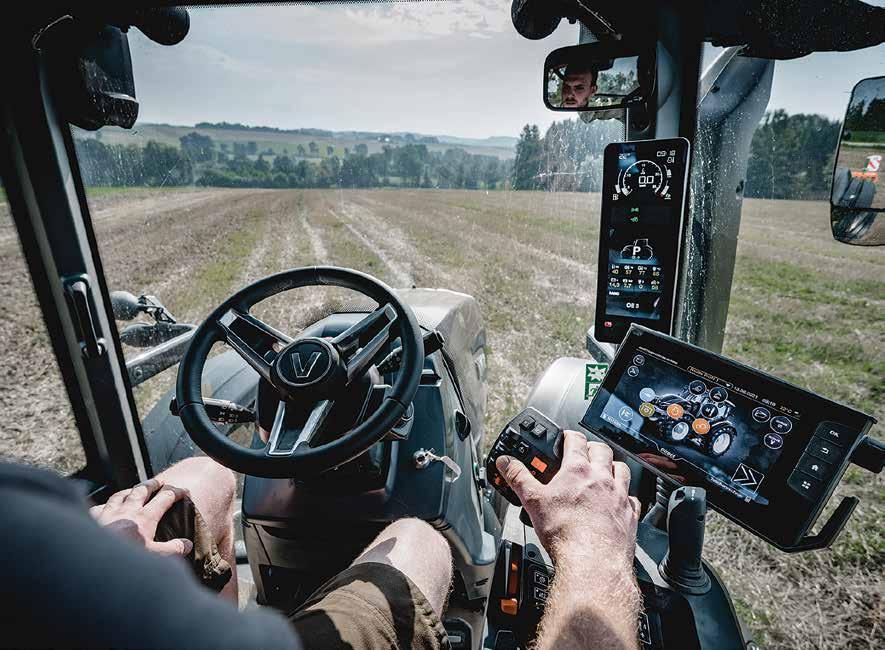
Control upgrades. Where older systems divided a boom into a few dozen sections, the new Section Control 96 can manage up to 96 individual zones with the Multiboom feature controlling as many as three booms at once. For drills, sprayers, and combination implements, the tractor can now apply seed, fertiliser and micro-inputs with exceptional centimetre-level accuracy across complex hopper systems. In irregular fields, where overlaps and misses traditionally cost time and money, that precision becomes invaluable.
Everything is controlled through the same SmartTouch terminal - no extra screens, no extra controllers, no juggling between systems. Operators simply tap, adjust, and carry on. It’s this quiet integration that marks Valtra’s approach: letting advanced automation happen behind the scenes while keeping the cab calm, intuitive and familiar.
The Danish trial may have provided the numbers and rankings, but the result really reflects a deeper design philosophy.
Valtra isn’t trying to make the most complex tractor - it’s building the one that feels like it understands the person driving it. When a machine behaves that naturally, the technology doesn’t feel like technology at all. It just feels right.
For more than two decades, Equalizer has been engineering some of the most advanced seeding machinery in the world. Founded in South Africa and proven in the toughest of environments, the company’s range of broadacre seeders and air carts has now found a strong foothold in Australia—where durability and precision are non-negotiable.
Distributed nationally (excluding Western Australia) by Waringa Distribution, Equalizer’s lineup includes tine seeders and tow-behind and tow-between air carts—each designed to deliver consistent, high-accuracy performance across varying soil types and conditions.
“We’ve been working closely with Equalizer for several years, particularly in testing and refining the 24-metre tine seeder bar,” says Sam Abbott, General Manager of Waringa Distribution. “It’s been through extensive real-world trials on our own farming operations and continues to exceed expectations every season.”
With the rising cost of seed
and fertiliser inputs, getting seed placement right is crucial for maximising germination and yield. The Equalizer tine seeder bar is engineered to deliver pinpoint seed depth control and optimal fertiliser placement— helping growers make every pass count.
Available in 9m, 12m, 15m, 18m and 24m widths (with 273mm or 300mm tine spacing), the bar is built for strength using Domex steel throughout its 10mm-thick frame and tine assemblies.
Large in-frame flotation wheels enhance straight-line tracking and stability, even across challenging terrain.
Equalizer’s tine system is one of its standout features. The fertiliser and seed placement mechanisms are separated into two semi-independent components, allowing for fine-tuned depth adjustments. The quick depth adjustment clip offers nine precision settings—requiring little to no tools for changes in the field.
“The accuracy of the seed placement is outstanding,” Sam notes. “It’s an incredibly straightforward, farmer-friendly system.”
Each tine unit also includes a semi-independent breakaway mechanism, which allows the
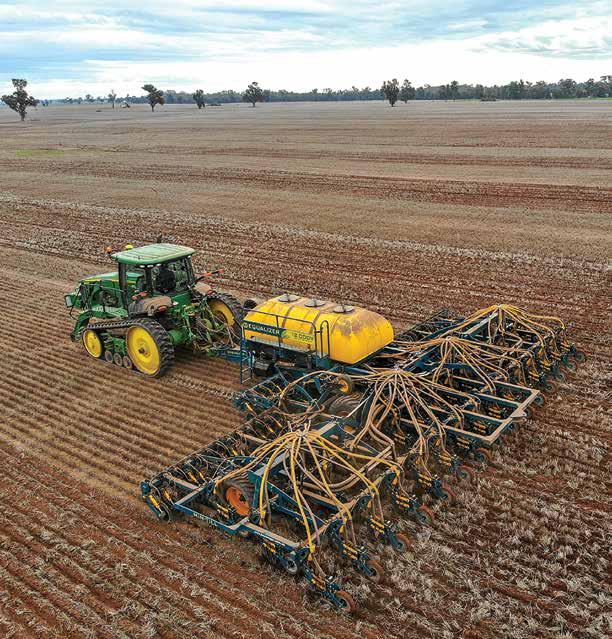
tine to trip over smaller obstacles without altering seed depth or press-wheel pressure. For larger obstructions, the entire unit can trip to prevent damage, with adjustable breakout force and a hydraulic cylinder featuring a built-in dampener for smooth return.
To match varying soil and residue conditions, the seeder can be configured with four knifepoint options, two press-wheel designs, and single or double chute seeding boots—ensuring
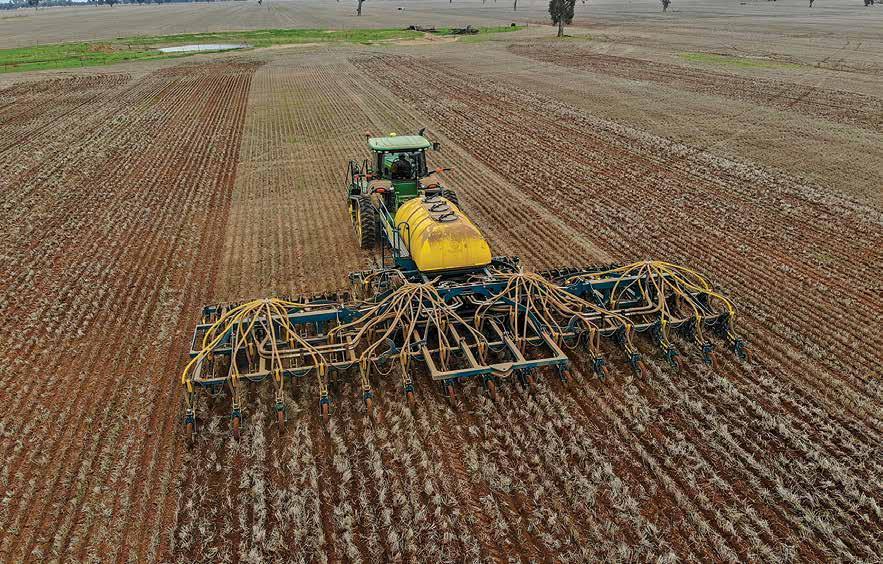
there’s an Equalizer setup for every farm.
Air carts that think for themselves
Equalizer’s tow-between and tow-behind air carts complement the seeder range perfectly. Compact yet high-capacity, they feature individual load cells on each tank, allowing operators to auto-calibrate and adjust seeding rates on the go directly from the cab via ISOBUS connectivity.
The self-cleaning roller system can handle a wide range of crops simply by varying roller speed, and the polyethylene tanks are compatible with both granular and liquid fertiliser. Available in 12,000L to 22,000L capacities, with two, three, or four-bin configurations, the carts can also be fitted with Elmer’s transfer tracks to boost flotation and reduce soil compaction.
From its precision engineering to its adaptability in tough soils, Equalizer’s equipment is built to deliver long-term performance and measurable returns for growers seeking reliability and accuracy.
To learn more or to secure your Equalizer equipment (excluding WA), contact Waringa Distribution on 08 6154 5999 or visit waringa.com.au/equalizer.
WHEN THE JUDGES AT THE 2025 HENTY MACHINERY FIELD DAYS NAMED GASON’S DIAMOND SERIES AIR SEEDER THE BEST NEW AUSTRALIAN DESIGNED AND BUILT AGRICULTURAL MACHINE, THEY WEREN’T JUST RECOGNIZING INNOVATION – THEY WERE ACKNOWLEDGING A FUNDAMENTAL SHIFT IN WHAT LARGE-SCALE OPERATORS CAN EXPECT FROM THEIR SEEDING EQUIPMENT.
For broadacre farmers who’ve spent years juggling the competing demands of scale, precision and reliability, the Diamond Series answers a question many thought was unanswerable: can you really have it all?
Australia’s broadacre operations present unique challenges. The distances are vast, the conditions are unforgiving, and downtime during seeding windows can mean the difference between a profitable season and a missed opportunity. The Diamond Series was designed with these realities front of mind.
At the heart of the system lies a choice of configurations that would have seemed impossible just a few years ago. The rear tow two-bin variant offers a substantial 32,000-litre capacity, while operators seeking maximum efficiency can opt for the three-bin configuration, pushing total capacity to an impressive 34,000 litres. Every bin, along with the meter box, is constructed from stainless steel—a design decision that speaks volumes about longevity in Australia’s challenging environments.
The redesigned eight-outlet side release metering system represents a significant leap forward in seed and fertiliser distribution.
Powered by dual blowers, the system maintains consistent flow even under the most demanding conditions. But it’s the integration of modern control systems that truly sets the Diamond Series apart. Hydraulic section control, backed by a failsafe clutch system, ensures that seeding performance remains consistent regardless of field conditions.
Precision load cells provide both accurate
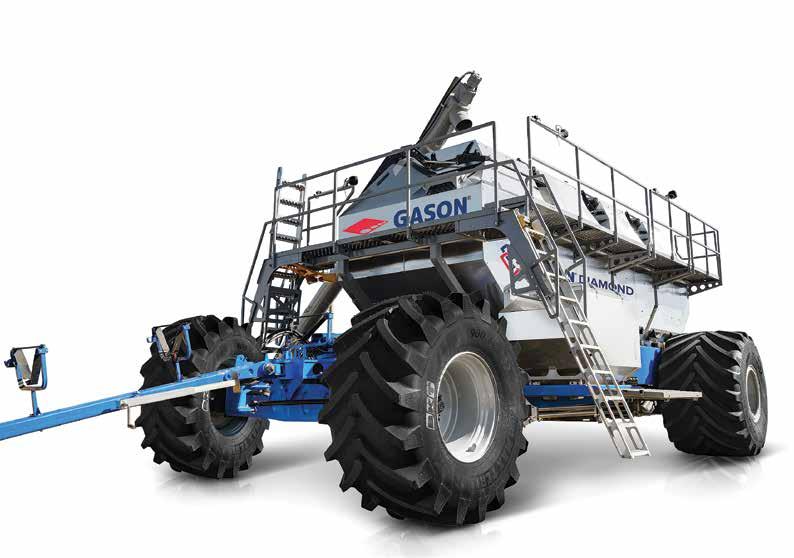
calibration and real-time monitoring, giving operators the confidence that comes from knowing exactly what’s happening in the field.
The ISO controller compatibility means the Diamond Series can integrate seamlessly with virtually any modern tractor system, with Gason supplying air kits as needed.
Ask any broadacre operator about their biggest frustration, and loading time inevitably comes up.
The Diamond Series addresses this with a wireless-controlled 13-inch auger capable of moving a minimum of 1,500 litres per minute—though actual performance will vary based on material type and tractor hydraulic capacity.
The introduction of swing-over doors and a fully hydraulic auger arm transforms what was once a time-consuming process into a streamlined operation.
It’s the kind of practical engineering that doesn’t make headlines but saves hours in the field.
Modern farming operations rarely fit into neat categories.
Mixed farming enterprises need equipment that can adapt to different tasks without requiring wholesale changes to their fleet. The Diamond Series acknowledges this reality with thoughtful standard features and practical options.
Lights and bin cameras come fitted as standard—not as premium add-ons— ensuring operators have full visibility regardless of conditions.
For those running mixed operations, a 1,200-litre stainless steel pasture planter integrates seamlessly with the core system. Integrated pest management is addressed through an optional 600-litre bait bin, allowing for comprehensive field management without additional passes.
There’s something to be said for equipment designed by people who understand local conditions.
The Diamond Series isn’t an adaptation of an overseas design—it’s a ground-up Australian solution to Australian challenges. That heritage shows in the details: the materials chosen, the configurations offered, and the problems the design anticipates and solves.
For serious broadacre operators, the equation is straightforward. The Diamond Series offers the scale needed to cover vast areas efficiently, the precision required for modern farming economics, and the durability essential for long-term reliability. It’s not just about doing more—it’s about doing it better.
The judges at Henty recognised what many operators are now discovering: sometimes the best machines for Australian farming are the ones designed and built right here.
PACKED WITH FEATURES, THE ALL-NEW TYM T25 TRACTOR MADE A STRONG IMPRESSION AT THE RECENT LAUNCH EVENT AND TYM DEALER MEETING.
With sleek, modern styling and inclusions usually only found in larger horsepower TYM tractors, this new Korean model is raising the bar for compact tractors.
Distributed Australia-wide by Inlon, TYM tractors are renowned for high-quality, well-designed products, backed by heavy research and development investment.
Inlon’s Sales & Marketing Manager Gary Surman spoke about the evolution of the latest model. “The creation of the TYM T25 tractor is a demonstration of TYM’s passion to become even better. It’s not made to a price, but to a standard. Don’t let its size fool you. The T25 compact tractor is the heaviest in its class and designed to push, lift and pull more than its rivals.
“You always get a lot of value for money with TYM, and they have raised the standards bar with the new T25 tractor. Its naturally aspirated 3-cylinder Japanese-made Yanmar diesel, 1,267 cc engine is extremely quiet and responsive with plenty of torque backup.”
The T25 tractor is fitted standard with Auto Throttle control, which links the HST pedals to the engine throttle to synchronise the tractor’s speed and engine RPM. This simplifies operation, increases productivity and reduces fuel consumption.
A long wheelbase of 1,550 mm provides stability, especially when doing front-end loader work. The sleek, sloping bonnet, made of steel, gives excellent visibility of the front-loader bucket, while the new lighting and instrumentation panel add modern style touches.
The T25 tractor takes the hard work out of maintaining your property with a powerful 3-point linkage that will lift 703 kg to handle heavy tasks with a wide range of farm implements.
Independent rear PTO allows operation of mulchers, rotary hoes and slashers. Both PTO and cruise control are easy to operate via push button.
The hydrostatic transmission has two ranges with two independent side-by-side HST pedals for forward and reverse, giving
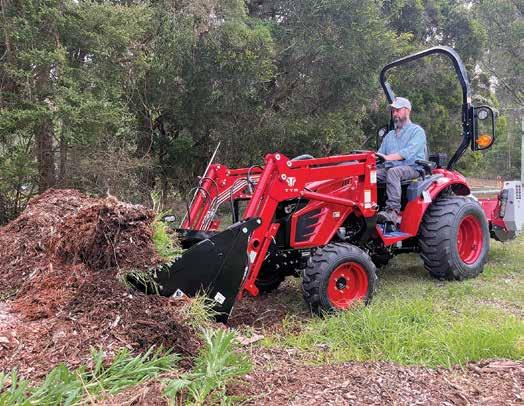
advanced ergonomic operation. With split brake pedals located on the opposite side of the HST pedals, you can use your brakes for ‘brake assist turning’ when required for extra tight manoeuvring.
Gary reflects on the operator’s experience when they take a seat on the T25. “The first thing you notice is the comfort of a fully adjustable suspension seat with armrest, creating a pleasurable driving experience. Most compacts are fitted with simple spring suspension whereas the TYM T25 has
adjustable weight/height and travel. The operator has a semiflat unobstructed platform with excellent entry clearance from either side due to its fully integrated loader joystick. LED spotlights, along with wireless phone chargers, 2 x USB ports and a cup holder provide operators with inclusions usually only found in larger horsepower TYM tractors. There is a three-year tractor warranty plan for extra peace of mind.”
For more information, please visit www.tym.ag/938 or call Inlon on 1800 945 090.
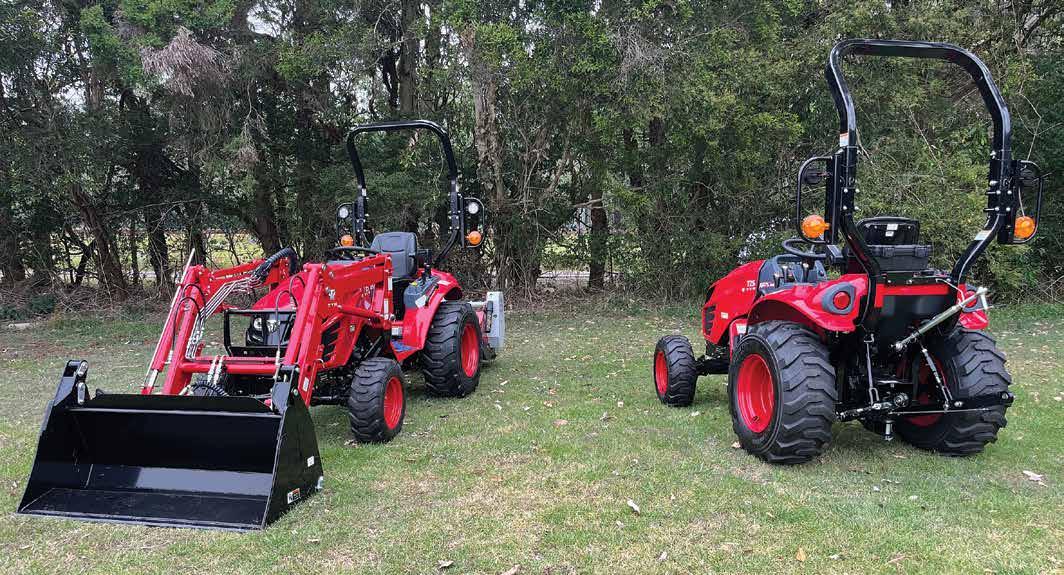
NEW HOLLAND’S NEXT GENERATION CR TWIN ROTOR COMBINES ARE MAKING THEIR AUSTRALIAN DEBUT WITH A CR10 AT DALBY THE FIRST TO BEGIN HARVESTING FOR THE 2025 SEASON.
GDR Farming is the first in Australia to put the next generation New Holland CR10 combine harvester to work at their family farm near Dalby on Queensland’s Darling Downs.
The CR10 with a MacDon D241 41ft front began harvesting wheat in late October 2025 at the 1,600 hectare cropping operation run by father and son team Greg and Ryan Rockliff.
Greg Rockliff said he jumped at the chance to get the first CR10 in Australia, impressed by the combine’s high capacity and minimal grain losses.
“We had a CR8.90 that we bought in March 2024 which we were happy with, and began talking with McIntosh & Son about the new CR that was coming out,” he said.
“I just thought, ‘bigger is better’. I don’t like grain loss out the back, you grow it to keep it, not to throw it.
“We did the numbers on the CR10 and it was a no brainer. Number one, increased capacity. Number two, increased productivity,
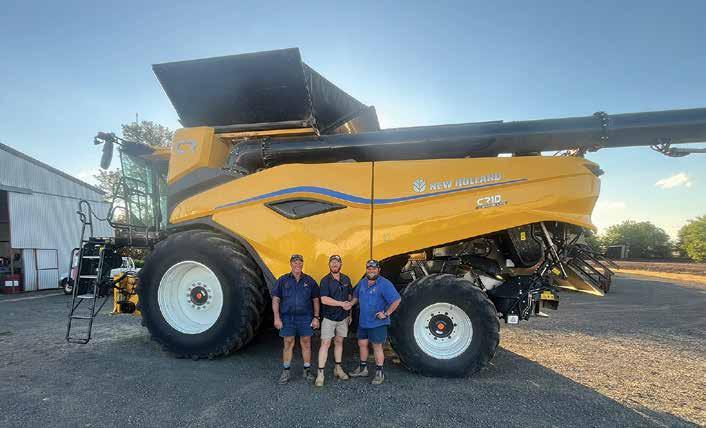
and number three, more money in the bank because you’re harvesting more hectares in a day,” Greg said.
Cameron Jordan, Dealer Principal at McIntosh & Son Dalby described the CR10 as “a monster in the paddock”.
“The capacity of this machine, to see what it’s capable of, what it delivers in the paddock is just incredible.
“We’ve gained a 30% speed increase and a 32% productivity increase compared to the
CR8.90, but only required 85% engine load to do so.
“We’re also using 8% less fuel, and our losses have effectively halved, even while taking the whole body of the crop and windrowing the straw.
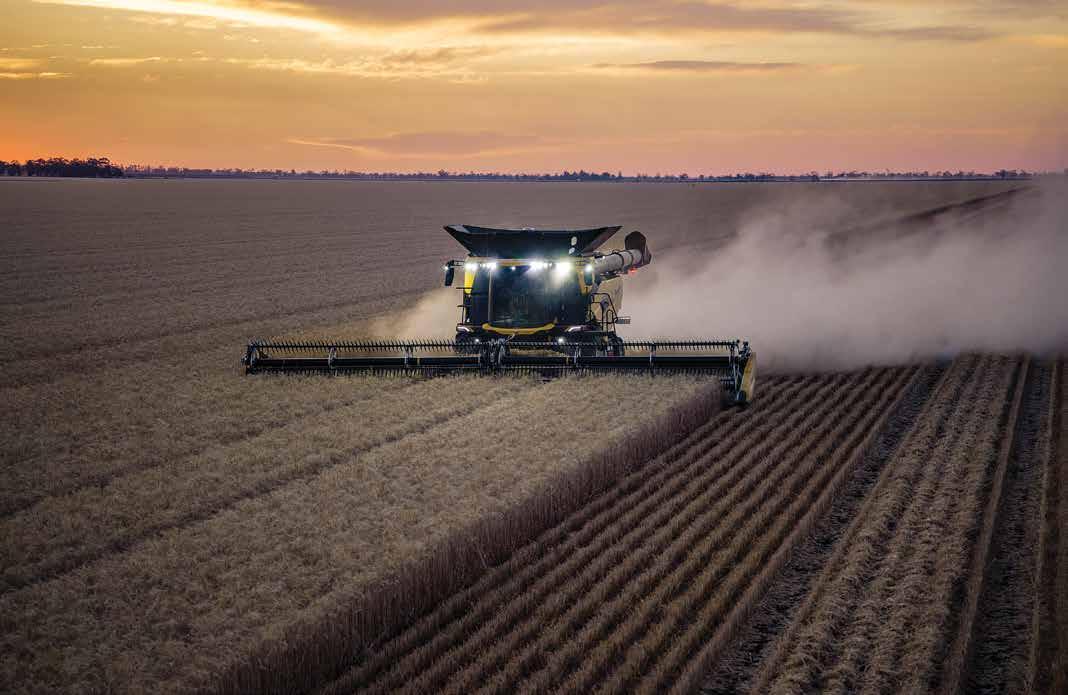
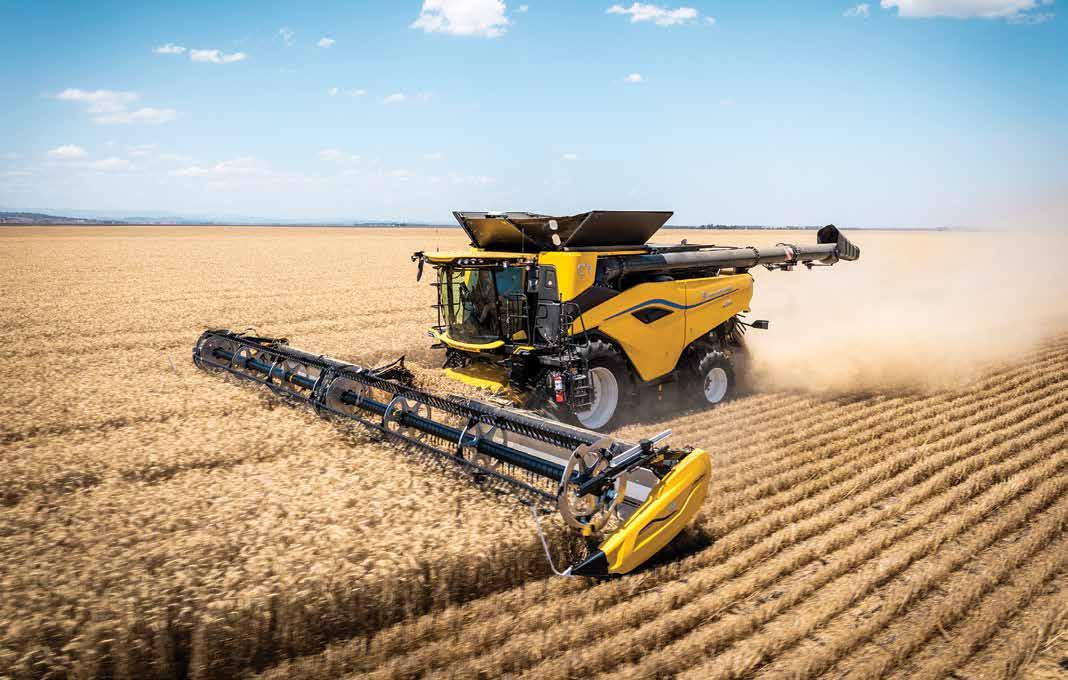
“Losses were usually so low they wouldn’t even register on the scales, just a few grains per square metre,” he said.
Cameron said the Rockliffs were so impressed with their CR8.90 that when they learned the next gen CRs were being released “they wanted to be the first to take one and reap the rewards of it”.
“GDR Farming has been so enthusiastic to have the first CR10, the first of the new generation of New Holland combines, operating on their farm,” he said.
“It’s just incredible for McIntosh & Son to be a part of the journey. Looking after the Rockliffs, and seeing the machine perform for GDR Farming the way that it has, is a proud moment for us.”
New Holland is delivering a limited number of next generation CR twin rotor combines, the CR10 and CR11, across Australia in time for the 2026 harvest.
The CR10, with 634 horsepower and a 16,000-litre (454-bushel) grain tank, and the flagship CR11, delivering 775 horsepower and a massive 20,000-litre (567-bushel) tank, both incorporate New Holland’s pioneering twin rotor technology to deliver more power, increased capacity, and larger grain tank volumes than ever before.
New Holland Product & Portfolio Manager – Crop Harvesting ANZ, Marc Smith said productivity, grain saving, residue management, and uptime are at the heart of the new CR combines.
“We’ve reduced the number of drive components by 25% and all drive chains have been eliminated to further reduce downtime and maximise efficiency,” he said.
“We expect the new CR combines to be a game changer for Australian grain farmers, driving down their total cost of harvesting and increasing their bottom-line profitability,” Marc said.
2025 marked 50 years since New Holland introduced the first combine featuring the brand’s twin rotor threshing and separation technology.
New Holland dealers are holding CR10 and CR11 demonstrations across Australia. Contact your local dealer for a harvest demonstration.
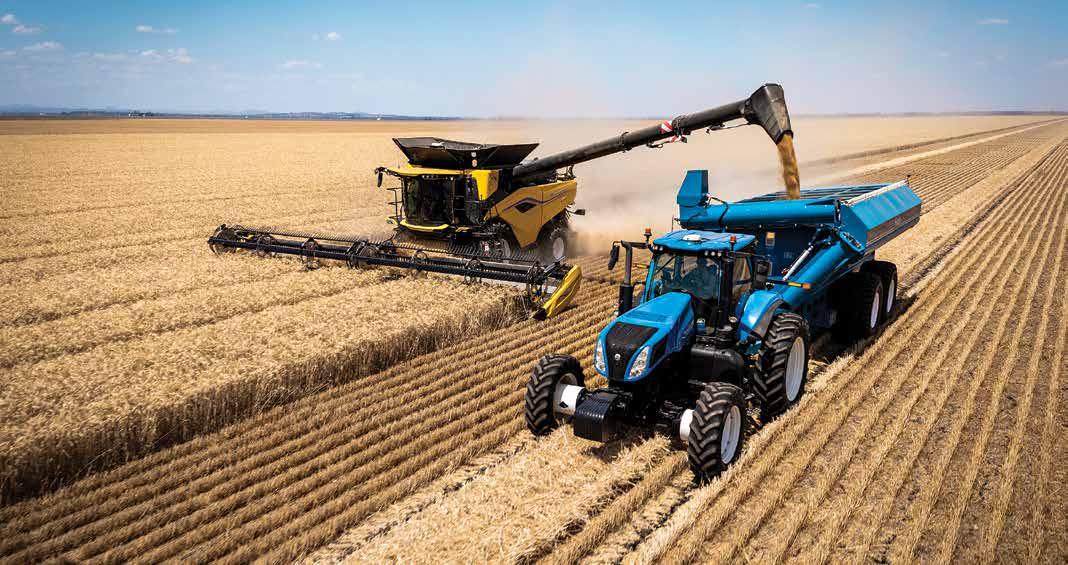
AFTER A RUN OF DRY YEARS, THE SCHUTZ FAMILY IN SOUTH AUSTRALIA’S MID NORTH ADDED A CONTRACTING BUSINESS TO THEIR FARM ENTERPRISE FOR SOME TOP-UP INCOME. NOW THEY ARE SPENDING SEVERAL MONTHS ON THE ROAD TO KEEP UP WITH THE WORKLOAD.
Henry Schutz farms with his parents, Roger and Alison, at Eudunda, as well as at Australian Plains, situated on the State’s Goyder’s Line, while they also have a property at Booborowie, where Alison grew up.
Henry said the contracting business centred on “reefinating” rocky land with their Rocks Gone H4 C (contractors’ edition) Reefinator machine, while they also offer stone picking, as well as hay services closer to home.
The family crops 1200 hectares and first saw a demonstration of a Reefinator at Caltowie before investing in the later model H4 machine in 2022.
The 3-metre wide Reefinator comprises a levelling blade, four front row and five rear row hydraulic tines, and a following ribbed drum, all weighing 28.5 tonnes when filled with water and digging up to 600 millimetres deep.
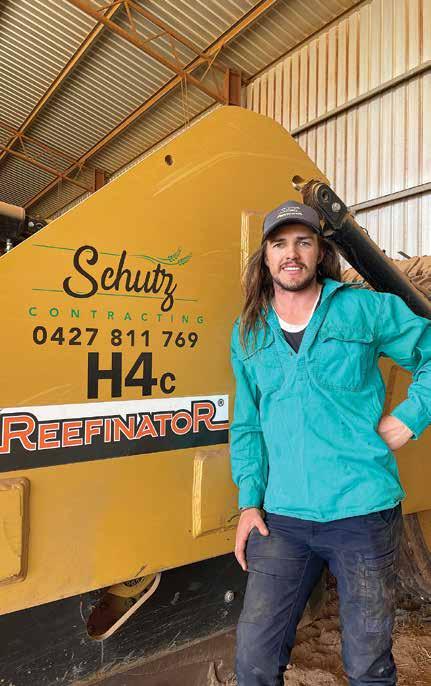
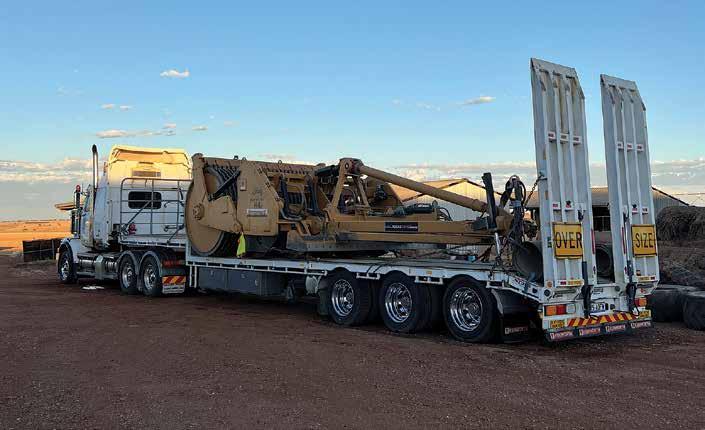
The machine was put to work in shallow limestone and sedimentary slate country at their Eudunda property, targeting increased cropping yields, but the priority had since become the contracting work.
“There is a lot of ‘prep’ work and a bit of a job afterwards with a prickle chain, harrows or rolling it, but we did a paddock in between rains last year,” Henry said.
“We’ve tackled some of the worst on our own property and it’s brilliant to now work through the rocky outcrops. There’s some more work to be done, but we can now run the seeder from one fence to the other.
“Where we’ve hit the sheet limestone, it’s really paying off. There were ute size patches everywhere, whereas now the paddock’s as even as a carpet and we’ve gained the investment dollars back by achieving consistent yields across the paddock, which you see in cereals the most.
“The bank initially didn’t lend to us based on the contracting. They did it on the basis of us growing an extra one-two bags (per acre) and we have easily gained that where we have done it.
“We have also done some deep ripping with the Reefinator, by folding the front four tines up and using the back five tines, and we got far deeper ripping in the second year. In pasture, you could see the (difference in the) sheep feed in the rip marks, and the crop also was better in the ripped area.”
SOUTH AUSTRALIAN GROWER HENRY SCHUTZ, EUDUNDA, RUNS A H4 REEFINATOR CONTRACTING BUSINESS THAT STRETCHES WEST TO YORKE PENINSULA, NORTH TO YACKA AND EAST TO THE VICTORIAN GOLDFIELDS, GOULBURN AND MACEDON RANGES REGIONS.
HENRY TRANSPORTS THE H4 REEFINATOR WITH THE FAMILY’S WESTERN STAR TRUCK WITH DROP DECK AND RAMPS, WITH VICTORIAN TRIPS INVOLVING RETURNING TO GET THEIR UTE AND CARAVAN, AND THEN AGAIN TO COLLECT THEIR TRACTOR.
The Schutz Reefinator Contracting work has taken Henry west to the Yorke Peninsula, north up to Yacka, and he has spent plenty of time in Victoria in the Goldfields, Goulburn and Macedon Ranges regions, where he will be working for a number of months again between harvest and seeding after upgrading their tractor.
“We have a John Deere 9520 scraper special with cushion hitch that sits on 900/60 R42 super singles. It’s 450-horsepower and we bumped it up to 500hp, but the new one is a 560hp John Deere 9560R. The 9520 has done 13,000 hours, so it will be higher horsepower and more comfortable.”
Henry said the eastern work involved three trips, firstly with their Western Star truck with a drop deck and ramps for the H4 Reefinator and then with a ute and caravan before returning again to collect the tractor. However, he would be there for three to four months before the new season.
He has tallied up a lot of kilometres in the ute, talking with farmers, viewing rocks and working around rock reefs, and he said on various properties there was a lot more non-arable land than expected.
“Land with sedimentary rock, shaley slate and limestone converts the best. You can’t really touch bluestone, which is volcanic rock, and ironstone and quartz can be hit and miss. But the harder the rock tends to be, the better cropping country. It just takes more passes and a bit of work to get it right.”
Henry said contracting clients had reported great results following the “reefinating”.
“Some clients use prickle chains and rollers afterwards and they have sown lentils straight into it and the benefits are there.
“A good client at Pinery (SA) has done hundreds of hectares of sheet limestone. It looked ugly, but after using a prickle chain and harrows, they grew 800 kilograms/ha more lentils on the reefinated ground compared to the rest of the paddock. That was also generally the poorer ground and it was with one pass. We did a second pass to tidy it up a bit more prior to seeding.
“It’s a good return on the contracting investment and they have since bought poorer blocks in the district and will ‘reefinate’ them to pick them up.
“It will open up similar opportunities for us too, on land with heaps of outcrops.”
He said another livestock client in Victoria had reported tremendous results after reefinating 100ha, so much so that they plan to work another 140ha this year.
“It’s increased their stocking rate 10 times, from 0.5 DSE to 5-6 DSE. It’s unreal. You can think this must be bullshit, but it’s happened.
“It’s absolute goat country that you wouldn’t think about sowing pasture into, but they have and their sheep enterprise has got massive in size. It’s way too steep for anything but sheep and I couldn’t get the Landcruiser up some of it. I had to be very planned and it was a mind-game with the Reefinator, but we did it.
“There’s a 50ac paddock that you couldn’t have stock on and now it was running 700 stocky lambs and the feed was outdoing the sheep.”
Having clocked 2000 hours with their H4
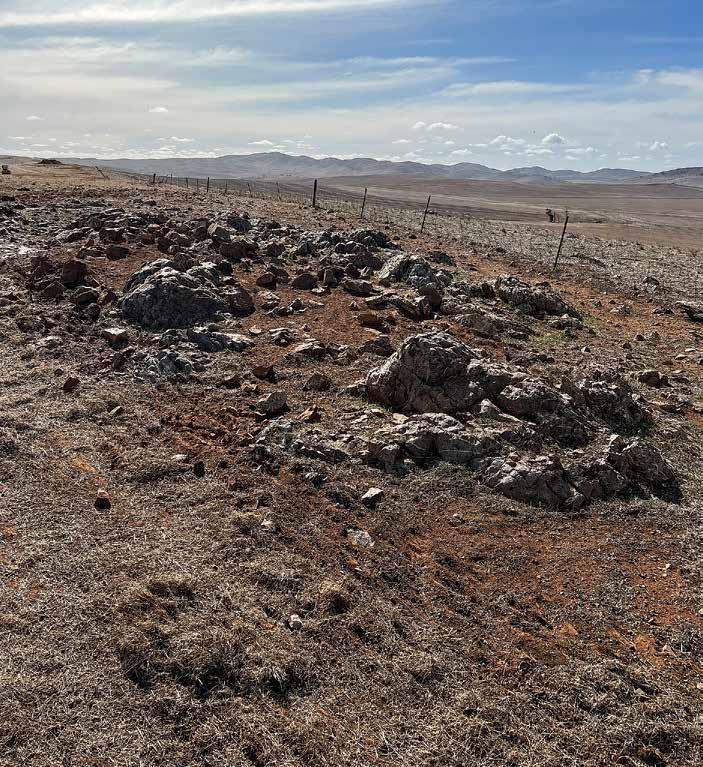
Reefinator, Henry said he had replaced many points and leading edges due to the tough rock, as well as the silica levels in soils. However the machine was built well and there had been no major problems.
“It’s built in a way that the wear points wear and not a lot else breaks.”
He said their next step would be to add the latest automation technology now available with the machine.
Suitable for ISOBUS and GPS-integrated
tractors, the Rocks Gone Depth Master system calculates speed over ground and tractor load or wheel slip to adjust machine depth up to 50 times per second, as well as the level of its blade, helping to ease the demands on operators and tractors.
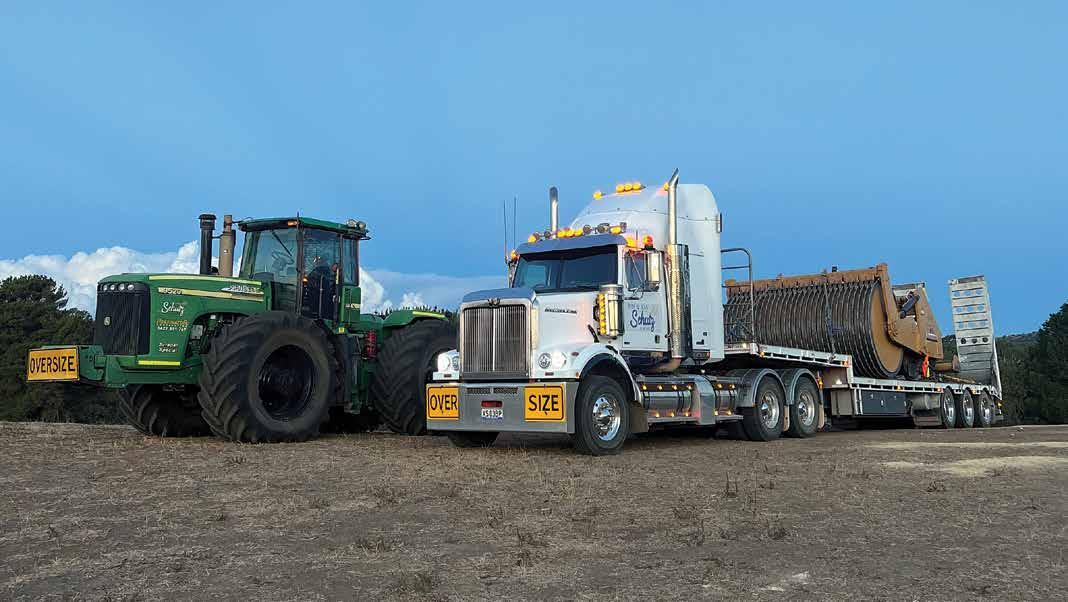
WITH ITS 22MM FODDER CUT LENGTH, THE NEW STRAUTMANN MAGNON 11 LOADER WAGON IS QUICKLY BEING RECOGNISED AS THE WORLD’S LEADING SHORT-CUT FORAGE LOADER WAGON.
At the 2025 Agritechnica exhibition in Hanover, Germany, the wagon was a star, taking pride of place alongside a leading German tractor at the conference centre.
The short-cut difference
Consistent and thorough short-cut fodder increases load weight in the wagon while at the silage pit, it improves spreading and compacting operations and efficiency. These improvements translate to time, fuel and load cycle savings.
Cleaner pickup
The new Flex-Load pickup uses polyurethane pickup tines for cleaner fodder pickup, longer tine life and lower maintenance costs. Strautmann found that steel tines tend to flick debris into the fodder stream as well as causing wear and damage to the strippers. The new Flex-Load not only does away with the need for complex high-wear cam driven pickup tines but also eliminates the need for strippers, another traditional wearing item. The hydraulic drive of the pickup means that the pickup speed can be adjusted from the cabin’s ISOBUS terminal to suit the fodder swath and ground conditions.
Between the pickup and the chopping rotor is the patented accelerator roller. The roller spreads the fodder swath across the full width of the chopping rotor while also lifting the fodder. With the accelerator roller’s lifting action, Strautmann has maintained a fully flat moving floor even with 30.5” wheel
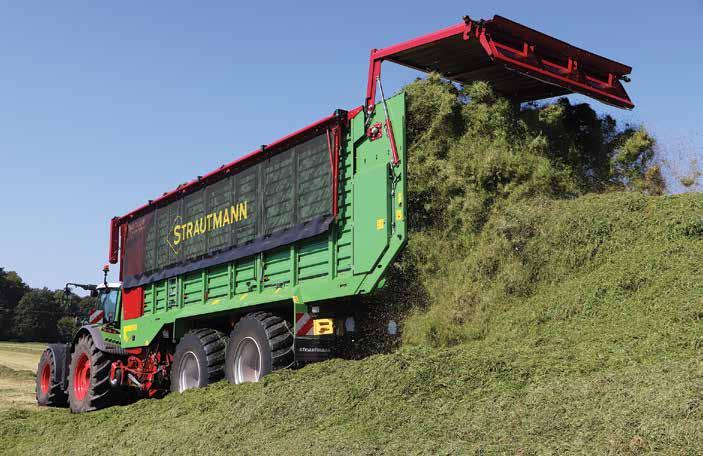
equipment. The spreading action, more importantly, evens out the chopping workload across the entire knife bank.
The heart of the loader wagon performance is to be found in the chopping rotor. It is where much of the power is consumed and where the consistency of chop length is achieved. The true scissor cutting action of the rotor against the knife bank is key to the low power consumption and thoroughness of fodder processing. The close tolerance between the rotor pusher plates and the knives is what creates the cutting action, without tearing the fodder and allowing a proportion of the fodder to bypass uncut as seen in some other products.
In classic Strautmann attention to detail, through years of observations on silage pits, it was identified that a small percentage of fodder could bypass the cutters on the outer faces of the rotor and the last knives in the knife bank. So, with the latest Magnon
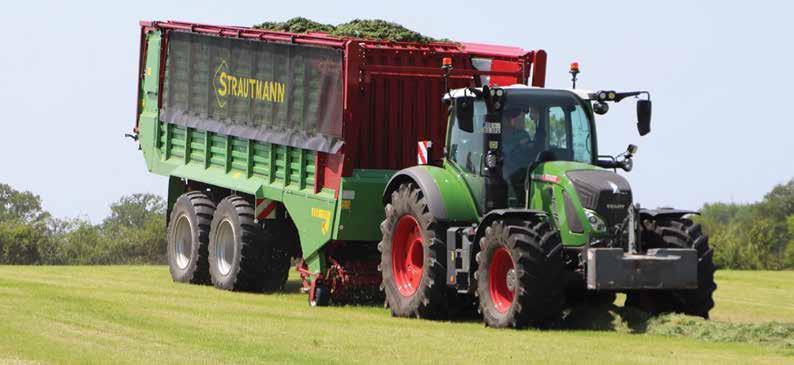
Series, a pair of special additional knives have been added to eliminate this.
The companion to the rotor is the knife bank against which the cutting action is achieved. Strautmann’s individual knife breakaway automatically resets after the debris has passed. Other products cause the stone debris to be dragged along the knife to push the knife out of the way, causing extensive wear and damage. With the Strautmann system, once the breakaway force is sensed, the knife fully retracts without the need for further damage.
The simple idea of double-sided serrated knives means that the cost invested in knives gives twice the useable life for the investment.
The Strautmann loading control has demonstrated leading performance in independent field tests. The fill degree is adjustable from the ISOBUS terminal. The system automatically integrates the moving front wall for the maximum volume for wagon length.
Inlon is taking orders now for the 2026 season as high European demand and the manufacturing lead time means planning well ahead is essential. A wide range of wheel equipment is available, along with options such as hydraulically operated road covers, weigh scales and active steering.
The revolution in short-cut loader wagons has arrived. Please visit www.inlon.ag/544 for more information.
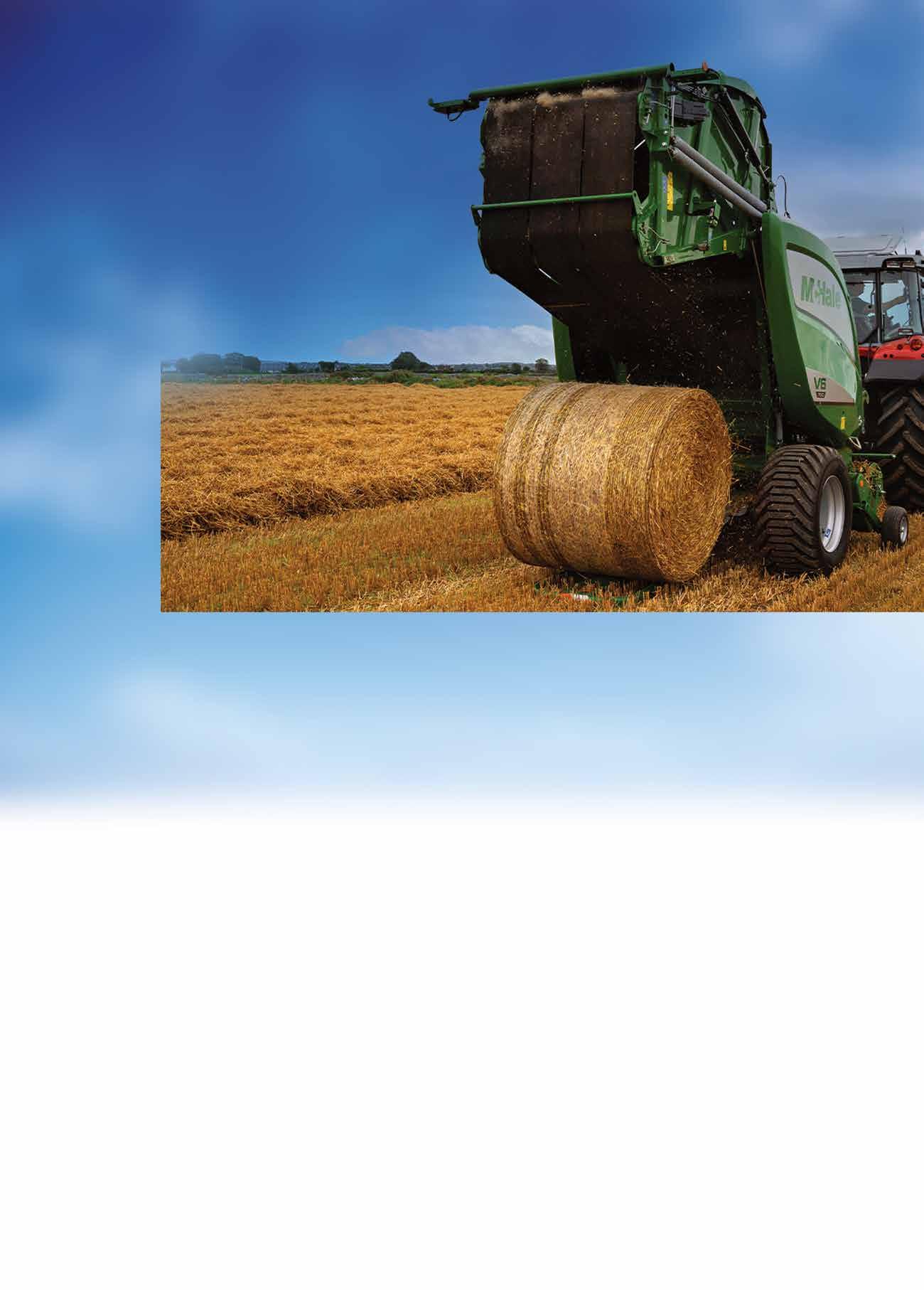
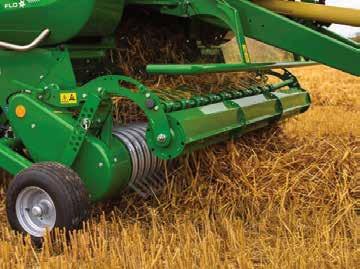
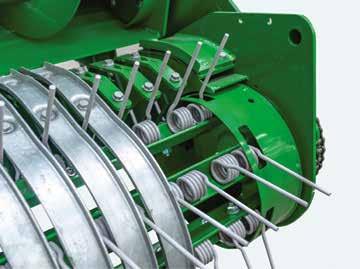
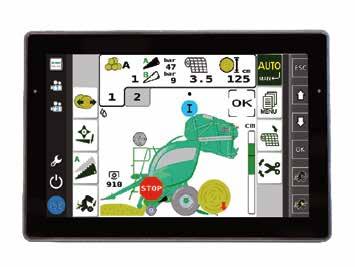
•2.1m Profi-Flo Camless Pick-Up
•15-Knife Chopper Unit with Heavy Duty Rotor
•ISOBUS Terminal with a 10” touch screen
•Drop Floor Unblocking System
•3-Endless Belts
•Auto Greasing
•Continuous Oiler System
•High Performance Stretch Net System
•50mm (2”) Double Race Chamber Bearings
•Knife Pressure Display
•Knife Position Sensor
•Drop Floor Sensor
•Bale Kicker