Age Scotland is the Scottish charity for older people. We work to improve the lives of everyone over the age of 50 and promote their rights and interests.
Our vision is a Scotland which is the best place in the world to grow older.
Our mission is to inspire, involve and empower older people in Scotland, and influence others, so that people enjoy better later lives.
We have three strategic aims:
We help older people to be as well as they can be
We promote a positive view of ageing and later life
We tackle loneliness and isolation
How we can help
We know that growing older doesn’t come with a manual. Later life can bring changes and opportunities to your life and you may need to know about rights, organisations and services which are unfamiliar to you.
That’s why we provide free information and advice to help you on a range of topics including benefits and entitlements, social care, legal issues such as Power of Attorney, housing and much more. All of our guides are available to download for free from our website, or you can contact our helpline team to have copies posted to you for free.
Our helpline is a free, confidential phone service for older people, their carers and families in Scotland looking for information and advice.
Later life can bring times when you just need someone to talk to. Our friendship line is part of our wider helpline and older people can call us for a chat. We’re here to listen, provide friendship and offer support.
Contents:
Understanding good hydration p 1
Why is hydration important? p 2
How much fluid do I need? p 3
Sources of fluid p 4
Tips for staying hydrated p 6
Hydration and dementia p 7
Understanding dehydration p 8
Signs of dehydration p 8
Common problems caused by dehydration p 9
Treating dehydration p 10
Risk factors for dehydration p 11
Useful contacts p 13
We are grateful to Scottish Water for their input to this guide.
Disclaimer and copyright information
This information guide has been prepared by Age Scotland and contains general advice only. It should not be relied upon as a basis for any decision or action, nor used as a substitute for professional advice. Neither Age Scotland nor any of its subsidiary companies or charities accepts any liability arising from its use and it is the reader’s sole responsibility to ensure any information is up to date and accurate.
Please note that the inclusion of named agencies, websites, companies, products, services or publications in this information guide does not constitute a recommendation or endorsement by Age Scotland or any of its subsidiary companies or charities.
Understanding good hydration
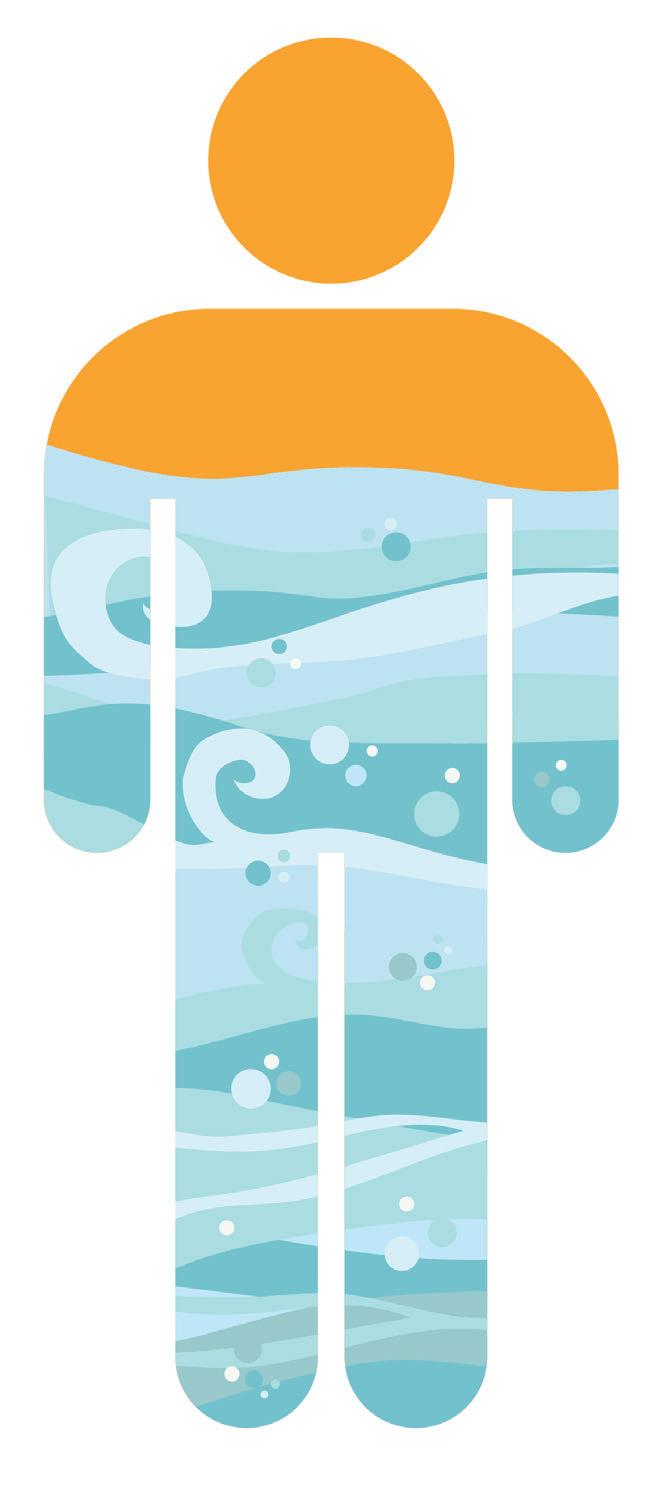
Water makes up around 60% of your body. It is an essential nutrient, vital for your mental and physical health and well-being. If you don’t keep your water levels steady throughout the day, you won’t feel as well as you could. Dehydration can cause problems in the body, especially if it continues over a long period of time.
Did you know? As we get older, we tend to feel less thirsty.
This could explain why many of us don’t drink as much as we really should; we no longer get the same reminder from our body to do so. Routines also change as we get older, and we may be out of the habit of stopping for a tea break.
So how can we make it easier for ourselves?
There are some simple ways we can help ourselves to form better habits, which we will explore in this guide. We encourage you to sit down with a drink while you take note of those you find most helpful.
Why is hydration important?
Being properly hydrated helps your body to:
• maintain the right temperature
• regulate blood pressure
• flush out toxins
• support your immune system and reduce inflammation
• digest your food
• move oxygen and nutrients around your body
Staying hydrated can also help to reduce swelling caused by a build-up of water in the body, called oedema. Drinking plenty of fluids tells your body there is no need to store extra water, because more is available.
How much fluid do I need?
National guidance is to drink around 6-8 mugs of fluid a day. It is important you drink this gradually throughout the day so that your body has time to process it.
Your body loses water through sweat, tears, vomiting, urine or diarrhoea. If you know you have lost more water than usual, you may need to drink more than usual to replace it. This means you may need to drink more in hot weather or when you have been exercising, for example.
If you have been diagnosed with a kidney problem, check with your doctor about how much you should drink; you may need to limit your fluid intake. You should also see a doctor if you are always thirsty to make sure there isn’t an underlying cause for this.
How much is too much?
You should space out your 6-8 mugs of fluid throughout the day, and do not drink excessive amounts. This is because the body’s essential processes all depend on the water balance in your body. Just like having too little water in your body, having too much can also stop these processes from working properly.
You should get medical help straight away if you think you have had too much fluid. Symptoms of over-hydration can include:
• nausea and vomiting
• headache
• confusion
• feeling drowsy
• muscle cramps
Sources of fluid Water
Clear water, either cold or hot, is one of the best options as your body does not have to process out any additives.
Age Scotland supports Scottish Water’s Your Water Your Life campaign, encouraging everyone to top up from the tap; it’s good for your health, your pocket and the planet.
Tap water in Scotland
Over 2.6 million households across Scotland are connected to vital water and wastewater services, essential for good health and hygiene.
To monitor the quality of our drinking water, Scottish Water regularly takes water samples at service reservoirs, water treatment works and customers’ taps across Scotland. This is to make sure there is a clear and fresh supply of safe, high quality tap water for everyone across Scotland to drink, use and enjoy, whether at home, at work or in the community.
The quality of tap water in Scotland remains at an all-time high, with over 99.9% of quality tests meeting strict standards.
For more information about tap water in Scotland, visit the Scottish Water website www.scottishwater.co.uk, or contact the Customer Helpline on 0800 0778 778.
Other drinks
If you find tap water unappealing, the good news is that other drinks such as tea, coffee, herbal teas, milk, diluted fruit juices or squash all count towards your daily fluid intake too.
You should limit the number of fizzy and other sugary drinks you have. These cause you to pee more, so are not as hydrating as other drinks. It is also not good for your health to have too much sugar in your diet. You may also want to limit the number of caffeinated drinks you have.
Caffeine can affect the amount or quality of your sleep, your blood pressure and your heart rate, among other things. Check with your doctor about how much caffeine is right for you.
Foods you eat
Some of the foods we eat contain high levels of water. Eating these foods can be a great and tasty way to top up hydration.
Most leafy greens are around 90% water. Other water-rich foods include melon, oranges, cucumber, tomatoes, soups, stews, custard and jelly.
The link between eating and thirst
As well as topping up our hydration, eating helps us to feel thirsty. This means we are more likely to remember to drink fluids if we are eating well.
The opposite is also true: if we are not eating much, we are less likely to feel thirsty. If we then become dehydrated, this can reduce our appetite further, and we are likely to eat even less and feel less thirsty as a result. This becomes a negative feedback loop.
Tips for staying hydrated
Remembering to drink can be a challenge, especially in retirement when you may not have a set routine. However, there are ways we can help ourselves to stay on top of our hydration.
Make pausing for a drink a habit
A good way to form a new habit is to link the new activity with something already in your routine. This could be putting on your slippers, feeding the cat or checking the post. It might help to make a list of the things you do without thinking every day and choose a few of these. Each time you do your chosen activities, stop to have a drink if you haven’t had one in a while. You should eventually find that having a drink each time will become automatic, just like the habit you started with.
Some people also find it helpful to set alarms reminding them to drink regularly. You could use a mobile phone for this. Some smart watches or phone apps may also offer this function.
Drinking while out and about
When we are out and about, it can be easy to go for hours without having a single sip of water. Buying drinks can soon add up, so it is a good idea to take a refillable bottle with you that you can top up along the way.
Scottish Water has a large number of Top Up Taps in locations across the country. From Shetland and Stornoway to the Scottish Borders. In cities and towns, in parks and on beaches.
To find your nearest Scottish Water Top Up Tap visit www.yourwateryourlife.co.uk/tapmap or call 0800 0778 778.
You can also look out for the blue Refill sticker in the windows of shops or cafes. Shops displaying this sticker will be happy to fill up your water bottle for free. Visit www.refill.org.uk/refill-scotland to find out more.
Keeping a refillable bottle with you around the house can also help to remind you to drink. Some bottles even have markings on them to help you measure how much you are drinking. You can find refillable bottles in most supermarkets, department stores or sports and outdoor stores, or by searching online.
Did you know? Sipping your drinks allows your body to absorb more fluid.
Your body needs time to process fluids. If you drink too fast, a lot of what you drink will pass straight through your body.
Hydration and dementia
If you care for someone living with dementia, you might have found they can be reluctant to drink. Reasons can include lack of focus, changes in taste or not recognising signs of dehydration.
Providing drinks in coloured cups may help to gain or keep their attention. It may also help to offer variety, such as milkshakes or diluted fruit juices rather than just tea, coffee or water. Try to limit drinks that are very high in sugar. These are not great for hydration, and too much sugar is generally not good for our health.
Offering water-rich foods, such as melon, cucumber or soups can also help to top up fluid intake. Sugar-free ice lollies can be a good option in warm weather. Hydration sweets are also available. These look and taste like jelly sweets but are free of sugar and contain up to 95% water.
Alzheimer’s Society provides information on hydration sweets for people living with dementia: www.alzheimers.org.uk. To speak to someone about dementia, call Alzheimer Scotland: 0808 808 3000.
Understanding dehydration
Signs of dehydration
Many people think they will feel thirsty if they need to drink, but this is not always the case. You may feel thirsty if you are dehydrated, but we tend to feel less thirsty as we get older. On top of this, you may stop feeling thirsty altogether if you become too dehydrated.
These are some common signs of dehydration. Some are more likely to be noticed by a carer, friend or loved one than by the person experiencing them:
• feeling lightheaded
• headache
• dry or ‘sticky’ mouth and lips
• dry eyes
• tiredness
• confusion
• irritability
• passing urine less often than usual
• having dark coloured, strong-smelling urine
NHS Inform has a pee colour chart showing what the colour of your pee tells you about your hydration levels. Visit www.nhsinform.scot/campaigns/hydration.
You should contact your GP if you have any of these symptoms and they will not go away. They may be signs of a more serious problem that needs to be treated.
Common problems caused by dehydration
Your body relies on water for all its normal functions, so it makes sense that dehydration can lead to problems with your health.
Having strong urine from dehydration can irritate your bladder and increase the risk of urinary tract infections. Long-term dehydration can also increase your risk of kidney stones.
Your bowel cannot work properly if you are dehydrated, and your poo may become hard and more difficult to pass. This can cause pain or discomfort and can also lead to constipation and further bowel issues.
These are just the most common of the many health problems that can be caused or made worse by dehydration.
Treating dehydration
The best way to get your water balance back on track is to drink fluids such as water, diluted squash or diluted fruit juice. In extreme cases, there can be very rare complications from drinking too much water. However, this won’t be a problem if you just drink your 6-8 glasses of fluid every day.
If you have lost fluid by being sick or having diarrhoea, you will also have lost salts, sugars and minerals. A pharmacist may be able to recommend re-hydration products containing the right balance of these. Eating small amounts of sweet and salty foods, if you are able, may also help you to replace what you have lost.
Severe dehydration
If dehydration becomes severe, it usually requires treatment in hospital. You should contact NHS 24 on 111 or your GP if you are dehydrated and your symptoms continue even though you have tried to drink more.
Contact them immediately if you are extremely thirsty, very tired or confused, have a rapid heartbeat or weak pulse, feel dizzy or have not passed urine for eight hours.
Bladder and Bowel Problems
Risk factors for dehydration
Things that can put you at an increased risk of dehydration include:
Sickness and diarrhoea
If you are vomiting and finding it hard to keep water down, guidance from NHS Inform recommends drinking small amounts at a time to try and stay hydrated.
If you have diarrhoea, you should drink plenty of fluids to replace those you are losing. It is a good idea to speak to a pharmacist if you are showing signs of dehydration. They may recommend over the counter treatments that will also help replace the salts and sugars you have lost. See the previous section Treating dehydration for more information.
According to further guidance from NHS Inform, you should contact your GP urgently if you have been vomiting for more than 2 days or have had diarrhoea for 7 days.
Visit nhsinform.scot/campaigns/hydration for more information.
Bladder and bowel problems
Some people with bladder or bowel problems limit the amount they drink because they are worried about getting to the toilet on time. This can lead to dehydration, which can make the problem worse. This is because dehydration can lead to urinary tract infections due to strong urine. It can cause or worsen constipation because water is needed to make stool (poo) softer, so that it can move smoothly through the digestive system.
Contact a healthcare professional if you are experiencing bladder or bowel problems as there are many ways to manage these. See our Bladder and Bowel Problems guide for more information.
You can also contact Bladder and Bowel UK on 0161 214 4591 or visit www.bbuk.org.uk/adults.
Other health conditions
Some long-term conditions can affect the water balance in your body and make you need to pee more, which can lead to dehydration. This can affect people with high blood sugar levels from diabetes, or those who take ‘water tablets’ for high blood pressure for example. If this affects you, your doctor can advise on what you can do to make sure you stay hydrated.
People with dementia are also at higher risk of dehydration. They may lack the focus to finish a drink and are unlikely to recognise or act on the signs of dehydration. See page 7 for advice on this. You can also contact Alzheimer Scotland on 0808 808 or visit www.alzscot.org.
Alcohol
Drinking alcohol can cause your body to produce higher amounts of pee, especially if you drink a lot in one sitting. You should drink plenty of water if you have been drinking alcohol, to replace any extra you lose.
National guidelines recommend staying within the safe limit of 14 units of alcohol a week. It may be a good idea to set your personal limit even lower as you get older. This is because our bodies process alcohol less effectively in later life.
As a guide, there is around 1 unit of alcohol in half a pint of lower strength beer, and 1.5 units in a 125ml (small) glass of 12% wine. For more information on alcohol guidelines, visit www.nhsinform.scot/healthy-living/alcohol.
Useful contacts
Age Scotland helpline 0800 12 44 222
The Age Scotland helpline provides information, friendship and advice, to older people and their relatives and carers.
If you need an interpreter, simply call the helpline and state the language you need, e.g. Polish or Urdu. Stay on the line for a few minutes and we will do the rest.
You can also call the helpline for a copy of our publications list or any of our guides. To read, download or order guides online, visit www.age.scot/information.
NHS Inform
Provides non-emergency information about health conditions and health services in Scotland.
0800 22 44 88
www.nhsinform.scot
NHS 111
Provides health advice out of hours. You can also call them for advice if you are not sure whether you need to go to an accident and emergency (A&E) department.
111 www.nhs24.scot/111
How you can help
Our vision is a Scotland which is the best place in the world to grow older.
All the information we provide is free and impartial. It helps older people access their rights and entitlements and can be life changing.
We are also a lifeline for older people who are feeling lonely and isolated. You can help us to support older people who need us most. Together, we can make a difference.
Make a donation
No matter how small or large, donations make a massive difference and help us continue our important work.
Call 03330 15 14 60
Visit age.scot/donate
Complete the donation form and return by Freepost
Fundraise
Whether it’s having a bake sale or running a marathon, there are so many ways to raise vital funds to support our work. To find out more, call 0333 323 2400 or visit age.scot/fundraise.
Leave us a gift in your Will
By choosing to leave us a gift in your Will, your legacy will help us to continue being there for older people for generations to come. To find out more, call 0333 323 2400 or visit age.scot/legacy.
Please donate today
Complete the form and return by Freepost to RSBS-KEHC-GBBC, Age Scotland, Edinburgh, EH9 1PR
Your details
Title: Forename:
Address:
Postcode:
Surname:
City:
Date of birth:
By providing us with your telephone number and email address you are consenting to us contacting you via phone, text and email
Email:
Home tel:
I WOULD LIKE TO DONATE
£75 £50 £25 Other (£) I wish to pay by (please tick):
MasterCard Visa CAF
CharityCard Cheque
Name on Card
Card No.
Expiry date
Security code (payable to Age Scotland)
Signature Date
I prefer not to receive a thank you acknowledgement for this donation
I would like information about leaving a gift in my Will
I WOULD LIKE TO MAKE MY DONATION WORTH 25% MORE
I want Age Scotland** and its partner charities to treat all donations I have made for the four years prior to this year, and all donations I make from the date of this declaration until I notify you otherwise, as Gift Aid donations.
I am a UK tax payer and understand that if I pay less income tax and/or capital gains tax than the amount of Gift Aid claimed on all my donations in that tax year it is my responsibility to pay any difference.
Yes, I want Age Scotland** to claim Gift Aid on my donations I do not wish you to claim Gift Aid on my donations
Keeping in touch
Date
You can read Age Scotland’s privacy policy at We will stay in contact by post unless you ask us not to. We will never sell your data and we promise to keep your details safe and secure You can change your mind at any time by emailing us on contact@agescotland org uk or calling us on 0333 323 2400
Age Scotland is the Scottish charity for older people. We work to improve the lives of everyone over the age of 50 so that they can love later life.
Our vision
is a Scotland which is the best place in the world to grow older.
Let’s keep in touch
Contact us:
Head office
0333 323 2400
Age Scotland helpline 0800 12 44 222
Email info@agescotland.org.uk
Visit our website www.agescotland.org.uk
Sign up to our newsletter
Our regular newsletters by email contain details of our campaigns, services and how you can support our work.
Sign up today at age.scot/roundup
Follow us on social media
Our social media channels are a great way to keep up to date with our work and issues that affect older people.
Age Scotland, part of the Age Network, is an independent charity dedicated to improving the later lives of everyone on the ageing journey, within a charitable company limited by guarantee and registered in Scotland. Registration Number: SC153343. Charity Number: SC010100. Registered Office: Causewayside House, 160 Causewayside, Edinburgh, EH9 1PR
We are grateful to the Scottish Government for part-funding this publication