Transpor t Ireland




Sponsored





Digital Events Publications
Meeting the challenge…

Welcome to the inaugural edition of Transport Ireland Magazine, the premier guide to the Irish transport sector north and south, published by eolas Magazine
The Government has set an objective to improve transport efficiency while reducing congestion, carbon emissions, road collisions, and air pollution in its transport plan, Moving Together: A Collaborative Approach to Systems Change in Transport 20262030.
It provides the ‘avoid’ element of the Government’s ‘avoid-shiftimprove’ framework for decarbonising transport, with the ‘shift’ and ‘improve’ elements provided through the National Sustainable Mobility Policy.
The scale of the challenge is significant. Department of Transport estimates find that the combined costs of congestion across the cities of Dublin, Cork, Galway, and Waterford will rise from €434.6 million in 2022 to €1.73 billion in 2040.
Climate Action Plan 2025 finds that the sector will exceed the sectoral emissions ceiling of the first carbon budget (2021-2025) of 54 MtCO2eq, while the EPA asserts that transport emissions must be addressed to meet the targets set in the Clean Air Strategy.
In the inaugural edition of Transport Ireland Magazine, we seek to identify what is being done to provide solutions to these challenges. We hear from Minister for Transport Darragh O’Brien TD on delivering a modern, sustainable, and integrated transport network, and the North’s Minister for Infrastructure Liz Kimmins MLA on the priorities of the Transport Strategy 2035.
Assistant Secretary for Maritime Transport at the Department of Transport, Eamonn Kelly outlines how ports are facilitating Ireland’s offshore energy future, while we also feature a panel discussion in which senior transport decision-makers look ahead to Ireland’s upcoming Presidency of the Council of the European Union.
I hope you find this an informative read and thank you to our sponsors Jacobs and as well as all of our readers and contributors for your support.
Ciaran Brennan, Deputy Editor
Transport Ireland Magazine
June 2026
Editorial
Owen McQuade, Managing Editor owen.mcquade@eolasmagazine.ie
Ciaran Brennan, Deputy Editor ciaran.brennan@eolasmagazine.ie
Joshua Murray joshua.murray@eolasmagazine.ie
Gareth Hamill gareth.hamill@eolasmagazine.ie
Harry McGoldrick harry.mcgoldrick@eolasmagazine.ie
Advertising Sam Tobin sam.tobin@eolasmagazine.ie
Design
Gareth Duffy, Head of Design gareth.duffy@eolasmagazine.ie
Jamie Hogan jamie.hogan@eolasmagazine.ie
Events
Lynda Millar lynda.millar@eolasmagazine.ie
Become a subscriber!
Annual subscriptions: €30.00 + €5.00 P&P
Contact: Sharon Morrison
Email: subscriptions@eolasmagazine.ie Online: www.eolasmagazine.ie/subscribe
eolas Magazine
bmf Business Services
Clifton House
Lower Fitzwilliam Street
Dublin, D02 XT91
Tel: 01 661 3755 Web: www.eolasmagazine.ie
Printed by: GPS Colour Graphics
The FSC® system provides an assurance that products such as wood and paper have been harvested in a socially and environmentally responsible manner.
• This product is made of material from well-managed FSC®certified forests, recycled materials, and other controlled sources.
Investing in our future
I remain committed to delivering a modern, sustainable and integrated transport network that supports economic growth, regional connectivity, and climate action, writes Minister for Transport Darragh O’Brien TD.

Continued investment in transport infrastructure and services is essential to meeting the needs of our growing population and ensuring that people and businesses can travel safely, efficiently, and reliably across the country.
The National Development Plan for Transport, which was published in 2025, outlines the pathway for the most ambitious and transformative investment in transport projects in the history of the State.
It commits €24.3 billion to a diverse range of transport options, including public transport, active travel, roads, maritime, and aviation over the next five years.
Some of the key transport priorities in the NDP include the development of MetroLink in Dublin, the expansion of the DART+ network, and the rollout of BusConnects across Dublin, Cork, Galway, Limerick, and Waterford.
The plan also places a strong emphasis on active travel infrastructure such as cycling and walking facilities, upgrades to national and regional roads, continued investment in rail services and fleet electrification, and the expansion of electric vehicle infrastructure to support decarbonisation and more sustainable and accessible transport across Ireland.
MetroLink is now finally becoming a reality, marking the beginning of the delivery of one of the most significant public transport projects in the history of the State with €2 billion invested in the project for the first time.
This transformative project will be a gamechanger for North County Dublin, the wider region and the country, unlocking greater access to housing, jobs, and education, while also reducing congestion and emissions. It is happening. Groundworks are already underway in several areas, with major construction due to commence in August or September 2027.
The rollout of contactless fare payments across all public transport, while also keeping fares low and affordable remains a key priority in delivering a more modern, accessible, and userfriendly public transport system. Contactless fare payments, or next-generation ticketing, will initially be introduced as part of BusConnects Dublin before being delivered nationwide, including on Bus Éireann services. I want public transport to be reliable, accessible, and modern.
My department and the National Transport Authority are making, and will continue to make, significant efforts to implement next-generation ticketing across the country over the coming years.
I have met with the National Transport Authority and Spanish technology company Indra Sistemas on a number of occasions and emphasised the importance of this project and the desire of both government and public transport users to see it implemented without delay.
It will replace the Leap Card system, which has served more than 9 million users since its launch in 2011. The initial focus of this project is on the Greater Dublin Area. It will be rolled out across four phases, with phase one due to launch in summer 2027.
In 2025 alone, public transport journeys across the country exceeded 360 million and, to keep pace with growing demand, we have an ambitious programme of delivery underway, as outlined.
But we also need to sure a safe public transport experience for passengers and staff. I am continuing to progress the establishment of a transport security force as a key priority.
Substantial progress has been made in recent months, with extensive engagement underway involving the NTA, operators, trade unions, passenger groups, An Garda Síochána, and the Department of Justice.
A proposed model for the force is currently under detailed consideration and further stakeholder meetings are scheduled to discuss a finalised proposal and seek agreement on the preferred approach. Following this process, I intend to bring a memo to government outlining the agreed model, key decisions, and next steps.
In parallel, my department and the NTA are advancing the legislative proposals required to establish the force with a view to progressing the foundations of the force during 2026.
Our aviation sector is one of the strongest and most strategically important sectors of the Irish economy. And critically important for our country, in terms of connectivity and economic growth, is the removal of the Dublin Airport passenger cap.
It was a key commitment in the Programme for Government, and we have acted swiftly and decisively on that commitment. We are now in the final stages of bringing the relevant legislation to government to empower me to remove the passenger cap, which will drive further connectivity and growth, with Dublin airport now established as one of the strongest and most significant airports in Europe.
Regional connectivity is also vitally important in supporting balanced economic growth across the country. There is continued significant investment in our regional airports –Cork, Shannon, Donegal, Kerry and Ireland West – which play a key role in strengthening tourism, trade, and business links, ensuring that all parts of Ireland remain well connected to key domestic and international markets.
We have record investment of €1.5 billion in 2026 in our road network across the State, supporting both new projects and road renewal. We now finally have the green light for the Galway Ring Road, with planning approval from An Coimisiún Pleanála following decades of delays.
The Adare bypass is progressing towards completion, while the N5 Ballaghaderreen-Scramoge scheme forms part of a major west of Ireland route upgrade. In Cork, the M28 Cork to Ringaskiddy project will unlock key access to Cork Harbour.
This government is committed to unlocking potential and removing barriers to key projects across the country. I am confident that, during the lifetime of this government, we will deliver a transformative impact on Ireland’s future in how we live, how we travel, how we build homes around our transport network, and how we grow our economy in a sustainable way.
That means delivering critical infrastructure more quickly, advancing transport corridors that unlock housing, strengthening our energy system to support growth, and ensuring that every region of the country benefits from investment and opportunity.
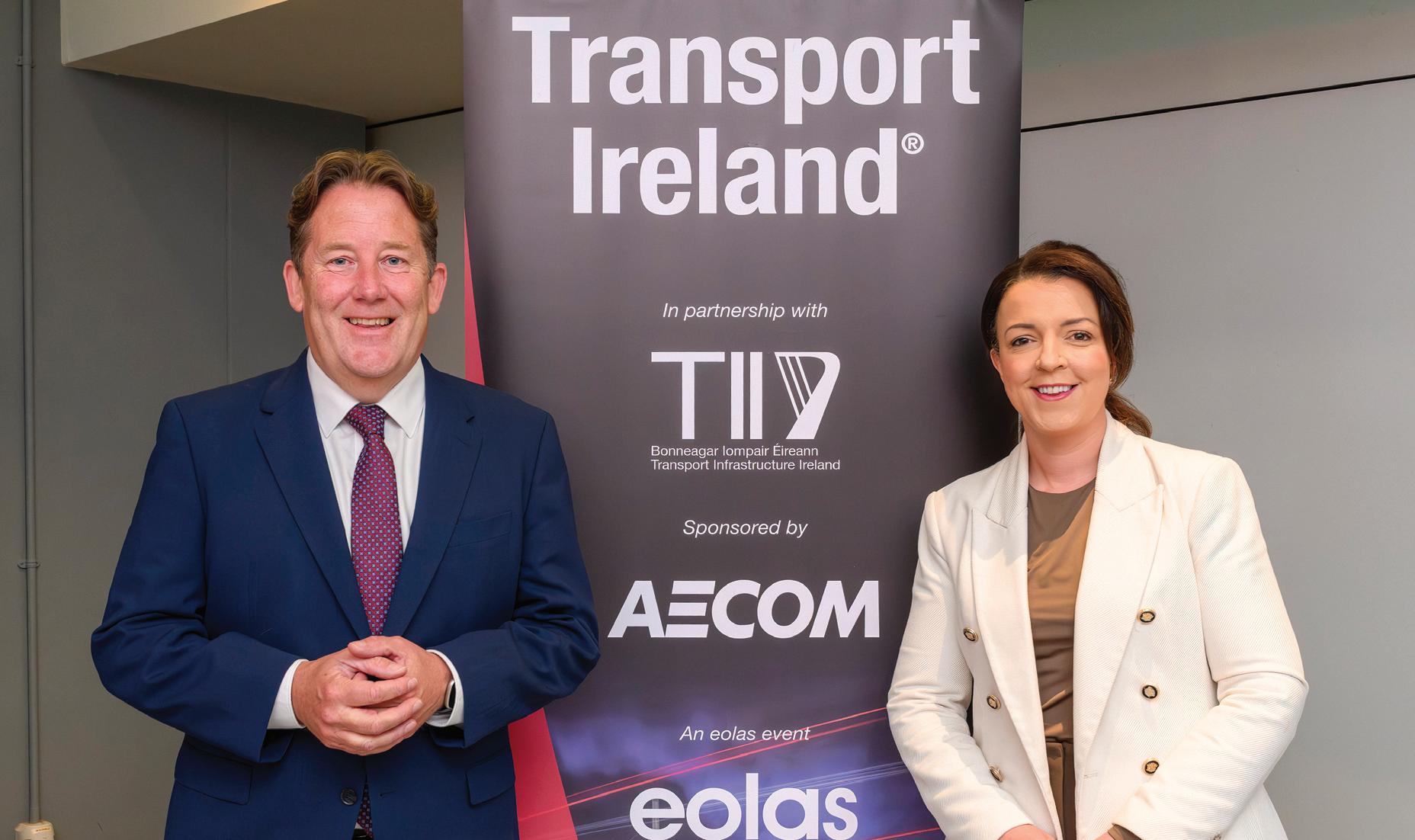
Minister O’Brien and his northern counterpart, Liz Kimmins MLA, in attendance at eolas Magazine’s Transport Ireland Conference in June 2026.

The future of transport in the North
The North’s Minister for Infrastructure Liz Kimmins MLA highlights the priorities underlying the imminent Transport Strategy 2035, as well as the importance of allisland collaboration on transport.
Liz Kimmins MLA, who became Infrastructure Minister in February 2025, outlines the areas of focus in the North’s upcoming transport strategy.
The Transport Strategy 2035 is currently being finalised, with a draft already completed and the final strategy expected to be published in Summer 2026.
Kimmins explains that the strategy “will set out a very clear long-term vision for the future and importantly identifies four strategic priorities that will guide how we plan, invest, and most importantly, how we deliver in terms of transport in the years ahead”.
The first of these priorities is that transport should be “resilient and sustainable”, particularly in response to the increasingly frequent extreme weather conditions affecting the region, especially flooding.
To this end, Kimmins says: “We have to respond directly to the climate challenges that we are facing, both by reducing emissions, but also by ensuring that our infrastructure can withstand the impacts that we are already experiencing.”
There are several actions being taken in this area, including the progression of a new road maintenance strategy which, Kimmins says, involves “taking a more targeted, data-led approach to managing our road network while also embedding climate considerations into design and delivery”.
This is in addition to the work being done under the Climate Change Act to support the transition towards a decarbonised transport sector.
Kimmins outlines that the department’s “focus is on cleaner vehicles and fuels”, which involves “work across the 32 counties on hydrogen infrastructure and future-focused infrastructure planning”.
The second strategic priority guiding the strategy is that transport “supports connected and inclusive communities”.
Kimmins explains that this means that transport “must enable people to be able to access their jobs, education, healthcare, and essential services, regardless of where they live or their circumstances”.
To achieve this objective, Kimmins says that “improving our rural transport systems remains an absolute priority”, noting the work being done in community transport, which received an additional £1 million in funding in 2025.
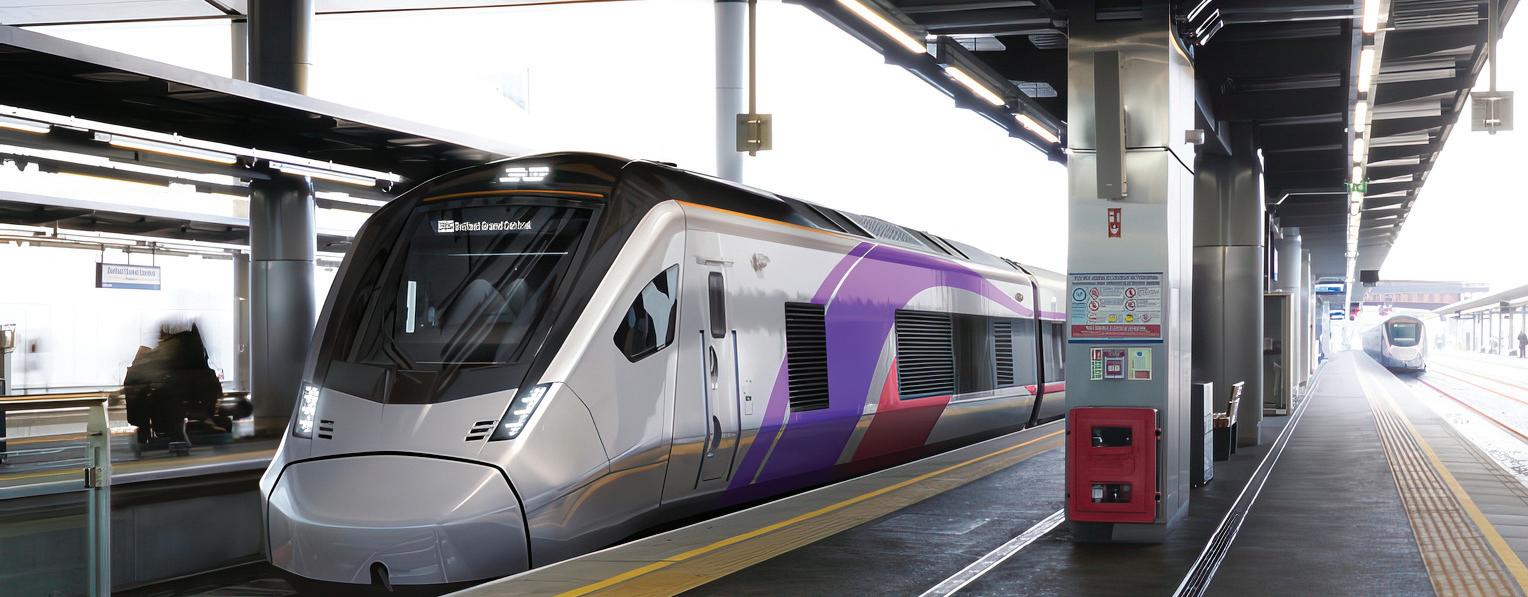
The minister also highlights the “transformative joint investment for public transport” in the Belfast-Dublin rail corridor, including the new fleet of more-accessible Enterprise trains and the introduction of the early service, which has resulted in significant passenger growth.
Kimmins says that the third strategic priority is to “deliver a transport system that is safe and supports healthier lives”, noting that “safety remains
fundamental, every death or serious injury on our road is one too many”.
This issue is being addressed through the Road Safety Strategy, which Kimmins says is being developed to “significantly reduce fatalities and serious injuries as a result of road collisions through targeted interventions, enforcement, and through a strong partnership working across other agencies and other departments within the Executive, including safer travel to school for all children”.
Kimmins says “we are enhancing transport safety through strong cooperation across the island”, referencing the meeting of the NorthSouth Ministerial Council on transport in May 2026, which focused on areas of collaboration, particularly on road safety.
This priority also relates to the role that transport and active travel can play in improving air quality, as well as health and wellbeing. To facilitate this, Kimmins says the department “are working with our partners across the island to deliver more sustainable, resilient transport options”.
The final strategic priority of the strategy, Kimmins says, “is in relation to ensuring that transport supports green economic growth as a modern, efficient, transport system is essential to productivity, investment, and competitiveness”.
To this end, the minister is introducing a new Harbours Bill in the Northern Ireland Assembly in June 2026 “to modernise the legislative and governance framework for our trust ports”.
Kimmins adds: “We are also progressing the outcomes of the AllIsland Strategic Rail Review, which sets out a very long-term but very
ambitious vision for improved connectivity, faster journeys, some of which we have already been working on, and a more sustainable rail network.”
Alongside this, Kimmins says her department “are supporting innovation through digitalisation and more efficient transport systems, ensuring that growth is aligned with our environmental objectives”.
Ultimately, Kimmins believes that “the four interconnected priorities provide a clear and very coherent direction for transport in the North” and welcomes the publishing of the finalised Transport Strategy 2035 in the summer of 2026.
Concluding, Kimmins highlights the importance of all-island cooperation on transport, and says “because our rail lines and our roads do not stop at the borders, they continue on, we are all experiencing similar challenges. So, it is important that when we are working on all of these projects, we are aligned and working closely together.
“I think when we look at the shared island funding and what we have been able to achieve with that, working with our partners in the South, we can see what we can do, and I am keen to continue in that vein.
“It will require that continued and sustained collaboration through both governments and in collaboration with the British Government in terms of getting the funding that we are entitled to and what we need to deliver for people here.”
Liz Kimmins MLA has been the North’s Infrastructure Minister since February 2025. She has been a Sinn Féin member of the Northern Ireland Assembly since 2017, representing Newry and Armagh.
Why light rail matters in today’s cities
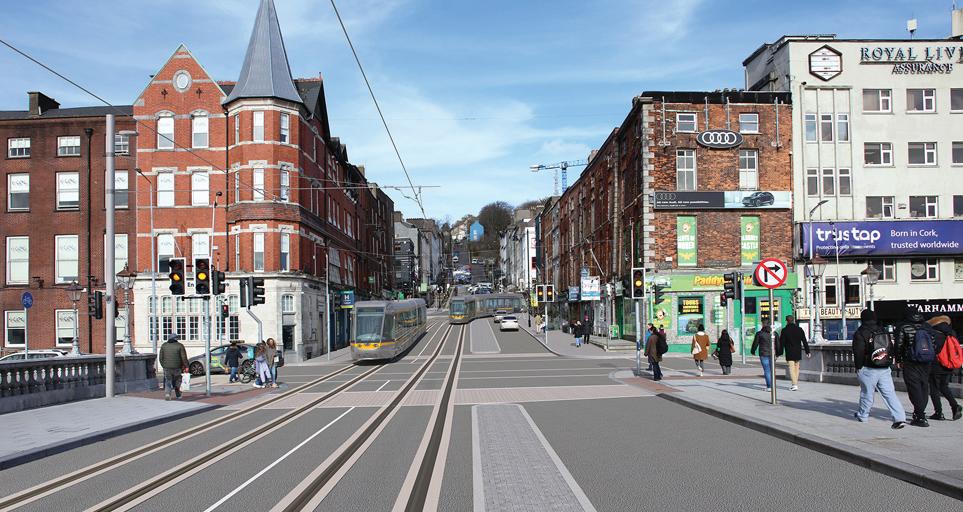
Cities today face a convergence of pressures: growing populations, constrained road space, climate commitments, and the need for reliable access to jobs and services. Against this backdrop, light rail has reemerged as a critical component of modern urban transport systems, writes Dave King, Jacobs Regional Director – Ireland and Northern Ireland.
It is a high capacity, high quality transport mode well suited to dense urban corridors, where dependence on private cars is neither sustainable nor efficient. Light rail’s benefits extend well beyond moving people from A to B. It provides fast, reliable, and accessible public transport that can attract users away from private vehicles, helping reduce congestion, emissions, and noise.
Its permanence gives certainty to residents, businesses, and investors, supporting compact growth, regeneration, and creating walkable, transit oriented communities. By combining efficiency, environmental performance, and placemaking benefits, light rail is vital in creating more liveable, competitive and resilient cities.
Cork Metropolitan Area
The Cork Metropolitan Area (CMA) is in an exciting phase of its development. It is envisaged that Cork will become the fastest-growing city region in Ireland with a projected 50-60 per cent population increase in the period to 2040. This projected population and associated economic growth will result in significantly increasing travel demand.
This demand needs careful management to safeguard and enhance Cork’s attractiveness to live, work, visit and invest in. There is limited capacity within the existing CMA transport network to cater for additional private car traffic, and this remaining capacity requires more efficient allocation.
Cork’s main approach corridors are congested, inefficient, and dominated by low occupancy private car traffic, resulting in unreliable bus services, suppressed public transport usage, poor active travel conditions, and an inability to accommodate future growth within the existing street space due to physical constraints.
These corridors need to reallocate priority to high capacity, low carbon modes to maximise person throughout, improve reliability, and support sustainable urban development. Cork’s geography does not make it easy. The river Lee, the historic street pattern, and the city’s tight urban core limits how many cars and buses can be pushed through the centre.
Continuing to funnel more vehicles into the same constrained space is not a strategy. Light rail offers something fundamentally different: a high capacity, reliable system that moves large numbers of people efficiently without competing endlessly for road space.
Light rail is not just about transport, but its transformative impact on cities.
Fixed rail urban schemes create certainty. They reshape travel behaviour, support development where needed most, and signal that a city is ready to prioritise people over traffic.
Credit: Transport Infrastructure Ireland
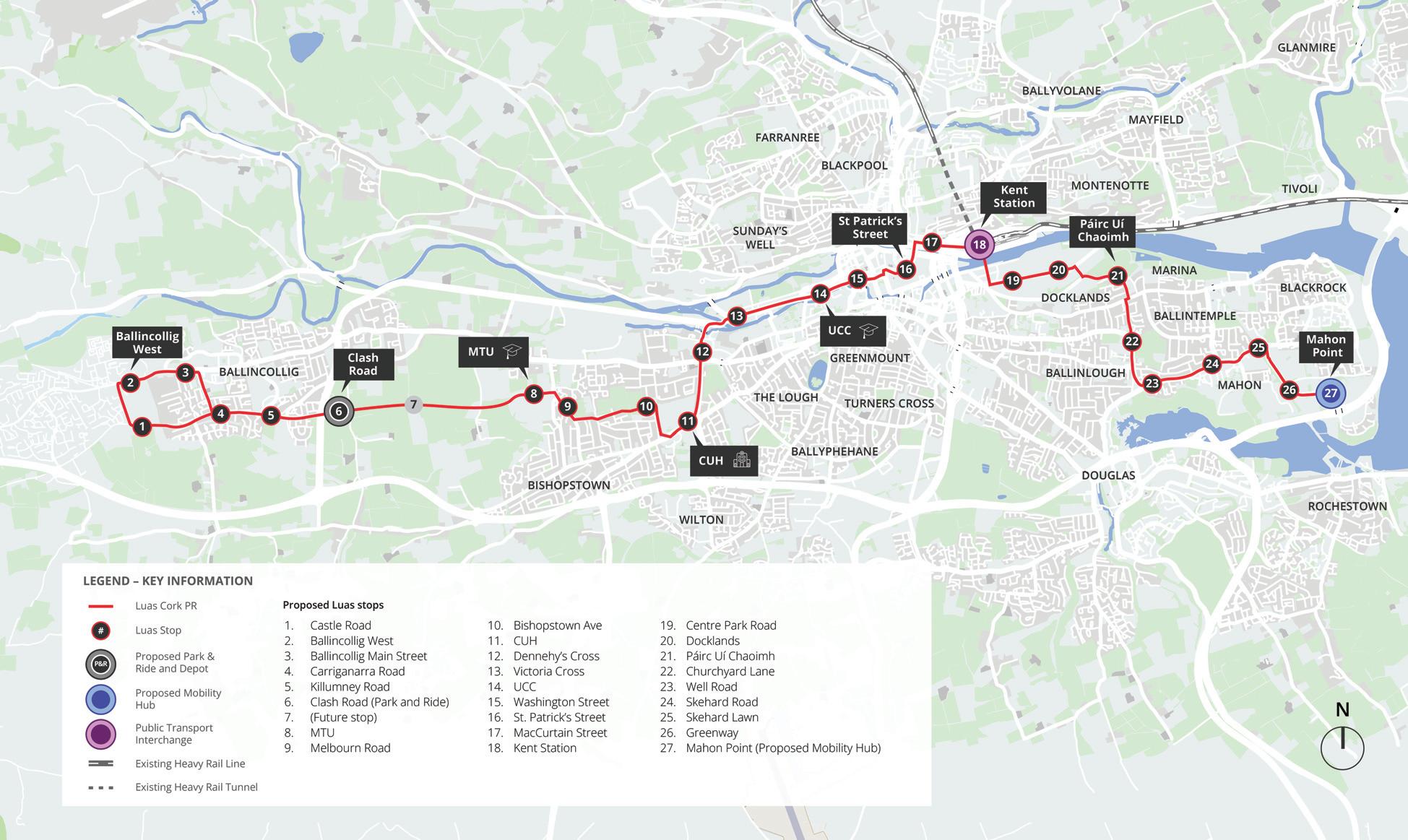
When delivered, a light rail system in Cork would enable continuous and sustainable city growth.
Light rail will not solve every problem that Cork faces, but it can be the backbone of an integrated urban transportation network within Cork working seamlessly with BusConnects, heavy rail services, and active travel networks.
Light rail has an anchoring effect that other modes rarely achieve. Around stops, higher density housing becomes viable. Offices and shops gain confidence and cluster together. Streets are redesigned not just to carry vehicles, but to invite people to linger. In Cork, that could mean suburbs and growth areas becoming more selfcontained, less car dependent, and more connected to city life.
Transport is one of the largest sources of emissions in Ireland’s cities, and Cork is no exception. Climate action plans are focused on percentages and targets, but in simple terms, if most trips are made by car, emissions will not fall at the pace required.
That leaves Cork with an unavoidable task of large scale modal shift by making sustainable travel the most practical choice for everyday journeys. Walking and cycling are critical, but they cannot carry peak hour demand across longer corridors. Buses are
essential, but in constrained city centres they can struggle to deliver reliability at scale. Cork needs public transport to carry lots of people, all day, every day, and to do so competitively with the car.
This is where light rail can be the workhorse. With its high capacity, it can shift significant numbers of people out of private cars and onto a cleaner, shared system that competes on speed, reliability, and certainty.
Luas Cork is the proposed light rail line for Cork running from Ballincollig to Mahon Point, connecting key destinations such as MTU, Cork University Hospital, UCC, Cork city centre, Kent Station, Cork Docklands, Páirc Uí Chaoimh, Blackrock, and Mahon.
It is a central part of the Cork Metropolitan Area Transport Strategy (CMATS) that will deliver an integrated public transport network including BusConnects, heavy rail improvements, and enhanced cycling and walking infrastructure. When implemented it is expected to:
• reduce traffic and carbon emissions, unlock housing and jobs growth, creating a liveable, walkable, and vibrant city;
• bring people to work, education, healthcare, sport, and cultural events efficiently and comfortably;
• offer more reliable journey times than other travel forms, and encourage people to leave their cars behind, reducing city congestion;
• create interchange opportunities with regional and intercity bus services from various locations, including Cork City Bus Station at Parnell Place, and with intercity and commuter rail services at Kent Station, while the ongoing rollout of BusConnects Cork has also been considered in tandem with Luas Cork;
• provide opportunities to widen the catchment via a 1,000-space park and ride to enable commuters from the N40 and N22 switch from car or bus to Luas, and a smaller mobility hub at the terminus in Mahon Point. At both locations, there will be car and taxi set-down, secure bike parking and bike-share stands;
• be safe and accessible to all; and
• transport an estimated 18 million passengers in the opening year.
Why climate adaptation must lead infrastructure decisions
“Stay back, stay high, stay dry.” The Irish Coast Guard’s 2025/2026 winter warning has become more than a public safety message. Along Ireland’s east coast, it now reads like an instruction for national planning. The winter of 2025/26 exposed how accelerating climate impacts are outpacing the design tolerances of our critical infrastructure, writes Damien Keneghan, Jacobs Senior Associate Director.
This year’s data leaves little room for argument. January 2026 delivered more than double the long-term average rainfall at Dublin Airport, followed by another month of exceptional downpours. Valentia Observatory recorded rainfall every day for the first 46 days of the year, a sequence that signals systemic saturation rather than isolated weather events.
When Storm Chandra arrived, cumulative wetness amplified its effects. Wave overtopping and coastal flooding inundated the DART at Blackrock, Seapoint, and Salthill, forcing prolonged service suspensions. Inland, swollen rivers burst their banks in Enniscorthy for example, flooding homes and commercial centres, closing roads and rail lines, and placing communities under stress.
These events are not anomalies. They are signals of a new climatic pattern: heavier rainfall, higher tides,
stronger storms, and accelerating coastal erosion. Nowhere is this more evident than along the east coast, where land, infrastructure, and communities are squeezed between a dynamic Irish Sea and an increasingly volatile atmosphere.
Storms, floods, and erosion
Across Dublin, Wicklow, and Wexford, the coastline is moving landward every season. Communities in Portrane, Kilcoole, Arklow, and Wicklow see the sea not only advancing, but accelerating.
The Dublin-Wicklow rail line, often referred to as ‘Brunel’s Folly’, is emblematic of this challenge. Its exposed alignment has required repeated realignments for more than a century due to cliff collapses, embankment failures, and persistent erosion. In the past
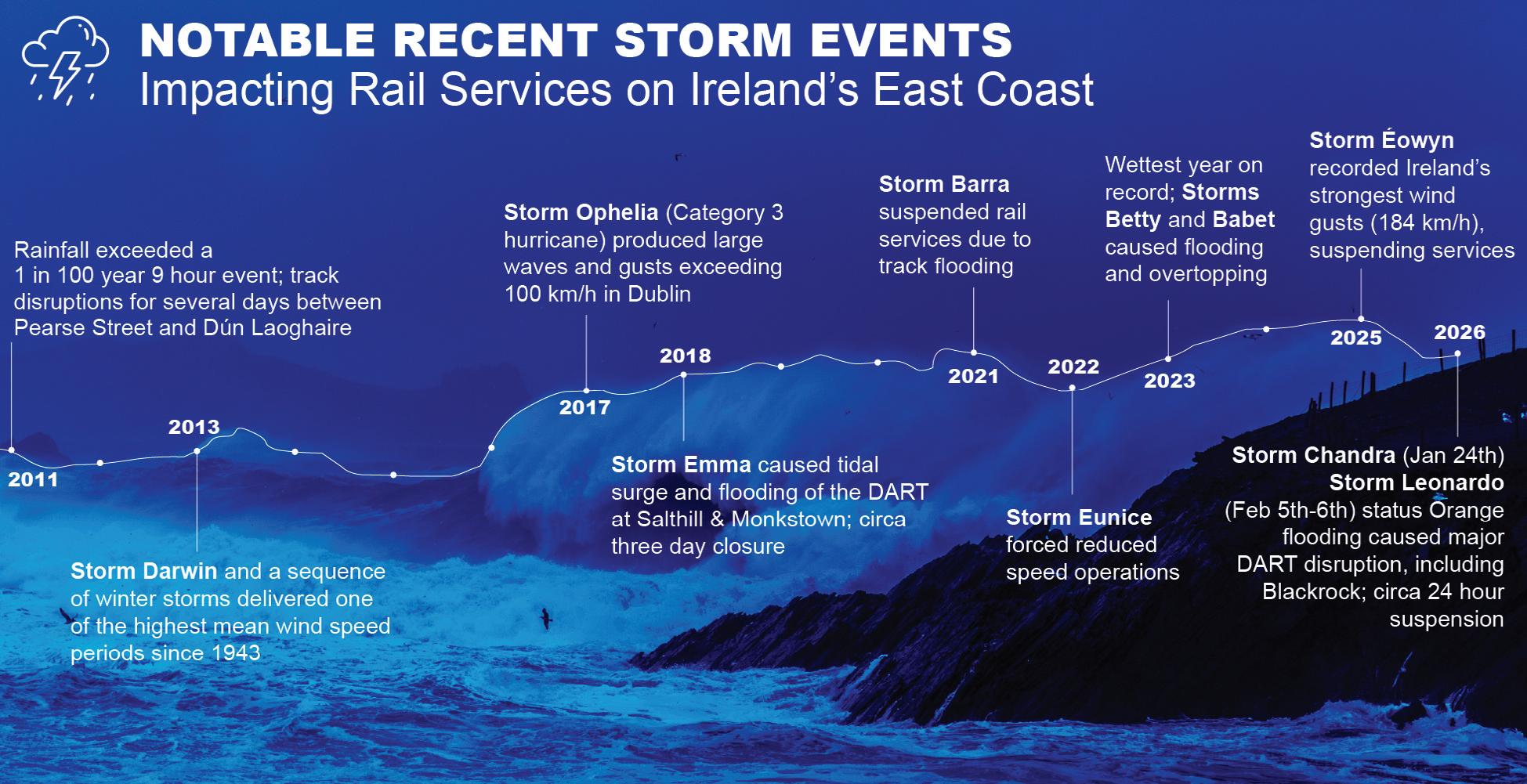
decade alone, some sections have lost up to 20 metres of coastline.
Closures due to overtopping, undermining, and storm debris have shifted from occasional disruptions to persistent risks on a corridor that tens of thousands of people rely on daily.
Adaptation policy
Ireland’s policy framework is evolving in the right direction with the National Adaptation Framework and the Transport Sectoral Adaptation Plan recognising the need to build resilience, integrate climate science into design, reduce exposure, and improve preparedness across transport networks.
However, policy does not solely deliver resilience. Outcomes are determined by implementation and by how infrastructure is funded, monitored, and adapted over time. Climate impacts are accelerating faster than adaptation on the ground. The challenge Ireland now faces is not whether to adapt, but whether adaptation can be delivered at the pace, scale, and duration required.
Designing for the climate
Across Ireland, Jacobs is partnering with national infrastructure operators – including Iarnród Éireann/Irish Rail, local authorities, and the Office of Public Works (OPW) – to translate policy into engineered resilience; planning for today’s conditions and those projected for future.
• Protecting Dublin’s coastal transport corridor: Through Irish Rail’s East Coast Railway Infrastructure Protection Projects (ECRIPP), Jacobs is designing interventions to safeguard the DART and the DublinWicklow rail line. ECRIPP follows adaptive planning principles that address the highest risk locations now while sequencing longer term interventions as sea levels rise.
• Strengthening Dublin’s urban coastal defences: In Dublin City, Jacobs is supporting flood protection along vulnerable waterfronts, integrating projected changes in tides, storm surge, and compound flooding. The objective is to protect critical transport, utility, commercial, and housing assets while sustaining urban life and economic activity along increasingly exposed coastal margins.
• Understanding coastal change nationwide: Working with the OPW, Jacobs has advanced predictive coastal erosion hazard mapping studies to help the OPW develop a robust national methodology that integrates geomorphology, engineering, and climate science. This work provides an evidence base, capable of informing decisions for generations.
Funding, data, and long-term adaptation
Delivering climate resilience requires a fundamental shift in how adaptation is funded. One year spending cycles are poorly suited to long-term climate risk. Resilience
demands multi-year commitments that support not only capital works, but ongoing monitoring, maintenance, and future adaptation as conditions evolve.
Nature-based solutions also have a critical role to play. Beaches, dunes, wetlands, and natural buffers can work alongside green, blue, and grey infrastructure to reduce wave energy, manage flood risk, and deliver environmental benefits. However, when protecting nationally significant infrastructure – railways, strategic roads, and urban defences – a degree of certainty is essential. These assets must remain open, safe, and operational during and post extreme weather events.
Hybrid solutions that combine engineered defences with nature-based measures offer significant potential, but they must be underpinned by robust data. In Ireland, we need multi-year surveys, monitoring programmes, and post event assessments that are essential to understand how climate change is already affecting infrastructure and to validate how these blended approaches behave over time.
Climate resilience is urgent
Ireland now sits firmly on the frontline of climate change. Each winter underscores the risks: flooded rail lines, submerged roads, overtopped defences, and destabilised cliffs. The consequences extend far beyond coastal communities, affecting national mobility, economic resilience, and public safety.
Protecting what we have built will require difficult decisions, trade-offs, and, in some cases, allowing space for infrastructure to adapt, transform, or retreat. The decisions made now will determine whether Ireland’s coastal towns, transport networks, and infrastructure remain viable in the decades ahead.
W: www.jacobs.com
Moving Together: A carrot and stick approach
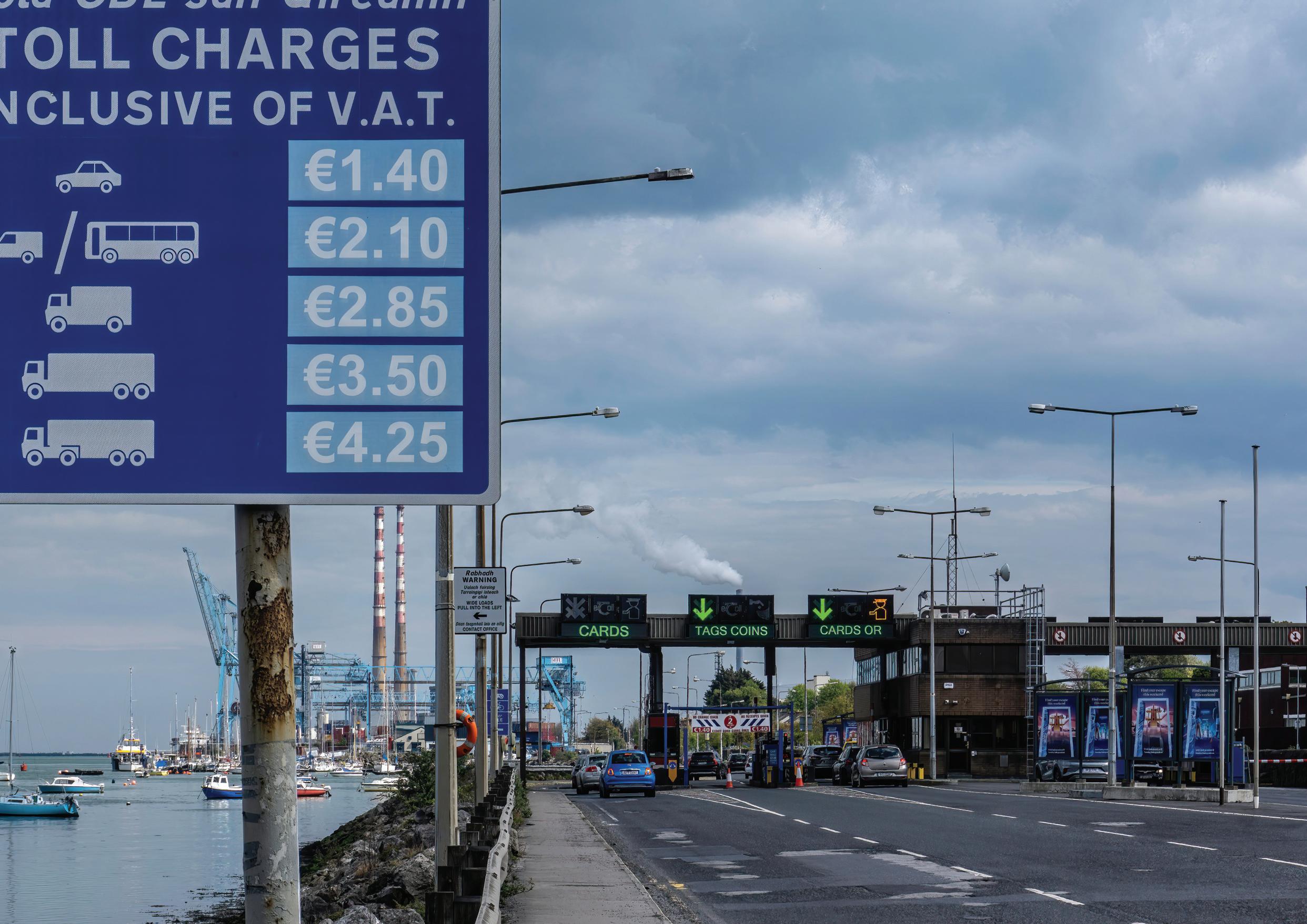
A carrot and stick approach on fiscal measures has emerged as one of the most significant components of the Government’s new transport demand management strategy, Moving Together: A Collaborative Approach to Systems Change in Transport 2026-2030.
At the heart of the Government’s approach is the belief that transport demand cannot be managed through infrastructure investment alone. While expanding public transport capacity and improving active travel infrastructure remain important objectives, the strategy acknowledges that continued growth in travel demand risks outpacing available capacity.
Against this backdrop, fiscal measures are increasingly viewed as a means of influencing behaviour, encouraging
more sustainable travel choices, and ensuring that the costs associated with transport are distributed more effectively.
The strategy is underpinned by the principles of ‘user pays’ and ‘polluter pays’. The rationale is that transport users do not always bear the full costs associated with their travel choices, particularly where congestion, emissions, air pollution, and wider societal impacts are concerned.
By contrast, modes such as walking and cycling generate broader societal benefits, particularly in relation to public health and environmental outcomes. Fiscal policy is therefore increasingly viewed as a mechanism through which these differing impacts can be reflected more accurately.
Road user charging
One of the most significant themes emerging from the strategy is the growing focus on road user charging.
While Ireland’s transport taxation system has traditionally relied on mechanisms such as fuel excise duties, motor tax, vehicle registration tax, and tolling, the aimed transition towards electric vehicles is expected to fundamentally alter this model. As fuel consumption declines, the revenue base that has historically funded transport infrastructure will come under increasing pressure.
In response, the strategy points towards a future examination of
distance-based road user charging. Rather than taxing vehicle ownership, such an approach would place greater emphasis on how much, when, and where vehicles are used.
Although no firm commitment is made, the strategy reflects an emerging consensus that alternative charging mechanisms will be required if transport revenues are to remain sustainable in an increasingly electrified transport system.
The proposal builds on recommendations previously advanced by the Commission on Taxation and Welfare and the Better Road User Charging Evaluation project, both of which identified road user charging as a potential long-term solution to declining fuel tax revenues.
Congestion
Alongside road user charging, the strategy identifies congestion charging as a potential policy option.
International experience demonstrates that congestion charges can reduce traffic volumes, improve journey reliability, and encourage greater use of public transport. While the strategy stops short of recommending implementation, it acknowledges that such measures are likely to form part of future policy discussions, particularly in urban areas experiencing significant congestion pressures.
Parking policy is also highlighted as an important demand management tool.
The availability of free or heavily subsidised parking has long been recognised as a factor influencing travel behaviour. As a result, the strategy explores the potential role of a workplace parking levy, a measure designed to reduce reliance on private car commuting while generating funding for sustainable transport initiatives.
Such proposals are likely to prove politically sensitive. However, the strategy argues that parking policy has often been overlooked despite its capacity to shape transport choices on a daily basis.
Behavioural change
While much attention is likely to focus on new charges and levies, the strategy also places considerable emphasis on positive incentives.
Existing supports for cycling and e-bikes are viewed as important mechanisms for encouraging modal shift and are expected
to remain an important part of the policy mix. Similarly, the Government intends to examine how schemes such as TaxSaver can be adapted to reflect changing commuting patterns.
The growth of hybrid and remote working has altered traditional assumptions around daily travel. Many existing incentives were designed around five-day commuting patterns, raising questions about whether current supports remain aligned with contemporary working arrangements.
Employers are also expected to play a greater role in transport demand management. The strategy suggests that fiscal measures could be used to encourage organisations to reduce car dependency among employees and support the development of workplace travel plans.
Insurance and travel behaviour
A notable feature of the strategy is its willingness to consider measures beyond traditional taxation. Vehicle insurance is identified as an area where behavioural incentives could be strengthened.
Proposals include allowing drivers to retain no-claims bonuses even when they cease owning a private vehicle and exploring insurance models that reward lower annual mileage.
Analysis
Historically, transport debates have been focussed on infrastructure provision and network expansion. The new strategy suggests that greater attention must now be paid to how existing infrastructure is used and how travel behaviour can be influenced through economic incentives.
The challenge for government will be balancing effectiveness with public acceptance. Measures such as road user charging, congestion charging, and workplace parking levies have the potential to deliver meaningful behavioural change, but they also carry political and distributional implications, especially given cost-of-living challenges.
Recognising this, the strategy places considerable emphasis on the concept of a just transition, and any future reforms will require careful assessment of their impact on households, businesses, and rural communities, particularly where alternatives to private car travel remain limited.
Untapped potential: Strategic asset management
As Ireland prepares to invest unprecedented levels of capital under the National Development Plan between 2025 and 2035, the question is no longer just what we build, but how well we manage the public infrastructure we already have, writes Cathal Masterson, TII Director of Commercial Operations.
One suspects that the Public Accounts Committee (PAC) of the State of South Australia did not realise that it would help kick-start a new philosophy and discipline for better management of public infrastructure when it commissioned a series of reports about 40 years ago to understand potential costs and timescales for renewing the State’s stock of public infrastructure.
These PAC reports highlighted that infrastructure agencies in South Australia responsible for managing water and waste, public housing, public works, transport, health, and educational infrastructure, did not have policies or tools for managing vital public infrastructure over its expected life.
The PAC reports labelled this problem a “policy vacuum”. However, it was the consequences of this vacuum that made politicians, civil servants, and
infrastructure managers sit up and take heed.
The State was sleepwalking towards a future reality in which its entire capital budget for public infrastructure would eventually be consumed by the needs of existing assets, with little left for new infrastructure, unless action was taken.
The solution proposed was simple but it was also revolutionary for its time. The State needed to radically change its approach and focus on managing infrastructure assets over their full life cycle rather than just for the construction phase.
Perhaps not everyone appreciated that the solution being tabled was not the normal bid to be allocated more money given that long-term funding projections for asset renewals and funding shortfalls were central in the analysis and explanation of the problem.
Rather, the discussions centred around changing management practices and improving decision-making to reduce future financial challenges for the State, whilst preserving performance and reliability of the assets as efficiently as possible. Thus, the seeds were planted for the modern discipline of infrastructure management, or strategic asset management, as it came to be known.
One of the most influential and impressive people involved in this work for the PAC was Penny Burns, an experimental economist who cut her teeth working in the public water sector in South Australia.
Burns has written about this time in her captivating book titled The Story of Asset Management: Infrastructure. We can afford to buy it. Can we afford to keep it?, published in 2023, where she describes her work in identifying the
assets of the major infrastructure agencies, and modelling the age distributions and future renewal costs.
Burns now refers to this period as the first asset management revolution, in which the work gained widespread attention across the rest of Australia and internationally.
Her mantra: strategic asset management is not about engineering it is about making better long-term decisions on public spending, is one which still holds water today.
So that is the end of the story right? Not quite. The discipline of asset management has certainly matured and there are significant resources available for all asset managers and strategists across all sectors. This includes specific international standards combined with asset management associations promoting best practice and educating policymakers and practitioners.
It is now commonly understood that operations and maintenance costs will greatly exceed construction costs over the life cycle of public infrastructure, and it is also generally accepted that deferral of asset renewal activity will result in increasing backlogs and higher costs ultimately.
However, the full life cycle costs for asset renewal are still not necessarily being factored into longer-term infrastructure plans being prepared by governments today. In many developed economies, public assets are not routinely being managed effectively over their full life cycle to maximise the full value of the original investment.
The OECD’s Government at a Glance 2025 report assesses over 30 OECD countries, including Ireland, on their approach to governance of infrastructure and asset performance management.
This OECD report highlights various systemic weaknesses across most of the countries in the planning, strategic management, and approach to decision-making for public assets. The OECD assessment concludes that the majority of countries assessed:
• do not require asset management plans under law;
• do not have fixed asset registers covering all government assets; and
• do not conduct ex-post evaluations of major investment programmes.
“The challenge is not just how much we invest, but how well we manage the existing public infrastructure.”
The OECD report also assesses each country’s approach towards ensuring the resilience of critical infrastructure and delivering climate-resilient infrastructure, highlighting the importance of national governance in this area, if national infrastructure is to be adapted to limit service disruptions and improve its capacity to recover from shocks.
On the face of it, it would seem that the key lessons emerging from the Australian work in the 1980s have yet to be fully absorbed by many.
International examples underline the urgency and many readers will be aware of the poor state of Germany’s motorway bridges. What might be less well understood is the poor state of Germany’s broader stock of public infrastructure.

The German Economic Institute, which surveyed companies in Germany to determine whether they are regularly affected by infrastructure deficiencies in their business activities, reported that “over 84 per cent of the companies surveyed reported being regularly affected… in 2025”.
How much does the State of Transport Infrastructure Affect Businesses in Germany? highlights that “roads and railways caused the most significant problems” with almost 80 per cent of companies reporting impacts from road deficiencies, and 60 per cent noting impacts from underperforming rail infrastructure.
Approximately half of the rail network requires repair or renewal, contributing to congestion and reduced reliability. Passenger rail punctuality is reported at around 56 per cent, while freight rail performance is even lower, in some cases below 50 per cent.
The state of the infrastructure is now considered by many commentators to be a competitive issue and the German Government has introduced a €500 billion infrastructure and climate fund to tackle the problems.
In other jurisdictions, the risk which exercised the South Australian PAC of the majority of a state’s longer-term capital investment programme being consumed by a backlog of infrastructure renewals works is starting to become more evident.
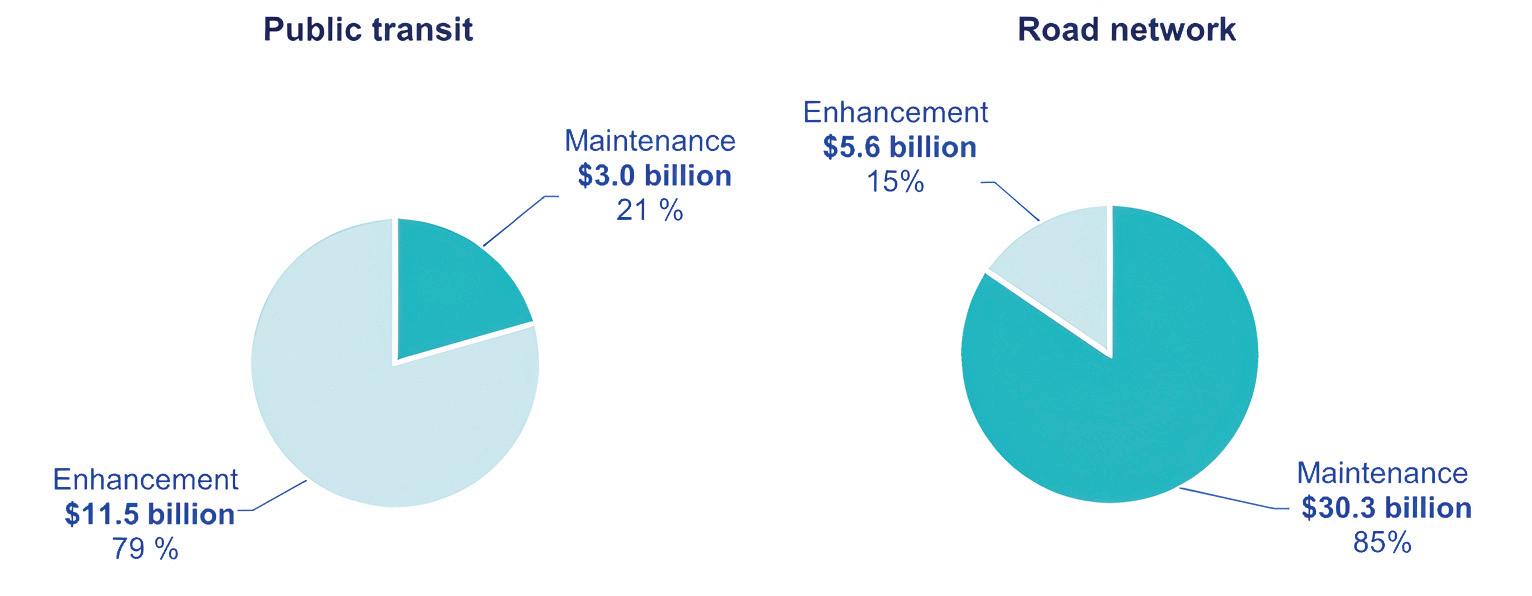
The Québec Infrastructure Plan 2025-2035, which outlines an impressive funding package of $164CAD billion over a 10-year period, is allocating 65 per cent of planned infrastructure investments to “the long-term viability of existing infrastructures”.
For the sub-category relating to road network, almost 85 per cent of roads funding is being allocated to existing road infrastructure, due to its age and condition. Figure 1.1 below, from section A of the Infrastructure Plan showing the proposed investments in public transport and the road network for the period 2025-2035, clearly shows the difference in profile for the ageing road network infrastructure when compared against the more modern public transport infrastructure.

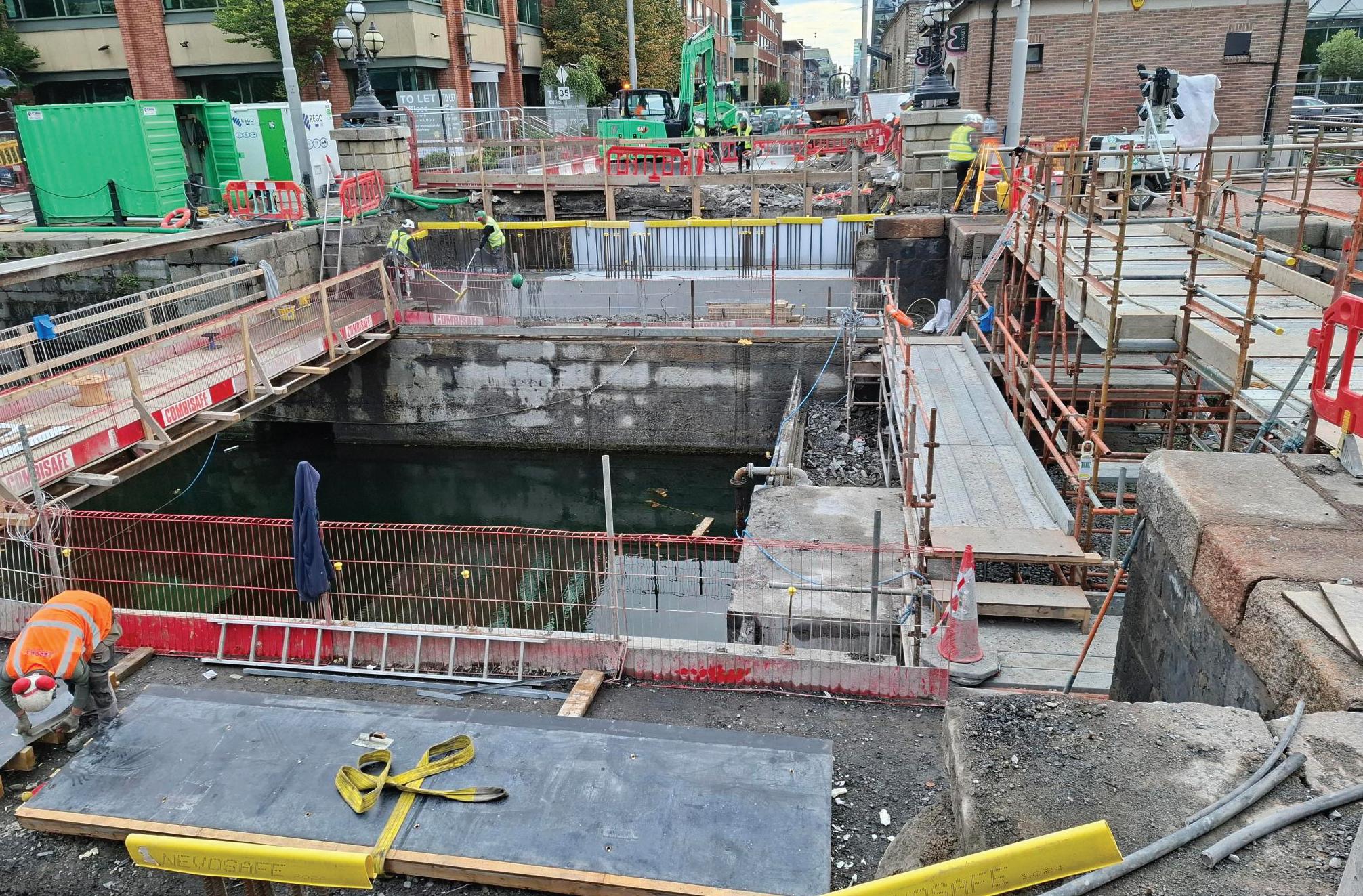
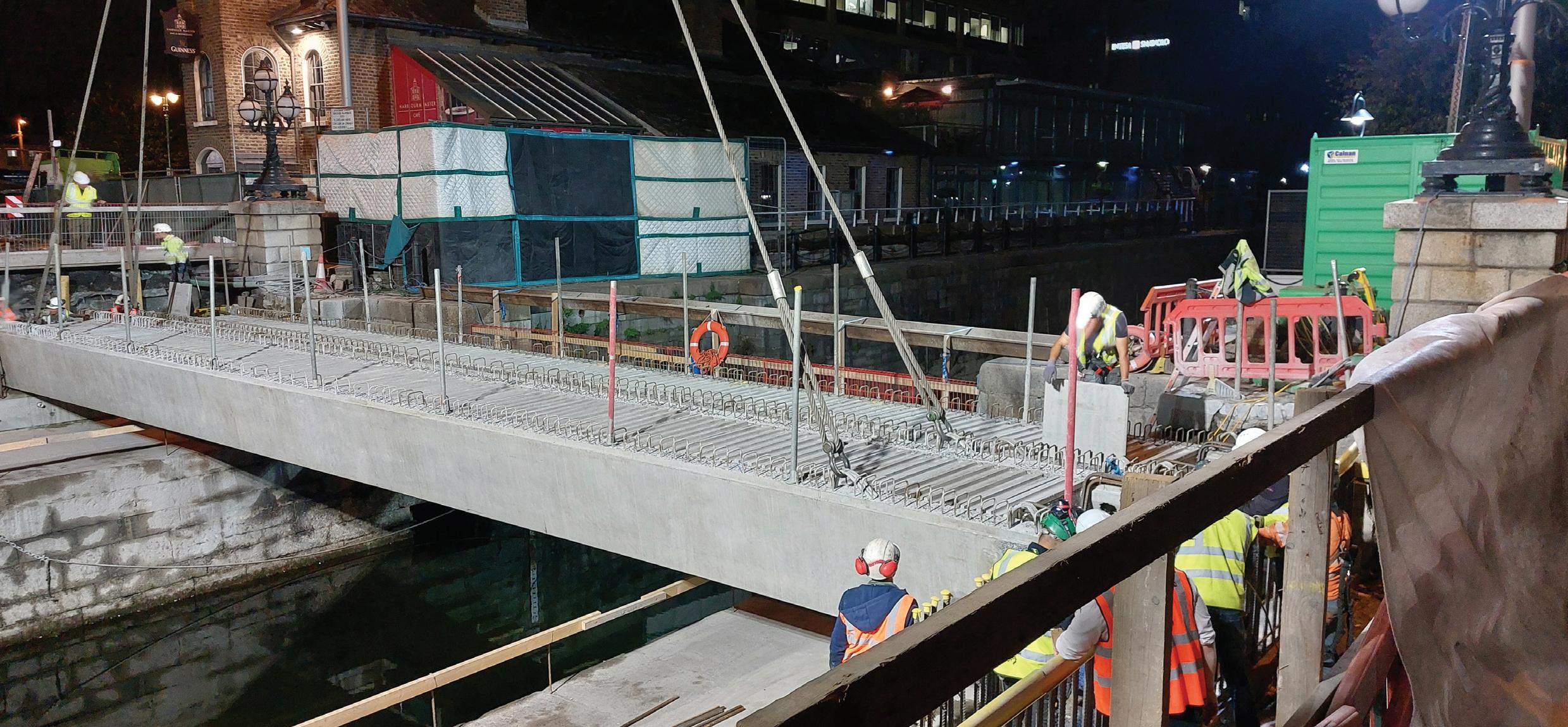
Bridge Replacement Works, George’s Dock 2025.
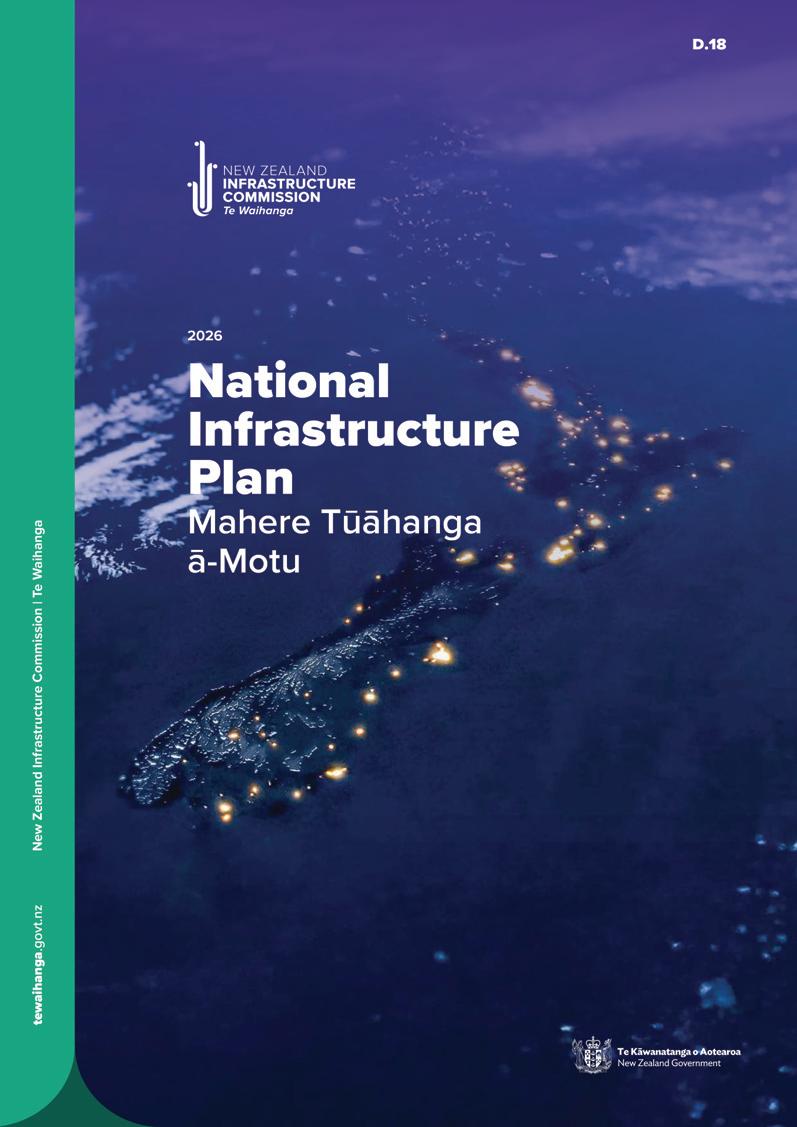
The issue of strategically managing existing infrastructure is central to New Zealand’s ambitious new National Infrastructure Plan, prepared by the Infrastructure Commission and published in March 2026. Not only is this a 30-year plan, yes you read that right, it signals a dramatic change of approach towards its public infrastructure.
For instance, the Infrastructure Commission states in the plan that solving New Zealand’s infrastructure crisis requires shifting focus from “new, flashy projects to maintaining existing assets”, and highlights that much of the infrastructure that needed “over the next 30 years already exists”.
The plan also notes that “infrastructure delivery becomes harder without sufficient planning” and the “biggest investment driver over the next 30 years is the need to replace or rebuild the infrastructure New Zealand already has, potentially taking up 60 cents in every dollar of capital spending”.
The fact that this is a 30-year plan should gain significant international attention and, combined with the clear signal towards maintaining existing assets, the plan also calls for legislation to require “capitalintensive central government agencies to prepare and publish longterm investment and asset management plans” as well as extending “the horizon over which government plans its infrastructure funding intentions and communicates these intentions to agencies and the public”.
There are plenty of other interesting recommendations made by the Infrastructure Commission including for the introduction of multi-year budgeting to “reinforce high-quality infrastructure planning, delivery, and asset management practices”.
Additionally, the New Zealand Government has been actively strengthening its Investment Management System which includes improving asset management practices across public agencies to develop better longer-term investment plans.
It has also established National Infrastructure and Financing to attract private finance to public infrastructure, as well as focusing on usercharging to help reduce the funding burden for public infrastructure on tax-payers.
So why should this be a topic of debate in Ireland now?
In the context of the ambition set out in Ireland’s National Development Plan to tackle Ireland’s infrastructure deficit and maintain economic competitiveness, it is important that Ireland embraces the learnings of other countries with older public infrastructure.
Without a stronger focus on life cycle management, there is a real risk that an increasing share of Ireland’s future capital budgets will be absorbed by maintaining existing infrastructure; limiting the State’s ability to invest in new capacity.
The lesson from other countries is clear: the challenge is not just how much we invest, but how well we manage the existing public infrastructure. Strategic asset management provides a pathway to protect public investment, improve service performance, and safeguard public finances. That was the rationale behind the emergence of strategic asset management 40 years ago and it is still valid today.
TII attended the eolas Transport Ireland Conference on 4 June 2026 in Croke Park to talk about strategic asset management and the work TII is doing to help tackle Ireland’s infrastructure deficit. TII would welcome further engagement on these topics with interested parties.
T: 01 646 36000 W: www.tii.ie

Access the full conference presentation at www.tii.ie
Figure 1.1.
Ireland’s EU presidency: Opportunities for transport
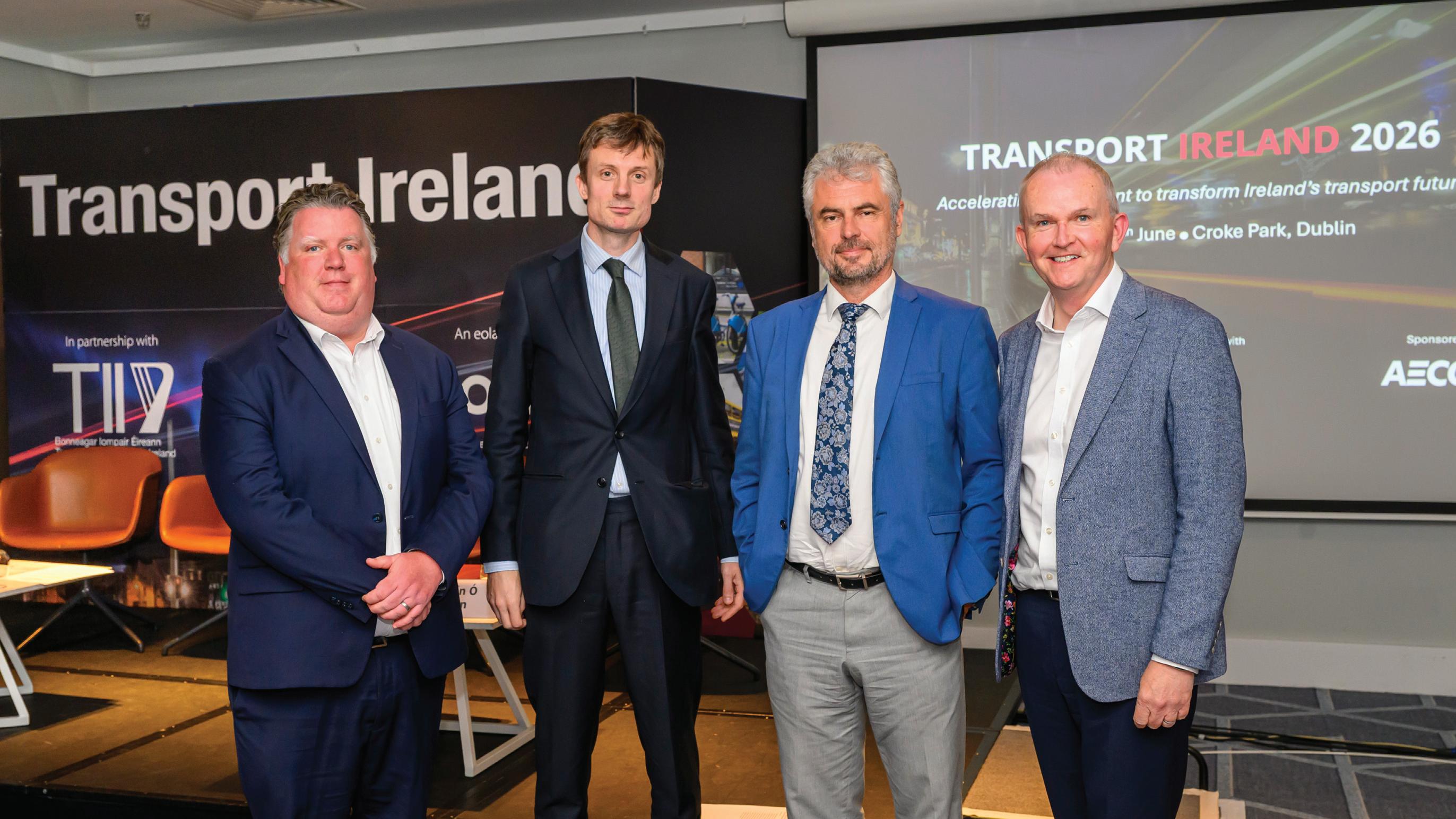
At eolas Magazine’s annual Transport Ireland conference, Department of Transport Assistant Secretary Caoimhín Ó Ciaruáin chaired a discussion with senior transport decision-makers looking ahead to Ireland’s upcoming presidency of the Council of the European Union.
What are the key priorities and themes for Ireland’s upcoming Presidency of the Council of the European Union?
Martin Hehir
The transport agenda centres on four themes: competitiveness, decarbonisation, delivering for citizens, and resilience. Transport is increasingly viewed as an enabler of growth, trade and the Single Market. While Green Deal ambitions remain, the focus is shifting from target-setting to delivery, investment and practical implementation. Passenger rights, ticketing and multimodal travel will remain important for
citizens, while security, preparedness and resilience have become central as transport policy increasingly intersects with climate, energy and geopolitical concerns.
Kevin Cullinane
Aviation is critical to Ireland’s connectivity and competitiveness. Airports support trade, tourism and investment, and continued infrastructure investment is essential for a small, open island economy. The Presidency gives Ireland an opportunity to contribute to policy discussions on connectivity, climate action, and economic growth while ensuring aviation remains central to Europe’s competitiveness agenda.
Aidan Sweeney
Competitiveness and resilience should be at the core of the agenda. Transport is vital for peripheral and island economies, and Ireland should use the Presidency to build alliances around shared priorities in aviation, maritime transport and connectivity. Funding discussions, including the next Multiannual Financial Framework (MFF), will be critical, but so too will ensuring that policies are implemented effectively through faster permitting, licensing and infrastructure delivery.
What are the prospects for the Connecting Europe Facility (CEF) during the Presidency?
Martin Hehir
The proposed expansion of the Connecting Europe Facility is positive for transport investment. While negotiations may extend beyond Ireland’s Presidency, the programme provides significant opportunities for Irish transport stakeholders. Ports, their hinterlands and strategic rail links are increasingly recognised as cross-border infrastructure, strengthening Ireland’s case for future funding.
What progress would you like to see on sustainable aviation and decarbonisation?
Kevin Cullinane
Reform of the Single European Sky remains important, improving efficiency and reducing emissions. Sustainable aviation fuels (SAF) will
be part of the solution, but production capacity remains limited. Ireland has opportunities through assets such as Whitegate and through its strong aviation ecosystem. Airlines are already investing in newer, more efficient fleets, while airports continue reducing their own emissions. The challenge is achieving significant emissions reductions across the wider aviation system.
Aidan Sweeney
Europe needs a more strategic approach to SAF and alternative fuels. Decarbonisation, resilience, and energy security should be considered together. The focus should be on creating the regulatory certainty and investment environment needed to scale infrastructure, whether for SAF, electrification, hydrogen or maritime fuels. Grid capacity, permitting, and private-sector investment will all be critical to delivery.
What transport files are likely to be priorities during the Presidency and how do we balance competitiveness, resilience, and decarbonisation?
Martin Hehir
Key files include the Connecting Europe Facility, aviation strategy, and air services regulation. Decarbonisation work will focus on vehicle emissions standards, clean fleets, and emissions trading in aviation and maritime. Passengerfocused measures include digital ticketing, multimodal travel, and rail passenger rights. Road safety, military mobility, and wider resilience measures will also feature prominently.
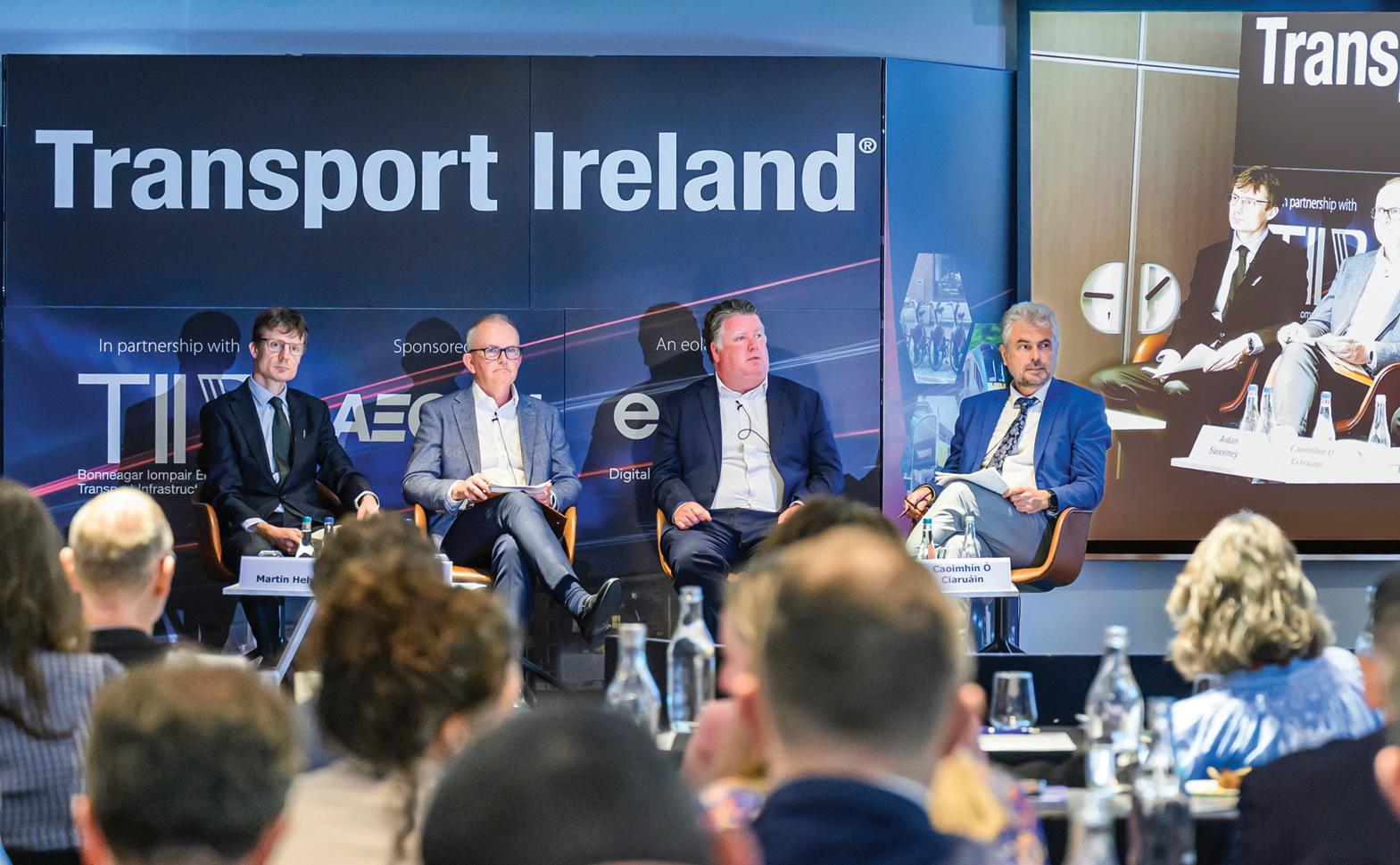
Aidan Sweeney
There is a risk that resilience becomes synonymous with protectionism. Europe must ensure policies support decarbonisation while remaining practical for smaller economies. Access to technology, equipment, and investment is essential. At the same time, resilience must include protecting critical infrastructure and ensuring Europe remains competitive while achieving climate goals.
The energy crisis will be a topic during the informal ministerial discussions. What lessons should be taken from it?
Aidan Sweeney
Energy policy must remain a priority beyond any immediate crisis. Europe needs faster infrastructure delivery, stronger grids and greater regulatory certainty. Policymakers should also consider how to respond more flexibly during crises, drawing on lessons from Brexit, Covid19, and recent supply-chain disruptions.
Kevin Cullinane
The crisis has highlighted the risks of dependence on volatile energy sources and infrastructure bottlenecks. Resilience requires diversification, stronger networks, better preparedness and investment in renewables, alternative fuels, strategic infrastructure, and supply-chain security.
Looking back at the end of the Presidency, what would success look like?
Martin Hehir
Progress on the road safety package would be a significant achievement. More broadly, success would mean advancing discussions on resilience and decarbonisation while helping transport sectors adapt to changing geopolitical and energy realities. The Presidency provides an opportunity to maintain momentum on climate action while supporting competitiveness and long-term resilience.
Aidan Sweeney
Ireland should also highlight its strategic role in aircraft leasing, where it manages the majority of leased aircraft globally. This is a major European asset and should be recognised as part of future discussions on aviation, sustainability, and competitiveness.

Participants
Martin Hehir is a Principal Officer, heading the Department of Transport’s EU and International Division. He leads on European transport policy and international engagement. He oversees the development and coordination of Ireland’s cross-cutting transport priorities at EU level, including preparations for Ireland’s Presidency of the Council of the European Union.

Kevin Cullinane is Deputy Director of Communications at daa, the operator of Dublin and Cork airports with additional responsibility for public affairs, policy and stakeholder engagement. He has over 30 years’ experience in senior communications, public affairs, and marketing roles, including extensive engagement with government, the Oireachtas, regulators, and local communities on aviation policy, infrastructure investment, and connectivity.


Caoimhín Ó Ciaruáin has over 35 years’ experience in the Irish Civil Service. He has worked at a senior level in the Department of Transport for over 10 years and currently heads up the Climate Action and EU / International Affairs Division which is responsible for developing and delivering climate action policy for the transport sector.
Aidan Sweeney is Head of Infrastructure and Environmental Sustainability at Ibec. He oversees infrastructure delivery, transport policy, planning, public procurement, and regional policy for the Dublin and Eastern region. Sweeney serves as Vice Chair of Business at the OECD’s Governance and Regulatory Policy Committee and sits on Dublin City Council’s Planning and Urban Regeneration and Finance committees.
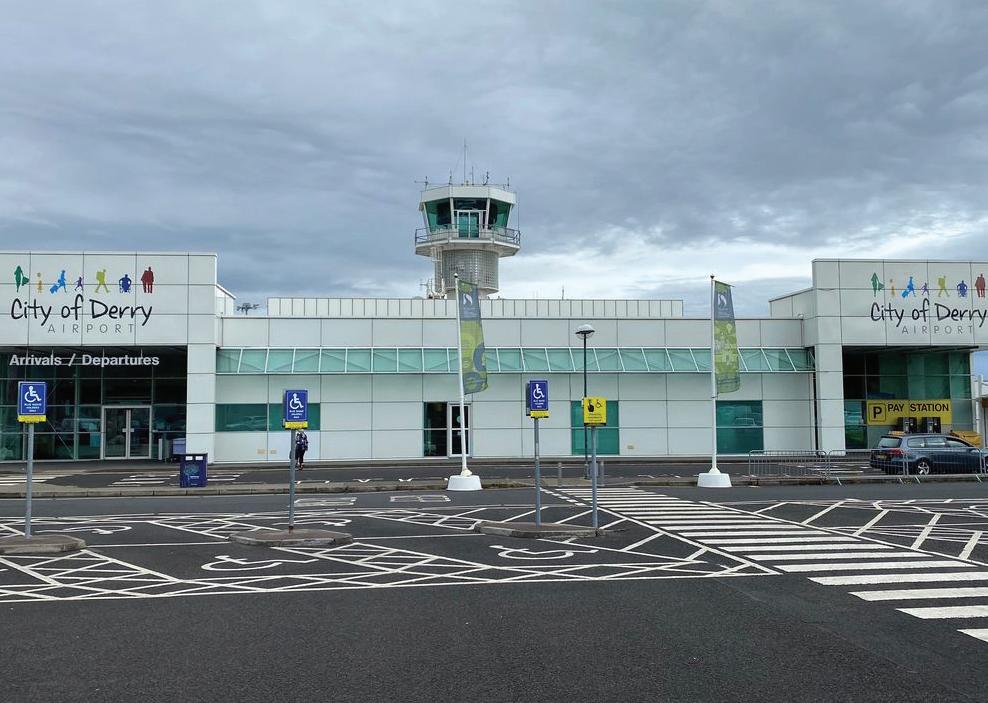
Derry to Dublin flights expected to return
At the North-South Ministerial Council in May 2026, it emerged that the Government is to fund a new air route linking Dublin Airport with the City of Derry Airport.
The North-South Ministerial Council (NSMC) published the communiqué of its plenary meeting on 11 May 2026, confirming support for a Public Service Obligation (PSO) air service between Dublin Airport and City of Derry Airport. The Irish Government announced funding for the route in November 2025. The NSMC statement re-affirms the joint commitment and sets a launch target of late 2026.
The service is expected to run at least twice daily and is to be tendered under EU PSO rules, with subsidy designed to guarantee frequency on route which may not be commercially profitable.
For business travellers, the 45-minute flight will cut journey times compared with a three-hour road trip and provide a same-day return option that rail cannot yet match.
The connection is also seen as an important symbol of the Shared Island agenda, enhancing economic ties and labour mobility between the North and the Republic.
If confirmed, the route will mark the third domestic route on this island, with Dublin Airport already offering flights to Kerry and Donegal. However, the Dublin-Kerry route is no longer run under the aegis of the PSO scheme, with Ryanair operating the route on a for-profit basis.
The PSO scheme once funded regional routes connecting Dublin to Cork, Waterford, Derry, Donegal, Galway, Sligo, and Kerry, but post-Great Recession austerity measures prompted the governments of Brian Cowen and Enda Kenny to significantly reduce spending on the scheme.
The cuts in funding were also enabled by a significant increase in the State’s road infrastructure capacity throughout the mid-2000s, which made Cork, Waterford, and Galway in particular more accessible from Dublin via road.
It is not yet clear which airline will operate the route.

Accelerating rail infrastructure delivery
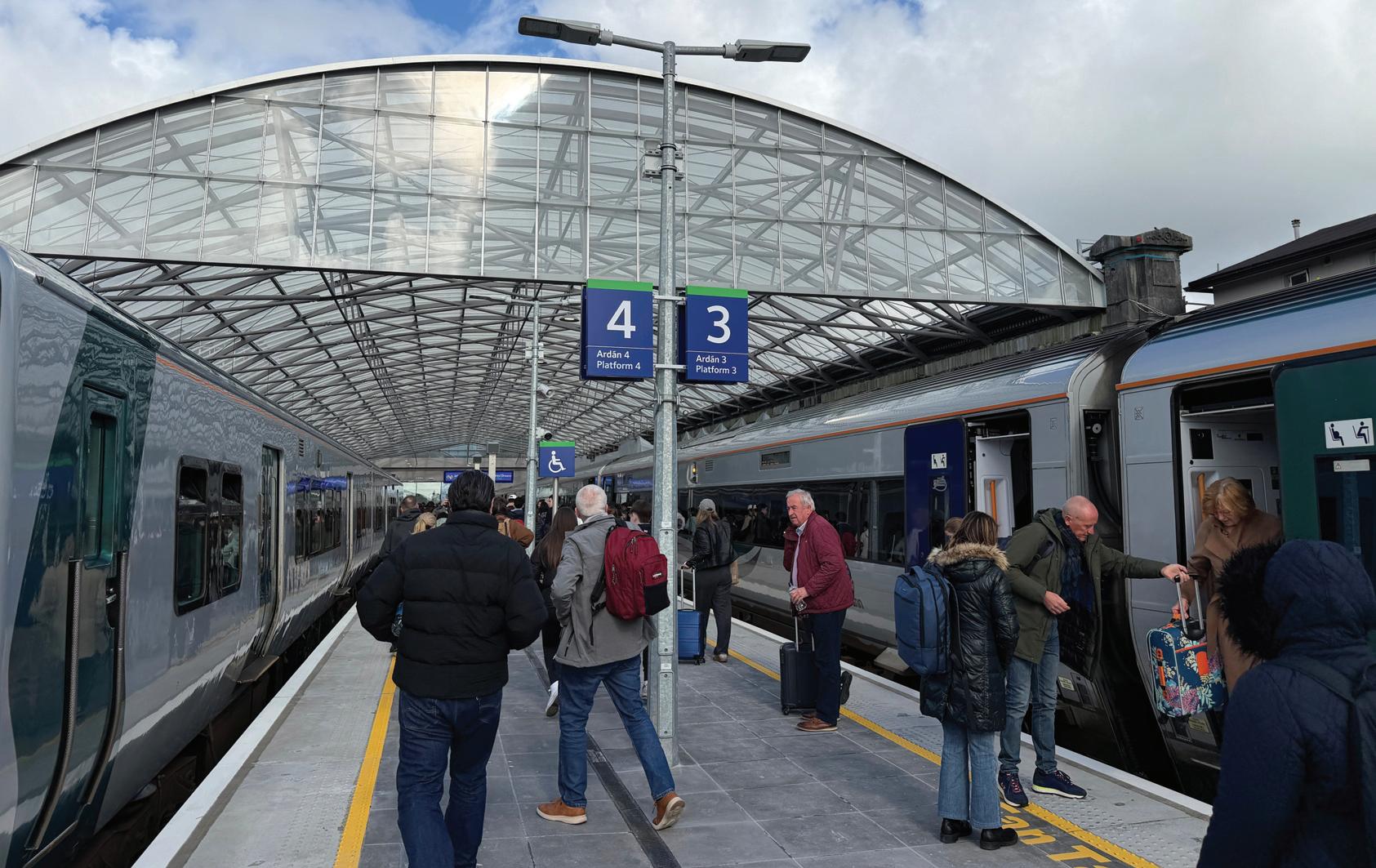
As passenger demand for our rail services soar, and freight and Rosslare Europort growth continues, the year ahead is set to see tangible delivery across a range of projects to enable service expansion.
The year 2025 again saw a new record achieved in passenger numbers on the Iarnród Éireann network, with just over 55 million journeys made, an increase of 9 per cent. This year is once again set to see record demand, bringing with it capacity pressure on a number of key routes at the busiest times.
Matching record demand is a record investment programme and it will, within the coming 12 months, see a number of projects come to fruition. This will begin the expansion of service and network capacity to enable Iarnród Éireann to deliver on our vision to be the backbone of Ireland’s sustainable transport network.
Perhaps the most tangible aspect will be the introduction of our new DART fleet, with battery-electric trains currently in testing for deployment in the first half of 2027.
A total of 285 DART carriages are currently on order, of which 185 will represent new capacity on the network, including the first carriages being introduced next year.
The remaining 100 will ultimately serve to replace the original DART fleet, in service since 1984, themselves an indication of the return on investment for railway assets. With the first trains to be deployed on the Drogheda route,
The new Ceannt Station will serve rapidly growing passenger demand, enabling expansion of rail services into the future.
their introduction will also free up commuter and intercity trains currently operating there for use elsewhere on the network.
The DART+ Programme itself is progressing, with DART+West to Maynooth/M3 Parkway, South West to Hazelhatch, and Coastal North to Drogheda all in receipt of railway orders. Works on DART+ West will begin in 2027, and a further application for a new location for the DART+ depot in Kilcock was placed in March 2026. This will also serve to extend electrification and double-tracking to Kilcock, transforming rail services to the growing County Kildare commuter town.
Nationally, the development of Ceannt Station in Galway this year, will deliver an expanded station which will cater for expansion to and from the city for decades to come; facilitating more services on existing routes, and the development of new routes such as the next phase of the Western Rail Corridor from Athenry to Claremorris. Ongoing works at Oranmore Station will also see capacity grow from 2027, through a second platform and passing section of track.
The new Foynes freight line will also be completed in 2026, also enabling a temporary passenger service to Adare for the Ryder Cup in 2027, for which platform works have commenced.
Iarnród Éireann has completed both a new through platform at Kent Station, Cork and twin-tracking of the Midleton line as part of the first phase of the Cork Area Commuter Rail (CACR) programme, with the resignalling of the Cork commuter network to deliver the capacity for trains every 10 minutes each way between Cork and each of Cobh, Midleton, and Mallow to be completed in 2027.
The next building blocks for that highfrequency commuter service in Cork are also being advanced, as public consultation has taken place for the next phase of CACR, for a new Cork fleet depot, electrification and six new stations. Two other stations, Blackpool and Dunkettle, are being accelerated under separate planning applications.
As part of Waterford City and County Council’s North Quays development, a new Plunkett Station is set to open by Easter 2027, providing major improvements in integration with other public transport modes and active travel.
Iarnród
“This year is once again set to see record demand, with a matching investment programme to boost capacity.”
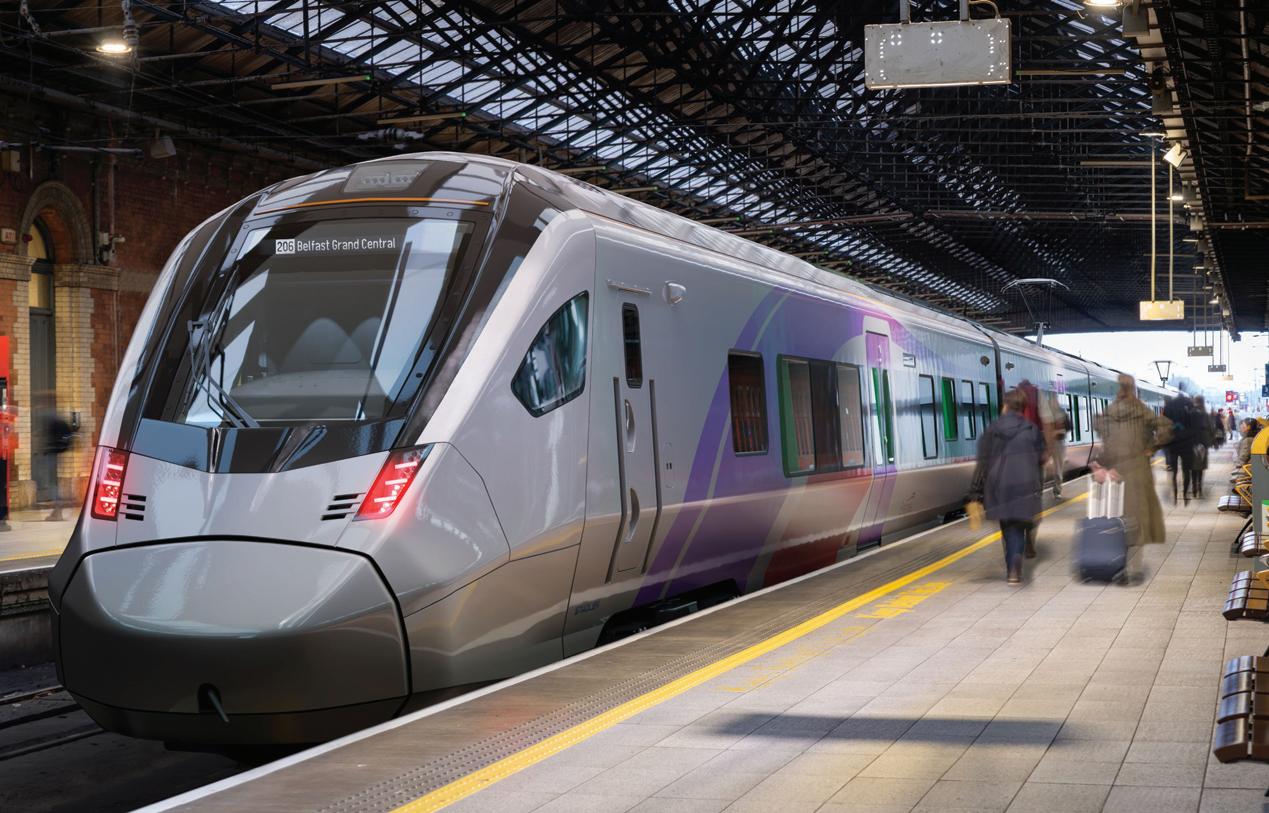
Jointly with Translink, Iarnród Éireann has placed an order for the next generation of Enterprise trains from Swiss manufacturer Stadler, which will further enhance a service that has seen huge growth in demand since the move to an hourly service in October 2024, with the surge in demand of over 45 per cent perhaps the most significant public transport success story on this island of the past few years.
Iarnród Éireann has commenced planning processes for a range of projects including the Navan railway, bringing rail services back to the largest town in Ireland not currently on the passenger rail network; Four North to boost capacity of the Connolly to Malahide corridor; and capacity enhancement feasibilities on routes including Dublin to Galway, Galway to Limerick, and Limerick to Limerick Junction.
Preparatory work for the second phase of the Western Rail Corridor, from Athenry to Claremorris, is also underway.
Longer term, the All-Island Strategic Rail Review sets the strategic direction for the development of the rail network, and the publication of early intervention projects and a priority programme by
the Department of Transport in Ireland and Northern Ireland’s Department for Infrastructure give the momentum to bring the vision to reality.
In freight, new wagons on order, and developments at Foynes and Dublin Port will allow Iarnród Éireann to play a far greater role in the country’s movement of goods, with opportunities for new inland ports are being actively explored.
In Rosslare Europort, service expansion to and from mainland Europe is being complemented by investment in the port masterplan and its development as the offshore renewable energy (ORE) hub for the Celtic and Irish Seas. The recently completed T7 permanent border control post and associated facilities, and the N11/N25 Oilgate to Rosslare Europort project by TII and Wexford County Council, facilitate further growth.
The journey of Iarnród Éireann, set to mark its 40th anniversary in 2027, is accelerating, and the destination is a more sustainable future for all.
W: www.irishrail.ie
X: @IrishRail
Éireann and Translink have jointly ordered a new fleet of Enterprise trains for the Dublin-Belfast route.
Moving Together: Reducing car dependency
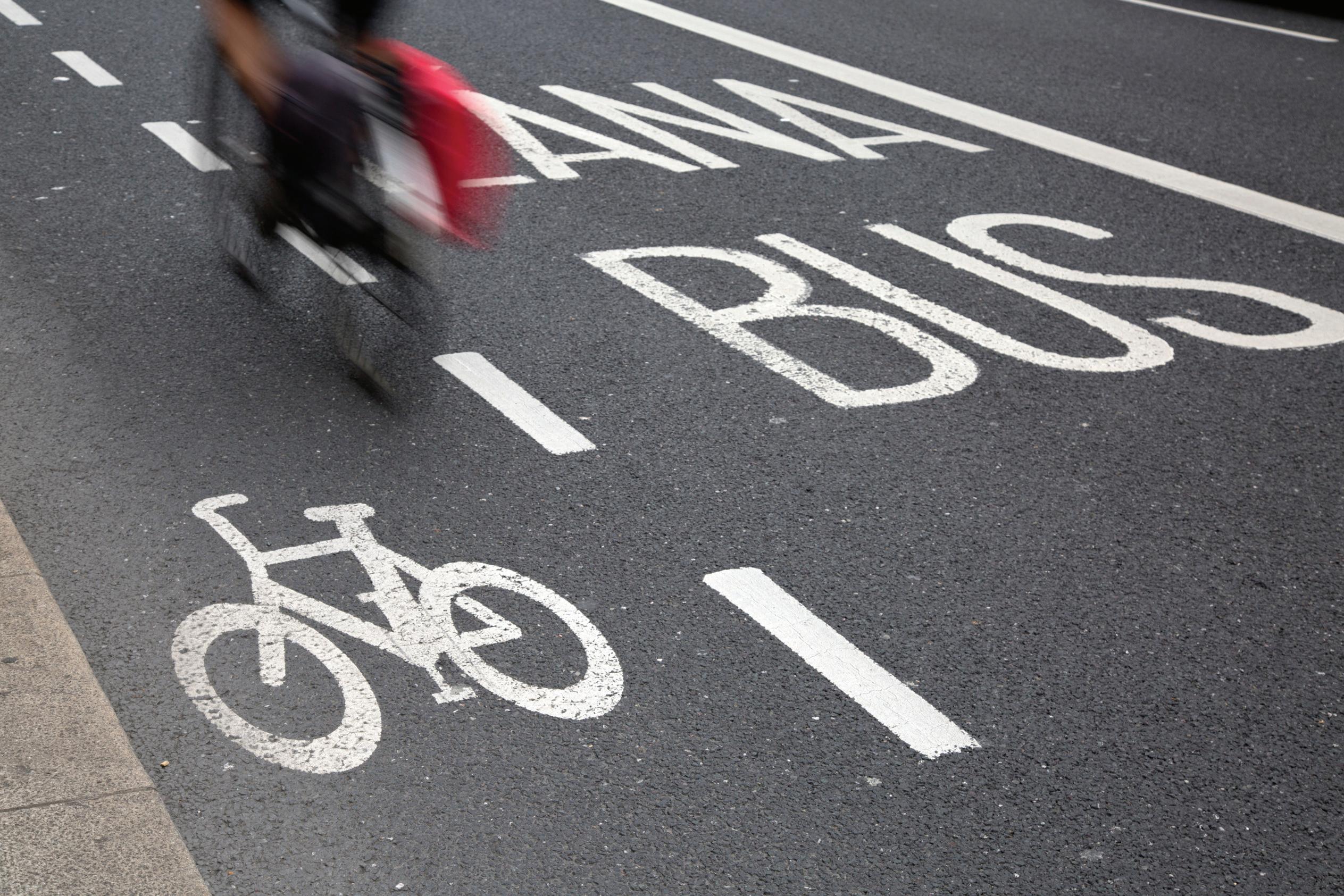
The Government’s Moving Together: A Collaborative
Approach to Systems
Change in Transport 2026-2030 strategy outlines plans to shift away from the prioritisation of cars through more efficient urban planning and the reallocation of road space in favour of alternative modes of transport.
The strategy, published in March 2026, sets out the Government’s aim to “encourage collaboration across the public, private, and community sectors and to find innovative ways for supporting more efficiency and less congestion across the transport system”.
Planning
One of the key areas of focus in the strategy is integrated land use and transport planning, with the overall aim of ensuring that the built environment is connected in a way that reduces travel demand by car sustainably.
The strategy notes that this “requires a rethinking and reversal of decades of development patterns driven by the
prioritisation of the private car as the primary form of transport”.
This involves the planning of homes, workplaces, education facilities, and other services being complementary to the planning of alternative transport infrastructure, resulting in a significant reduction in transport-related emissions.
The prioritisation of car travel has meant that congestion historically was viewed as the primary transport challenge, with road capacity expansion seen as the solution, but this compounded the increasing problem of underutilising space for other functions.
This resulted in the responsibilities of transport and planning being segmented, therefore minimising the role that land

use and housing decisions play in the performance of transport systems.
The strategy highlights several challenges which will slow and potentially halt the move away from car dependency.
Retrofitting existing spaces can face pushback from residents due to fears around how they or their community may be negatively affected.
Planning new roads to allow all forms of transport modes to cut through spaces can negatively affect the environment for non-car users, which risks discouraging a shift to sustainable transport modes but also does little to reduce the demand for car use.
“Moving Together is about supporting the development of better and more liveable towns and cities, cleaner air, efficient public transport, safer spaces for walking and cycling, and an end to the inefficiency and pollution of carclogged streets.”
Minister
for Transport Darragh O’Brien TD

To avoid this, the strategy notes that communications and engagement with the local community are vital to the delivery of any proposed measure.
The main way of improving the integration of land use and transport planning will involve new developments rather than retrofitting established ones. Therefore, this may result in limited effects of reducing emissions on an absolute basis due to construction.
To deliver reduced car usage, the strategy recommends strengthening policy alignment, governance, and funding mechanisms to deliver the compact growth priorities detailed in the National Planning Framework.
The strategy also recommends for analysis to be completed on the effectiveness of reducing car parking as a demand management measure.
This would involve the collating and analysing of data on parking at a national level and the preparation of guidelines to better inform behaviour and activities to support the development of targeted measures aimed at demand reduction.
This analysis would also quantify the potential undesirable impact and costs to society of expensive urban centre car parking and free peripheral car parking.
An inventory would gather data on how much of the space is being dedicated to different modes of transport and compare whether that is consistent with climate and wellbeing goals.
Space
The strategy also identifies the optimal use of space as another key area of focus for improving transport across the State.
This would involve the reallocation of road space in favour of pedestrians, cyclists, and public transport.
The reallocation of road space would involve the repurposing of space previously dedicated to on-street parking or reducing the number or size of car lanes.
The strategy identifies several considerations essential to the success of this reallocation, such as communication and engagement, equity and inclusion, planning legislation, and ‘tactical urbanism’ which involves smallscale, low-cost pilot interventions.
Reallocating road space is a significant project and will present several challenges, including divergences in the views of businesses and communities, negative media coverage, concerns over traffic flow, and legal and regulatory processes and requirements.
The intersection of cycle lanes with pedestrian paths or footpaths can also cause issues for disabled people and those with physical or sensory issues.
Additionally, reallocating road space to facilitate a move away from the dependence on cars requires suitable and sustainable transport alternatives.
Delivery of a robust public transport network can be a lengthy and expensive process which could deter many local authorities from the reallocation of road space.
To achieve this reallocation of road space, the strategy recommends providing communications and engagement support, updating national guidelines in support of demand management, and providing guidance support for local authorities on the development of tailored strategies.
Recognising the potential huge costs for local authorities of reallocating road space, the strategy recommends the creation of mechanisms to financially support demand management pilot measures.
Minister for Transport Darragh O’Brien TD says: “Moving Together is about supporting the development of better and more liveable towns and cities, cleaner air, efficient public transport, safer spaces for walking and cycling, and an end to the inefficiency and pollution of carclogged streets.”
Data as the engine of change in transport

The transport sector does not need more data, it needs better decisions, writes
Annette Donnelly, Strategic Growth Manager, Fexco Managed Services.
Across a system shaped by congestion, emissions pressure, safety challenges, infrastructure constraints, and rising passenger expectations, the real differentiator is not how much information is collected but how effectively it is used. Data is what turns broad ambition into targeted, measurable action.
That shift is already visible across other sectors. In aviation, energy, logistics, and financial services, the gap between strategy and execution is increasingly

closed by decision-grade intelligence: information that is timely, precise, and genuinely actionable.
Ireland today has stronger digital policy frameworks, richer public datasets, and more sophisticated operational reporting than at any previous point. The question is no longer whether the data exists. It is whether it is being used to direct investment, manage demand, improve reliability, and accelerate sustainability outcomes.
In transport, that gap between insight and action remains persistent. The sector is often strong at collecting information and reporting performance, but slower at turning insight into meaningful intervention.
If Ireland is serious about a transport system that is more sustainable, more reliable, and safer for communities, the priority is not more dashboards or additional data points, it is faster decision-making, stronger system integration, and a clear shift towards treating data as a strategic operational asset.
At Fexco, we see this challenge firsthand. Over four decades, we have developed expertise in turning complex data into actionable intelligence across payments, energy, sustainability, and aviation. That experience gives us a clear perspective on what is possible when data is applied with discipline, and what is lost when it is not.
Digital mandate
The Government’s updated Digital Ireland strategy reflects an important shift in thinking. Digital transformation and artificial intelligence are no longer standalone technology priorities; they are recognised as core enablers of competitiveness, public service delivery, and inclusion. For transport, this matters enormously.
Transport is one of the clearest examples of where digital ambition must translate into operational precision. Every journey generates data, from timetables and ticketing to traffic flow, collision records, emissions profiles, and customer feedback.
When those signals are connected, analysed, and acted upon quickly, they become a practical tool for making transport more efficient, more reliable, and more sustainable. The challenge is not a lack of information; it is the delay between measurement and intervention.
A congested corridor identified in quarterly reporting is useful, but not transformative. A reliability issue identified in near real time – quickly enough to alter scheduling, reroute services, or redesign traffic priority before the problem compounds – is where real value lies.
This is why the sector needs to move from collecting data to reducing decision
latency. The most valuable information is not what is stored for future reporting; it is what changes an operational decision today.
Passenger data
The National Transport Authority’s most recent customer satisfaction findings offer an encouraging baseline. Overall satisfaction stands at 81 per cent, with 91 per cent of passengers satisfied with their most recent journey. Those are strong results, reflecting genuine public trust in the core proposition of public transport
Yet reliability remains the persistent pressure point, with satisfaction in that area at 73 per cent. The NTA links this to congestion, limited bus priority in

towns and cities, and recruitment pressures.
Customers do not experience transport through strategy documents; they experience it through the predictability of the service in front of them. Improving that experience requires data that can isolate where delays are happening, why they are happening, and which interventions will have the fastest impact.
The NTA recorded 363.5 million passenger journeys across the public transport network in 2025. Growth is welcome, but it also raises the performance threshold. The challenge is no longer simply carrying more passengers; it is maintaining reliability and trust as pressure intensifies across the network. 4
Measuring emissions
The environmental case for data-led transport policy is equally compelling. Environmental Protection Agency reporting shows that transport emissions increased slightly in 2023 to 11.8 MtCO2eq, representing 21.5 per cent of national emissions and making transport Ireland’s largest single emissions sector.
Decarbonisation is both urgent and complex, because demand continues to rise while accessibility and economic connectivity must be maintained.
The EPA outlines a pathway in which transport emissions could fall to 9.7 MtCO2eq by 2030 under its ‘with additional measures’ scenario, supported by electric vehicle adoption, stronger biofuel blends, and reductions in vehicle kilometres travelled. Delivering those reductions will depend not only on policy ambition, but on the quality of the underlying measurement used to guide decisions.
This is where precision matters most. Broad estimates and inconsistent methodologies make it difficult to assess which interventions are genuinely reducing emissions.
Fexco’s PACE platform in aviation was built specifically to address this challenge, improving the accuracy and consistency of emissions reporting using real operational data rather than broad assumptions. The lesson for transport is direct: better measurement leads to better decisions and faster, more confident action on decarbonisation.
Safer roads
Of all the areas where data can change outcomes in transport, road safety may be the most consequential. The 190 fatalities recorded on Irish roads and public places in 2025 represent not a statistic but a failure of a system that can and should do better.
Behind every figure is a family, a community, and, in most cases, a preventable event. The ambition to eliminate road deaths entirely is the right one. Achieving it requires a level of
analytical precision that Ireland’s transport system has not yet fully applied.
The Road Safety Authority has been clear and consistent in its calls for a whole-of-system response; one that combines infrastructure investment, enforcement, education, and behavioural change.
What connects all of those levers is data. Collision records, location data, speed profiles, near-miss incidents, weather conditions, road geometry, and enforcement activity, when linked and interrogated effectively, reveal patterns that are not visible in any single dataset alone. They show not just where incidents have occurred, but where they are most likely to occur next.
This is the shift that modern safety analysis makes possible: moving from reactive reporting to predictive intervention. A road safety system built on decision-grade data does not wait for a fatality to identify a dangerous junction.
It identifies the conditions the combination of road geometry, speed, traffic volume, and road user behaviour, that consistently precede serious collisions, and it acts before the next one happens.
In practice, this means moving beyond annual collision statistics toward continuous, granular monitoring of risk
across the network. It means integrating data from multiple sources, An Garda Síochána enforcement records, local authority infrastructure data, RSA collision databases, telematics from commercial fleets and connected vehicles, into a single, coherent analytical picture.
It also means giving decision makers at national and local level the tools to direct limited resources to the locations and user groups where the risk is highest and the intervention potential is greatest.
Vulnerable road users – pedestrians, cyclists, and motorcyclists – consistently account for a disproportionate share of serious and fatal collisions. Addressing that imbalance requires understanding, not just collision frequency, but the specific environmental and behavioural factors present at each location.
Data-led analysis can distinguish between a junction that is dangerous because of design, one that is dangerous because of speed, and one that is dangerous because of visibility, and that distinction determines which intervention will be most effective.
Fexco’s experience across aviation safety reporting, emissions measurement, and energy analytics has demonstrated that the same analytical discipline applies regardless of the domain.
The ability to move from broad trend data to precise, location-level insight, and to translate that insight into operational decisions, is not sectorspecific. It is a capability that can be applied wherever complex datasets need to drive real-world outcomes. Road safety is precisely that kind of challenge.
The goal is a safety system in which every intervention can be evaluated, every investment can be justified by evidence, and every improvement in outcomes can be attributed to a specific action. That is not an aspirational standard, it is an achievable one, if the underlying data infrastructure is designed with that purpose in mind.
From energy to transport
Fexco’s work with the Sustainable Energy Authority of Ireland illustrates the broader principle. The Smart Energy Tool combines smart-meter data with Fexco’s SmartAssist AI capability to provide homeowners with clear, actionable guidance on reducing energy
“Data is what turns broad ambition into targeted, measurable action.”
usage and shifting demand to off-peak periods.
Critically, the platform converts complex datasets into practical recommendations aligned with real-world decisions, it does not overwhelm users with technical detail.
That principle applies directly to transport. Whether the audience is passengers, operators, policymakers, or safety agencies, the value of data lies not in technical sophistication alone but in accessibility and usability.
Operators need insight that drives efficiency and fleet performance. Policymakers need evidence capable of directing investment and evaluating outcomes. Safety bodies need analytical tools that connect the right datasets to the right decisions at the right time. The common requirement across all of these is actionable intelligence.
What good looks like
Imagine a transport system in 2030 where safety interventions are targeted to the specific junctions, routes, and user groups that data identifies as highest risk before the next serious collision occurs.
Where every bus operator, local authority, and freight company can see in near real time the emissions impact of every route decision. Where passengers trust the timetable because reliability data drives rostering, bus priority, and operational planning.
That is the system data can help deliver. One where congestion is treated as a measurable network challenge, emissions are tracked at decision-grade precision, road safety is managed predictively rather than retrospectively, and service reliability is continuously
improved rather than periodically reviewed. Public investment would be judged not by how much data is collected, but by how quickly that data changes outcomes.
The case for action
The next step is not more reporting, it is better integration between transport systems, shared data standards, and faster translation of insight into operational action. Establishing a clear national framework for transport-data compatibility would enable congestion, safety, service-performance, and emissions data to operate within a connected, coherent decision-making system.
That would allow transport agencies, safety bodies and operators to identify emerging risks earlier, target investment more precisely, improve reliability faster, and measure the real-world impact of interventions with greater confidence. In an increasingly constrained fiscal and climate environment, that level of operational precision is becoming essential rather than aspirational.
Fexco is already applying precision measurement and decision-intelligence approaches in aviation, energy, and sustainability. The same discipline connecting complex data to clear, actionable outcomes is directly transferable to transport, and to the challenge of making Irish roads safer for every user.
The case for action is already in the data. The question is no longer what to do, but how quickly it can be done.
W: www.fexco.com

Transport and mobility planning
“There is a need to enhance the skillset, capabilities, and capacity for both public and private service tasked with transport and mobility planning, and climate action, with a focus on how we engage communities in planning processes,” says Dean Phelan, a research fellow at the School of Geography at University College Dublin (UCD).
The CONUNDRUM project, of which Dean Phelan is co-investigator, aims to reimagine how transport outside of major cities is examined. The project is led by Niamh Moore-Cherry from UCD in partnership with Brian Caulfield and researchers at Trinity College Dublin, and TASC, the think tank for action on social change.

Phelan says: “We need to think about our transport systems as larger, integrated pieces of infrastructure and governance processes, and in countries like Ireland, where two-thirds of our populations do not live in our cities, this is particularly important.”
The CONUNDRUM approach involves co-creating community-led mobility strategies with diverse stakeholders. As of June 2026, the project has engaged with over 570 diverse stakeholders, all with lived experiences of challenges affecting local communities across Ireland.
"We are really fantastic at a national level for coming up with new frameworks and policies, but we lack supports at the local authority level for enabling integrated and inclusive planning, or for linking local actions with national level ambition."
Stakeholders include people within the case study towns, such as residents, community groups and business leaders, as well as service providers and members of local, regional and national governance.
Phelan says that traditional approaches to planning in Ireland are imperfect as they often fail to capture the complexity of local challenges, with traditional top-down approaches excluding the expertise of local communities and businesses which can result in “solutions being implemented that are controversial, poorly understood by residents, and do not enable behavioural change”.
However, he explains that people need to be central in planning sustainable mobility and transportation futures so as to not further marginalise or distance communities in efforts to achieve decarbonisation.
“The need for just transitions is not just about the need to decarbonise for the sake of the environment, but we also need to think about people as being at the forefront of this because we know that moves to decarbonise transportation can, and very often do, further marginalise already vulnerable communities,” Phelan says.
CONUNDRUM aims, as Phelan describes it, is to “democratise planning and democratise governance through co-creation”. Phelan describes the project’s approach as “rooted in participatory action research and community engaged geographies”.
Case studies
The project’s first case study was in the town of Enniscorthy, County Wexford, which was the focus of the research project during its first two phases of funding under Research Ireland’s

Sustainable Communities Challenge. Since then, the project has replicated its approach and validated it in additional towns including Tramore, County Waterford and Youghal, County Cork.
“Throughout those first three phases, we engaged more than 570 diverse stakeholders, from communities and business owners to local and national governance. Our approach is iterative, so while some of these 570 stakeholders engaged with us just once, most of these people were engaged on multiple occasions throughout the process.”
The case studies included conducting interviews with stakeholders and running community mapping workshops which Phelan describes as “key” in identifying the place-specific challenges facing local communities, and for enabling local authorities, with limited capacity and resources, to better direct their resources.
“Importantly, throughout the process, a large number of opportunities were identified, which we then condensed into solutions. We then invited stakeholders, including people from the community, to rank these possible solutions based on what they think is most important for their town. At all stages the community and local stakeholders are at the very forefront of shaping the change that they think needs to happen,” Phelan says.
At the end of the mobility strategy, Phelan describes how the project team suggest nine actions which they believe
“At all stages the community and local stakeholders are at the very forefront of shaping the change that they think needs to happen.”
Dean Phelan, School of Geography at University College Dublin (UCD).

could be implemented to improve issues raised by the communities. Phelan reveals that in Enniscorthy, within three months, all nine of the actions suggested were in the process of being implemented or under consideration by local stakeholders.
Phelan acknowledges that all three case studies to date have taken place in the Southern Regional Assembly area, however, he notes that work is commencing on the replication of the process in additional case studies across Ireland.
Phelan explains: “In this next phase of funding, we are going to begin replication over the summer in two new case study towns; one in the Northern and Western region and one in the Eastern and Midlands region.”
Looking forward, Phelan talks of the continued development of the project, with the main aim being to scale the project nationally, and the continued testing and validating of the process through replication in additional case study towns. Additionally,

the team are developing a digital tool (www.TownsMatter.ie) for supporting planners to replicate this process themselves.
“Ultimately what we are developing here is a process that we hope will help to enable upskilling and capacity building for public and private sector actors who are involved in the planning process for transportation and mobility in Ireland, or indeed crosssectorally,” Phelan says.
Concluding, Phelan talks about the frustration felt by communities, local businesses and local authorities in Ireland in regard to traditional government mechanisms.
Speaking about transport mobility planning, he says: “We are really fantastic at a national level for coming up with new frameworks and policies, but we lack supports at the local authority level for enabling integrated and inclusive planning, or for linking local actions with national level ambition. This is something that the CONUNDRUM process can help to address.”
Transport at the centre of infrastructure investment

Against a backdrop of population growth, infrastructure deficits, and increasing pressure on national productivity, transport emerged as one of the most significant beneficiaries of the revised capital investment framework in the 2025 revision of the National Development Plan (NDP).
The review commits €22.33 billion in exchequer capital funding to the transport sector between 2026 and 2030, representing the second-largest departmental allocation in the NDP after housing. Annual transport capital

expenditure is to increase from €3.43 billion in 2026 to €5.13 billion by 2030.
The Government’s wider transport investment commitment extends beyond voted expenditure. The review
confirms that €2 billion from the Infrastructure, Climate and Nature Fund (ICNF) will be allocated to support lowcarbon transport infrastructure, most notably MetroLink.
Transport investment is closely linked to the NDP’s overarching objective of enabling the delivery of 300,000 additional homes by 2030. The review identifies transport, alongside water and energy infrastructure, as critical enabling infrastructure necessary to unlock housing development and support future economic growth. In this context, transport funding has been prioritised according to its contribution to housing delivery, regional development, and competitiveness.
The review also highlights the importance of transport in achieving Ireland’s climate commitments. Under the Climate Action Plan, the transport sector is required to achieve a 50 per cent reduction in emissions by 2030 compared with 2018 levels. Capital investment in public transport, active travel infrastructure, and low-carbon mobility projects is a key mechanism for delivering national decarbonisation targets.
Significantly, the review points to a strong record of delivery under the previous NDP period. Since 2021, Ireland has delivered approximately 170km of new roads, including major projects such as the New Ross Bypass, Dunkettle Interchange, N22 Macroom scheme, and the N5 Westport-Turlough project.
In parallel, approximately 660km of new walking infrastructure, 400km of cycling infrastructure, and 220km of greenways have been completed.
From asset delivery to operational readiness
Ireland’s rail ambition is accelerating. From major network upgrades to future capacity expansion, investment is being made at a scale not seen for decades, writes Matt Gibson, Technical Director, Amey.
As the pace, scale and complexity of that investment increase, the strain on the existing railway to accommodate the change multiplies, raising the risk that programmes are not operationally ready on time.
This risk is where a programme’s success comes into focus – with operational readiness being the measure by which success is judged by passengers, operators and policymakers alike. Success is not measured by how much infrastructure is delivered, but by how that infrastructure performs once passengers and freight depend on it.

Completion is not delivery
So, if a rail programme is not delivered when construction is complete, when is it delivered?
A railway is delivered when it enters operational service. This can only happen when construction is complete and the whole railway system is operationally ready.
Too often, operational readiness is treated as a late stage activity, being addressed once the bulk of the engineering is complete. For complex rail programmes, this pushes risk to the very end of the programme, when decisions made during design and delivery can constrain operational readiness.
Being ready to bring new capability into service requires more than technical completion; it demands strong stakeholder management, integrated decision making, effective assurance, and the alignment of people, processes, data and assets across the operational and maintenance organisations.
Why asset led delivery models struggle at handover
If operational readiness is the true indicator of successful rail delivery, an obvious question follows: why do so many programmes struggle to achieve it?
Part of the answer lies in how delivery is structured. Procurement and programme are organised around assets and disciplines; civils, power, rolling stock and so on, with work broken into packages that are designed, delivered and contracted separately.
This approach is effective for managing these segregated scopes. But viewed through the lens of operational readiness, its limitations become clear. Integration risk remains with the client, allowing design decisions to be locked in before their operational implications are understood.
Without clear accountability for ensuring the whole railway system is operationally ready, the programme’s ultimate success is left to chance. This is not a failure of engineering capability. It is a structural consequence of how rail programmes are commissioned, packaged and governed.
‘Systems integration’ is frequently cited as the answer, however, this is often not effectively delivered. Whilst an integrated design is critical, it cannot be successfully implemented unless its integration into the whole railway system is achieved.
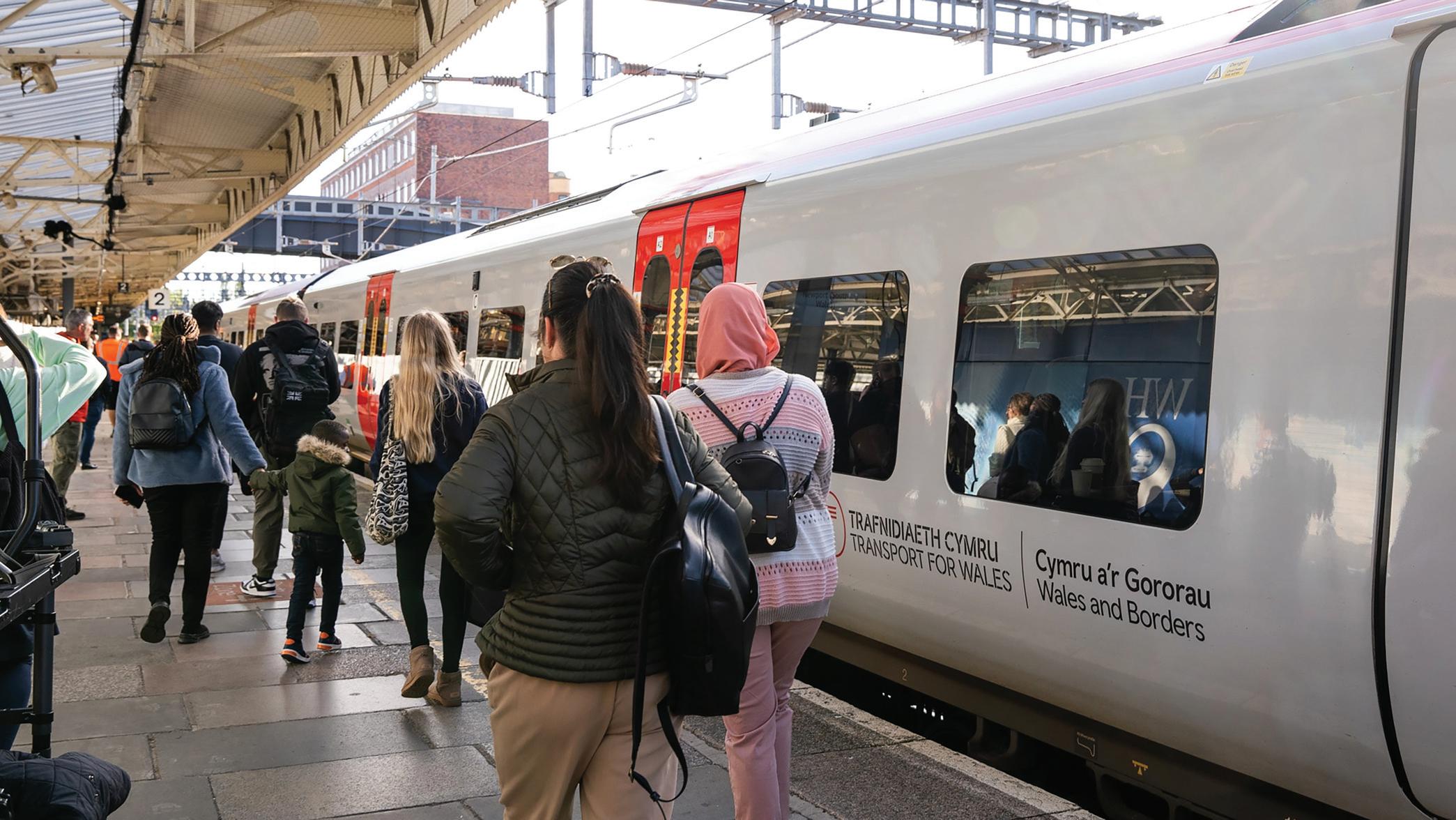
On the projects Amey supports, this gap is addressed by placing operational readiness at the centre of delivery. Integration, assurance and the transition into service are treated as programme outcomes, not activities to be absorbed at the end of a programme.
Partnering for programme outcomes
Truly managing risk to operational readiness demands more than simply investing in systems integration; it calls for procurement and delivery models that are aligned to programme outcomes rather than individual stages or assets. Traditional approaches of procuring fragmented scope stage by stage leave the client ultimately accountable for achieving operational readiness as an integrated outcome.
Partnering models offer an alternative. By structuring procurement around shared outcomes for the programme, risk is managed collectively. This incentivises focus on railway system outcomes, encouraging integrated, bestfor-railway decision-making, and reduces the likelihood that operational readiness risks will impact late in the programme.
Where delivery partners are jointly accountable for achieving railway outcomes, operational readiness becomes a core focus throughout delivery, not a problem to be solved at the end.
Core Valley Lines: operational readiness in practice
If operational readiness depends on delivery being organised around outcomes rather than assets, what does that look like in practice?
The Core Valley Lines (CVL) transformation in Wales, delivered by Amey in partnership with Transport for Wales, provides a clear illustration. From the outset, the programme was shaped around a defined set of operational and passenger-oriented outcomes, rather than the delivery of individual assets in isolation. These outcomes focused on increasing network capacity, reducing journey times, decarbonisation, and improved accessibility.
Every aspect of delivery was aligned to achieving these outcomes. The assets brought into use – and the integration, assurance, and readiness activity that sat alongside them – were treated as the means to deliver operational performance, not ends in themselves.
Stakeholder management, design choices, construction sequencing, testing strategies, operational development, and assurance and approvals were all managed against their contribution to delivering service outcomes.
The lesson here is not that the CVL model should be replicated wholesale. It is that programmes designed around clearly defined outcomes and supported
by delivery partners prepared to take end-to-end accountability for operational readiness are better placed to manage complex operational readiness challenges and support a smoother transition into service.
Owning the moment of service
Ireland’s momentum is clear, and with it comes a simple expectation: the on-time delivery of a railway system that people and businesses can rely on.
As investment scales, what matters most is who is prepared to take responsibility for the moment a railway enters service, and for the performance that follows. That is the real operational readiness challenge.
Amey is excited to bring our experience in operational readiness and systems integration to Ireland, working and partnering with clients to turn complex programmes into operationally ready railways; strengthening connectivity and driving up productivity at a national scale.
W: www.ameygroup.ie
Reforming transport infrastructure delivery

Accelera琀ng Infrastructure Report and Ac琀on Plan

Accelera琀ng Infrastructure Report and Ac琀on Plan
Accelerating Infrastructure Report and Action Plan
states that reforming planning, consenting, and coordination systems are essential to accelerating transport infrastructure delivery in Ireland.
The report, published in December 2025, states that the current transport development cycle is “linear and siloed”, with statutory bodies and regulators frequently engaging only after major design decisions have already been made. This often results in redesigns, delays, and repeated assessments throughout the lifecycle of projects.
Transport projects are also subject to multiple layers of approvals and regulatory processes. Depending on the scale and nature of a project, approvals may involve local authorities, An Coimisiún Pleanála (ACP), the Environmental Protection Agency (EPA), the Maritime Area Regulatory Authority (MARA), Inland Fisheries Ireland, and several other statutory bodies.
According to the report, these approvals are often sequential, meaning
that one consent process cannot begin until another has concluded. This creates uncertainty around project timelines and increases delivery risk.
The report identifies transport infrastructure projects as particularly vulnerable to these delays because of the scale and complexity of road, rail, and active travel schemes.
Planning and judicial review
A significant part of the action plan relates to the impact of judicial reviews on infrastructure delivery. The Government argues that increasing legal challenges are contributing to longer timelines, rising costs, and greater risk aversion across the planning system.
The report states that even relatively minor procedural errors can result in projects being delayed for several years. This has led to what the Government describes as a “defensive” planning culture, with increasing levels of documentation and assessment intended primarily to reduce legal exposure.
The report also highlights inconsistency in planning decisions and timelines across different consenting authorities. Competing policy priorities and varying interpretations of planning guidance are identified as key drivers of uncertainty for transport agencies and developers.
To address these challenges, the Government proposes a series of legal and regulatory reforms intended to streamline approvals and improve certainty for nationally significant infrastructure projects.
Coordination and approvals
The report identifies insufficient coordination between agencies as another significant barrier to transport delivery. Utility diversions, environmental licensing, and overlapping consent requirements are highlighted as recurring causes of delays on transport projects.
To improve coordination, the Government proposes the establishment of a joint utilities and transport clearing house (JUTCH). This structure is intended to improve engagement between transport bodies, utilities, and local authorities, while allowing approvals and project sequencing to be managed more effectively.
In parallel, the Government intends to strengthen central oversight of infrastructure delivery through an enhanced coordination role within the Department of Public Expenditure, Infrastructure, Public Service Reform and Digitalisation.
The report states that clearer prioritisation of transport infrastructure within future revisions of the NDP will also provide greater certainty for industry and support long-term investment planning.
Procurement and productivity
Procurement reform forms another key element of the Action Plan. Current procurement systems are described as overly rigid and compliance-driven, discouraging participation and reducing competition in public infrastructure projects.
The Government argues that lengthy tendering processes and excessive risk transfer have reduced incentives for investment in skills, productivity, and innovation across the construction sector.
To address this, the action plan proposes reforms to public procurement processes alongside measures aimed at improving standardisation, professionalisation, and training within infrastructure delivery.
The report also highlights construction sector capacity as a major challenge for transport delivery. Ireland’s construction workforce remains below pre-financial crisis levels despite significant increases in infrastructure and housing demand.
The Government estimates that up to 80,000 additional construction workers may be required if productivity levels remain unchanged. However, this requirement could be significantly reduced through efficiency improvements, digitalisation, and greater use of modern methods of construction.
Public acceptance
The report identifies public acceptance as a critical factor affecting transport infrastructure delivery. While the benefits of projects such as road upgrades, public transport expansion, and active travel infrastructure are widely dispersed, local impacts are often concentrated within affected communities.
According to the report, this imbalance contributes to opposition, delays, and legal challenges throughout the planning process.
To address this challenge, the Government proposes enhanced communication around the societal and economic value of infrastructure investment. The development of a benefits realisation framework is intended to improve public understanding of how transport infrastructure supports housing, economic growth, and climate objectives.
The action plan also proposes stronger leadership and engagement at both national and local government level to build support for critical infrastructure projects.

A five-year vision for sustainable transport
Earlier this year, we published the National Transport Authority’s (NTA) Statement of Strategy 2026-2030, writes Anne Shaw, Chief Executive Officer, NTA.
This document sets out our ambitions for the next five years and reaffirms our commitment to delivering high-quality, sustainable transport for communities across Ireland. As CEO, I am proud to lead the organisation at what is a pivotal moment for transport in this country; one defined by opportunity, investment, and the need to deliver real change.
Reflecting on our previous strategy, we have made significant progress in both services and infrastructure. That progress gives me great confidence that we can not only maintain momentum, but accelerate the pace of delivery in the years ahead.
Across the State, we are already seeing tangible results including the continued rollout of the BusConnects Dublin network redesign as well as breaking ground on the construction of our BusConnects core bus corridors, along with the development of redesigned bus networks for Cork, Galway, Limerick, and Waterford.
We have also expanded transport options for rural communities through the Connecting Ireland Rural Mobility Plan, introducing and enhancing hundreds of routes to better connect towns and villages. This work is critical in ensuring that
Chief Executive of the National Transport Authority Anne Shaw.
people, regardless of where they live, have access to reliable public transport.
At the same time, investment in active travel has increased at an unprecedented scale. Across Ireland, new walking and cycling routes are transforming communities; improving safety, supporting healthier lifestyles, and providing viable alternatives to car travel. From safer routes to schools to expanded greenways, these investments are reshaping how people move through their environments.
We are also making substantial progress on rail, particularly through the DART+ Programme, which will bring electrified rail services to communities in Kildare, Meath, Louth, and north Dublin. These projects are essential in building a modern, integrated transport system capable of meeting future demand.
Looking ahead, our new strategy sets out a clear mission: to connect Ireland’s people and places by providing accessible, high-quality, sustainable transport infrastructure and services. In doing so, we aim to support vibrant, climate-resilient communities, a healthy environment, balanced regional development, and a strong economy.
Our Statement of Strategy reflects a deep commitment, not only to infrastructure delivery, but to inclusion, innovation, and organisational excellence.
Over the next five years, our focus will centre on improving the customer experience, advancing our climate and environmental goals, expanding public transport capacity, strengthening regulation and safety, and continuing to

“Over the next five years, our focus will centre on improving the customer experience.”
deliver critical infrastructure projects.
We are equally committed to deeper engagement with communities and stakeholders, supported by evidencebased decision-making and a highperforming workforce.
As CEO, it is a privilege to lead the NTA in delivering on this mission. Transport is not just about moving people, it is about connecting individuals to
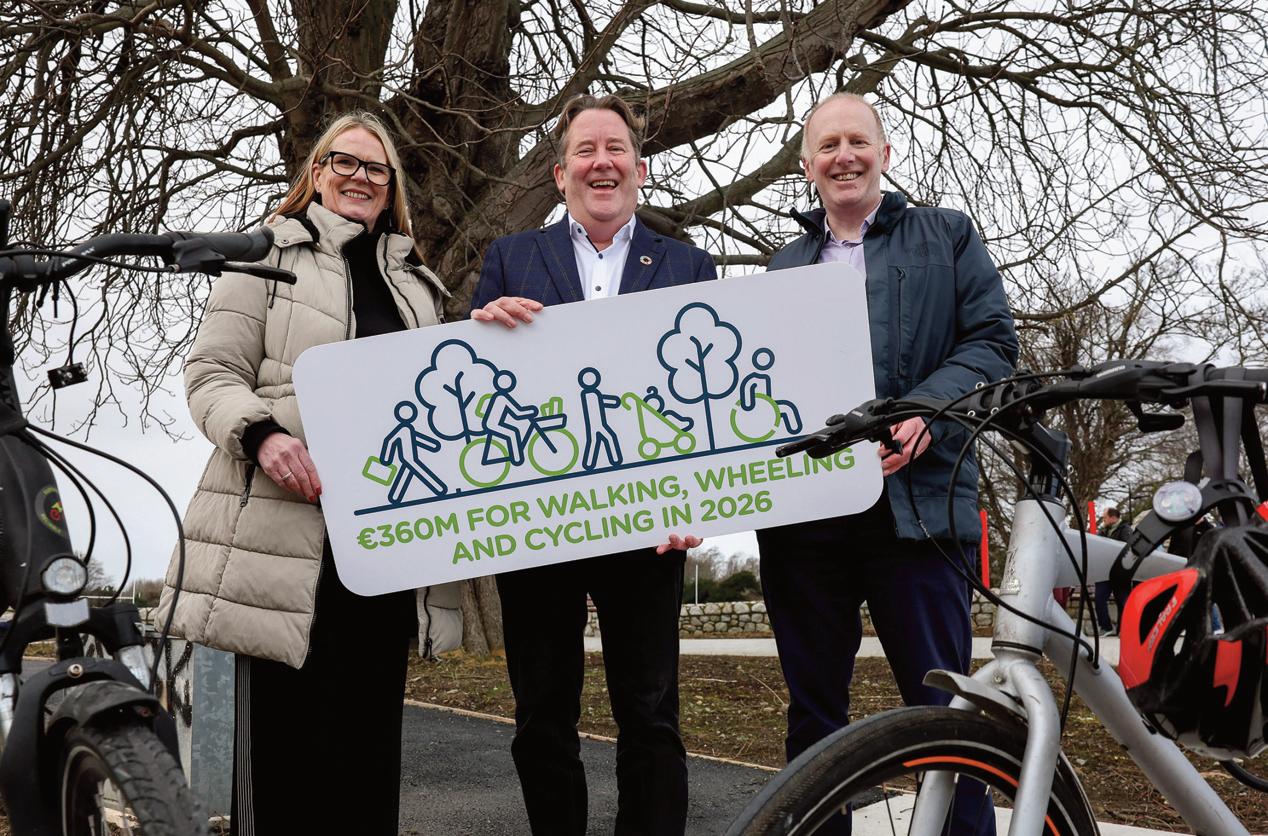

opportunity, enabling businesses to thrive, and shaping how communities grow. A well-functioning transport system underpins economic development, enhances social inclusion, and improves overall quality of life.
We know that accessibility is central to this. For many people, public transport is the only option available. That is why we are focused not only on expanding services, but also on improving their quality; making them more reliable, more integrated, and more attractive to a broader range of users. Reliability, punctuality, and seamless connections are key priorities.
Accessibility also means ensuring that our system works for everyone. We are embedding universal design principles across our infrastructure and services, removing physical, sensory, and digital barriers wherever possible.
We are working closely with disability advocacy groups, investing in staff training, and adopting inclusive technologies to ensure that transport is safe, equitable, and welcoming for people of all ages and abilities.
Sustainability lies at the heart of everything we do. As we deliver our
Together for a Greener Future as TFI Smarter Travel programme celebrates 300 partners. Pictured are: Samantha Fahy, Sustainability Manager at DCU, NTA CEO Anne Shaw, and Louise Culliney, Smarter Travel Manager, NTA.
Ministers announce €360 million euro investment in active travel and greenways for 2026. Pictured are: NTA CEO Anne Shaw, Minister for Transport Darragh O’Brien TD and TII CEO Lorcan O’Connor.
“The NTA has grown significantly in recent years, and as we continue to expand our remit, it is vital that we maintain a culture grounded in inclusivity, collaboration, and public service.”
mandate, we are balancing environmental, economic, and social considerations to ensure that progress is both meaningful and responsible. The transport sector has a critical role to play in reducing carbon emissions, and we are fully committed to supporting Ireland’s climate targets.
Under national policy, we aim to halve transport emissions by 2030. Achieving this will require a significant shift towards sustainable modes of transport; walking, cycling, and public transport. Our goal is for these modes to account for 50 per cent of all journeys by the end of the decade, and we are making steady progress toward that target.
We are already investing approximately €1 million per day in active travel infrastructure, supporting strategic pedestrian and cycling routes across the country. These investments not only
reduce emissions, but also improve public health and enhance the liveability of our towns and cities.
At the same time, we are working to decarbonise public transport through fleet electrification. By 2035, we aim to transition the urban bus fleet to zeroemission vehicles, while also introducing new electric train fleets as part of the DART+ programme. These changes will deliver cleaner air, quieter streets, and a more sustainable transport network overall.
However, addressing climate change is not just about mitigation, it is also about resilience. We are actively working to ensure that our infrastructure can withstand the impacts of climate change, protecting our investment and maintaining service reliability into the future.
In collaboration with colleagues across the public, private and community sectors under the Department of Transport’s Moving Together strategy, we will work to find innovative ways of supporting more efficiency and less congestion across the transport system.
That strategy has been developed to support, guide, and enable all stakeholders to contribute to systems change in a coherent, evidence-based manner. Its objective is not only to reduce carbon emissions from transport over the medium to long term, but to help alleviate the more immediate issues of congestion, road safety, and air quality.
Innovation will also be critical in the years ahead. We are exploring the potential of emerging technologies, including artificial intelligence, to enhance productivity, improve service delivery, and support better decisionmaking. While the opportunities are significant, we are equally mindful of the need for responsible use, strong data protection, and robust ethical standards.
The NTA has grown significantly in recent years, and as we continue to expand our remit, it is vital that we maintain a culture grounded in inclusivity, collaboration, and public service. Our people are at the heart of our success. They are ambitious for
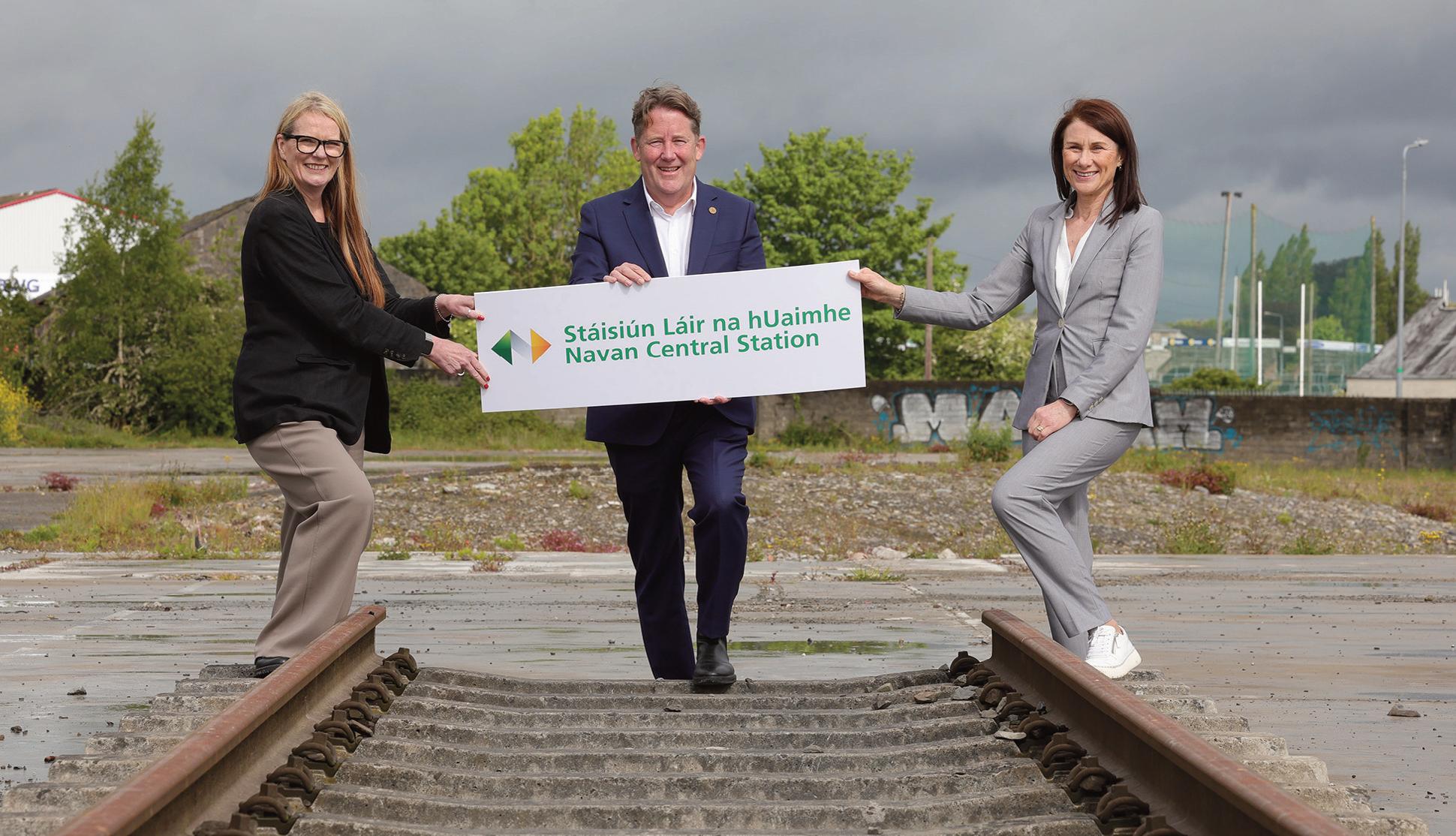
Emerging Preferred Route for Navan rail line announced. Pictured are: NTA CEO Anne Shaw, Minister for Transport Darragh O’Brien TD, and Iarnród Éireann CEO Mary Considine.
public transport, ambitious for Ireland, and passionate about delivering outcomes that benefit communities.
The scale of ambition is reflected in the National Development Plan for 20262035, which commits unprecedented funding to infrastructure, including more than €12 billion for public transport and €1.8 billion for active travel. This level of investment provides a unique opportunity to deliver meaningful, longlasting change. That change is badly needed.
In 2025 alone, demand for public transport reached record levels, with more than 364 million passenger journeys taken on public service obligation services. On average, one million journeys were made each day, a clear sign that people are increasingly choosing sustainable transport.
This growth has been supported by both service improvements and fare initiatives, including the continuation of reduced fares and the introduction of expanded free travel for children. These measures have made public transport more accessible and affordable, helping to ease the cost of living for many households.
We have also made significant progress on major infrastructure projects. Planning approvals for MetroLink, DART+ Coastal North, Luas Finglas, and all core bus corridors represent important milestones, bringing us closer
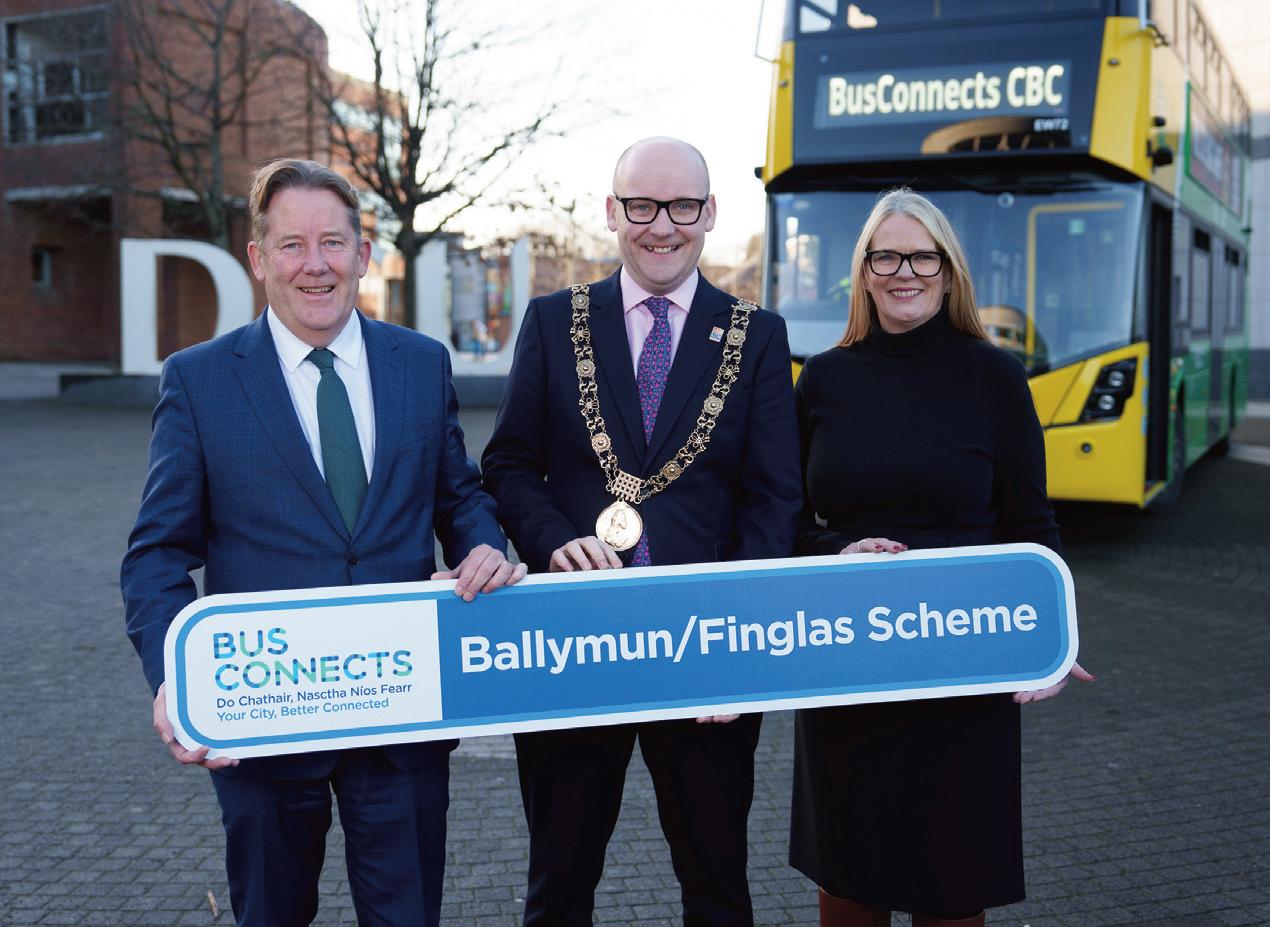
to delivery. While challenges remain, including the complexity of planning processes, we are working proactively with government and stakeholders to accelerate progress.
Ultimately, our success will depend on collaboration. We work closely with partners across the public and private sectors, including Transport Infrastructure Ireland, local authorities, transport operators, and community organisations. Together, we are building a transport system that meets the
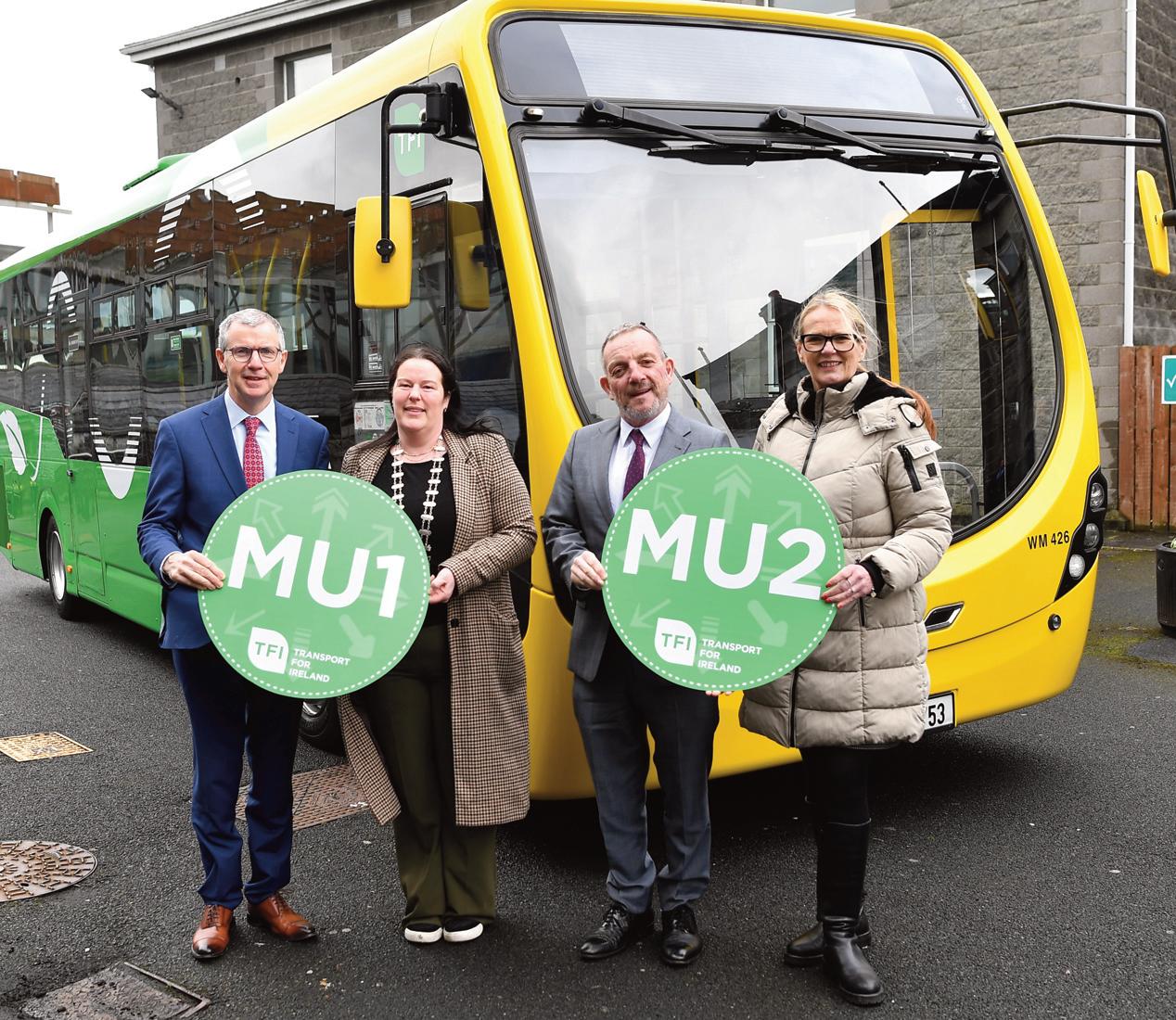
needs of a growing and evolving population.
As CEO, I am continually inspired by the dedication of our staff and partners. Their work makes a real difference; helping people access jobs, education, healthcare, along with social and cultural opportunities.
The years ahead will be exciting and challenging and full of promise. With sustained investment, clear policy direction, and a shared commitment to delivery, we have the opportunity to transform how people travel in Ireland, leading to better outcomes for people across the country.
I am excited to lead the NTA through this next phase and to work with colleagues, stakeholders, and communities across the country to deliver a transport system that truly connects Ireland; sustainably, efficiently, and inclusively and to each other.
W: www.nationaltransport.ie
NTA awards contract for Ballymun/Finglas to City Centre Scheme. Pictured are: Minister for Transport Darragh O’Brien TD, Lord Mayor of Dublin Ray McAdam, and NTA CEO Anne Shaw.
Barry Kehoe, Chief Executive, Westmeath County Council, Aoife Davitt, Cathaoirleach of Westmeath County Council, Minister for State at the Department of Transport Jerry Buttimer TD, and NTA CEO Anne Shaw.
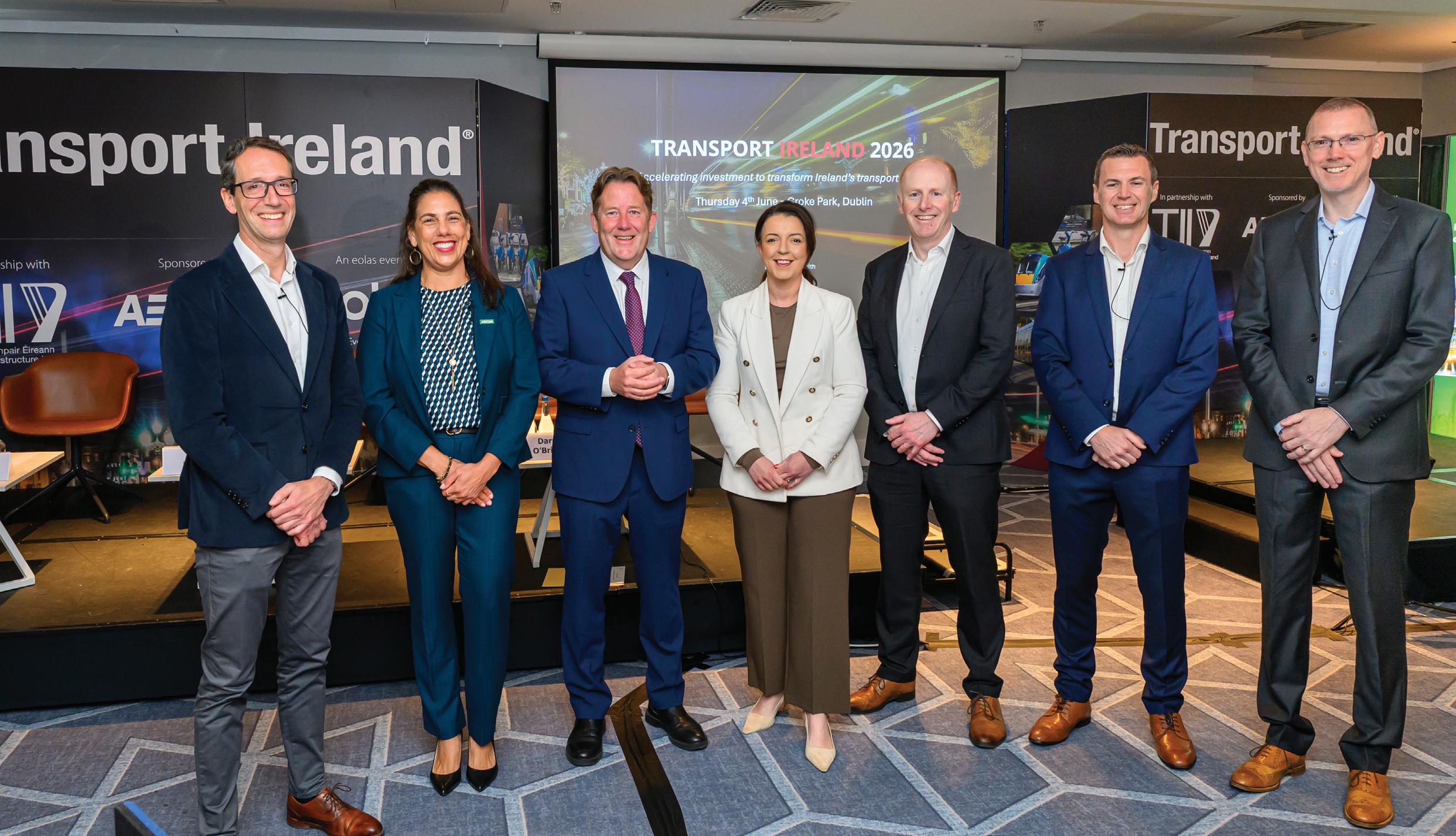
Transport Ireland 2026

Transport Ireland 2026, in partnership with Transport Infrastructure Ireland and sponsored by AECOM, took place in June at Croke Park, Dublin. The conference brought together over 250 key stakeholders for a day of discussion and networking. This year’s event hosted a variety of expert domestic and international speakers who comprehensively explored the latest ambitions, challenges, and tangible opportunities for decision-makers and practitioners across the transport sector to accelerate the delivery of sustainable transport infrastructure.
Delegates heard from speakers, both visiting and local including Darragh O’Brien TD, Minister for Transport; Liz Kimmins MLA, Minister for Infrastructure in the North; Cathal Masterson, Transport Infrastructure Ireland; Veronica Vanterpool, AECOM; Willem-Frederik Metzelaar, EIT Urban Mobility; Anne Shaw, National Transport Authority; and Michael Power, Iarnród Éireann.
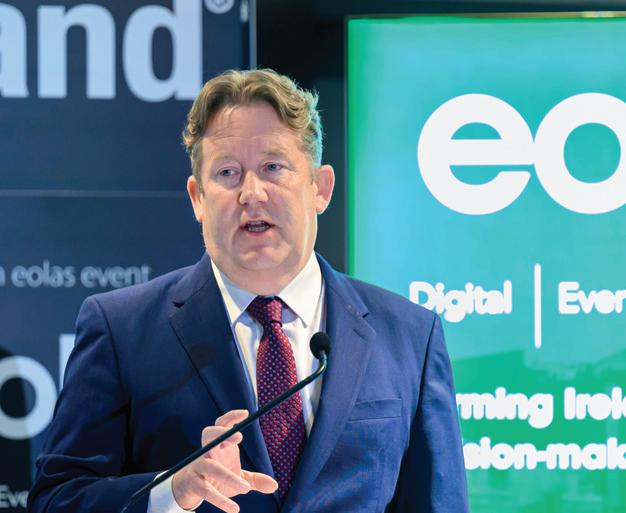
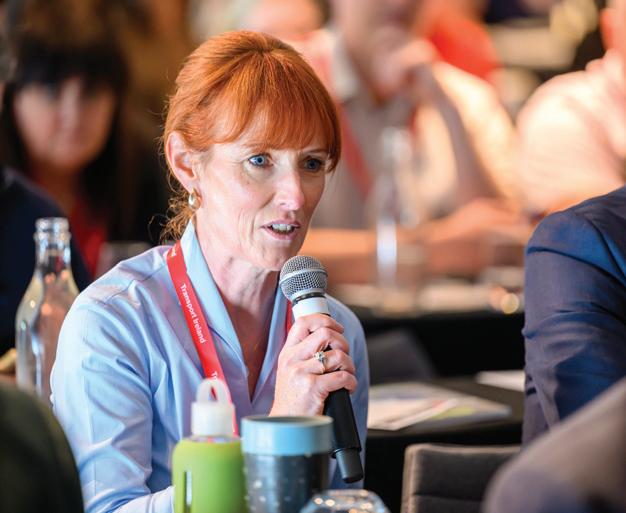
Marcello Corsi, National Transport Authority; Veronica Vanterpool, AECOM; Minister for Transport Darragh O’Brien TD; northern Minister for Infrastructure Liz Kimmins MLA; Lorcan O’Connor, Transport Infrastructure Ireland; Philip Shiels, AECOM; and Cathal Masterson, Transport Infrastructure Ireland
Minister for Transport Darragh O’Brien TD addressing the delegates.
Michael Power, Iarnród Éireann with Willem-Frederik Metzelaar and Kristy Tong from EIT Urban Mobility.
John Davis, ViaPlus Europe and Clare Lammas, Transport Infrastructure Ireland.
Rebecca Robinson, Deloitte and David King, Jacobs.
Delegate asking the panel a question.
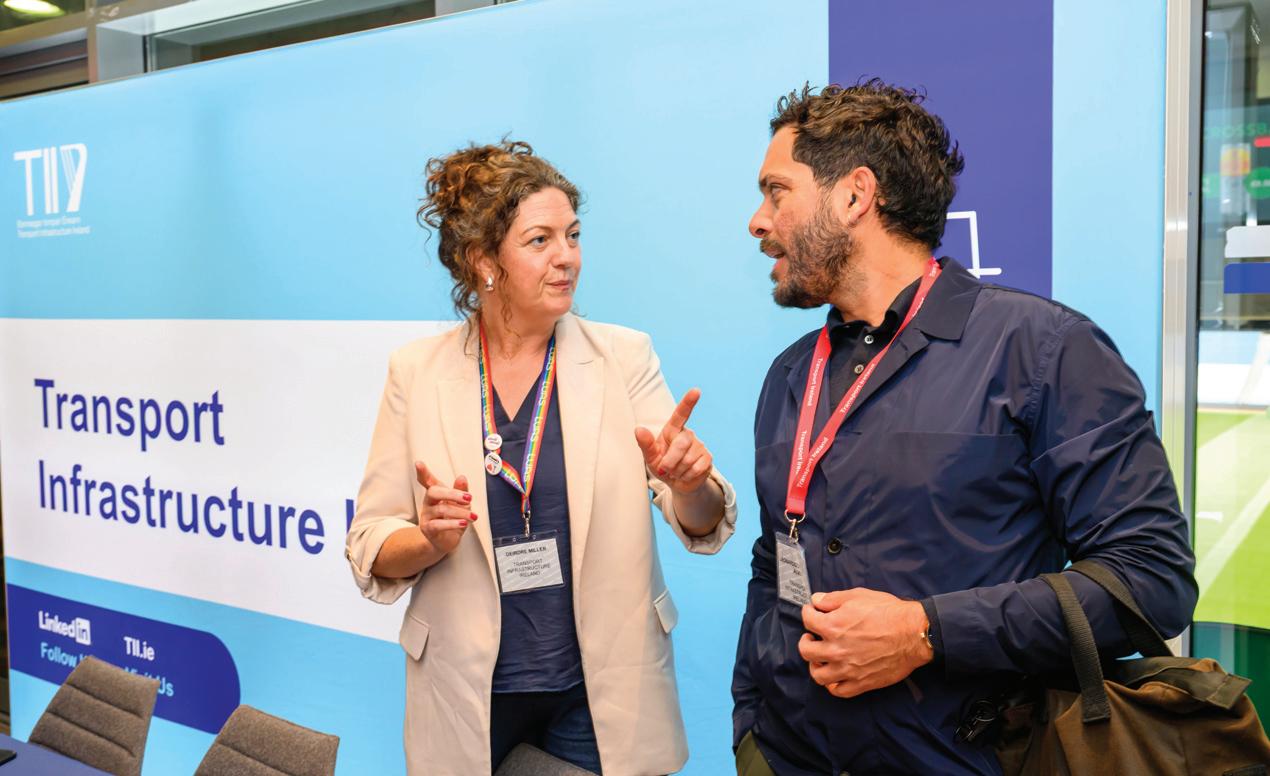
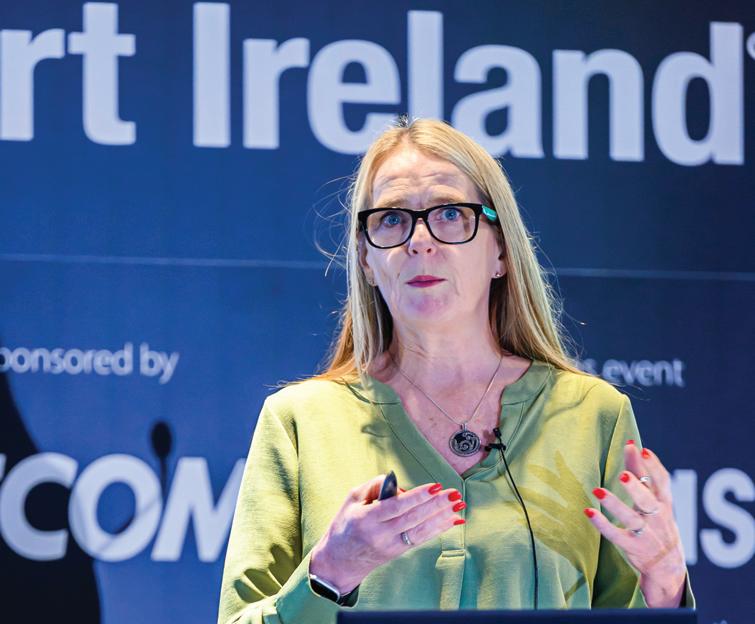
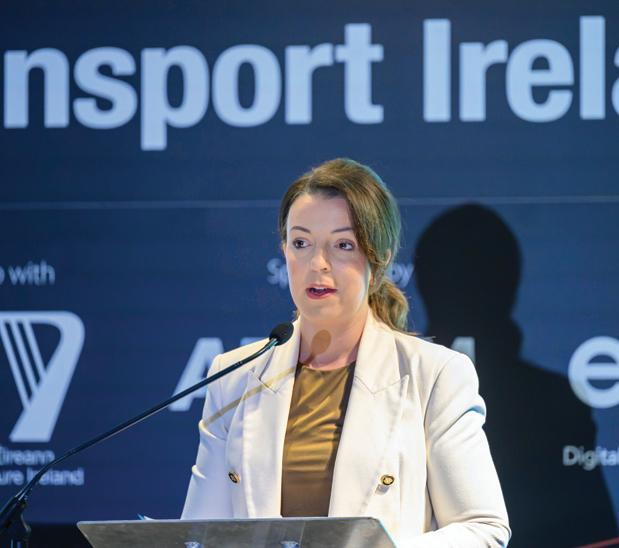
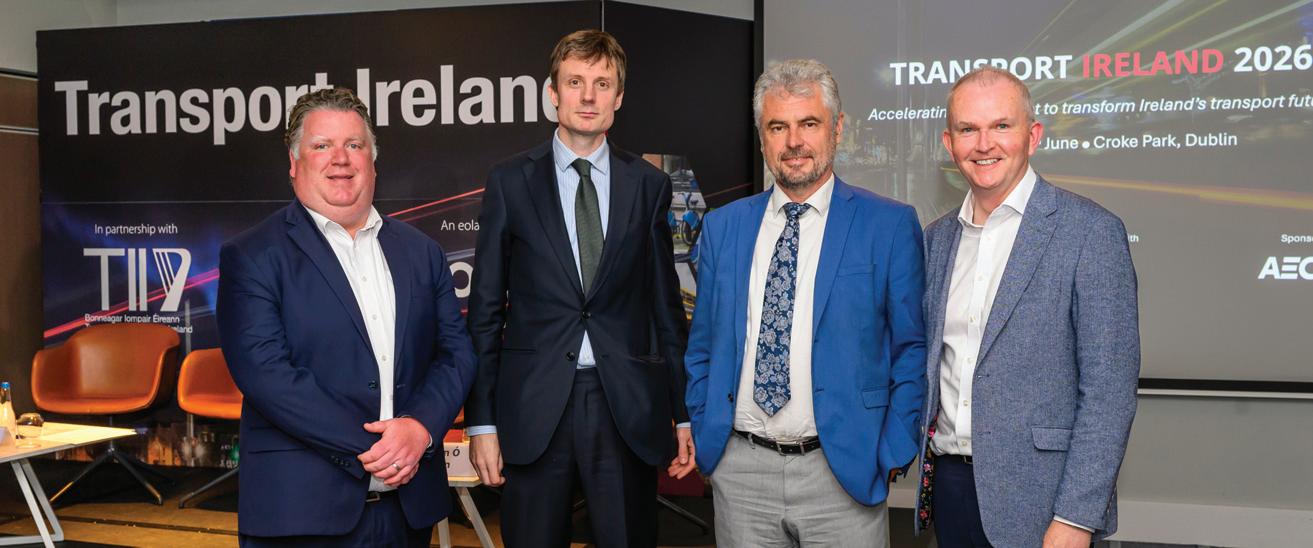
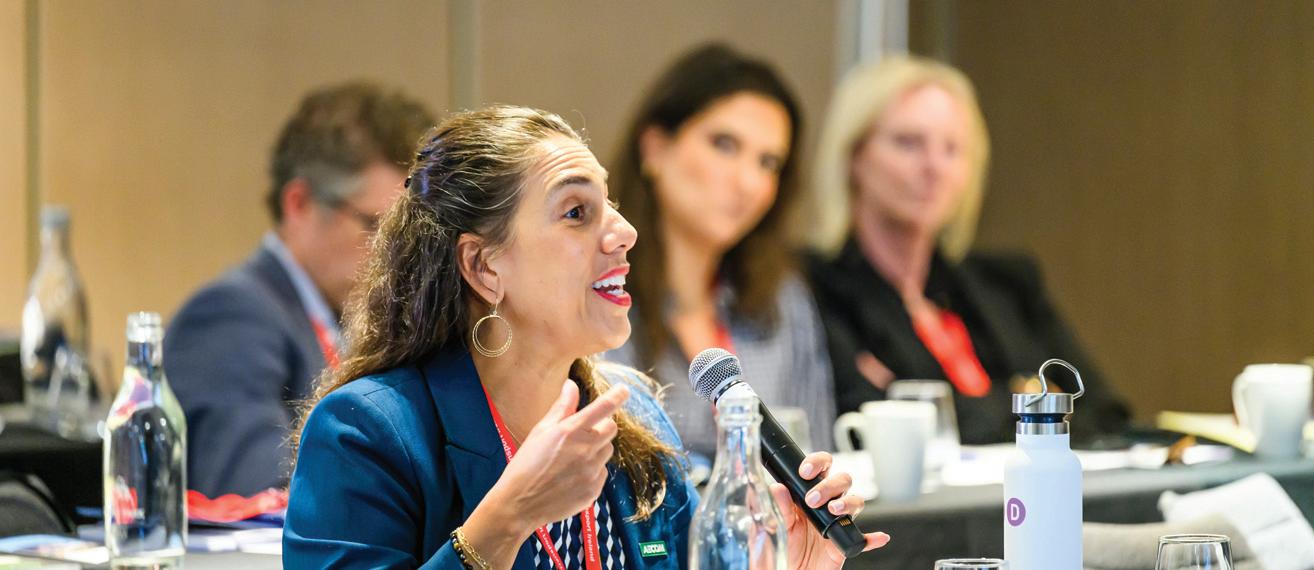
Padraig O’Shea, Southern Regional Assembly and Anne-Marie Wood Wolfe, Eastern and Midland Regional Assembly.
Laura Bohill and Beverley Chick, AtkinsRéalis at their exhibition stand.
Panellists Aidan Sweeney, Ibec; Martin Hehir, Department of Transport; Caoimhín Ó Ciaruáin, Department of Transport; and Kevin Cullinane, daa.
Northern Minister for Infrastructure Liz Kimmins MLA addressing the delegates.
Anne Shaw, National Transport Authority addressing the delegates.
Veronica Vanterpool, AECOM, asking the panel a question.
Damien McGirr, COWI UK and Gary Turley, Jacobs.
Deirdre Miller and Leonardo Alves, Transport Infrastructure Ireland at their exhibition stand.
Autonomous vehicles: Safer roads, smarter systems

Most road traffic collisions stem from human behaviour: including errors, dangerous driving due to intoxication, fatigue, speeding, and mobile phone use. Traditional countermeasures – education and training, enforcement, fines, and penalty points –remain essential. But autonomous vehicle technology presents a more fundamental proposition: what if we could remove these behaviours from the driving equation altogether?
At the core of autonomous driving is perception, the ability of a vehicle to interpret its surroundings in real time. This is achieved through pre-trained neural networks that process sensor data and classify objects such as pedestrians, vehicles, and traffic signals, while simultaneously predicting their likely movements.
These systems rely on high-performance graphical processing units, enabling thousands of objects to be analysed in parallel. The environment is scanned continuously, typically at around 30 frames per second, across multiple sensors. For example, leading autonomous systems deploy a combination of cameras, radar, and lidar to create a detailed view of the road. Unlike the human eye, the sensor has
no single point of focus but scans the entire field at once. The results from the different sensor types are then fused together to produce an estimate of the safest pathways ahead for the vehicle and other road users.
From assistance to autonomy
The progression toward full automation is defined by a framework developed by the Society of Automotive Engineers, which categorises vehicles from level zero, no automation, to level five, full automation.
Levels one and two are already being used by many drivers in Ireland. These include advanced driver assistance systems (ADAS) such as lane-keeping assistance and adaptive cruise control. While helpful, these systems still require the driver to remain fully engaged and responsible at all times.
Level three marks a significant shift. Under specific conditions, such as motorway driving, the vehicle can operate independently, allowing the driver to disengage temporarily, though they must remain available to take control when prompted. This technology is already in limited deployment in parts of Europe.
Level four goes further still. Vehicles at this level can operate without a driver in defined environments, such as urban robotaxi services or dedicated freight routes. These systems are being advanced largely by major technology firms, with applications ranging from passenger transport to 24-hour logistics operations.
Evidence from large-scale deployments is beginning to emerge. After tens of millions of miles driven, some operators report substantial reductions in insurance claims compared to humandriven vehicles. While incidents still occur, early data suggests that autonomous systems may significantly reduce the types of collisions most commonly caused by human behaviour.
Level five, the ultimate goal, envisions vehicles capable of operating anywhere, under all conditions, with no human
Graham Brennan, Head of Vehicle Standards, Road Safety Authority.
intervention. While this remains some years away, Level five functionality is likely to evolve organically as the number of level four operating regions grows to include new cities, specific road links, and regions around Europe.
Public perception in Ireland
Despite technological advances, public confidence remains a critical factor. Survey research of more than 900 adults, which included more than 700 motorists, conducted by the Road Safety Authority in August 2024 highlights a cautious Irish perspective:
• awareness of autonomous vehicles is high, with 86 per cent of adults familiar with the concept, but only a minority express strong interest in owning one;
• nearly half (49 per cent) of motorists already have some form of driver assistance technology in their car, while 52 per cent of adults agreed that ADAS improves road safety;
• only one in five adults (21 per cent) said they would trust a self-driving car to bring them safely to their destination; and
• concerns include the reliability of the technology, the potential for collisions, cost, cybersecurity risks, and unclear liability in the event of a collision.
In essence, Irish attitudes are measured and pragmatic, with a clear demand for evidence, transparency, and robust safeguards.
An autonomous future
Ireland must now position itself to secure advantage in this evolving landscape. Notably, there is emerging industrial capability in autonomous technologies, particularly in regions west of the Shannon.
Leading companies in Ireland such as Jaguar Land Rover, Analogue Devices, Valeo, and Provisio are creating high value engineering positions and products at the leading edge of this technology field.
Research institutions such as Future Mobility Campus Ireland and national colleges are supporting the needs of these companies. They are also collaborating with European colleagues and pioneering related research topics
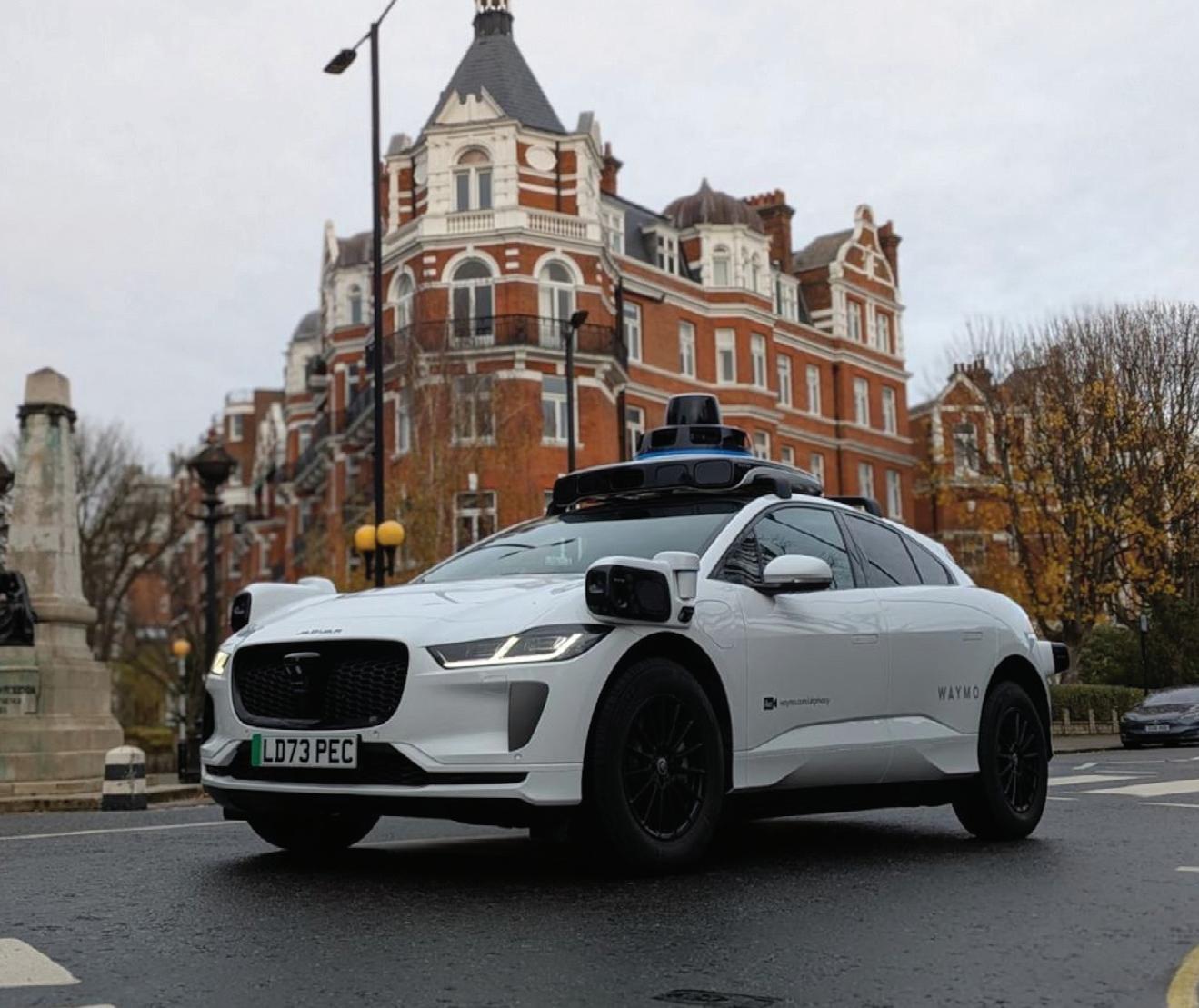
which supports the vital supply of talent to the field.
At the same time, regulatory and legal frameworks must evolve. The traditional definitions of ‘driver’ and ‘driving’ will need to be reconsidered. Clarity is essential, not only for consumers, but also for enforcement authorities and insurers.
Testing is another key consideration. Many EU countries already permit controlled on-road testing of autonomous vehicles. Facilitating similar opportunities in Ireland, under strict safety oversight, will be crucial to ensuring that these systems are trained effectively in local conditions and can deliver their full safety benefits.
A measured transition
Autonomous vehicles are not a distant concept, they are an emerging reality. However, their integration into Irish society will not happen overnight. It will require a phased approach, balancing
innovation with safety, and technological capability with public trust.
Ireland has committed to achieving a 50 per cent reduction in road deaths and serious injuries by 2030 and achieving Vision Zero, zero road deaths and serious injuries, by 2050.
If implemented correctly, autonomous systems have the potential to significantly reduce road trauma. The success of these systems depends not only on the technology itself, however, but on how well we prepare, legally, socially, and operationally for its arrival.
The opportunity is substantial. The responsibility to manage it carefully is even greater.
W: www.rsa.ie
Waymo has begun testing its level four robotaxi in London. Waymo plans to launch the service in 2026.
Ports are facilitating Ireland’s offshore energy future
Assistant Secretary for Maritime Transport at the Department of Transport, Eamonn Kelly, outlines how Ireland’s ports are more than just trade gateways, and are also critical enablers of the State’s offshore renewable energy ambitions.
Contextualising that approximately 90 per cent of all trade entering and leaving Ireland passes through the State’s ports, Kelly argues that the infrastructure underpinning Ireland’s maritime economy will also be central in delivering the State’s energy transition.
While ports have traditionally been viewed as gateways for imports and exports, Kelly stresses that they are increasingly being recognised as strategic national assets capable of supporting wider policy objectives.
“While the primary function of our ports is to facilitate maritime transport, they can do an awful lot more than that. They are not just gateways to the world of trade; they can enable other activities.”
That broader role is becoming particularly important as Ireland seeks to develop offshore renewable energy at scale.
Kelly says the development of offshore wind cannot happen without the necessary port infrastructure. “Ports are probably first up. We need ports to be in existence and able to facilitate offshore renewable energy before we can actually build the offshore renewable energy projects.”
Offshore opportunity
Kelly states that offshore wind development is a natural extension of Ireland’s geographical advantages. “We are an island nation. We do not have
significant fuel resources and we are very heavily dependent on importing fuel from abroad,” he says.
Pointing to Ireland’s extensive maritime area and strong wind resources, he adds: “We have a lot of sea, we have a lot of wind. It is a logical choice that we should be looking to leverage these sustainable natural resources for the benefit of our country.”
Under the Climate Action Plan, the Government is targeting 5GW of installed offshore wind capacity by 2030, rising to 20GW by 2040 and 37GW by 2050.
While acknowledging the scale of the challenge, Kelly says that significant progress already underway. “There are five planning applications for offshore wind farms currently before An Coimisiún
“The Government has recognised that we need a multi-port strategy. No one port is going to solve the problem in terms of building offshore renewable energy.”
Eamonn Kelly, Assistant Secretary for Maritime Transport, Department of Transport
Pleanála which will equate to about 3.8GW of renewable generation capacity,” he says.
‘No single-port solution’
Central to government policy is the recognition that no single port can deliver Ireland’s offshore wind ambitions.
“The Government has recognised that we need a multi-port strategy. No one port is going to solve the problem in terms of building offshore renewable energy,” Kelly states.
Kelly adds that the build-out of offshore wind infrastructure is likely to drive investment in Irish ports for decades. “We will probably need offshore renewable energy infrastructure being built in Irish ports for the next 25 to 30 years,” he says.
However, he cautions that significant upgrades are required before many ports can support offshore wind activity. “Because the offshore wind turbines elements are so heavy, the ports we have are not physically strong enough to facilitate their assembly. The quays needs to be strengthened to take the weight of the giant wind turbine elements, and the berths need to be deepened to allow the massive ORE construction vessels to operate,” he adds.
Funding and delivery
On investment and coordination, Kelly outlines that Ireland’s inclusion in the EU’s TransEuropean Transport Network (TEN-T) has enabled ports to secure European funding, including support through the Connecting Europe Facility.
Highlighting the experience of the Port of Cork, Kelly says European support has provided confidence to investors and demonstrated the viability of major infrastructure projects.
On the challenges facing ports and offshore wind developers, he says: “Offshore wind farms need ports, but ports need a pipeline of offshore wind farms to give financial certainty to investors in ports. For ports to build and grow, they need certainty that offshore wind projects are coming.”
That interdependence, he says, has reinforced the need for collaboration across government. “It really is an allof-government challenge. We are all working together towards an all-of-government solution.”
In this regard, the Department of Transport contributes Ireland’s multi-departmental Offshore Wind Delivery Taskforce through its dedicated offshore renewable energy workstream, working with commercial ports, European institutions, and other government departments to ensure infrastructure is ready to support future development.
Progress
The Port of Cork has emerged as Ireland’s most advanced offshore renewable energy port, with major infrastructure works nearing completion. “It is the first offshore wind deployment port in the State,” Kelly says.
Rosslare Europort, the Port of Waterford, and Shannon Foynes Port are also advancing plans to support the sector, while Belfast Harbour remains an important potential partner.
Concluding, Kelly argues that facilitating Ireland’s offshore wind ambitions will depend on sustained cooperation between the government, ports, investors, and developers.
“While we have great vision, this is not something that one individual actor, one department, or one minister can deal with,” he says.
However, he adds: “We have concrete results already with the near completion of Port of Cork’s ORE facility at Ringaskiddy. We will continue to work to ensure that Ireland is ready and able to secure its energy future.”
Bus Éireann is central to Ireland’s regional growth and connectivity

Ireland’s public transport network is in a period of transformation. Across regional cities, towns, and rural communities, new services, cleaner fleet, better infrastructure, and stronger connections will shape how people access work, education, healthcare, and opportunity.
For that transformation to deliver for the entire state, investment in public transport must support balanced regional growth as well as capacity in our largest urban centres.
As this expansion takes shape, demand will continue to grow, and passenger expectations will keep rising. Therefore, a balanced approach to public transport development will be all the more important.
In 2025, Bus Éireann delivered 116.5 million passenger journeys throughout the country reflecting sustained growth across our services and continued public confidence in bus transport with our customer satisfaction scores achieving 93 per cent.
These results matter because they show that public transport investment delivers measurable returns for regional communities and for local economies,
while also enabling national climate objectives.
As Ireland’s national bus company, Bus Éireann operates 216 public transport routes on behalf of the National Transport Authority, connecting communities across the country every day. Crucially, many of these services operate in areas where alternative transport options are limited or unavailable.
This makes Bus Éireann a vital part of Ireland’s regional infrastructure, supporting access to jobs, education, healthcare, services, and social connection in communities that might otherwise be left behind.
The importance of that regional reach cannot be overstated.
Balanced regional development cannot happen without strong and reliable public transport links. If Ireland is to
Bus Éireann CEO Jean O’Sullivan.
achieve sustainable growth beyond the Greater Dublin Area, then investment in regional connectivity must accelerate.
Regional public transport infrastructure is not simply an enabler of growth; it is a prerequisite for it. This aligns directly with the National Planning Framework’s ambition for more balanced growth across Ireland’s regions. Bus Éireann sits at the centre of this regional and rural transport ecosystem.
Regional cities and towns need transport systems that allow people to access employment, education, healthcare, and social opportunities efficiently and affordably. Regional and rural businesses need reliable transport links on par with the reliability now being delivered for the greater Dublin area to attract workers and investment.
Our Expressway network illustrates this particularly clearly. Operating commercially in a competitive market, Expressway connects more than 200 communities nationwide and plays a vital role in linking regional Ireland with key economic centres, airports, universities, and healthcare services.
The network supports tourism, regional enterprise, and labour mobility while also contributing to the overall sustainability of the organisation. Our regional and rural network must also be resourced to help people travel independently and confidently and reflect the wider responsibility public transport operators have in creating services that are accessible to all, inclusive, and practical for daily life.
As demand for public transport continues to increase, however, the need for supporting infrastructure becomes more urgent.
Fleet investment alone is not enough. Delivering a modern and sustainable public transport system requires accelerated investment in depots, charging infrastructure, and, most especially, bus priority measures across Ireland’s regional cities and towns. Without that supporting infrastructure, it becomes increasingly difficult to expand services at the pace our regional economy requires.
This is particularly important in the context of decarbonisation. Bus Éireann continues to make significant progress in transitioning towards a lower-carbon fleet. During 2025, we operated 2.3 million electric vehicle kilometres and completed the transition of our Roxboro
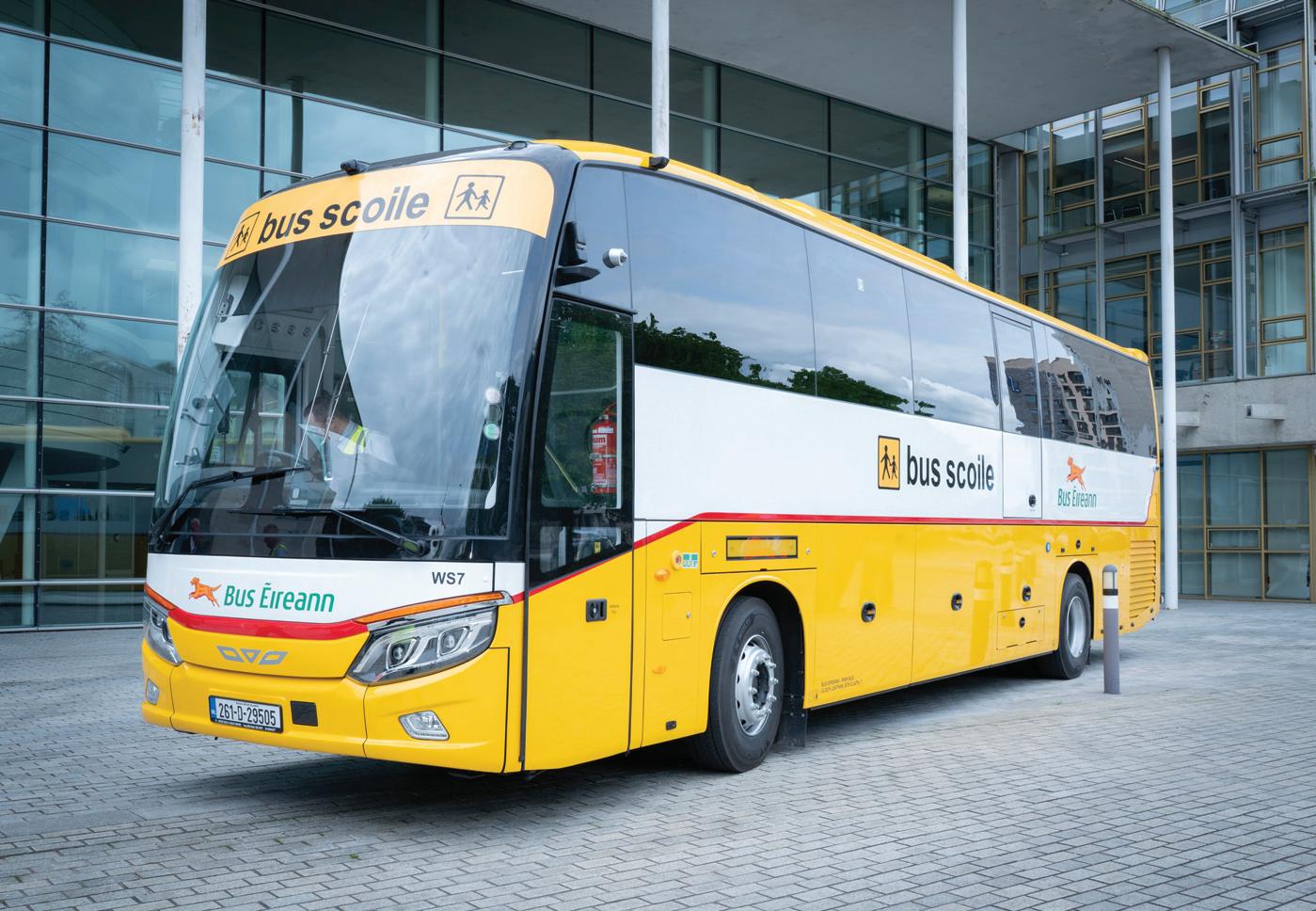
depot in Limerick to support Ireland’s first fully electric city bus service. This has resulted in an 88 per cent reduction in diesel use compared to 2021 levels.
Plans are advancing to expand electric operations in Cork, Galway, and Sligo, but achieving national climate ambitions will require faster delivery of regional public transport infrastructure.
The transition to sustainable transport cannot be over-concentrated in Dublin; regional Ireland must be enabled to participate fully in this moment of public transport transformation.
The scale of Bus Éireann’s wider operations also continues to grow. The School Transport Scheme, operated on behalf of the Department of Education and Youth, saw passenger numbers increase by almost 5 per cent in 2025, with more than 181,000 tickets issued. Every day, almost 8,750 vehicles operated across more than 11,000 routes nationwide.
Behind those figures is a nationwide logistics network that connects communities across Ireland on a daily basis.
For many households, school transport is not a convenience; it is an essential service that enables access to education and supports participation in community life and the wider economy. This is especially so for regional and rural Ireland. It provides certainty for families, reduces transport pressures on local communities, and ensures students can access education safely and reliably regardless of geography.
The scheme also continues to play an increasingly important role in supporting students with additional needs. Demand for Special Educational Needs (SEN) transport grew strongly in 2025, with more than 24,400 pupils availing of SEN transport services, representing growth of over 12 per cent year-on-year.
These services provide tailored transport solutions that are essential for many families and are a critical part of ensuring equitable access to education. The scale of this growth also underlines the importance of continued investment in systems, fleet, technology, and operational capacity to ensure services can continue to meet demand effectively.
Taken together, our public service routes, commercial Expressway network, school transport operations and depot footprint give the country a national delivery platform for regional connectivity, decarbonisation, and inclusive growth.
With the right investment and coordinated delivery, public transport can support stronger regional economies, more connected local communities, reduced emissions, and a better quality of life for people across all the regions of Ireland. Bus Éireann’s role is to make that connection real every day, using our national footprint to link people, places, and opportunity across all the regions we serve.
W: www.buseireann.ie
One of the new Bus Éireann school busses deployed in May 2026.
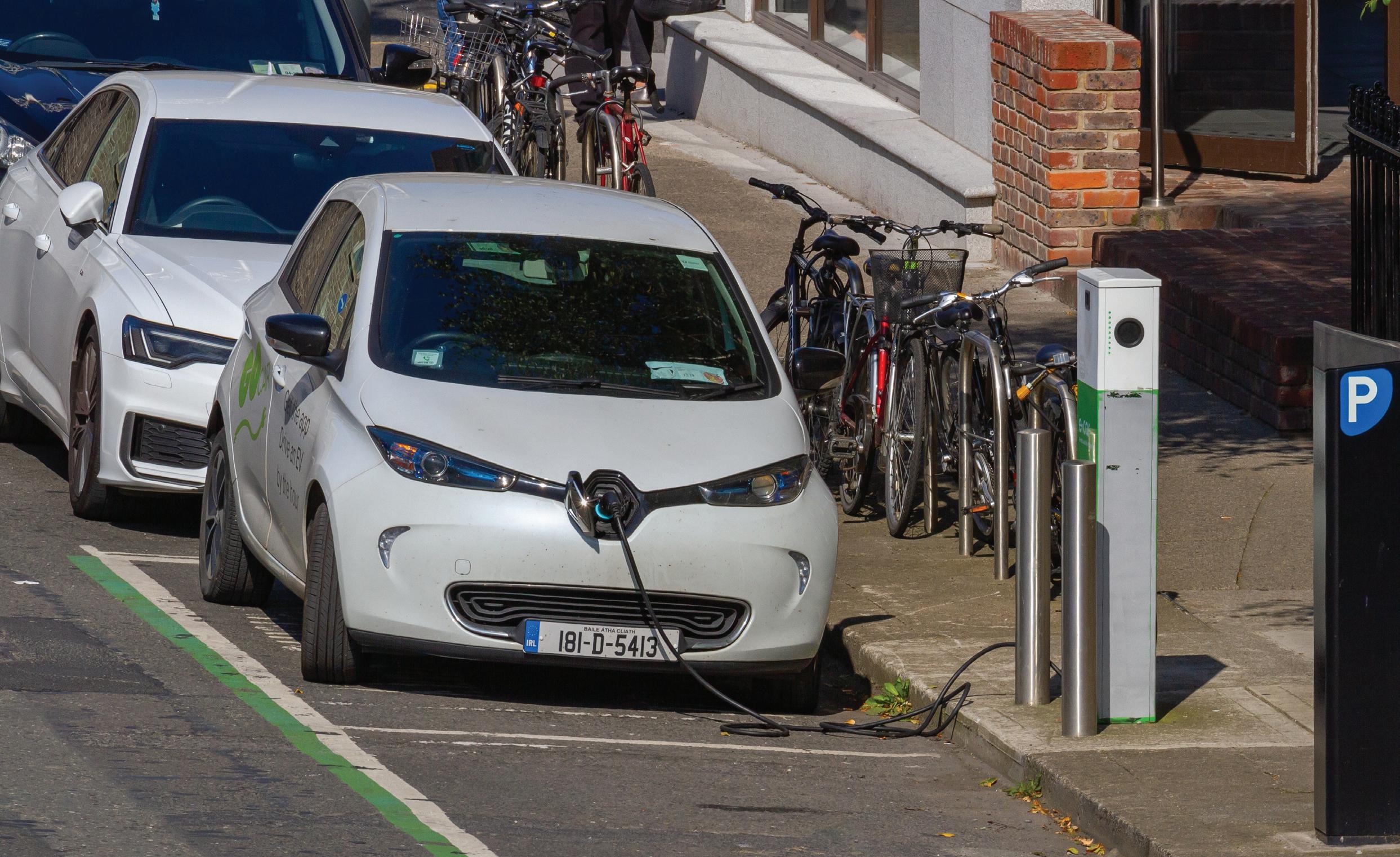
Delivering EV infrastructure
Harry McGoldrick analyses the Electric Vehicle Charging Infrastructure Strategy 2022-2025 ahead of the publication of the 2026-2028 strategy.
The forthcoming strategy, which underwent public consultation between February and April 2026, aims to contribute to the Climate Action Plan target of 30 per cent of all private cars in Ireland being electric by 2030.
The draft National EV Charging Infrastructure Strategy 2026-2028 outlines the Government’s ambition to stay ahead of demand and maintain delivery of EV infrastructure, while meeting the requirements of the Alternative Fuels Infrastructure Regulation (AFIR).
The Government established the Zero Emission Vehicles Ireland (ZEVI) office in July 2022 as its hub for the delivery of policy to support zero-emission vehicles in Ireland. The office has assisted the Government to surpass its Climate Action Plan targets for 2025, with over 204,000 EVs registered in Ireland, 9,000 vehicles over the initial target of 195,000.
When the 2022-2025 strategy was initially released, former Transport Minister Eamon Ryan called the project in 2022 “a roadmap for creating an entirely new infrastructure across the country”.
One of the main aims of the 20222025 strategy was the delivery of a supply plan for en-route charging and residential and destination charging. The National Road Network EV Charging Plan 20242030 includes plans to have highpowered chargers being located every 60km on the core TEN-T network.
There are now 131 high-powered charge points across 17 locations in counties Louth, Laois, Tipperary, Kildare, Westmeath, Wicklow, Clare, Limerick, Galway, Kilkenny, and Meath. The average distance between recharging pools is 45km,
15km below the minimum as set out within the strategy of 60km.
However while the total amount of electric cars are being sold is increasing at a rapid rate (204,000), the same cannot be said about increasing EV charging points, with 3,237 publicly accessible chargers nationwide, which equates to one charger for every 63 EVs, and while an increase of 43 per cent in the number of operational high power CCS connectors according to the Irish Electric Vehicle Association (IEVA) sounds like success, EV supply is outproducing the supporting infrastructure.
Ongoing work continues on light duty vehicle (LDV) charging programmes, with over 3,000 kilometres of national road being targeted. The work aims to add 162 additional charging hubs, and 516 high-powered and fast charge points. To date, €11 million has been committed for LDV1 (motorways) and LDV2 (national primary roads), with €8.8 million expected for LDV3 (national secondary roads) in 2026.
The strategy also availed of 10 schemes of work to break down aims into localised targets. One of the main schemes was the shared island sports club scheme.
The all-island scheme, aimed to install EV charging infrastructure at sport clubs across Ireland, was established in January 2023 and accepted expressions of interest until February 2023.
As of 2024, 227 sports clubs were eligible for charging points, as of June 2026, no clubs that availed from the scheme has been announced.
Although demand for passengersized EVs is strong, demand for other vehicle types is weaker, in part due to vehicle models and numbers available, with lacking charging infrastructure being another drawback.
Nearly 99 per cent of all heavyduty vehicles (HDVs) in Ireland are still diesel-powered and are


responsible for 20 per cent of total emissions in Ireland, making the transport sector hard to decarbonise.
The electrification of HDVs in Ireland has also proven quite difficult. As of Q3 2025, only 370 eHDVs have been registered in Ireland; 300 eBuses and 70 electric heavy-good vehicles (eHGVs). This figure is well under the CAP target of 700, however it is on track with the CAP levels for 300 EV buses.
In March 2026, 132 electric buses, with a combined cost of €66 million, were not being used as there was a lack of facilities to charge HDVs, with Sinn Féin’s John Brady TD, chair of the Public Accounts Committee, calling it a “systemic failure”.
“At a time when people are crying out for reliable public transport, this level of waste and incompetence is simply unacceptable. It is yet another example of a do-nothing
government failing to plan and failing to deliver,” Brady said.
Transport represents the secondlargest source of greenhouse gas (GHG) emissions in Ireland, with over 11.6 million tonnes of GHG being emitted in 2024, equating to 21.7 per cent of total emissions, an increase of 113.7 per cent since 1990, according to the Environmental Protection Agency (EPA).
Minister for Transport, Darragh O’Brien TD says: “This strategy builds on the successful foundations laid by the Department’s 2022-2025 strategy and reflects the Government’s continued ambition to stay ahead of demand, meet the requirements of the Alternative Fuels Infrastructure Regulation (AFIR) and deliver infrastructure that meets the evolving needs of EV users.”

Dublin’s tram run the Dublin way
Ask any business bidding for a contract across the world and you will hear a version of the same line: that they will combine their global scale with deep local knowledge. It is, by now, almost a corporate cliché. It is also true of our plans for how we will operate the Luas. The difference is in what comes next; in how you apply it day to day, on Abbey Street and St Stephen’s Green, and out to Tallaght and Sandyford.
Keolis is the world’s leading operator of trams and automated metros. We run networks across more than a dozen countries on four continents. In Manchester, we operate Metrolink, the UK’s largest tram network. We are also present in Boston, Hyderabad, Bordeaux, Australia’s Gold Coast, and London, operating a range of trams, trains, and metros.
That matters particularly when introducing and evolving complex urban transport systems. Keolis has extensive experience not only operating metros and trams, but launching them: helping cities establish operating models, undertake testing and commissioning, train workforces, and bring entirely new fleets and networks into passenger service.
We are doing that today on major metro projects in Paris and have supported similar programmes in places including Dubai and Hyderabad. The value of that experience is not confined to metros themselves.
Some of the most useful operational lessons come from moving between different environments. The point is not to make Dublin look like another city, but
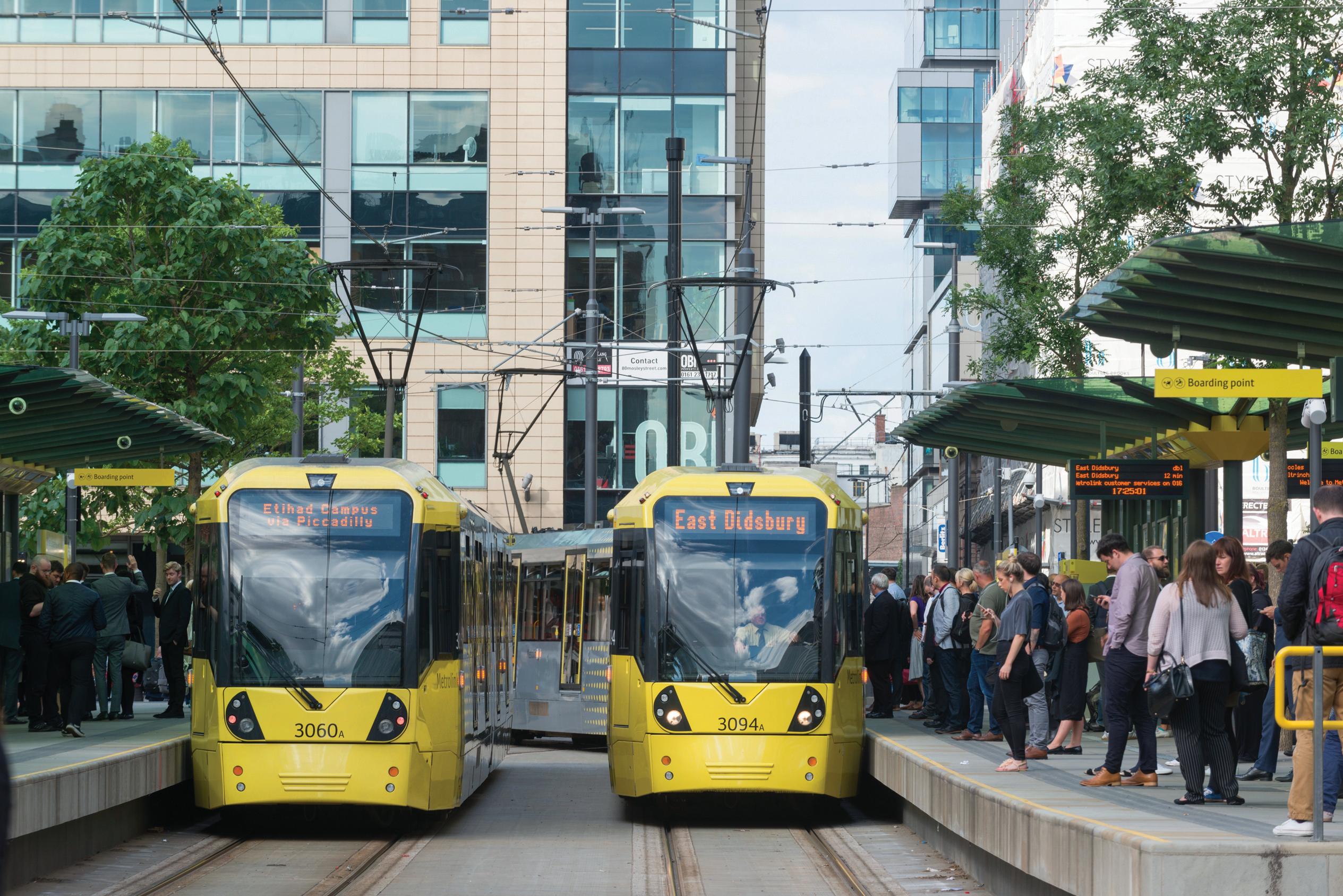
Manchester Metrolink trams.
to ensure Luas benefits from a much wider pool of operational learning and problem-solving experience.
One of the clearest expressions of how this works in practice is something we call our ‘Signature Service’. It is a method, not a manual, and is the structured way we develop the everyday signals that frame a passenger’s experience: the way staff greet riders boarding at the start of a route or handle a service disruption, the gestures and language that, taken together, make a journey feel cared for rather than simply processed.
Our Signature Service is not a script imported from another network. It begins by listening.
The first phase is co-construction: structured interviews with frontline staff, focus groups that bring drivers and customer-facing teams together with passengers themselves, and workshops with the transport authority. The point is to surface what a network already knows about itself: where the friction sits on the customer journey, what staff already do well, where small adjustments would make the biggest difference.
This sounds intangible. It is not. The discipline of doing it methodically produces measurable results, and those results travel. After work in Manchester, customer attitude scores rose by eight points on the tram network. In Adelaide, Net Promoter Scores rose by 11 points where staff greeted passengers, and the network won the Australian Service Excellence Award. In Hyderabad, customer complaints relating to staff attitudes fell by 60 per cent in the months following implementation.
What this means for Dublin is straightforward. The people who operate Luas today will still run Luas tomorrow. They are the network’s deepest asset: drivers, controllers, maintenance, and operations staff who know the system, the route, the regulars.
What we bring is not a replacement for their knowledge but a structured way to surface it, codify it, and connect it to what is being learned in 24 other Keolis tram subsidiaries by more than 12,000 customer-facing staff around the world.
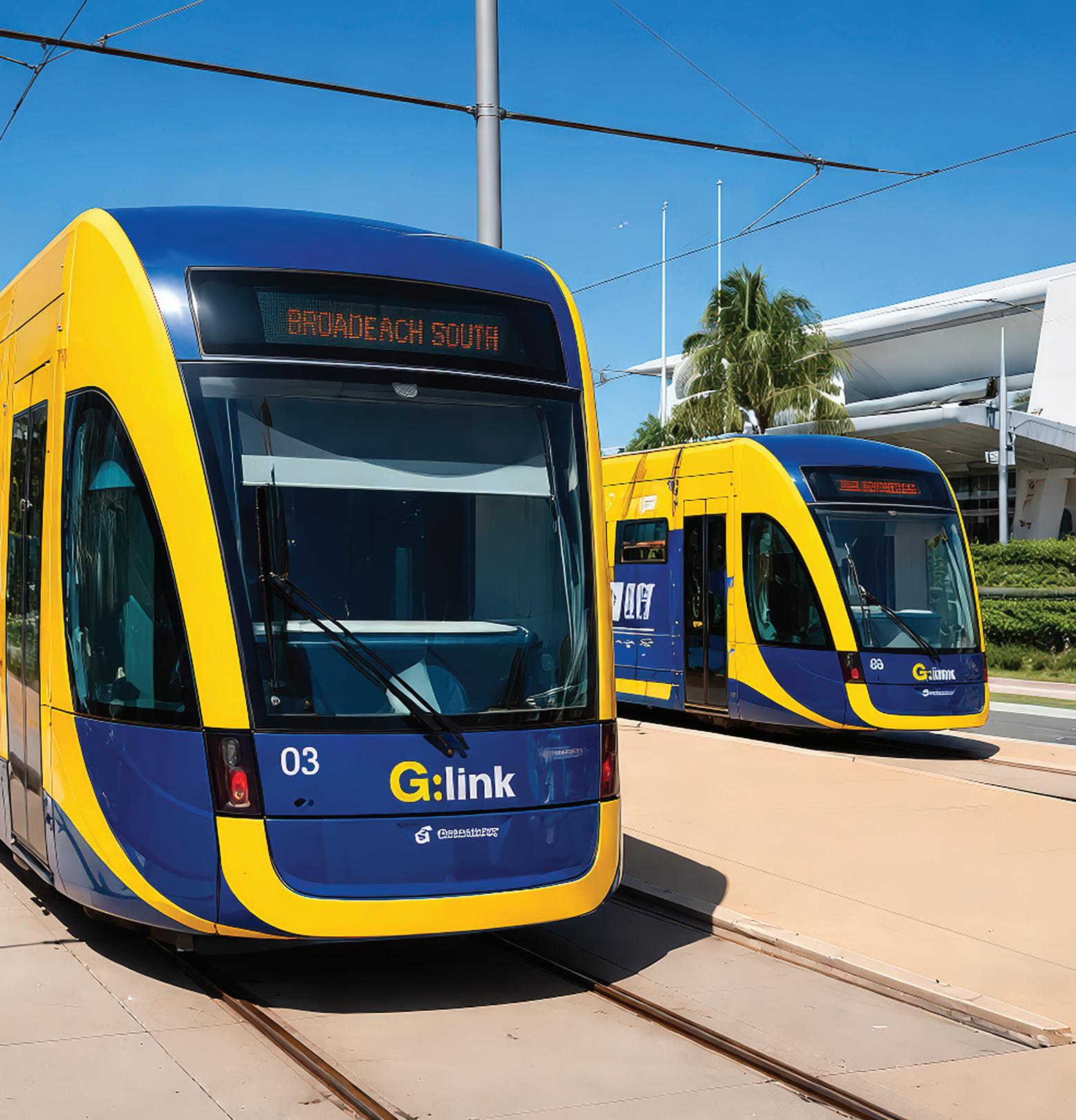
That cross-network connection is the part of “global expertise” that is hardest to see and easiest to undersell. When a Manchester, Boston, or Bordeaux team finds a better way to communicate with passengers during a power outage, it is shared via our Centre of Excellence for Metro and Tram in Lyon, so our team on the ground can draw on it.
The service handles the customer-facing dimension. Alongside it, we run parallel programmes to industrialise and harmonise operations and maintenance practices across the group. The aim is the same in each case: take the best of what one network has worked out, and make it available to the others while leaving the frontline decisions where they belong, with the people on the ground.
A principle runs through all of this. The quality of the experience a passenger has is closely linked to the quality of the experience staff have. A driver who feels listened to and well-supported becomes a different presence on the platform.
So, what does global expertise applied locally mean for Luas?
It means that the Dublin tram service of the next decade will not look like Manchester’s, Gold Coast’s, or Dijon’s. It will look like Dublin’s; developed using a method refined across 24 networks and four continents, with the benefit of a peer group of operators sharing what works in real time. It means investment in the people who already make Luas what it is. It means a structured commitment to the customer experience, with measurable outcomes tracked over the long term.
And it means that when an operational challenge arises in Dublin, and they will arise, we will not be solving it alone. We will be solving it with the experience of every Keolis network behind us, applied to the realities of this city, this network, and these passengers.
That is the work that begins now.
E: comms@keolis.co.uk
W: www.keolis.co.uk
G:link trams on the Gold Coast in Queensland, Australia.
Delivering a modern public transport system

Ireland’s public transport system is entering a period of profound transformation, writes Stephen Kent, CEO of CIÉ.
In 2025, the CIÉ Group recorded a landmark year, with passenger numbers reaching new highs and investment accelerating across infrastructure, technology, and sustainability. This momentum reflects not only growing demand, but a decisive shift in how people across the country are choosing to travel.
Public transport is no longer simply a service; it is a central pillar of Ireland’s response to climate change, housing pressures, and economic growth. At CIÉ, our role is to ensure that this system remains resilient, accessible, and capable of meeting the needs of a rapidly changing society.
The scale of growth in 2025 is clear. Across the CIÉ Group, passenger journeys exceeded 336 million. This growth has been supported by improvements in service delivery, increased investment from the State, and collaboration with our stakeholders, including the National Transport Authority (NTA) and the Department of Transport.
However, growth of this scale also brings challenges. Meeting rising demand requires sustained investment in infrastructure, fleet capacity, and workforce development. It also requires continued focus on reliability, accessibility, and customer experience.
Ensuring that public transport remains a convenient, reliable, and attractive option for passengers will be key to maintaining this growth trajectory.
Ireland’s public transport network is undergoing its most significant transformation in decades. Programmes such as DART+, BusConnects, and Connecting Ireland are reshaping how people move within and between our cities, towns, and rural communities. These programmes are not standalone projects. They form part of a coordinated national strategy to enable modal shift, reduce congestion, and support more sustainable patterns of development. For CIÉ, our role is to support these ambitions through investment, delivery, and collaboration, ensuring that outcomes are delivered efficiently.
At the same time, we are increasingly focused in CIÉ on transit-oriented development, using our property portfolio not only to support public
transport, but also to support housing and urban regeneration. This represents a significant opportunity to align transport and land-use planning in a more coherent way. By locating homes, jobs, and services close to high-quality public transport, we can reduce car dependency, support compact urban growth, and deliver more efficient and liveable communities.
Sustainability is central to CIÉ’s strategy. Every additional passenger choosing bus or rail contributes to a cleaner, lowercarbon Ireland. In line with national climate targets, we are progressing a transition to low- and zero-emission fleets, with the support of the NTA. This includes electrification of bus and rail services, alongside investment in charging infrastructure in our depots, increased use of biofuels, and renewable energy.
We are also taking steps to improve the environmental performance of our operations, from energy efficiency across our buildings to improved waste management and biodiversity programmes.
The scale of this transition should not be underestimated. Expanding services while reducing emissions presents a complex challenge, requiring coordinated investment, innovation, and partnership across government and industry. It also requires careful planning to ensure that sustainability measures are delivered in a way that supports operational resilience and value for money.
A public transport system is only as strong as the people who deliver it. Across CIÉ, more than 13,000 employees play a vital role in ensuring that services operate safely, reliably, and efficiently. In 2025, we continued to invest in our workforce, supporting recruitment, training, and development to meet growing demand for services. This includes initiatives to enhance skills in critical areas such as engineering, operations, and digital systems.
At the same time, we strengthened our focus on accessibility and inclusion, ensuring that our services are open to all passengers and reflective of the communities we serve. This includes ongoing improvements in infrastructure,
“We can ensure that public transport plays a central role in shaping Ireland’s future; connected, inclusive, and resilient.”
customer communications, and service design to better meet the needs of people with disabilities, older passengers, and those travelling in more remote areas.
In the last year we have made significant progress on the long-standing pension challenges that have been a shadow over the group for many years.
Agreement with staff on pension reform provides greater certainty and reduces risk for the future, enabling us to better manage long-term liabilities while supporting our employees and pensioners.
In parallel, we continue to enhance our resilience in areas such as cybersecurity, recognising the importance of protecting critical infrastructure and data in an increasingly digital environment.
The outlook for public transport in Ireland is one of opportunity and responsibility. Demand is growing, expectations are rising, and the broader national agenda, from climate action to housing, depends increasingly on a strong and integrated transport system. CIÉ enters this period with a clear strategy.
In the years ahead, we will continue to work closely with government, agencies, and local authorities to deliver the infrastructure and services required to support Ireland’s future.
This includes expanding capacity across key corridors, accelerating decarbonisation, and unlocking the potential of our assets to support wider
societal goals. It also means continuing to place the citizen at the centre of our decision-making, ensuring that services are designed around evolving needs and expectations.
The ambition is clear: a modern, integrated public transport system that serves the needs of citizens, supports economic growth, and contributes to a more sustainable Ireland.
Achieving this ambition will require sustained commitment, but the progress made to date demonstrates what is possible. By building on this momentum, we can ensure that public transport plays a central role in shaping Ireland’s future; connected, inclusive, and resilient.
T: 01 677 1871
E: info@cie.ie
W: www.cie.ie

Lessons in infrastructure acceleration from North America


AECOM’s Veronica Vanterpool, Americas Transit Lead, and Derval Cummins, Transportation Director for Ireland, explore how to accelerate the delivery of public transport infrastructure, drawing on North American experience and reflecting on how global lessons can be applied in Ireland.
Ireland is under increasing pressure to deliver better public transport. Why has accelerating infrastructure delivery become such a critical issue?
Veronica Vanterpool (VV): These projects deliver a public good, connecting people to resources and opportunities, but delays can increase costs and erode confidence. Early risk

mitigation, stronger coordination, and meaningful stakeholder engagement are critical to delivering value earlier. This will help build public confidence in Ireland’s ability to deliver projects, ensuring the support is cultivated to build and invest in infrastructure.
This is not a unique pressure in Ireland; it is experienced throughout the industry at large. There are many challenges associated with project delay in North America as well, and we want to ensure
we are delivering on the benefits of these projects sooner rather than later.
Derval Cummins (DC): Ireland’s population growth has been extremely rapid. There are over 750,000 more people here than there were a decade ago, and that is on today’s population of 5.5 million. We hit our 2040 employment forecast in 2022, and it is the people in that demographic who do the most travelling for the purposes that are most essential for social and economic wellbeing. At the same time, ESRI research shows Ireland significantly lagging European peers in infrastructure per capita.
The urgency we are now facing is from this new phrase that we are hearing quite a lot: “The cheapest time to build is now.”
That is new thinking in Ireland; since the financial crisis, our focus has been on not spending money. Now, we are seeing the risks that come from not investing; not only that we will miss out on the benefits from these projects, but that delays will see construction costs continuing to rise due to inflation and the inevitable changes in scope that come with the passage of time.
Before major rail and transit programmes move into delivery, where do organisations most often misjudge what is needed to accelerate successfully?
VV: Projects often misjudge the importance of early prioritisation towards coordination, outreach, permitting, and communication. Identifying a project’s complexities and risks at the very beginning is shown to reduce costs and time.
Derval Cummins, Transportation Director for Ireland.
Veronica Vanterpool, Americas Transit Lead.
Early and substantive community engagement supports project acceleration. Community members should be treated as project partners, not just a stakeholder constituency to inform. When engagement is substantive, it can then be incorporated early on, reducing risks and delays.
DC: It is important to avoid treating the project lifecycle purely as a simple sequence of approval ‘gates’. This overlooks the real complexity of the synergies between projects; the need for a programmatic approach to manage risks and opportunities, market readiness, and public engagement.
There is a pre-delivery challenge too, here in Ireland, which is that we have built very few major projects in a long time. Given the scale and complexity of the current pipeline of works, industry will need to partner with international contractors. This has been a challenge because projects only become real to contractors when they see tenders coming to market. It is worrying that the Construction Industry Federation Q1 2026 outlook survey “reveals a deepening ‘wait-and-see’ approach to public projects”, despite government initiatives and visible progress of projects.
As organisations look to accelerate delivery, what are the most important enablers for programmes to move forward with confidence?
VV: There are three key enablers of acceleration. First is leadership. Having a clear project champion is incredibly important for building public acceptance and confidence, as well as for governance and ownership of project milestones, challenges, and successes.
Secondly, teams need structures and tools that enable constant coordination, visibility, and rapid problem-solving. This can involve increasing communication and the visibility of the work being done or having a strategy in place that allows teams to engage regularly to problem solve and troubleshoot.
“Community members should be treated as project partners, not just a stakeholder constituency to inform.”
Finally, technology. Digital tools and AI can safely and confidently accelerate delivery by improving decision-making and freeing up time and resources.
DC: In Ireland, the Accelerating Infrastructure Taskforce already reflects these priorities, with four pillars: legal reform, regulatory simplification, delivery coordination, and public acceptance. Of these, coordination will be critical, supported by a central unit that will make necessary project prioritisation decisions.
Bringing this into the Irish context, where do you see the strongest opportunity to apply these acceleration approaches as investment programmes scale up?
VV: Ireland’s challenges are not unique and there is an opportunity to adopt proven international delivery models. The biggest shift will be embedding earlier alignment on risk, opportunity, and stakeholder engagement.
It is important that public acceptance is identified as a pillar of reform. The public can be a powerful voice in supporting or halting a project, as is also the case in North America, and working with the public early on can lead to project acceleration.
DC: We are taking many positive steps in terms of community engagement, and public acceptance has greatly improved. BusConnects Dublin Infrastructure Works shows what is possible: strong early engagement helped schemes gain consent without oral hearings.

MetroLink and DART+ West and South West have also gained their planning approvals.
We will need to overcome the aversion to risk that has crept into the system in Ireland, which is outlined in the Accelerating Infrastructure Taskforce report, if we are to expedite decisionmaking. The real risk is the cost of delay: lost benefits, rising construction costs, and missed climate targets. We cannot meet our climate goals without investment in public transport infrastructure. Despite an increasingly electrified car fleet, transportation remains one of the biggest contributors to Ireland’s carbon emissions.
Major programmes often accelerate when there is a clear national catalyst, like an Olympic Games or another major event, that brings people together and drives things forward. While the 2027 Ryder Cup has influenced the accelerated construction of the Adare Bypass through multi-agency collaboration and decisive decisionmaking, Ireland has yet to find that catalyst despite our burgeoning population, infrastructure deficit, and the climate crisis. In its absence, it falls on both government and industry to work together to build public buy-in and maintain momentum.
W: www.aecom.com/en-ie/
Rail in numbers
Projected rail project costs
• Review is estimated to be in the realm of €32 billion
• Annual costs for operating and maintaining a larger rail network on the island are estimated to be approximately €600 million
• Investment would take the best part of 25 years to deliver, which suggests an annual capital spend of the order of €1.3 billion
History of Ireland’s rail network
• Island’s rail network reached its peak around 1920, with approximately 5,540km of network
• At that time, Ireland had one of the densest railway networks in the world
Ireland rail network currently
• The island of Ireland currently has around 2,300km of public rail lines
• Iarnród Éireann, the State-owned railway company in Ireland, operates 1,944km (1,215 miles)
• Translink, the State-owned transport company in Northern Ireland, operates another 357km
Source: Department of Transport
Major projects in the strategy
• Galway Line: Line speed improvements, capacity and frequency enhancements, and electrification of the rail
• Belfast to Derry Line: Capacity/frequency enhancements, and line speed improvements
• Belfast Line: Line speed improvements and electrification of the rail
• North of Connolly: Line speed improvements, line capacity improvements, electrification of the rail
• Hazelhatch to Portarlington line: Line speed improvements, new line capacity and frequency enhancements, and electrification of the rail
• Limerick to Limerick Junction phase two: Line speed improvements, line capacity improvements, electrification of the rail, and reconfiguration of Limerick Junction
• Waterford Line: Line speed improvements, enhancements to capacity and frequency, electrification of the rail, and to start serving Kilkenny and Carlow
• Cork Line: Line speed improvements and electrification of the rail
Source: Department of Transport
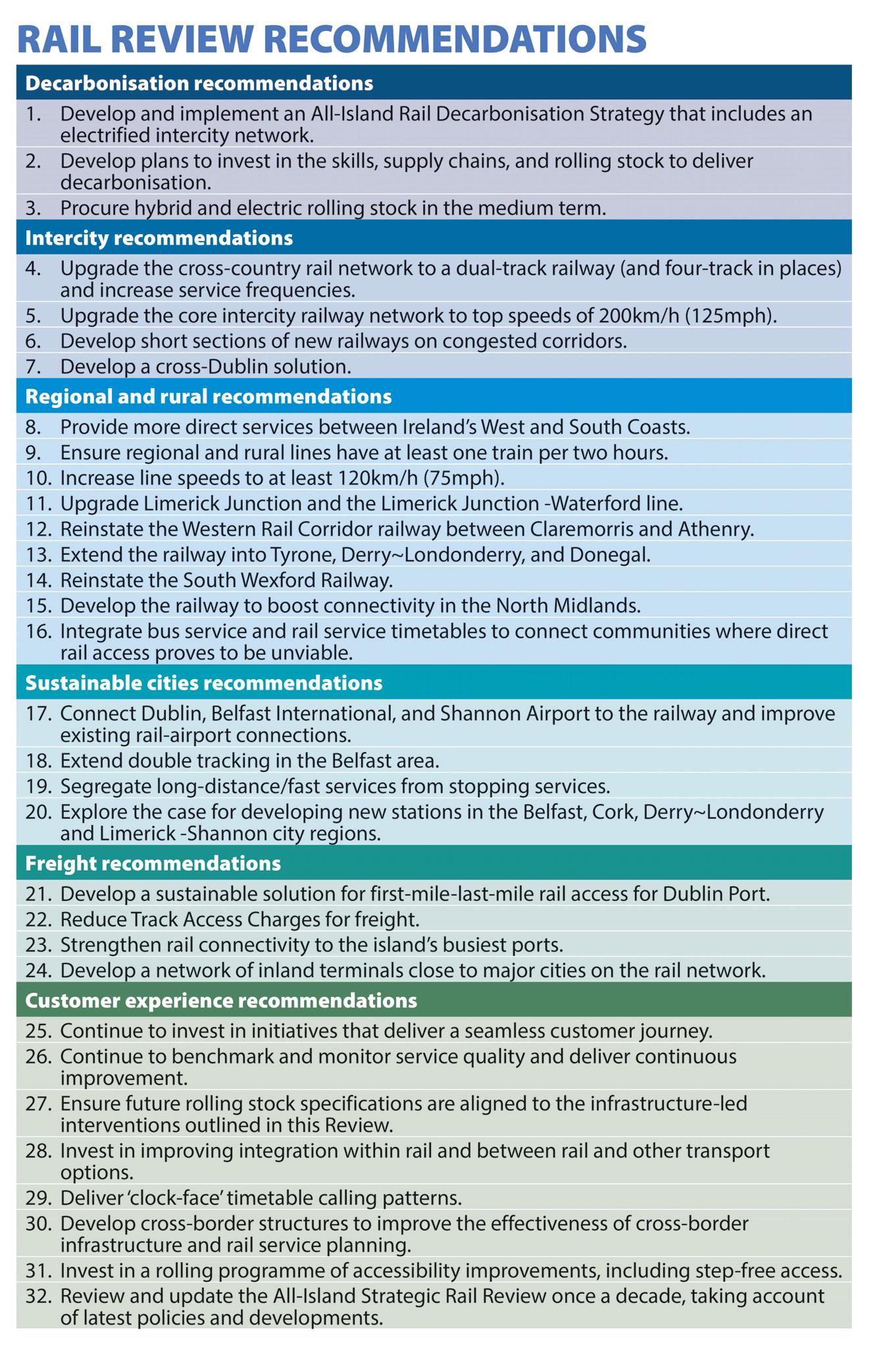
Source: Department of Transport
Project prioritisation strategy intended outcomes
• Rail decarbonisation: 750km of the rail network to be electrified with overhead cables capable of powering fast intercity trains, which will avoid 60,000 tonnes of CO2 annually and approximately 55 per cent reduction on CO2 emissions across intercity regional services;
• Rail connectivity: 250km of additional rail, opening opportunities for economic development and freight;
• Stronger public transport system: Strengthening the EU TEN-T core rail network, making cities, towns, ports, and airports better linked through public transport;
• Regional and rural connectivity: Enhancing frequency of rail services will support balanced growth for regional areas of the country; and
• Address bottlenecks: Removal of bottlenecks will add capacity or growth and will enable faster, more reliable services.
Source: Department of Transport