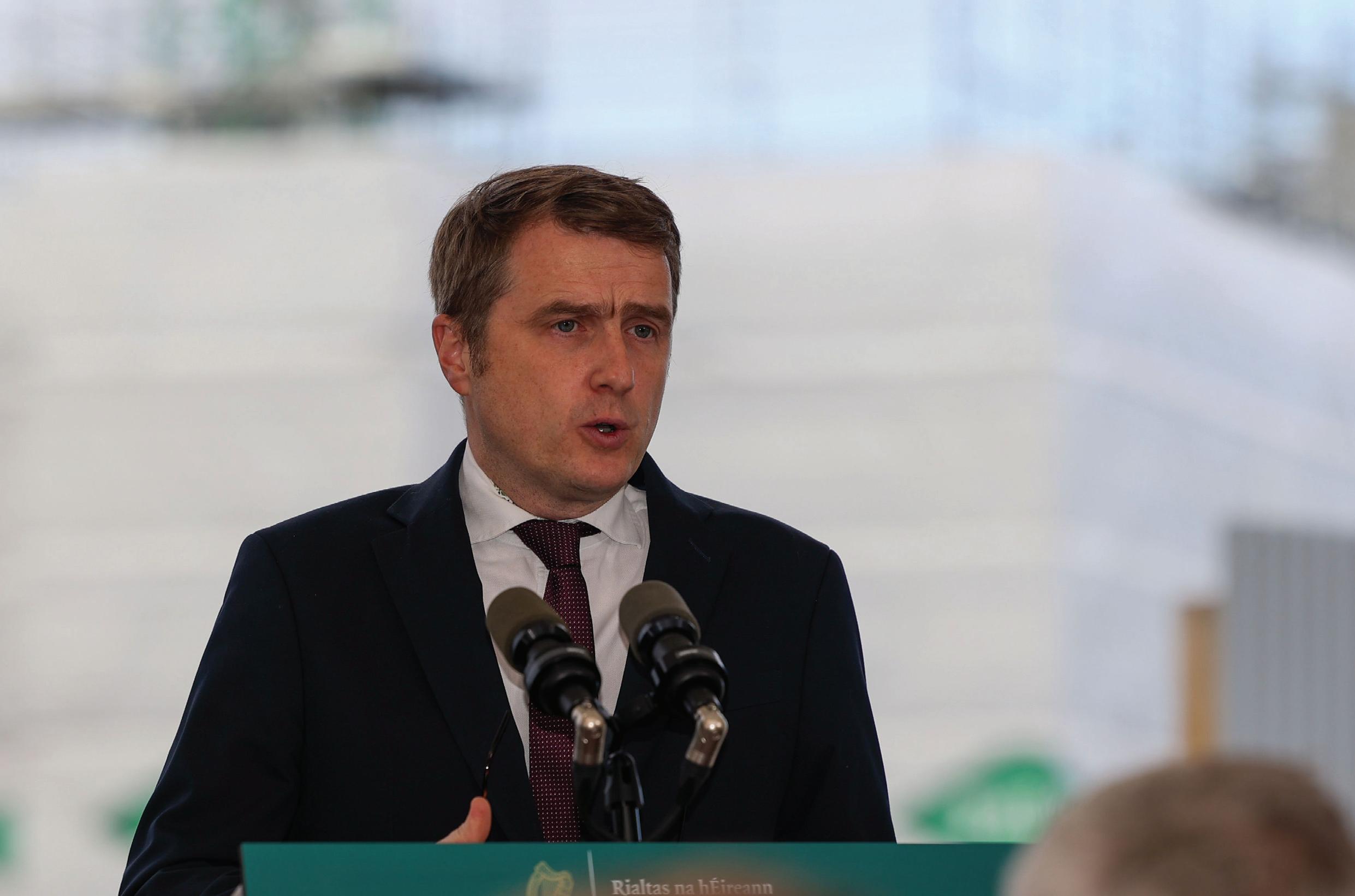
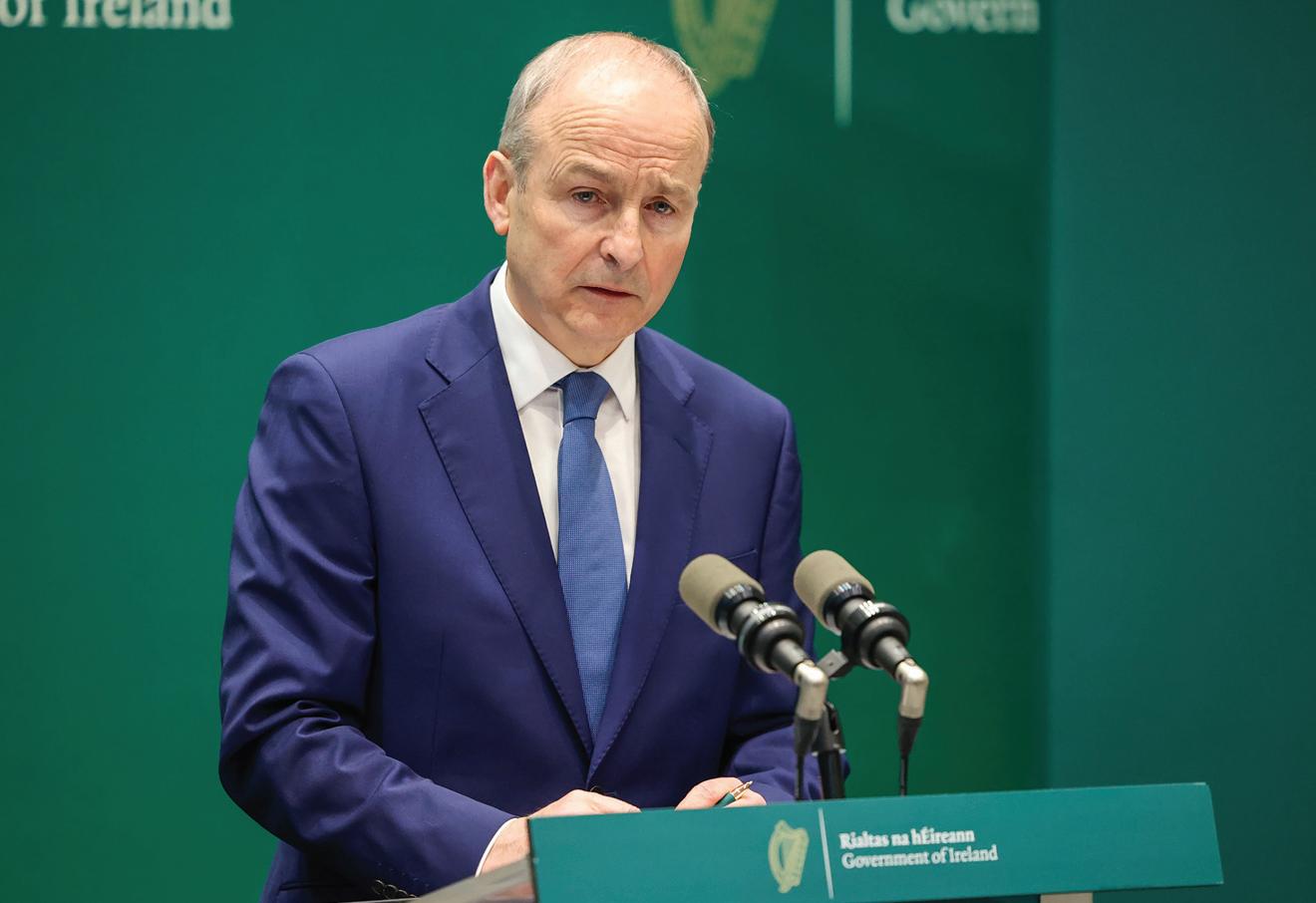
Tánaiste and Minister for Finance Simon Harris TD has called the current fuel crisis arising from the US-Israel war on Iran “the worst the world has ever seen”.
According to the International Energy Agency, brent crude oil stood at $95.20 per barrel in mid-April 2026, up from $64.73 per barrel in late-January 2026. Here, the price of petrol at the pump increased from €1.69 in January 2026 to €1.91 in April 2026 as diesel increased from €1.70 to €2.14.
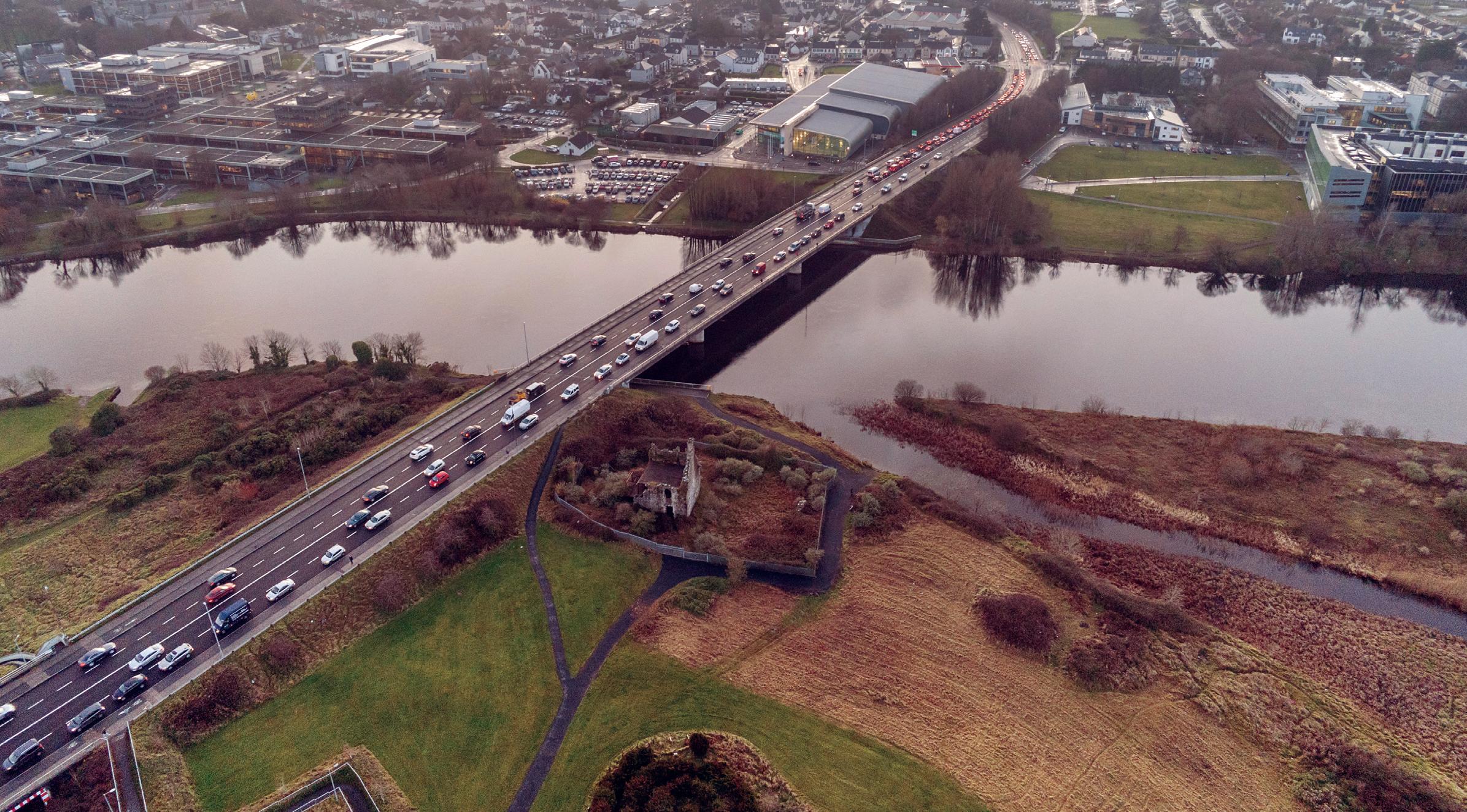
These price increases sparked protests that brought the State’s capital city and motorways to a standstill and prompted the resignation of then-Minister of State Michael Healy-Rae TD from government. In response to the protests, the Government has announced a raft of fuel supports, but the Tánaiste concedes that no government can absorb the impact of the Iran war.
Warning that the impact of the fuel crisis will be felt into winter 2026, Harris says: “I have got to be honest with people, we have to prepare, not just for the days ahead, but for the months ahead, for the year ahead.”
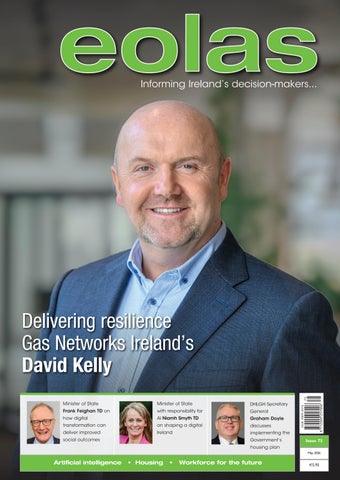
Against this backdrop, issue 75 of eolas Magazine explores key challenges and opportunities facing the State. Our cover story, featuring Gas Networks Ireland’s David Kelly, examines delivering resilience in the energy sector. Our round table discussion, hosted by Accenture, explores public services upskilling in the age of AI.
In our artificial intelligence report, sponsored by Fexco, Minister of State Niamh Smyth TD discusses how the Government aims to adopt AI while in our housing report, we hear from the Department’s Secretary General, Graham Doyle, as well as Sinn Féin housing spokesperson Eoin Ó Broin TD, who critiques the Government’s housing plan.
Our workforce for the future report, sponsored by EY, features analysis on digital skills, remote working, and apprenticeships. We also look ahead to the Dublin Central and Galway West byelections and Ireland’s presidency of the Council of the European Union.
The FSC® system provides an assurance that products such as wood and paper have been harvested in a socially and environmentally responsible manner.
• This product is made of material from well-managed FSC®certified forests, recycled materials, and other controlled sources.
67 Housing report
68 Department of Housing, Local Government and Heritage Secretary General Graham Doyle discusses implementing the Government’s housing strategy
76 European Commission’s Siobhán Nic Thighearnáin on implementing the European Affordable Housing Plan
80 Sinn Féin housing spokesperson Eoin Ó Broin TD critiques the Government’s housing strategy
96 Department of Housing, Local Government and Heritage’s Karen Kenny on unlocking supply through the Housing Activation Office
Workforce for the future report
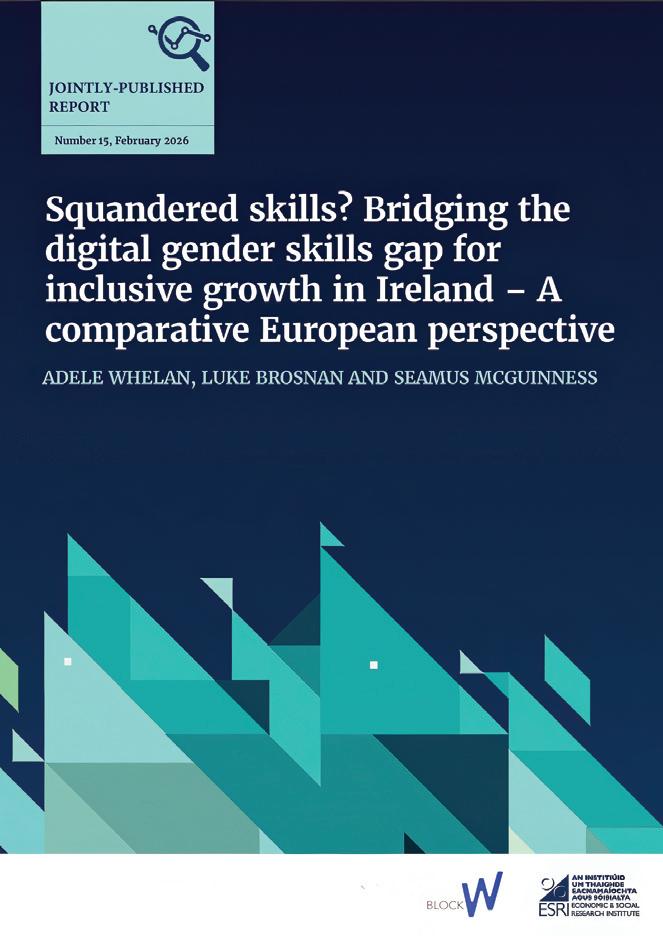
ESRI: Men in Ireland are twice as likely to report engagement with advanced digital skills than women
Analysis: Action plan for Apprenticeships
Michael McNamara MEP: Legislating in the age of AI
Looking ahead to Ireland’s European presidency
124 Mól an Oige: Louis O’Hara TD 132 Political platform: Sinéad Gibney TD
136 Timpeall an bhoird: Committee on Budgetary Oversight
140 Back page: Irish Neutrality League’s Kieran Allen on maintaining the triple lock
matters arising
Seán Barrett: 1944-2026
Former Ceann Comhairle Seán Barett died in April 2026 aged 81. Barrett held numerous ministerial posts including Minister for Defence and Minister for the Marine and was the Government Chief Whip from 1994 until 1997, a position he also held between 1982 and 1986. Barrett also played a key role in the launch of the Oireachtas TV channel.
Barrett was first elected to the Dáil as a Fine Gael TD in 1981, and was elected at each subsequent election until his retirement in 2002.
In 2007, Barrett came out of retirement and was elected in the Dún Laoghaire constituency, keeping his seat until his second retirement in 2020. He served as Ceann Comhairle between 2011 and 2016.
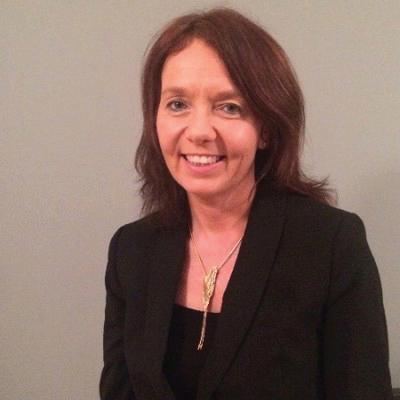
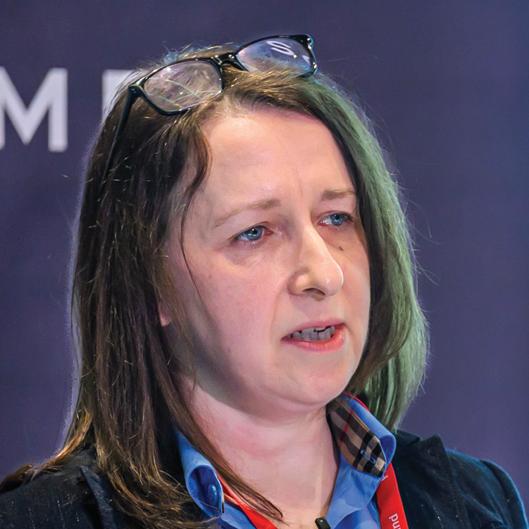
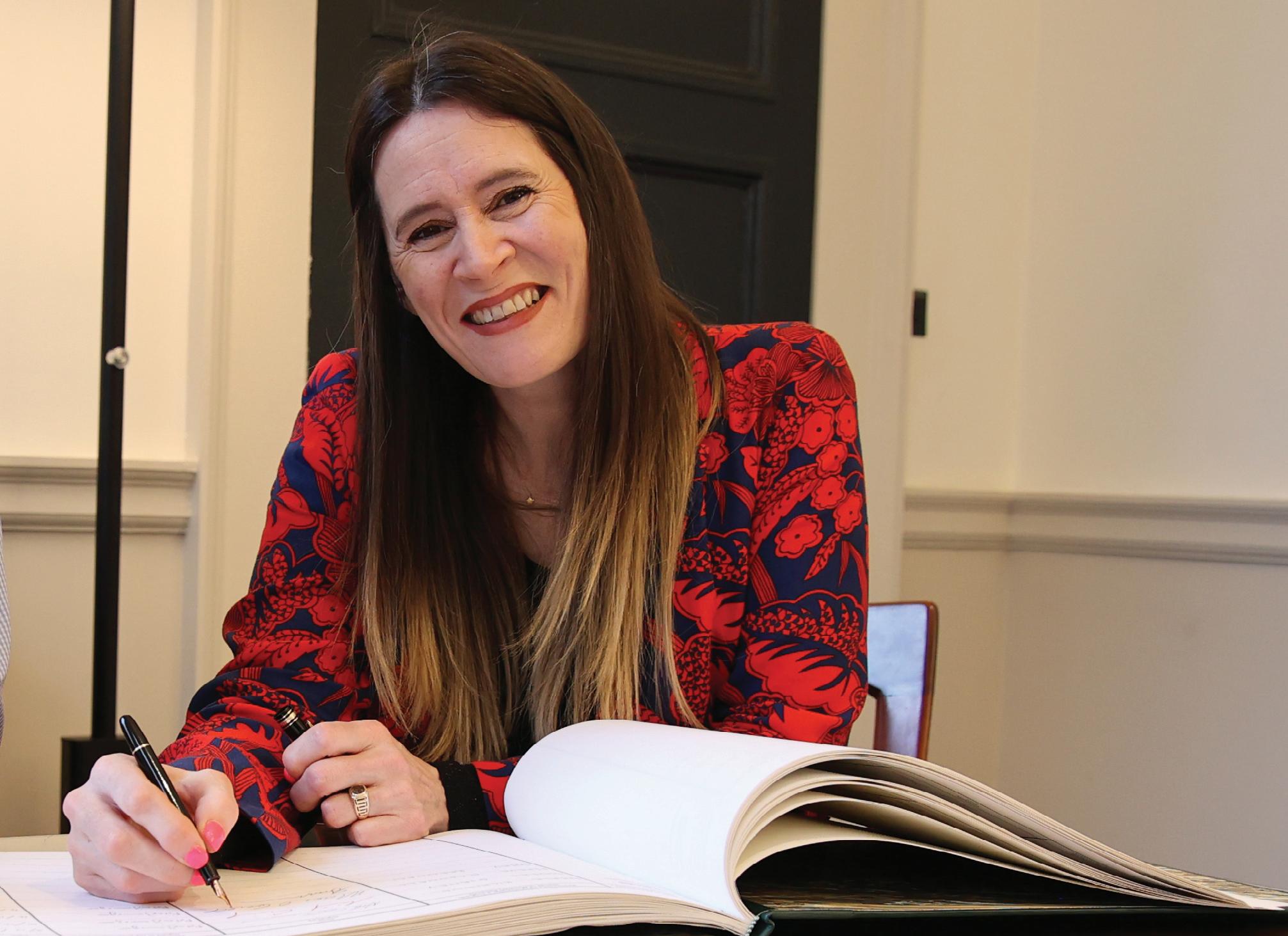
Anne O’Connor was appointed Chief Executive Officer of the HSE in December 2025.
O’Connor, who has previously worked at the HSE as the Chief Operations Officer, is the first woman to hold the position. She replaces Bernard Gloster, who announced that he would step down as CEO in May 2025.
In her new position, O’Connor will be tasked with delivering the HSE Corporate Plan 2025-2027 and its Annual National Service Plan
Tánaiste and Fine Gael leader Simon Harris TD says: “In his role as Ceann Comhairle, he exuded fairness, authority, and a firm but measured approach in the chair.
“He was a guardian of parliamentary standards and ensured that the business of the Dáil was conducted with order and respect, during what was a tumultuous period in Irish politics following the financial crash.”
Barrett is survived by his wife Sheila, along with his children and grandchildren.
Ar dheis Dé go raibh a anam.
Anne O’Connor appointed new CEO of HSE
Minister for Health Jennifer Carroll McNeill TD says: “Anne has made a significant contribution to healthcare in Ireland, and she now brings her immense capability and experience to leading the HSE.”
O’Connor says: “I look forward to leading the organisation and the reform programme already underway by supporting our staff to deliver quality healthcare services efficiently to meet the healthcare needs of the people of Ireland.”
Summer 2025 hottest on record
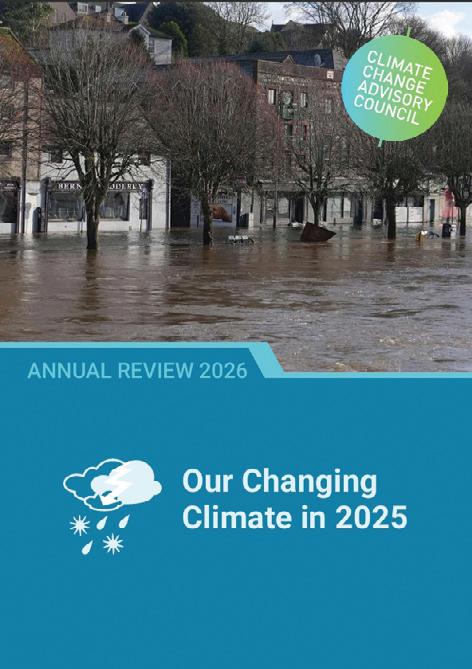
Summer 2025 was the warmest in Ireland on record, with average temperature being 1.94 degrees Celsius higher than the summer average, finds the Climate Change Advisory Council’s (CCAC) annual review for 2026, published in March 2026.
The report also revealed that Storm Éowyn in January 2025 was the highest sustained wind speeds recorded in Irish history. The storm left 768,000 costumers without electricity, with over 200,000 premises being left without water and over one million without broadband.
The report says the storm led to the most expensive stormrelated insurance event in Irish history, costing over €301 million.
“The levels of carbon dioxide, methane and nitrous oxide in the atmosphere reached their highest recorded values in 2024, the most recent year for which global consolidated figures are available. Preliminary data suggest that concentrations of all three key greenhouse gases have risen further in 2025,” the report says.
The report also identifies an increase of invasive species due to climate change. Research funded by the Environmental Protection Agency (EPA) identified climate change as one the causes of the 2023 Lough Neagh harmful algal blooms, in combination with excess nutrients, and the presence of invasive zebra mussels.
International Protection Bill passed by Oireachtas
The International Protection Bill 2026 was passed through the Oireachtas in April 2026 to align asylum laws with the EU Migration and Asylum Pact.
Under the Bill, applicants for international protection are to be required to undergo screening upon arrival to the State. This is to involve initial security and identity checks, and taking of biometric data for registration on the Eurodac system.
Applicants are to be supported with legal counsel during the process. The screening process is to determine the procedure under which applications are to be examined.
Asylum claims are to be examined through mandatory timelines. This is two months under the inadmissibility
procedure, three months under the accelerated procedure, three months under the asylum border procedure, and six months under the ordinary procedure. Enactment of the Bill and commencement of the Act is required by 12 June 2026.
Minister for Justice Jim O’Callaghan TD says: “The pact recognises that migration requires sharing responsibility, robust and fair management of external borders, and stronger governance of asylum and migration policies.
“It remains clear that migration is inherently a transnational issue. No country can deal with the challenges around migration alone.”
FOREIGN AFFAIRS
Push for suspension of EUIsrael Association Agreement fails
Calls for the suspension of the EU-Israel Association Agreement have failed after the measure did not receive unanimous support from EU member states in April 2026.
The agreement, which entered into force in June 2000, provides the legal basis for the EU’s trade relations with Israel. Some member states, including Ireland and Spain, called for the suspension of the trade elements of the association agreement and the blocking of Israel accessing the Horizon research and innovation fund.
Ministers are due to assess Israel’s compliance with article two which contains human rights obligations. This follows the introduction of Israel’s new death-penalty law, an increase in
Carol Tancock was appointed chairperson of The Housing Agency in April 2026.
HOUSING
the frequency attacks by illegal Israeli and Jewish settlers in the West Bank, and Israel’s invasion of Lebanon.
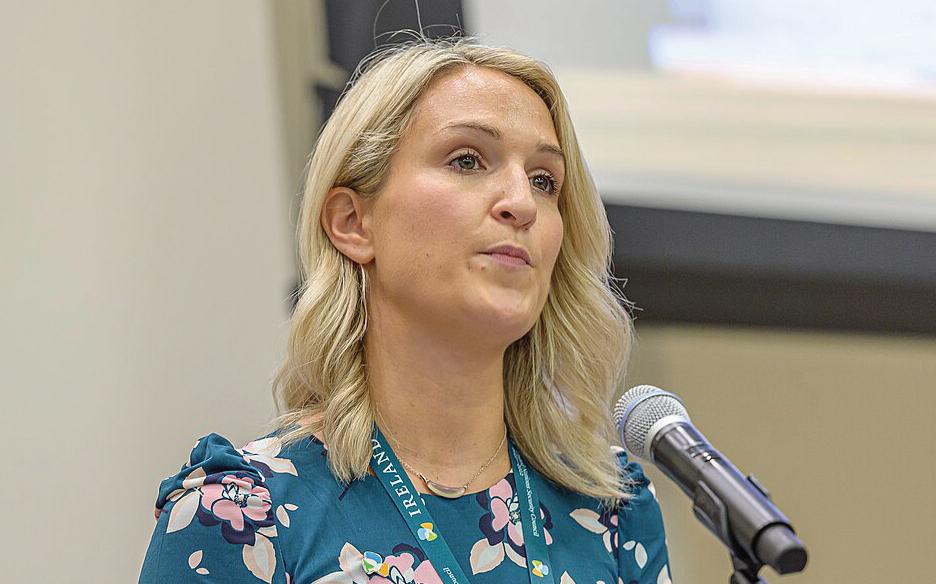
Speaking to RTÉ News, Foreign Affairs Minister Helen McEntee TD said: “We need to, as an EU, uphold our fundamental values, and we need to be clear that countries that we associate with, and have agreements with, that they are upholding values and laws.
“Israel has, since our last meeting, enacted a new law which essentially introduces the death penalty, but in particular penalises and specifically targets Palestinian people.”
New chair of The Housing Agency
Tancock says: “It is a privilege to take on the role of chairperson of The Housing Agency at such a critical time for housing in Ireland.
She has served on the board of The Housing Agency since 2023 and has been interim chairperson since June 2025. Tancock has more than 25 years’ experience in European financial institutions and has expertise in commercial real estate, infrastructure financing, and portfolio management. She is managing director of the Dublin branch of FMS Wertmanagement, and has served on the board of Cooperative Housing Ireland where she chaired its audit, assurance, and finance committee. Tancock has an MSc in investment and treasury and is a chartered director.
“I am committed to ensuring that The Housing Agency continues to play the fullest part possible in delivering sustainable housing solutions.”
Minister James Browne TD says Tancock “brings the skills, expertise, and oversight needed to guide the agency through this important period”.
“Her appointment will further strengthen the agency’s capacity to respond to emerging challenges in housing delivery and ensure continued progress towards the delivery of high quality, affordable, and sustainable homes across the country.”
cúpla focal
“Open the F**kin’ Strait, you crazy bastards, or you’ll be living in Hell.”
US President Donald Trump demands Iran reopen the Strait of Hormuz on Truth Social.
“I probably made a hames of what I was trying to say.”
Minister of
State Patrick
O’Donovan TD on withdrawing a request for review of media coverage of fuel protests.
“We’ll open it when it’s safe, when it’s right.”
Health Minister Jennifer Carroll MacNeill TD on the National Children’s Hospital.
“Farmers still see themselves as the people who bring money and jobs into Ireland, where actually a lot of the time they bring costs on Ireland.”
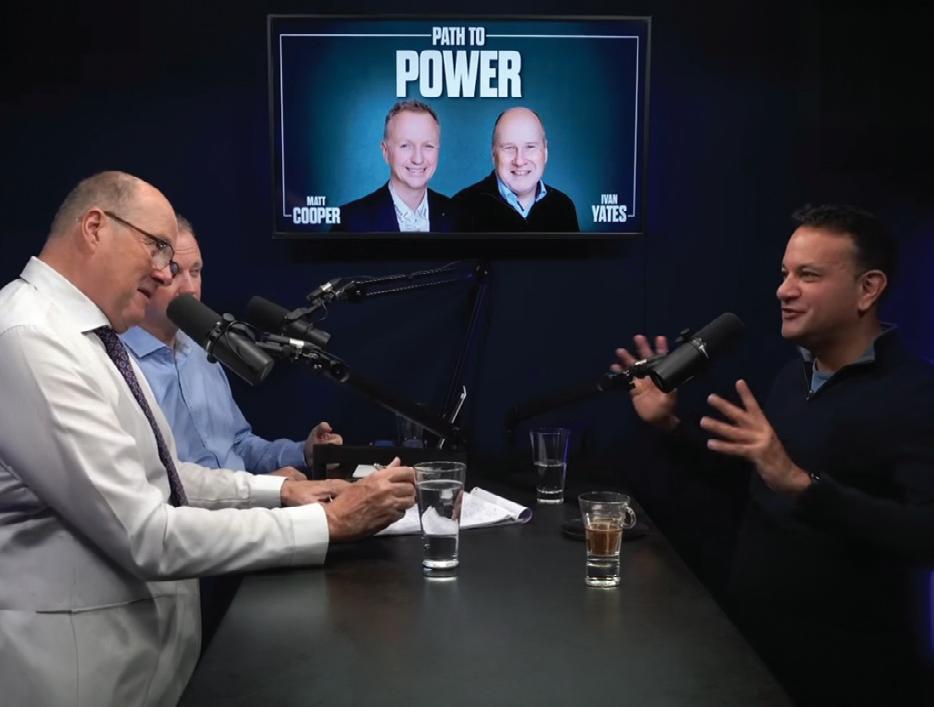
Former Taoiseach Leo Varadkar on the Path to Power podcast.
Government publishes first National Maritime Security Strategy
In February 2026, the Department of Defence published the State’s first National Maritime Security Strategy 2026-2030. The strategy outlines six strategic objectives aimed at strengthening national security, safeguarding critical infrastructure, and enhancing cooperation with international partners.
Approximately 90 per cent of trade by volume is transported by sea, while critical infrastructure such as undersea cables and gas pipelines underpin economic and societal activity. Six strategic objectives are identified:
• defending the State’s maritime domain;
• protecting critical maritime infrastructure;
• enhancing maritime domain awareness;
• strengthening international cooperation;
• ensuring legal order; and
• supporting education, training, and innovation.
Defending the maritime domain
The first objective centres on strengthening Ireland’s capacity to defend its maritime domain. This includes increasing operational presence at sea and enhancing the capabilities of the Defence Forces, particularly the Naval Service.
The strategy acknowledges current limitations, including personnel shortages and constrained patrol capacity within the Exclusive Economic Zone (EEZ). To address this, it proposes investment in both traditional and emerging capabilities. These include radar and sonar systems, expanded use of
uncrewed vessels and maritime drones, and improved integration of air and landbased assets.
Consideration is also given to expanding naval infrastructure, including the potential development of forward operating bases. These measures are intended to increase responsiveness and ensure a more persistent presence across Ireland’s maritime domain.
Protecting critical infrastructure
A central pillar of the strategy is the protection of critical maritime infrastructure, particularly subsea assets. Ireland’s role as a hub for international data connectivity and its reliance on
imported energy through subsea pipelines are identified as key vulnerabilities.
The strategy outlines a range of actions to strengthen resilience, including regular risk assessments, stress testing of infrastructure, and enhanced collaboration with private sector operators. Given that much of this infrastructure is privately owned, engagement with industry is presented as essential.
Measures also include improving cybersecurity practices, developing contingency planning frameworks, and establishing information-sharing networks across sectors. Particular emphasis is placed on protecting undersea communications cables, which carry the vast majority of global internet traffic.
Enhancing maritime domain awareness
Improving awareness of activities within Ireland’s maritime domain is identified as a critical enabler of security. The strategy defines maritime domain awareness as the ability to understand and monitor activity on, above, and below the sea.
To support this, it proposes the development of a national maritime security centre. This centre would integrate information from civilian and military sources to create a comprehensive maritime picture, enabling faster decision-making and more effective responses to incidents.
Ireland’s participation in EU-level initiatives such as the Common Information Sharing Environment (CISE) is also highlighted as a means of improving surveillance and data sharing. The use of space-based technologies and advanced monitoring systems is identified as an area for further development.
Strengthening international cooperation
The strategy emphasises the importance of regional and international cooperation while aiming to continue to conform with the Government’s formal policy of neutrality.
“At the heart of this strategy is a new whole-of-government approach to protect the security of our maritime domain.”
Defence Minister, Helen McEntee TD
Engagement with the European Union is a key component, including participation in initiatives aimed at enhancing maritime security and protecting critical infrastructure. Ireland also intends to deepen bilateral cooperation with countries such as the United Kingdom and France, particularly in relation to shared infrastructure and maritime space.
Cooperation with NATO is addressed through Ireland’s Individual Tailored Partnership Programme, with a focus on resilience and undersea infrastructure protection, although the engagement is framed within the Government’s formal policy of military neutrality.
The strategy also identifies opportunities to participate in regional initiatives and forums, including those focused on countering hybrid threats and addressing organised crime in the maritime domain.
Ensuring legal order
Maintaining a rules-based maritime order is identified as a core principle underpinning the strategy. Ireland’s obligations under the United Nations Convention on the Law of the Sea (UNCLOS) are central to this approach.
The strategy commits to reviewing existing legislation to ensure it is fit for purpose in addressing emerging threats. This includes examining enforcement powers at sea and considering the need for new legislative measures.
Alignment with international law and cooperation with neighbouring states in its application are also highlighted as priorities, particularly in the context of responding to hybrid threats and protecting critical infrastructure.
Education, training, and innovation
The final objective focuses on building the skills, knowledge, and technological capacity required to support maritime security. This includes investment in education and training programmes, as well as support for research and innovation.
Collaboration between government, academia, and industry is identified as a key enabler, with initiatives such as research programmes at the National Maritime College of Ireland playing a central role. Areas of focus include cybersecurity, surveillance technologies, and maritime domain awareness.
The strategy also highlights the importance of developing specialised skills within the Defence Forces and across relevant agencies, alongside fostering greater cooperation through joint training initiatives.
Delivery
Implementation of the strategy is to be supported by a rolling action plan, which outlines specific measures under each strategic objective. This plan will be subject to regular updates to reflect evolving risks and priorities.
Minister for Defence Helen McEntee TD says: “At the heart of this strategy is a new whole-of-government approach to protect the security of our maritime domain, in cooperation with international partners and the private sector, and in accordance with our international legal rights and obligations.
“The strategy’s associated action plan has been designed to be agile and adaptable to new threats as they emerge and evolve. I look forward to its implementation.”
Delivering resilience
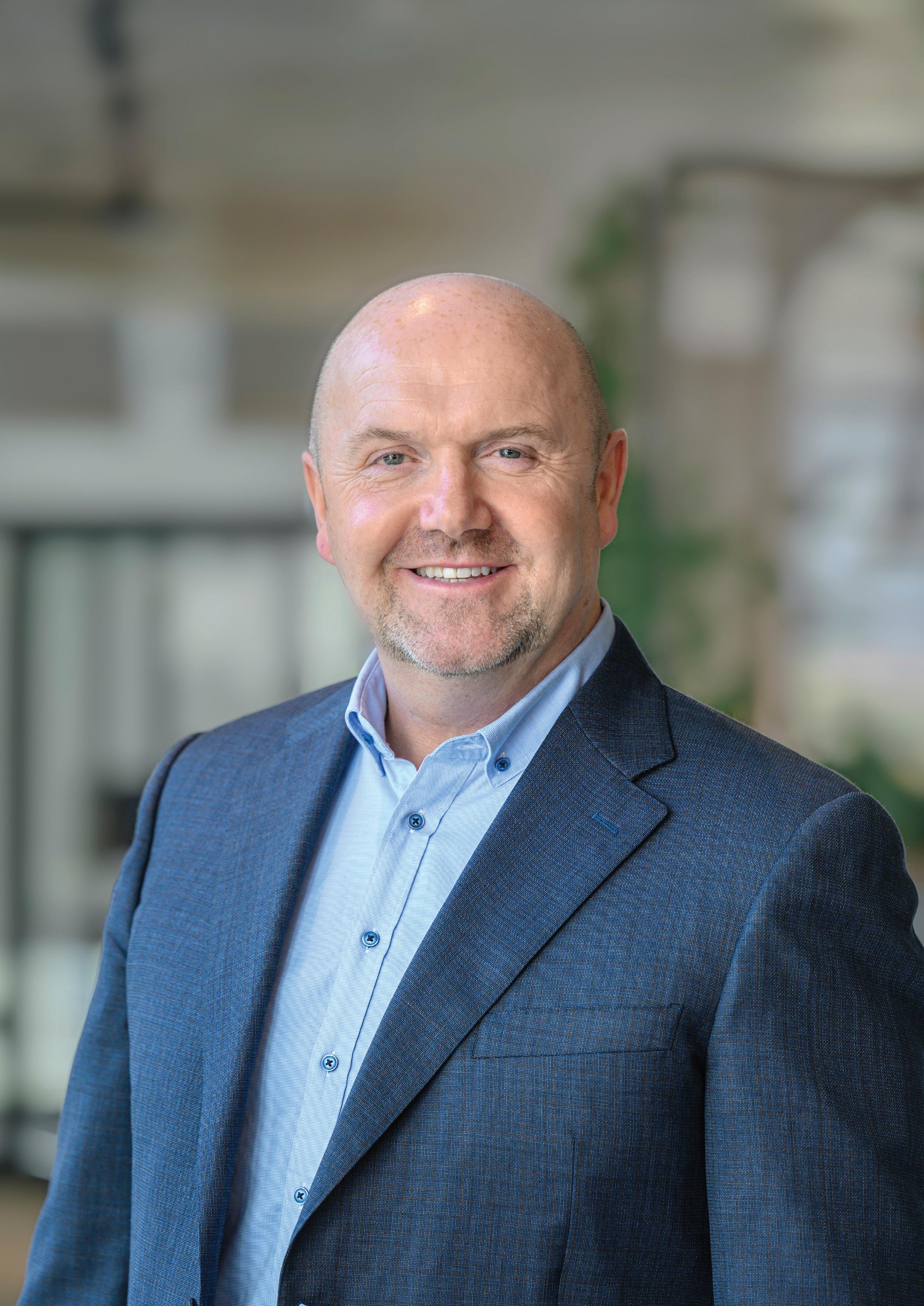
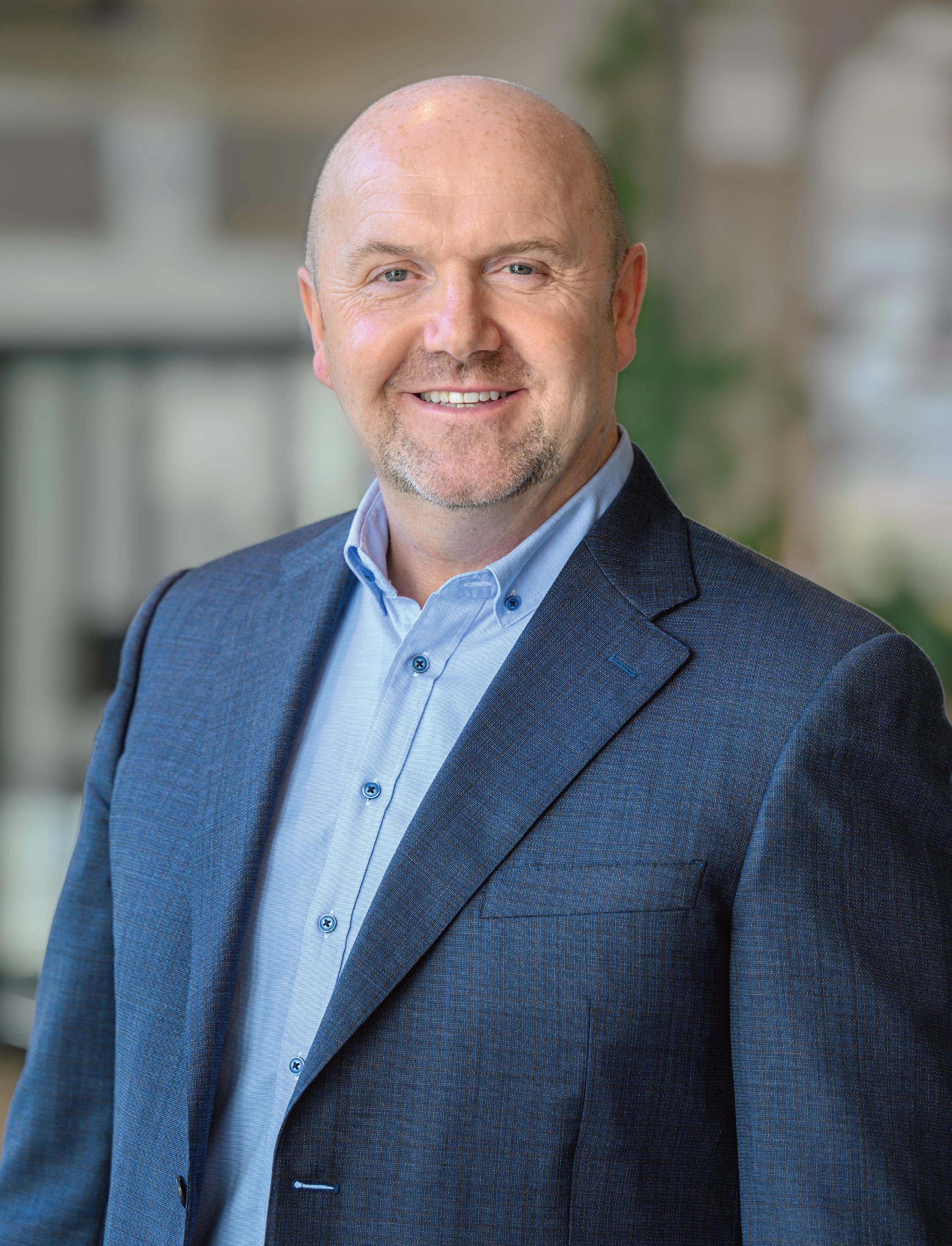
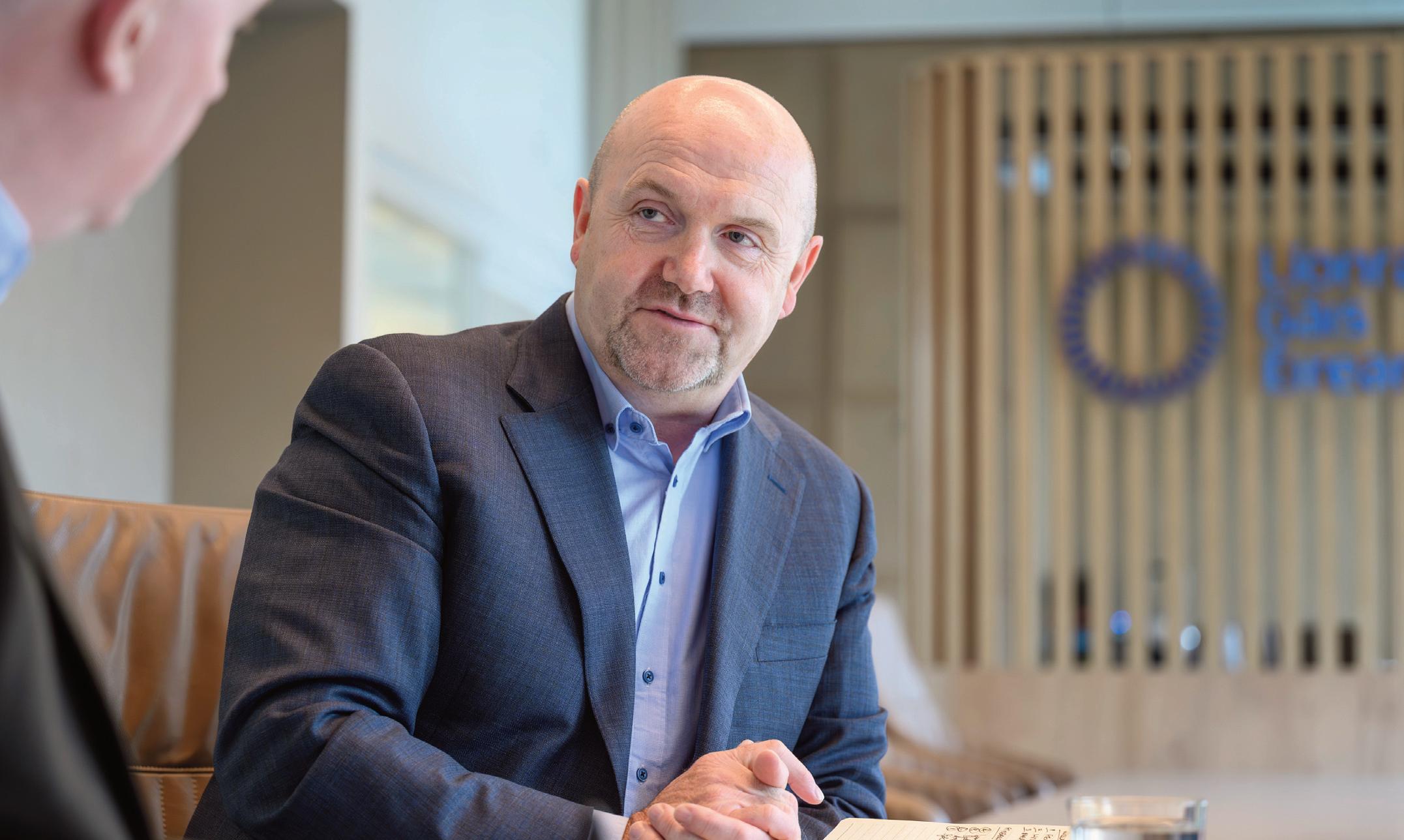
David Kelly, Chief Executive of Gas Networks Ireland, talks to Owen McQuade about the organisation’s refreshed corporate strategy, its record €237 million capital expenditure programme, and the critical infrastructure investments underpinning Ireland’s energy security and decarbonisation pathways.
Gas Networks Ireland’s strategic reset has been shaped by a rapidly evolving external environment, with global energy dynamics fundamentally altered in recent years. Under David Kelly, who became Chief Executive Officer of Gas Networks Ireland in February 2026, the organisation’s response has been to sharpen its focus and align its priorities with the realities of energy security, affordability, and decarbonisation.
“When we first separated Gas Networks Ireland out of Ervia, we established a strategy that addressed a lot of areas but in hindsight, it was too broad,” he explains. “That was pre-Russia-Ukraine war, and that changed everything in terms of a massive focus on security, supply, and affordability.”
Rather than abandoning its previous ambitions, the organisation undertook a deliberate simplification of its corporate strategy.
“What we needed to do was simplify it, and we needed to ensure that it was pointed at where our areas of focus were,” Kelly says. “So we brought a relatively lengthy strategy statement down to three main areas: security and resilience; decarbonisation; and supporting our customers.”
The addition of a customer-focused pillar marks a significant evolution in how the organisation frames its role. “That was a new departure for us, ensuring that our customer was at the heart of our strategy, especially around affordability and the cost of energy,” he says.
The streamlined strategy, underpinned by organisational capability and financial strength, has been positively received across stakeholders. “That strategy has landed very well, both with stakeholders, with customers, and indeed with our internal stakeholders, and that is where we are at now. We are very much in execution mode,” Kelly says.
Record capital investment
That execution is most visible in Gas Networks Ireland’s 2026 capital expenditure programme, which, at €237 million, represents a record level of investment for the organisation.
cover story
“We had not connected a power station in over 10 years and now we are contracted to connect 13, with construction on eight complete and the remainder at design, planning, or construction stage.”
This investment relates to the company’s core regulated activities, specifically the transport of gas across Ireland’s transmission and distribution systems. “We would call this our core business,” he explains. “This is capital associated with the transport of gas, both on a transmission and a distribution level.”
The scale of activity is substantial with approximately 130 standalone capital projects underway at any given time across the network. “Within that core capital programme, there are 130 projects in varying locations around the country,” Kelly says.
Importantly, this figure does not include additional expenditure on areas such as the Strategic Gas Emergency Reserve or unregulated business activities, highlighting the scale of the organisation’s overall investment footprint.
Kelly states that the emphasis now is firmly on delivery. “This year especially is all about delivery. The time for talking is really over. It is all about now with boots on the ground,” he says.
Major infrastructure investments
A cornerstone of the current investment programme is the €200 million decarbonisation of compressor stations in Scotland, a project with both environmental and operational benefits.
“We are decarbonising our two compressor stations with the addition of an electric motor drive at each. It has a
double impact for us, in that it reduces our carbon emissions by 42 per cent and, on top of that, it gives us the option of additional capacity and allows us to put more gas through the existing subsea infrastructure,” Kelly explains.
The project is powered with renewable electricity. “We have had to put in place a corporate power purchase agreement for electricity,” he adds. This dual benefit, reducing emissions while increasing system capacity, illustrates the organisation’s approach to aligning decarbonisation with resilience.
Alongside this, Gas Networks Ireland is progressing the Southern Area Reinforcement initiative, a €50 million investment focused on strengthening infrastructure in a region experiencing growing demand.
“This is just to bolster the level of demand we are seeing coming through in the area and it allows us to be futureproof for the period until the next Network Development Plan window, so the next 10 years is set out.”
The project will increase pipeline capacity in the southern region by approximately 20 per cent, ensuring sufficient gas pressure and resilience during peak winter demand, while supporting continued economic growth.
Generation
Gas Networks Ireland is also playing a central role in enabling Ireland’s electricity system, particularly through
the connection of new gas-fired power generation capacity.
“One of the other key programmes of work, especially in the last three years, has been connecting brand new power stations to the transmission grid,” Kelly says.
After more than a decade without new transmission connections, activity has accelerated significantly. “We had not connected a power station in over 10 years and now we are contracted to connect 13, with construction on eight complete and the remainder at design, planning, or construction stage,” he explains.
These facilities are predominantly peaking plants, designed to provide flexible, responsive generation.
“These are plants that are on standby in the event of a shortage. They can be commissioned when required and their contractual arrangements are different to traditional baseload generation.”
Critically, the plants also support the integration of renewable energy.
“They are perfectly matched to that marriage between intermittent renewables like wind and solar. These plants can pick up the slack when the wind is not blowing,” Kelly states.
Biomethane
Decarbonisation of the gas network is being advanced through a growing biomethane programme, combining both centralised and direct grid injection models.
A key development is the €32 million Mitchelstown Central Grid Injection facility in Cork, which Kelly describes as “a very important piece of infrastructure for our biomethane agenda”. He adds: “That hub-and-spoke model allows anaerobic digestion developers to truck their biomethane to this location and inject it into the grid.”
The facility is already demonstrating strong early demand. “We already have an anchor tenant for that, so the first half of that will be fully occupied upon it being commissioned. There is an expansion plan for it over the coming years,” Kelly says.
In tandem, Gas Networks Ireland is directly connecting biomethane producers to the network. “We have seven AD plants where we are actively building pipeline to them, the first three of them will be commissioned this quarter [Q2 2026].”
Combined, these developments will deliver approximately 750GWh of biomethane capacity in the short term. “It is a start, but it is no more than that. We have a long way to go on that agenda,” Kelly acknowledges.
Security of supply
Security of supply remains a critical priority, particularly given Ireland’s heavy reliance on imported gas and the ongoing volatility of market gas prices driven by the Iran War.
Around 80 per cent of Ireland’s gas supply is imported from the United Kingdom through two sub-sea interconnectors, meaning that Ireland’s energy security is dependent on its relationships with other states.
The vast majority of the State’s remaining gas supply comes from the Corrib gas field, which is in decline. “The remaining 20 per cent is secured through the depleting Corrib gas field. At best, it has a life expectancy of a further 10 years.”
“We are absolutely very focused on decarbonisation. Biomethane is a key agenda for us and then, in the longer term, hydrogen.”
In response, the Government has mandated the development of a strategic gas emergency reserve, bringing Ireland into compliance with EU requirements. Kelly specifies that Ireland is “the only outlier now left that does not have strategic gas reserves”.
The proposed offshore floating facility, located in County Clare, is progressing through development stage.
“We expect to go into planning towards the end of this year with a view to a final investment decision next year, and we are hoping to have that commissioned by the middle of 2030.”
The reserve will provide critical backup in the event of supply disruption. While there is no threat to Ireland’s gas supply in the short to medium term, a shifting global landscape makes long-term global supply projections challenging.
“Our strategic gas emergency reserve will be on standby in the event of an interruption to the gas that is transported through the subsea interconnectors. It is a really important piece of infrastructure,” Kelly explains.
Delivering for the future
As Gas Networks Ireland enters an intensive phase of delivery, Kelly emphasises the organisation’s enduring focus on execution and capability. “We are an engineering-led organisation. We are very ‘can-do’, and we have a culture where we quietly get on with it,” he says.
That culture is being reinforced through significant investment in people, including the recruitment of 200 new staff in the past year and a highly competitive apprenticeship programme.
At the same time, the organisation is positioning itself for the longer-term transition to a decarbonised gas system. “We are absolutely very focused on decarbonisation. Biomethane is a key agenda for us and then, in the longer term, hydrogen.”
However, he is clear about the role of natural gas in the transition, describing it as is “the transition fuel that will keep the lights on”.
With a record capital expenditure programme, a sharpened strategy, and a clear focus on delivery, Gas Networks Ireland is positioning itself to meet both the immediate and long-term energy needs of the State.
“The country is very dependent on gas for our economy, and what we are about now is ensuring that we deliver securely, reliably, and at scale,” Kelly concludes.
Profile: David Kelly
David Kelly was appointed Chief Executive Officer of Gas Networks Ireland in February 2026, having previously served as the organisation’s Director of Customer and Business Development since 2022. Prior to joining Gas Networks Ireland, Kelly worked for Ervia for almost seven years, and worked in financial services prior to this. In parallel with his CEO role, he is President of Dublin Chamber of Commerce, representing around 300,000 workers in the Greater Dublin Area.
A Dublin native from Clontarf, Kelly lives in Drumcondra with his wife Evelyn and has two daughters. Outside work, he enjoys following rugby and golf, travelling, and supporting Liverpool Football Club.
issues eolas
Critical Infrastructure
Bill introduced
The Oireachtas Infrastructure NDP Delivery Committee has waived prelegislative scrutiny of the Critical Infrastructure Bill, under the aegis of which the Government is to be allowed to designate specific infrastructure projects or programmes that it considers to be ‘critical’.
Announced by Minister for Public Expenditure, Infrastructure, Public Service Reform and Digitalisation Jack Chambers TD in March 2026, the legislation will require all state bodies involved in the approval process for the infrastructure in question to prioritise their consideration of it. It also requires all state bodies involved in the approval processes for this infrastructure to
cooperate and coordinate with each other.
The Department states: “This act will create a fast-track channel through existing processes for designated critical infrastructure where projects go to the
top of the queue for assessment by decision-making bodies. This should lead to significant improvements in the timelines for the approval of critical infrastructure.”
Under the legislation, the Government will have statutory powers to designate projects or programmes as ‘critical infrastructure’. To do this, government will designate specific projects or programmes by order, subject to Dáil resolution.
Any bodies in the approval processes for designated projects or programmes will be required to immediately prioritise and accelerate their consideration of those projects or programmes over and above all projects or programmes that do not have this designation.
In addition, all bodies involved in the approval processes are to “cooperate on a whole-of-state basis” to create a fasttrack pathway for nationally significant projects and programmes.
Minister Chambers says: “The creation of a Critical Infrastructure Bill is a key measure in the Accelerating Infrastructure Report and Action Plan. It will address the unacceptable delays in our approval processes by mandating whole-of-state cooperation and creating a fast-track pathway for critical projects and programmes.
urgency of moving away from our dependence on oil and gas.”
Sinn Féin’s spokesperson on Public Expenditure and Reform, Mairéad Farrell TD, says: “Given their poor track record on infrastructure, it is incredibly concerning that the Government is acting to circumvent important scrutiny on major legislation.
All bodies should actively support the coordinated delivery of said designated projects and programmes so that administrative or procedural delays are minimised.
The Minister for Public Expenditure, Infrastructure, Public Service Reform and Digitalisation will be given the statutory authority to give directions to any of the relevant bodies in the performance of their duties.
As per the Accelerating Infrastructure Report and Action Plan, the Department is also to continue to review the role that emergency powers might play in speeding up specific critical infrastructure projects. This includes a new power whereby public bodies building critical infrastructure projects will be immune from challenges on climate grounds.
Following a vote by the Oireachtas Infrastructure Committee in March 2026, the Bill’s passage is to be expedited after the committee voted to waive the prelegislative scrutiny of the Bill.
“More fundamental reform is necessary and this work is in progress through my department’s regulatory simplification unit. While this unit does its work to reform the regulatory system, this Bill will accelerate the most critical projects through the existing system.
“By establishing a clear legal basis for a limited number of government priorities, the Bill will reduce ambiguity and ensure that critical projects and programmes go to the top of the queue for assessment by decision-making bodies and receive fast and coordinated attention right across the system.”
However, Chambers’ former coalition colleague, Green Party leader Roderic O’Gorman TD, has said that the legislation “will be the death of the Climate Action Act”.
O’Gorman adds: “It will mean that major projects in areas like energy and transport, some of the biggest building projects in the State, will no longer be checked for their climate impact. The Government is in essence repealing the Climate Action Act by the back door.
“This is further evidence that this government has given up on any pretence of climate action. And it will ensure that fossil fuel continues to dominate our energy mix, just when the Iran war price-spike demonstrates the
“Sinn Féin will engage with any legislation that aims to address the deficit of critical infrastructure across the State. The infrastructural deficit that communities across this state have faced for decades will take a long time to fix. We need urgent action from government in this regard to ensure that our infrastructure meets the needs of our people and our communities.”
Fingal County Council’s destination tourism brand, Explore Fingal, launched in February 2026. The new brand identity was unveiled, complete with dedicated website and social media platforms.
A two-pronged approach effectively targets both consumers and businesses through a comprehensive marketing plan. This council-led initiative fosters collaboration within the tourist industry while encouraging strategic development and expansion.
Speaking at the launch event, AnnMarie Farrelly, Chief Executive of Fingal County Council, said: “Explore Fingal showcases Fingal as a proactive, forward-looking local authority delivering on its commitments.
“We recognise the significance of the tourism and hospitality sector within the county and launching Explore Fingal is a key milestone in the implementation of the Fingal Tourism Strategy 2024-2029 We see ongoing opportunities for investment and growth and are confident that the sector will expand and thrive.”
Explore Fingal is central to governing documents: the Fingal Tourism Strategy 2024-2029 and the Fingal Food and Drink Policy 2024-2029
Implementation commenced in December 2024 and was consolidated with development plans and feasibility studies leading up to the brand launch. Through these actions Fingal County Council has made a strong statement of ongoing commitment to tourism, food, and drink.
Through Explore Fingal, the county will enhance its distinctive, authentic destination, positioning Fingal as a premier cultural, coastal, and culinary destination.
Explore Fingal sits under the Visit Dublin brand and is aligned with the national tourism strategy through Fáilte Ireland and Tourism Ireland. Together tourism, hospitality, and wider industry partners will combine to activate the next phase of Fingal’s destination growth.
The essence of the Explore Fingal brand is the surprising and rewarding nature of this familiar yet relatively unexplored area of north county Dublin.
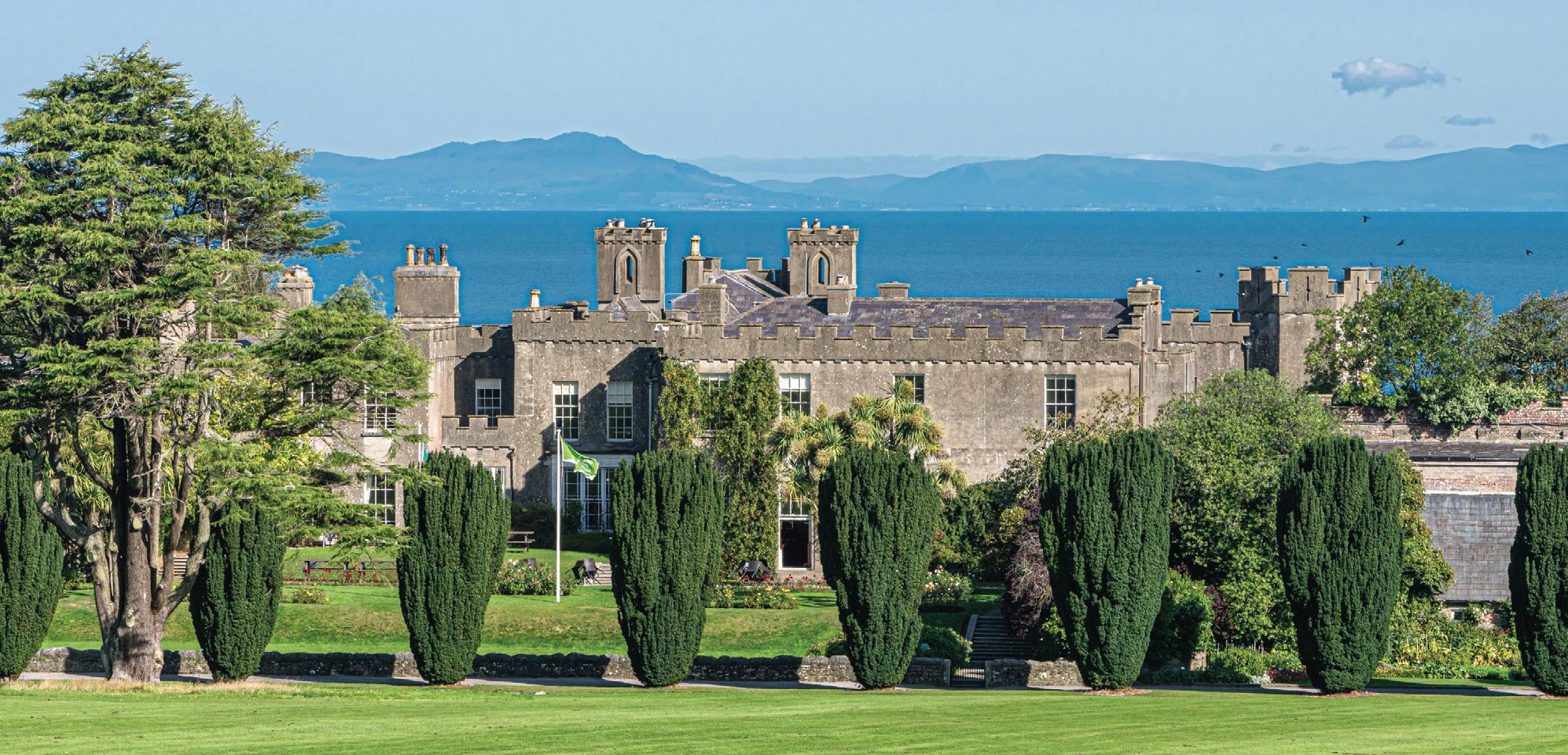
Ardgillan Castle
Fingal has many competitive advantages, including an easily accessible location and a wide range of amenities and attractions making it ideally positioned to capitalise on tourism as it continues to grow across Ireland.
Dublin Airport also falls within the boundary, meaning that a huge percentage of incoming tourists already visit Fingal, albeit unwittingly.
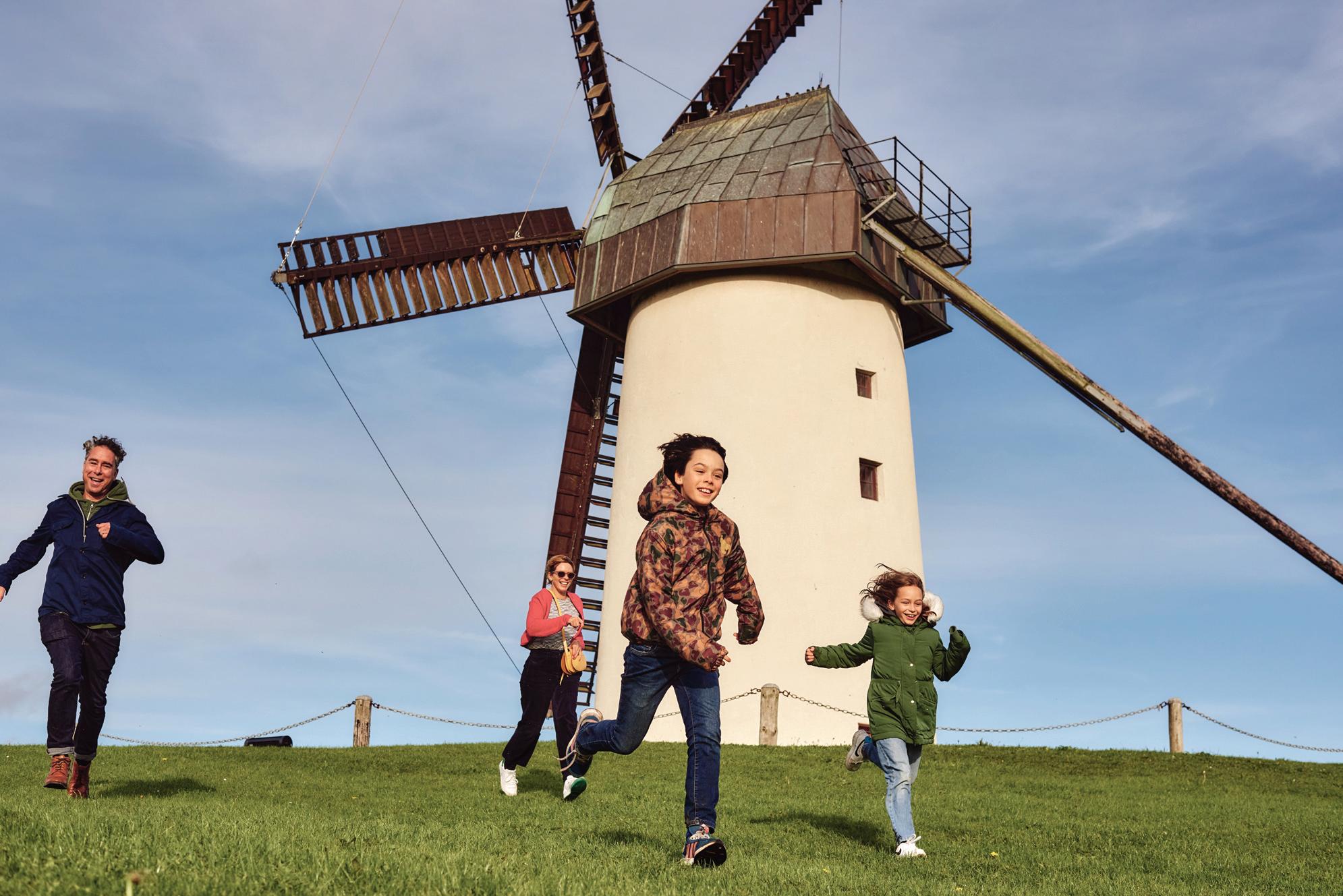
Fingal County Council itself owns a number of significant tourist attractions including Malahide Castle and Gardens, Newbridge House and Farm, Ardgillan Castle and Gardens, Skerries Mills, Swords Castle, and the Séamus Ennis Arts Centre.
These are important attractions which fit under all three asset themes identified in the Fingal Tourism Strategy (natural amenities and heritage, arts and culture, and recreation and leisure). However, dispersed growth is a primary objective of the strategy, and this will be key to success.
Attracting visitors is also part of the Our Balbriggan Rejuvenation Programme 2019-2030, which is one of the biggest ongoing urban renewal projects in the State. The project, valued at between €54 million and €57 million, will transform the coastal town.
Stretching all the way from the Naul to the magnificent Liffey Valley and Phoenix Park and with 88km of glorious
coastline from Balbriggan to Howth, Fingal is an unexpected combination of vibrant urban centres, picturesque towns and villages and a surprising amount of open country and rural areas.
Benefits of this include 2,000 hectares of parkland and open space plus the greatest concentration of golf clubs in the country with no less than 24 courses. The variety is truly outstanding.
Championship links courses like Portmarnock and the Island are world class as is Luttrellstown Castle, the incomparable parkland course in a glorious setting. These are bucket list golf courses for the experience of a lifetime drawing players from around the globe. However, it is different strokes for different folks and in Fingal, golf is genuinely for all with a wide variety of green fees to suit all pockets.
Being a year-round destination is vital, and Fingal has a well established calendar of council supported festivals and events including TradFest, Flavours of Fingal, Howth Maritime and Seafood Festival, and the popular series of Malahide Castle Concerts.
Food markets are attractive to both visitors and locals and, in 2025, Fingal County Council ran a series of popular summer and holiday markets supported by Fingal Food Circle and Fingal Farmers Group. Fingal Food Markets will continue in 2026 in venues like Swords Castle and Casino Malahide.
An active participant in Fáilte Ireland initiatives such as Winter in Dublin, Fingal was selected as one of the Ireland Home of Halloween Hubs. The Halloween tourist offering has already seen development and evolution after just one year of the initiative.
Fingal offers a refreshingly authentic and emotionally rewarding Irish experience; one that is easy to reach, rich in story, and powered by people. By building on the county’s proven assets and strengths and leading with mature, well-known products and experiences, clustered with those still developing, Fingal will consolidate its position as a tourism destination.
Fingal is quite literally hidden in plain sight. The invitation is for you to explore Fingal; you might be surprised at what you discover.
Explore Fingal is an initiative of Fingal County Council.
E: hello@explorefingal.ie W: www.explorefingal.ie
Skerries Mills
Credit:
Fáilte Ireland
Public services: Upskilling in the age of AI
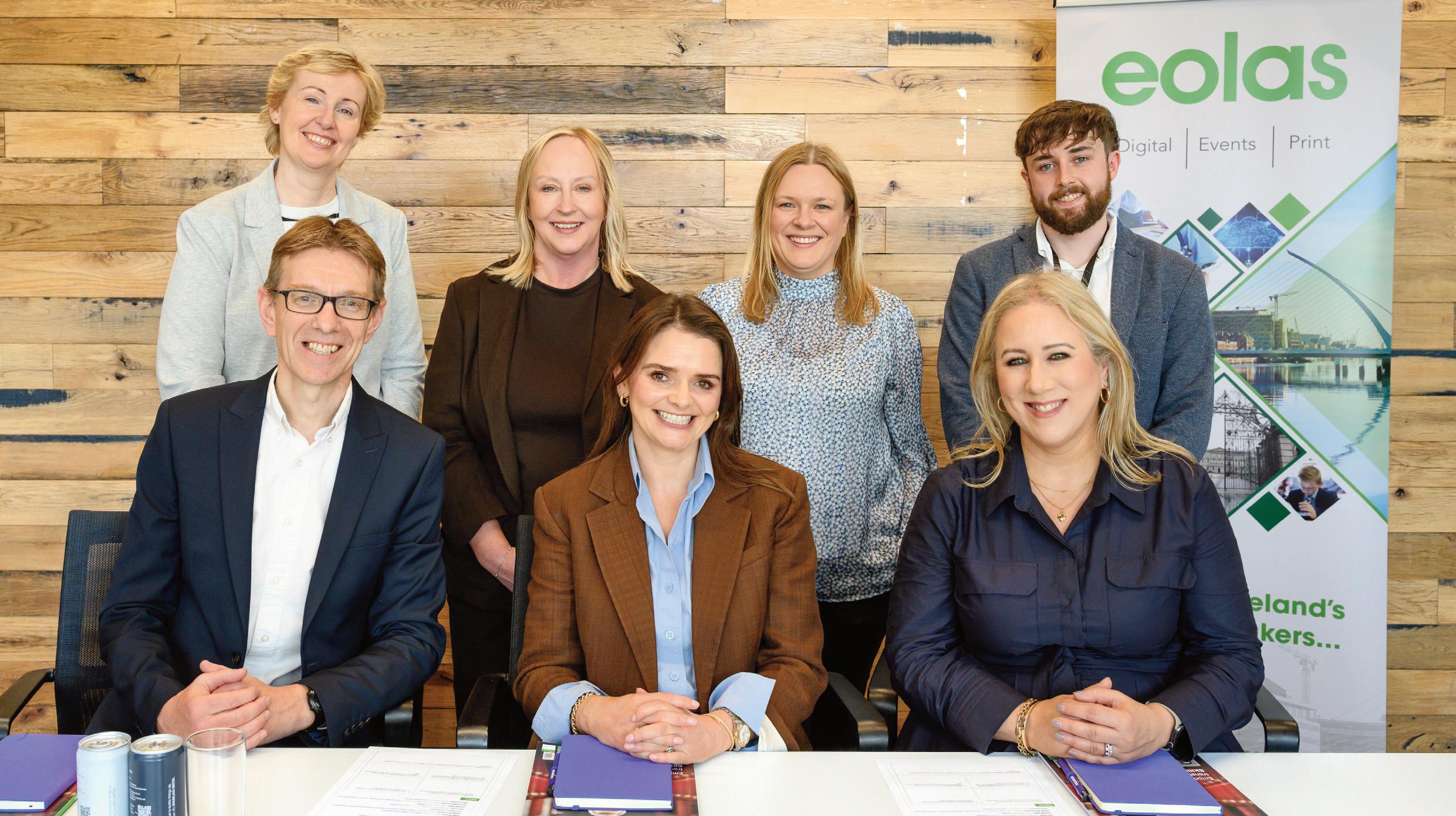
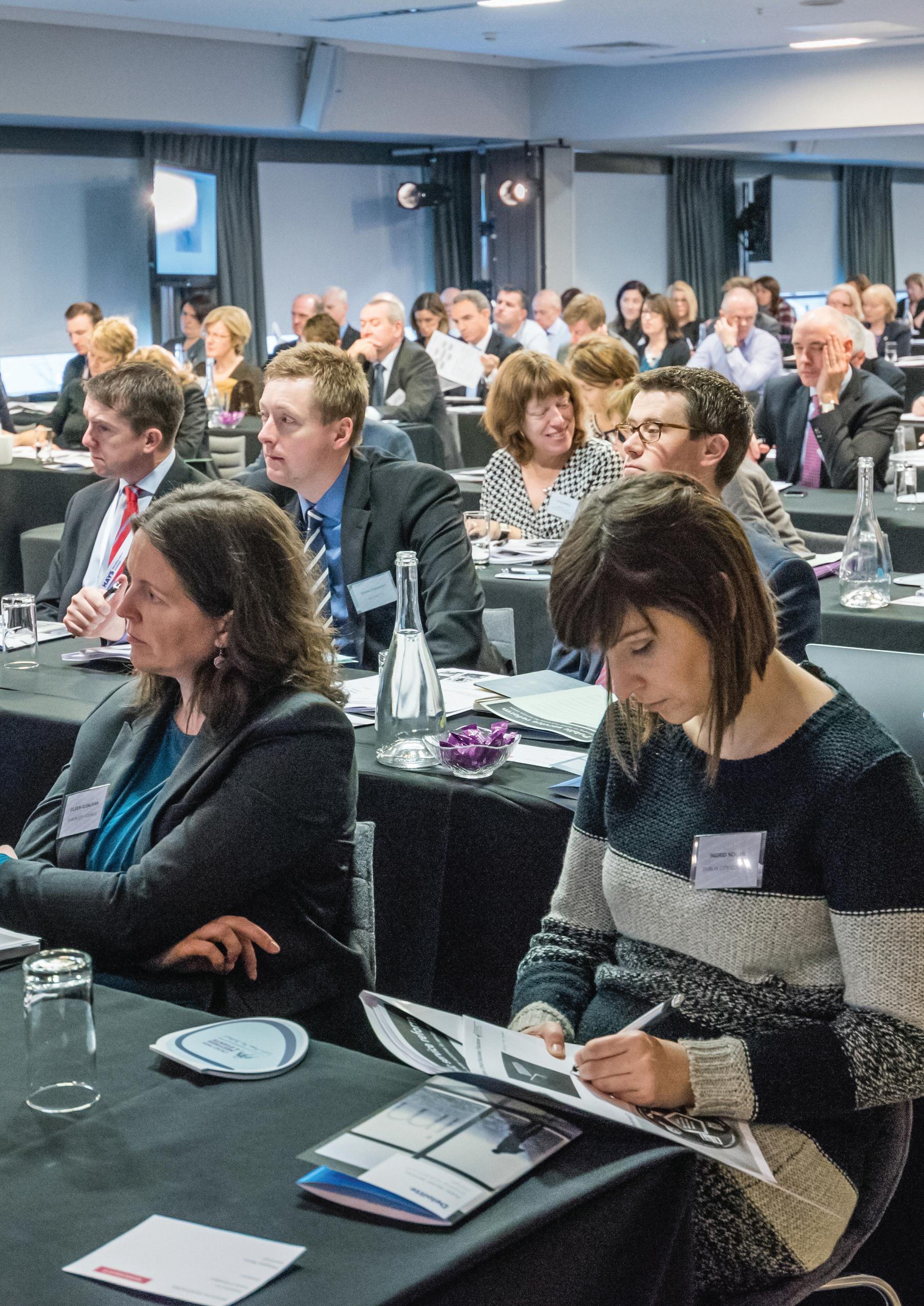
Accenture hosted public service leaders and experts for a round table discussion on upskilling in the public service in the age of AI.
Are leaders being equipped with sufficient AI understanding at the pace needed to lead effectively?
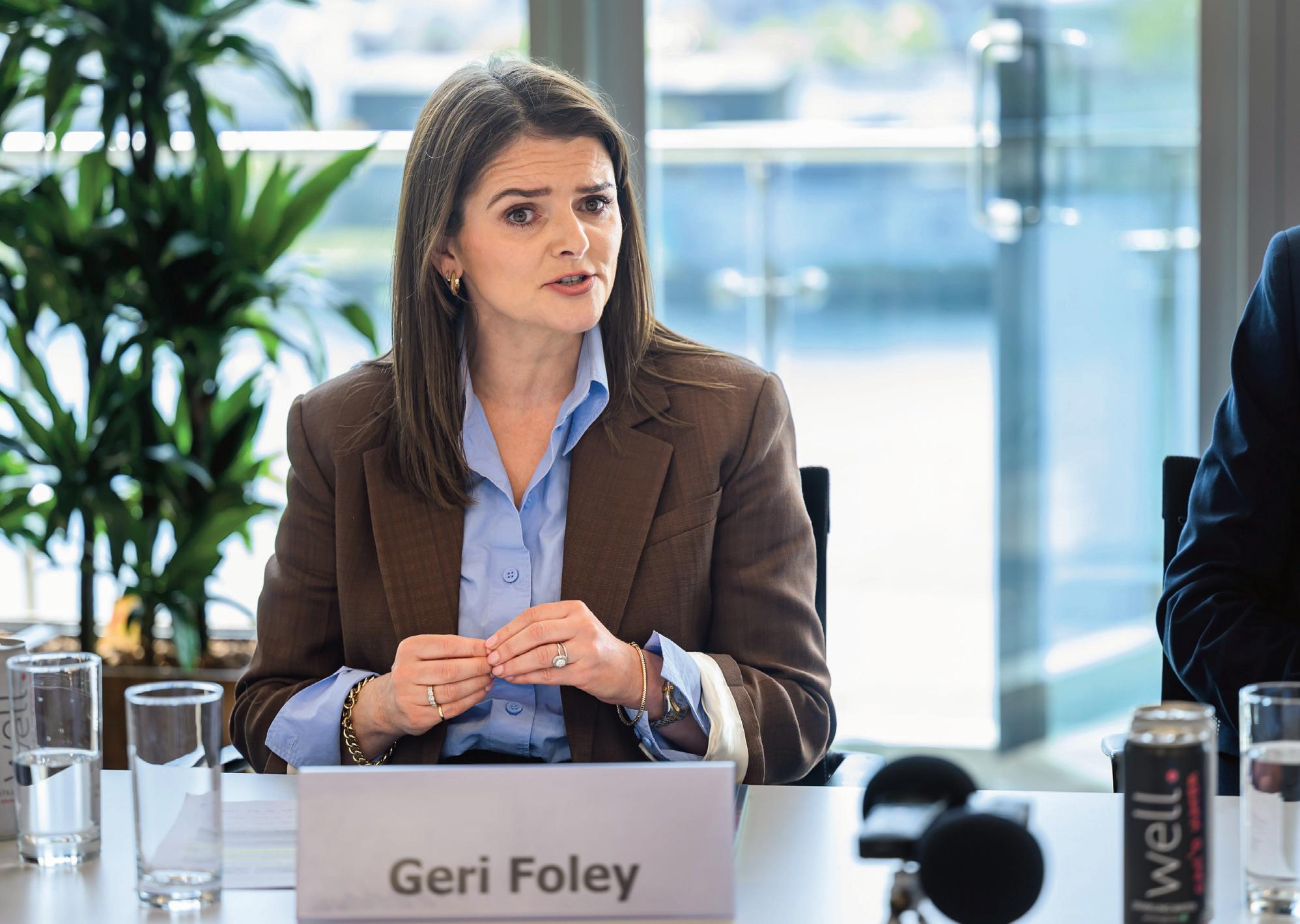
Geri Foley
No, and the gap is getting wider. Accenture research finds that two-thirds of executives lack change leadership skills and digital acumen required to lead AI-driven transformation. This challenge is not unique to the public sector, but the stakes are considerably higher in the public sector because poor AI decisions can directly impact citizens and erode public trust. What is striking is that leaders in the most advanced AI organisations spend, on average, 20 times longer per week actually using AI than those still at the pilot stage. It is a reminder that experience with the tools is what builds real confidence and better decision-making. Leaders need to start making informed, deliberate decisions about how AI will affect their people and their services.
Alexa Toomey
We are making progress, but there is still some way to go. Our AI strategy focusses on delivering client service excellence enabled through enhanced use of AI. We are assessing how we can better use the rich data and information available to us for the benefit of our clients. Leveraging AI for its benefits and empowering teams to use it for good starts with leadership. This is also crucial in dispelling concerns people may have about how AI could impact their roles. Roles will continue to evolve and it is important that people are supported through that transition.
Shirley Comerford
There are safeguards that must be put in place, and we have set foundations in this regard such as the publication of the Guidelines for the Responsible Use of AI in the Public Service and Digital Ireland: Connecting our People, Securing our Future. We have a strategic partnership with the IPA aimed at delivering AI
Round table discussion hosted by
awareness building programmes throughout the public service. However, capability remains uneven and one of our key focuses is building capacity of public service workers at all levels. While progress is clear, further development is required.
Oonagh Kelly
I do not think leaders are equipped. It is important to identify why AI is being used and the necessary level of understanding leaders must be equipped with. In addition, when the EU AI Act was initially revealed, there was significant focus on potential risks. This made people disengage and take a ‘wait-and-see’ approach instead of examining the opportunities enabled by the Act. Now, we are playing catch up to equip leaders with necessary skills before they can think about how they will lead everyone else on this journey.
Helen Brophy
It is important to also examine organisations’ AI understanding as this varies across the public service. There is a race to get leaders equipped but we must determine what skills they are being equipped with and what they are being equipped to do. There is a level of risk that exists for public service that does not exist outside of the public service. Taking a cautious approach is therefore necessary.
Declan McCormack
Some organisations have more exposure to AI’s potential than others. AI is so pervasive and fast-paced there is a risk it is being
introduced from the bottom up in many organisations. Good governance is vital and leaders must approach it strategically to leverage its potential and mitigate against possible risks. The Irish public service has been very progressive and proactive in preparing its leadership, an example being the roll out of AI Masterclass training through the IPA. The Guidelines for the Responsible Use of AI in the Public Service, mentioned by Shirley, are also an excellent resource to encourage adoption.
What operational changes are needed to enable organisations to reskill at scale?
Geri Foley
Our latest Accenture research tells an interesting story: only 5 per cent of Irish organisations are actively reskilling at scale, despite strong willingness from employees to do exactly that. The challenge is less about intent and more about infrastructure. Culturally, learning is still treated as separate from work and often as a ‘tick box’ exercise, but it needs to be embedded in day-to-day workflows. Ownership is another issue; reskilling is too often left for HR rather than operational leaders who are closest to where roles are actually changing. What is needed is greater intentionality: assessing current skills, identifying the gaps, and designing role-based learning pathways supported by the right technology and content.
Oonagh Kelly
The traditional ‘step out to train, step back in’ model is no longer fit for purpose. Learning must be integrated into the flow of work so that employees continuously build and apply skills. This means clearly defining role requirements, supporting ongoing development within the job, and encouraging knowledge sharing across teams. Operationally, organisations need systems that enable continuous, applied learning at scale. Cohort-based approaches and peer learning can amplify impact, creating a ripple effect across the organisation. Learning should be constant, embedded, and accessible to everyone; not treated as a one-off event.
Shirley Comerford
From a public sector perspective, large-scale transformation, such as delivering integrated, usercentred digital services, naturally drives upskilling through the work itself. Bringing teams together across departments to solve real problems builds capability in context, rather than through standalone training. It is important to recognise that this is largely about continuous upskilling rather than wholesale reskilling. Framing matters: positioning AI and digital change as part of normal skill evolution helps avoid unnecessary concern. Upskilling should be seen as a standard, ongoing part of work; embedded in delivery rather than separate from it.
Alexa Toomey
Embedding learning into workflows and adopting role-based approaches are critical, especially in large public sector organisations where shared capability models offer opportunities to scale
Participants
Helen Brophy is director general of the Institute of Public Administration (IPA). Since joining in late 2022, Brophy has led a substantial transformation programme in working towards achieving the vision of the IPA as Ireland’s centre of excellence in building capacity and capability across the public service. She holds over 30 years’ experience in a wide range of chief executive, director, and non-executive director level roles in public, international, private, family-owned business, not-for-profit, and NGO sectors.
Shirley Comerford is assistant secretary of the Public Service Workforce Division in the Department of Public Expenditure, Infrastructure, Public Service Reform and Digitalisation. Comerford leads on the delivery of the ‘workforce, and organisation of the future’ pillar under the Better Public Services Strategy. She is an accomplished HR professional and people leader with extensive experience leading and delivering transformational change programmes. Comerford has worked in numerous sectors including health, education, and central government in Ireland, Australia, and the UK.
Geri Foley is a senior leader in Accenture’s talent practice with over 18 years’ experience leading large-scale transformation, talent strategy, and leadership programmes across the public and private sectors. She has deep expertise in HR strategy, workforce transformation, re-skilling at scale, operating model design, and large-scale change, working closely with executive teams to align talent strategy with business ambition. Foley has led complex UK and Ireland transformations, including enterprise-wide talent strategy, strategic workforce planning, and leadership development for large, regulated organisations.
Oonagh Kelly is chief people officer at the National Treasury Management Agency (NTMA). Her HR career spans financial services and education technology in Ireland and internationally and she is recognised for shaping inclusive, sustainable, high performance organisations where purpose, culture, and leadership are deeply aligned. As Executive Co-Sponsor of the NTMA’s AI strategy and programme, she champions the responsible adoption of AI, ensuring innovation is grounded in trust, ethics, and inclusion.
Alexa Toomey is Head of Scaling and AI Strategies at Enterprise Ireland. She has previously served in a number of leadership positions across Enterprise Ireland and brings over 17 years’ experience in enterprise strategy, economic analysis, and policy development. Toomey has worked extensively with Irish and multinational companies and has represented Enterprise Ireland on policy and strategy matters at national and European level.
Declan McCormack is head of unit in the Department of Enterprise, Tourism and Employment with principal responsibility for national AI and digital regulation. His unit leads on the implementation of domestic legislation to give full effect to the EU AI Act in Ireland. He serves as one of Ireland’s representatives on the EU AI Board. Legislation and policy for a number of other Digital regulations also fall under his Unit’s remit, including the Digital Services Act and the Digital Market Act.
“Leaders need to start making informed, deliberate decisions about how AI will affect their people and their services.” Geri Foley
learning. Clear communication is key; people need to understand why reskilling is happening and how it benefits their roles and organisational outcomes. In purpose-driven environments, linking learning to improved public service delivery strengthens engagement. Given heavy workloads, learning must support employees to work more effectively. Lessons from the private sector, particularly around balancing pace with risk, can be valuable when shaping scalable, practical approaches.
Helen Brophy
Operational change must connect learning directly to outcomes, delivery, and impact, especially given the scale of public sector challenges. Workforce capability planning is essential: organisations need clarity on the skills required and how they align with strategic goals before driving widespread upskilling. Without this, learning risks becoming unfocused activity. AI will reshape roles, workflows, and organisational structures, so planning must anticipate these shifts. With large, complex workforces, this becomes a significant operational exercise requiring
coordination, systems alignment, and strategic direction to ensure that learning translates into tangible results.
Declan McCormack
Scaling reskilling requires using multiple levers. Partnerships with external providers, startups, and SMEs can accelerate capability building without
needing to develop everything internally. Targeted recruitment and specialist pathways may also be necessary to retain critical skills. At the same time, organisations should foster environments that support experimentation through labs, events, and collaborative spaces. Informal, hands-on engagement can often be more effective than formal
“We need to be mindful as some skills that cannot be learnt in a day, such as critical thinking and judgement, are crucial in the age of AI.” Helen Brophy
training. Encouraging multidisciplinary teams and strong leadership support will further drive adoption and innovation, building on the positive initiatives already underway.
Which human skills should public servants prioritise as AI takes on more routine and analytical work, and are current investments enough?
Shirley Comerford
We have invested in the professionalisation of some key functions such as HR. HR professionals provide guidance to staff on what areas of expertise they can focus on to further their career. We know that HR functions as a support for organisations as they navigate through organisational change. The professionalisation of HR will help management with workforce planning, talent management initiatives, and procurement of bespoke training. It will also help understand the necessary skillsets required and the talent needed to meet those requirements, and to keep people at the centre by upskilling your workforce to deliver.
Helen Brophy
I think there is a need, while we are increasing the upskilling of AI, to think about the additional skills that complement that. Management skills are becoming more necessary at more junior levels across the public service than before as AI takes on more of the traditional work at this level. We need to be mindful as some skills that cannot be learnt in a day, such as critical thinking and judgement, are crucial in the age of AI. We need to encourage the adoption of these skills at more junior levels and to focus on honing them.
Geri Foley
No, current investments are not enough. There is strong demand for technical AI skills right now, but investment in areas like ethical reasoning, judgement, and critical thinking is lagging behind. As AI takes on more routine work – data processing, transactional tasks – the skills that will matter most are precisely the ones AI cannot replicate. The ability to think critically, exercise judgement, and work alongside AI will become the defining competencies for public servants. We also need to recognise that humans will play a heavier role in training and guiding the technology itself which requires a different kind of capability than we have traditionally invested in. Ultimately, a fundamental shift in how we work is coming, and our investment in skills needs to reflect that.
“There is already a need for decision-making skills to make the most of the vastly improved access to data through AI.” Declan McCormack
Oonagh Kelly
Investment needs to happen at a wholeof-organisation level, not just on the most straightforward tasks such as what are people going to work on, are we spending enough on AI, but looking at ways we reward staff. There is a lot of jargon that people hear when it comes to AI but all that does is cause people to lose interest very quickly. Investment must be in demystifying how we are working. To have a good AI strategy, you need to continue to invest in data and people’s data skills. There does need to be a shift and a radical rethink about how investment is considered and how it is applied.
Declan McCormack
Continuous learning and adaptability are key. Perhaps through greater exposure to different functions and roles within an organisation so people develop a broader range of skills and experience and can adjust to changes throughout their career. There is already a need for decision-making skills to make the most of the vastly improved access to data through AI. Social and emotional learning could also be key. If AI does free us up from administrative tasks, then hopefully we have more time to work with people to address complex and minority issues that will help to improve service delivery and outcomes for citizens.
Alexa Toomey
I do not think there is any organisation that could not invest more in skills development, this is not unique to the public sector at all. It is about having well-rounded investments and treating this as a long-term project. Sustained, continuous investment in the sector will be important, and I think having strong analytical and critical thinking skills will be increasingly important.
How can reskilling be positioned as a strategic investment in the workforce rather than a signal of job loss?
Shirley Comerford
This element is positioned under the ‘workforce and organisation of the future’ pillar in the Better Public Services reform plan. Upskilling and reskilling are part and parcel of not only the present, but also the future of the public sector. It is crucial that we support staff while, at the same time, working to enhance services. The plan is key in working to achieve this. The plan requests that all public service organisations align their strategic plans to
“Upskilling and reskilling are part and parcel of not only the present, but also the future of the public sector.” Shirley Comerford
the objectives in the Better Public Services reform plan.
Declan McCormack
Start preparing now for what could happen. Leaders need to have a vision for what the transition can achieve and deliver. It is also critical to be transparent with people at all levels of the organisation. There will be change. Communicating with people, acknowledging fears and driving a positive message will be fundamental to a successful transition. Training and ensuring that the right environment is created so people feel safe and confident to explore and adopt AI will be key.
Oonagh Kelly
Retention strategies will be key as it is critical that no institutional and organisational knowledge is lost. Reskilling can be repositioned as an investment. People must be told that they are valued and that we do not want to lose them. You must have junior employees before you can have senior
employees, and it is important that someone senior is there to help junior employees make this jump. Investing in a communication strategy is critical to show people that they are already
accomplished and add value and that we want to build on that.
Helen Brophy
Service level investment is driven by policy, and it is fair to say that learning and development is fully supported within the public service. One of the first investment areas cut during the recession was learning and development. I do not think that will happen again as it is embedded as a strategic enabler of performance and delivery. The demographics of the State and the demand for public services becomes more complex every year. The pace of delivery required is also increasing. There may not be job losses, but a lot more will be expected of the workforce.
Geri Foley
The World Economic Forum’s Future of Jobs Report 2025 predicts that by 2030, 92 million jobs will be made redundant, but 170 million new ones will be created. That net positive story is the antidote to fear, and communicating it clearly is fundamentally a leadership challenge. What is needed is a more honest framing: AI will change what jobs look like, but it will not reduce the overall number of them. The risk is that anxiety fills the space where that clarity should be. Leaders who get ahead of that conversation, openly, and early are far more likely to bring their people with them. Ultimately, reskilling works best when people feel ownership over their own journey, rather than having change done to them.
“Learning should be constant, embedded, and accessible to everyone; not treated as a one-off event.”
Oonagh Kelly
Alexa Toomey
AI replaces tasks, it is not replacing people. It is really important to communicate that. However, we must be realistic. There are some tasks done by people today that have real scope for automation. People are well-informed and already aware of that. Even though AI may take over some tasks people do, their valuable skills and experience can be applied to new and evolving tasks. It is also important to consider what AI can unlock for us. It will enable better data insights which will open up further opportunities.
When AI creates capacity, are organisations consistently using it for higher-value work, or reverting to existing workloads?
Oonagh Kelly
It is still too early to give a definitive answer. In our experience, early AI use cases, such as an internal HR policy assistant, have reduced repetitive queries and improved employee experience. While it is difficult to quantify exact time savings, the real value has been removing friction for both employees and HR teams. This suggests that higher-value work can emerge indirectly by eliminating pain points. The key is to test, learn, and iterate. Assess what works, scale successful use cases, and move on quickly from those that do not.
Alexa Toomey
So far, the impact is mixed. Some freedup capacity is going toward higher-value work, such as innovation and more thoughtful problem-solving. However, a significant portion is also being used to improve efficiency in existing workloads, speeding up delivery and enhancing output quality. In many cases, AI enables more thorough and complete work rather than entirely new work. Particularly in service-driven environments, improving turnaround times is a priority. Going forward, it is likely that organisations will continue to balance both and enhance current operations while gradually creating space for higher-value activities.
Shirley Comerford
It remains early, with much of the activity still in pilot phases. Without intentional direction, there is a risk that any freed-up capacity simply gets absorbed back into existing workloads. To avoid this, organisations need to be deliberate about how they use the additional time AI creates. In the public sector, the focus is
“In many cases, AI enables more thorough and complete work rather than entirely new work.”
Alexa Toomey
increasingly on improving service delivery, making services more accessible, responsive, and user-friendly. Viewing AI through this lens helps ensure that capacity gains translate into meaningful improvements rather than just incremental efficiency.
Helen Brophy
At this stage, it is premature to draw firm conclusions. Given the high demand for public services, much of the immediate focus is on addressing backlogs and meeting existing needs. As a result, any additional capacity created by AI is often used to catch up rather than to fundamentally reshape work. Over time, as AI becomes more embedded in planning and strategy processes, organisations will be better positioned to direct that capacity toward higher-value outcomes.
Declan McCormack
Currently, the approach can feel somewhat ad hoc, with innovation happening but not always aligned to a clear overarching strategy. However, important foundations are being put in place through national digital and AI initiatives such as skills development, AI literacy, and increased collaboration with external partners. These efforts are
helping to build a more structured and strategic approach. As these frameworks mature, they should enable organisations to more effectively channel AI-driven capacity toward long-term, higher-value objectives.
Geri Foley
Accenture’s latest research on agentic AI shows that many employees are using AI to do the same work faster, rather than to do something different or more valuable. In too many cases, the capacity AI creates simply gets absorbed back into existing workloads. The organisations seeing the greatest returns are those that go further: redesigning processes from end-to-end and deliberately directing freed-up time toward areas where it can make a real difference. Without that intentionality, the benefits of AI stay shallow. Some larger organisations are beginning to redeploy talent into new areas, which is encouraging, but wider transformation will only happen when organisations get deliberate about connecting the capacity AI creates to their broader strategic goals.
Leading Ireland’s regulatory landscape
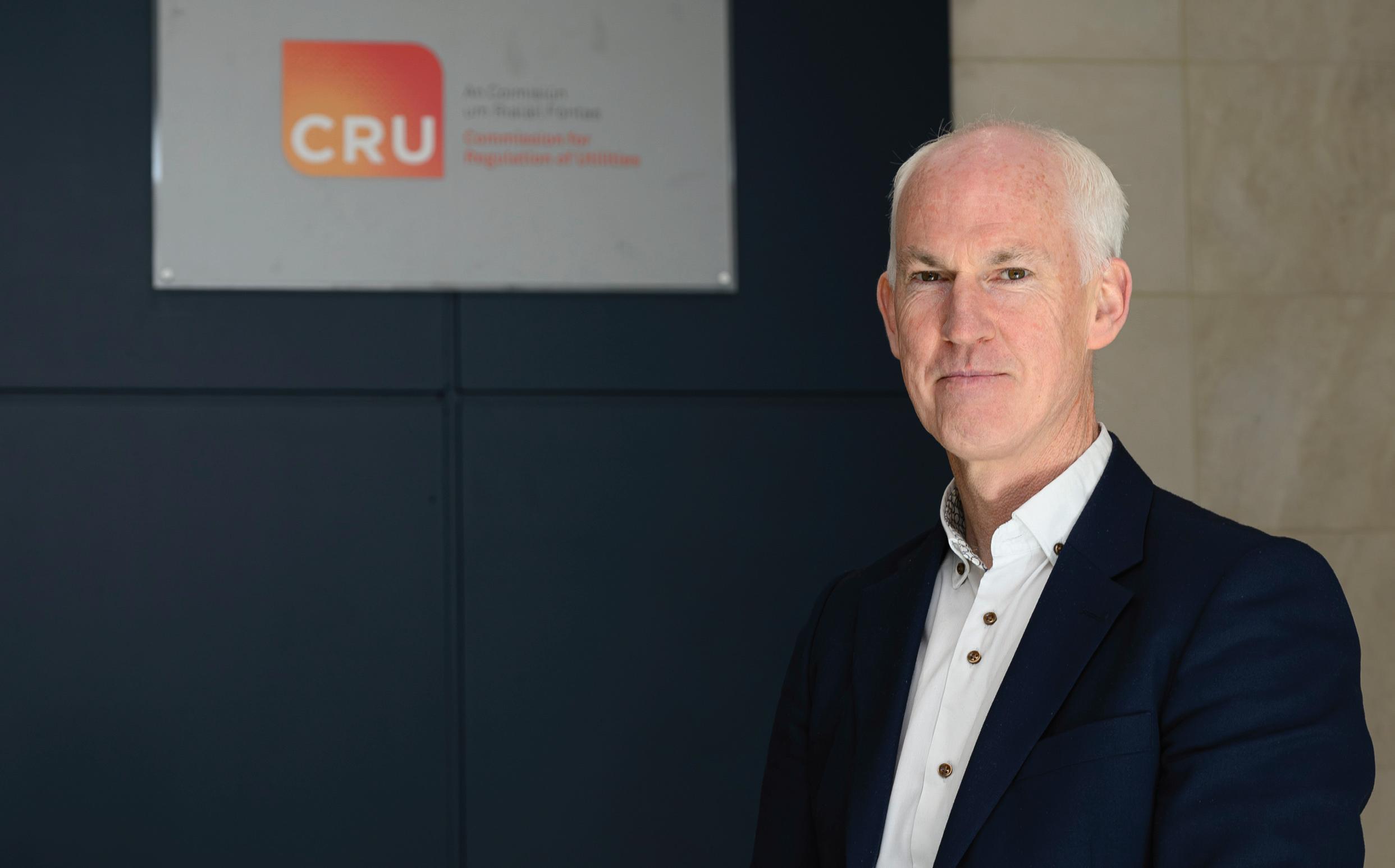
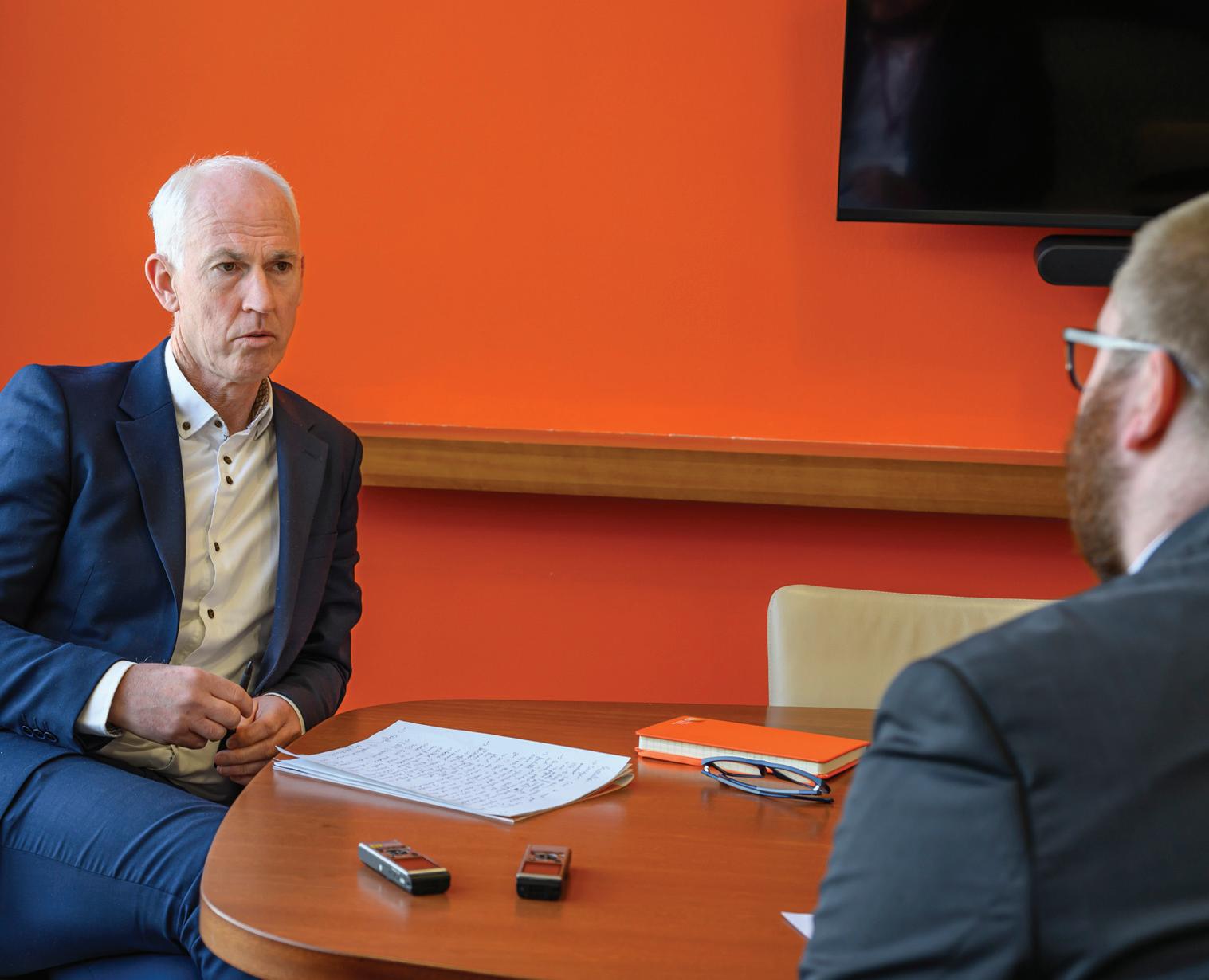
The newly-appointed chair of the Commission for Regulation of Utilities (CRU), Fergal Mulligan, sits down with Joshua Murray and discusses his key priority areas: his immediate priorities as chair, Price Review Six (PR6) and the fallout of the Iran War energy crisis, while also outlining the CRU’s role in energy safety.
In March 2026, Fergal Mulligan, one of the three commissioners leading the Commission for Regulation of Utilities (CRU) became the organisation’s chairperson.
Succeeding fellow commissioner Jim Gannon, whose three-year term ended prior to Mulligan’s appointment, the new chair assumes his role at a time of great flux for the Irish energy sector, with the energy transition driving new
infrastructure projects and changing the energy landscape of the State.
In addition, the global energy crisis following the US-Israeli bombing of Iran has driven up the prices of oil and gas, and present a threat to the long-term supply of these fuels.
To meet expanding regulatory and operational demands, Mulligan says that he aims to grow the number of staff at
the CRU over his term as chair, with the organisation set to grow from 197 staff members to 263. This follows significant growth witnessed in the immediate years prior.
“A big part of what we need to do as a leadership team is to grow the organisation and meet future demand,” Mulligan says.
“The fact we are growing as an organisation reflects the reality of the
“Price Review Six (PR6) was published in December 2025 and it is all about reporting, holding the system operators to account, and ensuring delivery which is on time and at or below budget.”
market. Our remit has expanded and we have the energy transition as well as ever-growing energy demand. It is about having a well-oiled machine of an organisation which meets the demands on the CRU from all our stakeholders, including government departments, system operators, consumers, as well as meeting our everyday tasks.”
The newly appointed chairperson says that he is aiming for Ireland to become a centre of excellence in regulation of the energy markets. “I think Ireland is very well placed to do that. It is a very wellrespected country when it comes to regulation and governance. We participate a lot within European policy and within European groups, so Ireland really punches above its weight when it comes to advising on policy at a European and national level.”
On the evolving nature of the CRU’s remit, Mulligan says: “We are at the forefront of the development of renewables. The expansion of renewable energy systems across the island has been transformative and the scale of investment has been significant but that brings complexity to the grid.”
Expanding on the needs of the grid, Mulligan states that a priority for him is “having a grid which is safe, secure, and meets the needs of the renewable energy
transition, while ensuring reliability”.
Citing the infamous example of the April 2025 Iberian grid collapse, Mulligan says: “No country wants to see anything like that happening, so having our system secure and reliable is critical and it will require a huge level of investment in the coming years.”
Complementing meeting the evolving demand on the electricity system, along with the expansion of the CRU’s remit, is enabling the Government’s infrastructure priorities. Mulligan says: “The critical thing is delivery. A key part of our CRU strategy through the rest of this decade is to ensure that the speed of delivery of infrastructure is met.
“Price Review Six (PR6) was published in December 2025 and it is all about reporting, holding the system operators to account, and ensuring delivery which is on time and at or below budget.”
Infrastructure development goes beyond the State, with the north-south Single Electricity Market (SEM) having traded over €7 billion worth of electricity in 2024/25 and continually expanding due to growing demand. “One of the key roles of the SEM is to ensure there is sufficient capacity in the market and maintaining security of supply.
“We have done that effectively, and it has allowed us to bring on temporary
emergency generation which is a key strategic need for any potential security of supply challenges.
“The Single Electricity Market Committee ensures that co-operation on a north-south basis. It is a unique body and it meets monthly in-person in addition to regular ad-hoc meetings online.”
Price Review Six (PR6)
Price Review Six (PR6) is a significant regulatory review that covers the period from 1 January 2026, to 31 December 2030. It aims to set the framework for the allowed revenues of system operators EirGrid and ESB Networks, and paves the way for an historic investment of up to €18.9 billion in Ireland’s energy infrastructure.
Mulligan states that PR6 will make the electricity network “resilient, safe, and secure”, adding: “From a security of supply point of view, it will meet demand for all customers, both domestic and non-domestic. A huge upgrade is required of all substations and the basic infrastructure of wires up and down the country.
“Ultimately, we need more transmission network motorways built and we need to have the wires which ensures that renewables can be brought on to the 4
system when needed. This will ensure that we reduce dispatch down and maximise the use of our renewable infrastructure when the wind blows and the sun shines.”
While the investment outlined in PR6 will increase network charges for retailers, the goal for the regulatory period is a more adaptable network which meets the State’s climate requirements and reduced reliance on volatile fuel markets.
“Currently, we are exposed to external factors such as the Russian invasion of Ukraine and the crisis in the Middle East. So the value we gain is that we are less exposed to that volatility and more certain about where our network capacity is coming from, and that will be a greener future with less fossil fuels.”
Mulligan explains the other positive consequences which will arise from the investment over the rest of the regulatory period. “It will create a lot of investment on our island. Onshore and offshore wind, as well as solar, are creating a lot of indigenous jobs. What we are trying to achieve here is more investment which will lead to more certainty of what will be charged of customers over the next two decades.
“It is a promise to have greener electricity at increased volume. With that will come pricing that we can predict with more certainty and revenue can be reinvested back into our economy and help with job creation and infrastructure investment in our own country, rather than investment being sent off to other countries from which we must buy oil and gas.
“The CRU will also play a central, strategic role in both offshore and onshore wind in Ireland, acting as the primary economic and safety regulator to facilitate Ireland’s 80 per cent renewable electricity (RES-E) target by 2030.
“We will be setting the regulatory framework for connecting offshore wind farms, including deciding on grid connection charges and defining Asset Transfer Values (ATV) as EirGrid becomes the Offshore Asset Owner.”
Middle East energy crisis
On 20 February 2026, one-week prior to the US-Israeli bombing of Iran and the assassination of the Iranian Supreme Leader, Ali Khamenei, the price of brent crude oil stood at roughly $71 per barrel,
“The critical thing is delivery. A key part of our CRU strategy through the rest of this decade is to ensure that the speed of delivery of infrastructure is met.”
while European liquefied natural gas (LNG) was priced at €32/MWh.
Following the attack, Iran retaliated by closing the Strait of Hormuz, a significant chokepoint for the transit of oil and LNG exports from many Middle East states, resulting in a significant rise in the price of oil and gas and plunging global energy markets into turmoil. Around 20 per cent of the global supplies of both oil and LNG pass through the Strait of Hormuz.
As of 7 April 2026, the price of brent crude is $110 per barrel (a 60 per cent increase) and the price of European LNG is €52/MWh (a 62.5 per cent increase).
With a global energy crisis taking place almost immediately upon becoming CRU chair, Mulligan has spent his initial time leading the organisation meeting all of the significant electricity and gas retailers in Ireland, as well as working closely with government.
“Following two meetings with the National Energy Affordability Taskforce, hosted by DCEE, work is ongoing on a detailed document setting out a number of actions in response to the crisis that the Department, and we as the regulator, are going to carry out over the coming months.
“The actions proposed by DCEE will be focused on affordability and consumer protection. We are acutely aware that there are many customers currently
experiencing affordability challenges, and we have seen with our arrears reporting over recent quarters that there is a high risk of affordability challenges remaining into the 2026 winter period with the risk that high global prices persist.”
While policy decisions, such as the energy credits established following the Russian invasion of Ukraine and subsequent energy crisis, are a matter for the Minster for Climate, Energy and the Environment, Mulligan states that the CRU will provide expertise on policy measures that government can take and will “continue to advise on what the most appropriate measures to take that might have the most positive impact”.
“Where possible measures should be targeted where they will have the most impact, and assist the most vulnerable in society.”
The unpredictable nature of US President Donald Trump’s war in Iran makes scenario forecasting challenging. Mulligan states that the key from an Irish regulatory perspective for navigating the energy crisis is comprehensive modelling, stakeholder engagement, co-operation and collaboration to reach solutions and implement them effectively and in a timely manner.
“We will work with our partners in government to put in place plans which we hope will not be needed, and if we do end up needing them they can be
implemented quickly. Agility, flexibility, and comprehensive preparation are the essence of the moment.”
While prices have risen significantly, Mulligan is confident that there will be no challenges around gas supply. “Most of our gas comes from Europe. While there is a challenge with market prices due to the situation in the Middle East, we are facing a pricing challenge and thankfully not a supply challenge.
“In the long term, there is a government challenge to ensure security of supply, and the strategic floating LNG terminal being proposed off the coast of County Clare is key to that. We will have a role to play as a regulator in advising on relevant regulatory matters, however the energy crisis does underline the need for a strategic gas reserve.”
Safety regulation
While these priorities will be the flagship projects guiding the work of the CRU for 2026 and beyond, safety regulation is sometimes forgotten by the public and some external stakeholders, however the CRU sees it as vitally important part of its remit.
Mulligan is also keen to outline the CRU’s role over the next three years. The CRU will have important new functions coming in around nondomestic gas works, and the need to integrate those installers effectively.
“We work with Safe Energy Ireland, a body that operates the RGI and Safe Electric Schemes on our behalf. It oversees the registration of electricians and gas installers for domestic gas works.
“A big priority is digitalising the certification processes by electricians and gas installers to make them more efficient and seamless, while ensuring that only properly qualified electricians and gas installers are operating in the market.
“Alongside that, we will continue to carry out inspections and act on illegal works and hold the industry to account where necessary. We are making sure that CRU itself is resourced and structured to meet growing demand in this area, but also to meet demand across the key priorities in terms of our role to protect consumers.”
About: Fergal Mulligan
Fergal Mulligan was appointed as chair of the CRU in March 2026, having already been a CRU Commissioner since 2024. An accountant by training, Mulligan’s career spans accountancy, telecoms regulation, and national infrastructure delivery. After a decade in accountancy, he spent over 20 years in telecoms, including 11 years at ComReg.
As Programme Director at the Department of Communications, he oversaw the Government’s strategy to deliver high speed broadband to all premises across the State and the creation of National Broadband Ireland in 2019. Since then high-speed fibre broadband has been rolled out to every home and business beyond the commercial footprint, making Ireland one of the first countries in Europe to achieve 100 per cent high speed broadband coverage. Mulligan balances his professional role with being the chairman of his local GAA club, coaching gaelic football, hill-walking, and hobby sheep farming.
issues eolas
Minister Frank Feighan TD: ‘Digital transformation is about better outcomes for people’
Digital transformation is essential to the future sustainability of public services but must be aimed at delivering better outcomes for citizens rather than adopting technology for its own sake says Frank Feighan TD, Minister of State at the Department of Public Expenditure, Infrastructure, Public Service Reform and Digitalisation with special responsibility for Public Procurement, Digitalisation and eGovernment.
Minister of State Feighan sets out the Government’s priorities for digital transformation, framing them around three questions: where we are now, where we are going, and how we intend to get there.
The Minister says Ireland is operating in a period of rapid technological change and rising public expectations. Citizens now expect public services to match the convenience of digital banking, delivery tracking, and instant access to information.
At the same time, he points to growing structural pressures on the system, including demographic change, increased demand for services, tight labour markets in the public sector, cybersecurity risks, and the need to
ensure inclusion for those who may be digitally excluded.
In this context, Feighan says digital transformation is “fundamental to the sustainability, accessibility, and quality of public services”.
However, he stresses that transformation is not about technology in isolation. “It is about better outcomes for people. It is about simpler journeys, faster decisions, clearer information, and services that are designed around real lives.”
Better Public Services
Feighan says that the Government’s Better Public Services strategy, which he describes as the overarching framework for reform and improvement, is built
around putting people first, using data and technology intelligently, building capability across the public service, strengthening collaboration between organisations, and improving accountability and performance.
Digitalisation, he says, is a key enabler across all of these areas, helping to simplify processes, reduce duplication, support staff with better tools, and give citizens more control over how they access services.
Digital Public Services Plan 2030
Feighan describes the Digital Public Services Plan 2030 as the national vision for the next phase of transformation.
Launched in November 2025, the plan sets two headline targets: that by 2030, 100 per cent of key public services will be available online, and 90 per cent of those services will be consumed online.
Feighan emphasises that these targets are about ensuring that digital services are high-quality, reliable, and attractive to use, while still maintaining non-digital alternatives for those who need them.
He says the benefits of achieving these goals would be significant: reduced paperwork, fewer repeated interactions, faster decision-making, improved transparency on application status, and increased capacity within the public service to focus on complex cases.
Designing around life events
One of the most significant shifts outlined in the speech was the adoption of a “life events” approach to service design.
Feighan says people do not interact with government through departmental structures, but through real-life moments such as becoming a parent, losing a job, moving home, retiring, or experiencing illness.
Under the plan, 189 services have been mapped across 17 life events. This, he says, provides a shared framework to design end-to-end journeys rather than fragmented transactions.
The approach is intended to improve coordination between public bodies, enable lawful data sharing where appropriate, reduce duplication, and create a more human-centred experience. It also helps prioritise reform efforts by focusing on areas of greatest friction for users.
Inclusion by design
The Minister also places strong emphasis on inclusive service design, arguing that accessibility must be embedded from the start.
He says services should be designed with people with disabilities, older people, those with low digital skills, and individuals in vulnerable circumstances in mind from day one.
“When we design for people with amplified needs, we almost always produce better services for everyone,” he says.
This approach, he states, requires new skills and methods including user research, journey mapping, iterative testing and co-design, as well as a cultural shift towards earlier engagement with users.
Trust, data, and security
Feighan says that digital transformation must be underpinned by strong governance around data and cybersecurity. He stresses that public trust is essential,
issues eolas
“Frameworks do not transform services.
and citizens must be confident that their data is handled lawfully, securely, and ethically.
The Government, he says, is investing in stronger cybersecurity capabilities, clearer data governance frameworks, improved data-sharing arrangements where legally appropriate, and greater transparency about how data is used. He emphasises that trust and innovation are not in opposition: “If people trust the system, they will use it.”
Capability and delivery
The Minister says transformation cannot be delivered by a single department and requires a whole-of-government effort. This includes building digital and data skills, strengthening programme management, and improving collaboration between policy, operational, and technology teams.
Partnership with industry and academia will also be important, alongside leadership development across all levels of the public service.
Ultimately, Feighan says success depends not just on delivering systems, but on delivering outcomes: improved user experience, faster processing times, higher uptake, and greater productivity.
Transforming services
Concluding, Feighan says the ambition is to create public services that are easier to use, faster, more reliable, inclusive by design, secure, and sustainable.
He says Better Public Services and the Digital Public Services Plan 2030 provide the framework, but stresses that “frameworks do not transform services. People do.”
Acknowledging the work already underway across the public service, he thanks those involved for their expertise and commitment, and says he looks forward to continued collaboration in delivering what he describes as “a fundamental improvement in how the State serves its people”.
Trustworthy online? Prove it
People know your real-life reputation. But what about your digital one? People want to know where they stand. Are they dealing with a cloned website that shares malicious content? Or is this a fake email designed to steal payment details, writes Louise McKeown Doogan, chief growth officer at .IE.
We live in an age where some ransomware companies now have customer care departments, and the online health of the nation needs to improve as a consequence.
And if you are running an SME, you can probably feel that shift yourself. Customers are more cautious. They double-check links. They hesitate before entering payment details. They might even abandon a purchase altogether if something does not look or feel quite right. The reality is that trust online is not automatic. It has to be earned, and then re-earned, every single day.
Meanwhile, cybercriminals are getting better at what they do. They copy branding, clone websites and craft emails that look almost identical to the real thing. For many customers, it is becoming harder to tell what is genuine and what is not and that uncertainty affects all of us.
Our research
Recently, we issued a piece of research which showed almost one in five of Ireland’s top companies have experienced significant cyber-attacks in the last two years. Conducted by Amárach on behalf of .IE, this research
surveyed nearly 400 essential Irish firms in January 2026.
Our findings are most definitely concerning. Particularly when we know phishing scams (60 per cent) and the exploitation of system weaknesses (21.3 per cent) are the most common ways attackers gain access.
For many Irish businesses, that is a sobering statistic. It is not just large multinationals in the firing line. Irish businesses of all sizes are being targeted. And while the financial impact can be serious, the reputational impact can be even harder to recover from. Once trust is shaken, it takes time, effort, and clear signals to win it back.
Digital Trust .IE
This where we want to introduce the concept of ‘digital trust’. Digital trust is about having confidence in your digital reputation so you can thrive online.
David Curtin and Louise McKeown Doogan of .IE with the Digital Trust Mark badge, and an Irish wolfhound.
Here in .IE, Ireland’s national domain registry, we believe that digital trust is built on three cornerstones: your domain, website and email. If these are solid, people can have confidence in you. If not, they will ask serious questions.
The Digital Trust Mark
Last month, stood on the windswept Dún Laoghaire pier alongside five Irish wolfhounds, we launched Ireland’s Digital Trust Mark. This is an evidence-based evaluation service where your business is measured across 28 tests, assessing your domain, email and website.
Why these three areas in particular? Let us explain:
1. Your domain is who you are online. If the domain is not trustworthy, nothing built on it is;
2. Your website is what people see and interact with. Websites are where trust is tested; and
3. Finally, email is who is allowed speak as you. If email is not protected, your brand can be impersonated.
We like to think of the Digital Trust Mark as the NCT for your online identity. Websites and emails carrying the mark will give customers confidence that they are operating to meet the highest digital standards.
How can I get the Mark?
If you have an online presence, you can now be assessed on www.digitaltrust.ie, in just a few clicks. It is also important to note that the Digital Trust Mark is open not only to .ie domains but also to .com and other domains used by Irish organisations.
The process has been designed to be straightforward and accessible, removing complexity for businesses that may not have in-house tech expertise.
Once you receive your Digital Trust Score, you will either be entitled to carry the Mark, or you will have clear next steps to reach the required standard. This structured feedback element is aimed at helping organisations strengthen weak points and improve their digital configurations in a measurable way.
What is the pay-off for businesses?
Firstly, enhancing your digital trust can lead to more conversions. Research from Baymard.com shows that 19 per cent of users abandon an online purchase solely because they “do not trust the site with their credit card information”. Therefore, greater trust improves cart abandonment statistics.
Secondly, better customer retention. According to the Edelman Trust Barometer, 71 per cent of consumers say it is more important to trust brands today than in the past. 59 per cent will stay loyal to a brand even when offered cheaper alternatives.
Finally, you will achieve a higher shareholder return. Cited by Forbes, it has been identified that high-trust organisations delivered a 286 per cent higher return to shareholders than that from low-trust organisations.
Conclusion
To conclude, businesses of any size cannot afford to take their digital reputation for granted. As technology evolves rapidly, including the rise of
artificial intelligence, maintaining customer trust online is a strategic investment.
An online presence that appears to function may not always demonstrate the authenticity and trustworthiness customers expect. Until now, there has been no visible way for consumers to know that a website meets a recognised standard and no way for businesses or organisations to signal that they do.
The Digital Trust Mark, and distinctive wolfhound symbol, signals that they demonstrate authenticity, responsible digital practice, and a trustworthy online experience.
W: www.digitaltrust.ie
Louise McKeown Doogan, Chief Growth Officer at .IE.
Developing offshore wind in Scotland
Michelle Quinn, director of offshore wind at the Scottish Government, talks to Ciaran Brennan about how Scotland has been successful in delivering offshore wind, its aims for the future, and what could work in Ireland.
Ciaran Brennan (CB): How does the Scottish Government approach offshore wind development?
Michelle Quinn (MQ): We are taking a very targeted approach to offshore wind. Two years ago, our First Minister announced that we would allocate £500 million towards the development of offshore wind infrastructure and supply chain. Since then, we have invested around £150 million in a range of interventions from ports to supply chain opportunities. We have allocated £12 million for skills over the next three years, and we have improved the clarity and speed of our planning approach. We have given much greater transparency to planning and the guidance around planning so that we get good planning applications that we can get through the system quickly. The £150 million that we have already invested has been a catalyst for further investment including £70 million from the UK
“The thing that has been absolutely essential for us has been commitment to improving the planning system, the flow through the planning system, and the transparency around that.”
Government institutions and £670 million from the private sector, bringing it up to a total of about £900 million. We believe that this investment will support in the region of 5,000 jobs. For us, that is just very much the beginning.
CB: What opportunities are you aiming to exploit in the short term?
MQ: We are hoping now to continue to build on the early successes of the programme so that it becomes self-sustaining. We are particularly interested in the economic opportunities that will create, potentially, up to 49,000 jobs and we are keen to map out what that means for our supply chain companies including securing the long-term sustainability of those companies. It is key for us to look at other markets so that Scotland can build on its strengths but also encourage suppliers from other countries to work in the Scottish market and help to support our ambition of about 40GW of offshore wind deployed in Scottish waters as set out in our offshore wind policy ambition statement. That is a massive ambition for us. We are trying to put all our enabling infrastructure in place to be able to develop our ambition. Not only does that mean investment in supply chain and ports infrastructure, we are also looking at the regulatory changes that we need to be able to support that.
CB: What challenges have you encountered?
MQ: The key challenge we have at the moment is global market conditions and increasing interest rates. The cost of capital also poses a real challenge. Neither of these policy areas are devolved to the Scottish Government so unfortunately we do not have control of those levers. However, we are working hard to influence others. Transmission charging is a system which was developed many decades ago, before we had renewable sources in mind. We are looking for quite radical changes to that system to reflect the location of renewable sources.
CB: What are some of the lessons that can be learned from Scotland’s success?
MQ: The thing that has been absolutely essential for us has been commitment to improving the planning system, the flow through the planning system, and the transparency around that. The commitment to a £500 million spend over five years to support the sector at a time when it is struggling financially was also crucial. It really indicates the commitment that the Scottish Government is prepared to make and gives a clear partnership signal to the sector. The other thing is that need to create infrastructure just slightly ahead of need because if you wait until such time as you have the demand, it is almost too late to start thinking about building ports and infrastructure development at that stage. Similarly with supply chain. There is something about taking that initial leap of faith and then staying the course. That can be difficult to do when you have an annual budgetary cycle in government, but it is important not just to signal it, but actually to live those words.
Profile: Michelle Quinn
Michelle Quinn was appointed director of offshore wind at the Scottish Government in April 2023. She covered the post of director general net zero on an interim basis from August 2024 to January 2025. Quinn previously held the roles of principal private secretary to the First Minister of Scotland and interim chief executive at Transport Scotland.
Energising a greener, fairer future
Catherine Lonergan, Director of Customer and Commercial at Bord Gáis Energy, talks to Ciaran Brennan about what the company is doing to support customers through the green transition, the uptake of smart technology, and the impact of the war in the Middle East on the energy sector.
“Our customers, and their needs, are at the heart of all we do. Customer insight and research inform all our key product and service design processes.”
Catherine Lonergan has worked to deliver data-driven solutions to enhance customer engagement and accelerate the shift to sustainable energy since taking over as Director of Customer and Commercial at Bord Gáis Energy in 2024. She outlines how the company provides value and choice for customers in their journey to net zero.
“A young family in a semi-detached home will take a very different path to a family farm or a small business and our role is to meet each of them where they are,” says the director.
She says that achieving net zero and delivering value for customers go hand-in-hand. Stating that the transition may be different for homes, business, or farms, she adds that there is no ‘one-size-fits-all’ solution.
“Our customers, and their needs, are at the heart of all we do. Customer insight and research inform all our key product and service design processes,” the director explains.
“For example, we see many customers wanting to act but unsure whether to start small or go all-in, which is why our solutions flex from simple insulation upgrades to full retrofit journeys. Data analytics inform what customer solutions we need to focus on.”
While large-scale upgrades are critical, she acknowledges that small behavioural changes still have a role to play, particularly at a time when cost-ofliving challenges persist.
“When energy bills feel unpredictable, even small actions can restore a sense of control,” she says.
“For customers who feel overwhelmed by choice, our one-stop shop removes the complexity, from assessment to installation, with Bord Gáis Energy managing the journey end-to-end.
“We design solutions based on customers’ needs and assess what measures they need to take the next step on their journey to net zero. This can include single or multiple measures, which we manage from end-to-end for our customers.”
The company also provides technology that aims to put customers in control, from smart meters and smart tariffs to solar panels, EV chargers, heat pumps, and smart heating controls.
The Bord Gáis Energy director explains that the company’s new ‘Know your Power’ campaign reflects a shift from passive consumption to informed, confident, and empowered decisions.
issues eolas
“Affordability remains the decisive factor for many households. Our customers want sustainability, but they will not do it at any cost; price-sensitivity is the overriding concern,” she says.
Bord Gáis Energy also assists customers through the grant process. The company manages the project through the delivery stage and continues engaging with customers once the relevant measures are in place.
Additionally, the Bord Gáis Energy director says that customers are not prepared to pay more for renewable energy despite its key role in the energy transition. She continues: “Many people see it as our responsibility as an energy company.”
That expectation informed a significant decision.
“We invested to provide all our customers with 100 per cent renewable electricity this year so the choice is already made for them. Again, that brings everybody on the same journey.”
Green transition
When illustrating how Bord Gáis Energy is setting itself up to lead the green transition, she says: “We were established in 1976 when the challenge was to bring a cleaner fuel to Ireland. Today, the challenge
is much bigger; moving the entire energy system toward renewable, low-carbon solutions.”
As part of Centrica, Bord Gáis Energy has committed €1 billion to Ireland’s energy transition spanning energy infrastructure delivery, renewable generation, and customer-led electrification.
Lonergan says: “Our purpose is energising a greener, fairer future. We are fundamentally repurposing the business to lead that transition, with a commitment to be net zero by 2040 and to support our customers on their own journey to be net zero by 2050.”
Solar energy is playing a powerful role in this shift. Following its acquisition of Swyft Energy, Bord Gáis Energy is targeting more than 12,000 solar installations across homes and farms by 2029.
“Our collaboration with the Irish Farmers’ Association is a strong example of innovation that enables us to bring tailored solar installations to farms nationwide,” she explains.
Barriers to change
Despite progress, Lonergan acknowledges that barriers remain. Ireland is currently facing a critical shortage of skilled workers across multiple sectors,
“We made the decision to move all of our electricity customers to 100 per cent renewable electricity, and we are expanding access to the technologies that give customers real control over how they use energy.”
which is a major barrier for the national energy transition and achieving 2030 climate targets.
She says it is widely accepted that the lack of specialised personnel in planning, engineering, and construction is delaying key infrastructure projects. She continues: “In terms of domestic upgrades, engineers, installers, electricians, plumbers, energy assessors, and retrofit specialists are also in short supply.
“Taken together, capacity constraints, regional pressures, and delays risk slowing delivery and weakening confidence among businesses and communities but also among households.”
A total of 23,000 new entrants is needed to support Ireland’s retrofit targets, representing an approximately six-fold increase compared to 2019 levels. To address this, she says: “STEM education, apprenticeships, and vocational pathways must play a bigger role, alongside improving gender representation in technical roles.
“Bord Gáis Energy is investing in workforce capacity and partnerships, and we are approaching the one-stop shop with the governance and quality systems needed to scale responsibly.”
She continues: “We are upskilling existing engineers, delivering in-house training capability for technologies like heat pumps, investing in apprenticeships, and building a pipeline of future skills for smart energy solutions.
“At the end of 2025, we added seven new apprentices bringing us to a total of 23, three of which are female. We have a target to have a representation of 30 per cent female apprentices by 2030.”
Market conditions
Lonergan is speaking at a time of renewed global uncertainty as the conflict in the Middle East impacts energy markets. “What is happening geopolitically is not within our control,” she says.
“Shocks to energy prices are unavoidable, but Bord Gáis Energy seeks to provide stability for customers through forward hedging. We hedge as far as we can to smooth price volatility and protect customers where possible.”
Longer term, global instability can affect infrastructure and supply chains, she says, adding: “That ultimately feeds through to the cost of energy. That is why security of supply and a diverse energy mix remain essential.”
She adds that flexible gas generation plays a role during the transition, “supporting the system when wind and solar output is low”.
50 years in business
Bord Gáis Energy is marking 50 years in business in 2026. Lonergan points out that the company will celebrate its 50th on 19 July 2026, the same day as the AllIreland Senior Hurling Championship which Bord Gáis Energy sponsors.
“We are immensely proud to have been here for 50 years to see how much the country and the company have changed in that time. It is also reassuring for our 715,000 customers that we have been here that long and that we are here for the future.
“It is important to celebrate what we have done in terms of investing in Ireland and its future. It is also important to look to the future to ensure that, in 50 years’ time, we are celebrating more achievements such as the journey to net zero.
“We want to be part of Ireland’s future. We want to deliver security of supply, to modernise infrastructure and continue to evolve as an energy partner for our customers.”
Concluding, she outlines her excitement at the multiple new methods to share, generate, and export energy being developed and their possible impact on customers: “The journey to net zero will not look the same for everyone but with the right insight, the right support, and the right choices, it becomes achievable step-by-step.”
Catherine Lonergan
Catherine Lonergan is Director of Customer and Commercial at Bord Gáis Energy. Having joined in 2024, she works to deliver data-driven solutions to enhance customer engagement and accelerate the shift to sustainable energy. She has previously held senior leadership roles including Chief Commercial Officer at Toovio, Managing Director of Sales at Eir, and Head of Retention at Three. She was recently appointed to the board of Bord Gáis Energy Limited.
Enabling transport efficiency
The
State aims to contribute to the decarbonisation of transport and improve journeys across all transport modes through Moving Together: A Collaborative Approach to Systems Change in Transport and the Sustainable Mobility Policy (SMP) Action Plan, published by the Department of Transport in March 2026.
Moving Together aims to minimise the social and environmental costs of transport and car dependency including congestion, air, and noise pollution. This is intended to support peoples’ health, safety, and wellbeing.
It is designed to increase the existing transport system’s efficiency by reducing demand for less sustainable journeys by people and freight. The plan aims to encourage compact, mixed use, and transport-led development. This is to make city, town, and village centres “attractive, walkable, accessible destinations”.
The plan aims to support economic and financial sustainability in the transition to net zero. Additionally, it is intended to contribute to the national target of halving transport emissions by 2030 compared to 2018 through network optimisation and reduced kilometres travelled.
Moving Together identifies the need to improve the availability and reliable frequency of public transport, ongoing investment in rail, and to continue supporting electrification and improving EV charging infrastructure. It notes that people in rural areas are more dependent on cars than those in urban areas.
The plan is to provide guidance to local authorities on the development of their bespoke plans. It is underpinned by four key principles: just transition; accessibility and inclusion; rural recognition; and economic and financial sustainability.
The plan is informed by the recommendations of the OECD’s 2022 report, Redesigning Ireland’s Transport System for Net Zero, which found that Ireland’s transport system is “car dependent by design”. Recommendations include road space
reallocation, mainstreaming of ondemand shared services, and greater communication efforts “to address carcentric mindsets”.
Multiple existing policies and programmes are identified as key in facilitating the objectives of Moving Together. This includes the National Planning Framework, the National Development Plan, regional spatial and economic strategies, local authority climate action plans, urban renewal and development plans, and car parking measures.
The plan contains 32 recommendations to deliver on these objectives. This includes identification of a pathway to develop a taxation approach to transport based on a ‘user and polluter pays’ principle. It recommends that local authorities develop demand management strategies to take account of the delivery of sustainable mobility alternatives.
The plan recommends that sustainable freight distribution strategies be prepared for five cities. It also recommends measures be taken to encourage remote working and EV uptake.
Furthermore, sustainable mobility supports for primary and secondary school children are to be increased, the civil service motor travel rates are to be leveraged to effect change, and public transport options are to be encouraged by organisations across society.
SMP
The SMP Action Plan, which is to be delivered in tandem with Moving Together between 2026 and 2030, aims to support the delivery of major transport projects including MetroLink, BusConnects, DART+, and Cork Commuter Rail.
It includes actions to improve sustainable mobility options and regional connectivity through the completion of the Connecting Ireland Rural Mobility Plan, the provision of more town bus services, and increased active travel infrastructure connecting towns and villages.
The plan also aims to continue to deliver the Safe Routes to School Programme, development of park and ride facilities, increased taxi provision, and investment in improving transport accessibility.
Climate Action Plan 2023 set aims for a 50 per cent increase in daily active travel journeys, a 130 per cent increase in daily public transport journeys, and a 20 per cent reduction in total vehicle kilometres travelled.
The SMP Action Plan will monitor performance relative to these key performance indicators. It contains the following 10 goals:
1. improve mobility safety;
2. decarbonise public transport;
3. expand availability of sustainable mobility in metropolitan areas;
4. expand availability of sustainable mobility in regional and rural areas;
5. encourage people to choose sustainable mobility over the private car;
6. take a whole-of-journey approach to mobility, promoting inclusive access for all;
7. design infrastructure according to universal design principles and hierarchy of road users model;
8. promote sustainable mobility through research and citizen engagement;
9. better integrate land use and transport planning at all levels; and
10. promote smart and integrated mobility through innovative technologies and development of appropriate regulation.
Landscape
Congestion is estimated to have cost the Greater Dublin Area €336 million in 2022, according to Economic Cost of Congestion in the Greater Dublin Area 2022-2040, published by the Department in December 2023. It estimates that this will rise to around €1.5 billion by 2040.
Reliance on private transport has increased in recent decades due to “historical misalignment between population growth, economic activity, land-use patterns, and infrastructure capacity”.
Space was systematically reallocated to cars in previous decades due to a rapid increase in vehicle numbers. The National Household Travel Survey 2024 finds that 71 per cent of journeys in the State are made by car. There are “physical, environmental, and societal trade-offs in supporting an everincreasing car-dependent system”, the plan says.
Minister for Transport Darragh O’Brien TD says: “The Government recognises that sustainable options are not always available, especially in more rural or remote areas.
“Finding solutions that work for all is important, and this new strategy seeks to do this in a balanced way, by ‘moving together’ on key issues and future proofing our system for generations to come.”
Why organisations are moving beyond fleet ownership
As organisations across Ireland navigate rising costs, evolving workforce patterns, and increasing pressure to meet sustainability targets, many are rethinking one of their biggest operational commitments: the capital expenditure associated with fleet ownership and leasing.
A clear shift is occurring for an increasing number of businesses: they are transitioning away from buying or leasing vehicles and instead adopting flexible mobility solutions that provide enhanced agility and financial control.
“Businesses today need mobility that adapts as quickly as they do,” says Gavin Morgan, Head of Corporate Sales at Europcar Ireland. “Owning a fixed fleet, or making a fixed multi-year lease commitment, no longer makes sense for many organisations, particularly when demand can fluctuate significantly throughout the year and fuel costs continue to place a significant financial burden. Flexibility is now a strategic advantage.”
Europcar Ireland has positioned itself at the centre of this transition, offering scalable mobility solutions that allow organisations to access vehicles from a single day up to 24 months; without the burden of capital investment or long-term leasing financial commitments. Given the local and global market turbulence caused by ongoing economic, environmental, and geopolitical issues, Europcar’s ability to drive fleet efficiency is more valuable than ever as costs continue to rise for Irish businesses.
Recent research from organisations including the ESRI, Amárach, and the Parliamentary Budget Office points to a perfect storm of volatility, with inflationary pressures, supply chain disruption, and rising capital costs all impacting
operational planning and delaying project delivery.
For many organisations, this is translating into real financial strain. Construction inflation is forecast to remain between 4 and 6 per cent through 2027, while 79 per cent of firms report increases in raw material costs, placing further pressure on budgets and project delivery.
At the same time, 22 per cent of SMEs cite upfront investment costs as a key barrier to operations, highlighting the growing challenge of committing to large capital expenditures such as owned vehicle fleets.
In this environment, flexible mobility solutions offer a clear advantage, allowing organisations to avoid tying up capital in depreciating assets during stalled and delayed projects, and better align transport costs with actual usage. This is particularly valuable for organisations managing seasonal demand, project-based work, or geographically dispersed teams, where vehicle requirements can change rapidly and unpredictably.
By enabling businesses to scale their fleet up or down as needed, Europcar helps remove inefficiencies and ensures resources are aligned with real-time operational needs, while also eliminating the hidden costs associated with fleet ownership, including servicing, maintenance, and breakdown cover, all of which are included as standard.
“Data and visibility are becoming increasingly important for our clients,” Morgan explains. “With connected vehicles and real-time insights, businesses can make more informed decisions about how they use and manage mobility at an operational and strategic level.”
Beyond cost efficiency, sustainability is a key driver of change. With national policies accelerating the transition to low-emission transport, organisations are under increasing pressure to align their operations with climate goals.
“Access to electric and low-emission vehicles is no longer a ‘nice to have’, it is essential for businesses with serious ESG ambitions,” Morgan adds. “Our role is to make that transition seamless, giving clients the tools and vehicles they need to reduce emissions without disrupting operations.”
The Irish Government has made sustainable mobility a central pillar of its national climate and transport strategies. Through national strategies like the Climate Action Plan, National Sustainable Mobility Policy, and local authority climate action plans, there is a strong focus on reducing emissions, promoting active travel, and advancing the transition to low-emission and shared transport options. Public sector bodies are being encouraged to lead this change, by electrifying fleets, adopting car-sharing models, and investing in shared mobility hubs across towns and cities.
In line with these national priorities, Europcar is committed to making the transition to electric mobility as seamless as possible for businesses and public sector bodies, both in Ireland and across its global network.
By offering scalable access to hybrid and electric vehicles, Europcar enables organisations to progress their CSR and ESG goals without the complexity of fleet ownership. In Ireland, this commitment is reflected in the continued expansion of its hybrid and electric fleet, alongside investment in supporting infrastructure, including access to 26 fast EV chargers across its nationwide branch network.
Through a partnership with Ireland’s largest eMobility Services Provider (eMSP), Europcar customers can also access more than 4,500 public chargers across 1,500 locations, helping to reduce barriers to adoption and eliminate range anxiety for business users.
As part of the global Europcar Mobility Group, which is active in over 130 countries globally, Europcar Ireland, Ireland’s car rental provider of choice according to Kantar Worldpanel, brings world-class mobility innovation to a local context, tailored to Irish infrastructure, climate goals, and community needs while benefiting from strong global sustainability credentials, including the Science Based Targets initiative (SBTi) approved emissions reductions and EcoVadis Platinum recognition, placing it among the top 1 per cent of companies worldwide for sustainability performance.
Technology is also playing a critical role. Europcar operates Ireland’s only fully IoTconnected rental fleet, enabling advanced solutions such as track and trace and rapid vehicle replacement. These capabilities enhance operational visibility and minimise downtime for businesses.
For organisations where vehicle uptime is business-critical, such as logistics, field services, and infrastructure projects, the ability to quickly replace vehicles and monitor usage in real time can significantly reduce disruption and improve service continuity.
Meanwhile, Europcar Mobility Group’s Irish car sharing brand GoCar continues to complement this ecosystem through partnerships with local authorities, supporting shared mobility initiatives and reducing reliance on private car ownership; though the primary focus for businesses remains on tailored fleet solutions.
Recent consumer research conducted for Europcar highlights just how strongly cost and convenience are shaping rental decisions. Over half of respondents (55 per cent) said price is the primary factor when choosing a provider, closely followed by 54 per cent who prioritise pick-up and drop-off locations.
These insights underline a clear expectation for transparent pricing and easily accessible services, trends that are increasingly influencing business customers as well as leisure users,
particularly as organisations look to balance cost control with operational efficiency.
With a nationwide network of over 27 locations supporting customers across Ireland, and deep roots in the Irish market, Europcar combines global scale with local expertise to support organisations of all sizes, from SMEs to large enterprises and public sector bodies – ensuring vehicles are always close at hand to provide fast, responsive support when and where it is needed –while continuing to expand access to sustainable, flexible transport solutions across Ireland in 2026 and beyond, offering a compelling alternative to private and business vehicle ownership.
The result is a model that aligns closely with the needs of modern organisations: scalable, data-driven, and sustainable.
“Mobility is no longer just about getting from A to B,” says Morgan. “It is about enabling smarter business decisions, driving cost efficiencies, increasing flexibility, and future-proofing operations in a rapidly changing world.”
As more organisations embrace this shift, the message is clear: the future of the fleet is not ownership, it is mobility.
W: www.europcarfleet.ie
Sponsored by
CONFERENCE PUBLIC SERVICES
Thursday 28 May 2026 • Radisson Blu Royal, Dublin
Launched in 2023, Better Public Services is the transformation strategy for the public service aimed at delivering for the public and building trust. The Public Service Transformation Framework is at the core of the strategy and comprises three priority themes: Digital and Innovation at Scale; Workforce and Organisation of the Future and Evidence-Informed Policies and Services Designed with and for the Public. This conference will bring together key stakeholders from across Ireland’s public service to look ahead to what’s next and how we can deliver transformation at scale.
Confirmed speakers include:
Frank Feighan TD, Minister of State, Department of Public Expenditure, Infrastructure, Public Service Reform and Digitalisation
Louise O’Hare, Assistant National Director, Sláintecare Transformation and Innovation Office (STIO)
Soulmaz Alavinia, Head of Department, Campus de la transformation publique, French Government
Kevin Horan Head of Design, HSE
Paula Lyons, Head of Service Development, Department of Social Protection
Exhibition opportunities available
William Flanagan, Director of Technology and Commercial and Co-Founder, OpenSky Data Systems
Pat Daly Director General, Limerick City and County Council
Caoimhe McMahon, Service Design Course Coordinator, DesignLab: Civic, National College of Art and Design
Aideen Maguire Director, ADRC NI
Shivaali Scully Centre for Excellence in Universal Design, National Disability Authority
Key themes:
3 Better Public Services: Update on delivery;
3 Embedding user centric design across our public service;
3 Engaging with the service user –becoming citizen-centric;
3 Data-driven research to inform policy-making;
3 Designing inclusive and accessible public services;
3 Driving equality, diversity and inclusion within organisations;
3 Innovation in healthcare delivery;
3 Sectoral update: health; justice; education; local government; and
3 Best practice case studies.
Join Ireland’s leading organisations in partnering with Public Services 2026. There are a small number of high-profile packages available. For further information on how your organisation can benefit, contact us directly on +353 (0)1 661 3755 or email Sophie.Adair@eolasmagazine.ie
How to register:
Fresh Thinking
Artificial intelligence report
Sponsored by
Shaping a connected, competitive, and trusted digital Ireland
Ireland aims to adopt AI responsibly, unlock its potential for society and the economy, and shape Europe’s digital future during its presidency of the Council of the European Union, Minister of State for Trade Promotion, Artificial Intelligence and Digital Transformation Niamh Smyth TD writes in eolas Magazine.
Ireland’s approach to artificial intelligence is being shaped in parallel with our global trade ambitions, reflecting the increasingly close relationship between digital capability and international competitiveness.
My focus is on ensuring AI is developed and used in a way that consumers and businesses can trust, while helping companies become more productive and competitive.
This aligns closely with my trade promotion and consumer protection responsibilities, where Ireland’s strong digital skills base, clear regulatory framework, and reputation for responsible innovation help attract investment and support Irish firms to grow in international markets.
Building trust in AI at home therefore also strengthens Ireland’s position abroad as a modern, outward-looking and competitive digital economy.
A digital Ireland for all
Ireland’s new Digital and AI Strategy, Digital Ireland: Connecting our People, Securing our Future, takes a whole-of-government approach to drive digital adoption, with a strong focus on inclusion and accessibility. It sets a clear roadmap for connectivity, digital skills, and modernising public services while strengthening public trust so people can engage confidently in the digital and AI era.
“My goal is to harness AI to power economic growth, expand Irish business globally, and ensure that we do so in a way that keeps our citizens protected.”
For businesses, this means practical supports to innovate, scale, and compete successfully on a global stage. For citizens, it ensures secure, accessible, and efficient digital interactions. Our goal is a digitally empowered society where technology works for people, not the other way around.
My department will lead key initiatives to accelerate AI adoption, including a sector-focused strategy, AI champions, to showcase best practice, and a business AI readiness observatory to track enterprise adoption. A wide range of supports already exist, and I am planning a review to ensure they meet the evolving needs of Irish businesses.
As digital and AI reshape society, it is vital that no one is left behind. That principle has guided the Charter for Digital Inclusion which I launched in 2025. The charter invites businesses, public bodies and community organisations to commit to promoting digital skills, supporting SMEs to adopt new technologies, and helping people get online.
Leading Europe through our presidency
Ireland is a global tech hub at the heart of Europe and as such is well placed to lead meaningful dialogue on the EU’s digital priorities. As part of the presidency of the Council of the European Union 2026, Ireland will host the Informal Telecoms Council in Limerick and the International AI Summit 2026 in Dublin, alongside events showcasing Ireland’s industry partnerships.
The AI Summit on 14 October 2026 will open European AI Innovation Month. This flagship event, will bring together over a thousand EU and global leaders, including heads of government, CEOs, investors, innovators, and academics, under the theme: ‘harnessing ai to revolutionise Europe’s competitiveness’.
As Ireland’s first Minister for AI, I recognise the presidency as a pivotal moment to shape Europe’s digital future, advancing EU policies while supporting a strong union. Anchored in competitiveness, security and resilience, and values, the Irish presidency agenda is very relevant to the EU’s vision for digital transformation. In line with the objectives of the Digital Ireland strategy, Ireland will champion digital innovation, regulatory simplification, and AI-driven growth across the EU.
Responsible and trustworthy AI
I am leading the AI: Good for Business campaign, promoting how AI and digital transformation are revolutionising business while ensuring innovation is responsible and accountable.
Innovation only succeeds when citizens trust the market. My department supports businesses in adopting AI responsibly, guided by the EU AI Act and Digital Services Act, which provide clear rules that build confidence in online and digital services. Our approach champions human-centric AI; and transparent, fair, and accountable systems that enhance decision-making while protecting people and society.
AI’s transformative potential raises important questions about ethics, safety, and societal impact. The EU AI Act, in force from 1 August 2024, is the world’s first comprehensive AI regulatory framework. It promotes innovation while protecting health, safety, and rights, with most obligations applying from 2 August 2026.
Ireland is implementing national measures, including domestic legislation and a national AI Office. The Act classifies AI by risk, banning unacceptable systems, imposing strict obligations on high-risk AI, and requiring transparency for systems that could manipulate or deceive, such as chatbots or deepfakes.
These EU-wide guardrails benefit business by creating legal certainty and consumer trust. Together with strategic investments and initiatives, they position Ireland and Europe as the premier region to build, adopt, and invest in AI.
The AI Office of Ireland
AI is rapidly moving from concept to commonplace, transforming economies and public services. That is why Ireland is establishing the AI Office of Ireland, which will coordinate implementation of the EU AI Act. A distributed model of oversight, comprising of 13 market surveillance authorities and four notifying authorities, ensures sectoral coverage, while draft legislation to formally establish the AI Office is underway.
The office will serve as Ireland’s single point of contact for the EU Act, provide technical expertise, and develop a national regulatory sandbox, combining robust governance with responsible innovation. Building the right team now will be essential to positioning Ireland as a trusted and forward looking leader in AI governance.
I am committed as Minister to ensuring that we seize this moment: harnessing technology, empowering our people, and supporting our businesses to thrive both at home and on the global stage.
Fresh Thinking
Governing agentic AI
It seems inevitable that the near-term horizon for the future of work will involve the integration of AI agents into our workflows, but how many organisations could say that they are ready for this shift? How many organisations even know the issues they should be thinking about, writes Jared Browne, Fexco’s Head of Privacy and AI Governance.
As a financial services, business services, and technology services company, operating both a suite of Fexco-owned and operated products and services, but also offering products and services on an outsourced basis to clients and partners, these are among the questions we grapple with daily, especially in my role as Fexco’s Head of Privacy and AI Governance.
It is clear that AI agents, if harnessed correctly, could lead to innumerable benefits across all sectors, but as with all powerful technologies, realising that potential rests on deploying sound governance structures to manage the associated challenges. In this article, we will discuss some of these key challenges and analyse suitable solutions for their mitigation.
Jared Browne, Head of Privacy and AI Governance, Fexco.
Fresh Thinking
First, however, it is important to understand what AI agents are and why it is that they pose novel challenges. The concept of an AI agent concerns an AI system that can work with significant levels of autonomy by using memory, reasoning, and planning abilities.
Compared to passive chatbots, that simply respond to user queries, the major difference with AI agents is that they act on the environment around them.
In practice, this means that through memory they are able to recall previous steps in a workflow, with planning they are able to foresee the next steps, and with reasoning capacities they are able to navigate their way through the workflow with greater independence.
This, then, creates the possibility that AI could complete complex, longer-term workflows, freeing up considerable time, and reducing cost for organisations.
Unlike traditional software agents, although they are goal-directed, AI agents are, crucially, ‘non-deterministic’ in nature. Non-deterministic means that when given any goal they are capable, to some degree, of independent problem-solving to achieve that goal. This allows them to handle novel problems and, for example, analyse issues, weigh up options, and potentially correct their own mistakes along the way to completing any task.
The major hoped-for efficiency gain is that agents, subject to appropriate oversight, will be able to reliably work on individuals’ behalf and free up substantial amounts of time for highervalue activities.
The challenges
Given the semi-autonomous nature of AI agents, the ability to effectively oversee their activity is the core challenge for any governance function. Article 14 of the EU AI Act requires human-in-theloop controls to be in place for the use of high-risk AI systems.
Additionally, from the data protection perspective, Article 22 of the GDPR, subject to exceptions, requires human oversight where personal data is subject to fully automated decision-making.
However, if meaningfully overseeing AI was challenging, doing so in the case of agentic AI is still more so. This is
“AI could complete complex, longer-term workflows, freeing up considerable time, and reducing cost for organisations.”
primarily owing to the dynamic nature of agentic AI, its in-built autonomy-bydesign structure and its often opaque way of making decisions.
With respect to its dynamic nature, most governance controls, which tend to be only periodic in nature, will likely struggle to adjust to the fluid nature of AI agents which are built to adapt and modify their activities using chain-ofthought reasoning.
This makes it difficult for a human reviewer to understand what normal behaviour is for any AI agent. In other words, how exactly will they know if they should intervene to overrule an agent’s activities, if the agent starts to function in new ways?
An AI agent may, for example, decide to call on a completely new tool because it has determined that it is more efficient to do so. Should the human allow this or not, and what safeguards need to be put in place at design phase to set the appropriate boundaries?
Additionally, the operational reality of AI agents is that they are designed to potentially make numerous microdecisions per minute, something which any human will find very challenging to keep pace with.
Although this productivity may be desirable on a commercial level, if an AI agent begins to complete many times more work than a typical human would in the same time period, how could any
human overseer hope to keep track of such a volume of output and also be satisfied that the agent is acting ethically and lawfully?
Even if the whole point of AI agents is that they can work autonomously and realise greater gains, there is no world in which they can be permitted to operate outside real human control and oversight.
AI agents are developing rapidly but the governance structures for providing real human oversight in the context of dynamic, autonomous, and opaque process flows do not yet exist in a consistent and mature form, even if the legislative obligations to do so are clear. This is an area we have placed particular focus in Fexco, to ensure the AI products and services we offer align with the governance requirements and legislative obligations for both ourselves and our clients.
A salient example of this oversight challenge is the difficulty many companies are now facing in reviewing AI-generated code. AI can generate code much quicker than traditional QA teams can assess it. This means that defective code and bugs can go unnoticed simply because the volume of code challenges the capacity for human review.
With respect to oversight of agentic AI, it is advisable to start small with simple workflows, learn about agents’ abilities 4
Fresh Thinking
and limitations, and then design the workflow, with appropriate human intervention built in including trigger points and hand-offs.
The key to effective deployment is optimising the role of the human in any agentic workflow, and planning for their involvement in advance. We have seen the success of this approach in our own products and services, where starting small has allowed us to make large improvements in a more controlled, governed, and outcome-focused manner.
Shadow agentic AI
Organisations may be accustomed to the risk of shadow IT, namely the introduction of IT systems and technologies without the express
knowledge or permission of an organisation’s management, leading to the risk of unknown, and unmonitored systems processing company information.
The long-term risk with shadow IT is that once systems are deployed in this ambiguous way, they are often forgotten, yet can remain active within an organisation, continuing to pose an ungoverned, hidden risk.
Although shadow IT continues to be a risk for all organisations, regardless of the technology involved, the introduction of AI agents into organisational workflows clearly exacerbates this risk.
This is because of the increased autonomy and ability of AI agents to act upon the external world, such as by accessing websites and other software
tools, retrieving information from databases and potentially even interacting and sharing information with other AI agents.
While this should not stifle innovation and curiosity, if allowed to operate unchecked, they may potentially not only continue to carry out their goals without oversight but may actually learn and adapt over time and begin to conduct actions entirely contrary to their original intent.
Also, research shows that the adoption rates of agentic AI indicate that the risk of ungoverned AI agents leaking personal data or gaining access to sensitive information are already here. This is evidenced by Microsoft’s CyberPulse Report which shows that over 80 per cent of Fortune 500 companies have active AI agents that were built by low code/no code tools.
By way of example, if we compare this to the traditional risks associated with shadow robotic process automation, the new risk environment becomes clearer.
When robotic process automation (RPA) became commonplace, it was not
Fresh Thinking
unusual for RPA use cases to be set up without proper oversight, and for the underlying bots to continue processing information and performing tasks without any explicit knowledge.
The risk is somewhat mitigated by the fact that the bot is not generally capable of autonomous behaviour and will simply continue to operate as designed, executing the same defined process, in the same defined way.
This means that RPA, from the governance perspective, still behaves like traditional software: “predictable, bounded, and under human command”, as the ACM Europe Technology Policy Committee has put it.
However, with agentic AI, as mentioned, its potential ability to adapt means that the hidden risks of their deployment may increase over time. They present, in other words, dynamic, evolving risks in line with their dynamic, interactive nature.
Key considerations for deploying AI agents
As always, a lot will come down to preparation as we have proven with the AI products and services we have delivered. If we rush to integrate AI agents into our work, it risks failing commercially and leading to unnecessary friction and unfairness.
The new art that is required is to calibrate agent-human interaction, and, even more so, how to optimally design workflows so that multiple agents and humans can more efficiently achieve the desired outcome.
Within these workflows the critical junctures for the success of future work will be the hand-offs. These are the points, designed by humans, where the agent can proceed no further and needs to pass the task to a human worker to move forward with the workflow. These trigger points need to be placed very carefully to make sure that humans are able to intervene before the agent oversteps its brief.
Acceptable use policies
On a fundamental policy level, each organisation should develop an AI ‘acceptable use policy’ to determine how they want to deploy agentic AI within their networks. Without a clear
“If we rush to integrate AI agents into our work, it risks failing commercially and leading to unnecessary friction and unfairness.”
policy, the alternative is that, owing to the proliferation of agent-building tools, staff will simply go ahead and build and deploy AI agents without any meaningful oversight.
With respect to AI agents, at a minimum, an AI acceptable use policy should identify:
• Areas where the use of agentic AI is appropriate. Organisations should determine that they work well for certain tasks but are perhaps not suited to other more critical use cases. These should be clearly outlined in the policy for all staff to understand what is and is not permissible;
• Authorised individuals that are permitted to generate and use AI agents in their work area and who will also co-ordinate and oversee the use of AI agents; and
• Human-in-the-loop oversight and approval processes appropriate to the risk involved.
General considerations
At a minimum, organisations should ask themselves the following questions before deploying agentic AI:
• Is the process/task suited to automation?
• As currently designed, is it a good process? If not, you may be only
Jared Browne
automating and turbo-charging a bad process.
• How will the AI agent(s) fit into the existing workflow?
• Do your workflows need to be redesigned?
• How much autonomy is too much autonomy? An agent’s level of independence should be calibrated to the level of risk involved, and it should never be fully autonomous, unless the use case is trivial and effectively risk-free.
• Do you understand the hand-offs between AI agents and humans, and what can go wrong at these junctures? These hand offs are critical.
• Is it a critical use-case? If so, it is probably best not to deploy AI agents at all, or if you do, it will need constant human oversight, but this will obviously impact the efficiency gain.
• If something went wrong in the workflow, would you be able to establish where the fault lies and know how to remedy it?
• Do you have a plan in place to govern AI agents? How they are built, deployed, and tracked, and who gets to use them?
W: www.fexco.com
Jared Browne is Fexco’s Head of Privacy and AI Governance. He provides external training and consultancy services informed by the latest regulatory developments and global standards.
Fresh Thinking
Becoming a global AI hub
The Government’s National Digital and AI Strategy 2030, Digital Ireland: Connecting our People, Securing our Future, sets out an ambition to position Ireland as a global leader in digital innovation and applied artificial intelligence by the end of the decade.
The strategy, published in February 2026, is built around five pillars: apply, grow, invest, lead, and empower. The strategy outlines a wide-ranging programme of reform across public services, enterprise, infrastructure, regulation, and skills.
The strategy arrives at a time when Ireland’s exposure to digital transformation is both an opportunity and a risk. Government analysis indicates that while Ireland ranks among EU leaders in AI adoption and digital skills, as much as 63 per cent of employment is exposed to AI-related disruption.
Against this backdrop, the strategy aims to balance competitiveness with inclusion, while committing to a detailed set of 20 objectives and 90 deliverables to 2030.
Apply
The ‘apply’ pillar centres on the transformation of public services, with a headline commitment to digitise 100 per cent of key services and achieve 90 per cent online usage by 2030. Central to this is the adoption of a Life Events model, which aims to redesign services around key moments in citizens’ lives rather than departmental structures.
Key actions include the rollout of shared digital infrastructure, the introduction of a Government Digital Wallet, and the implementation of a new Public Service Data Strategy. The ‘capture once, share many’ principle is intended to reduce duplication and streamline interactions, supported by interoperable systems and common data standards.
Alongside this, the Government plans to establish an AI Advisory Unit and a National AI Fellowship Programme to build capacity within the public sector. In addition, all public servants are expected to be supported to undertake AI training from 2026.
However, the strategy also recognises challenges in integrating legacy systems and ensuring inclusion. While digital-first service delivery is prioritised, there is an explicit commitment to maintain non-digital access channels for people either unable or unwilling to engage online.
Grow
Under the ‘grow’ pillar, the strategy focuses on strengthening Ireland’s position as a location of choice for digital and AI investment. A central measure is the development of a sectoral AI Adoption Strategy, aimed at accelerating uptake across the enterprise base.
Fresh Thinking
Current data indicates a divide between large firms and SMEs, with over half of large enterprises using AI compared to a significantly lower proportion of smaller businesses. To address this, Enterprise Ireland is to introduce an AI adoption roadmap, supported by the appointment of AI sector champions and a national awareness campaign.
The establishment of an observatory for business AI readiness (OBAIR) is intended to provide real-time data on AI adoption trends, addressing a gap in policy responsiveness. This will operate alongside existing supports such as the Local Enterprise Offices and European Digital Innovation Hubs, which provide advice, training, and ‘test before invest’ services.
In parallel, the strategy outlines measures to position Ireland as a global hub for applied AI innovation. These include the creation of an AI Research Centre of Scale, expansion of existing research infrastructure, and the establishment of a Quantum Centre of Excellence. A new AI Office of Ireland is to act as the national competent authority for the EU AI Act, while also supporting innovation through an AI regulatory sandbox.
Invest
The ‘invest’ pillar addresses the infrastructure required to underpin digital transformation. A key objective is the delivery of universal gigabit broadband through the National Broadband Plan, alongside enhanced international connectivity via new subsea cable routes.
The strategy also places emphasis on advanced computing infrastructure, including the development of national highperformance computing capabilities and participation in European initiatives such as the EuroHPC ecosystem.
Cybersecurity is treated as a parallel priority, with plans for a new Cyber Security Strategy in 2026, expansion of the National Cyber Security Centre, and the establishment of a Cyber Security Research Centre of Excellence. The integration of AI into critical systems is identified as a key risk area, prompting the development of a National AI Cyber Risk Assessment.
Notably, the strategy acknowledges energy and infrastructure constraints associated with data centres and digital growth, indicating the need for a coordinated approach through the Large Energy User Action Plan
Lead
The ‘lead’ pillar reflects Ireland’s role in the European digital regulatory landscape. The Government aims to strengthen its position as a digital regulatory hub, with a focus on implementing EU legislation such as the AI Act in a coherent and efficient manner.
Key measures include the establishment of the AI Office of Ireland, enhanced resourcing for regulators, and the development of a more coordinated domestic regulatory framework. The strategy also highlights Ireland’s intention to influence EU digital policy, including through its Presidency of the Council of the EU in 2026, during which it plans to host an International AI and Digital Summit.
A central challenge identified is balancing regulatory enforcement with innovation. The proposed AI regulatory sandbox is intended to provide a controlled environment for testing new technologies, reducing barriers for startups while ensuring compliance.
Empower
The ‘empower’ pillar addresses the social dimension of digital transformation, with a focus on skills, inclusion, and online safety. The Government commits to ensuring that all learners acquire foundational digital and media literacy skills, supported by a new Roadmap for Technology Skills of the Future.
A National Skills Observatory will be established to monitor labour market trends and identify emerging skills gaps, while a one-stop-shop AI skilling platform will provide access to training for individuals and employers.
The strategy also acknowledges the potential for job displacement arising from AI adoption, committing to expanded upskilling and reskilling initiatives. Particular emphasis is placed on supporting groups identified as more exposed to disruption, including younger workers and women.
Online safety is identified as a priority, particularly for children and vulnerable groups. Measures include strengthening the Online Safety Framework, supporting age verification tools, and progressing work on disinformation and media literacy. Ireland also intends to advocate at EU level for decisions on age restrictions for social media use.
Implementation and delivery
Across all pillars, the strategy emphasises a whole-ofgovernment approach to implementation, coordinated by the Department of the Taoiseach. Progress will be monitored through a structured framework of objectives and deliverables, with ongoing stakeholder engagement.
However, the scale of the ambition presents challenges. Many of the proposed reforms, including data sharing across departments, integration of digital infrastructure, and widespread AI adoption, require significant organisational and cultural change within the public sector. While the framework is comprehensive, delivery will ultimately determine whether Ireland can translate its digital ambitions into tangible outcomes by 2030.
Taoiseach Micheál Martin TD says: “We are at a pivotal moment in our digital transformation, with the rapid evolution of digital technologies and the transformative power of AI reshaping how we live, how we work, and how we interact as a society.
“Digital Ireland: Connecting our People, Securing our Future sets out how we will reinforce Ireland’s position as a digital leader and regulatory hub, strengthening our profile as a location for investment and a global hub for Applied AI.”
Fresh Thinking
Integrating GenAI into higher education
Dónal
Mulligan, lecturer and researcher in media and communications at Dublin City University,
outlines the challenges and opportunities generative AI (GenAI) presents in education.
Dónal Mulligan highlights the “huge appetite for innovation” in education and notes that this is a sector where “AI companies are really promising a lot”. He cautions, however, that “these are promises we have heard before with previous technologies so there is some reticence to dive in immediately”.
He states that AI has the potential to have positive impacts on personalised tutorship, access to education, and academic research productivity. Stating that truly effective personalised learning is “a holy grail” in academia, Mulligan outlines Bloom’s ‘2 sigma problem’.
American educational psychologist Benjamin Bloom found that students with a personal tutor experience educational outcomes two standard deviations better than those without.
Mulligan explains that this remains a problem because formal institutional education, at primary, secondary, and
third level, recognises how transformative sustained and responsive individual tutorship could be for learners but lacks the capacity to provide this at scale. Class sizes and student-teacher ratios make this unfeasible and technology has often been seen as a way to address this.
He indicates that AI could potentially address this problem but that the existing possibilities to do so are “currently very overstated”. Current GenAI tools are mainly designed for customer service interactions, which is typified by their tendency to be overly agreeable and to reinforce the user’s opinions and views rather than confront or expand them. Many current systems also demonstrate substantial accuracy issues related to so-called “hallucination”. This makes them a poor fit for education.
Mulligan also outlines the ‘lost Einsteins problem’ to demonstrate how GenAI
could improve access to education. This is the idea that many potential contributors to knowledge cannot effectively access the education to do so. He describes how GenAI is already being used to help people cross boundaries by improving their access to and outputs in language, writing, and communication styles.
Identifying a third major area of potential, Mulligan discusses the possibility for some GenAI systems to increase research productivity. He states that AI tools can be particularly effective in academic research contexts where data analysis is key for knowledge synthesis or identifying research gaps.
Challenges
While acknowledging the intriguing possibilities of GenAI for the three themes of opportunity in education, Mulligan details three immediate
Fresh Thinking
“GenAI is cheating us of an attempt to use our own cognition to connect ideas.”
challenges arising from its use: uncertainty, efficacy, and integrity.
On uncertainty, he discusses his perception of paralysis amongst third level institutions on GenAI policy as they “wait and see” what other institutions do to emulate them. He expresses concern that while this uncertain inaction persists, opportunities may be missed for third level institutions to participate in, rather than respond to, this moment of rapid techno-social change.
He discusses a contemporary context where higher education is uncertain not just about the macro-level response to the technological shift, but the potential harms of reliance on specific tools within the sector, when these might produce inaccurate outputs in a field that so values fact and truth. Institutions are uncertain of the reliability of information presented, and the confident presentation of hallucinations, incorrect facts, and problematic interpretations.
Mulligan notes 2025 research from OpenAI making clear that this issue is inherent in large language models (LLMs), adding that “hallucination and inaccuracy is built into these systems… [Contemporary AI Chatbots] present both incredibly insightful things and incredibly fake things with the same tone of confidence”.
Regarding efficacy, Mulligan says it is crucial to consider what degree of expected change arising from AI tools is merely hype: “There is a worry that there is a lack of robust evidence from good, longitudinal studies showing that change is effective.”
Mulligan cites the 95 per cent of business who did not see a return on investment in AI as stated in The GenAI Divide: State of AI in Business 2025, published by MIT media lab initiative, NANDA, in July 2025. He says this study “shows a huge unevenness in the application of the technology”.
On integrity, Mulligan says the question of how GenAI use can be reconciled with academic pillars must be answered. He asserts that high quality critical thinking is crucial for effective AI use, and that in education generally he is concerned that AI tools could become “an instrumentalist replacement for a more critical approach”. A move towards AI use and away from critical thinking can result in people losing opportunities
Dónal Mulligan, Dublin City University
to learn and becoming uncritically reliant on technological outputs over informed human judgement.
Furthermore, Mulligan says AI and plagiarism are closely connected. Use of several major GenAI chatbot models dropped significantly in June 2025, after the end of exam season in May. The researcher states that this is “terribly worrying” because students are substituting learning opportunities “for a summary that is possibly inaccurate”.
He says students’ choice of AI models is also concerning. Through focus groups conducted in 2024, he found that among models most used by first year undergraduate students in Ireland were Meta AI and Snapchat’s model, My AI. Asserting that these are “not good models”, Mulligan explains that students choose these because they are what is most readily available to them, again linking the uptake of AI tools in education with a lack of critical review.
In addition, Mulligan says many AI tools are “knowingly built upon the unauthorised use of huge amounts of intellectual property”. He notes the significant associated challenge for educational institutions, who champion clear pathways of reliably sourced knowledge and sanction plagiarism among students.
“How can academia now tacitly endorse the use of these tools, when they are directly derived from knowledge practices that so fundamentally clash with our norms?” he asks.
Mulligan also demonstrates how AI use undermines cognition by outlining an MIT study, which examined the performance of various students who used different learning methods including LLMs, classic search tools, and books.
This longitudinal study showed that students displayed a lower cognitive load, a measurement of brain activity while learning, when using LLMs versus other modes. They retained information very poorly and displayed significantly diminished ability to articulate knowledge when the tools were taken away.
He says that this study poses the worrying conclusion that “GenAI is cheating us of an attempt to use our own cognition to connect ideas”.
Strategy meets reality: Healthcare AI in 2026
Ireland just published its first national AI strategy for healthcare. Three months earlier, every frontier AI lab launched Healthcare products in the same week. The timing tells us something important about where Healthcare AI stands right now: the supply side and the demand side are moving simultaneously but not necessarily in sync, writes John Ward, EY Ireland Partner, Head of Health Technology.
In March 2026, Minister for Health Jennifer Carroll MacNeill TD launched AI for Care covering 2026 to 2030, jointly commissioned by the Department of Health and the HSE. It builds on Digital for Care, the Department of Health’s digital health framework for Ireland covering 2024 to 2030 and the HSE’s corresponding Digital Health Strategic Implementation Roadmap.
Both are organised around six shared principles: patient as an empowered partner; workforce and workplace; digitally enabled and connected care; data-driven services; digital health ecosystem and innovation; and secure foundations and digital enablers. These principles established the digital foundation.
AI for Care now layers an AI-specific strategy on top, with four pillars: clinical care; operations; research and innovation; and public health. It also includes a three-horizon roadmap with 25 named priority opportunities, and a supporting AI implementation framework for EU AI Act compliance and HIQA oversight.
The horizon one priorities are pragmatic: AI-assisted imaging; clinical decision support; clinical documentation development and summarisation; demand and capacity management; contact centre and support function automation; research governance; data analysis and interpretation; and population health risk prediction. These are areas where AI is showing value around the world. The HSE has already estimated that over a million hours have been saved through automation and AI across finance and administration in the past five years.
It is a strategy grounded in what works, and that is a strength, but it also raises a question: which AI technologies will power this roadmap? Because the supply side is moving dramatically. In a single week in January 2026, all three frontier AI labs made major healthcare announcements, and while the headlines looked similar, the strategies diverge fundamentally.
OpenAI went direct with two propositions: one for consumers and another for healthcare providers. ChatGPT Health is direct to consumer. Connecting over 300 million people to medical records, Apple Health, and fitness apps. ChatGPT Health is for healthcare providers and gives clinicians a health insurance portability and accountability act (HIPAA)compliant enterprise workspace with GPT-5 models evaluated using OpenAI’s HealthBench; 5,000 clinical scenarios scored against over 48,000 physician-written criteria. The model is the product and distribution is OpenAIfirst.
Anthropic built connective tissue. Claude for Healthcare is an ecosystem
John Ward, Partner, Head of Health Technology, EY Ireland.
play. It ships with pre-built connectors to CMS, ICD-10, NPI Registry, and PubMed’s over 35 million articles, plus agent skills for FHIR development, prior authorisation review, and care coordination. It is multi-cloud, available through AWS, Google, and Microsoft. The platform and how it integrates in your environment is the product.
Google open-sourced the foundation. Google’s MedGemma 1.5 is a free, multimodal model for medical imaging, clinical reasoning, and EHR interpretation. MedASR is a speech-to-text model based on the Conformer architecture that is pre-trained for medical dictation and transcription.
Both sit within Google’s Health AI Developer Foundations (HAI-DEF), a broader suite of open-weight models, tools, and resources designed to accelerate AI development for healthcare applications, requiring less data and computing than building from scratch. There is no packaged healthcare product; just open weights, a permissive licence, and a community ethos. The developer community is the distribution.
Where supply meets demand
AI for Care’s horizon one maps differently onto each frontier provider’s strengths.
The ‘imaging and clinical decision support’ priorities align closely with Google’s MedGemma; purpose-built for medical image interpretation across radiology, cardiology, dermatology, and endoscopy but it is not a turnkey, and it requires integration.
The ‘clinical documentation’ priority – ambient scribing, discharge summaries, record summarisation – is a domain where many choices exist whether that is Anthropic’s, OpenAI, Google’s MedASR. In addition to the frontier models, major digital health providers are embedding AI in their core such as Oracle’s Clinical AI Agent (already live in the UK NHS across Barts, Imperial, and Milton Keynes); so, depending on the existing technologies this may be the most immediately deployable.
The ‘research and innovation’ pillar is where Google’s open-source approach gives Irish academic partners the most flexibility to build on, and where Anthropic’s PubMed and ClinicalTrials.gov connectors offer researchers immediate access to a broad evidence base.
The ‘public health’ pillar, risk prediction, evidence synthesis, population screening, requires integration with the digital backbone that Digital for Care is building: the National Shared Care Record, the HSE Health App, and the forthcoming National EHR now in procurement. This is less about which frontier model is selected and more about whether the data foundation can be connected to the models in a secure, safe, and scalable way.
The real challenge
AI for Care gets the fundamentals right. It emphasises human-in-theloop oversight, EU AI Act compliance, HIQA guidance, and the digital infrastructure prerequisites. The six guiding principles, person-centred;
transparent and trustworthy; human-inthe-loop; lived experience; governance and safety; and proven benefit, are the right framework for a health system navigating this landscape. The strategy is grounded in the IPPOSI Citizens’ Jury recommendations and aligned to the WHO’s Ethics and governance of AI for health
But frontier models are not waiting for implementation frameworks. They are shipping product now, and the gap between national strategy and vendor reality is where health systems either build genuine capability or accumulate disconnected tools that are difficult to govern; a scenario that is best avoided.
Ireland has the advantage of moving deliberately, with the EU AI Act as a regulatory foundation and Sláintecare’s integrated care vision as a guiding framework. The question is whether the governance structures – the AI and Automation Centre of Excellence, the intake mechanisms, the regional deployment pathways – can keep pace with a technology landscape that shifts quarterly.
The right response is not to chase every announcement. It is to build the strategic, technical, and cultural readiness to adopt the right models, for the right use case, at the right time. Writing a strategy is hard but making it a reality is harder.
That is the work ahead. EY is confident that there is the right alignment behind this strategy – political, systemic, and financial – and how it complements Digital for Care. That combination is rare in any health system. Ireland has a genuine opportunity to lead on responsible AI adoption in health, and we believe the foundations are there to make it happen.
John Ward, Partner E: john.ward1@ie.ey.com W: www.ey.com/en_ie
Fresh Thinking
AI for public good
Martin Bailey, head of the European Commission’s AI for Societal Good unit, outlines the Commission’s work in using artificial intelligence technology to improve lives.
Martin Bailey begins by saying: “AI really is a revolution, and it is going to impact everything, not just the tech sector as we see it traditionally.”
He believes that AI presents a huge opportunity for the European Union and its member states, but they must act to realise the benefits and avoid being left behind.
“The mistake we do not want to make again, and yet again, and yet again, by sticking to our very traditional ways is to watch all the developments happening in the US and China, which is the biggest investor in biotechnology now in the world. And then in 20 years’ time, we are buying all their stuff and we are regulating it.”
Bailey is hopeful but says that he wants to see more work being done by governments and stakeholders across Europe: “I think my message is that we really need to have the guts to do this. There is still time, but I think that it really requires a major change in mindset if we are going to make anything of this revolution.”
Bailey explains that the European Commission is doing extensive work with its AI for Public Good initiatives.
These include the creation of models for detecting breast and prostate cancer in developing countries, as well as energy grid optimisation projects designed to manage the balance between renewable energies and fossil fuels.
Bailey says his unit are currently working on urban preparedness to reduce the impact of natural disasters in Europe, such as floods or wildfires, which are becoming increasingly prevalent.
He states that this involves “using AI to model the scenarios and model, not just the outcomes, but the resource planning outcomes and what actions we can take in advance”.
Ukraine reconstruction project
One of the major projects that the European Commission is currently working on is the development of a digital twin of Ukraine to be used in the reconstruction of the country.
Bailey explains: “We use digital replicas of parts of cities and buildings, and we model the scenarios to assess damage.
“We can estimate the cost of reconstruction and track this through the cycle to give more value for money and transparency for citizens and donors through the reconstruction project.”
The project came about at the request of the Ukrainian Government: “We started this because the Ukrainians came to us because they are very concerned, that when it gets rebuilt, they do not want the big construction companies coming in and making a fortune rebuilding very poor quality and not building the infrastructure.”
Fresh Thinking
“It really requires a major change in mindset if we are going to make anything of this revolution.”
He continues: “It is very important to make Ukraine attractive for the people who want to come back from wherever they have come from, the front line, Europe, or reliving in their cities which have been destroyed.”
Digital twin technologies are also being used in the development of smart cities to address challenges that affect people living and working in cities.
To help with this project, an EU toolbox for digital twins is being created in the areas of energy optimisation, environmental health and footprint, as well as urban mobility and planning.
Bailey says they are investing £32 million into the toolbox and “by the end of next year, we will have AI models in all of these areas to address these challenges for cities”.
Ireland and AI
Bailey notes that Ireland has become a major adopter of AI technology in Europe and highlights the work the State is doing in the field.
He mentions that Ireland is one of the 14 member states of the European Digital Infrastructure Consortium (EDIC), where the EU “invites member states and cities to join and to develop, share, and deploy the technology across Europe”. He adds that several Irish
cities are also keen to join the EDIC including Dublin, Galway, and Waterford.
Bailey commends Dublin’s Digital Transformation Strategy, which he says is “very detailed and embraces a lot of the solutions we are developing and deploying, both in the policy and the practical level in Europe”.
He adds that the State should focus on developing homegrown technology rather than hosting foreign companies: “I think it is very important to support and encourage innovation in AI from the bottom up and not just have the hosting effect.”
Concluding, Bailey says that Ireland’s upcoming presidency of the Council of the EU between July and December 2026 will allow the State to have a major impact on the future of AI in Europe if stakeholders get involved: “It is very important that you engage in this process, it is very unique, and it is an opportunity for Ireland to really make an impact, to put its imprint on the processes and the policymaking.”
Fresh Thinking
Enabling AI regulation
The National AI Office will require the necessary independence, resources, and technical experts to function properly and the EU AI Act should be used as a “minimum baseline” for AI regulation, finds the first interim report of the Joint Committee on AI, published in December 2025.
The committee recommends that the National AI Office, which is expected to be functioning by August 2026, should have necessary levels of independence, resources, and technical experts. This is to ensure that there are no conflicts of interest between the State’s implementation, use, and design of AI, along with its support for other AI regulators.
Minister of State for Trade Promotion, Artificial Intelligence and Digital Transformation Niamh Smyth TD has previously stated that the National AI Office will act as a “focal point for responsible AI in Ireland”.
The office, once set up, is to be based in the Department of Enterprise, Tourism and Employment. It is to be Ireland’s point of contact for
implementation of the EU AI Act under Article 70. The Act asks all EU members to establish one site to manage the oversight and implementation of AI regulations.
The committee further recommends the AI Advisory Council, which currently operates on a voluntary basis, be made permanent. It also recommends providing the council with funding and request it be broadly representative of society.
The committee also says that Ireland must not “shy away” from the EU AI Act or try to dilute it, saying the act should be a “minimum baseline” for AI regulation. The main goal is, using a risk-based system, to establish legal frameworks which protects fundamental rights and technological development.
Awareness campaigns on the dangers of scammers and bad actors, and digital literacy are to be carried out across school and community groups under the recommendations. The committee also calls for audits on AI enabled platforms to ensure compliance with regulations.
Cathaoirleach of the committee
Malcolm Byrne TD says: “The committee is working in a collaborative way to consider the potential benefits and risks associated with it and to explore how Ireland can lead in this space. We do not believe that regulation and innovation are mutually exclusive, and we are looking to strike the right balance.”
learning works®
Upskill in AI with new micro-qualifications
Bite-sized, subsidised courses from Skills to Advance can help citizens, employees, and businesses understand and use AI safely and efficiently.
The rapid advancement of artificial intelligence (AI) is transforming industries across Ireland and beyond. As a result, lifelong learning and upskilling throughout our careers has never been more important for organisations to keep pace with an evolving workspace.
Recent research from the Department of Enterprise, Tourism and Employment (DETE) indicates that certain roles, such as those in customer service, data processing, ICT, and business administration, are highly likely to be affected by AI.
While some tasks within may become automated, the integration of AI can also enhance and complement the work carried out in businesses, leading to increased demand for leadership and expertise in managing and implementing new technologies.
Recognising the growing need for accessible, relevant AI upskilling in the workplace, SOLAS, the further education and training (FET) authority has recently added a new AI offering to its FET micro-qualification courses under its Skills to Advance initiative.
These short, targeted courses offer citizens, employees, and the wider business community a unique opportunity to upskill and learn about essential topics such as machine learning basics, ethical AI, data analysis, and practical use cases relevant to Irish businesses.
FET micro-qualifications are bite-sized, accredited courses that offer targeted upskilling in future-focused skill areas. Highly subsidised and flexibly delivered,
micro-qualifications are short in duration; typically amounting to 50 hours of tutor time and self-directed learning combined.
Delivered locally by the network of 16 Education and Training Boards (ETBs) nationwide, courses are scheduled around the operating needs of participating organisations, and can be delivered in person, online, or in blended learning formats. Tutor support and online digital resources are also provided to enhance the learning experience.
This flexible approach to course delivery has proven highly effective for learners seeking to balance upskilling with work. Mark, from New Technology Systems Integration Ltd., completed an instructor-led online AI microqualification with Tipperary ETB.
Speaking about his experience, he states: “The fully online format made it easy to fit around my busy schedule, while still providing a first-class, engaging learning experience.”
In addition to flexibility, these targeted courses are designed by industry experts with work-ready applications, enabling learners across various workplaces to translate their new skills directly into their roles.
Having completed the Introduction to AI micro-qualification with Donegal ETB, Eamon, from Resiliency Consultant at Optum, gained practical skills that empowered him to bring AI into his workplace. He says: “It helped me think about how I can integrate AI into my work, and it has driven me to continue my learning journey.”
All AI micro-qualifications are fully accredited from levels four to six on the National Framework of Qualifications (NFQ), and offer a stackable structure, enabling learners to advance as far as they wish on their educational journey.
The suite of AI micro-qualifications includes:
• Introduction to AI (Level 4): This micro-qualification is designed to equip participants with foundational knowledge, skills and competencies in the rapidly evolving area of AI. Participants will gain an understanding of AI concepts, practical applications and ethical considerations, and have opportunities to enhance their problem-solving abilities.
• Enhancing Productivity with AI (Level 5): With a focus on generative AI (GenAI), this micro-qualification empowers employees to confidently begin integrating tools and technologies into their professional environments. The course seeks to bridge the gap between the theoretical knowledge of AI and its practical application, enabling participants to critically consider how to harness the potential of GenAI.
• AI strategic planning and legal review (Level 6): Coming later in 2026, this course contains two micro-qualifications: 1) AI: Legal and Ethical Considerations, and 2) Strategic Planning for AI. These micro-qualifications can be completed individually or combined, and are designed to equip employees with the knowledge, skills, and practical tools required to support the responsible and strategic adoption of AI and GenAI in workplace and organisational contexts.
Learn how to harness the potential of emerging technologies safely and effectively today. Contact your local ETB about the AI micro-qualifications on offer in your area, or find out more by visiting the website below.
W: www.skillstoadvance.ie
From AI ambition to public value
Ireland has set out a clear direction for the next phase of digital public service reform. The digital and AI strategy to 2030, Digital Ireland: Connecting our People, Securing our Future, is explicit in its ambition to move from fragmented digital activity to systemic, trusted and outcome-driven use of AI across the public service, write Robert Byrne and Keiran Barbalich from PwC Ireland.
PwC’s recent AI Performance Study supports this position, providing industry-based evidence that the organisations achieving the greatest AI returns are those that adopt precisely the kinds of practices the strategy prioritises.
Crucially, it identifies that success is not driven by experimentation or early adoption of technology alone, but also by a smaller number of structural factors i.e. strong foundations, governance, workforce capability, and trust at scale.
Where public value starts
The strategy places a strong emphasis on integrated delivery enabled by a life events approach to service design, shared digital public infrastructure, interoperable systems, and a public service data ecosystem where highquality data can flow safely between public bodies. This is the right direction. Increasingly, people expect to experience public services in a more integrated and consistent way. Our public sector clients are responding to this.
We see this when designing digital public services for areas such as health, housing, and transport, where better coordination, stronger data-sharing, and clearer service pathways can materially improve delivery.
Organisations seeing stronger returns from AI are 2.4 times as likely to have reusable AI components and 2.2 times as likely to redesign workflows to incorporate AI rather than simply adding tools on top of existing processes.
For the public sector, the implication is that long-term value will come less from disconnected experimentation and more from shared building blocks that can be applied consistently across services.
Enabling speed, scale, and consistency
Ireland’s AI strategy commits to clear governance structures, including the establishment of the AI Office of Ireland, alignment with the EU AI Act, and coordinated oversight across regulators and public bodies.
Our findings dispel the notion that governance slows AI adoption. On the contrary, organisations that perform best with AI are more likely to have clear accountability for AI outcomes, standardised risk classification and
Robert Byrne
Keiran Barbalich
approval processes, and reusable governance mechanisms that travel with use cases.
These organisations are better able to scale AI without proportionally increasing risk or complexity.
This strongly supports Ireland’s move away from ad hoc approval committees towards system level governance embedded in delivery models. The evidence suggests that clarity and consistency in governance are what make AI scalable in complex organisations like the public service.
Build trust before scale
Within the public sector, if AI is to support decision-making, transform services, and improve citizens’ experience, its use must be transparent, well-governed, and capable of sustaining public confidence.
Government strategy reflects this reality. It consistently links AI adoption to responsible and transparent use, alignment with EU regulatory frameworks, public-service guidance, and support structures that help bodies adopt AI safely and consistently.
AI leaders are 1.7 times as likely to have a documented responsible AI framework guiding use-case selection, design, deployment, and monitoring, and 1.5 times as likely to have a cross-functional AI governance board.
These are not compliance add-ons. They are part of what allows organisations to move from experimentation to scaled adoption with greater confidence and fewer avoidable delays.
When expectations are clear, accountabilities are defined, and assurance mechanisms are built into delivery, AI is more likely to be adopted in ways that are repeatable, trusted, and aligned with the public interest.
Adoption depends on capability as much as policy
AI creates value when people can apply it confidently, challenge it appropriately and integrate it into the work that shapes outcomes. The strategy recognises that AI transformation is as much a workforce and organisational challenge as a technical one i.e. even the best AI
“AI delivers public value not by doing more experiments, but by doing fewer things better, at scale, with trust and with strong foundations.”
tools underperform if people do not trust or use them.
To address this, it commits to a host of initiatives to build AI awareness, literacy, and skills across the public sector. We see this practically demonstrated through the AI upskilling and adoption programmes that we provide to a range of public sector clients.
Again, our survey findings support this position with AI leaders 1.7 times as likely to provide ongoing, role-based AI learning, and employees in leading organisations 2.1 times as likely to trust AI-generated insights and act on them in day-to-day decisions. This reinforces the strategy’s emphasis on capability building alongside technology rollout.
In practice, this means that upskilling, change management, and clarity about how AI supports professional judgement are not optional; they are essential to achieving measurable public value.
Organisations that achieve successful AI adoption are those that build those capabilities deliberately, rather than assuming that access to tools will be enough on its own.
The real test is delivery
Our practical client experience supports, and our survey evidence validates, Ireland’s strategic direction for AI. Across every major theme foundations of trust, workforce capability, and governance, the practices that define high performing AI organisations are the same practices embedded in Digital Ireland: Connecting our People, Securing our Future
The lesson for the public sector is clear. AI delivers public value not by doing more experiments, but by doing fewer things better, at scale, with trust and with strong foundations.
Ireland’s strategy is therefore not only ambitious; it is also aligned with what evidence shows works.
Robert Byrne is a Technology, Data and AI Partner and Keiran Barbalich is a Partner and Government and Public Sector, and Health Sector Lead at PwC Ireland.
W: www.pwc.ie
Fresh Thinking
Governing with AI
Ricardo Zapata, Digital Government Policy Analyst at the Organisation for Economic Co-operation and Development (OECD), discusses the OECD’s
Governing with Artificial Intelligence report on how governments are harnessing the benefits of AI and how they can manage its risks.
Ricardo Zapata says the report, published in September 2025, highlights that “AI in itself is not an antidote against low levels of trust in government, but if it is used strategically and responsibly, it can support some of the most important drivers of trust”.
Zapata argues that a lack of trust is an important issue for policymakers and refers to the OECD Trust Survey 2023, which found that “44 per cent of the surveyed population have low or no trust in national government” across countries.
The OECD’s Governing with Artificial Intelligence report, published in September 2025, focuses on how governments are using AI to improve their productivity, responsiveness and
accountability, therefore increasing citizens’ trust in them.
The report analysed 200 use cases of AI in government across 11 policy functions including tax administration, civic participation, and delivery of justice.
One of the main findings, Zapata says, “is that the governments are already using AI to obtain a number of important benefits”.
He adds: “Governments are often seeking to automate, streamline, and tailor public services to make them more efficient and citizen-centred, which is a goal of 57 per cent of cases analysed.”
Based on the report, Zapata notes that examples of this include “the use of AI
to support the drafting of legal decisions, or the use of AI virtual assistants to provide personalised support to citizens”.
The second most popular use case of AI in government is “for better decisionmaking, sense-making, and forecasting”.
Zapata says this includes “governments identifying risk factors and predicting natural disasters, such as wildfires, so that they can take preventive actions and put responses in place in advance”.
Anomaly detection is another area where AI is being prominently used. According to Zapata, “in 30 per cent of the analysed use cases, governments are using AI to enhance accountability”.
One of the ways this occurs is “using AI to identify suspicious tax filings to help uncover evasion”.
Risks
While Zapata says the “the use of AI by governments holds significant transformative potential once it is more mature”, he insists that it is vital to “manage the risks that come with it”.
There are significant ethical risks associated with AI use in government.
Zapata explains that “AI can infringe on rights and values such as privacy, fairness and autonomy”, particularly through biased data or lack of transparency.
“It is important to highlight that past experiences show that failing to manage this risk properly can cause harm in the real world.
“Governments also need to manage exclusion risks,” Zapata says. “Without inclusive design, AI could deepen digital divides and leave some groups unable to take advantage of AI benefits.”
An example of this imbalance is the dominance of the English language in generative AI, which can lead to lower quality results for governments or citizens using other languages.
The final risk Zapata highlights is public resistance to AI, which may arise if AI services perform poorly and negatively affect citizens. Additionally, “poor communication can also erode public support for AI in government”.
Despite the risks associated with AI, the OECD report encourages considering the use of the technology in a responsible way as the risk of inaction may outweigh those associated with its adoption.
“Delaying or avoiding the AI adoption where it could add value can lead to missed opportunities and widen the capability gaps between public and private sectors and further erode trust in government.”
Fresh Thinking
“Delaying or avoiding the AI adoption where it could add value can lead to missed opportunities and widen the capability gaps between public and private sectors and further erode trust in
Framework for AI in government
In the 2025 Governing with AI report, the OECD released its Framework for Trustworthy AI in Government. Zapata says it is designed to advise governments on how “to use AI in a trustworthy and responsible way, as well as to tackle common implementation challenges”.
He explains that there are three core pillars in this framework, with the first called ‘enablers’. Zapata identifies these as “the building blocks needed to succeed”, including data, infrastructure, skills, and governance.
Examples include governance mechanisms and “concrete guidance, such as the UK’s playbook for government”, and a “mechanism for experimenting and scaling AI, such as AI incubators”.
The second pillar of the framework is ‘guardrails’, the “instruments to guide the use of AI and ensure it is done in a trustworthy manner”.
Zapata explains these can be “binding rules” such as the European Union AI Act, but there are also “non-binding approaches” such as the Irish Guidelines for the responsible use of AI in Public Service
The framework’s final pillar is ‘engagement’. Zapata says this “involves engaging with the stakeholders, including the public, to ensure that all relevant voices are heard and the use of AI is trustworthy and meets their needs”. An example of this was the citizens’ assembly in Belgium in 2024, where 60 randomly selected people formed a panel to discuss the future of AI in the EU.
Concluding, Zapata highlights the work his organisation is undertaking in order to improve how AI is used by governments around the world.
“We are continuing to extend our work in government AI, actively working on key topics like approaches for governments to experimenting with AI, measuring its impact and return on investments, addressing skills gaps in the civil service, among others.”
Digital Government Conference 2026
The eolas Digital Government Conference 2026 took place on 24 February in Croke Park, Dublin. The event, which was sponsored by AWS, OpenSky Data Systems, and EY, was attended by over 350 delegates who heard a range of expert speakers talking about their digital transformation journey and looking ahead to what is next as organisations prepare for a digitally driven future.
Expert speakers included representatives from Longford County Council; Transport Infrastructure Ireland; National Ambulance Service; Department of Public Expenditure, Infrastructure, Public Service Reform and Digitalisation; and e-Estonia.
Bill McCluggage, Laganview Associates Ltd; Frank Feighan TD, Minister of State for Public Procurement, Digitalisation and eGovernment; Barry Lowry, Department of Public Expenditure, Infrastructure, Public Service Reform and Digitalisation; David Scanlon, AWS; Petra Holm, e-Estonia; and Mihai Bilauca, Department of Housing, Local Government and Heritage.
Gary Comiskey, EY addressing the delegates.
Aisling Doherty and Phil Canny, An Coimisiún Pleanála.
John Casey, Sea Fisheries Protection Authority with Fionán Ó’Cinnéide, Micromail.
Katie Flood, EY with Brian O’Dwyer, Grant Thornton.
Niall O’Dónaill and Audrey Darcy, Version 1.
Speaker William Flanagan with a delegate at the OpenSky stand.
Housing report
Delivering Ireland’s housing plan
Graham Doyle, Secretary General at Ireland’s Department of Housing, Local Government and Heritage, discusses the State’s new housing strategy, Delivering Homes, Building Communities, highlighting both significant recent progress and the scale of the challenge that remains.
Doyle says that while momentum in housing delivery is building, meeting Ireland’s growing demand will require sustained collaboration, increased investment, and continued reform across the sector.
At the centre of this effort is the Government’s new housing plan, Delivering Homes, Building Communities, which aims to build 300,000 new homes over its lifetime to 2030. This includes the delivery of 72,000 social homes and the provision of 90,000 affordable housing supports.
According to Doyle, achieving these targets depends not on any single
actor, but on a broad coalition of stakeholders. From local authorities and approved housing bodies to planners, developers, and community organisations, he emphasises that “teamwork and collaboration” will be essential to success.
Reflecting on the past five years, Doyle points to an uptick in housing delivery. Since mid-2020, more than 160,000 new homes have been built across the State. In 2025 alone, housing completions reached approximately
36,000 units; a 20 per cent increase on the previous year and the highest level recorded since official data collection began in 2011.
Social housing delivery has also accelerated significantly. Over 52,000 social homes have been added to the national stock since 2020, representing a substantial increase on previous levels. Notably, new-build social housing has reached levels not seen since the 1970s, with nearly 16,000 units delivered across 2023 and 2024.
Doyle also highlights the impact of initiatives aimed at bringing vacant properties back into use. The Vacant Property Refurbishment Grant has proven particularly popular, attracting over 16,000 applications, with more than 12,000 approvals to date. The Secretary General states that this is an important component of increasing supply in a cost-effective way.
In parallel, affordable housing measures are expanding. By the third quarter of 2025, almost 19,000 affordable housing supports had been delivered through a combination of schemes, including local authority programmes, The Land Development Agency, and the First Home Scheme. Nearly 6,000 of these supports were delivered in the first nine months of 2025 alone, representing 93 per cent of that year’s target at that point.
However, Doyle acknowledges that homelessness remains “the single most pressing social issue” facing the state. While increased social housing supply is a critical part of the solution, he outlines additional measures being implemented in 2025, including a €100 million capital fund to acquire secondhand homes for families in emergency accommodation and the expansion of Housing First tenancies.
Beyond delivery figures, Doyle places strong emphasis on the scale of investment required to sustain housing output. The Government’s updated National Development Plan includes more than €100 billion in capital investment over five years, with over €40 billion allocated specifically to housing and related water infrastructure through to 2030.
“This is the largest ever level of state investment in housing,” Doyle says, adding that infrastructure provision, particularly water services, will be key to unlocking development and removing bottlenecks.
Despite this, Doyle stresses that public funding alone will not be sufficient. Ireland is estimated to require approximately €20 billion in development finance annually to meet its housing targets. Securing this level of investment in a competitive global market is a significant challenge, and Doyle confirms that efforts are ongoing to position Ireland as an attractive destination for international capital.
Initiatives such as participation in global property investment events are part of this strategy, allowing the State to engage directly with investors and promote the opportunities within Ireland’s residential development sector.
Domestically, structural reforms are also being introduced to accelerate delivery. The establishment of the Housing Activation Office (HAO) represents what Doyle describes as a “radical step change” in coordinating infrastructure and housing development. Bringing together expertise from across government agencies and utilities, the office is tasked with identifying and resolving barriers to construction on key sites.
Complementing this is the creation of a new senior role focused exclusively on housing activation, designed to ensure a constant focus on turning plans into on-the-ground delivery. Doyle characterises this role as one that asks, on a daily basis, what actions are needed to get construction activity moving across the country.
Further support is being provided through a €1 billion Housing Infrastructure Investment Fund, which can be deployed to address critical
gaps in infrastructure funding and unlock stalled developments. Initial projects under this fund are already being assessed, with the intention of accelerating progress on priority sites.
Innovation is another area of focus. Doyle points to ongoing efforts to expand the use of modern methods of construction, which have the potential to improve productivity, reduce costs, and increase overall capacity within the sector. Government support, he says, is aimed at helping builders adopt new technologies and scale up these approaches.
While much of the discussion centres on supply, Doyle reiterates that housing policy must also prioritise people. Supporting vulnerable households, preventing homelessness, and ensuring access to secure and affordable homes remain fundamental objectives.
Looking ahead, Doyle maintains a cautiously optimistic tone. He acknowledges the “significant challenges” that remain but points to the growing momentum within the sector as a reason for confidence.
“There is energy across the system,” he suggests, and harnessing that energy will be key to increasing both the pace and scale of delivery.
Concluding, the Secretary General states that sustained collaboration, continued investment, and a relentless focus on delivery are vital. Only through these combined efforts, he argues, can Ireland meet its housing needs and build communities that are both sustainable and inclusive.
Housing delivery is about building more than homes
Delivering quality new homes is only one part of the solution to Ireland’s housing crisis. At Respond, where delivery is at its largest scale ever with approximately 3,500 homes in construction, the focus is on prioritising long-term management, tenant supports, and providing community infrastructure.
Progressing to a more integrated approach, Respond has embedded a system where tenants are engaged prior to receiving their keys and long after moving into their homes. As housing output accelerates nationally, approved housing bodies (AHBs) inherently understand that success cannot be measured solely in delivery numbers but
must also consider the quality, sustainability, and resilience of the communities created.
Traditionally, social housing in Ireland has centred on smaller-scale developments. While this model serves a purpose, the upscaling of housing delivery means we must adjust to also
meet the demands of growing and expanding urban populations.
The AHB sector is undergoing a significant shift in these urban locations towards larger-scale developments, high-density living, and apartment-based schemes located closer to city centres and key infrastructure.
This movement is indicative of the evolving nature of Respond. Models such as the ‘urban villages’ and 15minute cities, where tenants can access basic needs in proximity, signals a move towards more connected, sustainable lifestyles. At Respond, we understand that while achieving this vision requires high quality homes, it also requires longterm consideration and planning for how these communities will function and thrive.
A shift to tenant experience
Respond’s shift to tenant experience means considering the lived experience of tenants on a day-to-day basis. Highquality design and construction remain essential. Equally important are the systems and supports enabling people to build stable lives in their homes.
Respond has seen firsthand how integrating much need services serves communities. When you combine childcare, older persons’ supports, and community facilities, the result is not just somewhere to live, but a thriving, connected environment. At Respond, our housing and services teams ensure these services extend beyond tenants to the wider community, helping break down barriers and foster inclusion.
Elanora Court, Respond’s pilot development for large scale housing with
Family Fun Day at Respond’s Housing Estate Ard Mor Court.
153 homes, is a vivid example of this success. Upon completion, Respond’s tenant experience team were onsite prior to tenant move-ins, connecting directly with community partners ensuring initiatives were in place from the onset.
Newer developments across Respond are building on this, integrating learnings into mixed-tenure models. These housing models create more balanced communities, support social integration, and challenge outdated perceptions of social housing reflecting the reality that housing need exists across a broad spectrum requiring inclusive solutions.
Planning for the long term
As housing developments increase in scale and complexity, so too must the approach to managing them. Larger schemes bring new challenges, ranging from maintaining shared spaces to supporting diverse tenant needs, requiring a more sophisticated, on-theground presence.
In response, Respond are evolving their management model. This includes sitebased teams in larger developments, made up of housing and tenant experience staff, caretaking services, concierge-style supports, and community development professionals. These roles are designed to ensure Respond tenants feel supported from the outset and that issues can be addressed quickly and effectively.
Through additional and wider hiring across its large-scale developments, Respond is proactive in combating uncertainties, embedding staff directly into communities. Seven Mills is a clear example of a mixed-tenure development that has successfully ingrained community supports.
The housing team piloted a ‘couch to 5k’ initiative with over 60 tenants participating, along with a summer football camp, which saw 30 children participate during their school holidays. Supports such as these ensure tenants have readily available points of contact on their estates.
This approach reflects a clear commitment where Respond remains a core part of the structure of housing tenancies.
“Respond is committed to ensuring that new developments do not just meet immediate demand but continue to succeed for generations to come.”
Early engagement and prevention
A key pillar of the Respond model is prevention. Experience has proven that many tenancy-related issues can be avoided through early engagement, strong relationships, and clear communication.
This process begins before tenants move in by establishing connections early, setting expectations, and linking with relevant supports, creating strong foundations from day one. Ongoing engagement ensures that tenants feel heard and supported, and that potential issues can be identified before escalation.
Partnership is central to this approach. Respond works closely with local authorities, health, and social care services, community organisations, and recreational groups to build a network of support around each development. This integrated approach enables a more holistic response to tenant needs, recognising that housing stability is often linked to broader social and economic factors.
While prevention is the priority, there are times when more direct intervention is required. In such cases, having
established relationships and local knowledge allows for a swift and coordinated response.
Importantly, this approach balances support for individuals with a responsibility to the wider community, ensuring that developments remain safe, stable and positive places to live.
Looking ahead
Building more homes is essential, and by matching investment in supports and systems that sustain them, Respond can deliver safe and secure homes for tenants.
The opportunity now is to embed these principles into housing delivery at every level acknowledging that true success is about people, communities, and longterm outcomes.
By planning for management services and tenant support from the outset, Respond is committed to ensuring that new developments do not just meet immediate demand but continue to succeed for generations to come.
W: www.respond.ie
A Family Fun Day event held at Respond’s estate Seven Mills, hosted by Respond’s Tenant Experience Team.
Unlocking construction with skills and MMC
The Government’s housing plan, Delivering Homes, Building Communities 2025-2030, states that increasing construction sector capacity and adopting modern methods of construction (MMC) is key to increasing housing delivery.
While significant levels of public investment are being committed to housing, the action plan identifies that financial resources alone are insufficient to meet delivery targets. Instead, the capacity of the construction sector in terms of both workforce and productivity is presented as a key enabling factor in meeting the Government’s target of 300,000 new homes by 2030.
The Government’s approach therefore combines skills development with a shift towards more efficient construction methodologies.
Construction sector capacity
Estimates indicate that between 69,000 and 79,000 additional workers will be required to meet housing demand over the lifetime of the plan, with the exact figure dependent on the level of MMC adoption.
To address this challenge, the Government has committed to expanding the pipeline of skilled workers entering the sector. Apprenticeships form a central component of this strategy, with a target of 12,500 new apprentices per annum by 2030, representing a significant increase on current levels.
Alongside apprenticeships, the action plan emphasises the importance of aligning education and training provision with industry requirements. The development of a national construction workforce
framework is intended to support a more coordinated approach to skills planning, bringing together government, education providers, and industry stakeholders.
In addition, there is a growing recognition that the nature of skills required within the sector is changing. The increased adoption of MMC requires expertise in areas such as off-site manufacturing, digital design, and advanced construction processes.
Productivity
The action plan also highlights structural issues within the construction sector that impact productivity.
Approximately 97 per cent of construction firms employ fewer than 10 people, indicating a highly fragmented industry. While small- and medium-sized enterprises play an important role, this fragmentation has historically limited efficiency, innovation, and the ability to deliver large-scale projects.
To address these challenges, the Government aims to support firms in scaling up and adopting more collaborative approaches. Measures to promote lean construction practices and increased digitalisation are intended to improve efficiency, reduce waste, and enhance output.
Procurement reform is also identified as a key lever, with a new national procurement strategy expected to create a more accessible and efficient system for public projects, while encouraging greater participation from SMEs.
Modern methods of construction (MMC)
Central to the Government’s strategy is the accelerated adoption of modern methods of construction. MMC encompasses a range of innovative building techniques, including modular construction, off-site manufacturing, and the use of pre-fabricated components. These methods offer the potential to significantly reduce construction timelines, improve quality, and enhance cost efficiency.
The action plan sets a clear target that at least 25 per cent of all new social and affordable homes will be delivered using MMC. This target is intended to create a stable pipeline of demand, providing certainty for industry and encouraging investment in new technologies and processes. Public housing programmes are identified as a key driver in this regard, with the State leveraging its substantial investment to stimulate market transformation.
However, the transition to MMC presents a number of challenges. Chief among these is the high upfront cost associated with adopting new technologies and establishing manufacturing capacity. To mitigate this, the Government intends to utilise funding mechanisms, including support from the Ireland Strategic Investment Fund, to reduce financial barriers and incentivise innovation.
Standardisation and innovation
The promotion of standardised housing design is another significant element of the MMC strategy. Standardisation aims to facilitate more efficient production processes and enables greater use of off-site manufacturing techniques. The action plan indicates that standardised approaches may be mandated in certain contexts to maximise efficiency gains.
In parallel, efforts are being made to streamline certification processes for innovative construction methods. Improvements to the agrément system are intended to accelerate the approval of new technologies, reducing delays and enabling more rapid adoption across the sector. Pathfinder projects and pilot initiatives are to be supported to test new approaches and build industry confidence in MMC.
Data collection and monitoring are identified as important supports for these initiatives. The development of a national dataset on MMC usage and performance is intended to inform policy decisions, track progress, and identify areas for improvement. This evidence-based approach is seen as critical to ensuring that innovation is effectively scaled.
Linking skills and MMC
A recurring theme across the action plan is the interdependence between workforce development and MMC adoption. While MMC has the potential to reduce reliance on traditional on-site labour, it simultaneously increases demand for new skill sets.
The successful implementation of MMC therefore depends on the availability of a workforce capable of operating within a more technologically advanced construction environment.
Analysis
The Government’s new housing plan differs from its predecessor, Housing for All, in that is formalises the need for MMC adoption through the construction industry and formally acknowledges the number of skilled workers as a matter of government policy.
While challenges remain, particularly in relation to industry structure and the cost of innovation, the measures outlined represent a concerted effort to move beyond traditional construction practices.
However, although apprenticeships are to be expanded, how the demand will be fulfilled remains unclear, as there is no guarantee that these new apprenticeship places will be filled and the Government also aims to reduce immigration which could provide some of the skilled workers needed to meet the demand.
In addition, it is unclear given the continued challenges of inflation and supply chain flows, which are likely to continue amid the US-Israel war in Iran, if placing more construction requirements on new homes will result in them being affordable for the general public.
Hooke & MacDonald research
Yields impacts on housing supply
Between 2017 and the end of 2021 the best or ‘prime’ yields for Dublin new build apartment developments, known as forward sale multi-family investments, were 3.75 per cent, writes Donald MacDonald.
This was what was consistently being secured by developers of these blocks, with funders able to underwrite investments at these levels. During this period, interest rates across the EU were at historic lows, with the European Central Bank rates at 0 per cent.
This allowed the investors to pay the low yields, and the pre-sale contracts allowed developers to secure workable finance terms for development funding which facilitated the construction of over 22,000 homes across the wider Dublin area providing accommodation for approximately 55,000 people.
It is worth pointing out that this new rental supply was only being seen in and around Dublin and not elsewhere in the country, despite there being dire need in other locations.
It was the increased interest rates from early 2022 onwards that had the most devastating results on new supply in the private rental sector (PRS). These increases, along with the Irish Government’s introduction of the 2 per cent rent cap in November 2021 and general sentiment towards real estate, decimated new rental supply commencements in Dublin.
Today, the multi-family ‘prime’ yield is c.4.75 per cent in Dublin. A straightforward calculation for a twobedroom apartment (see table 1.1 on the next page) shows where rents would need to be at for a developer of a new apartment today to sell it at €500,0000 to allow an investor to secure this return.
Table 1.1 also shows the increase in the apartment sale price at the same rent if the yield is compressed downwards; a very material difference of €28,000 for a 25-basis point decrease from 4.75 per cent to 4.5 per cent.
Apartment viability and VAT
In Budget 2026, the Irish Government reduced VAT to 9 per cent on new apartments. Then-Minister for Finance Paschal Donohoe stated at the time: “This reduction will help address the viability gap in apartment construction as part of a social policy to deliver more and higher density apartments.”
Table 1.2 on the next page illustrates the monetary consequences of this reduction on a two bedroom apartment.
The Society of Chartered Surveyors Ireland December 2025 report, The Real Costs of New Apartment Delivery 2025, puts the cost excluding VAT of delivering a new build two-bedroom apartment in a medium-rise suburban three- to six-storey block (category two) at approximately €500,000.
Capital need and yield trends
It is estimated by the Department of Finance that Ireland needs over €20 billion a year in funding to allow for the construction of 50,000 new homes, of which over €8 billion will have to come from private funders.
As with foreign direct investment, Dublin competes with other cities around Europe for capital. Residential investment net yields across comparable European cities currently range from around 3.75 per cent to 4.5 per cent, a good bit below Dublin.
Dublin net yields
At a macro level, Dublin has many positive factors that influence net yields for Irish PRS accommodation. For example, continuing and forecast population increases, as well as strong renter demographic need; housing supply shortfalls; Ireland is the only English-speaking member of the EU; and strong FDI; positive economic outlook and indicators, including Exchequer balances, strong employment, and good incomes in many sectors. All of these attributes also drive demand for rental accommodation.
At a micro level the quality of the new accommodation developed over the last 10 years by Irish developers is of an excellent standard, in many cases better than that being produced on the continent. This is recognised by investors.
One perspective is that if yields remain high in Ireland, this allows investors to get a better return. However, considering the viability challenges outlined above, if yields are high, then there will be more limited opportunities for new development of rental accommodation and investments that were made over the last 10 years are also challenged on capital value side, limiting liquidity.
What next?
2025 was remarkable in that there was appetite from multiple new and existing investors for residential multi-family
Table 1.1 Two-bedroom apartment (80m2/ 861 sq ft)
Table 1.2 VAT reduction impact on two-bedroom apartments
Source: Hooke & MacDonald
investments in Dublin. About €400 million worth of transactions was conducted and there is currently over €350 million of stabilised portfolios at the latter stages of negotiations for sale.
The changes in rent regulations has been critical to this interest and have been welcomed in many quarters, but not by small investors.
As more liquidity comes to the sector, the market develops further and matures, there will be the opportunity for yield compression to bring Dublin
net yields closer to other comparable European cities. This will assist increased delivery subject, of course, to prevailing interest rates and other external factors.
Siobhán Nic Thighearnáin from the European Commission’s Housing Task Force discusses how the European Affordable Housing Plan, published in December 2025, aims to deliver the Commission’s housing goals.
Currently, 1.6 million new units are built every year across the European Union, with an additional 650,000 units needed per year over the next 10 years at a cost of €150 billion. “It is all about activation,” says Nic Thighearnáin, who adds that “implementation is where we are at”.
A post-electoral survey by the European Parliament following the 2024 European elections analysed the most common reasons that encouraged people to vote. It found that 42 per cent voted due to rising prices, with the cost-of-living being the most common reason.
Nic Thighearnáin says “housing is a big part of that” along with energy. She
says that young people in particular are affected by this along with vulnerable groups such as the elderly.
A 2025 European Commission study found that a lack of affordable housing is the most pressing issue for citizens in cities, towns, and suburbs. Nic Thighearnáin illustrates the widespread calls for EU action with political parties advocating for change in their manifestos and calls to action from across society.
In 2024, member states signed the Liège Declaration which affirmed that access to “affordable, decent, and sustainable housing for all in the European Union” is a fundamental right of EU citizens.
Additionally, the April 2024 report by former Italian Minister Enrico Letta, Much More Than A Market, called for the establishment of a housing task force. Nic Thighearnáin says the report “identified housing as a critical factor impeding freedom of movement”.
In July 2024, European Commission President Ursula von der Leyen announced that she would appoint a commissioner with direct responsibility for housing, later appointing Dan Jørgensen. She also committed to the development of the European Affordable Housing Plan
“The task force’s role is very much in coordinating and mobilising all elements of the Commission to do their bit,” says Nic Thighearnáin.
“Everyone has a piece to play in the housing issue because it is not just about the bricks and mortar. It is about having the skills, putting in the wraparound services. It is about having the organisations to actually do the work.”
Nic Thighearnáin praises Denmark for engaging with the task force during its
EU presidency and says she expects Ireland to do the same when it takes over the presidency later this year.
She outlines how the landscape has changed between 2013 and 2024. House prices in nominal terms have increased by more than 60 per cent across the EU, growing faster than household income. Average rents have grown by around 20 per cent, with new rents having grown significantly more.
Furthermore, residential buildings permits are down by 22 per cent since 2021, around 20 per cent of dwellings are unoccupied, with currently more than one million homeless people including 400,000 children across the EU. This results in social disruption and isolation, economic growth and mobility constraints, implications for health and wellbeing, and environmental concerns.
“Everything is going up where it should not and everything is going down where it should not,” says Nic Thighearnáin.
There are multiple problems that must be addressed. Investment in housing construction and renovation declined between 2022 and 2024, and residential building permits are down by 22 per cent since 2021. In the construction sector, productivity and innovation capacity are declining, the cost of construction products has increased, and there are labour and skills shortages.
“Cutting red tape could be a game-changer if the Commission gets it right.”
Siobhán Nic Thighearnáin
Regulations around planning, zoning, land management, and permitting are fragmented and hinder permit obtaining which has a financial impact on construction projects. Additionally, land remains scarce and is a costly resource for housing. Nic Thighearnáin asserts that better use of the existing building stock is needed, as around 20 per cent of dwellings and 9.7 per cent of offices are unoccupied.
Delivering affordable housing
The European Affordable Housing Plan is built on four pillars, the first of which is ‘boosting housing supply’. Under this pillar, the plan aims to facilitate the strengthening of productivity and innovation in construction; cut red tape to accelerate supply; and combine affordability, sustainability, and quality in housing.
“Cutting red tape could be a gamechanger if the Commission gets it right,” says Nic Thighearnáin.
The second pillar is ‘mobilising investment’ and includes the revision of state aid rules to enable funding of social and affordable housing. It also sets an intention for the delivery of a pan-European investment platform. The third pillar, ‘enabling immediate support while driving reforms’, aims to address short-term rentals in areas under housing stress, reduce speculation in the housing market, and
drive forward structural reform in member states.
Nic Thighearnáin explains that the Commission aims to progress affordable housing legislation in 2026. This is to contain measures to address short-term rentals and give member states options “to deal with them in a proportionate way”.
Under the fourth pillar, ‘protecting the most affected’, the plan aims to provide housing for young people, and address homelessness and support households and tenants in vulnerable situations.
The European Housing Alliance acts as the plan’s governance structure. Nic Thighearnáin explains that there will be a housing summit at some point in 2026, adding that it has become a political priority across member states.
“The other really important piece is the European Strategy for Housing Construction. Here we are talking about skills, modern methods of construction, digitalisation, simplification of the building permitting process,” says Nic Thighearnáin.
AHBs’ role in local authority housing delivery plans
Approved housing bodies (AHBs) are ready to play their part in the rollout of local authorities’ forthcoming housing delivery plans from 2027 to 2030, writes Donal McManus, CEO of the Irish Council for Social Housing (ICSH).
The AHB sector has grown significantly over the last 20 years to now owning and managing over 75,000 homes in 2026.
Social housing was primarily delivered by AHBs for families, older people, people with disabilities, former homeless households, and other target areas of specific housing need. However, since 2021 a small number of larger developing AHBs have been very active in providing the new cost rental tenure which has delivered much needed affordable cost rental homes in mixtenure developments.
AHBs’ housing delivery has evolved to three-quarters of delivery being social rented housing and the remaining cost rental homes. This has been supported by government capital funding schemes
which have underpinned and enabled AHBs to have increased annual delivery since 2014 from a few hundred homes per year to many thousands of new homes a decade later. The change has been significant.
In supporting this increased delivery, the AHB sector has worked with a huge range of delivery partners from the Department of Housing, Local Government and Heritage, local authorities, The Housing Agency, the Housing Finance Agency, the HSE, Dublin Regional Homeless Executive, private finance institutions, the private development sector, and the LDA.
Therefore, it is key that AHBs as willing delivery partners in future delivery and are engaged with as early as possible to ensure they and their plans are included
as part of the targets for delivery in the local authority housing delivery plans.
Delivering homes
As far back as 2001, AHBs were tasked with playing their part in providing social rented homes to assist in meeting government delivery housing targets through various National Development Plans and later subsequent national housing plans such as the Social Housing Strategy, Rebuilding Ireland, and, more, recently Housing for All AHBs previously contributed around one-fifth of all new social housing in the 1990s and 2000s which has now risen to between 40 per cent and 50 per cent of all new social housing in recent years in different local authority areas.
Overall, during the last 30 years, AHBs have emerged from having a complementary role in social housing delivery to a more central one as well as diversifying the type of housing needs being met. In fact, the housing crisis would have been much worse for parts of the population if AHBs had not delivered over 30,000 social and cost rental homes since 2020.
In addition, with the introduction of cost rental housing in 2021 for those on moderate incomes, AHBs have been to the forefront and delivered over half of new cost rental homes with rents up to 30 per cent less than market rents.
AHBs, with their more singular focus in providing and managing housing, were able to retain much of their organisational capacity during the housing market collapse after 2008 at the time of the reduction or removal of capital funding and the AHB capital funding scheme.
Subsequently the sector was able to respond more quickly to the improvement in the housing market from 2014 with improved capital funding together with the CALF programme and opportunities that arose from using vacant homes and partnerships in the private sector.
Hansfield Station Quarter, Dublin 15 is Fold Housing’s largest development to date, providing 133 new A2-rated homes, including 57 age-friendly homes for older persons.
Housing Europe, the European representative federation for EU social housing, has recently indicated the Irish AHB sector has grown the fastest out of other social housing sectors within the EU.
Record delivery in 2025
The latest ICSH AHB Sector activity report for 2025 shows the highest ever annual level of homes provided by the AHB sector with 7,005 social and cost rental homes delivered by AHBs. This was done through a range of programmes including CALF, CREL, and CAS.
Over half of total social housing and 66 per cent of total cost rental housing in 2025 was delivered by AHBs. Importantly, over the last five years, there has been a strong housing development pipeline that has emerged annually and this needs to be maintained.
Therefore, it is crucial that there is support to continue this strong progress such as access to funding, sites, and conditions of funding schemes that facilitate continued progress.
The proposals in the new national housing plan, Delivering Homes, Building Communities, and the development of the recommendations of the AHB Strategic Forum report will be key to further supporting and enhancing the capacity of the sector to meet social and affordable housing needs in local authority areas.
Housing options
Within future housing delivery plans, it will be key there are a range of types of delivery to meet housing need from one to two person homes for smaller households, to homes for larger families including homeless people where need is identified.
Approved Housing Body Delivery Report 2025
The Irish Council for Social Housing (ICSH) is the national federation for
associations (also known as AHBs) representing more
and manage more than 75,000 homes for an
and small
10,571 social homes were delivered by local authorities and AHBs in 2025. AHBs delivered 5,465 (52%) of these homes. Our cost rental delivery for middle-income households made up 22% of our total 2025 delivery.
The AHB sector delivered 7,005 homes in 2025. 5,465 social homes and 1,540 cost rental homes were completed by AHBs in 2025.
In recent years there have been increasing housing needs identified through housing needs assessments for key target groups such as the homeless households including those in
emergency accommodation, people with disabilities, and older people.
These can be overlooked but are often groups that encounter the most housing exclusion as housing options to meet their needs are much more limited. There are a range of AHBs in the sector that have specific expertise and experience in delivering in this area and have the capacity to support local authorities. The AHB funding schemes should be organised to deliver for these groups.
Overall, while new policy initiatives emerge at national level, the AHB sector is still a willing partner to work with local authorities to assist them to meet their housing need.
Donal McManus is the CEO of the ICSH and Chair of Housing Europe ECOFIN and Internal Market Working Group.
Elanora Court is a Respond social housing development in Drimnagh, Dublin 12, delivering 153 high-quality, energyefficient homes in an area of high housing demand.
Eoin Ó Broin TD: ‘Housing can be fixed, but only with a radical reset of housing policy’
Writing in eolas Magazine, Sinn Féin housing spokesperson Eoin Ó Broin TD analyses Delivering Homes, Building Communities and outlines Sinn Féin’s alternative housing plan, A Home of Your Own
We have a new government with a new housing plan, but unfortunately the same old problems remain. The Fianna Fáil-Fine Gael-Independent coalition was formed in January 2025. James Browne TD has now been Minister for Housing for almost 15 months. His new housing plan was published in November 2025.
Yet, housing output continues to lag significantly behind demand, social and affordable housing targets continue to be missed, and house prices, rents, and levels of homelessness all continue to rise.
Most of the Government’s new housing plan is a cut and paste from the failed 2020 plan of former Minister for Housing Darragh O’Brien TD, Housing for All. The only significant change is a trio of policies which the Government is hoping will significantly boost supply.
In summer 2025, the Minister significantly reduced design standards for new apartment developments. This will lead to smaller, darker homes, in higher density developments will less amenities.
In the October 2025 Budget, the Government gave a massive €640 million vat reduction for new apartment developments that are already under construction and clearly have no viability issues.
Then, in March 2026, new rent regulations came into effect, allowing landlords to reset rents to market levels in between tenancies.
Of tenancies registered every year, 25 per cent are new tenancies, and the gap between existing and new rents ranges from €3,000 to €5,000 per year depending on location. This means that
within just a few years, the majority of renters will be paying thousands more in rent each year.
The tragedy of this policy cocktail is not only will renters be paying every higher rent for poorer quality apartments. It will, at best, only lead to a modest increase in supply and only in some parts of Dublin and possibly Cork.
The Government’s big gamble is to put their faith in the institutional investment private rental sector as the main driver of increased supply. What this demonstrates is that they have been completely captured by the corporate lobbyists of Irish Institutional Property.
The consequence will be a continued undersupply of social, affordable, and private-for-purchase homes. The affordable homes that will be delivered, whether for purchase or cost rental, will
be too expensive for many. House prices and private rents will continue to rise. The homeless crisis will deepen, and employers, both public and private, will struggle to fill vacancies as our young people will be forced to emigrate in search of affordable homes.
Of course it does not have to be this way. There are clear alternatives to fix housing. Sinn Féin has set these out in our alternative housing plan, A Home of Your Own. The Government’s own Housing Commission has done likewise.
So here are 11 things that the Government could do now, to start to undo the damage of a decade of bad Fianna Fáil and Fine Gael housing policy.
1. Double the investment in social housing delivered by local authorities and approved housing bodies while streamlining the delivery mechanisms. Set a new target of at least 15,000 new build social homes a year starting from 2027 compared to just 9,089 delivered in 2025.
2. Increase the delivery of cost rental and affordable purchase homes to 10,000 a year from just 3,220 last year and restructure the schemes to dramatically reduce the cost of renting and buying these homes so that working people can afford them.
3. Activate the SME builder-developer sector to double their output of private for purchase homes in every county in the State. This can be done through lowering the cost of finance from HBFI, increasing cost effective site servicing from HISCo, speeding up planning with statutory timelines for all residential developments, and providing a targeted development levy and water connection waiver for SME developments for the private for purchase market.
4. Bring more derelict and vacant homes back into use by setting ambitious targets for local authorities as part of their public housing programme while introducing a punitive tax on vacancy and dereliction.
“We have a new Government with a new housing plan but, unfortunately, the same old problems remain.”
5. Protect renters from rip-off rents with an emergency three-year ban on rent increases for existing and new tenants, put a full month’s rent back into every private renter’s pocket and provide them with pathways into the housing tenure that actually meets their needs.
6. Introduce an emergency package of measures to end long-term homelessness by 2030. This would include a temporary ban on no-fault evictions, restoring funding for tenant-in-situ, doubling funding for Housing First, increased allocations for people in emergency accommodation, and the use of emergency planning and procurement powers to deliver a specific stream of social housing to exit older people and families with children from homelessness.
7. Introduce a real 100 per cent redress scheme for owners and renters in homes impacted by Celtic Tiger-era building defects including defective concrete, fire safety, and other structural defects.
8. Adequately fund Dublin and Cork city councils to bring flat complexes built from the 1930s to the 1970s up to current standards without any conditions on density or unit reduction.
9. Provide planning authorities, An Coimisiún Pleanála, and the environmental and planning court with adequate staff and judges to ensure planning permissions and judicial reviews are dealt with in a timely manner.
10. Publish the long-awaited planning guidelines for rural, Gaeltacht, and island communities, and support those communities to tackle population stagnation and decline through the delivery of homes that are socially, economically, and environmentally sustainable.
11. Reform our procurement, planning, and building methodologies to ensure that we can deliver an average of 60,000 new homes a year while dramatically reducing their embodied carbon and meeting our 2030 and 2050 carbon reduction targets.
The full detail of how all of this can be done is set out in Sinn Féin’s alternative housing plan. At a time of an everdeepening housing crisis, people need hope. They need to know that housing can be fixed. That can only be done with a radical reset of housing policy, and Sinn Féin has set out exactly how this can be done.
Embedding tenant voice in governance: Strengthening housing delivery at scale
Across Ireland’s housing sector, the scale and urgency of delivery remain central to policy and public debate. Approved housing bodies (AHBs) continue to play a critical role in meeting national housing need, working in partnership with government, local authorities, and the Housing Finance Agency to deliver social and cost rental homes at pace.
However, as the sector grows in scale and complexity, there is increasing recognition that delivery alone is not sufficient. The long-term success of housing provision depends not only on the number of homes built, but on the quality, sustainability, and responsiveness of the services that underpin them. In this context, tenant engagement is emerging as a key enabler of effective housing management and community development.
Circle Voluntary Housing Association (Circle VHA), managing over 3,000
homes across urban and rural communities, has sought to respond to this challenge by embedding the tenant voice at the centre of its governance, service design, and organisational decision-making. Supporting a diverse tenant population, Circle has adopted a structured approach to engagement that moves beyond traditional consultation towards meaningful partnership.
A key element of this approach has been the recognition that while tenant participation is widely encouraged across the sector, it can often remain limited in its influence. Without
appropriate structures, supports, and pathways, tenant involvement risks becoming tokenistic. Circle has therefore prioritised the development of models that enable tenants to participate as informed, confident, and equal contributors to service delivery.
This is most clearly demonstrated through Circle’s approach to governance. Building on the coproduction of its Tenant Communication and Engagement Strategy (TCES), the organisation established the Tenant First Link Committee (TFLC), a dedicated sub-committee of the board designed to
create a formal bridge between tenants and governance structures.
Central to this is an eight-step ‘tenant to board pathway’, developed collaboratively by tenants and staff, which supports tenants to build the skills, knowledge, and confidence required to engage at board level.
Through this structured pathway, tenant representatives are not only present but influential. Members of the TFLC have contributed to discussions and decisionmaking across a wide range of areas, including tenant satisfaction metrics, complaints processes, regulatory compliance, procurement and contractor performance, and policy development.
Crucially, Circle has invested in capacity building to support this engagement, with tenants undertaking governance and leadership training to ensure parity with other board members.
Alongside governance innovation, Circle has embedded co-production as a core principle of service design and improvement. This approach has been applied in areas of significant operational importance, including the review and redesign of its anti-social behaviour (ASB) framework.
Rather than undertaking an internal review, Circle adopted a collaborative model, bringing together tenants with lived experience and staff as equal partners, supported by external expertise. Over a nine-month period, this group co-developed a comprehensive suite of policies, procedures, and tenantfacing resources, ensuring that the resulting framework was both operationally robust and grounded in tenant experience.
Similarly, Circle’s Tenant Communication and Engagement Strategy 2025-2027 was fully coproduced, with tenants directly shaping its priorities, principles, and delivery mechanisms. This work was informed by extensive engagement, including survey feedback from tenants and staff, and facilitated through structured working groups. The resulting strategy reflects a strong emphasis on accessibility, inclusion, and flexibility, recognising the diverse needs and preferences of tenants.
Importantly, these approaches form part of a broader, measurable programme of engagement. In the past year, Circle has delivered a wide range of tenant engagement activities, with hundreds of
tenants participating across participation groups, on-scheme events, and targeted initiatives.
Feedback mechanisms indicate that this engagement is having a positive impact, with tenants reporting increased levels of trust in the organisation following participation. Dedicated structures, such as the tenant advisory group, provide ongoing oversight of strategy delivery, ensuring that engagement remains active and accountable.
For the wider housing sector, there are clear lessons emerging from this work. Meaningful tenant engagement requires investment; time, resources, and structured supports are essential to move beyond consultation and enable genuine participation.
Governance pathways must be intentional and supported, representation alone is not sufficient without the capacity to influence. Co-production, meanwhile, offers a practical mechanism to improve service quality, ensuring that policies and processes are informed by lived experience.
As AHBs continue to scale delivery in line with national housing targets, there is an opportunity to embed these principles more consistently across the
sector. Strengthening tenant voice is not separate from delivery, rather, it enhances the effectiveness, sustainability, and legitimacy of housing provision.
Circle’s experience demonstrates that it is possible to deliver at scale while also deepening tenant partnership.
Embedding tenants within governance and service design enables housing providers to build more responsive organisations and deliver better outcomes for the communities they serve.
W: www.circlevha.ie
E: info@circlevha.ie
Housing Ireland 2026
The Housing Ireland conference 2026 took place on Thursday 5 March 2026 at Croke Park, Dublin. Over 400 delegates attended the event which was held in association with The Housing Agency, and sponsored by Beauchamps and The Land Development Agency. The conference explored the challenges and tangible opportunities for Ireland’s housing practitioners as they seek to deliver 300,000 houses by 2030.
Delegates in attendance heard from speakers, both visiting and local, from organisations including the Department of Housing, Local Government and Heritage; Housing Diversity Network; European Commission; Residential Tenancies Board; and Clarion Housing Group.
Martin Whelan, The Housing Agency; Averil Power, Clúid Housing; Graham Doyle, Department of Housing, Local Government and Heritage; Sharon Cosgrove, Oaklee; Sean O’Connor, Tuath Housing; and Aoife Watters, Respond.
Mushtaq Khan, Housing Diversity Network, addresses delegates.
Sean Meally at the Ei Electronics exhibition stand.
Kevin Dillon, Glenveagh and Fionn McPeake, Construction Industry Federation.
Monika Flanagan, Tuath Housing; Kate Joyce, The Land Development Agency; and Dan O’Riordan, Tuath Housing.
Ciara Walsh and Conor Caulfield, PwC.
Daniel Lockley, Deloitte Ireland; Charles Coyle, The Land Development Agency; and Conor Delahunty, Royalton Developments Ireland.
Collateral warranties: Practical points for AHBs
AHBs often acquire homes that are delivered by a developer using a building contractor and a professional team. A recurring risk is that AHBs acquire buildings or developments where they are not a party to the building contract or the professional appointments, writes Ruth O’Connor and Katelin Toomey of O’Connor LLP.
If issues arise with the construction of the property, they have no contractual relationship with the contractor or professional team. That no privity of contract gap can leave the AHB without a direct contractual claim against the contractor, designers, or key subcontractors.
A collateral warranty is a common way to bridge that gap. It creates a direct contractual link between the recipient of the warranty or beneficiary (such as an AHB) and the contractor/consultant doing the work or design, even though the AHB may not have been a party to the underlying building contract/appointment. Usually, the AHB’s funder will also seek to be included as a beneficiary so it has a similar direct link.
A collateral warranty gives the beneficiary rights to enforce the underlying obligations and recover its loss directly from the party that caused
that loss. It also typically includes a warranty that the professional/contractor has complied with its underlying contract.
When reviewing collateral warranties, provisions to focus on include:
1. Scope: The warranty should be consistent with the underlying appointment or building contract it relates to.
2. Standard of care: This is the benchmark to be proven if defects arise, so AHBs should ensure it is robust and consistent with the underlying appointment.
3. Copyright/intellectual property rights: Ensure the AHB can use the design documents as needed.
4. Assignment: Whether and how the AHB can pass the warranty on, for example on a transfer of the property.
5. Step-in rights: These protect continuity if the developer relationship breaks down, by letting the beneficiary ‘step into the shoes’ of the developer under the appointment.
6. Professional indemnity (PI) insurance: Check whether cover is ‘each and every claim’ or ‘in the annual aggregate’. Each and every claim means the full policy limit resets for every separate claim during the policy year, whereas in the annual aggregate means there is one shared limit for all claims in that year, so earlier claims can reduce (or exhaust) what remains available for subsequent claims in the same year.
7. Limit of liability/liability caps: Liability can be capped for each and every claim, with specified carveouts (e.g. fraud, willful default, etc.)
PI insurance is often the pinch point. Issues to be aware of are the basis of the cover, the level of insurance, and if there are any exclusions or inner limits, and to ensure cover aligns with the underlying contract.
Please note that this does not constitute legal advice and AHBs should always seek advice from their legal advisors in relation to collateral warranties.
O’Connor LLP
8 Clare Street, Dublin 2
T: (01) 6764488
F: 00 353 1 6766764
E: mail@oclegal.ie W: www.oclegal.ie
Ruth O’Connor
Katelin Toomey
Facilitating housing investment
In a significant reform, the Government’s new housing strategy, Delivering Homes, Building Communities 2025-2030, is placing emphasis on the need to create “the conditions to enable inward investment to fund new housing developments”, placing more emphasis on the role of private capital to solve the State’s housing crisis.
The Government argues that private sector investment holds the key to addressing the housing supply gap in urban areas, with the construction of apartments planned to play a key role in ensuring that 300,000 new homes are delivered by 2030.
This emphasis reflects a broader shift in housing policy from a system primarily focused on regulation and public provision to one that actively seeks to shape market conditions in order to stimulate large-scale delivery.
Central to this approach is the Government’s conviction that, in current market conditions, many developments, particularly apartments, are not financially viable with high construction costs, expensive land, and uncertainty
around returns having combined to play a role in supressing supply, even in areas where demand is strong.
Aiming to address this, the strategy outlines a series of interventions designed to improve viability and attract both domestic and international capital. A key component is the State’s continued role as a direct investor.
Through mechanisms such as the National Development Plan, The Land Development Agency, and the Housing Finance Agency, the Government has committed substantial public funding aiming to de-risk development and provide a baseline level of activity. This is intended not only to deliver homes directly, but also to signal stability and confidence to private investors.
Private finance
The new housing strategy is increasingly oriented towards “crowding in” private finance. This involves reducing barriers to entry, improving certainty, and ensuring that the regulatory environment supports development.
One of the most significant measures proposed is the adjustment of tax policy to improve returns on residential projects. The reduction of VAT on apartments, alongside targeted corporation tax incentives for cost rental housing, is intended to directly lower development costs and enhance profitability.
Facilitating investment: Key government targets
• Deliver 300,000 homes by 2030
• Mobilise €20 billion per year in development finance
• Commit €9 billion public funding in 2026 via Exchequer, LDA, and HFA
• Provide €20 billion total public investment in social and affordable housing
• Inject €2.5 billion additional capital into the LDA
• Reduce VAT on apartments to 9 per cent
• Expand access to finance for SMEs and homebuilders
• Increase delivery of cost rental housing through tax incentives
• Remove planning, legal, and regulatory delays to unlock investment
• Review and reduce construction costs to improve project viability
These measures represent a clear attempt to recalibrate the financial equation for developers, particularly in higher-density urban schemes where margins have been under sustained pressure.
Alongside fiscal changes, the Government is also proposing reforms to apartment design standards. While framed as a means of improving viability, this aspect of the policy is likely to prove contentious. The argument advanced is that existing standards have contributed to elevated construction costs and reduced feasibility, and that, by introducing more flexibility, there can be a greater volume of apartment construction.
Another central pillar of the strategy is the reform of the rental framework. The plan acknowledges that investor confidence has been undermined by regulatory uncertainty, particularly in relation to rent controls and tenant protections. In response, it proposes a revised system designed to provide greater predictability over returns, while maintaining a degree of protection for renters.
Access to finance is also identified as a key constraint, particularly for small and medium-sized builders. The strategy includes measures to expand lending capacity and improve access to equity, recognising that a more diverse development sector is necessary to increase output. State-backed financing mechanisms are expected to play an important role in bridging funding gaps and supporting projects that might otherwise not proceed.
The Government has also committed to a review of construction costs, acknowledging that Ireland remains a high-cost environment for residential development. While the plan does not provide immediate solutions, it
signals an intention to identify and address structural cost drivers over time.
The strategy also seeks to address nonfinancial barriers to delivery. Delays in the planning system, legal challenges, and regulatory complexity are all cited as factors that can undermine project viability.
Analysis
Taken together, the measures on financing Delivering Homes, Building Communities 2025-2030 represent a comprehensive attempt to reposition the State’s housing system as an attractive destination for private capital.
The Government’s case is essentially that without a significant increase in private investment, the scale of housing delivery required will not be achieved. This marks a more fiscally conservative approach than Housing for All which is highly marketdependent.
The success of this strategy will depend on its ability to balance competing objectives and how to manage the economic climate of the State given ongoing global volatility which has resulted in a rise in inflation and potential energy supply challenges to come.
In a joint foreword, Taoiseach Micheál Martin TD and Tánaiste Simon Harris TD say: “We will enable the private sector to deliver homes at much greater scale by providing more zoned and serviced land for housing right across the country; reducing planning, legal, and regulatory delays and uncertainties; radically increasing investment in public infrastructure; and providing greater certainty to both tenants and investors.”
Why HAP and the private rented sector must work
In 2021, Ireland signed the Lisbon Declaration, promising to work towards ending homelessness by 2030. The key question now is whether the Government remains committed to that declaration, writes Ber Grogan, Executive Director, Simon Communities of Ireland.
Ireland will not meet its commitment to end homelessness by 2030 through aspiration alone. It will be achieved, or not, through the everyday mechanics of our housing system. One of the most critical factors, for the moment, is whether people can actually access homes in the private rented sector through the Housing Assistance Payment (HAP).
Locked Out of the Market
For many years now, Simon Communities of Ireland (SCI) has been documenting the growing gap between housing
policy intent and housing market reality. Our Locked Out of the Market series, published quarterly, offers a clear and troubling picture: people relying on HAP are increasingly excluded from the private rented sector, and that exclusion is directly feeding into homelessness.
HAP is an imperfect but necessary tool in tackling homelessness. Until such time where we have affordable, accessible, and appropriate housing for everyone who needs it, we will continue to require the private rental sector to play its part.
Ber Grogan, Executive Director, Simon Communities of Ireland.
In 2023, our report showed that private rented homes within HAP limits were already extraordinarily difficult to find. Properties advertised as available within the relevant thresholds were rare, and in many areas effectively non-existent.
Even when rent limits nominally aligned with advertised prices, landlords routinely excluded tenants in receipt of HAP before any meaningful engagement could take place, despite this exclusion being illegal under our equality legislation.
In 2024, the situation deteriorated further. The quarterly snapshots documented a tightening market, driven by reduced supply, increased competition, and smaller landlords exiting the sector. The higher discretionary HAP limits were increasingly needed, but they still lagged far behind real market rents, particularly in high-pressure urban areas.
By the end of 2025, the pattern was unmistakable. Our most recent Locked Out of the Market report, for the end of Q4 2025, showed that the private rented sector was no longer simply difficult to access for HAP households, it had become structurally exclusionary. Households dependent on HAP were not “competing poorly” in the market; they were not competing at all.
Lived experience
At Simon Communities across Ireland, we see the human consequences of this failure every day. People with approvals in place, ready to move on, spend months searching unsuccessfully for properties that meet HAP criteria. One person in Cork told us that they were struggling to find places for HAP, that the cap does not match the rents and that a lot of landlords are not taking HAP anymore.
The Simon Communities of Ireland’s role is to ensure that these realities are reflected in policy decisions. Alongside delivering services, we engage intensively in representative and advocacy work. We make detailed submissions to public consultations, meet with policymakers, and use evidence like that from our Locked Out of the Market series, to demonstrate how current systems are falling short.
Ending homelessness
Despite some progress in social housing delivery and cost-rental development, we are not yet at a point where those routes can meet demand. Until supply is
sufficient and all levers at the State’s disposal are used, the private rented sector remains an essential exit pathway from homelessness and a critical prevention tool.
The evidence points consistently to the same conclusion: HAP must be aligned with the actual functioning of the private rented sector if it is to play a credible role in ending and preventing homelessness. That means rent limits that reflect real market conditions, stronger measures to address discrimination, and greater security for tenants.
It also requires an honest conversation about the role of the private rented sector itself. Too often, it is framed as either a short-term stopgap or a problem to be solved away. In reality, it is currently doing some of the heavy lifting when it comes to housing low-income households. If that is to continue, even as we scale up public supply, it must be shaped and regulated in the public interest.
The Lisbon Declaration rightly places emphasis on prevention and rapid exits from homelessness. Neither is possible if people cannot access housing in the here and now. The Locked Out of the Market series shows that the gap between policy ambition and lived experience has widened over the past decade. Recognising that is not pessimism; it is a necessary starting point for reform.
There are grounds for confidence but only if we choose to act decisively. We
know what changes would make HAP more effective. We know that security, affordability, and access reduce homelessness. And we know that evidence-led policy, informed by frontline experience, delivers better outcomes.
What is required now is urgency and alignment. Homelessness will not end by 2030 unless housing supports like HAP actually open doors. A regulated, affordable and accessible private rented sector, imperfect as it is, remains central to that task. Until we fix how HAP operates within it, too many people will remain locked out and homelessness will remain unresolved, not for lack of solutions, but for lack of implementation.
At Simon Communities of Ireland, we will continue to listen, document, challenge and advocate. Ending homelessness by 2030 is possible, but only if we all work together.
W: www.simon.ie
Record homelessness
The overall number of homeless people in the State is five times higher than 12 years ago when data collection began, while the number of homeless children increased sevenfold in the same period.
Since the Government was formed in January 2025, an additional 2,022 people have become homeless, representing a 13 per cent increase within 13 months.
The Department of Housing, Local Government and Heritage’s homelessness report figures from February 2026 show that there are 17,308 people living in emergency accommodation in the State, the Government’s metric for measuring homelessness.
One reason for this considerable increase is the large number of families who have become homeless in the past year. An additional 400 families have become homeless since January 2025, a 21 per cent rise.
This increase in the number of families in emergency accommodation has had a pronounced effect on child homelessness. Since January 2025, this has increased by 19 per cent.
This is significantly more than the 11 per cent increase for adults. However, the proportion of homeless people who are single adults fell by 3.5 per cent in this time frame.
In Q4 2025, 840 adults exited emergency accommodation. This represents a 9 per cent decrease from Q4 2024 when the figure stood at 922.
The homelessness crisis persists in spite of the fact that, in 2025, Ireland experienced record employment levels and a growth in the Modified Gross National Income (GNI*) of almost 5 per cent.
In an attempt to tackle the issue, Budget 2026 contained a 20 per cent increase in Department of Housing, Local Government and Heritage funding, with over €5 billion allocated to boost housing supply.
The Government also launched its new housing action plan, Delivering Homes, Building Communities, in November
2025 to speed up the delivery of new homes in order to tackle homelessness.
The plan features an investment of €275 billion over 10 years, the largest ever in the history of the State, and has targets of creating 72,000 social homes and 90,000 affordable housing supports by 2030.
There is also a focus on ending child and family homelessness, with €100 million allocated to fund the secondhand acquisition of homes for families who have been in emergency accommodation the longest.
As well as this, the Government plans to work with local authorities to ensure the delivery of social housing will address the needs of those experiencing homelessness locally.
This means increasing the amount of one-bedroom and four-bedroom properties which are suitable for single adults and families will be prioritised.
Long-term trends
The longer-term data highlights that child homelessness represents a major failure of the State.
The Department of Housing, Local Government and Heritage has released monthly homelessness data since July 2014. The first report showed that there were 749 homeless children in Ireland, while in February 2026, the figure stood at 5,319.
This means that in a period where Ireland has become one of Europe’s fastest-growing economies with its GNI* climbing €350 billion, the number of homeless children has increased sevenfold.
In the same period, the adult homeless population also increased by 370 per cent, from 2,509 to 11,851, as the State has struggled to find a solution to this crisis.
Homelessness has consistently risen since 2014, with the only reprieves coming during the Covid-19 pandemic and the subsequent eviction ban, which occurred in 2020 and early 2021.
The temporary winter eviction bans from November 2022 to March 2023 also stopped figures rising for a few months, but when this was lifted, homelessness dramatically shot back up.
This correlation between evictions and homelessness, alongside a 21 per cent increase in evictions in 2025 compared to the previous year, has prompted calls for another ban.
Sinn Féin’s housing spokesperson, Eoin Ó Broin TD, says: “Month on month, there is further evidence that this Government is making the homelessness crisis worse. We need an emergency ban on no-fault evictions now, and we need an emergency package of measures to both prevent homelessness and get people out of emergency accommodation more quickly.”
Although the eviction bans provided some shortterm reductions in homelessness it has consistently increased for over a decade in the absence of these one-off measures, and points to deeper structural challenges which are driving the State’s record homelessness.
Enda Kenny begins second term as Taoiseach. Economy recovers from 2008 financial crisis Leo Varadkar becomes Taoiseach GF-FG-Green
Building homes to support ageing
Ireland’s population is ageing. Around 15 per cent of people are now over 65, and this is expected to rise to 21 per cent by 2040. The number of people aged over 85 is also set to more than double. This long-term demographic shift is already influencing how housing is planned, designed, and delivered.
Longer life expectancy reflects significant social progress, but it also brings clear challenges. Housing must support people as their needs change over time, enabling them to live independently, safely, and with a continued connection to their communities. This shift aligns with national policy under the Government’s Delivery Homes, Building Communities plan and wider objectives supporting ageing in place.
For many older people, the priority is not simply having a suitable home, but remaining part of the places they know. Familiar streets, access to services, and established social networks all play a vital role in wellbeing. Housing for later life must therefore be well located, easy
to navigate, and support independence without isolating people from everyday life.
Across Ireland, approved housing bodies such as North & East Housing Association (NEHA) are responding by delivering age-friendly homes that combine thoughtful design, strong links to place, and long-term sustainability. Oakvale Way in Stradbally, Co. Laois, recently delivered by NEHA, is a clear example of how this approach works in practice.
Oakvale Way is a development of 19 age-friendly, single-storey homes, opened to tenants in 2026. The scheme supports independent living while maintaining strong connections to the wider Stradbally community.
Importantly, these homes are not designed for a single stage of life. Instead, they are universally designed to work over time, allowing residents to remain in place as their circumstances change. This reflects a broader shift towards adaptable housing that supports genuine ageing in place, reducing the need for disruptive moves later in life.
The development includes six twobedroom and 13 one-bedroom bungalows, arranged in small terraces that create a sense of neighbourhood rather than a single block. All homes are single-storey, removing barriers associated with stairs and making layouts easier to navigate and adapt as mobility needs evolve.
Oakvale Way, Stradbally, Co. Laois, a completed age friendly housing development supporting independent living.
Internally, the homes are bright, wellproportioned and finished to a high standard, exceeding national space and design requirements. Generous circulation space, modern kitchens, and bathrooms with level-threshold showers support ease of movement and day-today comfort. Each home includes a private rear garden, contributing to residents’ wellbeing.
The external layout has been carefully planned to encourage interaction and support a sense of community. A centrally located landscaped green space with seating provides a shared area, while pedestrian routes connect homes to the internal road network and onwards to the town centre. Public lighting and accessible parking further enhance safety and independence.
Location is a defining strength of the scheme. Oakvale Way sits just off Stradbally Main Street, allowing residents to access shops, services, and community facilities easily and safely. This proximity reduces reliance on transport, supports ageing in place, and helps prevent isolation by keeping people connected to everyday town life.
The development also reflects a strong emphasis on long-term quality, energy efficiency, and sustainability. Homes have been delivered using modern methods of construction and incorporate a range of energy-efficient systems designed to provide consistent indoor comfort while reducing running costs. These include air-to-water heat pump systems, high levels of insulation and airtightness, insulated concrete formwork (ICF) external walls, Jouleinsulated hot water cylinders, PVC double-glazed windows, and demandcontrolled ventilation systems.
Safety and peace of mind were central to the design and delivery of the scheme. Homes are fitted with interlinked smoke and heat detection systems, fire blankets, and solid core internal doors. Escape routes from living and bedroom areas are clear and direct, with all fire safety measures meeting current standards for domestic dwellings.
Delivery of Oakvale Way was in partnership with Zilic Developments Ltd, and supported by Laois County Council, the Department of Housing, Local Government and Heritage, and the Housing Finance Agency. Independent inspections confirmed that the development meets required standards of design, quality, and regulatory compliance for long-term social housing.
While Oakvale Way provides a dedicated age-friendly living environment, it forms part of a wider response to Ireland’s changing demographics. Developments such as Court View in Stradbally and schemes in Duleek, Co. Meath demonstrate how purpose-built housing can support independence while fostering strong, connected communities. This typology is increasingly viewed as a model of good practice, with similar developments underway with local authority partners.
Looking ahead, planned NEHA employer-led construction projects in Castleblayney and Balbriggan will further expand housing supply for older people while contributing to town-centre regeneration. In Castleblayney, a former fire station is being repurposed, while Marian House in Balbriggan involves the adaptive reuse of a former convent. Both projects combine age-friendly design with the sustainable reuse of existing buildings.
According to Pat Costelloe, Development Manager with NEHA, early design decisions are critical: “When we are designing new homes, we are not just thinking about who will live there today. We are thinking about how those homes will work in 10, 20, or 30 years’ time.
“Features such as step-free access, good circulation space, and adaptable bathrooms allow people to remain in
their homes as their needs change, and to do so with dignity and independence.”
Ireland’s ageing population requires a coordinated response across housing policy, planning, and delivery. Housing for older people should not be seen as a niche provision, but as a core part of delivering inclusive, sustainable communities.
As an approved housing body working across towns and rural areas, North & East Housing Association has seen how design and location directly affect people’s ability to age well. Through developments such as Oakvale Way, alongside schemes in Stradbally, Duleek, Navan, Castleblayney, and Marian House, NEHA is delivering homes that support independent living today while planning responsibly for the future.
Scan the QR code on the previous page to view an aerial video of Oakvale Way in the heart of Stradbally, or alternatively visit our website.
W: www.northandeast.ie
Oakvale Way, Stradbally (top); housing for older people in Duleek, Co. Meath (bottom left); the proposed scheme at a former fire station in Castleblayney (centre); and Court View, Stradbally, age friendly accommodation.
Rory Hearne TD: ‘The case for a no-fault eviction ban’
Writing
in eolas Magazine
, Social Democrats housing spokesperson Rory
Hearne TD outlines the impact of notices to quit and argues for the introduction of a ban on ‘no-fault evictions’ to tackle homelessness.
We are seeing evictions increasing on a scale we have not seen in this country. Last year there were just under 20,000 eviction notices issued to private renters. That is the highest number of evictions since the Great Famine.
That is upwards of 50,000 people, including thousands of children, being forced to leave their home and try to find somewhere else in the middle of the worst housing crisis this country has experienced.
While some might argue that a notice to quit is not equivalent to a forced eviction, I would disagree. Getting a notice to quit means you are being evicted. You have to leave your rental
home by requirement of the landlord, not by your choice.
The overwhelming majority of these evictions are no-fault evictions. In other words, the tenant has paid their rent and not engaged in anti-social behaviour. The landlord has just decided to either sell up, move a family member in, or engage in extensive refurbishment, among other reasons.
The Government’s rental changes, which came into effect in March 2026, are pointed to as offering enhanced security of tenure for renters, but, unfortunately, they do not change existing eviction laws for all current renters. That means, without a policy
change to prevent no-fault evictions of existing renters, in the region of 250,000 households are still at risk of no-fault evictions.
These evictions are causing trauma to every person who is experiencing them. They are also hugely expensive for people as they have all the associated costs of moving house. This is even harder in this cost-of-living crisis.
These evictions are one of the main causes of record homelessness. Notices to quit are cited by the Dublin Regional Homeless Executive as the largest reason for families presenting as homeless.
The latest homelessness figures show there were a record 17,308 people living in homeless emergency accommodation at the end of February 2026. Shockingly, 5,457 of them are children, a devastating record.
The Government states it is taking all action to prevent homelessness. A vital action to prevent homelessness would be to stop the creation of new homeless families and individuals through introducing a no-fault evictions ban in the private rental sector.
Levels of evictions and homelessness need to be treated with the urgency and gravity they demand. I currently do not see that. I see emergency legislation being brought through to allow rents to rise higher, such as the removal of the inter tenancy rent cap, to incentivise a supply of more rental housing through institutional investors.
However, I do not see such radical action by the Government, the Minister for Housing, and the Department of Housing to prevent homelessness. This level of housing insecurity, evictions, and homelessness is a social disaster.
At this rate, we could be faced with a quarter of a million evictions in the coming decade if major policy changes are not introduced at speed and at scale.
We are seeing mass evictions take place again in this country. We have seen the cases in Wexford, Galway, Kerry, and in my own constituency in Dublin in Santry. We saw the outrageous situation of sick, elderly, and disabled people in a retirement village in Sligo being issued eviction notices.
We do not hear about all the individual 20,000 households who are being evicted – how many disabled people, how many elderly, how many children –are among those being evicted. Each with their own story of stress, worry, trauma, and hopelessness.
Because we know that many are ending up homeless or entering hidden homelessness. They cannot afford the high rents in new properties. Some being evicted are also recipients of the housing assistance payment (HAP), and
“That over 5,000 children are homeless is a national scandal.
A no-fault eviction ban is required as an immediate step.” Rory Hearne TD
we know the HAP limits are nowhere near the existing market rents.
The Simon Communities Locked Out of the Market research shows that very few properties to rent are within HAP limits. Yet these households in receipt of HAP who are being evicted and cannot find anywhere to rent are currently classed as having their housing needs met by housing and Government policy. There are almost 60,000 households in receipt of HAP who are all vulnerable to eviction and at very real risk of homelessness.
Without taking emergency action on evictions this homelessness crisis will spiral way beyond the current disastrous levels. How is that acceptable or allowed?
That is why we in the Social Democrats believe that the Government must immediately introduce a no-fault ban on evictions to cover all tenancies, including all existing tenancies. It should be for a minimum of three years and extended as necessary until the homelessness emergency is over.
If the Government is unwilling to implement an outright ban on no-fault evictions, at minimum it should implement a ban on no-fault evictions into homelessness, applied immediately for all families and individuals at risk of homelessness.
People at risk of homelessness from an eviction would contact their local authorities and then the local authority would outline to the Residential Tenancies Board that the eviction cannot not go ahead.
There needs to be much earlier engagement with families and individuals at risk of homelessness, to prevent them from becoming homeless.
We, as a republic, as a wealthy society, cannot and should not accept any child being homeless. That over 5,000 children are homeless is a national scandal. A no-fault eviction ban is required as an immediate step.
Activating housing
Karen Kenny, senior adviser at the Department of Housing, Local Government and Heritage, outlines the elements necessary to unlock housing across Ireland and the role the Housing Activation Office (HAO) will play in housing development.
Karen Kenny praises the Government for its “clear commitment” to increase investment in critical infrastructure, calling particular attention towards the Government’s new housing plan Building Homes, Delivering Communities, published in November 2025.
Kenny says zoning additional land, and integrating housing plans into city and country development plans is critical. However, she says this is “pointless” if there are no mechanisms in place to ensure land is serviced and ready to deliver homes. She says that there is a “clear commitment to focus on activation” but adds that a clear path to activation is needed.
The Housing Activation Office (HAO) was established in April 2025. Its purpose is to “accelerate the delivery of the public infrastructure projects that are needed to unlock key housing lands in towns and cities right across Ireland”, Kenny says.
Kenny explains that the key focus of the HAO is to “develop a national picture of the key strategic housing sites around the country”. Kenny elaborates on this, stating that the HAO has engaged with all 31 local authorities and the Land Development Agency (LDA), to get their perspective on issues at a local level and what needs to be improved.
The HAO also has a procedural role to “unlock structural and procedural issues” to alleviate roadblocks to housing delivery. Kenny says that the office has seen the procedural frustrations that stakeholders are dealing with, along
“The number of applications and the scale of interest show how necessary the fund is and how necessary our role will be in bringing together all the different types of investment in housing enabling infrastructure.”
with the lack of financial resources available to afford infrastructure.
Kenny explains that one of the key elements in Delivering Homes, Building Communities is the “record levels of investment” the Government commits to housing. She states that a critical part of the HAO was having its own fund to invest directly into housing enabling infrastructure, which bridges funding gaps in relation to “certain types of infrastructure”.
Housing Infrastructure Investment Fund
The Housing Infrastructure Investment Fund (HIIF) is, as Kenny describes, the “largest ringfenced housing infrastructure investment fund that has been launched in Ireland ever”. The €1 billion fund supports direct investment in infrastructure needed to activate supply.
The fund is part of the Government’s target to construct 300,000 homes by the end of 2030. Kenny also states that HIIF is designed to “complement, not
replace” investment from other departments or agencies.
A housing activation delivery group was established to coordinate investment decisions across utilities, which Kenny says includes senior officials from government departments and infrastructure agencies. An early call for applications through HIFF Call one, was launched on 21 January 2026 and by the application closure they had over 130 applications from across 30 local authority areas.
Kenny says: “The number of applications and the scale of interest show how necessary the fund is and how necessary our role will be in bringing together all the different types of investment in housing enabling infrastructure.”
Kenny stresses that fund applications must be related to public infrastructure that enables housing development. Local authorities and the LDA have highlighted that transport, water, electricity, and other infrastructure needed “under relevant development plans” are necessary to activate housing land.
“We are getting ahead of the curve and starting to really unlock that delivery at scale, but we need to make sure the HAO will have a key role in building that pace and momentum in other places as well.”
“That is the first step, and we do intend to develop the fund into 2026 to include a broader range of delivery mechanisms and approaches, and a broader range of public and private sector delivery partners,” Kenny says.
Kenny explains that the reason for this is to “accelerate infrastructure delivery at a greater speed”. Kenny states that by relying on one delivery partner, the HAO would not get the pace of delivery needed to accelerate housing.
Priorities
The main priority for the HAO is to assess applications to the fund “as quickly as possible”. This is to be achieved by assessing them against the predetermined eligibility and assessment criteria set out within the scheme. It also intends to continue to develop the fund and address known obstacles as quickly as possible to activate housing.
Other priorities outlined by Kenny include the growth and building of HIIF, bringing onboard other delivery mechanisms, and welcoming new delivery partners. Kenny says these additions would help accelerate housing delivery and enable the HAO to incorporate more strategic investment and planning for new housing areas.
Kenny concludes by saying that building relationships and engagement with key stakeholders such as local authority, transport services, and local government sectors is “critical” for the HAO to “continue to break down the silos and start to work together in a more coordinated way to activate land”.
"We are getting ahead of the curve and starting to really unlock that delivery at scale, but we need to make sure the HAO will have a key role in building that pace and momentum in other places as well.”
Delivering sustainable housing solutions: HAIL
Housing Association for Integrated Living (HAIL) has been operating since 1985, providing high-quality independent social housing with specialist mental health tenancy sustainment visiting supports. HAIL provides homes to people with long-term mental health support needs as well as general needs social housing, writes Martina Smith, HAIL CEO.
Our visiting tenancy sustainment model supports people to live independently and be integrated in the community. This promotes autonomy, recovery, stability, and full participation in society within regular housing settings rather than institutional environments.
Our supports are person-centred, flexible, and delivered in close collaboration with HSE mental health services and other community-based supports. HAIL currently owns 486 homes, approximately 70 per cent of which are for people with mental health
support needs and 30 per cent for general needs tenants.
HAIL’s model is grounded in the principles of the UN Convention on the Rights of Persons with Disabilities (UNCRPD), particularly the right to independent living and inclusion in the community, ensuring full and effective participation in society on an equal basis with others. Central to this approach is a commitment to valuing the voice of lived experience, ensuring that tenants’ perspectives inform how services are designed and delivered.
At a time when housing systems are under increasing pressure, HAIL’s approach demonstrates how integrated housing and visiting supports can deliver sustainable tenancies and long-term value. By combining housing provision with tailored, visiting supports, we address one of the key challenges facing the sector: how to ensure that tenancies are not only created, but sustained.
Our model offers a practical and scalable solution for supporting individuals with enduring mental health difficulties within mixed tenures and our general needs homes. HAIL’s tenancy sustainment rates consistently exceed 95 per cent.
HAIL also delivers strong value for money. While institutional and crisisdriven care settings can incur significantly higher costs, HAIL’s visiting supports operate at a comparatively low cost, reducing reliance on more intensive services while delivering positive outcomes for tenants.
As demand for housing continues to grow, there is an increasing need for solutions that are both effective and sustainable. Through strong partnerships with the DHLGH, local authorities, the HSE, the HFA, and developers, HAIL is well-positioned to expand its delivery and support the development of integrated housing solutions across Ireland.
T: 01 671 8444
E: info@hail.ie
W: www.hail.ie
17-18 June • Croke Park, Dublin
2026
Energy Ireland 2026 will look across the energy sector, covering all technologies and challenges facing it, including a fast growing economy; growing skills gaps and the rise of AI and data centre demand. The main focus will be on the implementation of policy, and regulation to underpin Ireland’s energy transition and the delivery of the pipeline of projects to make the transition a reality.
Speakers include:
Darragh O’Brien TD Minister for Climate, Energy and the Environment
Caoimhe Archibald MLA Minister for the Economy Northern Ireland
Cathal Marley Chief Executive EirGrid
Dave Kirwan Country Chair Bord Gáis Energy
Geraldine Heavey Executive Director Enterprise Services ESB
David Kelly Chief Executive Officer Gas Networks Ireland
Laura Brien Chief Executive Officer Maritime Area Regulatory Authority (MARA)
Fergal Mulligan Chairperson Commission for Regulation of Utilities
Andreas Goldthau Director Willy Brandt School of Public Policy
Sonya Twohig Secretary-General ENTSO-E
Rena Kuwahata Programme Lead Grid Modernisation and Electrification Agora Energiewende
Brian Ó Gallachóir
Associate Vice President of Sustainability and Director Sustainability Institute, University College Cork
Major Sponsors
Sponsored by
Shape the future with confidence
Why skills and AI matter now for the public sector
Across the Irish public sector, the direction of travel is increasingly clear. Leaders are being asked to modernise services, adopt digital and AI-enabled ways of working, and improve outcomes for citizens; all within a system rightly shaped by governance, accountability, and public trust, write Tim Bergin and Louise Parkinson of EY.
Recent national strategies reinforce this direction. Digital Ireland: Connecting our People, Securing our Future sets out a whole-of-government ambition to embed digital and AI across public service delivery.
Connecting Government 2030 focuses on how the public service itself must change, its digital architecture, interoperability, and ways of working, to make that ambition deliverable in practice. Alongside these, Civil Service Renewal 2030 reminds us that
transformation depends as much on leadership, capability, and culture as it does on technology.
Taken together, these strategies point to a consistent insight: progress will depend less on technology choices and more on how confident people feel using digital and AI tools in their everyday work.
Organisational reality
Digital Ireland commits Government to digitalising 100 per cent of key public
services by 2030 and explicitly recognises skills and talent as critical enablers of delivery. In practice, this means progress at scale will be closely linked to workforce readiness; not just technical capability, but confidence, clarity, and ongoing support.
This aligns closely with what we see across EY research and our work with Irish public bodies. A recurring theme is not resistance to technology, but hesitation. Technology is advancing rapidly, while organisational capability remains uneven.
EY’s Work Reimagined research highlights the gap clearly: around 88 per cent of employees now use AI at work, yet only 28 per cent of organisations are positioned to achieve AI’s full transformative value. The challenge is not access to tools, but adoption in practice.
AI is present but unevenly embedded
AI is already part of everyday working life for many public servants. Tools are used to summarise information, draft content, search across documents, or automate routine tasks. These applications can deliver real value, particularly in reducing manual effort and friction.
Yet the impact often feels incremental. Any time saved is quickly absorbed by existing demand, and workload pressure remains high. This is not a failure of technology, but a signal that AI is still operating at the edges of work rather than being fully embedded within it.
Across government, this has prompted a deliberate emphasis on responsible, human-centred adoption. The focus is increasingly on ensuring AI supports professional judgement, operates transparently, and is used in ways that staff understand and trust. Confidence, not just capability, is becoming the decisive factor.
Louise Parkinson
Tim Bergin
Shape the future with confidence
“Turning ambition into reality will depend less on choosing the ‘right’ technology, and more on creating the conditions where people feel ready to use it; one task and one team at a time.”
Skills are about confidence, not just capability
Civil Service Renewal 2030 places leadership capability, learning, and new ways of working at the heart of reform. That lens is particularly relevant for digital and AI adoption.
Where organisations struggle, the issue is rarely the absence of tools or training offers. More often, it is a confidence gap. People hesitate because they are unsure whether they are ‘using it correctly’, whether output must be perfect, or whether experimenting carries risk. Small uncertainties accumulate, enthusiasm dips, and progress slows.
Where momentum builds, the pattern looks different. Organisations focus on normalising learning in the flow of work, rather than launching standalone initiatives. People begin with simple, familiar tasks that show clear value.
Output does not need to be perfect to be useful. Small wins are shared, confidence grows, and AI becomes part of everyday work rather than something that sits alongside it.
Across public and semi-state organisations, progress tends to come from a small number of reinforcing shifts.
• Linking skills to service delivery: Capability building is strongest where it is connected directly to real delivery needs, whether improving citizen experience, increasing operational efficiency, or strengthening planning and decision-making.
• Working within public-service structures: Defined roles, grading frameworks, and representative arrangements remain essential. Organisations that understand their skills landscape, however, are better able to deploy capability flexibly without undermining governance or fairness.
• Leadership signalling: Civil Service Renewal 2030 highlights the role of leaders in shaping culture. Where leaders visibly use digital and AI tools themselves, share what they are learning, and signal that experimentation is supported, confidence spreads more quickly across teams.
• Shared platforms and common approaches: Connecting Government 2030 emphasises interoperability and reuse. From a workforce perspective, this matters; learning once and applying skills across multiple systems reduces friction and cognitive load.
Building capability in practice
Where upskilling is gaining traction, it typically happens across three levels. At leadership level, the focus is on digital literacy, AI awareness, governance, and leading through uncertainty; not becoming technical experts, but asking better questions and making informed decisions.
At organisation-wide level, baseline digital and AI capability is built through accessible learning, aligned to national supports under Digital Ireland and public-service-specific guidance.
At team level, skills are developed in context; through workflow automation, digitally enabled service design, recruitment, and finance processes. These are often the moments where confidence grows fastest, because relevance is immediate and value is visible.
Small, visible wins matter. Confidence builds when people see tools working in their own roles and when colleagues share what they have learned.
From strategy to sustained progress
Taken together, Digital Ireland, Connecting Government 2030, and Civil Service Renewal 2030 make clear that digital and AI adoption across the public sector is no longer a question of ‘if’, but of ‘how well’. All three emphasise sequencing, governance, leadership, and workforce readiness over speed for its own sake.
The path forward is unlikely to be dramatic. It will be built through steady progress: small improvements, shared learning, and consistent leadership signals.
Skills, in this context, are not an abstract future aspiration. They are about confidence, inclusion and everyday capability. When people feel confident trying new tools, adoption accelerates naturally. When they do not, even the best strategies struggle to land.
Turning ambition into reality will depend less on choosing the ‘right’ technology, and more on creating the conditions where people feel ready to use it; one task and one team at a time.
Tim Bergin, Partner E: Tim.Bergin@ie.ey.com
Louise Parkinson, Director E: Louise.Parkinson@ie.ey.com W: www.ey.com/en.ie
Shaping a workforce for the future Shape the future
A vision for Ireland’s labour market centred on skills development, digital transformation, regional employment growth, and the transition to a low-carbon economy is outlined in various ongoing policies.
The overarching aim of these government policies is to build a flexible, highly skilled workforce capable of adapting to technological change, demographic pressures, and evolving global economic conditions.
A central pillar of policy is the development of a skills-first and lifelong learning economy. The Government’s National Skills Strategy and associated frameworks emphasise continuous upskilling and reskilling as a core feature of working life rather than a one-off phase of education. Policy aims to ensure that workers can respond to structural change driven by automation, artificial intelligence, and digitalisation.
Shape the future with confidence
The National Training Fund (NTF) is a key mechanism for delivering this agenda. Funded through employer contributions, it supports largescale investment in training, further education, and labour market research.
Increasingly, NTF resources are being directed toward high-demand areas such as ICT, data analytics, cybersecurity, advanced manufacturing, and green skills linked to climate action. The Government has also signalled an intention to strengthen evaluation of skills needs to ensure funding is closely aligned with labour market demand.
Digital upskilling
A major focus of policy is the digital transformation of the workforce. Through the Digital Ireland Framework and related initiatives, the Government is seeking to increase digital literacy across all age groups while also expanding the pipeline of highly specialised ICT professionals.
This includes integrating digital skills, coding, and data competencies into education and training systems, alongside supporting businesses to adopt digital tools and automation technologies. The policy direction reflects Ireland’s position as a hub for multinational technology firms and the growing importance of digital-intensive sectors.
Labour market coordination structures form another key strand of policy. The National Skills Council and Regional Skills Fora play an advisory role in identifying current and future skills gaps at national and regional level. These bodies bring together employers, education providers, and state agencies to ensure training provision is responsive to labour market needs. There is also ongoing development of more advanced skills forecasting systems, aimed at improving realtime understanding of workforce demand.
Green economy
A significant policy area is the transition to a green economy and climate-related employment. The Government’s climate objectives are increasingly integrated into workforce planning, with a focus on reskilling workers for roles in renewable energy, retrofitting, sustainable transport, and environmental services.
This ‘just transition’ approach is designed to ensure that workers in carbon-intensive sectors are supported into new employment pathways rather than displaced by structural economic change.
Youth employment and labour market activation remain central to policy through the Pathways to Work strategy. This framework focuses on increasing labour force participation, reducing long-term unemployment, and improving access to training and employment supports. It includes targeted measures for young people, people with disabilities, and other groups at risk of labour market exclusion. Emphasis is placed on early intervention, work placements, and employer engagement to improve labour market attachment.
Enterprise policy also plays a significant role in shaping the workforce of the future. Agencies such as Enterprise Ireland and IDA Ireland are tasked with promoting high-value job creation in areas such as life sciences, financial services, advanced manufacturing, and digital industries. Policy is increasingly focused on ensuring that Ireland remains attractive for investment in highskill sectors while also building domestic capacity in innovation and entrepreneurship.
Regional development is another key component of government workforce strategies. Government policy seeks to reduce geographic disparities in employment by supporting job creation outside Dublin and other major urban centres. This is pursued through regional enterprise plans, investment in infrastructure, and the expansion of higher and further education provision across the country. The objective is to align regional labour markets with local skills supply and economic strengths.
A growing feature of workforce policy is the integration of AI and automation readiness into national planning. Government statements and skills strategies increasingly recognise the impact of artificial intelligence on job design, productivity, and employment structures. Policy is also beginning to focus on AI literacy, ethical adoption of emerging technologies, and ensuring that workers are supported to transition into roles where human skills remain essential alongside automation.
Elevate: Advancing the inclusive workplace
Business in the Community Ireland (BITCI) is a leader in sustainability and social inclusion. Through its work, BITCI supports companies to integrate social and environmental responsibility into their core operations, recognising business as a powerful force for positive societal change, writes Richa Tyagi, sustainability adviser at BITCI.
A central pillar of BITCI’s mission is social inclusion, with a particular focus on tackling inequality, disadvantage, and exclusion in the Irish labour market.
BITCI’s Social Inclusion Programme works with employers to address barriers faced by groups experiencing disadvantage including people experiencing socio-economic inequality, people with disabilities or health conditions, ethnic minority communities, migrants, members of the Traveller Community, lone parents, carers, and others who are underrepresented in quality employment.
This work is grounded in the belief that inclusive workplaces are not only fairer, but stronger, more innovative, and more sustainable.
Elevate: The Inclusive Workplace Pledge
In 2021, existing inequalities in Ireland were exposed and intensified. The social and economic impacts of the Covid pandemic disproportionately affected minority groups and those already experiencing disadvantage.
Evidence at the time showed that:
• low-paid and insecure workers were more vulnerable to job loss and income instability;
• ethnic minority communities experienced greater risks of poor health and disproportionate unemployment or underemployment;
• people with disabilities faced increased barriers to accessing and retaining work; and
• women, particularly lone parents and carers, experienced heightened economic and care-related pressures.
While many organisations voiced support for inclusion, it became clear that passive commitment was not enough. Without clear targets, data, leadership accountability, and changes to systems and practices, inequalities persisted. Business had, and continues to have, a critical role to play in reducing disadvantage through deliberate, inclusive employment practices.
BITCI launched Elevate: The Inclusive Workplace Pledge to move beyond awareness-raising and towards measurable, practical action by business. While many organisations expressed a commitment to equality, diversity, and inclusion, there was a recognised gap between intention and impact. The Elevate Pledge was designed to provide employers with:
• a clear framework for taking action on inclusion;
• evidence-informed guidance and learning;
• accountability through benchmarking and progress reporting; and
• a collective space for leadership, learning and peer influence.
By signing the Elevate Pledge, organisations committed to embedding inclusion across recruitment, progression, culture, and leadership recognising that systemic inequalities require structured and sustained responses.
Richa Tyagi, sustainability adviser, BITCI.
Five years on
By 2025, the context for inclusion in Ireland had evolved. There were areas of progress alongside persistent and, in some cases, emerging challenges. Some of the positive developments observed include:
• greater awareness of structural inequality and bias in workplaces;
• improved data on workforce diversity in some sectors;
• increased leadership engagement on DE&I issues; and
• stronger focus on inclusive recruitment, flexible work, and wellbeing.
However, challenges remain. Labour market inequalities continue to affect certain groups disproportionately, with gaps in representation, progression, and job quality still evident. Research confirms the following:
• rising discrimination in workplaces;
• marginalised groups still face significant barriers to employment;
• under-employment of skilled and qualified workers in ethnic minority communities persists;
• experiences of workplace bullying and harassment are widespread amongst LGBTQIA+ employees;
• disability inclusion in the workplace remains limited; and
• socio-economic inequality continues to affect work opportunities.
Additionally, economic uncertainty, costof-living pressures, and changing patterns of work have underscored the risk that progress can stall or reverse without sustained commitment. In this context, intentional, evidence-based action by employers remains essential.
Progress by Elevate Pledge signatories
Over five years, organisations that signed up to the Elevate Pledge have demonstrated progress in embedding inclusive practices. Through engagement with BITCI supports and reporting frameworks, many signatories have:
• developed clearer inclusion strategies aligned with business objectives;
• introduced fairer and more inclusive recruitment and onboarding practices;
• strengthened supports for employees experiencing socio-economic disadvantage;
• improved leadership capability and accountability for inclusion; and
• begun measuring workforce diversity and inclusion outcomes more systematically.
Findings published in Elevate reports indicate that Pledge signatories are increasingly moving from intent to action, with signs of cultural and structural change emerging over time. While progress is not uniform, the evidence suggests organisations that commit to a structured, long-term approach are better positioned to improve inclusion outcomes.
For example, many Elevate signatories have refreshed their hiring and progression criteria to prioritise potential over rigid qualification requirements or expectations of experience that may unintentionally exclude non-traditional applicants.
Initiatives like inclusion passports help people with disabilities or caring responsibilities access reasonable accommodations and overcome hidden barriers.
To make these initiatives work, Elevate signatories are also strengthening leadership through inclusive leadership training for senior leaders and reverse mentoring. Together, these actions help embed a culture of inclusion, improve employee experience, and increase access to opportunity.
Call to action
Inequality remains one of the defining social challenges of our time. Business has both the influence and the responsibility to contribute to solutions. BITCI calls on businesses to:
• move beyond statements of intent and invest in sustained, measurable action;
• use data and employee insight to understand who is being left behind;
• embed inclusion across leadership, systems, and everyday practice;
• learn from peers and evidence through initiatives such as Elevate; and
• commit to long-term cultural and structural change.
Inclusion is not optional; it is a business necessity and a driver of long-term success. It requires deliberate action, transparency, and accountability.
Elevate: The Inclusive Workplace Pledge provides a practical pathway for organisations that want to lead with integrity, impact, and purpose. By acting intentionally, business can help build a more inclusive labour market and a more equitable society for all.
W: www.bitc.ie
L-R: Richa Tyagi, BITCI; Linda O'Sullivan, BITCI; Liam Herrick, IHREC; Harry Goddard, Deloitte; Sinead Patton, Veolia; and Tomas Sercovich, BITCI.
Shape the future with confidence
Digital gender divide
Men in Ireland are twice as likely to report engagement with advanced digital skills than women, according to a joint study by the Economic and Social Research Institute (ESRI) and BlockW published in February 2026.
The report, Squandered skills? Bridging the digital gender skills gap for inclusive growth in Ireland: A comparative European perspective, states that 44 per cent of men in Ireland reported using advanced digital skills at work compared to 18 per cent of women, a gap of approximately 26 per cent and almost double the European average.
The report examines Ireland’s digital skills use in the workplace and highlights the importance of an inclusive workforce, focuses on gender differences in digital skills, and compares the gender divide in Ireland’s workforce to other countries in Europe.
Men are reported as having a better understanding and use of advanced digital skills, with 32 per cent of men saying they were able to programme compared to 11 per cent of women. The study also highlights the gender gap in the use of AI or machine learning (17 per cent of men to 6 per cent of women), and ICT system management (32 per cent of men to 14 per cent of women).
However, when comparing basic digital skills, the gap narrowed significantly, with 94 per cent of women using basic digital skills compared to 96 per cent of men.
Shape the future with confidence
Europe
The study finds that Ireland mirrors European patterns with minimal gaps in basic tasks. However, Europe also experiences large gaps, with women being under-represented in advanced digital tasks as well.
The report finds that while women in Europe’s participation in both intermediate and advanced digital skills are roughly average with women in Ireland, Irish men’s rates were significantly higher than females in both Ireland and Europe, and males in Europe.
Women are broadly under-represented in the most digitally intensive jobs, with gender-based digital differences being the lowest in less digitally intensive positions, according to the study. This has been referred to as the ‘digital glass ceiling’ due to women being more likely to work at different intensity levels.
Previous research cited in the report, such as the gender digital divide in Europe report in 2020, discussed how women are often under-represented in science, technology, engineering, and maths (STEM) education.
This is further discussed in the ESRI report where it states that younger women under the age of 35 across Europe face larger digital skill gaps than older women. To close the gap, the report says it will take more than increasing women's participation in STEM and subjects and will require “further research to understand how digital tasks, responsibilities, and progression opportunities are allocated within workplaces”.
The results highlight a pattern in Ireland when it comes to digital advancements. It shows that though factors such as education, occupation, and work sector can explain a significant share of the gap, a “sizeable portion” remains, mainly in the most digitally advanced jobs.
Other factors not captured in the survey may be relevant, the report suggests. It says that factors that may be important are things such as “how work is organised, how tasks are distributed within roles, and how opportunities to develop advanced skills arise”.
Joyce O’Connor, Chair and Co-Founder of BlockW, says the findings of the study “should cause pause”, adding that Ireland cannot afford to overlook the “potential underutilisation of talent”.
“Ireland records the largest gender gap in advanced digital task use among other European economies. This is not because women lag behind their European peers, but because men are far more likely to be concentrated in highly digital, advanced roles.”
Adele Whelan, senior research officer at the ESRI says: “The finding that younger women already face large gaps is a particular concern for policymakers, as it suggests the problem will not resolve on its own and requires targeted action. Addressing these issues is important not only for gender equality, but also for productivity, innovation, and inclusive economic growth in Ireland.”
Shape the future with confidence
Reviewing remote working legislation
The remote working request process provided by the Work Life Balance and Miscellaneous Provisions Act 2023 is “overwhelmingly effective” when used, but only 48 per cent of employees are aware of it while 10 per cent have made a formal request under it, a new report has found.
Awareness of the legislation is lower in rural areas with 38 per cent of rural employees aware of it compared with 53 per cent of urban employees. The Statutory Review Report: Part 3 of the Work Life Balance and Miscellaneous Provisions Act 2023, published by the Department of Enterprise, Tourism and Employment in March 2026, also finds that 55 per cent of male employees are aware of the legislation compared to 41 per cent of females.
To address this, the Department is tasked with rolling out an information campaign “tailored by demographics and geography”.
The legislation is underpinned by the codes of conduct of the Workplace Relations Commission (WRC) on the right to disconnect, and the right to request flexible or remote work. However, only 35 per cent of employees and 47 per cent of employers were aware of the codes of conduct.
To address this, the WRC is to be asked to revise the codes of practice to “strengthen clarity, transparency, and dialogue”. One area identified by the codes of practice for improvement related to the timelines for remote working requests.
Currently, the WRC’s code of practice says employers who receive a request for flexible or remote working must approve or refuse the request within four weeks of its receipt.
Shape the future with confidence
The report states that 86 per cent of employers reported that they responded to requests within four weeks. However, only 58 per cent of employees reported that they received a response to their requests in the same timeframe. The report also recommends the WRC change its codes of practice to achieve the following:
• provide clearer templates and guidance for employees requesting remote work;
• support employers to give comprehensive and transparent reasons for decisions; and
• support more structured consultation between employers and employees when considering remote work options and promote the use of WRC’s mediation services.
The full approval rate for remote working requests ranged between 57 per cent and 85 per cent across different surveys. Partial approvals ranged between 12 and 33 per cent. Outright refusals ranged between 3 per cent and 24 per cent.
The report asserts that partial approvals demonstrate that “the formal process often drives compromise between employees and employers, aligning individual needs with business realities”.
“While this framework aims to balance employee flexibility with business needs, some perceive the system as favouring employers,” the report says.
This is based on two problems: employers’ discretion to refuse a request on subjective ‘business grounds’, and the lack of a “clear, independent, and merits-based appeal process”. The report indicates that decision-making should be more “transparent, objective, and accountable”.
Furthermore, the report outlines that processing remote working requests incurs low administrative burden for employers. It finds that 92 per cent of employers found the process of considering a request was ‘very’ or ‘fairly’ easy. However, only 63 per cent of employees find the process easy.
The report asserts, for employers, “ease is a function of having a good system” adding that “it is a manageable administrative task” for them. For employees, their difficulties arise from the absence of a good system. Problems for employees include ‘confusing paperwork’, ‘unclear and hard-to-find information’, ‘opaque approval processes’, and ‘manager gatekeeping’.
The report states that the Act is functioning as intended and requires no amendments. It says: “Overall, the evidence supports a finding that the Act has acted as a stabilising, evolutionary force, not a disruptive one, prompting more organisations to formalise remotework policies.”
Minister for Enterprise, Tourism and Employment, Peter Burke TD, says: “Remote work has the potential to open up opportunities far beyond our major cities, and it is vital that people in every part of the country understand the rights available to them.”
Harnessing the power of theatre for your organisation
The Abbey Theatre has been offering Theatre Skills for Business workshops for over 10 years. These workshops and individual coaching sessions are based on what the Abbey knows best –performance and communicating a message.
Our clients tell us they want to be more confident speakers; they want to have more presence, to make an impact, command the room, to sound authentic and to influence their teams. We give them the tools to do just that.
The power of theatre
Many of the skills and techniques that are foundational to an actor’s craft can be hugely beneficial to people working outside of theatre. Actors are used to working with discipline, articulacy, and ambition. They train their voices and bodies so that they can speak with greater ease and clarity. They learn how to adjust their style of delivery to fill both large theatres and small studios, to deliver both simple and complex messages with energy and authenticity, to lift the words off the page and breathe life into them.
Our approach
We coach our business clients using the same theatre techniques. We can work with you on how you stand, how you take space, how you breathe and speak as you tell your stories. We will also help you clarify your objectives and to refine your message to become more concise and impactful. We think speaking is active and when you speak you are always playing an action. Actions are what we do to someone else to get what we need or want. You may want to praise, calm, enlighten, challenge, encourage, warn, or galvanise your listeners. The list of possible actions to play is endless. Being ‘in action’ makes you a more engaging speaker because you are speaking to rather than at your audience.
Our specialist teachers
Andrea Ainsworth is the voice director at the Abbey theatre and the core of her work is preparing the actors for performance on the stages. Andrea coaches actors, at all stages of their professional careers, on voice and on text. Using skills from the theatre, Andrea specialises in helping business clients find a more dynamic speaking style, to prepare them for presentations. Phil Kingston, the Community and Education Manager, was an actor for many years and is also a skilled writer and storyteller. He specialises in team building, networking and storytelling workshops. Gillian McCarthy is an actress and theatre facilitator with over 20 years’ experience. As a theatre facilitator and teacher, she has worked with organisations such as Deloitte, Glandore, Smurfit Business School, and the HSE.
Range of options
Theatre Skills for Business offers a variety of different supports, depending on your needs.
Aimed at those who want to improve their professional communication skills, Presenting with Impact explores
how to use drama techniques to find a style that suits you and allows you to get your message across to colleagues, clients and groups. Women Take Centre Stage is specifically tailored to work with women on their personal communication style, with the goal of building confidence and developing a stronger personal brand. We can also develop specific activities for larger groups or organisations.
Participant testimonials
“It has been a pleasure to work with The Abbey as part of our Early Careers Leadership Programmes. It was great fun designing the sessions to ensure the participants had the opportunity to learn new skills through the lens of theatre coaching. These skills are the soft skills that they can bring into their careers as the leaders of the future.”
University Engagement and Alumni Lead, Deloitte
Interested?
We have a range of full day workshops designed for smaller groups, which can be booked as an individual or for an organisation. We also offer a range of one to one and bespoke options, depending on your individual needs. Our workshops take place in the National Theatre in the heart of Dublin, in our Abbey and Peacock auditoriums.
To find out about Abbey Theatre Skills For Business, please scan here:
To learn more about our Theatre skills for business workshops or have an initial chat about your specific needs:
Harry McGoldrick analyses the Action Plan for Apprenticeship 2021-2025 as development of the new Action Plan for Apprenticeship for 2026-2030 continues.
The forthcoming action plan underwent public consultation between December 2025 and February 2026. It is intended to build on the work of the previous action plan.
A document provided to participants by the Department for Further and Higher Education, Research, Innovation and Science about the public consultation, speaks of the necessary growth for the 2026-2030 action plan.
It acknowledges evidence in support of work-integrated learning (WIL), saying that the next action plan will expand apprenticeships and other WIL pathways. It also commits the Government to increasing annual apprenticeship registration levels to 12,500 by 2030.
Shape the future with confidence
The transfer of responsibility for craft apprenticeship assessment, certification, and curriculum development from SOLAS and QQI to education employers is seen as a key priority of the 2026-2030 action plan, this is to place quality assurance on those who are best equipped to deliver and maintain standards.
Analysing the 2021-2025 action plan
The action plan initially had a budget of €184 million in 2020, rising to over €410 million by 2026.
One of the main objectives of the action plan was the development and expansion of apprenticeships across all sectors of the economy. As of April 2026, the number of apprenticeships available through the action plan is 81 with 25 in traditional craft and construction, and 56 consortia-led apprenticeships. In 2026, the Department announced three new apprenticeship programmes: software testing, road surfacing technology, and business and operations.
The 2021 action plan also highlighted the need for support for employers. Launched in January 2022, small- and medium-sized business could avail of an employer grant of €2,000 per apprentice if they were not benefitting from indirect support in the form of state training allowances afforded to craft apprenticeships. This saw consortia-led apprenticeships registrations increase from 1,652 in 2021, to 2,239 in 2024.
The action plan also called for a national apprenticeship office (NAO) to be established to implement the action plan, alongside the management, oversight, and the development of the apprenticeship system. It was officially established in 2022, as a joint office of SOLAS and the Higher Education Authority (HEA). The NAO was however, launched behind schedule, as it was meant to be delivered by Q4 2021.
Whilst the action plan aimed to increase the number of apprenticeships across Ireland to 10,000 per year by 2025, it only reached 9,461 in 2025. This represents a 78 per cent rise compared to 2020.
The apprenticeship programmes also experienced delays to in-class training in phases two, four, and six of the education portions of the apprenticeships in the period 2024 to 2026.
Apprentices’ wages were also a point of controversy, as according to Connect Trade Union assistant general secretary Brian Nolan, called it a “national scandal”, that 46 per cent of respondents to research conducted by the trade union reported being paid less than €7 an hour.
The National Survey of Apprentices, however, reports that 87 per cent of apprentices are enjoying their apprenticeship experience, with 94 per cent of apprentices believing their apprenticeships will lead to good employment opportunities. SOLAS data states that between 90 per cent and 92 per cent of apprentice’s progress into their second year.
The Public Services Apprenticeship Plan, which aimed to add 750 apprenticeships to the public service, also fell short of its targets. At the end of September 2025 there were 225 registrations.
Minister for Further and Higher Education, Research, Innovation and Science, James Lawless TD says: “While this remains below the target, it reflects the growing impact of the plan and the public service’s commitment to embedding apprenticeships.”
Speaking in Dáil Éireann in April 2026, Minister Lawless said that he “firmly committed to expanding apprenticeship opportunities”.
“To date in 2026, three new apprenticeships have been launched in software testing, road surfacing technology, and business and operations which I launched earlier this week with ministers Chambers, Calleary, and Harkin. Further programmes, including paramedicine and social care, are scheduled to launch later this year.”
Sinn Féin spokesperson on Further and Higher Education, Donna McGettigan TD argues that the Government must remove all barriers facing apprenticeships. She says: “Targeted financial supports must also be introduced for SMEs during offthe-job training blocks, and public sector participation in apprenticeships should be mandated.”
Transport Ireland® 2026
Ireland’s major annual transport conference
Now in its 19th year, Transport Ireland® has firmly established itself as a major annual conference event in the Irish transport sector’s calendar. Taking place in Croke Park, the 2026 conference will bring together key stakeholders from across Ireland – north and south. The Transport Ireland 2026 conference will host a variety of expert domestic and international speakers who will comprehensively explore the latest ambitions, challenges, and tangible opportunities for decision-makers to transform Ireland’s transport sector.
Park, Dublin
Caoimhín Ó Ciaruáin
Liz
Lorcan
Anne Shaw
Jennifer McGrath
Michael Power
Willem-Frederik
, Regional Director, Innovation Hub West, EIT Urban Mobility
Orla McCann
Consultant Tilting the
Cathal
Eamonn
Maritime Policy Department of Transport
Kevin
What Orbán’s ousting means for the EU
The ousted Prime Minister may only have led a small central European country, but his influence spread far and wide and his ‘illiberal democracy’ model has formed the basis for right-wing populism throughout the democratic world, with Donald Trump, Recep Erdogan, Jair Bolsonaro, and other similar figures citing Orbán as an inspiration for their politics.
Magyar espouses a similar ideology on numerous issues. Although his opposition to EU aid funding for Ukraine is significantly softer than Orbán, he has indicated that his government will oppose fast-tracking Ukraine’s bid to join the European Union.
On immigration, Magyar has stated that the EU has “mismanaged” immigration, accusing leaders in Brussels of having decided “rather late” to change the EU’s initial refugee policy amid the refugee crisis in 2015 when over one million people arrived in Europe seeking refugee status.
Since 2015, EU policies have moved in a more hardline direction following a deal with the Turkish Government which limits border crossing in exchange for significant EU financial aid. This has
On 12 April 2026, the people of Hungary ousted Viktor Orbán’s far-right Fidesz party in a landslide victory for pro-European conservatives Tisza. Tisza’s leader, Péter Magyar, is set to become the Hungarian Prime Minister.
resulted, for example, in growing support for offshore migration centres and tougher deportation orders.
Magyar’s election has been welcomed across the EU and signals a shift towards more unity within the EU as Hungary’s close diplomatic ties with Vladimir Putin and Donald Trump appear to be coming to an end.
Speaking to The Guardian, Daniel Hegedüs, senior visiting fellow at the German Marshall Fund, said that Magyar is “a national conservative EPP guy”, referring to Magyar’s membership of the centre-right European People’s party. Hegedüs adds: “I think he understands that his political future and success is in some way tied to the re-democratisation of Hungary.”
Whether the election of a new administration in Budapest signals a shift away from populism in European politics is still highly unclear, as Italy is governed by a right-wing populist government, and the prospect of populist right governments taking power abounds in many member states as well as Britain.
Furthermore, the sheer amount of time Orbán has spent in power will mean that many of Hungary’s national institutions will require a similar kind of restacking exercise currently underway in Poland.
Polish Prime Minister Donald Tusk took over his country in similar circumstances to Magyar in 2023 and has frequently spoken of the “depth of institutional damage” by the rule of Poland’s previous right-wing government.
At the time of writing, Magyar is still to be formally invited to form a government by the Hungarian President Tamás Sulyok, who was appointed by Fidesz. In Poland, many of Tusk’s efforts to end the institutional bias for conservatives have been subverted by its President, who is a supporter of the former right-wing government. Magyar has called for Sulyok to resign as President.
Despite this, the fact that Magyar has secured a supermajority in the Hungarian Parliament means that he will have the authority to change the constitution of his country and will likely make it easier than Tusk’s efforts in Poland.
Overall, the election of Magyar signals that Hungary is likely to re-enter mainstream European politics and shows the broad backlash to the influence of both Donald Trump and Vladimir Putin in the continent.
However, whether this remains the case and leads to a similar backlash against right-wing populist politics across the continent will likely depend on how living standards evolve over the coming years. This remains unpredictable due to the fact that many of the key issues in European politics such as cost-of-living and global conflict, are being driven by the United States, Russia, Israel, and Middle Eastern states who do not value Europe’s input.
Credit: Steffen
Prossdorf
Legislating in the age of AI
In 2024, the European Union did something no jurisdiction in the world had done before: it passed a comprehensive legal framework for artificial intelligence. The AI Act, four years in the making, established for the first time a binding set of rules governing how AI systems could be developed, deployed, and used across the single market, writes independent MEP Michael McNamara.
It was ambitious, the result of protracted and difficult negotiations, and it set a standard the rest of the world is yet to match.
Scarcely a year later, before the most significant provisions had even come into force, the Commission proposed to amend it. That is the political landscape we now inhabit.
The ‘AI Omnibus’ is just one of many omnibus packages we have seen thus far in this political
mandate. For example, there is also a ‘Digital Omnibus’ proposing changes to citizens’ data protection.
I will be honest about my instinctive unease with omnibus legislation. Of course, bureaucracy needs to be minimised; regulations need to be aligned and not contradictory. But often, “simplification” is no more than an attempt to erode protections, a legislative vehicle where deregulatory measures find shelter in
Source: YouTube/Michael McNamara
“cutting red tape”, and where changes are not based on impact assessments but on “business concerns” i.e. industry lobbying.
What made this omnibus particularly striking was its timing. The AI Act has not yet been fully applied, its chapter establishing the regulatory framework for ‘High-Risk’ AI systems was due to come into force on 2 August 2026.
However, the technical standards underpinning compliance are not yet complete (why those standards are not ready is, frankly, a separate story in itself) and member states were not prepared, the timelines set were simply not going to be met. And so, before the legislation is fully in force, we are revisiting it.
‘Nudification’
As rapporteur, (or lead negotiator), on this file in the Civil Liberties Committee, my task was to ensure that whatever emerged from the negotiations was something that retained protections for fundamental rights. While new compliance timelines have been fixed giving businesses the certainty they need while allowing time for standards to be completed, transparency and bias detection measures have been retained and strengthened.
On balance, the text reflects the political moment. It is a compromise. But within that compromise, there were battles worth fighting and one in particular that I am proud to say we won.
There is a technology available today, accessible to anyone with a smartphone, that can strip the clothes from a photograph of anybody and generate a realistic, explicit image without that person’s knowledge or consent. It takes seconds. The results are often indistinguishable from reality. And it existed in a legal grey zone across the EU.
The AI Act Omnibus now explicitly prohibits AI-generated non-consensual intimate imagery so-called ‘nudification’ as a prohibited practice of the AI Act. This was not in the Commission’s original proposal. I fought to put this in. And I want to explain why it matters.
The women and girls targeted by these tools, and it is predominantly women and girls that are targeted, are harassed, humiliated, and silenced.
The women and girls targeted by these tools, and it is predominantly women and girls that are targeted, are harassed, humiliated, and silenced. Some are public figures: politicians, journalists, activists.
Many more are ordinary people: students, and colleagues of men who wish to degrade them. The technology is cheap, the harm is profound, and the gap in European law has been exploited deliberately and systematically for profit.
When we initially raised this ban in negotiations, one argument we encountered was that this was a matter for other legislation that the AI Act was not the right vehicle, that we should wait, that the issue was better handled elsewhere. I do not agree. As legislators, it is our job to legislate.
The societal harm from these tools was not anticipated when the original AI Act was drafted, the technology moved faster than the law, as it so often does, but that is precisely the moment when parliament must act, not defer.
This is not a problem on the horizon; for women and girls across Europe, it is already their reality. It is happening now, at scale. The impulse to pass the problem to another institution, another process, another day is a choice with real consequences for real people.
Michael McNamara MEP
For European democracy to survive, it must respond to the problems of today and be seen to do so. What is particularly encouraging is that this was achieved across a broad political spectrum. From left to right, this parliament found common ground.
The Council, comprised of a representative from every member state, has also included a similar ban on nudification in its negotiating mandate, albeit in different language.
That means both institutions are entering trilogue, the negotiation between the two co-legislators, the Parliament, and the Council to agree a final text, agreeable to both, with the same fundamental commitment that this practice must be prohibited. There is work to do on the precise wording. That is the nature of trilogues. But the days of arguing about whether this ban should exist at all are behind us.
The age of AI is not arriving. It is here. The challenge is for the law to keep pace with it, to ensure that the safeguards citizens expect are developed as AI develops.
Michael McNamara is an independent MEP for Ireland South who sits with the liberal Renew Europe Group. He is a former Labour TD for Clare. He resigned from Labour in 2017.
(L-r):
Ireland’s presidency of the Council of the EU
Ireland will play a central role in shaping European policies and laws when it takes over the presidency of the Council of the European Union between July and December 2026.
This will be the eighth time Ireland takes over the presidency having first held the role in 1975. The council is a key decision-maker, and the member state holding the presidency defines what is discussed in council meetings at all levels in line with its presidency programme. Those that hold the presidency must remain neutral and cannot favour the preferences of any member state, including its own.
Its main tasks include negotiating and adopting EU legislation, adopting the EU budget, coordinating member states’ policies, developing the EU’s common foreign and security policy, and concluding international agreements on behalf of the EU.
Member states take turns holding the presidency for six-month terms, a system first introduced in 1958. Each of the 27 member states holds the presidency roughly every 13.5 years. The main responsibilities of the presidency are as follows:
1. chairing meetings and steering the work of ministers and officials;
2. keeping EU legislation on track by moving discussions forward and handling proposals efficiently;
3. helping member states reach agreement by proposing compromises and acting as an impartial broker;
François-Xavier Ortoli, Garret FitzGerald, Liam Cosgrave, and Wilhelm Haferkamp at the Dublin European Council in 1975.
Copyright: Lensmen, 1975
4. communicating the council’s work, including decisions and ongoing legislation, to EU institutions, the media, and the public;
5. coordinating with the President of the European Council and the High Representative to ensure alignment with the EU’s political direction and foreign policy; and
6. ensuring continuity by working within the 18-month ‘trio’ programme.
Groups of three member states holding successive presidencies work together as a trio. This system was introduced by the Lisbon Treaty in 2009. Trios set long-term goals and prepare a common agenda to determine what the council will address over the 18-month period of the trio’s presidencies. Each member state prepares its own six-month programme based on this.
Presidency in practice
As part of its presidency, Ireland will chair around 180 council preparatory bodies such as working parties and committees. It will also host a significant programme of events including:
• 22 informal council meetings of ministers;
• the European Political Community Summit;
• an informal meeting of the European Council;
• around 250 conferences, political events, and stakeholder engagements; and
• additional events organised by universities, cultural institutions, civil society, and business groups.
Ireland, which is in a trio with Lithuania and Greece, will take over the presidency from Cyprus in July 2026 and will stay in the role until December 2026. Its broad thematic priorities will align with the EU’s Strategic Agenda 2024-29, framed around three pillars: values, security, and competitiveness.
One of the key issues likely to feature during Ireland’s presidency is the potential expansion of the EU, with countries such as Ukraine and Moldova seeking to join. Although this is highly
unlikely to take place during Ireland’s presidency, both countries may foster closer ties with the EU following Viktor Orbán’s defeat at the 2026 Hungarian parliamentary election.
Competitiveness is also expected to be a key feature, with the 2024 Draghi report finding that the EU faces a widening innovation and productivity gap unless necessary action is taken.
Security and defence will be a key issue in Ireland’s presidency at a time when the State has been criticised by other member states for its lack of defence spending amid Russia’s invasion of Ukraine. The Treaty of Nice, which came into effect in 2003, respects Ireland’s military neutrality. Negotiations on the EU’s multi-year budget for 2028-2034 will also be a key element of the Irish presidency.
As part of a programme of engagement being developed for the presidency, each of the 26 counties in the State will be matched with individual EU member states.
Ambassadors of member states in Ireland and Irish ambassadors across the EU will take part in local events and discussions across society. A cultural programme to showcase Irish creativity and youth engagement activities will also be delivered.
Previous Irish presidencies
Ireland’s first presidency came in 1975, just two years after it joined the EEC. During this presidency, it hosted the first ever formal meeting of the European Council. Additionally, the Equal Pay Directive to mandate equal pay for men and women across member states was passed, and the European Regional Development Fund was established.
In its second presidency in 1979, Ireland oversaw the launch of the European Monetary System and the first directly elected European Parliament. During its 1984 presidency, member states coordinated €29.2 million and 1.2 million tonnes of grain in emergency aid for famine relief in Africa. This term also saw Spain and Portugal enter the EEC.
Ireland’s fourth presidency in 1990 was held following the fall of the Berlin Wall. It
hosted an Extraordinary Dublin Summit which managed the integration of the former East Germany into the EEC. The European Environment Agency was established to provide information on the environment which reflect Ireland’s push for green initiatives.
Ireland’s 1996 presidency saw the Stability and Growth Pact brokered at Dublin Castle to establish fiscal rules for member states joining the forthcoming Eurozone. Designs for euro banknotes were selected, and the single currency’s appearance was unveiled during the Dublin European Council.
Ireland’s 2004 presidency featured the ‘Day of Welcomes’ when 10 new member states joined, the largest single expansion in EU history. A draft treaty establishing a constitution for Europe received unanimous consensus which would later define the Treaty of Lisbon.
Ireland’s last presidency in 2013 marked 40 years of the State’s membership and was dubbed the ‘recovery presidency’ as Ireland worked to exit the EU/IMF bailout. During this presidency, progress was made on the single supervisory mechanism to prevent future financial crises. A political agreement was also reached on reform of the Common Agricultural Policy which shift focus toward ‘greening’ and fairer payment distribution.
Minister for Foreign Affairs and Trade Helen McEntee TD says: “It will be an important opportunity to showcase the best of Ireland to our European and international partners.
“This presidency is not just about meetings and negotiations; it is about reconnecting people with what Europe means in their lives.”
Sinn Féin MEP Kathleen Funchion has called on the Government to “use the Presidency to begin structured EU-level discussions on the reunification of Ireland”.
She adds: “This should include preparations for constitutional change, mapping out how a united Ireland would increase Ireland’s role in the EU decisionmaking process and ensuring representation for the North within the EU in the meantime.”
eolas europe
President Connolly: ‘Democracy is under attack’
Speaking at the In Defence of Democracy conference in Barcelona, President Catherine Connolly told the world that democracy is “under attack”, making reference to the UN Charter which sets out the principle of sovereignty, with peace and human rights at its core.
The conference, the attendees of which included Brazilian President Lula da Silva and Mexican President Claudia Sheinbaum, took place in April 2026 and marked the President’s first foreign trip since her election in November 2025.
Speaking to delegates, President Connolly stated that Ireland is “uniquely placed” to offer its perspectives on colonialism due to the country’s history. “Ireland is a small country that remains deeply committed to a strong, UN-led multilateral order. We joined the UN in 1955 and are very proud of our uninterrupted record of peacekeeping since 1958.”
She continued: “We believe that multilateralism is not a luxury, it is a necessity. It is how we uphold international law. It is how we protect human rights. It is how we respond to the crises that no country can face alone – climate change, displacement, poverty, and the normalisation of war – all of which are inextricably linked. It is the
only way to implement the sustainable development goals.”
Speaking implicitly on the Gaza Genocide and the US’s bombing of the Islamic Republic of Iran, Connolly said that international law has been “hollowed out and replaced by the language of dominance”.
“Each time a violation was absorbed without consequence, the threshold for the next one was raised,” she said.
“That acquiescence has allowed the institutions of the United Nations to be undermined by some and treated with contempt by others. It has allowed sovereign nations to be invaded or threatened with invasion.”
The forum was the fourth of its kind to be held. It was organised by Spanish Prime Minister Pedro Sánchez with the aim of nourishing democratic values in an era of increasing challenges such as disinformation and radicalism.
Connolly’s attendance has sparked debate in the Irish media landscape, with an editorial in the Irish Independent welcoming Connolly’s intervention in defending international law.
However, The Irish Times wrote an article criticising the President, citing ‘un-named sources’ within the Department of Foreign Affairs who expressed “concern” that the President met the Spanish Prime Minister, rather than the King of Spain.
The President’s first foreign trip is to be followed by a visit to the United Kingdom, where Connolly is expected to meet the British king, Charles III.
President Connolly also visited the North in February 2026 in a visit marred by a confrontation led by DUP MP Gregory Campbell, who saw fit to remind her “you’re in our country” before criticising her for “numerous references to Derry, but not a single reference to Londonderry” in a speech.
Mol an óige
Louis O’Hara TD
Louis O’Hara became the first ever Sinn Féin TD elected in Galway East when he claimed the constituency’s fourth and final seat at the 2024 general election. After 18 months in Leinster House, he sits down with Ciaran Brennan to discuss his political origins, his priorities for Galway East, and Irish unity.
Louis O’Hara TD does not come from an overtly political family. Describing his parents as “probably being from the Fine Gael tradition”, the Athenry native jokes that he is not sure where his attraction to Sinn Féin comes from.
Although his immediate family has no political ties, O’Hara is the great-grandnephew of former Irish Parliamentary Party MP for West Kerry Thomas O’Donnell who was the first MP to speak Irish in the House of Commons.
O’Hara says his interest in politics arose from a love for Irish history, adding that he was always inclined towards a republican perspective. Elaborating on this, he says: “It is not in our interests to have people in London making decisions for part of our island and obviously that affects the entire island.”
This led him to joining Sinn Féin at 17, just before the 2016 general election. The 27-year-old explains that he found the party’s stances on republicanism, Irish unity, and social justice reflected his own.
‘‘
Louis O’Hara TD “It is not in our interests to have people in London making decisions for part of our island and obviously that affects the entire island.”
O’Hara identifies former Sinn Féin leader Gerry Adams as a political influence and credits him with making Sinn Féin one of the mainstream parties in Irish politics: “You cannot understate the impact that he had and, like I say, he was always someone that I really looked up to and was inspired by,” he says.
O’Hara got more politically involved after qualifying with a master of arts in public activism and advocacy from the University of Galway when he became constituency manager for former Sinn Féin MEP Chris McManus. He describes the role, which he held until the 2024 general election, as a valuable learning experience.
water treatment facilities must be addressed to ensure the deliver of private housing.
O’Hara also references a report by Galway County Council, published in September 2025, which found that over 70 per cent of zoned land in Galway cannot be built upon due to problems with infrastructure including footpaths, public lighting, water networks, wastewater treatment plants, and electricity lines.
Cost-of-living
O’Hara was unsuccessful in his first two attempts at election at the 2019 local and 2020 general elections. His perseverance paid dividends when he was elected to Galway County Council in June 2024 before his election to the Dáil in November 2024 as he took the newly created fourth seat in Galway East.
Housing
When discussing his priorities, O’Hara identifies housing as “the most pressing issue” he has faced since becoming a TD. He says: “That crisis has never been as bad as it is now. It is shocking. Even people who do end up homeless, there is a waiting list for emergency accommodation in Galway. You have people sleeping in their cars and all kinds of things.”
The Athenry native claims that not one affordable home has been delivered in Galway East in recent years. He says this is “absolutely appalling at a time when house prices are through the roof”, and many are “trapped paying unaffordable rents”. O’Hara contends that this is why there are “so many people leaving the country”.
The 27-year-old indicates that a change of focus from government and increased investment in public housing is necessary to address the lack of delivery of affordable housing. He says the current lack of waste
O’Hara says the cost-of-living is “the number one issue” he deals with in his constituency office. He compares the current cost-of-living crisis with the vision set out for equality of opportunity in the 1916 Proclamation.
“Today, when we see so many people who are just really struggling to get by with the cost-of-living and cannot afford to rent or to buy a home, we have a long way to go in terms of living up to the ideals of that proclamation.”
O’Hara takes aim at the current coalition government through this lens: “The Government is out of touch. They do not really get it. They do not really get the pressure that households are under.”
O’Hara criticises the 2026 Budget due to its removal of one-off-supports such as energy credits. He also says people with disabilities “were left €1,400 worse off in that budget compared to the previous years”. The Sinn Féin TD adds that many people with disabilities “have really been struggling to get by as a result of that”.
O’Hara, who has spokesperson duties for transport, says has “campaigned very actively” for the reopening of the Western Rail Corridor. He welcomes the reopening of the Athenry to Claremorris section, adding that he hopes it is extended to Sligo to enable a rail network serving all of the west of Ireland.
mol an óige
Mol
an óige
The Sinn Féin TD also discusses congestion issues in Galway City, saying: “For my constituents who have to commute in and out of the city for work, they are losing hours of their lives each and every week caught up in traffic.”
O’Hara identifies the delivery of the N6 Galway City outer ring road as crucial in addressing congestion in Galway City. In April 2026, An Coimisiún Pleanála approved planning permission for the road after 20 years of delays.
The 27-year-old says capacity on Galway City’s train and bus services exacerbate traffic congestion. To address this, he suggests that the existing single track serving the city be upgraded to a double track.
“There has been a real increase in demand for public transport, and that is a good thing, but I do not think the services have kept with that,” he says.
Irish unity
The Sinn Féin TD repeatedly indicates his desire to achieve Irish unity, saying it would be economically beneficial for the entire island.
O’Hara asserts that the Government must “begin planning and preparing for Irish unity and actually setting out that vision for what a united Ireland should look like”.
He identifies the establishment of a citizens’ assembly, which he says Sinn Féin has “long argued” for, as critical in informing what Irish unity would entail.
“It is the Irish Government who has to lead on that so we do have the answer to that question as to what a united Ireland should look like. Until we have that, we are not really going to go any further with it.
“We are very close to a referendum in my view and we need to be prepared for that. If a referendum is called, and we are not able to say exactly how things are going to look when that referendum happens, then we are doing ourselves a real disservice and it will be really difficult for us to win that referendum.”
Although O’Hara says presenting a clear vision of Irish unity would be crucial to a ‘yes’ vote, he is unable to provide his own vision for how existing systems in both jurisdictions could operate in a united Ireland.
‘‘
“The Government is out of touch. They do not really get it. They do not really get the pressure that households are under.”
Louis O’Hara TD
When asked if he believes state bodies in the Republic should subsume those in the North; if state bodies both jurisdictions should continue to operate separately; or if entirely new state bodies be formed, O’Hara says: “There needs to be a conversation about all of that and things looked at on a case-by-case basis.
“I am sure in many areas there are opportunities there in terms of, I suppose, reducing costs and reducing duplication and making things sort of more cost effective.”
The Galway East TD says the Government has “done as little as possible” in its work towards Irish unity. While O’Hara says there is “good work” being carried out under the Government’s Shared Island Initiative, he adds: “They have not actually done anything as specifically in terms of the constitutional question and preparing for that and it is a huge missed opportunity.
“It is irresponsible in my view when we are close to a referendum to Irish unity for the Government not to be willing to kind of prepare for that and when the conversation is happening without them.”
When asked what Sinn Féin is doing that the Government is not, O’Hara says the party has “produced a number of different reports”. Stating that “Irish unity is not just a Sinn Féin thing”, he calls for the publication of a green paper along with the establishment of a citizens’ assembly and an Oireachtas committee on the matter.
Europe
O’Hara identifies the State’s EU membership as important to achieving Irish unity. He outlines his support for the EU but adds that it “has certainly gone too far”. O’Hara continues: “We have lost a lot of our decision-making power.”
He asserts that this is illustrated by the Mercosur agreement which was collectively endorsed by the EU in January 2026 but which the Irish Government opposed. The Galway East TD identifies the adoption of the EU Asylum and
Migration Pact in May 2024 as another example of the State “handing away decision-making powers” to the EU.
“I think we have gone too far in that respect in some instances in terms of the EU being able to make decisions for us that are not necessarily always in our best interests and do not recognise our unique circumstances as an island nation on the periphery of Europe,” says O’Hara.
Future
O’Hara joined Sinn Féin as it stepped into the centre of Dáil Éireann. When asked how he believes Sinn Féin can take the next step and form a government, he says the party needs to focus on engaging with people on policy relating to issues such as migration, housing, and healthcare.
“These are the real policy areas that are important to people in their day-to-day lives,” he says.
“Right now we have to focus on being an effective opposition and on trying to achieve change for people in the here and now who are really struggling.
“When that time does come, we need to be able to set out a clear vision in those policy areas of what we stand for and what we represent and how we will change things for people and, if we can do that successfully, I think we have a very good chance of being in government at the next election.”
When asked about his own future political ambitions, O’Hara says: “Just doing a good job here on behalf of people in Galway is probably my number one focus here as a first time TD. Just to keep the head down, keep at it, and we will see how things go from there.”
In profile:
The Council of State
In April 2026, President Catherine Connolly made her seven appointments to the Council of State, an expert body which advises the President on matters including the constitutionality of legislation.
The body includes seven individuals appointed by the sitting president, as well as the sitting Taoiseach, Tánaiste, Chief Justice, presidents of the Court of Appeal and High Court, Ceann Comhairle of the Dáil, Cathaoirleach of the Seanad, and the attorney general, as well as former presidents, taoisigh, and chief justices.
Should this group decide that it has concerns over a piece of proposed legislation, it is referred to the Supreme Court, which makes the final decision on whether the potential new law is constitutional or not.
Three of President Connolly’s appointments are based in the North, a record for any President’s
Council of State and a possible signal of appreciation for Connolly’s electoral support from Sinn Féin.
The seven appointments made by President Connolly are: Linda Ervine, Fionnuala Ní Aoláin, Colin Harvey, Kathleen Lynch, Donncha O’Connell, Conor O’Mahony, and Ciarán Ó hÓgartaigh.
public affairs eolas
Linda Ervine
Linda Ervine is the manager of Turas, the first Irish language centre based in a loyalist area in the North. She is also the founder of Scoil na Seolta, the first Irish language integrated school in the North. Ervine is the widow of David Ervine, the former leader of the Progressive Unionist Party (PUP).
Colin Harvey
Colin Harvey is a legal academic and professor of human rights law at Queen’s University Belfast. His work focuses on constitutional law, human rights, and the future of Northern Ireland, and he is a prominent commentator on issues relating to Brexit and Irish unity.
Donncha O’Connell
Donncha O’Connell is a legal scholar and professor of law, known for his work in constitutional and public law. He has held senior academic leadership roles, including as head of the School of Law at University College Cork, and has contributed widely to public debate on legal reform in Ireland.
Fionnuala Ní Aoláin
Fionnuala Ní Aoláin is a human rights expert and academic specialising in international law, conflict, and security. She has served as the United Nations Special Rapporteur on the promotion and protection of human rights and fundamental freedoms while countering terrorism and is a professor at the University of Minnesota Law School and Queen’s University Belfast.
Kathleen Lynch
Kathleen Lynch is a sociologist, activist, and professor emeritus of equality studies at University College Dublin. A leading figure in research on social justice and inequality, she has played a key role in developing equality studies in Ireland and has worked extensively with public bodies and NGOs.
Conor O’Mahony
Conor O’Mahony is a professor of constitutional law at University College Cork and an expert on children’s rights and constitutional reform. He has served as a Special Rapporteur on Child Protection and is a regular contributor to discussions on Irish constitutional change.
Ciarán Ó hÓgartaigh
Ciarán Ó hÓgartaigh is an academic and university leader who served as President of the University of Galway. A fluent Irish speaker, he has been a strong advocate for the Irish language and higher education development, with a background in economics and public policy.
public affairs eolas
Rory O’Hanlon: 1934-2026
Former Ceann Comhairle Rory O’Hanlon died aged 92 in March 2026.
Rory O’Hanlon was born in Dublin in February 1934 but was brought up in his father’s hometown of Mullaghbawn, County Armagh. His father was a doctor, and O’Hanlon followed in his footsteps, graduating from University College Dublin in 1959 with a degree in medicine.
O’Hanlon was first elected as a TD for Cavan-Monaghan in 1977, where he retained his seat eight times consecutively.
He was selected by former Taoiseach Charles Haughey to lead the Department for Health in 1987 and held the position until 1991. Throughout his time as Health Minister, he was responsible for cuts to hospital beds and health services due to lack of funding from the exchequer. However, O’Hanlon was also instrumental in the delivery and opening of Cavan General Hospital in 1989.
In 1991, O’Hanlon was made Minister for the Environment. However, this
appointment would be short lived as he was one of several ministers to be reshuffled after Albert Renyolds succeeded Haughey as Fianna Fáil leader in February 1992.
Following Bertie Ahern’s succession in 1994, O’Hanlon was made chair of the parliamentary party. In 2002, he was elected as Ceann Comhairle, where he stayed until his retirement from national politics in 2011.
Sinn Féin TD for Cavan and Monaghan Matt Cathy said O’Hanlon would be “fondly remembered” throughout the constituency and was a “pivotal figure” in Irish politics.
SDLP leader Claire Hanna MP, called O’Hanlon a “true friend” of the party, adding that his life was “one of dedicated public service”.
Taoiseach and Fianna Fáil leader Micheál Martin TD paid tribute to O’Hanlon saying: “He was a gifted doctor, a good listener, a keen observer of people, a caring and empathetic man who sought to improve the lives of his patients and community, and a man who was a natural problem-solver.
“Rory cared passionately for his community and constituents. He advocated for them. He sought to improve their lives. Rory was a natural public representative. He was in politics for all the right reasons: a real commitment to public service.”
O’Hanlon is survived by his wife Theresa, his children, his sister Fionnuala, and extended family.
The State’s newly adopted definition of antisemitism has been widely criticised by both international and domestic human rights groups for its use as a tool to silence pro-Palestinian voices.
In January 2025, Micheál Martin TD, then Tánaiste and Minister for Foreign Affairs, endorsed the International Holocaust Remembrance Alliance’s (IHRA) controversial definition of antisemitism.
“Ireland is committed to countering the scourge of racism and hatred and to promoting the values of equality, inclusiveness and the full respect of human rights. Combatting antisemitism is an increasingly important and visible part of this work. I have been deeply concerned at the current trend of a global rise in antisemitism, both online and offline. The Government takes this issue seriously and we will continue to tackle all forms of discrimination. I believe the step taken today will be an important contribution to these efforts. We will also continue our close relationship with the Jewish community in Ireland and ensure that their concerns are heard,” Martin said at the time.
Ireland became one of the 47 countries to have adopted the non-legally binding definition, alongside 26 EU member states, the UK, and the US.
The adoption has not been widely covered by the media. Political magazine
The Phoenix wrote that the decision was undemocratic as the government had “no electoral mandate for this initiative”.
Since the IHRA adopted the definition in 2016, it has been criticised by academics, legal scholars, and human rights groups.
The definition is highly controversial because of its conflation of criticism of Israel and antisemitism, which has allowed it to be used to silence proPalestinian advocacy.
The IHRA definition states: “Antisemitism is a certain perception of Jews, which may be expressed as hatred toward Jews. Rhetorical and physical manifestations of antisemitism are directed toward Jewish or non-Jewish individuals and/or their property, toward Jewish community institutions and religious facilities.”
It also includes a non-exhaustive list of 11 examples of antisemitism, of which seven relate to Israel, such as: “Denying the Jewish people their right to selfdetermination, e.g. by claiming that the existence of a State of Israel is a racist endeavour.”
The language used throughout these examples is sufficiently vague so that condemnation of Israel’s regime and its occupation of Palestine could be deemed antisemitic.
Former UK Labour leader Jeremy Corbyn MP was accused of antisemitism by members of his party when Labour adopted a modified version of the IHRA definition in 2018.
This version did not edit the text of the definition but omitted four examples of antisemitism which related to Israel and included a statement that the definition should not infringe on freedom of expression.
The author of the definition has criticised the adoption of the definition by governments and organisations.
Ken Stern, the definition’s lead drafter, has repeatedly expressed concerns about how it is being used as a tool to silence criticism of Israeli policy. In 2022, he said that “the major use of the definition has been to go after proPalestinian speech”.
Criticism of the definition is global. In April 2023, over 100 organisations, including Amnesty International, Human Rights Watch, and the American Civil Liberties Union wrote to the United Nations urging against the definition’s adoption.
It is therefore unsurprising that the Taoiseach’s decision has been widely condemned by Irish human rights groups.
Amnesty Ireland called it “deeply regrettable” because they believe the definition has been used to “undermine freedom of expression and suppress criticism of Israeli authorities’ human rights violations”.
As well as this, in May 2025, the Irish Human Rights and Equality Commission sent a letter to the Taoiseach criticising his decision.
“Antisemitism is a most pernicious form of racism, which must be tackled and challenged at every opportunity. It is apparent that the IHRA definition – which, in Ken Stern’s words, is now being misused as ‘a blunt instrument to label anyone an antisemite’ – is not helping in this endeavour.”
Political Platform
Sinéad Gibney TD
Social Democrats TD Sinéad Gibney TD was elected to the Dáil representing Dublin Rathdown in 2024. She was previously chief commissioner of the Irish Human Rights and Equality Commission.
What inspired you to get into politics?
Equality is my driving force in life. Over the course of my career I have moved ever closer to politics as the domain in which I believe I can best advance that goal: to make the world a more equal place. I find it fundamentally unfair that because of the circumstances of your birth – class, race, gender, disability – the likely outcomes ahead of you are statistically different. When it is as likely for a person from Finglas to achieve success and happiness in life as it is for someone from Foxrock, I will rest easy. Until then, I want to do everything I can
“I think we need to move from the more parochial approach which has dominated Irish politics.”
to remove barriers, level the playing field, and keep naming the things that are not okay: poverty, homelessness, racism. I am in politics to govern, but right now I am in the role of opposition politician, doing whatever I can to shape law and policy to make Ireland a more equal place.
What has been your proudest achievement in politics?
Being a part of the team that elected President Catherine Connolly. We were the first party to back her candidacy, and I was one of the small group of our parliamentary party who first interviewed Catherine in the run-up to the presidential election, and I signed her nomination papers. She was, and is, an inspiration to me. Someone who sticks strong to her principles and speaks truth to power. It is President Connolly, and others like her, who drove me to enter politics, and she is someone who I think is going to genuinely be a brilliant president for all. I led a fantastic group of volunteers in my constituency of Dublin Rathdown, from across all left-wing parties, and together we secured a majority vote for President Connolly in our area. Quite the achievement for a constituency that traditionally does not vote majority left. Being involved in all of the different stages of the process, and holding so much admiration for her, really made it feel for me like I was a part of making history.
Who do you admire in politics or public life?
As I said above, Catherine Connolly; and a lot of others in Dáil Éireann. Politics aside, there are many people working hard to represent their area and build law and policy that will serve the people of Ireland. I might not always agree with them but I respect and admire anyone who enters politics. I love Alexandria Ocasio-Cortez, and Bernie Sanders in the States. I think Zack Polanski and Hannah ‘the Plumber’ Spencer are exciting voices in UK politics. Right now, my hero is Francesca Albanese, the UN Special Rapporteur on the Occupied Palestinian Territories. She is a badass.
Sinéad Gibney TD
What drew you to the Social Democrats?
The values of the party are heavily aligned with mine. For example, on the issue of international protection, we are unapologetically pro-immigration. As a party we are honest with the electorate. In an election, for example, we communicate clearly what we stand for. We want to build a strong social democracy in Ireland and that means a focus on quality public services. If you think that is what you want, vote for us. I do not apologise for being left-wing or tackling issues that are not popular – trans rights, prisoner rights, immigration – and I know that in this party, I am in a safe place to do that.
What are your key priorities for Dublin Rathdown?
Transport, childcare, Gaza, and most of all housing, are the issues that come up on the doors for us again and again. So those are my priorities for the area. But I am a national politician and I think we need to move from the more parochial approach which has dominated Irish politics. I am not going to promise to fix your pothole in return for your support on the ballot paper. That is because I cannot fix your pothole, the council does it. What I and my team will do is to help you navigate the system, find the solutions you are looking for, and represent your voices on national and local issues.
What are your interests outside of work?
I am a people person; my partner, daughter, mum, friends, and family are everything to me. That has been one of the toughest parts of this job: that I just do not have the time to tend to those relationships in the way I would like. But spending time with people is genuinely my happy place. I love music, I read a lot of books (and do book reviews for The Irish Times), I cook, bake, hill-walk, and watch lots of great movies and television. I do not drink, I gave up 14 years ago, so I do not hang out in pubs much but I love going out dancing.
public affairs eolas
Previewing the Dublin Central and Galway West byelections
Byelections in Dublin Central and Galway West, set to take place on 22 May 2026, will act as a yardstick for Fine Gael’s election credentials, Sinn Féin’s momentum, and the ‘united left’ alliance.
The Dublin Central byelection was prompted after former Minister for Finance Paschal Donohoe resigned in November 2025 to take up the role of Managing Director and Chief Knowledge Officer at the World Bank. There are 14 candidates confirmed for the byelection.
The four-seat constituency has historically elected left-leaning TDs, with Sinn Féin leader Mary Lou McDonald TD, Social Democrats TD Gary Gannon, and Labour Party TD Marie Sherlock occupying the remaining seats.
This is a chance for Fine Gael to reverse its trend of extremely expensive and underwhelming elections. The party spent €2 million, more than double both Sinn Féin and Fianna Fáil respectively, at the 2024 general election when it gained three seats. It spent over €640,000 during the 2025 presidential election compared to Catherine Connolly’s successful campaign which spent around €447,000.
Fine Gael aims to retain the seat through Dublin Lord Mayor Ray McAdam, who worked as Donohoe’s constituency and parliamentary assistant for over 20 years.
Sinn Féin is running Janice Boylan who has sat on Dublin City Council since 2014. Boylan was McDonald’s running mate during the 2024 general election but was eliminated on the second count.
Taking a seat formerly occupied by a government minister could help recapture the momentum Sinn Féin enjoyed during the 2020 general election, but which has
waned since. It could also serve to, at least in the short term, quell increasing scrutiny over McDonald’s leadership of the party.
Dublin City councillor and former league of Ireland footballer Daniel Ennis will contest the election for the Social Democrats. Convicted criminal Gerard Hutch is also set to run as an independent.
The Green Party is running Dublin City councillor Janet Horner, Fianna Fáil is running Deputy Lord Mayor of Dublin John Stephens, and Dublin City councillor Mannix Flynn is running as independent as is far-right Dublin City councillor Malachy Steenson.
Labour’s Ruth O’Dea, People Before Profit’s Eoghan Ó Ceannabháin, and Aontú’s Ian Noel Smyth are also seeking election along with independent candidates Tony Corrigan, John O’Leary, and Colm Flood.
Galway West
The Galway West byelection was promoted by the election of Connolly as Irish President in October 2025. There are 17 candidates confirmed for the byelection.
Six candidates in Galway West are part of Tonn Na Clé, which means ‘the wave of the left’. It is described as a “grassroots movement on social justice and inclusion” encouraging a revival of the ‘vote left, transfer left’ trend from the 2020 general election. The inclusion of Sinn Féin in this loose alliance marks a
new shift for left-wing politics in the State.
Connolly’s election demonstrated that left-wing parties could deliver results when working in tandem and raised the potential of these parties forming a government. The overall performance of Tonn Na Clé candidates will indicate how serious supporters of left-wing parties are about progressing the ‘united left’ alliance.
Tonn Na Clé includes Connolly’s presidential campaign manager Sheila Garrity, who is running as an independent; Labour Party Galway City councillor Helen Ogbu; former Green Party councillor Niall Murphy; and former Sinn Féin councillor Mark Lohan. The group also includes the Social Democrats’ Míde Nic Fhionnlaoich and People Before Profit’s Denman Rooke.
Fine Gael is running Senator and former TD Seán Kyne who has contested the last four general elections. Fianna Fáil is running 25-year-old Galway County councillor Cillian Keane, the youngest declared candidate.
Numerous independent candidates are running including Galway County councillor Thomas Welby, Galway Mayor Mike Cubbard, and former Fianna Fáil councillor Noel Thomas.
Aontú is running Orla Nugent while The Irish People is running AJ Cahill. Other independent candidates include Michael Ryan, Patrick Feeney, Néill Bairéad, and John O’Leary who is also running in Dublin Central.
public affairs eolas
Government must show more vision for working people TRADE UNION DESK
Unprecedented wealth has a way of making the urgent seem optional. Ireland is living proof of this. Alongside booming exchequer accounts, for several years now, there have been increasingly pressing warnings from the Fiscal Advisory Council (IFAC), Central Bank, and ESRI about Ireland’s over-reliance on the corporate tax regime, writes Irish Congress of Trade Unions (ICTU) General Secretary Owen Reidy.
February 2026 brought perhaps the starkest warning: almost half of all corporate tax receipts, around €13 billion, are down to just three US multinationals here. For context, that is the entire annual budget for the Department of Education resting on decisions made in three boardrooms thousands of miles away.
The risks, particularly in the current global context, are obvious. The Government will point to the money that they are squirrelling away for a rainy day, but given IFAC has also pointed out that the Government plans to spend 90 per cent of the corporate tax windfall, we better hope that it does not rain too hard.
All of this is emblematic of an approach from the Government that is defined by a short-term managerialism. There is no sense of a vision for what Ireland could or should be in future, particularly after the windfall, no sense of how to buttress the economy against possible shocks. In fact, for the Government, there does not seem to be a future at all, only a series of present political moments with which to deal.
Speak to a government minister about jobs or the economy, and they will most likely point to the fact that the country is currently at full employment. This is undoubtedly a positive, but it should not be where their ambition ends.
Given the wealth in the country and the
obvious risks in the Irish economic model, they should not pass up the opportunity to create a more robust economy while improving the working lives of people in Ireland.
The goal is not to abandon foreign direct investment (FDI). It is to minimise risk to workers and the economy by supplementing FDI with high-growth indigenous industry.
Good jobs
Ireland is not operating in a vacuum. The European Commission is proposing its Quality Jobs Roadmap, published in December 2025. The British Government recently passed the Employment Rights Act; the biggest overhaul of employment law in decades. The Northern Ireland Executive is currently designing a Good Jobs Bill. Every comparable jurisdiction is focused on improving job quality. Ireland is the exception.
The idea of a ‘good job’ is nuanced. It reflects not just pay, but the full breadth of a person’s work: that demands are not excessive, employment is secure, the workplace is safe, there is opportunity for union representation, and there is a solid work-life balance.
Research from UCD professor John Geary and the Nevin Economic Research Institute (NERI) suggests around a quarter of jobs in Ireland can be defined as ‘good
jobs’, a quarter as poor quality jobs, and the remainder somewhere in between as outlined in Job quality in Ireland, published in December 2025. Polling from Ireland Thinks commissioned by the Irish Congress of Trade Unions found that 52 per cent of people feel their pay does not reflect the level of work they do.
In February 2026, ICTU launched its new report, Quality Employment and Good Jobs. The report is an attempt to broaden the debate and show what an ambitious vision for the Irish economy and Irish workers could look like. Part of this is a focus on workers themselves, but it is also considering what is good for the broader economy.
The Government has a choice in what types of jobs and industries it chooses to back. Tax breaks to industries that pay poorly and have high turnover of staff is not a good investment. The view of the trade union movement is that government should support industries where we know there are good quality jobs.
The windfall will not last forever. When it goes, the question will be asked why the Government chose not to adapt while it had the chance. Ireland has a golden opportunity now, with wealth in the country and a public keen for certainty, to shape its own future.
Owen Reidy has been General Secretary of the Irish Congress of Trade Unions (ICTU) since October
In profile:
Committee on Budgetary Oversight
The
Committee on Budgetary Oversight is a standing Dáil committee responsible for examining the State’s fiscal policy, budgetary framework, and overall management of the public finances.
Operating at the centre of Ireland’s fiscal architecture, the committee scrutinises how government revenue is raised and expenditure is allocated, with a particular focus on budgetary strategy, economic forecasts, and compliance with national and EU fiscal rules. It provides a forum for detailed engagement with the Department of Finance, the Department of Public Expenditure, Infrastructure, Public Service Reform and Digitalisation, and associated agencies, as well as independent bodies such as the Irish Fiscal Advisory Council.
The committee’s remit includes pre- and post-budget scrutiny, analysis of stability programmes, and examination of taxation policy, public spending trends, and macroeconomic assumptions underpinning the budget. It may also consider long-term fiscal sustainability issues, including demographic pressures, capital investment planning, and risks to the public finances.
While it does not set policy, the committee plays a key oversight role in testing the robustness of government
Richard O’Donoghue TD, Independent Ireland (Cathaoirleach)
About: TD for Limerick County since 2020. Originally elected as an independent before becoming a founding member of Independent Ireland in 2023. O’Donoghue has a background in business, particularly in the motor trade, and has been a vocal advocate on rural and regional economic issues.
Richard Boyd Barrett TD, People Before Profit–Solidarity
About: Dún Laoghaire TD since 2011 and a prominent figure on the left. A long-time campaigner on housing, inequality, and public services, Boyd Barrett became the first leader of People Before Profit in 2024.
decisions and promoting transparency in how public money is managed. Its work often involves engagement with economists, stakeholders, and international experts, alongside comparative analysis of fiscal practices in other jurisdictions. Through its reports and hearings, the committee seeks to strengthen parliamentary scrutiny of the budget process and support informed debate on economic policy.
Edward Timmins TD, Fine Gael (LeasChathaoirleach)
About: Wicklow TD elected in 2024. Son of former minister Billy Timmins, he previously worked in financial services and was involved in Fine Gael organisation at local level prior to entering the Dáil.
Cathal Crowe TD, Fianna Fáil
About: Clare TD since 2020. Former secondary school teacher and historian, Crowe previously served on Clare County Council and is known for his interest in heritage and transport issues.
timpeall an bhoird eolas
Máire Devine TD, Sinn Féin
About: Dublin South-Central TD elected in 2024. A former Senator and Dublin City councillor, Devine has a background in addiction services and community work.
Mairéad Farrell TD, Sinn Féin
About: Galway West TD since 2020 and Sinn Féin’s spokesperson on public expenditure and reform. Formerly a Senator, Farrell has a background in economics and is her party’s spokesperson on public expenditure and reform.
Cormac Devlin TD, Fianna Fáil
About: Dún Laoghaire TD since 2020. Entered politics via local government at a young age and has held a number of committee roles, including chairing the Committee on the Implementation of the Good Friday Agreement.
Seán Fleming TD, Fianna Fáil
About: Laois-Offaly TD with long parliamentary experience since 1997. Former Minister of State at the Department of Finance, with responsibilities including public procurement and financial services.
Mattie McGrath TD, Independent
About: Tipperary TD since 2007, initially elected for Fianna Fáil before becoming an independent. Known for his outspoken style and strong focus on rural and agricultural issues.
Ged Nash TD, Labour Party
About: Louth TD and former Minister of State for Business and Employment. A long-time Labour figure, Nash has been active on workers’ rights, enterprise, and economic policy. Has been a TD since 2020, and served a previous Dáil term between 2011 and 2016. He was a Senator from 2016 to 2020.
Joe Neville TD, Fine Gael
About: Kildare North TD since 2020. Former mayor of Kildare and councillor, Neville has a background in business and local government.
Johnny Guirke TD, Sinn Féin
About: Meath West TD since 2020. Previously involved in business, Guirke has focused on local economic development and infrastructure issues.
Aindrias Moynihan TD, Fianna Fáil
About: Cork North-West TD since 2016. Son of former minister Donal Moynihan, he has served in junior ministerial roles and has a background in public affairs.
Cian O’Callaghan TD, Social Democrats
About: Dublin Bay North TD since 2020 and deputy leader of the Social Democrats. A former Labour councillor, he was a founding member of the Social Democrats and focuses on housing and urban policy.
John Paul O’Shea TD, Fine Gael
About: Kerry TD elected in 2024. Previously a councillor on Kerry County Council, with a background in business and local development.
Building Ireland’s future
At Sinn Féin’s ard fheis, party leader Mary Lou McDonald TD told delegates that “a better future can be won”. Gareth Hamill attended the ard fheis and reports.
The 2026 ard fheis was Sinn Féin’s first since the 2024 general election, its first in the North since 2019, and took place one-year prior to scheduled Assembly and local elections in the North, as well as imminent byelections for the Dáil.
The ard fheis took place on 24 and 25 April 2026 in the International Convention Centre in Belfast, with this year’s theme being ‘Building Ireland’s Future’.
With around 700 delegates in attendance, Mary Lou McDonald TD began her address by reflecting on the anniversary of the ending of 1970 Falls Curfew, comparing the actions of Falls Road residents to recent fuel protesters who “challenged those in
power and put them [the Government] on notice that workers and families cannot take anymore”.
She criticised the Government’s response to the protest, accusing them of attempting to “buy off workers with half-measures”.
McDonald’s support for the protests received little reaction from the crowd, perhaps suggesting a lack of enthusiasm for support on the issue.
McDonald continued her criticism of the Government, saying “Fianna Fáil and Fine Gael’s October budget of €9.4 billion left working people worse off”, before dubbing them “an out-of-touch government with a surplus of billions”.
To tackle the cost-of-living crisis, McDonald called for an emergency budget and outlined several measures her party wants enacted:
• the complete removal of carbon tax on home heating oil and green diesel;
• the provision of electricity credits worth €400;
• a €500 cost of disability payment;
• additional support for social welfare, pensioners, child benefit, and fuel allowance; and
• a permanent cut in universal social charge for every worker.
McDonald was also critical of the Government’s record on housing which she claimed “robs [young people] of the start they deserve”, saying: “Their housing policy is for big developers, vulture funds, and corporations. We need a housing plan for workers and families. That means cutting rents and an emergency ban on rent increases.”
In line with the ard fheis theme of ‘Building Ireland’s Future’, McDonald turned her attention towards Irish unity.
She began by criticising her party’s rivals, Fianna Fáil and Fine Gael: “We take no lecture from you, who believe Ireland stops at Dundalk. No lecture from you, who abandoned the six counties for over a century. And in case you do not know, Westminster does not give a damn about the north of Ireland.”
McDonald believes that unity referendums could be achieved by 2030, adding that preparations must begin now to make this a reality.
The Sinn Féin president added that her party “will bring forward legislation before the summer, compelling the Irish Government to publish a green paper, a detailed discussion on the process of Irish unity”.
Foreign policy was a key tenet of McDonald’s address, saying her party “oppose this dangerous ‘might is right’ philosophy”, referring to “Netanyahu’s genocide in Gaza, Putin’s criminal invasion of Ukraine, Trump’s war on Iran, and von der Leyen’s billions for the arms industry”.
McDonald called for the Occupied Territories Bill to be passed in full and for plans to scrap the ‘triple lock’ to be put to a vote as “neutrality belongs to the people”.
Unsurprisingly, condemnation of Israel was a consistent theme among other speakers across the weekend, with particular focus on Israel’s two upcoming football matches against Ireland in the UEFA Nations League in September and October 2026, with many speakers calling on the FAI to refuse to play.
International speakers
Cuban ambassador to the UK Ismara Vargas Walter and Palestinian activist Arab Barghouti also addressed delegates. Vargas Walter spoke about the effect US blockades are having on her country and thanked the party for their solidarity with Cuba.
Barghouti spoke about the imprisonment of his father, Marwan Barghouti, and Israel’s occupation of Palestine. Marwan Barghouti, who has been referred to as ‘the Nelson Mandela of Palestine’, has been imprisoned for 24 years.
During the Second Intifada in 2000, Barghouti was the leader of Tanzim, a militant faction of the Palestinian Fatah movement.
He was also considered to be the leading candidate to replace Yasser Arafat as the President of Palestine.
Barghouti was arrested and sentenced by an Israeli military court in 2002 to five consecutive life sentences for orchestrating attacks on Israelis, which he has consistently denied.
The Inter-Parliamentary Union heavily criticised the trial and found that Barghouti had been subjected to “numerous breaches of international law”.
Arab Barghouti also thanked Sinn Féin for its “unwavering support for justice, freedom, and dignity” and told delegates: “The day will come when you will visit a free Palestine.”
While both speakers were warmly received with standing ovations, Barghouti’s words appeared to resonate more with the crowd, who erupted into
chants of “free, free Palestine” following his address.
Fox hunting ban
While, as usual, nearly all motions were passed without opposition, there was a contentious vote over a motion to support a ban on fox hunting, which was eventually carried following extensive debate which included a passionate speech by Cavan-Monaghan TD Matt Carthy, who argued against the motion.
In addition, the party’s Ard Comhairle submitted a motion to recognise that “hunting in Ireland dates back thousands of years with mythology and examples such as Cú Chulainn the ‘Hound of Ulster’”.
McDonald, who said she backed Sinn Féin’s support of fox hunting in December 2025, said: “The decisions on policy… are made by the membership. That is a sign of the robust good health of Sinn Féin.”
Analysis
Much of the pre-conference discussion focused on McDonald’s future as Sinn Féin leader, but she was quick to dismiss those rumours and committed to leading the party into the next general election.
This ard fheis proved to be little more than a successful rallying of the troops. In spite of speculation published by The Times prior to the ard fheis, McDonald is likely to be secure in her leadership position for the time being.
While the landslide victory of the Sinn Féin-endorsed Catherine Connolly in the presidential election in October 2025 will have increased party confidence, the upcoming byelections in Dublin Central and Galway West may provide a more accurate picture of the party’s popularity.
In her address, McDonald directly appealed to voters in those constituencies, perhaps highlighting an understanding of the importance of the races in building momentum for Sinn Féin.
What a contrast to the Irish Government, which has refused to condemn the US and Israel’s actions. Even the Spanish Government has done so.
However, this supine position sheds light on the Government agenda. They pretend to support neutrality, while acting as paidup members of the Western imperialist club.
They travelled to Washington to present shamrocks to Donald Trump, even though he launched an attack on Iran, kidnapped the Venezuelan President and promised to invade Greenland. Can you imagine if a similar gesture were made to Putin, who has displayed his own imperialist ambition in Ukraine?
They have refused to close Shannon airport to US troops; even as they launch attacks on Iran.
They seek to abolish the ‘triple lock’, which prevents more than 12 Irish soldiers from entering a conflict zone without the sanction of the United Nations. This measure was a concession to the Irish people, allowing them to vote for the Lisbon Treaty after they initially rejected it.
Defending the triple lock
Congratulations to the President, Catherine Connolly. In contrast to Donald Trump, who joked about the sinking of an Iranian vessel with the loss of 84 lives, she poignantly explained that “the horror of war can never be normalised or accepted”, writes Kieran Allen from the Irish Neutrality League.
Logically, the Government should put its proposal to abolish the triple lock to a referendum. They refuse to do so because they fear losing.
Instead, the Government is relying on its parliamentary majority to push through the Defence (Amendment) Bill 2025.
The rationale, which government spokespersons repeat constantly, is that the United Nations Security Council is deadlocked, and one can expect either Trump or Putin to veto any peacekeeping force.
They fail to mention that the UN General Assembly can recommend action, including peace operations, through a United for Peace resolution.
The real issue, however, is that this government wants to draw closer to either NATO or an EU army.
This is why their Defence Amendment Bill proposes that more than 50 Irish troops can be sent abroad as part of an ‘international force’ “established, led, organised or supported by… any… regional arrangement or body that operates in a manner consistent with the
United Nations Charter and international law”.
This opens the door to troops being sent as part of NATO missions, or even socalled “coalitions of the willing”, like George W Bush assembled to invade Iraq, so long as they are portrayed as a “regional” arrangement.
Only the Government, not any independent legal advisor, will determine whether a ‘regional body’ is acting in a way that is consistent with the United Nations Charter.
Taoiseach Micheál Martin TD once described the triple lock as “the core of Irish neutrality”. But times change as we are in a more dangerous world of geopolitical rivalries.
All the more reason to restore Ireland’s anti-colonial tradition. As a neutral country, we should speak out against all empires and be a voice for peace.
Kieran Allen is an associate professor at University Collage Dublin (UCD) and activist with the Irish Neutrality League, and author.