Happy New Year to all, although we are now at the end of January we are still in new year mode and gearing up for 2026. I hope you all had a restful Christmas and holiday time, even though the weather in some places has not been summer as we expect it to be. For me the rain has given me an excellent excuse to watch a great deal of tennis on TV.
I am very mindful of some of the terrible tragedies that have occurred in other parts of New Zealand and send my prayers and sympathy to the families who have been impacted, and special thoughts to the disaster recovery staff of all disciplines who have worked tirelessly in all conditions to give assistance. We need to keep our fitness level up and while it has rained and it seems like forever, we will not melt if we go for a walk. Put on your walking shoes and rain coat and get out there. There are some very interesting
walks to do around the city. Check out the regional parks, most have picnic areas. Your local library has more information or look at the Ecan website. For local produce go to a farmers market nearest to you, here are some suggestions:
South Christchurch Farmers Market, Sunday, 9.00am-12.00pm on Hunter Terrace.
Christchurch Farmers Market every Saturday, 9.00am-12.00pm at Riccarton Bush.
New Brighton Market on Saturday, 9.00am-2.00pm at the end of the Mall near the beach. Catch the number 5 or 60 bus to get there and enjoy a picnic or cafe lunch while you are there. I will have some more suggestions for you next time.
Remember to keep hydrated, even if it is cooler. We need to drink water as well as our usual cups of tea and coffee every day. Find an older person near you, maybe a neighbour who is alone and share a cuppa with them. You could be the only person that they see that week.
Take care, look after each other and yourself.
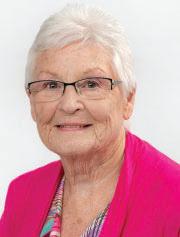
Trish Adams President
CONTENTS
Page 4, Did You Know? Total Mobility Scheme Review
Page 11, Staff changes at Age Concern Canterbury
Page 13, From the IT Desk
Page 14, Trades Directory
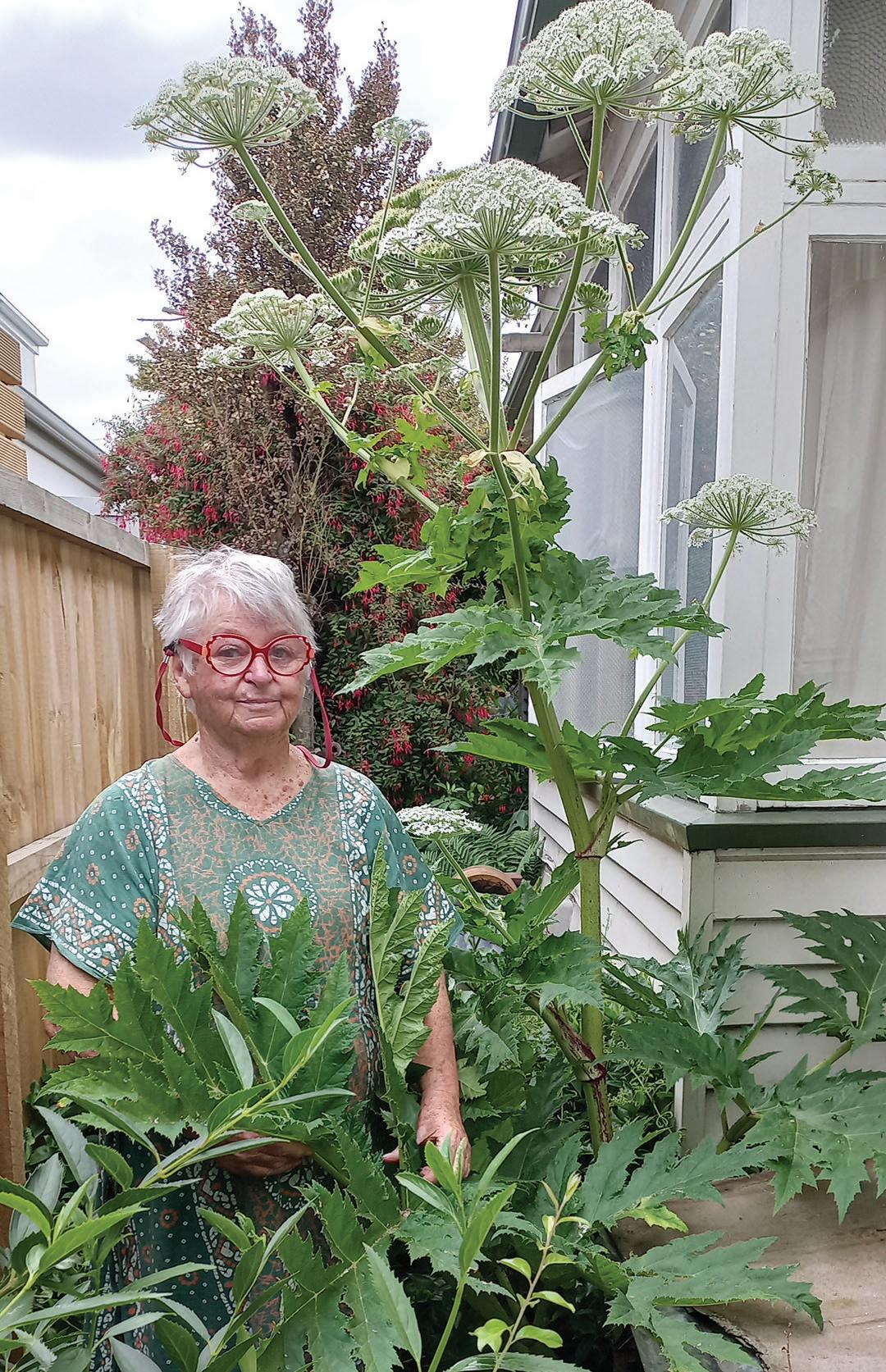
Page 24, Giant Hogweed by June Peka
Page 25, Memories: The Liquor Run by Mike Crean
Page 32, My two cents by June Peka
It’s hard to believe we’ve started 2026, which feels like a date out of a science fiction movie. But then, we have video phones now; driverless cars on the way; new treatments for some previously fatal diseases; a disrupted changing climate; and the geopolitical alliances of the world also appear to be shifting. Late last year, 10 million units of a new toy called a Labubu were sold every single day (there’s a picture below if, like me, you had no idea what that is – you may remain a bit stumped). Who could guess what’s next?
One of my New Year’s resolutions is not to leave things to the last minute. In the spirit of this intention, I’d like to remind everyone that our next General Election is scheduled to be held on the 7th of November. While that’s still a while away, some changes have been made to our voting laws that may impact some people. It’s not too early to ensure that you can have your say.
One important change is that voter enrolment now closes 13 days before
the election (after which 12 days of advance voting will begin). That means that the 25th of October is the last date you can enrol to vote. It’s very important to check in advance that the Electoral Commission knows where you live, so you can receive postal communications. If they can’t get hold of you, you may be put onto a dormant roll, which could prevent you voting if you don’t fill out a new form showing your current address. If you want to check your enrolment status, you can do it online at vote. nz, or email enquiries@elections. govt.nz. If you’re not online, call the enrolment team at the Electoral Commission on 0800 36 76 56. If you foresee some difficulty getting to a voting booth, you can organise for a friend or family member to collect your papers for you and bring them to you to fill out and sign. If you don’t have someone to do that, please do call the number above, because there will be systems set in place to assist you.
I’m so proud that New Zealand was the first country to legalise voting for women, in 1893. I also think that voting is something that none of us should take for granted. Let’s ensure that our own new voting changes don’t inadvertently make us miss out! Age Concern Canterbury is committed to helping you to vote, so do call us if you need help or advice. If you’re all sorted already, who might you help to ensure that they can vote, too?
From all political persuasions, this is how we can have our voice heard. It is the simplest way that we can participate in (and strengthen) our democracy, in 2026 and for the future. Happy New Year, everyone!
Greta Bond Chief Executive
Keeping On is distributed by Age Concern Canterbury to Christchurch Malls, Senior Citizen Clubs and Groups, Libraries, Medical Centres, Rest Homes, Hospitals and Institutions, Housing Complexes and Agencies working with older people and individuals. Keeping On is published quarterly in February, May, August and November each year. Written contributions for consideration can be emailed to the Editor at liz.sugrue@ageconcerncan.org.nz or contact Liz on (03)366-0903. The Keeping On Team: Liz Sugrue - Editor, Mike Crean - Journalist, June Peka - Journalist, Anna-Marie Hunter - Designer/Advertising Representative. Keeping On is printed by Inkwise, Rolleston.
ADVERTISERS: Book your advertising space in our May 2026 issue of Keeping On. Deadline for bookings is Friday, 24th April 2026. Please contact Anna-Marie on 03 331 7804.
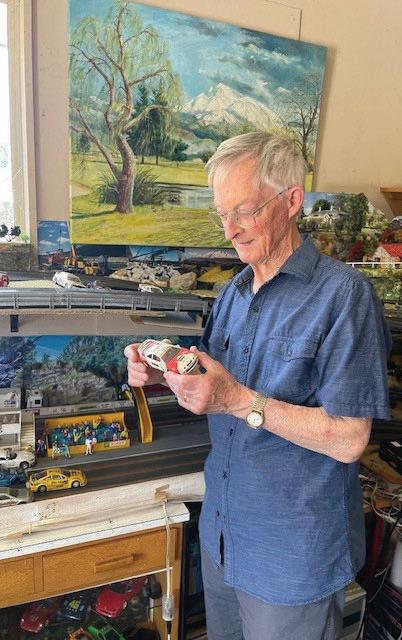
A quiet-living, married Rangiora octogenarian is known worldwide for his paintings of motor racing cars and scenes.
He is Dennis Brown. His work is mostly in oils, some in water-colour. He illustrates dramatic sights of famous racing cars and drivers in all types of positions, in countries from Monte Carlo to South America. However, his only foreign trip was to Australia. For a break, he produced gorgeous paintings of scenic South Island landscapes.
“I always loved motor racing,” says Dennis. He adds that, as a child he invented, designed and created small slot cars that he could play races with for hours. Later, as a teacher, he ran such courses with keen kids.
A product of Waitaki Boys’ High School, in Oamaru, he went on to study at Dunedin Teachers’ College and then to Otago University where he graduated so he could teach at Secondary level. He returned to Waitaki Boys as a teacher and later moved to Methven District High School.
He enjoyed secondary school teaching, especially in Science, English, French and Art. All this, and he still found time to invent slot cars in the style of foreign racers and help youngsters. Then, he found the more he worked on this, the more he attracted attention from motor racing fans.
Moving to Methven he struck a problem. He was a keen soccer player and wanted to introduce students to the game. He had a soccer ball, believed to be the only one in all of Methven at the time. With that old leather ball he started training, coaching and refereeing soccer. This caused antagonism among the local rugby population. Somehow his old leather ball just disappeared. After a long stint at Methven High
by Mike Crean
School, and recognising the positive comments about his paintings, Dennis changed jobs. He became a fulltime professional artist. He learned quickly that paintings, no matter how good they were, would not sell themselves. So, the former teacher and inventor launched into professional painting and sale for his works. Firstly, he needed to be publicised. Early approaches were made to South Island racing interests. All sorts of motor racing meets were being held regularly, from Nelson to Invercargill and a dozen other towns.
Dennis became a traveller. He started by attending the “Waimate 50 Street Race”. Interest developed and it spread to Timaru in a real “boom”.
Dunedin ran street races, including hill climbs that raised big crowds.
Christchurch’s Wigram Air Base staged races on the flat tarmacs and attracted thousands. “There were many meetings on the West Coast,” he says, and others elsewhere. His business approach brought
success. His first move was to link with the “Auto News” magazine. He started developing sale commissions, which worked well. Even showing his paintings from a van with a canvas awning brought the public at race days and rallies. Success bred even greater success when Dennis hired a Dunedin agent to make prints of the expensive originals to be sold at cheaper prices.
Dennis took only one overseas trip, and that was to Australia. For the rest of the time his agents approached racing and business connections. They responded with many commissions. Very soon his works became well known and sought-after.
With that achieved, he undertook painting portraits as requested. Life-like pictures of racing people went very well. A major triumph was Dennis’s painting of the Chief Executive Officer of the Italian racing group that had beaten all other aspirants in the famous 1966 Le
Mans 24-hours race. The original painting was mounted in the CEO’s office.
A highlight for Dennis was the communication that developed between him and many of the top racing drivers. This was more special when famous New Zealand drivers, such as Chris Amon, Bruce McLaren and Denny Hulme, performed well in Europe and elsewhere.
His South Island landscape paintings also sold well. Dennis became a friend of renowned artist Colin Wheeler, a fellow South Islander who is most helpful to him. Wheeler and others rate Dennis’s works highly.
All their hard work has enabled Dennis and his wife to live in a stylish house in Rangiora with a room to show many of his artworks. As New Zealand champion racing driver Chris Amon said, “Dennis, your painting would stand on its own anywhere in the world.”
Octogenerian, known worldwide for his paintings of racing cars and scenes MOBILITY
Rangiora octogenerian, Dennis Brown, is known worldwide for his paintings of motor racing cars and scenes.
NZ General Election 2026
Check your enrolment details for the upcoming election. If you have recently moved, it is worth checking to see that you are currently enrolled to vote. The Vote NZ website, run by the Electoral Commission, is your best starting point for updating any details and for finding information. However, we respect that not everyone has the means or ability to do this, so here is the number to call to speak to a helpful team member. 0800 36 76 56.
Hidden gems available for Canterbury Library members
If you are a Canterbury library member you have got some hidden gems at your fingertips…apart from the hundreds of thousands of books and resources available.
Beamafilm and Kanopy are free streaming services packed with a curated selection of films, documentaries, and international movies. How it works:
• Find the Beamafilm or Kanopy portal on your library’s website. It’s easy to find in the “Explore” Tab under “Movies and TV” or using the search function.
• Sign in with your Library Card and email
• Dive into thousands of films including Aussie and Kiwi movies, indie gems and fascinating
documentaries.
• Watch on your phone, lap top or cast it to your television.
There is even a special section for young people if you need to keep your mokopuna entertained on wet days and school holidays. If you have any problems, the friendly librarians at your local library are sure to be happy to help.
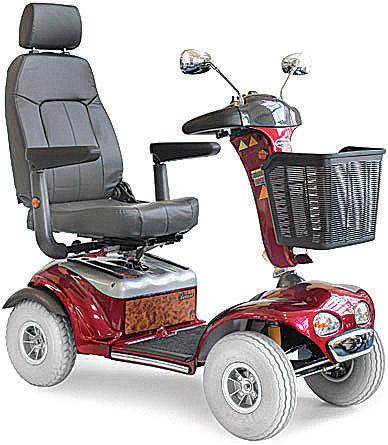
Total Mobility Scheme reviewed by the government in 2025
On 16th December, 2025, the government made a public announcement regarding changes to the Total Mobility Scheme as part of the national Ministry of Transport Total Mobility Review.
It was advised that the Total Mobility subsidies will be cut from 75% to 65%. The changes are to take effect nationally from 1 July 2026. Should any further information need to be
Do you need help planning for residential care?
Planning for residential care can feel overwhelming, especially when you’re trying to work out whether your savings, home, or other assets might affect eligibility for help with the cost of care.
In New Zealand, the Residential Care Subsidy is paid directly to the rest home or hospital by Te Whatu Ora and Work and Income completes the financial means assessment.
If you’re aged 50–64, single, and have no dependant children, you automatically meet the asset test for the subsidy. In that situation, your asset levels won’t be a barrier to qualifying (although other requirements still apply).
For people aged 65 and over, assets are assessed against published thresholds (updated from time to time). As of February 2026, the threshold is $291,825 for a single
person, or for a couple where both partners are in care.
If you have a partner who is not in care, you can choose the option that best suits your circumstances:
• Option 1: combined assets of $159,810 or less, excluding the family home and personal vehicle (so long as your partner or a dependant child remains living in the home).
• Option 2: combined assets of $291,825 or less, including the family home and personal vehicle.
Because income is also assessed, meeting the asset threshold is only part of the picture.
If you would like help understanding how these thresholds apply to your situation, our teams at Fleur McDonald Legal and KT Law are happy to talk through options and planning. A
communicated to card holders, they will contact you directly.
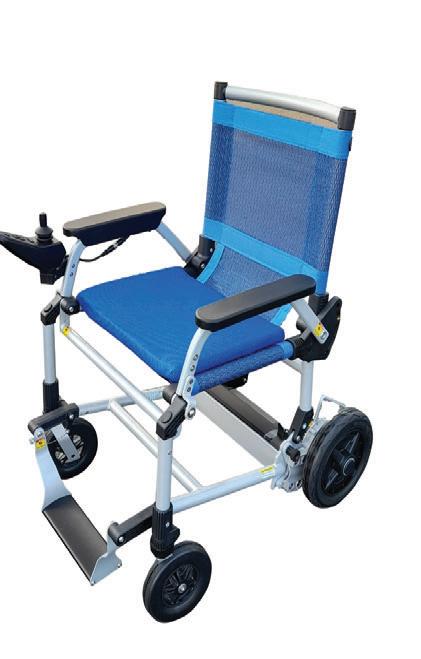
The Government has also opened public consultation on a range of proposals that may impact the Total Mobility scheme. These proposals have been developed with input from the Ministry of Disabled People - Whaikaha, Ministry of Social Development and the NZTA. Age Concern Canterbury will provide
feedback to these proposals. The card entitles users to discounted taxi fares from a list of approved providers.
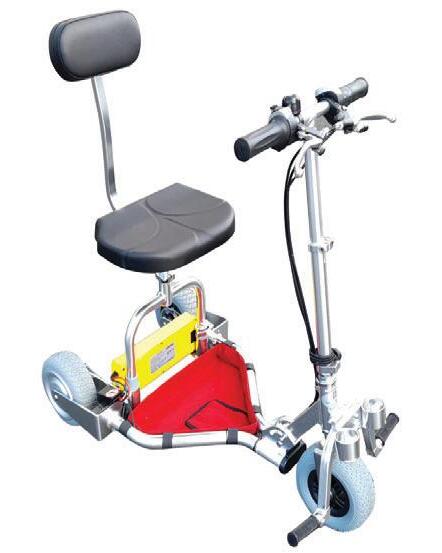
To be eligible for the card applicants need to no longer be driving and unable to safely and easily access public transport. Please call Age Concern Canterbury’s office on 03 366 0903 to make an appointment if you would like to apply for the card.
Practising the art of mattering
Petersgate Counselling Centre practices the art of mattering.
Mattering is the recognition of the deep, often quiet belief that who you are and what you do has value. It’s the sense that you count simply because you exist. When people feel they matter, they feel grounded, seen, and safer in the world. When they don’t, even the smallest challenges can feel overwhelming.
Knowing that you matter is not selfish or indulgent; it is foundational. When you believe you matter, you are more likely to care for yourself, to set boundaries, to speak honestly, and to ask for help when you need it. You recognise that your feelings are legitimate, your needs are real, and your presence has meaning. Without this belief, people often shrink themselves, tolerating harm, minimising pain, or believing they must earn their right to take up space. Remembering that you matter can be an act of quiet courage, especially for those who have been
overlooked, dismissed, or taught to put themselves last.
Counsellors at Petersgate make sure that people know they matter. Listening without interrupting, remembering someone’s name, checking in, saying “I am glad you are here,” or acknowledging effort rather than outcome. These small, everyday actions can carry enormous importance. These moments send a powerful message that you are seen and you are valued.
Mattering is then contagious. When people feel they matter, they are more likely to extend that same recognition to others. In a world that often feels rushed, transactional, and divided, choosing to affirm mattering, in ourselves and in those around us, is a deeply human act. It reminds us that none of us are interchangeable, disposable, or alone. We all matter. And when we live as if this is true, we help build spaces where others can believe it too. A
Canterbury’s Acute Demand Service: keeping people out of hospital
“A Canterbury service is helping thousands of people receive timely, quality care in the comfort of their own homes, freeing up hospital beds for those who need them most,” Health Minister Simeon Brown says. Canterbury’s Acute Demand Management Service, marking 25 years, supports around 110 patients daily. About 90 patients received general practice-led in-home care, the equivalent of four to six hospital wards operating in the community. 2025 patients were cared for intensively at home by the mobile acute nursing team, most of these patients have been referred directly from hospital.
“This service is delivering real benefits for people who become unwell but can safely receive treatment or tests without being in hospital,” Mr Brown says.
Patients are receiving care tailored to their needs, in a community setting where they feel safe, supported, and at home which helps ensure Christchurch Hospital can focus on those who need hospital-level care.
The service is overseen by primary care doctors with direct links to Canterbury Hospital specialists and delivered by highly skilled community nurses and allied health professionals. Together, they provide
care for a wide range of conditions annually, including Chest pain (over 9,000 people); Abdominal pain (over 7,000); Deep vein thrombosis (nearly 3,000); Palpitations, including atrial fibrillation (nearly 3,000); Pneumonia (nearly 3,000).
This service has transformed care in Canterbury. By bringing treatment closer to home, patients get the right care at the right time, in the place that is best for them, while keeping hospital resources available for those with higher needs. In the year to 30 June 2025:
* The general practice-led in-home service delivered more than 33,000
packages of care, averaging 178 per weekday.
* The mobile acute nursing team managed 2,573 referrals, with patients typically supported for around four days.
* Nearly 13,000 diagnostic tests were co-ordinated, including CT scans, ultrasounds and x-rays.
This patient-focused initiative works. Its success comes from community-based health workers and specialist teams working together to deliver hospital-level care to those who would otherwise need admission. (Source: Media Release, Hon Simeon Brown, Minister of Health).
Amberley Country Estate - Spacious and Unique
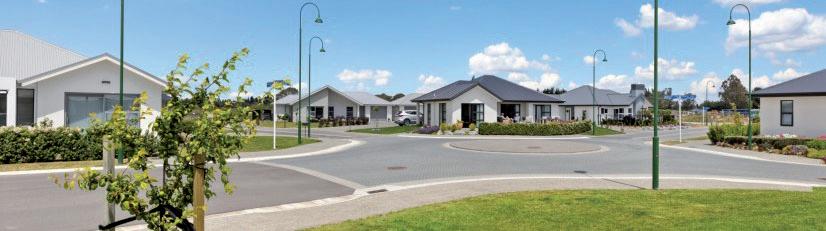
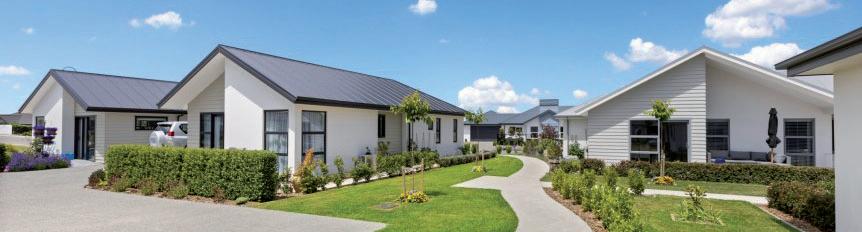
Canterbury’s most spacious retirement village, Amberley Country Estate - just 35-minutes from Christchurch - is a retirement village like no other. Set on 37 acres with beautifully landscaped grounds and exceptionally well spread out two and three-bedroom villas, Amberley Country Estate looks more like a subdivision than a typical retirement village.
A wide range of single level homes, from 94m2 to 185m2, means each street is unique and villas don’t all look the same. Some have shared,
cul-de-sac like settings, but, with rural people in mind, many homes have private driveways, double garages and spacious yards. Streets are beautifully landscaped with colourful plantings.
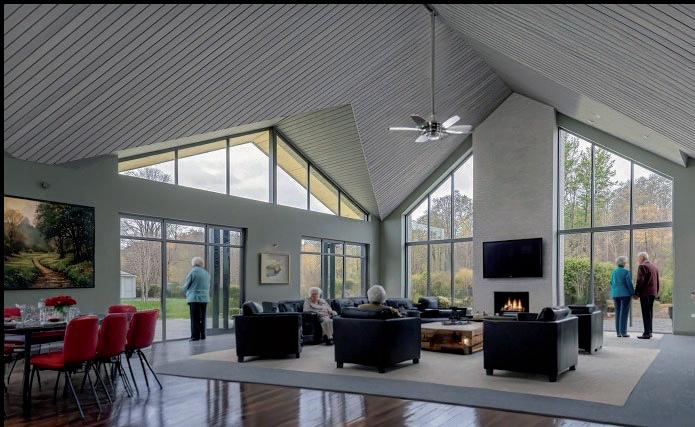
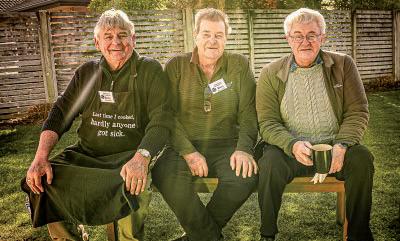
A 350m2 Clubhouse features a pool table, bar, library, gym, spa pool, pétanque, croquet and a men’s shed.
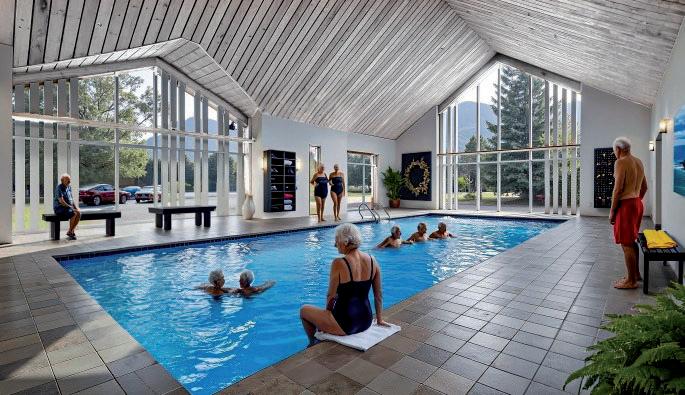
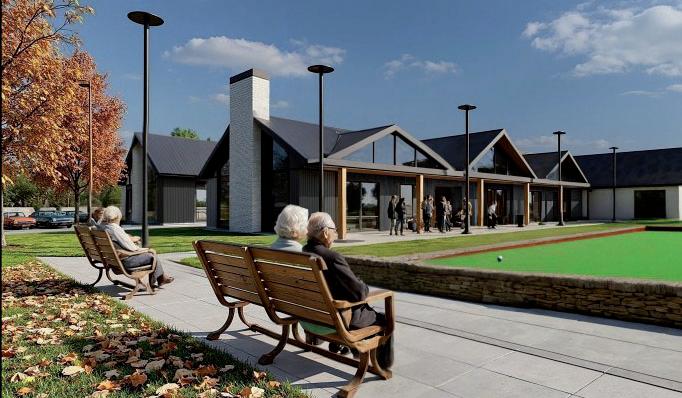
A resort style Resident’s Centre, 5x that size, will be the heart of the village, with a café, restaurant, pool tables, dance floor, library, gym, indoor pool and spa, movie room, men’s shed and bowling green.
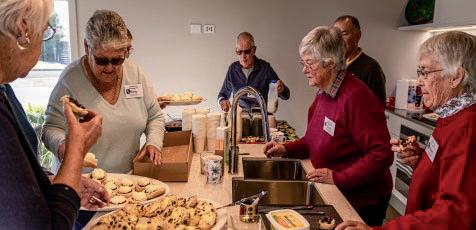
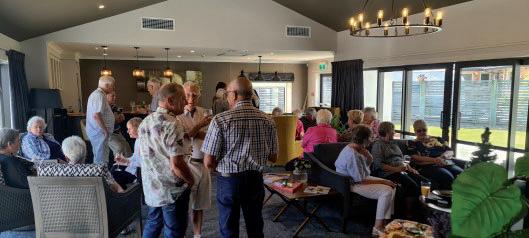
Regular happy hours, van excursions and other activities and events will allow residents to be as social as they please.
For residents’ peace of mind, the village will have a modern hospital and medical centre with comprehensive care facilities, including memory care.
Amberley’s villas have been built with energy efficiency in mind and feature ducted central-heating, deeper walls with thicker insulation, thermally-broken, argon-filled, double glazed windows and even industry
leading insulated foundations, so the home is cool/warm and comfortable year-round, with power bills that are extra low. Their quality and fitout is of an exceptionally high standard. Each has its own patio, garden area (lawns and gardens are maintained by village staff) and garage.
With extra warm homes, villas that are larger than typical, low weekly fees and a layout that features beautiful streetscapes with distinctive yards, Amberley Country Estate will be a very special place to live.
Canterbury’s most Spacious Retirement Village
Amberley Country Estate, just 35-minutes from Christchurch, is uniquely designed, with people who want more space in mind. Like a residential subdivision in look and feel, here you ’ll find spacious yards with individually landscaped gardens, wide roads and luxurious, well spread out, generously-sized, north-facing, energy-efficient Villas, many with private yards. We also have social gatherings, group events, exercise classes and regular outings, complimented by our 350m 2 Residents’ Clubhouse. A much larger resort-style Community Centre is coming in 2026 and modern care facilities are planned as well. If you ’re 65+ and seek an active independent lifestyle with laid-back country living, call today to find out more about a retirement village with space to live a life you’ll love. We even have Villas available for immediate occupancy. Phone 0800 573 573 to find out more.
Reflections on the past summer
by Jessica Brown, Health Promoter, Age Concern Canterbury.
Camping: setting up the tent, filling the chilly-bin with ice, rolling out sleeping bags, setting up the stretcher or laying out the “self-inflating” mat, or blowing up the bed, the walk to the communal toilet, tripping over tent ropes, or standing on a tent peg! Memories are made, and it’s a wonderful time to live a bit closer to nature.
Or maybe it was staying at a hotel, with crisp white sheets, checking if there’s milk in the mini-fridge and hoping the hotel scented shampoo is up to your standard. Then there’s working out which light switch controls what light - and that familiar night-time bathroom fumble, trying to find the right switch without lighting up the whole room!
Perhaps you’re lucky and own a caravan or campervan and do the drive-up holiday: looking for the flattest patch of grass, making sure everything is safely tucked away in its cupboard before hitting the road and setting up the bed by packing
away the table and pulling duvets and sheets from cupboards they’ve been squashed into.
Or perhaps day trips for a picnic were more your jam: deck chairs, picnic rug, sun hats and hopefully, insect spray, searching for a pretty spot that the wasps haven’t discovered yet and not too far from the car but with a lovely view.
New Zealand is a beautiful country, and I have been fortunate to explore many parts of it. This summer we camped at Totaranui which sits within the Abel Tasman National Parkgolden sand, clear water and the obligatory cold-water showers. It’s not all roses when the car trip takes 8 hours and it’s over the windy Takaka Hill. Never particularly pleasant when the car is packed to the rafters, and you’re eager to arrive, and always sad when it’s time to leave.
And now summer is ending, routine returns. If you are lucky you might belong to one of our Steady As You Go classes. During the exercise
Ditch the dishes, not the deliciousness!
Kai2You: Fresh Meals, Delivered to Your Door!
Adam and Jamie Pack make dinnertime a breeze with Kai2You! Enjoy chef made-quality, home-style meals delivered fresh to your door twice a week (Tuesdays & Fridays). Or swing by our Papanui shop at 86 Harris Crescent for easy pick-up. Plenty of parking available. What's on the Menu?
• Light Meals: $11.00 (Perfect for light eaters!)
• Regular Meals: $15.00 (Satisfying & flavourful!)
• Decadent Puddings: $8.00 (Treat yourself!)
• Gourmet Pies (Handmade goodness!) Weekly changing menus means there's always something new to try! Too busy to cook? Need a break? We've got you covered! Order Now & Taste the Difference!
• Online: www.kai2you.co.nz
• Phone: 022 389 1166
• Email: orders@kai2you.co.nz New for 2026!
Kai2You is now delivering fresh meals South Island wide. A
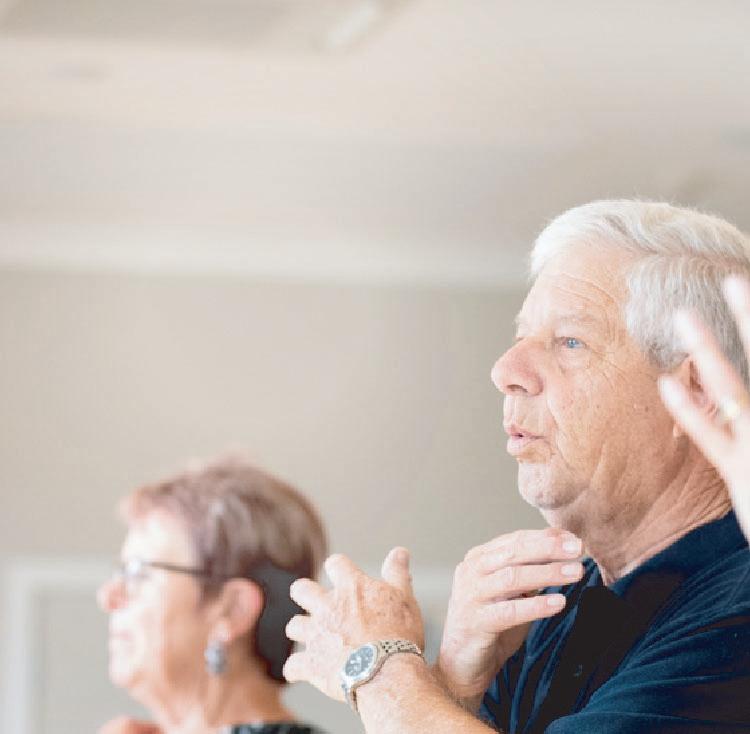
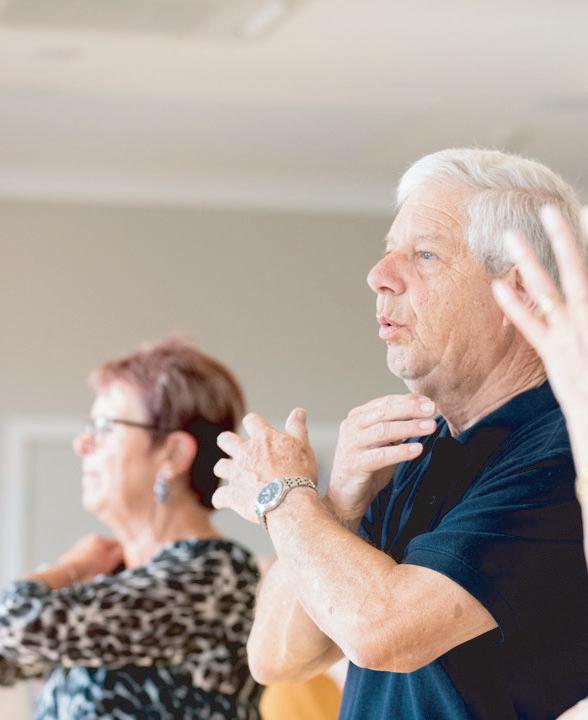
class we include “walking exercises”, where we practise taking long steps, high steps and walking backwards. When I do these exercises, I like to imagine lifting my leg high to avoid tripping over a tent guy rope, taking a long step to avoid that muddy puddle and carefully placing my foot down with intention - not rushing - to avoid a tent peg.
By doing these exercise classes every week we are practising moving our bodies with intention, in the hope that these movements continue to carry over into everyday life. The goal is for them to become automatic, helping us avoid falling, tripping and inadvertently hurting ourselves.
If you haven’t already found an exercise class that focuses particularly on strength and balance, I encourage you to do so then you could enjoy camping, travel, hotel stays and picnics again next summer!
Phone Jessica on 331 7811 or email steadyasyougo@ageconcerncan. org.nz
SAYGo Classes
Steady As You Go (SAYGo) is a unique community based falls prevention programme using Peer Leaders and a Central Co-ordinator.
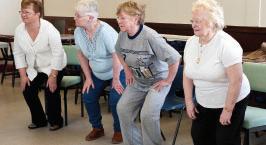
One hour long classes are held each week for 65+ year olds. Participants begin with a warm up on a chair followed by standing exercises, walking exercises and ending with a warm down on a chair. Three simple strength and balance tests are carried out at Week 1 and Week 10 of the programme.
Classes held in a variety of community venues and cost $2.00/$3.00 per session.
Phone Jessica Brown at Age Concern Canterbury on 366 0903 or email steadyasyougo@ ageconcerncan.org.nz
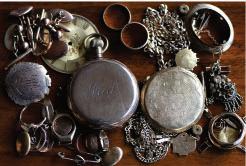
Over 40 years in the antique business
Steve Purcell is a licensed antiques dealer trading as Antiques International Limited, with over 40 years experience in the business. Steve started frequenting antique shops and restoring antique furniture when he was 15 and developed a passion for Kauri furniture in particular. After “doing up” a number of pieces it soon became apparent that some would have to be sold to make room for more projects.
Developing associations with a number of dealers, it was a natural progression into general antiques, art and jewellery. In the ’80s the hobby became a business selling items at antique-fairs, on behalf in established shops and converting an old Bedford bus into a mobile antiques shop.
In the ’90s the first official shop “Circa 1900” was formed with a
partner in Merivale and a second shop in Riccarton called “Finders”. With the dawn of the new millenium internet communication was now a well established medium for selling, opening the door to a world-wide customer base. “Circa 1900” was closed and the company Antiques International was formed.
Steve Purcell, licensed antique dealer.
A
2025 - a busy year for social outing groups
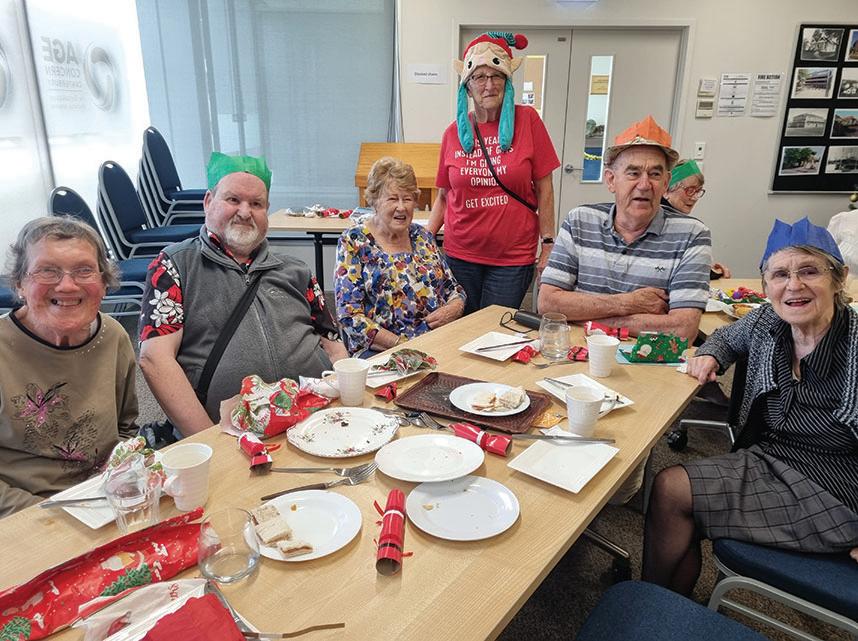
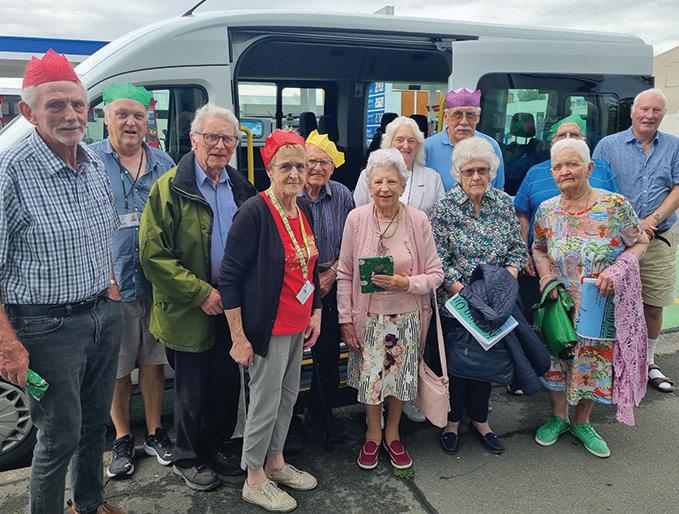
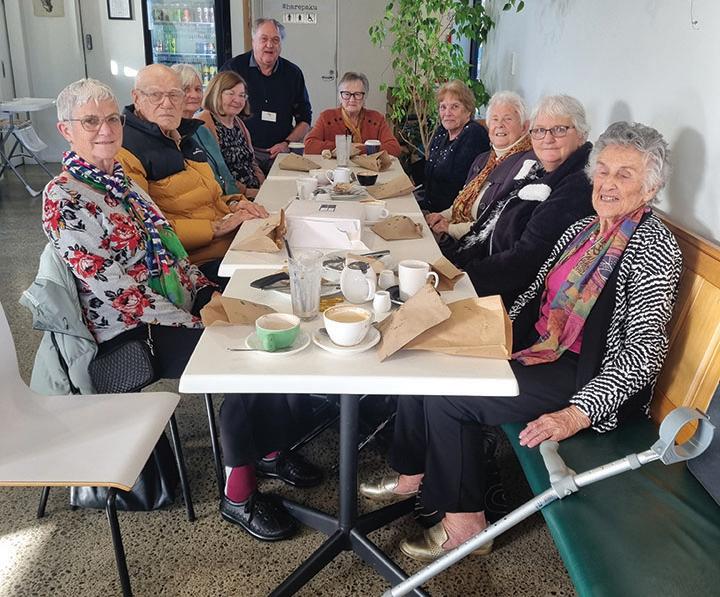
2025 was a big year for our Social Outings groups. We introduced a few new groups including our new Men’s East and West Groups which are proving to be very popular as are our new Sumner and Rolleston Café Groups.
If you live in Sumner or Rolleston we do have room for a few extras should you be interested in regular fortnightly outings and meeting people who live locally to you. All the groups are social and a great way to meet new friends. December was a busy period, above are some outings photos.
Cafe Group Outings
Fortnightly outings to a Cafe on a Tuesday morning We will pick you up between 9.00am and 10.00am and you will be home by 12.00 midday. Gold coin donation. You will need to pay for your own food and drink at the Cafe.
Age Concern Canterbury’s Social Outings are for people over 65 who live in their own home and would enjoy more company. You will need to be able to transfer independently on and off our minibus. Limited numbers. Please contact Debbie on 331 7814 or 027 555 8077 to register your interest.
Stay independent, connected and confident with Driving Miss Daisy
As we get older, staying independent, active and connected becomes vital for our wellbeing. Yet transport can be a real challenge. New independent research commissioned by Driving Miss Daisy, The Value of Companion Transport Services (Bridget Doran, 2025), highlights just how important safe, supported transport is for older adults and people with limited mobility. Unlike a standard taxi, companion transport is place-to-place. A trained driver meets you inside your home or facility, assists you to the vehicle, accompanies you to your destination and ensures you are safely where you need to be. The research confirms that this approach reduces the risk of falls, decreases anxiety and provides a trusted, dignified experience throughout the journey. Passengers also report feeling more confident, more socially connected and more able to participate in everyday life.
The research also highlights the
broader benefits. Many essential trips simply would not happen without this level of support - from medical appointments to shopping and social outings. Missed medical appointments alone cost New Zealand millions each year, and safe, reliable transport helps prevent this.
“This independent research is wonderful confirmation of what we have seen every day for more than 15 years,” says Driving Miss Daisy co-founder Melanie Harper. “We have always known, anecdotally, how much difference our service makes to people’s lives. Now we have strong evidence to back it up, and it reinforces the importance of helping people remain independent, connected and in control.”
For those wanting to stay active and engaged, Driving Miss Daisy offers a friendly, reliable and reassuring way to keep moving with confidence. Read the full research report here: www.drivingmissdaisy.co.nz A
We can drive and accompany you to:
•Medical and other appointments •Deliveries - e.g. take home meals •Companion outings
Total Mobility Scheme cards accepted in most Canterbury areas, and an ACC contracted supplier.
Bookings are essential - call today and make your next outing a pleasure!
From left: The Richmond Cafe Group outing and the Halswell Cafe Group outing.
Parklands Cafe Group outing.
Major exhibition of works by New Zealand photographer Mark Adams
Stay safe behind the wheel -refresher course for older drivers
A landmark exhibition offering the first comprehensive exploration of the work of acclaimed New Zealand photographer Mark Adams will open soon at Christchurch Art Gallery Te Puna o Waiwhetū
Developed and first presented at Auckland Art Gallery Toi o Tāmaki in 2025, Mark Adams: A Survey|He Kohinga Whakaahua brings together more than 65 photographs spanning Adams’ remarkable career.
For more than 50 years New Zealand artist Mark Adams has photographed Aotearoa New Zealand - its land, peoples and complex, multilayered histories.
Over the decades he has sustained a deep and ongoing engagement with whakairo Māori (Māori carving), the work of celebrated tufuga tatatau
(master tattoo artists) in Samoan communities in Tāmaki Makaurau Auckland, the places where Captain James Cook and his crew came ashore, and the locations where Te Tiriti o Waitangi was signed.
His practice explores crosscultural exchanges in Aotearoa and across the globe - within landscapes, taonga (treasures), museums, and the practice of photography itself.
Mark Adams: A Survey|He Kohinga Whakaahua opens 7th March 2026 and closes on 26th July 2026.
The exhibition is accompanied by a substantial publication authored by Dr Sarah Farrar, offering further insight into Adams’ practice and long-standing collaborations. A
When did you last take a refresher course for your driving? Have you kept up with recent changes to the road code, or considered how age might affect your driving skills?
The Staying Safe Refresher Driver Course is a free, four-hour theory-based programme run in collaboration with NZTA and the Police. It’s designed especially for older drivers who want to stay confident, capable, and safe on today’s busy roads.
Many participants describe it as an excellent refresher — informative, friendly, and full of practical tips for modern driving.
Even experienced drivers find there’s always something new to learn, and many say the course leaves them feeling more aware and confident behind the wheel. Spaces on courses often fill quickly, so early booking is recommended. For more information or to learn about additional classes throughout the year, contact Charlie Hudson at Age Concern Canterbury on (03) 366 0903 or email chudson@ ageconcerncan.org.nz. Stay safe, stay independentand stay confident on the road!
A list of upcoming courses is available on Page 25.
Beckley Coachlines offer unique and relaxing style tours
Travelling around New Zealandfrom Stewart Island to Lochmara, Napier and even Whangarei. Beckley Coachlines and Travel offers unique and relaxing style tours, specialising in the 50-plus age group.
Tour pricing includes coach travel, accommodation, breakfasts and evening meals. Most activities are also included – making budgeting for your trip super easy! Your experienced and friendly guides/ escorts know the business of touring, and are on-hand to make sure your tour goes as smoothly as possible.
You are able to do as much or as little as you like on the tours, meaning you get the holiday YOU want and need! Even better is your like-minded travelling companions, making new friends and connections is a really special part of these getaways. With lots of laughter and fun, you will head home with loads of special memories.
You can book together with a friend and share a room, or if you
are travelling solo, you may choose a single room or be paired up with another solo person (same gender). Couples are very welcome as well; our tours cater to everyone!
We have recently introduced “Walking Tours” for the more active travellers who are fit and able to get out and enjoy some easy day walks around New Zealand.
If you have mobility concerns, feel free to call us for a chat. Each itinerary lists any specific mobility requirements, but in general our motto is if you can get on the bus –you can come on our tours, mobility aids welcome.
We would love to hear from you if you would like further information about a specific tour, or if you have any questions. You can also check out our website, www.beckleycoachlines. co.nz or Facebook page (Beckley Coachlines and Travel) to see more about what adventure we are off on next! A
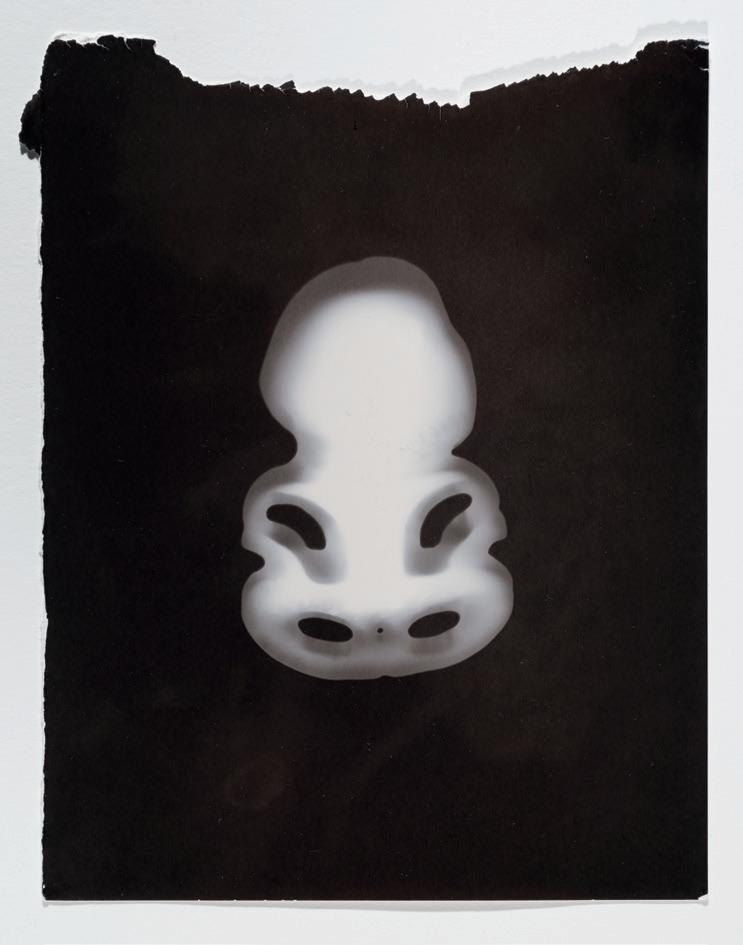
Mark Adams 25.05.1988. Rapanui. Shag Rock. Ōpāwaho-Ōtākaro hapua.
Heathcote-Avon Rivers mouth. Ōtautahi Christchurch. Te Waipounamu South Island 1988. Silver bromide print. Collection of Christchurch Art Gallery Te Puna o Waiwhetū, purchased 2011. Exhibition developed and organised by Auckland Art Gallery Toi o Tāmaki, New Zealand.
Can you help?
We are asking our wonderful readers who potentially have as much collective knowledge as the archives of The Canterbury Museum, for help on certain topics. In the classic Cantabrian way if you don’t know the answer you probably know someone who does. So, let’s work together to solve this mystery.
In this issue of Keeping On we are looking for information as to the whereabouts of the HMS Neptune Memorial plaque that used to be on the Bridge of Remembrance. A niece of one of the sailors who died on Neptune in 1941, wants to find out where the plaque is. The trail led her to the Papanui RSA but when she visited there a few years ago, the staff knew nothing about it.
If you can help us track down this important memorial to a tragedy that should never be forgotten please call us on 03 366 0903 or email liz.sugrue@ ageconcerncan.org.nz
Sailors lost serving on HMS Neptune from Christchurch in 1941
Jack P. Ball, Able Seaman (26)
Frederick R. Barker, Able Seaman (24)
Hudson W. Biggs, Able Seaman (25)
James A. Birss, Able Seaman (33)
Ernest G. Boaz, Able Seaman (36)
William W. Brown, Able Seaman (24)
William A. Campbell, Petty Officer
Ronald H.C. Clark, Able Seaman (20)
Arthur E. Diehl, Able Seaman (19)
Raymond P. Dobbs, Leading Telegraphist (20)
Edward D. Doussett, Leading Seaman (20)
Norman J. Elstob, Able Seaman (21)
Maurice N. Friedman, Supply Assistant (26)
Linus E. Hubble, Signalman (25)
Stanley L. Kingdon, Able Seaman (24)
Arthur F. Lovett, Cook (20)
Duncan P. Munro, Able Seaman (22)
Gordon Murray, Able Seaman (22)
William J. O'Neil, Assistant Cook (24)
Frederick Rowe, Assistant Cook (21)
Edward H. Tamplin, Able Seaman (21)
Henry Walpole, Supply Assistant (27)
Morgan A. White, Able Seaman (21)
The sinking of HMS Neptune remains New Zealand’s worst naval tragedy
A Royal Navy cruiser, HMS Neptune struck four enemy mines and sank off Libya early on the morning of 19 December, 1941. Seven hundred and sixty four men lost their lives. Among them were 150 New Zealanders.
In early 1941, the New Zealand Government had answered British Admiralty’s call for more sailors to man the increasing number of warships being brought into service. The intention was for New Zealand to provide a crew for an additional Leander-Class light cruiser to serve alongside its existing ships, HMS Achilles and Leander. HMS Neptune was approved for this purpose.
Neptune had been expected to leave Britain for New Zealand in May 1941, but because of the heavy loss of cruisers during the Crete Campaign, it was instead attached to the 7th Cruiser Squadron in the Mediterranean. Neptune joined Admiral Cunningham’s Malta based Force K. On 17 December, every available ship was deployed to protect the oiler HMS Breconshire on its passage to Malta. At the same time, the Italians were sending an important supply convoy to Tripoli, Libya.
Force K sailed on the 18th December to intercept the Italian convoy. There was a strong South-Westerly wind and a heavy sea. At 1am the ships were 30km from Tripoli when they sailed into an uncharted deep-water minefield. Neptune triggered a mine with one of its protective paravanes (towed, winged, underwater object used as an anti-submarine weapon),
FRANCO DAL DIN
027 484 2739
03 355 6555
fdaldin@cowdy.co.nz
Licensed Agent REAA 2008
while astern, the cruiser HMS Aurora also detonated a mine.
Reversing to get clear, Neptune exploded two more mines, damaging its propellers and steering gear. Over the following three hours other ships made several attempts to assist. But when the destroyer, HMS Kandahar also hit a mine, Neptune’s Captain, Rory O’Conor flashed a warning to other ships to ‘keep away’.
Just after 4am HMS Neptune struck a fourth mine and sank within minutes. Only 16 men managed to reach a life-raft. Over the next five days they died one after the other. Able Seaman Norman Walton was the sole survivor. He was rescued by the Italians on Christmas Eve and became a Prisoner of War. Aged just 20, he spent 15 months as a POW before being released in 1943. He died aged 84, in April 2005.
Amongst the 150 New Zealanders
(148 ratings and two officers), there were two sets of brothers including twins Bruce and William Anderson from Auckland. Neptune was not a New Zealand ship, unlike her sister ships HMS Achilles & Leander, but her loss brought grief to many homes throughout the Dominion and cities and towns across New Zealand. The names of the New Zealanders who were lost aboard Neptune are recorded on the Memorial Wall at the Devonport Naval Base in Auckland.
References:
Waters S.D., The Royal New Zealand Navy: Official History of New Zealand in the Second World War 1939-45, Wellington: War History Branch Department of Internal Affairs, 1956, pp. 191-194. Shared with permission from The National Museum of The Royal New Zealand Navy.
Royal Navy cruiser, HMS Neptune, was struck by four enemy mines and sank in 1941.
Enviro Master: committed to achieving perfect climate control of your space
Enviro Master is proud to be supplier to the Government’s Warmer Kiwi Homes programme giving eligible home owners a 90% grant towards the cost of the supply and installation of a new heat pump up to $3,450 including GST. Customers are eligible if they have a Community Services Card, SuperGold Combo Card or live in a low-income area as determined by deciles 9-10 on the New Zealand Deprivation Index. Their home must also have been built before 2008 and have no fixed heating in a living area, such as an existing operational heat pump or fireplace. Insulation must be to standard and there are grants to assist with this also. Enviro Master has been in business since 2002 and has gained a reputation for unbiased advice and providing solutions tailored to each situation. This could be for heating, air-
conditioning or a balance of both. A full assessment process that looks at environmental conditions as well as users’ requirements is backed up by a wide range of heat pump brands.
Topping it off are friendly, professional staff who always take the time to show customers how to operate their new heat pump for maximum longterm efficiency. At Enviro Master, we’re committed to helping you find the most efficient and effective air conditioning and heating solutions in Christchurch. Let us help you achieve the perfect climate control for your space.
For a free assessment, call Enviro Master on 366-0525 or visit www. enviromaster.co.nz. Our showroom is open weekdays 8.00am-4.30pm at 41A Shakespeare Road, Waltham, Christchurch.
Peace of mind for whatever lies ahead
Planning for the future can feel like a big step, but it’s one of the simplest ways to look after yourself and those around you. It is simply impossible to predict what might occur in the future in terms of our health or personal circumstances. Unexpected situations can arise at any stage of life, whether due to a medical event, illness, or accident which may lead to the loss of your mental capacity.
“Losing mental capacity” means that someone, in the opinion of a qualified health practitioner, is no longer fully able to manage their own affairs. This may include difficulty making, understanding, foreseeing or communicating decisions about their property, finances or personal care and welfare. Without appropriate legal arrangements in place, this can place significant stress on loved ones at an already challenging time and may require court involvement to resolve decision-making authority.
The most effective way to avoid this is by putting a document called an
Enduring Power of Attorney in place. An Enduring Power of Attorney allows you to appoint one or more trusted individuals to make decisions on your behalf if you become mentally incapacitated.
There are two types of Enduring Power of Attorney documents that can be made. One relates to property and financial matters, enabling your attorney to manage assets, pay bills and handle financial decisions. The other focuses on personal care and welfare, covering matters such as medical treatment, living arrangements and general day-today wellbeing.
At Pier Law, we pride ourselves on providing clear, compassionate, and personalised legal advice. We take the time to understand your circumstances and guide you through your options to ensure you have peace of mind in decision making. Get in touch today to arrange a consultation with us so you can make informed decisions with confidence. A
Staff Changes at Age Concern Canterbury for 2026
2026 has brought some changes to our ranks. In addition to some in-house shuffling we welcome 3 new staff members to the team at Age Concern Canterbury.
Charlie Hudson
Kia ora, I’m Charlie (Charlot) Hudson and I’m delighted to be taking on the role delivering the Safer Driving Refresher Courses for 2026 while Wendy Fox enjoys a well-deserved year-long sabbatical. I’ve been part of the Age Concern Canterbury team for the past 12 months, where I‘ve had the pleasure of helping to establish the Older Person’s Hub in Selwyn.
Originally from the UK, I’ve been in Aotearoa for 21 years and now very much consider myself a Kiwi. I live here with my husband and our two boys. My background is in community development across both government and community projects. Being part of Age Concern Canterbury allows me to contribute to meaningful, positive change that supports older people to live well and safely. I’m very much looking forward to meeting many of you throughout the year.
Phoebe Sugrue
After spending some time as the relief receptionist, I am excited to join the team full-time this year. After my studies at Te Herenga Waka and sometime travelling overseas, I moved back to Christchurch and started working in the youth mental health space.
I am looking forward to broadening my skillset and engaging with our community. Things that bring me joy are being out in nature or in the ocean, live music, art in all forms and sharing good food with good people.
I am always keen for a chat when people visit our Papanui office.
Alexandra O’Brien
Kia ora everyone. I’m Alexandra and as you will guess from my family
name I’m of Irish heritage and also Māori heritage (Ngāti Whātua, Ngāti Porou and Ngāti Kahungunu ki Te Wairoa). My social work career has predominantly involved working in specialist mental health services and oncology, supporting people from all walks of life.
I was very lucky to grow up in a household of four-generations, surrounded by my elders, so I’m excited to now be involved in the awesome work that Age Concern Canterbury does.
Outside of work I enjoy film photography, cold morning swims in the ocean and heading home to Marlborough for some quality time with the whānau.
Cafe Group Outings
Age Concern Canterbury’s Social Outings are for people over 65 who live in their own home and would enjoy more company. You will need to be able to transfer independently on and off our minibus. Limited numbers.
New clients wanted for Social Cafe group outings in Aranui, Wainoni, Linwood and Woolston areas.
Fortnightly outings to a variety of Cafes. We will pick you up and drop you home after. Gold coin donation. You will need to pay for your own food and drink at the Cafe.
Please contact Debbie on 331 7814 or 027 555 8077.
Loving home wanted for mature companion dog
Are you or someone you know facing the heartbreaking decision of rehoming a beloved small dog due to moving into care or other circumstances beyond your control?
I would love to offer a caring, permanent home to a mature, affectionate lap dog who needs a soft landing.
About the home your dog would be coming to:
• Quiet, loving two-storey apartment with someone home everyday.
• Experienced with older dogs and their special needs.
• Understanding that senior dogs deserve comfort, routine, and gentle care in their golden years.
• Happy to maintain any special diets, medications, or routines your dog is used to.
What I'm looking for:
• A small, mature dog (older dogs very welcome).
• Enjoys companionship and is affectionate.
• Able to manage stairs comfortably.
• A gentle soul who would appreciate a calm and loving home.
I understand how difficult it is to part with a cherished companion. Please know your dog would be treated as family and given all the love and care they deserve for the rest of their days. Character references available on request.
If you or someone you know is in this situation, please get in touch. Let's give your treasured friend the loving retirement they deserve.
Outreach Service Rangiora
Outreach service for clients based in North Canterbury. Every Tuesday at the Dudley Park Pavilion, Community Centre, 45 Church Street, Rangiora. Drop in and appointments available. Phone 03 366 0903
Christchurch Theatre Workshop
Concerts 2026
St Albans
(St Albans Uniting Church, Nancy Avenue) Tuesday, 24 March, Tuesday, 26 May, Tuesday, 28 July, Tuesday, 29 September and Tuesday, 24 November Rangiora
(McAlpines Pipe Band Hall, 8a Ashley St, Rangiora Thursday, 26 March, Thursday, 28 May, Thursday, 30 July, Thursday, 1 October and Thursday, 26 November
All concerts start at 1.45pm.
For further information please contact John Begg, Chairman, CTW on 027 339 8448
Managing pain in the older adult
Older adults are the fastest growing population across the globe. There is a perception that pain is an inevitable part of the normal ageing process. The elderly in the modern world can also face significant social and emotional challenges. These can be estrangement, the burden of financial or physical support by children or grandchildren. Regular support from nuclear or extended family can be limited with global distances separating family; also, grief and loss of loved ones as they pass.
The stigma of pain can interact with the normal physical decline of ageing. Responses may range from defiant denial refusing to accept changes; to a sense of hopelessness or helplessness as independence is gradually, or suddenly, eroded due to illness (e.g. a stroke) or injury. Evidence shows factors for a good quality of life in ageing are linked with hope, altruism, appreciation and gratitude.
How does this make sense when pain, suffering and distress can also be present? Evidence suggests that
some individuals have the capacity to effectively navigate the changes associated with ageing; also, the physical or cognitive decline; the principles being a holistic approach. A holistic approach means that the body-mind-soul-spirit are not separated when pain is being investigated or pain management plans put in place. Pain is not simply a physical phenomenon; it is a sensation that is also an emotional, social and cognitive experience. What does a holistic approach look like?
The assessment for pain involves a biopsychosocial model. The physical aspects are the initial focus to help the body structures adjust to injury or poor health, within the limitations of age or general health. This includes medical assessment to evaluate general health; the physical aspects - how movement of the body can be disrupted; the social aspects - how family relationships could be affected with over-protection; fear; worry; or catastrophic thoughts. Also, the emotional vulnerability; this may be
discreetly hidden, or alternatively expressed with overwhelming feelings of grief and loss.
Holistic management accounts for all factors; the key being that the person with pain is in the centre; their multi-faceted needs and concerns being attended to with a biopsychosocial model. This involves an integrated team who are skilled to provide the appropriate support. Exercise and physical activity are crucial ingredients in holistic care; in tandem with engaging in local organisations, community or extended family.
We encourage you to explore your holistic approach to your aging journey. Join our public event; Pain in the Older Adult, Wednesday 18th March 2026, Christchurch Town Hall, 6-7:30 pm.
This is being hosted by experts in pain management from the New Zealand Pain Society. Register at https://www.nzps26.nz/wed-18-marpublic-session.html . Cost is $25 per adult and includes a cup of tea with a snack. A
WANTED!
A
Feel free to contact Jeannette on 027 231 4863 or txt.
A mature, affectionate lap dog who needs a soft landing to go to a caring, permament home. Looking for:
* A small, mature dog (older dogs very welcome).
• Affectionate and enjoys companionship.
• Able to manage stairs comfortably.
• A gentle soul who would appreciate a calm, loving home.
Contact Jeanette on 027 2314863
The NZ Pain Society is pleased to host an event for the public
• Join our expert panel for a live seminar on chronic pain with practical tips to help you stay active and live well into the future. Insights from:
• Specialist pain doctor
• Specialist pain physiotherapist
• Occupational therapist
• Psychologist Are you an older adult and interested in learning how to live well with chronic pain?
From the IT desk
by Dave Callis
Technology fatigue: why does everything keep changing?
Technology is wonderful when it works - but it can also feel like it’s always asking more of us. It seems that nowadays everything is moving online, from banking to healthcare, from travel to communicating with loved ones.
This constant change can cause us to feel anxious. If you’ve ever hesitated before clicking a link, worried you might “do the wrong thing,” or felt a little drained after using your phone or computer, you’re not alone. Technology moves fast. We can feel bombarded by updates, new applications (apps), and unfamiliar prompts appearing all the time. Sometimes these changes appear to be demanding our immediate attention. That pressure can make even simple tasks feel stressful and cause you to doubt yourself. The thing is, taking your time, double-checking,
and asking questions are sensible habits - not signs of incompetence.
You don’t have to respond quickly to every prompt or email. In fact, hesitation often reflects experience. You’ve lived long enough to know that rushing into something isn’t always a good idea - and that kind of careful thinking is exactly what keeps you safe online.
Many people also feel uncomfortable asking family for help with technology. It can feel like roles have reversed, and that can be awkward. It’s understandable to worry about being a “burden”, or to feel like you’re losing independence. But needing help with technology doesn’t mean you’ve lost your ability to manage your life. It simply means the world has changed, and it’s okay to ask for support - especially when there are options beyond family.
Travel well, travel confidently with Zest4Travel
When it comes to planning travel, experience, care and personal service matter more than ever. That is where our team at Zest4Travel truly shines. At Zest4Travel, our staff are experienced travel professionals who take the time to understand you. Janine, Jenny and Prachi bring over 60 years of combined experience working in travel! Along with the support team of Lauren, Sue and Erin, we help to ensure you enjoy the holiday you deserve. We understand that every traveller is different, from seasoned explorers to those booking their longawaited dream getaway. Our role is to listen, guide and remove the stress, so you can focus on enjoying the journey. We take the time to ensure that the places and experiences we recommend are suited to your style of travel.
Booking through Zest4Travel means you are never on your own. If plans change, flights are disrupted or you simply need reassurance, you have
a real person to call who knows your booking and can assist you. That peace of mind is invaluable, particularly when travelling overseas.
Tours and cruises are a wonderful way to travel. They offer comfort and security, while still allowing you to experience incredible destinations.
From small group departures; active adventures; culinary tours and locally immersive experiences, there’s a style of tour and cruise for everyone. Cruises and tours are also including more latenight departures and overnight/multinight stays in destinations, allowing you more time to explore and discover. With many cruises and tours currently on sale, it is the perfect time to secure those 2026 escapes.
Travelling solo? You are far from alone. Many tours and cruises offer solo cabins, reduced single supplements and itineraries designed especially for solo travellers.
Zest4Travel - for the holiday you deserve!
If you’re feeling overwhelmed with technology, you don’t have to tackle it alone. There are plenty of safe, supportive places to turn for help, including Age Concern Canterbury’s technology support services, community groups, and trusted volunteers. Asking for help early can actually help build your confidence and independence - because it stops problems from growing into bigger, more stressful issues.
Here are some simple strategies that can help when technology starts to feel too much:
* You don’t have to act immediately. If a message or prompt makes you feel pressured, close it and come back later when you feel calmer.
* It’s okay to pause and think - it can make a big difference.
* If you didn’t start the contact, be
cautious. Unfamiliar messages or calls asking for personal information are a red flag.
* Turning the device off is allowed. Sometimes the best step is to step away.
* Ask a trusted person before acting. If you’re unsure, it’s better to double-check than to guess.
* You don’t need to master every new update or app. You don’t need to keep up with every change. Building confidence slowly is good enough; and confidence grows from small, calm steps, from knowing you don’t have to do it all alone.
Like many challenges we face, there is a difference between importance and urgency. Technology problems are seldom urgent - and if they are important, you can take your time and ask for help.
Eat8lr - experience you can taste, care you can trust
For many people, having good food on hand is not just about convenience
- it’s about independence, wellbeing, and peace of mind. For over 20 years, Eatl8r has been doing exactly that for Cantabrians, delivering honest, nourishing meals made the way food should be.
Eatl8r is a family-owned and operated business, built from the ground up here in Christchurch. Long before home-delivered meals became widely available, Eatl8r was already preparing fresh, balanced meals for people who wanted reliable food without compromise. That experience matters, and it shows in every meal we send out.
Each week, customers can choose from 10 different main meals, with the menu changing every week to provide genuine variety. In addition to main meals, Eatl8r also offers a range of soups and desserts, allowing customers to build a selection that suits their tastes and needs.
Each meal is designed individually, with its own combination of vegetables
chosen to suit the flavour, nutrition, and balance of the plate. It might sound simple, but it makes a real difference to enjoyment and long-term nutrition. Meals don’t all look or taste the same - and that variety is something many customers truly value.
Meals are prepared using fresh ingredients, with sensible portions and familiar flavours. The focus is on food that feels comforting, satisfying and dependable - the kind of meals you can rely on week after week.
Over the years, Eatl8r has helped set the standard for fresh meal delivery in Canterbury, and continues to do so today by staying true to its values rather than following trends. Many customers have been ordering with Eatl8r for years, some even decades - a trust that is earned and never taken for granted.
Eatl8r delivers throughout Christchurch and the wider South Island. Eatl8r isn’t about gimmicks. It’s about experience, quality, and food you can depend on. A
New
of Where From Here
The Eldernet Group has released the latest South Island edition of Where From Here – He Ara Whakamua, a FREE, comprehensive resource designed to help older people and their whānau navigate their ageing journey. This regionally tailored edition includes up-todate listings on all care homes and retirement villages available across the South Island, from Invercargill up to Picton. Extensive indexes of home support providers, along with social, kaumātua and day programmes, can also be found inside.
Where From Here
– He Ara Whakamua empowers older people and their whānau with clear, unbiased information. Find anything from financial considerations, how to go about choosing a retirement village or care home, why you should get an Enduring Power of Attorney, and much more. The Eldernet Group has compiled all the facts and figures, and interpreted confusing terms, to enable older Kiwis and their families to make informed decisions with confidence.
From Here – He Ara Whakamua is now being distributed by local libraries, healthcare providers, community hubs and more. This book can also be accessed online for
those who prefer a digital format. How to get your FREE copy A list of local distributors is available on the Eldernet website - www. eldernet.co.nz.
Age Concern Canterbury also has printed copies to pick up from Reception at 24 Main North Road, Papanui, Christchurch.
We are proud to announce that Abode services are now available in Christchurch.
After eight successful years providing premium, nurse-led inhome care in Auckland, we are delighted to bring our trusted services to Christchurch - supporting older adults to remain safe, comfortable, and independent in the familiarity of their own home.
24-hour Care, Palliative Care and Post-Operative support - delivered with professionalism, discretion, and respect.
The South Island edition of Where
To view it online, or to order a printed copy straight to your house call 0800 162 706.
TRADES DIRECTORY ADVERTISERS
Book your Trade size ad for our May 2026 issue of Keeping On by Friday, 24th April 2026. Please contact Anna-Marie on 03 331 7804.
in
Contact Patrick for a free assessment and quote.
Deciding to seek in-home care is no small task. Whether you require short-term post-operative support or long-term personal or clinical care, Abode offers a compassionate, professional approach that truly sets us apart.
As a nurse-led private care provider, we take the time to understand you and your loved ones. Every care plan is thoughtfully tailored to individual needs, preferences, and routines. Our services include Pop-In Care, Dementia Support, Overnight and
Our highly experienced nurses and caregivers are carefully selected for both their clinical expertise and their genuine commitment to exceptional care - ensuring dignity, comfort, and peace of mind at every stage. We take the time to understand each individual's circumstances, preferences, and goals, delivering care that adapts as needs change.
Whatever your situation, Abode is here to support you and your family, helping you remain confident, supported, and comfortable in your own home.
To learn more or arrange a confidential consultation, contact our Registered Nurse Julie at Abode today.
Julie - 021 244 6334
Julie@abodehomecare.co.nz A
Abode Homecare
Trivia Crossword Clues
Across
1. Scotland’s largest city. (7), 4. What baby Superman is called on planet Krypton. (3,2), 8. Greek word for peak. (4), 9. A place of privacy where it is quiet and peaceful. (7), 10. The number of the world’s top ten mountains that are in Asia. (3), 12. Unit of currency in Vietnam. (4), 13. Fishing Port in Northwest Scotland. (8), 14. A lawyer authorised by the Archbishop of Canterbury to officially witness signatures for overseas use. (6), 16. Sundried brick or computer programme. (5), 20. Biblical name for the enemies of God. (5), 21. A life-threatening allergic reaction. (11), 23. Number of stars on the Australian flag. (3), 25. Cycling term for changing your opinion. (9), 28. Italian fashion house. (6), 29. All (4), 30. Subtle and skilful handling of a situation. (7), 32. Nickname of US president Eisenhower. (3), 33. Something left in a will. (6), 34. The Queensland Super Rugby team. (4) Down
1. The animal that has the highest blood pressure. (7), 2. The first name of Mr Guiness who gave his name to the drink. (6), 3. Māori name for the Avon River (7), 4. Surname of actors Michael and Buster. (6), 5. Temporary provision of money. (4), 6. Storeroom for food and wine. (6), 7. Mrs Tiggy-Winkle in a book by Beatrix Potter. (8), 11. Band that released Evil Woman and Telephone Line. (3), 15. Former Balkan country that existed 1918 – 2003. (10), 17. Beautiful in Italian. (5), 18. Rearranging of letters to spell another word. (7), 19. Salted and smoked herring. (7), 22. Best Picture winner in 2019. (8), 24. Catholic saint and popular boy’s name in Spain. (6), 25. African state at the heart of the Nigerian civil war and famine. (6), 26. Canadian Prime minister. (6), 27. Title bestowed on Sophie Pascoe and Edna Everidge. (4), 29. Poem to a Grecian urn for example. (3), 31. The jurisdiction of the Vatican. Holy ____. (3) See answers on Page 30.
Mature Moves is about helping people
If you are considering moving into a smaller home, perhaps a retirement village or residential care and you feel you could use some help Mature Moves could be your answer.
It is a Christchurch based company with local people helping older people to downsize and move when the need arises.
They understand that sometimes your family are not positioned to help as they might like to or have time restraints. True to their motto ‘to treat you like they treat their own families’, the team at Mature Moves can pack up, declutter and move all of your belongings and furniture to your new home.
Then they unpack and set up your new home to the very last detail, just the way you like it.
Decluttering can be a bit overwhelming. However, it is made much easier with some understanding help. Step-by-step you can have
things sorted and organised with minimal fuss and stress.
Along with this wonderful service, they can also organise selling things you no longer require, or if you desire gifting them to family or charities. They can also clean homes inside and out, and complete the gardening to get houses ready for sale.
Mature Moves is about helping people. You let them know what help you need and they will set about showing you just what they can do to help you.
A visit and consultation is free of charge, with no obligation to use their services. However, if you feel they may be of assistance a quotation can be provided for your consideration.
If you have a diagnosis of pancreatic cancer, WE NEED YOU!
Right now, Kiwi researchers are working to test a better, quicker way to diagnose problems with how the pancreas works.
Currently, pancreatic problems are hard to diagnose, and there is no quick test.
The ASPERT research group (based in Canterbury, with team members worldwide) has developed a set of simple diagnostic questions. We hope these questions will help health professionals diagnose pancreatic problems faster (so treatment can be started sooner).
You’d help by filling out two short questionnaires and providing a stool (poo) sample.
The time commitment to you would be two hours or less, and your data is kept private. Personal and health information is a taonga (treasure) and will be treated accordingly.
There are no physical risks to taking part in our study as we are not asking you to try a new medicine or treatment... just answer questions and provide a sample of your poo.
If you’d like to help, or learn more, visit thepancreasproject.com.
You’ll be able to register your interest at that website. If you do, a study coordinator will call or email you to explain more. You are welcome to have a friend or family member with you for this.
Also, participants can withdraw from the study at any time with no consequences.
Participants who complete the study will receive a $25 gift card koha (as well as our deepest appreciation for helping to move pancreatic cancer research forward).
A
You can phone Mature Moves on 0800 777 214 to talk about your move. We are sure Mike and the team can help you to lighten the load and make your move a smooth transition.
Thank you for your consideration in contributing to this valuable research project. We believe it has the potential to positively impact many livesin Canterbury and beyond. Any questions? Contact us at: ASPERT_ stoolstudy@otago.ac.nz
- WisdomIs the reward you get for a lifetime of listening when you would rather
Mark Twain
Keeping On eeping On
‘Golden Years’ doesn’t
have to mean tight budgets
by Teneille Bone
The rising cost of living is placing increasing pressure on New Zealand pensioners. Even those who own their homes outright are struggling, as superannuation has not kept pace with rising insurance premiums, council rates, electricity, and food costs. Many retirees who worked hard to pay off their mortgages are now finding that home ownership consumes a large portion of their limited income.
Older homes often require ongoing maintenance, repairs, and upgrades, while rates and insurance costs continue to climb. As a result, home ownership no longer guarantees a comfortable retirement. Many pensioners are asset-rich but cashpoor, with most of their wealth tied up in their homes.
Downsizing is often the first option suggested. Selling a larger family home and moving to a smaller property can free up capital while reducing maintenance, insurance, and rates. However, this approach isn’t suitable for everyone, as leaving a family home can be emotionally difficult, and buying and selling property can be stressful.
For those able to do so, moving
in with family offers another way to reduce housing and living costs while remaining close to loved ones.
Reverse mortgages allow retirees to access home equity without selling or moving. While this can offer shortterm relief, the debt grows over time as interest compounds, potentially reducing flexibility and leaving less equity for future needs or estate planning. This can sometimes come as a surprise to family members.
Lifetime Home offers an alternative. Homeowners aged 70 and over can sell 35% of their home equity in exchange for 25% of the property’s value, paid as fortnightly income over 10 years. There is no debt or interest, and homeowners retain the right to stay in their home with predictable ownership.
Eligibility criteria apply, and there are trade-offs, including a discounted equity sale and no contribution to property costs. Seeking legal advice is essential before proceeding, as every situation requires careful consideration. Get in touch with our personable and experienced team at Godfreys Law today for all your Life Law needs.
Total Mobility Agency
Age Concern Canterbury is an approved agency for the Total Mobility Scheme.
Eligible individuals are entitled to discounts that give them 75% off transport fares with approved operators. Individuals wishing to access the scheme must meet the eligibility criteria set by the NZ Transport Agency and adopted by Environment Canterbury. Age Concern Canterbury can undertake assessments to test your eligibility and organise the Total Mobility card for those approved.
Appointments available only on a Monday from 9.00am to 3.00pm. Phone 03 366 0903.
End of life planner and workbook
‘When I Die’ is an end of life planner and workbook created by Hawke’s Bay’s Kathryn Perks, who is originally from Christchurch.
This comprehensive, A4 size, 40 page workbook provides a place to record end of life wishes and personal information that may not be included in a will, but needed to help with the administration of an estate.
The idea for ‘When I Die’ came about when Kathryn was living in Australia and her mother died. Returning to New Zealand to help with the estate, Kathryn realised how little she knew about her mother’s details and end of life preferences. It would have been so helpful had everything been recorded in one place, so the family could be certain the choices they made were what her mother wanted, removing any uncertainty.
Kathryn returned to live in New Zealand in 2013. Encouraged by friends also wishing to prepare for end of life, she began researching and drafting ‘When I Die’, producing the first edition in 2017. Now in its 5th edition, Kathryn self-publishes and distributes the workbook throughout New Zealand, currently with almost
3000 copies sold.
‘When I Die’ provides space to record personal family details needed for the death certificate, whether there is a will, preference for body disposal, contact information for Executor, Lawyer and other professionals as well as who to notify, with their contact details, preference for funeral or memorial service format, ‘My Life Story’ pages to share life experiences, personal identification details, service providers, bank and financial details, income and investments, business and property ownership, regular payments, debts, memberships and subscriptions, insurances, distribution of personal items not listed in Will, computer/ technology access including email accounts, social media and online registrations, memberships, borrowed or loaned items as well as spare pages for amendments and additions.
When the booklet is completed ‘When I Die’ becomes a useful resource and reference so the estate administration will be a much easier, cost-saving process.
A
Bone Law Clerk
Beth Dolman Solicitor
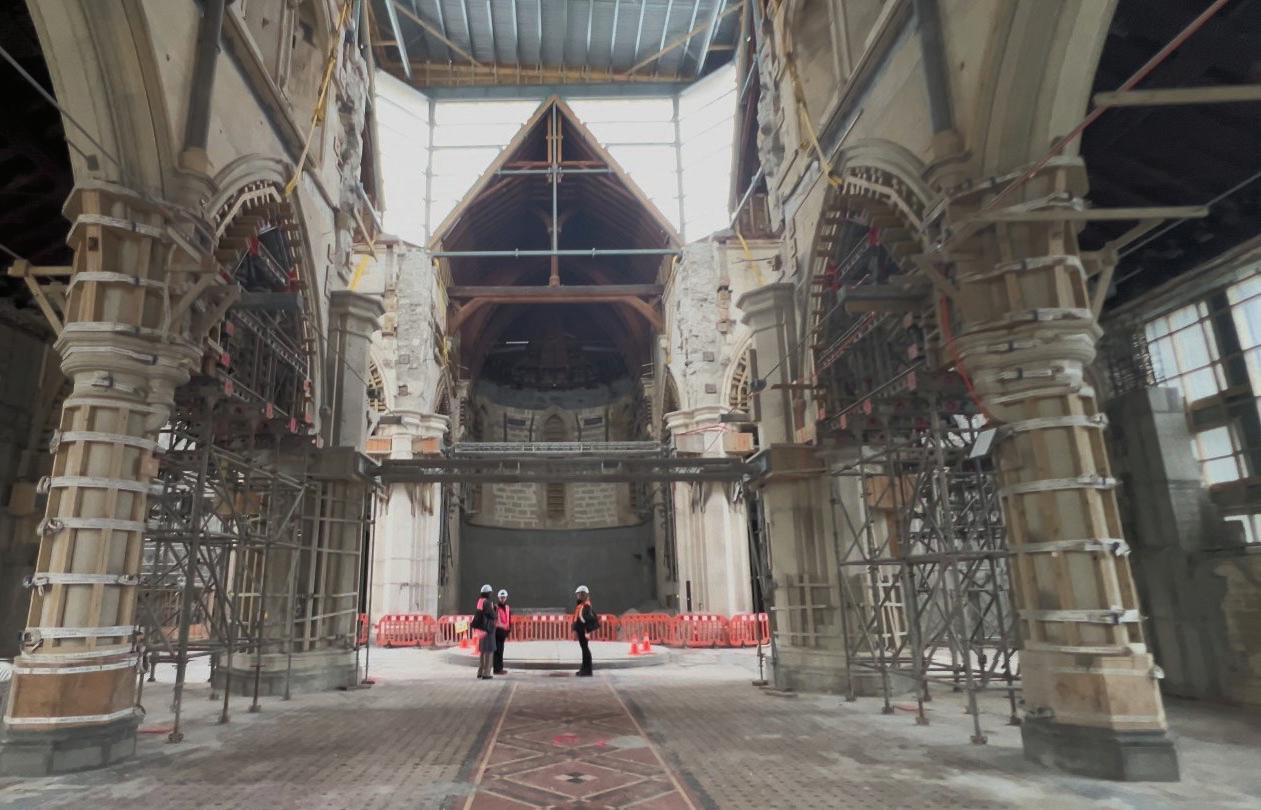
Cathedral Square unearthed exhibition in high demand
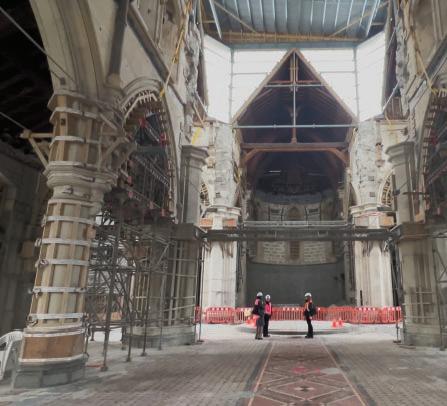
The upcoming Cathedral Square Unearthed archaeology exhibition, in Christ Church Cathedral from 16–22 February, is fully bookedhighlighting what organisers describe as the “huge demand from Ōtautahi Christchurch people to engage with the city’s history inside Christ Church Cathedral.”
Katharine Watson, Chair of the Christchurch Archaeology Project, says the overwhelming response highlights the community’s strong desire to reconnect with the Cathedral and explore the rich archaeological discoveries of Cathedral Square.
The free exhibition is delivered through one-hour tours, each limited to 50 visitors, with several operating daily across the eight-day programme. Due to capacity limits, reservations are essential and made online via Humanitix, where a waitlist for tickets is currently operating.
“Given this overwhelmingly positive response,” says Watson, “we are delighted to announce that we have secured space at The Crossing to
re-mount the exhibition from 24 February to 22 March.
We are incredibly grateful to The Crossing for their generosity in sharing their space with us.”
Dean of Christchurch Very Rev’d Ben Truman said the exhibition was another chance for people to enjoy the Cathedral space, "The Cathedral
has enjoyed hosting many public events in its semirestored state.
Gathering community and sharing stories is part of our mission. With our adjusted approach to reinstatement, we’re looking forward to continuing the manaakitanga in a restored heart of the city."
“The Cathedral is part of our city’s
story, so it’s a delight to be able to use the building to host this stunning exhibition to tell more stories of this city and its lived history” said Dean Ben.
Health and safety protocols at Christ Church Cathedral restrict entry for visitors under the age of 10 and those with limited mobility. The additional exhibition period at The Crossing will provide an opportunity for those unable to attend the Cathedral venue to experience the exhibition in a more broadly accessible setting.
For those who may miss out on this opportunity to visit the Cathedral, the reinstatement team Christ Church Cathedral Reinstatement Ltd (CCRL) will be running an open weekend on 13, 14 & 15 March, which will be complimented by Cathedral Square Unearthed walking tours. Details will be released on CCRL social media channels as they become available.
Unvaccinated for shingles? Shingles jab for aged 70 or older
Shingles, also called herpes zoster, is caused by the same virus that gives you chickenpox. After you’ve had chickenpox, the virus stays in your body, dormant in the nerves near your spine. Later in life, especially as you get older when your immune system naturally weakens, that virus can reactivate and cause shingles. Around one in three people will develop shingles at some point in their life. Shingles can be painful and serious, especially for older adults.
Current shingles vaccines may cause side effects such as headache, tiredness, fever, and injection site pain, and they may not offer full protection for everyone. That’s why new options are being studied to help improve protection and reduce side effects.
If you're 70 or older and haven’t had a shingles or chickenpox vaccine, you may be able to join a clinical trial testing an investigational vaccine that may offer better protection with fewer
Shingles: Potential protection with less side effects
side effects. Every eligible participant gets a vaccine and participation is free.
Why take part?
• Help researchers potentially develop better vaccine options to protect older adults.
• Receive study-related medical care at no cost.
• It costs nothing to take part; participants get reimbursed for time and travel (up to $2850NZD less tax).
This study is approved by Medsafe and HDEC.
To find out more please: Call Optimal Clinical Trials on 0800 73 73 27 ext. 1 OR Email: patientengagement@ optimalclinicaltrials.com OR Visit: www.optimalclinicaltrials.com / open-trials
If you're eligible, our team will be in touch to guide you through the next steps. A
If you're 70 or older and haven’t had a shingles or chickenpox vaccine, you may be able to join a clinical trial testing an investigational vaccine that may offer better protection with fewer side effects. Every eligible participant gets a vaccine and participation is free.
Why take part?
•Help researchers develop better vaccine options to protect older adults
•Receive study-related medical care at no cost
•It costs nothing to take part; participants get reimbursed for time and travel (up to $2850 NZD less tax)
With you. For good.
Archaelogists planning Cathedral Square Unearthed Archaelogy Exhibition in Christ Church Cathedral.
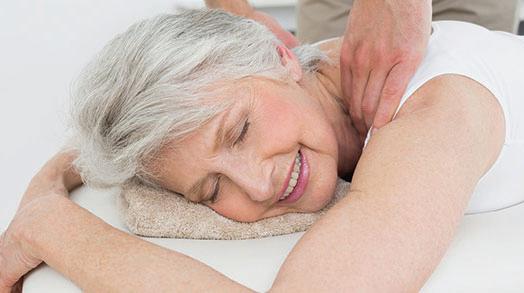
Massage therapy for osteoporosis relief and wellbeing
Massage is one of those lovely things that sounds like pure luxurybut for people living with osteoporosis, it might actually be a practical form of relief. While massage won’t rebuild bone density, it may help reduce pain, improve circulation, and support overall wellbeing. But there are caveats. So, let’s unpack what the science says, what types of massage are best, and what to watch out for. What is massage therapy?
Massage therapy involves the manipulation of soft tissues (muscles, tendons, ligaments) to promote relaxation, improve circulation, and relieve pain. There are many types of massage, and the right one for someone with osteoporosis will depend on the person’s condition, pain level, and fracture risk.
Bene
fits of massage for osteoporosis
Massage can’t reverse osteoporosis, but it may help manage its effects. Some of the reported benefits include:
Relief from muscular pain and stiffness, improved lymphatic and blood flow, better posture and flexibility, educed stress and anxiety and improved sleep.
There’s also anecdotal evidence that regular massage can ease the tension that builds up from guarding sore or unstable areas of the body. Precautions before getting a massage
Massage can be safe for osteoporosis with the right precautions:
* Consult your doctor first - especially if you’ve had recent fractures or are on medication that thins the bones.
* Choose a qualified therapist experienced with osteoporosis clients .
* Speak up about your condition
before the session begins.
* Opt for gentler techniques, and avoid sudden stretches or pressure on sensitive areas .
* And of course, always say something if you feel any discomfort during the session.
Can massage improve bone density? Short answer? No.
Massage doesn’t directly stimulate bone growth or density. For that, you’ll need to look into:
* Weight-bearing exercise, adequate calcium and vitamin D and medications prescribed by your doctor.
That said, massage can still support your overall health and help you stay active and mobile—which indirectly contributes to maintaining bone strength.
Massage as part of a holistic approach
Massage therapy works best when it’s part of a bigger wellness plan. Here’s what that might look like:
Phone 04 499 4862 or Email info@osteoporosis.org.nz Osteoporosis New Zealand, PO Box 688, Wellington 6140 Our vision is better bones and fewer fractures for New Zealanders. Our mission is to make this happen by engagement with the public, health professionals, policymakers and the private sector, through programmes of awareness, advocacy and education, to prevent fractures caused by osteoporosis.
Physiotherapy - improves strength and balance.
Mindfulness practices - lowers stress and inflammation. Each piece helps manage osteoporosis more effectively and improves quality of life.
Final thoughts
Massage can be a gentle ally for people living with osteoporosis. It won’t fix everything, but it can ease discomfort, improve circulation, and help you feel more at home in your body. The key is working with someone who understands the condition and knows how to adapt their technique.
(Source: Edited from Natural Therapy. co.nz).
Used under feet and hands, the Aircycle exerciser is a simple way to relieve joint pain, increase circulation, reduce swollen ankles and cramps, help restless legs, strengthen muscles, and improve balance and mobility. It also aids in the prevention of blood clots when sitting for long periods.
Aircycle provides gentle exercise without weight-bearing or strenuous activity. It’s simple to use, soft on feet and hands and easily deflated for carrying in a pocket or purse. Use it from the comfort of your chair while sitting – reading, having coffee, watching TV or travelling.
A woman from Te Horo invented this simple device to help relieve her husband’s severe arthritic pain and swollen ankles. His arthritis carers were so impressed with the relief and increased joint mobility he experienced they asked her to make more for other sufferers.
Gay from Rotorua says, "Aircycle is better than the information says. The pain in my knees has gone and, although I use a walker, I don’t need it around the house anymore. I can move more freely and have much less pain in both my hands and feet. My feet are warmer too and now I don’t need bed socks which I’ve worn for years."
Sam from Oraki wrote, “I’ve suffered for years with sciatica. It’s gone completely when I use the Aircycle.” Mrs Cooksley from Wellington advised, “I’m diabetic and had an ulcer on my leg which wouldn’t heal. After 7 weeks using my Aircycle it was gone! My Doctor is recommending it to other patients. The pumping motion is addictive and comforting. I use it while knitting.”
Includes lifetime warranty and listed with Medsafe. A wonderful gift for yourself or loved ones!
A Lost World unearthed: ancient cave reveals million-year-old kakapo ancestor
Australian and New Zealand scientists have unearthed the remains of ancient wildlife in a cave near Waitomo, the first time a large number of million-year-old fossils have been found in Aotearoa New Zealand.
The discovery of fossils from 12 ancient bird species and 4 frog species has opened a rare window into how New Zealand looked about 1 million years ago. It indicates that New Zealand’s ancient wildlife was significantly impacted by catastrophic climate changes and volcanic eruptions. This resulted in frequent extinctions and species replacements
well before human arrival.
The research is published this week in Alcheringa: An Australasian Journal of Palaeontology.
Co-author and Canterbury Museum
Senior Curator of Natural History Paul Scofield says, “From our excavations at St Bathans in Central Otago over many years, we have a snapshot of life in Aotearoa between 20 and
16 million years ago. These new findings cast light on the 15 million year period from then to 1 million years ago, which is largely absent from New Zealand’s fossil record.
“This isn’t a missing chapter in New Zealand’s ancient history, it’s a missing volume.”
One of the most significant finds is a new species of parrot, Strigops insulaborealis, an ancient relative of the Kākāpō. While the modern Kākāpō is famous for being a heavy, flightless parrot, this newly described ancestor may have been able to fly.
Continued on Page 20 .../
Nurse Maude Care Home - professional care that is second to none
The Nurse Maude Care Home provides professional care that is second to none.
A fully licensed 75-bed facility where each spacious room comes with an ensuite bathroom. We have large, well equipped communal spaces and beautiful gardens in the heart of Merivale, Christchurch for residents and their visitors to enjoy. We specialise in o ff ering the best care available, including for those with complex health conditions needing long term and respite residential care.
Residents can be attended by their own doctor or have the Care Home's doctor look after them.
Services include physiotherapy, hairdressing, manicures, podiatry, and chaplaincy. There is also an extensive range of activities including virtual reality experiences, books, puzzles, games, animal visits and craft making.
A team of volunteers supports sta ff to help ensure our residents live their best life, we also have a café on site for residents and their visitors.
Feel at home with quality nursing care.
TheNurse Maude CareHome is located in the vibrant neighbourhood of Merivale. It’s a placewhere residents canenjoy a sense of purpose,meaninganddignity with 24/7 nursing care available.
Caring for the community since 1896
Nurse Maude also provides a range of services to provide care to you in your own home. We offer Homecare, District Nursing and Palliative Care services, all free of charge and accessible via a referral from your GP.
Our central location and free access to wheelchairs make it easy for visitors to take their loved one for a trip to Merivale Mall and have a look around the shops.
Our sta ffi ng levels are high, and we are fortunate in being able to o ff er full expert care from Nurse Maude specialist sta ff including Wound Care, Continence, IV, Stomal and Palliative Care Specialists, Dietician, and other key health professionals.
We can also provide short-term respite care for up to 28 days under
the Respite Care Scheme (subjec t to bed availability).
In addition to private residents, people can be referred to the Nurs e Maude Care Home by their doctor. All prospective long-term car e residents will have their needs, income and assets assessed by Older Persons Health befor e admission.
To fi nd out more about the Nurs e Maude Care Home and to arrang e a visit, please call 03 375 4145 o r email carehome@nursemaude. org.nz.
A
Cave near Waitomo, 1 million years ago. (Paul Scofield. AI-generated).
A Lost World unearthed: ancient cave reveals million-year-old kakapo ancestor
Continued from Page 19.../
Analysis of the fossil suggests it had weaker legs than its modern descendant, implying it was a less adept climber. More research is required to confirm whether the ancestor could fly.
The cave also yielded an extinct ancestor of the modern Takahē, which allows researchers to track the evolution of this iconic New Zealand bird, and an extinct species of pigeon closely related to Australian bronzewing pigeons.
Lead author and Flinders University
Associate Professor Trevor Worthy says the study breaks new ground.
“This is a newly recognised avifauna for New Zealand, one that was replaced by the one humans encountered a
million years later,” he says.
“This remarkable find suggests our ancient forests were once home to a diverse group of birds that did not survive the next million years.”
The fossils were analysed by a team of palaeontologists from Flinders University and Canterbury Museum along with volcanologists Joel Baker from the University of Auckland and Simon Barker of Victoria University of Wellington.
The findings suggest that about 3350% of species went extinct during the million years before humans arrived in Aotearoa New Zealand.
Paul says this was driven by relatively rapid climate shifts and cataclysmic volcanic eruptions.
“The shifting forest and shrubland
Stay warm and well this Autumn: why insulation matters for senior Kiwis
As the crisp autumn air settles in and temperatures begin to drop, many New Zealanders start to feel the chill—both in their homes and their health. Cold, damp living conditions can significantly impact well-being, increasing the risk of respiratory infections, arthritis flare-ups, and even heart conditions. That’s why having a well-insulated home is one of the most important steps you can take to stay warm, comfortable, and healthy as the seasons change.
Insulation acts as a thermal barrier, slowing down the escape of heat and keeping your home warmer for longer. Without it, valuable warmth from your heater or fire quickly disappears through the walls, floors, and ceilings. When heat escapes, condensation builds up, creating the perfect environment for mould and mildew to thrive, making it much harder— and more expensive—to maintain a comfortable indoor temperature. This can lead to higher power bills, more reliance on inefficient heating
sources, and ultimately, a colder and less healthy home environment. For seniors, the effects of living in a cold home can be particularly severe. Research shows that prolonged exposure to cold indoor temperatures, dampness and mildew can increase the risk of respiratory illnesses like bronchitis and pneumonia. It can also worsen conditions such as asthma, arthritis, and high blood pressure. Even minor colds and flu can become serious when the body struggles to stay warm.
The good news? Free insulation assessments and subsidies are available now to help eligible homeowners prepare for winter. Funding is limited, so now is the time to act. Insulation could be the key to a warmer, healthier home this autumn and beyond. Don’t wait until winter’s chill sets in phone Community Energy Action on 0800 438 9276 or visit www.cea.co.nz and take the first step toward a cosier, safer home today. A
habitats forced a reset of the bird populations, says Paul.
“We believe this was a major driver for the evolutionary diversification of birds and other fauna in the North Island.”
The fossils could be accurately dated as they were between two layers of volcanic ash preserved in the cave. One layer was from an eruption 1.55 million years ago, while the other was from a massive eruption 1 million years ago. The more recent eruption would have blanketed much of the North Island in metres of ash. Most of it would have been washed away,
but some would have been preserved in caves. The older layer found at this fossil site proves it is the oldest known cave in the North Island.
Trevor says the fossils “provide a critical, missing baseline for New Zealand’s natural history”.
“For decades, the extinction of New Zealand’s birds was viewed primarily through the lens of human arrival 750 years ago. This study proves that natural forces like super-volcanoes and dramatic climate shifts were already sculpting the unique identity of our wildlife over a million years ago.” (Source: Canterbury Museum).
Keep fit with gardening
Gardening helps keep us fit. It works and stretches our muscles. However, it can be hard on other parts of the body, especially our back and knees. Don’t overdo it!!
Here is some advice from Therapy Professionals friendly physiotherapists on how to keep fit with gardening and avoid the physical drawbacks.
General advice:
• start with short bursts of 30 minutes, 2 or 3 times a week. If you feel okay after this, gradually increase the time (don’t double it!),
• change activities after 10 minutes,
• keep a bottle of water with you and sip regularly (dehydration causes headaches and tiredness),
• avoid gardening at the hottest time of the day in full sun,
• remember your hat and sunscreen. Advice to save your back and knees:
• regularly stop and stretch (especially your back and knees),
• kneel on a cushion,
• kneel or get on your hands and knees while doing activities, rather than bend over,
• kneel for maximum of 15 minutes, then change activity,
• install raised beds,
• if you have trouble getting up from the ground and down, use a ‘kneeler’ with handles, or a solid chair for support getting up and down – and for somewhere to sit.
• do all jobs as close to your body as possible e.g. weed with your hands close to you, don’t reach out,
• carry all loads close to your body,
• don’t overfill bags you have to carry, e.g. weeds, compost – use a wheelbarrow or sack barrow,
• when raking or sweeping use your legs in a ‘lunge’ rocking movement–it’s easier on your back than stretching and bending,
• for sore or disabled hands get gardening equipment to suit.
If you want more advice on gardening safely as you age, Therapy Professionals friendly physios and occupational therapists can help, contact us on;
Phone: 377 5280 or email: admin@ tpl.nz or www.therapyprofessionals. co.nz A
IS AGEING, DISABILITY, INJURY OR ILLNESS MAKING LIFE DIFFICULT?
Therapy Professionals Ltd’s physio, speech language, music and occupational therapists and dietitians can make life easier.
What’s On at Age Concern Canterbury’s Older Persons’ Hub
The Older Persons Hub is a collaboration between Selwyn District Council and Age Concern Canterbury to provide social connection opportunities and access to all the Age Concern Canterbury services to the local community. The Hub runs weekday mornings 9.00 – 12.00 at the Rolleston Community Centre, 94 Rolleston Drive and there’s always something happening and always someone ready to greet you with a smile.
Steady As You Go: Chair-Based Exercise for Falls Prevention
Keeping active doesn’t have to mean Lycra or leaping about.
Weekly on a Tuesday at 9.30 the Hub hosts a gentle, chair-based exercise programme, established using Age Concern Canterbury’s well-known SAYGo Falls Prevention Programme. This weekly class focuses on balance, strength, and confidence, all at a relaxed pace and in a supportive environment. It’s about moving safely, laughing a little, and keeping your independence for longer - all without breaking a sweat (unless you want to).
Tech Troubles? Help Is at Hand Phones doing strange things? Tablets not behaving? Emails mysteriously disappearing? The Hub now offers ‘Tech Support’ appointments, giving you the chance to ask questions, solve problems, and build confidence with devices— all without feeling rushed or judged. From smartphones to laptops, no question is too small, and there’s great satisfaction in mastering technology that helps keep us connected to whānau and friends.
Roll the Dice: Games Morning
Whether you’re a Scrabble strategist, a card shark, or just enjoy a good board game and better conversation, this welcoming group proves that fun and friendship go hand in hand.
Making Connections That Matter Are you new to town? Life changed
DECLUTTERING CONSULTANT
Thinking of downsizing? Want help sorting your possessions? Make life easier and more enjoyable
Neat Spaces Canterbury offers experienced in-your-home decluttering and home-organising services
unexpectedly? Feeling a little disconnected? The Hub is actively working behind the scenes to help people connect. An Excel-based database has been created to link individuals with social opportunities that suit their interests, while a growing information centre makes it easy to find out what’s happening.
The Older Persons Hub in Rolleston is more than a building - it’s a place where people come together, learn something new, and feel part of the community again.
For more information, contact Age Concern Canterbury on 366 0903 or visit the Older Persons Hub in Rolleston.
What’s On at Older Persons’ Hub in Rolleston
MONDAY
10.00am to 12.00 noon
Health Services
10.00am to 12.00 noon
Craft Group
TUESDAY 9.30am to 10.30am
Age Concern Canterbury SAYGo (Steady As You Go) Class 10.00am to 12.00 noon
Age Concern Canterbury Social Connection Service
WEDNESDAY
10.00am to 12.00 noon
Help with Technology Appointments
3rd Wednesday of the month
Dementia Canterbury
THURSDAY
10.00am to 12.00 noon
Board Games
FRIDAY
Availability for local group to utilise the Hub space.
Older Persons’ Hub Phone 027 231 4439
For anyone over 65 who needs help with technology. If you need help with your cellphone, laptop or tablet or if you want to learn how to email, video call or take photos, call and make an appointment and we will try and help. Bookings are essential.
BRING YOUR OWN DEVICE.
Phone Emily on 027 231 4439 or email ejohnston@
Giving homes, and people, a second
Our name, White Sparrow, comes from a rare white sparrow that once landed in the backyard of one of our founders – it became a symbol of hope, second chances, and quiet transformation.
That moment inspired our name, and our purpose: to give homes - and the people connected with them - a second flight. We are a Christchurchbased home renovation business with a heart. As an alternative to the traditional real estate process, we purchase homes directly and privately, without the need for open homes, marketing campaigns, or agent commissions.
We work with older homeowners
and their families who are preparing to move into a retirement village, or rest home care and are looking for a simple, low-stress way to sell their home. Our aim is to make what can be a challenging transition as smooth and respectful as possible. Our process involves the following:
• A private, off-market sale
• No open homes or advertising
• No real estate agent fees or commissions
• Flexible settlement dates to suit moving arrangements
• A straightforward and supportive process for older homeowners and their families
• Homeowners are encouraged to
involve their family and whānau and obtain independent legal advice at every stage.
For homeowners, we offer a simple, respectful sale for your property. No agents. No open homes. No repairs needed. We’ll buy your home as-is and give it a second flight. Families often appreciate this option when certainty, timing, and privacy is important. There is absolutely no obligation, simply another pathway available alternative to listing with an agent.
Please contact Sherma at White Sparrow homes on phone 0800 869 869 or email him at Sherma@ whitesparrowhomes.co.nz. A
Thinking about selling your home?
White Sparrow Homes restores neglected Christchurch houses into warm, move-in-ready homes, giving sellers peace of mind and buyers a fresh start. If you are facing a big life change, or just ready to move on from a property that needs too much work we will make the process simple, flexible and respectful.
* Book a FREE appraisal.
* We make an offer.
* You set the timeline.
* We handle the rest.
Keeping On eeping On 22
Christchurch Red Hatters Club No set meetings but the Club has ‘gatherings’ which include monthly events such as luncheons, dinners and an outing/activity. Contact: Iris Cousins on 021 0209 3598.
Christchurch Senior Citizens Cards section meets on Mondays, 12.15-3.00pm; Indoor Bowls section meets on Tuesday at 12.30-3.00pm; the Activities Group has outings for meals and social days, visits places of interest and go on bus trips. Contact: Veronica on 383 4682 or 021 1187 360 or Beth on 388 2375 or 027 261 0493.
UPDATE FROM THE CLUBS
Lincoln Area Senior Citizen Club Members enjoyed a lunch and catch up at the Flaming Rabbit in January. For the February meeting there was a guest speaker The Clubs’ AGM will be held in March. A trip to the Resource Recovery Centre then lunch at Darfield will take place in April. Meet: First Tuesday of the month at 1.30pm at the Lincoln Event Centre. Contact: Evelyn 027 712 7195.
Papanui Rebus Club Meet: First Tuesday of the month at 10.00am at the Morrison Avenue Bowling Club, 30 Morrison Avenue, Papanui, Christchurch. Contact: Gillian on 03 352 6697 or Sian on 03 359 0057.
The Gentle Power of Massage Therapy for Seniors
Are you aware of how effective massage therapy is in support of your health and comfort, especially alongside other therapies such as physiotherapy, osteopathy, or medication for pain management?
Massage therapy offers an unique kind of care. It not only helps ease muscular pain and improve mobility but also supports your body’s natural ability to relax and heal. When combined with natural, antiinflammatory and relaxing essential oils, massage can bring soothing relief to tight, inflamed or painful areas, helping you move with more ease and confidence.
Pain in the body affects more than just the muscles and joints - it also impacts the nervous system. At InEssence, we take a gentle approach to pain relief. Rather than focusing only on the site of discomfort, each session helps calm and release the entire nervous system. This wholebody relaxation encourages the body to restore balance, which in turn reduces pain and promotes a greater sense of comfort.
“I was nervous to try massage therapy at my age, but Valerie put me at ease right away. The sessions are so gentle and calming. My joints are less stiff, and I sleep better afterwards.” Margaret, 78.
“My arthritis pain has eased up so much with regular sessions, and the oils are so effective. It’s something I actually look forward to every week.” Helen, 55.
“The oil blend Valerie has recommended has been so effective. I use it on my knees in the morning and before bed, and it really helps with the pain. I feel more in control now.” John, 80.
If you’d like to experience this kind of gentle support, I invite you to book a session or join me at a community Talk for Seniors to learn more.
Please reserve your spot in advance as numbers are limited.
Venue: Piko, Wedesday, 11th February from 1.00pm to 2.00pm or Wednesday, 11th March from 1.00pm to 2.00pm.
Contact Valerie 021 216 2708.
Primetimers 10 Pin Bowlers meet for fun bowling and interacting with likeminded over 60-year-olds. The emphasis is on pleasure rather than competitiveness. Meet: Mondays at 1.00pm at Zone Bowling, Iverson Terrace, Christchurch Contact: Brian 03 332 0531.
Pegasus Daylight Lodge No 450 is a Freemasons Lodge appealing to over 65-year-old Masons. Meetings have minimal ceremonial content. Partners join for lunch and an activity/speaker. Meets: 3rd Wednesday, 11.00am, Canterbury Freemasons Centre, 9 Shirley Road, Christchurch. Contact: The Secretary, pegasus450@xtra.co.nz or call Gerald 021 1704 179.
GROUP EXERCISE CLASSES
Blue Brothers offering wellbeing and camaraderie to men living with cancer. Free exercise classes followed by a cuppa at a nearby café or on-site premises.
Christchurch at Elevate Fitness, 4 Rolleston Avenue, 8.15am,Tuesdays. Rangiora: Mainpower Stadium, 289 Coldstream Road, 8.15am on Monday, Wednesday and Friday. Rolleston: Selwyn Sports Centre, 70 Broadlands Drive, 2.00pm every Tuesdays. For enquiries or to register your interest, phone 0272027525 or email hello@bluebrothers.org.nz
Walking alongside you with compassion and support
Do you feel awkward when comforting a grieving friend? Or discouraged when conversations turn toward dying? Or overwhelmed by the financial realities of funeral planning? These are common concerns in my work as an end-of-life doula and palliative social worker. Originating in Ancient Greece, doula means ‘person of service’. An end-of-life doula offers holistic, compassionate support to individuals and those who love them, particularly during diagnosis, during the ageing and dying process, and when facing the deep realities of mortality. By creating a safe, and honest space in which difficult conversations can be held, I am guided by your priorities for living and dying well. Skilled in grief education and emotional support, family facilitation, advance care planning, funeral planning, and advocacy, I can walk alongside you and your medical team to be a steady, compassionate presence as you consider where, how, and with whom you wish to spend your precious time.
For as long as I can remember, I have been interested in life’s stages and transitions, particularly dying. My professional training in social work and palliative care, together with my personal experiences, have shown me the vital role of compassionate support at the end of life – and my gentle, considered approach honours death as part of the life cycle and grief as part of everyday life. Our experiences are always unique, and support is available in every season. Please be in touch for a free initial chat or visit my website for further details.
From a client: “Liz was very helpful in providing resources on coping strategies, and dealing with grief, and offered her support and practical knowledge to the family. I found her to be approachable and sensitive to the situation and the needs of the family."
The Fifth Season: www. thefifthseason.co.nz End of Life Doulas: www.eldaa.org.nz A
A teen, seven residents and the meaning of life
Listening to seven residents at a care home made me notice things about life I hadn’t before. I went in with a few questions, not knowing what to expect, and I was struck by how willing the residents were to reflect on their life with a teenager who had just knocked on their door. But I soon realised that there was little they wouldn’t talk about.
Perhaps one of the most striking things was their response to what makes life meaningful for them. It struck me, not because it had never crossed my mind before but because almost every resident, across all my conversations, gave the same response. It wasn’t the achievements they had attained or the material possessions they owned, even though some certainly didn’t lack them. The things that make life meaningful are the relationships we have with other people and the joys we share. When I asked one resident what she used to think was more important when she was younger, she said, “Things. Things that you buy for yourself. Whereas now it’s about having a laugh with other
by Bill Li
people. That’s more important than worrying about going to the shop and buying a new chair or something. Things are not important. People are.” Not all of them may have given the same advice to their 20-yearold self, not all of them wanted to be remembered for the same thing, and not all of them thought their wedding
was the most important day to relive. However, nearly all of them named the people around them and the connections they had as the thing which gave them the most meaning in life.
And that may sound cheesy, I know, and honestly, I’m sure many of you might’ve heard that before, but it’s not until you step into a care home where all the identities outside fall away that you realise just how true that statement is. When everyone lives under the same roof with the same routines, what remains are the relationships they’ve built and the moments they share.
Listening to these stories, it also occurred to me that so much of what we’ve been conditioned to value, like grades in school or finding a good job to earn wealth, was not important enough for the residents to mention. Instead, when they had to strip away all the extraneous details of life, it was the human connections that left the lasting impact. And as a 17-yearold who maybe values some of those things a bit too much, it did make me think that the stuff I stress over every
day might not matter nearly as much as I think.
One of the main reasons that led me to volunteer at a care home was the opportunity to talk to people who knew more about life and had seen and experienced more than I had. And while it was just having conversations at first, I quickly realised that what they said was something worth capturing. I began writing and interviewing residents, and with the generous support of a local primary school art teacher and her class of year 6 students, many of those reflections were illustrated and brought together into a small booklet, as a way to preserve their stories while also creating a meaningful connection between two generations. I’m very grateful to the support Windsorcare and Age Concern Canterbury offered throughout the making of the booklet.
If you’d like to find a copy, they are available at the Age Concern Canterbury office at 24 Main North Road, Papanui and I will also try to make them available at local libraries.
Discover the ultimate electric trike: your freedom on three wheels!
Are you ready to embrace the open road with confidence and style? Our 3-Wheel Electric Trike is designed for those who refuse to let age slow them down. With a host of features tailored for comfort, safety, and performance, this trike is perfect for you and maybe a companion to enjoy the journey together.
Key Features
* Adjustable Seating: Comfort is key! Our trike comes with adjustable seating which can accommodate two people.
* Large Wheels for Stability: The robust large wheels provide excellent stability and control, making your ride
safe on various terrains.
* Power to Travel: Equipped with 2 x 500W motors, this trike delivers impressive power and acceleration, allowing you to travel further and faster.
* Long-lasting Battery: 30Ah lithium battery ensures you have the range to explore without worrying about running out of power. Enjoy longer rides.
* Safety First: Our Electric trike features hydraulic disc brakes for reliable stopping power, along with 2 hand brakes, lights, indicators, mirrors, and an alarm system to keep you safe and secure.
* Built-in storage: Rear bin and a
glove box with bag hook can carry your essentials, making it perfect for errands or leisurely rides.
Why Choose Us Wired 2 Ride
At Wired 2 Ride we pride ourselves on creating the best e-trikes and e-mobility solutions in New Zealand. Our commitment to quality and customer satisfaction means you can trust us to deliver a product that enhances your mobility and independence.
With our sister company trading since 1997 making talking products for the blind and distributors of Seiko and PKCELL Batteries in New
Zealand, we have a proven track record.
Let us help you on your next journey.
In addition there is:
* free nationwide shipping.
* 3 Year Warranty.
* FREE Cover.
Don’t let age or health slow you down, live as fast as you want to! No longer drive or ride a bike? Don’t stop or slow down. Experience the freedom and joy of riding our electric trikes. Ready to ride? Try one, live a little!
Call me, Donald, on 022 510 4911 A
Keeping On eeping On
Giant Hogweed:Triffids in suburbia
Turn and run!
Nothing can stop them, Around every river and canal their power is growing. Stamp them out!
We must destroy them, They infiltrate each city with their thick dark warning odour. They are invincible
They seem immune to all our herbicidal battering.
You might think these words from Genesis’ 1971 album Nursery Cryme sound a little hysterical. What sort of a plant could be so scary? What sort of a plant indeed? Remember the very first episode of the botanical murder mystery, Rosemary and Thyme some years ago? A very rich bloke lay in bed covered by mysterious suppurating sores, while his adoring wife (not!) anointed him daily with her mother’s evil concoction, and toasted him under a sun lamp? And it’s the same plant, which, if you gave, traded or received it in some states of America could earn you a half million dollar fine.
It’s heracleum mantegazzianum, aka Giant Hogweed, and it’s here right now, with its thick dark warning odour, in our city. In fact – there’s an absolute whopper in my own backyard. Am I scared? Well yes, and no.
On the one hand I love the way it looks. With its leaves easily as big as Gunnera, flowers up to a metre across, and that thick purplish and prickly stem aiming for the sky, it adds a striking, other-world quality to the surburban garden oasis. When my chap dons his pith helmet and takes up the slasher at the end of the summer, I can almost believe we’re in deepest Africa.
It does have a practical use. Blackbirds in particular love our organic, worm-filled beds. At chickrearing time they dig half-way to China through the layers of compost and straw and animal manures, tossing aside newly planted seedlings and covering others, and leaving the good earth unmulched and dry. Thwarted by a layer of hogweed leaves weighted down with short lengths of sturdy stem, they partake instead of a mixture of cooked rice, windfall apples, and dripping. I’m in charge of my garden again! The compost heap too, would be a miserable pile without hogweed.
On the other hand though, I’m very aware that in certain conditions, and to some people, this giant can cause a great deal of pain and suffering. Children in the UK and America have been scarred for life after using the hollow stems as blowpipes.
The problem is phytophototoxins, quite rare in the plant world but easily understood by breaking down the word itself - phyto = plant, photo=light, toxins = poisions. Quite simply, when toxins in the hogweed sap come into contact with the human skin, which is
by June Peka
then exposed to sunlight, the skin is poisoned, resulting in painful swelling, burns, blisters, and (sometimes semi-
permanent) purplish/black scarring. The sufferer can be required to avoid sunlight for the rest of their lifetime. Personal experience suggests that some people (such as the chief slasher in this household, who happens to be allergic to bees too) are more susceptible than others. I, who suffers no more than a little localised discomfort after a bee sting, have only once had a minor run-in with the giant weed, and the scar faded in days.
Of the genus Apiaceae, and therefore closely related to carrots, parsley, celery and coriander, the young giant hogweed could be confused with the smaller and harmless cow parsnip (heracleum lanatum) or even Queen Anne’s lace. It began life in the Caucusus Mountains and south west Asia, but probably 200 years ago was introduced to the rest of the world as a gardening curiosity. With its huge bold leaf, it even added sculpture and interest to the Royal Gardens at Kew.
Middle-Eastern cooks use its pungent seeds in bread baking and chutneys.
Favouring cool, shady and damp conditions the largest concentrations of giant hogweed in New Zealand can be found in coastal Canterbury and Otago, alongside rivers and secondary roads, near dumps and wasteland. Some years it’s more prevalent than others. This year our monster popped up, of it’s own volition, on the darkish south side of the house.
Once established giant hogweed is not easily eradicated. Poisons kill only what is above the ground, and cutting off at ground level seems only to encourage rapid new growth. Gathering seed heads before they fall, and digging out the complete root seems to be the only sure-fire means of control. Genesis suggests “strike by night, (when) they are defenceless”. So, will I do this? No, not yet I think. Sadly, bees are short of fodder in our highly developed neighbourhood.
CMM autumn charity concert - an afternoon with Martin Setchell
Experience a rare musical treat as celebrated international organist
Martin Setchell performs live on 19 April at 2.30 pm at All Souls Church, 30 Church Lane, Merivale. Your ticket includes refreshments and supports the Mission’s vital work. Tickets are available now at https://events. humanitix.com/cmm-autumn-charityconcert.
Born and educated in England and awarded a prestigious Fellowship of the Royal College of Organists, Martin has built a remarkable career spanning continents. After emigrating to New Zealand in 1974, he spent 40 years teaching at the University of Canterbury School of Music, shaping generations of musicians
before moving into full-time freelance performance and advocacy for the organ as a concert instrument.
A regular and warmly reviewed performer on the international circuit, Martin has been praised as “a performer who believes organ concerts can be fun.” His career has
Modern
taken him to many of the world’s most iconic organs, and he currently serves as curator of Christchurch’s Town Hall Organ. His blend of virtuosity, charm, and humour promises an uplifting afternoon in support of a worthy cause.
Make this special event part of your autumn calendar and enjoy an inspiring performance while helping strengthen the Mission’s work.
What you’ll enjoy:
• A world-class organ performance.
• An intimate concert setting at All Souls.
• Refreshments included with every ticket.
• A chance to support the Mission’s community work. A
living. Timeless care.
For over 60 years, we’ve provided professional, compassionate care in a serene setting.
When it’s time to transition from living at home into a more comprehensive support environment, WesleyCare is the right choice. We offer a range of affordable options, from rest home and hospital level care through to respite and palliative care. Our experienced staff build genuine relationships with residents, and our purpose-built facilities provide all the comforts of a warm, modern home.
www.wesleycare.nz 91 Harewood Road, Papanui
June Peka and the Giant Hogweed.
Organist, Martin Setchell performs on 19th April at All Souls Church, Merivale.
Memories: The Liquor Run
“The richest bank of all is our memory bank. For years we deposited experiences there. Now we can withdraw them. The interest accruing is our enjoyment.”
The Christmas holiday job I had through the mid-1960s was the envy of any teenaged schoolboy. For part of December and most of January I delivered beer, wine and spirits around Christchurch.
The liquor company was Quill Morris (QM), based on Dundas Street, next door to its fellow company, Quill Morris Cowles (QMC). The latter produced soft drinks.
With my new driving licence I carted liquor to Working Men’s Clubs, hotels and private customers, in a Thames Freighter van. When needed, I accompanied one of the company’s two flat-deck truck drivers as an “offsider”. I also learned to play darts in the lunch breaks and sipped a few beers.
On a very wet day one of our trucks, loaded with crates of booze, tipped
by Mike Crean
over on the intersection of Moorhouse Avenue and Lincoln Road. I had to go and help clean up the mess. Whew, what an aroma! Sadly, I never saw that driver again.
In a sadder incident a pub outside Christchurch was running out of beer. The publican phoned for an urgent delivery. The boss mounted the forklift and loaded the truck. Then he asked me to go with the truck driver to help. Off we went. At the pub we barrowed 40 crates inside. Then we packed some empty crates to take back to base.
The publican was relieved and insisted on “shouting”. After all, it was only two days before Christmas. The driver scoffed several beers. (It was a very hot summer day.) He also remembered the instruction to deliver a carton of wine on the way back, to a
private home in Fendalton.
Heading back to town, we detoured and stopped at the Tuahiwi cemetery. The driver told me his daughter lay there. He walked to her tiny grave and fell to his knees. Tears poured down his cheeks.
Then we were away again. Soon we reached the Fendalton mansion. It had a long, winding shingle drive. The driver put his foot down and we spun round the circuit, spraying empty beer crates and small stones over the lawn. Sheepishly, I put the wine carton at the feet of a horrified gentleman at the front door and quickly got back in the truck.
Halfway back to base we spotted the QM manager in his flash car speeding towards Fendalton. I never asked if my driving mate was fired. Neither did I ever see him again.
Waikari
Wednesday, 11th March
Rangiora
Wednesday, 18th March
Lincoln
Monday, 20th April St Albans
Wednesday, 29th April
Heathcote
Tuesday, 19th May
Foot comfort starts with the basics
Foot comfort starts with the basics. When it comes to foot health, it’s often the simple things that make the biggest difference. At Feet First Podiatry, one of our popular services is Just Toenails - a straightforward, professional toenail care appointment designed for people who want their feet kept comfortable, tidy, and well cared for.
For many, toenails can become difficult to manage due to thickening, reduced flexibility, vision changes, or general wear and tear over time. Left
unattended, nails can become painful, hard to trim, or prone to infection. Our Just Toenail service provides gentle, professional care in a clinical setting, helping patients stay comfortable, mobile, and confident - without needing a full podiatry consultation. What makes this service especially valuable is that it also acts as a gateway to early detection.
During these appointments, our trained footcare assistant can identify potential issues early and
recommend further podiatry care if needed. It’s preventative, practical, and reassuring.
Foot comfort doesn’t stop at nail care alone. That’s where our sister business, The Shoe Room, comes in. Now located in Ferrymead alongside our podiatry satellite clinic, The Shoe Room specialises in supportive, wellfitted footwear that complements podiatry recommendations.
The right shoes can significantly reduce pressure, improve balance,
and help maintain foot health between appointments - making it a natural extension of the care we provide.
To better support our wider community, Feet First Podiatry's satellite clinics operate in Ferrymead and Darfield, providing professional foot care closer to home. At any stage of life, looking after your feet helps keep you active, independent, and comfortable. Sometimes, it really does start with just your toenails. A
Aiming to retire from work, but not from life
Retirement has been its own kind of adventure so far, and I’m still settling into it. After years of structure, having more freedom is great but sometimes a little overwhelming. There are so many ways I could spend my time that sometimes I end up not choosing anything at all. These first few months have been about easing into the pace and figuring out what feels good when every day is wide open.
Although it feels much longer, at the time of writing this I’ve only been away from work for about six weeks. My last day in the office was December 23rd which just happened to coincide with the annual office shut down. So, retirement didn’t seem real until a few weeks into January. The holiday season blurred the lines, and suddenly everyone was back at work and…well, I wasn’t.
I have plenty to do, lots of time to do it
by Deirdre McGrath
in, but sometimes feel that nothing has been done. However, I realise I have actually been quite busy. First there were all the Christmas holiday family catchups, more special this year with siblings, nieces, and nephews from out of town and overseas. Between these family gatherings (filled with food, laughter, and music), I found some time to read.
My friend Helen acts as my personal librarian, sharing books she enjoys from the library. It’s great that we have similar taste! More organised than I, she is always quick
Supporting independence and connection
For more than 40 years, Aspire Canterbury has stood beside people with disabilities and their whānau across the Canterbury region - from Timaru to Kaikōura and inland to the mountains. Established in 1982, Aspire continues to be a trusted local charity helping people live independently, stay connected, and access the right support when it’s needed most.
Aspire is Canterbury’s largest provider of Total Mobility discount taxi cards, helping over 7,500 people maintain their independence and get where they need to go. Our friendly Mobile Service Van visits retirement villages, rural towns, and community centres, bringing information and mobility products directly to people who find travel difficult.
At our Shop at the Braintree Centre, you’ll find an excellent range of mobility aids, from walkers and wheelchairs to daily living items that make life easier. We also hire equipment at accessible rates, and also pass forward donated items like walkers and wheelchairs to those in need.
A big part of Aspire’s work is the Disability Information and Advisory
Service, a free, friendly, and practical service similar to the Citizens Advice Bureau but focused on disability and age-related needs. Whether it’s finding home support, understanding disability funding, or learning about local groups, Aspire’s team walks alongside you to help navigate the health and disability systems with confidence. Aspire also host events and workshops throughout the year, including Next Steps (for young disabled people considering what comes next after school) and Thrive (a wellbeing series designed for people living with disability). These events, along with many community presentations, help reduce isolation and create meaningful connections. Social connection and inclusion are at the heart of everything Aspire does. We work hard to remove barriers and open doors - so everyone, no matter their age or ability, can live their best life. To learn more about our services or to see how we can support you or someone you care for, visit www. aspirecanterbury.org.nz or call (03) 366 6189. A
Making Everyday Life Easier
Need a little extra help to stay independent? Aspire Canterbury has been supporting older people and those with disabilities across Canterbury since 1982.
Inspiring
Mobility Aids & Daily Living Equipment – walkers, wheelchairs, and practical tools to make life easier.
Equipment Hire at affordable rates.
Free Disability Information & Advice to help you find the right supports.
Total Mobility Taxi Cards for discounted transport.
to request books based on reviews or recommendations, while I make a note on paper which I can never find again. Her efficiency and willingness to share also helps me to enjoy a broader range of books.
I’ve also been looking at ways I can use the produce from our garden. I use the term “our” very loosely as the gardening work is all done by Peter, and I have the job of making sure it gets used. HIS very abundant garden has resulted in a dozen jars of pickles, a couple of carrot cakes, rhubarb muffins, cucumber salads, red onions and spring onions in everything, and potato dishes in all forms. And now I notice the cherry tomatoes and beetroot are ready, so there will be more cooking, baking, preserving and freezing to be done.
While I haven’t tried anything completely new yet, I have begun swimming somewhat regularly, pushing me out of my comfort zone as I haven’t swum laps for decades. It is amazing how something so simple can feel so
daunting yet is so rewarding.
The biggest change I've noticed since retiring has been simply getting used to life without the daily routine of going to work. It is quite an adjustment. There are evenings when I find myself thinking about something I want to share with my colleagues the following day, only to remember that those opportunities for casual conversation are no longer a regular part of my life. The transition has also affected how I view my wardrobe; I still catch myself referring to some things as “work clothes,” even though there is no longer a need for them.
I miss the simple pleasures from work, like grabbing a morning coffee from “The Hutch” and enjoying the lively chat that always accompanied the morning tea break. Without constantly looking at my office calendar, I sometimes lose track of what day it is entirely. These small but significant changes have all added to the adjustment period, as I learn to navigate my retirement journey.
Homeopathy for your health
After 40 years of experience in homeopathy, Dr Rose Isbell (formerly Wendy Rose) has retired from medicine, and now has a dedicated homeopathy clinic in Spreydon.
What is Homeopathy?
Homeopathy is a holistic system of health care that treats the whole person, rather than just an illness. Remedies are chosen according to the pattern of symptoms the person has. Homeopathic treatment does not directly change your diet or lifestyle. Homeopathy is often used alongside conventional medical treatment. What can Homeopathy treat? Homeopathy works with your body to strengthen your well-being. The aim is to reach your best possible health - physical, emotional and spiritual. It is suitable for all ages, all levels of health, and for short term and long term conditions. It is especially helpful for recovery after accidents and surgery.
What happens in a homeopathic appointment?
Rose talks to you about your illness, then checks with reference books to choose a homeopathic remedy, and gives it to you. Sometimes people have a single visit, and other people may benefit from monthly treatments for a while. With her experience, Rose is keen to see new and old clients, to help them maximise their health. Homeopathy also works well alongside conventional medical treatment.
Labyrinths
Rose is also interested in Labyrinths, patterns on the ground that are walked as a meditation. She has a permanent one at home, and a portable canvas one, and co-ordinates with others to provide labyrinth experiences. There are brochures and more information on her website www.roseisbell.nz.
Wills and Estate disputes: how proper advice can prevent costly
Disputes over wills and estates are increasingly common. As family dynamics become more complex, disagreements about how an estate should be handled arise more frequently. Many families are surprised to learn that, even when a person has made a will, their estate can still be tied up in legal claims for months or years.
In many cases, these disputes could have been avoided with careful planning and proper legal advice. Understanding the types of disputes that commonly arise is the first step in reducing the risk of unnecessary conflict.
Part One of this article outlines the most common types of estate disputes and why they occur. Part Two, to be published later, will discuss practical steps people can take to help their loved ones avoid these issues.
Most common types of disputes
1. Claims by children or other family members
Under the Family Protection Act 1955, certain family members can make a claim against an estate if they can show the will fails to provide adequately for their maintenance and support. These claims can arise even when a will is legally valid. They often occur when one child receives more
than others, a child or grandchild is excluded, or the will does not reflect current family circumstances.
A surviving spouse or partner may apply to the Court to divide relationship property under the Property (Relationships) Act 1976 instead of accepting what is provided in the will. This can reduce the estate’s value and affect what other beneficiaries receive. These disputes may arise despite a valid will and can place financial and emotional strain on families.
3. Disputes about promises made during life
Claims sometimes arise when someone alleges the deceased promised to reward them in the will for services, care, or support. These disputes can be difficult to resolve, as they often rely on recollections of conversations or informal agreements.
4. Challenges to will validity
Wills may be challenged if it is alleged that the deceased lacked capacity when signing, was subject to undue influence, or failed to follow legal formalities. Such challenges are stressful for families and often involve disputes about the deceased’s state of mind or circumstances at the time.
5. Disputes over interpretations of a Will
Outdated or poorly drafted wills may leave provisions open to differing interpretations. These disputes can result in lengthy, costly court proceedings, delaying distribution and straining family relationships.
Part Two of this article will outline
practical steps to reduce the risk of these conflicts.
If you require assistance with your will or estate planning, or are involved in an estate dispute, contact the experienced team at Harmans on phone 03 379 7835, who are ready to provide guidance and support.
Lunchtimes in the Great Hall
College Hall (now named the Great Hall) was opened to both acclaim and controversy in 1882.
Controversy because classroom space at Canterbury College (now the University of Canterbury) was in short supply. Acclaim because the hall was (and remains) so impressive.
In its early years, the Great Hall housed the college’s small library and was used for public lectures and formal graduation ceremonies. Over time, the university allowed greater use of the hall for events such as student dances, society gatherings, and musical recitals.
Many decades later, musical recitals are very much the order of the day, as the university’s move to Ilam, the development of The Arts Centre, and even the devastation of the 2010-11 earthquakes recede into the past.
In particular, Concerts for Christchurch and The Arts Centre offer an annual series of lunchtime concerts featuring the best of local and visiting musicians in classical and jazz.
Concerts are held in a regular timeslot (1.10-1.50pm) on selected Mondays.
The 2026 series starts on Monday 16 February with Tom Rainey and friends. Then the Fiona Pears quartet waltzes and tangos its way through lunchtime on 23 February. March will see concerts by pianist Flavio Villani, Toi Toi Opera, jazz ensemble
on
Tiger Moth, and the Lumière Trio (flute, flute/piccolo, piano). The year continues with quality performances right through to December.
See the full list online or pick up a brochure from any Christchurch public library or Christchurch City Council service centre.
Adult tickets are $20 plus booking fee. There’s a significant discount on offer to members of Friends of The Arts Centre and Concerts for Christchurch Friends. As devotees already know, these concerts are also the perfect excuse for a coffee catch-up or leisurely lunch too.
Full details: www.artscentre.org. nz/whats-on
David McGregor will be performing
the 21st September 2026.
Keeping On eeping On
Happy memories of the Waltons’ family holidays
Year after year the Waltons went to the same place for our summer holiday. It was a ritual that my brother and I look back on with huge affection. Our family didn’t have a car until I was about 9, so we would all travel by the road service bus up to Hanmer. My father belonged to the Odd Fellows Lodge, and they owned a cottage in Hanmer which we used to rent for a very moderate sum of money. When I say we travelled by bus, it makes it sound so terribly easy, but in reality it required a huge amount of planning by my parents. I remember we used to take so much stuff with us, including boxes of produce that we’d grown in our garden, and dam making equipment for our annual Dog Creek dam. Our neighbour, Mr Scully, the taxi driver would be enlisted, and he would ferry us to the Road Services Terminal.
When we arrived in Hanmer, after the torturous bus trip on twisty gravel roads, where everyone suffered violent bouts of bus sickness, we then had to walk our mounds of luggage around to the Lodge cottage at 36 Scarborough Terrace. Once we were there our blissful, but simple holiday began. Our days would start with a swim in the hot pools, then straight to Dog Creek where we would commit environmental carnage by building the biggest dam we possibly could. My brother and I look back on those happy days with great affection and nostalgia. Even today if I get even the slightest whiff of bread being baked it takes me immediately back to early mornings in Hanmer.
This all changed when my parents bought their first secondhand car, which was a white and green twotoned Singer Gazelle. I remember the night my father brought it home for the first time, because we all excitedly went out to meet our new passport to comfort. We sat in the car and marvelled at how comfortable and modern it was. Being the youngest of the three boys, I got the middle back seat – no arguments because I knew
by Mark Walton
my place! Dad was not confident driving it up the driveway so that night it sat outside 687 Worcester Street until the morning.
Having our Gazelle changed our summer holidays, and meant that we could break with tradition and see more of the South Island. My mother was one to devour the newspaper, and she spotted a house to rent beside Logan Park in Dunedin. She got on her pushbike and cycled around to the phone box outside the Dallington Post Office, and phoned the number – we were in luck, so off to Dunedin the Waltons headed.
Now, for a major journey like this there was one thing we needed, and that was a copious supply of pic-a-mix, we couldn’t travel to the other end of the world without large quantities of sweets. The result of these sweets have kept my dentist in overseas holidays and new BMWs ever since!
On the way to Dunedin we stopped in on my grandparents at 290 Otipua Road in Timaru, and then kept driving until we arrived at Logan Park. We had no idea what our holiday house was going to look like, because it was before photos were sent with ease. You have to consider that the cottage we stayed at in Hanmer was tiny, and by the way is still there. When we pulled up in front of our Dunedin residence, we couldn’t believe that for the next two weeks we would be living in an old, giant two-story Villa –it was the nearest thing to a castle that the Waltons had ever experienced. Now, don’t get me wrong, it wasn’t posh, but it was big, actually it was huge. During term time it was rented
out to university students, so each bedroom had the biggest desks we’d ever seen. These desks turned out to be the most perfect place for our jigsaw puzzles. We had multiple jigsaw puzzles going at the same time – summer bliss!
We explored the Botanic Gardens, visited the Otago Peninsula, swam in the Moana Pool and visited the art gallery, and museums. The early Settlers Museum was my favourite. Our holiday coincided with our family friends, the Spraggs being in Dunedin at the same time, and this added so much to the fun of our holiday. At that time I hadn’t yet started playing the clarinet, so I didn’t know that in the future my brother’s
MONDAYS
9.00amBoard Games
10.00amMorning Tea
10.30amArts and Crafts
12.00noonBYO Lunch / Socialise
12.45pmExercise Class
1.30pmVariety Hour
2.30pmAfternoon Tea THURSDAYS 9.00amBoard Games 9.30amMass 10.00amMorning Tea 10.30amBoard Games
friend, Keith Spragg and I would play clarinet side by side in the New Zealand Youth Orchestra and the Christchurch Symphony Orchestra. Interestingly I know exactly which year this wonderful holiday happened, because I remember listening to the news on the radio in that Logan Park house, that on December 3rd 1967, Dr Christiaan Barnard had performed the first heart transplant in Cape Town, South Africa.
I also didn’t know that I would meet my wife in Cape Town when I was a member of the orchestra there. There was so much I didn’t know when I was ten but I will never forget these happy memories.
Looking after your legs and feet
Peripheral Arterial Disease (PAD) is a condition in which plaque (atherosclerosis) gradually builds up in the arteries over time, resulting in reduced blood flow to the legs and arms. It is a common disease that affects people over the age of 50. The plaque that builds up in your arteries consists of cholesterol, calcium, and fat. Risk factors include high blood pressure, high cholesterol, family history, obesity, end-stage renal disease, and lack of exercise. It is often associated with diabetes, and smoking.
Symptoms occur when your legs don't get enough blood flow to keep up with demand. Symptoms may include pain in the hips or legs while walking. With severe occlusions, pain in the legs may occur at rest. Untreated, peripheral artery disease can lead to ulcers on the feet or toes. Eventually, amputation may be necessary if a patient develops gangrene.
Diabetes Christchurch has trained technicians to offer you the opportunity to have a PAD screening on our MESI diagnostic machine. Appointments are on Mondays and Wednesdays and take around 30 minutes.
Please email or phone us with your name, phone number, and your NHI number. The cost as a Diabetes Christchurch member, is $50 per person, or $70 for non-members, and can be paid when you come in for your appointment. Physically, you do need to be able to step up onto a bed.
What does this device do?
ABI/TBI measurements are fast, non-invasive and simple, but there is a reasonable pressure on your arms,
ankles and toes.
Benefits of an (ABI) AnkleBrachial Index Assessment? Is done to check for PAD - narrowed arteries that reduce blood flow, usually
in the legs. An ABI might be useful for people who have leg pain while walking. The test can also be useful for people who have risk factors for PAD. ABI provides an indication of disease severity and the urgency of a possible GP or specialist referral.
(TBI) Toe Brachial Index Assessment?
Defined as the ratio between the systolic blood pressure in the right or left toe and the higher of the systolic pressures in the right or left arms. TBI is a common vascular physiologic assessment test, taken to determine the existence and/or severity of PAD in the lower extremities. Phone 9259972 for more information or to book now.
Peripheral artery disease is a common type ofcardiovascular disease, which affects many people. It happens when the arteries in the legs/feet become clogged with fa y plaques through a process known asatherosclerosis.
While some people with this disease experience minimal symptoms, the most classic symptoms arepain, cramps, numbness, weakness or ngling that occurs in the legs during walking –known as intermi ent claudica on.
These problems affect around 30% of people with PAD. Intermi ent claudica on is more common in adults over 50, especially males, or have diabetes and people who smoke. The management of PAD varies depending on the disease severity and symptom status.
Treatment op ons for PAD include lifestyle changes, cardiovascular risk factor reduc on, medica ons, endovascular interven on, andsurgery.
BOOK AN ASSESSMENT NOW: DIABETES
Games’ morning at Age Concern Canterbury
Card games: Rummikub and 500.
First Friday of every month from 10.00am to 12.00 noon.
Age Concern Canterbury, 24 Main North Road, Papanui. Complimentary tea, coffee, water & biscuits.
Life these days can feel a bit like it’s always in fast-forward. But sometimes the best thing we can do is slow down — to make, talk, and learn at our own pace. That’s what the Canterbury Workers’ Educational Association (CWEA) is all about: meaningful learning that feeds both mind and spirit. All set within a welcoming community where adults have come for over 100 years.
With more than fifty engaging classes or talks each term, there is something for everyone. Whether it’s art, science, conservation, cooking or politics, CWEA provides you with an opportunity to learn in a relaxed setting. The focus isn’t on exams or qualifications but discovery and enjoyment. Research by Professor Utpal Dholakia from Rice University shows that creating something yourself leads to more mindful consumption and happier living. Our learners thrive within this environment as they choose to slow down, learn something new, and connect with others at CWEA.
Consider these workshops:
If you’re anticipating life’s next chapter, then join Chris Beardsley on Saturday, 14th March (9.00am1.00pm) for Pre Retirement Planning. Explore the balance between work, leisure, health, and identity with Chris in an interactive format that re-frames retirement from a worry into an opportunity for wellbeing and renewal.
Continue the journey for four weeks from Tuesday, 17th March, 5.307.30pm. A final wrap-up session runs on Saturday 11th April, 9.00am1.00pm Raranga Weaving: Putiputi with Kathy Harford on Saturday, 28th March: During this calm and supportive workshop, you’ll weave beautiful putiputi (flowers) from harakeke (flax) (materials and tools provided) while learning tikanga (cultural practices) and some Te Reo Māori (language). From 10.00am1.00pm.
Visit www.cwea.org.nz or pop into 59 Gloucester Street to see what’s on. Remember, take it slow and make it meaningful. A
AGE CONCERN CANTERBURY IS LOOKING FOR
ENERGETIC AND RELIABLE GARDENERS TO MAINTAIN GARDENS
Fit, keen, energetic, reliable, own lawn mower and a current driving licence.
Needed in the following areas: Hornby, Upper Riccarton, Russley, Wigram, Casebrook, Redwood and Belfast.
Casual work only.
Payment is on an hourly rate.
An appropriate level of fitness is required.
For more information please phone Jemma/Deb on 366-0903
WANTED:
Active, happy walkers 60+++ for a SINGLES ONLY mixed walking group.
MYWALKING Group has been active for nearly 18 years around the city. Flat and hill walks. Finish at a Cafe. Occasional social get togethers.
Subs are $15.00 per year. Walks are on Sat. and Sun. for 1 to 2 hrs. Come for a trial walk to see if it suits. New members welcome.
Florentine Gold All Natural Harmony Body and Joint Rub (topical lotion) is an amazing product with so many uses and benefits. You can purchase this online by visiting our website www.florentinegold.co.nz or email us at info@florentinegold.co.nz
* Made with all natural mineral crystal salts and essential oils.
* Excellent for sensitive skin - no harmful additives.
* Contains Omega 3 and Omega 6.
* Easy absorption, non greasy, biodegradable, ozone friendly.
* Vegan and cruelty free certified.
from migraine headaches, for the relief of sunburn, and takes the itch from mosquito bites.
“With a dose of scepticism I tried the Body and Joint Rub for my damaged cervical spine and carpal tunnel and joint problems It freed up and alleviated the pain and increased mobility almost immediately. With Allodynia, a nerve condition, and head injury symptoms, I then tried it on my scalp and to my joy and surprise it stopped the nerve over stimulation I am now using it daily. Indebted to Florentine Gold for providing such a great product.” John S Canterbury. 1st July 2022
The All Natural Harmony Body and Joint Rub is wonderful for all types of pain relief including peripheral neuropathy, sensory ataxia, gout, neck and shoulder pain, stiffness, headaches, migraines, pulled and strained muscles, tennis elbow and much more. It also gives relief to some skin conditions including acne, eczema and psoriasis. It is excellent for sore throats and toothache (for external use only), speedy recovery
The 200ml Body & Joint Rub costs $48.50. The 100ml cost is $36.50 Courier postage is included in these prices, however, the cost for rural delivery will increase to $7.00 (which must be paid separately into our bank account as our website does not allow for this cost). Thank you for your ongoing support FGNZ Ltd.
ffering tremendous lower back pain for the last few days (nerve pinch I think?) In tears with the pain, can’t sleep, hurts to walk, hurts to sit. My husband handed me his bottle of Florentine Gold & I am a different person. I simply can’t believe how this stuff has turned my pain away by 99%. I can’t use the normal anti inflammatory drugs due to medication I am on. Florentine Gold you are a life saver. I will be ordering a second bottle tomorrow! Diane Stockley Te Aroha on Jan 26, 2024
Having fun and using our brains playing Mahjong
I was telling some friends in Taiwan about playing Mahjong in the Christchurch public libraries. Not only that, I had borrowed a Mahjong set from my Kiwi neighbour some years ago. Everyone was confused. What? Western people were playing Mahjong?
For most of my Taiwanese friends, playing Mahjong is one of the icons of Chinese traditional culture. They cannot imagine western people playing Mahjong.
Recently I met two people from a rest home taking public buses to the library to practice Mahjong. They told me, they would share playing skills with other residents. In their rest home, there are regular Mahjong sessions during the week.
One day, a young Chinese University student came over to us. She was surprised to see people playing Mahjong in the library. She was so excited that she gave every one of us a panda souvenir. I guessed afterwards she might be from the Si Chuang province of western China which is known for its panda breeding and Mahjong playing. Maybe the
by Harmony
noise of shuffling Mahjong tiles has cured her homesickness.
Another side of the stereotype is from Kiwi players toward me. They expect that all Chinese are good at playing Mahjong. But, again, it is not true! I actually hadn’t played Mahjong before learning it in libraries. Many Kiwi players’ Mahjong skills are better than mine!. During playing, we share and learn Mahjong knowledge with each other. Lots of fun.
The problem that Mahjong playing causes is mainly the noise. It is another reason why my Taiwanese friends were confused. For them, the libraries should be a quiet place. But shuffling 136 to 144 Mahjong tiles between games does make a loud noise. In Taiwan, most people live in apartments, and play Mahjong at home. The noise of shuffling tiles can cause complaints from neighbours and reports to the police. People even shift their homes for this reason!
Recently, I have heard that there is an electric Mahjong table which can decrease the tiles shuffling noise. It also can set up all tiles on the table
before the new round of playing starts. Personally I prefer to use my hands to shuffle and set up. I can talk and share with other players and enjoy my social time.
It might be the noise that makes people in the Si Chuang province play Mahjong on the roadsides. Hong Kong people play in the Dim Sum restaurants, so they can play Mahjong after breakfast, then have morning tea and lunch at the same place without interrupting playing.
In Taiwan, before Friday night or public holidays, we may send messages to friends: “three short of one?” It means, we need one more person to have a Mahjong game, would you like to come? There are always four people sitting on every side of a square Mahjong table to kick off a joyful weekend activity.
Before I moved to New Zealand, one of my colleagues told me that before signing a new contract, he would like to have eight rounds of Mahjong playing with the might-be new business co-partners, so he can observe if it is suitable to have
a business with the rival. I gave the thumbs up to his smartness as he used the Chinese wise saying about the moral quality of Mahjong playing. It is similar to how people easily release their true side of personality after drinking alcohol, the moral quality of drinking. During Mahjong playing, people easily expose their true faces because it is related to win-or-lose, especially when money is involved.
We all know that dementia is becoming a bigger challenge to seniors. Professional specialists advise that Mahjong playing can help. Before playing it, we need to organise four people to meet at a certain time and place. So we need to make arrangements.
During playing, we talk, share and learn something new. We use our two hands and train our brains. In other words, we use our brains when we have fun.
So, I hope to see you soon at the Christchurch libraries during Mahjong time.
One of my favourite times of year to be out and about
Happy New Year everyone. I hope 2026 has started well and that you are getting to enjoy all the wonderful areas Christchurch has to offer.
This is one of my favourite times of year to be out and about as the MP for Christchurch East. Whether it’s a wander through Richmond Community Gardens, a stroll along Brighton Beach, or popping into local markets and events, it’s lovely to see our city come alive and to bump into
by Reuben Davidson, MP for Christchurch East.
friends and neighbours along the way.
While summer has been a time to recharge, we’ve also been listening closely to our community. One issue that keeps coming up is retirement village living. The Government has proposed changes to the Retirement Villages Act, but for many seniors these have fallen short.
Of particular concern is the Government’s decision to give retirement villages up to 12 months
to repay departing residents. Our spokesperson for Seniors, Ingrid Leary, says giving operators up to 12 months to repay a resident’s money is far too long.
“No one should have to wait a year to get their own money back. It can cause real stress for seniors and their families trying to move on,” she says.
Labour has worked with the Retirement Villages Residents Association to push for fairer conditions, and Ingrid currently has a
A
Member’s Bill in the ballot proposing a three-month repayment timeframe. We will continue to push for fairness, respect and certainty for our seniors. As we settle into the year ahead, the New Year is a chance to renew, reconnect, and think about what we want the months ahead to bring. I hope you continue to enjoy the rest of summer and take a moment to appreciate the simple pleasures our city has to offer.
My two cents
by June Peka
Seasons’s greetings 2026
Forgive me while I luxuriate in the hot tub of nostalgia. It’s too cosy not to share. I started in the primers class at Petone West school in 1951. My big brothers had introduced me, and Miss Goode settled me on a scratchy coir mat on the wooden floor between Adrienne Cairns and Sharon Day. Miss Goode reminded us girls to sit with our legs together and not wriggle about. The two boys behind us fidgeted and squirmed most annoyingly. I thought the one named Murray was cute. In fact all the small boys were far cuter than my almost hairy-legged brothers. Apart from the fact that I found my own way home that first day when the bell rung at morning play time, school was a doddle.
Fifty years later my Christchurch work colleagues and I were invited to bring a class photo to a social team meeting, the aim being to see who could marry up the 5-year-old with the current workmate. Helen quickly picked out me as a 5 year old, and then said, “Oh my, I know that boy too. He’s Murray W and we were in the standards together in a Lower
Hutt school”. Neither of us had seen him since.
Fast forward 75 years and pottering around Facebook on a special interest thread on New Year’s Eve I spotted a post from Susan W of Otaki, who happened to mention her husband Murray W. Shamefully Murray didn’t remember either me or Helen, but Susan and I excitedly chatted the
evening away, swapping photos and a potted history of jobs, kids etc. We’ll keep in touch, we decided.
When the crackers went off at midnight we wished each other a happy New Year, and said we hadn’t had such fun in ages. It beat mingling with the rowdy mob in the Square of our younger days, and we were in no danger of being sconed with a bottle.
The cat’s whiskers - wondrous things
Tinks sleeps 20 hours a day in one of six possies. Outside spots are determined by season and temperature, either in the airflow under a large cool fern, or in the glass house on sheep fleece picked specifically from an up-country fence-line with her in mind.
Three inside beds, regularly laundered, shaken, and floofed up are all about invisibility and avoidance of human interference. Although she has a penchant for the duck down duvet, or any handknitted woolly sweater, she’s firmly discouraged. On 25th November a large white whisker in the centre of a well-kneaded deep purple minky blanket, washed and put away for summer, put her weights up. After wrapping the blanket in noisy plastic and paper (to her disgust) I examined this amazing tell-tale bit of feline radar equipment made of keratin - the same stuff as human nails and hair. Pliable but not so much that one can fold or crease it, a thick and stiff whisker is a wondrous thing. I immediately mounted it on dark purple card and pasted it into
my scrapbook, before setting about a google search to see if there were others interested in the subject.
Straight away I found a walnut wood cat whisker box, an unwanted Christmas gift (I’d have treasured that!). Temu and other Aladdin’s Caves originally sold this, along with
Dear Mr Mac from Merivale
I’ve had something on my mind for some months, so popped in to your place on a quiet afternoon recently. Sadly you weren’t available but the acting manager offered to take a note of my concerns. Whilst I waited I read on your mission statement/ tray flyer about what matters to you. I was pleased to see your over-riding purpose and impact is to foster community. It boded well. Unfortunately our arrangement must have slipped the acting manager’s mind, and I left 30 minutes later, unseen.
specimen bottles, stoppered vases, and folders in the hundreds, priced from $3 to $100, to cater for those involved in the “sentimental hobby” of whisker collection. Others of more practical bent seek whiskers to make microscopy tools and fine-art brushes for calligraphy. Witchy types like to keep one in their wallets to ward off theft.
Cat whiskers 101 tells us the average moggy has around 12 vibrissae on each check, at least six above each eye, and a few randoms. When one is shed it will be 2-3 months before it’s replaced. A very necessary spatial tool to the cat, we must NEVER pluck or cut them. If one desires such a collection I suggest starting immediately as I’ve not found one before, despite Tinks having been around for six years and having had numerous predecessors. With some eye-rolling the best “finder” in the house humoured me by presenting whisker No 2 found on 10th January. If anyone knows of a cat-whisker-box-carving night school class, I will pass it on to him.
My problem started in mid September when I had some sobering news to share with an old friend. We arranged to meet at your place, rather than struggle with a phone call, us both being hard of hearing. We have done this regularly for as many years as you’ve been in Merivale. It was another quiet afternoon, very few cars in the car-park, or customers. It turned out my friend had some similar news for me, so we had another coffee, commiserated, held hands a little longer, and were over ourselves when a friendly woman of our age settled down nearby, needing help with the Press crossword. Nothing was that bad after all, we decided. We were part of a friendly community. A week later I received a parking fine of $85 in the mail, as I’d been at your place for 2 hours and six minutes. I wrote requesting reconsideration, and 3 weeks later received a request for a copy of my till receipt and disability parking sign. I sent these, and, hearing nothing for 4 weeks and with Christmas coming up and an eye on the budget, wrote again, requesting an update on the situation. About this time my friend advised she was at the same stage of this process, also having supplied her mobility card and receipt, and having heard nothing. Finally, less than a week before Christmas we both received notice that, “on this occasion we would be excused”. Oh thank you Mr Mac.
There’s a nasty after-taste though. We feel we’ve been treated very casually, not like treasured old customers. We think you need to do better. A good start would be to monitor your parking concerns on site, rather than via an Auckland company with whizz bang cameras, and no sense of timeliness or community.
Primers class at Petone West School, 1951: Murray sits top row, far left and June sits bottom row, third from the right.