
Focus on Point Type Smoke Detectors — Preventing False Fire Alarms in Buildings
False fire alarms are frustrating, expensive and a waste of resources. They also increase facility management risk by encouraging occupant complacency. The overwhelming majority of false alarms are preventable. The most common causes of false alarms are associated with photoelectric (or point type) smoke detectors.
This Advisory Note explains the reasons for these false alarms and sets out how these events can be avoided.
The Biggest Causes of Repeated False Alarms
Common issues associated with smoke detectors as a predominant cause of false alarms include:
• The installation of an inappropriate type of detector for the area, such as using a smoke detector to protect an area for activities that create steam, dust, aerosols or intentional smoke (like theatrical smokes)
• Not protecting detectors with appropriate measures during construction, renovation or maintenance work that is likely to produce alarm conditions
• Allowing unqualified and untrained people test, maintain or modify detector systems.
Understanding How Point Type Smoke Detectors Work
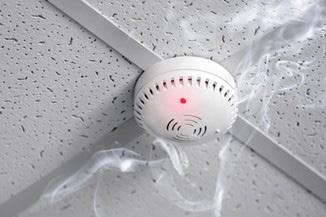
Point type smoke detectors are commonly installed in buildings. They operate using either photoelectric sensors (light is scattered by smoke particles). Detectors are designed to sense fast-flaming or slowsmouldering fires in clean air conditions.
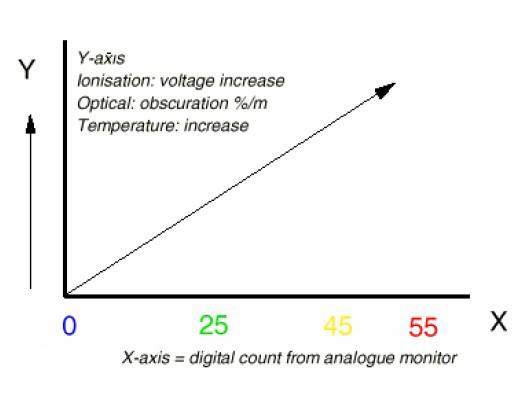
The sensing element inside each detector continuously measures the physical phenomenon, converts it into an analogue electrical signal, and transmits this as either analogue or digital ‘count’ to a Fire Indicator Panel (FIP). In a fire event this count will climb rapidly past a fixed alarm threshold level triggering an alarm.
Detector Types, Applications and Management
Smoke detectors in areas where steam, dust or aerosols form as part of normal activities must be selected specifically for that environment, or an alternative detection technology should be used.
Abnormal activities that may create steam, dust, aerosols or smoke must be strictly precluded from detection areas. In areas where planned construction, renovation or maintenance work is expected to produce alarm conditions, any detectors should be isolated by a qualified fire system technician and temporary alternative detection method (such as thermal detectors) put in place.
Smoke Detector Testing, Maintenance and Replacement
Over time, dust, dirt and other contaminants will accumulate on the detector sensing element. This buildup mimics the effect of smoke by raising the detector’s normal ‘clean-air’ count although no smoke is present. As the typical response graph suggests in Figure 2, this baseline can steadily drift upward toward the alarm threshold. The more contaminated the detector becomes, the smaller the amount of actual smoke or even everyday steam, cooking vapours or airborne dust is required to push it to the alarm threshold, resulting in disruptive and costly nuisance false alarms.
Point Type Smoke Detector Functional Testing
In accordance with Australian Standard AS/NZS 1851-2012, Routine service of fire protection systems and equipment, the operation of at least 50% of all point-type smoke detectors must be tested in-situ every year using an approved test medium/aerosol.
The intention is that all smoke detectors on any detection circuit are tested in a two-year period. The requirement is satisfied if the detector activates and signals the fire indicator panel correctly within the expected time and response range.
The use of non-approved test aerosols may leave an oily film inside the detector chamber, and this is a common cause of false alarms.
Vacuuming, wiping or blowing compressed air into a commercial smoke detector almost always makes the problem worse and can trigger immediate or ongoing false alarms.
Sensitivity or Soiling Test
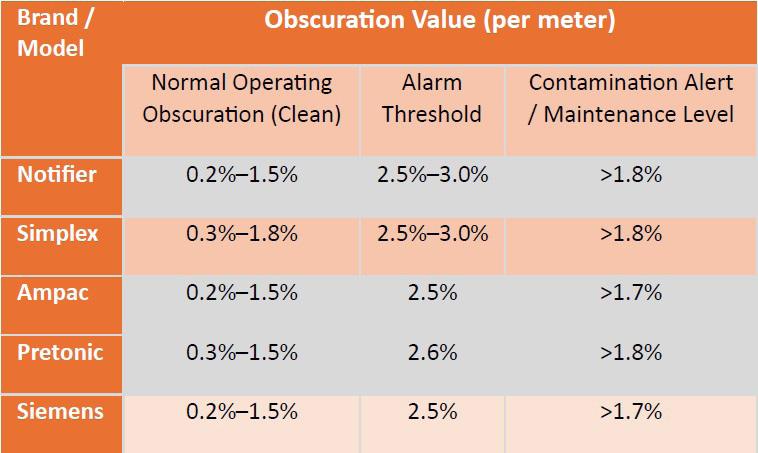
In ‘addressable’ detection systems, a sensitivity or soiling test may be applied as an alternative to the functional testing. This testing involves the annual measurement of a detector’s contamination level and must be carried out by qualified fire system technicians according to manufacturer’s guidelines in Figure 3.
During these annual tests, carried out through the fire indicator panel, a qualified fire technician records the clean-air count or contamination level of each detector and compares it with previous years’ readings. If the trend shows movement towards the alarm threshold, the affected detectors are scheduled for replacement before they become overly sensitive. Maintaining year-on-year records provides a clear history of each detector’s condition. This annual testing process can significantly reduce false alarms and helps ensure the system remains reliable during a genuine fire event.
Poor maintenance of smoke detectors causes:
1. Increased False Alarms: As detector sensitivity drifts over time, nuisance particles (steam, dust, aerosols, insects) become more likely to trigger alarms. This leads to unnecessary Fire Brigade call-outs, avoidable costs, operational disruption and erosion of trust in the system.
2. Unwanted Building Evacuations: False alarms cause unnecessary evacuations, resulting in business interruption, safety risks during movement, lost productivity and reputational damage. Keeping detectors within their correct sensitivity range is essential to prevent these avoidable events.
3. Reduced Fire Detection Capability: If sensitivity drops too low, detectors may fail to respond to early smoke, delaying detection of real fires. This increases fire risk, potential non-compliance with standards and liability exposure for building owners.
Smoke Detector Replacement: The 10-Year Rule
Australian Standard AS/NZS 1851-2012 sets out 2 alternatives for smoke detectors after 10 years of operation:
• Replace every smoke detector with new (or factory-recalibrated) units and conduct a simple functional test, or
• Retain the existing detectors if sensitivity is verified by full in-situ aerosol testing every 5 years or for addressable systems via a sensitivity/soiling check testing every year after 10 years from installation.
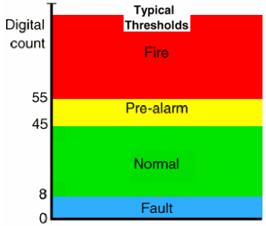
Figure 2. Alarm Status Versus Digital Count - FIP Response
Figure 3. Vendor Obscuration Value
Note: The typical obscuration levels in this table are based on manufacturer data as at 22 January 2026. Always verify with manufacturers for the current values and further detail.
Adapted from AMPAC, Detectors and Devices Technical Manual.
Fire Alarm Management Plan
To address the risk of false alarms and help reduce known false alarm problems, the development of a False Alarm Management plan is recommended.
The plan should include:
• Review of historical events
• Regular building / system audit to identify potential issues
• Allocation of a responsible person
• Work permit and isolation / desolation procedures
• Training of personnel and occupants
• System maintenance management
• System modification / tuning
• Consideration of cost / benefit.
The extent and mix of these in a management plan should be tailored to the specific needs of the building.
This plan should be incorporated into the Building’s Fire Safety Systems Manual.
For additional information on false fire alarms see A.G. Coombs Advisory Note: False Alarms and Automatic Fire Protection Systems.
For further guidance on smoke detector management and preventing false fire alarms, please contact:
Matt Maz Senior Engineer - Fire A.G. Coombs Advisory
+61 3 9248 2700 mmaz@agcoombs.com.au