
48 51 52 54 56
Earth Observation Satellites Changing African Communities
What Every (Aspiring) Astronomer Needs to Know About the Universe (PART 2)
National Science Week 2025 Launch
Hosting the G20 Space Leaders
Call for African Astronomers
OUCA Horizon 2030
The Oukaimeden Observatory
Two Astronomers Shaping Africa’s Future
Space Scientists at SANSA
Cars4Mars African Rover Challenge
African Satellites and Space Missions
An Interview with Dr.Meriem El Yajouri
Extending the Legacy of the IAU-GA 2024
Unisa Astrophysicist receives Prestigious Royal Society award
“EY4YOUTH–SWAFY” A Tunisian-Led Programme
Careers in the Cosmos
African Science Stars on the move



African Science Stars team
Editor: Lillian Assefa
Graphic designer: Thinavhuyo Desmond Mudimeli
Contributing writers:
Dr. Aletha de Witt
Prof. James O. Chibueze
Prof. Jamal Mimouni
Lillian Assefa
Zakiyah Ebrahim
Ny Ando
Phenyo Mathapo
Glen Malesa
Nonopha Kanise
Cailyn Scheepers
Siphokazi Vuso
Kaoutar Saadi
Mutshidzi Nelwamondo
Joshua Tadesse
Luntu Makhosonke
Likhona Mtongana
Zodwa Tiki
Nozipho N Madzivha
IT and Outreach Intern: Glen Malesa
GIS and Outreach Intern: Nonopha Kanise
Social Media Manager: Cailyn Scheepers
Project Manager: Mutshidzi Nelwamondo
Publisher: Madambi Rambuda
Subscriptions • info@sciencestars.co.za
Copyright 2025 African Science Stars (Pty) Ltd. All Rights Reserved. No part of this publication may be reproduced, stored in a retrieval system or transmitted in any form or any means, electronically or mechanically, without prior permission.
African Science Stars is published by Science Stars (Pty) Ltd
African Science Stars is an initiative under the African Astronomical Society and funded by the Department of Science, Technology and Innovation.
1 Bridgeway, Century City, Cape Town, South Africa, 7441 +27 21 830 5200 info@sciencestars.co.za www.africansciencestars.com
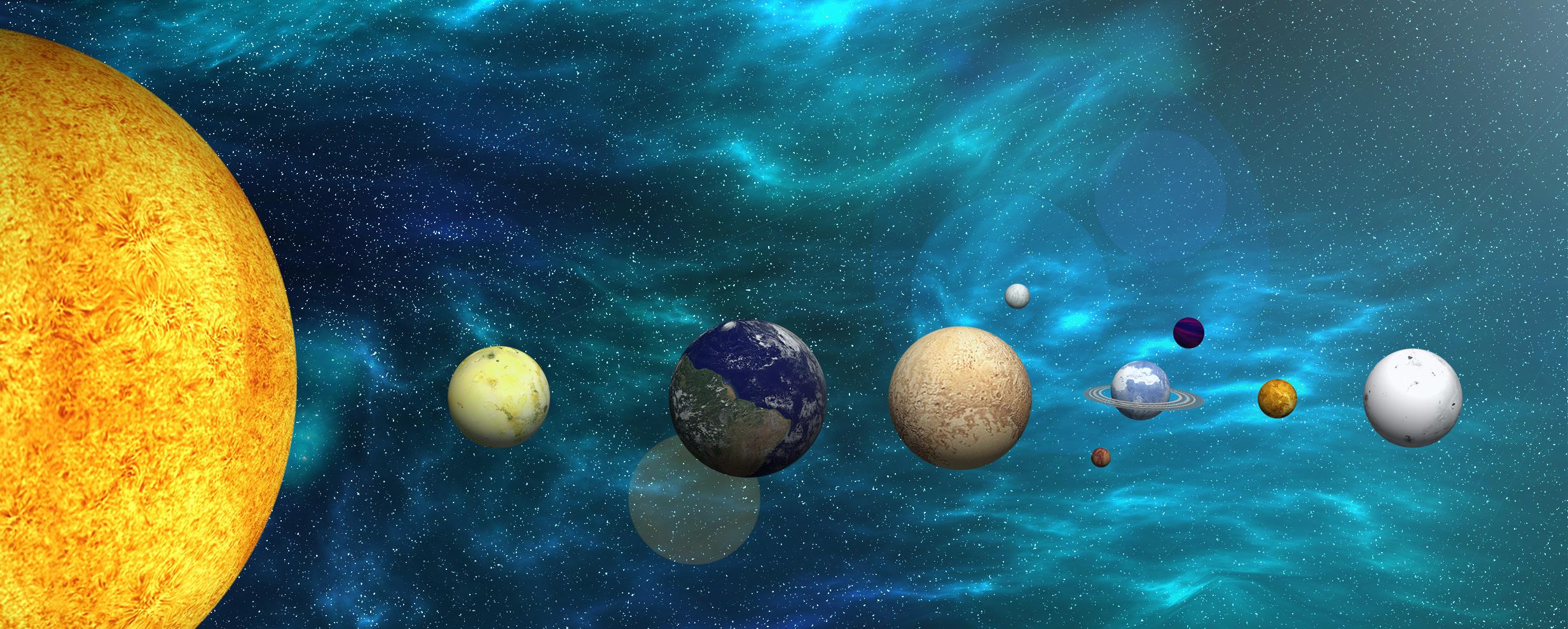

For as long as people have looked to the stars, the heavens have shaped how we navigate, measure, and understand Earth. Ancient communities across Africa read the skies to mark time, navigate landscapes, and weave celestial rhythms and constellations into daily life. The stars and the wider Universe have always provided navigation, calendars, and wonder, but also the ambition to explore.
That same spirit of curiosity drives modern science, though today our study of the sky and Earth is expressed through distinct disciplines. As three perspectives on one quest to understand our place in the Universe, astronomy, space science, and space geodesy are deeply interconnected. Astronomers study the cosmos; geodesists measure the shape and orientation of the Earth in space; and space scientists apply this knowledge to exploration, communication, and Earth Observation. All three share the same origin, depend on one Earth and one sky, and often use the same precision instruments. The distant active galaxies studied by astronomers are the same cosmic beacons used by geodesists to link accurate celestial coordinates with positions on Earth with unparalleled precision. In turn, space missions, satellite services, and precision astronomy rely on the stable reference frames provided by space geodesy, the science that keeps our eyes, instruments, and spacecraft aligned with the heavens.
Yet, despite this deep interconnectedness, astronomy, space science, and space geodesy often operate in silos, creating an increasingly fragmented and unsustainable ecosystem.
Africa stands uniquely poised not only to contribute
to these fields but to lead their closer integration. Our vast landmass, central location, diverse landscapes, southern vantage point, and growing coordination structures make the continent not only ideal for precision observation but also vital for improving global satellite systems and providing critical environmental and geophysical data for enhanced Earth Observations and climate models, both globally and for Africa’s own sustainable development. From recognising Africa’s Indigenous astronomical heritage to establishing new space agencies, constructing worldclass facilities such as the Square Kilometre Array, and promoting emerging fields like astro-tourism, the continent continues to connect its ancient wisdom with global scientific leadership, advancing science as a catalyst for socio-economic development.
As African nations expand their space ambitions, coordinated efforts, equitable access, transparent governance, and ethical data sharing must be central to ensuring sustainability. Equally vital is inspiring the next generation: astronomy and space science ignite curiosity, especially among young people and girls, opening pathways into STEM careers that will shape Africa’s future.
By connecting Earth and sky through science, technology, and shared purpose, Africa ensures that its next chapter in space is guided not only by wonder, but by wisdom.
Dr. Aletha de Witt
Director: Radio Astronomy Projects Department of Science, Technology and Innovation
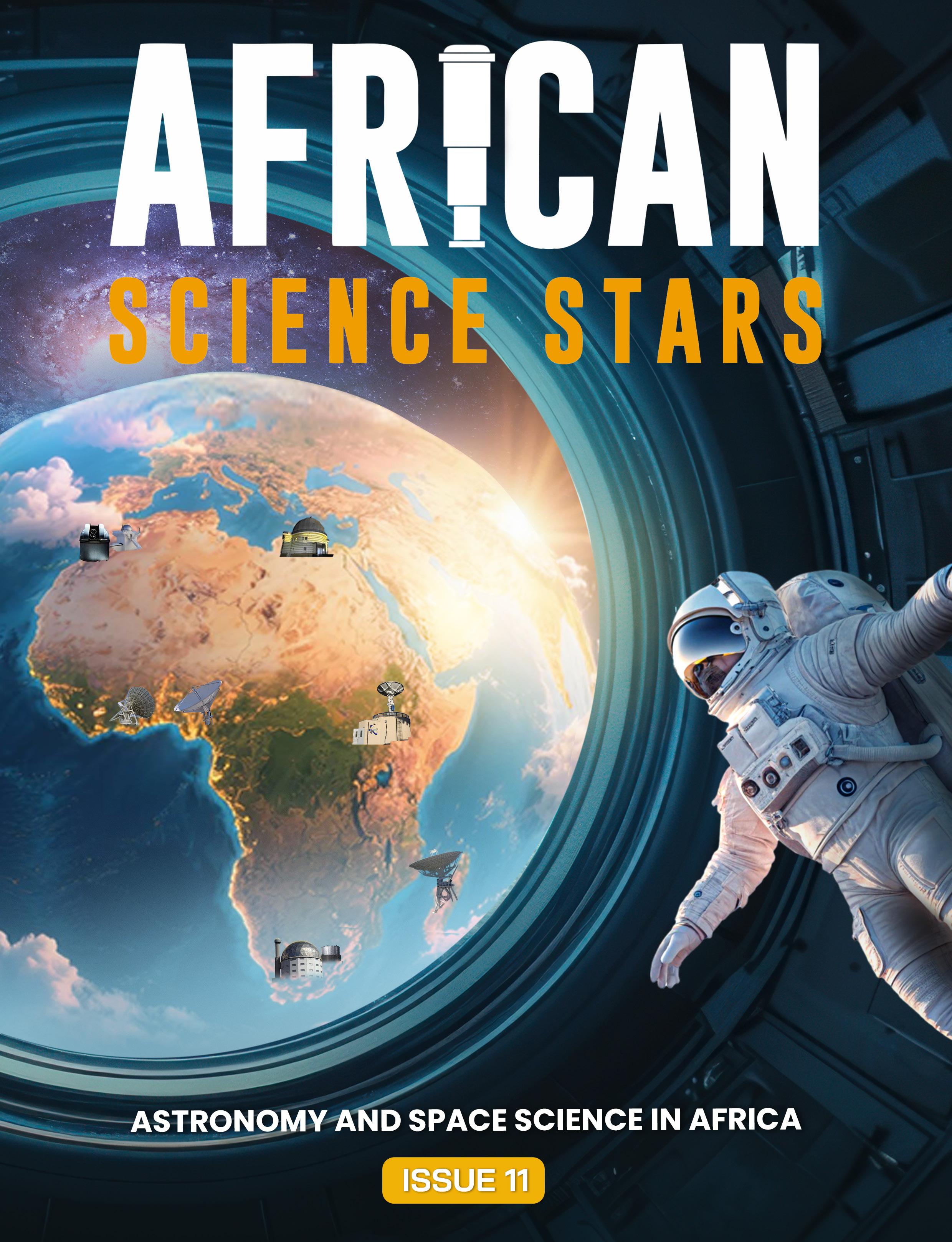
It is an honour to welcome you to Issue 11 of African Science Stars. This edition is dedicated to celebrating Africa’s growing influence in astronomy and space science, a field in which the continent is making remarkable strides. From ancient observatories to modern satellite programs, Africa’s connection to the cosmos is both historical and forward-looking, reflecting a legacy of curiosity and innovation.
In this issue, you will find a rich tapestry of topics that highlight Africa’s contributions to space science. We delve into the African Geodesy Program, an ambitious initiative that is helping us understand the Earth’s shape, gravity field, and spatial reference systems with unprecedented accuracy. Through the work of experts like Dr. Alethade Witt and her colleagues, we gain insights into how geodesy is not just a technical science, but a vital tool for sustainable development, urban planning, disaster management, and environmental monitoring across Africa.
Africa’s astronomical heritage is another focus of this issue. We explore some of the continent’s oldest astronomical sites, shedding light on the ways our ancestors observed and interpreted the night sky. These stories remind us that Africa’s relationship with astronomy is deeply rooted, extending far beyond modern technology. Our journey then takes readers to contemporary observatories, such as the Oukaïmeden Observatory in Morocco, where professional and early-career astronomers collaborate to make discoveries that contribute to global knowledge. The stories of these observatories and their teams show how Africa is becoming a hub for cutting-edge research and international collaboration.
Equally inspiring are the young astronomers and space enthusiasts who are emerging across the continent. Their passion, creativity, and dedication are shaping the future of science in Africa. From high school students participating in astronomy clubs to university researchers leading Earth observation projects, these individuals demonstrate that the next generation of African scientists is not only capable but ready to tackle the challenges of tomorrow. Through mentorship, education, and exposure to international programs, they are building skills and networks that will support Africa’s continued growth in the global space sector.
Africa’s journey in astronomy and space science is a story of resilience, innovation, and vision. The continent is increasingly contributing to international missions, hosting conferences, and nurturing talent that competes on a global stage. From satellite launches to educational programs, Africa is proving that it has both the resources and the ingenuity to be a serious player in space exploration. It is an honour to share these achievements and inspire curiosity, imagination, and ambition in our readers.
In this issue, you will also find practical guides for young explorers, interviews with scientists, updates on national space programmes, and features that celebrate Africa’s brightest minds. We hope these stories inform, inspire, and encourage readers of all ages to look up, dream boldly, and imagine Africa’s place among the stars.
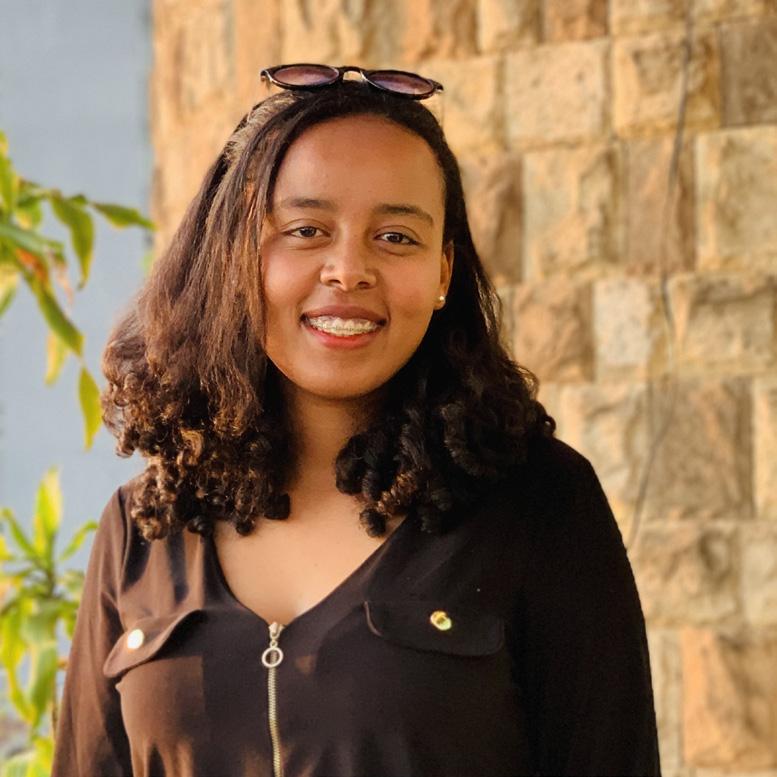
Lillian Assefa, Editor, African Science Stars
By Zakiyah Ebrahim
From the quiet nights of her South African childhood to the global stage of astronomy and space science, Dr Aletha de Witt has always been guided by the sky above her. Her story is not only about scientific achievement but about leadership, collaboration, and building a future where Africa takes its rightful place in the international space community.
“I was captivated by the night sky from a very young age,” she tells African Science Stars. “Growing up where the Milky Way was bright and unmistakable, I often felt compelled to stop and just take it in. My father shared that fascination, and many evenings were spent together talking about the stars and planets above us.”
Those evenings planted seeds of curiosity that grew into a career. A newspaper clipping here, a magazine article there – young Dr Aletha de Witt collected every story about space she could find, especially stories about NASA missions. “At one point, I dreamed of be-
coming an astronaut,” she says. One of her most treasured possessions today is a newspaper her grandmother kept from the first Moon landing, later passed down to her. “That early sense of wonder has never left me.”
As her academic journey unfolded, mentors and opportunities made all the difference. Her mother, an academic herself, set the example of ambition and resilience. Later, supervisors and colleagues, including Dr Michael Bietenholz, Prof Ludwig Combrinck, Dr Gordon McLeod, and Mr Chris Jacobs from NASA shaped her thinking and encouraged her ideas – even the unconventional ones.
“I was lucky to have people who believed in me,” she says. “When the field of astronomy was very male-dominated, their encouragement gave me the confidence to take on challenges that at first seemed impossible.”
women
IAU
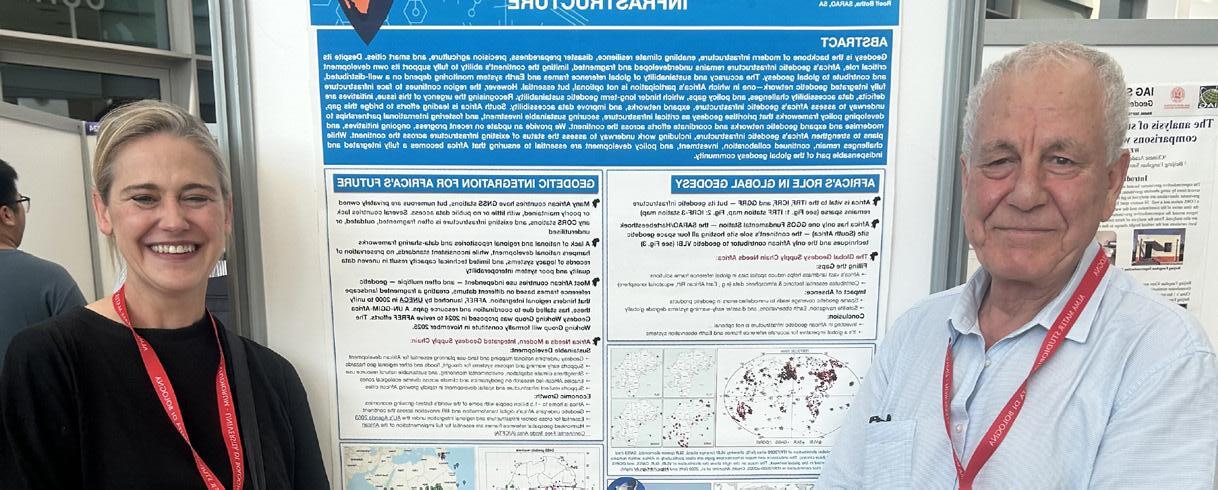
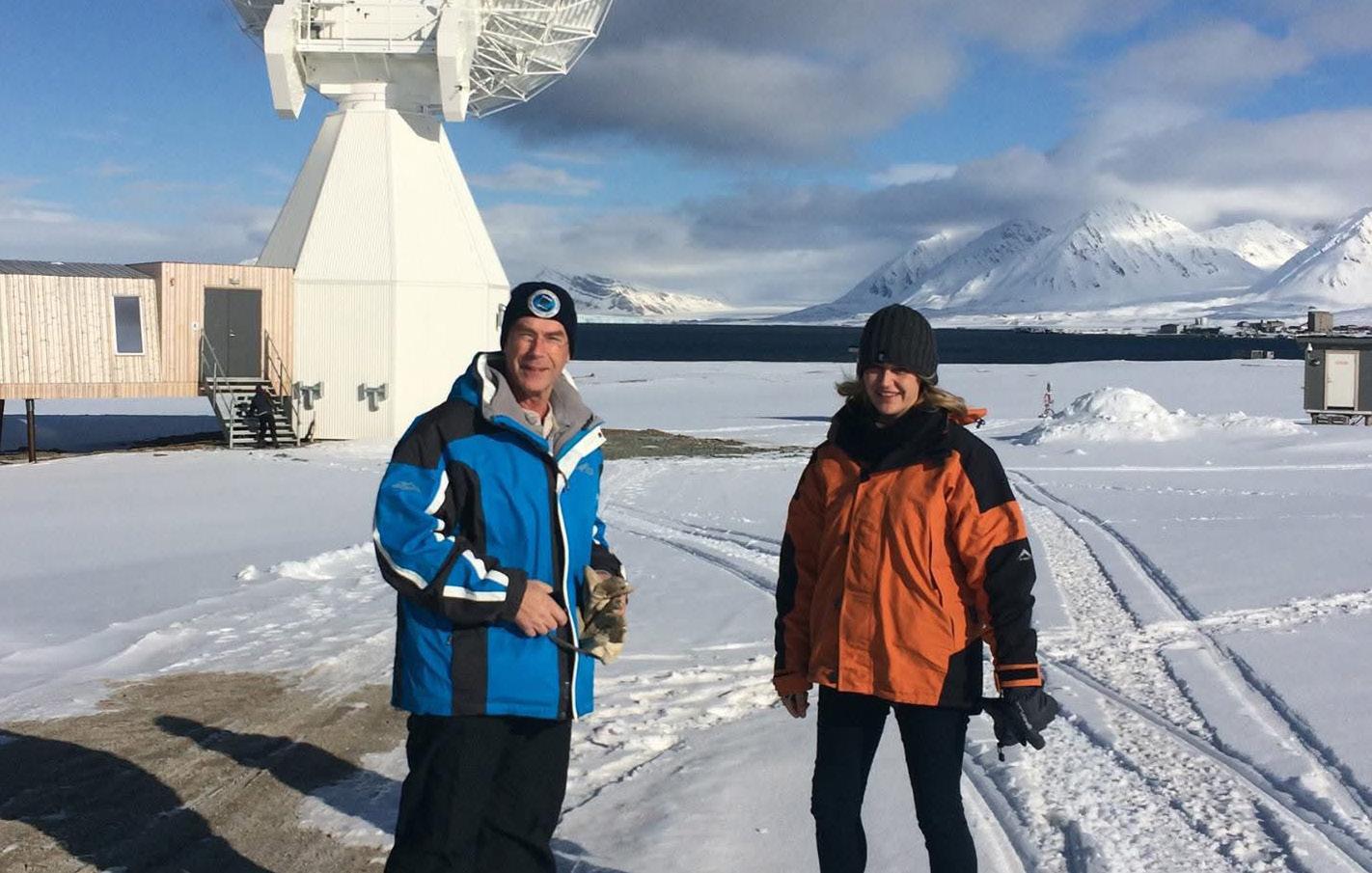
With Prof. Zuheir Altamimi — past President of the IAG and one of the pioneers of modern geodetic reference frames — at the IAG Scientific Assembly, September 2025 in Rimini, Italy; presenting our work on strengthening geodetic infrastructure in Africa
Scholarships from pioneering programmes such as NASSP and the SKA (Square Kilometre Array) bursary programme also gave her the chance to pursue advanced studies. “Those opportunities, and the passionate people who built and continue to run these programmes, shaped my path and opened the door for me to contribute at national, continental, and global levels,” she notes. It’s why today, she makes mentorship a priority. “I want the next generation of African scientists to see that there is a place for them in this story.”
The “Silent Science”
Dr de Witt’s fascination with the stars eventually led her to space geodesy, a field that connects “the stars above with the Earth beneath our feet”, she explains. And in a way, her childhood dream of space travel came true: “Today I work closely with colleagues at NASA on the celestial reference frame that makes space navigation possible.”
Often called the “silent science,” because it works in the background, geodesy is the science of measuring the Earth’s shape, rotation, and gravity field – and how these change over time. “Without geodesy, GPS navigation wouldn’t work, our maps would drift, and we wouldn’t be able to accurately monitor things like sea-level rise or ground movement,” explains Dr de Witt.
While geodesy may work quietly in the background, it makes modern space activities possible, from guiding satellites and deep-space missions to helping us track climate change and respond to disasters, such as floods, droughts, and earthquakes.
“For Africa, strengthening geodesy is about more than science – it’s about sovereignty and development,” she explains. “It supports infrastructure, agriculture, disaster preparedness, and world-class facilities like the Square Kilometre Array. If we don’t build our own reference frames and infrastructure, we remain dependent on others. Investing in geodesy is investing in Africa’s future.”

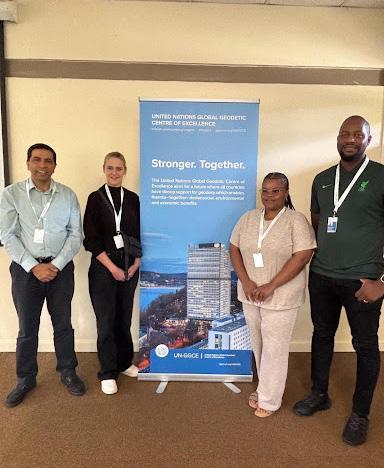
With Team South Africa at the UN-GGCE Workshop on Geodesy in Nairobi, Kenya — a gathering of 25 African countries. A milestone moment where SA in 2025 presented the establishment of GGOS-Africa, building a continental platform for geodetic coordination.
Reference Frame into ICRF3 by the IAU in 2018 was a milestone I am very proud of.”
Her second major milestone came through her leadership in the DARA (Development in Africa with Radio Astronomy) project, where she trained students from SKA partner countries and helped strengthen skills across the continent.
The third was initiating the process to establish GGOS-Africa in 2023, with the aim of creating a Pan-African platform for coordination in geodesy. “It demonstrates that Africa can drive global science, not just host it,” she says.
Looking ahead, Dr de Witt sees Africa stepping into a leadership role in global space science. “Africa is already on the map, but in the next 10 to 20 years I believe
Today, as Director of Radio Astronomy Projects at South Africa’s Department of Science, Technology and Innovation (DSTI), Dr de Witt works at the crossroads of science, policy, and international collaboration. Her role spans everything from astronomy to geodesy governance, and engaging with colleagues across Africa and globally, ensuring that the continent is not just participating but actively shaping global science.
She also serves in prominent global positions – as President of the International Astronomical Union’s (IAU) Commission on Astrometry, on the Governing Board of the International Association of Geodesy’s (IAG) Global Geodetic Observing System (GGOS), and on the Directing Board of the International VLBI Service for Geodesy and Astrometry (IVS). “On the international stage, I make sure Africa’s voice is heard,” she says.
Among her many achievements, three stand out. The first: leading the Astro2Geo K-band (24 GHz) VLBI initiative, a unique global project that brought astronomy and geodesy together using the same radio telescopes and the same data for both. “Through this, we’ve secured thousands of observing hours on all major global radio telescope networks and pushed the boundaries of what is possible in high-frequency and high-precision astrometry,” says Dr de Witt. “The adoption of the K-band Celestial
we will be shaping the map,” she says. “Our geographic advantage … means the world cannot do without Africa in astronomy and geodesy. Just as importantly, we are building the skills and institutions that make us equal partners on the global stage.”
That vision depends on strong collaboration. “Collaboration is at the heart of everything. No single country has the resources to do it all,” she notes. Initiatives such as the African Astronomical Society (AfAS), the African Space Agency (AfSA), the African Radio Astronomy Programme (ARAP), and GGOS-Africa show how collective effort can transform the continent’s future.
At the heart of her journey lies a deep sense of responsibility. “My journey is not just about personal achievement – it’s about building
systems and opportunities that will outlast me,” says Dr de Witt, adding: “Science is about curiosity, yes, but it’s also about connection: connecting people, knowledge, and nations.” Through her work in astronomy and leading the development of Africa’s geodesy coordination programme, she wants to ensure that Africa’s unique strengths are recognised globally, and that the benefits of science are felt particularly at the local level.
“My greatest wish is that I have inspired the next generation to stay curious, to see themselves as part of this global endeavour, and to help shape a sustainable future for all of us,” she says.
She especially wants young Africans, and young women in particular, to know that they belong in these spaces. “The future of astronomy, space science, and geodesy in Africa is bright, but it will take all of us. We need every voice at the table to shape it, and I believe Africa is ready not only to participate but to lead.”
By Ny Ando
Sometimes we blur the line between astronomy and space science, but each has its own scope and tools. Astronomy is the study of the Universe itself such as the stars, planets, nebulae, galaxies, and the cosmic web using observations across the electromagnetic spectrum and the models that explain what we see. Space science is broader and more applied: it includes the design and operation of spacecraft and instruments, planetary surface and atmosphere studies, space weather, mission planning, navigation, and the engineering that turns scientific questions into measurements.
What they share is the same scientific method: careful observation, modeling, verification, open collaboration, and often the same datasets. They differ in emphasis. Astronomy tends to ask the “why” and “how” of cosmic phenomena at many scales, while space science adds the “how to” of getting sensors into orbit or onto planetary surfaces, and of converting raw telemetry into knowledge that serves research, industry, and society.
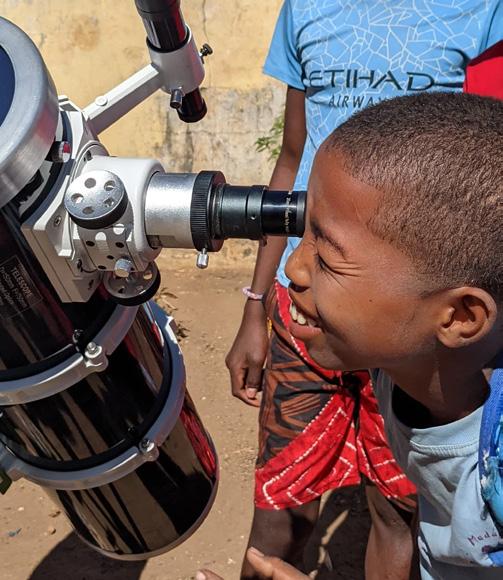
In July 2025, Madagascar hosted “Madagascar sous les étoiles” (“Madagascar under the stars”), a national festival held 4–6 July across Antsiranana, Mahajanga, Antsirabe, and Antananarivo, explicitly designed to connect astronomy and space science across the country. The official “About” and “Programme” pages confirm a multi-city, free-to-all format with a robust slate of activities, including night-sky observations, hands-on workshops, film screenings, and expert talks, delivered with local and international partners such as the Société Astronomique de France (SAF), Institut Français de Madagascar (IFM), Alliances Françaises in host cities, Écoles du Monde, and the African Initiative for Planetary and Space Sciences (AFIPS). Beyond the public festival and outreach, the program integrated seminars, scientific lectures, and an international school at the Besely Observatory, deliberately mixing inspiration with skill-building. The idea was simple but powerful: meet people where they are (on beaches, in city squares, in schools) and then guide them toward hands-on competencies that open doors to research and innovation.
A standout feature in the capital was Astromania at IFM, where two voices anchored the bridge between fields. Jean-Philippe Uzan (CNRS/IAP) connected
backyard measurements to precision cosmology in university and public sessions, while Abdelkarim Boskri (Cadi Ayyad University, Oukaimeden Observatory) led a talk specifically on tracking artificial satellites and space debris, covering scientific stakes and groundbased observation strategies. This gave the festival a clear space-engineering lens within a public astronomy setting. Together they co-presented “A century of revolution in astronomy, and tomorrow?” and hosted a cine-discussion on Interstellar, which made abstract ideas tangible for non-specialists.
The festival’s invited speakers further underscored the astronomy–space nexus. David Baratoux (IRD/AFIPS) brought planetary geology and mission-relevant field analogs; Sylvain Bouley (Université Paris-Saclay/SAF) linked impact craters to outreach and observation practice; Hélène Courtois (Université Claude Bernard Lyon 1) connected galaxy flows to the cosmic web; Salma Sylla (Université Cheikh Anta Diop) and Zacharie Kam (Université Joseph Ki-Zerbo) represented West Africa’s growing astrophysics community; and Sambatriniaina H. A. Rajohnson (INAF-Osservatorio Astronomico di Cagliari) highlighted Malagasy talent on the international stage. The festival site lists the full slate of speakers and partners, along with the multicity program and public activities.

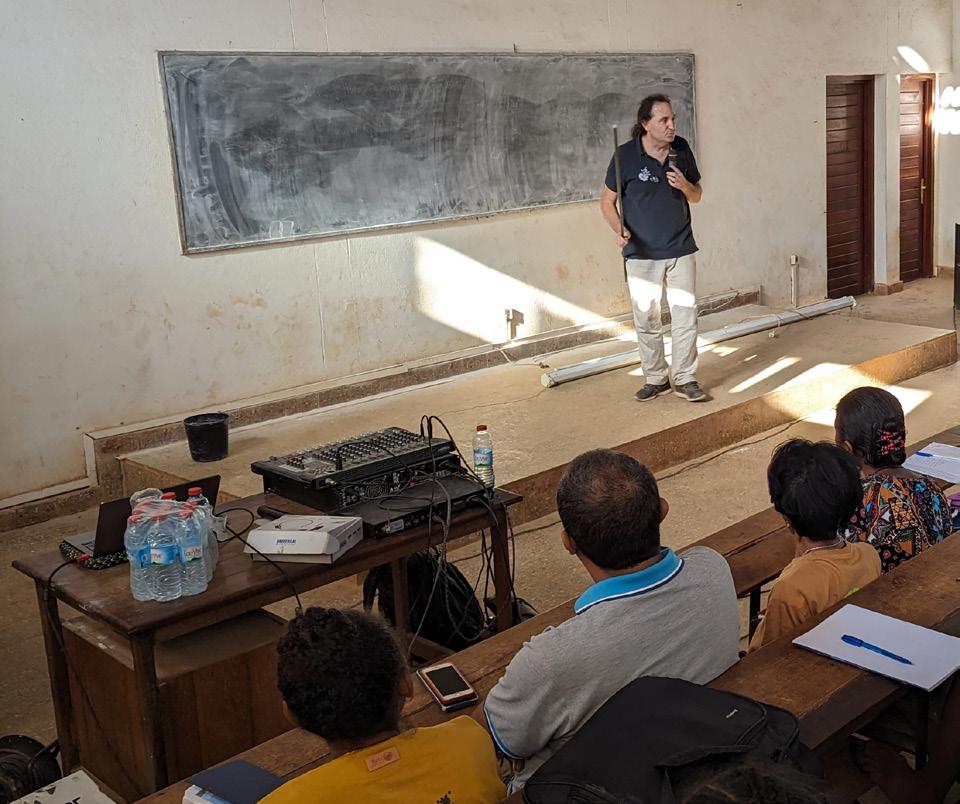
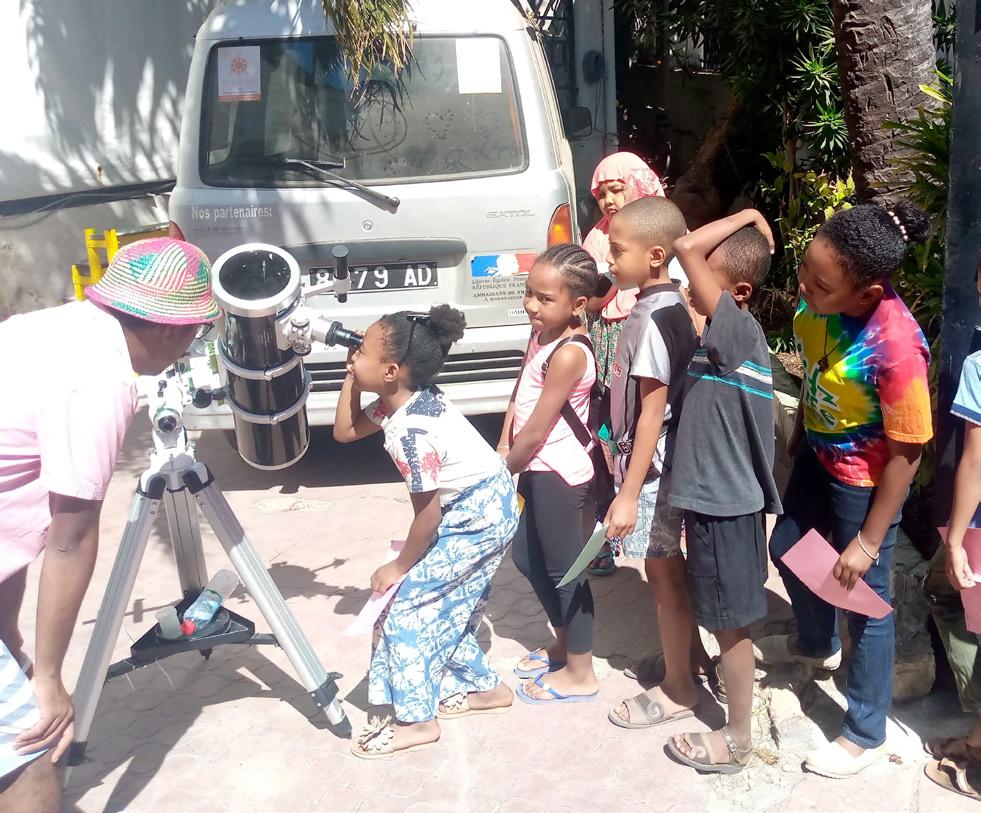
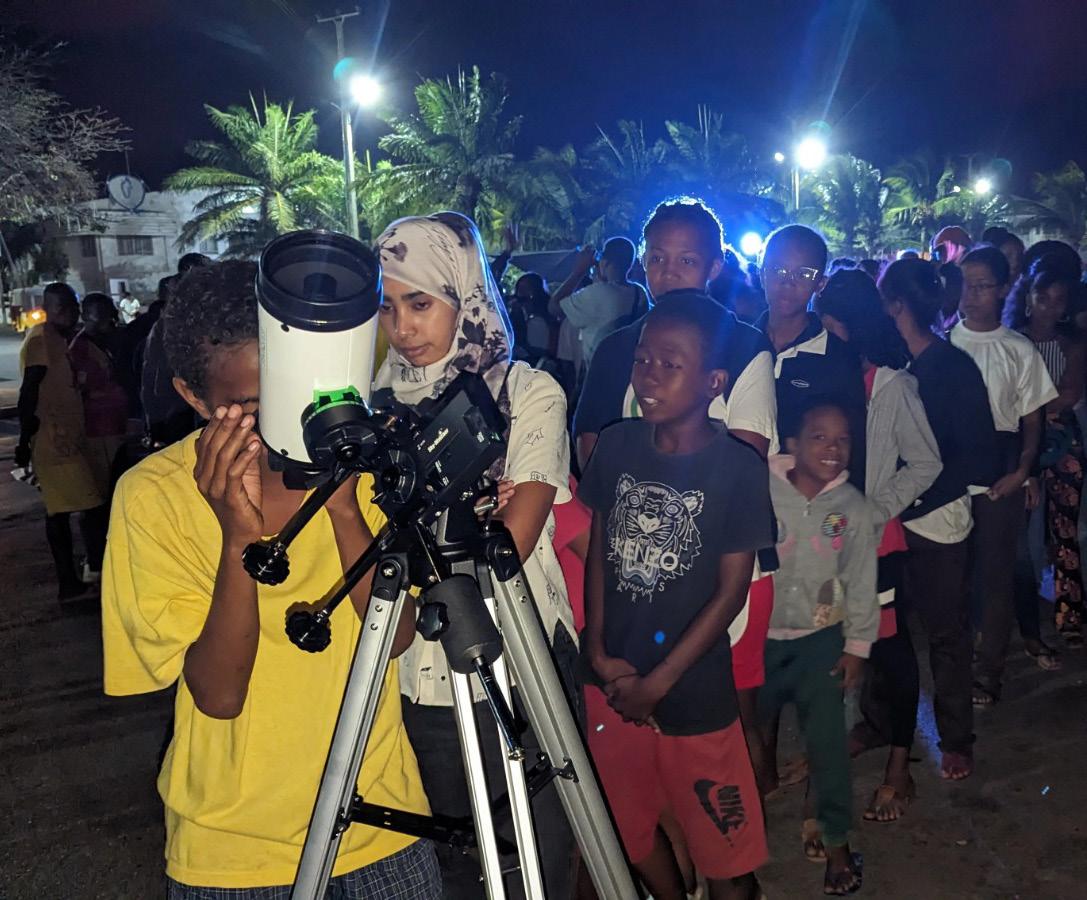
Crucially, the week before the festival, from Aletha, Madagascar hosted the first Pan-African Astronomy School at the Observatoire de Besely in the Mahajanga region. This residential programme trained emerging African astronomers on the site’s robotic C14-class facility and end-toend data workflows. Public interviews and partner posts previewed the format, with participants from Morocco, Tunisia, Senegal, Burkina Faso, and Madagascar, mentored by five to six instructors. Organizers framed the school as the starting point for a year-round, Africa-wide observing network that uses Besely as a shared platform for target selection, instrument control, data calibration, and collaborative analysis. Subsequent photo updates and partner communications, including from the Société Astronomique de France, confirmed the school’s successful running. The observatory’s host organisation, Écoles du Monde, describes the site and its remote-controlled capabilities, which provide the infrastructure that underpins both training and outreach.
Seen through two complementary lenses, the event offered a fully “astronomy” track and a fully “space science” track. The astronomy pathway centered on understanding physical processesstellar variability, galaxy photometry, and cosmological context - grounded in careful uncertainty analysis and reproducible reduction of data from ground-based telescopes. The space science pathway focused on planetary surfaces and impact structures, spacecraft constraints and operations, and responsible use of orbital environments, with the space-debris theme anchoring conversations about sustainability in low Earth orbit and beyond.
To conclude, “Madagascar sous les étoiles” was a genuine bridge between astronomy and space science. By pairing public wonder with professional training - and by placing issues like space debris and spacecraft design alongside stargasing and cosmology - it built a pipeline from first light at the eyepiece to first analysis of mission data. The result is a growing African ecosystem where astronomy asks the big questions and space science delivers the tools to answer them, together, under the same sky.
Madagascar did more than host events; it built a working bridge where astronomy asks big questions and space science delivers the means to answer them, with local teams and African partners sharing the same sky, the same instruments, and the same ambition.
By Lillian Assefa
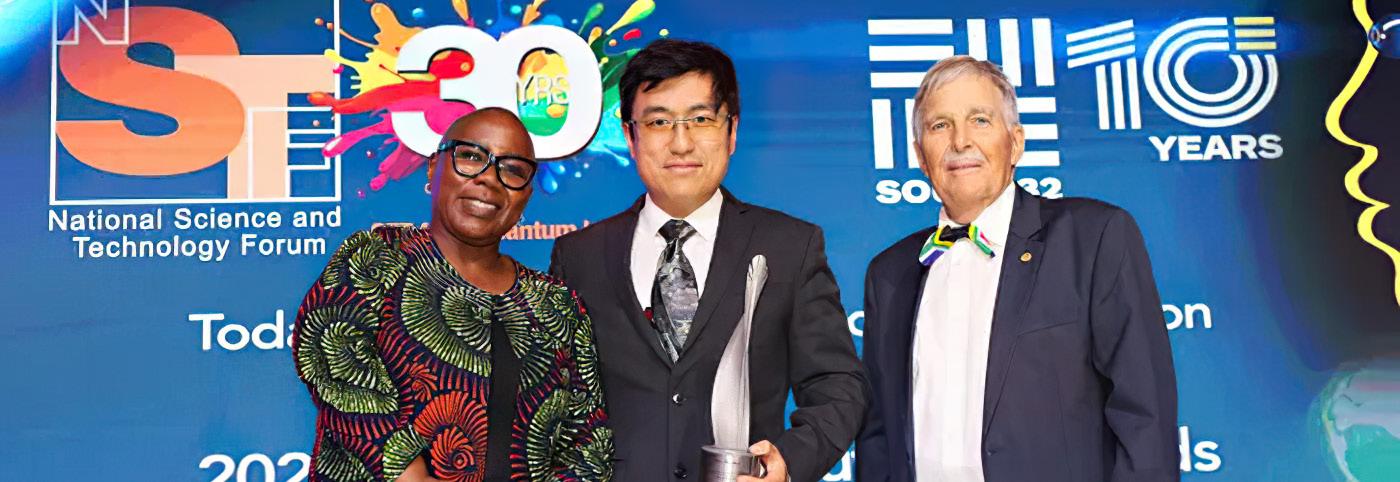
On International Astronomy Day, 4 October 2025, the National Science and Technology Forum (NSTF) proudly congratulated Prof Yin-Zhe Ma, recipient of the 2025 TW Kambule-NSTF Researcher Award at the prestigious NSTF-South32 Awards, often referred to as South Africa’s “Science Oscars.” Prof Ma was recognised for his groundbreaking research in understanding the universe’s large-scale structure, particularly his contributions to detecting “missing baryons” and developing innovative methods to study their role in galaxy formation and evolution.
Prof Ma, a Full Professor and Head of the Astrophysics Group at Stellenbosch University (SU) and holder of the Stellenbosch-Groningen Joint Research Chair in Computational Astronomy, has made globally significant contributions to cosmology. His work bridges theory and observation, shedding light on the universe’s unseen matter and the forces shaping cosmic expansion.
Through leadership in international projects such as the Square Kilometre Array (SKA) and MeerKAT, Prof Ma ensures that South Africa remains at the forefront of astronomical research. His research has been published in over 130 peer-reviewed papers with more than 29,000 citations, establishing him as a global authority in astrophysics.
Reflecting on his award, Prof Ma said, “This award is a wonderful recognition of my pure curiosity-driven research enriching human’s experience and expanding
people’s horizons. The discovery of the ‘missing baryons’ in the universe confirms our conjecture that our universe is made out of 4,8% atoms – most of which have been repelled from the centre of dark matter halos into cosmic filaments and voids, and will be recycled back to the cosmic ecosystem. The research I am conducting opens new avenues to connect fundamental physics with astronomical data, and will leave new questions to the next generations..”
Beyond research, Prof Ma has contributed to training the next generation of African scientists, mentoring postgraduate students, and serving as Vice-President of the African Astronomical Society. His dedication exemplifies how South African science can inspire curiosity and innovation worldwide.
International Astronomy Day reminds us that astronomy transcends borders, connecting humanity through the pursuit of knowledge and wonder. NSTF encourages all South Africans to look up at the night sky, participate in stargasing events, and support the growth of science and technology in the country. Prof Ma’s achievements underscore South Africa’s vital role in global scientific discovery, highlighting the importance of research, mentorship, and international collaboration in advancing our understanding of the universe.
For more information about Prof Ma and the NSTFSouth32 Awards, visit www.nstf.org.za.
By: Lillian Assefa
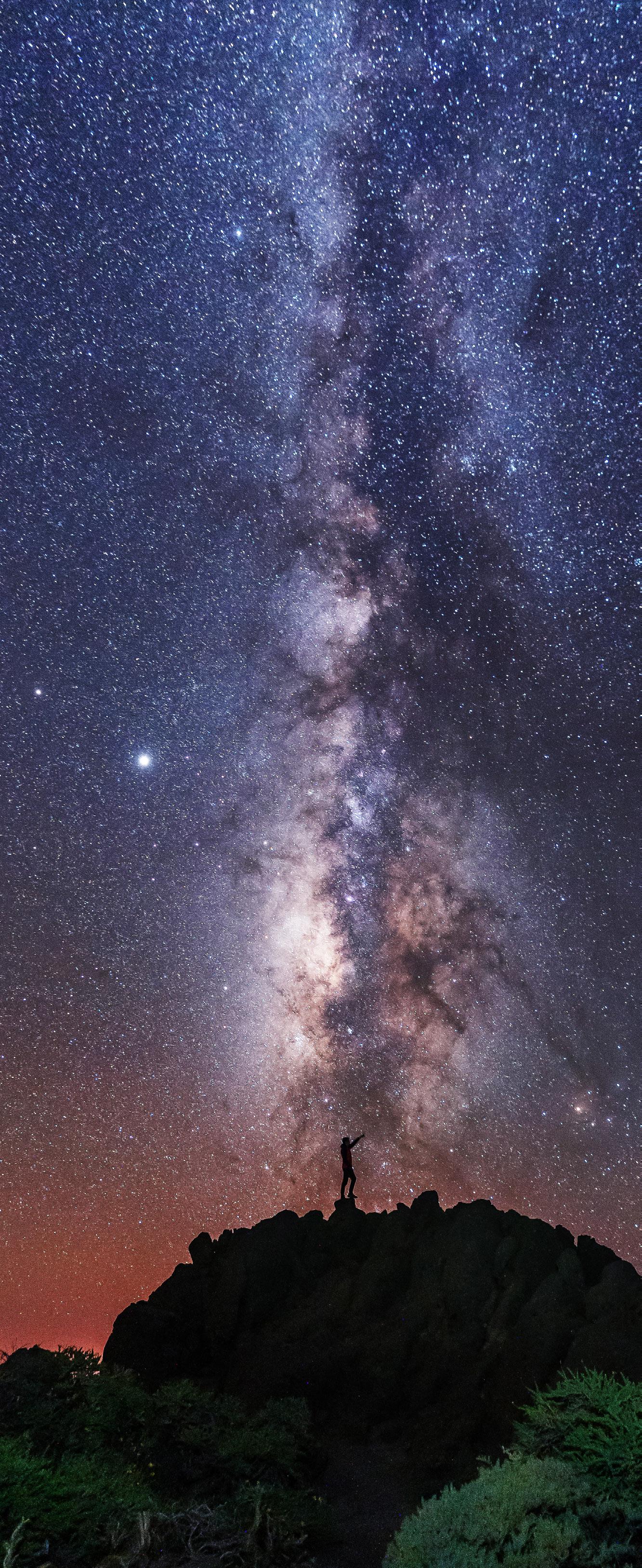
Every night, Africa’s vast sky unveils a dazzling window to the universe. From bustling cities to quiet villages, these stars have guided farmers, travelers, and storytellers for millennia. This guide invites you to explore the cosmos with just your eyes, curiosity, and a sprinkle of patience, no telescope or fancy gear needed.
Step 1: Find Your Stargasing Spot
Bright lights can dim the stars, so seek a dark, open spot like a backyard, rooftop, or nearby field. Switch off porch lights, dim your phone screen, and let your eyes adjust to the darkness for 10–15 minutes. As your pupils dilate, faint stars will emerge, transforming the sky.
Tip: The best stargasing happens on clear, moonless nights after 8:00 p.m. Check weather forecasts for cloud-free evenings, and avoid areas with streetlights or city glow.
Step 2: Befriend the Moon
The Moon is your easiest cosmic guide. Notice its changing shapes—crescent, half-moon, or full—over a 29.5-day cycle called its phases, created by sunlight reflecting off the Moon as it orbits Earth. Grab a notebook to sketch the Moon’s shape each night or jot down its position in a sky journal. With sharp eyes or binoculars, spot the darker patches called maria—ancient lava plains frozen in time
Did You Know? The Moon is tidally locked, always showing Earth the same face because its rotation matches its orbit.
Step 3: Spot the Wandering Planets
Some “stars” don’t twinkle—they’re planets! Their steady glow sets them apart. Here’s how to find the brightest ones:
• Venus: Shines brilliantly white just after sunset (Evening Star) or before sunrise (Morning Star).
• Jupiter: Glows creamy-white. With binoculars, you might glimpse its four largest moons as tiny dots.
• Saturn: Appears yellowish and fainter. A small telescope reveals its iconic rings.
Observe these planets nightly to track their slow dance across the sky. Apps like Sky Map can pinpoint their locations.
(Source: NASA Solar System Exploration, 2025)
Step 4: Connect the Stars into Constellations
Constellations are star patterns that tell stories and guide navigation. Learn these beginner-friendly ones visible from Africa:
• Orion (The Hunter): Spot three bright stars in a row—Orion’s Belt—flanked by a rectangle of stars. It’s a winter sky favorite.
• Canis Major (The Great Dog): Trails Orion, home to Sirius, the night sky’s brightest star, sparkling like a diamond.
• The Southern Cross (Crux): A compact, kiteshaped constellation visible in southern Africa. Draw an imaginary line through its longer axis to find south—a trick sailors and travelers used for centuries.

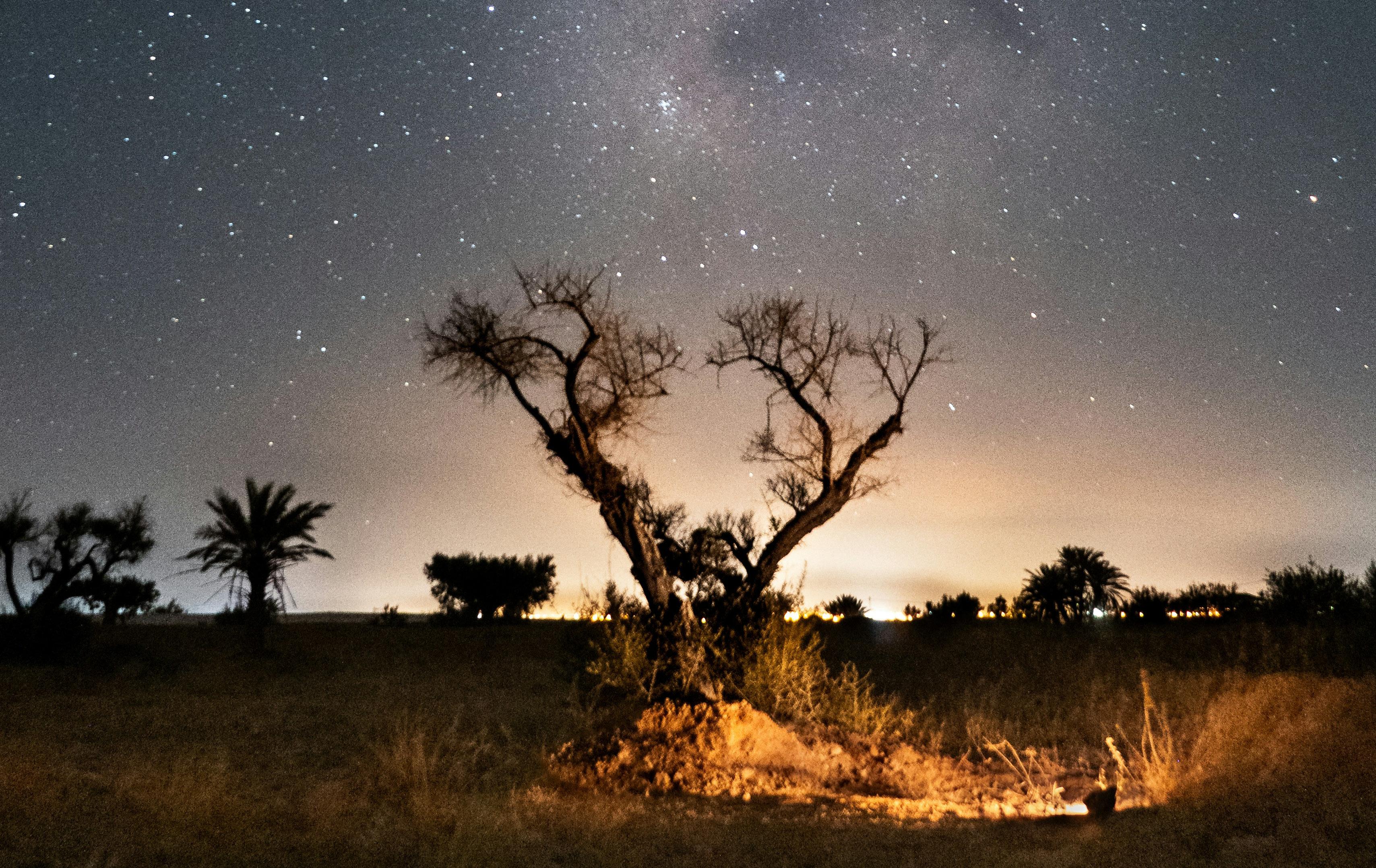
Cultural Connection: African cultures wove their own tales into the stars. The Khoisan saw the Southern Cross as a giraffe’s footprint, while the Zulu called Orion’s Belt Isilimela (“digging stars”), a signal to plant crops. Ask elders in your community what names or stories they know about the stars.
(Source: African Cultural Astronomy, Cambridge University Press, 2008)
Mark your calendar for these celestial spectacles:
• Meteor Showers: Fleeting streaks of light from space dust burning up in Earth’s atmosphere. Watch the Perseids (August) or Geminids (December) by lying back and scanning the sky for 30–60 minutes.
• Eclipses: When the Moon or Sun is briefly shadowed. A lunar eclipse turns the Moon reddish; a solar eclipse (never look directly!) requires safe viewing methods.
• Planet Alignments: Rare moments when planets cluster visibly in the sky.
Check dates on NASA’s Sky Events Calendar or the South African Astronomical Observatory’s website. Local astronomy clubs often host viewing parties for these events.
Stargazing sparks curiosity. Why do stars twinkle? (Hint: Earth’s atmosphere bends their light.) How far are they? (Some are so distant their light takes centuries to reach us!) Why do constellations shift seasonally? (Earth’s orbit changes our view.)
Download free apps like Sky Map (Android) or Star Walk (iOS) to identify stars and planets instantly. Join local astronomy clubs or follow observatories online for stargazing tips and community events.
Inspiration: Africa hosts world-class astronomy projects like MeerKAT and the upcoming Square Kilometre Array (SKA) in South Africa. Your curiosity could lead you to discoveries as grand as those made by these scientists.
When you gaze at the African sky, you join a timeless story of wonder woven by countless generations. Each star, planet, and constellation is a chapter waiting for you to read. So tonight, step outside, look up, and let the universe become your classroom.
Upon the African continent rests a rich astronomical history etched in stone. We explore some of Africa’s oldest astronomical sites that have been discovered.
By Phenyo Mathapo
Observing and interpreting celestial bodies has been a part of human society since the dawn of time. Before planetariums and the invention of fancy gadgets like telescopes and satellites, ancient civilisations relied on what they found around them. They would pinpoint the Sun’s location and track constellations to tell time, seasons, and directions. These discoveries now contribute to Indigenous knowledge systems of astronomy.
While we are grateful for technological advance ments and what they have enabled us to do, we ought to pay homage to our past. Let us look at two sites in Africa that ancient civilisations used to connect us to the sky.
Nabta Playa of Egypt
Nabta Playa, located 1127 km south of the Pyramids of Giza, is an ancient, erected stone cir cle. The site predates Stone henge, a stone circle in England, by over 2000 years. It was constructed over 7000 years ago, making it the oldest known stone circle and the oldest astronomical site in the world.
Namoratunga, described as an assemblage of 19 pillars surrounded by more than 20 000 stones, is located on the western side of Lake Turkana. It is a possible archeoastronomical megalithic site, with its pillars systematically positioned toward certain stars and constellations. These pillars are made from magnetic basalt, adding to the mystery and fascination of this site.
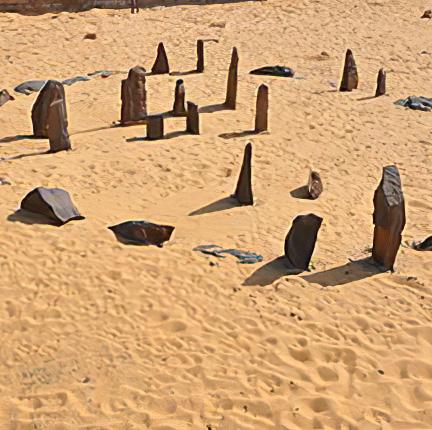
Dating back to around 300 B.C., this site was used by the Cushitic society to calculate an accurate calendar through tracking celestial body movements. The pillars align with the 7-star systems of Sirius, Central Orion, Bellatrix, Saiph, Pleiades, Triangulum, and Albaran. This site is yet another contribution to the ways individuals in ancient civilisations had a sophisticated understanding of astronomy.
Aligned with stars like Alpha Centauri, Arcturus, and Sirius, it is considered to be an early astronomical observatory. This infamous stone circle was used to track the arrival of the annual monsoon season as well as the summer solstice, contributing to seasonal survival and migration. Next, we travel to Kenya.
Ancient African astronomical sites such as these are what highlight Africa’s contribution to astronomical knowledge. It is no secret that before clocks, ancient civilisations utilized constellations and the Sun to track time. It was also through the calendars created from readings at these sites that they were able to predict the coming of summer, autumn, winter, and spring, assisting in tracking when to harvest and plant crops for survival.
Through sites such as these and with new discoveries on the continent, Africa continues to show that it has much to offer to the knowledge making process to the astronomical world.
By: Lillian Assefa
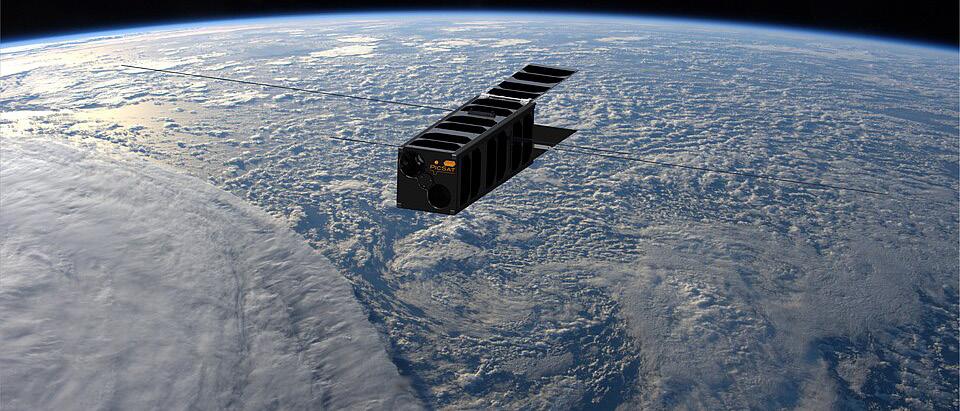
In recent years, CubeSats—compact, cost-effective satellites— have emerged as pivotal tools in Africa’s space science endeavors. These miniature satellites, often no larger than a loaf of bread, are enabling African nations to engage in space research and applications that were once the domain of space-faring giants.
Africa’s venture into CubeSat technology began with educational and experimental missions.
South Africa’s ZACube-1, launched in 2013, was one of the continent’s first CubeSats. Developed by the Cape Peninsula University of Technology, it aimed to study space weather phenomena. Similarly, Ghana’s GhanaSat-1, launched in 2017, marked the nation’s entry into space, focusing on Earth observation and technology demonstration.
These early missions laid the groundwork for more advanced applications. For instance, South Africa’s MDASat constellation,
launched in 2022, comprises CubeSats designed to monitor marine environments, showcasing the growing sophistication of Africa’s CubeSat capabilities.
The integration of CubeSats with big data analytics is unlocking new possibilities for addressing Africa’s challenges. Initiatives like Digital Earth Africa are at the forefront, providing platforms that process and analyze vast amounts of Earth observation data. These platforms enable applications ranging from agricultural monitoring to disaster response, offering timely insights that inform decision-making.
Moreover, the Big Data Africa School trains students in applying machine learning techniques to Earth observation data. Such educational programs are cultivating a new generation of African scientists adept at leveraging big data for societal benefit.
Africa’s progress in CubeSat and
big data applications is bolstered by international collaborations. The BIRDS project, a joint initiative by multiple countries, has facilitated the development and launch of CubeSats by several African nations, fostering knowledge exchange and capacity building.
Furthermore, partnerships with organisations like EUMETSAT are enhancing Africa’s ability to utilize satellite data effectively. These collaborations are crucial in bridging the technological divide and ensuring that African nations can harness space science for sustainable development.
The fusion of CubeSat technology and big data analytics is propelling Africa into a new era of space science. As more nations develop and deploy CubeSats, the continent is poised to make significant contributions to global space research. Continued investment in education, infrastructure, and international partnerships will be key to realizing the full potential of these technologies.
By Dr Nozipho N Madzivha
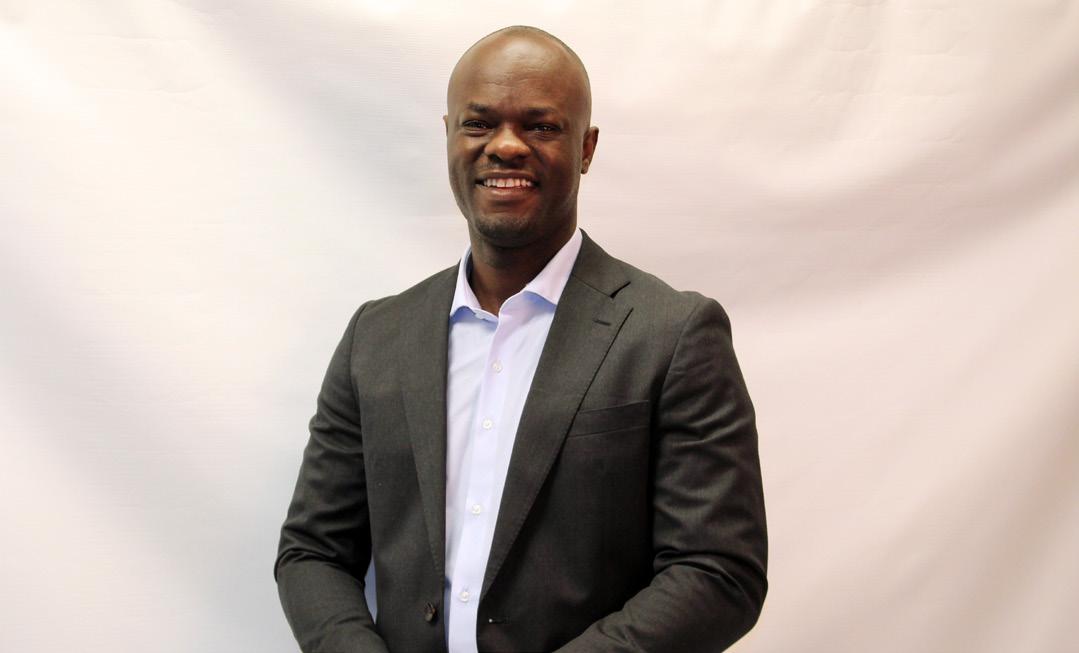
James Chibueze, Distinguished Professor in the College of Science, Engineering and Technology, recently scooped the highly coveted Royal Society Rising Star Africa Prize for his work on advancing African astronomy through pioneering research, capacity building, and international collaborations.
The Royal Society is a fellowship that comprises many of the world’s most eminent scientists and is one of the oldest scientific academies. On 27 August 2025, the Royal Society announced the 2025 recipients of medals and awards. Unisa’s Distinguished Professor James Okwe Chibueze, of the Department of Mathematical Sciences in the College of Science, Engineering and Technology, was among the recipients announced and was awarded the Royal Society Rising Star Africa Prize. The award is made in recognition of his work on advancing African astronomy through pioneering research, capacity building, and international collaborations.
The Rising Star Africa Prize is awarded to recognise early-career research scientists based in Africa who are making innovative contributions in the physical, mathematical and engineering sciences. The medal is accompanied by a grant of £14,000 and a personal gift of £1,000. This award also comes with a Prize Lecture, which the recipient delivers on the evening of the awards ceremony.
In congratulating this year’s awardees, Sir Adrian Smith, President of the Royal Society, said: “The recipients of this year’s medals and awards have all made outstanding contributions to science and its applications for the benefit of humanity. They have done so by furthering our understanding of the processes that govern the world around us, changing the practices of academia to build a more robust and inclusive re-
search environment, and engaging new audiences.”
He added: “Celebrating these diverse contributions is core to the Society’s mission, and I offer my congratulations to all the 2025 recipients”.
Chibueze’s research interests are centred on highmass star formation, radio galaxies, and the use of cutting-edge observational techniques such as very long baseline interferometry (VLBI). His landmark discovery of the interaction between intra-cluster magnetic fields and the jets of radio galaxies, published in the journal Nature, has been globally acclaimed. This groundbreaking work has contributed to advancing our understanding of galaxy cluster dynamics and radio jet morphology.
His current work explores the 3-D morphology of our home galaxy, the Milky Way, and a high-resolution study of massive star formation. The birth process of big stars is unveiled by observing masers and molecular gas associated with star-forming regions in the Milky Way with radio telescopes, and tracing the gas motion.
Prof Chibueze has a strong passion for human capacity development in astronomy, especially on the African continent. He spearheads educational programmes in Africa, such as the Pan-African School for Emerging Astronomers (PASEA) and Development in Africa through Radio Astronomy (DARA), aimed at nurturing the next generation of African astronomers. Reflecting on his accomplishments, Prof Chibueze said: “I hope that this award and the opportunity to deliver a Prize Lecture provide much-needed visibility to my work and engender an increase in collaboration with more astronomers across the United Kingdom and the globe. The monetary prize will be invested in my research, including using it to attend relevant conferences, and a fraction would be used to support at least one African astronomy student.”
Distinguished Professor James Okwe Chibueze, of the Department of Mathematical Sciences in the College of Science, Engineering and Technology at the University of South Africa (UNISA)
Prof. Jamal Mimouni, Univ. of Constantine 1 & CERIST, Constantine, Algeria Past President, African Astronomical Society
In our previous edition, we explored the beauty and vast complexity of the universe, along with the captivating world of stars. In this issue, we continue our cosmic journey, delving into more fascinating ideas and discoveries that deepen our understanding of the cosmos.
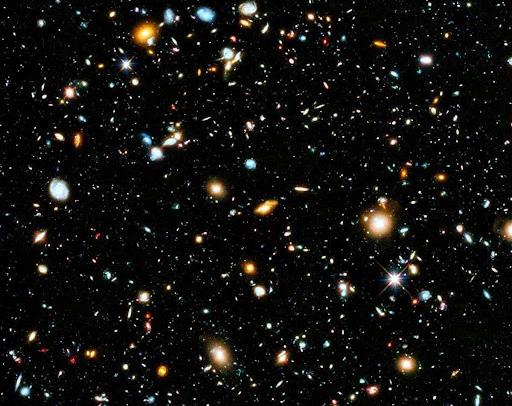
If stars constitute the fundamental cells-like fundamental units of cosmic structure, then galaxies represent their organized ecosystems - gravitationally bound assemblies where stellar populations, interstellar medium, and dark matter interact collectively.
These colossal structures, ranging from elegant spirals with their sweeping arms to massive elliptical blobs and irregular dwarfs, represent the universe’s next architectural tier. They are classified into spiral, elliptical, and irregular morphologies, and emerge from specific formation histories and environmental conditions. Their constituent stars, while individually governed by astrophysical processes, collectively exhibit
system-wide behaviors that reveal larger cosmological principles.
Their spatial distribution traces the universe’s large-scale structure, while their dynamical properties constrain models of dark matter and dark energy. The systematic analysis of galactic systems thus bridges stellar astrophysics with cosmology, connecting the microscopic scale of stellar processes to the macroscopic architecture of the universe.
At the heart of astronomy is cosmology, the study of the origin, structure, and fate of the universe. This field raises some of the most profound questions about existence itself. Where did the universe come from? Where is it headed? Will it continue to expand forever, or will it eventually collapse back in on itself? These questions not only challenge our scientific understanding but also invoke deep philosophical and spiritual reflections on our place in the cosmos.
Expanding Universe: The Journey from the Big Bang to Today
Likewise, at the heart of cosmology is the Big Bang theory, often loosely referred to as the Big Bang. Astronomy allows us to peer into the past, looking back billions of years to the origins of the universe, and into the future, wondering what the final moments of the universe will be like. Whether it is the exploration of the cosmic microwave background, the faint afterglow of the Big Bang, or the search for life on distant exoplanets, astronomy constantly reminds us that we are a small part of something far grander.
This overarching fact about the Universe discovered by observations in the early part of last century is that it is not static, and in fact that it is not only expanding, but that this expansion is accelerating. This realization stems from the discovery of distant galaxies moving away from us, a phenomenon that supports the Big Bang theory. The universe’s expansion is not like an explosion in space but rather the stretching of space itself, causing galaxies to drift apart over time. This understanding of an expanding universe reshapes our view of cosmic history. The Universe we observe today has been evolving for nearly 14 billion years, from the singularity of the Big Bang to the formation of the first stars, galaxies, and ultimately, the
planets. Each step in the evolution of the Universe is an unfolding story of creation, destruction, and rebirth, one that astronomers are still actively unraveling.
Let us tackle in rapid succession three basic facts about the Big Bang, which are often misunderstood.
- First, it is important to emphasize that, contrary to its name, the Big Bang was not an explosion or a cosmic fireball expanding into a pre-existing void, as no “space” existed prior to it. Rather, it marked the rapid expansion of space itself, carrying matter and energy along with it.
- The common notion that there was no “space” prior to this event should also be reconsidered. In fact, the Big Bang, dating back approximately 13.8 billion years, signifies the expansion of space itself, within which matter and energy were embedded.
- Moreover, current observations indicate that this expansion is accelerating: the Universe is not only expanding, but doing so at an increasing rate. Galaxies are receding from one another more rapidly over time, a phenomenon attributed to a mysterious component known as dark energy. Should this trend persist, distant galaxies will eventually recede beyond the observable horizon, leaving future astronomers with a significantly emptier sky.
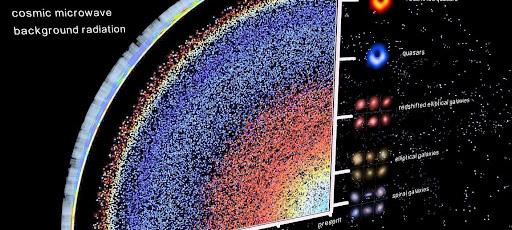
The Big Bang has a smoking gun: The oldest light we detect is the Cosmic Microwave Background (CMB), a faint glow in the microwave part of the electromagnetic spectrum when the Universe was just 380,000 years old. This afterglow is like a snapshot of a time before stars or galaxies existed. Scientists detected in 1965 and its detection constitutes till now the strongest proof of the Big Bang’s occurrence.. On a gloomy side, the Universe has an expiration date: Indeed, if dark energy keeps accelerating the expansion as observed via Type Ia supernovae and CMB measurements, distant galaxies will vanish from view. And future civilizations, if any, may be lonely, living in a starless sky and may never know the Universe was once vast and full of light and the far future we. Yet this fate lies so far ahead that we can marvel at our luck to witness the universe in its vibrant prime
The Multiverse Debate
Cosmic inflation’s elegant solution to horizon/ flatness problems comes with a radical corollary: eternal inflation may spawn infinite ‘bubble universes’ with varying physical constants. While criticized as untestable, some propose evidence could hide in CMB anomalies (cold spots) or unique gravitational wave signatures from colliding bubbles. Whether philosophical speculation or future science, the multiverse underscores how deeply inflation rewrote our cosmic narrative.
From afar, the cosmos may look like an elegant tapestry of stars and galaxies, but zoom in, and things get messy. The Universe is clumpy, filamentary, and full of voids as revealed by large-scale structure surveys like SDSS. Galaxies are not evenly scattered, they form clusters and superclusters, strung together in vast webs of gravity. Yet, despite the mess, a strange order emerges. The same physical laws seem to hold everywhere. Hydrogen behaves the same in a lab and in a galaxy ten billion light-years away. Gravity curves spacetime the same way in your backyard and near a black hole. Cosmic simplicity hides inside overwhelming complexity. That’s may be the paradox at the heart of astronomy.
Gravity, though the feeblest of nature’s fundamental forces, reigns supreme in its reach. It governs everything from a satellite’s orbit to the dynamics of galaxies. At this very moment, you are in endless free-fall, Earth’s grip anchoring you to the ground, ceaselessly drawing you downward, just as it tugs the Moon toward our planet and steers the planets around the Sun.
Yet gravity’s role extends beyond mere confinement, it sculpts the fate of stars and galaxies. When a star burns through its nuclear reserves, gravity causes the star to collapse in on itself, leading to dramatic events like supernovae and the formation of black holes. It also fuels stellar nucleosynthesis, forging the universe’s elements, from lightweight hydrogen to dense gold and uranium.
Talking about structuration of the Universe, it is a rather astonishing discovery of the past few decades that galaxies are not randomly scattered but form a cosmic web. They cluster along vast, thread-like structures, with enormous empty spaces in between. This “cosmic web” is shaped by gravity, with dark matter acting as the invisible scaffolding.
Quasars represent one of the most extraordinary intersections in astrophysics, where three fundamental realms converge: galaxy evolution, supermassive black hole dynamics, and the conditions of the early universe. These Cosmic Beacons, now understood to be the active nuclei of distant galaxies powered by accreting supermassive black holes, serve as both probes and participants in cosmic evolution. Their extreme brightness, often outshining their host galaxies, makes them visible across cosmic time, offering a unique window into the universe’s formative epochs when matter was first concentrating into large-scale structures.
Quasars may hold keys to unresolved mysteries about feedback mechanisms regulating galaxy growth, the origins of supermassive black holes in the early universe, and the role of extreme energy output in shaping cosmic environments. As markers of concentrated mass in the young universe, quasars help trace the emergence of cosmic structure while challenging our understanding of how such massive objects could form so quickly after the Big Bang.
The Big Bang theory beautifully describes the universe’s evolution from an ultra-hot, dense state, but hits a wall when we ask what came before - or even
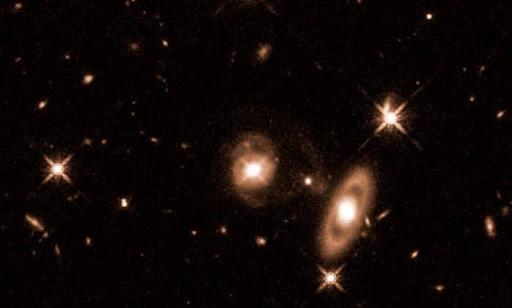
Figure :, A quasar is an extremely luminous active galactic nucleus often identified thanks to their high redshift. Quasar J0742+2704 (centre) became the subject of astronomers’ interest after it was discovered using the VLA to have a newborn jet blasting from the disk around its supermassive black hole.
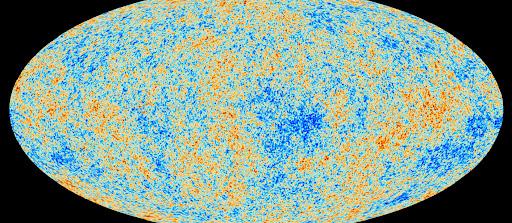
Figure : The CMB discoverd in the middle sixties in possibly the most momentius discovery of XXth century. Here is the Planck map. Theoretical cosmollogy today has become, in some appreciable part, the study of the fluctuations map imprinted on it. Plank collaration
if ‘before’ has meaning. At these extreme frontiers (black hole singularities and the first 10 ³ seconds after the Big Bang), Einstein’s gravity and quantum mechanics clash violently. And that’s where theoretical physicists will add another layer of complexity (and speculation!): spacetime itself may shatter into Wheeler’s quantum foam, vibrating strings, or discrete loops, while the Planck epoch reveals a seething quantum landscape where conventional notions of cause and effect break down. Though still unproven, clues might hide in gravitational wave echoes (LIGO/Virgo) or primordial light patterns (CMB-S4). These speculative but thrilling ideasfrom loop quantum gravity to string theory - suggest spacetime may be emergent rather than fundamental, possibly part of a deeper cyclical process that rewrites our understanding of cosmic birth.
Yet, as much as we know today about the universe, there are still huge gaps in our understanding. The ordinary matter that makes up everything you know, every object, star, or planet, accounts for less than 5% of the cosmos. Meanwhile, dark matter (≈27%) and dark energy (≈68%) dominate yet evade detection, the former being an invisible substance component binding galaxies together, that interacts with gravity but not with light or through the strong nuclear force. On top of that, about 68% of the universe’s energy (Portion of the 85% above) is believed to be in the form of dark energy, a mysterious substance/energy that seems to be driving the accelerated expansion of the universe.
It is a sobering truth that most of the Universe remains hidden from our sight, and the fact that the nature of dark matter and dark energy remains wholly unknown stands as one of modern cosmology’s most profound mysteries. Yet their presence seems undeniable written in the fabric of the cosmos itself. For today’s astronomers, the most baffling aspect is not merely that 95% of the Universe’s content eludes our understanding, but that this dominant yet invisible component does not interfere with our familiar 5% of ordinary matter, except through gravity’s largescale influence on cosmic evolution. Stranger still, the weakest force, gravity, maintains all forms of matter, both visible and unseen under its grip.
Of course, nothing in cosmology is ever simple - explanations rarely come down to just ‘yes’ or ‘no’. While our standard CDM model described above works beautifully for the universe at large scales, stubborn galactic puzzles keep popping up. Why do small galaxies seem too big to fail? Why do stars orbit differently than expected? These anomalies have researchers considering some wild alternatives: axions (ghostly ultralight particles), MOND (a tweak to Newton’s gravity), or even ancient black holes from the universe’s infancy. The next generation of experiments - from XENONnT’s hunt for dark matter to LISA’s gravitational wave detection - might finally solve these mysteries... or they might send us back to the drawing board for even bigger ideas!
These are pointers to the fact that astronomy is a constantly evolving science. New discoveries, new technologies, and new perspectives continually reshape our understanding of the universe. For example, gravitational wave detectors like LIGO have opened up a new way to observe the cosmos, allowing us to hear the ripples in spacetime caused by massive events like black hole mergers. Such observations push the boundaries of what we know and challenge our assumptions about the universe. Cosmology is particularly prone to this periodic paradigm shift.
One of the most profound questions astronomers seek to answer is whether life exists elsewhere in the Universe. While Earth is the only known planet to harbor life, the discovery of thousands of exoplanets, planets orbiting stars beyond our Solar System, has raised the tantalizing possibility that life may exist elsewhere. Some of these exoplanets lie in the “habitable zone” of their stars, where conditions may be suitable for liquid water, a key ingredient for life. Exoplanet surveys like done by the Kepler and JWST telescopes have shown that Earth-sized planets in habitable zones are common. Yet none so far hosts life as we know it. Whether this is due to observational limits or a true rarity of biospheres remains unanswered.
The search for life beyond Earth - exobiology - goes far beyond simply locating planets in habitable zones. Earth’s extremophiles, thriving in boiling vents or acidic pools, have rewritten the rules of where life might exist.
This opens astonishing possibilities: methane-based life in Titan’s azotosome lakes, acid-resistant organisms in Venus’ clouds, or microbial communities beneath Europa’s and Enceladus’ icy shells - where hydrothermal vents mirror Earth’s primordial conditions. Future missions like Europa Clipper and Enceladus Orbilander will probe these exotic habitats, while astronomers simultaneously hunt for biosignatures - atmospheric chemical fingerprints that could reveal biological activity on distant worlds. Together, these approaches are fundamentally expanding our definition of what ‘life’ could look like in the cosmos.
Returning to us humans to conclude these cosmic basic facts. We confront the Copernican principle, science’s humbling revelation that displaced us from the centre of existence. Our Sun holds no privileged position in the universe, nor even in our galaxy for with respect to which it is not even at its centre. The Milky Way itself is unremarkable among countless others, and Earth, a mere speck orbiting an average star in an ordinary spiral arm.
Yet, and this is crucial, ‘ordinary’ does not mean insignificant. Despite searching thousands of exoplanets and listening for extraterrestrial signals, we have found only silence. Life may be abundant but discreet, or we may be a singular spark in the cosmic night. In either case,
And here lies a puzzling questioning known as the “Fermi’s paradox”: If life arises readily, why does the cosmos seem silent (Fancily said : why are there no technosignatures?)? Potential answers range from sobering
(‘Great Filters’ like self-destruction precede interstellar civilization) to speculative (advanced cultures avoid detection). Thus, Earth’s apparent mediocrity, orbiting an average star in an unremarkable galactic spiral arm, masks a deeper truth: While the Copernican principle displaced us from the cosmos’ center, our planet’s ability to foster life may prove extraordinary.
New tools like JWST (searching for artificial atmospheric pollutants) and VLBI arrays (hunting for alien megastructures’ waste heat) are transforming this philosophical puzzle into an observational program.
8- Conclusion: The Universe is Beautiful, Messy, but Knowable
Through cosmic essentials, from galactic evolution to quantum spacetime, we have charted how astronomy transforms mystery into understanding in accessible terms while embracing advanced concepts from modern astrophysics and that next-generation telescopes like JWST and LISA will probe. Focusing on pivotal discoveries, from galactic evolution to quantum spacetime, we distilled cosmic principles that serve not just as facts, but as lenses transforming mystery into revealed order. Furthermore, upcoming telescopes may detect atmospheric biosignatures, or confirm our planet’s exceptionalism.
From starlight to quantum spacetime, astronomy relentlessly pushes boundaries. The same tools that decode stellar spectra may one day reveal spacetime’s quantum substructure, whether through primordial
gravitational waves, black hole ‘echoes,’ or lab-based quantum gravity experiments. The universe’s deepest truths likely lurk where relativity and quantum mechanics collide, waiting for the next paradigm shift. As we decode the universe, we also alter our role within it: from passive observers to potential interstellar engineers (Dyson swarms, Kardashev civilizations…). Whether this trajectory is rare (explaining Fermi’s silence) or inevitable, it binds astronomy’s quest to humanity’s destiny, making our current era, where a species first grasps the cosmos, perhaps the most remarkable chapter in the universe’s story.
Astronomy’s transformative power bridges empirical rigor and profound wonder. Where ancient mythmakers wove stories, we now decode reality’s grand narrative, written in starlight’s whispers, gravitational waves’ echoes, and quantum spacetime’s geometry. Each discovery rewrites humanity’s role: passive observers becoming active cosmic interpreters, translating interstellar dust into creation myths and equations into existential insight. Our era, where a species first grasps its universal context, may be the most remarkable chapter in this 13.8-billion-year epic. This is the discipline’s enduring gift: where fiction imagines, astronomy reveals, not merely redefining our cosmic address, but unveiling a reality more astonishing than any fabrication. That such truths emerge from mathematics and starlight, and that a brief flicker of organic life can apprehend them, constitutes the most profound triumph of the scientific enterprise.
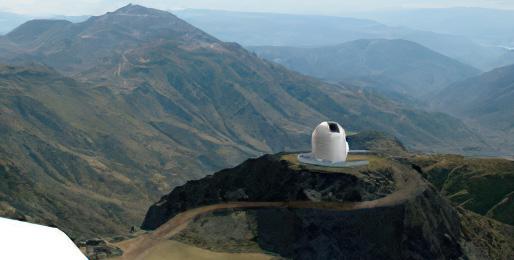
Figure : The CMB discoverd in the middle sixties in possibly the most momentius discovery of XXth century. Here is the Planck map. Theoretical cosmollogy today has become, in some appreciable part, the study of the fluctuations map imprinted on it. Plank collaration. Credit:Rubin Observatory/NSF/AURA
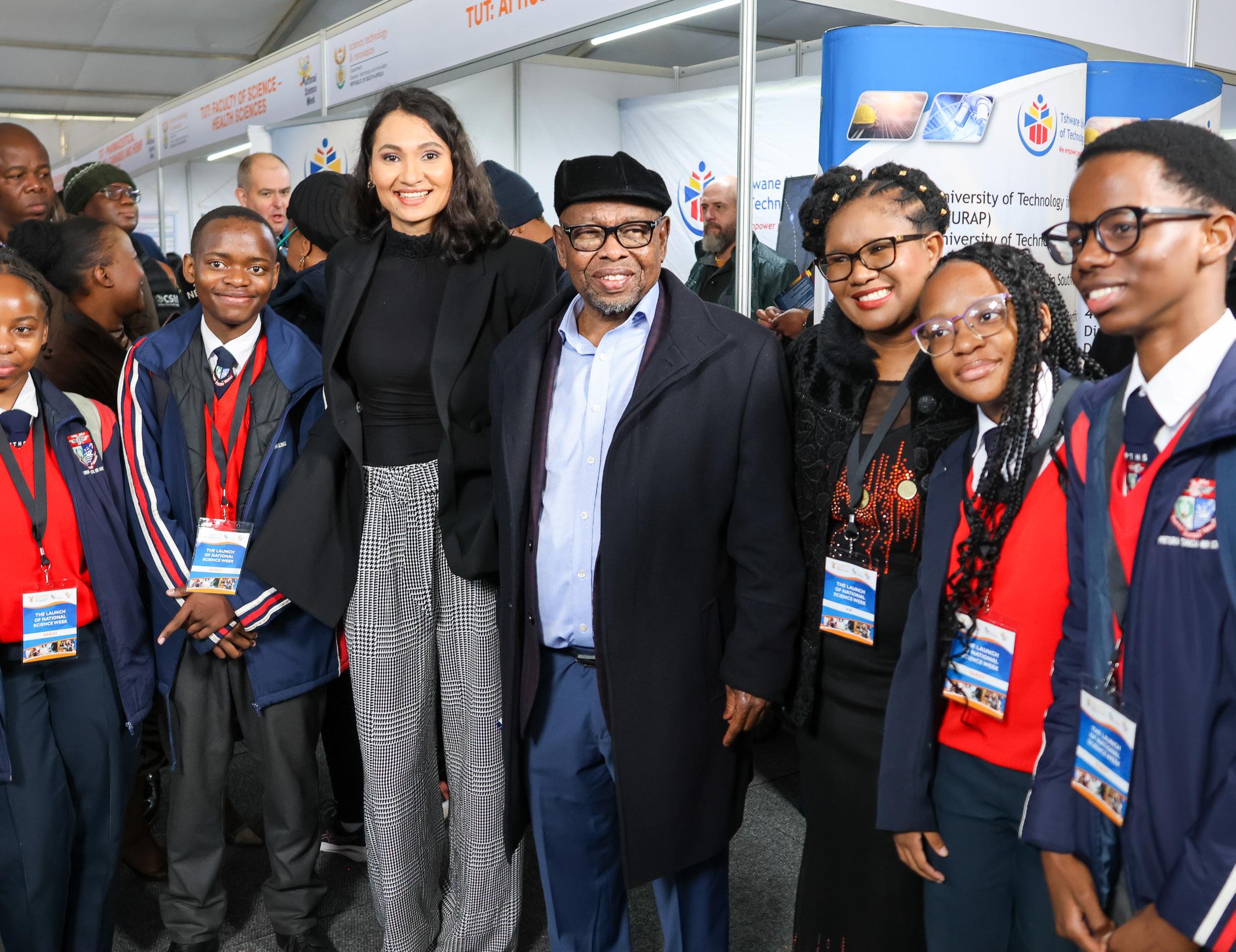
The National Science Week (NSW) 2025 was officially launched at the Tshwane University of Technology (TUT) main campus in Pretoria West on Saturday, August 4.
The event brought together leading scientists, engineers, and innovators to showcase cutting-edge technologies and advancements in fields like robotics and renewable energy.
Delivering the keynote address, Minister of Science, Technology and Innovation, Dr. Blade Nzimande, highlighted the importance of making science accessible to everyone.
By Siphokazi Vuso
“Through strategic partnerships and community engagement, we have ensured that science is no longer confined to laboratories or lecture halls, but brought directly to our people in townships, rural areas, schools, and public spaces.”
Nzimande’s vision includes plans to introduce several initiatives to improve students’ access to maths and science.
“It is my vision that each of our nine provinces will have a high-quality science centre before the end of this administration. These centres will not only inspire
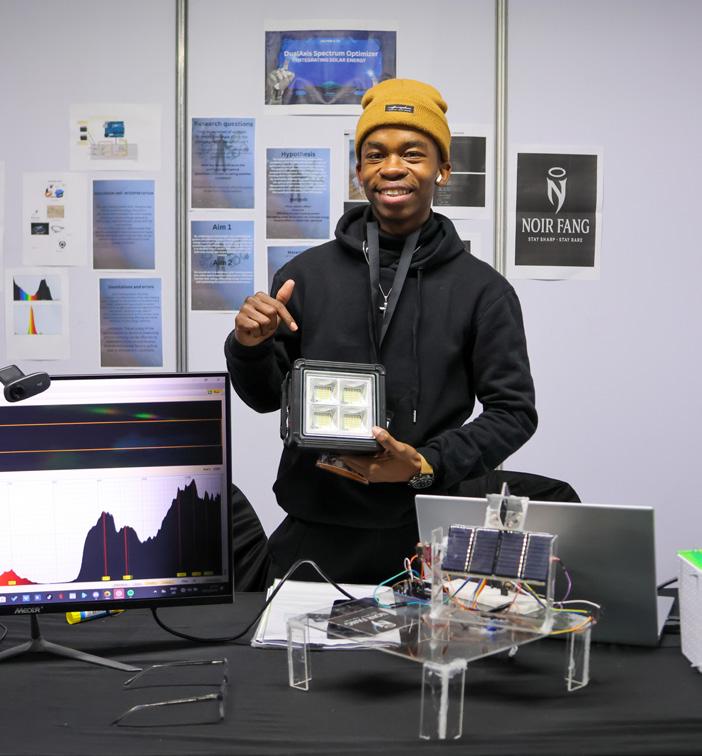
curiosity but also serve as hubs for innovation, learning and skills development.”
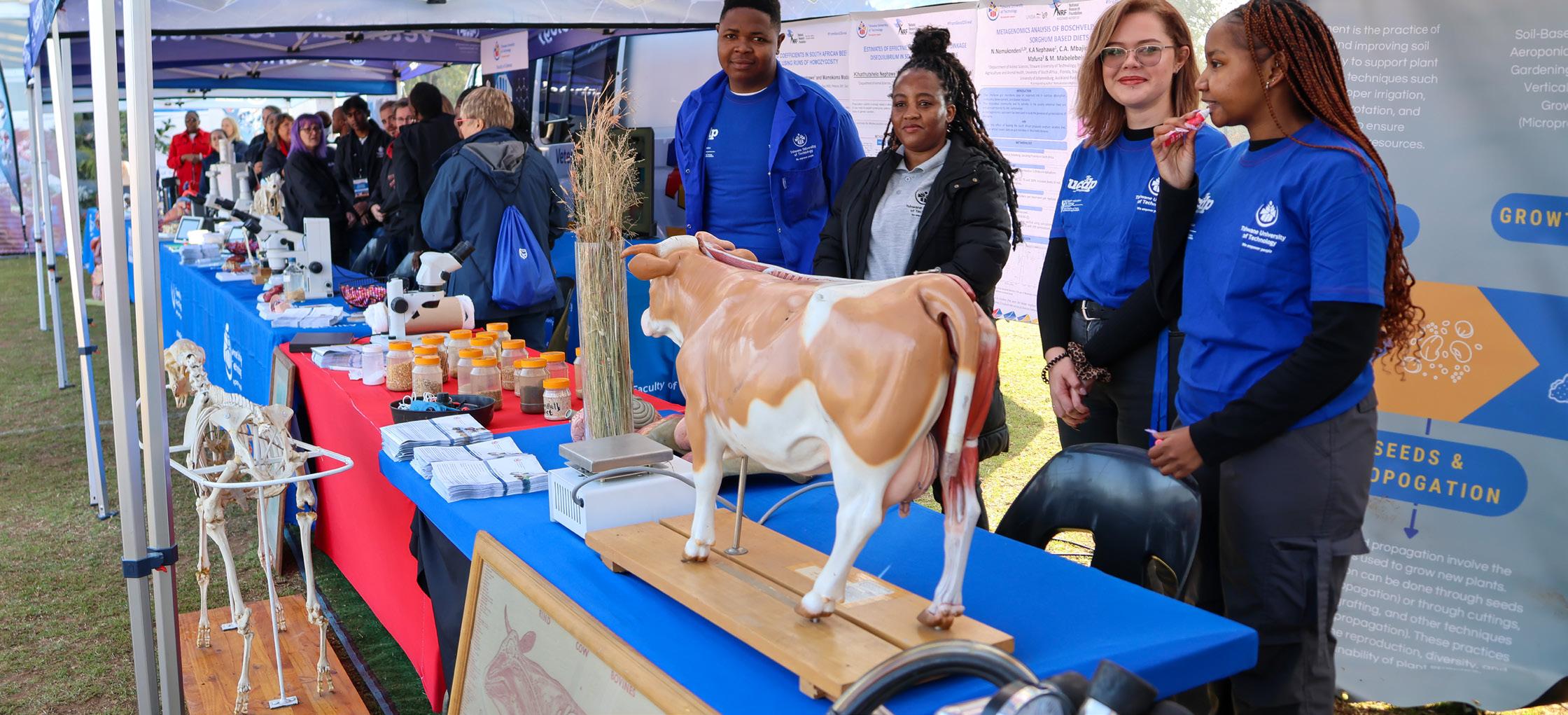
The NSW 2025 programme showcased over 100 exhibitions, interactive demonstrations, and presentations by leading scientists and engineers, with more than 1000 learners from surrounding schools in attendance.
This year’s theme “Science, Technology, and Innovation are for Everyone” highlighted the department’s commitment to public engagement and accessibility.
Countrywide events took place throughout the week, including career and science exhibitions at schools, lectures, science discussions, and online science events.
This year’s NSW also marked 25 years since its introduction in 2000.
In a significant move to deepen public engagement, the Minister announced that National Science Week will expand into National Science Month in 2026.
“In 2026, National Science Week will expand into National Science Month – a celebration designed to deepen public engagement and provide more time and space for meaningful interaction with science and innovation.”
Tshwane University of Technology’s Deputy Vice-Chancellor for Research, Innovation, and Engagement, Dr. Vathiswa Papu-Zamxaka, while delivering the keynote address, noted that science has become increasingly integrated into everyday life.
“No longer confined to laboratories or academia, science has steadily
become embedded in everyday life through education initiatives, community outreach programmes and advancements that address real-world challenges,” she said.
“From technology-driven farming solutions that bolster food security to mobile health innovations improving access to healthcare in remote areas, the progress achieved reflects a transformation in how ordinary South Africans engage with and benefit from science.”
African Science Stars attended the launch and showcased their latest issue: “Feme Astrophysicists in Africa”.
Editor Lillian Assefa emphasised the importance of featuring women in the field, highlighting the publication’s role in inspiring the next generation of scientists.
“Representation matters. When young girls see women leading in science, they begin to believe there’s a place for them too. Through our magazine, we want to shine a light on their achievements and show that brilliance knows no gender”.
By African Science Stars Correspondent
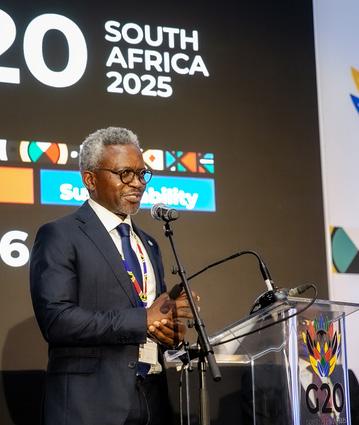
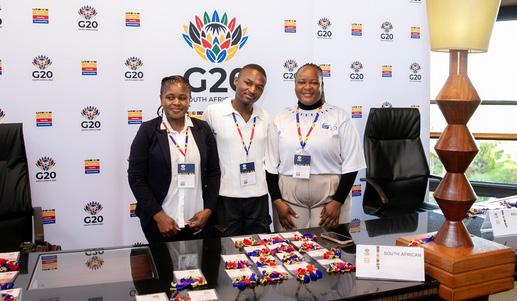
South Africa has made history by hosting the 6th G20 Space Economy Leaders Meeting (SELM6) on African soil for the first time. The gathering, convened under South Africa’s G20 Presidency, was jointly hosted by the South African National Space Agency (SANSA), the Department of Science, Technology, and Innovation (DSTI), and the Government of South Africa. The event marked a significant milestone, positioning Africa at the heart of global space dialogue and cooperation.
The SELM6 was more than just a high-level summit; it was a symbolic affirmation of Africa’s increasing role in the global space economy. Delegates from the world’s leading spacefaring nations gathered in South Africa to discuss how space science and technology can tackle humanity’s most urgent challenges. For South Africa, the event demonstrated a strategic dedication to integrating the continent’s priorities into the global space agenda. “SELM is a critical platform that fosters global collaboration and dialogue on how space technologies can drive sustainable development,” noted SANSA leadership.
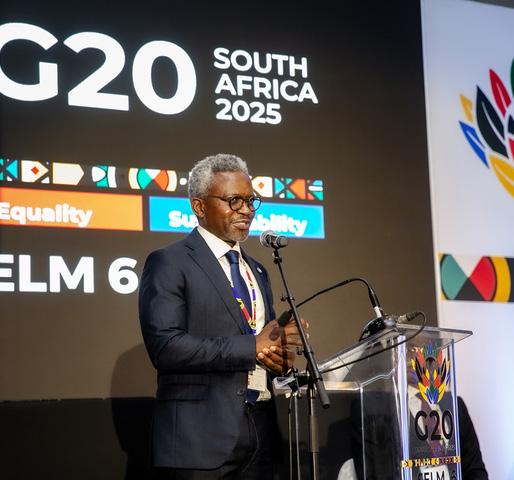
The G20 initially established the Space Economy Leaders Meeting (SELM) as a ministerial-level forum to examine the transformative influence of space on global growth and cooperation. Since its inception, SELM has progressively developed into one of the most important gatherings for heads of space agencies, policymakers, and industry leaders.
Previous editions of SELM were hosted by G20 member states in Europe, Asia, and the Americas, concentrating on commercialisation, international standards, and exploration partnerships. The decision to hold SELM6 in Africa under South Africa’s Presidency reflects both the continent’s growing capabilities and the recognition that Africa’s participation is essential in shaping the future global space agenda.
The Final Outcomes Statement of SELM6 reaffirmed that space is a shared global domain and a vital enabler of sustainable development, innovation, and resilience. Participants adopted shared principles across four key areas.
• Space for Sustainable Development: Commitment to aligning national and international poli cies with the UN 2030 Agenda, AU Agenda 2063, and climate resilience frameworks.
• Public-Private Partnerships: Recognising the role of governments, private sector, and academia in shaping a thriving, innovative space economy.
• Sustainable Space Operations: Support for responsible practices such as debris mitigation, space situational awareness, and cybersecurity.
• Global Food Security: Support for GEOGLAM and other initiatives utilising Earth Observation to enhancefood systems and market transparency.
Concrete Outcomes
Key agreements and announcements included:
• Partnerships: SANSA signed a new Memorandum of Understanding with the Spanish Space Agency (AEE) on human capital development, industry growth, technology innovation, and Blue Economy projects.
• African Integration: Space agency heads from the DRC, Gabon, Ghana, and Namibia participated, ensuring African priorities were incorporated into global frameworks.
• Multilateral Support: Organisations such as the ITU, IAF, and UNOOSA reaffirmed their commitment to cooperation, capacity building, and inclusive global governance.
• SELM’s Future: Participants discussed the potential elevation of SELM into a formal G20 Working Group or Task Force, while also agreeing to set up virtual Heads of Agencies meetings to maintain momentum.
Why Space Matters for Development and Ending Poverty Space science and technology are vital for addressing Africa’s urgent development issues. Satellites offer precise data for agriculture, climate adaptation, disaster risk management, and urban planning. Space-enabled connectivity helps bridge the digital divide, providing education, healthcare, and financial services to underserved communities.
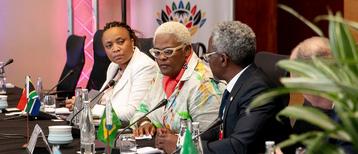
The summit sparked tremendous interest in SANSA’s initiatives. Ongoing collaborations with China’s AIRCAS, India’s ISRO, Angola’s GGPEN, and other partners strengthen South Africa’s position as Africa’s key gateway for space collaborations.
Behind the scenes, South Africa’s meticulous organisation of SELM6 received high praise. SANSA CEO Humbulani Mudau commended the teams involved:
“From the warm welcome you gave our guests to the seamless way you kept everything running, you showcased what we’re capable of. You represented SANSA and South Africa with pride, professionalism, and that unmistakable South African hospitality.”
The success of SELM6 has established a new standard for Africa’s leadership in shaping the global space economy. With SANSA’s 2025–2030 Strategic Plan,
The SELM6 Outcomes emphasised that space cooperation directly fosters resilience, inclusive growth, and the elimination of extreme poverty by securing food systems, increasing productivity, and promoting sustainable futures.
South Africa aims to position itself as an Intermediate Space Nation by developing satellites, infrastructure, and skills for the future.
By adopting the Final Outcomes, SELM participants agreed to:
• Enhance the importance of space in promoting sustainable development and inclusivity.
• Broaden collaboration among governments, the private sector, academia, and multilateral organisations.
• Promote responsible space activities through innovation and ethical conduct.
• Boost contributions to initiatives such as GEOGLAM.
• Continue the dialogue on SELM’s elevation within the G20 and convene meetings of the Heads of Agencies.
The legacy of SELM6 will live on through the partnerships built, the knowledge shared, and the inspiration ignited across Africa. The message is unambiguous: Africa is no longer a bystander in the global space economy—it is a partner, contributor, and leader.
By Prof. James O. Chibueze

The African Astronomical Society (AfAS) in collaboration with the South African Astronomical Observatory (SAAO) has completed the refurbishment of the ROTSE optical telescope located on the HESS site in Namibia. This project was led by Prof David Buckley. The main aim of bringing the ROTSE telescope is to provide access to African astronomers for the purpose of research and education.
The objective is to build capacity in optical observational astronomy, time-domain astrophysics across Africa, enabling rapid follow-up observations, data processing, and participation in international transient networks. It aligns with AfAS’s goals of collaborative international activity, training, youth engagement, and building astronomical infrastructure in Africa.
AfAS will offer ROTSE observing time to astronomers in the Africa continent mainly, but would consider proposals from outside the continent on case-by-case basis, support for data reduction and development of pipelines if needed, possibly via training or shared software resources. There may be the possibility of modest funding for small equipment like external hard-drives for data transfer if required for proposal execution.
• Professional astronomers based in Africa, includ-
ing early-career researchers (PhD, postdoc) or faculty members.
• Postgraduate students (MSc / PhD) in African universities, ideally in collaboration with a senior mentor/institution.
• Amateur astronomers or outreach organisations in partnership with academic institutions could apply for certain categories (especially educational or follow-up work), subject to specific guidelines.
• Lecturers/teachers who would like to use a real telescope to teach astronomy and optical observational techniques
Proposals submitted should include:
1. Title and abstract: concise summary of the science objective.
2. Scientific justification: motivation for the observations: transient follow-up, variable stars, supernovae, gravitational wave/neutrino alerts, etc.
3. Targets / observing plan: specific targets or type of survey; scheduling needs; anticipated cadence, exposure times, filters.
4. Technical justification: required telescope specifications, sensitivity limits, sky coverage, seeing, response time.
5. Team members: roles of PI, co-PIs, students; external collaborations if any.
6. Data handling and analysis plan: where data will be processed; plan for making data available; capacity building/training component.
7. Timeline and milestones: when observations would be done; when analysis is done; when results or deliverables will be produced.
8. Budget (if funds are requested): computational resources, possibly minor equipment.
9. Institutional support / Infrastructure: ensuring access to necessary infrastructure; stable power / connectivi ty; necessary staff support.
• Proposals to be submitted via AfAS’s proposal portal (when ready). However, prior to the availability of the portal, proposals can be submitted via email to the AfAS secretariat, per stated format.
• Required documents: proposal PDF (as per requirements above), list of PI / team, institutional support, letters of collaboration if external.
• The scientific and technical justification must be limited to a maximum of 3 pages.
• Proposal deadline must be adhered to.
The call for proposal for shared-risk observing time with the ROTSE telescope would be released in due course by the AfAS science committee along with the proposal submission deadline.
An operational ROTSE telescope would be a valuable opportunity to push forward time-domain astronomy in Africa, build human and institutional capacity, and contribute to international astronomical discoveries. It is our hope that observing programmes would enhance AfAS’s broader goals of collaboration, training, and infrastructure development.
By Kaoutar Saadi
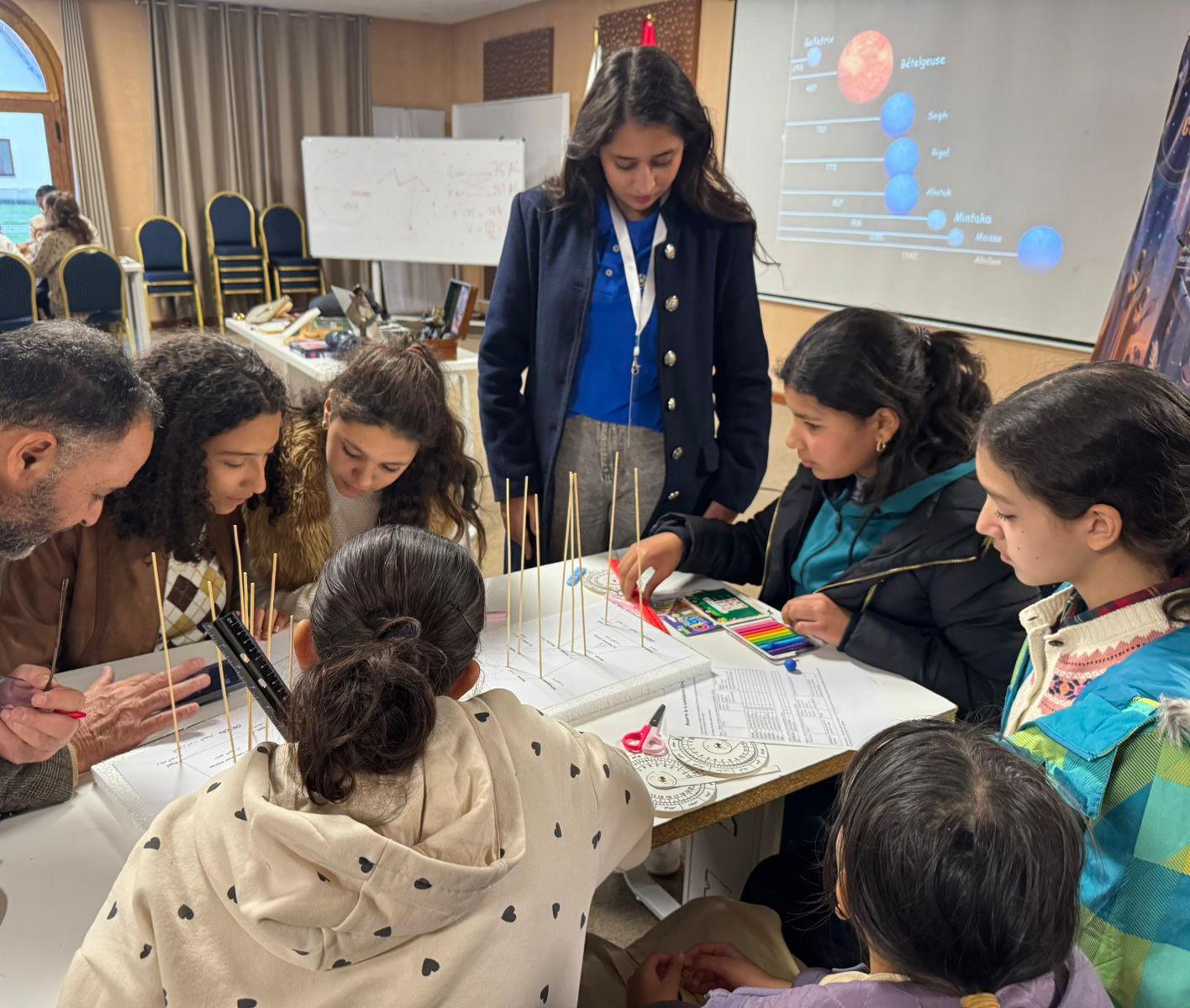
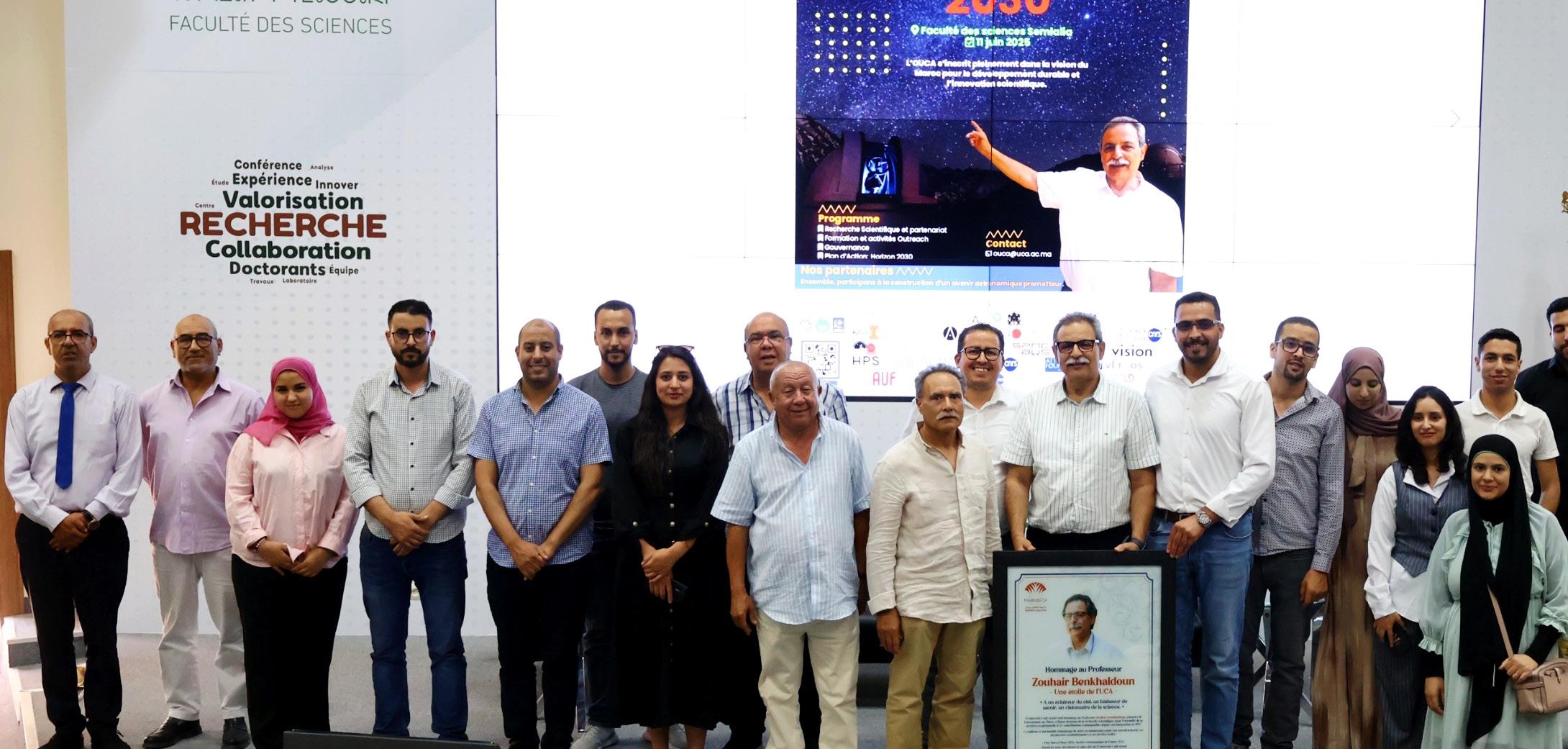
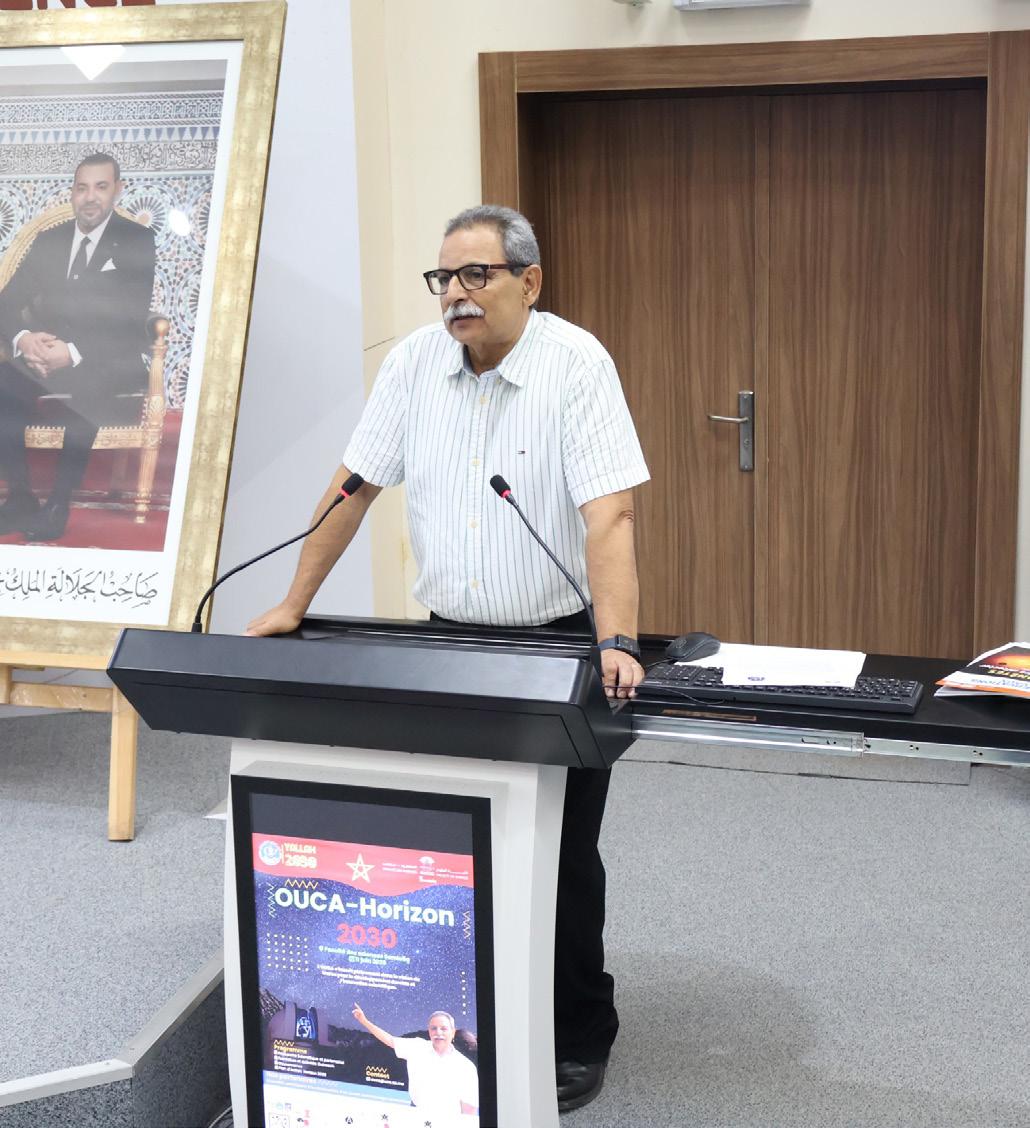
On June 11, 2025, OUCA Horizon 2030 took place at the Faculty of Sciences Semlalia, Cadi Ayyad University in Marrakech, marking a pivotal moment for the Oukaimeden Astronomical Observatory (OUCA). The event brought together institutional leaders, young scientists, and international partners to celebrate Morocco’s growing impact in astronomy and to set a bold vision: making Oukaimeden a world-class observatory and a hub for African astronomy by 2030.
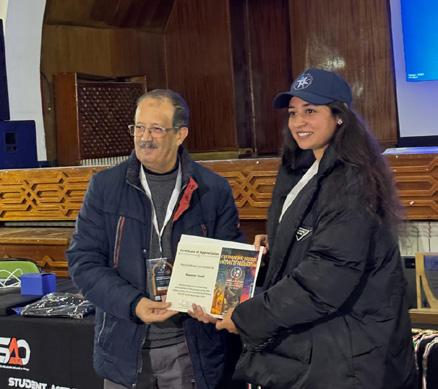
The programme opened with the President of Cadi Ayyad University, the Dean of the Faculty, and distinguished guests, and included a heartfelt tribute to Prof. Zouhair Benkhaldoun for his lifelong dedication to advancing Moroccan science and astronomy.
Special sessions : as highlighted in the Scientifi c reports by Dr. Jamila Chouqar, Dr. Mourad Ghachoui, the day’s key sessions were structured to refl ect OUCA’s multifaceted mission:
Science at the Heart of Oukaimeden
The fi rst session, dedicated to scientific research and partnerships, revealed the strength of OUCA’s collaborations.
From the University of Liège, Belgium, Dr. Michael Gillon and Dr. Emmanuel Jehin recalled how the TRAPPIST network has become one of OUCA’s scientifi c pillars, linking Morocco to frontier discoveries in exoplanets and small Solar System bodies. Dr. Gillon highlighted the synergy with the SPECULOOS project, essential to upcoming space missions like PLATO, ARIEL, and JWST. Dr. Jehin praised the role of Moroccan doctoral students, describing them as “the true bridge between Liège and Ouca.”
• Comet discoveries, with the MOSS project placing OUCA 18th worldwide.
• Space debris tracking, presented by Vladimir Agapov, underscoring OUCA’s role in safeguarding the orbital environment.
• Space weather research, through more than a decade of partnership with the University of Illinois as highlighted by Jonathan Makela talk.
• Satellite constellations and their impact on astronomy, with Seigfreid Eggl calling on OUCA to contribute actively to the international database SCORE (Satellite Constellation Observation Repository) , initiative launched by the IAU’s Centre for the Protection of the Dark and Quiet Sky (CPS).
• Pro-Am collaboration at OUCA, as highlighted by Aziz Kaeouach, brings amateur and professional astronomers together, creating a model of open and inclusive science.
The second session focused on training and outreach, two cornerstones of OUCA’s mission.
Prof. Zouhair Benkhaldoun highlighted the Master PHEA2S, the only programme in Morocco dedicated to high-energy physics, astrophysics, and space sciences.
Prof. Benhida envisioned OUCA as a Pan-African hub of excellence, leveraging robotic telescopes to open scientifi c opportunities to African students. This vision resonates with the Observatory’s philosophy: astronomy as a bridge to break the barriers.
International voices reinforced this perspective. David Baratoux, through the African Initiative for Planetary and Space Sciences (AFIPS), showcased Morocco’s central role in building a continental community around planetary science, from meteorite studies to participation in the FRIPON network.
Prof. Katrien Kolenberg presented the VLIR-UOS program, a Belgium–Morocco cooperation linking Flemish universities with Cadi Ayyad. She emphasized the importance of empowering African women in science, noting: “Morocco does not just participate in African astronomy, it leads.”
Looking Ahead: A Roadmap to 2030
The fi nal session looked fi rmly to the future, with a strategic action plan for 2025–2030.
Key proposals included:
• Diversifying funding sources through partnerships with government, industry, and international agencies.
• Expanding research themes, particularly in artifi cial intelligence for astronomy.
• Evaluating the transformation of OUCA into a national research centre.
• Strengthening human resources through the recruitment of engineers and technicians.
• Creating an international hub for science education, integrated into global networks.
• Promoting sustainable development by linking astronomy with eco-tourism, cultural heritage, and light pollution protection.
• Building strong educational pipelines to inspire and train students from Morocco and across Africa in astronomy and related sciences.
• Fostering citizen science initiatives to engage the wider community in astronomy and space sciences.
• Expanding public outreach programs to nurture a strong scientifi c culture among youth and society.
In his closing remarks, Prof. Zouhair Benkhaldoun, Director of the Observatory, refl ected on the road already traveled from modest beginnings to becoming a global player and the challenges still to come. He spoke of strengthening research, welcoming new international instruments like the 1-meter FlyEye telescope, and above all, continuing to train young scientists.
The message of the day was clear: OUCA is more than an observatory. It is a vision for Morocco, Africa, and the world, a place where science, education, and collaboration converge under the same sky.
By Kaoutar Saadi
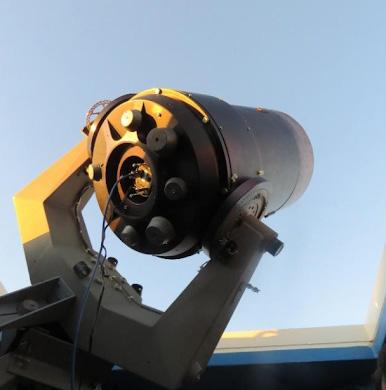
Bridging the gap between curiosity and professional research, the Oukaimeden Observatory represents a new model of scientific collaboration. Perched at 2,773 meters on Morocco’s Atlas Mountains, this facility brings together professional astronomers and dedicated amateur enthusiasts to explore the cosmos with precision instruments and automated telescopes. Rather than relying solely on large institutions, discoveries are increasingly driven by these powerful partnerships, combining professional rigor with the passion and creativity of amateurs.
In 2021, something remarkable happened at the Oukaïmeden Observatory. For the first time, Moroccan amateur astronomers joined professional researchers in a true spirit of collaboration. Leading the way was astrophotographer and amateur astronomer Mr. Aziz Kaeouach, whose passion for the stars sparked new energy and curiosity in a place once reserved only for science at its highest level.
This vision became reality through an agreement with Cadi Ayyad University (UCA), under the guidance of Professor Zouhair Benkhaldoun, Director of the Observatory. Thanks to this framework, amateurs were no longer on the outside looking in; they received structured training, learned the methods of scientific observation, and even placed their telescopes beside world-renowned professional facilities like TRAPPIST, MOSS, and OWL. Their role shifted from observers to contributors, adding real value to ongoing research. What makes Oukaïmeden so special is more than its science, it’s the setting itself. Nestled high in the Atlas Mountains, the observatory offers crystal-clear skies, high altitude, and state-of-the-art instruments. It’s one of the best observation sites in the Northern Hemisphere, a place where passion meets precision. Here, amateur astronomers don’t just gaze at the stars, they help uncover their secrets, advancing science one discovery at a time.
The goal of bridging professional and amateur astronomy was realized by this dedicated team, leading to three fully operational private observatories at
Oukaïmeden : HAO, ASO, and HAWK, with a fourth currently under development. Each observatory reflects the perfect blend of technical expertise and the boundless curiosity of its astronomers.
High Atlas Observatory (HAO) was the first to take shape. HAO features six towers capable of hosting six telescopes. The observatory quickly earned its MPC code (Z02) and contributed to discoveries of asteroids and exoplanets, as well as campaigns monitoring satellites, space debris, and stellar occultations.
Atlas Sky Observatory (ASO) represents the next phase of advancement. Fully robotic and equipped with a 508mm CDK telescope, a 3-meter ScopeDome, ZWO cameras, and photometric filters, ASO allows precise, automated observations from anywhere in the world, empowering amateurs and professionals alike to conduct high-quality research with unprecedented efficiency.
High Atlas Window to the Kosmos (HAWK) exemplifies the power of public–private collaboration. By combining resources, expertise, and infrastructure, HAWK expandsthe observatory network and strengthens international partnerships, enabling ambitious scientific projects that benefit both local and global astronomy communities.
Achievements and Scientific Impact
The Oukaimeden Observatory stands as a shining example of professional-amateur collaboration, making meaningful contributions to both astrophotography andscientific research. Guided by the professional team from Cadi Ayyad University. amateur astronomers have turned their passion for the cosmos into tangible scientific achievements.
• Atlas Nebula: is an identified supernova remnant discovered by a team of amateur and professional astronomers. Its name pays tribute to both the mythological Titan Atlas and the Atlas Mountains in Morocco.
• Scylla Nebula (G115.5+9.1): A newly discovered supernova remnant, recognized internationally and featured as NASA’s Astronomy Picture of the Day in June 2025.
• The Spaghetti Nebula (Simeis 147 / SH2-240): A vast supernova remnant imaged in high resolution to reveal
intricate filamentary structures.
• The Gargoyle Nebula (PHR J1834+0212): An emission nebula showcasing the team’s precision and expertise in astrophotography.
Scientific Contributions
• Exoplanet Detection and Photometry: Monitoring and confirming exoplanet candidates, producing precise light curves for global research projects.
• Asteroid Detection and Tracking: Identifying and following near-Earth objects, contributing to planetary defense efforts.
• Stellar Occultations: Observing stars as they are blocked by celestial objects, providing crucial data on asteroid sizes and composition.
• Gamma-Ray Bursts and Gravitational Waves: Active contributor within the GRANDMA consortium, coordinating observations and follow-ups to study transient astrophysical events.
• Space Debris and Satellite Tracking: Monitoring artificial objects in orbit to support space situational awareness and collision avoidance strategies.
From Passion to Precision: Mentoring Future Astronomers:
One of the most remarkable outcomes of the Pro-Am collaboration at Oukaimeden is the hands-on training it provides to students of Cadi Ayyad University (UCA), led by the experienced amateur astronomer Mr. Aziz Kaeouach. Guided by Professor Zouhair Benkhaldoun and the professional UCA team, participants gain direct, practical experience with advanced telescopes, robotic observatories, and precision scientific instruments. Beyond learning the fundamentals of observational astronomy, photometry, and astrophotography, trainees are immersed in the full research process from planning observations to analyzing data. This unique mentorship transforms passion into expertise, equipping both students and amateur astronomers with the skills and confidence to contribute meaningfully to scientific discovery.
When asked about the future of the Pro-Am alliance and its impact on astronomy, as well as the dreams and aspirations that still drive this collaboration, Mr. Aziz emphasized that the alliance holds great potential. It can play a key role in advancing astronomy by fostering stronger partnerships between professionals and amateurs, promoting training and education, and contributing to scientific discovery.
Spaghetti Nebula astrophotography, observed by HAO at the Oukaïmeden Observatory, captured by Aziz Kaeouach and Mathieu Tequi. © @AstroMaroc
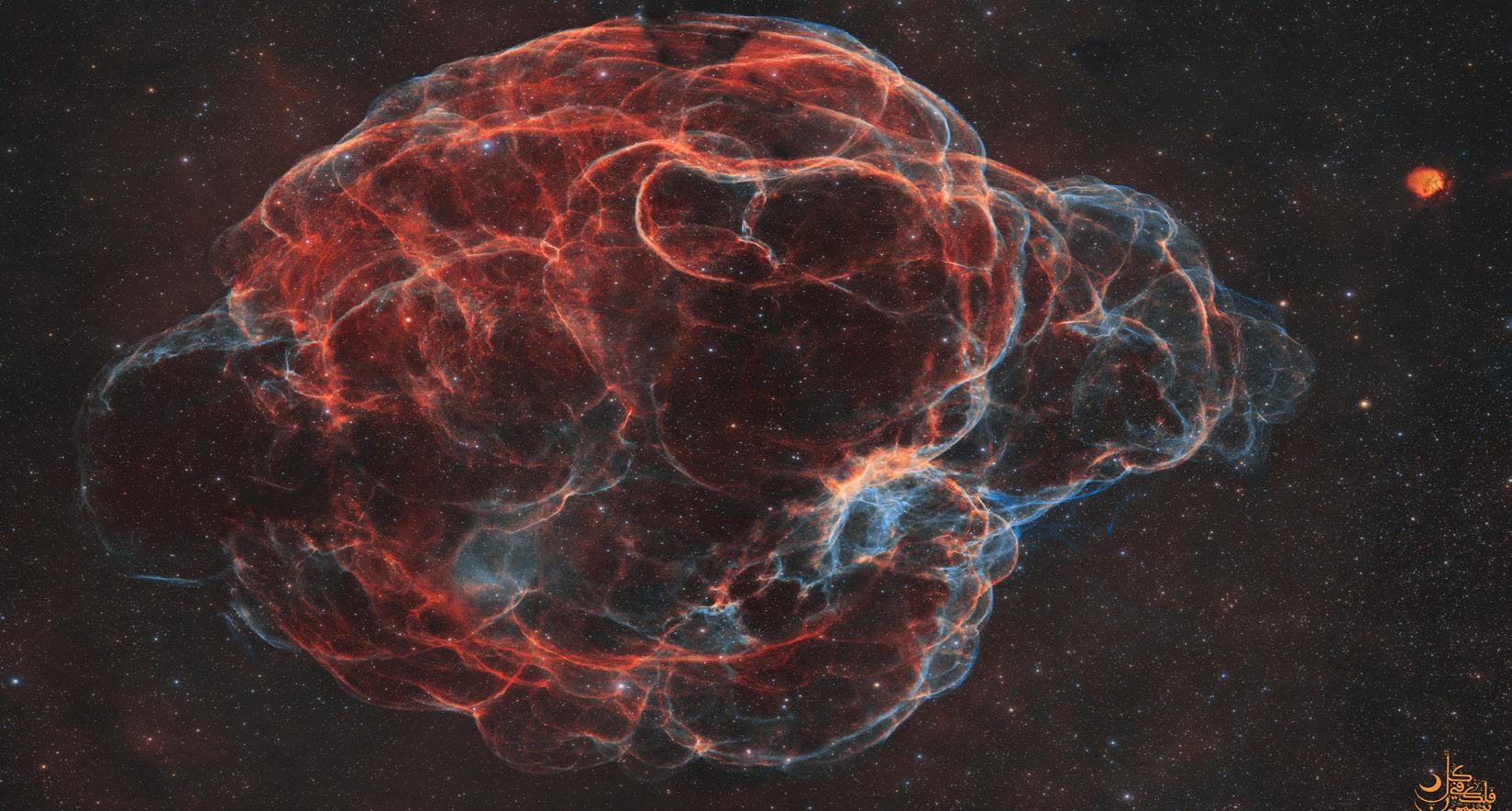
He also highlighted a personal vision: “Our Pro-Am convention should ultimately lead to 100% Moroccan-led scientific research projects.”
Conclusion
The professional-amateur collaboration at Oukaimeden Observatory demonstrates a model of modern astronomical research where expertise, technology, and passion converge. By integrating Moroccan amateurs into high-level observational programs,
the observatory has produced tangible scientific results, ranging from exoplanet confirmations to asteroid tracking, while simultaneously building capacity for African astronomy. This alliance underscores the value of mentorship, hands-on training, and global partnerships, proving that collaborative networks can expand both knowledge and opportunity. As the program grows, Oukaimeden is set to remain a leading hub for innovation, discovery, and the development of the next generation of astronomers.
By Lillian Assefa
Africa’s role in global astronomy is expanding rapidly, with major projects like the Square Kilometre Array (SKA) and emerging observatories positioning the continent as a key player in cosmic exploration. This growth is fueled not just by infrastructure but by passionate individuals who are democratizing access to the stars, particularly for young people and underrepresented groups. Among these trailblazers are Susan Murabana, a Kenyan astronomer dedicated to outreach, and Mirjana Pović, a Serbian-born astrophysicist who has devoted her career to building astronomy in Africa. Through their innovative work in education, research, and inclusion, these two astronomers are shaping a brighter future for African science, inspiring generations to look upward and dream big.
Susan Murabana’s journey into astronomy began unexpectedly in her early 20s while studying sociology and economics at university. Science, she recalls, was seen as a field “for boys,” and she had no exposure to it growing up. That changed during an outreach session at a school in Mumias, western Kenya, organized by the charity Cosmos Education, which aimed to enhance science education in developing countries. Peering through a telescope for the first time ignited a passion that led her to volunteer with Cosmos Education and later join the Global Hands-On Universe program, an initiative by the International Astronomical Union. In 2011, she earned an online master’s degree in astronomy from James Cook University in Australia, solidifying her expertise.
In 2014, Murabana co-founded Travelling Telescope, a social enterprise with her husband, photographer Daniel Chu Owen, whom she met during a Star Safari event she was leading. This initiative has reached an estimated 400,000 people, primarily by taking astronomy directly to rural Kenyan schools and communities. Every two months, the couple loads a 50kg SkyWatcher Flextube telescope and an inflatable planetarium onto their 4x4 vehicle and travels to remote areas with minimal light pollution. There, they offer free sessions to up to 300 children at a time, teaching about constellations, basic astrophysics, and stargazing.
Paid Star Safaris, such as trips to Samburu county to view the Perseid meteor shower, fund these outreach efforts. Participants observe planets like Jupiter, Saturn, Mars, and Venus, as well as deep-sky wonders including the Orion and Trifid nebulae, star clusters, and distant galaxies like Pinwheel and Andromeda.
Murabana’s work extends beyond observation; she runs kids’ space camps in Nairobi and was selected in 2021 as a mentor for the UN’s Space4Women program, pairing women in space sectors with young girls aspiring to STEM careers. Drawing inspiration from Dr.
Mae Jemison, the first Black woman in space, Murabana aims to challenge stereotypes that science is hard, boring, Western-centric, or male-dominated. Despite challenges like self-funding 90% of costs in a country prioritizing basic needs like healthcare and water, her efforts promote “astronomy for development,” using the stars to broaden worldviews and encourage STEM pursuits. By providing experiences she lacked as a child, Murabana is creating a “chain reaction” to inspire the first African woman in space, emphasizing communal sky-sharing and empowering girls to see themselves as astronomers.
Her contributions are also recognized in broader African contexts. As mentioned in discussions around projects like the Africa Millimetre Telescope, Murabana highlights the continent’s growing space industry and the need to produce more scientists, noting it’s “our time as Africans.” Through mobile exhibits and hands-access, she is bridging gaps in rural education, fostering curiosity, and positioning Kenya as a leader in African astronomy outreach.
Mirjana Pović: Building Astronomy Infrastructure and Empowering Women Across Africa
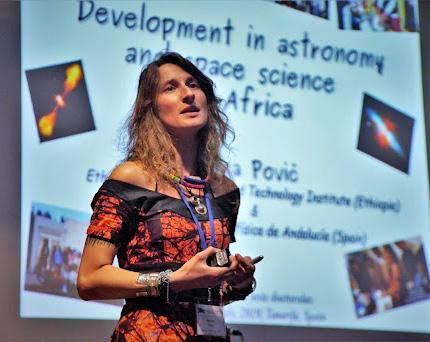
Mirjana Pović presenting on astronomy development in Africa.
built skills in astronomy and space science, and popularized the field. In 2019, she hosted the first IAU symposium on AGN in Addis Ababa—the third in Africa. She has supervised over 20 master’s and PhD students and serves as secretary of the IAU Division C on Education, Outreach, and Heritage.
A key focus is empowering women and girls. In 2019, she launched “STEM for GIRLS in Ethiopia” to inspire female participation in science, technology, engineering, and math. With the African Astronomical Society (AfAS), she co-founded and coordinates the African Network of Women in Astronomy (AfNWA) since 2020. As an AfAS nominee, her decade-plus contributions include research collaborations, education, capacity building, policy, and women-in-science initiatives. Her awards include the 2018 Nature Research Inspiring Science Award and the 2021 Jocelyn Bell Burnell Inspiration Medal from the European Astronomical Society, recognizing her use of astronomy to combat poverty and improve lives in Africa.
Pović’s work is nurturing a new generation of African astronomers by fostering skills, international collaborations, and inclusive environments, ensuring the continent’s active role in global discoveries.
Born in Serbia in 1981 amid the turmoil of the Yugoslav wars, Mirjana Pović found solace in books, nature, and the night sky from age nine. This early fascination led her to pursue astrophysics to understand the universe’s processes. With family support and grants, she earned her PhD in extragalactic astrophysics from the Instituto de Astrofísica de Canarias (IAC) in Spain in 2010. Her research focuses on galaxy formation, evolution, clusters, and Active Galactic Nuclei (AGN). Post-PhD, she spent a year as a postdoc at the University of Durban in South Africa, then six years at the Instituto de Astrofísica de Andalucía (IAA) in Spain. In 2016, she moved to Addis Ababa, Ethiopia, joining the Ethiopian Space Science and Technology Institute (ESSTI) as a researcher—the only woman and European on the team—amid challenging conditions like the Tigray civil war.
Pović’s passion for Africa ignited during her PhD, disturbed by the continent’s inequalities despite its beauty. She volunteered in Tanzania’s slums, teaching children about education’s transformative power, and maintained African connections through humanitarian trips. At ESSTI, she has organized the institute, contributed to Ethiopia’s 20-year science strategy,
Their
Together, Murabana and Pović represent the dual pillars of outreach and institutional development essential for Africa’s astronomical renaissance. Murabana’s grassroots efforts make science accessible, countering barriers like gender stereotypes and resource scarcity, while Pović builds systemic capacity through research supervision, policy influence, and networks like AfNWA. Their initiatives align with broader trends, such as the DARA Astronomy Field School inspiring young minds from South Africa and Mozambique, and the AfAS Early Career Committee supporting emerging talents. By addressing brain drain, funding challenges, and inclusion, they are cultivating a vibrant community that could lead to breakthroughs in black hole imaging, galaxy evolution, and space applications for sustainable development.
As Africa hosts more telescopes and programs, figures like Murabana and Pović ensure that the benefits— from scientific innovation to educational empowerment—stay on the continent. Their stories remind us that astronomy is not just about distant stars but about illuminating paths for Africa’s youth, paving the way for a future where the continent not only observes the universe but actively shapes our understanding of it.
By Siphokazi Vuso
Space scientists play a vital role in understanding how the Sun and other cosmic activities affect Earth and the technology we use every day. From forecasting solar storms that can disrupt satellites and power grids to designing instruments that monitor near-Earth space, their work protects critical systems while expanding our knowledge of the universe. Meet some of the South African National Space Agency (SANSA) scientists leading the way:
Salma Khan
Salma Khan is a space weather forecaster at the South African National Space Agency (SANSA) in Hermanus, where she plays a vital role in monitoring and predicting solar activity that can impact Earth and its technologies. With a background in science and a passion sparked by the phenomenon of the Auroras, Khan is part of a growing field that studies how the Sun influences satellites, communication systems, aviation, and power grids.
1. Can you tell us about your role as a space sci entist and the kind of work that you do?
My name is Salma Khan. I am a space weather forecaster working at the South African National Space Agency (SANSA) in Hermanus. Like terrestrial weather, the Sun can also have an impact on our Earth and space-based technological systems. So, I basically forecast the ‘weather’ in Space.
2 . What inspired you to pursue a career in space science?
My inspiration for choosing a career in Space Science started in my second year of university when I first heard about the Auroras. This sparked my interest as I realised the Auroras are linked to space weather.
3. What school subjects are most important for working in space science?
School subjects that are most important for working in space science are your general STEM subjects –particularly Mathematics and Science.
4. What kind of discoveries can space scientists make that affect our daily lives?
Space scientists, particularly space weather fore forecasters, are constantly monitoring, analysing, and forecasting space weather and therefore aid researchers in creating and/or upgrading models to improve methods to mitigate the impacts of space weather.
5. What advice do you have for someone who wants to be a space scientist?
Space weather in particular has an impact on a wide range of industries, for example; Aviation, Energy, and Communications. It is, however, a niche field that still holds many unknowns. You just need to be passionately curious about Space Science and the impacts it has on our daily lives to work in this field.
Boitumelo Makobe
Boitumelo Makobe is a space weather forecaster at the South African National Space Agency (SANSA), where she is responsible for monitoring and predicting space weather conditions caused by solar activity. Her work plays a crucial role in protecting critical technologies, including satellites, GPS systems, and power grids, from the potentially disruptive effects of solar flares and geomagnetic storms.
1. Can you tell us about your role as a space scientist and the kind of work you do?
I am a space weather forecaster, and I am responsible for monitoring and forecasting space weather conditions. Space weather refers to how eruptions on the Sun can affect technological systems that we depend on daily, like satellites, GPS, and even power grids.
2. What inspired you to pursue a career in space science?
From a young age, I have always been curious about why clouds look the way they do and why some bring rain while others are drifting away. The curiosity later grew into a deeper desire to understand how everything around me works.
3. What school subjects are most important for working in space science?
Mathematics, Physics, Computer Science.
4. What kind of discoveries can space scientists make that affect our daily lives?
Space scientists can monitor and forecast solar flares and geomagnetic storms, which can affect radio communication, GPS signals, and satellite operations in space.
5. What advice do you have for someone who wants to be a space scientist?
Anyone interested in becoming a space scientist can start by taking STEM (Science, Technology, Engineering, and Mathematics) subjects. Don’t be afraid to ask questions and look for opportunities. Stay informed about the latest developments in the space industry, from new missions and discoveries to emerging technologies.
DJ van Wyk
DJ van Wyk is a Development Engineer at the South African National Space Agency (SANSA), where he leads the Antarctic engineering team responsible for radar systems and space physics infrastructure. He has a background in embedded systems, radar instrumentation, and data acquisition systems. His PhD research with Stellenbosch University focuses on the development of Synthetic Aperture Radar (SAR) payloads, SAR image processing, and the integration of SAR and GNSS data for geophysical applications. He also has years of field experience in Antarctica, supporting space science and geospace research.
1. Can you tell us about your role as a space scientist and the kind of work you do?
As a space systems development engineer at SANSA, I lead projects focused on the design, deployment, and maintenance of radar and GNSS systems used in space physics and near-Earth space science research. My team develops and operates scientific instruments that collect data to help us understand how space weather and geophysical processes affect Earth. This includes managing radar systems in Antarctica and South Africa, developing data acquisition and automation software, and ensuring continuous data delivery for researchers globally.
2. What inspired you to pursue a career in space science?
I’ve always been interested in anything and everything related to outer space and aerospace, with the idea of exploring beyond our planet fascinated me for many years. Over time, I became captivated by how radio signals provide a window into space, revealing so much about the space environment and our planet’s interaction with it. This intersection of engineering and discovery is what inspired my journey into space science. My current PhD research focuses on advancing technologies for space-borne systems, contributing to the broader engineering field through the development of radar payloads for small satellites, and innovative data integration techniques that enhance our ability to study and monitor Earth from space.
3. What school subjects are most important for working in space science?
Mathematics and Physical Science are the most important foundations for a career in space science. Mathematics teaches problem-solving and analytical thinking, which are essential for understanding orbital mechanics, signal processing, and system design. Physical Science builds an understanding of how forces, energy, and materials behave, which is crucial when designing systems that must operate reliably in extreme environments like space or Antarctica.
At the university level, these foundations expand into subjects such as Electromagnetics, Digital Signal Processing, Control Systems, Antenna Theory, Embedded Systems, and Radar Engineering of which are all vital to understanding and building space-borne instruments and scientific payloads. Ultimately, strong fundamentals in maths, science and physics open the door to engineering and science disciplines that make space exploration possible.
4. What kind of discoveries can space scientists make that affect our daily lives?
Space scientists and physicists study how solar activity interacts with Earth’s magnetic field and upper atmosphere, shaping a dynamic system known as space weather. Understanding these processes helps us predict and mitigate space weather events that can disrupt GNSS systems, communication networks, aviation routes, and even power grids. At SANSA, our teams design, operate, and maintain scientific instruments that monitor the near-Earth space environment, which are done with various types of instruments from radars and magnetometers to GNSS receivers and satellite sensors. The data collected through this research supports national and international efforts to safeguard technology-dependent systems and improve models used for forecasting and navigation.
5. What advice do you have for someone who wants to be a space scientist?
Stay curious, be willing to experiment, and don’t be afraid of failure. Every great discovery starts with trial and error. Build a strong foundation in maths, physics, and programming, but also work on practical projects and experiments in the field. Space science is a multidisciplinary field that rewards creativity and teamwork, so explore broadly and find what excites you most. The path may be challenging, but it’s worth every step.
The South African National Space Agency (SANSA) offers post-graduate bursaries in space-related fields for high-achieving and driven students.
Applications open in May for the following academic year. Follow the South African National Space Agency on LinkedIn, Facebook, and X to make sure you do not miss this opportunity. the website at www.cars4mars.co.za by 30 April 2026, or by contacting the orgwaniser directly at basia@cars4mars.co.za or +27 60 478 9775.
The Cars4Mars African Rover Challenge recently brought together some of Africa’s brightest young minds at the Mars Stage Final, held at the RIVERSANDS i-HUB in Johannesburg.
This unique competition is the first and only African initiative focused on designing and building prototype mobile robots inspired by NASA’s Mars rovers. It offers students a platform to showcase
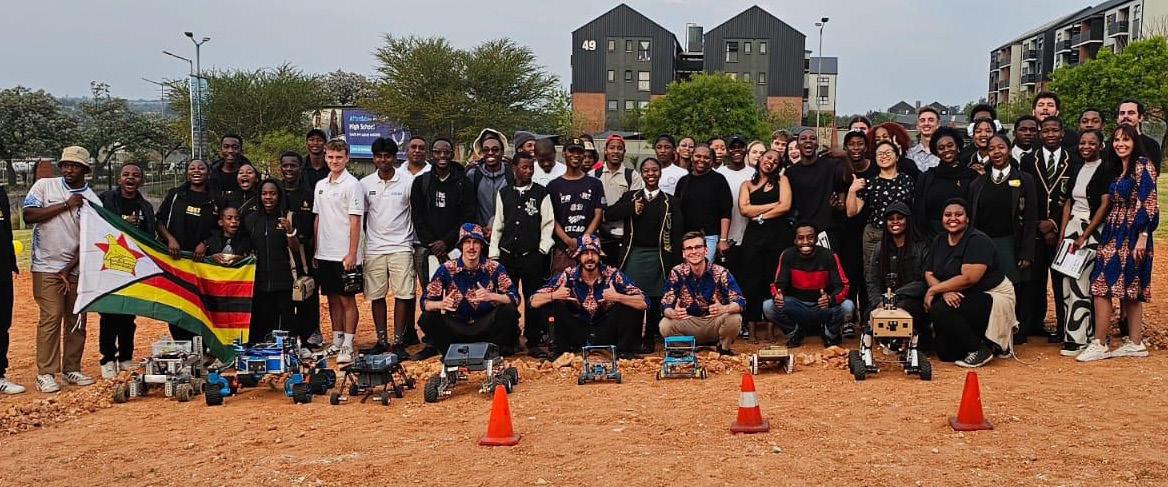
their skills in robotics, innovation, and teamwork.
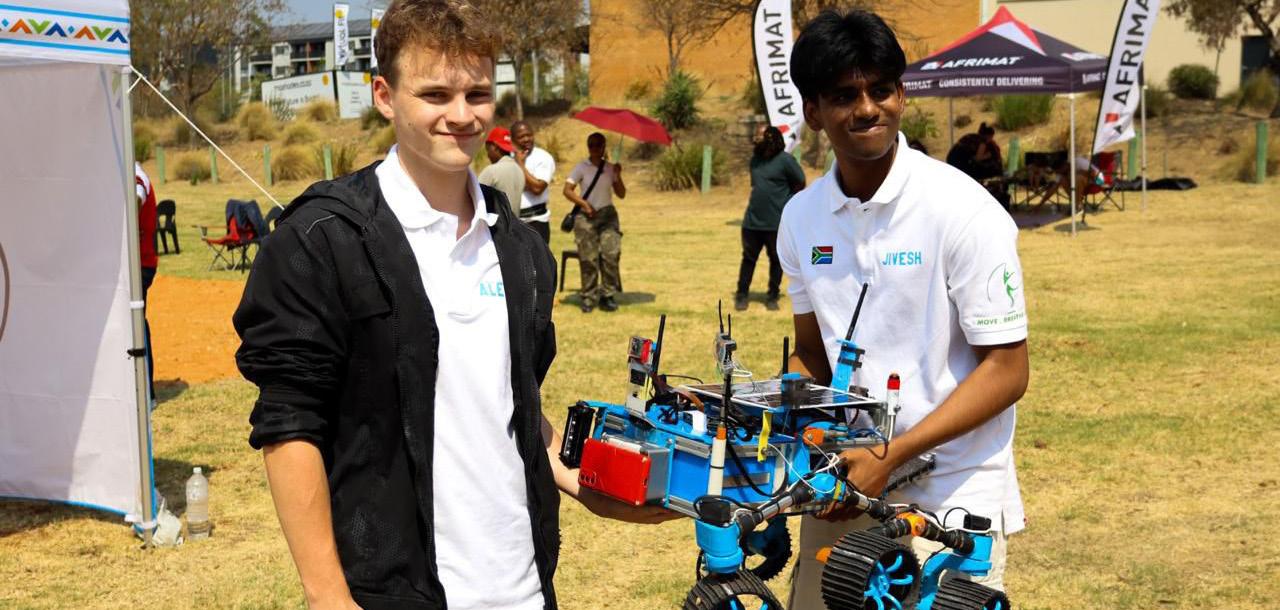
founder and organiser of the Cars4Mars African Rover Challenge.
“I would like to thank all participating students and learners from all teams for their hard work, perseverance and never giving up during all stages of the Cars4Mars competition.
Big thank you also goes to our sponsors and supporting organisations.”
This year, around 100 teams - comprising 400 participants from 11 African countries entered the challenge. After an online Launch Stage Final, 11 top teams advanced to the Mars Stage Final. These teams came from countries including South Africa, Ghana, Kenya, Zimbabwe, and Nigeria.
Participants ranged from high school learners to university students. They put their rovers to the test on the specially designed Mars Yard, tackling complex tasks while demonstrating technical expertise and collaboration under pressure.
A panel of international judges, Adam Zagrajek, Lukasz Gliwinski, and Kuba Kopec, flew in from Europe to evaluate the finalists. They assessed the rovers on design, performance, and innovation, while also mentoring the teams throughout the event.
In 2025, the challenge featured two main missions. The first, called the “Traversal Mission” which is an obstacle course similar to last year, with some fun side tasks inspired by other missions (identifying rocks, looking for objects).
The second task, known as the “Autonomous Mission” where participants could do this mission fully with no AI, or fully with AI depending on how advanced they were.
“Students demonstrated remarkable persistence in bringing their robots to life and meeting the ambitious deadline for showcasing their progress. The overall quality and innovation in rover designs were impressive,” said Basia Nasiorowska,
For many teams, the experience extended beyond engineering. Sulungeka Nyakaza, an IT teacher at Umtata High School in the Eastern Cape, said: “This competition opens up new horizons for our learners. Coming from small towns, competing on a big stage boosts their confidence and proves they’re just as capable as anyone.”
Winning Teams:
• 1st Place: Martian Mechanics – South Africa
• 2nd Place: Cyberstorm – Zimbabwe
• 3rd Place: Red Horizon Initiative – South Africa
Special Awards:
• Best Design: Martian Mechanics – South Africa
• Best in AI Mission: Legends4Mars – South Africa
• Best Creativity: Jabari – Kenya
African youth are invited to participate in the 2026 edition of the Cars4Mars African Rover Challenge. Applications can be submitted via the website at www.cars4mars.co.za by 30 April 2026, or by contacting the organiser directly at basia@cars4mars.co.za or +27 60 478 9775.
By Joshua Tadesse
For decades, Africa gazed upward at the stars, watching others command the skies. Today, the continent is not just watching, it’s participating, creating, and leading in new ways. From the deserts of Egypt to the mountains of Ethiopia, Africa’s growing constellation of satellites reflects more than development goals; it signals confidence, creativity, and technological ambition.
As of July 2025, 67 satellites have been launched from 18 African countries, a number that would have seemed unthinkable a generation ago. Each one represents more than a scientific achievement; it’s a declaration of Africa’s place in the global knowledge economy. The creation of the African Space Agency (AfSA) on April 20, 2025 has only deepened that commitment, marking a shift from scattered national programs to a coordinated continental strategy for exploration, innovation, and data sovereignty.
Africa’s modern space journey began in the late 1990s, when Egypt launched NileSat-101, its first communication satellite. At the time, it symbolized self-reliance in broadcasting and data services. Today, Egypt has evolved into a regional hub for satellite technology, housing the headquarters of AfSA and developing its own satellites for research and defense.
South Africa, another early leader, built its space capacity through a mix of government support, academic research, and private-sector collaboration. From SunSat to SumbandilaSat, it has demonstrated that high-precision engineering, innovation, and entrepreneurship can thrive on African soil.
Soon, others followed — Nigeria, Algeria, Morocco, Kenya, Ethiopia, Ghana, Angola, Tunisia, Rwanda, and Sudan among them. Many began with compact CubeSats or nanosatellites, often built with university support. These missions were not modest in vision; they were stepping stones toward larger constellations and, ultimately, the establishment of a truly African space industry.
Africa’s satellites orbit with diverse purposes. While they play a vital role in areas like environmental monitoring and communications, their scope now extends far beyond necessity.
They contribute to scientific discovery, urban planning, climate research, and security applications, and increasingly to innovation ecosystems at home. Startups are developing AI-based analytics from satellite data; universities are using real-time imagery for research in urban growth, ocean studies, and renewable energy.
In communications, satellites such as Egypt’s NileSat and Angola’s AngoSat-2 are expanding media access and internet connectivity, essential for digital economies. Meanwhile, projects like GhanaSat-1 and Nigeria EduSat-1, built by student teams, serve as orbiting classrooms that cultivate the next generation of African engineers and data scientists.
Yet the journey upward is not without gravity. Most African satellites still depend on foreign launch sites, mainly in China, India, and the United States. The continent’s own launch capability remains limited, and many programs rely on external technical support.
Funding is another hurdle. Space programs demand not just rockets and satellites, but also infrastructure — tracking stations, data centres, engineers, and regulatory frameworks. Not every nation can afford such an investment. Even so, regional collaboration is starting to change the equation.
The rise of miniaturized technology — CubeSats and nanosatellites — has lowered barriers dramatically. Universities and startups now design satellites that fit in a shoebox but deliver powerful data. And with AfSA coordinating shared resources and research, Africa’s nations are beginning to act not as isolated pioneers, but as partners in orbit.
For Africa, space exploration isn’t simply about solving terrestrial problems; it’s about expanding human possibility. It’s about cultivating a culture that values precision, curiosity, and creation. A continent that builds satellites builds confidence in its own capacity to shape the future.
Satellites enable Africans to tell their own stories through data, imagery, and innovation. They open doors for industries in geospatial intelligence, telecom, climate tech, and defense, while inspiring students who might otherwise never imagine themselves as aerospace engineers or astrophysicists.
The African sky is fast becoming a laboratory for bold ideas: AI-driven Earth observation, regional data-sharing platforms, even plans for indigenous micro-launch systems in countries like Kenya and Djibouti. This is not a story of catching up — it’s a story of contribution.
The coming decade may well be Africa’s most dynamic in space history. More nations are preparing to launch their first satellites, more universities are teaching aerospace engineering, and private companies are entering the field. Conversations about African launch sites and home-built rockets are no longer fantasy; they’re part of long-term strategy.
Africa’s journey to the stars is no longer just about looking outward — it’s about looking forward. Each launch carries not only a payload but a promise: that the continent’s curiosity, intellect, and innovation can reach as high as the sky allows.
By Kaoutar Saadi
African Science Stars proudly features Dr. Meriem Elyajouri, whose recent appointment at NASA’s Space Telescope Science Institute (STScI) marks a significant milestone for Morocco and the African scientific community. From her early years in Morocco to her current role in the United States, Dr. Elyajouri has built an inspiring journey defined by curiosity, perseverance, and excellence. In this interview, let’s meet Dr. Elyajouri as she reflects on the experiences that shaped her career and shares her vision for inspiring the next generation of astronomers.
1. Dr. Meriem, could you tell us about your early years and how your passion for astrophysics first began?
I grew up in Rabat, Morocco, in a close-knit family. From as early as I can remember, I was captivated by the night sky. My curiosity was nurtured through science magazines my brother would gift me every month. A pivotal moment came in high school when I met French astronomer Françoise Combes. It was the first time I’d met a scientific researcher in person and this made it all feel real and possible.
2. What challenges did you face during your studies in France, and how did that experience shape your career?
Like many students abroad, I faced a steep learning curve in France: a different system, little guidance, homesickness. Those first years were brutal. In my second Master’s year, I was the only international student. I was terrified of failing, but grateful for professors who believed in me. Without a scholarship, my family supported me, so perseverance wasn’t inspirational, it was the only option.
Those hard times made me tougher. I learned to get comfortable being uncomfortable, to ask for help and to find mentors. Challenges didn’t end with the PhD. As an early-career researcher, you face limited funding, scarce positions, and fierce competition. It’s the reality we all face in academia.
3. Research in astrophysics is famously demanding, and few choose to walk this path. After your time at Sorbonne, you took the next remarkable step by beginning your PhD at the Paris Observatory (GEPI, PSL University) — a place rich in history and scientific discovery. What inspired you to choose this institution for your doctoral journey, and what were the main research themes or

projects that captured your focus during those years?
What drew me to the Observatoire de Paris was, first and foremost, Dr. Rosine Lallement. She was the best supervisor I could have asked for: rigorous, generous with her time, and fearless about tackling hard problems. I’d already taken many Master’s courses on the Observatory’s campuses, and I loved the place, the science and the spirit. The Observatoire is one of the world’s oldest astronomical institutions, founded in 1667, part of PSL University, with three historic sites. You feel that legacy every time you walk into a seminar or a PhD defence.
I had the best student years during my PhD. We were a small team of four women. The timing was perfect, it was the GAIA era! I was contributing to building 3D maps of the Interstellar Medium, learning to turn vast, messy datasets into physically meaningful information.
My PhD focused on solving a century-old mystery: ide
tifying large molecules floating between stars. When starlight travels through space, certain unknown molecules leave spectral signatures we call Diffuse Interstellar Bands, or DIBs. These molecules are important because they’re thought to be the largest reservoir of organic matter in the universe, the raw material that eventually becomes part of stars, planets, and potentially life itself.
4. What aspects of your research did you find most fulfilling?
The most fulfilling part was discovering the “real” world of research. Presenting at conferences, meeting experts whose papers I’d studied, and finding mentors beyond my immediate group. Each conversation sharpened the science and widened my perspective. It was about becoming part of a community, learning how to communicate my work, and how to collaborate across institutions and countries. That’s what really transformed me from a student into an astrophysicist.
5. Receiving the IAU’s PhD Prize in 2018 as the first Moroccan-African honoree was historic. What did this recognition mean for your career?
The award acknowledged that my research represented a real shift in how we study interstellar molecules. I developed automated techniques to analyze data from thousands of stars at once, contributing to the first 3D maps showing where these molecules are in space.
I worked within the EDIBLES program at ESO’s Very Large Telescope in Chile. Over three years, I published five papers as lead author. The recognition gave me credibility early in my career and eventually brought me to my current position at the Space Telescope Institute.
6. Your postdoctoral work took you across continents. How did these experiences shape your scientific perspective?
I’ve been incredibly fortunate with timing and opportunity at the Institut d’Astrophysique Spatiale. The institute was involved in constructing one of the JWST’s instruments, which came with guaranteed observing time, and they also had an early release science program accepted. I joined both teams as the lead for modeling organic matter evolution. In other words, tracking how these carbon-based molecules and tiny solid particles change over space in star-forming regions. We were among the very first scientists to test JWST’s capabilities in early 2022, observing iconic regions like the Orion Nebula, as well as the Horsehead and Iris Nebulae during the telescope’s initial months of operation. During my postdoc at IAS, my research focused on what happens at the edges of molecular

clouds (the giant, cold clouds of gas and dust) where stars are born. These clouds are the cosmic nurseries of our galaxy. They contain the raw materials that will eventually collapse to form stars, and the leftover material around those stars becomes planets. Understanding how the material in these clouds transforms when exposed to intense starlight from nearby young stars is essential to understanding how solar systems like ours come to be.
7.Now at the Space Telescope Science Institute, could you tell us about the work you’re leading and the projects you’re most passionate about?
At STScI, I’m continuing my JWST work but going extragalactic! I’m working with an incredible team to understand how the interstellar medium behaves in nearby galaxies. We’re analyzing JWST and Hubble data studying galaxies like M82 (Cigar Galaxy), the Small Magellanic Cloud, and M51 (Whirlpool Galaxy). The goal is to bridge what we’ve learned from the Milky Way with what’s happening in other galaxies.
8. SpaceBus Morocco is one of the most well-known outreach projects in the country. As the founder and president of this association, could you tell us how the idea first came about, what its main goals are, and what has been accomplished so far?
The idea came in 2015 after hearing about Spacebus Senegal. In 2016, with Moroccan astronomers, I co-founded Spacebus Morocco, a mobile astronomy truck. Our first major roadshow visited 17 cities, reaching over 13,000 people. The response was incredible! Children who had never looked through a telescope, families gathering under the stars, teachers telling us this was the first time anyone had brought science directly to their community. In 2024, following the Marrakech earthquake, we organized a solidarity run with local partners to support affected communities.
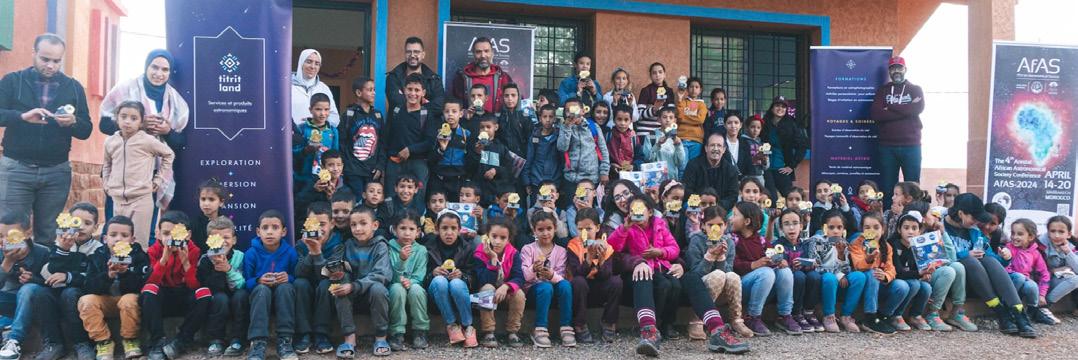
Outreach activities during AfAS conference 2024 © Images credit: Space Chat
9. In 2024, the “Little Prince Stars” initiative brought together Morocco, France, and Switzerland, connecting young minds through a shared passion for astronomy. From your perspective, how has this collaboration inspired Moroccan students and sparked their curiosity about the universe?
This initiative was conceived by Prof. Brice Demory and brought to me through Prof. Zouhair Benkhaldoun. In November 2024, we visited eight Moroccan cities with a mobile planetarium and telescopes. Over 1,000 students participated, many in rural areas that rarely see scientific outreach. We left behind astronomy clubs, materials, and follow-up support in each school.
The biggest impact has been on girls’ participation. When young girls meet women astronomers, pilots, and engineers in person, it makes their path tangible. Astronomy stops being something abstract and becomes something real, something they can do. That representation matters profoundly.
10.You’ve shown remarkable dedication to both scientific research and astronomy outreach. How do you successfully integrate these two aspects of your work, and what inspires your ongoing commitment to each? Looking ahead, what’s the next outreach project you’re planning?
I’ve learned to keep the two tracks synced by thinking in “seasons”. I plan deep-work blocks for research around proposal and project deadlines, then schedule short, well-scoped outreach sprints with local partners who can sustain the work when I’m back in the lab.
My next outreach project is Nomads for Science. Nomads for Science is a science initiative that brings role models in the field of astronomy, STEM, and medical health (including mental health) to people where they live; it grew from the two pioneering efforts SpaceBus Morocco and The Stars of the Little Prince. After a decade of road outreach, I’ve learned that bringing science closer is the best way to build a collective movement.
Oh and of course organizing the 2027 total solar eclipse in Morocco, so children and communities can experience this once-in-a-lifetime event.
11. As co-chair of the 4th African Astronomical Society conference in Morocco, how was your experience organizing and leading the event? How do you think it helped strengthen scientific collaboration across Africa, and what impact do you hope it will have on young African scientists and aspiring astronomers?
It was intense and deeply rewarding, a mix of fundraising campaign, logistics marathon, and community-building. I focused on search funding for an inclusive, no-fee AfAS conference covering logistics, travel grants, social events, and exhibition space, so more African students and researchers could participate. In addition, one of my goals was to bring local outreach into the heart of the conference. As Morocco’s IAU National Outreach Coordinator, I ensured astronomy associations from multiple cities had stands to showcase their initiatives and connect with international participants. In parallel, we co-organized public activities with the local associations including an Astronomy Street Show at Jema El Fna, Marrakech and a SpaceBus Morocco solidarity run to earthquake-affected areas, using astronomy to support the community.
Our aim was to remove barriers, connect people, and leave young Africans with real contacts and real opportunities, and I believe we showed that we can deliver a world-class, inclusive scientific conference even on very limited resources.
12. As we come to the close of this inspiring conversation, what words of advice would you offer to young Africans who aspire to build a career in astronomy or space science?
Strengthen English early, most papers and collaborations use it.
Learn Python, it’s the language of modern astronomy.
Use public data from HST, JWST, Gaia, SDSS, you don’t need a fancy observatory to do real research. I built parts of my PhD thesis using archival data.
Find mentors. Email researchers whose work excites you with a clear question. Some will say yes, and one good mentor can change your trajectory (mine did!).
Valorize your PhD beyond academia. It opens doors in data science, tech, policy, and education. Don’t think of it as “only” preparing you for a faculty position. It’s preparing you to solve complex problems in many fields.


By Luntu Makhosonke, Likhona Mtongana and Zodwa Tiki
The #Astronomy2024 Legacy Project is a nationwide initiative dedicated to extending the impact of the 2024 International Astronomical Union General Assembly (IAU-GA), the first-ever held in Africa. The project aims to inspire the next generation of scientists by fostering long-term engagement with astronomy and STEM in South African communities. Its goals include broadening access to astronomy and STEM education, distributing 100 TV systems to selected schools and science centres to empower learners with digital learning tools, and providing hands-on outreach and mentorship through the Legacy Ambassador Initiative. Each system includes a 40inch screen, Raspberry Pi computer, keyboard, mouse, and webcam. Notably, these screens were initially used during the poster sessions at the IAU-GA 2024, and have since been repurposed to continue their educational legacy in schools and science centres across the country.
This initiative equips volunteers—such as astronomy graduate students and science communicators— with skills in science communication, leadership, and community engagement. Ambassadors conduct astronomy and STEM outreach across South Africa, serving as relatable role models who inspire learners through mentorship and interactive learning. Importantly, the project selected ambassadors who reflect the communities they serve—individuals who come from those regions and speak the local languages. This approach ensures authentic representation, fosters a sense of belonging, and helps learners see themselves in the fields of science and astronomy through relatable role models who understand their cultural and linguistic contexts.
To date, the project has successfully reached all the nine provinces in South Africa, distributing and installing TV systems in schools and science centres nationwide— bringing accessible, technology-enhanced astronomy education to communities across the country. A particular focus was placed on rural and underserved areas, ensuring that no one was left behind in accessing quality, technology-enhanced astronomy education.

The #Astronomy2024 Legacy Project team recently visited Zisukhanyo Secondary School in Samora Machel, Cape Town, to donate a TV screen that will support future virtual education and outreach engagements. The event was honoured by the presence of Professor Willy Benz, President of the International Astronomical Union (IAU), who shared his expertise in astronomy and science with the students. Learners were afforded the opportunity to engage directly with Professor Benz, posing insightful questions about the universe, space exploration, and potential career pathways in science. The visit provided an enriching and motivational experience for both learners and educators, marking a significant moment in the project’s ongoing efforts to promote STEM education and inspire future scientists.

Beyond the installation of TV systems, the project establishes a dynamic network of schools, science centres, professionals, and young researchers/ambassadors to facilitate ongoing virtual engagement. During the virtual sessions, learners can interact with expert guest speakers, participate in astronomy quizzes, and ask questions during live discussions.The first virtual session covered a wide range of topics, including the background of the #Astronomy2024 Legacy Project, an introduction to astronomy, overview of space sciences, introduction to iThemba LABS, indigenous astronomy, and the societal benefits of science. Learners also participated in an interactive astronomy quiz, making the session both educational and engaging. Building on this, the project plans to host additional sessions with astronomers and other professions in the field to ensure continued school engagement and regular use of the technology for meaningful educational purposes through partnerships with science centres.
As this initiative demonstrates, hosting theIAU-GA 2024 in Africa for the first time was more than a historic milestone—it symbolised the continent’s growing role in shaping the global scientific landscape. By connecting rural communities to the wonders of astronomy and promoting sustained engagement with STEM, the #Astronomy2024 Legacy project extends the impact of a milestone event into a lasting legacy. The success of this project demonstrates the remarkable outcomes that can be achieved when scientists, educators, and communities work together. Thus, the initiative’s ultimate legacy depends on sustained collaboration with science centres, schools, astronomers/scientists, and local communities. Every contribution helps ensure that young people in South Africa can look to the night sky and see not only the stars, but also the potential within themselves.
By: Glen Malesa
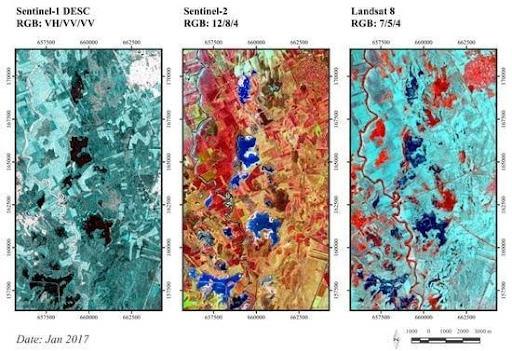
© András Gulácsi & Ferenc Kovács, Remote Sens. 2020, 12(10), 1614. DOI: 10.3390/rs12101614.
Ms. Anela Mkhwenkwana’s research at the University of KwaZulu-Natal showcases just how transformative Earth observation can be for African communities. By combining optical data from Sentinel-2 satellites with radar (SAR) imagery, she has developed a method to tackle one of agriculture’s toughest challenges: accurately measuring soil moisture.
For commercial maize farmers, this advancement is more than a scientific breakthrough, it’s a practical tool. With reliable soil moisture data, farmers can schedule irrigation with precision, ensuring that every drop of water is used effectively. The results are tangible: healthier crops, higher yields, stronger food security, and greater profitability for farming enterprises.
c This example demonstrates the direct line from space to soil, where cutting-edge satellite technology translates into real-world benefits. By empowering farmers with data-driven insights, Earth observation not only conserves vital resources but also strengthens local economies and builds resilience within agricultural communities across Africa.
Building Capacity Through Algeria’s AlSat Programme
By: Cailyn Scheepers
Algeria’s national space program provides a strong example of how Earth observation satellites can drive sustainable development in North Africa. Through the AlSat series, the country has invested in technology that delivers tangible benefits to its communities.
Launched in 2016, AlSat-2B provides high-resolution panchromatic and multispectral images that are used for mapping urban areas, monitoring agricultural land, and tracking environmental change. Alongside it, AlSat-1B supports environmental protection and disaster management, supplying imagery that helps identify risks such as desertification, flooding, and wildfires. These satellites enable decision-makers to act quickly and with greater precision, safeguarding both livelihoods and infrastructure.
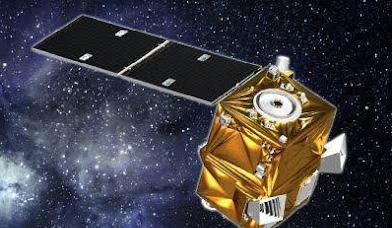
VNREDSat-1, Vietnam’s first Earth observation satellite, developed by Airbus Defence and Space for the Vietnam Academy of Science and Technology (VAST).10.3390/rs12101614.
Zouhair Benkhaldoun during the
ch, Morocco. Telescope.
Equally important is AlSat-1N, a nanosatellite developed in partnership with the UK. Beyond its scientific role, it has become a valuable tool for training Algerian engineers and building local expertise in satellite technology. This focus on capacity-building ensures that Algeria is not only consuming data but also actively shaping its future in space science.
Together, the AlSat missions highlight how Earth observation strengthens resilience against environmental challenges while fostering technological independence. From disaster response to agricultural planning, Algeria’s satellites demonstrate the far-reaching value of investing in space to empower communities on the ground.
By: Nonopha Kanise
The South African Radio Astronomy Observatory (SARAO) recently hosted its 5th Big Data Africa School in Cape Town, bringing together young scientists from across the continent. For the first time, the programme focused on Earth observation, exploring how machine learning and deep learning techniques can unlock insights from satellite, aerial, and ground-based data to tackle Africa’s most pressing climate and environmental challenges.
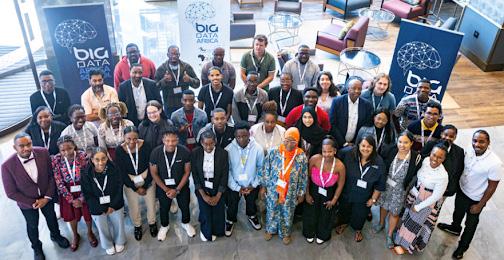
Over the course of the week, 26 master’s students from South Africa and seven Square Kilometre Array (SKA) partner countries—Botswana, Ghana, Kenya, Madagascar, Mozambique, Namibia, and Zambia—took part in hands-on projects. Their work spanned a wide range of applications: mapping banana plantations for near real-time monitoring of crop health, identifying flood extents to guide disaster relief, tracking urban change in rapidly growing cities, monitoring fragile ecosystems like mangroves and peatlands, and testing deep learning models to improve weather forecasting in data-scarce regions such as the Sahel and the Horn of Africa.
By blending advanced data science with Earth observation, SARAO is not only advancing research but also empowering the next generation of African scientists. The programme demonstrates how building local expertise in cutting-edge technologies can lead to practical, homegrown solutions for climate resilience and sustainable development.
By Kaoutar Saadi
On Monday, June 30, 2025, Tunisia made a bold leap toward empowering its youth and fostering innovation. The National Agency for the Promotion of Scientific Research (ANPR) and the Palace of Sciences in Monastir (PSM) signed an inspiring partnership to launch “The STEAM Educational Approach for Creativity and Innovation.” This exciting program, supported by the SWAFY initiative and funded by the European Union, promises to bring science, technology, engineering, arts, and mathematics closer to young Tunisians than ever before.
Over the next two years, this nationwide initiative will journey across the country with a mission: to make science accessible, fun, and deeply engaging. Highlights include:
• The Creativity Caravan, traveling to schools and youth centres, turning science into aninteractive adventure.
• STEAM Camps, where students can explore, experiment, and learn by doing.
• Training programs for educators, equipping them to inspire curiosity and innovation intheir classrooms.
• A STEAM manual, filled with practical tools for teachers and facilitators.
• National competitions to celebrate creativity and reward fresh ideas.
• New STEAM Clubs, giving students spaces to collaborate, invent, and grow.
With a budget of 870,000 Tunisian Dinars, the program reflects Tunisia’s commitment to nurturing creativity and preparing young people for the challenges of the 21st century.
PSM’s vision is clear: science should reach every student, everywhere. The program has two main strands: one targeting schools throughout the academic year, and another reaching community centres, youth associations, and institutions across Tunisia. By taking science out of traditional classrooms and into local communities, the initiative ensures that no student is left behind.
STEAM is more than a curriculum, it’s a new way of learning. By blending science, technology, engineering, arts, and mathematics, students develop the skills they’ll need for the future: collaboration, critical thinking, problem-solving, creativity, and innovation.
The program also strengthens PSM’s resources: mod-
ernizing educational tools, trainingmediators, and fostering partnerships with other scientific and educational institutions. In doingso, it builds a sustainable ecosystem for nurturing innovation.
The Creativity Caravan travels across underserved regions, bringing interactive science showsand workshops to spark curiosity and imagination.
STEAM Camps provide immersive learning experiences where young people experiment,collaborate, and discover solutions to real-world challenges.
STEAM Clubs encourage ongoing engagement, giving students a platform to explore projects,share ideas, and collaborate with peers.
Competitions celebrate creativity, reward innovative solutions, and motivate students to thinkoutside the box.
This ambitious initiative is poised to inspire over 13,000 students, establish 8 vibrant new STEAM Clubs, and equip 24 educators and youth facilitators with the skills to sparkcuriosity and creativity. Postdoctoral researchers involved will gain hands-on experiencementoring students, developing innovative projects, and communicating scienceeffectively.
At its heart, the program aims to empower young Tunisians to explore, invent, and lead,nurturing a generation ready to imagine and shape
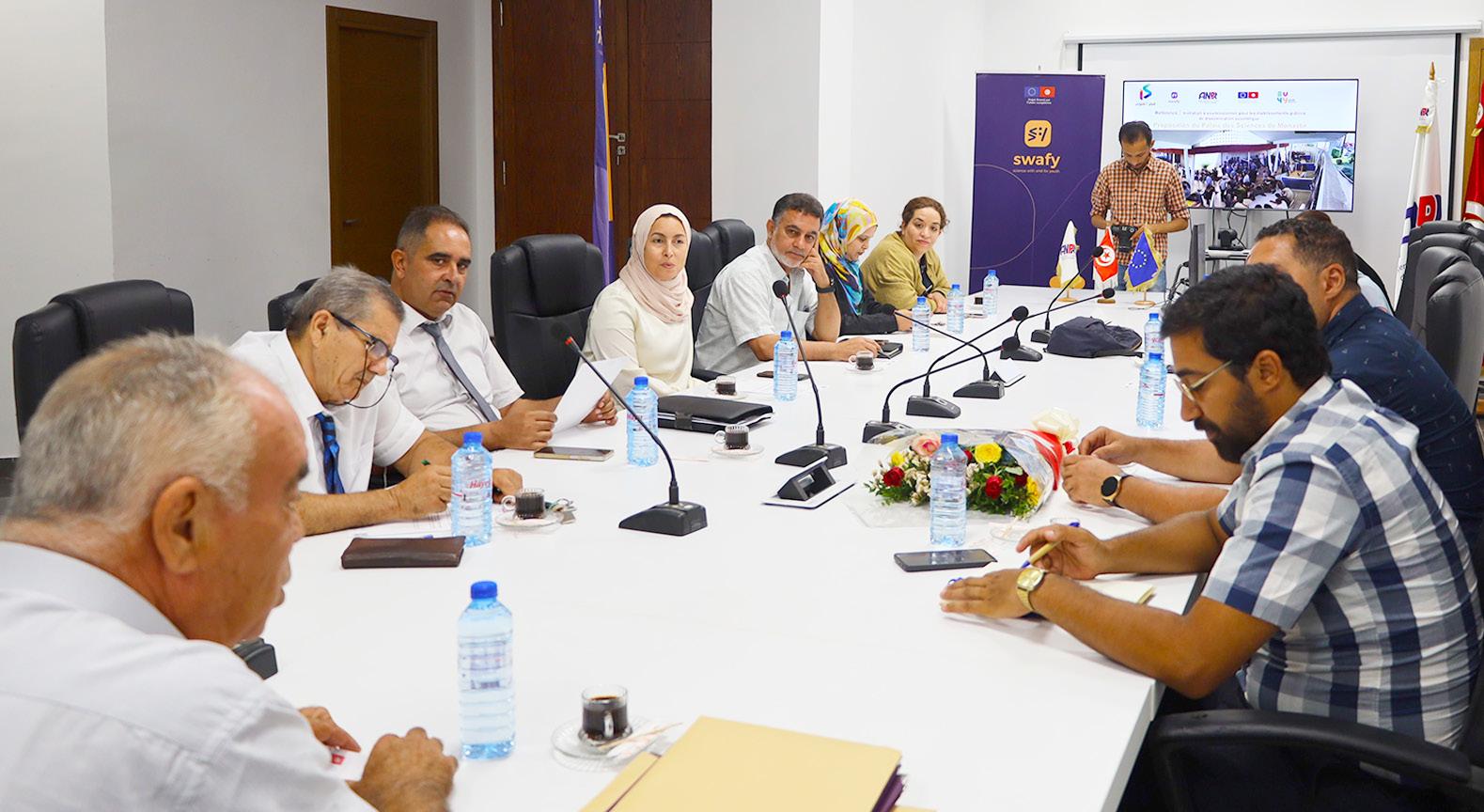

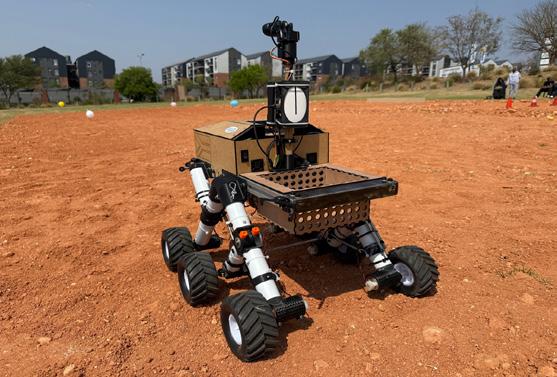
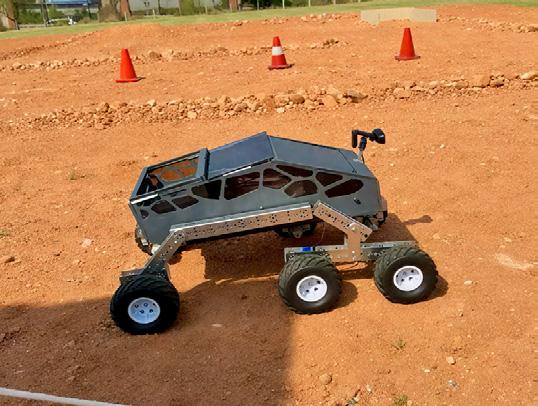
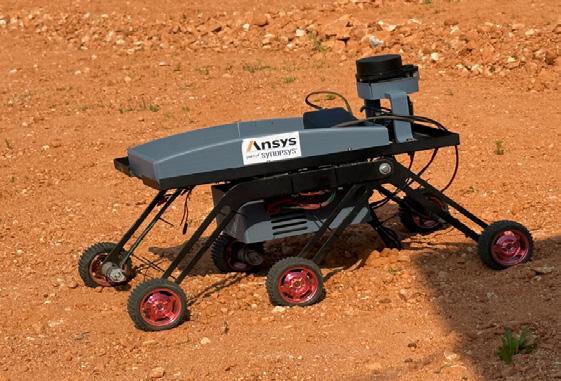


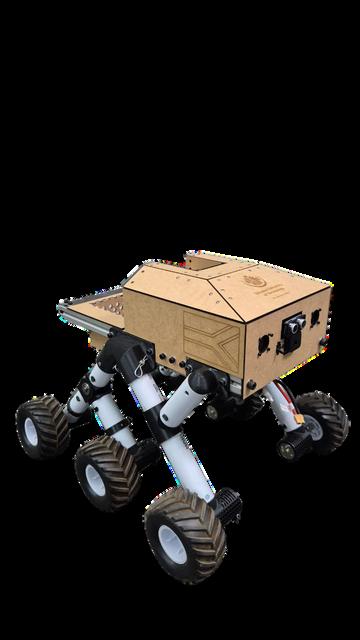
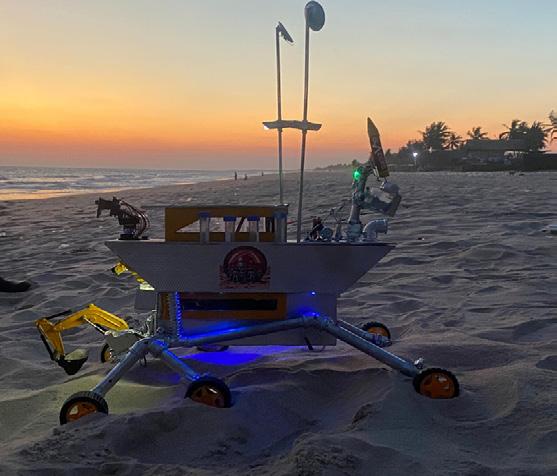
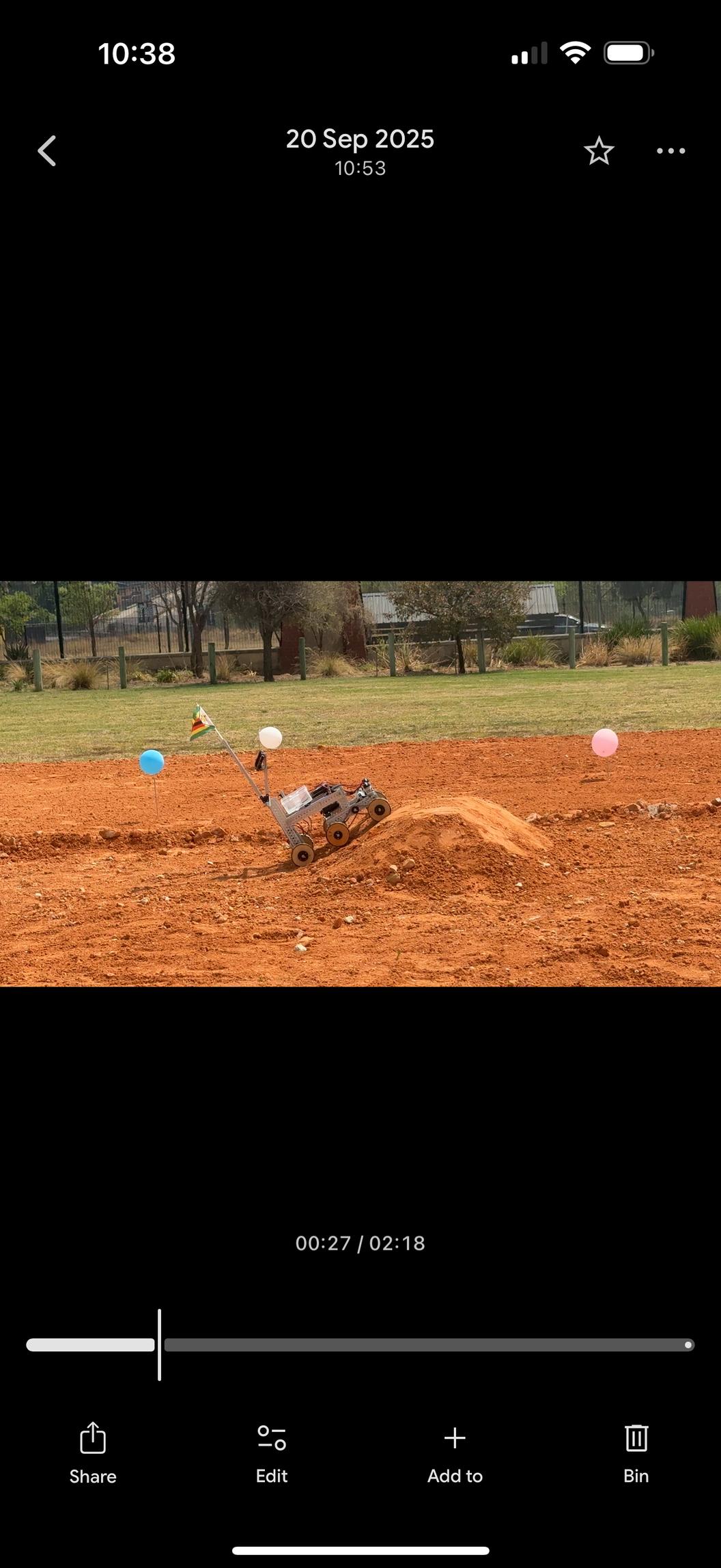


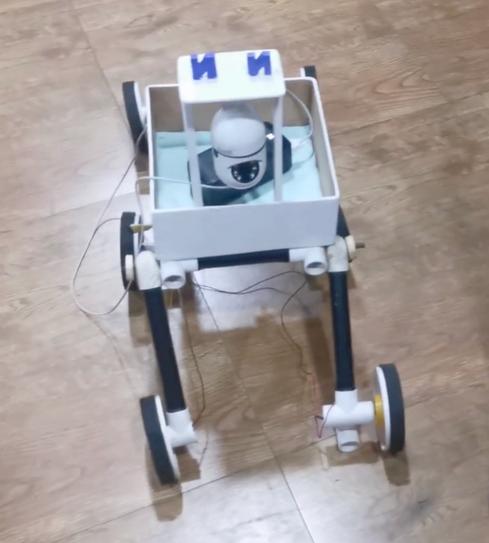
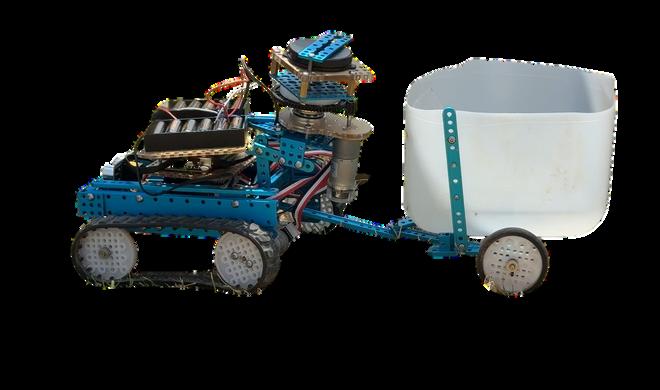
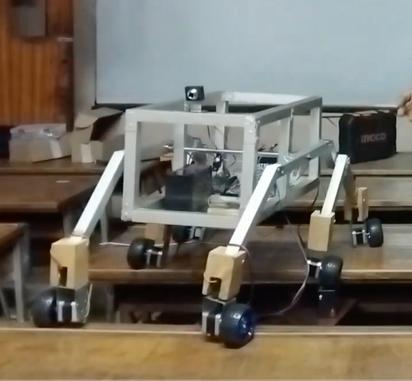



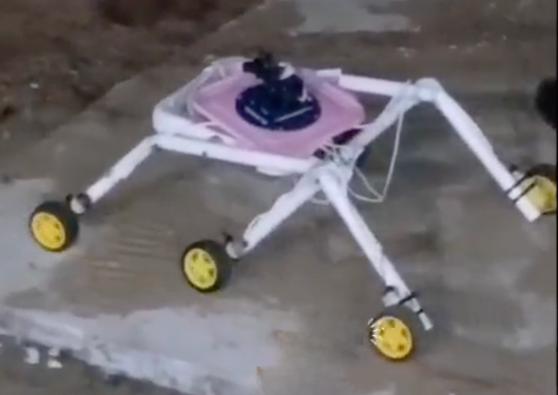




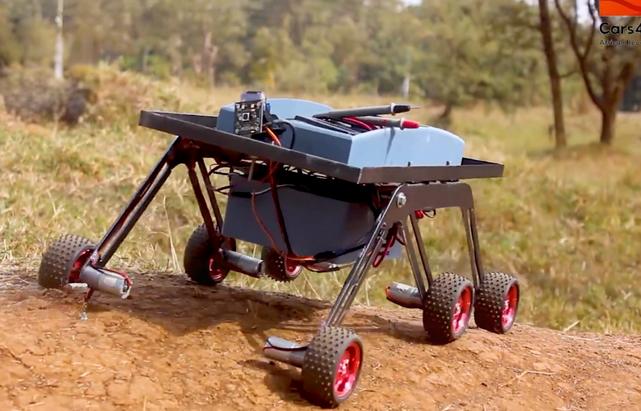
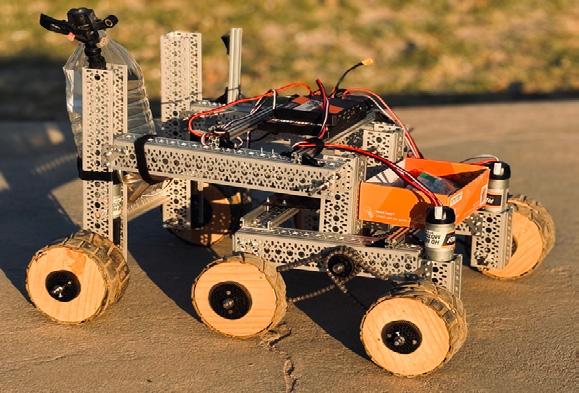
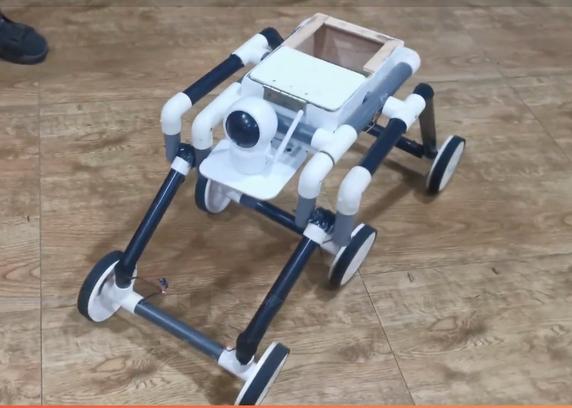
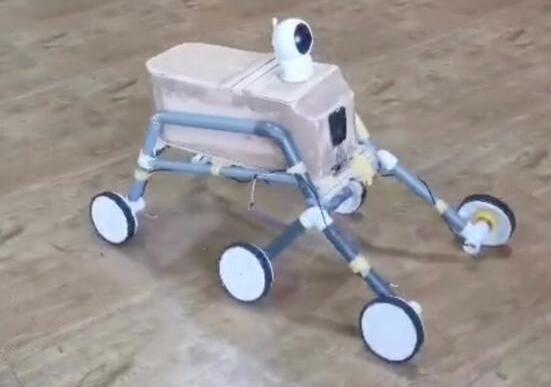
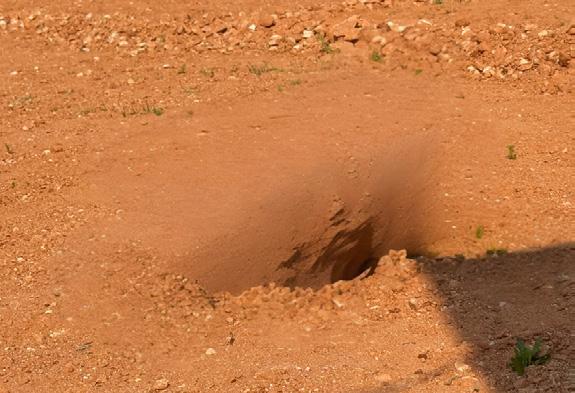
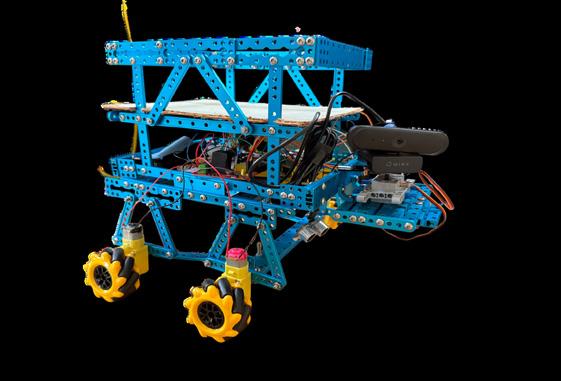
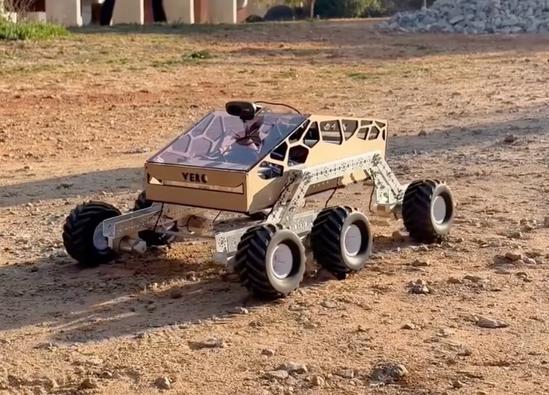
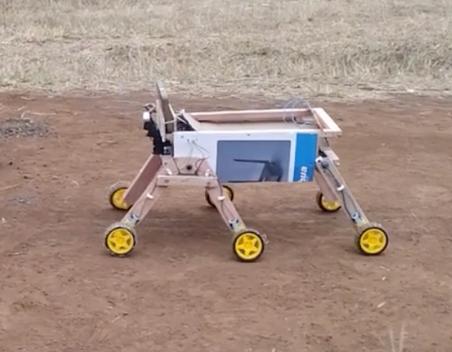
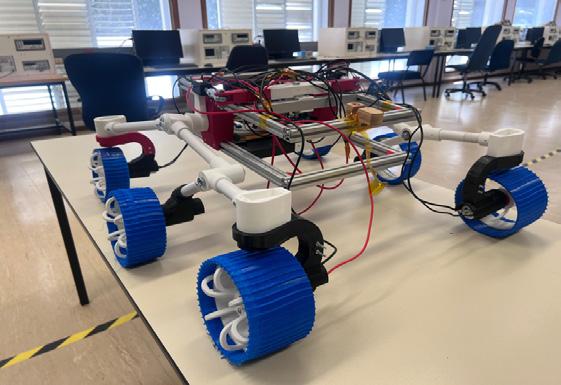
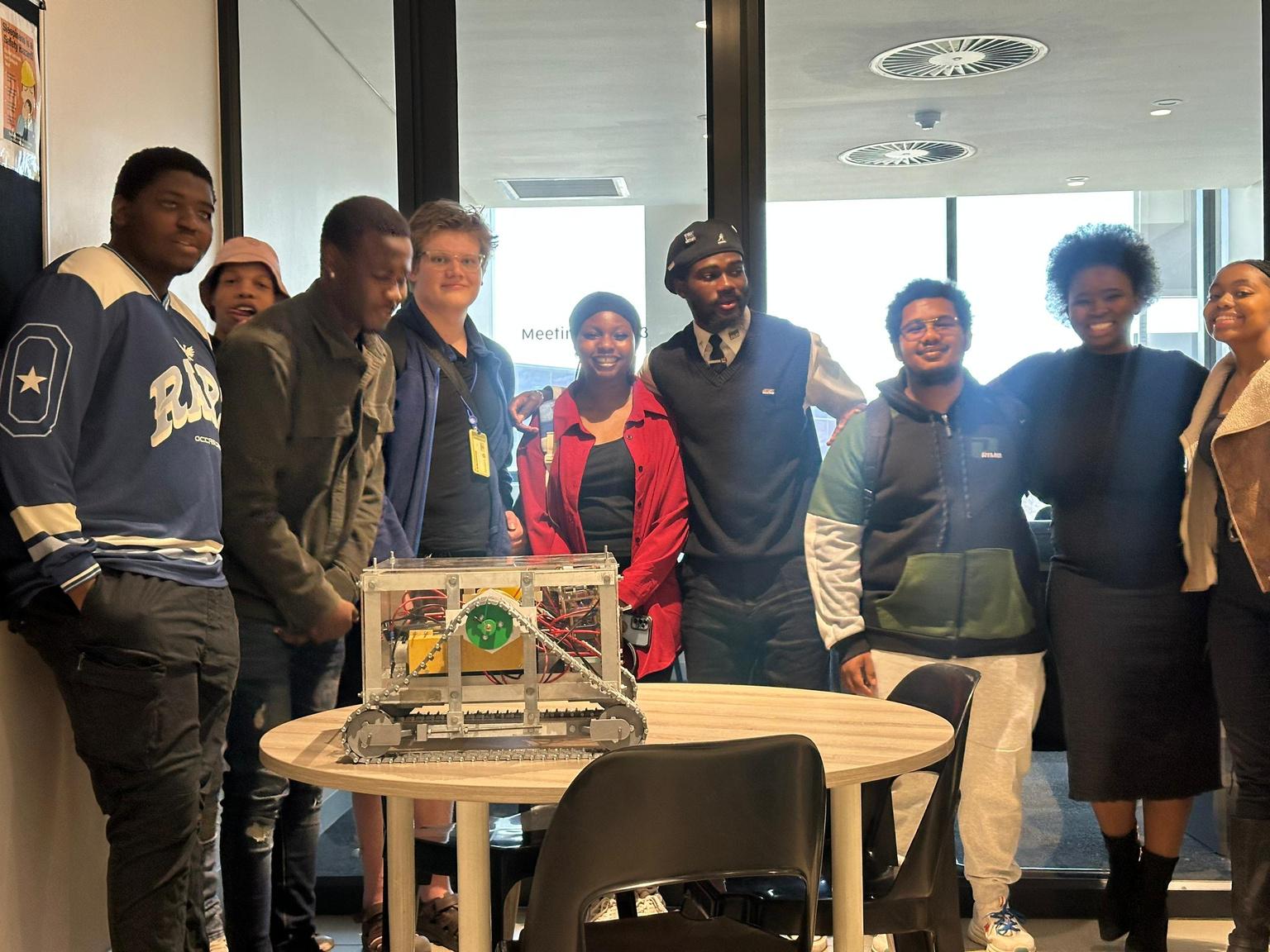
By Mutshidzi Nelwamondo
Africa’s space and astronomy ecosystem has moved from a handful of centres to a vibrant, continental network of observatories, agencies, universities and private firms. That growth means career openings — for scientists, engineers, data experts, communicators and technicians — are appearing across the continent. This two-page guide explains the job types and gives a curated list of live application portals and verified vacancies (sample openings checked online) so readers can apply now.
National space agencies, continental initiatives and new observatories are creating sustained demand for people who can operate telescopes, build satellites, analyse big Earth-observation datasets, and translate science into services. The African Space Agency (AfSA) is creating continental coordination and hiring pools, while national agencies — notably SANSA (South Africa) and NASRDA (Nigeria) — and observatory networks such as SARAO and SAAO run active recruitment cycles.
Roles You’ll Actually Find
Typical openings include:
• Research positions & postdocs (astronomy, astrophysics, planetary science)
• Engineering & systems roles (satellite systems, ground station, telescope mechanics)
• Data & software positions (big-data analysts, pipeline developers, ML roles)
• Operations & technical staff (telescope operators, instrument technicians)
• Policy, outreach & project management roles
How to Apply — Reliable Portals by Country/Region Pan-Africa / Continental:
• African Space Agency (AfSA) — careers & opportunities: https://africanspaceagency.org/
• Space in Africa — job listings and opportunities: https://spaceinafrica.com/category/opportunities/
South Africa:
• SANSA Careers: https://www.sansa.org.za/careers/
• SARAO Vacancies: https://www.sarao.ac.za/ job-openings/
• SAAO/NRF Opportunities: https://www.saao.ac.za/ opportunities/
Nigeria:
• NASRDA: https://nasrda.gov.ng/
Morocco:
• Oukaimeden Observatory / Cadi Ayyad University: https://ouca.uca.ma/
Ghana:
• GSSTI (Ghana Space Science and Technology Institute): https://www.gssti.org/
Verified Open Positions
• SARAO (South Africa) — Telescope Operator, Senior Systems Engineer, Civil Engineer / Technologist.
• SANSA (South Africa) — Technical & Science vacancies (rolling adverts on SANSA portal).
• AfSA (Egypt) — Programme Officer & Project Manager roles (check AfSA careers page).
Practical Tips for Applicants
1. Tailor your CV for each role — highlight technical and software skills.
2. Look beyond academia — private companies also hire for geospatial and data analysis roles.
3. Use AfAS, AfSA and Space in Africa to track fellowship and training calls.
4. Set alerts on SANSA, SARAO and LinkedIn to get notified first.
Editor’s Note: Vacancies and URLs were verified November 2025. Applicants should confirm details on official websites before applying. African Science Stars will continue to feature quarterly career updates for the astronomy and space sector.

National Science Week is an annual celebration that brings science to life across South Africa. Held each year in August, the week showcases the power of science, technology, engineering, and mathematics (STEM) through engaging events, hands-on activities, exhibitions, and public talks. The initiative, driven by the Department of Science, Technology and Innovation (DSTI), aims to make science accessible and exciting for everyone — from curious learners and educators to everyday citizens. It highlights the vital role science plays in shaping our future, solving real-world challenges, and inspiring the next generation of innovators. From community science festivals and school outreach programmes to university open days and museum exhibitions, National Science Week unites the nation under one goal: to foster curiosity, creativity, and a deeper appreciation for the wonders of science.
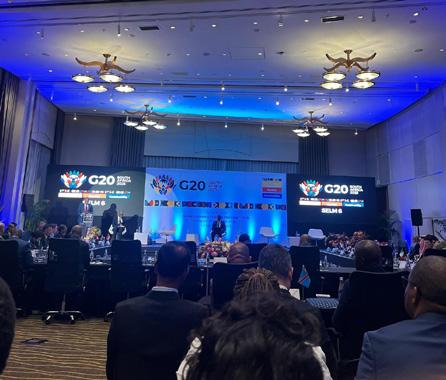
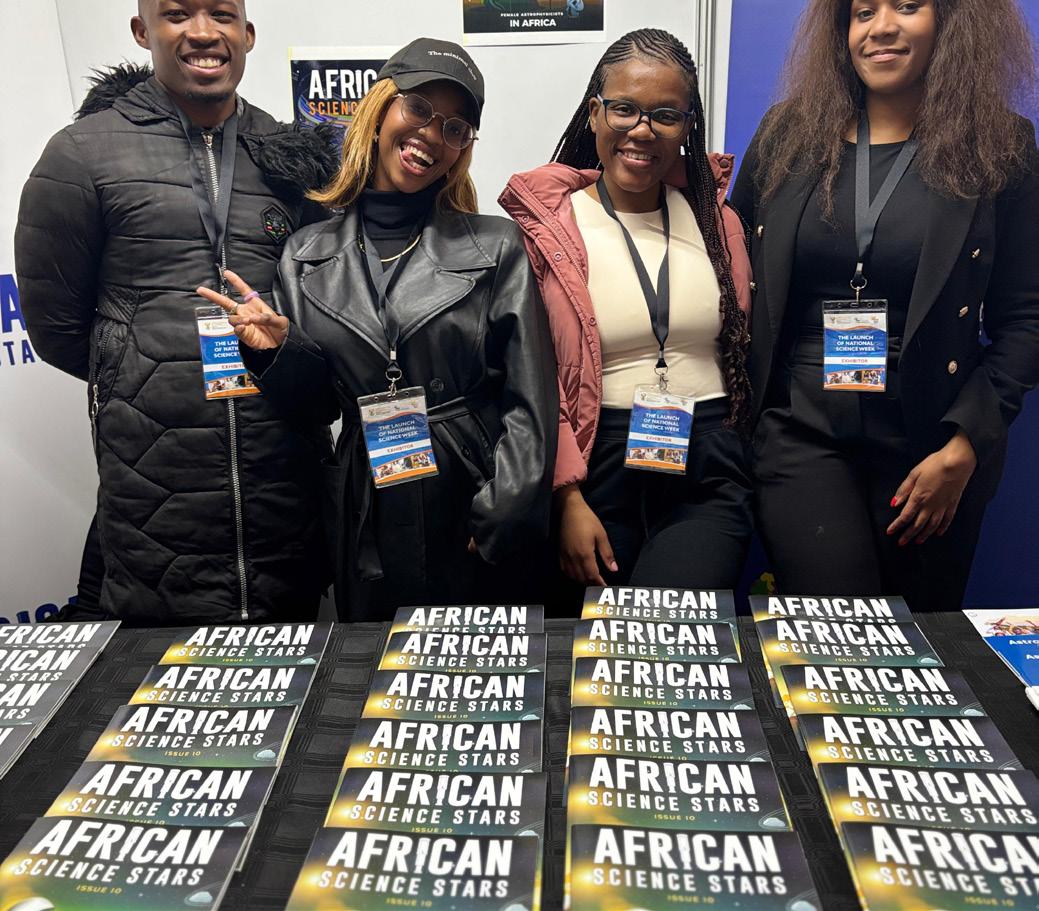
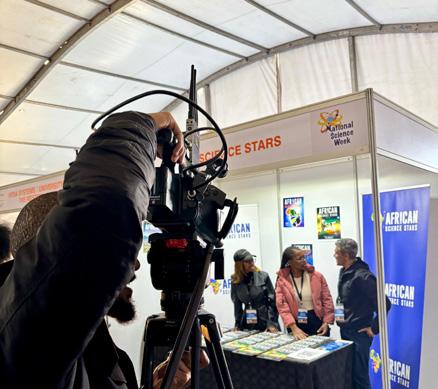
The 6th Space Economy Leaders Meeting (SELM), held at the Arabella Hotel in South Africa, formed part of the official G20 activities — marking a significant moment for international cooperation in space science and innovation. The meeting brought together global leaders, ministers, and representatives from government, industry, and academia to discuss how the space economy can drive inclusive growth and sustainable development. Topics ranged from satellite technology and data sharing to climate resilience, space governance, and the responsible use of outer space. Hosted under the theme of “Harnessing Space for Earth’s Benefit,” the gathering emphasized the importance of collaboration between nations to ensure that the rapidly expanding space sector continues to support social, economic, and environmental progress worldwide. By hosting this milestone event, South Africa strengthened its position as a key player in the global space community and reaffirmed Africa’s commitment to shaping the future of the space economy.
held from 24 to 28 November at the CSIR Convention Centre in Pretoria. Throughout the event, our team exhibited, connected with researchers, students, industry leaders, and science enthusiasts, and shared insights into our work. We distributed hundreds of magazines, built new partnerships, and engaged in conversations shaping the future of science on the continent. It was a full and inspiring week of learning, collaboration, and community.
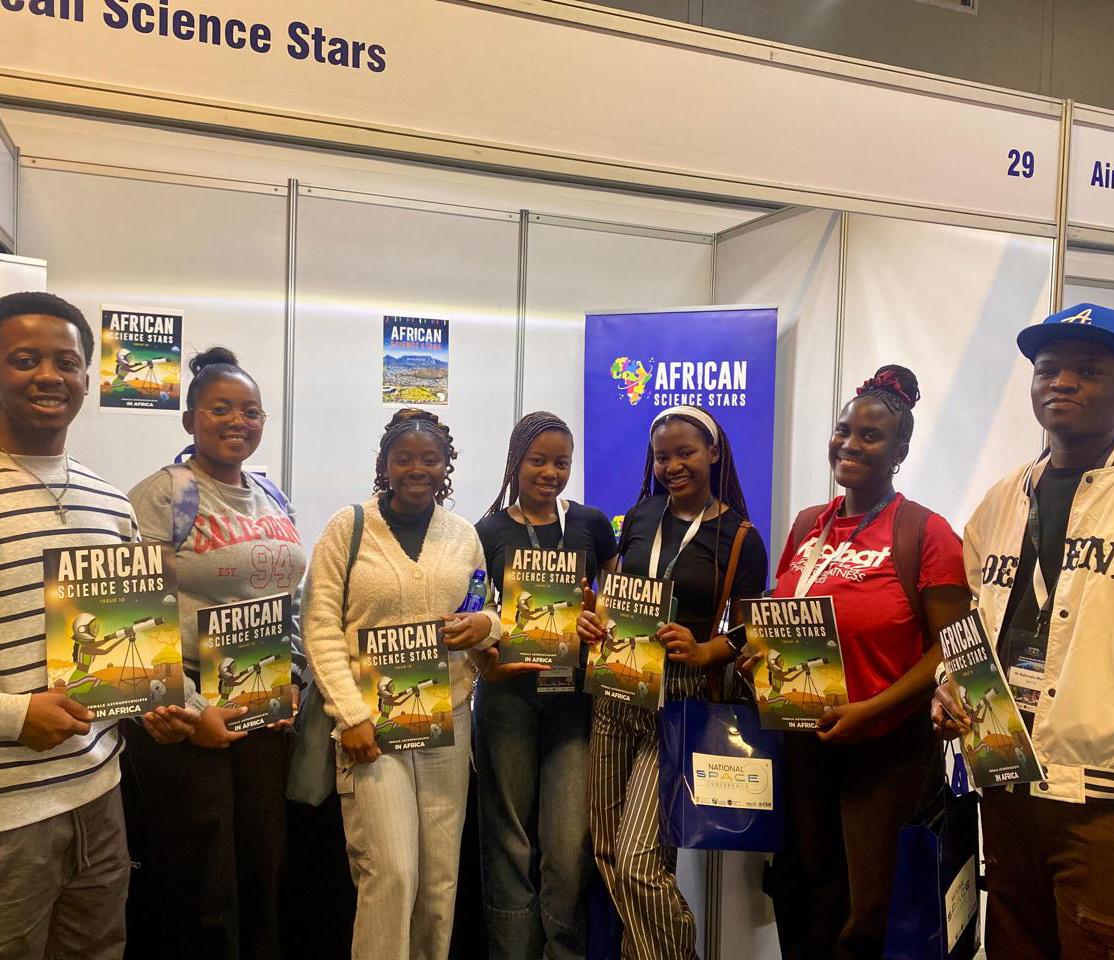

The National Space Conference is South Africa’s premier gathering for the country’s growing space science and technology community. Hosted annually by the Department of Science, Technology and Innovation (DSTI) and the South African National Space Agency (SANSA), the conference brings together scientists, engineers, policymakers, students, and industry leaders to explore the latest developments in space research and innovation. The event serves as a platform to discuss Africa’s role in the global space sector — from satellite development and Earth Observation to astronomy and space exploration. It highlights how space science contributes to solving challenges on Earth, such as climate monitoring, communication, and sustainable development. With inspiring keynote speakers, panel discussions, exhibitions, and networking opportunities, the National Space Conference continues to ignite passion for discovery and position South Africa as a leader in space science and technology on the continent.
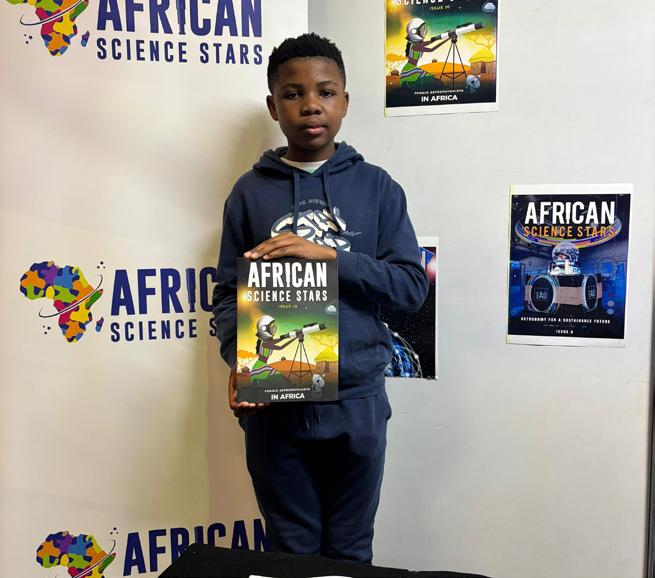
The 13th Ifrane Astronomy Festival, held at Al Akhawayn University under the guidance of Professor Hassane Darhmaoui, gathered students, astronomy enthusiasts, educators, and experts from across Morocco for a celebration of science and space exploration. The festival featured an extensive program, including interactive workshops, public lectures, hands-on stargazing sessions, and public speaking competitions focused on astronomy and space science. African Science Stars was proudly represented by their ambassador, Kaoutar Saadi, who actively led educational and outreach activities, engaging participants and inspiring young learners. The event also welcomed numerous Moroccan astronomy associations, such as 3AM Association, Atlas Dark Sky Foundation, the Astronomy Club of Al Akhawayn University, Attarik Foundation, and Boujdour Astronomy Association, who contributed through demonstrations, exhibitions, and community engagement. The festival created a vibrant platform for learning, collaboration, and the promotion of astronomy among students and the public alike.