PO Box 29170, Melville 2109, Johannesburg, South Africa.
Tel: +27 (0)11 486-1156
Researched and written by ACB research co-ordinator: Pesticides, Zakiyya Ismail
Editorial oversight and input by ACB executive director, Mariam Mayet
Design and layout by Baynham Goredema, Xealos Design studio
Acknowledgements
The ACB gratefully acknowledges the financial support of several donors, though the views expressed may not necessarily reflect the views of our donors.
This briefing presents evidence from independent laboratory testing and does not purport to establish illegality or quantify individual health risk
Acronyms
ACB African Centre for Biodiversity
AChE Acetylcholinesterase
ADI Accepted daily intake
AMPA Aminomethylphosphonic acid
CMR Carcinogenic, mutagenic, or toxic for reproduction
EFSA European Food Safety Authority
EU European Union
FAO UN Food and Agriculture Organisation
GAP Good Agricultural Practice
GHS Globally Harmonized System of Classification and Labelling of Chemicals
HHPs Highly hazardous pesticides
IARC International Agency for Research on Cancer
LC‑MS/MS Liquid chromatography-tandem mass spectrometry
METIs Mitochondrial electron transport inhibitors
MRL Maximum residue limits
NEMA National Environmental Management Act
PAN Pesticide Action Network
SAHRC South African Human Rights Commission
UN United Nations
UNEP UN Environment Programme
US United States
WHO World Health Organization
Executive summary
This briefing presents findings from independent laboratory testing commissioned by the African Centre for Biodiversity (ACB) to help clarify what pesticide residues are present in commonly consumed foods sold in South African supermarkets. The study analysed 43 everyday products purchased between November 2025 and January 2026. Results are compared against South African, Codex Alimentarius, and European Union (EU) maximum residue limits (MRLs), as well as the default 0.01 mg/kg benchmark. The findings provide an evidence base for policy discussion and regulatory review; they do not purport to establish illegality or quantify individual health outcomes.
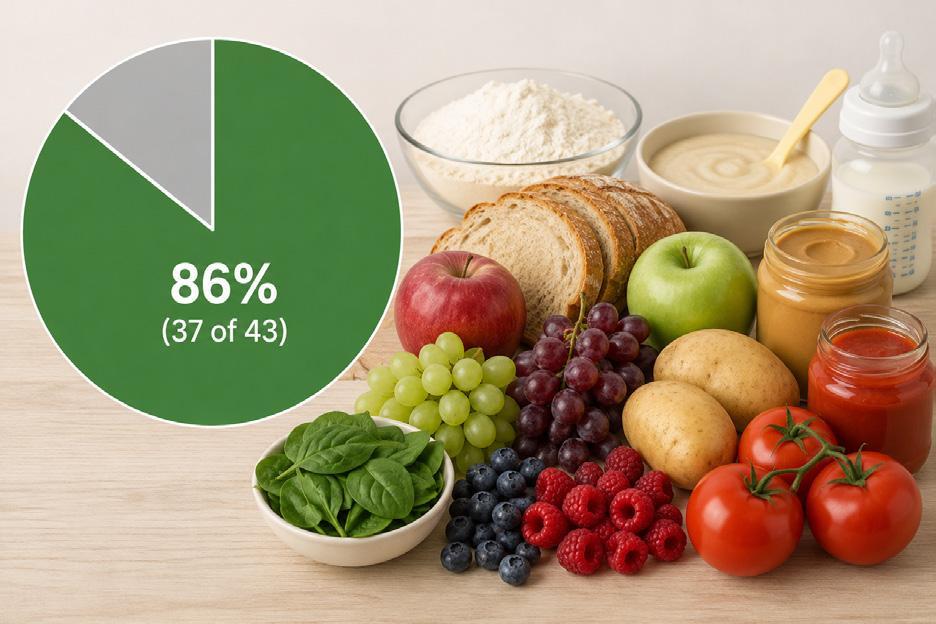
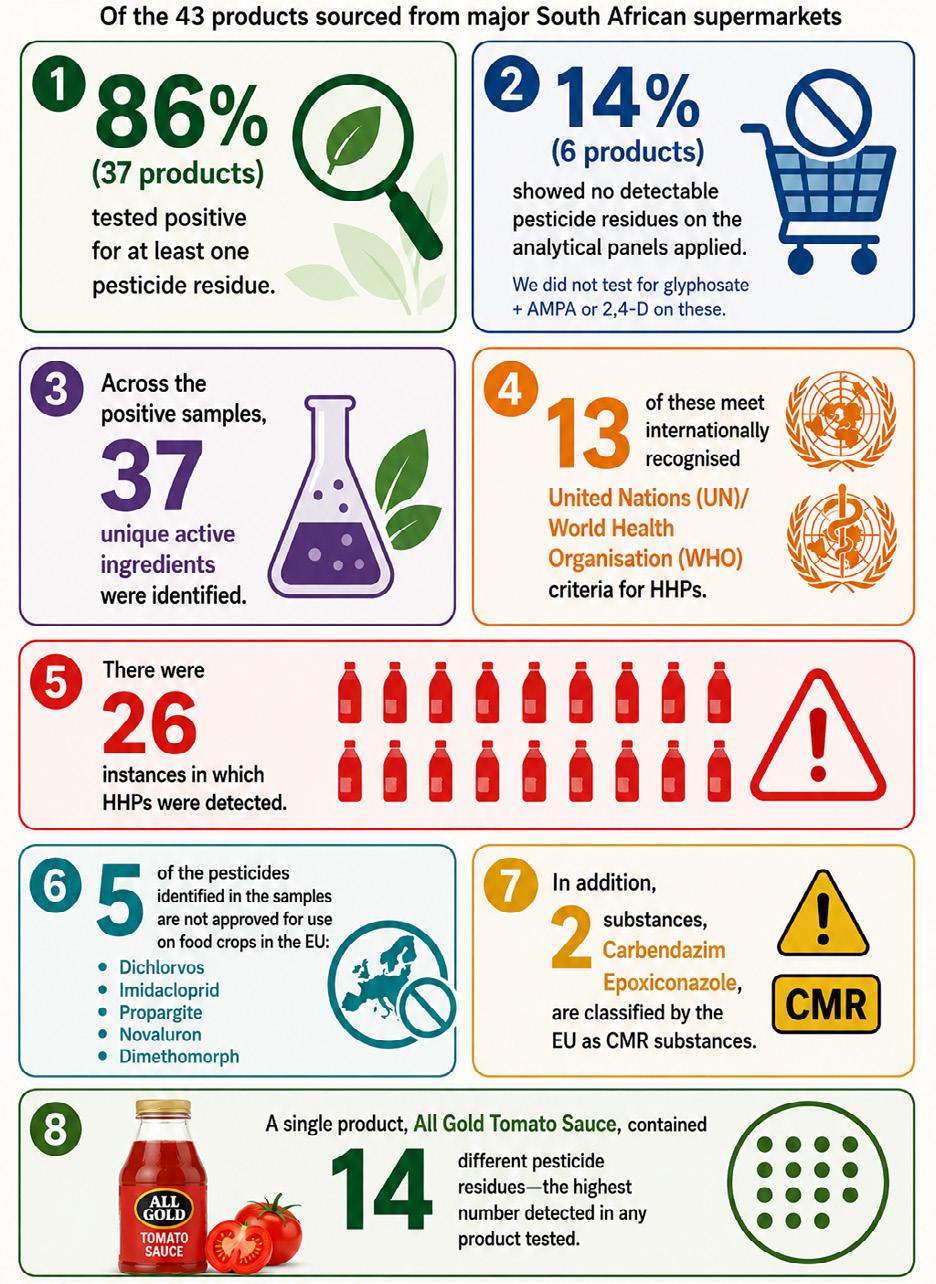
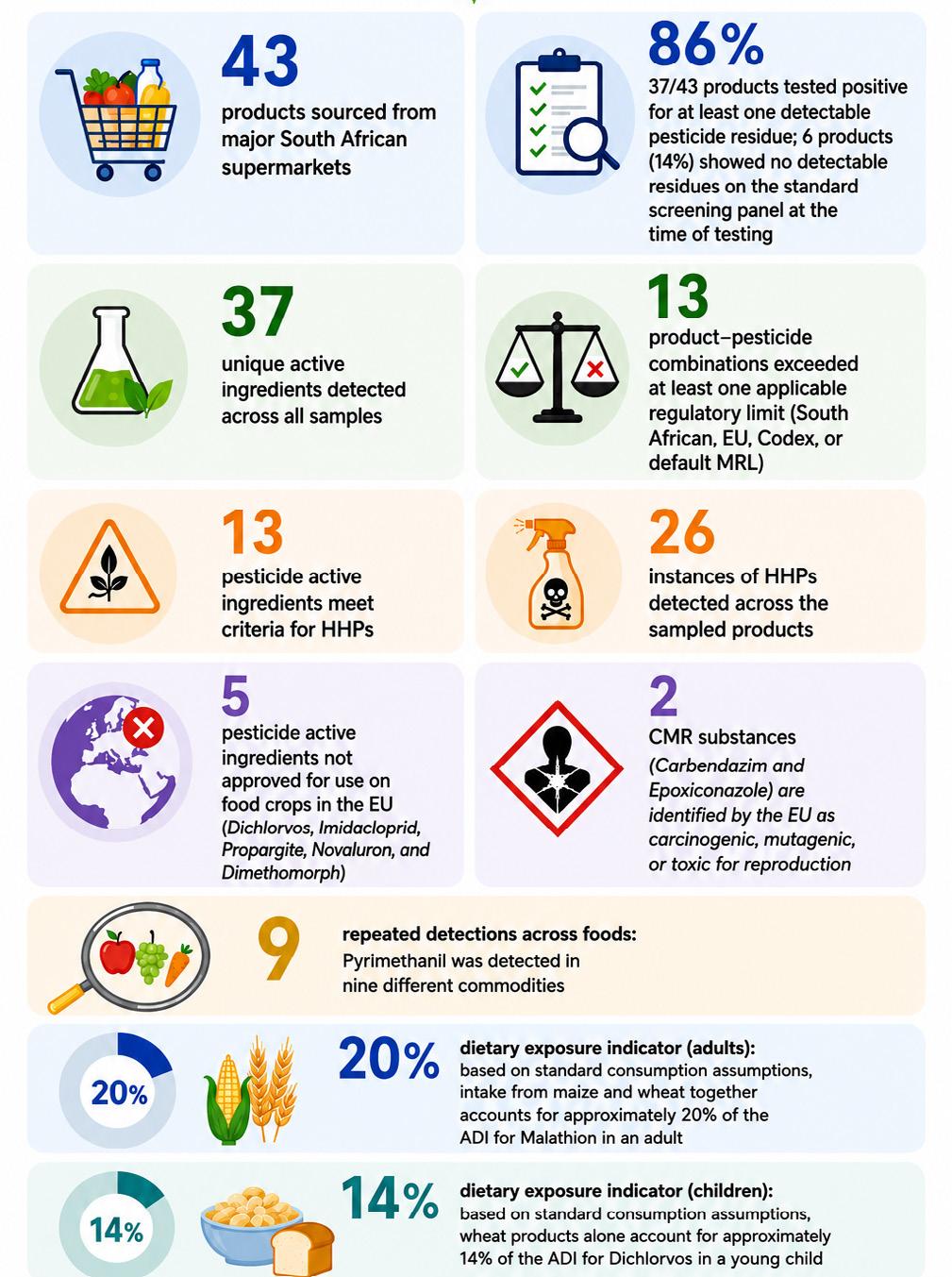
• Widespread residues: 37 of 43 products (86%) contained at least one detectable pesticide residue on the analytical panels applied; six products (14%) showed no detectable residues.
• Multiple chemicals per product: 37 unique pesticide active ingredients were detected across the sample set; one product (All Gold Tomato Sauce) contained 14 different residues.
• Substances of great concern present in food: 13 of the detected active ingredients meet internationally recognised United Nations/ World Health Organization (UN/WHO) criteria for highly hazardous pesticides (HHPs), with 26 detections of HHPs across the sampled products.
• Regulatory benchmark exceedances: 13 product–pesticide combinations exceeded at least one applicable benchmark (South African, EU, Codex, or the default 0.01 mg/kg).
• Repeated detections imply aggregate exposure: some pesticides appeared across multiple foods (for example, pyrimethanil in nine commodities and piperonyl butoxide in eight), meaning exposure can accumulate through an ordinary mixed diet. This pattern is particularly relevant for children, whose higher food intake per unit body weight means repeated low-level residues can contribute disproportionately to overall exposure.
Critical significance of the results
The results point to a consistent pattern: pesticide residues are common across staples, fresh produce, processed foods, and several products intended for infants and young children. While MRLs are widely used as enforcement tools for compliance and trade, they are often misunderstood as health-based safety thresholds. This is particularly relevant where multiple residues occur together (“cocktail” exposure) or where the same pesticide is encountered across different foods on the same day (aggregate exposure). Compliance with existing MRLs, therefore, does not necessarily indicate that dietary exposure is without concern, particularly where multiple residues occur together or where foods are consumed frequently by children. The briefing highlights that these real-world exposure pathways are not routinely addressed by single-pesticide, single-crop assessments.
Regulatory and transparency gaps
The briefing situates the testing results within broader concerns about monitoring and public accountability. It notes limited routine public access to residue-monitoring data, gaps in the transparency of pesticide registration information, and fragmented institutional responsibility for pesticide governance. These gaps are compounded by outdated legislation and limited regulatory capacity, constraining effective public oversight.
Proposed priority actions
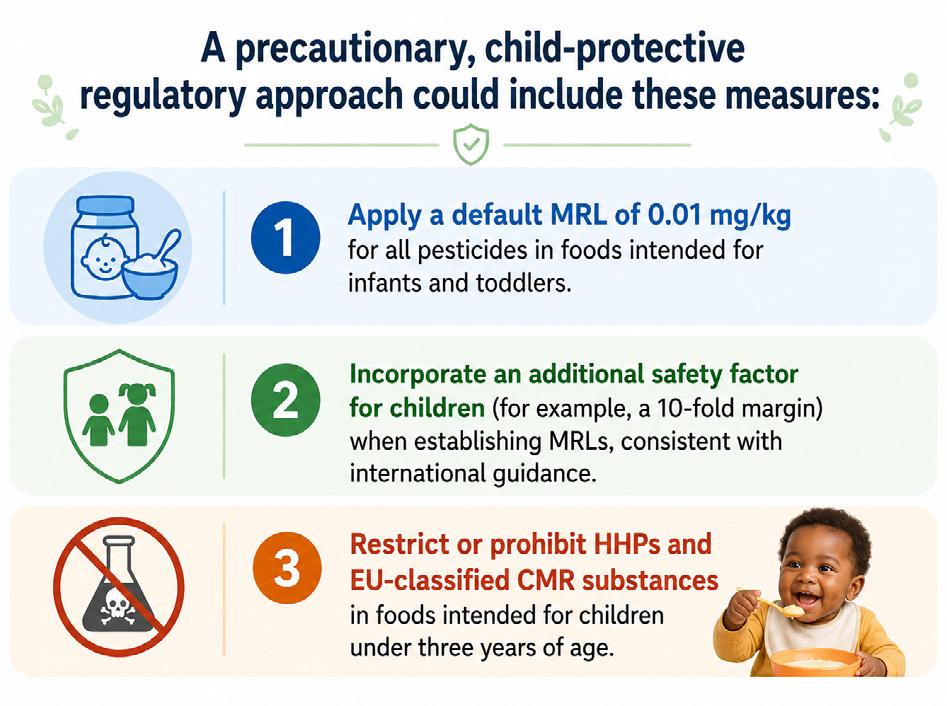
• Strengthen child protective standards: apply a precautionary baseline (including the default 0.01 mg/kg benchmark) for foods intended for infants and young children and introduce child-specific safety factors when setting or revising MRLs.
• Prioritise action on high‑concern substances: expedite regulatory review, restriction, and progressive and expedited phase-out of HHPs and EU-classified carcinogenic, mutagenic, or toxic for reproduction (CMR) substances in food systems, particularly in staples and foods consumed by children.
• Align with more protective benchmarks where justified: systematically review South African MRLs that are substantially higher than Codex or EU limits and lower them where feasible and supported by current science.
• Assess combined exposure by incorporating aggregate and cumulative risk assessment into routine regulatory practice, reflecting real dietary patterns and co-occurring residues.
• Improve transparency and routine monitoring: establish a comprehensive, publicly accessible, state-managed pesticide register and publish routine food residue monitoring results to enable independent scrutiny and informed public oversight.
• Strengthen institutional capacity and coordination: modernise pesticide governance and ensure adequate technical resourcing (including toxicology and risk assessment) across responsible departments.
Introduction
It is the great irony of our times that food—essential for human functioning, survival, and thriving—exacts an extremely high environmental and human health toll, as evidenced by scientific literature and regulatory assessments. While the right to food is not disputed, its actual implementation is impeded by multifaceted factors, as evidenced by the recent South African Human Rights Commission (SAHRC) hearings on the right to food (SAHRC, 2025; SAHRC, 2026), which exposed systemic barriers including affordability constraints, unequal food environments, weak regulation, and entrenched regulatory gaps that raise serious questions about the adequacy of state protection, particularly for children, from health harms embedded within the food system.
A key driver of this cost is the dominance of pesticide-reliant industrial agriculture, which both the government and the pesticide industry present as a necessity for food security. Pesticides are intrinsically toxic, designed to kill pests (FAO-WHO, 2014). Still, their effects spill far beyond the farmland—contaminating soil and water (Ansara-Ross et al., 2012; Dabrowski, 2022; Poudel et al., 2020), harming farmworkers and surrounding communities (Kumar et al., 2023) and resulting in persistent residues in the food we eat every day. Children pay a disproportionately high price for pesticide exposure (Chetty-Mhlanga et al., 2021; Roberts, Karr, & Health, 2012). After decades of industrial agriculture, the evidence overwhelmingly reflects an inability to contain these effects.
The pesticide industry is a powerful commercial sector whose products are inherently hazardous by design and whose activities are associated in the scientific literature with documented risks to human health and the environment. Globally, the industry has been documented for using familiar tactics to protect profits: funding favourable research while undermining independent science, lobbying for weaker regulations, and positioning itself as an indispensable partner in food security (Handford, Elliott & Campbell, 2015). In South Africa (SA), the industry is represented by Croplife SA,1 which, notably, manages and maintains the database of registered pesticides—a function that, in many regulatory systems, is performed by a public authority rather than an industry body. During his 2024 visit, the UN Special Rapporteur on hazardous substances noted that a list of registered pesticides could only be accessed through Croplife for a fee (Orellana, 2024). In 2025, Croplife took the government to court over new “restricted agricultural remedies” regulations and won, delaying alignment with pest control operator rules (Croplife, 2023).2
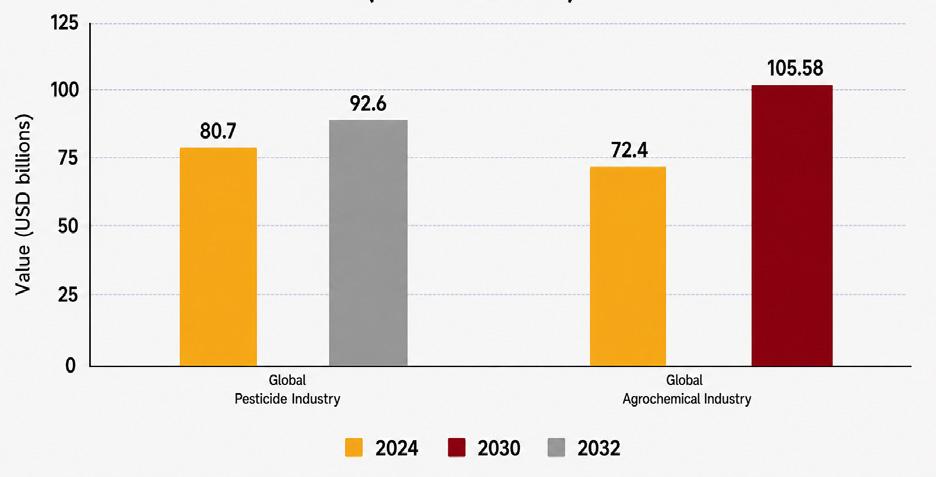
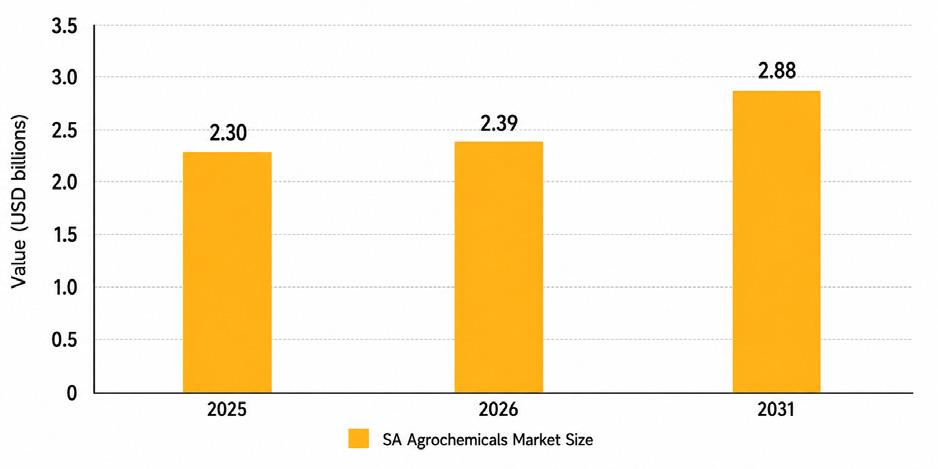
The pesticide industry was worth USD80.7 billion in 2024 and is projected to reach USD105.58 billion by 2032 (Intel Market Research, 2025); the bulk of this is accounted for by agricultural pesticides. The global agricultural pesticides market was valued at USD72.4 billion in 2024 and is projected to reach USD92.6 billion by 2030, growing at a compound annual growth rate (CAGR) of 4.2% from 2025 to 2030 (Wissen Research, 2024). In SA, the agrochemicals market size is expected to grow from USD2.3 billion in 2025 to USD2.39 billion in 2026 and is forecast to reach USD2.88 billion by 2031 (Mordor Intelligence, 2024).
South Africa’s Constitution guarantees everyone the right to an environment not harmful to their health or wellbeing (section 24, South African Government, 1996). Yet the country’s pesticide policies lag far behind; neither mandatory testing of food for pesticide residues nor public disclosure of residue data is required. Moreover, the scientific toxicological evaluation reports on which pesticide registrations are based are not publicly accessible in SA. Unlike regulatory systems in jurisdictions such as the United States (US), Canada, and the EU, where transparency
Projected increase in pesticide industry worth: 2024-2032 (in USD billions)
1 https://croplife.co.za/
2 Croplife South Africa NPC v Minister of Agriculture and Another, 2026. High Court of South Africa North Gauteng, Pretoria. https://lawlibrary.org.za/akn/za-gp/judgment/zagpphc/2026/17/eng@2026-01-26
and opportunities for public consultation are part of the pesticide approval process, in SA there is minimal transparency and a lack of meaningful public access to the underlying scientific evaluations. This lack of transparency and public participation is inconsistent with Section 33 of the Constitution (the right to just administrative action), its enabling legislation, the Promotion of Administrative Justice Act (PAJA) (South African Government, 2000), and the participatory governance principles entrenched in the National Environmental Management Act (NEMA) (South African Government, 1998). As a result, the public is effectively denied access to information about which pesticides are approved for use and the substances to which they may be exposed through food, water, or the environment, undermining both the Section 24 constitutional right to an environment not harmful to health and wellbeing and informed public oversight. This inconsistency raises questions of administrative fairness and public accountability, rather than alleging unlawful conduct.
In the absence of routine, publicly accessible pesticide-residue data, independent testing is essential to understand the extent of pesticide exposure through everyday diets. To address this information gap, the ACB commissioned independent laboratory testing of 43 commonly consumed food products to generate verifiable, publicly available data on pesticide residues in South African food,3 which is not routinely made publicly available. This briefing presents those findings.
Study scope and limitations
This study provides a snapshot of pesticide residues in commonly consumed foods as available on supermarket shelves during the sampling period. It is not intended to be statistically representative of all food products in SA, nor to capture seasonal or batch-to-batch variability. Rather, it reflects real-world consumer exposure from everyday foods and identifies the types and levels of pesticide residues present in products routinely eaten by the public.
Methodology
Product selection
A total of 43 food products were purchased from retail outlets in SA between November 2025 and January 2026, unopened and in their original packaging. Products were selected to represent commonly consumed foods across several categories, based on typical retail availability and consumption patterns. The aim was to survey a cross-section of food products available on major supermarket shelves:
• Baby and toddler foods: Nestlé Cerelac Wheat and Nido Baby Milk Powder; and Purity Cream of Maize, Apples, Chicken & butternut, Vegetables & beef, and Sweet potato; and WooliesBabes Chicken bolognese with pasta and Mixed berries. These products were included because they are widely marketed and consumed by infants and young children.
• Other: Tea and peanut butter.
Laboratory analysis
Samples were sent to a South African National Accreditation System (SANAS)-accredited laboratory for screening for pesticide residues. The laboratory prepared and analysed samples according to standard operating procedures to prevent contamination or degradation.
Multi-residue screening
The primary screening used liquid chromatography-tandem mass spectrometry (LC-MS/MS), a standard method capable of detecting hundreds of pesticide active ingredients at very low concentrations (typically parts per billion). The panel screened for 202 pesticide active ingredients commonly included in routine multi‑residue analyses. However, this panel excludes glyphosate, its metabolite aminomethylphosphonic acid (AMPA), and the herbicide 2,4‑D.
Additional targeted tests
Since standard LC-MS/MS multi-residue panels do not reliably detect glyphosate, AMPA, and 2,4-D, we conducted separate targeted tests on a subset of products:
Glyphosate + AMPA screening
- Impala Maize Meal
- Snowflake Cake Wheat Flour
- Sasko White Bread
- Cerelac Regular Wheat
2,4‑D screening:
- Knorrox Soya Mince
- Sasko White Bread
What “residue‑free” means in this study
When we report that a product tested positive or negative for pesticide residues, this reflects non-detection for the substances analysed and does not imply the absence of all possible pesticide residues. For most products, this means the 202-substance LC-MS/MS panel. For the few products that underwent additional glyphosate/AMPA or 2,4-D testing, the results of those tests are also included.
Thus, when we state that six products were “entirely residue-free”, we mean that they tested negative for all pesticides screened, given the panels applied. However, it is important to note:
• Products such as Ace Super Maize Meal, Iwisa Super Maize Meal, Whitestar Super Maize Meal, Futurelife, Pronutro, and others were not tested for glyphosate + AMPA or 2,4-D. Their “residue-free” status applies only to the standard LC-MS/MS panel.
• Only the specific products listed above were screened for glyphosate/AMPA or 2,4-D.
Interpretation, benchmarks, and transparency
Residues reported as non-detectable were below the laboratory’s limit of quantification for the relevant substance. Non-detection does not imply the pesticide was not used, but that any residues present were below analytical detection limits.
Residue results were compared with South African, Codex Alimentarius and EU MRLs, as well as the default 0.01 mg/kg limit, to assess compliance across different regulatory frameworks and to illustrate disparities in consumer protection standards.
The testing was commissioned and funded by the ACB. No funding was received from food producers, retailers, or the pesticide industry. The laboratory operated independently. To preserve the independence of the findings, neither retailers nor manufacturers were informed prior to sampling or analysis, ensuring that products were tested as they are sold to consumers under normal market conditions.
Summary of principal findings
Across all samples, there were 13 instances in which a product‑pesticide combination exceeded at least one applicable regulatory limit (South African, EU, Codex, or the default MRL)
Two pesticides appeared repeatedly: Pyrimethanil was detected in 9 different commodities, and Piperonyl butoxide in 8, indicating aggregate exposure across the diet.
Acceptable daily intake (ADI) calculations are an estimate of the amount of a substance that can be consumed daily over a lifetime without appreciable health risk. Dietary burden calculations further illustrate the implications of these residues. Based on standard consumption assumptions (Mchiza et al., 2015), intake from just two staple foods (maize and wheat) accounts for approximately 20% of the ADI for Malathion in an adult. For a young child, consumption of wheat products alone accounts for nearly 14% of the ADI for Dichlorvos before accounting for other dietary sources. In practical terms, this means that a substantial share of what regulators consider an ADI of these pesticides can be reached through ordinary consumption of staple foods alone, leaving little remaining margin for exposure from other foods eaten the same day.
Taken together, these findings point to a pattern of widespread pesticide residues, including substances of great toxicological concern that are no longer permitted in other major economies, and raise serious questions about whether existing regulatory limits adequately protect consumers from cumulative and aggregate exposure.
NOTE
These findings describe detected residues and regulatory benchmarks and do not in themselves establish causal links to specific health outcomes.
Table 1: Summary of findings of pesticide residue testing
6 products—Iwisa Super Maize Meal; Whitestar Super Maize Meal; Purity Sweet Potato and Vegetables and Beef; Checkers Blueberries; and cabbage—showed no detectable pesticide residues on the standard screening panel at the limits of analysis during testing. We did not test for glyphosate/AMPA or 2,4-D.
Note: Differences between South African, Codex, and EU MRLs reflect divergent regulatory approaches rather than measurement error. A higher MRL permits legally present higher residue levels in food. The default MRL of 0.01 mg/kg is applied where no specific pesticide-crop pairing has been assessed, reflecting a precautionary regulatory baseline. Repeated detection of the same pesticide across different foods increases the likelihood of aggregate dietary exposure, even where individual residues are below regulatory limits. Dietary exposure figures are based on standard consumption assumptions and are intended to illustrate potential contributions to ADI. They do not represent measured total exposure or account for all dietary sources.
HHPs
Pesticides are a broad category that includes several sub-categories depending on their target action, such as fungicides, herbicides, and insecticides. However, given the intrinsically toxic nature of pesticides, the need for a further classification has been recognised: highly hazardous pesticides (HHPs).
The United Nations Environment Programme (UNEP) has noted that among the many pesticides in use, several HHPs cause a disproportionate share of harm to the environment and human health—including severe environmental hazards, high acute toxicity, and chronic toxicity (UNEP, 2017). The UN Food and Agriculture Organization (FAO)/WHO International Code of Conduct on Pesticide Management has adopted the following definition of HHPs:
Highly Hazardous Pesticides means pesticides that are acknowledged to present particularly high levels of acute or chronic hazards to health or environment according to internationally accepted classification systems such as WHO or the Global Harmonised System (GHS) or their listing in relevant binding international agreements or conventions. In addition, pesticides that appear to cause severe or irreversible harm to health or the environment under conditions of use in a country may be considered to be and treated as highly hazardous.
This classification is based on inherent hazard characteristics rather than on exposure levels alone, and reflects concerns such as acute toxicity, chronic health effects, or long‑lasting environmental harm.
These pesticides pose such high levels of intrinsic hazard that they require regulatory attention beyond residue thresholds. Because of these characteristics, HHPs are associated with a disproportionate share of severe poisoning incidents and environmental damage, particularly in contexts where regulatory oversight, enforcement capacity, or access to protective equipment is limited.
Why a separate classification for HHPs?
Not all pesticides pose the same level of risk, with a relatively small subset being responsible for a large proportion of serious health and environmental impacts. The HHP classification exists to distinguish these substances from lower-hazard pesticides and to ensure that they are subject to heightened regulatory scrutiny.
Standard risk-reduction measures, such as warning labels, application instructions, and personal protective equipment, are often insufficient to manage the risks associated with HHPs in practice. This is especially true in cases of farmworkers, small-scale producers, or surrounding communities lacking adequate protection, training, or enforcement support. As a result, international guidance emphasises the need for precautionary approaches, including restriction or phase-out of HHPs where safer alternatives are available.
What makes a pesticide “highly hazardous”?
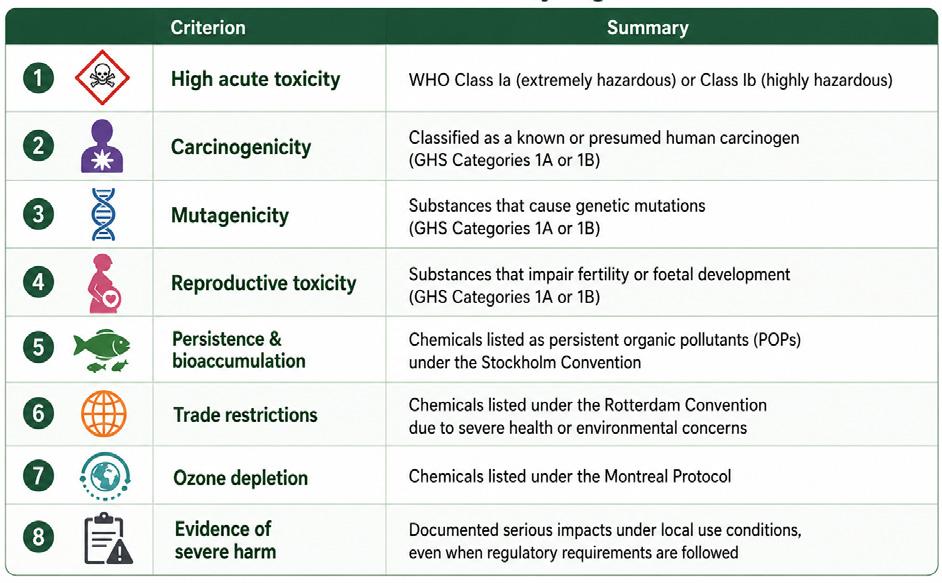
The FAO/WHO Joint Meeting on Pesticide Management has established eight criteria for identifying HHPs. A pesticide meeting any one of these criteria is classified as an HHP.
Table 2: Criteria for identifying HHPs
Source: Guidelines on Highly Hazardous Pesticides—International Code of Conduct on Pesticide Management: Guidelines on Pesticide Management (FAO-WHO, 2016)
Where HHPs are listed and the regulatory/transparency gap
There is no single official global list of HHPs. Instead, civil-society organisations have compiled consolidated lists applying the FAO/WHO criteria, most notably the Pesticide Action Network (PAN) International List of HHPs (2024).
In SA, there is a significant transparency gap. The state does not publish a comprehensive, publicly accessible database of registered pesticide active ingredients, nor does it routinely identify which of these meet HHP criteria. As a result, independent analyses have played a key role in identifying and listing the continued use of HHPs within the country.4
It is concerning that a core regulatory function—maintaining a clear, authoritative record of which hazardous pesticides are registered for use—has not been carried out through a publicly accessible state-managed system, and has instead relied on civil-society initiatives, while the industry association CropLife SA has historically maintained the primary register, which points to a significant deficit in transparency and public accountability.
The presence of HHPs in commonly consumed foods, particularly staples and products marketed for children, is deeply concerning. While residue levels may technically comply with current MRLs, the intrinsic hazards of these substances suggest that legal compliance alone does not ensure adequate protection. This risk is further compounded when consumers encounter multiple HHPs across a varied diet.
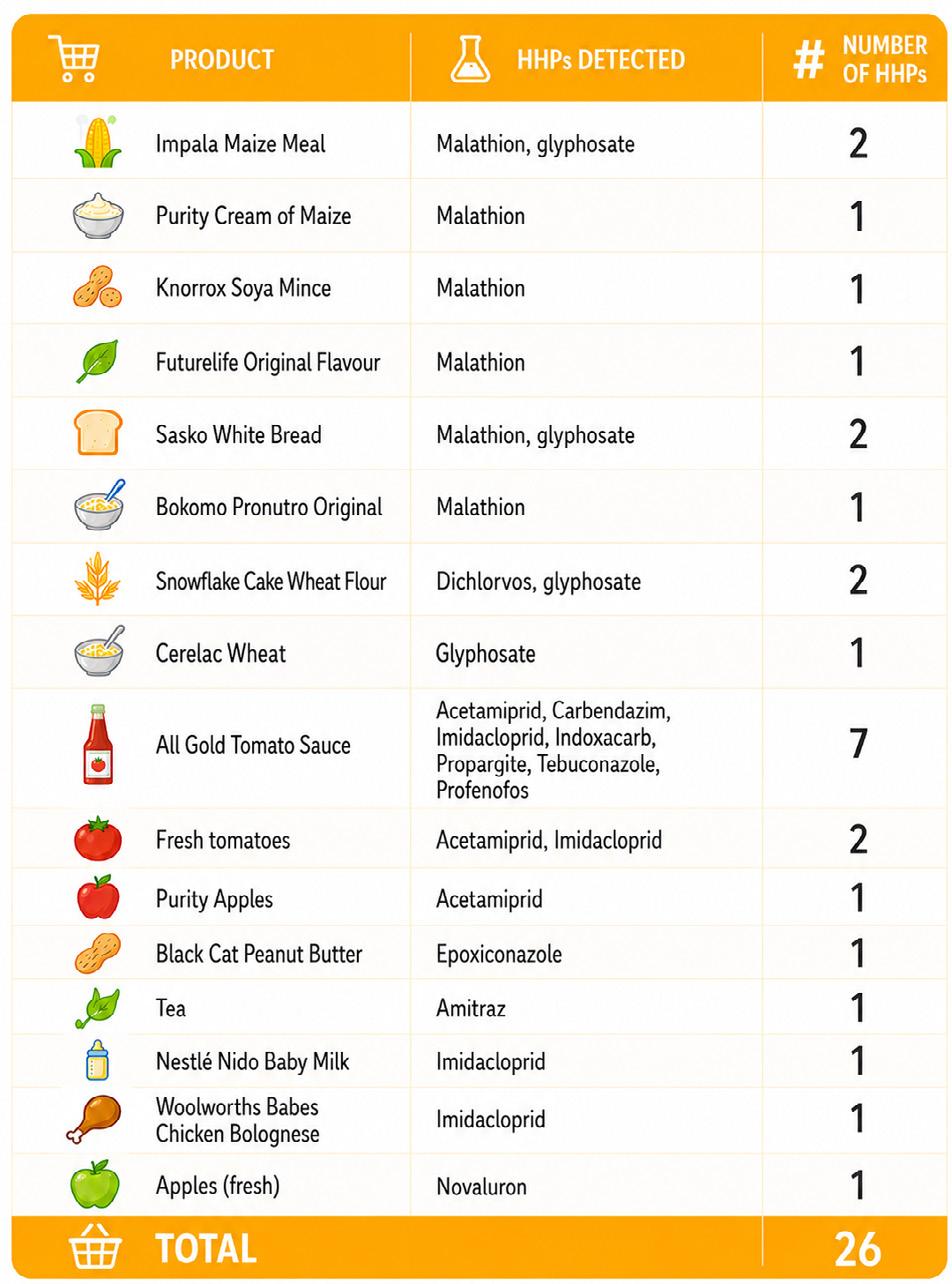
Across the sampled products, 13 different HHPs were detected in 26 individual instances. The most frequently detected HHP was Malathion, an organophosphate insecticide found in six products: Impala Maize Meal, Purity Cream of Maize, Knorrox Soya Mince, Futurelife, Sasko White Bread, and Pronutro. Malathion is classified by the International Agency for Research on Cancer (IARC) as Group 2A (probable carcinogen) and is recognised for its high toxicity to aquatic life and bees (Calaf, Bleak, & Roy, 2021; IARC, 2017).
Other critical findings include:
Dichlorvos was detected in Snowflake Cake Flour. This substance is currently not approved for use on food crops in the EU and is classified by the IARC as a Group 2B possible human carcinogen and as a WHO Class Ib (highly hazardous) HHP (Okoroiwu & Iwara, 2018).
Glyphosate: Detected in four staple products: Impala Maize Meal, Snowflake Cake Wheat Flour, Sasko White Bread, and Cerelac Wheat. It is classified as an HHP (PAN, 2024), due to its environmental persistence and widespread human exposure. It is classified by IARC as a Group 2A (probable carcinogen) (IARC Working Group, 2017; IARC, 2015).
Neonicotinoids: This class of insecticide was prevalent in several samples. Imidacloprid was detected in All Gold Tomato Sauce, fresh tomatoes, Nestlé Nido baby milk, and Woolworths Chicken Bolognese, despite being restricted for food crop use in the EU due to its high toxicity to bees, neurotoxicity, and suspected endocrine-disrupting properties, according to the European Food Safety Authority (EFSA Panel, 2013; Kimura-Kuroda et al., 2012).
Acetamiprid was found in All Gold Tomato Sauce, fresh tomatoes, and Purity Apples; recent evidence links it to endocrine disruption, neurotoxicity, and carcinogenicity (EFSA Panel, 2013; Kimura-Kuroda et al., 2012).
Additional HHP detections were concentrated in All Gold Tomato Sauce, which contained Carbendazim (an EU-classified CMR substance toxic for reproduction), Indoxacarb, Propargite, Tebuconazole, and Profenofos. Furthermore, Epoxiconazole (a carcinogenic CMR substance) was identified in peanut butter, Amitraz (a possible carcinogen) in tea, and Novaluron (highly toxic to aquatic life and restricted in the EU) in fresh apples.
Table 3: Food products where HHPs were detected
Key observations on HHPs detected in food products
• Widespread occurrence across food categories: HHPs were detected across a broad range of food types, including staple foods, fresh produce, processed products, and foods intended for infants and young children. This pattern indicates that consumer exposure to HHPs is not confined to a narrow subset of products and that routine dietary intake may involve contact with multiple hazardous substances from different sources.
• EU restricted pesticides remain in use in SA: Several pesticides identified in this study, including Imidacloprid, Propargite, and Novaluron, are not approved for use on food crops in the EU due to health or environmental concerns, yet remain permitted for use in SA. This divergence highlights differences in regulatory thresholds and consumer protection standards rather than non-compliance by producers.
• CMR substances detected in commonly consumed foods: Two substances classified by the EU as CMR—Carbendazim and Epoxiconazole—were detected in foods that are widely consumed, including products commonly eaten by children. The presence of such substances is noteworthy because CMR classifications are based on intrinsic hazard characteristics associated with long-term and potentially irreversible health effects.
• Presence of HHPs in infant and toddler foods: Imidacloprid, a neonicotinoid insecticide not approved for use on food crops in the EU, was detected in baby milk powder and toddler food products. Given infants and young children’s higher food intake per unit of body weight and their developing organ systems, this finding raises particular concern from public health and child protection perspectives.
• Potential for cumulative and aggregate exposure: Many of the identified HHPs were detected repeatedly across different food products. As a result, consumers, especially children, may be exposed to the same hazardous pesticide from multiple foods over the course of a single day, even where individual residue levels comply with applicable MRLs.
EU‑restricted pesticides in South African food
The EU operates one of the world’s most stringent pesticide regulatory systems. A pesticide may be refused approval or have its approval withdrawn for a range of reasons, including unacceptable risks to human health (such as carcinogenicity, reproductive toxicity, or endocrinedisrupting properties), serious or persistent environmental harm (including toxicity to bees, aquatic organisms, or soil ecosystems), or insufficient safety data. Under the EU’s precautionary approach, pesticides that do not meet these safety standards are not approved for use on food crops grown or sold within the EU. Despite these restrictions, the findings of this study show that several pesticides not approved for use on food crops in the EU were detected in foods available on the South African market.
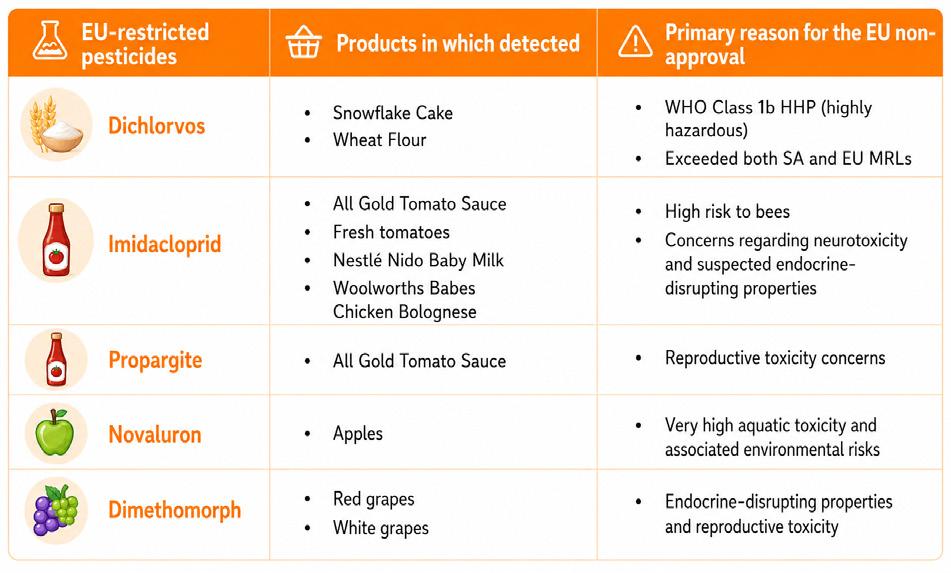
Five EU‑restricted pesticides detected in SA food products
Laboratory testing identified five pesticide active ingredients that are not approved for use on food crops in the EU. Non-approval decisions derive from hazard-based precautionary criteria rather than country-specific dietary exposure estimates. The table below summarises where these substances were detected in South African food products.
Table 4: Five EU restricted pesticides detected in SA food products
Food products in which EU‑restricted pesticides were detected
• Dichlorvos was found in wheat flour. Not approved for use in the EU, it is classified by the IARC as a Class 2b possible carcinogen (Nazam et al., 2013).
• Imidacloprid was the most widely detected of the EU-restricted pesticides, being found in tomato products, infant formula (Nestlé Nido), and toddler food (WooliesBabes). This is noteworthy, given that Imidacloprid is not approved for use on food crops in the EU due to risks to bees and concerns related to neurotoxicity and environmental persistence (Kimura-Kuroda et al., 2012).
• Propargite was detected in tomato sauce. Its use on food crops is not approved in the EU due to concerns regarding reproductive toxicity (EFSA, 2011).
• Novaluron was found in apples. It is not approved for use on food crops in the EU due to very high aquatic toxicity and associated environmental risks to non-target species (Bellisai et al., 2022).
• Dimethomorph was detected in both red and white grapes. It is not approved for use on food crops in the EU, and is recognised as an endocrine disruptor (AGRINFO, 2024; Álvarez et al., 2023).
Carcinogenic, mutagenic, or toxic for reproduction
In addition to the five pesticides not approved for use on food crops in the EU, this study detected two EU‑classified CMR substances.
• Carbendazim: evidence suggesting reproductive toxicity (Zhou et al., 2023), detected in tomato sauce.
• Epoxiconazole: raises concerns due to carcinogenicity (Le Corre et al., 2022), detected in peanut butter.
While these substances are not always subject to a complete prohibition, they are designated as CMRs under EU legislation and included on the EU’s list of candidates for substitution and eventual phase-out. Their presence in commonly consumed foods in SA is therefore significant, given the long‑term and potentially irreversible health effects associated with CMR classifications.
The detection in South African food of pesticides not approved for use on food crops in the EU illustrates the disparity in consumer protection standards. Under the EU’s precautionary framework, these substances are considered insufficiently safe for European consumers and are therefore excluded from food production within the EU. Yet the same substances are permitted for use in SA and appear in foods consumed locally, including products eaten by infants and young children. This divergence reflects differences in regulatory thresholds and approval decisions rather than differences in biological vulnerability.
The export market highlights this contrast sharply. South African producers supplying European markets are required to comply with EU pesticide approvals and residue limits, demonstrating that it is both technically feasible and economically viable to meet higher safety standards. By contrast, similar crops produced for the domestic market may contain residues that would not meet EU import requirements. In practice, this means that food deemed insufficiently safe for European consumers can nonetheless be legally sold to South Africans.
This disparity raises a fundamental question of equity and public health protection: if certain pesticides and residue levels are considered unacceptable for consumers in Europe, on what basis are South Africans expected to accept lower levels of protection? The findings of this study suggest that South African consumers are subject to a regulatory regime that tolerates exposures that consumers in other major markets are shielded from, because the standards applied are less protective, even though the risks are similar.
Understanding Maximum Residue Limits
To understand the implications of the findings of this study, it is necessary to clarify what MRLs are—and what they are not.
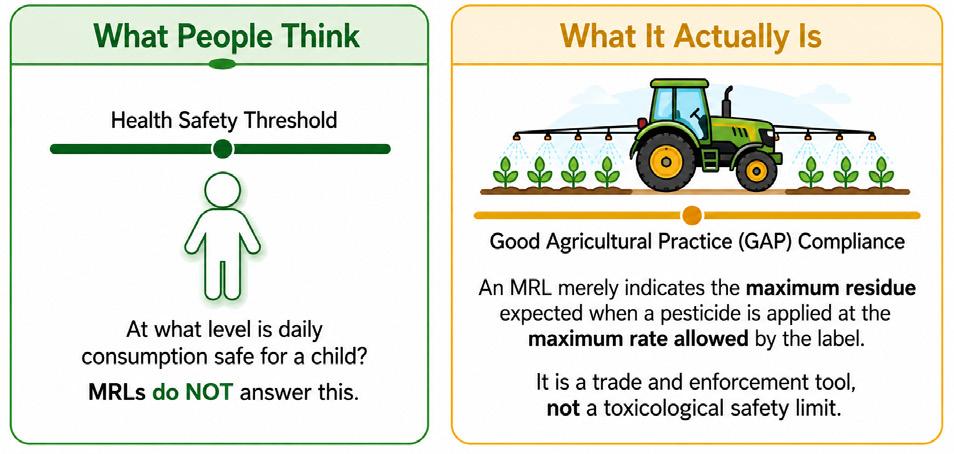
MRLs are often misunderstood, including in public discourse and regulatory practice, as healthbased safety thresholds. They are not.
According to the FAO, an MRL is defined as:
The maximum concentration of a pesticide residue (expressed as mg/kg) that is expected to remain in or on food commodities when a pesticide is used according to Good Agricultural Practice (GAP).
(FAO/WHO Codex Alimentarius)5
In plain language, an MRL indicates the residue level expected when a pesticide is applied according to the label instructions.
It does not answer critical health-based questions, such as:
- At what level is daily consumption safe for a child?
- What level is safe when multiple pesticide residues are present together?
- What level is safe for pregnant women or people with compromised immune systems?
MRLs are regulatory enforcement tools primarily designed for trade and compliance monitoring. They are not health-based safety standards, although they are frequently assumed to serve that role in public policy discussions.
The process for setting an MRL typically involves multiple steps.
A pesticide manufacturer submits data from supervised field trials in which the pesticide is applied in accordance with the proposed Good Agricultural Practice (GAP). Regulators calculate the expected residue level at harvest, usually the highest level expected under normal conditions. At that level, with an additional margin to account for variability, it becomes the MRL (MacLachlan & Hamilton, 2010).
Crucially, the MRL is derived from observed residue levels under field conditions, rather than from the level most protective of human health (Horváth et al., 2013). Health considerations typically enter the process only indirectly, through comparison with the ADI, which functions as a secondary check rather than the primary basis for setting the limit.
In practice, if a pesticide is applied at the maximum rate allowed by the label, the resulting residue level may serve as the basis for the MRL.
The question of whether a substantially lower residue level would offer greater health protection is not part of the MRL-setting process. International MRL standards are set by different authorities, and levels vary across regulatory systems.
Three standards relevant to this study
Codex Alimentarius MRLs
These are international standards set by the FAO/WHO Codex Committee on Pesticide Residues.6 They are designed to facilitate fair trade and are recognised under the WTO’s Sanitary and Phytosanitary (SPS) Agreement. Codex MRLs are based on GAP and scientific risk assessment, but they often reflect negotiated outcomes across countries with differing agricultural conditions and regulatory approaches to risk.
The EU operates one of the world’s most protective pesticide regulatory systems, with MRLs set using a precautionary approach: where a pesticide is not approved for use in the EU due to health or environmental concerns, a default MRL of 0.01 mg/kg applies.7 EU MRLs are frequently lower than Codex limits and are revised as new scientific evidence becomes available. Pesticides not approved for use in the EU on food crops cannot be used on food produced or sold within the EU, although such substances may still be manufactured or exported for use in other countries.
South African MRLs
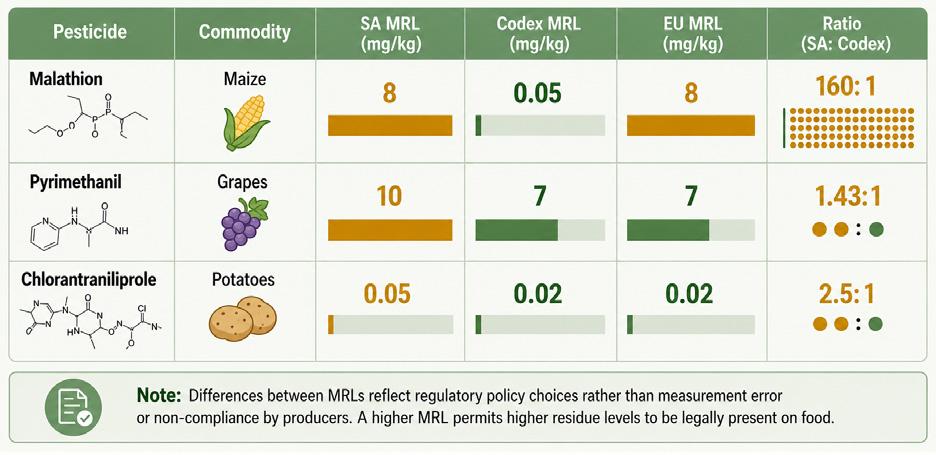
These are set by the Department of Health under the Foodstuffs, Cosmetics and Disinfectants Act (Department of Agriculture, 2024). They are largely informed by the same GAP principles as Codex, but SA is not bound to adopt Codex limits, which establish benchmarks, not legal obligations. As a result, some South African MRLs are substantially higher than international standards (for example, malathion in maize), while others are more stringent (such as azoxystrobin in tomatoes). The South African system also applies a default MRL of 0.01 mg/kg for pesticide—crop combinations that have not been specifically assessed.
These divergences are significant because a product that complies with South African law may nevertheless exceed Codex or EU limits, meaning South African consumers can be exposed to residue levels that would be rejected in other major markets. The section below illustrates these regulatory gaps with specific examples from this study’s findings.
The gap between South African MRLs and international standards
This study identified instances in which South African MRLs are substantially higher than those set under Codex Alimentarius or EU regulations. As a result, a product that complies with South African law may exceed residue limits that would apply in other major markets.
Table 5: Illustrative differences between South African, Codex, and EU MRLs
Key observation
For Malathion on maize, the South African MRL is 160 times higher than the Codex MRL
This means that a maize product could contain residue levels far above those permitted under Codex standards and still comply with South African regulations. In practice, the result is that South African consumers may be exposed to residue levels that would not meet import requirements in many other markets, due to differences in regulatory standards rather than non-compliance by producers.
Default MRL of 0.01 Mg/Kg—a precautionary baseline
Both SA and the EU apply a default MRL of 0.01 mg/kg when no specific MRL has been established for a pesticide-crop combination or where a pesticide is not approved for that use. This default functions as a precautionary baseline, reflecting the expectation that residues should be as low as reasonably achievable and not exceed 0.01 mg/kg.
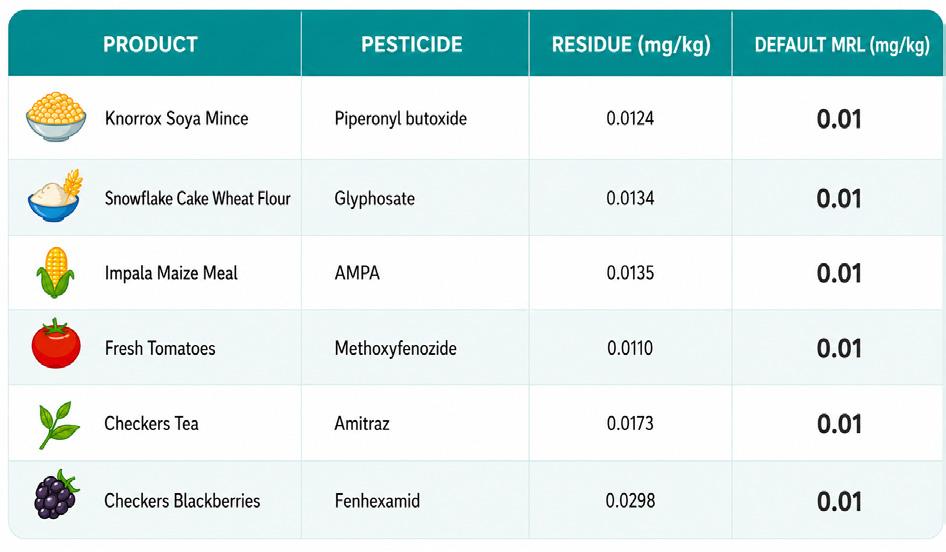
There were six instances where the detected levels of pesticide residues exceeded the default MRL.
Table 6: Instances where pesticide residue levels exceed default MRL
These exceedances indicate the presence of pesticide residues in contexts where no specific residue limit has been established or where approval for that use is absent, highlighting the possibility of off-label use, unintended contamination, or gaps in regulatory oversight.
MRL exceedances found in this study
The detected pesticide residue quantities were compared with four regulatory benchmarks: South African MRLs, Codex MRLs, EU MRLs, and the default MRL of 0.01 mg/kg. Across all samples, 13 product-pesticide combinations exceeded at least one of these applicable limits. The table below summarises the most notable exceedances identified during testing.
Product‑pesticide
Knorrox Soya Mince
Knorrox Soya Mince Malathion
Knorrox Soya Mince
- IARC Group 2A (probable carcinogen)
- IARC Group 2A (probable carcinogen)
- Pesticide synergist that enhances toxicity of other insecticides
EU-restricted, WHO Class 1b HHP - IARC Group 2B (possible human carcinogen) Snowflake Cake Wheat Flour
Moderate to high aquatic toxicity - Potential endocrine-disrupting effect
Note: Exceedance indicates that measured residues were above the specified regulatory benchmark at the time of sampling.
Lowering MRLs: a public health protective measure
Lowering MRLs, particularly for HHPs and foods consumed by vulnerable populations, could contribute to improved public health by:
Reducing dietary exposure
Lower MRLs would require reduced pesticide application or the substitution of less hazardous alternatives, resulting in lower residues in food.
Aligning with international standards
Harmonisation with Codex or EU limits would ensure that South African consumers receive levels of protection comparable to those applied in other major markets.
Incentivising safer agricultural practices
More protective residue limits can help encourage the adoption of integrated pest management (IPM), biological controls, and other non-chemical or lower-risk approaches.
Strengthening public confidence
Clear, transparent, and health-protective standards signal regulatory commitment to food safety and can help restore public trust in the oversight of the food system.
The limitations of MRLs in SA are not only scientific, but also institutional. A 2019 expert report commissioned for submission to the South African government, authored by Professor Leslie London, documents systemic shortcomings in the country’s pesticide regulatory framework, including the following (London, 2019):
• Outdated legislation: Pesticide registration remains governed by legislation enacted in 1947 (Act 36 of 1947). The regulatory process “has not changed substantially in law over the last several decades,” and a pesticide management policy adopted in 2010 has “substantially not been implemented” (para 65).
• Lack of periodic review: Of more than 3,000 registered pesticides, many have not been re-evaluated for years. As a result, MRLs established decades ago remain in force without systematic reassessment (para 72).
• Fragmented governance: Regulatory responsibility is divided across multiple departments—including Agriculture, Health, Labour, Environment, Water Affairs, and local authorities—with “no central point of co-ordination” (para 58). Communities affected by pesticide drift, particularly in rural areas, frequently encounter institutional gaps in enforcement.
• Limited public access to registration data: Unlike regulatory systems in the US and the EU, SA does not publish toxicological studies or a complete, authoritative register of approved pesticides. Public inquiries are often redirected to an industry-controlled database (CropLife SA), which does not provide an independent, publicly verifiable record (paras 102-103).
• Under‑resourced regulator: The Office of the Registrar operates with approximately five to seven staff members and lacks in-house expertise in toxicology or risk assessment, constraining its regulatory capacity (para 96).
Essentially: Even if South African MRLs were set at levels fully protective of health, the existing institutional framework for setting, reviewing, and enforcing them remains structurally weak. Lowering MRLs without addressing these structural shortcomings would be insufficient; however, meaningful institutional reform is unlikely to succeed without also bringing MRLs into closer alignment with international best practice.
In closing, MRLs are a commonly used regulatory tool for monitoring pesticide residues and facilitating trade, but they are not health‑based safety thresholds. They reflect a regulatory balance between agricultural practice, public health considerations, and market access: a balance that differs substantially across jurisdictions. As the findings of this study show, even where MRLs are not exceeded, the presence of multiple pesticide residues, including HHPs and substances not approved for use in the EU, raises substantive questions about whether existing legal limits adequately protect consumers from cumulative and aggregate dietary exposure.
Multiple residues and the cocktail effect: aggregate risk and cumulative risk
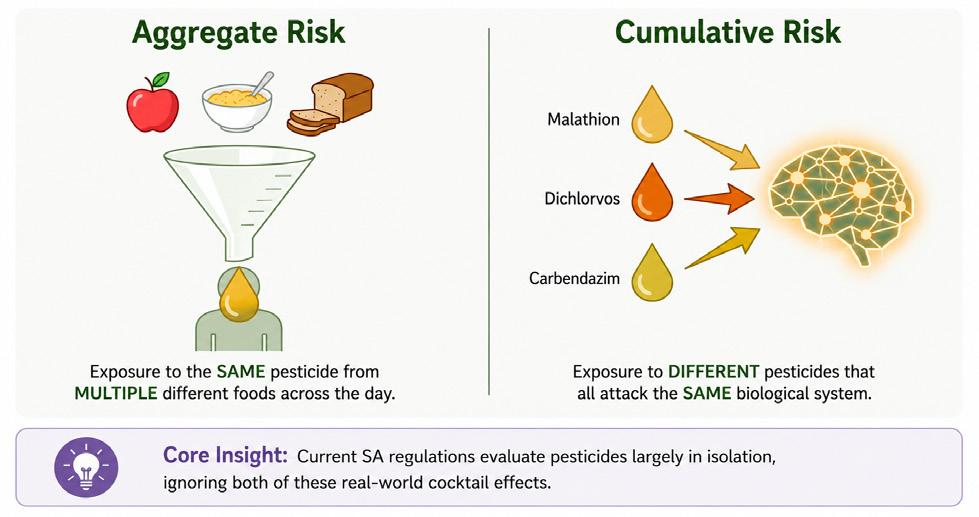
While current South African regulatory practice largely evaluates pesticides individually, international scientific literature increasingly recognises the relevance of combined exposure. The findings of this study raise two related but distinct concerns: aggregate risk, which arises from exposure to the same pesticide across multiple foods, and cumulative risk, which arises when different pesticides affect the same biological systems.
Aggregate risk: the same pesticide from multiple foods
Aggregate risk refers to exposure to a single pesticide from multiple food sources. Because South African diets are heavily reliant on staple foods such as maize meal, wheat flour, and bread, a pesticide present in several commonly consumed products can contribute a substantial proportion of the ADI. This can occur even where residues in each individual food are below the applicable MRL.
In practical terms, repeated low-level residues across multiple foods can accumulate over the course of a day, increasing overall dietary exposure to a particular pesticide. Current regulatory assessments typically evaluate food–pesticide combinations in isolation and do not aggregate exposure across the full daily diet.
The table below lists pesticides detected in more than one product in this study, ranked by frequency of detection. The key hazards column indicates substances classified as HHPs, pesticides not approved for use on food crops in the EU, CMR substances, and other identified health or environmental concerns.
Dimethomorph 2 Grapes (red & white) - Not approved for use on food crops in the EU - Recognised as an endocrine disruptor
Spiroxamine 2 Grapes (red & white) - Fungicide
Key findings from the table
Pyrimethanil was the most frequently detected pesticide, appearing in nine different products, including apples, oranges, grapes, and berry products. Pyrimethanil may have endocrinedisrupting effects and may cause the deterioration of neurological diseases (Chen et al., 2024).
Piperonyl butoxide was detected in eight products spanning staples and processed foods, including maize, wheat, soya, tomato sauce, and baby cereal. Piperonyl butoxide is a pesticide synergist (Rivera-González, Beames, & Lipinski, 2021), meaning it can enhance the toxicity of other pesticides with which it co-occurs, and it was found at levels exceeding the EU default MRL in baby cereal.
Azoxystrobin and chlorantraniliprole were each detected in eight products, including potatoes, fruit, and baby food products.
Malathion, an organophosphate classified by IARC as Group 2A (probable carcinogen) and recognised for its high toxicity to aquatic life and bees (Calaf, Bleak and Roy, 2021; IARC, 2017), was detected across five staple products. As a result, consumption of commonly eaten staples such as porridge, bread, and soya-based products could contribute to repeated dietary exposure to the same pesticide within a single day.
Imidacloprid, a neonicotinoid insecticide not approved for use on food crops in the EU, was detected in four products, including baby milk powder and chicken-based baby food.
Pesticides detected less frequently, such as fenhexamid in three berry products, nonetheless contribute to the overall dietary pesticide burden when present alongside other substances that affect similar biological pathways.
NOTE
Repeated detection of the same pesticide across different foods increases the potential for aggregate dietary exposure. Hazard indicators reflect intrinsic properties and regulatory classifications; they do not quantify actual health risk.
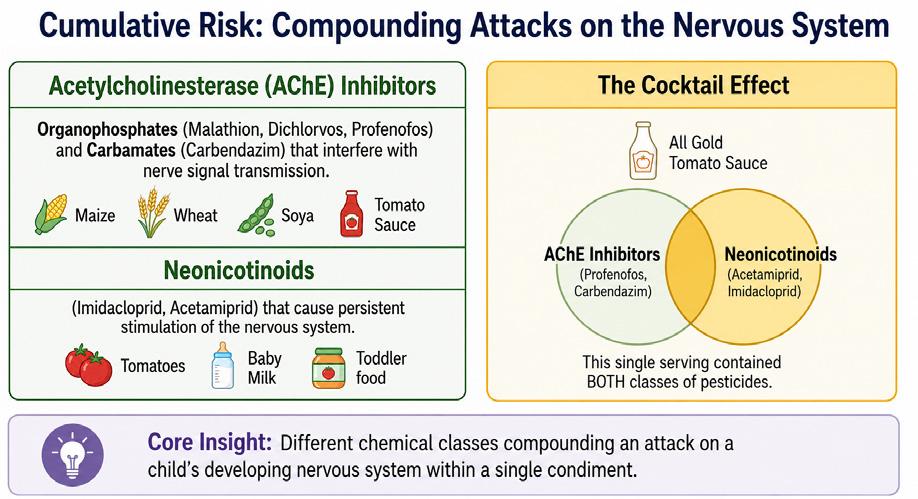
Cumulative risk: different pesticides attacking the same system
Aggregate exposure is only part of the picture. Even a single food item can contain multiple different pesticides that act on the same biological system. This is referred to as cumulative risk, the potential combined effect of exposure to several pesticides that share a common mechanism of action, such as effects on the nervous system or on cellular energy production. The EU regulation on MRLs in food recognises that decisions on MRLs should consider cumulative effects of pesticides when the methods to assess such effects become available.8 Current South African regulatory practice typically assesses each pesticide in isolation and does not consider additive or synergistic effects from combined exposures.
The following subsections group the pesticides detected in this study by their primary mechanism of action, focusing on four categories: acetylcholinesterase (AChE) inhibitors, neonicotinoids, mitochondrial electron transport inhibitors (METIs), and substances associated with oxidative stress
AChE inhibitors: organophosphates and carbamates
AChE (acetylcholinesterase) is a critical enzyme that regulates nerve signal transmission by breaking down the neurotransmitter acetylcholine. Both organophosphates and carbamates are AChE inhibitors; they block the enzyme, causing acetylcholine to accumulate and nerve signals to become overactive. Chronic low-level exposure to AChE-inhibiting pesticides has been linked in the scientific literature to neurodevelopmental effects, particularly in children (Chetty-Mhlanga et al., 2021).
In this study, four organophosphates (Malathion, Dichlorvos, Profenofos, and Pirimiphos methyl) and two carbamates (Carbendazim and Propamocarb) were detected. Examples of co-occurrence include:
• Snowflake Cake Wheat Flour, which contained two organophosphates (Dichlorvos and Pirimiphos-methyl) in the same product.
• All Gold Tomato Sauce, which contained one organophosphate (Profenofos) and one carbamate (Carbendazim), both of which act on the AChE pathway.
Across a single day’s diet, consumption of commonly eaten foods such as maize porridge (Malathion), wheat bread (Dichlorvos), and tomato sauce (Profenofos) could result in exposure to multiple AChE inhibiting pesticides. Because these substances affect the same biological pathway, their effects are considered additive in regulatory risk assessment frameworks. However, current South African regulations do not require such cumulative exposure calculations when setting or applying MRLs.
Neonicotinoids: a different attack on the same system
Neonicotinoids (including Acetamiprid and Imidacloprid) act on nicotinic acetylcholine receptors in nerve cells, resulting in persistent stimulation of the nervous system. These insecticides are well-documented for their high toxicity to pollinators and have been subject to international regulatory concern, alongside a growing body of scientific literature examining potential neurodevelopmental effects in humans (Thompson et al., 2020).
8 European Commission. Cumulative Risk Assessment. https://food.ec.europa.eu/plants/pesticides/maximum-residue-levels/ cumulative-risk-assessment_en
In this study, both neonicotinoids were detected together in All Gold Tomato Sauce and fresh tomatoes. Imidacloprid, an insecticide not approved for use on food crops in the EU, was also detected in Nido Baby Milk Powder and WooliesBabes Chicken Bolognese with Pasta. Despite their shared mode of action, current regulatory assessments generally evaluate each neonicotinoid individually and do not consider potential cumulative effects when multiple neonicotinoids are present in the diet.
Compounded risk when two classes combine
AChE inhibitors and neonicotinoids both affect the cholinergic nervous system, but at different points in the pathway. Exposure to substances from both classes may give rise to additive or synergistic neurotoxic potential, a matter of particular concern in relation to children’s developing nervous systems, which are more vulnerable to disruption during critical stages of development.
In this study, All Gold Tomato Sauce contained both AChE-inhibiting pesticides (Profenofos and Carbendazim) and neonicotinoids (Acetamiprid and Imidacloprid) within the same product.
Current regulatory safety assessments typically evaluate pesticides individually and do not require explicit assessment of combined exposures across different classes that act on the same biological system.
METIs: disrupting cellular energy production
Mitochondrial electron transport inhibitors (METIs) interfere with cellular energy production, a fundamental process required by all cells. Tissues with high energy demand, such as the brain, heart, and muscles, are considered particularly sensitive to mitochondrial dysfunction.
Laboratory testing in this study detected three pesticides classified as METIs: Azoxystrobin, Tebufenpyrad, and Fenpyroximate
Examples of co occurrence include:
• All Gold Tomato Sauce, which contained two METIs (Azoxystrobin and Tebufenpyrad).
• Checkers Strawberries, which contained two METIs (Azoxystrobin and Fenpyroximate).
Oxidative stress inducers: mechanisms linked to cellular damage
Some pesticides are associated with the generation of reactive oxygen species (ROS), which can lead to oxidative stress and cellular damage when antioxidant defences are overwhelmed. Oxidative stress has been examined in the scientific literature in relation to a range of adverse health outcomes, including carcinogenicity, neurodegenerative processes, and endocrine disruption (Sule, Condon & Gomes, 2022).
In this study, four pesticides associated with oxidative stress mechanisms were detected: Tebuconazole, Difenoconazole, Epoxiconazole, and Fludioxonil.
An example of co occurrence is Checkers Strawberries, which contained two oxidative stressassociated fungicides (Difenoconazole and Fludioxonil).
The cumulative burden: what current law ignores
Across the four groups described above, a consistent pattern emerges: different pesticides detected in this study converge on the same vulnerable biological systems, including the nervous system, cellular energy production, and cellular integrity. These substances were found in both individual products and in multiple foods commonly consumed in a single day.
In some cases, a single product contained pesticides from several of these mechanistic groups. For example, All Gold Tomato Sauce contained AChE-inhibiting pesticides, neonicotinoids, mitochondrial electron transport inhibitors, and substances associated with oxidative stress.
In a typical daily diet, consumption of staples such as maize porridge, bread, tomato sauce, and fruit could therefore result in combined exposure to multiple substances that affect the same biological systems.
Current South African pesticide regulation assesses each active ingredient largely in isolation, sets MRLs on a crop-by-crop basis, and does not require cumulative or aggregate risk assessment across different pesticides or food sources. As a result, cumulative exposure to multiple pesticides, each individually compliant with applicable MRLs, may not be fully evaluated within the existing regulatory framework.
This gap highlights a disconnect between how pesticide exposure occurs in real-world diets and how regulatory safety assessments are conducted, particularly for children, whose developing organs and higher intake relative to body weight make them more vulnerable to combined exposures.
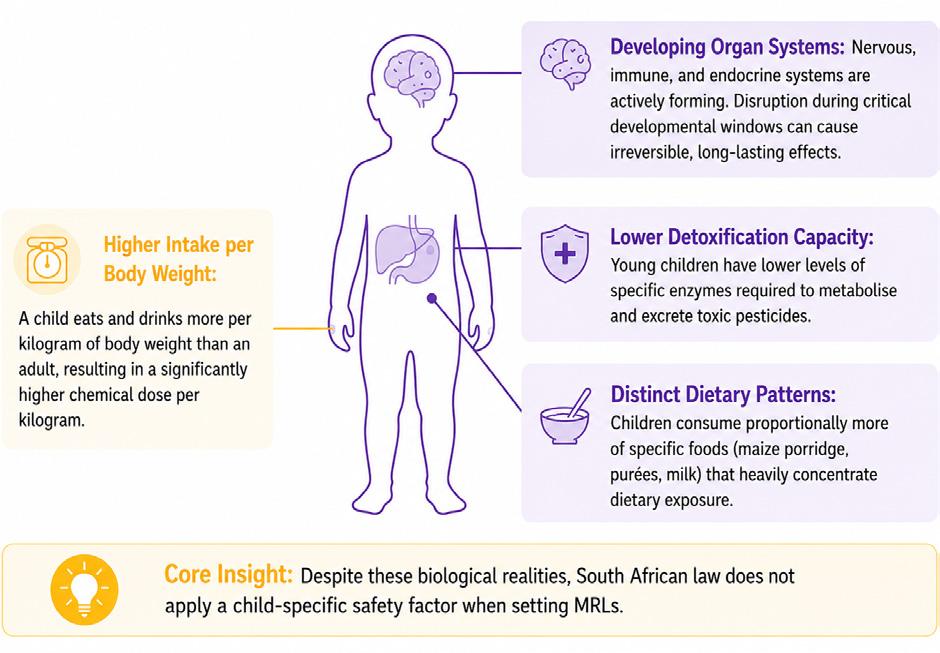
Children are not just small adults. Infants, toddlers, and young children are more vulnerable to pesticide residues than adults for several well-established reasons (Barnett et al., 2025; Bou-Mitri et al., 2025):
• Higher intake per body weight: Children eat and drink more relative to their body weight, meaning that a given residue level can result in a higher dose per kg.
• Developing organ systems: The nervous, immune, endocrine, and reproductive systems are still developing. Disruption during critical developmental windows may have long-lasting effects.
• Lower detoxification capacity: Young children have lower levels of certain enzymes involved in metabolising pesticides, meaning residues may remain in the body for longer periods.
• Distinct dietary patterns: Children consume proportionally more of certain foods—such as maize porridge, milk, and fruit purées—that may contain pesticide residues.
These differences are recognised internationally. The WHO and the FAO have repeatedly called for applying additional safety margins to protect children when setting pesticide limits (UNICEF, 2018). South African law does not currently apply a specific child-protective safety factor.
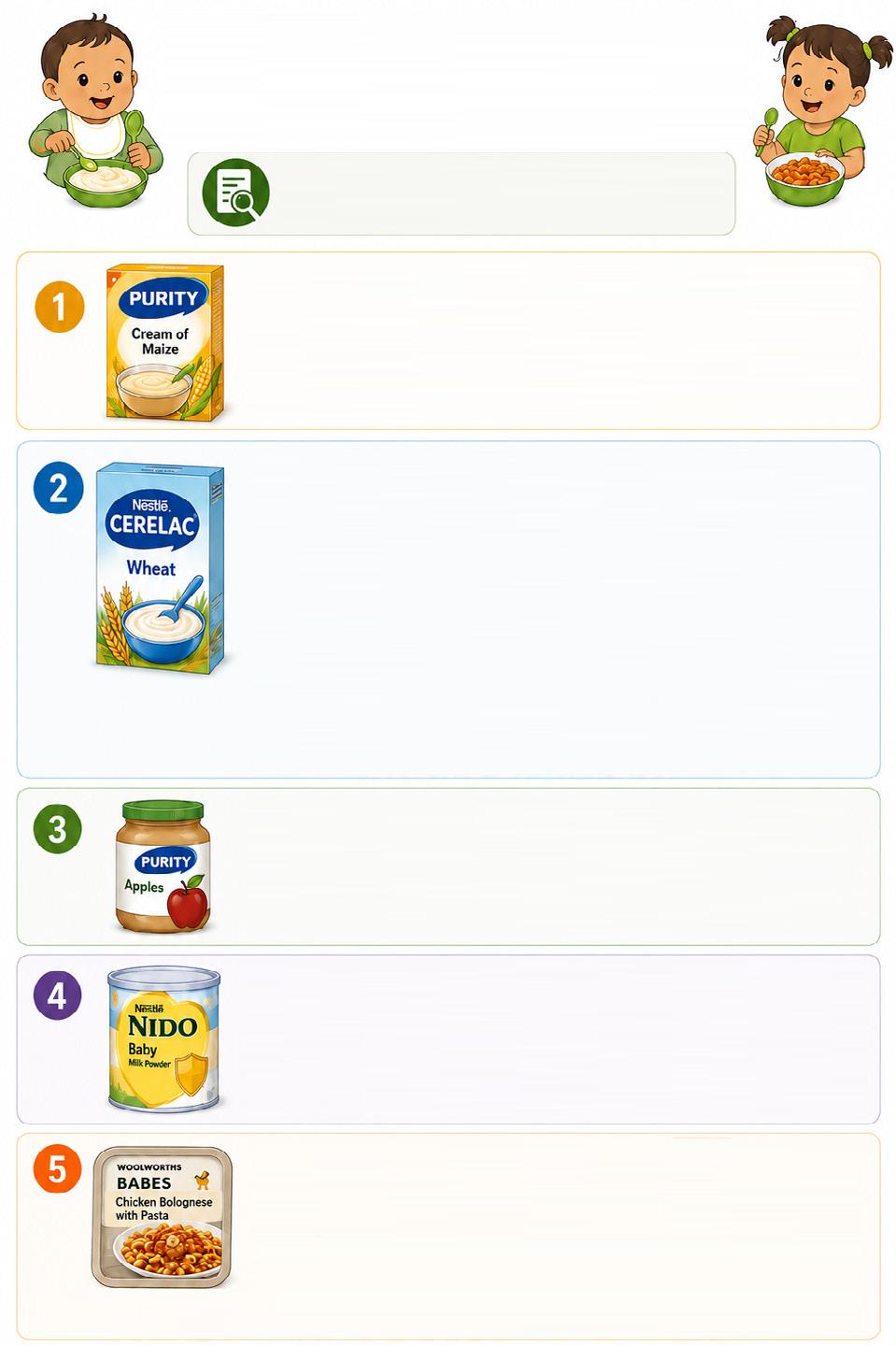
What we found in baby and toddler foods
Of the 9 infant and toddler products tested, 7 tested positive for at least one pesticide residue.
Purity Cream of Maize contained Malathion, an organophosphate classified as an HHP due to high acute toxicity.
Cerelac Wheat contained three residues:
• Piperonyl butoxide (a pesticide synergist that can enhance the toxicity of co-occurring pesticides),
• Glyphosate, which is classified as an IARC Group 2A (probable carcinogen) and an HHP (PAN criteria),
• AMPA (glyphosate’s primary metabolite), for which emerging evidence of oxidative toxicity has been reported (Makris et al., 2022)
Purity Apples contained Acetamiprid, a neonicotinoid insecticide classified as an HHP and associated with concerns regarding neurodevelopmental effects.
Nido Baby Milk Powder contained Imidacloprid, an HHP not approved for use on food crops in the EU, as well as Fluquinazole, a fungicide for which limited publicly accessible toxicity data are available.
WooliesBabes Chicken Bolognese with Pasta contained three residues:
• Imidacloprid, an HHP not approved for use on food crops in the EU,
• Propamocarb (a carbamate that inhibits AChE), and
• Azoxystrobin is a METI.
By contrast:
• WooliesBabes Mixed Berries and Purity Chicken & Butternut contained pesticide residues with lower hazard classifications (with none identified as HHPs or substances not approved in the EU).
• Purity Sweet Potato showed no detectable pesticide residues at the limits of analysis at the time of testing.
Table 9: Pesticide residues detected in infant and toddler foods
- Glyphosate classified as HHP under PAN criteria and IARC Group 2A (probable carcinogen)
- Neonicotinoid insecticide; classified as HHP
- High bee toxicity
- Concerns regarding neurodevelopmental effects
Imidacloprid is not approved for use on food crops in the EU
Imidacloprid is not approved for use on food crops in the EU
- Neonicotinoid insecticide
- HHP - High bee toxicity
- Neurotoxicity concerns
- Imidacloprid HHP as above - Propamocarb is a carbamate (AChE inhibitor, neurotoxic)
- Multiple pesticides with different modes of action
Approved in the EU - Detected pesticides not classified as HHPs
Approved in the EU - Detected pesticide not classified as HHP
- No pesticide residues detected at the limits of analysis
- No pesticide residues detected at the limits of analysis
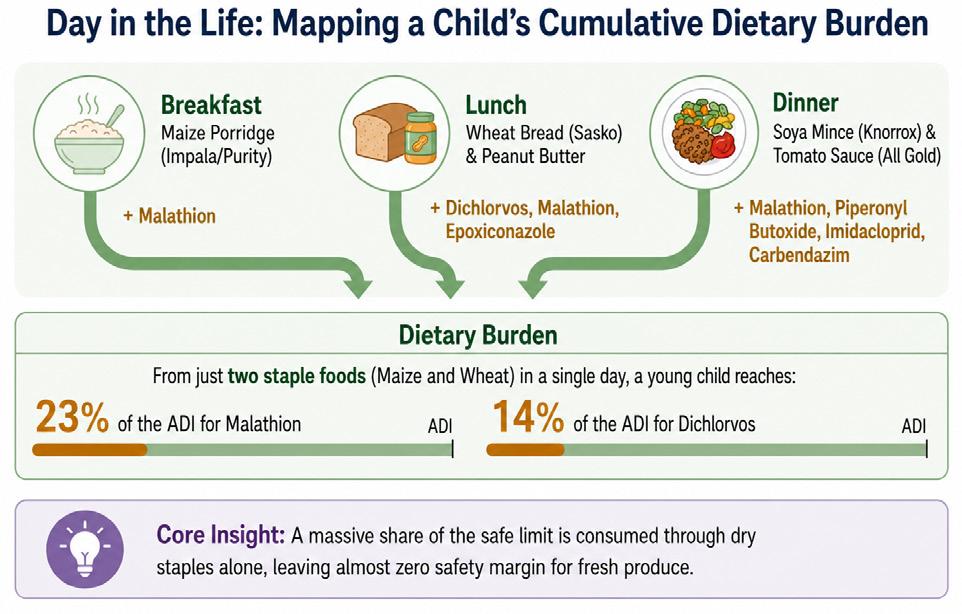
What the numbers mean for a child’s daily exposure
Using standard food consumption data for children aged 1–5 years, we estimated the proportion of the ADI for selected pesticides that could be attributable to one or two commonly consumed foods.
Dichlorvos in wheat products:
From a single serving of wheat porridge or bread made from wheat flour, a young child may receive approximately 14% of the ADI for Dichlorvos, before accounting for exposure from other foods consumed on the same day.
Malathion in maize and wheat:
From maize porridge together with a wheat-based product (such as bread), a child may receive close to 23% of the ADI for Malathion.
14% of the ADI (Dichlorvos)
14% of the ADI (Malathion)
Combined exposure:
Because both substances affect the nervous system via related mechanisms, their contributions to dietary intake are considered additive within regulatory risk-assessment frameworks. From these two staple foods alone, a child may therefore approach or exceed 30% of the combined ADI for these organophosphate pesticides, before considering exposure from other foods (such as fruit, vegetables, and tomato sauce) or from other pesticides with similar modes of action detected in this study.
≥30% of the combined ADI (Dichlorvos + Malathion)
Essentially, under ordinary dietary conditions, a substantial share of the acceptable daily intake ADI for certain neurotoxic pesticides can be reached through consumption of staple foods alone. Current regulatory practice does not routinely monitor or assess such cumulative dietary exposures across multiple foods and substances.
Expert evidence: why these numbers warrant attention
These findings should be interpreted in the context of a comprehensive expert report prepared for the South African government by Professor Leslie London, a public-health specialist with nearly three decades of experience in pesticide health research.
Professor London’s 2019 report synthesises evidence from multiple systematic reviews indicating:
• Prenatal exposure to organophosphate pesticides is consistently associated with adverse neurodevelopmental outcomes in children, including cognitive and behavioural effects detectable from infancy through school age.
• Neonicotinoid exposure has been tentatively associated in epidemiological studies with increased risks of certain congenital anomalies and neurodevelopmental disorders. The report characterises this evidence as “suggestive of a problem warranting further investigation.”
(London, 2019)
The report emphasises that critical windows of vulnerability occur during prenatal and early postnatal development, when the nervous system is rapidly developing and has limited capacity for repair. Harm occurring during these periods may therefore have long-lasting consequences.
Professor London invokes Section 28(2) of the South African Constitution, which states that “a child’s best interests are of paramount importance in every matter concerning the child,” to argue that regulatory delay in addressing pesticide risks to children is indefensible. He concludes that, “Given the constitutional imperative … the matter cannot be left for further delay.”
Thus, the detection of organophosphate and neonicotinoid pesticides in foods consumed by infants and young children, at levels contributing 14%-23% of ADI from single products, is consistent with the type of cumulative, low-level exposure profile identified in Professor London’s review as a priority concern for child neurodevelopment.
Additional concern: CMR substances in children’s foods
In addition, two substances classified by the EU as CMR were detected in foods commonly consumed by children:
• Carbendazim (classified as reprotoxic) is in tomato sauce, which is frequently fed to young children.
• Epoxiconazole (classified as carcinogenic) is found in peanut butter, a common source of dietary protein in children’s diets.
CMR classifications are based on intrinsic hazard characteristics associated with long-term and potentially irreversible effects and are therefore not adequately captured by daily intake benchmarks derived primarily from short- or medium-term toxicity studies.
Table 10: Indicative contribution of selected foods to pesticide ADI in children
Finding
HHPs detected in baby foods (Malathion, Imidacloprid, Acetamiprid, glyphosate)
Pesticide not approved for use on food crops in the EU (Imidacloprid) was detected in baby milk and baby food
From two staples, a child may reach approximately 23% of the ADI for Malathion
From wheat products alone, a child may reach approximately 14% of the ADI for Dichlorvos and approximately 27% of the acute reference dose
No cumulative or aggregate risk assessment required under current regulation
Implication
Infants and young children are exposed to pesticide active ingredients classified as HHPs under international criteria, including substances associated with neurodevelopmental, endocrine, or carcinogenic concerns.
South African infants are exposed to substances that are excluded from food production in the EU due to health or environmental concerns.
A substantial portion of the regulatory daily intake benchmark may be contributed by staple foods alone, reducing the remaining margin for exposure from other dietary sources.
Single commonly consumed foods can make a meaningful contribution to regulatory intake benchmarks, highlighting the importance of considering exposure from individual meals as well as across the day.
The combined dietary burden arising from multiple pesticides and multiple food sources is not routinely assessed within the existing regulatory framework.
The precautionary principle and children
The precautionary principle—widely applied in the EU and other jurisdictions—holds that where there is credible scientific evidence of potential harm, protective action should not be delayed solely because full scientific certainty has not yet been established.
In the context of children and pesticide residues, several considerations are well recognised in the scientific and regulatory literature:
• There is established evidence that children are more vulnerable to chemical exposures due to their developing organ systems, higher intake of food and water relative to body weight, and limited detoxification capacity (Barnett et al., 2025; Bou-Mitri et al., 2025; Roberts, Karr & Health, 2012). There is evidence that organophosphate pesticides can exert additive neurotoxic effects when exposures occur to mixtures rather than single substances (Muñoz-Quezada et al., 2013).
• There is growing evidence that chronic low-level exposure to certain pesticides, including neonicotinoids and organophosphates, is associated with adverse health outcomes, particularly during critical periods of development (Grandjean & Landrigan, 2014).
Despite this, current South African pesticide regulation does not apply a child-specific safety factor when setting MRLs, does not require cumulative or aggregate risk assessment, and permits some MRLs that are substantially higher than those used in more precautionary regulatory systems.
The findings of this study indicate that current regulatory standards do not adequately protect babies and young children. Residues of HHP substances not approved for use on food crops in the EU, and EU-classified CMR substances were detected in foods commonly consumed by infants and toddlers, alongside evidence of cumulative and aggregate dietary exposure, that is not addressed by existing regulatory practice.
Taken together, these findings provide a clear evidence base for strengthening child-protective measures within SA’s pesticide regulatory framework. A reasonable starting point would be to apply a default zero residue approach, operationalised through the existing default MRL of 0.01 mg/kg, to all foods intended for infants and young children, combined with additional safety margins consistent with international best practice.
Such measures would align South African regulation more closely with precautionary approaches applied in other jurisdictions and give effect to the recognised vulnerability of children to chemical exposures during critical stages of development.
Staples: maize,
wheat flour, and bread
Maize meal and wheat products form the backbone of the South African diet (GrainSA, 2015; DALRRD, 2022). Millions of people, including infants and children, consume maize- or wheatbased staples, such as maize porridge (pap) and bread, daily across meals. Because these foods are consumed in large quantities and at high frequency, even relatively low levels of pesticide residues can meaningfully contribute to overall dietary exposure. This section summarises the pesticide residues detected in the maize and wheat products tested in this study.
Maize products
7 maize products were screened for the panel of 202 pesticides
- Impala Maize Meal, Ace Super Maize Meal, Iwisa Super Maize Meal, Whitestar Super Maize Meal, Purity Cream of Maize (infant cereal), Futurelife Original Flavour, and Bokomo Pronutro Original.
- Impala Maize Meal was further screened for glyphosate and AMPA.
Table 11: Pesticides detected in maize products
Product Pesticides Detected in Maize Products
Impala Maize Meal
- Malathion: organophosphate insecticide; classified as IARC Group 2A (probable carcinogen)
- Piperonyl butoxide: pesticide synergist
- Glyphosate: classified as HHP (PAN criteria) and IARC Group 2A (probable carcinogen)
- AMPA: emerging evidence of oxidative toxicity
Ace Super Maize Meal
Purity Cream of Maize
Futurelife Original Flavour
Bokomo Pronutro Original
Iwisa Super Maize Meal
Whitestar Super Maize Meal
Key observations
- Piperonyl butoxide: pesticide synergist
- Malathion: organophosphate insecticide; classified as HHP due to high acute toxicity (WHO)
- Malathion: organophosphate insecticide; classified IARC Group 2A (probable carcinogen)
- Piperonyl butoxide: pesticide synergist.
- Malathion: organophosphate insecticide; classified IARC Group 2A (probable carcinogen)
- Piperonyl butoxide: pesticide synergist
- None detected at the limits of analysis; not tested for glyphosate and AMPA
- None detected at the limits of analysis; not tested for glyphosate and AMPA
Widespread presence in dietary staples
Pesticide residues were detected across multiple maize and wheat products that form the basis of daily diets in SA. Given the frequency and quantity with which these staples are consumed, even comparatively low residue levels can contribute meaningfully to overall dietary exposure.
Repeated detection of the same substances
Several pesticides, including organophosphates and other frequently used active ingredients, were detected in more than one staple product. This pattern indicates potential for aggregate dietary exposure to the same pesticide from different foods over the course of a typical day.
Detection of HHPs
HHPs were identified in both maize- and wheat-based products, including items widely consumed by adults and children. While individual residues may comply with applicable MRLs, their occurrence in staples raises concerns that crop-by-crop assessments may not fully address.
Evidence of regulatory exceedances
In a limited number of cases, residue levels in staple foods exceeded at least one applicable regulatory benchmark (South African, Codex, EU, or the default MRL), underscoring gaps between routine consumption patterns and existing enforcement thresholds.
Variation between brands and products
Some staple products showed no detectable residues at the limits of analysis, demonstrating that lower-residue (or residue-free) production and supply are technically feasible within the current food system.
Limitations of current risk assessment
Current regulatory practice evaluates residues largely on a single-pesticide, single-crop basis and does not routinely account for aggregate exposure from staples consumed together, which is particularly relevant for children given their higher intake per unit body weight.
Wheat products
3 wheat-based products were screened for the panel of 202 pesticides. Snowflake Cake Wheat Flour, Sasko White Bread (bread wheat flour), Cerelac Wheat (infant cereal).
Snowflake Cake Wheat Flour and Sasko White Bread were also screened for glyphosate and AMPA.
Table 12: Pesticides detected in wheat products
Product
Snowflake Cake Wheat Flour
Sasko White Bread
Cerelac Wheat
Key observations
Pesticides Detected
Dichlorvos
- EU-restricted
- WHO Class 1b HHP
- IARC Group 2B possible human carcinogen
- Exceeded both SA and EU MRLs
- Contributes significantly to dietary exposure from wheat-based foods
Pirimiphos Methyl
Glyphosate
- Classified as HHP under PAN criteria and IARC Group 2A (probable carcinogen)
Malathion
- Organophosphate insecticide
- Classified as an IARC Group 2A (probable carcinogen)
Piperonyl butoxide
- Pesticide synergist
Glyphosate (trace)
AMPA (trace)
- Emerging evidence of oxidative toxicity
2,4‑D (trace)
- Classified as an HHP under PAN criteria
- IARC Group 2B (possibly carcinogenic)
Piperonyl butoxide
- Pesticide synergist
Glyphosate
- HHP (under PAN criteria)
- IARC Group 2A (probable carcinogen)
AMPA
- Emerging evidence of oxidative toxicity
Detection of an HHP with regulatory exceedances
Dichlorvos, an EU-restricted organophosphate classified as a WHO Class Ib HHP, and IARC Group 2B possible human carcinogen, was detected in Snowflake Wheat Flour at levels exceeding both South African and EU MRLS. Assuming standard consumption levels, a single serving of bread or porridge made from this flour could contribute approximately 14% of the ADI for Dichlorvos for a young child.
Presence of glyphosate and its metabolite AMPA
Glyphosate was detected in Snowflake Wheat Flour and in Cerelac Wheat. Its primary metabolite, AMPA, was also detected in Cerelac Wheat, indicating exposure to both the parent compound and its breakdown product through wheat-based foods. Glyphosate is an HHP possible carcinogen and IARC Group 2A (probable carcinogen). There is emerging evidence of oxidative toxicity of AMPA (Makris et al., 2022).
Widespread occurrence of a pesticide synergist
Piperonyl butoxide was detected across five wheat-based products, including Cerelac Wheat, where it exceeded the EU default MRL. Piperonyl butoxide is a recognised pesticide synergist, meaning it can enhance the toxicity of co-occurring pesticides.
Repeated detection of an organophosphate insecticide
Malathion, an IARC Group 2A (probable carcinogen), was detected in three wheat-based products (Sasko, Futurelife, and Pronutro), indicating potential for repeated exposure from commonly consumed wheat foods.
Because maize and wheat are often consumed together across meals (for example, maize porridge at breakfast, bread at lunch, and a maize-based supper), exposure to the same pesticides can accumulate throughout the day. As estimated in the vulnerable-group section, a child consuming maize porridge together with a wheat-based product may reach close to 23% of the ADI for Malathion and approximately 14% of the ADI for Dichlorvos from these staple foods alone, before accounting for exposure from fruit, vegetables, tomato sauce, or other foods consumed on the same day.
Fresh fruit and vegetables
In addition to processed foods and staples, 17 fresh fruits and vegetables and 1 tea were tested. These included fresh tomatoes, spinach, cabbage, potatoes, apples, oranges, lemons, nectarines, peaches, plums, pears, grapefruit, grapes, raspberries, blackberries, blueberries and strawberries.
Pesticide detection in fresh fruit and vegetables
Across all fresh fruit and vegetable samples, 29 unique pesticide active ingredients were detected. Most fresh produce items contained at least one residue, except for cabbage and Checkers Blueberries (both showed no detectable residues on the standard screening panel).
Ranking of fresh produce by number of pesticide residues
Based on laboratory results, the fresh produce items with the highest number of different pesticide residues detected on the analytical panels applied (including both HHPs and non-HHPs) are shown below.
The following fresh products tested positive for at least one pesticide classified as an HHP.
- Tomatoes: Imidacloprid, Acetamiprid
- Apples: Novaluron (HHP, EU-restricted)
- Grapes (red & white): Dimethomorph (EU-restricted, recognised as an endocrine-disrupter
- Strawberries and Pears: Fenpyroximate (HHP due to high aquatic toxicity)
MRL exceedances in fresh produce
The following fresh products exceeded at least one applicable MRL (SA, EU, Codex, or default 0.01 mg/kg):
- Fresh tomatoes: Azoxystrobin (exceeded SA MRL), Difenoconazole (exceeded EU MRL), Methoxyfenozide (exceeded default MRL)
- Blackberries: Fenhexamid (exceeded default MRL)
- Tea (not fruit/veg but included for completeness): Amitraz (exceeded default MRL)
Table 14: MRL exceedances in fresh fruit and vegetables
Difenoconazole EU
Methoxyfenozide Default
Blackberries
Fenhexamid
Fresh fruit and vegetables in this study showed a wide range of pesticide residues, with strawberries, nectarines and tomatoes containing the most. Several fresh products contained HHPs (tomatoes, apples, pears, strawberries), and a small number exceeded regulatory benchmarks (tomatoes, blackberries). Notably, Spar cabbage and Checkers blueberries showed no detectable residues at the limits of analysis, demonstrating that fresh produce can reach non-detectable levels within the current food system.
Priority pesticides identified for urgent regulatory attention
The preceding analysis illustrates the scale and complexity of pesticide residues in South African food, including exceedances of regulatory limits, the detection of HHPs and EU-restricted substances, and repeated occurrences of the same pesticides across different foods. It also highlights the potential for aggregate and cumulative dietary exposure that current regulatory assessments do not capture.
Not all pesticides identified in this study pose the same level of concern. We used a set of transparent and predefined criteria, including:
- Classification as an HHP
- Regulatory status in the EU (including non-approval or CMR classification)
- Exceedance of applicable MRLs
- Contribution to dietary exposure in children
- Frequency of detection across foods
- Presence in staple products
Based on these criteria, we identified seven pesticides that warrant priority regulatory attention. These substances are prioritised because they are most likely to contribute disproportionately to dietary exposure under current regulatory conditions.
Table 15: Pesticides identified based on hazard, exposure, and regulatory criteria
Pesticide Basis for prioritisation
Imidacloprid Not approved for use on food crops in the EU, classified as an HHP; detected in infant and toddler food; concerns regarding neurotoxicity and high bee toxicity.
Malathion
Dichlorvos
Glyphosate
Classified IARC Group 2A (probable carcinogen); multiple exceedances of applicable MRLs, and detected across staple foods, contributing substantially to dietary exposure.
- EU-restricted
- WHO Class 1b HHP
- IARC Group 2B possible human carcinogen exceeded both SA and EU MRLs
- Contributes significantly to dietary exposure from wheatbased foods
- HHP (PAN criteria)
- IARC Group 2A (probable carcinogen)
- Widespread detection in staple products
- Detected in infant cereal
- Metabolite AMPA
- Emerging evidence of oxidative toxicity
- Exceeded the default MRL in Impala Maize Meal, consumed daily by majority of South Africans
Key products in which they were detected
- Nestlé Nido Baby Milk
- WooliesBabes Chicken Bolognese
- All Gold Tomato Sauce
- Fresh tomatoes
- Impala Maize Meal
- Purity Cream of Maize (baby cereal),
- Knorrox Soya Mince
- Snowflake Cake Wheat Flour
- Snowflake Cake Wheat Flour
- Impala Maize Meal,
- Snowflake Cake Wheat Flour
- Sasko White Bread
- Cerelac Wheat
Carbendazim
Epoxiconazole
Piperonyl butoxide
- Classified by the EU as a CMR substance (toxic for reproduction)
- HHP
- Detected in commonly consumed children’s food
- EU-classified CMR substance (carcinogenicity)
- HHP
- Detected in widely consumed food product
- Detected in eight products
- Known pesticide synergist
- Exceeded the EU default MRL in infant cereal, increasing the potential for aggregate exposure
The basis for prioritising these 7 pesticides
- All Gold Tomato Sauce
- Black Cat Peanut Butter
- Cerelac Wheat
- Impala Maize Meal
- Ace Maize Meal
- Sasko White Bread
- Knorrox Soya Mince
- All Gold Tomato Sauce
- Pronutro Cereal
- Futurelife Cereal
Imidacloprid was prioritised because it combines several great-concern characteristics:
- Not approved for use on food crops in the EU
- Classified as an HHP
- Detected in infant and toddler food products
- Associated with recognised neurotoxicity concerns and significant environmental hazards, particularly for pollinators
Malathion and Dichlorvos are organophosphate insecticides classified as HHPs due to their high acute toxicity. Both were detected in staple foods, exceeded applicable MRLs, and contributed materially to dietary exposure in children, given the frequency and quantity with which these foods are consumed.
Glyphosate was prioritised because of its widespread use in South African agriculture, particularly in association with genetically-modified maize, and its repeated detection in staple
maize and wheat products consumed daily by a large proportion of the population. It was also detected in infant cereal, and its metabolite AMPA exceeded the default MRL, consistent with environmental persistence after use. Its prevalence throughout the South African diet makes it a population-level exposure concern under current regulatory conditions. Glyphosate is classified as an HHP by PAN and a Group 2A (probable carcinogen) by the IARC.
Carbendazim and Epoxiconazole were prioritised because they are classified by the EU as CMR substances and were detected in foods commonly consumed by children. CMR classifications are based on intrinsic hazard characteristics that carry long-term, potentially irreversible health effects, warranting heightened regulatory attention.
Piperonyl butoxide was included because of its widespread presence across multiple food products and its recognised role as a pesticide synergist, meaning it can enhance the toxicity of co-occurring pesticides. It also exceeded the EU default MRL in infant cereal. Despite these characteristics, it is not currently regulated as an HHP.
Taken together, these seven pesticides meet multiple prioritisation criteria and represent the most appropriate targets for prioritised regulatory review, risk-reduction measures, and, where feasible, phase-out. Reducing reliance on these substances is expected to lower the cumulative dietary pesticide burden on South African consumers, particularly children.
Regulatory gaps revealed by the findings
The findings of this study reflect a pesticide regulatory system that has struggled to keep pace with international standards, constitutional obligations, and the realities of modern dietary exposure. The following gaps were identified:
1. No mandatory routine testing or public disclosure
South African pesticide laws do not require mandatory, independent, routine testing of food for pesticide residues, nor do they mandate public disclosure of residue data. As a result, consumers have no way of knowing which pesticides are present on the food they buy, at what levels, or how those levels compare to safety limits. This lack of routine, publicly available information undermines the right to access information (section 32 of the Constitution) and makes independent testing the only available source of public data.
2. Absence of a publicly accessible, state‑managed pesticide register
Unlike regulatory systems in the US, Canada, and the EU, SA does not maintain a comprehensive, publicly accessible, state-managed database of registered pesticide active ingredients, their hazard classifications, or their approved uses. Public inquiries are routinely redirected to an industry-controlled database (CropLife SA), which does not guarantee independent verification or completeness. As a result, core regulatory information is not consistently held within a publicly accessible, state-managed system.
3. Toxicological evaluations not accessible to the public
The scientific toxicological evaluation reports, which form the basis for pesticide registrations, are not publicly available in SA. This lack of transparency means that civil society cannot scrutinise the evidence used to approve substances that may end up in food, water, or the environment,
nor can they meaningfully provide input: this situation is inconsistent with the constitutional right to just administrative action (section 33) and the participatory governance principles of the NEMA.
4. Outdated legislation and no periodic review
Pesticide registration remains governed by legislation enacted in 1947 (Act 36 of 1947). The regulatory process has not changed substantially over more than seven decades, and a pesticide management policy adopted in 2010 has not been meaningfully implemented. Furthermore, among the more than 3,000 registered pesticides, many have never undergone re-evaluation. MRLs set decades ago remain in force, without systematic reassessment—even as scientific understanding of chronic, low-dose, and cumulative toxicity has advanced.
5. Fragmented governance and lack of central coordination
Regulatory oversight is fragmented across multiple departments—Agriculture, Health, Labour, Environment, Water Affairs, and local authorities— with no defined central point of coordination. As a result, rural communities affected by pesticide drift often face institutional gaps where no single authority assumes responsibility or has the capacity to enforce protections.
6. No child‑specific safety factor
Despite repeated calls from the WHO and FAO for additional safety margins to protect children, South African pesticide law does not currently apply a specific child-protective safety factor when setting MRLs. Children’s higher food intake per unit body weight, developing organ systems, and lower detoxification capacity are not explicitly accounted for in residue standards.
7. Failure to account for aggregate and cumulative exposure
Current regulatory practice evaluates pesticide residues on a single-pesticide, single-crop basis. It does not routinely assess aggregate exposure (the same pesticide from multiple foods consumed in a single day) or cumulative exposure (different pesticides that attack the same biological systems).
This study demonstrates that a child consuming maize porridge, bread, and tomato sauce may be simultaneously exposed to several organophosphates and neonicotinoids, whose combined effects are additive—yet current regulations do not mandate such cumulative risk assessments.
8. Double standard: export vs. local market
South African producers supplying European markets are required to comply with EU pesticide approvals and residue limits, demonstrating that meeting higher safety standards is technically feasible and economically viable. Yet similar crops produced for the domestic market may contain residues that would not meet EU import requirements. This means that South African consumers, including infants and young children, may be legally exposed to substances and residue levels that are considered unacceptable for European consumers, based on regulatory policy choices rather than biological differences.
9. No mandatory phase‑out or restriction process for HHPs
While HHPs are recognised internationally as requiring heightened regulatory attention, SA has no mandatory, time-bound process for restricting or phasing out HHPs, even where safer alternatives exist. As a result, a large number—over 190—of pesticides classified as HHPs remain legally in use, including several that are not approved for use on food crops in the EU.
Recommendations
The findings presented in this briefing point to structural gaps in pesticide regulation, monitoring, and transparency that warrant a timely and proportionate regulatory response. The following recommendations are proposed as practical, evidence‑based measures to strengthen consumer protection, particularly for children, and to align SA’s regulatory framework more closely with international best practice.
1. Strengthen child‑protective residue standards
• Apply the existing default MRL of 0.01 mg/kg as a precautionary baseline for pesticide residues in foods intended for infants and young children, where no specific child-protective standards exist.
• Introduce an additional child specific safety factor when setting or revising MRLs, consistent with guidance from the FAO and WHO, recognising children’s heightened vulnerability to chemical exposures.
2. Phase out HHPs in food systems
• Prioritise the restriction and progressive phase‑out of HHPs in food production, where safer and effective alternatives are available, particularly for crops forming dietary staples and foods consumed by children.
• Give specific regulatory attention to pesticides identified in this study as priority substances, based on hazard classification, frequency of detection, presence in staple and children’s foods, and contribution to dietary exposure.
3. Align domestic standards with protective international benchmarks
• Review South African MRLs that are substantially higher than those applied under Codex or EU regulations, with a view to lowering limits where scientifically justified and administratively feasible,
• Ensure that pesticides not approved for use on food crops in the EU are subject to enhanced scrutiny, transparent justification, and periodic review within the South African system.
4. Incorporate cumulative and aggregate risk assessment
• Introduce requirements for aggregate dietary exposure assessment for pesticides detected across multiple foods commonly consumed within a single day.
• Introduce a cumulative risk assessment for pesticides that share common mechanisms of toxic action, moving beyond the current single-substance, single-crop regulatory approach.
5. Improve transparency and public access to Information
• Establish and maintain a comprehensive, publicly accessible, state managed register of all registered pesticide active ingredients, including their hazard classifications and approved uses.
• Mandate routine public disclosure of pesticide residue monitoring data, enabling independent scrutiny and informed consumer choice.
• Ensure that core regulatory functions, such as pesticide registration data and residue benchmarks, are not primarily dependent on industry-controlled or pay-access systems.
6. Strengthen institutional capacity and coordination
• Modernise pesticide legislation to reflect current scientific understanding, international obligations, and legislative and constitutional duties and obligations.
• Improve coordination across departments responsible for pesticide registration, food safety, occupational health, and environmental protection, with clear lines of accountability.
• Ensure that regulatory authorities are adequately resourced and technically equipped, particularly in toxicology and risk assessment.
This study provides clear and credible evidence that pesticide residues, including HHPs, substances not approved for use on food crops in the EU, and EU-classified CMR substances, are present in commonly consumed foods in SA, including staples and foods intended for infants and young children. The findings also demonstrate that current regulatory approaches do not adequately account for aggregate and cumulative dietary exposure arising from everyday consumption patterns.
While MRLs remain a necessary regulatory tool, the evidence indicates that compliance with existing limits does not necessarily ensure adequate protection, especially for children, whose developing bodies and dietary patterns make them more vulnerable to chemical exposures. The continued application of less-protective standards for locally consumed food, compared with those required for export markets, underscores a broader inequity in consumer protection.
These findings reflect systemic institutional failures: outdated legislation (Act 36 of 1947) that has not been substantially updated in more than seven decades; fragmented governance with no central coordination across multiple departments; an under-resourced regulator lacking in-house toxicology and risk assessment capacity; and the effective privatisation of core public information, including the pesticide register held by an industry association. Taken together, these structural constraints limit effective oversight and reduce the level of protection afforded to consumers, especially children.
All things considered, the evidence establishes a strong basis for measured but decisive regulatory reform. Applying precautionary, child-protective standards; reducing reliance on HHPs; improving transparency and cumulative risk assessment; and aligning domestic regulation with international best practice reflect well-grounded responses to well-documented risks.
Strengthening pesticide regulation in this manner would help give practical effect to SA’s constitutional commitments to protect health, safeguard children’s best interests, and prevent avoidable harm arising from the food system.
These findings are presented in the public interest to inform evidence-based policy discussion, regulatory review, and prompt action.
AGRINFO (2024). Dimethomorph: non-renewal of EU Approval. https://agrinfo.eu/book-of-reports/dimethomorph-non-renewal-of-eu-approval/
Álvarez, F., Arena, M., Auteri, D., Binaglia, M., et al. (2023). Peer Review of the Pesticide Risk Assessment of the Active Substance Dimethomorph. EFSA Journal, 21(6). doi. org/10.2903/j.efsa.2023.8032
Ansara-Ross, T., Wepener, V., Van den Brink, P. & Ross, M. (2012). Pesticides in South African Fresh Waters. African Journal of Aquatic Science, 37(1), pp.1-16. doi.org/10.2989/1608 5914.2012.666336
Barnett, J.A., Josephson, J.K., Yuzbashian, E., Haskey, N., et al. (2025). Prenatal exposure to dietary levels of glyphosate disrupts metabolic, immune, and behavioural markers across generations in mice. Science of The Total Environment, 1002, p.180437. doi. org/10.1016/j.scitotenv.2025.180437
BAV Institute (2020). Epoxiconazole loses EU-wide approval. https://www.bav-institut.de/en/ news/epoxiconazole-loses-eu-wide-approval
Bellisai, G., Bernasconi, G., Brancato, A., Cabrera, L.C., et al. (2022). Review of the Existing Maximum Residue Levels for Novaluron According to Article 12 of Regulation (EC) No 396/2005. EFSA Journal, 20(1). doi.org/10.2903/j.efsa.2022.7041
Bou-Mitri, C., Dagher, S., Makkawi, A., Khreyss, Z. & Hassan, H.F. (2025). Glyphosate in food: A narrative review. Journal of Agriculture and Food Research,19, p.101643. doi. org/10.1016/j.jafr.2025.101643
Calaf, G., Bleak, T. & Roy, D. (2021). Signs of carcinogenicity induced by parathion, malathion, and estrogen in human breast epithelial cells (Review). Oncology Reports, 45(4). doi. org/10.3892/or.2021.7975
Carson, R. (2002). Silent Spring. Mariner Books (Houghton Mifflin).
Chen, R., Liu, T., Deng, D., Huang, L., Min, M. & Xiao, X. (2024). Review: Progress Towards Research on the Toxicology of Pyrimethanil. Comparative biochemistry and physiology. Toxicology & pharmacology: CBP, 283, p.109940. doi.org/10.1016/j.cbpc.2024.109940
Chetty-Mhlanga, S., Fuhrimann, S., Basera, W., Eeftens, M., Röösli, M. & Dalvie, M.A (2021). Association of Activities Related to Pesticide Exposure on Headache Severity and Neurodevelopment of School-Children in the Rural Agricultural Farmlands of the Western Cape of South Africa. Environment International, 146, pp.106237-106237. doi.org/10.1016/j.envint.2020.106237
Croplife SA (2023). Crop Protection: Restricted Agricultural Remedies. https://www.croplife.co.za/ CropProtection/RestrictedUseProducts
Dabrowski, J.M. (2022). An Integrated Approach to Managing and Mitigating the Risk of Agricultural Nonpoint Source Pesticide Pollution to the Aquatic Environment. https://www.wrc. org.za/wp-content/uploads/mdocs/TT%20885%20final%20web.pdf
Dileep Kumar, A.D. & Reddy Donthi, N. (2024). Adverse Effects of Pesticides: Regulatory Failures, Impacts on Public Health and Environmental Wellbeing. Insecticides in Pest ControlImpact, Challenges and Strategies [Working Title]. doi.org/10.5772/intechopen.1006357
EFSA (2011). Conclusion on the Peer Review of the Pesticide Risk Assessment of the Active Substance Propargite. EFSA Journal, 9(5), p.2087. doi.org/10.2903/j.efsa.2011.2087
EFSA Panel (2013). Scientific Opinion on the Developmental Neurotoxicity Potential of Acetamiprid and Imidacloprid. EFSA Journal, 11(12). doi.org/10.2903/j.efsa.2013.3471
FAO (2020). Introduction. Pesticide Registration Toolkit. Food and Agriculture Organization of the United Nations. https://www.fao.org/pesticide-registration-toolkit/special-topics/ highly-hazardous-pesticides-hhp/introduction/en/
FAO-WHO (2014). The International Code of Conduct on Pesticide Management. https:// www.fao.org/fileadmin/templates/agphome/documents/Pests_Pesticides/Code/ CODE_2014Sep_ENG.pdf
FAO-WHO (2016). International Code of Conduct on Pesticide Management: Guidelines on Pesticide Management. https://openknowledge.fao.org/items/8f05aa48-e03b-4b7987d0-60989f209f40
GrainSA (2015). Wheat—what a versatile grain! https://www.grainsa.co.za/wheat---what-a-versatile-grain.
Grandjean, P. & Landrigan, P.J. (2014). Neurobehavioural Effects of Developmental Toxicity. The Lancet Neurology, 13(3), pp.330-338. doi.org/10.1016/s1474-4422(13)70278-3
Handford, C.E., Elliott, C.T. & Campbell, K. (2015). A Review of the Global Pesticide Legislation and the Scale of Challenge in Reaching the Global Harmonization of Food Safety Standards. Integrated Environmental Assessment and Management, 11(4), pp.525—536. doi. org/10.1002/ieam.1635
Horváth, Z., Sali, J., Zentai, A., Dorogházi, E., Farkas, Z., Kerekes, K. & Ambrus, Á. (2013). Limitations in the Determination of Maximum Residue Limits and Highest Residues of pesticides: Part I. Journal of Environmental Science and Health, Part B, 49(3), pp.143152. doi.org/10.1080/03601234.2014.857960
IARC (2015). List of Classifications—IARC Monographs on the Identification of Carcinogenic Hazards to Humans. https://monographs.iarc.who.int/list-of-classifications/
IARC (2017). List of Classifications—IARC Monographs on the Identification of Carcinogenic Hazards to Humans. https://monographs.iarc.who.int/list-of-classifications/ Intel Market Research (2025). Pesticides Market Growth Analysis, Dynamics, Key Players and Innovations, Outlook and Forecast 2025-2032. https://www.intelmarketresearch.com/ pesticides-market-11077
International Agency for Research on Cancer Working Group (2017). IARC Monographs on the Evaluation of Carcinogenic Risks to humans. Volume 112, Some Organophosphate Insecticides and herbicides. https://publications.iarc.fr/Book-And-Report-Series/ Iarc-Monographs-On-The-Identification-Of-Carcinogenic-Hazards-To-Humans/Some-Organophosphate-Insecticides-And-Herbicides-2017
Kimura-Kuroda, J., Komuta, Y., Kuroda, Y., Hayashi, M. & Kawano, H. (2012). Nicotine-Like Effects of the Neonicotinoid Insecticides Acetamiprid and Imidacloprid on Cerebellar Neurons from Neonatal Rats. PLoS ONE, 7(2), p.e32432. doi.org/10.1371/journal. pone.0032432
Kumar, N., Bohatko-Naismith, J., Palaniappan, K. & Nie, V. (2023). The Usage of Insecticides and Their Health Impacts on Farmers and farmworkers: a Scoping Review. Journal of Public Health, 33. doi.org/10.1007/s10389-023-02164-0
Le Corre, L., Brulport, A., Vaiman, D. & Chagnon, M.-C. (2022). Epoxiconazole Alters the Histology and Transcriptome of Mouse Liver in a Transgenerational Pattern. Chemico-Biological Interactions, 360, p.109952. doi.org/10.1016/j.cbi.2022.109952
Li, X., He, S., Xiao, H., He, T.-T., et al. (2022). Neonicotinoid Insecticides Promote Breast Cancer Progression via G protein-coupled Estrogen Receptor: in Vivo, in Vitro and in Silico Studies. Environment International, 170, p.107568. doi.org/10.1016/j. envint.2022.107568
Department of Agriculture (2024). Maximum Residue Limits (MRL’s). https://www.nda.gov.za/ index.php/publication/538-maximum-residue-limits-mrls
London, L. (2019). Chemical Remedies. https://unpoison.org/wp-content/uploads/2021/08/ Chemical-Remedies-Submission-on-Law-Reform.pdf
MacLachlan, D.J. & Hamilton, D. (2010). Estimation Methods for Maximum Residue Limits for Pesticides. Regulatory Toxicology and Pharmacology, 58(2), pp.208-218. doi. org/10.1016/j.yrtph.2010.05.012
Department of Agriculture, Land Reform and Rural Development (DALRRD) (2022). Maize Production. https://www.nda.gov.za/phocadownloadpap/Brochures_and_Production_ Guidelines/Maize%20brochure%20updated%20Nov%202022.pdf
Makris, K.C., Efthymiou, N., Konstantinou, C., Anastasi, E., Schoeters, G., Kolossa-Gehring, M. & Katsonouri, A. (2022). Oxidative Stress of glyphosate, AMPA and Metabolites of Pyrethroids and Chlorpyrifos Pesticides among Primary School Children in Cyprus. Environmental Research, 212, p.113316. doi.org/10.1016/j.envres.2022.113316
Mchiza, Z., Steyn, N., Hill, J., Kruger, A., Schönfeldt, H., Nel, J. & Wentzel-Viljoen, E. (2015). A Review of Dietary Surveys in the Adult South African Population from 2000 to 2015. Nutrients, 7(9), pp.8227—8250. doi.org/10.3390/nu7095389
Mordor Intelligence (2024). Agrochemical Companies in South Africa – Market Size, Share & Growth. https://www.mordorintelligence.com/industry-reports/south-africa-agrochemicals-market.
Muñoz-Quezada, M.T., Lucero, B.A., Barr, D.B., Steenland, K., et al. (2013). Neurodevelopmental effects in children associated with exposure to organophosphate pesticides: A systematic review. NeuroToxicology, [online] 39, pp.158-168. doi.org/10.1016/j. neuro.2013.09.003
Muñoz-Quezada, M.T., Lucero, B.A., Iglesias, V.P., Muñoz, M.P., et al. (2016). Chronic exposure to organophosphate (OP) pesticides and neuropsychological functioning in farm workers: a review. International Journal of Occupational and Environmental Health, 22(1), pp.6879. doi.org/10.1080/10773525.2015.1123848
Nazam, N., Lone, M.I., Shaikh, S. & Ahmad, W. (2013). Assessment of Genotoxic Potential of the Insecticide Dichlorvos Using Cytogenetic Assay. Interdisciplinary Toxicology, 6(2), pp.7782. doi.org/10.2478/intox-2013-0014
Okoroiwu, H.U. & Iwara, I.A. (2018). Dichlorvos toxicity: a Public Health Perspective. Interdisciplinary Toxicology. 11(2), pp.129-137. doi.org/10.2478/intox-2018-0009
Orellana, M. (2024). Visit to South Africa: Report of the Special Rapporteur on the implications for human rights of the environmentally sound management and disposal of hazardous substances and wastes. UN Document A/HRC/57/48/Add.2. https://undocs.org/A/ HRC/57/48/Add.2
PAN (2024). International List of Highly Hazardous Pesticides. https://pan-international.org/ wp-content/uploads/PAN_HHP_List.pdf
PAN-Europe (n.d.). Banned EU Pesticides Exported to South Africa. https://www.pan-europe.info/ facsheets/banned-eu-pesticides-exported-south-africa
Poudel, S., Poudel, B., Acharya, B. & Poudel, P. (2020). Pesticide Use and its Impacts on Human Health and Environment. Environment & Ecosystem Science, 4(1), pp.47-51. doi. org/10.26480/ees.01.2020.47.51
Rivera-González, K.S., Beames, T.G. & Lipinski, R.J. (2021). Examining the Developmental Toxicity of Piperonyl Butoxide as a Sonic Hedgehog Pathway Inhibitor. Chemosphere, 264, p.128414. doi.org/10.1016/j.chemosphere.2020.128414
Roberts, J.R., Karr, C.J., Paulson, J.A., Brock-Utne, A.C., et al. (2012). Pesticide Exposure in Children. Pediatrics, pp e1765-e1788. doi.org/10.1542/peds.2012-2758
SAHRC (2025). Media Statement: SAHRC to Hold a National Investigative Hearing into the Food Systems of South Africa. https://www.sahrc.org.za/index.php/sahrc-media/news-2/ item/4413-media-statement-sahrc-to-hold-a-national-investigative-hearing-into-thefood-systems-of-south-africa
SAHRC (2026). National Investigative Hearing into Food Systems of SA. https://www.youtube. com/watch?v=HeB0iSi94Lw
Shekhar, C., Khosya, R., Thakur, K., Mahajan, D., et al. (2024). A Systematic Review of Pesticide Exposure, Associated Risks, and Long-Term Human Health Impacts. Toxicology Reports, 13, pp.101840. doi.org/10.1016/j.toxrep.2024.101840.
South African Government (1996). The Constitution of the Republic of South Africa. https:// www.gov.za/documents/constitution/constitution-republic-south-africa-04-feb-1997
South African Government (1998). National Environmental Management Act. https://www.gov. za/documents/national-environmental-management-act
South African Government (2000). Promotion of Administrative Justice Act 3 of 2000. https:// www.gov.za/documents/promotion-administrative-justice-act
Sule, R.O., Condon, L. & Gomes, A.V. (2022). A Common Feature of Pesticides: Oxidative Stress—The Role of Oxidative Stress in Pesticide-Induced Toxicity. Oxidative Medicine and Cellular Longevity, 2022, pp.1-31. doi.org/10.1155/2022/5563759
Thompson, D.A., Lehmler, H.-J., Kolpin, D.W., Hladik, M.L., et al. (2020). A Critical Review on the Potential Impacts of Neonicotinoid Insecticide use: Current Knowledge of Environmental fate, toxicity, and Implications for Human Health. Environmental Science: Processes & Impacts, 22(6), pp.1315–1346. doi.org/10.1039/c9em00586b.
UNICEF (2018). Understanding the Impacts of Pesticides on Children: A Discussion Paper. https://www.unicef.org/childrightsandbusiness/media/356/file/Understanding-the-impact-of-pesticides-on-children.pdf
Wissen Research (2024). Agriculture Pesticides Market – Wissen Research. https://www.wissenresearch.com/market-research-reports/agriculture-pesticides-market/
Zhou, T., Guo, T., Wang, Y., Wang, A. and Zhang, M. (2023). Carbendazim: Ecological risks, toxicities, Degradation Pathways and Potential Risks to Human Health. Chemosphere, 314, p.137723. doi.org/10.1016/j.chemosphere.2022.137723