NBSAPs series: Target 10: Enhance biodiversity and sustainability in agriculture, aquaculture
GBF-aligned NBSAPS to ensure just, sustainable futures for all life to thrive: the role of African civil society
FACTSHEET 7
Target 10: Enhance biodiversity and sustainability in agriculture, aquaculture, fisheries, and forestry
The African Centre for Biodiversity (ACB) is committed to dismantling inequalities and resisting corporate industrial expansion in Africa’s food and agriculture systems.
PO Box 29170, Melville 2109, Johannesburg, South Africa
Tel: +27 (0)11 486-1156
Researched and written by research associate Linzi Lewis
Editorial oversight and input by ACB executive director Mariam Mayet
Design and layout: Katerina Sonntagova, Moss and Sea Studio
Cover art: Garden Walk by Jess Hooft, https://www.jesshooft-art.com/
ACKNOWLEDGMENTS
The ACB gratefully acknowledges the financial support of several donors, though the views expressed may not necessarily reflect the views of our donors.
May 2026
About this paper
Industrial agriculture is the leading driver of global biodiversity loss, yet it remains inadequately integrated into biodiversity conservation strategies, policies, and implementation processes. Target 10 of the Kunming–Montreal Global Biodiversity Framework (KM–GBF) presents an important opportunity to transform food and farming systems, but its broad and contradictory language makes it vulnerable to misinterpretation.
This paper aims to clarify how Target 10 should be understood and operationalised, using a food systems lens and emphasising agroecology as the approach most consistent with ecosystem integrity, biodiversity conservation, and long-term food security. While agriculture, forestry, aquaculture, and fisheries are all encompassed within the target, this paper focuses primarily on agriculture and food systems due to their outsized impacts on biodiversity. It also provides guidance for African governments and civil society on embedding agroecology in updated National Biodiversity Strategies and Action Plans (NBSAPs), ensuring Target 10 drives meaningful transformation rather than reinforcing existing industrial models.
Industrial agriculture a major driver of global biodiversity loss
Agriculture is the most extensive land use, occupying more than one-third of the global landmass—some 51 million km2 (Wanger et al., 2020; DeClerck et al., 2023). The expansion of industrial agriculture, in particular animal agriculture and its input and supply chains, is responsible for 80% of global deforestation, 30% of global greenhouse gas emissions, 70% of terrestrial biodiversity loss, 50% of freshwater biodiversity loss, and it threatens 62% of all species globally (Wanger et al., 2020; World Wildlife Fund (WWF), 2021).
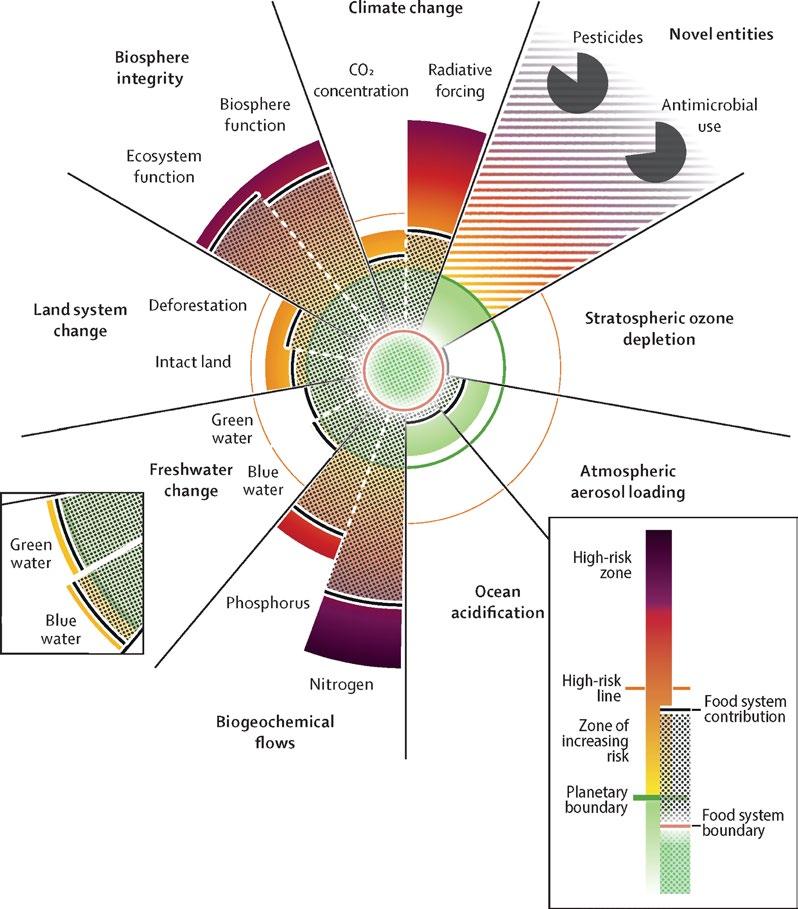
Of all agricultural land, 52% is degraded, with agriculture accounting for 70% of freshwater use (WWF, 2021). Agriculture is the largest single source of environmental degradation (DeClerck et al., 2021; Foley et al., 2011, 2005; Intergovernmental Science-Policy Platform on Biodiversity and Ecosystem Services (IPBES), 2019; Willett et al., 2019). Agricultural ecosystems may be considered the world’s largest ecosystems, but are seldom managed as such (DeClerck et al., 2023). Figure 1 illustrates the pressure of global food systems on planetary boundaries and how this threatens food production, highlighting the interconnectedness between ecosystem health and food production. These impacts are not incidental outcomes but reflect structural features of industrial agricultural systems, underscoring the need for governance approaches that address production models rather than isolated practices.
Industrial agriculture is structurally extractive, relying on extensive deforestation, large-scale monocropping and feedlots, intensive chemical inputs, widespread antibiotic use, and heavy tillage (WWF, 2021). Agricultural intensification, as the leading cause of biodiversity loss and ecosystem degradation, drives deforestation and habitat loss. This causes, inter alia, soil degradation and erosion, destruction of soil biodiversity, loss of genetic diversity, depletion of nutrients and water, contamination of soil and water, and the emergence of new pests and diseases (Secretariat of the Convention on Biological Diversity (CBD), 2020). Capital intensive industrial fisheries use large, highly mechanised vessels equipped with advanced fish finding technologies. This has driven widespread overfishing and severe loss of marine biodiversity, with around 37.7% of global fish stocks overfished or depleted (Lauria et al., 2018; Farquhar et al., 2024).
The result is unabated expansion of industrial agriculture, eroding both agricultural biodiversity1 and biodiversity beyond the farm. This not only impacts local, regional, and global ecological functioning but also threatens the ability of agricultural and marine ecosystems to produce food and sustain themselves, with dire implications for local food security (Farquhar et al., 2024).
1 Agricultural biodiversity is a broad term that includes all components of biological diversity relevant to food and agriculture, and all components of biological diversity that constitute the agro-ecosystem: the variety and variability of animals, plants, and micro-organisms at the genetic, species, and ecosystem levels, which are necessary to sustain key functions of the agro-ecosystem, its structure, and processes (CBD, 2000).
Target 10 of the KM–GBF aims to address the unmitigated impacts of industrial agriculture on biodiversity. The scale and interconnectedness of these impacts—from deforestation and species loss to soil degradation and freshwater depletion—underline the necessity of rethinking how productive landscapes are governed, which is precisely what Target 10 seeks to address.
Figure 1:
Status of food system pressures across all nine planetary boundaries (indicated by the black dotted pattern) and the food system boundaries (red line). Source: The EAT–Lancet Commission on healthy, sustainable, and just food systems, 2025
Target 10: Enhance biodiversity and sustainability in agriculture,
aquaculture,
fisheries, and forestry
Ensure that areas under agriculture, aquaculture, fisheries, and forestry are managed sustainably, in particular through the sustainable use of biodiversity, including through a substantial increase of the application of biodiversity friendly practices, such as sustainable intensification, agroecological and other innovative approaches contributing to the resilience and long-term efficiency and productivity of these production systems and to food security, conserving and restoring biodiversity and maintaining nature’s contributions to people, including ecosystem functions and services.
Target 10 of the KM–GBF follows on from Targets 62 and 73 of the Aichi Biodiversity Targets, neither of which was achieved. Target 10 is supported by two headline indicators:
• 10.1 – Proportion of agricultural area under productive and sustainable agriculture
• 10.2 – Progress towards sustainable forest management
Notably, despite the well-documented ecological crisis in marine systems, there is no headline or component indicator for fisheries. This omission leaves a major gap in monitoring and risks obscuring one of the most unsustainable and ecologically damaging global production sectors, weakening accountability for biodiversity outcomes in marine and coastal food systems. It also limits countries’ ability to meaningfully integrate fisheries into NBSAP targets, indicators, and reporting frameworks.
Target 10 requires that areas under agriculture, aquaculture, fisheries, and forestry be managed to conserve and restore biodiversity while ensuring food security and maintaining ecosystem functions. It emphasises the sustainable use of biodiversity and calls for a substantial increase in biodiversity friendly practices, including sustainable intensification, agroecological approaches, and other practices intended to strengthen the resilience and long-term productivity of production systems.
However, the broad wording of the target creates both opportunities and significant risks. On the one hand, it provides governments with a mandate to transform food and agricultural systems to restore ecological functioning and reduce biodiversity loss. On the other hand, the diverse and at times contradictory approaches included—especially the contested concept of “sustainable intensification”—can be interpreted in ways that preserve or legitimise existing industrial agricultural models rather than transform them. This makes careful interpretation essential if Target 10 is to deliver its intended biodiversity outcomes.
2 By 2020, all fish and invertebrate stocks and aquatic plants are managed and harvested sustainably, legally, and applying ecosystem-based approaches, so that overfishing is avoided, recovery plans and measures are in place for all depleted species, fisheries have no significant adverse impacts on threatened species and vulnerable ecosystems, and the impacts of fisheries on stocks, species, and ecosystems are within safe ecological limits.
3 By 2020, areas under agriculture, aquaculture, and forestry are managed sustainably, ensuring conservation of biodiversity.
Sustainable intensification
Sustainable intensification refers to efforts to increase or maintain agricultural production on existing land while reducing environmental impacts and avoiding further land conversion. It is commonly framed as “producing more with less” by improving efficiency through technical and managerial measures such as improved crop varieties, precision input use, irrigation efficiency, mechanisation, and climate-smart technologies. The concept is contested because it focuses on efficiency gains rather than absolute reductions in environmental harm, does not require changes to underlying production models, and often retains dependence on high external inputs and industrial practices. Sustainable intensification could therefore be used to justify or rebrand business-as-usual agriculture, rather than deliver the systemic transformation needed to halt biodiversity loss and restore ecosystem integrity.
To operationalise Target 10, it is essential to recognise that sustainable management of production landscapes requires a transition away from practices that undermine biodiversity toward those that actively maintain and regenerate it. This makes it especially important that concepts such as sustainable intensification—often used to optimise rather than transform industrial production—are not treated as default pathways for meeting the target.
Although the target is framed around production systems, its explicit reference to food security means it must be interpreted through a broader food systems lens. Production, consumption, trade, subsidies, and dietary patterns all shape biodiversity outcomes and therefore must inform national implementation strategies. Sustainable management is not merely a matter of improving efficiency or productivity; it requires production systems that enhance ecosystem functions and support long-term ecological resilience. This distinction is critical for avoiding policy pathways that deliver short-term gains while entrenching long-term ecological risk. Consequently, Target 10 can only be meaningfully implemented within the wider context of food system governance, where dietary trends, trade regimes, and input subsidy policies are recognised as key determinants of biodiversity outcomes.
Agroecology as a foundation for ecosystem integrity and food security
Food production is fundamentally reliant on ecosystem integrity—healthy soil, water, and biodiversity—yet, as mentioned, it is also the leading driver of biodiversity loss and environmental degradation. The erosion of biodiversity on farmlands can result in reduced agricultural yields and increased risks to food production and human well-being (Foley et al., 2011; Pretty, 2018; Garibaldi et al., 2021; Maney et al., 2024). The productivity, sustainability, and resilience of food production systems are underpinned by biodiversity and associated ecosystem services, such as pollination, natural pest suppression, and nutrient cycling (Dainese et al., 2019; IPBES, 2019). Sustainable food systems therefore require a transition toward practices that work with, rather than against, natural systems, thereby improving biodiversity and ensuring the long-term stability of food production and supply (Berger et al., 2025).
Simplified, chemically intensive systems are commonly assumed to be more productive. Yet, diversified systems often improve ecosystem health while maintaining or increasing yields (Tamburini et al., 2020; IPBES Food, 2016; Garbach et al., 2016). In addition, significant improvements occur in pollination, pest control, nutrient cycling, water regulation, soil fertility, and biodiversity conservation. A shift towards regenerative production systems is required to ensure biodiversity conservation and connectivity and to support diversified diets. Diversified, agroecological systems are often regenerative, synergistic, and multipurpose, and can bolster ecosystem functions within resilient agricultural production systems by maintaining biodiversity in and between agricultural lands (DeClerck et al., 2021).
Current agricultural investments and practices generally overlook the need for, and the potential of, agroecosystems to bolster ecosystem integrity (Wood et al., 2018). Food and nutrition security, climate stability, biodiversity conservation, livelihood security, and human health are mutually reinforcing goals and should be addressed coherently rather than as trade-offs. Recognising the multiple benefits provided by farmers and farmland supports the redirection of public funds toward public goods and strengthens the alignment of farmer support programmes with national biodiversity planning priorities, including NBSAP objectives and implementation frameworks (DeClerck et al., 2021).
Competing pathways for sustainable agriculture: intensification and agroecology
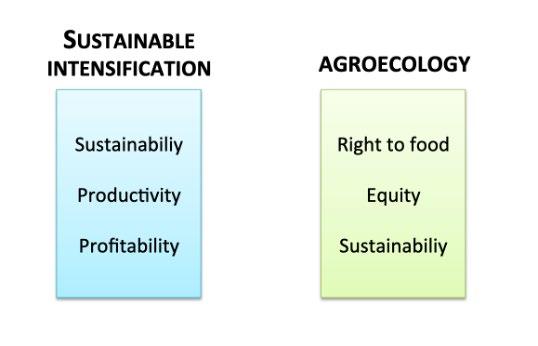
Target 10’s inclusion of sustainable intensification, agroecological, and other innovative approaches as biodiversity friendly practices is widely contested. Bringing together these often contradictory concepts risks diluting the target’s ambition and reinforces long-standing debates over “land sparing” versus “land sharing” in conservation and agricultural design. Sustainable intensification, in particular, is grounded in a land sparing logic that prioritises yield increases on existing farmland to limit agricultural expansion, the primary driver of habitat loss (IPBES, 2019). High productivity is intended to limit the expansion of cultivated land and, in doing so, reduce deforestation. However, sustainable intensification pays limited attention to restoring degraded agricultural areas or reducing the ecological impacts of existing intensive systems. Agroecology, by contrast, is based on integrating biodiversity directly within production systems (Debar, 2020). It, therefore, aims to address biodiversity maintenance, conservation, and restoration, enhancing the ecological and social processes that underpin ecosystem integrity and connectivity within and beyond agricultural ecosystems (Oburo et al., 2021; Grass et al., 2019) (see figure 2).
The Global Land Outlook links agricultural intensification—characterised by monocultures, genetically modified crops, and high chemical inputs—to worsening biodiversity loss and declining landscape sustainability (United Nations Convention to Combat Desertification (UNCCD), 2017). Because sustainable intensification is defined by outcomes rather than production methods, it tends to reinforce reliance on high-energy and agrochemical inputs (Pretty et al., 2018), which deplete agricultural biodiversity and generate ecosystem-wide impacts. Climate-smart agriculture, sustainable intensification, and, to some extent, organic agriculture and integrated pest management are widely used to frame agricultural transitions. However, these approaches tend to prioritise technical solutions, while paying insufficient attention to the political, social, and cultural dimensions required to address the systemic crises of global food systems (Pimbert, 2015).
Agroecology can be understood as both a political project and a practical approach, shaped by how food is accessed, produced, and distributed to realise the right to food (Calle, 2017). It encompasses farming, pastoralism, forestry, and artisanal fishing, drawing on traditional and local knowledge alongside learning and innovation. As such, agroecology goes beyond individual practices to offer a systemic approach to transforming food systems—from production and processing through to distribution and consumption. Given that global food systems are a primary driver of biodiversity loss, this systems-based perspective is essential to biodiversity conservation.
Despite some overlap in techniques, these pathways represent fundamentally different visions for agricultural transformation and shape how Target 10 is interpreted. Sustainable intensification prioritises productivity and profitability through technological solutions, largely reinforcing the status quo in which food systems remain dominated by corporate agribusiness. Agroecology, by contrast, centres equity and the right to food, emphasising social, ecological, and governance transformation. Clarifying how different approaches align—or conflict—with biodiversity objectives is therefore central to the credibility and effectiveness of Target 10 implementation.
Figure 2: Sustainable intensification and agroecology pathways. Source: Baret, P.V., 2014. Beyond the production paradigm: feeding the world is a matter of sustainability and equity.
Agroecological transitions for implementing the KM–GBF
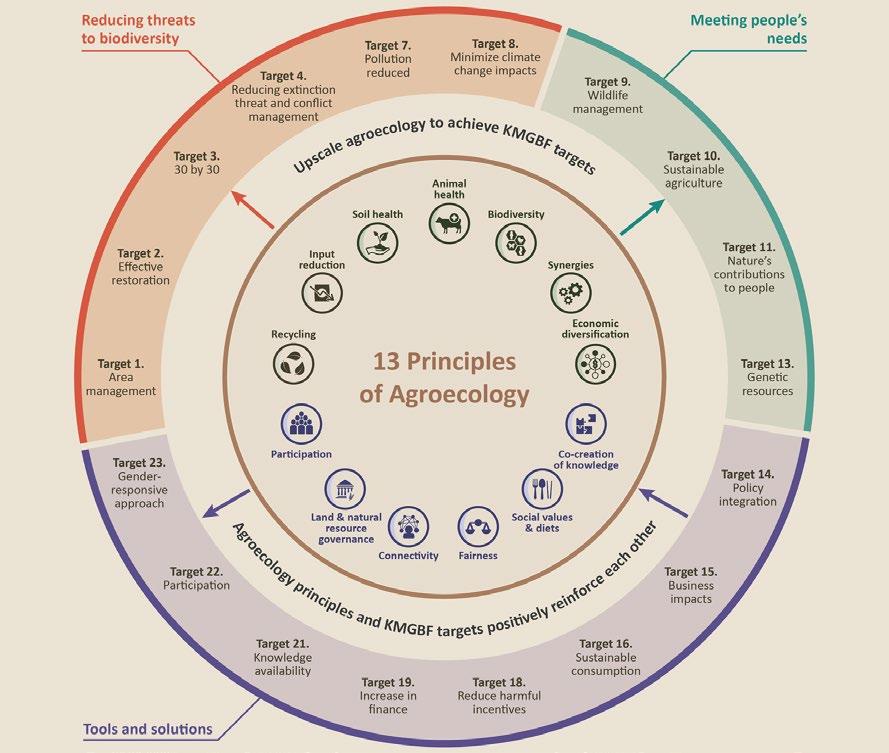
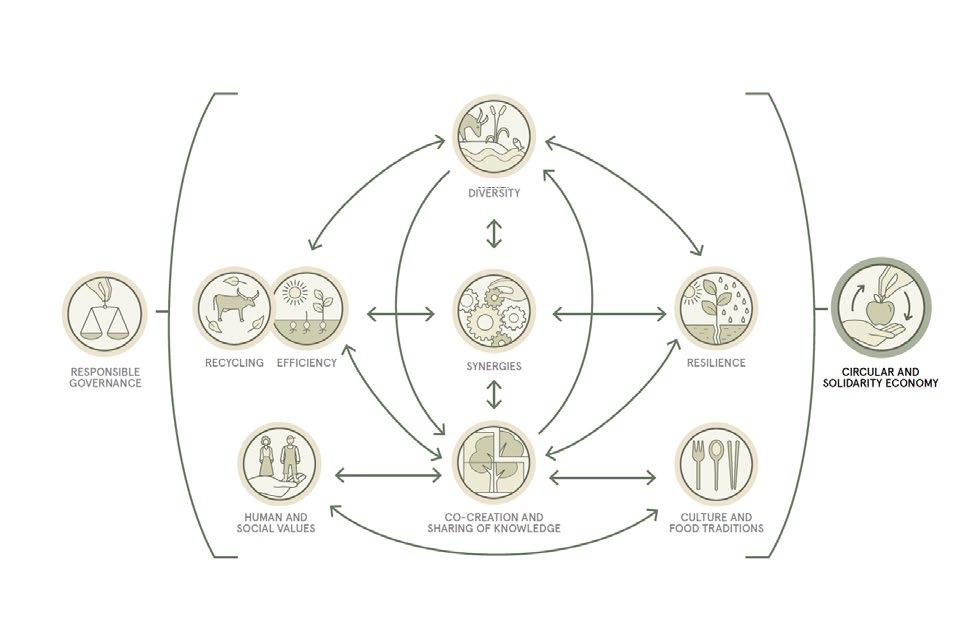
Agroecology, as a systems approach, is well-placed to address the complex challenges posed by intensive industrial agriculture at multiple scales (Biovision, 2024). There are a myriad of agroecological practices capable of regenerating environmental functions in agriculture, which should adhere to the Food and Agriculture Organization (FAO)’s 10 Elements of Agroecology (FAO, 2018) (see figure 4), and the High-Level Panel of Experts (HLPE) on Food Security and Nutrition’s 13 Principles of Agroecology (HLPE, 2019) as reference points. Across the KM–GBF, the agroecological principles align with multiple targets, making agroecology a uniquely effective, systems-based approach for implementing Target 10 and delivering a range of co-benefits. Placing agroecology at the centre of implementing the KM–GBF can help countries achieve targets related to reducing threats to biodiversity and meeting people’s needs, as illustrated in Figure 3.
3: Placing agroecological principles at the centre of the KM–GBF. Source: Biovision et al., 2024
Figure
Figure 4: FAO’s 10 Elements of Agroecology. Source: FAO, 2018
Agroecology can therefore be integrated to guide the design of NBSAPs, offering a comprehensive approach for countries to fulfill their commitments under the KM–GBF (DeClerck et al., 2023). The adoption of agroecology also contributes to targets related to tools and solutions for implementing and mainstreaming the KM–GBF. Figure 5 illustrates the direct and indirect connections between agroecology and the other targets. Agroecology is therefore a pivotal entry point to tackling biodiversity challenges across the KM–GBF targets.
Figure 5:
Direct and indirect connections between agroecological principles (on the right) and the other targets of the KM–GBF, excluding target 10 (on the left). Source: Biovision, 2024
Table 1 provides examples of how agroecology can support the implementation of the KM–GBF.
Table 1:
Examples of agroecology applied to advance other elements of the KM–GBF
REDUCING THREATS TO BIODIVERSITY (Targets 1–8)
• Agroecological farming: on-farm practices across soil, water, and integrated pest management
• Managing landscapes, territories, and conservation areas
• Transitioning from agrochemicals to biological farming inputs and natural cycles
MEETING PEOPLE’S NEEDS THROUGH SUSTAINABLE USE AND BENEFIT-SHARING (Targets 9–13)
• Nurturing diverse and local seeds and crops
• genetic resources and drawing on biocultural norms
• Strengthening territorial markets for agroecological products
• Applying non-market mechanisms for agroecological products
• Creating value and recognition
TOOLS AND SOLUTIONS FOR IMPLEMENTING AND MAINSTREAMING (Targets 14–23)
• Ensuring equitable access and rights to resources
• Including and empowering underrepresented actors
• Recognizing linkages between gender and biodiversity action
• Integrating actions for biodiversity diets and food environments
• Agroecological knowledge, transdisciplinary research, and co-development
• Awareness, information sharing, and communication
Source: Global Alliance for the Future of Food et al., 2024
Further to this, as articulated in an earlier fact sheet on Target 3, there is a case for recognising agroecological production systems as another effective area-based conservation measure (OECM), where they ensure long-term biodiversity outcomes and support ecosystem function, while producing food. As agroecological planning is not only exclusive to the farm but involves the landscape (Wezel et al., 2020), agroecological practices, such as inter alia crop diversification, animal integration, building and feeding soils, creating on-farm habitats (edges, intercropping for pests, etc.), directly enhance biodiversity on the farm and around the farm, and have significant downstream benefits. The enhancement of soil health, water conservation and health, and nutrient cycling—all integral to agroecological production— helps restore degraded lands, maintain ecosystem health and connectivity beyond the farm gate (Acevedo-Osorio et al., 2024).
Political economy considerations
A fuller understanding of Target 10 requires attention to the political-economy dynamics that shape agricultural decision-making in Africa. Donor priorities, corporate seed and agrochemical interests, and entrenched subsidy regimes strongly influence how concepts such as “innovation”, “climate-smart agriculture”, and “sustainable intensification” are framed and advanced. These forces often steer policy toward high-input, proprietary technologies that reinforce industrial production models, even where such approaches undermine biodiversity and marginalise farmer-led knowledge systems. Recognising these dynamics is essential to prevent Target 10 from being captured by efforts to rebrand business-as-usual pathways. It is also key in informing the design of safeguards, indicators, and accountability mechanisms that prioritise agroecology-based transformation and explicitly distinguish biodiversity-enhancing practices from input-intensive industrial models.
Advancing Target 10 in Africa: embedding agroecology in policy and practice
Realising Target 10 in Africa requires governments and civil society to embed agroecology at the centre of revised NBSAPs, supported by clear accountability mechanisms and context-appropriate indicators. African countries face unique biodiversity, livelihood, and food system challenges, making it essential that NBSAPs articulate agroecology not as one option among many, but as the primary pathway for achieving sustainable production landscapes. This includes the explicit incorporation of the FAO’s 10 Elements of Agroecology and the HLPE’s 13 Principles to ensure that national targets and indicators distinguish biodiversity-enhancing practices from those that may be labelled “innovative” yet continue to degrade ecosystems.
NBSAPs should also develop robust, biodiversity-centred indicators across agriculture, forestry, fisheries, and pastoral systems—even where the KM–GBF provides no headline indicators—so that harmful practices are not misclassified as contributing to Target 10. Applying a food systems lens is essential: dietary patterns, trade flows, subsidy regimes, and value chains shape biodiversity outcomes as profoundly as on-farm practices do, and must therefore be aligned with national biodiversity objectives.
Finally, governments need to redesign input subsidy programmes and agricultural support mechanisms so that public finance drives the transition toward diversified, biodiversity-rich agroecological food systems rather than reinforcing high-input models. Civil society has a critical role in this process: engaging actively in national consultations, advocating for indicators and targets aligned with agroecological principles, and ensuring that farmer, pastoralist, and small-scale fisher communities are meaningfully represented in biodiversity governance. Together, these measures can ensure that Target 10 catalyses genuine transformation rather than legitimising business-as-usual agricultural expansion.
Conclusion
It is essential that agricultural areas shift from an extractive, resource-depleting model geared toward global export value chains to agroecological systems that regenerate soils, integrate biodiversity, and strengthen food sovereignty and territorially rooted food networks. Agroecological food and farming systems, while not a panacea, represent a powerful and necessary entry point for addressing the interconnected biodiversity, climate, nutrition, and social crises confronting Africa. This transformation must encompass not only how food is produced but also how food is consumed, governed, and valued across society.
Shifting dietary patterns is central to this broader transition. Moving away from ultra-processed foods and diets heavily reliant on industrially produced meat toward diverse, minimally processed whole-food diets—closely aligned with Indigenous and traditional African foodways—can significantly reduce pressure on land, water, and biodiversity. Such diets, based on locally adapted crops, pulses, traditional grains, wild and gathered foods, and culturally embedded culinary practices, contribute to improved nutrition, strengthened resilience, and ecological sustainability. Aligning public procurement, school feeding policies, and national dietary guidelines with these whole-food, culturally grounded dietary shifts can reinforce agroecological transitions in production landscapes.
Governments, therefore, have a central responsibility to embed agroecology at the heart of updated NBSAPs, agricultural policies, and climate adaptation frameworks. This includes adopting biodiversity-centred indicators, phasing out harmful input intensive subsidies, supporting diversified agroecological farming systems, and ensuring that national food environments do not incentivise highly processed, biodiversity-eroding foods. By redesigning public finance, procurement, extension services, and regulatory frameworks, governments can create enabling conditions for agroecological transformation and help realign economic incentives with ecological integrity.
In recognising the biodiversity outcomes generated by diversified and agroecological production systems, African governments should also explore the potential for these landscapes to qualify as OECMs under the CBD. Agroecological farming systems, particularly those that integrate semi-natural habitats, restore soil biodiversity, enhance on-farm ecological connectivity, and sustain traditional stewardship practices, can meet OECM criteria by delivering long-term, in situ conservation benefits outside formally protected areas. Identifying and reporting such systems as OECMs within NBSAPs would not only acknowledge the conservation contributions of farmers and pastoralists, but also help expand ecologically connected landscapes while strengthening the role of community-driven agroecological transitions.
Civil society plays an equally vital role in realising the ambition of Target 10. This involves advocating for agroecology-aligned indicators and targets; participating actively in national consultations; monitoring government commitments; advancing farmer-led, Indigenous, and community-driven agroecological initiatives; and ensuring that the voices of small-scale farmers, pastoralists, fishers, and forest-dependent peoples are meaningfully represented in biodiversity governance. Civil society is essential to holding governments accountable, resisting false solutions, and sustaining political momentum for transformative change in the food system.
Ultimately, achieving the goals of Target 10 requires profound shifts in norms, incentives, and institutions. It demands the restoration of degraded ecosystems, revitalisation of integrated farming and pastoral systems, recognition of Indigenous knowledge, and support for agroforestry, silvopastoralism, and other biodiversity-based approaches. If African governments and civil society work together to embed agroecology and culturally grounded dietary transitions at the centre of Target 10 implementation, the KM–GBF can catalyse a genuine and lasting transformation—one that restores biodiversity, strengthens resilience, and safeguards the right to food for generations to come. Without this whole-systems alignment, implementation of Target 10 risks reinforcing existing drivers of biodiversity loss rather than addressing them.
References
Acevedo-Osorio, A., Cárdenas, J.S., and Martín-Pérez, A.M. (2024). Agroecological planning of productive systems with functional connectivity to the ecological landscape matrix: two Colombian case studies., Sustainable Food Systems, (8) https://public-pages-files-2025.frontiersin.org/journals/sustainable-food-systems/articles/10.3389/ fsufs.2024.1257540/pdf
Berger I, Bhan M, Bhangaonkar R, et al. (2025). Integrated land systems for sustainable food production and biodiversity conservation in the semi-arid to moist tropics: stakeholder perspectives from Andhra Pradesh, India. Front. Sustain. Food Syst., 9:1594356. doi: 10.3389/fsufs.2025.1594356
Biovision. (2024). Boost NBSAPs through Agroecology: A crucial approach to comprehensively meet KMGBF targets. https://www.biovision.ch/wp-content/uploads/2024/08/ Infopool_Boost-NBSAPs-through-Agroecology-A-crucial-approach-to-comprehensivelymeet-KMGBF-targets-1.pdf
Burian, A., Kremen, C., WuJ, S., et al. (2024). Biodiversity–production feedback effects lead to intensification traps in agricultural landscapes. Nat. Ecol. Evol., 8, 752–760. doi: 10.1038/s41559-024-02349-0
CBD. (2000). COP Decision V/5. Agricultural biological diversity: review of phase I of the programme of work and adoption of a multi-year work programme. https://www.cbd.int/ decision/cop?id=7147
Calle, D.C. (2017). Community Forest Management and Agroecology Links and Implications. CENSAT/FoE Colombia https://www.foei.org/wp-content/uploads/2018/03/foei-cfmagroecology-EN-WEB.pdf
Dainese, M., Martin, E.A., Aizen, M.A., et al. (2019). A global synthesis reveals biodiversity-mediated benefits for crop production. Sci. Adv., 5. doi: 10.1126/sciadv.aax0121
Debar, J.C. (2020). Sustainable Intensification or Agroecology? Confusion and Questions. The FARM Foundation. https://fondation-farm.org/en/intensification-durable-ou-agroecologie-confusion-et-interrogations/
DeClerck, F., Barrios, E., Benton, T.G., et al. (2023). Biodiversity, agriculture and sustainable production: GBF Target 10. PLOS Sustain Transform, 2(3): e0000048. https://doi. org/10.1371/journal.pstr.0000048
DeClerck, F. A. J., Koziell, I., Sidhu, A., et al. (2021). Biodiversity and agriculture: rapid evidence review. Colombo, Sri Lanka: International Water Management Institute (IWMI). CGIAR Research Program on Water, Land and Ecosystems (WLE). https://doi. org/10.5337/2021.215
Farquhar, S.D., Heck, N., Maps, F., et al. (2024). Industrial fishing and its impacts on food security: a systematic review. Front. Ocean Sustain., 2:1419236. doi:10.3389/focsu.2024.1419236
Food and Agriculture Organization of the United Nations (FAO). (2018). The 10 elements of agroecology: Guiding the transition to sustainable food and agricultural systems.
Foley, J. A., Ramankutty, N., Brauman, K., et al. (2011). Solutions for a cultivated planet. Nature, 478, 337–342. doi: 10.1038/nature10452
Garbach, K.; Milder, J.C.; DeClerck, F.A.J. et al. (2016). Closing yield and nature gaps: Multi-functionality in five systems of agroecological intensification. International Journal of Agricultural Sustainability, doi:10.1080/14735903.2016.1174810
Garibaldi, L, A., Oddi, F.J., Miguez, F.E., et al. (2021). Working landscapes need at least 20% native habitat. Conserv. Lett., 14:e12773. doi: 10.1111/conl.12773
Global Alliance for the Future of Food, Biovision Foundation, WWF International, et al. (2024). Guidance for Developing and Updating National Biodiversity Strategies and Action Plans.
Grass, I., Loos, J., Bänsch, S. (2019). Land-sharing/-sparing connectivity landscapes for ecosystem services and biodiversity conservation. People and Nature, 1(6127):1-11. DOI:10.1002/pan3.21
High Level Panel of Experts (HLPE) on Food Security and Nutrition. (2019). Agroecological and other innovative approaches for sustainable agriculture and food systems that enhance food security and nutrition. https://openknowledge.fao.org/server/api/core/bitstreams/ff385e60-0693-40fe-9a6b-79bbef05202c/content
IPBES. (2019). Global Assessment Report on Biodiversity and Ecosystem Services. https:// doi.org/10.5281/zenodo.3831673
IPES-Food. (2016). From uniformity to diversity: a paradigm shift from industrial agriculture to diversified agroecological systems. International Panel of Experts on Sustainable Food systems. https://www.ipes-food.org/_img/upload/files/UniformityToDiversity_FULL.pdf
Lauria, V., Das, I., Hazra, S., et al. (2018). Importance of fisheries for food security across three climate change vulnerable deltas. Sci. Total Environ., 640–641, 1566–1577. doi: 10.1016/j.scitotenv.2018.06.011
Maney, C., Sassen, M., Giller, K.E. (2024). Are agricultural commodity production systems at risk from local biodiversity loss? Biol. Lett., 20:20240283. doi: 10.1098/rsbl.2024.0283
Obura, D.O., Katerere, Y., Mayet, M., et al. (2012). Integrate biodiversity targets from local to global levels: a shared Earth approach links biodiversity and people. Science, 373 (6556): 746-748. DOI: 10.1126/science.abh2234
Pimbert, M. P., & Lemke, S. (2018). Food Environments: Using Agroecology to Enhance Dietary Diversity. UNSCN News, (43), 33–42.
Pretty, J. (2018). Intensification for redesigned and sustainable agricultural systems. Science, 362:eaav0294. doi: 10.1126/science.aav0294
Pretty, J., Benton, T., Bharucha, P., et al. (2018). Global assessment of agricultural system redesign for sustainable intensification. Nature Sustainability, (1):441-446
Rockström, J., Thilsted, S.H., Willett, W., et al. (2025). The EAT–Lancet Commission on healthy, sustainable, and just food systems. The Lancet Commissions. 406: 1625-1700 https://www.thelancet.com/action/showPdf?pii=S0140-6736%2825%2901201-2
Secretariat of the Convention on Biological Diversity. (2020). Global Biodiversity Outlook 5. Montreal. https://www.cbd.int/gbo/gbo5/publication/gbo-5-en.pdf
UNCCD, 2017. Global Land Outlook https://www.unccd.int/sites/default/files/documents/2017-09/GLO_Full_Report_low_res.pdf
Wanger, T.C., DeClerck, F., Garibaldi, L.A., et al. (2020). Integrating agroecological production in a robust post-2020 Global Biodiversity Framework. Nature Ecology and Evolution, 4: 1150-1152
Wezel, A., Gemmil, B., Bezner, R., Barrios, E., Rodrigues, A. L., and Sinclair, F. (2020). Agroecological principles and elements and their implications for transitioning to sustainable food systems. Rev. Agronomy for Sustain. Develop., 40:40. https://link.springer.com/content/ pdf/10.1007/s13593-020-00646-z.pdf
Willett W, Rockström J, Loken B, et al. (2019). Food in the Anthropocene: the EAT–Lancet Commission on healthy diets from sustainable food systems. Lancet. 393: 447–92.
Wood, S.L. Jones, S.K. Johnson, J.A. et al. (2018). Distilling the role of ecosystem services in the Sustainable Development Goals. Ecosystem Services, 29: 70-82.
WWF. (2021). Farming with Biodiversity: towards nature positive production at scale. https://www.wwf.nl/globalassets/pdf/farming-with-biodiversity_wwf-report-2021_ spreads.pdf