DIGITAL INFRASTRUCTURE: IMPLICATIONS FOR AFRICA’S ENVIRONMENT, AGRICULTURE, AND FOOD SYSTEMS
DIGITAL INFRASTRUCTURE: IMPLICATIONS FOR AFRICA’S ENVIRONMENT, AGRICULTURE, AND FOOD SYSTEMS
Resource extraction, impact on marine and coastal ecosystems, & climate footprint – a free-for-all?
February 2026
African Centre for Biodiversity (ACB)
ACB is committed to dismantling inequalities and resisting corporate industrial expansion in Africa’s food and agriculture systems.
© African Centre for Biodiversity www.acbio.org.za
PO Box 29170, Melville 2109, Johannesburg, South Africa. Tel: +27 (0)11 486-1156
Researched and written by Kavya Chowdhry and Neth Dano
Editorial oversight and input by ACB executive director Mariam Mayet
Design and layout by Baynham Goredema, Xealos Design Agency
Cover art by Gerhard van Wyk
Acknowledgments
ACB gratefully acknowledges the financial support of several donors, though the views expressed may not necessarily reflect the views of our donors.
DRC Democratic Republic of Congo (The)
EMF Electromagnetic fields
gCO2e grams of carbon dioxide equivalent
GHG Greenhouse gas
HPQ High-purity quartz
ICPC International Cable Protection Committee
ITU International Telecommunications Union
Km kilometre/s
MCF Multi-core fibers
Pb.km petabit-kilometres
PE Polyethylene
PVC Polyvinyl chloride
SDM Space-division multiplexing
UAE United Arab Emirates
UN United Nations
UNEP United Nations Environment Program
Invisible to most people – even avid netizens – are the 1.5 million kilometres (km) of subsea cables that constitute the critical backbone of our cyber life.1 Around 99% of data from emails, video calls, streaming services, financial transactions, and e-commerce passes through submarine cables.2 An estimated 600 cable systems are circling the world’s sea floor today, 77 of them landing in Africa.3
Only when human activity and natural phenomena affect undersea cables does the world become aware of the physical aspects of internet connectivity. These fiber-optic cables connect continents, enabling voice and video communication, financial transactions, remote work, e-commerce, and other functions essential to the digital economy. Submarine cables provide essential infrastructure for nations to safeguard national security and military communications, playing a key role in geopolitics, owing to the potential for sabotage and espionage.
This fact sheet, the second in the series, sketches a brief history of subsea cables, describes their material structure and the extraction of the resources required, and discusses the implications for the marine environment and biodiversity, posing key questions concerning governance.
© CTBTO Photostream | Wikimedia Commons
1 https://www2.telegeography.com/submarine-cable-faqs-frequently-asked-questions
2 https://resources.telegeography.com/2023-mythbusting-part-3
3 Jane Munga, Carnegie Endowment for International Peace, “Beneath the Waves: Addressing Vulnerabilities in Africa’s Undersea Digital Infrastructure”, 3 Apr 2025, https://carnegieendowment.org/research/2025/03/beneath-the-wavesaddressing-vulnerabilities-in-africas-undersea-digital-infrastructure?lang=en
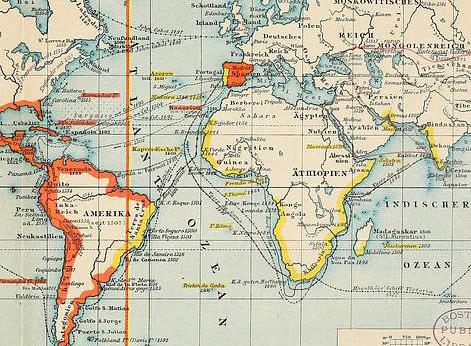
As described in fact sheet 1, the undersea cable networks across Africa largely align with historical colonial trade paths, echoing patterns of resource extraction that now involve data flows from the continent to global centres of capital with minimal local reinvestment.4 Contemporary shipping lanes, which largely mirror old transatlantic colonial trade corridors, where raw materials and slaves from African colonies were transported to industrial hubs in Europe, and from commercial plantations in other colonies worldwide, were chosen for stability, low seismic risk, and relative freedom from other natural hazards. Cable routes follow the same paths to optimise efficiency and avoid disruptions. This setup perpetuates economic imbalances, as African nations are linked to the rest of the world via connectivity infrastructure funded by the largest conglomerates investing in subsea telecommunications cables, poised to bring more people on the continent online while relying heavily on foreign investment and infrastructure.
This evolving landscape is transforming the continent into a “digital laboratory”, paving the way for advanced data mining and artificial intelligence (AI), as well as digital colonialism.
The first cables in the ocean, connecting short distances, such as between England and France, were laid about 150 years ago, and were copper telegraph wires insulated with gutta-percha, a natural latex extracted from a tree found mainly in Malaysia, a former British colony. The demand for undersea cables led to the tree’s near-extinction and stripped the forests in Malaysia and Singapore.5 The first transatlantic cable was laid in 1858 for telegraphic communications, while the first transatlantic phone cable was laid in 1956 – all made of copper. As a key component in the production of electric vehicles, renewable energy, and AI, copper is seen as a valuable critical mineral, driving growing demand and recent price surges.6
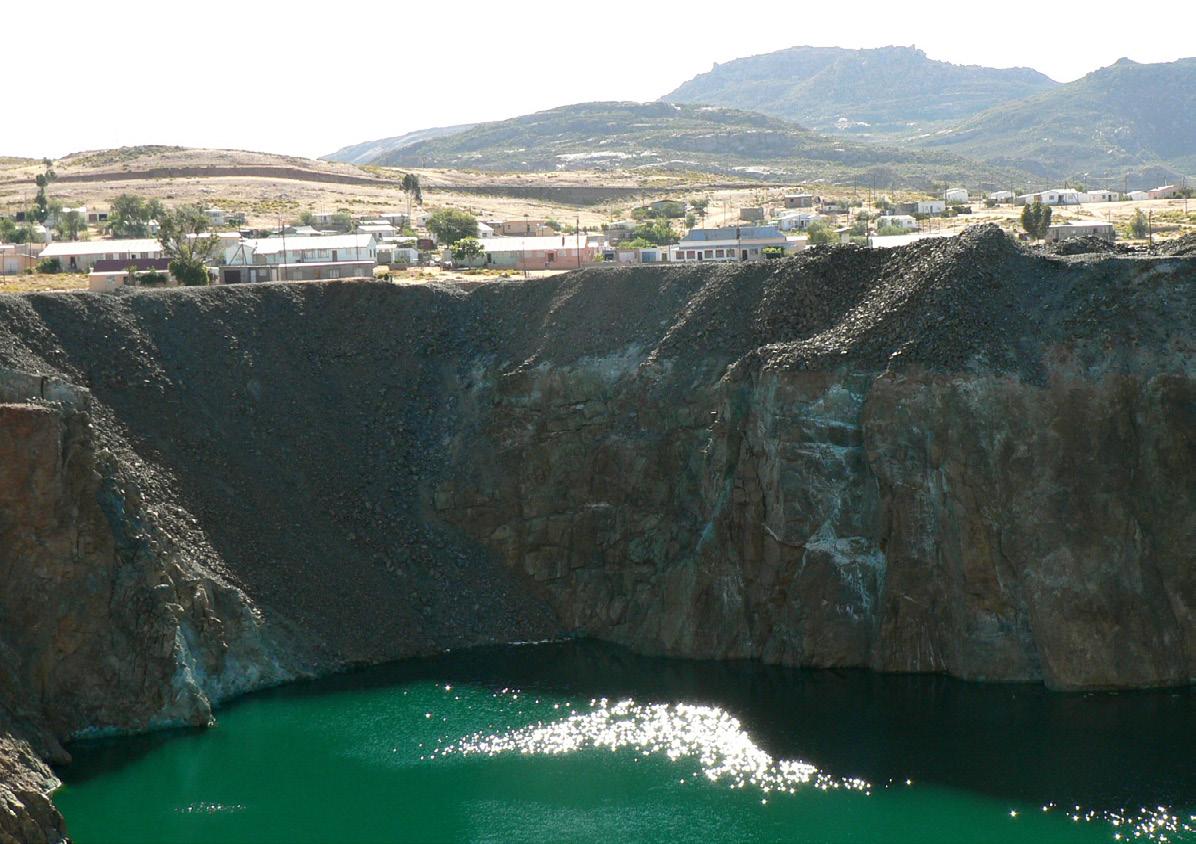
Africa has some of the world’s biggest copper mines. The Central African Copperbelt, which straddles the Democratic Republic of Congo (DRC) and Zambia, and the Kalahari Copperbelt in Botswana and Namibia, are principal sources of the red metal that built the transatlantic cables, enabling global telecommunications and serving as the foundation of today’s digital connectivity.7 Copper extracted from the DRC alone accounts for 14% of the total global supply, while 4% comes from Zambia.8
Highly valued for its electrical conductivity and durability, copper is now hailed as a transition mineral – along with lithium, nickel, cobalt, and rare earth elements – for its essential role in
5 Kate Crawford, Atlas of AI, 16 Aug 2022, https://yalebooks.yale.edu/book/9780300264630/atlas-of-ai/
6 https://www.bhp.com/news/bhp-insights/2025/01/why-ai-tools-and-data-centres-are-driving-copper-demand
7 https://www.gbreports.com/contents/mining-in-africa-copper/#:~:text=Africa%20offers%20two%20key%20zones,);%20 and%20MMG’s%20Kinsevere%20mine.
8 https://www.gbreports.com/contents/mining-in-africa-copper/#:~:text=Africa%20offers%20two%20key%20zones,);%20 and%20MMG’s%20Kinsevere%20mine.
clean energy production.9 Copper mining has a very long history in Africa, even preceding colonialism in some old mines. However, industrial-level extraction associated with massive labour exploitation, wanton destruction of the environment, and violation of human rights was only reached in the 20th century, and continues today.
Copper mining and corruption go hand in hand in some parts of Africa. One example is Glencore – the world’s biggest commodity trader – which owns copper and cobalt mines in the DRC, where it has been bribing government officials for over a decade.10
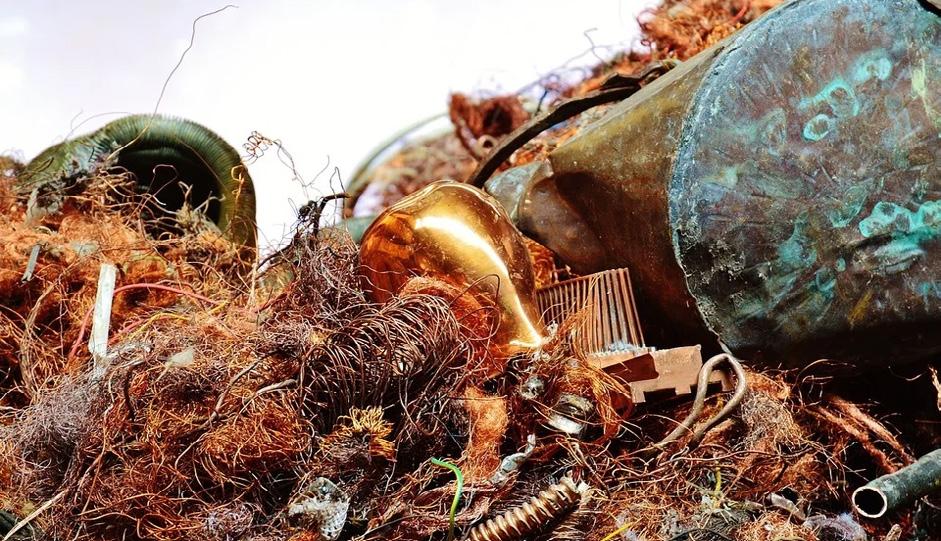
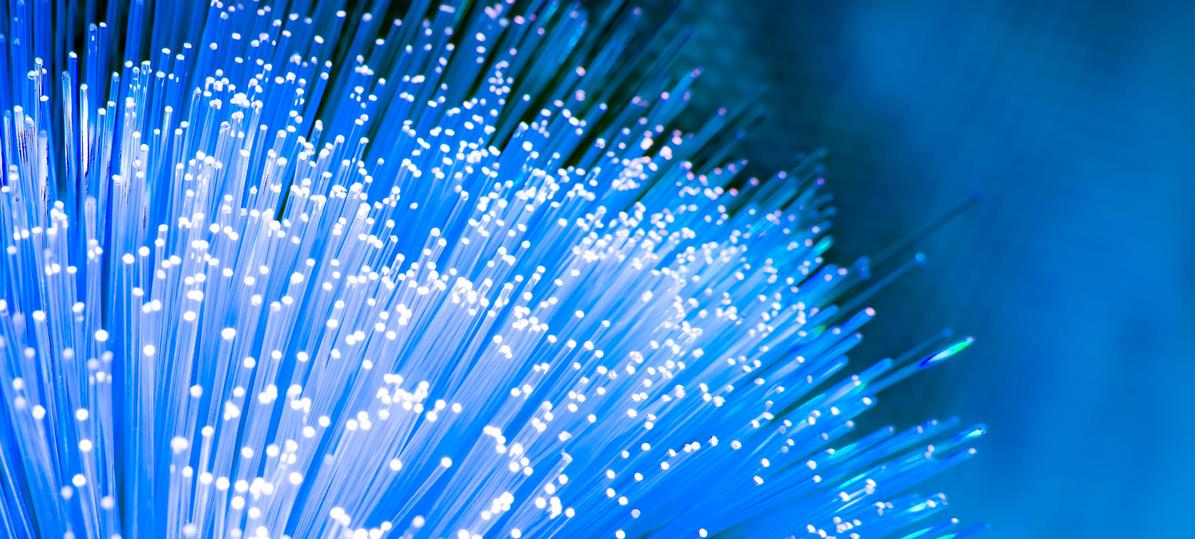
After multiple attempts by engineers and experiments with new materials to speed up and improve the efficiency of communications, fiber-optic cables were deployed, with the first transatlantic fiber-optic cable installed in the seafloor in 1988.11 Today, fiber-optic technology transmits data as pulses of light through thin strands of glass, enabling ultra-high speeds over long distances. While copper is no longer the principal material in subsea cables, it is still used in fiber-optic cables for low-voltage power delivery and structural protection.
Optical fiber cabling has a multilayered design to carry optical signals over thousands of km while protecting them from external factors, minimising disturbance to their operation. At the core is an innermost glass or plastic strand to which germanium is added, followed by cladding – a lower-refractive-index glass layer. The acrylate coating on top of these two layers cushions the cable when it bends, and strengthening fibers, usually made of aramid yarn or Kevlar, prevent it from breaking under stretching, abrasion, or tension. The jacket that protects the cable from external forces is made of polyethylene, polyvinyl chloride (PVC), or low-smoke, zero-halogen (LSZH).12
9 https://www.theassay.com/articles/copper-powering-up-the-electric-vehicle-why-copper-is-intrinsically-linked-to-the-evstory/
10 https://www.spotlightcorruption.org/glencores-corruption-drc-and-nigeria/
11 https://www.submarinecablesystems.com/history
12 https://blog.biamp.com/anatomy-of-a-cable-optical-fiber/
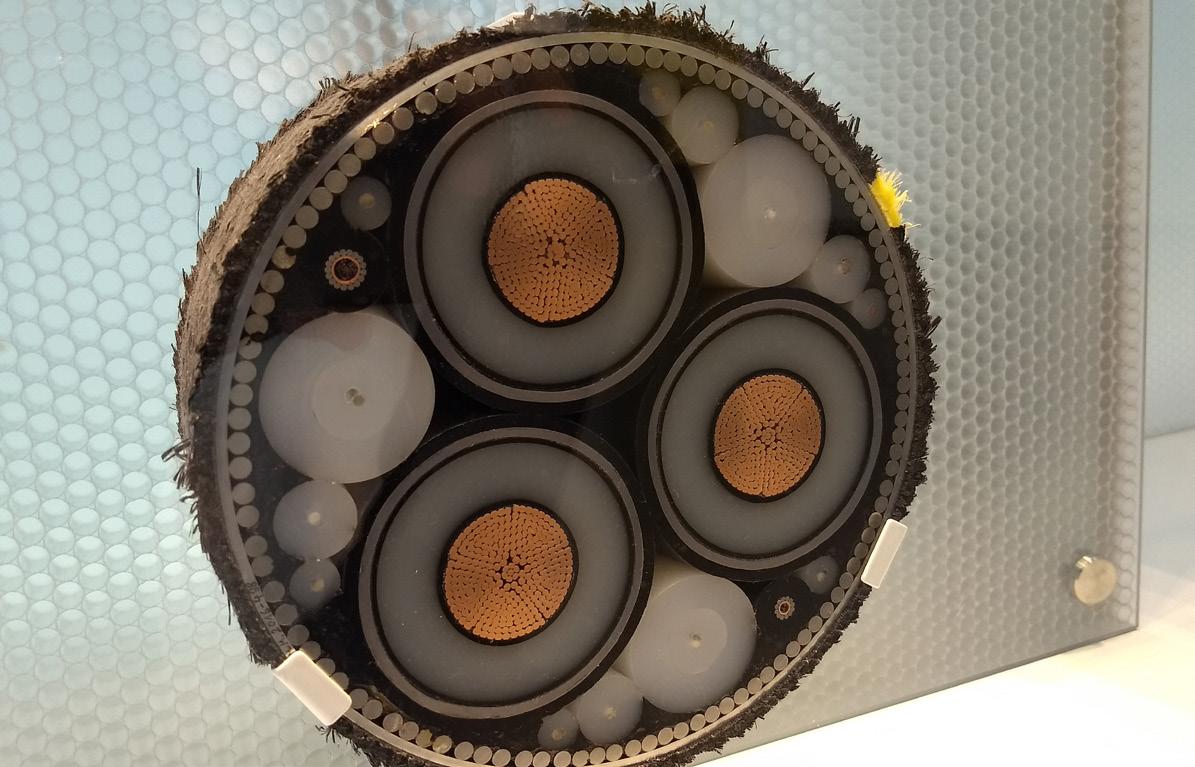
While the same fiber-optic technology is used for both submarine and terrestrial telecommunication cables, the harsh, more unpredictable environment in seas and oceans requires additional layers of protection for submarine cables. New subsea fiber-optic cables are being upgraded with multi-core fibers (MCF) and space-division multiplexing (SDM) to increase data capacity.13 Normal cables have one glass core per fiber strand carrying light signals. MCF squeezes 4-19 tiny cores into each strand, like bundling straws. SDM allows full use of extra cores by splitting signals across “space” (cores or light paths) and “colour” (wavelengths).14 Ultra-pure quartz makes up the glass core of optical fibers.
Silica quartz is an abundant mineral found worldwide, but high-purity quartz (HPQ) with 99.95% silicon dioxide content is found in only a few deposits. Ultra-high-purity quartz (UHPQ), indispensable in the tech industry, is mostly mined in North Carolina, US, with the largest reserves in Brazil.15, 16 There are significant deposits of silica quartz in parts of Africa, notably in South Africa, Cameroon, and Mauritania, but the capacity for purification and processing still lags behind those of the biggest HPQ sources.17 Silica quartz mining and manufacturing are energy-intensive and produce high greenhouse gas (GHG) emissions, resulting in deforestation, soil erosion, and contamination of water sources, threatening food systems and agriculture in surrounding areas. Mining of these valuable minerals exposes mine workers and surrounding communities to crystalline silica dust, which is known to cause tuberculosis, lung cancer, and silicosis – an incurable lung disease that causes scarring of lung tissues.18, 19
13 https://cloud.google.com/blog/products/infrastructure/delivering-multi-core-fiber-technology-in-subsea-cables
14 https://radiant.in/fiber-optics-in-2025-cutting-edge-innovations-powering-global-connectivity/
15 https://apnews.com/article/north-carolina-quartz-hurricane-57153eaba12ba9dcb87bf618d72364ec
16 https://maxtonco.com/what-is-high-purity-silica-quartz-sand-its-main-mine-and-manufacturers/#:~:text=is%20very%20 rare.-,High%20purity%20quartz%20source%20worldwide,which%20is%20only%20267%2C000%20tons.
17 https://www.scirp.org/journal/paperinformation?paperid=116719#:~:text=The%20Potential%20of%20Quartzitic%20Veins
18 https://academicjournals.org/journal/JGRP/article-full-text/915EC0C53587#:~:text=Vegetation%20loss%20has%20 promoted%20erosion,to%20diminish%20the%20environmental%20loss.
19 https://moenvironment.org/wp-content/uploads/sites/370/2023/01/Impacts-of-Silica-Mining-1.3.2023-1.pdf
Most published studies on the impacts of subsea cables on marine environments conclude that they have a minimal environmental footprint. A review of existing studies conducted by the United Nations Environment Program (UNEP), together with the International Cable Protection Committee (ICPC) – an industry-led interest group – concluded that this infrastructure has a relatively minimal environmental footprint and generally local impacts on marine biodiversity.20 These studies led to a predictable conclusion: whatever impacts they may have on the marine environment are far outweighed by the global benefits they bring. Nevertheless, credible studies over the years have raised serious concerns and identified knowledge gaps (discussed below) that need to be addressed, as well as the need for research on the long-term impacts on marine biodiversity and ecosystems.
© Collinpetty | Wikimedia Commons
20 https://www.unep-wcmc.org/en/news/keeping-connected-submarine-communications-cables-and-ocean-life, https://doi. org/10.34892/V9NB-TR83
A snapshot of the largest submarine cables around and across Africa (see also fact sheet 1):
Name of cable Length (in km)
2Africa21 45,000
8 telecom and technology companies led by Meta, China Mobile, and Vodafone
Equiano22 15,000 Google
Africa-123 10,000 Telecom Egypt, e& (United Arab Emirates (UAE)), G42 (UAE)Mobily (Saudi Arabia), Pakistan Telecommunications Company Ltd (PTCL), TeleYemen and Zain Omantel International (ZOI) (Oman)
PEACE24 25,000 Peace Cable International Network Co. Ltd., a consortium of companies including China Mobile, China Telecom, China Unicom, Cybernet (the landing partner in Pakistan), Digital Realty (a USheadquartered real estate company that invests in and operates data centres across the world), Ooredoo (Qatar), Orange, Telecom Egypt, PCCW Global (Hong Kong-based telecom), Telin (Indonesia), Telkom (Kenya), and ZOI (Oman)
SeaMeWe-625 21,700 Bahrain Telecommunications Company (Batelco), Bangladesh Submarine Cable Company Limited (BSCCL), Bharti Airtel, China Unicom, Dhiraagu (Maldives), Djibouti Telecom, Microsoft, Mobily, Orange, PCCW, Singtel, Sri Lanka Telecom, Telecom Egypt, Telekom Malaysia, Telin, and Transworld (Pakistan)
46 landing points with approximately 30 of them in African countries
11 landing points across Namibia, Nigeria, South Africa, Togo, and Saint Helena, Ascension and Tristan da Cunha
10 landing points in Algeria, Djibouti, Egypt, France, Kenya, Pakistan, Saudi Arabia, Somalia, UAE, and Yemen
14 landing points across Cyprus, Egypt, France, Kenya, Maldives, Malta, Pakistan, Saudi Arabia, Seychelles, Singapore, Somalia, Tunisia, and UAE
17 landing points, with 3 in African countries (Egypt and Djibouti)
Note: 2Africa, Equiano, and Africa-1 were built by Alcatel Submarine Networks (ASN) (France), PEACE was built by Chinese-owned HMN Tech, and SeaMeWe-6 was built by SubCom (US).
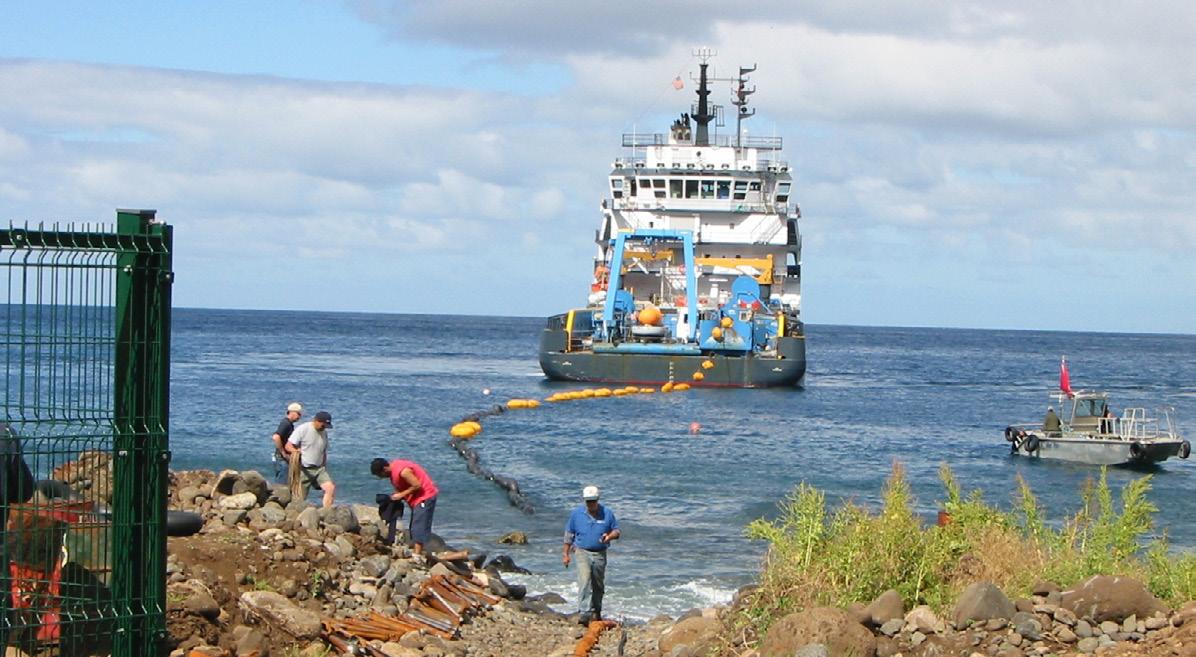
Fiber-optic cables are very sturdy and designed to last at least 25 years. For a transatlantic cable, per km, the amounts of raw materials required are:26
6.81 kg of optical fiber
643 kg of steel
11 kg of bitumen
228.1 kg of polyethylene
125 kg of copper
Submarine cables weigh about 1.4 tons per km for deep-sea applications, while heavily protected cables for shallower water can weigh several tons per km. The heavy cables are laid on the ocean floor using heavy equipment operated from specially designed cable ships, with newer ones custom-fitted with submarine robots.
21 https://www.submarinecablemap.com/submarine-cable/2africa
22 https://www.submarinecablemap.com/submarine-cable/equiano
23 https://www.submarinecablemap.com/submarine-cable/africa-1
24 https://www.submarinecablemap.com/submarine-cable/peace-cable
25 https://www.submarinecablemap.com/submarine-cable/seamewe-6
26 Song, Kaihui and Pasek, Anne, The climate impacts of subsea telecommunications cables: A comparative study of transAtlantic and trans-Pacific systems. Available at SSRN: https://ssrn.com/abstract=5420251
Findings from Clare et al.’s (2023) research assessing the impact of subsea cable burial on sedimentary organic carbon stocks show that submarine telecommunications cable burials may have disturbed up to 1.22 cubic km of seabed sediment worldwide.27 They estimate that in water depths of up to 2 km, 2.82–11.26 mega tons (Mt) of organic carbon worldwide has been disturbed by cable burial. Although the organic carbon released from this process is far less than from activities like deep-sea trawling or dredging, these amounts remain significant and are absent from current global carbon inventories. Furthermore, these disturbances can contribute to underwater soil erosion, affecting the natural habitats and life cycles of marine life, and reshaping marine sedimentary environments. Presenting the first global estimate of cablerelated sedimentary carbon impacts, this study highlights the urgent need for targeted field and lab research.28 Coastal erosion resulting from the construction and operation of cable landing stations along strategic coastlines also needs to be evaluated.
Installation of submarine cables involves survey ships, cable ships, and machinery for laying and burying, all of which create noise pollution that could disrupt marine organisms, especially those that rely on sound. These impacts are often considered short-term and localised, compared to other offshore noise sources, such as oil exploration.29 This reasoning operates within a risk-risk framework rather than adopting a precautionary approach to environmental protection and biodiversity conservation.
Submarine cables carry electrical currents and, in the process, emit EMF in surrounding waters, even when cables are exposed on the seafloor in deeper waters, or buried under sediments at depths of 500 metres. These EMFs, varying in strength and type – alternating current (AC) or direct current (DC) – can interact with Earth’s natural magnetic field and potentially affect electrosensitive marine life, though impacts vary and remain an area of ongoing research.30
Recent studies on the impacts of EMFs from submarine cables have raised more nuanced concerns about the ecological impacts on fragile ecosystems and marine biodiversity, as well as the need for long-term studies.31,32,33 Uncertainties on the impacts on different marine organisms at various growth stages have been raised.34 In a study of marine organisms in the Mediterranean Sea, the researcher said EMF impacts cannot be eliminated, even though most cables are buried in the seabed.35
27 https://www.nature.com/articles/s41467-023-37854-6#Sec2
28 https://www.nature.com/articles/s41467-023-37854-6#Sec2
29 https://www.un.org/depts/los/consultative_process/icp19_presentations/2.Richard%20Hale.pdf
30 https://tethys.pnnl.gov/sites/default/files/publications/Gill-et-al-2023-CEFAS.pdf
31 https://www.sciencedirect.com/science/article/pii/S0013935124024770
32 Manuel Reategui-Inga, et al. “Impacts of Electromagnetic Fields from Submarine Cables on Marine Life”, Journal of Design & Nature and Ecodynamics, 31 Mar 2025
33 https://doi.org/10.36688/ewtec-2025-720
34 https://www.sciencedirect.com/science/article/abs/pii/ S1364032118305355?fbclid=IwAR2VchA1pgYujmQaGBo9OS_7hNaFWxdCQHBYF0x7SQgkqeFBvpuO0_qkSj4
35 Michelle Calamaio, 14 Dec 2023, “ How submarine cables are threatening the fragile ecosystem of the Mediterranean Seabed”, Earth Journalism, https://earthjournalism.net/stories/how-submarine-cables-are-threatening-the-fragileecosystem-of-the-mediterranean-seabed
Laying, burying, and repairing subsea cables, as well as the construction of cable landing stations, result in habitat disturbance, which industry players often describe as temporary and localised. It is known that 74% of underwater cables are located within the territorial waters and exclusive economic zones of countries, while the remaining 26% are in the high seas.36 Coastal areas and territorial waters are principal sources of livelihood, food security, and survival for more than 5 million small–scale fishers in Africa and the 200 million people across the continent who depend on fisheries for a protein source.37
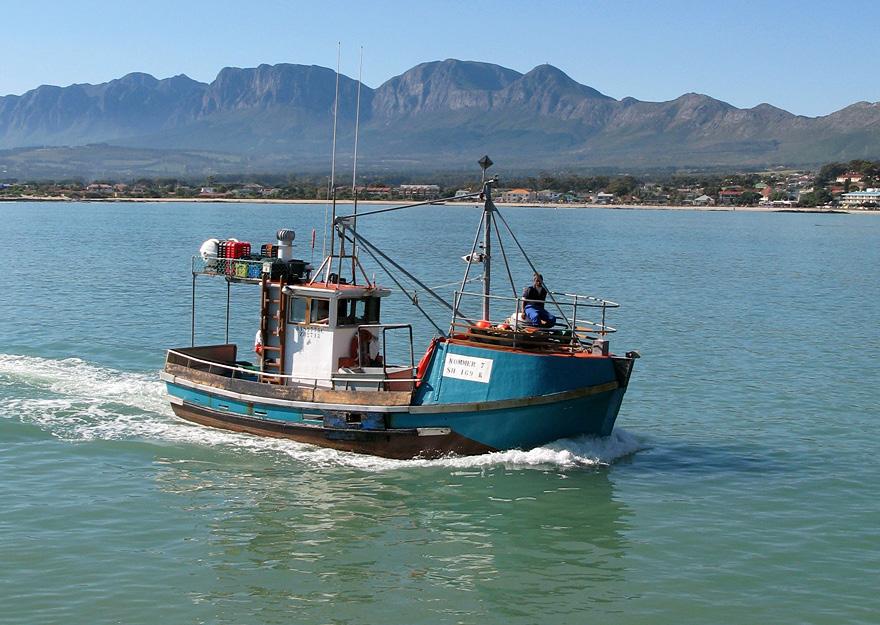
Fishing equipment and activities have been identified as culprits in accidental damage to submarine cables, especially in shallower waters of less than 100 metres deep, near the coast, where most small-scale fishers operate, often leading to conflicts and tensions with fisheries.38 Accidental damage accounts for 70% of cable breaks, largely from fishing activities, mostly from ship anchors, bottom trawlers and fishing gears, dredging activities, and port construction.39 For example, in May 2024, a ship anchor accidentally dragged three submarine cables in East Africa.40
36 https://storymaps.arcgis.com/stories/86ac6c8631ed4cc8a4d873f1fdafaab0#
37 https://360info.org/africa-offers-answers-for-small-scale-fisheries/#:~:text=Feeding%20more%20than%20200%20 million,Stocks%20have%20become%20overfished.
38 https://www.csis.org/analysis/strategic-future-subsea-cables-japan-case-study#:~:text=In%20the%20eyes%20of%20 Japanese,conduct%20intentional%20damage%20to%20cables.
39 https://www.ajg.com/be/news-and-insights/features/hidden-dangers-undersea-cables-and-mitigating-economic-risk/
40 https://www.internetsociety.org/resources/doc/2024/2024-east-africa-submarine-cable-outage-report/
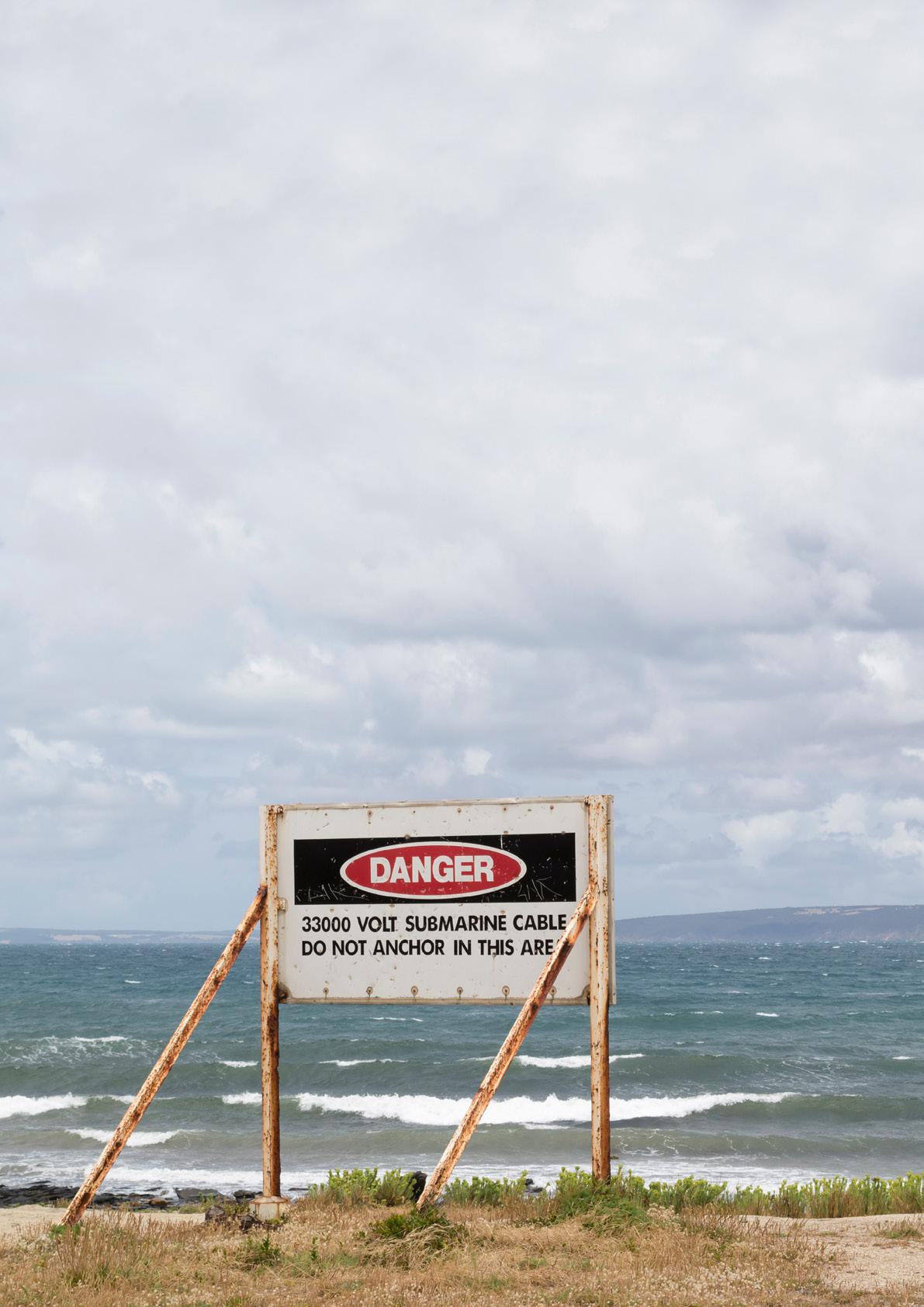
Thus, some countries have designated cable protection zones and corridors that prohibit activities that might pose a risk to submarine cables, such as fishing, anchoring, and dredging.41 However, while the global economic importance of submarine cables has heightened concerns about their safety and security, there is little discourse on protecting the interests of small-scale fishers, who are already severely marginalised by large fishing vessels and trawlers and now have to contend with submarine cables.42 This requires further investigation.
Growing global concerns about the burgeoning volume of electronic waste – as the world becomes increasingly dependent on digitalisation – have motivated studies on the environmental impacts of decommissioned subsea cables, which point to the high potential for recycling the materials used to manufacture them.43 The responsibility for retrieving old and out-of-use submarine cables rests with their owners/operators, mostly consortia, and is handled on a case-by-case basis.44
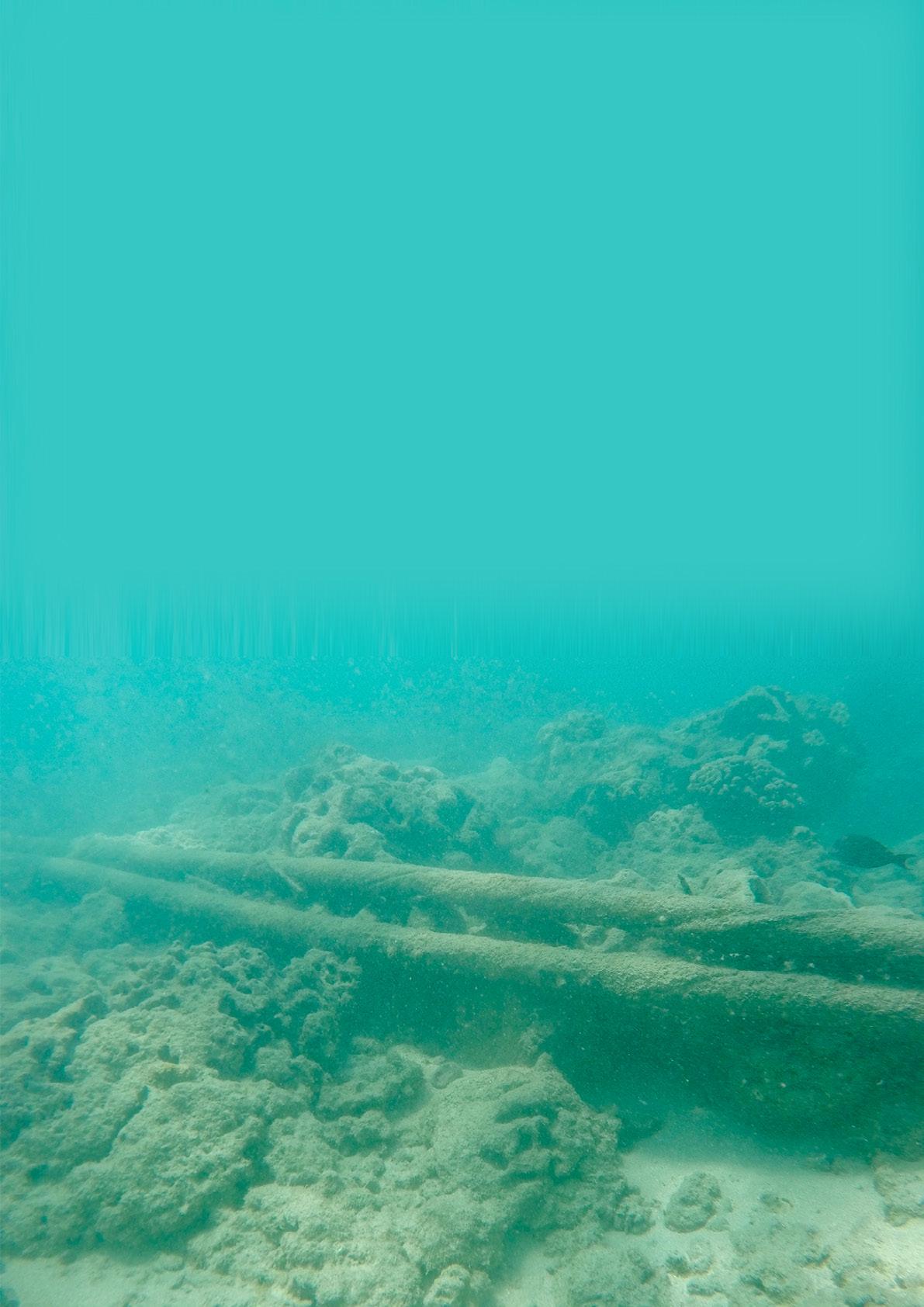
Recovering materials from decommissioned submarine telecommunications cables, typically after 25-40 years of service, is a growing initiative that minimises waste, curbs environmental harm, and supports circular economy principles. Cables retrieved from the central Pacific and North Atlantic oceans, and the Mediterranean Sea – some aged 38–44 years – remain remarkably intact and well-preserved, featuring pristine outer sheaths free of any noticeable biological buildup or degradation.45
Firms like Oceanic Environmental Cables (OEC) and Mertech Marine target redundant cables (e.g., Sparkle’s 22,000+ km Mediterranean deal in 2025) and transport them to shore facilities. Orange Marine, a French company that specialises in laying, repairing, and maintaining submarine cables, claims to have lifted 3,000 km of cables from the seabed for recycling.46 Cables are retrieved from the seafloor using giant grapnels – steel machines that look like ship anchors with multiple hooks.47 However, cables colonised by coral or embedded in seagrasses, which have become part of the marine ecosystem, are left on the seabed to minimise disruption.
Cable-laying operators like Orange Marine claim that retrieved cables are stripped mechanically or chemically to recover optical fibers (silica glass), copper/aluminum conductors, steel armoring, and polyethylene (PE) jackets/gels, which are then pelletised into regranulates.48, 49 The main recyclable materials in the cables are copper, polyethylene, and metal.50
41 https://www.trai.gov.in/sites/default/files/2024-11/ICPC_UKASEAN_CABLE_14022023.pdf
42 https://www.csis.org/analysis/strategic-future-subsea-cables-japan-case-study#:~:text=In%20the%20eyes%20of%20 Japanese,conduct%20intentional%20damage%20to%20cables.
43 https://www.sciencedirect.com/science/article/pii/S0301479725039386#sec4
44 https://www.theguardian.com/sustainable-business/2016/dec/14/ocean-pollution-cable-waste-technology-reuse-recyclingcircular-economy-crs-holland#:~:text=Any%20state%20can%20lay%20submarine,cable%20owner%2C%E2%80%9D%20 he%20adds
45 https://www.sciencedirect.com/science/article/pii/S0301479725039386?ref=pdf_download&fr=RR2&rr=9aca5f106e853c07#sec1
46 https://wholesale.orange.com/international/en/news/esg/protecting-the-subsea-environment.html
47 https://www.telstrainternational.com/en/news-research/articles/new-fibreoptic-cables-light-the-way-for-recycling-inthe-sea
48 https://www.linkedin.com/posts/mertech-marine_mertechmarine-circulareconomy-sustainableinnovation-activity7315274607563829248-hicy/
49 https://www.datacenterdynamics.com/en/news/sparkle-partners-with-oec-to-recycle-22000km-worth-of-unused-subseacable/
50 https://wholesale.orange.com/international/en/news/esg/protecting-the-subsea-environment.html#:~:text=A%20 second%20life%20for%20old,have%20created%20their%20own%20ecosystem.
The recycled steel can be used for fencing, the polyethylene to produce plastic goods like bottles, tables, and clothing, while copper can be sold on the commodity markets for reuse.51
Copper can be recycled infinitely, with about one-third of the global supply produced from recycled sources.52 However, the cost and energy requirements for collection, sorting, shredding, cleaning, and recycling are high, since there is generally only a small amount of copper in electronic waste. How much of the recycled copper from submarine cables ends up in the illicit trade of the so-called “red gold” led by crime syndicates in copper tampering, recycling, melting, and trade across Africa is not known.53
Recycling of optical fibers is theoretically feasible, but actual separation and reprocessing of the silica core remains technically difficult and expensive. While fiber-optic submarine cables are designed to last up to 25 years, after their lifespans are over, rather than being recycled, many are sent to landfills or incinerated. Most current research focuses on redesigning fiber-optic structures to make them easier to recycle.54
Pollution from materials used in submarine cables, including petroleum–based plastics such as PVC and polymers like polyethylene (PE) and aramid, a synthetic fiber derived from polyamide, which are widely used for coating, jacketing, and insulation, is a serious concern that is not widely investigated. The polymers are said to be stronger than steel, lightweight, and highly heat-resistant. PE degradation and leaching are concerns that have not been investigated in submarine cables in harsh environments on the ocean floor. Aramid is non-biodegradable; its production is energy-intensive and generates significant carbon emissions; and its recycling remains a technical challenge.55
51 https://www.telstrainternational.com/en/news-research/articles/new-fibreoptic-cables-light-the-way-for-recycling-inthe-sea
52 https://www.wri.org/insights/pivotal-role-recycled-copper-energy-transition#:~:text=Currently%2C%20recycled%20 copper%20accounts%20for,recycled%20copper%20and%20other%20metals.
53 https://globalinitiative.net/wp-content/uploads/2023/12/Jenni-Irish-Qhobosheane-South-Africas-illicit-Copper-economy-GITOC-December-2023.v2.pdf
54 https://www.sciencedirect.com/science/article/abs/pii/S092134490400151X#:~:text=The%20results%20of%20LCA%20 and,used%20to%20manufacture%20the%20cable.
55 https://www.uplift360.tech/tech/aramid-recycling-renew#:~:text=It%20takes%2037kg%20of%20raw,tonnes%20of%20 CO%E2%82%82e%20per%20year.&text=Para%2Daramids%20are:,fossil%20fuel%20derived
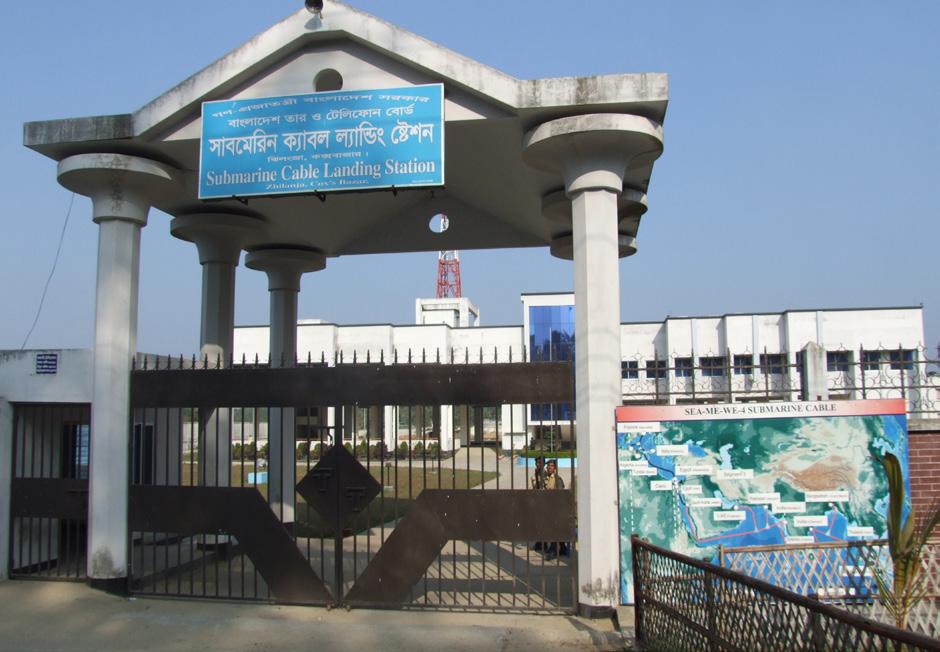
Fact sheet 1 discusses subsea cables, landing stations, and the corporate players involved. National governments have the prerogative to adopt policies and regulations on subsea cables and associated landing stations within their jurisdiction. As early as 2012, the Economic Community of West African States (ECOWAS) adopted a regulation on access to cable landing stations.56
While the regulation covers the licensing and transparency obligations of operators, it does not provide details on how environmental and social impacts will be taken into account and addressed in the approval of applications. A case in point is the impact of the construction of the landing point for the 6,000 km South Atlantic Inter Link (SAIL) cable system between Brazil and Cameroon, along with a deep-water port and oil pipeline. These have exacerbated coastal erosion in Kribi in southern Cameroon, leading to deterioration of the coastal ecosystem and the destruction of sea turtle habitats.57
An oft-cited study that analysed the environmental impact of submarine telecommunications cables over their lifetime identified key effects from:
i. 127 gigawatt hours of electricity at land-based terminals and ii. 1,515 tons of fuel for ship operations like laying and maintenance, estimating 7 grams of carbon dioxide equivalent (gCO2e) emitted per 10,000 gigabit-kilometers, which is a standard measure of cable functionality.
While based on assumptions, the analysis underscores submarine cables’ minimal carbon footprint and their role in reducing emissions compared to air travel.58 A more recent study from 2025 estimates lifecycle GHG emissions for typical trans-Atlantic subsea cables at 1.818–3.635 kilograms per 10 petabit-kilometres (Pb.km) and for trans-Pacific cables at 2.357–4.715 gCO2e per 10 Pb.km.59
Marine oil consumption accounts for 50%-60% of emissions, underscoring the potential for decarbonisation through low-carbon fuels and efficient vessels.60 Cable installation accounts for about half the total (43.4% for trans-Atlantic systems and 50.4% for trans-Pacific systems) GHG emissions, while emissions from operations and maintenance vary by landing station capacity and grid location.
According to the study, overall, emissions are lower than prior estimates, thanks to rising cable capacities.61 However, we take issue with this narrow perspective. The materials used and processes involved in manufacturing submarine cables require energy and generate GHGs, which must be factored in to understand their climate footprints. Key is the disclosure of this information as a basis for the lifecycle analysis of submarine cables. There is no available information on emissions from this industry, so it is not tagged in national GHG inventories.
It needs to be stressed, however, that the climate impacts of submarine cables cannot be viewed as standalone but should be seen as a key component of the entire system that enables digitalisation. Submarine cables serve as arteries that transfer data to vital organs, the most critical of which are data centres, where data is stored and processed. These brains consume massive amounts of energy (1.5% of global energy use in 2024)62 and water (up to 5 million gallons per day in large data centres)63 to operate, and this will keep increasing as AI plays an ever-larger role in our daily lives. Despite the hype around “cloud”, data centres are physical infrastructure that takes up land; hyperscale data centres can occupy up to 1,000 acres.64 All this extraction, consumption, and occupation of finite resources directly impacts food systems, agriculture, and the climate.
58 https://www.sargassoseacommission.org/storage/documents/Submarine_Cables_-_Chapter_7.pdf
59 https://papers.ssrn.com/sol3/papers.cfm?abstract_id=5420251
60 https://papers.ssrn.com/sol3/papers.cfm?abstract_id=5420251
61 https://papers.ssrn.com/sol3/papers.cfm?abstract_id=5420251
62 https://www.iea.org/reports/energy-and-ai/executive-summary#
63 https://www.eesi.org/articles/view/data-centers-and-water-consumption#:~:text=Data%20center%20developers%20 are%20increasingly,energy%20usage%20by%20data%20centers.
64 https://eri.iu.edu/resources/fact-sheets/data-centers.html#:~:text=A%20hyperscale%20data%20center%20campus%20 can%20occupy,of%2080%2C000%20homes%20(International%20Energy%20Agency%2C%202025).
Among the web of players involved in the submarine cable industry, who is accountable for:
• Adverse impacts on marine biodiversity and ecosystems?
• Clean-up and restoration?
Do the owners/operators of submarine cable systems now include Big Tech players? Is it the producers of the cables, or the companies contracted to lay, repair, and maintain the web of cables in the seafloor that are responsible?
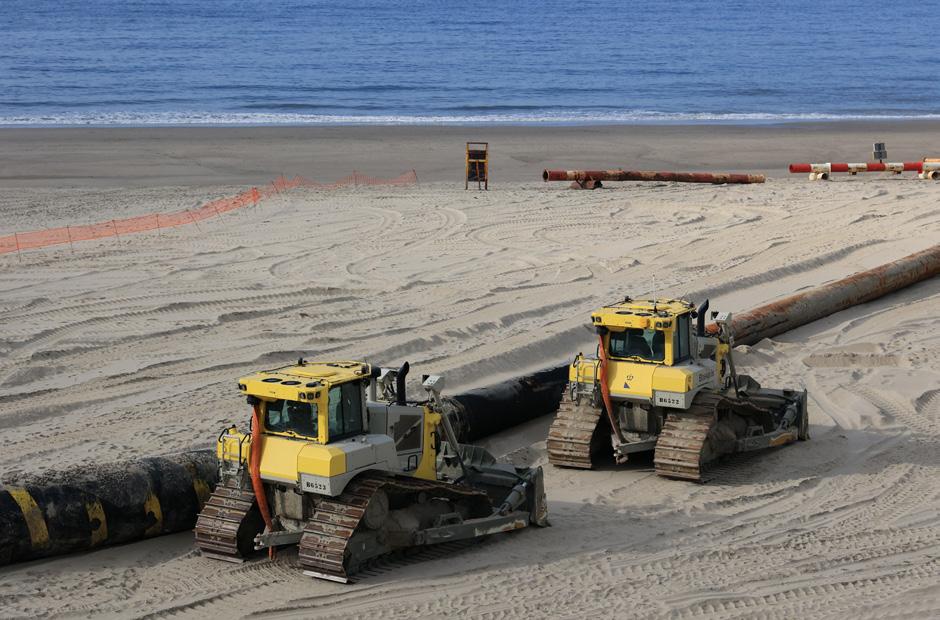
Regulation, including the issuance of licences and permits for the installation and repair of submarine cables and the construction of landing stations, rests with national authorities in the territories where these infrastructures are located. National laws and regulations on cybersecurity often involve the designation of safety zones for telecommunications infrastructure, ensuring protection against damage, and accounting for environmental impact.
• Nigeria, for example, has declared submarine cables as “critical national infrastructure” to ensure protection and has designated an independent national regulatory authority to assess applications and issue licences for cable landing stations as part of its functions.65
65 https://www.ncc.gov.ng/about-ncc/who-we-are#:~:text=The%20Nigerian%20Communications%20Commission%20 (NCC,the%20communications%20industry%20in%20Nigeria
• Ghana’s National Communications Authority ensures the implementation of the national regulations on submarine cable stations and cable landing stations.66
• In South Africa, subsea cable infrastructure is regulated under the Electronic Communications Act (ECA) of 2005, which requires a minimum 51% local equity stake by South Africans or Africans in international cable landing stations.67
The UN Convention on the Law of the Sea (UNCLOS) provides the general framework for laying submarine cables within the territorial waters of member states and in the continental shelf beyond national jurisdiction.
Major submarine cable systems and cable landing stations around the world usually involve multinational actors, traverse through international waters, and cross national borders. Yet there is no dedicated multilateral authority that monitors the status of these infrastructures or assesses their impacts. The International Telecommunications Union (ITU), as the UN agency mandated to set technical standards for telecommunications infrastructure, manages radio frequency and satellite orbits, and helps bridge the digital divide among countries. It is involved in standard setting for cable installation, protection, and maintenance of seabed cables, but does not regulate or monitor compliance with these standards.
ITU and UNEP work closely with the global association of telecommunications authorities and the submarine and power cable industry, under the umbrella of the International Cable Protection Committee (ICPC). This industry forum was formed in 1958 and provides:
• Technical and legal information to its members,
• Recommendations and guidelines for the installation, protection, and maintenance of submarine cables,
• Monitoring of developments in international fora, and
• Actively pushes for the interests of the submarine cable industry.68
In November 2024, the ITU in partnership with the ICPC created the International Advisory Body for Submarine Cable Resilience, comprised of 42 high-level officials of telecommunications agencies of governments in the North and the South, and executives of leading companies in cable infrastructure, co-chaired by the minister of digital economy of Nigeria and the telecommunications regulatory body of Portugal. The aim is to protect submarine cables from natural hazards and accidental human activities, improve cable maintenance, ensure faster recovery after disruptions, and promote sustainable practices in the industry,69 but there is no discussion at all of protecting the environment and biodiversity from the long-term impacts of submarine cables. International cooperation on submarine cables is all about protecting the multi-billion-dollar investments in this infrastructure and the value it brings to the global economy, while ignoring the economics of the long-term impacts on the marine environment and investments in long-term studies and independent monitoring.
66 https://nca.org.gh/submarine-cable-landing/#:~:text=Overview,Communications%20Act%2C%202008%20Act%20775
67 https://www.gov.za/sites/default/files/gcis_document/201409/30820246.pdf
68 https://www.iscpc.org/about-the-icpc/
69 https://www.itu.int/digital-resilience/submarine-cables/advisory-body/
Africa Network for Environment and Economic Justice (ANEEJ), Resource Matters and Spotlight on Corruption (2023) The harms of Glencore’s corruption in the Democratic Republic of Congo and Nigeria. Available at: https://www.spotlightcorruption.org/glencores-corruption-drc-and-nigeria/ Arthur J. Gallagher (n.d.) Hidden dangers: undersea cables and mitigating economic risk. Available at: https://www.ajg.com/be/news-and-insights/features/hidden-dangers-undersea-cables-andmitigating-economic-risk/
BHP (2025) Why AI tools and data centres are driving copper demand, BHP Insights, 13 January. Available at: https://www.bhp.com/news/bhp-insights/2025/01/why-ai-tools-and-data-centres-are-drivingcopper-demand
Biamp Systems (2013) Anatomy of a cable – optical fiber. Available at: https://blog.biamp.com/anatomy-ofa-cable-optical-fiber/
Calamaio, M. (2023) How submarine cables are threatening the fragile ecosystem of the Mediterranean seabed, Earth Journalism, 14 December. Available at: https://earthjournalism.net/stories/ how-submarine-cables-are-threatening-the-fragile-ecosystem-of-the-mediterranean-seabed Center for Strategic and International Studies (CSIS) (n.d.) The strategic future of subsea cables: Japan case study. Available at: https://www.csis.org/analysis/strategic-future-subsea-cables-japan-case-study Clare, M.A., Lichtschlag, A., Paradis, S. and Barlow, N.L.M. (2023) Assessing the impact of the global subsea telecommunications network on sedimentary organic carbon stocks, Nature Communications, 14. Available at: https://doi.org/10.1038/s41467-023-37854-6
Crawford, K. (2021). Atlas of AI: Power, Politics, and the Planetary Costs of Artificial Intelligence. New Haven: Yale University Press. Available at: https://yalebooks.yale.edu/book/9780300264630/atlasof-ai/
Economic Community of West African States (ECOWAS) (2012) Regulation C/REG.06/06/12 on Condition for Access to Submarine Cables Landing Stations. Available at: https://africanlii.org/en/akn/ aa-ecowas/act/reg/2012/6-6/eng@2012-06-12
Environmental Energy Study Institute (EESI) (n.d.) Data centers and water consumption. Available at: https:// www.eesi.org/articles/view/data-centers-and-water-consumption
Global Business Reports (n.d.) Mining in Africa: copper. Available at: https://www.gbreports.com/contents/ mining-in-africa-copper/
Google Cloud (2023) Delivering multi-core fiber technology in subsea cables, 11 September. Available at: https://cloud.google.com/blog/products/infrastructure/delivering-multi-core-fiber-technology-insubsea-cables
Gill, A. et al. (2023) Electromagnetic Fields (EMFs) from subsea power cables in the natural marine environment. CEFAS report. Available at: https://tethys.pnnl.gov/sites/default/files/publications/ Gill-et-al-2023-CEFAS.pdf
Hale, R. (2018) Sounds from Submarine Cable & Pipeline Operations. Presentation to UN ICP on Oceans and the Law of the Sea. Available at: https://www.un.org/depts/los/consultative_process/icp19_ presentations/2.Richard%20Hale.pdf
Internet Society (2024) 2024 East Africa submarine cable outage report. Available at: https://www. internetsociety.org/resources/doc/2024/2024-east-africa-submarine-cable-outage-report/ International Cable Protection Committee (ICPC) (n.d.) About the ICPC. Available at: https://www.iscpc.org/ about-the-icpc/
International Energy Agency (IEA) (2025) Energy and AI: executive summary. Available at: https://www.iea. org/reports/energy-and-ai/executive-summary
International Telecommunication Union (ITU) (n.d.) ITU Digital Resilience Submarine Cable Advisory Body. Available at: https://www.itu.int/digital-resilience/submarine-cables/advisory-body/
Indiana University Environmental Resilience Institute (ERI) (n.d.) Data centers fact sheet. Available at: https:// eri.iu.edu/resources/fact-sheets/data-centers.html
International Cable Protection Committee (ICPC) (n.d.) About the ICPC. Available at: https://www.iscpc.org/ about-the-icpc/
Kamath, V. et al (2025) Submarine cables storymap. Available at: https://storymaps.arcgis.com/ stories/86ac6c8631ed4cc8a4d873f1fdafaab0
Mongabay (2025) West and Central Africa tackle coastal erosion, 15 December. Available at: https://news. mongabay.com/2025/12/west-and-central-africa-tackle-coastal-erosion/ Maxton (n.d.) What is high purity silica quartz sand, its main mine and manufacturers. Available at: https:// maxtonco.com/what-is-high-purity-silica-quartz-sand-its-main-mine-and-manufacturers/ Missouri Independent (2023) Impacts of silica mining. Available at: https://moenvironment.org/wp-content/ uploads/sites/370/2023/01/Impacts-of-Silica-Mining-1.3.2023-1.pdf
Munga, J. (2025) Beneath the waves: addressing vulnerabilities in Africa’s undersea digital infrastructure Available at: https://carnegieendowment.org/research/2025/04/beneath-the-waves-addressingvulnerabilities-in-africas-undersea-digital-infrastructure
National Communications Authority (NCA), Ghana (n.d.) Submarine cable landing. Available at: https://nca. org.gh/submarine-cable-landing/
Nigerian Communications Commission (NCC) (n.d.) Who we are. Available at: https://www.ncc.gov.ng/ about-ncc/who-we-are
Orange Wholesale (n.d.) Protecting the subsea environment. Available at: https://wholesale.orange.com/ international/en/news/esg/protecting-the-subsea-environment.html
Republic of South Africa (2008) Electronic Communications Act, 2005. Guidelines for rapid deployment of electronic communications facilities. Available at: https://www.gov.za/sites/default/files/gcis_ document/201409/30820246.pdf
Reategui-Inga, M. et al. (2025) Impacts of electromagnetic fields from submarine cables on marine life, Journal of Design & Nature and Ecodynamics. Available at: https://doi.org/10.36688/ewtec-2025720
Sargasso Sea Commission (n.d.) Submarine cables chapter 7. Available at: https://www. sargassoseacommission.org/storage/documents/Submarine_Cables_-_Chapter_7.pdf
Song, K. and Pasek, A. (2024) The climate impacts of subsea telecommunications cables: a comparative study of trans-Atlantic and trans-Pacific systems. Available at: https://ssrn.com/abstract=5420251
Submarine Cable(n.d.) Submarine cable FAQs. Available at: https://www2.telegeography.com/submarinecable-faqs-frequently-asked-questions
Submarine Cable Systems (n.d.) History. Available at: https://www.submarinecablesystems.com/history Telegeography (2023) Mythbusting part 3. Available at: https://resources.telegeography.com/2023mythbusting-part-3
The Assay (n.d.) Copper: powering up the electric vehicle – why copper is intrinsically linked to the EV story Available at: https://www.theassay.com/articles/copper-powering-up-the-electric-vehicle-whycopper-is-intrinsically-linked-to-the-ev-story/
Telecom Regulatory Authority of India (TRAI) (2023) Consultation Paper on Licensing Framework and Regulatory Mechanism for Submarine Cable Landing in India, No.15/2022. Available at: https:// www.trai.gov.in/sites/default/files/2024-11/ICPC_UKASEAN_CABLE_14022023.pdf
Telstra International (n.d.) New fibre optic cables light the way for recycling in the sea. Available at: https:// www.telstrainternational.com/en/news-research/articles/new-fibreoptic-cables-light-the-way-forrecycling-in-the-sea
The Guardian (2016) ‘Ocean pollution: cable waste, technology, reuse, recycling’, The Guardian, 14 December. Available at: https://www.theguardian.com/sustainable-business/2016/dec/14/oceanpollution-cable-waste-technology-reuse-recycling-circular-economy-crs-holland World Resources Institute (WRI) (n.d.) Pivotal role of recycled copper in energy transition. Available at: https://www.wri.org/insights/pivotal-role-recycled-copper-energy-transition 360info (n.d.) Africa offers answers for small-scale fisheries. Available at: https://360info.org/africa-offersanswers-for-small-scale-fisheries/