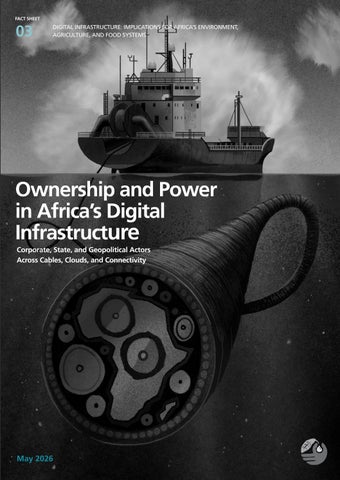

Ownership and Power in Africa’s Digital Infrastructure
Corporate, State, and Geopolitical Actors Across Cables, Clouds, and Connectivity
African Centre for Biodiversity (ACB)
ACB is committed to dismantling inequalities and resisting corporate industrial expansion in Africa’s food and agriculture systems.
© African Centre for Biodiversity www.acbio.org.za
PO Box 29170, Melville 2109, Johannesburg, South Africa. Tel: +27 (0)11 486-1156
Researched and written by Kavya Chowdhry and Neth Dano
Editorial oversight and input by ACB executive director Mariam Mayet
Design and layout by Baynham Goredema, Xealos Design Agency
Cover art by Gerhard van Wyk
Acknowledgments
ACB gratefully acknowledges the financial support of several donors, though the views expressed may not necessarily reflect the views of our donors.

Acronyms
ASN Alcatel Submarine Networks
ADC Africa Data Centres
AI Artificial intelligence
AWS Amazon Web Services
DRC Democratic Republic of Congo
EU European Union
Km Kilometres
OADC Open Access Data Centres
ICT Information and communication technology
IFC International Finance Corporation
PCCW Pacific Century CyberWorks Limited
SA South Africa
UAE United Arab Emirates
UK United Kingdom
US United States of America
WIOCC West Indian Ocean Cable Company
YOFC Yangtze Optical Fibre and Cable
YOA Cables Yangtze Optics Africa Cables
ZOI Zain Omantel International
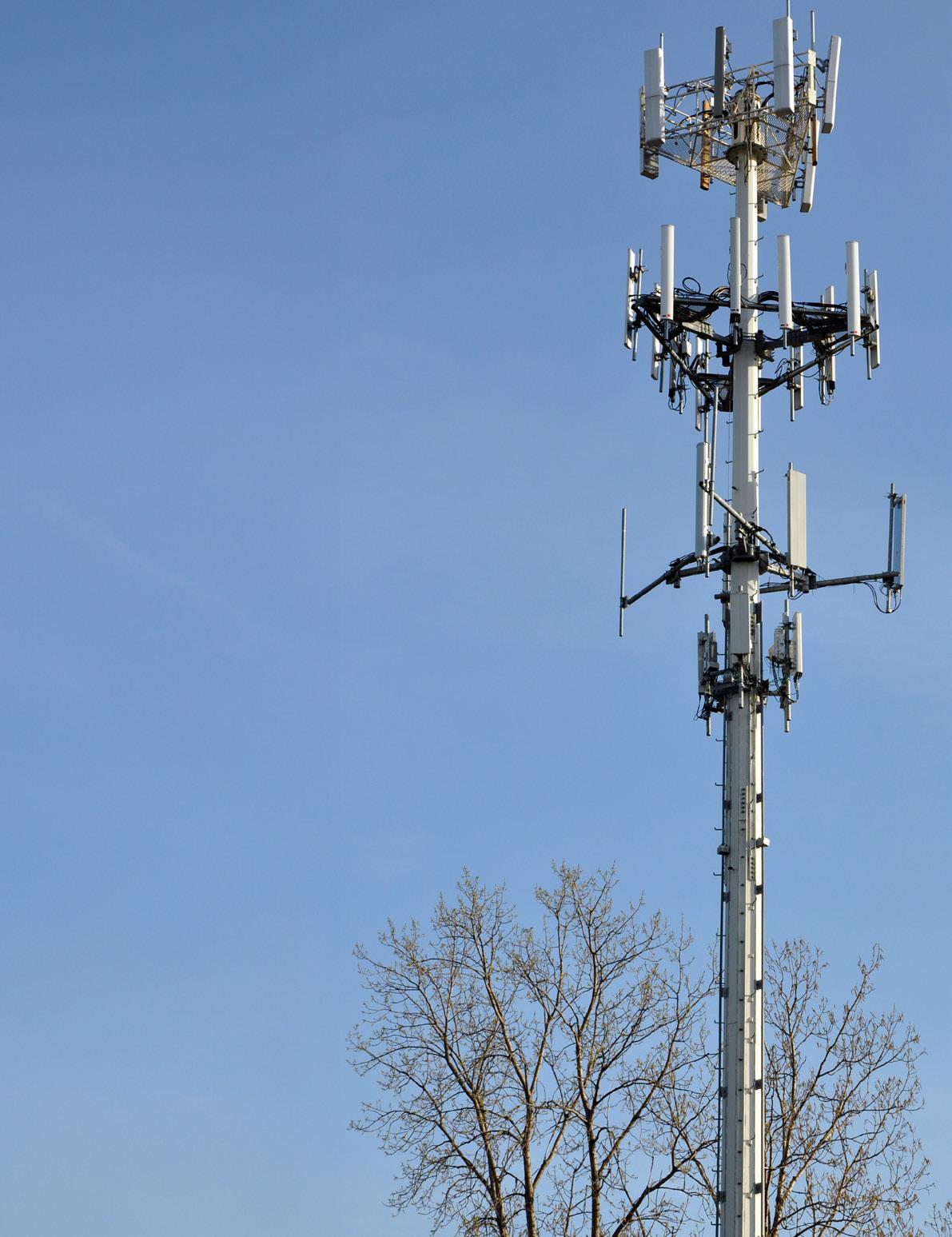
© Joe Ravi, Wikimedia Commons
Introduction
This third fact sheet builds on ACB’s earlier analysis of Africa’s digitalisation pathway: shifting attention from infrastructure presence to infrastructure power.
Fact Sheet 1 demonstrates that digital systems rely on extensive physical infrastructure submarine and terrestrial cables, satellites, data centres, and critical mineral extraction—while Fact Sheet 2 examines the environmental and social impacts of submarine cable expansion and the governance gaps shaping their deployment. Together, these analyses challenge the notion of digitalisation as immaterial, decentralised, or environmentally neutral.
Fact Sheet 3 turns to a critical but often obscured question: who owns and controls Africa’s digital infrastructure—and with what consequences?
Across submarine cables, terrestrial fibre networks, data centres, and cloud platforms, a relatively small group of multinational technology firms, telecom operators, private investors, and state-backed actors now exercise disproportionate influence over how Africa’s digital connectivity is built, governed, priced, and secured.
These ownership patterns are not merely technical or commercial. They have far-reaching implications for market concentration, national bargaining power, regulatory oversight, environmental accountability, and the prospects for meaningful digital sovereignty. Hyperscale cloud providers are no longer simply users of connectivity; increasingly, they are cable owners, data centre operators, and vertically integrated infrastructure players. At the same time, the growing role of state-backed actors, particularly from China, Gulf states, and Egypt, reflects intensifying geopolitical competition over the continent’s digital gateways.
By mapping key corporate and state actors across the digital infrastructure stack—from cable manufacturing and ownership to data centres, fibre networks, and last-mile connectivity—this fact sheet provides policymakers, regulators, and civil society with a clearer picture of how concentrated economic and geopolitical power shapes Africa’s digital future. It highlights how risks and benefits are distributed, how dependencies are entrenched, and how critical decisions affecting public services, economic development, and national security are increasingly made within privately controlled, transnational systems beyond effective public oversight.
Ownership and control of Africa’s digital infrastructure
Concepts such as digital public infrastructures1 and digital commons2 often obscure a more basic reality: the infrastructures that underpin digitalisation worldwide are overwhelmingly owned and controlled by a small number of corporations that dominate individual segments and, increasingly, the entire digital economy.
In Africa, ownership and control of submarine and terrestrial cables and data centres remain concentrated among private firms and state-owned entities that historically built and managed national telecommunications systems. The same limited group of companies that dominate the global manufacturing, installation, and maintenance of submarine cables also supply the critical hardware to regional cable consortia—many of which are now primarily led by Big Tech firms, in partnership with regional and national telecom operators.
These ownership structures are further shaped by intensifying geopolitical competition, the growing role of private equity, and increasing vertical integration across the digital infrastructure stack. Together, these dynamics deepen Africa’s dependence on foreign-based actors at a moment when public services, economic activity, and core state functions rely more than ever on digitally mediated systems that remain largely privately owned and governed.
1 Digital Public Infrastructure (DPI) refers to the foundational digital systems and technologies that support the delivery of public and private services to individuals and organisations. These systems are generally designed to be open, inclusive, and accessible, aiming to facilitate economic growth, social development, and enhance governance mechanisms. See: https://www.itu.int/en/ITU-D/Technology/Pages/dpi.aspx
2 Digital commons are a subset of the commons, where the resources are data, information, culture, and knowledge, which are created and/or maintained online. The notion of the digital commons is an important concept for countering legal enclosure and fostering equitable access to these resources. See: https://policyreview.info/concepts/digital-commons
Key global actors in submarine cable manufacturing, deployment, and ownership
For further background, please refer to Fact Sheet 1 and Fact Sheet 2
The global submarine cable sector is dominated by a small group of specialised manufacturers and installers—including SubCom, Alcatel Submarine Networks (ASN), NEC, and the Chinese firm HMN Tech—whose selection increasingly reflects geopolitical considerations alongside technical capacity. Governments now assess suppliers not only on performance and cost, but also on the strategic implications of granting firms access to international gateways, given concerns around surveillance, data interception, and potential disruption. These dynamics have intensified in recent years, particularly as the United States (US) has actively opposed the participation of HMN Tech in several submarine cable projects across Africa and beyond.
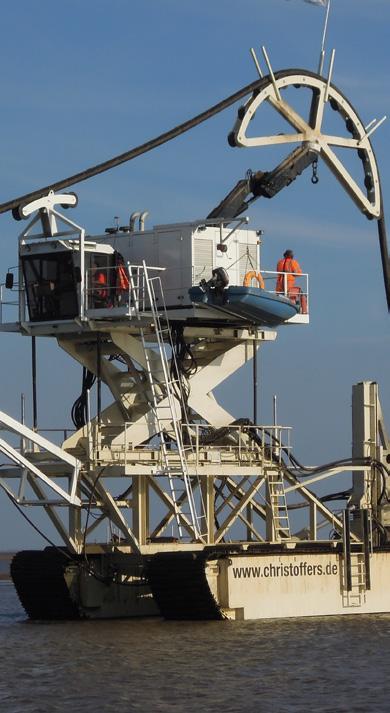
Within Africa, ownership of new and existing subsea systems reflects a complex mix of Big Tech hyperscalers, pan-African telecom firms, Chinese state-backed companies, and national operators. Megaprojects such as 2Africa—the world’s longest subsea cable—bring together Meta, China Mobile International, Bayobab (MTN), Orange, center3 (Saudi Telecom), Telecom Egypt, Vodafone, and West Indian Ocean Cable Company (WIOCC). At the same time, Google’s private Equiano cable illustrates how cloud companies now directly finance and control key international connectivity routes. Other systems, including Africa1, PEACE, and SeaMeWe6, involve similarly diverse consortia that combine Gulf-based operators, Chinese telecom companies, African incumbents, and global infrastructure investors such as Digital Realty.
Together, these arrangements mark a significant shift in submarine cable ownership. Hyperscalers and large telecom groups are no longer simply major users of international connectivity, but progressively influential owners, shaping landing-point decisions, bandwidth pricing, and regional connectivity pathways. The growing involvement of actors with strong state backing—particularly from China, Egypt, and the Gulf states—adds further layers of strategic and geopolitical influence over how and where the continent’s critical digital arteries are built.
Major submarine cable systems connecting Africa
2Africa 45,000 Bayobab, China Mobile, Meta, Orange, Telecom Egypt, Vodafone, WIOCC, center3
46 landing points with 30 of them in African countries.
Equiano 15,000 Google (sole owner) 6 landing points in total, 4 in Africa, in Namibia, Nigeria, South Africa (SA), and Togo.
Africa- 1 10,000 Telecom Egypt, Algerie Telecom, e& (United Arab Emirates [UAE]), G42(UAE), Mobily (Saudi Arabia), Pakistan Telecommunications Company Ltd (PTCL), TeleYemen and Zain Omantel International (ZOI) (Oman)
PEACE 25,000 Peace Cable International (China); China Mobile; China Telecom; China Unicom; Ooredoo (Qatar); Orange; Telecom Egypt; Digital Realty; Pacific Century CyberWorks Limited (PCCW) Global; Telin (Indonesia); Telkom Kenya; ZOI.
11 landing points in total, with 6 landing points in Algeria, Djibouti, Egypt, Kenya, Somalia.
2Africa Pearls extension to the 2Africa cable was announced in 2021 connecting Europe, Africa and Asia, making it the largest subsea system ever deployed. center3 is a Saudi company owned by the Saudi Telecom Company Group.
The landing point in Saint Helena was key in the trans-Atlantic slave trade route, serving as a nodal point for cables.
Landing points in France, Pakistan, Saudi Arabia, UAE, and Yemen.
14 landing points in total, with 6 landing points in Africa across Cyprus, Egypt, Kenya, Seychelles, Somalia, and Tunisia.
Peace Cable International Network Co. Ltd, a consortium including China Mobile, China Telecom, China Unicom, Cybernet (the landing partner in Pakistan), Digital Realty (a US-head quartered real estate company that invests in and operates data centres across the world), Ooredoo (Qatar), Orange, Telecom Egypt, PCCW Global (Hong Kong-based telecom), Telin (Indonesia), Telkom (Kenya), and ZOI. It has landing points in France, Maldives, Malta, Pakistan, Saudi Arabia, Singapore, and UAE.
Cable name Length (km)
SeaMeWe-6
Africa Coast to Europe (ACE)
21,700 Bahrain Telecommunications Company (Batelco), Bangladesh Submarine Cable Company Limited (BSCCL), Bharti Airtel (India), China Unicom, Dhiraagu (Maldives), Djibouti Telecom, Microsoft, Mobily (Saudi Arabia), Orange, PCCW (Hong Kong), Singtel (Singapore), Sri Lanka Telecom, Telecom Egypt, Telekom Malaysia, Telin, and Transworld (Pakistan).
17,000 Bayobab (owned by MTN Group, based in SA), Cable Consortium of Liberia, Canalink (Spain), Dolphin Telecom, GUILAB (Guinea), Gambia Submarine Cable Company, International Mauritania Telecom, Orange (France), Orange Cameroun, Orange Cote d’Ivoire, Orange Mali, Republic of Cameroon, Republic of Equatorial Guinea, Republic of Gabon, Republic of Guinea Bissau, Société Béninoise des Infrastructures Numériques du Bénin (SBIN), STP Cabo (São Tomé and Príncipe), Sierra Leone Cable Company, Sonatel, Zamani Telecom (Niger).
17 landing points in total, with 3 in Africa, across Egypt and Djibouti.
18 landing points in total, with 15 in Africa across Benin, Ivory Coast, Equatorial Guinea, Gabon, Gambia, Ghana,Guinea, Guinea-Bisseau, Liberia, Mauritania, Nigeria, São Tomé and Príncipe, Senegal, Sierra Leone, and SA.
West Africa Cable System (WACS)
14,530 Altice Portugal, Angola Cables, Bayobab, Broadband Infraco, Camtel, Cape Verde Telecom, Congo Telecom, Liquid Intelligent Technologies, Office Congolais de Poste et Télécommunication, PCCW (Hong Kong), Tata Communications, Telecom Namibia, Telkom SA, Togo Telecom, Vodacom DRC, Vodafone, Vodafone Espana, Vodafone Ghana.
13 landing points in total, with 11 in Africa across Angola, Cameroon, Cape Verde, Democratic Republic of Congo (DRC), Republic of Congo, Ivory Coast, Ghana, Namibia, Nigeria, SA, and Togo.
Countries with only a single cable landing station—such as Guinea, Guinea-Bissau, Gambia, Liberia, and Mauritania—face heightened vulnerability to cable disruptions and limited network resilience. Commercial investment decisions tend to prioritise high-return, profitable corridors, often leaving less lucrative or already marginalised regions under-connected or entirely excluded.3
3 https://www.newsghana.com.gh/africa-needs-patient-capital-for-digital-infrastructure-revolution/
Data Centres: control, concentration, and digital sovereignty risks
Data centres in Africa currently account for around 1% of global data centre capacity, compared with approximately 45% in the US. While the continent’s overall share remains small, capacity in Africa’s five largest markets is projected to expand rapidly—from about 400 megawatts (MW) today to between 1.5 and 2.2 gigawatts (GW) by 2030 4 Despite this growth, ownership across the continent remains highly concentrated: private firms control nearly 78% of data centre facilities, while state-owned enterprises account for a combined 20%, including roughly 8% wholly state-owned, 6.4% majority state-owned, and 5.6% with minority government stakes.5
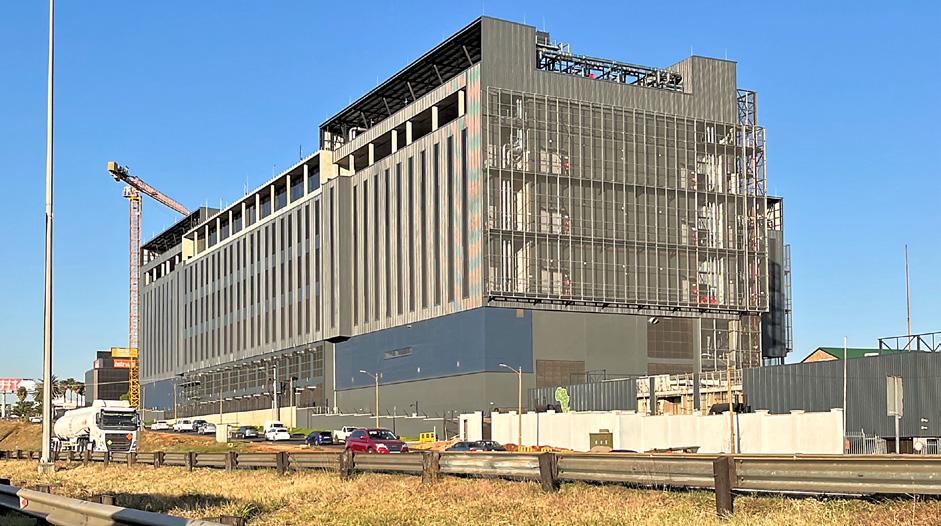
Examples of state involvement in data centre ownership include Congo Telecom and Gamtel in West Africa; TelOne and Infratel Corporation in Eastern and Southern Africa; and Algérie Télécom and Telecom Egypt in North Africa. Data centre infrastructure is also highly concentrated geographically, reflecting broader regional inequalities. More than half of Africa’s total data centre capacity is in SA, according to the Africa Data Centers Association.6
4 https://www.mckinsey.com/industries/technology-media-and-telecommunications/our-insights/building-data-centers-forafricas-unique-market-dynamics
5 https://documents1.worldbank.org/curated/en/099051924165027814/pdf/P1724171bc956a07d1bfd6105b3a20f7fa8.pdf
6 https://inform.tmforum.org/features-and-opinion/data-center-investment-on-the-rise-in-africa
Major global cloud providers have significantly expanded their presence across Africa. Microsoft Azure has invested heavily in expanding its operations in Johannesburg, committed US$1 billion to a data-centre investment in Kenya, in partnership with G42 (discussed in Fact Sheet 4), and supported artificial intelligence (AI) skills development programs in Nigeria. Amazon Web Services (AWS) established its first African hyperscale region in Cape Town in 2020,7 while Google followed with the launch of its first cloud region on the continent in SA in 2022. Oracle has announced a new public cloud region in Kenya and signed a memorandum of understanding to open two additional cloud regions in Morocco. Huawei has built six cloud data centres across Africa, including hyperscale facilities in SA, and has pledged more than US$300 million by 2026 towards data-centre development and cyber-security initiatives.
Africa Data Centres (ADC), part of the Cassava Technologies group—which describes itself as a global technology company of African heritage—sits within a broader portfolio that includes Liquid Intelligent Technologies (fibre, satellite, and wireless networks), Liquid Cloud (cloud and cyber-security services), Cassava Compute AI, and Sasai Fintech 8 The company has received investment from Nvidia and plans to raise US$700 million to expand its data-centre and AI infrastructure. As part of this strategy, ADC aims to deploy 12,000 Nvidia graphics processing units (GPUs) across West, East, North, and Southern Africa, beginning in SA, with the stated objective of making AI infrastructure and services more affordable across the continent.
Cassava Technologies and the Rockefeller Foundation are working to provide digital services at subsidised rates to AI startups and non-profit organisations.9 ADC currently operates three data centres in SA while Cassava’s investor base includes British International Investment, US International Development Finance Corporation (DFC),10 Finnfund, the Fund for Export Development in Africa (Afreximbank/FEDA), Gateway Capital, Google, the International Finance Corporation (IFC), the Public Investment Corporation, and Royal Bafokeng Holdings.
Beyond data centres, Cassava owns Africa’s largest fibre network, spanning approximately 110,000 kilometres (km) across more than 20 countries, reinforcing its vertically integrated position across the continent’s digital infrastructure. The company has also partnered with Accenture to expand its “sovereign AI” capabilities, with the stated aim of keeping data storage and processing within Africa.11
In February 2026, STANLIB Asset Management—a private equity firm backed by Standard Bank and Liberty Global—acquired stakes in the ADC unit, with the stated intention of gaining sole control at a later stage.12
7 https://techcrunch.com/2022/10/05/google-picks-south-africa-for-its-first-cloud-region-in-africa/
8 https://www.cassavatechnologies.com/about-us/
9 https://www.bloomberg.com/news/articles/2025-11-18/nvidia-backed-cassava-pushes-to-expand-ai-access-across-africa
10 https://www.dfc.gov/media/press-releases/dfc-disburses-83-million-africa-data-centres-expand-ict-infrastructuresouth#:~:text=This%20marks%20the%20first%20disbursement,said%20DFC%20CEO%20Scott%20Nathan.
11 https://www.datacenterdynamics.com/en/news/cassava-technologies-secures-investment-from-stanlib-and-nvidia/
12 https://developingtelecoms.com/telecom-technology/data-centres-networks/19730-cassava-clears-key-hurdle-for-stanlibstake-in-africa-data-centres.html
Key corporate actors shaping Africa’s data centres’ digital infrastructure
Actors Headquarters
Microsoft Azure US
Location of data centres
Has data centres in Johannesburg and Cape Town, SA.
AWS US
Google US
Oracle US
Huawei China
ADC (Cassava Technologies) SA
Equinix US
Digital Realty US
Airtel Africa Nxtra UK
Has cloud region in Johannesburg, SA.
Has a data centre region in Cape Town, SA.
Has built a data centre in Johannesburg, SA.
Senegal’s state data and platforms built using technology, equipment and support from Huawei and financed by Chinese loans amounting to US$18.2 million; partnered with Galaxy Backbone to build a data centre in Nigeria; also built data centres in Tanzania, Mozambique, and Zimbabwe.
Has data centres across SA, Nigeria, and Kenya.
Has data centres in Nigeria, Ghana, Ivory Coast, and SA.
Has data centres in SA, Ghana, and Nigeria.
Its planned data centre in Kenya is one of Africa’s largest, expected to start in 2027; another facility in Lagos, Nigeria is also under construction.
Key investments in digital infrastructure, focusing on data centres
Plans to invest an additional US$300 million in SA’s AI infrastructure; US$1 billion investment into a geothermal energy powered data centre in Kenya with G42.
Announced a US$1 billion investment in Africa, starting in 2021, to support connectivity and invest in start-ups.
Plans to build cloud regions in Kenya and Morocco.
Vodacom SA
Has data centres in SA and one in Mozambique.
The parent company Cassava Technologies is head quartered in the United Kingdom (UK).
Acquired West Africa-based MainOne for US$320 million.
Acquired Teraco, a major data centre company based in SA, for about US$3.5 billion.
Airtel Africa is headquartered in the UK but a majority stake in Airtel Africa is owned by the Indian-headquartered Bharti Airtel.
Data centre in Mozambique built to connect to the 2Africa subsea cable. Vodacom’s parent company is Vodafone, a company with headquarters in the UK.
Actors Headquarters
Location of data centres
Building its first data centre in Nigeria with an investment of US$240 million.
Key investments in digital infrastructure, focusing on data centres
In discussion with US and European Union (EU) firms to build data centres for AI services.
Raxio Netherlands
OADC, WIOCC Kenya
Has data centres in Uganda, Ethiopia, Mozambique, DRC, Ivory Coast, Tanzania, and Angola; received debt funding of US$100 million from IFC (of World Bank Group) to expand its data centre services.
Acquired 7 data centres owned and operated by the Japanese NTT.
Equinix, an American data centre company, entered the African market through its acquisition of MainOne, a West Africa-based data centre and connectivity provider.13 Since then, Equinix has invested US$140 million to expand its operations in Nigeria, responding to rapid growth in data generation and rising demand for AIrelated services 14 These trends are expected to intensify as Nigeria targets 70% digital literacy by 2027, up from approximately 50% at present. The sector has also witnessed a broader wave of mergers and acquisitions, reflecting accelerated consolidation across Africa’s data-centre market.
Digital Realty, another American global data-centre provider, has built a significant presence across the continent through a series of strategic acquisitions. It entered the Nigerian market in 2021 with the purchase of Medallion Data Centres for US$29 million and subsequently established itself in SA through the acquisition of Teraco for approximately US$3.5 billion, while expanding operations in Kenya and Mozambique. The company now operates around 15 data centres continent-wide. In parallel, Open Access Data Centres, part of WIOCC, acquired data-centre facilities in SA previously owned by the Japanese firm NTT, further underscoring the consolidation of ownership in the sector.15
Not far behind are telecom operators responding to the growing demands of Africa’s expanding digital economy. Globally, telecom companies were significant investors in data centres between 2000 and 2015, but many divested these assets over the past decade as part of a broader shift in strategy.16,17 More recently, renewed investment—particularly in AIrelated infrastructure— reflects efforts to meet rising consumer and enterprise demand while developing new revenue streams.
In 2025, Nxtra, a subsidiary of Airtel Africa, began constructing data centres in Kenya and Nigeria. Vodacom, a subsidiary of Vodafone, has likewise initiated data-centre developments, including a facility in Mozambique directly connected to the 2Africa subsea cables.18
13 https://investor.equinix.com/news-events/press-releases/detail/4/equinix-enters-africa-closing-the-us320-million
14 https://www.bloomberg.com/news/articles/2025-10-17/nigeria-ai-data-center-projects-draw-in-1-billion-investment
15 https://www.datacenterdynamics.com/en/news/oadc-acquires-ntt-data-centers-in-south-africa/
16 https://www.deloitte.com/us/en/insights/industry/technology/telcos-enter-generative-ai-data-center-market.html
17 https://www.datacenterdynamics.com/en/analysis/telco-data-center-sell-/
18 https://www.airtel.africa/data-centers
MTN Genova SA
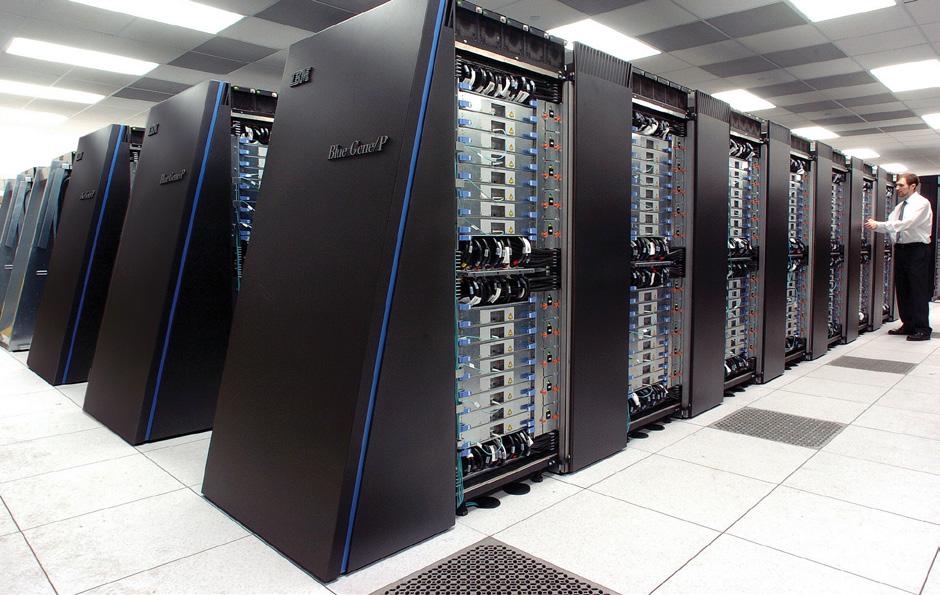
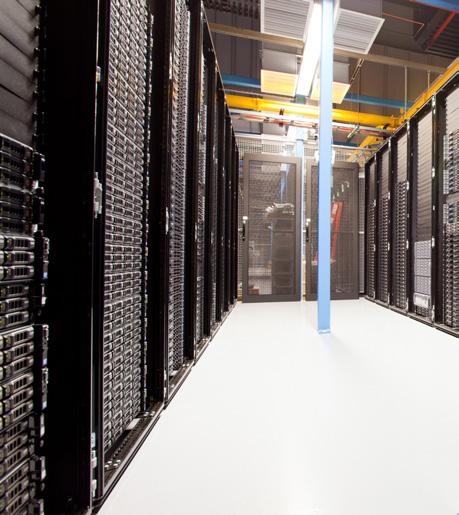
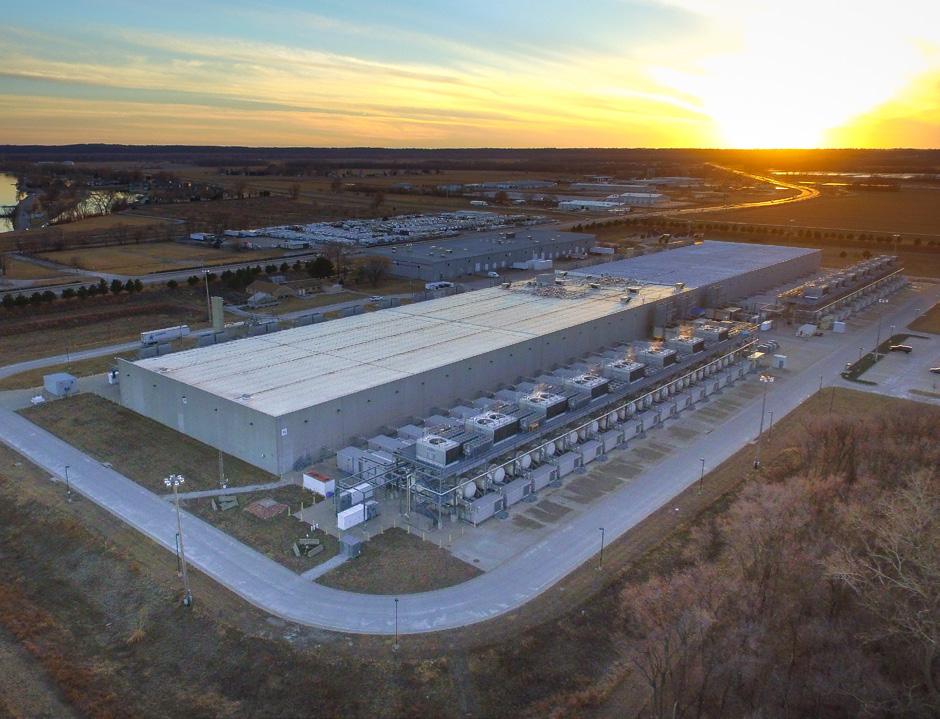
Data centres raise significant security concerns, particularly when data are stored beyond national borders and become subject to foreign legal jurisdictions and regulatory regimes. In recent years, such facilities have also increasingly been drawn into armed conflicts, becoming targets of military action. Following the US–Israeli assault, Iran retaliated by striking Amazon data-centre facilities in the UAE and Bahrain, claiming that these infrastructures supported US–Israeli military intelligence activities. AWS later reported structural damage, power disruptions, and, in some instances, the activation of fire-suppression systems, although it did not disclose the full extent of the damage.19,20
Legal scholars continue to debate whether data centres constitute permissible military targets under international humanitarian law, and there is no straightforward answer. The difficulty lies in the inherently dual-use nature of data centres, whose functions are often opaque and may support both civilian and military activities.
In many cases, even data service providers may lack full visibility into how specific facilities or services are ultimately used. At the same time, the growing entanglement between the US defence sector and Silicon Valley firms has further blurred these distinctions. Companies such as Amazon, Microsoft, and Oracle maintain partnerships with the US Department of Defense and operate dedicated data-centre infrastructure for military purposes from undisclosed locations within the US. 21
19 https://theintercept.com/2026/03/20/ai-data-centers-military-targets-iran-war/
20 https://www.reuters.com/world/middle-east/amazon-says-awss-bahrain-region-disrupted-following-droneactivity-2026-03-24/
21 https://theintercept.com/2026/03/20/ai-data-centers-military-targets-iran-war/ ©
Wikimedia Commons
Data-centre facilities that are explicitly dedicated to military functions may constitute legitimate military targets when they are demonstrably used for military purposes. At the same time, the highly centralised nature of cloud infrastructure means that disruptions can have wide-ranging civilian consequences. An outage at an AWS data centre in October 2025 disrupted approximately 1,000 websites across sectors including banking, news media, airlines, communications, and entertainment. Services affected included WhatsApp, Signal, Zoom, Xbox, Starbucks, Venmo, and US airlines Delta and United, as well as consumer technologies such as Ring doorbell and Amazon Alexa, illustrating the cascading impacts of failures within globally concentrated cloud systems.
Digital sovereignty, however, extends beyond questions of data localisation alone. The outsized presence of multinational technology firms across Africa’s digital infrastructure stack raises broader concerns that public-interest priorities may be subordinated to corporate business models, or that private actors may exert disproportionate influence over national governance frameworks, regulatory choices, and long-term digital policy trajectories.22
When markets are dominated by a small number of players, even a single disruption—such as a subsea cable failure—can produce far-reaching consequences. These risks are amplified as an increasing range of essential services, including government operations, healthcare systems, agricultural data platforms, and financial transactions, move online.
High levels of concentration in cloud markets can also dampen innovation and enable restrictive commercial practices. These include high data egress fees—charges imposed for transferring data to alternative platforms—which can lock users into specific providers, weaken their bargaining power, and leave them exposed to rising costs with limited ability to switch services.23
In 2024, the South African Competition Commission prepared to file a complaint against Microsoft’s Azure cloud business, alleging that the company imposed excessive charges on firms seeking to migrate their cloud licences to competing providers, thereby raising switching costs and limiting competition.24
Reliance on foreign multinational tech companies on the continent allows companies to collect vast amounts of data from African users through their platforms and services.25 Data centre equipment like servers and semiconductors are almost entirely imported, leaving African digital infrastructure vulnerable to global trade tensions, export controls, and supply chain shocks.26
In summary, despite the rapid expansion of data-centre investments across the continent, African governments remain heavily reliant on foreign-owned cloud and co-location
22 https://info.consoleconnect.com/hubfs/Console%20Connect/Resources%20-%20PDFs/Africa%20Interconnection%20 Report%202025.pdf “For example, in one East African country, where there is an existing carrier-neutral data centre, two other operators have looked at the market but have yet to make commitments. One industry insider thought that the level of demand will probably not support another carrier-neutral facility for another one to two years. But investment continues to go into countries with existing data centres. For example, Equinix has announced that it will invest US$390 million in building data centres in Africa over the next five years.”
23 https://cloud.carnegieendowment.org/cloud-governance-issues/effects-of-cloud-market-concentration/
24 https://www.bloomberg.com/news/articles/2024-04-04/microsoft-faces-south-african-complaint-as-cloud-probes-multiply
25 https://www.cambridge.org/core/journals/data-and-policy/article/artificial-intelligence-digital-colonialism-and-theimplications-for-africas-future-development/4BD73E9129A9CD9E9301C61CB2401450
26 https://africadca.org/wp-content/uploads/2026/02/Data-centresInAfrica2026-EN.pdf
infrastructure to host public-sector data, including national digital identity systems, health records, agricultural databases, and other critical platforms. As an increasing number of states enter so-called “sovereign cloud” partnerships with firms such as Microsoft, AWS, Oracle, and Huawei—often framed as capacity-building initiatives—key decisions related to data governance, cyber-security, and long-term infrastructure planning are progressively shifting into the hands of private multinational actors. This trajectory raises significant concerns about vendor lock-in, opaque contractual arrangements, and the extent to which governments can retain meaningful control over sensitive information and essential public-sector digital services.
At the same time, Africa’s data-centre ecosystem remains highly geographically concentrated, with the bulk of capacity located in a small number of urban hubs— notably Johannesburg, Cape Town, Nairobi, Lagos, and Cairo. This spatial concentration creates systemic vulnerabilities: localised outages, energy shortages, water stress, extreme weather events, political instability, or targeted cyber-attacks can quickly cascade across entire regions. Regulatory frameworks governing data-centre energy use, water consumption, emissions, cross-border data flows, and cloud procurement also remain fragmented across the continent. Without stronger public oversight and more coordinated regional approaches, the rapid expansion of privately controlled digital infrastructure risks deepening inequalities, intensifying resource pressures, and further weakening the bargaining power of African states in a sector that has become central to national security, economic governance, and public administration.
Major corporate actors across Africa’s digital infrastructure stack27
Sectors
Submarine cable manufacturers
Submarine cable owners
Submarine cable installation
Data centres
Terrestrial fibre providers
Terrestrial fibre optic cable manufacturers (used across industries, including digital and telecoms)
Biggest companies
Subcom (US), HMN Tech (China), ASN (France), and NEC (Japan)
Big Tech corporations, pan-African telecom firms, Chinesestate backed actors, African state-led telecom entities: Google, Meta, Microsoft, and AWS (US)
MTN GlobalConnect (SA)
Orange (France)
Telecom Egypt (Egypt)
WIOCC (Africa-wide / regional)
Vodafone (UK)
China Mobile International, China Telecom, China Unicom, and Huawei
Camtel (Cameroon)
Angola Cables (Angola)
Telkom Kenya partnership (Kenya)
SubCom (US), ASN (France), Orange (France), Global Marine (UK), NEC (Japan), HMN (China), and Optic Marine
Microsoft, Google, Oracle, Digital Realty (US), Equinix (US), Huawei (China), ADC (SA), Nxtra (India), Vodacom (SA), and Raxio
MTN (SA), Liquid Intelligent Technologies, WIOCC, Open Access Metro, African state-backed enterprises
Prysmian Group (Italy), Corning Inc. (US), Sumitomo Electric Industries (Japan), Furukawa Electric/OFS Optics (Japan), Hengtong Optic-Electric (China), and YAO Cables (China)
It is worth noting that many of these companies hold sway across sectors. For example, ASN, widely regarded as a system integrator, designs and manufactures its cables and equipment, and owns a fleet of six cable ships for installation and maintenance.28 Orange Marine handles installation, while Orange operates subsea cables. 29
27 This research is based on an analysis of information available from industry reports, consulting firms, and business news.
28 https://www.pioneerconsulting.com/wp-content/uploads/2021/03/Pioneer_Consulting_Suppliers_Report_Executive_ Summary_Download.pdf
29 https://ecdpm.org/work/troubled-waters-europes-subsea-telecommunications-network
Terrestrial fibre networks: regional gaps, market power, and infrastructure inequalities
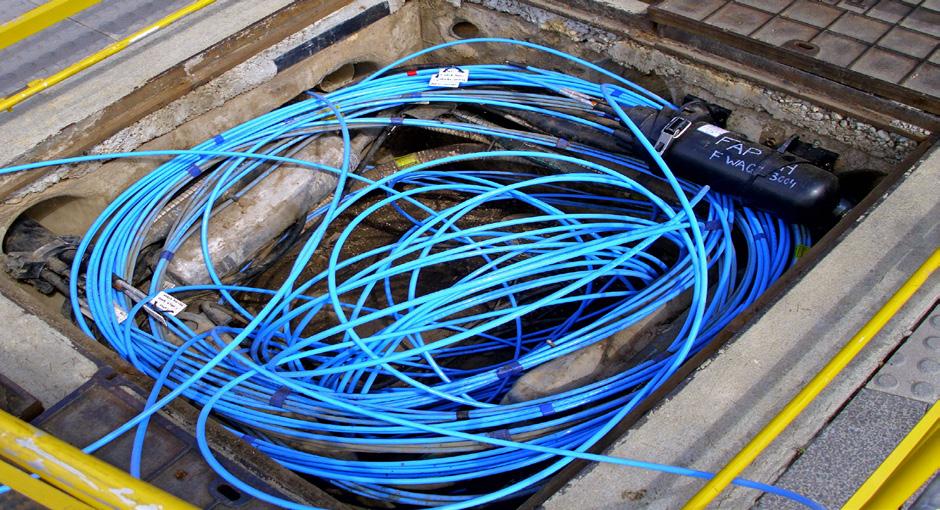
Observers have emphasised the need to expand inland fibre networks to connect landlocked countries and under-served regions to coastal landing stations via regional connectivity hubs. Liquid Intelligent Technologies, part of the Cassava Group, operates the largest terrestrial fibre network on the continent, spanning over 100,000 km across multiple countries. WIOCC, which describes itself as “Africa’s carriers’ carrier,” builds wholesale digital infrastructure for cloud providers, telecom operators, and content companies, with Open Access Metro serving as its metrofibre division. Another key player is CSquared, backed by Google, the IFC, and Mitsui, which has deployed more than 7,500 km of fibre across six African countries.30 Bandwidth and Cloud Services (BCS) Group is a pan-African wholesale telecom infrastructure company focusing on terrestrial and subsea fibre connectivity across Eastern, Central, and Southern Africa, with over 10,000 km of fibre. Bayobab, MTN’s wholesale fibre and infrastructure arm (formerly MTN GlobalConnect) has about 108,000 km of fibre and a target of 135,000 km by 2025. Telkom SA is majority-owned by the South African government at around 54% effective ownership and, through its infrastructure arm, Openserve, operates SA’s second-largest fibre network, with over 180,000 km of fibre-optic
30 https://www.dabafinance.com/en/news/csquared-fibre-africa-broadband-expansion
© Bidgee, Wikimedia Commons
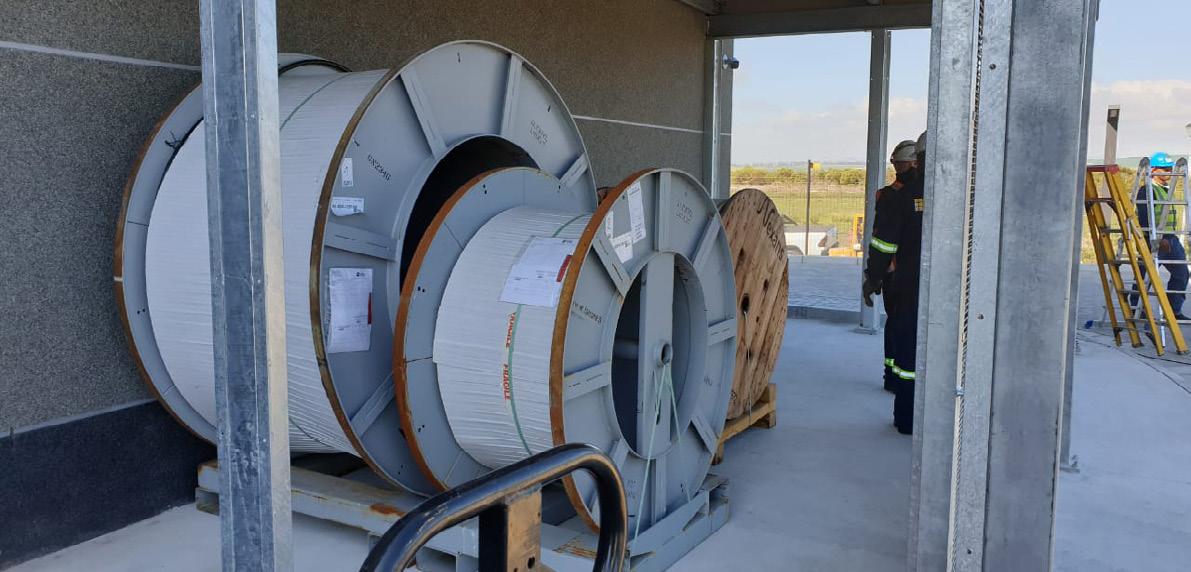
cable. Telkom Kenya is 100% owned by the Kenyan government and has built about 4,000 km of terrestrial fibre. Ethio Telecom, which has built 23,000 km of inland fibre-optic cables as of 2025, is 90% state-owned. Vumatel, a subsidiary of Maziv, which is wholly owned by Community Investments Venture Holdings (Pty) Ltd, is majority-controlled by Remgro Limited,31 a conglomerate chaired by Johann Rupert, one of SA’s richest men. The South African Competition Commission had halted Vodacom’s acquisition of a 30%-40% stake in Maziv on the grounds that it might undermine competition in the South African sector, but the Competition Appeals Court later approved the deal after the parties agreed to implement specific commitments.32
Vertical integration, where single firms control multiple elements of the digital infrastructure, can occur when the same companies build or own fibre, towers, and data centres, and prioritise their own retail companies over wholesale access.
Despite the rapid expansion of fibre networks across the continent, significant gaps persist in regional interconnection, redundancy, and equitable access. Terrestrial fibre infrastructure remains largely concentrated along a limited number of commercial corridors and urban hubs, leaving many rural areas and landlocked countries dependent on cross-border transit arrangements that are often costly, politically sensitive, and vulnerable to disruption. Regulatory frameworks governing terrestrial fibre deployment also remain fragmented, with uneven rules on infrastructure sharing, rights-of-way, and cross-border data flows, constraining the development of a coherent regional backbone. As governments increasingly rely on private operators to deliver national broadband strategies, the dominance of a small group of large fibre carriers—many of which control both wholesale networks and last-mile access—risks entrenching high prices, limiting competition, and deepening inequalities in who benefits from Africa’s expanding digital infrastructure.
31 https://www.remgro.com/group-investments/infrastructure/#:~:text=Ubiquity-,CIVH,wholly%20owned%20subsidiary%20 of%20CIVH.
32 https://dailyinvestor.com/telecommunications/98111/vodacom-maziv-r13-billion-deal-gets-the-greenlight/
© John.combey, Wikimedia Commons
Terrestrial fibre manufacturers produce the physical fibre-optic cables that underpin land-based telecommunications networks, connecting cities, data centres, mobile towers, enterprises, and national backbones across regions and borders. They are distinct from fibre network operators: manufacturers design and produce the cable itself, while operators are responsible for deploying, owning, and managing the networks built from this infrastructure.
The global market for terrestrial fibre manufacturing is dominated by a relatively small number of large firms, including Corning (US), Prysmian Group (Italy), Yangtze Optical Fibre and Cable (YOFC) (China), Hengtong (China), Furukawa Electric/OFS (Japan/ US), Sumitomo Electric (Japan), Nexans (France), CommScope (US), FibreHome (China), and Sterlite Technologies (India).
In Africa, terrestrial fibre manufacturing involves a mix of locally based producers and multinational firms operating through regional subsidiaries, joint ventures, or partnerships. The most prominent manufacturers active on the continent include:
• YOA Cable (SA)
• CBi Telecom (SA)
• Coleman Wires and Cables (Nigeria)
• Prysmian Group (Italy), with manufacturing and operations in Ivory Coast, SA, and other locations
• Corning (US), with a presence in countries including Uganda and SA
• YOFC (China), with manufacturing capacity in SA through its partnership with YOA Cables
• Hengtong (China)
• Sterlite Technologies (India), a subsidiary of the Vedanta Group, supplying fibre and cable products across Africa
• Benya Cables (Egypt), part of the Benya Group, which has established a large fibre-optic manufacturing facility in partnership with the Arab Organization for Industrialization and Corning
As competition between Chinese, European, and US suppliers increasingly shapes who manufactures and supplies Africa’s fibre networks, these dynamics have direct implications for digital sovereignty. Decisions about producers and suppliers determine whose technologies, technical standards, and political-economic interests underpin the continent’s core connectivity infrastructure.
Telecom operators and last-mile connectivity layer
Telecom companies provide internet access directly to end users and operate as the so-called last-mile service providers within the telecommunications ecosystem. Among the largest pan-African telecom operators are MTN (SA), Vodacom (65% owned by the UK–based Vodafone), Airtel Africa (head quartered in the UK, with an Indian parent company), and Orange (France).
At the national level, several incumbent operators continue to command significant market share. These include Safaricom in Kenya; Etisalat Egypt, which is largely owned by e&, an Emirates-based telecommunications group; Maroc Telecom in Morocco, which is 53% owned by the Etisalat Group and 22% by the Moroccan government;33 and Ethio Telecom, a fully stateowned operator in Ethiopia.
Chinese telecommunications firms have been engaged in African telecom markets since their liberalisation in the 1990s, well before the formal launch of China’s Digital Silk Road initiative. Over time, these companies have established durable alliances with major African network operators, including MTN, Sonatel, Algérie Télécom, and Maroc Télécom.
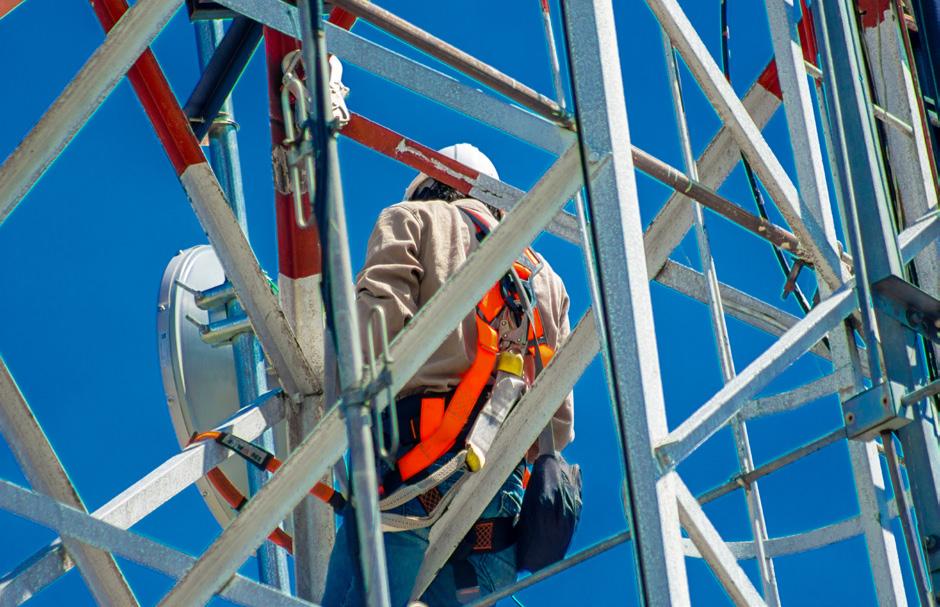
Chinese financial institutions have played a central role in this expansion by extending loans to African governments that are explicitly tied to the procurement of equipment from Chinese suppliers for the development of telecommunications infrastructure and services. These so-called vendor-guaranteed loans are typically issued through Chinese firms and backed by credit lines from state-owned Chinese banks. While this model has accelerated the roll-out of telecom infrastructure across the continent, it has also entrenched reliance on Chinese information and communication technology (ICT) hardware and technologies, giving rise to widespread concerns about technological dependency and ICT sovereignty. As a result of these dynamics, Huawei is estimated to have built approximately 70% of Africa’s 4G network backbone.34,35
33 https://www.iam.ma/documents/66341/0/Maroc+Telecom+en+bref+9M+2025+-+Version+anglaise.pdf/18848d50-700cda14-57a8-1e763930bf59?t=1767635528090#:~:text=Its%20main%20shareholders%20are%20Etisalat,Kingdom%20 of%20Morocco%20(22%25).
34 https://www.dw.com/en/africa-embraces-huawei-technology-despite-security-concerns/a-60665700
35 https://www.atlanticcouncil.org/blogs/africasource/the-digital-infrastructure-imperative-in-african-markets/
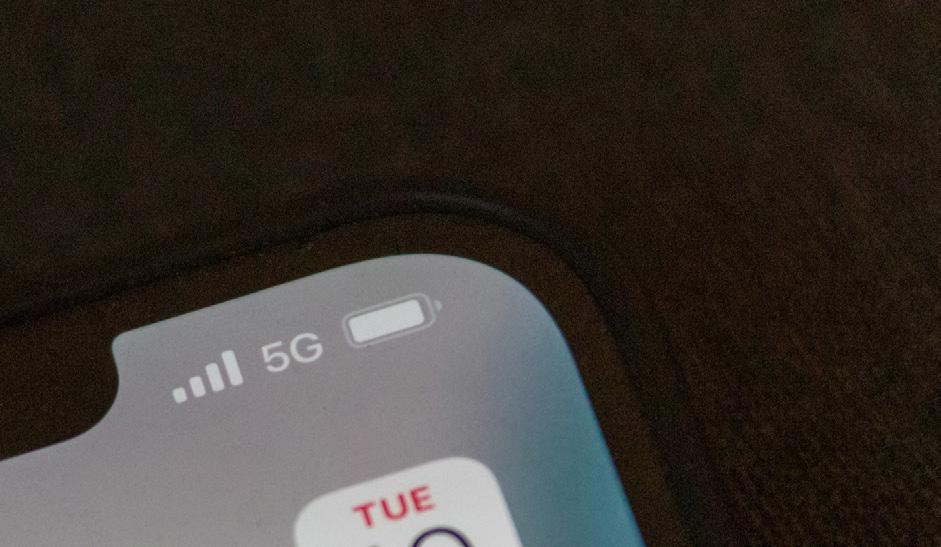
Huawei and ZTE have delivered more than 40 3G networks across over 30 African states. In 2024, SA’s MTN announced a partnership with China Telecom and Huawei to develop 5G, cloud computing, and AI solutions.36 Telkom SA, the partially government-owned entity, rolled out 5G services using Huawei technology.37 Huawei and ZTE-have been able to expand their footprint across Africa in part through financial support from Chinese state-backed banks, most notably the Export–Import Bank of China and the China Development Bank. These institutions provide low-interest loans and extended credit lines that are closely tied to the procurement of Chinese telecommunications equipment.
Research indicates that countries such as Botswana and Namibia retain relatively strong agency in selecting their ICT providers because they do not depend heavily on foreign aid or concessional ICT finance. In contrast, states that rely significantly on Chinese ICT financing are more likely to select Chinese vendors, illustrating how access to finance is often bundled with the choice of infrastructure provider and can limit recipient countries’ bargaining power once such financing is accepted. By comparison, relatively few African countries rely heavily on World Bank financing for telecommunications infrastructure, and no consistent pattern emerges between World Bank support and the choice of ICT vendors.
Former French colonies—with the notable exception of Madagascar—have widely deployed Huawei equipment regardless of their sources of development finance. This pattern may, in part, be linked to the long-standing commercial relationship between Huawei and the French telecommunications group Orange, which operates extensively across Francophone Africa.38
36 https://www.reuters.com/business/media-telecom/safricas-mtn-teams-up-with-china-telecom-huawei-5g-ai-2024-11-26/
37 https://telecom.economictimes.indiatimes.com/news/south-africas-telkom-launches-5g-network-withhuawei/95128297#:~:text=Telkom%2C%20part%2Downed%20by%20the,artificial%20intelligence%20 technologies%2C%20Wang%20added.
38 https://doi.org/10.1016/j.telpol.2024.102713
© Public Domain Pictures
Chinese companies have influenced not only Africa’s telecommunications backbone but also the design and functionality of consumer hardware. Tecno Mobile, a brand owned by China-based Transsion Holdings, accounts for roughly half of the African mobile handset market. The company has achieved this dominance by tailoring devices specifically to African users, including offering affordable pricing, optimising camera technologies for darker skin tones, supporting dual-SIM functionality, and developing longer-lasting batteries to accommodate unreliable electricity access. These design choices highlight how market influence extends beyond infrastructure into everyday digital devices, shaping patterns of technology use across the continent.39,40

DeepSeek has gained significant popularity in Africa, reportedly surpassing OpenAI in usage, in part due to dissatisfaction with the proprietary nature of many Western AI models. Platforms such as OpenAI tightly control their software, training data, and algorithms, and typically charge high licensing and usage fees, limiting accessibility for many users and developers. By contrast, Chinese technology firms such as Huawei and Alibaba Group Holding Ltd have promoted open-source AI models that can be freely accessed, adapted, and modified, without requiring costly licences. This openness has made such models particularly attractive in African contexts, where affordability, flexibility, and local adaptation are critical, and has contributed to the growing appeal of alternative AI ecosystems outside dominant Western platforms.41 Among the top 100 apps used in Africa, developers from China, Europe, and the US dominate the market. Chinese developers account for approximately 38% of these applications, followed by US
39 https://www.cio.com/article/193170/made-in-china-africas-ict-infrastructure-backbone.html
40 https://edition.cnn.com/2018/10/10/tech/tecno-phones-africa
41 https://www.bloomberg.com/news/features/2025-10-22/china-s-deepseek-pushes-into-africa-making-ai-accessible-tomillions
© Pexels
developers at 23% and European developers at 11%.42 While some critics highlight the potential of surveillance due to Chinese technologies in Africa (and the same can largely be said about US-based Big Tech’s technologies), others point out that China responded to a demand when the US did not offer much43—effectively also articulating how Africa has turned into a ground for competing interests.44
One of the key factors driving the expansion of telecommunications infrastructure in Africa is the growth of independent tower companies. Historically, mobile network operators owned and managed most telecom towers themselves. Over time, however, many operators divested these assets to focus on their core service provision, accelerate network expansion, and free up capital. This shift opened the sector to private equity investment, leading to the emergence of large-scale tower companies such as Helios Towers and IHS Towers. These firms acquired extensive tower portfolios from mobile operators across the continent, often with backing from development finance institutions. The rise of tower companies has reshaped the ownership structure of last-mile infrastructure, introducing new financial actors into Africa’s telecommunications ecosystem while further separating network ownership from service provision.45 Tower companies such as Helios Towers, American Tower, and IHS Towers acquired large portfolios of telecommunications infrastructure through the so-called “great sell-offs”, purchasing tower assets from mobile network operators including MTN and Airtel. These divestments reflected operators’ efforts to reduce capital intensity and refocus on service provision. More recently, however, this model has shown signs of reversal: in February 2026, MTN announced plans to buy back its cell towers from IHS Towers, signalling renewed strategic interest by operators in regaining control over critical last-mile infrastructure.
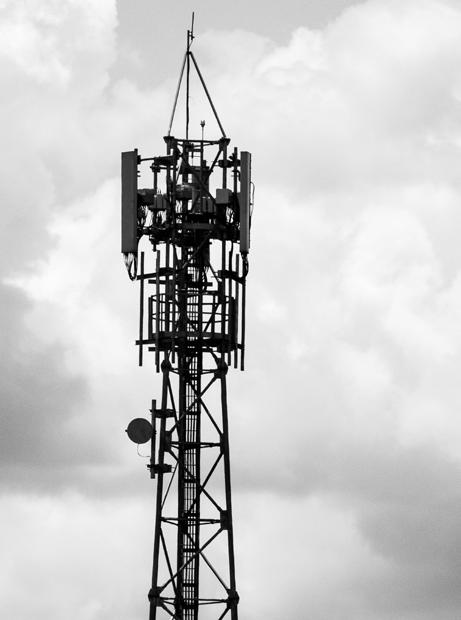
These developments underscore the urgent need for governments and regulators to assert stronger public-interest oversight over last-mile connectivity. Without effective regulation, concentrated ownership and control of essential infrastructure risk entrenching high prices, limiting competition, and reinforcing external dependencies in ways that undermine national digital sovereignty.
42 https://sparkle.eagllwin.com/datasparkle/DataSparkle-2023%20The%20Changing%20Landscape%20of%20 Africa%E2%80%99s%20Mobile%20App%20Market.pdf
43 https://www.dw.com/en/investing-in-africas-tech-infrastructure-has-china-won-already/a-48540426
44 https://www.bbc.com/news/world-africa-48352011
45 https://www.infrastructureinvestor.com/a-towering-performance-for-african-telecoms/ © Pexels
Conclusion—digital extraction, concentrated power, and Africa’s struggle for sovereign infrastructure
Digital infrastructure across multiple sectors is characterised by the dominance of a small number of corporate actors, most of which are headquartered in the industrialised North. This concentration is visible across the infrastructure stack: submarine cable manufacturing and installation are controlled by only a few firms; cable ownership is dominated by a limited number of private and regional actors, increasingly including hyperscale technology companies; and data-centre development in Africa is largely driven by foreign-owned private firms.
Although some optic-fibre manufacturing takes place on the continent—such as YOA Cables in Durban, SA, and Coleman Wires & Cables in Nigeria—Africa continues to lag significantly in digital infrastructure manufacturing. As a result, many countries import most of the technologies that underpin their digital systems, contributing to pressure on foreign-exchange reserves and limiting opportunities to build domestic industrial capacity, create skilled jobs, and generate local value through manufacturing.
These market conditions risk increasing the dependence of African governments and businesses on foreign-owned platforms and infrastructure, while reinforcing concentration among existing dominant players. Even companies with African origins, such as Cassava Technologies, are head quartered in the industrialised North, and investment in local infrastructure is often channelled through large consortia that include regional telecom operators alongside global capital. Together, these dynamics entrench external control over critical digital systems and constrain more locally anchored and sovereign digital development pathways.
As only a few large telcos, fibre carriers, and hyperscalers own most submarine cables, fibre, and data centres, they can set high prices for local internet service providers and keep costs elevated.46 Reliance on foreign-owned infrastructure, platforms, and cloud services also means that critical communication and data flows are hosted in external legal jurisdictions.
The United Nations Trade & Development’s 2025 Global Trade Update warned that digital markets are becoming increasingly concentrated, creating conditions in which dominant firms continue to expand, while smaller competitors are excluded before they have a meaningful opportunity to scale. As competition weakens, consumers bear the costs through higher prices, lower-quality services, and diminished privacy protections. Rather than broadening access, this concentration deepens global inequality by pushing much of the developing world into greater dependence on a small number of powerful actors. Regulators caution that, if left unchecked, these trends could reduce innovation, restrict market entry, and consolidate large firms’ control over the next generation of digital power.47
46 https://theangle.africa/Perspectives/Infrastrature.html
47 https://unctad.org/news/highly-concentrated-digital-markets-put-consumers-risk-heres-how-change-course
More importantly, these dynamics risk reproducing older colonial patterns in new digital forms. Data extraction remains closely tied to the ownership and control of physical infrastructure, even when digital technologies are marketed as “dematerialised” or inherently efficient. In this sense, digital infrastructure becomes another channel through which value is extracted from Africa while control and profits remain concentrated elsewhere.
Efforts to advance digital sovereignty—the assertion of state control over digital infrastructure and data—have also raised concerns that such agendas may be repurposed to expand surveillance, centralise data power, and enable political repression. Digital sovereignty, while potentially empowering, thus carries its own risks if not grounded in strong rights-based and accountability frameworks.48
Transparency should not be sacrificed in the name of protecting digital infrastructure, as doing so can obscure who benefits from these systems and who bears their risks. Owners and operators must be held legally accountable not only for governance failures but also for the environmental harms associated with data centres, submarine cables, and terrestrial fibre networks.
This requires mandatory reporting, independent monitoring, and public disclosure of water consumption, energy use, and broader climate impacts to be embedded in law. Without such safeguards, the expansion of digital infrastructure risks reinforcing extractive relationships rather than contributing to equitable and sustainable development.
Looking ahead, Africa’s capacity to reclaim control over its digital future will depend on coordinated regional strategies that prioritise public ownership, transparent governance, and sustained investment in local manufacturing and skills to reduce structural reliance on foreign infrastructure. Achieving this will require much stronger regional cooperation, including harmonised regulatory frameworks, pooled bargaining power, and shared infrastructure strategies, enabling African states to collectively reduce dependency, rebalance market power, and assert meaningful digital sovereignty.
African civil society has a critical role to play in holding both governments and corporations to account. This includes demanding transparency for infrastructure contracts, monitoring the environmental and social impacts of digital expansion, advocating for rights-based data governance, and mobilising public pressure to ensure that digital infrastructure serves public interests rather than entrenching corporate or geopolitical power.