
AframNews.com




4TH
OF JULY AND BLACK AMERICA
By: Roy Douglas Malonson
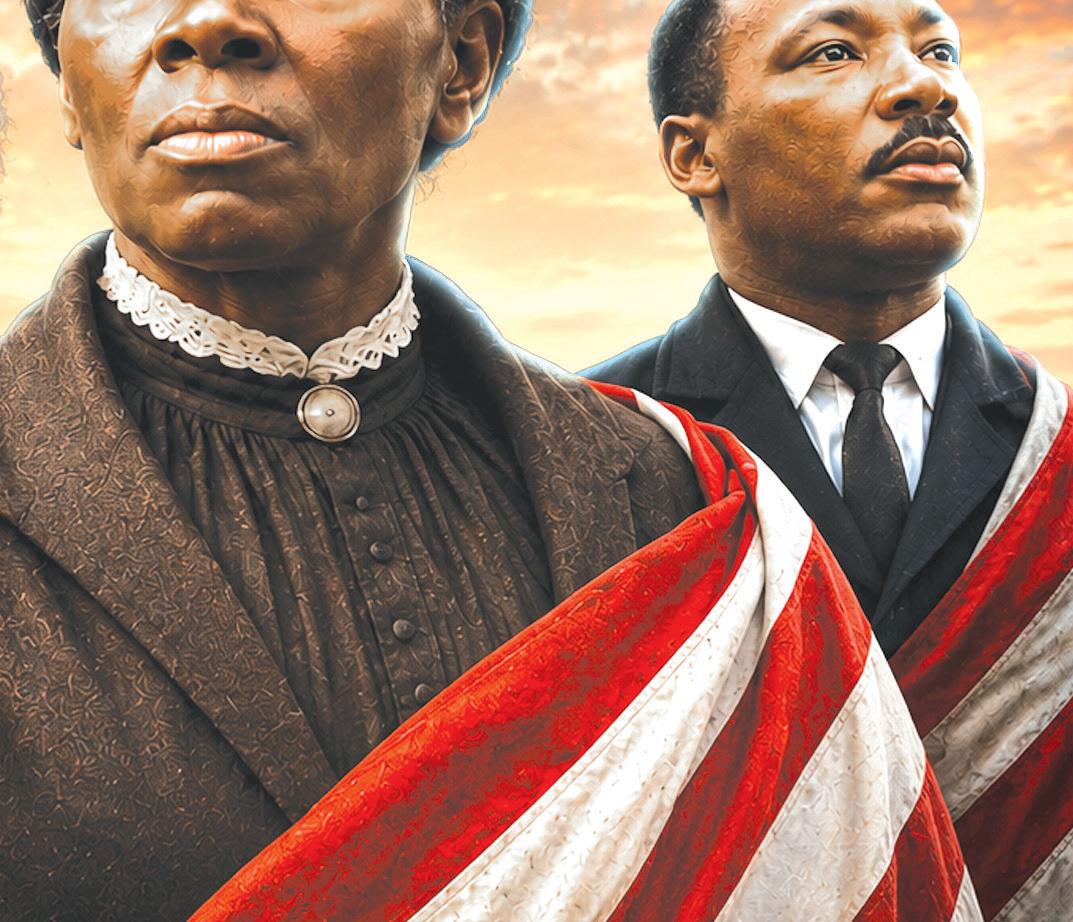
When you think of the Fourth of July, you probably picture fireworks, backyard barbecues, and the red, white, and blue. We celebrate it because it marks the birth of the United States. On July 4, 1776, the founders of our country signed the Declaration of Independence, proudly stating that “all men are created equal” and have the right to “life, liberty, and the pursuit of happiness.” But if you look closely at American history, you will see that this holiday has a much more compli-

cated meaning for Black Americans. For over two hundred years, Black people have looked at the Fourth of July with a mix of feelings. It is a holiday about freedom, but it is also a reminder of a time when freedom did not apply to everyone. To understand why, we have to travel back in time to 1776. When the founders were writing those beautiful words about liberty, nearly half a million Black people were enslaved in the American 4th of July on pg. 3

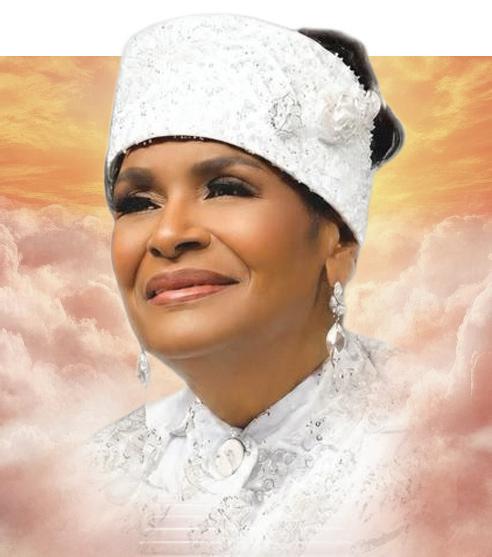

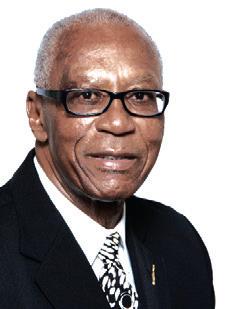
By: Family MOTHER KHADIJAH FARRAKHAN
1935 – 2026


Born Betsy Ross on November 26, 1935, in Boston, Massachusetts — was a woman of uncommon grace, quiet strength, and boundless devotion. Raised in Boston’s African American community during the shadow of the Great Depression, she met Louis Eugene Walcott as teenage sweethearts, forging a bond that would endure for more than seven decades. ey married on September 12, 1953, when Louis was a college student and aspiring calypso singer at Winston-Salem Teachers College in North Carolina. When complications arose during her rst pregnancy, he le college in his senior year to care for her — a testament to the love and mutual sacri ce at the heart of their life together. In 1955, both Betsy and Louis attended a Saviors’ Day address by Nation of Islam leader Elijah Muhammad, and their lives were transformed. Upon joining the NOI, Betsy took the Islamic name Khadijah — honoring the rst wife of Prophet Muhammad — and immersed herself in the Muslim Girls Training and General Civilization Class in New York City, studying alongside Sister Betty Shabazz and trained directly by Elijah Muhammad himself. She rose quickly as an eager and dedicated student. When Minister Farrakhan was appointed minister of Boston’s Temple No. 11, the couple labored together to build the New England region into one of the NOI’s strongest communities. ey relocated to New York City’s Mosque No. 7 in 1965, then to Chicago by 1975. When Minister Farrakhan began rebuilding the Nation of Islam in 1977, Khadijah became its rst treasurer and secretary — hosting study group meetings from




A Revival of God Consciousness
BLACK IN AMERICA




Being Black in America has always been di cult, and it has become even more challenging under the Trump administration. Slavery and Jim Crowism remain the rule rather than the exception. President Trump has brought America to a dangerous spiritual crossroads: Which path will the nation choose—chaos or community? President Trump and his MAGA movement thrive on chaos rather than an egalitarian nationstate, because they fail to understand this spiritual truth “the earth is the Lord’s, and the fullness thereof; the world, and they that dwell therein” (Psalm 24:1). ey mistakenly believe the earth belongs to them because of skin tone. Yet stewardship, not ownership, is humanity’s responsibility. Stewardship and caretaking, however, remain foreign spiritual concepts to racists shaped by White Privilege. is is why being Black, Brown, or Yellow in America remains so painful. To make matters worse, President Trump is, in the editorial writer’s view, a bold and faithless liar with no God-consciousness, only a money-centered mindset. Without spiritually understanding that: “for the love of money is the root of all evil; which while some coveted a er, they have erred from the faith, and pierced themselves through with many sorrows.” (1 Timothy 6: 10). Godly
individuals love people more than money, because money is only a tool. erefore, use money as a tool or use money as a fool, and engage in selfenslavement. Once again, President Trump has made it far more di cult to live a quality lifestyle as a Black American, because of White Privilege Rage and bold-face lying. Consequently, President Trump’s MAGA-Cult desires pleasure and prosperity; without hard work and self-sacri ce, and above all, absolutely no collective responsibility. President Trump’s pursuit of self-serving power, wealth, and personal glory may ultimately become his downfall. America faces serious spiritual and socioeconomic challenges because the GOP-controlled House of Representatives and Senate have failed to restrain his authoritarian instincts and undemocratic impulses. He holds power but, in the writer’s view, does not use it responsibly. Spiritually dead individuals fail to grasp the consequences of personal sin, which separates people from God and truth. Jesus spoke clearly about the freedom found in truth: “If ye continue in my word, then are ye my disciples indeed; and ye shall know the truth, and the truth shall make you free… verily, verily, I say unto you” (John 8:31–32). Trump’s pursuit of power, money, and pleasure may prove to be his lasting undoing. For this reason, the writer argues, he seeks to manipulate the 2026 midterm elections to shield himself from impeachment, believing a third attempt could succeed. Life in
CIVIL RIGHTS
e struggle for civil rights by Black Americans is one of the most important stories in history. It is a story about people ghting for fairness, equality, and the basic rights that every human being deserves. To understand why Black people had to struggle so hard and for so long, we have to look at how laws, money, and unfair treatment were built into American history for hundreds of years. It was not just a matter of changing how people felt; it required changing the rules of the entire country.
First, the biggest obstacle was that unfair treatment was completely legal for a very long time. A er the Civil War ended in 1865, millions of enslaved Black people were nally freed. However, freedom did not automatically mean equality. Many states, especially in the South, immediately passed unfair laws called “Black Codes” and later “Jim Crow laws.” ese laws forced Black and white people to be segregated, which means kept separate. Black Americans had to use separate schools, water fountains, and sections on buses. Most of the time, the things provided for Black people were kept in much worse condition. On top of that, many states used unfair tricks like complicated reading tests and expensive fees to stop Black people from voting. Without the right to vote,
not elect leaders who would change these bad laws. Second, the struggle was about money and the ability to build a good life. Buying a house is the main way most American families save money and build wealth for the future. But for decades, the government and banks used an unfair practice called “redlining.” ey drew red lines on maps around Black neighborhoods and refused to give people loans to buy homes there. Other major programs that helped white families go to college or buy houses, like the G.I. Bill a er World War II, were o en denied to Black veterans. Because of these unfair rules, it was incredibly di cult for Black parents to pass down wealth or property to their children, creating an economic disadvantage that lasted for generations. ird, even when the rules started to change, implementing them was a massive battle. In 1954, a famous Supreme Court case called Brown v. Board of Education ruled that separate schools were illegal. You might think schools integrated right away, but they did not. Many local governments ercely resisted the change. Some cities chose to close their public schools down completely rather than allow Black and white children to learn together. It took brave students, like the Little Rock Nine in Arkansas, and everyday citizens marching in the streets to force the government to protect their rights.
Finally, the ght for civil rights never really ended with the famous marches of
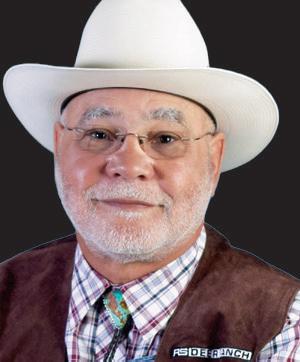
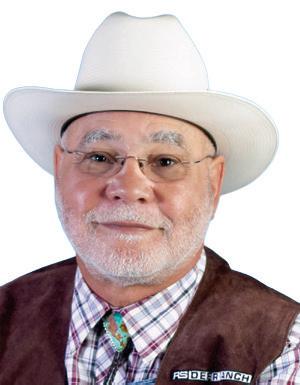
Bobby Mills, Ph.D.
4th of July
colonies. They were treated as property, forced to work without pay, and had no rights at all. So, while white Americans were cheering because they were free from the King of England, enslaved Black Americans were still trapped in chains. For them, the loud cheers of Independence Day felt like a cruel reminder of what they were being denied. This feeling was explained perfectly by a famous Black leader named Frederick Douglass. He had escaped from slavery and became a powerful speaker and writer.
On July 5, 1852, he was invited to give a speech about the Fourth of July. Instead of just giving a standard patriotic speech, he asked a tough question: “What to the Slave
Is the Fourth of July?”
Douglass told the crowd that the holiday belonged to them, not to him. He explained that it was heartbreaking to hear a nation celebrate its freedom while millions of human beings were still held in slavery. His speech showed the deep irony of the holiday—the difference between what America promised on paper and what it actually did in real life. In fact, back in the 1800s, celebrating the Fourth of July could actually be dangerous for Black communities. White mobs would sometimes attack Black people who tried to gather for the holiday. Because of this danger, many Black communities decided to celebrate on July 5th instead. It was safer, and it allowed them to
have their own special day of reflection.
Even though the holiday started with hypocrisy, Black Americans did not just give up on the Fourth of July or on America. Instead, they used the holiday as a tool to fight for their rights. For generations, Black activists, writers, and heroes used the Declaration of Independence to demand change. They argued that if America truly believed that “all men are created equal,” then the government had a duty to protect Black citizens, too. Black Americans have also earned their stake in this country through sacrifice. Black soldiers fought in the Revolutionary War to help America win its independence. They fought in the Civil War to end
slavery, and they fought in both World Wars to defend freedom around the globe. By fighting for the American flag, Black Americans proved that they were just as patriotic as anyone else. They were demanding that America live up to its promises. When Dr. Martin Luther King Jr. gave his famous “I Have a Dream” speech in 1963, he explicitly mentioned the Declaration of Independence, calling it a promise that should be kept for all people, Black and white alike.
In modern times, the way Black Americans view the Fourth of July has evolved, especially with the celebration of Juneteenth. Juneteenth, which happens on June 19th, marks the day in 1865 when the


last enslaved people in Galveston, Texas, finally found out they were free. Today, many Black families see a balance between these two holidays. Juneteenth is celebrated as a day of true human freedom, remembering the end of slavery. The Fourth of July is celebrated as a day of political freedom, marking the birth of the nation. For many Black Americans, July 4th is a fun summer day spent with family, enjoying cookouts and community. But it is also a day to remember that freedom in America did not arrive all at once in 1776. It was something that had to be fought for, step by step, over a very long time.




















































































































1861 1863 1865 1870 1865 1868 1885
1861. e American Civil War began on April 12, 1861, when Confederate forces red on Fort Sumter, a federal fort in Charleston Harbor, South Carolina.
1863 . Lincoln’s Emancipation Proclamation goes into e ect, changing the legal status of 3 million slaves in designated areas of the Confederacy from “slave” to “free.”
1865. e thirteenth amendment passed, abolishing slavery throughout the United States.
1865. On June 19, Union soldiers arrive in Galveston, Texas to spread the news of the Civil War end and subsequent freedom of slavery. is will eventually be celebrated as “Juneteenth”.

1870. e eenth amendment is passed, guaranteeing that a citizen’s right to vote would not be denied on account of race, color, or previous condition of 1868. e fourteenth amendment is passed, guaranteeing citizenship rights and equal protection under law.
1885. A majority of Southern states pass individual state laws requiring separate schools for black and white students.

servitude.
HOUSTON
AUSTIN

TEXAS TAKEAWAY


Houston comes alive on the Fourth of July as families, friends, and visitors gather to celebrate America’s independence with fireworks, live music, community festivals, and backyard barbecues. From waterfront celebrations along Buffalo Bayou to neighborhood gatherings across the city, the holiday showcases Houston’s rich cultural diversity and strong sense of community. Residents proudly display the American flag while enjoying food, entertainment, and patriotic traditions that make Independence Day one of the city’s most anticipated summer celebrations.
DALLAS
La Playa Maya has announced that its remaining restaurants in Fort Worth and Hudson Oaks will continue serving customers despite the closure of one of its locations. The company said its other restaurants remain open and are committed to providing the same menu, service, and hospitality that longtime customers have come to expect.
SAN ANTONIO
Texas State University has officially joined the Pac-12 Conference, marking a historic milestone for the university as it begins a new era of athletic competition and national exposure.
William McManus has announced his retirement as chief of the San Antonio Police Department, bringing to a close a tenure marked by decades of public service and leadership. City officials will begin the process of selecting the department’s next chief as the transition moves forward.


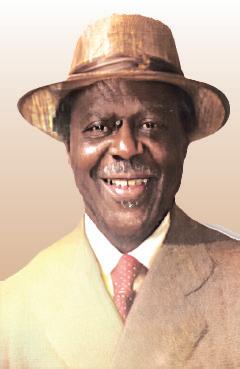
Ned Eastman Barnes (1866–1950) was an African American inventor, farmer, and community leader from Willis, Texas, whose work reflected the ingenuity and determination of the post-Reconstruction era. Born in Montgomery County to formerly enslaved parents, Barnes grew up during a time of limited opportunities for Black Americans but developed a strong interest in mechanical innovation after observing the rapid expansion of railroads across Texas.
NED EASTMAN BARNES


































Request for Proposal will be received by Lone Star College for:
RFP #26-05-05 – Commerce Management System. Electronic submittals due by 12:00PM, Monday, July 27, 2026. Contact: pamela.johnson@ lonestar.edu or (832)8136782.
Must Register to Bid: https:// lonestar.ionwave.net/Login. aspx. If registered, please ensure your registration is up to date. For assistance with the on-line registration process, contact MCvendors@lonestar.edu.


















LOCAL

NEW EXECUTIVE DIRECTOR OF THE FLOOD CONTROL DISTRICT
By: OCAcommunications
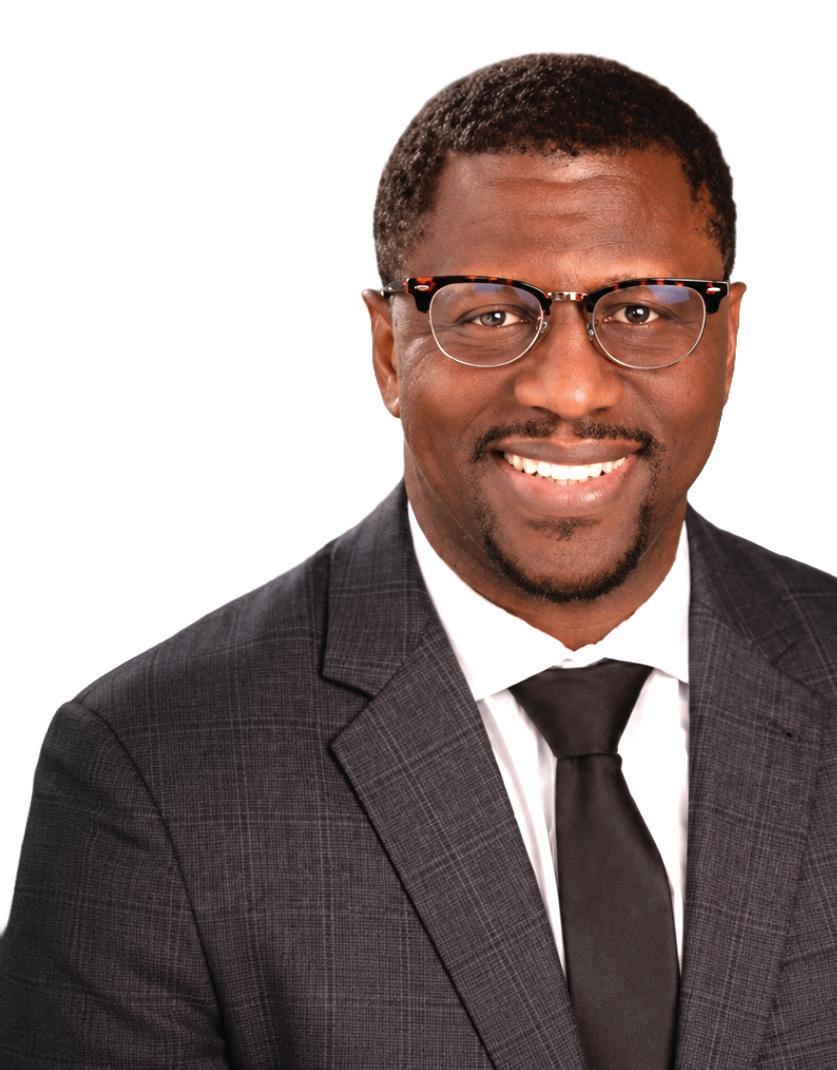
Harris County Commissioners Court today approved the appointment of Marcus Stuckett, P.E., CFM, as Executive Director of the Harris County Flood Control District.
Stuckett brings more than two decades of engineering and ood mitigation experience to the role, including extensive leadership within the Harris County Flood Control District and the private sector. A licensed Professional Engineer and Certi ed Floodplain Manager, he has spent his career planning, designing, and delivering complex ood risk reduction projects throughout the Houston region.
“We’re making a bet that a change in Flood Control leadership will result in clearer communication with both Commissioners Court and the residents, so this is the best path forward for us to be able to get these projects back on track. I look forward to working with Director Stuckett to get these projects done as soon as possible for the community,” said Judge Lina Hidalgo.
“I welcome Marcus Stuckett as the next Executive Director of the Harris County Flood Control District,” said Commissioner Rodney Ellis, Harris County
Precinct One. “Marcus brings deep technical experience, institutional knowledge, and an understanding of the urgency required to move projects forward. I look forward to working with him to restore accountability, improve transparency, protect available funding, and deliver on the commitments made to Harris County voters and residents.”
“Members of Court who have abandoned the process of engaging in a nationwide search have put Mr. Stuckett in a di cult situation with looming GLO deadlines. Nonetheless, there’s too much at risk not to do all that I can to ensure Mr. Stuckett’s success,” stated Commissioner Adrian Garcia, Harris County Precinct Two.
“Marcus Stuckett brings over 23 years of regional drainage experience and institutional knowledge necessary to lead the Harris County Flood Control District. He has a clear understanding of the challenges facing Harris County with having served more than seven years within HCFCD and four years with a respected engineering rm specializing in drainage and ood mitigation. Most importantly, he understands how to deliver projects on time and within budget. He
is exactly the type of leader HCFCD needs to get critical ood mitigation projects moving and protect taxpayer investments,” said Commissioner Tom Ramsey, Harris County Precinct ree.
“Today, Harris County Commissioners Court made history by unanimously appointing Marcus Stuckett as our new Flood Control District Executive Director. He will be the rst African American to serve in this crucial role. With over 20 years of experience delivering large ood control projects across the region, he is prepared to lead. Nothing is more important than keeping our families safe from ooding, and I look forward to working with Stuckett and our dedicated team to do just that.
At this moment, we have more ood control projects moving forward than at any time in Harris County history, and we have made unprecedented investments in infrastructure maintenance. We must move with urgency to deliver key projects to protect our homes, strengthen our communities, and keep Harris County residents safe. And we must do so in close collaboration with our federal,

state, and community partners.
While our Flood Control District has a new leader today, my focus remains the same: relentlessly delivering protection to the people of Harris County,” stated Commissioner Lesley Briones, Harris County Precinct Four.
Stuckett most recently served as Associate Vice President at PapeDawson Engineers, where he led the rm’s public sector hydrology and hydraulics practice, overseeing projects and programs for public agencies across the region.
“Mr. Stuckett has the
technical expertise, understanding of Harris County priorities and relationships needed to guide one of the nation’s premier ood control agencies,” said County Administrator Erica Lee Carter. “His deep understanding of Harris County’s watersheds, infrastructure, and communities makes him quali ed to lead the Flood Control District as we continue advancing projects that improve public safety, strengthen our infrastructure, and build long-term
resilience.”
Prior to joining PapeDawson, Stuckett served in several leadership roles at the Harris County Flood Control District, including Engineering Division Director. During his tenure, he led a division of more than 70 employees and oversaw the preliminary engineering, design, and bidding of
LEGAL NOTICE