September 26, 2025
GREATER HOUSTON EDITION
AframNews.com
Vol.30, Issue 36
FREE
African-American News&Issues
“Addressing Current & Historical Realities Affecting Our Community”
ARCH MANNING
SHEDEUR SANDERS
JOBS SLASHED IN HALF By: Fred Smith
DEION SANDERS
COOPER MANNING
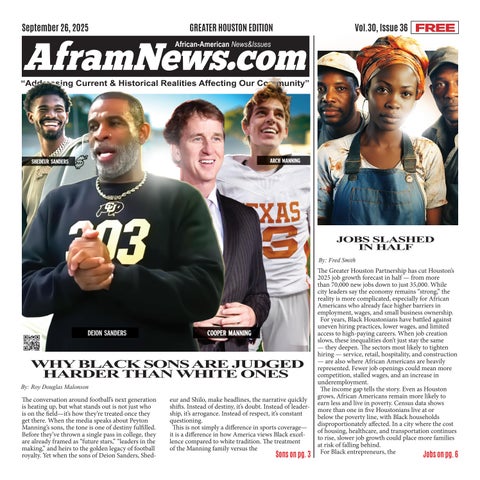
WHY BLACK SONS ARE JUDGED HARDER THAN WHITE ONES By: Roy Douglas Malonson
The conversation around football’s next generation is heating up, but what stands out is not just who is on the field—it’s how they’re treated once they get there. When the media speaks about Peyton Manning’s sons, the tone is one of destiny fulfilled. Before they’ve thrown a single pass in college, they are already framed as “future stars,” “leaders in the making,” and heirs to the golden legacy of football royalty. Yet when the sons of Deion Sanders, Shed-
eur and Shilo, make headlines, the narrative quickly shifts. Instead of destiny, it’s doubt. Instead of leadership, it’s arrogance. Instead of respect, it’s constant questioning. This is not simply a difference in sports coverage— it is a difference in how America views Black excellence compared to white tradition. The treatment of the Manning family versus the
Sons on pg. 3
The Greater Houston Partnership has cut Houston’s 2025 job growth forecast in half — from more than 70,000 new jobs down to just 35,000. While city leaders say the economy remains “strong,” the reality is more complicated, especially for African Americans who already face higher barriers in employment, wages, and small business ownership. For years, Black Houstonians have battled against uneven hiring practices, lower wages, and limited access to high-paying careers. When job creation slows, these inequalities don’t just stay the same — they deepen. The sectors most likely to tighten hiring — service, retail, hospitality, and construction — are also where African Americans are heavily represented. Fewer job openings could mean more competition, stalled wages, and an increase in underemployment. The income gap tells the story. Even as Houston grows, African Americans remain more likely to earn less and live in poverty. Census data shows more than one in five Houstonians live at or below the poverty line, with Black households disproportionately affected. In a city where the cost of housing, healthcare, and transportation continues to rise, slower job growth could place more families at risk of falling behind. For Black entrepreneurs, the
Jobs on pg. 6