

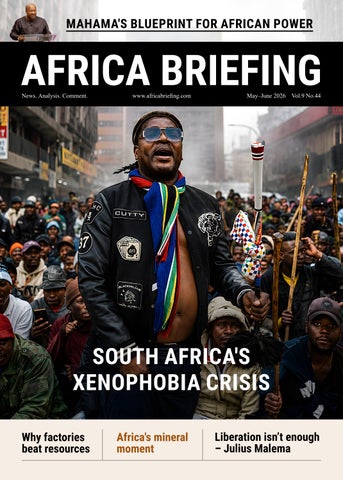
FOR much of the past two decades, the story of China-Africa relations was largely written in Beijing.
China provided the capital. Africa supplied the resources. Chinese policy banks financed railways, highways, ports and power stations across the continent, while African governments sought investment to close infrastructure gaps and accelerate development. That era is ending.
The latest figures tell a striking story. While China-Africa trade reached a record $275bn in 2024, Chinese loan commitments to Africa fell to just $2.1bn, according to research from the Boston University Global Development Policy Center and the African Economic Research Consortium.
Those figures reveal more than a financial adjustment. They signal a profound shift in the balance of power between Africa and its largest trading partner.
For the first time in a generation, African governments possess genuine leverage in their dealings with global powers. The challenge is turning that leverage into lasting economic transformation.
A new source of leverage
The decline in Chinese lending reflects wider changes in the global economy. Debt pressures have made Beijing more cautious about overseas financing, while many African governments are increasingly wary of taking on new liabilities.
At the same time, the global energy transition has dramatically increased demand for critical minerals. Electric vehicles, battery storage systems, renewable energy infrastructure and advanced manufacturing all require vast quantities of cobalt, lithium, copper, graphite and rare earth elements. Many of these resources are concentrated in Africa.
Publisher
Publisher Jon Offei-Ansah
Editor
Desmond Davies
Contributing
Editors
Prof. Toyin Falola
Tikum Mbah Azonga
Prof. Ojo Emmanuel Ademola (Technology)
Valerie Msoka (Special Projects) Amanda Wilson (Caribbean)
Contributors
Justice Lee Adoboe
Chief Chuks Iloegbunam
Madalisto Kateta
Zachary Ochieng
Olu Ojewale
Oladipo Okubanjo
Corinne Soar
Kennedy Olilo Gorata Chepete
This has transformed the continent's strategic importance.
Jon Offei-Ansah
For decades, Africa was viewed primarily as a supplier of commodities. Today, it has become a key battleground in the competition between China, the United States, Europe, India and Gulf states seeking secure supply chains for the industries of the future.
Desmond Davies Editor
Designer
IDeputy Editor
The world no longer simply wants African minerals. It needs them.
Beyond raw material exports
Possessing strategic resources, however, is only the starting point.
Angela Cobbinah
Contributing
Editor
Stephen Williams
The real challenge is ensuring that Africa captures more value from its natural wealth instead of repeating the familiar pattern of exporting raw materials while higher-value manufacturing takes place elsewhere.
n 2018, six of the 10 fastest-growing economies in the world were in Africa, according to the World Bank, with Ghana leading the pack. With GDP growth for the continent projected to accelerate to four per cent in 2019 and 4.1 per cent in 2020, Africa’s economic growth story continues apace. Meanwhile, the World Bank’s 2019 Doing Business Index reveals that five of the 10 most-improved countries are in Africa, and one-third of all reforms recorded globally were in sub-Saharan Africa.
Director, Special Projects
The Democratic Republic of the Congo illustrates this opportunity. As the world's largest producer of cobalt, the country sits at the heart of global battery supply chains. That position has strengthened Kinshasa's bargaining power and encouraged efforts to secure greater benefits from its mineral wealth.
Michael Orji
What makes the story more impressive and heartening is that the growth – projected to be broad-based – is being achieved in a challenging global environment, bucking the trend.
Simon Blemadzie
Country Representatives
South Africa
Edward Walter Byerley
Contributors
Justice Lee Adoboe
Zimbabwe's restrictions on raw lithium exports reflect a similar ambition. The government wants investors to process more minerals locally rather than simply extracting and exporting them.
In the Cover Story of this edition, Dr. Hippolyte Fofack, Chief Economist at the African Export-Import Bank (Afreximbank), analyses the factors underpinning this performance. Two factors, in my opinion, stand out in Dr. Hippolyte’s analysis: trade between Africa and China and the intra-African cross-border investment and infrastructure development.
Chuks Iloegbunam
Joseph Kayira
Top Dog Media, 5 Ascot Knights 47 Grand National Boulevard Royal Ascot, Milnerton 7441, South Africa
Such policies carry risks. Investors demand regulatory certainty and stable operating environments. Yet they also reflect an important truth: mineral wealth alone does not guarantee development.
Zachary Ochieng
Olu Ojewale
History is littered with examples of resource-rich countries that failed to industrialise because they remained dependent on exporting unprocessed commodities.
Oladipo Okubanjo
Tel: +27 (0) 21 555 0096 Cell: +27 (0) 81 331 4887 Email: ed@topdog-media.net
Learning from success stories
Much has been said and written about China’s ever-deepening economic foray into Africa, especially by Western analysts and commentators who have been sounding alarm bells about re-colonisation of Africa, this time by the Chinese. But empirical evidence paints a different picture.
Despite the decelerating global growth environment, trade between Africa and China increased by 14.5 per cent in the first three quarters of 2018, surpassing the growth rate of world trade (11.6 per cent), reflecting the deepening economic dependency between the two major trading partners.
Corinne Soar
Designer
Botswana remains one of Africa's strongest examples of how resource leverage can be translated into broader economic gains. Through decades of negotiations with De Beers, the country secured diamond sorting, trading and processing activities alongside extraction, allowing it to capture more value domestically.
Gloria Ansah
Country Representatives
South Africa
Ghana
Nana Asiama Bekoe
Empirical evidence shows that China’s domestic investment has become highly linked with economic expansion in Africa. A one percentage point increase in China’s domestic investment growth is associated with an average of 0.6 percentage point increase in overall African exports. And, the expected economic development and trade impact of expanding Chinese investment on resource-rich African countries, especially oil-exporting countries, is even more important.
Edward Walter Byerley
Outside Africa, Indonesia offers another important lesson. By restricting exports of raw nickel ore and encouraging local processing, Jakarta attracted billions of dollars in investment and strengthened its role in global battery supply chains.
Top Dog Media, 5 Ascot Knights 47 Grand National Boulevard Royal Ascot, Milnerton 7441, South Africa
The lesson is not that African countries should blindly copy these models. Rather, it is that strategic resources can become a foundation for industrial development when supported by strong institutions and long-term planning.
The opportunity of a generation
Kingdom Concept Co. Tel: +233 243 393 943 / +233 303 967 470 kingsconceptsltd@gmail.com
Nigeria
The resilience of African economies can also be attributed to growing intra-African cross-border investment and infrastructure development. A combination of the two factors is accelerating the process of structural transformation in a continent where industrial output and services account for a growing share of GDP. African corporations and industrialists which are expanding their industrial footprint across Africa and globally are leading the diversification from agriculture into higher value goods in manufacturing and service sectors. These industrial champions are carrying out transcontinental operations, with investment holdings around the globe, with a strong presence in Europe and Pacific Asia, together account for more than 75 per cent of their combined activities outside Africa.
Tel: +27 (0) 21 555 0096 Cell: +27 (0) 81 331 4887 Email: ed@topdog-media.net
Ghana
Nana Asiama Bekoe
Africa's growing leverage is not the result of China losing influence. China remains dominant in mineral processing, battery manufacturing and many clean-energy technologies.
Kingdom Concept Co. Tel: +233 243 393 943 / +233 303 967 470 kingsconceptsltd@gmail.com
Instead, Africa's position is strengthening because the world has changed. Multiple powers now compete for access to African resources, markets and strategic partnerships. Competition creates options. Options create bargaining power. But leverage alone is not enough.
Nigeria
David Chukwuji 68, Femi Killa Street Ago Palace Way, Okota, Isolo, Lagos, Nigeria Tel: + 234 8039281669
Kenya
Patrick Mwangi
Aquarius Media Ltd, PO Box 10668-11000
The countries that emerge strongest from this new era will be those that invest in skills, infrastructure, manufacturing and regional value chains. They will use mineral wealth to build industries rather than simply finance budgets.
A survey of 30 leading emerging African corporations with global footprints and combined revenue of more than $118 billion shows that they are active in several industries, including manufacturing (e.g., Dangote Industries), basic materials, telecommunications (e.g., Econet, Safaricom), finance (e.g., Ecobank) and oil and gas. In addition to mitigating risks highly correlated with African economies, these emerging African global corporations are accelerating the diversification of sources of growth and reducing the exposure of countries to adverse commodity terms of trade.
This makes me very bullish about Africa!
Taiwo Adedoyin MV Noble, Press House, 3rd Floor 27 Acme Road, Ogba, Ikeja, Lagos Tel: +234 806 291 7100 taiadedoyin52@gmail.com
Kenya
Africa may finally hold stronger cards than at any point in recent history. Whether those cards deliver lasting prosperity will depend not on the resources beneath the ground, but on the decisions made above it.

Nairobi, Kenya
Tel: 0720 391 546/0773 35 41
Email: mwangi@aquariusmedia.co.ke
Naima Farah Room 22, 2nd Floor West Wing Royal Square, Ngong Road, Nairobi Tel: +254 729 381 561 naimafarah_m@yahoo.com
Africa Briefing Ltd
2 Redruth Close, London N22 8RN United Kingdom Tel: +44 (0) 208 888 6693 publisher@africabriefing.org
©Africa Briefing Ltd 2 Redruth Close, London N22 8RN
United Kingdom
Tel: +44 (0) 208 888 6693 publisher@africabriefing.org
The problem with managing Africa successfully
ANC bigwigs playing a dangerous game
What is troubling the Rainbow Nation?
Underlying social and economic problems of postApartheid South Africa have led some of its citizens to choose xenophobia over reason, writes Opia Mensah Kumah
Mbeki warns SA is betraying Africa
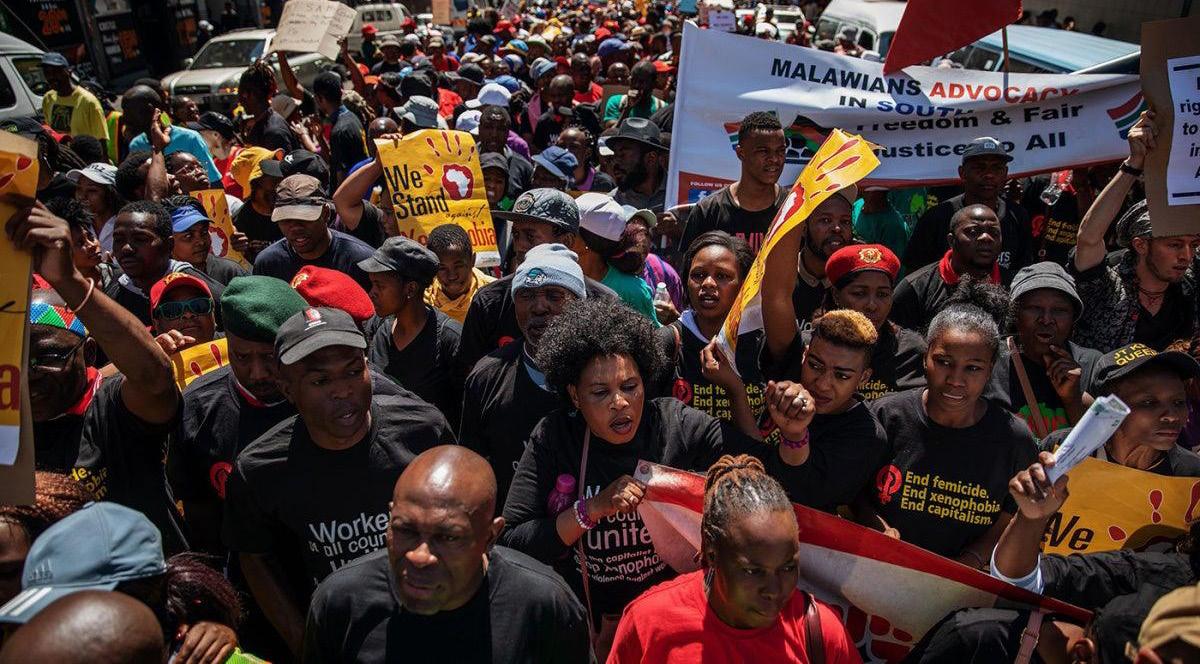
Former South African president Thabo Mbeki says rising xenophobia reflects deeper governance failures and a retreat from the Pan-African solidarity that once defined post-apartheid South Africa, writes Jon Offei-Ansah
Mahama's vision for Africa's new world order
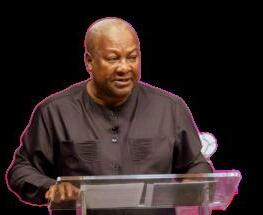
As the post-1945 international order comes under increasing strain, President John Mahama is positioning Ghana—and Africa—as active participants in shaping what comes next. His Chatham House address offered a vision of stronger African integration, reformed global institutions and greater economic self-reliance, writes Jon Offei-Ansah
Why Africa’s youth demand economic freedom
Across Africa, younger generations are becoming less patient with postcolonial political arrangements they believe preserved inequality long after independence, writes Jon Offei-Ansah.
Most expensive misconception about the continent
For companies with significant African exposure or ambitions, the perception tax is a structural drag on performance and profit, argues João Gaspar Marques
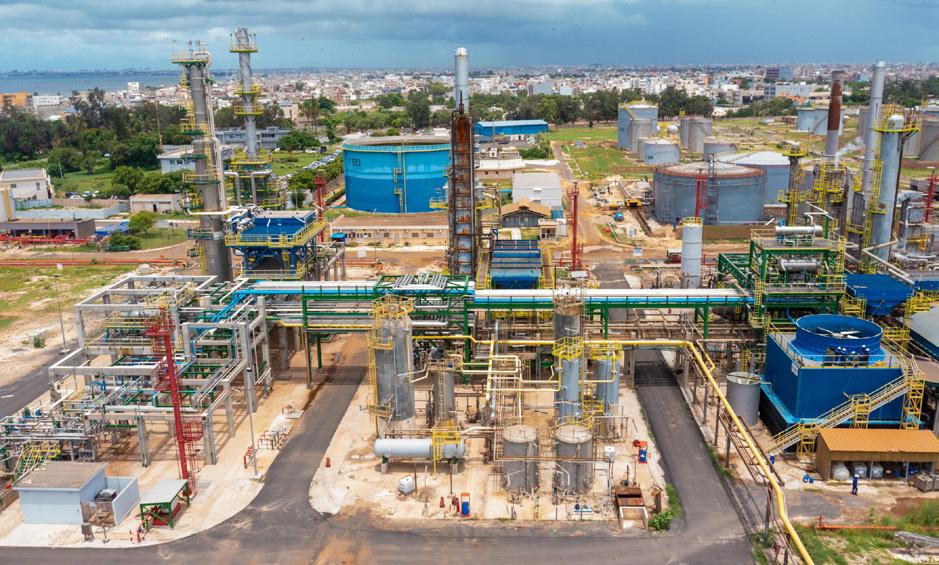
East Africa’s refinery gamble reshapes Africa’s industrial future
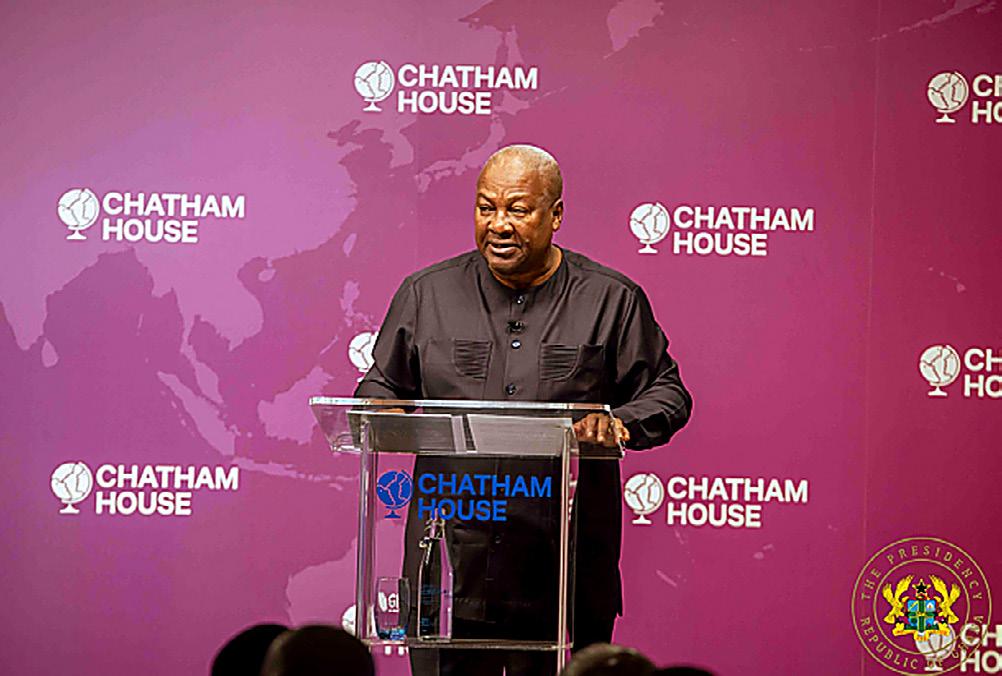
Africa gains leverage in new minerals race
East African leaders, financiers and industrialists are converging around a bold new economic doctrine: process Africa’s resources at home, finance infrastructure with African capital and build regional markets large enough to compete globally, writes Jon Offei-Ansah
As China's lending boom fades and global demand for critical minerals accelerates, Africa has gained unprecedented bargaining power. Whether that leverage can be transformed into industrial strength may define the continent's economic future, writes Jon Offei-Ansah
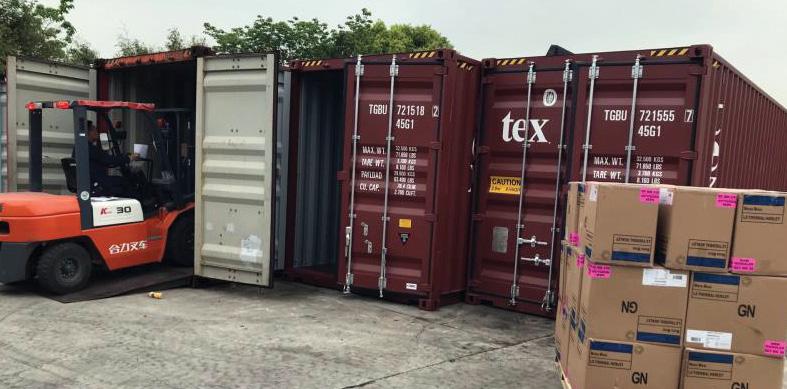
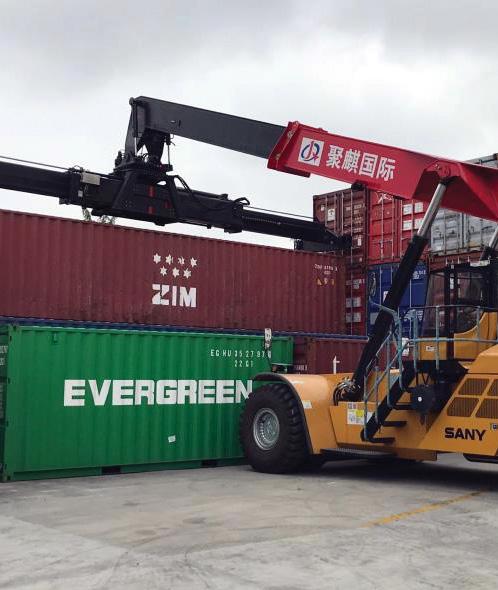
Established in 2002, Shanghai Grand International Co., Ltd. offers a variety of shipping and transportation options via air, sea and ground. Our company is based in Shanghai, China, with branches across the nation. Ranging from customs declaration, warehouse storage, containers and consolidated cargo shipping we have a large array of options to meet your needs.
In addition to being approved and designated by the Ministry of Transportation of China as a First Class cargo service provider, we have also established excellent business relations with major
C.E.O President.
Mr, Felix Ji
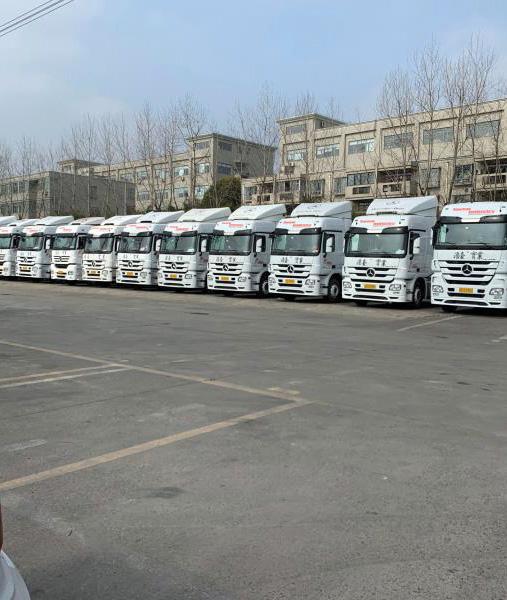
shipping companies including Maersk, CMA, ONE, SM line, and EMC over the past 15 years. In addition we have also built long term business relations with major airline cargo departments.
In order to expand our global operation, we are looking for international partnerships to work together in this industry. Should you ever import any goods from Peoples Republic of China please ask your exporter and shipper to contact us. We will provide our best service to you.
Room 814, 578 Tian Bao Lu, Shanghai, Peoples Republic of China
E-Mail: felix@grand-log.net
phone: 86-13501786280
AFRICAN leaders these days are wont to crow about the continent being one of the richest on Earth in terms of natural resources, youthful population, cultural diversity and human potential. Yet, despite decades of independence, countless development plans and grand political declarations, much of the continent continues to struggle with poverty, weak institutions, unemployment, corruption and political instability.
The question that continues to haunt Africans is: why has managing Africa successfully proven so difficult?
The problem is not a lack of resources or ideas. Africa has both in abundance. The deeper crisis lies in governance, leadership failures, political fragmentation and the inability of many African societies to place national interest above narrow ethnic, political and personal ambitions.
Across the continent, many governments still operate through systems built around patronage rather than merit, loyalty rather than competence and political survival rather than national development.
In the public sector, corruption flourishes because accountability is weak, and public wealth that should fund schools, hospitals, roads and industries ends up enriching a small political elite.
Ordinary Africans are the ones who pay the price. Millions of young people graduate from universities every year only to face unemployment, hopelessness and migration.
This failure is especially alarming given the ambitions contained in the African Union’s Agenda 2063, the continental blueprint meant to transform Africa into a prosperous and integrated continent. The vision is admirable, but the implementation remains deeply flawed. African leaders continue to speak about innovation, industrialisation and digital transformation while education systems remain outdated and disconnected from the realities of the modern global economy.
Look at how Nigerian billionaires – Aliko Dangote and Allen Onyema – have had to constantly battle against the obstacles placed in their way by bloody-minded Nigerian state officials.
Many governments give preferential treatment to foreign investors who extract profits while contributing little to long-term national development. Foreign companies are often granted generous tax holidays, land concessions and lucrative contracts while local businesspeople struggle to access financing, electricity, markets and government support.
African leaders constantly speak about economic sovereignty and self-reliance, yet many economies remain dependent on foreign corporations that repatriate wealth rather than reinvest it locally.
Equally damaging is the role Africans themselves sometimes play in sabotaging their own development. Across the continent, politics is too often shaped by ethnicity, regionalism and sectarian loyalties rather than national unity. In many countries, citizens support or oppose governments not based on policies or competence, but on whether their ethnic group is in power.
When one group governs, others may deliberately frustrate national projects simply because they fear political rivals will benefit. Infrastructure projects, economic reforms and development programmes are sometimes resisted for purely political or ethnic reasons. This culture of division weakens national cohesion and prevents countries from pursuing long-term development goals collectively.
Billionaires Aliko Dangote and Allen Onyema have had constant battles with Nigerian bureaucratic bloody-mindedness
The obsession with sectional interests over national interest remains one of Africa’s most destructive political habits. Nations cannot progress sustainably when citizens see themselves primarily as members of ethnic groups, regions or factions rather than as equal stakeholders in a common national project.
In many African countries, schools still prepare students for government jobs that no longer exist rather than equipping them with entrepreneurial, technological and vocational skills needed in the 21st century.
Without serious investment in human capital, Agenda 2063 risks becoming another beautiful document filled with promises that never materialise.
Africa also faces serious difficulties in achieving genuine economic integration. The establishment of the African Continental Free Trade Area (AfCFTA) was celebrated as a historic breakthrough that would create the world’s largest free trade zone by the number of countries. In theory, it offers Africa the chance to trade more with itself, reduce dependency on foreign markets and stimulate industrial growth.
However, the reality remains far more complicated. Many African economies still trade more easily with Europe, Asia and North America than with neighbouring African states. Poor infrastructure, weak transport systems, bureaucratic border controls, currency instability and protectionist policies continue to frustrate intra-African trade.
Most importantly, African governments frequently fail to support local entrepreneurs who should be the backbone of continental trade and industrialisation.
Yet despite these challenges, Africa’s future is not hopeless. The continent possesses immense strengths: a youthful population, abundant resources, growing urban centres and increasing technological innovation. Across Africa, there are also examples of progress, resilience and effective leadership that demonstrate what is possible when governance improves and institutions function properly.
Take Ghana, for example. When President John Mahama came to power in 2025, the country’s economy was in the doldrums. A year later, Ghana recorded economic growth of six per cent; non-oil exports topped $5 billion; debts, such as the $1,5 billion owed by the energy sector, are being settled; and inflation has been reduced substantially.
Mahama says that Ghana’s economic transformation has been down to him and his ministers working as a team. Not surprisingly, Ghana is now the eighth largest economy in Africa.
Crucially, the Mahama administration is focusing on accountability. The government is not waiting to be audited when it leaves power.
It is doing so right now. There are currently 36 investigations into the activities of public officials who abused their offices and would face the consequences. regardless of political affiliation.
This is the new political culture that Africa needs; grounded in accountability, competence, merit and national unity. Leaders must prioritise institution-building over personality cults.
Africans themselves must reject divisive politics and embrace a shared commitment to national and continental development.
AS South Africa grapples with rising unemployment, worsening public services, decaying infrastructure and persistent social unrest, the governing ANC increasingly finds itself confronted by an uncomfortable question: can it continue blaming migrants for problems of its own making?
For many South Africans, especially poor black citizens who were promised a better life after the end of Apartheid in 1994, the democratic dividend has fallen far short of expectations. After the dismantling of the odious regime, with massive international support, the ANC viewed it as an end in itself rather than a means to an end.
Thus, three decades after liberation, millions remain trapped in poverty, unemployment hovers at among the highest levels in the world and basic services that once functioned efficiently are deteriorating. Against this backdrop, migrants from elsewhere in Africa have become convenient targets for public frustration.
Yet blaming migrants obscures a more fundamental reality: South Africa's challenges are rooted not in immigration but in governance failures, corruption, policy uncertainty and the inability of successive ANC administrations to build upon the considerable economic and institutional foundations they inherited.
The Afrikaners behaved like any other ethnic group in Africa when in power. They built South Africa on the exploitation, exclusion and oppression of the black majority and other ethnic groups.
But the difference was that in the process, Apartheid South Africa developed the most sophisticated economic and scientific capabilities on the African continent.
Desmond Davies
Recently, the African Development Bank announced that Morocco had overtaken South Africa as Africa’s leading industrial economy.
Corruption scandals, state capture, political patronage and administrative incompetence have weakened institutions that once underpinned economic growth. The consequences are felt most severely by the black majority whom the ANC was elected to empower.
In such circumstances, critics argue that focusing attention on migrants serves a useful political purpose. When citizens are angry about unemployment, poor service delivery, crime, or economic stagnation, migrants provide a visible and politically convenient target. The narrative suggests that foreigners are taking jobs, overwhelming public services and contributing to criminality.
Yet the numbers tell a different story. South Africa's economic challenges predate recent migration flows. Unemployment has remained stubbornly high for decades. State-owned enterprises were already deteriorating long before migration became a dominant political issue. Corruption scandals costing billions of rands cannot be blamed on migrants. Nor can electricity shortages or failing municipalities.
The moral authority earned during the Apartheid struggle cannot indefinitely substitute for effective governance
By 1994, South Africa possessed a highly industrialised economy, extensive infrastructure, advanced financial institutions, a world-class transportation network, reliable electricity generation and a stock exchange that remains Africa’s largest and among the most significant in the world.
These achievements were financed through the exploitation of the country's abundant natural resources, including gold, diamonds, platinum, coal and uranium. Other African countries with similar resources have fared badly over the years.
So, why has a democratic South Africa, free from international sanctions and possessing immense human and natural resources, struggled to advance further from that foundation?
South Africa's scientific achievements provide a striking illustration of what was once possible. In 1967, the country stunned the world when Dr. Christiaan Barnard performed the first successful human heart transplant.
During the 1970s and 1980s, despite international isolation, the Apartheid government secretly developed six nuclear warheads, demonstrating remarkable scientific and engineering capabilities. Before the democratic transition, those weapons were voluntarily dismantled.
Today, however, South Africa finds itself battling rolling power outages, failing municipalities and an economy that struggles to create jobs for its growing youth population. The contrast between past capabilities and present performance raises tough questions about leadership, governance and national priorities.
The deterioration of Eskom, once one of the world's most respected electricity utilities, symbolises the broader decline.
The irony is that South Africa possesses the capabilities to lead Africa technologically and scientifically. During the Covid-19 pandemic, Ramaphosa criticised what he called "vaccine apartheid", highlighting the unequal global distribution of vaccines between wealthy and developing nations. But why has a country with South Africa's scientific pedigree not positioned itself as a continental leader in vaccine development, pharmaceutical manufacturing and medical innovation? Countries with fewer resources have made significant strides in biotechnology, pharmaceuticals and research.
South Africa has world-class universities, research institutions and scientific talent. The challenge is not the absence of capacity but the inability to consistently translate that capacity into national development.
Unlike South Africa after Apartheid, the rest of Africa did not acquire anything economically worthwhile from the British, French and Portuguese colonialists. The ANC had a head start over African countries that had gained independence 30 years earlier.
The ANC increasingly risks falling into the same trap. Liberation movements that became governing parties often struggled to distinguish between historical legitimacy and contemporary performance. The moral authority earned during the struggle against Apartheid cannot indefinitely substitute for effective governance.
The ANC may find short-term political advantage in directing public anger towards foreigners. But that is a dangerous game the ANC bigwigs are playing.
Unless they confront the underlying causes of economic stagnation, institutional decline and public disillusionment, blaming migrants will not restore jobs, fix power stations, improve schools, or rebuild public trust.
The challenge facing South Africa is not migration. It is governance.
Underlying social and economic problems of post- Apartheid South Africa have led some of its citizens to choose xenophobia over reason, writes Opia Mensah Kumah
IN April 2015, the world was gripped by xenophobic violence targeting African migrants in South Africa. The victims were mostly from neighbouring countries, especially Mozambique and Zimbabwe.
Just over a decade later, xenophobia has reared its ugly head again. This time, the targets are from further afield. Migrants from Western, Central and Eastern Africa have all been targeted.
Sadly, anti-migrant resentment has always simmered beneath the tranquil surface of South African society. This disgruntlement manifests itself in sporadic attacks on foreigners, which do not attract media attention. However, the eruption in early 2026 seems different. It is more widespread and seems better coordinated, with a tinge of professional grassroots organisation.
Even more ominous, some mainstream South African political parties, including the Inkatha Freedom Party and Action SA, have joined the band of opportunists and “political entrepreneurs” to fan anti-migrant prejudice.
Many Africans are outraged and bewildered by these happenings. One puzzled migrant put it: “Why are our brothers killing us?” This question is on the minds and lips of many Africans who remember their countries’ support for the antiApartheid struggle and the universal jubilation that followed the end of the odious system.
Watching the distressing images of South African youth hunting down fellow Africans, it is easy to forget how far the country has progressed post-Apartheid. In the immediate
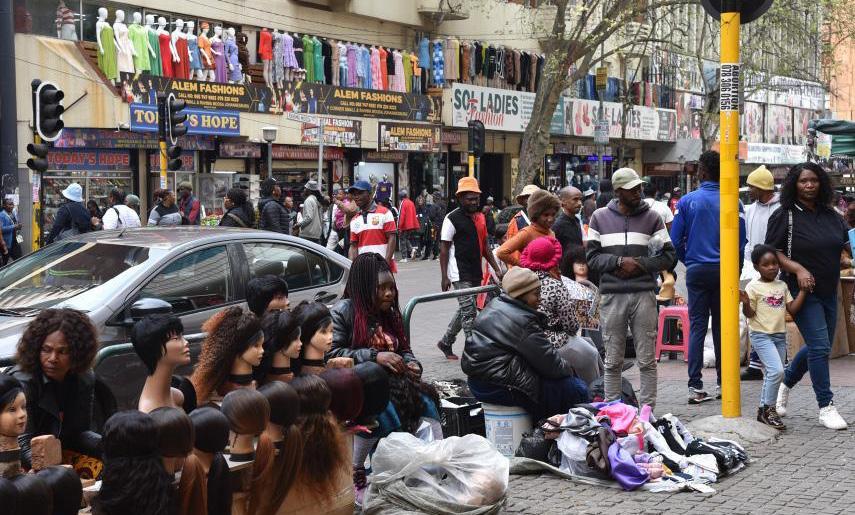
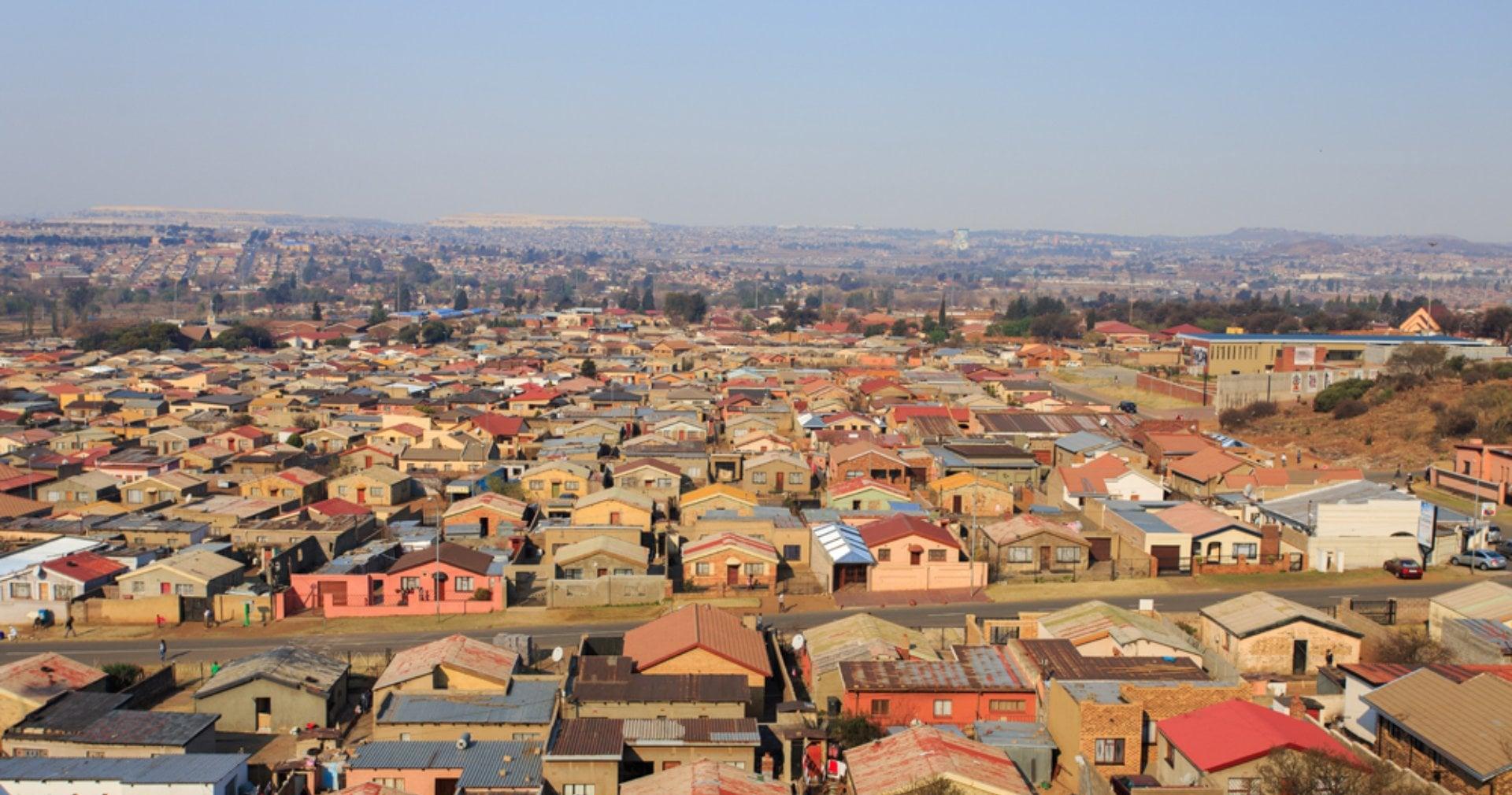
Townships remain at the centre of South Africa's struggle with poverty, unemployment and inequality, challenges that analysts say continue to fuel social tensions and public frustration
aftermath of liberation, the ANC government spelt out a lofty ambition to build “a non-racial, non-sexist, united and prosperous South Africa, and for a society based on fundamental human rights, equality and unity in diversity”.
In its development plans, South Africa touts its desire to share its expertise with other, less endowed countries in Africa and beyond. South African investments blossom throughout Africa, and its iconic brands, from MTN to DSTV, supermarkets, fast food chains and wines thrive everywhere.
South Africans point out, with justification, that in 30 years, they have gone from an international pariah state to one whose counsel is sought, and often prevails, in global fora, including the UN and the African Union. In their own backyard, they are the undisputed champions of the Southern Africa Development Community (SADC) and the Common Market for East and Southern Africa (COMESA). South Africa is the “S” in BRICS, having joined the exclusive club of emerging powers initially consisting of Brazil, Russia, India, and China. Ironically, it is South Africa’s success and visibility on the international stage that has attracted Africans to the country.
The country faces three intractable, interrelated challenges: poverty, unemployment and inequality, which development experts have labelled the triple threat.
This is not a mere slogan. The South African government came to this definition through a deliberate process. Under the aegis of the Economic Development Department (EDD), the country conducted a thorough analysis of the economy and produced a series of development plans.
Among these are the New Growth Path (NGP), launched in 2010; the National Development Plan: Vision for 2030 (NDP), also known as Agenda 2030, launched in 2013; and the Medium Term Strategic Framework, 2014-2019 (MTSF) conceived as a first-phase road map for implementing the NDP.
The NDP is an impressive document. It is a perspective plan, produced through an innovative process led by the worldrenowned economist, Trevor Manuel, Finance Minister during the presidencies of Nelson Mandela and Thabo Mbeki.
In 2014, I served for several months as interim UNDP Resident Representative in South Africa. This position enabled me to comprehend the fundamental problems facing the country.
Unfortunately, South Africa’s soaring ambition, diplomatic and commercial successes abroad mask a grim reality at home.
A custom-designed National Planning Commission (NPC), comprising 26 independent experts, produced the NDP, a 480-page tome, detailing a vision of South Africa as a global economic powerhouse by 2030. The triple threat emerged from this process as the key impediment to the country’s development ambitions. Here is a brief look at each of the three threats.
To most casual observers, it may seem incongruous to discuss extreme poverty in the context of South Africa. Many Africans think of South Africa as “our only first world economy”, an Eldorado at a par with the US and Europe, boasting a GDP per capita multiple times that of most other countries in the region. Yet, severe income deprivation and abject living conditions afflict many South Africans.
Poverty, like much else in South Africa, can be traced to the legacy of Apartheid. First, poverty is defined by residence. It is more prevalent in the former Bantustans and townships.
The so-called Bantustans were fictitious nations created by the Apartheid regime within the territories of South Africa and the then South West Africa, now Namibia, as “homelands” for blacks. The Bantustans were designed to be poor and dependent.
They were carved out of the poorest quality land, guaranteed to yield hardly any agricultural produce, with no sound economic
foundation. Not surprisingly, statistics show that poverty rates in the former Bantustans are higher than in other rural communities.
Poverty is also concentrated in the townships, created to house blacks working in nearby white communities. In rural areas, townships harboured commercial farm workers and their families. In urban areas, townships housed black servants who worked to maintain the opulent lifestyle of whites.
In mining enclaves, they took the form of single-sex dormitories for miners mostly imported from neighbouring countries like Eswatini, Lesotho and Mozambique. Townships were ebullient and lively. Artistic creativity thrived in the shebeens, producing the wonderful kwela and jive music beloved throughout the world. The anti-Apartheid struggle also found its genesis there. As such, township life is often romanticised.
Living conditions were harsh. Each morning, black African workers sallied forth to work in white neighbourhoods, women mainly as housemaids and men to carry out other menial jobs.
Before dark, they trekked back to their township homes, many without running water, electricity, or sanitation.
But these workers were the lucky ones; many township residents had no jobs at all. Unsurprisingly, these townships bred the typical ills of poverty: criminality, violence and alcoholism.
Post-Apartheid, some townships have been dramatically transformed through the Government’s Black Economic Empowerment (BEE) and the township eradication programme designed to move millions of township dwellers into decent, lowcost housing that offers electricity, water, and modern sanitation.
Thus, Soweto in Johannesburg has become a bustling, modern suburb that attracts hordes of tourists because of its storied past. But the success story of Soweto is not repeated everywhere. Millions of township dwellers remain mired in degrading poverty.
Unemployment: A Catch 22 Conundrum
Finding decent work for the black population is a big headache for the South African authorities. Officially, the unemployment rate stands at 30 per cent. Among young people, 15 to 24, it rises to 50 per cent. In some former homelands and townships, it can rise to 75 per cent and above. To address this threat, the New Growth Path targeted five million new jobs within 10 years.
Unfortunately, there are no quick fixes to unemployment, which confronts two stumbling blocks: the structure of the economy and anaemic growth. South Africa’s economy is caught in a structural trap. To paraphrase former President Thabo Mbeki, it is a country where the first world and the third co-exist. The factors and processes of production are typical of a high-income economy, whereas most of the population lives in a low-income economy. Agriculture is highly mechanised and commercialised. Peasant farming and artisanal fishing, occupations that employ large populations in most developing countries, are largely unknown.
Similarly, commerce and industry, including mining, are dominated by large corporations that employ modern machinery and production techniques, which exclude those without specialised skills or training.
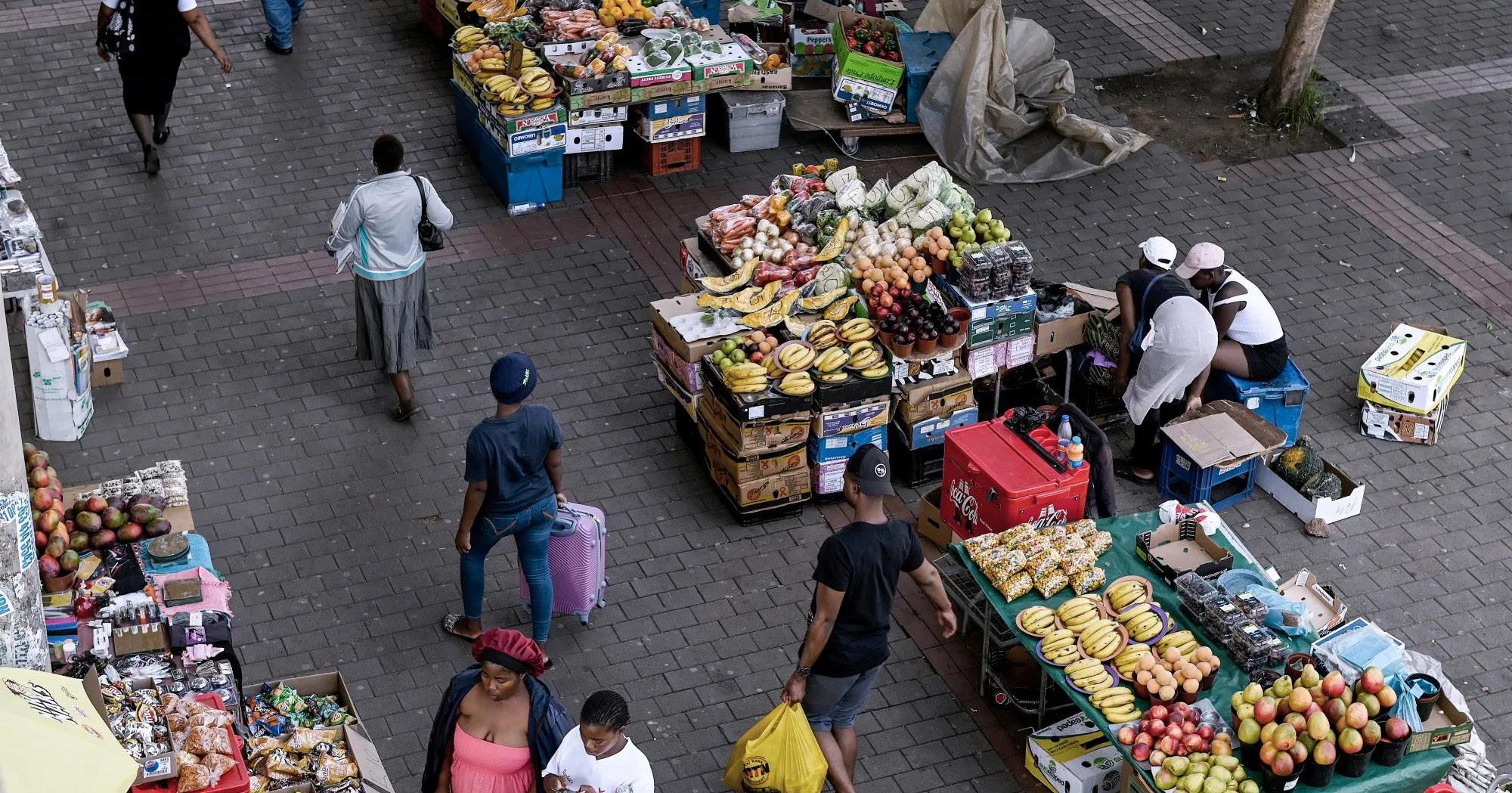
The informal sector, which is highly labour-intensive, hardly exists in South Africa: no petty traders, no street hawkers, no tailors, seamstresses and nail polishers operating from kiosks. The NDP estimates that small business employs less than 40 per cent of the working population. This compares with nearly 70 percent in the Organisation for Economic Cooperation and Development (OECD) countries and over 90 per cent in most African countries.
There is consensus that rapid expansion of the informal sector will drive economic transformation. Thus, the NPD set a target for small business employment at 90 per cent by 2030. To this end, a new Department of Small Business Development was created in 2014 to drive large-scale skills and vocational training, promote small and medium scale farming, and institute a supplier development programme. These strategies constitute a step change in tackling unemployment.
However, for these strategies to generate the requisite decent jobs, the economy must grow at a robust pace. The NDP estimates that, to achieve the agenda 2030 objectives, the economy must sustain an annual growth rate of six per cent. This is not an unattainable target.
A tiny fraction of blacks will join the ranks of the super-rich while the gap between the bottom half continues to widen
Many African countries have reached or exceeded similar growth rates in recent years. Ethiopia and Rwanda sustained growth rates approaching 10 per cent in the 2000s.
The problem is that South Africa has not achieved robust growth. In the early 2000s, growth hovered around four per cent. Following the 2008 global financial crisis, the economy struggled to attain even two per cent growth.
This presents a classic Catch 22 conundrum: the economy must transform to grow; but it must grow to transform. Boldness and creativity are needed to break the deadlock.
Inequality: A Colour-coded Legacy of Apartheid
South Africa is among the most unequal societies in the world. The country’s GINI coefficient, the UNendorsed measure of income inequality, stands at 0.67. The NDP aims to reduce this to 0.60. By contrast, African countries range from 0.44 to 0.50.
resources, while blacks, squatting at the base, earned a pittance and owned almost nothing. In between, coloureds and Asians scraped by.
over Apartheid was not won through the efforts of South Africans alone
Inequality in South Africa is intertwined with poverty, unemployment and an Apartheid hangover. Under the system of “separate development”, inequality was strictly colour-coded: whites sat atop the income pedestal and owned the bulk of
Unfortunately, the end of Apartheid has not erased inequality. The structural inequalities remain. Income inequality has worsened, although it has begun to de-racialise somewhat due to deliberate pro-black policies of the ANC government.
Approximately 60 per cent of the population (mostly blacks) earns less than $7,000, the official GDP per capita, whereas the top 2.2 per cent earns over $50,000. Inequality also reflects in lifestyles, educational opportunities and attainment, access to decent work, life expectancy and, most glaringly, in housing and human settlements.
Unfortunately, current trends indicate that inequality might even worsen, but with a new twist: a tiny fraction of blacks will join the ranks of the super-rich while the gap with the bottom half continues to widen.
The persistent poverty and growing inequality baffle poor South Africans. They ask: “We defeated Apartheid. Our own people now rule us. So, why are our conditions worsening?”
The government’s short-term response to these rumblings is the institution of a generous social protection cushion for poor South Africans. This includes targeted cash transfers for the vulnerable, subsidised housing, free healthcare and free basic education, as well as a universal quota of free basic services (water, electricity and sanitation).
Indeed, up to 15 per cent of the national budget is spent on various benefit packages, despite the scepticism of economists about the long-term sustainability of this costly social protection programme.
Frustrated and exasperated, many black South Africans have resorted to finger pointing and scapegoating. White South Africans (“Apartheid descendants”) continue to be routinely
Opia Mensah
is
blamed and denigrated. Increasingly though, the focus is shifting to “corrupt politicians”.
The media, still largely controlled by the white establishment, gleefully trumpets corruption scandals involving black politicians. African migrants are caught up in this maelstrom of unfulfilled expectations.
Migrants make an easy and convenient scapegoat. They are unfairly characterised as parasites stealing South African jobs and degrading the moral fibre of society. In this regard, South Africa is no different from the norm in many parts of the world.
Migrants everywhere are routinely blamed for the failures of society or political governance. The European Union pursues aggressive anti-immigrant policies, including constructing “a ring of steel” to prevent African and Middle Eastern potential migrants from crossing the Mediterranean Sea. Thousands have perished as a result.
Australia has created “immigrant-processing centres”, akin to concentration camps, on Christmas, Manus, and Nauru islands to prevent outsiders, mostly from Southern and Eastern Asia, from reaching its shores. The US has erected a 600-mile fence on its southern border ostensibly to protect Americans from drug traffickers and terrorists.
African countries are not innocent either. In 1969, Ghana expelled millions of West African migrants under the “Aliens Compliance Order.” This triggered retaliatory “Ghana Must Go” expulsions from Nigeria in the 1980s. Somalis in Kenya and Guineans in Sierra Leone endure occasional harassment.
The difference in South Africa is that the xenophobia is not cloaked in the pretence of legal niceties or democratic deliberation. Rather, the machete-wielding mobs in South Africa smack of lawlessness. It is an indictment of a nation that touts lofty ideals of regional solidarity and defence of human rights globally.
It is an embarrassment that its much-vaunted intelligence services cannot anticipate and prevent such spectacles. But perhaps, most disappointing of all, the South African government and elite have failed to inform and educate their people about the immeasurable contributions of African countries in the struggle against Apartheid.
Victory over Apartheid was not won through the efforts of South Africans alone. African institutions, nations and people contributed solidarity, blood and finance. Africans do not seek reparations. But they deserve gratitude and respect.
Observing this latest flareup of xenophobia, one hopes for two outcomes in South Africa. First, that the country succeeds in transforming itself into a safe, peaceful and prosperous nation - a regional leader and global player. Second, South African leaders must educate their citizens that nation building is not a parochial enterprise.
The anti-Apartheid struggle certainly was not. The South African rainbow should cover a bigger swathe than its geographical limits. It should embrace the entire African continent. Then, South Africa can be a nation we all can be proud of.
retired UN official. He served as Chief of Advocacy and Information Management of the UN Office for the Coordination of Humanitarian Affairs (OCHA) in New York. He also served as UN Resident Coordinator and UNDP Representative in Comoros, Rwanda, South
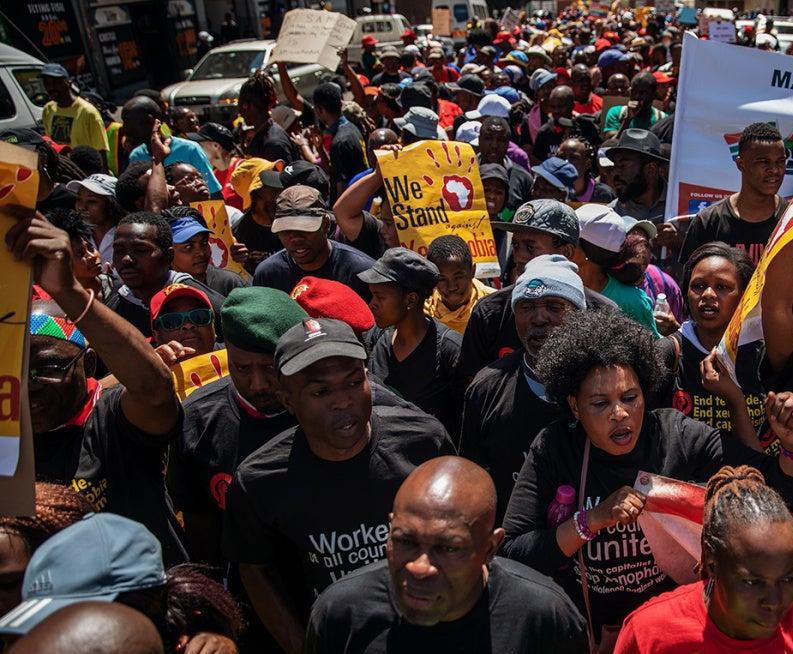
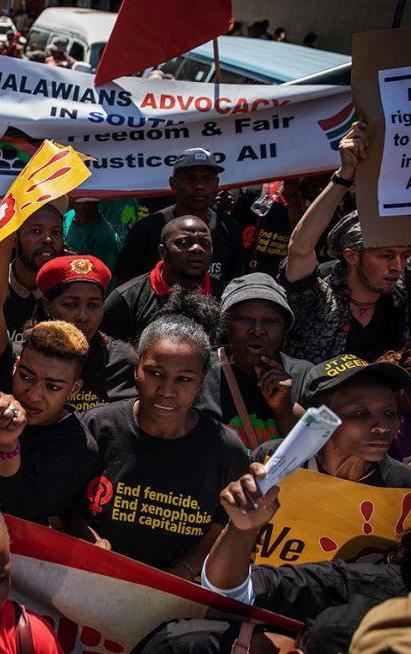
As vigilantes in South Africa carry out violent xenophobic attacks targeting African and Asian foreign nationals in recent weeks, there has been little or insufficient apparent response from the police and other authorities, according to Human Rights Watch
THIS April and May, a citizen-led movement in South Africa, March and March, which advocates more stringent immigration enforcement in South Africa organised demonstrations against undocumented migrants in major cities including Pretoria, Johannesburg and Durban, with violent and sometimes fatal results.
“South Africa’s constitution and international human rights law protect the right to protest, but that does not include permission to commit violence,” said Nomathamsanqa MasikoMpaka, South Africa researcher at Human Rights Watch. “The authorities should not allow vigilante groups to violently target foreign nationals and instead need to protect them and bring those who harm them to justice.”
Since 2008—when 62 people, including 21 South Africans, 11 Mozambicans, five Zimbabweans and three Somalis, were killed—South Africa has been grappling with intermittent but widespread xenophobic harassment and violence against African and Asian foreign nationals living in the country, whether refugees, asylum seekers, or both documented and undocumented migrants.
Sporadic waves of violence erupted against foreign nationals in 2015, 2019—primarily targeting Nigerian nationals—and 2021-2022, with the rise of vigilante groups like Operation Dudula (“force out” in Zulu).
Since 2024, the country’s deteriorating socioeconomic conditions, including an unemployment rate of over 43 per cent, coincided with the rise of anti-immigrant activism and the formation of newer vigilante groups like March and March.
These groups scapegoat foreign nationals as the cause of South Africa’s economic woes, poor service delivery and high rates of crime, despite studies that disprove these claims. They have prevented foreign nationals from accessing health care and education in public facilities.
In November 2025, the South Gauteng High Court granted an injunction against Operation Dudula, prohibiting its supporters from blocking migrants’ access to healthcare facilities.
Mpho Makhubela, a member of the Consortium for Refugees and Migrants in South Africa (CoRMSA) and an activist in the Kopanang Africa Against Xenophobia (KAAX) coalition, noted with concern the opportunistic nature of these groups.
“Vigilante groups feed off the country’s frustrations and socioeconomic rights regression, unemployment, [and] lack of efforts to address the equity gaps that we have as a country,” he said.
“The reality is that the country has been faced with the enormous task of addressing the legacies of apartheid.”
A 43-year-old Cameroonian shop owner in Durban, who has lived in South Africa for nearly 20 years, said that people he believed to be affiliated with March and March attacked him on April 17, 2026, during protests in Durban targeting foreign-owned shops.
He closed his shop, locked the doors, and turned off the lights, but a group of about 10 men broke down his door and, using a derogatory term, asked two South African women who run a hair salon in the shop about him. “They whipped me and my three colleagues who are not South African with golf sticks

“They also used stun guns on us. We ran outside the shop, while unable to see clearly. They followed us outside and whipped us … no one came to assist us.”
The shop owner is married to a South African woman and lawfully living in South Africa, but he said his attackers did not seek to clarify his migration status. No law enforcement officers came to protect him, he said, like reports in previous years that South African police officers failed to protect foreign nationals, or worse, aided the attackers. The shop owner has not opened an assault case, as he does not have faith in the country’s criminal justice system.
South Africa has been called on to ‘take measures to effectively combat organised vigilante groups’
Human Rights Watch has not verified reported cases of foreign nationals who died at the hands of vigilante groups during the demonstrations. However, a credible source described an episode days before the most recent protests in which police beat, tortured and then placed a Malawian national in the trunk of a car after he did not produce proper documentation. The man died from his injuries.
AB and sjamboks [heavy whips], and sprayed pepper spray on us,” he said.
On April 27, UN Secretary General António Guterres expressed concerns over the reported xenophobic harassment, discrimination and attacks in South Africa. The African Commission on Human and Peoples’ Rights expressed similar concerns, calling on the government to investigate violence against foreign nationals and to ensure those responsible are held accountable and that affected migrants have access to justice and protection.
South Africa’s Constitution guarantees human rights, dignity and equality to all within its borders, not only citizens. South Africa is party to the International Covenant on Civil and Political Rights and the African Charter on Human and Peoples’ Rights, both of which impose obligations for states to protect everyone in their jurisdiction against attacks motivated by discrimination, including on grounds of ethnicity, social origin, or birth.
South Africa is also party to the International Convention on the Elimination of All Forms of Racial Discrimination; attacks on foreign nationals have been a matter of concern for the committee that monitors state compliance with the convention for over a decade.
In December 2023, the committee called on South Africa to “take measures to effectively combat organised vigilante groups”; “provide victims of discriminatory acts with adequate redress and support”; “ensure their protection, as well as the protection of their property”; and “adopt measures to ensure accountability and end impunity, including by conducting effective, thorough and impartial investigations into all reports of abuse and violations of human rights perpetrated against non-citizens, and prosecute and punish those convicted adequately with penalties commensurate with the offences”.
“South African authorities should intensify efforts to address anti-immigrant sentiments and violence to ensure the safety and protection of at-risk foreign nationals in the country,” MasikoMpaka said. “Vigilante groups need to be held fully accountable, including through effective criminal prosecutions.”
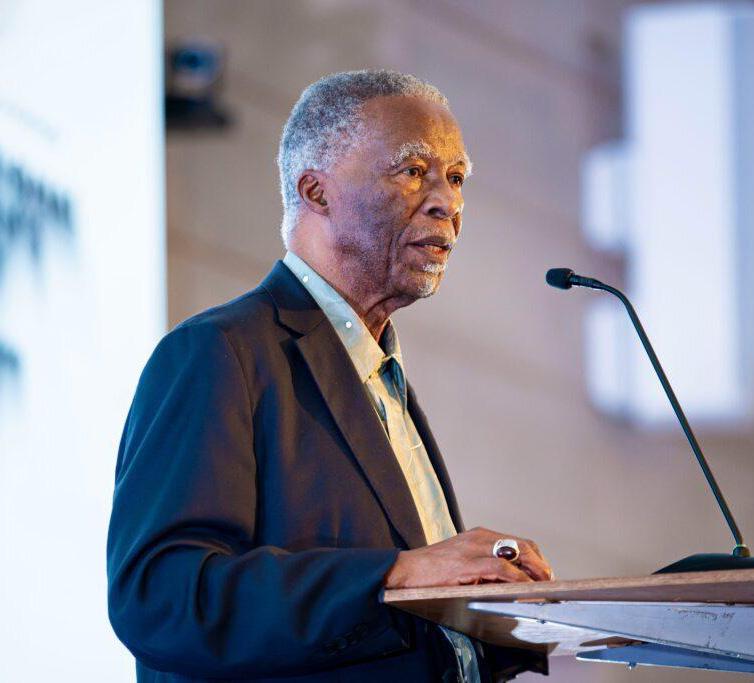
Former South African president Thabo Mbeki says rising xenophobia reflects deeper governance failures and a retreat from the Pan-African solidarity that once defined post-apartheid South Africa, writes Jon Offei-Ansah
FORMER South African president Thabo Mbeki has reentered one of South Africa’s most combustible national debates with a warning that xenophobia is masking deeper structural failures within the country itself.
Speaking during a high-level business breakfast hosted by the Thabo Mbeki Foundation in collaboration with AUDA-NEPAD in Cape Town on May 23, Mbeki delivered what amounted to a broad political and moral critique of post-apartheid South Africa. His argument was not simply that migrants are being unfairly targeted, but that South Africa is gradually abandoning the panAfrican ethos that helped sustain the liberation struggle itself.
At the centre of Mbeki’s intervention was economics.
He argued that undocumented African migrants are being turned into convenient scapegoats for long-term economic decline, governance failures and political dysfunction. Referring to South Africa’s economic trajectory after apartheid, Mbeki pointed to the period between 1994 and 2008 when growth rates climbed to around 6 percent before sharply deteriorating after 2009.
“We know the history in detail of how South Africa from 1994 to 2008, 2009, the country goes up like this. Growth rates reach 6 percent. From 2009 it goes the opposite direction,” he said.
For Mbeki, this decline cannot credibly be blamed on undocumented African migrants.
“The people who caused that decline are laughing in the corner because you are pointing not at them but somewhere else.”
The remarks arrive at a particularly tense political moment in South Africa. Xenophobic rhetoric has intensified across parts of the country as economic frustrations deepen. Foreign nationals from elsewhere on the continent are increasingly blamed for unemployment, crime, housing pressures and collapsing public services.
Mbeki’s speech directly challenged that narrative.
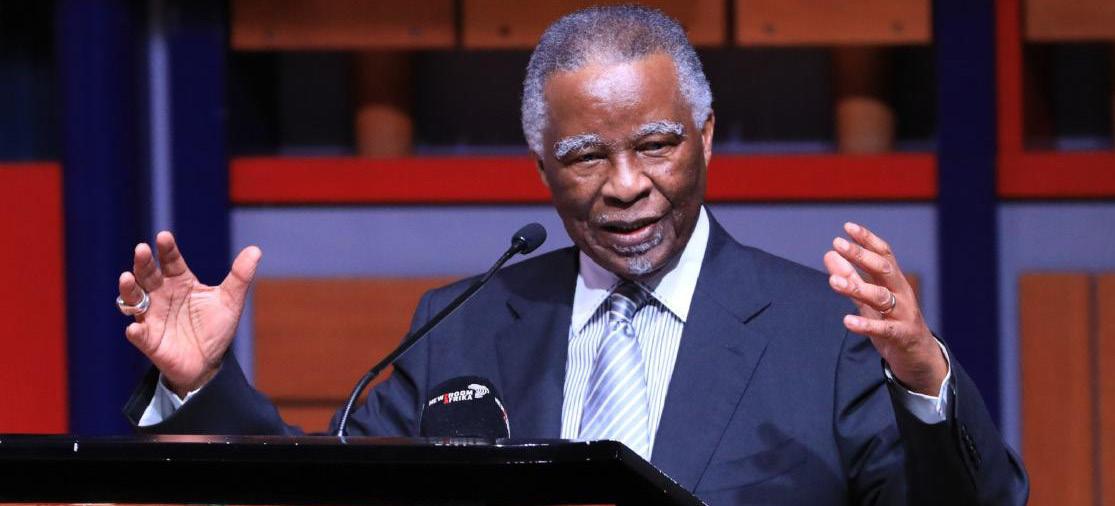
responsibility toward broader African development.
That ideological framework ran throughout his Cape Town address.
Rather than relying heavily on policy arguments, Mbeki used stories from the liberation era to illustrate what he believes South Africa has forgotten about its relationship with the continent.
The people who caused that decline are laughing in the corner because you are pointing not at them but somewhere else
His argument was not that migration pressures do not exist, but that the political fixation on migrants is obscuring deeper structural failures — weak governance, corruption, state capture, stagnant growth, institutional decline and the erosion of public trust.
The significance of Mbeki’s intervention lies partly in who he is. More than any other post-apartheid South African leader, Mbeki tied South Africa’s democratic future to the wider African continent. His presidency was shaped by the language of the ‘African Renaissance’, continental integration and South Africa’s
He recalled how Zambia gave ANC cadres extraordinary operational freedom during apartheid, including one operative known by the pseudonym Oshkosh, who moved freely around Lusaka International Airport because Zambian authorities trusted the ANC implicitly.
Mbeki recounted how Zambian police later discovered that the operative had become involved in drug trafficking. Yet instead of publicly humiliating the ANC, the authorities quietly informed South African officials and urged them to remove him from Zambia before arrests were made.
The story was intended to demonstrate the depth of solidarity African governments once extended to the South African liberation movement.
Another anecdote focused on Tanzania and the death of former prime minister Edward Sokoine, who was killed in a collision involving ANC-linked personnel during the exile years.
Mbeki recalled fears within ANC circles that the incident could trigger public anger against South African exiles because Sokoine was deeply admired nationally. Instead, Tanzanian authorities handled the matter with restraint and avoided any backlash against South Africans.
He also described how Guinea under former leader Ahmed Sékou Touré taught the South African liberation struggle in schools, embedding antiapartheid politics into the country’s educational system as an act of continental solidarity.
In another story, Mbeki recalled how former South African foreign minister Nkosazana Dlamini-Zuma was reportedly given jewellery free of charge by a Guinean shopkeeper simply because she represented South Africa.
He suggested that this decline is visible not only politically, but economically and socially as well.
The former president criticised the weak presence of major South African firms at a recent continental business gathering in Rwanda led by Nigerian billionaire Aliko Dangote, describing it as evidence of declining South African engagement with African integration itself.
He also revisited moments of behind-the-scenes continental diplomacy involving figures such as former Nigerian president Olusegun Obasanjo and former Zambian president Levy Mwanawasa, portraying an earlier generation of African leadership as more invested in regional accountability and collective political responsibility.
African struggle was not just a South African struggle
“This is for us, from the people of Guinea,” the shopkeeper reportedly told her.
These stories were not nostalgic diversions. They formed the emotional and political core of Mbeki’s argument that today’s xenophobia represents a profound rupture with the historical relationship between South Africa and the rest of the continent.
“The South African struggle was not just a South African struggle. It was their struggle.”
This is where the speech became more than a debate about migration policy. It evolved into a warning about South Africa’s changing identity.
Mbeki argued that the country has undergone what he called a “regression” in pan-African consciousness. In his view, South Africa has become increasingly inward-looking, defensive and disconnected from the broader continental project that once shaped its democratic ambitions.
For Mbeki, today’s hostility toward African migrants reflects not simply economic anxiety but a broader ideological retreat.
His warning was ultimately directed at South Africans themselves.
He argued that the country risks isolating itself from the very continent that once defended it diplomatically, materially and politically during apartheid. At a time when Africa is pushing for deeper economic integration through projects such as the African Continental Free Trade Area, Mbeki appears increasingly concerned that South Africa is psychologically moving in the opposite direction.
The most striking aspect of the speech was perhaps its underlying message that Africans will continue to come to South Africa regardless of hostility because many still view the country through the lens of a shared liberation history.
For Mbeki, that emotional and political bond cannot easily be erased by anti-immigrant rhetoric, populist anger or border politics.
The broader implication of his speech is that South Africa’s xenophobia crisis is no longer simply about migration.
It is about whether the country still believes in the PanAfrican vision that once defined its place in Africa and the world.
Amid the rise of xenophobia in South Africa, Kayode Fayemi argues that the continent’s future depends not only on economic cooperation but also on the cultivation of a deeper consciousness rooted in shared emotional and historical consequences
PAN-Africanism was never simply about political coordination among states. It was fundamentally a moral project; a project grounded in the belief that the dignity of one African is tied to the dignity of all Africans.
That is why we must confront honestly and courageously the troubling rise of Afrophobia and xenophobia within parts of our continent, including in South Africa. South Africa’s liberation was not won by South Africans alone.
Former President Tabo Mbeki recently reminded us of that solemn truth. The anti-apartheid struggle became a continental responsibility. Across Africa, nations and citizens made sacrifices in support of South Africa’s freedom.
African countries offered sanctuary to exiles and liberation movements. As a young university student in Nigeria in the early 1980s, I and several of my colleagues gained our PanAfrican consciousness working at the ANC and SWAPO offices in Keffi, Lagos under the tutelage of Mbeki and later Comrades Mark Shope, Victor Matlow and Herman Ithete as Chief Representatives of the ANC and SWAPO respectively.
African workers and taxpayers contributed resources to support the liberation effort. African intellectuals mobilised international solidarity. African leaders paid diplomatic and economic costs in confronting apartheid.
Nigeria, among many others, stood firmly in support of South Africa’s liberation. But this was not charity. It was solidarity. It was an understanding that oppression anywhere in Africa threatened dignity everywhere in Africa.
This shared history matters profoundly, and that is why violence or hostility directed at fellow Africans anywhere on the continent must concern us deeply. Afrophobia is not merely a law enforcement issue or a question of migration policy. It represents a crisis of continental consciousness that negates the continental renaissance that we seek.
At the same time, we must approach this issue with maturity and honesty. Xenophobia does not emerge in a social vacuum. It is often fuelled by economic inequality, unemployment, weak urban governance, poor service delivery, political manipulation and institutional distrust.
I do not minimise the genuine hardships that produce such desperate reasonings. South Africa’s socioeconomic inequalities are among the most extreme in the world.
Youth unemployment is not a statistic; it is a daily humiliation. And when institutions fail to provide relief, communities will, sometimes violently, seek to define the boundary of who belongs to where. Ghanaians did it in 1969 when the Busia government sent Nigerians packing. Nigeria retaliated in 1979 and 1981 under the “Ghana Must go” saga.
In societies where citizens feel economically insecure, frustration can easily be redirected toward vulnerable groups. But understanding is not exoneration.
While we must acknowledge these pressures which are largely the inheritance of Apartheid’s structural deformations, we must never legitimise violence or exclusion against fellow Africans. If Africans cannot coexist peacefully with one
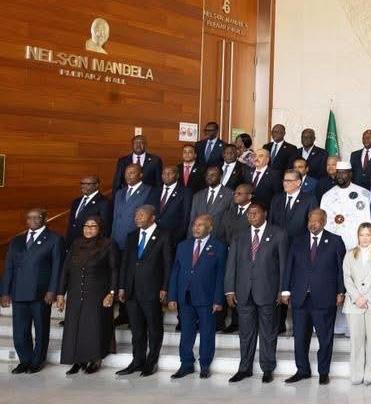
another, then the dream of continental integration will remain fundamentally weakened.
The African Continental Free Trade Area cannot flourish in an atmosphere of mutual suspicion. Regional integration cannot deepen where fear and hostility dominate public life.
Africa, therefore, requires a renewed ethos of continental citizenship that emphasises that sovereignty is not in conflict with solidarity. Identity must not become exclusion. Indeed, Africa’s strength has always resided in its diversity - linguistic, cultural, religious, geographical and historical.
accountable governance, economic opportunity, dignity, transparency and institutions that function fairly.
Our challenge is not to erase these differences, but to build solidarity across them, and this is the meaning of African unity in our time, not uniformity, but shared purpose.
The future of Africa will be shaped less by the speeches of politicians and more by the aspirations, energies and opportunities available to African youth. But demographic potential alone does not automatically produce prosperity.
If young populations remain excluded, unemployed and alienated, demographic advantage can quickly become demographic instability. This is why governance reform and youth inclusion are inseparable.
Young Africans today are demanding far more than ritualistic “democracy” or ceremonial politics. They are demanding
The future of African democracy will depend significantly on whether our institutions can adapt to the aspirations of this new generation. Young people must feel that democracy works for them. That it can improve their lives materially and socially. If democratic systems fail repeatedly to produce opportunity and inclusion, political frustration will continue to grow.
African universities must once again become centres of intellectual courage, policy innovation and democratic engagement. Our institutions of higher learning cannot merely reproduce imported ideas uncritically. They must contribute actively to solving African problems. A continent that depends permanently on external knowledge systems cannot fully achieve sovereignty. We must, therefore, invest not only in roads, railways and physical infrastructure, but also in intellectual infrastructure. Knowledge production is itself a strategic resource and sovereignty without intellectual autonomy remains incomplete.
The theme of this lecture, Advancing African Unity: Sovereignty, Solidarity and the Renewal of Institutions, is a declaration that the building is not complete. That we are not yet
what we can be. And that the gap between what we are and what we can be is not destiny – it is a challenge and challenges are for the living.
This challenge requires honesty. The willingness to name our failures: xenophobia, governance deficits, socioeconomic debilities, institutional failures. Honesty is the prerequisite of credible aspiration. It requires memory with wisdom. We must remember the Ghana Must Go expulsion not to shame Nigeria but to inoculate us against repetition.
It requires solidarity that is structural, not sentimental. Free movement of persons and goods across African borders. Investment in regional infrastructure that creates interdependence, because interdependence is the practical engine of solidarity. It is a challenge that requires a new political imagination and the renewal of hope. The renewal of hope is itself a political task, and hope is sustained not by speeches alone, but by visible institutional progress and leadership selflessness.
We must strengthen institutions that command public trust rather than personalise power. And we must cultivate a continental ethic rooted not in exclusion or suspicion, but in solidarity, shared responsibility and a common destiny.
Pan-Africanism must live not only in declarations, lectures and conferences, but in the everyday political and moral conduct of African societies. A continent divided against itself cannot lead globally. At the same time, Africa’s greatest strategic asset remains its people, particularly its youth and women. Empowering the African woman must be one of the cardinal goals of our time.
Afrophobia represents a crisis of continental consciousness that negates the African renaissance that we seek
Africa’s future will not be determined by the limitations of our past, but by the quality of the choices we make in this moment. The central lesson of our time is clear: sovereignty without visionary leadership and institutional capacity is fragile; unity without solidarity is hollow and development without accountable governance is unsustainable. Africa, therefore, stands at a historic juncture. We must move beyond symbolic independence toward collective strategic autonomy. We must build economies that create value rather than merely export raw materials.
Their energy, creativity and democratic aspirations represent the foundation upon which the next phase of Africa’s transformation must be built. Our task is to ensure that institutions can convert that potential into stability, innovation and shared prosperity.
The future of Africa will, therefore, depend on whether we can align four imperatives: capable institutions; visionary leadership; democratic legitimacy; and continental solidarity. If we succeed, Africa will not merely adapt to the changing global order, Africa will help shape it.
And future generations may then say that this was the era in which Africans chose renewal over decline, unity over fragmentation, institutions over impunity and shared progress over narrow self-interest. AB
The above is an extract from Dr Kayode Fayemi’s keynote address at the 16th Thabo Mbeki Africa Day Lecture in Cape Town on May 23. He was speaking in his capacity as founder of Amandla Institute for Policy and Leadership Advancement in Abuja, Nigeria.



Danielle Keeton-Olsen reveals a humanitarian crisis facing young people from the continent who have been sold a false promise of decent work
JOSEPH, 30, didn’t know what else to do, so he took out his phone and started recording videos for TikTok. He wanted to show the world what it was like to be one of hundreds of Ugandan citizens who were smuggled into Cambodia to work in scam compounds.
Like hundreds of thousands of reported victims from more than 50 countries working in scam centres across the region, Joseph had been told he would be generously paid, in his case as a customer service agent for a supermarket in Vietnam. Instead, like the others, he was forced to scam people all over the world.
In January, Joseph and hundreds of other workers fled their compound, as intensifying crackdowns saw a sudden mass opening of operations.
He travelled to the capital, Phnom Penh. Having no money, he and the other Ugandans he met along the way slept on the street before gathering the necessary funds to share hotel rooms.
Joseph, who had worked as a journalist in Uganda, began documenting their experiences. “I contacted my friends. We did interviews to awaken our government and ministries back home,” he said.
The mass escapes from scam compounds in Cambodia have led to a new humanitarian crisis in the country. Foreign workers –many of them traumatised and with no money – have been left to fend for themselves on the streets, wondering why their embassies and humanitarian organisations like the UN’s International Office of Migration (IOM) have been so slow to help.
In recent years, Cambodia – along with Myanmar and Laos – has gained a reputation as a burgeoning cyberscam centre, with dozens of large-scale scam “farms” springing up in rice fields in border areas.
Foreigners from China to Brazil have described being forced, even tortured, into becoming scammers, typically deceiving strangers through schemes on dating apps or on social media. Investigators have also found evidence of sophisticated money laundering operations and related cryptocurrency scams.
While South Korea and the US have long been pressuring Cambodia to crack down on the mushrooming industry, it was the deportation of billionaire businessman and alleged crypto scam mastermind Chen Zhi to China in January that blew the scam farm operations wide open.

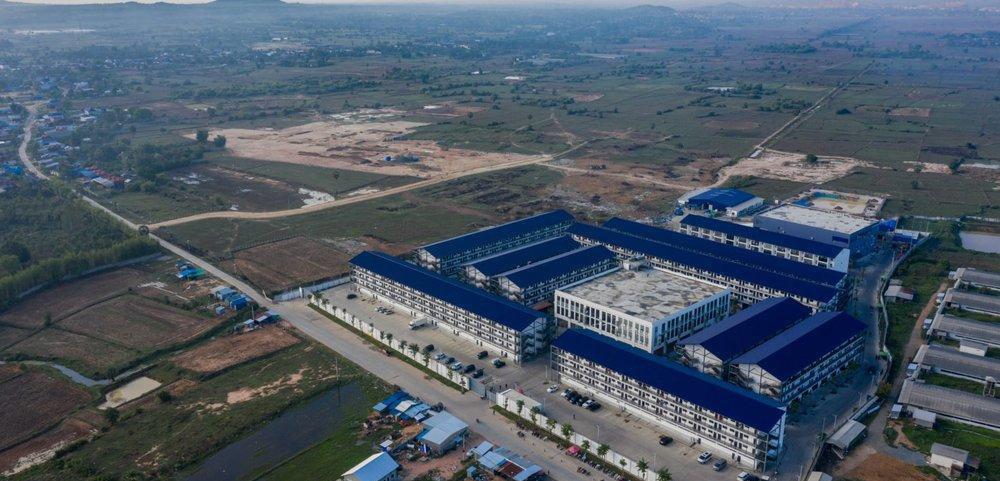
Large-scale scam compounds have proliferated across Cambodia's border regions in recent years. Thousands of foreign nationals were recruited with promises of legitimate employment before allegedly being forced to participate in online fraud operations targeting victims worldwide
Chen Zhi, the founder and chairman of the Prince Group, is accused of running a multinational business conglomerate that included the operation of highly sophisticated “pig butchering” scams in which victims are deceived into relationships that end in fraudulent investment schemes – and the money laundering required to hide scam proceeds.
Soon after his deportation, dozens of videos started cropping up on Chinese-language Telegram channels, and later Khmerlanguage Facebook and TikTok accounts. They all showed the same thing: hundreds of foreign workers walking, running, hauling luggage and hailing tuk-tuks or taxis: The highly secretive scam compounds had been cracked open.
What was noticeable in the first weeks after the opening-up was citizens crowding in front of their embassies seeking help. In Phnom Penh, Indonesians waiting for embassy appointments passed their days at small outdoor drink shops usually frequented by local joggers around Independence Monument Park.
Chinese citizens slept on the ground in front of a shopping plaza across from their embassy. Some countries set up temporary shelters for their nationals in unused warehouses. Local media reported that some young Chinese people were on the run, hiding in livestock sheds or pig pens, as they were afraid of facing punishment if they returned to China.
without embassies or consulates in Cambodia, such as Kenya, Uganda and Ghana among others.
A January 27 Amnesty International report – based on interviews with 35 victims from 12 countries – detailed how scam workers were allegedly beaten, tortured and sexually assaulted in addition to their forced labour.
One woman said she had witnessed many deaths due to untreated sickness and torture. Two other women said they became pregnant as a result of rape by compound managers.
“This is an international crisis on Cambodian soil,” Amnesty’s regional research director Montse Ferrer said in the report. “Our researchers have met people from Asia, Africa, Europe and the Americas. They are in urgent need of consular assistance in order to help get them home and out of harm’s way.”
What also became clear was that hundreds of foreign scam workers had also travelled – or been trafficked – from countries
If workers are identified as human trafficking victims, they can receive support, but it appears the Cambodian government has been slow to identify victims in the latest raids, according to Mark Taylor, former head of USAID’s CounterTrafficking in Persons programme in the country.
“Cambodian policy is to rely exclusively on the police for the identification of victims,” Taylor told The New Humanitarian, adding that only one division of the police has in practice been allowed to conduct such interviews. “This is a very narrow focus on that responsibility, where other countries would allow social workers, even NGOs, to participate.”
Given how fast the crackdown and escapes have happened – and the limited resources – Taylor said he believes few if any workers in the latest round of raids have been screened for trafficking cases, let alone identified.
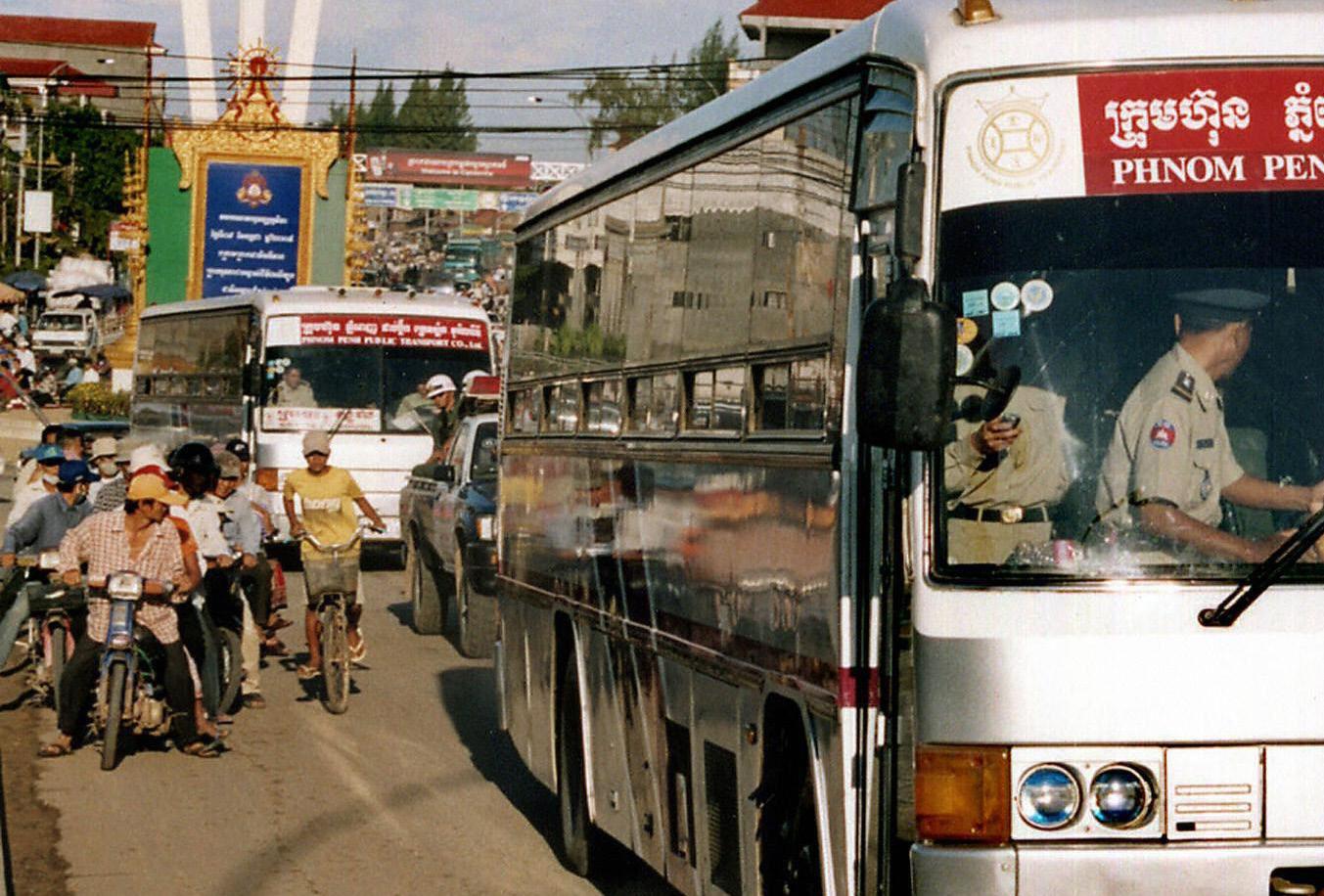
Neither IOM nor many anti-trafficking NGOs will assist people who escaped scam compounds until they are officially designated as victims by the Cambodian government, Taylor said.
Interior Ministry spokesman Touch Sokhak said 2,412 people were deported as a result of online scam raids between the start of this year and February. 12 A group of almost 500 were being held for “further processing”, he told The New Humanitarian.
Since the government began a clampdown in June 2025, more than 8,000 people have been deported and an estimated 210,000 foreigners allegedly involved in the scam centres have left the country voluntarily, according to a government report.
Sokhak didn’t answer questions about whether the Cambodian government was trying to identify any of these foreigners as victims, nor about the alleged smuggling or trafficking of workers into Cambodia in the first place, but he did add that the government has a goal to clear out the scam industry by April this year.
“So far, we can confirm that this crime is decreasing as we control it more and more, but there are still small groups that run from one place to another to hide in these places,” he said in a voice message. “Those are small places that we continue to clean up like garbage.”
Claire (not her real name), a 24-year-old Kenyan citizen, said she was able to escape a scam operation inside the Crown Casino in Bavet city, near Cambodia’s southern border with Vietnam,
by paying a ransom after they failed to sell her to another scam company late last year. She said she effectively “bought” her own freedom.
She said that before she could broker her escape, she sent several emails and texts to a Cambodian police hotline and to the IOM office in Cambodia, hoping they could rescue her.
Claire showed The New Humanitarian screenshots of emails she sent to IOM in June, October, November, and December last year requesting assistance, as well as several screenshots of WhatsApp messages.
“I’m sending voice notes [to IOM] over and over again, and they sent me a hotline [for the Cambodian police],” she recalled, adding that the police responded by telling her to contact her embassy. No authorities, to her knowledge, ever tried to find her.
When The New Humanitarian visited the IOM office in Phnom Penh on January 19, we found a dozen former scam workers from African countries waiting in the foyer, saying they have no money and no idea how to leave Cambodia.
Eric (not his real name), 21, said he was referred to IOM after he tried the Office of the UN High Commissioner for Human Rights in Phnom Penh: They gave him water and listened to his account, but they ultimately decided that his case was outside their mandate.
Eric then caught a tuk-tuk to the IOM Cambodia office. “I was waiting there. No one comes to talk to me, just you,” he said,
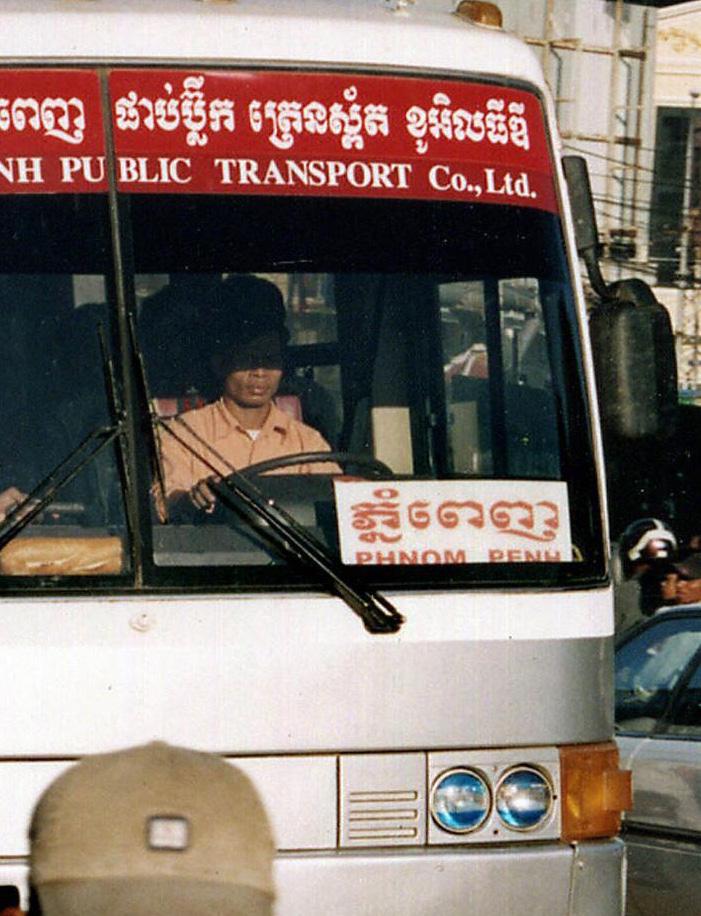
adding that an IOM representative did later send him a message saying they couldn’t help him but didn’t offer much explanation.
A spokesperson for IOM initially said she would reply to questions sent by The New Humanitarian, but she hadn’t responded to them by the time of publication.
Taylor said that trafficking victims from African countries without embassy presence have been surprised at the lack of response from IOM in Cambodia.
“IOM in other places in the world has sometimes been able to exert its own criteria on what is a trafficking victim and convince governments who might not have the wherewithal or may not have the skills or the time,” he said.
The January 6 directive on security in crowded residential areas charges property owners or managers up to four million riels, nearly $1,000, per foreigner hosted without proper documentation. “It’s sort of a preemptive move by the property managers of compounds to not be held accountable for illegals that might be found in their premises,” Taylor said.
IOM appears to be wary of assisting undocumented workers for the same reason, Taylor speculated: “When this big crisis has thousands, tens of thousands of people let out, IOM finds itself hamstrung by its own approach to the problem in the past, that it can only help those who fall into those two… very small groups of people: those who have been identified as trafficking victims, which is almost nil, and those who have their passports and visas that are still valid.”
Joseph said some Phnom Penh guesthouses wouldn’t host Africans out of fear over the new directive. He and more than 20 other Ugandans eventually found one proprietor who looked the other way, but the costs were high for the group.
“Later on, we realised it was a long process. We had to call our families to have cash to survive to eat,” he said. “Since we are working as a team, we could at least manage to make some money and give it to the hotel guy so he can add two more weeks.”
While Claire successfully returned to Nairobi on February 18 and Joseph is hopeful he will be able to afford a flight back to Uganda soon, the path home is less certain for Eric.
Eric said he had not wanted to leave his home country in the African continent but had no choice after he fled conflict there. The business major, who dreamed of managing diverse companies after he completed university, was recruited instead to a compound in Cambodia’s O’Smach town, where he was forced to send spam texts to lure in potential fraud targets.
Within a month of arriving, this border town became a battleground in Cambodia’s conflict with Thailand, and portions of the town, including scam centres, were eventually captured by Thailand. “Even while we work, we heard the bombing outside,” he said. “They tried to say this is all good, here is Chinese, no one can come here, just to make us relax.”
Eric said he was forced to leave his home country in Africa because of conflict there
Taylor said a new directive from the Cambodian government has also made the housing situation even more challenging for workers unable to get shelter from Caritas, an NGO-run shelter that is already over its capacity.
Eric said he grabbed the chance to escape in December, but he ran without his passport. He said he hadn’t heard back from IOM since he visited the office in Phnom Penh in January but has been able to stay in the Caritas shelter until he finds another option. He said he hasn’t heard from his parents since being smuggled past Cambodian immigration checkpoints in November, and he doesn’t have their phone numbers memorised.
Eric hopes his parents and siblings are okay. Now on the other side of the world, he has no idea when he will see them again: “[I have] no choice because of my situation now. I don’t know what’s going to happen.”
Danielle Keeton-Olsen is a freelance journalist based in Phnom Penh, covering labour rights, the economy, and the environment in Cambodia and the greater Mekong region. This story was originally published by The New Humanitarian. www.thenewhumanitarian.org.
As the post-1945 international order comes under increasing strain, President John Mahama is positioning Ghana—and Africa—as active participants in shaping what comes next. His Chatham House address offered a vision of stronger African integration, reformed global institutions and greater economic self-reliance, writes Jon Offei-Ansah
THE international order that emerged after the Second World War is facing one of its most significant tests in decades. Strategic competition between major powers is intensifying, multilateral institutions are struggling to maintain legitimacy, development assistance is declining, and geopolitical tensions are reshaping alliances across the globe.
Against this backdrop, President John Mahama's address at Chatham House in London on June 1 was about far more than Ghana's foreign policy. It offered a broader reflection on how Africa should position itself in a rapidly changing world.
His message was straightforward: Africa can no longer afford to be a passive observer of global change. Instead, it must become an active participant in shaping the next international order.
The significance of Mahama's intervention extends well beyond Ghana. At a time when aid flows are shrinking, geopolitical rivalries are intensifying and regional security arrangements are under pressure, his speech captured a growing conviction among African leaders that the continent must rely less on external actors and more on its own institutions, markets and strategic partnerships.
The timing is notable. From the war in Ukraine and instability in the Middle East to increasing competition between the United States and China, the foundations of the post-war international system are under strain. For African governments, the challenge is no longer whether global power is shifting but how to navigate that transition without becoming collateral damage.
Central to Mahama's argument was the need to reform global governance institutions that were largely designed in 1945.
Africa accounts for 54 member states at the United Nations and is projected to represent nearly a quarter of the world's population by 2050. Yet the continent still lacks permanent representation on the UN Security Council.
Mahama described this exclusion as 'a historical injustice and a structural imbalance that undermines the credibility of the multilateral system itself'.
The argument is not new, but the context is changing. Growing criticism of how global institutions respond to conflicts,
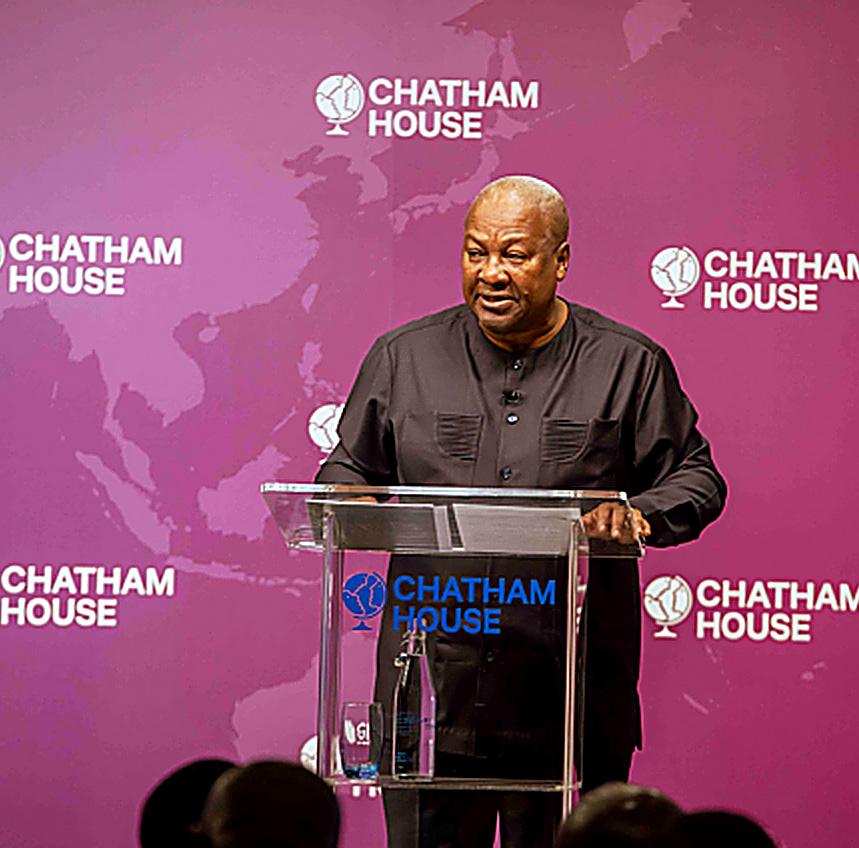
President John Mahama addresses an audience at Chatham House in London, where he argued that Africa must move from the margins of global decision-making to become an active participant in shaping the next international order. Photo: Presidency of Ghana
debt crises and climate challenges has strengthened demands for a more representative international system.
Many African governments increasingly question a global architecture in which decisions affecting the continent are often taken without meaningful African participation. From debt restructuring negotiations to peacekeeping mandates and climate financing, African leaders are demanding a stronger voice.
Yet reform remains difficult. Security Council restructuring has stalled for decades, and the permanent veto powers show little appetite for diluting their influence. The gap between aspiration and implementation remains significant.
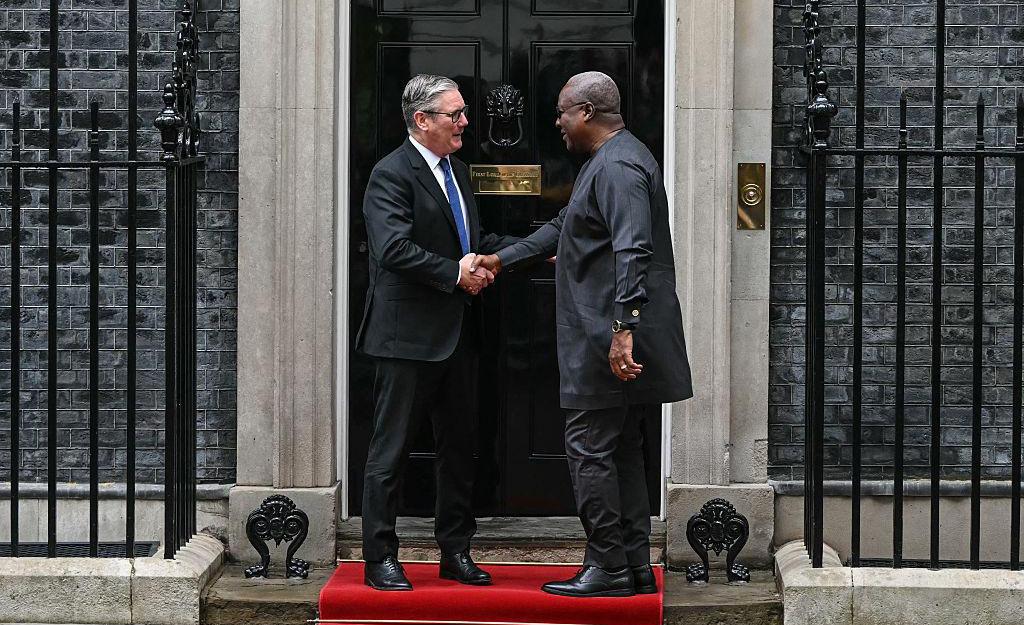
Even so, pressure for change is growing. Demands for reform now extend beyond Africa to include many countries across the Global South that see existing institutions as poorly suited to contemporary realities.
Mahama also linked international reform to historical accountability. He argued that discussions about slavery, reparative justice and historical inequities should form part of efforts to build a more inclusive global order.
Ghana's role in advancing a United Nations resolution recognising the transatlantic slave trade as one of humanity's gravest crimes reflects a belief that legitimacy requires not only institutional reform but also a willingness to confront the historical roots of modern inequalities.
However, he used that challenge to advance a broader philosophy embodied in the Accra Reset initiative.
At its core is a determination to move African countries from dependency towards resilience and from vulnerability towards capability.
The philosophy was captured in one of the most memorable lines of the speech:
Perhaps the most consequential part of Mahama's speech focused on economic sovereignty.
The withdrawal or reduction of foreign assistance programmes by major donors has exposed vulnerabilities across Africa. Many countries continue to depend heavily on external funding for healthcare, education and social programmes.
Mahama acknowledged that Ghana felt the effects of declining US assistance, particularly in the health sector.
“The future of the multilateral system itself cannot be built on dependency. It must be built on dignity.”
That statement may become one of the defining principles of Mahama's second presidency.
Across Africa, governments are recognising that traditional aid models are becoming less reliable. Fiscal pressures in donor countries, shifting political priorities and changing geopolitical calculations suggest development assistance is unlikely to return to previous levels.
Mahama's argument carries added weight because Ghana itself is emerging from one of the most severe economic crises in its democratic history. Debt restructuring, fiscal reforms and
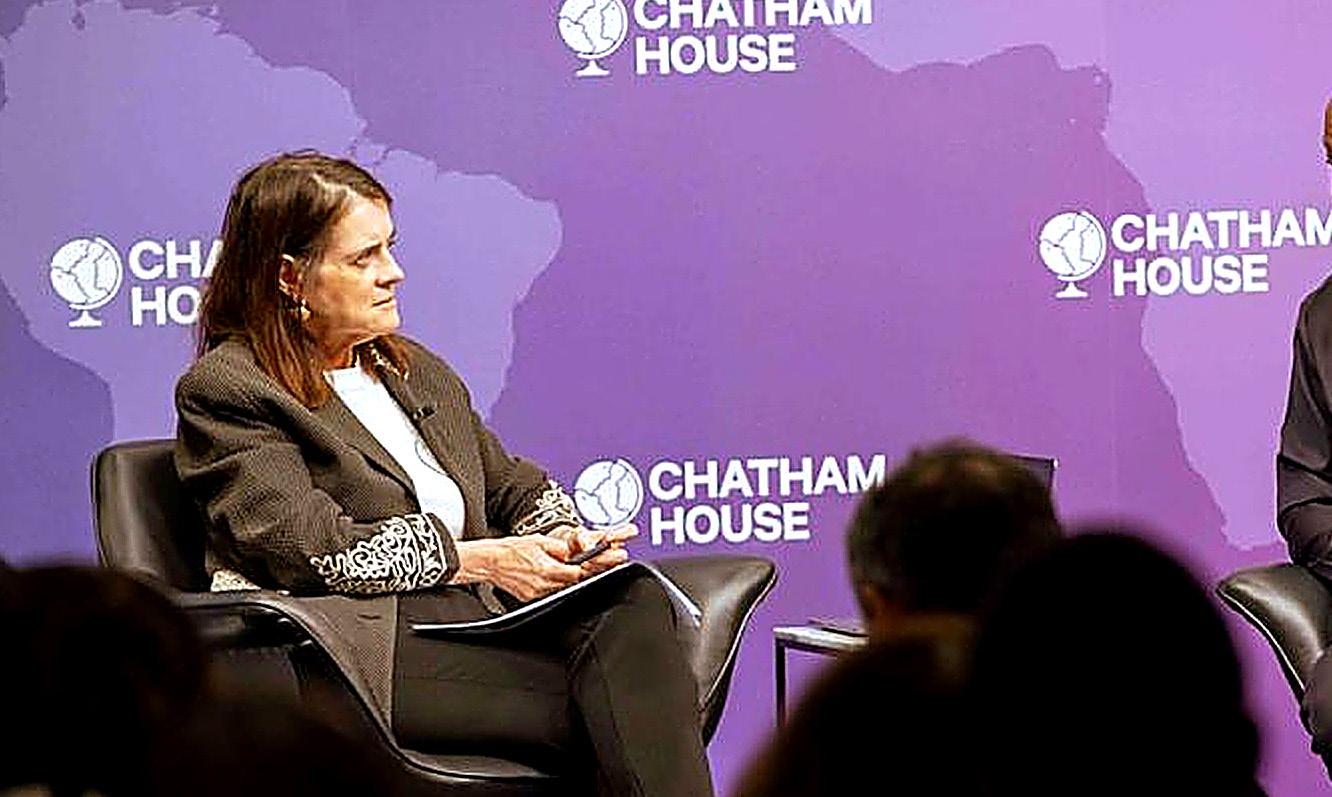
an IMF-supported recovery programme have begun restoring macroeconomic stability after years of economic turbulence.
The implication is clear. African governments will increasingly be judged not by how much aid they attract but by their ability to generate growth, mobilise domestic resources and build competitive economies.
Mahama's vision extends beyond Ghana's borders. A significant portion of his speech focused on African integration as an economic and strategic necessity.
The African Continental Free Trade Area (AfCFTA), headquartered in Accra, remains one of the continent's most ambitious economic projects. If implemented successfully, it could expand intra-African trade, strengthen regional value chains and reduce dependence on external markets.
Mahama's position was unequivocal:
“African unity is therefore no longer simply a political aspiration. It is a strategic imperative.”
The statement reflects a growing recognition that fragmented markets and disconnected infrastructure continue to constrain Africa's economic potential.
Despite its size and resources, Africa remains one of the least economically integrated regions in the world. Intra-African trade still accounts for a relatively small share of total commerce compared with Europe or Asia.
The challenge is no longer signing agreements but implementing them. Railways, roads, ports, energy networks
and harmonised regulations will ultimately determine whether AfCFTA fulfils its promise.
Mahama's emphasis on integration is particularly relevant at a time when economic nationalism is resurging globally. As major powers seek to secure supply chains and protect strategic industries, African countries face a choice: compete individually or leverage the scale of a continental market.
Another noteworthy aspect of the speech was its approach to great-power competition.
For decades, Africa was often viewed through the lens of rivalry between external powers. Today, competition between Washington and Beijing increasingly shapes global politics, while groupings such as BRICS seek greater influence within international institutions.
Mahama's response was neither alignment nor isolation.
Instead, he appeared to advocate strategic pragmatism. The objective is not to choose sides but to build partnerships that advance national and continental interests.
This approach is becoming increasingly common across Africa. Governments are seeking investment from China, security cooperation from Western partners, trade opportunities from Gulf states and stronger economic ties within Africa itself.
Such a strategy is not without risks. Balancing competing interests requires diplomatic skill and policy consistency. Yet it may also provide African countries with greater flexibility in an increasingly fragmented world.
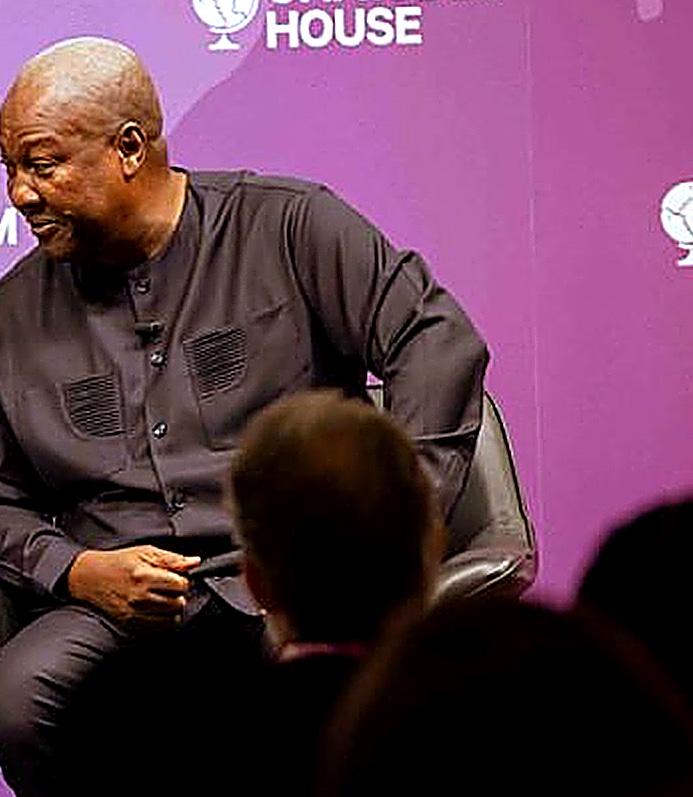
The most distinctive aspect of Mahama's vision may be Ghana's attempt to rebuild dialogue between ECOWAS and the Alliance of Sahel States.
Relations between the two blocs deteriorated following military takeovers in Mali, Burkina Faso and Niger. Their subsequent withdrawal from ECOWAS created one of the most significant political fractures in West Africa's recent history.
For Ghana, the implications are profound.
The Sahel has become a major centre of extremist violence. Instability threatens neighbouring coastal states and creates opportunities for transnational criminal networks and armed groups.
Mahama's engagement with the leaders of Mali, Burkina Faso and Niger reflects recognition that regional security cannot be achieved through isolation.
have weakened. As old arrangements evolve, regional actors increasingly need their own mechanisms for cooperation.
If Ghana succeeds in helping rebuild trust between ECOWAS and the Sahel states, it could emerge as one of Africa's most important diplomatic intermediaries.
The vision outlined at Chatham House also rests on a belief that democratic governance remains a strategic advantage.
Mahama argued that “democracy is not merely a political ideal for us. It is also an economic asset.”
That observation is particularly relevant as some African countries debate alternative governance models in response to security and development challenges. For Ghana, the argument is that constitutional stability, institutional credibility and peaceful transfers of power remain essential foundations for investment, growth and long-term development.
With the world's youngest population, Africa's ability to create jobs, encourage innovation and expand economic opportunity will ultimately determine whether demographic growth becomes a dividend or a burden. Mahama's emphasis on youth, skills development and productivity reflects recognition that future influence will depend as much on human capital as on diplomacy.
What made the speech noteworthy was its balance between ambition and realism.
Mahama did not advocate isolationism, nor did he suggest Africa should align exclusively with any major power bloc. Instead, he outlined a foreign policy rooted in strategic pragmatism, diversified partnerships and national interest.
His most important observation may have come at the conclusion of his remarks:
“The future international order will not be shaped solely by military power or economic scale. The quality of leadership would also shape it.”
That statement shifts the discussion beyond institutions and geopolitics towards governance itself.
African unity is therefore no longer simply a political aspiration but a strategic imperative
His approach also acknowledges a changing geopolitical environment. Russia has expanded its influence in parts of the Sahel, while several traditional Western security partnerships
Ultimately, Africa's influence in the emerging global order will depend not only on reforms in New York, Brussels, Beijing or Washington. It will also depend on the quality of leadership, institutions and economic management across the continent.
Whether Mahama's blueprint succeeds or not, the questions he raised are increasingly being asked across Africa—from Nairobi and Abuja to Pretoria and Cairo. The answers will determine whether the continent enters the next era of global politics as a more influential actor or remains largely on the margins of decision-making.
The emerging global order presents both risks and opportunities. Mahama's address suggests Ghana intends to ensure Africa is not merely adapting to change but helping define it.
The collapse of the Faye–Sonko alliance is exposing the tensions between sovereignty politics, debt pressure and democratic governance in modern West Africa, writes Jon Offei-Ansah
SENEGAL’S President Bassirou Diomaye Faye has dismissed Prime Minister Ousmane Sonko, shattering the political alliance that swept both men to power and triggering the first major fracture of Senegal’s post-Macky Sall political order.
The rupture follows months of tensions over debt restructuring, IMF negotiations, fuel subsidies and control of the ruling agenda. More than a routine government reorganisation, the split exposes a deeper struggle over the direction of Senegal’s reform movement and the realities of governing during economic crisis.
The dismissal came after growing disagreements inside the ruling Pastef movement over how to manage Senegal’s worsening fiscal pressures and negotiations with international lenders.
For much of the past two years, Senegal represented something rare in modern West African politics: the possibility that an anti-establishment movement could transform popular anger into democratic renewal without collapsing into military rule or constitutional breakdown.
While coups reshaped political life across the Sahel, Senegal appeared to offer another route. The victory of Faye and Sonko in 2024 was interpreted by many observers as proof that electoral politics still possessed the capacity to absorb social frustration and produce meaningful political change.
That perception has now been shaken.
Faye’s rise to the presidency was inseparable from Sonko’s political machinery. Sonko, the more recognisable face of the anti-establishment movement, was barred from contesting the election after a defamation conviction that his supporters considered politically motivated. Faye emerged as the presidential vehicle for a movement built around Sonko’s charisma, youth appeal and promise of radical political transformation.
That arrangement created an unstable balance from the beginning.
Faye held constitutional authority. Sonko retained much of the movement’s ideological energy and grassroots legitimacy.
For a while, the partnership appeared functional. Together, the pair promised to dismantle elite patronage systems, increase transparency, renegotiate resource agreements and redefine
Senegal’s relationship with international lenders and foreign powers.
Across Africa, many young people saw their victory as a symbolic rejection of entrenched political systems that had failed to translate economic growth into broad prosperity.
But governing exposed the limits of revolutionary politics.
The central pressure point became Senegal’s debt crisis.
The IMF froze Senegal’s $1.8 bn programme after the government uncovered previously undisclosed debt obligations inherited from the former administration. Negotiations over a new programme stalled as divisions deepened over debt restructuring, subsidy reforms and fiscal policy.
The debt revelations altered the political atmosphere dramatically.
Could Senegal truly claim to represent a new political direction while still accepting IMF-backed reforms and austerity measures? Could a movement elected on anti-establishment promises justify subsidy cuts or externally influenced restructuring plans? Could sovereignty rhetoric survive the realities of international financing?
What had begun as a sovereignty-driven reform project suddenly collided with financial realities that required immediate stabilisation measures. International lenders demanded clarity. Investors sought reassurance. Ratings agencies watched closely for signs of policy credibility.
For President Faye, the priority increasingly became restoring confidence in Senegal’s economic management and preventing a deeper fiscal crisis.
For Sonko, however, the debt issue evolved into a larger ideological confrontation.
These were not merely technical disagreements between policymakers.
They reflected competing visions of governance.
One side leaned toward economic pragmatism and institutional stability. The other leaned toward political resistance and economic nationalism.
That tension gradually widened into a struggle over the future direction of the state itself.
Sonko publicly rejected IMF-backed debt restructuring proposals, describing them as unacceptable for Senegal. His position resonated with many young voters already frustrated by unemployment, inflation and inequality.
But financial markets tend to punish prolonged uncertainty.
The longer tensions persisted inside government, the greater the concern that Senegal’s reform programme could become paralysed by internal division.
That is why the dismissal matters far beyond personalities.
This is not simply about whether Faye and Sonko can coexist politically. It is about whether anti-establishment movements can maintain unity once they inherit the burdens of governance.
Opposition politics often creates cohesion around a shared enemy. Governing exposes differences in ideology, priorities and strategy.
Senegal is now confronting that transition in real time.
The timing of the rupture is especially sensitive because Senegal is entering a potentially transformative economic period.
The country’s emerging oil and gas sector was expected to support growth, strengthen public revenues and ease some fiscal pressure. Offshore energy projects had generated optimism that Senegal could become one of West Africa’s most important new hydrocarbon producers.
But energy wealth does not automatically produce political stability.
In many developing economies, resource discoveries intensify struggles over economic control, national identity and state direction. Senegal now risks entering precisely that kind of tension-filled political phase.
As prime minister, Sonko pushed audits of resource contracts, reviewed mining licences and signalled a tougher approach towards foreign investors in strategic sectors. He pursued contract reviews and licence revocations as part of a broader effort to strengthen national control over strategic assets.
Those policies reflected a wider continental trend.
Across Africa, governments are increasingly demanding greater returns from natural resources, particularly as global competition intensifies around strategic minerals, energy supplies and geopolitical influence.
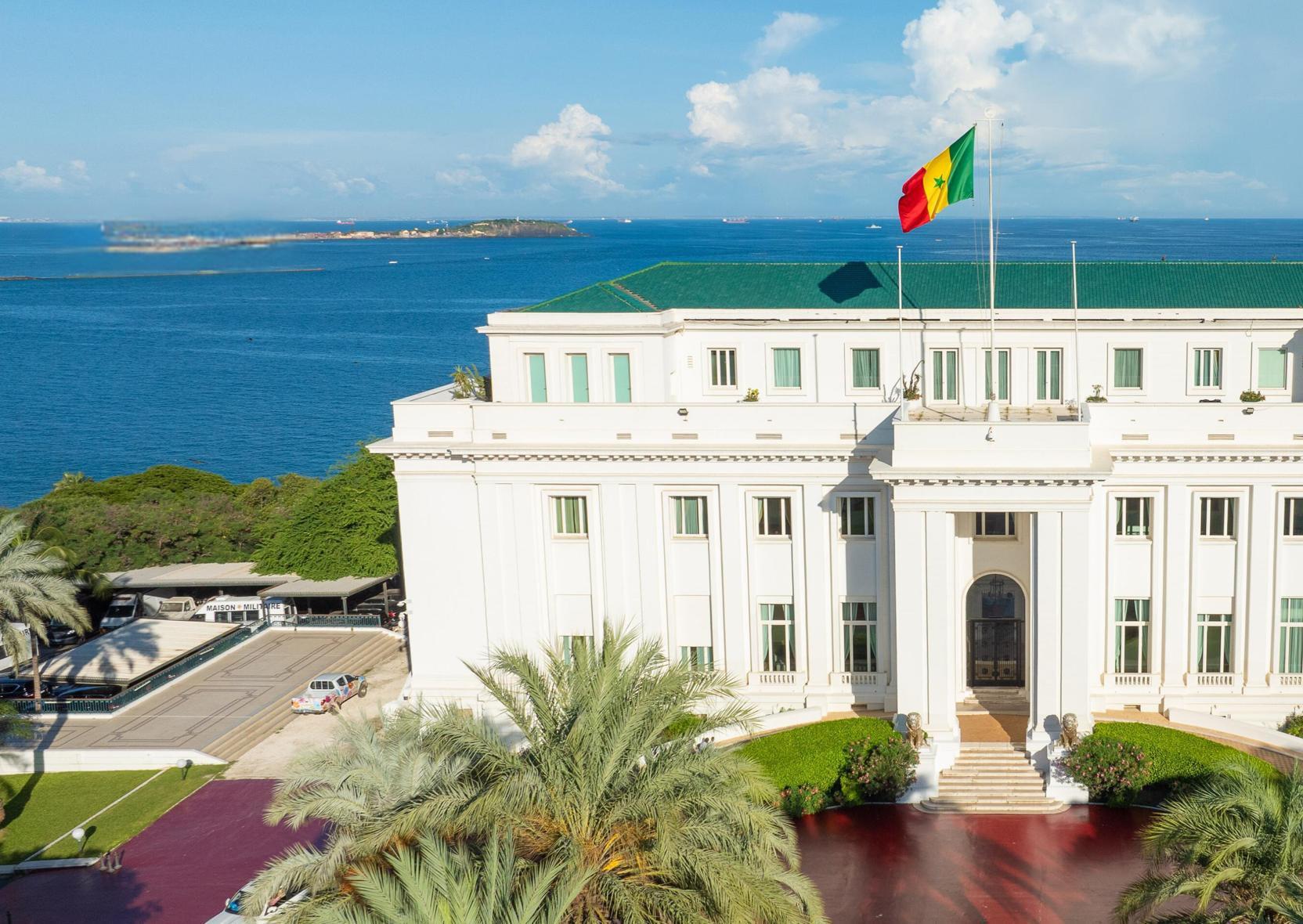
From Mali to Zambia, resource nationalism is reshaping debates about sovereignty and development.
But the Senegalese crisis highlights the dilemma confronting many reformist governments.
Push too softly, and supporters accuse leaders of protecting old elite interests.
Push too aggressively, and investors begin pricing in political risk and regulatory instability.
That balancing act is becoming one of the defining governance challenges across modern Africa.
The crisis in Dakar also unfolds against a broader geopolitical backdrop.
Burkina Faso and Niger have used sovereignty rhetoric and anti-Western narratives to justify political upheaval and reduced cooperation with traditional Western allies.
Senegal had largely stood apart from that instability.
alliance that promised democratic renewal has fractured under the pressure of power
Across Francophone Africa, debates about French influence, economic dependency and external control have intensified dramatically in recent years. Military governments in Mali,
Its institutions remained functional. Elections continued to matter. Democratic procedures survived periods of tension that might have triggered deeper crises elsewhere.
That reputation has not disappeared.
Faye’s dismissal of Sonko remains a constitutional act rather than an unconstitutional rupture.
There is no military dimension to the crisis. State institutions continue functioning. Senegal is not facing collapse.
But the symbolism still matters enormously.
The alliance that promised to renew Senegalese democracy has fractured less than three years after taking power. The movement that campaigned on unity, sovereignty and reform is now confronting the same pressures facing many antiestablishment governments across the continent: how to transition from political resistance to economic delivery.
That transition is proving far more difficult than many reformist movements anticipated.
The economic realities of governing often force painful compromises. Debt obligations cannot simply be ignored. Investors require predictability. International lenders impose conditions. Fuel subsidies strain budgets. Public expectations rise faster than state capacity.
And when economic pressure intensifies, ideological divisions that once remained manageable often become impossible to contain.
This explains why the crisis resonates beyond Senegal.
Across West Africa, younger populations increasingly distrust traditional political elites while demanding faster economic transformation. Anti-establishment movements are becoming more influential because they tap into genuine frustrations over inequality, unemployment and perceptions of elite capture.
But winning elections is only the beginning.
Governing through fiscal crisis is a far harder test.
That is the lesson emerging from Senegal today.
The immediate political question now centres on Sonko’s future.
Despite his dismissal, Sonko remains one of Senegal’s most influential political figures. He still commands substantial grassroots support, especially among younger voters who viewed him as the uncompromising face of political change.
His next move will shape Senegalese politics for years.
If he accepts a reduced role, Pastef may survive bruised but intact. If he openly challenges Faye, Senegal could face a prolonged confrontation between institutional authority and movement legitimacy. If he repositions himself for the 2029 presidential race, the current rupture may become the opening phase of a much larger political struggle.
For President Faye, the challenge is equally severe.
He must reassure markets without alienating the political base that brought his movement to power. A technocratic government may stabilise IMF negotiations but deepen internal resentment. A hardline nationalist approach may preserve movement loyalty while alarming investors and lenders.
There are no easy options.
The president must also craft a convincing public explanation for the split. Without a persuasive political narrative, Sonko’s supporters may frame the rupture as betrayal rather than necessity.
That would be dangerous in a country where political mobilisation can rapidly move from party structures to the streets.
At the heart of the crisis lies a larger question about the future of democratic reform movements in Africa.
Can insurgent political coalitions maintain unity after victory? Can sovereignty-based politics coexist with the financial realities of global markets? Can reformist governments preserve popular legitimacy while implementing painful economic reforms?
Senegal is now becoming a test case for those questions.
The outcome matters because many African societies are entering a period of rising political volatility driven by debt pressure, demographic change, cost-of-living frustration and intensifying geopolitical competition.
In that environment, movements promising national renewal will continue emerging.
But the Senegalese rupture demonstrates that the transition from opposition to governance can become politically destabilising when economic expectations collide with institutional realities.
This is why the dismissal of Sonko cannot be understood merely as a personnel change or government reshuffle.
It represents the first serious rupture inside one of Africa’s most closely watched democratic reform movements.
And it may ultimately determine whether Senegal remains a model for democratic renewal in West Africa — or becomes another example of how anti-establishment unity fractures under the weight of power.
For the wider region, the implications are profound.
Because the struggle unfolding in Dakar is not only about Senegal.
It is about the future of governance, sovereignty and democratic legitimacy across a changing West Africa.
Given Africa’s current geopolitical leverage and critical mineral advantage, what it needs now is the strategic coherence to ensure that partnership replaces patronage, co-creation replaces conditionality and African agency is not a talking point but a lived reality, argues Kayode Fayemi
THREE convergent forces are reshaping the global order in ways that create genuine leverage for Africa – if we choose to use it.
First, the return of strategic competition. The West (Europe and North America) no longer operates in a unipolar comfort zone. China's rise, Russia's revisionism, the assertiveness of the Global South; these have reminded Western capitals that Africa's 54 nations, 1.4 billion people and disproportionate share of the world's minerals are not a charity case but a strategic asset. That shift in perception matters. It means Africa now has suitors, not just donors.
Second, the resource reality. The green energy transition has placed Africa at the centre of the global economy in ways the extractive economy of the 20th century never did. Cobalt, lithium, manganese, coltan, copper – the raw materials of the clean energy future are concentrated on this continent. Having already surrendered the oil century with little to show for it, Africa must not repeat that mistake with the minerals of the 21st century. At least now we know that the world cannot go green without first going African.
Third – and most consequentially – is Africa's demographic weight. By 2050, one in four people on Earth will be African. The continent's working-age population will exceed that of China and India combined. In an ageing world, Africa is the growth engine. That is not rhetoric. That is arithmetic. And it changes the negotiating calculus entirely, particularly as it concerns the migration discourse; if we build the institutions to leverage it and retool the young ones for the inevitable change.
For too long, Africa-Europe/West relations have been organised around a paternalistic logic: development aid as generosity, conditionalities as wisdom and African instability as a justification for continued tutelage.
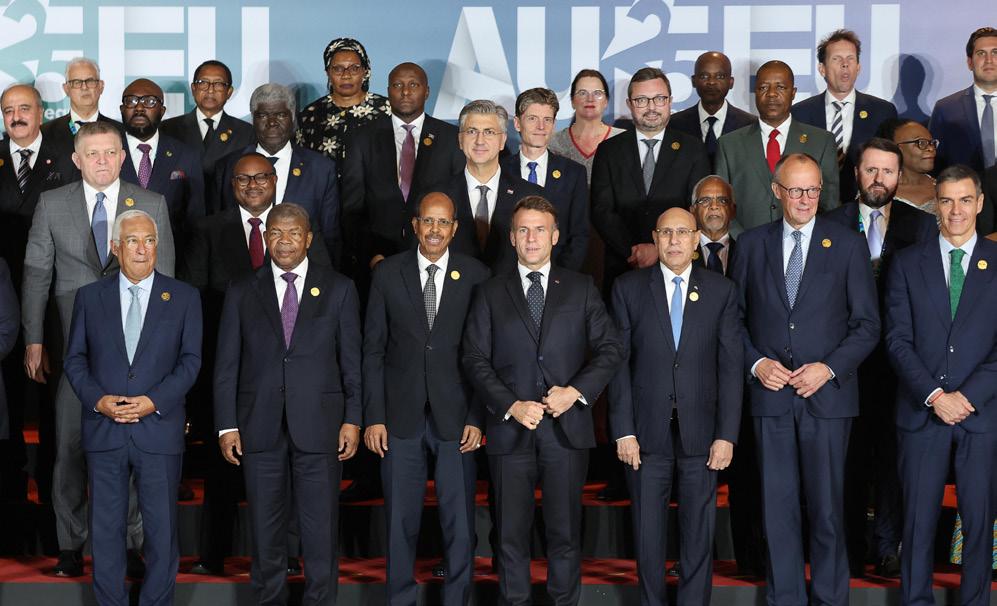
and European leaders meet during a high-level summit. As geopolitical competition intensifies and global supply chains are reconfigured, Africa is increasingly viewed not as a recipient of aid but as a strategic partner whose resources, markets and growing population are central to the future global economy
Summit held in Luanda, Europe reaffirmed its commitment to Africa as a strategic partner.
As we approach any new bargain, Africa must be clear about what is non-negotiable. Africa should no longer accept arrangements in which our resources leave our shores as raw commodities and return to us as expensive imports. Any new partnership framework must be anchored on industrialisation, local processing, and technology transfer.
For too long, AfricaEurope/West relations have been organised around a paternalistic logic
The trade architecture has been particularly damaging. Every African government that has tried to add value to its own resources – to process its own ore, to refine its own oil, to manufacture its own goods – has faced trade barriers, financial headwinds, or political pressure.
The debt architecture has compounded this. African governments are charged risk premiums that bear no rational relationship to actual default rates. The cost of capital for infrastructure in Africa is three to four times what comparable projects cost in Europe. This is not a market outcome – it is a structural imposition that keeps Africa in a permanent state of fiscal vulnerability.
There are genuine partners, though, in Europe who understand this and want a different relationship. And many initiatives hint at a re-ordered relationship. Only last November, at the EU–Africa
Our own Global Gateway must now recognise the place of an African Minerals Consortium, primarily modelled on the Global South hydrocarbons consortium (OPEC) and preserving the rights of mineral endowed countries to harness their natural resources for inclusive growth, fair pricing negotiations, unlocking investment in exploration, promoting local community participation and supply security on a fair and equitable basis.
The current credit rating system penalises African countries in ways that are empirically unjustified. Africa is not capital starved; Africa is capital trapped. On illicit financial flows alone, over $88 billion was trapped in 2024. And yet, when the Africa Group at the UN took the Mbeki report on illicit financial flows and capital flight to the UN in pursuit of the global tax reform agenda, it was European countries alongside the US that opposed the reform of the global financial architecture. We need a fundamental reform of the Bretton Woods credit architecture, new mechanisms for development finance and an end to the punishing premiums that make it cheaper to borrow in Paris than in Lagos.
Artificial intelligence, digital infrastructure and the platform economy are already reshaping global productivity. Africa cannot be a passive consumer of technology built elsewhere and governed by rules written without us. We must replace the extractive capitalism masquerading as untrammelled artificial intelligence with data sovereignty, capacity for digital industrialisation and a voice in the governance frameworks that will define the next technological epoch.
True, Africa as a continent is experiencing a significant shift in migration flows, both within our continent and towards Europe. Evidently, well managed migration holds a substantial positive impact both for countries of origin as well as significant benefits to destination countries, and more importantly for global stability and security. Yet Europe must eschew the myth that it is being flooded by Africans. Evidence from the International Organisation of Migration is clear: migration flow in the world is highest in Europe - Europeans migrate more than any other region, followed by the Americas and Africans are a poor third. The EU and the African Union need an honest conversation and a coordinated plan on population flows and labour dynamics considering its ageing population and the likelihood of Africans becoming the dominant workforce soon.
Africa is not asking to be left alone. We are asking to be treated as equals in designing the frameworks that govern our participation in the global economy. Development conditionalities that make aid contingent on policy choices Africa has not made must give way to genuine partnership in which African institutions lead African solutions, one that is focused on domestic resource mobilisation and not overseas development assistance. So, our relationship should not be based on extractive capitalism and transactional diplomacy. It should be based on mutual solidarity and mutual support for international law and genuine multilateralism.
I would be less than honest if I placed all the responsibility on Europe and the West. The truth is that Africa's negotiating weakness is partly selfinflicted.
We arrive at global tables divided, speaking in 54 competing voices, making it easy for partners to play us against each other. The African Continental Free Trade Area is an extraordinary achievement on paper – but its implementation is still slow and intra-African trade remains embarrassingly low as a share of our total trade. We cannot demand to be treated as a bloc if we do not act as one.
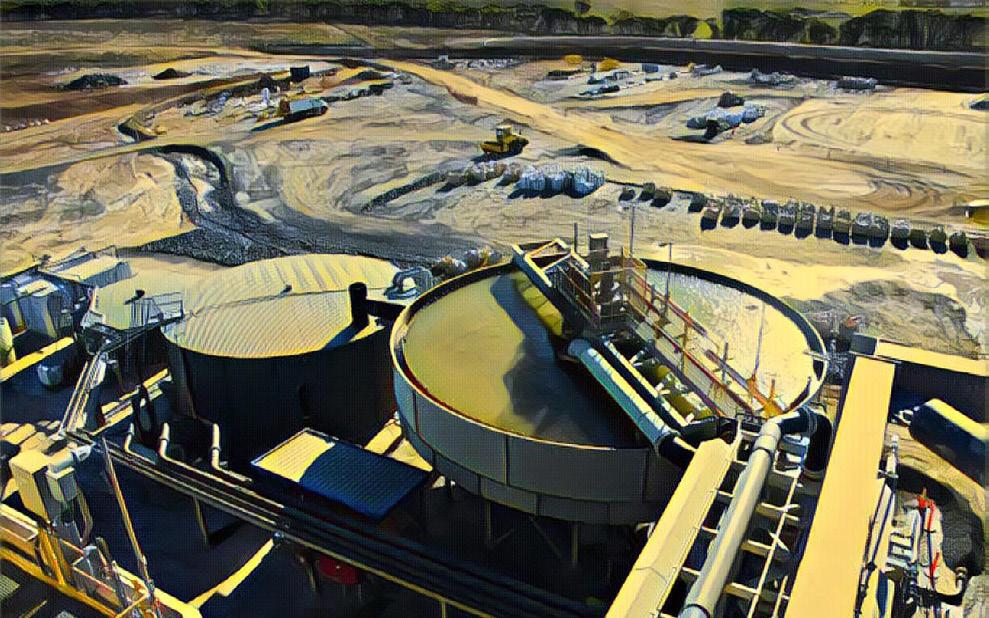
Critical minerals mined across Africa, including copper, cobalt and lithium, are essential to electric vehicles, batteries and renewable energy technologies. Policymakers increasingly argue that future partnerships must prioritise local processing, value addition and industrial development rather than the export of raw commodities
What would a genuinely new bargain look like in practice? On trade, it means a fundamental renegotiation of Economic Partnership Agreements – moving from market access frameworks that entrench Africa's commodity dependence to industrial partnership agreements that incentivise manufacturing, value addition and skills transfer.
Europe should welcome African processed goods, not just raw materials. Europe should reform lopsided partnership agreements such as the ones signed by many coastal states that deplete our oceans, marine life and community livelihoods, compounding the migration crisis. Europe should accept reforms to global tax rules. That is the test of genuine partnership.
Europe must eschew the myth that it is being flooded by Africans; Europeans migrate more than any other region
On finance, it means a reformed development finance architecture in which African-led institutions like the African Finance Corporation and the African Development Bank have greater capitalisation and mandate, in which sovereign debt carries riskadjusted pricing that reflects reality rather than perception and in which climate finance arrives as grants and concessional lending – not additional debt for countries that contributed least to the problem.
Our institutional capacity for strategic economic negotiation is inadequate. The European Union arrives at trade talks with battalions of economists, lawyers and technical experts. Many African delegations are outgunned before negotiations begin. Building that institutional depth – the analytical capacity, the negotiating expertise, the legal architecture – is not optional. It is the precondition for sovereign agency.
And we must address governance. Weak rule of law, gender inequity and youth neglect in policy making as well as institutional fragility are not just moral failings – they are economic costs that our people bear and that undermine our credibility at the negotiating table. The new bargain with Europe is inseparable from the new bargain we must strike with our own citizens.
On security, it means an end to arrangements in which African countries pay for security cooperation with political compliance. Security partnerships must be transparent, mutually accountable and consistent with African sovereignty and the decisions of the African Union.
Africa has the resources. Africa has the population. Africa has – at long last – the geopolitical leverage and the critical mineral advantage. What we need now is the strategic coherence to convert that leverage into a new bargain: one in which partnership replaces patronage, co-creation replaces conditionality and African agency is not a talking point but a lived reality.
The generation watching us right now – the 400 million young Africans who will enter the labour market in the next decade – cannot afford for us to produce another beautiful document that changes nothing. They are watching. Let us make this turning point count. AB
J. Kayode Fayemi is Visiting Professor, King’s College London; former Governor, Ekiti State, Nigeria; and former Minister of Mines & Minerals Resources Development, Nigeria. The above has been extracted from his keynote address at the ACCORD Strategic Dialogue in March in Johannesburg, South Africa.
Across Africa, younger generations are becoming less patient with post-colonial political arrangements they believe preserved inequality long after independence, writes Jon Offei-Ansah.
AHEATED exchange involving Julius Malema recently drew attention across social media and political circles in South Africa. What initially appeared to be another viral confrontation quickly evolved into something much deeper — a window into Africa’s growing frustration with post-colonial power structures.
During the discussion, a podcaster accused the Economic Freedom Fighters of promoting violence against white farmers and asked whether the party had a “plan” to kill them. Malema dismissed the allegation forcefully, responding: “There’s a difference between a song and a policy.”
That line captured the essence of the wider debate now unfolding not only in South Africa but across much of Africa itself.
For many younger Africans, the issue is no longer simply political freedom. It is whether independence meaningfully changed who controls land, wealth, resources and economic opportunity.
Malema repeatedly insisted that South Africa’s democratic transition in 1994 did not complete the liberation struggle.
“The struggle has not been won,” he argued. “Economic power must be shared.”
To critics, the EFF leader’s rhetoric remains confrontational and divisive. To supporters, however, his message reflects the frustration of millions who feel excluded from meaningful economic participation despite living in a formally democratic state.
South Africa remains one of the world’s most unequal major economies, according to World Bank inequality measures. Land ownership patterns still reflect colonial and apartheid-era dispossession, while youth unemployment remains persistently severe.
This explains why liberation-era political language continues resonating with younger voters.
When challenged over accusations that the EFF wanted to harm white farmers, Malema attempted to redirect the discussion away from race and towards structural inequality. “White farmers have a place here,” he said, before adding: “If you want to kill a farmer, start with me.”
The statement was designed to challenge the perception that land reform debates are inherently calls for racial violence.
Whether one agrees with his politics or not, Malema’s popularity reflects a broader continental trend: younger Africans increasingly questioning whether post-independence political settlements delivered genuine economic justice.
That same frustration was visible during the recent Africa Forward Summit in Nairobi, attended by Emmanuel Macron and several African heads of state including host President William Ruto, where speakers openly challenged the nature of modern Africa-France relations.
Across the Sahel and parts of Francophone Africa, anti-France sentiment has intensified over recent years as younger Africans question what many view as lingering forms of political, military and economic dominance commonly described as “Françafrique”.
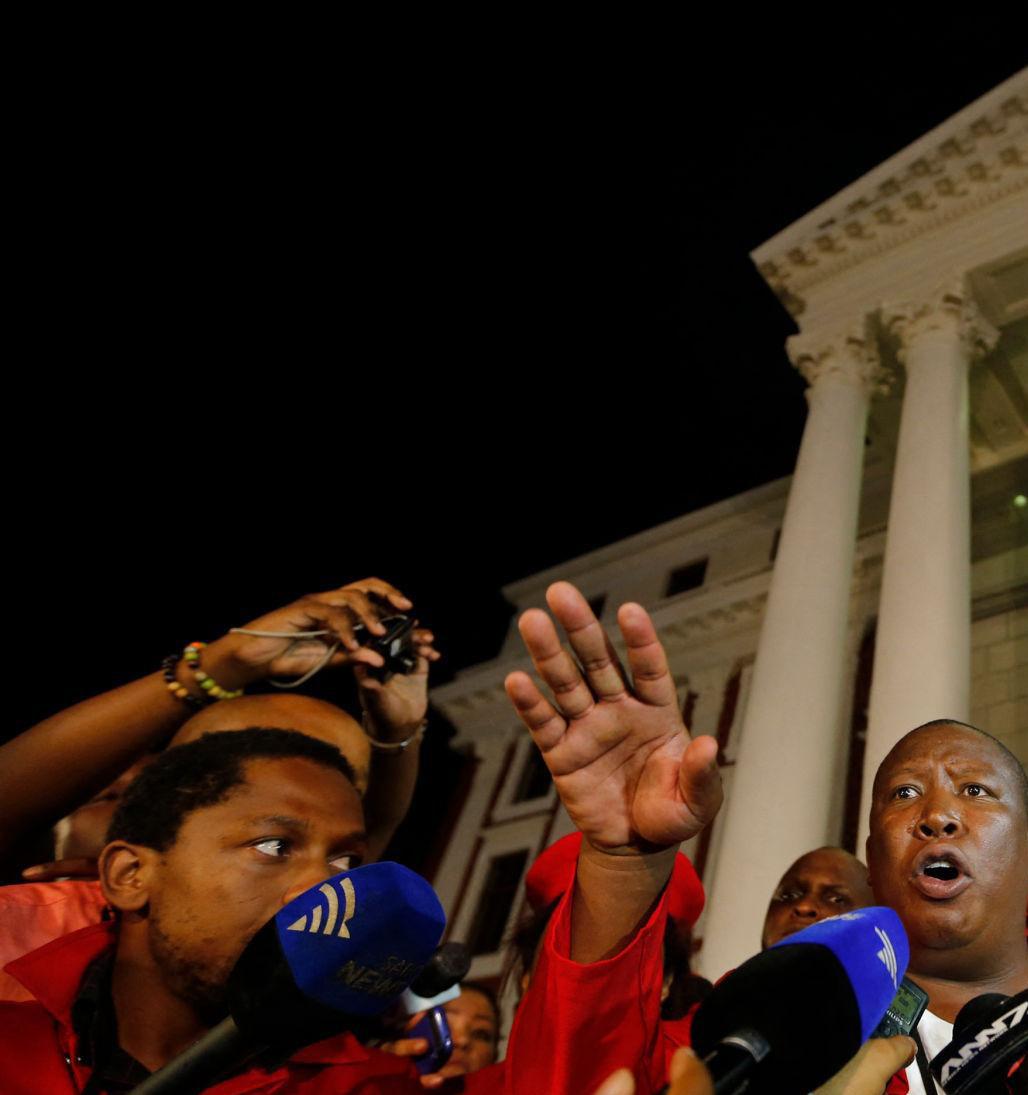
During the Nairobi summit, one speaker posed a striking question: “How can you trust the source of your pain when the source doesn’t acknowledge it?”
The remark captured a growing perception among many Africans that European powers continue to underestimate the emotional and political legacy of colonialism.
The speaker continued: “The current relationship is imbalanced. It’s not collaborative and in some instances it’s exploitative.”
That criticism reflects wider concerns that African states remain economically dependent within systems established during the colonial period, even decades after formal independence.
The political significance of these debates lies in the fact that colonial history is no longer being treated solely as the past.
For many Africans, colonialism’s consequences are visible in present-day inequalities, governance structures, trade relationships and patterns of foreign influence.
This is especially important for younger generations who face unemployment, rising living costs and limited economic mobility despite living in resource-rich countries.
At the Nairobi summit, one speaker argued that France remained associated with exploitative dominance and unresolved racial tensions whilst simultaneously presenting itself as a defender of democracy and human rights.
Such statements may sound confrontational, but they resonate because they connect historical grievances to current economic frustrations.
The rise of anti-establishment political movements across Africa reflects this changing mood.
In South Africa, that frustration strengthens support for parties like the EFF. In countries such as Mali, Burkina Faso and Niger, it has fuelled hostility towards France and traditional Western alliances.
Importantly, this does not necessarily mean African youth reject international partnerships altogether. Rather, many are demanding relationships based on greater equality, transparency and mutual respect.
The emotional core of these movements is remarkably similar across borders: dignity, ownership and economic agency.
Social media platforms, podcasts and pan-African digital spaces have accelerated the spread of these conversations beyond national borders, allowing younger Africans to connect local frustrations to broader continental debates.
That is why discussions about land in South Africa and debates about French influence in the Sahel increasingly sound connected.
Both revolve around the same unresolved question: who truly benefits from Africa’s wealth?
There is also a growing risk that legitimate demands for justice become consumed by polarisation and simplistic narratives.
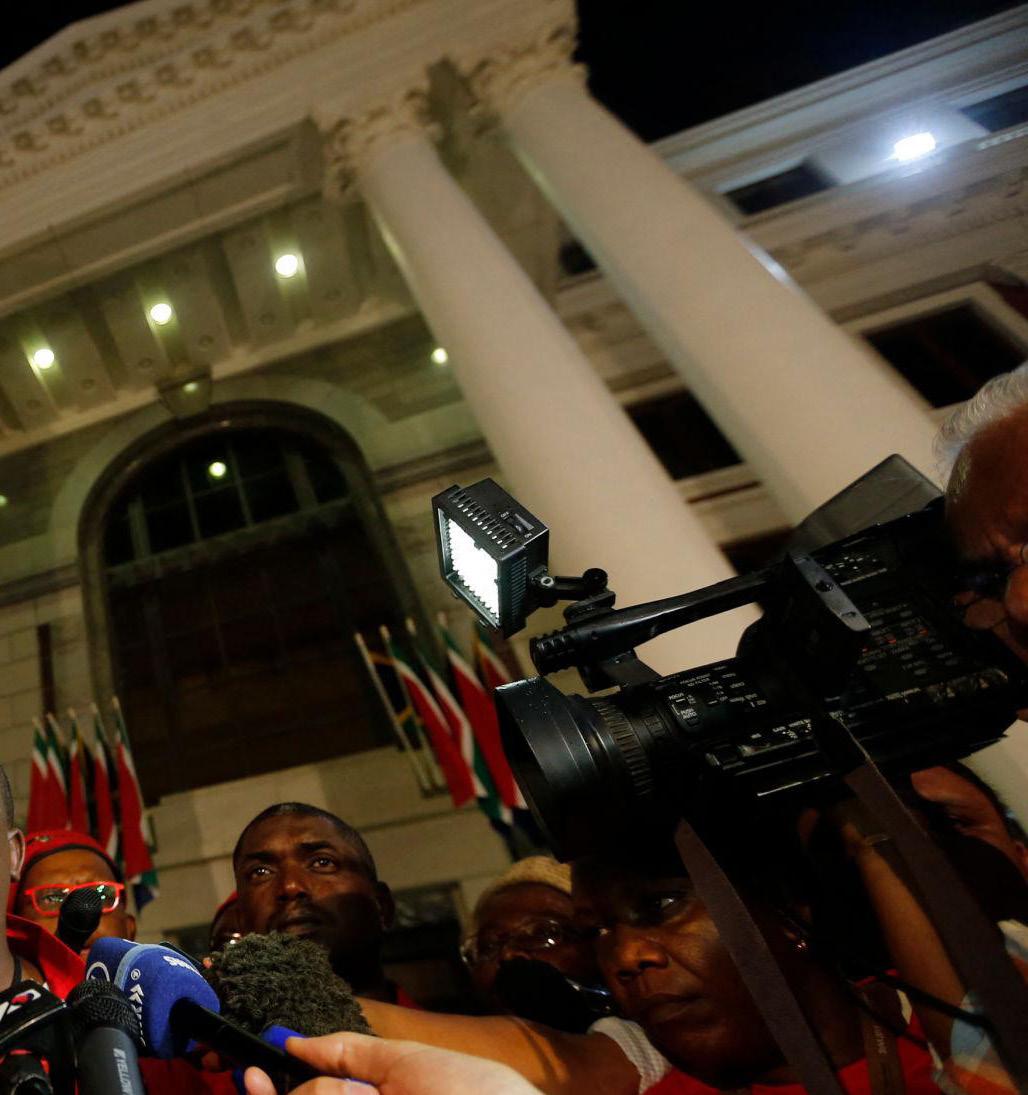
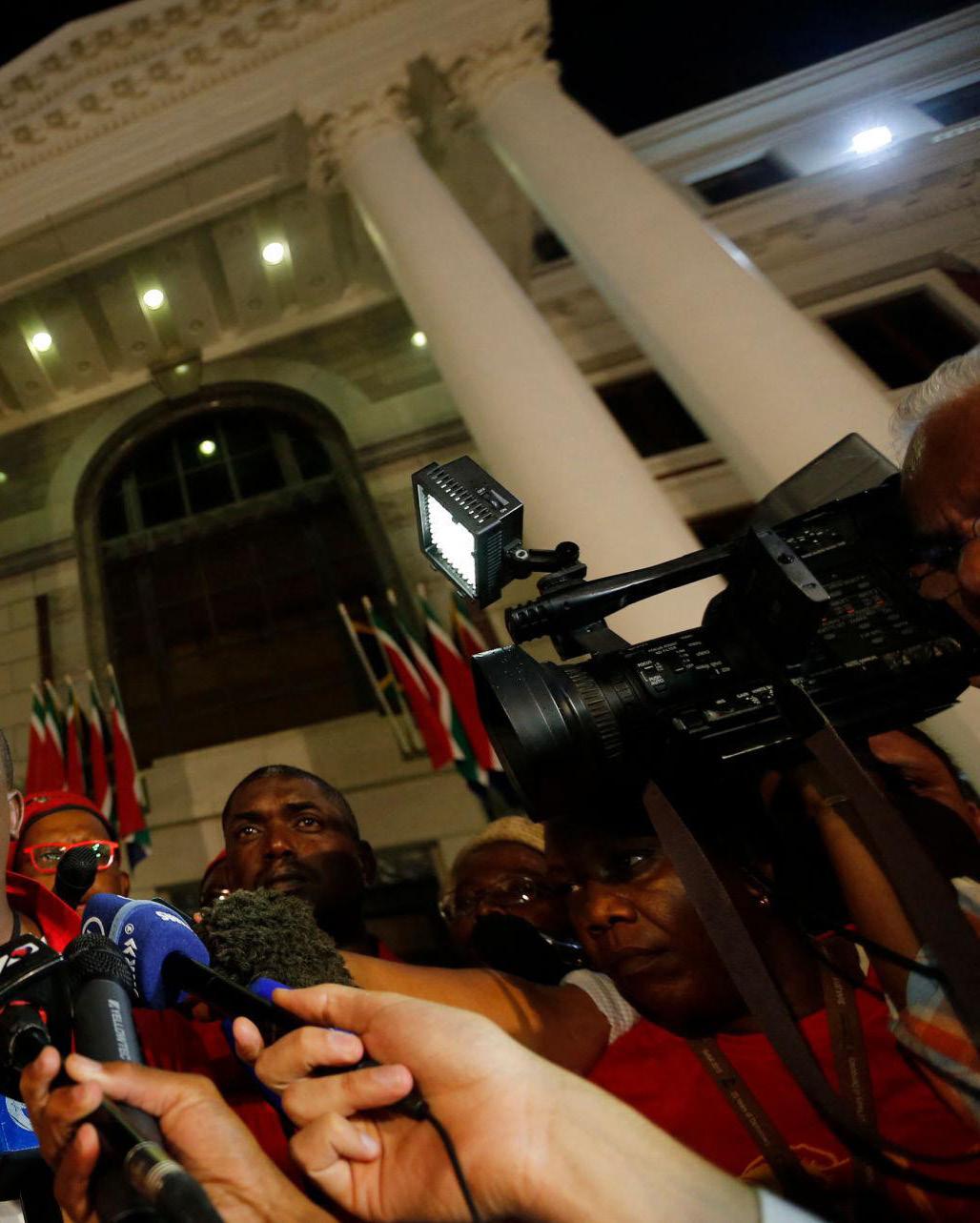
Claims of “white genocide” in South Africa, for example, remain politically charged and deeply contested. Farm attacks are real crimes that have traumatised communities, but there is no evidence of a state-backed extermination campaign against white South Africans.
Likewise, anti-Western rhetoric can sometimes oversimplify highly complex economic and political relationships.
Similar accusations against France’s role in the Sahel have also surfaced in several regional disputes, where officials accused Paris of perpetuating destabilising post-colonial dynamics.
Africa’s challenge is not merely rejecting old systems. It is building fairer and more accountable alternatives without reproducing corruption, authoritarianism or exclusion under different banners.
Political independence alone no longer satisfies a rising generation of Africans.
Young Africans are demanding economic dignity alongside political freedom.
That is why Malema’s declaration that “the struggle has not been won” continues resonating far beyond South Africa. It speaks to a broader continental mood — one increasingly impatient with systems perceived to preserve inequality decades after colonial rule officially ended.
A new political vocabulary of sovereignty, dignity and economic justice is emerging across Africa.
And whether in South Africa’s land debate or growing anti-France sentiment voiced during the recent Africa Forward Summit in Nairobi, the message from many younger Africans is becoming impossible to ignore: liberation without economic justice feels incomplete.
The governments and foreign powers that fail to recognise this shift may increasingly find themselves disconnected from the political mood shaping Africa’s future.
As Middle East tensions redraw global energy and trade routes, a new fault line is emerging across Africa’s economies: the countries best positioned to withstand external shocks may no longer be those with the largest commodity reserves, but those with the deepest industrial capacity, writes Jon Offei-Ansah
S&P Global Ratings’ latest sovereign exposure assessment may appear, at first glance, to reinforce familiar assumptions about Africa’s economic vulnerabilities. The agency’s April 23 ranking placed Egypt, Mozambique and Rwanda among the African sovereigns most exposed to the escalating Middle East conflict, while Nigeria, Angola, CongoBrazzaville, Botswana and Morocco were ranked among the least vulnerable.
Yet beneath the rankings lies a more consequential story about the changing foundations of economic resilience in Africa. The report suggests that the continent’s defining divide is no longer simply between oil exporters and importers, or between debt-distressed states and fiscally stable ones. Increasingly, the distinction is between economies that possess industrial depth and those that remain structurally dependent on external processing, refining and supply chains.
That shift carries major implications for sovereign creditworthiness, political stability and long-term development strategy.
The Middle East conflict has effectively become a stress test for Africa’s economic architecture. It is exposing which countries can absorb disruptions in fuel, fertiliser and shipping markets, and which remain dangerously vulnerable to external shocks they cannot control.
S&P’s methodology weighs five pillars equally: trade dependence on the Middle East, exposure to energy shocks, external vulnerability, foreign-exchange buffers and public debt dynamics. On paper, those are standard sovereign-risk indicators. But in the current geopolitical climate, they are no longer operating independently. They are compounding one another.
The disruption in maritime routes around the Strait of Hormuz, combined with sustained volatility in global energy markets, has pushed shipping costs higher while threatening the steady flow of oil, fertiliser and industrial chemicals into African economies. Countries already struggling with high debt burdens now face additional pressure from rising import bills and weakening currencies.
S&P’s baseline assumption of Brent crude averaging $85 a barrel for the remainder of 2026 now appears increasingly conservative. Brent traded between roughly $105 and $107 last
week as fears intensified over prolonged disruptions in Gulf shipping routes. That discrepancy matters because sovereign forecasts, debt sustainability models and fiscal projections across Africa are still being built around lower energy assumptions.
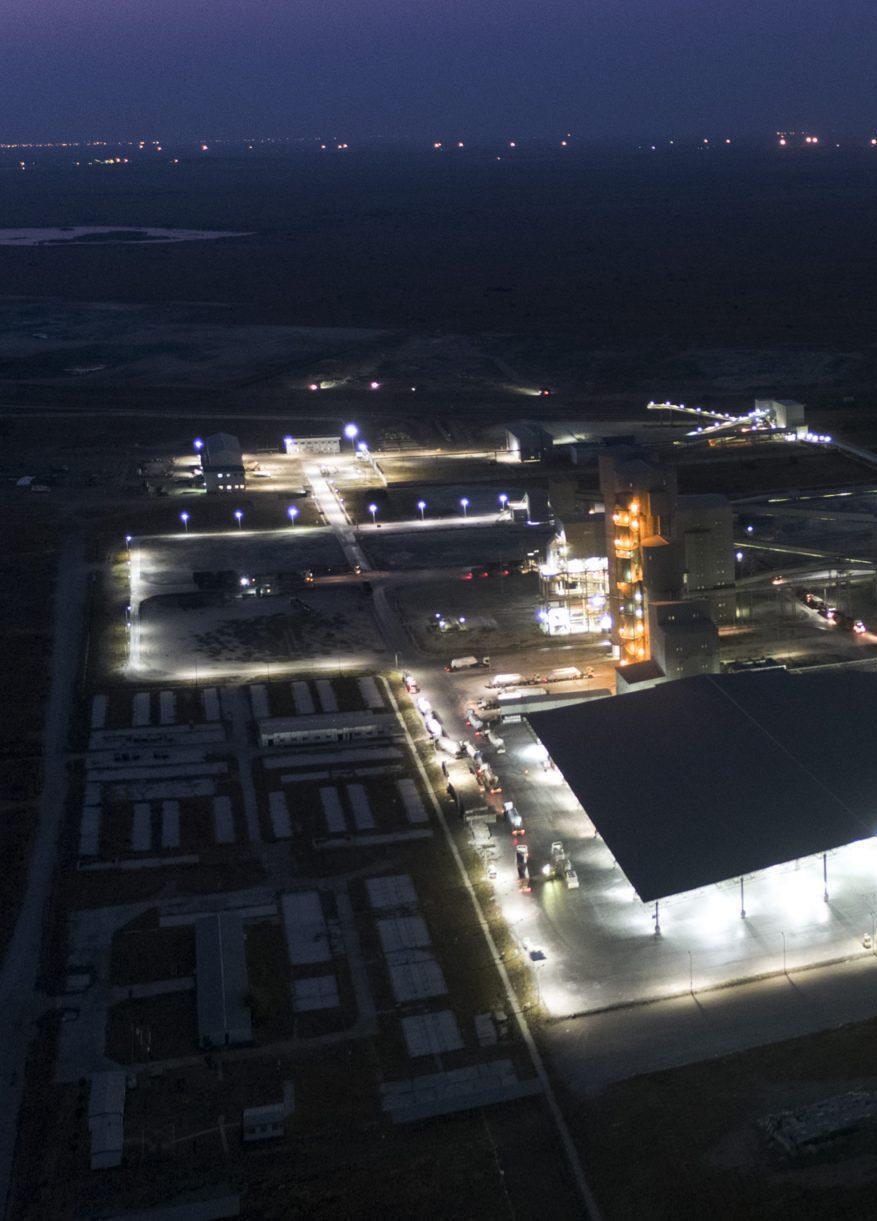
If elevated oil prices persist through the second half of the year, the consequences could spread rapidly across the continent.
Governments would face higher subsidy pressures just as many are attempting fiscal consolidation programmes backed by the IMF. Inflationary pressures would intensify, especially in food-importing economies already grappling with currency depreciation. Central banks would be forced to balance inflation control against slowing growth. Borrowing costs, already historically high for many African sovereigns, could climb further.
But the deeper vulnerability lies beneath those macroeconomic indicators.
Many African economies remain trapped in a structural contradiction: they export raw materials while importing refined products, industrial inputs and manufactured goods at significantly higher value. In periods of geopolitical stability, that imbalance weakens industrialisation efforts and drains foreign exchange. During global disruptions, it becomes a national vulnerability.
Nigeria’s position in the S&P ranking illustrates this shift more clearly than perhaps any other country on the continent.
Historically, Nigeria embodied one of the greatest paradoxes in Africa’s political economy. Despite being one of the world’s
major crude exporters, the country spent decades importing most of its refined petroleum products because of the collapse of domestic refining infrastructure. That dependence left the economy vulnerable to global refining margins, shipping disruptions and foreign exchange volatility. It also fuelled an expensive subsidy system that repeatedly destabilised public finances.
The emergence of the Dangote Petroleum Refinery has begun changing that equation in ways that extend beyond Nigeria itself.
The 650,000-barrel-per-day refinery, now ramping up production, is gradually reducing Nigeria’s dependence on imported refined fuel. That matters because imported fuel historically consumed enormous amounts of foreign exchange while placing constant pressure on the naira.
The refinery’s expansion has already altered market expectations. Petrol imports have declined, local supply has improved and pressure on Nigeria’s foreign-exchange reserves has eased relative to previous years. Fuel pricing remains politically sensitive, and Nigeria still faces substantial fiscal vulnerabilities, but the country is beginning to capture more value domestically within the petroleum chain.
That is precisely the type of structural adjustment that sovereign-risk models increasingly reward.
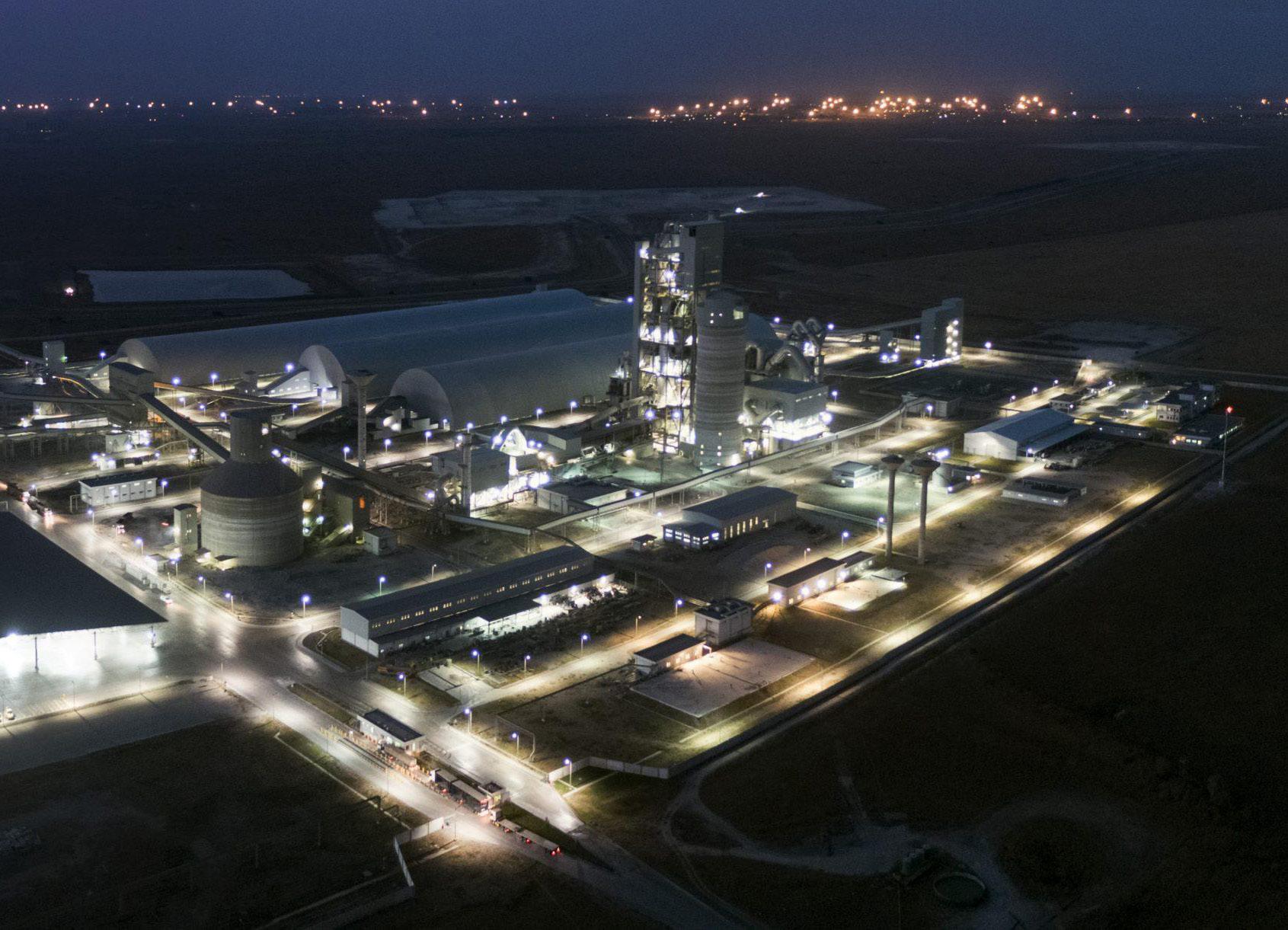
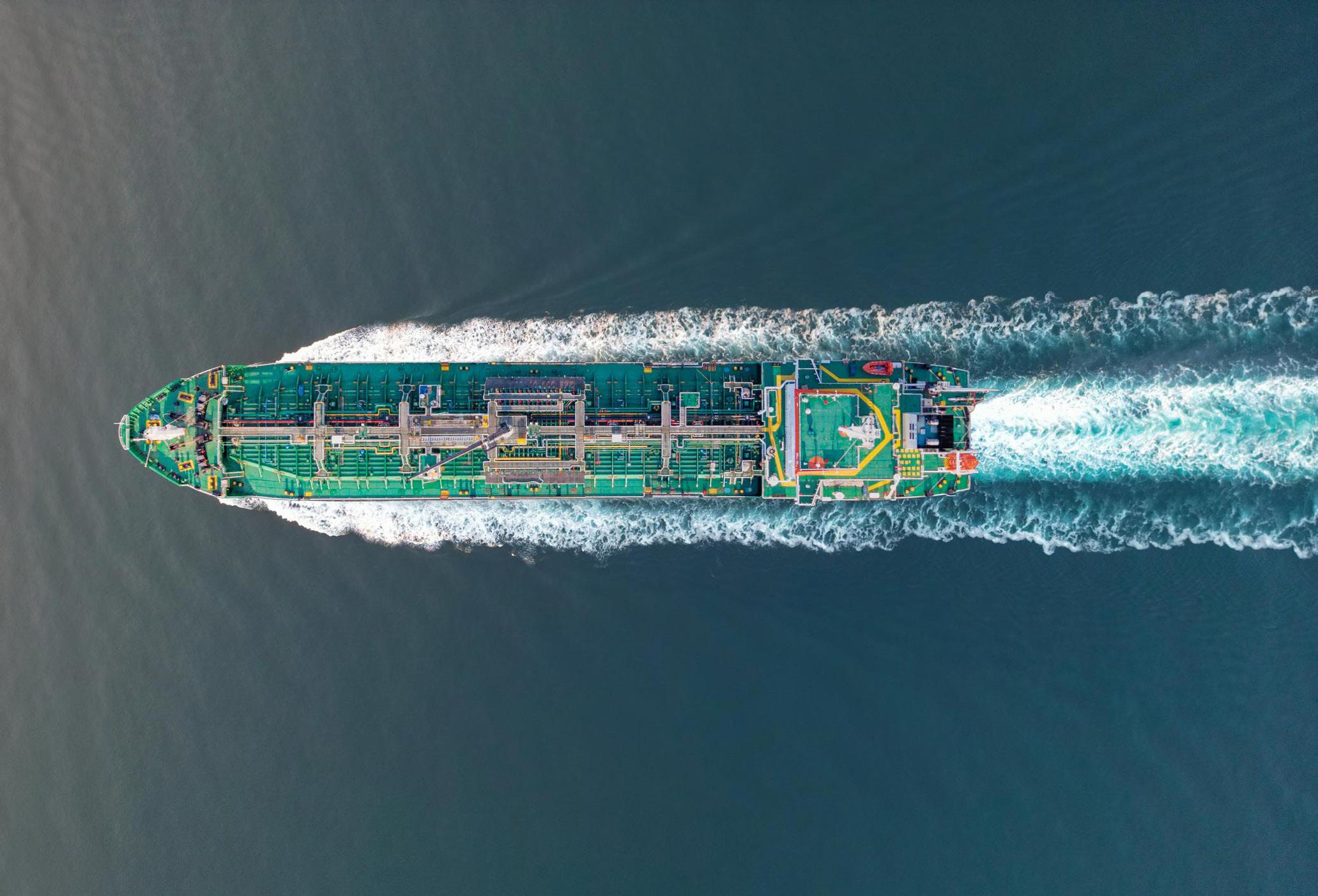
An economy that exports crude oil while importing refined petrol remains exposed to multiple external shocks simultaneously: shipping costs, refining capacity constraints abroad, exchange-rate volatility and global fuel premiums. A country capable of refining domestically reduces several layers of vulnerability at once.
This is why industrial depth is emerging as a sovereign credit factor rather than merely a development objective.
The same logic increasingly applies across sectors beyond petroleum. Countries capable of processing agricultural commodities, refining minerals or producing intermediate industrial inputs domestically possess stronger buffers against external disruption.
Morocco offers another important example. The country’s phosphate and fertiliser ecosystem, led by OCP Group, has evolved into one of the world’s most strategically important industrial supply chains. Morocco controls a dominant share of global phosphate reserves and has invested heavily in downstream processing capacity rather than simply exporting raw material.
That strategy now provides not only export revenue but geopolitical leverage.
As fertiliser markets tighten globally, countries with integrated processing capacity gain pricing power and greater economic insulation. Morocco’s industrial model demonstrates how value-chain control can strengthen both national resilience and sovereign standing.
By contrast, the vulnerabilities facing Egypt and Mozambique underline the risks of incomplete transformation.
Egypt’s ranking at the top of the exposure table reflects severe fiscal strain. The country’s debt-servicing burden has become increasingly difficult to manage, with interest payments consuming a large portion of government revenue. Rising energy and food import costs therefore translate directly into fiscal pressure and external vulnerability.
Cairo’s diversified economy and strategic importance provide some buffers, but those advantages are being eroded by mounting debt obligations and persistent currency stress.
Mozambique presents a different form of fragility. The country possesses vast offshore liquefied natural gas potential that once promised to transform its economy. Yet years of delays linked to insecurity, financing pressures and operational setbacks have prevented those projects from delivering broad industrial spillovers.
Resource wealth alone has therefore not translated into resilience.
This is precisely the warning emerging from the IMF’s April 2026 Regional Economic Outlook, titled ‘Hard-Won Gains Under Pressure’. The Fund reduced sub-Saharan Africa’s growth forecast to 4.3 percent and warned that geopolitical fragmentation and external shocks were threatening fragile recoveries across the region.
More importantly, the IMF drew a distinction between countries generating sustainable productivity gains and those still dependent on commodity cycles or debt-fuelled public investment. Economies achieving stronger growth, such as Benin, Cote d'Ivoire and Ethiopia, have increasingly focused on export diversification, manufacturing expansion or infrastructure-linked industrialisation.
Others remain heavily exposed to commodity price fluctuations without building sufficient domestic productive capacity.
The World Bank’s latest Africa Economic Update pushes the argument even further.
Titled ‘Making Industrial Policy Work in Africa’, the report signals a remarkable shift in development thinking among multilateral institutions. For decades, industrial policy was treated with scepticism following the failures associated with state-led economic strategies during the structural adjustment era of the 1980s and 1990s.
Today, however, the global environment has changed dramatically.
The Covid-19 pandemic, supply-chain disruptions, geopolitical fragmentation and strategic competition between major powers have all revived interest in industrial policy worldwide. The United States, China and the European Union are all actively subsidising strategic sectors ranging from semiconductors to green technology and critical minerals.
Africa is now being pulled into the same geopolitical and industrial realignment.
The World Bank’s report effectively acknowledges that African economies cannot achieve durable resilience while remaining positioned primarily as exporters of raw commodities. Countries that fail to build processing, refining and manufacturing capabilities will remain exposed to every disruption in global shipping routes, commodity markets and currency cycles.
The implications extend far beyond energy.
The Democratic Republic of Congo and Zambia, two of Africa’s largest copper producers, remain dependent on imported
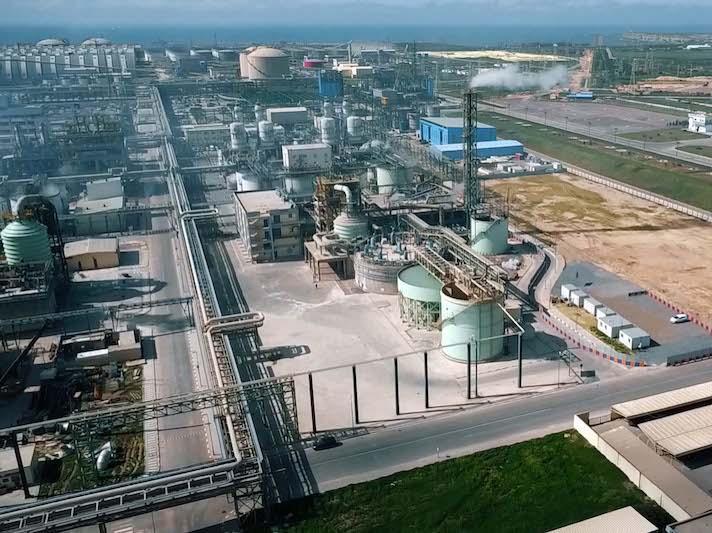
sulphur used in mineral refining. Fertiliser-dependent agricultural economies across East Africa remain vulnerable to disruptions in Middle Eastern supply chains. Even countries with strong mineral wealth remain exposed if they cannot process those resources domestically.
The conflict in the Middle East has therefore revealed a deeper truth about Africa’s economic structure: too much value creation still occurs elsewhere.
This does not mean industrial policy offers a guaranteed solution. African governments have repeatedly struggled with poorly managed state-led projects, corruption, inefficient subsidies and politically connected industrial monopolies. Largescale industrial ambitions can easily become vehicles for elite patronage or unsustainable borrowing.
Nigeria’s refinery transition itself still raises questions about market concentration, transparency and regulatory oversight. Ethiopia’s industrial parks remain vulnerable to political instability and financing constraints. State-led industrialisation strategies require capable institutions, long-term planning and regulatory discipline that many governments still lack.
But despite those risks, the direction of travel is unmistakable.
Global investors, ratings agencies and multilateral lenders are increasingly assessing African economies through a broader lens than traditional macroeconomic indicators alone. The question is no longer simply whether countries possess natural resources or sufficient foreign-exchange reserves. Increasingly, the focus is shifting towards whether economies can secure critical supply chains, reduce import dependence and capture more value domestically.
Industrial capacity is becoming intertwined with sovereign credibility.
That transformation may ultimately become the defining economic consequence of the current geopolitical era for Africa.
For decades, African economies were encouraged to integrate into global markets primarily through commodity exports and liberalised trade structures. The new environment is far less forgiving. Fragmented supply chains, geopolitical rivalry and resource nationalism are reshaping how economic security is understood globally.
Africa now faces a strategic choice.
Countries that continue exporting raw materials while importing refined products and industrial inputs may remain trapped in cycles of vulnerability whenever external shocks emerge. Those capable of building integrated industrial ecosystems may gradually strengthen both economic resilience and geopolitical leverage.
As African finance ministers prepare for the IMF-World Bank Annual Meetings later this year, the debate is likely to extend well beyond debt restructuring and fiscal consolidation.
The more important question may be whether African economies are finally beginning to build the industrial foundations required to survive an increasingly fragmented global order.
The answer could shape the continent’s sovereign landscape for the next generation.
For companies with significant African exposure or ambitions, the perception tax is a structural drag on performance and profit, argues
THERE is a cost that does not appear on any balance sheet and yet is one of the most consequential expenses a company operating in Africa will incur. I call it the Perception Tax: the financial and strategic penalty paid by organisations that price African markets based on assumption rather than intelligence.
It is, in every meaningful sense, a tax on ignorance. And unlike most taxes, it is entirely avoidable.
The perception tax operates through a simple but destructive logic. In the absence of credible, granular market intelligence, decision-makers default to the available narrative - and the available narrative on Africa is often wrong in its generalisations.
It is a painfully outdated tragedy that the continent continues to be treated as a unified landscape of risk, rather than 54 distinct nations with their own regulatory frameworks, political cultures, growth trajectories and investment dynamics. The macro obscures the micro, and the micro is where the opportunity lives.
Consider the geography of it. Investing in France is different from investing in Finland. The US is not Mexico. So why would Benin and Botswana, as far apart physically, politically, economically and culturally as Belgium is from Belarus, be perceived under the same optics? Yet, again, that is precisely what we see in investment discussions from London to New York.
The consequences of this tax are very real. The cost of access to capital rises for projects that do not warrant a premium.
Decisions are delayed while companies wait for clarity that a generalist analysis cannot provide. First-mover advantage, objectively the most sought-after edge in developing economies, is being blindly surrendered to competitors with better intelligence and market understanding. For companies with significant African exposure or ambitions, the perception tax is a structural drag on performance and profit.
In February 2025, the African Development Bank commissioned Moody's Analytics to assess 14 years of infrastructure investment performance across regions. Africa's
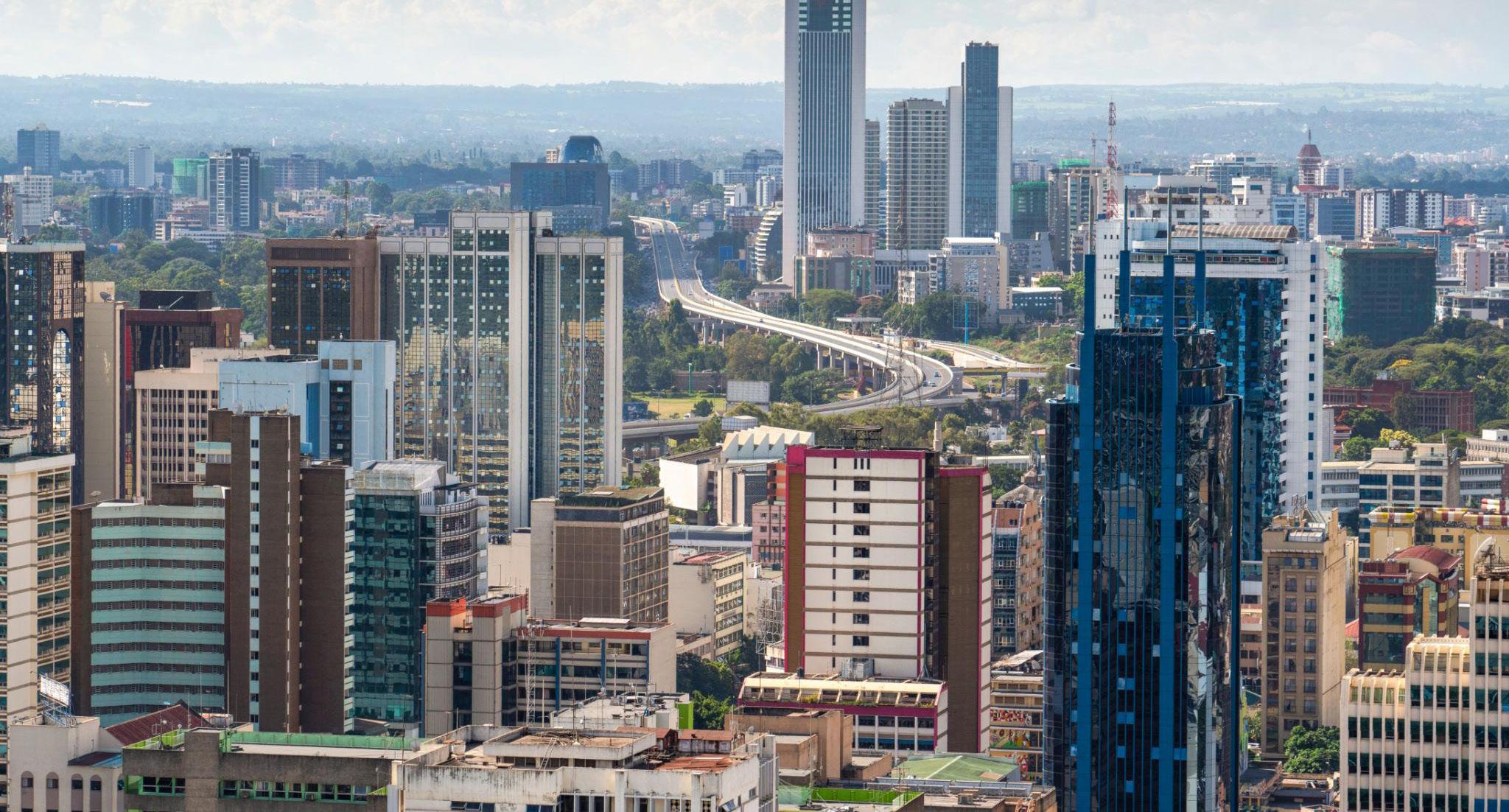
rate of loss stood at 1.7 per cent, the lowest in the world. Latin America registered approximately 13 per cent. Eastern Europe, 10 per cent. By any objective measure, Africa is among the most reliable destinations for infrastructure investment on the planet.
Yet the cost of capital across African markets remains three to four times higher than in comparable regions. Investors are demanding a premium that the facts on the ground do not justify, and the assets they pass on are being acquired by those who read about the numbers rather than the headlines.
Tony Elumelu, whose investment portfolio spans power, financial services and healthcare across four continents, puts it plainly: "There's nowhere else we get the kind of returns on investments as what we make in Africa." The competitive advantage belongs to those who see opportunity where others see risk.
A developer assessing a project in East Africa sees currency volatility, a complex political transition and a regulatory environment difficult to understand at first. The standard response is to demand a higher return, shorten financing tenors, or cancel the decision entirely. Less competitive, slower, potentially dealkilling.
A competitor with on-the-ground intelligence reads the same market differently. That country has maintained institutional continuity across successive governments. The local partner has a strong operational track record.
Local financing partners are prepared to co-invest. The project proceeds on better terms, ahead of the market. The perception tax has been paid, by the first company, to the second.
This is not hypothetical. Helios Investment Partners, one of Africa's most successful private equity funds, built a portfolio exceeding $3 billion by entering markets the global consensus had written off as too risky, reading them instead for what they were.
Kenya illustrates what happens when this information gap closes. Five years of regulatory reform moved the country 52 positions up the World Bank Ease of Doing Business Index. Foreign investment followed, consistently and at scale. The risk did not disappear. It was understood.
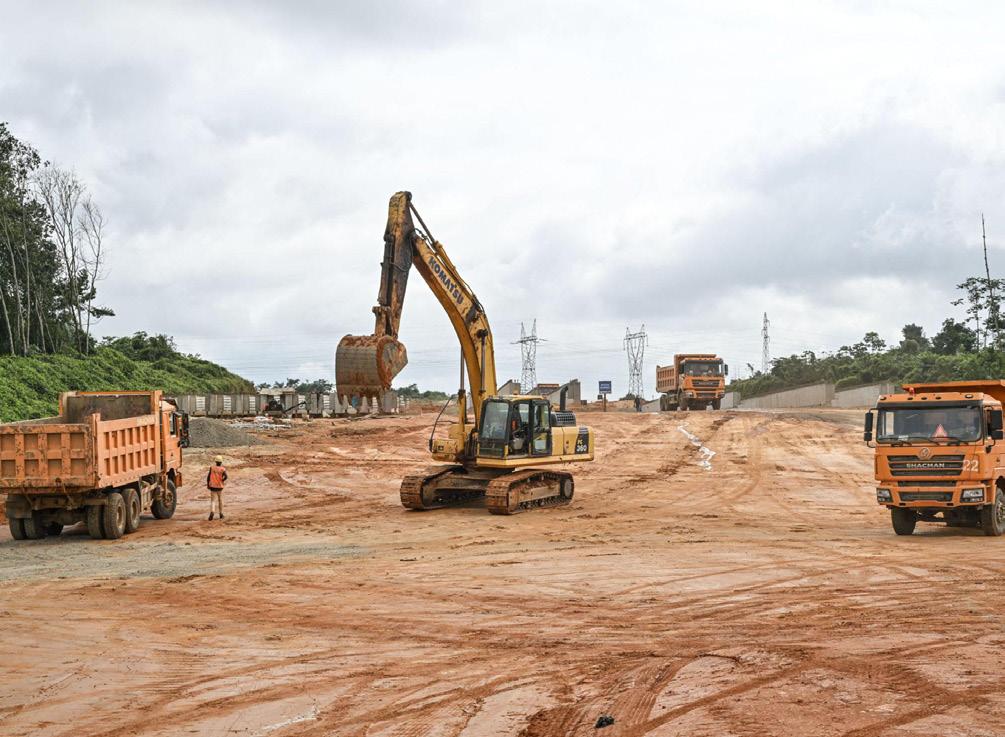
closes when enough informed capital enters a market to shift the consensus, which is precisely when the opportunity for asymmetric returns begins to narrow.
The African Continental Free Trade Area represents a $3.4 trillion market with a population approaching 1.5 billion people. The continent holds the critical minerals on which the global energy transition depends.
The question is not whether capital will eventually flow toward these opportunities. It will. The question is who will have established a position before generalised knowledge eclipses profit opportunity.
This pattern repeats across the continent. Markets once characterised as high-risk by international capital are, on closer inspection, simply markets that had not yet been properly read.
The investors who looked carefully enough to see the difference captured returns that reflected the advantage of having done so. Those who were hesitant arrived later, at higher valuations, paying the perception tax in full.
The perception tax compounds. Delayed investment means delayed market development, which reinforces the perception of unreadiness, which delays further investment.
The gap between Africa's perceived risk profile and its actual commercial fundamentals does not close on its own. It
The companies that consistently outperform in Africa share a common characteristic: they treat market intelligence as a primary investment, not a nice-to-have. They distinguish between structural risk, which must be priced, and noise, which must be filtered.
They understand that the information gap between perception and reality is not a permanent feature of African markets. It is a temporary condition which will reward those who close it first. Closing that gap is precisely why we designed APO Group's advisory practice.
The perception tax is also the perception premium. The same asymmetry that penalises the ill-informed rewards the wellinformed. For the investor or corporate decision-maker prepared to engage with local markets at the level of detail that strategic decisions require, Africa offers something increasingly rare in global markets: a genuine informational edge.
The opportunity was always there. The edge belongs to those who are bothered to look.
East African leaders, financiers and industrialists are converging around a bold new economic doctrine: process Africa’s resources at home, finance infrastructure with African capital and build regional markets large enough to compete globally, writes
FOR decades, African leaders have spoken about regional integration, industrialisation and economic self-sufficiency.
Yet despite countless declarations and treaties, much of the continent still exports raw commodities while importing refined fuel, fertiliser, steel and manufactured goods at far higher prices.
Now, a new coalition of political leaders, financiers and industrialists believes Africa may finally be approaching an inflection point.
At a recent high-level infrastructure and investment forum bringing together policymakers and private sector leaders, Kenyan President William Ruto, Ugandan President Yoweri Museveni, Africa Finance Corporation chief executive Samaila Zubairu and Nigerian billionaire industrialist Aliko Dangote outlined what increasingly resembles a coordinated continental strategy.
The vision is ambitious: stop exporting raw materials, build regional refining and manufacturing hubs, mobilise African pension and insurance capital, and create integrated markets capable of sustaining large-scale industrial production.
Behind the rhetoric lies a growing recognition that Africa’s traditional development model is failing to deliver jobs, industrial growth or economic resilience fast enough for a continent expected to reach 2.5 billion people by 2050.
What emerged from the discussion was not merely another conversation about infrastructure. It was a direct challenge to the economic architecture that has shaped Africa’s place in the global economy for generations.
A regional refinery strategy emerges
Ruto disclosed that Kenya, Uganda and Tanzania are exploring plans for a shared refinery in Tanga, Tanzania, designed to process crude from across East and Central Africa, including oil from Uganda, Kenya, South Sudan and the Democratic Republic of Congo.
The project would rely on interconnected regional infrastructure rather than competing national systems.
“We are not discussing a refinery in Kenya or Uganda,” Ruto said during the discussion. “We are discussing that we're going to have a joint refinery in Tanga to benefit all of us.”*
The proposal reflects a broader rethink underway across parts of Africa. Instead of each country pursuing fragmented industrial ambitions, leaders are increasingly exploring shared infrastructure capable of serving entire regional markets.
The logic is economic as much as political.
East Africa imports billions of dollars’ worth of refined petroleum products annually despite possessing substantial crude
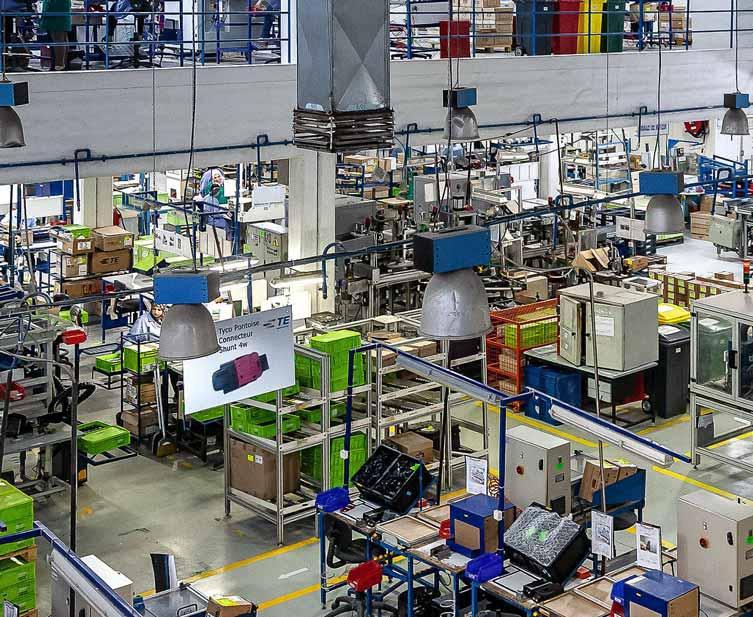
reserves. Regional refining would reduce import dependence, create industrial jobs and strengthen foreign exchange stability while generating downstream industries in petrochemicals, plastics and logistics.
For Museveni, regional cooperation is no longer optional but essential.
The Ugandan president described East Africa’s earlier political fragmentation as one of the region’s greatest historical mistakes, pointing specifically to the collapse of the East African Community in 1977.
At the time, ideological rivalries and nationalist competition overrode regional coordination. Today, leaders increasingly see that fragmentation as economically self-defeating.
“The mistakes are our biggest teachers,” Museveni said, arguing that rising unemployment and demographic pressure are forcing governments to rethink old approaches.
The end of the raw export model?
Perhaps the most striking consensus among participants was the rejection of Africa’s longstanding role as a supplier of raw commodities.
Across oil, gold, iron ore, uranium and rare earth minerals, leaders repeatedly argued that exporting unprocessed resources amounts to exporting jobs, tax revenues and industrial capacity.
Museveni offered some of the strongest remarks, defending Uganda’s decision to ban exports of unprocessed minerals including gold and iron ore.
According to Museveni, Uganda’s restrictions have already triggered investment in local refining industries. He said Uganda now hosts nine gold refineries following the government’s policy shift.
The economic argument is straightforward. Uganda earns significantly more revenue from refined gold than from raw exports while simultaneously creating skilled industrial employment.
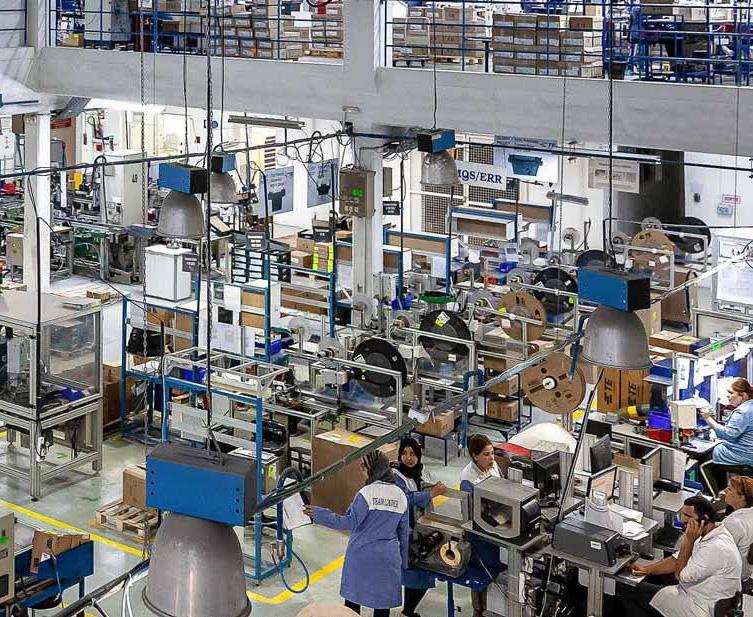
“It is really criminal to export unprocessed raw materials from Uganda,” Museveni declared.
Ruto echoed the same philosophy, warning that African governments risk leaving future generations with depleted mineral reserves but little industrial development to show for them.
He cited Kenya’s experience with titanium mining, arguing that foreign firms extracted valuable resources while creating limited downstream value inside the country.
“The future generations are going to ask us there was titanium in Kenya, what happened to it? And we will have no answers,” Ruto said.
The shift reflects a broader trend visible across several African economies.
From lithium restrictions in Zimbabwe to local beneficiation rules in Indonesia — often studied closely by African policymakers — governments are increasingly trying to capture more value from strategic minerals before export.
This trend is accelerating as global competition intensifies around critical minerals used in electric vehicles, batteries, semiconductors and renewable energy systems.
African leaders increasingly fear repeating the continent’s historical pattern of exporting raw resources cheaply while importing expensive finished products.
Dangote’s industrial wager
No individual embodies Africa’s industrial ambitions more visibly than Aliko Dangote.
The Nigerian billionaire used the forum to position industrial self-sufficiency as both an economic necessity and a psychological turning point for the continent.
Dangote argued that Africa’s dependence on imports has become unsustainable, particularly during global disruptions such as the Russia-Ukraine war.
He recalled watching African leaders scramble internationally for fertiliser supplies during the crisis and said the experience convinced him Africa must rapidly expand domestic production capacity.
“We are a continent of imports,” Dangote said. “When you export raw materials, you are exporting jobs.”
His response has been a massive industrial expansion strategy.
Dangote said his group plans to invest $40bn across multiple sectors by 2030, including fertiliser, petrochemicals and refining. He also offered a public commitment to build a refinery in East Africa comparable to the giant refinery complex already operating in Nigeria if governments provide sufficient policy support.
The scale of Dangote’s refinery ambitions is extraordinary even by global standards.
The expanded Nigerian facility, he noted, aims to process up to 1.4 million barrels per day, positioning it among the largest refining operations in the world.
But beyond the engineering scale lies a deeper political message: African industrialists are increasingly willing to pursue projects that previous generations considered impossible.
Dangote contrasted today’s investment environment with the early 2000s, when African firms struggled to access long-term financing and often faced crippling borrowing costs.
According to Dangote, the rise of African financial institutions such as AFC and Afreximbank has fundamentally altered what is now possible.
The capital question
If infrastructure is the visible face of industrialisation, finance remains the hidden battlefield.
Zubairu argued that Africa already possesses enormous pools of capital trapped inside fragmented regulatory systems and overly conservative investment structures.
He pointed to more than $1tn held by African pension and insurance funds — money that often flows into short-term government securities instead of long-term productive investment.
For Zubairu, the central challenge is no longer simply attracting foreign investors. It is creating African financial systems capable of funding African industrialisation at scale.
“We should be looking at $20bn, $30bn, $40bn for development,” he said.
His argument reflects a growing shift among African development institutions. Increasingly, they see domestic capital mobilisation as more sustainable than dependence on external lenders whose priorities may not align with African industrial goals.
But unlocking that capital requires significant reforms.
Insurance regulations, pension fund investment rules and capital market fragmentation currently make it difficult for institutional investors to finance large regional infrastructure projects.
Zubairu argued that African governments and multilateral financial institutions must now create guarantee structures capable of reducing risk and encouraging longer-term investment.
The objective is not merely raising money. It is building African-controlled financial ecosystems capable of financing industrial transformation over decades rather than election cycles.
A new African economic nationalism
Underlying the discussion was a deeper ideological shift taking shape across parts of the continent: a form of modern African economic nationalism.
Unlike earlier state-led models associated with postindependence socialism, this version blends private capital, regional integration and strategic industrial policy.
It is less about isolationism than about negotiating Africa’s place in global markets from a position of greater industrial strength.
The emphasis on refining, beneficiation and regional markets reflects lessons drawn from Asia’s industrial rise, where governments often protected strategic sectors while building domestic manufacturing capacity.
Museveni framed the issue in historical terms, describing African integration as part of a long political mission stretching back to anti-colonial movements of the twentieth century.
For him, economic integration represents the next phase of African liberation.
Ruto connected the same agenda to demographics, arguing that industrialisation is essential for transforming Africa’s rapidly growing youth population into an economic asset rather than a source of instability.
“We industrialise our continent, we are actually tapping into the huge resource of young people that we have,” Ruto said.
That urgency is impossible to ignore.
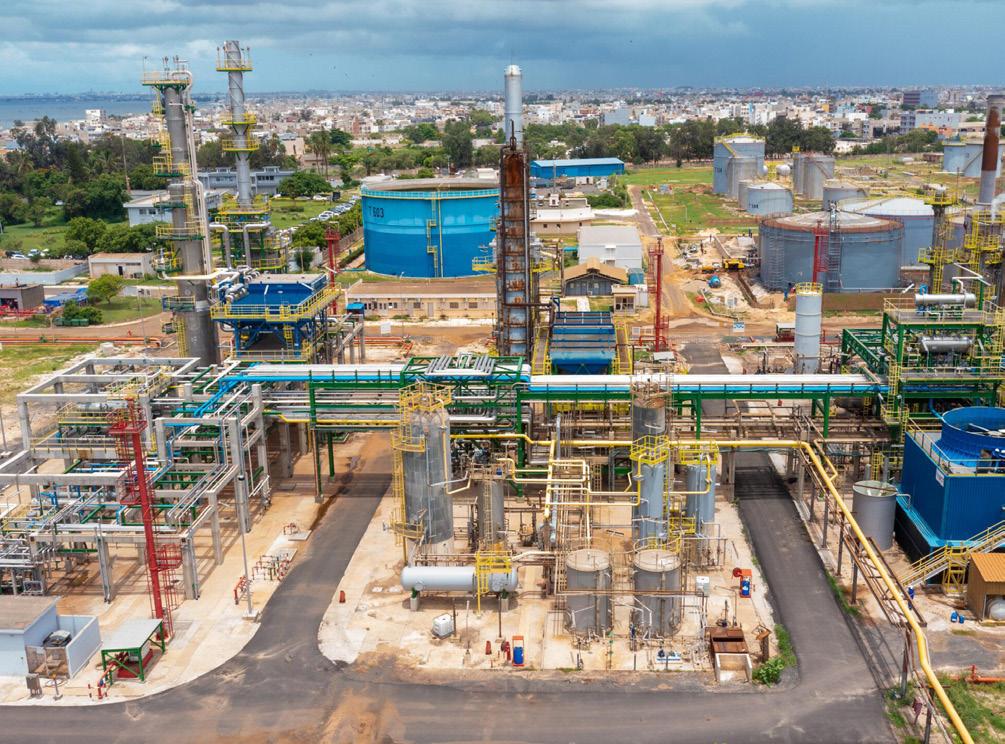
African leaders are increasingly pushing for regional refining and local processing to capture more value from the continent's natural resources
Africa’s workforce is expected to expand dramatically over the next three decades. Without large-scale industrial job creation, governments risk rising unemployment, migration pressures and social unrest.
Can Africa finally deliver?
Sceptics will note that Africa has heard grand industrial promises before.
Regional integration efforts have repeatedly stalled amid political rivalries, weak infrastructure, financing constraints and policy inconsistency.
Even today, many African economies remain heavily dependent on commodity exports and vulnerable to external shocks.
Yet something may genuinely be shifting.
The convergence between political leaders, regional financiers and large African industrialists is becoming more visible and more coordinated.
There is also a growing recognition that geopolitical fragmentation, disrupted supply chains and global competition over critical minerals may create new opportunities for African industrial policy.
For the leaders gathered at the forum, the challenge is no longer identifying what Africa lacks. It is deciding whether governments, financiers and private capital can act with enough coordination and discipline to build something fundamentally different.
The refinery discussions in East Africa may ultimately become a test case for that broader ambition.
If successful, they could signal the emergence of a more integrated industrial Africa capable of processing more of its own resources, financing more of its own infrastructure and capturing more value from its own markets.
If they fail, Africa risks remaining trapped in the same extractive economic model that generations of leaders have promised to escape.
As China's lending boom fades and global demand for critical minerals accelerates, Africa has gained unprecedented bargaining power. Whether that leverage can be transformed into industrial strength may define the continent's economic future, writes
Jon Offei-Ansah
CHINA-AFRICA trade reached a record $275bn in 2024, according to the Boston University Global Development Policy Center and the African Economic Research Consortium. Yet beneath that headline achievement lies a more significant shift: Chinese loan commitments to Africa fell to just $2.1bn, underscoring how the relationship is evolving from one defined by finance to one increasingly shaped by strategic resources.
For much of the past two decades, the prevailing narrative around China-Africa relations was straightforward. China had capital, technology, industrial capacity and a vast appetite for resources. Africa needed infrastructure, investment and access to global markets. The balance of power largely favoured Beijing.
Today, that equation is changing.
For the first time in decades, African governments possess a degree of leverage that previous generations could only imagine. The global race for critical minerals has elevated Africa's importance, while competition among China, the United States, Europe, India and Gulf states has created new opportunities for resource-rich countries to negotiate from a stronger position. The challenge now is converting leverage into lasting economic transformation.
The most significant change in the China-Africa relationship is financial. Chinese loan commitments to Africa have collapsed from the heights reached during the peak years of the Belt and Road Initiative. More strikingly, Africa has entered a period in which it is collectively repaying more to China than it receives in new loans. According to research cited by Africa Briefing, debt repayments now exceed fresh Chinese lending across much of the continent, marking a decisive shift from the era when Beijing was Africa's most expansive source of infrastructure finance. The relationship is no longer defined primarily by the flow of Chinese capital into Africa, but increasingly by trade, debt management and competition for strategic resources.
The era of massive Chinese-funded infrastructure expansion is drawing to a close. Throughout the 2000s and much of the 2010s, Chinese policy banks financed highways, railways, ports, airports and power stations across Africa. Governments seeking infrastructure often had few alternatives. China largely dictated the terms of engagement because it controlled the capital.
Debt pressures have made Beijing more cautious. African governments are more constrained. Meanwhile, trade, investment
and strategic resources are becoming increasingly important drivers of the relationship. China remains enormously influential. But it no longer enjoys the same degree of financial dominance that characterised the previous era.
The real source of Africa's growing leverage lies beneath the ground.
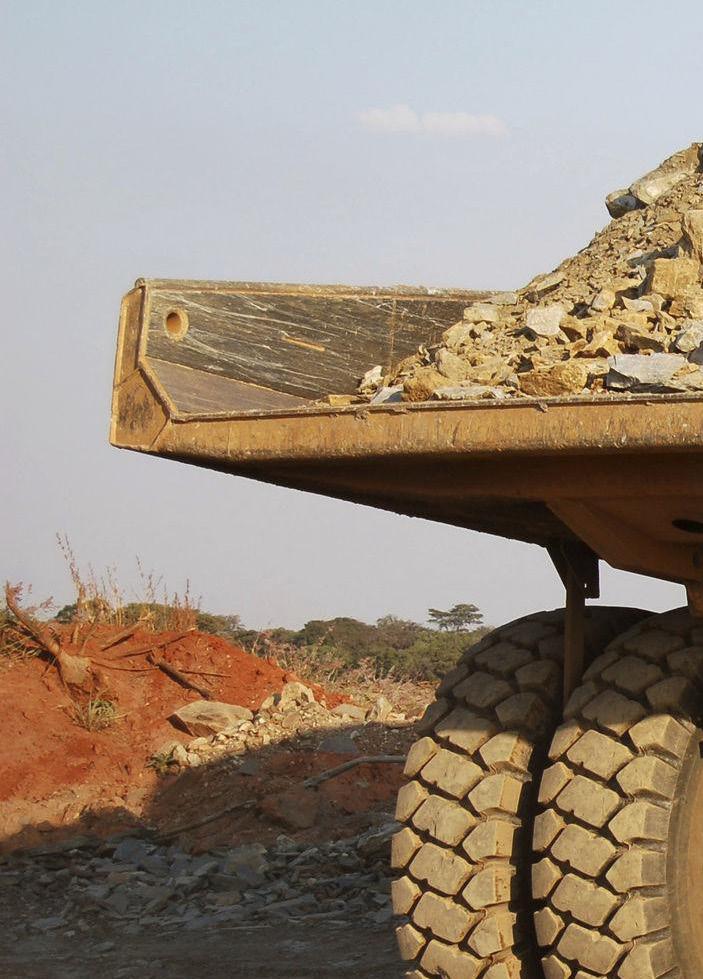
The transition to electric vehicles, battery storage systems, solar power and renewable energy infrastructure requires unprecedented quantities of critical minerals. Many of those minerals are concentrated in Africa. The continent possesses some of the world's most important reserves of cobalt, copper, lithium, graphite, manganese and rare earth elements.
This has transformed Africa from a peripheral supplier of commodities into a strategic battleground in the global competition for industrial supremacy.
China needs these minerals. The United States needs them. Europe needs them. India needs them. The Gulf states increasingly want them.
Unlike previous commodity booms, the current race for critical minerals is taking place against a backdrop of geopolitical rivalry, supply-chain security concerns and industrial competition. That creates opportunities for resource-rich African countries to negotiate from a stronger position.
The African Development Bank has repeatedly argued that Africa should use its critical mineral endowment to drive industrialisation rather than remain a supplier of raw materials. Similarly, the International Energy Agency has highlighted the
strategic importance of minerals such as cobalt, copper, graphite and lithium in securing global energy-transition supply chains. For African policymakers, the challenge is ensuring that rising demand translates into domestic value creation rather than another commodity boom.
If there is one country that best illustrates Africa's growing importance, it is the Democratic Republic of the Congo. The country produces the majority of the world's cobalt, a mineral essential for battery technologies and energy storage systems. Without Congolese cobalt, the global energy transition becomes significantly more difficult.
That reality has transformed Kinshasa's bargaining position. Over recent years, the government has reviewed mining agreements, challenged foreign operators and sought greater domestic benefits from its mineral wealth. International mining companies and foreign governments increasingly recognise that securing access to Congolese resources requires a more collaborative approach than in the past.
Twenty years ago, the DRC needed investors far more than investors needed the DRC. Today, the relationship is considerably more balanced.
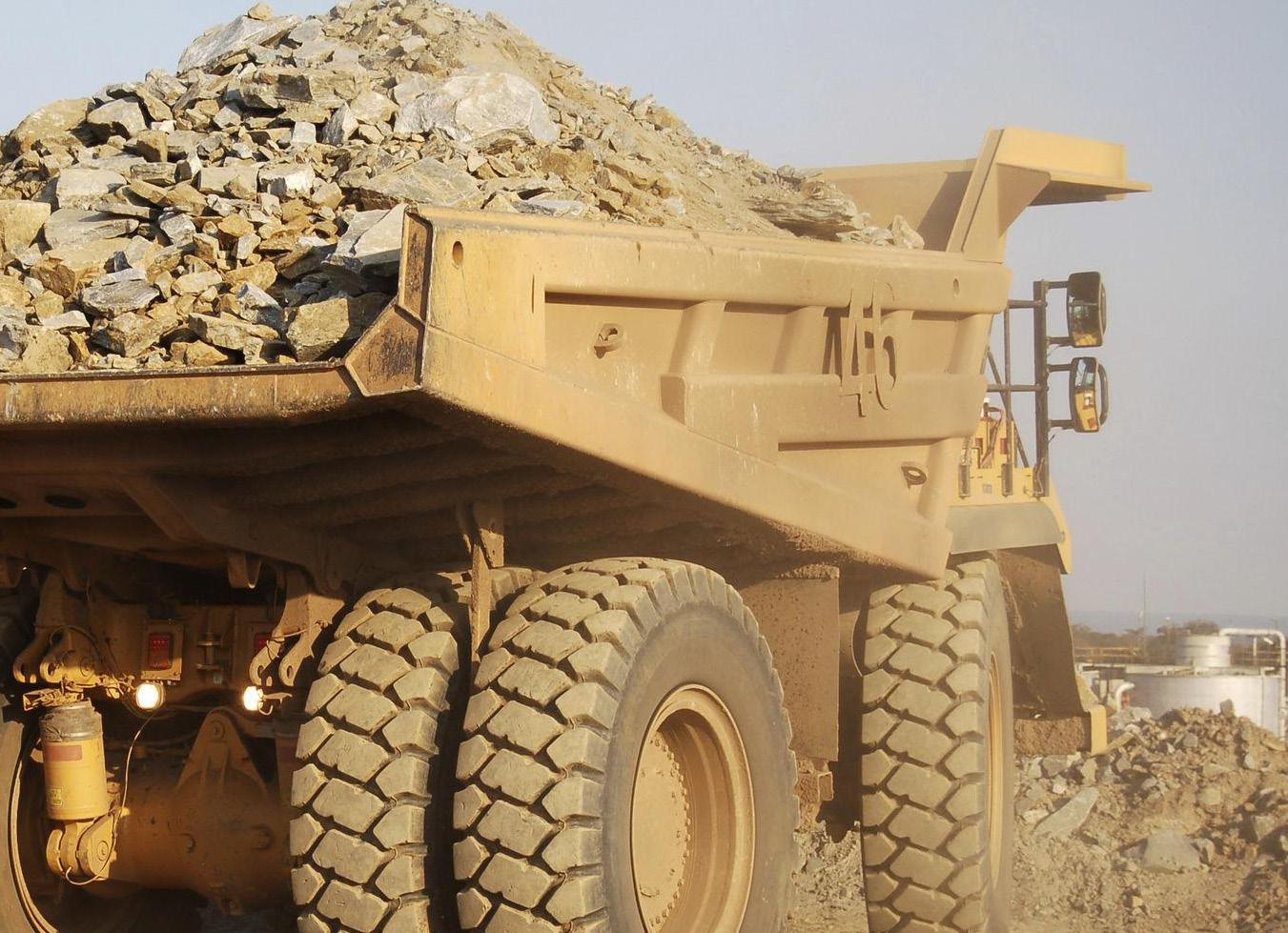
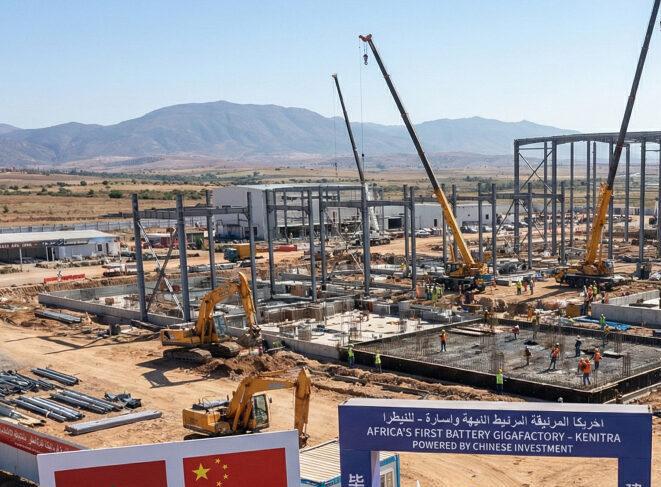
Perhaps Africa's most successful example of resource leverage remains Botswana. For decades, Botswana negotiated increasingly favourable arrangements with De Beers, securing local diamond sorting, trading and processing activities alongside extraction. The country gradually captured more value from its resources while building domestic capabilities.
Botswana's experience demonstrates that the real objective is not merely extracting better contracts. It is moving into highervalue segments of the value chain. For countries rich in lithium, cobalt and copper, Botswana offers proof that bargaining power can be translated into broader economic gains when supported by strong institutions and policy consistency.
Zimbabwe offers a contemporary example of this emerging leverage. As Africa Briefing previously reported, Zimbabwe's lithium beneficiation strategy reflects a broader push by African governments to capture more value from critical minerals before export.
In 2022, the government prohibited exports of raw lithium ore, arguing that investors should contribute to local processing
and value addition rather than merely extracting resources. The policy directly affected several Chinese companies operating in the country's rapidly expanding lithium sector.
The move also came amid growing concern over foreign control of strategic mineral assets. Earlier reporting by Africa Briefing found that Chinese firms have established a dominant position in several African lithium markets, increasing pressure on governments to secure greater domestic benefits from the sector.
The significance of the move was political as much as economic. It demonstrated a willingness to impose conditions on foreign investors in pursuit of industrial objectives. The government recognised that demand for lithium was strong enough to justify a more assertive negotiating stance.
Yet Zimbabwe also illustrates the limits of leverage. Economic instability, regulatory uncertainty and governance concerns continue to constrain investment and industrial development. Possessing strategic minerals is not the same as building a competitive industrial economy.
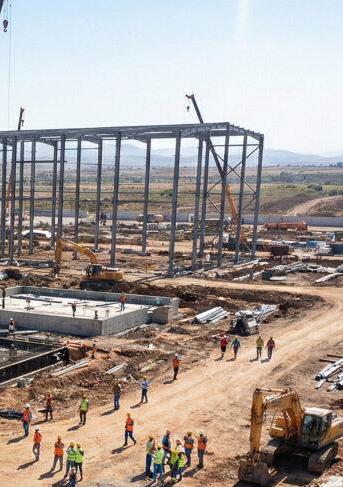
If strategic minerals create leverage, competition creates power. This is where Zambia offers an important lesson. As demand for copper increases, Zambia has attracted interest from Chinese investors, Western mining companies, American development initiatives and Gulf-backed funds.
The significance is not simply the volume of investment. It is the availability of alternatives. Countries that depend on a single external partner often have limited negotiating room. Countries with multiple interested investors can play a more active role in shaping outcomes.
Much of the discussion surrounding Africa's strategic importance focuses on China and the West. Yet some of the most important developments are coming from elsewhere.
India is increasingly seeking secure supplies of critical minerals and energy resources to support its industrial ambitions and growing economy.
Meanwhile, the UAE has emerged as one of Africa's largest investors in logistics, ports, renewable energy and mining. The UAE is increasingly rivalling China's economic footprint across Africa, particularly in infrastructure, logistics and strategic resources. Saudi Arabia is also deepening its footprint through investments linked to energy transition and food security objectives.
For African governments, the growing role of India and Gulf capital increases strategic options. The most important shift is therefore not that China is losing influence. It is that Africa is gaining alternatives.
Alternatives create leverage.
The most important comparison may lie outside Africa altogether.
Over the past decade, Indonesia transformed its position in global nickel markets by restricting exports of raw nickel ore and encouraging domestic processing. The policy attracted billions of dollars in investment, much of it from Chinese firms, into smelters, refining facilities and battery-related industries.
Indonesia moved from being primarily a supplier of raw materials to becoming a more significant industrial participant in the value chain.
Many African policymakers now view this approach as a potential model.
The question facing countries such as the DRC, Zambia, Zimbabwe and Namibia is whether they can achieve a similar transformation. Can cobalt become battery components? Can copper become cables and electrical equipment? Can lithium become cathodes and battery materials?
The answers to those questions will determine whether today's leverage becomes tomorrow's industrial capacity.
Despite the growing optimism, it would be premature to declare that Africa now holds the upper hand.
China continues to dominate mineral processing, battery manufacturing, solar panel production and numerous clean-energy technologies. Much of the value generated by Africa's minerals still accrues elsewhere.
Leverage is not the same as power. Resource ownership is not the same as industrialisation. The pendulum has begun to move, but it remains far from the centre.
Africa's opportunity is real. The continent is entering a period in which demographic growth, strategic minerals, expanding markets and geopolitical competition are converging to create new possibilities.
At the same time, the African Continental Free Trade Area and the African Union's industrialisation ambitions provide frameworks through which African countries can capture more value from their resources and build regional supply chains.
Africa's leverage is growing not because China is weakening, but because the world increasingly needs what Africa possesses.
The African Continental Free Trade Area, regional industrial policies and growing investor competition provide opportunities that previous generations lacked. Yet opportunities alone do not guarantee transformation.
The winners will be those countries that use this moment to build industries, develop skills, expand manufacturing and capture more value from strategic minerals rather than simply export another generation of raw materials. Africa may finally hold stronger cards. The challenge now is learning how to play them.
The so-called resource curse is not an economic inevitability but a governance and management failure, argues Ojo Emmanuel Ademola in this article and the following two looking at how the continent can be managed successfully
AFRICA is not poor. The continent is one of the most naturally endowed regions on earth, holding roughly 30 per cent of the world’s mineral reserves, 40 per cent of global gold, up to 90 per cent of chromium and platinum, and commanding dominance in critical minerals such as cobalt, manganese, graphite and copper – resources that anchor the global energy transition.
Sub-Saharan Africa alone accounts for nearly one-third of its total natural capital yet remains home to a disproportionate share of the world’s poor. This is the paradox that has haunted Africa since independence: abundance without development, wealth without wellbeing and growth without transformation. The failure is not geological; it is managerial and leadership-centric.
For six decades, African development discourse has been dominated by economists, models and macroeconomic indicators: GDP growth rates, balance of payments, inflation targets and fiscal ratios. Yet despite episodic growth spurts, especially during the 2004–2014 commodity boom, most African economies remain structurally fragile, undiversified and dependent on raw resource exports.
When commodity prices collapsed after 2014, growth in resource-rich African countries fell sharply, exposing shallow foundations built without institutional depth, operational excellence, or execution discipline. Industrialisation stalled, debt burdens rose and public sectors struggled to convert revenue into durable public value. Economic theory without managerial capability produces statistics, not societies. Across rural and urban Africa lie the physical monuments of failed development:
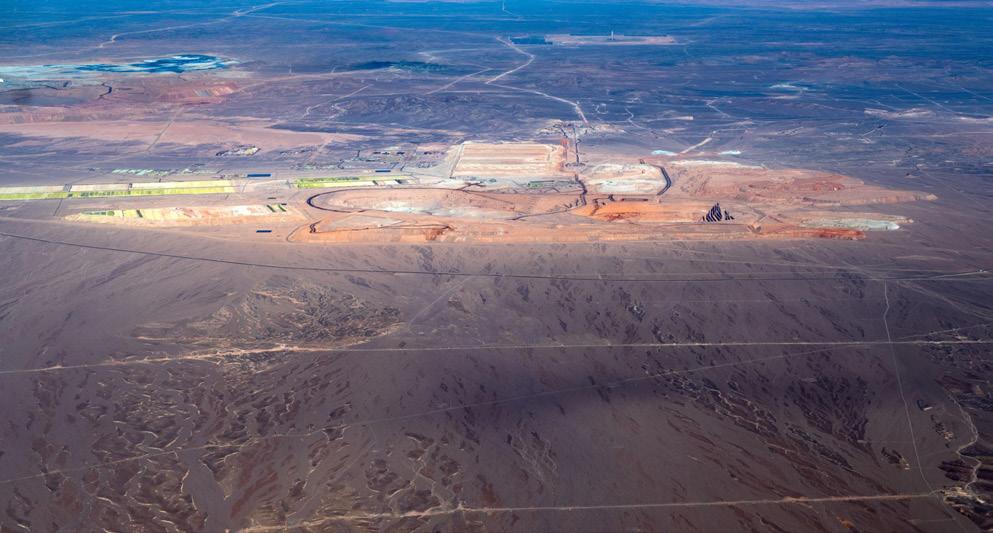
abandoned water systems, dysfunctional health centres, idle industrial parks and ghost infrastructure projects.
Nearly half of major donor-funded development initiatives fail or underperform, not because of inadequate funding, but because of weak project governance, poor implementation capacity and context-blind execution models. Africa does not lack plans; it lacks professionally trained managers at scale.
Economists ask what should be done, while managers determine how it gets done. Africa has over-invested in the former and catastrophically under-invested in the latter.
The so-called resource curse is not an economic inevitability but a governance and management failure. Countries such as Norway and Chile demonstrate that natural wealth becomes a blessing only when nations build strong institutions, enforce disciplined public management and adopt long-term strategic governance frameworks that transcend political cycles.
Their success was not accidental; it was engineered through deliberate managerial choices: sovereign wealth funds insulated from political interference, transparent fiscal rules, rigorous project appraisal systems and a culture of execution anchored in professional bureaucracy rather than political patronage.
African states, by contrast, often experienced resource windfalls that arrived faster than their institutions could mature. Sudden inflows of revenue overwhelmed weak administrative systems, fuelled corruption networks, distorted incentives and weakened accountability.
Instead of building integrated value chains, many governments expanded consumption, subsidised inefficiency and allowed political actors to capture resource rents. The absence of strategic management frameworks meant that resource revenues were not channelled into industrial diversification, human capital development, or long-term national competitiveness.
Strategic management teaches that resources alone do not create value; it is the capability to organise, govern and deploy those resources that determines national outcomes. Without performance-driven public institutions, clear execution roadmaps and disciplined monitoring systems, even the most sophisticated economic policies collapse into rhetoric.
This is why countries with similar geological endowments diverge so sharply: those that invest in managerial capacity convert natural wealth into national prosperity, while those that neglect it fall into cycles of volatility, debt and underdevelopment.
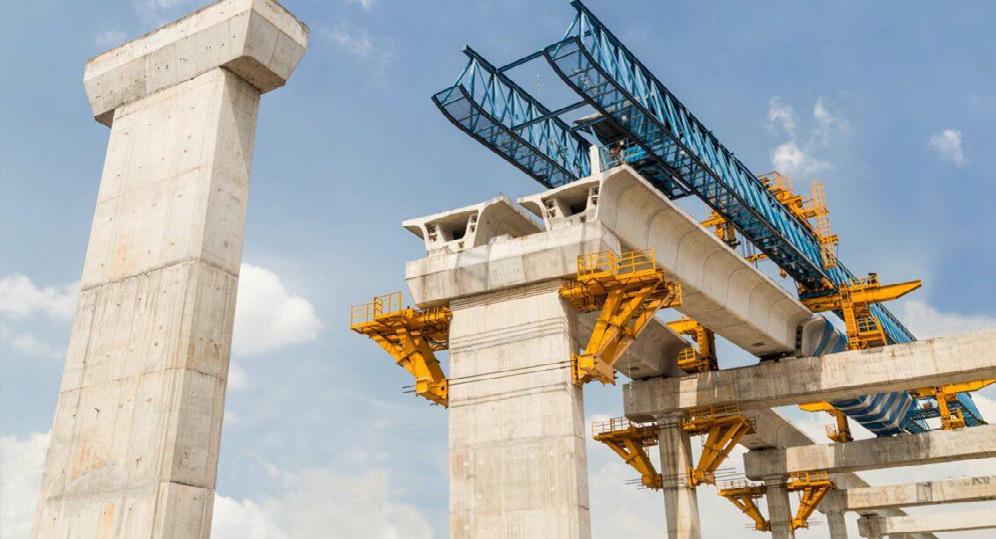
Infrastructure development remains central to Africa's growth ambitions, but experts argue that strong institutions and effective project delivery are essential to turning investment into lasting prosperity
Economics without institutional and managerial capacity is dangerous because it creates the illusion of progress without the machinery to deliver it. It produces plans without implementation, budgets without accountability and growth without transformation. The real curse is not the resource itself, but the absence of strategic leadership capable of converting opportunity into outcomes.
Africa faces a profound managerial deficit. Ministries are often led by politically appointed leaders with limited exposure to modern management science.
Public institutions operate without performance management systems. National visions exist without delivery units and policies are announced without execution roadmaps.
Leadership style and management quality directly influence organisational performance and economic outcomes, yet education systems across the continent continue to privilege theory over practice.
Nigeria remains one of the world’s most resource-rich nations, yet its economic structure tells a different story. Crude oil dominates foreign exchange earnings, but this wealth has not translated into industrial depth or broad prosperity.
Ghana demonstrates the importance of institutional stability. Revenues from gold and cocoa have supported infrastructure and social services, yet industrialisation remains incomplete. Where Ghana has made visible progress – such as port reforms, digital public services and improvements in ease of doing business – it has been driven by disciplined management and reform-minded leadership rather than macroeconomic planning alone. Stability is necessary but not sufficient. Transformation requires managerial competence.
In Kenya, the country’s infrastructure expansion, from transport corridors to digital government platforms, illustrates the power of project-oriented governance. Structured delivery units, performance contracts and managerial accountability have accelerated development outcomes.
While debt sustainability remains debated, Kenya proves that development accelerates when governments adopt managerial discipline. Execution capacity, not economic theory, determines whether infrastructure becomes a catalyst or a liability.
In the case of South Africa, it possesses advanced industrial capacity and mineral wealth, yet growth has stagnated due to governance erosion in state-owned enterprises. Energy and coordination crises emerged not from lack of economic insight, but from collapsing management systems.
Where governance reforms have been applied, performance has begun to stabilise. Even the most advanced economies cannot survive managerial decay.
Africa’s destiny will be determined not by what it has, but by how well it manages what it has
Refineries remained non-functional for decades, forcing the country to import refined petroleum products. This failure was not due to a shortage of economists or oil revenues. It was the predictable outcome of weak project management, governance breakdowns and chronic execution failure.
Only recently, with execution-focused leadership and private-sector refinery projects, has progress emerged. Policy rhetoric does not build refineries; disciplined management does.
The Democratic Republic of Congo holds the world’s largest cobalt reserves, essential for electric vehicles and renewable energy. Yet value addition remains minimal. Minerals are exported raw, while finished products are imported at a premium. Fragmented governance, weak institutions and limited managerial capacity have prevented the creation of integrated mining-industrial ecosystems. The result is value extraction without national development. Minerals alone cannot transform a nation; management does.
Africa urgently needs millions of competent, ethically grounded managers trained in strategic execution and governance. The continent requires professionals capable of driving strategic planning and execution, public-sector performance, infrastructure and project delivery, risk governance and compliance, value-chain industrialisation, and digital and systems leadership.
Africa’s future depends on rebalancing governance by placing professional management at the heart of public administration while retaining economics as a supporting analytical tool. This shift demands deliberate national programmes for managerial capacity building, higher-education reforms that prioritise applied governance and leadership, merit-based leadership pipelines across ministries and state-owned enterprises, and governance frameworks anchored in performance rather than patronage.
The hour of management has come. Africa does not suffer from a shortage of ideas, resources, or economic models. It suffers from a shortage of execution capacity.
Development will not emerge from spreadsheets alone but from strategic leadership, strong institutions and professional management at scale. The next phase of Africa’s renaissance must be led not only by economists who interpret data, but by managers who build systems, deliver results and sustain institutions. Africa’s destiny will be determined not by what it has, but by how well it manages what it has. AB
Unlike regions burdened by entrenched frameworks, the continent can design agile, context-specific models of digital trust, ethical AI and inclusive employment practices
IN this digital age, Africa’s position is being defined by three interlocking forces: cybersecurity resilience, artificial intelligence adoption and the evolving trajectory of work. How these forces are aligned will determine whether digital transformation becomes a catalyst for sustainable economic development or a pathway to deeper vulnerability and dependency.
The digital age has reduced distance and compressed time, enabling Africa to leapfrog traditional development stages. Mobile banking, digital identity systems, fintech platforms, e-commerce, telemedicine and remote work are already transforming livelihoods across the continent.
From Lagos to Nairobi, Accra to Johannesburg, digital services are reshaping how people transact, learn, heal and work. Yet this acceleration has also exposed fragile systems, limited regulatory capacity and an expanding digital attack surface. At the heart of digital trust lies cybersecurity – no longer an optional technical add-on, but a foundational pillar of national stability and economic confidence.
Cybersecurity today represents economic infrastructure. Just as roads and power lines enable commerce, secure digital systems enable innovation, investment and cross-border trade.
Africa’s growing participation in the African Continental Free Trade Area (AfCFTA) depends heavily on trusted digital platforms that protect data, transactions and intellectual property. Without cybersecurity alignment, digital transformation risks becoming an open gateway for cybercrime, fraud, data exploitation and systemic disruption.
Cybersecurity is shifting from traditional perimeter defence to trust-centric security models. Zero-Trust architectures, continuous authentication and robust data governance are becoming essential as remote work, cloud computing and mobile-first services dominate African digital ecosystems.
More importantly, Africa must invest in local cybersecurity capacity – developing indigenous skills, national incident response teams and regional cyber cooperation frameworks. Cybersecurity is a sovereignty issue. A continent that cannot secure its data cannot sustainably secure its future.
While Africa stands at the crossroads of cybersecurity, artificial intelligence and the future of work, its trajectory is distinct when compared with other regions. In Europe, digital transformation is largely framed by stringent regulatory regimes such as the General Data Protection Regulation, which enforces data sovereignty and consumer rights.
North America, by contrast, is propelled by private-sector innovation, venture capital and global technology giants, though

often at the expense of equitable access. Asia, particularly East Asia, demonstrates rapid state-driven adoption, with countries like China and South Korea embedding AI and cybersecurity into national industrial strategies.
Africa’s position is unique: it combines the urgency of building foundational digital infrastructure with the opportunity to leapfrog legacy systems. Unlike regions burdened by entrenched frameworks, Africa can design agile, context-specific models of digital trust, ethical AI and inclusive work practices.
This comparative vantage point underscores Africa’s potential not merely to catch up, but to craft a digital future that is sovereign, sustainable and socially attuned.
Artificial Intelligence represents another powerful advantage for Africa. Too often, AI is portrayed as a job-destroying force imported from advanced economies. In Africa, however, the true opportunity lies in AI as an engine of augmentation, problem-solving and inclusive productivity.
AI systems applied to agriculture can optimise yields, anticipate climate risks and improve supply chains. In healthcare, AI supports diagnostics, disease surveillance and resource allocation. In education, adaptive learning technologies can bridge skill gaps when contextualised to African realities.

Secure digital infrastructure is becoming essential to Africa's economic future as governments and businesses invest in cybersecurity, data protection and trusted digital services
Yet AI without ethical grounding becomes another mechanism of inequality. Africa must resist the temptation to become merely a consumer of foreign AI systems trained on non-African datasets.
Ethical and contextual AI governance is critical; anchored in data dignity, fairness, transparency and cultural relevance. The convergence of AI and cybersecurity adds urgency: while AI enhances fraud detection and threat intelligence, it also introduces adversarial risks that demand informed governance and technical oversight.
If cybersecurity establishes trust and AI delivers acceleration, then the future of work defines human dignity. Africa’s workforce is the youngest in the world, digitally aware, mobile and increasingly connected.
Work is moving away from lifetime employment toward skill-based, hybrid and platform-enabled opportunities. Credentials are giving way to competencies. Knowledge of cybersecurity, data analysis, AI training, ethical technology and digital governance is becoming as valuable as traditional degrees.
and medium-sized enterprises to scale, access finance and participate in regional markets. AI-enabled public sector systems improve transparency, service delivery and resource efficiency. Innovation ecosystems – including universities, technology hubs, civic institutions and faith-based knowledge networks – become laboratories for sustainable digital solutions.
However, technology alone does not guarantee sustainability. Digital sustainability must be understood holistically: environmentally, socially, economically and ethically.
Green digital infrastructure, energy-efficient data centres and renewable-powered networks are essential in a climate-vulnerable continent. Digital inclusion must prevent the emergence of new divides between connected elites and digitally excluded communities.
Intergenerational responsibility demands that we do not pass unmanaged cyber risks, data debt and skills obsolescence to the next generation.
At this defining moment, Africa must choose intentional alignment rather than reactive adoption. Cybersecurity provides the foundation of trust, artificial intelligence provides intelligent acceleration, and future-ready work frameworks preserve human dignity and productivity.
When aligned, they offer Africa not merely participation in the global digital economy, but leadership shaped by values, sovereignty and purpose.
Remote work and cross-border digital labour are opening global opportunities for African talent, but they also require secure digital identities, reliable payment systems and international compliance frameworks. Without these, digital labour risks exploitation and exclusion.
The future of work must therefore integrate security, continuous learning, mental well-being and fair labour standards. AI should complement human creativity and judgment, not diminish human worth.
The convergence of cybersecurity, artificial intelligence and work transformation forms a powerful multiplier for economic development. Secure digital platforms enable small
The future will favour societies that act with wisdom. Africa’s position in the digital age is clear. The responsibility before leaders, policymakers, educators, technologists and institutions is to shape this toward inclusive growth, resilient security and sustainable development. The digital future will not wait - but it can still be wisely guided.
Africa’s digital destiny is not predetermined. It will be shaped by choices made today – choices about how to secure data, how to govern AI and how to empower workers.
These choices will determine whether Africa becomes a passive consumer of imported technologies or an active architect of its own digital future. The continent’s youthful population, entrepreneurial spirit and cultural diversity provide a unique foundation for innovation. But without cybersecurity sovereignty, ethical AI governance and future-ready work frameworks, these strengths risk being undermined.
Cybersecurity, artificial intelligence and the future of work are not isolated phenomena. They are interdependent forces that, when aligned, can propel Africa into a new era of sustainable development.
The challenge is immense, but so too is the opportunity. Africa stands at the crossroads. The path chosen will define not only the continent’s digital trajectory but also its place in the global order of the 21st century.
In a world where security is increasingly defined by data, code and systems intelligence, Africa cannot afford to treat defence as a peripheral sector
ARECENT UK Defence Journal analysis reveals that overseas students now dominate British defence aligned academic programmes, while domestic enrolment continues to fall. This is not a trivial matter of admissions statistics. It is a strategic alarm bell about the future of work, national resilience and sovereign capability in an era defined by digital contestation.
For African defence leaders, policymakers and security strategists, this British experience is not a distant curiosity. It is a mirror – and a message. The implications reach directly into Africa’s ongoing debates about defence modernisation, cybersecurity readiness, technology governance and the urgent need to cultivate a future-proof workforce.
Defence in the 21st century is no longer measured by battalions or hardware alone. Power now resides in cyber capability, information dominance, systems engineering, artificial intelligence and resilient digital governance.
The central question for African nations is therefore not whether to build capacity, but where that capacity should reside, who should own it and whose interests it should ultimately serve.
The British case offers a stark warning: when defence-critical education becomes unattractive or inaccessible to domestic talent, national security vulnerabilities emerge. International students enrich learning environments, but over-reliance on external talent without a strong indigenous pipeline erodes long-term strategic autonomy.
If a mature defence power like Britain is grappling with talent misalignment, the risks for developing and emerging economies are exponentially greater.
Africa has undeniably gained from global partnerships, diaspora expertise and international training, but openness without strategy is a direct pathway to dependency. The British experience demonstrates with uncomfortable clarity what happens when defence strategy, education policy and workforce planning fall out of alignment. Once young people cease to view defence and security as innovative, relevant, or dignified career paths, the sector begins to collapse from within. Africa cannot afford to replicate this error.
With the world’s youngest population and a rapidly expanding digital ecosystem, the continent holds the raw intellectual power to build a formidable defence and cybersecurity workforce. What Africa requires now is intentional, visionary leadership – leadership that positions defence not as an extension of militarisation, but as a modern arena of innovation, ethics, technological excellence and national development.
Indigenous capacity building is not a slogan; it is a non-negotiable strategic imperative. Africa must build institutions with the competence and confidence to train, retain and continuously elevate local expertise in defence technologies, cybersecurity management, intelligence systems and information assurance.

This is not limited to technical mastery. It demands governance capability; the ability to craft rules, manage risks, enforce accountability and ensure that technology deployment aligns with African values, legal traditions and socio-economic realities.
Whenever defence systems are dominated from outside, sovereignty is diluted. But when nations govern these systems from within, they gain resilience, adaptability and the strategic confidence required to secure their future.
Africa’s future-of-work conversation is dominated by fintech, entrepreneurship and the creative economy, yet defence and security are conspicuously absent – and that omission is strategically reckless. Modern defence careers now span cyber analysis, threat intelligence, systems architecture, digital ethics, risk governance, policy technology and national resilience planning.
These are high-value, knowledge-intensive roles that strengthen national capability while offering Africa’s youth meaningful, globally relevant employment. British defence reports unintentionally underscore what Africa must now pursue deliberately: defence education must be framed as technologically advanced, future-oriented and socially purposeful.
Africa cannot afford to treat defence as a peripheral sector. It is a central pillar of national development, digital sovereignty and the continent’s long-term competitiveness in a world where security is increasingly defined by data, code, and systems intelligence.
Africa’s task is not to mimic the British model but to avoid its structural pitfalls. While Britain now faces the challenge of reconnecting its domestic talent to its defence needs, Africa stands at a more foundational crossroads: it must build its talent pipelines from the ground up with clarity, purpose and unwavering strategic intent.
This demands deliberate investment in African universities, defence colleges and digital academies capable of producing world-class expertise. It requires curricula that confront the
continent’s real security challenges – from cybercrime and misinformation to infrastructure protection and regional defence cooperation.
It calls for a stronger fusion of civil, military and technological ecosystems, ensuring that innovation is both operationally relevant and ethically grounded. Above all, it insists that African values, transparency and accountability shape the evolution of defence technologies, rather than being afterthoughts on imported frameworks.
Global partnerships will continue to matter, but they must enhance – never replace – indigenous capability. Africa cannot remain a passive consumer of external security solutions. It must rise as a contributor to global security knowledge, producing professionals who are locally grounded, globally competent, and strategically indispensable.
Only then will the continent secure the sovereignty, resilience and intellectual authority required to shape its own security future.
Africa’s security future will be shaped not by the volume of its imported technologies but by the depth of its indigenous intellectual capital. In a world where geopolitical competition increasingly plays out in cyberspace, data governance and algorithmic influence, strategic autonomy is no longer defined by territorial control alone.
It is defined by the ability to secure digital borders, protect national data assets and govern emerging technologies with confidence and competence. African states must therefore recognise that sovereignty in the digital age is earned through mastery of knowledge systems, not dependence on external expertise.
The continent’s long-term security will hinge on its ability to cultivate thinkers, engineers, analysts and policymakers who understand Africa’s unique threat landscape and can design solutions rooted in African realities.
Africa must also shift from a reactive posture – responding to crises as they emerge – to a proactive model of security leadership that anticipates threats, shapes norms and sets the agenda in global defence discourse. This requires a deliberate move away from crisis-driven policymaking toward long-range strategic planning anchored in research, foresight and innovation.
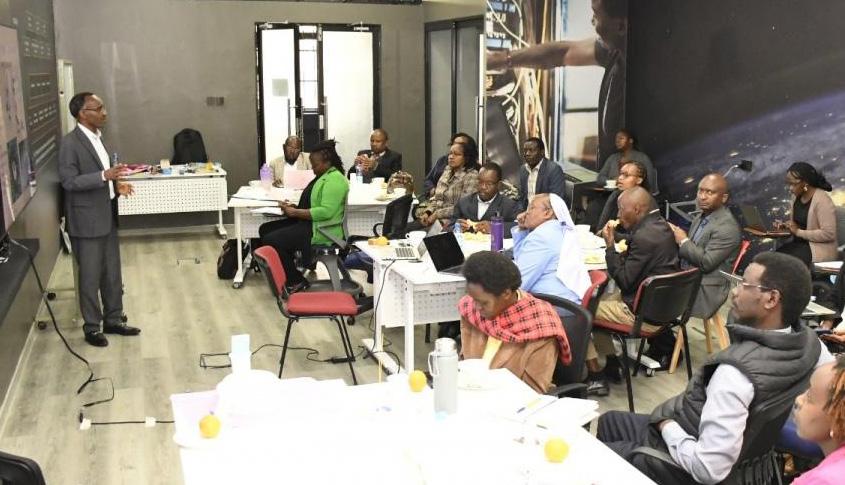
priority. It demands real budgets, strengthened institutions and sustained leadership attention.
Africa can no longer afford to treat defence-aligned talent development as an optional aspiration. It must become a central pillar of national strategy. This moment calls for a decisive reorientation.
Defence-aligned digital education must be elevated to the status of a national development priority. Young Africans must be actively encouraged and incentivised to pursue careers in cybersecurity, systems governance and the wider security sciences.
Indigenous research and innovation ecosystems must be built and protected, ensuring that Africa generates the intellectual capital required to secure its own future. Above all, sovereignty must be defended by owning the talent that powers national security, rather than outsourcing critical competencies to external actors.
Young Africans must be encouraged to pursue careers in cybersecurity, systems governance and the wider security
African defence institutions must become centres of thought leadership, producing scholarship and doctrine that influence regional and global security frameworks. By asserting intellectual leadership rather than merely adopting external models, Africa positions itself not as a follower in global security governance, but as a contributor whose insights are indispensable to the stability of an increasingly interconnected world.
The message is urgent and unequivocal: capacity building must shift immediately from policy rhetoric to operational
The British experience is not a caution against global engagement. It is a stark warning against complacency. Africa must act with intention, discipline and strategic foresight – or risk inheriting a security future shaped by others.
When British defence reports speak, African defence leaders must listen – not with apprehension, but with strategic clarity. The future of defence and cybersecurity will be owned by nations that deliberately build, retain and dignify their own talent.
No country can outsource its way to sovereignty, and no continent can secure its future on borrowed expertise. For Africa, indigenous capacity building is not a policy option; it is the foundation of sovereignty, resilience and global relevance in a digital age.
The decisions taken now will determine whether the continent authors its own security architecture or inherits one designed elsewhere. This is the decisive moment. The time for caution has passed. The time for action has arrived.
Dr Allen Onyema, founder and CEO of Air Peace. tells Martine Dennis about the obstacles he encountered while trying to get his planes off the ground and keep them flying. Below are highlights from a longer interview on Africa Here & Now
The hurdles
Dr Allen Onyema: IF you are a Nigerian, you would never go into the airline business because of the challenges. They are all actually man-made. It is is a very hostile environment to run an airline.
Although, with this government in Nigeria, we have a minister who is for indigenous airlines succeeding because the president himself wants this. So, you have a team that is doing a great job.
But before we got here it was terrible. Previous ministers were badmouthing Nigerian airlines even though they didn’t have the right policies in place to help these airlines.
For instance, we did not have a maintenance, repair and operations (MRO) system in place. If we wanted to do a C check [heavy maintenance] on our planes, we had to ferry them to the US, spending almost half a million dollars on ferrying them back and forth alone, not to mention the millions spent on the maintenance.
Nigeria is a huge country, and then you have the bureaucracy. I was ready to build a maintenance hangar and bring in technical partners to give Nigeria a good MRO system.
But I was frustrated by the people in government and civil servants. I only acquired the land in 2025. So, these are the issues.
We need to be appreciated and protected, not government agencies fighting tooth and nail to try to pull you down with one thing or the other. That is not the vision of this president.
Some government agencies act as if you've committed a crime just because you have succeeded. So, it lets pull him down. These things must stop in this country.
A.O: During covid, if there was no Air Peace, the country would have suffered. There was a lockdown worldwide. No
airlines flying anywhere in the world. Governments didn't have money.
It was Air Peace that flew on three occasions from Nigeria to Guangzhou in China to load medical supplies for over 220 million Nigerians. I did it free of charge for the country.
Nigerians were stranded worldwide. It was Air Peace that flew 12 times to Malaysia, Thailand, Indonesia and India to bring Nigerians back to their country.
During xenophobic attacks, Nigerians were being dehumanised in South Africa. I sent my planes several times to evacuate Nigerians out of that country.
How the Boeing MRO ended up in Ethiopia – not Nigeria
A.O: The Boeing MRO facility in Ethiopia should have been in Nigeria. Boeing came to Nigeria first. Then we had regional politics in play.
Would Boeing site the MRO in the north or the south? That’s when they moved away to Ethiopia. The same thing is happening to Air Peace. Immediately this government helped us secure land, some people tried to stop us. At the time the job started last year, I borrowed money from the bank to begin the project. We have had to was stop.
A.O: When Air Peace’s first flight from London to Lagos landed, we were ordered to disembark passengers about two kilometres away from the terminal. An unused spot.

Thankfully, I was at the airport. I was told that they were reserving the spot for a foreign airline that was yet to land. In your own country? And people don’t want me to talk about it? I will.
A.O: There's no connectivity between Africa and the Caribbean. If you want to go to Antigua or Barbados, you first have to fly to London. Air Peace is bridging the gap. We are now flying twice a month to Antigua and Barbados.
A.O: The idea of national carriers is moribund. Government has no business running an airline. In the airline business, there are lots of loopholes, and for so many things to go wrong.
People can cash in on those loopholes to either defraud or do all sorts of things. However, the Ethiopian model is an exception.
Martine Dennis is presenter of the Africa Here & Now podcast https://www.africahereandnow.com/blog/the-airline-bosswho-s-terrified-of-flying-on-surviving-internal-sabotage AB
STARTED in 2013 by Nigerian billionaire Dr Allen Onyema, Air Peace took off in 2014, and since then it has bene flying high despite early setbacks. On May 24, the airline launched its inaugural flight between Lagos and Bridgetown in Barbados.
It plans to operate flights on the last two Mondays of each month, a move welcomed by the authorities in Barbados. The Barbadian Minister of Tourism and International Transport, Ian Gooding-Edghill, said the Air Peace service would deepen relations between the Caribbean and Africa.
“When Air Peace flies into Barbados, it does so, carrying the weight of a relationship that both regions have been working toward,” he said.
Gooding-Edghill said his government would ensure the sustainability and long-term success of the service.
“We have no intention of being passive beneficiaries of your investment,” he said.
“We will work through our trade and investment bodies, tourism agencies, private sector and diplomatic channels to stimulate demand and ensure favourable conditions exist for this route to succeed.”
The Chief Commercial Officer of Air Peace, Nowel Ngala, said the successful launch was the “culmination of years of collaborative effort aimed at bridging Africa and the Caribbean through direct air travel”.
He added: “Today marks the end of the long road to making this air connection possible, and the beginning of a new journey that has now been created.
“It symbolises stronger ties between Africa and the Caribbean and opens new opportunities for tourism, trade and the travelling public.”
In this sharply argued review, Erasmus Ikhide examines General Yakubu Gowon’s new memoir, My Life of Duty and Allegiance: The Autobiography of Gen. Yakubu Gowon, arguing that the former military ruler’s account seeks to recast one of the darkest chapters in Nigeria’s history while sidestepping questions of accountability and national trauma.
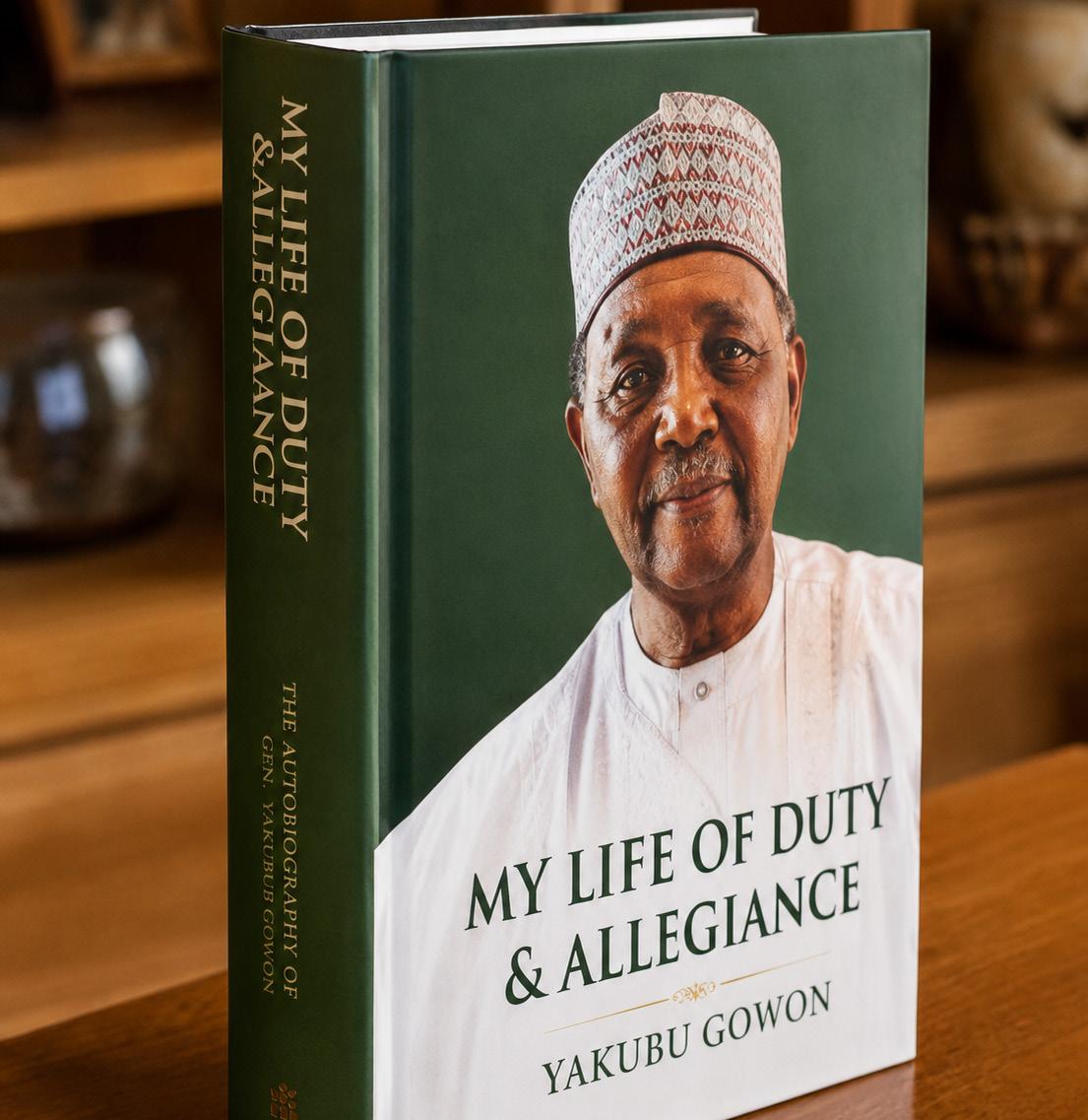
THE history of nations is often written by the victors. But when that history is built upon the shifting sands of silence, orchestrated starvation and the systematic erasure of mass suffering, it ceases to be history and becomes an affront to human conscience.
General Yakubu Gowon, the man who presided over the most tragic epoch in Nigeria’s post-independence history, has finally emerged from decades of guarded silence to publish his account of the Nigerian Civil War.
Rather than offering reconciliation or clarity, the book reads as a troubling exercise in self-preservation. In attempting to sanitise his role in the destruction of the Igbo heartland and the broader collapse of trust within the Nigerian federation, Gowon revives painful questions that many survivors and historians believe were never adequately addressed.
His repeated invocation of the phrase ‘No Victor, No Vanquished’ remains deeply controversial for those who view the war not simply as a military conflict, but as a humanitarian catastrophe that left millions dead, displaced and traumatised.
To understand the controversy surrounding Gowon’s memoir, one must return to the realities of the 1967–1970 conflict. The Civil War was not merely a battlefield confrontation between two armies; it was also marked by widespread starvation, civilian suffering and the collapse of humanitarian protections.
Critics of the wartime government have long argued that starvation became a deliberate strategy, contributing to the deaths of millions of civilians, many of them children. Gowon’s latest account, however, appears to many readers as an attempt to soften or reinterpret those realities.
For decades, international accountability for the conflict remained elusive. The global political climate of the time, shaped by Cold War calculations and post-colonial alliances, meant there was little appetite among major powers to confront the conduct of the Nigerian state during the war.
To many survivors, the memoir therefore feels less like reflection and more like revisionism — an effort to reshape public memory while distancing its author from the devastating human consequences of the conflict.
Central to Gowon’s argument is the long-contested claim that the January 1966 coup was fundamentally an ‘Igbo coup’. That interpretation has remained one of the most divisive narratives in Nigeria’s political history.
Yet historians and even several former military figures, including Ibrahim Babangida, have acknowledged that the coup involved a complex mix of political grievances, military frustrations and anti-corruption sentiments that transcended ethnicity.
Critics argue that reducing the event to an ethnic conspiracy helped legitimise retaliatory violence against
Igbos and hardened regional divisions that continue to shape Nigerian politics today.
Gowon’s insistence on returning to that narrative has therefore reignited debate over whether Nigeria has ever honestly confronted the roots of the Civil War or the ethnic suspicions that fuelled it.
The memoir also revives scrutiny of Gowon’s leadership during Nigeria’s early oil boom years. Elevated to power at just 29, Gowon governed during a period of unprecedented petroleum revenues.
For critics, however, that wealth was not matched by a transformative national vision. While countries such as Singapore under Lee Kuan Yew invested heavily in education, industrialisation and technical capacity, Nigeria’s development model under Gowon was often criticised as overly focused on prestige projects and centralised state expansion.
Gowon himself once remarked that Nigeria’s problem was not money, but how to spend it. That statement has since become symbolic of what many analysts regard as a squandered era — a moment when enormous national wealth failed to produce durable institutions or broad-based human development.
Another issue shaping reactions to the book is timing. For years, Gowon remained largely silent while many of the central actors of the war, including former Biafran leader Chukwuemeka Odumegwu Ojukwu, were still alive.
Some critics argue that publishing such an account long after the deaths of key political rivals limits the possibility of meaningful rebuttal or historical engagement.
To them, the memoir represents not closure, but an attempt to define history from a position protected by time, age and the fading memories of a generation that lived through the conflict.
More than five decades after the war ended, Nigeria continues to wrestle with unresolved questions of identity, justice and national cohesion.
Violence, insecurity and deep regional mistrust remain embedded in the country’s political landscape. For many Nigerians, especially in the South-East, the wounds of the Civil War were never fully healed because accountability, truth-telling and reconciliation were never comprehensively pursued.
Gowon’s memoir was perhaps intended to shape how history remembers him. Instead, it has reopened difficult conversations about responsibility, memory and the unfinished business of national healing.
History, after all, is not shaped solely by official narratives or published memoirs. It also lives in collective memory — in the stories of survivors, in communities marked by loss, and in a nation still struggling to reconcile with one of the darkest chapters of its past. AB
Mounira Chaieb reviews a film that honours the original text while
bringing a modern take on imperialism and race
L’Etranger (2025), directed by Francois Ozon.
FRANCOIS Ozon’s cinematic version of French Algerian Albert Camus’ 1942 novella, L’Etranger, remains true to the original, albeit with a subtle twist.
The erasure of Algerian identity in Camus’ narrative, in which a French man murders a nameless Algerian, has been a central point of critical discussion for a very long time.
Today, it is impossible to think of Camus’ book without acknowledging a 2013 fiction written as a critical response, The Meursault Investigation by Algerian novelist Kamel Daoud.
Daoud restores a personal history and a name, Moussa, to the young man shot dead by Camus’ anti-hero Meursault, similarly restoring the missing dimension of Algerian identity. Ozon’s film very much comes across as made in the wake of Daoud’s novel.
That is evident from the initial framing of the story through an elegant black-and-white newsreel presenting Algiers as a “splendid modern city” that is predominantly French – until we glimpse a wall bearing the graffiti of the Algerian Liberation Front.
Ozon’s stark, compelling film chronicles Camus’ existential antihero amid the sweltering, classdivided world of colonial Algeria. In 1938 Algiers, Meursault, an emotionally detached office worker, finds his indifference to be his hallmark and his downfall.
was because of the sun’), he says of the cause of his crime when questioned by the judge. The Algerian climate is evident from the start and Meursault, a white European man, is mocked by young Algerians as he walks through the countryside to his mother’s nursing home – for them a ridiculous figure in his heavy, formal clothes.
After his mum’s funeral, and back in Algiers, he pursues
He attends his mother’s funeral without any visible grief, resumes his routine, begins a casual relationship and drifts into the orbit of his violent neighbour. But when a killing occurs on a sun-drenched beach, the act itself matters less than Meursault’s refusal to perform the expected emotions that society not only expects but also demands.
The main character, Meursault, is a Frenchman on whom North Africa weighs too heavily. ‘C’etait a cause du soleil’ (‘It
a relationship with the beautiful Marie. They go swimming together and see a comedy movie. These are apparently unbecomingly frivolous activities for someone who has just lost his mother and held against him at his trial.
We see his acquaintance with a cantankerous old neighbour, Salamano, who beats his dog, and with the seedy Raymond,

also a neighbour who is frequently called a pimp, who beats his girlfriend. Meursault is unmoved by these equivalent cruelties.
The odious Raymond’s girlfriend is an Algerian woman, who had long been abused and exploited by him, though Meursault finds himself too apathetic to resist being drawn into Raymond’s orbit.
When the Algerian woman’s vengeful brother and his friend follow Raymond to the beach one boiling-hot day, Meursault deliberately takes the gun from Raymond, walks to the beach where he encounters the brother alone on the seashore. Meursault

scrutinises the man as if to acknowledge him and shoots him not once but four times.
In the novel, the nameless victim is simply “the Arab” – that is, the other, the stranger whose own alienation is of course more burdensome than Meursault’s. The sister is anonymous too, but the movie gives them both names, Moussa and Djemila, and invents some dialogue between Djemila and Marie about the trial’s racial injustice.
But, as in the book, the victim is not named in court, and neither Djemila nor the second Algerian man was called as a witness, despite their obvious relevance. And knowing that Meursault had killed someone, Marie still wants to marry him because as far as she is concerned, the victim was a nobody.
Ozon retains Meursault’s inability or refusal to explain, and to show any interest in the Algerian people, or anyone or anything else. He emerges from this movie as the logical or illogical extension of the educated class; he is the violent endpoint of imperialism, whose administrators do not, in their cynical hearts, feel troubled with any great compassion.
The fact that Algerians were not acknowledged was a deliberate choice by Camus to show French indifference towards their own colonial presence and the fact that colonisation itself is absurd. Even for the judge, the fact that Meursault killed an “Arab” is not the issue. The court is more interested in his reasons for doing so.
The film seems however to acknowledge that the whole conflict between the men started because Raymond was beating Djemila and her brother was defending her – which shows principles of honour and family love; all of the things that make up a person and a life. Meursault, on the other hand, is indifferent to his own mother's death, her elderly fiancé falling over near him and he did not try to help him.
After his arrest, Meursault gazes out from a police van and sees, as if for the first time, the Arab world that had always surrounded him. Ozon, therefore, reintroduces Algerians and their country as a dominant presence. His reading of L’Etranger makes it clear that the invisibility of Algeria in Camus’ novel, which Meursault narrates, stands for the wilful blindness that embodies the colonial mindset because for France, ‘L’Algerie est Francaise’ (“Algeria is French.”)
If Camus’ L’Etranger can be said to have participated in the bigotry by simply calling the dead man “the Arab” and Algerians ‘Les Indigenes’ (‘the Indigenous population’), the French authorities, after more than 60 years of Algerian independence, had to be aware of pacifying Algerians.
The film seems to have done some justice to Algeria when it ends with Djemila visiting her brother’s grave – which had his name – and crying. This shows Algerians to have feelings, humanity.
It remains to be seen how far France is willing to go to rectify its ugly past in its former
Mounira Chaieb is a Tunisian journalist and writer based in London.
As Botswana mourns former president Festus Gontebanye Mogae, Baboloki Semele reflects on the statesman’s lasting influence on his life and career, while examining the leadership legacy that helped shape modern Botswana and transformed countless lives across the nation
ON May 16, 2026, Botswana laid to rest its third president, Dr Festus Gontebanye Mogae — a statesman, economist, diplomat and public servant whose calm demeanour often concealed the depth of his influence.
To many Batswana, Mogae will be remembered as the disciplined economist who helped steer Botswana through economic uncertainty, safeguarded fiscal stability and confronted the HIV/AIDS crisis with uncommon courage. To me, however, he was more than a former head of state. He was one of the people God used to quietly open doors that would later shape my career, worldview and destiny.
There are leaders who govern nations. There are others who unknowingly shape individual lives. President Mogae did both.
My first encounter with President Mogae came when I was a Form 3 student at Oodima Community Junior Secondary School during the commissioning of the Mmamashia Water Treatment Plant.
Like many young students, I watched in awe as the presidential motorcade arrived. We waved flags and cheered as the man we knew from newspapers, radio broadcasts and television stepped into our community.
Then came a moment I have never forgotten.
President Mogae walked towards us and shook our hands.
To many, it may have been a routine gesture. To me, it felt as though history itself had reached down and touched a young boy from Oodi. I returned home overwhelmed with excitement, carrying the memory of that brief encounter for days.
At the time, I could never have imagined that our paths would cross again in a way that would profoundly influence my future.
Years later, I joined Radio Botswana as a young reporter, contributing to programmes such as Taediso Ya Dikgang and Around the World Today. Like many journalists starting out, I was driven by passion, curiosity and a determination to tell meaningful stories.
One day, while living in Mogoditshane, I received a message that a vehicle had been sent to collect me. The request came through Rre Nkoloi Nkoloi, who had served as Private Secretary to President Mogae.
Soon afterwards, I found myself at the Office of the President.
There, I learned that I would be joining Botswana's delegation to cover the Fourth Sexual Health and Rights Conference in Addis Ababa, Ethiopia, in February 2010.
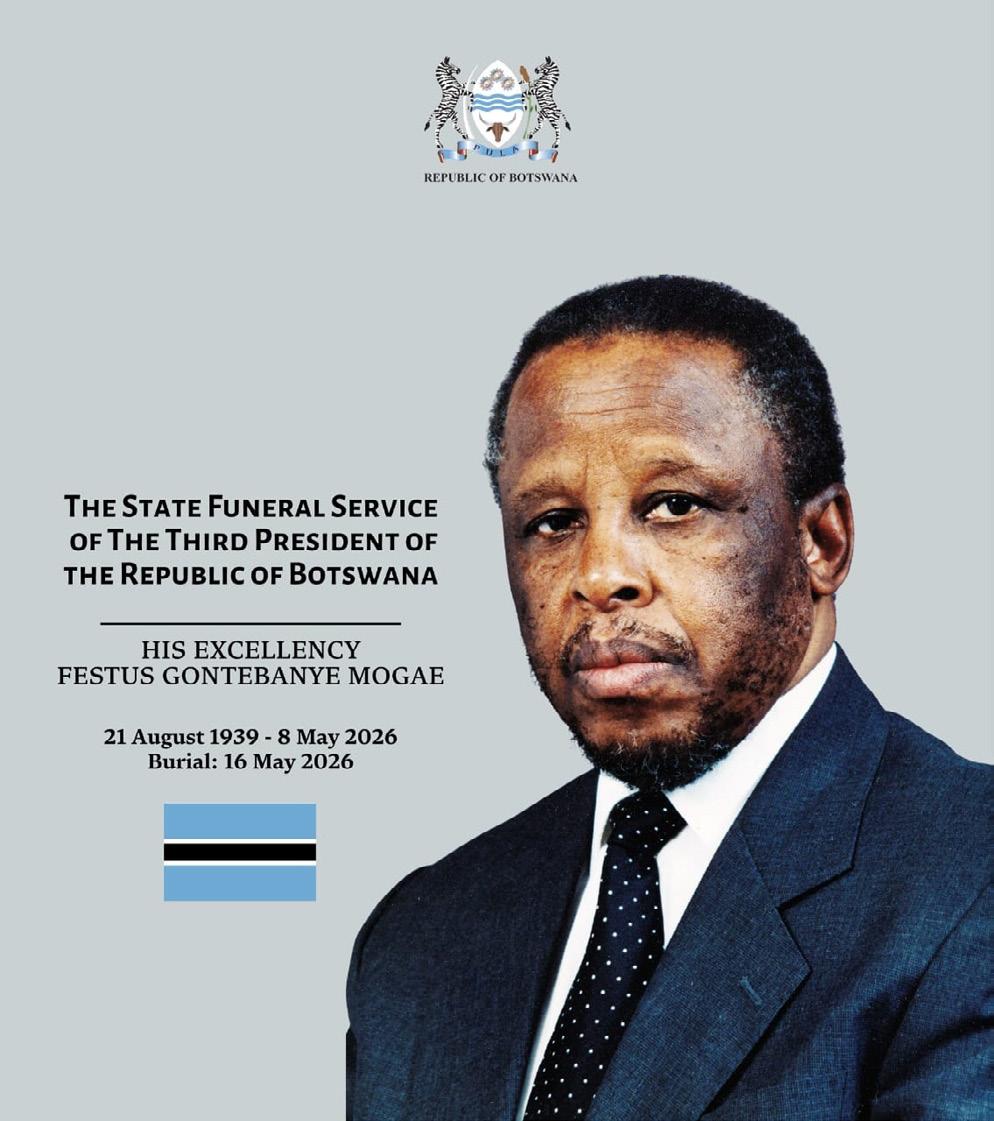
For a young reporter, it was a life-changing opportunity.
It was my first major international assignment and my first real exposure to continental diplomacy, multilateral engagement and international reporting. More importantly, it was an expression of trust.
Someone believed that a young journalist could represent Botswana beyond its borders.
The experience expanded my horizons in ways I could never have anticipated. It opened my eyes to the wider African continent and introduced me to conversations, institutions and networks that would influence my professional development for years to come.
Looking back, I realise that President Mogae may never have fully appreciated the impact that opportunity had on my life. Yet through a single decision, he helped broaden the ambitions of a young reporter and gave him confidence to think beyond his immediate surroundings.
The funeral procession carrying the body of former Botswana president Festus Gontebanye Mogae passes beneath the iconic Tsamayasele and Pula arches in Gaborone on May 16, 2026, as the nation bids farewell to one of its most respected statesmen and architects of Botswana's economic transformation
I later travelled with President Mogae again during official engagements, including a visit to Namibia linked to discussions surrounding the Walvis Bay Dry Port Agreement.
It was during such assignments that I gained a deeper appreciation for the qualities that defined his leadership.
Mogae approached governance much like an economist approaches risk: carefully, methodically and without unnecessary haste.
When concerns emerged regarding aspects of the proposed agreement, he resisted pressure to proceed simply because it appeared politically expedient. Instead, he insisted on examining the details thoroughly before making a commitment.
That cautious approach often led critics to describe him as overly conservative. Others jokingly called him stingy.
Yet what many interpreted as excessive caution was, in reality, a deeply held commitment to sustainability, fiscal discipline and long-term planning.
Mogae belonged to a generation of leaders who believed that public resources were sacred and that governments had a duty to think beyond immediate political gains.
His leadership style was rarely dramatic. He preferred quiet deliberation to public spectacle.
That restraint became one of his defining strengths.
Among President Mogae's most enduring achievements was his response to the HIV/AIDS epidemic.
At a time when stigma, denial and fear surrounded the disease across much of Africa, Mogae chose a different path.
He spoke openly about the crisis and mobilised national resources to confront it. Under his leadership, Botswana expanded access to treatment and strengthened its public health response during one of the most difficult periods in the country's history.
The impact of those decisions is still visible today.
One of the most moving tributes following his passing came from Bakang Itumeleng Garebatho, who publicly acknowledged that he is alive in part because of the policies championed under Mogae's administration.
His words captured what statistics alone cannot measure: the thousands of lives preserved through courageous leadership.
The true test of leadership is not the number of speeches delivered or titles accumulated. It is the number of lives improved, protected and transformed.
In that regard, Mogae's legacy remains extraordinary.
Botswana's mineral wealth under his leadership became a tool for national development rather than conflict. Diamond revenues helped finance hospitals, schools, infrastructure and life-saving healthcare programmes.
That legacy stands as one of the strongest examples of how prudent governance can convert natural resources into human development.
Tributes poured in from across Africa following Mogae's passing.
Former South African President Thabo Mbeki described him as 'an unassuming but selfless, brave and principled leader who knew what it meant to serve the peoples of Africa'.
Mbeki praised Botswana's democratic traditions and highlighted Mogae's role in strengthening regional cooperation and continental development.
President Duma Boko similarly described him as an uncommon leader whose respect for opposing views strengthened democratic discourse.
Former President Ian Khama reflected on Mogae's belief in dialogue, compromise and national unity. He credited him with helping guide Botswana through a period of significant economic and infrastructure development while maintaining fiscal prudence.
Across political divides and national boundaries, a common theme emerged.
Those who knew him remembered a leader who listened carefully, spoke thoughtfully and carried public office with humility.
They remembered a man who understood that leadership was not about personal glory but public service.
As I reflect on President Mogae's passing, I am reminded that the most profound influence leaders have is often invisible.
Policies matter. Institutions matter. Economic growth matters.
But sometimes a leader's greatest contribution lies in the opportunities they create for others.
From the schoolboy who once marvelled at a presidential handshake to the journalist who later travelled the continent because a president believed in giving young people a chance, I remain deeply grateful.
Thank you, Rre Mogae.
Thank you for the opportunities.
Thank you for the confidence you inspired.
Thank you for demonstrating that leadership can be principled, disciplined and humane.
Most of all, thank you for showing that true public service is measured not by power accumulated, but by lives touched.
May your soul rest in eternal peace.
And somewhere in eternity, perhaps 'Shauri Yako' is still playing softly in the background. AB
Semele is a Botswana-based communications professional and former journalist who covered presidential affairs and international diplomacy