


SOMETHING fundamental is shifting in the global order — and for once, Africa is not reacting to it. It is helping to define it.
Two developments in this issue capture that transition with unusual clarity. Ghana’s intervention at the United Nations on reparations, and the Caribbean’s accelerating pivot towards Africa, are not isolated events. They are signals of a broader recalibration — one in which Africa is increasingly shaping the terms of engagement in global politics, economics and historical accountability.
From recognition to power
Ghana’s UN victory, in particular, marks a turning point that should not be underestimated. On the surface, the resolution recognising slavery as the gravest crime against humanity carries no binding legal force. But to view it through a purely legal lens is to miss its real significance.
What Ghana achieved was not procedural. It was narrative.
For decades, reparations for the transatlantic slave trade existed in a kind of diplomatic limbo — acknowledged, debated, but ultimately contained. By forcing a vote and securing overwhelming backing, Ghana has moved the issue from the margins to the centre of global politics. In doing so, it has exposed a deeper fault line: between a Global South demanding historical accountability and a Global North wary of where that accountability might lead.
This is where the real power of the moment lies.
Recognition is not neutral. Once the international system acknowledges a truth, it creates pressure — political, moral and eventually financial. The unease among Western governments is therefore not surprising. It reflects an understanding that what begins as recognition can evolve into obligation.
Publisher
Publisher Jon Offei-Ansah
Editor
Desmond Davies
Contributing
Editors
Prof. Toyin Falola
Tikum Mbah Azonga
Prof. Ojo Emmanuel Ademola (Technology)
Valerie Msoka (Special Projects) Amanda Wilson (Caribbean)
Contributors
Justice Lee Adoboe
Chief Chuks Iloegbunam
Madalisto Kateta
Zachary Ochieng Olu Ojewale
Oladipo Okubanjo
Corinne Soar
Kennedy Olilo Gorata Chepete
Africa shifts from respondent to agenda-setter
Jon Offei-Ansah
But there is another, more important dimension to Ghana’s move. It represents a shift in agency.
Desmond Davies Editor
IAnd it is not happening in isolation.
Designer
For much of the post-colonial period, Africa has been positioned as a respondent — reacting to global agendas shaped elsewhere. What Ghana demonstrated is that this dynamic is changing. It built a coalition, framed the debate and forced a decision. That is not diplomacy as usual. That is agendasetting.
n 2018, six of the 10 fastest-growing economies in the world were in Africa, according to the World Bank, with Ghana leading the pack. With GDP growth for the continent projected to accelerate to four per cent in 2019 and 4.1 per cent in 2020, Africa’s economic growth story continues apace. Meanwhile, the World Bank’s 2019 Doing Business Index reveals that five of the 10 most-improved countries are in Africa, and one-third of all reforms recorded globally were in sub-Saharan Africa.
Deputy Editor
Angela Cobbinah
Contributing Editor
Simon Blemadzie
Country Representatives
Across the Atlantic, Caribbean leaders are drawing similar conclusions about the changing global landscape. Faced with rising protectionism, geopolitical fragmentation and economic vulnerability, they are turning towards Africa not simply out of sentiment, but out of strategic necessity.
A new South–South axis emerges
What makes the story more impressive and heartening is that the growth – projected to be broad-based – is being achieved in a challenging global environment, bucking the trend.
Stephen Williams
Director, Special Projects
Michael Orji
Contributors
The significance of this shift lies in what it represents: the slow but deliberate construction of a South–South axis that is less dependent on traditional Western centres of power.
Justice Lee Adoboe
South Africa
Edward Walter Byerley
Top Dog Media, 5 Ascot Knights
In the Cover Story of this edition, Dr. Hippolyte Fofack, Chief Economist at the African Export-Import Bank (Afreximbank), analyses the factors underpinning this performance. Two factors, in my opinion, stand out in Dr. Hippolyte’s analysis: trade between Africa and China and the intra-African cross-border investment and infrastructure development.
Chuks Iloegbunam
Joseph Kayira
For too long, the Africa–Caribbean relationship has been defined by shared history but limited economic substance. That is now changing. What was once framed as cultural reconnection is becoming institutional and financial alignment — driven by trade, investment and policy coordination.
Zachary Ochieng
Olu Ojewale
Oladipo Okubanjo
47 Grand National Boulevard Royal Ascot, Milnerton 7441, South Africa
Tel: +27 (0) 21 555 0096
Cell: +27 (0) 81 331 4887 Email: ed@topdog-media.net
Much has been said and written about China’s ever-deepening economic foray into Africa, especially by Western analysts and commentators who have been sounding alarm bells about re-colonisation of Africa, this time by the Chinese. But empirical evidence paints a different picture.
Corinne Soar
The role of Afreximbank in this transition is particularly telling. Its multi-billion-dollar commitments to Caribbean economies are not symbolic gestures; they are instruments of structural change. They provide the financial architecture needed to translate political intent into economic reality.
Designer
Gloria Ansah
Ghana
Power is being renegotiated
Despite the decelerating global growth environment, trade between Africa and China increased by 14.5 per cent in the first three quarters of 2018, surpassing the growth rate of world trade (11.6 per cent), reflecting the deepening economic dependency between the two major trading partners.
Yet both developments — Ghana’s push on reparations and the Caribbean’s pivot to Africa — point to the same underlying truth: power is being renegotiated.
Country Representatives
South Africa
Not just economic power, but narrative power. The power to define what justice means. The power to decide whose history matters. The power to shape future alliances.
Empirical evidence shows that China’s domestic investment has become highly linked with economic expansion in Africa. A one percentage point increase in China’s domestic investment growth is associated with an average of 0.6 percentage point increase in overall African exports. And, the expected economic development and trade impact of expanding Chinese investment on resource-rich African countries, especially oil-exporting countries, is even more important.
Edward Walter Byerley
What is emerging is not a clean break from the existing global order, but a gradual rebalancing. African states are no longer content to operate within frameworks designed elsewhere. They are beginning to challenge those frameworks — and, in some cases, redesign them.
Top Dog Media, 5 Ascot Knights 47 Grand National Boulevard Royal Ascot, Milnerton 7441, South Africa
Nana Asiama Bekoe Kingdom Concept Co. Tel: +233 243 393 943 / +233 303 967 470 kingsconceptsltd@gmail.com
Nigeria
Opportunity — and responsibility
This shift carries both opportunity and responsibility.
The resilience of African economies can also be attributed to growing intra-African cross-border investment and infrastructure development. A combination of the two factors is accelerating the process of structural transformation in a continent where industrial output and services account for a growing share of GDP. African corporations and industrialists which are expanding their industrial footprint across Africa and globally are leading the diversification from agriculture into higher value goods in manufacturing and service sectors. These industrial champions are carrying out transcontinental operations, with investment holdings around the globe, with a strong presence in Europe and Pacific Asia, together account for more than 75 per cent of their combined activities outside Africa.
Tel: +27 (0) 21 555 0096 Cell: +27 (0) 81 331 4887 Email: ed@topdog-media.net
Ghana
Nana Asiama Bekoe
Opportunity, because Africa’s growing assertiveness opens space for more equitable partnerships, more diversified trade and a stronger voice in global governance. Responsibility, because agenda-setting requires coherence, coordination and long-term vision. The risk of fragmentation — highlighted even within debates on critical minerals and investment — remains real.
Kingdom Concept Co. Tel: +233 243 393 943 / +233 303 967 470 kingsconceptsltd@gmail.com
Nigeria
David Chukwuji 68, Femi Killa Street Ago Palace Way, Okota, Isolo, Lagos, Nigeria Tel: + 234 8039281669
Kenya Patrick Mwangi
But the direction of travel is clear.
A survey of 30 leading emerging African corporations with global footprints and combined revenue of more than $118 billion shows that they are active in several industries, including manufacturing (e.g., Dangote Industries), basic materials, telecommunications (e.g., Econet, Safaricom), finance (e.g., Ecobank) and oil and gas. In addition to mitigating risks highly correlated with African economies, these emerging African global corporations are accelerating the diversification of sources of growth and reducing the exposure of countries to adverse commodity terms of trade.
Taiwo Adedoyin MV Noble, Press House, 3rd Floor 27 Acme Road, Ogba, Ikeja, Lagos Tel: +234 806 291 7100 taiadedoyin52@gmail.com
Africa is no longer simply the site of global competition. It is becoming an actor within it — shaping conversations on justice, redefining economic relationships and building new alliances that reflect its own interests.
Kenya
Aquarius Media Ltd, PO Box 10668-11000 Nairobi, Kenya
Tel: 0720 391 546/0773 35 41
Email: mwangi@aquariusmedia.co.ke
The question is no longer whether Africa will have a seat at the table. It is what it chooses to do with it.
This makes me very bullish about Africa!

Naima Farah Room 22, 2nd Floor West Wing Royal Square, Ngong Road, Nairobi Tel: +254 729 381 561 naimafarah_m@yahoo.com
Africa Briefing Ltd
2 Redruth Close, London N22 8RN United Kingdom Tel: +44 (0) 208 888 6693 publisher@africabriefing.org
©Africa Briefing Ltd
2 Redruth Close, London N22 8RN United Kingdom
Tel: +44 (0) 208 888 6693 publisher@africabriefing.org
Africa’s financing turning point
In search of that elusive African agency
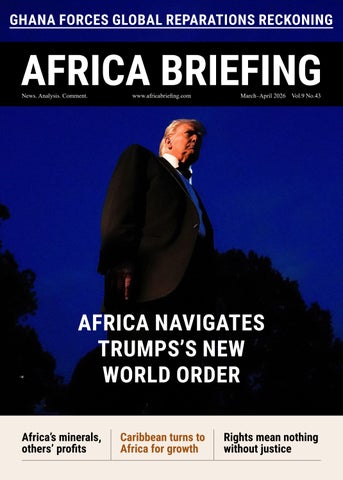
Africa in Trump’s new world order
The continent has the capacity to write its future in global politics collectively. and if it chooses to do so, its relations with the US will ultimately reflect both American interests and Africa’s capability to act as a group, lead with purpose and shape the rules by which it is engaged, argues Christopher Isike
Critical US-Africa healthcare questions unanswered
For those countries that have already signed health deals with Washington, there are many details missing, and this is now an urgent need for them to understand what this means for their health sovereignty, writes Crystal Orderson
For victims, justice is not just about how many people are convicted or how long the sentence is; it is also about being believed, being safe, having access to information and, where possible, receiving some form of reparation, says Segun Jegede
Ghana’s UN victory is not symbolic — it marks a decisive shift in global power and accountability politics, writes Jon Offei-Ansah, as Africa asserts itself as a driver of justice rather than a subject of history
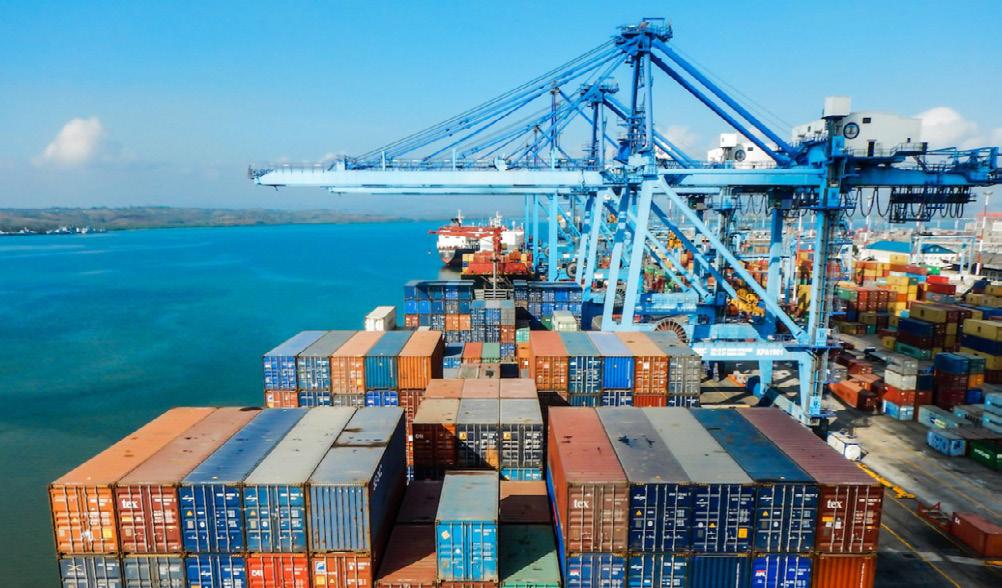
Middle East conflict is disrupting African exports and exposing structural weaknesses in trade systems across the continent, writes Jon Offei-Ansah
Technocracy is emerging as the missing link between governance, economic transformation and the future of work across the Global South, writes Ojo Emmanuel Ademola.
While coal may be a legacy fuel, it is also a necessary enabler of energy resilience and industrial competitiveness, reports Stephen Williams
Established in 2002, Shanghai Grand International Co., Ltd. offers a variety of shipping and transportation options via air, sea and ground. Our company is based in Shanghai, China, with branches across the nation. Ranging from customs declaration, warehouse storage, containers and consolidated cargo shipping we have a large array of options to meet your needs.
In addition to being approved and designated by the Ministry of Transportation of China as a First Class cargo service provider, we have also established excellent business relations with major
C.E.O President.
Mr, Felix Ji
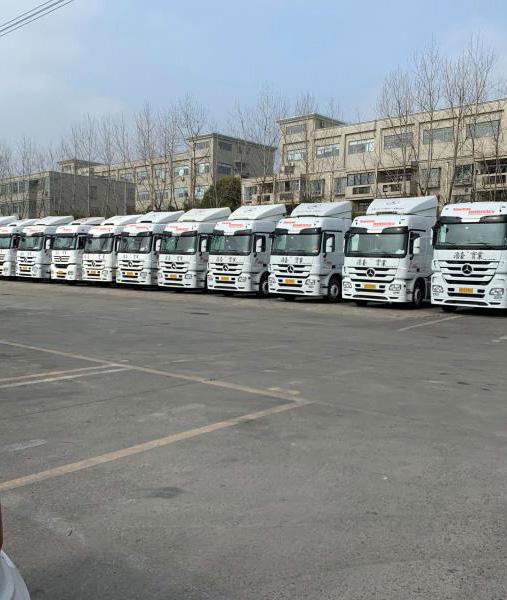
shipping companies including Maersk, CMA, ONE, SM line, and EMC over the past 15 years. In addition we have also built long term business relations with major airline cargo departments.
In order to expand our global operation, we are looking for international partnerships to work together in this industry. Should you ever import any goods from Peoples Republic of China please ask your exporter and shipper to contact us. We will provide our best service to you.
Room 814, 578 Tian Bao Lu, Shanghai, Peoples Republic of China
E-Mail: felix@grand-log.net
phone: 86-13501786280
THE launch of the Africa Infrastructure Financing Facility (AIFF) this February may come to be seen as one of the most consequential institutional developments in Africa’s modern economic history. Announced on the margins of the African Union Summit in Addis Ababa, the AIFF is more than another financing mechanism – it is a test of whether Africa can finally take control of its development trajectory in a rapidly shifting and increasingly transactional global order.
The AIFF represents a long-articulated ambition: to move Africa away from fragmented, externally driven financing systems toward a coordinated, Africa-led financial architecture. Established through cooperation between the AU Development Agency-New Partnership for Africa’s Development (AUDA-NEPAD) and the Alliance of African Multilateral Financial Institutions (AAMFI), the Facility plans to address a chronic bottleneck – project preparation – and to align capital with bankable, crossborder infrastructure opportunities under Agenda 2063.
But timing is everything. The AIFF emerges in a world shaped by geopolitical fragmentation, declining multilateralism and the resurgence of economic nationalism; trends strongly associated with the political legacy and possible return of Donald Trump. For Africa, this evolving landscape presents both urgency and opportunity.
Africa’s infrastructure financing gap – estimated at over $200 billion annually – is not new. Nor is the paradox highlighted by leaders such as Ghana’s President John Mahama: the continent is not capital-poor. With over $2.5 trillion in domestic capital pools, Africa’s challenge is one of coordination, risk perception and deployment.
The AIFF seeks to precisely solve this. By creating a structured platform that connects project preparation with financing pipelines, and by leveraging the combined balance sheets and expertise of African multilateral institutions, the Facility could reduce reliance on external actors who have historically mispriced African risk and
imposed conditionalities misaligned with local realities.
Equally important is its emphasis on scale and integration. Africa’s economic transformation hinges on cross-border infrastructure – energy corridors, transport networks, digital backbones – that can unlock the full potential of the African Continental Free Trade Area (AfCFTA). These are not projects that fragmented national approaches can deliver. They require continental coordination and long-term capital, both of which the AIFF aims to facilitate.
The concept of “financial sovereignty” has often been more rhetorical than operational. The AIFF attempts to change that by embedding African agency directly into the financing architecture.
In practical terms, this means three things. First, control over capital allocation. Rather than reacting to donor priorities or global market sentiment, African institutions can proactively identify and structure projects aligned with continental goals.
Second, better risk calibration. African financial institutions have a deeper understanding of local markets, political economies and development trajectories. Pooling this expertise could reduce the inflated risk premiums that make African projects unnecessarily expensive.
Third, strengthening institutions. By coordinating through AAMFI, the AIFF reinforces African multilateral institutions as credible, scalable actors capable of mobilising both public and private capital.
In a world where global financial flows are increasingly politicised, these capabilities are not just desirable; they are essential.
Any serious discussion of Africa’s economic future must grapple with the shifting dynamics of global power. A renewed era shaped by Donald Trump-style policies – marked by protectionism, reduced foreign aid and transactional diplomacy – would accelerate the decline of traditional development finance models.
For decades, Africa has relied on a mix of Western aid, multilateral lending and, more recently, Chinese infrastructure financing. But all three pillars are under strain.
Western development assistance is shrinking amid domestic pressures. China’s Belt and Road Initiative has become more cautious and selective. Multilateral institutions face legitimacy and funding challenges.
In this context, the AIFF is not just a development tool; it is a hedge against global uncertainty. It signals a recognition that Africa must increasingly rely on its own institutions and resources.
However, this shift also raises tough questions. Can African institutions mobilise capital at the scale required? Can they maintain governance standards and avoid political interference? And can they attract private investment without the backing of traditional global anchors?
While the AIFF is ambitious, it is not without risks. One concern is the capacity to undertake projects. Africa has no shortage of well-designed initiatives that falter at the implementation stage. The AIFF’s success will depend on its ability to move beyond coordination into tangible project delivery on time and at scale.
Another challenge is institutional fragmentation. Ironically, the very issue the AIFF seeks to address. Aligning multiple financial institutions, each with its own mandates, governance structures and risk appetites, is no small task.
If the AIFF is to succeed, it must focus on a few key priorities. First, build a pipeline of bankable projects. The Facility’s emphasis on project preparation is well-placed.
Too often, viable projects fail to attract financing because they are poorly structured or lack feasibility studies. Investing in early-stage preparation could unlock significant capital.
Second, deepen domestic capital markets. Africa’s pension funds, sovereign wealth funds and insurance pools represent an untapped resource. Creating regulatory frameworks and financial instruments that enable these funds to invest in infrastructure will be critical.
Third, leverage partnerships strategically. Financial sovereignty does not mean isolation. The AIFF should position itself as a credible partner for global investors, development banks and even non-traditional actors on terms that reflect African priorities.
Without strong leadership and clear accountability mechanisms, the Facility could become another layer of bureaucracy rather than a catalyst for action.
There is also the question of political will. Infrastructure projects often intersect with national interests, electoral cycles and regional rivalries. Sustained commitment from African governments will be essential to ensure that continental priorities are not undermined by short-term considerations.
Finally, market confidence remains critical. For the AIFF to attract private capital, it must demonstrate transparency, consistency and financial discipline. Any perception of politicisation or weak governance could deter investors and undermine its credibility.
Fourth, ensure governance and transparency. Credibility will be the Facility’s most valuable asset. Strong governance frameworks, independent oversight, and clear reporting standards will be essential to build trust among stakeholders. The launch of the AIFF marks a pivotal moment for Africa. It reflects a growing recognition that the continent’s development cannot be outsourced, and that financial sovereignty requires more than rhetoric. It requires institutions, coordination, and discipline.
In a world where traditional alliances are shifting and global systems are becoming more fragmented, Africa has an opportunity to redefine its economic future. The AIFF is not a silver bullet, but it is a step in the right direction.
The real test will not be in its launch, but in its execution. If it succeeds, the AIFF could become a cornerstone of a new African financial architecture; one capable of mobilising the continent’s vast resources to build the infrastructure, industries and economies of the future.
If it fails, it will join a lengthy list of missed opportunities.
AFRICA Week, organised by the African Leadership Centre at King’s College London this March, focused on Africa’s perennial struggle for agency: that is, to assert its power and autonomy, make its voice heard and shape its own destiny. The uncomfortable truth is that African agency has not simply been denied; it has often been negotiated away, diluted by external pressures and internal complicity.
Today, however, a shifting global order – marked by geopolitical rivalry, weakening multilateralism and the disruptive influence of Donald Trump’s brand of transactional politics – presents Africa with a rare and urgent opportunity. Disorder, paradoxically, can be fertile ground for agency.
The question is not whether Africa can assert itself, but whether it is prepared to do so. The continent’s limited agency is rooted in a complex interplay of structural and self-inflicted constraints.
Globally, Africa remains embedded in financial and institutional systems that reinforce dependency. Debt regimes, credit rating biases and conditional lending frameworks systematically disadvantage African economies. International institutions, designed to promote equity, have instead entrenched hierarchies that marginalise African voices.
At the same time, Africa’s complex internal disruptions have undermined its collective strength. Political fragmentation accentuated by sharp ethnic divisions, governance deficits and elite capture have weakened the capacity of African states to act cohesively. Agency cannot thrive where legitimacy is in disarray and coordination is absent.
Yet to attribute Africa’s predicament solely to external forces would be misleading. Too often, African leaders and institutions have aligned themselves with external interests at the expense of domestic priorities, perpetuating cycles of dependency. Citizens, too, have sometimes
Desmond Davies
been disengaged or constrained from holding leadership accountable. Agency is as much a product of internal resolve as it is of external conditions.
The current global disorder offers Africa a strategic opening. Trump-era disruptions – characterised by trade wars, illegal wars, scepticism toward multilateralism and a reorientation toward bilateral, interest-driven engagement – have weakened the traditional architecture of global governance. While this has introduced volatility, it has also diminished the dominance of established powers and created space for new actors to assert themselves.
Africa’s growing importance in global supply chains, particularly in critical minerals essential for the green transition, enhances its bargaining position. At the same time, expanding relationships with Global South partners, alongside a burgeoning domestic private capital base estimated in the trillions, provide alternative avenues for resourcing development.
This convergence of factors creates a pivotal moment. But opportunity alone does not translate into agency. It must be actively constructed.
The foundation of African agency lies in the articulation of clear, coherent and plural visions of transformation. Africa is not monolithic; its diversity necessitates multiple pathways to development. However, diversity need not preclude unity. A shared commitment to broad goals –economic sovereignty, technological advancement and social inclusion – can anchor collective action.
Strengthening continental institutions is critical. This requires political will to address non-tariff barriers, harmonise regulations and invest in cross-border infrastructure. Equally important is the ability to manage intra-African tensions, ensuring that regional powers do not dominate at the expense of smaller states.
Agency, in this context, means saying no when necessary, and having the capacity to enforce that decision.
A critical dimension of agency is financial
independence. Reliance on external aid and financing, constrains policy autonomy and exposes African states to shifting geopolitical priorities.
Mobilising domestic resources – through improved tax systems, capital markets and public-private partnerships –is therefore essential. Africans most put their money where their mouths are.
The continent’s significant private wealth offers an underused reservoir of investment. Channelling this into productive sectors requires regulatory reforms, risk mitigation mechanisms and credible governance frameworks. At the same time, partnerships with external actors must be redefined from dependency to mutuality. Africa should engage with global partners not as a passive recipient, but as an equal negotiating actor with clear interests and red lines.
In a knowledge-driven global economy, education is not merely a social good; it is strategic infrastructure. Aligning education systems with Africa’s development priorities – particularly in science, technology, and innovation – is essential for building long-term capacity.
Technological sovereignty is an increasingly important frontier of agency.
Control over digital infrastructure, data and innovation ecosystems will shape Africa’s future competitiveness. This does not imply isolationism, but rather a balanced approach that combines local innovation with strategic global collaboration.
Agency succeeds through leadership. Africa needs leaders who are not only visionary but also pragmatic; capable of navigating complexity, building coalitions and making difficult choices. This includes fostering a new generation of leaders across politics, business and civil society who are committed to the continent’s long-erm interests. The Yoweri Musevenis and Paul Biyas of this world have passed their sell-by dates.
Preparedness is equally important. In a multipolar world, Africa must develop the intellectual and institutional capacity to anticipate and respond to global shifts. This involves strengthening think tanks, investing in data and research and cultivating expertise in negotiation and diplomacy.
Trump’s disruption of the global order, while destabilising, underscores a broader trend toward fragmentation and competition. In such a world, power is less centralised, and opportunities for strategic manoeuvring increase. Africa can leverage this by diversifying its partnerships, playing competing powers against each other and asserting its priorities with greater confidence.
Africa’s youthful population is a significant asset in this regard. Across the continent, young people are driving innovation in technology, creative industries and social movements.
Harnessing this potential requires investment, inclusion and an enabling environment that rewards creativity and entrepreneurship. Young Africans must be given incentives to stay at home instead of risking their lives on dangerous and illegal immigration routes to Europe.
However, this requires coherence. Fragmented responses will only reinforce existing vulnerabilities. Collective action – based on shared interests and coordinated strategies – is the key to transforming external disorder into internal strength.
Africa’s quest for agency is not a distant aspiration; it is an immediate necessity. The current global context, for all its challenges, offers a window of opportunity that may not remain open indefinitely. Seizing it will require a fundamental shift from reactive to proactive engagement, from dependency to self-reliance and from fragmentation to unity.
Agency is not granted; it is built. It demands resources, vision, discipline and the willingness to act in the continent’s own interest. Africa has the assets, the talent and the strategic relevance to shape its destiny. The question is whether it will summon the resolve to do so.
The continent has the capacity to write its future in global politics collectively. and if it chooses to do so, its relations with the US will ultimately reflect both American interests and Africa’s capability to act as a group, lead with purpose and shape the rules by which it is engaged, argues Christopher Isike
ON Africa-US relations under Donald Trump, we have seen an emphasis on deals, immediate returns and issuebased cooperation rather than enduring partnerships. Several factors drive this trend:
• Geopolitical competition fuelled by the rise of China as Africa’s largest trading partner and infrastructure financier which has pushed the US toward reactive, often short-term responses.
• Domestic politics in the US where isolationist and protectionist currents have reduced appetite for large-scale foreign commitments and this aligns with Trump’s MAGA philosophy
• Access to Africa’s critical minerals (lithium, cobalt, graphite) now shapes much of US interest with no consideration for the green transition agenda.
• Statist security priorities that allow counterterrorism, maritime security and migration management to dominate the agenda, often at the expense of developmental cooperation. Consequently, African states are increasingly treated as issue-specific partners, valued for strategic assets or votes in multilateral forums rather than as co-creators of global governance norms. The question for me is what should Africa do in the light of these developments and the transactional and bilateral approach of the US towards the continent? What should be an Africa-US approach?
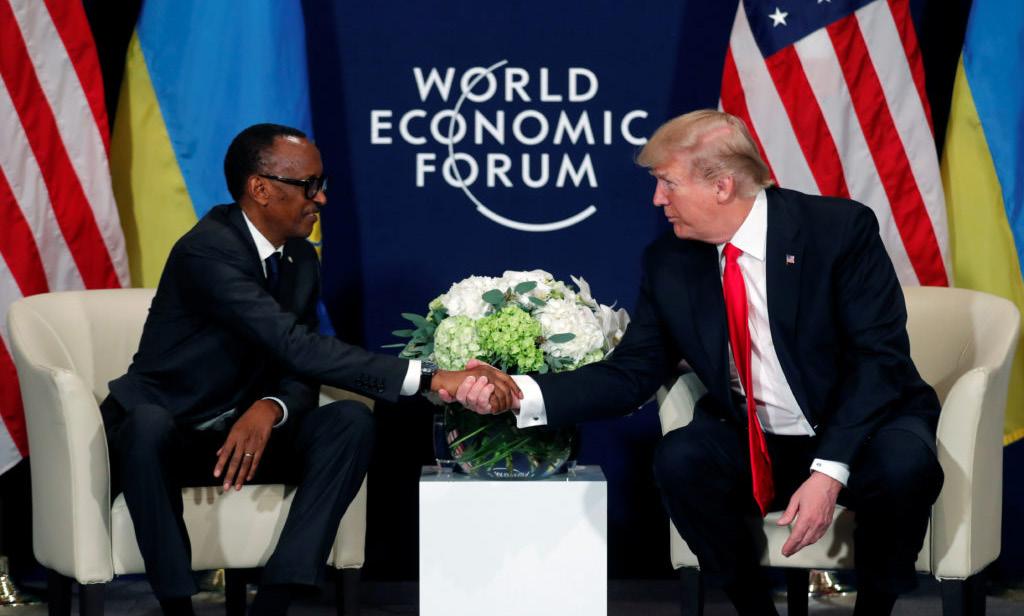
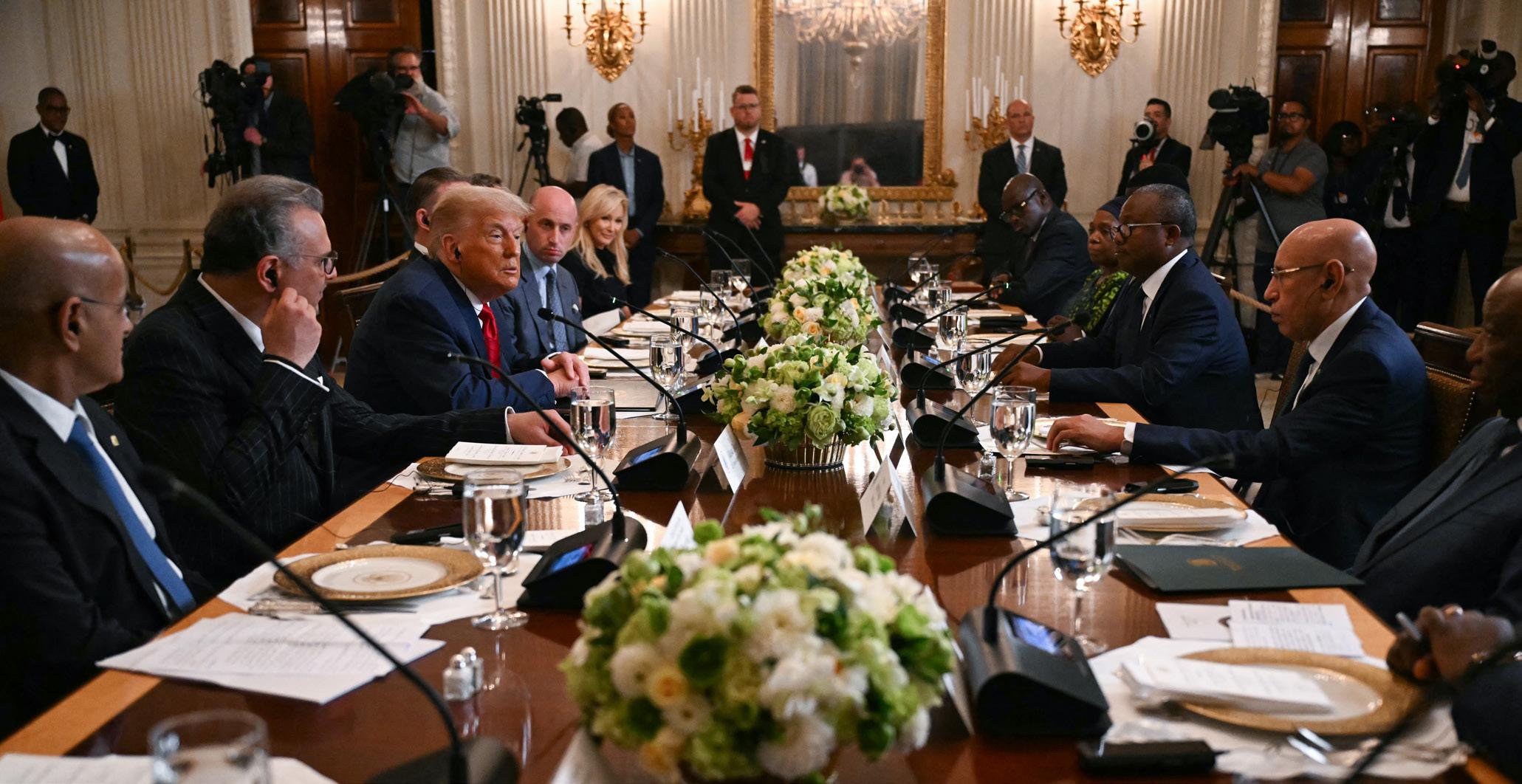
The future trajectory of Africa–US relations depend more on Africa’s ability to consolidate what can be termed group hegemonic leadership and less on shifts in US foreign policy towards Africa and the world. Too often, Africa–US relations are analysed through two limiting frames.
The first treats Africa as a passive arena - a site of geopolitical competition among great powers. The second reduces engagement to a series of bilateral relationships, each shaped by asymmetrical bargaining and short-term interests as we have increasingly seen under Trump, even though it has always been there but perhaps more subtle.
Both analytical frames, even though they have empirical basis, obscure a third, more consequential reality: Africa as a collective actor capable of exercising coordinated leadership. Impliedly, analysing Africa-US relations through an asymmetric prism of a global superpower engaging a continent portrayed as fragmented, reactive and structurally dependent is problematic, as it ignores an important analytical possibility which is also rooted in practice. It is already happening in the form of common African positions developed on the continent, but the challenge is enforcement of these positions.
This has become more instructive in the context of the world we live in today.
Applying it here as a framework of analysis allows us to reimagine Africa not as a passive arena of US engagement, but as a potential group hegemon capable of shaping the terms, norms and outcomes of its engagement with the US. It enables us to examine how coalitions, institutions and norm-setting capacities enable collective influence in global politics.
Group hegemonic leadership moves beyond the traditional state-centric conception of hegemony associated with singular great powers and individual state dominance in a region. Instead, it emphasises how coalitions of states can exercise influence through shared vision, institutional coherence, agenda-setting capacity and the provision of regional and global public goods.
In this sense, leadership does not require a single hegemon. It emerges when a group of states articulate shared priorities, mobilise institutional authority and provides public goods that others come to rely upon.
This is where our concept of group hegemonic leadership becomes useful. This was coined during research done by myself and the late Professor Maxi Schoeman in 2022 and was published in 2023 in African & Asian Studies.
It provides a more fitting model for understanding power dynamics in Africa, given the absence of a hegemon on the continent, at least in the liberal sense of the concept of hegemony
Group hegemonic leadership is grounded in three core pillars. First, it requires collective vision and normative alignment – a shared understanding of interests, priorities and desired global outcomes. Second, it depends on institutional capacity, particularly the ability of regional and continental bodies to coordinate policy, enforce commitments and speak authoritatively.
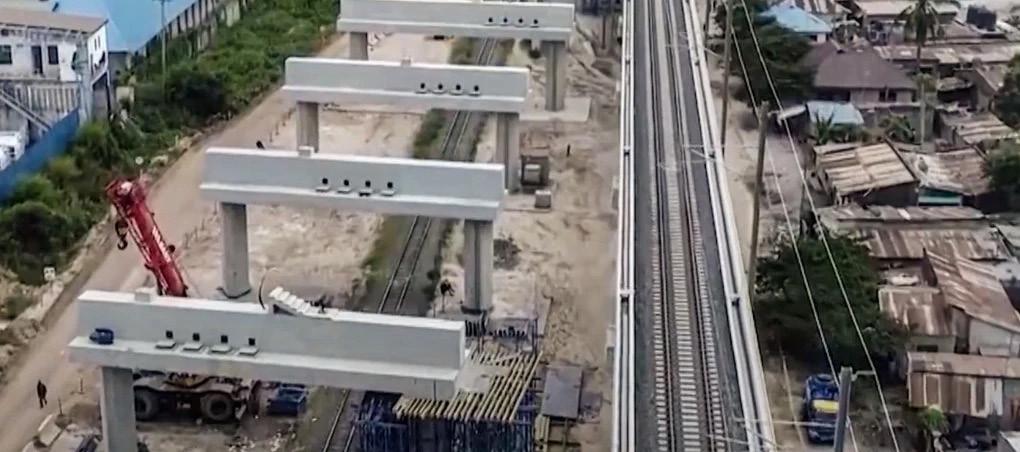
Third, it involves the provision of public goods, such as security, market integration, or regulatory stability that confer legitimacy and influence beyond individual states.
In this context, states with relative superior power advantages and capabilities within a region can cooperate to exert influence on their regional neighbours through a robust foreign policy that enjoys a measure of acceptance, legitimacy and recognition based on the ideational leadership they initiate and implement. Whether leader or follower-initiated, the pursuit of common goals accepted as such by all member states of the region, which are implemented by a group of leading states in the region, is the defining characteristic of group hegemonic leadership.
demonstrating aspects of group hegemonic leadership.
South Africa and Nigeria have been recognised globally for their leadership roles, though their regional dominance remains contested.
This can be applied and replicated with other regional leaders.
The continent’s future will be determined by whether it consolidates its capacity for group hegemonic leadership
Using the cases of South Africa and Nigeria, we argued that Africa already has candidates playing regional leadership roles. They are also already cooperating to provide hegemonic leadership that drives and achieves common African goals for the continent. We proposed this can be improved on and expanded to include other regional dominant actors such as Egypt (North Africa), Kenya (East Africa) and Rwanda (Central Africa).
Therefore, after examining the cases of Nigeria and South Africa, the paper proposed group hegemonic leadership as a model that better fits the African context, where sub-regional powers collaborate to provide regional governance and public goods. It highlighted the cooperative roles of South Africa and Nigeria in leading initiatives such as the formation of the African Union (AU) and global advocacy for Africa’s interests in institutions like the UN and International Monetary Fund (IMF).
However, neither South Africa nor Nigeria fits the strict realist definition of a regional hegemon due to limited hard power and internal weaknesses. South Africa and Nigeria, despite limitations, have led key cooperative initiatives in Africa,
South Africa and Nigeria have jointly advanced Africa’s interests in global forums, notably through their roles in pushing for reforms in the IMF and UN, including the Ezulwini Consensus of 2005, which called for two permanent African seats in the UN Security Council. They have also cooperated to condemn external discriminatory practices like vaccine apartheid during the Covid-19 pandemic and led calls for financial support for climate change adaptation at COP27. However, these cooperative efforts are sometimes strained by national interests, as seen when South Africa supported Laurent Gbagbo during the 2011 Ivorian crisis, against Nigeria's position.
Group hegemonic leadership, which entails cooperation among multiple regional actors like South Africa and Nigeria, offers a more suitable framework for African leadership than traditional single-state hegemony.
In the wider African context, institutions such as the AU, the African Continental Free Trade Area (AfCFTA) Secretariat and regional economic communities provide the structural foundations for group leadership. However, the extent to which these institutions translate numerical strength and moral authority into coordinated power remains uneven. Africa–US relations therefore offer a useful lens to assess whether collective leadership is emerging or whether engagement remains fragmented and transactional.
Where Africa has acted collectively, its bargaining position
has strengthened. Where fragmentation persists, engagement remains transactional and asymmetrical. This distinction is not theoretical –it is observable across key domains of Africa–US engagement.
In trade relations, Africa’s structural weakness lies not in market size, but in policy disaggregation. The US continues to engage African economies primarily through bilateral or subregional arrangements, reinforcing uneven development outcomes and limited industrial upgrading.
Yet initiatives such as the AfCFTA represent a latent source of collective leverage. When Africa negotiates as a fragmented set of exporters, it is price-taker. When it presents itself as an integrated market with harmonised rules, it becomes a rule-shaper.
The challenge is not external resistance, but internal coordination: aligning national industrial strategies with continental trade ambitions and translating AfCFTA from aspiration into enforceable economic governance.
Security cooperation reveals a similar pattern. Africa is central to US counterterrorism and stability agendas, yet African agency remains constrained by dependence on external financing, intelligence and logistics.
Where collective mechanisms – such as the African Union Peace and Security Architecture – have been empowered, Africa has demonstrated leadership in norm-setting, particularly around unconstitutional changes of government and conflict mediation. Where these mechanisms are bypassed or under-resourced, Africa becomes reactive, responding to externally defined threat perceptions. In sum, security partnerships that lack African agenda-setting capacity ultimately reproduce dependency rather than resilience.
Perhaps nowhere is Africa’s collective agency more urgently tested than in the governance of critical minerals and emerging technologies. Africa holds a significant share of the world’s reserves of cobalt, lithium, manganese and rare earths – resources
essential to energy transition and digital economies.
Yet without coordinated regulatory frameworks, valueaddition strategies and shared negotiating positions, Africa risks reproducing extractive relationships under new geopolitical branding. Here, collective leadership is not optional. Without it, Africa’s role in the green and digital transitions will be defined by external demand rather than internal development priorities.
Africa’s greatest underutilised asset is its normative and institutional presence. Through the AU, regional economic communities and growing representation in global forums, Africa possesses platforms capable of shaping norms whether they be on development finance, climate justice, digital sovereignty and global governance reform.
When Africa speaks collectively, it commands attention. When it speaks in dissonant voices, it is marginalised despite its numbers. The lesson is clear: collective voice precedes collective influence.
Africa has the capacity to write its future in global politics, but the critical question is whether Africa chooses to write it collectively. If it chooses to, Africa-US relations, now and in the future, will ultimately reflect both American interests and Africa’s capacity to act as a group, lead with purpose and shape the rules by which it is engaged.
Indeed, the continent’s future will be determined by whether Africa consolidates its capacity for group hegemonic leadership. This requires shared strategic vision across African institutions; coherence between national and continental policies; investment in institutional capacity, not only diplomatic engagement and a willingness to privilege long-term collective gains over short-term bilateral concessions.
To be clear, if Africa succeeds in this task, engagement with the US will shift from dependency to negotiation, from symbolism to substance and from asymmetry to partnership.
AB
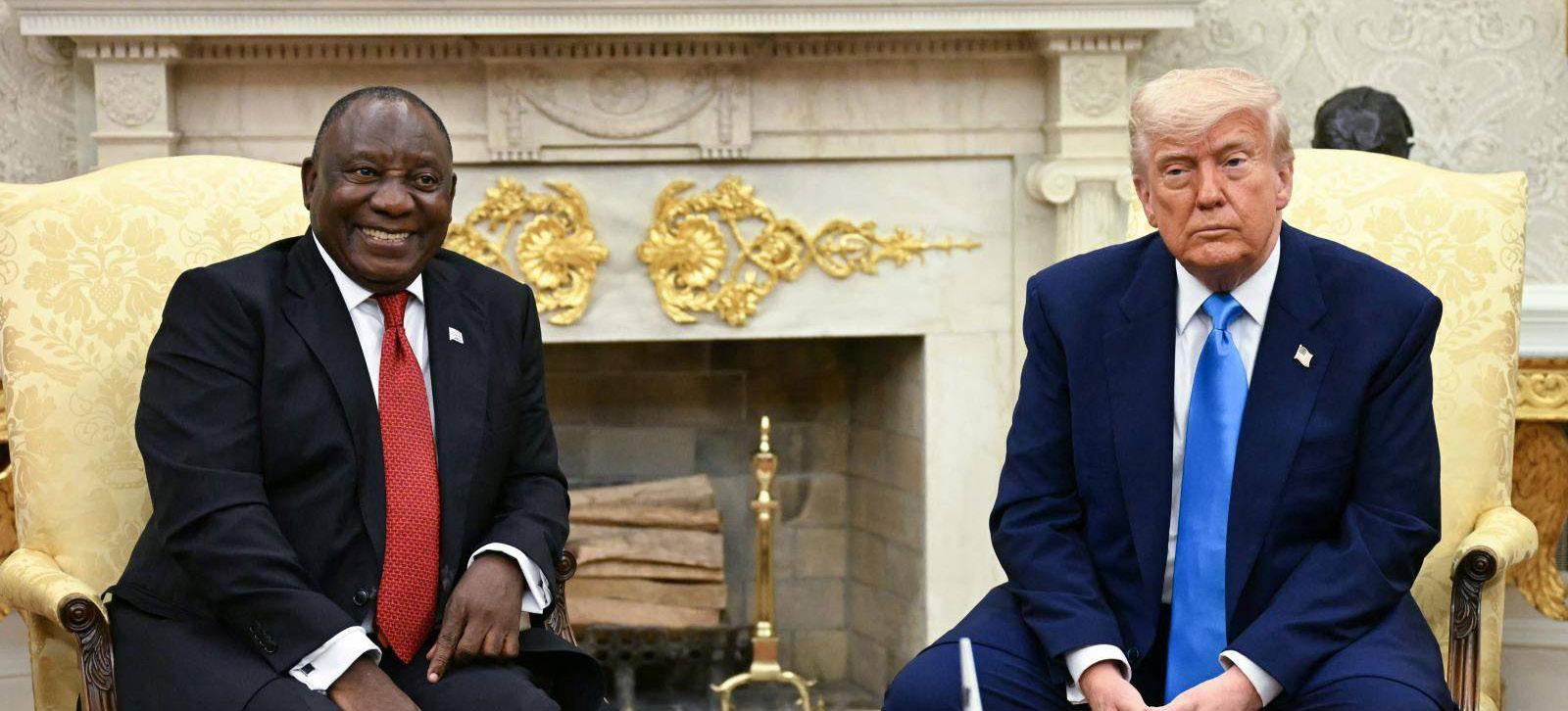
Christopher Isike is a Professor of African Politics and International Relations in the Department of political Sciences, University of Pretoria and Director of the African Centre for the Study of the United States, University of Pretoria (ACSUS-UP). The above was extracted from his presentation at the African Leadership Centre, King’s College London research seminar in January, titled: Africa-US Relations and Collective Agency: Now and the Future?
In today’s “Trumpian” world – where bilateralism overrides multilateralism and national interest overrides global cooperation – the logic of dependency becomes even more precarious, and Africa cannot therefore anchor its long-term development strategy on arrangements that must be periodically renewed by foreign legislatures, argues Isaac Yaw Asiedu
WHEN the US House of Representatives recently moved to extend the African Growth and Opportunity Act (AGOA) for another three years, several African leaders welcomed the decision as a positive sign of continued partnership. On the surface, preferential access to the world’s largest consumer market appears beneficial.
But beneath the celebration lies a deeper and more uncomfortable truth: Africa’s long reliance on externally granted trade preferences has fostered a structural dependency that no longer aligns with the realities of today’s fractured and increasingly transactional global order.
AGOA was launched in 2000 with the promise of transforming Africa’s export landscape. In practice, its benefits have been narrow, uneven and fragile.
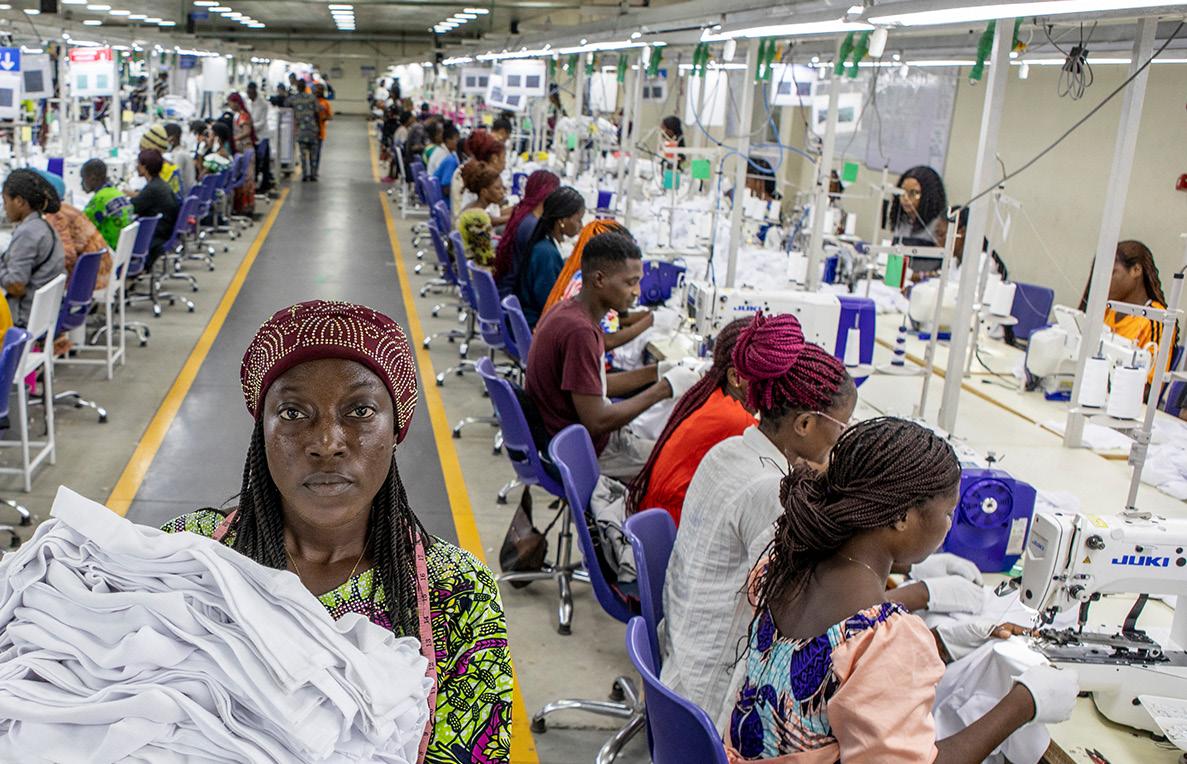
A handful of countries – primarily in textiles and apparel –captured most of the gains. Many others lacked the productive capacity, infrastructure, or institutional coherence to take meaningful advantage of the scheme. Even where gains occurred, they remained contingent on political approval in Washington, eligibility reviews and shifting geopolitical calculations.
The extension of AGOA should not be misunderstood as a strategic breakthrough. It is a reminder that Africa’s access to global markets remains conditional, revocable and externally controlled. In an era marked by trade wars, sanctions, industrial policy nationalism and geopolitical fragmentation, the assumption that preferential access will secure Africa’s economic future is increasingly illusory.
Trade preferences create the appearance of inclusion without guaranteeing structural transformation. They offer reduced tariffs but do not automatically build competitive industries. They provide entry into markets but do not ensure value addition at home.
Most importantly, they do not alter the fundamental structure of Africa’s trade profile, which remains dominated by raw materials and minimally processed commodities.
The vulnerability is clear: when access is granted externally,
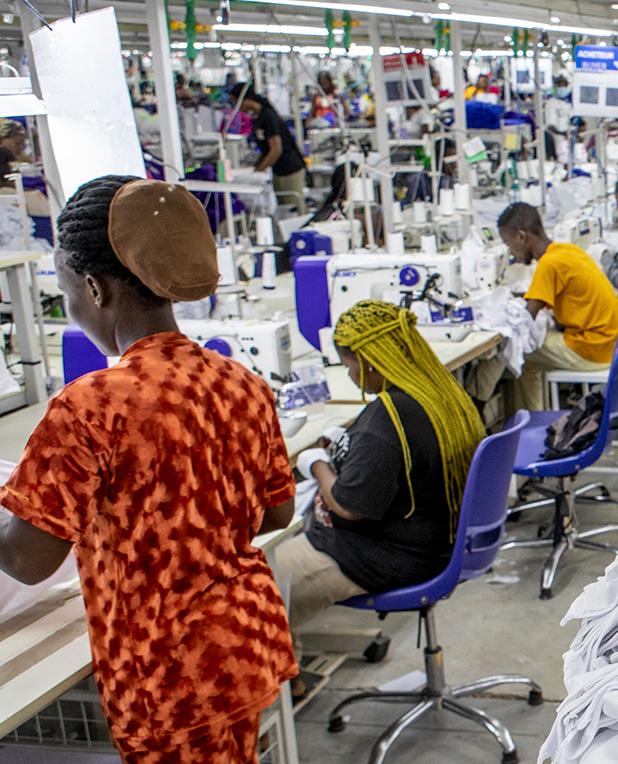
it can also be withdrawn externally. Political conditionalities, governance benchmarks and diplomatic disagreements can all affect eligibility. This dynamic reinforces asymmetry. Africa adjusts. The external partner decides.
In a “Trumpian” world order – where bilateralism overrides multilateralism and national interest overrides global cooperation – the logic of dependency becomes even more precarious. Africa cannot anchor its long-term development strategy on arrangements that must be periodically renewed by foreign legislatures.
A more troubling issue is not merely preferential access, but what Africa sends through that access. For decades, the continent has exported raw agricultural products, minerals and primary commodities while importing finished goods at far higher prices.
When asked why packaging and value addition do not occur in Ghana, explanations often cite quality control challenges or limited local investment.
The extension of AGOA is a reminder that Africa’s access to global markets remains conditional, revocable and externally controlled
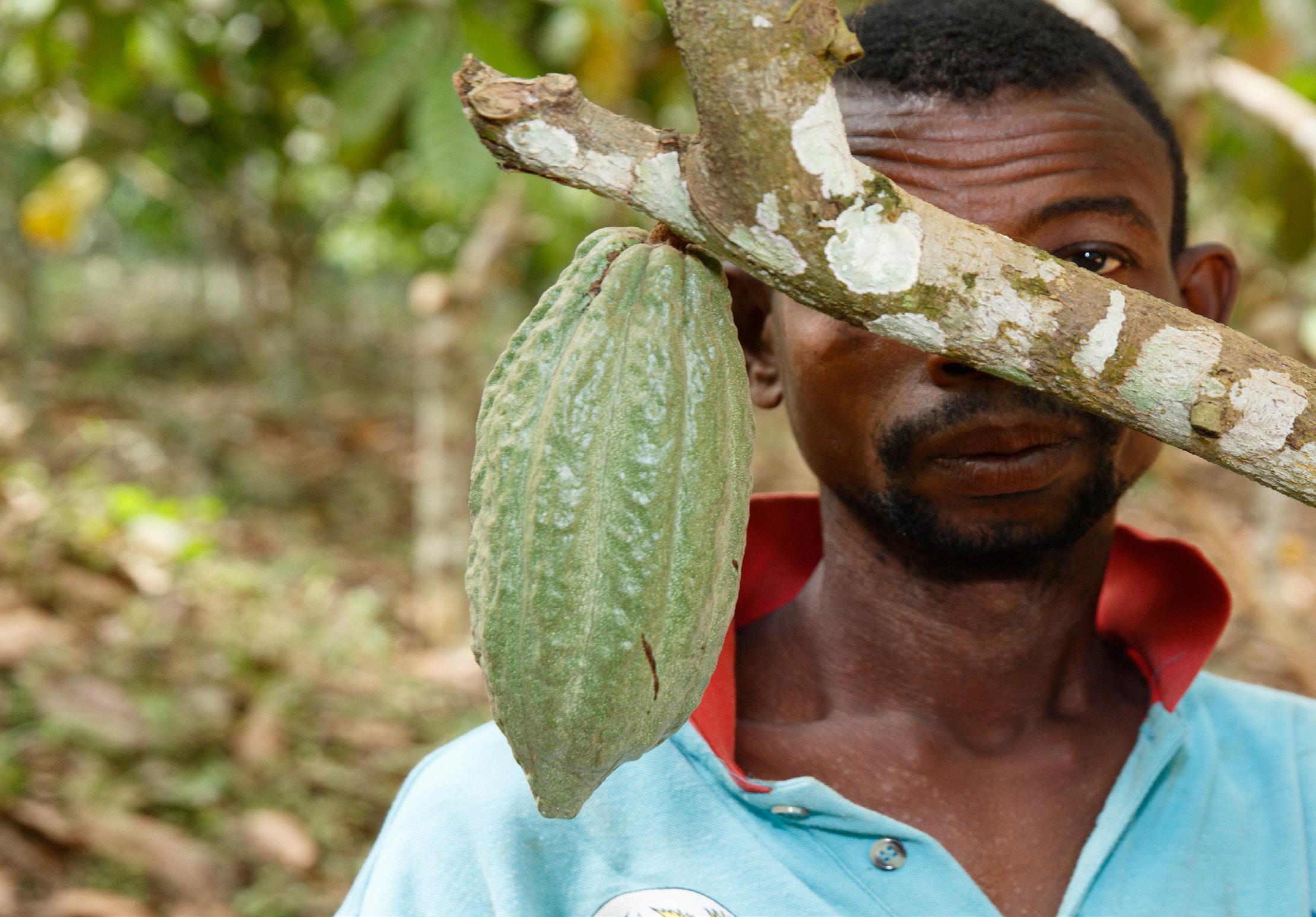
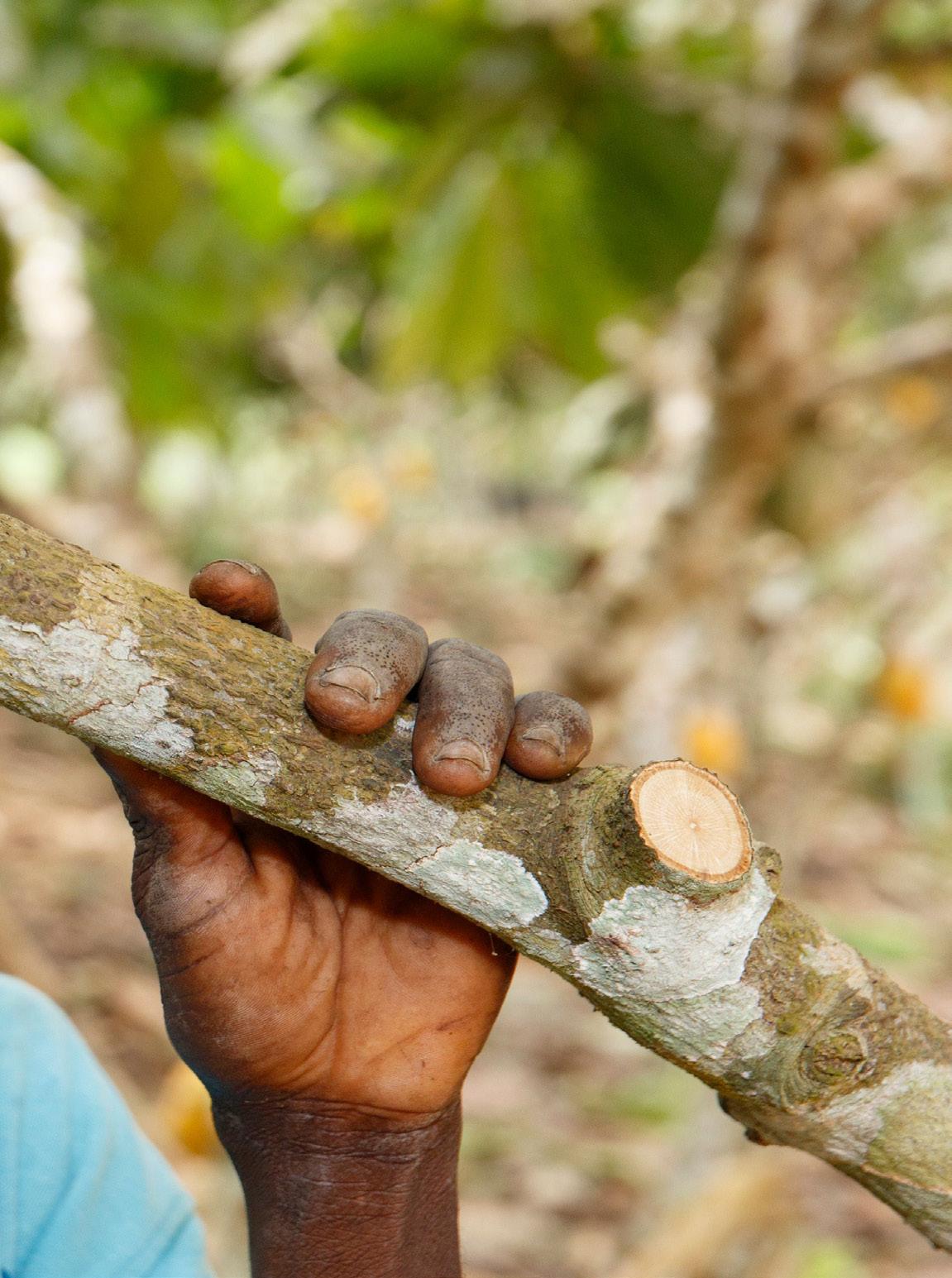
Consider baobab powder. In the UK, health-conscious consumers purchase a 260g pack for around £13. The raw material is harvested by Ghanaian women, exported in bulk, packaged in the UK, branded, certified and sold at a premium.
This pattern is not new. It mirrors colonial trade logic –export raw, import finished. Yet in the 21st century, the justification is no longer colonial administration but domestic structural weakness: inadequate industrial policy, fragmented regulatory systems, unreliable quality standards and limited patient capital.
The issue is not whether Africa should “compete” with established Western brands. The issue is whether Africa can build niche, high-quality, value-added products targeted at specific markets – including the African diaspora, whose purchasing power runs into hundreds of billions of dollars globally.
The Chinese and Indian diasporas have long been integrated into their countries’ export strategies. They create demand networks, distribution channels and brand recognition abroad.
Africa’s diaspora remains under-leveraged in structured industrial policy thinking.
If AGOA symbolises external dependency, Africa’s internal trade weaknesses reveal an even deeper paradox. Intra-African trade has historically hovered between 14–18 per cent of total trade, compared to over 60 per cent within Europe and Asia. The launch of the African Continental Free Trade Area (AfCFTA) in 2018 was a historic milestone intended to correct this fragmentation.
Yet trade agreements alone do not create production capacity. AfCFTA reduces tariffs; it does not automatically harmonise standards, fix ports, stabilise currencies, or ensure industrial competitiveness. Without deliberate industrial clusters, infrastructure integration and coordinated macroeconomic policy, free trade can simply circulate under-processed goods across borders.
The uncomfortable reality is that Africa’s greatest trade constraint may not be Western protectionism but its own structural incoherence. Weak customs systems, inconsistent standards, policy discontinuity and political rivalry among neighbouring states often undermine integration efforts.
In this context, AGOA’s extension risks distracting policymakers from the more urgent task of building regional productive ecosystems.
Ghanaian President John Mahama’s call for Africa
to “produce what it consumes” speaks to a fundamental economic principle: structural transformation requires domestic manufacturing depth. Import substitution alone is insufficient and historically controversial, but selective strategic industrialisation is indispensable.
Africa imports billions of dollars’ worth of pharmaceuticals, processed foods, textiles and household goods annually – many of which could be partially manufactured or assembled domestically with coordinated investment. The problem is not a lack of raw materials or market size. It is a lack of integrated policy execution.
Trade policy is often disconnected from industrial policy. Diaspora remittances – over $100 billion annually across Africa – are largely directed toward consumption rather than productive investment. Financial systems are shallow, and long-term industrial finance is scarce.
Even if a fraction of remittances were channelled into structured diaspora investment funds targeting agro-processing, nutraceuticals, digital manufacturing and renewable energy, Africa could begin to shift from raw exporter to value creator.
In the UK and elsewhere, non-African consumers increasingly purchase African-derived products – baobab, moringa, hibiscus, shea, kola – for health and wellness purposes. This signals brand potential beyond ethnic markets.
The African diaspora represents not only remittance inflows
but a built-in export market that understands the cultural and nutritional value of these products. Yet Africa rarely designs industrial strategies specifically targeting diaspora demand.
Instead, foreign firms capture branding, packaging, certification and distribution margins. Value accrues abroad. The continent retains extraction and low-wage processing.
Harnessing the diaspora requires more than patriotic appeals. It requires quality assurance systems, export credit support, venture financing, branding sophistication and coordinated marketing campaigns. It also requires regulatory reform to ensure that products meet international standards at the source.
The global trading system itself is under strain. The World Trade Organisation’s dispute mechanisms are weakened. Industrial policy is resurging in advanced economies. Supply chains are being reconfigured for geopolitical resilience rather than efficiency.
In such a context, Africa must avoid strategic complacency. Preferential access schemes, whether AGOA or others, are not permanent guarantees. They are tactical windows. The more pressing question is whether Africa can reposition itself from beneficiary to negotiator – from preference recipient to valuechain architect.
Moving beyond AGOA does not mean rejecting trade with the US. Nor does it imply disengagement from global markets. It means recalibrating strategy.
First, Africa must deepen intra-African production networks under AfCFTA, focusing on complementary specialisation rather than competitive duplication.
Second, industrial policy must align with trade policy. Export incentives without domestic industrial upgrading simply perpetuate raw material dependence.
Third, diaspora capital must be institutionalised into investment vehicles rather than dispersed through consumption channels.
Fourth, quality infrastructure – standards agencies, certification bodies, logistics systems – must be strengthened to eliminate the perennial excuse of “quality control limitations”.
Finally, leadership mindset matters. Trade dependency is not solely an external imposition; it is also sustained by internal policy inconsistency and short-term political thinking.
AGOA’s extension may provide short-term reassurance, but it should not be mistaken for long-term strategy. In a world where global rules are shifting, and geopolitical alliances are fluid, Africa’s economic security cannot rest on the periodic renewal of external goodwill.
Preferential access without structural transformation is a temporary advantage. True economic sovereignty requires production depth, regional integration, diaspora engagement and policy coherence.
The uncomfortable reality is that Africa’s greatest trade constraint may not be Western protectionism but its own structural incoherence
The choice before Africa is not whether AGOA continues. It is whether the continent continues to anchor its development model on preferential entry into other people’s markets – or whether it builds the capacity to shape markets on its own terms.
In a fractured global order, access is conditional. Agency is strategic. Africa must now choose agency.
Dr Isaac Yaw Asiedu is a lecturer at Tohoku University in Japan and author of Shifting Mindsets for Sustainable Development in Africa: Political Economy Perspective; Cambridge Scholars Publishing, UK. 2025 https://rethinkingafrica.org https://www.cambridgescholars.com/product/978-1-0364-6339-7
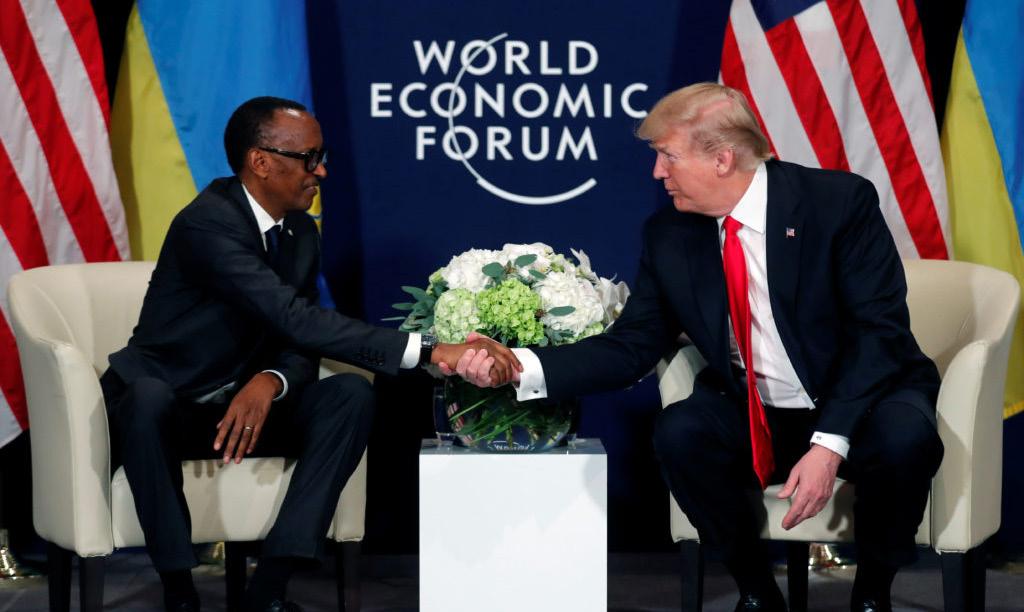
For those countries that have already signed health deals with Washington, there are many details missing, and this is now an urgent need for them to understand what this means for their health sovereignty, writes Crystal Orderson
SEVERAL African nations, including Rwanda, Uganda, Nigeria, Lesotho and Eswatini, have signed controversial health funding agreements with the US. According to Health Policy Watch, many Latin American countries have also signed.
Donald Trump’s "America First" global health strategy will grant the US access to crucial health data from African nations, potentially assisting big pharmaceutical companies in developing new vaccines. However, these countries may not gain access to these vaccines once they become available, which raises concerns
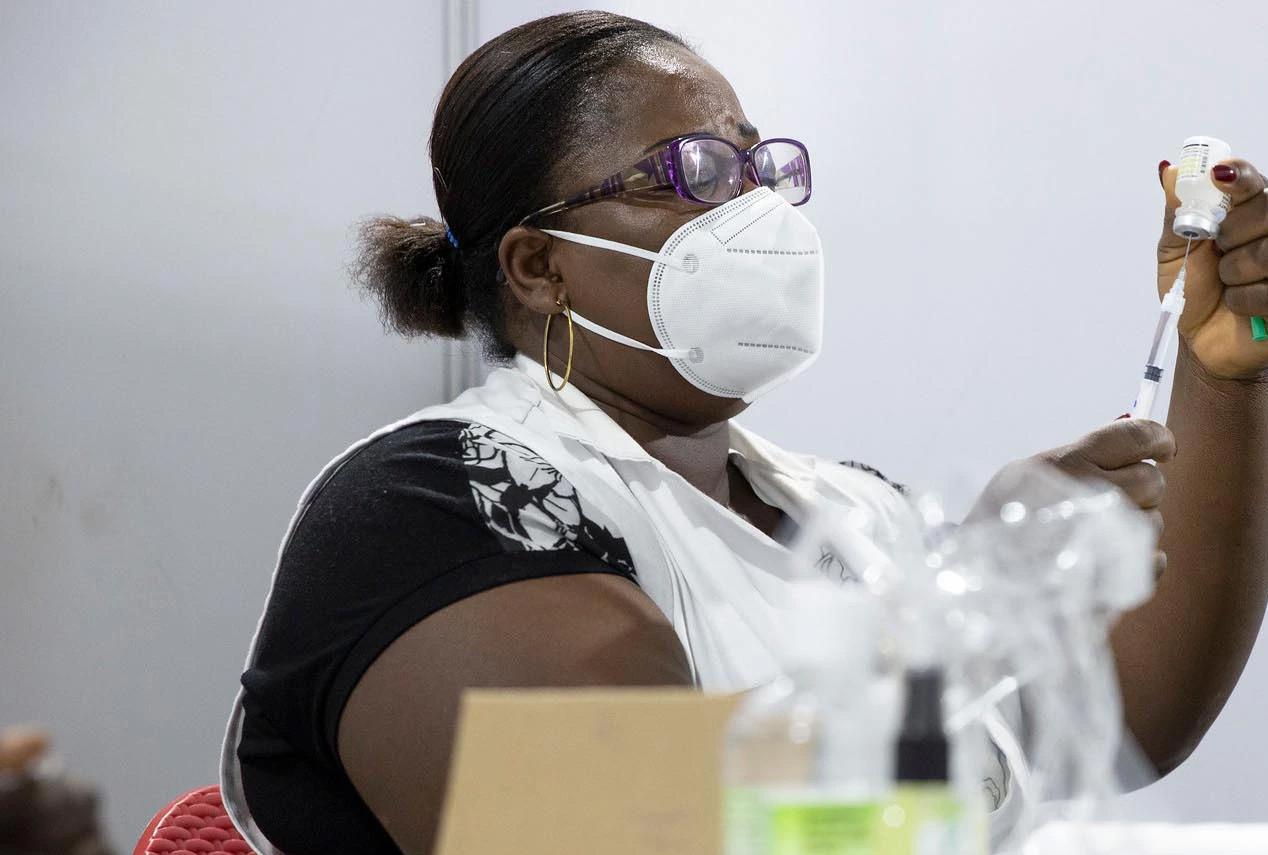
about equity in global health and the potential for increased health disparities between wealthy and African nations.
Additionally, some health deals are also linked to mineral agreements, which may prioritise resource extraction over equitable health access. Twenty African nations have so far signed the “health collaboration MOUs,” which represent more than $18.3 billion in new health funding and include more than $11.2 billion in US assistance alongside $7.1 billion in co-investment from recipient countries.
Remember the COVID pandemic when many poorer countries were frustrated by lack of access and then a subsequent unequal roll-out of the vaccines? Well, this prompted African nations to develop their own vaccines. Africa only produces about one per cent of the vaccines it needs and must import the rest.
vaccine hubs to ensure a level of self-reliance and build regional vaccine capacity.
There are now concerns that the new deals will lock countries into external partnerships that are not very transparent
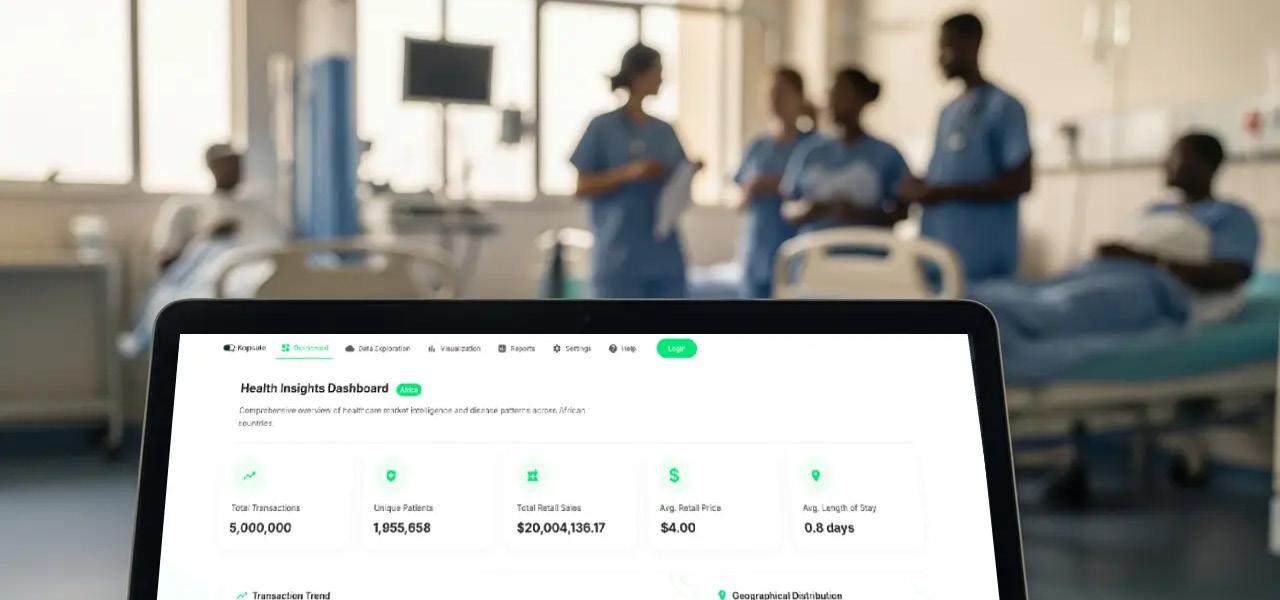
There are now concerns that the US health deals will lock countries into external partnerships that are not very transparent. According to the memo released by the State Department, the US says the deals will support, “[…] amongst other things, Data Systems: The funding will support the scale-up of health data systems for partner governments, ensuring that key programmatic data for HIV/AIDS, TB, malaria, polio and disease outbreaks can be tracked at scale over the long term, while also encouraging countries to increase their domestic health expenditures during the agreement period”.
Led by the Africa Centre for Disease Control (CDC), the goal is to produce 60 per cent of the continent’s vaccine needs locally by 2040 and has led to the continent developing pan-African
However, given the state of local healthcare systems, there is really no guarantee that countries will have the money and/ or resources to ensure their overburdened healthcare systems can handle this, especially considering the potential increase in demand for services due to the scale-up of health data systems and the ongoing challenges posed by diseases like HIV/AIDS, TB and malaria.
Bioethicists have also entered the debate and have raised concerns about the health deals and warned that the national health data for healthcare funding risks undermining trust in research and care.
Writing in the Journal of Medical Ethics, Prof. Keymanthri Moodley, in the Department of Medicine at Stellenbosch University in South Africa, and Associate Professor of biomedical ethics, Brian Earp, at the National University of Singapore, argued that tying essential healthcare access to data-sharing could erode public trust in both healthcare and research in African nations.
“When access to healthcare is linked to large scale datasharing agreements negotiated under conditions of unequal power, patients and communities may perceive health systems as serving external interests rather than primarily protecting their own,” they wrote in the journal.
They further argue that perceptions – especially where longstanding histories of extractive research and resource exploitation remain salient – “can weaken confidence in consent processes, blur the boundary between care and data extraction, and reduce willingness to engage with healthcare or research initiatives over time”.
For years, the US was one of the largest bilateral healthcare donors in Africa. Since 2001, the US has invested close to $200 billion in several health care programmes, including HIV, TB and malaria prevention. One of Trump's first actions upon taking office in 2025 was to halt US aid and other healthcare programmes, including the President's Emergency Plan for AIDS Relief (PEPFAR), which provided funding for HIV/AIDS treatment and prevention.
This immediate shutdown and sudden of aid cuts caused widespread panic across Africa, with many countries losing crucial funding for healthcare programmes. A few months later, the US announced the America FIRST health policy, which focuses on prioritising American interests in health initiatives.
However, there has been pushback. In February, Zambia and
Zimbabwe announced they have turned down the health deals. Zimbabwe would have received $367 million in funding over five years. President Emmerson Mnangagwa expressed dissatisfaction with the “lopsided” nature of the deal.
A government spokesman told media outlets that the US was demanding access to biological samples for research and commercial gain but said it was not willing to share the benefits for future vaccines and treatments, which raised concerns about equity and fairness in the proposed agreement.
Zambia, one of the world’s largest copper producers, said it would no longer go ahead with the US deal that was worth around $1 billion because it "[…] does not align with the country’s interests," a government spokesperson said. The Zambian deal hinged on gaining access to the country's mineral wealth.
storage of raw data) are externally controlled”. The case will resume in April.
Health activists have expressed grave concern that the new US strategy is overly transactional, extractive in nature and lacking clarity in the decision-making processes. Data sovereignty also raises serious issues about the implications of when your data funds medicines that you cannot easily access and when priorities are influenced by another country without a true partnership.
Health activists are concerned that the new US strategy is overly transactional, extractive in nature and lacking clarity in the decision-making processes
In December, the US said that it had committed, with Zambia, to “a plan that aims to unlock a substantial grant package of US support in exchange for collaboration in the mining sector and clear business sector reforms”.
In the East African powerhouse, Kenya, a High Court in December suspended the $1.6 billion US health deal, citing serious concerns over data privacy, lack of parliamentary oversight, and constitutional violations. According to reports, one of the groups that took the case to court last February, the Consumer Federation of Kenya, argued that the country risked “ceding strategic control of its health systems if pharmaceuticals for emerging diseases and digital infrastructure (including cloud
Activists maintain that any future agreements should incorporate clear limits on data use, independent oversight, fair benefitsharing, safeguards against reidentification and ongoing community engagement. Without these protections, agreements that look good on the surface might worsen the situation by taking advantage of local resources and harming both local health systems and global health cooperation, which most certainly increase health inequalities in Africa and the Global South.
For those countries that have already signed the MOU's, there are several issues that remain unclear; for instance, have there been clear limits on data use to ensure the protection of individual privacy? What independent oversight exists to guarantee accountability in how data is handled and shared? With whom exactly will the data be shared?
There are many unanswered questions and details missing. This is where one hopes the African Union and the CDC will assist countries in understanding what this means for their health sovereignty.
This article was first published by the Institute for Justice and Reconciliation in South Africa. The opinions or recommendations expressed are strictly those of the author and do not necessarily represent those of the IJR.
This article was first published by the Institute for Justice and Reconciliation in South Africa. The opinions or recommendations expressed are strictly those of the author and do not necessarily represent those of the IJR.



The harsh reality is that the abundance of natural resources has not translated into sustainable economic growth on the continent,
writes Crystal Orderson
THOUSANDS of mining executives gathered in Cape Town, South Africa in February for the annual Mining Indaba. In its 32 years, the event has become the place for mining experts from across Africa and the globe to discuss the continent’s mineral wealth. Will Africa seize this moment of renewed interest, or will it once again become the site of a scramble for resources?
Africa is home to 30 per cent of the world’s mineral reserves. The continent has 40 per cent of the world's gold and up to 90 per cent of chromium and platinum. The continent is also home to the largest reserves of cobalt, diamonds and uranium in the world.
These numbers can be overwhelming, and it is no wonder that everyone wants a share of these resources, given they are needed for everything from mobile phones to electric vehicle batteries. An African Development Bank (AfDB) report on the continent’s resources says that minerals account for an average of 70 per cent of total African exports and about 28 per cent of GDP.
The contribution of extractives to public finance is significant to Africa and its economies, and the AfDB estimates extractive resources could contribute over $30 billion per annum in government revenue for the next 20 years.
Critical minerals have suddenly acquired strategic significance globally, with Africa at the centre and everyone wanting a share of them, leading to a new scramble for these resources from the US and China.
The annual Mining Indaba brought together 11,000 experts, including government ministers, under the theme: Stronger Together: Progress through Partnerships.
Over more than 30 years, the event has grown into one of the biggest mining events in the world. I started covering it when it was held at the Cape Sun years ago. Now the venue is the Cape Town International Convention Centre; and it is the must-attend event in the mining calendar.
Speakers reiterated that it is time for Africa to be at the centre of the mining boom. On the opening day, Zambia’s President, Hakainde Hichilema, told the audience that mining partnerships must move beyond “extraction” and align with governments, investors, companies and communities to ensure “long-term value creation”.
Hichilema shared his country’s mining success story, which has seen Zambia turn its economy around from an annual growth rate of -2.8 per cent to 6.4 per cent within four years. He said it was “partnerships with mining houses” that were at the centre of the country’s transformation following the covid lockdown and debt crisis.
In 2020 falling copper prices saw Zambia’s public debt reach 103.5 per cent that led to a debt default. There has been a prolonged debt restructuring process underway. But now, six years later, Hichilema has reason to be positive; the copper output has risen exponentially and there has been a rebound in copper production. Output reached 890,346 metric tons in 2025, an eight per cent increase from 2024 and the country’s highest in years.
Hichilema argued that the key to transforming Africa’s fortunes through mining was to provide a clear path that partners
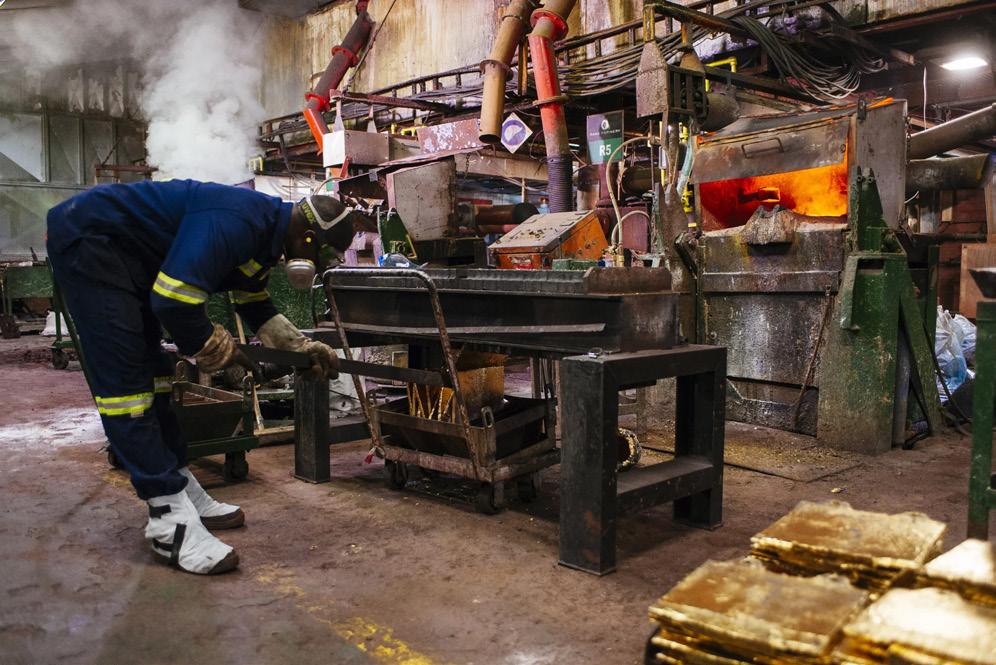
A worker operates a smelting furnace at a mineral refinery, illustrating the critical but limited role of local processing in Africa’s mining value chain
and investors could follow. “We have to take leadership,” he said. “If we do that, others will support our strategies. It is easy to support people with a clear vision. But we must get organised, so we can be worthy partners in the global community.”
Other speakers also highlighted that there was an urgent need to move beyond exporting raw materials, with affordable energy, water security and integrated infrastructure highlighted as essential enablers.
Critical minerals are “mineral resources that are essential to the economy and whose supply may be at risk of disruption”. Africa is home to two-thirds of the world's cobalt and the demand for critical minerals, if used correctly, is a massive opportunity for the continent. The “criticality” of a mineral changes with time as supply and society's needs shift. Table salt, for example, was once a critical mineral.
While Africa’s mineral reserves include many that are critical to renewable and low-carbon technologies, including solar and electric vehicles, battery storage, green hydrogen and geothermal energy, the harsh reality is that the abundance of natural resources has not translated into sustainable economic growth on the continent.
And Africa has seen a new scramble, with global powers like the US and China trying to secure access to these minerals. In February, the US held the inaugural Critical Minerals Summit in Washington, inviting several heads of state, including the DRC’s Felix Tshisekedi.
US Secretary of State Marco Rubio, while not explicitly referencing China in his remarks, cautioned against global supply chains that have become “heavily concentrated” and that decades of outsourcing had left advanced economies vulnerable in materials essential to clean energy and defence.
The US announced a Preferential Trade Zone, which includes “price floors intended to stabilise markets that have been battered
by oversupply and price suppression”. Washington is also pushing for a $12 billion strategic stockpile for critical minerals in the US.
South Africa’s Mining Minister, Gwede Mantashe, however, took aim at the DRC and instead urged African nations to “engage global capital with greater coordination”, warning that “fragmented” approaches weaken outcomes on critical minerals, beneficiation and investment terms. Mantashe was extremely critical of the US stance, viewed by many as divisive, while others see it as countries looking at their own domestic interests. South Africa was not one of the African nations invited to the US summit.
Mantashe noted that this year’s Indaba comes at a moment of “profound global uncertainty,” adding: “We are witnessing heightened geopolitical tensions, driven by the competition of some developed economies seeking greater control over the natural resources of developing nations.
that the renewed focus and race for critical minerals was an opportunity for a reset, but the reality was that indigenous communities across Africa have seen “little of their minerals”.
Seatholo also said there was need for proper regulation, and when mining houses came to communities, they must give a certain percentage to locals.
Of course, in an ideal world, this is an approach that would empower local populations and give them a sense of ownership. The reality is that, amid global shifts and significant aid reductions, African countries are increasingly looking inward to identify what works best for them.
Africa’s extractive resources could contribute over $30 billion per annum in government revenue for the next 20 years
“This dynamic represents a serious threat to the sovereignty of resource endowed countries, the majority of which are here on the African continent.”
Partnership must move beyond extraction to industrialisation and value addition, closer to the point of production. However, mining experts say talk is cheap and action is needed. With the world scrambling for minerals, Africa is at the centre of the global race, and the question for communities across the continent is whether this next scramble for critical minerals will benefit them.
Kgosi Seatholo, Chairperson of the National House of Traditional Khoi-San leaders, told Mining Indaba television
Africa also needs to move beyond just exporting its rich raw minerals. Now, it has to process and refine them so that countries can move up the value chain and ensure that the resources benefit communities.
While Africa does have some processing and refining capacity for certain minerals, substantial value-additive steps across different sectors have remained absent.
For countries to move up the value chain, they must invest in local processing and refining industries to capture a larger share of the profits generated from their resources. This transition requires substantial investment in infrastructure, technology and human capital. Without such measures, the scramble for Africa’s mineral wealth will persist.
If the continent does not make this transition, it risks remaining locked in a cycle where foreign nations and entities continue to extract most of the value from their mineral wealth. This will only perpetuate the cycle of economic dependency, and we have seen how this has fuelled conflict in different regions of the continent.
This article was first published by the Institute for Justice and Reconciliation in South Africa. The opinions or recommendations expressed are strictly those of the author and do not necessarily represent those of the IJR.
Deliberate policies are required to ensure that mineral wealth becomes a foundation for structural transformation, driving industrialisation, quality job creation, skills development, and technological upgrading, rather than reinforcing a familiar pattern of raw material extraction and external value capture, argues Kayode
DEPENDING on which data you quote, there is a consensus that Africa holds the key to the global energy future. The World Bank tells us that 30 per cent of the world’s total mineral reserves lies beneath African soil.
From the copper and cobalt belts of Central Africa to the lithium and platinum fields of Southern Africa, from the manganese and graphite reserves in the South to the gold, bauxite and aluminium fields in the West, Africa sits atop the geopolitical
architecture of mineral resources - with 70 per cent of its cobalt, 80 per cent of its platinum, 40 per cent of its gold reserves and a significant manganese, graphite and lithium resources.
Forecasts from the International Energy Agency (IEA) and the UN say that demand for several of these minerals could quadruple by 2040. This should therefore be our moment. The world cannot go green without going African.
And yet Africa is rich in minerals, but poor in natural resource
governance and development. We are indispensable to the global economy, but disposable within it. We cannot afford to repeat the mistakes of oil. We cannot allow the energy transition to become another resource curse.
But how do we move beyond this paradox that often frames the story of African resources? When I assumed office as Minister of Mines in Nigeria, one reality that dawned on me incredibly early was that our policies were designed for extraction, not for development. We measured success in tonnage. We celebrated volume, not value. We congratulated ourselves when mining companies renewed their licences.
Yet the question we must ask ourselves often is: what is a tonne of lithium worth when it leaves African soil? Perhaps a few thousand dollars. What is the same tonne worth when it returns to us inside a battery? Tens of thousands, perhaps. What is it worth when it is inside an electric vehicle in Lagos or Nairobi? We have been selling the raw material and buying back the finished product at 10 times the price. That is clearly not trade. That is a tax on our own poverty.
We cannot mine lithium in Zimbabwe, ship it to the Americas or Asia, watch it become battery, and then borrow money from the World Bank to buy electric buses.
That is not partnership. That is paternalism and dependency dressed up as global trade. And that was one issue that we addressed in the RoadMap for the Growth & Development of the Nigerian Mining Industry when I assumed office as minister.
So, the renewed global attention presents an extraordinary opportunity for African states, while it has also triggered a race
for supply chain dominance that mirrors the extractive dynamics of the past. And we must be clear-eyed about what is happening right now.
We are seeing a new scramble for Africa. It does not look like the Berlin Conference of 1884. There are no maps being drawn on tables in European capitals – at least, not visibly. But the competition for access to our critical minerals is intense.
The US has its Inflation Reduction Act and just held a major Critical Minerals Ministerial in February. The European Union has its Critical Raw Materials Act. China has locked in supply chains across the continent for decades to come. Even Middle Powers like the UAE and Türkiye are not left out of the scramble. These are not necessarily malicious acts.
Every country has the right to secure its own energy future. But we must ask: where is Africa’s seat at the table? Who is negotiating on behalf of the continent? The danger is that we become the theatre in which others compete, rather than actors in our own right. We must ensure that the green transition does not become green colonialism.
Encouragingly, Africa is not without a blueprint. The African Mining Vision produced by African Mines Ministers and adopted by African heads of states in 2009, predicted many of the dilemmas we now confront. It articulated a vision of transparent, equitable and optimal exploitation of mineral resources to underpin broad-based sustainable growth and socio-economic development.
For Africa, the significance of this development is both strategic and instructive. It confirms that major powers are
moving with urgency to lock in access to future supply and to shape the architecture of emerging mineral driven alliances.
The implication is clear: if African countries engage individually and without strategic coordination, the continent risks once again being integrated into global systems primarily as a supplier of raw materials. No single African country has the market power to dictate terms to multinational corporations alone. But together Africa is indispensable.
So, if this moment is approached with clarity of purpose and collective strategy, taking full advantage of the African Continental Free Trade Area, these emerging partnerships could instead support local processing, skills transfer and industrial growth. The task before African leaders, therefore, is not to resist engagement, but to shape it by ensuring that Africa takes part not only in the extraction of critical minerals, but in the value, technology and prosperity that flow from them.
The resource governance challenges before us are formidable. Critical minerals sit at the intersection of climate policy, industrial strategy, geopolitics and security. Managing them effectively requires robust regulatory institutions, transparent licensing regimes, credible contract negotiation capacity and effective revenue management systems.
It demands reliable geological data and knowledge, market intelligence and technological expertise. It calls for environmental and social safeguards that are not simply borrowed from global templates but adapted to local realities. And it requires regional coordination, because fragmented approaches weaken negotiating power and amplify vulnerability to external pressure.
Too often, resource governance means contracts between governments and corporations. Lawyers negotiating terms in Geneva and London and ministers signing agreements in capital cities. And the communities? They are informed afterwards, if at all.
If the global transition to clean energy depends on African minerals, then justice must become the organising principle of how those minerals are governed. Justice in this context is necessarily multidimensional. It begins with economic justice, by ensuring that mineral wealth becomes a foundation for structural transformation, driving industrialisation, quality job creation, skills development and technological upgrading, rather than reinforcing a familiar pattern of raw material extraction and external value capture. It requires deliberate policies that support local processing, downstream industries, domestic enterprise participation and fair fiscal returns that can be reinvested into national development priorities.
It is also environmental justice, by preventing a future in which African ecosystems and communities absorb the ecological and health costs of extraction so that other regions may achieve decarbonisation. Responsible mining must therefore be anchored in strong environmental regulation, transparent monitoring, rehabilitation obligations and climate-aligned practices that protect land, water, biodiversity and public health.
In this respect, we need to learn from those who have walked this path before. Australia has decades of experience managing the environmental impact of mining while ensuring that communities benefit.
We should study that model, adapt it and enforce it with an iron will. Because if the energy transition leaves a trail of ecological devastation across Africa, we will have gained nothing. We will simply have exchanged one form of destruction for another.
Justice must also be social. This means safeguarding labour standards across formal and informal operations, formalising and protecting artisanal and small-scale miners whose livelihoods depend on the sector and ensuring that host communities are not
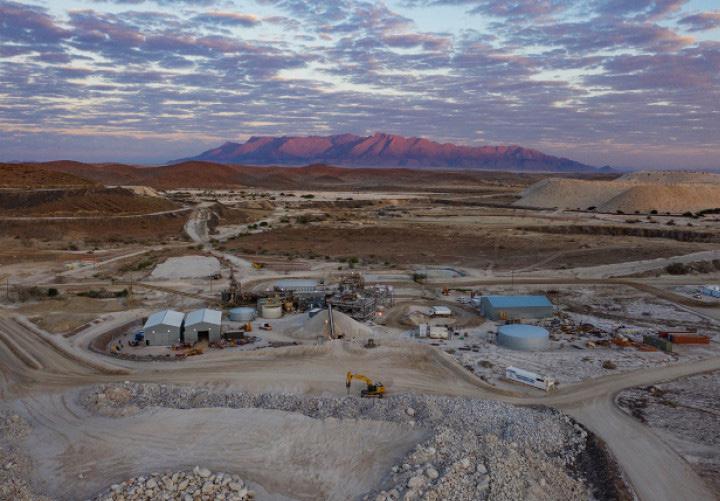
lithium mining site in
for
displaced, marginalised or excluded from decision-making.
It means free, prior, and informed host community consent –not as a bureaucratic tick box exercise, but as a genuine exercise in local democracy. Communities must have voice, benefitsharing mechanisms and meaningful participation in determining the terms under which extraction occurs before a single shovel breaks ground.
There must be an intergenerational dimension because African critical minerals are finite resources. Managing them responsibly requires longterm fiscal discipline, transparent revenue management and the creation of sovereign wealth and stabilisation mechanisms that convert temporary resource rents into lasting investments in infrastructure, education, innovation and human capital for future generations.
Only when Africa moves from the margins of extraction to the centre of value creation can the transition truly be described as fair, just and equitable.
There is also a peace and security dimension to the critical minerals conversation that cannot be ignored. Across fragile and conflict-affected settings in Africa, mineral wealth does not exist in a political vacuum.
Where governance is weak, institutions are overstretched and economic opportunities are limited, the rapid expansion of mining activity can intersect with local grievances, informal economies, illicit trade networks and, in some cases, armed actors.
For these reasons, the governance of critical minerals must be approached through a peacebuilding lens. Conflict sensitivity should be embedded in licensing decisions, land acquisition processes and community engagement frameworks.
Host communities must see tangible benefits in the form of infrastructure, employment and environmental protection. Artisanal and small-scale miners should be formalised and supported rather than criminalised wholesale, bringing them into regulated value chains.
During my tenure as minister, we did this and created the Presidential Artisanal Gold Mining Initiative (PAGMI), established Mineral Buying Centres and increased access to finance to artisanal miners. Security agencies, regulatory institutions and local authorities must coordinate to ensure that enforcement actions are sustained and not episodic.
Ultimately, justice must be understood globally. Africa must no longer be positioned as a passive supplier of inputs into other regions’ green transitions. A just energy transition requires recognising African countries as strategic partners in technology development, value addition, research collaboration and industrial value chain integration.
Transparency and accountability must anchor the sector, so that citizens can see clearly how their resources are managed and for whose benefit.
The broader lesson is clear.
The success of the global energy transition will depend not only on the availability of minerals, but also on the stability of the regions that produce them. Secure supply chains cannot be built on fragile communities, weak institutions, or recurring conflict. If the transition to clean energy is to be truly just, it must invest as much in governance, community resilience and institutional capacity as it does in technology and infrastructure.
In this sense, peace and security are not peripheral to the critical minerals’ agenda. They are central to it. Any transition that ignores local fragility risks becoming unstable and unsustainable. A transition that strengthens governance, protects communities and builds trust, however, can transform mineral wealth into a foundation for stability, legitimacy and long-term development.
Dr Kayode Fayemi is a Visiting Professor at the African Leadership Centre (ALC), King’s College London and a former government minister in Nigeria. The above are extracts from his keynote address at King’s Africa Week this March during the launch of the Justice in Critical Minerals Governance and Energy Transition Project led by Ghanaian academic Dr Clement Sefa-Nyarko, a lecturer in Security, Development and Leadership in Africa at the ALC. He was among 77 academics chosen recently by UK Research and Innovation (UKRI) as part of its Future Leadership Fellowship (FLF). It provides up to seven years of funding of up to £120 million to support early career researchers.
Since 1982, with President Paul Biya having spent more than 1,600 days ensconced in a luxury hotel in Geneva at a cost of $40,000 a day, and the Swiss government turning a blind eye, Sophie Tietchou Tegang writes that, for Cameroonians, having a government does not really mean being governed
CAMEROON, known to its people as ‘Le Continent’ (the continent), and being one of the most endowed African countries, its economic growth has grossly underperformed over the last five decades. The World Bank estimates that among Cameroon’s 29.12 million inhabitants, almost 30 per cent live in relative poverty: on under $3 a day; with inequality estimated at 42.18 on the Gini Index.
In theory, the nation has all it needs to become a prosperous economy. Under its first President, Ahmadou Ahidjo, the economy was so healthy Cameroon was considered a post-colonial “miracle”. But today, the bane of the nation’s predicament –corruption – is bolstered by absentee governance.
Consistently ranked among the most corrupt nations, the ailment has pervaded every aspect of society. According to a 2019 Transparency International report, 48 per cent of public service users admitted to paying a bribe. The disease that is corruption is so endemic that even the fight against it has been consumed by it. Corruption is sustained by weak institutions and unresponsive leadership.
This system has been perpetuated since 1982, when Paul Biya replaced Ahidjo as president. Enshrined by the Constitution, Biya has absolute control. A 1996 amendment gave him the prerogative to appoint his minions.
From prime ministers to office secretaries, Biya empowered himself to hire and fire employees on a whim. He could veto laws passed by the legislature; dissolve regional authorities he deemed “improper”; and in 2008 granted himself immunity from criminal prosecution even post-retirement. But now at 93, retirement is far from Biya’s mind.
Centralisation of power has put paid to claims of the regime being democratic. Such consolidation of control means every decision must be approved by the incumbent; in his absence, affairs of state become stationary.
This is a major problem for Cameroonians because, since his election in 1982, it is estimated that Biya has spent over 1.650 days – otherwise 4.5 years – in Switzerland for “personal affairs”. Accompanied by a posse of up to 50 individuals, the restless president spends on average $40, 000 daily alone on his, and his cohorts’ room reservations at Geneva’s luxury Intercontinental Hotel. While Biya blows his country’s national budget, the Swiss government has remained quiet on this blatant misuse of state funds - claiming that there is no legal basis to stop Biya’s extravagance.
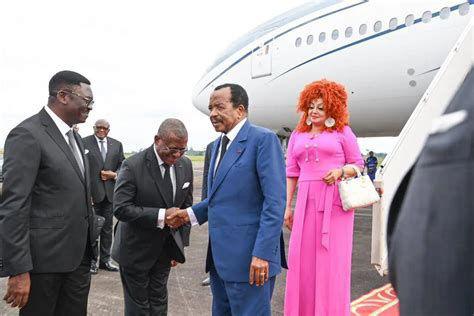
Meanwhile, the average Cameroonian is forced to eke out a daily existence, living on under $1,000 a year. Yet Cameroonians are obliged to routinely find financial ways and means to interact with the social system.
Lawyers must “pass something under the table” for approval of cases they have legally won; students must bribe their lecturers just to have their exams fairly marked; taxi drivers must tip police officers to avoid harassment. This is the reality that is directly fuelled by weak state systems.
On his occasional visits to Yaoundé, Biya condenses a year’s worth of legislative agenda into a few days. According to the Organised Crime and Corruption Reporting Project (OCCRP), in 2017 he passed a dozen laws in a couple of days. In comparison, in Switzerland – where Biya is comfortably ensconced and a country often praised for its democratic conduct – a period of 12 months to 10 years is required to pass a single law.
Alas, one cannot compare a governed state to one with a perennially absent governor. When Biya spends a third of the year abroad, one cannot expect him to understand, nor sympathise, with the intricate realities of life on the ground in Cameroon. Thus, he cannot be expected to champion, let alone initiate, effective and relevant policies.
In such a system, the only viable counter to the despot are the elites. Unfortunately, Biya is brilliant at playing the game, seldom giving the opportunity for opposing coalitions to form; strategically ensuring interaction between ambitious elites is rare,
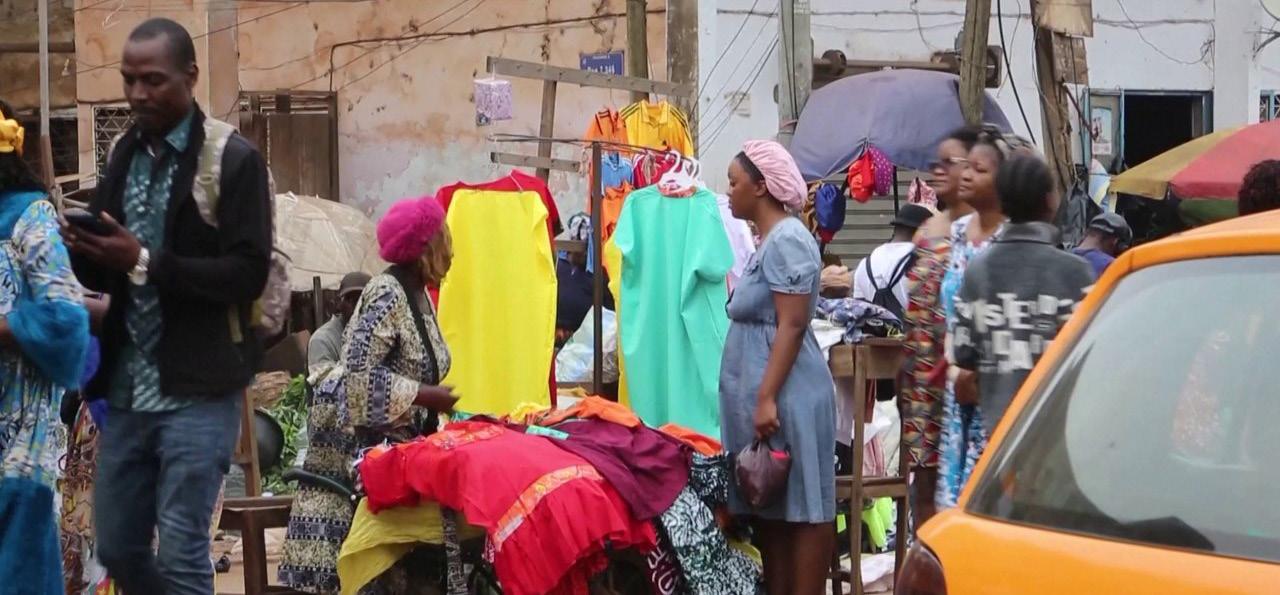
His omnipresence is so reinforced, that his physical presence was barely required for him to win the country’s 2025 presidential elections. Although votes were cast on October 12, he only launched his campaign on September 27. After all, why bother with stress?
Many speculated that Biya’s deteriorating health was the cause of his inability to campaign; even linking his general absence to hospital visits. Even so, such a justification does not absolve him; rather, it emphasises the dire need for a decentralisation of power.
Already 93, omnipotent or not, Biya remains mortal and even Goliath did not live forever. If he passes without making profound adjustments to the current system –compiled with lack of autonomous institutions and no semblance of elite coordination – he could leave a massive power vacuum. This could fuel “elite conflict and regime crisis”, which could plunge Cameroon into civil war - rivalling that of post-Gaddafi Libya.
unavoidable; unreliable institutions are conventional; and there is no sense to protest as there is no one to appeal to.
The American psychologist, B.F. Skinner, developed the concept of operant conditioning whereby individuals learn voluntary behaviours through consequences and reward. Cameroonians have been taught that corruption and loyalty to the incumbent will be remunerated; while resistance and efforts for change will be suppressed or ignored. Thus, the only rational behaviour is to abide and endure.
In today’s Cameroon, without the head, the tail has no sense of direction. The head has enjoyed his time in office; some may feel Biya has even done his part for the state. But reality remains; thus, it is the duty of a state to provide its citizens with basic human security; defined by freedom from fear, freedom from want, and dignity.
Current state mechanisms leave little hope for progress in Cameroon. In office for the last 43 years – guaranteed another seven – Biya has instilled a top-down culture of corruption and inactivity. With 93 per cent of the population being under 54 years, most Cameroonians cannot conceptualise life in a different system. They have been conditioned to believe that bribery is
But how can dignity be assured if ordinary Cameroonians cannot be guaranteed civil rights without providing monetary motivation; or relying on patronage links? It is time for Biya to decentralise, to re-empower his subordinate, and give the land that bore him a chance of survival without him.
Danielle Sophie Tietchou Tegang, from Cameroon, considers herself an activist and philanthropist concerned with poverty reduction, the development of sustainable communities and the establishment of strong African institutions. She is currently undertaking an MSc in Global Leadership and Peacebuilding at King’s College London as part of a Fellowship (on Peace, Security and Development) at the African Leadership Centre.
Civilian leaders in Africa who refuse to have term limits in their constitutions, or who manipulate their constitutions to cling indefinitely on to power should face sanctions just like soldiers who grab power through the barrel of a gun, argues Baba Galleh Jallow
SINCE the immediate aftermath of independence in the early 1960s, Africa’s political landscape has been periodically disrupted by military coups d’état. Every so often, soldiers overthrow civilian regimes and take control of governments, suspending constitutions, banning electoral institutions and practices, and declaring transition periods that often prove openended or lead to military regimes in civilian clothes.
In 2026, over 60 years since the beginning of formal decolonisation in sub-Saharan Africa, there is no indication that military coups will stop anytime soon. Each time soldiers seize power, regional and international actors respond with a predictable and well-worn script: they condemn the coup and demand the immediate restoration of constitutional order.
They insist that the soldiers return to barracks, and in some cases that the overthrown government be returned to power. While these familiar reactions affirm the principle that the military should not intervene in politics - their effectiveness has been almost zero.
Of course, the soldiers will not return to barracks. Of course, constitutional order will not immediately be restored. Instead, once they taste power, military leaders often find ways and means of hanging on indefinitely, just like the civilians they ousted. And the cycle of coups continues.
An often-overlooked fact of postcolonial African history is that the current spate of military coups was preceded by constitutional coups perpetrated by some of the continent’s first civilian leaders. The battles for African independence after the Second World War were fought on claims and promises of freedom and the liberty of nations and peoples to enjoy that freedom.
African nationalist leaders invoked the provisions of the Atlantic Charter (1941), the United Nations Charter (1945) and the Universal Declaration of Human Rights (1948) to make a case for their peoples’ rights to freedom and self-determination. But once independence was achieved and colonial officials were replaced by African elites, promises of liberty, human rights and the rule of law for Africans were systematically broken by the new leaders through a series of constitutional coups in which they monopolised power to the exclusion of all their fellow citizens.
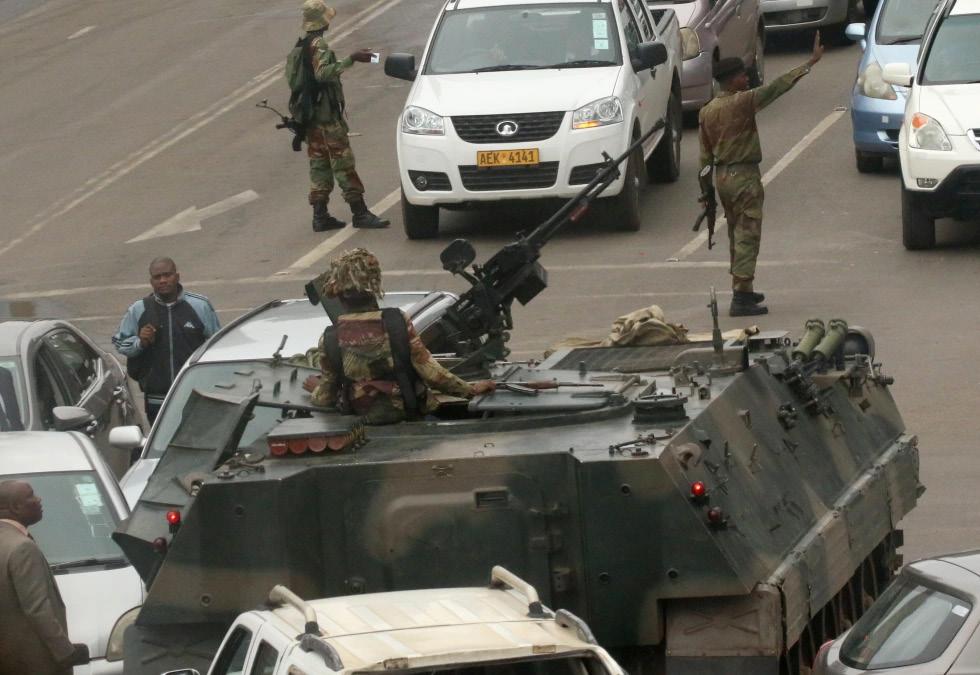
Citing the bogey of neocolonialism and the dangers of external sabotage, sometimes real sometimes imagined, some of Africa’s new leaders soon started declaring themselves presidents for life and turning their countries into single-party states where no other party was allowed to exist. They criminalised dissent, mercilessly crushed and silenced alternative political voices and opinions, and in short order almost literally assumed personal ownership of their countries.
Caught in the amoral and brutal ideological crossfire of the Cold War, the new leaders now pandered to the interests of foreign powers, both East and West; disregarded or discarded all unfavourable constitutional provisions; and did whatever they wanted with the lives and destinies of their peoples.
The Non-aligned Movement founded at the Bandung Conference of 1955, whose members claimed to be neutral in the Cold War, could not prevent African countries from being proxybattlegrounds whose leaders were often given blanket support in the name of ideological containment.
Then as now, regime change through the ballot box became a near-impossibility. Military coups became the only sure way of bringing about political change on the continent.
The second and third generations of civilian African leaders learned these lessons from their predecessors. They often did not declare themselves presidents for life or impose de jure single-party states. But they presided over intolerant de facto single-party states that monopolised political power and national resources almost to the exclusion of everyone else.
Where alternative political parties were allowed to exist, they were bullied to the point of irrelevance. Elections were and continue to be routinely rigged yet declared free and fair by international observers as de facto presidents for life are returned to power.
Like their predecessors, these leaders also cracked down upon and jailed their opponents at will, muzzled press freedom and changed constitutions to stay indefinitely in power. A corrupted definition of democracy as the conduct of elections was now held up as evidence of the rule of law, and heads of state insisted on their right to literally own their countries and stay in power for as long as they wish.
In some cases, these leaders bequeathed the presidency to their children, thus turning their countries into family-owned possessions and the nation-state into pseudo-kingdoms where the king may rule forever and never be held accountable.
It is instructive to note that in 2026, the six longestserving African presidents have been in power for a combined total of about 220 years. Paul Biya of Cameroun, 92, has been in power for 50 years (seven as prime minster, 43 as president). He just “won” re-election for an eighth seven-year term.
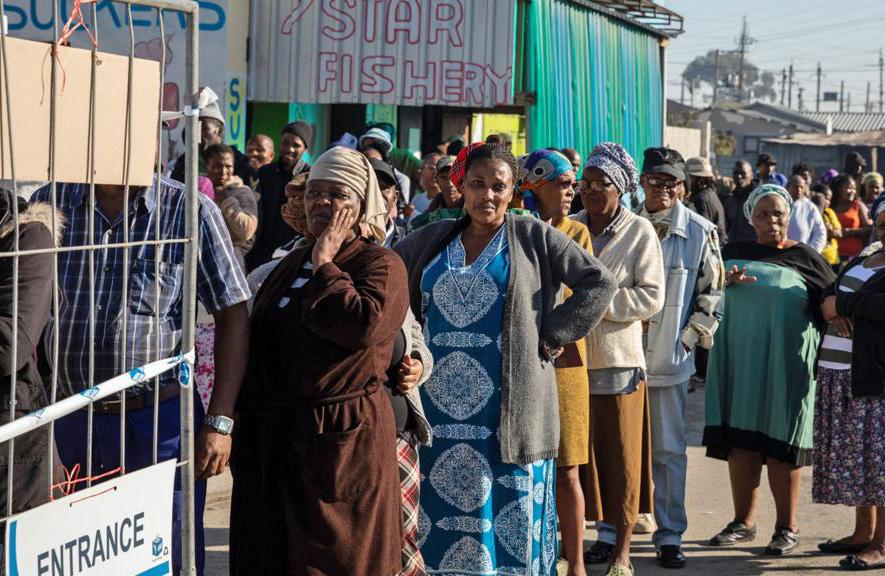
of leadership and giving ambitious soldiers reason to strike.
Overstaying in power and suppressing lawful dissent generate public anger, frustration and indifference or even support for military coups. It is not unusual to see crowds dancing in the streets in the aftermath of military coups in Africa.
Each time soldiers seize power, regional and international actors respond with a predictable and wellworn script
Teodore Obiang of Equatorial Guinea, 83, has been in power for 44 years. Yoweri Museveni of Uganda, 81, has been in power for 40 years. He too just “won” re-election for a seventh five-year term.
Isaias Afwerki of Eritrea has been in power for 32 years. Ismail Omar Gulleh of Djibouti has been in power for 27 years. And Paul Kagame of Rwanda has been in power for 26 years.
Clearly, while military coups are never desirable, they are reasonably predictable if not inevitable in some of these countries. For as the adage goes, change is the law of life, and those who make peaceful change impossible make violent change inevitable.
To stop the military coups, the Economic Community of West African States (ECOWAS), the African Union (AU) and other interested parties must find ways of stopping the monopolisation and abuse of political power and the rule of law by sitting presidents. They must address the political impunity that allows civilian leaders to spend decades in power, behaving as if they own their countries.
They must stop these leaders from waging war against their own citizens by deploying security forces against peaceful opponents and critics, silencing opposition parties, the media and civil society, and by these actions fuelling public frustration, shrinking the civic space, closing all avenues for peaceful change
Condemning coups without addressing these conditions amounts to treating the effect while ignoring the cause. ECOWAS, the AU and other members of the international community must take the proverbial bull by the horns and insist that civilian regimes respect the very constitutional orders that they insist military coupists respect.
Preventive international diplomacy need not violate territorial integrity and the sovereignty of states. It need not and would not undermine African sovereignty; rather, it would help civilian leaders and governments uphold their own constitutional responsibilities and avoid creating uncertain and more difficult futures for their countries and populations.
In short, to stem the rising tide of military coups in Africa, ECOWAS, the AU and other members of the international community must find ways of stopping the abuse of constitutional order before, not after military coups take place. If a country can be suspended from regional bodies after a coup, what prevents that same country from being suspended before a coup?
If sanctions can be imposed on a country after a coup, what prevents sanctions from being imposed when there is ample evidence of impunity and abuse of power and constitutional order before a coup? Why not sanction leaders who refuse to have term limits in their constitutions, or who manipulate their constitutions to cling indefinitely on to power?
If suspensions and sanctions are considered inappropriate, other ways and means must nevertheless be found to stop the constitutional coups. Only then can they stem the tide of military coups in Africa.
For victims, justice is not just about how many people are convicted or how long the sentence is; it is also about being believed, being safe, having access to information and, where possible, receiving some form of reparation, says Segun Jegede
WHEN the Genocide Convention was adopted after the Second World War, the aim was clear: to ensure that the unprecedented loss of lives in Germany would never again take the world by surprise. Yet in 1994, a mere five decades later, the world looked on as genocide reared its head again in Rwanda. When the dust finally settled, over 1,000,000 lives of Tutsis and moderate Hutus opposed to the genocide had been lost.
The International Criminal Tribunal for Rwanda (ICTR) thus grew out of the response of the UN’s human rights system to the tragic situation in Rwanda with a mandate to prosecute genocide, crimes against humanity and serious violations of international humanitarian law committed in 1994 in Rwanda.
Tasked with specifically prosecuting only the “big fish”, over its lifetime, the ICTR, strategically located outside Rwanda, in Arusha, Tanzania, with offices in Kigali and an Appeals Chamber in The Hague, indicted 93 people: senior politicians, military commanders, administrators, clergy, media executives and militia leaders. It convicted most of them.
In doing so, it did three things that I think are particularly important. First, it established the core jurisprudence on genocide in the historic Akayesu judgment – the first-ever conviction for genocide by an international court.
In Prosecutor v. Akayesu, and in later cases, the Tribunal explained in legal terms what it means to intend to destroy a protected group “in whole or in part,” clarified who qualifies as a protected group and spelled out which acts – such as killings, serious bodily or mental harm, or deliberately creating destructive conditions of life – meet the legal threshold of genocide.
Second, it impacted the jurisprudence on sexual violence in international law. In the Akayesu case, the Tribunal held for the first time that rape and sexual violence can constitute acts of genocide when they are committed with the intent to destroy a group.
It also recognised rape as a crime against humanity in its own right. That was a turning point, not only for Rwanda, but for international criminal justice.
Third, it developed doctrines of responsibility for leaders. The ICTR’s case law on command responsibility, on joint criminal enterprise and on direct and public incitement – particularly in the “Media case” – showed how those who do not wield machetes themselves can still be held criminally liable when they use state power, radio, or newspapers to mobilise and direct violence.
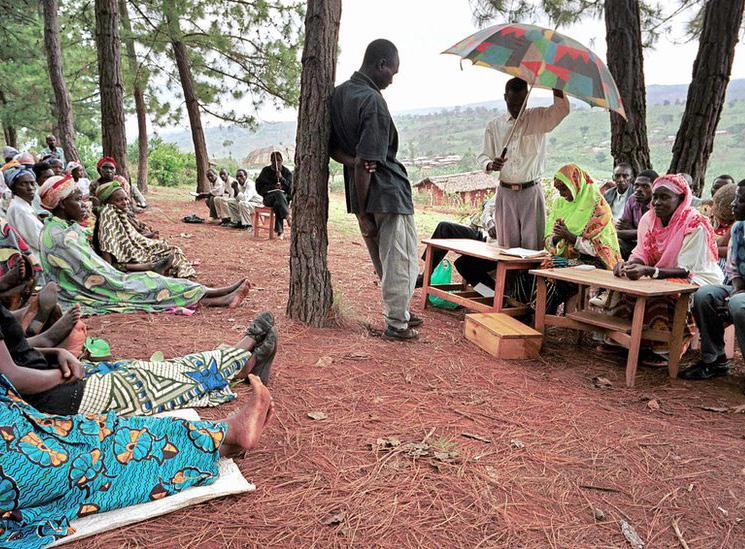
So, from a legal perspective, the ICTR was a success story. It created a strong body of jurisprudence, helped consolidate the crime of genocide in international law and demonstrated that high-level perpetrators could be tried and convicted.
But in Rwanda itself, the epicentre of the genocide, the picture was more complicated. After the 1994 genocide, the formal justice system was simply overwhelmed.
There were hundreds of thousands of genocide suspects in prisons and local jails. At the rate ordinary courts were functioning, it would have taken generations to process all the cases.
The Rwandan government’s solution was to adapt gacaca into a nationwide system of community-based genocide courts. Gacaca (“short grass”), an ancient form of justice resolution mechanism in the public space, was until then merely used to solve disputes within the community and to restore social peace and harmony.
The modern gacaca was legally established in 2001 and began operating in 2002. Communities across the country elected lay judges – inyangamugayo (“persons of integrity”) – to hear cases. The law divided offences into categories, with the very top planners reserved for ordinary courts, and most cases including
killings at the local level, property offences, denunciations, were handled by gacaca.
Four categories of genocide perpetrators were established by the Organic Law of August 30, 1996. These categorised people according to the role played by each person in the conception and execution of the 1994 tragedy. An Organic Law, of June 19, 2004, reclassified the categories and reduced them to three in number.
The law also set up confessions, guilty pleading, excuse and repentance procedures; where accepted, these led to commutation of half the sentence into community service work. Only civil reparation is deemed appropriate for property offences.
By the time gacaca ended, more than 12,000 local courts had sat, and well over a million cases had been tried. In terms of scale, no other postconflict society has attempted something similar.
Ordinary Rwandan courts handled some serious cases, especially in the early years. Gacaca dealt with most perpetrators at the community level.
They shared similar goals: to reject impunity, to acknowledge victims’ suffering and to help reconstruct a society shattered by mass violence. But they pursued these goals through very different conceptions of justice.
But gacaca was not a simple success story either. On the positive side, gacaca brought justice into the heart of communities. Victims could publicly confront those who had attacked them.
Many families learned, at last, where their relatives had been buried. The sheer number of cases processed would have been unimaginable for any international or even national court system.
In principle, they formed a kind of justice ecosystem. The ICTR targeted “those most responsible”: national-level leaders, organisers, and ideologues.
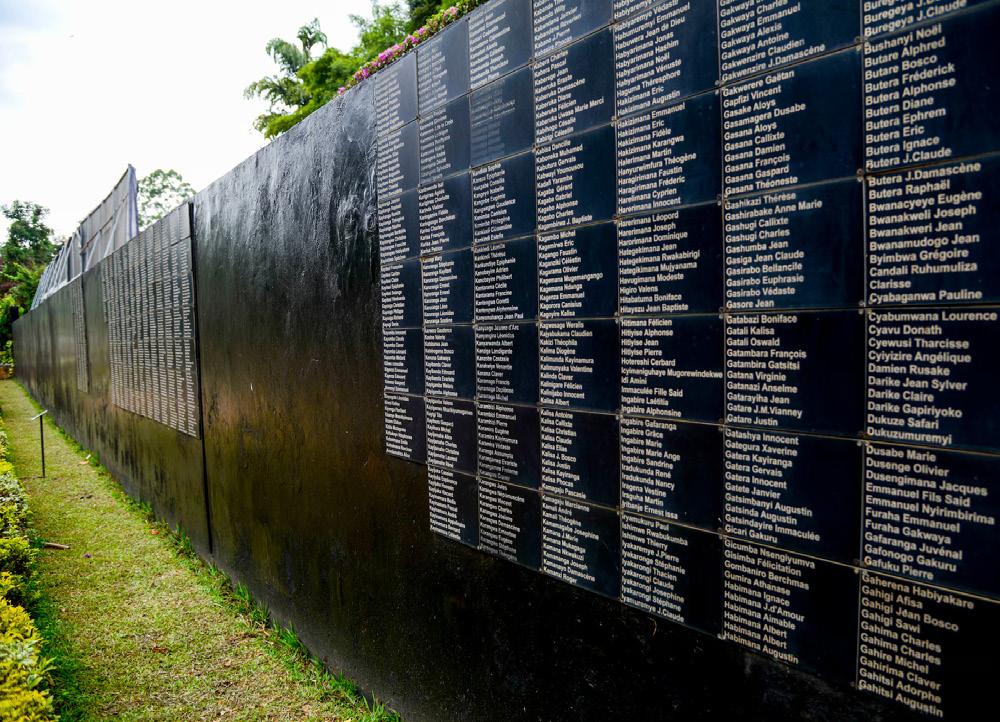
The ICTR offered legal rigour, due process and a strong symbolic message that the international community would not tolerate genocide. Gacaca offered speed, participation and an attempt at social repair through confession and reintegration.
What, then, can we take from the Rwandan experience for future responses to mass atrocity – in Africa and beyond? No single tribunal –national, international, or hybrid – can deliver full justice after genocide. Rwanda shows that you need a justice system, not a single star institution: different bodies doing different jobs but coordinated and talking to each other.
The ICTR’s strict respect for fair-trial rights was not optional; it was what made its decisions credible and helped avoid pure victor’s justice. At the same time, gacaca reminds us of what happens when a shattered country faces huge caseloads and urgent pressure to act. Future models, including under the ICC, must help states build fair procedures, but also be honest about limits in capacity, security and politics. Community or traditional mechanisms can encourage participation and reconciliation, but they can also be unfair and easily manipulated by those with power.
For victims, justice is not just about how many people are convicted or how long the sentence is. It is also about being believed, being safe, having access to information and, where possible, receiving some form of reparation. Whether we are designing an international tribunal, a national court, or a villagelevel process, survivors must help shape priorities.
First, it is essential to hold political and military leaders criminally responsible at the international level. It sends a clear signal that some crimes are so serious that the whole world has an interest in seeing them punished.
Second, justice that never reaches the daily lives of victims –in their villages, their communities, their families – will always feel unfinished.
The task before all of us, whether we work in international bodies, national courts, or civil society, is straightforward but difficult: we must build systems that respond to mass violence in a way that is both principled and practical.
They must be strong enough to uphold the law, flexible enough to fit local realities, and honest enough to accept that after atrocities of this scale, justice will always be partial and always a work in progress.
Segun Jegede is a former Prosecutor at the International Criminal Tribunal for Rwanda and former Special Prosecutor for the Government of Nigeria. The above is a condensed version of his presentation at a side event organised by Africa Legal Aid (AFLA) on the crime of aggression during the 24th Assembly of States Parties to the International Criminal Court in The Hague from December 1-6, 2025.
Ghana’s UN victory is not symbolic — it marks a decisive shift in global power and accountability politics, writes
Jon Offei-Ansah, as Africa asserts itself as a driver of justice rather than a subject of history
Ghana’s victory at the United Nations has done more than secure recognition for slavery as the gravest crime against humanity. It has forced a global reckoning — exposing deep divisions over justice, responsibility and who defines the rules of the international system.
For decades, the question of reparations for the transatlantic slave trade lingered at the margins of international diplomacy — acknowledged in principle, but rarely confronted in practice. That equilibrium has now been disrupted. By compelling a vote and securing overwhelming support, Ghana has transformed what was once a moral argument into a geopolitical contest — one that is rapidly reshaping global conversations about history, accountability and power.
The resolution itself carries no binding legal force. But its significance lies in what it represents. With 123 countries backing the motion, Ghana and its allies have elevated reparations from a historical grievance to a live geopolitical issue.
President John Dramani Mahama framed the moment in moral terms, declaring before the General Assembly that ‘history beckoned’ and that Ghana had chosen to do ‘what was right for the memory of the millions who suffered’.
This is no longer simply about acknowledging the past. It is about defining the future.
The shift matters because international politics is often driven as much by narrative as by law. By reframing slavery as the gravest crime against humanity, Ghana has altered the moral language through which global justice is discussed. That change alone carries weight.
For much of the post-colonial era, Africa has been positioned as a respondent in global politics — reacting to agendas shaped elsewhere. This moment signals a reversal. Under Mahama, Ghana did not simply introduce a resolution. It built a coalition, framed the debate and forced a decision.
Foreign Minister Samuel Okudzeto Ablakwa underscored the significance of the vote, telling journalists that ‘we have not simply passed a text. We have affirmed a truth’, positioning the resolution as a moral milestone rather than a procedural victory.
This is not routine diplomacy. It is agenda-setting. And it reflects a broader shift in which African states are increasingly asserting themselves as authors — rather than subjects — of global narratives.
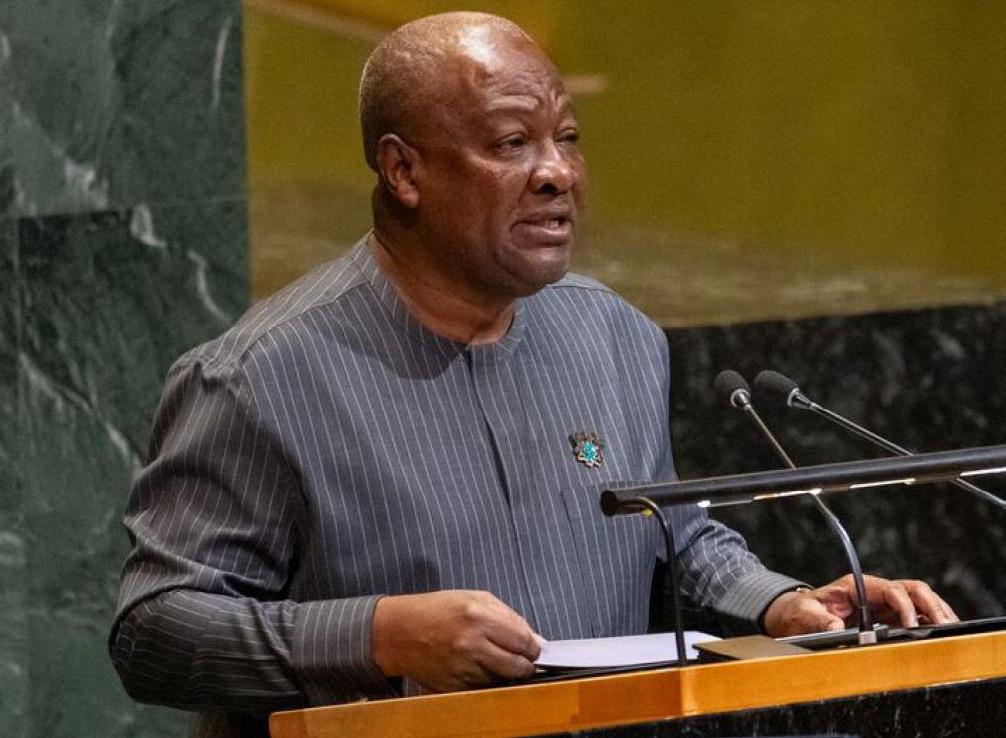
The voting pattern at the United Nations General Assembly revealed more than diplomatic preference. It revealed structure. A total of 123 countries supported the resolution. Only three — including the United States — voted against it. Fifty-two abstained, among them several European nations.
This is not a routine split. It reflects a widening divide between a Global South pushing for historical accountability and a Global North increasingly wary of its implications.
Western objections centred on legal and conceptual concerns. Both the United States and the European Union argued that declaring slavery as the gravest crime against humanity could introduce a hierarchy among atrocities or create grounds for retroactive legal claims.
Yet for many African and Caribbean states, such arguments miss the point. The legacy of slavery is not confined to history books. It is visible in patterns of inequality, underdevelopment and racial disparity that persist across generations.
By forcing a recorded vote, Ghana transformed a longrunning diplomatic discussion into a moment of global clarity — and division.

Ghana’s most effective move was not procedural, but conceptual. Rather than framing reparations narrowly as financial compensation, the resolution emphasised structural redress — education, skills development, access to capital, institutional reform and the return of stolen artefacts.
This reframing is critical because it changes how the issue is debated. Instead of focusing solely on compensation, it opens a broader conversation about systemic inequality and long-term redress. It also allows countries that might resist direct financial claims to engage with other forms of accountability.
Acknowledging this history does not dilute the primary responsibility of European powers. But it complicates the narrative.
‘Recognition is not neutral. Recognition creates pressure — and pressure leads to demands.’
Despite its overwhelming support, the resolution has triggered a visible backlash. Western governments have raised concerns about legal exposure, precedent and financial liability. European Union representatives pointed to what they described as ‘legal and factual’ challenges, including the implications of applying contemporary legal standards to historical events.
The United States warned against the use of historical injustice as a basis for redistributing modern resources.
These objections reflect a deeper anxiety: that recognition may lead to obligation. And that is precisely why the resolution matters.
What distinguishes this moment from earlier reparations debates is its transition from principle to policy. The resolution does not simply recognise historical injustice. It calls for action — including formal apologies, the return of cultural artefacts, financial redress and guarantees of non-repetition.
Legal scholar Justin Hansford described the vote as a historic turning point, noting that ‘this marks the first vote on the floor of the UN’, and emphasising how far the institution has moved in linking recognition of slavery to reparations.
The resolution also aligns with broader African efforts to develop a unified position on reparatory justice, signalling a move towards coordinated policy rather than fragmented advocacy.
The most consequential phase lies ahead. The UN vote is likely to intensify pressure on European states — particularly Britain, Portugal, France and the Netherlands — whose historical roles in the transatlantic system are well documented.
At the same time, legal avenues are beginning to emerge. Scholars are exploring potential claims through international courts, while universities, museums and financial institutions face growing scrutiny over their historical connections to slavery.
This is no longer simply about acknowledging the past but about defining the future
Ghana’s leadership has also reopened a more complex historical conversation. While European powers financed, industrialised and sustained the transatlantic slave trade, historians have long documented the role played by African intermediaries along the Gold Coast. Coastal societies, including the Fante, operated within what scholars describe as a dual reality — both victims of violence and participants in systems that enabled the trade.
What was once a moral appeal is evolving into a multidimensional pressure campaign — diplomatic, legal and economic.
At its core, this moment is about power — not only political or economic, but moral. Ghana’s success signals a reordering of who defines justice in the international system.
Africa is no longer positioned as a passive subject of history. It is asserting itself as an interpreter of that history — and as a driver of what comes next.
The resolution does not resolve the question of reparations. But it changes who controls the argument.
And that may prove to be its most lasting impact.
The debate Ghana has ignited will not end at the United Nations — it is only just beginning.
Despite strong legal frameworks, millions of African women remain locked out of justice systems weakened by conflict, culture and impunity, writes Valerie Msoka
International Women’s Day 2026 may have passed, but its central message continues to echo across Africa: rights without justice remain hollow promises.
Marked globally under the theme “Rights. Justice. Action. For ALL Women and Girls”, the moment was intended to galvanise action. Yet across the continent, it also exposed a deeper and more uncomfortable truth — that legal commitments alone have not translated into lived protection for millions of women and girls.
Across Africa, rights have never been absent on paper. Constitutions enshrine equality. Governments have ratified international treaties. Gender policies are routinely launched, endorsed and celebrated at national and international forums. But for many women and girls, justice remains distant, conditional, or entirely out of reach.
Rights written into law mean nothing when women cannot access justice.
Nowhere is this gap more visible than in regions affected by conflict, where fragile institutions and insecurity combine to strip women and girls of safety, dignity and agency. From Sudan and the Sahel to northern Mozambique and parts of the Horn of Africa, the breakdown of state systems has created environments where violence flourishes and accountability fades.
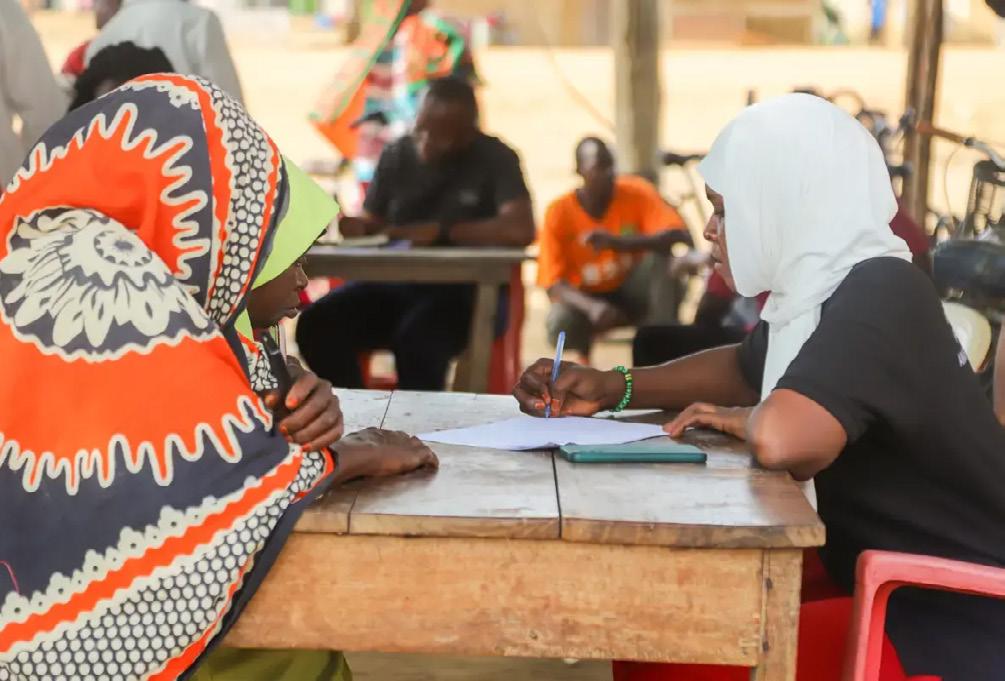
The eastern provinces of the Democratic Republic of Congo remain the starkest example. According to UNFPA, nearly 500 cases of sexual violence were recorded in a single week during escalations around Goma in early 2025, including more than 150 involving children. In the same period, over 400,000 people were displaced across North and South Kivu, the majority women and children.
Behind these figures lies a systemic collapse of protection. Courts are overwhelmed or non-functional. Police posts are understaffed. Survivors struggle to access medical care within critical timelines, including the essential 72-hour window required for effective treatment and evidence collection.
Imagine this scenario:
A 17-year-old girl holds a child she did not choose to conceive. She fled when armed men attacked her village, and in the chaos, she was separated from her family and assaulted while hiding in a field. She reported the crime. No investigation followed. The local police post was understaffed. The attackers were described as ‘unknown’. The clinic that treated her had already run out of essential post-rape medication. Months later, she remains displaced. Her schooling has stopped. The man who attacked her walks free.
This story is not an anomaly; it is echoed across many conflict-affected regions.
As Human Rights Watch has noted, support systems for survivors often shrink just as violence intensifies, entrenching a cycle of impunity that is difficult to reverse.
For survivors, the consequences are immediate and enduring. Reporting violence often leads nowhere. Investigations stall. Perpetrators remain unidentified or unpunished. Displacement disrupts education, livelihoods and community support structures, leaving victims trapped in prolonged vulnerability.
This is not an isolated reality but a pattern repeated across conflict zones. Violence against women is not only a byproduct of instability; it is frequently used as a weapon of war and control. It reinforces fear, fractures communities and signals the absence of authority capable of protecting the vulnerable.
Beyond conflict settings, the justice gap persists in more subtle but equally damaging forms. Across much of Africa, the issue is no longer the absence of legal frameworks. Many countries have criminalised rape, domestic violence, female genital mutilation (FGM) and child marriage. Regional instruments such as the Maputo Protocol articulate strong protections and commitments.
Yet enforcement remains inconsistent and often weak. Police units frequently lack specialised training to handle sensitive cases. Survivors face stigma, intimidation or retaliation for reporting abuse. Cases are delayed for years or quietly abandoned. In rural and underserved areas, formal courts are often inaccessible, leaving customary systems to adjudicate matters of sexual violence or forced marriage.
Too often, these systems prioritise reconciliation over justice. Crimes are negotiated as family disputes. Compensation replaces prosecution. Survivors are silenced in the name of preserving community cohesion. Justice, in these contexts, becomes negotiable rather than guaranteed.
The result is predictable: impunity becomes normalised.
The persistence of FGM and child marriage further illustrates the limits of legal reform without enforcement. According to UNICEF, more than 230 million girls and women worldwide have undergone FGM, with Africa accounting for the majority. In countries such as Somalia, Guinea and Mali, prevalence rates among women aged 15 to 49 remain exceptionally high, in some cases exceeding 90 percent.
Despite widespread criminalisation, prosecutions remain rare. The practice continues, often driven underground, sustained by deeply embedded social norms and weak enforcement mechanisms. The health consequences are severe, ranging from immediate complications such as excessive bleeding and infection to long-term reproductive, psychological and sexual health challenges.
Child marriage follows a similar trajectory. An estimated 640 million women globally were married before the age of 18, with sub-Saharan Africa carrying one of the heaviest burdens. In West and Central Africa, nearly four in ten girls are married before reaching adulthood.
Economic hardship, displacement and insecurity often exacerbate the problem. In fragile settings, marriage is misrepresented as protection or economic relief. In reality, it frequently leads to early pregnancy, higher maternal mortality risk, limited education and lifelong economic dependency. It narrows a girl’s world at precisely the moment it should be expanding.
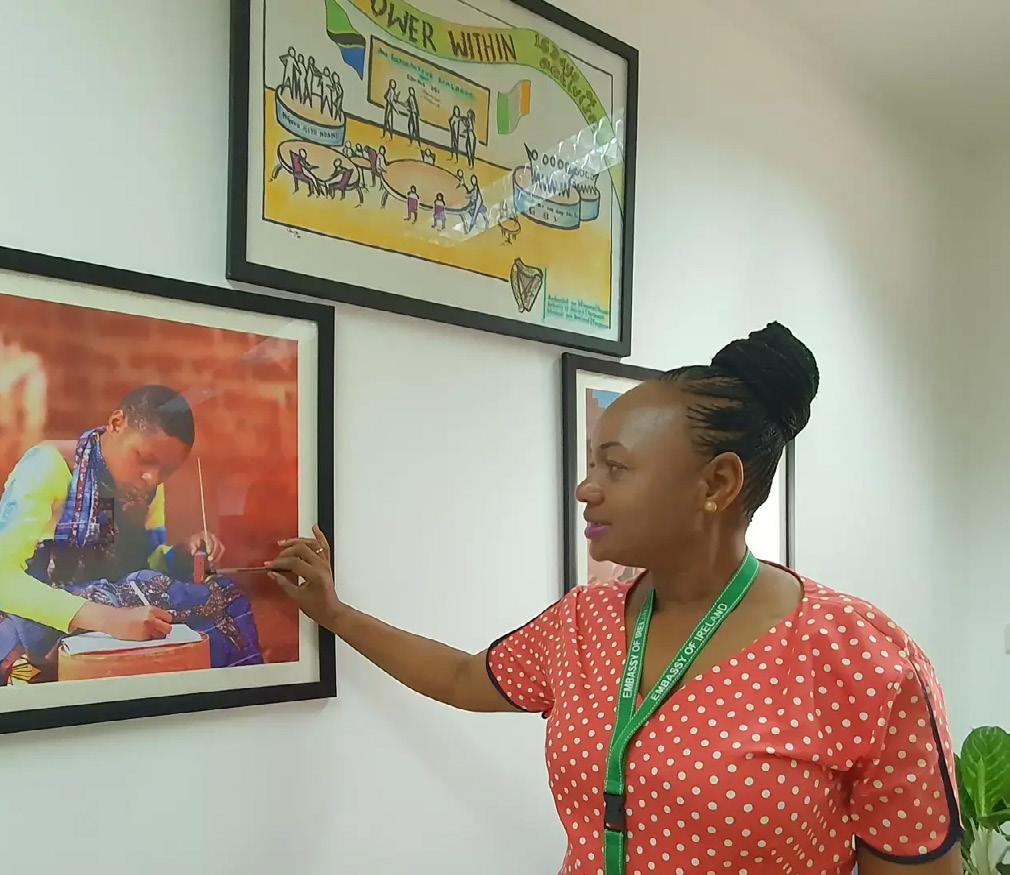
African governments and regional institutions have established strong frameworks, but implementation remains uneven. Political will, resource allocation and institutional capacity continue to define outcomes. As former Liberian President Ellen Johnson Sirleaf has observed, “A world free from violence is possible. But it will not happen by accident.”
Progress demands deliberate and sustained action. It requires investment in justice systems, from training police and prosecutors to expanding legal aid and strengthening survivor-centred services. It requires mobile courts and decentralised mechanisms capable of reaching rural and conflict-affected communities where formal systems are absent.
At the same time, those working to challenge these systems increasingly face their own risks. Journalists, lawyers, activists and community organisers advocating for women’s rights are often subjected to harassment, intimidation or legal pressure. In conflict zones and restrictive political environments, they are labelled as disruptors of culture or threats to stability.
Yet these actors are indispensable to closing the justice gap. They document abuses, support survivors and hold institutions accountable. Weakening their protection further erodes already fragile justice systems and reduces the likelihood of meaningful reform.
The post-IWD reflection now confronting policymakers is clear: the gap between policy and practice remains wide, and closing it requires more than symbolic commitments or annual observances.
Justice is the bridge between rights and lived reality. Without it, equality remains theoretical.
Budgets must reflect commitments. Gender ministries must be empowered rather than marginalised. Justice systems must become accessible, responsive and accountable.
Time is not neutral. Delay entrenches harm.
The cost of inaction is significant. Failure to protect women and girls is not only a human rights crisis; it is a governance failure. It undermines public trust, weakens institutions and limits economic growth. Societies cannot achieve stability or development when large segments of their population remain excluded from justice.
Every girl forced into marriage, every survivor denied accountability, every activist silenced is a signal of institutional fragility.
As the momentum from International Women’s Day fades, the challenge for African leaders is to ensure that its message does not.
Rights alone are not enough. Justice must follow. And without sustained, measurable action, the promise of both will remain unfulfilled.
From years of undiagnosed suffering to leading a global advocacy movement, Elizabeth Amoaa is forcing a reckoning on women’s reproductive health and systemic neglect, writes Valerie Msoka.
FOR as long as she can remember, Elizabeth Amoaa knew something was wrong.
At six years old, she was already the child who was “always sick”. There were recurring infections, abdominal pain, crushing fatigue and headaches that kept her in bed. As she grew older, heavy, irregular and agonising periods followed. Hospital visits became routine. Blood tests were taken. Multivitamins prescribed. Dietary advice offered. Yet the results were always the same: nothing conclusive.
“Why am I the only one?” she would wonder. In her family, she alone seemed to be constantly unwell. Her mother reassured her that some children fall sick and grow out of it. Doctors in Ghana, then later in France and the UK, focused on her immune system and nutrition. No one suggested scanning her reproductive organs. No one imagined that inside her body was a rare congenital condition that would shape her life.
It would take more than two decades for the answer to come.
Elizabeth was eventually diagnosed with uterus didelphys, a condition in which a woman is born with two wombs. In her case, it was the complete form: two wombs, two cervixes and two vaginal canals, functioning separately. Alongside this, she was diagnosed with stage four endometriosis, a disease in which tissue similar to the lining of the uterus grows elsewhere in the body, multiple fibroids — non-cancerous growths that can cause heavy bleeding and pain — and severe adhesions, bands of scar tissue that bind organs together and can lead to chronic pain, infertility and other complications. By the time the full extent of her condition was discovered, she was in her early thirties.
The diagnosis brought relief and devastation in equal measure.
On one hand, it confirmed that she had never imagined her pain. For years, she had been made to feel as though her symptoms were exaggerated or psychological. At times, medical professionals suggested postnatal depression or anxiety. Now, she finally had proof: her body was different, and it was complex.
On the other hand, the delayed diagnosis raised painful questions. How had multiple scans during pregnancy missed a second womb? Why had years of symptoms not triggered deeper investigation? Why had she carried so much doubt alone?
Born in Ghana, raised partly in France and later settled in the UK, Elizabeth’s journey crosses continents. But the silence surrounding women’s reproductive health followed her everywhere.
“We never spoke about periods,” she recalls. Not at school. Not among friends. Not at home. Painful menstruation was something girls endured quietly. Abnormal symptoms were rarely discussed. Fertility struggles were whispered about, if at all.

Silence, she says, was not always about shame. It was also about uncertainty. ‘Is this normal?’ she would ask herself. Without information, language or open conversations, she had no framework to understand her own body. She simply assumed this might be what womanhood felt like.
That silence would almost cost her everything.
After the birth of her daughter — a pregnancy marked by heavy bleeding and confusion during scans — Elizabeth suffered multiple miscarriages. In one traumatic episode, she carried a deceased foetus for eight weeks without knowing. Doctors later informed her that she had likely experienced several miscarriages in the past, masked by irregular and heavy periods.
It was in that hospital room, faced with her own mortality, that something shifted.
“If I don’t take off the veil, when will it be taken off?” she asked herself. Living with a high-risk condition, she understood that tomorrow was not guaranteed. If she survived, she would speak.
In 2017, she did.
The backlash was swift. Some accused her of lying. Others
suggested she was seeking attention. Relatives had warned her not to go public, fearing this response precisely. Reproductive health remains deeply taboo in many African societies, wrapped in stigma and cultural expectation. To speak openly about wombs and reproductive anatomy — and to describe them as “abnormal” — was to challenge entrenched norms.
But Elizabeth had lived with pain since childhood. Criticism, she decided, would not silence her.
“People’s opinions are none of my business,” she says now. Ignorance, she believes, fuels backlash. Education is the antidote.
What began as a personal testimony soon became a movement.
Elizabeth founded Speciallady Awareness in Ghana and Speciallady Awareness Global in the UK, transforming her story into structured advocacy. She moved beyond interviews into school visits, community outreach and policy engagement. Over time, those school sessions grew from a few hundred to thousands of students. To date, her organisation has supported more than 50,000 girls with sanitary products and reproductive health education.
And yet, she insists, it is nowhere near enough.
In rural communities, she still meets girls who miss school because they cannot afford menstrual products. Some engage in transactional sex to buy basic sanitary items. Many do not know that severe menstrual pain may signal conditions like endometriosis. Awareness remains limited. Access to diagnostic equipment such as MRI and ultrasound machines is inconsistent, especially in public hospitals across parts of Africa.
Even in the UK, women can wait years for an endometriosis diagnosis. In Ghana and across much of Africa, delays are often longer and compounded by resource shortages.
“Let’s face reality,” Elizabeth says. “Women’s health has not improved enough. There is little knowledge, little research, and minimal resources.”
The consequences extend beyond physical pain. Reproductive health disorders intersect with mental health, employment and life planning. Elizabeth studied law, completing both her degree and master’s, but her health prevented her from pursuing a legal career as she had envisioned. Surgeries, fatigue and unpredictable illness forced her to adapt repeatedly.
“If I had known earlier,” she reflects, “I could have planned my life differently.”
Early education, she argues, is critical. Young people, from the age of 13, need accurate, age-appropriate information about their bodies. They need to understand that heavy bleeding, severe pain or persistent infections are not simply things to endure. They need safe environments where questions are welcomed.
Her book, The Unspoken Identity, has been approved as supplementary material by Ghana’s National Council for Curriculum and Assessment, though implementation remains pending. Approval, she notes, is only the first step. Political will and funding must follow.
For Elizabeth, advocacy is not just about awareness; it is about systemic change.
Governments must invest in diagnostic equipment, specialist training and therapy services for women navigating complex conditions. Safe spaces must be created within families, faith communities and healthcare systems so women can speak without fear of ridicule or dismissal.
She is clear: this is not solely a women’s issue. It is a societal one.
Men, policymakers and community leaders all have a role to play in dismantling stigma. Without collective responsibility,
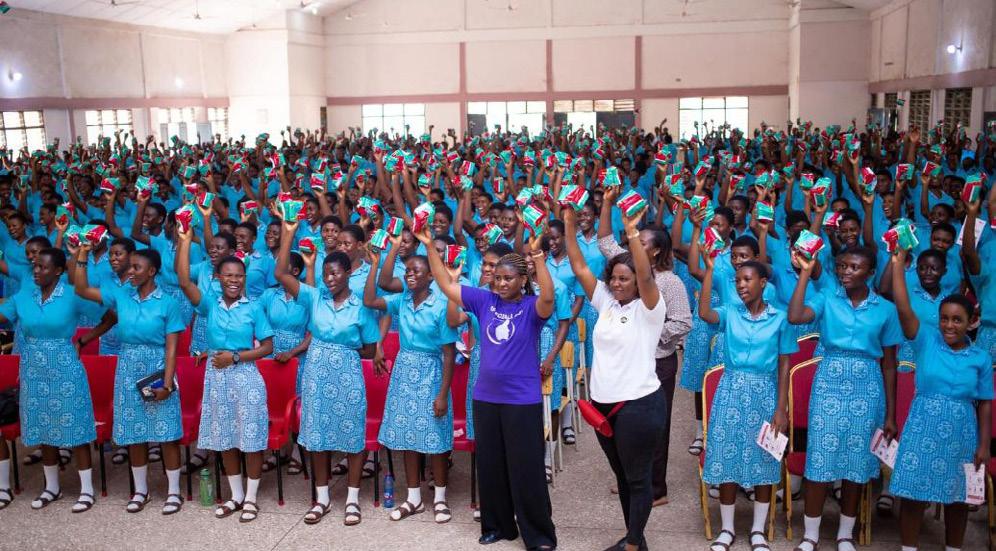
women will continue to suffer in silence, and conditions will remain under-researched and underfunded.
Despite everything, Elizabeth still lives with pain. Stage four endometriosis and associated complications do not disappear because one becomes an advocate. Some days are harder than others. Her immune system remains compromised. Diabetes adds another layer of management.
But advocacy, she says, heals her in ways medicine cannot.
“Positivity can be a form of healing.”
In telling her story, she reclaimed ownership of her body. In building a movement, she transformed trauma into purpose. In mentoring young girls, she sees echoes of her younger self and hopes they will grow up with more knowledge, more confidence and more support than she had.
She tells them to pay attention to their bodies. To choose support systems that understand their health journeys. To seek medical help early. To live fully, but wisely.
Above all, she urges women not to suffer alone.
“Your condition is real,” she says. “You are not making it up.”
If she were to stand before a president or prime minister today, her message would be simple: invest in women’s health. Equip hospitals. Fund research. Expand access to care. Make reproductive health education accessible. Stop pretending the problem does not exist.
It took Elizabeth more than twenty years to receive a diagnosis, across three countries, including one of the world’s most developed healthcare systems. That, she insists, is unacceptable.
Her story is not an anomaly; it is a mirror reflecting broader systemic gaps.
From a child who questioned why she was always sick to a woman who refuses to let others remain unheard, Elizabeth Amoaa embodies a quiet but determined revolution. She has endured pain, miscarriage, disbelief and backlash. She continues to manage complex health challenges.
Yet she stands not as a victim, but as a catalyst.
Across Africa and beyond, countless women are navigating fibroids, endometriosis, infertility and other reproductive health conditions without language, diagnosis or support. They deserve more than silence. They deserve investment, empathy and political commitment.
Elizabeth’s life is proof that awareness can begin with one voice.
Change, however, requires many.
The veil has been lifted. The question now is whether leaders, institutions and societies will listen.
Middle East conflict is disrupting African exports and exposing structural weaknesses in trade systems across the continent, writes
KENYA’S tea crisis is rapidly becoming a warning sign for the entire continent.
Up to 8,000 tonnes of tea worth about $24 million are stranded at the port of Mombasa, unable to reach key markets due to disruptions linked to the ongoing Middle East conflict. What began as a logistical bottleneck is now revealing something deeper: Africa’s export economy remains highly exposed to distant geopolitical shocks.
The disruption is no longer confined to tea. It is spreading across sectors—meat, flowers and fuel—raising broader concerns about export revenues, foreign exchange inflows and macroeconomic stability across East Africa. Kenya’s export model—built on agricultural commodities—has historically delivered strong foreign exchange earnings.
According to the East African Tea Trade Association (EATTA), shipments have been severely affected since the escalation of hostilities on February 28. Tea destined for the Middle East—one of the region’s most important markets—has been delayed indefinitely, while exports to Pakistan are becoming increasingly costly due to rerouted shipping and rising insurance premiums.
But Kenya’s experience is not unique. It reflects a structural pattern across Africa: heavy dependence on external markets and global shipping routes that the continent does not control.
Across West Africa, similar pressures are emerging. Cocoa exporters in Cote d’Ivoire are grappling with stock build-ups
amid global market distortions, while other commodity producers face mounting uncertainty as supply chains tighten. In Southern Africa, mineral exporters face similar exposure, particularly where shipments depend on long-distance maritime routes to Asia and Europe.
The result is a continent-wide vulnerability where disruptions in one region—whether the Gulf, the Red Sea or the Suez Canal—can quickly translate into lost revenue thousands of kilometres away.
At the heart of the crisis lies a familiar choke point: global maritime trade routes.
The Red Sea corridor, which connects the Indian Ocean to the Mediterranean via the Suez Canal, remains one of the most critical arteries for global commerce. Any instability along this route forces shipping companies to divert vessels around the Cape of Good Hope, significantly increasing transit times and costs.
For African exporters, this shift is particularly damaging. Longer shipping times reduce the competitiveness of perishable goods such as flowers and fresh produce, while higher freight costs erode already thin profit margins. In some cases, contracts become unviable altogether.
Africa’s export economy depends heavily on these corridors linking the Indian Ocean to the Middle East, Asia and Europe. When they are disrupted, the effects cascade rapidly across multiple sectors.
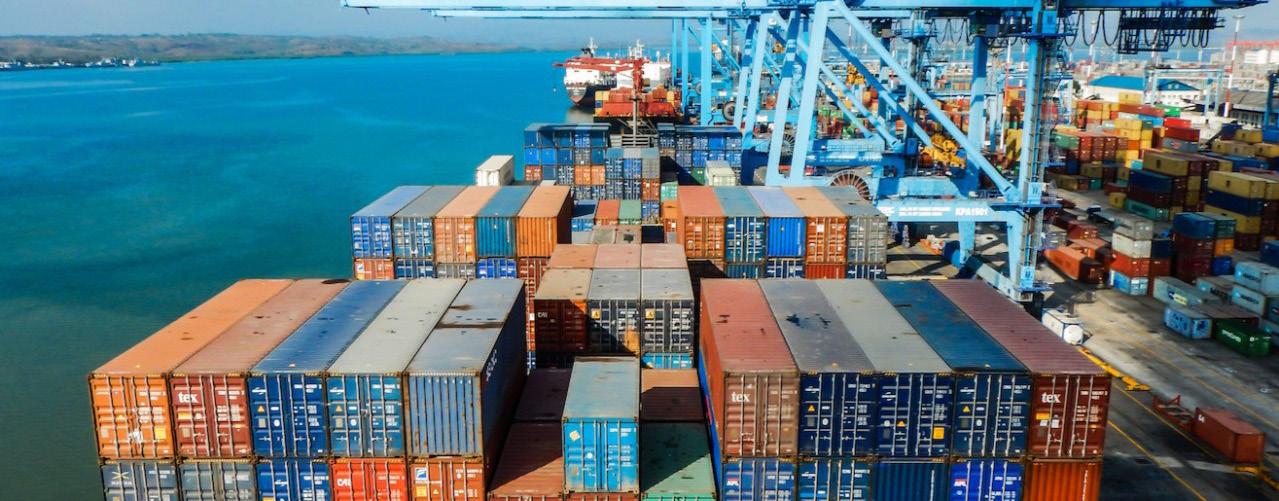
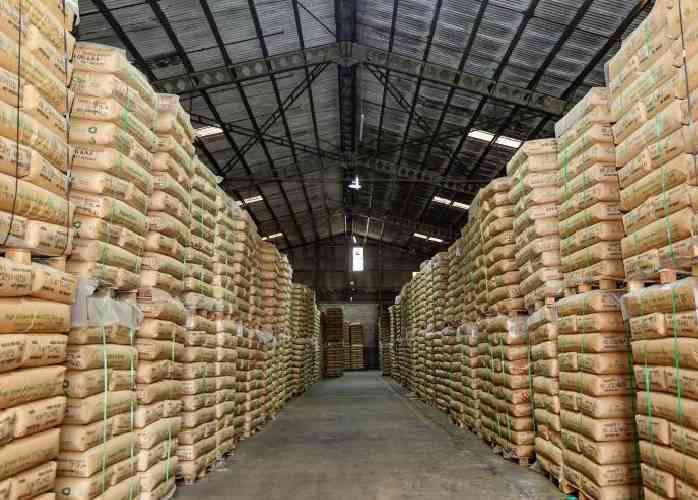
The current conflict has forced vessels to avoid high-risk zones, increasing transit times and driving up freight costs. Insurance premiums have surged, and shipping capacity has tightened, leaving exporters struggling to secure space on vessels.
For countries like Kenya, where tea exports alone account for a significant share of foreign exchange earnings, these disruptions are not just logistical—they are economic shocks with macroeconomic consequences.
The situation also underscores Africa’s limited control over its own trade infrastructure. While ports like Mombasa, Durban and Lagos serve as major gateways, the routes beyond them remain vulnerable to external events and geopolitical tensions far removed from the continent.
Another weakness exposed by the crisis is Africa’s reliance on a narrow set of export markets.
In Kenya’s case, the Middle East accounts for roughly 20 percent of tea exports, while Pakistan represents about 40 percent. This concentration leaves exporters highly exposed when demand or access to these markets is disrupted.
Similar patterns exist across the continent. From oil exports in Nigeria to cocoa in Cote d’Ivoire and copper in Zambia, many African economies depend on a handful of external buyers, often in regions prone to geopolitical volatility.
This model has delivered growth during stable periods, but it also amplifies risk when global conditions shift. When a single corridor or market is disrupted, the effects are magnified across entire national economies.
The current disruption is a reminder that diversification— both in markets and products—remains a critical but unfinished agenda. Despite years of policy discussions, many countries have struggled to move up value chains or develop alternative export destinations.
The economic impact is already spreading beyond primary exports.
Kenya’s meat industry has seen deliveries collapse, with only a fraction of expected shipments reaching Middle Eastern markets in recent weeks. The horticulture sector, particularly flowers, is also under pressure, with delays threatening product quality and export revenues.
Fuel supply chains are showing early signs of strain as well. With Kenya heavily dependent on imported petroleum, any disruption in global shipping routes raises concerns about availability and price stability.
Although pump prices have remained steady for now, reports of temporary stock-outs and rising demand suggest that pressure is building beneath the surface. If supply disruptions intensify, the effects could feed quickly into transport costs, food prices and broader inflation.
This transmission mechanism is critical. Higher shipping costs raise import prices, which in turn increase domestic inflation. At the same time, reduced export earnings weaken foreign exchange reserves, putting pressure on local currencies. The combined effect can create a feedback loop of currency depreciation and rising living costs.
These spillovers illustrate how interconnected Africa’s trade systems have become—and how quickly disruptions can move from one sector to another, eventually affecting entire economies.
The crisis also raises questions about Africa’s ability to cushion such shocks through intra-continental trade.
The African Continental Free Trade Area (AfCFTA) was designed to reduce dependence on external markets and strengthen regional supply chains. In theory, stronger intraAfrican trade could help absorb shocks when global routes are disrupted.
However, the current crisis exposes the limits of that vision.
In practice, intra-African trade remains relatively low compared to other regions. Infrastructure gaps, fragmented logistics systems, regulatory barriers and limited industrial capacity continue to constrain trade within the continent.
As a result, most countries still rely heavily on exports to markets outside Africa, leaving them exposed to the same global disruptions AfCFTA was intended to mitigate.
The current disruption highlights the urgency of accelerating AfCFTA implementation—not just as a long-term integration project, but as a practical tool for economic resilience in an increasingly volatile global environment.
If the Middle East conflict persists, the risks for African economies will deepen.
Prolonged shipping disruptions could lead to sustained export losses, reduced foreign exchange earnings and increased pressure on national currencies. Higher import costs—particularly for fuel—could feed into inflation, further straining households and businesses.
For policymakers, the crisis presents a familiar challenge: how to manage external shocks in economies that remain structurally exposed to global volatility.
In the short term, governments may focus on stabilising supply chains, securing alternative shipping routes and supporting affected industries. Some may also intervene in currency markets or adjust fiscal policy to cushion the impact.
But in the longer term, the solution lies in addressing the underlying vulnerabilities—diversifying export markets, strengthening regional trade integration and investing in resilient infrastructure that reduces dependence on external chokepoints.
The tea piled up in Mombasa is more than a logistical problem. It is a symbol of a broader reality: Africa’s economic lifelines remain tied to global systems over which it has limited control.
As geopolitical tensions reshape trade routes and supply chains, the continent faces a critical question—whether it can build a more resilient, self-sustaining economic model, or continue to absorb shocks from crises far beyond its borders.
For now, Kenya’s stalled exports offer a stark reminder that in an interconnected world, distance offers little protection from disruption.
While coal may be a legacy fuel, it is also a necessary enabler of energy resilience and industrial competitiveness, reports Stephen Williams
THE Africa Energy Indaba at the beginning of March in Cape Town, South Africa could not have been held at a more significant time. It took place just as the US and Israel embarked on a military assault on Iran.
With the Iranian regime hitting out at its perceived enemies in the Gulf that are either hosting American forces or are allied with the US, it was not lost on anyone that Iran holds the “Trump” card. The country’s geography means that it is able, potentially, to disrupt 20 per cent of the world’s oil supplies – the grease that keeps the global economy turning.
Predictably, much of the two-day Africa Energy Indaba was taken up with a focus on renewable energy – wind, solar, lowcarbon hydrogen, biogas, geo-thermal, as well as, controversially,
nuclear – even though South Africa’s own energy mix, just as in India and China, is heavily dependent on coal. Nevertheless, it was argued, while coal may be a legacy fuel, it is also a necessary enabler of energy resilience and industrial competitiveness.
Following the two-day Indaba, a special Gas Forum was held with South Africa’s Minister of Mineral and Petroleum Resources, Gwede Mantashe, providing a keynote address. Mantashe – a selfconfessed and unapologetic “fossil fuel dinosaur” – said that he found it inexplicable that in 2025, South Africa built not a single coal-fired plant while China built 50.
He also expressed bewilderment that while the US was “making a killing” exploiting fracked gas, South Africa had not been able to develop gas resources identified as ready to
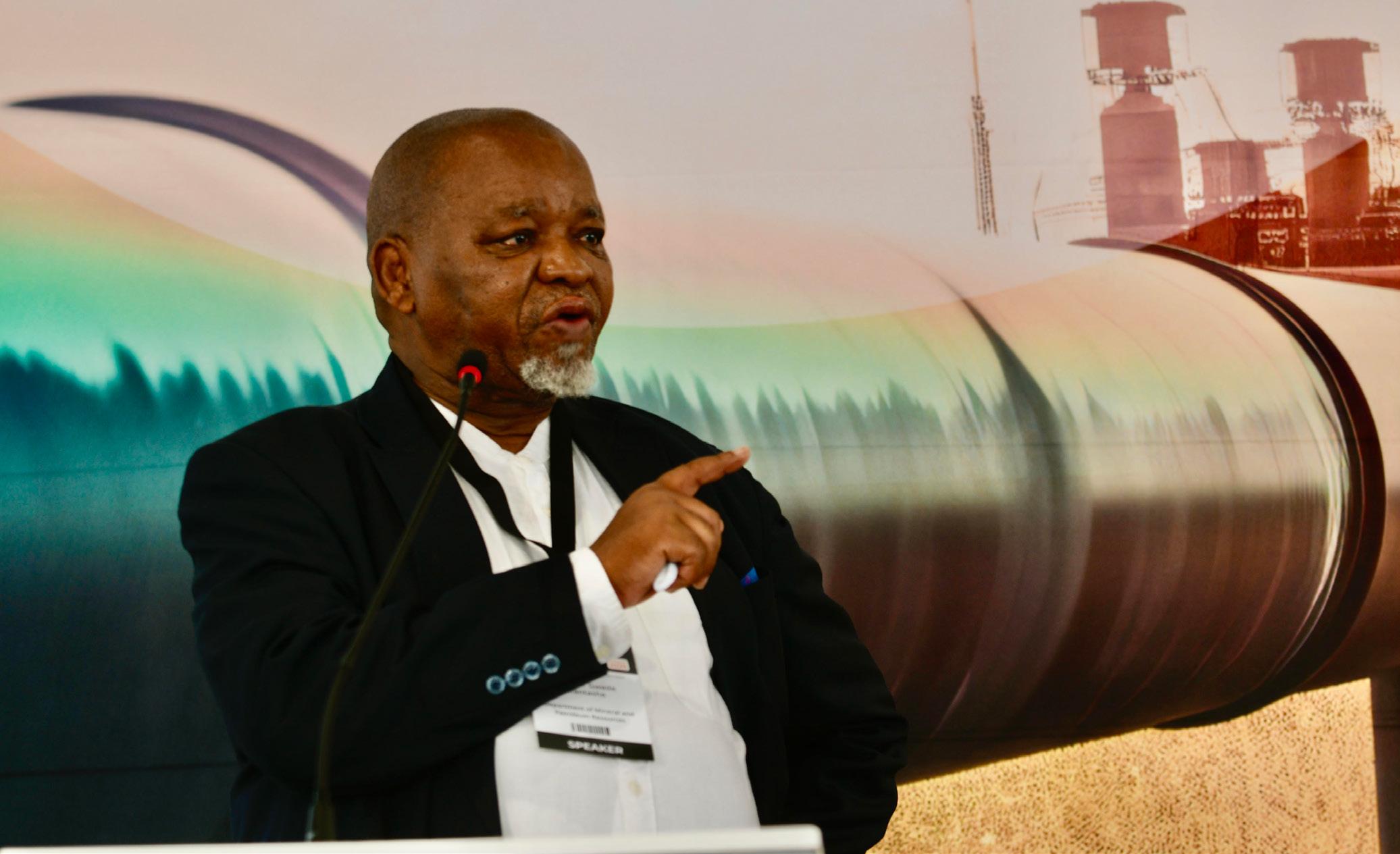
be fracked in the Karoo, a vast, scarcely populated semi-desert region covering a third of South Africa's landmass.
In 2024, South Africa produced some 235 million tonnes of saleable coal, exporting about 70 million tonnes, mainly to China, supporting close to 100,000 direct jobs, according to the Minerals Council South Africa.
Global demand for “King Coal” remains strong, not only for electricity generation but also in high-heat industrial processes, notably steelmaking. According to the International Energy Agency, coal accounts for almost 70 per cent of South Africa’s electricity generation and 17 per cent of non-energy applications used to produce the industrial chemicals needed to make plastics and fertilisers.
Mantashe’s background is in trade union activities before formally entering South Africa’s political arena, becoming ANC Secretary General and then government minister. This explains his loyalty towards South African coal miners, given he is a former General Secretary of South Africa’s National Union of Mineworkers.
As ANC Secretary General, Mantashe is credited with revealing to the media the alleged Gupta “State Capture” scandal in early 2016. It was the first time the term State Capture had been used in a South African context, which Mantashe defined as “people outside the state” exerting undue influence on the government and its decisions. He was also part of the small group of ANC stalwarts that persuaded Jacob Zuma to resign the presidency over this issue.
Mantashe characterised the current energy situation as being a tussle between the ecology and the economy. Electricity can be generated in two main ways: by harnessing the heat from burning fuels or nuclear reactions in the form of steam (thermal power) or by capturing the energy of natural forces such as the sun, wind, or moving water.
Zimbabwean energy journalist Tonderayi Mukeredzi notes: “Investments into the African mining sector may be accelerating
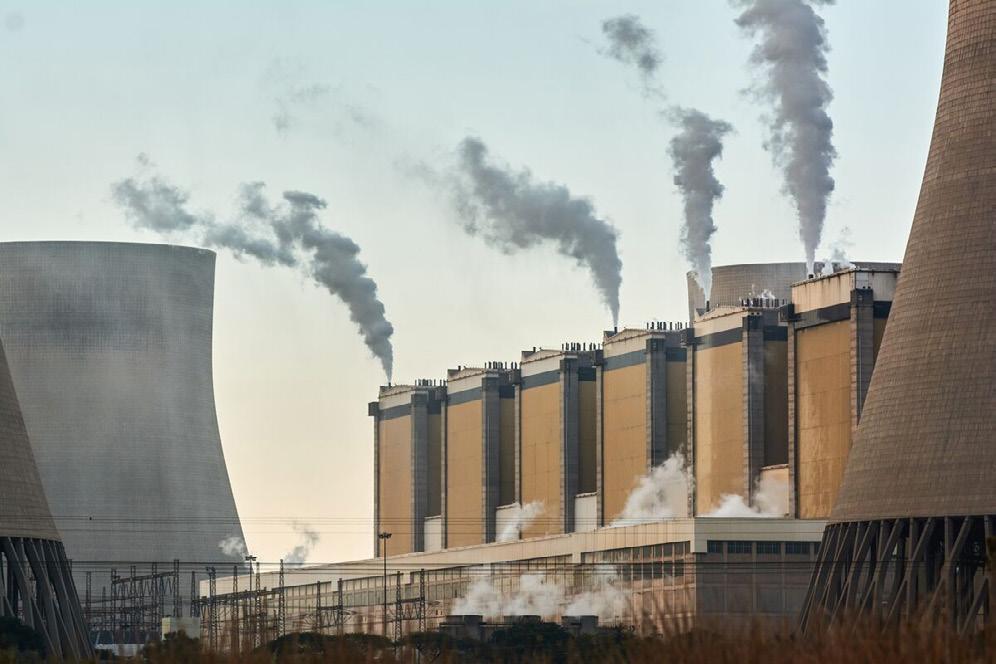
towards transition minerals, and ever more renewables are supplying electricity grids, but some industry experts believe coal will remain a significant part of the energy for the foreseeable future in regions where it is important for electricity generation, mining jobs and export income.”
Mukeredzi is of the opinion that converting even low-grade coal to clean Substitute Natural Gas (otherwise known as Syngas) is not only feasible but highly attractive from the perspectives of the environment, security of energy supply and the use of domestic resources. That Syngas, it is argued, can be used in converted coalfired power stations, cutting emissions by as much as 50 per cent.
The alternative would be to still use thermal coal for electricity generation but employ Carbon Capture and Storage technologies to store the carbon deep underground, perhaps in disused mines.
However, the Africa Energy Indaba is a continent-wide event, and continental developments are clearly accelerating energy transition in Africa. Even if a key takeaway from the Indaba is that Africa seems to have met the challenge of electricity generation it is evident that the continent now needs to resolve the transmission question.
Significantly, just prior to the Indaba, in late February 2026, a Memorandum of Understanding was signed between the Eastern Africa Power Pool and the Southern African Power Pool in what is seen as an important step towards a fully integrated African electricity market. This agreement mirrors the African Continental Free Trade Agreement and the African Union’s Agenda 2063 which focuses on creating a single market for goods and services across Africa.
Already, the Eastern Africa Power Pool’s Ethiopia-Kenya Interconnector Project is transferring electricity between the two countries. Both Ethiopia and Kenya have moved away from fossil fuel electricity generation with Ethiopia building the largest hydropower dam in Africa, with the capacity to generate 5,150MW – and Kenya, to a lesser extent relying on hydro power but developing biomass, geo-thermal, wind and solar. In fact, according to the International Energy Agency’s data, hydropower and geothermal account for more than 70 per cent of electricity generation.
There are also plans for a Zambia-Tanzania-Kenya (ZTK) Power Interconnector, a game-changing 2,300km electricity transmission line linking Zambia, Tanzania and Kenya.
Regional power pools remain one of Africa’s most ambitious energy policy experiments. Their potential benefits are undeniable: lower electricity costs, stronger energy security and greater capacity to integrate renewable energy at scale.
Technocracy is emerging as the missing link between governance, economic transformation and the future of work across the Global South, writes Ojo
Emmanuel Ademola.
THE digital age has ushered in a defining moment for the Global South, one where the strength of democratic institutions is increasingly tied to technological competence and visionary governance. As nations navigate rapid shifts in economic structures, labour markets and civic expectations, technocracy is emerging not as a rival to democracy, but as a vital partner in rebuilding its weakened foundations.
Across the Global South, a decisive transformation is taking shape. Nations long constrained by structural inequalities, fragile institutions and uneven development are now confronting a new frontier: the digital era. This moment demands more than technological adoption. It calls for a deeper philosophical shift, one that aligns technocratic thinking with democratic renewal, economic growth and the evolving future of work.
Technocracy, in its purest sense, is not the rule of machines over people. It is the elevation of competence, evidence-based governance and digital literacy as the scaffolding upon which modern democracies must stand. In regions where democratic systems have been weakened by corruption, misinformation and institutional fatigue, technocracy offers a disciplined, forwardlooking corrective.
The Global South, home to more than 85 per cent of the world’s population, cannot afford a passive approach to this transition. The stakes are substantial. The World Bank estimates that digital economies already contribute more than 15 percent to global GDP, a figure set to rise as artificial intelligence, automation and data-driven governance reshape labour markets and national competitiveness. For Africa, projections suggest the digital economy could add $180 billion to GDP by 2025 and reach $712 billion by 2050.
The question is no longer whether the Global South will embrace technocracy, but how it will do so in ways that strengthen democratic institutions rather than undermine them.
Democracy across much of the Global South has been strained by years of underinvestment in civic infrastructure, weak accountability systems and the corrosive impact of misinformation. The digital age has amplified these vulnerabilities, but it also offers tools for renewal.
Technocratic governance has the potential to restore trust through transparency. Digital public services, open data systems and algorithmic accountability can reduce the opacity that has historically enabled corruption. Rwanda’s Irembo platform, which digitises government services, illustrates how efficiency and transparency can improve citizen engagement.
It can also deepen participation. Digital tools enable citizens to engage more directly in policymaking, monitor public spending and hold leaders accountable. Brazil’s digital participatory budgeting demonstrates how technology can strengthen democratic culture rather than erode it.
Equally important is institutional competence. Governments equipped with digital skills, data analytics and modern administrative systems are better positioned to respond to citizen needs in real time. Governance becomes more efficient, more responsive and more aligned with the expectations of a digitally connected population.
Yet these gains are not guaranteed. The United Nations estimates that 2.7 billion people remain offline, most of them in the Global South. Without digital inclusion, democratic renewal remains incomplete.
Economic transformation is equally tied to technological capacity. Nations that fail to invest in digital infrastructure, innovation ecosystems and data governance risk exclusion from global value chains. Technocracy provides the framework to ensure that development strategies are grounded in evidence, foresight and long-term planning.
The International Labour Organization warns that 40 percent of jobs in developing countries are at high risk of automation. This is not a distant threat but a present reality that demands proactive policy responses. The African Union estimates that digital trade could increase intra-African commerce by more than 30 percent under the African Continental Free Trade Area, highlighting the scale of opportunity.
India’s digital public infrastructure offers further insight. Through Aadhaar-enabled systems, hundreds of millions have been integrated into formal financial networks, demonstrating how technocratic planning can unlock economic participation at scale.
Economic growth is no longer driven solely by natural resources or low-cost labour. It is increasingly defined by digital capability, data sovereignty and innovation. Governments that recognise this shift and invest strategically will shape the next phase of global economic competition.
At the same time, the future of work is being rewritten. Automation, artificial intelligence and platform economies are transforming labour markets across the Global South. The challenge is not only to create jobs but to create sustainable, future-ready employment.
The World Economic Forum estimates that 50 percent of workers globally will require reskilling by 2027. Countries that embed continuous learning into their development strategies will be better positioned to manage this transition. Those that fail to do so risk widening inequality and social instability.
Sustainability is also central to this shift. Renewable energy, circular economies and climate-smart agriculture all depend on technical expertise and data-driven planning. Technocratic governance ensures that environmental considerations are integrated into economic strategies rather than treated as secondary concerns.
However, digital transformation also risks reinforcing existing inequalities. Women and young people remain disproportionately excluded from digital opportunities. In sub-Saharan Africa, only 24 percent of women have access to mobile internet compared to 35 percent of men. Without deliberate intervention, technological progress may deepen rather than reduce inequality.
However, the digital divide is not only about access; it is also about power. Those who design, control and regulate digital systems shape whose voices are amplified and whose are marginalised. Across the Global South, women, rural populations and informal workers remain underrepresented not just as users of technology, but as creators, policymakers and data contributors.
This imbalance carries long-term consequences. Algorithms trained on incomplete or biased data risk reinforcing existing inequalities in hiring, credit access, healthcare and public service delivery. Without deliberate intervention, digital systems may replicate the very structural exclusions technocracy seeks to correct.
Bridging this gap therefore requires more than infrastructure. It demands intentional inclusion in digital education, entrepreneurship and leadership. Governments must invest in STEM education for girls, support women-led tech enterprises and ensure that digital policy frameworks reflect diverse lived experiences.
Affordability also remains a critical barrier. For many households across Africa, the cost of data and devices continues to limit participation in the digital economy. Addressing this requires coordinated policy responses, including reduced tariffs on digital equipment, public-private partnerships to expand connectivity and targeted subsidies for underserved communities.
Ultimately, digital inclusion is not a peripheral issue; it is central to democratic legitimacy and economic transformation. A digital future that excludes large segments of the population is neither sustainable nor just.
Social protection systems must also evolve. Digital identity platforms, mobile money and automated welfare systems allow governments to deliver targeted support more efficiently. Kenya’s mobile money ecosystem, for instance, has helped lift households out of extreme poverty, illustrating how digital tools can strengthen economic resilience.
Despite its promise, technocracy must remain grounded in human values. The digital age introduces risks, including surveillance, algorithmic bias and digital authoritarianism. Without ethical guardrails, technological systems can erode the very freedoms they are meant to support.
A human-centred approach is therefore essential. Ethical AI frameworks, data protection policies, digital rights charters and civic education must underpin digital transformation. Technocracy must serve democracy, not replace it.
The Global South now stands at a pivotal moment. The opportunities presented by the digital age are immense, but they require more than ambition. They demand disciplined leadership, strategic investment and a governance model rooted in competence and accountability.
The foundations of democracy can be strengthened. The future of work can be secured. Economic transformation can be accelerated. But these outcomes will not emerge by chance. They require deliberate action.
The Global South possesses the demographic strength, creativity and resilience to lead this transformation. What remains is the willingness to act with clarity, the discipline to implement reforms and the commitment to ensure that technological progress translates into inclusive and sustainable development.
Technocracy, properly understood, is not a departure from democratic ideals. It is the mechanism through which they can be renewed and sustained in the digital age. AB
Africa stands at a defining crossroads in the global race to govern artificial intelligence, where the continent’s choices today will determine whether it shapes or simply absorbs the rules of tomorrow, says Ojo
Emmanuel Ademola
AFRICA is entering a decisive phase in its technological evolution. As artificial intelligence reshapes global economies, security frameworks and governance systems, the rules that will define this transformation are being written— rapidly and often without meaningful African participation.
The stakes are no longer abstract. Artificial intelligence is not just a technological shift; it is a redistribution of power. Countries that design, regulate and deploy AI systems will shape global value chains, labour markets and geopolitical influence. Those that do not risk becoming passive consumers of systems built elsewhere.
For Africa, the question is urgent and unavoidable: will it be a rule-maker or a rule-taker?
Across the continent, there is no shortage of ambition. Governments have developed national AI strategies, while the African Union has outlined a continental vision for digital transformation. These frameworks reflect a growing recognition of AI’s strategic importance.
Yet ambition alone is not enough.
The gap between policy and implementation remains one of Africa’s most significant vulnerabilities. Strategies are often articulated without the institutional capacity required to enforce them. Regulatory bodies lack technical expertise. Data protection authorities are under-resourced. Public-sector institutions frequently struggle to procure and manage advanced technologies responsibly.
This gap is where Africa’s technological future will be decided.
Policy without execution remains aspiration. Execution without institutions creates fragility. And institutions without ethical grounding risk becoming instruments of harm rather than progress.
Closing this gap requires more than incremental reform. It demands deliberate investment in institutional strength— regulators capable of auditing AI systems, enforcement bodies with real authority, and public institutions equipped to deploy technology in ways that align with national and continental priorities.
Few concepts have gained as much traction in African digital policy discourse as data sovereignty. Yet too often, it is reduced to
questions of data localisation or legal ownership.
This framing is insufficient.
True sovereignty is not simply about where data is stored, but who controls its value, who sets the rules governing its use, and who bears the consequences when systems fail. It is about agency—economic, political and technological.
At present, much of the value generated from African data flows outward, captured by global technology firms that design the platforms, algorithms and infrastructures underpinning AI systems. Meanwhile, African states and institutions often lack the leverage to negotiate equitable terms.
Reclaiming data sovereignty therefore requires a shift from rhetoric to strategy. It means developing the capacity to extract

value domestically, investing in digital infrastructure, and establishing clear regulatory frameworks that prioritise local interests without isolating the continent from global innovation.
Most importantly, it requires recognising that data governance is not merely a technical issue—it is a question of power.
Africa’s political geography presents both a challenge and an opportunity. Fifty-five countries, each pursuing its own digital strategy, face structural limitations when negotiating with global powers such as the United States, China or the European Union.
Fragmentation weakens bargaining power.
Global AI governance is increasingly shaped in multilateral forums, from the G20 to the OECD, where influence is often determined by economic weight and strategic alignment. In such spaces, individual African states struggle to assert meaningful influence.
A fragmented approach also creates regulatory inconsistency, discouraging investment and complicating cross-border collaboration.
The alternative is clear: continental coordination.
By harmonising regulatory frameworks, pooling expertise and presenting a unified negotiating position, Africa can transform its collective scale into strategic leverage. The African Union has a critical role to play in this process, not only as a convening body but as a driver of coherence.
A unified continental voice does not eliminate national priorities; it amplifies them.
African discourse on AI governance often emphasises values—human dignity, communal responsibility and moral accountability. These principles are important, but they must move beyond abstraction.
Ethics that remain aspirational have limited impact.
To shape outcomes, ethical commitments must be embedded in procurement processes, regulatory standards and institutional practices. Governments must require transparency in AI systems used in public services. Regulators must enforce accountability
mechanisms. Developers must be held to clear standards that reflect societal priorities.
Operationalising ethics is what transforms values into governance.
Without this shift, there is a risk that ethical language becomes decorative—present in policy documents but absent in practice.
Africa’s AI strategy cannot be developed in isolation from global power dynamics. The contest between major technology powers—particularly the United States and China—is already shaping the direction of AI development, from semiconductor supply chains to data governance norms.
At the same time, the European Union’s regulatory approach is influencing global standards beyond its borders.
These dynamics create both risks and opportunities for Africa.
On one hand, there is a danger of being pulled into competing spheres of influence, adopting external standards that do not align with local realities. On the other, there is an opportunity to engage strategically, leveraging partnerships while maintaining autonomy.
Achieving this balance requires clarity of purpose and strength of negotiation.
Africa must engage globally, but on its own terms.
If there is a single thread that runs through Africa’s AI challenge, it is alignment.
Alignment between policy and implementation. Between ethical commitments and institutional practice. Between national priorities and continental strategy.
Without alignment, even the most well-crafted strategies will fail to deliver meaningful outcomes.
Achieving it requires political will—leaders willing to prioritise long-term capacity over short-term gains. It requires regulatory courage—the readiness to set standards and enforce them. And it requires sustained investment in human capital, research and digital infrastructure.
The continent is not lacking in vision, talent or ambition. What it needs is coordination.
Artificial intelligence will not determine Africa’s future. Africa’s choices will.
The rules governing AI are being written now, in real time, across boardrooms, regulatory agencies and multilateral institutions. The window for shaping those rules is narrowing.
Africa can choose to participate passively, adapting to frameworks designed elsewhere. Or it can choose to act deliberately, building the institutions, strategies and alliances necessary to shape outcomes.
The difference between these paths is profound.
One leads to dependency. The other to autonomy.
One confines Africa to the margins of the digital economy. The other positions it at the centre.
The choice is not theoretical. It is immediate.
And it will define the continent’s place in the global order for decades to come. AB
This article synthesises Prof Ademola’s contributions at the LSE Africa Summit 2026, held from March 28–29, where he spoke as a panellist on March 28 and delivered the debate synthesis remarks on March 29.
Entrepreneur Adwoa Agyemang is helping African and diaspora women founders use artificial intelligence to scale businesses and close opportunity gaps, writes Amanda Wilson
ARTIFICIAL intelligence is rapidly reshaping the modern business landscape and entrepreneurs are racing to keep pace.
London-based community builder and entrepreneur Adwoa Agyemang has turned her attention to a group she believes risks being overlooked in the rush: women founders, particularly those from African and diaspora communities, who she says must be equipped not only to understand the technology but to use it to their advantage.
“AI is critical because it reduces the cost of capability,” she shared. “Many historically excluded entrepreneurs do not have big teams, big budgets, or agency support, yet they are expected to compete in fast-moving markets.”
In a field still dominated by men, and where African voices remain underrepresented in promoting artificial intelligence for minority communities, Agyemang is quietly carving out a distinct space.
Some supporters have begun referring to her as the “Africa AI Queen” – a title she meets with a smile. “We need a variety of voices to reach our community of businesswomen, especially minority women.”
She has spent months developing a practical training guide designed to demystify artificial intelligence and help women entrepreneurs integrate the technology into their daily operations.
Her approach is deliberately hands-on. Using her social media platforms — Facebook, Instagram, X and TikTok — as an informal testing ground, she experiments with AI-generated content, often using herself as the subject.
The results range from humorous sketches to corporate-style explainers demonstrating how the technology can be applied in real business situations. Through photos, short videos and digital poster designs, she has built a steadily growing online following and is increasingly recognised as a voice among minority women starting and expanding businesses.
“Many women are juggling business, family, work, and community responsibilities at the same time,” she said. “AI can reduce that load by helping women prioritise, plan, and execute faster. It turns one-hour tasks into ten-minute tasks.”
Globally, the use of generative AI is expanding rapidly. A 2024 survey by consulting firm McKinsey found that roughly 16 percent of people worldwide regularly use generative AI tools for work or learning, including platforms such as ChatGPT and other creative software.
As businesses increasingly adopt the technology, the risk for those who fail to engage with it is becoming clearer.
Across Africa, the stakes are particularly high. The continent’s startup ecosystem has grown rapidly over the past decade, driven by mobile-first innovation and digital platforms. Yet access to advanced tools such as artificial intelligence remains uneven, often constrained by infrastructure gaps, cost barriers and varying levels of digital literacy. For women entrepreneurs, who already face structural challenges in accessing finance, networks and mentorship, the risk of being excluded from this next wave of technological transformation is even greater.
Agyemang, who has business ties on both the African and European continents, argues that when used properly, modern technology can help level the playing field.
“AI can help close that gap. It supports marketing, operations, research, planning, customer communication, and content creation,” she stressed, adding: “When used properly, it frees up time, reduces costs, and increases output.”
Adoption across companies is also accelerating. According to the European Commission’s 2025 Digital Economy and Society
Index, about 20 percent of European Union enterprises were using AI technologies, with adoption rates exceeding 50 percent among large firms.
Yet the gender gap remains visible. A global analysis by researchers at Harvard Business School and the National Bureau of Economic Research found that for every 100 men using generative AI tools, only about 78 women do, even after accounting for differences in age, education and profession.
Confidence in the technology also varies. Research from the online learning platform Coursera’s Global Skills Report found that 36 percent of women believe generative AI tools can help advance their careers, compared with 45 percent of men.
A separate survey commissioned by Amazon Web Services suggested professional women may be more optimistic, with more than half saying AI skills could support their career progression.
Agyemang’s workshops are designed to address both the practical and psychological barriers. Sessions are structured as open conversations in relaxed settings where discussion, questions and shared experiences follow presentations. The focus, she noted, is on practical application rather than theory.
“For women running small or solo businesses, AI can become a real support system,” she emphasised. “It helps you move from a blank page to a strong first draft quickly. It helps you plan your week, structure your ideas, write client communications, create marketing assets, and organise your operations.”
Over time, Agyemang believes that greater efficiency could allow more founders to build sustainable businesses.
“It makes consistency easier, and consistency is what creates momentum.”
But misconceptions about the technology remain widespread. Concerns about privacy, copyright and ownership of technologygenerated material often surface in discussions.
“A big myth is that AI will replace people,” she nodded. “The reality is that people who use AI well will be able to work faster and smarter.”
Another common misunderstanding, Agyemang added, is that the technology is relevant only to engineers or developers.
“It is not only for tech people. It is for anyone running a business because every business needs communication, planning, selling, and marketing.”
For this Londoner with ties to Ghana, learning how to use these tools is rapidly becoming a basic professional skill.
“AI is quickly becoming a baseline skill in business,” she noted. “Early adopters are gaining an advantage in speed, efficiency, and output, and the gap will widen for those who delay.”
Her work with founders began well before her focus on artificial intelligence. As a community builder, she had long observed the difficulties many African and diaspora entrepreneurs faced when trying to grow their businesses in the United Kingdom.
“I kept seeing the same pattern,” she shared. “Brilliant African and diaspora founders would show up to events, connect with people, exchange details and leave feeling inspired, but the connections rarely turned into anything meaningful.”

That observation led her to create more intentional networking spaces designed to turn introductions into opportunities.
“We did not just need more networking,” Agyemang explained. “We needed spaces designed with purpose, where people feel they belong, where their context is understood, and where relationships can turn into real business outcomes.”
Visibility remains another obstacle for many founders.
“Many founders are doing incredible work quietly. If people do not understand what you do, they cannot buy from you, refer you, invite you to speak, or partner with you.”
Clear storytelling, she believes, is often the missing piece.
“When you can clearly communicate who you help, what problem you solve, and the transformation you create, trust grows. And trust is what leads to sales, collaborations, funding conversations, and long-term opportunities.”
Through workshops and partnerships, Agyemang is focused on helping women entrepreneurs strengthen their networks and digital capabilities.
Looking ahead, she hopes the model can expand across Africa, Asia and the Caribbean, where women-led businesses already play a significant role in local economies.
If successful, her approach could play a critical role in shaping how a new generation of women founders engage with technology — not as passive users, but as strategic operators leveraging artificial intelligence to compete, scale and lead in an increasingly digital global economy.
“Over the next decade, I want to see women founders, especially African and diaspora women, stop building in isolation and start building in community, with the skills and tools to scale,” she said.
“If we combine community power with AI capability, we can build stronger businesses, stronger networks, and a real wealthbuilding pipeline that impacts families and generations.”
Caribbean leaders accelerate economic and diplomatic ties with Africa amid shifting global trade dynamics, highlighting Afreximbank’s growing role and untapped SouthSouth potential, write Amanda Wilson and Jon Offei-Ansah
CARIBBEAN leaders are moving with renewed urgency to deepen economic and diplomatic ties with Africa, as global trade tensions, shifting alliances and a more fragmented international system push smaller regional blocs to rethink where growth will come from next.
At the centre of this recalibration is a clear recognition: the historical bond between Africa and the Caribbean, forged through centuries of shared struggle and cultural exchange, has yet to translate into meaningful economic integration. That gap, leaders now argue, is no longer sustainable.
Speaking at the Fiftieth Regular Meeting of the Conference of Heads of Government of the Caribbean Community (CARICOM) in St Kitts and Nevis on February 24, Secretary-General Dr Carla Barnett set the tone for what appears to be a decisive policy shift. South-South cooperation, she said, will form the backbone of CARICOM’s external engagement strategy in the years ahead, with Africa positioned as a central partner.
‘His presence here today indicates CARICOM’s renewed efforts to actively foster South-South partnerships, including with the African Union,’ Barnett told regional leaders, referring to the attendance of Dr George Elombi, President and Chairman of the Board of Directors of the African Export-Import Bank (Afreximbank). The symbolism was not lost on delegates. It signalled that Africa–Caribbean cooperation is no longer rhetorical but increasingly institutional.
‘We are committed to continuing to deepen our engagement in areas such as finance and development, advocacy for reparations, air connectivity and cultural exchanges,’ she added, underscoring the breadth of the partnership agenda.
The agenda is broad and ambitious. Caribbean leaders are targeting deeper collaboration in trade financing, development cooperation, aviation links, cultural exchange and advocacy for reparatory justice. These are not new talking points, but what is changing is the level of political commitment behind them.
This shift is unfolding against a backdrop of global economic uncertainty. Protectionist policies in major economies, coupled with geopolitical rivalries and disruptions to multilateral trade systems, have forced regions like CARICOM to diversify beyond traditional partners in Europe and North America. Africa, with its expanding markets, youthful population and growing industrial base, is increasingly seen as both a strategic hedge and a natural ally.
Diplomatic momentum between the two regions has been building steadily. Recent engagements have framed Africa–Caribbean relations within a broader South-South alignment, linking economic cooperation with shared political interests in global governance reform and climate justice. Tanzania’s President Samia Suluhu Hassan has been among those emphasising the importance of these emerging alliances, pointing to the potential for collective bargaining power in an increasingly polarised world.
That diplomatic momentum is now translating into concrete bilateral initiatives. In early March, St Kitts and Nevis Prime
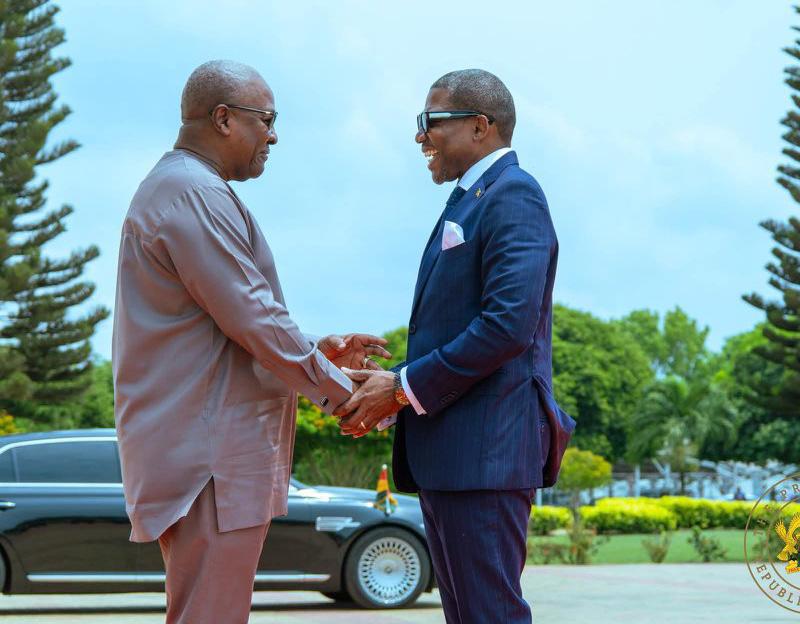
Minister Dr Terrance Drew travelled to Ghana in a landmark visit aimed at strengthening ties between the Caribbean and West Africa. Agreements signed during the visit included visafree travel for ordinary passport holders, labour cooperation frameworks and mechanisms for political consultation. Discussions also covered collaboration in tourism, education, trade and investment.
Ghana’s role in this evolving relationship is particularly significant. Positioned as a gateway for diaspora engagement, the country has actively courted Caribbean partnerships as part of a broader strategy to reconnect Africa with its global diaspora. For CARICOM leaders, Ghana offers both symbolic resonance and practical opportunity.
Yet despite these advances, the economic relationship remains underdeveloped. Trade between Africa and the Caribbean is still strikingly low when measured against the depth of their historical ties. Regional data suggest that bilateral exports have rarely exceeded 6 percent of total trade for either side. African exports to the Caribbean account for just a fraction of overall trade flows, while Caribbean exports to Africa, though growing, remain modest.
Current trade between the two regions is estimated at approximately $729m annually. Analysts believe that figure could triple to around $2.1bn within five years if structural barriers are addressed and targeted investment is directed towards key sectors such as manufacturing, processed foods, tourism, minerals and the creative economy.
Bridging that gap will require more than political will. It will depend heavily on financial infrastructure, and this is where Afreximbank has emerged as a pivotal actor. With total assets of
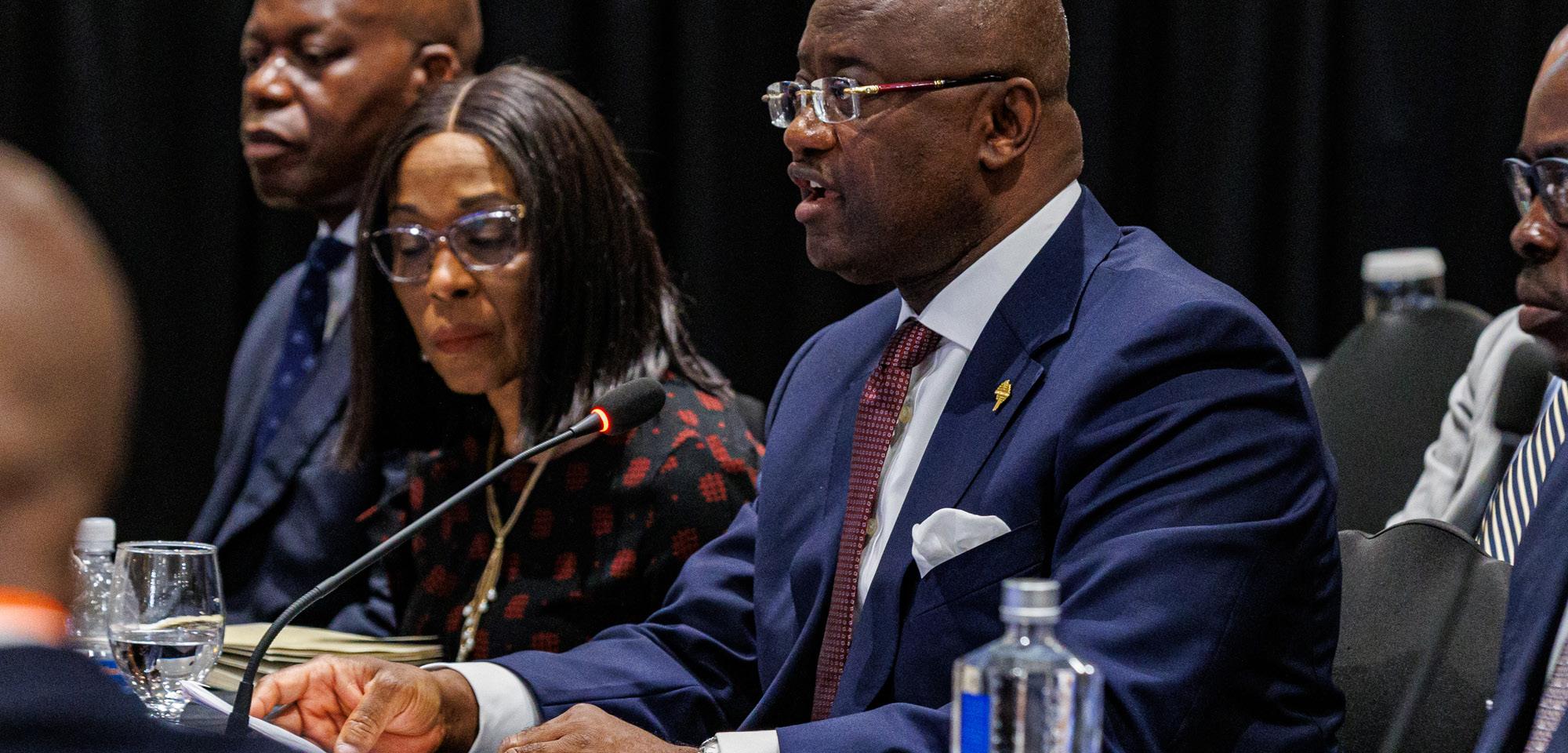
about $35bn and over $22bn in financing approved in 2024 alone, the bank has rapidly positioned itself as a cornerstone of Africa–Caribbean economic integration.
Crucially, Afreximbank has also committed $5bn to support CARICOM economies, targeting infrastructure development, trade expansion and value-added industries across the Caribbean. The scale of this commitment signals a shift from symbolic cooperation to tangible economic alignment, providing the financial backbone needed to unlock cross-regional trade and investment.
Its growing footprint in the Caribbean underscores that ambition. The establishment of a regional office in Barbados, alongside plans to develop an African Trade Centre, signals a long-term commitment to facilitating trade flows and investment between the two regions. Discussions are also underway to create a CARICOM Eximbank subsidiary and to integrate payment systems, addressing one of the most persistent obstacles to crossregional commerce.
The financial backing is already materialising. Afreximbank has committed billions of dollars in trade finance and investment support to Caribbean economies, providing the kind of institutional muscle needed to turn diplomatic goodwill into tangible economic outcomes.
Early signs of this cooperation are beginning to take shape across multiple sectors. In aviation, the launch of LIAT Air, backed by Nigerian-linked Air Peace Caribbean Ltd with a 70 percent stake, has restored critical regional connectivity in the Eastern Caribbean. The move is not just about transport; it is about enabling trade, tourism and business mobility between regions that have long been separated by logistical barriers.
Energy is another area of growing convergence. Angolabased PetroWork Solution has entered Guyana’s oil and gas sector, while Ghana’s Cybele Energy has secured a petroleum exploration licence in the country, becoming the first Africanowned company to be awarded an oil block there. These developments highlight the potential for cross-investment in highvalue industries that can drive long-term growth.
For Caribbean leaders, these partnerships are not simply
opportunistic; they are strategic responses to mounting pressures at home. CARICOM’s economies, representing roughly 16–17 million people, face a complex mix of challenges, including climate vulnerability, limited market size and tightening global financial conditions.
Barnett did not understate the scale of these pressures. ‘Without question, 2025 was one of the most challenging years in the history of our regional integration movement,’ she said, pointing to extreme weather events, geopolitical tensions and economic instability.
‘We will not ever forget Hurricane Melissa, the destructive Category 5 system which hit Haiti, The Bahamas, Bermuda and other countries in the region, and left death and catastrophic destruction in its wake in Jamaica,’ she added.
At the same time, she emphasised the region’s resilience and institutional progress. ‘Our regional integration movement has demonstrated tangible gains in human and social development, foreign policy coordination, security cooperation and economic development,’ Barnett noted.
In this context, Africa is increasingly viewed not only as a partner of shared heritage but as a critical component of the Caribbean’s economic future. The logic is straightforward: diversification reduces risk, and South-South cooperation offers a pathway to more balanced and mutually beneficial growth.
But beyond economics, there is also a deeper narrative at play. The Africa–Caribbean relationship is being reframed not just as a transactional partnership, but as a reconnection of histories, identities and futures. From the legacy of the transatlantic slave trade to the shared struggles against colonialism and apartheid, the two regions have long been linked by forces that transcend commerce.
What is changing now is the determination to convert that shared past into a shared economic future. As Barnett concluded, ‘The task before us is formidable, but not insurmountable.’
For leaders on both sides of the Atlantic, the message is becoming clearer: in a world of shifting power dynamics, Africa and the Caribbean may find their greatest strength not in looking outward, but in building with each other.
Andrea Wilson heads from Guyana to Ghana for her first African runway, blending heritage, fashion and diaspora ties,
LONG before she became a fashion designer, Andrea Wilson was a child in Guyana fascinated by African fabric. She wore bold prints as head wraps, skirts and improvised street styles long before she understood their origins. It did not matter whether the textiles came from West or Southern Africa; she wore them until they were frayed and threadbare — each piece carrying its own quiet story.
The inspiration came from home. Her mother, Evette Wilson, an emergency nurse and fashion enthusiast who loved attending social gatherings in vibrant African prints, first introduced her to the blending of African and Caribbean style.
Today, the swim, resort and Caribbean couture designer, based in the British Virgin Islands, is preparing for her first visit to the African continent. Ghana will be her first stop in August, chosen in honour of her maternal ancestor, Cudjoe.
But the journey is more than personal.
This summer, she will travel more than 20 hours from the Caribbean to West Africa not only to reconnect with her lineage, but to stage a runway show of her latest collection, Ocean Odyssey.
“A few years ago, I was invited to a show in South Africa, but it was not the right moment. Yes, I was a bit disappointed, but in the end, I accepted that my time would come, and here we are,” Wilson said during a video call just days after her successful New York Fashion Week runway show in Manhattan.
The show also featured Jamaican menswear designer Germain Smith and British Virgin Islands swimwear designer Morgan Creque. In a notable moment, British Virgin Islands Premier Dr Natalio Wheatley appeared as a special guest on the runway, signalling growing political and cultural support for Caribbean creatives on the global stage.
Speaking from her home in Tortola, the mother of two said she was relishing preparations for what she calls her African debut.
Her trip to Ghana is conceived as a ‘welcome home’ experience for a group of Caribbean designers eager to present their work on the African continent for the first time. It also marks a milestone year for Wilson: her fashion brand, The Islander, celebrates its tenth anniversary.

“This year, everything feels right for my first visit to Africa,” she said. “I am looking forward to seeing this beautiful country linked to my heritage — meeting the people, experiencing the fabrics, and embracing the culture.”
Wilson began her creative career as a graphic artist, although fashion had long been a constant interest. Over time, her label has been showcased at events including Orange County Fashion Week, as well as runway shows across the Caribbean and in Hong Kong.
Her designs have also appeared in international retail hubs, including New York’s SoHo district and Barcelona. America’s Next Top Model alumna Niama Mora has served as the face of

the brand, which Wilson now hopes to introduce across Africa.
African nations have increasingly invited members of the diaspora to return to trace their ancestry, explore citizenship and reconnect with the continent.
Momentum has grown further with the Second International Decade for People of African Descent, reinforcing Ghana’s call for people of African heritage to rebuild cultural, creative and economic ties with Africa.
Wilson’s plans also reflect a broader push by the Caribbean Community (CARICOM) to deepen engagement with Africa, particularly in the creative industries.
Her runway show in Accra will not only feature designers from the diaspora but also emerging Ghanaian designers, who will later be invited to the Caribbean to appear in a documentary series and showcase at Summer Sizzle BVI in 2027.
“My aim is to form lasting partnerships while there — collaborating with artisans, meeting designers, visiting factories and learning the history behind fabrics and prints,” she said.
For Wilson, the connection between Africa and the Caribbean is not abstract — it is lived.
“Africans and people of African descent have always been connected,” she said. “My ancestors survived under the most inhumane conditions of enslavement in the Caribbean, but they ensured that traditions were preserved.”
Those connections remain visible today in food, music, language and festivals across the Caribbean — and, crucially, in fashion.
The African continent has increasingly become a creative catalyst for global fashion houses, from Louis Vuitton and Dior to Stella McCartney and Burberry. Its fashion economy was estimated at about $36bn in 2023 and is projected to approach $50bn by 2025, reflecting rapid expansion across both ready-towear and high-end markets.
Over the past decade, Wilson has produced multiple collections — first from her home studio and later from her boutique overlooking the Caribbean Sea in Tortola.
Her designs are anchored in bold original prints inspired by the Caribbean’s natural splendour and her Amazonian roots, from coral reefs and volcanic textures to tropical flora and fauna.
Her couture pieces also draw on motifs honouring Caribbean freedom fighters alongside traditional African costumes and masks.
“For us, couture is wearable — to be danced in, to be flaunted, to tell a story,” she said. “When I create couture pieces, I draw inspiration from carnival traditions and blend them with my signature prints.”
“Our carnival designs are also influenced by Africa — from masqueraders to masked dancers seen across the continent. As a descendant of Africa, it feels powerful to see that cultural preservation.”
For Wilson, Africa is not simply another destination on the fashion calendar.
It is a return — stitched together through memory, heritage and fabric — and a runway that stretches across oceans.
Her debut in Ghana represents more than a show; it signals a growing cultural and commercial bridge between Africa and its diaspora, where creativity, identity and enterprise meet.
In that space, fashion becomes more than design. It becomes dialogue — between continents, histories and futures.

South African President Cyril Ramaphosa paid tribute to Rev. Jesse Jackson who died on February 17, 2026, aged 84. We publish an abridged version of his eulogy during the Homecoming Celebration held in Chicago for the iconic American civil rights leader on March 6
WE say farewell to a man who carried the message of hope from the streets of Chicago to the streets of Johannesburg. We, as South Africans, claim Reverend Jesse Jackson as one of our own. We lay claim on him today because he laid claim on us first.
You may ask: how can a son of South Carolina belong to the people of Soweto? How can a man born into the segregated American South be claimed by the people of a faraway land that was bedevilled by a racist system of apartheid?
Belonging is not determined by the soil on which you were born. Belonging is determined by the soil on which you choose to join the fight against an evil racist and oppressive system.
In the long and painful years of our struggle, when the voices of our people were often silenced, Jesse Jackson chose to belong to us by raising his voice against apartheid on our behalf. When our cause was ignored, and many would look away he stood firm in solidarity with us.
He looked at a people he had never met and said: their pain is my pain. Their chains are my chains. Their struggle for freedom is my struggle.
And for this, the people of South Africa remember him not as a distant friend, but as a brother in the struggle for justice and freedom. That is why we proclaim that he is ours too.
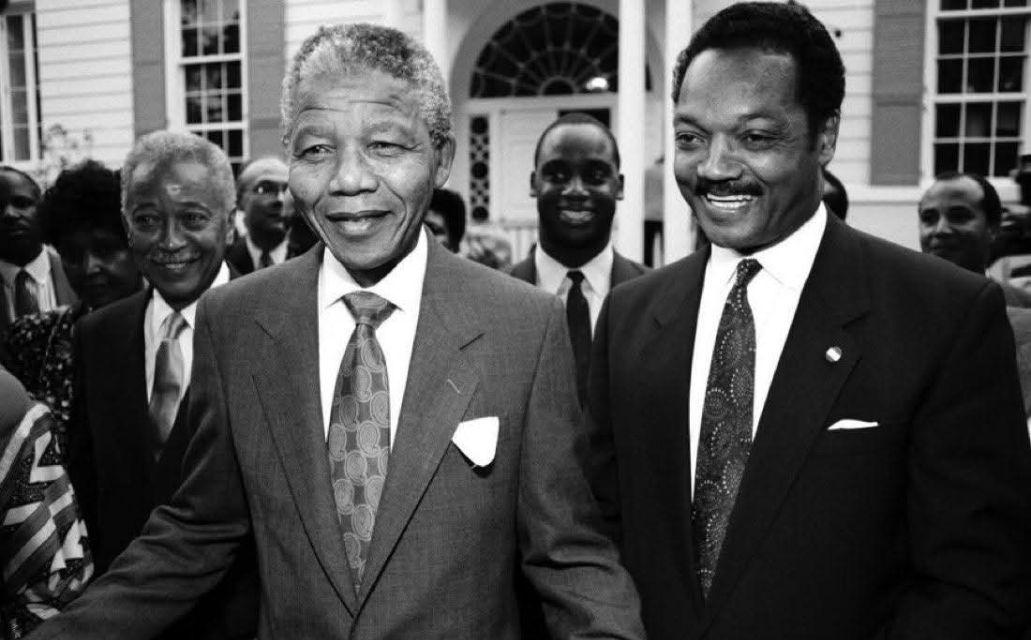
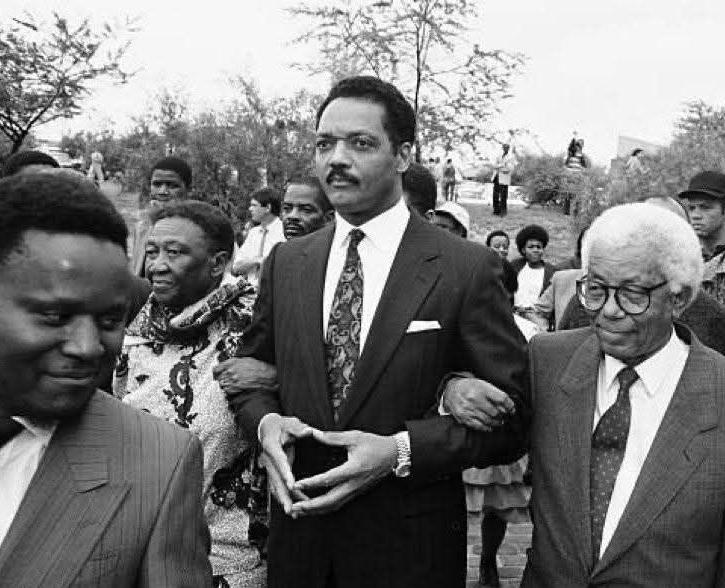
Jesse Jackson stood with the people of South Africa during our darkest hour. He told the world that the struggle for dignity in the United States of America was inseparable from the fight against apartheid and injustice in South Africa.
When Jesse Jackson reminded the United States that its strength lies not in exclusion, but in the beautiful diversity of its people – black and white, rich and poor, urban and rural, workers and farmers, immigrants and the forgotten – we were inspired by his message and embraced the universal values of diversity, inclusion and equity that he preached.
Nelson Mandela and his comrades were hugely inspired by Jesse Jackson, whilst they were serving life sentences on Robben Island, as they observed how he carried our struggle for justice beyond the borders of the United States.
"This land is changing hands."
When the Reagan administration chose "constructive engagement" – diplomatic language for doing nothing – Jesse Jackson chose unconditional solidarity with the oppressed majority in South Africa. He became the most visible American political figure advocating for comprehensive pressure and economic sanctions against South Africa.
By placing South Africa at the centre of American electoral politics during his presidential election campaign, Jesse Jackson influenced millions of voters to confront apartheid as their moral responsibility too.
He led many marches here in the United States and in 1985 was arrested with his two sons, Jesse Jr. and Jonathan, outside the South African Embassy. As they were arrested, they sang “We shall Overcome”. It was a song that became part of our struggle and from which we drew inspiration.
He took the fight against apartheid global. On November 2, 1985, he marched with then ANC President Oliver Tambo, AntiApartheid Movement President Trevor Huddleston and more than 150,000 people – in what was one of the largest anti-apartheid demonstrations ever held in Britain – to demand sanctions against South Africa and the release of Nelson Mandela.
He was a voice; a voice that refused to be silenced when silence would have been easier. A voice that preached a message of hope from the streets of Chicago to the dusty streets of Soweto, that justice was not a privilege for the few, but a birthright for all.
His rallying call, “Keep hope alive”, became a compass for our struggle and gave us hope for victory over the evil of system of apartheid exclusion, division and oppression.
Jesse Jackson expressed his solidarity with the people of South Africa when he first visited in 1979, two years after the callous killing of Steve Biko in apartheid police cells. He drew massive crowds at rallies in Soweto, where he famously declared:
Not only did he march in the streets; he walked into the corridors of power. He personally lobbied Pope John Paul II to visit South Africa and hasten change. He pressed Mikhail Gorbachev to cut all Soviet diplomatic ties with Pretoria. He challenged Margaret Thatcher to her face. She refused to budge, but he did not stop.
When Nelson Mandela finally walked free in 1990 after 27 long years of imprisonment, Jesse Jackson was there in Cape Town, witnessing a moment the world would never forget.
He described the atmosphere as a “release of glee and joy”, as millions celebrated not only the freedom of a man, but the rising hope of a nation.
In 1994, he was present when Nelson Mandela was inaugurated as the first democratically elected President of South Africa. Jackson kept returning after 1994, when many of his contemporaries moved on.
We claim Jesse Jackson as one of our own because he never saw the struggle in South Africa as a distant or foreign cause, but as a struggle that belonged to him as well.
His greatest gift to the oppressed people of South Africa was the courage he gave us to believe that we must never surrender hope, that justice would prevail and freedom would come. AB
Folahanmi Aina reviews a timely book charting the course of a Nigerian Islamist group that began as “a social movement before it became a terrorist organisation”
IN Africa, only few non-state armed groups have generated as many commentaries and misconceptions as Boko Haram.
Since 2009, the group has become synonymous with extreme violence, religious fanaticism and state failure particularly in northeast Nigeria.
Yet despite the abundance of media reporting, policy briefs and academic journal articles, an important question remained unanswered, which is: How did Boko Haram become what it is?”
Akali Omeni’s book finally provides an in-depth, comprehensive and compelling answer to this question. The history provided by Omeni’s work offers one of the most convincing answers to date.
The greatest achievement of this book is its refusal to treat Boko Haram as an aberration or inexplicable eruption of violence. Instead, Omeni situates the movement firmly within Northern Nigeria, across the political, religious and historical landscape of the region, by tracing a long and often uncomfortable genealogy of ideas, grievances and institutional failures.
The book perfectly elucidates an uncontested truism, which is that the making of Boko Haram is not a story that begins with insurgency, it is one that has unfolded over decades, rooted in contested religious authority, the aftermath of colonialism and unresolved tensions between Islamic Law and the political system of governance in Nigeria.
This book is particularly valuable for policy audiences, as it conceptualises Boko Haram as “a social movement before it became a terrorist organisation”. Drawing on social movement theory, the book successfully captures how Boko Haram’s leaders mobilised their followers, framed grievances and constructed a moral universe that justifies violence as a necessary corrective to perceived historical injustice.
This nuanced analysis is very important, as it offers a departure in the overall understanding of the terrorist group as purely a security threat and towards understanding it as a political and ideological project that evolved through interaction with society, religious institutions and the state.
The book’s strongest chapter revisits the historical roots of the Jihadists movement and Islamic reformism in Northern Nigeria, exemplifying the legacy of Uthman Dan Fodiyo and the Sokoto
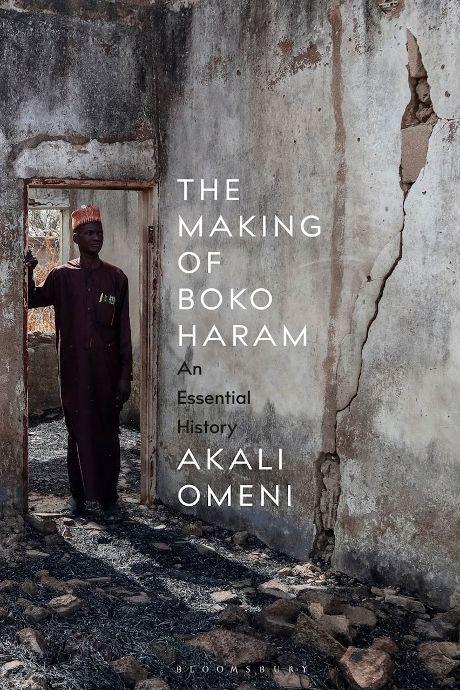
Caliphate. Omeni practically demonstrates how history also shapes contemporary debates and interpretations on authority, legitimacy and Sharia Law.
Boko Haram leaders did not invent their worldview in a vacuum, they selectively appropriated historical narratives of reform, betrayal and moral decline to argue that Nigeria’s post-
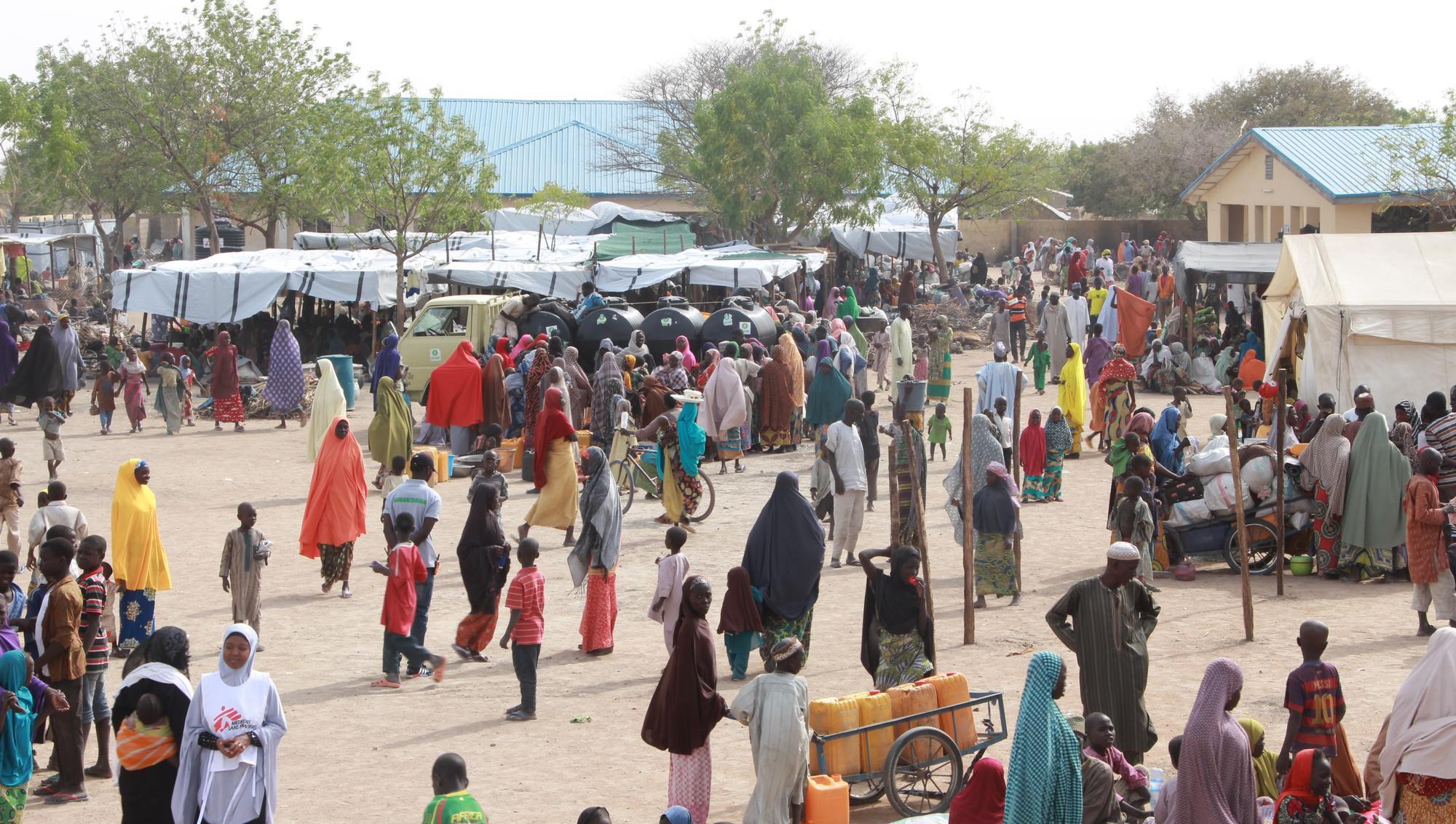
Maiduguri, the epicentre of the Boko Haram insurgency, reflects the social and geographic
colonial state and the Islamic establishment aligned with it, had abandoned what they perceive to be their own authentic way of practising Islam. A narrative built on deceit and intended towards manipulation.
Furthermore, Omeni also presents colonialism not as a distant back drop, but rather as a contradiction between Islamic Law and the British system of governance, the politicisation of religious leadership and the deferral of key constitutional questions all of which created fertile grounds for later radicalisation.
This is an important message for not just academics but also policymakers that the contemporary insecurity in the Lake Chad region and broader Sahel cannot be divorced from the institutional legacies of colonial rule and post-independence statehood.
The nuanced discussion of the term “boko” meaning book is also emblematic of the book’s broader contribution which is challenging to the assumptions that have shaped both public and policy discourse.
The book is methodologically grounded. Omeni combines archival research, declassified intelligence material, discourse analysis and interviews to reconstruct Boko Haram’s formative years with unusual depth. A valuable aspect of the book is the close reading of sermons which reveals how Boko Haram framed Western education, democracy and governance not as foreign but as deceptive and morally corrupting.
The most consequential insight captured by Omeni, is the demonstration of Boko Haram’s turn to violence as a process rather than a rupture. Internal debates, increased isolation and failed attempts at correction by clerics, pushed the movement towards armed struggle. Violence for Boko Haram was not inevitable, neither was it avoidable.
It is pertinent for Africa’s policymakers and the international community to know that Omeni’s book offers a sobering lesson. This is particularly so as groups like Boko Haram do not emerge solely because of poverty and jihadist influence; they grow when governance is weak, legitimacy is contested and historical grievances remain unresolved.
The Making of Boko Haram is more than yet another book about an insurgent group. It is a study of how violence is socially produced, historically embedded and politically rationalised. Indeed, a masterpiece and a must read. This book is recommended for anyone seeking to understand not just Boko Haram, but the broader dynamics of insurgency and religious mobilisation in Africa.
Dr Folahanmi Aina is a political scientist and currently a lecturer in the Political Economy of Violence, Conflict and Development at the Department of Development Studies, School of Oriental and African Studies, University of London.