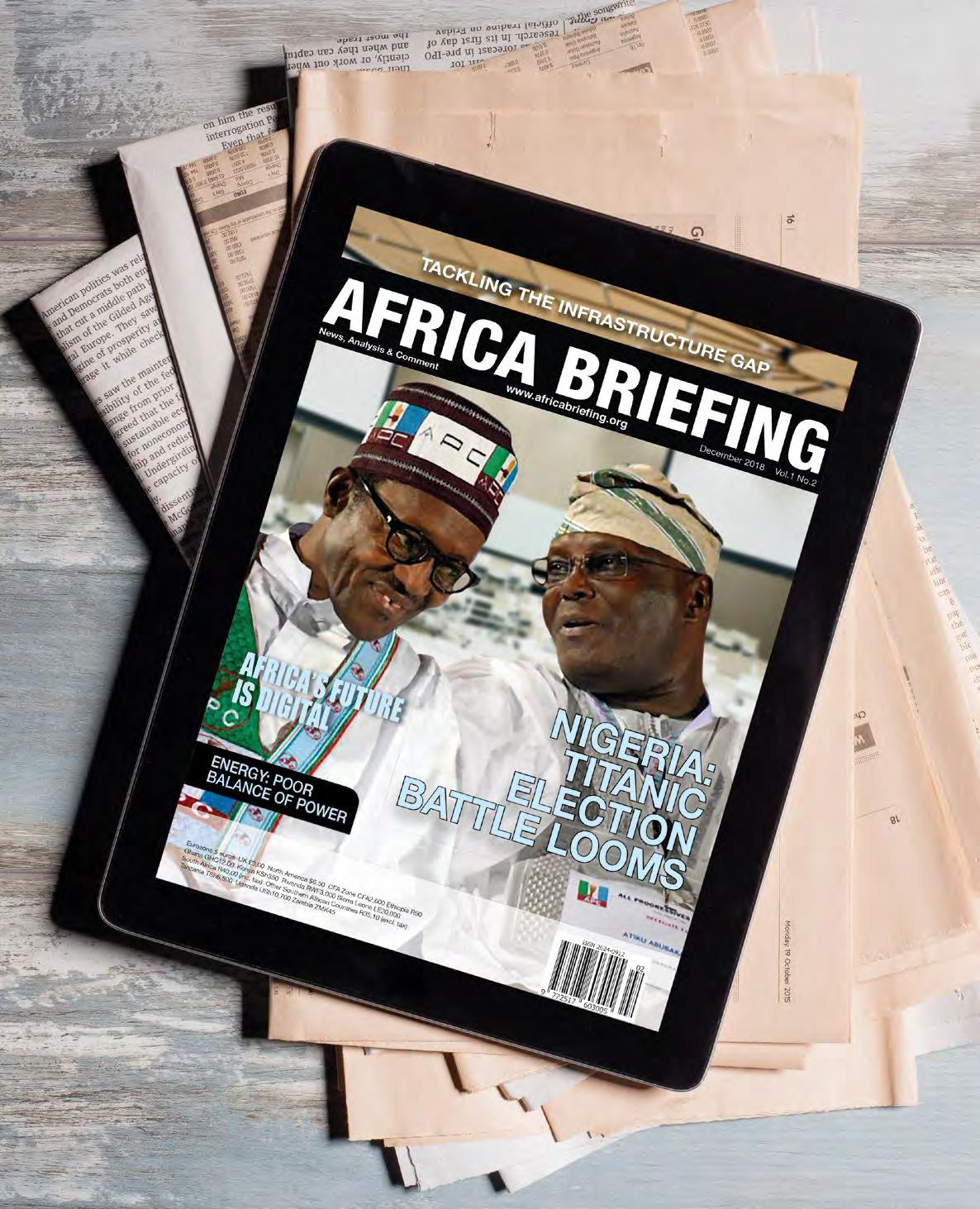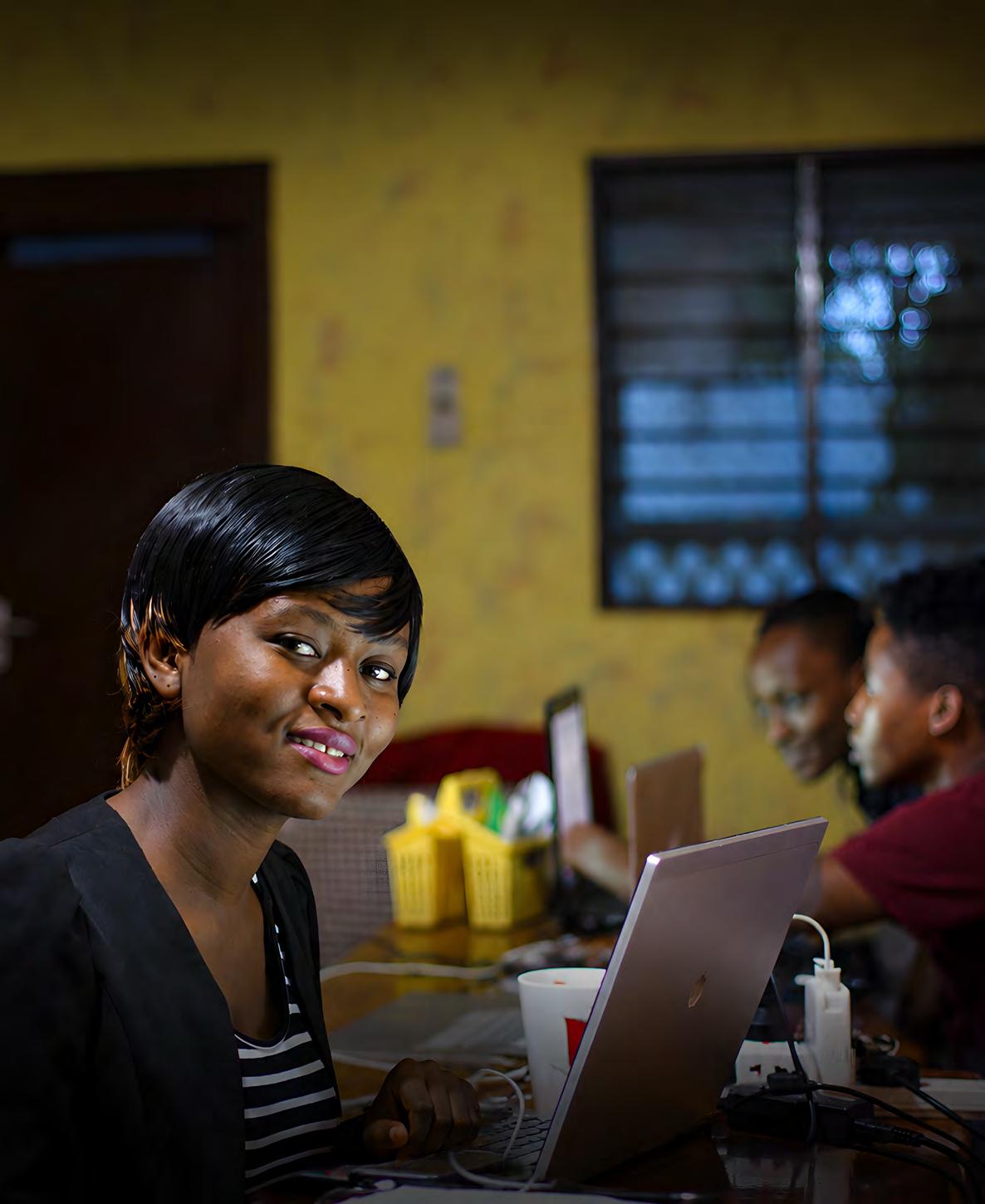



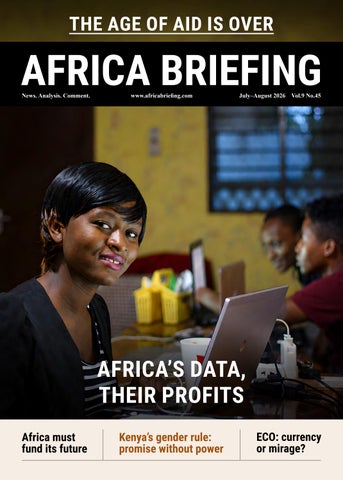
AFRICA Briefing’s cover story by Professor Ojo Emmanuel Ademola raises a question the continent can no longer postpone: will Africa shape the artificial intelligence revolution, or again supply the raw materials while others capture the wealth?
His warning about AI image rights, data extraction and technological dependence points to a broader struggle over sovereignty. Africa’s next independence battle will not be fought only over land, minerals or trade routes. It will also be fought over photographs, voices, languages, health records and the digital traces generated every day by African citizens.
Meta’s short-lived experiment with publicly available Instagram content shows why this debate matters. When Muse Image was launched, users could @-mention public Instagram accounts and reference publicly visible photographs in new AI-generated creations. Meta later withdrew the feature following criticism and acknowledged that it had ‘missed the mark’.
The reversal did not make the wider issue disappear. It demonstrated how quickly content shared for social interaction can acquire an entirely different commercial purpose. Legal access to publicly visible material should not automatically be treated as informed consent for AI reuse.
For Africa, the stakes are especially high. The continent has spent generations exporting raw materials that were processed elsewhere, turned into higher-value products and sold back at a premium. The same model could now be repeated digitally.
Africans generate images, conversations, cultural expressions and behavioural data, while foreign corporations own the data centres, chips, models and intellectual property that convert those inputs into profitable services.
Publisher
Publisher
Jon Offei-Ansah
Editor Desmond Davies
Contributing Editors
Prof. Toyin Falola
Tikum Mbah Azonga
Prof. Ojo Emmanuel Ademola (Technology)
Valerie Msoka (Special Projects)
Amanda Wilson (Caribbean)
Contributors
Justice Lee Adoboe
Chief Chuks Iloegbunam
Madalisto Kateta
Zachary Ochieng
Olu Ojewale
Oladipo Okubanjo
Corinne Soar
Kennedy Olilo Gorata Chepete
Jon Offei-Ansah
That is not genuine partnership. It is extraction by another name.
Desmond Davies Editor
The danger is sharpened by the changing economics of artificial intelligence. Cheap access has encouraged governments, universities, media organisations and businesses to depend heavily on foreign platforms. But advanced AI systems are expensive to build and operate.
IDesigner
n 2018, six of the 10 fastest-growing economies in the world were in Africa, according to the World Bank, with Ghana leading the pack. With GDP growth for the continent projected to accelerate to four per cent in 2019 and 4.1 per cent in 2020, Africa’s economic growth story continues apace. Meanwhile, the World Bank’s 2019 Doing Business Index reveals that five of the 10 most-improved countries are in Africa, and one-third of all reforms recorded globally were in sub-Saharan Africa.
Deputy Editor
Angela Cobbinah
As companies seek returns on investments in energy, computing power, cybersecurity and specialist talent, today’s affordable tools could become tomorrow’s costly necessities. A platform can change prices, licensing terms or access rules with little warning. Dependence may therefore become both a financial burden and a strategic vulnerability
What makes the story more impressive and heartening is that the growth – projected to be broad-based – is being achieved in a challenging global environment, bucking the trend.
Contributing
Editor
Stephen Williams
Director, Special Projects
Michael Orji
Contributors
The answer is not isolation. Africa still needs international investment, research partnerships and access to global innovation. But cooperation must take place on fairer terms. Governments should demand transparency over how African data is collected, stored and used. Creators, media organisations and cultural institutions need enforceable rights where their work contributes to profitable AI products.
In the Cover Story of this edition, Dr. Hippolyte Fofack, Chief Economist at the African Export-Import Bank (Afreximbank), analyses the factors underpinning this performance. Two factors, in my opinion, stand out in Dr. Hippolyte’s analysis: trade between Africa and China and the intra-African cross-border investment and infrastructure development.
Justice Lee Adoboe Chuks Iloegbunam
Joseph Kayira
Zachary Ochieng
Olu Ojewale
Simon Blemadzie
Country Representatives
South Africa
Edward Walter Byerley
Top Dog Media, 5 Ascot Knights
47 Grand National Boulevard Royal Ascot, Milnerton 7441, South Africa
Tel: +27 (0) 21 555 0096
Cell: +27 (0) 81 331 4887
Much has been said and written about China’s ever-deepening economic foray into Africa, especially by Western analysts and commentators who have been sounding alarm bells about re-colonisation of Africa, this time by the Chinese. But empirical evidence paints a different picture.
Oladipo Okubanjo
Corinne Soar
A person’s face is not simply a collection of pixels. It is linked to identity, dignity and security. An article, song, photograph or oral history also carries cultural and commercial value. When such material enters AI systems without clear permission, creators lose control while platforms acquire assets they may monetise indefinitely.
Designer
Data protection laws are necessary, but they are not enough. Sovereignty also requires local and regional data centres, reliable energy, high-performance computing, trusted data exchanges and stronger cybersecurity.
Despite the decelerating global growth environment, trade between Africa and China increased by 14.5 per cent in the first three quarters of 2018, surpassing the growth rate of world trade (11.6 per cent), reflecting the deepening economic dependency between the two major trading partners.
Gloria Ansah
Country Representatives
South Africa
It requires universities that train engineers, ethicists, researchers and policymakers capable of building systems for African realities rather than merely adapting products designed elsewhere.
Empirical evidence shows that China’s domestic investment has become highly linked with economic expansion in Africa. A one percentage point increase in China’s domestic investment growth is associated with an average of 0.6 percentage point increase in overall African exports. And, the expected economic development and trade impact of expanding Chinese investment on resource-rich African countries, especially oil-exporting countries, is even more important.
Edward Walter Byerley Top Dog Media, 5 Ascot Knights 47 Grand National Boulevard Royal Ascot, Milnerton 7441, South Africa
Language is equally important. Many African languages remain marginal in global AI models. When technology cannot understand local idioms, accents and knowledge systems, exclusion is built into the system itself.
Email: ed@topdog-media.net
Ghana
Nana Asiama Bekoe Kingdom Concept Co. Tel: +233 243 393 943 / +233 303 967 470 kingsconceptsltd@gmail.com
Nigeria
Tel: +27 (0) 21 555 0096 Cell: +27 (0) 81 331 4887 Email: ed@topdog-media.net
African linguistic diversity should be treated as a strategic asset rather than a technical inconvenience.
Ghana
Nana Asiama Bekoe
Above all, African governments must act collectively. Fragmented national rules will struggle against companies with global reach, vast capital and sophisticated legal structures.
The resilience of African economies can also be attributed to growing intra-African cross-border investment and infrastructure development. A combination of the two factors is accelerating the process of structural transformation in a continent where industrial output and services account for a growing share of GDP. African corporations and industrialists which are expanding their industrial footprint across Africa and globally are leading the diversification from agriculture into higher value goods in manufacturing and service sectors. These industrial champions are carrying out transcontinental operations, with investment holdings around the globe, with a strong presence in Europe and Pacific Asia, together account for more than 75 per cent of their combined activities outside Africa.
Kingdom Concept Co. Tel: +233 243 393 943 / +233 303 967 470 kingsconceptsltd@gmail.com
Nigeria
The African Union and regional blocs should coordinate standards on data rights, AI procurement, cross-border research and the commercial use of cultural content. They should also ensure that African institutions have a meaningful voice in shaping the international rules governing artificial intelligence.
David Chukwuji 68, Femi Killa Street Ago Palace Way, Okota, Isolo, Lagos, Nigeria Tel: + 234 8039281669
Kenya
Patrick Mwangi
Taiwo Adedoyin MV Noble, Press House, 3rd Floor 27 Acme Road, Ogba, Ikeja, Lagos Tel: +234 806 291 7100 taiadedoyin52@gmail.com
Aquarius Media Ltd, PO Box 10668-11000 Nairobi, Kenya
Tel: 0720 391 546/0773 35 41
A survey of 30 leading emerging African corporations with global footprints and combined revenue of more than $118 billion shows that they are active in several industries, including manufacturing (e.g., Dangote Industries), basic materials, telecommunications (e.g., Econet, Safaricom), finance (e.g., Ecobank) and oil and gas. In addition to mitigating risks highly correlated with African economies, these emerging African global corporations are accelerating the diversification of sources of growth and reducing the exposure of countries to adverse commodity terms of trade.
Kenya
The choice is clear. Africa can continue exporting raw data and importing finished intelligence, or it can build the institutions needed to govern and benefit from its digital wealth.
Email: mwangi@aquariusmedia.co.ke
©Africa Briefing Ltd
This makes me very bullish about Africa!
The time for that decision is not approaching. It has already arrived.

Naima Farah Room 22, 2nd Floor West Wing Royal Square, Ngong Road, Nairobi Tel: +254 729 381 561 naimafarah_m@yahoo.com
Africa Briefing Ltd
2 Redruth Close, London N22 8RN United Kingdom Tel: +44 (0) 208 888 6693 publisher@africabriefing.org
2 Redruth Close, London N22 8RN
United Kingdom
Tel: +44 (0) 208 888 6693 publisher@africabriefing.org
France’s retreat from Africa does not signal end of neo-colonialism
The Congolese people need a final break from continuing violence
Africa’s battle for AI sovereignty
Ojo Emmanuel Ademola argues that the dispute over AI image rights and the rising cost of artificial intelligence have created a defining opportunity for Africa to reclaim control of its data, infrastructure, culture and technological future
Ghana’s two-term rule on trial
The Supreme Court must decide whether two presidential terms mean two for life or merely two in succession, writes Jon Offei-Ansah
South Sudan: a state of confusing political models
Although the country has not collapsed in the way the failed-state literature predicts, it has not consolidated either in the way the peacebuilders imagined, producing instead a regime that cannot monopolise force and cannot fulfil the obligations of its own peace deal, writes Maggie LoWilla
Migration crisis cannot be solved at borders alone
The wave of young people seeking to leave Africa in search of greener pastures is less to do with the movement itself and more about institutional failure, inequality and the collapse of public trust, argues Winston Kabia
Mapping out Africa’s industrialisation
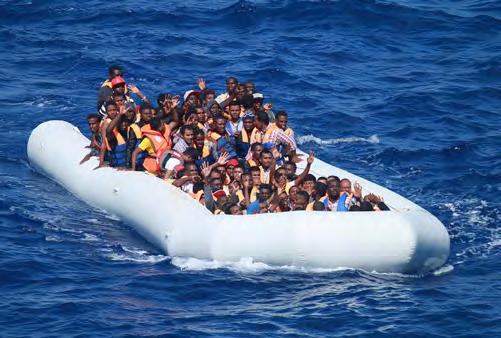
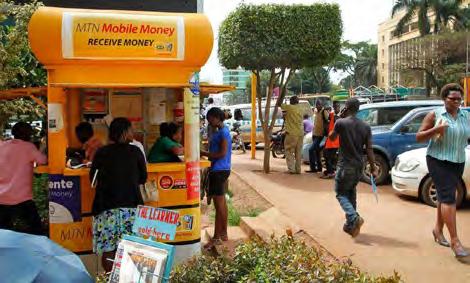
The recent Africa Debate in London made a compelling case for collaboration with the continent to strengthen global trade diversification, investment expansion, energy transition, financial services and innovation, reports Stephen Williams
Africa braces for life after aid
With the IMF warning that bilateral aid to Sub-Saharan Africa fell by an estimated 26 percent in 2025, Jon Offei-Ansah examines how the continent can protect essential services and finance growth in a less generous world.
Food imports expose farm productivity gap
The OECD and FAO warn that Sub-Saharan Africa’s food imports could rise sharply by 2035 unless governments lift farm productivity, invest in climate resilience and strengthen regional food markets, reports Jon Offei-Ansah
THE slow collapse of FranceAfrique has been greeted with understandable celebration across Africa. For the first time since independence, France's once formidable grip over its former colonies appears to be loosening.
French troops have been expelled from several Sahelian states, defence agreements have been torn up and political leaders who once looked instinctively to Paris are seeking new partners.
For many Africans, these developments represent the final chapter of colonialism. They should be careful not to celebrate too soon.
France's retreat marks the decline of one form of neocolonialism. It does not necessarily herald Africa's economic or political liberation.
If history teaches anything, it is that external powers rarely abandon strategic interests voluntarily. They simply adapt to new circumstances.
Reality is more complicated. Foreign influence succeeds only when domestic elites permit it to succeed. Throughout the history of FranceAfrique, numerous African leaders willingly traded elements of national sovereignty for political security.
The result was a system that preserved ruling elites but frequently failed the societies they governed. Its collapse therefore raises an important question.
The danger is that Africa mistakes a change of patrons for genuine independence.
The FranceAfrique system deserved to end. It allowed Paris to exercise extraordinary influence over countries that had become sovereign in the early 1960s.
Military bases, intelligence cooperation, political patronage, privileged commercial access and monetary arrangements ensured that France remained an indispensable actor in the affairs of many of its former colonies.
The arrangement benefited French governments, French companies and, crucially, many African rulers who found external support useful in maintaining their grip on power.
That uncomfortable fact deserves greater emphasis. Too often, discussions of neo-colonialism portray African governments as passive victims manipulated by foreign capitals.
What comes next? The answer should concern every African.
Russia has rapidly expanded its security partnerships in parts of the Sahel. China has become Africa's largest bilateral trading partner and a major financier of infrastructure.
Türkiye has significantly increased diplomatic, commercial and defence ties across the continent. India, the Gulf states and other emerging powers are similarly deepening their engagement.
There is nothing inherently wrong with Africa diversifying its international partnerships. In fact, reducing dependence on any single external power is sensible diplomacy.
The problem arises when diversification merely replaces one dependency with another. An African government that once relied exclusively on Paris but now depends entirely on Moscow or Beijing has not achieved strategic autonomy. It has simply changed sponsors.
This distinction matters enormously. True sovereignty is measured not by who supplies military equipment, finances infrastructure or purchases natural resources. It is measured by whether African governments retain the ability to make decisions based primarily on the interests of their own citizens rather than the geopolitical calculations of external powers.
That remains a work in progress. The deeper challenge is internal rather than external. More than six decades after independence, many African states continue to struggle with weak institutions, personalised political power, corruption and fragile systems of accountability.
Elections are still disputed with alarming frequency. State institutions are often subordinated to ruling parties or individual leaders. Public resources continue to disappear through corruption while education, healthcare and infrastructure remain underfunded.
Foreign powers exploit these weaknesses; they do not create all of them. Indeed, Africa's greatest obstacle to development has never been external interference alone. It has been the failure of too many post-independence governments to build capable, transparent and accountable states.
This is where the conversation about neo-colonialism often becomes uncomfortable. It is easier to blame foreign governments than to confront domestic failures.
Colonialism undoubtedly left deep scars, distorted economies and arbitrary borders. Those legacies cannot be ignored. But neither can they explain every governance failure six decades later.
Countries with similar colonial histories have achieved remarkably different outcomes because leadership matters. Botswana built strong institutions and managed its mineral wealth prudently.
Mauritius transformed itself into a diversified economy through investment in education, manufacturing and services. Rwanda, despite legitimate debates about its political model, has demonstrated that effective state capacity can dramatically improve public service delivery.
The collapse of FranceAfrique therefore presents Africa with a rare historical opportunity. For the first time since independence, many countries have greater room to redefine their external relationships.
They can negotiate with multiple global partners instead of relying overwhelmingly on former colonial powers. They can strengthen regional institutions through the African Union and the African Continental Free Trade Area.
They can invest in adding value to their abundant natural resources rather than exporting raw materials and importing finished goods at far higher prices.
But none of this will happen automatically. Political independence is only the first step.
Economic transformation requires competent governance, independent institutions, investment in science and technology, quality education and an unwavering commitment to the rule of law. It also requires leaders willing to prioritise long-term national development over short-term political survival.
These examples do not suggest perfection. They do demonstrate that history does not determine destiny.
Elsewhere, political elites have often treated the state as an instrument for distributing patronage rather than creating prosperity. Public office has become a route to personal enrichment instead of national service.
Ethnic politics has too frequently displaced merit, while constitutional term limits have been manipulated or abolished to prolong individual rule. Such practices weaken countries far more effectively than any foreign conspiracy.
The end of FranceAfrique should therefore be understood not as the conclusion of Africa's struggle for sovereignty, but as the beginning of its most important phase.
The real battle is no longer against colonial governors or foreign administrators. It is against corruption, poor governance, institutional weakness and a political culture that too often rewards loyalty over competence.
France's influence may be waning, but neo-colonialism will persist in new forms if African governments continue to outsource strategic decisions or mortgage future generations for immediate political advantage.
The lesson of history is clear: no foreign power, however friendly, will develop Africa on Africans' behalf. That responsibility belongs to Africans themselves.
The end of FranceAfrique is therefore not Africa's destination. It is merely the opening of a new chapter – one in which the continent will finally have fewer excuses and greater responsibility for shaping its own future. AB

Desmond Davies
HE recent World Cup in the US, Canada and Mexico featured the Democratic Republic of Congo for the first time in 52 years. In 1974, in the then West Germany, the country called Zaïre did not make any headway.
In 2026, the DRC gave England a fright in the round of 32. For the embattled people of the DRC, seeing England struggling to win was a diversion from the conflict that has bedevilled the eastern part of their country for the past 30 years.
For the millions who watched the DRC matches in the World Cup and the African Cup of Nations in Morocco earlier this year, the majority must have been confounded by the DRC’s superfan, the statuesque Michel Nkuka Mboladinga, who struck a motionless pose during DRC matches. He was paying tribute to the first leader of an independent Congo, Patrice Lumimba.
Lumumba, a pan-Africanist in the mould of Ghana’s Kwame Nkrumah, was Prime Minister when Congo gained independence from Belgium in 1960. He had plans to reconfigure his country from the depravity of Belgian colonial rule.
But this was not to be. A year after independence, the Belgian government and Western intelligence services, spearheaded by the American CIA, contrived to hand Lumumba over to Katanga separatists who executed him at the age of 35.
The filing comes amid a broader run of diplomatic, social and cultural milestones under no-nonsense Prime Minister Judith Suminwa, pointing to a year of hard-won gains on multiple fronts by her government. It is the sharpest expression yet of a posture that has defined the government since Suminwa became the DRC's first female Prime Minister in June 2024. Across security, diplomacy, social policy and cultural heritage, the pattern has been consistent: a government choosing to act rather than manage.
In June 2025, the DRC secured a seat on the UN Security Council with 183 votes out of 187. The DRC’s first since 1990–1991. Recently, Suminwa personally wrote to her Belgian counterpart requesting the restitution of more than 500 human remains, principally Congolese skulls held in Belgian institutions since the colonial era.
The people of the DRC are downright tired of the three decades of mass atrocities in their country
Since then, the country has been in political turmoil, culminating in the last 30 years of violence in the eastern DRC. The UN Mapping Report and the International Rescue Committee have over the years documented millions of deaths in the eastern DRC.
But now, for the Congolese people, enough is enough. Recently, two DRC institutions launched an international petition calling for formal recognition of decades of atrocities committed in the country. The initiative is being led by the National Fund for Victim Reparations (FONAREV) and the Interministerial Commission for Victim Assistance and Reform Support (CIAVAR), which argue that international acknowledgement of the violence is a crucial step towards justice, reparations and sustainable peace.
As the petition garners signatures, the DRC government has taken the issue further by filing a historic case at the International Court of Justice against Rwanda. Kigali has been accused of not only backing the rebel M23 group in eastern DRC but also exploiting minerals in the region amid the ongoing conflict.
For the population in eastern DRC – people whose suffering has been documented in UN reports and international inquiries for decades, with little to show in terms of accountability – the ICJ application is something new. It is not a report, a resolution, or a condemnation. It is a legal proceeding at the world's highest court, with the DRC as plaintiff.
She has been making steady progress. For example, security, military and police salaries were doubled in March 2025, with a front-line combat bonus introduced alongside. The government's Local Development Programme is targeting 2,130 infrastructure projects across the country, with completion rates now between 76 per cent and 83 per cent.
Social indicators have shifted too. Free primary education, in place since 2019, has pushed school enrolments from around 12 million to more than 20 million pupils. More than two million births have been covered free of charge under the universal health coverage programme since September 2023, with more than 50,000 vulnerable newborns receiving care across more than 4,600 health facilities. The state budget grew from 32,456.8 billion Congolese francs in 2023 to 54,335.8 billion francs in the 2026 Finance Act — a rise of nearly 67 per cent in three years, though revenue pressures forced a mid-year revision earlier this year.
None of it has been straightforward. The conflict in the east continues. Suminwa has governed through a fragile currency, an active war and repeated public health emergencies such as the current Ebola outbreak – and has done so as the first woman in the role in the DRC, facing a level of personal attack that prompted hundreds of Congolese women to take to the streets in protest.
The petition and the ICJ filing – to which Rwanda has not yet responded – show that the people of the DRC are downright tired of the three decades of mass atrocities in their country. What is clear now is for the African Union, African organisations and the wider international community to give full backing to the people of the DRC as they make a concerted effort to bring an end to the death, destruction and wanton exploitation of their natural resources that they need to make their lives worth living.
Testimonials from some of our online subscribers:
We wish to compliment the Africa Briefing Magazine for its insight and value added stories from the Last Frontier. From a Scandanavian view the quality of material presented on time gives us the edge for investment and business purposes. Keep up the good work. Jon Marius Hoensi MD Marex Group, Norway.
I write in conjunction with JIC Holdings and its CEO, Mark Anthony Johnson, to commend Africa Briefing on its coverage of the important political, economic and social news and events in Africa. Its coverage of a wide range of topics is very impressive. I look forward to future editions. David W Gouldman, Consultant, JIC Holdings, United Kingdom.
Africa Briefing is an interesting new project. The publication helps fill the gap in business and economyfocused African journalism. Africa Briefing combines a good news sense with crisp copy to the reader rapid immersion into what is important in economies across the continent. James Schneider, Editorial Director, New African Magazine, London, UK
Ojo Emmanuel Ademola argues that the dispute over AI image rights and the rising cost of artificial intelligence have created a defining opportunity for Africa to reclaim control of its data, infrastructure, culture and technological future
AFRICA is standing at the gates of another industrial revolution, but the continent must decide whether it will enter as an architect of the new order or remain a supplier of raw materials to powers building prosperity elsewhere.
This time, the resources being extracted are not only oil, gold, cobalt or agricultural commodities. They are photographs, voices, languages, behavioural patterns, medical records, financial transactions, cultural expressions and the countless digital traces produced every day by more than a billion people.
These resources are becoming the fuel of artificial intelligence.
The controversy surrounding Meta’s Muse Image platform has brought that reality into sharper focus. Meta’s decision to allow publicly available Instagram profile photographs to be incorporated into AI-generated imagery has renewed international concerns about informed consent, personal identity, data ownership and the commercial use of digital content.
A photograph uploaded to a social media profile may appear
harmless. It may be intended for friends, relatives, professional contacts or members of a particular community. Yet when that image becomes part of a system capable of generating new faces, scenes and identities, its meaning changes profoundly.
The individual is no longer merely participating in a social network. That person may also be contributing, knowingly or unknowingly, to a commercial artificial intelligence ecosystem worth enormous sums of money.
Platform conditions may give technology companies broad legal permission to process publicly accessible content. But legal access should never be confused with informed consent. The fact that an image can be viewed online does not automatically mean its owner understands or approves of its use in training, testing or improving commercial AI products.
This is where the debate becomes particularly urgent for Africa.
Digital adoption across the continent is expanding at extraordinary speed, but public understanding of data extraction,

algorithmic processing and artificial intelligence remains uneven. Millions of Africans are uploading photographs, recordings, opinions, personal histories and creative work without knowing how that material may be stored, analysed, repurposed or monetised.
For Africa, therefore, Meta’s image controversy is not simply another dispute involving a global technology company. It exposes a much deeper question about who owns the continent’s digital resources and who should benefit when those resources are transformed into commercially valuable intelligence.
At the same time, another major shift is taking place. The era of cheap artificial intelligence is beginning to fade.
For several years, businesses, governments, universities and individuals benefited from heavily subsidised AI services. Technology companies offered free access, discounted subscriptions, generous cloud credits and inexpensive tools as they competed to attract users and establish market dominance.
enormous expenditure on data centres, energy, advanced semiconductors, cooling systems, model training, cybersecurity, governance and specialised human talent. As technology companies seek returns on these investments, premium services are becoming more expensive and access to the most capable models is increasingly restricted.
Governments and businesses are also becoming more cautious. Organisations that rushed to adopt AI are now examining whether their investments produce measurable improvements in productivity, service delivery or profitability.
That period encouraged experimentation and accelerated adoption. It also created a dangerous assumption that powerful artificial intelligence would remain permanently cheap, widely accessible and largely controlled by a small group of global providers.
The economics now suggest otherwise.
Building advanced artificial intelligence systems requires

For African institutions, the change carries serious implications. Governments, universities, media organisations and businesses that become entirely dependent on foreign platforms may find themselves exposed to sudden increases in subscription costs, licensing restrictions, service interruptions or geopolitical pressure.
A service that is affordable today may become prohibitively expensive tomorrow. A model that is freely accessible today may later be placed behind a commercial barrier. A platform that currently permits broad experimentation may eventually restrict access to certain countries, sectors or users.
Africa cannot build its technological future on the assumption that foreign companies will always provide affordable intelligence on favourable terms.
The controversy over AI image rights and the rising cost of AI are therefore connected. Both reveal the dangers of dependence. Both demonstrate the growing value of data. Both show that technological power belongs not simply to those who use artificial intelligence, but to those who own the infrastructure, control the models and determine the rules.
This is why African AI sovereignty has become an urgent continental necessity.
AI sovereignty is the ability of a nation or continent to govern its data, digital infrastructure, computing resources, artificial intelligence systems and technological destiny. It does not require isolation from the global economy. Nor does it mean rejecting investment, cooperation or innovation from abroad.
Sovereignty means having the institutional, technical and economic capacity to engage the world from a position of strength.
Africa should welcome responsible global partnerships, but those partnerships must operate within transparent frameworks that recognise African rights, interests and contributions. The continent must not continue functioning as an unpriced reservoir of biometric, cultural, linguistic and creative data for commercial platforms headquartered elsewhere.
The historical parallels are difficult to ignore.
For generations, Africa exported raw materials that were processed abroad and sold back to the continent as expensive finished products. Natural wealth left African soil, while the highest levels of industrial value creation, intellectual property and employment were concentrated elsewhere.
The same pattern could now be repeated in digital form.

Africa may provide photographs, voices, languages, consumer behaviour, journalistic content and cultural knowledge. Foreign corporations may then process those resources using externally controlled data centres, semiconductors and algorithms before selling the resulting AI services back to African governments, companies and citizens.
That would amount to a new form of digital colonialism.
The central question is not whether technology companies should be allowed to innovate. Innovation remains essential to human advancement. The real question is whether innovation should proceed without meaningful consent, accountability, transparency or equitable value-sharing.
A person’s face is not merely a collection of pixels. It is connected to identity, dignity, reputation and security. A photograph can contain biometric information, location clues, cultural symbolism, fashion, family relationships and other sensitive details.
At scale, millions of photographs become an immensely valuable dataset. They can help companies improve facial representation, generate realistic human images and develop products capable of serving global markets.
African journalism, photography, music, film, literature and oral traditions carry similar value. When such material is absorbed into commercial AI systems without clear permission or compensation, creators and institutions risk losing both control and economic opportunity.
Africa must therefore move from protest to structured negotiation.
Nigeria’s recent engagement with questions of platform responsibility reflects an emerging continental awareness. Strategic consultations by the Federal Competition and Consumer Protection Commission under its Executive Vice-Chairman, Tunji Bello, the support of President Bola Ahmed Tinubu for formal investigation and public discussion surrounding the Nigerian Press Organisation’s petition demonstrate that African institutions are beginning to recognise the stakes.
These developments should not remain isolated national responses. They should contribute to the creation of a continental
negotiating framework for AI image rights, data ownership and digital sovereignty.
International experience shows that determined governments can require technology companies to negotiate. Australia’s bargaining framework and Canada’s Online News Act demonstrated that states could challenge established digital business models when they believed national interests, journalism or domestic institutions were being undermined.
Africa must now develop its own approach.
A continental framework should establish clear rules governing the collection and commercial use of African data. Companies should explain whether photographs, recordings, articles and other digital material are being used to train or improve AI systems.
Users should be told what information is collected, how long it will be retained, whether it will be shared with other parties and whether meaningful withdrawal of consent is possible.
African creators and institutions should also have enforceable rights. Where their work contributes materially to profitable systems, there should be mechanisms for licensing, compensation or collective negotiation.
The continent must avoid a situation in which global platforms privately determine the value of African cultural and creative material while those who produced it receive nothing.
Data must now be recognised as a strategic economic asset.
Every digital payment, GPS signal, medical consultation, agricultural transaction, online search and social media interaction contributes to the information resources that power machine learning. The organisations capable of collecting, organising and analysing these resources are gaining extraordinary economic and political influence.
GSMA estimated that mobile technologies contributed approximately $240bn to Africa’s economy in 2025, representing about 7.8 percent of GDP and supporting roughly 13 million jobs. It also reported that about 80 percent of Africa’s population lived within mobile internet coverage.
This expanding connectivity is creating vast streams of data capable of supporting innovation in healthcare, agriculture, financial services, education, transport, cybersecurity and governance.
Yet the greatest value generated from these resources remains concentrated among companies that own hyperscale cloud infrastructure, advanced processors and frontier AI models.
UNCTAD has estimated that the global artificial intelligence market could reach approximately $4.8tn by 2033. The countries and companies that control data, computing power and intellectual property are likely to capture the largest share of that value.
Africa cannot afford to generate the raw material while others monopolise the wealth.
Governments must begin treating data governance with the seriousness traditionally reserved for mineral resources, oil reserves and critical national infrastructure.
Strong data protection legislation is essential, but protection alone is insufficient. Africa also needs frameworks for responsible data sharing, local storage, portability, interoperability, research access and commercial value creation.
Trusted national data exchanges could allow hospitals, ministries, universities and private companies to collaborate without surrendering ownership or compromising citizens’ rights. Regional frameworks could support cross-border research and innovation while preserving security and sovereignty.
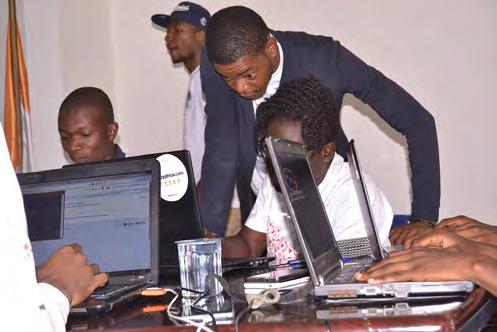
Healthcare demonstrates the potential.
Africa’s disease burdens, health systems and demographic conditions differ considerably from those of Europe and North America. Artificial intelligence trained mainly on external populations may fail to recognise local realities or deliver reliable results.
When health data remains under African stewardship, researchers can develop predictive models tailored to local diseases, treatment environments and public health needs.
The same principle applies to agriculture. Locally governed datasets can support crop forecasting, soil analysis, drought prediction, pest management and climate-smart farming. They can help farmers improve productivity while assisting governments with food security planning.
Artificial intelligence companies operate across borders. A fragmented African response will always struggle against corporations with global scale, vast capital and sophisticated legal structures.
Africa must negotiate collectively wherever possible.
Talent is equally important.
AI systems are designed, trained, governed, secured and maintained by people. Africa possesses one of the world’s youngest populations, offering the continent a historic opportunity to build a globally competitive workforce.
But youth alone does not create technological power. Deliberate investment does.
Universities must expand interdisciplinary programmes combining computer science with agriculture, medicine, cybersecurity, ethics, entrepreneurship and public policy. Students should learn not merely how algorithms function but how artificial intelligence can be applied to African problems.
Governments can support this effort through scholarships, innovation grants, research funding and public-sector digital academies. Businesses should create internships, apprenticeships and joint research programmes.
The African diaspora also represents an underused resource. Structured programmes could enable highly skilled Africans abroad to contribute expertise, mentorship, investment and research collaboration without necessarily requiring permanent relocation.
African control of these datasets would create a foundation for domestic intellectual property, businesses and employment. External control would deepen technological dependence.
Data sovereignty, however, cannot exist without physical infrastructure.
Much African government, commercial and institutional data is stored or processed beyond the continent. This creates vulnerabilities involving jurisdiction, national security, pricing and continuity of access.
African nations must accelerate investment in local and regional data centres, sovereign cloud environments, reliable energy systems and high-performance computing facilities.
Not every country needs to build a separate frontier computing system. Regional AI facilities supported by governments, universities, development finance institutions and private investors could provide shared access to advanced processing resources.
The African Union, regional economic communities and the African Continental Free Trade Area should help coordinate standards for cybersecurity, digital trade, cross-border data movement and public procurement.
The future of work will increasingly favour societies that create artificial intelligence rather than merely consume it.
Routine cognitive tasks in journalism, administration, customer service, design, software development and financial services are already being automated. Africa cannot respond simply by attempting to protect every existing occupation from technological change.
It must prepare workers for roles involving judgement, creativity, oversight, security and innovation.
The continent’s competitive advantage will not come from purchasing more subscriptions to foreign products. It will come from producing systems designed to address African challenges in agriculture, healthcare, education, governance, cybersecurity and financial inclusion.
Open-source artificial intelligence can play an important role in achieving that objective.
Most African institutions cannot afford to develop frontier models entirely from the beginning. Open models offer adaptable foundations that researchers can inspect, modify and improve for local purposes.
Their value extends beyond lower costs. They allow African developers to understand how systems operate rather than remain passive consumers of products whose internal architecture cannot be examined.
Open models can also reduce exposure to abrupt price increases, licensing changes or commercial restrictions. Collaborative repositories and research networks could enable specialists in Lagos, Nairobi, Kigali, Accra, Cairo, Dakar and Cape Town to build on shared work rather than duplicate expensive effort.
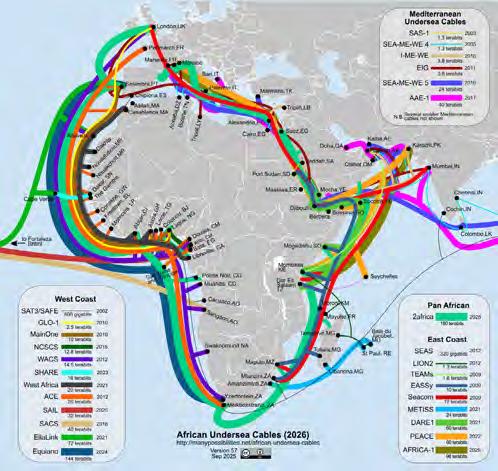
A September 2025 map charts active and planned undersea fibre-optic cables connecting Africa to global networks. Connectivity is expanding rapidly, but control of the infrastructure carrying African data remains central to the sovereignty debate. Credit: Steve Song/Wikimedia Commons, CC BY-SA 4.0
Language sovereignty must be at the heart of this agenda.
Africa is home to more than 2,000 languages, yet many remain severely underrepresented in global AI systems. A model that cannot understand African languages, accents, idioms and cultural references cannot adequately serve African societies.
This is not merely a technical inconvenience. It is a form of exclusion.
Languages carry histories, values, knowledge systems and distinct ways of understanding the world. When they are absent from technological systems, the communities that speak them risk being marginalised in education, commerce and digital public services.
Africa must invest in high-quality, ethically sourced language datasets, including resources for languages with limited written material. Universities, media organisations, traditional authorities, cultural institutions and community archives should collaborate to preserve oral histories and digitise indigenous knowledge.
accountability. Artificial intelligence can improve public services, but it can also enable surveillance, discrimination, misinformation and political manipulation.
African frameworks must defend human rights, strengthen cybersecurity, require transparency and provide realistic avenues for redress.
Citizens must know when automated systems are making decisions that affect employment, credit, healthcare, education or access to public services. High-impact systems should be independently tested for bias, reliability and security.
Innovation without trust will eventually provoke resistance. Responsible governance is therefore not an enemy of progress. It is one of its foundations.
The controversy surrounding Meta’s Muse Image platform should become more than a temporary disagreement about privacy settings. It should serve as a continental warning about the speed with which personal and cultural content can be transformed into commercial technological assets.
The end of cheap AI should also be understood as more than a pricing issue. It is evidence that artificial intelligence has entered a new strategic phase in which access, infrastructure and control will increasingly determine national competitiveness.
Africa must decide whether it will continue exporting raw data and importing finished intelligence.
The alternative is to build a coordinated continental industrial strategy based on sovereign data, computing infrastructure, open innovation, skilled workers, linguistic inclusion and ethical governance.
The continent does not need to reject global technology companies. It must insist that engagement takes place on transparent, fair and mutually beneficial terms.
sovereignty is no longer optional; it is Africa’s next independence
African linguistic diversity should not be viewed as an obstacle to innovation. It is a strategic resource capable of creating valuable educational, commercial and cultural applications.
Governance must accompany every stage of development.
AI sovereignty does not mean permitting African governments or companies to use technology without
It must also recognise that no external corporation will build African sovereignty on Africa’s behalf.
That responsibility belongs to African governments, universities, businesses, innovators, journalists, cultural institutions and citizens.
The future will not belong simply to those who generate the greatest volume of data. It will belong to those who can govern, protect and transform data into knowledge, prosperity and power.
Africa’s artificial intelligence future must be built substantially in Africa, governed by Africa and designed to advance African prosperity.
The moment for that work is not approaching. It has already arrived.
Professor Ojo Emmanuel Ademola is the first African Professor of Cybersecurity and Information Technology Management, Global Education Advocate, Chartered Manager. He is also UK Digital Journalist and a Contributing Editor at Africa Briefing Magazine, Strategic Advisor & Prophetic Mobiliser for National Transformation, and General Evangelist of CAC Nigeria and Overseas
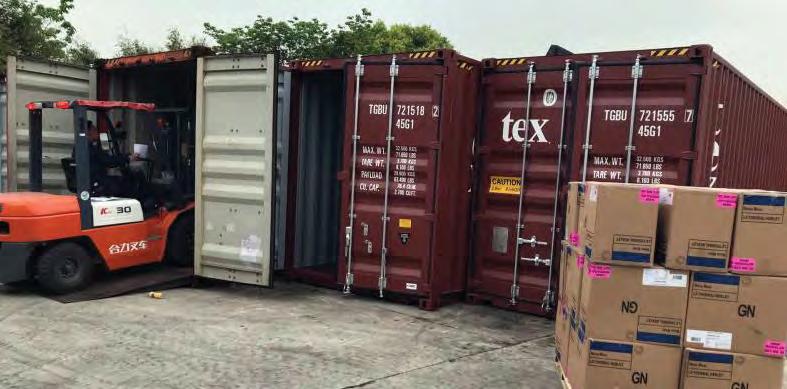
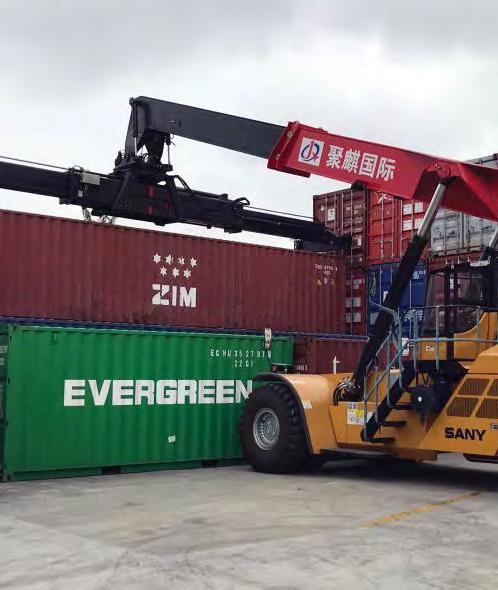
Established in 2002, Shanghai Grand International Co., Ltd. offers a variety of shipping and transportation options via air, sea and ground. Our company is based in Shanghai, China, with branches across the nation. Ranging from customs declaration, warehouse storage, containers and consolidated cargo shipping we have a large array of options to meet your needs.
In addition to being approved and designated by the Ministry of Transportation of China as a First Class cargo service provider, we have also established excellent business relations with major
C.E.O President.
Mr, Felix Ji
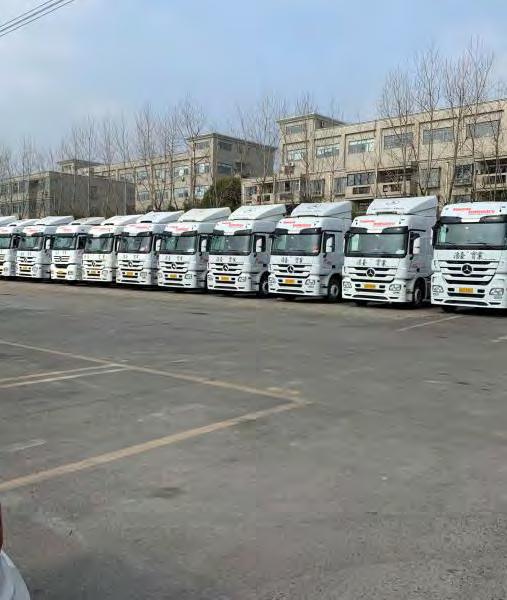
shipping companies including Maersk, CMA, ONE, SM line, and EMC over the past 15 years. In addition we have also built long term business relations with major airline cargo departments.
In order to expand our global operation, we are looking for international partnerships to work together in this industry. Should you ever import any goods from Peoples Republic of China please ask your exporter and shipper to contact us. We will provide our best service to you.
Room 814, 578 Tian Bao Lu, Shanghai, Peoples Republic of China
E-Mail: felix@grand-log.net
phone: 86-13501786280
The Supreme Court must decide whether two presidential terms mean two for life or merely two in succession, writes Jon Offei-Ansah
GHANA’S Supreme Court is being drawn into a constitutional argument that could redefine presidential power.
At the centre is a simple question: when the Constitution says no person may be elected president for more than two terms, does it mean two terms in a lifetime, or only two consecutive terms?
Most Ghanaians understood the provision as an absolute ceiling. But reported legal actions now ask the Supreme Court to consider whether a former president may return after spending time outside office.
Media reports have identified actions involving Azubila E. Salam, Kenneth K.A. Kuranchie and Ganiwu Alhassan. Africa Briefing had not independently examined court-stamped copies of all three filings at publication time. The most detailed account concerns Alhassan, a teacher from Kpandai, whose case argues that Article 66 bars only two consecutive terms.
The implications point towards President John Dramani Mahama, who is serving his second elected term after eight years in opposition. Yet none of the sources reviewed for this analysis links Mahama to the cases. He has also said he will not contest the 2028 election.
This is not, for now, an announced Mahama third-term campaign. It is a constitutional challenge brought by private citizens.
The argument turns on Article 66(2), which states: ‘A person shall not be elected to hold office as President of Ghana for more than two terms.’
The word ‘consecutive’ does not appear.
Supporters of the legal actions say that omission creates room for interpretation. They argue that the framers could have written ‘whether consecutive or otherwise’ had they intended a permanent lifetime prohibition. Their position is that term limits were mainly designed to stop a sitting president from using incumbency to remain in power indefinitely.
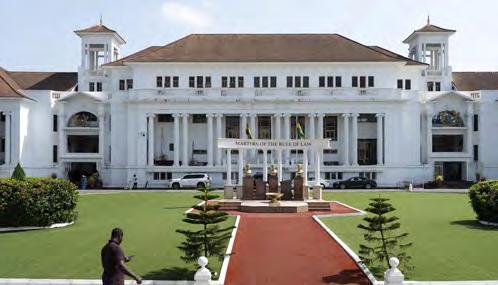
Ghana’s Supreme Court is being asked to decide whether the Constitution imposes a lifetime two-term presidential limit or restricts only consecutive terms
of Mills’ presidency before winning the December 2012 election. He lost the 2016 and 2020 elections, then returned to power after winning in 2024. He is therefore the first president under Ghana’s Fourth Republic to win two non-consecutive elected terms.
The court is not simply interpreting a phrase; it is deciding whether Ghana’s presidential clock can ever start again
Under that reading, the constitutional clock could restart after a democratic transfer.
The opposing argument is more direct. It holds that ‘more than two terms’ sets a clear numerical maximum. The Constitution does not say that a completed term disappears because a former president spends years outside office. Critics therefore believe the plaintiffs are asking the court to insert ‘consecutive’ into a provision where it does not exist.
Mahama’s political journey has brought the issue into focus.
He first became president in July 2012 following the death of President John Evans Atta Mills. He completed the final months
Mahama has taken the presidential oath three times, but he has been elected to serve two full terms.
Article 60(7) says a vice-president who completes more than half of an unfinished presidential term may subsequently serve only one full term. Because Mahama completed less than half of Mills’ remaining mandate, that period did not restrict him to one later full term.
His presidency from January 2013 to January 2017 was his first elected term. The mandate that began in January 2025 is his second.
The succession clause does not answer whether a former president may return after two non-consecutive election victories. It does, however, suggest that Ghana’s Constitution counts previous presidential service rather than treating every return as a fresh start.
The plaintiffs are likely to rely on a democratic argument. If citizens freely decide to return a former president after another government has served, why should the courts prevent them without unmistakably clear language?
That position has political appeal. Ghana’s courts have also traditionally treated the Constitution as a living document whose provisions must be read together.
But purposive interpretation has limits. A court may clarify uncertain language or reconcile competing provisions. It becomes
more controversial when an interpretation introduces a missing word and produces a substantially different presidential system.
That concern is reinforced by Ghana’s Constitution Review Committee, chaired by constitutional lawyer Professor H Kwasi Prempeh. The committee said it found ‘no ambiguity’ in Article 66(2) and proposed no change to the two-term limit. It separately recommended increasing a presidential term from four years to five while retaining a maximum of two terms.
The committee’s conclusion does not bind the Supreme Court. Still, a national review led by a constitutional scholar treated the existing language as clear.
The cases also raise a broader issue: where does judicial interpretation end and constitutional amendment begin?
Article 66 is among Ghana’s entrenched provisions. Changing it formally requires referral to the Council of State, Gazette publication, a six-month wait and approval in a referendum. At least 40 percent of eligible voters must participate, and 75 percent of those voting must support the change.
A ruling written for Mahama today could become a licence for another leader tomorrow
Dr Kojo Asante of the Ghana Centre for Democratic Development has taken a similar position, arguing that ‘two terms mean two terms’.
The Supreme Court may first have to decide whether the cases raise a genuine constitutional question.
Under Article 130, the court has exclusive original jurisdiction over constitutional interpretation and enforcement. But political disagreement alone does not necessarily create an interpretive dispute.
The test associated with Republic v Special Tribunal; Ex parte Akosah recognises interpretation where wording is unclear, rival meanings are advanced, provisions conflict or constitutional bodies face competing mandates.
The plaintiffs can argue that the lifetime and consecutiveterm readings require clarification. The Attorney-General could respond that no ambiguity exists and that the plaintiffs are asking the court to rewrite Article 66.
A ruling limiting Article 66 to consecutive terms could have consequences resembling an amendment. It could permit someone who has already won two presidential elections to leave office, wait through another administration and seek power again.
The court could narrow its ruling, but critics fear that once ‘consecutive’ is read into the Constitution, repeated political returns could become possible.
Mahama’s promise not to contest in 2028 does not remove that concern. Presidential pledges cannot determine the enduring meaning of the Constitution. A Supreme Court judgment would survive his administration and could be invoked by a former president from any party.
The judges must therefore decide the principle without tailoring it to one individual.
Ghana’s choice will also be watched across West Africa, where term-limit disputes have damaged political trust.
In Guinea, Alpha Condé changed the constitution before winning a disputed third term in 2020. The controversy contributed to a wider political crisis before he was removed by the military in 2021.
In Cote d’Ivoire, Alassane Ouattara argued that a new constitution had reset his term count, allowing him to contest again in 2020. The opposition rejected that interpretation, and protests turned deadly.
Ghana’s situation is different. The executive has not introduced an amendment removing term limits, and the reported actions have been brought by private individuals. But the regional examples show why public confidence matters. A judgment may be legally reasoned and still prove politically damaging if citizens believe it has opened a back door around a safeguard they understood to be absolute.
The Supreme Court could find that Article 66 raises no genuine interpretive problem. It could confirm a lifetime maximum of two elected terms. Or it could accept that only consecutive terms count.
On the constitutional material presently available, the lifetime-limit interpretation appears stronger. It gives ordinary meaning to ‘more than two terms’, fits the cumulative approach reflected in succession rules and avoids producing through judicial interpretation a result resembling an amendment.
Yet a brief dismissal may not be enough. Ghana has entered territory its Constitution had never previously been required to navigate: a sitting president serving a second elected term after eight years outside office.
A detailed judgment could bring certainty to future elections and prevent the dispute from returning whenever a former president considers another comeback.
The court now has an opportunity to settle whether two terms truly means two—or whether Ghana’s presidential clock can begin again.
A plan to revive regional and district tribunals promises faster justice but risks deepening concerns over politicisation, institutional duplication and constitutional contradiction, writes
Jon Offei-Ansah
GHANA’S decision to restore regional and district tribunals is becoming a major test of whether the country can accelerate justice delivery without weakening confidence in the courts.
Parliament passed the Tribunals Bill, 2026, on July 16 following a tense debate and an unsuccessful attempt by the Minority to remove the provision establishing the proposed tribunals. The legislation now awaits the assent of President John Dramani Mahama.
Government supporters argue that specialised tribunals will help reduce case delays, strengthen criminal enforcement and allow complex offences to be handled by adjudicators with relevant experience. Opponents warn that the new institutions could duplicate existing courts, encourage political interference and revive uncomfortable memories of tribunals associated with Ghana’s authoritarian past.
The constitutional basis for the legislation is not seriously in doubt. Articles 126 and 142 of the 1992 Constitution recognise Regional Tribunals as part of Ghana’s judicial structure and permit Parliament to create lower courts or tribunals through legislation.
Attorney-General Dominic Ayine has therefore rejected suggestions that the government is establishing a competing judicial system outside the authority of the courts.
‘We are not creating a parallel justice system. We are simply amplifying what is provided for in the Constitution,’ Ayine told Parliament.
His position is legally persuasive. Parliament is attempting to activate institutions expressly contemplated by the Constitution rather than creating bodies that operate outside it.
Constitutional permission, however, does not automatically make the proposal sound public policy.
The Mahama-appointed Constitution Review Committee has reportedly recommended removing Regional Tribunals from the Constitution. Its argument is that the High Court has absorbed much of the work previously associated with the tribunals and that scarce judicial resources would be better invested in strengthening the High, Circuit and District courts.
That recommendation leaves the government pursuing two potentially conflicting objectives. It is moving to establish tribunals under the existing Constitution while considering reforms that could remove those institutions from a future constitutional framework.
The government could therefore spend public money recruiting personnel, securing buildings, establishing registries and developing administrative systems for institutions that may later be abolished through constitutional amendment.
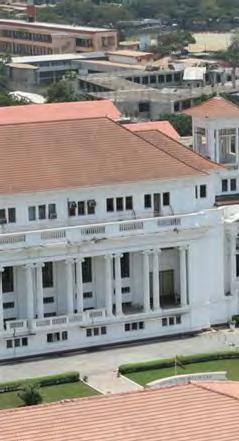
This contradiction does not make the Tribunals Bill unlawful. It does, however, raise a serious question about sequencing.
Before the tribunals are activated, the government should explain why it is proceeding ahead of its formal response to the Constitution Review Committee. It should also clarify whether
permission does not automatically make the tribunal proposal sound public policy

it intends to reject the recommendation calling for the tribunals’ abolition.
The strongest argument in favour of the legislation is the scale of delay within Ghana’s justice system.
Ayine told Parliament that the conventional courts accumulate approximately 3,360 backlog cases annually. Delayed trials can impose severe consequences on accused persons, witnesses, victims and the wider public.
People who have not been convicted may spend years under restrictions or in detention. Witnesses may lose interest, relocate or struggle to remember events accurately. Victims can be left without closure, while prosecutors face rising costs and deteriorating evidence.
Such delays inevitably weaken public confidence in the justice system.
The government proposes giving the tribunals jurisdiction over defined criminal matters, including illegal mining, narcotics offences, tax violations, customs cases, economic fraud and causing financial loss to the state.
There is merit in specialisation. Judges or tribunal members who repeatedly handle complicated mining, customs or financial cases can develop expertise that may improve both the quality and speed of decisions.
But specialisation alone cannot resolve institutional weakness.
The proposed tribunals will require qualified chairpersons, properly trained panel members, registrars, prosecutors, courtrooms, secure record systems and dependable funding. Without those foundations, Ghana may simply transfer delayed cases from established courts into a new queue carrying a different name.
The real policy choice is therefore not between tribunals and doing nothing. It is between establishing a new tribunal structure and investing additional resources in existing courts, including specialised divisions operating within the familiar judicial system.
The government must demonstrate why tribunals would deliver faster and more credible outcomes than properly resourced High, Circuit and District courts.
Minority Leader Alexander Afenyo-Markin attempted to remove Clause 4, the provision establishing regional and district tribunals. His amendment was defeated by 135 votes to 16 before Minority MPs walked out of the chamber.
‘I contend that creating this new tribunal system by this provision will bring chaos to the justice delivery system we have in our country,’ he said. ‘This is populism. We need clarity.’
His concern reflects more than a disagreement over institutional duplication.
Tribunal panels would reportedly consist of a legally qualified chairperson and other members who may not be lawyers. Lay participation is not necessarily inconsistent with justice. Many legal systems use juries, assessors or community representatives to contribute to judicial decision-making.
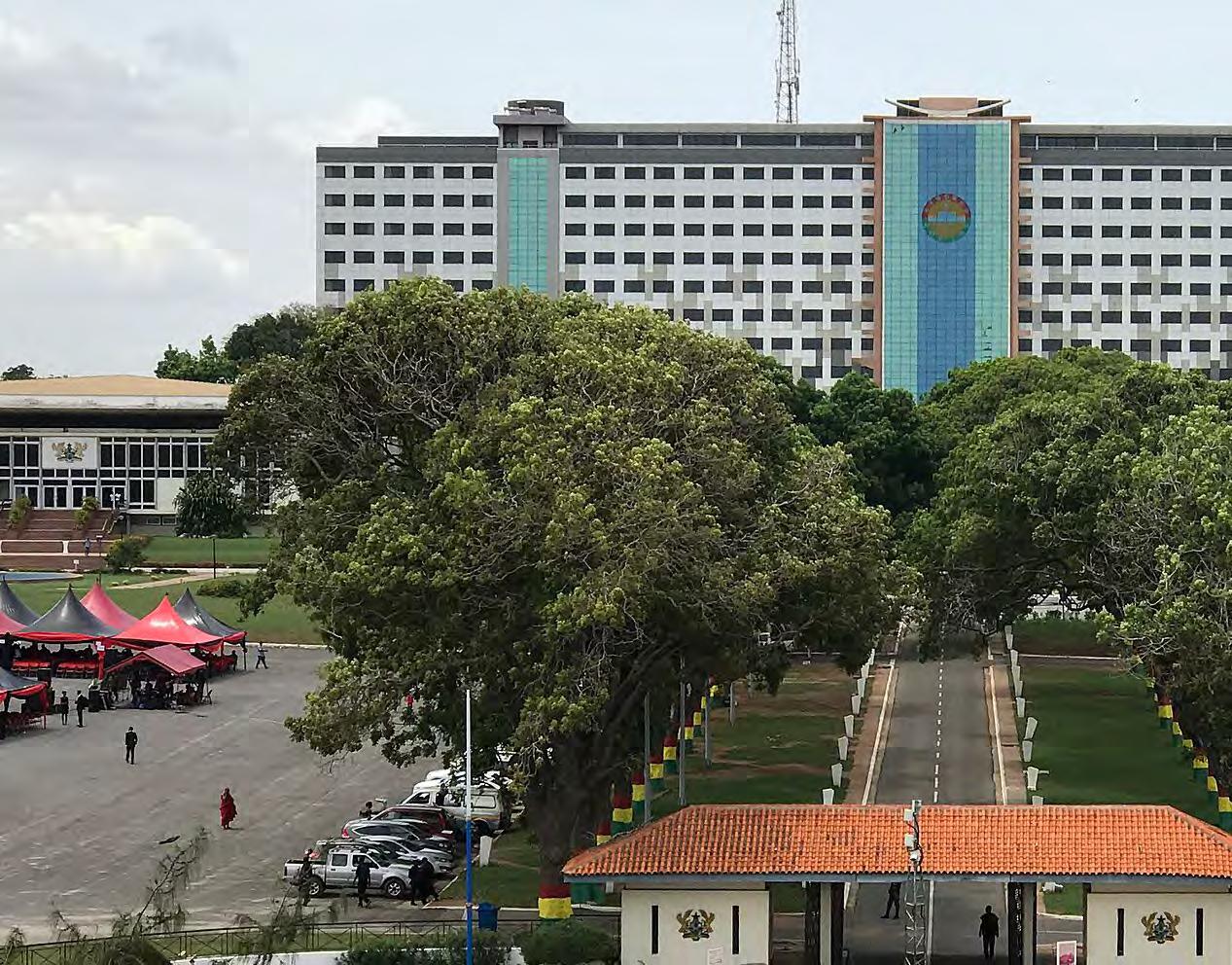
The danger lies in failing to define their responsibilities clearly.
The legislation and accompanying regulations must specify which legal questions are reserved for the chairperson, how disagreements among panel members will be resolved and how the reasoning behind decisions will be recorded.
Criminal responsibility frequently depends on technical rules relating to evidence, intention, procedure and statutory interpretation. If the roles of legally trained and non-legally trained members are unclear, tribunal decisions could face repeated appeals.
The Trades Union Congress has raised a more direct political concern. Its Deputy General Secretary, Kwabena Nyarko Otoo, has warned about the potential politicisation of the judicial process.
Speed must be measured by legally sound decisions, not by the number of rapid convictions
That would undermine the government’s promise of efficiency and add another layer of delay to the justice system.
The TUC has questioned the proposed appointment system and argued that Ghana should complete the constitutional review process before restoring the tribunals. It favours strengthening the existing courts instead of creating institutions that carry significant historical baggage. Government representatives insist that the proposed tribunals will bear little resemblance to the public tribunals associated with military rule. They say the new bodies
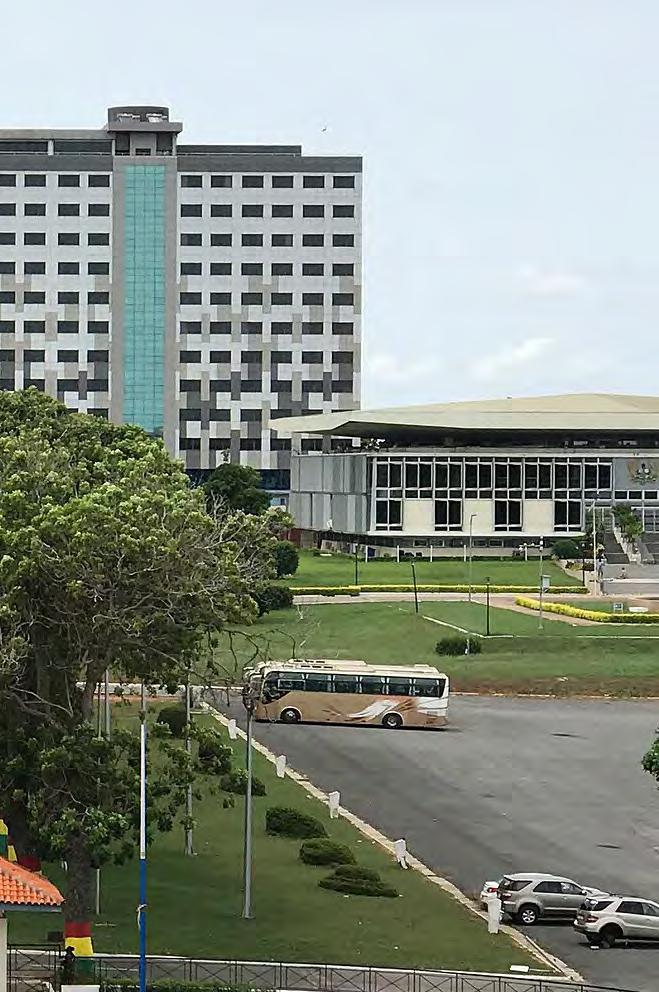
will operate under the Judiciary, follow established criminal procedures and remain subject to appeals and judicial supervision.
A Tribunal Oversight Committee operating under the Judicial Council is also expected to monitor their performance.
Those safeguards are important. Meaningful appeals and independent oversight can prevent the tribunals from becoming instruments of executive convenience.
Yet institutional memory cannot be erased through legislation alone.
For many Ghanaians, the word ‘tribunal’ remains associated with politically motivated prosecutions, intimidation and weak protection of due process. The government consequently carries a greater burden of reassurance than it would if it were simply creating an ordinary specialised court.
Appointments must be transparent and based on publicly available criteria. Case allocation should be protected from political influence. Tribunal judgments should be accessible to the public, except where legitimate legal restrictions apply.
Annual reports should also disclose the number of cases filed, completion times, adjournments, appeals, overturned decisions and complaints against tribunal members.
Such information would allow the public to measure the government’s claims against actual performance. Without credible and accessible data, faster justice will remain a political promise rather than a proven outcome.
Illegal mining, commonly known as galamsey, appears to be one of the main drivers of the government’s urgency.
Galamsey has damaged rivers, forests and cocoa-producing communities. Despite repeated arrests and official campaigns, many Ghanaians remain unconvinced that politically connected operators are prosecuted consistently.
Specialised tribunals could build expertise and prevent mining cases from becoming trapped in crowded court schedules. But politically sensitive prosecutions are precisely the cases in which due process must be protected most carefully.
Illegal mining trials may involve disputed licences, land ownership, company structures, environmental evidence and allegations of protection by public officials. These are not cases that should be rushed merely to satisfy public anger.
Speed must be measured by the delivery of legally sound decisions, not by the number of rapid convictions.
A judgment overturned because the defence was denied adequate preparation time, evidence was mishandled or a panel misunderstood the law would neither save resources nor improve confidence in the justice system.
The political environment also increases the stakes.
The governing National Democratic Congress holds a parliamentary super-majority, giving it the numbers to pass contested legislation without opposition support. That majority places an even greater obligation on the government to build public confidence beyond its parliamentary caucus.
A tribunal structure introduced over the objections of the political opposition and organised labour may encounter an immediate legitimacy crisis when it handles its first politically sensitive case.
The system will be judged most severely when an opposition politician, influential businessperson, government associate or prominent public official appears before it.
President Mahama must now decide whether the safeguards contained in the bill are sufficient or whether further consultation and reconsideration are necessary.
A credible implementation plan would explain the government’s disagreement with the Constitution Review Committee, provide a transparent financial justification and publish detailed procedural safeguards before the tribunals begin operating.
The legislation may be constitutionally valid and still prove institutionally unwise. Equally, tribunals could become useful instruments of justice if appointments are independent, procedures are precise, appeals are effective and performance is openly measured.
Parliamentary assurances will not settle the debate.
The decisive moments will come with the first appointments, the first politically sensitive prosecution and the first occasion on which a tribunal must choose between protecting due process and satisfying governmental or public impatience.
Although the country has not collapsed in the way the failed-state literature predicts, it has not consolidated either in the way the peacebuilders imagined, producing instead a regime that cannot monopolise force and cannot fulfil the obligations of its own peace deal, writes
Maggie LoWilla
IN September 2018, delegates gathered in Addis Ababa to sign a document meant to end South Sudan's civil war. The Revitalised Agreement on the Resolution of the Conflict in the Republic of South Sudan (R-ARCSS) promised to steer the world's youngest country away from civil war and towards a more stable political future.
It was an ambitious blueprint, organised around eight interconnected chapters: the formation of a transitional government; a permanent ceasefire and security arrangements; humanitarian assistance; economic and financial management; constitutional reform; transitional justice, accountability, reconciliation and healing; oversight through international monitoring mechanisms; and agreed implementation schedules and financing.
By the standards of the global peacebuilding industry, it was a competent document. It read much like its predecessors
Integrating the unified army would require commanders to surrender the very assets that make them players
in Liberia, Sierra Leone, Burundi and the Democratic Republic of Congo: a sequenced, technocratic plan for converting violent politics into bureaucratic politics.
Eight years on, the script has not been followed. The unified army has been announced, retrained and re-announced without
Senior officials, some of them signatories to the very agreement meant to protect them, have cycled in and out of detention. Beyond Juba, violence has continued to ripple through Warrap, Lakes, Jonglei, Unity, the Equatorias and the Abyei borderlands, unfolding in ways the agreement's ceasefire machinery was never built to anticipate.
Yet South Sudan has not collapsed in the way the failedstate literature predicts. Nor has it consolidated in the way the peacebuilders imagined. It has done something else.
What South Sudan is producing has remained difficult to name because the language through which it is most often interpreted is borrowed from an externally imposed model of the state, one that struggles to make sense of the political orders
emerging across Africa.
The reflex, in most international analysis, is to measure South Sudan against the ideal state as conceptualised by Max Weber - a single authority holding a monopoly on legitimate force, a professional bureaucracy insulated from kinship, revenue detached from rent. Measured against that yardstick, South Sudan can only ever appear as deficit: a state that cannot monopolise force and cannot fulfil the obligations of its own peace deal.
The diagnosis writes itself: failure of capacity, failure of will. But suppose the gap between the agreement and its implementation is not a defect to be closed? Suppose it is a signal
to be read? R-ARCSS, in its breach as much as in its observance, is producing a political order. It is simply not the order the template was written to produce.
A different question: what kind of relationship is this? Instead of asking which institutions exist and whether they function as designed, a process-based leadership approach asks a more basic question: what is the actual relationship between those who lead and those who are led; and what foundation is that relationship built on?
Leadership scholars distinguish between two very different foundations for that relationship. Two things determine what it produces. The first is mutuality: whether leaders and followers confront enough of a common situation, and share enough of a common purpose, that influence can flow both ways – followers holding leaders to the purpose, leaders mobilising followers without coercion.
The second is the source of the leader’s power. Some sources – admiration, competence, legitimacy, the sense that a leader embodies who we are – cannot be sustained unilaterally; they require mutuality and reproduce it. Others – rewards and coercion – a leader can hold alone, for a while. They buy compliance but are inadequate to build collective will.
During the long war against Khartoum, the SPLM/A’s leadership had mutuality of a rough kind. Leaders and led shared a situation - the oppression from the north – and a purpose: liberation. Independence in 2011 dissolved both. The common enemy vanished; the common purpose fragmented into the question of who would benefit from the new state. In her book, Leadership, Nation-building and War in South Sudan: The Problems of Statehood and Collective Will, Dr. Sonja Theron argues that South Sudan’s leaders never built new bases of power adequate to the new situation.
They fell back on the two they could hold unilaterally: reward – oil-financed patronage, the “Big Tent” strategy of amnesty and co-option, public office converted into private revenue – and coercion, from targeted state violence to detention and intimidation. While those bases can sustain a sequence of elite bargains, punctuated by violence when the bargains collapse, they cannot sustain a nation.
Read through this lens, the post-agreement order stops looking like botched implementation and starts looking like a coherent political formation with four structural habits.
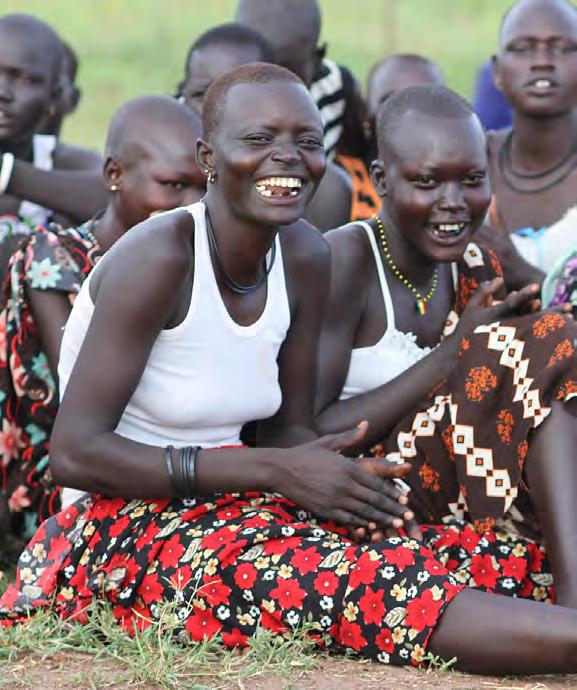
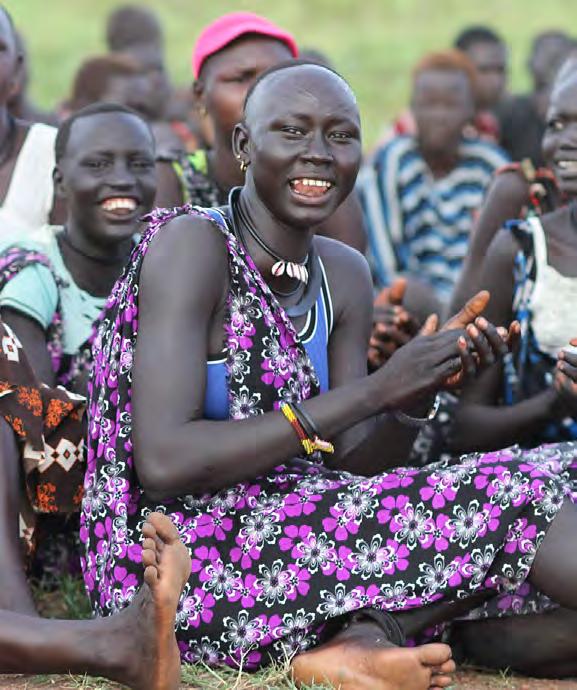
The first is exclusion. The hollowing of the women’s quota is the most legible case. The problem is not principally the numbers, though they fall short; it is the kind of inclusion on offer. Appointments function as loyalty tokens distributed by male principals, not as openings through which South Sudanese women’s constituencies could hold anyone accountable. The appointees do not need those constituencies to keep their posts, and the constituencies cannot use the appointees to move the political order.
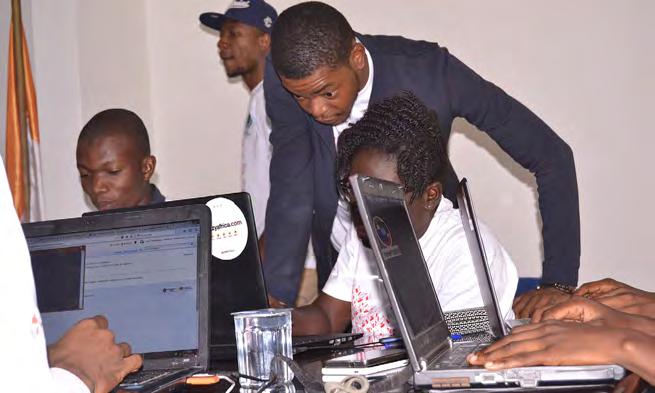
Young Africans from across the continent participate in a leadership programme. The next phase of African integration will depend on creating opportunities for youth while strengthening democratic governance, inclusion and social cohesion
across much of the country, the churches that mediate at scale in every crisis, civil society networks, the diaspora that finances both reconstruction and conflict; each is a potential source of mutuality, and each is kept outside the implementation practice the agreement scripted. With them out, the relationship between rulers and ruled is mediated not by shared purpose, but by rent.
The second is fragmented sovereignty. Authority in South Sudan is distributed across the government in Juba, parallel army commands, chiefs, prophets, cattle-guard commanders, community militias and holdout rebels. None holds a monopoly over the use of violence.
This extend further than gendered leadership. Chiefs and customary authorities who govern land and settle disputes
The orthodox reading calls this a transitional condition awaiting consolidation. It is better read as mutuality in migration. Without a national leadership relationship oriented to the actual situation, people sustain real relationships with local leaders instead; the Nuer prophet, the Dinka titweng commander, the pastor, the chief. The order endures not because the centre is strong but because the periphery has built its own leadership relationships beyond the centre’s influence and reach.
The third is militarised bargaining. When rebellion is rewarded with amnesty, rank and office, armed mobilisation becomes the most viable route to accessing power and political posts become instruments for extending armed networks. Armed capacity becomes the currency of politics itself.
This, not misogyny alone, is another explanatory factor as to why the 35 per cent quota cannot survive intact. A bargaining process that prices participants by the force they command systematically discounts everyone else – women’s movements, chiefs, churches, civil society – who does not fluently speak in the grammar of the gun.
sometimes as instruments of national leaders, and sometimes on their own accord.
Integrating the unified army would require commanders to surrender the very assets that make them players at all; so, predictably, they decline. A state that devotes a significant portion of its budget to military spending, while international agencies deliver basic services, is not failing to build a Weberian monopoly. It is paying the recurring cost of elite survival in a coercive marketplace of its own making.
Considering the above, does South Sudan qualify as a “state in Africa” – a Westphalian template stretched over colonialera borders – or an “African state”, governed through kinship, custom, military networks and brokerage with deep regional roots?
It is both, and the leadership lens is what lets the two be held together. The template is international; the relationships that inhabit, exceed and partially refuse it are not.
Nor do they stop at the border. The Intergovernmental Authority on Development (IGAD), the African Union, the Troika, Uganda and Kenya, oil companies, humanitarian agencies and diaspora networks are all inside the leadership process, financing its rewards and shaping its coercion. A politics so embedded cannot be analysed within a bounded national frame, which is precisely what liberal frameworks assume.
None of this is an argument for lowering expectations or excusing what has happened. The undermined women’s leadership quota matters. The political detentions matter. The ongoing sub-national violence matters immensely.
However, there is a difference between naming these as breaches of an externally imposed template and understanding them as the shape of an order being actively produced – one that South Sudanese women, customary leaders, faith communities and civil society groups are already contesting on their own terms. Not by demanding stricter adherence to a foreign blueprint but by building the kind of mutual, accountable relationships the current order denies them.
After the long war against Khartoum ended, the common enemy vanished, leading to questions of who would benefit from the new state
The fourth is competitive control of coercion. Rival forces retain parallel command structures; a security service operates beyond the formal chain of command; community militias act
That distinction has consequences for policy, too. If the problem is framed as a capacity gap, the answer is always more technical assistance and tighter conditions – the same prescription, indefinitely repeated.
If the problem is a leadership process built on exclusion and coercion, the answer looks different: strengthening the constituencies currently locked out. It also means taking seriously forms of authority – customary, religious, diasporic, communal – that sit outside the formal architecture altogether, but shape everyday life far more than any ministry does.
Diplomacy does not appear to be disrupting the flow of foreign arms, finance and logistical support that will stop the armed conflict, but instead sustaining it, argues Hubert Kinkoh
THE war in Sudan is now in its fourth year, and the more urgent question is no longer how it began but why it continues despite sustained diplomatic engagement. The answer lies not only in Sudan’s internal fragmentation, but in an external system of weapons, drones, finance and logistical backing that has made continued fighting seem more rational than compromise and reshaped the incentives of both the Sudanese Armed Forces (SAF) and the Rapid Support Forces (RSF).
The conflict’s roots are unquestionably domestic: the collapse of the post-2019 transition, the militarisation of the state and a struggle between two armed centres of power that neither side can afford to lose. But without external enablement, this war would certainly not have endured this long.
Yet international diplomacy continues to treat external interference as a secondary issue rather than the central driver of the conflict’s persistence. The April 2026 Berlin Conference exposed this contradiction. It produced €1.5 billion in humanitarian pledges (building on €2 billion in Paris and €1 billion in London) and the clearest multilateral recognition, yet external support is sustaining the war.
The Berlin Principles for Sudan called on all actors to halt military, logistical and financial backing to both sides. The UN’s leadership echoed this call, acknowledging that strategic interests and profit are embedded in the conflict.
But Berlin named no actors, created no enforcement mechanisms and imposed no costs. This is not an oversight.
The same logic is evident in the Quad process. Its September 2025 ceasefire proposal contained no provisions addressing UAE support to the RSF and was rejected by SAF before it could be evaluated.
The core problem is structural: the actors best positioned to pressure external enablers are unwilling to confront them because those enablers are embedded within their own diplomatic and security partnerships. This political choice now carries consequences that can no longer be deferred.
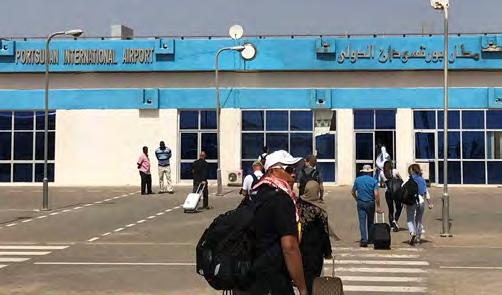
An International Rescue Committee health worker cares for a nine-month-old Sudanese refugee at Gaga camp in Chad in May 2023. External military and financial support has prolonged a war that continues to displace families across Sudan and neighbouring countries. Photo: Chloé Leconte/International Rescue Committee/ Wikimedia Commons, CC BY-SA 4.0
diplomatic discussions.
As drone warfare intensifies, its humanitarian consequences are stark: remote strikes now account for over 80 per cent of at least 880 documented civilian casualties between January and April 2026 alone. Each delivery of advanced systems not only escalates the battlefield but narrows the space for ceasefire viability.
The UAE’s interference is the most consequential, the most documented and least constrained. Investigations by the Wall Street Journal, Amnesty International and UN experts all confirm sustained Emirati arms transfers to the RSF, including advanced Chinese drone systems recovered in Khartoum and Port Sudan. Abu Dhabi denies involvement, faces no formal censure and continues to participate in diplomatic processes nominally designed to end the war it is helping to sustain.
Other actors reinforce this system. Türkiye and Iran have supplied drone capabilities that have transformed the SAF’s operational reach across multiple theatres. Israel-linked defence supply chains, facilitated through post-Abraham Accords alignments, add a further layer of technological escalation that remains absent from formal
A parallel enabling system operates across Sudan’s immediate neighbourhood. Yet not one of these neighbours has faced a coordinated diplomatic or financial reckoning.
Egypt publicly champions Sudan’s territorial integrity while facilitating logistical and financial flows aligned with the SAF’s war economy. It used its Peace and Security Council chairmanship at the AU in February to issue statements widely read as endorsing SAF legitimacy. Egypt’s calculus is one of managed instability: close enough to the war to shape its outcome, distant enough to avoid its costs.
Ethiopia’s role has become increasingly explicit. Reports of RSF-linked activity on Ethiopian territory, coupled with mutual accusations following early-May drone strikes on Khartoum’s international airport, illustrate how deeply the war is now entangled with regional fault lines.
The SAF directly accused Ethiopia and the UAE of orchestrating the attack, forcing a 72-hour closure. Both denied involvement. Addis
Ababa’s counterclaim that Sudan has been supporting the Tigray People’s Liberation Front (TPLF) to destabilise Tigray signals how deeply the war is now linked to Ethiopia’s own internal fault lines.
Sudan recalled its ambassador. The episode drew no commensurate international response. Yet Ethiopia sits on the AU Peace and Security Council, alongside Uganda, insulating both neighbours from scrutiny.
Libya functions as a critical transit hub. A UN Panel of Experts on Libya confirmed that Khalifa Haftar’s Subul al-Salam Battalion used Libyan territory to facilitate cross-border movements of fighters, arms and materiel into RSF-controlled areas, with Kufra serving as a rear base and transit airfield.
Investigations further suggest that Colombian mercenaries have passed through Libyan territory into Sudan. None of this has been addressed in any active diplomatic track.
Sudan’s conflict is now underpinned by a fully functioning war economy. Chatham House has documented how gold is the conflict’s connective tissue, moving through informal networks across East Africa into global markets. Chad, South Sudan, Uganda, and Kenya are deeply involved in this war economy.
Chad also actively facilitated the movement of weapons, fighters and supplies into RSF-controlled areas, shaped by UAE financial investment and N’Djamena’s dependence on Gulf patronage. RSF incursions into Chadian territory and the risk of Sahel-style fragmentation are the direct consequences. It too has faced no accountability.
South Sudan remains a key RSF coordination node, with crossborder fighter recruitment from Northern Bahr el Ghazal and Western Equatoria now well documented. Uganda functions as a regional gold laundering hub for illicit flows from Sudan and DRC. Kenya has hosted RSF meetings including the announcement of a parallel government, issued a passport to a US-sanctioned RSF official confirmed by OFAC, and recorded sharply rising gold exports, with a Swiss Aid investigation estimating that over two tonnes of conflict gold moves through Nairobi to Dubai annually.
Port Sudan International Airport, photographed in 2013. Drone warfare and cross-border logistical networks have become increasingly important to the conflict, narrowing the prospects for an effective ceasefire. Archive photo: Gwenvyvar/Wikimedia Commons, CC BY-SA 3.0
international media attention to the war, and could align US Treasury, State Department and security channels behind a coherent pressure strategy.
But US action alone will not suffice. The UK, as UN penholder on Sudan, has exercised that responsibility with insufficient urgency; it must move beyond convening toward enforcement, coordinating targeted sanctions on named arms suppliers, financial intermediaries and illicit gold corridor traders, with binding monitoring mechanisms.
At the same time, the EU should tighten correspondent banking restrictions against intermediaries sustaining Sudan’s war economy and fund a financial disruption framework for corridor states in the Horn and Sahel, with clear costs for non-compliance. Such coordinated action will create both deterrence and leverage. Acting separately will achieve little.
What this means is that armed actors are no longer solely fighting for political control; they are embedded in systems of extraction that generate continuous revenue.
What Sudan needs now is to cut off the proxies: the deliberate dismantling of the external systems that sustain the war. This requires more than rhetorical condemnation. It entails coordinated action to disrupt arms supply chains, target financial networks linked to conflict actors, interdict gold and commodity flows, remove diplomatic cover for external enablers and raise the economic and political costs of continued support.
A Sudanese-led political settlement remains the only legitimate endpoint. But it will not materialise while fighting remains cheaper than compromise.
The scale of the humanitarian catastrophe requires elevating Sudan politically. The US holds the greatest leverage and has yet to show its willingness to use it. The Trump administration should seriously consider entrusting the Sudan file to Vice President JD Vance; this would signal that the issue is no longer peripheral. Both Tom Perrielo (Joe Biden’s Special Envoy) and Massad Boulos (Trump’s Senior Adviser for Arab and African Affairs) have not carried sufficient weight in Abu Dhabi. A vice-presidential mandate would be taken more seriously, having conducted high-stakes back-channel diplomacy on the Iran war. It would draw heightened
The AU should align with these international efforts. Despite criticism about its conflict resolution approach to the war it has shown it has political will to support ongoing efforts toward lasting peace, stability and reconciliation in the region with the appointments of former Nigerian President Olusegun Obasanjo (focused on Ethiopia) and Tanzanian ex-President Jakaya Kikwete (focused on South Sudan) as Special Envoys to the Horn and Red Sea.
It requires a further appointment: a High-Level Sudan-specific Envoy of former head-of-state seniority, mandated to compel rather than convene and put member state enablers directly with a clear choice: join a coordinated pressure framework or own the consequences of the fragmentation their permissiveness is producing. These efforts would signal the AU’s shift from facilitation to accountability, marking a necessary step toward restoring credibility to regional peace efforts.
The failure to act decisively has allowed a dangerous logic to take hold. External actors now operate on the assumption that a democratic transition is unlikely, that military outcomes are inevitable, and that they can shape those outcomes in their own interest.
If this belief persists, the war will continue. Breaking it requires coordinated international action that makes democratic transition the only viable endpoint and makes obstruction of that outcome materially costly.
Identifying external interference is no longer sufficient. It has become a substitute for policy. Sudan cannot afford another year of it.
The wave of young people seeking to leave Africa in search of greener pastures is less to do with the movement itself and more about institutional failure, inequality and the collapse of public trust, argues Winston Kabia
EVERY year, thousands of Africans risk their lives crossing deserts, seas and heavily policed borders in search of opportunities abroad. Some perish in the Sahara. Others drown in the Mediterranean. Many more disappear into detention centres, trafficking networks, or undocumented labour markets far from home.
Yet despite billions of dollars spent globally on migration management, border enforcement, humanitarian operations and anti-trafficking initiatives, the flow continues. The question increasingly confronting policymakers, researchers and development thinkers is not simply why people migrate – but why so many feel they have no meaningful alternative.
A growing body of African political and economic thought argues that the migration debate has been framed narrowly for far too long. Among the more provocative contributions is Sociocapitalism: A Manifesto for a New World Order by Sierra Leonean thinker Chez Winakabs, whose work examines migration through the lens of governance failure, economic exclusion and institutional collapse rather than border security alone.
of deeper systemic failures within societies.
The argument challenges dominant international approaches to migration management and raises tough questions about whether the global system has become more effective at managing displacement than preventing the conditions that produce it.
For decades, migration policy discussions have focused heavily on border control, irregular migration, trafficking prevention, refugee processing and humanitarian response mechanisms. While these areas remain important, critics argue that they often address consequences rather than causes.
The International Organisation for Migration is too heavily oriented toward administration and containment rather than long-term prevention
According to the manifesto, migration flows should be understood as indicators of broader institutional stress. Economic instability, weak governance, corruption, conflict, environmental degradation and limited social mobility all contribute to conditions in which migration becomes less a matter of aspiration and more one of survival.
At the centre of the manifesto is a striking proposition. Forced migration is not primarily a border crisis. It is the visible outcome
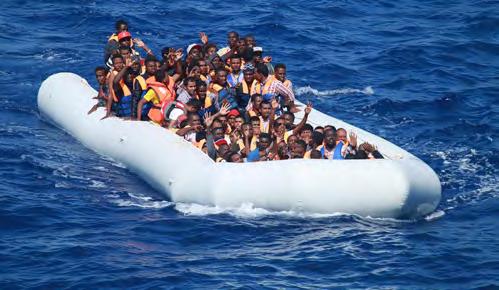
The manifesto states: “When I monitor the borders through which desperate people flow, I am not observing a migration crisis. I am observing the terminal symptoms of governance crises, economic crises, security crises and ecological crises that were allowed to metastasise without adequate response.”
This idea forms the conceptual foundation of BorderWatch, a project designed to study migration patterns as reflections of underlying societal dysfunction rather than isolated security events. The debate is particularly relevant across Africa, where demographic pressures, youth unemployment, political instability and climate-related disruptions continue reshaping migration dynamics.
According to the African Development Bank, Africa possesses the world’s youngest population, with millions entering labour markets annually. Yet economic growth in many countries has struggled to keep pace with rising expectations and employment demand.
In several African states, outward migration has become increasingly tied to public perceptions of limited opportunity at home. For many young Africans, migration is no longer viewed

solely as economic ambition. It is increasingly linked to concerns over governance, institutional credibility and long-term security
This shift has significant implications. Analysts note that societies experiencing large-scale outward migration often face a deeper crisis of confidence. Citizens may lose faith not only in economic prospects, but in the ability of institutions to provide fairness, stability and pathways for advancement.
The result is a form of psychological migration that precedes physical departure. People stop imagining a future where they are.
The manifesto also raises broader questions about the structure of the global migration economy itself. Wealthier nations facing labour shortages continue attracting migrants from developing regions, while poorer countries increasingly depend on diaspora remittances as critical components of their economies.
discussion surrounding the rejection has contributed to wider debate over how migration policy is conceptualised globally.
Importantly, the manifesto does not oppose migration itself.
Instead, it distinguishes between voluntary mobility and forced displacement driven by systemic collapse.
Human mobility has historically played a significant role in trade, education, innovation and cultural exchange. Migration is neither abnormal nor inherently negative.
The manifesto argues, however, that there is a critical difference between migration driven by opportunity and migration driven by desperation. “The goal is not to prevent movement. The goal is to ensure that movement, when it occurs, is a choice rather than a compulsion,” the text says.
This distinction has become increasingly important within African policy discussions, particularly as governments attempt to balance labour mobility, regional integration and domestic development priorities.
The manifesto’s most controversial argument is that the most effective long-term migration policy is not stricter border enforcement, but stronger domestic governance. Societies that provide economic opportunity, institutional trust, education, security, healthcare and social mobility tend to experience lower levels of desperation-driven migration.
This is not to suggest migration disappears entirely. Rather, movement becomes more voluntary, regulated and economically productive.
The implication is significant: migration pressures may be inseparable from governance quality itself. For African policymakers, this raises difficult but increasingly unavoidable questions.
Can migration be reduced sustainably without addressing corruption, unemployment, institutional weakness and political instability? Can border security succeed where development policy fails? And can societies retain talent if citizens no longer believe meaningful opportunities exist at home?
At the same time, many of the structural drivers of migration – including unequal trade systems, resource dependency, debt burdens, governance deficits and climate vulnerability – remain insufficiently addressed.
Critics of the current international framework argue that this creates a cycle in which migration pressures persist because the conditions producing them remain intact. In that context, migration management risks becoming reactive rather than transformational.
The rejection of BorderWatch ‘s funding application by the International Organisation for Migration (IOM) has drawn attention in some intellectual and policy circles, particularly among those who believe international migration frameworks may still be too heavily oriented toward administration and containment rather than long-term prevention.
No official connection has been made between the project’s philosophical approach and its funding outcome. However, the
Whether or not one agrees fully with Sociocapitalism’s conclusions, the manifesto reflects a wider shift in African intellectual discourse around migration. Increasingly, scholars, activists and policy thinkers are moving beyond narrow security frameworks and examining migration as part of a broader ecosystem involving governance, economics, psychology, inequality and global power structures.
This does not eliminate the need for border management or humanitarian response systems. But it does suggest that such mechanisms alone cannot resolve migration pressures if the underlying drivers remain unresolved.
As migration continues to reshape politics, labour markets and international relations across Africa and beyond, one reality is becoming increasingly difficult to ignore: people rarely abandon functioning systems in desperation.
And until societies confront the conditions that make departure feel necessary, borders will continue absorbing the consequences of failures that began long before migrants ever reached them.
As global aid budgets shrink and life-saving assistance is rationed, Valerie N. Msoka argues that Africa must strengthen its institutions, fund local responders and prevent women and girls from becoming the invisible casualties of humanitarian retreat
FOR more than three decades, the international humanitarian system rested on a simple assumption: when crises deepened, assistance expanded. Wars, famine, epidemics and displacement were expected to mobilise governments, multilateral institutions and relief agencies to save lives and protect those facing the greatest danger.
That assumption no longer holds.
Humanitarian needs are continuing to rise, but the money available to meet them is contracting at extraordinary speed. What first appeared to be a temporary funding squeeze is now revealing itself as a structural shift in the international humanitarian order.
For Africa, the implications are profound. The continent is entering a period in which emergencies may become more frequent, complex and prolonged, while international support becomes less predictable.
The Global Humanitarian Assistance Report 2026, published by ALNAP, describes a humanitarian system in recession. International humanitarian assistance fell from $47bn in 2023 to $33bn in 2025 — a decline of nearly 30 percent in two years. At the same time, displacement and food insecurity remain far above the levels recorded before the contraction began.
This is no longer simply a funding crisis. It is the emergence of a new humanitarian reality.
Across Sudan, South Sudan and the Democratic Republic of Congo, conflict continues to uproot communities, destroy livelihoods and deepen hunger. Climate shocks, disease outbreaks and economic instability are compounding already fragile conditions. Women and girls remain exposed to sexual violence, exploitation and the collapse of essential health and protection services.
Crises of this magnitude would once have triggered an expansion of humanitarian operations. Instead, they are meeting contraction. That is the defining humanitarian paradox of our time.
The consequences go far beyond fewer food distributions or reduced medical supplies. Agencies are being forced to decide not only what assistance can be provided, but who will no longer be reached.
Prioritisation has always been part of humanitarian work because resources have rarely matched the scale of need. What is different now is the severity of the exclusion being built into the system.
According to the report, humanitarian plans have prioritised about 87 million people, leaving another 152 million outside the targeted response. Their needs have not disappeared. They have simply fallen beyond the financial boundaries of what the international system is prepared to support.
That figure should concern every African policymaker. Vulnerable people have not become less vulnerable; they have become less visible.
For women and girls, invisibility is often the first stage of abandonment. Protection programmes, reproductive healthcare, psychosocial support, legal assistance and safe spaces rarely attract the same attention as food convoys or emergency shelters. Yet they are frequently among the first services reduced when budgets shrink.
A rape survivor arrives at a clinic that no longer operates. A pregnant woman cannot obtain emergency obstetric care. A traumatised child loses
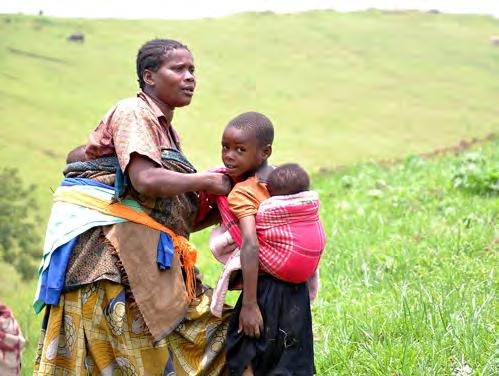
access to counselling. A women’s shelter closes because its grant has expired.
These are not administrative reductions. They are failures of protection.
Sudan demonstrates this reality with devastating clarity.
Three years after the conflict began, nearly 34 million people require humanitarian assistance. More than seven million are women of reproductive age, while roughly one million women are pregnant. The country’s health system has been shattered by attacks, displacement, shortages of medical supplies and severe funding gaps.
Conflict-related sexual violence, abductions and forced marriage have been documented throughout the war. In many of the worst-affected areas, women and girls must travel for hours — sometimes days — to reach reproductive healthcare or support after sexual violence.
The crisis is not defined only by the number of people displaced or the amount of food required. It is also measured in births without skilled care, survivors without treatment and families forced to navigate danger without functioning protection systems.
When maternity services, mobile clinics and safe spaces close, the burden does not disappear. It is transferred to women, families and already overwhelmed communities.
South Sudan faces a similar emergency under different circumstances.
Conflict, flooding, economic instability and chronic food insecurity have weakened institutions that were already struggling to serve the population. Sudan’s war has added another layer of pressure. By June 2026, South Sudan was hosting more than 615,000 refugees from Sudan, straining food supplies, health facilities, schools, water systems and host communities.
This pressure is felt most sharply at household level. Women and girls face greater exposure to violence when they travel long distances in search of water, food or firewood. Families with few options may withdraw girls from school or adopt other desperate coping strategies.
Humanitarian assistance in such a setting cannot be reduced to sacks of grain. Communities also need functioning clinics, protection systems, education, clean water and livelihoods.
The Democratic Republic of Congo completes this troubling picture.
For decades, armed groups have terrorised communities across North Kivu, South Kivu and Ituri. Mass displacement has become distressingly routine, while sexual violence continues to be used to punish, intimidate and uproot communities.
Hospitals and local organisations have provided medical care, counselling and legal support to survivors. Yet these lifelines are increasingly difficult to sustain. UNFPA reported in 2025 that more than half of the country’s gender-based violence service points operating the previous year were no longer functioning. In some frontline territories, almost all survivor-support structures had closed or suspended their work.
The crisis has continued into 2026, with insecurity, bureaucratic barriers, cash shortages and funding constraints restricting humanitarian access and the delivery of medicines and health supplies.
For many displaced women, survival has become a daily negotiation between hunger, insecurity and dignity.
Taken together, Sudan, South Sudan and the DRC reveal something larger. Africa is becoming a principal testing ground for a humanitarian system learning to operate permanently with fewer resources.
The contraction is also changing who finances humanitarian action — and who holds influence over it.
The 2026 report found that the United States cut humanitarian assistance by 55 percent in 2025, while Germany reduced its contribution by 36 percent and Japan by 29 percent. The United States and Germany accounted for about nine out of every 10 dollars lost from the sector
Meanwhile, the United Arab Emirates and Saudi Arabia moved ahead of Germany as individual donors, increasing the influence of Gulf states within humanitarian financing.
A broader donor base may encourage new partnerships and reduce dependence on a small group of governments. But it may also create a more fragmented system in which agencies navigate competing political priorities and reporting demands.
Funding shapes influence. Influence shapes priorities. Priorities shape lives.
Africa cannot treat the changing donor landscape as a distant financial matter. It is a strategic issue with direct consequences for sovereignty, stability and human security.
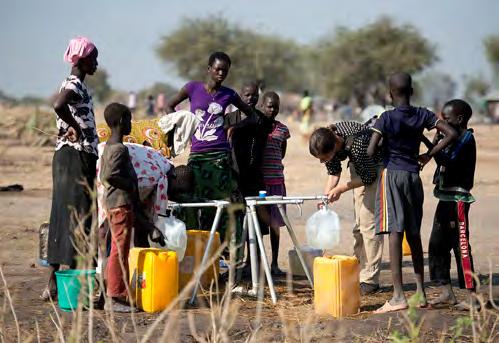
African governments cannot assume that humanitarian financing will return to previous levels when geopolitical tensions ease. The contraction increasingly appears to reflect long-term political choices rather than a brief downturn.
Humanitarian preparedness must therefore become part of national security planning. Conflict prevention must be treated as more costeffective than emergency response. Social protection systems must become more resilient, and governments must strengthen the institutions that protect citizens before, during and after crises.
Investment in public health, disaster preparedness and food security can no longer be viewed only as development spending. These are essential buffers against a humanitarian system that may no longer possess the resources to respond at its former scale.
The African Union also has an opportunity to reshape the debate. The emerging reality demands a wider conversation about African humanitarian leadership, regional financing mechanisms, pooled emergency funds and cross-border preparedness.
This is not an argument for relieving wealthy states of their responsibilities. International solidarity remains essential. But solidarity is strongest when it reinforces capable national and regional systems rather than substituting for them indefinitely.
Greater investment in African civil society is equally urgent.
Local organisations, particularly women-led groups, are often the first to respond and the last to leave. They understand community relationships, informal protection networks and the barriers preventing survivors from seeking help. Yet they remain chronically underfunded.
A decade after the Grand Bargain set a target of directing at least 25 percent of humanitarian funding to local and national responders as directly as possible, ALNAP estimates that only 8.7 percent reached them directly or indirectly in 2025.
No humanitarian system can credibly claim to be sustainable while underinvesting in the organisations closest to affected communities.
Localisation must mean more than shifting responsibilities without shifting power. African organisations need direct, predictable and flexible financing, including support for institutional costs. Women-led organisations must be treated as decision-makers and strategic partners, not inexpensive delivery agents for international programmes.
Humanitarian aid is not charity. It is solidarity in action.
When that lifeline weakens, the loss is measured not only in funding totals, closed clinics or cancelled programmes. It is also measured in dignity, trust and the promise that people facing the darkest moments of their lives will not be abandoned.
Ultimately, the greatest humanitarian challenge is political rather than financial. Crises grow from failures of governance, conflict prevention, international law and political will.
Humanitarianism is not merely about delivering assistance. It reflects the values by which the international community chooses to live.
History may remember this decade not as the moment humanitarian needs overwhelmed the world, but as the moment the world quietly accepted that it would no longer meet them.
For Africa, that possibility demands neither despair nor dependency. It demands action.
If humanitarianism is retreating, Africa cannot afford to retreat with it. The continent must strengthen its institutions, invest in resilience, support local responders and ensure that the protection of its people is never determined solely by the generosity — or changing priorities — of others.
Humanitarian assistance is an investment in human recovery, social stability and sustainable peace. The greatest humanitarian challenge facing Africa may therefore no longer be conflict alone.
It may be learning to navigate a world in which international solidarity itself has become increasingly uncertain. AB
As national elections approach, the issue of women’s historical exclusion from political leadership and public decision-making has started a familiar cycle of debate that usually dies down after the polls, writes Merceline Odhiambo
KENYA’S two-thirds gender rule is rooted in the 2010 Constitution, particularly Articles 27(8) and 81(b), which require that no more than two-thirds of members of elective or appointive bodies be of the same gender. It was intended to address women’s historical exclusion from political leadership and public decision-making.
The principle applies to elected bodies, including Parliament and county assemblies, and to appointed bodies such as the Cabinet and other public institutions.
County assemblies have complied through the corrective nomination mechanism under Article 177. The National Assembly and Senate, however, have remained below the required threshold because Parliament has never enacted a clear implementation law.
Courts have allowed more procedural flexibility for elected bodies while enforcing the principle more directly in appointments. As Kenya approaches the general election scheduled for August 10, 2027, the issue has once again returned to public debate.
The first major ruling came shortly before the 2013 election. In December 2012, the Supreme Court held that the rule could be implemented progressively in the National Assembly and Senate and gave Parliament until August 2015 to enact the necessary law.
Chief Justice Willy Mutunga dissented, arguing that equality and political representation were immediately enforceable rights. The ruling preserved Parliament’s duty to legislate but also removed the immediate risk that the 2013 election could be invalidated and created room for delay.
When the 2015 deadline passed, women’s rights organisations returned to court. Several Bills were introduced but failed because of insufficient votes due to absenteeism and disagreement over the implementation formula.
In March 2017, the High Court gave Parliament another 60 days to enact the law and warned that continued failure could lead to dissolution proceedings. A month later another High Court decision placed responsibility on political parties and the Independent Electoral and Boundaries Commission (IEBC) to promote gender equality during nominations when parties allocate safe seats.
During the 2017 campaign the Jubilee party promised implementation in government and parastatal appointments, while the National Super Alliance (NASA) coalition pledged a more inclusive government. Yet the election proceeded without an implementation law, and the new Parliament again failed to meet the threshold. Legal challenges followed but gradually faded.
By 2022, the rule had become a more explicit campaign promise. Kenya Kwanza pledged to implement it in elective and appointive bodies within 12 months and promised women half of Cabinet positions. The Azimio coalition also promised gender parity and constitutional compliance.
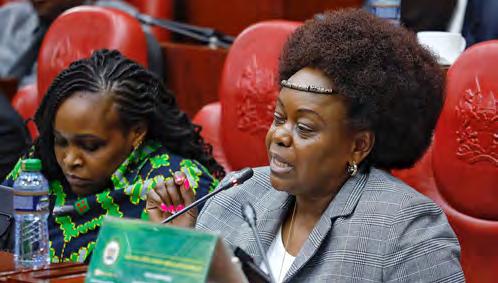
After the election, President William Ruto sent Parliament a memorandum proposing reforms, but no binding parliamentary mechanism was enacted within the promised period. The pattern was becoming clear: legal pressure and political promises before elections, followed by committees and proposals that did not produce implementation.
In September 2020, Chief Justice David Maraga advised President Uhuru Kenyatta to dissolve Parliament because it had repeatedly failed to enact the required legislation despite court orders. Maraga maintained that once the process under Article 261 had been completed, the president had no discretion to ignore the advice.
Several petitions challenged its legality, however, and the courts suspended implementation. Parliament therefore completed its term and proceeded to the ordinary 2022 election.
In June this year, a five-judge High Court bench quashed Maraga’s advice. The court found that the constitutional process required before dissolution had not been properly completed against the Parliament then in office and that the advice had therefore been premature.
The court did not remove Parliament’s obligation to implement the rule. It affirmed that the March 2017 judgment directing Parliament to enact the law remained valid and could still be transmitted to Parliament and the Attorney-General for compliance. Even so, the decision removed the strongest sanction ever imposed for Parliament’s continued failure.
In the same month, another High Court bench declared Ruto’s Cabinet unconstitutional because it consisted of 18 men and seven women. The court excluded the Secretary to the Cabinet from the calculation and ordered Ruto to correct the composition within 120 days.
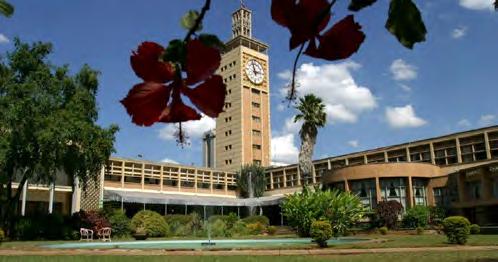
Jorge Láscar/Wikimedia Commons, CC BY-SA 2.0
Legally, the two rulings can be distinct. The earlier June case concerned the procedure required before dissolving an elected Parliament, while the latter case concerned appointments directly controlled by the president.
A Cabinet can be corrected through new appointments, while Parliament requires legislation to establish a mechanism for addressing the imbalance after elections. Yet the decisions still reveal uneven enforcement. Appointive bodies can be ordered to comply within a fixed period, while Parliament has remained non-compliant for years without any consequence.
The history of the rule reveals a close relationship between court action and electoral politics. Before elections, judgments, deadlines and civil-society petitions raise the political pressure on non-compliance. Parties respond through manifesto promises, revived Bills and public declarations.
In 2013, the court removed the threat to the election. By 2017, litigation and failed legislation had pushed the issue into campaigns. In 2022, it became an explicit offer to women voters.
The issue does not disappear after elections, but it changes form. Before voting, it is public, political and urgent. Afterwards, it moves into committees, memoranda, appeals, technical formulas and debates over cost.
Civil society organisations and women parliamentarians continue pressing for implementation, but senior political attention declines. The cycle survives because those responsible can appear committed before elections, initiate processes afterwards and still avoid delivering a binding result.
The different court decisions do not necessarily contradict one another in law. Some concern elected Parliament under Articles 81(b), 97 and 98, while others address appointments under Article 27(8). The first June ruling examined whether the correct procedure had been followed before Parliament could be dissolved, not whether compliance was optional.
Nevertheless, their combined effect is uneven: courts affirm the principle, but remedies involving Parliament are repeatedly delayed, challenged or overtaken by political events.
This has allowed a constitutional obligation to become a recurring campaign product. Court decisions create pressure, parties respond with promises, Parliament revives legislation and women are asked to believe that implementation will follow the election. Once voting ends, urgency gives way to procedure, and another Parliament continues below the threshold. The predictability of the pattern is precisely what enables it to continue: political actors receive credit for supporting the principle without necessarily facing consequences for failing to implement it.
Political parties have increasingly presented implementation as something they will deliver after receiving electoral support, rather than as a constitutional obligation binding since 2010. This allows them to gain political credit from promising reform without bearing the immediate cost of agreeing on additional seats, changing nomination practices or compelling MPs to support a particular formula.
Public endorsement is rarely matched by voting discipline. Bills fail because MPs stay away, quorum is lacking or the required majority is not secured.
Courts have also contributed, intentionally or unintentionally, to the cycle. They consistently affirm the obligation but often protect institutional continuity when choosing remedies.
Deadlines are issued, challenged and overtaken by elections. Dissolution is proposed, suspended and eventually quashed. Each new Parliament can distance itself from the failures and deadlines of its predecessor. As a result, non-compliance carries less institutional risk than implementation.
As the August 2027 election approaches, the same sequence may already be forming. Bills may be revived, candidates may make fresh pledges, women’s organisations may mobilise and new petitions may be filed. But another promise will not break the cycle. It will end only when parties nominate women in competitive constituencies, parliamentary leaders mobilise votes rather than merely issue statements, deadlines bind succeeding Parliaments and courts provide remedies that cannot simply be delayed until the next election.
The question for 2027 is therefore not whether candidates will promise to implement the two-thirds gender rule; history suggests that they will. The more urgent question is whether women will once again accept the same rhetoric and political theatre or use their numerical strength as voters to demand a binding implementation mechanism before the country goes to the polls. Yet this burden should not be placed on women alone. The twothirds gender rule is not a favour to women or a special-interest demand; it is a national constitutional obligation that speaks to the legitimacy, inclusiveness and democratic character of Kenya’s institutions.
Its implementation must therefore be demanded by political parties, Parliament, the courts, civil society and every citizen committed to constitutional governance. The real test is whether Kenya will enforce the rule before the 2027 election or once again repackage an existing constitutional right and sell it to women as a future promise.
Merceline Odhiambo is a Nairobi-based gender, governance, elections and peacebuilding consultant. She is founder of\Grassroot Women and Politics Organisation.
The
recent Africa Debate in London made a compelling case for collaboration with the continent to strengthen global trade diversification, investment expansion, energy transition, financial services and innovation, reports Stephen Williams
THERE are numerous conventions and conferences held around the world that discuss Africa’s development and the underlying need for industrialisation. In fact, a veritable industry has grown in hosting such meetings, whether for continent-wide financing, national or regional opportunities or specific sector investment, such as in oil and gas; IT and telecoms; infrastructure; agriculture; banking; real estate et al.
London-based Invest Africa describes itself as “a leading business and investment platform”. It boasts of an extensive global network with more than 400-member organisations, works closely with the UK government and holds an annual Africa Debate.
This year, in its 12th edition, the theme was Redefining Partnerships: Navigating a World in Transition. Held at the Guildhall in the City of London (the UK’s financial centre) Invest Africa invited Ghana as its country partner and the Africa Finance Corporation (AFC) as its headline partner for the event.
Ghana’s President, John Dramini Mahama, accompanied by four senior ministers as well as the Bank of Ghana governor, came to London, not only for the debate but also for the preceding Ghana–UK Investment Summit 2026.
Mahama addressed the Guildhall audience in a speech that not just highlighted Ghana’s investment attractions but Africa’s as a whole. He argued that partnership with Africa could strengthen global trade diversification, investment expansion, energy transition goals, financial services and innovation. In many ways, his speech echoed his forebear, Ghana’s first President, Kwame Nkrumah, who was a consistent pan-Africanist.
More recently, during Africa Day at the University of South Africa in Pretoria, former South African President Thabo Mbeki recalled that during his presidency, as the African Union shaped its New Partnership for Africa’s Development (NEPAD), all African countries were invited to invest in a pan-African infrastructure development fund. Apart from South Africa, Mbeki recalled, Ghana was the only country prepared to step up to the plate.
The
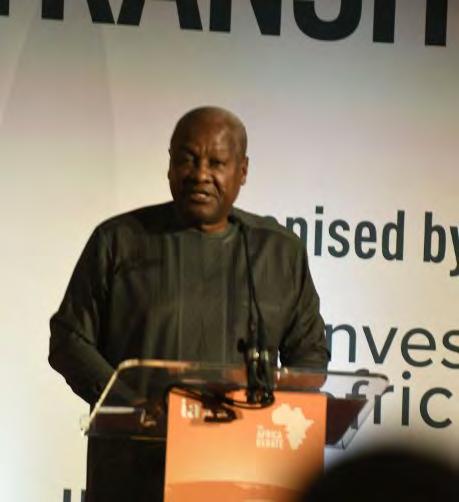
President John Mahama highlighted Ghana’s and Africa’s investment attractions
an additional $40m in investment. The AFC remains a crucial partner in positioning Ghanaian businesses to maximise the benefits of the African Continental Free Trade Area (AfCFTA); for example, with its initial 35 per cent equity investment in the upgrade of Takoradi port’s container and multipurpose terminal.
AFC has invested close to $20 billion in 36 African countries since 2007
Significantly, since 2011 Ghana has been a member state of the AFC. The country became a sovereign shareholder with an initial $10m equity injection and a commitment to expend
Under a 25-year concession, import and export costs were lowered not only for Ghana but the entire West and Central African regions. Takoradi’s development also relieved some of the pressure on Accra’s road system with Takoradi providing an alternative to Tema Port.
The AFC has the mandate of providing the finance to close the continent's infrastructure deficit, and its numerous projects
have seen investments of close to $20 billion in 36 African countries since the institution’s inception in 2007. Samaila Zubairu, the AFC president and chief executive, speaking at the Africa Debate, reiterated a call for mobilising the $4 trillion said to be held by Africa’s institutional pension insurance and sovereign wealth funds. Zubairu is confident that that this fund will attract further investment flows.
As well as the institutional funding, the AFC has been instrumental in ‘crowding-in’ private capital. A prime example of this has been the AFC’s relationship with the Dangote Group, led by Africa’s wealthiest man, Aliko Dangote. The AFC successfully supported the Group’s Dangote Refinery through a foundational $300 million senior term loan.
This capital helped advance the world's largest single-train refinery from concept to cash-generative reality. Following the refinery's success, the AFC has since been fully repaid for its initial investment.
The AFC was also the Co-Coordinating Bank for a $3.3 billion syndicated loan in September 2025 that the Dangote Group signed with local and international banks. No doubt, the fact that Zubairu had previously served as the pioneer Chief Financial Officer of Dangote Cement gave him valuable insight in Dangote Industries’ business ethos. Furthermore, it gave rise to Dangote being invited to the AFC’s landmark event, co-hosted by the Kenyan government: The Africa we Build summit in Nairobi in April this year.
Africa Briefing magazine was there and heard Kenyan President William Ruto, Ugandan President Yoweri Museveni, Zubairu and Dangote discuss the possibility of building a carbon copy of Nigeria’s refinery in East Africa. Zubairu had already announced that the AFC, headquartered in Abuja, was establishing an AFC regional office in Nairobi. And Dangote stated that if the Kenyan government supported the project, he would also back it.
Everyone, including this correspondent, took this to mean, as Ruto had indicated, building a regional refinery at Tanga in Tanzania to serve the East African region. But no one reckoned with Tanzania’s President Samia Suluhu Hassan’s reaction. With barely concealed annoyance, she noted that no one had consulted her on the matter.
Whether or not this coloured Dangote’s decision, he later said he favoured building the refinery in Mombasa in Kenya as it had a deep-water port, or Lamu further north along the Kenyan coast. This geopolitical challenge had no direct link to the AFC but indicates the difficulties that the corporation can expect to confront.
Another project that has thrown up successes, as well as possible global confrontations, has been the Lobito Corridor. The AFC has backed the project of developing a rail link between central Africa and the Atlantic coast at the Lobito port.
An agreement reached between the Democratic Republic of Congo, Zambia and Angola saw the AFC appointed as the lead project developer. Working with the US, the European Union and the African Development Bank, the proposal was a connected, open-access railway from the Atlantic to Indian Ocean.
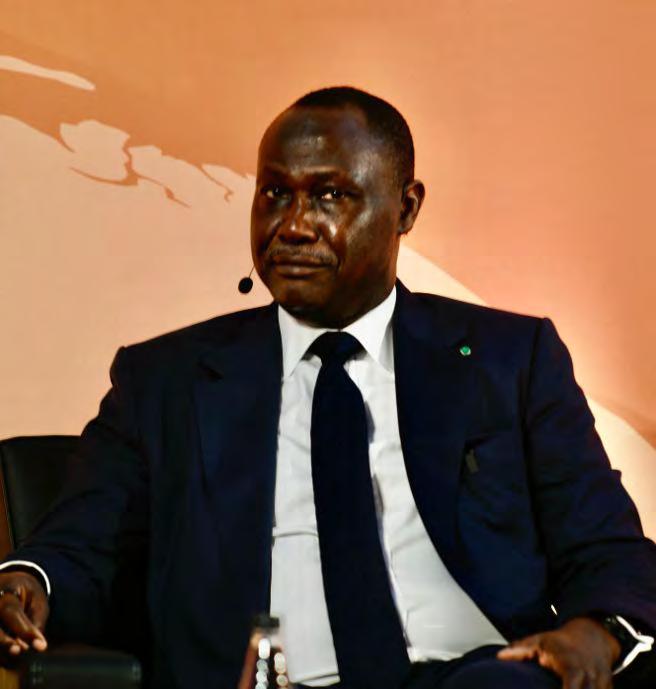
Samaila Zubairu, AFC chief executive, wants Africa to make better use of the $4 trillion held by the continent’s institutional pension, insurance and sovereign wealth funds
Chinese companies currently own approximately 80 per cent of the DRC's copper mines and are responsible for extracting most of the country’s rare-earth minerals. But the Chinese government has insisted its financial support is dependent on the DRC’s exports flowing via the TAZARA rail link, which has received $1.4 billion in Chinese funding for rehabilitation, to the Tanzanian port of Dar es Salaam – depriving the Lobito corridor of that freight.
During the Africa Debate, Banji Fehintola, the AFC’s Executive Director of Finance, made an interesting observation. He told the conference: “We [the multilateral development institutions] have to find a way to make our projects bankable. We cannot run away from that.”
He went on to call for development projects at scale. “It’s time to introduce scale to attract international finance.”
Rio Tinto certainly thought big. Giving a short description of the company’s $23 billion Simandou Iron Ore Project in Guinea, described as Africa’s largest mining and related infrastructure project, Lawrence Dechambenoit, Rio Tinto’s Global Head of Government Relations and Civil Society, told the Africa Debate how the company had built 600 kms of rail infrastructure –spanning the length of the country – as well as a deep water port at Morebaya on the Atlantic coast south of Conakry.
The AFC mobilised over $2 billion from international partners to accelerate the realisation of the mining corridor, and by supporting it the AFC aims to unlock regional connectivity, allowing isolated communities to connect with coastal markets and driving forward Guinea's broader industrialisation roadmap. Dechambenoit envisages tens of thousands of new jobs, and Guinea’s GDP to grow by as much as 50 per cent. AB
UNCTAD’s latest investment rankings reveal how Egypt’s market scale, Guinea’s mining boom and intensifying global competition for strategic resources are redrawing the continent’s capital map, writes Jon Offei-Ansah
AFRICA attracted approximately $69.5bn in foreign direct investment in 2025, with Egypt retaining its position as the continent’s leading destination while large mining and energy projects propelled Guinea and Mozambique into the top three.
The figures from UNCTAD’s World Investment Report 2026 reveal more than the geographical distribution of international capital. They show how competition for critical minerals, energy security, industrial capacity, logistics infrastructure and access to expanding consumer markets is reshaping investment decisions across the continent.
Although total inflows declined from the exceptional level recorded in 2024, Africa still received one of its highest annual FDI totals in decades. Investment remained above the continent’s long-term average, suggesting that international companies continue to see significant opportunities despite geopolitical tensions, high financing costs and weaker global growth.
The 2024 figure was heavily inflated by Egypt’s Ras ElHekma urban development transaction, which temporarily lifted continental inflows to an extraordinary level. Once that one-off deal faded from the comparison, the underlying picture became more revealing: Egypt remained the leading destination, while investment spread across mining, energy, infrastructure and selected manufacturing projects elsewhere.
Egypt attracted about $15.45bn in 2025, accounting for more than one-fifth of all FDI entering Africa during the year.
Its inflows were substantially below the previous year’s exceptional total, but investment in manufacturing, renewable energy, logistics, construction and infrastructure remained relatively strong. UNCTAD’s assessment suggests that the country’s underlying investment performance remained robust once the distortion created by Ras El-Hekma was removed.
Egypt’s appeal rests on advantages that few African economies can match. Its population of more than 100 million provides a large domestic consumer base, while the Suez Canal offers direct access to European, Middle Eastern and Asian markets.
Expanding industrial zones, established manufacturing capacity and efforts to develop green hydrogen and renewable energy projects have strengthened Egypt’s position as a regional production and export centre.
Inflation, public debt and foreign exchange pressures remain significant concerns. Yet investors continue to calculate that the country’s market size, infrastructure and strategic location outweigh many of the risks.
The most dramatic movement in the rankings came from Guinea, where FDI rose more than fivefold to approximately $7.76bn.
The increase was driven largely by bauxite developments and the enormous Simandou iron ore project, which requires investment extending far beyond mine construction. Railways, ports, power infrastructure and associated facilities are transforming the project into one of Africa’s most ambitious industrial and logistical undertakings.
The development includes a 670km transport corridor linking the mining region to a new Atlantic export terminal. Such infrastructure helps explain how a single mineral project can dramatically alter annual FDI rankings.
The capital entering Guinea is not limited to extracting iron ore. It also covers transport networks, port construction, energy systems and processing capacity that could reshape the country’s wider economy.
Guinea is also attempting to diversify beyond its established bauxite and iron ore industries. Agreements targeting lithium,
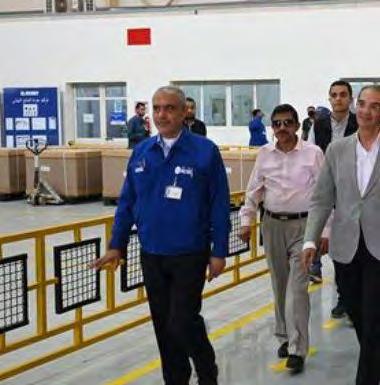
cobalt and rare earth elements form part of a broader criticalminerals strategy aimed at positioning the country within emerging clean-energy supply chains.
A planned $1bn alumina refinery reflects the same ambition. Guinea wants to process a greater share of its minerals domestically rather than continue exporting raw materials whose highest value is captured overseas.
The central challenge will be turning headline investment figures into broader development. Mining revenues must support public infrastructure, domestic businesses, skilled employment and industrial capabilities if the boom is to produce durable prosperity.
Mozambique ranked third, attracting approximately $5.69bn. Its position demonstrates the continuing influence of liquefied natural gas and offshore energy developments on investor interest.
Natural gas remains central to Mozambique’s investment outlook despite security problems in the north and repeated delays affecting some projects. Its scale has kept the country on the radar of international energy companies seeking new sources of supply.
Mozambique is simultaneously asserting greater control over its mineral wealth. Its critical-minerals framework requires a minimum 15 percent state stake in mining ventures and places greater emphasis on domestic processing.
The policy reflects a wider shift across resource-rich African economies. Governments are no longer satisfied with attracting investment measured solely by the amount of capital entering the country. They increasingly want guarantees covering local participation, processing, technology transfer and employment.
Nigeria attracted about $4.01bn, placing fourth after an improvement supported partly by major oil and gas financing agreements.
The recovery came as President Bola Tinubu’s administration pursued economic reforms that included foreign exchange liberalisation and the removal of fuel subsidies. Those measures were intended to correct deep economic distortions and restore investor confidence, but they also imposed severe short-term costs on households and businesses.
Nigeria retains formidable long-term advantages. It has the continent’s largest population, substantial oil and gas reserves, a dynamic technology sector and one of Africa’s most extensive consumer markets.
However, electricity shortages, regulatory inconsistency, weak infrastructure and concerns over policy implementation continue to limit the country’s ability to convert those advantages into larger and more diversified investment flows.
Ethiopia attracted approximately $3.80bn, maintaining its position among Africa’s major FDI destinations despite foreign exchange pressures and a difficult economic reform process.
Its attraction lies in a large population, expanding infrastructure and considerable diplomatic importance as the headquarters of the African Union. Reforms intended to open telecommunications and financial services have created new opportunities for foreign investors.
Morocco attracted about $3.34bn. Its automotive, aerospace, renewable energy and export-oriented manufacturing industries continue to distinguish it from many African competitors.
Modern ports, industrial clusters and proximity to European markets have made Morocco one of the continent’s most diversified investment destinations. Its success demonstrates the value of combining physical infrastructure with industrial policy and stable export relationships.
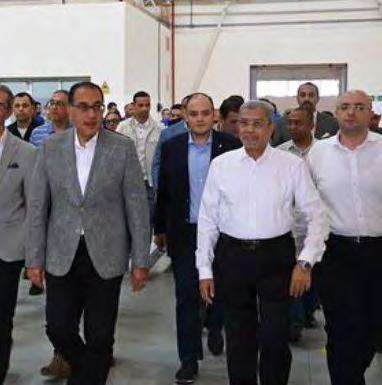
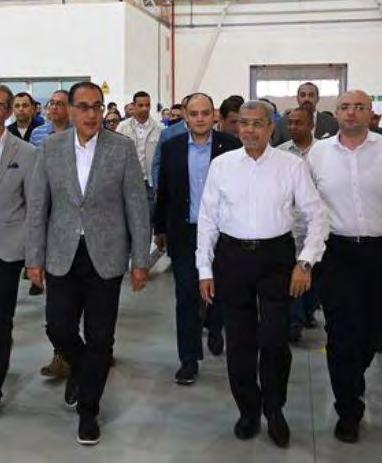
Uganda drew approximately $3.36bn, supported mainly by oil-related infrastructure, while Kenya attracted about $3.20bn through technology, logistics, renewable energy and financial services.
Kenya is also seeking a larger role in strategic mineral supply chains. Nairobi and Washington have been negotiating a critical-minerals agreement centred on local processing, reflecting growing pressure to ensure resources are not exported without significant domestic value addition.
Further west, Cote d’Ivoire attracted about $2.03bn, while Ghana received approximately $1.91bn. Both economies continue to draw capital into infrastructure, mining, agribusiness and financial services, although fiscal and external pressures remain important considerations.
The continental totals conceal a striking concentration of capital. Africa’s top 10 destinations received a combined $50.55bn, representing about 72.7 percent of total FDI.
The remaining 44 economies were left competing for slightly more than one-quarter of all inflows. This reflects investors’ preference for countries offering at least one of four advantages: large consumer markets, strategic natural resources, established infrastructure or relatively predictable policy environments.
UNCTAD also found that the value of announced greenfield investments across Africa fell by almost one-third in 2025. However, the number of announced projects increased, suggesting that investor activity broadened through smaller projects even as fewer megadeals inflated the continental total.
The rankings are unfolding against a rapidly changing geopolitical landscape.
China remains deeply embedded in African mining, infrastructure and manufacturing. Gulf investors are expanding their involvement in ports, logistics, energy, real estate and agriculture. The United States and European Union are increasing attention to clean energy, digital infrastructure and criticalmineral supply chains.
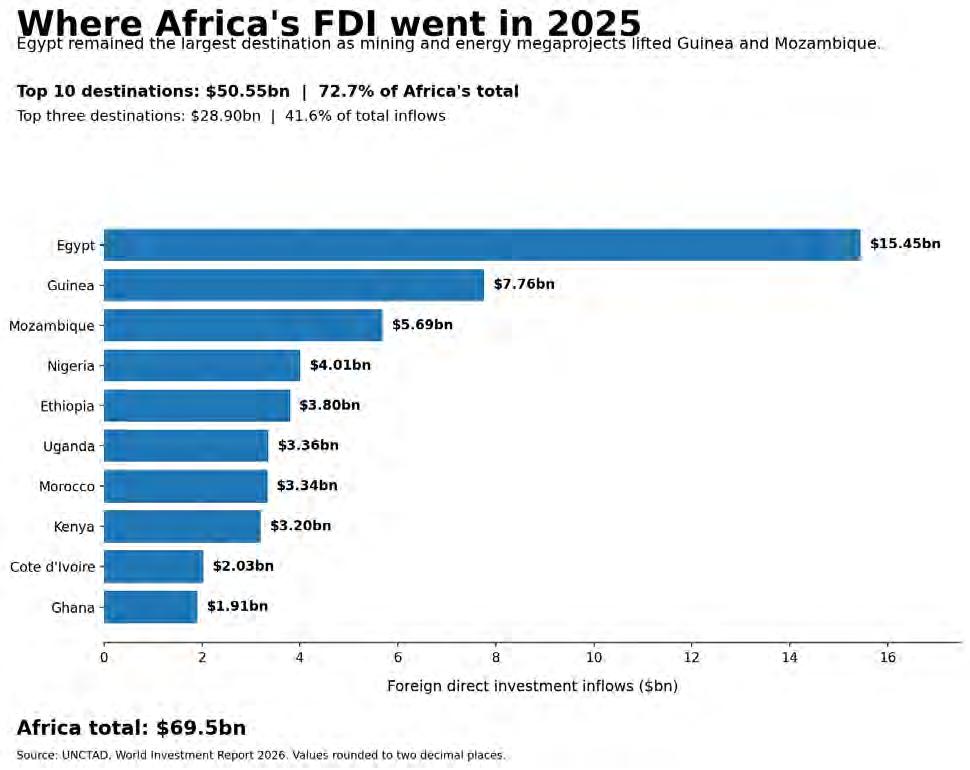
Egypt led Africa’s foreign investment rankings in 2025, while large mining and energy projects lifted Guinea and Mozambique. The top 10 destinations received nearly three-quarters of all FDI entering the continent
This competition is strengthening Africa’s bargaining position. The presence of China, the US, Europe, India and Gulf states gives African governments more options when negotiating investment agreements.
Yet greater leverage does not automatically produce better outcomes.
A single mine, gas project or property development can inflate annual FDI statistics without creating broad industrial growth. Large capital inflows may produce limited employment if projects rely heavily on imported equipment, foreign contractors and external supply chains.
Conversely, countries attracting smaller totals may create greater long-term value where investment is spread across manufacturing, services, technology and domestic enterprises.
The quality of investment therefore matters more than the ranking alone.
Governments must examine whether foreign capital creates jobs, develops skills, transfers technology, expands exports and strengthens local suppliers. They must also consider whether projects improve infrastructure and generate public revenue without creating excessive environmental or social costs.
UNCTAD’s wider message is that international investment is becoming more concentrated in strategic economies, projects and sectors. Critical minerals, artificial intelligence infrastructure,
semiconductors, energy-transition technologies and advanced manufacturing are attracting a growing share of global capital.
Africa enters this new era with substantial advantages. It possesses large reserves of copper, cobalt, lithium, manganese, graphite and rare earth minerals. Its expanding population offers both a growing workforce and an increasingly important consumer market.
The continent also has significant potential in renewable energy, digital infrastructure, logistics, manufacturing and agribusiness.
But potential alone will not guarantee productive investment. Countries will need reliable electricity, transport systems, skilled workers, credible regulation and more efficient public institutions.
The central lesson from the 2025 rankings is not simply that Egypt remained first or that Guinea rose rapidly. It is that global investment has become increasingly strategic and selective.
Capital is moving towards countries that combine resources, market scale, infrastructure and policies capable of supporting large projects.
Africa’s next challenge is therefore not merely attracting billions of dollars. It is ensuring that those billions build industries, strengthen domestic value chains and deliver measurable improvements in employment and living standards.




With the IMF warning that bilateral aid to Sub-Saharan Africa fell by an estimated 26 percent in 2025, Jon Offei-Ansah examines how the continent can protect essential services and finance growth in a less generous world.
AFRICA is entering a period in which the assumptions that shaped development policy for more than half a century can no longer be taken for granted. Foreign aid, once treated as a relatively stable pillar of public finance across much of the continent, is shrinking just as governments confront rising debt, weak fiscal buffers and growing demands for healthcare, education, infrastructure and employment.
The retreat is not simply a temporary interruption in donor spending. IMF economists say it reflects a wider geopolitical realignment in which wealthy countries are redirecting resources towards defence, domestic priorities, migration control and strategic competition. For African states, the challenge is therefore larger than replacing a shortfall in grants. It is about adapting to a world in which external assistance is less predictable and domestic economic resilience carries far greater weight.
For decades, official development assistance helped finance vaccination campaigns, schools, rural roads, agricultural programmes, humanitarian relief and basic health systems. In many low-income countries, these programmes became embedded in national development plans and public expectations. The new financing environment threatens to expose how heavily
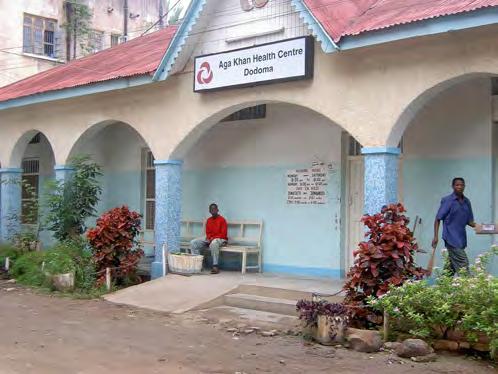
several governments remain dependent on decisions taken in foreign capitals.
According to economists in the IMF’s African Department, bilateral aid to Sub-Saharan Africa fell by an estimated 26 percent in 2025, one of the sharpest annual contractions on record. The Fund says the decline is especially significant because it occurred across several donor countries at the same time and appears to have been driven mainly by political decisions in advanced economies rather than by deteriorating conditions within Africa.
Official development assistance averaged roughly 3 percent of regional GDP in 2024, the IMF estimates. That figure may appear modest, but it conceals much deeper dependence in low-income and fragile states. In some countries, aid represented more than 6 percent of GDP, while the share was considerably higher in economies affected by conflict, displacement or repeated climate emergencies.
More than half of that support went towards essential services, including healthcare, education and humanitarian assistance. The consequences of declining aid will therefore not be confined to finance ministries or annual budget statements. They are likely to be felt in clinics, classrooms, refugee settlements and communities already under pressure from drought, food insecurity and violence.
The IMF has pointed to the importance of aid-financed systems in responding to emergencies, including disease outbreaks, support for displaced populations and drought relief. A reduction in funding can weaken not only the programmes receiving direct assistance, but also the institutions, supply chains and trained workforces built around them.
The danger is especially acute because the cuts are arriving after a succession of economic shocks. The Covid-19 pandemic weakened public finances, while rising food and energy prices strained household incomes and government budgets. Higher global interest rates then made borrowing more expensive, leaving many African states with little room to absorb another major external shock without cutting spending, raising revenue or accumulating more debt.
The IMF’s assessment offers little comfort to governments hoping that alternative partners will quickly fill the gap. China and several Gulf states have expanded their engagement across Africa, but their financing is not yet large enough to compensate fully for the decline in traditional Western development assistance.
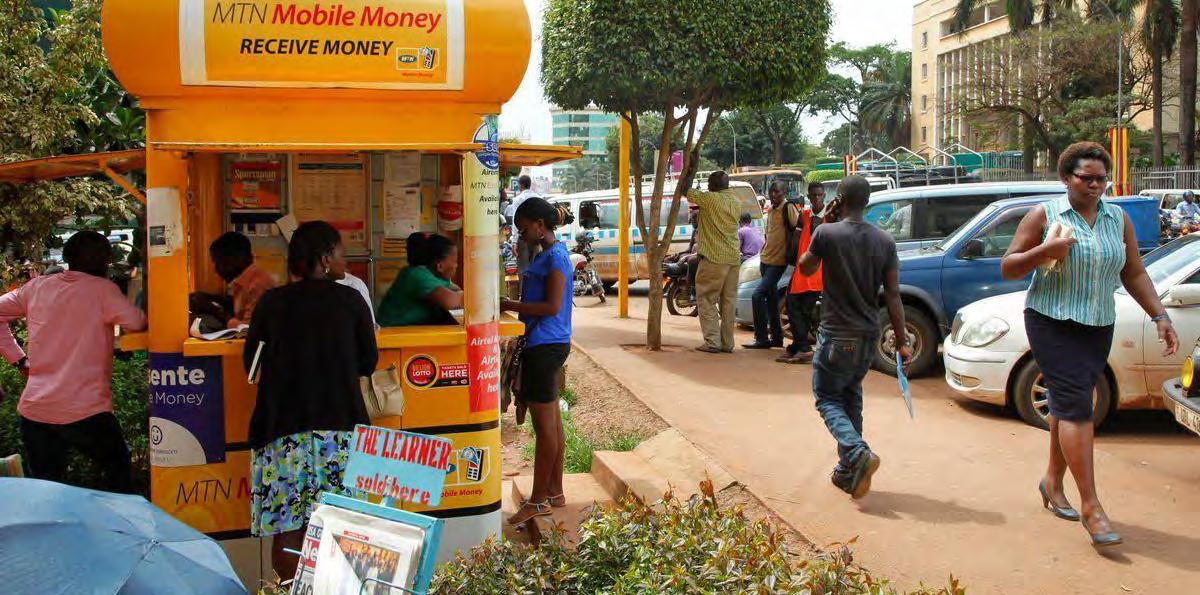
Multilateral institutions and international non-governmental organisations are also facing tighter budgets. This limits their ability to cushion the impact of bilateral aid cuts in the way they may have done during previous downturns.
For years, foreign aid occupied a prominent place in the foreign policies of Europe and North America. Supporting economic growth, strengthening health systems and reducing poverty were presented not only as humanitarian objectives but also as investments in international stability.
That political consensus has weakened. European governments have sharply increased defence expenditure following Russia’s invasion of Ukraine. They are also managing slower economic growth, inflation, ageing populations and politically sensitive debates over immigration. Under those pressures, overseas development spending has become an easier target for reductions.
In the United States, development assistance is increasingly assessed through the lens of national interest, geopolitical rivalry, trade and security. Funding is becoming more selective and more closely linked to strategic objectives rather than broad commitments to poverty reduction.
The IMF believes these changes are structural rather than cyclical. In other words, African governments should not assume that aid budgets will recover once temporary fiscal pressures ease. Donor priorities may have been reordered for the long term.
Aid is also changing in character. Climate resilience, migration management, energy security and geopolitical partnerships are likely to attract a growing share of the resources that remain available. Africa may continue to receive international attention, but funding is likely to become more targeted, competitive and conditional.
Governments seeking concessional finance may increasingly be required to demonstrate sound governance, transparent public financial management and the ability to deliver measurable
economic and social returns. African states that wait for former aid levels to return may therefore be planning for a world that no longer exists.
Private capital is often presented as the obvious alternative, but the IMF cautions that investors cannot perform the same role as grants. Private investors generally seek projects capable of producing commercial returns. Primary healthcare, basic education, humanitarian operations and rural water systems may deliver enormous social value, but they are not always profitable.
This distinction matters because poorer and conflict-affected countries are least able to attract private investment and most likely to depend on concessional finance. They will consequently face the hardest adjustment.
Governments confronted with falling aid may be tempted to borrow more. Yet many African economies already carry high debt burdens and face elevated interest costs. Additional borrowing can provide short-term relief, but it can also deepen future vulnerability and absorb money that should be spent on development.
Cutting public expenditure is another option, but poorly designed austerity could weaken growth and reverse hard-won development gains. Delaying roads, power projects and other infrastructure may ease immediate pressure while reducing longterm productivity. Reductions in education and health spending could create damage that takes decades to repair.
The central task is to protect expenditure that delivers the greatest economic and social returns. Primary healthcare, education, agricultural productivity and essential infrastructure should not be treated as expendable merely because budgets are under pressure.
The IMF argues that the most sustainable response is not to replace disappearing aid with another wave of debt, but to improve how governments raise and spend public money. That means widening the tax base, reducing revenue leakages,
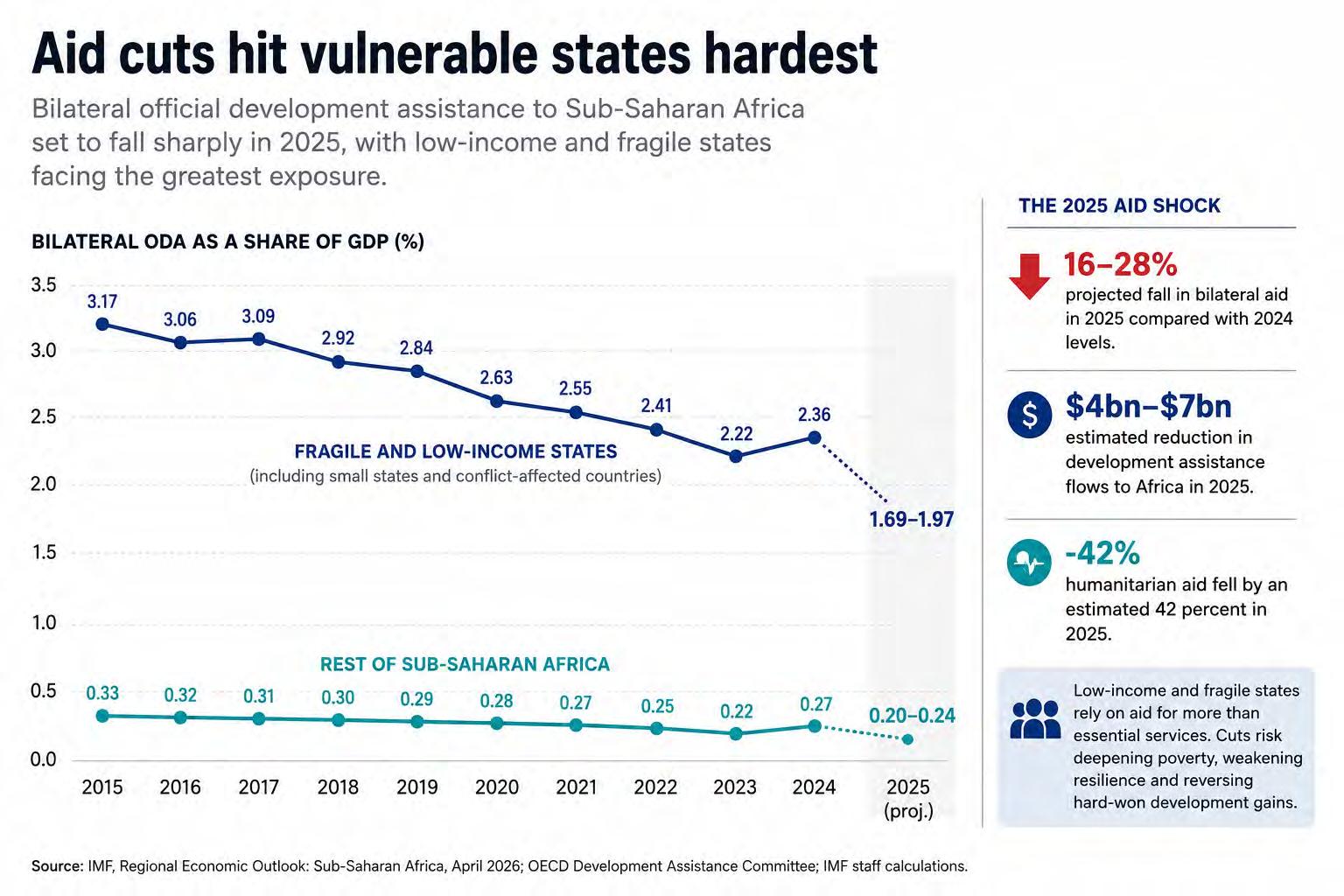
Bilateral development assistance to Sub-Saharan Africa is projected to fall sharply in 2025, with low-income and fragile states facing the greatest exposure as humanitarian funding and support for essential services decline
modernising tax administration and reconsidering exemptions that have failed to deliver promised benefits.
Many African countries collect significantly less tax as a share of national income than comparable economies in Asia or Latin America. Large informal sectors, weak compliance systems, illicit financial flows and generous tax holidays continue to restrict public revenue.
Closing even part of that gap could generate billions of dollars for investment in health, education and infrastructure. Several governments are already expanding digital tax administration, electronic invoicing and mobile payment systems to improve compliance and reduce evasion.
Yet reform must be handled carefully. Aggressive tax increases during periods of weak growth could burden households already struggling with high living costs and discourage productive investment. The objective should be to create a fairer and more efficient system rather than simply impose higher rates.
Governments must also rebuild public trust. Citizens are more likely to comply with tax obligations when they believe revenue is being used transparently and public services are improving. Domestic resource mobilisation is therefore not only a technical exercise. It is a political compact between the state and society Falling aid also makes stronger public financial management more urgent. Wasteful procurement, poorly targeted subsidies, opaque contracts and politically motivated projects become much harder to justify when external resources are scarce.
This places governance at the centre of Africa’s development strategy. Countries with credible institutions, transparent fiscal systems and reliable regulation are more likely to attract concessional finance and long-term investment. Those with weak governance will face higher borrowing costs and fewer choices.
The shrinking-aid era also strengthens the case for deeper African economic integration. The African Continental Free Trade Area offers a route towards larger markets, stronger regional supply chains and greater intra-African commerce.
Reducing border delays, harmonising standards and improving transport links could help African firms reach more consumers while reducing dependence on distant markets. Regional capital markets could similarly mobilise African savings for African development.
Pension funds, insurance companies and sovereign investors hold resources that could support infrastructure and productive enterprise where projects are credible and regulatory conditions are sound. The objective should be to use external capital as a complement to domestic strength rather than as a substitute for it.
Africa’s abundance of natural resources, rapidly growing population and expanding digital markets will continue attracting investors. But investment must support local value addition, employment and industrial capacity rather than repeat extractive patterns that have limited development in many resource-rich economies.
The decline in aid should not be interpreted as the end of international cooperation. Africa will continue to need concessional finance, particularly in countries where humanitarian operations and essential public services cannot be sustained through domestic revenue alone.
Donor governments also have a responsibility to avoid abrupt withdrawals that damage health systems, disrupt education or worsen food insecurity. A disorderly retreat could reverse decades of progress and deepen the very instability that development assistance was intended to prevent.
The IMF’s warning should therefore be read as more than an assessment of shrinking financial flows. It signals that the global development landscape has entered a new phase in which domestic institutions, regional trade and more efficient public finances will matter increasingly.
Future partnerships should place greater emphasis on domestic ownership, trade, industrialisation, value addition and institutional capacity. Success should be judged not only by the volume of aid committed, but by whether countries become more capable of financing their own priorities over time.
For African governments, the transition demands difficult political choices. Leaders will have to tackle corruption, improve procurement, strengthen revenue systems and make public spending more productive. They must also create investment
environments that reward long-term enterprise rather than shortterm extraction.
The end of predictable aid could become either a setback or a catalyst. Countries that respond with credible reform may emerge more resilient, more competitive and less vulnerable to political changes abroad. Those that postpone difficult decisions could face recurring fiscal crises as donor priorities continue to evolve.
Africa’s development prospects do not depend solely on the generosity of foreign partners. They depend increasingly on the quality of its institutions, the depth of its markets and the willingness of governments to mobilise domestic resources fairly.
The transition will be uneven and, in some countries, painful. Fragile states will continue to require sustained international support, and essential public services cannot simply be abandoned in the name of self-reliance.
Yet the direction of travel is unmistakable. The coming decade will be shaped less by how much aid Africa receives and more by how effectively the continent builds systems capable of surviving without it.
Africa is not merely preparing for reduced aid. It is being forced to define a development model in which accountability, regional integration, productive investment and domestic resilience matter more than dependency. AB
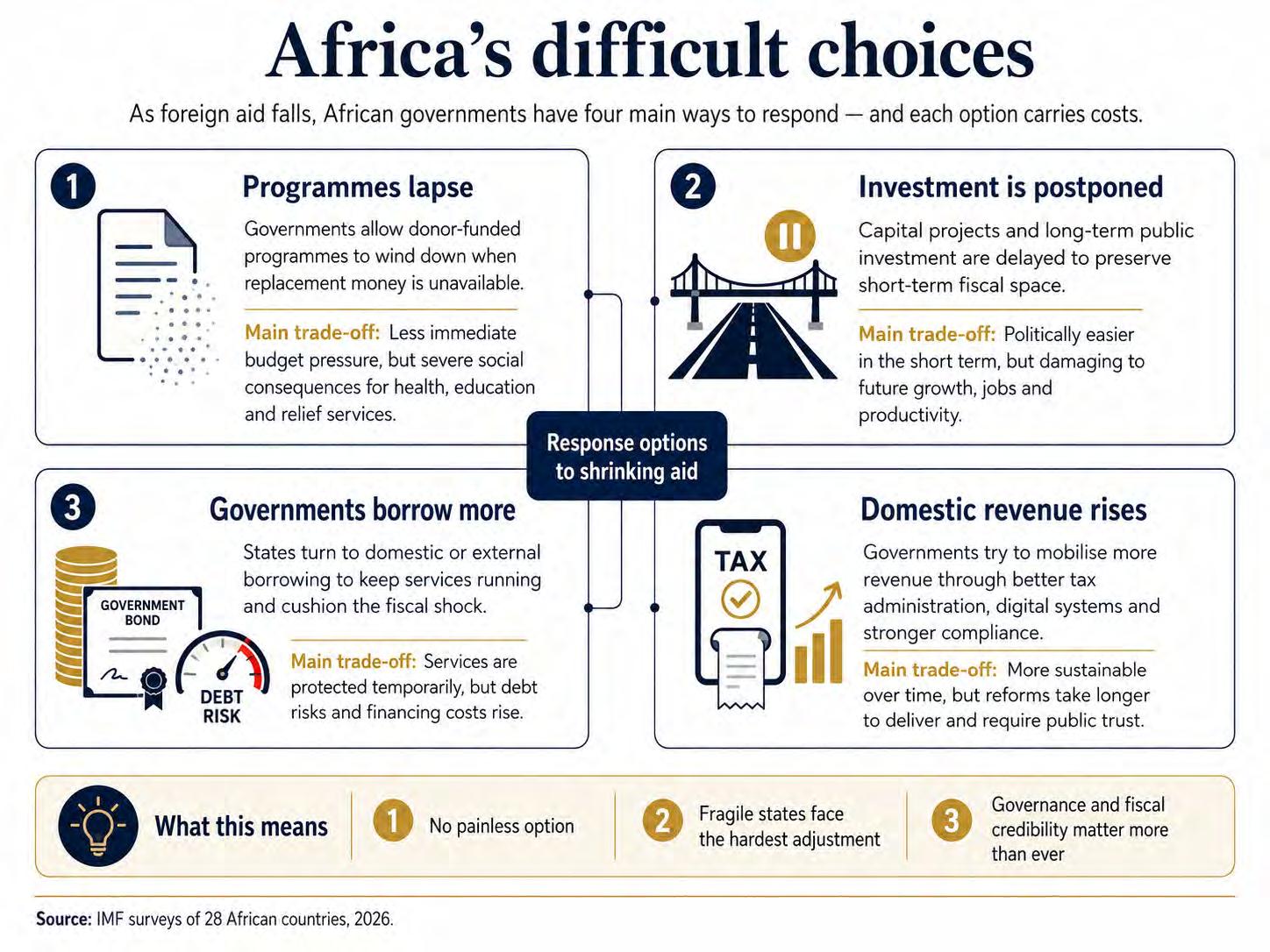
The continent offers some of the world’s most attractive investments –energy, infrastructure, agriculture, critical minerals but remains one of the regions with the least financing, says Sidi Ould Tah
FOR decades, the world looked to Asia as the principal engine of global growth. Today, Africa is increasingly emerging as the new growth frontier. According to IMF projections, Africa is expected to remain one of the world’s fastest-growing regions, with 12 African economies ranking among the top 20 fastest global growing economies.
African economies have shown real resilience, yet face major headwinds – tighter financing, shrinking aid, geopolitical tensions, climate change. To respond with clarity, we must first name four paradoxes that define Africa’s position in the world economy.
The first is the paradox of size without influence. Eighteen per cent of the world’s population; more than 30 per cent of its mineral reserves; more than 60 per cent of its uncultivated arable land - yet barely three per cent of global trade and GDP.
The second is the paradox of financing. Africa needs over $400 billion a year for its transformation while more than $4 trillion sits in our banks, pension funds, insurers and sovereign wealth funds.
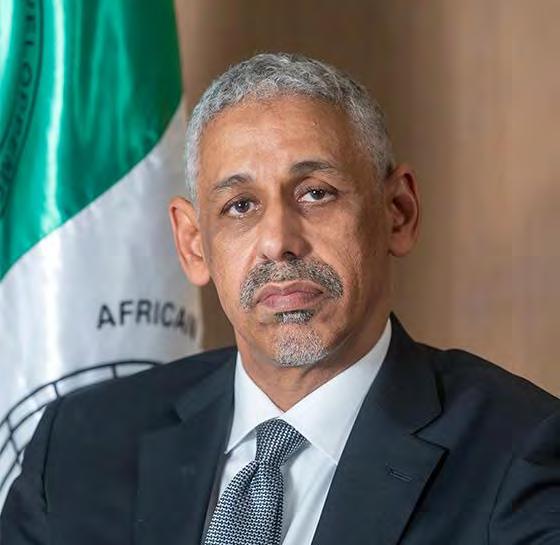
The third is the paradox of opportunity. Africa offers some of the world’s most attractive investments – energy, infrastructure, agriculture, critical minerals – but remains one of the regions with the least investment, receiving only about six per cent of global FDI [foreign direct investment]. The main reason is perceived risk. Moreover, the Africa guarantee gap is around $50 billion. Investors are not short of appetite; they are short of instruments that make African risk bankable.
The fourth is the paradox of fragmentation. A market of 1.4 billion people with a GDP above $3 trillion – yet intra-African trade is just 16 per cent, against nearly 60 per cent in Asia and 70 per cent in Europe. The African Continental Free Trade Area [AfCFTA] is our decisive answer.
Naming the paradoxes is not enough. The Four Cardinal Points – the strategic vision endorsed by the African Development Bank Governors in May in Brazzaville – answer each of them directly.
To the paradox of financing – mobilising capital at scale – we are unlocking Africa’s own savings while crowding in global capital. The multilateral development banks alone cannot close a $400 billion gap; our role is to leverage, de-risk and crowd in, so every dollar of our balance sheets mobilises many more.
To the fragmentation behind it: reforming and consolidating Africa’s financial institutions. Our financial ecosystem is itself fragmented: more than 100 national and regional development finance institutions whose combined weight is barely one per cent of the world DFIs [development financial institutions] balance sheet. NAFAD – the New African Financial Architecture for Development, born of the Abidjan Consensus – is our answer to that fragmentation.
We should consolidate and connect this ecosystem on the principle of subsidiarity, complementarity, coordination and risk transformation.
To the paradox of size: harnessing the demographic dividend. Sixty per cent of our people are under 25 – our greatest asset, or, without opportunity, our greatest risk. We need to invest substantially in skills and entrepreneurship for women and youth.
We need to massively create jobs for women and youth. We need to support SMEs [small and medium-sized enterprises] and MSMEs [micro, small and medium enterprises] which represent more than 90 per cent of the economic fabric in Africa.
To the paradox of opportunity: building resilient infrastructure and accelerating value addition. Today Africa exports its wealth raw and imports it back refined. Transforming African raw materials on African soil is how we stitch the continental market together and make the AfCFTA deliver.
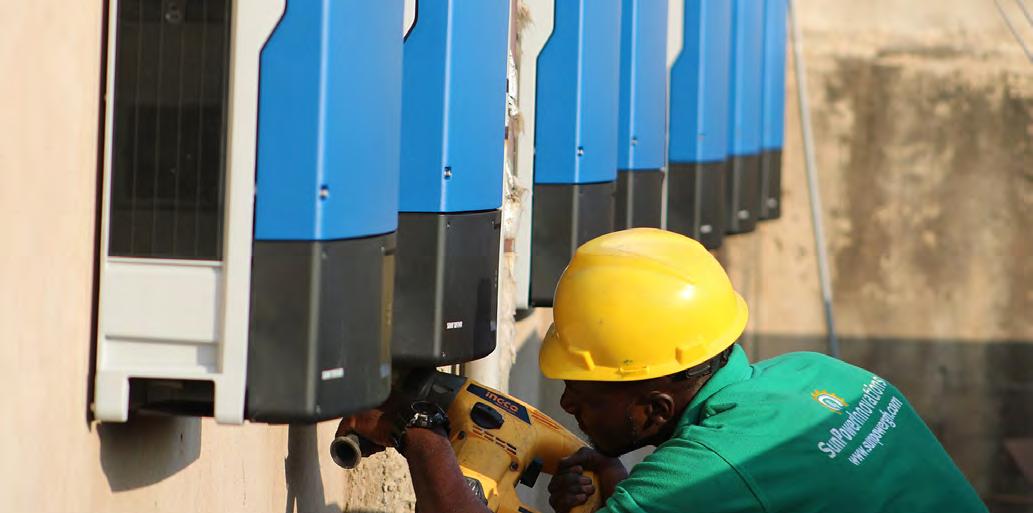
Four paradoxes; four cardinal points; one direction: an Africa that finances itself, connects itself and negotiates with the world with one voice.
I have four messages. First, to African governments. You have met successive crises with remarkable effort on domestic resource mobilisation and debt management.
We commend the Borrowers’ Club championed by South Africa, which is carrying Africa’s case to the global fora. To bridge the guarantee gap, Africa needs to have a strong panAfrican mechanism. In this regard, the transformation of ATIDI [African Trade and Investment Development Insurance] into a continental agency appears as the most practical solution. Hence, the African Development Bank Group has increased its participation in the capital of ATIDI five times, becoming its largest shareholder.
We call upon the 24 African shareholders to increase their participation in the capital of ATIDI and invite the remaining 30 countries to join.
invested in conflict prevention can save up to $103 in future costs. Prevention is not charity: it is the most profitable investment the international community can make.
Third, to the World Bank Group. We value the indispensable role of IDA [International Development Association] and commend [Bank President] Ajay Banga’s reforms. We welcome the establishment of full mutual reliance between our two institutions. We count on the World Bank Group to support the recapitalisation of ADITI and the strengthening of its insurance operations.
Africa now needs the collective will to act – with speed, at scale, in synergy, for shared prosperity
Second, to the International Monetary Fund. We deeply appreciate your support for reform in Africa. But three successive crises (COVID, Ukraine, Hormuz) have eroded the buffers constituted by African countries. This exceptional situation requires an exceptional treatment.
We call on the IMF for more flexibility, fresh concessional resources and further channelling of Special Drawing Rights to African countries, to preserve peace and stability. Let us never forget the price of peace: IMF research shows that every $1
Fourth, to all our partners. Africa seeks partnerships anchored in trade and investment, not just aid, and work more with African institutions.
Africa now needs accelerated execution and confidence in its own capacities. We will deliver the Four Cardinal Points with speed in results; scale in resources; synergy among governments, partners and the private sector; and shared prosperity, so growth reaches every African woman, man and young person.
We all have a special responsibility to advance a common African voice and a financial architecture that reflects the realities and potential of our continent.
Africa has the resources. Africa has the institutions. Africa has the people. What we need now is the collective will to act — with speed, at scale, in synergy, for shared prosperity.
The above is an edited version of the address by Dr Sidi Ould Tah, President of the African Development Bank Group, to the IMF/World Bank Group African Caucus in Banjul this July.
ECOWAS has revived its 2027 ECO ambition, but PAPSS, weak convergence and unresolved governance questions show that a common currency will require far more than political commitment, writes Jon
Offei-Ansah
THE ECO has been discussed for decades as the currency that could draw West Africa’s fragmented economies into a single monetary space. After repeated delays, ECOWAS leaders have again attached a date to that ambition: 2027.
But the latest decision does not mean banknotes are ready or that a regional central bank is prepared to begin work. It is a political commitment to move forward with countries that meet agreed economic conditions and are willing to participate. The gap between announcing and building a currency remains wide.
The Pan-African Payment and Settlement System, or PAPSS, makes the debate more urgent. If cross-border payments can increasingly be made in national currencies, the ECO must offer more than cheaper transfers. Its value will depend on whether it can provide monetary stability, stronger institutions and a credible alternative to today’s fragmented systems.
At its July 19 summit in Lungi, Sierra Leone, ECOWAS reaffirmed its commitment to introducing the ECO in 2027. Leaders agreed that implementation should begin with countries meeting the bloc’s macroeconomic convergence criteria and ready to participate. States unable to qualify would receive support to join later.
That approach strengthens ECOWAS’s multi-speed singlecurrency strategy, allowing a smaller coalition to proceed without waiting for simultaneous compliance across the region. It may be the only realistic way to avoid another postponement.
Yet a phased launch creates a new uncertainty. A union involving several smaller economies would carry less weight than one including Nigeria, Ghana or Côte d’Ivoire. ECOWAS has not named the opening participants, making its initial scale and credibility impossible to judge.
The traditional case for a common currency rests partly on the difficulty of moving money across West Africa. A Ghanaian importer paying a Nigerian supplier may face currency conversion, limited foreign-exchange liquidity and delays. The ECO could remove the need to exchange one participating member’s currency for another and make regional prices easier to compare.
PAPSS is already addressing part of that problem. Developed by Afreximbank in collaboration with the AfCFTA Secretariat, the system enables customers to initiate cross-border payments in their own currencies while beneficiaries receive funds in local currency. It was piloted in the six West African Monetary Zone countries before its commercial Africa-wide launch in January 2022.
Where participating institutions and currency routes are available, businesses can pay in one national currency while
recipients receive another, reducing reliance on dollars or euros. That lowers the need for customers to source hard currency for individual transactions, although PAPSS’s daily net-settlement process can still involve hard-currency accounts held with Afreximbank.
PAPSS is not a substitute for monetary union. It connects different currencies; the ECO would replace the national currencies of participating states. A payment platform can make a cedi-to-naira transfer faster, but it does not abolish the exchange rate. Someone still carries the conversion cost and risk, and sufficient liquidity must remain available.
The ECO would go further by removing exchange-rate uncertainty between participating states and creating a single monetary-policy area. That is also why it carries far greater political and economic risk.
PAPSS therefore raises the standard by which the ECO should be judged. It is no longer enough to argue that West Africa needs a common currency because cross-border payments are difficult. Technology is reducing that friction without forcing countries to surrender their national currencies.
The stronger case for the ECO must rest on deeper benefits: more stable intra-regional exchange conditions, a larger financial market, improved policy credibility and West African control of a common monetary institution.
Those gains are not automatic. Poor governance could spread instability rather than contain it. If one large member pursued
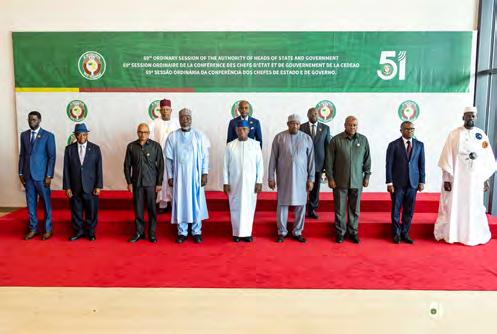
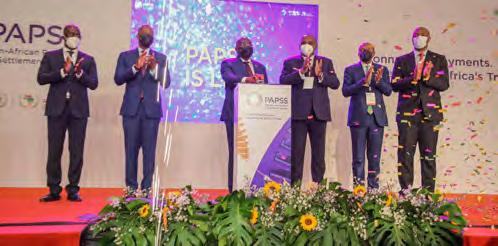
Delegates attend the PAPSS commercial launch in Accra in January 2022. The payment platform strengthens regional transactions in national currencies, raising the question of what additional benefits the proposed ECO must deliver. Photo: PAPSS
unsustainable fiscal policies or suffered a banking crisis, the effects could reach every country sharing the currency.
The ECO must therefore be more than PAPSS with banknotes. It would need institutions capable of enforcing rules, managing liquidity and supporting members facing shocks. PAPSS can act as a bridge while leaders negotiate the harder question of sharing monetary power.
Neither project can remove every obstacle facing West African commerce. Traders also confront poor roads, congested ports, customs delays and inconsistent regulations. A common currency may reduce payment costs while leaving goods stranded at a border. The ECO could support integration, but it cannot create it alone.
For many supporters, the currency offers a chance to reduce dependence on colonial-era monetary arrangements. Yet joining it would not leave each government in full control of its money. Participating states would transfer important powers to a common central bank.
Interest rates could not be set solely for conditions in Accra, Abuja or Freetown, and governments would face limits on deficits, borrowing and monetary financing. Sovereignty would be pooled rather than simply restored.
That could represent a meaningful break from external influence if the new institutions were transparent, accountable and governed by participating West African states. But it would not guarantee equal influence.
The central bank’s voting system will matter. A model based mainly on economic weight could give Nigeria overwhelming power, while equal votes could leave larger economies reluctant to surrender control. ECOWAS has not publicly resolved that tension.
The claim that the ECO will not be linked to the euro also cannot yet be treated as fact. ECOWAS has not announced whether the currency will float, follow a managed exchange rate, track a basket of currencies or maintain an external peg. It has instead acknowledged that central-bank governors must agree on outstanding issues before implementation.
A 2019 WAEMU reform proposed adopting the ECO name while retaining the CFA franc’s fixed exchange rate with the euro and France’s convertibility guarantee. The package also provided for the withdrawal of French representatives from key monetary bodies and the end of reserve centralisation at the French Treasury.
Those arrangements have neither been confirmed as the blueprint for the broader ECOWAS currency nor conclusively ruled out. The omission leaves unanswered how the ECO would interact with the CFA franc and its existing monetary institutions.
Claims that France is actively blocking the project are difficult to verify. France’s historical influence in the CFA system is well documented, but allegations of present-day sabotage require evidence. The immediate obstacle lies within West Africa.
ECOWAS requires annual average inflation of no more than five percent and a budget deficit within three percent of GDP. Central-bank financing of the deficit must not exceed 10 percent of the previous year’s tax revenue, while reserves must cover at least three months of imports. Secondary conditions limit public debt to 70 percent of GDP and nominal exchange-rate movements to 10 percent in either direction.
ECOWAS’s 2024 assessment found that only Benin and Cabo Verde met all four primary requirements. Six countries achieved at least three, but inflation, fiscal pressure, foreign-exchange shortages and external shocks continued to weaken compliance.
Those results explain the phased approach and show why political commitment alone cannot guarantee credibility. A country joining the ECO would lose the ability to devalue its currency during a crisis or set interest rates independently. Without a regional stabilisation fund or similar support, an economic shock in one member could spread across the union.
No country matters more to the ECO’s future than Nigeria. Its economy and population would give the currency regional weight. An ECO without Nigeria could still help smaller economies trade, but it would fall short of the transformative project ECOWAS has long promoted.
Nigeria’s participation would also be politically difficult. Abuja would have to surrender the naira and accept regional decisions made alongside much smaller economies. Its inflation, budget choices and foreign-exchange pressures would affect every member, while other governments would want safeguards against Nigerian dominance.
Ghana and Côte d’Ivoire raise similar questions. ECOWAS has not confirmed that any of the three will participate in the first phase.
The departure of Burkina Faso, Mali and Niger adds another political dimension. AES leaders have raised the possibility of a common currency as part of their sovereignty agenda, but they have not announced a settled central-bank framework or reliable launch timetable. The three countries continue to use the West African CFA franc.
Another ECO postponement could reinforce the argument that ECOWAS struggles to deliver major regional projects. Success will depend on identifying the first participants, establishing a trusted central bank, agreeing transparent voting rules and defining the exchange-rate regime.
It must also create credible support for members facing recessions, commodity shocks or banking crises. PAPSS means the region does not have to choose between immediate payment integration and a future common currency. It can make crossborder trade easier now while testing whether the foundations for monetary union are strong enough.
That makes PAPSS both an ally and a challenge. It is building the connections a more integrated region will need, while proving that some benefits associated with the ECO can be achieved without abolishing national currencies.
For businesses and citizens, the true test will not be whether ECO banknotes appear in 2027. It will be whether the currency protects savings, lowers commercial costs and creates confidence in the institutions managing regional money.
Until ECOWAS can demonstrate those foundations, the ECO remains a compelling political ambition rather than a completed monetary future.
The OECD and FAO warn that Sub-Saharan Africa’s food imports could rise sharply by 2035 unless governments lift farm productivity, invest in climate resilience and strengthen regional food markets, reports Jon Offei-Ansah
SUB-SAHARAN Africa could become one of the world’s most important agricultural growth regions over the next decade, but its ability to feed a rapidly expanding population will depend less on bringing new land into production than on raising output from farms already in use.
That is the central message of the OECD-FAO Agricultural Outlook 2026–2035, which identifies the region as one of the fastest-growing markets for agricultural products. Population growth, urbanisation and rising incomes are expected to increase demand for cereals, dairy products, poultry, vegetable oils, fruit and vegetables throughout the forecast period.
The opportunity is considerable. The continent has a youthful labour force, extensive agricultural resources and one of the world’s largest emerging consumer markets. Agriculture could become a powerful engine of industrialisation, rural employment, food processing and export growth.
But the Outlook also presents a stark warning. Unless productivity improves substantially, sub-Saharan Africa’s net imports of basic food commodities could increase by around 55 percent by 2035. Demand is rising faster than domestic production, leaving many countries increasingly dependent on imported wheat, rice, vegetable oils, poultry and other staples.
That dependence carries serious economic risks. Food imports place pressure on foreign exchange reserves, widen trade deficits and expose households to global commodity prices. When currencies weaken or international supply chains are disrupted, imported inflation quickly reaches markets, shops and family kitchens.
The Covid-19 pandemic showed how vulnerable food systems can become when transport networks break down. Disruptions in global grain and fertiliser markets after Russia’s invasion of Ukraine then reinforced the danger. African economies that relied heavily on imported staples faced sharp price increases even when their own harvests had not failed.
For policymakers, the challenge is not simply producing more food. It is building agricultural systems capable of absorbing shocks, supplying rapidly growing cities and providing farmers with reliable access to technology, finance and markets.
The OECD and FAO argue that the region’s agricultural future will be decided by productivity. Although Africa is often said to possess about 60 percent of the world’s remaining
uncultivated arable land, opening up more farmland is neither the easiest nor the most sustainable route to food security. Average yields remain well below global benchmarks in many countries because farmers lack irrigation, machinery, improved

seeds, fertiliser, extension services and research support. In some rural areas, basic infrastructure is so weak that producers struggle to move crops to market even after a successful harvest.
Millions of smallholder farmers still rely on manual labour or animal traction. Planting and harvesting can therefore take longer than the agricultural calendar allows, reducing output and increasing losses. Affordable mechanisation could improve efficiency, but access to equipment remains highly uneven.
Irrigation is another major constraint. Large parts of African agriculture depend almost entirely on rainfall, despite increasingly unpredictable seasons. Where irrigation systems exist, they are often concentrated in commercial farming zones or poorly maintained public schemes.
Improved seeds and more efficient fertiliser use could also raise yields significantly. Yet many farmers cannot afford them, while others lack trusted information about which technologies are suitable for local soils and climates.
The problem is not always a shortage of innovation. In many cases, technologies already exist but are not reaching farmers at scale. Weak extension services, uncertain regulation and inconsistent government support continue to slow adoption.
South African agricultural economist Wandile Sihlobo has been particularly direct about where responsibility lies. ‘The main obstacle is African governments,’ he told the Financial Times recently, arguing that restrictive policies and resistance to technologies such as hybrid seeds and genetically modified crops have prevented many countries from closing their yield gaps.
Drawing a comparison with South Africa’s stronger agricultural performance, Sihlobo added: ‘What separates South Africa from the rest of the African continent is not the climate, it’s not the rains, it is the fact that the South African government puts its foot down’ in supporting modern agricultural technologies.
His assessment reinforces the OECD-FAO conclusion that agricultural transformation requires a deliberate policy environment. Governments must provide clarity on land rights, seed regulation, input markets, trade policy and agricultural finance. Farmers are unlikely to invest when rules change without warning or when governments impose export bans during every period of shortage.
The policy challenge is also to ensure that technological modernisation does not exclude smallholders. Mechanisation,
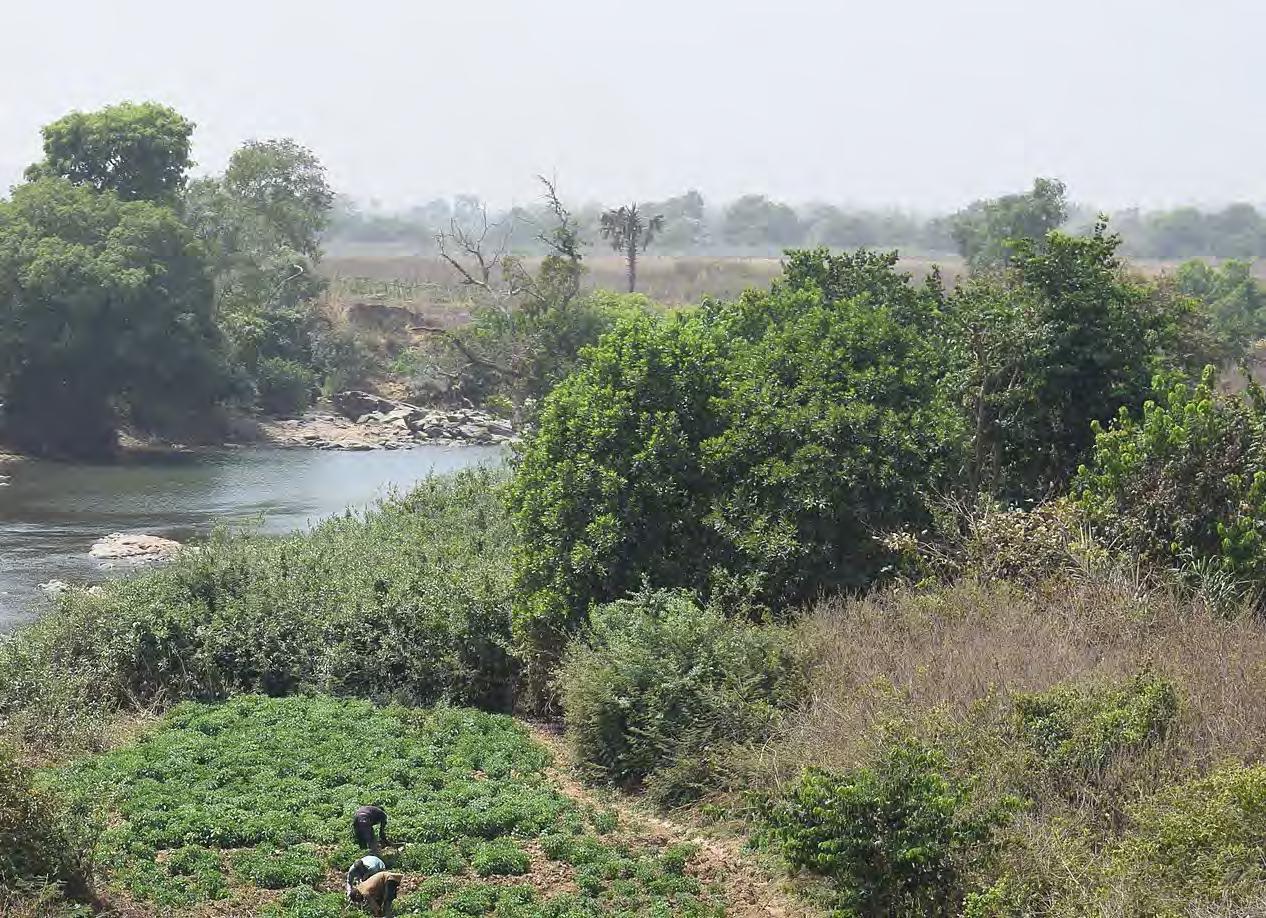
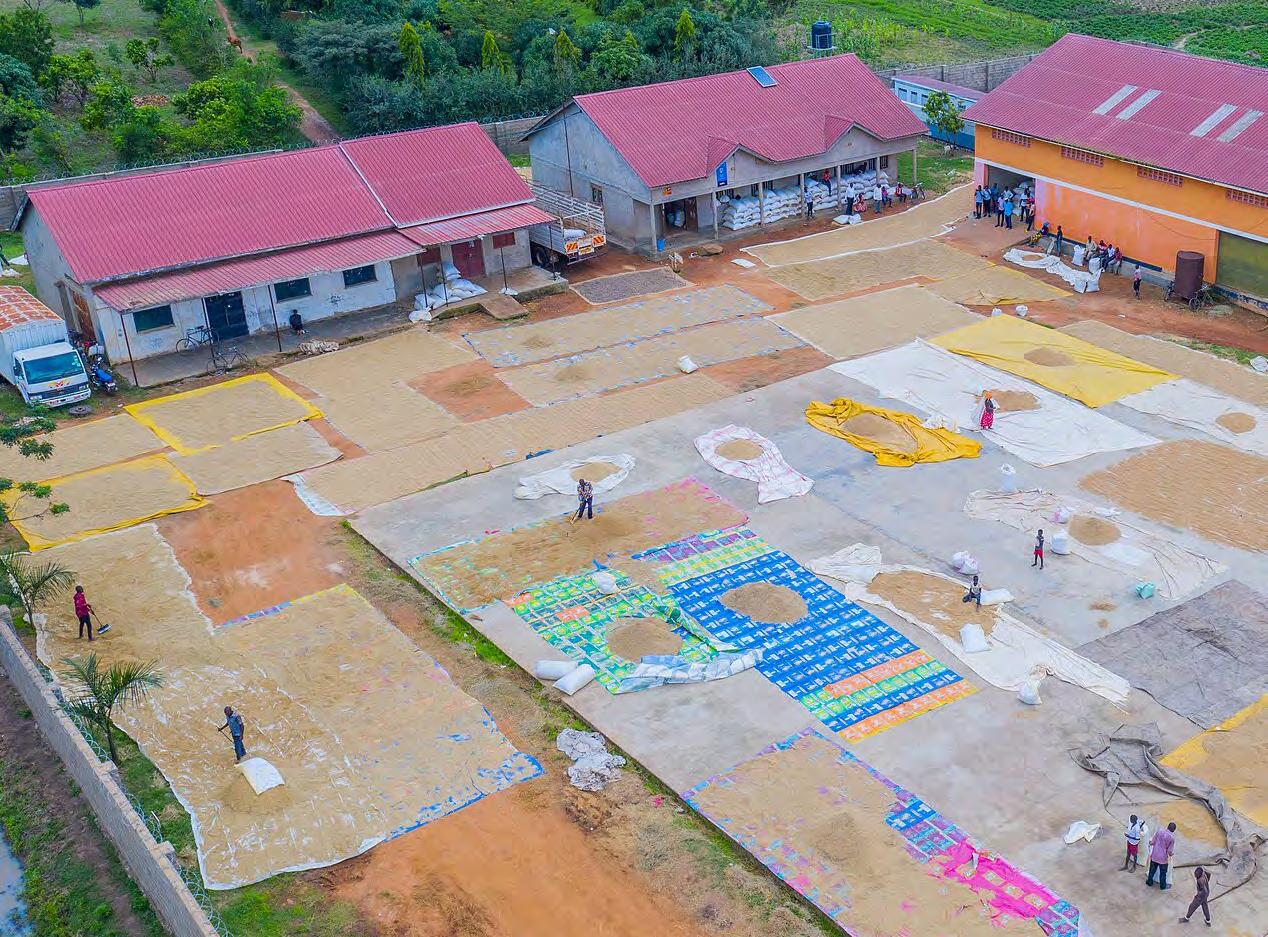
agricultural finance, digital advisory services and stronger rural infrastructure must be designed to help smaller producers raise output and reach markets more efficiently.
Climate change makes that task more urgent. Droughts, floods, heat stress and changing rainfall patterns are already affecting agricultural production across the continent. These pressures are likely to intensify over the next decade.
The Outlook argues that climate adaptation must become a core part of economic policy rather than being treated solely as an environmental concern. Investments in drought-tolerant crops, water management, soil restoration, weather forecasting and climate-smart farming will increasingly determine whether production can keep pace with demand.
The cost of inaction will be felt far beyond farms. Lower harvests can increase food inflation, weaken currencies and reduce household spending on education, healthcare and other essentials. Rural insecurity can also accelerate migration as families abandon areas where agriculture no longer provides a viable livelihood.
At the same time, sustainable intensification offers a chance to increase output without expanding agriculture’s environmental footprint. Higher yields can reduce pressure to clear forests or cultivate fragile land. Better fertiliser management, efficient irrigation and improved livestock practices can also reduce emissions per unit of food produced.
Regional trade is another essential part of the solution. Food shortages in one country often coincide with surpluses elsewhere, but poor infrastructure and restrictive border procedures prevent agricultural products from moving efficiently across the continent.
The African Continental Free Trade Area could help create larger and more reliable food markets. Lower tariffs, harmonised standards and improved customs systems would make it easier for farmers and processors to sell across borders.
But trade agreements alone cannot overcome physical constraints. Roads linking farms to markets remain inadequate in many countries. Rail networks are limited, ports are congested and border posts can delay perishable goods for days.
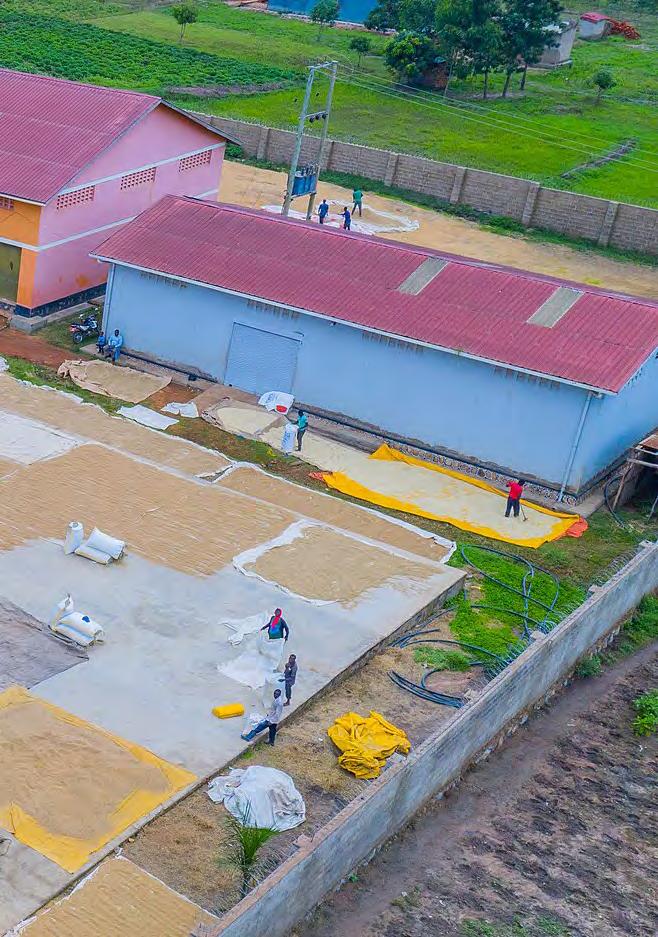
Cold-chain infrastructure is particularly weak. Fruit, vegetables, dairy products, meat and fish often spoil because farmers and traders lack refrigerated storage and transport. These losses reduce incomes and raise prices for consumers.
Stronger regional food systems would help countries respond to droughts and shortages without relying immediately on distant suppliers. They would also create larger markets for farm machinery, seed companies, fertiliser producers, logistics firms and food processors.
Value addition may be the largest untapped opportunity. Many African economies continue exporting raw agricultural commodities while importing processed food at much higher prices.
Countries may export cocoa beans and import chocolate, sell raw cashew nuts and buy packaged snacks, or ship unprocessed grain while importing flour. This pattern limits job creation and keeps a large share of agricultural value outside the producing country.
Expanding milling, food processing, packaging and storage industries could transform the sector. It would create employment while giving farmers more stable demand for their crops.
Urbanisation strengthens the commercial case. As cities grow, consumers are buying more packaged and processed foods.
Domestic companies capable of meeting that demand could reduce imports while building regional brands.
Small and medium-sized enterprises should have a central role, but they often face high borrowing costs, unreliable electricity and difficulty meeting food-safety standards. Governments and development finance institutions can help by expanding affordable credit, industrial parks and shared processing facilities.
Agricultural transformation is also becoming a geopolitical issue. Gulf states, China, the European Union and other international partners are increasing their interest in African agriculture as food security and supply-chain resilience become more strategic.
Foreign investment can provide capital, technology and market access. But African governments must ensure that agreements strengthen domestic production rather than merely secure supplies for external markets.
Investment should also support technology transfer, local processing and stronger supply chains. The goal must be to retain more value within African economies rather than repeat extractive models in which raw commodities leave and higher-value products return at greater cost.
The African Development Bank has consistently argued that agricultural transformation is central to the continent’s economic future. Its focus on rural infrastructure, finance, agro-industrial development and productivity reflects the scale of the opportunity
Agriculture already employs a large share of the region’s workforce. Raising productivity could increase rural incomes and reduce poverty, while agro-processing could absorb some of the millions of young people entering labour markets each year.
Yet the transition must include smallholders, women and young farmers. Large commercial investments alone will not solve the food challenge if most rural producers remain cut off from finance, technology and markets.
The OECD-FAO Outlook ultimately presents policymakers with a clear strategic choice. Demand for food will continue rising whether reforms advance or not. The question is whether it will be met increasingly by African farmers, processors and regional markets or by imports from overseas.
If governments accelerate productivity-enhancing reforms, invest in climate resilience, improve regional trade and expand agro-processing, agriculture could become one of the continent’s strongest engines of growth.
If reforms stall, sub-Saharan Africa risks becoming one of the world’s fastest-growing food import markets despite possessing exceptional land, labour and entrepreneurial potential.
The consequences would extend far beyond farming. Higher imports would place greater pressure on currencies, public finances and household budgets. Food insecurity could deepen political instability, while missed opportunities in agro-processing would leave millions of jobs unrealised.
The next decade will determine whether the region converts its agricultural potential into economic power or allows the productivity gap to widen.
The land is available. The market is growing. The technology largely exists. What remains uncertain is whether governments can create the policies, infrastructure and institutions required to make farming more productive, resilient and profitable.
Africa cannot treat land restoration as an environmental side issue. UNCCD COP17 offers an opportunity to recast it as economic, food, water and security policy, writes Baboloki Semele
AFRICA’S leaders should pay close attention when governments gather in Ulaanbaatar, Mongolia, for the 17th session of the Conference of the Parties to the United Nations Convention to Combat Desertification in August 2026.
The summit is not merely about soil, drought or desertification. It concerns food security, economic resilience and political stability.
For a continent where millions depend on agriculture, livestock and natural resources, restoring degraded land must become a central development priority. Decisions taken in Mongolia could influence how restoration is financed, how drought risks are managed and how African governments protect the landscapes sustaining their economies and communities.
UNCCD COP17 will take place from August 17–28, 2026, under the theme ‘Restoring Land, Restoring Hope’. The gathering is expected to bring together representatives of the convention’s 197 parties, alongside ministers, scientists, investors, Indigenous Peoples, pastoralists, young people and civil society organisations.
The conference extends far beyond discussions about planting trees or improving soils. Up to 40 percent of the world’s land is degraded, undermining agricultural production, reducing water availability, accelerating biodiversity loss and threatening livelihoods.
These consequences are especially serious in Africa, where large areas consist of deserts and drylands and millions rely on climatesensitive rural economies. For many countries, addressing desertification is not an optional environmental programme. It is a prerequisite for economic progress, food security and social stability.
COP17 must therefore move beyond declarations. Governments today understand the scale of the problem. The real test is whether international commitments can become funded projects, functioning institutions and measurable improvements for communities.
Healthy land must be recognised as economic infrastructure.
Land produces food, stores and filters water, supports biodiversity and anchors rural economies. It provides employment and income for farmers, pastoralists, forest communities and businesses across agricultural value chains.
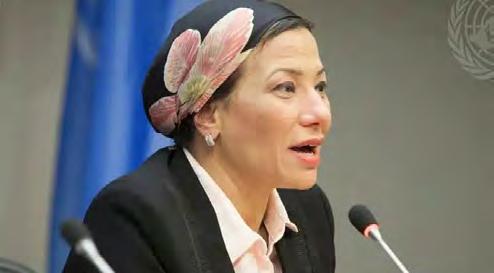
When land deteriorates, governments pay through declining harvests, higher food imports, emergency relief, rural unemployment, lost tax revenue and pressure on public services.
Meeting global restoration and drought-resilience targets will require hundreds of billions of dollars annually. Yet investment remains far below the level required, while losses caused by degradation, desertification and drought continue to rise.
For African governments confronting debt pressures and limited fiscal space, prevention makes economic sense.
Every investment that improves soil fertility, restores watersheds or strengthens drought preparedness can reduce later spending on humanitarian assistance, disaster recovery and food imports. Restoration is preventive economics, not an environmental luxury.
Mongolia may appear distant from Africa’s development challenges. Yet its experience warns about the interaction between climate shocks, fragile ecosystems and rural livelihoods.
Much of Mongolia’s territory is affected by land degradation, while its pastoral economy is under growing pressure from drought and severe winters known as dzuds.
The extreme winter of 2023–2024 killed millions of livestock and affected thousands of herder households. In Mongolia, animals are not simply commodities. They represent household wealth, food, income and economic security.
Pastoral communities in Botswana, Namibia, Kenya, Ethiopia, the Horn of Africa and the Sahel face shrinking water sources, deteriorating pasture and unpredictable weather. A failed rainy season can destroy livestock, reduce household incomes and force families from rural areas.
Climate shocks spread through food markets, employment, migration, public finances and national security. Mongolia’s experience shows why African countries must build resilience before drought and land degradation reach catastrophic levels.
COP17 should also help governments abandon the artificial separation between land and water policy.
Many countries respond to water scarcity by drilling boreholes, constructing dams or expanding irrigation. Such infrastructure remains important, but it cannot provide a complete solution when surrounding land is degraded.
Healthy soils function as natural reservoirs. They absorb rainfall, recharge groundwater and regulate water flowing into rivers and lakes.
Degraded soils lose this capacity. Water runs across hardened surfaces, causing erosion and flooding instead of replenishing underground reserves. Rivers decline, groundwater falls and drought intensifies.
Restoring vegetation, wetlands, grasslands and watersheds can improve water security while reducing drought risk.
This relationship is especially important for Southern Africa, where land degradation and water scarcity increasingly occur together Governments cannot secure water supplies while allowing landscapes that capture and store water to collapse.
National planning must therefore treat land and water as one interconnected system.
and
African governments have frequently relied on emergency responses after droughts and other climate-related disasters.
Food aid is distributed, livestock feed purchased and emergency funds released. These measures may save lives, but often arrive after households have lost assets and livelihoods.
A more resilient approach would invest before disaster strikes.
That means protecting soils, improving pasture management, diversifying rural incomes, developing early-warning systems, harvesting water and supporting drought-resistant crops. Local authorities and communities must also have the resources required to act on warnings.
Satellite monitoring, artificial intelligence and digital mapping can help governments track soil conditions, anticipate drought and identify where restoration is most urgently needed.
But technology cannot substitute for functioning institutions. Forecasts matter only when governments have credible plans, adequate funding and local structures capable of responding.
African governments cannot restore millions of hectares through public budgets alone. They will require support from development banks, climate funds, private investors and international partners.
Attracting investment requires credible national strategies. Projects must have clear outcomes, transparent governance and reliable systems for measuring environmental, social and economic benefits.
Public and concessional finance can reduce risk and attract private capital. Governments can also create incentives for sustainable agriculture, responsible grazing, soil conservation and land rehabilitation.
Restoration must be integrated into agriculture, mining, infrastructure, water and climate policies.
Too many governments treat these sectors separately. One ministry supports agricultural expansion, another approves mining operations and a third manages water resources without sufficient coordination.
The result can be policies in which one public investment repairs damage created by another. COP17 should encourage integrated national strategies that treat land as natural capital supporting the economy
Large-scale tree-planting campaigns have become popular across Africa and elsewhere. Mongolia’s Billion Trees Campaign aims to plant one billion trees by 2030.
Such programmes can contribute, but seedling numbers are not an adequate measure of restoration.
Trees must suit local soils, water availability and ecosystems. Inappropriate species in drylands can add pressure to limited water resources, while poorly maintained seedlings may die soon after ceremonial planting events.
In many dryland regions, healthy grasslands and rangelands are as important as forests.
Successful restoration should be measured through improved soil health, biodiversity, water retention, agricultural productivity and secure livelihoods.
This lesson is relevant to Africa’s Great Green Wall and national treeplanting campaigns. Governments should prioritise ecological outcomes rather than politically attractive planting targets.
Mongolia and many African countries share another dilemma: dependence on mineral extraction.
Mining generates jobs, export earnings and public revenue. Yet poorly regulated mining can contaminate water, damage soils and leave communities with degraded landscapes long after companies depart.
Responsible mining requires governments to enforce rehabilitation obligations, protect water sources and ensure restoration costs are built into projects. Companies must not be permitted to privatise profits while transferring environmental damage to communities and taxpayers.
Mineral-rich African countries should regard natural capital as an economic asset essential to sustaining development after mineral deposits are exhausted.
COP17 also coincides with the UN International Year of Rangelands and Pastoralists 2026, championed by Mongolia.
Rangelands cover more than half of the Earth’s land surface and support hundreds of millions of people, yet remain among the world’s most overlooked ecosystems.
Pastoralism supports millions across Africa and contributes to livestock production, food markets and cross-border trade. Yet pastoral communities are often marginalised and deprived of infrastructure, veterinary services, education and water access.
Restoring rangelands should protect mobility, reduce conflict, recognise traditional knowledge and give pastoralists a meaningful role in land governance.
Healthy rangelands mean healthier livestock, stronger food systems, improved biodiversity and more resilient rural economies.
African delegations should arrive in Ulaanbaatar with practical demands rather than general statements.
They should seek affordable restoration finance, stronger technology partnerships and fairer support for countries facing severe drought and land degradation.
They should also demand investment models that benefit local communities rather than projects designed mainly to satisfy international reporting requirements.
Restoration will not succeed without secure land rights, local participation and economic incentives. Farmers and pastoralists are unlikely to invest in land they may lose or from which they receive little benefit.
African governments must also accept responsibility. International finance cannot compensate for weak regulation, fragmented planning or misuse of public resources.
The most valuable outcome from Ulaanbaatar would be a shift from isolated environmental projects towards national development models built around healthy land.
Land restoration can reduce poverty, create jobs, protect water, strengthen food systems and reduce competition over scarce resources.
The discussions in Ulaanbaatar will influence financing, scientific collaboration and international partnerships. But the conference’s value will depend on what happens after delegates return home.
Africa does not need another global summit whose promises remain trapped in negotiated declarations.
It needs investable programmes, stronger institutions and policies recognising healthy land as the basis of economic security.
Ulaanbaatar may be thousands of kilometres from Africa, but the questions being addressed there could hardly be closer to the continent’s future. AB
Desmond Davies reviews a book that provides an incisive examination of the gradual disintegration of one of the most enduring systems of postcolonial domination in modern history
Colonialism Devours Itself: The Waning of FranceAfrique, by Gérard Prunier; Hurst, London, £22 hardback
FOR decades, FranceAfrique was one of the most enduring yet least understood systems of post-colonial power. Long after the flags of empire were lowered and independence celebrations concluded, France retained an extraordinary degree of influence over many of its former African colonies through political patronage, military intervention, economic control and personal networks linking Paris to African presidential palaces.
In Colonialism Devours Itself: The Waning of FranceAfrique, Gérard Prunier offers a timely examination of how that system is finally beginning to unravel. The book arrives at a moment when France's influence across francophone Africa is facing its greatest challenge since decolonisation.
Military governments in Mali, Burkina Faso and Niger have expelled French troops, denounced defence agreements and sought new international partners. Anti-French sentiment has become a powerful political force, while younger Africans increasingly question why independence has failed to translate into genuine sovereignty.
Prunier's central argument is that the very mechanisms France relied upon to preserve its influence have undermined its position. Colonialism, in effect, has begun to consume itself.
Rather than presenting a simplistic story of heroic African liberation or inevitable French decline, the author explores the historical structures that enabled Paris to exercise remarkable influence over sovereign states for six decades after formal independence.
One of the book's greatest strengths is its explanation of how FranceAfrique functioned as a sophisticated system rather than merely a nostalgic attachment to empire. Political influence was reinforced through military bases, intelligence cooperation, diplomatic intervention and support for favoured leaders.
France frequently presented itself as the guarantor of stability while ensuring that governments friendly to French interests remained in power.
Equally important was the economic architecture that survived independence. Prunier examines the financial arrangements surrounding the CFA franc and the long-standing requirement for member states to maintain substantial foreign exchange reserves with the French Treasury.
Although reforms have altered some aspects of these arrangements in

FranceAfrique was sustained equally by African political elites who benefited from the relationship
recent years, the system symbolised the extent to which economic sovereignty remained incomplete decades after colonial rule officially ended. Critics argued that these arrangements constrained monetary independence while providing France with significant leverage over its former colonies.
The question inevitably arises: how was such an arrangement allowed to persist for so long? Here
the book avoids placing sole responsibility on Paris. It recognises that FranceAfrique was sustained not only by successive French governments but also by African political elites who benefited from the relationship.
Numerous post-independence leaders found that French political backing enhanced their own security and longevity in office. In return, Paris secured access to strategic resources, diplomatic influence and commercial opportunities.
This uncomfortable reality deserves particular attention because it challenges a narrative that portrays African governments simply as victims. Many leaders willingly entered relationships that prioritised regime survival over national sovereignty.
Military assistance, diplomatic protection and financial support often came with political expectations, but they also offered ruling elites a reliable external patron.
Although Macron has repeatedly acknowledged the crimes of colonialism and attempted to promote a more equal partnership – including recent diplomatic efforts, such as his visit to Kenya, which reflected a broader attempt to rebuild France's engagement beyond its traditional francophone sphere – many Africans remained unconvinced that France had fundamentally abandoned old habits of thinking.
Prunier's analysis helps explain why such diplomatic initiatives have struggled to reverse France's declining influence. Trust, once lost, cannot easily be restored through speeches or symbolic visits.
willing to
The tragedy, as Prunier suggests, is that ordinary Africans paid the price. Economic dependency limited policy choices. Political competition was distorted by external influence. Domestic institutions remained weak because power depended as much on foreign support as on democratic legitimacy.
Another strength of the book is its treatment of generational change. The Africa confronting France today is profoundly different from the one that existed during the presidencies of Charles de Gaulle, François Mitterrand or Jacques Chirac.
Better educated young Africans who are more connected through digital media are less willing to accept inherited geopolitical relationships. They increasingly ask why countries that became independent in the early 1960s should still maintain political and financial arrangements designed during the colonial era.
This changing political consciousness has exposed another weakness in French policy. When Emmanuel Macron entered office, he promised to redefine France's relationship with Africa. Yet those ambitions were undermined by a series of statements that many Africans regarded as paternalistic and dismissive.
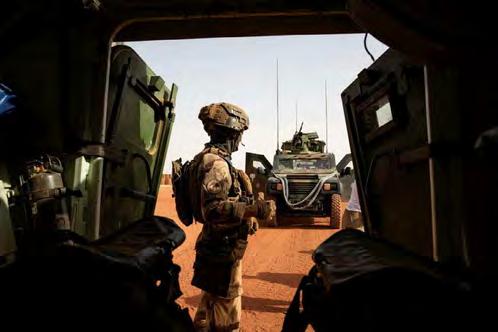
If the book has one limitation, it is that it occasionally underestimates the complexity of what may replace FranceAfrique. France's retreat does not automatically guarantee stronger governance or greater democracy.
In several countries, military juntas have capitalised on antiFrench sentiment while offering few convincing solutions to problems of insecurity, corruption or economic stagnation. Rejecting external domination is easier than constructing accountable institutions capable of delivering development.
Nor should France's decline be romanticised. Other powers – including Russia, China, Turkey and the Gulf states- are expanding their influence across Africa. The end of one form of dependency does not necessarily prevent another from emerging.
Nevertheless, Colonialism Devours Itself succeeds because it places current events within their historical context. The coups across the Sahel, the withdrawal of French troops, growing demands for monetary sovereignty and rising anti-French sentiment are not isolated developments. They represent the culmination of decades of accumulated frustration with an unequal post-colonial order.
In the book, Prunier, a French academic and historian, combines historical scholarship with contemporary political insight. His work is especially valuable because it avoids simplistic moral judgments. France is neither portrayed as uniquely malevolent nor African governments as entirely powerless. Instead, the book reveals a mutually reinforcing system in which both French policymakers and sections of Africa's ruling elite contributed to preserving structures that proved unsustainable.
The collapse of FranceAfrique therefore represents more than the decline of French influence. It marks the end of one of the 20th century's longest-running post-colonial political arrangements. Whether Africa's new generation of leaders can transform this moment into genuine political and economic independence remains the far more important question.
For readers seeking to understand why France's influence in Africa has diminished so dramatically – and why the continent's former French colonies are increasingly determined to chart their own course – Prunier's book is both illuminating and essential. It demonstrates that while colonial empires may formally end with declarations of independence, their structures can survive for generations.
Eventually, however, those structures become too contradictory to sustain. As Prunier persuasively argues, colonialism carries within itself the seeds of its own demise.
AB