
GOPA AFC Regional Portfolio Southern Afric

As of
GOPA AFC Financial Sector Development
We advise financial sectors. We shape development.

GOPA AFC stands as a leading German development consultancy, leveraging 50+ years of deep sector knowledge in agriculture, financial services, climate solutions and water systems throughout developing and emerging markets. As part of GOPA — one of Europe’s leading international cooperation consultancies — we provide strategic advisory services and technical expertise that catalyze sustainable development and economic growth in challenging environments.
279 M
GOPA AFC benefits from the GOPA's vast network of over 7,000 experts
Enabling us to engage specialized professionals for our projects
Financial Sector Development (FSD)
As GOPA’s dedicated Financial Sector Development hub, GOPA AFC’s FSD team drives financial inclusion through tailored product innovation and institutional strengthening. We craft bespoke credit and savings mechanisms, design blended finance programs, establish sound regulatory frameworks, and build supervisory capacity that transforms financial landscapes. Our expertise serves diverse stakeholders—central banks, commercial lenders, mortgage companies, microfinance institutions, and apex bodies— alongside governments and end-users including MSMEs and smallholder farmers seeking improved financial access.
GOPA Regional Hubs
GOPA AFC is actively involved in GREEN & CLIMATE FINANCE by advising financial institutions globally on developing and implementing green strategies. We help create climate-friendly financial products, train staff on climate risks, and support the transition to sustainable economies. Our services include developing green loan products, performing environmental and social due diligence, and assisting companies in preparing green investment loan applications. We implement projects such as regional off-grid electricity access in West Africa and renewable energy initiatives in Bangladesh.
We use BLENDED FINANCE strategically in our development projects to catalyze private capital for climate and development goals. Our innovative solutions enhance private sector leverage, enabling for instance MSMEs to access finance in Egypt and supporting biodiversity-friendly enterprises in Uganda through the Biodiversity Financing Facility. This model combines concessional and commercial financing, making investments more attractive to private investors while achieving social, environmental, and developmental outcomes. By de-risking investments, we foster sustainable growth and impactful change.
We further specialize in AGRICULTURAL FINANCE by providing tailored advisory services to farmers and agribusinesses. We offer capacity-building activities, training, and support for developing financial products and delivery channels. Our projects, like the "Promotion of agricultural finance for agri-based enterprises in rural areas" in Nigeria, help farmers access finance, improve their livelihoods, and promote sustainable agricultural growth. Additionally, we focus on climate smart agriculture finance, assisting banks in adapting loan products to better serve the agricultural sector, with an emphasis on digital solutions and financial inclusion.
We enhance SME FINANCE through capacity building and training for financial service providers. Our services include developing financial products, improving service delivery channels, conducting institutional diagnostics, and offering specialized training in credit risk management, business planning, and financial analysis. Additionally, we support SMEs with training in customer care, financial management, and business growth. By fostering effective financial markets, we improve access, usage, and quality of SME finance. For example, we implement projects like Access to Finance in Laos and Financing for Innovative Start-ups in Egypt.

43
COUNTRIES PROJECTS
PROJECT OFFICES 24 34


€33 M DONORS FUNDED BY 11 10
BENEFICIARIES GOPA AFC TURNOVER
60,893
THEMATIC FOCUS AREAS

Our e-learning course on green & climate finance:
Our e-learning course on agricultural finance:
Learn more about FSD’s daily work:
Regional Portfolio Southern Africa

INCREASING THE ACCESS & USE OF FINANCIAL SERVICES FOR MSME
The challenge
Enhancing the access to financial services: Lack of financial inclusion is one of the main issues to be tackled in Mozambique, especially in rural and remote areas, and among Micro, Small and Medium Enterprises (MSME). For one third of the Mozambican population, it takes at least one day to reach a financial institution. Poor infrastructure such as bad roads and lack of electricity, as well as low population density, prevents banks from expanding into rural areas. In addition, low general financial literacy and limited financial awareness, as well as lack of documentation (IDs) are further bottlenecks and obstacles to accessing
Project name: Improvement of the framework conditions for the creation of a competitive private and financial sector in Mozambique (ProEcon)
Project region: Mozambique
Financed by: GIZ
Implemented by: GOPA AFC
Duration: 12/2019 – 02/2025
Partners: ADG
Our approach
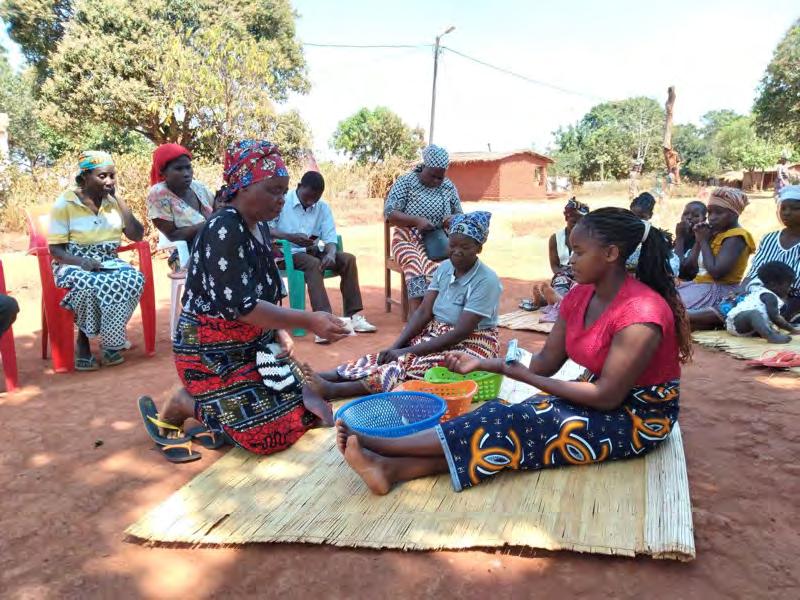
Against the background of poor infrastructure in the rural areas, branchless banking or agency banking (and mobile money) is a highly promising approach to reach the poor in rural areas with formal financial services. It has been the focus of the two predecessor projects within ProEcon, namely RAMOC I and II. Under those projects, commercial banks and the Bank of Mozambique, with the support of GIZ, laid the legal and technical foundations for agency banking and established the first network of agents.
The goal
Thanks to our intervention in the targeted Provinces of Inhambane, Sofala, Zambezia and Nampula, we aim at building upon the previous results of ProEcon, involving the perspective of the target groups, i.e. rural MSMEs. In addition, we work towards the strengthening of linkages and cooperation between the different national and international stakeholders of financial inclusion.
Voices from the field
“It’s easy, safe and very fast. Bank agents are closer to the people than the bank branches and hence much more convenient and effective.”
Farai
Bacaimane Canazache (Project’s Beneficiary)
Key highlights
Target goal: 200,000 MSME, of which 50% are led by women, using formal financial services
Agreements and partnerships with several local institutions and organizations
- Associacao Mocambicana de Bancos
- Banco Mais (for development of an agriculture finance strategy)
- Banco do Mozambique (assessment of the gender gap in access to financial services)
- Societe Generale (assessment and conceptualization of a sustainable agricultural out-grower scheme)
- Tablu Tech (improvement and development of digital savings and credit groups bookkeeping solution ROSCAS)
- CGAP (implementation of a comprehensive Gender Norms Assessment in Mozambique)
- Banco Letshego (improving agent banking/ agent network to increase the number of clients of the bank)
- Access Bank Mozambique (supporting the agency banking team)
- M-Pesa (ongoing support on different topics)
Analysis of the agency banking systems in Mozambique
Examples of our success
Throughout the project implementation, we achieved the following:
Improved the regulatory framework for the financial inclusion of MSMEs
Developed financial services adapted to rural MSMEs, including agent banking
Several workshops with the financial sector actors, such as Banco de Mozambique (Mozambique’s Central Bank)
Supported the partnership between GIZ and two partner banks (Access Bank and Banco Letshego)
Supported GIZ and M-Pesa (leading mobile money platform) to conclude a strategic partnership

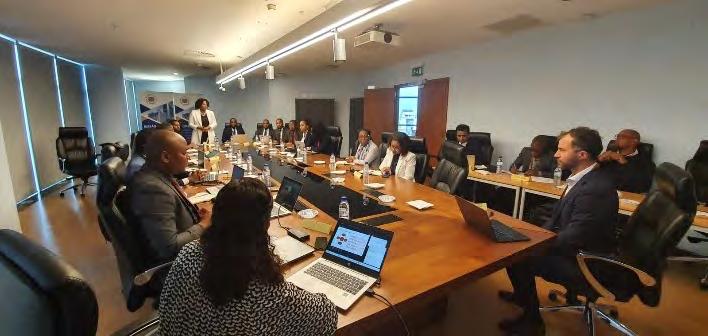
Workshop with Banco do Mozambique on FinTechs & its implications for market conduct, August 2023


MSME TRAINING FOR ECONOMIC DIVERSIFICATION IN NORTHERN MOZAMBIQUE
The challenge
The Economic Linkages for Diversification Project (EL4D/PLED) – Conecta Negócios is dedicated to reducing unemployment and boosting incomes in Northern Mozambique by empowering micro, small, and medium enterprises (MSMEs). The project focuses on building the capacity, quality, financing, and market access of Mozambican MSMEs, creating new job and income opportunities. This will be achieved by strengthening active value chains and supporting MSMEs involved in them.
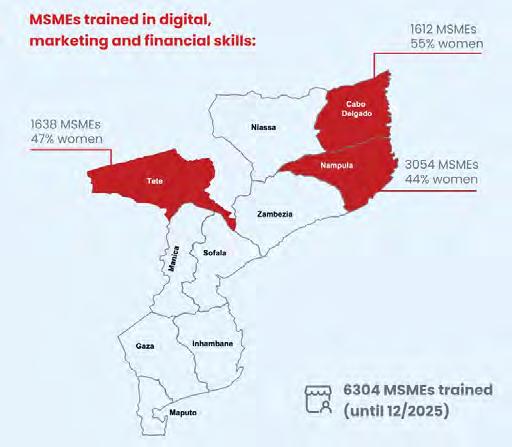
Implemented by the Government of Mozambique and led by the Ministry of Finance and Economy (MEF), the project brings together several partners. GOPA AFC collaborates with the National Institute for Small and Medium Enterprises (IPEME) to support activities in the provinces of Cabo Delgado, Nampula, and Tete.
Entrepreneurship among women remains low in Northern Mozambique, and the region is home to many internally displaced people (IDP) due to ongoing civil unrest in Cabo Delgado.
Project name: Economic Linkages for Diversification Project (EL4D/PLED) - Conecta Negócios
Project region: Mozambique (Provinces of Cabo Delgado, Nampula and Tete)
Financed by: The World Bank
Implemented by : GOPA AFC
Duration: 11/2023 –12/2026
Partners: Ministry of Finance (MEF), National Institute for Small and Medium Enterprises (IPEME)
Our approach
We provided management training in financial services, marketing, and digital services, as well as technical skills in hospitality management, agro-processing, and quality management—including workplace health and safety. Using a dataset of targeted participants from another consultancy, we assessed training needs and designed a two-week Trainer of Trainers (ToT) program for local trainers, partnering with ten mostly private training institutions to identify suitable candidates.
The ToT included interactive classroom sessions on content, methods, adult learning principles, and gender-responsive approaches in week one. In week two, trainers delivered pilot sessions to 441 selected MSMEs, received feedback from master trainers, and ultimately, 90 trainers were certified.
To ensure gender-responsive training, we integrated gender differences into materials and planning, followed UNDP’s 10 principles of gender-responsive communication, monitored gender balance among trainers (achieving 50:50 in Tete), and made training times and locations inclusive for women, including childcare support.
Impact stories The goal
GOPA AFC will strengthen the capacity of 9,000 downstream MSMEs that supply goods and services to households. Of these, 7,000 MSMEs will take part in management training, while 4,000 participants from 2,000 MSMEs will join technical training sessions.
The project aims for half of the MSMEs to be womenowned, a quarter to be owned by IDP, and a quarter to be based in Cabo Delgado.
Key highlights
Training materials developed comprising of presentation slides, course outline, trainer manual and trainee workbook
3 ToTs delivered in Tete, Nampula, and Cabo Delgado
90 trainers developed, of whom 35 are women
MSME training rollout began in May 2025. Per December 2025, 6,304 MSMEs have been trained, of whom 48% are women led and/or owned.
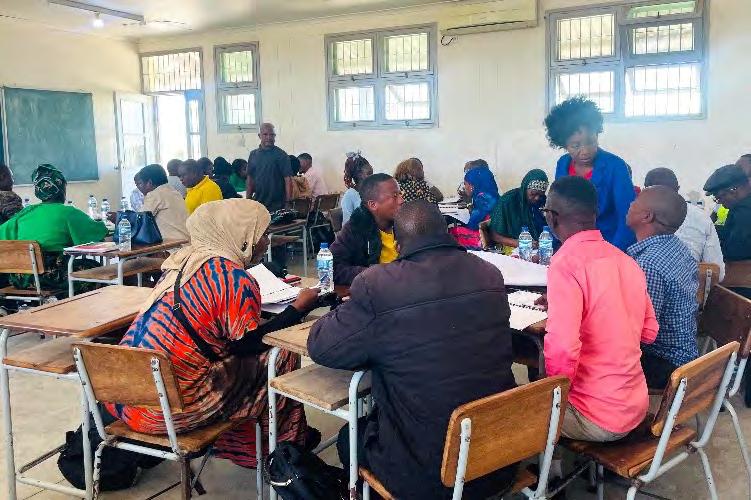
Voices from the field
“Thanks to the training, today I can set an amount that I earn from my own income, which is my salary, manage the wages of my employees, and determine how much I save”.
Isabel Silva de Almeida, Nacala Porto, Entrepreneur
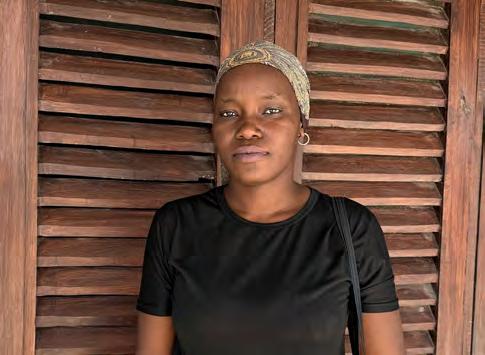
Retail Entrepreneur Isabel
Isabel Silva de Almeida is an entrepreneur from Nacala Porto, Mozambique, who launched her business in March 2024, offering pastries, clothing, and accessories. Initially managing everything on her own, Isabel found it difficult to grow and innovate. After participating in GOPA AFC’s training through the Conecta Negócios programme, she developed valuable skills in teamwork, financial management, and market research.
These new skills transformed her business. Isabel expanded her team to include two nieces, her sister, and an assistant, which enabled her to serve more customers and diversify her products. By listening to her clients, she began creating unique pastries—like donuts with sprinkles and coconut—tailored to local tastes.
Adopting sound financial practices, Isabel now sets her own salary, keeps personal and business finances separate, and saves regularly, giving her greater control and stability. As a result, her income has grown, and she plans to expand her clothing and accessories line and open a storefront.
Agricultural Entrepreneur Sérgio
Before attending GOPA AFC’s training, Sérgio Daniel, an agricultural entrepreneur from Nampula city, shared that he lacked a clear market vision. Through the training, he learned that business success relies on prior market analysis and well-defined marketing strategies. Sérgio also emphasized the critical importance of profit management to ensure the sustainability of his agricultural operations
Financing Agricultural Value Chains in Zambia
The challenge
Access to appropriate financial services for rural populations in Zambia remains limited, hindering the growth of the agricultural sector and the broader economy. To address this challenge, the Government of Zambia, with support from IFAD, launched the Rural Finance Expansion Programme (RUFEP). A central priority of the programme is to design and deliver tailored financial products that stimulate growth across key agricultural value chains. By expanding access to relevant financial services, RUFEP aims to boost productivity and enhance livelihoods for rural communities throughout Zambia.
Our approach
The project aimed to identify, rank, and prioritize the most promising agricultural value chains for investment, and to design suitable wholesale financial products for their development. This was achieved by:
• Analyzing national data and consulting stakeholders to select three priority agricultural value chains (dairy, poultry, soya beans).
• Designing and piloting adapted financial instruments for these value chains.
• Identifying and engaging interested financial service providers.
• Proposing amendments to relevant Development Bank of Zambia’s (DBZ) policies to enhance risk management and broaden collateral options.
• Training DBZ staff to establish a dedicated unit for monitoring and scaling adapted agricultural finance products.
Project name: Consulting services to design, develop and pilot one wholesale agriculture value chain finance product in each of three agriculture value chains to be prioritized
Project region: Zambia
Financed by: IFAD
Implemented by: GOPA AFC
Duration: 08/2022 – 06/2023

The goal
The project played a pivotal role in shaping DBZ’s strategy for agricultural value chain finance, facilitating the development of customized financial products and enhancing institutional capacity. These efforts are expected to expand access to finance for rural value chain participants, protect investments, and foster sustainable growth in Zambia’s agricultural sector.
Key highlights
Prioritization of dairy, poultry, and soya beans as high-potential value chains for targeted financial support.
Design and piloting of new financial products addressing working capital, capital expenditure, and trade finance needs.
Engagement of Vision Fund Zambia and Mayfair Insurance as key partners for piloting and risk mitigation.
Recommendations for policy amendments to enhance risk management and expand acceptable collateral types.
Organization of a comprehensive training workshop for DBZ staff, building capacity to manage and monitor agricultural value chain finance.
Establishment of a framework for ongoing stakeholder engagement and outreach to promote adoption and scaling of the new financial products.
Reflection
“Through a process of stakeholder engagement and capacity building to key DBZ staff, the IFAD Project sought to identify agricultural value chains in Zambia that from a financial institution perspective possess features of relative sector stability, display clear growth prospects, have significant numerical impact on Zambian rural households, offer significant possibilities of increasing incomes as well as creating employment. The GOPA AFC project team packaged these key elements for presentation to both DBZ as well as potential project partners who included selected banks, microfinance institutions, financial services providers such as insurance companies and government and non-government technical assistance entities, to assemble agricultural value chain actors with appetite to provide financial and related support, that would successfully trickle down in particular to Zambian farmers as the key endbeneficiaries.”
Odongo
David, former project Team Leader
further information, please contact:


INDUSTRIALIZATION & WOMEN ECONOMIC EMPOWERMENT
The challenge
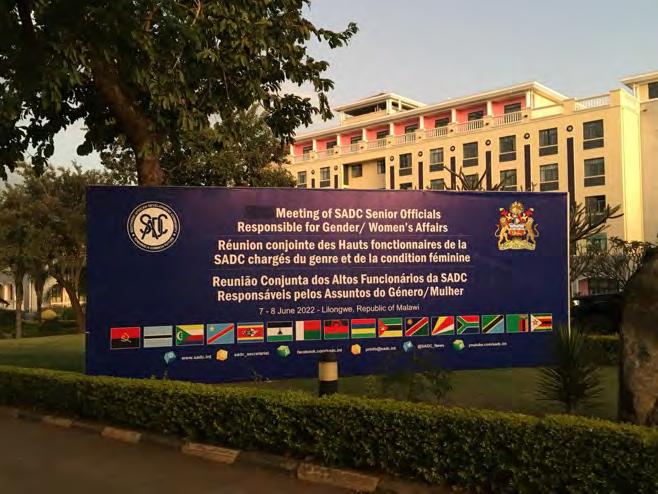
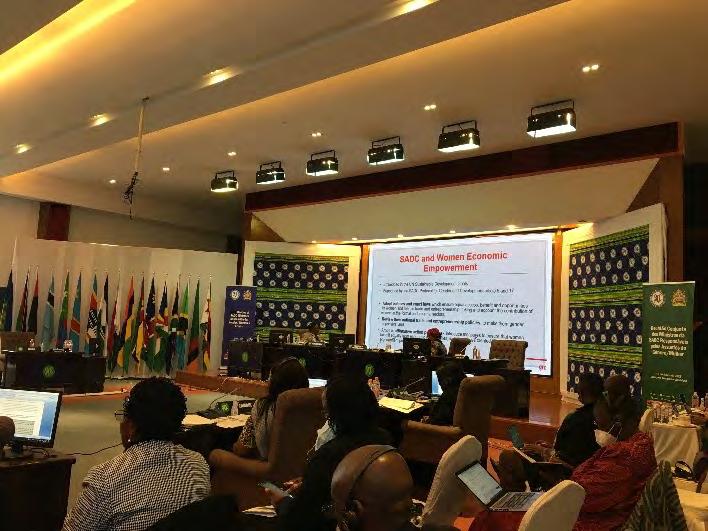
Gender inequalities impact negatively on economic growth, exacerbate poverty, and deny the disadvantaged full enjoyment of fundamental human rights. Across the Southern African Development Community (SADC), women entrepreneurs face persistent barriers to participating in industrialization and regional value chains, e. g. for leather and antiretroviral pharmaceutical value chains, where women remain significantly underrepresented.
Barriers that restrict women-owned businesses’ access to finance, business development services, and market opportunities include inadequate gender-responsive policies and limited capacity among service providers.
The SADC Industrialization Strategy and Roadmap (SISR) 2015-2063 recognizes women’s economic empowerment as a critical strategic objective.
The goal
The project aims to increase the participation of women-owned businesses and female entrepreneurs in value addition for selected sectors and regional value chains through enhancing business and product development skills and improving financial inclusion.
To that end, women across SADC Member States benefit from targeted training, advocacy, and capacity building, enabling them to grow their enterprises and contribute to regional economic development.
Project name: Strengthening regional economic integration in the SADC region (CESARE) – Project on Industrialization and Women Economic Empowerment
Project region: Botswana
Financed by: GIZ
Implemented by : GOPA Worldwide Consultants in consortium with GOPA AFC
Duration: 12/2021-11/2023
Our approach
The CESARE Programme assists the SADC Secretariat and technical bodies in implementing the SISR 20152063, with a focus on the leather and pharmaceutical value chains.
Key actions include:
developing gender-conducive laws and regional guidelines
supporting advocacy and awareness initiatives creating entrepreneurial and financial toolkits for service providers
conducting training workshops
managing a Challenge Fund to help Women in Business Associations build business development skills
Key highlights
A Gender Action Plan for Financial Inclusion and SMEs’ Access to Finance developed and adopted.
Gender Responsive Budgeting methodology finalized and leaflet designed.
Gender Affirmative Procurement Guidelines prepared and approved.
3 regional guidelines/tools developed for enabling business environment for women entrepreneurs.
2 advocacy and awareness raising initiatives supported.
Entrepreneurship and financial inclusion education materials developed and disseminated.
SADC Women’s Financial Inclusion Toolkit for Financial Service Providers developed and distributed.
Mapping studies and needs assessments completed for regional value chains in selected sectors.
Main Achievements
14 non-profit organizations in 14 SADC member states supported through the Challenge Fund.
2,785 women entrepreneurs reached via Challenge Fund activities.
Capacity building and training workshops conducted for BDS providers, FSPs, and government officials.
A range of knowledge products were created (studies, toolkits, etc.).
Project Journey & Transformation
The CESARE Project on Industrialization and Women Economic Empowerment led to the adoption of the SADC Financial Inclusion Gender Action Plan, now an integral part of regional policy.
Through the establishment of the SADC Challenge Fund, 14 non-profit organizations across 14 member states received financial support to train and mentor 2,785 women entrepreneurs in priority value chains.
Capacity-building events and the dissemination of entrepreneurial and financial toolkits reached hundreds of stakeholders, improving access to business opportunities and financial services for women.
The project’s collaborative approach, involving government ministries, technical bodies, and civil society, set a new standard for gender-responsive economic development in the SADC region.

BUSINESS MENTORING TO SUPPORT THE SME FINANCING STRATEGY OF NAMIBIA
The challenge
The Government of Namibia aims at curtailing youth unemployment by strengthening small and medium enterprises (SMEs). To achieve this, the SME Financing Strategy was adopted and its administration and implementation were delegated to the Development Bank of Namibia (DBN).
The National Mentoring & Coaching Program (MCP) is one of the three vehicles of Namibia’s SME Financing Strategy. The other two are the Credit Guarantee Scheme and the Venture Capital Funds.
In March 2019, the DBN and GIZ (Deutsche Gesellschaft für Internationale Zusammenarbeit) partnered and contracted GOPA AFC to support the establishment of the MCP.

Project name: Review the Mentoring & Coaching Programme (MCP) at the Development Bank of Namibia
Project region: Namibia
Financed by: GIZ
Implemented by : GOPA AFC
Duration: November 2019 – May 2021
Partners: Business Financial Services (BFS) Namibia
Our approach
Our team of experts worked closely with DBN’s business strategy department and its SME Centre to create a concept for mentoring of SMEs. The building blocks of the concept are:
A standardised process of on-boarding mentors, delivering mentoring and coaching, and reporting the outcomes;
Emphasising small-group mentoring to initiate peer-exchange between SMEs;
Content-focus on strengthening good managerial practices and behaviours of the entrepreneur. These comprise financial management / sound financial behaviours, business planning through the business model canvas, market making, statutory compliance, and HR management.
The goal
1. Setting-up of the MCP
2. Creation and initiation of operational model, i.e. coaching and mentoring approaches and tools
3. Set-up of an organisational learning loop (M&E)
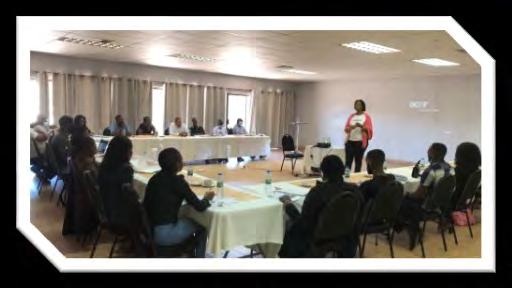
Participants and facilitators; day 2 of DBN’s SME-mentors’onboarding workshop, Dec. 2020
Key highlights
The SME Mentoring Concept was developed and adopted by DBN’s Management Committee on Investment & Credit. We created a slide deck for the introduction module, which is now used with new SME borrowers at DBN. A 3.5-day onboarding program was delivered to 10 mentors. DBN piloted the MCP with 200 SMEs across Namibia (see map), operating in various sectors such as manufacturing, construction, tourism/hospitality and catering, transport, and agriculture.
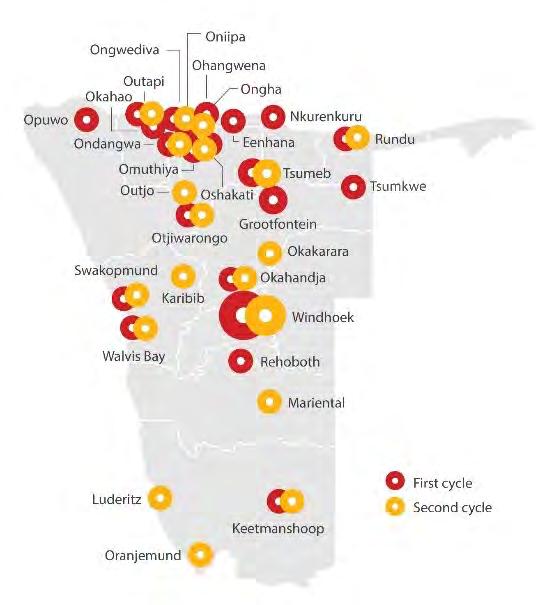
Map showing the locations of the SMEs mentored during the two MCP-pilot-cycles
Voices from the field
“I afforded the mentees two formal opportunities to attend the three group sessions by offering the same material on Tuesdays and Thursdays (in person at a conference venue in Windhoek). I also provided virtual sessions for those mentees who were out of town, out of the country or unable to leave their workplace to attend the group session in person. For the virtual sessions I presented the information using Google meet.”
Dantagos Jimmy, Mentor MCP-pilot
Examples of our success
The MCP pilot was highly successful, with 80% of SMEs completing the program. SMEs universally appreciated the mentors, with several receiving personal praise in the open-ended feedback questions.
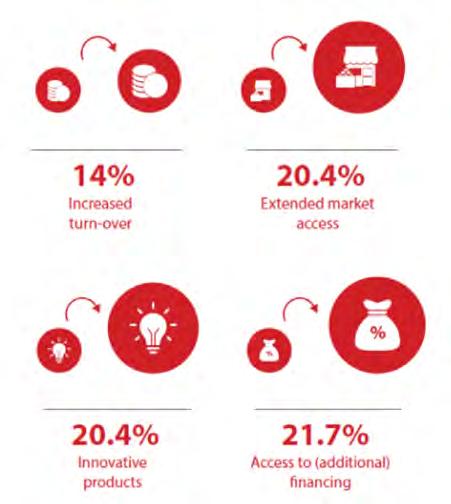
Proportion of MSMEs who reported change of
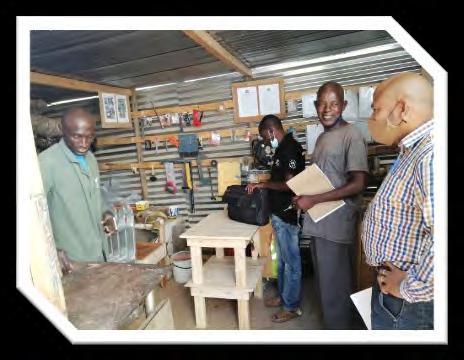
“Some [SMEs] from [cycle] one are still reporting despite the program ending, some call to register observations”
Kumbirayi Chiwara, mentor MCP-pilot, both cycles
Caption:
ASSESSING FINANCIAL COOPERATIVES
The challenge
Access to efficient financial services for the rural poor in Lesotho is limited. The Government of Lesotho, with support of IFAD, is working to strengthen and grow the cooperative sector through the Rural Financial Intermediation Programme (RUFIP). To that end, there is a need to improve the legal framework and prudential management of financial cooperatives to safeguard members’ deposits and ensure sustainable growth.

Our approach
We assessed the overall performance of financial cooperatives in Lesotho and provided recommendations on appropriate prudential financial standards suitable for the country’s context. This was achieved through:
familiarizing with the background and policies of the financial cooperatives movement
selecting a sample of financial cooperatives for assessment, and evaluating their performance
comparing Lesotho’s financial cooperatives with regional and international peers and recommending suitable benchmarking ratios for SACCOS in Lesotho
Findings were disseminated through a stakeholder workshop and training for the staff of the Department of Cooperatives.
Project name: Benchmarking Financial Cooperatives’ Performance in Lesotho
Project region: Lesotho
Financed by: IFAD
Implemented by : GOPA AFC
Duration: 01/03/2015 – 30/04/2015
Partners: ADG
The goal
The project achieved its goal to inform upcoming SACCOS legislation by providing benchmarks and to support the Department of Cooperatives; especially in safeguarding members’ deposits and facilitating improved management and sustainability of financial cooperatives in Lesotho.
Key highlights
Assessment of the overall performance and growth of financial cooperatives in Lesotho.
Use of CAMELS and PEARLS ratios to measure performance.
Design of appropriate and cost-effective evaluation and monitoring tools for the Lesotho context.
Comparison of Lesotho financial cooperatives’ performance with regional and international peers.
Recommendations of suitable benchmarking ratios for SACCOS in Lesotho.
Organization of a stakeholder workshop to disseminate study findings.
Training provided to the staff of the Department of Cooperatives.
Reflection
“By establishing rigorous benchmarking and oversight, this project secured the role of credit cooperatives as the primary financial lifeline for Lesotho’s rural poor, turning them into trusted engines for the local economy development. These reforms ensure that cooperatives are not just social groups, but stable financial institutions capable of protecting member savings and expanding access to credit where traditional banks do not reach. This transition is essential for building a resilient national economy that fosters financial independence and long-term poverty reduction at the community level.”
Sigitas
Bubnys, GOPA AFC senior expert in supervision and regulation of credit cooperatives
For further information, please contact:
STRENGTHENING RESILIENCE TO CLIMATE CHANGE
The challenge
Southern Madagascar and its exposure to negative climate events: Over the past years, climate change impacts are hitting Madagascar and its population harder and harder, especially in the Southern regions (Androy, Anosy, Atsimo Atsinanana), where long periods of drought alternate with heavy flooding. In particular, climate change is a significant threat to rain-dependent agriculture in Southern Madagascar. In addition, lack of suitable infrastructure and poor economic conditions hamper the livelihood of rural populations, who struggle to cope with negative climate events.
Our approach
Beyond policies and actions at governmental level, tangible actions are required. In fact, thanks to our national and international team, GOPA AFC addresses the issues related to climate change and its negative effects by improving the resilience of agricultural actors through better access to financial services. This enables them to adapt to climate change and improve the management of production risks.
During the first phase (2018-2022), our team has worked on an innovative weather index-based insurance (WIBI) product, a pioneer product in Madagascar. We have worked on the development of the index as well as on the legal framework for insurance, collaborating with a local insurance company to pilot the product. In the second phase (2023-2026), the project aims to further extend its scope to promote and enhance the financial inclusion of populations vulnerable to climate change. This will be done thanks to the development of other formal financial products, such as credit and savings, targeting the smallholder farmers and producers in selected agricultural value chains in cooperation with local microfinance institutions (MFIs). From another perspective, we do support the development of Village Savings and Loans Associations (VSLA), to which our national team and local facilitators provide support for the establishment of the informal savings groups as well as trainings on financial education.
Project name: Adapting agricultural value chains to climate change (PrAda 2) in Madagascar
Project region: Madagascar
Financed by: GIZ
Implemented by: GOPA AFC
Duration: 01/2023 – 06/2026
The goal
In quantitative terms, our goal is to reach 3,000 farmers and producers being able to access one of the developed financial products adapted to climate change, for example the credit disbursed via the VSLA or accessing financial products as client of one of the local MFI. Nevertheless, combining the financial and non-financial services is key to reinforce and strengthen the resilience of the rural population.
Voices from the field
“Before, I lived day to day. The land did not give me enough. The GIZ PRADA project taught me how to make basket compost. Our cassava production has tripled, and I was able to sell the surplus at the market! I put my small savings into the VSLA with the help of GOPA AFC, and I was able to invest in new seeds, improving my field. Today, I have hope to offer better school supplies for my children.”
A barren season means no harvest, thus no food. This year, with the savings I was able to make with the VSLA, I hired people to work my fields ! I hope the harvest will be good !”
Mrs. Jasmine, VSLA Member in Farafara Vatambe (Anosy Region)
Mrs. Bao, VSLA Member, Lopary (Atsimo Atsinanana Region)
Key highlights
Target goal: 3,000 beneficiaries, of which at least 900 women are accessing one of the developed financial products
Partnerships with Ministry of Agriculture and Development Fund for Agriculture
Development of a training toolkit for VSLA (in Malagasy language)
Facilitation of the agreement between GIZ and local financial institutions for research and specific client centric financial products development for better resilience against climate change:
- SMMEC (Société Malagasy Mutualiste d’Epargne et de Crédit)
- CEM (Caisse d’épargne du Madagascar)
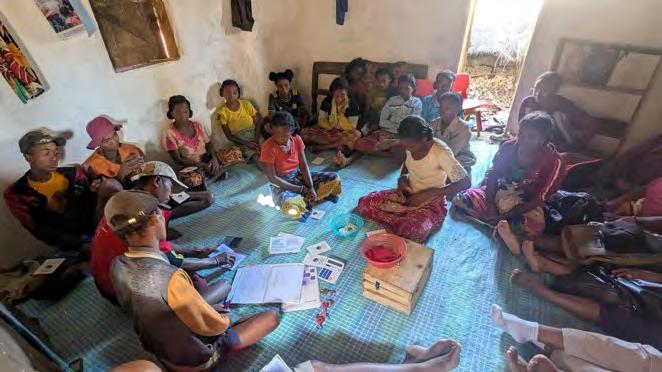
Examples of our success
Within the first 24 months of the project, we achieved the following:
Reach of two agreements with local financial institutions
123 created VSLA, of which 39 in Androy, 30 in Anosy and 54 in Atsimo-Atsinanana
1,702 members of VSLA in the targeted regions, of which 708 in Androy, 325 in Anosy and 669 in Atsimo-Atsinanana
38% of VSLA members are aged between 30 and 44 years old, while 28% between 15 and 29 years old
62% of VSLA members are women
Support to the development of the National Strategy for Financial Inclusion
Impact story
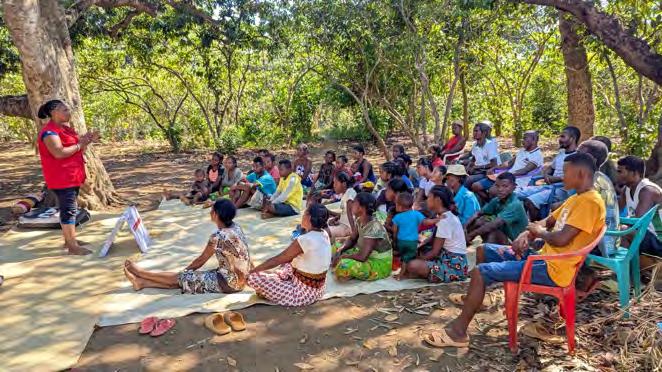
Recent financial literacy training sessions have been conducted for members of the Village Savings and Loan Associations (VSLAs). Approximately 500 members voluntarily participated in the modules, with a significant representation of women. The introductory topic addressed household budgeting, followed by modules on savings and credit management. While the primary objective was to cultivate financial discipline among participants, this foundational step also serves to enhance their comprehension of potential engagement with microfinance institutions. Furthermore, the crucial aspect of over-indebtedness prevention was emphasized.
VSLA active members (by gender)
Total Members Men Women
ANDROY ANOSY ATSIMO ATSINANANA


INSTITUTIONAL GENDER STRENGTHENING & GENDER-LENS INVESTING IN FOUR DEVELOPMENT FINANCE INSTITUTIONS
The challenge
Women play a significant role in the African as well as Caribbean and Pacific economies, especially in the informal sector, yet they continue to face gender disparities across financial services, property ownership, and decision-making. Financial and nonfinancial services offered by the financial institutions are often gender blind and do not effectively reach women entrepreneurs. The ICR Facility supports development finance institutions (DFIs) in five countries to create better conditions for women’s businesses to thrive and for women’s economic
Our approach
The project supports the DFIs with institutional gender assessment and provides recommendations for gender mainstreaming in internal processes and external activities. We strengthen the banks’ monitoring and evaluation (M&E) frameworks to become gender responsive. Finally, we advise on refining financial and non-financial products to reach women entrepreneurs more effectively.
Project name: Institutional gender strengthening and gender-lens investing in four development finance institutions
Project region: Tanzania, Mozambique, Nigeria, Botswana, Jamaica
Financed by: The Investment Climate Reform (ICR) Facility co-funded by the European Union (EU), the Organisation of African, Caribbean and Pacific States (OACPS) under the 11th European Development Fund (EDF), the German Federal Ministry for Economic Cooperation and Development (BMZ), and the British Council.
Clients: Development Bank of Jamaica, Bank of Industry (Nigeria), TIB Development Bank Tanzania, Gapi Sociedade de Investimento (Gapi), Mozambique, National Development Bank of Botswana
Implemented by: GOPA AFC
Duration: April 2024 – September 2025
The goal
Through gender responsive internal practices, the banks will promote gender equity within their organisations and their networks. By introducing gender responsive offerings, directly and through partner financial institutions, access to finance for women entrepreneurs will improve, giving them a chance to grow their business. Finally, strengthened M&E functions with clear targets and tracking of sex-disaggregated data will help the DFIs to tap international funding for women’s economic empowerment and advocate for gender-responsive national policies.

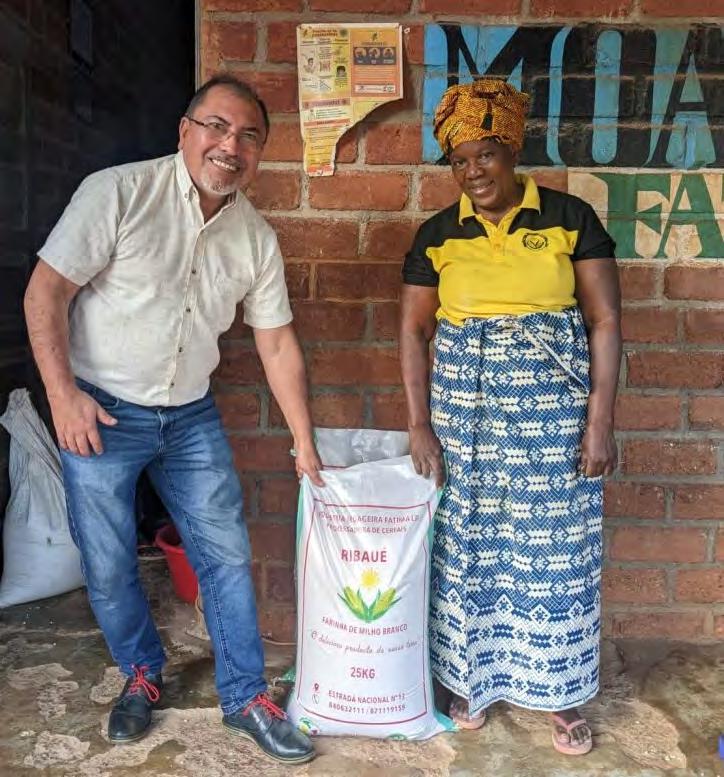
Picture: GOPA AFC expert in an interview with Gapi’s client in Ribaue, Mozambique.
Key highlights
Conducted institutional gender assessments of five DFIs
Developed gender policies, gender strategy and action plans for five DFIs
Conducted training on the implementation of gender strategies and gender lens investing for five DFIs and over 400 bank staff
Reviewed M&E functions and developed gender responsive M&E framework for five DFIs
Conducted market research and financial landscape study on the financing needs and opportunities of women in business for two DFIs
Provided recommendations for financial and non-financial products refinement to meet the women’s needs for three DFIs
Conducted mapping of international funding sources for three DFIs and advised on an action plan to tap the sources.
Examples of our success
Within the 12 months of the project we:
Accomplished assessment of and delivered recommendations for institutional strengthening for five DFIs
Conducted training on gender policies, strategies and gender lens investing, M&E and product development for over 400 bank staff
Developed a gender responsive M&E framework for five DFIs
Conducted market research on financing needs and opportunities of women in Mozambique and Botswana
Advised two DFIs on refinement of financial and non-financial products
Impact story
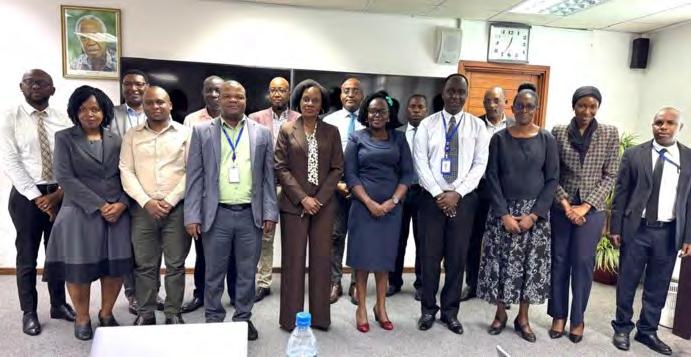
During the institutional assessment, the participation was drawn from various departments to ensure a comprehensive understanding of gender dynamics within the banks. Clients were segmented into groups, and focus group discussions included women, men, and youth.
The participating banks particularly enjoyed this comprehensive inclusion of stakeholders.
Voices from the field
“I had a wonderful and impactful experience working on the assessment with the consultants. The process was smooth and meaningful. The aspect I most enjoyed included working together to collect information within the Bank. My participation allowed me to get insight into the Bank and ensured that I could claim some level of ownership of the final product of this consultancy.”
Kristina
Neil, Gender Specialist, Development Bank of Jamaica
“The process was intensive and allowed full participation of all key stakeholders. The assessment revealed the current position and areas requiring intervention.”
Adebola Oruma, Bank of Industry, Nigeria
For further information, please contact:
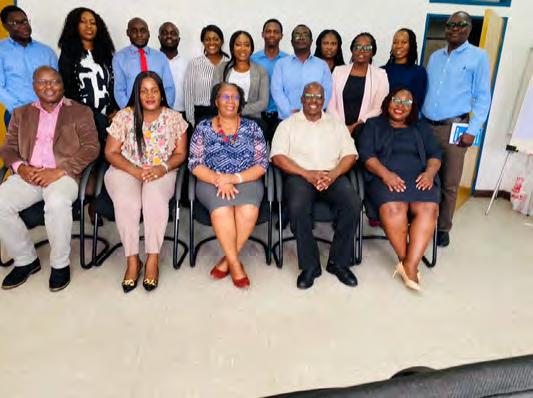
Picture: TIB Development Bank’s management and staff, and GOPA AFC expert after workshop on the results of the bank’s institutional assessment.

Dr. Oliver Schmidt Senior Project Manager oliver.schmidt@gopa.eu
For further information, please contact: Suzanne Okao Akulu Financial Sector Development Expert, Business Development Advisor - Eastern Africa suzanneokao.akulu@gopa.eu