

Madagascar pitchbook


GOPA AFC Financial Sector Development
We advise financial sectors. We shape development.


GOPA AFC stands as a leading German development consultancy, leveraging 50+ years of deep sector knowledge in agriculture, financial services, climate solutions and water systems throughout developing and emerging markets. As part of GOPA — one of Europe’s leading international cooperation consultancies — we provide strategic advisory services and technical expertise that catalyze sustainable development and economic growth in challenging environments.
279 M
GOPA AFC benefits from the GOPA's vast network of over 7,000 experts
Enabling us to engage specialized professionals for our projects
Financial Sector Development (FSD)
As GOPA’s dedicated Financial Sector Development hub, GOPA AFC’s FSD team drives financial inclusion through tailored product innovation and institutional strengthening. We craft bespoke credit and savings mechanisms, design blended finance programs, establish sound regulatory frameworks, and build supervisory capacity that transforms financial landscapes. Our expertise serves diverse stakeholders—central banks, commercial lenders, mortgage companies, microfinance institutions, and apex bodies— alongside governments and end-users including MSMEs and smallholder farmers seeking improved financial access.
GOPA Regional Hubs
GOPA AFC is actively involved in GREEN & CLIMATE FINANCE by advising financial institutions globally on developing and implementing green strategies. We help create climate-friendly financial products, train staff on climate risks, and support the transition to sustainable economies. Our services include developing green loan products, performing environmental and social due diligence, and assisting companies in preparing green investment loan applications. We implement projects such as regional off-grid electricity access in West Africa and renewable energy initiatives in Bangladesh.
We use BLENDED FINANCE strategically in our development projects to catalyze private capital for climate and development goals. Our innovative solutions enhance private sector leverage, enabling for instance MSMEs to access finance in Egypt and supporting biodiversity-friendly enterprises in Uganda through the Biodiversity Financing Facility. This model combines concessional and commercial financing, making investments more attractive to private investors while achieving social, environmental, and developmental outcomes. By de-risking investments, we foster sustainable growth and impactful change.
We further specialize in AGRICULTURAL FINANCE by providing tailored advisory services to farmers and agribusinesses. We offer capacity-building activities, training, and support for developing financial products and delivery channels. Our projects, like the "Promotion of agricultural finance for agri-based enterprises in rural areas" in Nigeria, help farmers access finance, improve their livelihoods, and promote sustainable agricultural growth. Additionally, we focus on climate smart agriculture finance, assisting banks in adapting loan products to better serve the agricultural sector, with an emphasis on digital solutions and financial inclusion.
We enhance SME FINANCE through capacity building and training for financial service providers. Our services include developing financial products, improving service delivery channels, conducting institutional diagnostics, and offering specialized training in credit risk management, business planning, and financial analysis. Additionally, we support SMEs with training in customer care, financial management, and business growth. By fostering effective financial markets, we improve access, usage, and quality of SME finance. For example, we implement projects like Access to Finance in Laos and Financing for Innovative Start-ups in Egypt.

43
COUNTRIES PROJECTS
PROJECT OFFICES 24 34


€33 M DONORS FUNDED BY 11 10
BENEFICIARIES GOPA AFC TURNOVER
60,893
THEMATIC FOCUS AREAS

Our e-learning course on green & climate finance:
Our e-learning course on agricultural finance:
Learn more about FSD’s daily work:
GOPA AFC
Agriculture & Agribusiness
We
develop agriculture. We sustain growth.

GOPA AFC is a leading German development consultancy, leveraging over 50 years of expertise in agriculture, financial services, climate solutions, and water systems across developing and emerging markets. As part of GOPA, one of Europe’s foremost international cooperation consultancies, we provide strategic advisory services and technical expertise to catalyze sustainable development and economic growth in challenging environments.
GOPA AFC benefits from the GOPA’s vast network of over 7,000 experts
Enabling us to engage specialized professionals for our projects
Agriculture & Agribusiness
As GOPA AFC’s Agriculture & Agribusiness hub, our team promotes rural prosperity through support across the agricultural value chain—from production to processing and marketing. We place a strong emphasis on empowering women-led companies and female farmers, fostering their participation and leadership in agribusiness. By strengthening local agribusinesses and SMEs, we foster income and employment, advance climate-smart, sustainable practices and gender equality. Our expertise spans value chain development, food and nutrition security, policy advice, and innovative agri-technologies. Working with farmers, cooperatives, agribusinesses, governments, and development partners, we tailor interventions that improve productivity, market access, and resilience, transforming agriculture into a driver of inclusive and sustainable growth..








GOPA Regional Hubs
GOPA AFC provides comprehensive support across CROP & LIVESTOCK PRODUCTION by promoting resilient and sustainable farming systems to meet growing food demands and to address climate challenges. We implement optimized, innovative production techniques, integrate sustainable water, soil and resource management, and advocate for conservation agriculture. Our projects focus on strengthening farmers, their organizations and the surrounding framework through targeted technical advice, knowledge exchange and capacity building, empowering them to deliver efficient services and drive inclusive rural development.
We advance sustainable agriculture through the integration of AGROECOLOGY, CLIMATE SMART AGRICULTURE (CSA), and SMART FARMING (ICT). By promoting regenerative organic approaches alongside the adoption of e.g. CSA technologies, we help farming systems adapt to climate change, making them more resilient, mitigate environmental impacts, and enhance food security. By delivering advanced ICT solutions—including data analytics, sensors or GPS—we enable efficient resource use and provide real-time agricultural information to support informed decision-making. Sustainable agriculture as a holistic approach fosters innovation, engages all stakeholders, and builds a more productive, sustainable food system.
Our AGRIBUSINESS PROMOTION & MARKETING services empower MSMEs, processors, and traders, by offering tailored business development, product optimization, market access and export as well as marketing strategy support. We strengthen AGRICULTURAL VALUE CHAINS by supporting producers and their quality management systems. Using the ValueLinks methodology, we deliver holistic solutions that enhance efficiency, sustainability, and resource conservation across the value chain. In addition, we advise
on product and company certifications that require products to meet specific standards of quality, safety, and performance. We help businesses to navigate these value chains to enhance competitiveness, to access new markets, drawing on extensive global experience and strategic partnerships. In AGRICULTURAL WATER MANAGEMENT, we promote innovative strategies and sustainable practices to maximize water use efficiency and address the challenges of water scarcity and pollution. Our approach includes advanced crop management and financial incentives for adopting best practices, ensuring food security for future generations.

EMPOWERING RURAL MADAGASCAR:
Financial Inclusion & Climate Risk Insurance for Sustainable Agriculture
The challenge
In recent years, the effects of climate change have increasingly impacted Madagascar and its people, with the Southern regions (Androy, Anosy, Atsimo Atsinanana) being particularly affected. These areas face prolonged droughts alternating with episodes of severe flooding, posing a significant threat to rain-dependent agriculture. The situation is further exacerbated by inadequate infrastructure and challenging economic conditions, making it difficult for rural communities to withstand and recover from these climate-related shocks.
The goal
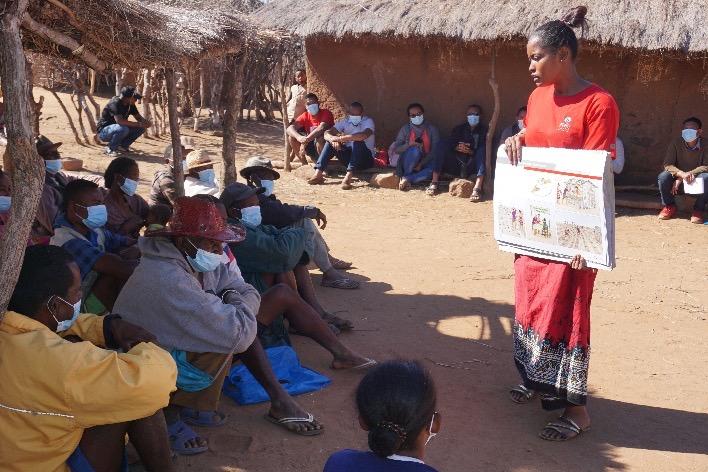
In quantitative terms, the project successfully reached 2,000 beneficiaries, 55% of whom were women, enabling them to access newly developed climate risk insurance products. This achievement has contributed to reinforcing and strengthening the resilience of rural populations in Southern Madagascar.
Project name: Adaptation of agricultural value chains to climate change (PrAda) – Phase 1
Project region: Madagascar
Financed by: GIZ
Implemented by : GOPA AFC GmbH, ADG
Duration: 07/2018 – 11/2022
Our approach
While government policies and actions are important, practical, on-the-ground solutions are essential to effectively address the challenges posed by climate change. Leveraging the expertise of our national and international team, GOPA AFC addressed these issues by strengthening the resilience of agricultural communities through improved access to insurance products and financial education. This empowered farmers to adapt to climate change and better manage production risks.
During the project, our team developed innovative climate risk insurance products—a pioneering effort in Madagascar. We focused on creating an index-based insurance product and establishing the necessary legal framework, working closely with a local insurance company to pilot the initiative. The project’s core objective was to promote financial inclusion among populations vulnerable to climate change by developing formal financial solutions, such as insurance, specifically for smallholder farmers and producers in selected agricultural value chains, in partnership with local microfinance institutions.
Additionally, we supported the development of financial education programs tailored to climate insurance. Our national team and local facilitators organized training sessions and produced educational materials to help beneficiaries understand and effectively utilize these financial products.
Key Results & Achievements
Established agreements with local financial institutions.
Developed and pilot-tested climate risk insurance products for the peanut value chain.
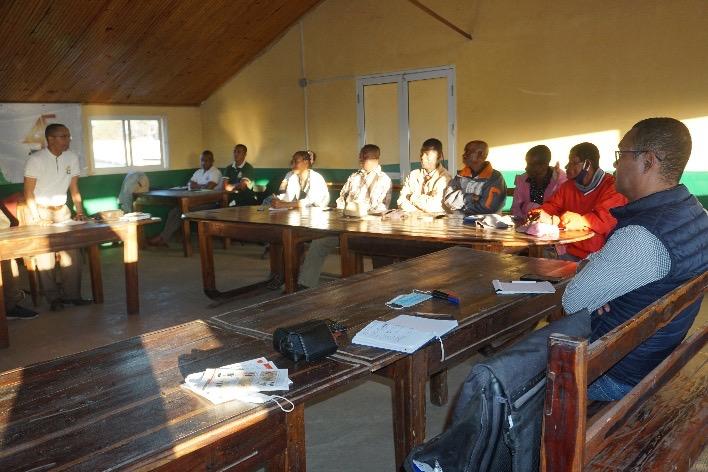
Trained 2,000 beneficiaries in rural villages, with 55% women participating.
44% of trained participants improved their knowledge of climate risk insurance.
Over 100,000 clients sought additional information through digital platforms.
Facilitated collaboration between GIZ and local financial institutions, including ARO (the National Insurance Company), to support research and the development of client-centric financial products that enhance resilience to climate change.
Examples of our success
Jean Pierre Fahazy, a peanut producer and community leader in Ambasy, was among the first to subscribe to the pilot climate risk insurance product. He remarked that the insurance arrived at a crucial time, as climate change increasingly threatened both agriculture and access to drinking water. Despite adaptation techniques introduced by the project, severe droughts sometimes led to total crop failure, forcing farmers to sell livestock to survive.
After receiving a payout of 250,000 Ar during the 2020/2021 season, Mr. Fahazy convinced other producers to take out insurance as well.
Sitraka Henintsoa, a peanut producer and president of the Mahavokatsesoa association in Fokontany Fenoarivo, was also among the first participants in the pilot insurance scheme. In addition to peanuts, he cultivated tomatoes and cassava to maintain income during lean periods. Although the index was not triggered and no compensation was paid during the first campaign, he remained convinced that producers should join this protection mechanism. He believed that, given the unpredictability of droughts caused by climate change, insurance is essential for recovery after disasters and provides clear advantages to those who participate.
Impact story
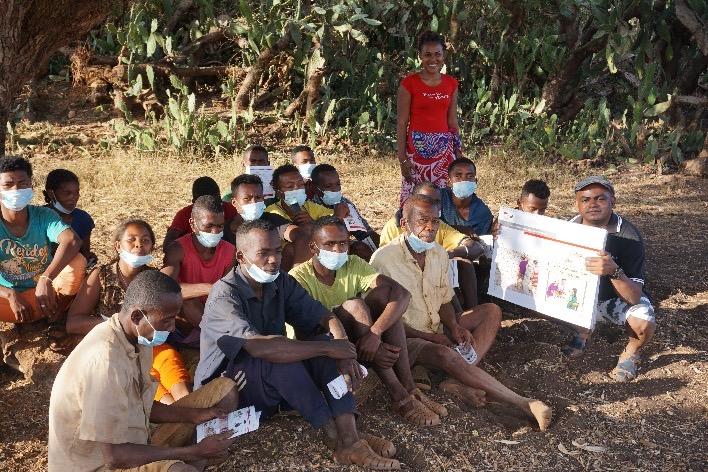
Financial literacy training sessions were conducted for members of targeted agricultural value chains, with approximately 2,000 participants voluntarily taking part, including a significant proportion of women. The training began with household budgeting and continued with modules on savings and credit management, aiming primarily to foster financial discipline among participants. These foundational steps also enhanced participants’ understanding of how to engage with climate risk insurance products, with particular emphasis on the value and functioning of climate insurance throughout the sessions.

STRENGTHENING RESILIENCE TO CLIMATE CHANGE
The challenge
Southern Madagascar and its exposure to negative climate events: Over the past years, climate change impacts are hitting Madagascar and its population harder and harder, especially in the Southern regions (Androy, Anosy, Atsimo Atsinanana), where long periods of drought alternate with heavy flooding. In particular, climate change is a significant threat to rain-dependent agriculture in Southern Madagascar. In addition, lack of suitable infrastructure and poor economic conditions hamper the livelihood of rural populations, who struggle to cope with negative climate events.
Our approach
Beyond policies and actions at governmental level, tangible actions are required. In fact, thanks to our national and international team, GOPA AFC addresses the issues related to climate change and its negative effects by improving the resilience of agricultural actors through better access to financial services. This enables them to adapt to climate change and improve the management of production risks.
During the first phase (2018-2022), our team has worked on an innovative weather index-based insurance (WIBI) product, a pioneer product in Madagascar. We have worked on the development of the index as well as on the legal framework for insurance, collaborating with a local insurance company to pilot the product. In the second phase (2023-2026), the project aims to further extend its scope to promote and enhance the financial inclusion of populations vulnerable to climate change. This will be done thanks to the development of other formal financial products, such as credit and savings, targeting the smallholder farmers and producers in selected agricultural value chains in cooperation with local microfinance institutions (MFIs). From another perspective, we do support the development of Village Savings and Loans Associations (VSLA), to which our national team and local facilitators provide support for the establishment of the informal savings groups as well as trainings on financial education.

Project name: Adapting agricultural value chains to climate change (PrAda 2) in Madagascar
Project region: Madagascar
Financed by: GIZ
Implemented by: GOPA AFC
Duration: 01/2023 – 06/2026
The goal
In quantitative terms, our goal is to reach 3,000 farmers and producers being able to access one of the developed financial products adapted to climate change, for example the credit disbursed via the VSLA or accessing financial products as client of one of the local MFI. Nevertheless, combining the financial and non-financial services is key to reinforce and strengthen the resilience of the rural population.
Voices from the field
“Before, I lived day to day. The land did not give me enough. The GIZ PRADA project taught me how to make basket compost. Our cassava production has tripled, and I was able to sell the surplus at the market! I put my small savings into the VSLA with the help of GOPA AFC, and I was able to invest in new seeds, improving my field. Today, I have hope to offer better school supplies for my children.”
A barren season means no harvest, thus no food. This year, with the savings I was able to make with the VSLA, I hired people to work my fields ! I hope the harvest will be good !”
Mrs. Jasmine, VSLA Member in Farafara Vatambe (Anosy Region)
Mrs. Bao, VSLA Member, Lopary (Atsimo Atsinanana Region)
Key highlights
Target goal: 3,000 beneficiaries, of which at least 900 women are accessing one of the developed financial products
Partnerships with Ministry of Agriculture and Development Fund for Agriculture
Development of a training toolkit for VSLA (in Malagasy language)
Facilitation of the agreement between GIZ and local financial institutions for research and specific client centric financial products development for better resilience against climate change:
- SMMEC (Société Malagasy Mutualiste d’Epargne et de Crédit)
- CEM (Caisse d’épargne du Madagascar)
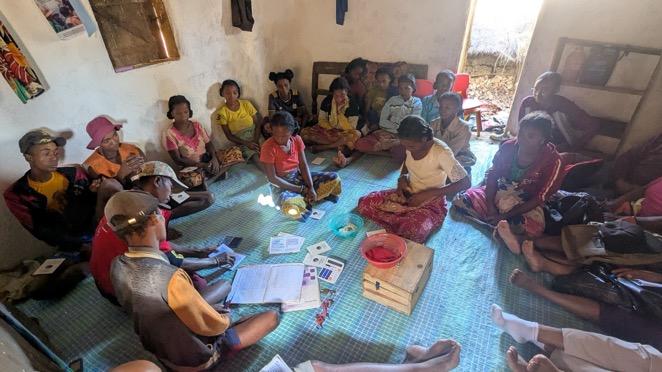
Examples of our success
Within the first 24 months of the project, we achieved the following:
Reach of two agreements with local financial institutions
123 created VSLA, of which 39 in Androy, 30 in Anosy and 54 in Atsimo-Atsinanana
1,702 members of VSLA in the targeted regions, of which 708 in Androy, 325 in Anosy and 669 in Atsimo-Atsinanana
38% of VSLA members are aged between 30 and 44 years old, while 28% between 15 and 29 years old
62% of VSLA members are women
Support to the development of the National Strategy for Financial Inclusion
Impact story
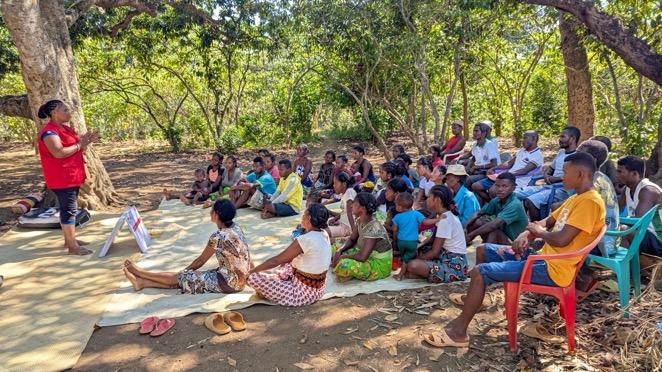
Recent financial literacy training sessions have been conducted for members of the Village Savings and Loan Associations (VSLAs). Approximately 500 members voluntarily participated in the modules, with a significant representation of women. The introductory topic addressed household budgeting, followed by modules on savings and credit management. While the primary objective was to cultivate financial discipline among participants, this foundational step also serves to enhance their comprehension of potential engagement with microfinance institutions. Furthermore, the crucial aspect of over-indebtedness prevention was emphasized.
VSLA active members (by gender)
Total Members Men Women
ANDROY ANOSY ATSIMO ATSINANANA



DEVELOPING AGRICULTURAL SECTORS & COMBATING FOOD INSECURITY IN MADAGASCAR
The challenge
Out of a population of 26.5 million, more than 20 million Malagasy live in rural areas and depend directly or indirectly on agriculture, livestock farming and fishing. Agriculture is the main activity for 72.7% of households. Unfortunately, this sector is not sufficiently productive and cannot feed the country’s ever-growing population. This is due to the use of largely manual farming techniques, climate change and the poor state of rural infrastructures such as roads, tracks and access to production places and markets.
The goal
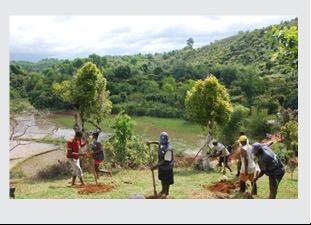
This virtuous circle of interrelated activities helps beneficiaries to improve agriculture, livestock farming and fishing, protect the environment, take better care of their health and combat malnutrition and food insecurity.
Our approach
The pivotal point of AFAFI-Nord’s intervention is the irrigated perimeter, around which activities essential to the community’s life are clustered.
Project name: Agricultural Financing Support Programme and inclusive value chains in northern Madagascar (AFAFI-Nord)
Project region: Madagascar: DIANA, SAVA and Analanjirofo regions
Financed by: European Union
Implemented by: GOPA AFC - I&D - PROMAN - GOPA Worldwide
Duration: August 1998 - November 2025
Partners: Ministry of Finance (project owner)
Ministries responsible for agriculture, livestock, fisheries, the environment, water and nutrition (prime contractors)
It all starts at the top! Maintaining and reforesting the watersheds overlooking the plain helps to combat erosion, and ensures that the water from the mountains flows slowly downhill to feed the dams in the irrigated areas, thereby increasing harvests all year round. This is reinforced by the learning and implementation of new agroecological and agroforestry practices that respect the environment, guaranteeing higher yields and better quality production. Then, through the Farmer Field and Farm Schools, fish ponds and other training courses, the beneficiaries are involved and empowered. Not only do they train future trainers, but they also protect and perpetuate the achievements and infrastructure. They also set up Community Savings Groups, which strengthen community solidarity and enable them to develop income-generating activities. They are also developing Integrated, Competitive and Continuous Family Farms that apply agroecology and agroforestry techniques to cope with shocks.
Pregnant parents and mothers are monitored and advised in the Community Nutrition Centres built or supported by the project. Malnutrition screening is carried out there, as well as awareness-raising campaigns on exclusive breastfeeding for up to 6 months, a balanced diet, vaccinations, water, hygiene and sanitation, the fight against open defecation and the construction of bamboo or solid latrines.
Key highlights
Capacity building for stakeholders
Agricultural Production
- Construction or rehabilitation of irrigated areas
- Support for agricultural sectors
- Agroecology, agroforestry
- Support for small family farms
Protecting the environment
- Reforestation, erosion control and combating bush fires
- Catchment management
- Environmental education
Drinking water supply, hygiene sanitation
Combating malnutrition and food insecurity
- Support for Community Nutrition Centres
- Creation of Community Savings Groups
Examples of our success
Some achievements to 31/01/2025:
Rehabilitation of an irrigated area of 6,000 ha of rice fields in DIANA
25,630 ha treated for erosion control in DIANA
Construction of 22 Community Nutrition Centres in DIANA
Rehabilitation of 2 schemes irrigating 430 ha of rice fields in the SAVA region
Construction of a permanent bridge to open up the SAVA region
Rehabilitation of 3 schemes irrigating 180 ha of rice fields in Analanjirofo
1,397 ha treated for erosion control in Analanjirofo
Construction of a motorised ferry to open up a large agricultural area in Analanjirofo
“I look after children aged between 0 and 59 months. I look after more than 400 children, 56 of whom are malnourished. I will love my job as a Community Nutrition Worker until the day I die”.
Jocelyne - Community Nutrition Officer
Impact story
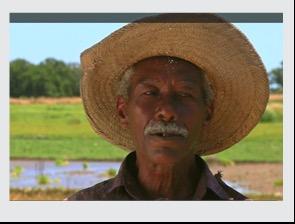
Lower Mahavavy irrigated area of DIANA . His rice field covers one and a half hectares. Since receiving water from the Stella canal, his rice production has increased considerably. Before the canal was built, his rice field produced 50 dabas of rice (650 kg). Now it produces 80 dabas of rice (1040 kg). He has three harvests a year. Thanks to the Stella canal, he has enough food and enough rice to sell to buy soap, oil, etc.
Voices from the field
“I borrowed 250,000 Ar (61 €) from the Community Savings Groups to buy a cockerel and four hens. Today, I have 11, including the chicks. Now I’m thinking of selling part of my livestock to improve my daily life and develop basketry, which is my main activity. “
Célestine - President of a Community Savings Group
“I chose fish farming to diversify and increase my income. As part of AFAFI-Nord, we took a training course with the Centre de Développement de l’Aquaculture. At the end of the training, we received 600 fry. On 17 December 2023, we transferred them to our pond. After six months, we sold 553 fish. Each fish weighed 1 kg and sold for 15,000 Ariary (3,60 €) a kilo to restaurant owners in Ambilobe. “
Odette - Farmer Facilitator

BUILDING RESILIENCE AND FOOD SECURITY IN SOUTHERN MADAGASCAR
The challenge
Southern Madagascar, particularly the regions of Androy, Anosy, and Atsimo Atsinanana, faces acute vulnerability to climate change, with prolonged droughts alternating with severe flooding. These increasingly frequent and intense climate events threaten rain-dependent agriculture, disrupt traditional farming calendars, and undermine food security. Chronic poverty, weak infrastructure, and limited access to basic services further exacerbate rural communities’ resilience. The COVID-19 pandemic and recurring food crises, such as the 2020-2021 drought, have forced households to adopt drastic survival strategies, deepening socio-economic hardship and malnutrition, especially among women and children.
The goal
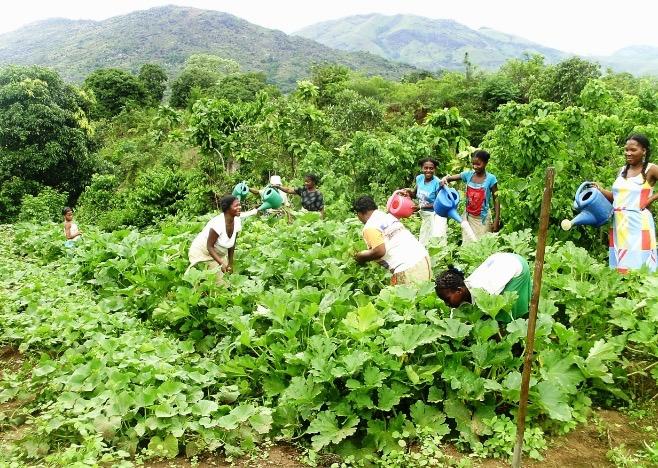
Our goal is to reduce poverty and sustainably improve food and nutrition security, resilience, and livelihoods for 250,000 rural people-especially women in Southern Madagascar through inclusive agricultural development, climate adaptation, value chain strengthening, and enhanced community capacities.
Project name: AFAFI SUD - Support for Agricultural Financing and Inclusive Value Chains in Southern and Southeastern Madagascar
Project region: Madagascar (Androy, Anosy, Atsimo Atsinanana)
Financed by: EU
Implemented by : GOPA AFC, I&D, AGT SpA
Duration: April 2018 - March 2025
Our approach
AFAFI SUD employs an integrated, participatory, and multi-sectoral approach to address the complex challenges facing southern Madagascar. The program strengthens local institutional and community capacities by providing tailored training, coaching, and technical support to decentralized technical services, local governments, and operators. AFAFI SUD promotes the adoption of innovative agricultural practices through the establishment of over 2,700 farmer field schools and the training of more than 3,000 lead farmers and service providers. The program has introduced certified seed production and dissemination, solar-powered microirrigation, and improved animal husbandry, enabling households to diversify and secure their production.
AFAFI SUD also prioritizes food security and nutrition by supporting the creation of 133 Mother- Child Reception Centers and constructing or rehabilitating 161 water points, improving access to safe water and reducing the burden on women. The program encourages financial inclusion through the formation of 541 village savings and loan associations and supports rural entrepreneurship and value chain development in key sectors such as peanuts, coffee, honey, and fisheries. Cross-cutting themes such as gender equality, environmental sustainability, and community empowerment are mainstreamed throughout all activities. Regular stakeholder coordination, participatory planning, and knowledge sharing ensure that solutions are adapted to local realities and can be sustained beyond the project’s duration.
Key Results & Achievements Examples of Our Success
Over 90,000 households reached, 42% of which are women-headed
1,389 service providers and lead farmers trained (seed multipliers, animal health agents, nursery operators, etc.)
726 seed multipliers trained, 592 tons of certified seeds produced and distributed
223 solar micro-irrigation kits deployed, enabling diversified and secure agricultural production
48 hydro-agricultural schemes constructed or rehabilitated, benefiting 1,730 households
2,784 farmer field schools established, over 38,000 farmers trained in improved techniques
133 Mother-Child Reception Centers operational, 161 water points built or rehabilitated, over 44,000 new users with access to safe water
1,629 ha reforested, 2,618 ha of agroecological blocks established or densified
541 village savings and loan associations created or strengthened
9 value chains supported (peanut, coffee, pepper, onion, honey, fishing, etc.)
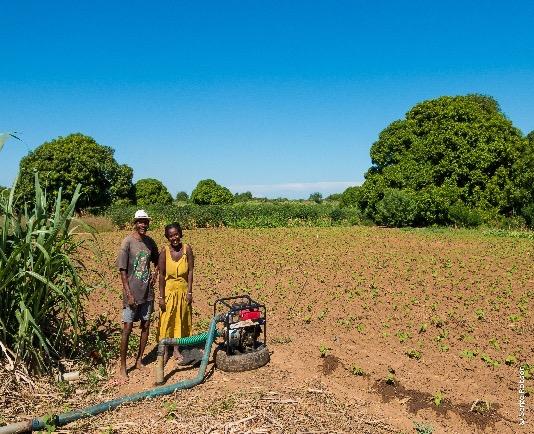
AFAFI SUD introduced solar-powered micro-irrigation as a game-changing innovation for smallholder farmers facing chronic drought. After careful pilot testing and adaptation, 223 solar irrigation kits were distributed, enabling farmers–especially women–to irrigate up to 3,000 m² and produce three crops per year. The system uses robust, portable solar pumps and modular piping, reducing labor and energy costs while increasing productivity and resilience. This technology has empowered communities to diversify crops, improve nutrition, and secure livelihoods, fostering sustainable, climate-adaptive agriculture in southern Madagascar.
Voices from the field
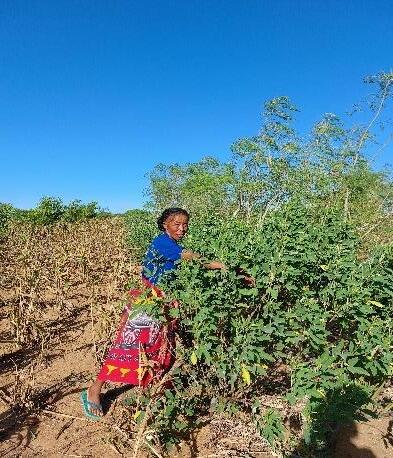
“Thanks to AFAFI SUD interventions, my household’s agricultural income and living standards have significantly improved, especially through certified seeds and wind erosion control. As a lead farmer, I now pass on these good practices to other families.”
Ms. Loharanoe, lead farmer beneficiary
For further information, please contact:
For further information, please contact:
Dr. Oliver Schmidt Senior Project Manager oliver.schmidt@gopa.eu

Suzanne Okao Akulu Financial Sector Development Expert, Business Development Advisor - Eastern Africa suzanneokao.akulu@gopa.eu