![]()


JOHN COLLIE CEO, FPA AUSTRALIA


As you read this, our sector will have already begun one of the most significant periods of change in recent years.
Early in 2026, two changes arrive together that foreshadow a broader shift. The mandatory adoption of AS 1851 in NSW and the publication of NCC 2025 move us further towards a system that expects not just compliance on paper, but also competence in practice. These are not ‘Sydney’ or ‘Canberra’ stories. Their effects will ripple through every state and territory, every discipline, and every organisation that touches fire safety.
For FPA Australia, this moment speaks directly to our strategic direction. Over the past year we have sharpened our focus on three things: lifting practitioner capability, strengthening accreditation and recognition, and giving building owners and regulators clearer, more reliable signals about who they can trust.
Increasingly, that signal is evidence. A traceable, digital record that shows what was done, by whom, against which standard, and with what outcome. Whether you call it the ‘golden thread’, the building manual, or simply good practice, this expectation is now moving from the margins into the mainstream. It will reshape how we maintain essential safety measures, how we commission and hand over buildings, and how we respond when things go wrong.
Competence is becoming the industry’s true currency. It is earned through training, accreditation, experience, and the humility to keep learning as technology, hazards, and community expectations evolve. It is also fragile. Every poor job erodes public confidence. Every high-quality, well-documented job rebuilds it.
In 2026, FPA Australia will continue to invest in schemes, guidance, advocacy, and events that reward genuine competence and make it easier for decision-makers to recognise it. My ask of you, as you read this summer edition, is simple: treat every project you touch as an opportunity to raise the bar, leave a better evidential trail, and prove once again why this industry deserves the trust the community places in us.
Over the past year we have sharpened our focus on three things: lifting practitioner capability, strengthening accreditation and recognition, and giving building owners and regulators clearer, more reliable signals about who they can trust.
ADVERTISING LISTING
To advertise in
Australia, contact: FPA Australia, communications@fpaa.com.au FPA Australia, PO Box 1049, Box Hill VIC 3128, Australia


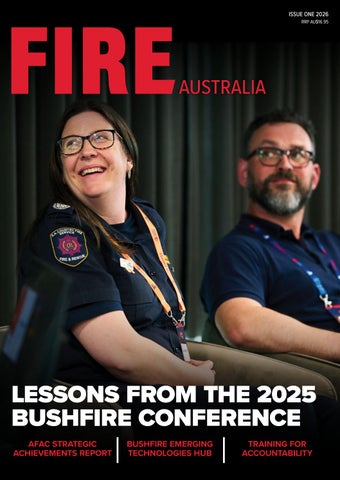
Leah Bertholini (SA Country Fire Service) and Tom O’Connor (Tasmania Fire Service) at the National Bushfire Conference 2025 in Geelong, Victoria.
PHOTO: JAMES HUGHES
5 Lithium batteries: Useful, pervasive —and challenging our assumptions
8 40 years of the Australian Journal of Emergency Management
10 National resource coordination supports Australia’s summer bushfire response
11 Supporting owners and occupiers with AS 1851-2012 in NSW
12 AFAC Strategic Directions Achievement Report 2025: Sector progress and success
14 Accountability: The difference between meaningful regulation and missed opportunity
15 TAC and SIG update
16 Bushfire Emerging Technologies Hub: Igniting innovation
20 Major Incidents Report 2024–25: A record of significant events
23 From risk to readiness: Lessons from the 2025 National Bushfire Conference
24 Training for accountability: Building the capability a digital future demands
25 Current public consultation, ballot, and publication activity
26 Ready today, resilient tomorrow at SIDEX 2025
31 AS 1851-2012: Baseline data explained
33 Paul’s fire safety FAQs
34 Beyond the frontline: Reflections on transitioning from response to recovery
35 Government incentives for fire protection training
44 Environmental compliance as capability: Why ozone policy is part of 2026’s competence shift
REGULAR FEATURES
5 News
18 Advocacy corner
25 Standards update
36 Perspectives from the sector
40 Burning ambition: United Nations Global Fire Management Hub Working Group— International Interoperability
42 Blast from the past: Black Friday bushfires, Victoria, 1939
45 Movers and shakers
46 Calendar of events
Fire Australia is a joint publication of Fire Protection Association Australia and AFAC. We aim to bring the latest news, developments and technical information to the fire protection industry, fire and emergency services organisations, and hazard and emergency management agencies. Fire Australia is produced quarterly and distributed throughout Australia and New Zealand. Editorial submissions and letters to the editor are welcome and can be sent to magazine@fpaa.com.au. For more details on submitting a contribution, please contact the editors.
HUDA SHARAIA (FPA Australia) Tel +61 3 8892 3131 huda.sharaia@fpaa.com.au
TOULA ELEFSINIOTIS (AFAC) Tel +61 3 9418 5233 toula.elefsiniotis@afac.com.au
and the provisions which apply to


18-21 August 2026 | Melbourne Convention and E xhibition Centre (MCEC)

Across 3 days of conference programming and exhibition, AFAC26 will examine how transformational leadership grounded in integrity, equity and inclusion can shape the future of our industry. We will explore and celebrate how diverse voices and inclusive cultures foster innovation, strengthen social licence, and build community trust.
Encapsulating


As lithium-ion batteries become embedded across homes, workplaces, and infrastructure, their unpredictable failure behaviour is challenging long-held fire protection assumptions and exposing gaps in current systems, standards, and guidance.
LACHLAN AUSTIN
FPA Australia, Chief Operating Officer
Lithium-ion batteries are now well- embedded in our everyday lives. They power the devices we carry, the tools we work with, the vehicles we ride, and, increasingly, the buildings we occupy. They are efficient, compact, and enabling technologies—and they are not going away.
At the same time, such batteries introduce hazards that do not sit neatly within the assumptions that underpin conventional fire protection practice. When they fail, they do not behave like the fuel-plus-oxygen combustion we are familiar with—as we have all witnessed in recent
events and reporting around the country. Self- accelerating chemical reactions within a failing unit generate a combination of intense heat, toxic and flammable gases, projectile hazard, and the threat of delayed reignition, generally quite independent of access to oxygen from the surrounding air. These events are uncommon, but when they occur, they escalate rapidly and behave unpredictably.
This creates a genuine point of tension for the industry. Much of our equipment, design assumptions, guidance, and the community’s practical intuition has been shaped by decades of experience with more conventional fire behaviours. Lithium batteries represent a newer class of threat—one that challenges established
categories and exposes the limits of ‘normal’ responses. In this context, the cautious stance taken by authorities is both appropriate and necessary. FPA Australia’s Good Practice Guide 10 provides clear guidance on the safe selection, use, storage, and disposal of lithium battery devices. Additionally, Technical Advisory Note 09 (Version 3) draws firm boundaries around portable fire extinguishers and fire blankets—specifically recommending against the use of water-based extinguishers on lithium battery fires under the current Standards Australia framework. Similar caution is reflected in statements from fire services and consumer safety authorities. These are responsible positions.
More work is needed upstream— to strengthen product standards and testing, limit the availability of low-grade or faulty products, improve consumer awareness, and ensure repair, replacement, and aftermarket components do not introduce new risks.

They are clear about what not to do in the current context. But they also highlight a deeper issue: existing systems, standards, and consumer protections are struggling to keep pace with the speed, scale, and diversity of lithium battery technologies entering the market.
More work is needed upstream— to strengthen product standards and testing, limit the availability of low- grade or faulty products, improve consumer awareness, and ensure repair, replacement, and aftermarket components do not introduce new risks. Over time, building designs and occupancy assumptions may also need to evolve to better accommodate this emerging hazard profile.
Yet even with better prevention, hard questions remain. If intervention options are constrained, what realistic mitigating actions are appropriate when a lithium battery fails in a home or workplace? How should confidence in these technologies be earned, rather than assumed?
In 2026, FPA Australia will be tightening and retasking its Lithium Battery Special Interest Group to examine pathways forward on mitigation strategies. This group can research, assemble evidence and expert appraisal, and generate advice—yet it is not a regulator, a consumer watchdog, a standards body, or a consumer training provider.
Addressing this challenge demands a broader community effort. Lithium batteries are a clear signal of the
industry’s direction of travel—toward a future where underlying competence, shared understanding of evolving threats and opportunities, and reasoned and responsible adaptation matter more than ever.
FPA Australia, Technical Advisory
Note, TAN-09—Lithium-ion Batteries: Portable Fire Extinguishers and Fire Blankets—Version 3, November 2025
FPA Australia, Good Practice Guide, GPG-10—Charging, Using and Disposing of Lithium Ion Batteries— Version 1, February 2024
AFAC Guideline, Community safety messages and considerations for lithium-ion batteries, V1.1, May 2024
ACCC Report, Lithium-ion batteries and consumer product safety, October 2023
CSIRO, Lithium-ion battery safety—A report for the Australian Competition and Consumer Commission (ACCC), May 2023
Lithium-ion batteries present several risks to people and property as they fail, which are quite unique to this power technology:
1. Intense and largely uncontrollable ‘burning’ causing primary injury to people and damage to property in close proximity.
2. An ignition source for other materials—heat that can ignite adjacent materials and start secondary conventional fires.
3. Toxic gas—directly produced through the degradation and ejection of the electrolyte compounds within the battery, and secondarily through the heating and combustion of housing materials.
4. Flammable gas—propagation of the flame boundary through the ejection and self-ignition of off-gases released during battery failure.
5. Projectile damage—the battery’s rapid reaction can cause pressure build-up and deflagration of the sealed cells within the battery unit, with fragments travelling at high velocity for long distances beyond the ‘fire’ itself.
6. A high-energy secondary element in a surrounding conventional fire—heat from adjacent fuel or building fires can trigger failure of otherwise correctly functioning batteries in close proximity, increasing the intensity and unpredictability of the fire’s propagation.


Communications Manager, AFAC
This year marks four decades since the first edition of what would become the Australian Journal of Emergency Management (AJEM)—a publication that has chronicled, challenged, and championed the evolution of disaster and emergency management in Australia.
AJEM is a quarterly journal of analysis, research, considered views, lessons learned, and insights into current and future issues from researchers and practitioners at all levels of emergency management.
AJEM’s story began in March 1986 as The Macedon Digest (TMD), a five- page newsletter from the Australian Counter Disaster College (ACDC) at Mount Macedon. Its mission was simple but ambitious: to fill an ‘information void’ for practitioners, planners, and researchers in the counter-disaster field. Early editions featured training needs analyses, research directories, and news of new initiatives like the National Bushfire Research Unit at CSIRO.
In its tenth year, TMD became
the Australian Journal of Emergency Management, reflecting its status as the sector’s flagship publication.
Many sector leaders have contributed to AJEM, including Philip Buckle, Kerry Gartland, and John Handmer, whose insights on recovery, liability, and health planning have shaped national practice. The journal’s evolution mirrored the sector’s growing sophistication, moving from a newsletter to a widely read magazine addressing complex issues like community engagement, health impacts, and the role of media in disaster narratives.
John Richardson, Executive Director of the Australian Institute for Disaster Resilience (AIDR), has taken on the task of producing a review of content for each decade.
“I have just completed 1986–95 and it’s been a fascinating process,” he said.
“Much of what we now take for granted in our knowledge and practice began to emerge in this first decade: psychosocial understanding of disasters, risk-informed approaches, planning for exotic animal disease, health disaster planning, understanding disaster narratives, the emergence

of the threat of climate change, and the insight we could learn from First Nations peoples about the history of hazards in Australia and how to manage them.”
Today, AJEM continues to inform, challenge, and connect the emergency management community—sharing best practice, synthesising knowledge, and providing a forum for critical reflection at all levels of government, community, business, and non-government sectors.
As we celebrate 40 years, AJEM’s legacy is clear: it has helped build a more informed, resilient, and connected sector. Its pages tell the story of a community committed to learning from the past, embracing innovation, and working together to meet the challenges of an uncertain future.
AIDR extends its gratitude to its readers and contributors, whose vision, dedication, and hard work have shaped AJEM’s remarkable journey and enduring legacy.
Learn more here: www.knowledge. aidr.org.au/collections/australianjournal-of-emergency-management
As we celebrate 40 years, AJEM’s legacy is clear: it has helped build a more informed, resilient, and connected sector.


Right: The new AFDRS Fuel State Editor Observer app has streamlined the grass fuel observation process. IMAGE: AFAC

AFAC’s Seasonal Bushfire Outlook map for summer 2025–26. IMAGE: AFAC
LISA JAUNALKSNIS
Communications Officer, AFAC
In late November 2025, AFAC released the Seasonal Bushfire Outlook for summer 2025–26. The outlook identified an increased risk of fire for parts of Victoria, western and southern WA, and parts of central northern NSW.
Long-term rainfall deficiencies persist over parts of southern SA, Victoria, Tasmania, and western WA, with abundant surface fuels evident in parts of WA and northern and central western NSW.
As the summer progresses, vegetation under prolonged hot and dry spells will not take long to dry, leading to the increased risk of bushfire. This is particularly the case in Victoria where current green grass growth is likely to return to a highly flammable state in January.
“Everyone can play an important role in bushfire safety by being prepared and staying alert to warnings and advice,” said AFAC CEO Rob Webb.
“Your local fire agency is the perfect place to find out exactly how to stay safe this summer.”
Communities are encouraged to be vigilant and stay alert. It doesn’t matter what time of year, dangerous fires can still occur, even during normal bushfire seasons.
This Seasonal Bushfire Outlook was developed by the Bureau of Meteorology, Queensland Fire Department, NSW Rural Fire Service, ACT Emergency Services Agency, ACT Parks and Conservation Service, Victorian Country Fire Authority, Department of Energy, Environment and Climate Action Victoria, Tasmania Fire Service, SA Country Fire Service, Department of Fire and Emergency Services WA, Department of Biodiversity, Conservation and Attractions WA, Bushfires NT, and AFAC.
Find out more: www.afac.com.au/ public-resources/seasonal-bushfireoutlook-summer-2025

In 2024, the Australian Fire Danger Rating System (AFDRS) program received funding from the Minderoo Foundation. This funding has enabled improvements to the technology behind the fire danger ratings.
This included a dedicated mobile app for the Fuel State Editor Observer process, a vital tool for fire and land management agencies across Australia. Until now, grass fuel observations had to rely on the Fuel State Editor web platform, which requires internet access and was not ideal for remote field observations.
The new mobile app was released on Android and Apple devices in March 2025, allowing users to capture grass fuel state data directly in the field when there is limited or no internet connectivity. Observations are then uploaded when the device is back in signal range or connects to the internet.
This innovation means:
faster, easier data collection in the field
no more connectivity issues
no need for manual steps that often delay data entry in remote locations and take up valuable observer time
greater participation in grass fuel monitoring.
Accurate grass fuel data is essential for fire danger ratings and preparedness. By streamlining the process, this is saving valuable time for observers and improving the quality of information that helps keep communities safe.
For more information, please email afdrs@afac.com.au
The AFAC National Resource Sharing Centre has been continually active since the lead-up to Christmas, coordinating two deployments to WA and more than 500 people from across the country to support Victoria.

BY LISA JAUNALKSNIS
AFAC
In late 2025, Australia’s higher-risk weather season made its presence known as multiple fires started across the country. On 17 December 2025, the AFAC National Resource Sharing Centre (NRSC) was activated as WA authorities called for assistance in fire suppression operations.
A total of 27 emergency management personnel were deployed to support WA. This comprised 25 members from the SA Country Fire Service (SACFS) and two representatives from Fire Rescue Victoria, who provided deployment support in incident management teams and crew roles over the five-day deployment.
Following this, a second deployment of 27 personnel was sent to WA from 1–8 January 2026. SACFS provided 25 people filling both crew and incident management team roles while deployment management was provided by two representatives from Emergency Management Victoria.
In addition to coordinating personnel, the AFAC NRSC
coordinated movement of the National Aerial Firefighting Assets. The five national aircraft assets are funded by the Australian Government to supplement each state and territory’s own contracted fleet in times of increased risk or activity. Of these assets, the national large air tanker (NLAT) was deployed to WA twice to assist in fire suppression operations during this time.
On 9 January 2026, Victoria experienced catastrophic fire and heatwave conditions, with multiple districts and communities impacted by fast-moving bushfires. The AFAC NRSC coordinated assistance for Victoria, calling on incident management teams, crew roles, deployment management, and liaison support from other states and territories.
Further support from the National Aerial Firefighting Assets was provided to Victoria through the deployment of the NLAT, and the two national Black Hawk helicopters.
Over a six-day period, 480 resources were deployed to Victoria as well as 47 tankers from NSW and SA.
At the time of writing, deployments in Victoria are ongoing, with 342 interstate support personnel active in
Victoria. These include:
31 personnel from ACT
127 personnel from NSW
34 personnel from NT
12 personnel from Queensland
100 personnel from SA
38 personnel from WA.
As we await the outcome of the next spike in extreme heat and fire danger, deployments of resources from New Zealand and Canada are being coordinated so local emergency service crews in Victoria remain supported as other states and territories experience heightened risk.
Australia has longstanding relationships with its international counterparts. Australasian emergency service authorities have assisted Canada over the last three years, sending 1,410 personnel during their wildfire seasons. We are grateful the Canadian teams are available to reciprocate the support.
The National Aerial Firefighting Assets have been deployed to other parts of the country as they too experience dangerous weather conditions. On two occasions, SA received assistance from a Black Hawk helicopter, and the Sikorsky helicopter was deployed to NSW twice as part of the state’s aerial firefighting and emergency response capabilities.
The AFAC NRSC would like to thank the ongoing support from fire and emergency service organisations across Australia, and we look forward to welcoming crews from New Zealand and Canada.

From February 2026, AS 1851 will be mandatory in NSW, positioning fire practitioners to guide owners on compliant fire safety maintenance.
National Technical Manager, FPA Australia
From 13 February 2026, AS 1851-2012 becomes the mandatory maintenance standard in NSW for Class 1b and Class 2–9 buildings that have a fire safety schedule (FSS). For fire practitioners, this is more than a compliance milestone. It places you in a critical advisory role for building owners and occupiers who may be uncertain about their obligations, costs, and risks.
Your role extends beyond servicing systems. You are responsible for guiding stakeholders through effective, defensible, and practical implementation.
One of the most important contributions you can make is providing clarity. Many owners mistakenly believe AS 1851 requires upgrades, redesigns, or system replacement. You should consistently explain that AS 1851 is a maintenance standard, not an upgrade mandate. It defines how essential fire safety measures are inspected, tested, and maintained, and not what must be installed.
Be clear about the relationship between documents. The FSS identifies what essential fire safety measures exist in the building, while AS 1851 applies only to those measures and specifies how they must be maintained. Addressing this early helps avoid disputes, unrealistic expectations, and budget shock.
Owners often treat the FSS as an asset register or inspection scope. It is neither. You should remind clients that an FSS is a statutory document issued only by a council or certifier. It cannot be created, recreated, or amended by contractors or practitioners, regardless of intent or experience.
Where inconsistencies, missing measures, or errors are identified, your role is to direct owners to the correct pathway, engaging council or a certifier to review or reissue the schedule. This protects you from liability and ensures maintenance aligns with legislative requirements.
AS 1851 introduces structured maintenance across annual, five- yearly and longer intervals. Owners who focus only on annual costs often underestimate future obligations. You add real value by explaining which systems require higher-level servicing and when those activities are likely to fall due. Encouraging owners to plan for these costs through capital works programs builds trust and positions you as a long-term partner.
Record-keeping is central to compliance. Owners must be clearly advised that a hard-copy logbook and summary record must be kept on site for seven years. Digital systems may support maintenance but do not replace the physical logbook requirement. Continuity of records, especially during contractor transitions, supports annual fire safety statement processes and demonstrates good governance.
AS 1851 also clearly distinguishes between critical defects, non-critical defects, and nonconformances. Your responsibility is not only to identify these issues but also to communicate their implications. Critical defects require immediate reporting, mitigation, and rectification advice. Non-critical defects and nonconformances must still be documented and managed. Clear reporting protects occupants, owners, and practitioners alike.
Finally, help owners understand that AS 1851 does not operate in isolation. Maintenance obligations intersect with work, health, and safety duties, strata responsibilities, insurance conditions, and common law duty of care. Even where AS 1851 does not legally apply, such as some pre- 1988 buildings without an FSS, routine maintenance remains best practice.
The effective implementation of AS 1851 in NSW depends heavily on how well fire practitioners support owners and occupiers through change. By providing clear advice, disciplined compliance, and proactive planning guidance, you help create safer buildings while reinforcing the professionalism and credibility of the fire industry.


Supporting resilient communities through risk reduction
Communications Officer, AFAC
AFAC has published the Strategic Directions Achievement Report 2025, showcasing the sector’s collective commitment to enhancing community safety through collaboration, innovation, and operational excellence.
The fourth edition explores initiatives from the past 12 months across the six strategic directions: community risk reduction; providing a trusted response; credible and timely data; safe, capable, and diverse workforce; knowledge, innovation, and research; and effective and transparent governance.
“Over the past 12 months, AFAC members and partner agencies have delivered a wide range of initiatives— from local pilot programs to nationally coordinated efforts—that reflect our shared vision across the six Strategic Directions,” AFAC CEO Rob Webb said.
“These case studies represent a selection of the sector’s important work rather than an exhaustive list relating to the Strategic Directions.
“The work spans all aspects of emergency management—before, during, and after disaster events— from initiatives that change the way the sector works together to those that encompass our communities and other partners.”
Each of the case studies featured in the Strategic Directions Achievement Report 2025 are listed here.
More details about each initiative can be found online: www.afac.com.au/ resources/afac-strategic-directionsachievement-report-2025-
Fire and emergency services operate in a complex risk environment shaped by demographic change, technological transition, geopolitical uncertainty, and climate change. Climate change is increasing the frequency, scale, and intensity of hazards, creating new risks across natural, built, social, and economic systems.
National frameworks and action plans emphasise shared responsibility and proactive disaster risk reduction.
AFAC Member Agencies provide leadership through collaboration, policy influence, education, and partnerships to strengthen preparedness and build resilient communities before, during, and after disasters.
ACT Fire & Rescue—Juvenile Fire Awareness Intervention Program
NSW Department of Climate Change, Energy, the Environment and Water— Cultural Incident Management Exercise (CIMX) incorporating Aboriginal knowledge to protect cultural sites
Fire Rescue Victoria and Country Fire Authority Victoria—Development of co-designed, in-language fire safety resources
Tasmania Fire Service—Bushfire Ready Challenge
Surf Life Saving Australia—Disaster Preparedness Along Australia’s Coastlines due to Climate Change Project
Providing a trusted response Fire and emergency services deliver trusted responses through effective, evidence-based operations, strategic planning, and the use of emerging technologies. National capability enables the sharing and allocation
of ground and air resources based on risk, improving response speed, and outcomes.
Cohesive, interoperable emergency management is supported by scalable incident management systems, multi-agency exercises, leadership development, and strong international partnerships. The National Resource Sharing Centre coordinates resource sharing, while research and knowledge continue to inform contemporary emergency management practice.
NSW Rural Fire Service—Vehicle as a Node Program
Fire and Rescue NSW—Timor- Leste Disaster Response Capacity Development
NSW State Emergency Service— Community Mobilisation
Queensland Fire Department— Swiftwater Predictive Capability
Fire and Emergency New Zealand— Community Mapping: Tools and Templates for the Frontline
Accurate, relevant, and timely information underpins effective decision-making in modern emergency management. Fire and emergency services use well-curated data and rapid information sharing to generate intelligence from diverse sources.
Applying and analysing this data improves the quality, consistency, and timeliness of advice and warnings, strengthening community and operational safety. Data insights also enhance community messaging, risk mitigation, strategic planning, and operational decisions, enabling individuals and communities to make informed choices that improve safety outcomes.

Department of Fire and Emergency Services, WA—Lessons Management: Rapid Insights
Fire and Emergency New Zealand— Rautaki Māori (Māori Strategy) Baseline Performance Story
NSW Rural Fire Service—Rural Fire Service and Australian Centre for Field Robotics Project
Fire and Rescue NSW—Hydrant Application
Queensland Fire Department— Intelligence and Predictions Capability
Safe, capable, and diverse workforce
Australia’s fire and emergency services workforce includes approximately 254,000 volunteers, 34,000 career staff, and 6,000 retained or part- time personnel, providing significant national surge capacity during disasters. This capability is built on collaboration across jurisdictions and with governments, not-for-profits, and communities.
Beyond emergency response, the workforce supports community resilience and recovery. The sector is committed to inclusion and diversity, recognising their value in innovation and locally tailored practice, supported by contemporary, flexible, and accountable governance.
Fire and Rescue NSW—Firefighter Incident Response and Systematic Triage system
NSW Rural Fire Service—Potentially Traumatic Event Wallet Card Resource
ACT Fire & Rescue—Health Screening Program
Department of Fire and Emergency Services, WA—Young People’s Advisory Council
Forest Fire Management Victoria, Department of Energy, Environment and Climate Action—Vehicle Falling Object Protection Structures
Informed by knowledge, innovation, and research Emergency management operates in a rapidly changing environment shaped by technological change, demographic shifts, rising community expectations, and increasingly severe weather extremes across Australia and New Zealand. Fire and emergency services collaborate nationally and internationally to strengthen partnerships, support research participation, and harness emerging knowledge and innovation.
Research priorities are identified through collaborative networks and span areas including workforce safety, capability gaps, community safety, ecology, decision-support systems, and predictive tools. The sector also monitors research use and evaluates its effectiveness in delivering meaningful outcomes.
NSW Department of Climate Change, Energy, the Environment and Water— Understanding the effects of fire and fire management on plants, animals, microbes, and their habitats
Department of Fire and Emergency Services, WA—SaferWA Roadmap
NSW National Parks and Wildlife Service—Inaugural Natural Hazards Research Australia’s Internship Program Project: Review of Research Utilisation Practices
Queensland Fire Department— Women’s Prescribed Bushfire Management and Training Exchange
Sustainable Timber Tasmania— Adopting innovation in fuel moisture sensors

Fire and emergency services operate within established governance frameworks, guided by AFAC members to ensure accountability, transparency, and strategic decision-making. The sector fosters collaboration, develops documented practices, and implements risk-based governance frameworks aligned with the National Capability Statement.
Strategic committees and reporting tools support operational and strategic oversight. Recent improvements include enhanced committee alignment, structural reforms, new national guidelines for aerial firefighting and mitigation, evaluation of recovery programs, and updated inter-agency agreements to strengthen coordinated fire investigation and sector accountability.
Fire and Rescue NSW—The Operational Assurance Trident
Department of Fire and Emergency Services, WA—Internal Audit
National Aerial Firefighting Centre— National Aviation Assets
NSW State Emergency Service— Capability Innovation Program
Victoria State Emergency Service— Next Generation Heavy Rescue Truck Innovation Project
Learn more about strategy and capability across the fire and emergency services sector, including the Strategic Directions for Fire and Emergency Services in Australia and New Zealand 2022–2026 at www. afac.com.au/auxiliary/about/strategy
A concise reflection on why accountability is essential to effective fire protection regulation, underpinning competence, fairness, and public trust.
STACEY FEIN
National Accreditation Manager, FPA Australia
In the fire protection industry, regulation exists for one reason: to protect life and property. But regulation on its own does not guarantee safety. The true value of any licensing, accreditation, or registration framework lies in the accountability that underpins it. When accountability is strong, regulation lifts industry standards and builds community trust. When it is weak or absent, the framework can become an illusion of oversight rather than a safeguard.
Accountability gives regulation purpose. Clear scopes of work, defined competencies, and transparent obligations ensure that practitioners understand exactly what they are authorised to do—and what sits outside their remit. This clarity protects practitioners, supports building owners and certifiers, and reinforces consistent professional practice.
Without accountability, regulation creates false confidence. A system that issues licences or recognises practitioners without verifying competence, monitoring performance, or enforcing consequences may appear robust but fails in practice. Stakeholders may believe work is being carried out by qualified experts, even when the system has not ensured this.
Accountability drives competence and continuous improvement. Effective schemes require practitioners to maintain current skills and knowledge. Auditing, professional development, and evidence- based assessments ensure the industry evolves alongside changing standards, technologies, and risks.
Without accountability, professional standards erode. When practitioners are not expected to demonstrate competence or currency, quality becomes inconsistent. Those who invest in professionalism are placed at a disadvantage against those who face no obligation to meet or maintain standards.
Accountability also creates fairness across the industry. Practitioners who operate ethically and invest in training should not compete against those who avoid scrutiny or responsibility. A credible regulatory framework applies expectations consistently, supports enforcement where standards are not met, and provides pathways for improvement rather than allowing poor practice to persist unchecked.
Accountability protects the community. Fire protection work has direct, real-world consequences. Ensuring practitioners are qualified, capable, and appropriately monitored reduces the likelihood of system failures and strengthens public safety. Without accountability, risk increases. Errors in design, installation, maintenance, or assessment may go undetected until an emergency—when consequences can be severe and irreversible.
Accountability builds trust. A credible licensing or accreditation system reassures building owners, regulators, and the public that practitioners are properly assessed and held to consistent standards. Without accountability, trust breaks down. Regulation becomes a ‘tick- the-box’ process, forcing others to duplicate checks or seek alternative assurances, increasing cost and reducing confidence.
Ultimately, the fire protection industry operates in a space where reliability matters and where failure is unacceptable. Regulation sets the framework—but accountability ensures it works. When these elements operate together, they elevate professionalism, strengthen public safety, and reinforce the integrity of the entire industry.
INFOGRAPHIC DESIGNED
BY MATT EMERY
The difference between meaningful regulation and missed opportunity

The final round of 2025 Technical Advisory Committee (TAC) and Special Interest Group (SIG) meetings were held. These meetings address priority technical, regulatory, and emerging issues across the fire protection industry and play a vital role in guiding standards development, technical guidance, and advocacy on behalf of FPA Australia members.
Across 11 meetings, our 200-plus committee members covered a range of issues and discussion points.
Emerging risks and energy storage technologies
Lithium battery fire risk featured prominently across several meetings. Members of the Lithium Battery SIG discussed growing concerns associated with aging power banks, e-bikes, and small residential battery devices, highlighting the need for clearer guidance and potential regulatory responses. In response to these challenges, FPA Australia has established a new Renewable Energy and Energy Storage Systems SIG.
NCC and building regulation updates
The Building Legislation and National Construction Code (NCC) SIG provided important updates on regulatory reform. Ministers have confirmed a pause on new residential NCC changes
until mid-2029, except where essential. NCC 2025 will proceed with targeted reforms addressing water ingress, carpark fire safety, energy efficiency, and condensation.
Members supported FPA Australia developing clearer, industry- focused NCC guidance rather than duplicating Australian Building Codes Board messaging. Emerging issues discussed included Modern Methods of Construction, seismic design inconsistencies, and evidence of suitability for internationally listed products.
Standards and technical guidance progress
AS 1851 remains a major focus across several committees. The FP-001 committee is progressing a substantial revision of the maintenance standard, targeting publication in October 2026. Alongside this work, FPA Australia continues to deliver training, workshops, and outreach—particularly in NSW—to improve industry understanding and compliance. Fire detection and alarm system committees reported progress across multiple Standards Australia projects, including amendments to AS 7240.2 and AS 1670.1, and public consultation on AS 1670.5 and AS 7240.4. Several older technical documents are due for review; however, updates to key residential smoke alarm guidance are on hold pending the finalisation of NCC 2025.
Planning is underway for revisions to the AS 2118 sprinkler series, alongside renewed momentum on AS 2304 for water storage tanks. Members emphasised the need for clearer guidance on sprinkler response terminology and compliance, particularly for concealed and flushtype sprinklers, with an industry-led clarification initiative planned.
Passive fire protection discussions included updates to AS 1905.1 (fire door gaps) and AS 1530.4, as well as continued collaboration on cavity barriers and intumescent coatings guidance. The effective mandating of AS/NZS 5139 for battery installations through NCC and state regulation was also highlighted.
Progress was reported on new Good Practice Guides covering emergency management in shopping centres and residential apartments, and bushfire evacuation planning. Ongoing challenges remain in aligning emergency planning standards with legislative requirements, particularly in NSW.
The PFAS Foams Working Group has completed its work, with updated guidance published in November 2025. Across all groups, members supported reintroducing at least one in-person TAC or SIG meeting annually to strengthen engagement and collaboration.

BY LISA JAUNALKSNIS
Communications Officer, AFAC
As part of the Global AI Collaborative: Wildfires, a strategic initiative supported by Google.org, AFAC has established the Bushfire Emerging Technologies Hub Project. This project intends to support member bushfire and land management agencies to apply innovative technologies to improve how Australia detects, tracks, and responds to bushfires.
In September 2025, AFAC launched a call for grants for member and affiliate member agencies to participate in the project. The grant program provides funding for projects to use AI or emerging technology in early and active bushfire stages, supporting the Collaborative’s mission to harness the power of AI and emerging technology to manage bushfires.
Grant submissions closed on 10 November 2025 and were assessed
by the Bushfire Emerging Technologies Hub Steering Committee in accordance with the grant criteria.
After careful deliberation, four grants were successfully chosen to participate in the project. Congratulations to the successful applicants.
A trial of AI for early fireground intelligence and triage Country Fire Authority, Victoria On elevated fire danger days, effective allocation of firefighting resources is critical to ensuring lives and property are protected. However, many reported grassfires and bushfires attended by the Country Fire Authority are false alarms or non-spreading fires, which can tie up valuable resources.
In the early stages of a fire, there are multiple information streams such as emergency calls, radio messages, and environmental datasets, and there is an opportunity to use AI to help process information for early escalation and triaging of resources.
While emerging technology is unlikely to replace the value of expert intelligence provided by firefighters on scene, the ability to better assess and triage fires prior to the arrival of fire crews would be beneficial, particularly when there are multiple fires reported in one area.
The trial of AI for the early fireground intelligence and triage project will test the ability of AI models to process existing communication streams. It will use this to predict the first status of the fire, predict the outcome of the fire, and summarise the incident for reporting.
This project will provide key insights into the capability and limitations of AI models to be used for early intelligence and triage.
This project will make use of fire agencies’ existing communications streams and geographic data to provide an enhanced response to bushfires.
AI model prediction
Fire likely to be SPREADING Fire likely to be NOT YET UNDER CONTROL on arrival

summary Spreading Grass Fire, 4 appliances attended...
Country Fire Authority, Victoria
The scaling AI for tankers project aims to field-test and scale AI object- detection and targeting algorithms to enable safer pump-androll firefighting—a dynamic tactic where the tanker simultaneously drives and applies suppression.
This initiative intends to reduce the need for crew members to be exposed on tanker decks or on foot during operations. Benefits include greater safety, improved water use, and minimal additional capital cost because the software can run on affordable, standard camera systems. The AI model will also classify fire edges in real time, feeding this intelligence back to control centres.
As part of this project, hazard detection capabilities to identify pedestrians, fences, trees, and other obstacles near vehicles to prevent collisions and injuries during low- visibility or high-stress conditions will also be trialled.
Furthering this, the project will train and validate the current AI model on a range of real-world conditions including smoke, glare, night, and vibration.
Additionally, this project will explore algorithms for use on aviation platforms to provide aircrew with improved intelligence when the fireground is obscured by smoke or dense canopy.

South Australian Country Fire Service
The AI Grass Curing Estimator will provide a proof of concept for a practical, field-deployable tool (application) that uses machine learning to automatically estimate grass curing percentages from simple photographs taken with a smartphone or drone.
When fully developed, the system will allow users, such as volunteers or landholders, to capture a photo, upload it, and receive an instant curing estimate based on the AI algorithm developed by this project.
When a user uploads a photo, the app extracts metadata (location, date, lighting), performs cloud-based inference, and returns a predicted
curing percentage and uncertainty score. Observations are then combined with satellite data to produce a spatial curing layer that updates dynamically across the landscape and can be integrated with the Australian Fire Danger Rating System and Spark Operational spread simulator.
By shortening the chain from field observation to operational simulation and public alert, this project directly supports the Collaborative’s goal of using AI to reduce wildfire impacts.
Department of Energy, Environment and Climate Action (DEECA) and Country Fire Authority, Victoria Lightning-ignited bushfires can smoulder for many hours with no visible signs of fire activity (i.e. flames and smoke). Current bushfire detection methods rely on bushfires being visual to the naked eye, or large enough to be detectable using satellite technology.
This project aims to detect fires in the smouldering stage—using aerial infrared technology across multiple platforms—before the fire becomes visible, more active and difficult to suppress.
The SkySeekFire project will ignite multiple small, non-visible smouldering fires in a designated area and will deploy aerial infrared platforms and uncrewed aerial vehicle platforms to determine whether they can detect those fires unaided. Multiple flight days will be undertaken to trial flight altitude, swathe width, and temperature sensitivity to find the optimum detection settings.
Learn more about the Bushfire Emerging Technologies Hub Project here: www.afac.com.au/ public-resources/bushfire-emergingtechnologies-hub-project-
SOURCE: DEECA AND COUNTRY FIRE AUTHORITY

As regulatory reform and housing pressures converge, national advocacy is shaping the future of Australia’s fire protection industry, delivering stability, influence, and a clear focus on competence.
The Australian fire protection industry is on the cusp of its most significant regulatory shift in a decade, driven by a powerful confluence of political and economic forces that place national advocacy at the forefront of our work.
Regulatory reform, from the Commonwealth down to each jurisdiction, is being driven by two sometimes-opposing mandates. Politically, governments continue to implement the necessary reform recommendations of the Shergold– Weir Building Confidence Report, which calls for increased accountability and transparency.
Economically, however, the intense pressure on housing affordability and supply is forcing a critical national discussion. The Australian Productivity Commission has highlighted that excessive government regulation, particularly in planning and building, acts as a significant impediment to increasing housing supply. This has raised a fundamental question: is the value of additional fire protection regulation—the critical life and property protection benefits we provide—worth the cost, in a policy environment striving to reduce regulatory burden?
FPA Australia’s response is unequivocal: we must reinforce the inherent value of fire protection to all stakeholders, while simultaneously identifying the most cost-effective means to improve safety without imposing unnecessary increases in service delivery costs. To ensure a unified and consistent voice, we have formed a national committee, bringing together state and territory chairs and
deputy chairs with FPA Australia’s advocacy and national managers to drive national positions and ensure alignment in our advocacy efforts for the future.
The 2025 calendar year was a period of immense momentum and collaboration for our advocacy managers, securing key successes that will define the fire protection landscape for years to come. These achievements, rooted in our focus on capability, digital evidence, and practitioner accountability, paved the way for the core theme of 2026: competence becoming the industry’s currency.
The most significant national win was the outcome of the Building Ministers’ Meeting in October 2025.
Following FPA Australia’s push for regulatory stability, ministers agreed to pause further residential content changes to the National Construction Code (NCC) until mid-2029, following the release of NCC 2025 on 1 February 2026. This welcomed stability provides the industry with the confidence and time required to consolidate and successfully adopt recent and forthcoming reforms.
At a state and territory level, our advocacy efforts yielded tangible results: In NSW, our team made significant contributions to the NSW Building Commission’s good practice guide (please see www.nsw.gov.au/ departments-and-agencies/buildingcommission/industry-changes/ as1851-2012/good-practice-guidefor-implementing-as-1851-2012) as the industry prepared for the mandatory implementation of AS 1851 from 13 February 2026. We also worked to strengthen government relationships to protect and extend recognition of the Fire Protection
Accreditation Scheme (FPAS).
In Victoria, a standout event, ‘Protect & Connect—Understanding AESMR’, successfully connected technical discussion with policy impact, generating renewed momentum for reform.
Our advocacy and accreditation managers successfully submitted a draft proposal on the Tasmania Accreditation Scheme, guiding the state towards an evolution of an accreditation-like scheme, ahead of the new fire protection regulations.
In Queensland, advocacy throughout 2025 focused on strengthening engagement with government and regulators in the lead-up to the government’s response to the Queensland Productivity Commission’s findings, the review of the Queensland Housing Code, and broader industry engagement in the state across the construction sector.
In the NT, FPA Australia has commenced engagement with government following the Ombudsman’s report and broader building certification reform agenda positioning FPA Australia as a trusted adviser on fire safety roles, certification processes, and practitioner competence.
In WA, FPA Australia worked with industry associations to develop and lodge a joint submission to the WA Government on proposed Security of Payment reforms, providing coordinated industry feedback to ensure stronger payment protections for the sector.
In SA, the State Committee, in conjunction with industry representatives through a specialised working group, developed a draft proposal for amendments to the Ministerial Building Standard (MBS 002). This proposal is currently undergoing

stakeholder review, prior to submission in early 2026.
Looking forward, 2026 will see FPA Australia continue to deliver on a comprehensive forward program ‘around the map’, focusing on local engagement to achieve national standards and consistent application of regulation.
NSW: The focus will be on consolidating the recent policy wins surrounding AS 1851 and continuing the momentum of regulatory reform. The team will also broaden the discussion on skills pathways.
ACT: A key priority is to embed accreditation within the upcoming licensing review.
Victoria: Advocacy will focus on improving the structure and application of the Annual Essential Safety Measures Report (AESMR), while also working collaboratively with the Building and Plumbing Commission, Fire Rescue Victoria, the Country Fire Authority, and other industry associations to strengthen compliance and industry competency across Victoria.
Queensland: Work will drive engagement with government,
regulators, and local government to influence the licensing review, advocate for layered and risk-based competence pathways, and reinforce nationally consistent practitioner recognition to support workforce capability and regulatory confidence.
Tasmania: The priority is to guide Consumer, Building and Occupational Services (CBOS) and the Tasmania Fire Service’s actions toward the evolution of an accreditation-like scheme.
NT: Strengthen engagement with government and industry to build relationships that support effective reform outcomes, including specifically improving awareness and consistent application of Fire Protection Accreditation Scheme requirements in procurement.
WA: Work with the WA Government to raise awareness of FPA Australia’s broader policy and regulatory priorities, strengthening relationships as further building reforms are introduced.
SA: Will finalise the MBS 002 proposal and submit it to the Department for Housing and Urban Development for formal review. Concurrently, work will commence with local councils, regional members, and affiliated associations
to improve access to industry information, member workshops, and community outreach initiatives.
Across all jurisdictions, we are advocating for an overhaul of the skills landscape. This includes redefining trade qualifications for pumps and fire protection systems and gas suppression systems, and actively working to get more people into the sector through training. We are also working towards an accreditation process for passive fire systems.
Finally, our advocacy is critically engaged with emerging risks, specifically lithium-ion batteries and the increased fire risk. Our work will focus on the testing standards for extinguishers, occupant and first response emergency procedures, and improving the interface between the industry and emergency services’ operations.
The future of fire safety rests on a foundation of professional competence and accountability. Through a unified national voice and targeted state and territory action, 2026 promises to be the year our industry takes the next great leap forward in protecting life and property.

In December 2024, some roads in Queensland were closed due to flooding.
PHOTO: REPRODUCED BY PERMISSION OF THE AUSTRALIAN BROADCASTING CORPORATION.
MICHAEL LLOYD © 2025 ABC
APRIL HAWKSWORTH
Communications Officer, AFAC
The Australian Institute for Disaster Resilience has released its ninth Major Incidents Report providing an annual record of major incidents that have been identified as significant by the emergency management sector during the 2024–25 financial year.
The report identifies 40 major incidents, with four of these selected for further review as case studies underscoring the increasing demand for coordinated, agile, and resilient systems.
1. Tropical Cyclone Alfred (NSW) Tropical Low 22U formed in the Coral Sea off Queensland on 21 February 2025 and intensified into Tropical Cyclone (TC) Alfred by 23 February. It peaked as a Category 4 severe TC on 27 February, moving southward.
On 4 March, Alfred turned west toward south-eastern Queensland and Brisbane, following an erratic path before making landfall. It crossed Moreton Island as a Category 1 on 8 March, weakened over Bribie Island, and reached the mainland that night.
Early forecasts had landfall near
northern NSW, but the likely track was north of Brisbane. The Bureau of Meteorology issued a Cyclone Watch for NSW—the first since TC Oma in 2019 and TC Nancy in 1990.
Between 3–14 March, Alfred affected the Northern Rivers, Mid North Coast, and New England/north-western NSW, causing severe storms, flooding, coastal erosion, and significant damage to homes, businesses, and infrastructure.
2. Tropical Cyclone Alfred and associated severe weather (Queensland)
In Queensland, TC Alfred produced produced damaging winds, intense rainfall, and severe coastal erosion.
On 9 March, riverine and flash flooding occurred from Hervey Bay to northeastern NSW, with 100–400 mm of rain, and 275.2 mm recorded in Brisbane. As Alfred moved inland toward the Lockyer Valley, widespread flooding and significant local impacts continued.
3. Western Queensland Surface Trough and associated rainfall and flooding (Queensland)
The Western Queensland Surface Trough triggered a major rainfall and
flooding event beginning 21 March 2025, producing heavy, widespread rain and repeated Flood Watch alerts. Significant flooding occurred across the Channel Country and major rivers including the Thomson, Barcoo, Bulloo, and Paroo.
From 22–31 March, a low -pressure system brought extensive thunderstorms, with some areas receiving up to 633 mm—the wettest March since 1900. Severe flooding isolated towns and remote communities, affected major highways, and caused livestock losses. River levels in Windorah, Jundah, and Thargomindah likely exceeded historical peaks, with floodwaters moving toward Kati Thanda–Lake Eyre and continued storms causing further flash flooding and isolation.
4. North and Far North Queensland Tropical Low (Queensland)
Between 27 January and 12 February 2025, Tropical Lows 13U and 20U and an active monsoon trough produced persistent, heavy rainfall across Northern Queensland. Areas from Cairns to Proserpine faced intense rain, flash flooding, and impacts worsened by

the Highest Astronomical Tide. Paluma Ivy Cottage, in the upper Burdekin, recorded 2,984.8 mm over the period.
Major flood warnings were issued for multiple rivers, with levels near historical peaks, including at Ingham Pump Station. Widespread disruption occurred as major highways were closed, and significant damage affected properties, businesses, and infrastructure such as the Ollera Creek Bridge.
With two significant flooding events in Queensland and one TC event impacting both NSW and Queensland, several key themes emerged: intensifying storm activity and increasingly extreme temperature and rainfall patterns; extended bushfire seasons and broader flood-risk areas; growing vulnerability of essential infrastructure and supply chains; importance of interstate resource support; increasingly complex and remote incidents challenging response and relief efforts; and the potential for catastrophic impacts on urban areas from a cyclone strike.
Meanwhile, Australia experienced significantly above-average temperatures from July 2024 to June 2025, recording its highest July to June mean temperature since 1910–11. Additionally, rainfall was 10% above average nationally, with northern regions wetter and southern regions among their driest on record.
During this period, 40 major incidents occurred, including 15 bushfires, 10 major storms, five flooding events, and TC Alfred, alongside health, technology, and structural fire emergencies.
Emergency response activity was substantial, with AFAC’s National Resource Sharing Centre deploying
Map of major incidents 2024–25. During this time, 40 major incidents occurred, including 15 bushfires, 10 major storms, five flooding events, and TC Alfred. SOURCE: AIDR
1,760 personnel to 12 major events and the Australian Defence Force responding to 13 national assistance requests. Nationally, Disaster Recovery Funding Arrangements were activated for 69 events, providing extensive financial assistance and recovery support to 217 local government areas and distributing more than $771 million to affected individuals and families.
Joe Buffone PSM, former Deputy Coordinator-General of the National Emergency Management Agency (NEMA), said the report highlighted a year of prolonged weather extremes that significantly impacted remote and regional communities, with many jurisdictions facing sustained emergency activity.
“Impacts were felt across a wide range of sectors including essential infrastructure, public transport, supply chain, agriculture, cultural heritage, and tourism, underlining the importance of communication, as well as resource and knowledge sharing between local, state, and federal agencies,” he said.
In May 2025, thousands of people across NSW faced evacuation orders due to widespread flooding. PHOTO: REPRODUCED BY PERMISSION OF THE AUSTRALIAN BROADCASTING CORPORATION. CLAIRE SIMMONDS © 2025 ABC
Mr Buffone said the year demonstrated strong collaboration across all jurisdictions as NEMA advanced national capabilities such as the National Crisis Exercise Program and the National Emergency Management Stockpile, and invested in shared resources, including the national aerial firefighting capability.
Amid the disruption and destruction of disasters, each event provides an opportunity to learn. By collating the observations of lesson management specialists and operations specialists involved in each incident, the Major Incidents Report continues to build the collective knowledge and understanding of the emergency management sector and supports measures to be taken to reduce the likelihood of similar events recurring.
The 2024–25 Major Incidents Report is the result of multi-agency, nationwide collaboration. It was made possible through the support of commissioners and chief officers, NEMA, and emergency management organisations from across Australia.
The 2024–25 Major Incidents Report is available on the Australian Institute for Disaster Resilience website: knowledge.aidr.org.au/resources/ major-incidents-report/


What could your company achieve with more financial support?

• Have you considered, a supportive business partner to share the load?
We are looking to join with professional fire protection and training companies through mergers or acquisitions. We understand the mindset of small - medium business and can provide the needed support to achieve corporate and personal Goals.
Lets have a chat about your needs and how we can assist.
Our company valuations are very generous and well above market norms.


A recap of FPA Australia’s sold-out National Bushfire Conference 2025.
DR MARIA KORNAKOVA
In early November 2025, the National Bushfire Conference convened in Geelong under the theme ‘From Risk to Readiness’, gathering BPAD-accredited consultants, researchers, regulators, emergency service personnel, and industry partners from across Australia. The conference offered a comprehensive, grounded agenda combining scientific insight, regulatory updates, design standards, and practical tools for those working at the coalface of bushfire risk.
One of the conference highlights was a presentation by Newport Beach Fire Department (US), delivered by James Gillespie and Raymi Wun under the session title, ‘Fuelling resilience: How science, communities, and partnerships reduce wildfire risk’. Their talk provided an international perspective and fresh insight into community-driven wildfire mitigation strategies, reinforcing the conference’s goal to ‘bridge global expertise with local insight’ under the overarching theme. The presentation also highlighted similar challenges that both Australia and the US are facing in terms of bushfire risk reduction.
Another standout theme of the conference was the role of evidencebased science in shaping bushfire resilience. Presentations supported by Natural Hazards Research Australia (NHRA) demonstrated how research can inform more effective, practical fire protection strategies. The keynote
the need for Australian practitioners to remain alert about evolving fire behaviour worldwide.
On the design and construction side, sessions addressed the importance of fire-resilient construction, materials selection, and compliance with building standards such as Bushfire Attack Level- rated design, recognising that built environments in bushfire-prone areas must be intentionally designed for risk mitigation. Attendees from the building, planning, and consultancy sectors heard about practical pathways to embed bushfire resistance at every stage.
Attendees discussed how regulatory frameworks, land-use policy, and building standards must evolve alongside new research and climate realities to ensure compliance and safety across states and territories. For many, this underlined the need for greater clarity, shared standards, and ongoing professional development, particularly as new materials, risk modelling tools, and adaptive design solutions become available.
Controversial topics—including the use of private bushfire shelters and differences in certification requirements across planning and building jurisdictions—highlighted the varied approaches states take to reduce bushfire risk. These discussions reinforced the need for a more consistent national framework and demonstrated the value of shared learning for the broader benefit of communities and practitioners alike.
The conference also emphasised that bushfire resilience extends beyond
organisers was that designing more resilient built environments must go hand in hand with community preparedness and engagement.
By the conclusion of the conference, a few trajectories had clearly emerged:
The growing role of data, research, and digital tools in informing planning, risk assessment, and design decisions. Science- backed research is increasingly a cornerstone of bushfire resilience.
The need for national consistency in regulation and building standards, supported by qualified professionals under bushire planning and design accreditation.
The imperative of collaboration across sectors—from fire services, building design, planning authorities, research institutions, and communities—to create robust, adaptive approaches to bushfire risk.
The recognition that resilience is not a one-time project but an ongoing process, requiring continuous learning, design adaptation, and community engagement.
The National Bushfire Conference 2025 succeeded in delivering a well-timed, multidisciplinary platform blending research, regulation, design, and community engagement. If the past demonstrates anything, it is that bushfire risk is shifting rapidly. This conference showed that Australia’s bushfire sector is adapting too. The challenge ahead is to carry forward the momentum, embedding ‘risk to readiness’ in every plan, building, community, and landscape.
NBC2026 is currently being planned—stay tuned for updates.

As the fire protection industry steps into a year defined by reform and accountability, one message is clear: capability is no longer optional.
Practitioners have demonstrated a strong commitment to training in recent years and for good reason. Compliance frameworks are tightening, technology is reshaping service delivery, and customer expectations are rising as building owners become more informed and proactive about regulatory requirements. The profession now faces a future where digital evidence, audit trails, and documented competence are not simply best practice, they are mandatory.
According to the National Centre for Vocational Education Research, government-funded enrolments in nationally recognised qualifications grew by 4.3% in 2024, continuing a five-year upward trend. Employers in all sectors are reporting strong demand for technicians with both technical and digital skills, reflecting the dual challenge of compliance and technology adoption.
Australian Bureau of Statistics data reinforces this picture, reflecting 64% of Australians aged 15–74 now hold a post-schooling qualification, and those completing Vocational Education and Training programs report improved employment outcomes. Further reviews identified that digital literacy and compliance knowledge are emerging as critical differentiators in technical fields, including fire protection.
Why does upskilling matter now?
Upskilling matters because the regulatory and operational environment is evolving rapidly:
Mandatory AS 1851 in NSW (effective 13 February 2026)—All Class 1b
and Class 2–9 buildings must have essential fire safety measures inspected and tested in accordance with AS 1851-2012.
Release of the National Construction Code (NCC) 2025—Anticipated publication in February 2026, with adoption from May. The new Code introduces significant changes, including commercial energy efficiency reforms, condensation mitigation strategies, carpark fire safety updates, and water ingress prevention measures.
Revised AS 1851 expected during 2026—Updates to the Standard are anticipated, requiring practitioners to stay informed and adapt to new compliance requirements.
What it means for practitioners
Accountability is no longer just regulatory; it’s operational, digital, and evidence-driven. Practitioners must now demonstrate the ability to produce digital, auditable proof of compliance at every stage of service delivery. This includes mastering accurate and defensible report writing, confidently navigating evolving standards and regulatory changes, and applying problem-solving skills to ensure compliance in complex or unexpected scenarios.
What does this mean in practice?
Accountability now demands more than technical know-how—it requires precision, adaptability, and digital fluency.
Documentation accuracy and traceability: Every inspection, test, and maintenance activity must be recorded in a way that is verifiable, defensible, and professionally presented through clear, accurate reports.

Tech proficiency and digital systems: Practitioners must understand compliance platforms, audit trails, and mobile tools to ensure seamless data capture and integrity.
Real-time evidence submission: Regulators and building owners increasingly expect immediate, secure access to compliance data, requiring practitioners to manage digital workflows confidently.
Navigating regulatory changes: With evolving standards like AS 1851 and NCC updates, practitioners need the ability to interpret changes quickly and apply them in practice.
Problem-solving under scrutiny: When compliance gaps or unexpected issues arise, practitioners must demonstrate sound judgment and risk-based decision-making to maintain accountability. This shift demands a mindset change: competence is no longer measured by what you know, but by what you can prove—digitally, accurately, and in real time.
The skills practitioners must build in 2026 and beyond
To meet the demands of a compliance- driven, digital-first environment, practitioners need a skill set that goes beyond technical knowledge. These capabilities ensure not only regulatory adherence but also operational excellence and professional credibility. Skills required include:
Digital literacy and data competence: Master cloud-based logs, mobile inspection tools, and digital evidence standards to maintain secure, traceable compliance records.
Standards fluency: Stay ahead of AS 1851 updates, NCC 2025 implications, and state-based
FPA Australia Technical Officer and Trainer Paul Malins working with a group of students during their Routine Servicing of Unpumped Hydrants & Valves course to review and reference the Australian Standards on his device.
PHOTO: FPA AUSTRALIA

regulatory requirements to navigate changes confidently and apply them in practice.
Report accuracy and defensibility: Produce clear, auditable reports that withstand scrutiny, because accountability is proven through documentation.
Interdisciplinary communication: Collaborate effectively with fire services, certifiers, and building owners to solve problems and deliver compliance outcomes seamlessly.
Competency-based assessment readiness: Demonstrate qualifications and capability under tighter regulatory oversight, ensuring your skills align with industry benchmarks.
As the fire protection industry evolves at an unprecedented pace, it is creating new expectations for practitioners. To remain competitive and compliant, ongoing training is essential. When selecting courses in 2026, choose programs that best address the core requirements of today’s professionals—those that build the capability to adapt quickly, apply knowledge effectively, and demonstrate competence through accurate reporting, digital proficiency, and problem-solving. These are the skills that will define success in the years ahead.
The capability you build today will define your relevance tomorrow. In a sector where accountability is the new benchmark, training is not just an investment—it’s your licence to operate in a digital, compliance-driven future.
A snapshot of current Australian standards consultations, ballots, and recent publications across key construction and infrastructure sectors.
MADDISYN HERBERT
Technical Officer—Standards and Documentation, FPA Australia
Several Australian standards and related documents across building commissioning, prefabricated construction, maritime structures, and gas cylinders are progressing through public consultation, ballot, or have recently been published. The following update summarises the most recent activity and key dates.
Under the BD-012 Building Commissioning committee, AS 5342 Building commissioning has recently completed its ballot period, which closed on 2 December 2025. The ballot stage represents a key point in the development of a standard, marking the completion of formal committee voting on the draft. With the ballot period now closed, the Standard will progress through the next steps in the Standards Australia process.
The BD-111 Prefabricated Building committee is currently overseeing public consultation for SA HB 268 Prefabricated building: Glossary of terms The handbook was open for public comment from 18 November 2025 to 13 January 2026.
The handbook aims to support clearer and more consistent terminology in prefabricated and modular building by providing precise definitions and diagrams to illustrate key concepts and techniques. Public comment provides an opportunity for industry stakeholders to review and provide feedback on the proposed terms and definitions.
Within the CE-030 Maritime Structures committee, AS 4997 Maritime structures was out for ballot from 18 December 2025 to 1 January 2026. The ballot stage allows committee members to formally review a draft and determine whether it is ready to progress toward publication or requires further refinement. Ballot outcomes play a key role in determining the next steps for a standard.
A number of updates are currently underway within the ME-002 Gas Cylinders committee.
AS 2030.1 Gas cylinders, Part 1: General requirements for pressure receptacles was open for public comment from 6 November 2025 to 8 January 2026. At the same time, AS 2030.5 Gas cylinders, Part 5: Filling, inspection and testing of refillable cylinders was also open for public comment.
In addition, AS/NZS ISO 10286 Gas cylinders—Vocabulary was published on 14 November 2025, providing a standardised set of terms for use across gas cylinder-related standards and activities.
Public consultation and ballot periods provide important opportunities for industry to remain informed of standards activity and to engage with the development process where appropriate. FPA Australia will continue to share updates on standards relevant to fire protection and the broader built environment as they progress.

ZOE KENYON
Director,
Communications and Events, AFAC
A delegation from AFAC travelled to the inaugural Singapore–International Disaster and Emergency Management Expo (SIDEX) and the Singapore–Global Firefighters and Paramedics Challenge (SGFPC) in November 2025.
Singapore Civil Defence Force (SCDF) Commissioner Eric Yap invited AFAC CEO Rob Webb and two supporting officers to attend the events held during SCDF Ready Week from 19–21 November. Zoe Kenyon (Director, Engagement and Member Experience) and Rob Keen (Event Director, Hannover Fairs) completed the delegation.
Organised by COSEM (the co-operative of SCDF) and supported by the SCDF, the event attracted more than 400 delegates from across the Asia–Pacific region, together with emergency management and disaster leaders from across the world.
Michael Chua, CEO COSEM, welcomed delegates to SIDEX.
“SIDEX reflects the full spectrum of disaster and emergency management—from prevention and preparedness to response and recovery. Through discussions and sharing, we aim to learn from one another, strengthen professional networks, and advance best practices in disaster prevention and management.”
He noted the importance of collaboration, coordinated approaches to disaster management, and the opportunity that SIDEX provided to share experiences enhancing our collective knowledge.
“Every lesson we learn brings us closer together to build a resilient world,” he said.
Associate Professor Muhammad Faishal Ibrahim, Acting Minister-incharge of Muslim Affairs and Senior Minister of State, Ministry of Home Affairs, was the Guest of Honour.
He discussed some of the challenges that communities and disaster managers face globally and the importance of coming together at the event.
“Beyond a showcase of innovation and technology, SIDEX is a platform for building networks, exploring collaborations, and fostering trust among practitioners, policy-makers, and industry across our region and beyond,” Assoc Prof Faishal said.
He highlighted some of the key initiatives of the SCDF, including the launch of the Amphibious Fire and Rescue Vehicle at SIDEX, the establishment of a fire safety research centre, and the My Responder mobile app for community first responders.
“Resilience begins with ordinary people doing extraordinary things,” Assoc Prof Faishal said, acknowledging all who have contributed to making the world a safer place.
SIDEX explored the theme, ‘Ready today, resilient tomorrow’, with each day of the conference dedicated to a particular subtopic. Presenters travelled from across the globe to share their expertise and experience with delegates.
Day 1 focused on civil protection and fire safety. Jim Pauley, CEO, National Fire Protection Association (US), provided the keynote address. Panel sessions discussed innovations in fire safety

standards and practices, and advanced technologies for enhancing building resilience and infrastructure safety.
Day 2 was centred on emergency preparedness and response, led by keynote Dr Sabrina Cohen-Hatton KFSM, Chief Fire Officer Hampshire and Isle of Wight Fire and Rescue Service. Panel sessions focused on community readiness, innovation, and operational challenges.
Day 3 discussed disaster management and humanitarian response. Former US Fire Administrator Dr Lori Moore-Merrell provided insights into interagency collaboration and her work in the US. Panel sessions discussed regional disaster response and the role of paramedicine.
Spanning the disaster management continuum, the exhibition was divided up into regional areas featuring Singapore, Korea, China, and international companies.
Manufacturers, suppliers, distributors, and software developers showcased technologies and services that support fire and emergency services.
Above:
delegates engaged
AFAC delegates learned about the establishment, operational capabilities, and responsibilities of the SCDF Marine Division while sailing on the new marine rescue vessel.
SOURCE: SINGAPORE CIVIL DEFENCE FORCE

The AFAC delegation was given a hosted tour of the exhibition, providing opportunities to meet exhibitors and find out more about innovative solutions to improve operations and community safety.
The SCDF Marine Division is responsible for marine fire and rescue operations in Singapore waters. AFAC attended a field trip for the heads of international delegations hosted by Assistant Commissioner Ryan Ong.
Participants learned about the development and operational capabilities, including the transformation that has occurred since responsibility was transferred from the Maritime and Port Authority in 2012.
A highlight for all was sailing on the new second-generation marine rescue vessel, Blue Dolphin. The vessel is SCDF’s primary response asset for major incidents at sea, including fires, rescues, and chemical, biological, or radiological emergencies.
On the final day, the delegation was invited to the SCDF Parade and the finals of the Singapore– Global Firefighters and Paramedics Challenge (SGFPC).
The ceremonial parade featured representatives from across the SCDF divisions to reaffirm their pledge


SOURCE: SINGAPORE CIVIL
and commitment to SCDF and its life- saving mission.
The SGFPC finals featured the Braveheart, an eight-stage individual challenge testing strength, agility, skills, and mental endurance. This was followed by the Rip-It-Off, a team challenge based on a road traffic accident scenario, demonstrating on-site assessment, command and control, vehicle stabilisation, extrication techniques, and medical intervention proficiency.
Muhammad Zayyani Bin Shamsuddin from SCDF won the Braveheart in an impressive 4 minutes
58 seconds, while the SCDF team won the Rip-It-Off challenge, just ahead of the team from the Department of Fire and Emergency Services, WA.
AFAC sincerely thanks Commissioner Yap and the team at SCDF and COSEM for hosting us in Singapore. We look forward to ongoing collaboration and knowledge-sharing opportunities between AFAC and SCDF, and keeping in touch with new connections across the globe.

APRIL HAWKSWORTH
The Resilient Australia Awards recognise projects focusing on collaboration and innovative thinking across a broad range of sectors and initiatives. Across every corner of Australia, communities, organisations, and individuals are working together to build a more resilient nation in the face of disaster.
The 2025 National Resilient Australia Awards, supported by the National Emergency Management Agency (NEMA) and managed by the Australian Institute for Disaster Resilience (AIDR), shone a spotlight on these remarkable efforts to strengthen disaster preparedness, risk reduction, and recovery capabilities. The awards recognised projects from a range of sectors around the country that focus on collaboration and innovative thinking.
On Monday 24 November 2025, AIDR hosted the 26th National Resilient Australia Awards in Melbourne. The 2025 awards celebrated a diverse range of initiatives delivered by emergency services, businesses, schools, governments, and not- for-profit organisations. Each project demonstrated the value of community-led action and the impact
of partnerships in protecting lives, livelihoods, and culture.
“These awards are such an important event, as it allows us to take a moment to reflect on the impact of disasters, as well as recognise the efforts of people—everyday Australians—strengthening disaster resilience in their own unique and equally important ways,” NEMA First Assistant Coordinator-General Andrew Minack said.
AIDR Executive Director John Richardson noted it was highly rewarding to see the winners receive recognition for their projects.
“It was also fantastic hearing the conversations afterwards, where people were connecting with others about the work they are doing. We now have another round of excellent practice to showcase to the sector,” Mr Richardson said.
The Resilient Australia National Award was awarded to the Department of Energy, Environment and Climate Action, Victoria, for its leadership in involving Traditional Owners in emergency management during the Gariwerd Complex and Little Desert fires.
The 2024–25 bushfire season in the Grampians (Gariwerd) and Little Desert
national parks highlighted the urgent need to protect Aboriginal cultural heritage. The Gariwerd Complex fires, ignited by dry lightning, burned more than 230,000 ha and threatened natural, built, and sacred cultural landscapes of the Wotjobaluk Nations, Eastern Maar, and Gunditjmara peoples. In response, the Cultural Heritage Unit was established within the incident management team, ensuring cultural values were integrated into all phases of the emergency response.
Key innovations included exclusion zones, thermal protection for significant trees, and manual vegetation removal around rock art sites. The Department of Energy, Environment and Climate Action’s submission emphasised the importance of Traditional Owner leadership and the need for cultural heritage protection in emergency responses.
Mr Richardson said this project brings the important issues of cultural heritage to the forefront and is an impactful and culturally led initiative.
The ‘Maribyrnong Insurance Project’, delivered by Maribyrnong City Council in partnership with GenWest and the Maribyrnong Community Recovery Committee, Victoria, was recognised
for empowering communities to navigate flood insurance.
In 2022, the Maribyrnong River flood caused extensive damage, displacement, and psychosocial impacts, with lengthy insurance and building repair processes leaving some residents unable to return home nearly three years later.
The Maribyrnong Insurance Project was a community-led initiative that made complex insurance information accessible.
In presenting the award, Mr Minack said that while these collaborations might have seemed obvious to internal project members, they demonstrate externally how bringing together two or more organisations can strengthen Australia’s resilience.
The Resilient Australia National Research for Impact Award was awarded to the University of Sydney and Western Sydney University, NSW, for the project ‘Queering disasters: A new research, policy and practice paradigm’.
Since 2013, the program has delivered sustained, policy-focused research to address the previously overlooked risks and impacts of disasters on sexual and gender diverse people. This work has transformed global understanding, informed national queer-inclusive disaster risk reduction guidelines, influenced the United Nations’ approach, and established a new sub-discipline of queer disaster studies.
Through collaboration with community organisations, emergency management agencies, nongovernment organisations, and queer communities, the program has identified key needs and opportunities for more inclusive practice in the disaster management sector.
Professor Cheryl Desha, Science and Innovation Director at Natural Hazards Research Australia, said the award nominees displayed innovative, research-driven projects that demonstrated strong collaboration, inclusivity, and clear impact on disaster resilience.
The Resilient Australia National Business Award was awarded to The Six C’s, Victoria, for its program, ‘Building resilience from the ground up: Community emergency management planning’.


The Six C’s Community Emergency Management Planning program is a community-led model that helps local communities build practical and localised plans through a series of structured workshops, tailored to their needs, strengths, and risks.
Since January 2023, it has been delivered across 10 Victorian communities, which have now formed local disaster resilience groups and started identifying risks, assets, and actions. The program avoids a one- size-fits-all strategy while aligning with national disaster resilience frameworks. Its culturally aware co-design not only supports emergency management outcomes but also strengthens mental health, community cohesion, and long-term resilience.
Caitlin Zacharewicz, Manager of Workforce, Volunteers and Community at Emergency Management Victoria, presented the award. She said the submissions showed a clear potential for scalability, sustainability, and creative engagement, making them valuable contributions to national resilience efforts.
The Department of Energy, Environment and Climate Action, Victoria, was presented with the Resilient Australia National Award for their project, ‘Traditional Owners involvement in emergency management at the Gariwerd Complex and Little Desert fires’.
SOURCE: EMERGENCY MANAGEMENT VICTORIA
This award recognised communityled flood resilience on the Kurilpa Peninsula, delivered by Resilient Kurilpa, Queensland.
Resilient Kurilpa (RK) is a community- led, volunteer-run disaster resilience network formed after the 2022 floods to strengthen flood preparedness, response, and recovery across Brisbane’s Kurilpa Peninsula. With support from the Australian and Queensland governments, RK delivered a place-based program in 2023–24 that directly engaged more than 500 residents and reached thousands more online.
The project developed practical tools including a community-run flood website, an apartment toolkit, information sessions, workshops, blog articles, and a community-created trigger film to encourage apartment communities to take preparedness action. In total, RK’s activities reached 534 residents directly, alongside significant online engagement across its website, blog, webinars, and trigger film.
Faye Gibson, Senior Communications and Engagement Officer at Get Ready Queensland, presented the award and said the finalists showcased exceptional creativity and inclusive, community-led approaches, delivering measurable impact and strong collaboration across sectors.
The Resilient Australia National Government Award had two winners in 2025, one of which was the
Australian- first ‘Aboriginal Cultural Incident Management Exercise’, delivered by the NSW Department of Climate Change, Energy, the Environment and Water in partnership with Merrimans Local Aboriginal Land Council, NSW National Parks and Wildlife Service (NPWS), NSW Crown Lands, and NSW Rural Fire Service (NSWRFS).
The 2019–20 bushfires caused catastrophic damage across eastern Australia, including the loss of culturally significant Aboriginal sites. With most site knowledge held privately within Aboriginal communities, there has been no culturally safe way to share this information during emergency response.
To address this, the Applied Bushfire Science Program, NSWRFS, and NPWS delivered a first-of-its-kind simulation exercise that brought Aboriginal rangers into the control room during a realistic bushfire scenario. This two-way learning process showed how cultural knowledge can be safely integrated into real-time fire planning, establishing it as a vital component of emergency decision-making.
The second recipient of the 2025 Resilient Australia National Government Award was ‘Traditional Owners involvement in emergency management at the Gariwerd Complex and Little Desert fires’, led by the Department of Energy, Environment and Climate Action (DEECA), Victoria.
This project won multiple awards during the Resilient Australia National Awards Ceremony in 2025. Its description is featured in the Resilient Australia National Award category.
Bridget Tehan, Senior Advisor, Humanitarian Diplomacy at Australian Red Cross, presented the award and said many initiatives showed promising scalability and sector-wide impact, with frameworks and evaluations in plan to support long-term success.
Resilient Australian National Local Government Award
Maribyrnong City Council, GenWest and Maribyrnong Community Recovery Committee won multiple awards for the ‘Maribyrnong Insurance Project’ during the Resilient Australia National Awards Ceremony in 2025. The project description is featured in Resilient Australia National Collaboration and Partnership Award category.
In presenting the award, Nadia Osman, Director of Emergency Management Policy at the Australian Local Government Association, said all projects displayed strong co-design,
inclusive community engagement, and cross-sector collaboration to deliver tangible outcomes and improve disaster preparedness.
National
Social Futures, NSW, won the Resilient Australia National Mental Health and Wellbeing Award for ‘Resilient Kids: Empowered young people can weather life’s biggest storms’, a program supporting young people to build mental health and resilience.
Resilient Kids was a youth- centred mental health and wellbeing program created in response to the 2022 Northern NSW floods to support young people aged eight to 18 in their recovery and build long-term disaster resilience. The program was co-designed with young people, families, and local services, and provided tailored therapeutic support, resilience tools, and creative engagement activities across the Northern Rivers.
Led by Social Futures with partner organisations, the two-year program supported thousands of young people and caregivers through flexible Wellbeing Hubs and outreach to rural communities. It was described as an ‘ecosystem of support’ and offered a scalable, inclusive model for disaster recovery that is timely, youth-driven, and impactful.
Rob Webb, CEO of AFAC, presented the award for this category, which received seven submissions.
NSW’s Richmond Agricultural Centre: Centre of Excellence in Agricultural Education won for ‘Our River’—a project supporting sustainable river management and agricultural education.
Our River is a school-based flood awareness and wellbeing program delivered across the Hawkesbury–Nepean Catchment since 2022. Initially run by the centre and expanded in 2024 through a partnership with NSW Reconstruction, the program helps primary and secondary students understand the science and history of floods, build preparedness skills, and reconnect positively with the river after disaster events.
The 2024 expansion introduced a stronger focus on preparedness, student-led hackathons, and an Indigenous communication program,

with the initiative widely embraced by schools across the valley.
Laura Cooper, National Resilient Australia Awards Judge, presented the award and said it was “truly inspirational” to see all the work that is being delivered.
DEECA’s Cultural Heritage Advisory Committee, Victoria, won the Resilient Australia National Photography Award for ‘Protecting Country Together’, celebrating the collaboration to safeguard cultural heritage.
The winning photograph demonstrates disaster resilience through the proactive and culturally informed efforts to protect irreplaceable Aboriginal rock art from bushfire damage. It shows Traditional Owners and representatives from all three registered Aboriginal parties working alongside agencies on Country, applying cultural knowledge and rapid response strategies to reduce the impact of fire on significant heritage sites.
Rather than reacting after damage occurs, this coordinated effort represents resilience through preparation, collaboration, and cultural leadership, protecting not only the physical sites but also the stories, identity, and connection they hold.
Joanna Wood Freeman, Communications Manager at Natural Hazards Research Australia, presented the award. There were 23 photos submitted.
The Resilient Australia Awards program was launched in 2000, and AIDR has run the program on behalf of the Australian Government since 2017. Submissions for the 2026 Resilient Australia Awards will open in March 2026.
The winning photograph demonstrates disaster resilience through the proactive and culturally informed efforts to protect irreplaceable Aboriginal rock art from bushfire damage.
SOURCE: DEPARTMENT OF ENERGY, ENVIRONMENT AND CLIMATE ACTION’S CULTURAL HERITAGE ADVISORY COMMITTEE
Technical Manager, FPA Australia
An explanation of how AS 1851-2012 applies baseline data in fire system servicing, outlining its limited scope, reporting obligations, and defined practitioner responsibilities.
AS 1851-2012 defines baseline data as a reference for verifying routine servicing results. In practice, its application is limited, specific, and only required if the original design standard (the ‘approved design’) required it at the time of installation.
The Standard applies baseline data only to water supply proving tests, where service results are compared against known fire protection system performance requirements, as per the following four tables:
Table 2.4.2.3—item 3.5(b)
Table 3.4.3—item 3.2(iii)
Table 3.4.3—item 3.3(iii)
Table 4.4.3—item 3.7.

The required water supply proving test activities must be undertaken regardless of whether baseline system performance data is available. Where system requirements or historical baseline data exist, the results achieved through the routine service activity must be compared against that information to confirm compliance with AS 1851-2012.
Where baseline data (system requirements) are unavailable, as per Clause 1.8 of AS 1851-2012, the activity is still to be performed. AS 1851-2012 requires that this absence be recorded and reported as a nonconformance. The absence of baseline data does not remove the obligation to conduct the required tests; rather, it limits the ability to verify performance against defined benchmarks. Recording this limitation ensures transparency and provides clarity regarding the system’s documented status.
Importantly, the supply of baseline data falls outside the scope of AS 1851- 2012. When baseline data
is missing, a service provider is not required to create it as part of routine servicing. In such circumstances, service providers should work with the building owners to develop baseline data outside the servicing framework. This information can then support future flow testing and performance verification activities.
Similarly, AS 1851-2012 does not require confirmation, correction, or validation of asset registers, system schematics, matrices, or service schedules. While these documents may assist in delivering accurate and efficient servicing outcomes, responsibility for their development remains outside the Standard’s requirements.
Understanding these defined boundaries enables practitioners to apply AS 1851-2012 correctly (including Clause 1.8), consistently, and in accordance with its intended purpose, while avoiding inappropriate expansion of service obligations.


Fire Australia 2026 Tradeshow
Tradeshow sales are now open
Fire Australia 2026 returns to Melbourne this May, bringing together 3,000+ fire protection and built environment professionals across conference and tradeshow.
This is the industry’s flagship event – and the most important marketplace of the year for suppliers, manufacturers and solution providers.
WHY EXHIBIT?
Connect directly with decision-makers, engineers, contractors and regulators
Showcase your products and services to a highly targeted audience
Be part of the event where the fire protection industry meets, learns and does business
SECURE YOUR BOOTH EARLY – EXHIBITION SPACE IS LIMITED visit fireaustralia.com.au/exhibit | email team.fireaus@fpaa.com.au
TUESDAY 5 – THURSDAY 7 MAY 2026
Melbourne Convention & Exhibition Centre
Hosted by


PAUL MALINS
Technical
Officer, FPA Australia
As a Technical Officer at FPA Australia, I spend a large part of my week helping members, technicians, and the broader community navigate the finer details of fire protection compliance. While every day brings something new, a handful of questions are frequently asked more than others.
This article brings together the most common queries I receive and, more importantly, why the answers matter. Whether you’re in the field, managing property compliance, or simply curious about best practice, these frequently asked questions can help you make informed and safe decisions.
1. Is there a classification for lithium-ion battery fire extinguishers?
No. At present, there is no approved classification or recognised testing standard for extinguishers marketed for lithium-ion battery fires.
Why this matters:
With lithium-ion battery-related incidents increasing, many products claim to have solved the problem. Understanding the lack of formal classification helps readers avoid misleading marketing claims.
2. When does the five-year service life of a fire extinguisher begin—manufacture or installation?
The five-year service life begins from the date of manufacture, not when the extinguisher is installed.
Why this matters:
Misunderstanding this can lead to incorrect expiry or, worse, overdue equipment. Knowing the correct starting point ensures compliance and reliable performance of your fire extinguisher.
3. Can I use an electronic logbook for routine servicing?
Yes. Electronic logbooks are permitted under AS 1851-2012 Clause 1.16.2(b). However, a printed and signed hard copy must be provided upon completion of the test.
Why this matters:
Digital tools are fantastic for efficiency, but compliance still relies on proper documentation. This answer clears up confusion and helps technicians adopt technology without breaching standards.
4. When should smoke alarms be replaced?
Smoke alarms should generally be replaced every 10 years, unless the manufacturer specifies otherwise. Most units clearly display their expiry date.
Why this matters:
Smoke alarms can become less reliable with age. This guideline ensures ongoing protection for occupants and compliance for property owners.
5. Do both a fire door and its frame require an FRL (Fire Resistance Level) tag?
Yes. Both the fire door leaf and the fire door frame must have a certification or FRL tag. These components together form a fire-resistant door set, and both are critical to achieving the required fire performance.
Why this matters:
An untagged fire door or frame is considered noncompliant, meaning the door set cannot be verified as meeting its required fire rating.
Fire safety can seem technical, but the goal is simple: clarity that leads to safer outcomes. These FAQs represent the questions I hear most often and the answers that I hope help people work smarter, stay compliant, and prioritise safety.
If you have a question that isn’t covered here, reach out to our Technical Team at technical@fpaa.com.au

Leading Firefighter, Fire Rescue Victoria, and Disaster Relief Australia volunteer
In emergency services, we are accustomed to operating at the edge of crisis. On the fireground, clarity comes through doctrine, standard operating procedures, teamwork, and disciplined action. As a firefighter with Fire Rescue Victoria (FRV), I find this environment familiar—urgent, structured, and decisive, where leadership is often measured in seconds.
A recent deployment to Northern NSW with Disaster Relief Australia offered a different perspective. Serving within the Incident Management Team (IMT) during a major post- flood recovery, I came to understand that leadership in recovery is no less demanding than leadership in response. It is simply different: slower in tempo, heavier in emotional weight, and deeply rooted in human connection. That experience reshaped not only my understanding of recovery, but also my view of what modern leadership and professional competence now require.
Transitioning from suppression work into disaster recovery required a deliberate shift in mindset. Response operations are immediate—hazards, decisions, and objectives are rapidly defined within established control structures. Recovery unfolds across longer timelines, where problems evolve slowly and priorities shift daily.
Within the IMT, my role centred on building structure in an environment of constant information flow. Community needs, damage assessments, logistics, road access, animal welfare, and interagency coordination all competed for attention. Rather than managing a
single hazard, we were navigating a landscape of layered human, logistical, and operational complexity.
Here, the principles of AIIMS (Australasian Inter-service Incident Management System) proved invaluable. Management by objectives created predictability and confidence. Functional management clarified roles and enabled specialist capability to be applied effectively. Span of control protected teams from overload, while unity of command ensured alignment across agencies. Flexibility—often the most tested principle—allowed plans to adapt as conditions changed, while remaining anchored to meaningful objectives. AIIMS was not theory; it was the stabilising framework that allowed leaders to create order in uncertainty.
The most confronting aspect of recovery was witnessing the human face of disaster. In flood-damaged homes thick with mud, families searched not for valuables, but for irreplaceable fragments of their lives—photographs, letters, children’s artwork, medals. These items carried identity and memory, and their recovery represented dignity and hope.
Community members shared deeply personal stories, particularly about animals lost as floodwaters rose. Their grief was raw, yet their resilience was striking. Even while standing in the ruins of their homes, many urged us to help their neighbours first. That selflessness reinforced a powerful lesson: recovery carries its own urgency—not rooted in life safety, but in humanity.
Our base of operations was a cold community hall that served as kitchen, briefing room, and sleeping quarters. Comfort was minimal. Yet living in these conditions fostered perspective.
It offered a small insight into the displacement and uncertainty faced by the communities we supported. What defined the deployment was the people. Volunteers came from diverse backgrounds—veterans, firefighters, nurses, SES members, tradies—united by purpose. Despite fatigue, morale remained high because the work mattered. Each evening, informal reflections replaced formal briefings, reinforcing that leadership is built through humility, shared understanding, and connection.
This experience reshaped my understanding of leadership. It is not rank or authority, but presence—the ability to remain grounded, to listen deeply, and to make steady decisions amid uncertainty. Servant leadership demanded courage, adaptability, and empathy. It meant trusting lived experience, supporting team wellbeing, and recognising that leadership can be as simple as kneeling beside a homeowner in the mud, as much as coordinating operations within an IMT.
I returned to FRV with a deeper understanding of the full emergency management life cycle—from response to recovery—and a renewed commitment to developing as a leader capable of supporting communities across that entire arc. Recovery work does more than rebuild communities; it reshapes the responders who walk through it.
The experience reshaped me as a firefighter—but more importantly, as a leader. I return grounded in strength, resilience, humility, and service.
For readers interested in volunteering with Disaster Relief Australia, visit www.disasterreliefaus.org
STACEY FEIN
Accreditation Manager, FPA Australia
Much of the fire protection industry is familiar with the government incentives available for the Certificate III in Fire Protection (Fire Sprinkler Fitting), which has long been recognised as a funded apprenticeship pathway. What is less widely understood, however, is that other Certificate III fire protection qualifications may also attract Federal Government incentives when undertaken through employment and traineeship arrangements.
Two qualifications in particular—the Certificate III in Fire Protection Inspection and Testing (CPP30821) and the Certificate III in Fire Protection Control (UEE31020/UEE31025)—can potentially attract incentives of up to $2,500 over a 12-month period, provided eligibility criteria are met and the qualification is delivered as a full-time traineeship/ apprenticeship.
When undertaken as a traineeship, CPP30821 is eligible for federal incentives in SA, Victoria, NSW, the ACT, and the NT. This qualification is not currently approved as a traineeship in Queensland, WA, or Tasmania.
Where eligible, incentives may total $2,500, with $1,000 payable
at the six- month point and a further $1,500 at 12 months. Importantly, these incentives are not limited to new entrants, with existing workers and employees with prior qualifications also potentially eligible, subject to individual circumstances.
Eligibility hinges on alignment between the qualification and the trainee’s nominated occupational outcome under the Occupation Standard Classification for Australia (OSCA). For CPP30821, the most appropriate occupational outcome is fire protection equipment technician. It is defined as a role that installs, tests, and maintains fire protection equipment and systems including extinguishers, hose reels, hydrants, fire blankets, exit and emergency lighting, fire and smoke doors, gaseous suppression systems, passive fire and smoke containment systems, and foam-generating equipment. This alignment is critical in determining access to incentives.
The Certificate III (UEE31020/ UEE31025) in Fire Protection Control, which focuses on the installation and maintenance of fire detection, alarms, and warning systems, is eligible for similar incentives in NSW, Queensland, Tasmania, WA, and the ACT. It is not currently available as a funded traineeship in SA, Victoria, or the NT.


Eligible occupational outcomes for this qualification include electrician and fire protection equipment technician. However, a significant limitation remains: the occupation of electronic equipment trades worker—under which fire alarm technicians are classified—does not currently attract federal funding for this qualification. Given the nature of the work and the skills involved, this exclusion appears misaligned with industry practice and is an area where continued advocacy is warranted.
It is important to note that incentives are only available while these qualifications remain on the Australian Apprenticeships Priority List, which is reviewed and updated periodically. Funding availability may change over time as workforce priorities shift.
Despite these opportunities, it remains unfortunate that the Certificate II in Fire Protection Inspection and Testing—the most relevant qualification for routine service work—does not currently attract incentives. Training packages are under review, and FPA Australia is actively advocating for reforms aimed at improving funding access and supporting workforce entry pathways in fire protection routine service roles.
Federal Government incentive information is provided by MEGT. For eligibility advice, contact MEGT on 136 348, your preferred Apprentice Connect provider, or your RTO to confirm traineeship delivery arrangements.

In this edition, AFAC Deputy CEO and Executive Director, People, Strategy and Performance, Erin Liston-Abel interviews Trevor Howard, AFAC National Manager Prescribed Burning Strategy.
EA: Could you please tell us a bit about your career in the sector and your current responsibilities as National Manager, Prescribed Burning Strategy at AFAC?
TH: From an early age, my ambition was to work in the bush and have a life of adventure. My career started in forestry in Queensland in December 1975. I’ve since worked with land management agencies and rural fire services across the NT, NSW, Queensland, and WA in operations and program management. Along the way, I completed a degree in anthropology and worked with Traditional Owners across northern and central Australia. I’ve also been involved in numerous major incidents, as an incident management team member and state agency commander, as well as conducting post-incident reviews, preparing inquiry submissions, addressing recommendations, and managing organisational change.
After many years in an agency contributing to the AFAC National Burning Project, I joined AFAC in 2022. My role has three focus areas: supporting member agencies with program and operational reviews, and advice on policy, research utilisation, risk management and operational best practice; developing new initiatives to address workforce changes and declining national capability, especially for complex prescribed burning; and engaging with national NGOs and other organisations involved in supporting and using fire for conservation, forestry, agriculture, emissions abatement, and Indigenous livelihoods.

I’m fortunate to be hosted at the Bushfire Centre of Excellence in WA by the Department of Fire and Emergency Services. DFES is a unique organisation leading fire and other hazards across a vast state spanning southern forests, central deserts, and tropical savannahs, as well as managing a large aerial burning program in the Kimberley and an innovative Cultural Fire Program. I’m also President of the International Association of Wildland Fire.
EA: Throughout your career, have you noticed many changes in prescribed burning practices?
TH: Several things characterised the 1970s when my career started. Forestry had been the leader in fire science, innovation in equipment and technology, and a professional approach to prescribed burning and bushfire management. The use of fire by farmers, graziers, and pastoralists was widespread, and departments of agriculture conducted research into fire, pastures, and production, and supported primary producers with extension programs. Rural fire services played a similar role in supporting community-based brigades and land managers. Society
was generally more aware of rural matters and supportive of prescribed burning, but there was very little understanding or acknowledgement of Aboriginal burning.
While the grass still grows and forest fuels still accumulate, the major changes have been in rural land use, a growing urban interface, organisational arrangements including the decline of forestry and the dominance of fire and emergency services, increasing environmental regulations, and divergent sociopolitical viewpoints. Many operational practices continue, largely unchanged, but there are now increased constraints requiring careful and sometimes protracted planning and approvals, as well as attracting greater scrutiny.
There are many positive changes, including an emphasis on safety, equipment design, and multidisciplinary science including a much closer relationship with meteorologists, some of whom are embedded in agencies to support burn programs. The historical use of fire by local people is now returning to many landscapes with the rightful recognition of Indigenous connections to land and the importance of cultural burning.

EA: With climate change bringing more intense and frequent extreme weather, and as the higher-risk weather season becomes longer, how are the emergency services adapting prescribed burning practices?
TH: Adapting prescribed burning to the uncertainties of weather, seasons, and climate change is perhaps one of our greatest challenges. On one hand, prescribed burning is becoming even more important for protecting humans, infrastructure, livelihoods, and ecosystems from the impacts of extreme wildfires, while on the other hand, increased governance and scrutiny can be a barrier to organisational agility.
There’s an ongoing need to optimise approaches to burn programs, burn preparation, and operational planning, to maximise windows of opportunity that may occur unexpectedly. There is some progress in this area, but much
more needs to be done, including research and development for better seasonal outlooks, forecasts, and decision- support tools specifically for prescribed burning.
EA: How do different agencies work together on prescribed burns and how important is interagency collaboration?
TH: Each jurisdiction has made significant progress with interagency collaboration and interoperability. With land management agencies having diverse portfolios—including nature conservation, recreation and visitor management, marine parks and wildlife regulation—fire management is just one activity. Likewise, fire and emergency services deal with multiple disciplines and hazards as well as protracted year-round events including cyclones, floods, and bushfires, so resources and capacity can be stretched. Working together is not an option,
The historical use of fire by local people is now returning to many landscapes with the rightful recognition of Indigenous connections to land and the importance of cultural burning.
it is essential. We see the benefits of interstate and international resource sharing, well-managed year-round by the National Resource Sharing Centre. Resource sharing for prescribed burning is the next frontier that could bring enormous benefits, not just in managing fuels and protecting communities and the environment, but also in the sharing of expertise across jurisdictions.
EA: How is Indigenous cultural fire knowledge incorporated into prescribed burning practices?
TH: While both prescribed burning and Indigenous cultural burning are concerned with putting fire into the landscape, Indigenous burning involves a unique connection to Country that has been informed by thousands of years of traditional beliefs and values, shared understandings of human–environment relationships, the intergenerational transfer of

SOURCE:
knowledge, and the responsibility for ongoing stewardship. Like a doctor prescribing medicine for a particular ailment, prescribed burning is often purpose-driven, planned, and formulated according to empirical science and derived models.
The commonalties are also important. The significance of Indigenous fire stewardship has become widely accepted, while the effectiveness of prescribed burning has sometimes been questioned. Prescribed burning, despite its association with western science, is founded on the same principles, real- world observations, and evidence base that Indigenous cultures worldwide have learned from and relied upon. Fire can be used as an effective tool, fuels and wildfires can be managed, and a well-managed landscape is a healthy, productive, and resilient habitat for humans and other species.
In northern Australia, for example, after decades of disruption to Indigenous burning and destructive, large-scale, late dry-season wildfires, vast areas are now back under traditional stewardship. With land title changes and incentive schemes such as carbon credits, the north is being transformed. Across Australia, fire and emergency services and land management agencies are actively working with Indigenous Australians to enable and support their aspirations in fire management, access to Country and cultural burning needs. Much progress is being made. As these relationships further mature, so too will the two-way learning accelerate and deepen. Even though the journey has just begun in some parts of the nation, Australia is on a new, positive, and irreversible path to a future informed by the wisdom and experience of the past.
The most valuable learning takes place in the bush. Competencybased training programs are important, but experience in the field, especially under the guidance of highly experienced practitioners, remains essential for career development.
the delivery of burn programs and the more complex operations. AFAC has been working to address this and is seeking funding for a masterclass program that will take experienced practitioners and expose them to unfamiliar environments and operations in different jurisdictions, while being mentored by sector veterans. Program graduates, with ongoing support as a community of practice, will provide future leadership and expertise.
EA: Are there innovations or new technology being used to improve the planning or delivery of prescribed burning?
EA: How do lessons learned from past burns influence planning going forward?
TH: The AFAC National Burning Project was a valuable initiative that is still providing value. Workshops were held across the country to gather knowledge on best practice for strategic planning, program planning, operational planning, and burn implementation. It produced numerous publications, documenting evidence, knowledge, case studies, and lessons learned from all regions of Australia. The final book in 2020 remains an authoritative text that is not just drawn upon by AFAC members. Others including Indigenous organisations with carbon projects are applying the principles to demonstrate the rigour in their program management.
Each agency and jurisdiction has processes for post-incident reviews and the management of lessons learned. While primarily for bushfires and other incidents, these processes are applied to prescribed burns each year, although much more could be done. Through the AFAC Prescribed Burning Network, some agencies are sharing case studies that will assist with learning and improvement across the sector as well as efforts to communicate with the public about the professionalism and efficacy of burning.
The most valuable learning takes place in the bush. Competency-based training programs are important, but experience in the field, especially under the guidance of highly experienced practitioners, remains essential for career development. The decline of forestry and other workforce changes have been accompanied by a loss of knowledge, which is becoming critical nationwide, affecting
TH: Technology for prescribed burning has continued to change, from the Indigenous firestick to the drip torch to the aerial incendiary. The 1960s saw revolutionary advances in prescribed burning technology with the pioneering of aerial burning. Today, aerial ignition remains an essential tool to conduct prescribed burns and for other bushfire suppression strategies. Other major users include non-government conservation organisations, the pastoral industry, and Aboriginal corporations and Indigenous ranger groups across vast areas from Cape York to the Kimberley. Satellite remote sensing and end-user applications such as the Northern Australian Fire Information website have supported planning and monitoring for these activities over the last couple of decades.
Drones are the emerging platform for delivering prescribed burns, allowing operations to be conducted in a safer and more targeted and timely manner. As for burn planning and monitoring, the use of artificial intelligence is likely to be the next revolution, if its power can be harnessed and integrated with fuel conditions, weather models, observations, and decision-support systems as well as human factors, workflows, and organisational cultures. I recently attended a conference in Canada, and one of the exhibitors had developed a robotic and remotely controlled snake that could slither along a fire or burn edge at night, checking for hot spots, and applying water and additives up to 1 km from the operator. There are more innovators than ever before, and the next revolution could be just over the horizon. While the gadgetry is important, fire management including prescribed burning remains primarily a people business and we must continue to invest in human capability.
Fire protection has been at the heart of my professional life for the past 20 years. It is technical and highly regulated, but at its core it is about protecting people and ensuring that buildings and critical assets perform when they are needed most. Since becoming Managing Director in 2023, that responsibility has grown as environmental, social, and governance (ESG) expectations have shifted from reporting to measurable operational practice.

REBECCA FULLERTON MANAGING DIRECTOR, CHUBB FIRE & SECURITY ANZ
In Australia, environmental, social, and governance (ESG) is no longer theoretical. Regulatory expectations, insurer requirements, and investor scrutiny now overlap, and organisations must provide evidence—not just intent. For fire safety leaders, this has created new accountability. Fire systems and special hazards increasingly appear in ESG risk registers, especially where environmental exposure and long‑term liability exist.
Good governance is therefore fundamental to fire safety. Boards and executives are expected to know where special hazards and legacy systems sit within their asset base, what controls are in place, and what their transition plans look like. This has elevated the importance of accurate asset data, reliable maintenance records, and life cycle planning— once seen as operational detail, now core governance requirements.
At Chubb, inspection, testing, and maintenance remain central to how we help customers meet these expectations.
Compliance is not achieved through design alone; it is sustained through disciplined servicing, accurate testing, and people who understand standards, assets, and risk.
Customers increasingly rely on us to navigate complexity: foam and gaseous agent transitions, environmental obligations and specialised risks associated with battery energy storage systems, electric vehicle infrastructure, and data centres.
Innovation is essential to meeting these challenges. The pace of change in special hazards—from new extinguishing agents to advanced diagnostics and data‑driven asset management—requires continuous improvement.
For Chubb, innovation means developing practical solutions that reduce environmental impact, improve system reliability, and strengthen the defensibility of customer ESG reporting.
Our digital service platforms, detection technologies, and accredited foam testing laboratory in Melbourne reflect this commitment to smarter, more sustainable fire safety.
Our special hazards engineering capability builds on this foundation. Through consultancy and full life cycle support, we assist with design, audits, testing, remediation, and transition planning— providing the evidence that boards, regulators, and insurers now expect.
As sustainability expectations continue to mature, fire safety leaders who engage early with the complexity of special hazards, governance, and innovation will be best positioned to protect not only assets and lives, but also long term community trust.

In this context, a significant development for Chubb has been joining APi Group, a global leader in fire safety and specialty building services. APi enhances our investment capacity, technical collaboration, and innovation pipeline while we maintain local accountability and industry understanding. This combination of global capability and local expertise is critical as ESG frameworks become more consistent and demanding.
Ultimately, ESG performance in fire safety relies on people. We invest in leadership development, technical training, and succession because sustainable outcomes depend on capable individuals making sound decisions every day.
Fire first: built on service, strengthened by innovation, led by people, supported by global capability.

EMMA CONWAY
Deputy Director Operations, National Capability, AFAC
With the global rise of wildfires and bushfires, it is imperative for countries to shift their attention from reaction and response to prevention.
In 2025, a new Global Fire Management Hub (the Hub) was formed in the Forestry Division of the Food and Agriculture Organization of the United Nations (UN FAO) to strengthen countries’ capacities to implement integrated fire management (IFM). The Hub focuses on five pillars: knowledge sharing, capacity building, wildfire resilient communities, fire risk assessment and early warning, and policy support.
The Hub’s first plenary was held in Rome, Italy in June 2025, where three priority areas were identified as having existing gaps: community- based fire management, data, and international interoperability. If addressed, these priority areas could improve global capability.
Sponsored by the Forestry Division of the UN FAO, three working groups
were developed to provide options, strategies, and tools to help agencies around the world better prepare for, respond to, and recover from major fire events. Each working group focuses on one of the three identified areas.
One of these working groups, the International Interoperability Working Group, met for the first time in October 2025.
I had the pleasure of attending the inaugural meeting of the International Interoperability Working Group in Freiburg, Germany from 7–8 October 2025.
The first day of the meeting involved presentations from attendees on their most recent fire season as well as their current initiatives or projects. Dr Israr Albar, Deputy Director for Fire Suppression at the Ministry of Forestry, Indonesia, spoke about the development of satellite tracking for fires and the measurement of area burnt across Indonesian islands. He also discussed smoke modelling and explained the Ministry of Forestry’s work to identify and manage peat fires.
Elena Hernández, Head of Service of the Forest Fire Defense Area, Ministry for Ecological Transition and
the Demographic Challenge, Spain, spoke about the significant fire season Spain has recently experienced. She highlighted that Spain’s 2025 summer had the second highest number of heatwave days, following 2022, with 33 days (one in three) reaching heatwave conditions. Ms Hernández indicated that previous exercises and exchange programs, along with pre-positioned capability, were huge benefits when the time came to engage international capability.
There were many other useful and informative presentations from the diverse group of international participants, both in-person and online. Day two focused on the purpose of the International Interoperability Working Group, reviewed previous work, and identified areas for future impact.
The Interoperability Working Group acknowledges that efficient fire response depends on coordinated efforts among institutions, countries, and regions. The group will facilitate
Day two of the meeting focused on the purpose of the International Interoperability Working Group, reviewed previous work, and identified areas for future impact. SOURCE:


international cooperation, evaluate standards and protocols to enhance interoperability—initially in the context of wildfire emergencies—and support mutual knowledge exchange and capacity building, all while respecting national and local procedures and operational frameworks.
Participants agreed that climate and fire behaviour has changed globally. Many agreements already facilitate international resource sharing. These include cross-border memoranda of understanding; regionally-based agreements within areas such as the European Union, Association of South- East Asian Nations, and the Western Balkans; and mutual aid agreements, such as those Australia and New Zealand have with Canada and the US.
Where agreements already exist, there is mutual understanding of incident management structures, roles, and local operating procedures that ensure effective and efficient capability.
The group also recognised that with the changing climate and conditions, existing partners may become overwhelmed or unavailable. They identified several key areas that could assist if countries had to establish resource sharing with nations they did not already have agreements with.
The next key step will be to ensure the discussions that took place at the plenary are actioned. In addition to the International Interoperability Working Group, the other working groups will
The International Interoperability Working Group visited the Global Fire Monitoring Center in Freiburg, Germany.
SOURCE: LARA STEIL, FAO
initiate collaborative technical work.
The Fire Data Working Group aims to better coordinate efforts between fire data providers and users as fire data becomes more widespread and varied. This group will promote harmonised and interoperable systems, improve access to monitoring, forecasting, and early warning products, and ensure these tools are useful across various situations. Additionally, it will facilitate inclusive capacity building, enabling countries to make informed decisions based on reliable data.
Meanwhile, the Community-Based Fire Management Working Group will
help countries integrate community and Indigenous fire knowledge into IFM strategies by providing guidance, training resources, and promoting traditional fire stewardship through knowledge exchange.
Over the next year, the Interoperability Working Group will develop strategies, tools, and guidelines to assist countries, ensuring any capability deployed internationally is in the best position for success.
Learn more about the Global Fire Management Hub here: www.fao.org/partnerships/fire-hub/en


A national disaster that reshaped fire management and bushfire planning in Australia.
JASON MCFADYEN
Bushfire Technical Officer, FPA Australia
On Friday 13 January 1939, the state of Victoria entered the darkest day in its fire history.
For more than a month, fires had been burning across the state after years of drought and an intensely hot summer. By the morning of Black Friday, the conditions converged. Forests were tinder dry, the wind rose to gale force, and temperature records were broken.
In the week from 8–15 January, the news reported on the devastation that showed entire settlements reduced to twisted metal and chimneys standing alone in the ashes.
According to the Royal Commission led by Judge Leonard Stretton, the month of January followed more than 20 years of dry conditions across Victoria. For a new nation, the experience had
limited reference, but the creeks were dry, water storages were running low, and even Melbourne was under water restrictions—conditions repeated during the Millenium drought, leading to the catastrophic Black Saturday fires of 2009. The forest floors had lost their moisture, reduced to bone-dry surface fuels that cracked underfoot, and the washing was drying on the line at record rates. Residents sensed the danger, but no one had lived through an event of the scale that was about to unfold.
There were many fires already burning across the state through December and early January. They were either said to be under control or were simply left unattended. As temperatures climbed into the 40s and the winds built up with force, they intensified and eventually coalesced on a single day that became known as Black Friday.
Eyewitness accounts and photographs showed roaring walls of flame, crown fires across mountain ridges, and burning embers carried far ahead of the front. Houses were seen to erupt in flames before the fire reached them and, in many recollections from the day, people described the sky turning from day to night. Other stories painted the grim picture of how residents fled
along forest roads and were quickly overcome by heat and smoke. Miracle stories emerged of others that survived by taking refuge in dugouts or sheltering in rivers as flames roared overhead.
Towns such as Woods Point, Noojee, Omeo, and Narbethong were devastated in minutes. At Noojee, more than 200 people took refuge in the river while the town behind them was consumed. Fires burned in Healesville, Warburton, and Kinglake, and exhausted crews worked with hand tools, hessian bags, and handpumped knapsacks, while wearing wartime gas masks as the only way to endure the choking smoke. As happens so often, a late wind change saved some towns, while others were engulfed by the flanking front.
The disaster began on Sunday 8 January. That day reached more than 42°C in Melbourne. Two forestry officers became the earliest known fire victims when they were overtaken by fire on a bush track near Narbethong while trying to warn others. Monday brought fires at Toolangi, Erica, Yallourn, and across Gippsland as women and children were evacuated. By Tuesday the temperature reached 44°C and smoke blanketed the
state. Fires intensified in the Rubicon and Narbethong districts where 17 people died. News of the scale of these losses did not reach Melbourne until the following day because fallen timber blocked the roads.
On Thursday, relief efforts began as fresh casualties were reported and essential supplies were delivered to damaged settlements. Friday 13 January delivered the peak of destruction as winds drove fire across vast distances and 36 people died in multiple locations. Towns in the Otways, the Central Highlands and the North East were threatened simultaneously and, in some cases, all but destroyed. Only with rain late on Sunday 15 January did the immediate danger ease. By then, more than two million hectares were burnt, 1,300 buildings had been lost, and thousands were left homeless.
The Royal Commission began only weeks after the fires and sought to understand causes, failures, and necessary reforms. It found with clarity that the fires were lit by the hand of man and were a result of deep structural issues in land use, forest management, and public understanding. Commissioner Stretton wrote that the laws relating to fire prevention were disregarded, enforcement was weak, and many departments acted without coordination. Fire prevention measures were inadequate, particularly around sawmills where waste timber accumulated in dangerous quantities and many mills lacked satisfactory firebreaks or safe refuges, a fact borne out by the destruction of 69 mills on Black Friday.
Among the most significant findings, the commission called for:
a permanent state fire authority to coordinate prevention and suppression
clarification of responsibilities across forest, land, and water agencies
stronger regulation of campers, graziers, and miners, whose activities often caused ignitions
systematic controlled burning, improved compartmenting of forests, expansion of roads and fire trails,
and investment in observation lookouts
a program of public education to build an understanding of the risks of fire and the need for compliance regulations
greater oversight of sawmills, including waste management, and the establishment of firebreaks and shelters.
The commission emphasised that no plan could succeed without the goodwill of rural communities because fires were caused by people in all years, as they were in 1939. It argued that education and the firm but fair restriction of unsafe practices were essential for lasting improvement.
The findings and recommendations of the Stretton Commission became foundational to Victoria’s later approach to bushfire management. The creation of the Country Fire Authority in 1945 drew directly from the call for a centralised fire authority with authority across rural districts. The emphasis on prevention, public education, and coordinated response became hallmarks of Victorian fire practice.
The commission’s focus on understanding forest conditions, fuel loads, and fire behaviour also influenced later scientific and operational advances. Compartmenting of forests, fuel reduction burning, and the development of extensive access tracks all trace their origins to Commissioner Stretton’s detailed recommendations on the structure and management of the forest. These measures were intended to reduce the severity of future fires by limiting fuel continuity and improving access for suppression crews. They still underpin forest and fire planning frameworks today.
Black Friday also highlighted the relationship between construction, settlement design, and survivability. The failures at sawmills and small settlements where dugouts, cleared areas, and access to water meant the difference between life and death underscored the need for safer construction practices in
bushfire- prone communities.
Although modern construction standards and bushfire attack levels were developed many decades later, the seeds of these ideas were visible in the commission’s call for systematic protection of human life.
Black Friday was not only a tragedy but also a turning point. It forced governments to confront the reality that bushfire was not an occasional hazard but an inherent and predictable feature of the Australian landscape. The Stretton Commission set out principles that continue to influence fire agencies, planners, and land managers. Its message was prevention and responsibility must be shared, and the cost of ignoring risks is measured in lives and landscapes.
The images and stories from that week in January 1939 remain confronting. They show communities engulfed by flame, families gathering what few belongings they could carry, and volunteers working to exhaustion with limited tools. They speak to the vulnerability of settlements when fire moves faster than people expect and when preparation is overrun by conditions.
The same vulnerability has been visible in more recent bushfires, including those in Koolewong, NSW, where houses ignited without a bushfire front in sight. A similar pattern was seen during the California fires in 2025.
These events remind us that although we have learned valuable lessons about fire behaviour in the bush, the way fire spreads through towns presents its own challenge. The weather and the landscape will continue to narrate their own story, but what remains firmly in our control is the space we manage around our homes and the ongoing maintenance of those homes.
Living safely in a bushfire-prone area means carrying forward the lessons of the past while recognising the realities of the present. It is a responsibility shared across generations, informed by the lessons learned through bushfires like Black Friday 1939.
Australia’s gaseous fire suppression permit scheme ensures licensed professionals manage ozone and climate-damaging agents responsibly and in line with national environmental requirements.
ROBERT HENNINGHAM
Communications Team Leader, Fire Protection Industry (ODS & SGG) Board
Environmental compliance is core to Australia’s approach to protecting the ozone layer and reducing greenhouse gas emissions. Within the fire protection sector, a large part of this responsibility is overseen by the Fire Protection Industry (ODS & SGG) Board, which administers the permit scheme regulating the use and handling of ozone depleting substances (ODS) and synthetic greenhouse gases (SGGs) in gaseous fire suppression systems. The Board was established to ensure Australia meets its domestic legislative

requirements and international environmental obligations, while supporting industry professionals to apply safe, skilled, and environmentally responsible competency.
Australia’s regulation of gaseous fire suppression agents is grounded in ozone and climate protection policy. Commitments under the Montreal Protocol and its amendments require Australia to control substances that deplete the ozone layer or contribute significantly to global warming. These obligations are implemented through federal legislation, which aims to reduce emissions while allowing essential uses—fire protection—to continue under strict controls.
The permit scheme provides the practical framework for working with scheduled gaseous fire suppression agents and embeds Australia’s environmental obligations into day-to-day industry competency. It includes three primary licence types: the Extinguishing Agent Handling Licence (EAHL), Extinguishing Agent Trading Authorisation (EATA), and, in limited circumstances, Halon Special Permit (HSP). Each permit type is designed to align authority with competency and risk, ensuring that individuals and businesses have the appropriate skills, systems, and controls to minimise emissions and damage to the environment.
equipment maintenance, and detailed quarterly reporting to the Board. These measures are fundamental to environmental competency, as they directly reduce the risk of leaks, accidental releases, and unmanaged losses of agents that either damage the ozone layer or contribute to global heating.
HSPs are available only in highly specialised circumstances, such as certain aviation or maritime applications, where no practical alternative exists. Permit holders are expected not only to meet minimum legal requirements, but also to demonstrate environmental competency through best practice and responsible stewardship.
Australia’s broader environmental policy is further shaping compliance expectations. The phasedown of hydrofluorocarbons under the Kigali Amendment is particularly influencing agent availability and long-term system planning. To aid in this transition, the Board encourages industry professionals to consider future servicing requirements, replacement pathways, and lower global warmingpotential alternatives.


An EAHL is required for individuals who install, service, maintain, recover, decommission, or dispose of systems containing scheduled agents. Licence holders are legally required to handle agents in a way that minimises emissions, including using approved recovery equipment and preventing avoidable discharges. Beyond these legal obligations, best practice guidelines encourage technicians to apply sound judgement, maintain accurate records, keep skills current, and reduce environmental risks across the full life cycle of a system.
The EATA applies to businesses that acquire, store, fill, recover, or dispose of scheduled gases. These businesses must meet strict compliance requirements, including safe storage, routine leak checking,
Beyond these measures, to support industry capability, the Board provides practical tools, including the Good Practice Guide and self-assessment checklists. The guide offers clear direction on handling, storage, and disposal of scheduled agents, reinforcing both compliance and day-to-day competency. The self-assessment checklists support continuous improvement by helping individuals and businesses review their practices, identify gaps, and confirm alignment with best practice expectations.
Finally, fire protection practitioners working with gaseous systems operate at the intersection of environmental policy and critical safety outcomes. By applying the right permits, skills, and guidance, the industry plays a direct role in reducing emissions, protecting the environment, and upholding strong professional standards.

Acting Commissioner Collene Bremner retired in November, closing an extraordinary chapter of service. She held leadership roles across the NT Government, including roles as Disaster Coordinator for Health and Community Services, Director of Security and Emergency Recovery, and Chair of the Australian and New Zealand Emergency Management Recovery Subcommittee.
As Executive Director of Bushfires NT from 2016–25, Ms Bremner led major reforms including implementing the Bushfires Management Act 2016 and developing the Bushfires NT Acacia Hills Headquarters.
Following the establishment of NT Fire and Emergency Services last year, she stepped into the role of Acting Commissioner, providing steady leadership during the transition.

Mike Wassing AFSM has joined the AFAC Board for a three-year term. As Commissioner of NSW State Emergency Service since December 2024, Mr Wassing leads more than 11,000 volunteers across 260 units, responding to floods, storms, and tsunamis. He brings more than three decades of emergency management experience, including senior roles with Queensland Fire and Emergency Services and Victoria’s Country Fire Authority. Mr Wassing has led responses to major disasters such as Black Saturday, Tropical Cyclone Debbie, and the 2019–20 Black Summer bushfires. His leadership has been recognised with the Australian Fire Service Medal and multiple National Emergency Medals.
Andrew Graystone AFSM recently retired after an outstanding 27-year career with Parks Victoria, where he served as Manager, Fire and Emergency. A respected leader in bushfire and emergency management, Mr Graystone played a pivotal role in shaping strategies that

Hannah Wandel OAM has been appointed Chief Executive of the South Australian Fire and Emergency Services Commission (SAFECOM). She brings extensive senior leadership experience in disaster resilience, recovery, and emergency management policy.
Prior to joining SAFECOM, Ms Wandel served as First Assistant Coordinator-General at the National Emergency Management Agency and held executive roles at the National Recovery and Resilience Agency, where she delivered reforms following the Royal Commission into National Natural Disaster Arrangements.
Ms Wandel is also the founder of Country to Canberra, a national non-profit empowering young rural women, and is a recipient of the Order of Australia Medal for her contributions to gender equality and leadership in regional communities.

Naomi Stephens, Executive Director of Park Operations (Coastal) at NSW National Parks and Wildlife Service (NPWS), has joined the AFAC Board for a three-year term. With more than 20 years’ experience in conservation and incident management, Ms Stephens has held senior roles including Director of Fire and Incident Management and led the Future NPWS restructure.
Ms Stephens represents NPWS on AFAC’s Rural and Land Management and Forest Fire Management groups, and contributes to national fire research through the Bushfire Natural Hazard CRC.
enhanced community safety and resilience across Victoria.
Mr Graystone’s dedication and expertise earned the prestigious Australian Fire Service Medal, recognising exceptional service and leadership in the fire and emergency sector. Throughout his tenure, Mr Graystone

Dr Stephanie Rotarangi has concluded her tenure with Fire and Emergency New Zealand after serving in senior leadership roles that shaped its service delivery and prevention strategies. As Deputy Chief Executive—Service Delivery Design, she championed initiatives to strengthen operational capability and community resilience across Aotearoa.
Dr Rotarangi’s career spans more than two decades in fire and emergency services, including leadership positions as Chief Executive of Napier City Council, Deputy Commissioner at Emergency Management Victoria, and Chief Fire Officer for Otago. She played a pivotal role in the Victorian bushfire response and reform of fire services and has contributed to international wildfire deployments. Under AFAC’s Knowledge, Innovation and Research Utilisation program, she served as Chair of the Research Committee.

Jeremy Fewtrell AFSM, Commissioner of Fire and Rescue NSW, has joined the AFAC Board for a three-year term, bringing more than 25 years of operational and leadership experience in fire and emergency services. Starting his career as a firefighter in 1997, Mr Fewtrell progressed through frontline, specialist rescue, and senior management roles, including Deputy Commissioner for Field Operations, before being appointed Commissioner in 2023.
Mr Fewtrell has led responses to major incidents such as the 2019–2020 Black Summer bushfires, the 2022 floods, and significant urban emergencies. His appointment to the AFAC Board reflects his commitment to advancing resilience and strategic capability across the sector.
championed collaboration across agencies and contributed significantly to national initiatives through AFAC’s Rural and Land Management Group.
Mr Graystone leaves behind a legacy of professionalism, innovation, and commitment to protecting people and the environment.
8 May 2026
National Emergency Services Memorial, Canberra
Each year, AFAC holds a memorial service to honour the courage and sacrifice of those who have died in the line of duty at the National Emergency Services Memorial in Canberra.
An AFAC Memorial Medallion is presented to the families, and the service also acknowledges the names added to the memorial wall, which lists all who have died in the line of duty since records began.
The National Emergency Services Memorial was opened in July 2004 by Prime Minister John Howard, in honour of the thousands of people who have served in Australia’s emergency services organisations.
19–21 May 2026
Brisbane, Queensland
The Lessons Management Forum, to be held in Brisbane, Queensland in 2026 in hybrid format, provides an opportunity for lessons management practitioners, those interested in this area, and those new to the area, to share good practice, learnings, and innovations.
Participants will take part in a broad range of presentations and workshops from various jurisdictions and organisations, including military, health, and fire and emergency services. The program will explore sharing lessons, including insights and lessons identified from experiences in an operational context. This may include outcomes from debriefs and outcomes from significant events.
HUDA SHARAIA (FPA AUSTRALIA)
Tel +61 477 268 972
huda.sharaia@fpaa.com.au
TOULA ELEFSINIOTIS (AFAC)
Tel +61 3 9418 5233
Toula.Elefsiniotis@afac.com.au

18–21 August 2026
Melbourne Convention and Exhibition Centre
AFAC26 powered by INTERSCHUTZ is Australasia’s largest and most comprehensive emergency management conference and exhibition.
The AFAC25 Conference and Exhibition brought together more than 4,400 emergency management professionals, industry leaders, and innovators from across Australia, New Zealand, and the world.
On rotation around Australia’s states, AFAC26 returns to Melbourne, hosted by Country Fire Authority, Fire Rescue Victoria, Forest Fire Management Victoria, Emergency Management Victoria, State Emergency Service, and Tasmania Fire Service.
Join us as we explore the theme ‘Leading together: Integrity, inclusion and impact’ at AFAC26.
For more information, go to: afacconferencwe.com.au

PROTECTION ASSOCIATION
(FPA AUSTRALIA)
ABN 30 005 366 576
Box 1049
Hill VIC 3128 Australia

Tel +61 3 8892 3133 Fax +61 3 8892 3132 magazine@fpaa.com.au www.fpaa.com.au AFAC ABN 52 060 049 327 Level 1, 340 Albert Street East Melbourne VIC 3002 Australia
Tel +61 3 9419 2388 Fax +61 3 9419 2389 afac@afac.com.au www.afac.com.au
FPA Australia runs technical events catering to the fire protection industry on a range of relevant and interesting topics. Covering the whole of the sector— wet systems, dry systems, passive fire, mechanical fire protection, special hazards, bushfire, and emergency planning— these seminars and webinars provide useful opportunities for practitioners to pick up continuing professional development points.
Presented by leading experts, our seminars and technical webinars provide all the information you need about relevant fire safety topics.
For a full list of upcoming events, visit: fpaa.com.au/events
Visit FPA Australia+ to catch up on all recent webinars from National Bushfire Protection Month, the recent National Bushfire Conference 2025, and FPA Australia, in your own time, without having to interrupt your workday.
Visit fpaaplus.com.au to browse our recorded webinars.
TEL +61 472 268 972 huda.sharaia@fpaa.com.au
PRODUCTION AND DESIGN: CORETEXT
Tel +61 3 9670 1168 www.coretext.com.au


Employees who sign o on fire safety designs or AFSS know that responsibility doesn’t end when the job does. AWIB’s exclusive o ering gives you peace of mind.
$350 per person per year
Covers you every year for 10 years.
That’s long-term protection, sorted now.
Why it Matters
· You may carry liability even after changing roles or employers.
· Practitioners can be held personally liable for AFSS & Designs that you sign o on for 10 years.
· Run-o cover can help shield your personal assets in the event of a claim.

Learn about AWIB’s exclusive o ering for Fire Protection clients. Contact our team to find out how we can help protect you


As a trusted partner of Fire Protection Association Australia, Windsor Management Insurance Brokers provides tailored insurance solutions for fire protection professionals like you.
In your line of work, having the right insurance is essential to protecting yourself, your team, and your business from the unique risks of the industry. At Windsor Management Insurance Brokers, we carefully review your business needs and recommend appropriate solutions to ensure you’re fully covered.
We offer a range of insurance options, including:
• Public liability
• Professional indemnity
• Contract works
• Management liability
• Business insurance
• Motor fleet
• Tools of trade
• BPAD-specific insurance
• Other industry-specific insurance

Dedicated Insurance Team
NSW, ACT, WA & TAS.
Jana Day Account Manager (02) 8732 8501 / 0499 224 024 jday@wmib.com.au
QLD & NT.
Bev Jacobsen Account Manager (07) 3230 9306 / 0437 554 594 bjacobsen@wmib.com.au
SA.
John Mangos Account Manager (03) 9320 8544 / 0438 333 886 jmangos@wmib.com.au
VIC.
Danny Gasbarro Account Manager (03) 9320 8542 / 0439 003 363 dgasbarro@wmib.com.au

wmib.com.au/fire-protection-industry/