

ADVOCATE




ed b m creat promoted an e ce y W elebrate our newly d and the momentum by merger with Buckl C
leaders our PA.















s CPA, CA* Dodds
JUNAID HASSAM, *Joining us from Buckley
TOMPROTHEROE, CPA
DESMOND MAK, CPA
JOHN HE, CPA SPENCER MANN, C FRANCIS QUINLAN, CPA PA
Mediation, Arbitration & Dispute Resolution Services
•21-year judicial career: 9 years on the BC Court of Appeal, 12 years as a Supreme Court Judge.
•Presided over all manner of cases including criminal, civil and family claims.
•27 years as a leading litigator, has appeared in all courts of British Columbia and the Supreme Court of Canada.
•Effective and respected decision-maker.
Immediately available to assist with arbitration, mediation, and other forms of dispute resolution with an emphasis on commercial and insurance disputes.
Richard Goepel, K.C. 604.642.5651 | rgoepel@watsongoepel.com
MOVE FORWARD WITH CONFIDENCE watsongoepel.com










OFFICERS AND EXECUTIVES
LAW SOCIETY OF BRITISH COLUMBIA
Thomas L. Spraggs, K.C. President
Michael F. Welsh, K.C. First Vice President
Katrina Harry, K.C.
Second Vice President
Gigi Chen-Kuo
Chief Executive Officer and Executive Director
BENCHERS
APPOINTED BENCHERS
Simran Bains
John James Greschner
Michèle Ross
ELECTED BENCHERS
Nazanin Aram
Aleem Bharmal, K.C.
Tanya Chamberlain, K.C.
Christina J. Cook, K.C.
Cheryl S. D’Sa, K.C.
Tim Delaney, K.C.
Katrina Harry, K.C.
Tanya Heuchert
Sara K. Hopkins
Ravi Hira, K.C.
James A.S. Legh
Benjamine Levine
Jaspreet Singh Malik
David Allan Perry
Natasha Tony
Kathleen Ruth Wittenberg
Marcia D. McNeil
Jay Michi
Arun Mohan
Georges Rivard, K.C.
Gurminder Sandhu, K.C.
Nicole E. Smith
Thomas L. Spraggs, K.C.
James Struthers
Karen Tse, K.C.
Michael F. Welsh, K.C.
Kevin B. Westell
Michael Zimmerman
BRITISH COLUMBIA BAR ASSOCIATIONS
ABBOTSFORD & DISTRICT
Jasdeep Gill-Kahlon, President
CAMPBELL RIVER
Ryan A. Krasman, President
CHILLIWACK & DISTRICT
Nicholas Cooper, President
COMOX VALLEY
Michael McCubbin, President
Shannon Aldinger, President
COWICHAN VALLEY
Jeff Drozdiak, President
FRASER VALLEY
Michael Jones, President
KAMLOOPS
Jeanine Ball, President
KELOWNA
Tom Fellhauer, K.C., President
KOOTENAY
Karen K.L. Tse, K.C., President
NANAIMO CITY
Kristin Rongve, President
NANAIMO COUNTY
Lisa M. Low, President
NEW WESTMINSTER
Paul Pietrusinski, President
NORTH FRASER
Lyle Perry, President
NORTH SHORE
Adam Soliman, President
PENTICTON
Ryu Okayama, President
CANADIAN BAR ASSOCIATION
BRITISH COLUMBIA BRANCH
BOARD OF DIRECTORS
Patricia Blair
President
Connor Bildfell
First Vice President
Sarah Klinger
Second Vice President
Dan Moseley
Finance & Audit Committee Chair
Cherolyn Knapp
Equity, Diversity and Inclusion Representative
Martin Bühler, K.C.
Aboriginal Lawyers Forum Representative
Anwar Mujtabah
Young Lawyers Representative
Dimple Kainth
Director at Large
Rebecca L. Darnell
Director at Large
Laurel D. Hogg
Director at Large
ELECTED MEMBERS OF CBABC PROVINCIAL COUNCIL
PORT ALBERNI
Christina Proteau, President
PRINCE GEORGE
Marie Louise Ahrens, President
PRINCE RUPERT
Bryan Crampton, President
QUESNEL
Karen Surcess, President
SALMON ARM
Dennis Zachernuk, President
SOUTH CARIBOO COUNTY
Angela Amman, President
SURREY
P.G. Kent, President
VANCOUVER
Executive
Joey Levesque President
Daniel Babcock
Vice President
Spencer Malthouse
Secretary Treasurer
Sean Gallagher
Past President
VERNON
Kelsey Wheelhouse, President
VICTORIA
Sofia Bakken, President
CARIBOO
Coral D. Atchison
Nathan Bauder
Jon M. Duncan
KOOTENAY
Jamie Lalonde
Christopher W. Trudeau
NANAIMO
Phil Dwyer
Menaka Giri
Benjamin D. Kingstone
PRINCE RUPERT
Emily Beggs
VANCOUVER
Connor Bildfell
Erica Chow
Joseph G. Cuenca
Rupinder Gosal
Jennifer Khor
Tina Parbhakar
Sonali Sharma
Leena (Ronak) Yousefi
Brian Yuen
VICTORIA
J. Berry Hykin
Cherolyn Knapp
Anwar Mujtabah
WESTMINSTER
Grace Cleveland
Rebecca L. Darnell
Manpreet K. Mand
Natasha S. Nair
Gurjit Kaur Tiwana
YALE
Laurel D. Hogg
Nika Pidskalny
Aachal N. Soll
CANADIAN ASSOCIATION OF BLACK LAWYERS (B.C.)
Cecilia Barnes, President
FEDERATION OF ASIAN CANADIAN LAWYERS (B.C.)
Jennine Punzalan, President
INDIGENOUS BAR ASSOCIATION (B.C.)
Drew Lafond, President
SOUTH ASIAN BAR ASSOCIATION OF BRITISH COLUMBIA
Hardeep S. Gill, President
ASSOCIATION DES JURISTES D’EXPRESSION FRANÇAISE DE LA COLOMBIE-BRITANNIQUE
Sandra Mandanici, President
ADVOCATE
“in the interests of an independent bar”
Published six times each year by the Vancouver Bar Association
Established 1943
ISSN 0044-6416
GST Registration #R123041899
Annual Subscription Rate $36.75 per year (includes GST)
Out-of-Country Subscription Rate $42 per year (includes GST)
Audited Financial Statements Available to Members
EDITOR:
D. Michael Bain, K.C.
ASSISTANT EDITOR: Ludmila B. Herbst, K.C.
EDITORIAL ADVISORY BOARD:
Anne Giardini, O.C., O.B.C., K.C.
Carolyn MacDonald
David Roberts, K.C.
Peter J. Roberts, K.C.
The Honourable Mary Saunders, K.C.
The Honourable Alexander Wolf
CONTRIBUTING EDITORS:
Peter J. Roberts, K.C.
The Honourable Jon Sigurdson, K.C. Lily Zhang
BUSINESS MANAGER: Lynda Roberts
COVER ARTIST: David Goatley
COPY EDITOR: Connor Bildfell
EDITORIAL OFFICE:
#1918 – 1030 West Georgia Street Vancouver, B.C. V6E 2Y3
Telephone: 604-696-6120
E-mail:
<mbain@hhbg.ca>
BUSINESS & ADVERTISING OFFICE: 709 – 1489 Marine Drive West Vancouver, B.C. V7T 1B8
Telephone: 604-987-7177
E-mail: <info@the-advocate.ca>
WEBSITE: <www.the-advocate.ca>
VOL. 84 PART 3 MAY 2026
Entre Nous
On the Front Cover: Lindsay Waddell
By Heather Hoiness
Artificial Intelligence in Courts and Tribunals: Safeguarding the Law and Human Rights
By Simmi K. Sandhu
Sinclair v. Venezia Turismo and the Burden of Proof: Un Bel Pasticcio?
By Brad Cramer
(law?)
By Bruce Woolley, K.C.
Age of Efficiency By
Jaimie Kidston
The Resilient Lawyer: Two Evidence-Based Skills for Sustainable Success
Steph Melnychuk
ON THE FRONT COVER
Lindsay Waddell’s biographer nearly put us in a pickle with her cover art request. Find out about the amazing Ms. Waddell and her human rights practice at page 337.



























































Daum Terpkosh Valuations











Patti Daum CPA, CA, CBV
Lucas Terpkosh CPA, CA, CBV
Veronika Kyjonka CPA, CBV
Rebecca Hobbs CPA, CBV
Chanittha Vesboonchu CPA, CBV
TIGA IMMIGRAATTION AP LI ATTION. COMPLEX
Titan Law is a leading Canadian immigration law firm with offices in Vancouver and Toronto, representing individuals, families and businesses in complex immigration matters. Our lawyers focus on sophisticated immigration cases that require strategic adv y, , litigation experience, and creative legal solutions.
ocacy


Titan Law works with Legal Aid BC, Legal Ontario, reegularly and regularly collaborates w rofeessionals We e welcome r fe raal work on complex onmatters.
of ith other pr and r





•Refuge
e Law
•Immig
•Immig & Judi
ration Appeals
ration Litigation
cial Review
•Deport
ation & Removal Matters
•Human (H&C Ap
itarian Programs plications)






•Family
•Perma (Fe ra a
Sponsorship
nent Residence Applications
l and Provincial I raationPrograms)
• Teempo (WoorkP
•Educat (Interna
orary Status Permits, Study Permits, Visitor Status) ion in Canada tional Students & Study Permits)
•Busine
ss Immigration







ENTRE NOUS

Afriend recently retired and is now doing the sorts of things someone who is recently retired does (besides gloating). He is getting his health checked, for example, and when he recently attended at his doctor’s office, the receptionist asked him if he would sign a document providing permission for the doctor to use “Autoscribe” to make artificial intelligence (“AI”) assisted notes of the consultation. He thought about it briefly and declined.
He did not disagree with the idea that the assisted note taking would likely free the doctor to spend more time focusing on the consultation and less time on record keeping. Indeed, he recognized that as a potentially significant benefit. What concerned him (rightly in our view) was that his anonymized consultation notes would be collected by a third party and used to train AI. While the form suggested that such collection would be “to improve future transcription quality”, he could not help but think that the ultimate goal was to sell an AI-based doctor-replacement product.
While such a product might have some societal benefit (lower cost, fewer errors, larger knowledge base), he worried (again, correctly we suspect) that AI would also make things up when it does not really know the answer. We have all learned about “hallucinations” in the legal context when AI is asked to create arguments and provides citations for non-existent case law. Would AI perhaps produce a diagnosis when further testing or referral to a specialist or even a second opinion might be in order? Further, an AI substitution for an actual doctor would likely lack the ability to understand other factors such as facial expression, body language, smell, touch and sound that human doctors purposefully or sometimes instinctively use when consulting their patients. Regular visits to the same doctor establish a personal relationship that may also help the doctor detect changes in behaviour or mood. How could an AI replacement ever truly substitute the human element of such interactions?
This is not another “fear of technology” argument. It is more a “fear of losing our humanity” argument.
In the legal sphere, some of us practising civil litigation have seen an uptick in new clients providing us with (often voluminous) summaries of the facts of their situation with seemingly helpful recommendations on potential claims. Such materials create a significant headache for the practising lawyer. Often generative AI canvasses a wide range of legal and nonlegal sources—none of them seemingly checked for legitimacy, accuracy or even applicability. Information from all sorts of jurisdictions generated within seconds allows AI to generate a polished mishmash of wheat and chaff. Previously efficient intake meetings now become lengthy debunking sessions designed to steer the client back from the AI abyss.
Such is the problem that we recently posted the following notice to our website:
We have been practising law for a long time. As a new client you will receive the benefit of our years of legal training and often decades of experience. We are skilled at finding out your situation, identifying legal issues and applying the law to the facts of your case. We consider your best interests, your priorities and your risk tolerance. We love our role as legal counsel and we want to help you in a practical and cost-effective way.
We have found that artificial intelligence is not very good at assisting with our legal assessments. AI generated materials are often lengthy and misleading and may have no relevance to your unique legal situation. Quite often such materials create confusion and lengthen our intake meetings. We are sure that AI is good at many things. It is not, however, good at getting to know you, understanding your situation and advising you accurately.
Please do not ask our lawyers to look over AI generated documents concerning your situation. Let us bring our actual intelligence and acumen to your problem. We work for you. Let us learn about you. Let us identify the issues. We will assess the risk. We will apply the applicable law. We will formulate a strategy based on your best interests. After all, you want actual intelligence, not artificial intelligence.
It is the same problem the colleague at the doctor’s office worried about— eliminating the human element in favour of efficiency. Eradicated in that trade-off is the role of the professional looking the patient/client in the eye and seeing them as a human being with a human problem. Getting to know them, understanding them and their situation, diagnosing the situation and producing practical solutions (or maybe just next steps) in a manner designed for that individual. Like the doctor, lawyers in a face-to-face meeting with a client pick up on body language, facial expressions, unspoken cues that hint at something important not being mentioned but perhaps crucial to assess-
ing the situation. How many clients present with a spouse or other loved one and we pick up important unspoken cues from that person? These things are lost entirely when face-to-face human interaction is replaced by an artificial intelligence.
How many of our interactions now do not involve direct communication? COVID-19 made us all familiar and even comfortable (or even more comfortable) with online interactions via Zoom or MS Teams instead of face-to-face meetings. What is the impact on firm culture or the articling experience with more people working remotely than ever before? Again, we are not anti-technology. But we are anti-dehumanization.
One of the best aspects of preparing this magazine is phoning potential cover subjects and inviting them to appear on the cover. It is an opportunity to discuss their contributions to the profession and explain why they are deserving of a cover. One of our previous cover subjects was so surprised to receive the phone call, not because of the content of the call, but because it was a phone call. “Oh! You phoned me! Nobody uses the phone anymore! Everything is by email. What a delight to hear a human voice!” Just listening to another human is an entirely different experience than receiving yet another email among how many in an inbox? It was sobering to think that the recipient of the phone call was now in a mostly empty office dealing with colleagues and juniors mostly by email and not by phone or even in person.
We now live in a sea of disconnect and scrolling screens. We have all seen it. The couples in a restaurant (sometimes two couples) facing one another but on their phones ignoring each other in favour of unknown others out there somewhere linked to their own screens and ignoring the people around them. They would rather photograph their food and send images than talk to the people opposite them and share the meal with those present. Some cultures make a point of looking the other party in the eye when they clink glasses and wish one another health, or a good appetite. We need to do less looking at screens and more looking at eyes.
We need to do it with clients as well as the people we work with. We need to do it with judges. We especially need to do it with opposing counsel. Have you ever considered phoning up opposing counsel and asking to meet with them for 20 minutes or half an hour? This used to be a common practice. Why have we discontinued it? Obviously, not every situation suits this approach, but consider it. Offer to meet face-to-face. See what happens.
There are people we know who have AI generate content for their Valentine’s Day cards, or provide them with wording for a text from an overly emotional grandparent. Apparently sixteen per cent of single men under
the age of 30 are now in relationships with AI instead of other humans. Someone we know even regularly uses AI to assist her with her personal problems “because a counselor is too expensive”. Never mind that all the information these people are putting into the ether is being stored somewhere to “train AI” for a better and brighter tomorrow. Never mind that all of these examples involve human beings taking proactive steps to make themselves less human. How can such steps not undermine both community and the self?
Our message here is simple. Ditch the artificial in favour of the actual. Look people in the eye. Seek out trustworthy resources. Cultivate healthy relationships. Favour expertise. Consult mentors. Be a mentor. Get out there and involve yourself with others. Be a human. After all, you want actual intelligence, not artificial intelligence. Prost!

“Body-Mind-Spirit #48” by Grace Qian Xiao, Mixed Media on Canvas, 48'' x 42'', 2026
Available at Kurbatoff Gallery, 2435 Granville St., Vancouver
Visit the website: kurbatoffgallery.com



































ON THE FRONT COVER
LINDSAY WADDELL
By Heather Hoiness

There is a poem by Marge Piercy that sums up how Lindsay Waddell moves through the world and approaches her work. It is called “To be of use”.
The poem speaks of people: who submerge in the task, who go into the fields to harvest and work in a row and pass the bags along who are not parlor generals and field deserters but move in a common rhythm when the food must come in or the fire be put out. … people who harness themselves, an ox to a heavy cart who pull like water buffalo, with massive patience who strain in the mud and the muck to move things forward who do what has to be done, again and again.
This is Lindsay Waddell.
Lindsay is perhaps best known for her work as a human rights litigator, though she has practised in a broad range of areas over her 20+ years at the bar. After articling and practising at a large, national firm and spending a few years at an Aboriginal law boutique, Lindsay honed her human rights chops at the Human Rights Clinic of the Community Legal Assistance Society (“CLAS”) before joining Moore Edgar Lyster LLP, where she is now a partner.
Labour arbitrator Jitesh Mistry attests to Lindsay’s standing in the human rights bar. When he was general counsel of a large trade union and the need arose for external counsel on a human rights matter, he says his first call was to Lindsay. He says he wanted to retain “the best human rights lawyer
out there and, to my mind, Lindsay Waddell is that person. It’s not even close.” Sandra Guarascio, a partner at Roper Greyell LLP who has co-chaired CLEBC’s Human Rights Law Conference with Lindsay since 2020, adds, “Lindsay knows everything about the latest developments in human rights law—mostly because she is a prolific advocate who has a part in almost every noteworthy case in the province.”
One such case is British Columbia (Human Rights Tribunal) v. Gibraltar Mines Ltd., 2023 BCCA 168, which clarified the long-criticized test for family status discrimination in British Columbia in circumstances where childcare responsibilities and work collide. Lindsay acted for British Columbia’s Human Rights Commissioner, who intervened in the case because of its importance to women’s equality. Ironically, and perhaps unsurprising to any mother who works outside the home, Lindsay’s own childcare crisis almost interfered with her ability to argue the case. One of her young kids got sick the night before the hearing—as they almost inevitably did—and she was left scrambling to find childcare while simultaneously preparing her oral submissions.
While it is inarguable that Lindsay is one of the most accomplished human rights lawyers in the province, her practice is broader. It includes, among other things, union-side labour law and professional regulatory law. The Honourable Jon Sigurdson, retired justice of the B.C. Supreme Court, comments, “Ms. Waddell is an excellent litigator. She is a leading administrative law practitioner. I have seen her in court and on a number of occasions speaking to law classes. She has some wonderful practical strengths as a barrister, including that she is always well prepared, and she is totally reliable when summarizing the facts or the applicable law.”
Lindsay has a not-so-secret love for judicial review, probably because she has a decidedly analytical mind and loves that every case is a puzzle: See, for example, Ismail v. British Columbia (Human Rights Tribunal), 2013 BCSC 1079; The Parent o.b.o. the Child v. The School District, 2020 BCCA 333. Katherine Hardie, who serves with Lindsay on the editorial board for CLEBC’s Administrative Law Practice Manual, describes Lindsay as having a “deep grasp” of administrative law and an equally deep “commitment to the quality of the practice in our community”. Katherine notes that she is not sure what she appreciates more about Lindsay: that she “will start a conversation by identifying a principle of administrative law that she cares about. Or maybe it is this: I was recently in an administrative law related setting, and Lindsay hugged everyone.” (It is remarkable how many members of the bar mention Lindsay’s hugs. While Lindsay may insist that there is no crying in litigation, there are apparently a great many hugs.)
The fact that Lindsay is a litigator through and through is evident from her enthusiasm for taking on all sorts of hearings in less-than-ideal circumstances. For example, as a relatively young lawyer she jumped at the chance to make her first appearance at the Supreme Court of Canada despite inheriting the file just a week or so before the factum was due and being nine months pregnant at the time of the hearing (British Columbia (Workers’ Compensation Board) v. Figliola, 2011 SCC 52).
Cynical readers may be thinking, “That proves nothing. Who wouldn’t jump at the chance to appear before the Supreme Court of Canada?” Lindsay’s willingness to jump in when needed is not limited to the most prestigious parts of the job. Lindsay joined Moore Edgar Lyster after her second maternity leave, when her twins were six months old and her eldest child was then three years old. A few weeks before her start date one of the firm’s partners asked if she could act for one of their union clients in an unfair labour practice hearing. She agreed. And so it was that within two weeks of returning from maternity leave and joining a new firm, Lindsay found herself conducting a hearing in an area of law and before a tribunal that were both new to her, with only a terrified articling student and some sage advice from the firm’s then partners to help see her through (Quadrant Investments Ltd. (Quadrant Towing) v. Boilermakers Lodge 400, 2015 CanLII 50394).
Lindsay’s comfort advocating for her clients in less than ideal circumstances should not be mistaken for a cavalier attitude toward any aspect of litigation. Lindsay takes understanding the nuances of substantive legal principles, her ethical obligations and the procedures governing different courts and tribunals, as seriously as she does figuring out what evidence is needed to win. And make no mistake, Lindsay likes to win. Hidden behind closed doors in her office is a series of binders containing every decision where she was counsel, organized with an index that includes a win/loss column.
Despite, or maybe because she relishes winning, she is a balanced and thoughtful advocate, determined to ensure that decision makers get what they need to make principled decisions. Perhaps it is no surprise then that early in her career Lindsay took an interest in acting for interveners. Her ability to craft legal arguments that assist courts (and ultimately persuade them), has meant that even Justice Groberman—known to quip that “interveners have their place. And it is in Ottawa”—has granted Lindsay’s clients leave to intervene.
Lindsay’s work for interveners dates back to her days as an articling student at Borden Ladner Gervais LLP. Lindsay got permission from the firm to assist counsel acting for the Women’s Legal Education and Action Fund
(“LEAF”) in Little Sisters Book & Art Emporium v. Canada (Minister of Justice), 2000 SCC 69. It would not be a stretch to say Little Sisters is emblematic of Lindsay, personally and professionally.
Little Sisters bookstore has been a cornerstone of Vancouver’s gay village for decades. As a young lesbian, it was one of the places Lindsay found community—though it was facing firebombing and other homophobic violence at the time. Lindsay describes the Little Sisters case as being about “the importance of freedom of expression to LGBTQ2S+ communities and the use of hate speech and anti-pornography laws to suppress expression critical to one’s sexual orientation.” It is no wonder then that Lindsay understands viscerally the importance of freedom of expression, including how hard it is for the law to find the balance between protecting that right while also protecting the rights of equality-seeking groups to live with dignity in a free and democratic society.
Little Sisters is also emblematic because of what it says about Lindsay’s work ethic (or some might say workaholism): she managed to exceed her billable target while volunteering countless hours on that case. Notably, her name is not on Little Sisters, just as her name will appear nowhere on any number of other cases to which she has contributed her time, expertise and support. Not to mention the many disputes that never get to a hearing because Lindsay has helped to resolve them. (This may be particularly true in the many instances where Lindsay has represented children with disabilities seeking equal access to education.)
A final point about what Little Sisters tells us about Lindsay: she has dedicated enormous time and effort to pro bono work for her entire career. Beyond acting for interveners, Lindsay’s pro bono work includes speaking at conferences (both for legal and lay audiences), sitting on boards, writing papers, acting for individuals and mentoring new lawyers.
Given her enthusiasm for litigation and commitment to the profession, readers might think that Lindsay knew from an early age that she wanted to be a lawyer and that she excelled at school. Readers might be even more prone to this assumption if they knew her father was a lawyer and her mother was a teacher. They would be wrong. Lindsay’s early report cards were filled with comments about untapped potential and her inability to sit still or listen. To survive her “spiritedness” Lindsay’s parents (both of whom she admires and adores—all the more for having survived raising her) enrolled her in an array of activities, including a great many sports and extensive training in classical music (violin, piano and voice—though she vehemently denies having any remaining musical ability).
Lindsay was, from a young age, a talented athlete in almost every sport she undertook. During high school and most of her undergraduate degree,
her focus was less on academics and more on field hockey, which she played at an elite level.
Indeed, Lindsay enrolled at the University of British Columbia primarily for the purpose of playing varsity field hockey, and thought she might find a sport-related academic pursuit of some kind—perhaps becoming a phys ed teacher or working in the field of kinesiology. It was only when a former girlfriend told Lindsay, perhaps not entirely kindly, that she would make a great lawyer and dared her to write the LSAT, that Lindsay started down the path that would eventually lead her to “accidentally” become a lawyer.
After taking the LSAT (and enjoying it immensely), Lindsay accidentally kept doing all the things necessary to become a litigator, including securing articles and an associate position at BLG. Lindsay will tell you that she was awed and intimidated by the credentials and academic achievements of her peers at BLG. Sara Forte, who was one of those peers, says “Lindsay was a standout in the best way possible. Her enthusiasm and energy were palpable. It was obvious that she was on her way to something great, and you wanted to be part of whatever she was doing.”
It would be a mistake to view that “something great” as a successful litigation career without recognizing Lindsay’s collegiality, compassion and equanimity. Sandra Guarascio says, “In a bar that is very clearly divided by the type of client represented (complainant or respondent, employee/union or employer), Lindsay is someone with a fan base all around and across the bar.” Sandra adds, “Lindsay is so kind to everyone she meets, not an easy feat in an adversarial system and not the typical approach of most litigators.”
That kindness is rooted in a sense of fairness and compassion. As much as Lindsay wants to win, she wants the fight to be fair. Nor does she confuse the person advancing a case with the issues at stake. Lindsay often seems unflappable, and clients benefit from her capacity to deal with particularly high conflict opposing counsel and self-represented litigants. Lindsay’s “superpower” may be communicating respectfully, clearly and in a way that even those who seemingly hold views ideologically opposed to her own—or who are so enmeshed in the dispute that they oppose every position or application that arises—can somehow hear and receive.
Lindsay’s people skills extend to supporting and mentoring young lawyers as individual human beings and not simply as a resource from which to extract labour. Though it is unlikely that anyone who has ever worked with her would suggest that Lindsay does not expect folks to put in the effort necessary to produce high quality work, it is even more unlikely they would say she has not gone above and beyond to support them. As much as anything else she is or does, this makes Lindsay a role model.
The experiences of two colleagues at Moore Edgar Lyster LLP illustrate some of the ways Lindsay shows up for young lawyers. Lindsay was Christopher Fenje’s principal, he says:
About halfway through my articles, a close family member suddenly became seriously ill. Immediately after getting the news, I went into Lindsay’s office and broke down. Lindsay comforted me, arranged a plane ticket that got me to my family within a few hours, and ensured that I had no work-related concerns while I spent time with my family. Lindsay’s compassion was critical in helping me, and my family, confront a major crisis.
Afifa Hashimi says that Lindsay has “done so much to support me as a woman of colour in this profession and help me feel like I belong”. Afifa says that Lindsay has helped her step into spaces she would not otherwise have envisioned occupying and has encouraged her to take opportunities that she otherwise would not have taken. Afifa says, “Despite Lindsay’s extremely busy schedule, she’s never too busy to support the people she works with.”
Lindsay’s support is not limited to those who continue to practise with her and whose talents she arguably has a vested interest in nurturing. Reakash Walters, who worked with Lindsay as a summer student and who is now a professor of criminal law, says “Lindsay has been a huge support and generous mentor since I was a law student. In the intervening years Lindsay has repeatedly made herself available to provide me thoughtful advice whenever I’m in need. I admire and appreciate her deeply.”
The capacity to show up for her colleagues as well as her clients, is even more remarkable considering Lindsay has been sleep-deprived for at least 15 years.
Lindsay and her wife Daamiann (professional mountain biker turned police officer) have three fantastic kids. Their eldest, a talented artist, cat lover and prolific reader, is 15. Their twins are 11. Their son is full of riddles and always the best dressed at special events, while his twin sister is a choral superstar and Lindsay’s longtime assistant (highlighting cases and organizing her materials). Like their moms, all three kids are talented athletes, competing in all manner of individual and team sports. Even family “down time” is often aimed at blowing off youthful athletic steam (think push-up and plank competitions, stair races and timed runs).
Family vacations are inevitably spent skiing, kayaking, biking or paddleboarding (though it is hard to describe any part of the last 15 years of Lindsay’s life as a vacation since she may be taking client calls at the top of a black diamond run, or arguing a disclosure application before a labour arbitrator from a cabin while the rest of the family is enjoying the great out-
doors). Indeed, while summering at Moore Edgar Lyster, Professor Walters asked Lindsay about work/life balance. Lindsay responded honestly that, in her view, there is no balance: you never feel like you are doing enough for your family or your clients. (The fact that Reakash decided to pursue a career in academia surely had nothing to do with Lindsay’s candid advice or observing the demands of juggling children and small firm practice.)
All joking aside, Lindsay also told Reakash that while a balance between ample uninterrupted family/leisure time and work may be elusive, happiness and satisfaction are not. Lindsay will tell you that efficiency and having a sense of humour are critical to having a rewarding career as a litigator while parenting young kids. Sara Hanson, the mother of a delightful toddler who has worked alongside Lindsay since 2015, says “watching Lindsay over the years showed me that being a mother was not incompatible with being a litigator.” Sara reflects that she has “taken many lessons from Lindsay, including being as efficient as you can when time permits, including after your kids go to bed.” That is if you have not fallen asleep on the floor beside their bed. But if you do, there are always those quiet hours between 4 a.m. and 6 a.m. to get things done.
Having a sense of humour and not taking herself too seriously has undoubtedly helped Lindsay to maintain the high standards she sets for herself in her counsel work, while running a small firm with her ever-supportive business partner Tamara Ramusovic, and doing all the things that need to be done as a parent, spouse, daughter and friend.
Tamara agrees and adds she has learned much about leadership from Lindsay. Though neither Lindsay or Tamara envisioned their career trajectory would include running a law firm, Tamara says “Lindsay’s compassionate leadership style and commitment to client service and professionalism make it seem like much of this work comes naturally to her. At the same time, she doesn’t pretend that it’s all easy or that it has no impact on her. I think that a great sense of purpose—and an ability to laugh at life—get her through, which is a lesson for us all.”
Truly, Lindsay is never too busy to laugh or pull a prank (just ask her former colleagues at CLAS about the yodeling pickle, or her current colleagues about the gaudily framed piece of art which has a habit of mysteriously appearing in unexpected offices).
However, it takes more than a good attitude to juggle all the responsibilities women in Lindsay’s position face. She is the first to acknowledge that the challenges she has faced maintaining her practice while raising young kids are mitigated by the fact that she has a wonderful spouse and that she benefits from the many privileges that accrue to lawyers.
Given all the paid and unpaid work Lindsay does—only a fraction of which is captured here—it may not be surprising that if you ask her about her greatest strength as a lawyer, she is apt to tell you, “Managing crushing stress”. Some might think it is cross-examining experts or combing through mountains of documents to find the best evidence to prove her case. Others might say it is her ability to craft persuasive legal arguments or how she brings out the best in new lawyers. Yet others might say it is her civility or her work advancing equality for any number of historically marginalized groups. We would all be right.
Honestly, Lindsay is so good at her job and so genuinely good natured that it can get annoying—perhaps most of all to those of us who have tried to keep up with her quick mind and relentless work ethic. Luckily, she has an almost life-threatening allergy to compliments and appearing selfimportant. So, while this article may seem like a fawning tribute, it is actually payback. The fact that every word is true makes for perfect retribution.
ARTIFICIAL INTELLIGENCE IN COURTS AND TRIBUNALS: SAFEGUARDING THE RULE OF LAW AND HUMAN RIGHTS
By Simmi K. Sandhu
Artificial intelligence (“AI”) offers unprecedented opportunities for improving access to justice but its deployment, particularly in courts and tribunals, should be guided by transparent, standardized principles to protect the rule of law, judicial independence and fundamental human rights.
Legal organizations such as the Canadian Bar Association and law societies across Canada have already recognized the impact of AI on the practice of law and have issued ethical and practice guidelines to direct its responsible use by lawyers.1 These guidelines encourage “legal practitioners to responsibly utilize ever-evolving AI tools while remaining compliant with professional obligations”, including obligations regarding client confidentiality as well as consent, accuracy and human supervision, disclosure and data security.
But what about the institutions entrusted with dispensing justice— namely, courts and tribunals? As governments move quickly to implement AI into judicial and tribunal processes to enhance efficiency and accessibility, a critical question arises: What are the guardrails or publicly stated guiding principles that will ensure that AI adoption protects the rule of law, judicial independence and fundamental human rights?
In September 2024, the Canadian Judicial Council (“CJC”) issued “Guidelines for the Use of Artificial Intelligence in Canadian Courts” (the “CJC Guidelines”) that set out comprehensive requirements to ensure AI is adopted in a manner consistent with the constitutional and ethical foundations of the Canadian judiciary.2
In December 2025, the United Nations Educational, Scientific and Cultural Organization (“UNESCO”) issued the first globally oriented framework on the use of AI in judicial contexts, “Guidelines for the Use of AI in Courts and Tribunals” (the “Guidelines”).3 The goal of these Guidelines is to ensure
that “AI applications serve the cause of justice while safeguarding the rule of law and fundamental rights.”4
These Guidelines offer an important framework of principles of AI use in courts and tribunals. They emphasize that AI is a powerful assistive tool that cannot replace human judicial decision-making, especially in valueladen decisions impacting human rights or liberty.
WHAT IS AI?
Although we use the term “artificial intelligence” or “AI”, there are a number of different technologies incorporated in that term.
The Guidelines define different AI systems such as generative AI, language models, machine learning (“ML”), and natural language processing with different technologies and uses.5
It is essential to understand these different types of AI systems because each technology presents different capabilities, limitations, risks and governance needs. In courts and tribunals, these differences can directly affect fairness, transparency, human rights protections, and the integrity of decisionmaking. For example, different systems create different risks. A generative AI system may hallucinate legal citations (a known challenge in recent Canadian and U.S. cases), while an ML system used for triage might systematically disadvantage certain groups if its training data are biased. Also, oversight requirements could vary. Language models may require rigorous verification to prevent the use of incorrect information, whereas other systems used for transcription may require strict privacy and security controls. As a result, courts and tribunals must know which guardrails should apply to which system. Finally, transparency obligations will depend on the system’s workings. Understanding whether a tool relies on statistical pattern matching (large language models [“LLMs”]), supervised learning (many ML models), or rule-based processing affects how courts and tribunals assess explainability, auditability and contestability—core principles in both UNESCO and the CJC Guidelines. Consequently, not all AI systems should be used for the same judicial functions. Some applications (e.g., document sorting or translation) may be appropriate, while others (e.g., predictive case outcome modeling) may be fundamentally incompatible with judicial independence or procedural fairness.
RISKS AND BENEFITS OF AI USE IN LEGAL SYSTEMS
It is now widely recognized that AI has significant capacity to improve the administration of justice and access to justice—by reducing costs for court
and tribunal users and helping to equalize the playing field for selfrepresented litigants seeking legal information.
Lawyers and self-represented litigants are increasingly relying on AI to conduct legal research and draft submissions (and even evidence) for courts and tribunals. While this may improve access to justice, recent jurisprudence in Canada and the United States shows that these benefits carry serious risks when AI outputs are relied on without verification.
In Zhang v. Chen, 6 the B.C. Supreme Court referenced a January 2024 study on the risks of using ChatGPT and other similar tools for legal purposes: Matthew Dahl et al., “Large Legal Fictions: Profiling Legal Hallucinations in Large Language Models”.7 The court noted that legal hallucinations were alarmingly prevalent—occurring between sixty-nine per cent with ChatGPT3.5 and eighty-eight per cent with Llama 2—and that LLMs often fail to correct a user’s incorrect legal assumptions in a counterfactual setup and cannot reliably predict when they are hallucinating. The court relied on the study to caution against the rapid, unsupervised integration of popular LLMs into legal tasks.
In Jarrus et al. v. Governor of Michigan et al., in the United States District Court for the Eastern District of Michigan, Southern Division,8 the magistrate judge observed hallucinations of non-existent case citations and incorrect explanations of real cases that did not stand for the propositions cited. The judge concluded that chatbots do not conduct a “reasonable inquiry” into existing law or evidentiary support; an LLM is a “word guesser” trying to predict the next words, with no way of knowing whether its sentence about a case’s holding is true or false (citing Seither & Cherry Quad Cities, Inc. v. Oakland Automation, LLC 9 ).
These cases underscore that LLMs are essentially predictive tools and cannot be relied on to “know” what is “in fact true or false”, a fundamental component of judicial decision making. They also illustrate that courts must grapple not only with AI-generated submissions but also with the epistemic limitations of the tools themselves—and the need for judges and decisionmakers to be literate about these technologies.
AI can also enhance efficiency in case management and decisionmaking. The Guidelines recognized that AI systems for court management in the judiciary may benefit court users by ensuring hearing and trials take place within a reasonable time. These AI systems can support pre-trial activities (e.g., automating the courts’ filing system), court hearings (e.g., automatic translation), and post-sentencing proceedings (e.g., anonymizing court decisions).
For example, the Brazilian Supreme Court implemented VICTOR, a system that processes thousands of appeals brought to the court and facilitates
the identification of cases that meet the “general repercussion” prerequisite. The Supreme Court of India deployed SUVAS, a software that translates thousands of documents from English into ten local languages and vice versa. In the European Union (“EU”), law firms and judges use natural language processing tools to predict judicial decisions (for example, from the Court of Justice of the EU). In South Africa and Zimbabwe, law firms adopted AI tools for contract review and management and casework research.10
However, the use of AI by courts and administrative decisionmakers requires transparency. This was considered in a series of decisions by the Federal Court of Appeal that examined the use of Chinook, a Microsoft Excel-based tool used by immigration officers when processing applications to increase efficiency and processing times.11 In these judgments, the Federal Court of Appeal held that the mere use of AI or an algorithm like Chinook did not, on its own, render a decision procedurally unfair and that the burden is on the applicants to provide evidentiary support that the impugned decision lacked transparency, intelligibility and/or justification due to the use or operation of Chinook. Without criticizing this jurisprudence, it does highlight a broader challenge, namely that without complete transparency about how the technology operates and is being used by decisionmakers, applicants will likely not be able to meet the burden of meaningfully accessing or challenging how automated or semiautomated systems influence decisionmaking.
International jurisdictions have noted that certain AI use in the judiciary is “high risk” and have identified transparency as one obligation for those deploying AI systems. The EU’s AI Act classifies as “high risk” those AI systems that are “intended to be used by a judicial authority or on their behalf to assist a judicial authority in researching and interpreting facts and the law and in applying the law to a concrete set of facts, or to be used in a similar way in alternative dispute resolution”. In the Act, this classification triggers obligations on those using AI systems, such as implementing risk management, transparency, accuracy and ensuring human oversight of AI tools.
UNESCO has likewise emphasized that the integration of AI systems into judicial or administrative decision-making may have cascading effects throughout the whole judicial system, including risks to fundamental human rights. In its Guidelines, UNESCO notes that AI deployment has the potential risk to contribute to systematically discriminating against vulnerable or marginalized individuals or groups or restricting and/or monitoring access to “digital ecosystem and relevant devices”. Against the backdrop of recent global developments (such as silencing of international response to
humanitarian crises and government-driven immigration and deportation policies targeting certain ethnic groups), this is a very real risk that has the potential to rapidly undermine the rule of law.
FUNDAMENTAL REQUIREMENT FOR AI USE
To mitigate against the worst risks, there must be a fundamental requirement that AI implementation in the justice sector cannot jeopardize the rule of law, fairness and human rights.
Resolution 78/265 adopted by the General Assembly of the United Nations (“UN”) on March 21, 2024 emphasized that “human rights and fundamental freedoms must be respected, protected and promoted throughout the life cycle of artificial intelligence systems”. Therefore, the judiciary, and more generally, UN member states, should “refrain from or cease the use of artificial intelligence systems that are impossible to operate in compliance with international human rights law or that pose undue risks to the enjoyment of human rights, especially of those who are in vulnerable situations”. Finally, the use of AI systems should not hinder the competency, independence and impartiality of the judiciary because, as stated by the recitals of the Bangalore Principles of Judicial Conduct, these attributes are essential for protecting human rights and because “the implementation of all the other rights ultimately depends upon the proper administration of justice.”
THE GUIDING PRINCIPLES IN INTEGRATING AI INTO LEGAL SYSTEMS
Both the UNESCO and CJC Guidelines provide important principles on the integration of AI into our courts and tribunals that will mitigate against risks of AI use in the judiciary and in administrative justice.
The CJC Guidelines set out seven core requirements for the Canadian context that place primary emphasis on protecting judicial independence in all planning, procurement and deployment of AI systems. They require that any judicial use of AI remain consistent with established principles of judicial ethics, including integrity, competence, impartiality, fairness, accessibility and transparency. These Guidelines also mandate strict compliance with Canadian laws, particularly privacy, intellectual property and criminal law, and require careful scrutiny of AI training data sources to ensure safety and accuracy. Operational safeguards include enforcing stringent information security standards for any AI tool used by courts; ensuring that all AI systems provide understandable, explainable outputs; and requiring courts to actively monitor and track the impacts of any AI deployed in judicial processes. Finally, the CJC stresses the need for ongoing judicial training and technical support so that judges can competently identify risks
and maintain meaningful human oversight of all AI-assisted activities in court administration.
UNESCO’s framework is detailed and human rights-based with fifteen governing principles of AI use by courts grouped as follows:
1.Human Rights, Fairness and Justice
•Protection of human rights: Respect, protect and promote human rights and the rule of law throughout the AI lifecycle, including equality, nondiscrimination, procedural fairness, privacy, data protection and liberty—especially for marginalized groups;
•Proportionality: Use AI systems only for legitimate and proportionate purposes;
•Transparent and open justice: Ensure transparency about how AI systems are developed and deployed, their limitations, training data and margin of error; ensure individuals can challenge decisions influenced by AI;
•Explainability: Adopt, deploy and use AI systems that can explain the rationale behind their outputs and decisions and how they use inputs for such purposes. Explainability refers to making intelligible and providing insight—to deployers and users—into the inputs, reasoning, outcomes and functioning of AI systems, making these elements understandable, interpretable and traceable for humans;
•Accountability and contestability: Explain how and why AI tools are adopted, report on results, and ensure mechanisms exist for parties to contest AI-generated outputs;
•Responsibility: Ensure individuals and organizations developing or using AI accept responsibility for decisions taken with AI support.
2.Safety, Security and Reliability
•Safety: Use AI systems that avoid, prevent, mitigate or eliminate harm to parties, judges, courts and the public;
•Information security: Protect confidential information, maintain cybersecurity safeguards, and ensure the judiciary maintains control over its data;
•Accuracy and reliability: Use accurate and reliable AI tools that produce correct and relevant outputs across a range of conditions;
•Auditability: Ensure that AI systems can be audited through legal, human and administrative measures.
3.Governance, Oversight and Institutional Capacity
•Feasibility of benefits: Assess the potential benefits of AI and the institution’s ability to realize them before adoption;
•Awareness and informed use: Understand AI systems’ functionalities, risks and impacts; stay informed about technological developments;
•Human oversight and decisionmaking: Judges must not delegate decisionmaking to AI; human intervention must remain possible at all stages.
4.Design Principles and Stakeholder Participation
•Human-centric and participatory design: Use design processes that respect human dignity, support judicial functions and involve members of the judiciary and public;
•Multi-stakeholder governance and collaboration: Engage diverse stakeholders—especially marginalized groups—throughout the AI system’s lifecycle and incorporate their feedback.
Ultimately, UNESCO calls for a broad and principled commitment to the use of AI—one that actively respects and promotes fundamental human rights and dignity. This includes implementing rigorous safeguards to prevent bias against groups, paying particular attention to the needs of vulnerable and marginalized groups, and ensuring that the use of AI by any party (including the court itself) does not disadvantage another litigant.
CONCLUSION
The integration of AI into the legal and judicial systems in Canada and British Columbia presents a significant opportunity to enhance access to justice and improve the efficiency of court and tribunal processes. Yet these opportunities come with risks to the rule of law, fairness, judicial independence, transparency and human rights. For this reason, it is essential that legal organizations and governments adhere to publicly and universally adopted principles that guide the responsible implementation, oversight and governance of AI in courts and tribunals.
ENDNOTES
1.CBA, “Ethics of Artificial Intelligence for the Legal Practitioner”, online: <cba.org/resources/practicetools/ethics-of-artificial-intelligence-for-the-legalpractitioner/>; Law Society of British Columbia, “Guidance on Professional Responsibility and Generative AI”, online: <www.lawsociety.bc.ca/Website /media/Shared/docs/practice/resources/Profes sional-responsibility-and-AI.pdf>.
2.Online: <cjc-ccm.ca/en/news/canadian-judicialcouncil-issues-guidelines-use-artificial-intelligencecanadian-courts>.
3.Online: <www.unesco.org/en/articles/guidelinesuse-ai-systems-courts-and-tribunals>.
4.Complemented by a capacity-building toolkit, the Guidelines draw on consultations with experts from over 160 countries, engaging more than 36,000 judicial actors.
5.The Guidelines include the following definitions: (i) the term “AI system” is defined as “[c]omputational systems that can “process data and information in a way that resembles intelligent behaviour, and typically includes aspects of reasoning, learning, per-
ception, prediction, planning or control” (UNESCO 2022, 10); (ii) the term “Generative AI systems” is defined as “[c]omputational systems that communicate in natural language, able to give answers to relatively complex questions and can create content (provide a text, picture, or sound) following a formulated question or instructions (prompt)” (CEPEJ-GTCYBERJUST 2024, 2); (iii) the term “language models (LMs)” is defined as “models that process textual inputs, known as prompts, and generate text outputs based on them. Their inputs, as well as outputs, can be in different text formats such as natural language, tabulated text, or even program code” (BSI 2024, 7); (iv) The term “Machine Learning (ML)” is defined as “a set of techniques that enables machines to learn automatically using patterns and deductions rather than direct instructions from a person” (UNESCO 2023, 21); (v) the term “Natural Language Processing (NLP)” is defined as “a ML technique that analyses vast amounts of human text or speech data (transcribed or acoustic) for specific
properties, such as meaning, content, intention, attitude, and context” (UNESCO 2023, 21).
6.2024 BCSC 285.
7.(2024) arxIV:2401.01301.
8.Case No 25cv11168 (2 December 2025).
9.Case No 2311310, 2025 LX 205874, 2025 WL 2105286, at *5 (ED Mich 28 July 2025).
10.See Guidelines, citing Aletras et al (2016), Aneja and Mathew (2023), CEPEJ (2024), Kufakwababa (2021), Medvedeva et al (2020), Ministro do Superior Tribunal de Justiça (2020), and UNESCO (2023).
11. Haghshenas v Canada (Citizenship and Immigration), 2023 FC 464; Kumar v Canada (Minister of Citizenship and Immigration), 2024 FC 81; Luk v Canada (Minister of Citizenship and Immigration), 2024 FC 623; Espinosa Cotacachi v Canada (Citizenship and Immigration), 2024 FC 2081; Jamali v Canada (Citizenship and Immigration), 2023 FC 1328; Ardestani v Canada (Citizenship and Immigration), 2023 FC 874.

“Broken Islands, The Outer Group” by Sandra Harris, Acrylic on Canvas, 48'' x 72'', 2026
Available at Kurbatoff Gallery, 2435 Granville St., Vancouver
Visit the website: kurbatoffgallery.com
ЖЖЖ
SINCLAIR V. VENEZIA TURISMO AND THE BURDEN OF PROOF: UN BEL PASTICCIO?
By Brad Cramer
In the 2025 case of Sinclair v. Venezia Turismo, 1 a 5:4 decision of the Supreme Court of Canada, the majority judgment (delivered by Côté J.2 ) held, among other things, that the law regarding the burden of proof in an early jurisdictional challenge is unclear but declined to resolve the question. The dissenting judgment (delivered by Jamal J.3 ) also said that the burden of proof is unclear but in a different way and declined to resolve the issue.
None of the parties in Sinclair had raised these points or made submissions about them.4 That was apparently also why both the majority judgment (“highlights the need for proper submissions on the issue”5 ) and the dissenting judgment (“not an appropriate case in which to settle this controversy”6 ) declined to resolve their respective uncertainties.
This article argues that both uncertainties can be resolved through an approach that has been favoured in British Columbia. The B.C. approach is a fair and pragmatic solution to the uncertainties of Sinclair with underlying concerns in the law.
BRIEF SUMMARY OF SINCLAIR
Sinclair is a long decision, running to nearly 300 paragraphs, and this short summary does not attempt to track all the nuances and controversies in the majority and dissenting judgments. However, the following summary is sufficient for the purposes of this article.
The circumstances in Sinclair were that Ontario residents were injured in a holiday accident on a water taxi in Venice, Italy, and subsequently commenced a personal injury action in Ontario. The conflicts of law question was whether an Ontario court had jurisdiction simpliciter over Italian companies operating in Italy because of personal injuries that occurred in Italy.7
Because Ontario has not enacted the Court Jurisdiction and Proceedings Transfer Act (“CJPTA”), Sinclair involves common law conflict of laws principles (as discussed more fully below).
Based on the stated facts so far, an assertion of jurisdiction simpliciter in Ontario over the Italian defendants might seem implausible. But there was
a further contractual twist: the course of events that ended up in the water taxi ride in Venice included travel agency/concierge services provided to the plaintiffs as a benefit under a cardmember agreement with Amex Canada Inc. (pursuant to an American Express credit card).8 The plaintiffs argued that one or more contracts made in Ontario were “connected with” the accident in Venice.9 This argument was, in turn, related to a particular common law reason for a presumptive real and substantial connection in a tort case, namely, “a contract connected with the dispute was made in the province” (this legal context will also be discussed more fully below).
The majority judgment held that the common law presumption was rebutted and that the Ontario court did not have jurisdiction simpliciter over the objecting Italian defendants. It found that the only possible “Ontario” contract was the cardmember agreement with Amex Canada, and that the “connection between the dispute and Ontario [was] very tenuous, if not entirely nonexistent.”10 The water taxi contract, which was “obviously the contract closest to the dispute and … thus the most relevant contract for the jurisdiction issue”, was not formed in Ontario.11 If merely using a credit card service was sufficient for jurisdiction simpliciter , “[s]ervice providers in tourist industries spanning the globe would have no way of knowing if and when they could be hauled before an Ontario court simply because, unbeknownst to them, one of their clients had arranged for their services using an Ontario credit card.”12
By contrast, the dissenting judgment said that there was jurisdiction simpliciter. It emphasized that “Amex Canada’s alleged negligence in engaging [the co-defendant] Carey International and Carey International’s alleged negligence in retaining the Italian defendants are at the core of the dispute”13 and that “[t]he dispute involves the [plaintiffs’] allegation that they relied on Amex Canada’s expertise and representations to organize a safe, seamless travel experience…”14
In short, what was tenuous in the majority judgment was central in the dissenting judgment.
UNCERTAINTIES IN SINCLAIR REGARDING THE BURDEN OF PROOF
The question of whether there is a real and substantial connection is interwoven with findings about the jurisdictional facts relied on. A partial elaboration may assist before turning to the discussions in Sinclair about the burden of proof.
Ordinarily, when seeking a final order in civil litigation, the burden of proof as to past factual matters is the balance of probabilities.15 That is, with respect to an actual past event, anything that is found to be probable is
treated as a certainty.16 This type of factual allegation is either proven or not proven. By contrast, when an order is interlocutory, it is common to see a reduced standard of proof. For example, when a prohibitory interlocutory injunction is sought, the usual test as to the merits of the case is whether there is a serious question to be tried.17
A jurisdictional fact includes a fact that is relied on to show that there is a real and substantial connection. It may or may not also be a material fact of a claim. For example, suppose that, as a matter of law, a choice of law clause in a contract that selects the law of British Columbia can be relied on to show a real and substantial connection between British Columbia and a claim for breach of contract. The choice of law clause may have nothing to do with the material facts of the alleged breach of contract. However, it is an important jurisdictional fact. By contrast, if the basis of a real and substantial connection in a tort claim is that the tort was committed in British Columbia, there can be a significant overlap between the jurisdictional facts and the material facts of the cause of action. After all, a shared question is whether a tort was committed. (This point will come up again later in this article.)
The jurisdictional challenge in Sinclair arose early in the litigation, before the pleadings were closed and before any documentary or oral discovery (although there had been cross-examination).18 As will be seen, a difficulty in Sinclair concerned whether an early finding of jurisdiction simpliciter should be treated as a final order or a provisional order.
Prior to Sinclair, it seems to have been generally understood that at common law, a court only needed to apply the lower standard of a good arguable case to assume jurisdiction simpliciter based on a real and substantial connection. The dissenting judgment in Sinclair certainly considered this to be settled law, stating that “[t]he ‘good arguable case’ standard has been adopted by Canadian courts, including this Court on multiple occasions, in deciding jurisdictional matters for more than 70 years,” and that “the ‘good arguable case’ standard … is settled law in Ontario.”19
A real and substantial connection (of note, “a”, not “the”—there can be more than one jurisdiction with a real and substantial connection20) is one of three general grounds for jurisdiction simpliciter at common law (or under the CJPTA). The other two (traditional) common law grounds are express or deemed consent (attornment/submission) or presence within the province21 (which was somewhat transformed, under the CJPTA, into a question of whether the defendant was “ordinarily resident” in the province when the proceeding was commenced22).
Again, Ontario has not enacted the CJPTA. The CJPTA was initially published as a model Act in 1994 by the Uniform Law Conference of Canada in order to, among other things, create a uniform set of standards for deter-
mining jurisdiction.23 At present, the CJPTA is in force in British Columbia, Saskatchewan, Nova Scotia and the Yukon.24
As initially set out by the Supreme Court of Canada in Club Resorts Ltd. v. Van Breda, 25 and quoted again in Sinclair, there are four factors at common law that allow a court to presumptively find a real and substantial connection in a tort case:
(a)the defendant is domiciled or resident in the province;
(b)the defendant carries on business in the province;
(c)the tort was committed in the province; and
(d)a contract connected with the dispute was made in the province.26
As previously noted, the jurisdictional dispute in Sinclair concerned whether the circumstances satisfied Factor (d). The claim was not for breach of contract.27 (Nor, it has been held, does an alleged tortfeasor necessarily need to be a party to the contract relied on.28 ) The plaintiffs’ argument in Sinclair was that the tort action against the Italian defendants fell within the “connected with” requirement of Factor (d).29
In the 2022 Ontario case of Thind v. Polycon Industries, the Ontario Superior Court summarized the standard of a good arguable case and the burden to rebut a presumption in part as follows:
Jurisdiction simpliciter may be grounded on a relatively low threshold: … To successfully establish jurisdiction simpliciter, the plaintiff need only show a “good arguable case” that a connecting factor applies for the court to assume jurisdiction: … This is not a high threshold and only requires the plaintiff to show “a serious question to be tried,” or a “genuine issue,” or that the case has “some chance of success”: … To show a “good arguable case” that a connecting factor applies, the plaintiff may rely upon the facts pleaded in the statement of claim without additional evidence unless the allegation is challenged or seems devoid of merit or lacks an air of reality: …
A presumption of jurisdiction based on a recognized connecting factor may be rebutted: … The burden of rebutting the presumption of jurisdiction is on the party challenging the assumption of jurisdiction who must adduce facts to show that the presumptive connecting factor does not point to any real relationship between the subject matter of the litigation and the forum, or points only to a weak relationship: … The circumstances must show that the relationship between the forum and the subject matter of the litigation make it unreasonable to expect the defendant to be called to answer proceedings in the jurisdiction: …30
What, then, bothered the majority in Sinclair? The apparent concern was that a good arguable case standard may not be appropriate for a final finding of jurisdiction simpliciter. If an objecting foreign defendant’s case against jurisdiction simpliciter was stronger than the plaintiff’s position, why should the defendant lose the argument? As stated in the majority judgment:
Using mere “arguability” as the standard would mean that courts could assume jurisdiction even where the plaintiff’s case in favour of jurisdiction, though arguable, is plainly weaker than the defendant’s case against jurisdiction. This standard would make sense, for instance, in the context of a motion for interlocutory relief. By contrast, using the standard of “arguability” to actually decide an issue that is totally different in terms of its finality — one as fundamental as jurisdiction simpliciter — would raise serious concerns respecting the legitimacy of judicial authority that would require real examination.
With great respect, my colleague’s venture to justify the “good arguable case” standard in the context of jurisdiction simpliciter, including his reliance on a cluster of Ontario cases that do not grapple with the propriety of its rationale, only highlights the need for proper submissions on the issue. For the purposes of this appeal, where the parties did not raise the issue and were not on notice that it would be adjudicated upon — suffice it to say that the standard for establishing a presumptive factor is low.31
Although the last sentence ends with a statement that the standard is “low”, this does not seem to be meant as a general clarification: the sentence begins with a limitation, i.e., “For the purposes of this appeal, where the parties did not raise the issue …”; the difference between “low” and “arguable” or “good arguable case” is unclear; and the paragraph specifically refers to a need for proper submissions.
A key concern or premise in these passages is that an interlocutory proceeding can result in a final finding that the court has jurisdiction simpliciter. But this concern falls away if the outcome is not necessarily final.
That brings the discussion to the dissenting judgment in Sinclair and a different uncertainty. The dissenting justices were accepting of the standard of a good arguable case in part because (a) a lower standard made practical sense in the context of an early hearing but also because (b) the legal finality of an early outcome was itself unsettled. As the dissenting judgment put it:
The “good arguable case” standard has earned broad and enduring acceptance because it is practical. As I have said, jurisdictional challenges are dealt with early in the proceedings when the record is incomplete. The “good arguable case” standard ensures that the discrete issue of jurisdiction does not devolve into a trial on the merits of the claim. …
[M]y colleague asserts without authority that jurisdiction simpliciter is “totally different in terms of its finality” from, for example, a motion for interlocutory relief (para. 61). But the jurisprudence on the finality of jurisdiction motions appears at best unsettled … This is not an appropriate case in which to settle this controversy.32
Hence there is a bit of “pick your poison” here: either the standard of proof for an early outcome is unsettled or the finality of an early outcome is unsettled.
On the other hand, if case law is questioned but not overruled, how does that affect vertical or horizontal stare decisis? In jurisdictions with an estab-
lished approach, can the majority judgment’s uncertainties be sidelined, in effect, until the issue returns one day to the Supreme Court of Canada and something is changed that affects those jurisdictions? In an Ontario case after Sinclair (albeit without any such discussion), a trial court continued to apply the standard of a “good arguable case”, while adding, citing Sinclair, that the “standard for establishing a presumptive factor is low”.33 Likewise, in a B.C. trial court decision after Sinclair, the “good arguable case” standard was used; Sinclair was cited in the judgment but on a different point about rebutting a presumption.34
COMPETING CONCERNS IN THE LAW
To some extent, it is possible to place the majority and dissenting judgments in Sinclair within two different concerns in the law, that is, (a) overreaching to assert jurisdiction over an objecting foreign defendant (i.e., the majority judgment) and (b) impeding access to justice, meaning, in this context, access to the court to adjudicate the merits of a dispute (i.e., the dissenting judgment).35
For example, with respect to overreaching, the Supreme Court of Canada stated in the 1994 case of Tolofson v. Jensen, “To prevent overreaching … courts have developed rules governing and restricting the exercise of jurisdiction over extraterritorial and transnational transactions.”36 Likewise, the majority judgment in Sinclair emphasized:
A real and substantial connection between the dispute and Ontario is simply not present. A conclusion to the contrary would result in jurisdictional overreach and would run counter to the principles of order and fairness …37
***
An assumption of jurisdiction without the requisite connection amounts to judicial overreach.38
With respect to access to justice, this concern can be found, for example, in Blackstone’s Commentaries on the Laws of England (1765–69), which referred to a right of access to the court as constitutional.39 A right of access was also the foundation of a Supreme Court of Canada decision in 1988 which upheld an injunction in British Columbia to restrain union picketing that had impeded operations at the B.C. courthouses: “This case involves the fundamental right of every Canadian citizen to have unimpeded access to the courts and the authority of the courts to protect and defend that constitutional right.”40 In a similar vein, the opening sentence of the dissenting judgment in Sinclair emphasized:
When Canadians are injured by alleged wrongdoers, access to the courts to resolve their claims for compensation can be essential for them to receive access to justice.41
Clearly these two concerns can point to different conclusions. Still, although this may put the majority and dissenting judgments into a broader context, it does not resolve the uncertainties in Sinclair. That brings the discussion to the approach in British Columbia.
THE APPROACH IN BRITISH COLUMBIA
Broadly speaking, the court’s approach under British Columbia’s Court Jurisdiction and Proceedings Transfer Act (“BC-CJPTA”) is roughly the same as the common law approach outlined in the above quotations from Van Breda and Thind, with two distinctions.
First, there is an extensive—albeit non-exhaustive42 —list of presumptive connecting factors in s. 10 of the BC-CJPTA for a real and substantial connection (of note, s. 10 does not include Factor (d) from Van Breda). In general, the intention of the model CJPTA was to mirror, with modifications, the traditional grounds for service ex juris without leave in the rules of court.43 Under B.C. case law, if a presumption in s. 10 of the BC-CJPTA is applicable, “the presumption is rebuttable, but it is likely to be determinative in almost all cases.”44 This is a matter of statutory interpretation.45
Second, under the BC-CJPTA, in combination with the B.C. rules of court, a finding of “territorial competence” (the statutory term for jurisdiction simpliciter) in an early application has been treated as provisional in the sense that, if the ruling goes against the objecting party, jurisdiction may, in principle, continue to be a live issue in the proceeding (but the initial ruling will be final, in effect, if it is not further contested). As stated by the B.C. Court of Appeal in two judgments (2020 and 2021) in the same proceeding (the second, supplementary reasons dealt with the position of other objecting defendants not addressed in the first judgment):
I note that neither the claims nor the facts relied on by [the plaintiff] to establish jurisdiction have been proved on a balance of probabilities, and that jurisdiction may continue to be a live issue in the proceeding.46
***
The question before us is not whether the claim against [the individual defendants] is likely to succeed. We are concerned, rather, with whether the facts pleaded as material to the tort alleged against the two individuals have a sufficient connection to this jurisdiction to establish the low threshold required for territorial competence. As noted in our earlier reasons, a jurisdictional defence may continue to be a live issue at trial.47
Indeed, in the current B.C. rules of court, broadly described, it is possible, among other things, for a defendant to file a “jurisdictional response” in a prescribed form and then duly plead a lack of jurisdiction in order to be able, for instance, to defend the proceeding on the merits without
attorning.48 It appears from the rules that it could be possible, at least in theory, for a defendant’s pleaded challenge to be only argued at trial, leaving aside whether a defendant would want to wait. (There are various additional provisions in the relevant rules, including that a lack of jurisdiction may also be alleged in a response to a petition, which this article does not discuss but should be reviewed.)
There is also authority which appears to indicate that a lack of jurisdiction needs to be pleaded to be a live issue if an early jurisdictional challenge is unsuccessful.49
If a pleaded jurisdictional dispute arises as a live issue at a trial, it has also been stated that the plaintiff will be required to prove territorial competence on a balance of probabilities: “[The plaintiff] would only be required to prove territorial competence on a balance of probabilities if the jurisdictional issue is alleged in a pleading and the action proceeds to a trial of that issue.”50
On the other hand, in a pre-trial challenge under the BC-CJPTA, the courts use the lower standard of a good arguable case. As summarized by the B.C. Court of Appeal:
(1) At the first stage, the plaintiff must show that one of the connecting factors listed in s. 10 of the CJPTA exists. The pleaded jurisdictional facts are presumed to be true. The defendant challenging jurisdiction may contest the pleaded facts with evidence. In that event, the plaintiff is only required to show that there is a good arguable case that the pleaded jurisdictional facts can be proven.
(2) At the second stage, if one of the connecting factors is established either on undisputed pleadings or on disputed pleadings but with a good arguable case, the presumption of a real and substantial connection is triggered. The defendant may then attempt to rebut the presumption by establishing facts showing that the connecting factor does not point to any real relationship between the subject matter of the litigation and the forum, or points to only a weak relationship. The burden on the defendant to rebut the presumption is a heavy one.
The burden on the plaintiff to show a “good arguable” case for jurisdiction where there are disputed facts is a low one. The plaintiff is not, at this stage, required to establish territorial competence on a balance of probabilities, and it is not the court’s role to decide if the cause of action is made out: …51
A “good arguable” (or “arguable”) standard has also been applied in a pretrial challenge in British Columbia to the “ordinarily resident” basis for territorial competence in s. 3(d) of the BC-CJPTA. 52
The pragmatic explanation in B.C. case law for the use of a good arguable case in an early challenge is akin to Jamal J.’s comments in Sinclair quoted above. For example, as stated by the B.C. Court of Appeal:
… The Alberta Court of Appeal has cautioned that a plaintiff may often find it difficult to prove facts at this stage that may easily be proven after production of documents or oral examination at a later stage of the proceedings: … I agree that it would be unfair to impose too heavy an evidentiary burden on a plaintiff at such an early stage of litigation, when there has been no opportunity for discovery. …53
But again, the difference between the B.C. approach and Jamal J.’s unresolved uncertainty in Sinclair is that B.C. case law, as quoted above, supports that an early jurisdictional decision based on a good arguable case may be only provisional (unless, that is, Sinclair has created new questions about this). What else favours the B.C. approach? There seem to be several points, such as:
1.The combination of a good arguable case standard and a merely provisional order satisfies, in principle, the two underlying concerns in the law identified earlier: it does not place a possibly unfair burden of proof on a plaintiff in an early jurisdictional challenge, which could unduly impede access, but it also allows for the possibility that an objecting defendant may revive a concern about overreaching later in the proceeding with a more demanding burden on the plaintiff.
2.The B.C. approach is practical in the sense that it allows for an early jurisdictional dispute to be resolved without, in effect, creating a trial of the jurisdictional dispute early in the litigation.
3.As alluded to earlier in this article, some jurisdictional facts can be more straightforward than others. For example, the presumptions in s. 10 of the BC-CJPTA include that the proceeding “is brought to interpret, rectify, set aside or enforce any deed, will, contract or other instrument in relation to … property in British Columbia that is immovable or movable property” (s. 10((c)(i)) or “concerns contractual obligations, and by its express terms, the contract is governed by the law of British Columbia” (s. 10(e)(ii)). The precise extent of the burden for these jurisdictional facts, if territorial competence is challenged, may not matter all that much in any event: e.g., either there is or is not immovable property in British Columbia or the required choice of law clause. But, for example, another presumptive connection in s. 10 is that the proceeding “concerns a tort committed in British Columbia” (s. 10(g)). If, say, this involves a conspiracy tort, a fraud-based tort or a negligence tort, the jurisdictional facts and the material facts of the cause of action will be similar, 54 albeit the tort’s location has a special jurisdictional
importance. There may be little practical difference between an obligation to prove jurisdictional facts and an obligation to prove the cause of action. At a minimum, the distinction between the two is less clear than in the other examples just mentioned. It could be quite unfair to impose the legal burden of a balance of probabilities on a plaintiff early in a proceeding simply because a defendant has chosen to bring an early challenge.
CONCLUSION
Elsewhere in Canada, the notion that a jurisdictional dispute could remain as a live issue despite an unsuccessful initial challenge has attracted some opposition or concern.55 For example, it has been suggested, in obiter, that a provisional approach “could lead to endless and costly litigation”.56 This concern seems unwarranted. In general, a provisional approach might permit two procedures in the trial court in British Columbia, that is, an initial hearing and, if the objection is unsuccessful, possibly another challenge at trial (leaving aside an attempted use of B.C.’s summary trial procedure57 ). It is also possible, for example, that a defendant might lose an early challenge to territorial competence but win a forum non conveniens argument and obtain a stay of the proceeding in that way.
A provisional approach may lack the procedural familiarity of “one kick at the can”,58 but a provisional order is less of a kick. A compromise is necessary to provide an objecting defendant, at some point, with an opportunity to challenge jurisdiction on a standard more demanding than a good arguable case, while not turning an early hearing into a trial. That said, it remains to see what effect, if any, Sinclair or subsequent case law will have on the notion of a provisional approach or the burden of proof in an early challenge.
ENDNOTES
1. 2025 SCC 27 [Sinclair].
2. Wagner CJ and Rowe, O’Bonsawin and Moreau JJ concurring.
3. Karakatsanis, Martin and Kasirer JJ concurring.
4. Sinclair, supra note 1 at paras 59, 62, 229.
5. Ibid at para 62.
6. Ibid at para 235.
7. Ibid at paras 3, 5–6 (including fn 1), 12, 135.
8. Ibid at paras 4–5, 97.
9. Ibid at paras 8, 11, 51, 127.
10. Ibid at para 9.
11. Ibid at para 123.
12. Ibid at para 136 (see also paras 138–39).
13. Ibid at para 254.
14. Ibid at para 281.
15. FH v McDougall, 2008 SCC 53 at paras 40, 44, 49.
16. Athey v Leonati, [1996] 3 SCR 458 at paras 28–30.
17. R v Canadian Broadcasting Corp, 2018 SCC 5 at paras 12–13, 15 (two exceptions are also referred to at para 13); Auora v Climbing Inc v Kilter, LLC, 2026 BCSC 290 [Auora] at paras 76, 79, 92. (The strength of an applicant’s case can also be a factor at the balance of convenience stage: Auora at para 83(f).)
18. Sinclair, supra note 1 at paras 155, 263.
19. Ibid at paras 230, 234.
20. For example, as stated with respect to a forum non conveniens argument, the “burden is on the defendant to demonstrate that a court of another jurisdiction has a real and substantial connection to the claim and that this alternative forum is ‘clearly more appropriate’ than the one where jurisdiction may be
assumed”: Lapointe Rosenstein Marchand Melançon LLP v Cassels Brock & Blackwell LLP, 2016 SCC 30 [Lapointe] at para 52 (emphasis in original).
21. Chevron Corp v Yaiguaje, 2015 SCC 42 at para 82: “[A]ssumed jurisdiction [is] one of three bases for asserting jurisdiction in personam over an out-ofprovince defendant. The other two bases, known as the ‘traditional’ jurisdictional grounds, are presencebased jurisdiction and consent-based jurisdiction”.
22. For example, Court Jurisdiction and Proceedings Transfer Act, SBC 2003, c 28, s. 3(d) [BC-CJPTA]: “A court has territorial competence in a proceeding that is brought against a person only if … (d) that person is ordinarily resident in British Columbia at the time of the commencement of the proceeding”. (There are additional provisions regarding the ordinary residence of a corporation or partnership or an unincorporated association: ss 7-9.) As for consent, see ss 3(a)-(c); as for a real and substantial connection (assumed jurisdiction), see s 3(e).
23. Lloyd’s Underwriters v Cominco Ltd, 2007 BCCA 249 at para 54, appeal dismissed 2009 SCC 11.
24. BC-CJPTA, supra note 22; SS 1997, c C-41.1; SNS 2003 (2d Sess), c 2; SY 2000, c 7.
25. 2012 SCC 17 [Van Breda].
26. Ibid at para 90; Sinclair, supra note 1 at para 47.
27. Sinclair, ibid at para 247.
28. Lapointe, supra note 20 at para 32: “A ‘connection’ does not necessarily require that an alleged tortfeasor be a party to the contract.”
29. Perhaps a logical difficulty is that Factor (d) is somewhat of a paradox—on its face, a “real and substantial connection” can be presumed because of a lesser standard of “connected with”. It is unusual for the lesser (“connected”) to embrace the greater (“real and substantial connection”). The other three common law presumptions set out in Van Breda, supra note 25 at para 90, do not, on their face, have any such difficulty.
30. Thind v Polycon Industries, 2022 ONSC 2322 at paras 29–30 (citations omitted).
31. Sinclair, supra note 1 at paras 61–62.
32. Ibid at paras 233, 235 (citations omitted).
33. Toronto Star Newspapers Limited v OpenAI Inc, 2025 ONSC 6217 [Toronto Star] at paras 63–66, 72, 94, 96.
34. Auora, supra note 17 at paras 4-5, 22, 48–60, 117. The court enforced an exclusive forum selection clause in favour of British Columbia but, in addition, found a real and substantial connection based on the standard of a good arguable case (Sinclair was cited at para 54).
35. A right of access may be lost, for example, because of the enforcement of an exclusive forum selection clause that selects a foreign tribunal, but this involves other considerations, such as “the public interest in freedom of contract”: Schuppener v Pioneer Steel Manufacturers Limited, 2020 BCCA 19 at para 23. An arbitration agreement may also limit or supersede a right of access: AtriCure, Inc v Meng, 2020 BCSC 341 [AtriCure] at para 25.
36. Tolofson v Jensen; Lucas (Litigation Guardian of) v Gagnon, [1994] 3 SCR 1022 at 1049.
37. Sinclair, supra note 1 at para 9.
38. Ibid at para 63.
39. Blackstone’s Commentaries on the Laws of England (Philadelphia: Rees Welsh & Company, 1898), Vol 1, at 131, quoted in Fraser v Houston, 1997 CanLII 3227 (BCSC) at para 8.
40. BCGEU v British Columbia (Attorney General), [1988] 2 SCR 214 at para 1 (the injunction is set out in para 4). Specifically, the injunction was upheld under s 1 of the Charter of Rights and Freedoms because the limitation on freedom of expression “was wholly proportional to the objective of the order, namely, to maintain access to the courts and to ensure that the courts remained in operation in order that the legal and Charter rights of all citizens of the province would be respected.”: para 72 (see also paras 28, 57–59, 67–72).
41. Sinclair, supra note 1 at para 144.
42. Hydro Aluminium Rolled Products GmbH v MFC Bancorp Ltd, 2021 BCCA 182 [Hydro #2] at para 14.
43. Uniform Law Conference of Canada, Uniform Court Jurisdiction and Proceedings Transfer Act (2021) (adopted December 1, 2021), at 14, Commentary 10.1. Under the current Rule 4-5(1) of the BC Supreme Court Civil Rules, “An originating pleading, petition or other document may be served on a person outside British Columbia without leave in any of the circumstances enumerated in section 10 of the Court Jurisdiction and Proceedings Transfer Act.”
44. The Hershey Company v Leaf, 2023 BCCA 264 [Hershey] at para 9.
45. Stanway v Wyeth Pharmaceuticals Inc, 2009 BCCA 592 at paras 21–22. Apart from disputed jurisdictional facts, territorial competence is generally considered to be a question of law reviewable on a standard of correctness: e.g., Hershey, ibid at paras 35–36.
46. Hydro Aluminium Rolled Products GmbH v MFC Bancorp Ltd, 2020 BCCA 295 at para 30.
47. Hydro #2, supra note 42 at para 21 (see also paras 1, 6).
48. Rules 21-8(1)(c) and (5) and Form 108 of the BC Supreme Court Civil Rules.
49. Purple Echo Productions, Inc v KCTS Television, 2008 BCCA 85 [Purple Echo] at para. 41, referring to the predecessor to Rule 21-8, ibid: “Rule 14(6) gives a defendant the opportunity without attornment to apply summarily to end British Columbia proceedings if there were no arguable case to establish jurisdictional facts. If an arguable case were established, the defendant may abandon its position on jurisdiction and attorn or may keep the issue of jurisdiction alive if it pleads a lack of jurisdiction. The plaintiff would then be required to establish jurisdiction on a balance of probabilities.”
50. AtriCure, supra note 35 at para 33. See also paras 34-35, which quote from Purple Echo, ibid
51. Hershey, supra note 44 at paras 12–13 (citations omitted). See also AtriCure, ibid at paras 31–32.
52. For example, Dollinger v Starke, 2020 BCSC 1574 at paras 1, 23–24, 33–35, 47; AtriCure, ibid at paras 36–37, 42–43, 84.
53. AG Armeno Mines and Minerals Inc v Newmont Gold Co, 2000 BCCA 405 at para 25 (citations omitted). See also Nazerali v Mitchell, 2012 BCSC 205 at para 26.
54. For example, Hershey, supra note 44 at paras 37, 42–43, 46.
55. See the discussion in CE Design Ltd v Saskatchewan Mutual Insurance Company, 2021 SKCA 14 [CE Design] at paras 78–81, which, among other things, quotes from Newfoundland and Labrador (Attorney General) v Rothmans Inc, 2013 CanLII 83643 (NLSC) at para 48.
56. CE Design, ibid at para 81. The court also noted at para 81, “As I said above, it is unnecessary to resolve this issue for purposes of this appeal”.
57. In Knapp Consulting Inc v Continovation Services Inc, 2012 BCSC 887, territorial competence was found to exist in response to the defendant’s jurisdictional challenge at the plaintiff’s summary trial hearing; the analysis was based on a good arguable case standard: paras 2, 18, 20, 24–27. It may not have made a difference to the outcome of the jurisdictional issue, but the court did not discuss whether a higher burden of proof should apply because it arose at the plaintiff’s (unsuccessful) summary trial application.
58. For example, Roumanes v Dalron, 2010 ONSC 2891 at para 33 (issue estoppel); John v Alberta, 2022 ABQB 272 at para 25 (collateral attack).

ЖЖЖ
(law?)*
By Bruce Woolley, K.C.
The street is quiet for now. I am alone. I was not always alone. My government—the law—has killed my wife, my son and my daughter. The law said my children were bad people. Somehow. They were killed. My wife wept. They killed her too.
My wife was my strength, the love of my life. She had brown eyes and an open smile that drew me to her. Quiet and determined she helped to guide me. She had the strength and the courage that you hope a government has— the strength to pass fair laws and the courage to enforce them fairly.
Often she would hold me. That was enough. Being held, even when the bullets streaked down our street, was one of the joys of my life. Not a surface joy—a deep joy—a human fountain. Gone.
My daughter left our home a few years ago for Canada where she obtained a university degree. She had returned to our home for a few months before returning to Canada to start her law degree. I believe the government had tracked her trip to Canada and her return to this country. I believe the government had tracked her emails to her family here.
She often emailed her brother. He was a beautiful young man and beautiful in spirit. Tall, with his mother’s amazing eyes, people were attracted to him. A few years ago he was hit in our street by a government bullet as he apparently looked suspicious. Since that day he had a bad limp. That did not stop him from always helping me and his mother. He had a close circle of friends. He loved them and they loved him. They would gather often to enjoy shared experiences.
My town has been the scene of conflict for years. Not a conflict caused by the people in the town. Conflict because of continued intrusions by the government army—there to enforce the law. That means no criticisms of the government. That means not talking the wrong way, writing the wrong way, thinking the wrong way. If you are against the government you are a law breaker.
I understand that my country is not alone in having this problem. Each country has its own laws. In many countries, each law is what the ruler says is the law. Each country has its own laws to enforce within its borders.
*This work of fiction is not a submission for the Advocate’s Short Story Competition.
Some countries even have laws, I am told, that they try to enforce in other countries.
My country has not always been the scene of conflicts. It has a rich history—a rich culture. Decades ago we had different rulers and different laws. All of that, however, is not what fills my heart now.
What fills my heart is the enormity of nothing. The enormity of having my life taken from me by the law. Last week, some government police officers, enforcing the law, strode down our street. I was not there. I was at the market, trying to find some fresh fruit. My daughter appeared at our doorway as they passed by. One of the officers stared, “recognized” her and lifted his gun to point at her. I found this out later as one of my neighbours had witnessed the encounter from his crumbling home. My daughter was afraid and went inside to join her mother and her brother. The officers followed her inside and dragged her and her brother into the street. One of the officers announced that my daughter and son were traitors and had acted against the government—against the law. They shot them both. One shot each. Gone. My wife rushed out into the street, crying. They shot her also. One shot. Gone.
The three bodies were lying in the street when I arrived home 10 minutes later. Blood was in the street. The officers were gone. No blood on their hands. They had enforced the law. My neighbour helped me to bring the bodies into my home. That was a risk for the neighbour but we were apparently not seen.
I have spent the last week in my home. Alone most of the time except in the dark when a neighbour will sneak into my home to be with me, hoping not to be caught. I was born as a human. I live in a country where “human” appears to be a forgotten concept. The important concepts are power and money. The law is not an important concept except when government uses it to feed the sick desires of the government. I will continue to be a human. Will the law help?
AGE OF EFFICIENCY*
By Jaimie Kidston
That’ll be $7,252.18,” the voice said. “Four years’ storage, plus retrieval fee and taxes. Ms. Wright had already pre-paid the first five years.” I pressed my finger, accepting the charge. Everything around me seemed to shimmer; maybe I was hallucinating? “Thank you,” I choked out, and ended the call.
…
Maggie Wright was one of those fierce, smart women who get things done and bring people together. She created recycling programs at work and insisted on biking everywhere; she baked birthday cakes and volunteered in the community. She and I had been as close as any sisters living half a province apart could be, before it all happened. Before the borders closed, before the virus hit and before the concentration of power in the Party.
“Maggie?” my voice trembled over the audio connection. “I don’t believe it. They fired me. They fired everyone.”
“This is unreal!” she replied. “How can they do that?”
“Nobody told us anything. I tried to log on this morning and the system wouldn’t recognize me. After fighting with it for a bit, I tried Customer Service. It doesn’t exist. It simply doesn’t exist. I contacted my colleagues, same thing. Someone went to the main building and the doors were barred, there was security outside. They said the company had gone fully AI.” My voice rose as I went on. “This is a nightmare, an actual nightmare.”
“It’s the Party. All these people putting their faith in a Party that promises technology will solve our problems.” It didn’t take much to get Maggie going on this topic. “They expect us to believe that after the virus wiped out half the computers? Techno-efficiency, my ass! What about the people?”
“Well, who knows,” I huffed. “I guess we need farmers and plumbers but apparently everyone else is getting efficiencied right out of a job.”
“Just so some billionaire can add more money to his pile of money. Ugh. I hear you!” Maggie’s tone shifted. “I know it’s tough, but you’ll always have me and Pepper. We’ll figure this out together, even if we have to do it through tears and margaritas,” Maggie said with a smile in her voice.
*This story took third place in the Advocate’s 2025 Short Fiction Competition.
One night, Maggie made an unexpected announcement. “I’ve decided to preserve some genetic material,” she said, as if she’d rehearsed it. “It’s an out-patient procedure, and it’s only an afternoon off work.”
“Are you sure?” I asked. “I thought your stance on the environment was that we need fewer people on the planet, not more.”
Maggie scowled. “I wish you wouldn’t jump on me like that. I don’t want to leave an only child in this world alone. You and I have always had each other—it seems unfair to expect Pepper to get along all by herself once we’re gone.”
“I guess so,” I ventured. “But with the way things are going… I just never imagined it could get this bad. Losing my job, having to move in with you, dealing with the whims of the Party, it’s been a lot to handle.” Maggie put her hand on her hip, looking like she was about to argue. “Don’t get me wrong,” I continued, “I love living here. I’m grateful I can contribute and be the best Aunty that Pepper could ever want.”
Maggie relented. “Yes, she adores you. Nothing will ever replace her father, of course, but she lights up when she’s with you. Having family is so important, and despite all the hardships of the last few years, she gives me hope.”
…
The next day, Maggie didn’t come home from work. At first, I just thought she was late. As time went on, I got more frantic. There was no information about the clinic she’d been going to, so I checked in with the people we trusted, neighbours and co-workers, then I called the hospitals. Doing my best not to convey my worry to Pepper, I put her to bed, murmuring a lullaby until she slept. In the morning, I was relieved when she awoke as she always did, cheerful and warm and snuggly.
With no updates on Maggie and no ideas on what else to do, I reached out to the only person I knew involved with the Party, even though we weren’t on speaking terms: Scott, Maggie is missing. Pepper is safe with me. Please.
Twenty-four excruciating hours passed before Scott replied: Heya sis, bad news. There’s no record of her. I even called in a favour…
Typical, I thought. He expects praise in a situation that isn’t about him, and he’s treating this like it isn’t serious. I couldn’t help responding:
You can’t do anything?
Scott’s response took several days, which in itself told me the answer. This time, his tone was sombre:
She’s gone. Really gone.
The dam of emotions I’d been holding back burst with a wail as I collapsed into my chair. Being the nearest male relative, Scott would automatically become Pepper’s guardian. Just because you can doesn’t mean you should! I thought. But thank you, to everyone who voted and everyone who did nothing and caused this stupid, stupid mess!
Soon, Scott confirmed he was going to raise Pepper along with his daughter, halfway across the country. “It’s for the best,” he said. “Pepper needs normalcy. As soon as she’s ready, I’ll set her up with a tutor, and she’ll be above-board with her paperwork. The Party won’t care about her mother once she’s living with me. Everything is already set up in my life. Once Maggie’s house is cleared out, you can concentrate on finding a job. And when it sells, I’ll give you some cash.” He paused. “I’m sure you’ll find a rental somewhere.”
I was too angry to respond.
…
In the waiting room, a high-pitched buzzing emanates from the overhead lights. Cheap, uncomfortable chairs and bare white walls do nothing to ease my nerves. Am I doing the right thing? I wondered. It’s been nine years. After my unsuccessful negotiations with Scott, to remain in Pepper’s life, I was unceremoniously removed from Maggie’s house. It took time to reestablish myself, to overcome the gut-wrenching pain of losing my sister and my niece in the space of a few weeks. I didn’t have the wherewithal to continue the fight alone; I had to revisit old acquaintances and be reaccepted into networks after Maggie’s disappearance. Even with help, it took several years to track down those involved with the clinic; then another few months for them to accept my identity. I paid a small fortune to be allowed into this room.
A white-coated woman interrupted my thoughts. “Madam? I’m Dr. Dura. You can come in now.”
As I followed her into her office, she kept talking: “It’s so good to meet Maggie Wright’s sister, after such a long time. I thought Maggie would be back in a year or two, but after we did a manual record update a few years ago, we realized that she was no longer with us. I’m truly sorry.”
My surprise must have shown on my face. “Dr. Dura? It sounds like you knew Maggie, but she never said anything about this clinic until the day she disappeared. In fact, for a while I suspected that your clinic was the cause of her disappearance.”
Dr. Dura seemed unperturbed. “I take it you have dismissed those suspicions?” she asked.
“It was a process! I finally found some evidence of the clinic in Maggie’s notes, after some help deciphering them, and was able to confirm that with the person who put her in touch with you. It helped that Maggie’s note wasn’t digital – it couldn’t be changed or erased.” Even when you know someone well, I thought, you don’t know everything about them
“So that’s settled. You are probably quite curious about what Maggie did here, and what you paid for. Due to the sensitive nature of our work, our clients are assured of absolute privacy and security. Of course, this comes at a cost, especially in the current climate. Sometimes we have to take evasive action,” she said with a hint of a smile. “We can’t always notify everyone when that happens. But the network has proven to be reliable, and so here you are.” Dr. Dura stood and opened a door behind her desk. From a frosty interior, she withdrew a cylindrical metal cannister, which she placed on the desk in front of me. “It comes with paperwork,” she added, drawing an envelope out of her desk. The envelope’s front was bare, but its seal bore Maggie’s signature and the date of her disappearance. I tore the flap, and withdrew a one-page note.
My dear sister,
Four embryo-pods have been created. Two are full siblings to Pepper—they’ll only be a couple years younger than her. The other two embryo-pods are clones of me. If either you or Pepper needs me, there’s one each for you to activate. I know you will do the right thing. I love you both.
Maggie
THE RESILIENT LAWYER: TWO EVIDENCE-BASED SKILLS FOR SUSTAINABLE SUCCESS
By Steph Melnychuk
Does it ever feel like your brain doesn’t have an off switch? The lawyer brain is an active one, busy jumping from thought to thought, replaying past events, and anticipating the future. In our profession, this often looks like excellence, commitment and being a “good lawyer”. But, the very habits that make us effective in practice can quietly push us into a state of constant vigilance. Over time, mental overdrive can leave us anxious, depleted and disconnected from ourselves.
Living in my head is what eventually led to my own burnout and departure from the practice of law.
I began my career in law nearly 20 years ago and spent the better half working at a boutique intellectual property (“IP”) firm in Vancouver. From the outside, it looked like a success story. I liked the people I worked with, I had flexibility and autonomy, and I enjoyed the work and my clients. But inside, a different story was unfolding. As the pressure and responsibility grew, I became increasingly unhappy and struggled with anxiety, insomnia and recurrent burnout.
To cope with my exponentially growing workload and stress, I outsourced parts of my life so I could work and bill more. But I could not outsource the mountain of work in my inbox or find relief for my chronic stress. My mind never stopped scanning for problems to solve or risk to avoid. I mistook rumination for diligence and self-criticism for high standards. The negative mental chatter in my head felt productive, even virtuous. I had a love affair with overthinking.
As the voice in my head grew increasingly negative, I turned to exercise as my primary way of managing stress. At first, it was healthy and grounding. Over time, it became another way to override myself. If I was stressed, I went for longer and longer bike rides. If I was exhausted, I pushed myself harder. Movement was no longer about joy; it was about burning off the pressure I did not want to feel. I knew meditation would probably help but I could not convince myself to sit still long enough to give it a good try. Still-
ness meant being alone with my thoughts and my thoughts were mean and relentless. Instead, I kept busy, distracting myself, moving from one thing to the next.
Things came to a head when I was up for partner. The reward for partnership seemed to be more work, more pressure and more responsibility. During one conversation with a partner I was told that I needed to choose between becoming partner and riding my bike. The message was clear. There was no room for a life outside of work or for the only thing in my life keeping me seemingly sane. So, when an opportunity to move in-house came up, I left months shy of making partner.
I joined a medical cannabis company just after legalization. It was exciting and fun at first. I stayed for three years, through COVID-19 and round after round after round of layoffs as the industry contracted. The company’s priorities shifted, and IP became less relevant. My work started to feel pointless and the uncertain environment amplified my stress. Eventually, thankfully, I was laid off.
Fortuitously, a friend connected me with a biotech company looking for an IP lawyer. It felt like a dream role. The technology aligned perfectly with my science background and the company was growing. I celebrated getting the job by throwing myself into the work, drinking from a firehose, determined to prove myself.
Within eight months, my personal life exploded. My sister was in recovery for alcoholism after nearly losing her life. My stepdad died of COVID19.Grief and family responsibility collided with an already overloaded system and schedule. Instead of slowing down, I did what I had always done: I worked harder. I went on longer runs and bike rides. I suppressed my feelings with productivity.
Throughout my legal career, I ignored and overrode the signs of burnout: insomnia, chronic stress, anxiety, depression, extreme fatigue, irritability, loss of joy, and intense negativity. Each symptom was met with the same strategy: push harder, be stronger. I was a train moving too fast to stop. Momentum felt safer than rest. Slowing down felt dangerous.
My train came to a sudden stop when I hit a tree while mountain biking. I thought I was holding it all together, over-exercising my stress away. Instead, I found myself in my doctor’s office with a busted knee and back and my doctor confronting me with the undeniable truth that I was too burned out and depressed to work. He told me plainly that if I did not take time off to rest and heal, things would only get worse. I was making myself sick.
I went on medical leave for four months. It was the first significant break of my adult life. In that space, I began to sleep through the night again. I
reconnected with friends and family I did not have time for previously. I started to acknowledge how loud and unkind my inner voice had become.
When I tried to return to work, my body immediately and loudly said no. Burnout came rushing back. Within two months, I was worse than before I left. It became clear that the way I was working was not working. So, I made the decision to leave the practice of law to prioritize my health and happiness. For a while, I felt like a failure. Like someone who could not cut it. What I now understand is that I was relying on the wrong tools. I tried to think and over-exercise my way out of stress. I believed that if I could understand something intellectually, then I should be able to fix it by applying my big brain. So, I read extensively and immersed myself in podcasts on psychology and high performance, convinced that more insight would produce a solution. Eventually, I recognized that the issue was not a lack of knowledge. It was a lack of boundaries.
I was competent, hardworking and resilient in many ways. But I didn’t know how to turn off the negative chatter in my head. I lacked mental boundaries. And I lacked emotional boundaries. I didn’t know how to recognize, honour or assert my own limits, thoughts, feelings and needs. As a result, I overcommitted, built quiet resentment, and achieved outward success while feeling increasingly unhappy and disconnected from myself.
THE RESEARCH: WHY BOUNDARIES MATTER
My story is not unique. In 2022, a team of researchers at Université de Sherbrooke conducted a nationwide mental-health survey of legal professionals.1 They surveyed over 7,300 legal professionals (lawyers, notaries, paralegals, articling students) across Canada about their mental health symptoms, work experiences and stressors, and abilities or self-perceptions of certain personal skills, including how well they could assert boundaries and mentally detach from work outside of work hours.
Nearly 60 per cent reported experiencing psychological distress, reflecting a significant level of strain in our profession.2 That statistic is sobering but, perhaps, unsurprising. Something else stood out to me: the participants who reported stronger psychological detachment and assertiveness skills reported fewer symptoms of burnout, distress and depression. These findings are correlational, not causal. But in a such a large, representative sample, these skills seem to be reliably linked to better mental health outcomes.
SKILL ONE: MENTAL BOUNDARIES
Psychological detachment: “The ability to mentally disengage from work outside of office hours.”3
I grew up in a house with a red chair. It was not a decorative red chair. It was disciplinary.
When we were in trouble, we sat in the red chair to think about what we did wrong. No distractions. No escape. Just thinking. I got very good at thinking. I learned to replay conversations and events, identify mistakes, anticipate consequences, and strategize solutions. Those skills served me well. They made me responsible, conscientious and introspective. But they also trained me to believe that the solution to any problem was more thinking.
Years later, my therapist asked about my relationship with mental boundaries. I did not understand what she meant. She explained that I might benefit from learning how to turn off my brain and get out of the red chair. That was a serious “eureka” moment. It had not occurred to me that my stress problem was a too-much-thinking problem.
Humans can think at a rate of roughly 4,000 words per minute.4 It can feel as if a radio station is always playing in the background of the mind, broadcasting a running commentary whether we want to listen or not. This inner voice is not inherently bad. In fact, it is one of our greatest cognitive tools. The inner voice is what enables us to reflect, plan, rehearse and learn. It is central to being human. But the same system that allows us to plan and reflect can also downward spiral.
Chatter refers to the inner voice when it becomes unproductive, negative and hostile.5 Chatter includes patterns such as rumination, worry, self-criticism, self-judgment, comparison and catastrophizing. Instead of helping us solve problems, the mind loops. Instead of preparing us for action, it immobilizes us. The tool that evolved to help us navigate life can become a source of psychological distress.
If our inner voice is both a superpower and a vulnerability, how do we harness it without being hijacked by it? The challenge is not eliminating the inner voice. It is learning how to manage it. When we learn to regulate it, the mind becomes what it was meant to be: a tool, not a tormentor.
We can think of the mind like a campfire; it only burns brightly when there’s space between the logs. Packed too tightly, without oxygen, the flames die out. Just like a fire needs space to burn, our minds need space to rest and reset. Constant thought with no space between is not sustainable. It leads to burnout, not brilliance.
Meditation is a detachment tool that helps us gain awareness of incessant thinking. Only if we can catch it, can we control it. Awareness creates a small but powerful gap that allows us to loosen our identification with every thought in our head and remember that we are the observer of the mind, not its captive. It allows us to psychologically detach from work.
SKILL TWO: EMOTIONAL BOUNDARIES
Assertiveness: “Confidence in interpersonal relationships manifested by the ability to express emotions spontaneously and the ability to set boundaries that respect rights, thoughts, and feelings without denying those of others.”6
Assertiveness is often misunderstood as boldness or confidence. In reality, it has less to do with forcefulness and more to do with clarity. At its core, assertiveness is relational awareness grounded in self-connection. It is not about overpowering others or creating conflict. Assertiveness allows us to communicate clearly and respectfully without collapsing our own needs or attacking others.
Now, before we assume psychological detachment and assertiveness are equally accessible to everyone, it is important to look more closely at the data. Skills do not develop in a vacuum; they develop in contexts that either reward or penalize their expression.
When broken down by gender, psychological detachment skills were reported at similar rates by men and women. However, assertiveness showed a significant gap with fewer women reporting strong assertiveness skills. This gap matters. It highlights that protective skills are not evenly distributed. It signals that systemic and cultural dynamics influence who feels safe developing and practising these skills. Difficulty with assertiveness is not merely an individual deficit; it is an adaptive response to social realities. If assertiveness is a protective skill, and significantly fewer women report having it, then women are at greater risk for mental health challenges. In fact, the National Study found that women in the legal profession report significantly higher levels of psychological distress and burnout than their male counterparts.7 Part of the difficulty is that assertiveness carries different social consequences for women. Sheryl Sandberg and Adam Grant noted in The New York Times that women who speak assertively are often judged more harshly than men. Yet, women who fail to assert themselves are also evaluated negatively. Their conclusion: the problem is not assertiveness itself. The problem is “speaking while female”.8
This dynamic creates a double bind for women. Assert yourself and risk social penalty. Do not assert yourself and risk social penalty plus experience chronic stress. Because assertiveness is strongly associated with better mental health outcomes, it remains a critical skill to develop. Emotional boundaries allow women to act in alignment with their values and limits, which reduces internal strain and builds self-trust even in environments that may not always respond favourably to women asserting themselves.
Assertiveness requires three internal capacities:
i)The ability to feel and name emotions: The ability to identify feelings is essential for setting clear boundaries. Emotions provide useful information about crossed limits, unmet needs and overcommitment. Without emotional awareness, we often override ourselves, suppress discomfort, or agree to things that conflict with our limits. Assertiveness begins with emotional literacy and the ability to “feel the feels”.
ii)The ability to honour limits, thoughts, feelings and needs without denying those of others: “Feeling the feels” isn’t enough. We must believe that our experience matters. Honouring ourselves means treating our limits, thoughts, feelings and needs as legitimate, even when others have competing ones. If we regularly minimize our discomfort or prioritize others at our own expense, self-worth may be a related skill to strengthen.
Self-worth governs how we allow ourselves to be treated and how we respond when something does not feel right. When we do not feel fundamentally worthy, our needs feel negotiable. Strengthening self-worth means granting ourselves internal permission to matter and allowing that permission to guide our choices and boundaries. When I speak about selfworth it is often confused with confidence. Many lawyers are confident people and still struggle to honour their needs. While confidence is a belief in competency, intelligence and performance, self-worth is a belief in our inherent value. We can be capable, accomplished and respected but if our sense of value is tied to external validation, setting boundaries can feel like a threat to belonging and security. Assertiveness requires a quiet conviction that our limits, thoughts, feelings and needs matter. Not because we earned the right but because we are human.
iii)The ability to communicate boundaries clearly and kindly: Awareness and self-respect must be expressed to be effective. Expression requires two skills: clarity and kindness. Clarity means stating your limit directly, without hinting, overexplaining or apologizing for having needs. Kindness means acknowledging the other person’s perspective while still holding your line. When either is missing, boundaries collapse or relationships strain. When both are present, needs are protected and respect preserved.
THE COMMON THREAD: COMPASSION
Compassion provides the internal stability that both psychological detachment and assertiveness depend on. Compassion is the practice of responding to ourselves and others with kindness rather than judgment or criticism. It helps us develop a stable sense of self-worth. When negative mental chatter is loud, it erodes how we see ourselves. The inner critic questions our
adequacy, amplifies doubt, and makes our needs feel excessive or unreasonable. Compassion interrupts that erosion. It changes how we relate to mistakes, pressure and perceived shortcomings. Instead of allowing selfcriticism to define our value, we respond with steadiness and perspective. That steadiness protects self-worth. From that foundation, stepping back mentally becomes possible and speaking up becomes clearer.
CONCLUSION
Insight can create understanding, but skill requires practice. Psychological detachment and assertiveness are learnable skills that develop through repeated application. Coaching and supportive workplace structures such as clear expectations, psychological safety, and the right to disconnect can help lawyers build these capacities. If these skills just live in our heads, little changes. Detachment and assertiveness must be expressed in behaviour and action. After all, the research does not show that understanding detachment and assertiveness predict lower burnout; it shows that the ability to detach and assert ourselves predicts lower burnout.
ENDNOTES
1.Geneviève Cadieux et al, National Study on the Psychological Health Determinants of Legal Professionals in Canada (Phase I) (Sherbrooke: Université de Sherbrooke for the Federation of Law Societies of Canada, 2022) (“National Study”).
2. Ibid. The National Study defines psychological distress as “an unpleasant subjective state that combines a set of physical, psychological and behavioural symptoms which cannot be attributed to a specific pathology or disease. These symptoms, such as fatigue, irritability, concentration problems, anxiety or insomnia, are sometimes similar to depression and sometimes to exhaustion.”
3. Ibid
4.Ethan Kross, Chatter: The Voice in Our Head, Why It Matters, and How to Harness It (New York: Crown, 2021).
5. Ibid
6. National Study, supra note 1.
7. Ibid
8.Cheryl Sandberg & Adam Grant, “Speaking While Female”, The New York Times (11 January 2015), online: <www.nytimes.com/2015/01/11/opinion/ sunday/speaking-while-female.html>.

THE WINE COLUMN


By Paul Daykin, K.C., and Bruno De Vita, K.C.*
WINE IN THE MOVIES
The annual Academy Awards ceremony celebrates a host of achievements in film—best film, best actress, best director, best cinematography, to mention but a few. But what about the supporting role that wine sometimes plays in cinema? Shouldn’t there be recognition for that?
In this column, we identify a few of our favorite films in which wine played an important role. Some of these movies are actually about wine. Some of them are not about wine at all, but wine is featured as an important prop or plot device. And some simply have memorable references to a particular wine.
Let’s pop the cork, dim the lights and begin. We suggest that you start with a coupe of Champagne, followed by a glass of rosé and a glass of Chardonnay, and then move on to the reds. You will note that we have shamelessly replaced some wines that are unavailable or unaffordable with wines that you can buy at your local wine shop.
Casablanca (1942) Directed by Michael Curtiz, screenplay by Julius and Philip Epstein, starring Humphrey Bogart, Ingrid Bergman and Claude Rains. Set in Vichy-controlled Morocco during World War II, Casablanca tells the tale of expatriate and nightclub owner, Rick Blaine, and the dilemma he faces in deciding whether to assist his former lover, Ilsa Lund, and her husband, a resistance fighter and fugitive, in escaping to safety. In a memorable flashback scene set in Paris we learn how Ilsa, believing her husband to have been captured and killed by the Nazis, meets and falls in love with Rick. Before darkness and oppression descend upon Paris and Rick himself, they are seen celebrating their newfound love with a bottle of
* Paul Daykin, K.C., and Bruno De Vita, K.C., are guest authors of this column, filling in for Michael Welsh, K.C., when he is in between tastings. The movies selected for this column betray the ages of the authors, for which they offer no apology.
Champagne. Rick pops the cork, pours it into Champagne coupes and delivers the now-famous line, “here’s looking at you, kid.”
Champagne does not come cheaply, but for that special occasion you may wish to try the CL de la Chapelle Ecrin Premier Cru Brut ($53 at BC Liquor Stores) . Priced well below most non-vintage champagnes, this cuvée is a blend of fifty per cent Pinot Noir, thirty per cent Pinot Meunier and twenty per cent Chardonnay. It has a light golden colour and aromas of apples and pears. It is medium-bodied and has a bright and refreshing acidity. You could drink this wine with your meal but it is also an ideal aperitif that would go perfectly with smoked salmon canapés.
A Good Year (2006) Directed by Ridley Scott, screenplay by Marc Klein adapted from the novel by Peter Mayle, starring Russell Crowe, Albert Finney and Marion Cotillard. Russell Crowe plays Max, a bond trader from London who spent the summers of his youth at his uncle’s vineyard in Provence. His uncle dies and Max inherits the estate. In his visit to the property, he finds to his disappointment that all of the wine is undrinkable, except for one example—le coin perdu—which is exceptional. A search for the origin of the wine ensues.
This sun-drenched ode to Provence was actually filmed at the Château la Canorgue near the charming hilltop town of Bonnieux in the Luberon, and hence we have chosen a lovely rosé from this area to represent this film. Le Paradou “Accent & Nuance” 2024 ($19 at Sutton Place Wine Merchants) is a cheap and cheerful summer sipper made entirely from Cinsault, from a property just south of Mont Ventoux. It comes in a pink salmon shade and offers floral scents on the nose. In the mouth there are strawberry and raspberry flavours with a bit of citrus at the finish. Le Paradou offers excellent value and is a welcome replacement for the ubiquitous Whispering Angel that has become just a bit boring.
Bottle Shock (2008) Directed and written by Randall Miller, starring Alan Rickman, Chris Pine, Bill Pullman and Rachael Taylor. Bottle Shock tells the story of the Napa Valley families who gained well-earned recognition following the 1976 “Judgment of Paris”, a blind tasting of eight wines from California (four whites and four reds) and six wines from France (three white Burgundies and three reds from Bordeaux) organized by the London wine merchant Steven Spurrier. The tasting is said to have put California wine on the map. The winning wines were the 1973 Château Montelena Chardonnay and the 1973 Stag’s Leap Cabernet Sauvignon.
While American wines and spirits are currently absent from BC Liquor Store shelves, we did find a bottle of 2023 Château Montelena Chardonnay at Everything Wine for $124. It is not surprising that the French tasters
enjoyed this wine, because it is more Burgundian in style, and therefore less Californian. This is not the buttery, oaky Chard that we have come to expect from Napa. Rather, it is more restrained and elegant, with hints of pear, green apple and citrus. It has a pronounced minerality and a racy acidity. But is it worth the price? We are not sure, but we challenge you to find a Montrachet or a Meursault for less than that.
Sideways (2004) Directed and written by Alexander Payne from the novel of the same name by Rex Pickett, starring Paul Giamatti, Thomas Haden Church, Virginia Madsen and Sandra Oh. Sideways is a trip through the beautiful Santa Ynez Valley in Santa Barbara County. The main character, Miles, a struggling writer and wine buff, takes his friend, Jack, recently engaged to be married, on a bachelor’s wine-tasting trip. They meet two women, Stephanie and Maya, and from there the friendship of the male protagonists is put to the test as they contemplate life and their uncertain futures. The film is probably most remembered for Miles’ disdain of Merlot wine and his obsession with Pinot Noir and his one prized bottle of 1961 Château Cheval Blanc, which ironically is made from fifty per cent Merlot grapes. After the release of the film, sales of Merlot in North America suffered a serious setback, while Pinot Noir sales skyrocketed. Such is the power of cinema.
In honour of Miles, we decided to taste a Pinot Noir, as the auction price of the 1961 Cheval Blanc was well beyond our budget. The 2023 Giant Steps Pinot Noir Yarra Valley ($42 BC Liquor Stores) is a wine which Miles would certainly endorse. The Yarra Valley, located near Melbourne, Australia, is producing outstanding Burgundian wines and Giant Steps, founded in 1998 by Phil Sexton, has quickly become one of its top wineries. The “Yarra Valley” is Giant Steps’ entry level Pinot Noir, being a mix of grapes from their four vineyards, but its quality matches the pricier single vineyard wines. This is an expressive wine with a purity of ripe red fruit both in aroma and flavour. It is an outstanding wine that will not disappoint.
Babette’s Feast (1987) Directed and written by Gabriel Axel, based on the 1958 short story by Isak Dinesen, starring Stéphane Audran, Brigitte Federspiel and Bodil Kjer. Winner of the Academy Award for Best Foreign Language Film.
On a stormy evening in a tiny village on the Jutland coast of Denmark, a woman appears at the door of a humble cottage seeking shelter. The door is answered by two elderly sisters, daughters of the deceased pastor and authoritative figurehead of the local congregation. The woman is Babette, a French political refugee fleeing the brutal repression of the Paris Commune of 1871 and, as one comes to learn, formerly the renowned chef of Café
Anglais in Paris. With only food and shelter as pay, she becomes a devoted housekeeper for the sisters. Many years later, as the sisters are preparing to celebrate their late father’s centenary, Babette learns she has won 10,000 francs in a Paris lottery. She wishes to prepare a French dinner for the sisters and the elders of their dwindling and increasingly quarrelsome congregation. Symbolically, twelve are seated at the dinner table. The villagers, unaccustomed to culinary delights, are fearful of the sinful temptation they may be encountering. They see godliness in the restraint of pleasure, not the partaking of it. Then, as the flavours of the food and wine begin to take effect, icy relationships are thawed and a spirit of communion descends on them. Babette has prepared a heavenly banquet on earth. In Babette’s Feast, food and wine serve as a metaphor for sacrifice, reconciliation and the pure joy found in earthly things.
The main course of Babette’s feast, the “Cailles en Sarcophage”, is served with an 1845 Clos de Vougeot. We were unable to find an 1845 vintage for tasting and the current vintage will set you back at least $500, so our substitute is the 2022 Louis Jadot Couvent des Jacobins Bourgogne ($36 BC Liquor Stores). Made entirely from Pinot Noir, this is a simple but delightful expression of Burgundy wine. It is garnet in colour and opens with aromas of red fruit and violets. It has a subdued, slightly tart cherry flavour and a silky texture which makes for easy drinking pleasure. This wine would pair well with “Cailles en Sarcophage”, but if you do not want to fuss with quail and puff pastry, try it with coq au vin or grilled salmon.
Ratatouille (2007) Written and directed by Brad Bird, from a story by Jan Pinkava and Jim Capobianco, with the voices of Patton Oswalt, Lou Romano, Ian Holm, Peter O’Toole and many others. This charming animated feature from the clever folks at Pixar is about an epicurean rat named Remy who helps the hapless garbage boy Alfredo Linguine rise to fame at a Paris restaurant called Chez Gusteau. There are three wines featured in Ratatouille. The first is a 1961 Château Latour, which Chef Skinner uses to try to charm Linguine into revealing his secret; the second is a 1947 Château Cheval Blanc, which the crusty food critic Anton Ego orders when he dines at Gusteau to find out what all the fuss is about; and the third is a bottle of E. Guigal Côte-Rôtie, that we see Ego sipping while tapping away on his typewriter in his office. We could not find, nor could we afford, the first two, and the Guigal “La Landonne” Côte-Rôtie is available in British Columbia but at the breathtaking price of $710. So instead we tried the mass-produced 2018 E. Guigal Côtes-du-Rhône, which only set us back $23 at BC Liquor Stores. Dark garnet in colour, we found blackberries and a little pencil lead on the nose, and ripe red fruit in the mouth with a little black pepper and rosemary
at the back end. This is not a subtle wine. But it is a perfectly acceptable midweek red that would pair nicely with grilled lamb chops.
Conclave (2024) Directed by Edward Berger, screenplay by Peter Straughan from the novel by Robert Harris, starring Ralph Fiennes, Stanley Tucci, John Lithgow and Isabella Rossellini. The most notable feature of this wonderful film, which gives the viewer a glimpse behind the scenes at the selection of the new pope by the cardinals sequestered in the Vatican, is the colour. The screen is awash with red hues—of the cardinals’ cloaks, their umbrellas, the upholstery of their chairs, and of course of the wine. We see the cardinals holding secret meetings in darkened hallways, but we also see them going about their day, eating, drinking, sleeping, smoking and talking among themselves. The obvious choice of wine for Conclave is Châteauneuf-du-Pape, and we selected the 2018 Château La Nerthe ($110 at Sutton Place Wine Merchants). It is a blend of Grenache, Syrah, Mourvèdre and Cinsault. It is dark ruby colour in the glass. The nose has ripe berries, tobacco, cocoa and a little flint. This is an opulent wine with good structure and excellent cellaring potential. And it will make you want to support one of the more progressive papal candidates—perhaps one from France.
The Godfather (1972) Directed by Francis Ford Coppola from the book and screenplay by Mario Puzo, and starring Marlon Brando, Al Pacino, James Caan, Richard Castellano and Robert Duvall. Ask people of Italian heritage what they remember most about this epic film, and many will tell you it was Coppola’s authentic depiction of typical immigrant Italian scenes in the home and at family celebrations. And in all these scenes, there is wine. We see Clemenza teaching Michael how to make a classic pasta sauce with a generous splash of wine from a half-consumed gallon. Sitting by his garden, an aging Don Corleone puts a glass of red wine to his lips while dispensing “business advice” to Michael and confessing, “I like to drink wine more than I used to”. Michael responds, “it’s good for you Pop”. At the dinner table welcoming home the war hero, Michael, there is a crystal wine decanter, almost empty, and simple tumblers filled with red wine. And we see Clemenza again, at Connie’s wedding, asking Paulie for some wine and then guzzling it straight from the jug.
In The Godfather, wine is a symbol of family, unity and tradition. It flows from gallons, suggesting it is probably a simple homemade wine, perhaps made from California Zinfandel grapes. It probably tasted a lot like the Luccarelli Primitivo 2023 ($16.99 BC Liquor Stores). The Primitivo grape, grown predominantly in the region of Puglia in Italy, is genetically identical to Zinfandel. The Luccarelli Primitivo is a dark, bold and jammy wine that
exhibits aromas and flavours of blackberry. There is nothing complex about this wine, but it is a pleasure to drink. You should also feel free to add it to your pasta sauce while enjoying some as you cook. We would suggest using a tumbler rather than drinking it straight from the bottle, as Clemenza might have done.
Big Night (1996) Directed by Campbell Scott and Stanley Tucci, written by Joseph Tropiano and starring the directors and Minnie Driver, Ian Holm, Isabella Rossellini and Tony Shalhoub. Italian immigrant brothers, Primo and Secondo, open an Italian restaurant in 1950s New Jersey named “Paradise”. Primo is the chef, an uncompromising perfectionist, while Secondo, the pragmatist, runs the business. “Paradise” prides itself on its exquisite and authentic cuisine, while its competitor, “Pascal’s”, serves inferior Americanized Italian food. Yet, Pascal’s is wildly successful while Primo and Secondo struggle to bring in customers. The film culminates in a lavish dinner, the “Big Night”, which will either make or break the restaurant. The featured dish of the dinner is Primo’s spectacular “Timpano”, a pasta masterpiece.1 Big Night highlights the juxtaposition between art and commerce; authenticity and crude adaptation. Ultimately, as demonstrated in the brilliant final scene, it is a film about how the love between two brothers conquers financial failure.
The wine that was served with Primo’s dinner is not clearly identified, but a closer look at the bottles placed at the table reveals that it was likely a Chianti Classico Riserva. We think a perfect pairing for the Timpano would be the 2021 Marchese Antinori Chianti Classico Riserva (BC Liquor Stores, $68). The Antinori family has been making wine for 26 generations, so they know what they are doing. The Riserva is made from Sangiovese with a bit of Cabernet Sauvignon and Merlot added in. It is a delicious wine that exhibits abundant fruit and the typical earthiness and acidity found in the wines of Chianti. It is also age-worthy and will keep for several decades, although once you have tasted it, we doubt you will be able to wait that long for the next bottle. If you do not have time to make Timpano, enjoy this wine with tagliatelle Bolognese.
Silence of the Lambs (1991) Directed by Jonathan Demme, screenplay by Ted Tally from the novel by Thomas Harris, starring Jodie Foster, Anthony Hopkins, Scott Glenn and Ted Lavine. FBI trainee Clarice Starling consults with imprisoned serial killer Hannibal Lecter, who answers her questions from a glass-encased cell in a high-security psychiatric unit. In doing so she hopes to obtain clues which will help her find another killer on the loose called “Buffalo Bill”. The famous exchange that ensues goes like this:
Starling: Why don’t you look at yourself and write down what you see? Maybe you’re afraid to?
Lecter: A census taker once tried to test me. I ate his liver with some fava beans and a nice Chianti.
For this film we tasted the 2021 Fontodi Chianti Classico which is available at BC Liquor Stores at $54. Fontodi is a certified organic estate with 130 hectares of land in the heart of Chianti Classico, just south of Greve. The estate is perhaps best known for its flagship wine, Flaccianello della Pieve, but this is an equally elegant expression of Sangiovese at a more affordable price. It has abundant fruit and a grippy finish that will soften over time. It is an extremely versatile red—and if you are not fond of liver and fava beans, we recommend that you serve it with any tomato-based pasta dish or with pizza.
ENDNOTE
1. On a rainy day when you have nothing to do, look up the recipe for Stanley Tucci’s Timpano, online:
<thehappyfoodie.co.uk/recipes/stanley-tuccistimpano/>.

NEWS FROM
BC LAW INSTITUTE

By Megan Vis-Dunbar*
EXPANDING OUR UNDERSTANDINGS OF THE HONOUR OF THE CROWN
The honour of the Crown is a foundational legal principle in Canadian law that governs Crown-Indigenous relationships. It is rooted in historical and constitutional promises that guide how the Crown carries out its obligations to Indigenous Peoples. The principle applies across a range of instruments and processes used to build and maintain Crown-Indigenous relationships and is intended to adapt in ways that strengthen respectful, long-term relations.
The BC Law Institute (“BCLI”) is undertaking a project to examine how the honour of the Crown binds federal and provincial governments and how it can be better understood as a relational legal principle that respects the distinct legal orders and systems of governance that Crown and Indigenous Peoples bring to their relationships. Because the honour of the Crown arises from promises between sovereign peoples, it cannot be fully understood through the lens of a single legal system. Approaching the honour of the Crown in a manner that incorporates Indigenous perspectives may help prevent conflict and strengthen mutual understandings of the principle.
This article introduces key understandings of the honour of the Crown. It begins by tracing the origin and evolution of the principle. It then considers who is bound by Crown commitments and situates the honour of the Crown within the context of solemn promises between sovereign peoples. Finally, it distinguishes Crown promises to Indigenous Peoples from political promises made to the general public, highlighting the distinctive legal and constitutional character of the former. It is important to clarify the shared foundations of Crown-Indigenous relationships to support more harmonious relations in the future.
* Megan Vis-Dunbar is a staff lawyer at BCLI and directs BCLI’s Reconciling Crown Legal Frameworks Program.
What Is the Honour of the Crown?
Canadian courts describe the honour of the Crown as foundational to relationships between the Canadian state and Indigenous Peoples. It reflects recognition of Indigenous Peoples’ role in the creation of Canada and the solemn commitments made to them by successive Canadian governments.1
Canadian law recognizes that the Crown’s honour, pledged in early relationships between the British Crown and Indigenous Peoples, continues to be engaged through subsequent solemn and constitutional promises.2 The principle guides how Crown commitments are interpreted and fulfilled and supports the maintenance and evolution of respectful Crown-Indigenous relationships.3
The honour of the Crown applies to treaties and other instruments for structuring Crown-Indigenous relationships, including self-government agreements, contracts, memoranda of understanding, policies and legislation. Regardless of the form these commitments take, the honour of the Crown governs how they must be carried out and informs Crown conduct in those relationships.4
For example, the honour of the Crown applies to treaty making, interpretation and implementation. Treaties are a means of reconciling the Crown’s assertion of sovereignty with the pre-existing sovereignty of Indigenous Peoples, both historically and on an ongoing basis.5
The principle also applies to certain contractual commitments such as those intended to foster reconciliation and which relate to the exercise of Indigenous Peoples’ right to self-govern. Agreements concerning funding for policing services are one example. In these contexts, the honour of the Crown may give rise to legal obligations that are broader than those found in applicable contract law.6
In addition, the honour of the Crown governs how governments advance legislative and policy objectives that affect Indigenous Peoples and their rights. While Parliament and provincial legislatures may pursue valid objectives, they must do so in ways that uphold the honour of the Crown.7
The principle also applies to the broader constitutional promise to respect Aboriginal rights found in s. 35 of the Constitution Act, 1982. Aboriginal rights are to be respected whether or not they are affirmed in a treaty and the Crown must act honourably in carrying out that promise.8
Today, federal and provincial government ministers and public servants9 carry forward the Crown’s ongoing relationship with Indigenous Peoples. Canadian courts also play a central role in defining how the honour of the Crown operates within Canada’s constitutional framework. Although the principle often arises in litigation, it is more than a tool for resolving dis-
putes. It rests on the understanding that the Crown is always assumed to act honourably and the promise to do so has been pledged to Indigenous Peoples. The honour of the Crown attaches to how actors within Crown governments conduct themselves in their relationships with Indigenous Peoples. Because it governs conduct within relationships, its application is contextual. The principle is to be informed by both Crown and Indigenous perspectives which will help strengthen its understanding as well as those relationships.
Who Is the Crown in Canada?
For the Crown to pledge its honour, it is important to clarify what “the Crown” means. In Canada’s parliamentary democracy, the Crown has evolved from a single unified entity into distinct legal entities at the federal and provincial levels. This evolution affects how historical and contemporary Crown-Indigenous relationships are interpreted and upheld.
Canada’s head of state is the king, while the prime minister serves as the head of government. Generally speaking, however, “the Crown” refers to the state as a legal entity whose authority is exercised through federal and provincial government institutions.
Courts in Canada and the United Kingdom recognize that the rights and obligations of the British Crown have devolved to Canadian governments.10 Historical Crown promises bind present-day federal and provincial governments as the entities that hold the Crown’s legal authority through the division of powers in the Constitution Act, 1867. For example, where the federal Crown negotiated a historical treaty with an Indigenous nation, both federal and provincial levels of government share responsibility for fulfilling the promises made through that treaty, in a manner consistent with the honour of the Crown, when acting within their constitutional jurisdictions.11
As the Crown in Canada exists in distinct legal entities, those entities can bind themselves through new commitments to Indigenous Peoples. An agreement negotiated between the Crown in right of British Columbia and a First Nation binds the province to fulfill the promises made in that agreement in a manner consistent with the honour of the Crown but does not bind the federal government unless it is a party to the agreement.
Because federal and provincial institutions carry responsibility for Crown obligations, public servants must conduct themselves in ways that uphold the honour of the Crown. While policy priorities may shift over time, the duty to uphold the honour of the Crown is lasting and non-partisan. As new forms of Crown-Indigenous relationships continue to develop, the application of the honour of the Crown must also evolve.
Solemn Crown Promises and Political Promises
Canadian governments represent the Crown and are to exercise powers in a manner that is accountable to the public. Political leaders balance nearterm policy objectives with the long-term obligations of the state, which persist across successive governments.
Promises between sovereign peoples differ from political promises made within a single legal system and directed to an electorate. Nation-to-nation commitments may arise between independent nation-states or between sovereign peoples co-existing within one state.
In nation-to-nation relationships, each party brings its own legal order and system of governance. Understanding a promise therefore requires attention not only to how it is made but also to how it is understood by the party to whom it is given. These understandings may differ and may be shaped by distinct legal and cultural frameworks.
In Canada, promises to Indigenous Peoples arise from relationships between co-existing sovereign peoples and are shaped by historical, cultural and colonial contexts. The honour of the Crown governs how these promises are interpreted and implemented. It reflects a constitutional commitment that the Crown’s solemn obligations will be fulfilled. For example, a commitment to implement specific Calls to Action of the Truth and Reconciliation Commission is not merely a matter of policy preference but engages the honour of the Crown and the rule of law.
The honour of the Crown is always engaged in relationships between the Canadian state and Indigenous Peoples.12 Its enduring nature means that Crown governments must continue, across generations, to pursue the purposes behind the promises they have made.13 Depending on the context, the principle may give rise to different legal obligations. Some promises relate to the terms on which Canada asserted sovereignty. Others concern specific obligations owed to particular Indigenous nations.
Political promises, by contrast, are made within a single legal and political system and are directed to the electorate. They do not necessarily engage the Constitution in the same way as solemn promises to Indigenous Peoples.
Political promises carry real weight because governments exercise significant power over people’s lives. The power imbalance between governments and those they govern creates a heightened responsibility for governments to act honestly, transparently and consistently. When governments make commitments through legislation, treaties or formal assurances, people organize their lives in reliance on them.
A political promise might include a commitment to reduce income taxes. Such promises may be revised or abandoned following an election and are
generally understood as part of democratic accountability. Trust is closely tied to the keeping of promises; broken political promises can undermine public trust.
Some political commitments can also create long-term obligations, such as promises related to respect for human rights or reparations where rights have not been respected. For example, Canada’s commitment to provide reparations to Japanese Canadians for internment was a state obligation that outlasted the government that made the promise.
Political promises, however, do not constrain the exercise of public power in the same way as solemn promises to Indigenous Peoples. The honour of the Crown imposes a constitutionally protected constraint on the exercise of state power and can give rise to legally enforceable duties. It cannot be set aside for convenience or altered unilaterally according to shifting political priorities. Its constitutional nature means that courts are to oversee how it is fulfilled.
Looking Ahead
Crown and Indigenous governments will not always share the same understanding of a promise. In our honour of the Crown project, BCLI will examine the foundations of this principle in Canada’s legal and governance systems. Acting honourably requires attention to how commitments are received and understood by the peoples to whom they are made. BCLI will explore ways in which Indigenous perspectives can inform and strengthen the application of this principle.
This work will involve engagement opportunities. Those interested in this work are invited to contact us or visit our website to learn more, at <https://www.bcli.org/honour-of-the-crown-project/>.
ENDNOTES
1. Reference re Secession of Quebec, [1998] 2 SCR 217 at para 82.
2. Manitoba Metis Federation Inc v Canada (Attorney General), 2013 SCC 14 at para 91 [Manitoba Metis].
3. Quebec (Attorney General) v Pekuakamiulnuatsh Takuhikan, 2024 SCC 39 at paras 12, 148 [Pekuakamiulnuatsh]. See also Shot Both Sides v Canada, 2024 SCC 12 at paras 73–74.
4. Pekuakamiulnuatsh, supra note 3 at para 13.
5. Haida Nation v British Columbia (Minister of Forests), 2004 SCC 73 at paras 19–20 [Haida Nation].
6. See Pekuakamiulnuatsh, supra note 3 at paras 12–13.
7. R v Sparrow, [1990] 1 SCR 1075 at 1109–110.
8. Haida Nation, supra note 5 at paras 20 and 25.
9. The term “public servants” is used to refer to employees within departments and organizations that support the executive branch of government in developing, implementing and enforcing federal and provincial legislation and policy. There is a convention of political neutrality in the public service.
10. See The Queen v The Secretary of State for Foreign and Commonwealth Affairs, ex parte: The Indian Association of Alberta, Union of New Brunswick Indians, Union of Nova Scotian Indians, [1981] 4 CNLR 86 (Eng CA).
11. See e.g. Grassy Narrows First Nation v Ontario (Minister of Natural Resources), 2014 SCC 48.
12. Haida Nation, supra note 5 at paras 16–17.
13. Manitoba Metis, supra note 2 at paras 79–80.

NEWS FROM CLEBC SOCIETY
By Adam Simpkins*
CLEBC SPRING 2026 PUBLICATIONS UPDATE: MARKING 50 YEARS OF LEGAL EDUCATION IN BRITISH COLUMBIA
In 2026, CLEBC marks its 50th anniversary. For five decades, our mandate has been to support legal professionals in British Columbia with practical, practice-oriented resources grounded in the realities of B.C. law. Our spring 2026 publications reflect that continuing commitment. We are deeply grateful to the many contributors and legal editors whose expertise and careful analysis make these works possible.
Below is an overview of three recent titles and updates that will be of interest to practitioners across the province. Each is available in both print and online formats.
Annual Review of Law & Practice 2026
The Annual Review of Law & Practice (“Annual Review”) is designed as a consolidated survey of significant legal developments over the past year. Rather than requiring practitioners to track developments piecemeal across multiple sources, the volume brings together leading B.C. practitioners to identify and analyze the decisions, legislative amendments and policy shifts most likely to affect daily practice.
The 2026 edition addresses developments across a broad range of practice areas. Selected highlights include:
• International Law: Analysis of the legal and economic implications of U.S.-imposed tariffs on Canada and their broader impact on cross-border and trade-related matters.
• Human Rights Law: Discussion of evidentiary standards before the Human Rights Tribunal, with particular attention to employment-related claims.
* Adam Simpkins is the marketing manager at the Continuing Legal Education Society of British Columbia (“CLEBC”).
• Internet Law: Review of Terrigno v. Petzold , addressing courtordered production of private social media messages and the limits on third parties relying on foreign law to resist disclosure.
• Administrative Law: Examination of the B.C. Court of Appeal’s conclusion that the Declaration on the Rights of Indigenous Peoples Act creates justiciable rights and implements the United Nations Declaration on the Rights of Indigenous Peoples into provincial law.
• Labour and Employment Law: Commentary on the inquiry into the collective bargaining dispute between Canada Post and postal workers.
For practitioners seeking a structured, cross-disciplinary overview of the past year, Annual Review provides a starting point for understanding both doctrinal change and practical implications.
Family Law Agreements: Annotated Precedents
Family Law Agreements: Annotated Precedents is a drafting resource intended to assist lawyers and mediators in preparing comprehensive family law agreements. The work combines precedent clauses with detailed commentary explaining governing law, drafting considerations and tax implications. This update incorporates developments in legislation and case law emerging through 2024 and includes tax updates current to November 15, 2025. Among the substantive revisions:
•Updated tax commentary addressing allocations between child and spousal support, transfers from registered retirement income funds and registered retirement savings plans, bare trust reporting requirements and Dignard v. Dignard on capital gains tax.
•Substantially revised discussion of assisted reproduction, fertility law and polyamorous family structures in the context of agreement drafting.
•Expanded and revised materials on pension division, including the addition of a pension division clause to the sample separation agreement.
•Integration of recent case law on unfairness and setting aside agreements (Schrader v. Schrader; Bradley v. Callahan), valuation dates (Banh v. Chrysler), tracing (Mills v. O’Connor), and unjust enrichment (Heritage Trust Company Inc. v. Garrett).
•Updates throughout the sample agreements and commentary to reflect evolving judicial interpretation.
The publication serves both as a clause bank and as a commentary-driven reference that situates drafting decisions within the current legal framework.
Annotated Estates Practice 2026
Annotated Estates Practice is a consolidated reference of B.C. wills and estates legislation, rules and regulations, supplemented by practitioner annotations and case summaries. Structured for portability and regular use in both office and court settings, the volume brings together core materials in a single resource.
The 2026 edition incorporates legislative amendments and case law updates to December 1, 2025. Key features include:
•Annotated key estates statutes and relevant Supreme Court Civil Rules, with summaries of significant judicial interpretations.
•Inclusion of former statutes and a concordance table to assist practitioners working across transitional legislative frameworks.
•Focused commentary designed to facilitate quick issue identification and initial analysis in both contentious and non-contentious matters.
For wills and estates practitioners, the text functions as a working library—providing both the primary materials and interpretive context necessary to respond efficiently to client and court demands.
As CLEBC celebrates 50 years of supporting the B.C. legal profession, we extend our sincere thanks to the many contributors and legal editors who have dedicated their time and expertise to these publications.
All titles are available in print and online. For further information, visit <www.cle.bc.ca/publications>.

“Connections” by Soizick Meister, Acrylic on Canvas, 36'' x 30'', 2025
Available at Kurbatoff Gallery, 2435 Granville St., Vancouver
Visit the website: kurbatoffgallery.com
NEWS FROM JUSTICE EDUCATION SOCIETY
By Carmen L. Zabarauckas*
A CANADIAN NON-PROFIT IN NORTHERN CENTRAL AMERICA: REFLECTIONS FROM A NEW CEO’S FIRST TRIP TO GUATEMALA AND HONDURAS
In early October 2025, I flew from Victoria, British Columbia (via Toronto and Panama City) to Guatemala City. It was my first trip to Central America as the new chief executive officer of the Justice Education Society (“JES”) of British Columbia, a Canadian non-profit organization that has operated in 24 countries, strengthening justice systems and improving access to justice. I had been in the role for less than two months—not enough time to understand the full scope of our work on paper, let alone to understand it in person.
What I experienced over the nine days that followed, in meeting rooms with senior judges, in the offices of Guatemala’s anti-trafficking secretariat, in conversations with our staff in Guatemala City and Tegucigalpa and during the quiet hours in between, changed how I understand both the organization I lead and the nature of the work itself.
The Justice Education Society in Central America
If British Columbians are familiar with JES, it is through our excellent local programs such as the Justice System Education Program, which welcomes thousands of students into courthouses each year, and Camp Justice, which engages young people with hands-on learning about the legal system. Some may have used our AskJES program, which provides free legal information from a live person Monday to Friday, 10 a.m. to 2 p.m., and offers texting or emailing options outside those hours. Others might have encountered our new AskJES AI, an artificial intelligence–powered family law tool that helps
* Carmen L. Zabarauckas is the chief executive officer (“CEO”) of the Justice Education Society of British Columbia. She can be reached at <ceo@justiceeducation.ca>.
people navigate separation and divorce information from verified B.C. resources. Fewer people know that we run a $10.5-million portfolio of access-to-justice programming across Central America and the Eastern Caribbean, including a $4-million program funded by Global Affairs Canada in Guatemala and Honduras, aimed at fighting human trafficking and boosting the capacity of justice institutions to respond. The program has trained more than 200 justice professionals, including judges, prosecutors, investigators and victim support workers, in countries where trafficking takes different forms that Canadians may find hard to imagine.
I knew the numbers before I left. What I did not know was what those numbers looked like when you sat across the table from the people doing the work.
Guatemala: A Week of Firsts
Meeting the Team
I arrived in Guatemala City on the morning of October 1, 2025 and was met by JES’s driver, José María “Don Chema” Sierra, who took me to my hotel. Coming from the West Coast Canadian bubble that I live in, I did not really understand why JES had a full-time driver for four staff (and me when I was in town). But it did not take long to understand, especially since I am rather white (and tall) and clearly naïve to the realities of Guatemala, a beautiful country with wonderful people and history, but also a country of sobering contrasts, with armed guards in Armani suits and ongoing social inequality. My staff cannot take public transport home and expect to have their laptops still with them when they arrive. First thing next morning, I was accompanied by Don Chema from my hotel three blocks to the JES office, a modest space in Zona 10. There, I met with María Eugenia Carrera, our regional director, and with the Guatemala staff: Pablo José Mazariegos Molina, Felipe Juarez, Don Chema and Marilú Perez. These are people who have been doing this work for years, navigating the complexities of Central American justice systems with a quiet competence and confidence that I found immediately striking.
Over the course of the week, Gavin Martyn, the JES director of international programs, and Maria Eugenia walked me through the realities of managing an international development program from a small Canadian non-profit. The operational challenges were sobering. Our staff spoke candidly about what they needed: proper human resources support, professional development and the assurance that their employer had their backs. They wanted input and collaboration. They wanted to work with us as a team, not as a distant satellite.
Their openness was both a gift and a responsibility. It was clear that the program had grown faster than the infrastructure supporting the people who delivered it. The work had outpaced the organization’s capacity to care for its own. I promised them that it would change.
Inside the Anti-Trafficking Secretariat
That same afternoon, we met with the Secretaría contra la Violencia Sexual, Explotación y Trata de Personas (“SVET”), Guatemala’s anti-trafficking secretariat. What I heard in that meeting stayed with me long after I returned to Canada.
The officials described a phenomenon that defies simple characterization. Trafficking in Guatemala is not one thing. It operates both domestically and across borders. There are 16 recognized modalities, including labour exploitation, forced marriage, recruitment into gangs and coercion through religious organizations that deceive people into joining. Some victims, I was told, do not even know they are victims of trafficking and therefore do not realize they can seek help and improve their lives.
SVET helps justice actors coordinate their responses and align with international standards, while adapting to local realities. They discussed strengthening data collection and establishing an observatory, a permanent infrastructure, to better understand the scope and nature of trafficking, which extends beyond digital platforms. SVET invited JES to present at an upcoming regional conference on trafficking in November 2025, which reflects the credibility our team has earned. In December 2024, ten months before my visit, Guatemalan authorities had rescued over 160 trafficking victims, including Canadian minors, from a coercive religious group. Our program had contributed to the institutional capacity that enabled that response. Sitting in SVET’s offices, I began to understand what that meant in human terms.
The Institute and the Long Road
One of the most affecting meetings of the trip was with the Instituto de la Víctima (“IDV”). This institution, which provides legal representation to victims, had waited 15 years for congressional approval. The legislation creating it was passed in 2016. Its first director was appointed in 2019. By 2020, IDV had connected with JES and our funders. Under the leadership of Dra. Rebecca Gonzalez Leche, IDV’s vision is ambitious: to become the institution that assists crime victims with warmth, excellence and specialization, providing access to justice and dignified reparation, free of charge.
IDV explained that it needs an information technology system to create, connect to and analyze data for their cases. Each of IDV’s lawyers handles
about 200 cases. Victims, they said, feel more supported when they have information at every stage, rather than being treated like a number, dehumanized and left without updates for months or even years. There is high demand from survivors who simply want to stay in touch with their lawyers and be informed about what is happening.
They told us that JES’s technology support is key. It helps develop IDV staff’s skills and takes the work a step further. They are autonomous, but isolated. And the people IDV serves, vulnerable people who have been used, whose humanity has been cast aside, need support through a process that is long and cumbersome. They said no one else does what JES does to support them.
We agreed that our two organizations would sign a memorandum of understanding as soon as the legal authority for JES in Guatemala transfers to me as CEO, a process that, like much in Central America, requires patience and formality. When it happens, the ceremony will be full of officials, dignitaries and cameras. Our Central American partners take these relationships seriously, and the significance they attach to them underscores the trust our JES team has built.
Honduras: Going Even Further
On October 5, 2025, Maria Eugenia, Gavin and I flew from Guatemala City to San Pedro Sula and then on to Tegucigalpa, Honduras. We were met by our second JES driver, Alejandro Reyes Luna, who, like Don Chema, instantly made us feel welcome, safe and at home.
Inside the Classroom
The first course of business the next morning was to officially open JES’s third course in Honduras, aimed at increasing the adoption of good practices in criminal investigations and prosecutions to combat human trafficking in the region. This course is part of JES’s Global Affairs Canada-funded Regional Initiative to Combat Human Trafficking and Provide Justice for Women and Girls. My counterpart for the official opening was Dr. Carlos David Cálix Vallecillo, Director of the Training School of the Public Ministry
“Orlan Arturo Chávez”. I had the opportunity to have a translator for the first hour of the course, to hear the content provided by the trainer and listen as they engaged in discussions. I was incredibly impressed by the coordination, content and engagement.
The Magistrate’s Request
Later that day, we met with the chief justice and a magistrate of the criminal division of the Escuela Judicial. The magistrate’s requests were specific and urgent: a permanent curriculum on human trafficking for all judges,
covering all aspects of the crime. Assistance for judges on how to draft sentences. A curriculum for prosecutors and investigators. Protocols for day-today activities. Training in legal ethics and, critically, in trauma-informed care and the treatment of victims with dignity.
What struck me was the magistrate’s insistence on context, including an understanding of the circumstances of both those who commit trafficking crimes and the survivors. The example given was of a woman who had killed her sexual abuser. She was a victim, a survivor, but treated only as an accused. The legal system needed tools to see beyond the charge against the human being standing before it. This was not abstract jurisprudence. It was a plea for a justice system that could hold and manage complexity.
The Attorney General
The following day, we met with Honduras’s Attorney General, Johel Antonio Zelaya Alvarez. He listened intently and expressed appreciation for our approach: that we listen, learn, then design and implement. We all have preconceived notions about what another country “should do”, but at JES, that is not our role. We collaborate with countries based on their current situation and future goals, provided they align with our principles.
We also visited our Honduras office, where our team, Carlos Moran, Jesica Tabora Zuniga, Axell Mejía López and Alejandro, were discussing office space negotiations after their office partner left the country. Like the Guatemala team, they spoke candidly about administrative challenges that affected their dignity and security. We discussed the path forward: engaging a local lawyer, restructuring the banking processes and building the legal infrastructure that an organization needs to operate with integrity.
The Canadian Embassy
Finally, we visited the Canadian Embassy in Honduras, a meeting that grounded the trip in the broader context of Canada’s presence in the region. The embassy staff were familiar with our work, and the conversation reinforced something I had been feeling all week: that what JES does in Central America is not peripheral to Canadian foreign policy. It is a direct expression of it.
That afternoon, we drove to Comayagua, and the next morning, we began the long journey home.
What I Brought Home
I returned to Vancouver with pages of handwritten notes and a fundamentally altered understanding of the organization I lead. Three things stayed with me.
The first is the quality of our people. The staff in Guatemala and Honduras are not simply executing projects designed in Vancouver. They are
building relationships with judges, prosecutors, government officials and civil societies in countries where institutional trust is fragile and hard-won. They do this with professionalism, cultural intelligence and a dedication that I found inspiring. They deserve better support from us. They will get it. Since returning, we have reinvigorated our all-JES staff calls and introduced simultaneous translation on Zoom so that every team member can participate fully regardless of language. We have also increased communications across the organization and begun building a JES intranet to connect our offices. That is just the start.
The second is the nature of the problem. Human trafficking and genderbased violence in Central America are not single-issue challenges that can be addressed through a single intervention. They are embedded in poverty, corruption, gender inequality and the failures of justice systems to protect the most vulnerable. The work of strengthening those systems, through training, through technology, through the slow accumulation of institutional capacity, is necessarily long-term work. It requires patience, sustained funding and the kind of on-the-ground presence that JES, a small Canadian non-profit, has built and maintained.
The third is the gap between what we communicate about this work and what it actually is. In Canada, the international program can appear as a line item in a budget or a paragraph in an annual report. From Guatemala City and Tegucigalpa, it looks like people’s lives. We need to close the gap in how we talk about that work, how we resource the staff who do it, and how we connect the domestic and international sides of an organization that, as our staff told me, can sometimes look like two entirely different organizations.
We also need to address the lack of core funding and fundraising challenges that prevent us from investing in our own people. We have no internal training program at JES, no systematic way to keep up with research, skills development or even human resources. Our contracts with international staff differ in terms of criteria, salary structures and expectations. If we are asking our people to be experts, and we are, we need to invest in their expertise.
A Canadian Story
This article is not a policy paper. It is a reflection. I went to Guatemala and Honduras to see what I had only read about. What I found exceeded my expectations in both its promise and its difficulty.
JES is a small organization doing work of outsized consequence. For the past 35 years in British Columbia, we have helped people understand and navigate their justice system. In Central America, we help build justice sys-
tems that can then protect the most vulnerable people in some of the most difficult circumstances on earth. These are not separate missions. They are the same mission, expressed across different geographies and at different scales.
I am proud to lead this organization. I am in awe of the people who do this work every day, in conditions that most of us in Canada will never fully appreciate. And I am more convinced than ever that Canada’s investment in strengthening the justice sector abroad is among the most consequential contributions this country can make to the world. What I have learned is that the distance between a courtroom in Nanaimo and a courtroom in Tegucigalpa is shorter than most of us think. The principles are the same: the resources are not. If you are a lawyer, judge or justice professional in British Columbia with expertise to share, whether in judicial education, trauma-informed practice or institutional governance, I would love to connect with you.
You can learn more about JES and both its domestic and international programs by visiting our website: <www.justiceeducation.ca>.

Available at Kurbatoff Gallery, 2435 Granville St., Vancouver
Visit the website: kurbatoffgallery.com
“Nootka Island III” by Sandra Harris, Acrylic on Canvas, 40'' x 30'', 2025

NEWS FROM COURTHOUSE LIBRARIES BC
By Caroline Nevin*
WHAT’S NEW AT COURTHOUSE LIBRARIES BC (“CLBC”)?
In the last year, beating all previous records, our law librarians responded to more than 90,000 queries from lawyers and the public. Legal research resources, both print and digital, got a boost with an infusion of funds from the Law Foundation of BC. Clicklaw, our website of trusted public-focused legal information, had a significant overhaul and relaunch based on research with users and funding from the Notary Foundation of BC. We also celebrated 50 years as an independent non-profit society, profiling our essential work to ensure that people have access to the legal resources they need to manage legal issues.
RESOURCES FOR LAWYERS—SUPPORTING LEGAL COMPETENCE
Every day, legal professionals sign on to our website or walk into our libraries to access print and digital products that would otherwise be financially prohibitive. Commercial legal publishers are big corporations that dictate costs and as the legal publishing world continues to shrink with mergers and acquisitions, so too does buyer power. Our purchase and licensing costs consistently increase at higher rates of inflation than the Consumer Price Index (“CPI”). And in the same way that television content providers sell blocks of channels as a package, we can be required to purchase extra titles we may not need in order to get the ones we do. (For these and many other reasons, we are big fans of CanLII’s work as Canada’s open-access legal publisher, and we commend the Law Society of BC for financially supporting its work.)
In acknowledgment of the cumulative effects of pricing pressures, we received $2 million in Law Foundation funding in 2024 to enhance our col-
* Caroline Nevin is the chief executive officer of CLBC.
lection and improve its accessibility. Our collection team is continually scanning publisher lists, legal news, regulator directions, court decisions and trends in legal environments and education. Throughout the year, we invite and welcome suggestions for resources you believe would be helpful to you and your colleagues. Here are just a few of the new titles in our collection:
•Critical Conversations in Canadian Public Law by Lisa M. Kelly et al.
•Vulnerable: The Law, Policy and Ethics of COVID-19 by Yasmin Khaliq et al.
•Law, Politics, and the Judicial Process in Canada edited by F.L. Morton and Dave Snow.
•Sharia (Islamic Law) in the Contemporary World: A Legal Research Guide by Christopher Anglim.
•CLEBC’s Injunctions: British Columbia Law and Practice by Jake Cabott, Carl da Luz & Caitlin W. Ehman et al.
•The Practitioner’s Criminal Precedents by Alan D. Gold. This title includes hundreds of precedents to help criminal lawyers draft the documents they need.
If a lawyer wants to reference a specific book in our collection and it is not available digitally or locally, we can deliver it to any library location or directly to a law office for free. As members of the Law Society, lawyers also have 24/7 access online to commercial electronic resources like Canada Commons, HeinOnline, rangefindr and vLex, including Emond and Irwin Law titles.
Lawyers in a well-resourced law firm may have everything they need for research at their fingertips—and if very lucky, a law librarian to help. For most of the profession across the province, however, access to our technology, trained research librarians and practice-oriented print and digital resources is essential.
IT INFRASTRUCTURE TO SUPPORT SERVICE DELIVERY
This has been a big year of investment in our Information Technology (“IT”), thanks to special grants from both the Law Foundation and Notary Foundation. In information-driven businesses like law libraries —particularly those with extensive digital services like ours—IT is a critical factor in service quality and reliability. We manage the CLBC and Clicklaw legal research websites, a searchable Integrated Library System (“ILS”) of records for our entire collection (more than 17,000 titles), a Clicklaw Wikibooks platform with almost 5,000 digital pages of public legal infor-
mation, a significant video library of free education and training presentations, and multiple online Communities of Practice like the Family Law Organizer (“FLO”) community on our Lawbster platform.
We also manage and recently upgraded 100 publicly accessible workstations with printers in 30 courthouses around the province. Since 2020 courts and government have moved more of their information and services online, making access to technology a crucial component of participation in legal processes. We are often the only publicly available source of computers and printers within a courthouse, and our computers are preloaded with the most important links related to law, courts, legal forms and tools like CLE Online, Lexis Advance – QuickLaw and WestlawNext Canada. In partnership with the Ministry of Attorney General, every library workstation also has free access to view and print publicly available court documents through Court Services Online (“CSO”). This access removes a financial barrier to accessing available court documents and also supports accuracy in media reporting of court decisions.
ACCESS TO JUSTICE
The legal systems of Britain and Canada were built on the assumption that legally trained people would represent the interests being argued before the court. Anyone who has been in court in the last 20 years knows that full lawyer representation on all sides is occurring in increasingly fewer cases. There will always be lawyers appearing in the highest value cases before the courts, but there are by far a majority of unrepresented litigants in other matters, particularly family law.
Lawyers (and judges) benefit when there are legal resources available to unrepresented parties—the pace of a court case can be dramatically affected when time is required to help an unrepresented person through the process. We provide significant services to the public in person, by phone and online, but we also do outreach to ensure that public libraries have legal resources and staff training to guide their clients with legal questions. Our Law Matters service ensures that no matter where you are in the province, your regional public library system has access to purchasing grants, curated lists of recommended resources, and training in how to help the public use them and our Clicklaw digital resources. For the first time, last year we partnered with a school in ʕaahuusʔath (Ahousaht) First Nation to provide curated legal resources for their high school library, supporting legal knowledge-building and perhaps future lawyer-building too! Further, 16 Indigenous Justice Centres across the province now have legal resources curated and catalogued by our staff.
In 2025, we focused on building community awareness about our services and resources. Leveraging the 50th anniversary of CLBC as an independent non-profit society, we held public celebrations in courthouses around the province and invited local community leaders, courthouse partners and legal helpers to come together, meet one another and get to know us better. We also highlighted our free access to computers, trained librarians, digital access to the new Clicklaw service for beginner legal research and the CLBC website for more advanced research tools.
Over time, the public-focused service we provide has noticeably increased (an eighteen per cent jump in public inquiries this year alone). We believe that courthouse libraries have an important role to play in ensuring a better experience for everyone participating in legal research and legal processes.
WHAT ABOUT AI?
Everyone is talking about Generative Artificial Intelligence (“GenAI”), and librarians are talking about it more than most. There is as yet no consensus on how to adequately balance the benefits of current GenAI options with their risks and harms. Frankly, most people do not even truly understand what GenAI is (and is not) or whether it is worth investing in. What we do know is that its application is becoming ubiquitous.
Anyone who has done an online search lately knows that an AI summary comes up at the top of the response to your query. It has become the first thing anyone reads before deciding whether to click on anything else. The AI summary may or may not be correct, but it looks and sounds authoritative. We are on the frontlines in British Columbia’s courthouses, and we have seen a massive surge in people coming in with incorrect information they are confident is true because GenAI told them so. Since the introduction of Google AI summaries, our colleagues in other libraries and community services report seeing dips of up to twenty-five to thirty per cent in clicks to their websites for primary, accurate information. Given the error and hallucination rates inherent to GenAI, that trend should be concerning to all of us.
At CLBC, we recognize that GenAI can be useful for some purposes. However, we have yet to see a publicly available tool that can be relied on for comprehensive legal research or generating citations of cases in support of a position. There are numerous Canadian and American court cases about GenAI hallucinations and lawyers being held accountable for relying on unchecked citations and sources. Do not be careless with your reputation; if you do choose to use GenAI, be sure to validate all citations
and originating sources of information. When in doubt, ask a law librarian; we will always be your trusted source for legal information.
LAST WORDS
We are able to operate 30 courthouse libraries because the Ministry of Attorney General provides us physical space and the Law Society of BC and the Law Foundation of BC annually choose to fund lawyer competence and access to justice through our work. We are very grateful for their support. We are also grateful for special funding from the Notary Foundation of BC to support public access to technology and digital services. Last but definitely not least, we appreciate the BC Sheriffs who keep our courthouses safe and the registry and court staff who work with us to ensure the best possible service to everyone.
Lawyers work in a profession that can be isolating and lonely sometimes, so think of us as your home anytime you are in a courthouse. Even if it is after public hours, you can ask the sheriffs for access. We offer working computers and printers, a quiet oasis of peace, and kind, nonjudgmental professional staff who are committed to helping you succeed in legal practice.














































































































ANNOUNCING THE 2026 ADVOCATE SHORT FICTION COMPETITION
ELIGIBLE CONTRIBUTORS
Any person who is now, or has been, a member of the Law Society of British Columbia (including lawyers, judges and masters) or who is an articled student. Contest judges and the “staff” of the Advocate are ineligible to contribute.
ELIGIBLE FICTION
A fictional work, written in English, to a strict maximum of 2,500 words that deals, if only incidentally, with legal subject matter and that includes at least two place names in British Columbia other than Vancouver or Victoria. The contributor must be the author of the work, which must be entirely original and must not ever have been published or submitted for publication or consideration in a writing competition elsewhere.
DEADLINE FOR SUBMISSIONS
The close of business on Friday, September 4, 2026. Submissions will not be returned, so authors should maintain copies of their work.
FORMAT FOR SUBMISSIONS
Two double-spaced, typed manuscript copies, each with a separate cover sheet bearing the work’s title together with its author’s name, address, daytime telephone number and a word count. The author’s name should not appear anywhere on or in the manuscript itself, as all submissions will be judged anonymously, strictly on literary merit.
ADDRESS FOR SUBMISSIONS
Advocate Short Fiction Competition
c/o D. Michael Bain, K.C., Editor
The Advocate #1918 – 1030 West Georgia Street Vancouver, B.C. V6E 2Y3
JUDGES
David Roberts, K.C., Anne Giardini, K.C., and Peter Roberts, K.C. The decisions of the judges as to the literary merit of the contributions shall be final.
PRIZES
First prize:$400 gift certificate at a local book store and publication in the Advocate
Second prize:$250 gift certificate at a local book store and possible publication in the Advocate
Third prize:$100 gift certificate at a local restaurant and possible publication in the Advocate
Winning entries will be selected by, at the latest, February 12, 2027. Contest judges may award fewer than three prizes if, in their judgment, they consider it appropriate.
All submissions, including winning entries, will also be considered for possible publication by the Vancouver Bar Association or an independent publisher in a selection of “legal fictions” to be released at a later date.
TRANSFER OF RIGHTS
In consideration of having their fiction reviewed for:
(a) possible selection as winning entries;
(b) possible publication in the Advocate; and
(c) possible inclusion in a selection of submissions to be published in book form;
contributors agree upon submitting their work that the Vancouver Bar Association (publisher of the Advocate), or its licensee, shall have the sole and exclusive right, in Canada and for a period of 15 years, to print, publish and sell their work in such form or forms as the Vancouver Bar Association may in its discretion consider appropriate, such right to revert automatically to all contributors whose works of fiction are not selected as winning entries or for inclusion in the selection of submissions to be published.
Contributors further undertake, if required by the Vancouver Bar Association, to execute both a written assignment in order to confirm the transfer of rights described above to the Vancouver Bar Association and a waiver of the moral rights attached to their work, should their work be selected for publication in the Advocate as a winning entry or for inclusion in a selection of submissions to be published in book form. All proceeds or royalties, if any, from the sales of such a selection will be paid to the benefit of the Vancouver Bar Association, a non-profit organization.
PETER A. ALLARD SCHOOL OF LAW FACULTY NEWS

By Heidi Wudrick*
NEW OPEN-ACCESS GUIDE AIMS TO DEMYSTIFY THE RULES OF EVIDENCE
In Canadian courtrooms, about half of civil law litigants now represent themselves—and up to eighty per cent are without counsel in family law matters. But without formal legal training, self-represented litigants are much less likely to win their cases than those who hire a lawyer.
To help bridge the access-to-justice gap, Allard Law professor Nikos Harris, K.C., has launched a new open-access educational guide to the rules of evidence: The Fundamentals of the Law of Evidence: Cases and Commentaries. The guide is published by the Canadian Legal Information Institute (“CanLII”), a non-profit organization that provides free legal resources for members of the legal community and the public.
“As a professor in a law school that’s funded by the public and future members of the legal profession, there’s a responsibility to help improve access to justice,” says Harris. “I want this to be a starting place for the public to become educated about the rules of evidence.”
The justice system is complex enough that going to court “really requires representation”, Harris notes. The reality, however, is that many people are not hiring counsel simply because they cannot afford it. Freely accessible legal education materials are one source that can help the public better understand the justice system and their legal rights.
Unrepresented litigants “really struggle with the rules of evidence” in particular, Harris says, “and these rules have an important impact on the verdict.” But while there are numerous tools to help walk people through the trial process, there are few free resources for those who need to understand evidence.
* Heidi Wudrick is the communications manager at the Peter A. Allard School of Law.
The rules that determine whether certain evidence is admissible in court can be complex, as are the rules on how and whether that evidence can be challenged by an opposing party. “Certain tactical decisions can have significant consequences,” says Harris. For example, a decision to submit a particular piece of evidence could open the door to new, damaging evidence becoming admissible.
The Fundamentals of the Law of Evidence walks you through these complexities by providing summaries of many of the rules of evidence and examples of how they have been applied in real cases. The examples focus on rules of evidence used in criminal trials, which have traditionally applied the rules of evidence more strictly.
For those without a legal background, some of the rules of evidence may sound familiar, but how courts actually interpret these rules could be surprising. “Most people have some sense of what ‘hearsay’ means, though they might think that repeating in court what someone told you is always inadmissible,” Harris explains. “That’s not the case. Sometimes a statement made out of court is not ‘hearsay,’ and sometimes hearsay statements can be admissible.”
There is also the common assumption that testimony of “experts” is the most reliable form of evidence. As the guide explains, expert testimony can be misleading due to issues such as a lack of independent testing or bias. The guide also explains how other forms of evidence, including from eyewitnesses and witnesses who have made deals with the state, are “notoriously unreliable”—and how courts grapple with these challenges.
While Harris says The Fundamentals of the Law of Evidence will be of use to the general public, he cautions that appearing in court without legal counsel is still “incredibly difficult”, adding that the guide is meant to serve as an educational resource, rather than providing legal advice. For junior counsel, he says the guide can also be of use as a quick reference tool for counsel who need a refresher.
“Although the rules of evidence can seem complicated, they’re there to facilitate the search for truth,” reflects Harris. “I hope this guide helps people better understand why these rules are so important for our legal system and our society.”
The Fundamentals of the Law of Evidence: Cases and Commentaries offers a practical primer on the law of evidence. It is now available on CanLII and is free to use, download and share.
UVIC LAW FACULTY NEWS

By David Murphy*
CELEBRATING UVIC LAW’S FULL PROFESSORS: DR. KATHRYN CHAN AND DR. MICHELLE LAWRENCE
This academic year, UVic Law was proud to announce the promotion of both Dr. Kathryn Chan and Dr. Michelle Lawrence to full professor. As part of a new tradition at UVic Law, each delivered an inaugural lecture to formally recognize and celebrate their scholarly contributions. These lectures allow the faculty to engage more deeply with the work of our accomplished colleagues and to share the importance of their scholarship with a broader community.
Professor Lawrence delivered Access to Justice: Ancora Imparo on February 2, 2026 as part of the province’s Access to Justice Week. Professor Chan presented Judging Religion’s Public Benefit on March 3, 2026.
Below, we asked both full professors about their academic careers and what this promotion means for their research and scholarly ambitions.
Dr. Kathryn Chan joined the faculty in 2013. Prior to beginning doctoral studies at the University of Oxford as a Trudeau Foundation Scholar, she practised notfor-profit and charity law at a boutique law firm in Vancouver. Dr. Chan’s research interests include the regulation of civil society, the intersection of law and religion, legal pluralism and the public law-private law divide. She teaches Constitutional Law, Administrative Law, Law and Religion and Not-for-Profit Sector Law at UVic Law.
Introduce us to the core focus of your research. What first sparked your interest in this area, and where do you see your work/research heading?
My scholarship covers two broad areas: (i) the regulation of charitable and other philanthropic projects, and (ii) law’s encounter with religious diver-
* David Murphy, Communications, is with UVic Law.
sity (including gendered religious diversity). My interest in these areas developed during my early career as a practitioner. I became frustrated with how Canada regulates its non-profit sector, and fascinated with the ways in which not-for-profit law doctrines were implicated in core debates about religious freedom, gender equality and political speech. I ultimately decided that I could contribute more to these debates as a legal scholar than as a practitioner.
Today, my research increasingly has an international focus. Together with a colleague from the University of Hong Kong, I am co-editing a Concise Encyclopedia of Charity/Not-for-profit Law (Edward Elgar Publishing) that decentres common law terminology and highlights not-for-profit law traditions that have historically been neglected in English-language texts. I have also contributed the chapter “Gilmour v Coats: Judging Religion’s Public Benefit” on the public benefit of prayer and female religious life to a collection of landmark cases that have shaped charity law across the common law world.
How has your approach to teaching evolved from your time as an early academic to full professor?
In my teaching, I have become more focused on helping my students understand the overall structure or map of our legal system. I think a lot about the late [English legal scholar] Peter Birks’ complaint that young practitioners know the law only in the way that many people know London, “as pools of unconnected light into which to emerge from a limited number of friendly tube stations”. I encourage my students to develop the skills to “map” state law and to think critically about the map(s). I also encourage my students to consider how Indigenous and other non-state legal orders complicate the mental maps they are constructing.
You are UVic Law’s Director of Graduate Studies. What drew you to this role, and what do you find meaningful or rewarding about this work?
UVic Law has an excellent graduate program that fosters advanced research at the intersection of law and society. Our LL.M. and Ph.D. students come from many parts of the world to carry out research in constitutional law, intellectual and cultural property law, environmental law and other important fields. We have particular program strength in Indigenous legal orders and comparative Indigenous rights, bolstered by the recent opening of the Indigenous Law wing. I received a great deal of mentorship and support during my own graduate legal studies so I was attracted to the opportunity to support the academic journeys of our inspiring graduate students and to learn with and from them.
What impact do you hope your work has on students, your field or the wider community?
I hope that my work unsettles narratives that place not-for-profit and charity law at the periphery of legal scholarship. I try to write for an audience that is broader than the charity law bar, and to demonstrate the ways in which not-for-profit law doctrines are relevant to broader public law issues. For example, my forthcoming article in the Canadian Bar Review, “Nonprofit Organizations as Public Interest Litigants”, unpacks the ways in which the mechanics of not-for-profit governance may affect the position that public interest litigants take in human rights claims. By drawing lines between multiple scholarly conversations, I hope to generate new insights and increase interest in the field.
What’s on your mind at the moment, whether ongoing projects, emerging issues in the field or future directions you’re excited to explore?
One of the things on my mind right now is the constitutional challenge to faith-based health care that is currently before the B.C. Supreme Court. The plaintiffs claim that the Ministry of Health’s policy on Medical Assistance in Dying (“MAID”), which allows faith-based organizations to opt-out of the provision of MAID in facilities they operate, infringes the Charter rights of patients who wish to receive MAID and of clinicians who wish to provide it. The case raises many issues that I have written about over the last decade, including whether the Canadian Charter of Rights and Freedoms guarantees the religious freedom of hospitals and other non-human entities. I think the case is poised to have enormous consequences for how health care obligations are distributed in Canada, and how charitable purposes are defined.
In what ways does UVic Law support you in your scholarly priorities and professional growth?
I have received a great deal of support from colleagues and administrators since I arrived at UVic Law 13 years ago with three young children and an unfinished Ph.D. Memories from my early years stand out. Former dean Donna Greschner helped me secure start-up funds for my research and made space for me to teach a new course on not-for-profit law. Professor Maneesha Deckha provided feedback that helped me turn my thesis into a book. Other colleagues shared teaching materials and valuable advice. I continue to be inspired by my colleagues’ generosity as well as their pathbreaking work in a variety of fields.
Dr. Michelle Lawrence joined the faculty in 2013. She previously practised law as a partner at a national law firm. Her research focuses on criminal law and evidence, with particular attention to cases involving mental disorder and sub-
stance use. Dr. Lawrence holds an LL.M. from the University of Cambridge and a Ph.D. (Criminology) from Simon Fraser University. She completed her doctoral work as a Trudeau Scholar. She teaches multiple Criminal Law courses, as well as the Access to Justice Innovation Lab at UVic Law.
Introduce us to the core focus of your research. What first sparked your interest in this area, and where do you see your work/research heading?
The core focus of my research is criminal law and evidence. But what most animates my work is a sustained interest in the circumstances of those entangled in the Canadian criminal justice system. I am especially curious about the calculus of criminal decision-making—what motivates a person to criminal acts and what might support desistance. That interest led me from law to doctoral studies in criminology, where I examined cases of accused persons alleged to have acted under the influence of co-occurring mental disorder and substance use. I continue to study mental disorder and intoxication today, with a close eye on public safety imperatives and civil libertarian concerns. I am monitoring the local litigation, and law reform initiatives elsewhere, around involuntary mental health treatment.
How has your approach to teaching and research evolved from your time as an early academic to full professor?
My approach to teaching and research has remained largely consistent. On the teaching front, I focus on building practice readiness by engaging students with the applied aspects of law and developing practical skills. On the research front, I support interdisciplinarity. I am persuaded that some of the more promising insights and innovations ahead for us in the justice system will emerge from disciplines outside of law.
You are the Director for the Access to Justice Centre for Excellence (“ACE”). What drew you to this role, and what do you find meaningful or rewarding about this work?
I was drawn to ACE for the opportunity to build bench strength for interdisciplinary access to justice research. With contributions from Robert Lapper, K.C., Michael Litchfield and Andrew Pilliar, among others, we have made good progress toward that goal. In the past five years, ACE has supported research teams with members from each of British Columbia’s major research universities, working across law, criminology, public administration, data science and public health, and we have secured more than one million dollars in new funding for access to justice research. There is much work yet to be done to address the ongoing access to justice crisis. But I am proud to say that, on the research front, British Columbia is increasingly well equipped to meet the challenge.
What impact do you hope your work has on students, your field or the wider community?
Whether wearing the hat of a professor, lawyer or criminologist, I think of myself as a member of a helping profession. My hope is that my impact, in whatever form it takes, proves useful to others.
What’s on your mind at the moment, whether ongoing projects, emerging issues in the field or future directions you’re excited to explore?
I practised law for nearly ten years, and I have missed it. At the same time, I have become concerned by what feels like a growing disconnect between the legal academy and the profession. So, as a gift to myself on promotion to full professor, I renewed my practising status. I want to apply my learnings to active cases, and I want to incorporate fresh practice experiences into my teaching. That said, time is scarce these days. I am not yet sure how I will fit any additional work into the mix, but I am motivated to return to the field, even if in modest part.
In what ways does UVic Law support you in your scholarly priorities and professional growth?
I am supported at UVic Law by a community of mentors who model intellectual curiosity, collegiality and scholarly excellence. Among them, Professor Gerry Ferguson stands out. He is an exemplary scholar and a generous friend. Even years after his formal retirement, Gerry and I continue to work together closely, including through annual updates to Canadian Criminal Jury Instructions, now approaching its 40th year in print.
O, w CE eet our ne M

xp insights and e model to Enhan otal as piv and w Jason has held s 0- arly 2 In his ne esident and CE Pr on McDa ason M Jas


ith his . W are ced C s auto ’ C ting B. in shif oles ship r ader al le ever C, eer at ICB ar car ye O niel tomodernizeou
’ll continue e , w erience
rserviceswhile
ordable s aff ate ance r eeping insur k s while e our ser to moderniz
JasonMcDaniel
ЖЖЖ
TRU LAW FACULTY NEWS


By Ryan Gauthier*
NEW FACULTY MEMBERS AT TRU LAW
In July 2026, TRU Law will welcome three new faculty members.
Kate Mitchell will be joining TRU Law as an assistant professor. She is currently working on her doctoral degree at the University of Toronto. Kate completed her LL.M. at UCLA in 2022, and her J.D. at Queen’s University in 2017. She worked as a sole practitioner in Toronto from 2022 to 2025, specializing in criminal law. Her teaching focus will be on criminal law.
David Ross will also be joining TRU Law as an assistant professor. He received his LL.M. from Osgoode Hall, York University in 2025, and his J.D. from Dalhousie in 2011. David joins us from the First Nations Tax Commission, where he has worked as a senior tax advisor since 2018. Prior to that, David worked at Osler, Hoskin & Harcourt LLP, and at Blake, Cassels & Graydon LLP as an associate. He has published on topics in tax law, and has been a sessional instructor at TRU Law over the past few years. His teaching focus will be on property law and on tax law.
Ted Murray will be joining TRU Law as an assistant teaching professor. He received his J.D. from UBC in 2010. Ted has been the executive director of the TRU Legal Clinic since 2015. Prior to joining the clinic, he was at Farris LLP, and a B.C. Supreme Court clerk prior to that. Ted has taught fundamental legal skills, insurance and employment law, among other courses at TRU Law.
MOOTING AT TRU LAW
Winter semester is always a busy time for mooting at TRU Law. We will provide an update on our competitive moot teams in a later issue.
* Ryan Gauthier is an associate professor at the TRU Law Faculty of Law. His Ph.D. was on the Olympic Games. He watched precisely 0 minutes of the Winter Olympics on television in February. But he does have a pile of Court of Arbitration for Sport decisions to read. He may be missing out on part of this whole “sports law” thing.
The TRU Law Oral Advocacy Club put on the annual Dean’s Cup in January. The competition saw 48 students compete. Twenty-two lawyers, faculty and sitting judges volunteered their time to judge the competition. The first-place team was Adam Miller and Austin Sutherland, and the secondplace team was Mohkam Sivia and Hjalmar Bonfiglio Compean. Lula Darquier and Kiana Negahdari finished third, while Kate Arnold and Emilija Silva finished fourth. Kate Arnold and Mohkan Sivia were awarded top oralist prizes for the preliminary rounds.
On February 7, TRU Law hosted the BC Law Schools Moot. We would like to thank Sam Beswick, Des MacMillan, Tana Bray and the judges of the B.C. courts for making this moot a success.
On February 12–14, TRU Law hosted the MacIntyre Cup. We would like to congratulate UVic for winning the competition. We would also like to thank Justice Joel Groves, Ludmila Herbst, K.C., and Nick Jacobs for giving up two full days (plus travel!) to act as assessors for the moot; Andrew Duncan, Rick Garner and Des McMillan for providing feedback to the teams; and Ryan Gauthier, Lisa Grant, Des MacMillan, Deonte McCarthy and Dean Daleen Millard for their work as the organizing committee.
On February 9, the TRU Law Criminal Law Club held its third annual mock bail hearing. The hearing saw 52 students participate. Thanks go to Kira Kane and Adam Richert for organizing the competition, and to Judge Michelle Daneliuk, Judge Jeremy Guild, Judge Michael Libby, Judge David Ruse and Judge James Sutherland for judging the competition.
TRU LAW STUDENTS GO TO LAW GAMES
TRU Law saw 20 students travel to Quebec City for the 2026 Law Games. The University of Laval hosted the Law Games from January 2 to 5. TRU Law students competed alongside 17 other law schools in a number of events. The theme of the games was “Lawcked in Time”, and TRU Law was asked to represent the 1930s. Instead of defaulting to the Great Depression, the team dressed up as national parks, inspired by the 1930 National Parks Act.
TRU BLSA COMMUNITY EVENT
TRU Law’s Black Law Students Association organized a Black History Month community panel on February 25. The event was organized by students Deonte McCarthy, Jada Lea and Mickel Bogle. During that event, TRU president Airini signed the Scarborough Charter on Anti-Black Racism and Black Inclusion in Canadian Higher Education. TRU now the 61st post-secondary institution in Canada to adopt the Scarborough Charter. The panel also saw Professor Dhand promote the Racist Incident Helpline, which operates in partnership with the TRU Community Legal Clinic.
THE ATTORNEY GENERAL’S PAGE
By the Honourable Niki Sharma, K.C.*
In my July 2025 article in the Advocate , I reflected on how timeliness remains one of the fundamental indicators of a healthy justice system and on the shared responsibility that all actors within the system have to resolve matters in a reasonable period. Victims looking for closure and accused awaiting their day in court should not have to wait unreasonable amounts of time to access justice. We have made great strides in ensuring disputes in British Columbia are resolved in a timely manner, thanks in part to new technologies like virtual hearings and digital evidence management systems. But court activity data in British Columbia suggests that the pressures our courts are facing are evolving in ways that deserve closer attention.
The number of new cases entering British Columbia’s courts has declined significantly over the past several years. Between the 2019/2020 and 2024/2025 fiscal years, new cases fell from approximately 241,700 to 169,500 a year, a reduction of roughly thirty per cent.1
Yet during the same period, court hours increased across the province, rising from 166,700 to more than 180,100 hours a year.2 Document filings have also increased, reaching over 1.13 million filings in 2024/25,3 the highest level on record. The median days to conclude provincial criminal cases have also been steadily high: 158 days for adults and 208 days for youth.
This apparent paradox—fewer cases but greater demands on court time— suggests that the pressures facing our courts cannot be explained by case volume alone. Instead, it points to something happening within cases themselves.
To understand timeliness today, we need to look not only at how many cases enter the system, but also at how litigation unfolds once a case is underway.
COMPLEXITY WITHIN CASES
Modern litigation increasingly involves multiple procedural steps within a
* The Honourable Niki Sharma, K.C., is British Columbia’s Attorney General and Deputy Premier.
single file. These tools play an important role in ensuring fairness and proper preparation. But when these steps accumulate in the same case, they can significantly extend the dispute’s duration.
Justice system observers sometimes describe these dynamics as the “micro drivers” of delay, the incremental procedural steps that, collectively, expand the time and court resources required to resolve a matter. Each step may be entirely appropriate when considered on its own. In practice, however, cases sometimes involve repeated applications, and when several arise within the same file, they can significantly increase the number of court appearances required before a case reaches resolution. Across thousands of files, the cumulative effect can be substantial. Even where the total number of cases declines, the time required to manage each case may increase.
Many members of the bar see this dynamic firsthand in daily practice. Recognizing this dynamic is important because it reframes the conversation about delay. Improving timeliness is not only about reducing backlog or increasing capacity. It also involves examining how procedural complexity develops within individual cases.
PUBLIC RESOURCES
Court time is, fundamentally, a public resource. Every hour of court time is shared among all the people and organizations seeking resolution through our public justice system. So, when disputes progress through repeated procedural steps, they necessarily consume time and staff resources that would otherwise be available to others.
This reality underscores the collective nature of the challenge. Judges, lawyers, litigants, court staff and government institutions all contribute to how the justice system functions in practice.
Ensuring the judiciary is at full complement remains essential to maintaining timely access to justice, and I will continue to advocate for Ottawa to ensure the Supreme Court of British Columbia is at full complement. Timeliness, however, cannot be achieved through additional resources alone. It also depends on how court processes are used day-to-day within the legal system.
GOVERNMENT’S ROLE
Government also has an important role to play in reducing unnecessary pressures on the courts, and we must continue to rely on and adopt new technologies to keep pace with constantly evolving legal landscape.
In my July 2025 column, I discussed several initiatives aimed at improving timeliness and strengthening access to justice. Many of them focus on resolving disputes earlier, reducing the need for repeated court applica-
tions, or directing appropriate matters to specialized forums better suited to resolve them.
And I have more to share. Our new prompt payment legislation, introduced last fall, provides a framework for the construction sector to resolve payment disputes quickly, often without the need for civil litigation. Amendments to consumer protection legislation now confirm consumers have the flexibility to file a claim for damages with the Civil Resolution Tribunal, a more accessible process to resolve claims under $5,000.
The Early Resolution Process has become available in more Provincial Court family registries, offering families access to faster, more affordable family-law solutions out of court. In Surrey, results of the service show fiftyseven per cent of families having resolved their family-law issues without going to court and a sixty-one per cent decline in new family-law cases at the courthouse.
We also recently introduced a new virtual counter service, which connects people with court registry staff remotely, reducing the volume of inperson visits and helping prevent matters from being filed through the wrong channels. Work is underway on more virtual court services that we expect to have significantly improve on timeliness. Together, these initiatives reflect a broader goal: directing appropriate disputes to faster, more accessible pathways. With that, court time is preserved for matters that truly require judicial determination.
CONTINUING THE CONVERSATION
Data can highlight emerging trends, but meaningful progress depends on the collective efforts of everyone who participates in the system.
The legal profession’s experience is essential to shaping discussions about procedural approaches to managing complexity in litigation.
Lawyers play a central role in shaping how litigation unfolds, and the profession’s insight will be essential in identifying practical ways to manage complexity while preserving fairness.
So I will close with the same invitation I made in July 2025.
What are your thoughts on how we can collectively improve timeliness in British Columbia? What impact do delays in the justice system have on you, your clients or your community? What ideas do you have for making the system more efficient and responsive? Let’s keep the conversation going. We all have a role to play in ensuring timely access to justice for everyone. Share your thoughts with us: <CCPLD@gov.bc.ca>.
ENDNOTES
1. Court Services Branch Court Activity Dashboard: Microsoft Power BI, Fiscal 2019/20 – 2024/25, published August 27, 2025.
2. Ibid 3. Ibid,.







Nicole Garton, B.A., LL.B, LL.M., C.Med, FEA, TEP President, Heritage Trust



NOS DISPARUS
By R.C. Tino Bella
Hamish Curtis Cameron
Hamish Curtis Cameron was born on September 17, 1932 and died at age 92 on April 8, 2025. He had fashioned his own obituary some five years earlier in the tight, spare and cogent style that characterized his personal and professional writings. We include part of that obituary below.

We three writers, all friends, law partners and unrequited admirers of Hamish over the past 45 years, submitted this longer piece to try to capture some of his remarkable experiences and achievements.
We considered writing a play or a classics-driven dialogue or even a short story. The mukety mucks at the Advocate wisely characterized these concepts as “lofty” and, to paraphrase, bound to be sacrificed on the altar of capability. Those plans were mostly abandoned but fortunately we had access to a transcript of a 1988 interview with Hamish and from his own words are able to touch on his life.
BACKGROUND
“After the First World War, my grandfather (my mother’s father) got veteran’s land at Dashwood, Little Qualicum on Vancouver Island, ten acres on which a guy could starve to death at whatever rate he wanted. He swapped that for ten acres closer to Qualicum on which you could starve to death just as quickly.” May 20, 1988 interview of Hamish Cameron by Dr. R.H. Roy (“The Interview”).
Such were his hardscrabble early circumstances. Hamish grew up on this farm near Qualicum, having moved there with his mother after his father
died. He developed a sense of social justice at a very early age. His mother started a business teaching riding to the “privileged” kids from Shawnigan Lake School and others in the area. Hamish’s job was to lead the young riders from these exclusive schools around the riding ring. He claimed that through his experiences “I was raised with a proper disrespect for the wealthy” (The Interview). Ironically, one of Hamish’s closest friends at Bull, Housser & Tupper (“BHT”) was Frank Low-Beer, who was one of those privileged youngsters for whom Hamish tended the tether!
THE LAWYER
Hamish went to UBC law school in 1953 immediately after a three-year Arts program. According to him, he excelled at English but very little else and, given his marks, law school was one of his few options. “You know of course…that history is an invention and my invention of why I went into law—and I thought this [story about the low marks] was true… However, years later after I had been telling that story for a long time, I saw my high school yearbook which said, ‘Will go to UBC and become a lawyer’” (The Interview).
Hamish spent his entire 45-year legal career at BHT. He was first a litigation lawyer but after several years became a solicitor at the elbow of the preeminent leader of the firm, and a bencher, R.H. Tupper. Hamish became widely recognized as a brilliant lawyer and developed an impressive group of clients including Weldwood of Canada, Eurocan Pulp and Paper, Canadian Pacific Forest Products, Alberta Newsprint, Riverside Forest Products, Mitsui Corp. and CITIC.
“[Early on] I went into R.H. Tupper and I said, ‘I figure that my role in life is to answer questions about the law. I don’t assist people in fraudulent things. I don’t assist them in criminal things. But I answer questions about what the legal consequences of a particular line of conduct are… I feel I should be able to do that.’ And R.H. Tupper said, ‘Ah yes, and you can apply for re-admission to the bar after two years’” (The Interview).
Eurocan was a consortium of two large Finnish pulp and paper companies. Through his 25 years of work with Eurocan, Hamish became the lawyer of choice for the Finnish-Canadian business community in British Columbia. In recognition of his contributions, Hamish was awarded Knight First Class of the Order of the Lion by the government of Finland—high honour given from an honourable people.
Hamish was an exceptional drafter. Every BHT lawyer had within easy reach a copy of “Guide to Legal Drafting” prepared by Hamish. His drafting skill, combined with incomparable problem-solving abilities and capacious
legal knowledge, led axiomatically to his inclusion in the exclusive group of pre-eminent solicitors.
One of the many business leaders who sought out Hamish for his legal acumen was Ron Stern, who, after giving up his law practice, became an extremely successful business owner. Ron engaged Hamish for assistance in negotiating the terms of a joint venture relationship with West Fraser Timber when West Fraser decided to invest in his Alberta Newsprint pulp and paper mill. West Fraser was represented by Paul Daniels of Lawrence & Shaw (now McMillan), a long-time, friend, adversary and collaborator of Hamish. Together they settled the critical constating documents which, as Ron is quick to point out, remained substantially untouched some 35 years later. Hamish, who continued to act for the Stern Group as Ron expanded his investment portfolio, admired Ron’s business savvy, his acuity and most importantly his friendship; the feelings were mutual.
For the most part, top lawyers are good mentors. Hamish certainly was— the overarching rubric was his lawyers were expected to read the “Report on Business” every day and get to know the industry of the client and the relevant political and social issues. Meetings occurred with Hamish on almost a daily basis to discuss files, consider legal issues and review agreements together. It was a complete learning experience. “You just do the right thing, of course. And still one of the ways we test what the right thing to do here is if we have to sit around for an hour figuring out what to do or how to avoid doing it then we know what’s the right thing to do” (The Interview). The operational key, though, to his mentoring success was that he formed closeknit teams of young lawyers who would work together until they developed practices of their own (often the clients that Hamish had brought into the firm).
THE ACTOR
[Who Will Blink? Act 3 Scene 1 Fall 1997, 31st floor Royal Bank Tower. Hamish is coming up on mandatory retirement from the partnership]
Management » “We want you to stay on”
Hamish » “I don’t want to. I want to pursue my acting”
Management » “We need you”
Hamish » “No you don’t, you just think you do”
Management » “We’ll pay you a lot of money”
Hamish » “That doesn’t matter to me”
Management » “You won’t have to keep time sheets”
Hamish » “Okay, I’ll stay for awhile”
Hamish was not just a peerless lawyer; he was also a talented and aspiring actor. This should come as no surprise to those who knew his creativity and presentational abilities in corporate boardrooms. Hamish supported theatre from the earliest days of the Vancouver Playhouse through the last 20 years of his life when he went on annual theatre trips with his spouse Arlene to see handfuls of plays in London.
David Roberts, K.C., then the president of the Arts Club, recalls introducing Hamish to acting in Vancouver in the late 1950s. Some members were actors and put on plays occasionally, but the Arts Club was permanently on the verge of insolvency. Yvonne Girkin, an important influence on the theatre scene in Vancouver, and David realized that they had to promote more plays and do so professionally for the Arts Club to survive. Short of actors and because David knew of Hamish’s interest, they asked him to audition for a play called The Eagle Has Two Heads. Hamish shone and as David put it, Hamish “had a real stage presence—you couldn’t take your eyes off him.” He took on a minor role in rehearsals, was hooked and went on to bigger roles.
Hamish did nothing by half measure. During his working life as a lawyer, his dedicated clients occupied his working time. Few people could focus on the task at hand like Hamish. But ultimately, he could not resist the call of the wild. So, when he retired from the practice of law, Hamish decided he would become either an actor or a writer and enrolled in both creative writing and theatre at Langara.
Upon completion, he chose acting. After a career of being pursued he became the pursuer of acting roles; he understood rejection came with the territory, delighted in the collaborative world of community theatre, and loved rehearsal and the thrill of the stage. He had enormous respect for all of the actors and others involved in the enterprise.
An abbreviated list of his many plays includes All My Sons, Lloyd George, Macbeth, Fiddler on the Roof, Aristocats, Twelfth Night, The Price and many more. Anne Clarke, a long-time friend in the arts milieu, said about his performance as the glad-handing, Bible-thumping William Jennings Bryan in Inherit the Wind: “Hamish had the perfect face for the role … But here’s the magic of his performance—he was no caricature—totally believable. When his character crumbled under Clarence Darrow’s cross-examination, you cheered for the good guy, but Hamish brought such vulnerability to the moment, your heart broke for him.”
Hamish received the Community Theatre Coalition award in 2011 for best supporting actor in the Martin McDonaugh play The Lieutenant of Inishmore. He also received residuals for his roles in Hollow Man 2 and Bound-
aries. It would be contrary to the policy of the Advocate to reveal the amount of those payments.
Hamish was always an actor. He would create and act out plays based on words his children and grandchildren threw out at him. These complicated and wonderful plays left his small audience spellbound, a trait Hamish had over us all his life.
SOME OF THE OTHER THINGS
“I did ride a horse to school. But that was not permitted” (The Interview).
The Sportsman
“I came back to Vancouver at 14 for Grade 9, I became interested in track and soccer and I played those sports until I got an interest in poetry, smoking, drinking and other things early at UBC and then I stopped for a while playing anything and took up soccer again in my middle and late thirties … so that’s my sporting career” (The Interview).
In point of fact, that was not the totality of his sporting career. He was a hiker, camper and woodsman and a committed fly fisher. He was a decent golfer and a long-time member of Marine Drive Golf Club. The fly fishing, on the other hand, is steeped in mystery—he spoke of it but never of the fish he caught…
Nemophilist/Avis Observator
A story is told by a young associate out with his spouse in the early ’80s on a Friday evening for an affordable meal at one of the classic diners downtown on Granville Street. After a time, they noticed a bearded fellow in a quiet dark corner wearing an experienced anorak, a section of club sandwich in his right hand (a dollop of stray mayonnaise on the thumb) all the while riveted to the Peterson Field Guides/Western Birds. Lacking the sense not to interrupt Hamish’s reverie an unwelcome discussion ensued from which came a firsthand confession from Hamish that he had skipped out the entire day for birding and love for the woods. Perhaps it was the forest that nurtured his prodigious acumen?
Comrades
“We started an organization at the law school which is famous for its reputation and accomplishments among generations of law school students. It was called the Joint and Several Tort Feasers. And we had songs and we had banquets at which we did terrible things” (The Interview).
We mention three particularly close friends of Hamish. A video from the Frank Low-Beer 1997 retirement dinner shows former Chief Justice Esson, Frank and Hamish side by side at the same table and in sequence giving a
speech. It provides a window into the friendship, respect and camaraderie of three people, once partners, who embodied in many respects the heart, mind and soul of the last 40 years of the 20th century of the firm for which Hamish was the centripetal force.
Chief Justice Esson (“…my good buddy, Bill Esson…” (The Interview)) was also at the firm for his entire career until he went to the bench in 1998. His accomplishments are well known. A modest man short on compliments, Bill referred to Hamish as the best lawyer in British Columbia.
Frank and Hamish were unlikely best friends, Hamish holding the tether and Frank on the polo ponies. In the early years, Frank went to prep school, Stanford and Oxford, Hamish to Kitsilano High and UBC. Frank drove an elegant late model yellow Mercedes convertible often with an enchanting inamorata beside him, Hamish the third wheel in the back seat. As Hamish told it on the video he was amused immensely by all this. Hamish and Frank were opposite sides of a coin minted from towering intellects. Their ongoing repartee as to whether clients engaged lawyers for intelligence or judgment gave us a contemporary, classics-style philosophical dialogue.
Nine years younger than Hamish, and fiercely intelligent, David Korbin was a go-to resource for Hamish on financial and business matters. Fast friends, there was very little they did not debate, especially when Hamish could see David did not wish to parley. Adept at banter, he was a worthy foil for our protagonist. Incisive and decisive, and at Hamish’s suggestion, David assisted with a material reset of BHT in the mid-’90s, providing strategic advice, financial rigour and emotional intelligence. Maarti Solin, former CFO of Eurocan, said, with some irony, that Hamish was the best accountant in British Columbia—but there was David!
Family/Soulmate
“I was predeceased by my parents, my step-father, and my stepdaughter, Naomi Gropper Steiner. I am survived by my beloved wife Arlene, my four children Hamish (Patricia), Dorothy (Gordon), Grant (Laurel) and Ross (Linda); my stepson Daniel Gropper (Tamara), my son-in-law Daniel Steiner, my brother-in-law Norman Gladstone and sister-in-law Birgit Westergaard and their son Yos Gladstone (Vanessa and their children Lykkeli and Bowen); and by grandchildren: Zhi Cameron (Jeremy), Som Cameron, Lev Cameron (Vera), Hollis Cameron (Katie), Lovage Sharrock (Michael), Sidney Dillon (Asia), Hector Cameron, Elijah Gropper, Shai Gropper, Noa Gropper, Ben Steiner, Bella Steiner, Colin Cameron, and Lillian Rijks. To all of them: I love you” (Concluding paragraph of Hamish’s obituary).
We decided not to attempt any prose about Hamish and family. Anyone fortunate enough to have attended the celebration of life held in Hamish’s
honour in June 2025 at the UBC Faculty Club will understand how trite anything we could write would be in light of the power and poignancy of that event. The names of family members are repeated here to acknowledge, with respect, their extraordinary connectivity, and to offer our thanks to those who gave Hamish a tribute for the ages.
And now, Arlene. Soulmate of Hamish since a colourful date at the UBC Faculty Club in 1977, it is a challenge to comprehend the Hamish we knew without her. All of the usual characterizations apply—he loved her, he cherished her, he respected her. We could go on endlessly and with good reason.
In 2022, on the way to a synagogue funeral service for a common friend, the driver, with fellow gentile Hamish in the passenger seat, asked Arlene, a lifelong participant in the Jewish faith, about the conceptual and spiritual aspects of what was to come. She delivered a tight, spare and cogent explanation which prompted Hamish, although weakened by a late-life stroke, to say in a strong voice with compelling tenderness and admiration, “Arlene, you’ve encapsulated that perfectly.” A perfect couple, each with a distinct and wonderful personality.
As a denouement, and from the first paragraph of Hamish’s obituary, we quote “I died peacefully…in my sleep with my beloved wife of 48 years, Arlene Gladstone, holding my hand.”
The Honourable Jon Sigurdson, Bill McFetridge and George Burke
The Honourable Hope Cecilia Hyslop, K.C.
Hope Hyslop was born in Fredericton, New Brunswick on November 4, 1942. She spent her early years in Fredericton, then moved with her parents Craig and Ruth, her sister Marion and brother Allen to Calgary, where her family increased with the addition of brothers Andrew and Mark.

She returned to Fredericton and to the University of New Brunswick, graduating with a B.A. in 1963, but not before being named UNB homecoming queen in her graduating year.
In the fall of 1963, she started law school at UBC. She was one of only three women in her class. She related: “I went to the common room and was booed out of there.” She and the other two women found a space of their ЖЖЖ
own in the basement. By her third year the male students were accepting them, and one of the male students invited the women back to the common room. In what was a prelude to the early part of Hope’s years as a practising lawyer, she said it was too little, too late; the women had established their own meeting place and had no desire to change it.
In 1967, Hope moved to Kamloops and commenced articling with Rogers Hunter and Company. Following her call in 1968 she began practising on her own. Back then it was common for lawyers in smaller centres to do both litigation and solicitor’s work and Hope did that, especially conveyancing, as well as general litigation. However, she rapidly developed a reputation as a skilled family lawyer known for aggressively asserting her clients’ (mostly women’s) claims, so much so that for a time estranged husbands would ask her for summary advice and pay a small fee, thus ensuring she was conflicted from acting against them! It did not take long before she figured out that tactic, and took steps to prevent its occurrence.
From 1968 until the Honourable Daphne Smith, K.C., started articling in the spring of 1975, Hope was the only female lawyer in Kamloops, which during that period had at least 50 male lawyers. It is a testament to her character that she was always collegial, albeit while fiercely protecting her clients. In those days legal aid for the less affluent was in its formative years, and Hope was a leader and founder of legal aid in Kamloops.
In 1970 she married David Rogers, the love of her life. In 1981 David parted company with Rogers Hunter (after which the firm has been called Fulton and Co.) and joined Hope. She and he practised together, with David as solicitor and Hope almost exclusively continuing to excel at family litigation.
David was an avid motorcyclist, and in 1986 was in an accident (a car ran a stop sign when David was on his way home) that left him severely injured, a quadriplegic. The devotion Hope showed to her husband was often on display; apart from when she was working she would be seen with him, pushing his wheelchair to all Kamloops Blazers home games in the winter and in the summer taking him to every conceivable event at Shuswap Lake where they had a cabin.
Hope was a lifelong lover of horses, dogs and cats, having several at her and David’s semi-rural property in the Barnhartvale area of Kamloops. She was an accomplished equestrian. She cared deeply about the environment, wildlife and water stewardship. She was an active member of the Barnhartvale Horse and Hikers Society. Campbell Creek is the main source of domestic and irrigation water to Barnhartvale; Hope participated actively in the Campbell Creek Water Users Community. She loved bluebirds and
would visit and record eggs in the bird boxes she had made in the hiking and horse riding areas near her home.
Like all good litigators, she tried to settle cases; the author, whose client was a trucker, recalls spending a rainy Saturday morning with Hope at the trucker’s semi-trailer, into which many movable family possessions had been placed following the sale of the former family home. With the lawyers keeping their clients at arm’s length, the possessions were divided. Hope’s good friend Ken Walker, K.C., recalls a similar settlement meeting, where the possessions were (amicably, so Hope and Ken thought) divided, only to have a neighbour call the police, who reported to the lawyers that their clients were smashing each other’s crystal.
Over the course of her career Hope mentored many young lawyers, several of whom became judges. She was appointed Queen’s Counsel in 2001, followed by her appointment as a master (now called associate judge) two years later, in February 2003. On May 14, 2009 she was appointed a B.C. Supreme Court justice, based in Kamloops, and remained one of the Kamloops judges until her retirement on November 14, 2017. She was an invaluable resource to her colleagues, who consulted her on a daily basis about family law issues.
Chambers day in Kamloops during her tenure was on Mondays, and the local lawyers were always delighted when they found they were in front of Hope. She treated counsel, parties and witnesses with patience and decency.
As if her career as a lawyer and then a judge was not memorable enough, following her retirement she continued to mentor and inspire future lawyers. She became a volunteer supervisor at Thompson University Law’s Community Legal Clinic, continuing the role she undertook decades earlier assisting the indigent.
In the fall of 2018, she accepted the position as the second judge in residence at Thompson Rivers University’s law school, following the Honourable Richard Blair. Justice Blair had initiated tours of jails for law students as well as judicial shadowing programs, and Hope continued these. As judge she had visited a jail and was surprised at how it affected her; she was quoted as saying: “I saw the cells and thought ‘Oh, my, I sent someone here.’” During her tenure as judge in residence she often spoke to law classes and welcomed drop-ins at her office at the law school.
One area that students found particularly helpful was her encouragement of their speaking skills. She brought a supplemental learning leader with a theatre background to teach aspiring lawyers how to project their voices and speak with clarity.
When interviewed for the article announcing her appointment, she observed that while there are many more women in law school including professors and deans, and none of them are getting booed out of any rooms, “[t]hey take different courses these days but the core (of law) is there. I graduated a long time ago. The law has changed, but it hasn’t changed. In fact, it’s building.”
TRU’s Dean of Law, Dr. Daleen Millard, writes:
Hope made enormous contributions to TRU [Community Legal Clinic] as a volunteer supervising lawyer at the TRU Community Legal Clinic from immediately after her retirement from the British Columbia Supreme Court almost all the way up to her passing. In the more than seven years working with us the wisdom and knowledge she’d earned through a halfcentury of legal practice was an incredible asset for our students and lawyers. Hope’s lifelong curiosity about the law was a role model for law students; she was constantly providing updates on new judgments coming out of the courts of British Columbia. As a board member of the TRU Community Legal Clinic, she shared her piercing insight and opinions in a way that advanced the work of the clinic. She modelled the way for so many of us at TRU Law and we will miss her greatly.
As will her many friends, family and lawyer and judicial colleagues.
Rob McDiarmid, K.C.
Jonathan S. Drance
Jonathan Drance, one of the most accomplished and knowledgeable corporate lawyers in Vancouver, died suddenly and unexpectedly on the morning of October 3, 2025. Jonathan was uniquely brilliant, inquisitive, kind, sociable, funny and quirky. Even the most carefully chosen and crafted words will fall far short of conveying the essence of this good man and his special ways.

Jonathan Stephen Drance was born in Edinburgh, Scotland on January 27, 1954. His father, Stephen, was a world-renowned ophthalmologist, particularly in the field of glaucoma research and treatment. As a result, the Drance family moved often: first to Oxford, England, then to Medicine Hat and Saskatoon, all before settling in Vancouver.
ЖЖЖ
A precocious intellect and an academically gifted student from a very young age, Jonathan attended University Hill Secondary School and on graduation attended Harvard University where he graduated magna cum laude with a bachelor of arts degree in 1975. His senior thesis at Harvard was titled “Methods to Control and Inhibit the Spread of Nuclear Weapons Grade Fissionable Material”, which surely attracted the attention of the campus recruiters for the CIA and CSIS. Moreover, how the control of nuclear weapons grade fissionable material fits within the curriculum for a bachelor of arts degree, even at Harvard, was never obvious.
Following his graduation from Harvard University, Jonathan enrolled at the University of Toronto Law School where he forged lifelong friendships. In Toronto, Jonathan became friends with Ed Waitzer and John Stransman. It was his friendship with Ed and John that would influence Jonathan’s decision to ultimately join Stikeman Elliott. Jonathan could have excelled in any discipline or profession, but he decided on law: a decision that was informed by his early and unwavering belief in fairness and the need to understand all sides of any debate or discussion. In 1978, Jonathan graduated from the University of Toronto with the gold medal.
Jonathan articled and commenced his legal career in Toronto at McMillan Binch as a corporate and securities lawyer. In 1983, Jonathan returned to Vancouver and joined Lawson, Lundell, Lawson & McIntosh, where he excelled and made great friends along the way. Bill Dickson, then a senior corporate partner of Lawson Lundell, was tasked with supervising and overseeing Jonathan and his work. As Bill recounts, there were times when he could impart some legal knowledge or strategy to Jonathan, but despite Jonathan’s tender years in practice, he was as often learning from Jonathan.
There is a treasure trove of “Jonathan stories” from his days at Lawson Lundell. For example, even in his early days at Lawson Lundell, Jonathan’s attire demonstrated a flair for casual fashion. At the office, he conformed to the dress code of the day by wearing a suit and tie; however, outside of work, he opted for Adidas shorts, knee socks, a windbreaker and a headband, much to the amazement of his colleagues, many of whom to this day can recount with alarming detail the casual ensemble chosen by Jonathan for out-of-office social activities.
Jonathan joined the Vancouver office of Stikeman Elliott in February 1989, following some very serious recruitment by Heward Stikeman and notable others. As the story goes, in 1988, Heward and other senior corporate partners at Stikeman Elliott asked Ed Waitzer and John Stransman (both of whom, at that time, were young partners and emerging stars in our
Toronto office) for the names of the smartest young corporate lawyers in Canada they knew of. The name at the top of Ed and John’s list was Jonathan Drance, who was now in Vancouver. Heward flew to the West Coast to meet with Jonathan to convince him to join the firm.
The Stikeman Elliott office opened in 1988 in small and very ordinary premises on Pender Street. Jonathan saw through all of that and agreed to join as the firm’s eighth lawyer. So highly regarded was Jonathan by Lawson Lundell that despite his decision to join a competitor, the partners of Lawson Lundell did something that is rarely done in our business: they hosted a special farewell dinner to thank him for his contributions and to wish him well.
Jonathan’s decision to join Stikeman Elliott, a law firm very well known in Toronto and Montreal but largely unknown in Vancouver at that time, provided an immediate boost in the credibility and standing of our office. He provided our office with a jolt of intellectual stimulus. Jonathan’s reputation as a brilliant lawyer preceded his arrival and we all got to the office a bit earlier, stayed a bit later and worked a bit harder to measure up to what we perceived to be a new and higher standard of practice.
Jonathan closed massive and complicated corporate transactions with apparent ease and, seemingly, with minimal assistance from others. He was involved, meaningfully, in some of the most historically important transactions in the British Columbia business community: in 1999, the acquisition by Weyerhaeuser Company of MacMillan Bloedel Limited for $3.59 billion in stock; in 2001, the acquisition by SITA Immobilier (a subsidiary of Caisse de dépôt); in 2004, the acquisition by Canfor Corporation of Slocan Forest Products Ltd. for $900 million; in 2005, the acquisition by Kinder Morgan, Inc. of Terasen Inc. for $6.9 billion. These transactions are examples of the depth and breadth of his professional standing and competency.
Jonathan, who was reserved by nature, was very engaging with people in his orbit. He asked questions: he wanted to hear from others regarding whatever topic was being discussed. He wanted to better understand the people he was working with. Above all, he was a careful and intent listener who liked to hear from others before offering his opinions.
In 2000 Jonathan was appointed to our firm’s partnership board, where big ideas are discussed and major decisions are made. He served an unprecedented three consecutive terms. He was a patient and thoughtful leader on these very influential and strategic boards, typically the last to speak after listening and considering the views of others.
Jonathan was instrumental in advancing BC Hydro’s clean energy initiatives. He was appointed to the board of directors for BC Hydro from 2008 to
2011 and he chaired the Corporate Governance Committee. From a very early age, Jonathan subscribed to Public Utilities Fortnightly, and utility regulation was one of his passions. He was rightly proud of the contribution he made over those three years.
Jonathan retired from the practice of law on January 31, 2014, exactly 25 years to the day after he joined Stikeman Elliott. He declared his intention to retire on this exact day many years before his retirement, and he never second-guessed his decision.
After his retirement, we encouraged Jonathan to spend as much time in our office as he wished, to do whatever was of interest to him. Jonathan spent long hours in his office, illuminated only by the light of his laptop and a single table lamp, fountain pen in hand, researching topics that interested him, writing articles on energy regulation, helping younger lawyers or just connecting with colleagues and friends.
Indeed, on that fateful Friday morning on October 3, 2025, Jonathan was walking to his office to spend the day refining and advancing his deeply intelligent views.
This is what we remember most about our friend and colleague, Jonathan. He was generous and kind: he said “please” and “thank you”, and he meant it. He took the time to write thoughtful notes to people who he thought should be recognized. He valued and nurtured his connections with people.
Whenever something was going sideways, and others were struggling to come up with a solution, Jonathan was calm and thoughtful. He regarded “sideways” as an interesting puzzle that he, and at times only he, could figure out. And, many times, that is exactly what happened. He rarely lost his cool.
He was a great lawyer and a terrific mentor. Jonathan was selective about whom he worked with, and if he worked with someone he liked, someone who worked hard, who was super smart and committed to being the best, that fortunate person was Jon’s understudy. John Anderson was our first articling student in 1989, and he too left us far too soon in 2021. John was also brilliant and pleasingly quirky, and Jonathan and John had a special relationship that was grounded in mutual respect, humour and excellence.
Jonathan was very sociable. He loved a steak at Gotham’s, with a glass or two of good red wine. When we organized dinners with people from out of town, Jonathan was always invited. The conversation was always fun and unpredictable and never stalled. If a fishing trip was being organized for clients, Jonathan was keen to go even though he was not particularly interested in fishing. Following the completion of the Canfor/Slocan transaction,
Jonathan was part of an annual fishing trip with Ed Waitzer and Jim Shephard to the Sustut River. Every year, Jonathan would shop for gear to “rough it” at the Sustut, but no one recalls seeing Jonathan holding a fishing rod. For Jonathan, the attraction was flying in and out of the fishing camp by seaplane, tracking the power lines from the air and talking with his pals on the riverbank while they were fishing, or later by the fire at night.
Jonathan enjoyed spending time away with his beloved life partner, Anita, most often in Palm Springs or Kelowna. He loved his many road trips, exploring the expansive and remote parts of our province. He was very close to his family: his son Thomas and his partner Laura; his daughter Kate and her husband Collin; his grandchildren Marie and Egon (who affectionately knew their grandfather as “JDawg”); and his brother Michael and sister Elisabeth.
Jonathan was an exceptional person: a great intellect with a curious mind and an infectious laugh. He raised the bar for all of us. Much of the success of Stikeman Elliott in Vancouver is attributable to Jonathan’s decision to join us in 1989. We honour and embrace his legacy of intellectual rigour, professional excellence and ability to see the lighter side of our profession.
Ross A. MacDonald, K.C., and Bruce D. Woolley, K.C.
NEW JUDICIAL JUSTICES
By R.C. Tino Bella
Judicial Justice Robert (Bob) Lesperance
Congratulations to Robert (Bob) Lesperance on his appointment as a judicial justice of the B.C. Provincial Court.
With a diverse background of military service, teaching, mentorship and a distinguished legal career, Bob brings a wealth of experience to this role.

Although Bob spent most of his youth in Quebec, he was actually born in Pensacola, Florida. It was not until Bob was seven years old that he moved to Montreal. Many who know Bob probably believe that he was always bilingual in French and English, but that was not the case. In fact, his grandmother was shocked when Bob arrived in Quebec and was unable to speak French (a situation that she quickly resolved).
Bob’s childhood was marked by resilience and determination. At the age of ten, his father left the family, leaving Bob’s mother as the primary influence in his life. A registered public health nurse, she instilled in Bob a strong work ethic and pragmatic approach to problem solving that would serve him well throughout his career.
Bob’s commitment to service began early, joining the Black Watch Cadets in 1969. Admittedly, at the time he joined, the appeal may not have been entirely rooted in a commitment to service. Bob’s friend was joining and he quite liked the uniform. Regardless of the initial reasoning, Bob’s experience in Cadets, coupled with a brief stint with the Grenadier Guards performing the Changing of the Guard ceremony on Parliament Hill in 1974, laid the foundation for his future military career.
At the time he graduated from high school, students could go straight to law school without an undergraduate degree. The only requirement apart from a high school diploma was attending Quebec’s mandatory year of post-
secondary education called “CEGEP”. Rather than go straight to law school, based on the advice of one of his CEGEP professors, Bob decided to complete an undergraduate program first.
Bob declined the Guards’ offer to join the Reserve Officer Training Plan, grew his hair out and continued his studies at university. He knew that he wanted to become a lawyer and becoming an officer was not in the cards (for now). Bob’s desire to become a lawyer may not, at first, seem obvious as no one in his family was in law. But Bob has always been one to support the underdog and solve problems—traits that would define his legal career.
Bob attended McGill University where he obtained an undergraduate degree in history and anthropology, followed by obtaining both civil law and common law degrees at McGill.
Bob moved to Vancouver, thanks in part to his summer job after his first year in law school. He was working as a flight attendant for Air Canada. It was during a familiarization flight to Vancouver that he gained an appreciation for the city. It also helped that one of his good friends had moved to Vancouver as well.
After moving to Vancouver, Bob began his legal career by articling at Clark Wilson. Early on, he was exposed to a diverse range of practice areas, including employment law, intellectual property and criminal law. A notable moment in Bob’s career came during the 1986 World Fair, where he engaged in litigation to enforce the official marks of the Expo 86 Corporation. This experience sparked his interest in intellectual property law. Simultaneously, his work on a criminal case defending an energy company from charges under the Fisheries Act marked the beginning of his foray into environmental law.
In 1997, Bob made a bold move and left Clark Wilson with two colleagues to establish their own firm, Lesperance Mendes. This move provided him with the independence that comes with being at a smaller firm and the ability to focus on his passion for helping people. Bob became known for practising environmental law and as a leader in this practice area.
Parallel to his legal practice, Bob was also a mentor and teacher. He was a principal to several articling students and taught several courses at Canadian Forces College, including Leadership Ethics, and, at UBC and SFU, the Law of Armed Conflict. He has also published well-received articles in the law of armed conflict. His excellence in teaching was recognized with the UBC Law Faculty Adam Albright Outstanding Adjunct Professor Award in 2004 and the UBC Law Faculty Adjunct Service Award in 2008.
Bob’s commitment to service extended beyond his legal practice. He returned to the military in 1986 as a reserve legal officer with the Office of
the Judge Advocate General, Canadian Armed Forces. Over the years, he rose through the ranks, retiring in 2014 with the rank of colonel—the highest rank attainable for a reserve legal officer. His last position was Deputy Judge Advocate General, Reserves. Prior to his release from the Canadian Forces, Bob earned a master’s degree in defence studies from Royal Military College of Canada. Bob’s military service earned him several accolades, including the Canadian Decoration in 1998 and the Canadian Forces General Campaign Star in 2009 for his deployment and service in Kandahar, Afghanistan.
Outside of his professional life, Bob has an adult daughter, Elisabeth, whom he adores, and is an avid sailor who enjoys teaching others the art of sailing. He is also known for his culinary skills and takes pleasure in cooking for others. In a unique twist, Bob works part-time as a ferry captain for False Creek Ferries. If you do not bump into him at the courthouse, you may find him ferrying you over for your next Granville Island adventure. Overall, Bob Lesperance’s appointment as a judicial justice is a testament to his commitment to service, his character and his dedication to the law. His unique background, combining military service, legal expertise and academic pursuits, will undoubtedly contribute to a fair and balanced approach to justice. We wish him the very best in his new role and look forward to the positive impact he will make in the judicial system.
Judicial Justice Janine Main
Janine Main was sworn in as a judicial justice on November 25, 2025, a date that marked not simply a professional milestone but the fruits of a life shaped by resilience and determination. To those who worked alongside her, the appointment felt natural and reflective of her integrity, diligence and commitment to ethics and the law. But to those who know her story more fully, this professional milestone felt extraordinary. Janine was born on March 3, 1981, into circumstances that offered little in the way of stability. Her mother, Juanita, had left an abusive home at a young age and was only 19 when Janine was born. Already struggling with ЖЖЖ

substance use, mental health challenges and domestic violence, Juanita faced adulthood without support or security. Janine’s father, Ron, a Métis man wrestling with alcohol problems, incarceration and violent tendencies of his own, was likewise ill-equipped to provide steady footing. Neither parent maintained consistent employment. The home into which Janine arrived was marked by financial strain, acrimony, frequent moves and periodic visits from police.
When Janine was two years old, her little brother Jesse was born. From the beginning, the siblings were inseparable. In a household defined by unpredictability, they became one another’s constant. By the time Janine was in elementary school, she was cooking simple meals, organizing bedtime routines and making sure that she and Jesse made it to and from school. Social workers visited. Conversations were had. But each time the door closed, the children remained. Responsibility came to Janine not as an achievement, but as necessity. Long before she understood words like “resilience” or “advocacy”, she was already practising both.
If weekdays were often tense and uncertain, weekends offered a different world. Refuge came at her grandmother Margaret’s farm. There, Janine and Jesse stepped into a parallel universe—one where meals were prepared by an adult, where there was space to run outdoors, and where safety did not feel fragile. Grandma Margaret provided more than food; she provided consistency. At the farm, the rhythms of life were dependable.
Grandpa Harold made occasional appearances, adding his own quiet presence to the household. Janine delighted in the imaginative games orchestrated by her uncle Happy, who was only three years older but possessed imaginative theatrical ambition. The living room became a wrestling arena for dramatic WWF-style matches. Backyard adventures turned into action-movie showdowns. A teenaged Auntie Natalie rounded out the cast, hosting board game nights and overseeing repeated VHS viewings of the fantastical film Labyrinth. In hindsight, the story of a girl navigating a bewildering maze to rescue her brother held more symbolism than anyone realized at the time.
Those weekends did not erase the difficulties waiting back home. But they planted something essential: the knowledge that care was possible, that gentleness existed, and that love—however intermittent—could anchor a child against chaos.
The tenuous balance of Janine’s home life fractured completely when she was 14. Her mother left town for good. Jesse was 12. Their father was absent. In a matter of days, the siblings found themselves without a home. They were taken in by their great-aunt Joyce and great-uncle Ross, who
offered structure and good intentions. But grief and adolescence do not always settle comfortably within a conservative household. It soon became clear that the arrangement was not sustainable.
The siblings were separated.
Janine, still in high school at Langley Secondary School, moved into a shared house filled with young adults. It was an arrangement born of necessity rather than design. Yet even in those unsettled years, she found moments of brightness. A highlight was starring as the lead in the school play—alongside Uncle Happy, who, despite being three years older, was only one grade ahead of her. For a few evenings under stage lights, Janine inhabited someone else’s story, ironically one about a dysfunctional pair of siblings abandoned by their parents. But at least this story was one with a script.
After high school, restlessness called. Janine hit the road with her boyfriend’s punk band, piling into a van and travelling across the continent toward the East Coast. The tour was loud, chaotic and formative. Living out of a vehicle for weeks on end required adaptability and a certain stubborn optimism. The romantic relationship, however, was less enduring. When it ended tumultuously, Janine once again found herself without a stable place to land.
She moved to Edmonton, where another great aunt and uncle, Frieda and Otto, opened their home to her. Their generosity marked a turning point. For perhaps the first time, Janine was able to stabilize without the constant anticipation of upheaval. She enrolled at Grant MacEwan College, found work and eventually moved into her own apartment near the bustling Whyte Avenue district. The area’s creative energy suited her. She continued to find camaraderie within Edmonton’s hardcore punk scene—a community that, for all its edge, valued loyalty and self-expression, opposed injustice and uplifted the archetype of the audacious underdog.
From Grant MacEwan, Janine transferred to the University of Alberta, where she completed a degree in 2005. University life demanded discipline and long-term planning—skills that people from her background do not necessarily acquire. When she graduated, the achievement represented more than academic success; it marked the first time she had set a distant goal and reached it on her own terms.
Law school followed. Janine moved to Vancouver to attend UBC law school. The transition from an unstable adolescence to one of Canada’s leading law schools was not lost on her. She brought to her studies a lived understanding of family breakdown, poverty and vulnerability. Concepts discussed in lecture halls were not abstractions; they were memories.
After graduation, Janine began practising in family law. The work was demanding and emotionally charged. She navigated custody disputes, separation agreements and the raw edges of fractured relationships. Eventually, she transitioned into personal injury law, which led to a position in ICBC’s legal department.
During these years, Janine met Sam, fell in love and got married. Sam had served in the military before his firefighting career, and had sustained an injury that doctors said would prevent him from fathering children. The prognosis seemed definitive—they would be a family of two. But a miracle was just around the corner.
Janine and Sam’s first daughter, Milo, was born in January 2016. Two years later, Leni followed. Grateful and astonished to have two healthy daughters, Janine and Sam assumed their improbable blessings had concluded. They were wrong. Clark arrived two years later, completing a family that had once seemed impossible.
(It would be impolite to describe these spirited children as “wild”, but several locals have reported that on clear nights under a full moon, all three kids have been seen tearing through the neighbourhood howling at the sky.)
The early family vacations featured pilgrimages to Disneyland, where long days were spent navigating rides and meeting costumed characters. In recent years, those trips have given way to road journeys through national parks—hiking trails, campfire dinners and the quieter awe of mountains and forests.
Throughout it all, Janine’s career progressed steadily. Colleagues observed her meticulous preparation, her ability to remain composed under pressure, and her instinct to listen before speaking. She did not seek attention. She built credibility the way she had built stability in her own life: incrementally.
When her appointment as judicial justice was announced in November 2025, it felt like a natural extension of the qualities Janine had embodied throughout her career and forged in the hardship of an underprivileged childhood. The young girl who used to cook and care for her little brother now presides in a courtroom where fairness and dignity matter.
Janine proves that beginnings do not dictate endings. Step by step, she found her way through the labyrinth of her early years. Now she embarks on a new adventure, navigating complexities ranging from the bench to the backyard to serving the common good.
THE ADVOCATE
Beacon Law Centre is seeking a lawyer with a minimum 3 years’ experience to join our Estate Planning and Estate Administration teams, full- or part-time. $100,000 to $150,000 full-time salary, plus bonus plan.
Please email Bianca Farella at bianca@beaconlaw.ca with your resume to apply or for further details.
OFFICE SPACE IN SURREY CENTRAL
In Medical / Legal Commercial Building
King George & 96th Ave Across the street from Surrey Memorial Hospital

PROFESSIONAL OFFICE SPACE AVAILABLE WITH OTHER LAWYERS DOWNTOWN SPECTACULAR VIEW…SPECTACULAR SPACE
SERVICES AVAILABLE
• Offices tastefully furnished
• Receptionist
• Xerox, Postage, Supplies
• Secretarial station
• Full boardroom with Balcony
• Telephone system with separate telephone number
• Staff lunchroom
• Separate identity and telephone answering
IF YOU ARE INTERESTED IN THIS UNIQUE OPPORTUNITY CALL (604) 315-4377 (Office Manager)
SOUTH OKANAGAN PARTNERSHIP OPPORTUNITY
Live and work in the beautiful sunny Okanagan! Associate position(s) with definite partnership potential available in the south Okanagan with a well established and award winning two person practice.
If Interested
PLEASE CONTACT PAT@BELLJACOE.COM
Reception area / boardroom/ Ground floor location
Short or long term lease / Furnished or unfurnished $2000 to $2500 per month gross rent including utilities & common expenses ( not triple net )
Ideal as main or satellite office for one or two lawyers and staff
Building has tenanted lawyers for 25+ years
Text Lee Cowley at 604-209-5152

PROVIDING CIVIL ENFORCEMENT SERVICES FOR OVER 50 YEARS
• Filing your Court Order at the Court House
• Executing all Court Orders
© Writs/Orders of Seizure and Sale, Writs of Possession, Forced Entries, Writs of Delivery, Sale of Land, Ship Arrests
• As well as all other forms of Commercial Civil Enforcement
© Rent Distresses and Terminations, Commercial Liens, GSA’s and PPSA’s
Stephens and Holman is seeking an experienced estate planning and probate lawyer to join our practice on a fee-sharing basis. This is an excellent opportunity for a lawyer who wants to focus on practicing law without the burden of overhead.
WHAT WE OFFER: Office space provided at no cost • A steady flow of estate and probate files generated through our extensive marketing • Flexible, independent practice within an established firm
THE ARRANGEMENT: In exchange for office space and some support services, we receive a percentage of fees on files we originate.
IDEAL CANDIDATE: Experienced in wills, estate planning, trusts, and probate matters • Ability to manage files independently • Interested in a collaborative but autonomous practice structure
DIVORCE & ESTATE LAW PRACTICE
Nanaimo and Qualicum-Parksville for Sale Lawyer retiring—Steady Divorce and Wills
• Includes valuable Nanaimo Divorce.com domain name
• Effective Website
• Ideal for young lawyer to increase income from referrals 15 years of Wills to be Probated in near future.
• Reasonable terms over time
• Full disclosure of past income
Contact gordballlaw@gmail.com
KELOWNA SOLICITOR’S PRACTICE
Solicitor retiring. Interesting, challenging, and rewarding practice for sale/transition to new ownership. Four assistants. Real estate development. Mortgages. Conveyancing. Corporate (approx. 600 companies). Wills and estates. Practice can come with a very experienced and well regarded solicitor as counsel to help you for a few years. Or two lawyers could run this very busy practice. Live a balanced life – golf, bike, paddle, sail, swim, golf, hike, ski, taste wine, take vacations or whatever you choose to do. Ideally, you would have 10 years’ experience in private practice or in-house or a combination of both and have a breadth of experience. People skills are essential.
Email <info@the-advocate.ca> for more details

PLUMERIA CONSULTING INC.
Your Partner in Seamless Business Operations & Professional Excellence
Providing cost-effective virtual and in-house office management and senior paralegal services to support your practice at every level.
With Plumeria Consulting as your partner, your office gains stability, confidence, and a foundation for long-term growth.
JOANNE CAN BE REACHED AT: Cell: (604) 970-2779
Email: joanne@plumeriaconsulting.com

Please visit website: www.plumeriaconsulting.com for further details.
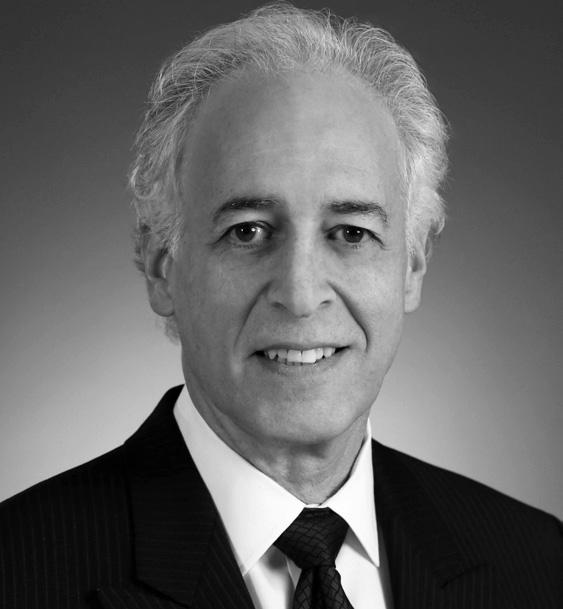
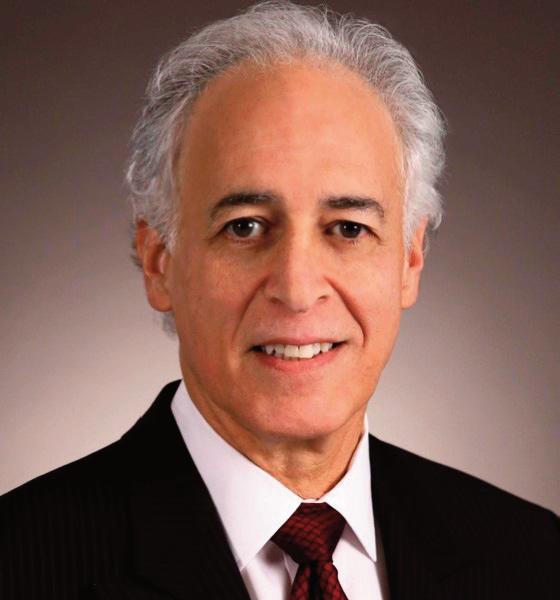
lemaerov@maerov.com maerov.com
Joanne E. Singleton Owner
Leslie E. Maerov, FCIArb., Q.Arb.
LETTERS TO THE EDITOR
Dear Editor,
Re: Emily Dishart, “Cowichan Tribes v. Canada (Attorney General) –Misinformation, Fearmongering and the Erosion of the Public’s Trust in the Courts” (2026) 84 Advocate 199
An article in your March 2026 edition regarding the Cowichan Aboriginal title decision concludes that lawyers “have a responsibility to steer clear of fearmongering, misinformation and perpetuating a distrust in the judicial system”. If that is true, then it must also be the case that lawyers have a duty to raise legitimate concerns, to demand accurate information and to point out flaws in the operation of the judicial system. Unfortunately, some of the lawyers best positioned to do so with regard to Aboriginal title matters, namely those employed by the federal and provincial Attorneys General, are


By R.C. Tino Bella*
“gagged” with respect to writing or speaking publicly on the topic of Aboriginal title, or at least were when I worked for each of those institutions.
Given that, and since individual lawyers should make up their own minds about the legitimacy of the concerns raised regarding the Cowichan decision and other recent Aboriginal title developments, perhaps it will be useful to at least articulate some of the relevant questions they might wish to consider when doing so.
Is there any reason why Cowichan would not be a precedent affecting other privately held lands in British Columbia? Although the Cowichan claim only directly affects a few hundred land titles in Richmond, virtually all of the province is subject to litigation claims of Aboriginal title, with the exception being treaty lands (with
* Letters to the editor may be e-mailed to <mbain@hhbg.ca>. Letters published do not necessarily reflect the views of the Advocate or its staff. We encourage a diversity of voices and views in our pages.
even some of those being subject to Aboriginal title claims) and judicially established Aboriginal title lands. To the extent those claims are valid, would Cowichan not establish a relevant precedent with regard to other fee simple lands?
Could the Crown afford to resolve all Aboriginal title claims to fee simple lands? At paragraph 3,588, the court says that it is for the Crown to resolve the “competing interests” of fee simple and Aboriginal title holders. The total value of real estate (i.e., not including unallocated Crown land) in British Columbia was this year assessed at $2.75 trillion.
Can Aboriginal title and fee simple really coexist as the court stated, given that they both include a right to exclusive use and occupation? The article quoted paragraph 2,189 of the Cowichan decision, “I also find that, as Aboriginal title and Crown title coexist, it follows that Aboriginal title and fee simple can coexist, as the latter is a derivative of Crown title.” Was the court correct to analogize between Crown title— that allodial or ultimate interest that underlies fee simple interests rather than competing with them— and Aboriginal title, which—like fee simple title—includes the right to exclusive use and control of land, i.e., the right to exclude all others?
Have the holders of fee simple titles been afforded natural justice in a process that affects their
property rights? In November 2017, Power J. dismissed Canada’s application seeking to require that notice be given to the fee simple owners that would be affected by the Cowichan decision. Paragraph 11 of that decision reads: “Further, as argued by both Canada and British Columbia, an aboriginal title declaration is in the nature of a judgment in rem and that the conventional view is that a judgment in rem will be conclusive against non-parties in the absence of fraud, collusion, or proof that an interested non-party was denied the opportunity to be heard.” The thenAttorney General of Canada chose not to appeal from that decision. For reasons of policy or ideology, neither the federal nor provincial Attorney General will allow their lawyers to plead or argue all available defences against Aboriginal title claims. No amicus curiae was appointed to represent the interests of the fee simple owners.
Does the Cowichan decision really contain “its own checks and balances to protect individual property rights”? Paragraph 3,588 says “the Cowichan have not challenged the validity of the private fee simple interests and those interests are valid until such a time as a court may determine otherwise or until the conflicting interests are otherwise resolved through negotiation” [emphasis added]. Once a court has determined that Aboriginal title with its concomi-
tant right to exclude all others exists—not that it existed in the past or that it might have come into existence if not for the grant of fee simple title—then would it not be too late to protect private property rights if an order for ejectment is sought at a future date?
While the Cowichan decision raises many other important questions, those stated above may perhaps illuminate why the concerns raised in the news media and elsewhere should not be dismissed out of hand.
recruitment and mobilization hubs in times of crisis, and prominent heritage/community landmarks that host public events and cadet activities.
Sincerely, Michael
P. Doherty
(formerly of the B.C. bar) Victoria
Dear Editor,
Re: “Entre Nous” (2026) 84:2 Advocate 171
The March editorial of the Advocate referring to recent threats to Canadian sovereignty is both a cri de coeur and a metaphorical call to arms. The final paragraph asks what else we could do in support of the defence of Canada and Canadian interests.
I would like to highlight the role of British Columbia’s armouries in support of Canadian defence, peace and security, and the role of civil authorities. British Columbia’s armouries serve three main roles: they are working military facilities for training and administration of local army reserve units,
Anyone in British Columbia can support their local armouries in practical, community driven ways, from serving in army reserve roles to volunteering and donating in support of public engagement and advocacy. Several lawyers in British Columbia serve as reserve Legal Officers in the Canadian Armed Forces, providing tactical legal support to reserve units at British Columbia’s armouries. I have been for many years a patron of the Seaforth Armoury in Vancouver. (Fasken’s David McDonald is a past chair of the Seaforth Patron’s Corps.)
Donations are always welcomed by local regimental foundations or associations, for example, the Seaforth Highlanders Foundation. These donations are used to fund equipment, bursaries, travel, training and youth programs not covered by federal budgets (<www. sea forthhighlanders.ca/organization/ seaforth-foundation>).
Other ideas that come to mind are to host or join community fundraisers, charity runs or schoolbased campaigns that name a local armoury or cadet corps as a beneficiary; encouraging teens and young adults to join local cadet corps (army, sea or air) that operate out of B.C. armouries; volunteering as a
mentor or helper for cadet activities hosted at the armoury, such as drills, field days and community service projects; visiting armoury museums and heritage displays (such as the Seaforth Museum); and attending guided tours or educational programs.
Armouries are often available as a venue for community groups and events and for historical society, or school trips focused on Canadian military history and civic preparedness.
I am pleased to take this opportunity to highlight our armouries’ dual role as training sites and community hubs for emergency preparedness.
Anne Giardini, O.C., O.B.C., K.C. Vancouver, B.C. and Rome, Italy
Dear Editor,
Re: “Entre Nous” (2026) 84:1 Advocate 11; “Entre Nous” (2026) 84:2 Advocate 171
I just got home from a couple of months in the sun in Mexico and was catching up on my reading.
I found my way to the January 2026 edition of the Advocate and, of course, found Entre Nous, the editorial essay, about a number of interesting things, but most importantly and clearly, the parts about what the Nuremburg trials taught the civilized world about the limitations of the defence, “I was only following orders”. I have long protested that the use of the U.S. mili-
tary in bombing and killing at least 95 people who may or may not have been drug smugglers is wrong. It is murder. It is piracy. It is a huge blot on the disappearing U.S. honour. It is vile for high officers and senior politicians to give such orders, but just as vile is the lack of character or wisdom or whatever it is that possessed those service people to carry out those illegal orders. The attacks by the administration on Mark Kelly and the members of Congress who denounced these acts were just as vile and despicable.
I was grateful to have read the editorial and grateful that the Advocate has the courage to publish it. I am hopeful that sanity and respect for the laws and proper conduct of military affairs will return to the United States, thanks in part to the courage of this editorial. I was further grateful to have read Entre Nous in the March 2026 issue, another very powerful, succinct and timely evaluation of morals, ethics, history and honourable behaviour by powerful state actors.
I retired as a member 7 years ago after 36 years. I am grateful to continue to receive the Advocate, and that the writing, thinking and expressing qualities of those behind the magazine continue to be honourable, honest and courageous.
Thank you.
Respectfully,
James Garrett-Rempel Powell River, B.C.
LEGAL ANECDOTES AND MISCELLANEA


By Ludmila B. Herbst, K.C.*
THE COMING OF THE TRAIN AND KAMLOOPS’
EDWARDIAN COURTHOUSE1
The area of Kamloops (on T ’ kemlúps te Secwépemc territory) has a long First Nations history. This piece relates only to a relatively recent slice of time within the period of European settlement, which began in around 1811. By 1909, the city was a booming hub for transportation as well as other economic sectors including agriculture and mining. The area’s population increased after the Canadian Pacific Railway (“CPR”) line was built through the community in the 1880s and after the city itself was incorporated in 1893. As of 1909, the CPR line ran down the middle of what was then Main Street (now Victoria Street West), which remains the home of various bustling restaurants, shops and hotels. In that year, Kamloops’ third courthouse—a grand building that still presides over the corner of First Avenue and Seymour Street West, just south of Victoria Street West—was opened. Kamloops businesses sold souvenir china plates and postcards to mark the occasion.
First Courthouse
Although Judge Matthew Baillie Begbie had paused in Kamloops to rest in September 1859, he did not hear any cases during that time. Evidently order had long been maintained through a combination of First Nations control and Hudson’s Bay Company (“HBC”) discipline over HBC employees, although on occasion, in serious cases, an accused was sent to face trial on the coast. However, during the 1860s, “independent settlers were starting to farm in the district, and there was a great annual influx of miners en route
* Ludmila B. Herbst, K.C., is the Advocate’s assistant editor. She appreciates the research assistance of archivists Mitchell Fridman (of the Kamloops Museum and Archives) and Sheila Norton, Farris articled student Daniel Pope and Farris library technician Julie Wettstein, as well as the willingness of Professor Alex Bremner of the University of Edinburgh to respond to an emailed inquiry. Any errors are, of course, the responsibility solely of the author.
to Tranquille, the Cariboo, and Big Bend. In general it was a very peaceable population, but there was occasional violence or robbery, and the need for local law-enforcement gradually became apparent.”2
The first Assizes were not held in Kamloops until 1873. At that time there was no purpose-built courthouse in the area. Instead, visiting judges and any jury likely heard cases at the HBC post or at a store operated by John Mara (later a member of parliament) and William Wilson (the “Mara & Wilson store”). Notably absent as well was a jail: remarkably, those in custody were held temporarily in Yale, transported to Kamloops for trial, and sent back to Yale to serve their sentences if found guilty.
After jury complaints about the lack of courthouse facilities, a contract to build a courthouse in Kamloops was put to tender later in 1873. The contract was awarded to James McIntosh, who was variously involved in mining, building (of sternwheelers, roads and buildings), a flour- and sawmill, and real estate—more on that below. A courthouse was built in time for the second Assizes in 1874.
That first courthouse was a one-storey, whitewashed log cabin-like structure near the HBC post, then on the far west side of Kamloops at the end of what was then Main Street. The newly built structure hosted the circuit court judges who visited Kamloops to hear cases. It also served other purposes: as a government agent’s office, a lock-up and a meeting hall.
Although replaced as a courthouse in 1885 or so, the building that McIntosh had built continued to be used until 1902, for meetings as well as a location for the Kamloops Band to practise. In 1902, the building burned down
View of Kamloops, B.C., circa 1911, City of Vancouver Archives AM54-S4-: Mil P136.12
in a fire that also destroyed the Cosmopolitan Hotel and the Mara & Wilson store, which by that time had long been deserted.
Second Courthouse
By the 1880s, the first Kamloops courthouse had itself become inadequate for courthouse purposes. By the mid-1880s, surveying for and construction of the CPR line were well underway. And remember the builder of the first courthouse, James McIntosh? It was on the 100 acres he had acquired in about 1871, to the south of the Thompson River and just east of the HBC post, that “[t]he community of Kamloops would grow up”.3 While McIntosh was not entirely pleased by the CPR right of way that came to run through his land, he also benefited commercially from opportunities that the railway brought and became Kamloops’ first police magistrate when the city was incorporated.
Perhaps coupled with Kamloops’ coming importance as a transportation hub, it also came to be designated as the judicial seat of the County of Yale under the provincial County Courts Act, 1883. 4
The courthouse that replaced the McIntosh-built structure was a twostorey wood frame building that was completed in 1885, at the southwest corner of First Avenue and Victoria Street West. That second courthouse was described as looking somewhat like a house, although in the course of renovations and additions in 1896 or so, its grandeur was beefed up by a portico that was installed at the front door.
This second courthouse again served various purposes in addition to hosting court hearings. It was used for meetings, served as the ballroom of a social club, and was the site of Presbyterian and Methodist church services until 1888, when those denominations built their own churches. Further, after the city was incorporated in 1893, council met in the courthouse until city hall was constructed—in front of the second courthouse. City hall is still found on this property.
It was “standing room only” at the second courthouse in 1906 for the trial of Bill Miner (the “Grey Fox”, “Gentleman Robber” or “Gentleman Bandit”) and associates who were charged with “robbing the mails”. Miner was an American who had begun his career robbing stagecoaches before progressing to trains. He is said to have originated the phrase, “Hands Up!”5 In 1904, he was the first person in Canada to rob CPR, with his gang holding up CPR’s Transcontinental Express No. 1 at Silverdale, west of Mission. Their second attempt to hold up a CPR train, at Monte Creek near Kamloops, was not as successful: they managed to steal only $15 dollars and some liver pills, then were pursued in what was at that point the largest manhunt in B.C. history, involving provincial police, the Royal Northwest Mounted Police, cowboys
serving as special constables, Indigenous trackers, bloodhounds, American detectives and a CPR train which transported the searchers.6 The fugitives were caught after several days and tried in Kamloops.
The Globe ran a wonderful report of events in the second courthouse during the trial. The reporter noted that “[t]he lawyers for the alleged train holdup men are putting up a brilliant defence, but the Crown has forged a strong chain of evidence inimical to the accused.”7 Deputy Attorney General McLean, addressing the jury, “introduced a new term by speaking of the accused as land pirates.”8 Further, Mr. Justice Irving, who was presiding, “caused some amusement when the dynamite found on the railway track near the scene of the robbery was brought in. His Lordship was extremely anxious that it be removed as quickly as possible.”9
Miner was convicted, sentenced to life in prison, and sent to the B.C. Penitentiary in New Westminster, from which he later escaped.
Third Courthouse
Kamloops outgrew its second courthouse, with grand juries repeatedly criticizing the facilities as inadequate. Further, the County Courts Act of 190510 promised to make county seats such as Kamloops busier in terms of both activity and number of judges.

Third courthouse from Seymour Street West


In 1907, the provincial government decided to commission a third Kamloops courthouse. The site chosen was 7 Seymour Street West (the southwest corner of First Avenue and Seymour), which had also been the location of Kamloops’ first school. When in 1892 or so the school moved (to where Stuart Wood School now stands), the provincial government took over the original school building, using it as a land registry. The land registry would remain on that site, ultimately connected to the third courthouse by a loggia.
The Vancouver firm of (John James) Honeyman and (George D.) Curtis designed the third courthouse. This duo is well known to those interested in historic B.C. courthouses given that one or both of those architects were involved in designing the magnificent courthouses in Rossland and Fernie as well.11
Although likely this is just a coincidence, both Curtis and Honeyman also had some connection to CPR. Curtis had been studying in King’s Lynn, Norfolk (the birthplace of Captain Vancouver) before he came to British Columbia to check in on his brother, James. James had arrived in Port Moody in July 1886 on first transcontinental passenger train, necessarily travelling through Kamloops to do so. The Kamloops suburb of Barnhartvale is named after a conductor on that train; that conductor left CPR in the 1890s to operate a hotel in Kamloops and later to homestead and open a post office under his name.12
When he arrived in British Columbia, (George) Curtis took up surveying work and then opened an architectural practice in Nelson, at the end of a CPR branch line. He met Honeyman, an architect who had travelled across Canada on CPR’s transcontinental service in 1889 and who, after some time on Vancouver Island, moved to Rossland in 1897. Honeyman and Curtis
Third courthouse from First Avenue with loggia to old land registry
Third courthouse looking from the southwest
established a partnership in Vancouver in 1902, including working on various projects for CPR. Curtis also became the supervisory architect for CPR’s Empress Hotel in Victoria after Francis Rattenbury resigned in 1906.
The contract physically to build the third Kamloops courthouse was put to tender in 1907 and awarded to the firm of Broley and Martin in 1908. On an unhappy note, s. 25 of the contract, between that firm and the province’s Chief Commissioner of Lands and Works, required that the contractor “not, directly or indirectly, employ Chinese, Japanese or any other Asiatics upon, about, or in connection with the works; and in the event of his so doing, the Government will not be responsible for payment of his Contract.”
The actual building project stirred much excitement in Kamloops. In 1907, an article in the Inland Sentinel said: “In due course, if all goes well, Kamloops will rejoice in the possession of probably the finest building in the interior”, which “promises to be both massive and beautiful”. The reporter noted that the courthouse “will serve a double and exceedingly useful purpose by adding to the general attractiveness of the city and by serving to stimulate the citizens to greater activity on similar lines.”
The courthouse was completed in 1909, at a cost of $73,403. It was much celebrated on completion,13 including with the souvenir plates and postcards referenced earlier in this piece. It was used for its first Assize hearings in October 1909.
Unlike some of its B.C. contemporaries (which fall squarely into neo-classical or Richardson Romanesque styles14 ), the architectural style of the third Kamloops courthouse is difficult to pin down. Perhaps this is not surprising as “[f]rom 1880 until past the turn of the century [a period of “picturesque” design], there were several competing Canadian styles whose designs relied on a profusion of details placed on an asymmetrical building form…This melting pot of styles often makes it difficult to know which style a building is in.”15 Although sometimes the courthouse is described as “Edwardian Baroque”, a kindly professor of architectural history confirmed that—as also seems evident from comparing the courthouse to other examples of the style—it is not actually that.
At the time of its construction, the Inland Sentinel described the third courthouse as in “general outline” “maintain[ing] the traditions of a good provincial type of architecture in England, very distinctly picturesque in general effect and pleasing in detail.” The newspaper characterized its style as “a freely treated version of the late English domestic gothic, with details which run quite characteristically into the early Renaissance.” The kindly professor noted above suggested the style might also be described as Queen Anne. Another source notes that Honeyman and Curtis were “employing an
architectural form popularized in the United States, particularly for educational buildings, from the mid-1890s onwards. Borrowing heavily on Picturesque/Gothic traditions, it saw a brief flourish of popularity as an alternative to Classicism as a suitable form of public architecture”, reflecting numerous features associated with that style such as substantial stone trim (including quoins), a rolled copper ridge on the roof (which is of black slate from Pennsylvania), a corner tower (in this case, square, with a copper cupola), an oriel window projecting above the main entrance, and various arched entrances.16 Elsewhere it has been noted that the courthouse’s “total effect” is as “a postVictorian creation that resembles a medieval castle or church”.17
The building is clad in local red brick, with limestone trim. Coarse rubble granite or “freestone” was used for the basement walls. The central exterior staircase, leading up to the front door from Seymour Street West, is of granite.
Internally in the third courthouse, as was then the practice, the courtroom was placed on the second floor, above the administrative offices. The

courtroom is a substantial 52 ft x 34 ft. Its ceiling projects into the roof line, with beams. The woodwork in the courtroom (beams, panelling and joinery) are of B.C. fir. The woodwork includes the jury box and, at one end of the courtroom, the judge’s dais, with canopy. At the other end of the courtroom is a stained glass window with the B.C. coat of arms, from the studio
View from the third courthouse, looking northeast


Courtroom from the judge’s dais to the stained glass windows
Judge’s dais and jury box
of Charles Bloomfield; that studio also designed the stained glass windows for the Parliament Buildings in Victoria.
The third courthouse faces due north and, even with taller buildings now in the way, the views from it are excellent.
A new Kamloops courthouse opened to the southeast, on Columbia Avenue, in 1984. Consideration was given to various uses for the third courthouse, including as the new home for city hall or city hall functions, or as an Italian restaurant. Ultimately B.C. Buildings Corporation sold the building in 1991 to the Canadian Hostel Association (“CHA”). Although there were on average around 7,500 stays at the hostel annually, it ran at a loss, and CHA vacated the building in 2005. The city bought the building in 2007 and it currently houses various organizations including a lovely art gallery on the first floor.
The old courtroom remains accessible to the public and can be rented for events. It is well worth a look on your next visit to Kamloops.
ENDNOTES
1. Sources for this piece include “New Court House: Architect’s Plans and Specifications Indicate a Handsome Structure”, Inland Sentinel (22 November 1907); “The New Court House”, Inland Sentinel (15 December 1908); Donald Luxton, Building the West: The Early Architects of British Columbia (Vancouver: Talonbooks, 2007); Edward Mills, The Early Courthouses of British Columbia, Manuscript Report No 288, Vol II (Parks Canada, 1977); “Old Kamloops Courthouse”, Canada’s Historic Places, online: <www.historicplaces.ca/en/rep-reg/place-lieu. aspx?id=12791>; “The Kamloops Courthouse”, online: <Kamloops.ca/OldCourthouse>; “Former Provincial Courthouse Kamloops” (1986) 44 Advocate 777; John Stewart, “Courthouse history: City’s justice came a long way”, The Kamloops News (15 October 1982); Ken Favrholdt, “Holding on to heritage: Old Courthouse one of 10 sites around city officially designated for heritage value”, Kamloops Daily News (18 February 2006) B1 [“Holding on”]; Ken Favrholdt, “Rich past, promising future; Old Courthouse has lots of life left. Indeed, it may have more life in it than ever before”, Kamloops Daily News (24 July 2009) B5; Ken Favrholdt, “McIntosh, James”, Dictionary of Canadian Biography, vol 13 (Toronto: University of Toronto Press, 1994), online: <www.biographi.ca/en/bio/mcintosh_james_13E. html> [“McIntosh”]; and various items from the Kamloops Museum and Archives including Leslie Mobbs, “Early Kamloops Buildings”, John Stewart, “Kamloops Courthouses” (15 October 1982), and Mary Balf, “Courthouse and Jail in Early Kamloops” (N33) [“Balf”].
2. Balf, supra note 1.
3. McIntosh, supra note 1.
4. (1883) 46 Vict c 5.
5. Online: <en.wikipedia.org/wiki/Bill_Miner>.
6. Edward Butts, “Bill Miner”, Canadian Encyclopedia, online: <thecanadianencyclopedia.ca/en/article/ william-miner>.
7. “Train-Robbers’ Horse’s: Ownership of the Animals Traced to Prisoners”, The Globe (30 May 1906).
8. Ibid
9. Ibid
10. 1905 SBC, c 14.
11. See Ludmila B Herbst, KC, “Fernie’s Fabulous Courthouse” (2015) 73 Advocate 205; Ludmila B Herbst, KC, and Erica C Miller, “Legal Anecdotes – Tale of Two Ricardsonian Romanesque Courthouses: Nanaimo and Rossland” (2017) 75 Advocate 773 [“Richardsonian Romanesque”].
12. David Ll Davies, “The Railway History of Kamloops B.C.”, 436 Canadian Rail (September-October 1993) 151.
13. This remained the case in the following years. See, for example, “Kamloops The Wonder District of Central British Columbia”, The Vancouver Sunday Sun (6 June 1920) 38, which noted under a photograph of the third courthouse: “Kamloops is a well-built city with fine residences, public buildings and stores. The court house is a good example of the type of buildings in the Inland Capital.”
14. Ludmila B Herbst, KC, “Legal Anecdotes: GrecoRoman Temples of British Columbia” (2022) 80 Advocate 457; “Richardsonian Romanesque”, supra note 11.
15. Don Mikel, Canadian Architectural Styles: A Field Guide (Toronto: James Lorimer & Company Ltd, 2025) at 104.
16. Mill, supra note 1 at 254.
17. “Holding on”, supra note 1.


FROM OUR BACK PAGES

By R.C. Tino Bel
ENTRE NOUS*
THE FORESEEABLE FUTURE IN A LAW OFFICE
Venturesome—indeed rash—would be he who would attempt to forecast or envisage for any considerable time in the future the office and other facilities which lawyers will require in order to march with rapidly changing events. An attempt, however, to envision features which might reasonably be made available to persons presently living would not be stretching too far into the realm of the wholly imaginative.
A day hardly passes without the demonstration of some new mechanical device or refinement to make the lawyer’s work and service easier and more efficient. Not only in the field of mechanics, but publishers themselves vie with one another and multiply almost into confusion the number of publications in many forms to provide the lawyer with the law or a ready means of finding it.
Fortunate indeed and few are the law offices which have accommodation for the rapidly multiplying volumes of law reports reasonably necessary, the countless texts, digests and other volumes, and provision for their maintenance. Even now with the very best of equipment and books they fail to make readily available the material which a lawyer must have to effect economy of time and effort in research and finding the law.
Law offices are presently equipped with complete sets of law reports upon microfilm, immediately available in a viewer. It is no more than one
* Reprinted from (1962) 20 Advocate 29.
step forward by an electronics engineer to provide any desired report to be made available on a closed circuit TV screen, and made available from a centrally located library, capable of being read and studied from the office desk. No less difficult would it be to be provided with such material in digests, texts, and other written material! Once this easily realizable break through has been achieved a lawyer’s labours would be greatly eased.
Presently, on the drawing boards are devices to copy the picture thus produced so that for the asking, a lawyer could well expect to have immediately available in writing any reported case or other legal written work without any library at all.
Books (and particularly those much in use) are in any event ephemeral and devices are certain soon to be required to perpetuate and make their contents available for all time to come.
It is not too far fetched to believe that within reasonably measurable time dictation will also be transcribed from a record without human intervention.
Even though by some magic of electronics a statement of the law on any required subject might be made available to any person for the asking, trained lawyers will be indispensable to apply and interpret it.
However that may be, no matter how streamlined a law office may become and with what facilities supplied, no one can believe that a lawyer could, or will, function without the help of his indispensable and faithful secretary and stenographic helper (even though she may at some future time require a certificate in engineering). Too infrequently indeed are the services of those experienced and willing assistants recognized, without whom no lawyer could satisfactorily function. Let this be an assurance and salaam to them all.
ENTRE NOUS*
No doubt lawyers would like to leave the impression that matters in their offices are in up-to-date order and that their organization and staff are equal to any catastrophic event which may overtake them.
Not many lawyers would readily subscribe to any such proposition. Few lawyers there are indeed who do not at one time or another become dazed with the proposition “today is the last day for —” appeal, defence, dispute note. One must constantly be alert to meet some one or other of the fearsome statutory events which legislators have seized upon to make life difficult for the mere wayfarer in business, or in other aspects of life.
Not only do law offices suffer from the statutory limitations imposed by rule and statute but they are becoming more and more victims of other statutory impositions, and in particular, the many strictures contained in the Income Tax Act. The gentlemen who are charged with the enforcement of this Act seem to have dredged up at their convenience some exquisite tortures of the inquisition to make the lives of lawyers and taxpayers utterly insupportable, “unless you reply to our letter giving us the information required by the — day of —, an assessment will automatically issue,” or you will be charged under it in the Police Court with all of the attendant fines and penalties, and other multiplied agonies.
The pendulum seems to have swung to its ultimate in this direction. The hope of the profession is that perhaps there may be a backswing of which they and their clients may be the beneficiaries.
While a lawyer has to be on his toes to see that his office organization is kept in good mechanical order, it would almost appear as if he would have to have an official “tickler” to keep him constantly reminded of the expiry date of every single piece of business which offers itself in the office.
There is also this factor that still remains and that is the goodwill which so often exists amongst lawyers to make allowances for lapses or for time when in extremis. It might well become a cardinal rule in an office so to carry on your business as to have some factor or item of credit on the books of your opposing practitioner to have available in case trouble befalls. Rules, of course, are made to be obeyed and to keep order in practice, but we are favoured that our judges look with generosity in the case of a practitioner who suffers what is commonly known as a slip.
Few will deny, however, that the practice of law becomes more and more difficult, and inevitably involves more and more specialty training.
* Reprinted from (1963) 21 Advocate 79.

BENCH AND BAR


International Picnic Day (June 18) is fast approaching and—we hope—sunny and warm days will extend thereafter. The word “picnic” is, of course, defined by sensible dictionaries as an outing or occasion that involves taking a packed meal to be eaten outdoors. The word is reported to come from the mid 18th century French “piquenique”, itself of unknown origin, which denoted a social event at which each guest contributes a share of the food. May you find yourselves with many opportunities to enjoy picnics with family and friends, including those colleagues at bench and bar described below.
After 25 years at DLA Piper, Christopher (Chris) L. Bennett leaves to set up his own firm, Cherry Tea Law Group, to provide pro bono trademark and tech law services to charities and non-profits. Dirk H. Laudan moves from Borden Ladner Gervais to join Eyford Partners. Berta I. Lopera has joined Harper Grey, moving from DuMoulin Boskovich. Returning to Harper Grey is Kara L. Hill who was most recently in-house counsel at the Joey Restaurant Group in Vancouver. JR Dar Santos joins Lakes, Whyte in North Vancouver following a hiatus from Up Legal Group. Raghav Sodhi joins Lawson Lundell’s Vancouver office, moving from the Calgary office of Bennett Jones. C.J. Galozo moves from DuMoulin Boskovich in Vancouver to join Nixon Wenger in Vernon. Gordon T. Behan has left Clark Wilson to start up Behan Estate and Trust Litigation. Dhananjay (Jay) Tomar moves west to join Lawson Lundell from WeirFoulds in Toronto. Nolan R. Hurlburt is now at Fasken after just over six years at Dentons. Jeffrey A. Bastien also departs Dentons to join Lawson Lundell as counsel. Sean Hern, K.C., and
Lawyers who have moved their practices should e-mail details of their past and present circumstances to Peter Roberts, K.C., at <benchandbar@the-advocate.ca> to ensure an appearance in “Bench and Bar”. Note that we do not report changes in lawyers’ status within their firms (from associate to partner, for example) other than in cases where persons formerly articled have been hired as associates.
Merran V. Hergert have folded Sean Hern Law Corporation into positions at McEwan Cooper Kirkpatrick. Jill M. Shore sashays from Dolden Walker Folick to join DWF.
Wei Wang moves from Jensen Shawa Solomon Duguid Hawkes in Calgary to join McEwan Cooper Kirkpatrick. Rajeev K. Patro has moved from Brij Mohan & Associates to join Lindsay Kenney. Sanjeev K. Patro also joins Lindsay Kenney moving from Magnus Law. Eric Grobler is now at Dentons after four years with Singleton Urquhart Reynolds Vogel. Crawford Munroe Thomson welcomes Jessica A. Hennings, who moves from Borden Ladner Gervais. Mariyah Ali-Costain is now with Icon Law Group after a stint with Stride Law. Jamie L. Turta moves from Baker Newby to Synergy Business Lawyers. Catherine Dauvergne, K.C., joins Hunter Litigation as associate counsel. Heather Frost joins the L. Johnson Law Group after a stint of selfemployment. David Hansford will be joining the Vancouver office of MLT Aikins having previously been with Embark Together in Calgary. Bahaa Jibu moves from Fulton to join Nexa Legal.
On April 1, 2026, the firm of Goluboff & Mazzei folded itself into Lindsay Kenney, meaning that each of W. Gerry Mazzei, Richard M. Goluboff, Edna S.C. Cheung, Stewart B. Elworthy, Beatrice B. Fogelberg and Farshad Sarmad are now part of the Lindsay Kenney team but will remain at their old West Vancouver location.
The Parks Canada website explains that “[w]hile people have dined outside for millennia, the picnic was originally an indoor activity, featuring a potluck style contribution system resulting in a fashionable dinner enjoyed by groups. The term itself is first seen in 1649 in a French satire featuring a character named Pique-Nique, though the current record can’t confirm if the character was named for the style of dining or the other way around.” It adds: “As the pique-nique made its way out of France, the experience became more entwined with the middle class of England in the early 19th century, now with the Anglicized name ‘picnic’. There, in the idealistic countryside, it took on a simpler, outdoor format more akin to how we view the activity today.”
The Honourable Delaram Jahani and Honourable Jacqueline G. McQueen, judges of the Provincial Court of British Columbia in Surrey, were both appointed justices of the Supreme Court of British Columbia in Vancouver. They replace Justice L. Warren and Justice A. Mayer, respectively, both of whom were elevated to the Court of Appeal in February 2025.
In addition, Michael P. Klein, K.C., a sole practitioner in Vancouver, and Brook J. Greenberg, K.C., a partner at Fasken Martineau DuMoulin, were both appointed justices of the Supreme Court of British Columbia in Vancouver. They replace Justice M. Brundrett and Justice A.D. Francis, both of whom were elevated to the Court of Appeal in November 2025.
Certain readers have questioned previous use in the Advocate of the word “translated” (sometimes used instead of the word “elevated”) in relation to the movement of judges from the B.C. Supreme Court to the B.C. Court of Appeal. Rumour has it that “translated” may have been favoured by the late Honourable Mary Southin, K.C., and, as such, unquestioned by those who attributed it to her.
“Let us picnic there / At Audley Court” wrote Alfred, Lord Tennyson: …. There, on a slope of orchard, Francis laid A damask napkin wrought with horse and hound, Brought out a dusky loaf that smelt of home, And, half-cut-down, a pasty costly-made, Where quail and pigeon, lark and leveret lay, Like fossils of the rock, with golden yolks Imbedded and injellied; last, with these, A flask of cider from his father’s vats, Prime, which I knew; and so we sat and eat And talk’d old matters over….
Peter M. Mennie and Alison C. Wake were both reappointed as members to the Civil Resolution Tribunal.
On the rainy day of March 19, 2026, in an otherwise very rainy week, competitors in the 2026 VBA Dodgeball Tournament gathered at Kitsilano Secondary to toss it out. The annual tournament is a fundraiser for the Justice Education Society. After a grueling competition, including at least one broken finger, BLG won for the fifth year in a row. The BLG team was composed of the powerhouses Merritt Loh, Katy Morris, Braeden Stang, Matt Lowe, Joshua Dechaine, Makena Anderson, Alysia Sainas, Geordie Goodman, Alicia Cheah, Edmond Lo and Ian Hunter.
Wikipedia explains, somewhat alarmingly: “Games played at a picnic may use the food which has been brought. Heavy food such as a watermelon may be used in a relay race which also serves the purpose of transporting the food to the eating area. After it is consumed, the seed or stones of fruit like cherries may be used for a spitting contest game or marbles.”
Gavin R. Hoekstra was reappointed as a member of the Skilled Trades BC Appeal Board.
“I do not think the activity of eating a meal in a trailer would properly be regarded as a picnic”: Gill v. A & P Fruit Growers Ltd., 2010 BCCA 107.
Professor Bruce MacDougall was appointed dean pro tem for the Peter A. Allard School of Law for a one-year term.
Robyn P.M. Trask was recently elected to the position of CBA vice-president for 2026–2027 and will serve as CBA president in 2027–2028.
Picnics find their way into principles of statutory and contractual interpretation. For example, the United States Court of Appeals for the Eleventh Circuit explained the following in Savage Services Corporation v. United States of America, No. 21-10745 (2022):
Your friend, who’s organizing a picnic, sends a group of people some rules, including this one: “Except as otherwise provided in this text message string, you can bring a sandwich to the picnic.” Just before the picnic, your friend texts the group a second rule: “You can bring a turkey bacon sandwich if it has lettuce, tomatoes, and onions.” If you arrive at the picnic with a turkey bacon sandwich that has nothing on it—i.e., no lettuce, tomatoes, and onions—have you violated your friend’s rules? Under the tenets of ordinary English usage, it would sure seem so.
The United States District Court for the Northern District of Illinois Eastern Division in turn wrote, in State Automobile Insurance Company v. Tony’s Finer Foods Enterprises, Inc., No. 20-cv-6199 (2022):
When there is a list, the individual components of the list should be read together. That is, the collection of words helps to inform the meaning of any individual word….Imagine going to a summer picnic for the Fourth of July, where everyone was going to pitch in and bring something. Imagine if you asked your friend to bring ‘food, such as chips, pretzels, or cheese and crackers.’ You probably would be surprised if your friend showed up with a Thanksgiving dinner with all the fixings. A whole turkey is food, all right, but not the type of food suggested by the list of examples.
Kinji C. Bourchier was awarded a 2025–2026 UBC Alumni Builder Award in recognition, among other things, of his service as the president of the Allard Law Alumni Association for ten years.
Stephen Leigh Perks was appointed as a member and designated vice chair of the Community Care and Assisted Living Appeal Board.
Jason M.J. Kuzminski was reappointed to the board of the College of Applied Biology as a lay member for a term ending July 31, 2028.
May 2026 has been proclaimed by the provincial government to be Deafblind Awareness Month. July 2026 has been proclaimed to be both Automotive Heritage Month and Collector Car Appreciation Month.
CBABC awarded the prestigious Georges A. Goyer, QC Award for Distinguished Service for 2026 to the indefatigable Derek LaCroix, K.C., co-executive director of the Lawyers Assistance Program of BC, in recognition of his decades-long leadership of LAP.
Natalie Parsonage, Kathryn (Kate) Scallion and Katrina Schaer were all appointed to the Employment and Assistance Appeal Tribunal for terms ending April 30, 2028.
“Shop floor labour relations have never been a picnic”: Times Colonist v. Communication Workers of America, Local 14003, 2000 CanLII 29344 (BC LA).
“To paraphrase Yogi Bear, Malave is ‘smarter than the average prison litigator.’ Like Yogi, Malave is also persistent, although the object of his persistence is release from federal custody, not picnic baskets”: Malave v. United States, 134 F. Supp. 2d 1019 (E.D. Wis. 2001).
Wikipedia explains, with reference to the term “picnic hamper”, that the word “hamper” “comes from ‘hanapier’, meaning a case for goblets. The concept came from France via William the Conqueror in the 11th century. Portable wicker wine carriers became adopted as travellers’ refreshment baskets, as long journeys often meant overnight stays in coaching inns where palatable food was not always available. Travellers would thus carry better food with them in such baskets or hampers.”
Statscan reported: “Most of the bamboo baskets imported into Canada in 2023 hailed from China ($1.7 million), with Vietnam ranking a distant second ($373,797). Meanwhile, Indonesia was the top source country of rattan basket imports ($649,287), followed closely by Vietnam and China. However, while we do not ask if the wicker baskets are of the picnic variety, it is likely that some have been designed or used for this purpose.”
The Lawyers Inn Society held its annual “pub style” trivia challenge on Wednesday, April 15 at GoodCo on Granville Street.
Picnics are traditionally eaten at the Glyndebourne Festival (an opera festival held each year from May to August) during the 90-minute dining interval. In 1931, John Christie, a music lover who held opera evenings at the estate, where he resided, met at one of those evenings Canadian soprano Audrey Milmay (born in Herstmonceux, Sussex, but when she was three months old, her father, an Anglican priest, accepted the parish of Penticton). They married and, after attending the Salzburg and Bayreuth festivals on their honeymoon, devised the idea of having larger-scale professional opera at Glyndebourne.
Phil Dwyer of Qualicum Beach was appointed to the board of directors of the Port Theatre in Nanaimo. He also accepted a provincial re-appointment to the board of directors of the Nanaimo Port Authority. In celebration of these achievements, he has gone on a holiday in the Douro Valley in Portugal. The Douro Valley is a listed UNESCO World Heritage Site and is the oldest demarcated wine region in the world.
StatsCan reported that “[h]ouseholds in British Columbia (29%), Alberta (27%) and New Brunswick (26%) were Canada’s most prolific picnickers or grillers close to home in 2021, while households in Quebec (23%) and Ontario (23%) were least likely to picnic or barbecue al fresco.” Further, “[h]ouseholds that had a park or public green space close to home were more than twice as likely to have gone on a picnic or had a barbecue compared with those that didn’t live near a park (26% versus 10%).”
Edward Wong was reappointed to the Employment and Assistance Appeal Tribunal for a two-year term. Cecilia Low, Anil K. Aggarwal and Margaret A. Koren were also all reappointed for four-year terms ending April 30, 2030.
“We are well aware that FOIA processing is no picnic: It can be painstaking and sometimes highly technical for requestors, agencies, and courts alike”: Judicial Watch, Inc. v. United States Department of Homeland Security, No. 165339 (2018), per Circuit Judge Pillard of the U.S. Court of Appeals for the District of Columbia Circuit, concurring.
William (Bill) A. Buholzer, who recently retired as associate counsel at Young, Anderson, was the recipient of the Canadian Bar Association’s 2025 Municipal Law Award of Excellence.
Claire E. Hunter, K.C., was recently given the Joe Arvay Award for 2026 by The Advocates’ Society.
Parveen B. Karsan was appointed to the board of the Council to Reduce Elder Abuse, a province-wide initiative established by the B.C. Ministry of Health to help prevent and respond to elder abuse through collaboration, education and public awareness initiatives.
The definition of “structure” under the Forest Recreation Regulation, made under the Forest and Range Practices Act, includes “picnic table”.
Kenneth Grahame’s The Wind in the Willows (1908) starts by chronicling the adventures of a mole who seeks adventure after “working very hard all the morning, spring-cleaning his little home.” The mole encounters the water rat. To prepare themselves for a long day on the river, the water rat stops at home for provisions.
“Hold hard a minute, then!” said the Rat. He looped the painter through a ring in his landing-stage, climbed up into his hole above, and after a short interval reappeared staggering under a fat, wicker luncheon-basket.
“Shove that under your feet,” he observed to the Mole, as he passed it down into the boat. Then he untied the painter and took the sculls again.
“What’s inside it?” asked the Mole, wriggling with curiosity.
“There’s cold chicken inside it,” replied the Rat briefly; “ coldtonguecoldhamcoldbeefpickledgherkinssaladfrenchrollscresssandwichespottedme atgingerbeerlemonadesodawater——”
“O stop, stop,” cried the Mole in ecstacies: “This is too much!”
“Do you really think so?” enquired the Rat seriously. “It’s only what I always take on these little excursions; and the other animals are always telling me that I’m a mean beast and cut it very fine!”
Mrs. Beeton’s Book of Household Management included a picnic menu involving a joint of cold roast beef, a joint of cold boiled beef, ribs of lamb, shoulders of lamb, roast fowls, roast ducks, ham, various meat pies, and numerous sides and desserts.
A person who made “a rabbit pie in accordance with the recipe of Mrs. Beeton’s Cookery Book” would not have infringed the literary copyright in that book: Cuisenaire v. Reed, [1963] V.R. 719.
The Casualty Actuarial Society Roundtable noted, with respect to International Picnic Day, that “More than Your Picnic Basket May Be at Risk”. It noted that “choosing, checking, and controlling the location where a picnic will be held is crucial to minimizing risk” and that food, while “at the center of every picnic”, “can also be your greatest liability. Knowing who is bringing what dish and making sure food remains at the appropriate temperature is crucial
to avoid making your picnickers sick with food poison. If you are planning a picnic for a company, you might consider having employees sign a waiver.”
David A. Hobbs was reappointed as a member and designated chair of the Health Professions Review Board for a term ending February 23, 2031. J. Charlotte Ensminger and Denese C. Espeut-Post were also reappointed as members with terms ending July 29, 2029. Shannon A. Bentley was also reappointed as a member with a term ending March 31, 2027. Douglas S. Cochran was reappointed as a member for a term ending February 26, 2028.
There are very few picnics in British Columbia, at least geographically. Picnic Point is found on the east side of Birnie Island which sits near the entrance to the Portland Canal north of Prince Rupert. Birnie Island is north of Port Simpson by a few kilometers and is just off the northwest side of Tsimpsean Peninsula. The only other official designated picnic is the Lieutenant Ian Philip MacDonald Picnic Area, so designated in September 1995, which is on the Island Highway just south of Mud Bay in Rosewell Creek Park. It was named to remember Lieutenant MacDonald, of Fanny Bay, who fought with the Canadian Scottish Regiment and was killed in battle at Putot, France on June 10, 1944.
Nancy Carter, K.C., was appointed by the benchers of the Law Society of BC to the board of directors of Legal Aid BC for a three-year term.
Leo W. Seewald was recently appointed to a five-year term as a non-executive board member of the newly formed Monetary Authority of the Republic of the Marshall Islands. This newly established body will be a central participant in the banking system as well as the regulator for the entire financial system of the Marshall Islands with responsibility for matters such as banking, clearing and currency services, government funds management, financial sector stability and financial sector policy.
The “normal recreational use of a waterfront property” includes “swimming, boating, relaxing and picnicking on the dock and the platform, and temporary storage of boats on the disputed lands”: McSweeney v. Schidedanze, 1988 CarswellOnt 1547 (H.C.J.).
Carl Sandburg was an American poet who also wrote a Pulitzer Prize-winning biography of Abraham Lincoln. Among Sandburg’s poems is “Picnic Boat”:
Sunday night and the park policemen tell each other it is dark as a stack of black cats on Lake Michigan.
A big picnic boat comes home to Chicago from the peach farms of Saugatuck.Hundreds of electric bulbs break the night’s darkness, a flock of red and yellow birds with wings at a standstill. Running along the deck railings are festoons and leaping in curves are loops of light from prow and stern to the tall smokestacks.
Over the hoarse crunch of waves at my pier comes a hoarse answer in the rhythmic oompa of the brasses playing a Polish folk-song for the home-comers.
Sandburg’s other poems also include “Prairie”:
…I am the prairie, mother of men, waiting.
They are mine, the threshing crews eating beefsteak, the farmboys driving steers to the railroad cattle pens.
They are mine, the crowds of people at a Fourth of July basket picnic, listening to a lawyer read the Declaration of Independence, watching the pinwheels and Roman candles at night, the young men and women two by two hunting the bypaths and kissing bridges.
They are mine, the horses looking over a fence in the frost of late October saying good-morning to the horses hauling wagons of rutabaga to market.
They are mine, the old zigzag rail fences, the new barb wire.. . .
The cornhuskers wear leather on their hands.
There is no let-up to the wind.
Blue bandannas are knotted at the ruddy chins.
Horrifyingly, the term “picnic” at one time seems to have been applied in parts of the United States to gatherings of people who celebrated lynchings (a lynching picnic). The Jim Crow Museum notes that while “[f]act-checkers from Reuters, Politfact and other authors have verified that the term picnic did not originate from the lynching spectacles of black men in the United States [‘pick-a-n—-r-to-lynch’]”, “numerous lynching scenes were social gatherings where people shared food, laughed, and celebrated”.
Julie E. Akeroyd was appointed as a public member to the board of the British Columbia College of Oral Health Professionals for a term ending March 31, 2030.
Jacqueline A. Tarantino was appointed as a public member to the board of the College of Complementary Health Professionals of British Columbia for a term ending March 31, 2029.
The Summit Creek Campground and Recreation Area Regulations under the Creston Valley Wildlife Act provide: “No person shall picnic except in a
recreation area designated by the management authority unless otherwise authorized by a permit issued by an authorized officer of the management authority”.
It was a warm, foggy and rainy day at the Blackcomb Race Centre on Saturday, February 7, 2026. Despite that, the Annual VBA Lawyers Ski Race was held with the participants bringing unparalleled enthusiasm to the task of hurtling down a steep slope and around an array of gates. In the end, the fastest team was McCarthy Team 1 (83:90) consisting of Lindsay Frame, Benjamin Rivard, Morgan Troke and Katelyn Cooper. Second place went to Too Fask(en) & Too Furious (87:28) whose racers were Roger Watts, Kevin O’Callaghan, Lars Brusven, Tara Christensen and Elizabeth Reid
The Harper Speed Demons, being Prentice Durbin, Gavin Clark, Cameron Elder, Steven Abramson, Claire Shanna and Jayden FriesenKehler, came in third (88:55). The fastest male was Roger Watts (19:00) and the fastest female was Lindsay Frame (19:75).
Le Déjeuner sur l’herbe is an unfinished 1865–1866 oil painting by Claude Monet. As Wikipedia describes, “[t]he painting depicts twelve people clothed in the Parisian fashion of the time. They are having a picnic near a forest glade” and was inspired by, or at least a response to, Eduard Manet’s painting of the same name. Manet’s painting was done in 1862-1863 and “depicts a nude woman and a scantily dressed bathing woman on a picnic with two fully dressed men in a rural setting.”
Wikipedia explains that a picnic is “a meal taken outdoors (al fresco) as part of an excursion” (not used as a Trumpian euphemism for war) “especially in scenic surroundings, such as a park, lakeside, or other place affording an interesting view, or else in conjunction with a public event such as preceding an open-air theater performance, and usually in summer or spring. It is different from other meals because it requires free time to leave home.”
Lionel R. Yip was appointed as a public member to the board of the College of Physicians and Surgeons of British Columbia for a term ending March 31, 2030.
The Supreme Court of Nebraska noted, in State v. Williams, 218 Neb. 57 (1984): “The context of Chapter 28, article 12, requires that the concept of per se deadly weapon be limited to the specific weapons enumerated in § 281202(1). To hold otherwise would mean that every citizen carrying a kitchen paring knife with a 4-inch blade in a picnic basket containing other appro-
priate picnic items would be concealing a per se deadly weapon and would be guilty of a [crime] without being able to explain his innocent intent.”
William A. Duvall was reappointed as a voting member and designated as chair of the Vancouver Coastal Health Authority for a term ending March 31, 2027.
Adam C. Whitcombe, K.C. , was appointed to the board of the British Columbia Assessment Authority.
The Geothermal Operations Regulation under the Geothermal Resources Act provides: “A well authorization holder must install and maintain fencing around completed wells and facilities if the well or facility is within one km of an area where there is an occupied dwelling, a school, a picnic ground or other public area”.
Wayne N. Plenert was reappointed as a director of the board of the Northern Development Initiative Trust for a term ending May 1, 2029.
Thinking of taking some chocolate chip cookies along in your picnic basket? Justice Seeger of the U.S. District Court for the Northern District of Illinois, Eastern Division, may have had the same thought in Foster v. Nestle USA, Inc., No. 24-cv08536 (2026), where he granted a motion to dismiss a “half-baked” complaint brought by the plaintiff, who had “a sweet tooth, “wanted to sink her teeth into a mouthful of chocolate” and was evidently “a foodie. She didn’t want just any chocolate. She wanted 100% real chocolate.” As the judge described it:
Chocolate comes from cacao beans, which fall like manna from heaven from the cacao tree. The scientific name of the cacao tree is Theobroma cacao, which translates to “food of the gods.”…
Getting to chocolate heaven takes some doing. Raw chocolate beans come in a large pod the size of a small pineapple, and when they first arrive, they look like they’re covered in goo. The beans need to be fermented, dried, cleaned, and roasted. The shells contain chocolate nibs, which are ground to chocolate liquor. At that point, the liquor is separated into cocoa solid and cocoa butter. Mixing the cocoa with sugar and other ingredients makes chocolate, and chocolate makes magic….
Stephanie Foster wanted her own little piece of heaven one day, so she went shopping for chocolate….The complaint doesn’t reveal what she planned to do with the chocolate. It simply says that Foster wanted chocolate “for personal and family use.”….
Foster headed to Target and Jewel Osco hungry for some cocoa-goodness….The complaint doesn’t reveal why Foster went to both stores. After all, Target and Jewel are usually chock-full of chocolate. By the sound of
things, she didn’t encounter empty shelves. Quite the opposite. Foster “purchased the Products from Target and Jewel Osco stores located in Chicago.”… Maybe Foster wanted a lot of chocolate. Or maybe she bought the products at different times. Or maybe, just maybe, she was claimshopping while chocolate-shopping. In any event, Foster decided to buy Nestle’s Toll House Morsels. …. Almost every living American has had Toll House chocolate-chip cookies. They’re a crowd pleaser. Untold thousands of teenagers have consumed Toll House chocolate-chip cookie bars from sea to shining sea. …. The packaging includes a familiar splash of color, with a large hunk of red occupying the bottom of the yellow bag. That’s where the offending text appeared. No living person could look at the bag and wonder what’s inside. But Nestle apparently wanted to foreclose that possibility. The bag reads: “100% real chocolate.” …. The bags included a detailed list of ingredients. It wasn’t a long list. The bag contained “sugar, chocolate, cocoa butter, milkfat, soy lecithin, natural flavors.” …. Foster thinks that “chocolate” means that it can “only have ingredients sourced from cacao beans,” meaning cocoa butter and cacao. …. But Foster points out that Nestle chocolate chips also contain soy lecithin or natural flavor. ….
Dispensing with Foster’s claim takes less time than whipping up a batch of Toll House cookies. ….
Foster’s claim rests on the meaning of the word “chocolate.” She alleges that chocolate “only” contains “ingredients sourced from cacao beans,” and doesn’t include soy lecithin or natural flavors….
That theory comes out of thin air. The complaint doesn’t cite anything for the notion that chocolate only contains ingredients that come from cacao beans, and nothing else. She doesn’t cite a definition of “chocolate.” She offers no source for her idiosyncratic understanding of the essence of chocolate. She doesn’t cite a consumer survey, either.
No reasonable consumer thinks that chocolate “only” contains the byproduct of cacao beans. For starters, cacao beans aren’t sweet. They need sugar. Sugar is a necessary ingredient of chocolate. And sugar doesn’t come from a cacao bean. If you’re skeptical, try choking down a handful of raw chocolate nibs, and see what happens. Put a spoonful of raw cacao powder in your mouth, and you’ll instantly understand that chocolate isn’t just from the cacao bean. Chocolate is a composite product. It contains other ingredients, by definition. ….
Courts don’t have to treat consumers like eggshell-skull plaintiffs, wandering bewildered down the grocery aisle in the Land of Confusion. And at some point, it is not asking too much to expect a reasonable consumer to read the list of ingredients if they’re unsure.
Thought du mois:
“Skill without imagination is craftsmanship and gives us many useful objects such as wickerwork picnic baskets. Imagination without skill gives us modern art.”
—Tom Stoppard, playwright, 1937–2025
CONTRIBUTORS
Brad Cramer was a co-founding partner of the litigation boutique that eventually became Shapray Cramer Fitterman Lamer LLP, which subsequently joined forces with Kornfeld LLP. During a career that began in the dawn of the fax machine, he has acted in a wide variety of cases.
Heather Hoiness is legal counsel for the British Columbia Human Rights Tribunal. She was previously a staff lawyer at British Columbia’s Office of the Human Rights Commissioner, where she focused on representing the Commissioner as an intervener. She previously worked at Moore Edgar Lyster LLP and it is anyone’s guess whether she responds to the title of “Your Royal Hoiness”.
Jaimie Kidston is this year’s third-place winner in the Advocate’s Short Fiction Competition. She practises in the areas of wills and estates and First Nations and Indigenous Law at Jaimie Kidston Law Office in Penticton, B.C.
Steph Melnychuk transitioned into life coaching after working as an intellectual property lawyer in Vancouver. She is the author of Free to Flourish –A Guidebook: Cultivate Work-life Harmony for Success and Happiness.
Simmi K. Sandhu was called to the B.C. bar in 1990. She is the former head of the Civil Resolution Tribunal and before that the Property Assessment Appeal Board. She has served as a judge on the Asian Development Bank Administrative Tribunal and was the 14th president of the United Nations Appeals Tribunal to which she was appointed in 2018. She is also a past president of the BC Council of Administrative Tribunals.
Bruce Woolley, K.C., has been in-house counsel for Expo 86, Cominco, BC Enterprise Corporation and the Bank of Bermuda. He is a former bencher of the Law Society and a regular contributor to CLEBC and the Canadian Bar Association. He spent many years in private practice at Clark Wilson, at Stikeman Elliott and as a sole practitioner. He now adds writer of fiction to his quiver.

Available at Kurbatoff Gallery, 2435 Granville St., Vancouver
Visit the website: kurbatoffgallery.com
“Gilt Fox” by E. Andrea Klann, Oil on Canvas, 48'' x 36'', 2025