Mission 360° Magazine by Adventist Mission - Vol 14 No 1
“Do you like mission stories?” I held out a copy of Mission 360°, anticipating its eager reception.
“No,” the elderly man replied gruffly. My eyes widened. He walked a few steps down the crowded hall, then turned to face me.
“I’m 88 years old, and I’ve been listening to them all my life.”
Thankfully, that response was rare at the 2025 General Conference Session, where I helped staff the Adventist Mission booth.
To my delight, many people recognized the magazine and enthusiastically picked up the special GC issue. Others were unfamiliar with the publication yet readily subscribed. There was one group, however, whose reaction I found especially rewarding.
As they shuffled past, they radiated convention fatigue. Their faces looked dazed. Their feet ached. And their shoulders drooped under the weight of tote bags bursting with giveaways. Eyes averted, they seemed unreachable.
Still, I tried. “Free mission stories! Free mission stories!” I called, wondering whether my voice could be heard above the din. No response. And then something beautiful happened— again and again.
About 15 or 20 feet down the hall, they would suddenly stop, as though my offer just registered. Then, turning around, they retraced their steps and took a magazine from my hand. Because mission stories were something they couldn’t pass up.
These are my people, I thought. They’ve heard mission stories all their lives—and still, they want more. For them, stories about missionaries sharing God’s love, building His kingdom, and finishing His work never grow old.
I’m honored to belong to a church deeply passionate about mission. And I’m grateful to help tell these stories through a magazine dedicated to sharing them with the world.
So once more: “Free mission stories! “Free mission stories!” Please enjoy and be blessed. You are an essential part of every story we tell.
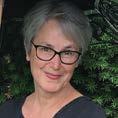
Laurie Falvo, Editor
Chairman: Rick McEdward
Editor: Laurie Falvo
Consulting Editor: Gary Krause
Communication Director: Rick Kajiura
Senior Editorial Assistant: Victoria Mills
Editorial Advisors: Petras Bahadur, Wayne Boehm, Jose Cortes, Jr., Oleg Elkine, Daniel Wang Xin Jiao, Fidelis Kyuma, Bledi Leno, Sylvia Mendez, Silas Muabsa, Shpylchuk S. Mykola, Umesh Nag, Josiah Chijioke Nwarungwa, Joni de Oliveira, Ricardo Palacios, Florian Ristea, Reinaldo Siqueira, Eul Sub Song, Zhan Taraniuk, Samuel Telemaque, Joel Flores Vidarte
Questions? Comments? Email us at Questions@adventistmission.org.
Adventist® and Seventh-day Adventist® are the registered trademarks of the General Conference of Seventh-day Adventists®
Unless otherwise noted, Bible verses are quoted from the King James Version.
TCentral Asia
he oppressive summer heat had ground life to a halt in the city. People who couldn’t afford air conditioning huddled beneath the shade of sycamore trees. The asphalt shimmered, shoppers retreated, and vendors dozed. Everything seemed hushed and drowsy—except at Andrei’s house.
I entered what had once been his living room and slipped onto a wooden bench. I had come to worship with a small group of believers he had started as a Global Mission pioneer. As Andrei stood to preach, I was struck by his appearance. Of Russian descent, he was about 30, short, and built as solid as a tree trunk. His bristling energy belied the wilting weather. His hard features—so at odds with his smile and kind eyes—hinted at a dark past.
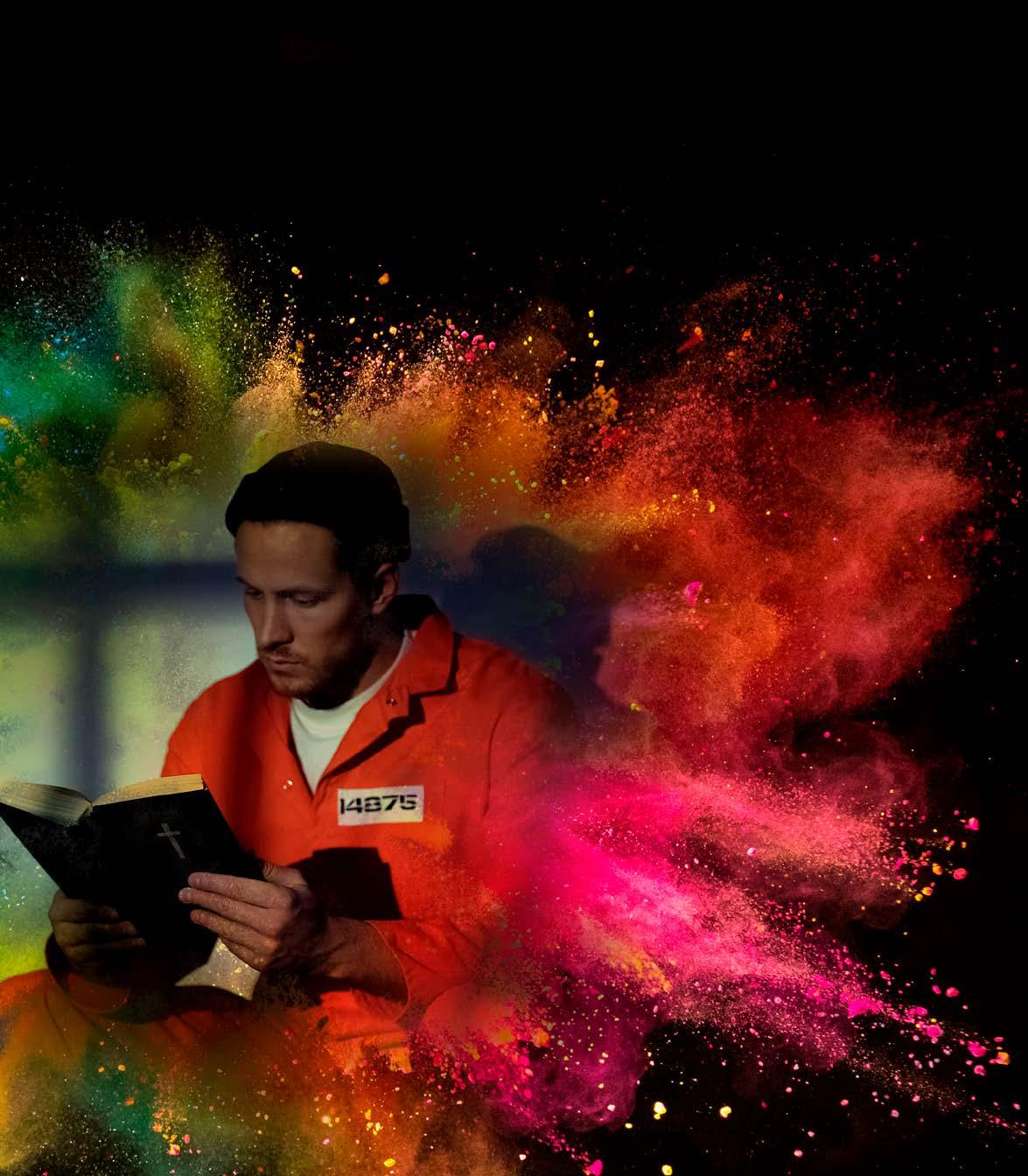
When Andrei finished preaching, he shared his journey to Christ—a story that began on death row at 23. He had worked for the mafia and been caught up in a shooting. He hadn’t pulled the trigger, but as he put it, he was “in the wrong place at the wrong time.”
“The realization that you’re so young and they’re going to kill you is brutally sobering,” he said. “I was depressed and lonely. I couldn’t eat.”
In his cell, Andrei began to sense an unknown presence that felt comforting, like the warmth of the father he never had.
“I began to talk to this presence,” he explained. “I said, ‘I want another life. I don’t know who you are, but I know something is happening,
and I really hope things will change for me.’”
For unexplained reasons, Andrei’s death sentence was commuted to 15 years of hard labor. He was sent to the uranium mines—essentially trading one death sentence for another.
Prisoners exposed to the radiation lost their hair and teeth and wasted away. Yet nothing happened to Andrei. He worked six years without a single side effect.
Then a typhoid epidemic swept through the prison. One day, Andrei carried out 10 bodies. Soon, he contracted the disease himself and lay close to death. About 3 o’clock one morning, he awoke to feel someone gently turn him over. Two young men in shining clothes stood beside him.
“All I can remember is their kind eyes,” he recalled. “And that they didn’t walk out of the cell.”
Andrei thought God was telling him to prepare for death, and he realized he wasn’t ready. But instead of dying, he recovered.
His Life Began on Death Row
Jeff Scoggins is the president of the Minnesota Conference in the United States. He was the field secretary for strategic planning and Global Mission for the Euro-Asia Division when he wrote this story.
Not long after, the uranium mines were shut down during perestroika, the political and economic reform in the Soviet Union in the mid-1980s. The idle prisoners grew restless, so the guards organized events, including a presentation by Orthodox, Buddhist, and Krishna missionaries.
Andrei, proud of his criminal past, refused to speak with these religious visitors. But when they handed out Bibles, he requested one. He had no interest in the grand themes of Scripture. He only wanted to know how old the world was. Yet as he searched the Bible, he met the Lord of the Bible. Overcome with love, he fell to his knees and surrendered his heart to Christ.
The mafia, however, had other plans. They tried to lure him back, and when that failed, they made his life miserable. But Andrei remained faithful. Eventually, he was transferred to a prison in the mountains. Although most inmates spoke the local language, Andrei found 15 men who spoke Russian and were willing to study the Bible with him.
When the guards discovered the group, they interrogated them. To everyone’s surprise, Andrei answered them in their own language. He has no idea what he said, but the guards never bothered them again.
The Bible study thrived until the men encountered the fourth commandment. Andrei and two others resolved to keep the Sabbath, knowing the cost. At first, he traded work shifts, but the guards soon noticed and deliberately assigned him tasks on Saturdays.
Photo
When Andrei refused, the officers surrounded him, demanding to know why. He explained the biblical basis for his decision and even appealed to them to honor the seventh day. His invitation drew fury. The boss leaped onto a table and shouted, “Make your choice! If you don’t start working when you’re told, you’ll be sorry.”
Andrei broke out in a cold sweat, realizing they planned to beat him until he died. He prayed urgently as the men picked up shovels and sticks.
“Choose,” they threatened. “If you refuse to work on the Sabbath, we will break you.”
Andrei asked for water to clean himself up, and the men granted his request. Then, looking the boss in the eye, he declared, “I’m ready to give up my life for God.”
For 10 minutes, the men circled him, fiddling with their weapons, but no one would begin the attack. Finally, the leader shouted, “Go! When Sabbath comes, stay in your cell so no one will see you not working.”
Andrei agreed—until they ordered him not to preach, which he couldn’t accept. So, the guards forbade the inmates from listening to him.
Soon after, the leader suffered a heart attack. When he returned from the hospital, he grudgingly admitted that the constitution allowed Andrei to follow his beliefs. Still, he warned, “I have my own law. I’d better never see you sit down for a moment to rest.”
Andrei worked all day, every day, studying his Bible at night. He received one meal a day until he finally collapsed. He was sent to a clinic where doctors told him there was water collecting in his lungs. He spent a year in the hospital, burning with fever and preaching to the people around him. When he failed to recover, the prison released him, assuming he would soon die.
But again, Andrei lived. He returned to the prison and shared Adventist literature with the inmates. He also looked to see whether anyone else believed in the seventh-day Sabbath. He found a small Seventh-day Adventist church, was baptized, and later accepted the call to serve as a Global Mission pioneer in the city where he spent so many years in prison.
A couple of years later, I met Andrei again at a gathering of Global Mission pioneers. One after another, the workers spoke of discouragement. That no one listened. That authorities threatened them. They were afraid to speak. Some were ready to quit.
I glanced at Andrei. I didn’t ask what he was thinking, but I was pretty sure I knew. After all he had endured, Andrei was fearless. He knew
he was protected and that God had spared him, precisely for this kind of work.
Many years have passed since I last saw Andrei, but his story still inspires me: to trust God’s love, to believe He will stand with us, and to know that nothing—no place, no circumstance, no power—can separate us from Him.
“Who shall separate us from the love of Christ? Shall trouble or hardship or persecution or famine or nakedness or danger or sword? As it is written: ‘For your sake we face death all day long; we are considered as sheep to be slaughtered.’ No, in all things we are more than conquerors through him who loved us. For I am convinced that neither death nor life, neither angels nor demons, neither the present nor the future, nor any powers, neither height nor depth, nor anything else in all of creation will be able to separate us from the love of God that is in Christ Jesus our Lord” (Romans 8:35–39, NIV).
Global Mission pioneers start new groups of believers in unreached areas and among unreached people groups. Please support their ministry with your prayers and financial gifts.
Ways to Give ONLINE
Make a secure financial gift easily by scanning this QR code or visiting gmsda.org/Give7
Call 800-648-5824
In the United States:
Global Mission, General Conference 12501 Old Columbia Pike Silver Spring, MD 20904-6601
In Canada:
Global Mission SDA Church in Canada 1148 King Street East Oshawa, ON L1H 1H8
Transform Lives, One Month at a Time: Join Our Recurring Donor Family!
Please remember Global Mission in your will and trusts. Visit GMsda.org/PG or call 800.648.5824.
Power of Heaven
Mana is 12 years old, and lives on Easter Island, a special territory of Chile. It’s located some 2,200 miles west of the mainland and is considered one of the most isolated inhabited islands in the world.
Mana began learning about God when he was a little boy, and his grandmother took him to church on Sabbaths. But he didn’t go every week. Sometimes he was tired and wanted to sleep in. Other times, he just wanted to relax at home.
Then, a missionary family moved to Easter Island. They started a Pathfinder club at the Seventh-day Adventist church and invited Mana to join. Pathfinders is a club that helps children develop physically, mentally, socially, and spiritually through activities and service. It sounded like fun to Mana, but he wasn’t sure he wanted to join. He worried it might be too hard and that he might fail.
Mana thought about the missionaries’ invitation for a long time. He wanted to say no—but first, he decided to talk with God about it. “God, what should I do?” he asked, kneeling beside his bed.
“Should I join or not?”
Then, he told God about his fears. “I’m scared,” he said. “I feel like I won’t do it right, and I don’t want to fail.”
Mana waited quietly. After some time, he felt God speak to his heart. “Don’t be afraid. If you fail, it doesn’t matter, because I’m going to lift you up, and you’re going to be able to try again.”
Instantly, Mana’s fear disappeared. He joined the Pathfinder club and loved making new friends and participating in club activities. He especially liked learning more about God.
Later, his grandmother gave her heart to Jesus and was baptized. Her sister was baptized
too. Mana saw them go under the water, and he wanted to be baptized as well. Mana spoke with the missionaries about his desire, and they were thrilled. They suggested he get baptized at a camporee on the Chilean mainland. A camporee is a big event where Pathfinders camp in tents and take part in activities that help them grow closer to Jesus.
At first, Mana’s mother wasn’t happy about the idea of him getting baptized. But when she saw how joyful he was in church and with Pathfinders, she changed her mind.
Mana was baptized at the camporee, becoming the first Easter Island Pathfinder to be baptized.
Back home, his mother noticed he was even happier than before. She wanted that same joy—so four months later, she too was baptized. Mana smiled proudly as he watched her go under the water of the Pacific Ocean.
Mana Henua’s name means “Power of the Earth.” Mana means “power” and Henua means “earth.” Still, Mana believes that true power comes only from heaven. It was the power of God that took away his fear of joining Pathfinders. It was the power of God that led his mother to be baptized. And it was the power of God that brought him true happiness.
“God can reach any part of the world,” Mana says. “No matter how far away you are, God can go there.”
Mana still feels scared sometimes. But whenever he does, he remembers what God told him that Sabbath afternoon.
“Every time I feel scared, I remember that God promises to lift me up,” he says.
Mana joined Pathfinders thanks to the missionaries from Adventist Volunteer Service. One of last quarter’s mission projects is a new Adventist Volunteer Service center at Chile Adventist University, where students will learn how to become missionaries. Thank you for giving generously to this important project.
A service of the Seventh-day Adventist Church, VividFaith is an online platform connecting people with service opportunities, including Adventist Volunteer Service. To learn more, visit VividFaith.com.
Chile
Photo for illustration only
Little Moments
It was relentlessly, suffocatingly hot at Bangla Hope, where I volunteer in Bangladesh. I sat among the staff and students gathered for worship under ceiling fans that futilely attempted to dry our sweat. Then, a friend leaned over and whispered, “Bailey, the wind has come!”
I didn’t understand what she meant until a cool breeze brushed my face. “Cooler weather is coming,” she added eagerly. “And rain!”
Excitement rippled through the crowd. Everyone could hardly wait to get outside. As soon as worship ended, the kids charged out the door.
I climbed up to the balcony of the apartment complex to watch the scene unfold below. Children were running and screaming with joy—rejoicing in the wind. Some flew kites made of newspaper. Others carefully tucked their pet pigeons away in preparation for the rain. Most, however, waited beneath the mango trees, hoping for fruit to fall. They aren’t allowed to eat the mangos unless they fall naturally, so the wind is a most welcome event.
I couldn’t help but thank God for this simple thing that brought such delight. Tears welled up in my eyes. My time in Bangladesh hadn’t been easy. But in that moment, it wasn’t the challenges that made me emotional. I was overwhelmed by gratitude—for all the little moments that had made the difficulties worthwhile.
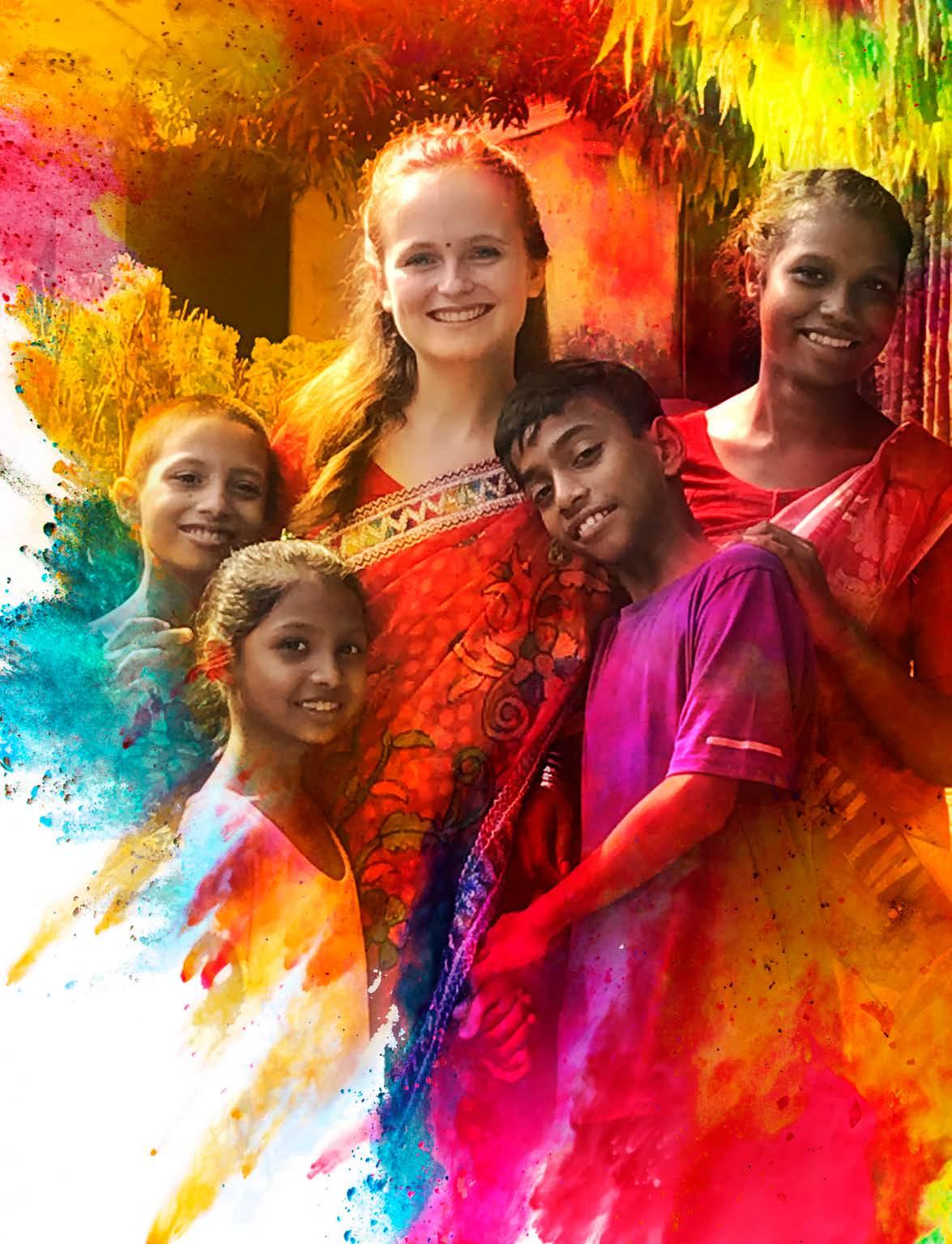
I thought of all the love I’d received since I first arrived. The second I walked through the gate of Bangla Hope, I was surrounded by kids who hugged me and wanted to talk. Wherever I walked, a child clung to my waist on each side, and two more held each of my hands. When they saw me across campus, they’d scream my name and run to me. I didn’t feel like I deserved their love, but I thanked God every time a small hand reached for mine.
I remembered the day I felt so discouraged that I wanted to go home. Four little
preschoolers came running, shouting my name on my way to breakfast. When they reached me, they exclaimed, “Bailey, you will be the mom, and we will be your babies!” I held back tears as I thanked God for this beautiful encouragement.
I thought of all the times a child would knock on my door to give me one bite of a cookie or a piece of chocolate. I knew it might be the only treat they’d get for a long time, but they loved me and brought it anyway.
I remembered a boy who borrowed money from me to give to a poor villager in need. Later, he repaid me with his Christmas money. That act of selflessness warmed my heart.
I recalled when one child got angry and slammed the door into me. The whole scene left me feeling sad. But soon after, one of the boys who usually came to eat my food, while fiercely guarding his, brought me his cotton candy to cheer me up. That gesture meant the world to me.
I thought of the time I walked into my most rowdy class with dread, only to discover they had brought me a bouquet and a banana because they knew it was my favorite fruit.
As I stood on the balcony, reflecting on the many ways God had shown me kindness through these children, the sky darkened, and the rain began to fall.
I went inside with a contented heart, knowing that no matter how hard life gets, there is still so much goodness to be found. Little moments of grace and beauty, falling into our lives like life-giving rain.
If you’re interested in volunteering, visit VividFaith.com to explore service opportunities.
Bailey Krall wrote this story while serving as a volunteer teacher at Bangla Hope Children’s Home, an orphanage and school in Bangladesh. She is an oncology nurse at Loma Linda University Health.
Bangladesh
Bailey Krall with students at the Bangla Hope Children’s Home in Bangladesh
No Longer Lonely in Brussels
Ana Luisa never went to church. She didn’t read her Bible. And she didn’t pray.
She had done these things as a small girl in Portugal, but that felt like a lifetime ago. For the past 18 years, Ana Luisa had worked as a fashion consultant in Brussels, Belgium. She was busy and successful, but deep down, she felt empty and alone.
Then, one day, someone invited her to visit a new Portuguese-speaking church plant. The shy businesswoman hesitated but finally said yes.
The church plant had been launched by Ricardo Pereira, a missionary from Brazil who
had come to Brussels to pastor a Portuguese-speaking congregation. But Ricardo soon realized that a large segment of the city was being overlooked—post-Christian people such as Ana Luisa. He felt a burden to reach them with the Adventist message. He partnered with the Global Mission Center for Secular and Post-Christian Mission to understand their needs and spiritual questions.
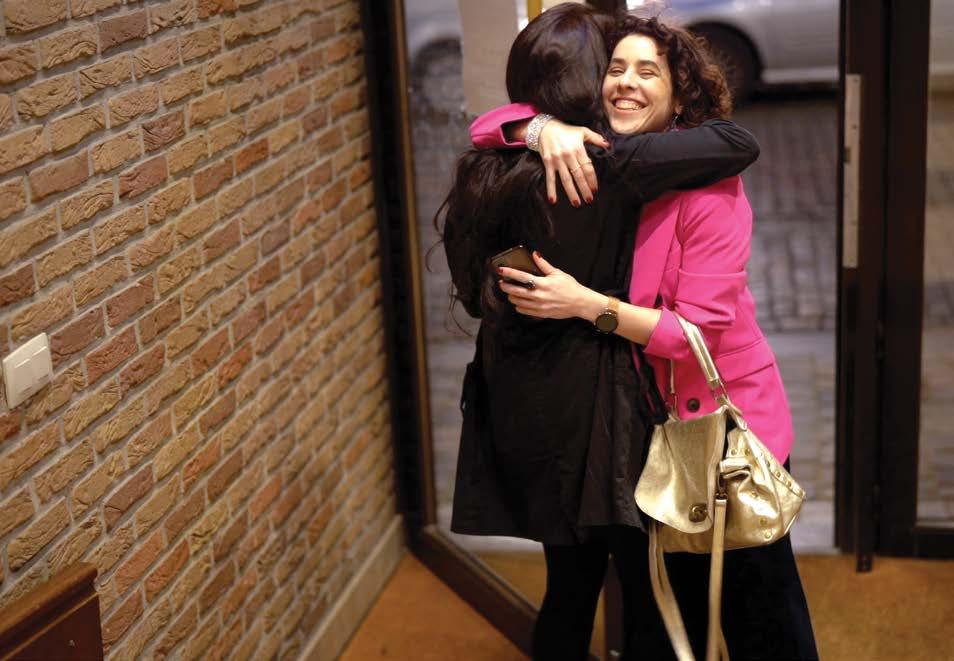
When Ana Luisa walked into the church plant for the first time, she was overwhelmed by the warmth of the welcome she received.
“I’ve never seen that anywhere,” she says. “I felt so much love from the people. They held
Ricky Oliveras is a video producer for the Office of Adventist Mission.
Ana Luisa is warmly welcomed by new friends at the Portuguese-speaking church plant in Brussels
me and gave me food. It was exceptional. I don’t know how to explain it—I was deeply moved.”
Since that day, Ana Luisa’s life has been transformed.
“She loves what we’re doing at the church,” says Ricardo. “She’s made friends and has become part of a big, loving family.”
Ana Luisa agrees.
“I no longer feel lonely,” she says, “and I’ve started praying—for the first time since I was a child.”
Ana Luisa has committed her heart to Jesus and is now preparing for baptism. And she’s not alone—others like her have also come to know the love of Jesus through this church plant.
Looking to the future, the church plans to start an English-speaking congregation with the help of the Global Mission Center for Secular and Post-Christian Mission. We invite you to pray for this growing mission. Please pray for Ana Luisa, the Global Mission Center’s efforts, and the thousands of people in Brussels who don’t yet know Jesus.
As we face these challenges, let’s remember that they’re God’s challenges, too. He has a plan, and He’s invited us to be part of it.
Post-Christianity
One of the most significant mission challenges facing our church today is post-Christianity, which is sweeping across Europe, Australia, New Zealand, and increasingly North America—countries that can no longer be called Christian and are abandoning Christian values.
How we can reach post-Christians for Jesus
Church planting, using Christ’s method of ministry, has proven to be the most effective way to grow and expand the church. Ellen White wrote, “Christ’s method alone will give true success in reaching the people. The Saviour mingled with men as one who desired their good. He showed His sympathy for them, ministered to their needs, and won their confidence. Then He bade them, ‘Follow Me’”—The Ministry of Healing, p. 143. Global Mission has helped to establish dozens of urban centers of influence that minister to people’s needs and start new groups of believers. To learn more about these centers, please visit UrbanCenters.org and MissionToTheCities.org
Ana Luisa studies the Bible with Pastor Ricardo Pereira, a missionary from Brazil who launched the church plant
Unexpected Missionaries
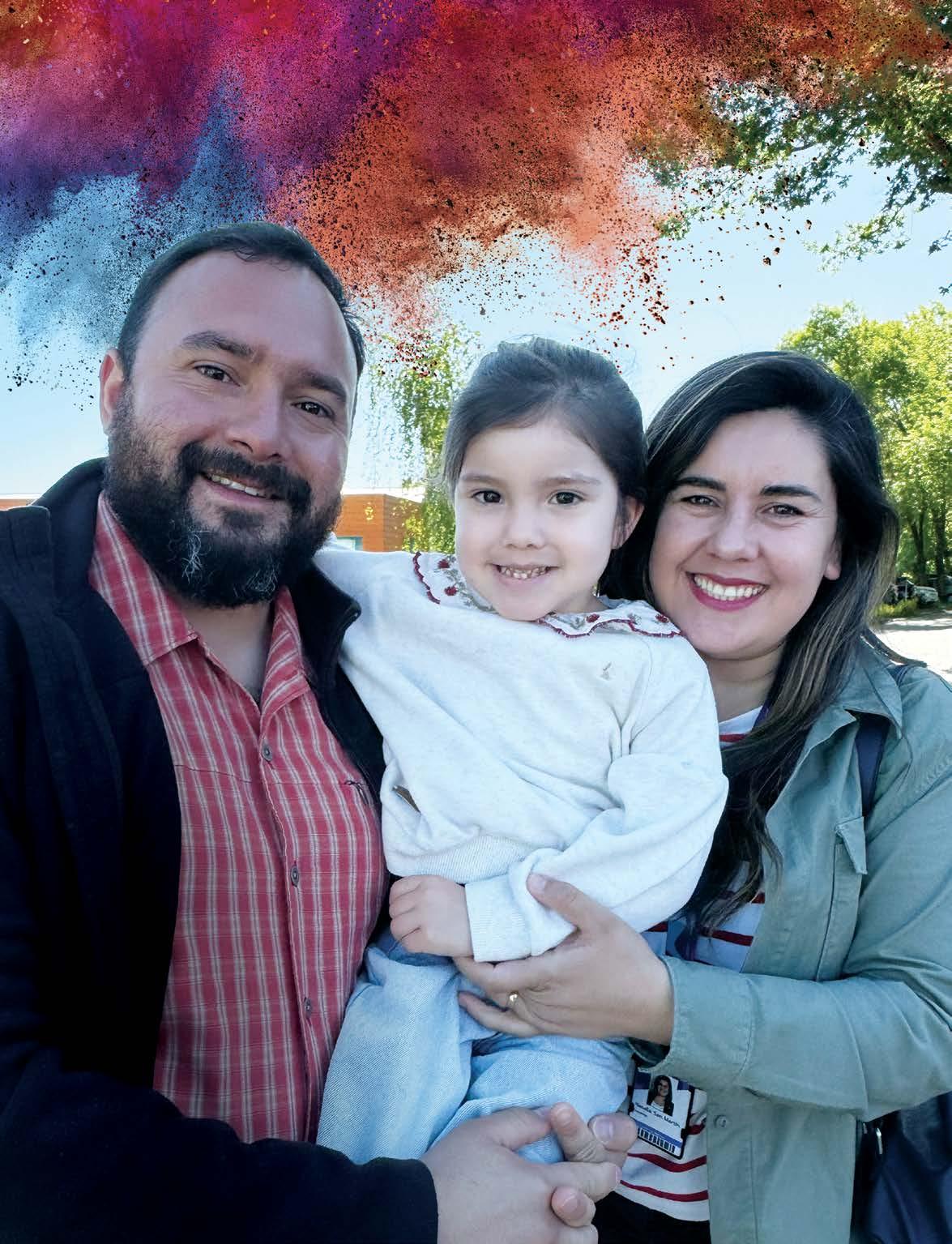
Alvaro, Natalia, and Catalina were missionaries, serving on Easter Island .
Chile
Alvaro and Natalia never planned to become missionaries on a far-off island. The couple had been happily married for nine years in Chile. Alvaro worked as a dentist for the Seventh-day Adventist Church. Natalia was a physical therapist at Chile Adventist University. They had a three-year-old daughter, Catalina.
Then the couple heard a sermon about Adventist Volunteer Service. They felt that God was calling them.
“Can we do this as a family?” Alvaro and Natalia asked each other.
They felt terribly old. It seemed like only university students and young people in their 20s volunteered with Adventist Volunteer Service. Alvaro and Natalia were both 35.
The couple spoke with the university pastor, who had made the appeal in his sermon. He assured them that God calls people of all ages to be missionaries. So, the couple took volunteer training at the university and looked for job openings on VividFaith, an Adventist Church website where people can apply for volunteer positions. They felt drawn to an opening for volunteers to serve a year on remote volcanic Easter Island, and they applied for the position.
A short time later, the couple received the news that their application had been accepted, and they were asked to leave for Easter Island in two weeks. They were surprised by the speed with which God had answered their prayers. It was their first lesson as missionaries. They saw that God was in charge, and they needed to submit.
Two weeks later, the family boarded a plane and flew 5 hours and 30 minutes to Easter Island. They landed at an airport that is considered the most remote in the world. It is located about 2,350 miles (3,780 km) from the next nearest airport.
A very different culture greeted the family. While the Christian influence was strong on mainland Chile, people on the island leaned on ancestral teachings.
On mainland Chile, everyone spoke Spanish, but on the island, everyone spoke the Rapanui language.
Alvaro and Natalia had never felt trapped on mainland Chile, which is one of the longest countries in the world, stretching about 2,650 miles (4,265 km) from the north to the south. But Easter Island covered only 63 square miles (101 sq km), and most of its 3,800 people lived in the capital, Hanga Roa.
Food was never a problem on mainland Chile, but bread was rationed on the island. Sometimes there was no flour. Food arrived by boat, and the
tides didn’t always allow the boats to dock.
Complicating matters, the couple quickly learned that many islanders didn’t like people from the mainland. This made it difficult to make friends and gain people’s trust.
Remembering how quickly God had brought them to the island, Alvaro and Natalia decided to trust in Him and let Him lead.
God began to work in an amazing way. Alvaro worked in tourism rather than dentistry to meet more people and better promote the Seventh-day Adventist Church. Natalia got a job at the local hospital. They bought a small motorcycle and went door to door, making visits and giving Bible studies.
The couple also led the local Adventist church, which had 10 elderly members when they arrived. For the next year, Alvaro and Natalia did everything that a pastor does except baptize and officiate weddings. They even conducted a funeral.
As they worked at the church, they reopened clubs for Pathfinders and Adventurers. To their delight, about 25 children showed up for the first meeting. As the months passed, the number of children grew and grew. The couple trained local leaders and placed the Pathfinder and Adventurer clubs into their hands. When they left, the two clubs had 95 children, and the children were bringing their parents to church on Sabbath. One Pathfinder and his mother had also been baptized. A pastor flew to the island to carry out the baptism.
Alvaro and Natalia said it was a challenging year, but they wouldn’t change anything about it.
“Thanks to God, the church now has local leadership on the island, and the Pathfinder and Adventurer clubs have remained open,” Natalia said. “We believe that God did a lot in the year that we were there. He opened the way.”
Thirteenth Sabbath Offering Project
Alvaro, Natalia, and Catalina served as Adventist Volunteer Service missionaries for one year on Easter Island after hearing a sermon at Chile Adventist University and receiving volunteer training there. A recent Thirteen Sabbath project offering will help open an expanded Adventist Volunteer Service center at the university to train even more missionaries.
A service of the Seventh-day Adventist Church, VividFaith is an online platform connecting people with service opportunities, including Adventist Volunteer Service. To learn more, visit VividFaith.com.
Providing Hope for the Roma People
Mirel’s* lifetime habit didn’t only drain his wallet—it nearly cost him his life. He smoked as many as 120 cigarettes a day.
Mirel is part of a Roma community, one of Romania’s largest ethnic minorities, located in Târgu-Mureș.
Traditionally nomadic, the Roma are known for being hard-working, hospitable, and closeknit. Yet they often face discrimination, poverty, and limited access to education and healthcare.
Mirel didn’t realize how dangerous smoking was until he suffered a stroke. His perspective changed when an Adventist friend invited him to visit the Hope Church and Center of Influence in Târgu-Mureș.
Mirel enjoyed his experience and began attending regularly. He studied the Bible with Pastor Horea Tămășan and decided to be baptized. Only one thing stood in his way—the 120 daily cigarettes. He knew he would have to quit first.
It seemed impossible, so he postponed preparations for baptism. “Don’t wait,” Pastor Tămășan encouraged. “God will take care of this.” Church members prayed with Mirel, and he finally quit through their support and the help of the center of influence.
Hope Church began in 2020, when Pastor Tămășan and a group of Roma members prayed about establishing a center of influence to uplift their fellow Roma people. They decided to start a church specifically for the Roma, sharing a building with another congregation. It worked like a magnet. Roma members who had been attending other Adventist churches in the city gathered there, and non-Adventists came, too. By 2022, some 80 Roma believers were worshiping together every Sabbath.
Launching their own congregation has transformed the Adventist Roma community. For the first time, they have embraced church leadership opportunities, serving as elders, Sabbath School teachers, and program leaders, some even accepting the invitation to preach. As they invest in church life, they’ve discovered that their family and professional lives have been blessed.
As Pastor Tămășan prepares people for baptism, he introduces lifestyle changes that improve health, strengthen family life, and give children a better future. Hope Church encour ages the Roma to delay early marriages, operate their businesses according to local laws, and pay taxes faithfully. These ideas challenge long-held traditions, but the community listens because they see how lives improve when others follow these principles.
“The Roma people request health education,” Pastor Tămășan explains. “They are very inter ested because they can see how their people are getting wiped out because of their lifestyle. Many have become vegetarians because of our health programs.”
In response to these blessings from God, the Roma believers pour themselves wholeheartedly into church life.
“Our worship service and Sabbath school programs are no different from other Adventist churches,” Pastor Tămășan said. “But our Sabbath School attendance is much higher, and the Roma respond to the lesson study with intensity. They are keen to give proper answers when the teacher asks questions. They’re a lively group!”
In 2023, Pastor Tămășan and his team launched the Hope Center of Influence and laid plans to construct their own building with multiple rooms for classes and semi nars. The Roma are passionately fundrais ing. Each person has set aside money for the project, and many have prayed specifically for jobs so they can give to God’s work.
“Once, when we passed the basket to gather the offerings, there was an en velope with no name,” Pastor Tămășan said. “It only said, ‘for construction.’ But those who gathered the offering saw who put it in: the poorest person in the church. Until now, this person has given the most money for the project.” The Roma are just as gen erous in supporting each other. When one disabled man shied away from baptism because
Sandra Dombrowski is a freelance writer living in Connecticut, United States.
She is passionate about highlighting, promoting, and working in urban ministry.
Romania
he lacked appropriate clothing for the occasion, fellow members purchased what he needed so he could get baptized with dignity.
The church’s youth group regularly shares music, food, and gifts with an orphanage and home for the elderly. It’s one more way they bless the community while allowing Christ to
Urban Centers of Influence
Global Mission supports wholistic mission to the cities through the ministry of dozens of urban centers of influence. These centers follow Christ’s method of ministry to meet people’s needs and start new groups of believers. Please support urban centers of influence by visiting Global-Mission.org/giving.
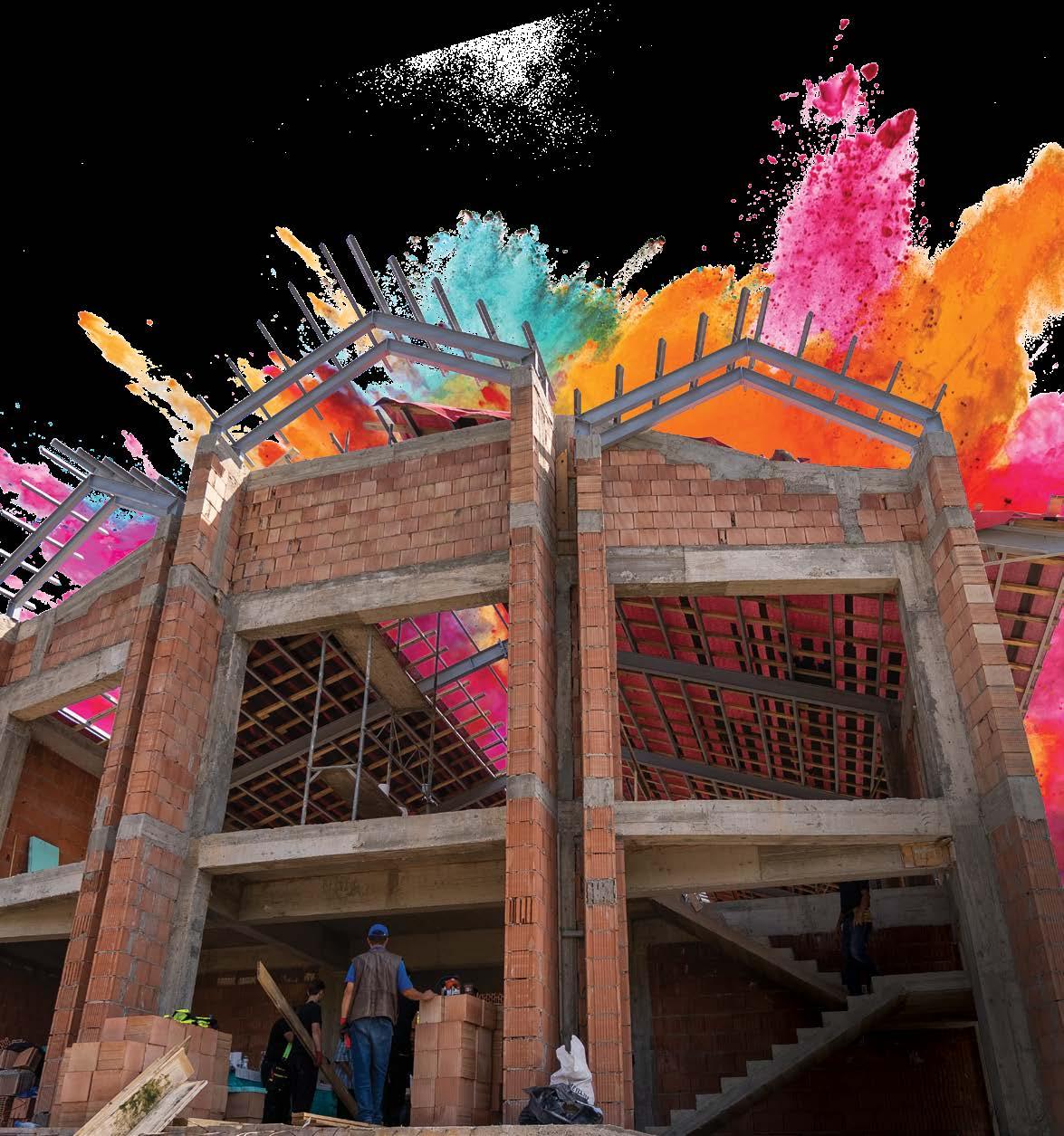
This towering building under construction will soon house the Hope Center of Influence and church for the Roma people, with plenty of space for children's classrooms and outreach seminars for the community
Struggling Behind Closed Doors
Avuyile
When Avuyile arrived in Umhlanga, South Africa, she had no family, no friends, and no idea where she belonged. She had just started her first job, far from home, and the loneliness was overwhelming. She was searching—not just for a church, but also for a place where she truly felt seen. Then, she visited Lighthouse Adventist Church—and everything changed.
“When I came here, it just felt like home,” Avuyile says. “There was a warmth in this place that I had never experienced before, and I just kept on coming back.”
Avuyile first heard about the Seventh-day Adventist Church in university, through someone close to her. Curious, she began attending, but when she moved to Umhlanga, she had to find a new church family on her own.
“Normally, I’m someone that just comes to church and disappears soon after,” Avuyile shares. “But they won’t let you go. They’re really interested in who you are as a person, and that really touched me.”
In Lighthouse, Avuyile found what she was looking for—a place to belong. Over time, her faith deepened.
“I really grew in my knowledge of the Word of God, and I felt like this is the right place for me to grow personally,” she adds.
One of the first people who welcomed Avuyile was a church member named Thabo. He feels a burden to start an urban center of influence in Umhlanga and is part of a team researching the community’s needs and planning the facility.
The team has learned that Umhlanga is a city of contrasts. It’s home to wealthy individuals and young professionals, but also to families struggling behind closed doors. Broken relationships, addiction, and loneliness are hidden beneath the surface.
“Some of the social problems we found are family-related,” Thabo explains. “Broken marriages, domestic-related violence, an upsurge of drug use. But because it’s an affluent society, people can hide those things. Yet, they all have an impact on family life.”
The urban center of influence will be a safe place where people can find counseling, family support, and a true sense of belonging, just like Avuyile did at the church.
“For us to be able to do what we need to do, we need to understand the needs of the society,” says Thabo. “They need counseling. That, I think, is where the opportunity is for us, and that’s what we’d like to do.”
This center will be a place of hope, healing, and transformation—where anyone, from any
The urban center of influence will be a safe place where people can find counseling, family support, and a true sense of belonging, just like Avuyile did at the church.
background, can find answers to life’s challenges.
“The truth is, everybody needs Jesus,” Thabo says. “With all these problems in society, there’s only one permanent solution.”
The Thirteenth 13th Sabbath Offering for third quarter 2025 will help make this vision a reality.
“We believe that Christ’s method is one that works,” Thabo says. “That’s what’s going to work for us here. We’ve got to mingle. We’ve got to make sure we can relate to them as friends first.”
Please pray as church members such as Thabo establish a center of influence in Umhlanga. Thank you for supporting the Thirteenth Sabbath Offering.
Christ’s Method of Ministry
“Christ’s method alone will give true success in reaching the people. The Saviour mingled with men as one who desired their good. He showed His sympathy for them, ministered to their needs, and won their confidence. Then He bade them, ‘Follow Me’” (The Ministry of Healing, p. 143).
Mission Offerings
Your mission offerings, given at Sabbath School, help support the mission ministry of our church. Thank you!
Ricky Oliveras is a video producer for the Office of Adventist Mission
South Africa
Shining in a Dark Place
We urgently need more volunteers at the medical station.”
I couldn’t help but overhear the conversation next to me.
“We’ve had just one person running it every day since we started, and he’s exhausted. He needs a break.”
I recognized the desperation in Alexis’ voice.
“I’m an emergency medical technician, and I’d like to help,” I offered enthusiastically.
Alexis was thrilled. We arranged a time, and she came to pick me up. As I climbed into her vehicle, I noticed she wore her hair in two braids.
“You might want to put your hair up,” she said with a smile. “All the kids have lice.”
She honked briefly at a car trying to back into us and somehow found space to swerve around it. “I’ll have someone show you the medical station when we get there. People shouldn’t come to you until they’ve showered and received clean clothes.”
We made a brief stop to pick up another passenger. “I’m not sure what supplies we have now,” she added. “Let me know if you need anything, and I’ll see what I can find. It can be hard to get things now.”
The Middle East and North Africa Union provided this story about the Adventist Learning Center in Beirut, Lebanon. This urban center of influence, directed by Alexis Hurd-Shires, provides education and care for Syrian and Kurdish refugee children. During bombings, it also offered humanitarian aid to displaced families.
I looked down at my backpack. I’d packed it as best I could: stethoscope, blood pressure cuff, pulse oximeter, trauma shears, pen light, and flashlight. It all seemed so basic.
We arrived at the center and began unloading bags of donated clothes. A young man offered to show me to the medical station—a small area walled off by cabinets. Inside were a folding table and two rows of chairs.
I reviewed the meager supplies: a nearly empty burn kit, non-sterile gauze, two rolls of tape, iodine and alcohol wipes, antiseptic and antibiotic ointments, cloudy eye drops, a few bandages, gloves, masks, cotton swabs, tongue depressors, tweezers, surgical scissors, and saline.
The center came alive within minutes as the first carload of displaced families arrived. Mothers and children filled the waiting area. A volunteer played songs on his guitar while
children sang and colored as they waited to shower.
“Here’s a paper for you,” said an eighth-grade student at the learning center.
I read the brief note: 2 children ages 2 and 2. Lice, cuts, and infection
Soon, two crying toddlers were plopped onto the chairs. The diagnosis was accurate—lice, cuts, and infections. Gently, I cleaned and disinfected the crusty, weeping wounds on their scalps, then applied antibiotic ointment. I treated the other scrapes and wounds as I found them.
All day, people poured in. There were sores to flush, burns to dress, lice to remove, and infected feet to clean and bandage. Some needs went beyond my ability, such as a pregnant woman whose water had broken during the bombing. It was too early for her to deliver, and she needed hospital care. I hated the thought of her returning to the streets with no shelter. I did my best to meet not only her physical needs but her spiritual ones as well.
“Can I pray with you before you go?” I asked.
“Yes!” she answered eagerly.
When I opened my eyes at the end of our prayer, tears were in hers. She reached for my hand, her expression filled with trust.
“Habibti!” she said—the most affectionate Arabic word, meaning “my beloved.” The love of Jesus had melted her heart.
Each family was driven back to their street home: clean with new clothes, bandaged wounds, and full tummies. But more important, they had encountered—perhaps for the first time—the love of Jesus through every volunteer who had spent the day with them in the clothing area and in the children’s play center, braiding their hair or bringing them back and forth in cars, binding their wounds, cooking for and feeding them, and sending hot meals to family members who couldn’t come.
I was exhausted, but my heart was happy. I couldn’t help but think of the words of Jesus: “Inasmuch as ye have done it unto one of the least of these my brethren, ye have done it unto me” (Matthew 25:40).
Lebanon
Urban Centers of Influence (UCIs)
More than 100 years ago, Ellen White championed an outreach model that she called centers of influence: small platforms for launching Christ’s method of ministry and connecting to city communities. Global Mission has helped to establish dozens of UCIs that minister to people’s needs and start new groups of believers. To learn more about UCIs, please visit UrbanCenters.org and MissionToTheCities.org. Photo for illustration only
The Tower That Builds More Than Muscles
If you were going to create an urban center of influence for young people, how would you do it?
In 2003, a few Adventist families in Hanover, Germany, began exploring possibilities. They discovered that the Kronsberg district of Hanover had a large population of children. When they surveyed residents about their needs, the top request was for a safe place where kids could enjoy outdoor activities.
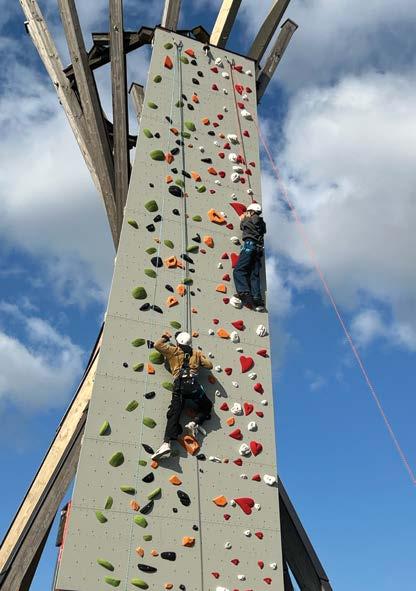
The church members secured an undeveloped plot of land, erected a 65-foot climbing tower, and named it Kronsberg Life Tower.
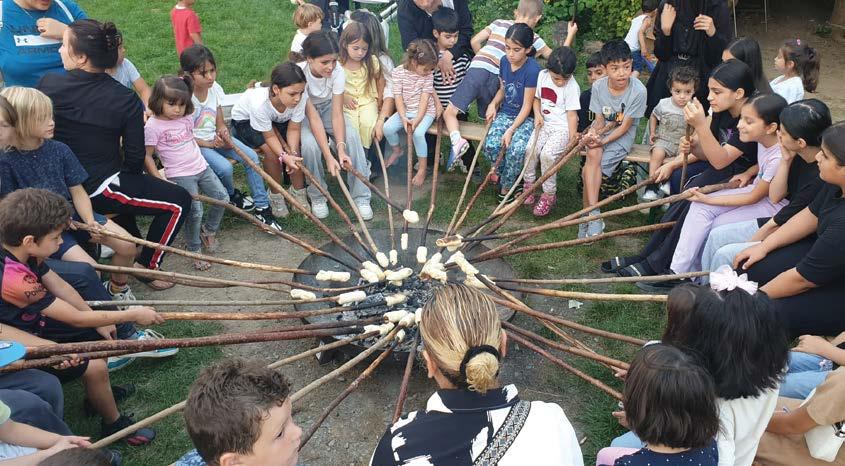
Life Tower is open on Wednesday afternoons during warm weather for supervised climbing, group activities, and games. The evening culminates around a campfire, where everyone gathers to roast “stick bread.” There must be something deeply satisfying about wrapping a piece of bread dough around the end of a stick and holding it over the glowing coals, with friends close on either side. The weekly program is so popular, it’s called Stick Bread Kids.
The climbing tower, Stick Bread Kids, soccer, and beach volleyball have attracted children and their families to Life Tower since 2005. But in 2021, the center took on a new dimension.
Christian Lutsch, a young theology graduate from Hanover, had planned to spend a year abroad teaching before beginning pastoral ministry. When the pandemic interrupted his plans, he returned home.
“I’m not doing anything, so let me know if you need any help,” Christian told his friend Marco Knorr, a social worker who runs Life Tower. Marco was thrilled—this was an answer to prayer. With help from the Friedensau Institute for Evaluation, an Adventist entity that helps organizations improve their projects, they cast a new vision for Life Tower.
Christian and Marco noticed that many children came from refugee families from various countries and that the kids rarely mixed outside their groups. So, they focused on activities designed to build trust and understanding. As the children play together, friendships form
Sandra Dombrowski is a freelance writer living in Connecticut, United States. She is passionate about highlighting, promoting, and working in urban ministry.
Germany
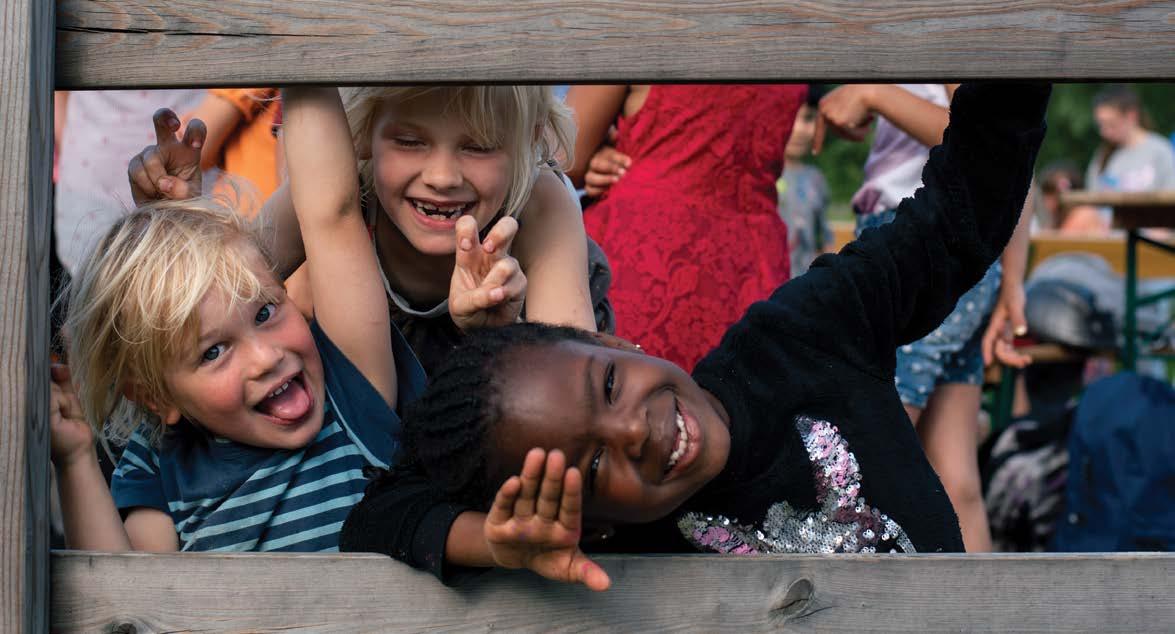
Children make friends at the Life Tower center of influence
regardless of ethnic or religious background. Slowly, walls of fear and prejudice begin to crumble.
Parents have noticed the open-hearted environment. “As soon as we enter this place, we feel peace,” said one parent. “We feel at home and welcome.” This acceptance is significant for mothers who face racism and suspicion daily because they wear a hijab or have many children.
Life Tower is registered as a nonprofit organization and can’t use religious content in its programming. However, the local Adventist church can sponsor an outdoor church service once a month. So far, the service has attracted only a few individuals, but it’s reaching one unlikely person—a man in a wheelchair who hated the Bible.
of God would allow this?” Angry yet curious, he continues to attend.
One day, after Christian preached on God’s righteousness and justice, the man approached him with tears in his eyes. “I wish I had the faith that you have,” he said.
“Away with this book!” he told Christian. “It’s caused so much suffering in this world, and you can’t imagine the suffering I’ve seen. What kind
Christian and Marco also restarted the Pathfinder club, which was first established by Life Tower’s founders, and invited the young people to join. Now, the entire Pathfinder membership consists of non-Adventist kids!
When Christian took eight Pathfinders to a camporee, they started asking questions. They wanted to know more about God and what the Adventist church is like. “Because they ask questions,” Christian said, “we have the right to share the gospel with them.”
God is using Kronsberg Life Tower to bring peace to people in Kronsberg—young and old— with a climbing tower, stick bread, and His Word.
Please pray that God will continue to bless Kronsberg Life Tower as they plan to reach even more children for Jesus.
Urban Centers of Influence
Global Mission supports wholistic mission to the cities through the ministry of dozens of urban centers of influence. These centers follow Christ’s method of ministry to meet people’s needs and start new groups of believers.
Please support urban centers of influence by visiting gmsda.org/Give7.
Children test their strength and develop confidence and climbing skills on the 65-foot climbing tower
Children make stick bread by wrapping a piece of bread dough around the end of a stick and holding it over coals
The Gallant Gertrude Green
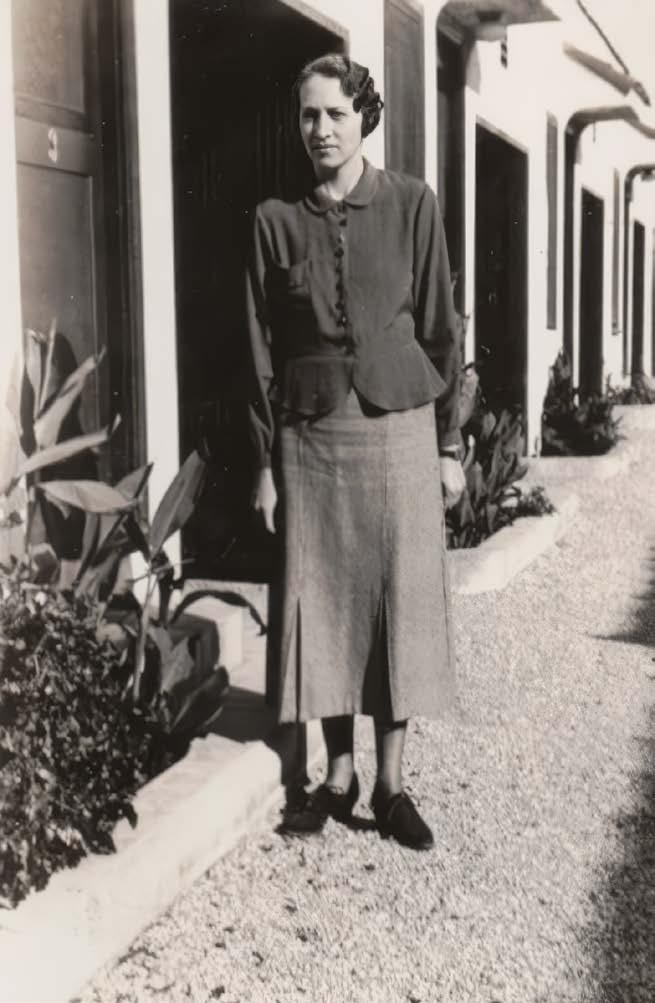
IGilbert M. Valentine has served internationally in teaching and senior administrative roles in Adventist higher education. This story is adapted from a biographical article he wrote for the online Encyclopedia of Seventh-day Adventists. We invite you to visit encyclopedia. adventist.org to enjoy more stories about Adventist missionaries.
teeth before the Japanese army captured everything,” Gertrude Green wrote to her mother in 1941. This harrowing experience at Yencheng Hospital would be one of many during her medical missionary service in China.
In 1936, Gertrude was serving as the senior charge nurse at the New England Sanitarium and Hospital in Stoneham, Massachusetts, when a visitor arrived who would change the trajectory of her life. Dr. Harry Miller, founder of numerous Adventist hospitals and clinics in China, invited her to serve as director of nursing at Shanghai Sanitarium. She arrived that December to take up her responsibilities.
In January 1937, Gertrude traveled to a language school in Nanking (Nanjing), planning to study Chinese for a year with other new missionaries. By June, the summer heat and mosquitoes in the plains became unbearable, and she, with several others, continued her studies in the cool, breezy hills of Guling. The peace she felt there would soon be shattered.
On August 13, the Japanese attacked Shanghai. As they advanced inland, they prepared to
bomb Nanking and the railroad to Guling. The missionaries fled immediately, finding temporary shelter in Kiunkiang (Jiujiang), some 15 miles south of Guling. There, Gertrude was shocked to see Dr. Miller, who had stopped on his way from Shanghai to ask her to work with him at his new clinic in Hankou (Wuhan). He also needed her assistance at a new sanitarium and hospital in Wuchang, a few miles from Hankou.
During her time at these new facilities, Gertrude worked incessantly, caring for ever-increasing numbers of wounded soldiers and refugees.
China
Gertrude Green
Due to the continuing Japanese advance, the United States advised evacuation. Gertrude was among the missionaries who fled to Hong Kong on a special evacuation train on December 25, 1937. By the end of January 1938, the fighting had subsided in Shanghai, and the missionaries returned there to work.
In July 1939, Gertrude was assigned the role of director of nursing at Yencheng Sanitarium in Henan province. She would assist Dr. Winston Nethery, the medical director at the denomination’s largest hospital in China. However, it was not until nine months later that circumstances stabilized sufficiently at the remote location for her to make the transition.
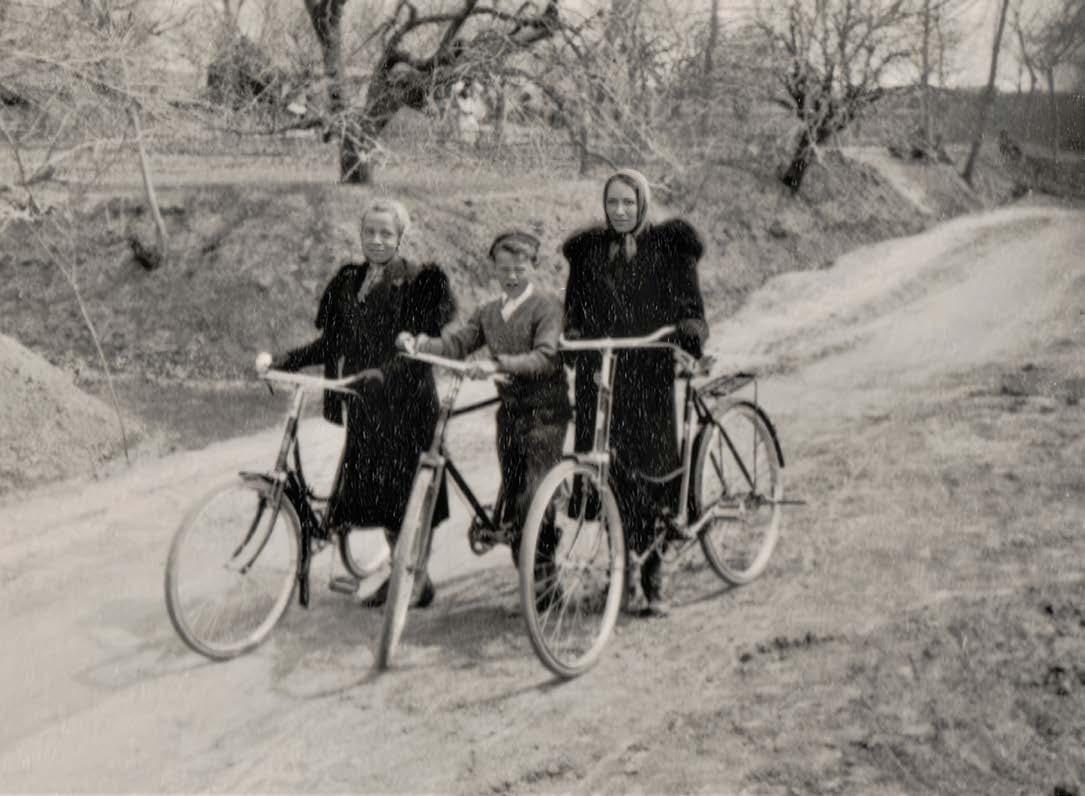
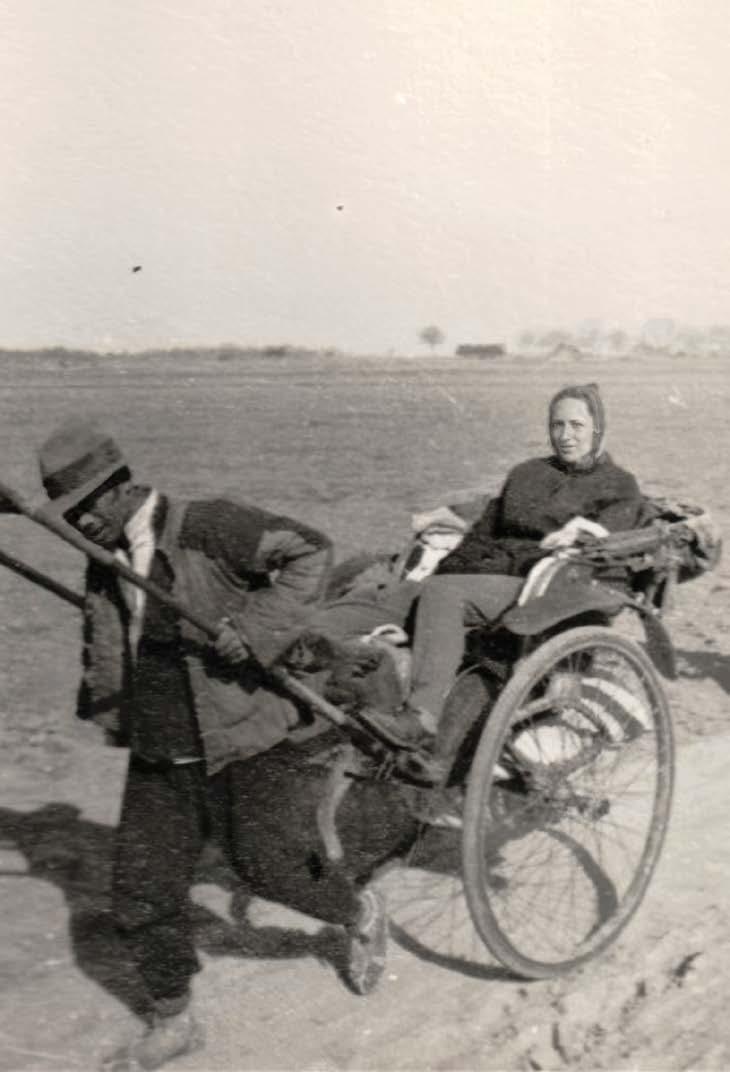
Gertrude set off in March 1940, accompanied by a Chinese national nurse named Miss Ma and missionaries Dr. Nethery, Thelma Smith, and Thelma’s 12-year-old son, Herbert. Following a day-long train trip, the group embarked on a 12-day, 250-mile bicycle journey to Yencheng. Laborers transported 16 large hand carts filled
with medical and food supplies, while Miss Ma followed behind in a rickshaw.
Six months after Gertrude arrived at Yencheng, Dr. Nethery was called to Shanghai to replenish supplies. Wartime circumstances prevented his return, leaving Gertrude responsible for administering the hospital, nursing school, and nursing service.
Japanese aircraft bombed the hospital compound on the morning of January 28, 1941, based on incorrect intelligence that nationalist army officers were holding a council there. Gertrude’s apartment—where she had been sitting at her kitchen table—was seriously damaged. There were no casualties, but the hospital buildings were rendered uninhabitable. The wards were evacuated, and for three weeks, Gertrude and other staff members took refuge in a student’s home—a one-room hut with a dirt floor.
Taking what belongings she still possessed, Gertrude made her way by Chinese wheelbarrow, 40 miles through the backroads to
Missionary Thelma Smith, left, her son, Herbert, and Gertrude Green on their 250-mile bicycle trek to Yencheng Sanitarium in Henan/Honan Province in 1940
Xuchang (Hsuchang), then through the Japanese frontlines to a railhead at Wangtien, and finally by train to Shanghai. From there, she was repatriated to the United States and granted an open-ended furlough until it was safe to return. During the remainder of the war, Gertrude furthered her education and accepted several short-term nursing assignments.
In February 1947, Gertrude returned to Yencheng Sanitarium to serve as director of nursing and chair of the hospital board. This time, she worked with medical director Dr. Paul Hwang, a national physician. Her priorities were repairing buildings, reestablishing the nursing
school, and reassembling as many former students as possible. By August, the nursing school was functioning.
In early December, the communist army advanced from the north. Because their attitude toward foreigners was harsh, the church ordered the nonnatives to evacuate. Gertrude hastily packed the remaining drug supplies and medical equipment and shipped them to the hospital in Wuchang. In mid-December, communist forces destroyed the railway bridges north of Yencheng and raided surrounding villages. Gertrude and mission president Merritt Warren led a group of staff and nursing students on a harrowing mid-winter escape on foot and by freight train to Suiping. There, fighting raged around them, temporarily halting their progress. The invading forces destroyed the Yencheng hospital.
After three perilous weeks of furtive travel, the group reached the safety of Hankou, where 14 students enrolled in the nursing school at the Wuchang Sanitarium. Gertrude and others proceeded to Shanghai for meetings at the division headquarters.
In March 1948, Gertrude returned to Wuhan to help teach her nursing students, eight of whom completed their course that summer. In August, she was called back to Shanghai, where she served for 12 months as director of nursing and director of the school of nursing. Six of her students, whose education had been interrupted by war, followed her to Shanghai and graduated with the senior class in the summer of 1949.
When communists raided Shanghai in August 1949, expatriate church officials withdrew to Hong Kong. Initially, it was believed that medical personnel could remain, and Gertrude, among others, volunteered to stay. As conditions deteriorated, however, it became clear that the presence of foreign staff hindered national administration and put them at risk. Gertrude was the last American Adventist nurse to withdraw from war-torn Shanghai, departing for Hong Kong with the final group of foreign medical staff on September 20, 1949. By October, she was settling into a new administrative role at Youngberg Hospital in Singapore.
Gertrude returned to Rochester, New York, in 1950 to care for her ailing mother. Then, in March 1951, she accepted a call to direct the nursing
A porter transports Gertrude Green by Chinese wheelbarrow
school at the new Adventist Hospital in Bangkok, Thailand. She arrived five days before it opened.
The shortage of adequate clinical midwifery experience for nursing students soon jeopardized the program’s government accreditation. To address the issue, the hospital board approved the construction of an on-site midwifery building. Gertrude was tasked with planning its design, overseeing its outfitting, and developing a new curriculum.
The two-story, 30-bed facility, which provided accommodation for 12 midwifery students, classrooms, and mission offices, opened on January 1, 1955. It was inaugurated by Madame La-aid Pibul-Songgram, the wife of Thailand’s prime minister. To ensure program sustainability, Gertrude arranged for national staff to receive the same midwifery training she had in New York.
In March 1956, Thailand’s Ministry of Public Health recognized that the midwifery training program not only met requirements but should also serve as a model program for other institutions.
Gertrude’s expertise, experience, and deep compassion earned her the respect of staff and students. She became friends with the Thai royal family, attended royal birthday celebrations, and was occasionally visited in her hospital apartment by the queen of Thailand’s sixth king, who contributed to her midwifery program.
Gertrude led the midwifery program for 37 years, navigating many challenges and political upheavals.
In 1979, she formally retired, but the hospital board appointed her to the same position as a volunteer. She and the grateful administrators recognized the value of freeing up a salaried position for the hospital. She continued serving as full-time midwifery program director for another 11 years.
In the early 1990s, friends persuaded Gertrude to return to the United States. Some of them traveled to Thailand to help her prepare for the move. She settled in Hendersonville, North Carolina, but still traveled yearly to Thailand to visit long-time friends or assist with special projects. In 1997, the midwifery clinic building was named the Gertrude Green building in her honor. Gertrude died on March 12, 2002, at the age of 94.
Gertrude Mary Green dedicated decades of her life to nursing, teaching, and administration in China and the Far East. Her commitment to nursing education and Adventist health care during wartime and political upheaval exposed her to danger, loss, and repeated displacement. She served as a model of sacrificial service and commitment to the highest standards of her profession.
Photos courtesy of Barry Mahorney
I Will Never Leave You
Why Lebanon?” I had just accepted my first international position with the Adventist Development and Relief Agency (ADRA), and my family and friends were incredulous that I would leave the safety of Armenia to work there. An armed conflict had just broken out in the south, and the country was plagued with instability. “Besides,” they argued, “you don’t know a single person there.”
My answer was simple: “I don’t need to know anyone. I believe Lebanon is where God wants me to be and that He will guide and protect me while I’m here.”
My parents were worried. But as we prayed together, they reached a profound realization: Security doesn’t come from a place but from God. With their acceptance, I packed my bags and stepped into an unpredictable future.
When I boarded the plane to Beirut, I prayed, “Lord, please place someone beside me whom I can bless or who can bless me.” Soon, a young man sat beside me. He showed me kindness throughout the flight and at the airport exit asked one last time whether he could be of assistance. I politely declined, and we went our separate ways.
Imagine my surprise when I saw him at church the next Sabbath and learned he was the pastor of the Arabic-speaking Adventist church in Beirut! Of all the people who could have sat beside me on the plane, God chose a Seventh-day Adventist pastor who would look
after me. This experience was a reminder of His promise, “I will never leave you nor forsake you.”
My first months in Lebanon were filled with excitement and challenges. I saw firsthand the struggles of refugees and vulnerable Lebanese people and had the privilege of helping to relieve their suffering. Then, the conflict escalated. One by one, airlines canceled flights to and from Beirut. Among them was my flight to Thailand, where I and several colleagues were scheduled to attend an ADRA event. I managed to secure a seat on the sole airline still operating.
I had planned to return from Thailand to Lebanon before flying home to Armenia for a visit. But by the time my meetings ended, the situation in Lebanon had worsened. Buildings were crumbling under strikes, and embassies were urging their citizens to evacuate immediately. I received word to go directly to Armenia.
I cried during the flight from Thailand, torn between obedience and sorrow. Leaving Lebanon felt like a betrayal. I had gone there to serve, not flee. The country’s pain filled my thoughts, overshadowing the steadfast care God had shown me so many times. But He didn’t let me forget for long.
I was chilly on that flight, so I pressed the call button to request a blanket. The flight attendant’s words startled me.
“Can you speak Armenian?”
“Yes,” I answered, surprised. “But how could you tell?”
Anush Safaryan began serving in 2024 as the program coordinator for the Adventist Development and Relief Agency in Lebanon.
Lebanon
She smiled. “It’s your ticket. I saw you’re flying to Armenia next. I’m Armenian too.”
She offered me a better seat where I could stretch out and some juice to refresh me. In that vast world of strangers, meeting another Armenian who provided for my needs felt like a personal embrace from God.
Upon landing, I contacted the airline through WhatsApp to request a refund for my unused ticket from Thailand to Lebanon. My heart sank when I was told it was impossible. But God wasn’t done with this story yet.
Soon, I received another message on WhatsApp. “Hi, Anush, this is the support officer who assisted you earlier. I too am Armenian,” he said, “and I want to help you get your refund. I’m risking my job doing this, but for some reason, I trust you.”
Tears filled my eyes for God had orchestrated another moment of care. “I think God touched your heart,” I responded. Little did I know my comment would begin an ongoing conversation about spiritual topics.
“I haven’t been to church or read my Bible in years,” he confided. He saw this experience as a call from God to return to Him and study His Word. At one point, he told me that he felt like he had found something he had lost.
In Armenia, I took on a communications role, urging ADRA offices around the world to raise funds for Lebanon. When the time came to return, I felt immense joy. My family, though concerned, stood firm in faith. My father’s
words echoed his trust in God: “Nothing has changed since we first trusted Him when she left. Why would we trust Him less now?”
Lebanon’s future is uncertain, yet God remains faithful. Through His constant presence and provision, and the support of generous people around the world, ADRA continues to serve the most vulnerable with unwavering compassion. Every day, our Father proves His promise to never leave or forsake us.
About ADRA
The Adventist Development and Relief Agency is the international humanitarian arm of the Seventh-day Adventist Church, serving more than 120 countries. Its work empowers communities and changes lives around the globe by providing sustainable community development and disaster relief. ADRA’s purpose is to serve humanity so all may live as God intended. To learn more about ADRA’s global mission, visit ADRA.org
When you give to the mission offering during Sabbath School, a portion of that offering helps fund ADRA’s important ministry around the world. Thank you for your generous support.
A Touch That Transforms
Fabiola lived in the peaceful surroundings of Belo Horizonte, Brazil, yet peace was the last thing she felt. A breast cancer diagnosis had shaken her world, and with the added fear of COVID-19 spreading across the country, death felt closer than ever. Meanwhile, in the city of Salvador, Luisa’s world was collapsing. A betrayal shattered her marriage of 23 years, leaving her to discover she had contracted syphilis from her husband.
Additionally, her mother was diagnosed with Alzheimer’s, and she witnessed a neighbor take her own life. The thought haunted her— maybe she should do the same.
Both women were drowning in their suffering. Like the woman who had bled for 12 years in the biblical story of Mark chapter 5, Fabiola and Luisa were desperate for physical, emotional, and spiritual healing.
They needed a touch of hope.
Vyacheslav Demyan is the president of Hope Channel International.
South America
Fabiola looks to God for hope as she battles cancer
Luisa found hope through Novo Tempo
Two Dogs, One Divine Connection
On two separate evenings, God intervened in a surprisingly similar way. As Fabiola tried to escape her anxiety by watching TV, her small dog hopped onto her lap, accidentally stepping on the remote and switching the channel to Novo Tempo, Hope Channel in Brazil.
Some 800 miles away, Luisa’s dog did the same thing. In Fabiola and Luisa’s darkest moments, one divinely placed paw on a remote revealed the life-changing love of a Savior.
Both women felt a wave of hope wash over them.
Today, Fabiola has found renewed purpose, encouraging those around her with the same message of comfort she received. The messages from Novo Tempo reshaped her outlook on her illness. She no longer saw cancer as a punishment. Now, as she waits for her medical appointments, she shares Christian books, speaks of Jesus, and encourages those around her with the hope she found.
For Luisa, the programs she watched helped her recognize she was battling depression. She was able to receive treatment which became her turning point, helping her emerge from darkness into the light of God’s love.
“I was that lost, dirty, empty daughter,” she reflects. “But [after His touch], I never want to leave His presence.”
Will You Help Us Reach More People Like Fabiola and Luisa?
Hope Channel exists for people like Fabiola and Luisa – people searching for hope, for healing, for Jesus. Right now, thousands are waiting to be reached.
Eighty-four Hope Channels around the world are reaching people through life-changing content, offering Bible studies, and connecting seekers with Christ.
Thank you for being a part of this ministry. Your partnership ensures that many more people will experience the healing touch of Jesus in their lives.
To learn more about Hope Channel, visit hopechannelinternational.org
When you give to the mission offering during Sabbath School, a portion of that offering helps fund Hope Channel’s important ministry around the world. Thank you for your generous support.
Luisa’s dog who changed the television channel
Miracle at Sea
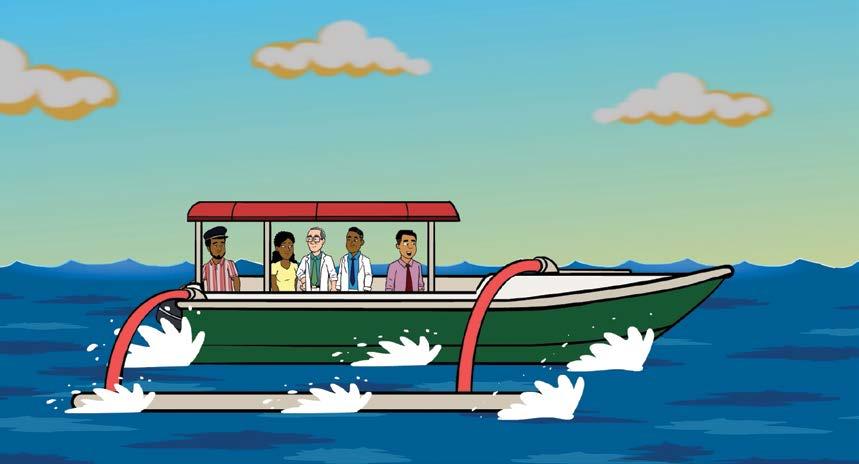
Have you ever heard of a jukung? It’s a traditional Indonesian boat. It looks like a canoe, except it has long floats called outriggers on either side to keep it from tipping over. An engine propels the boat forward.
The jukung in this story looked like any ordinary jukung. It wasn’t a special color. It wasn’t unusually long. It didn’t have a unique engine. But it did have a special passenger.
Pastor Eduard saw the jukung arrive at the island where he lived in Indonesia. He watched as government medical workers got off and visited his village. Then he saw them preparing to leave on the same jukung. He asked
where they were going and learned they were traveling to an island he hoped to visit. Three Seventh-day Adventist families lived there. They didn’t have a church of their own, or a jukung to travel to another island with a church, so they met in each other’s homes every Sabbath. But the upcoming Sabbath—the very next day—was a special Sabbath, and Pastor Eduard needed to worship with them.
Because Pastor Eduard didn’t have a jukung, he asked the medical workers whether he could travel with them to the island. They agreed, and the jukung set off on Friday afternoon.
Roooooooooaaaaaarrrrrr! The jukung sped across the water’s surface. The wind felt good on Pastor Eduard’s face. He looked forward to worshiping with the villagers.
But then a storm struck. Rain fell hard, and the wind blew fiercely. Still, the boat continued speeding through the rough seas.
Illustrations by Diogo Godoy
Indonesia
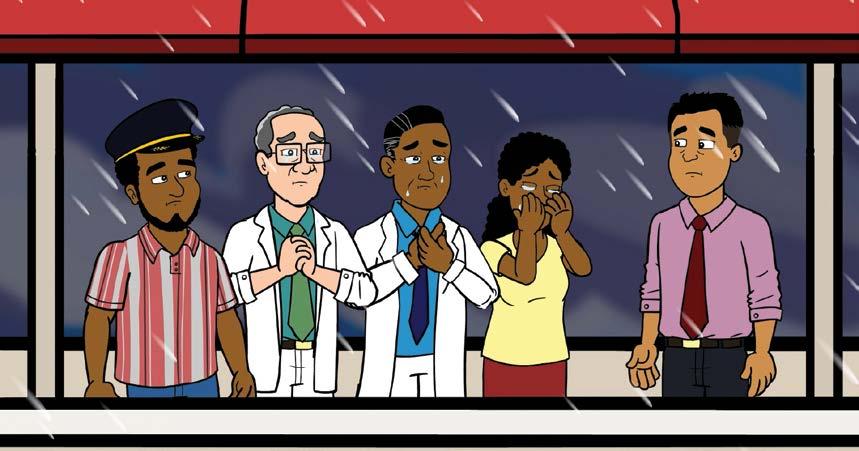
Suddenly, the roar stopped. The engine went silent. Pastor Eduard, the medical workers, and the boat captain looked at one another. All they could hear was the pounding rain and howling wind.
The captain yanked on a cord to restart the engine. Nothing happened. He tried again. Yank! Yank! Still nothing.
Now, the jukung was at the mercy of the storm. It rocked back and forth like a cork on the waves. An hour passed. Then two. Three. Four hours passed.
The medical workers, frightened by stories of boats sinking in storms, feared for their lives. One woman, who wasn’t a Christian, remembered that Pastor Eduard believed in Jesus. She begged him to pray for the jukung.
At that moment, Pastor Eduard heard a voice. It was soft and gentle, yet he could hear it clearly above the roar of the rain and wind. The voice said, “Tell the boat captain to connect the fuel hose to the other fuel tank.”
The jukung had fuel tanks—a regular one and a backup one for emergencies. Both provided fuel to the engine.
Though surprised by the voice, Pastor Eduard didn’t question it. He felt he must obey. Even though he knew nothing about boats, he told the captain to disconnect the hose from the regular tank and attach it to the backup tank.
The captain had already tried using the backup fuel tank, but he didn’t argue. He immediately disconnected the hose from the regular tank and connected it to the backup tank.
Then, Pastor Eduard invited the captain and the medical workers to join him in prayer.
“Lord Jesus,” he prayed, “our lives are in Your hands of mercy. Your will be done.”
After the prayer, he turned to the captain and said, “Start the engine.”
The captain pulled the cord. Yank!
A split second passed, and the engine roared to life.
Chuff-chuff-chuff-rrrOOOAAARRR!
All the medical workers, including the woman who hadn’t believed in Jesus, exclaimed at once, “Praise the Lord!”
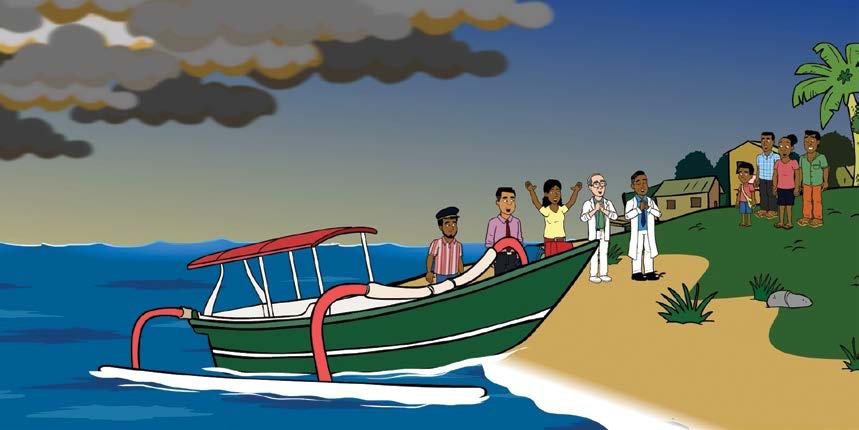
The rain didn’t stop, and the wind didn’t die down. But the engine kept roaring, and the jukung reached the island safely.
The medical workers immediately told everyone on the island that Jesus had saved their lives.
The woman who hadn’t believed in Jesus told Pastor Eduard she now did.
That Sabbath was extra special for Pastor Eduard. Not only did he worship with the Adventists on the island—he also had his very own mission story to tell!
More Children’s Mission Stories
Find
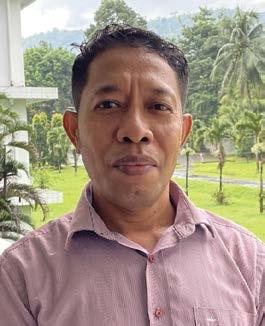
Pastor Eduard
Missionaries:
Still Called. Still Going.
Still Changing the World.
Our missionaries are the hands and feet of our church, spreading hope and love in places that need it most. Your prayers and support are vital to continue this sacred mission.
Pray for their strength, courage, and wisdom.
Support them with your generous contributions.
Your faith can reach across continents. Together, we can make a difference.
Mark your offering envelope “World Mission Offering.”