2026 Adviser Autumn Edition
















Timperley (pictured) of Simonds Shepparton,
Jason Timperley of Simonds Shepparton








WITH battery rebates set to reduce from May 2026, many local homeowners are wondering whether they’ve “missed the boat” on installing a home battery.
Rebates of up to $300 per kilowatt-hour currently apply until May 1, 2026, after which they’re expected to decline, with further reductions every six months. For households only just starting to explore battery storage, installation timeframes may make securing the highest rebate challenging.
Local solar and energy solutions providers Future NRG say the opportunity hasn’t necessarily passed.
“While securing the maximum rebate can reduce the upfront cost, the real financial return from a battery happens over time, often through 10 to 15 years of lower energy bills and greater control over how and when you use your power,” the team says.
They also stress that missing the very highest rebate isn’t always a deal-breaker.
“In some cases, the reduction in rebate isn’t as significant

depending on battery size. It’s far more important to ensure a battery genuinely suits your household. Rushing into a system simply because it’s temporarily cheaper doesn’t always deliver the best long-term outcome,” says Future NRG Founder, Shaun Gash.
A battery stores excess solar energy generated during the day for use in the evening, helping reduce reliance on the grid, improve bill predictability and, for some homes, provide backup protection.
FOR many, autumn is the most beloved time of year, a season blessed with milder weather, bathed in golden light and rich, earthy tones. It is also a time to turn our attention to home.
From pruning and planting to renovating and decorating, autumn has long been the

Future NRG takes a tailored approach, reviewing your existing system, energy usage and future plans before recommending a solution, including options to adjust battery size, consider alternative brands or allow for future expansion.
Homeowners can visit Future NRG’s showroom at 7957 Goulburn Valley Highway, Shepparton, explore options online at futurenrg.com.au or call 1300 359 894 for an obligation-free consultation.
season of thoughtful preparation before winter’s colder, quieter months. It is a time when we naturally turn inward, seeking warmth and comfort, drawing family and friends closer to share heartier meals, cosy throw rugs and restorative company.
In this edition of The Adviser’s quarterly House & Land magazine, you’ll find everything you need — from land ready to build on and beautiful homes to inspire, to a trusted selection of businesses, builders and services. Whether you’re planning a dream extension, considering a renovation, or looking for cost–efficient energy solutions, this issue is designed to help you ensure every part of your home is exactly as you intend it to be, inside and out.


HAVE you noticed the warmer, softer light of autumn? As the sun sits lower in the sky, its golden glow ushers in a dramatic shift of colour in your garden, highlighting the deep, rich tones of the foliage. It’s a season to truly enjoy your garden’s unique beauty as it shifts gear from the chaotic growth of summer into a phase of textured, mature calm. Enhanced by falling leaves and late-blooming flowers, now is the perfect time to get busy, undertaking key seasonal tasks to ensure your autumn garden thrives and is prepared for the onset of winter.
Below is an essential autumn garden checklist, a simple yet timely reminder to ensure your garden thrives through and post the colder months.
Clear the garden:
Remove old plants, weeds, and anything diseased to keep pests away.
Feed the soil:
• Add compost, manure, or soil conditioner to refresh your garden beds.
Plant new things:
Veggies like broccoli, kale, lettuce, spinach and garlic
• Spring bulbs such as daffodils, tulips and freesias
Divide perennials and plant new shrubs or trees
Tidy and prune:
Cut back perennials to around 15 cm
• Prune trees and shrubs, removing dead or unhealthy branches Deadhead any spent flowers
Look after the lawn:
Rake fallen leaves and add them to your compost
• Spread 5–7 cm of mulch to keep soil happy
Water new plants regularly, easing off as the weather cools
Care for tools: Clean, sharpen and oil your tools; drain and store hoses.
Protect tender plants:
Use frost cloths or move pots to sheltered spots.
Handy extras:
Divide big perennials to make new plants
Save leaves to make lovely, rich leaf mulch
Watch for lingering pests like snails or slugs



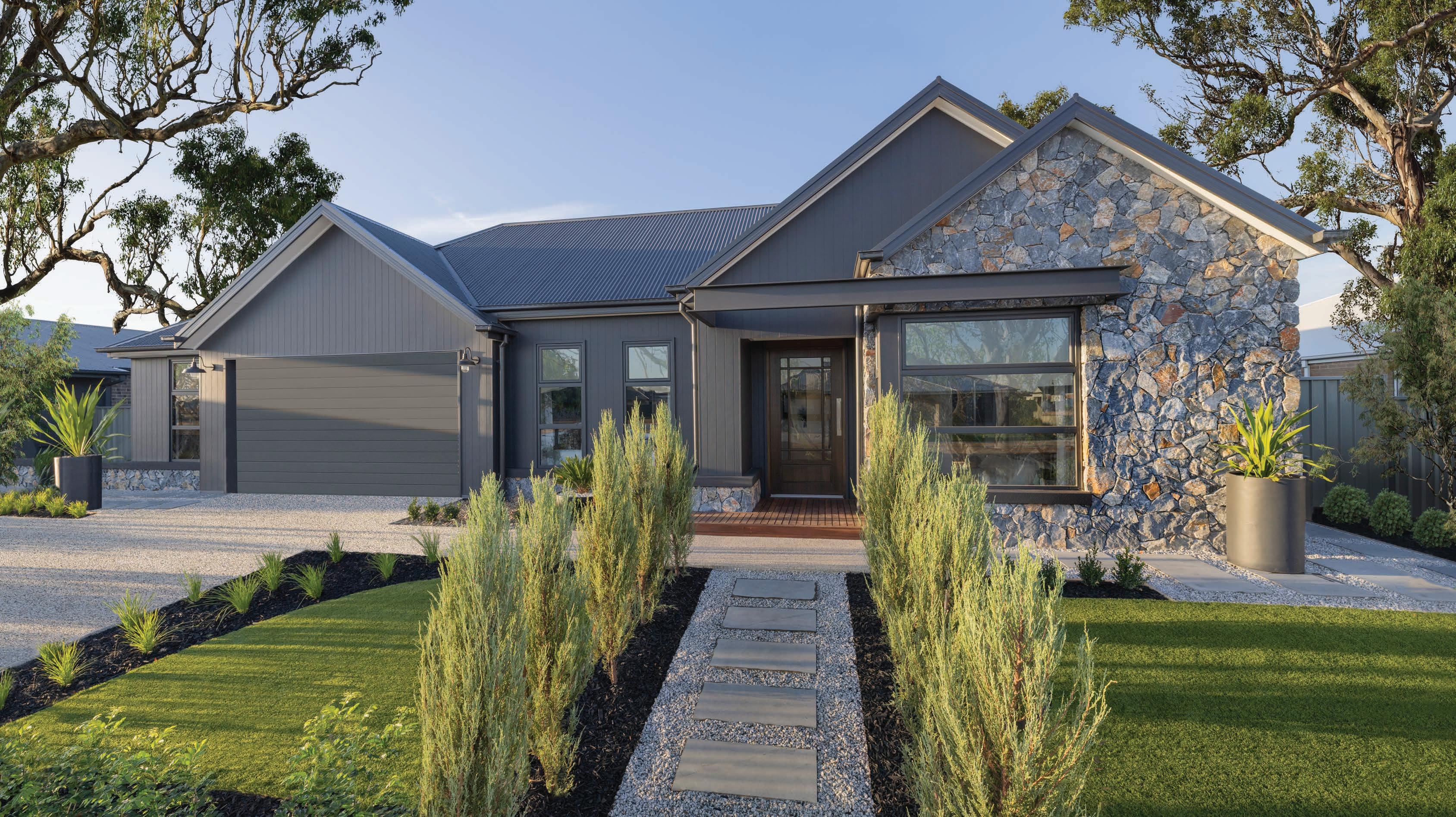
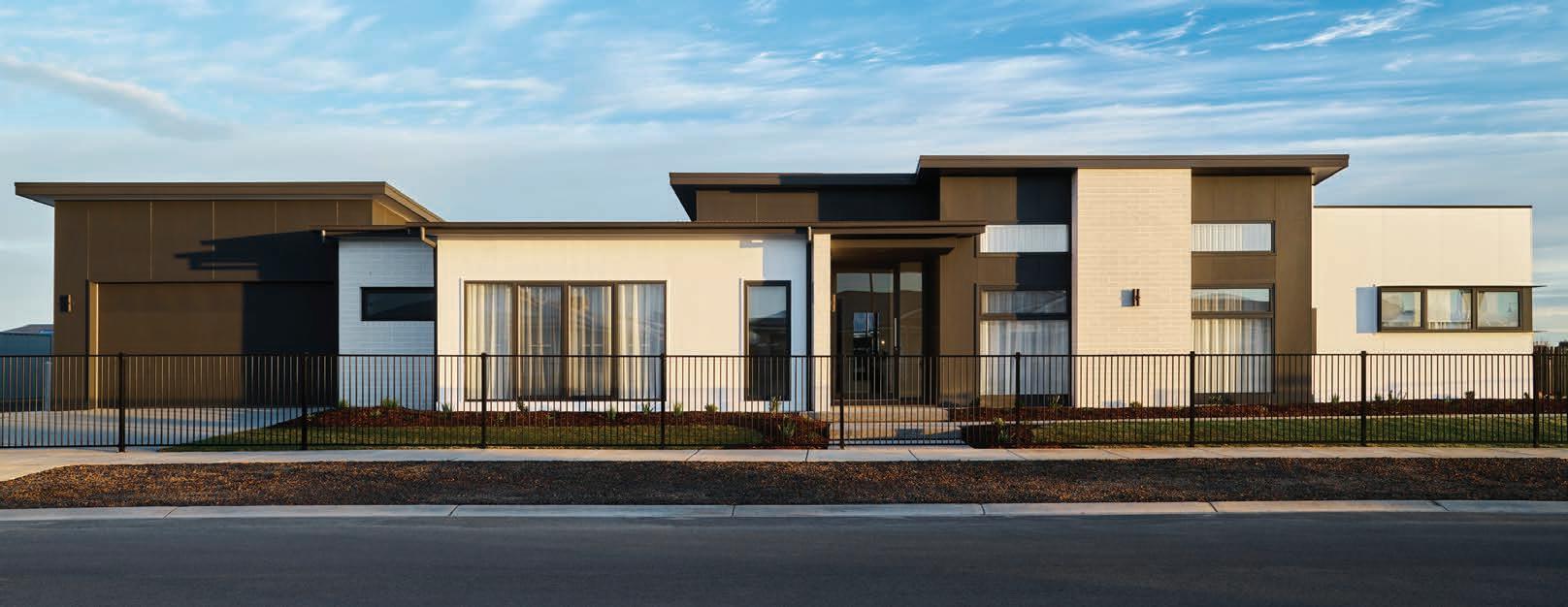
Take your first step, visit our five display homes at Edgewater.
Take your first step, visit our five display homes at Edgewater
Take your first step, visit our five display homes at Edgewater
Scan for directions.
Scan for directions.
Scan for directions.

GREATER Shepparton City Council is calling for local businesses, community groups and organisations to submit Expressions of Interest to take part in the first GV Home Energy Expo.
The free event will be held on Sunday, June 14, 2026, from 10am to 4pm at the McIntosh Centre.
The expo will bring together industry providers, community
organisations and local businesses to help residents and business owners find practical ways to reduce energy use and lower electricity costs. It will also showcase the latest energyefficient technologies and solutions.
Visitors will have the opportunity to speak with experts, explore new products and receive practical advice on improving energy efficiency at home and in the workplace.
As the first event of its kind in the Goulburn Valley, the expo aims to provide a central place for the community to learn
about smarter energy use and available technologies. Council is seeking exhibitors who provide energy-efficient products, services or information. Successful applicants will be able to showcase their offerings, connect with the community and share advice on reducing energy use and costs.
Expressions of Interest must be submitted by Thursday, April 2, 2026.















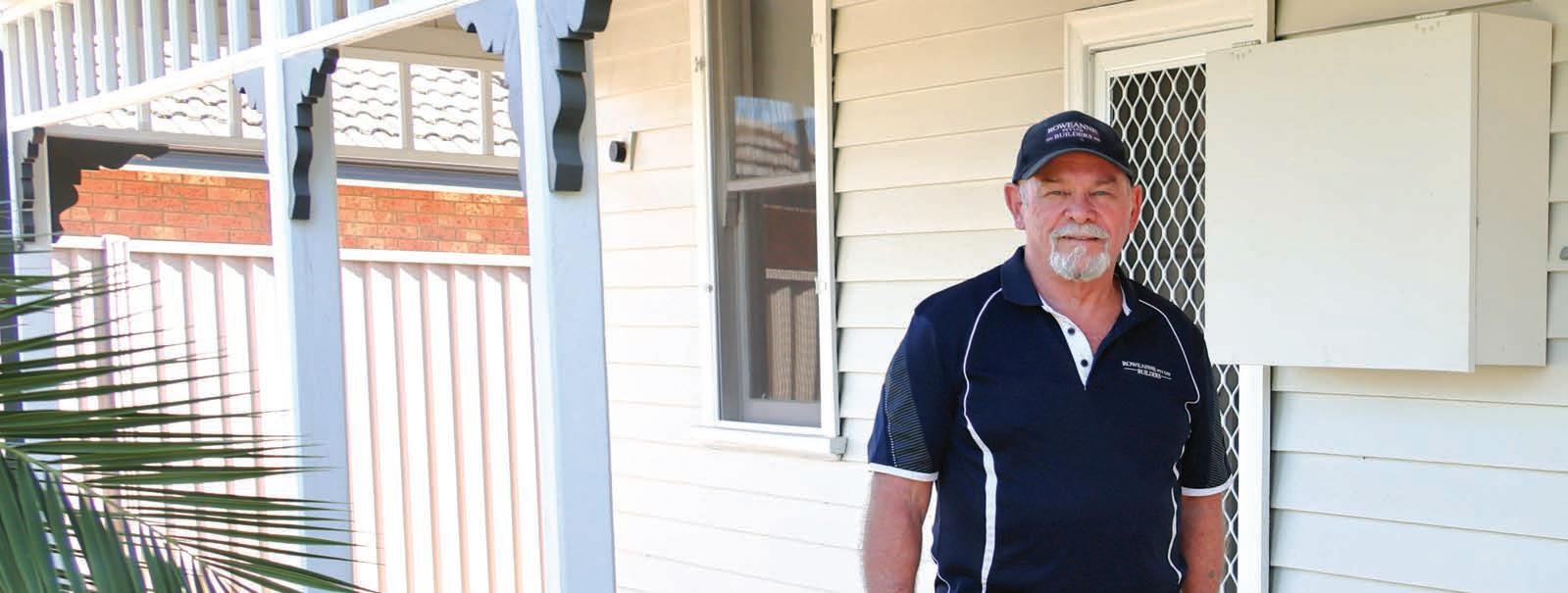





FOCUSED on delivering exceptional home renovations and extensions, Roweanne Builders has earned a reputation for practical design, thoughtful workmanship and homes that genuinely add value to the way families live.
Led by Gavin McMahon, a builder with many years of hands-on industry experience, the qualified team specialises in transforming houses through quality care and craftsmanship. The company works closely with every client to bring their ideas to life, creating renewed spaces that enhance daily living while seamlessly blending new features with the character of the existing home, or to completely updating your lived spaces.
Central to Roweanne Builders’ operations are strong relationships with a trusted team of trades as well as open collaboration with clients. From the first conversation to the final handover, whether it’s an extension or renovation, the team takes the time to listen, understand and guide homeowners so they feel supported throughout the process. By prioritising clear communication, the
company is unwavering in its commitment to ensuring each project reflects clients’ needs and vision while keeping the experience seamless.
Managing each stage of a project, Roweanne Builders also provides a single point of contact for planning, budgeting and quality control. Their wide-ranging services include kitchen and bathroom renovations, full interior updates, structural or nonstructural renovations, flooring, replastering, painting, landscaping and concreting, they do it all. The team also specialises in home extensions, helping families add extra bedrooms, ensuites, walk-in robes or expanded living areas that feel like a natural continuation of the home.
Based in Shepparton and working across regional Victoria, Roweanne Builders helps people reimagine their homes to suit the shifting needs of life. For some, that means opening up living spaces for a growing family while for others, it involves modifying the home to create comfort once the kids have flown the nest. Bringing homeowner visions to life, Roweanne Builders’ craftsmanship will not only add value to your home but enrich the lives within.










By Natasha Fujimoto
FOR more than a decade, new housing estates across Greater Shepparton have signalled steady growth and a reliable pipeline of future supply. However, with industry experts warning of a shortage of development–ready (zoned) land, buyers could soon be left with fewer options to choose from, as well as escalating prices in the years ahead.
While Greater Shepparton City Council holds there is ample land earmarked for future housing within approved Precinct Structure Plans (PSPs) — from 177 hectares in Shepparton North East and 248 hectares in Shepparton South East to land being prepared in growth areas such as Kialla West and Kialla North — developers and real estate agents say the situation on the ground is far more complex.
While council acknowledges it does not control the timing, staging or commercial viability of land release, it is currently reviewing housing supply and demand to build a clearer picture of residential land availability and ensure planning aligns with market conditions.
Developers argue that zoning land is only one step in a much longer process and far from a guarantee that new housing can be delivered in the near term.
“That’s misleading, because a lot of it you can’t develop yet,” said Development Edge’s Mick Lewis. “Even though it’s changed colour on the maps, it doesn’t have the work done for it to be ready.”
Without the necessary infrastructure, servicing and investment, much of the zoned land remains effectively out of reach, raising concerns that a genuine supply of blocks of land is closer than it appears.
“We’ve gone from having 13 to 14 active developments across Shepparton to almost none,” Mr Lewis said. “Developments like Seven Creeks, Sanctuary Park and The Vines are either sold out or nearly finished.
“Within the next six months, there will be virtually no new blocks of land available. There’s nothing ready in the pipeline to replace the developments that are finishing.”
When asked what factors have contributed to this dire situation, Mr Lewis said,
“A big part of it is lack of forward planning. Councils should maintain at least 15 years of land supply, but you can’t wait until supply runs low, it takes years to bring land to market.
“From when a developer starts a project, it can take 12 months for permits, six months for design and 12 months to build and deliver titled land. That’s why planning needs to happen well in advance.”
Exacerbating the issue still further, according to Mr Lewis, is the bottleneck of development in future growth areas.
“It’s all well and good to say there’s 2,500 homes there, but it doesn’t mean that all of that land can actually be developed,” he said. “You do stage one and then stage two; you can’t start from the other side because it doesn’t have sewer and infrastructure.
“This ‘leapfrog’ effect limits how quickly land can be brought to market, even in areas earmarked for growth.”
Local agents say the impact is already being felt with limited choice for buyers becoming increasingly apparent.
“There’s been a really good range for buyers, but that’s starting to dry up,” said Terry Shiels of Kevin Hicks Real Estate.
Pointing to a multiplicity of factors leading to the market tightening, Mr Shiels continued: “We haven’t been bringing blocks onto the market quickly enough through development, and at the moment I’m not seeing many bulldozers turning the soil around Shepparton.”
While demand remains steady, bringing new land to market is a slow and complex process. From rezoning to construction, it can take years before a block is ready to build on.
Mr Lewis estimates the process often takes around two years, sometimes longer. Mr Shiels agrees, noting that even land that appears development–ready can face significant delays.
“If you saw land ready today, you’d still be looking at close to
two years before you could build on it,” he said.
In regional areas like Shepparton, the challenge is compounded by scale. Local developers often juggle multiple smaller projects rather than focusing on a single large estate, stretching resources and extending timelines.
Planning processes and staffing changes can add further delays, contributing to a growing gap between land that is zoned and land that is actually available to buyers.
“People want choice, they don’t just want ten blocks to choose from,” Mr Shiels said. “That range is what’s starting to disappear.”
As the squeeze on supply tightens, prices rise with blocks once sold for around $140,000 now heading towards $300,000.
Not only impacting buyers, this slowdown in land supply is also expected to affect builders, trades and suppliers, with real and significant consequences for the local economy.
“It affects everyone. It all feeds through,” said Mr Lewis.
The slowdown is also expected to ripple through the construction sector, affecting builders, trades and suppliers, with broader implications for the local economy.
“It affects everyone. It all feeds through,” Mr Lewis said.
He said delays across multiple levels of government and service authorities were compounding an already strained system, adding time and cost at almost every stage of the development process.
Response times from the State Government, local councils, Goulburn Valley Water and other authorities have blown out for rezonings, permits, design approvals and subdivision compliance, Mr Lewis said, arguing the process had become increasingly disconnected from the scale of the housing challenge.
“In a housing crisis, it feels like they just don’t care,” he said. He said subdivision compliance timeframes that once took two to three weeks were now stretching to four to six months, sometimes longer, creating unnecessary holding costs for developers.
“Those delays are passed directly onto buyers and slow the release of much–needed housing,” Mr Lewis said.





























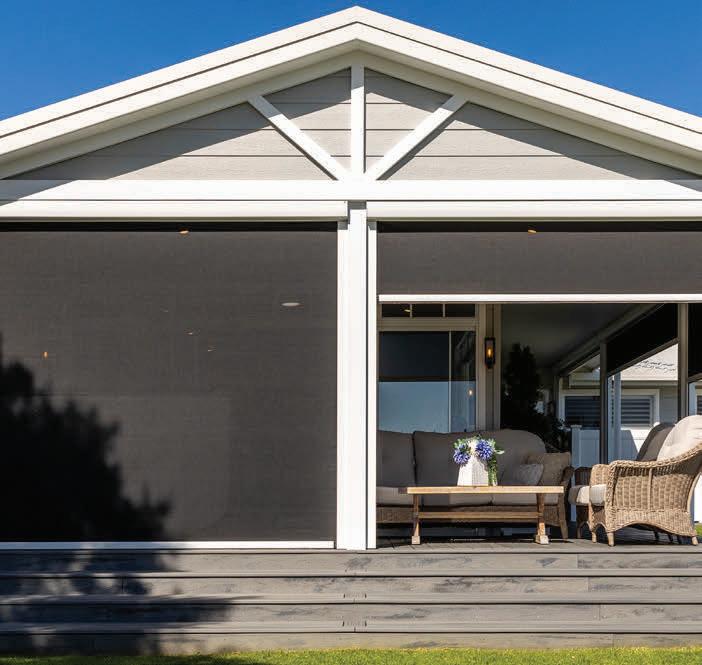
AFTER yet another scorching summer, one that pushed temperatures to their highest in recent memory, it’s no surprise that people across the region are now thoughtfully reconsidering how best to protect their homes and property.
With more than 30 years of experience delivering custom
windows and exterior walls, a verandah, pergola or patio can significantly reduce heat exposure, giving your home an added layer of protection all year round. Whether it’s shielding against intense solar radiation or providing cover during a heavy downpour, an accredited build from GV Carports and Patios not only helps lower cooling costs but also delivers valuable peace of mind in an uncertain world.
delays by sourcing materials locally. However, with potential cost increases on the horizon, including those influenced by rising fuel excise, now is the ideal time to plan ahead to secure current pricing and ensure your home is ready for both protection and enjoyment in the seasons ahead.
Highly regarded throughout the community for their personalised service, clear communication, and consistently
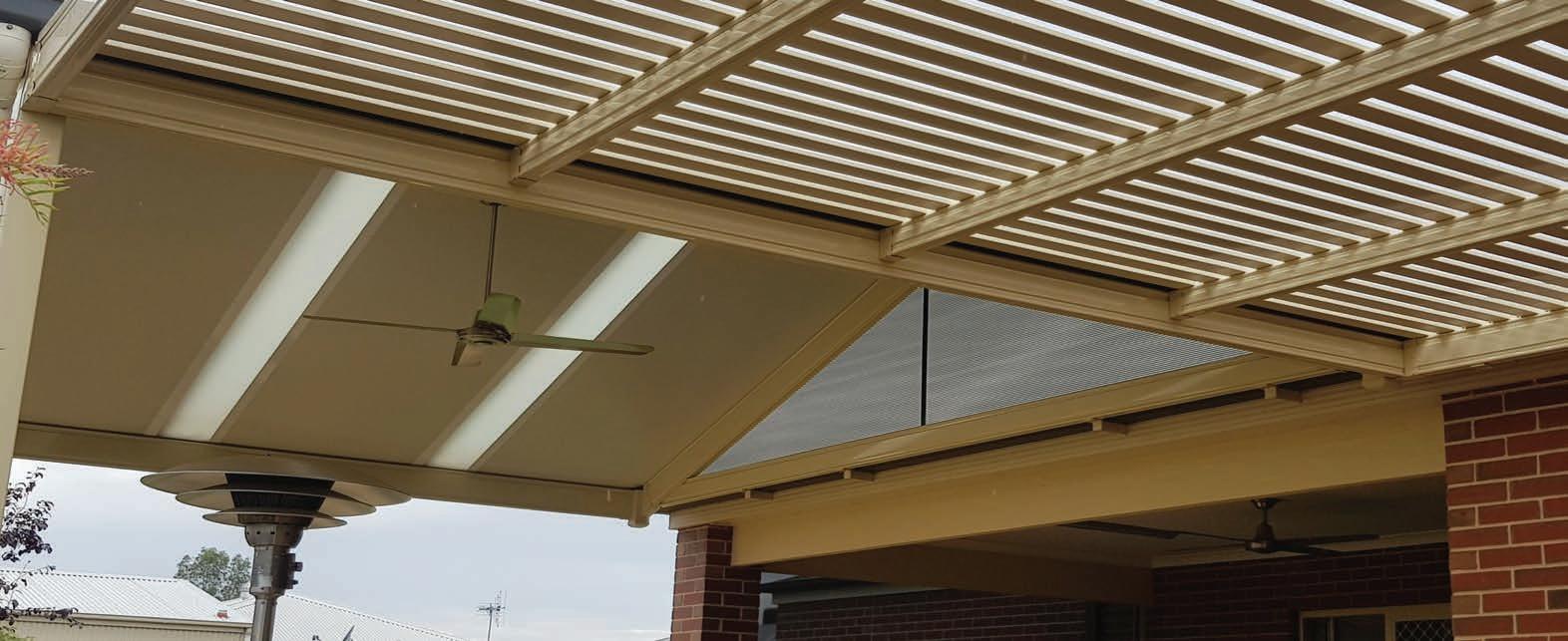
Our stylish range of patios, verandahs, pergolas




As local builders, our reputation has been built and achieved through building quality family homes since 1985 and working hard to maintain an impeccable reputation in the building industry and with our clients. We keep our pricing competitive while maintaining high standards of craftmanship.
Visit our new display home at 40 Lorikeet Street, Kialla or our new homes selection centre for a no obligation discussion.
Customise your plans or bring your own. With a commitment to quality craftsmanship and attention to detail, you can trust us to create a home that you’ll love for years to come.




ACCORDING to leading property market analytics, Greater Shepparton’s housing market has had an enviable start to the year, but its initial momentum remains tenuous. With demand remaining high, supply remains critically thin resulting predictably in ever rising prices, fierce competition and sadly, little solace for new buyers.
Median house prices at the outset of the year range from $500,000 to $530,000. Enticing for investors, with rental yields pushing above 5 per cent, but grim for renters. With such untenable conditions set against a backdrop of unchanging regional incomes, local families are increasingly feeling the squeeze.
Major projects like the Shepparton South–East Precinct Structure Plan (PSP), set to deliver more than 2,900 homes
along with new community facilities, parks and a primary school for about 7,000 residents, offer hope of long–term relief but he question remains whether this and other developments can come online quickly enough.
Although the PSP has been a long time in the pipeline, finally being approved by the Minister for Planning in June last year, the newly endorsed plan will guide development over the next 20 to 30 years.
Analytics from Real Estate.com & HTAG.com







Since
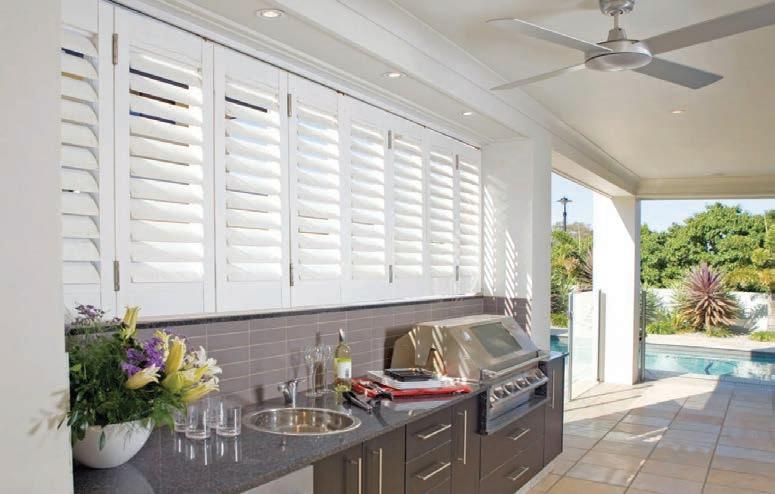
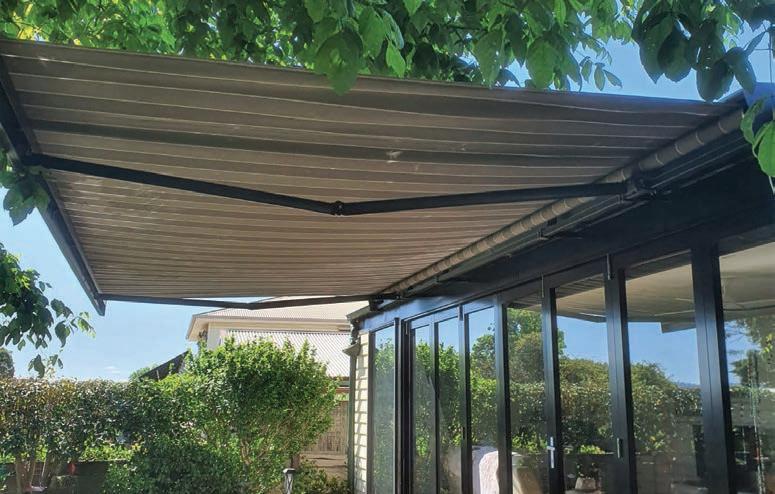
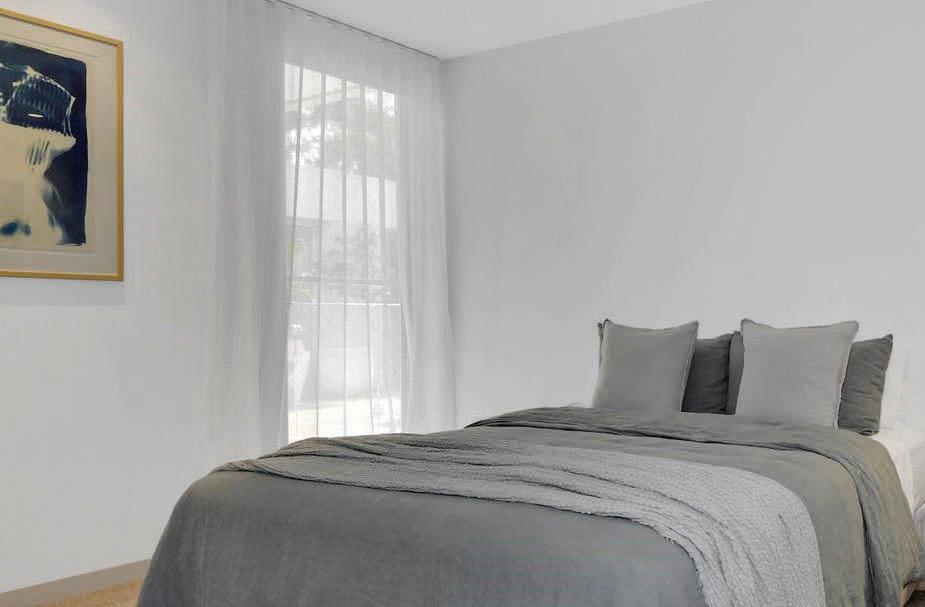
Bush’s Blinds is an experienced manufacturer and installer of high quality window furnishings. With over 85 years’ experience, Bush’s Blinds carries a legacy that is hard to match. Leading with a passion for window furnishings that has been ingrained from a very young age, Bush’s Blinds have applied extensive family knowledge in product and procurement to create a reputable name within the industry.



Contact our friendly team and request a free quote. Residential & Commercial enquiries welcome now accepted in-store

BUYING your first home is more than a financial milestone – it’s belonging, stability, and connection to your community.
For many local first home buyers, the journey can feel overwhelming, unsure of where to start or what you can realistically afford. That’s why having accessible, community–minded support matters more than ever.
GMCU’s range of online calculators are designed with the
local community in mind. Whether you’re saving for your first deposit, exploring different loan options, or simply wanting to understand how much you might be able to borrow, these tools offer a simple, approachable way to take those important first steps. With clear guidance and easy–to–use features, they help you estimate your borrowing power and anticipated repayments – giving you the confidence to make informed decisions.
But while tools can guide your early planning, personalised support will help you to understand the unique challenges
and opportunities facing first home buyers in our region. GMCU's team of experienced local lending specialists are here to help you with a Home Loan that meets your budget, goals, and future plans.
Bank local with the team at Shepparton. Call Kane on 0409 507 967.
Is your Home loan working for you?
Make decisions with confidence using GMCU’s calculators. www.gmcu.com.au/help/tools/calculator

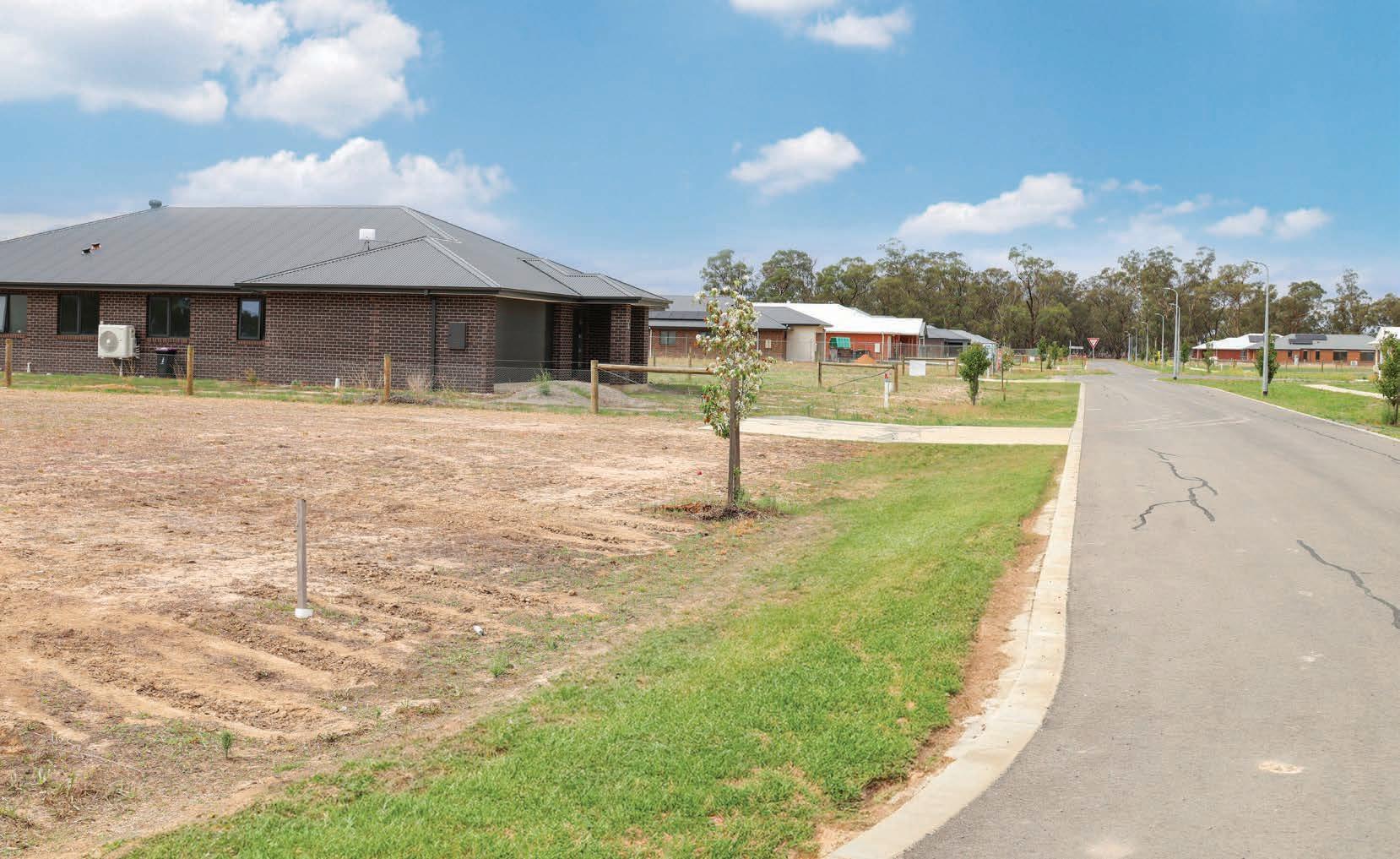

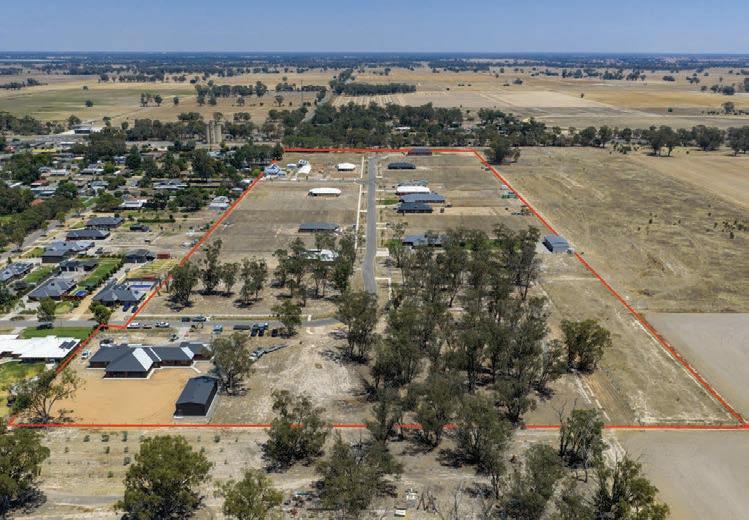


Shepparton is home to diverse, beautiful and complex waterways that shape local life. Characterised by its wetlands bursting with life, and picturesque rivers that run through the centre of the community, Greater Shepparton’s natural beauty stands out.
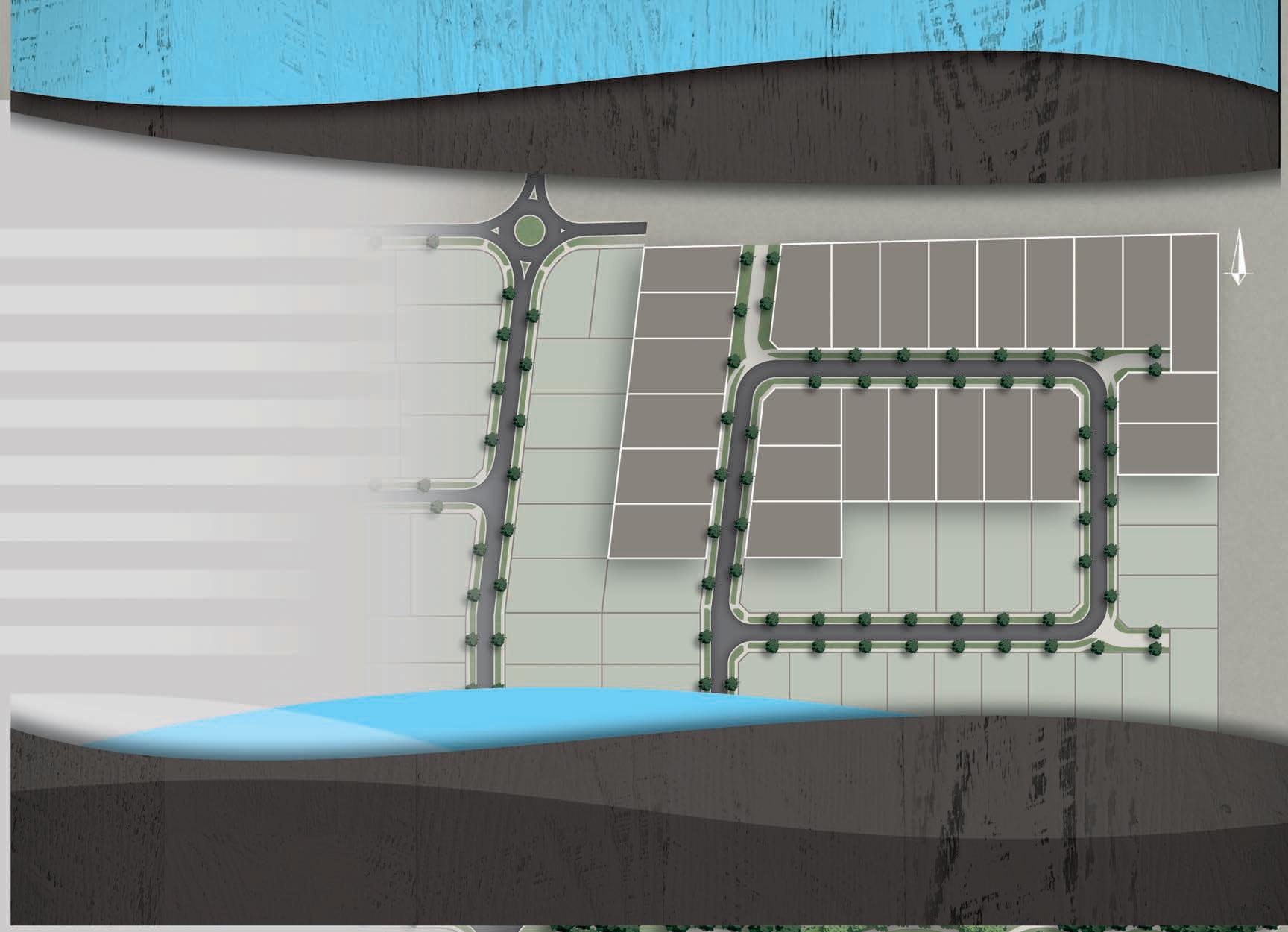
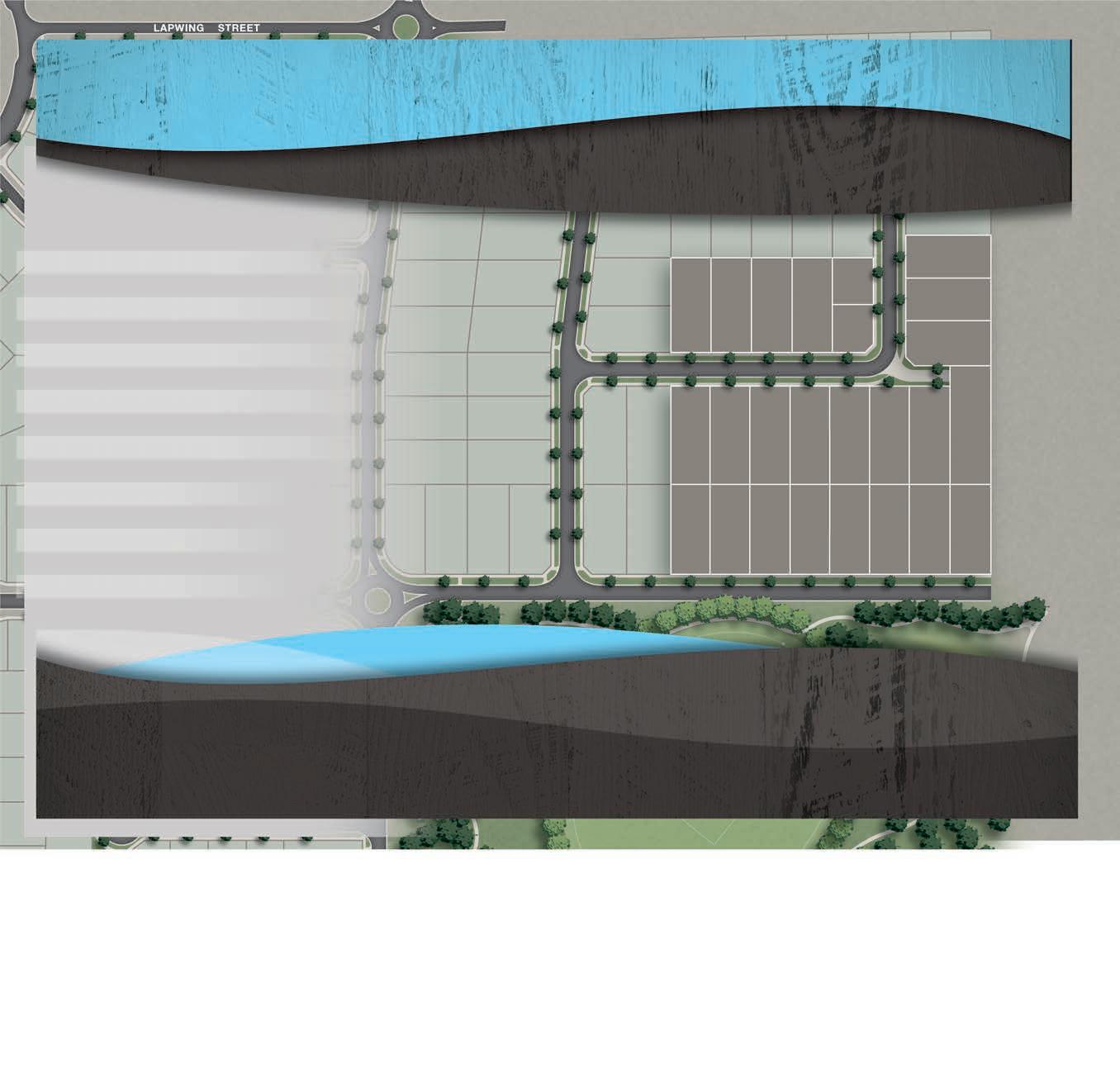
The Seven Creeks Estate is built around the luscious Seven Creeks waterways and set in the bushland that flourishes naturally along the Goulburn River. The estate, that is already

humming with the sound of a growing community of locals, has almost entirely sold out in Stage 21, which is the final stage available.
Chances to make your home at Seven Creeks are snapped up quickly, and it’s easy to see why. With a prime location just off the Goulburn Valley Highway, you’ll find both the tranquillity of tree-lined streets and natural surroundings, and all the best of Shepparton’s CBD just a 10-minute drive away.
Even closer to home you’ll find both primary schools and high schools, making this the prefect location for families
looking for community. Stage 21 offers the final chance to get in on your dream home, with block sizes ranging 839m2 –1154m2, and premium blocks of land looking out onto the new Cormorant Reserve, the centrepiece of Seven Creeks Estates, which brings connection and wellness to residents.
Speak with the team at Gagliardi Scott Real Estate today to secure your dream home in Seven Creeks Estate.
To learn more, you can visit the Gagliardi Scott Real Estate website or contact selling agent Jayden Gagliardi on 03 5831 180.






YES, your garden should be your own personal oasis, but what if it were also edible?
Merging the best of your favourite ornamental blooms and spaces with food–producing plants, such as vegetables, herbs, fruit trees and edible flowers, will not only add to your patch’s visual delight but also set your table abuzz with fresh, homegrown produce.
Soulfully enhancing your connection to nature, edible landscaping not only supports biodiversity but also reduces
food miles and costs.
To begin your edible–landscaping journey, carefully assess your site, taking into consideration how sunlight, shade, wind and water move through your garden. Pinpoint sunnier spots for tomatoes, sheltered corners for citrus and damp areas for leafy greens. You may even like to sketch a plan to coordinate with ornamental plantings for visual appeal.
Remember, edible landscaping is a far cry from traditional veggie patches, so enjoy mixing edible plants with blooms, shrubbery and groundcovers for a layered and stunning effect. Pairing purple basil with lavender, for example, or
WHETHER you love or loathe the cooler months, autumn is the ideal time to prepare your home for winter. It’s a prudent season to check appliances, test fire alarms and implement energy–saving measures or renovations. Tackling this to–do list now can pay off significantly once temperatures begin to plummet.
1. Begin by maintaining your heating systems. Have them professionally serviced and although it can be a messy task, ensure all filters are thoroughly
cleaned. This simple step improves system efficiency and helps reduce running costs.
2. Reverse your ceiling fan to a clockwise rotation at low speed to push warm air downwards, helping your home feel warmer without relying solely on heating. While you’re at it, check that your smoke alarms are working properly and equipped with fully charged batteries. Although this essential task is often done as daylight savings ends, if it’s on your mind now, tick it off.
3. To further optimise warmth and energy efficiency, identify any draughts and seal small gaps around doors and windows
interplanting rainbow chard among flowering perennials, can create vibrant, eye–catching patches all year round. Adding further curatorial prowess with functionality, consider planning pathways for easy harvesting and maintenance. Raised beds or defined borders help keep things tidy, while grouping plants with similar water needs together can bolster water efficiency.
So, why not get started? Plan, mix and landscape your way into a stunning refuge away from the world, not only a place to relax and just be, but a sustainable, biodiverse sanctuary that offers a homegrown harvest of your own making.

with weather stripping or caulk. Draught stoppers along the floor can also help keep cold air at bay.
4. Consider updating your window coverings to help retain heat. Thick, thermal–lined curtains are an excellent option for insulating against the cold and reducing heat loss.
5. Finally, embrace the cosy transformation of your interiors. Create a welcoming winter retreat by laying rugs on hard floors, introducing warm ambience lighting and switching to heavier bedding and plush throw rugs.



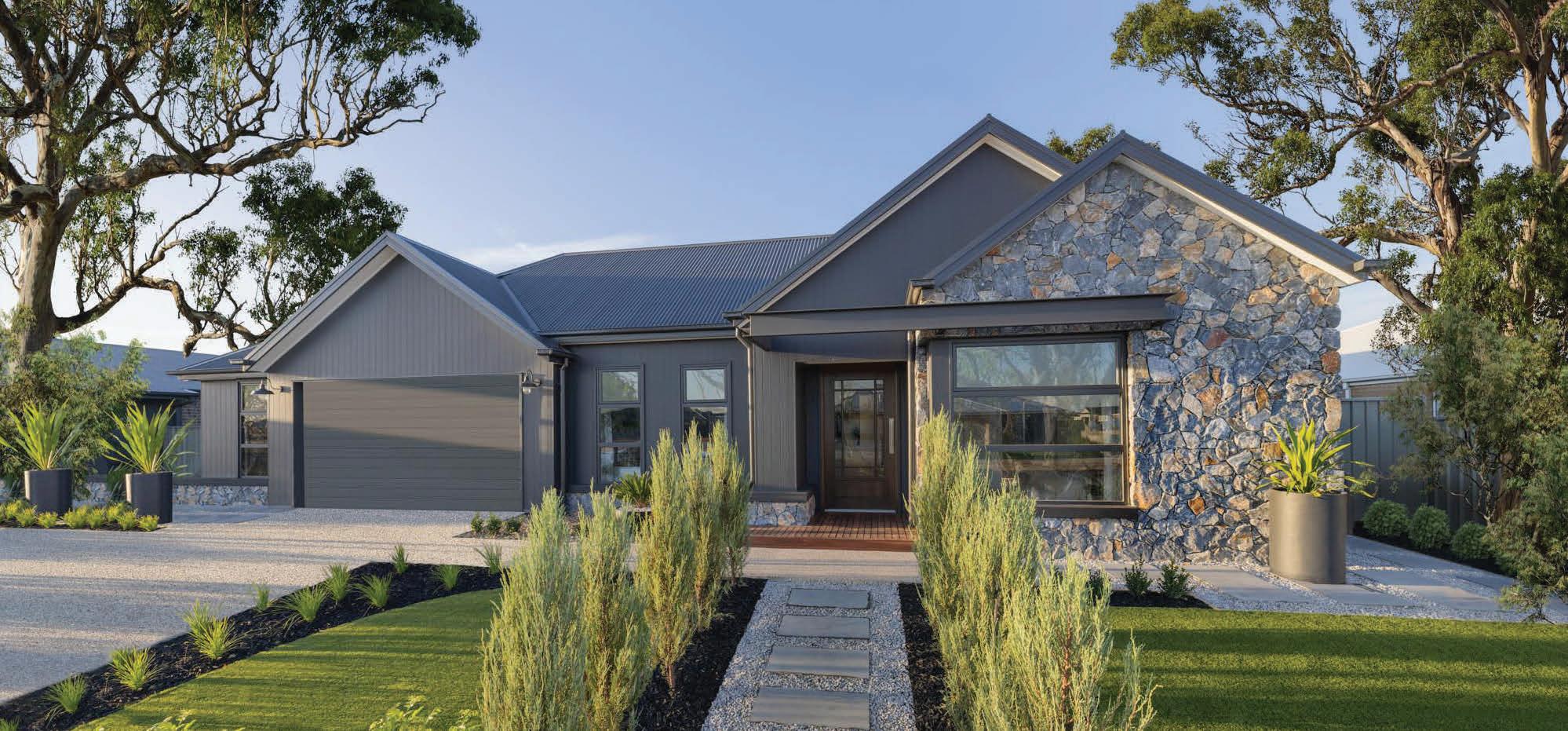
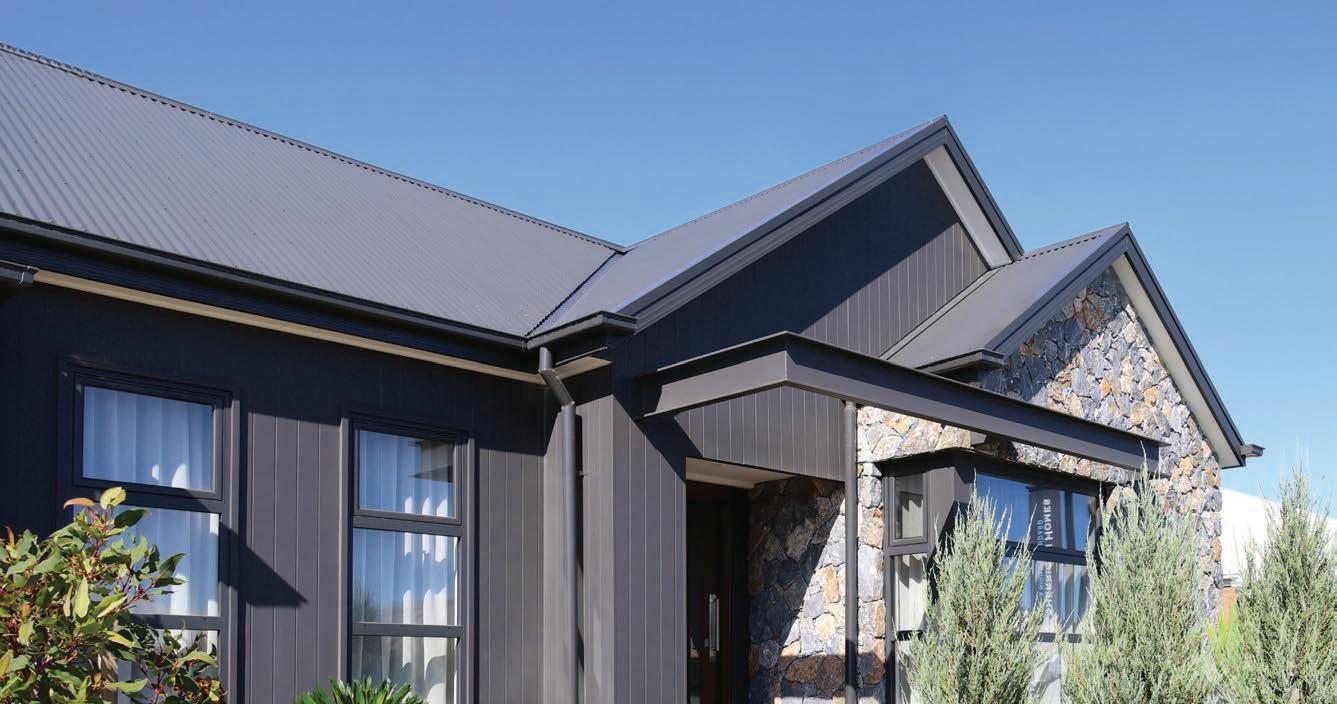
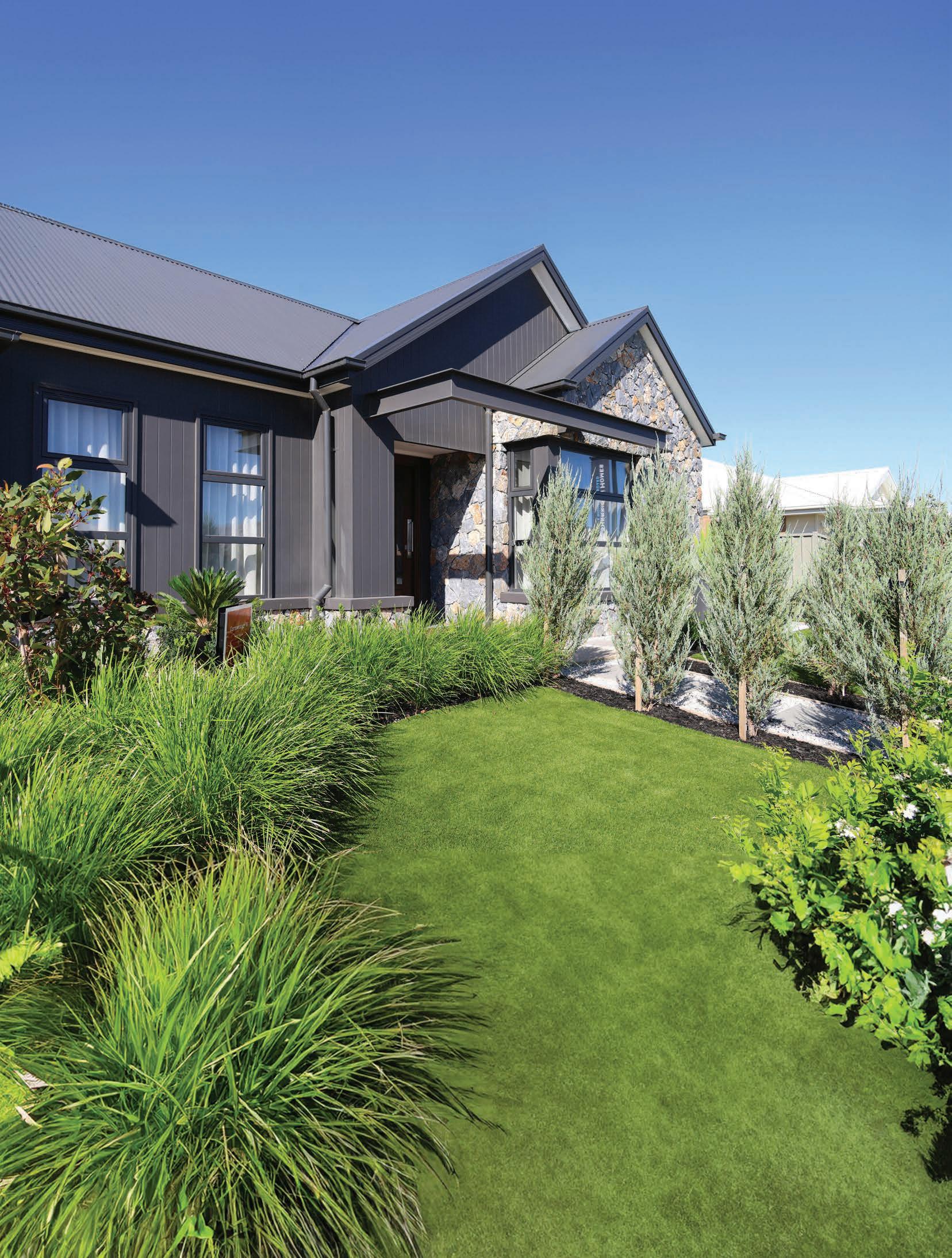
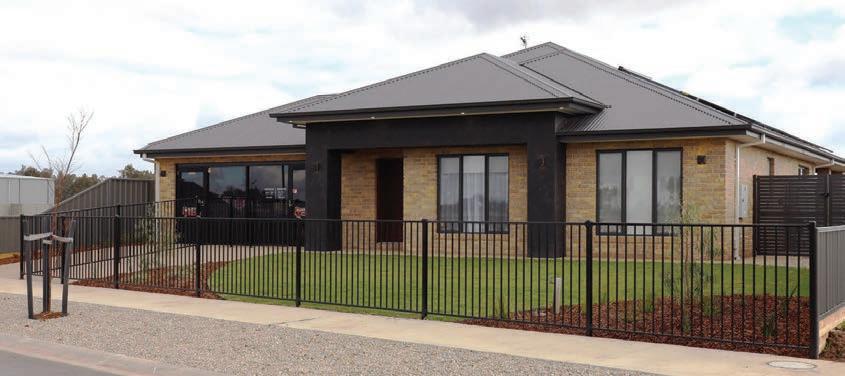
FOR anyone considering building a new home in the Goulburn Valley, the Simonds display homes in Shepparton offer the perfect place to begin. Featuring five thoughtfully designed homes in one convenient location, the display village allows visitors to explore a range of layouts, living styles and design ideas while experiencing the craftsmanship that Simonds has delivered to Australian families for more than 75 years.
According to Simonds New Home Specialist Jason Timperley, stepping inside a display home often helps people
visualise what their future home could really look like.
“Seeing a home in person makes it much easier to imagine how you would live in the space,” Jason said.
“You can walk through the rooms, experience the flow of the layout and start to picture how your own lifestyle could fit within the design.”
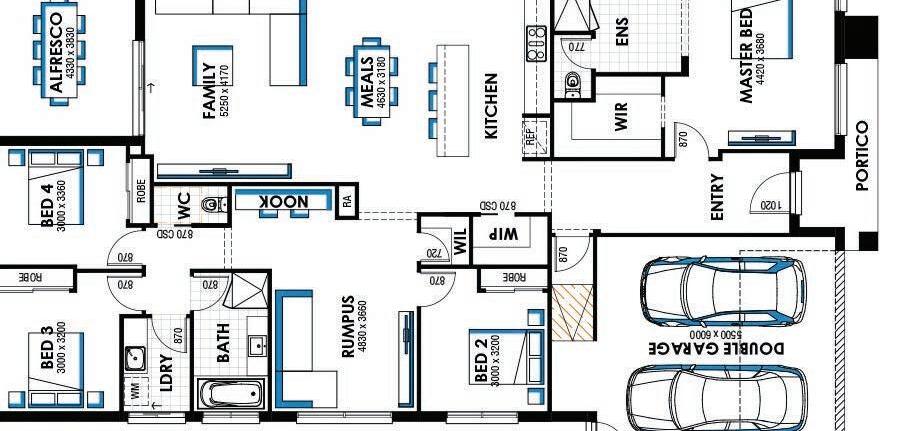
One of the hero homes in the Shepparton display line-up is the Camperdown 33, a single-storey design that shines when it comes to entertaining. Designed for 18 metre and wider blocks, the home features four bedrooms, two bathrooms and a double garage, with the option to add a fifth bedroom. At its centre is a spacious open plan living area that flows to
an outdoor alfresco, creating an ideal setting for gatherings with family and friends. Secondary bedrooms are zoned for comfort, while the master suite sits privately at the front of the home.
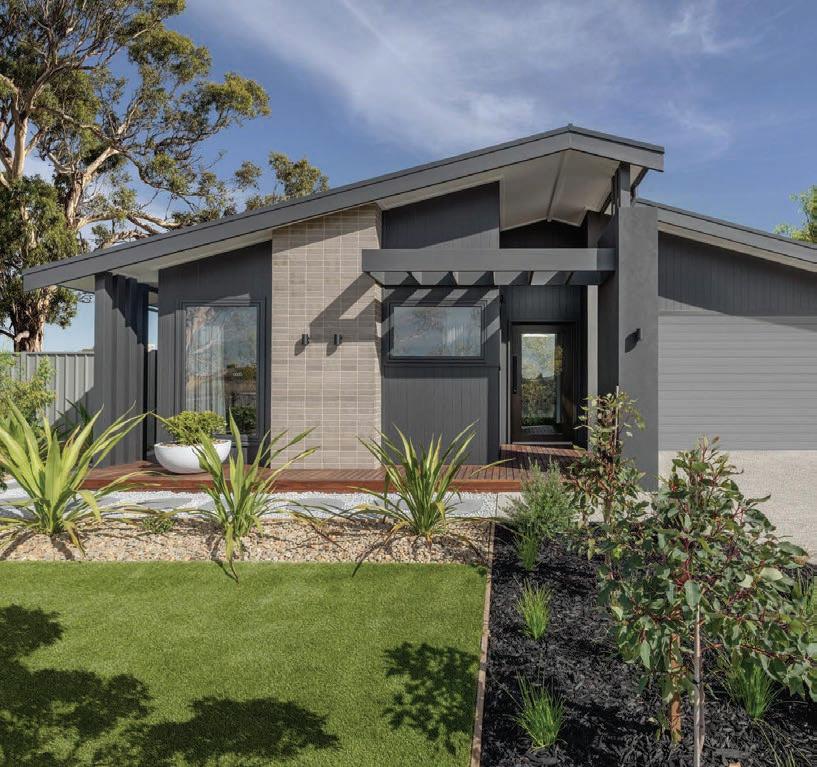
Another standout is the Willandra 34, a contemporary Australian design that blends relaxation with social living. Designed for 16 metre blocks and wider, the home includes four bedrooms, two bathrooms and a double garage. From the entry, the layout branches into separate zones before leading to the open plan heart of the home at the rear, where an entertainer’s kitchen overlooks the dining area, courtyardstyle alfresco and multiple living spaces.
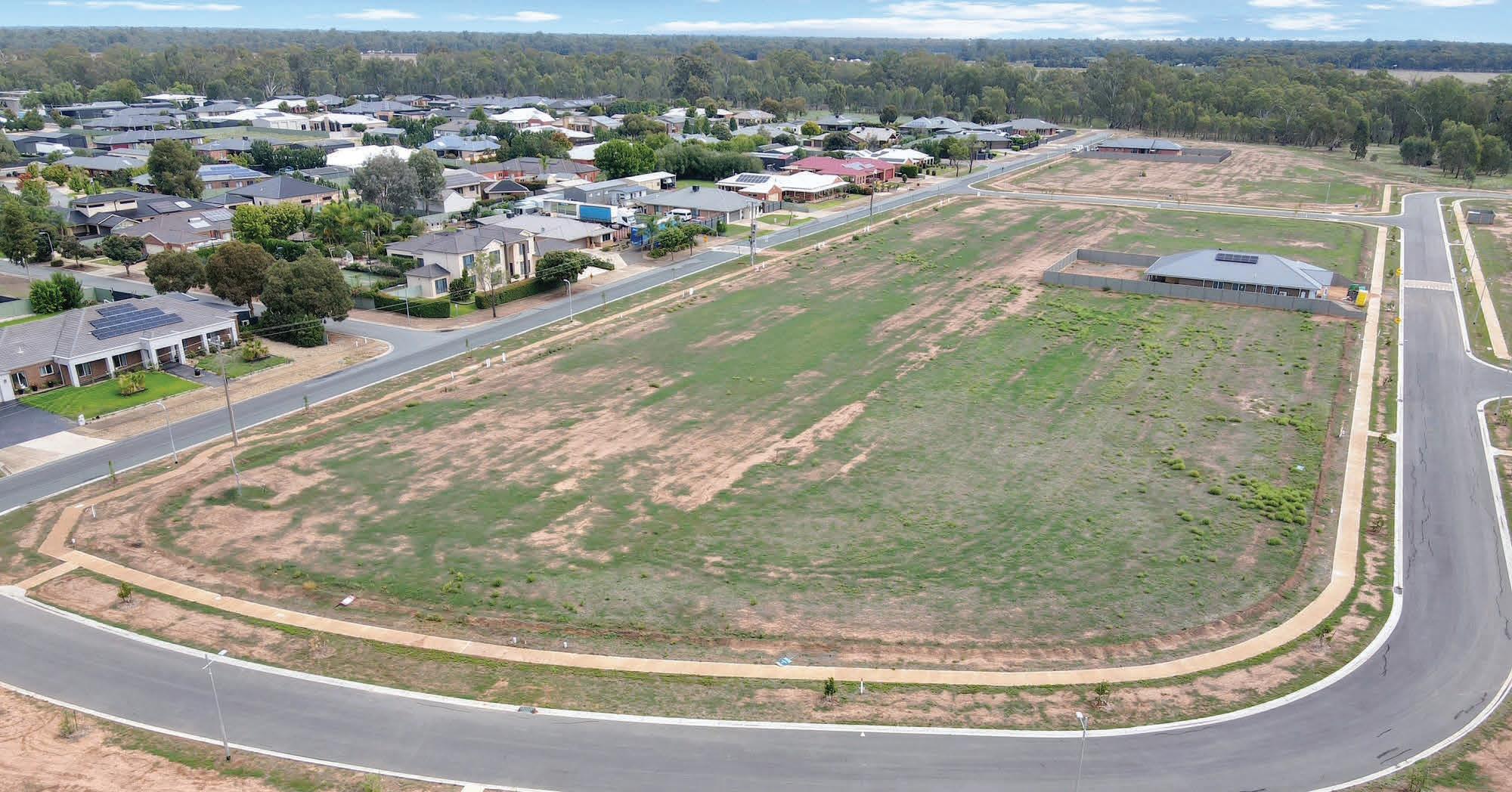

The Macedon 33 is a favourite for families seeking flexibility. Multiple living zones allow everyone to enjoy their own space, whether hosting guests, relaxing in a quiet corner or spending time together. Four bedrooms provide generous storage and comfort, with the option to add a fifth if needed, while a dedicated study offers a practical space for working from home or helping the kids with homework.
For families who value adaptable living, the




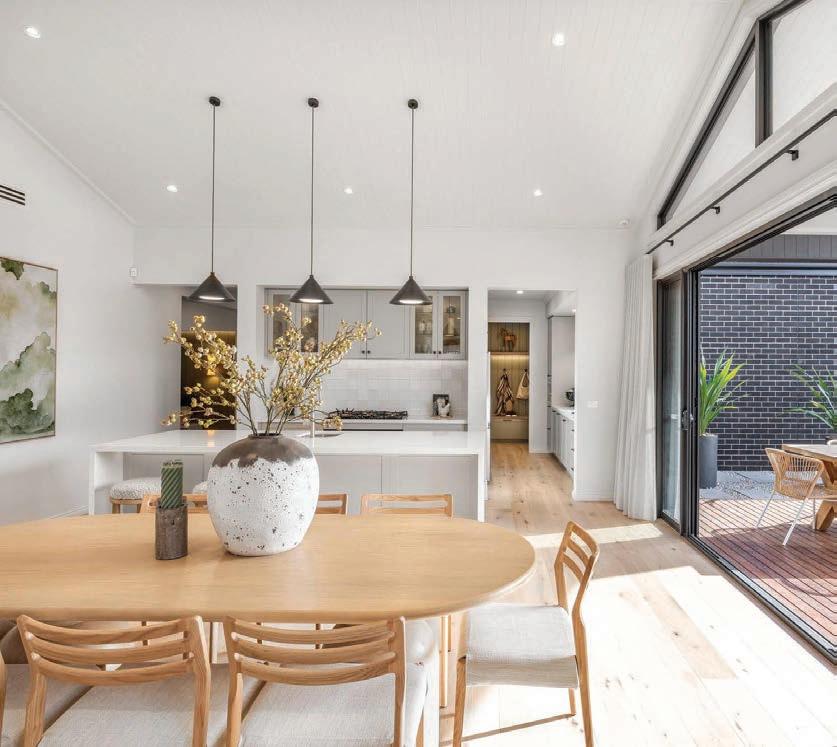
Mortlake 29 is designed to grow alongside its owners. The master suite sits at the front of the home to create a private retreat, while three bedrooms at the rear provide space for children or guests. A flexible leisure room can evolve into a playroom, study or second lounge as family needs change. At the centre of the design, open plan living and alfresco dining bring everyone together.
Completing the collection is the Venetia 32, a home that places flexibility front and centre.
With four layout options available, the design adapts easily to different blocks and lifestyles. The base design begins as a three-bedroom home, while larger variations introduce a fourth bedroom and a dedicated games room, making it an ideal option for growing families.
“For many visitors it is the moment everything clicks,” Jason said.
“They might come in with a few ideas, but once they walk through the displays, they
start imagining what their own home could look like.”
To experience the designs in person, visit the Simonds Shepparton display homes at Edgewater Place, 138–140 Seven Creeks Drive, Kialla. The displays are open Monday to Friday from 12pm to 5pm and Saturday and Sunday from 11am to 5pm. Get directions at simonds.com.au.





HOMEOWNERSHIP is the cornerstone of any thriving family, but it’s the combination of generous block sizes, natural surroundings and everyday convenience that truly transforms a house into a community, making life on an estate not just a place to live, but a place to belong.
Offering expansive residential blocks with the flexibility to accommodate a wide range of home designs, Westwood Rise stands as Mooroopna’s premier estate. Priced from $245,000 and featuring an impressive average block size of 904m², Westwood Rise has been thoughtfully and meticulously planned to enhance both lifestyle and long-term value.
Surrounded by stunning natural beauty, the estate adjoins a substantial native reserve complete with
established gum trees and open spaces, creating a tranquil setting for families to enjoy. Westwood Rise is handily situated to everyday amenities, schools and sporting facilities. Established on land unaffected by 2022 flooding the estate offers additional confidence for purchasers in a community-focused environment.
With Stage 1 construction now completed and titles expected mid-year, Stage 2 will soon commence and will implement a planned park and playground amongst ongoing development Westwood Rise Estate in Mooroopna presents an excellent opportunity, with larger frontages, bigger blocks and greater value!
For more information or to secure your block, contact Glenn Young at Youngs & Co Real Estate on 0438 579 993. Youngs & Co has offices in Shepparton and Mooroopna.





STOP. Stop now and take a breath. Take seven and breathe out slowly.
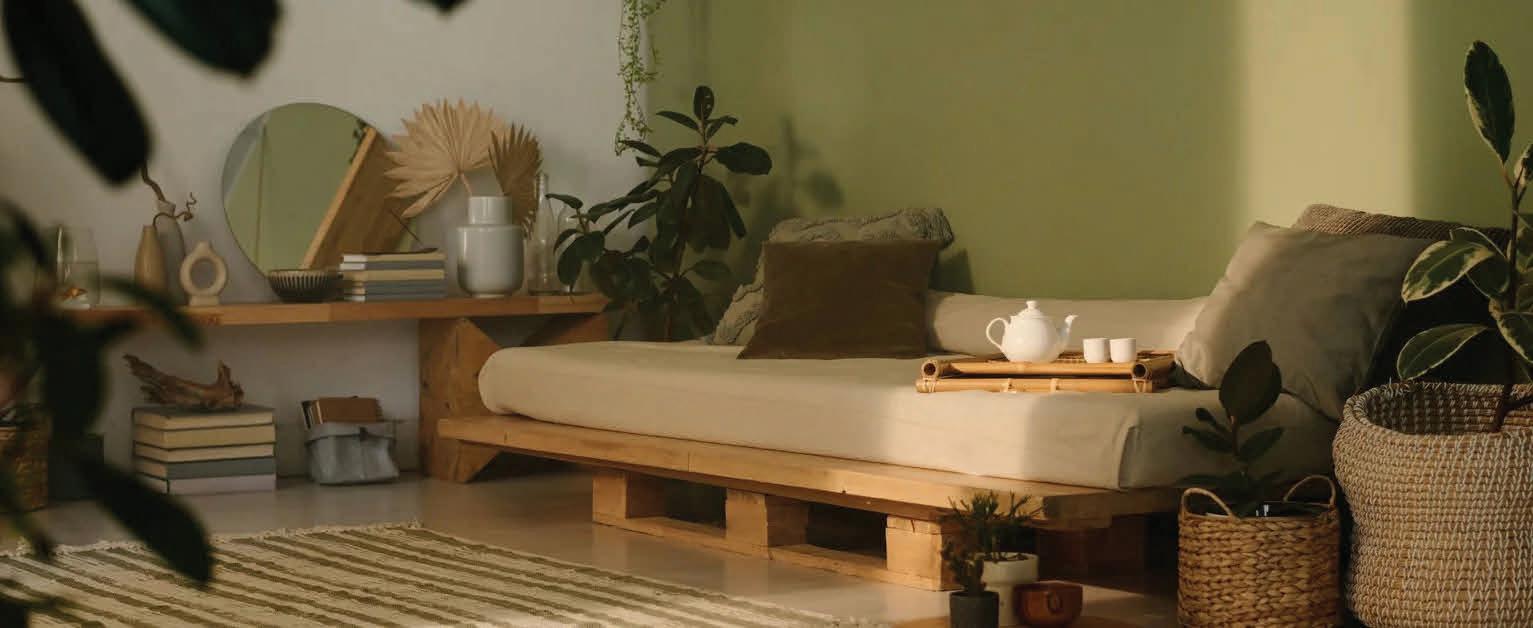
This editorial is about self-care and a movement — Slow Living — that is gaining traction around the world, where burnout runs rife, millennials are researching “escape plans,” and Gen Z (perhaps wisely beyond their years) are prioritising lifestyle choices over traditional career paths.
Clearly, most of us feel that something needs to change, and while the current practicalities and demands of life are hard to alter, there are some simple ways in which we can all bustle out the hustle and usher in, at least a little, peace of mind.
The first and most important step of the slow living movement is acknowledging that finding time to do absolutely nothing is absolutely a good thing. In fact, research shows that doing nothing is essential for mental health, allowing the brain to recharge, process information and spark creativity. Critically, feeling comfortable with ‘chilling’ reduces chronic stress and lowers cortisol, improving
focus and staving off the burnout beast.
Building on this, Slow Living prioritises quality over quantity, rejecting constant busyness to encourage setting boundaries, mindfulness, savouring daily pleasures, detoxing from digital devices, nutritious cooking, taking naps, going for nature walks, and appreciating the smaller moments in life, because after all, it’s those moments that truly make the tapestry of life meaningful and worthwhile.
Simple ways to embrace slow living:
• Schedule small pockets of time to do nothing.
Set clear boundaries between work and personal time.
Limit screen time and take regular digital detox breaks.
Cook simple, nutritious meals and enjoy them without rushing.
• Spend time outdoors — walk, sit, or simply observe nature.
Practise mindfulness or quiet reflection each day.
Prioritise rest, including naps and proper sleep.







By Natasha Fujimoto
HAVE you ever wondered what drives the ever–shifting trends behind home interior design? You may be surprised at just how deeply reflective these movements are, not only of the socio–political climates in which we live, but also of a universal desire for comfort, sustainability and personal expression in an increasingly frenetic world shaped by rapid technological advancement and constant distraction.
From the ornate sophistication of the Victorian era to the clean restraint of modernist design, the way we decorate our homes offers a historical window into the manufacturing capabilities and material availability of any given era. At the same time, it provides insight into the prevailing zeitgeist—the spirit of the times.
From the post–war optimism of 1920s Art Deco, with its geometric patterns and opulent materials such as chrome
CONNECTED, DEEPLY REFLECTIVE... The world and all its complexities has an indelible impact on the way you decorate your home, whether you’re consciously aware of it, or not. Photo: Supplied
and glass, to the bold, psychedelic colours and space–age furniture of the rebellious 1960s, interior design has consistently captured the mood of the moment. These styles have always been shaped not only by social and political undercurrents, but also by what was possible from a technological and economic standpoint.
So, the million–dollar question is: what does modern interior design, and its constant micro–shifts, say about the world we live in today? The answer is, quite a lot. Let’s take a closer look.
In 2026, the spirit of the age reflects a desire for homes to function as sanctuaries—places where meaning, resilience, wellbeing and sensory immersion are paramount. Cold minimalism and showroom–perfect interiors are out.
Instead, there is a strong preference for organic lines and sculptural, rounded furniture, paired with earth–led palettes such as muted ochre, clay, sand and eucalyptus green. Interior
design now seeks to bring the authenticity of nature indoors. This shift is reinforced by a growing appreciation for raw materials and tactile surfaces, including stone textures and natural timbers, materials that age gracefully over time rather than degrading into waste. The philosophy of “buy once, buy well” is increasingly embraced across Australian homes.
Taken further, homeowners are also fostering wellbeing and a stronger sense of self through nature-loving elements such as living walls and vertical gardens, as well as edible spaces created through herb gardens in sunny courtyards and balconies.
In short, interior design in Australia has become restorative, harnessing biophilic immersion to create cocoon–like environments. Sharp angles are giving way to softer, more protective forms, as homes evolve into spaces of refuge, grounding and renewal.


Lightweight
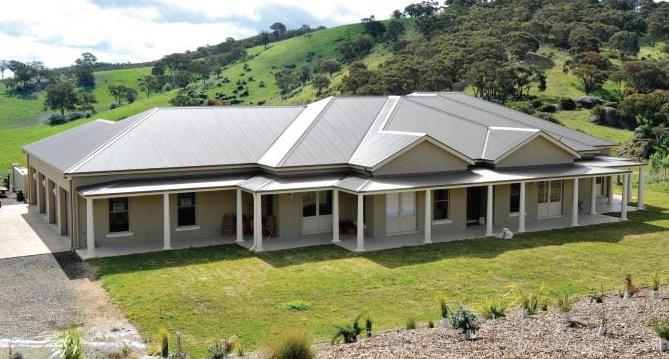
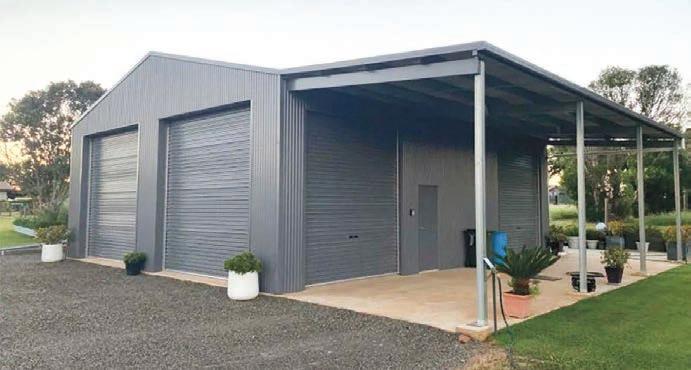

Strong, lightweight and energy efficient, our steel roofing is designed to look great and last long. Made from quality Colorbond® and Zincalume® steel, our roofing materials have been tried and tested to withstand the harshest Australian conditions. Steeline roofing comes in a range of colours to complement any home or building.
AH, RAVIOLI — give me the formuoli! Although it takes time, love and effort, you simply cannot go past delicious ravioli in autumn. Sweet and earthy, these pumpkin-filled parcels are perfect when prepared in a simple brown sage butter. This pumpkin ravioli recipe is a much–loved favourite, especially when finished with a shaving of quality parmesan, crispy sage leaves, or a touch of nutmeg.
INGREDIENTS:
1 small onion, finely chopped
2 tbsp olive oil
50 gm butter, chopped
1 garlic clove, crushed
600 gm peeled butternut pumpkin, diced
60 ml dry white wine
1 tsp thyme
4-5 fine gratings of nutmeg
60 gm parmesan or pecorino, finely grated, plus extra to serve For brushing: eggwash
Egg pasta dough
250 gm (1 cup) flour





2 eggs
1 egg yolk
1 tsp extra-virgin olive oil
200 gm butter, chopped
1 cup (loosely packed) sage leaves
METHOD:
1. Make pasta dough: Pulse flour and salt in a food processor. Add eggs, yolk, and olive oil; process until dough forms. Knead on a floured surface until smooth. Wrap and rest for 1 hour.
2. Make filling: Sauté onion in oil


and half the butter until soft and caramelised (10–15 min). Add garlic and cook 1 min, then remove. Cook pumpkin in remaining butter until tender (8–10 min). Add wine and 3. 3. 100 ml water; simmer until liquid evaporates and pumpkin is very soft. Add thyme, nutmeg, onion, and garlic. Cool, then stir in parmesan and season.
4. Roll pasta: Divide dough into 6 pieces. Roll through a pasta machine from widest setting, folding and reducing thickness each time until 3 mm thick. Cut 8 cm rounds.
5. Fill ravioli: Place 1 tsp filling in the centre of each round. Brush edges with egg wash, top with another round, press to seal, and trim to 7 cm. Refrigerate.
6. Sage butter: Melt butter until nut-brown, add sage, cook briefly until crisp, then remove from heat.
7. Cook: Boil ravioli in salted water 2–4 min until al dente. Serve with sage butter and parmesan or pecorino.