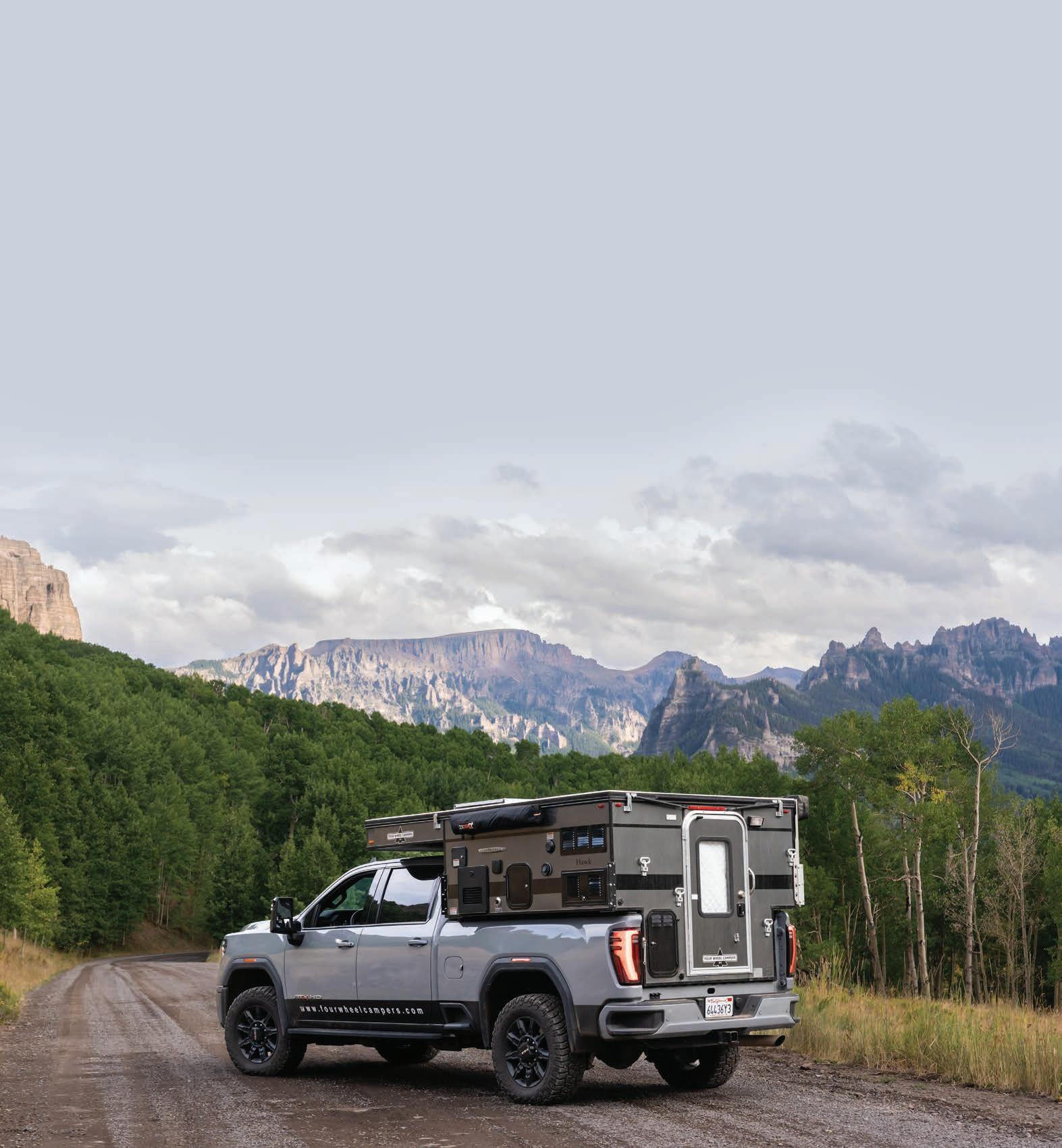
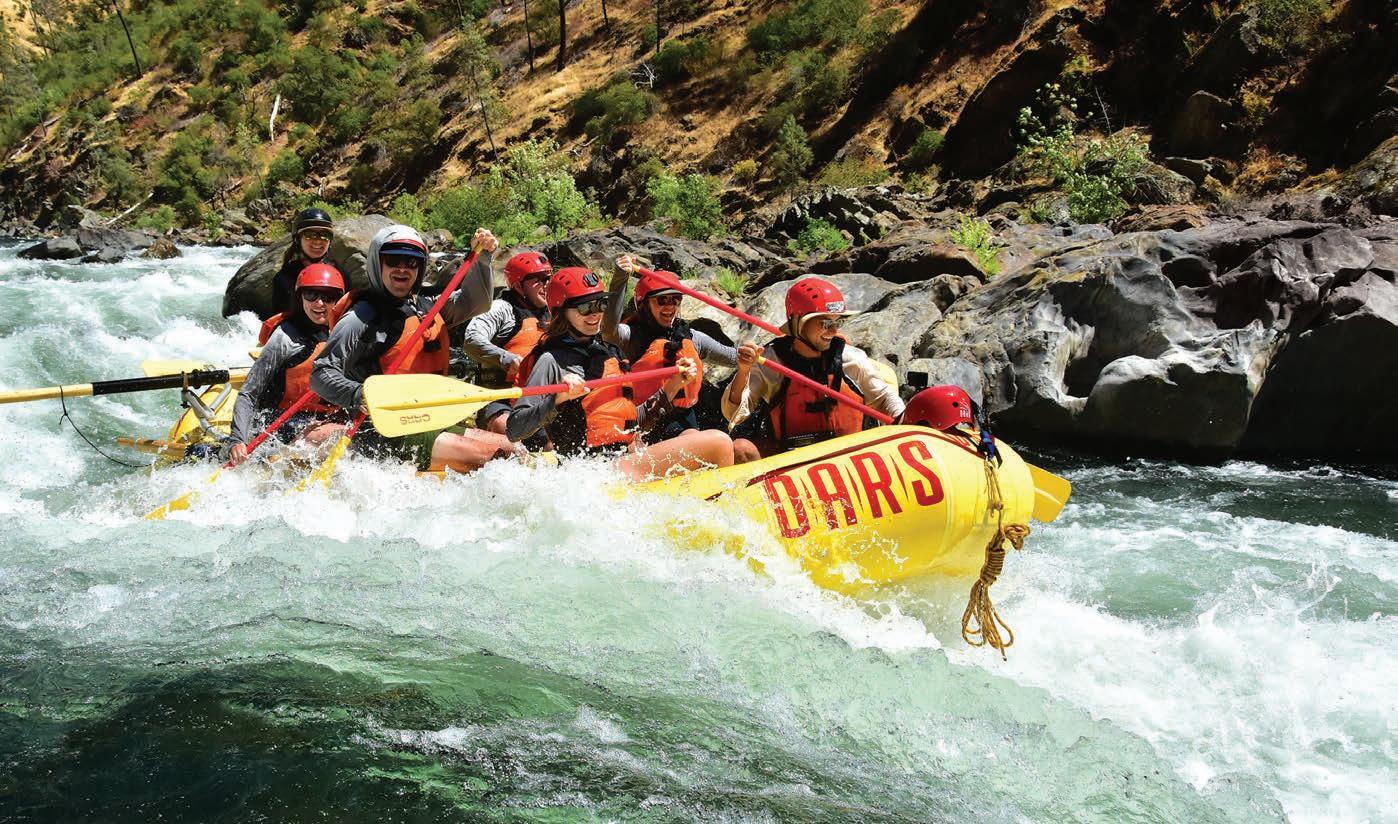
Before it was a trend, it was simply getting outside. For over 50 years, Four Wheel Campers have traveled over land, across streams, and everywhere in between.
Johanson / John Borzini / Lucía Quintero / Robert Kyte / Emily Pierce / Paul Macey / Wildlands
Conservancy / Friends of the Eel River / Brent Van Auken, Visit Redding / Micah Lyons
COVER DESIGN
Lauren Worth
EVENTS MARKETING & DISTRIBUTION events@adventuresportsjournal.com
ADVERTISING
ACCOUNT EXECUTIVE
Cathy Claesson I 831.234.0351 cathy@adventuresportsjournal.com
DESTINATION MARKETING MANAGER
Pamela Coffey I 619.887.9937 pamela@adventuresportsjournal.com
EDITORIAL + LEGAL
Opinions expressed are those of the authors and not necessarily those of Adventure Sports Journal or our advertisers. We usually agree with our articles, but sometimes we don’t. We welcome all contributions.
Adventure sports are inherently risky. Adventure Sports Journal and its contributors assume no responsibility for injuries, accidents, or damages resulting from information published herein. Participate at your own risk and always use proper training, judgment, and safety equipment.
Our office resides in Aulinta (‘place of the Red Abalone’) in the larger region called Popeloutchom (‘paradise’) by the Amah Mutsun Tribe.
ADVENTURE SPORTS JOURNAL PO BOX 35, Santa Cruz, CA 95063 staff@adventuresportsjournal.com
What outdoor adventure are you looking forward to this spring?
leoniesherman
I’m excited for a week in Channel Island National Park. It’s a modern day Robinson Crusoe situation – white sand beaches, thousands of wildflowers, pinnipeds, turquoise waters – with Bluetooth speakers and solar showers.
mattjohanson
I’m looking forward to rock climbing in Yosemite, biking around Lake Tahoe, and skiing over the Sierra Nevada for the first time in far too long.
anthearaymond
I don’t know if it will be adventure or disaster but I’m trying my luck in the Santa Cruz Paddlefest Intermediate Surf Kayak Category. I’ll probably be the only one hoping for smallish surf as I paddle out in my vintage Necky Jive.
marissaneely
I’m most excited to get back to Yosemite for climbing and to close out the ski season with some spring snowboarding.
jamesmurren
I’m heading down to Loreto, Baja, for a few days of sea kayaking and beach camping. It’ll be my first time back since my wife and I drove there from Ridgecrest, California, during Semana Santa 25 years ago.
Spring is a great time of year in the high country with a variety of activities in play, but I’m most looking forward to bike-tosnowboard missions.
I’m looking forward to getting back on my bike and taking a spring ski trip from Badger Pass to Glacier Point with family –something I’ve wanted to do for a long time.
6 Publisher’s Note Through the seasons // 8 Ear to the Ground News & notes from the outdoor industry // 14 Earn Your Beer Trails and paddles in South Lake Tahoe // 31 Event Calendar Upcoming races and outdoor events ahead departments
features
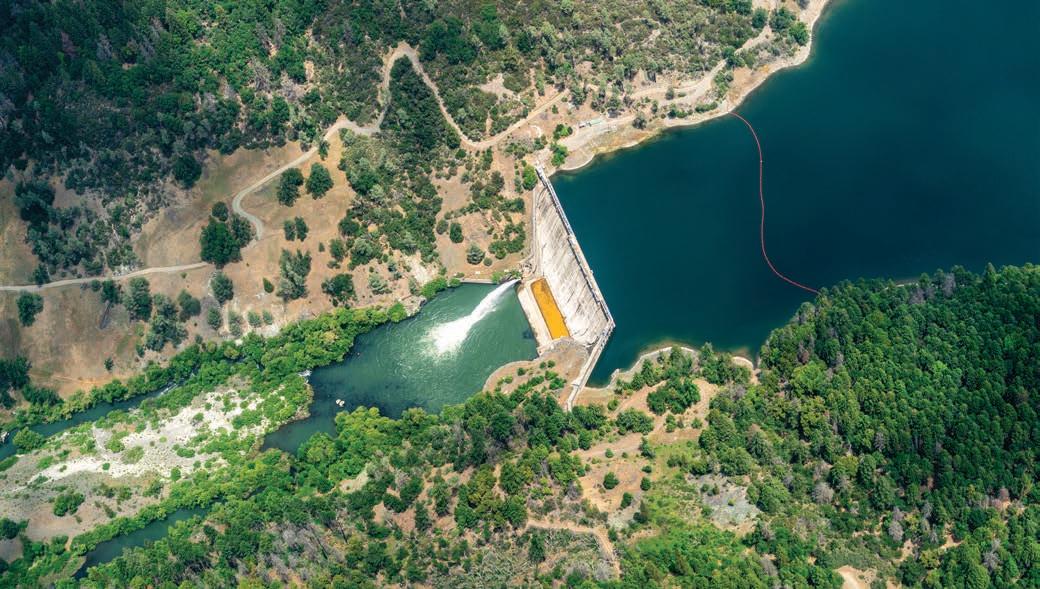
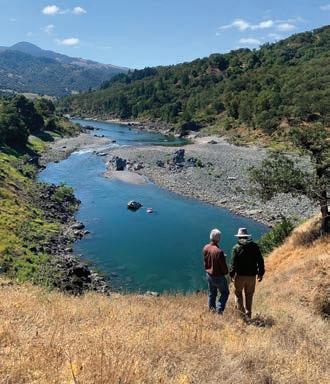
10 Twenty Five Years of Outdoor Story Telling Letters from the founders and writers // 18 Adventure Close to Home Small adventures, daily practice, and staying local // 20 California 14ers Four accessible routes to the state’s highest peaks // 24 Repack at 50 The downhill race that helped build mountain biking // 28 Uncovering the Eel How dam removal could transform the Main Fork
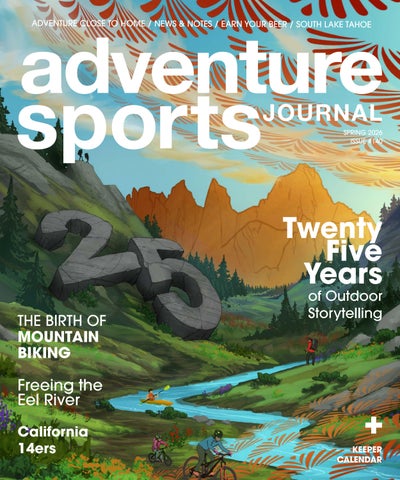
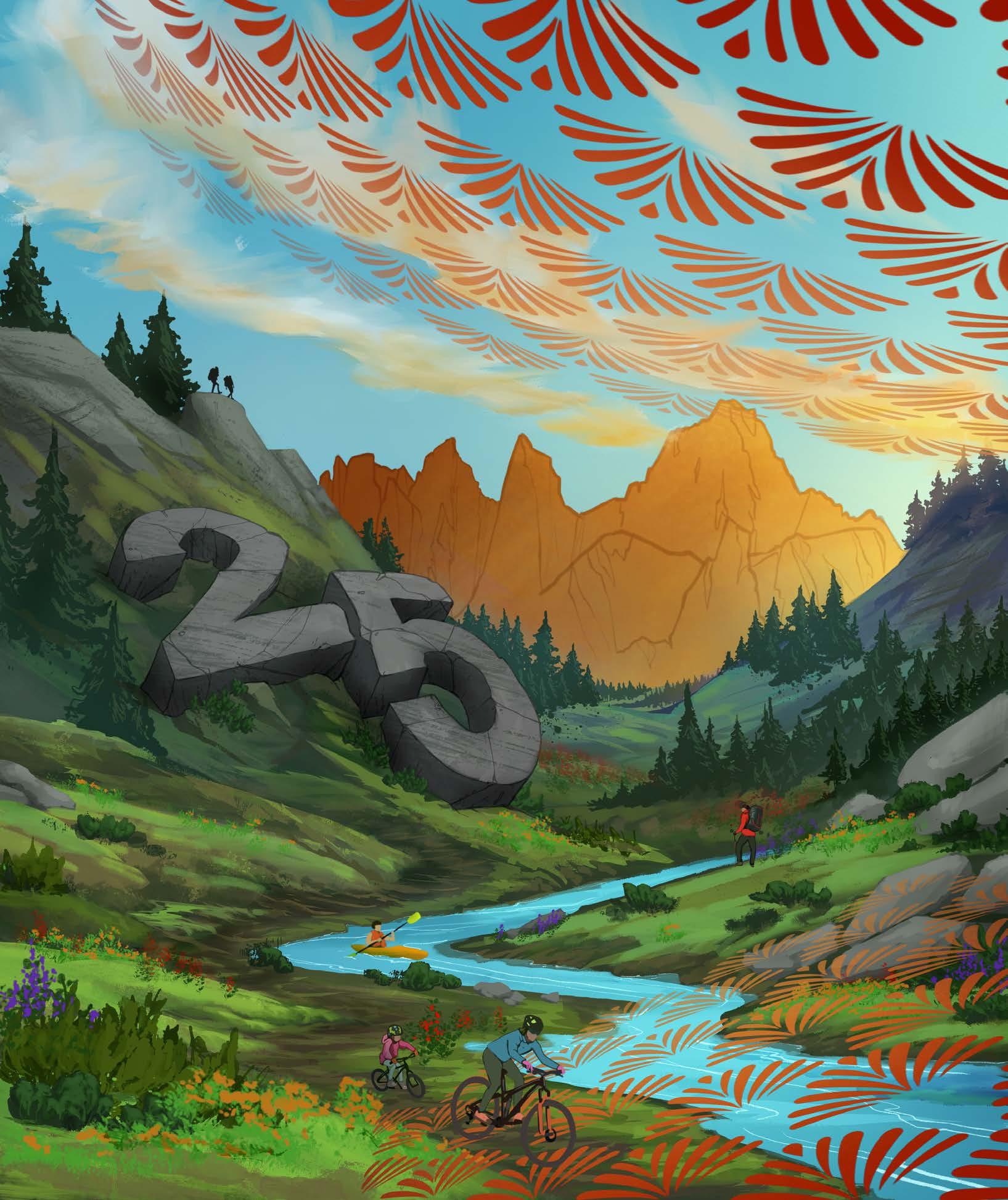
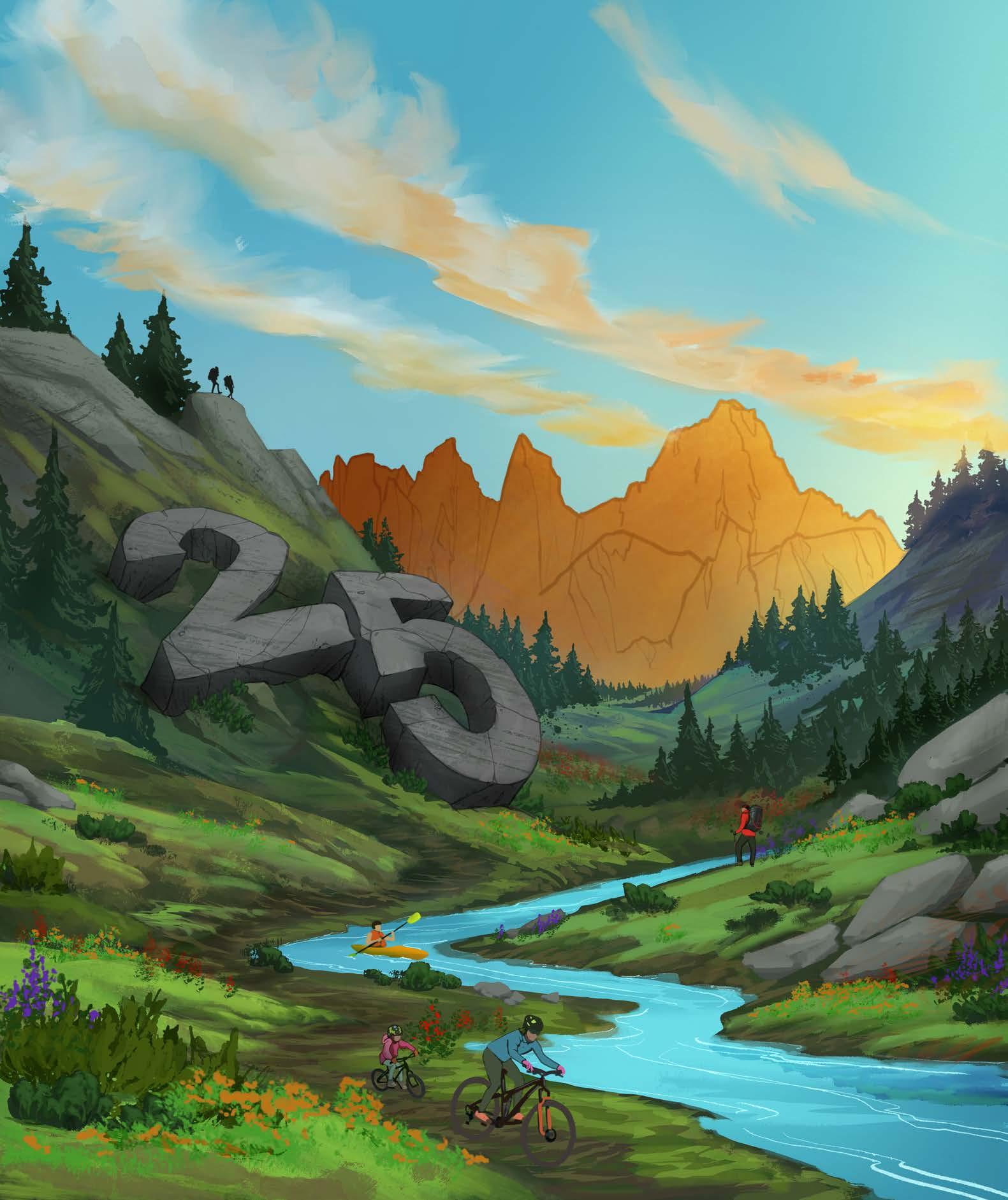
ON THE COVER: Illustration by digital artist Ricket Smash (@robot_panda), created to celebrate 25 years of outdoor storytelling.
PHOTO CREDITS:
(10) Santa Cruz Sentinel; (24) Wende Cragg; (28) Wildlands Conservancy; (20) Matt Johanson
HELP SUPPORT
INDEPENDENT MEDIA
Adventure Sports Journal is one of the last independent outdoor magazines in the country, and we depend on the support of people like you.
Please consider helping us continue our work by becoming a member today.
DON’T MISS AN ISSUE!
Have ASJ delivered to your home.
Memberships as low as $5 per month
BECOME
Through the Seasons
Reflecting on 25 years of Adventure Sports Journal and the community that will shape its future
Welcome to our spring issue. As we reach the twenty-five-year mark for Adventure Sports Journal, I find myself thinking differently about seasons — not just the seasons of the year, but the seasons of a life, a family, a community, and a publication. When Adventure Sports Journal began, I could not have imagined all the seasons it would move through, or how much the world around it would change.
Motherhood has taught me, more than anything, that no season arrives exactly as expected. Some begin quietly and uncertainly. Others gather force slowly and then all at once. This past winter in California offered a reminder of that. For weeks the mountains sat under unusually dry skies, the snowpack thin and uncertain. Then, almost all at once, the storms arrived. The mountains received more than anyone expected. Beauty and power returned to the landscape — but not without consequence. Lives were lost, including members of the outdoor community who called these mountains home.
Seasons rarely unfold the way we imagine they will.
A long-lived magazine has seasons too. There are seasons of growth, seasons of strain, seasons when everything feels full of momentum, and seasons when you are asked simply to keep going — to keep tending something you believe still matters. Looking back over twenty-five years of Adventure Sports Journal, I find myself thinking less about milestones than about endurance: about the people who have shaped these pages, the community that has sustained them, and the reasons we have continued.
Over those years, the culture around us has changed in ways both exciting and unsettling. Media has changed. Attention has changed. The ways people gather, share stories, and support one another have changed. Even in a time so heavily shaped by the internet and algorithms, I still believe there is deep value in a publication rooted in place,
community, and the slower work of paying attention.
Adventure Sports Journal has never only been about athletes or achievements, though those matter. Nor has it been only about the most extreme expressions of outdoor life. At its heart, it has always been about something larger: the California outdoor community in all its forms — writers, photographers, readers, shop owners, organizers, artists, guides, racers, families, and friends. Just as importantly, it has been a place to welcome people in — to spark curiosity, to widen access, and to remind us that a meaningful life outdoors is not reserved for the fastest, the fittest, the most experienced, or the most visibly “outdoorsy.” It belongs to people of every background, every identity, every body, and every level of participation — to anyone who feels called to step outside and find connection there.
Over the years, I’ve had the privilege of watching that circle widen. Some of the young adventurers who first appeared in these pages decades ago are now raising children of their own. Small gear companies have become established brands. Trails have been built, restored, and ridden thousands of times over. Friendships have formed in parking lots, at trailheads, in surf lineups, and along dusty race courses across the state.
If these twenty-five years have taught me anything, it is that no season stays the same for long. We do not always get to choose what arrives. But we do choose what we keep tending. For me, Adventure Sports Journal has been one of those things.
Through many seasons it has remained a place to honor the stories, people, and landscapes that continue to shape outdoor life in California. I am grateful to everyone who has helped carry it this far, and to everyone who still believes it is worth carrying forward.
But twenty-five years in, I don’t see this moment as the end of something. I see it as the beginning of the next season.
Independent voices matter now more than ever. Publications rooted in real places and real communities matter. And the future of Adventure Sports Journal will depend, as it always has, on the people who believe in it.
If ASJ has meant something to you over the years, I invite you to help shape what comes next. Become a member. Support the businesses that advertise in these pages. Share the magazine with friends. Send us your ideas, your stories, your feedback. Tell us what you want to see more of, and how this publication can better serve the California outdoor community.
A magazine like this has never been the work of one person alone. It lives because a community chooses to support it.
My hope is that this next season is not only about continuing ASJ, but about growing it into something even stronger — together.
The next season of Adventure Sports Journal is still being written.
CathyClaesson cathy@adventuresportsjournal.com
EAR TO THE GROUND News
25 YEARS OF OUTDOOR STORYTELLING
Adventure Sports Journal marks its 25th year of covering the people, places, and issues that shape outdoor culture in California and beyond. Since its founding in 2000, ASJ has chronicled the evolution of mountain biking, surfing, climbing, paddling, snow sports, and human-powered adventure across the region. Along the way, the publication has highlighted grassroots events, conservation efforts, and the athletes and advocates who keep the outdoor community moving forward. As the landscape of outdoor recreation continues to change, ASJ remains committed to telling the stories that connect adventure, stewardship, and community.
BACKCOUNTRY COMMUNITY MOURNS
The Sierra backcountry community is mourning nine skiers who lost their lives in a February 17 avalanche near Frog Lake, north of Donner Summit, in the Castle Peak area. The group was on a guided hut trip when a large avalanche occurred during a powerful Sierra storm cycle that had brought heavy snowfall to the region. Six others survived the slide. The avalanche drew an immediate response from fellow skiers and rescue teams, who worked alongside survivors in difficult conditions. The tragedy has deeply shaken the Tahoe backcountry community, where many of the victims were known and respected, and is being described as the deadliest avalanche in modern California history.
CONDOR EGG POSSIBLE IN REDWOODS
Biologists with the Yurok Tribe’s Northern California Condor Restoration Program believe a pair of California condors may be incubating the region’s first wild egg in more than a century. The nest is thought to be hidden high in an old-growth redwood within Redwood National and State Parks. The six-year-old condors were among 26 birds released in Humboldt County beginning in 2022 as part of a tribeled effort to restore the species to its historic range. Scientists say the egg cannot be directly confirmed because of the nest’s remote location, but tracking data and observed behavior strongly suggest incubation. If successful, the chick would mark a major milestone in the condor’s recovery.
MEAD RANCH CONSERVED
A major piece of open space in the southern Santa Cruz Mountains is now protected. In March, Peninsula Open Space Trust (POST) announced the purchase of the 1,921-acre Mead Ranch above Coyote Valley for $24.3 million. The property links nearly 50,000 acres of protected lands in the region and provides an important wildlife corridor between the Santa Cruz Mountains and the Diablo Range. Conservationists say the oak-studded grasslands and watersheds support species including mountain lions and other native wildlife. While the ranch is not currently open to the public, it could eventually help close a gap in the Bay Area Ridge Trail, a planned 550-mile hiking route circling the Bay Area.
BIG BASIN EXPANSION ADDS 153 ACRES
Big Basin Redwoods State Park is getting bigger. In February, California State Parks announced the permanent addition of the 153-acre NoraBella property near Boulder Creek, acquired for $2.415 million in partnership with the Sempervirens Fund. The parcel, known as the “Gateway to Big Basin,” includes redwood forest, creeks, and wildlife habitat and will support the park’s recovery after the 2020 CZU wildfire. The acquisition is the first addition to Big Basin in 15 years and is expected to help shape future visitor facilities and conservation efforts as part of the broader “Reimagining Big Basin” planning process.
FUNDS FOR HABITAT AND ACCESS
California is investing $59.6 million in 27 projects across 18 counties to improve wildlife habitat, restore salmon streams, expand public access, and support biodiversity statewide. Approved by the Wildlife Conservation Board in late February, the grants
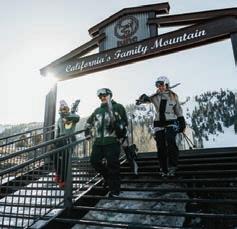
CALIFORNIA’S FAMILY MOUNTAIN
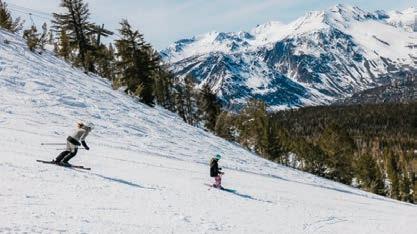
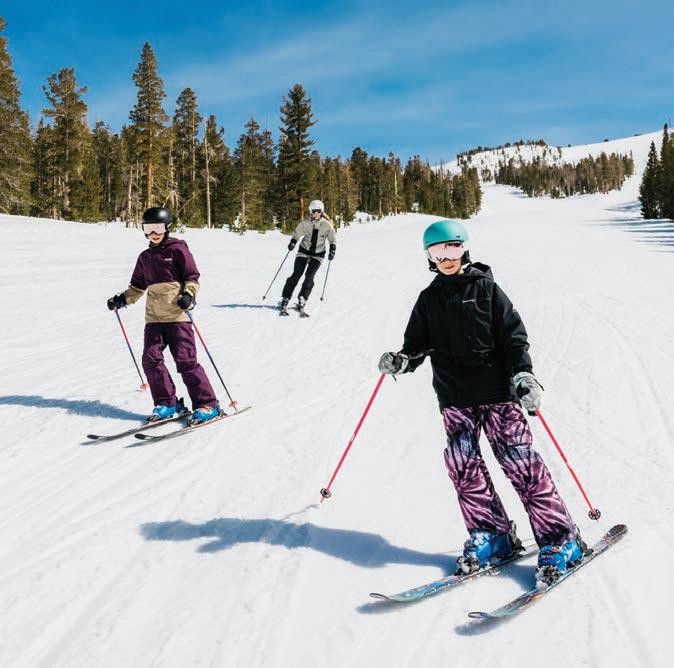
Featuring 1,500 acres of spacious slopes and plenty of beginner terrain for the whole family, June Mountain’s easy-going atmosphere and breathtaking views make for the perfect Eastern Sierra ski day.
Early bird season pass sale March 15 - April 30
Bonus tickets & spring access included!
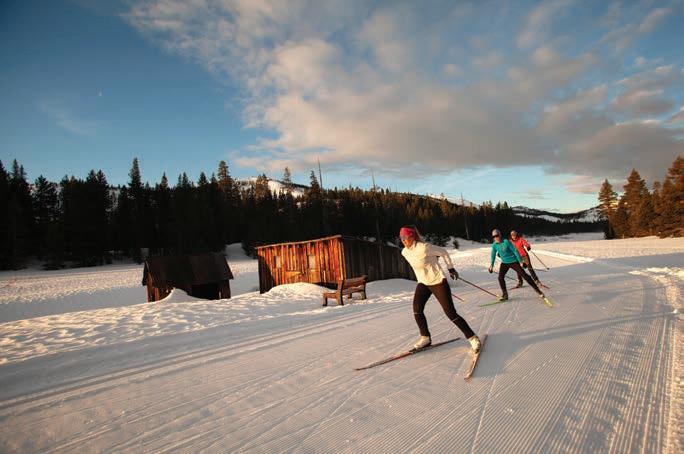
DISCOVER WHY TDXC HAS BEEN A FAVORITE FOR 40 YEARS
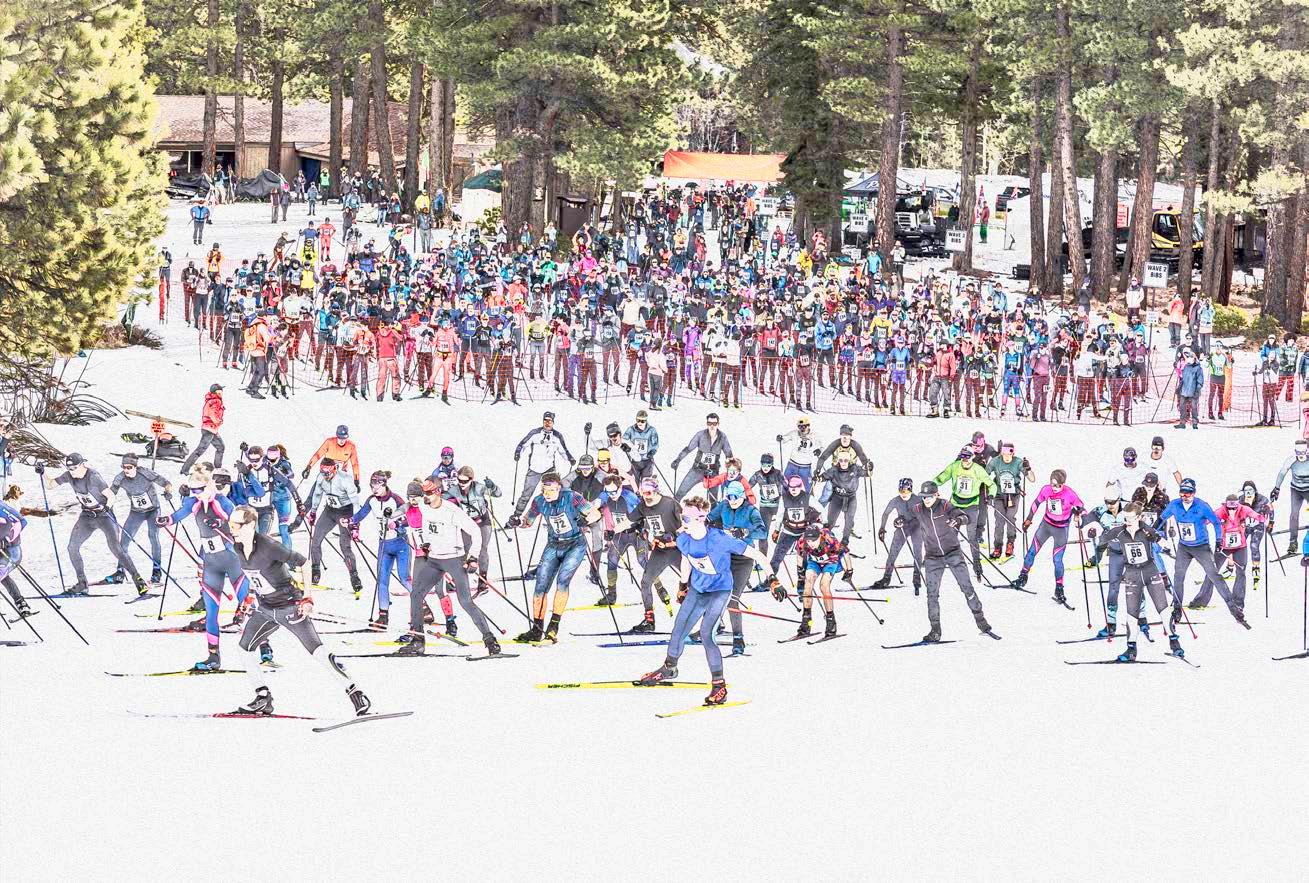
Tahoe Donner Cross Country Ski Center (TDXC) has spent 40 years helping skiers of all levels fall in love with cross country skiing. Join programs, lessons and clinics led by passionate PSIA-certified instructors, including former Olympians and National Champions, who make learning fun and approachable.
This season, enjoy our 40th Anniversary Lesson Package Special — $40 to Learn to Classic or Skate Ski, including a trail pass, rental equipment and a 90-minute group lesson on select days
include funding for wildlife crossings in Southern California, salmon recovery in several watersheds, and a new five-mile trail network at Watsonville Slough Farm in Santa Cruz County. State officials say the projects support California’s 30x30 conservation goal while expanding outdoor access and improving habitat resilience in a hotter, drier climate.
AVIAN FLU DETECTED IN ELEPHANT SEALS
Scientists have confirmed the first cases of highly pathogenic avian influenza (H5N1) in northern elephant seals in California. Seven seal pups at Año Nuevo State Park, north of Santa Cruz, tested positive after researchers observed respiratory and neurological symptoms. The discovery marks the first detection of the virus in marine mammals in the state. In response, California State Parks temporarily closed seal viewing areas and canceled guided elephant seal tours for the rest of the season while scientists monitor the colony. Officials say the risk to the public is low but urge visitors to keep their distance from wildlife and avoid contact with sick or dead animals.
MOUNTAIN LIONS GAIN STATE PROTECTIONS
surveys and several years of trapping efforts. Scientists estimate fewer than 50 Sierra Nevada red foxes remain in the region. Tracking data from the collar will help researchers understand the fox’s movements and habitat needs as they work to protect one of California’s rarest native carnivores.
YOSEMITE DROPS ENTRY RESERVATIONS
Yosemite National Park will not require timed-entry reservations for visitors in 2026, ending a system used in recent years to manage crowding during peak seasons. Park officials say data from recent summers showed traffic and parking could be managed without a season-long reservation program. Instead, the park plans to rely on real-time traffic controls and staff management when parking areas fill. Some conservation groups worry the change could lead to increased congestion during busy summer months. Yosemite remains one of the most visited national parks in the country, drawing millions of hikers, climbers, and outdoor enthusiasts each year.
NEW TRAIL OPENS AT BERRYESSA SNOW MOUNTAIN
Whether you’re brand new or looking to refine your technique, TDXC offers the perfect blend of learning, community and world-class trails.
LEARN MORE AND PURCHASE YOUR LESSON PACKAGE OR PROGRAM TODAY AT TAHOEDONNER.COM/XC
Mountain lion populations across Southern California and the Central Coast are set to receive new protections under the California Endangered Species Act. In February, the California Fish and Game Commission unanimously determined that listing these regional populations as threatened is warranted due to habitat loss, road fragmentation, and the isolation of small populations. The protections apply to several ranges, including the Santa Cruz Mountains, the Central Coast, and mountains of Southern California. Conservationists say the move could help spur wildlife crossings and habitat protection efforts to improve connectivity for the state’s iconic big cats.
RARE SIERRA FOX COLLARED
Wildlife biologists have successfully captured and fitted a Sierra Nevada red fox with a GPS tracking collar in the southern Sierra Nevada, marking the first time the rare animal has been collared in its namesake mountain range. The fox was captured and released near Mammoth Lakes by California Department of Fish and Wildlife researchers after a decade of
A new trail segment has opened in the Berryessa Snow Mountain National Monument, expanding hiking opportunities in the rugged Coast Range north of Napa. The Bureau of Land Management recently completed work on a section of trail connecting existing routes and improving access to remote backcountry terrain within the monument. The area is known for its oak woodlands, wildflower displays, and sweeping views of Lake Berryessa. Officials say the project is part of an ongoing effort to expand recreation opportunities while protecting sensitive wildlife habitat across the 330,000-acre national monument.
CHECK THE KEEPER CALENDAR
From trail runs and paddling events to volunteer days and community gatherings, ASJ’s Keeper Calendar highlights upcoming ways to get outside and get involved. Look for new listings in this issue and online as the spring outdoor season gains momentum.
Scan the QR code and keep up with the latest news and information from our industry
Camping on Anacapa Island Oxnard’s wild island escape
If you’re searching for an adventure that feels a world away — yet sits just an hour off the California coast — set your sights on Anacapa Island in Channel Islands National Park. Departing from Oxnard’s Channel Islands Harbor, campers cross the Santa Barbara Channel to one of the state’s most rugged and awe-inspiring landscapes.
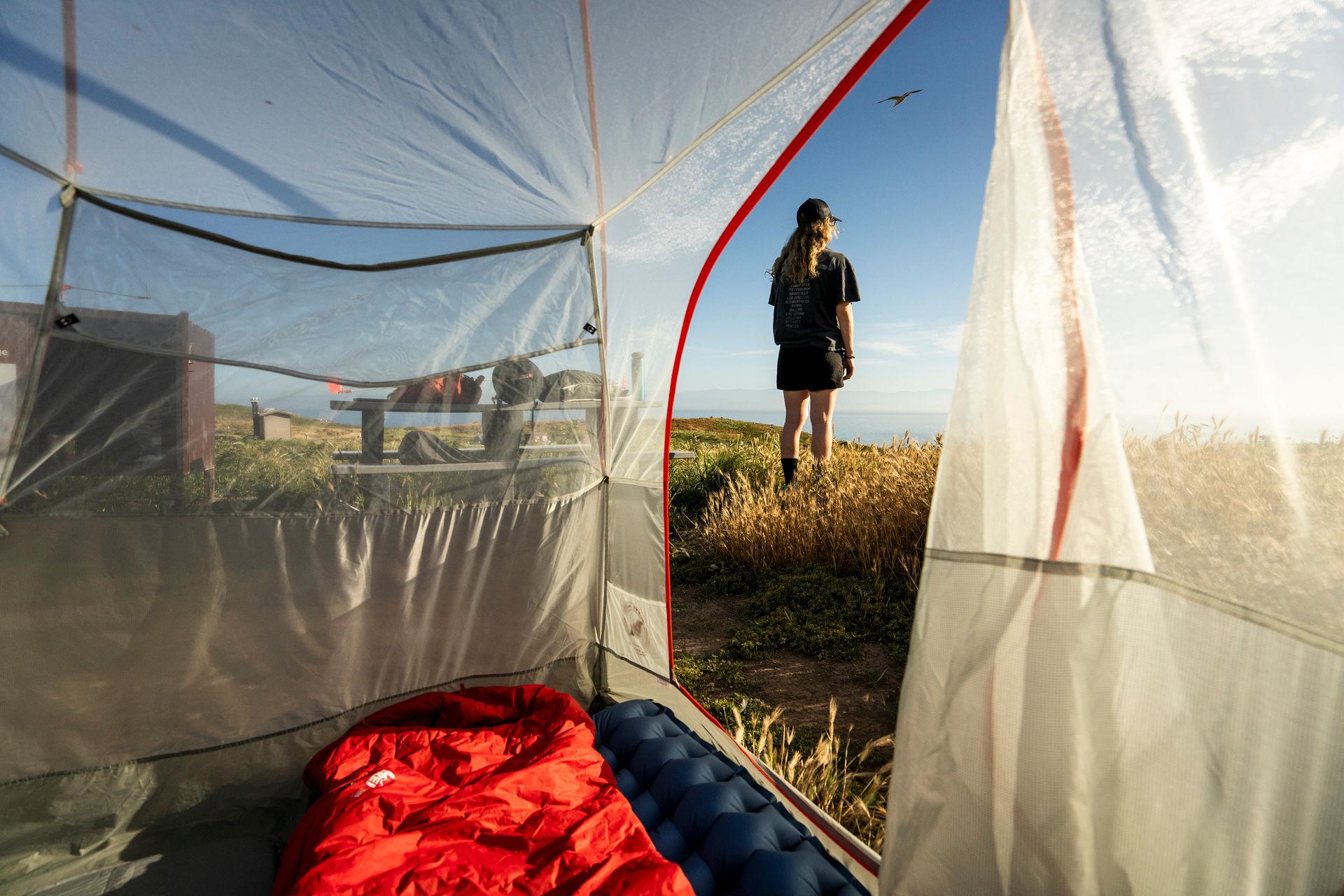
Anacapa is a place without crowds or cars, just crashing waves, seabirds and windswept cliffs rising from the sea. The island’s campground, perched above dramatic sea caves and kelp forests, offers one of the most unique camping experiences in North America. From your tent, you’ll hear western gulls nesting nearby and see
No crowds. No cars. Just wind, waves and wild California.
the Anacapa Lighthouse beam across the horizon at night.
To get there, book roundtrip ferry service with Island Packers, the official park concessionaire. The journey takes about an hour and often includes dolphin sightings or, if you’re lucky, a glimpse of a humpback whale. Once you arrive, you’ll climb 157 steps to reach the island’s plateau, then follow a short trail to the campground.
The sites are primitive — no fires, no running water and no cell service — but that’s the beauty of it. Bring all supplies with you, including drinking water, a camp stove and layered clothing for cool, windy nights. Camping here is less about luxury and more about connection: to nature, to the ocean and to the moment.
Before sunset, hike to Inspiration Point, one of the most photographed views in Southern California. From the cliffs, watch the sun drop behind the neighboring islands, turning the Pacific gold. At night, the island settles into a rare quiet, broken only by the steady rhythm of waves below
— an ocean lullaby you won’t find on the mainland.
In the morning, enjoy a sunrise coffee with seabirds soaring overhead, explore short coastal trails lined with seasonal wildflowers and soak in the solitude before the ferry returns you to Oxnard’s welcoming harbor.
Camping on Anacapa Island is pure, simple, and unforgettable proof that real adventure doesn’t require a plane ticket. Just a short ride from Oxnard. It’s the kind of experience that reminds you how wild California still is.
Discover more Oxnard adventures at VisitOxnard.com
Dream on the Edge of the Wild.
Leave the ordinary behind. Sleep on the edge of the Pacific. Anacapa Island campground sits above crashing waves and wild terrain inside Channel Islands National Park, where every moment feels a beat apart.
VisitOxnard.com
Anacapa Island, Channel Islands National Park
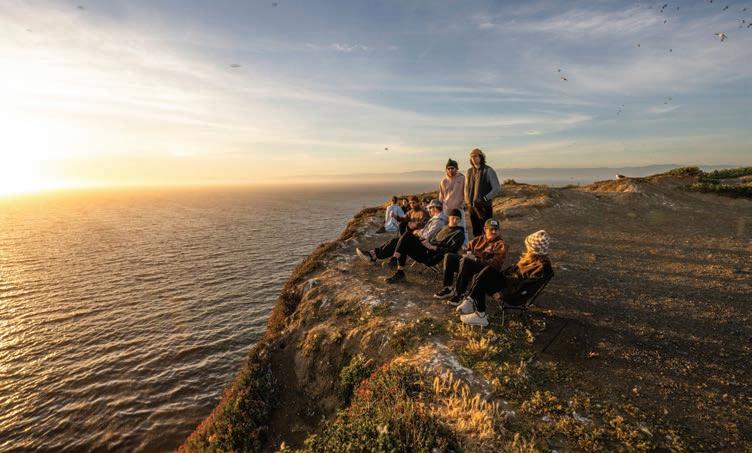
One hour from Oxnard, campers gather on Anacapa’s windswept cliffs to watch the sun sink into the Pacific, a nightly show far removed from the mainland.
Twenty-Five Years of Outdoor Story Telling
Letters from the founders and writers who make Adventure Sports Journal possible
Twenty-five years ago, after a climbing trip in Yosemite that went south, Matt pitched the idea of starting a California publication focused not only on climbing, but a variety of outdoor sports. No one else was doing it, and we were seeing more crossover between adventure sports. Climbers were going surfing on weekends, bikers were picking up kayaking, and runners were heading to the mountains.
We didn’t have investors or a business plan. I was teaching second grade. Matt was running a tree business. We just knew we wanted to create a magazine that connected the dots — a place where people could discover new adventures and learn from each other. In those early days, we met Christa Fraser. She became a founding partner and helped get the first issue of Adventure Sports Journal into the world. A journalist at a local weekly, she brought newsroom instincts to our scrappy startup, and her clarity and momentum made that first issue happen. Without Christa, I’m not sure ASJ would have made it into your hands.
When that first issue landed, publishing looked very different. Media has transformed in ways none of us could have predicted, but ASJ has remained a small, community-powered operation. Along the way, Pete Gauvin joined as a partner during a demanding stretch and helped us keep publishing when the workload felt overwhelming. Writers trusted us with their stories. Photographers shared their vision. Advertisers supported our work. Distributors carried bundles of magazines up and down the coast. Readers picked up copies and took them home. We’ve faced challenges and made hard decisions, but the core belief has never changed: stories about human-powered adventure, environmental stewardship, and connection to place still matter.
The real story of ASJ has always been the community behind it — contributors, advertisers, distributors, and readers. Thank you for being part of these first 25 years. The kind words in this issue about Matt and me are humbling, and I’m grateful to still be here, excited for what’s ahead.
— Cathy Claesson, Publisher
FROM THE EARLY DAYS OF ASJ
Twenty-five years ago, I was a river guide, ocean kayak guide, and avid mountain biker who also wanted to be a writer. I had, in fact, just written my first feature article for Metro Santa Cruz about a young rock climber named Chris Sharma, which brought me into Matt and Cathy’s orbit several months before ASJ launched.
Launching and running ASJ together, especially when outdoor sports were not yet so popular, was complex and challenging. Vivid memories of those early days include the many late nights putting the magazine together and many miles racked up in barely running Volvos and vans as we distributed the magazine across California.
I also clearly recall our aversion to buzzy ideas like “extreme,” “risky,” “on the edge,” which were beginning to be used in popular marketing. Rather, we wanted people to understand the outdoors as home, gathering place, laboratory, and testpiece. We wanted people to see outdoor adventure as culture, to see athletes and adventurers as people pushing skill and curiosity into both novelty and tradition. In other words, Chris Sharma was not a risktaker so much as a highly skilled seeker teaching us all about the leading edge of possibility.
I returned to those early days of ASJ recently as I watched Alex Honnold climb Taipei 101. For the non-adventuring public, Honnold was flirting with danger and disaster. For Honnold, though, the tower was within a zone of possibility he had been seeking and exploring, becoming comfortable with, for decades. On that note, thank you to Matt and Cathy for bringing all of us into 25 years of seeking and exploring, one copy after another of ASJ in hand.
—
Christa Fraser, Founding Partner
VOICES FROM THE ASJ COMMUNITY
An introduction and reflections curated by Leonie Sherman
Twenty-five years have passed. That’s a quarter century — an entire generation. When Adventure Sports Journal began, we were using landlines and dial-up internet. Now we hold instant access to everything in the palm of our hands.
Since ASJ began, a seismic shift has rocked the print magazine world. Smaller niche publications disappeared. Major print magazines reduced frequency or eliminated print altogether. The economics of print changed, and independent publishing became rare. Today, ASJ remains one of the few independently published outdoor magazines still in print.
And none of this would be possible without the heroic efforts of Cathy Claesson and Matt Niswonger. While advertisers and contributors fill the pages, Cathy and Matt organize, edit, and cajole it all into place on a tight timeline every issue, while
raising a family and contributing to their community. They do it with persistence, care, and a commitment to keeping this community resource in print.
What follows is a small attempt to express appreciation from the people who have helped shape ASJ over the years. Matt and Cathy are not just the heart of ASJ, delivering essential information throughout the adventure ecosystem — they’re the kidneys, removing excess verbiage, and the brain, making crucial decisions about content, advertising, and distribution. Most of all, they are the soul of this publication, inspiring and encouraging all of us to be the best version of ourselves, get outside as much as possible, and fight to protect the places and people we love. From all of us here at ASJ, thank you Cathy and Matt for 25 amazing years of ASJ. May we enjoy many more together.
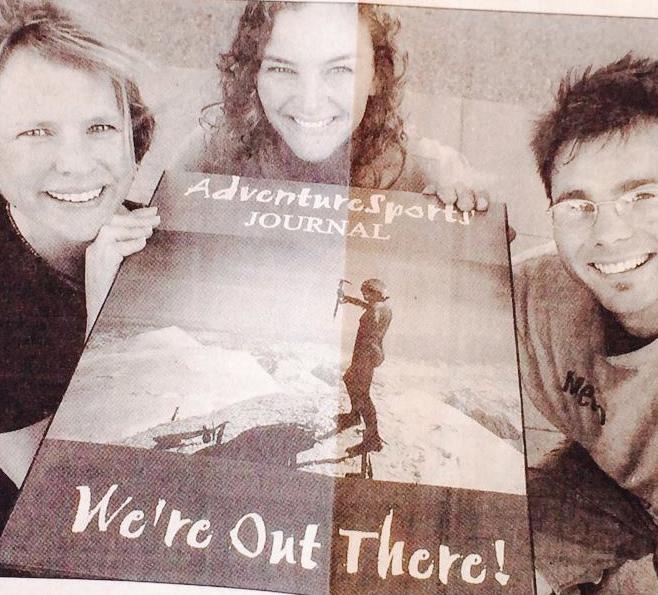
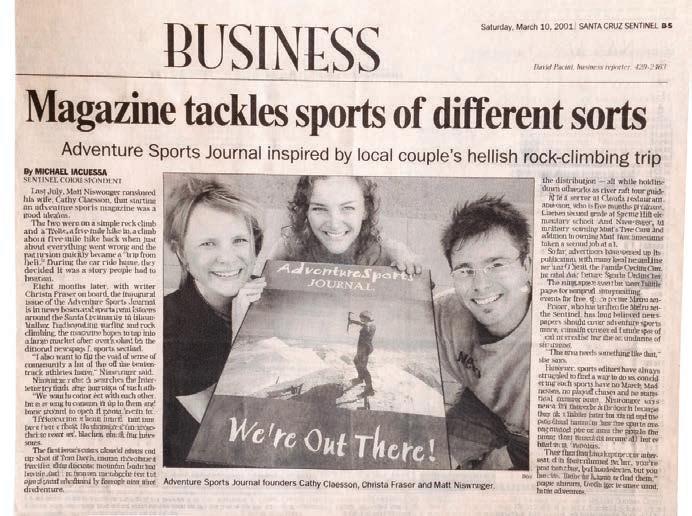
The launch: The Santa Cruz Sentinel covered ASJ’s March 2001 debut, featuring founding partners (left to right) Cathy Claesson, Christa Fraser, and Matt Niswonger beside one of the original magazine racks.
DON’T DO IT From skepticism to 25 years of grit — Doug Robinson
So this couple dreamed of starting an adventure magazine. I had worked on a startup before, moving to San Francisco to help launch Outside Magazine.
We went to lunch. Matt was eager. I said it had taken Outside a million dollars to launch, even with Rolling Stone for a parent magazine. I said, “Where’s the bankroll? Don’t do it.” They wanted it, and they did it anyway. Matt became the Editor without quitting his day job. Cathy hustled being the Publisher, selling ads and paying the printer, in between getting the kids off to school. They hustled. They bootstrapped it together, issue by issue. It was gritty. People paused on their way out the door at REI. What’s this ASJ thing? Twenty-five years later they have real reach, real clout. Stories from Montana to Bears Ears to the Mexican volcanoes. Heartfelt, boots in the dust stories. Real, with a whiff of sage under the bike tires. Distribution to match. Now, walking out of Eastside Sports in Bishop — oh cool, a fresh ASJ. I get to sit in bleachers on the shore of lake Tahoe and listen to Matt’s passion as an activist for Native Americans in Nevada. Thriving now, with heart. Big congratulations! —DR
STILL AFLOAT Print, persistence, and staying power — Pete Gauvin
Adozen or so years ago, when I was sweating deadlines as ASJ’s editor, I would have had a hard time believing ASJ would still be here in 2026. The fact that it remains a print magazine, and still recognizably itself, is remarkable.
And yet, somehow, here it is. That’s remarkable, considering the headwinds: financial pressures, changing media habits, personal burnout, and the relentless deadlines that can sideline everything else in life. There have been plenty of opportunities for this thing to fold. The fact that it hasn’t says a lot. Why has this homespun regional outdoor magazine endured in such a tech-crazy time? Because ASJ is unique, and because it fills a niche no other publication or website quite can. Its stories are grounded, useful, and often evergreen. And in print, they carry a kind of credibility and digestibility that still matters. No popup ads, no endless scrolling — just a neatly contained, portable fly swatter of information and inspiration about the landscapes, activities, and people
that make California such a rich place to adventure.
Credit goes to the many longtime contributors, occasional writers, photographers, and advertisers who have helped keep ASJ going. But above all, it goes to the indefatigable efforts and sacrifices of publisher Cathy Claesson and editor Matt Niswonger. They are the buoys that have kept ASJ afloat.
Here’s to ASJ, and to many more years of not being stuck to a screen. Get out there, explore, read, contribute. One life — experience it the ASJ way. — PG
PAPER & INK
Reading as an action —
Krista Houghton
AdventureSports Journal’s heart beats inside the work of Cathy Claesson, and its soul has long been shaped by Matt Niswonger. I became part of ASJ back in 2002, when it was just getting started. Back then I was an adventure junkie, chasing big waves up and down the Santa Cruz coast.
They reminded me of pioneers — starting something from scratch, working hard to make voices heard. I offered to deliver magazines to every surf, coffee, and bike shop from Santa Cruz to Sausalito. I loved walking into a shop with a fresh stack of ASJ. The cover always emitted stoke for adventure. I’d watch people open it, read, and smile.
What they’ve given to the adventure sports world is special. Long hours, countless weekends, real sacrifice — all to keep stories in print and keep that call to go outside alive. They never ceded to the pressure to abandon print. Because paper and ink make reading an action: turning pages, feeling the weight of it, being present with the story.
Congratulations on 25 years. — KH
MORE THAN PROFIT Justice, adventure and trust — Leonie Sherman
None of us do it for the money.
Knowing that Cathy and Matt are motivated by justice, representing marginalized folks and a deep love for wild adventures inspires me to dig deeper and work harder on my stories for ASJ. Being part of a team that’s motivated by more than profit helps heal some of the wounds caused by this late stage dumpster fire of unfettered capitalism. Their faith in me has pushed me beyond what any of us envisioned for ASJ. I’ve gotten to cover the largest Indigenous gathering on the planet, break a David and Goliath story
2001–2006: The Scrappy Beginning WORLD + CULTURE
• Post-9/11 uncertainty reshapes travel, risk, and the national mood
• Print dominates; social media is just emerging (pre-iPhone, pre-Instagram)
• Outdoor sports remain niche — not yet lifestyle branding
ASJlaunched in March 2001, when things still felt open and optimistic. Print ruled, and we learned the mechanics of publishing in real time — shaping stories, designing layouts, selling ads, and hitting deadlines. Christa Fraser filed features between guiding seasons and restaurant shifts. None of us had launched a magazine before; we learned issue by issue.
Just months after our launch, 9/11 reshaped the national mood and the sense of what was certain. Even then, we stayed enthusiastic about the future of ASJ. We began connecting with regular contributors eager to share stories. Krista Hammond (now Krista Houghton) covered the water world, especially surfing, while Seth Lightcap became our backcountry goto on skis or wheels. Haven Livingston deepened our climbing coverage and helped bring whitewater to our pages. Tim Hauserman contributed thoughtful coverage of cross-country skiing and backpacking, while Matt Johanson helped define our Sierra and Yosemite thread early on. Behind the scenes, life was accelerating. For much of the first five years, I was pregnant — giving birth to our three children while new issues rolled out. As our family grew, so did the stakes. Matt shifted from self-employed arborist work to a lineman job at PG&E, providing benefits and steady income while the magazine found its audience. In 2006, Pete Gauvin joined the team, helping shoulder the workload as ASJ moved beyond its earliest startup years.
We distributed issues out of aging Volvos — stacks in the back seat, friends and family on call — convincing retailers one handshake at a time, fueled by the belief that we were building something that mattered.
about water rights and ask the right question of the right person that led to tangible legislative change, all because they sent me there, asked me to and trusted me to tackle tough stories with care.
We don’t always agree, and there’s been some messy births in getting my stories to print. But even after harsh words are exchanged, we always return to this place of respect and love — for each other, for human-powered adventure, for this tiny magazine that makes a huge difference. Thank you Cathy and Matt. My life is so much better for the work we’ve done together. — LS
PRINT ISN’T DEAD Hard calls, real community — Kurt Gensheimer Print journalism isn’t dead, it just smells funny. But in all seriousness, this increasingly
digital world has hammered print publications, and the ones that remain are in a constant effort to stay afloat.
I first got involved with ASJ in 2013 after Matt and Cathy read my Angry Singlespeeder editorial column on MTBR.com. They wanted to put some of the columns into print, and I was happy to oblige — until a few readers who didn’t jive with my philosophy threatened to boycott advertisers. Although I was annoyed that a reader would threaten a communityfocused publication barely keeping the lights on, I understood why Cathy and Matt discontinued my column. ASJ was trying to represent different community viewpoints, but the fate of the publication was at stake. This was just one of many difficult decisions they’ve had to make over the years, but they handle each one
2007–2011: Finding Our Voice WORLD + CULTURE
• The Great Recession tested small business and independent print
• Facebook goes mainstream; the smartphone era begins
• Outdoor culture begins shifting from niche to mainstream
By 2007, ASJ felt more confident editorially. We added talented writers and photographers to our team, including Bruce Willey, a gifted writer and photographer from Santa Cruz who made the Eastern Sierra his home. We were also honored to publish feature stories by legendary climber and writer Doug Robinson. We launched our first Green Issue and made a longterm commitment to environmental coverage. ASJ leaned into what became a defining strength: storytelling rooted in place, history, and culture.
We also focused on meeting readers face-to-face. Our growing “Roadshow” took us to some of the best events in California, where we built community the old-fashioned way — in parking lots, expo booths, and post-race gatherings. At Sea Otter Classic, we gave Rebecca Rusch her first magazine cover, and she signed copies for fans lined up to meet her.
Years later, we learned ASJ had been the first magazine to feature climber Kevin Jorgeson, long before the Dawn Wall made him a household name. Chris Sharma returned to our pages, and in 2009 we featured a 23-yearold Alex Honnold — not yet a global icon, just a quietly intense climber redefining what was possible.
We weren’t just covering athletes; we were tracking the evolution of outdoor culture. In 2010, we coined the phrase “Earn Your Beer” — a nod to the grit, sweat, and joy that define human-powered adventure. We trademarked the phrase, but it wouldn’t remain our cover tagline forever.
The recession tested independent media, but it also clarified who we were. By then, we had moved beyond startup energy into something steadier — a regional publication with an established voice, loyal readership, and the confidence to shape its own lane.
professionally with the priority of keeping print alive. Cathy and Matt manage to balance outside jobs and family, while being tirelessly dedicated to their readership, their advertisers and their contributors. There have been several times when they’ve told me they’re folding up the tent, but somehow they find the energy to push onward. Thank you Cathy and Matt for your 25 years of dedication to this crazy community of outdoor obsessed adventurers. I know it hasn’t been easy, but print journalism wouldn’t be the same without you. — KG
LIKE FAMILY Climbing, trade shows, & ink on the page — Chris Van Leuven I’ve known Matt and Cathy for so long I’ve lost the exact starting point — maybe a decade, maybe more.
I remember staying at their place in Santa Cruz, dropping by the ASJ office to chat with Cathy, and hosting Matt in the Sierra foothills many times for climbing days and e-bike rides. Through it all, they’ve treated me as more than a contributor; they’ve made me feel like family, the same way they seem to welcome everyone who helps put ink on the page. Year after year, we’d cross paths at trade shows, and then keep the conversation going with long calls, swapping story ideas, troubleshooting, pushing the next issue over the finish line. It’s easy to forget how much work it takes to keep an independent adventure magazine afloat, and how rarely that work is glamorous. Matt and Cathy do it anyway, with kindness, grit, and a steady devotion to their family and community.
2012–2016: Expanding the Conversation WORLD + CULTURE
• Instagram reshapes visual storytelling
• Digital pressure intensifies for independent print
• Climate and land-use debates intensify
Despite increasing pressure to move online and feed social media, ASJ stayed focused on print and rooted in real-life community. We continued to show up at California events and helped support the scene as it grew.
Around this time we met Michele Lamelin at the Santa Cruz Mountain Bike Festival. Dedicated to trail building and access, she was also a founding partner of the California Enduro Series. Michele began writing for ASJ and soon became our longtime copy editor — catching grammar issues, finetuning layouts, and helping us go to press with cleaner pages and fewer surprises.
This era also brought three voices who remain central to ASJ today. With a journalism degree from UC Berkeley and bylines that included the Sierra Club, Leonie Sherman brought a clear, intelligent voice to land ethics, environmental reporting, and the human side of stewardship — helping ASJ grow into more complex conversations.
We met Chris Van Leuven (CVL) at Outdoor Retailer, where he and Matt immediately connected over climbing history. Already writing for national outdoor and climbing publications, CVL used ASJ to document the legacy and characters of Yosemite and Sierra climbing.
And in the mountain bike world, journalist Kurt Gensheimer brought an informed, unapologetic voice shaped by reporting and on-the-ground work with the Sierra Buttes Trail Stewardship. His coverage spans racing, mountain bike culture, backcountry access, and overlooked trails worth rediscovering. Together, their perspectives sharpened ASJ’s voice during a time of industry disruption.
I’m grateful they keep this little adventure magazine that could alive, and that they keep bringing all of us along for the ride. — CVL
WHERE IT STARTED A teacher, a trip, and a first byline — Matt Johanson
My first trans-Sierra ski trip in 2002 became the subject of my first outdoors story, thanks to Matt and Cathy. I had a background in journalism and a love of outdoor adventure, but my main job was — and still is — teaching high school. ASJ has allowed me to combine writing with the outdoor pursuits I love.
I’m especially grateful that the magazine has broadened its focus over the years to include both adventure sports and social justice — including the effort to shut down the racist sundown siren in Minden.
Thanks, and keep up the good work! — MJ
STACKS UNDER MY DESK Five years in print with ASJ — Anthea Raymond
There’s a growing pile of ASJ back issues under my desk. There are seventeen there now, the first dated April 2021, the 20th Anniversary issue. So I mark exactly five years working with Cathy and Matt, and enjoying the space they’ve given me to explore California’s waterways. I didn’t know much about them or the magazine when I got my first assignment. But since then I’ve seen how much it means to the CaliforniaNevada adventure community. Friends and colleagues pore over every issue, keeping their own stack for future reference. I’m humbled about that and the chance Cathy and
2017–2021: Resilience and Reinvention WORLD + CULTURE
• Outdoor culture goes mainstream
• Social media dominates identity and influence; print titles fold or consolidate
• COVID-19 and the murder of George Floyd reshape national conversation
By 2017, the responsibility for ASJ rested squarely with Matt and Cathy. Founding partner Christa Fraser had stepped away years earlier and went on to earn her MFA at the Iowa Writers’ Workshop. By this time, she was teaching writing at UC Merced. Pete Gauvin had also moved on as he started a family of his own. At the same time, Matt and Cathy’s kids were growing up, and life was getting fuller, louder, and more scheduled. Fortunately, Michele Lamelin brought Jen Stein on board to help with copy editing, fact checking, and production. Jen had a sharp eye and wasn’t afraid to question a stat, a sentence, or a layout choice — always holding us accountable.
We reached Issue #100, a milestone that felt both improbable and earned. James Murren’s Earn Your Beer column won Gold in the Column category from the Society of American Travel Writers (Western Chapter), and ASJ contributor Matt Johanson earned a National Outdoor Book Award Gold — a reminder of the caliber of voices connected to the magazine. Then 2020 arrived. The pandemic shut down events, retail, and distribution almost overnight. The magazine grew thinner. We moved from six issues a year to four. National titles were consolidating or folding. We kept printing. At the same time, the murder of George Floyd sparked a national reckoning around race, representation, and access — conversations that reached into every corner of outdoor culture, including ours, and shaped our editorial lens. With so much changing at once, we had to adapt on multiple fronts. We launched a Reader Membership program to help keep ASJ going through uncertainty. Leaner, steadier, and still in print, ASJ moved forward.
Matt give me to learn and grow, both as an adventurer and as a writer and outdoor steward.
I think they keep growing too: Cathy excels as a sharp and patient editor, and Matt is ever on the pulse of things. Not to mention how they manage the business of things. I know they struggle sometimes thinking, “Can we keep doing this?” as they balance personal and professional demands.
I hope they can and feel gratified as they look over their much bigger pile of completed issues. Happy 25th. — AR
TRUST GOES BOTH WAYS Creative freedom and respect — James Murren Matt and Cathy have never tried to confine my writing to a particular vision the way some editors do. Having complete creative freedom is refreshing — and unusual.
That license has built my confidence as a writer. The space they’ve given me has helped me grow my portfolio and my career, opening other doors.
As someone who reads newspapers and magazines, it’s inspiring to see ASJ out in public spaces. The countless hours that go into producing a true community print publication — and keeping it alive for so long — motivates me to contribute quality work the magazine deserves.
In short, they’ve made me a better writer in supportive, gentle ways. If there’s one word that sums it up, it’s trust. It goes both ways.
BEHIND THE CURTAIN Seeing ASJ from the inside — Marissa Neely
I’ve had the honor of working with Adventure Sports Journal as a writer for years, cutting my teeth in
2022–2026: Rooted in Community WORLD + CULTURE
• The outdoor boom settles into new rhythms
• Algorithms shape attention and amplify division
As• Independent print relies more on readers and community support
the world recalibrated after COVID, so did we. The media landscape kept shifting. Print was no longer automatic; it became a choice. Social media, despite growing criticism, became the default for advertising. Selling print ads grew harder as more businesses adopted blanket “no print” policies, often framed as environmental decisions. So we leaned into what we do best: independent reporting, regional storytelling, and a print magazine readers return to.
Anthea Raymond became a consistent contributor, filling a gap in our whitewater coverage and stepping into deeper reporting — stories connecting sport to place, people, and the changing West. Marissa Neely brought fresh energy through stories on sailing and other outdoor adventures, reflecting a newer generation of contributors and readers who still value discovering stories in print.
ASJ was also called to do more than report. When co-founder Matt Niswonger learned about the sundown siren in nearby Minden, Nevada, he helped spark a response that grew from a petition into Riders Against Racism, organizing rides and gatherings focused on equity, access, and belonging. After years of community pressure, the siren was turned off, a reminder that journalism and action inform each other.
None of this happens without our writers — contributors rarely paid what their work deserves, but who keep showing up because they believe California’s outdoor community deserves to see itself reflected in print. ASJ’s future will be shaped by the community that reads it, supports it, and believes it matters.
the world of publication, but stepping behind the scenes more recently has given me an entirely new perspective, and a whole new level of respect for Cathy and Matt. I already admired what they built. Now I’m in awe of what it takes to keep it going.
There is so much happening behind the curtain to get these stories into the world and to keep people stoked on going outside. From deadlines and logistics to community relationships and creative vision, ASJ is a constant, moving effort powered by passion and grit.
In a recent meeting, I mentioned that I had just gotten into rock climbing. Cathy and Matt casually shared that the magazine itself was born 25 years ago after a climbing trip to Yosemite, and suddenly everything clicked. This publication has always been rooted
in lived experience, curiosity, and the belief that stories are everywhere if you’re paying attention.
ASJ is more than a collection of gorgeous photos and inspiring words. It’s a living testament to hard work, authenticity, and chasing stoke wherever you find it. Good things attract good things, and Cathy and Matt, you are the epitome of that. I’m endlessly grateful that you continue to pour your love into this adventure magazine, and that you humor me with all of the stories I write (especially the silly ones) that come across your desk. You have inspired me to get outside and experience things as a journalist, fueling my stoke and pushing me to encourage others to experience the world, read more, and even write about it. Thank you, for everything. — MN
South Lake Tahoe Well Earned
Trails, paddles, and choosing the right place for a post-adventure pint
THE EARNING
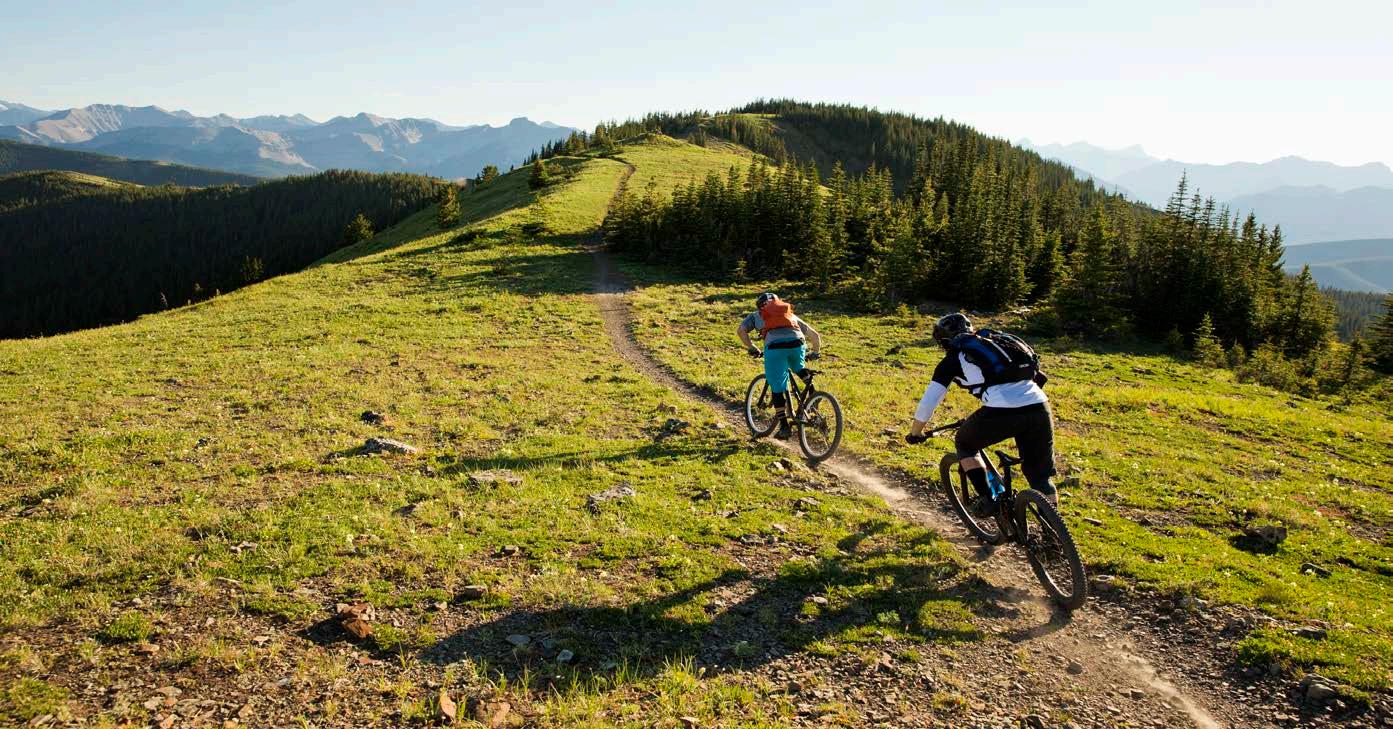
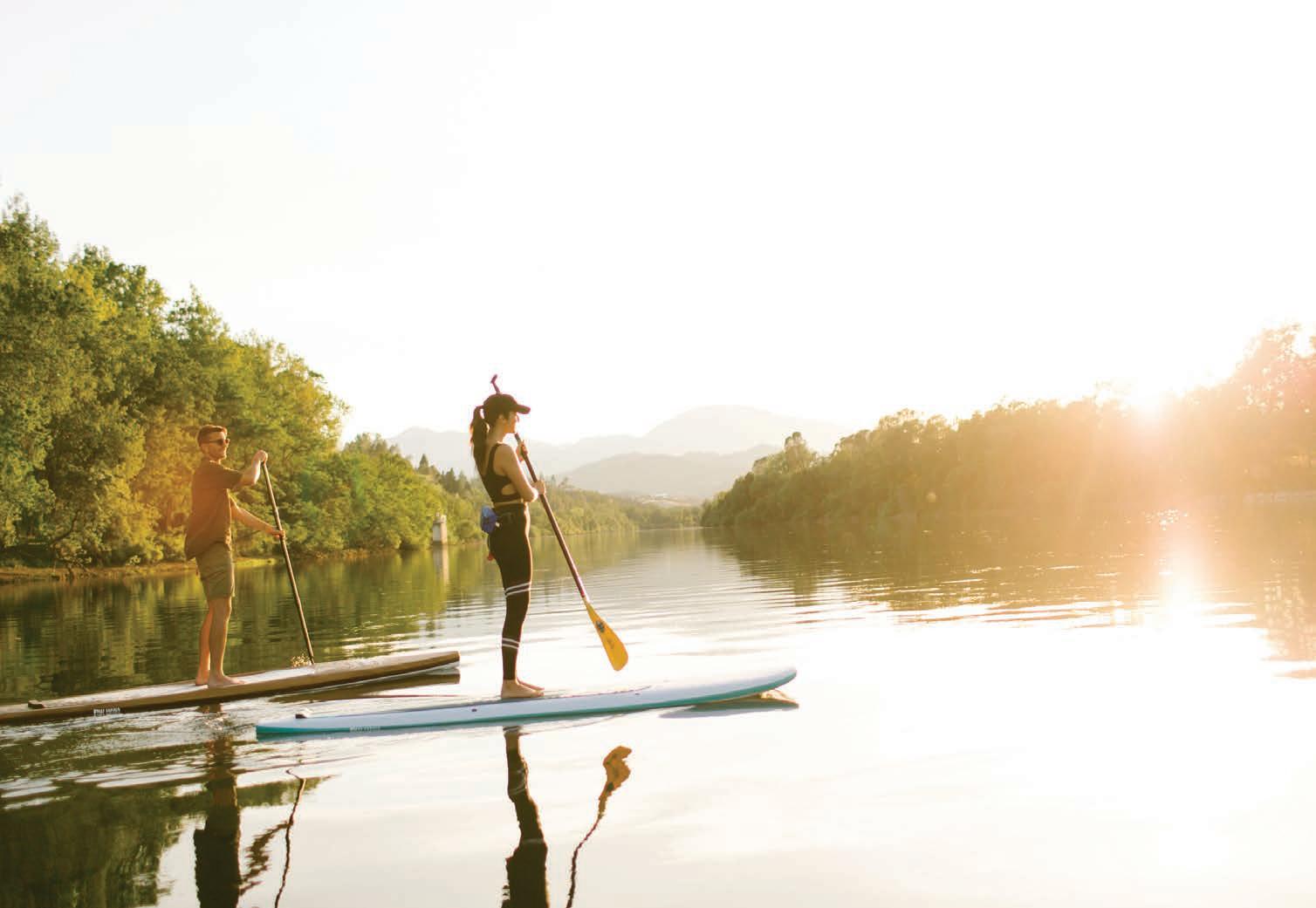
South Lake Tahoe offers more than enough to earn a beer twice over. On my most recent trip, the menu included rocky singletrack above Fallen Leaf Lake and glassy morning paddles toward Emerald Bay, plus a quiet-water glide through the Tahoe Keys’ winding canals and marshy edges.
I managed a ride with Anthony Cupaioulo, executive director of the Tahoe Backcountry Alliance,
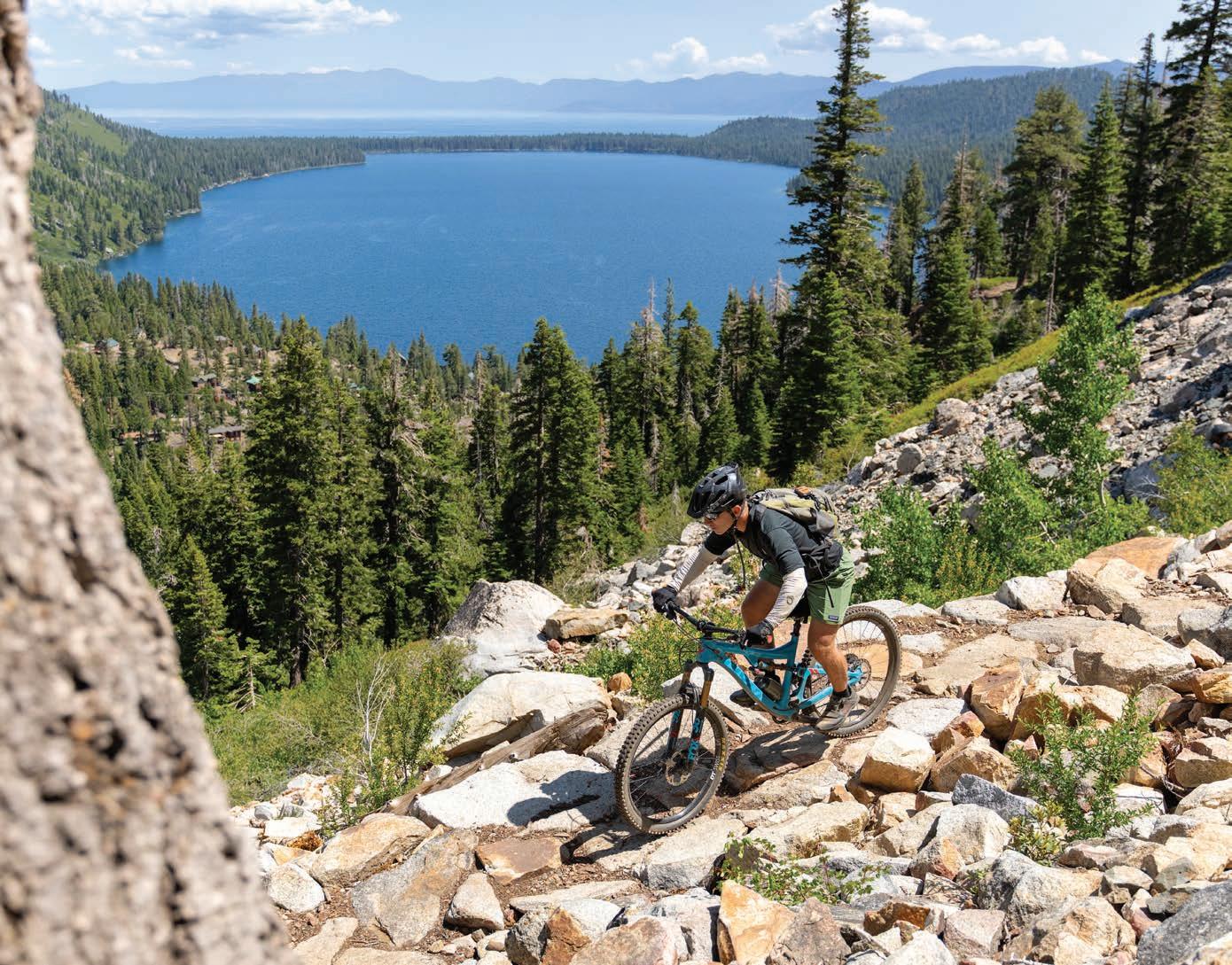
and we headed for Lily Trail — a gem. The rock work, followed by chunkier sections in the latter half, captures everything I love about mountain biking: strenuous riding that demands muscle moves more than speed. It’s a style of riding that rewards balance and focus — light on the pedals, hips shifting to stay upright, fully engaged. And then there’s the view, with Fallen Leaf Lake spread out below. Top to bottom, the trail is well worth the effort.
I followed Anthony like a duckling up a connector and into a scenic ridgeline viewscape, the kind of trail moment that slows you down whether you want it to or not. One of those rare stretches where effort, terrain, and scenery line up perfectly and you can’t help but think: never better.
Later, I hit Cave Rock for a SUP session, a warm-up for the next morning. After dawn, I launched from Baldwin Beach toward Emerald
Bay. Near Eagle Point, I spotted ospreys and wondered: why not call it Osprey Point?! An empty beach across the way became my lunch stop, and I paddled back the way I came, with another alpine lake still on the plan.
Up at Fallen Leaf Lake, I paddled for about an hour before the wind came up. Rather than fight it, I saved my energy for an afternoon paddle in the backwaters of the Tahoe Keys, where the Truckee River flows into
Words by James Murren • Photos by Anthony Cupaioulo
Lake Tahoe. The quiet water and birdlife were a perfect way to end the trip.
THE BEER
There’s no shortage of local breweries in South Lake Tahoe. From what I tasted, the beer was
solid across the board — so the real difference is the vibe, especially after a full day of earning it. Whether you’re looking for a quiet local hang or a livelier scene with music and fire pits, there’s no shortage of places to land.
If I had to choose a favorite, I’d go
with Sidellis. Tucked away from the crowds, it feels like a local watering hole — easy-going, welcoming, and unpretentious, with unfussy food that hits the spot after a long day outside. I had Petey’s Porter and Brewocracy IPA, both delivering exactly what I wanted from their
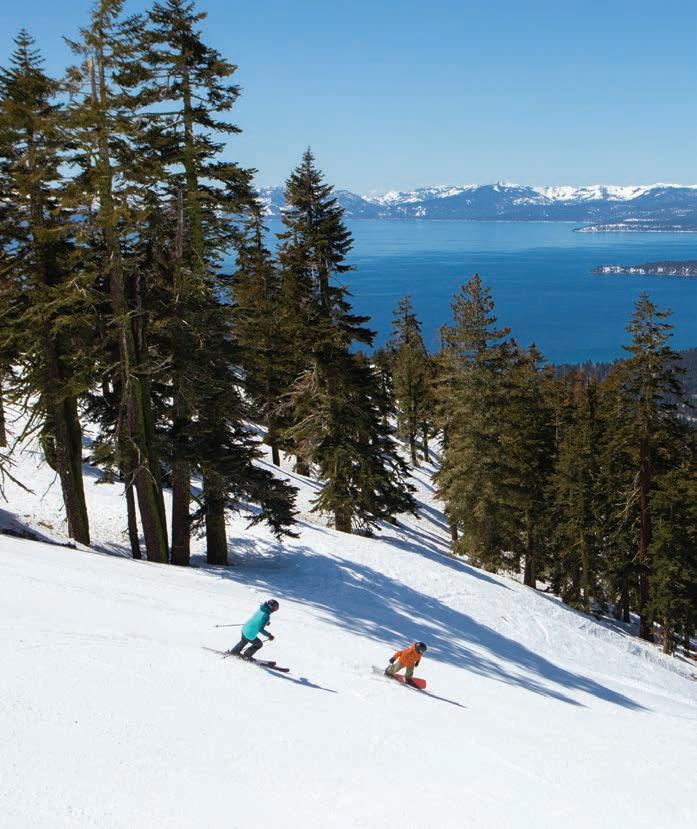
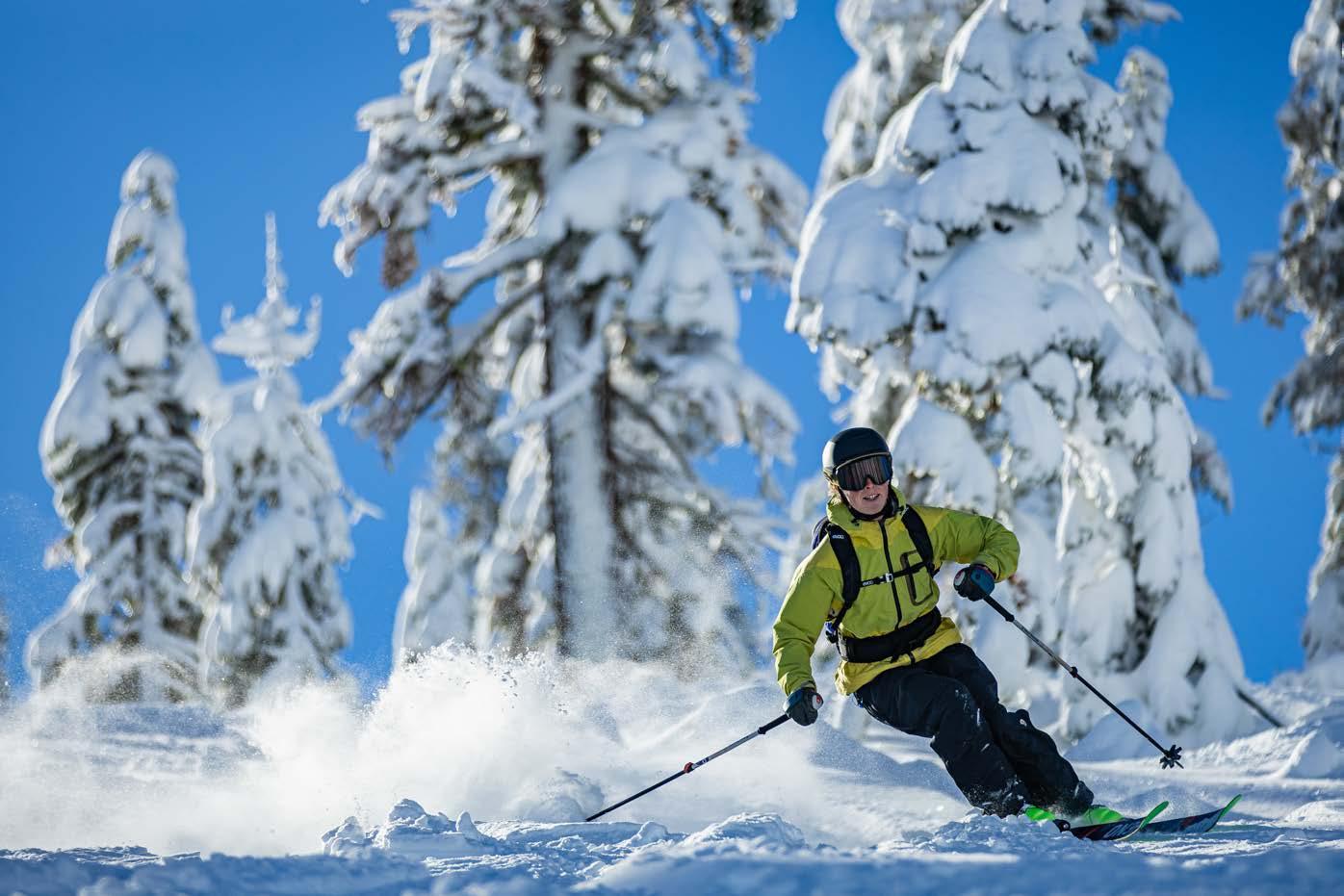
THE CLOSEST SNOW TO HOME NO LIFT LINES. ONLY FRESH LINES.
“South Lake Tahoe offers more than enough to earn a beer twice over.”
Opposite page: Lily Lake Trail above Fallen Leaf Lake, with Lake Tahoe in the background, featuring technical trail work by the Tahoe Area Mountain Biking Association (TAMBA). This page, left to right:
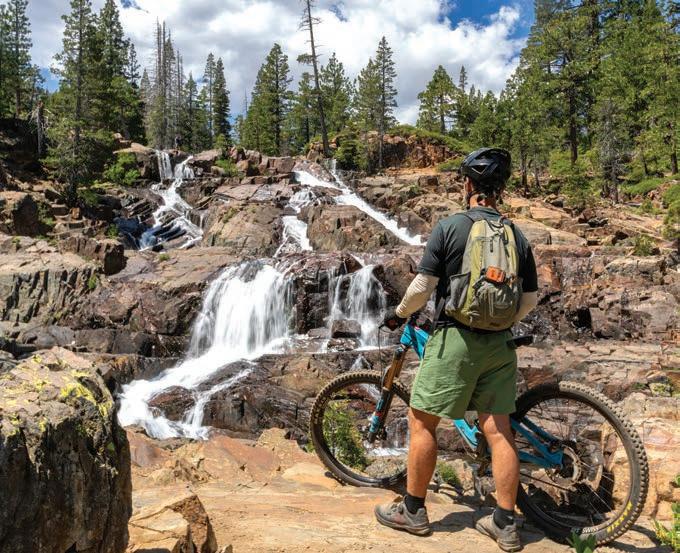
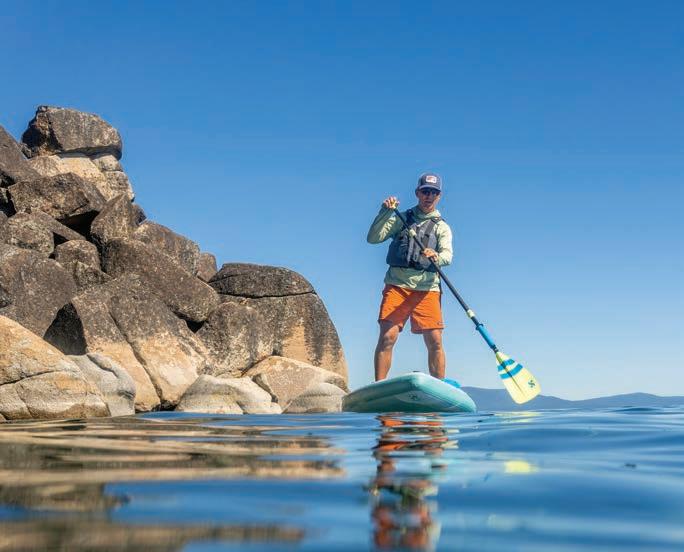
Enjoying a break with a view at Glen Alpine Falls; Paddling Tahoe’s West Shore after launching from Meeks Bay, the only US Forest Service site in the Tahoe Basin managed by the Washoe Tribe.
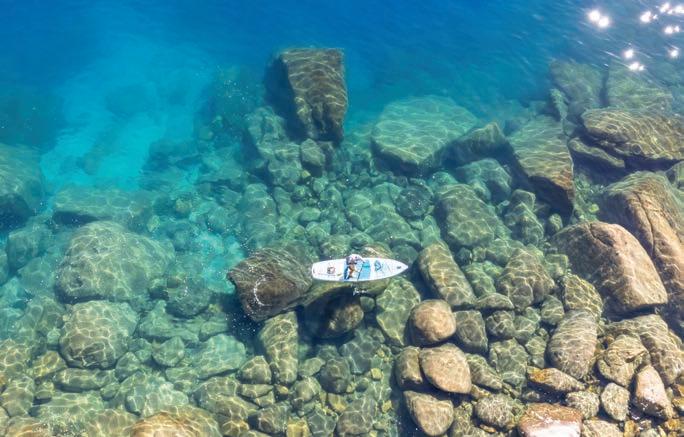
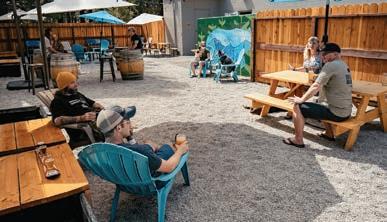
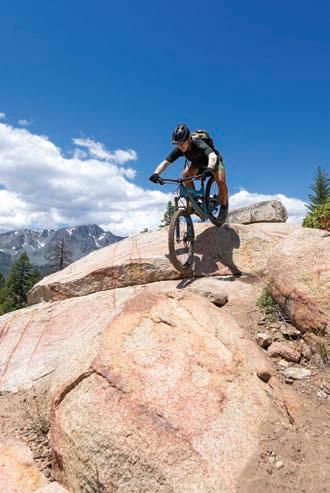
1. . This page, clockwise from top: An aerial view of the crystal clear water of Meeks Bay; The author rides a granite feature on Tahoe Mountain with Mt. Tallac peaking out on the left side of the frame; The laid-back beer garden at South Lake Brewing Company is an easy place to settle in after a day outside; A tasting flight at Cold Water Brewery in South Lake Tahoe.
respective styles and easy to enjoy without overthinking.
For a great example of a saison, Cold Water Brewery and Grill is worth a stop. They’ve won awards for it, and rightfully so — it’s delicious in all its funky farmhouse ways and a beer that invites you to slow down and linger.
South Lake Brewing Company has a location in the village, with the original spot over at the Y (intersection of highways 50 and 89). I enjoyed hanging out at both, and there’s no doubt they know how to make IPAs. The spaces are casual and social, and it’s easy to settle in for a while. Don’t sleep on the pilsner, though — it’s a quiet standout.
For live music, Basecamp South Lake Tahoe offers a different kind of après. You can drink South of North Brewing Co. beers in their beer garden — a relaxed, family-friendly setting, with games for the kids, fire pits, and an open layout that encourages lingering. It’s the kind of place where one beer can easily turn into an entire evening. And there’s grub, too.
Out of curiosity, I stopped in at Stateline Brewery, a longtime Tahoe brewing fixture. The beer didn’t quite land for me, but if whiskey is your thing, it might be a better fit, especially if you’re drawn to classic bar vibes and live music.
If you’re more into sampling, Lake Tahoe AleWorX leans into that experience. A shady outdoor area under the trees, frequent live music, and a self-serve wall of taps make it easy to try a little of everything and decide for yourself what works.
South Lake Tahoe rewards a longer stay. Travel responsibly by packing out trash, staying on trail, and treating these wild places with care.
You Don’t Have to Go Far
On small adventures, daily practice, and the power of staying local
By Leonie Sherman
Climber and wilderness photographer Galen Rowell claims he knew all along that California had more of the wild beauty he was seeking than anywhere else on the planet. He believed he just had to travel widely to recognize it. He thought that to properly appreciate the beauty of California, it was necessary to travel to exotic international locations. I only halfway agree with him.
For sure, California contains some of the most diverse, stunning and dynamic natural beauty on this planet. It boasts: tallest tree, biggest tree, oldest tree, hottest place on the planet, lowest spot in the lower 48, highest peak in the lower 48. It also offers arguably the biggest surfable wave in the lower 48 and some of the hardest sport climbing anywhere.
The Golden State truly contains multitudes. If you call California home and love outdoor adventure, you are definitely one of the luckiest people on the planet. But you don’t need to travel
to the remote reaches of the earth to prove it. You don’t even need to visit California’s most iconic natural wonders to experience it.
Your own backyard holds all the wild beauty and adventure you seek. Thinking globally and adventuring locally is a habit we can build into our lives. It’s better for the planet, better for us, and has the potential to transform our lives. Small, consistent choices often deliver outsized returns. Playing small ball allowed Cuba to win 25 of their first 28 Baseball World Cups. Planning small adventures can help you win at this complicated game called your life.
But unlike Cuba’s baseball strategy, planning small adventures doesn’t need to define your game. Frequency matters more than duration. A meditation teacher once told me that it’s just as important to meditate 30 times a day for a single minute as once a day for 30 minutes. Same goes for adventures: aim to have half a dozen weekly small adventures in addition to an annual week-long expedition. Creativity is the key. If immersion in nature draws you in, try observing birds or flowers at a local park, field or parking lot. If climbing stirs your soul, buildings and trees offer endless opportunities for
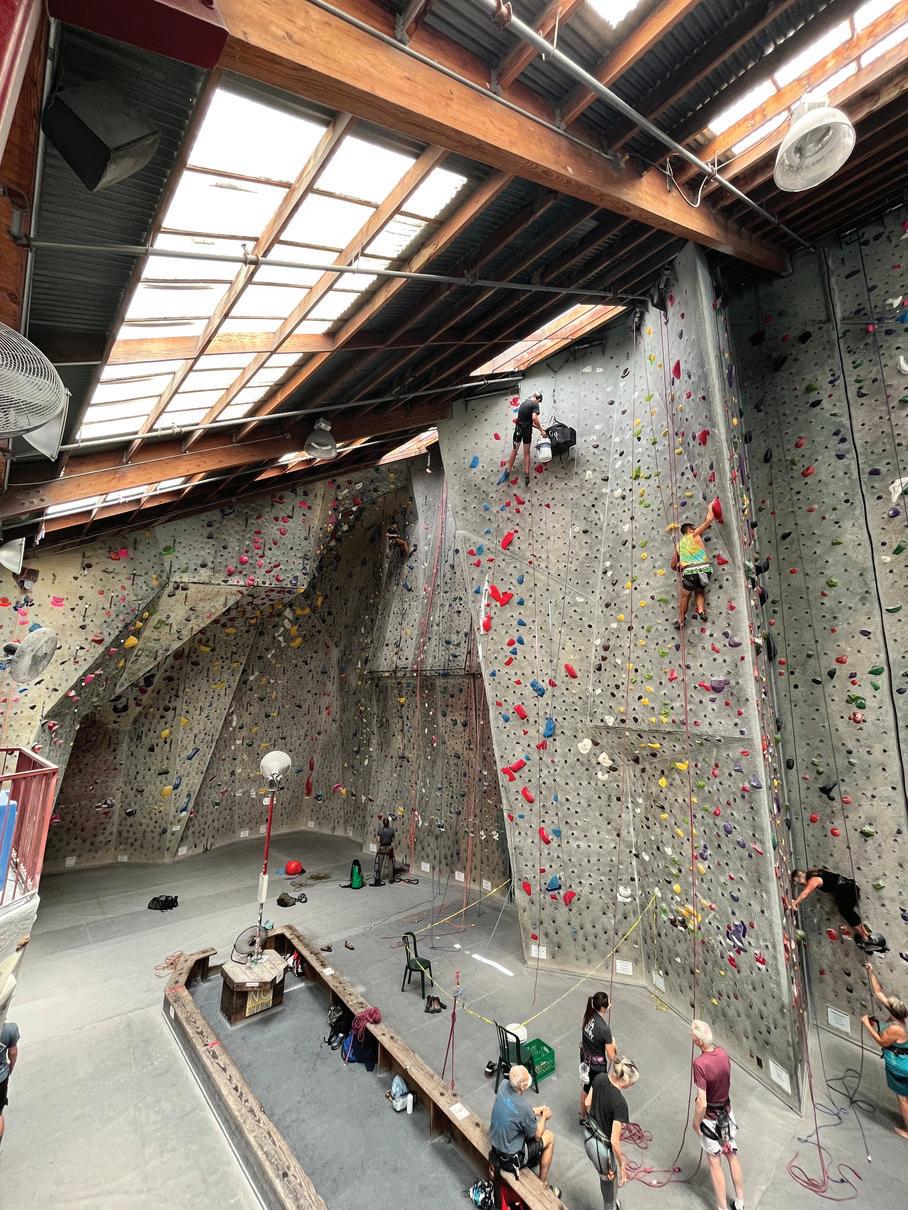
creative problem solving. If climbing stirs your soul, you can find some creative problem solving at established climbing areas or at a local gym. If cardio fitness is your main thing, a run, hike, or bike ride close to home can push you beyond what you thought possible. And if you’re craving a little adrenaline, look for it at a local trail, pump track, skate park, or adventure course. If you love surfing or skiing but don’t live near the coast or the mountains, you can still practice balance and footwork on a park balance beam, a painted curb line, or a slackline. Local adventures add up.
FIVE
REASONS TO DREAM SMALL AND STAY LOCAL
1
Adventuring locally is good for the planet
When you seek out the fun in your immediate vicinity, you lower your carbon footprint. With all the chaos, tragedy and sheer craziness of the world consuming our consciousness, it’s easy to forget the climate catastrophe. Adventuring locally helps you do your part to address that emergency, and you get to have fun doing it. If you’re lucky, your local adventure can be 100% human-powered, but even driving to closer destinations in pursuit
of fun will lower your impact overall. Help the planet while having a good time? Who could ask for more?
2
Adventuring locally is good for your
brain
Seeking out small daily adventures changes the way your brain works. Instead of a dreary commute, you start noticing possibilities for fun along the way. Instead of planning what you are going to do at some future date, you’ll begin planning what you are going to do this afternoon. Eventually, instead of seeking adventure somewhere else at some other time, you start to embrace the potential of the here and now.
3
Adventuring locally is good for your body
Forget about that frantic training a week before your expedition departure date. When you’re engaged in small daily adventures, your base level fitness improves. Training takes on a different flavor when it’s enjoyable. While it’s easy to talk yourself out of a trip to the gym, it’s harder to talk yourself out of an adventure.
4
Adventuring locally is good for your home
Seeking out small adventures within a human-powered distance of your home deepens your understanding
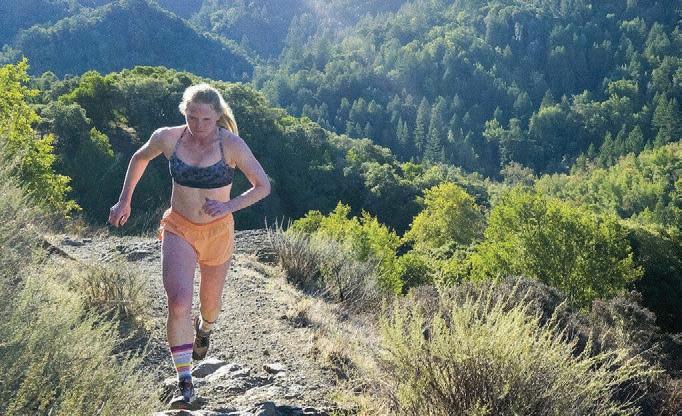
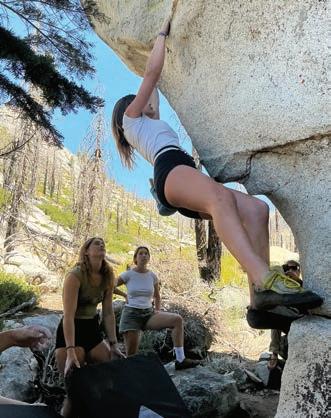
Opposite page: Early morning paddling near Redding shows how familiar water can still feel like an adventure (Brent Van Auken / Visit Redding). This page, left to right: Jennifer Maxwell, founder of JAMBAR, runs her local trails proving small regular outings add up (Courtesy Photo); Bouldering near Tahoe turns close-to-home rock into endless chances to play and get stronger (Micah Lyons).
and appreciation of where you live. When we grow to love something we want to protect it. Adventuring locally invites you to contribute locally, whether that’s picking up litter, getting involved with a local land trust or planting native plants in nearby green spaces.
5
Adventuring locally is good for your life
Instead of focusing on fitness goals, you begin to focus on having fun. The same way that a daily meditation practice transforms your thought patterns, a daily adventure practice transforms the shape of your life. We avoid the anxiety and rigidity that often accompany aging. We become more flexible, curious and lighthearted. — laughing at missed turns, taking the long way home, and saying yes a little more often. And just like a daily meditation practice, a daily adventure practice can ripple outwards, affecting everyone in your life.
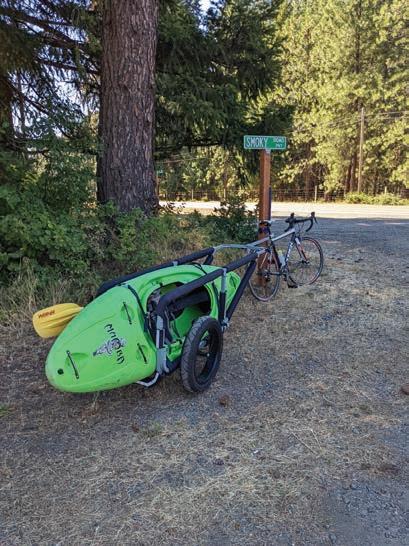
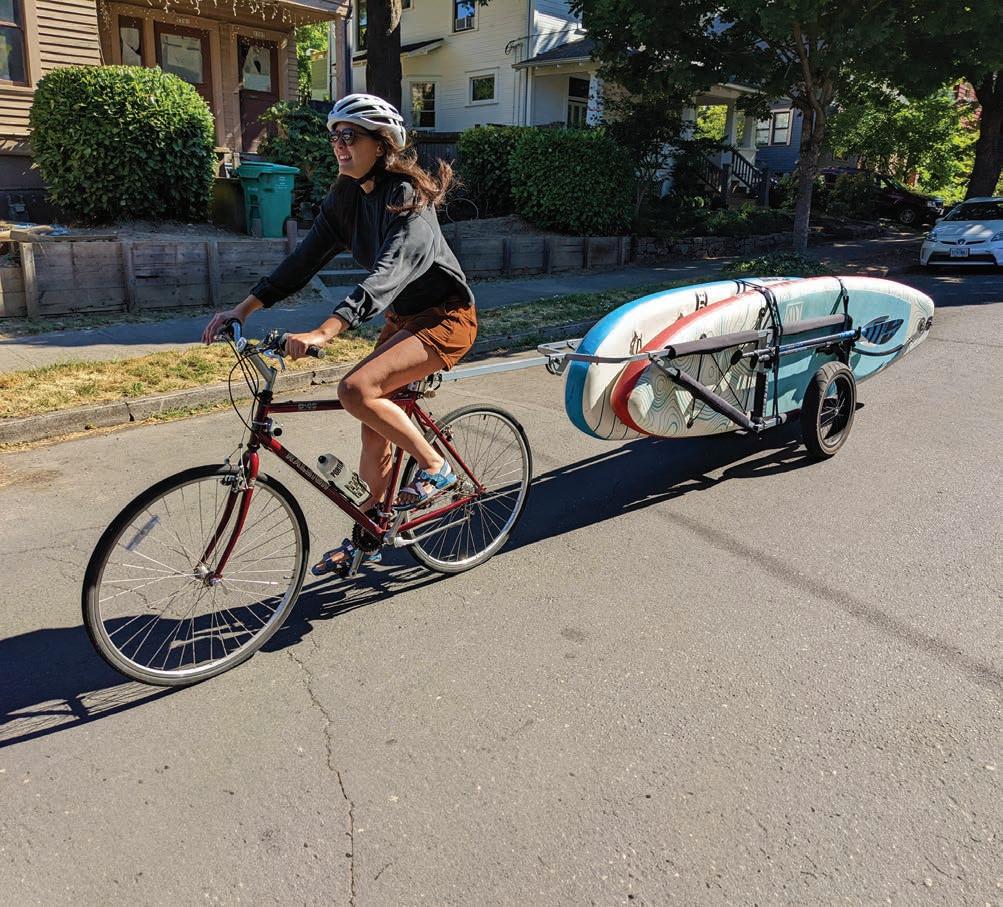
SUP & KAYAK TRAILER
California 14ers Series: PART I
California’s Most Accessible 14ers
Four standard routes that still demand respect
By Matt Johanson
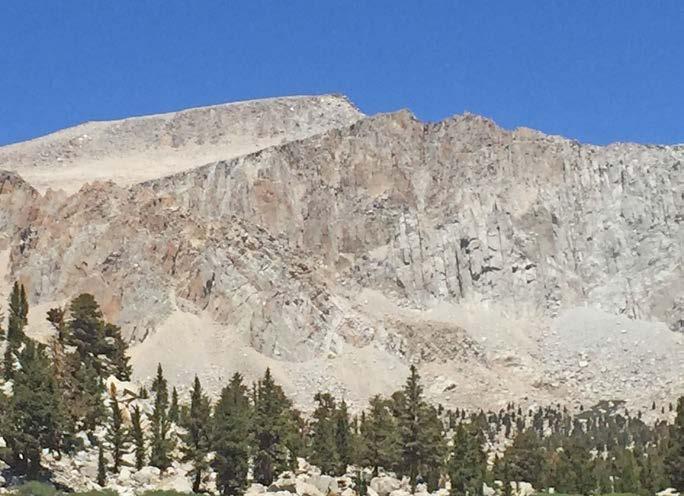
Hike White Mountain, a remote but straightforward adventure among bighorn sheep and bristlecone pines. Ascend Mount Langley above the picturesque Cottonwood Lakes in the Golden Trout Wilderness. Then climb iconic Mount Whitney, the tallest peak in the contiguous United States. While international expeditions draw attention, those craving wilderness would do well to consider California’s 14ers.
These 15 mountains — each at least 14,000 feet tall — offer demanding yet achievable adventures for well-prepared climbers. This is the first installment in our California 14ers series. Each installment highlights a commonly used route and key planning essentials to research before you go.
To begin, we’ll focus on the standard, least technical routes up the mountains, but these paths
of least resistance are still serious undertakings. Injuries, rescues and even fatalities occur every year in the High Sierra. Successful efforts typically require fitness, acclimatization, appropriate gear, and proficiency in route-finding, off-trail travel, and mountain travel skills. This series does not provide instruction on these complex subjects. Those not already well versed in these skills should seek instruction and gain experience on less committing objectives first.
Climbers will need wilderness permits; plan ahead, as they can be difficult to obtain.
June through September typically offers the most stable weather and conditions, but rain, hail, snow, lightning, and high winds can occur during any month of the year. Still want to go? Good. Safety demands these warnings, and the mountains remain inherently unpredictable — conservative decision-making is essential. But with preparation, patience and caution, climbing these
peaks can deliver extraordinary experiences.
We begin with the easiest (but not easy!) California 14ers. Our first three summit routes are Class 1 hikes, meaning they involve hiking on welldefined trails. Mount Muir involves a Class 3 scramble requiring the use of hands on steep rock. This is an introduction, not a complete guide. Consult official land management agencies for current conditions, closures and permit requirements before departure.
WHITE MOUNTAIN VIA WHITE MOUNTAIN ROAD
• Distance: Approximately 15 miles round trip
• Time: 8–10 hours
• Difficulty: Class 1
• Land agency: Inyo National Forest
• Nearest facilities: Big Pine
• Parking: Barcroft Gate on White Mountain Road
• Trailhead elevation: 11,700 feet
• Summit elevation: 14,252 feet
• Elevation gain: 2,552 feet
• Permits: None needed for day use (verify current policy)
You don’t need an international expedition to find high-altitude wilderness California has 15 summits waiting above 14,000 feet.
A dirt road leads high into the White Mountains, making this one of the least technically demanding 14ers.
From Big Pine, take Highway 168 east for 13 miles. Turn left onto White Mountain Road and drive 26 miles. The first 10 miles are paved and the remaining 16 miles are a rocky dirt road. Park at Barcroft Gate.
Hike north on the road, passing Barcroft Research Station. The route passes a gate and Barcroft Observatory before stretching across a broad plateau.
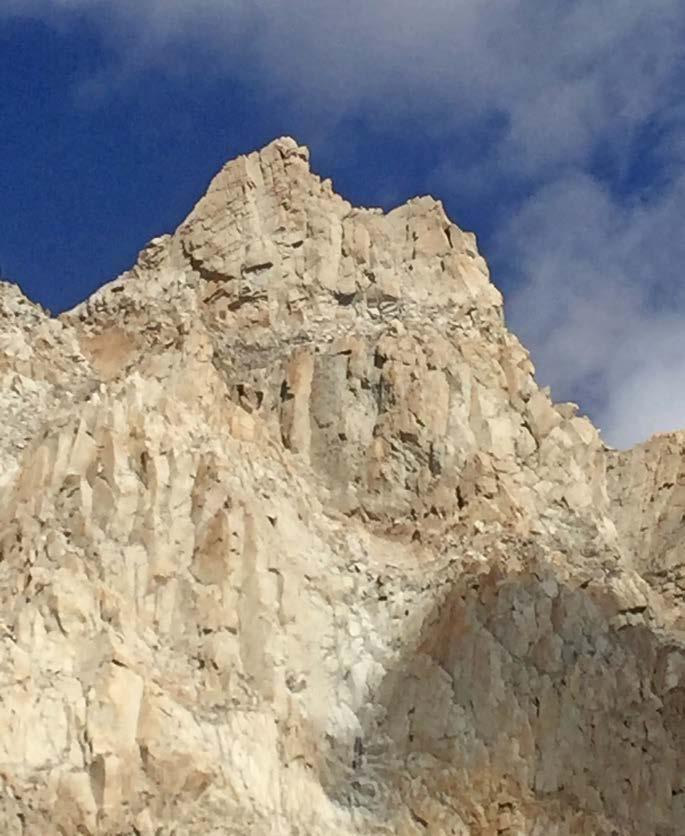
White Mountain will dominate your view. Despite its name, the volcanic rock projects hues of brown, orange and gray. Switchbacks gain about 1,000 feet in the last 2 miles. On the summit stands a stone research cabin.
Strategy tip: Carry plenty of water on this dry, fully exposed trail.
MOUNT LANGLEY VIA NEW ARMY PASS
• Distance: 22 miles round trip
• Time: Two or three days
• Difficulty: Class 1
• Land agency: Inyo National Forest and Sequoia National Park
• Nearest facilities: Lone Pine
• Parking: Cottonwood Lakes Trailhead
• Trailhead elevation: 10,000 feet
• Summit elevation: 14,159 feet
• Elevation gain: 4,032 feet
• Permits: Overnight permits required; day-use regulations subject to change — verify current quotas
A long but straightforward route leads to the summit of Mount Langley. Some do this in a long day, avoiding permits and pack weight,
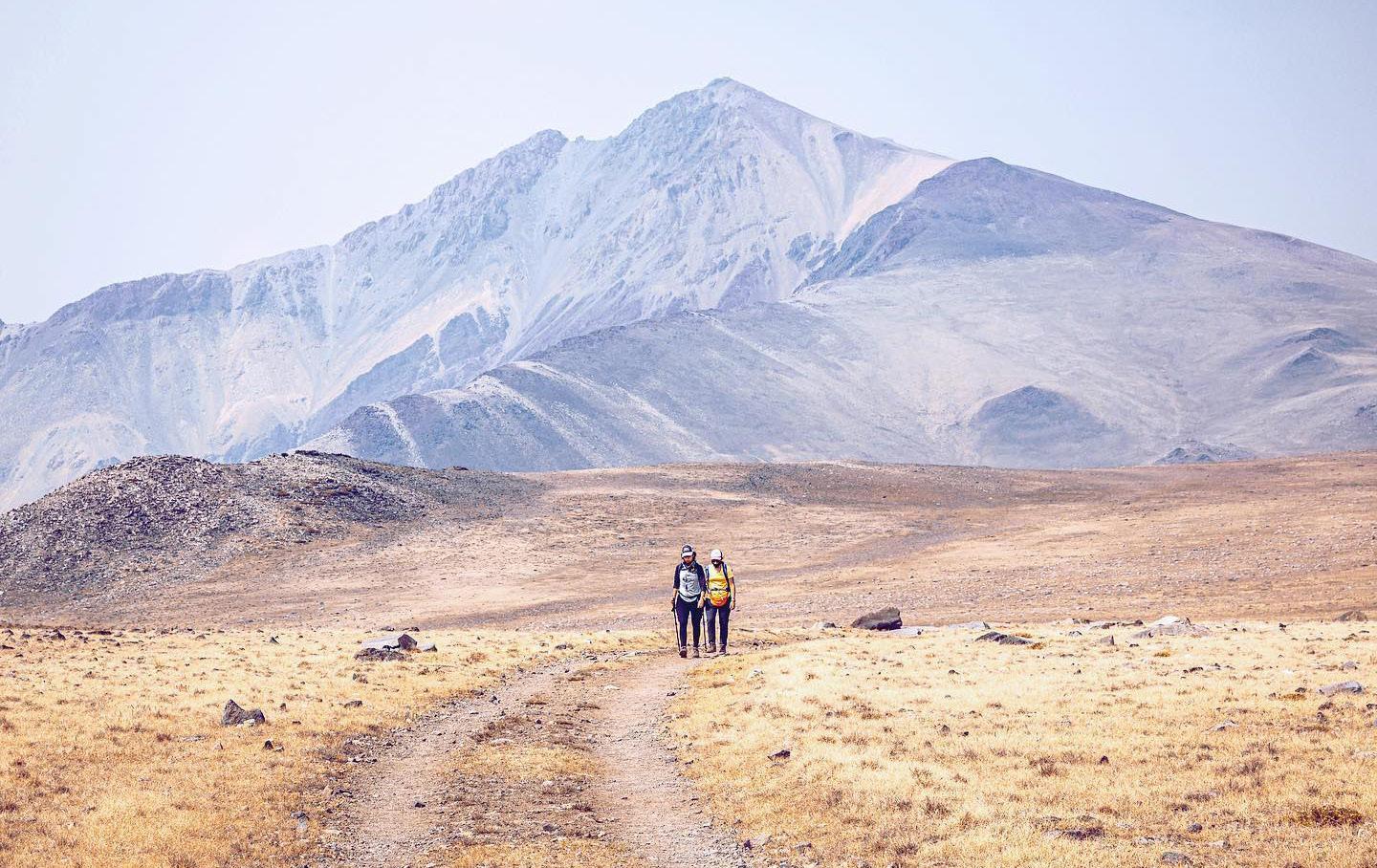
Opposite page: Hikers descend across the alpine plateau in California’s White Mountains (Lucía Quintero / Visit Bishop). This page: Mount Langley rises above the Cottonwood Lakes area in the Golden Trout Wilderness (Matt Johanson).
but most enjoy the experience more over two days.
From Highway 395 in Lone Pine, turn west onto Whitney Portal Road. After 3 miles, turn left onto Horseshoe Meadows Road. Drive 20 miles to Cottonwood Lakes Trailhead.
Hike west and north on New Army Pass Trail. Campers have options at Cottonwood Lakes, Long Lake and High Lake. Climb switchbacks to New Army Pass. Then hike 3 miles north to the summit.
On descent, hikers encounter Old Army Pass. The variation saves roughly a mile, but involves steeper terrain and may hold snow and ice well into summer. An ice axe and traction may be necessary depending on conditions. Route choice should be based on current conditions and personal skill level.
Strategy tip: Camp and leave overnight gear at Cottonwood Lake #2. If Old Army Pass is safe, descend that way to easily retrieve your gear.
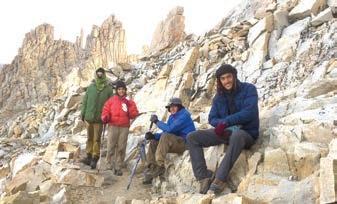
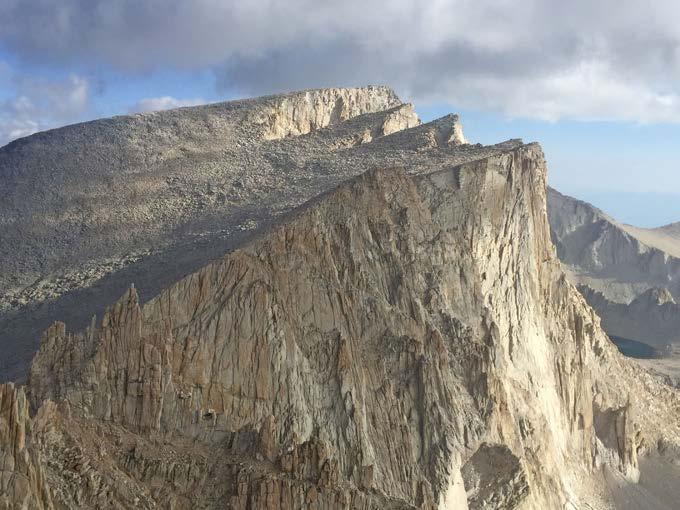
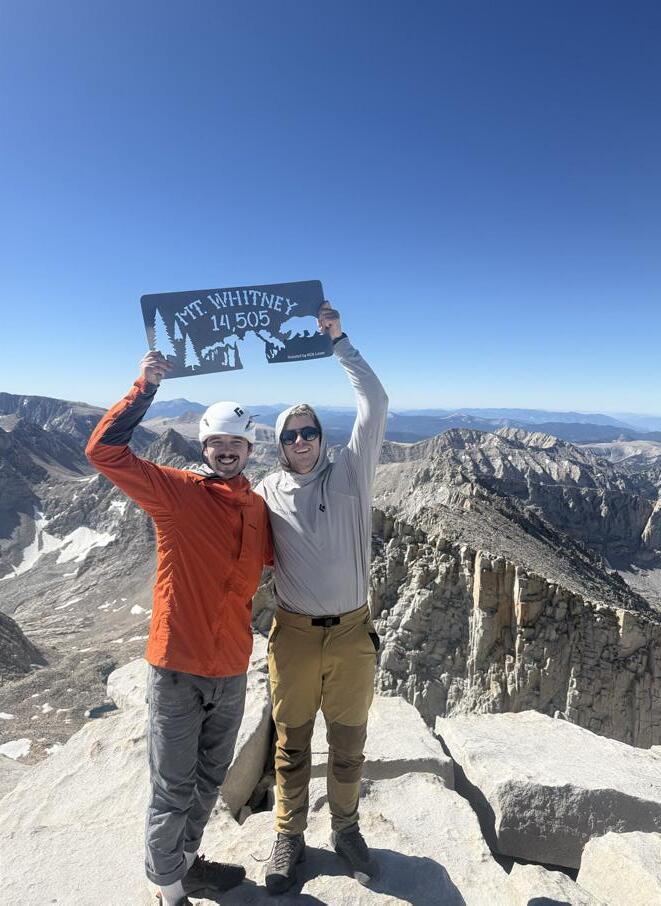
This page, top to bottom: Mount Whitney, the highest peak in the contiguous United States, rises above the rugged terrain of California’s Eastern Sierra (Matt Johanson); Climbers celebrate on the summit of Mount Whitney (Robert Kyte / Alpenglow Expeditions). Opposite page: Nearby Mount Muir is a popular side scramble for Whitney hikers (Matt Johanson).
MOUNT WHITNEY VIA MOUNT WHITNEY TRAIL
• Distance: 22 miles round trip
• Time: One or two days
• Difficulty: Class 1
• Land agency: Inyo National Forest and Sequoia National Park
• Nearest facilities: Lone Pine
• Parking: Whitney Portal
• Trailhead elevation: 8,300 feet
• Summit elevation: 14,505 feet
• Elevation gain: 6,205 feet
• Permits: Required for day use and overnight travel
Hikers can ascend the highest mountain in California and return in a single rigorous day, though two days afford a more relaxed pace and higher success rate.
The Forest Service issues permits through recreation.gov. Prospective climbers enter a lottery in February, with results announced in March.
From Lone Pine, take Whitney Portal Road to its end. Find the trailhead east of the store and café.
Climb a series of switchbacks, reaching Lone Pine Lake after 3 miles. Overnight hikers can choose between Outpost Camp and Trail Camp. The pond beside Trail Camp is the last reliable water source.
Now begin the mountain’s notorious 99 switchbacks that gain 1,700 feet.
For hikers already on the Whitney route, there’s no faster way to climb Mount Muir than to detour from the Mount Whitney Trail.
At the John Muir Trail junction, the route turns north, and the summit is 2 miles away.
From the domed summit, enjoy an unparalleled view of the Sierra Nevada — John Muir’s “Range of Light.” Then on your descent, consider a short detour to summit nearby Mount Muir.
Strategy tip: Despite permitting challenges, stick to the summer season. Snow and ice make this climb far more difficult and dangerous.
MOUNT MUIR FROM MOUNT WHITNEY TRAIL
• Distance: 0.5 miles round trip
• Time: One hour
• Difficulty: Class 3
• Land agency: Sequoia National Park
• Nearest facilities: Lone Pine
• Turnoff elevation: 13,750 feet
• Summit elevation: 14,012 feet
• Elevation gain: 262 feet
• Permits: Required for day use and overnight travel
If you’re going after the 14ers, there’s no faster way to climb Mount Muir than to detour from the Mount Whitney Trail. These instructions assume you’re doing that.
Look for a use trail leading east, located a half mile north of the John Muir Trail junction, a quarter mile north of a sharp northbound turn, and 1.5 miles south of Whitney’s summit. Scramble up Class 3 rock on Muir’s western side for a quarter mile to reach the summit block.
A Class 3 climb may intimidate those already pushing their limits on Mount Whitney, but the modest additional effort needed will probably be less committing than returning on a separate trip.
Next in the California 14ers series: Split Mountain, Mount Russell and Mount Shasta — bigger elevation gains, more route-finding and the first true mountaineering terrain.
FLASHBACK
Repack at 50
The downhill race that helped build mountain biking
Story by Marissa Neely
Fifty years ago — long before dual suspension, hydraulic disc brakes, carbon layups, and handlebar-mounted computers that track everything but your fortune — a handful of riders
pushed their bikes to the top of a rutted fire road above Fairfax, California, and pointed them downhill.
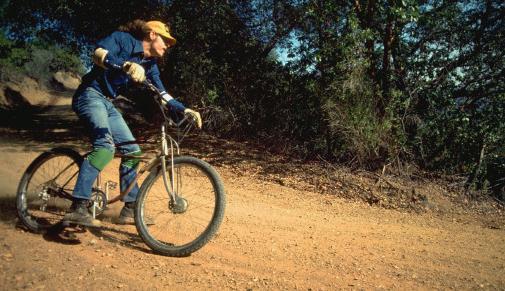
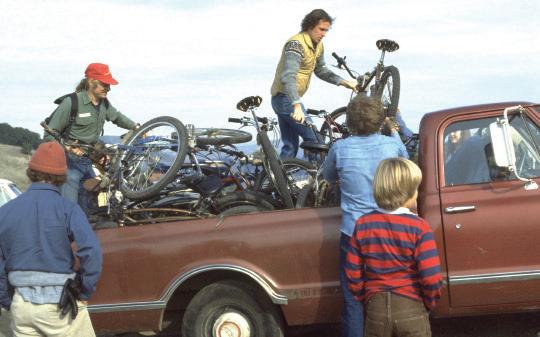
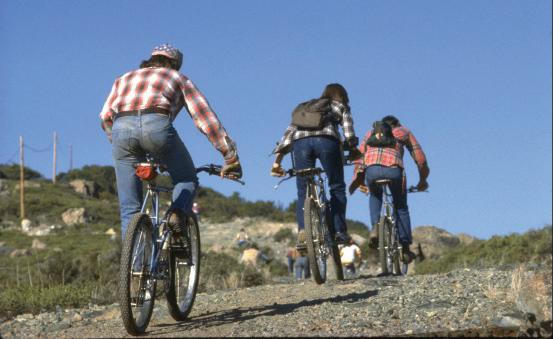
It was October 21, 1976. There were no full-face helmets. No body armor. No suspension to speak of. Just rigid steel frames, coaster brakes, and balloon tires scavenged from bikes that had no business being on a mountain. Unlike the sleek, marketing-fueled names many bike producers flaunt today, those first inventions were called clunkers — a name far more honest than anything in today’s marketing decks.
The descent was 2.1 miles of loose dirt, braking bumps, and consequence, dropping more than 1,300 vertical feet from start to finish. Riders dropped in one at a time and gravity did the rest. At the bottom, hubs were smoking — so hot the grease would vaporize out the back in a thin trail of smoke. Later, riders would strip and repack the hub before returning for more. They called the road Repack because that’s what it demanded.
No one there believed they were inventing anything. No expectation that anyone beyond their small circle would ever care. They were chasing speed. Among those first riders were Charlie
Kelly and Joe Breeze, riders separated less by competition than by curiosity. Every descent revealed a new failure: brakes faded, frames flexed, tires wandered under load. The bikes weren’t designed for this kind of violence, but the riders kept coming back because in those failures, something was being learned.
THE MEASURE OF SPEED
Repack wasn’t just a race. It was an experiment — a brutal, repetitive test that exposed exactly what a bicycle could and couldn’t survive.
Today, riders descend mountains on machines worth more than used cars, engineered to float over terrain that once rattled bones and blurred vision. But fifty years ago, on that dry stretch of Marin dirt, there was no suspension to soften the mountain. No technology to save them from their mistakes.
There was only gravity and a stopwatch … and once there was a stopwatch, there was proof.
Proof that one rider was faster than another. Proof that one setup worked better. Proof that improvement could be measured.
“Once we started measuring performance, there was a reason to try to improve it,” Charlie Kelly said. “We started by building better bikes.”
At first, those improvements were born out of necessity, not ambition. The clunkers weren’t just inadequate — they were disposable.
“I would get just a few months out of an old Schwinn before the frame broke. Then I would have to find an increasingly rare replacement frame and build another bike on it,” Kelly said.
The supply of sacrificial frames was finite. The violence of Repack made sure of that.
When did he realize modifying old cruisers wasn’t enough?
“When they disintegrated under me,” he said.
Town bikes, Kelly explained, “don’t need super low gears and extra brake capacity.” They were never designed for sustained descents under braking. Never designed to be pushed back uphill and ridden down again. And again.
Repack revealed something fundamental: the future wouldn’t be
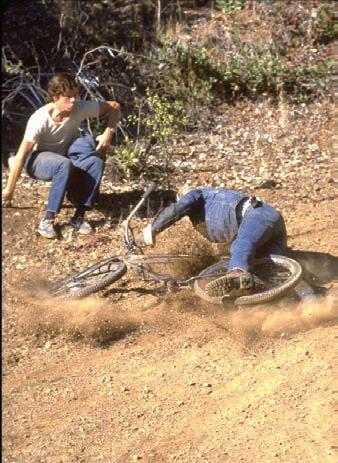
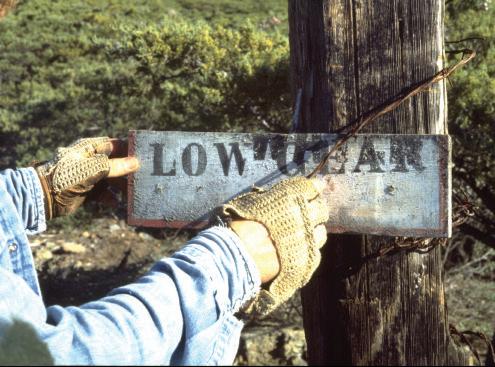
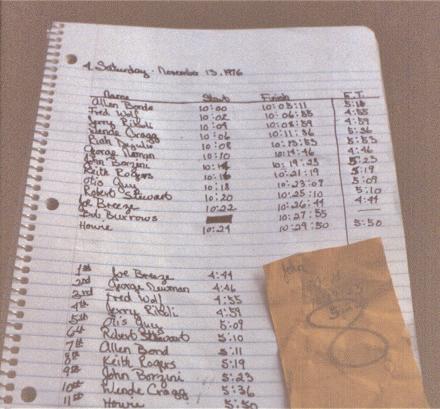
This page, top to bottom: Charlie Kelly on Repack’s Camera Corner, late 1976. Fully-modified maroon/white Excelsior (Wende Cragg); Low gear sign at the start line of Repack, with Breeze’s hands, circa 1976; Kelly’s Repack logbook, shot at Repack #4, held November 13, 1976 (John Borzini Collection).
found in adaptation. It would have to be built from scratch.
Kelly doesn’t frame it as invention. “I was solving my own problem,” he said. “I didn’t care what anyone else rode.” But the problem wasn’t his alone — and the most consequential answer came from Joe Breeze.
Road bikes had precedent and generations of refinement behind them. What Breeze attempted in 1977 had none of that.
THE RACER AND THE BUILDER
“I should point out that I had never been to Repack until Race #3, which was on October 30, 1976,” Breeze said. “I had heard about it the day before and was delighted to learn there would be a downhill race. I had been cutting my teeth on treacherous downhills since age twelve, mostly on Mt. Tamalpais roads and almost exclusively on Panoramic Highway.”
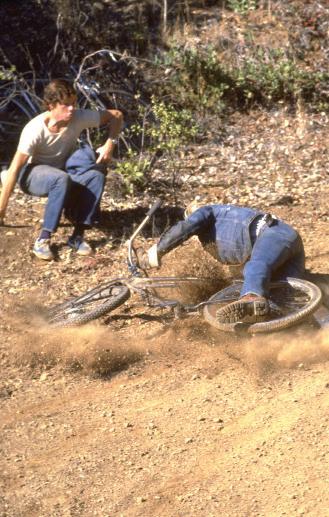
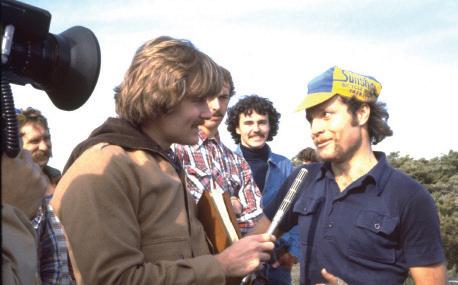
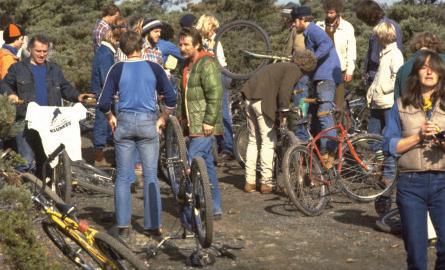
was one of the first to write about the Marin doings. His story, “California Bikies Are Mountainside Surfing,” ran in VeloNews, February 10, 1978 (Wende Cragg); Steve Fox from San Francisco’s KPIX Evening Magazine interviewing Joe Breeze about Repack and the new sport, with Les Degan, Otis Guy, and Tom Ritchey looking on, January 1979 (Wende Cragg); Charlie Kelly unloading his Excelsior while Alan Bonds helps Breeze with his Breezer #1, October 1977 (Wende Cragg).
Breeze was a road racer, and seldom was there a road race where he could put his downhill skills to advantage.
Kelly’s Repack invite was what he later called “a siren song.” He went up to race — and won.
“I was elated,” Breeze said. “That first race had maybe a dozen participants. I raced 19 Repacks in all, winning ten.”
But Breeze wasn’t just racing. He was repairing.
As a framebuilder, he was often called on to repair what Repack broke.
“I was often called into service by friends to patch and re-weld their favorite old relics,” he said. “We were keeping a steady lookout around junkyards for more.”
Repair was temporary. The frames kept failing.
“Joe had to design something with no precedent — and learn welding skills along the way,” Kelly said.
BUILT FROM SCRATCH
In 1977, Breeze built something new.
When he unveiled Breezer No. 1, it marked a quiet but irreversible shift.
The mountain bike was no longer a repurposed cruiser. It was its own machine.
“For me, the most influential change came with Breezer No. 1,” Breeze said. “When my road-racing friends saw a shiny new Breezer, you could see their mental gears turning. The new bike totally changed their perception, as if they could see a future.”
That shift mattered as much as the machine itself. Until then, off-road riding had lived on the margins. The Breezer gave it legitimacy. Form. Direction.
BEYOND MARIN
Kelly and the others carried those early bikes beyond Marin. In 1978, they rode the Pearl Pass route between Crested Butte and Aspen.
“We took our new bikes to Colorado,” Kelly said. Crested Butte riders were already exploring high-country routes, and the trip was part of the broader early spread of fat tire riding.
“Fat tire riding was happening in lots of areas,” Breeze said. “I recall no defining moment of greater acceptance. It was gradual. More yays, fewer nays.”
I asked Kelly what it meant when other companies began producing similar bikes.
His answer was simple: “Competition.”
THE CULTURE OF IMPROVEMENT
Breeze arrived at Repack as a racer — young, fast, and already fluent in the art of descending — but what stayed with him wasn’t only the results.
“At Repack I was meeting new people from around Mt. Tam,” he said. “All with a kindred need for speed and a love of bicycles and the outdoors. I had a sense of a burgeoning cycling family.”
This page, clockwise from left: Spectator Owen Mulholland is brushed back by an errant racer on Repack’s Camera Corner, Fall 1978. Mulholland
They met early in downtown Fairfax, loading bikes into trucks before heading up into the hills together. At the top, riders waited their turn, some mentally rehearsing the descent.
“The final few would remove to far corners,” Breeze said, “to visualize each of the eighty-something turns and await the call to the line.”
Racing sharpened more than skill. It sharpened the machines.
“Competition improves the breed,” Breeze said. “Racing gave us motivation
to make improvements to our bikes.” It wasn’t a moment. It was momentum.
FIFTY
YEARS LATER
What began as an informal downhill race would not remain informal. The original Repacks ran without permits, insurance policies, course marshals, or medical plans. That kind of freedom would not survive scale. Today, producing an event like Repack would require layers of coordination that didn’t exist in 1976.
Nicole Formosa, Marketing and Communications Director for Sierra Buttes Trail Stewardship and organizer of the Downieville Classic, explained that even after thirty years, the process begins almost as soon as the last racer crosses the finish line.
“The operating plan has to be filed six months in advance,” she said. “We work with the Forest Service every year, and five percent of race fees go directly back to them. The day the Classic is over, we’re already planning for next year.”
What once existed in a gray area of permission now operates within a formal framework — not to restrict the sport, but to sustain it.
“This race started to help the Forest Service manage the trail system,” Formosa said.
Behind the scenes, the work is constant.
“The trail crew spends so much time getting the trail system ready,” she said. “If it’s a big snow year, they’re up there shoveling snow so 900 racers can come
This page, left to right: After being dropped off by truck at Azalea Hill on Mount Tamalpais, riders faced a short 450-foot climb to the Repack start. Left to right: Joe Breeze, Wende Cragg, and Fred Wolf – three plaids, three Breezers – heading toward Serpentine Hill (Larry Cragg); Top of Repack, discussing start times, socializing and releasing pre-race tensions (Larry Cragg).
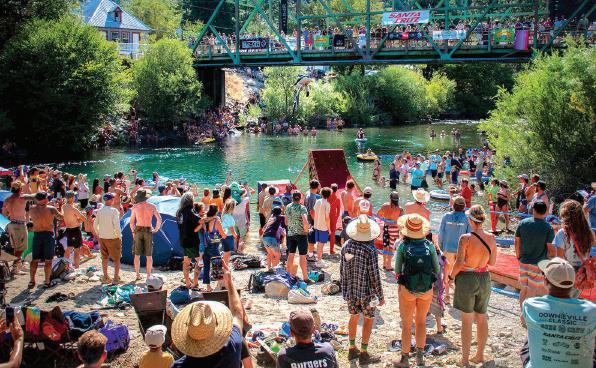
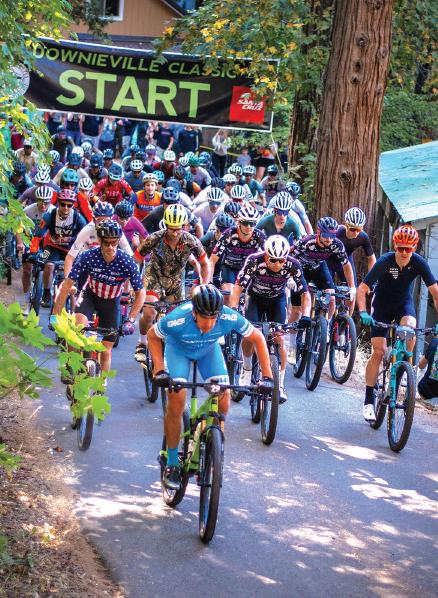
This page: Spectators gather along the Yuba River for the Downieville Classic’s legendary River Jump, where racing meets festival energy in one of mountain biking’s most iconic weekends (SBTS); Riders charge off the start line at the Downieville Classic, a race that carries forward the competitive spirit first sparked on Mount Tam’s Repack runs more than 50 years ago (SBTS).
through. It’s months and months of work — something people don’t see but feel on race day. It takes 200 volunteers to pull it off.”
Downhill racing didn’t simply get faster. It became structured. As the sport expanded, so did the need for coordination with land managers and trail stewards.
For Cody Greer, one of the leaders of Yosemite South Gate Trails, that structure exists not just to host races, but to ensure trails exist at all.
“Community for us is everything,” Greer said. “Without our 300 volunteers, we wouldn’t have trails to enjoy … the forest would simply erase them.”
The sport may be more “professional” and “buttoned up” now, as Formosa put it, but the risk never went away. It only changed scale. Repack riders broke bikes. Modern riders rarely do — yet they hit the ground at speeds that make every mistake count.
“A lot of the advancements in bike technology have helped make racing safer,” Greer said. “Frames and parts are more durable. Failures are rare now. But speeds are much faster, so when you crash there is much more energy involved.”
The bikes grew stronger and the structure around them grew deliberate — Formosa sees the connection clearly.
“Repack is what you think of when you think of the early days of mountain
biking,” she said. “It was a case study in bike design and development.
Downieville has played that same role — pushing the evolution of the modern ‘do-it-all’ mountain bike.”
Even as the sport matured, something essential remained intact: the party.
“There’s the race, then there’s the party,” she said. “The racing is almost secondary. It’s an excuse to come to the mountains and be immersed in this community. That has always been the foundation, and it has never gone away.”
What had begun as a handful of riders abusing obsolete machines was becoming something people wanted, built, and believed in. Fifty years later, we are still riding the descendants of what began on that dusty Marin hillside.
Circling back, the final question I asked Breeze was how riders today can keep the sport “well fed” and stay stoked.
“Just get out and ride.”
Gravity still dictates terms.
Give a rider dirt and a stopwatch, and they’ll give you a show.
Thanks to Wende Cragg — photographer, rider, and eyewitness to the Repack era — for sharing her remarkable images from mountain biking’s earliest Marin days. Her book, Camera Corner, is an essential visual record of the sport’s origins. Learn more at wendecraggcameracornerbook.myshopify.com; for local history, visit the Marin Museum of Bicycling / Mountain Bike Hall of Fame, mmbhof.org
UNCOVERING A HIDDEN RIVER
Two aging dams on the Main Fork of the Eel could soon come down
By Anthea Raymond
Deep in Northern California, where old logging roads and creeks braid through steep canyons, the Main Fork of the Eel River is poised for a transformation. As early as 2031, Scott Dam and Cape Horn Dam could come out. If they do, the Eel would become California’s longest free-flowing river.
It’s a bold undertaking that brings together hydrologists, anglers, tribes, conservationists, and state regulators around the promise of ecological rebirth while raising concerns among farmers and lakefront property owners about what the new landscape will mean for them.
The River as It Is Now
“The Main Eel is one of those rare places where you can still feel what wild California used to be,” says Pete Harrison, co-owner of Six Rivers Rafting. For decades, he’s guided spring trips down the stretch from Dos Rios to Alderpoint — a remote corridor some paddlers call the river’s ‘Grand Canyon.’
“You follow the abandoned Northwestern Pacific Railroad tracks, camp on sandy beaches like Cottonwood Flat, and maybe see bear
tracks or a bald eagle swooping across the water.”
Harrison guides groups through Class III–IV rapids like Island Mountain and Kekawaka Falls — some of the most undertraveled whitewater in the state.
“It’s seldom run, but for those who do, it’s beautiful,” he says. “The solitude is unmatched.”
Still, access is limited. Much of the land bordering the river is privately owned, and theft at shuttle sites is a known risk. “If we can open more access points and partner with landowners or along the abandoned rail section of the Great Redwood Trail, it could totally change how people use this river,” Harrison says.
Coming improvements at the Wildlands Conservancy’s Eel River Canyon Preserve, with 18 miles of river frontage along the main canyon, are expected to expand public access.
Expanded Fisheries and More Whitewater
Removing the two dams would reconnect more than 300 miles of habitat for salmon, steelhead, and Pacific lamprey — species whose migrations have been blocked for generations. For Scott Harding, American Whitewater’s Stewardship Associate, it’s a moment advocates have worked toward for years.
“These deadbeat dams have outlived their usefulness,” Harding says. “They don’t generate power, they’re seismically unsafe, and they trap sediment and heat that harm the river’s life.”
The utility PG&E, which owns the facilities, filed its license-surrender application with federal regulators in 2025, acknowledging the system’s obsolescence.
Harding, who also worked on the
Klamath Dam removal project, is eager to see what emerges from beneath Lake Pillsbury. “When the reservoir drains, we’ll see the confluence of the Eel and Rice Fork Rivers for the first time in a century.”
“Confluences are magical places,” he adds. “We’re talking about miles of new river to explore — places you could paddle that no one alive has ever seen.”
Still, predicting what lies beneath is difficult. With an estimated 12 million cubic yards of sediment backed up behind the dams, forecasting the river’s exact post-removal shape is a challenge.
American Whitewater has already begun lobbying for a comprehensive recreational plan to ensure public access and safe boating routes through the former dam sites. “This could be the next great whitewater restoration story — like the White Salmon or the Klamath,” Harding says.
From Reservoir to River
Not everyone welcomes the change. Farmers in Potter Valley rely on Eel River water diverted through a centuryold tunnel into the Russian River basin. The proposed new facility would continue diversions at a similar amount through the existing tunnel, but their timing would shift to winter, which will affect irrigation schedules and costs.
“There’s real anxiety about the changes ahead,” says Alicia Hamann, executive director of Friends of the Eel River. “Many agricultural water users have relied on extremely cheap summer and fall diversions for generations. The future looks very different and will prioritize the health of the river but still provide diversions in the winter.”
Hamann emphasizes that dam
removal is not simply about letting a river run wild but managing the transition responsibly. “The Eel is the most sediment-heavy river in the lower 48 states. We’re talking about mobilizing 12 million cubic yards of sediment once those dams come out,” she says. “It’ll be brown and muddy immediately following dam removal, but then the river will rebuild itself.”
Opposite page: The Main Eel River winds through a remote canyon corridor on its way to the Pacific (Wildlands Conservancy). This page: Scott Dam impounds Lake Pillsbury, part of the Potter Valley Project – a two-dam system that could be removed as early as 2031 (Friends of the Eel River); Seen from the Eel River Canyon Preserve, this stretch of the Main Eel remains one of California’s wildest river corridors (Wildlands Conservancy).
“We’re unlocking a huge nursery for a declining population,” says Walter “Redgie” Collins, Vice President of Legal and Government Affairs at CalTrout. The ultimate goal is “a living river again — healthier fish runs, clean water, and the revival of a whole ecosystem.”
LAKESHORE RESORT
This page, top to bottom: A kayaker passes remnants of the abandoned Northwestern Pacific Railroad in the Eel River canyon (Paul Macey); Rocky cascades like these could once again lead to upstream spawning habitat for salmon and steelhead if the dams are removed (Friends of the Eel River).
Tribal Lands and Restored Stewardship
For the Round Valley Indian Tribes and other Indigenous communities historically tied to the Eel, the project represents more than ecological restoration — it signals cultural renewal.
Any agreement would likely include compensation funds and formal tribal consultation on restoration planning. Harding and Collins both underscore the importance of Native guidance in shaping the post-dam landscape.
“The inundated lands are Native lands,” Harding notes. “Now, with the water gone, the Native communities can reclaim their connection to those places and their history.”
CalTrout’s Collins adds that Native leaders and fisheries scientists agree freeing the river offers the best hope for endangered summer steelhead, whose genetics persist only in isolated populations of rainbow trout high in the watershed. “Opening those spawning grounds could unlock a lost lineage,” he says.
A New Kind of Access
If all goes as planned, the upper Main Eel would emerge not as a motorboat reservoir but as a backcountry river defined by small gravel put-ins, primitive camps, and newly navigable kayak runs.
Harding envisions modest infrastructure. “We’re not talking marinas — more like a handful of access points that fit the landscape, places to reach the water’s edge, walk a kayak
down a gravel ramp, and launch into the wild.”
In the short term, change will bring challenges. Sediment pulses, lower oxygen levels, and murky water could temporarily affect fish and recreation. But advocates argue the long view justifies the disruption.
“When the dust settles,” Hamann says, “you’ll have California’s longest freeflowing river — a place of restoration, discovery, and reconnection.”
Flowing Into the Future
In the years ahead, rafting trips like Harrison’s may trace entirely new routes — through once-flooded canyons of the Rice Fork, past freshly revealed boulder fields, and down tumbling waters below the former Scott Dam site.
“No dam is forever,” Harding says. “This is about giving the Eel River back its pulse.”
For now, the Main Fork remains a river in transition — wild, remote, and waiting. But if plans move forward, by the end of the decade the Eel could be reborn, flowing unimpeded through redwood country and reshaping one of California’s last great river systems.
2026 RACE & EVENT CALENDAR
the EVENTS
Visit the EVENTS page on our
CONFIRM DATES AND DETAILS WITH EVENT PRODUCERS.
BIKING
MARCH
7 — Solvang Century Reboot / Solvang / PlanetUltra.com
22 — MTB Championship / Granite Beach, Folsom Lake SRA / TotalBodyFitness.com
28— King Ridge / Duncans Mills / GrasshopperAdventureSeries.com
28 — Solvang Double Century / Buellton / 200 mi / PlanetUltra.com
28-29 — Sagebrush Safari / Lake Morena / QuicknDirtyMTB.com
14-17 / Carolina Hills Classic Bike Tour / Asheville, NC to Greenville, SC / A boutique, fully-appointed adventure across the Blue Ridge region / CarolinaHillsClassic.org
18 — Lake Evans Triathlon / Buena Vista / SierraCascades.com
25 — San Diego Triathlon Challenge Weekend / San Diego / ChallengedAthletes.org
VAN EXPO
MAY - SEPT
Various Dates — Adventure Van Expo / May 30–31, San Juan Capistrano / June 20–21, Hood River, OR / Sept. 12–13, North Lake Tahoe / Van-life expo with custom rigs, vendors, music, demos & camping / AdventureVanExpo.com
Always confirm dates and details with event producers. Do you have an event you want listed in the calendar? Email us at events@adventuresportsjournal.com