INDUSTRY NEWS & SOCIAL MEDIA news@adventuresportsjournal.com
EVENTS MARKETING & DISTRIBUTION
Krista Houghton & Lee Houghton events@adventuresportsjournal.com
ADVERTISING
ACCOUNT EXECUTIVE
Cathy Claesson I 831.234.0351 cathy@adventuresportsjournal.com
DESTINATION MARKETING MANAGER
Pamela Coffey I 619.887.9937 pamela@adventuresportsjournal.com
EDITORIAL + LEGAL
Opinions expressed are those of the authors and not necessarily those of Adventure Sports Journal or our advertisers. We usually agree with our articles, but sometimes we don’t. We welcome all contributions.
Adventure sports are inherently risky. Adventure Sports Journal and its contributors assume no responsibility for injuries, accidents, or damages resulting from information published herein. Participate at your own risk and always use proper training, judgment, and safety equipment.
Our office resides in Aulinta (‘place of the Red Abalone’) in the larger region called Popeloutchom (‘paradise’) by the Amah Mutsun Tribe.
ADVENTURE SPORTS JOURNAL PO BOX 35, Santa Cruz, CA 95063 staff@adventuresportsjournal.com
What’s one outdoor moment from the last year you can’t stop thinking about?
leoniesherman
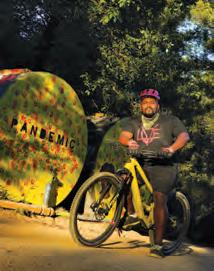
Last year during a 120 mile hike in Greenland I took a rest day with two badass 70-year-old women. In 24 hours the sun turned a complete circle around us without dipping below the horizon. Magic!
kurtgensheimer
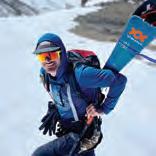
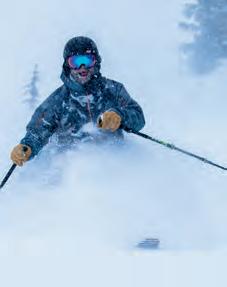
A ski tour I did from Frog Lake Huts to Warren Lake in February. Bluebird day, cold smoke pow, stable snowpack, and an amazing crew of friends we dubbed “The Warren Party” after that unforgettable adventure.
anthearaymond
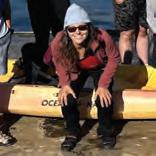
My best outdoor moment of the year lasted three days — running my ACA Surf Kayak Instructor Trainer test in Ventura. The lateAugust break at Solimar didn’t always cooperate, but that was part of the learning too.
mattjohanson
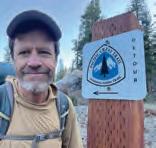
I got to introduce the PCT to some close friends and they loved the experience. Sharing that magic with others topped my personal highlights of the year.
jamesmurren
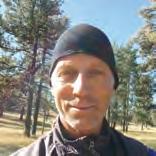
I had the fortune of spending 5 nights incommunicado rafting/ kayaking the Middle Fork of the Salmon River in Idaho. Getting back into river time, and for a longer time period, is a new dream.
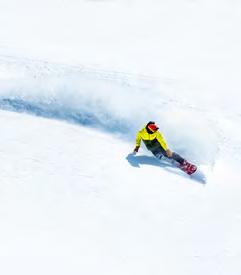
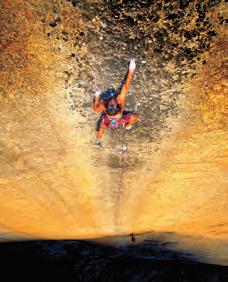
It’s a tie between two moments: splitboarding on a perfect bluebird powder day, and getting a welldeserved pizza and cider after climbing Royal Arches in Yosemite.
I can’t stop thinking about paragliding in Slovenia’s Julian Alps this summer. The feeling of total freedom was unforgettable and reminded me how beautiful life can be.
THIS ISSUE
7 Editor’s Note Stream Entry // 8 Ear to the Ground Industry news & notes // 11 Destination Highlight Oxnard partner spotlight // 16 Earn Your Beer Redding’s gateway to trails, rivers & pints // 37 Event Calendar Upcoming races and events
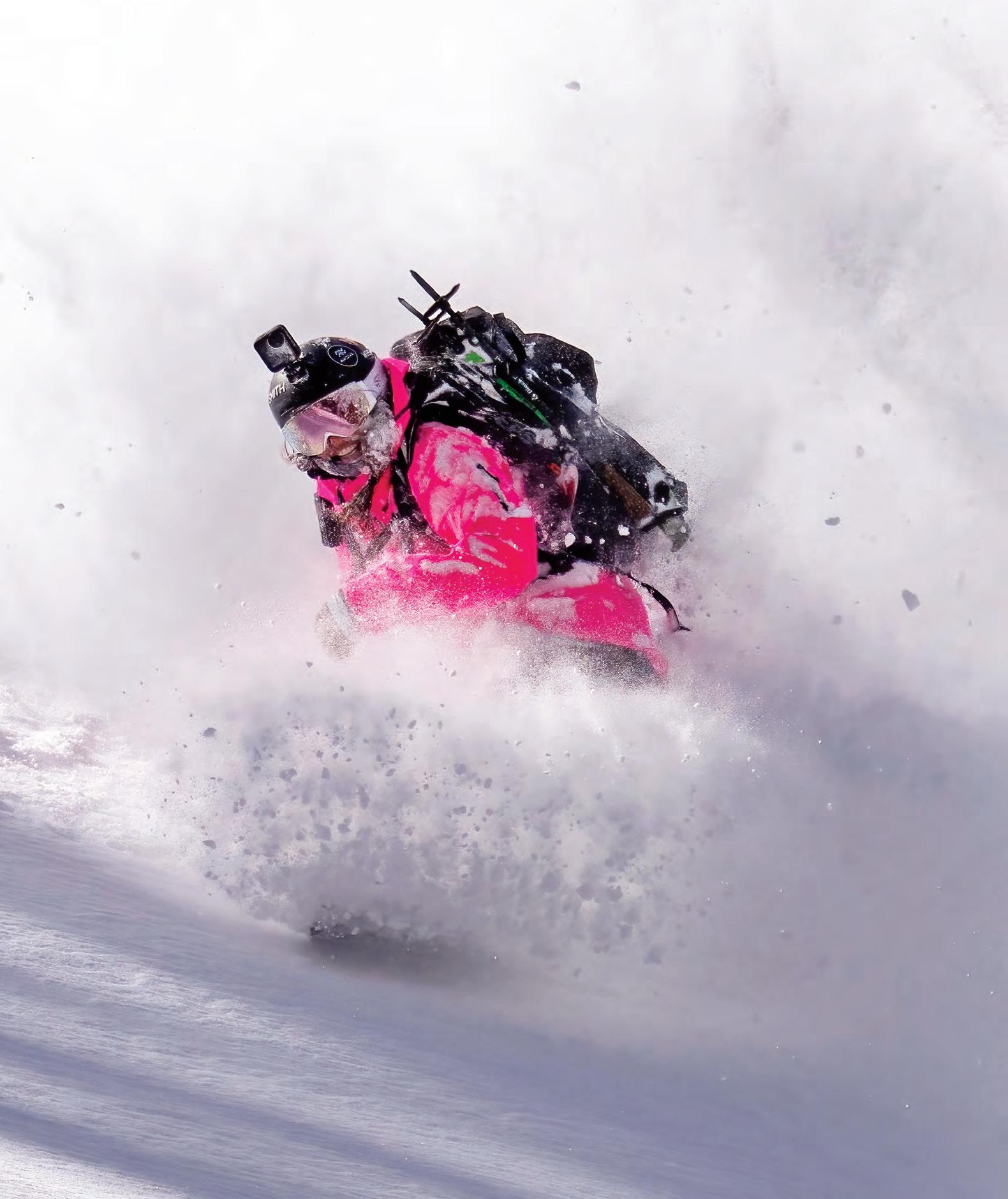
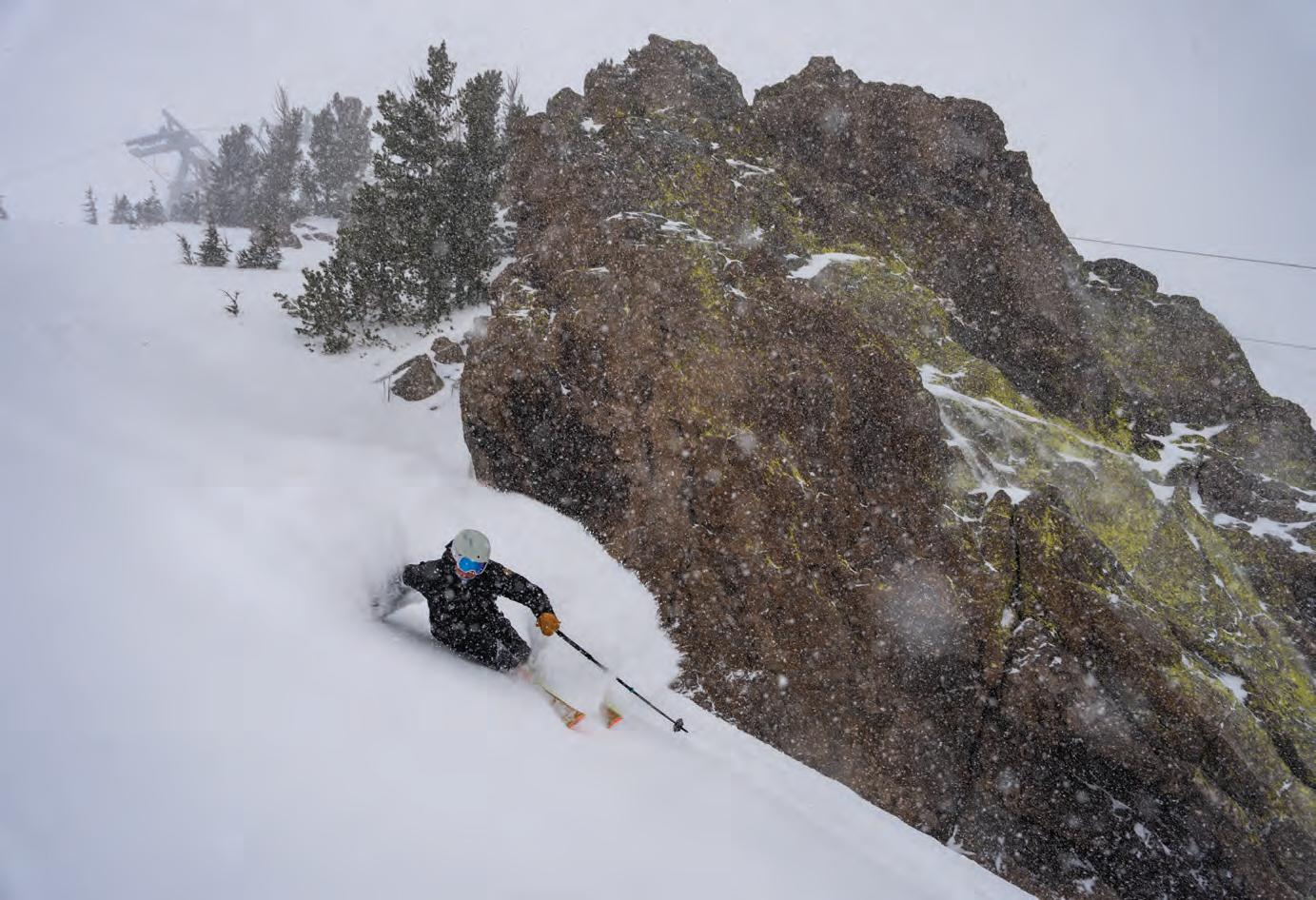
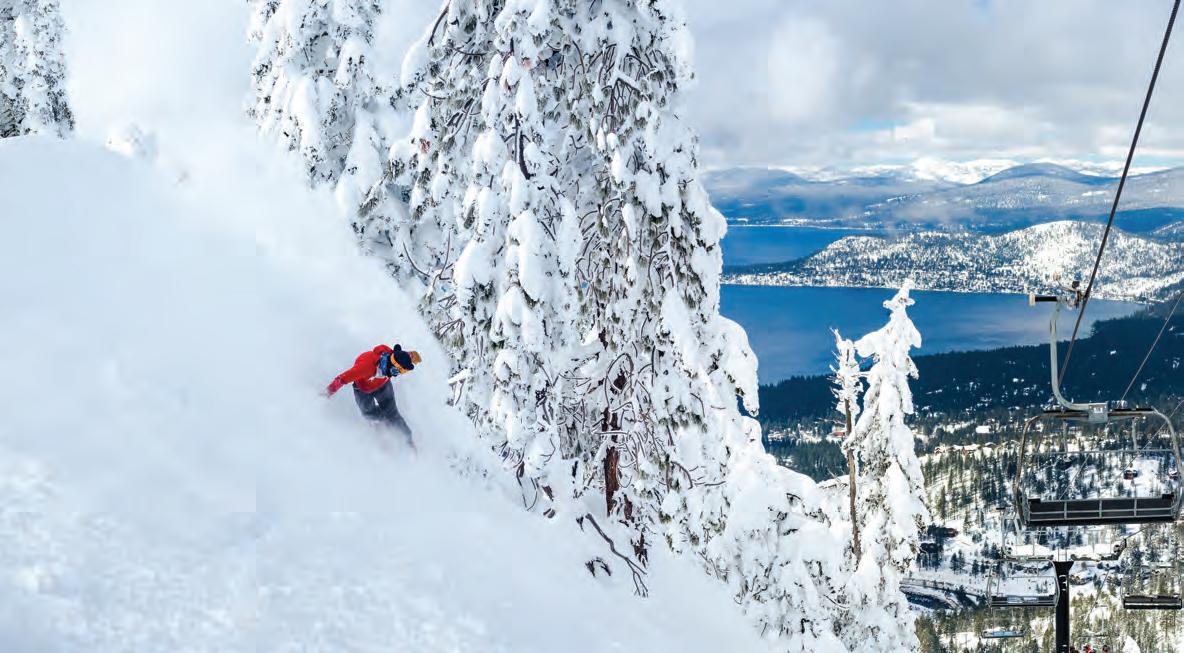
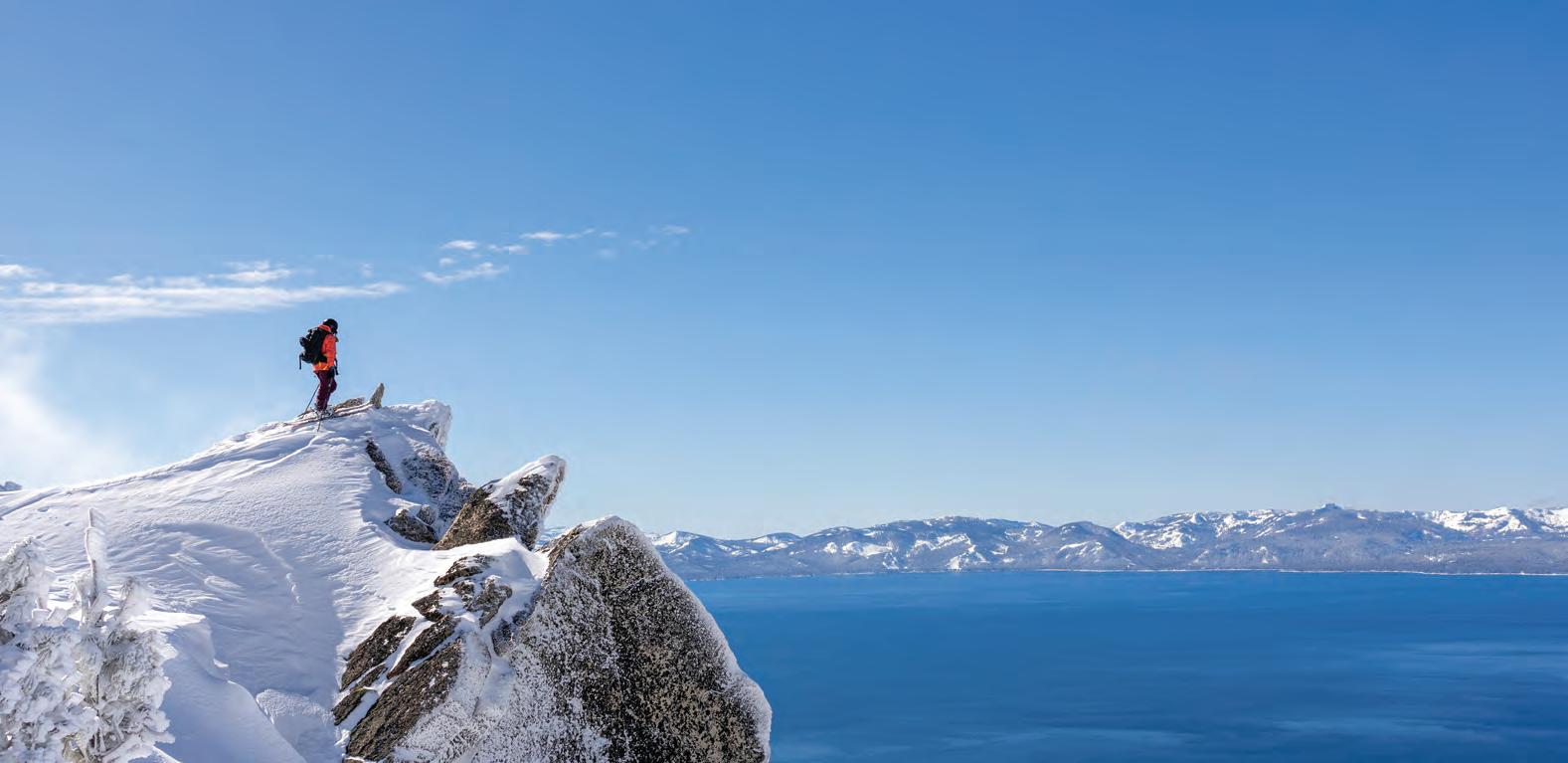
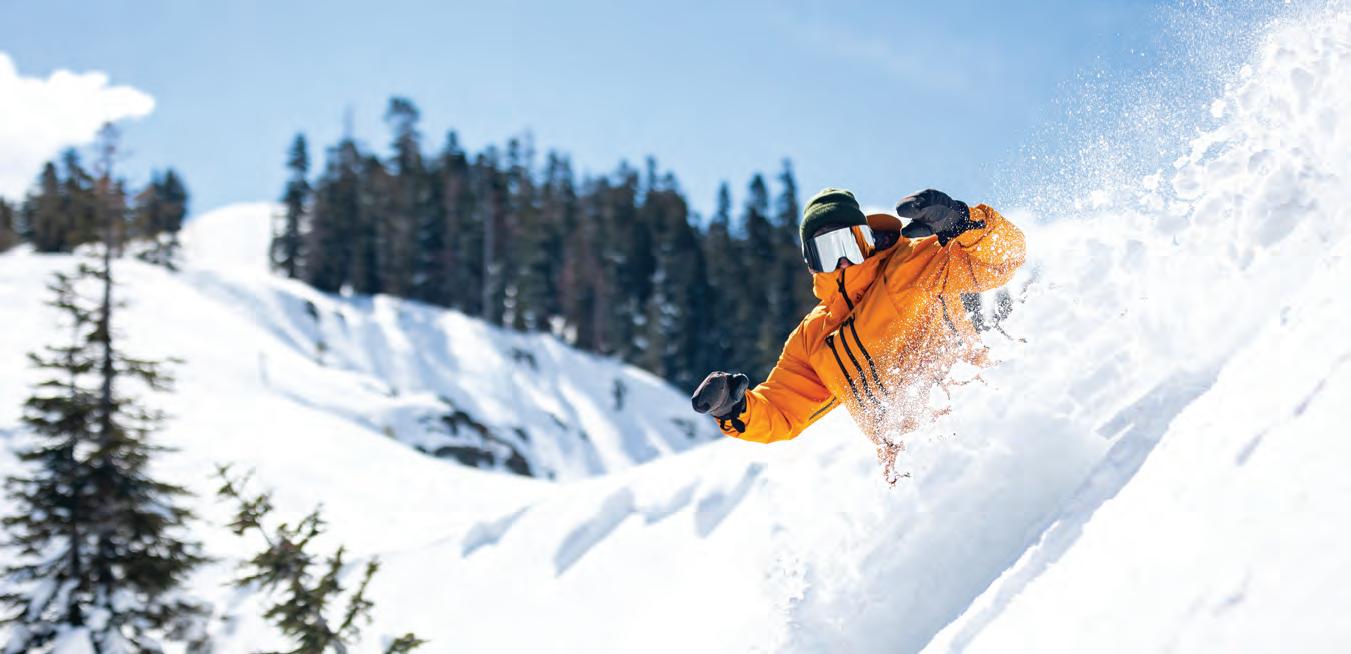
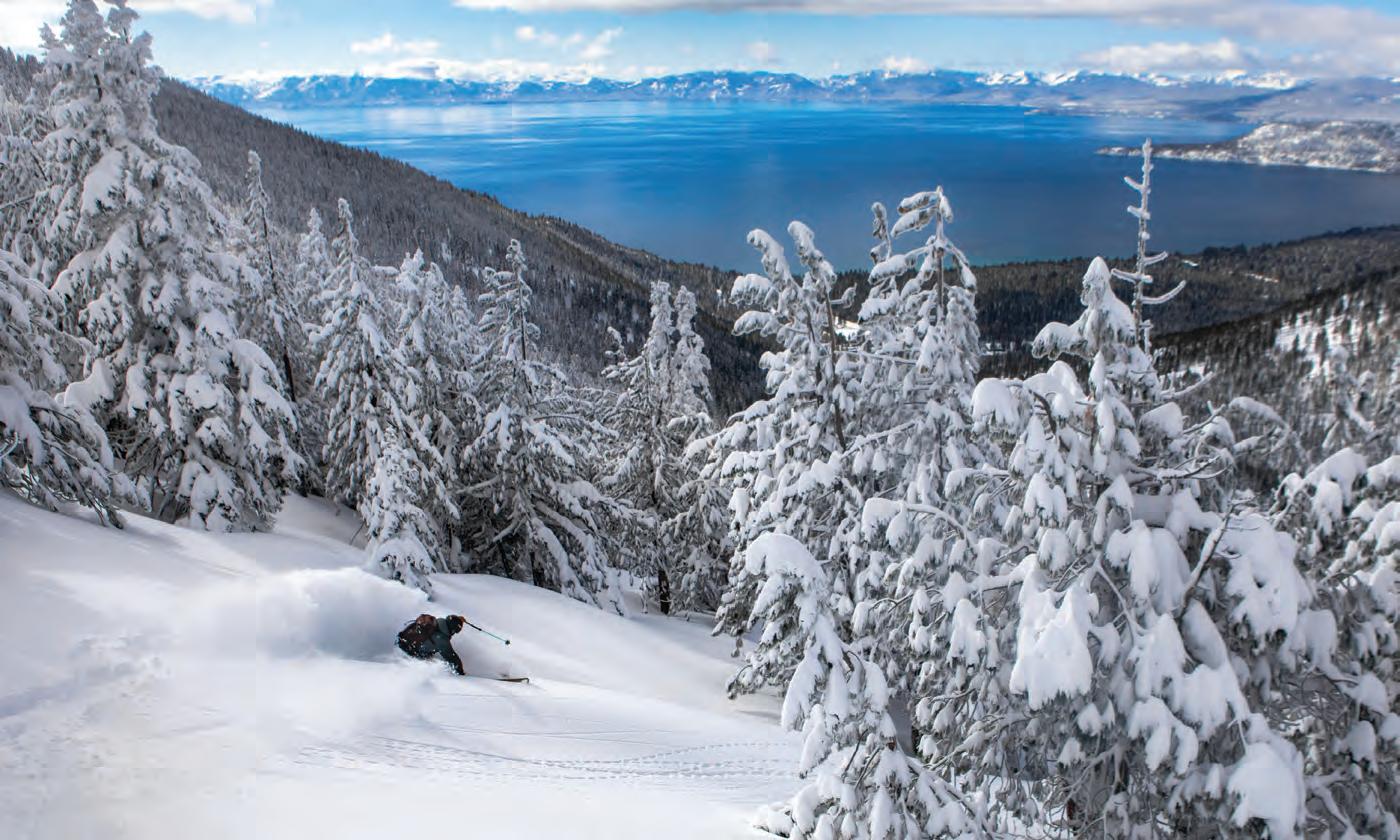
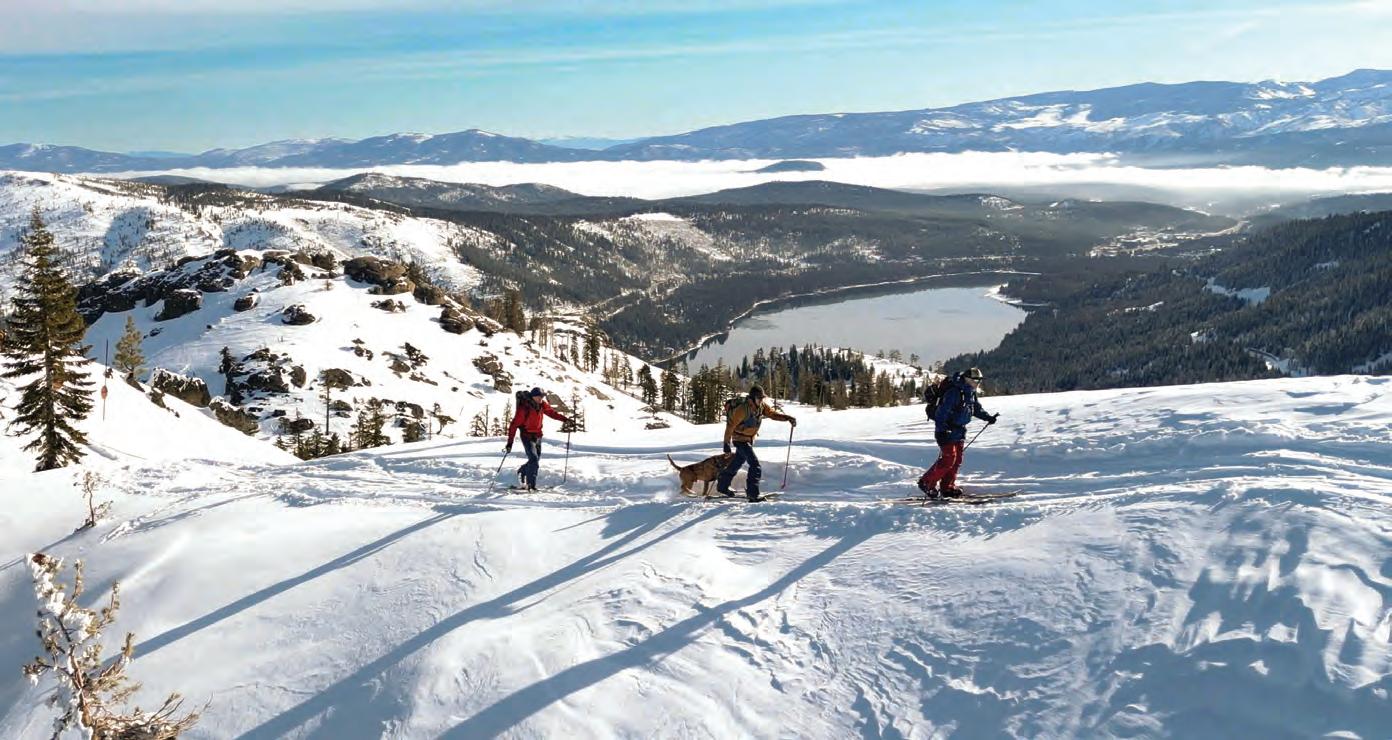
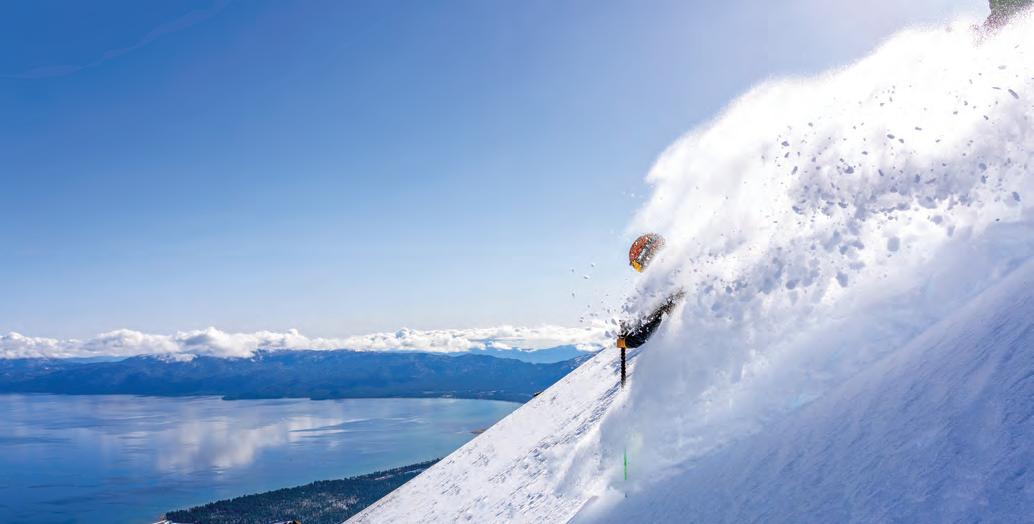
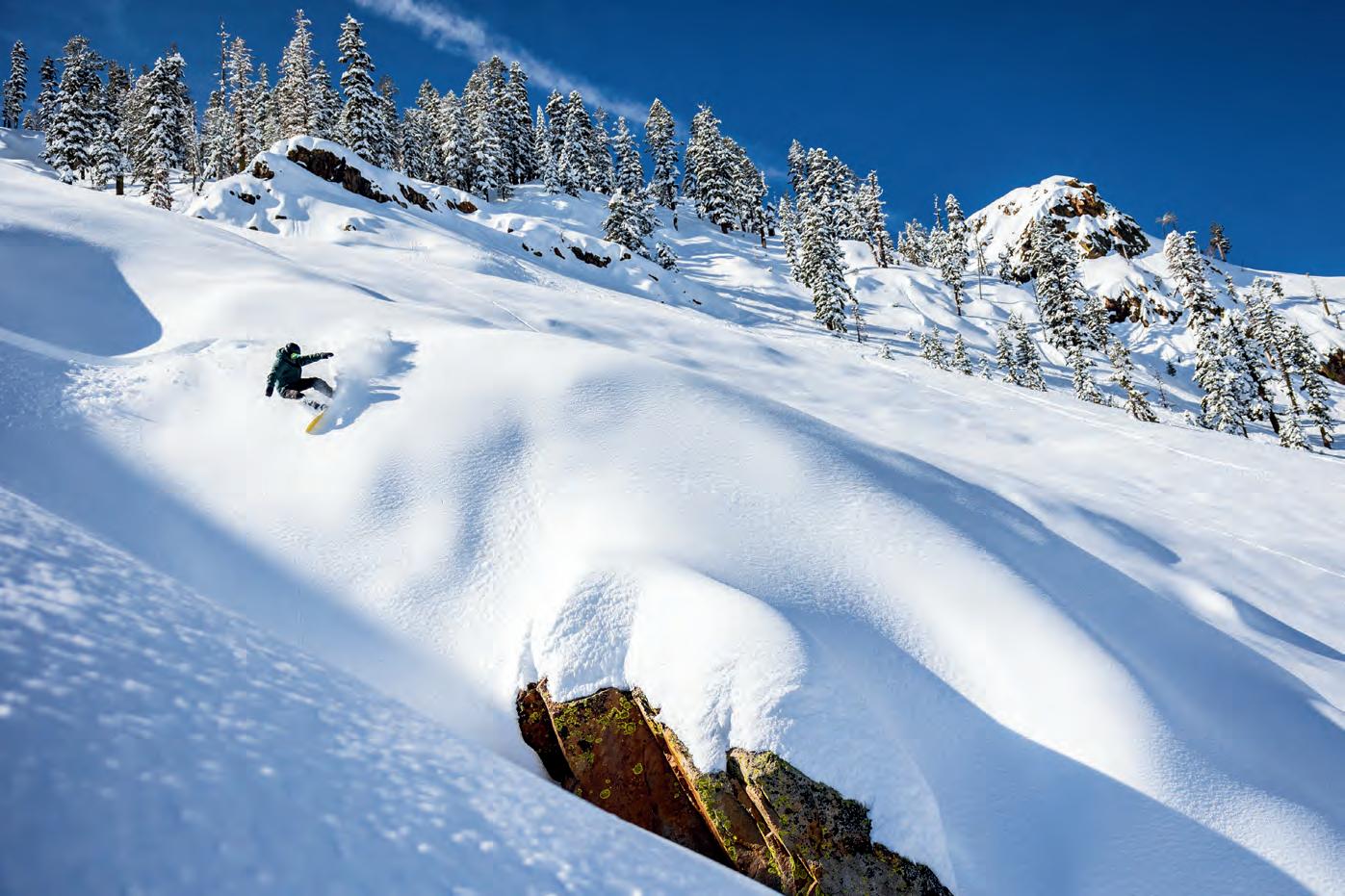
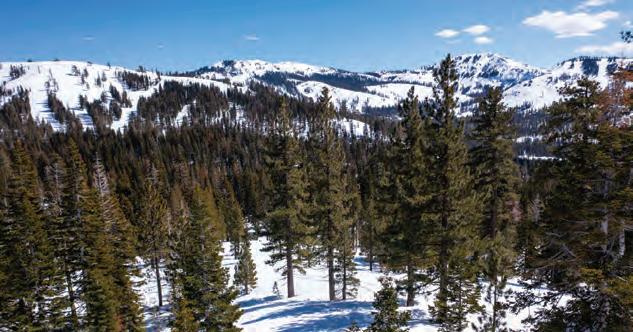
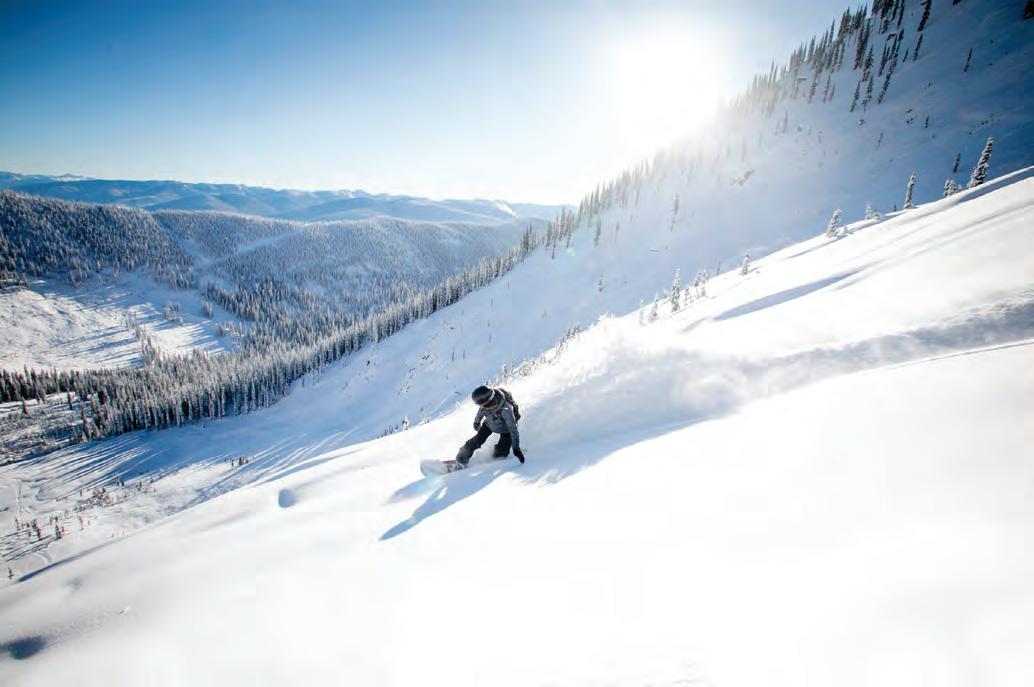
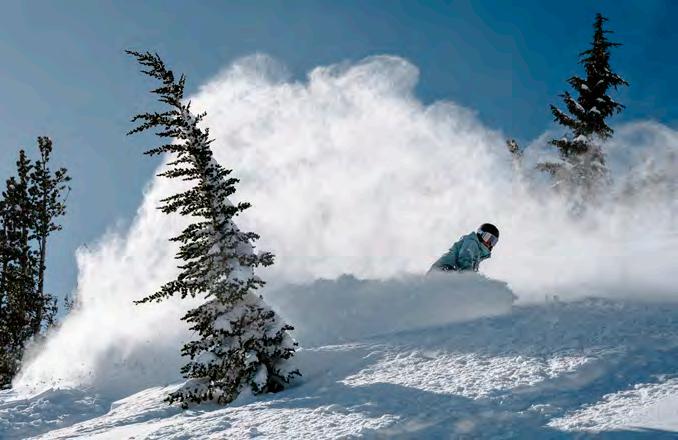
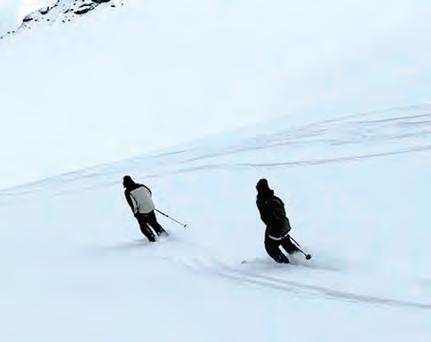
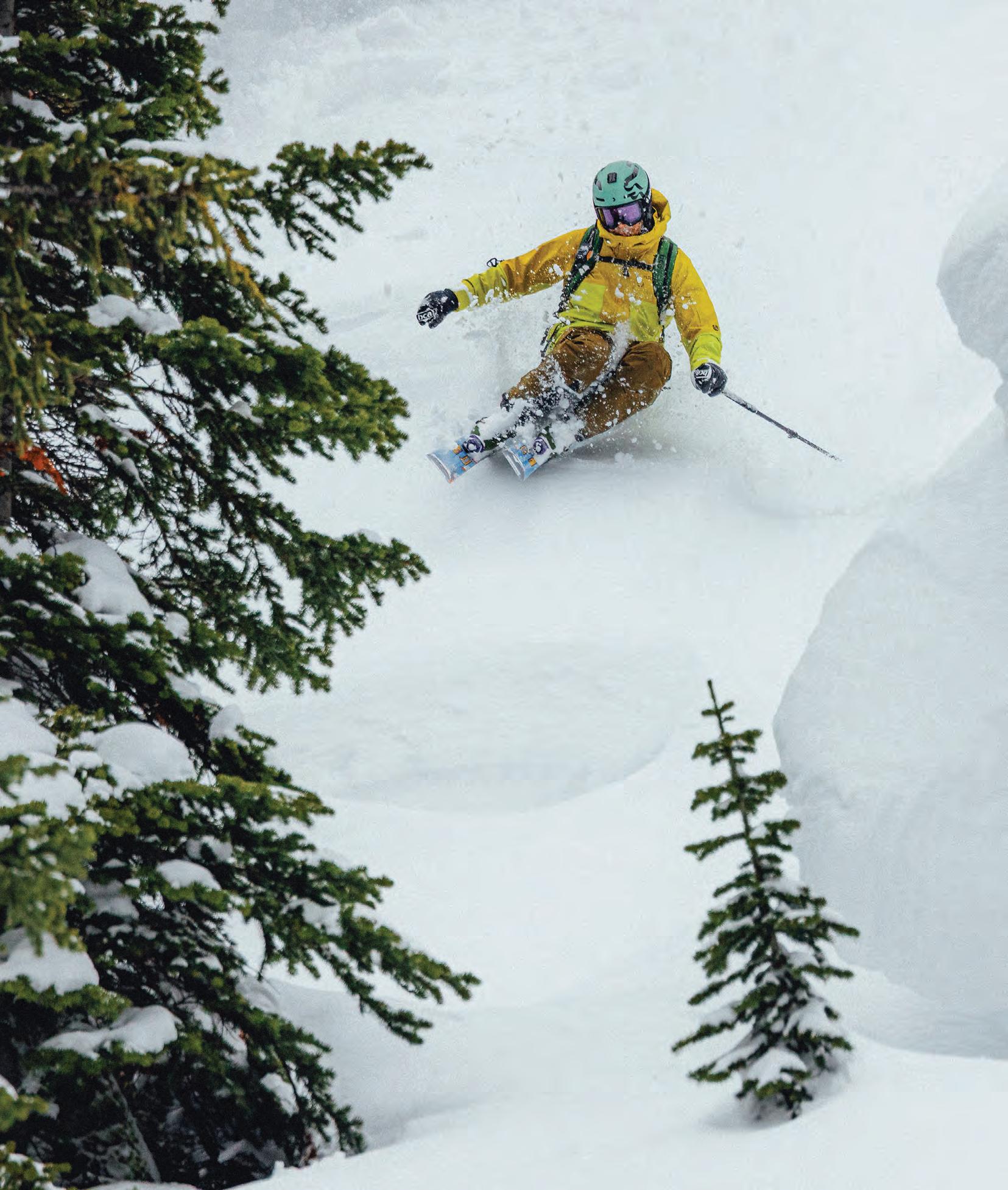
Claire HewittDemeyer is all smiles in the white room, South Lake Tahoe backcountry.
by Anthony Cupaiuolo / First Tracks Productions
10 Year in Review Highlights from a year of unexpected outdoor wins // 12 Gift Giving Guide Seasonal picks for adventurers // 18 The Gift of the Ancestors Inside the new Chumash museum // 20 It’s the Water Desert oases along the Amargosa River // 24 Resort Roundup Updates from regional ski resorts // 28 Tahoe Backcountry Alliance Fighting for Tahoe’s winter access // 34 Butterfly in a Blizzard Kimmy Fasani’s fight to rise again
Photo
FALLING INTO WINTER
Joining the river of big mind
Recently I was texting with my best friend, Sid. He’s facing stage-four cancer, and when he told me about the pain he’s enduring, I sat in my truck on the side of the road and started crying. I’m not someone who breaks easy, but the unfairness of it hit me like a wave. He couldn’t talk — he was in the doctor’s office — so I told him over text that I was crying because he got a raw deal and I’m tired of pretending it’s okay.
As I continued down the road, I found myself thinking about our long life together. I flashed back to the storm of 1982, when we were thirteen, living in the Santa Cruz Mountains. Thirty inches of rain fell in three days. Rivers exploded out of their banks. Hillsides liquified and homes slid into the abyss.
After that storm, life became brutally simple. Mother Nature had hit the reset button. All the performative nonsense of our teenage identities fell away. Sid and I wandered through landscapes of fallen redwoods and washed-out roads with awe and wonder. In the face of something so vast, everything artificial just crumbled. Only the real remained. When someone you love receives a terminal diagnosis, it’s the same
feeling. A big storm is happening, and you’re inside it whether you want to be or not.
Sid told me he isn’t afraid of death.
“It’s part of life,” he said. His bravery humbled me. It put everything in perspective. If Sid can stare down cancer with clear eyes, I can face my own trivial struggles without complaint.
Storms are part of the cycle of life. So is cancer. Both remind us that the roles we play are superficial skins draped over something much bigger.
Here at Adventure Sports Journal, we try to honor that “something bigger.” Wild nature is not a backdrop for recreation — it’s the unseen hand behind everything, even our own consciousness. We go outside to
reconnect with that larger self.
Zen master Shunryu Suzuki once described seeing Yosemite Falls for the first time. It seemed to him that the individual drops of water had “great difficulty” falling all the way down. In the same way, we struggle because we imagine ourselves separate from nature. We forget we belong to the great river of life.
Storms remind us. Death reminds us.
Welcome to ASJ Issue #139, where snow settles on a quiet landscape and we breathe in the magnitude of existence.
For nearly 25 years, ASJ has been the unofficial voice of California’s outdoor community. We’ve poured our heart and soul into advocating for a naturebased existence and celebrating the
wild spirit that animates our readers. At its best, outdoor recreation isn’t performative — it’s a natural dance. Breathing in, we find our rhythm. Breathing out, we dissolve a little into the vast sky from which we came. There are times the struggle of producing this magazine feels overwhelming. We wonder if our soulful approach — and our printed format — are just leaves drifting on a digital ocean of noise. Yet somehow, every issue finds its way. Cathy wakes up one morning, decides to keep it going, and enough of you whisper “keep going” that we continue. For you. But the truth is: we can’t keep going much longer without help. If you value what ASJ brings to the outdoor community and are in a position to support us — personally or through your organization — please reach out. We need a sustaining partner to keep this publication alive.
In the meantime, enjoy this issue. May these pages guide you back to the great river of consciousness that binds us all.
Thanks for reading.
—MattNiswonger
matt@adventuresportsjournal.com
CELEBRATING 25 YEARS IN PRINT
We are one of the last independent outdoor magazines in the country and are in direct competition with corporate media and online platforms. We depend on the support of our advertisers and people like you.
If you believe our region’s stories matter and deserve to be told in print, please become a member and help keep independent outdoor storytelling alive.
As we celebrate 25 years, we’re also seeking a handful of 25th Anniversary Benefactors — individuals or businesses — whose larger gifts can help ensure ASJ’s next chapter.
subscription.
EAR TO THE GROUND News and notes from the outdoor industry
ADVENTURE SPORTS JOURNAL JOINS PUBLIC LANDS BUSINESS COALITION
Adventure Sports Journal (ASJ) has joined The Conservation Alliance’s Brands for Public Lands (B4PL) initiative, becoming the coalition’s 160th participating company. The nationwide effort brings together a broad mix of businesses — including outdoor media, retailers, tourism operators, and mission-driven consumer brands — to advocate for strong protections for America’s public lands and waters. B4PL members work collectively to highlight the economic and community benefits of healthy public landscapes and to amplify the business voice behind conservation, access, and climate resilience. The coalition has become an influential platform for uniting businesses around public lands issues that directly affect outdoor recreation, local economies, and environmental stewardship.
“SALMON EVERYWHERE” ONE YEAR AFTER KLAMATH DAM REMOVAL
Just over a year after four hydro dams were removed on the Klamath River, the California Department of Fish and Wildlife reports that salmon are spreading into virtually all newly accessible tributaries throughout the basin. Scientists observed adult and juvenile Chinook re-occupying streams that had been blocked for decades, and early data show a stronger return than the previous year. The dam removal is a major milestone in restoring wildfish habitat for the region’s rivers, tribal communities, and recreational fisheries.
$87.1 MILLION AWARDED FOR HABITAT AND TRIBAL LAND PROJECTS
The Wildlife Conservation Board has approved $87.1 million in grants across 16 projects in 14 counties, funding habitat protection, salmon-recovery efforts, and the return of culturally significant lands to tribal stewardship. Major allocations include $5.5 million to acquire 10,274 acres at Loyalton Ranch for the Wášiw-šiw Land Trust and Washoe Tribe, and $15 million for land and water rights along Battle Creek to improve spawning habitat for endangered salmon and steelhead. Additional projects support wetland restoration, forest resilience, and longterm conservation of critical wildlife corridors statewide.
DL BLISS STATE PARK TO REOPEN IN MAY
California State Parks has announced that D.L. Bliss State Park on Lake Tahoe’s west shore will reopen for the 2026 summer season following an extensive multi-year infrastructure overhaul. The $5 million project replaces the park’s failing waterline, boosts fire-suppression capacity with upgraded hydrants, and improves access roads. Closed since 2021, the popular destination will welcome
NEW FEDERAL OFFSHORE LEASING PLAN RAISES CONCERNS OVER WILDLIFE, RECREATION IMPACTS
The US Department of the Interior has released an ambitious draft of its 11th national offshore oil-and-gas leasing program, proposing as many as 34 lease sales across 21 planning areas, including six off the US Pacific coast. The plan represents one of the most expansive federal offshore-energy proposals in years. Environmental groups, coastal communities, and recreation advocates warn the move could intensify pressure on marine ecosystems, conflict with visitor access and ocean recreation, and undermine climate-mitigation efforts in sensitive shoreline zones. The public comment
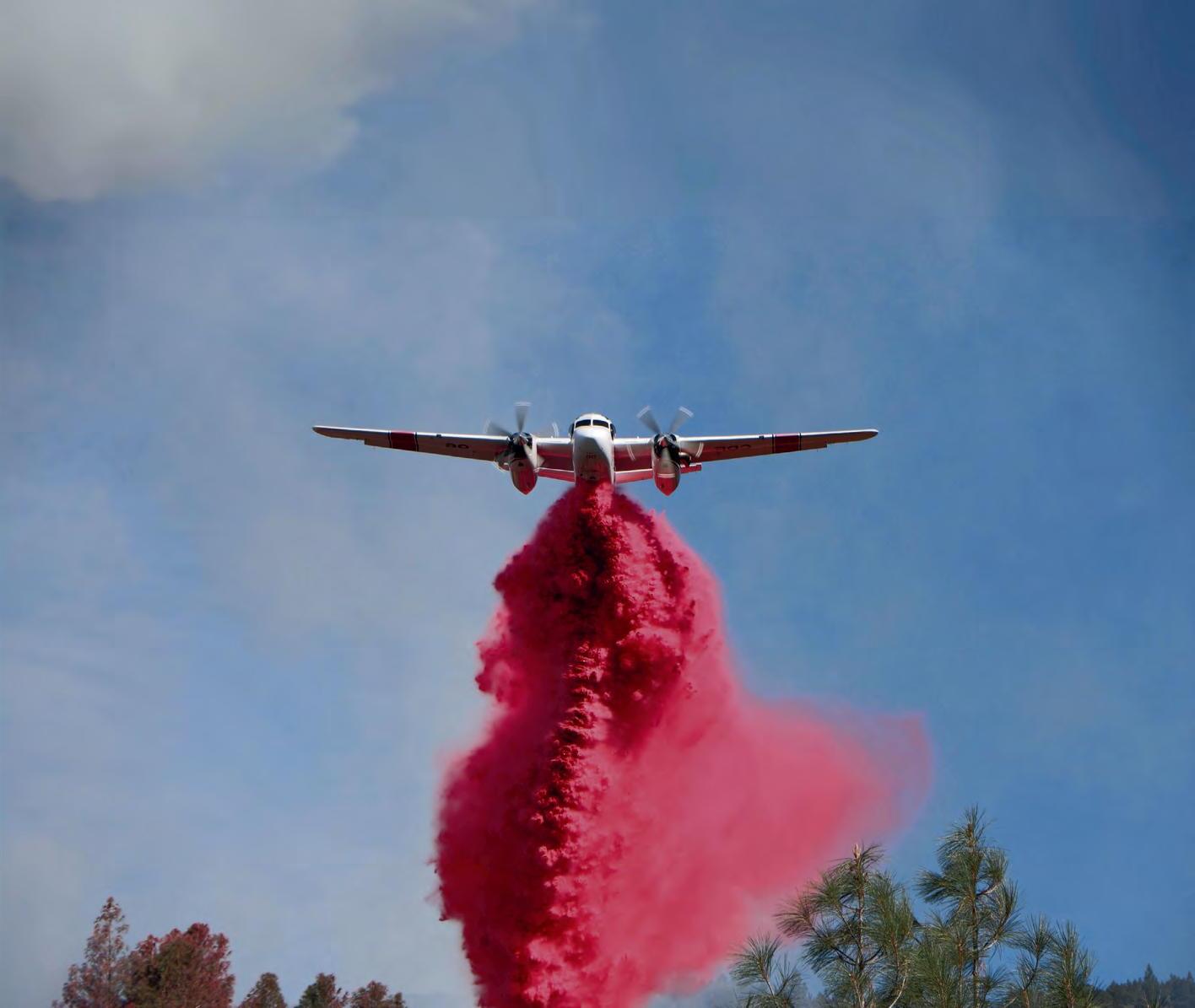
Soar to New Heights!
WITH CAL FIRE
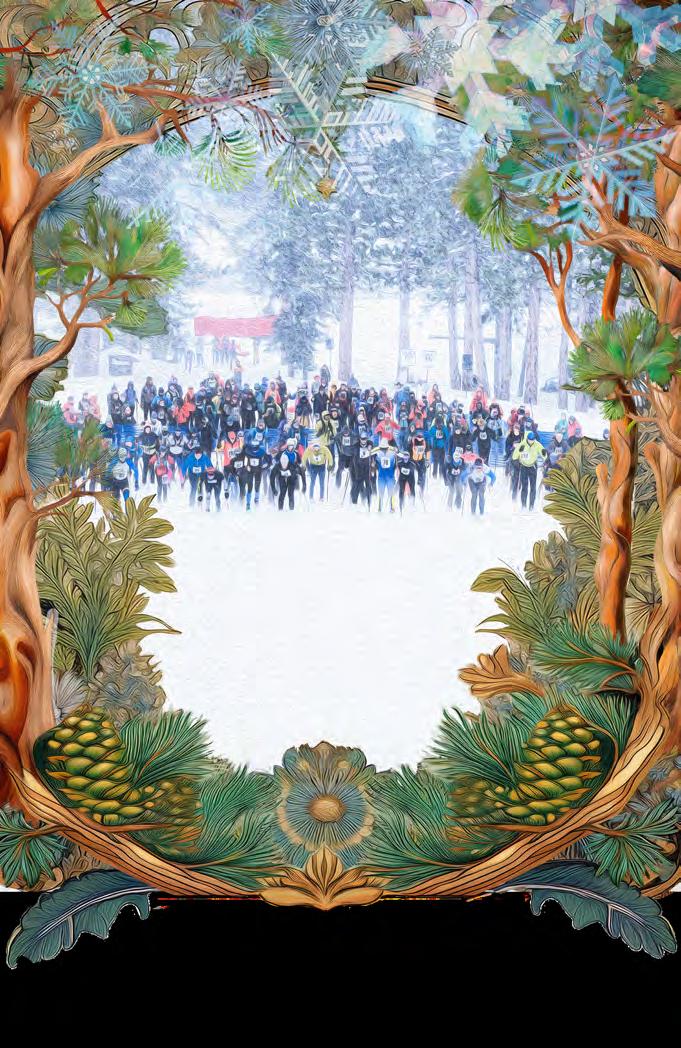
40 YEARS OF NORDIC SKIING AT TAHOE DONNER
Tahoe Donner’s Cross Country Ski Center celebrates its 40th anniversary this winter, marking four decades as one of Tahoe’s premier Nordic destinations. To honor the milestone, the center is offering $40 learn-to-ski packages on select dates, alongside early-season opening plans and special anniversary programming.
OVER $222 MILLION IN ILLEGAL CANNABIS SEIZED IN Q3 2025
Between July and September 2025, California’s multi-agency cannabis enforcement task force carried out 17 operations across 15 counties, eradicating 234,000 plants and destroying 66.5 tons of illegal cannabis worth an estimated $222 million. The sweeps also led to arrests and the seizure of multiple firearms. Officials say the crackdown targeted unlicensed grows that threaten water resources, wildlife habitat, and the legal market, with many sites located in remote, environmentally sensitive areas.
WOLF LETHALLY REMOVED FOLLOWING LIVESTOCK LOSSES
A gray wolf linked to multiple livestock depredations in Sierra Valley was lethally removed under state authorization after several confirmed attacks on cattle. Non-lethal deterrents had been in place but failed to stop additional losses. The California Department of Fish and Wildlife confirmed the action under the state’s wolf-management framework, which permits lethal removal only in limited, well-documented cases. Monitoring of nearby wolves continues.
$21.7 MILLION FOR HABITAT RESTORATION
The Wildlife Conservation Board has approved $21.7 million in grants for 16 projects across 11 counties, protecting or restoring nearly 13,940 acres of critical habitat. Funded work includes a rare peat-fen wetland acquisition in Humboldt County, forest and stream restoration in the Middle Truckee River watershed, and a new ADAaccessible trail along the Eel River. The investments advance biodiversity, climate resilience, and outdoor access statewide.
DIAMOND PEAK CELEBRATES 60 YEARS WITH $60 DEAL DAYS
Diamond Peak ski resort marks its 60th “diamond” anniversary this season, honoring six decades since its 1966 debut as Ski Incline. The celebration includes “$60 Days” featuring $60 lift tickets, rental packages and first-time lesson packages on select dates — including early December and springseason nights. Events also include retro parties, gear giveaways and community photo submissions to reflect Tahoe’s winter legacy.
ROCK RUMBLE ROYALE RETURNS TO 29 PALMS
Cliffhanger Guides presents the 2nd Annual Rock Rumble Royale on January 9–10, 2026, a two-day climbing and conservation festival based at Freedom Plaza in 29 Palms. The event features speakers like Katy Lamb, Ethan Pringle, and Alex Johnson, plus vendors from the climbing and stewardship community.
NORTH YUBA SALMON EFFORT CONTINUES
A multi-year effort to restore salmon to the North Yuba River has entered its second season, with crews planting 350,000 Chinook eggs into gravel beds upstream of historic barriers. The work focuses on spring-run Chinook, a threatened run defined by its early migration timing. Last year’s pilot showed strong survival rates using this direct-to-gravel technique, now being expanded to support long-term recovery. The goal is to reestablish salmon in cold-water habitat that had been inaccessible for nearly a century.
ILLEGAL IVORY SEIZED
In October 2025, the California Department of Fish and Wildlife’s Special Operations Unit seized a major cache of suspected illegally trafficked wildlife parts from a Los Angeles County business. The haul included at least nine rhino horns, thousands of pieces of elephant ivory, carved tusks, and a sea-turtle shell, all headed for forensic analysis. The case comes a decade after California’s ban on ivory and rhino-horn sales, underscoring ongoing efforts to curb wildlife trafficking.
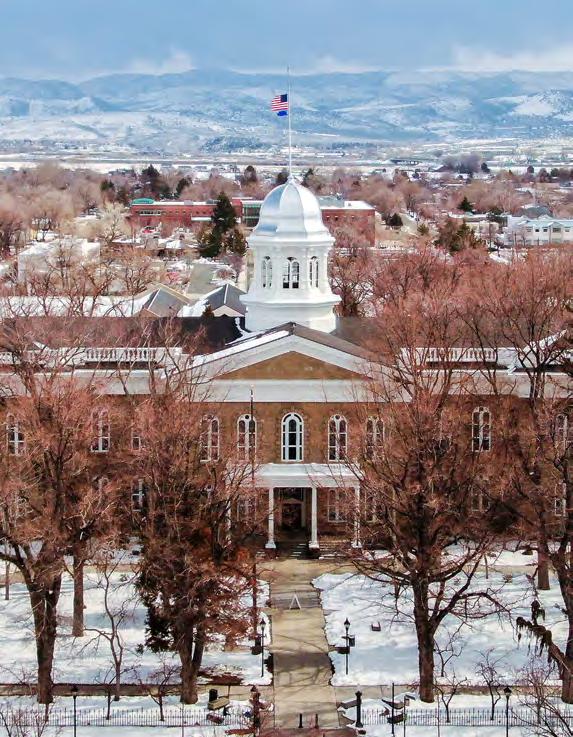
Carson City
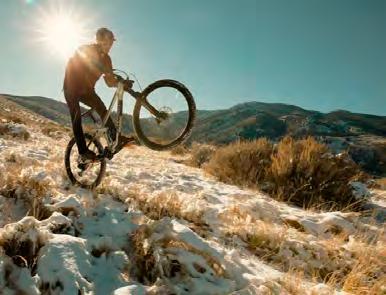
Winter Trails
Traveling For
Where the mountains meet a bright winter sky, Carson City’s rideable trails keep adventure alive with Tahoe’s snowy peaks just minutes away. It’s a true basecamp for riders, skiers, and weekend adventurers, complete with cozy stops, hot springs, downtown charm and museums that make it a getaway you’ll remember long after the season fades.
Scan the QR code and keep up with the latest news and information from our industry partners.
2025 YEAR IN REVIEW
Highlights from a Year of Unexpected Outdoor Wins
By Matt Johanson
2025 was a turbulent year on many fronts, but the outdoors still delivered reasons for optimism. Even as budget cuts and political clashes put pressure on public lands, volunteers, educators and local communities kept finding ways to build trails, open parks and get more people outside. Landmark federal legislation like the EXPLORE Act expanded access for climbers, veterans and people with disabilities, while cities quietly invested in new green spaces and outdoor amenities. Here are some positive outdoor stories that you may have missed.
Bipartisan Outdoors Bill Unanimously Passed
During a tumultuous year in Washington, it was easy to miss one big piece of good news: President Joe Biden signed the Expanding Public Lands Outdoor Recreation Experiences (EXPLORE) Act into law on January 4, 2025. The bipartisan package modernizes outdoor recreation, protects climbing access, improves opportunities for veterans and people with disabilities, and streamlines permits for small businesses that operate on public land. Both houses of Congress passed it with no recorded opposition; you read that correctly. Bipartisan consensus is still possible, or at least it was recently.
“Everyone deserves access to the outdoors regardless of where they live. Having grown up in Los Angeles, I’ve seen firsthand how urban and lowincome communities often lack access to adequate park space,” said Senator Alex Padilla
Public Lands Took Some Hits — but Avoided the Worst
There’s no question that 2025 delivered the outdoors some tough breaks. Proposed budget cuts and hiring freezes strained national parks and forests, slowing trail maintenance, campground repairs and basic visitor services. An autumn budget standoff pushed agencies to operate with reduced staffing for weeks at a time, creating uncertainty for public-land managers and the communities that depend on them.
On the bright side, a highly controversial proposal to sell up to three million acres of public land in the West — including parcels in California, Oregon, Washington and Alaska — failed to gain traction. The plan, introduced by Senator Mike Lee of Utah, would have required the BLM (and initially the Forest Service) to dispose of lands under federal management. Under pressure from both parties and facing a parliamentary ruling, the proposal was stripped from the budget legislation, marking a significant public lands victory.
“Americans across the political spectrum have made it clear they oppose selling off the natural heritage of our public lands to fund tax cuts for billionaires,” said Athan Manuel, director of the Sierra Club’s Lands Protection Program.
Trails, Parks and Volunteers Step Up
Across the West, trail crews and volunteers quietly logged thousands of hours keeping beloved paths open. In firescarred forests outside Redding and along the Lost Sierra, workers rebuilt eroded switchbacks, replaced burned bridges and restored signage that had vanished years ago.
Closer to home, urban green spaces got a boost. Cities from Oakland to Riverside added or expanded pocket parks, community gardens and bike paths, giving families more nearby places to walk, push strollers and ride scooters without loading everyone into a car. None of these projects made national headlines, but for the people who live near them, the changes were huge.
Para Climbers Reach New Heights in Oakland
California hosted the 2025 Para Climbing National Championships at Touchstone Climbing’s Pacific Pipe gym in Oakland, where 140 athletes competed for personal achievement and a chance to qualify for the national team. Twenty-seven climbers earned titles across disability classifications, and California athletes made a strong showing — most notably Isabel Benvenuti of Los Angeles, who won gold in the AU2 division. The event drew one of the biggest paraclimbing turnouts in the country and highlighted how adaptive climbing continues to grow in both participation and visibility.
New Yosemite Guidebook Opens the Walls to More Climbers
Climbers eager to explore Yosemite got a major gift this year with the release of Rock Climbing Yosemite Valley, Erik Sloan’s comprehensive new guidebook. With roughly 750 free routes, detailed maps and sharp photography, it distills decades of local knowledge into a modern, easy-to-use resource. Sloan, who has lived and climbed in Yosemite for more than 20 years, said the goal was simple: help people get up — and down — their climbs more safely and confidently.
“Old guidebooks were horribly outdated and omitted key approach and descent beta that used to be passed down more wordof-mouth. So knowing that folks were finding, enjoying and getting down from their climbs easier, and writing to tell me about it, that’s awesome,” said Sloan.
California Gains Two New National Monuments
California added two major protected landscapes to the map when President Biden designated the Chuckwalla and Sáttítla Highlands national monuments in January 2025. Together they protect roughly 850,000 acres of desert canyons, volcanic highlands and wildlife corridors — from the Coachella and Joshua Tree region in the south to the volcanic Medicine Lake country in the north. The Chuckwalla designation includes habitat for desert bighorn sheep and Mojave desert tortoise, while Sáttítla Highlands safeguards volcanic peaks, old-growth forest patches and culturally significant landscapes stewarded by regional tribes for millennia. Both monuments were shaped by years of community and tribal advocacy, and they support the national goal of conserving 30% of US lands and waters by 2030.
Indigenous Stewardship Guides a Year of Renewal
Tribal nations helped protect culturally important landscapes, restore access to ancestral homelands and bring generations of stewardship into land-management planning. Their leadership strengthened protections for wildlife, water sources and sacred sites. Those same principles guided riverrestoration efforts in Northern California, where tribes partnered with agencies and scientists to revive damaged watersheds. The results were encouraging: salmon returned to several rivers in higher numbers than recent years, supported by improved flows, habitat recovery and longstanding advocacy for projects like the Klamath River dam removal. Together, these efforts show how cultural continuity and ecological health can move forward hand in hand.
A Story That Heals, on Screen and on the Trail
Released this year, the documentary Remaining Native brings the powerful story of distance runner Ku Stevens to big and small screens. At 17 years old and from the Yerington Paiute Reservation in Nevada, Stevens pursues his dream of running at the University of Oregon while honoring his greatgrandfather Frank Quinn, who escaped an Indian boarding school three times as a child. Stevens retraces a 50-mile desert route to highlight the harms of the boarding-school system and promote healing among descendants of survivors.
“This film is an opportunity for us to show how love, family and memory can provide healing while also celebrating Indigenous resilience,” said director Paige Bethmann
Milder Wildfire Seasons Continue
Compared with the most destructive fire years earlier in the decade, recent seasons in parts of California have been somewhat milder. Back-to-back wet winters and an expanded use of prescribed and cultural burning have helped reduce extreme-fire behavior in treated areas, and agencies report more successful early containment — a hopeful shift that reflects deeper collaboration between state crews, tribal fire practitioners and local communities.
Oxnard to Anacapa
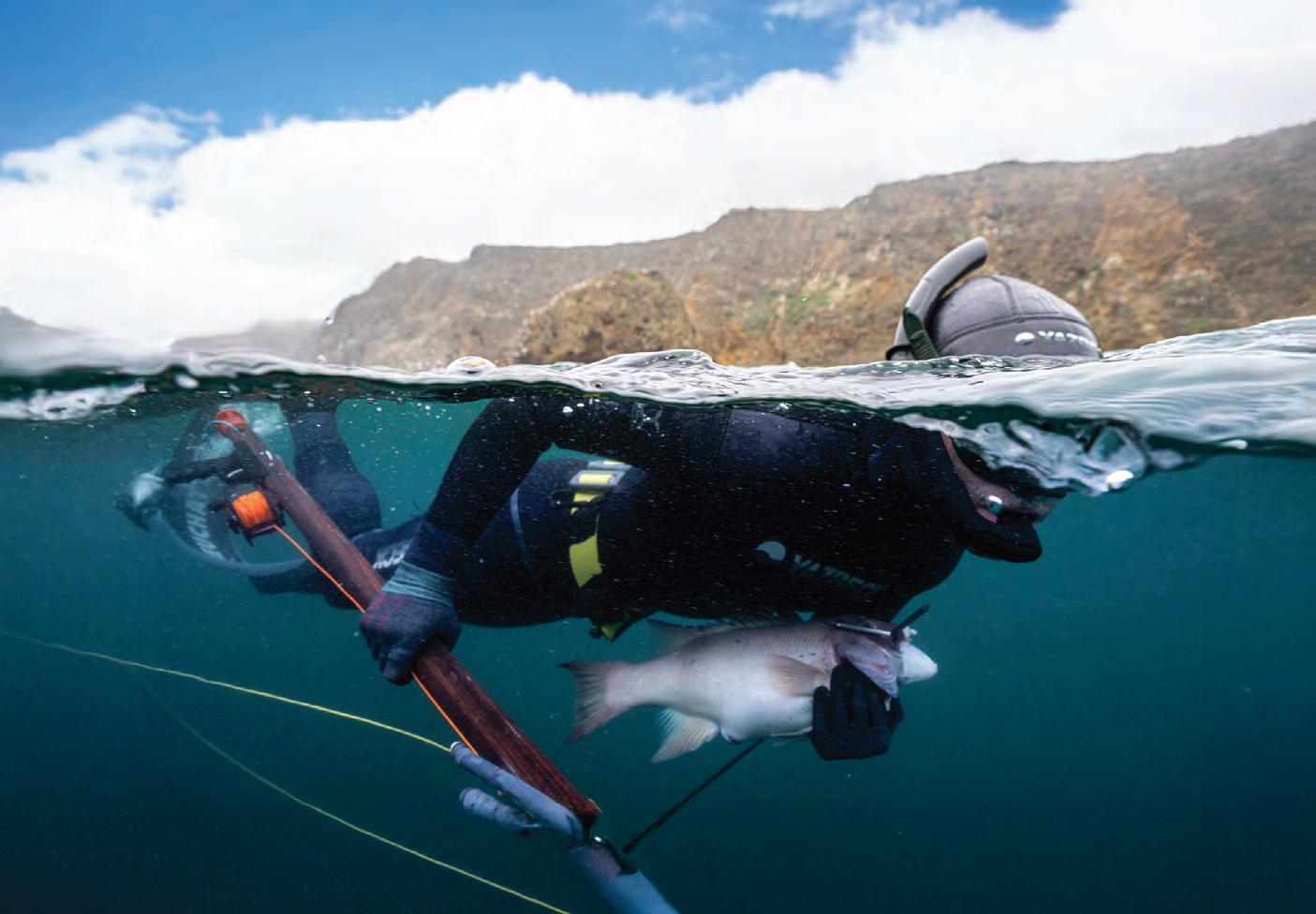
Discover world-class spearfishing just off California’s coast with Oxnard as your gateway
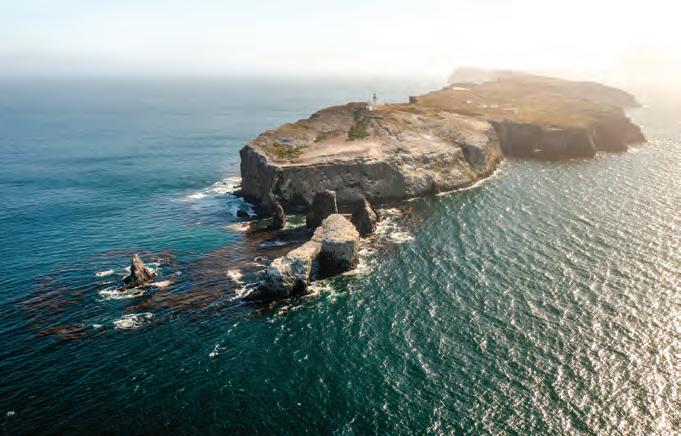
Just an hour’s drive up the coast from Los Angeles, Oxnard moves to a rhythm all its own — a beat apart from the hustle and bustle of the city. As the gateway and closest access point to Anacapa Island, it’s your jumping-off point for crystal-clear waters, vibrant kelp forests, dramatic underwater topography and year-round access. Part of Channel Islands National Park and known as the “Galápagos of North America,” Anacapa boasts rugged cliffs and thriving marine life that make it a must for divers, kayakers and spearfishers.
► GETTING THERE
From Channel Islands Harbor in Oxnard, Island Packers, the official Channel Islands National Park concessionaire, makes it easy to reach Anacapa Island’s pristine waters, just an hour away by boat. Whether you’re joining a chartered dive trip or setting out with friends, Oxnard serves as your convenient launch point for adventure.
► WHERE TO DIVE AND SPEARFISH
Anacapa is made up of three islets — East, Middle and West — with most spearfishing and recreational diving taking place off East Anacapa Island, home to the iconic Arch Rock. The southern side is open to fishing and spearfishing and features lush kelp forests and rocky reefs overflowing with life. The northern side is part of a Marine Protected Area (MPA), so no-take rules apply, helping preserve this incredible ecosystem.
Beneath the surface, you’ll glide through swaying kelp forests alive with color and motion. Schools of calico bass dart through the kelp fronds, garibaldi flash bright orange and playful sea lions zip past like underwater acrobats. For spearfishers, local favorites include California sheephead, California halibut, white seabass and yellowtail. Keep your eyes peeled for the giant black sea bass — protected and rare — and remember that these majestic fish must never be speared.
► TIPS FOR THE DIVE
Even in summer, a 5mm or 7mm wetsuit is essential, along with a valid California fishing license. Always check swell, wind and visibility before heading out. The best conditions to dive are during small swell, as little wind as possible and high tide. Respect the MPA boundaries; they’re clearly marked on NOAA charts and dive maps. GPS is helpful for staying legal and ethical.
► BEYOND THE SPEAR
After the dive, grab a kayak and paddle along Anacapa’s cliffs and sea caves. It’s one of the most scenic ways to explore
the island. You’ll have a front-row seat to seabirds, blowholes and the rugged coastlines that define California’s wild ocean heritage.
Back on shore, bring your catch home and savor it Oxnard-style. Many local hotels, like Homewood Suites, TownePlace Suites and Staybridge Suites, offer outdoor BBQs so you can grill up the day’s fresh catch and unwind by the fire. From the first drop to the final catch, spearfishing in Oxnard is pure adrenaline.
Discover more Oxnard adventures at
Past the break, Oxnard gives way to the wild. Channel Islands National Park is raw, alive, and home to world-class spearfishing. No lines. No bait. No fear.
Just you, the hunt, and the deep.
Anacapa Island, Channel Islands National Park
DODGE RIDGE 4 DAY PASS
4 DAYS of skiing or riding at up to 40% OFF! The Dodge Ridge 4 Day Pass is the perfect gift for the winter lover in your life.
Enjoy all Dodge Ridge has to offer any day of the 25/26 Winter Season. Take on the mountain at DodgeRidge.com!
DodgeRidge.com
VISIT BISHOP
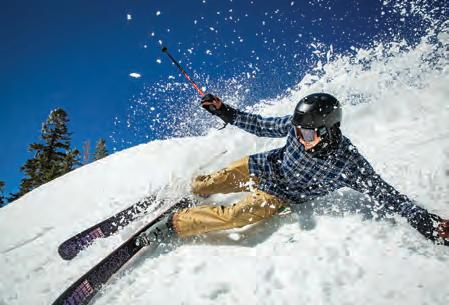
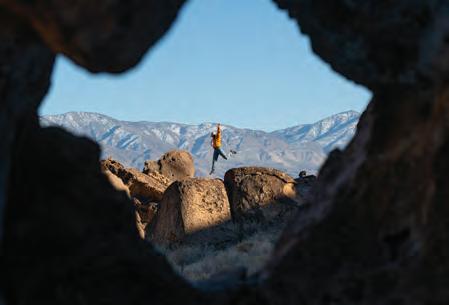
Did you hear? Fly direct into Bishop, California this winter from SFO or DEN.
If you've been dreaming of fishing, climbing, trail running or an epic ski trip to Bishop, call your buddies, now you’re closer than ever.
BishopVisitor.com
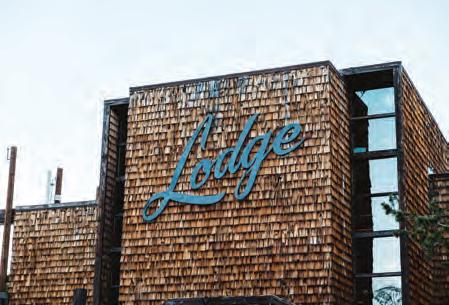
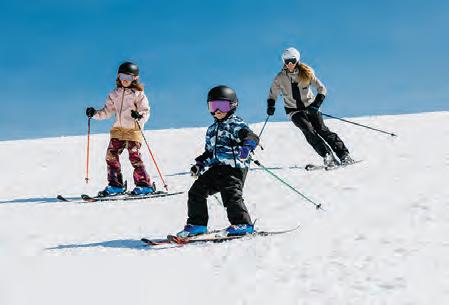
Save up to 25% at Bear Valley Lodge with our Ski & Stay Package!
Enjoy one night with two lift tickets, or stay two nights and get four lift tickets. Tickets are valid the day after check-in. Adventure is calling — reserve your getaway today!
BearValley.com
JUNE MOUNTAIN
Embrace the adventure at June Mountain. With 1,500 acres of vast slopes and family-friendly beginner terrain, it’s your ideal Eastern Sierra ski day or holiday escape. Enjoy stunning vistas and gift a memorable experience purchase a gift cards online for your loved ones today.
JuneMountain.com
KAYAK CONNECTION
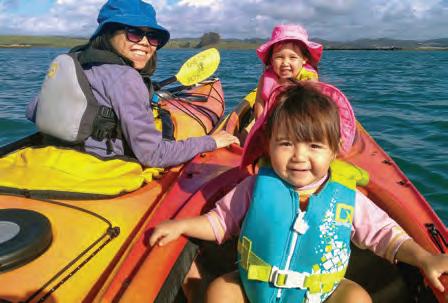
Give the gift of wildlife, salt water and magic this year. Surprise your loved one with a gift certificate good for rentals, tours, classes, and gear. With two waterfront locations to choose from — Santa Cruz Harbor and the Elkhorn Slough — Kayak Connection is the favorite gateway to explore the Monterey Bay Marine Sanctuary. Come paddle with us today!
KayakConnection.com
BEAR VALLEY SKI & STAY PACKAGE
Photo: Nick Cote/Visit USA Parks
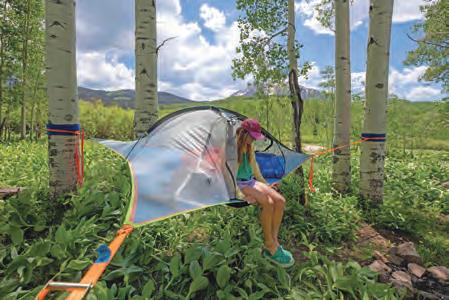
TENTSILE TREE TENTS
Portable, versatile, and fun, Tentsile’s award winning Tree Tents and Giant Hammocks create a comfortable camp for all seasons, no matter what the ground conditions below. Ideal for every adventure, from solo exploration to family camping trips, a Tentsile is the perfect gift for the outdoors lover in your life!
Tentsile.com
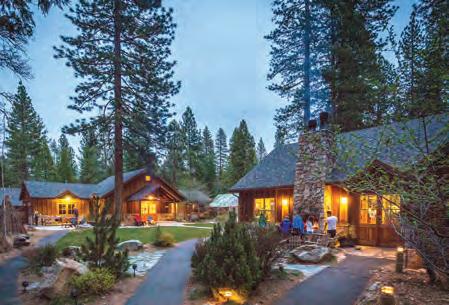
EVERGREEN LODGE AT YOSEMITE
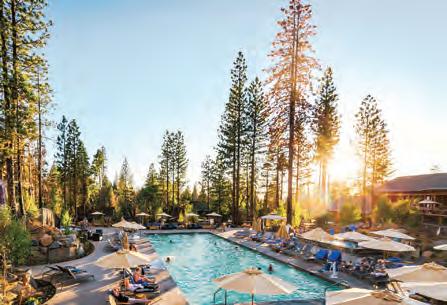
A Frommer’s Guide “Favorite” and “Highly Recommended” by Fodor’s, this iconic mountain resort provides cozy cabins in the woods, indoor/ outdoor dining, tavern, pool/hot tub, daily activities, and free expert planning advice, with no hidden resort fees. Professionally guided excursions and wellness massage also available. Book direct for best rates and service. (209) 379-2606
EvergreenLodge.com
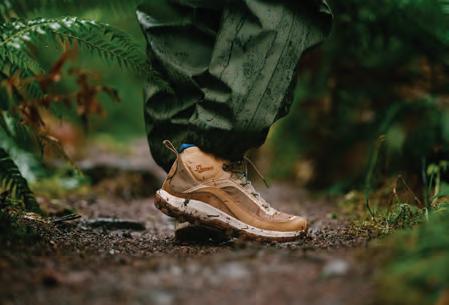
DANNER N45 HIKER
The N45 — Danner’s first recraftable breathable hiker — is a do-it-all hiker that packs sturdy, hiking boot support into a lightweight, sneaker-like package. Built with a Vibram® Megagrip outsole, an energy-returning EnduroFoam midsole and the optional GORE-TEX Invisible Fit liner, the N45 family finds a home in all seasons. Available in men’s and women’s Low and Mid height options.
Danner.com
RUSH CREEK LODGE AND SPA
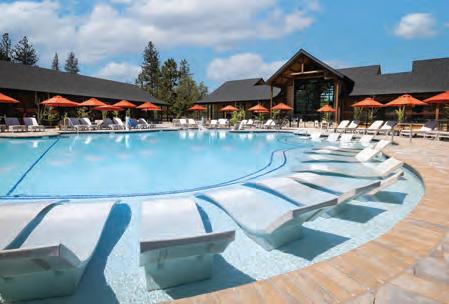
A relaxed yet sophisticated experience at the Highway 120 West entrance to Yosemite — featuring Lodge Rooms, Suites and Hillside Villas, restaurant, tavern, saltwater pool & hot tubs, daily activities for all ages, with no hidden resort fees. Yosemite-inspired Spa and professionally guided adventures also available. Book direct for best rates and service. (209) 379-2373
RushCreekLodge.com
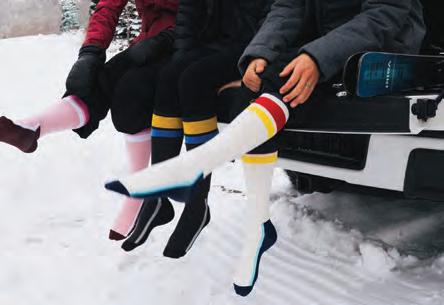
QEJA SKI SOCKS
QEJA socks are designed for movement, made with organic and OEKO-TEX Certified materials, and guaranteed to keep feet comfortable and blister-free on and off the slopes. Our top-selling Ski Socks are thin for optimum boot fit, warm, soft, and uniquely designed to slip in and out of snug ski boots easily.
QEJAsocks.com
FIREFALL RANCH
New to the Yosemite landscape in Summer 2024, this luxurious 300-acre resort showcases 55 stylish Cottages & Villas, pool area, dining and a glorious event hall. Enjoy an incredible array of activities with no hidden resort fees. Professionally guided tours and seasonal horseback adventures also available. Book direct for best rates and service. (209) 379-6820
FirefallRanch.com
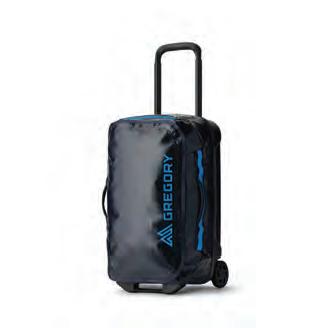
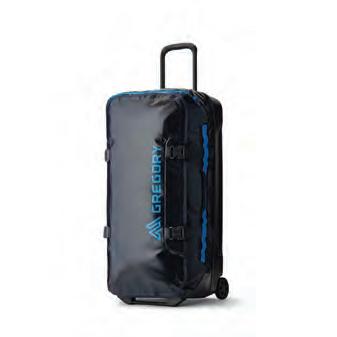
GREGORY ALPACA ROLLER DUFFLE
Epic adventure meets smart design in this unfussy rolling duffel. It blends the light, packable ease of a classic duffel with the convenience of wheels for smooth airport travel. External cinch straps, accessible pockets, and internal dividers make it ideal for hauling gear — whether climbing racks or ski kits — and it’s available in 40 and 100-liter sizes.
Gregory.com
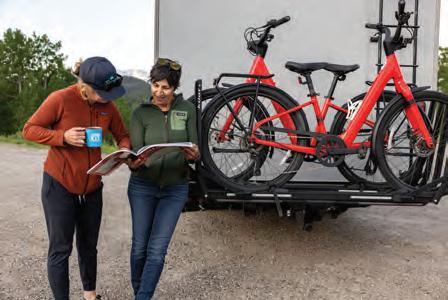
KÜAT PISTON® ION™
Give a gift that lasts. The Küat Piston® ION™ carries today’s heaviest e-bikes with a 100-lb per-tray capacity and a smooth, telescoping ramp for easy loading. Engineered with intuitive, riderfriendly features, it’s fender-compatible and RV/ off-road rated. Designed for e-bikes but versatile for most bikes, the ION keeps every adventure moving forward.
Kuat.com
BUZZ CENTRIS FOLDING E-BIKE
The Buzz Centris Class 2 Folding E-bike combines comfort, power, and portability. Its lightweight aluminum frame folds compactly, while a step-through design, larger tires, and 60mm suspension ensure a smooth ride. A removable 10.4Ah battery delivers up to 40 miles. Integrated lights and front and rear racks add safety and utility. On sale for $699 until 12/13/2025.
BuzzBicycles.com
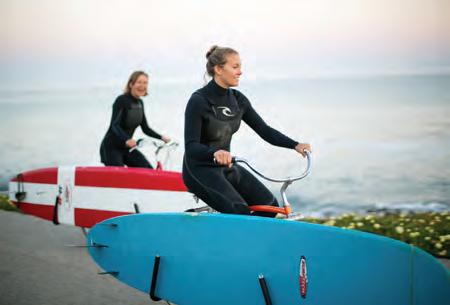
SURFBOARD RACKS
Help the surfer in your life cruise to the beach with Moved By Bikes’ innovative Surfboard Rack. These racks feature patented quick-release bars that securely mount to your bike or e-bike frame, accommodating longboards, shortboards, and even SUPs up to 25 lbs. Built from rust-resistant materials for coastal adventures. Custom options available.
MovedByBikes.com
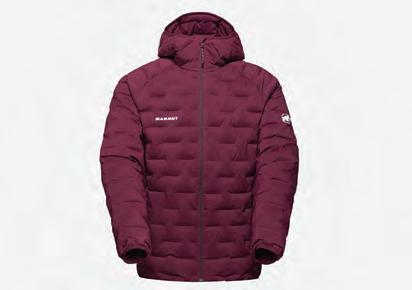
MAMMUT SENDER IN HOODED JACKET
Built for sub-zero warmth, this thermal jacket uses Mammut’s unique LOOPINSULATION — made from recycled rope scraps — paired with a recycled, wind-repellent outer fabric. The result is a cozy, highly protective layer that supports circular production and low-impact design. Available in men’s and women’s.
Mammut.com
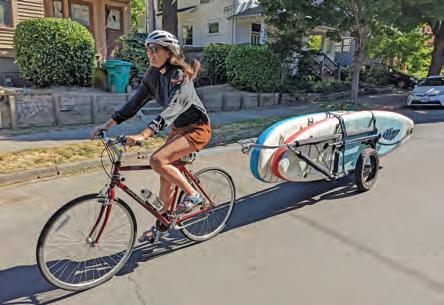
SUP / KAYAK TRAILER
The SUP / Kayak Trailer from Moved By Bikes offers a new way to get your boats and boards to the water, without the need to strap them to the roof of your car. A tool-free seatpost attachment fits just about any bike and the fat tires will roll across sand for easy water launching. Unsure about your application? Contact Moved By Bikes for support.
MovedByBikes.com
Redding as a Winter Basecamp
Your winter launchpad for trails, peaks, and pints
By James Murren
THE EARNING
Situated along I-5 on the Sacramento River, with massive Mt. Shasta to the north and Lassen Volcanic National Park to the east, Redding is an underrated yet ideal year-round base camp for outdoor adventure. In winter, you’re more likely to find warm sunshine than storms in town — though the occasional dusting
of snow keeps things interesting. Head into the nearby foothills and surrounding mountains and you’ll trade those mild temps for classic cross-country skiing and snowshoeing conditions.
On the west side of town, a stacked network of mountain bike trails can easily fill a winter afternoon. Sloppy
Joe and T-Party are pure fun, while Rattlesnake up to Top of the World rewards the effort with big views over the Sacramento River canyon. From there, work your way to Lower Salt Creek for more technical challenges.
Farther west, the Swasey Recreation Area on BLM land delivers old-school
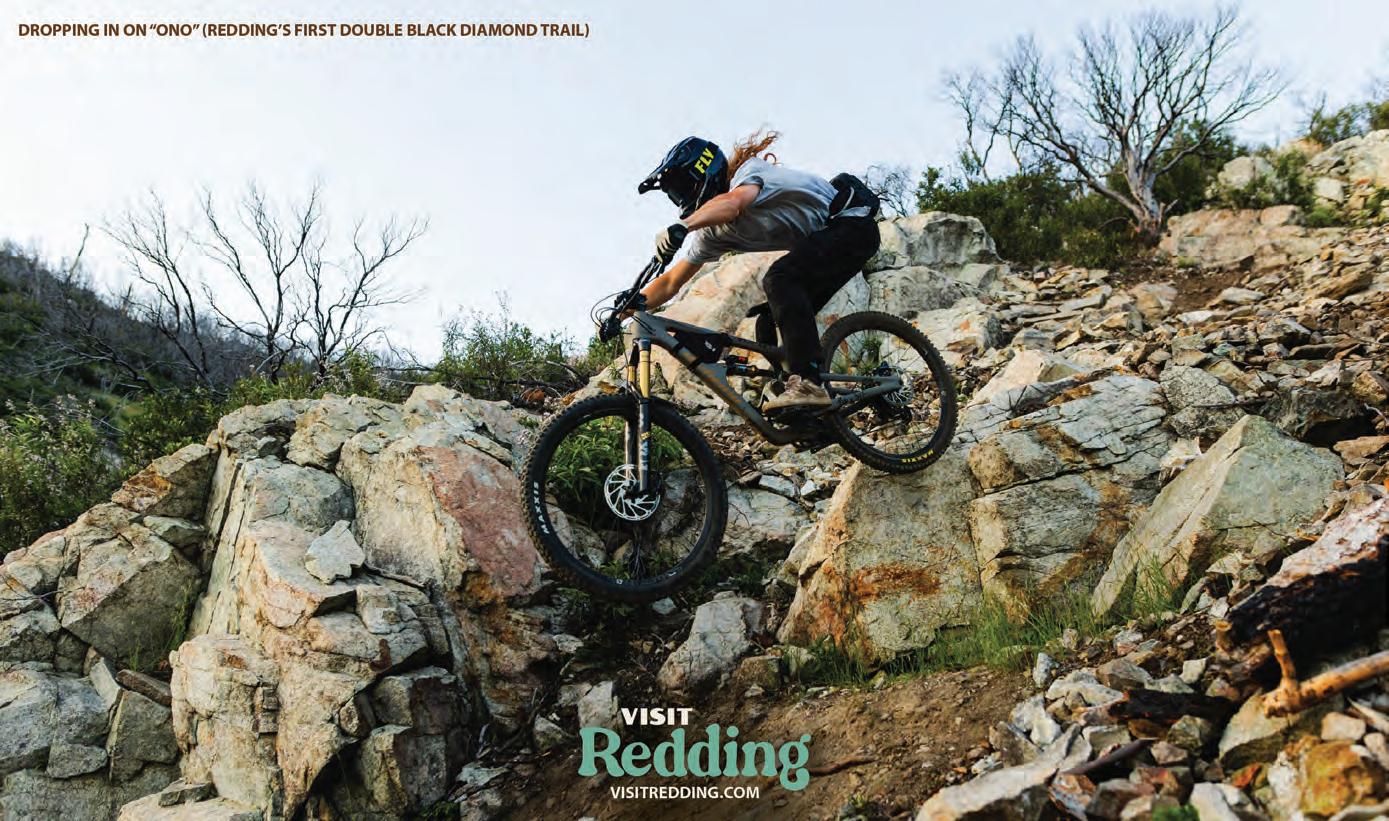
mountain biking with a modern twist. If you like pedaling ribbons of singletrack for hours, you really can’t go wrong. Climb Elevator, then wrap around Mule Mountain on Boheh Sas to get the legs warmed up. Don’t miss the newer downhill K’ulu:l or the classic Snail Trail for a satisfying finish to the day.
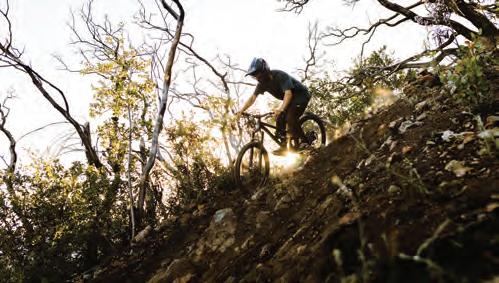
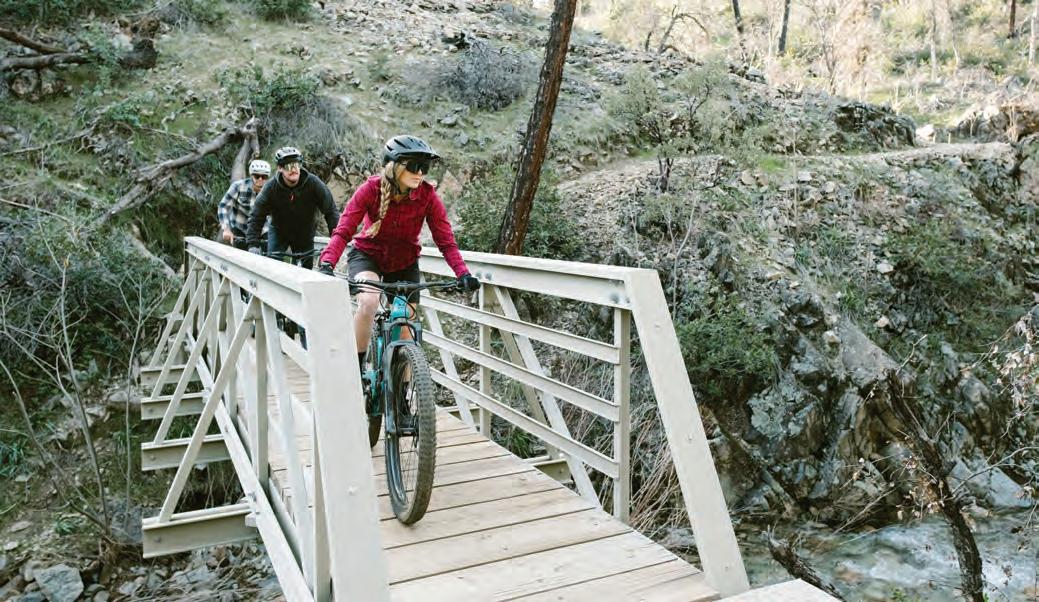
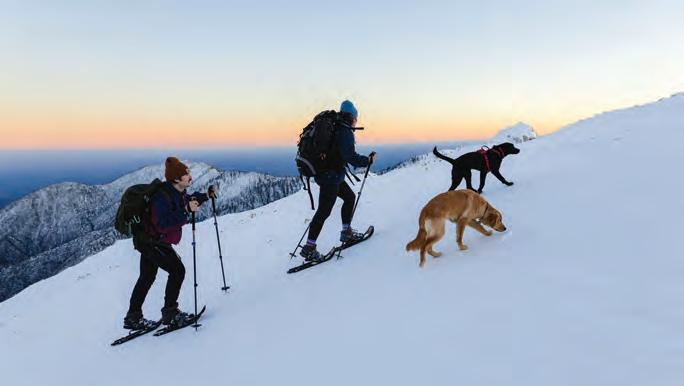
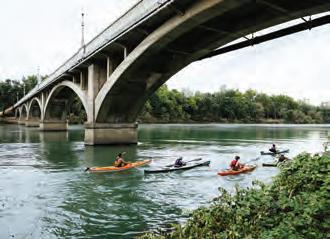
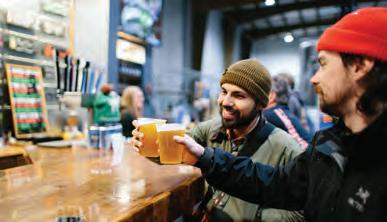
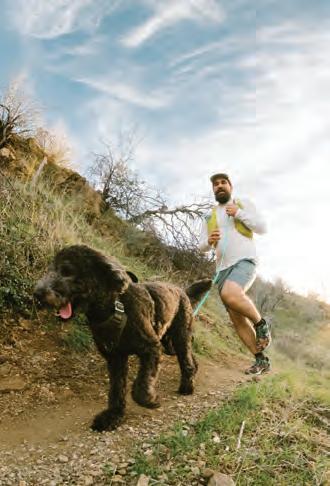
1. . Opposite page: Riders on Trail 58 enjoying Redding’s winter singletrack (Brent Van Auken).This page, clockwise from top: Snowshoers make their way up Shasta Bally in Whiskeytown National Recreation Area (Avery Bliss); Winter miles on the Salt Creek Trail near Redding (Brent Van Auken); Friends share après-adventure pints at Fall River Brewing Co. (Brent Van Auken); Paddlers during the Lake Redding Regatta (Avery Bliss). All photos courtesy of Visit Redding.
Back in town, trade knobs for running shoes and explore the 17-plus miles of the Sacramento River Trail, starting at the world-renowned Sundial Bridge. Walk, run, or spin the loop by bike, taking in public art installations and river views along the way. Yes, you can kayak or SUP this stretch of the Sacramento, too — just be sure to check flows and conditions ahead of time or connect with a local outfitter before putting in.
THE BEER
After all that earning, Redding’s beer scene rises to the occasion. Local riders with the Redding Trail Alliance quickly pointed me to the place to start: Westside Tap & Cork in the downtown core. The tap list is tightly curated, the
wine list equally thoughtful, and the atmosphere genuinely welcoming. When I visited, there was no pretense — just good beer, satisfying pub fare, and a true community hub with live music, book discussions, and creative events on the calendar. Put this one at the top of your Redding list.
Redding also boasts several hometown breweries. Fall River Brewing Co. is the best-known name, pouring at two locations. If it’s on draft, don’t pass up the Irish Coffee Cream Stout — silky, flavorful, and made for cool winter evenings.
Also in town, Woody’s Brewing Company keeps things laid-back and local. In winter, look for their Pray for Powder American Porter, a fitting toast to storm days in the mountains.
Rounding things out, Final Draft Brewing Company leans eclectic, with everything from sours to big-ABV stouts alongside classic styles. They serve wine as well, and their weekend brunch comes with both traditional mimosas and cheeky beermosas.
In Redding, the formula is simple: ride, run, hike, ski, or paddle until your legs are pleasantly spent — then pull up a chair, raise a glass, and savor the taste of what you’ve earned.
Photo: Gibson Pictures
The Gift of the Ancestors
How forgotten recordings helped shape a living Chumash museum in Santa Ynez
By Leonie Sherman
All the places we hike, bike, climb and ski are Native land. The dominant narrative relegates Natives to people of the past, sometimes noble, sometimes primitive, but always savage. The Santa Ynez Chumash Museum and Cultural Center aims to change that by sharing Chumash history, ceremonies, and songs from a Native perspective. The treasure trove of material that informs much of the museum’s content was found in a dusty basement after languishing unused for almost a century.
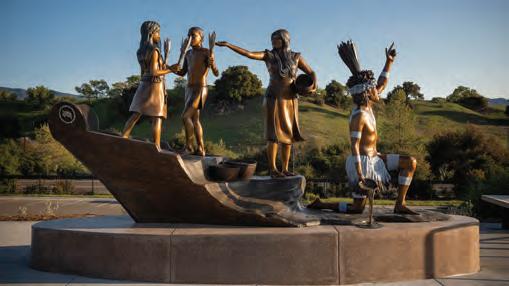
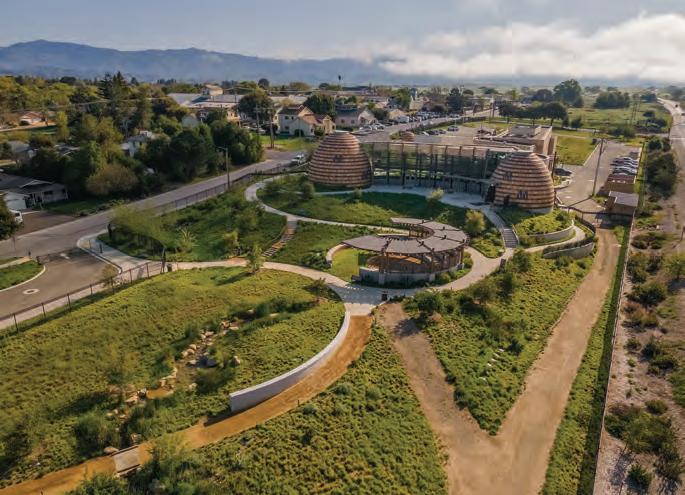
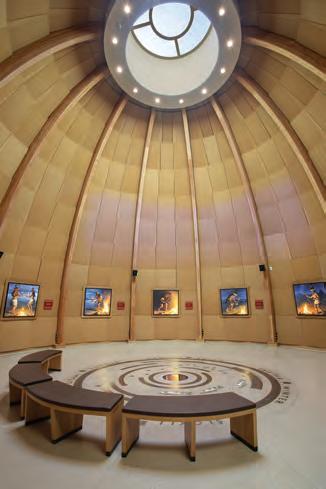
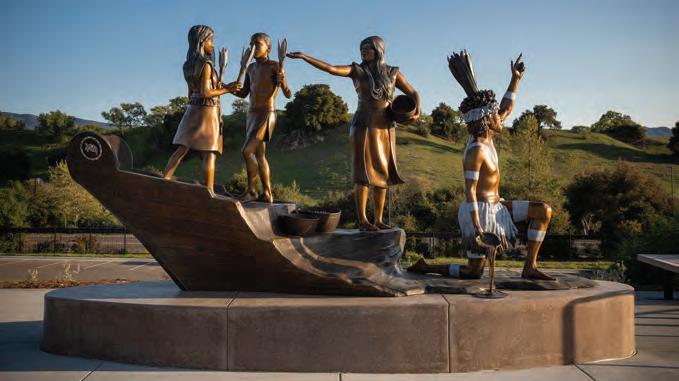
The museum, which opened to the public in May 2025, sits near the intersections of Highways 154 and 246, a 40-minute drive from downtown Santa Barbara. An enormous bronze sculpture called Keeping Our Culture Alive greets visitors. The entry hall to the 14,000-square- foot facility features a digital sound and light show called Our Land Has A Voice, which is projected onto the high rounded ceilings. The museum itself contains 24,000 artifacts from various historical periods, divided into carefully curated exhibits. Surrounding the museum is a 6.9-acre park where meandering paths guide visitors past traditional dwellings, over 11,000 native plants, a burbling creek, and a workshop where an ocean-going tomol is under construction.
The displays blend high-tech digital immersive experiences with careful historical explanations and stunning collections of ancient and modern artifacts. “Our museum aims to tell the history of our people and our past in order to demonstrate our connection with the present,” explains Kathleen Marshall, Museum Board Chairwoman for the Santa Ynez Chumash Museum and Cultural Center. “We still carry with us all the trauma and anger, all the joy and triumph. We are still singing our songs, doing our ceremonies, performing our rituals. We want visitors to understand that our culture is still very alive.”
Though the museum is beautiful, much of the truth it depicts is ugly. “We wanted to showcase the struggles our people have been through,” explains Hannah Lent, Program Assistant for the Santa Ynez Band of Chumash Indians’
Culture Department. “They tried to get rid of us and kill us, literally.”
The museum provides an unflinching account of Chumash history from pre-contact to the present. Firsthand sources explain the mission era of enslavement, the ranching era where native food sources were destroyed, and the forced boarding school era, which attempted to eradicate Native culture and continued into the 1980s.
“We are able to be here right now, stewarding this museum and the blooming of our culture because our ancestors decided to live, they fought to survive,” says Lent. “Our ancestors were literally forced to choose between living or knowing their songs and heritage. Today we don’t need to make that decision. We created this cultural center to rejoice and uplift and renew ourselves. It’s a good time to be an Indian.”
This
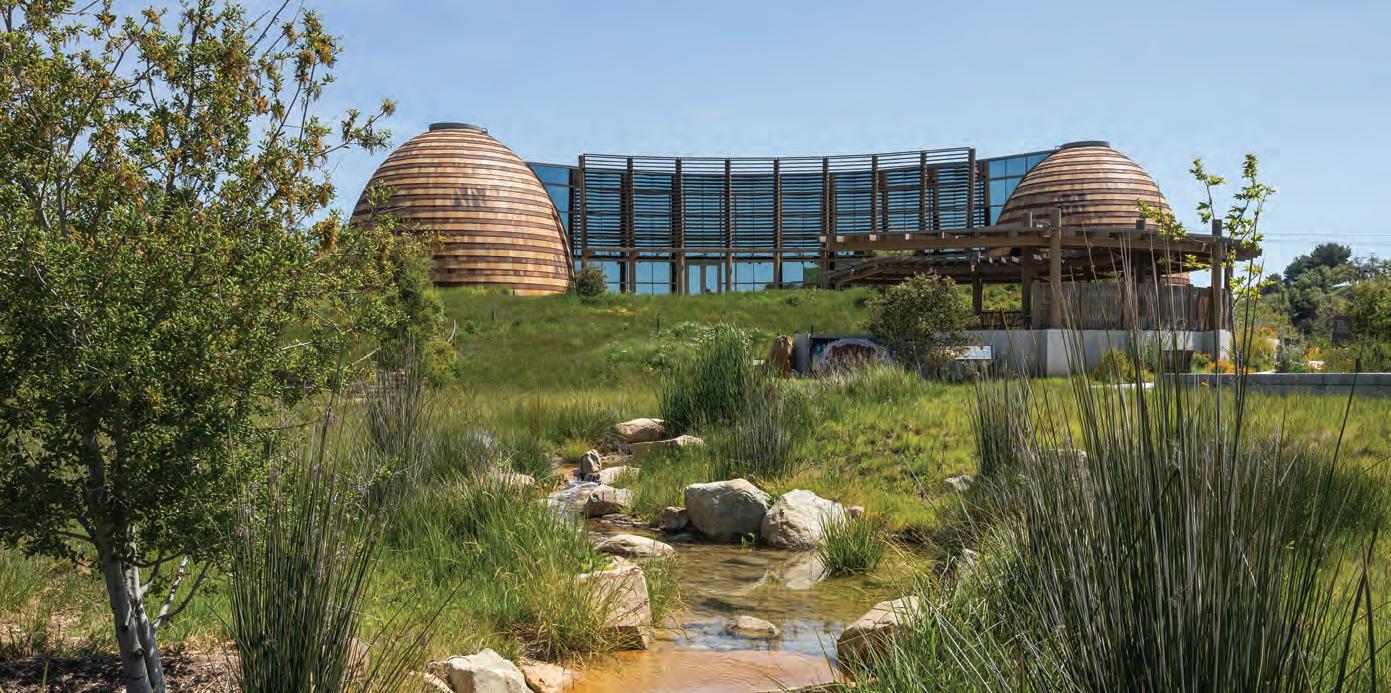
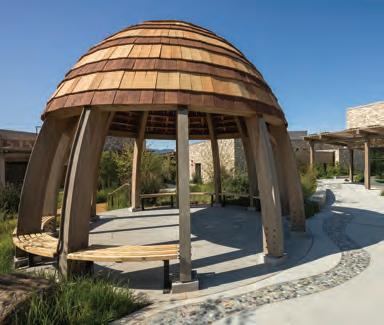
Chumash Museum and Cultural Center, including the rounded earth-inspired architecture and native landscape plantings.
The bulk of the museum celebrates traditional Chumash songs, stories, and beliefs, with interactive exhibits to teach the Chumash language. The location and customs of various villages are shown through interactive exhibits and artwork. Intricate baskets and tools are on display. Contemporary classes, powwows, and cultural efforts are lovingly explained in colorful interpretive panels.
page: Exterior views of the Santa Ynez
This page, clockwise from top left: Aerial view of the Santa Ynez Chumash Museum and Cultural Center; Interior of the Welcome Gallery; Eight Santa Ynez Chumash baskets, showcasing a portion of the tribe’s collection of more than 24,000 historically significant cultural items at the museum; A fishing line with abalone fishhooks and a stone weight; Keeping Our Culture Alive statue greets visitors to the museum.
All of this is funded by the Santa Ynez Band of Chumash Indians. Ever since their primary business, the Chumash Casino Resort, began as a bingo hall in the late 1980s, the band has funneled money into community and land preservation efforts throughout Santa Barbara County. Over 20 years ago efforts to create a cultural center ramped up, and today an amazing facility sits on the 99 acres originally ceded to the Chumash Tribe.
“I feel really proud of this museum because our story is being told by us and it’s about time,” says Lent’s grandmother, Antonia Flores, a Museum Board Member and Chairwoman of the Elders Committee. “We are letting the valley and the world know we exist, we are still here and we are going to stay. This museum represents not just our ancestors, but our children, their children; it’s going to go on and on.”
Representing the ancestors involved speaking with currently enrolled tribal members and even listening to ones
who are no longer alive. “We asked elders about their experiences, what they saw, what they wanted to share,” explains Marshall. “We let our elders guide the way.”
One of the elders who guided the way was their collective grandmother, Maria Solares. A repository of Chumash customs and culture, Solares died in 1923, but her wealth of knowledge lived on in 13 reels collected by Smithsonian ethnographer John Peabody Harrington, who lived with her from 1912-1914.
“Solares told him [Harrington] the stories, our religion, our customs and what she knew, which was taught to her by her uncle Ignacio Talinwit,” explains Lent. “She was the last one to hold all those songs and stories.”
Much of the museum is based on Solares’ knowledge. “Honestly she is our savior,” admits Flores. But that salvation followed a long and winding path. Harrington took his notes in code and jealously guarded his collections. “All those guys were competing with
“We are letting the valley and the world know we exist, we are still here and we are going to stay. This museum represents not just our ancestors, but our children, their children, it’s going to go on and on.”
Antonia
Flores,
Museum Board Member and Chairwoman of the Elders Committee
each other for our Native knowledge,” says Lent. “We were a commodity, a business to them.”
Because Harrington’s notes were in code, and the reels were in Chumash, the scope of what they contained was not apparent until a linguistics student named Richard Applegate began investigating. When Applegate decided to write his dissertation on an Indigenous language his professor led him to a UC Berkeley basement filled with recordings and let him choose. He happened to pick Solares’ reels. “He decoded Harrington’s notes, and taught himself Chumash,” explains Marshall. “His dissertation was basically a very technical dictionary of the Chumash language.”
The Chumash Tribe hired Applegate to teach them how to speak their own language; the last fluent native speaker died in 1965. Applegate helped them understand not just words and grammar but the spiritual intent behind sentence structure. Marshall was one of his original students; now there are five lead language teachers among the Samala Chumash. “When Dr. Applegate came into our lives, our elders knew how important that was for us,” explains Marshall. “He elevated us, he helped us understand the magnitude of the gift our grandmother left for us.”
Once they learned the language, they were able to understand those 13 reels, which turned out to be the key
to learning about their own heritage. “We didn’t even know the name of our tribe,” explains Marshall with a heavy sigh. “Everyone called us Ynezeno, after the mission we were associated with. Solares said ‘No, we are called the Samala people.’“
“She gave us so much,” explains Marshall. “I really believe she knew all the work of learning from her uncle and sharing with the Smithsonian anthropologist was going to save who we are.”
The museum that rests on Solares’ knowledge is a gift for Natives and nonNatives alike. “We are open for school tours. Yes, the public learns our story, but I’m more excited about our little Chumash kids who get to walk into this museum and be proud of who they are,” explains Lent. “They get to share it with their friends and teachers. I’m excited to see where it goes and how things shift in the next 20 years.”
The museum and accompanying cultural revival provide direction, meaning and purpose beyond the small band they represent. “I get so happy when I’m wearing my badge at the grocery store and someone says ‘oh you work there, it’s so beautiful,’” says Lent. “I’m excited about the future for our people and the people of the valley. I hope this museum inspires other tribes to build their own museums and take their narratives into their own hands.”
IT’S THE WATER
Exploring the Amargosa River Basin
By Anthea Raymond
Wedged between Death Valley National Park and Mojave National Preserve, the Amargosa Basin hosts a network of tiny oases — perennial pools bordered by grasses and, in places, willows and cottonwoods. Thermal waters keep rare birds, plants, and animals alive through 120-degree summers and icy winters. Those same springs attract outdoor explorers and “soakers” who come for hot water, big skies, and quiet in the cooler months.
Today, researchers, conservationists, and residents are working to protect and restore the area, and to bring its patchwork of public and private lands under a more coordinated approach.
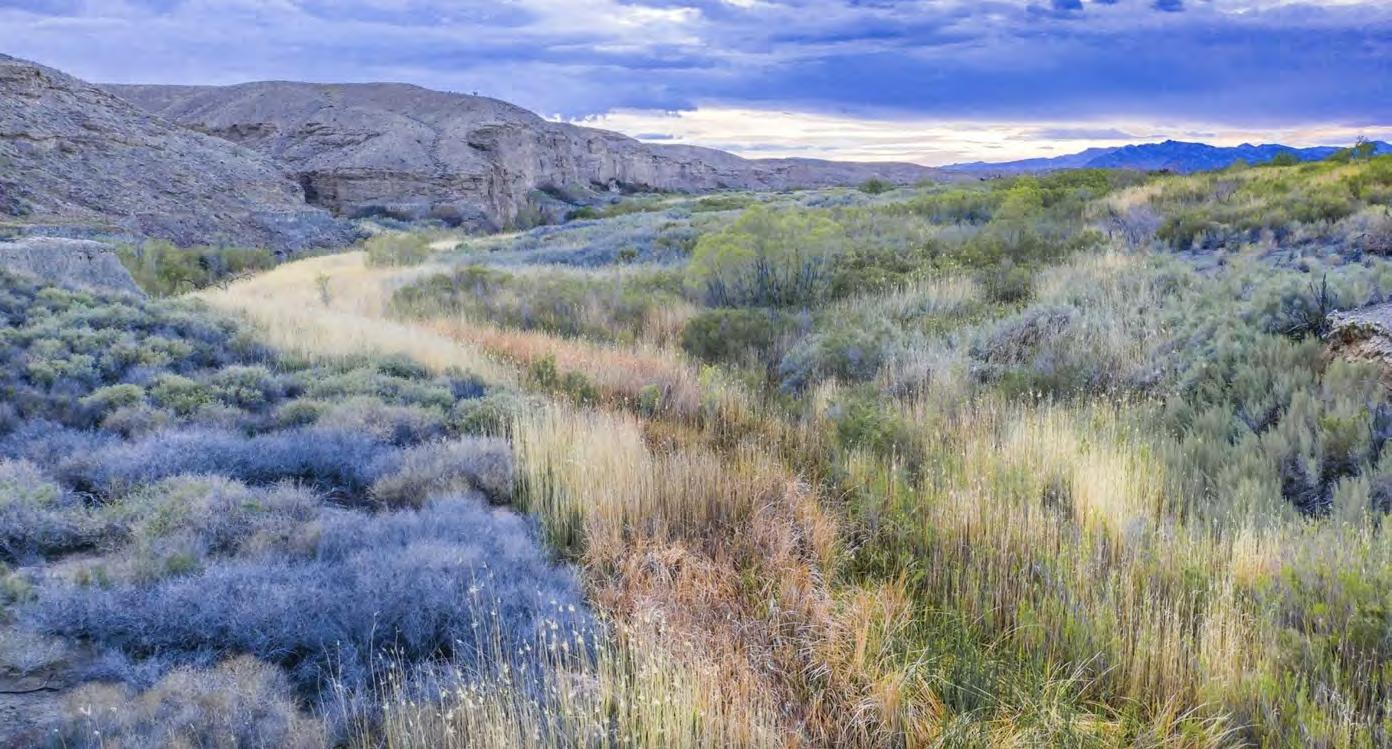
Running through the basin is the Amargosa River, which lies mostly underground and flows on the surface only when it rains. Near the former mining towns of Shoshone and Tecopa, water bubbles to or close to the surface year-round, feeding wetlands, seeps, and springs.
“The area is like an archipelago, where the ‘ocean’ is the dry desert uplands and the springs are like islands,” says Sophie Parker, Director of Science at The Nature
Conservancy. “These oases support life that can only be found on those islands.”
Each “island” of habitat shelters rare species, many of them found nowhere else on Earth.
Most famously, the basin harbors the endemic Amargosa vole, a marsh-dwelling rodent once thought extinct. The federally protected vole is making a comeback in marshland outside Tecopa and in Shoshone, where it was reintroduced by University of California, Davis researchers.
The basin is also home to desert pupfish, the small, minnow-like fish best known from Death Valley. In Shoshone, pupfish ponds behind the RV park help propagate them as part
of ongoing wetland restoration.
Friends of the Amargosa Basin, a local nonprofit, works with scientists, landowners, and visitors to support this network of springs and wetlands and to raise awareness of the basin’s unique species, helping knit together the region’s scattered habitats into a more recognizable whole.
SHOSHONE WETLANDS, TRAILS, AND RESTORATION
Shoshone’s main drag and over a thousand acres around it are owned by one person, Susan Sorrells. She inherited the land from her family. Instead of focusing solely on Shoshone’s mining history, she has restored wetlands and created public trails that bring visitors to the river’s edge.
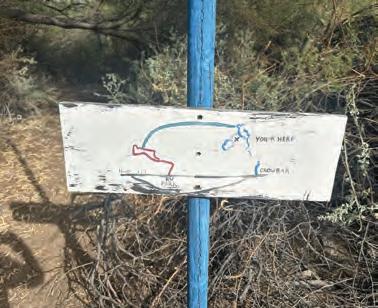
Three short trails wind along the Amargosa River on her property. One begins behind the Shoshone Museum, which houses fossils, geological and historical materials, and an eclectic book collection. Out back, a single blue pole planted in the brush marks the start of a route to the river. A series of poles leads to a plank bridge. On many days the river there is a slow trickle far below the banks, but the steep cut and exposed layers hint at its power during floods; in 2023, high water washed away a lane of the nearby highway.
The restored wetlands and ponds in Shoshone, including the pupfish ponds, are part of Sorrells’ effort to orient the town toward eco-
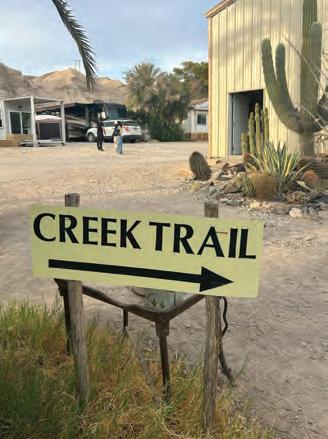
Opposite page: Wild and Scenic section of the Amargosa River, where water flows close to the surface — sometimes above ground, sometimes just beneath it — feeding marsh and meadow habitat (Chip Carroon/The Nature Conservancy); This page, clockwise from left: The area around Tecopa’s Borehole Spring is looking lush again after last winter’s fire, which burned nine acres of bulrush and other wetland plants (Anthea Raymond); Handmade signage helps visitors find the river in Shoshone (Anthea Raymond);The Creek Trail at China Ranch Date Farm loops down to the wettest part of the Amargosa River and back (Anthea Raymond).
tourism instead of mining. Signs of the mining era remain — especially in Dublin Canyon just outside the village — but the trails, wetlands, and museum now share equal billing.
TECOPA HOT SPRINGS AND A FRAGILE MARSH
Just down the road from Shoshone, Tecopa is built around its hot springs. The area’s thermal waters have been harnessed into a cluster of small spas and campgrounds that draw soakers from California and Nevada.
At Tecopa Palms Therapeutic Hot Springs Resort, Ray Reed and his wife Yvonne run private 104-degree soaking tubs with no added chemicals. Fresh mineral water constantly flows through the baths.
In return, Reed asks for strict cleanliness and multiple showers from patrons. That’s partly out of respect for other soakers, and partly because his runoff helps replenish nearby marsh used by the Amargosa vole and many bird species. What goes into the tubs eventually reaches the habitat.
Borehole Spring, a favorite mudbathing spot, sits next to a section of
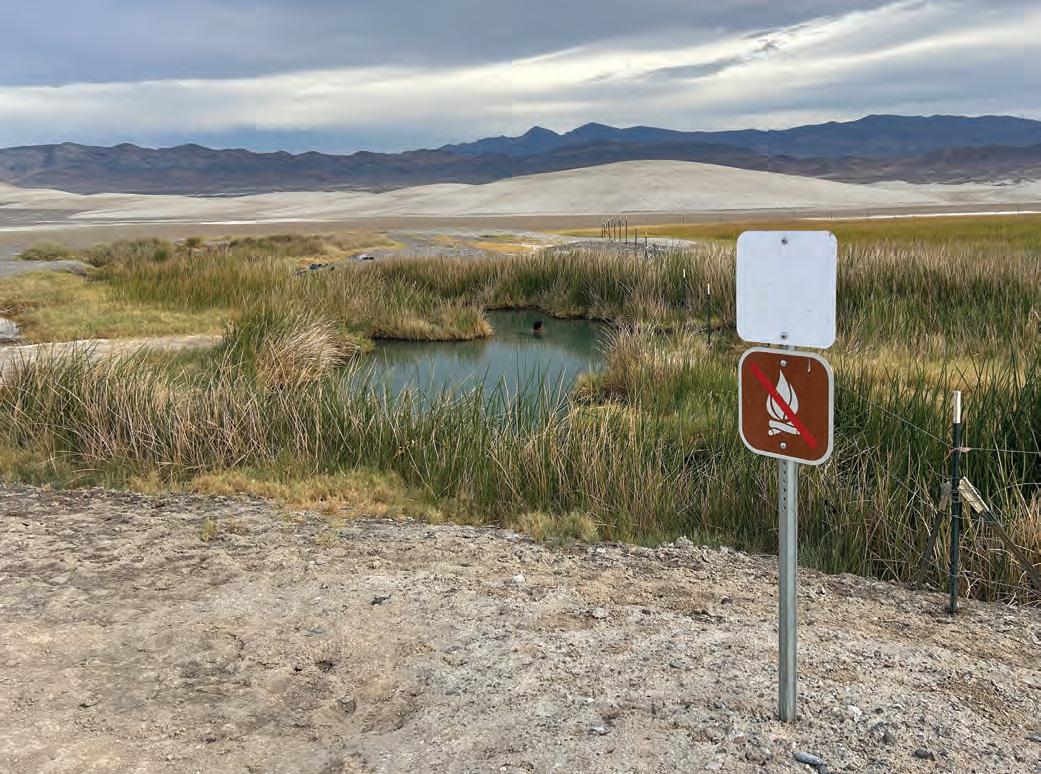
marsh on public land. The Borehole itself is man-made — the accidental byproduct of a failed attempt to drill a mine that tapped into the hot aquifer instead. That unexpected overflow created the warm pool that people soak in today. What began as an industrial accident is now a popular soaking site, but its proximity to delicate marsh makes it especially vulnerable to trampling, erosion, and fire.
In February, a nine-acre fire broke out near the spring, leaving a swath of blackened turf. The all-volunteer Southern Inyo Fire Protection District stopped the blaze at the road and kept it out of town. There are no professional emergency services in the region, making a recent fundraiser for the fire district especially meaningful. Local business owners pitch in where they can; Dan Leseberg, co-owner and head brewer of the family-owned Death Valley Brewing, also serves his community as a volunteer EMT. Today, bulrushes — tall, reed-like marsh plants — have returned around the Borehole, and bathers are back in the water. Multiple signs along the approach trail now
warn “Area closed for restoration.” Invasive plants, trampling, and erosion are ongoing concerns. For visitors, the message is simple: stay on signed routes, respect closures, and keep soaps and products out of the springs.
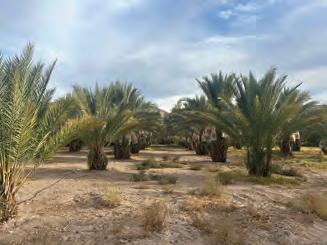
CHINA RANCH AND THE CANYON South of Tecopa, China Ranch Date Farm sits in a slot of green at the edge of Amargosa Canyon. The privately owned working farm grows at least eight varieties of heritage dates and draws visitors with its palms, baked goods, and trails. The ranch lies over at least five underground springs, making it a true oasis.
From the trailhead near the ranch, hikers can follow Willow Creek into the heart of the Amargosa’s Wild and Scenic section. A roughly three-mile loop leads through canyon walls, alongside willows and reeds, and in wetter periods to a small waterfall. More than 200 bird species are known to use this stretch of water.
The Nature Conservancy holds a conservation easement at China Ranch and is working with partners to better understand and protect the area’s ecology. “We’re setting
“The area is like an archipelago, where the ocean is the desert and the springs are like islands. These oases support life that can only be found on that island.”
Sophie Parker, Director of Science at The Nature Conservancy
a baseline to see what’s there — in the air, in the water, and in the soil,” Parker says.
FOLLOWING THE THREAD OF WATER
The Amargosa Basin doesn’t announce itself the way some western landscapes do. Its drama is quieter: a vole slipping through cattails, a pupfish flashing in shallow water, a trickle of river that can turn into a destructive flood overnight. For visitors, following the thread of water — spring to marsh to canyon — means stepping into a landscape where every pool matters. For the people who live and work here, it
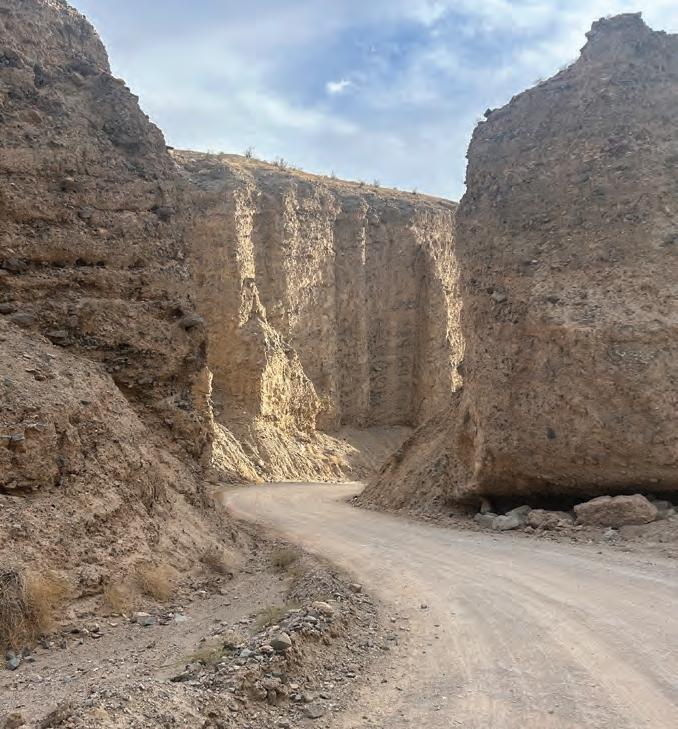
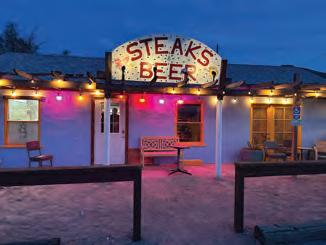
This page, clockwise from top: This steep mining canyon opens onto the China Ranch Date Farm oasis, first developed to provide food for miners (Anthea Raymond); Younger restaurateurs are bringing their expertise to Tecopa, including Eric Scott, who crafts farm-to-table prix fixe menus at his four-table restaurant Steaks and Beer (Anthea Raymond); China Ranch’s famous date shakes are made from fruit farmed on the oasis.
means balancing soaking, trails, and small-town revival with the needs of wildlife and the underground river
COMMUNITY & CONSERVATION
>> Vole Fest
that ties everything together. In the end, it really is the water that holds this place.
Each March, the nonprofit Friends of the Amargosa Basin (FAB) hosts “Vole Fest,” a community celebration of the endemic Amargosa vole. The mix of science and smalltown fun includes habitat tours and a trivia night at Tecopa’s Death Valley Brewing. The 2026 event is scheduled for March 21, with FAB executive director Cameron Mayer, who studied geography at California State University Long Beach, hoping to again serve as emcee of the trivia night. “It’s a very popular event,” Mayer says. “We challenge people’s knowledge of the basin’s history, wildlife, and geology.” For updates on Vole Fest events and schedules, visit friendsoftheamargosabasin.org
>> Toward a National Monument
Mayer is also helping lead the effort to establish an Amargosa Basin National Monument. In early November, Inyo County supervisors voted unanimously to support the proposal. Monument status, he says, would streamline management of lands currently governed by piecemeal conservation designations. Mayer works closely with five Native American tribes with ties to the region, as well as local landowners, to build a shared vision for the basin’s future.
Resort Roundup
A roundup of updates for regional ski resorts
By Marissa Neely
Bear Valley
From big-name destinations to smaller local hills, this guide offers a quick snapshot of our region’s resorts for the coming winter. Every mountain has its own character, and rediscovering them each year is part of what makes the Sierra so special. Use this guide as a spark—an invitation to get outside, explore, and maybe add a new resort to your rotation this season.
BADGER PASS SKI AREA
5 LIFTS • 800' VERTICAL • 90 ACRES
Yosemite National Park
BEST VIEW Top of Eagle Lift // ICONIC RUN Eagle // DON'T MISS Enjoying a drink or meal on the sun deck of the Day Lodge // NEWS & NOTES Badger Pass is one of only three lift-served ski areas in US national parks and delivers a welcoming, familyfriendly vibe that’s perfect for beginners. travelyosemite.com/winter/badger-pass-ski-area
BEAR VALLEY RESORT
9 LIFTS • 1,900' VERTICAL • 1,680 ACRES
Bear Valley
BEST VIEW Top of Monte Wolfe and National // ICONIC RUN Grizzly Bowl // DON’T MISS Bear Valley Ticket Packs // NEWS & NOTES Improved shuttle service, new events, refreshed lodge areas, and enhanced terrain-park features. bearvalley.com
BEAR MOUNTAIN
9 LIFTS • 1,665' VERTICAL • 198 ACRES
Big Bear Lake
BEST VIEW Top of Chair 8 // ICONIC RUN
Geronimo // DON’T MISS A lap through the Red Bull Plaza // NEWS & NOTES // Signature events like Bear Bowl (Feb. 7), KROQ Storms Bear Mountain (Feb. 28), and Bear Break (April 4). bigbearmountainresort.com
BOREAL MOUNTAIN RESORT
7 LIFTS • 500' VERTICAL • 380 ACRES
Soda Springs
BEST VIEW Top of Accelerator chair // ICONIC RUN Sunset Boulevard // DON'T MISS Night skiing under the lights and a stop at Woodward Tahoe // NEWS & NOTES Play Forever Fridays is back this season! Once a month, we offer $35 lift tickets for everyone, and $5 of each ticket goes to local non-profits. rideboreal.com
CHINA PEAK
9 LIFTS • 1679' VERTICAL • 800 ACRES Lakeshore
BEST VIEW Top of chairs 1, 2 and 5 // ICONIC RUN China Bowl // DON’T MISS Mid-mountain sun and lake-view seating at Buckhorn deck // NEWS & NOTES New Mainstream Station deck, refreshed Daylodge spaces, upgraded shuttles, a new snack shack, and weekend live music. skichinapeak.com
DIAMOND PEAK SKI RESORT
7 LIFTS • 1,840' VERTICAL • 655 ACRES Incline Village
BEST VIEW Snowflake Lodge’s midmountain deck // ICONIC RUN Crystal Ridge // DON’T MISS Explore the glade zones — nearly 500 acres of tree skiing await // NEWS & NOTES 60th-season deals — $60 lift tickets and $60 beginner lessons on select dates, plus new Google Street View trail tours. diamondpeak.com
DODGE RIDGE SKI RESORT
10 LIFTS • 1,600' VERTICAL • 862 ACRES Pinecrest
BEST VIEW Separator // ICONIC RUN Creekside // DON’T MISS The closest snow to home and a classic mountain vibe // DON’T MISS Santa Sunday returns, plus New Year’s Eve fireworks & live music, and 75th anniversary celebrations all season long. dodgeridge.com
DONNER SKI RANCH
6 LIFTS • 800' VERTICAL • 500 ACRES Norden
BEST VIEW Top of Chair 1 ICONIC RUN
The Face // DON’T MISS The homemade pie at the Old 40 Bar and Grill — it is made fresh daily // NEWS & NOTES Still family-owned with some of Tahoe’s most affordable lift tickets and a laid-back, retro lodge vibe. donnerskiranch.com
HEAVENLY
26 LIFTS • 3,500' VERTICAL • 4,800 ACRES
South Lake Tahoe / Stateline NV
BEST VIEW California Trail // ICONIC RUN Ridge Run // DON’T MISS Après at Tamarack Lodge // NEWS & NOTES 70th Anniversary Party on Dec 20. skiheavenly.com
HOMEWOOD
7 LIFTS • 1,650' VERTICAL • 1,260 ACRES Homewood
BEST VIEW Rainbow Ridge // ICONIC RUN Bechtle’s Bonanza and Quail Face // DON’T MISS The view at mid-mountain Big Blue View Bar // NEWS & NOTES Reopening this winter with upgraded grooming and snowmaking equipment and progress on a new Doppelmayr gondola launching the resort’s redevelopment. skihomewood.com
Dodge Ridge
JUNE MOUNTAIN
7 LIFTS • 2,590' VERTICAL • 1,500 ACRES
June Lake
BEST VIEW From the Chalet, top of chair J1 // ICONIC RUN Matterhorn // DON’T MISS Family vibes — as one of the most kid friendly resorts in North America, don’t leave the little ones at home // NEWS & NOTES Often referred to as America’s Switzerland, June Mountain’s jaw dropping views and uncrowded slopes never disappoint. junemountain.com
KIRKWOOD
13 LIFTS • 2,000' VERTICAL • 2,300 ACRES
Kirkwood
BEST VIEW Wagon Wheel Ridge // ICONIC RUN The Wall // DON’T MISS Grab a drink at the Wall Bar // NEWS & NOTES Fresh updates at Timber Creek Base Lodge and a full slate of returning signature events and freeride comps. kirkwood.com
Featuring 1,500 acres of spacious slopes and plenty of beginner terrain for the whole family, June Mountain’s easy-going atmosphere and breathtaking views make for the perfect Eastern Sierra ski day.
LEE CANYON
3 LIFTS • 860' VERTICAL • 445 ACRES
Las Vegas, NV
BEST VIEW Top of Bluebird Chair // ICONIC RUN Sherwood // DON’T MISS The terrain park, now with a moveable rope tow for quick laps // NEWS & NOTES Lift tickets from just $7 online, plus resort-credit perks and expanded terrain-park access leecanyonlv.com
BEST VIEW Summit views of Ritter, Banner, and the Minarets // ICONIC RUN Cornice Bowl // DON’T MISS The Melthouse for tasty on-hill eats with a view and the Unbound Terrain Parks // NEWS & NOTES $9M in upgrades including expanded snowmaking, new ski-patrol infrastructure, added Woolly’s Adventure Summit features, and returning events like Arc’teryx Academy and the US Revolution Tour.He mammothmountain.com
MOUNTAIN HIGH
14 LIFTS • 1,600' VERTICAL • 290 ACRES
Wrightwood, CA
BEST VIEW Discovery Chair’s summit // ICONIC RUN Gold Rush // DON’T MISS Night skiing and the vibrant terrain-park
// NEWS & NOTES $500K in upgrades: expanded snowmaking, improved grooming, the return of Discovery Chair, and the new First Turn program. mthigh.com
MT. BALDY
4 LIFTS • 2,200' VERTICAL • 600 ACRES Mount Baldy, CA
BEST VIEW Summit ridge from the top of Lift 3 // ICONIC RUN The Face // DON’T MISS Expert glades, big-mountain exposure and a historic feel just north of LA // NEWS & NOTES Still SoCal’s “real mountain, real close” with vintage chairs and challenging terrain.
mtbaldyresort.com
MT. ROSE SKI TAHOE
8 LIFTS • 1,800'VERTICAL • 1,200 ACRES Reno, NV
BEST VIEW Blue View off Upper Ramsey’s, overlooking Lake Tahoe // ICONIC RUN The Chutes // DON’T MISS Local beer selections at Timbers Bar and Sky Bar // NEWS & NOTES $6M in upgrades including the new 20-lane, dual-conveyor Wildslide Tubing Center and expanded snowmaking, plus returning high school and NCAA race events skirose.com
Continued on next page ...
Diamond Peak
MT. SHASTA SKI PARK
6 LIFTS • 2,034' VERTICAL • 635 ACRES
McCloud
BEST VIEW Views of Mt. Shasta from the upper mountain // ICONIC RUN Highland // DON’T MISS The Backcountry Cabins Experience, with ski-in access and a rustic overnight stay // NEWS & NOTES The Ski Park is celebrating 40 years of making lasting memories with our community.
skipark.com
NORTHSTAR CALIFORNIA
20 LIFTS • 2,280'VERTICAL • 3,170 ACRES
Truckee
BEST VIEW East Ridge // ICONIC RUN Axe Handle // DON’T MISS Timeless traditions of a mountain-top Tōst and S’mores in the Village // NEWS & NOTES New Epic Friends tickets offer 50% off lift tickets for seasonlong passholders’ guests. northstarcalifornia.com
PALISADES TAHOE
43 LIFTS • 2,850' VERTICAL • 6,000 ACRES
Olympic Valley / Alpine Meadows
BEST VIEW High Camp at the top of the Aerial Tram // ICONIC RUN KT-22’s classic fall-line steeps // DON’T MISS Après at KT Bass Bar with live DJs // NEWS & NOTES Upgraded snowmaking, easier lift access, expanded Mountaineer microtransit, new mogul clinics, and a packed slate of signature events. squawalpine.com
SIERRA-AT-TAHOE
14 LIFTS • 2,212'VERTICAL • 2,000 ACRES
Twin Bridges
BEST VIEW At the top of 360 Smokehouse BBQ // ICONIC RUN Huckleberry Canyon — Sierra’s marquee steep-and-deep terrain // DON’T MISS The “Sierra-at-Cabo” spring event series // NEWS & NOTES Two new West Bowl trails, expanded terrain park and
learning zones, avalanche dog Yuki, and weekly live music. sierraattahoe.com
SNOW SUMMIT
10 LIFTS • 1,200' VERTICAL • 240 ACRES Big Bear Lake
BEST VIEW Top of Chair 1 // ICONIC RUN Westridge // DON’T MISS Tubing and night skiing on select dates // NEWS & NOTES Hosted 1st Winter X Games in 1997; NYE Torchlight Parade returns on 12/31. bigbearmountain.com
SODA SPRINGS
5 LIFTS • 550' VERTICAL • 217 ACRES Soda Springs
BEST VIEW Summit Cabin area // ICONIC RUN The Ridge // DON’T MISS Play Forever Fridays — budget day passes and charity support once a month // NEWS & NOTES Family-friendly snow-play zone expanded, affordable day-tickets and tubing lift deals continue this season.
skisodasprings.com
SKY TAVERN SKI AREA
5 LIFTS • 700' VERTICAL • 140 ACRES Reno, NV
BEST VIEW The ridge accessed via the Sky Ridge Chair // ICONIC RUN The Ridge // DON’T MISS The legendary Jr. Ski Program, one of the oldest in the US // NEWS &
NOTES Affordable family-friendly access, strong adaptive programs, and a non-profit community focus. skytavern.com
SUGAR BOWL RESORT
12 LIFTS • 1,500'VERTICAL • 1,650 ACRES Norden
BEST VIEW Summit of Mt. Lincoln // ICONIC RUN Lake View // DON’T MISS All-new terrain parks with a full-size training facility built for progression, creativity, and style // NEWS & NOTES $100M in upgrades rolling out, including a new gondola, lodge renovations, improved snowmaking, and upgraded park features. sugarbowl.com
TAHOE DONNER DOWNHILL SKI RESORT
5 LIFTS • 600' VERTICAL • 120 ACRES Truckee
BEST VIEW Top of Eagle Rock chairlift // ICONIC RUN Mile Run // DON’T MISS The brand new ski lodge and award winning learn-to-ski programs // NEWS & NOTES New ski lodge just opened, new snowcat for pristine grooming, and expanded beginner lesson packages this season. tahoedonner.com
For the latest updates — and the best deals — visit each resort’s website before your trip.
CROSS-COUNTRY, SNOWSHOEING & SLEDDING
ASC XC TRAINING CENTER
Soda Springs
The Auburn Ski Club Training Center has expanded its nighttime terrain with new trail lighting, opening more evening laps to athletes and community skiers. ASC also continues to grow its biathlon program. asctrainingcenter.org
BEAR VALLEY ADVENTURE CO.
Bear Valley
This world-class cross country ski & snowshoe trail system just got better with stump grinding, hazard tree removal, and snowcat grooming upgrades. Plus a new snack shack near the sledding & tubing hills. bvadventures.com
GRANLIBAKKEN
Tahoe City
One of the original hills cleared for skiing and sledding at Tahoe, Granlibakken offers affordable beginner skiing and snowboarding plus one of the best sled hills around. New this season, evening sledding sessions. granlibakken.com
KINGVALE RESORT
Kingvale / Donner Summit
Kingvale serves up fast, lift-served tubing on multiple lanes plus a smaller hill for beginners. Snow-play areas and sled rentals make it an easy, low-stress option for families looking for a simple day in the snow. kingvaleresort.com
KIRKWOOD CROSS-COUNTRY
Kirkwood
Kirkwood’s XC & Snowshoe Center offers a full menu of clinics and programs, from Explore Kirkwood XC Classic to Advanced Skate and XC Downhill. Rentals available with free “Gear Talks” from instructors to help guests get dialed. kirkwood.com
NORTHSTAR CROSS-COUNTRY
Truckee
Northstar features more than 35 kilometers of groomed cross-country trails winding through quiet forest and meadows. Snowshoeing and fat biking are also popular, with rentals available on-site. northstarcalifornia.com
DISCOVER WHY TDXC HAS BEEN A FAVORITE FOR 40 YEARS
RIM NORDIC
San Bernadino Mountains
Southern California’s only dedicated, machinegroomed cross-country ski area, celebrates 35 years with $29 adult day passes, youth and military discounts, kids 10 and under ski free, and learn-to-ski packages. rimnordic.com
ROYAL GORGE
Soda Springs
North America’s largest cross-country ski area spans 6,000 acres with 92 trails for every level, plus eight warming huts tucked along the network. Recent upgrades and a new kids’ Nordic program. royalgorge.com
TAHOE DONNER XC
Truckee
Celebrating 40 years with special events like Tour de Euer, new season-long instruction for all levels, $40 learn to ski programs and a new PistenBully 400 groomer to keep the grooming sharp. Visit the rental and demo center for Tahoe’s most expansive XC ski options. tahoedonner.com/xc
TAHOE CROSS-COUNTRY
Tahoe City
Tahoe Cross-Country (Tahoe XC) is moving ahead with its new lodge project, designed as a net-zero energy building through adaptive reuse. This season, the new Glide Pass offers on-site rental access for classic and skate skis. tahoexc.org
TAMARACK CROSS-COUNTRY
Mammoth Lakes
Tamarack Cross-Country Ski Center offers more than 19 miles of groomed trails for skiing and snowshoeing, plus rentals, lessons, clinics, and family-friendly races. Guided snowshoe tours round out the experience. mammothmountain.com/xc
Tahoe Donner Cross Country Ski Center (TDXC) has spent 40 years helping skiers of all levels fall in love with cross country skiing. Join programs, lessons and clinics led by passionate PSIA-certified instructors, including former Olympians and National Champions, who make learning fun and approachable.
This season, enjoy our 40th Anniversary Lesson Package Special — $40 to Learn to Classic or Skate Ski, including a trail pass, rental equipment and a 90-minute group lesson on select days
Most of these resorts are part of Ski California, a nonprofit trade association representing 36 ski areas in California and Nevada. Learn more about Ski California at skicalifornia.org
Whether you’re brand new or looking to refine your technique, TDXC offers the perfect blend of learning, community and world-class trails.
LEARN MORE AND PURCHASE YOUR LESSON PACKAGE OR PROGRAM TODAY AT TAHOEDONNER.COM/XC
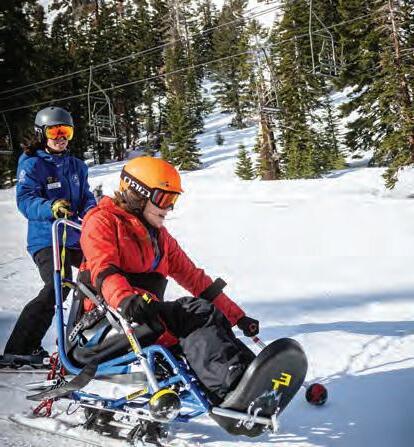
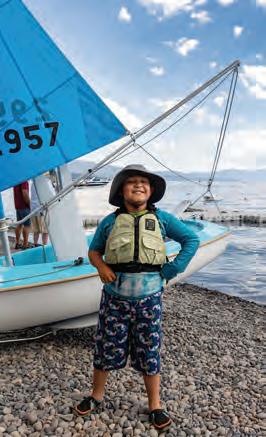
ACHIEVE TAHOE offers year-round adaptive, inclusive recreation programs designed to serve people with intellectual, sensory, and physical disabilities. We strive to serve all ages and all disabilities in their individual quest to build health, confidence, and independence through outdoor recreation. Learn more at AchieveTahoe.org or contact us today at 530.581.4161 or info@achievetahoe.org
Tahoe Donner XC
Tahoe Backcountry Alliance
Fighting for fair winter access to public lands
Story by Kurt Gensheimer • Photos by Anthony Cupaiuolo
When you ask avid backcountry skiers and splitboarders what the number one issue facing the burgeoning sport is, many would guess climate change — and they wouldn’t be wrong. But at least in the Lake Tahoe region, the most immediate challenge is winter public access. Specifically, the issue of snow plowing and trailhead parking.
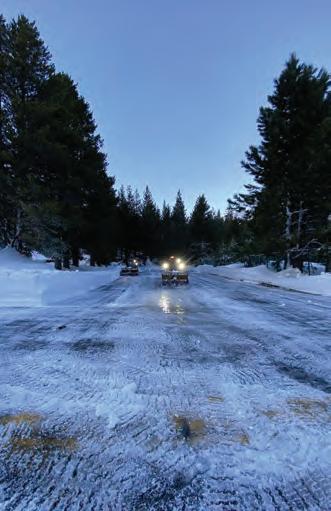
Since COVID, backcountry skiing has exploded in popularity, jamming up backcountry access parking lots across the Lake Tahoe Basin, Donner Summit and Mount Rose on weekend pow days. Compounding the problem, budget shortfalls and staffing challenges in agencies tasked with plowing snow have recently left trailhead parking uncleared after a big storm. The result creates dangerous situations, with inexperienced backcountry users parking over the white line in busy roadways.
Tahoe Backcountry Alliance (TBA) was founded in 2016 by Rich Meyer and David Reichel when they discovered the
California Department of Transportation (Caltrans) was dismantling the parking areas at Jake’s Peak on the West Shore of Lake Tahoe, one of the most popular places to backcountry ski in the Lake Tahoe Basin. Meyer and Reichel realized they needed to organize a voice to represent the backcountry skiing community.
Three years ago, avid splitboarder Anthony Cupaiuolo, a Meyers-based photographer, videographer and owner of First Tracks Productions, stepped into the role of TBA executive director. Thanks to his years working in the local community producing films and photography showcasing Lake Tahoe and supporting nonprofits
including Tahoe Area Mountain Biking Association (TAMBA), Tahoe Rim Trail Association, National Forest Foundation, and the Boys & Girls Club of Lake Tahoe, Cupaiuolo had already developed important relationships with local leaders in the outdoor space, helping further establish TBA as a valued partner in representing the community’s public access needs.
One of the challenges TBA faces is the multiple overlaying agencies involved with winter backcountry access. To the public, accessing a parking lot and getting out on the snow seems straightforward, but for TBA, simply getting the parking lot plowed during a storm requires lots of behind-
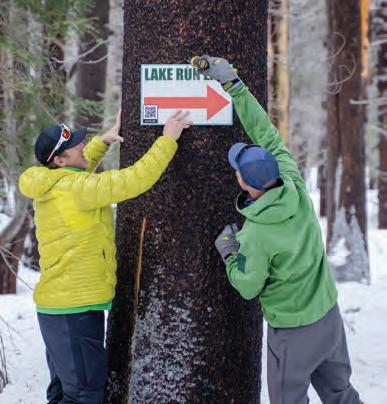
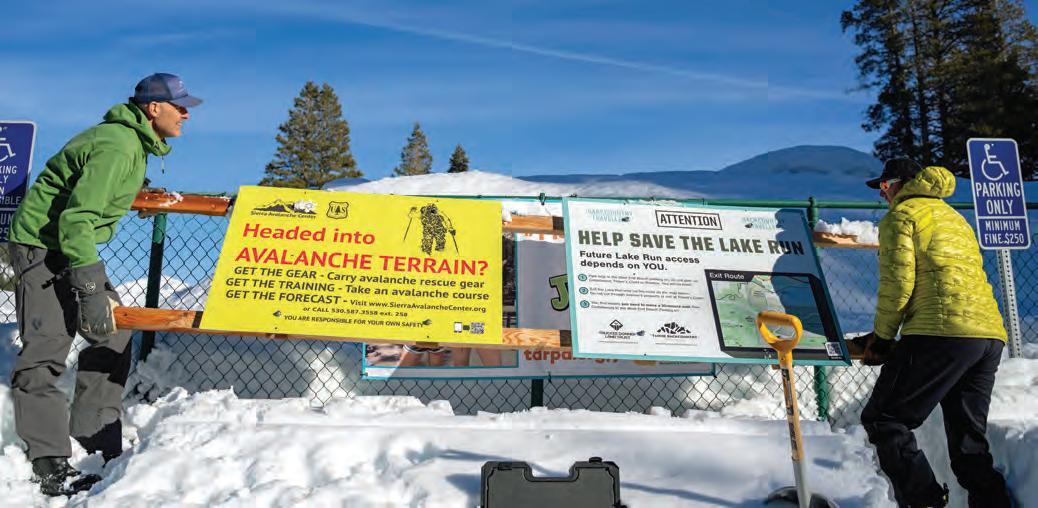
This page, top to bottom: Heading out to drop the Lake Run, finishing at Tahoe Backcountry Alliance’s (TBA) managed lot at West End Beach; TBA board members installing winter signage for the Lake Run off Donner Summit. Opposite page: TBA Board Member Justin Peverini deep in the white room on Mt. Tallac.
the-scenes work, coordinating with California State Parks, the US Forest Service, Caltrans, and a handful of counties surrounding the Lake Tahoe Basin.
Another challenge affecting winter backcountry access is the increasing cost of living in the region. Caltrans District 3 has a substation in Tahoe City, and traditionally, the hardworking crew that has kept Highway 89 on the West Shore cleared for decades is experiencing a generational change, with veteran plow drivers retiring. These retired workers have lived in Tahoe for years and most already own their homes, but new plow drivers can’t afford to live where they work. As a result, Caltrans must recruit new drivers who live outside the area, and finding them has been challenging. When plow drivers don’t live locally, it negatively impacts locals.
“This is beyond just a Caltrans issue; it’s a funding issue,” said Cupaiuolo. “California’s Natural Resources Department objective includes public access to public lands, and plowing or the lack thereof is an access issue. It takes a while for people who work in state government to think this way, especially those who live and work in
a new dorm for Caltrans workers in the Tahoe City area who get called up during big storms.”
Another impact that many don’t realize is that a lack of public access to public land can have a negative effect on the winter recreation economy in Lake Tahoe.
business,” said Dave Polivy, co-owner of Tahoe Mountain Sports.
Polivy is also a councilmember with the Town of Truckee, serving twice as mayor, making him an important liaison between land managers, the public, local business owners and elected officials. An avid backcountry skier
Another impact that many don’t realize is that a lack of public access to public land
STILL THE CLOSEST SNOW TO HOME
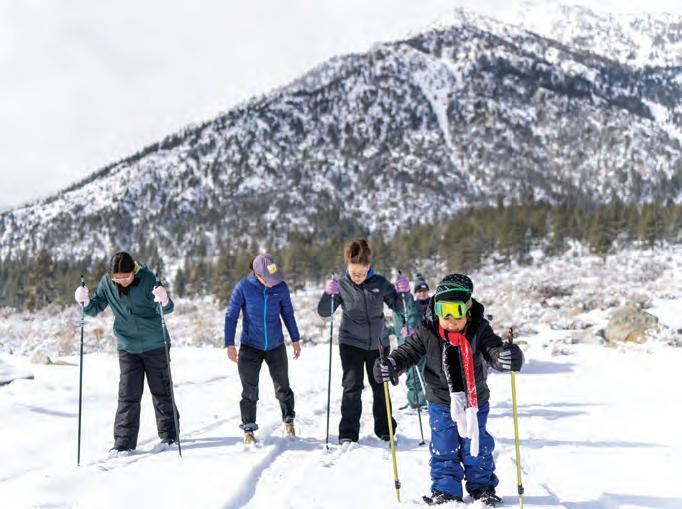
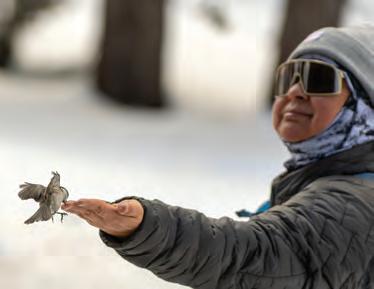
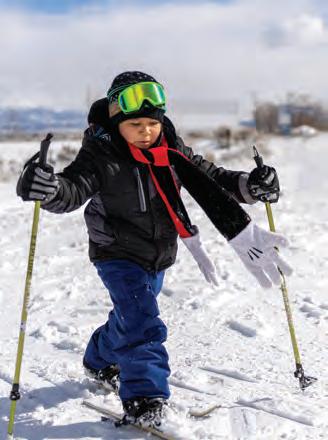
This page, left to right: TBA board members installing signage for the Lake Run off Donner Summit; Plowed parking at West End Beach (on Donner Lake) provides free access for backcountry users and family snowplay. Opposite page, clockwise from top: TBA and the Washoe Cultural & Outdoor Expedition Program bring kids onto the snow for cross-country skiing, wildlife encounters, and cultural learning; A young Washoe skier enjoying time on the snow; Paula Smith, the Washoe Tribe’s probation officer and founder of the Cultural & Outdoor Expedition Program, connects with a chickadee during a TBA/Washoe Tribe youth winter outing.
leaders like Polivy, TBA has attained some considerable wins for winter public access. One was solving the access issue at the bottom of Lake Run, a popular backcountry ski route from Judah Peak near Donner Summit down
County plow crews crews to figure out possible ways to solve this access issue.
Visit Truckee-Tahoe, and TBA, the Donner Lake West End parking lot at the bottom of Lake Run is now plowed every storm, opening up public parking access, taking the pressure off local residents.
The North Tahoe Community Alliance connected TBA with Caltrans and Placer
Thanks to a public-private partnership between the Town of Truckee, TruckeeDonner Recreation and Parks District (TDRPD), Truckee Donner Land Trust,
Bear Valley TICKET PACKS Bear Valley TICKET PACKS
Another big parking access win came last year at the foot of Mount Tallac. A few years ago, the Forest Service closed access to the Spring Creek Summer Home Tract in winter, access not only used for homeowners, but also to the West End neighborhood behind Donner Lake. Previously, the public was parking in the neighborhood, causing issues with residents.
RIDE/SKI ANY DAY THIS SEASON WITH NO BLACKOUT DATES AT
“Public land access should not only be for the people who are fortunate enough to live adjacent to it.”
— Anthony Cupaiuolo TBA Executive Director
for the public accessing Mount Tallac. Homeowners sued the Forest Service to regain winter access and won, but the public never regained that access, so skiers started parking near the gate on Highway 89. California Highway Patrol began ticketing people because they were in the Caltrans right-of-way. Meanwhile, the Forest Service was doing a fuels reduction project right next to the gate out by the highway, and approached TBA to see if the public would like a parking lot near the gate. Last winter the parking area was plowed, and there were no reported incidents of skiers being ticketed due to the expansion in parking access. The lot is currently dirt, and TBA is actively fundraising so it can be paved, further developing this huge win for public
access.
Despite its focus primarily on humanpowered access, TBA has also worked with the Lake Tahoe Snowmobilers for better multi-use access. One area where both motorized and non-motorized uses are permitted is Johnson Canyon, located right off Interstate 80 between Truckee and Donner Summit, but parking has been challenging due to the lot’s poor condition and narrow width. Last summer, the Truckee Donner Land Trust parking lot at Johnson Canyon was reconstructed, expanding the number of parking spaces for yearround access to both ski terrain and the local trails in summer, including larger spaces to accommodate snowmobile trailers.
Addressing more than just parking issues, TBA has also expanded into getting more of the public onto public lands during winter, launching a Library Sno-Park pilot program in 2023, purchasing a few dozen SnoPark passes in El Dorado County and donating them to the local library so residents can access Sno-Park areas
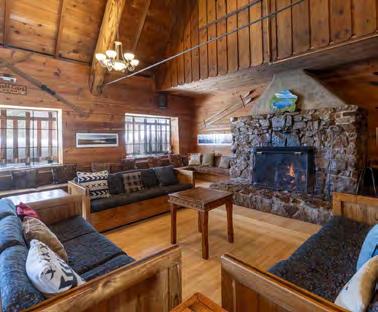
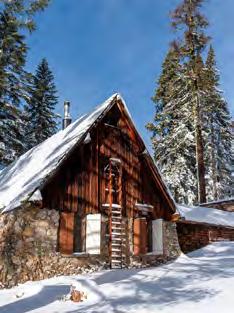
Welcome to Clair Tappaan Lodge
Historic hostel lodge in
the mountains
Perched on Donner Pass and surrounded by the towering pines of the Sierra Nevada Mountains, Clair Tappaan Lodge is a historic mountain retreat built in 1934 by Sierra Club volunteers. The lodge has welcomed adventurers, families, and outdoor enthusiasts for decades, carrying forward a tradition of shared experiences and easy access to world-class trails and ski terrain.
Perfect for families, hikers, skiers, and nature lovers, the lodge sits steps away from iconic routes, including the Pacific Crest Trail, and is minutes from top ski resorts, including Sugar Bowl, Palisades Tahoe, Donner Ski Ranch, Boreal, and more.
For 10% off your next adveture
PROMO CODE: ASJ
19940 Donner Pass Rd, Norden, CA 95724 (530) 426-3632 ClairTappaanLodge.com
Venture out into nature and experience one of the most extraordinary stays in our mountain lodge. We’re nestled amongst the trees where we have Donner Pass as a stunning backdrop in our mountain lodge, the Hutchinson Lodge or one of the back country huts. With rustic accommodations, Clair Tappaan is the perfect place to stay for any traveler who wants to be close to nature.
for free. Last year, TBA expanded the Sno-Park program to Placer and Nevada counties, with further expansion planned this winter. After purchasing cross-country skiing gear and snowshoes for more than 50 kids, TBA has partnered with the Washoe Tribe and their Youth Expedition Program to lead days on the snow and has continued the relationship during non-winter months with mountain bike rides throughout the Lake Tahoe Basin and in Carson Valley.
Just as there is an ethos and a code to backcountry skiing, there is just as much of a code when it comes to winter parking at the trailhead. Cupaiuolo recommends users carpool whenever possible, reducing the number of cars at the trailhead. Additionally, pack a couple of big shovels in order to shovel out your parking space in the event the spot isn’t big enough. If your vehicle is over the white line, you will be the reason why plow drivers can’t safely clear the road, exacerbating the problem.
Users either need to move their vehicle to where they can fit safely, dig the space out until your car is inside the white line or change plans and drive to another trailhead. Also, if the plow driver hasn’t yet cleared a pullout on the side of the highway, do not park there until the plow driver has cleared it. When in doubt, use common sense and treat winter parking like avalanche conditions in the backcountry. If you’re driving to the trailhead and are seeing numerous red flags about road conditions and parking, it might be time to change plans.
“If the road is narrow to the point there’s only room for a vehicle going one direction and there’s no room to pull over, that’s a sign,” said Cupaiuolo on Episode 52 of Mind the Track Podcast.
TBA is working on numerous other public access projects across the Tahoe Basin, including a new year-round parking lot at the base of Rubicon Peak in partnership with El Dorado County. TBA also just renewed its contract with TDRPD for another five years, continuing access to the West End parking lot at Donner Lake thanks to the success of the project.
As a 501(c)(3) nonprofit, TBA depends on the financial support of the community, and is actively fundraising for projects like Rubicon Peak and paving the Mount Tallac parking lot. If you are an avid backcountry skier or someone who values public access, consider becoming an annual member of TBA. Just as important, engage with TBA, follow them on social media and participate when the call comes for filing public comment or showing up to public meetings.
You can also support TBA by parking the right way. In the winter, carpool as much as possible and make room at the trailhead for other cars. And if you’re at a really busy trailhead post-ski, consider having your après somewhere else so others can park. In the end, Cupaiuolo has a very clear objective in continuing the efforts of TBA.
“Public land access should not only be for the people who are fortunate enough to live adjacent to it,” said Cupaiuolo.
Help TBA continue securing this public access by becoming a member. Visit them at tahoebackcountryalliance.org for more information.
This page, top to bottom: Ali Agee, TBA Advisory Board Member removing skins after the uphill and getting ready to enjoy some turns; TBA skis set for another lap in the Tahoe backcountry.
Butterfly in a Blizzard
How snowboard icon Kimmy Fasani turned motherhood, loss, and cancer into her biggest line yet
By Leonie Sherman
Almost 15 years ago, Kimmy Fasani rocketed to international attention as the first woman to land a double backflip in a terrain park. Five years later, in 2016, TransWorld Snowboarding and Snowboarder both named her Women’s Rider of the Year.
Having conquered big mountain lines and established herself in a male-dominated sport, she turned her attention to the biggest challenge of her life: becoming a mother. Several months into her pregnancy she decided to self-fund a documentary that followed the balancing act of being a new mother and a professional outdoor athlete. The resulting film, Butterfly In A Blizzard, was released in March 2025.
“I didn’t intend to make the movie that came out,” Fasani admits with a laugh. “The movie started with
this idea of telling the story of two professional athletes navigating parenthood.” Instead, the film offers an intimate, inspiring portrayal of grit and determination in the face of challenges that would break most people.
As the cameras rolled, Fasani dealt with postpartum depression, her own childhood sexual abuse, the near-death of her first child, the birth of her second child, and, eventually a devastating cancer diagnosis. Butterfly In A Blizzard is polished and raw, joyful and tragic, luminous and dark. Somehow
Fasani emerges from the avalanche of challenges stronger, wiser, and even a better snowboarder — in 2023 she placed third in the Natural Selection Tour, just a few months after completing cancer treatment.
“I started filming when I was just a few months pregnant, my mom had just died, I’d won Rider of the Year,” explains Fasani. “I felt like I was at the peak of my career, and also the lowest low of my personal life, dealing with so much grief and loss, feeling isolated.”
The peak of her career also threatened
to be the end of it; her contracts were up and there was no maternity coverage in any of them. Pregnancy was basically treated like an injury that prevented a rider from spending time on a snowboard. “There wasn’t an outlet for women to be a mom and still balance a career as an outdoor athlete,” Fasani says.
So she approached her main sponsor, Burton, then run by Donna Carpenter, who has three children of her own. Through careful negotiation based on mutual respect, they rewrote Fasani’s contract to include coverage for pregnancy. Carpenter added the same language for all her female athletes a year later. “Nowadays, if contracts don’t include pregnancy verbiage they are seen as being behind the times,” says Fasani with audible pride.
That wasn’t the first industry earthquake Fasani caused simply by being willing to speak up. Six months prior to filming the movie, she was at a photo shoot and realized that outdoor brands were using male team members for images, but hiring female models instead of female athletes for the women’s shots. “We were being told and shown that beauty matters more than our athletic achievements,” Fasani says. “Why are we still using these images that sexualize women to sell products to women? Who is making that decision?”
Consumed by frustration, Fasani nearly ended her career at that moment. “I could have walked away from the industry, but instead I spoke up,” she explains. “That advertising campaign shifted. We changed how that brand
represents female athletes by raising our voices.”
Butterfly In A Blizzard was intended to highlight Fasani’s triumphs, but it ended up shining a spotlight on her hardships. “I think the beauty of the film is that it captured me going through this incredibly challenging process,” Fasani explains. “I haven’t let these challenges define me; I’ve learned from them and grown from them.”
Fasani didn’t expect to be so raw and exposed on film, but she recognizes that vulnerability is the key to connection. “If this movie can help just one other person feel like they have a connection, feel like they have hope, maybe that is the bigger purpose. Maybe that is enough.”
While connection may be the larger purpose behind the film, shifting her attitude is what allowed her to get through each day. “When I first got my diagnosis I remember talking with my doctor and saying ‘I don’t understand where this came from, I live a healthy active lifestyle, I eat well, I’m an ambassador for Boarding For Breast Cancer!’ And my doctor said being healthy and active was going to make me a stronger patient, help me have a better outcome,” Fasani explains with an audible sigh. “That moment was like a lightning strike. I started looking at the whole thing differently, like maybe all the work I’ve done so far is for this moment.”
Her years shredding in the backcountry helped as well. “The time I’ve spent in the mountains has completely conditioned me to reframe fear, and I think that has been my greatest superpower
“The time I’ve spent in the mountains has completely conditioned me to reframe fear and I think that has been my greatest superpower in navigating all these challenges.”
— Kimmy Fasani
in navigating all these challenges,” explains Fasani. “Fear can be present in everything; it’s just a matter of how you choose to face that fear. When I got my cancer diagnosis, I was able to think ‘what do I do with unexpected challenges in the backcountry?’ The adventure and problem-solving mindset the mountains had already taught me was such a gift.”
“I was able to break it down like I would plan for a day in the mountains,” she continues. “Like, what do I have control of in this situation? How can I focus on that instead of all the things I don’t have control of? It was like I was trying to see where the light was seeping in instead of focusing on the dark tunnel of despair. Kind of like when you’re out in the mountains and it starts pouring rain and you have to slog out of there, and you think, ‘How can I make this part of my adventure?’”
But the differences between backcountry adventures and cancer
Opposite page, top to bottom: Kimmy Fasani’s smile says it all after she completed treatment for breast cancer (Todd Glaser); Fasani’s husband, Chris Benchetler, painted her chest for the cover of Outside (Todd Glaser). This page, clockwise from top left: Fasani snowboarding during her third trimester (Aaron Blatt); A moment of bliss after completing cancer treatment (Todd Glaser); Fasani back on the mountain and fully in the moment (Cody Mathison).
were heavy and undeniable. “When you spend time alone out in the backcountry, there’s that element of the unknown and yet it still feels like there’s some safety in it,” Fasani struggles to explain. Though she’d watched both her parents die of cancer, her own diagnosis felt profoundly different. “It felt like a vast wide unknown — like not just uncharted terrain but uncharterable terrain.”
Fasani had no option but to chart her own course through that unknowable landscape. “My mom had terminal cancer and chose end-of-life drugs when she was 72,” she explains. “But my cancer was treatable. Creating my family was part of what gave me the strength to fight so hard to get through it.”
As she dug deep, she found surprising strength, both in herself and her friends and loved ones. “I needed to ask for help. And I saw how a community can support you through challenges when
you’re willing to share what you’re going through,” she says, her smile is almost audible over the phone. “Ultimately, even though it was brutal and hard, making this movie created so much healing in my body and my relationships.”
Fasani’s courage inspires all who witness it. “Watching Kimmy go through so much hardship taught me how to face life’s challenges with open arms,” explains Elena Hight, Fasani’s friend of more than 20 years. “She showed me, and all of us really, how to transform
challenges into compassion and kindness — how to alchemize pain into love.”
Butterfly In A Blizzard helped Fasani understand that what looked like the end was just the beginning. “All these challenges caught on camera helped me understand I am not done. My purpose for living is still very much alive,” she says. “I might be done in my pursuit of progression, but I am leaning into a whole different side of my career. I’m leaning into advocacy, public speaking,
mentorship, so I can pay it forward and inspire others to know they are capable
This page, left to right: Fasani’s happy place riding at Mammoth Mountain (Cody Mathison); Embracing all that the Sierra has to offer with her family (Tyler Hamlet).
RACES & EVENTS CALENDAR
Go to the EVENTS page on our website for more information and direct links to events.
TBD — Luggi Foeger Uphill/ Downhill SkiMo Race & Festival / Diamond Peak / Race up & race down / DiamondPeak.com/events
TRIATHLON
APRIL
12 — Millerton Lake “Crow’s Nest” Triathlon / Millerton Lake / Triathlon, 5K & 10K / SierraCascades.com
26 — Grapes of Wrath / Delano / Olympic & sprint triathlons + 10K & 5K run / SierraCascades.com
23 — Vi Tri / Visalia / Sprint, relay + 5K run / SierraCascades.com
LOOKING AHEAD
June 1 — Lost and Found Gravel Festival / Portola / Three NEW high Sierra gravel courses /35, 60 and 100 miles / lostandfoundbikeride.com
June 6 — Menlo Park Kids Triathlon / Menlo Park / SierraCascades.com
June 13 — Fears, Tears, and Beers Mountain Bike Enduro / Ely, NV / First and oldest enduro race in America / ElyNevada.net
June 20 — Huntington Lake Triathlon / Lakeshore / Olympic & sprint triathlon + 10K & 5K run / SierraCascades.com
July 11 — Dodge Ridge Enduro / Pinecrest / CaliforniaEnduroSeries.com
July 11 — Tour of the California Alps - Death Ride / Alpine County / Three Sierra Passes / DeathRide.com
July 27-29 — Badwater Ultra 135mi Ultramarathon / Death Valley to Mt. Whitney /The World’s Toughest Foot Race / Badwater.com
Aug 1 — China Peak Enduro / Lakeshore / CaliforniaEnduroSeries. com
Aug 8 — Tour deSchell Gravel Race / Ely, NV / Race some of the greatest gravel routes in White Pine County / ElyNevada.net
August 8 & 9 — Downieville Classic Mountain Bike Race / Downieville, California / The only mountain bike race on the Sierra Crest / downievilleclassic.com.
Aug 9 — Tri Santa Cruz / Santa Cruz / Triathlon, duathlon, aquathlon, aquabike & relays / SierraCascades.com
Aug 22 — Northstar Enduro / Truckee / CaliforniaEnduroSeries.com
Aug 23 — Millerton Madness Triathlon / Friant / Sprint triathlon + 5K run / SierraCascades.com
Sept 12 & 13 — Mountains to Meadows Endurofest / Quincy / Race the Grinduro “gravel enduro”, the Mt. Hough Enduro, or both! / Held on trails built by Sierra Buttes Trail Stewardship on Mt. Hough /mountainstomeadows.com
Sept 12 — Race the Rails / Ely, NV / Bikes vs. Train / Ride the train, race the train / Gravel or road / ElyNevada.net