God’s plan for your life often seems hard at first and pushes you out of your comfort zone.
I’m writing this filled with gratitude.
Today (as I write this) marks 19 years of working with Adventist Record It seems like forever, almost half my life, yet it also feels like yesterday. It was February 5, 2007. I was barely 21, newly graduated from Avondale College (now University), I got a haircut and a real job, moving from Adelaide where I grew up, to the tiny (but very beautiful) town of Warburton in the Yarra Valley, Victoria. The coldest place I have ever lived.
In the lead up to graduation I was nervous. Where would I work? What would I do with my life after college? College was great. I learned useful things, the friends I made were amazing, but I was getting that feeling of trepidation growing in my chest.
Then I got a phone call that changed my life. It was then Record editor Nathan Brown, saying that there was a job opening and that I should apply. It was made clear to me that there was no guarantees but I was excited to even get the opportunity. An answer to prayer and also, looking back, clearly God leading in my life. I had my first job interview on the phone, sitting on the lawn next to a BP service station where I had pulled over on the way to Sydney Airport from Cooranbong. The rest is history.
Since then, I’ve worked on Adventist Record, Signs of the Times and alongside other projects and products that have come out of Adventist Media. There have been ups and downs, times of uncertainty and change (like when the editorial department moved to Sydney)*, and I’ve been far less than perfect. Yet I’m grateful. God has been good, has led through each mountain-top experience and every dark valley. I’m filled with gratitude because I’ve been able to do one of my favourite things—write (and a good deal of reading, one of my other favourite things). I love my faith, my church and talking about the God of the Bible. I’ve worked with wonderful people, been able to travel the Pacific and been inspired by the people I’ve met working for God there, their stories and their faith.
God has been so good to me.
For the past few years I’ve also had the privilege of being editor of Signs—a wonderful and flagship evangelistic product for the Church here in the South Pacific. I’ve loved the challenge of communicating with an audience outside the Church. The opportunity to take our precious faith and describe it in ways that are easy to understand and invitational for those who don’t share it. Signs turns 140 years young this year and is still making an impact in our communities.
And now, as you may have read online or in print, I have been asked to serve the General Conference communication department, sharing Adventist news from right around the world. God is “doing a new thing” (Isaiah 43:19) and as we have always done, we are answering the call. It is big and scary and largely unknown. But my wife and I have been here before. God’s plan for your life often seems hard at first and pushes you out of your comfort zone. Yet it (in my experience) ends up being worth it.
So why do I share these rememberings with you? A few reasons. First, I am passionate about the power of stories, specifically our God stories and how, when God moves in our lives, those stories can inspire others too—if we share them. Secondly, to encourage you. When God is leading in your life, it is not always easy but you can see His hand when you look back, every place He has led or carried you. Maybe you’re like I was and not sure what you want to do. God can use you and cares for you. There is always a way He can guide and lead you, if you are willing to surrender and follow. May God continue to bless you as you follow the path He has set before you and may you find your calling in His plan and purpose for your life.
*Yes, the editorial department has been in Sydney since 2010, while the magazines are still printed at Warburton.
Promises, promises
David Potter South Pacific Division associate secretary
When my brother turned 10, our uncle gave him an old model aeroplane he’d made of balsa wood. Although it didn’t have a motor anymore, it had a wingspan of more than a metre and it was fun to see him take a run up, throw it as hard as he could and watch it fly—then gently glide—back to the ground. As a five-year-old, I was so jealous. I really wanted a plane too, so I asked my uncle. “When you turn 10, I’ll give you a plane too,” he promised. I never forgot. Each birthday was a step closer to my very own plane. Finally, I turned 10. Boy, was I excited as I ran down to my uncle’s house. My excitement quickly turned to disappointment when I discovered that there was no plane for me. Unlike me, who held on to that promise, my uncle had completely forgotten. I believe he had good intentions, but over time he simply forgot about it.
Sometimes in life we fail to keep our promises, often unintentionally, creating feelings of hurt, anger or rejection. We are human, and this is part of our nature. Yet one truth remains: we can always rely on the unbreakable promises of God.
The Bible is filled with promises God has made to each of us.
God’s promises are tied directly to His unchanging character—faithful, steadfast, righteous. So, when He says, “When you pass through the waters, I will be with you; and when you pass through the rivers, they will not sweep over you. When you walk through the fire, you will not be burned”, the promise isn’t that life will always be easy–it’s that you never have to face the tough times alone. The beauty of this promise is in God’s presence: I will be with you! Trials will not be absent, but God will be present within them.
We are never guaranteed wealth, health or constant happiness. Instead, Jesus spoke of an abundant life. Timothy Keller captured beautifully what this means: “Jesus Christ did not suffer so that you would not suffer. He suffered so that when you suffer, you’ll become more like Him. The Gospel does not promise you better life circumstances; it promises you a better life” (The Reason for God, 2022).
Church upgrades kitchen for community service
Hamilton, NSW | Juliana Muniz/Henrique Felix
Hamilton church in Newcastle (NSW) has opened a renovated and expanded kitchen to upgrade its community meal and food pantry ministry, God’s Kitchen.
The church serves an area where homelessness and higher-than-average crime exist alongside some of the city’s most expensive real estate.
The kitchen supports the church’s weekly Thursday food pantry and community meal, which serves around 80 people and aims to return to pre-COVID attendance of 100-plus.
“The purpose is not only to provide food but to build relationships,” Hamilton church pastor Justin Torossian said. “When people sit and eat together, they begin to share their needs and we can connect them with practical support.”
The facility was officially opened on February 8, with about 90 people in attendance—many of whom made the renovation possible.
The City of Newcastle provided a grant of $A18,500, with additional funding from Adventist Community
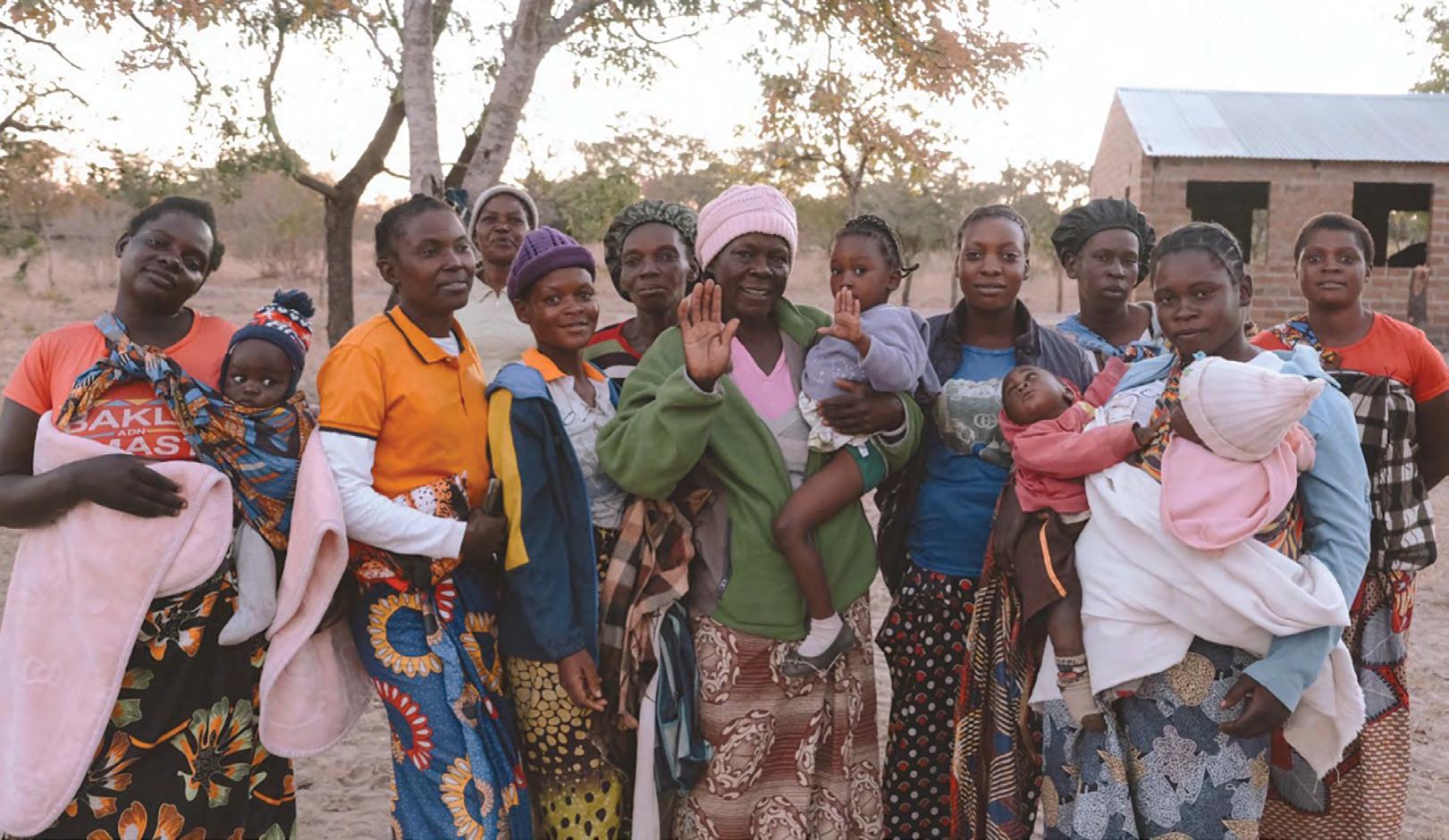
Mums
Services, ADRA, the North New South Wales Conference (NNSW), Warners Bay church and Hillview op shop. Fundraising from Hamilton church members between September and December raised more than $A28,000.
City of Newcastle councillor Jenny Barrie, who cut the ribbon alongside NNSW president Pastor Cristian Copaceanu, said she hopes to assist the initiative on some Thursdays.
“This expansion will increase the work of the church across the community in a loving, supportive environment,” said Ms Barrie.
ADRA regional manager for NSW Colleen Savage said “it was a privilege for the organisation to contribute financially to a project that will strengthen community engagement”.
“We have people who are homeless, people who own their own homes and people in need of friendship. We want this to be a space where they can experience God’s love through practical help and genuine care,” Pastor Torossian said.
At The Table launches second podcast
Wahroonga, NSW | Melody Tan/Record staff
Mums At The Table has launched its second podcast, Mum to Mum with Doctor Tash, a new series designed to help parents better understand their children and themselves.
Hosted by paediatrician Dr Natasha Ching, affectionately known as Dr Tash, and Melody Tan, project manager of Mums At The Table, the podcast takes listeners beyond quick fixes and parenting hacks. Each episode features a conversation between two mothers on raising emotionally healthy children, drawing on both professional experience and personal parenting insights.
“As a paediatrician, I see so many parents striving to do their best but often feeling overwhelmed,” Dr Tash said. “This podcast is about empowering them with practical tools and the reassurance that focusing on emotional health and genuine connection is the most powerful thing they can do for their kids.”
The monthly podcast has a strong
emphasis on developing the parent-child relationship and blends paediatric expertise with relatable, real-life parenting experience. The show aims to offer practical wisdom grounded in science and guided by empathy, covering everything from tantrums and teen moods to discipline and self-compassion.
“We really wanted to create a space where mums feel seen, knowing they’re not alone in the beautiful, messy journey of raising children,” said Ms Tan.
This new podcast joins Mums At The Table’s growing digital media family, following the success of Life in the Grey, a podcast hosted by Ms Tan and Faith Toh, exploring the psychological factors that shape our relationships.
Mum to Mum with Doctor Tash is available now on most podcast platforms. Listeners can also read Dr Tash’s accompanying articles for each podcast episode on <mumsatthetable.com>.
Dr Tash and Melody Tan.
Pastor Justin Torossian and City of Newcastle councillor Jenny Barrie at the ribbon-cutting ceremony.
Farmers behind gold-winning chocolate
London, UK | Tracey Bridcutt
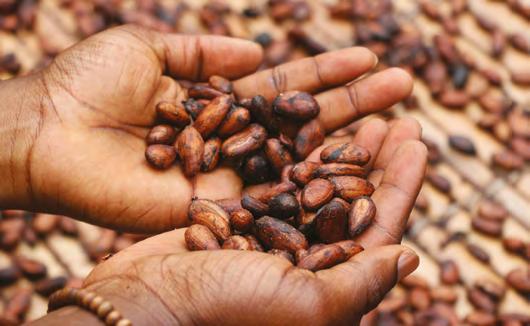
Chocolate made from cocoa grown by village farmers in the Solomon Islands has won gold at the prestigious Academy of Chocolate Awards in London.
Developed by Foundry Chocolate in New Zealand, the chocolate received the top honour in the plain dark bar category. The cocoa used in the award-winning chocolate is linked to a livelihoods project led by ADRA.
“Behind that accolade are village farmers whose livelihoods have been strengthened through fair pricing, skills transfer and reliable demand,” said Matthew Siliga, director of ADRA and Community Development South Pacific.
Through a joint initiative led by ADRA Solomon Islands and ADRA Australia, farmers across eight rural villages are being supported to grow high-quality cocoa as part of a deliberate tradebased approach to improving livelihoods. The project focuses on improving
post-harvest practices, including fermentation, drying and quality control, enabling village-grown cocoa to compete in premium international markets.
“The results have been transformative,” said Mr Siliga. “Farmers are now receiving price premiums for their beans, reflecting improved quality and direct market access, rather than being locked into low-value commodity chains.”
Significantly, the quality has attracted global attention. Cocoa from these communities is now being purchased by leading craft chocolate makers, including Foundry Chocolate.
“This project shows what’s possible when development and trade work hand in hand: local farmers earning more, global consumers enjoying exceptional chocolate and communities moving from aid dependence toward sustainable, livelihoods,” Mr Siliga said.
Youth conference gathers more than 750 Stuarts Point, NSW | Ashley Jankiewicz
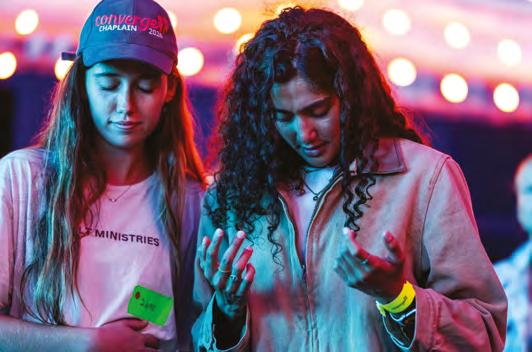
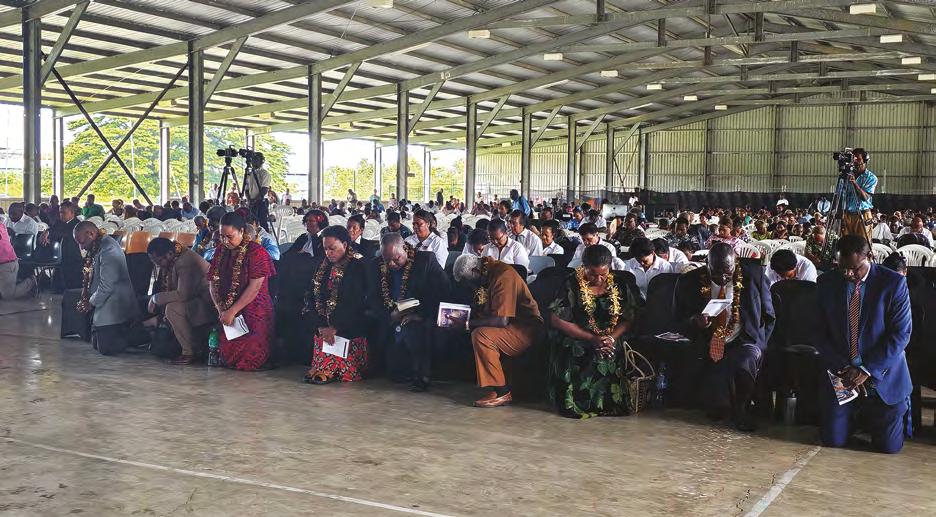
More than 750 young people gathered at Yarra Holiday Park in NSW for Converge, an annual Australia-wide youth conference held this year from February 13 to 16.
The event included worship programs with guest speakers, water sports, boot camp, workshops and designated time to mingle, and purchase food and drinks at the café. There was also free time where attendees headed to the beach or hiked the surrounding areas.
Australian Union Conference (AUC) youth director Pastor Rick Hergenhan said Converge began as a way for people to be able to “come hang out with Jesus and do it in such a way that you could bring a secular friend who could hear the gospel message and be challenged to take the next step with Jesus”.
Guest speaker Pastor Edsel Cadet, pastor of Berea church in Boston, Massachusetts (USA), spoke about the pain of living in a sinful world. “But we’ve been greatly loved,” he said. “The love of Christ heals and restores us, and because of that love, we’ve also been
greatly called.”
Pastor Cadet also ran a relationship workshop on Sabbath afternoon, where he touched on the psychology of relationships through a Christian lens, finishing with a Q&A session.
Pastor Lyndelle Peterson, AUC ministerial secretary, presented the final session on Monday morning, focusing on developing a relationship with Jesus.
Each conference was represented at Converge, with a significant number of people—around 90—coming from Western Australia for the first time. Western Australian youth also ran the music and hosted each program.
William Mata, second year theology student at Avondale University, said he loved the Converge experience last year, and this year brought friends and family. “My favourite part is always socialising and meeting new people,” he said. “I saw a lot of new faces this year, especially from WA. I think it’s important to make connections and build a community in Jesus.”
Converge chaplain prays with attendee. [Credit: Charmaine Patel].
Cocoa beans. [Credit: Unsplash]
Building towards harvest in the Solomons
Honiara, Solomon Islands | Tracey Bridcutt
Preparations are intensifying for Solomon Islands for Christ, with major initiatives confirmed in health outreach, school engagement and media partnership.
A Mission-wide health expo will be held from May 10–16 at 12 sites across the country, with a strong focus on provincial centres. The initiative is being led by Solomon Islands Mission (SIM) health director Dr Chester Kuma and his team.
In the education sector, Solomon Islands for Christ in Our Schools has confirmed participation from 113 schools. Local preachers are expected to lead the majority of school programs, although several external speakers have also expressed interest in supporting the initiative.
Weekly prayer and fasting, community service outreach and small group Bible studies are also part of the preparations.
SIM president Pastor David Filo said the Solomon Islands for Christ campaign has so far confirmed 342 preaching sites, including one within the prison system.
“Last year, approximately 160 prison candidates were ready for baptism as a result of our prison ministry in Honiara, but regulatory constraints prevented us from proceeding,” he said.
“This year, there is renewed and strong interest from the prison authorities to host a preaching site, and we do not want to miss this opportunity. Our team is working tirelessly to populate all preaching sites with preachers ahead of July.”
The SIM is aiming for 10,000 baptisms and 150 new churches planted.
Following the July programs, nurturing initiatives will begin immediately, with plans already in place for a second harvest in November.
Preparations are progressing across regions, districts, local churches and institutions. In addition, an agreement has been signed with Telekom Solomon Islands to broadcast content and promotional material nationwide on TTV Channel 2. Weekly broadcasts are already airing on the channel, complementing coverage across other church media platforms.
Solomon Islands for Christ is scheduled for July 5-18. It is a part of the Division-wide South Pacific for Christ initiative, which is a key focus across the region this quinquennium.
Visit <southpacificforchrist.org> to find out more information, including how you and your church get get involved.
making headlines
Engineering with purpose
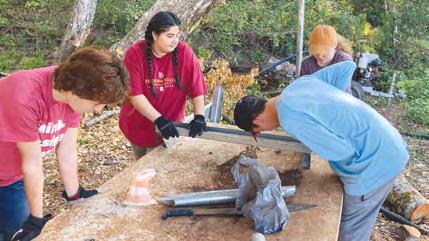
Southern Adventist University’s (US) first Bachelor of Science in Engineering graduates all earned honours, passed the rigorous Fundamentals of Engineering exam on their first attempt, and applied their skills through a mission-focused project where they designed and implemented sustainable cooling, water and electrical systems for a missionary training centre in Honduras.—ANN
Top hospital in Asia
Penang Adventist Hospital (Malaysia) was named one of Asia’s Top Private Hospitals and Clinics for 2026 by Newsweek and Statista, highlighting its century-long commitment to clinical excellence and compassionate service.—SSD
Christmas comic
After being displaced from Ukraine by war, Oregon-based pastor and illustrator, Alexander Skibelsky, created a comic book for children that closely follows Scripture and tells the story of Jesus’ birth in a format that appeals to young, visual learners. The Birth of Jesus project is also available as a colouring book and aims to make the gospel story easy to share across languages and cultures through visual storytelling.—Northwest Adventists
Visiting every pew
An Adventist university student turned her personal church-hopping journey into a popular Instagram review series, visiting and positively profiling different Christian congregations. The project encouraged young believers to ask questions, explore church culture beyond labels and seek healthy faith communities.—The Spinoff
At the launch of Solomon Islands for Christ.
Ministry affirmed
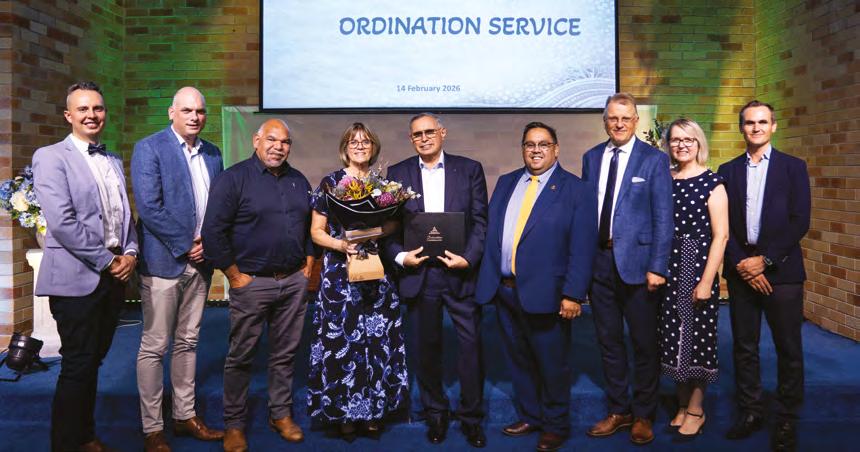
Pastor Keith Stockwell was ordained to ministry on February 14 at Hillview church in Morisset, NSW. Currently serving as North NSW Conference Aboriginal and Torres Strait Islander Ministries director, he has ministered extensively across western NSW alongside his wife, Pastor Danuta. “God led us to two key Aboriginal elders in Brewarrina and together with Pastor John Lang, Keith had the joy of baptising the first two Adventists and raising the first Adventist church in Brewarrina. Together with a small team and Adventist Aviation’s help, God made all things possible,” said Pastor Danuta. In his response, Pastor Keith said, “By far, it’s not about me. It’s about God and His calling.” Leaders and members prayed for their continued service.—Henrique Felix
Women in CI
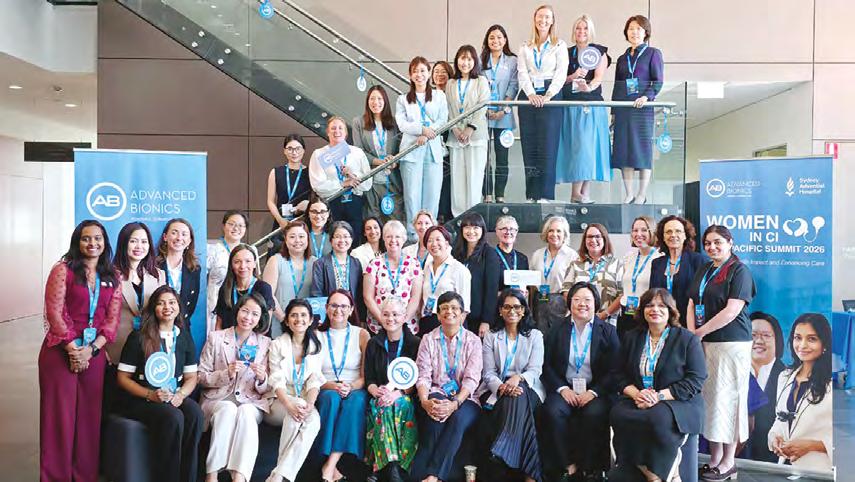
Experts from across the Asia-Pacific region shared knowledge and strengthened collaboration at the inaugural Women in CI (Cochlear Implant) Summit on February 6-7 at Sydney Adventist Hospital. Held in the hospital’s Clinical Education Centre, the summit involved more than 50 attendees, including professionals from across the region, along with government and industry partners. The summit focused on newly released national adult cochlear implant guidelines, which are aimed at addressing long-standing gaps in access and care for adults with hearing loss. It also shone a light on the barriers faced by female surgeons and audiologists. While the number of women entering surgical specialties continues to grow, medical technology has not always kept pace with their needs —Tayla Woods
Preserving history
Representatives from the Papua New Guinea Union Mission and Trans Pacific Union Mission recently completed an intensive 10-day archival and records management training program at the Adventist Heritage Centre in Cooranbong, NSW. The program strengthened professional capacity in governance, compliance and institutional record retention across Pacific union and institutional entities. It is the first phase of an ongoing commitment. Organisers emphasised that strong records management is foundational to continuity of mission.—Jane Gibson-Opetaia
Australia Day
Avondale Memorial church (Cooranbong, NSW) held a special Australia Day service on January 24, where Aboriginal and Torres Strait Islander Ministries (ATSIM) national director Pastor Darren Garlett shared updates on ministry among First Nations communities. The program also reflected the multicultural makeup of the congregation and included participation from local church members and other ATSIM leaders.—Joy Butler
A century of music
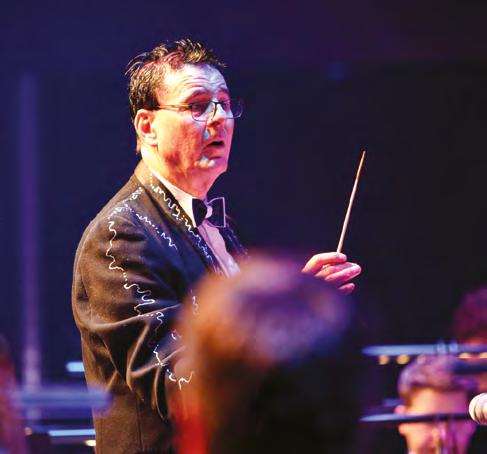
Advent Brass celebrated its 100th anniversary last year with a charity concert at Melbourne’s Hamer Hall, raising more than $A50,000 for ADRA.
Founded in 1925 by educationalist and musician William Gilson, the ensemble began as a way to give young people opportunities for musical excellence and Christian service—a focus that continues today.
The centenary program brought together about 50 musicians from Advent Brass and its training ensemble, Youth Advent Brass, and featured internationally recognised Australian musician James Morrison as guest performer.
One of the most memorable moments was a piano performance by 100-year-old Romney King, who has played with the group across three generations of Gilson leadership and is believed to be the oldest musician to perform at Hamer Hall.
Across its history, Advent Brass has supported worship services, evangelistic programs and community events throughout Victoria, with performances in every state and territory except the Northern Territory.
Current musical director Reynold Gilson, who has played with the band for more than 60 years, said its mission remains unchanged.
“Our purpose has always been to serve the church and community through music,” he said.
All ticket proceeds from the concert were donated to ADRA to assist individuals and families experiencing hardship —Juliana Muniz
have news to share?
Send info and photos to <news@record.net.au>
Stepping into ministry
Omaura Adventist School of Ministry in Papua New Guinea graduated 87 students in 2025, equipping them for pastoral ministry in predominantly rural communities. The two-year Certificate in Ministry prepares workers for areas where access to roads, healthcare and education is limited. Most graduates will serve in local churches, while some will continue training at Sonoma Adventist College and Pacific Adventist University. The graduation follows increased demand for trained leaders after the PNG for Christ initiative. A notable development has been the steady growth in female enrolments. Approximately 10 per cent of last year’s graduates were women. However, leaders acknowledge that limited infrastructure—particularly accommodation—remains a barrier to expanding enrolments, especially for female students. The first quarter 13th Sabbath Offering will support new classrooms, dormitories and a multi-purpose hall.—Elisapesi Manson
Field experience
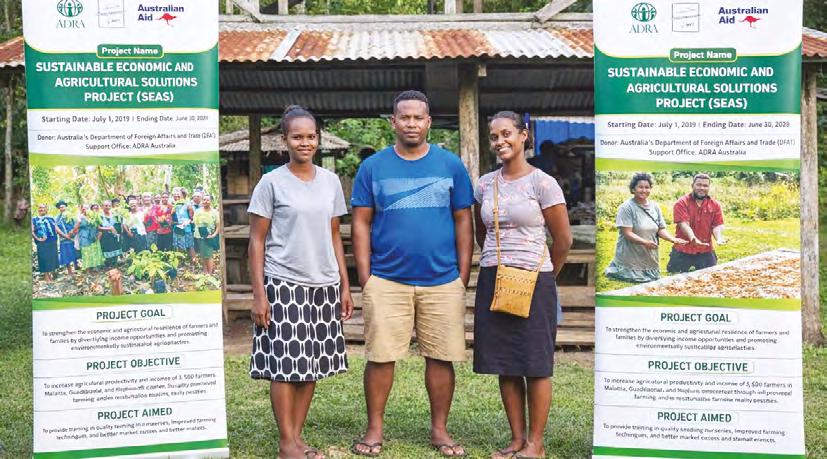
Three final-year agriculture students from Solomon Islands National University gained practical field extension experience through ADRA Solomon Islands’ Sustainable Economic and Agricultural Solutions (SEAS) Project during cocoa training at Sali, North Guadalcanal, on February 10. The students observed peer-to-peer training with new and existing cocoa farmers and conducted interviews for their final academic reports. “We were able to see what field extension work really is,” said student Tome Luda. The SEAS Project is funded by the Australian Government, supported by ADRA Australia and implemented by ADRA Solomon Islands. —Denver Newter
My grandfather's God
Stanislas was raised in a Christian home, the second of eight children, with early memories of a loving family life. But tragedy struck when his father died in a car accident. At the time, Stanislas’ mother was pregnant with his youngest sibling.
Unable to care for the children on her own, she sent them to live with their grandparents. It was in his grandparents’ home that Stanislas first witnessed deep spiritual devotion. Each morning he would wake up to the scent of a candle burning and the sight of his grandparents on their knees in prayer. His grandfather, a faithful church worker, had dedicated his life to serving God.
Yet even as a boy, Stanislas began to wonder, If God is good, why would someone like my grandfather, who loved Him so much, suffer so deeply? That quiet doubt grew in the following years.
By the time he reached his teens, Stanislas had drifted far from his roots. He turned to smoking, drinking and eventually, stealing. What started as small acts of rebellion led him down a path of crime. He was involved in burglaries, car theft and drug trafficking. The streets taught him that only the strongest survive.
Then, one night, everything changed. Drunk and behind the wheel of a stolen car, Stanislas suddenly heard a voice in his heart. “What are you doing? Is this how you want your life to end?”
Shaken, he knew he couldn’t continue living this way. The next morning, he decided to walk away from crime and start over.
He returned to his hometown to rebuild his life. It wasn’t easy—it took a year and-a-half—but Stanislas was determined. At 18, he joined the military, completed training and eventually found steady work.
Later he met a woman and they began a life together. They had two children and everything went well for a while. But Stanislas’ old wounds and unresolved pain began to surface, creating tension in their relationship. Eventually, the couple separated.
Not long after, the woman’s father called Stanislas and asked him to give her another chance. He agreed, not knowing what to expect.
His partner had grown up in a Seventh-day Adventist family and though she hadn’t been attending church she still read her Bible every day. One day she told Stanislas that she wanted to go back to church.
Stanislas replied, “Why not? I’ve tried everything else— maybe it’s time to try Jesus.”
His partner began attending church on Sabbath, while he started going to church on Sunday. Sometimes, she joined him, but he never went with her. Still, Stanislas noticed something had changed. She was calmer and happier. There was a peace in her that he couldn’t explain.
One day, he asked her, “Why do you spend all day at church? Mine only lasts a couple of hours.”
She smiled and said, “Come with me. You’ll understand.”
He agreed, and that first Sabbath at her church was a turning point. The message touched his heart in a way he didn’t expect. He didn’t yet fully understand Jesus, but something stirred within him.
The pastor invited him to begin Bible studies. Stanislas accepted. As he opened the Bible, he began to find answers to questions that had haunted him since childhood. His image of God that had been damaged by doubt slowly healed. He realised that the same voice he had heard years earlier in that stolen car was now speaking to him again, but this time through Scripture.
One night, after a study session, he turned to his wife and said, “I think I have faith now. I finally understand what it means to believe.” Not long after, they were married and baptised together.
Two years later, Stanislas enrolled at Fulton Adventist University in Fiji, where he earned a degree in theology. Today, he serves as a pastor in New Caledonia, on the same island where his journey began. Now, however, he serves the God of his grandfather, not because of tradition, but because of his conviction and personal relationship with Christ.
adapted from Adventist Mission
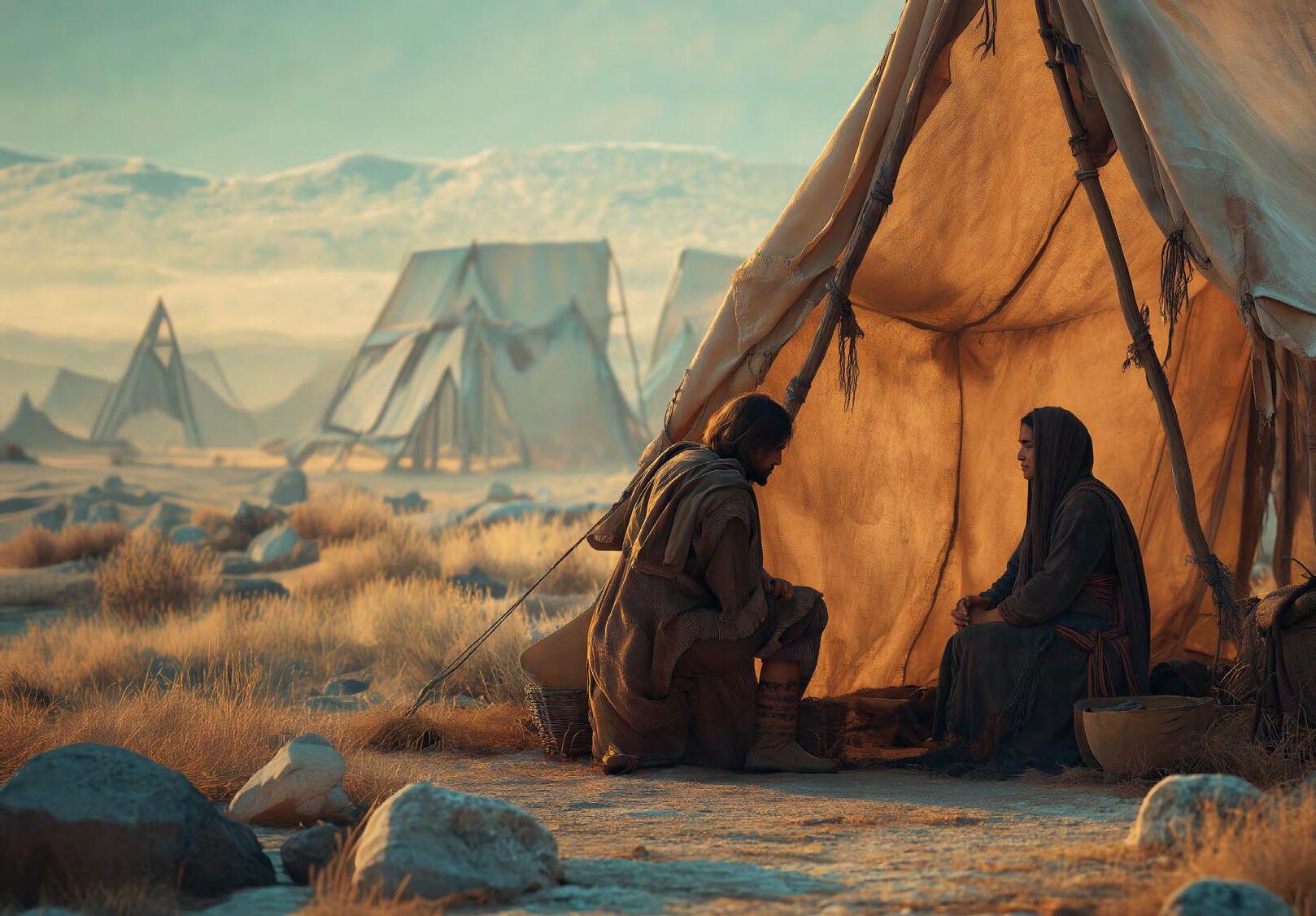
people who left their homelands
Abraham Abraham was called by God to leave his home in Ur and go to an unknown land. God led him to Canaan, the land that was part of the covenant between them, where God promised to bless Abraham and make him into a great nation (Genesis 12:1-7).
Joseph
Joseph was sold into slavery by his brothers and was taken from Canaan to Egypt, where he eventually became second in the land and rescued the nation—and surrounding nations—from famine (Genesis 37-50).
The Little Maid
An unnamed girl from Israel was captured by the Syrians and forced into slavery in the household of Naaman, a man who suffered from leprosy. Her testimony led to Naaman being healed by God, through Israel's prophet Elisha (2 Kings 5).
Moses
Moses grew up in the Egyptian palace but killed an Egyptian overseer
to defend a Hebrew slave. He fled from Egypt to Midian, where he spent 40 years in the wilderness before returning to free his people from slavery (Exodus 2:11-21).
Rahab
The walls of Rahab's home, Jericho, fell under the might of the God of Israel, but she turned to Him and was spared from the city's destruction. She and her family joined the Israelites and Rahab became the ancestor of Jesus (Joshua 2).
Ruth
Ruth left her birthplace of Moab to follow her mother-in-law, Naomi, back to Israel. She vowed that Naomi's people would be her people, and Naomi's God her God. She eventually became the great-grandmother of King David (Ruth 1).
Paul
Paul was a Pharisee intent on persecuting Christians when he had an encounter with Jesus and became a Christian himself. He spent the majority of his later life on the road,
travelling across Rome and Greece to support new Christian communities and share the gospel (Acts 13-28).
David
David was in the service of King Saul but had to flee from the king's anger to the nearby Philistine nation—the only way to ensure his survival and fulfil his destiny to one day become king himself (1 Samuel 27-30).
Jesus
As a baby, Jesus’ parents took Him to Egypt to escape the wrath of King Herod, who had ordered all male babies in Bethlehem killed. They remained there until the death of Herod before returning to Israel (Matthew 2:13-23).
Priscilla and Aquila
Priscilla and Aquila were early Christians, tent makers and friends of Paul, who moved multiple times due to government mandates and missionary work. They were a part of early Christian communities in Rome, Corinth and Ephesus (Acts 18:2,18,26).
MONEY IS THE ROOT OF ALL EVIL
Does the Bible really say that money is the root of all evil? Money is everywhere. Our societies run on money; we need it to stay alive. Does that mean we have to abandon society to get away from its evil grasp?
Thankfully, no. The Bible actually says, “For the love of money is a root of all kinds of evil” (1 Timothy 6:10, italics added). That’s very different. It takes the focus away from money itself and places it onto our feelings towards money. Money is not inherently evil—really, it’s just a tool. Our attitude towards it, however, can lead us down the wrong path. The verse goes on to read that “some people, eager for money, have wandered from the faith and pierced themselves with many griefs”.
It can be hard not to love money—it grants us countless advantages, giving us access to not only necessities but the comforts of life. But while it’s good to learn how to manage your finances, it’s important to remember what Jesus tells us in Matthew 6: “You cannot serve both God and money.” The love of money can easily steal our top priority spot that should be reserved for God.
But how do we not love money?
There are many people in the world who have little material wealth, while in other parts people have too much. A culture of overconsumption and consumerism convinces us that we need things that we really don’t. To turn away from consumerism we have to embrace the idea of living a life of simplicity—learning to live with
less and giving what we don’t need to those who actually are in need. It requires practice and intentionality, but through this it’s possible to learn that giving brings joy.
In our Church we are encouraged to give tithes and offerings. It can sometimes be challenging to give 10 per cent of your wages and can feel as though your small contribution won’t do very much. However, while the funds do go towards the Church’s mission, there’s a greater purpose as to why we give. It’s a reminder that what we have ultimately belongs to God and through giving we acknowledge that He will provide all our needs.
With this perspective, we don’t give tithe but return it, and the looser we hold onto our money, the easier it is to embrace this idea. What we have belongs to God—we are merely stewards of the resources we are given.
Jesus tells us, “Store up for yourselves treasures in heaven, where moths and vermin do not destroy, and where thieves do not break in and steal. For where your treasure is, there your heart will be also” (Matthew 6:20,21).
So while we do still linger in this world, we must remember that money can be used for good as long as we keep God at the centre of our finances, live a life content in our simplicity and remember that ultimately, our greatest treasure is Jesus Christ and the salvation He offers.
Ashley Jankiewicz assistant editor, Adventist Record
8 tips on how to pack a
healthy lunchbox
Whether you’re a first-time school parent or a seasoned school veteran, the lunchbox battle can get the best of anyone.
Nailing that winning formula of tasty treats you know they’ll devour, the good stuff they need and enough to fill them up is tough, especially when you need to magically pull it all together while making brekkies, plaiting hair and reading teacher’s notes that have been smooshed in the bottom of school bags.
Here are six simple tips for lunchboxes that are filled with goodness and big on YUM!
1. Embrace the bento
The bento box has a lot more going for it than looking great. It can actually be your secret weapon to increasing the variety of foods your kids are eating, by popping something different in each section.
Five compartments are perfect for ticking the five food groups and the kids won’t even realise. For them it’s all about the fun and choosing what section to eat first. It’s particularly good for little fuss-pots who don’t like their foods touching.
For a balanced bento why not try:
• Wholegrain sandwich—grains
• Grapes, berries or mandarin segments—fruit
• Cheese cubes or yoghurt—dairy
• Hummus dip, mini lentil patties and veggie sticks—veggies and protein
• Bliss ball or mini fruit and grain muffin—wholesome treat The small compartments in bento boxes are great for using up leftovers and the odd bits of fruit and veg in the fridge, like those last few strawberries.
2. Fill them up with fibre
A good old sandwich or wholegrain roll should never be underrated. Packed with fibre, it is a great way to help fill kids up at lunch and keep them going through afternoon classes. Some kids fall short on getting the right amount of
grain foods, which may impact their fibre intake. Extra fibre will help to keep them regular and help maintain their gut health. Any chance to eat more whole grains is a bonus!
3. Cut the chopping
For the lunchbox think mini cucumbers, cherry tomatoes or whole carrots. Less work and they’ll eat more veggies—we love this! However, for young children who may not be able to manage whole veggies, halved cherry tomatoes and spiralised cucumber and carrots can still be1 good options as they are easier for them to chew and swallow.
4. Be water wise
Every lunchbox needs some liquid and you don’t need to look any further than fresh water. Juices, sports drinks and cordials can often be havens for hidden sugar. Why not try freezing their bottle with fresh fruit pieces for a cool flavour burst on a hot day? If you are going to include a flavoured drink, aim for something that has a low glycaemic index (GI). This means that the combination of nutrients provides longer-lasting energy
5. Say cheese
Take every opportunity to increase their calcium intakes. Calcium is essential for growing bodies, strong bones and teeth. Wholegrain cereal and milk (or fortified plant-based milk) for brekkie is a great start, and keep this going by making sure there’s yoghurt or cheese in their lunchbox.
6. Focus on fresh
Try and find in-season fruit and veg. Not only will it save you money, you’ll be getting the produce at its best. Think sweet summer stonefruit or crisp winter apples. The kids will love the taste and the environment wins too—fresh fruit means minimal transport and packaging.
Grace unbound
The intersection of belief and obedience
Talking about obedience can be a career-limiting move for a preacher. Belief is in; obedience is out of favour. Any emphasis on obedience is often met with suspicion and quickly dismissed as legalism, while belief is celebrated as the very heart of Christianity. Belief, it seems, can never be emphasised too much; obedience, well . . .
But is this contrast coherent? Is belief inherently good but obedience suspect? And more importantly, does this picture reflect the teaching of Scripture?
Before turning to the Bible, let’s ask whether our common way of talking about belief and obedience even makes sense.
We often speak of “true believers”—people whose behaviour corresponds with what they claim to believe. We would not normally expect to find “true believers” in road rules regularly speeding, or “true believers” in healthy living persistently ignoring basic health principles.
Marriage provides a germane analogy for our relationship with God. Is doing what your spouse prefers less important than believing what they say? Would we consider a marriage healthy if it consisted entirely of agreement in theory but little alignment in practice?
These analogies are not proof of anything, but they do expose a tension in the way belief and obedience are often set against one another in Christian conversation. If belief is genuinely important, it is hard to imagine it having no practical implications at all. If obedience is genuinely problematic, it is difficult to explain why Scripture speaks of it so often and so positively.
Of course, coherence alone does not determine truth. Christianity itself contains claims that strain human logic: the incarnation, the virgin birth or the call to be “born again”. Still, a coherence test can help reveal gaps in our thinking and prompt us to examine the Bible more carefully. Scripture is where we must turn.
At this point, many readers will feel a familiar concern rising: Is this heading toward legalism? If so, there is an obvious place to go for reassurance. Ephesians 2:8,9 is rightly cherished by Christians across traditions: “For by grace you have been saved through faith . . . not of works, lest anyone should boast.”
Salvation is by grace through faith, not works. Belief must be in; obedience, it seems, must be out. Case closed?
Not so fast.
Paul actually tells us two things our salvation is not
from. It is not from works—and that is usually where we stop reading. But he also says that the faith involved is not from ourselves. The faith through which we are saved is itself “the gift of God”. In other words, salvation is not grounded in our obedience, and it is not grounded in the quality or strength of our belief either. Neither our faith nor our works carry merit.
That is a confronting conclusion. Our belief is insufficient to save us. Like the desperate father in Mark 9:24, we cry, “Lord, I believe; help my unbelief.” Our faith is fragile, inconsistent and incomplete. It cannot bear the weight of our salvation any more than our obedience can. Our only hope—our only merit—is found in the grace of God revealed in Jesus Christ: His righteousness, His faithfulness, His saving work.
This reframes the discussion entirely. Belief and obedience are not rival payment schemes competing to earn salvation. Scripture consistently denies merit to both. The merit of salvation belongs to Christ alone, by grace alone.
Once that foundation is secure, we are free to revisit the relationship between belief and obedience without fear. And when we do, something striking emerges: in the Bible, belief and obedience are not opposing concepts at all. They are far more closely connected—even overlapping—than modern English language often allows.
Consider Paul’s words in Romans 10:16, where he laments that not all have “obeyed the gospel”. That phrase is jarring. Isn’t the gospel something we believe rather than obey? Something we receive rather than perform? Yet Paul seems comfortable speaking of obedience to good news.
The same pattern appears elsewhere. In Romans 2:8, Paul contrasts those who “obey the truth” with those who do not. Again, truth is something we usually associate with belief. Why does Paul describe it in terms of obedience?
Jesus does the same. In Matthew 7:21–27, He distinguishes not between believers and unbelievers, but between hearers who act and hearers who do not. In Mark 16:16, belief and baptism are joined so closely that baptism can appear to take on salvific power—until we realise that belief, in Scripture, is not mere mental assent but a response that naturally expresses itself in action. James presses the point further: faith that produces no works is not living faith at all.
If belief and obedience are held as separate and opposing categories, the Bible can appear bafflingly inconsistent. On one page we are told that salvation comes through belief (John 3:16; Acts 16:31; Romans 10:9). On the next, we are warned that those who do not obey will not inherit the kingdom (Matthew 7:21–23; Matthew 25:31–46; Ecclesiastes 12:13,14). Has Scripture been talking out of both sides of its mouth?
The tension eases when we recognise that belief and obedience, in Scripture, are not alternative paths to salvation but closely related expressions of the same response to God. Belief is trusting God’s Word; obedience is acting
on that trust. They are not identical, but they are inseparable. Belief expressed inwardly becomes obedience expressed outwardly.
Hebrews 11 makes this clear. Often called the “faith chapter”, it contains remarkably little about belief in the abstract. Every example of faith involves action: Noah builds, Abraham leaves, Moses refuses, Rahab hides. Faith, in Scripture, is trust that moves.
This does not mean that obedience earns salvation, or that belief must reach a certain standard to be effective. On the contrary, both belief and obedience remain imperfect responses, enabled and sustained by God.
What God asks of us is not contribution but consent; not merit but reception. Love, after all, requires freedom. God does not coerce salvation upon us. He invites a response. In that sense, belief and obedience are both ways of describing our choice to accept God’s gracious gift. To believe is to entrust ourselves to God. To obey is to live consistently with that trust. Neither adds anything to the saving work of Christ; both are ways in which we receive it.
This distinction also helps clarify what legalism actually is. Legalism is not obedience. Legalism is obedience pursued for merit, security or self-justification. The legalist complies when there is a perceived reward or consequence. The heart remains unaligned. True obedience, by contrast, flows from trust. It is the response of someone who already knows they are accepted. Quite similar to true belief—both are responses to God’s boundless love.
A simple illustration helps. Many drivers obey the speed limit only when a camera is visible. That is legalistic obedience—compliance driven by fear of penalty. Others drive within the limit because they genuinely believe it is safer and wiser. The behaviour may look the same, but the motivation is entirely different.
The gospel calls us to the second posture. Obedience is not the basis of our assurance, nor the measure of our worth, but the natural direction of a life that trusts God. Obedience does not secure our place with God, nor does failure immediately undo it; our security rests in Christ alone.
In the end, the good news of Christianity is not that we believe well or obey well. It is that Jesus is a perfect Saviour. Our salvation rests not on the strength of our faith or the consistency of our obedience, but on the goodness of God, the faithfulness of Christ and the sufficiency of grace.
Belief and obedience do not save us; grace does. And grace, when truly received, never leaves life unchanged.
Dr Daniel Livingston
leads a science and research team at a large utility in the Hunter region of NSW. He attends Newcastle University Church with his family.
Called to mission in Matengu
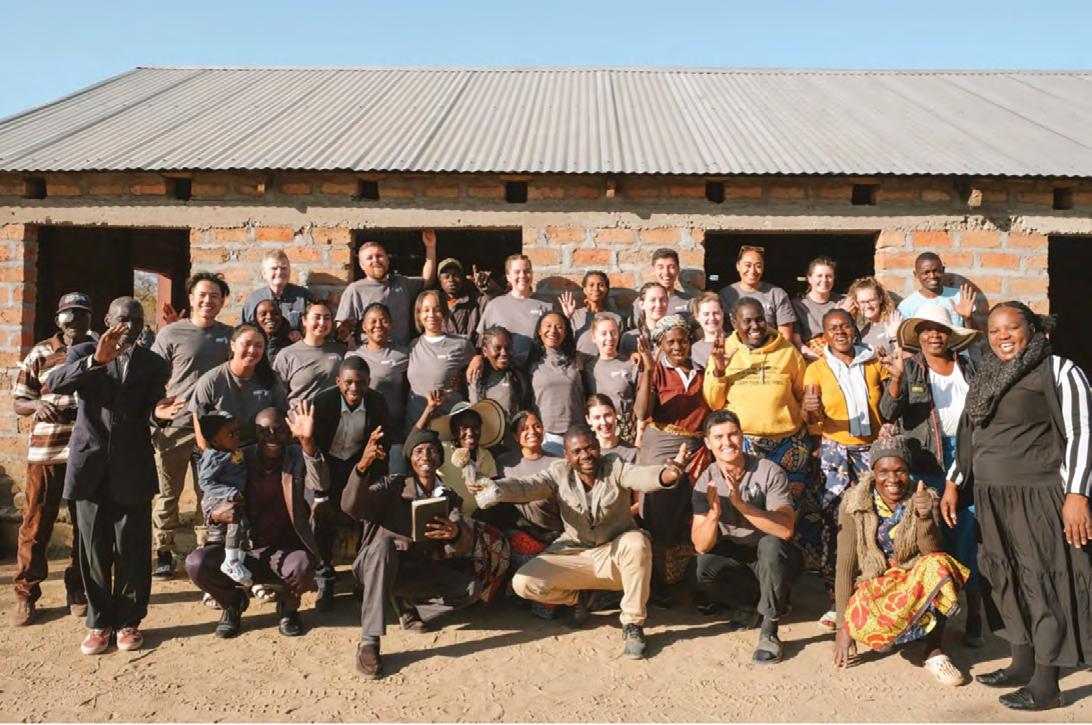
Stepping out of the cars at the small, dusty village of Matengu, the 23 of us were totally unprepared for the life-changing experiences that awaited us over the next 10 days.
Together we had just enjoyed all the lavish luxuries a tourist can enjoy in Zambia: going on safari, dining with giraffes and zebras, and visiting the majestic Victoria Falls. But arriving in Matengu village was like stepping into an entirely different world. There were no showers, no cooking facilities, no running water, no shops and access to drop toilets only (which had been built especially for our arrival). We were sleeping in tents, showering with a bucket and making the most of what we had. Our meals were repetitive and simple—rice, beans, cabbage, potato (or taro) and soy meat chunks, with the occasional treat of pasta. We had well and truly left familiarity behind to experience a taste of what some people in the world live like every day.
Greater Sydney Conference, in partnership with Pastor Joel Slade, organised a mission trip to assist in building a new health clinic for the community of Matengu. Pastor Slade shared that “by Australian standards this is not a remote community; they are only 16km from the main road, but when you are travelling on foot or by ox cart, this is very remote. And for those who are needing medical assistance, this distance can mean life or death. I met a man walking with crutches because he broke his foot 10 years ago and couldn’t access medical services.”
Prior to our arrival, Bible worker John Mubiana—sponsored part-time by Riverside Farm Institute—had built the foundations and walls of the new health clinic. Our team assisted in fixing the door frames and window frames, laying bricks, building the roof and rendering the building. Alongside this, the nurses and medical professionals among our group also provided health checks and medical support to the community. During our 10 days in Matengu, our medical team were able to provide medical support to more than 230 community members and transported dozens of patients to the hospital for treatment.
Each afternoon, our mission team would divide into three groups and run kids' clubs across three sites in the nearby communities: one in Matengu, one in Silelo and one in Siamalange. This involved organising crafts for the kids, singing songs and playing games, and teaching the kids stories from the Bible—with the help of translators. Following this, each site ran an evangelistic campaign focusing on fundamental Adventist topics such as the gospel, the Sabbath, the second coming and baptism. Many of the missionaries volunteered to preach these sermons.
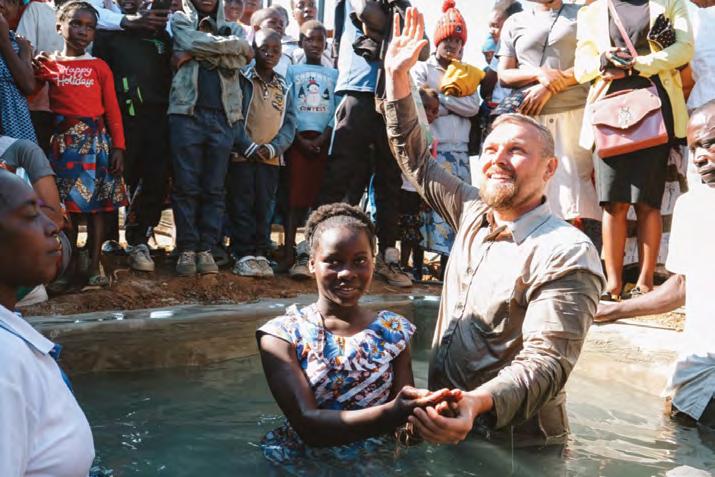
On the final Sabbath, 29 individuals from the community were baptised in a font built specifically for the occasion in Mr Mubiana's backyard. It was a beautiful occasion which brought tears to the eyes of many from the mission team and the community, with all voices lifted in song, in both English and Tonga (the local language).
None of this would have been possible without the
Jacinda Ralph, the coordinator of the mission trip at the Greater Sydney Conference Youth Department:
“We experienced the joy of serving others, the challenges of stepping outside our comfort zones and the beauty of building relationships across cultures. It reminded us that when people come together with a shared purpose, God does something powerful.”
dedicated work of the ministry team leading the mission trip, as well as the preparation of the selfless Bible worker Mr Mubiana. Mr Mubiana must be recognised for the immense sacrifices he has made to serve as a Bible worker in the Matengu region, forsaking job security and loved ones, and suffering great losses for the sake of sharing the gospel. But through his resilient and steadfast faith in God, he has been able to plant six churches and win many souls for Christ.
Many of the people in Matengu and the surrounding villages have no money, no education and no jobs. Most don't have access to modern technology or devices. But what they do have they give freely— their love. Their smiles are as vibrant and bright as the African sun and the depth of their relationships, generosity and selfless love touched each of us in unique and deeply moving ways. Their faith, devotion and dedication to the gospel is an inspiration to us all. Serving on mission trips is a greatly rewarding experience that can deepen our faith and bless us as we serve. Proverbs 19:17 says, “Whoever is kind to the poor lends to the Lord, and he will reward them for what they have done.” It was certainly the experience of all those who attended the Zambia mission trip that in serving others, we were richly blessed by God.
Olivia Fairfax production assistant, Adventist Media
Ilara Erikson:
“Having the opportunity to work alongside the local Zambian nurses to serve their community and assess over 230 patients was a once-in-a-lifetime experience and something I’ll cherish forever.
Lohert Talipuan:
“Our mission trip to Matengu Village was truly a oncein-a-lifetime experience. It was a blessing to work together and reach out in Matengu and the surrounding villages of Silelo and Siamalange. Being able to connect with the community through kids' clubs and preaching enabled me to see the different ways that God can lead and provide. While the whole trip was a huge blessing, what had the greatest impact on me was the connection with other believers. It was meeting all the different people who are a part of God’s family and forging friendships in this life that will continue in heaven.”
Pastor Joel Slade:
“In Australia we get used to seeing need all around us and, in many cases, we place the responsibility on the government to meet that need. For me, this trip highlighted the incredible impact that a Christian can have when we set out to be a blessing to others.”
Baptised at 88
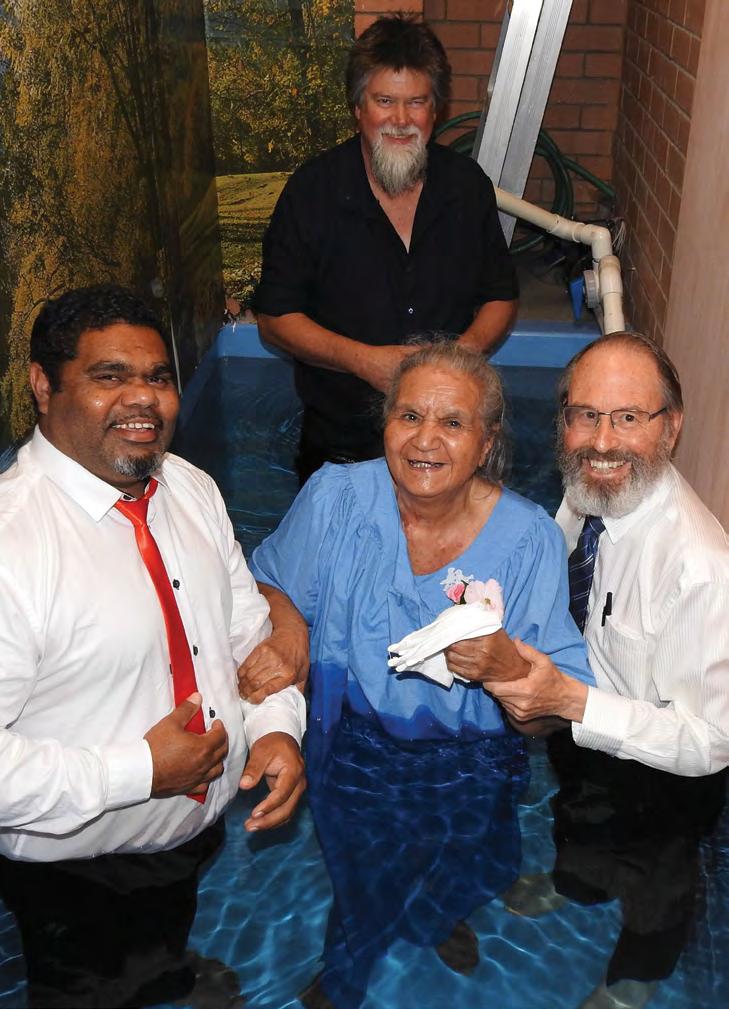
Did you say you are going to church today on Sabbath? On Saturday? Can I come?” asked Vivienne Sahanna. “Sure,” said Millie Brand, who was visiting Vivienne’s house in Belmont, Perth, from the Kimberley. Millie had come there because her son Elton Hobbs’ partner was Vivienne’s granddaughter Arianne Fuller. So that Sabbath they all went to Karla Bidjar Aboriginal Church in Perth.
Vivienne Sahanna (nee Corbett) is a Binjareb Aboriginal lady who grew up in Pinjarra. (Binjareb is one of the 14 groups making up the Noongar nation in the southwest of Western Australia.) She was one of 10 children and trained as a nurse and a midwife. She worked in Perth as well as in the Bidyadanga and Broome communities in the Kimberley.
Vivienne’s sister Lorne (deceased) had become an Adventist as a young person and attended Carmel Missionary College for one year. After that she went to work at Karalundi for a short time as cook. Vivienne and Lorne had been very close as sisters. Marriage and work occupied Vivienne and she never joined the Church as a young person but she didn’t forget about the “Sabbath church” that Lorne had attended.
Vivienne has read her Bible through 27 times. When she watched Pastor Doug Batchelor’s evangelistic DVDs and Pastor Don Fehlberg’s evangelistic DVDs it all made sense to her. She had only one question—when could she be baptised? Despite her mobility issues—and being 88 years old—she was determined.
Vivienne also had met up with the late Meena Seeber a number of times over the years—the first time when she was about 16 years old. Meena was a faithful Aboriginal Adventist, and her husband, Mick, who had just turned 90, was invited to come to Vivienne’s baptism at Maida Vale church. He was eager to come and support this friend of his late wife. Accompanying Mick were three of his daughters—Joanne, Trudi and Sheralee—along with his grandson Damien Eacott. Vivienne had come to her baptism without any of her family members to support her but when she met Mick and his daughters she felt she really did have family in attendance!
When she arrived home after her baptism she eagerly announced to her son: “Now I am a Seventh-day Adventist.”
Pastor Don Fehlberg is a retired Aboriginal and Torres Strait Islander Ministries remote area pastor who is still very active in ministry. He writes from Perth, WA.
Conversations
No good letters?
Dear Editor, is it because you don’t receive many good letters that you need to fill up over half a page with the headline “Conversations”?
Dereck Binning, via email
Editor's note: While white space is important (so our wonderful designers maintain), we do sometimes have a shortage of "good" letters. We may get feedback that is too short or all the same (think comments online) or too long or too abstract. We try to print everything we receive that is relevant and succinct enough, so we encourage you to keep reading and responding.
Service really does matter
I really appreciated “Service: does it really matter?” (January 31). STORMCo really did cause a storm in a teacup so to speak! Parents raising children in the ’90s and 2000s can all attest that service to others really does matter as the excited ripple effect continues to this day.
Children learnt in a very practical way, often for the first time, how to “Love thy neighbour” and fulfilling much of the gospel message as seen in 1 Corinthians 10:24: “Let no-one seek his own good, but the good of his neighbour.”
Understanding that it is in the experience we become changed, STORMCo became a changing point for many; barriers dissolved and a
“can-do attitude” replaced nerves as age, culture and adolescent self-consciousness turned into a super power. Space was created in a cluttered life and community was able to grow and expand.
This expansive suburban group took on their own challenges as well as those they served. The idea of existing for the sake of others (Albert Einstein) was fertilised and transformed normal childish selfishness into a utopia, a taste of heaven on earth.
So far, I refer only to those serving on the team, but the adults and children being served and participating in the STORMCo events met more than a cheeky bunch of kids with funny face paint and loud games. The group that received the visitors had the opportunity for a new day to dawn, the LESBR day if you like (as the author mentioned in his five key elements). Each one experienced the opportunity to be listened to, engaged with and served—having real needs met and building a life-long framework of community bonds and long-term relationships. A recipe from God's Word or a shining smiling face— not a novelty but at the same time not a given or an immersive experience for many [demonstrated that] both things can be true at the same time— you are loved even if things aren’t lovely.
The truth bomb that service to others really matters is the key that unlocks the door. The door where
you can leave a world of pain and loneliness behind. The door where, when you enter, you walk through the gate of acceptance, love joy, peace and belonging.
I totally agree: the overarching goal is to embody and share the fruit of the Spirit.
Praise and glory be to God for the acronym changing hearts one brushstroke at a time and for a pastor with a servant heart who reminded us of it.
Heidi Tually, NSW
Safety knot
I would like to congratulate the author of the editorial “Deeper meaning” (February 7). I agree 100 per cent with his remarks. The increasingly superficial and secular nature of what was originally the God-given institution of marriage is profoundly disappointing. It sometimes gives one the impression that for some people it is little more than an excuse to have another party. Some of that can be blamed on programs like Married at First Sight, but I suspect they are just “art mirroring life”.
As my wife and I approach 54 years of commitment to each other, we know about marriage's “highs and lows” and how, without God, things could go badly wrong. For those of you contemplating marriage, please remember . . . it is God tying the knot . . . and it's a “safety knot”, meant to never be broken.
David Pennington, NSW
Obituaries
BLUCHER, Wendy Rosemary, born 30.9.1937 in Alberton, SA; died 28.12.25 in Bedford Park. Wendy is survived by her husband, Trevor; daughters, Robyn and Gray Whayatt, Julie Fehlberg, and Nerida and Geoff Stafford; and brother, Wilkinson. She loved to serve her church through music, playing the organ for the many congregations she was part of. She loved Jesus and rests in peace, awaiting His return.
David Yeo
DRAPER, Laurence Moreton, born 25.3.1933 in Parkes, NSW; died 1.10.25 in Avondale House, Cooranbong. Laurie was predeceased by his wife, Joy (nee McGrath). He is survived by children, Julie Rogers (Mandalong) and Ken (Orford, Tas); grandchildren, Lachlan, Cameron and Susan; and great-grandchildren, Leighton, Elizabeth, Oliver, Tanner and Matthew. Dr Laurie served Adventist Education for many years, helping establish the science departments at Avondale and Pacific Adventist universities, and teaching at Avondale and Kabiufa high schools. He also served in mission in PNG and volunteered across Thailand and the Pacific. “Pa” is remembered by family as innovative, adventurous, practical and generous.
Clansi Rogers, David Thiele
MAJCHROWSKI, Pastor Eugeniusz Jan, born 8.7.1928 in Brzes´c´, Poland; died 14.12.25 in Adelaide, SA. Eugeniusz was predeceased by his wife, Czesława, in May 2024. He is survived by his daughters, Alicja Bukojemski, Joanna Majchrowska and Elz˙ bieta Ciuk; grandchildren, Tom, Adele and Dion; and great-grandchildren, Oscar, Matilda and George. Pastor Eugeniusz served faithfully in the Adventist Church, beginning in Poland in 1953 and continuing in Australia from 1965, pastoring at Oakleigh Polish (Vic) and College Park (SA). He co-founded the Congresses of Polish Adventists and was a
much-loved pastor and member of College Park church. He will be greatly missed.
Jan Pollock, Matthew Hunter
MITCHELL-FEHLBERG, Nancy (nee Rabe), born 14.4.1930 in Glen Huon, Tas; died 23.10.25 in Warburton, Vic. Nancy was predeceased by her spouses, Kenneth Mitchell, and Raymond Fehlberg in 2021. She is survived by her children, Robert Mitchell and Ellen Hird; and grandchildren, Tara, Jasmine, Thomas and Levi. Nancy was a loving and kind sister, wife, mother, grandmother, great-grandmother and friend to many. She will be sadly missed by her family and community, who are comforted by the hope of the Lord’s return when they will see Nancy again.
Peter Watts
TOLHURST, Pastor
Leonard Philps, born 13.12.1930 in Tonga; died 1.1.26 in Ballarat, Vic. Len was predeceased by his wife, Valerie Irene McIntyre Myers in 2012. He is survived by his son, Ewan and Lucette (Sydney, NSW); daughters, Anne and Brian Verity (Ballarat, Vic) and Sharon (Gisborne); three grandchildren; and four great-grandchildren. Born to missionary parents, Pastor Len served faithfully as an educator and theologian, teaching in India and lecturing at Avondale University, Fulton Adventist University, Pacific Adventist University and Hong Kong Adventist College. He was a widely respected speaker and author, remembered for his distinctive speaking ability and strong intellect, bringing the gospel message to countless people around the world.
John Hammond, Roger Nixon
Advertising
IN THE STEPS OF PAUL TOUR OF TURKEY AND GREECE September 13 to October 4, 2026. Follow the footsteps of the apostle Paul, connecting faith to the ancient sites of Ephesus,
Corinth, Thessaloniki and Philipi. Visit the Seven Churches of Revelation and overnight on the Isle of Patmos. Conducted by Dr Peter Roennfeldt. Contact Anita at <alltrav@bigpond.net.au> or 0405 260 155.
THE INCREDIBLE JOURNEY
Discover the biblical sites of Israel, Jordan and Egypt in Oct-Nov 2026. Join Pastor Gary Kent on an amazing and unforgettable travel journey. For full details please contact Anita at Allround Travel <alltrav@ bigpond.net.au> or 0405 260 155.
BISHOPDALE CHURCH 50TH ANNIVERSARY. April 17 and 18. Join us for a weekend of celebration, worship and thanksgiving as we honour God’s provision and step into our refurbished building. See <ourchurch. co.nz/50years> for details.
STUDY THE ADULT SABBATH SCHOOL LESSON YOUR WAY
Accessible formats for vision loss (large print, audio CD, app, YouTube, podcast and braille) or hearing loss (Hope SS captioned). Contact CVHS on +61 (02) 9847 2296 or email <cvhs@adventistmedia.org.au>
AVONDALE FAMILY FUNERALS. Offering compassionate cremation and burial services with dignity and care at your cemetery of choice in NSW led by an Adventist funeral director. Contact Mark Windus on 0411 797 854 or <director@ avondalefamilyfunerals.com.au>.
NEED LOGOS, TEMPLATES OR BRANDING RESOURCES?
The Adventist Identity website provides official tools to help your church communicate professionally and consistently. Explore <identity.adventistchurch.com.au>.
Correction: the “A summer for eternity: Young people commit to baptism and Bible study across camps” article (Feb 21) reported the baptism of Noah Depaz as being in the Snowy River (Jindabyne, NSW) when in fact it was at Crosslands Youth and Convention Centre (Galston).
NOTE: Neither the editor, Adventist Media, nor the Seventh-day Adventist Church is responsible for the quality of goods or services advertised. Publication does not indicate endorsement of a product or service. Classified advertisements in Adventist Record are available to Seventh-day Adventist members, churches and institutions only. All advertisements, appreciation, anniversary, wedding and obituary notices may be submitted via <ads@record.net.au> or online at <record.adventistchurch. com>. Notices will not be reprinted unless there is an error of fact caused by Record staff.
Adventist Media Locked Bag 1115 Wahroonga NSW 2076 Australia + 61 (02) 9847 2222
Cover credit Getty Images
Next issue
Adventist Review March 14
World Church World Church
13TH SABBATH OFFERING
TO STRENGTHEN MISSION
IN THE SOUTH PACIFIC
What a privilege it is to support, and be supported by, our dedicated church family around the world. Twenty-five percent of this coming 13th Sabbath Offering will come to us in the South Pacific, and the balance will go to the world mission fund for other mission projects.
Here’s how this quarter’s 13th Sabbath offerings will be invested into South Pacific mission:
1. Wallis
A New Centre of Influence on the Polynesian atoll of Wallis will include community meeting facilities and a radio station and will also be used for worship services on Sabbaths.
2. Omaura
Omaura School of Ministry is bursting at its seams as hundreds of dedicated, frontline, lay ministers seek Biblical training. Your offerings will help to quickly double the school’s capacity to support the needs in Papua New Guinea Union Mission.
3. Solomon Islands & Vanuatu
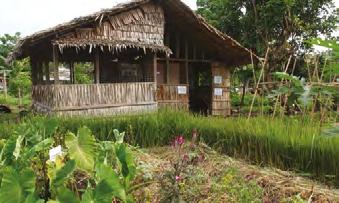
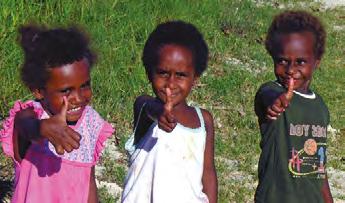
Children’s Health, Harvesting Love is the name of a new program to assist the many children in the Solomon Islands and Vanuatu suffering from poor health and malnutrition. This program's comprehensive approach combines food security, health education and disability support. It will focus on:
• Food demonstrations to teach families the nutritional benefits and new uses of local foods, to ensure balanced diets and healthy children.
• Nursery development and seeds distribution to encourage sustainable practices and enable families to grow nutrient-rich crops at home.
• Home gardening support to assist families in setting up more productive gardens and to promote environmental stewardship.
• Distribution of wheelchairs and assistive devices to support children with disabilities. These essential mobility aids will allow them to engage more fully in educational and social settings.