There have been times in my life where I’ve felt a bit disconnected from a church community.
A few weeks ago, I took my wife out to a stage production of The diary of Anne Frank for her birthday. One of her favourite books at high school, she’s always had a love for the story of the young Jewish girl hiding out in Amsterdam and journalling through World War 2. Her house, now a museum, was a must visit on our European itinerary.
The story is heartbreaking, no less so because we know the ending. I watched with a sense of appreciation but also foreboding, knowing that Anne doesn’t survive the war, knowing that this precocious, inquisitive and vibrant spirit is crushed by forces beyond her control.
I am also thankful we could go. With two young children at home, it’s not often we get out to do something like that. We had to rely on our village. My wife’s parents were available to look after the kids at late notice. The show only ran for a week, and we attended on the last night.
So we left the kids at home with their grandparents and headed into the big city for a bite to eat and a show.
Life can’t always be navigated alone. That is true in the family, in the workplace, on a team, and in the church. There is a reason the author of Hebrews encourages followers of Jesus to remain in community: “And let us consider how we may spur one another on toward love and good deeds, not giving up meeting together, as some are in the habit of doing, but encouraging one another—and all the more as you see the Day approaching” (10:24,25).
Many today think it is okay to be spiritual but not go to church. “Jesus loves me, I’m saved, that’s all I need.” It’s not true. While the church is not perfect, we need each other—for encouragement, for accountability, for prayer, for a glimmer of hope when things feel hopeless.
There have been times in my life where I’ve felt a bit disconnected from a church community. Whether through moving interstate or transitioning for another reason, it is harder to maintain a relationship with God and can feel isolating to not have a “home” church where you are known, involved and hopefully loved. While I understand there are many reasons one may not be able to physically attend church, as Adventist, we have a worldwide community of believers and the modern age provides many alternative ways to connect.
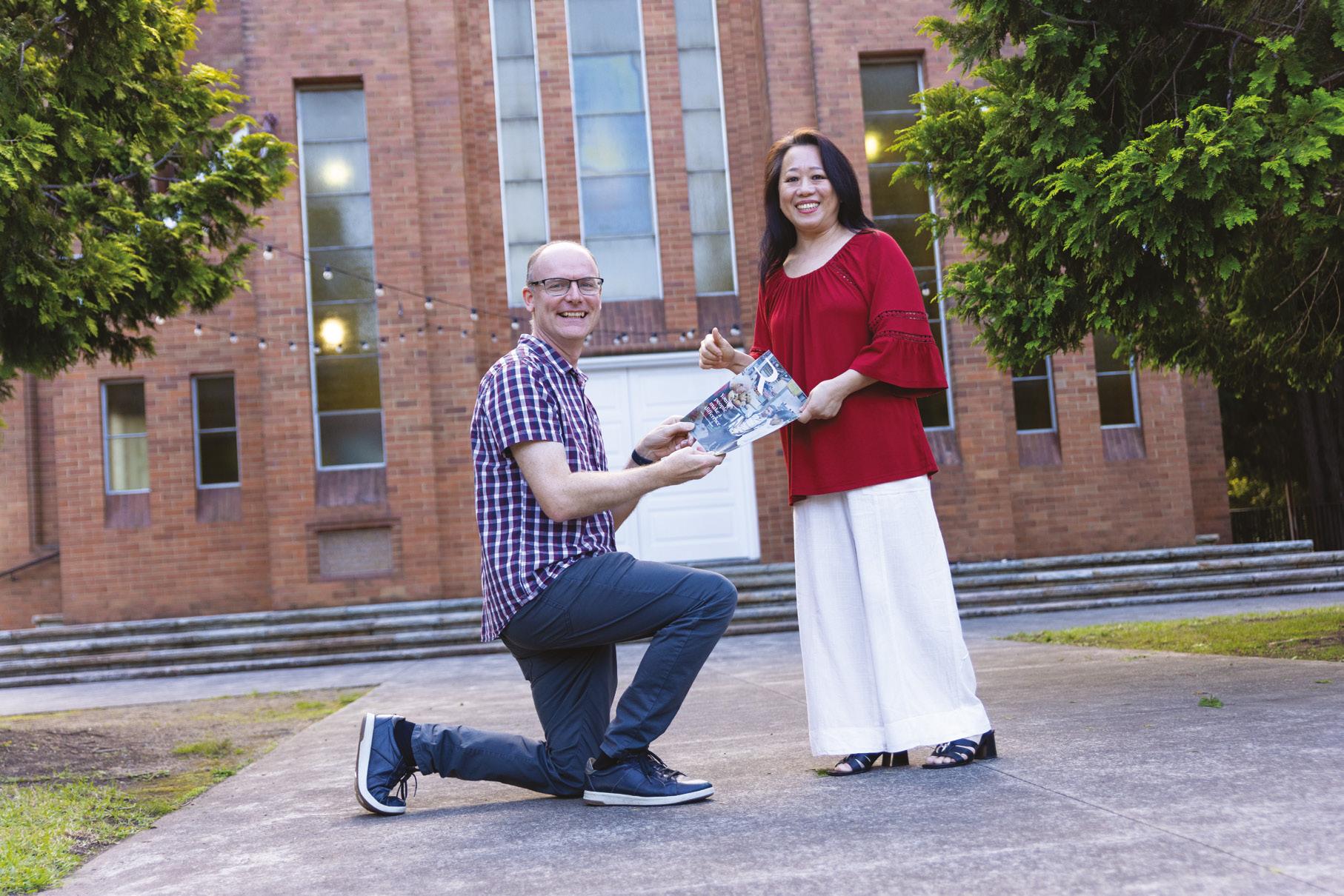
Adventist Record is one way to keep connected. With contributions from all around the South Pacific and beyond, it reminds us of experiences outside of our own in our church family. We can be inspired by your story. Record relies on contributions from around the South Pacific—stories of ministries, your personal testimonies and meaningful perspectives. We need each other.
I love the fact that we’ve been receiving more stories from remote regions in the Pacific. I love reading your letters and feedback, even when you don’t agree, because it shows we care about our church and making it better. I love reading the testimonies of lives changed in our communities. And none of that would be possible without your contributions.
We’re so grateful, because with your help we can keep our wider church community informed and spiritually nurtured through printed magazines, our website, our weekly e-newsletter, podcasts, our WhatsApp channel and social media. There are those who, for whatever reason cannot attend church anymore, who stay connected through Adventist Record
This Sabbath, May 2, is our Adventist Record offering. We’ve had some fun with the story of Informed Norm (formerly Uninformed) in the past few years. This year, Norm discovers the value of being part of this interconnected community, and he cannot predict how his engagement might spread to others. You can watch the series at <record.adventistchurch.com/record-offering>.
It’s not just your written contributions that help us continue this important ministry, but your offerings each year. Thank you for your generosity with last year’s offering—please give generously this year so we can keep reading, writing, sharing and serving together.
Niue: a quiet witness to peace
Maveni Kaufononga South Pacific Division vice president
During a recent visit to Niue, a small Pacific island nation in free association with New Zealand, I was struck not by what the country has, but by what it represents. Part of the Trans Pacific Union Mission, with a population of around 1800 people, Niue offers a glimpse into a way of life that is increasingly rare in today’s fast-paced world.
There are no large shopping centres, theme parks or advanced high-tech infrastructure. Yet, what Niue lacks in modern conveniences, it more than makes up for in something far more valuable—peace and joy.
Life on the island is deeply relational. People know one another, greet each passing vehicle with a friendly wave, and engage in conversation in the supermarket as if among family. There is a level of trust that allows one to leave a car unlocked without fear. These simple practices reflect a community built on respect, connection and harmony.
As I observed this, I was reminded that true joy is not found in what we possess, but in how we live. The peace evident in Niue is not accidental—it reflects values that align closely with the Christian life. Scripture encourages us in Romans 12:18, “If it is possible, as much as depends on you, live peaceably with all men.”
As followers of Christ, we are called to embody this spirit of peace. Our joy does not come from material abundance, but from lives centred in Him. When Christ is at the heart of a community, relationships are strengthened, trust is built and peace becomes a lived reality.
Niue may be small in size, but it offers a quiet yet powerful witness: a reminder that when Christ is present, even the simplest of places can reflect the richness of His kingdom.
Pray for our church in Niue and their small groups as they prepare for Niue for Christ, July 12–25. There will be four pastors, and two sites with health teams conducting programs there.
Auslan learning offered to Adventist classrooms
Wahroonga, NSW | Tracey Bridcutt
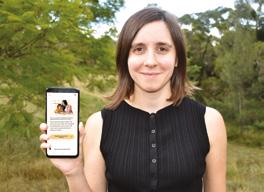
Adventist schools across Australia are being encouraged to take advantage of a free one-year offer of the Auslan Wiz app, providing an opportunity to build communication, inclusion and awareness of Deaf culture in classrooms. The offer gives schools access to a practical and engaging way to introduce Auslan, with short, interactive lessons designed to fit easily into daily learning.
Cassie Etwell, coordinator of Christian Vision and Hearing Services (CVHS), said the offer comes at an important time for schools seeking ways to support inclusive communication. “Accessible Auslan learning has never been more important, and we’re delighted to see resources like the Auslan Wiz app being made freely available to Australian schools this year,” she said.
“This tool brings high quality and engaging Auslan instruction directly into classrooms—helping students and teachers build confidence in sign language in just a few minutes a day.
“With lessons designed and delivered by Deaf Auslan users, it
offers an accurate and enjoyable learning experience. We encourage our Adventist schools to take up this valuable opportunity and integrate Auslan Wiz into their learning programs.”
The app, developed by Deaf-owned organisation Signpedia in partnership with SignLab, offers flexible, self-paced learning through quizzes, videos and practical exercises.
For Kimberley Ugljesa, who interprets on SDA Deaf Church Down Under YouTube and in church, learning basic Auslan can make a meaningful difference in everyday interactions.
“You never know when you will meet a Deaf person. Try your hand at learning a few signs and you may find it easier than you think,” she said.
The push for greater accessibility is already being reflected in local church life, with the Salisbury congregation in South Queensland offering Auslan-interpreted services.
Schools interested in accessing the free one-year subscription can visit <auslanwiz.com.au>.
Mission and media conference comes to SPD
Auckland, New Zealand | Jarrod Stackelroth
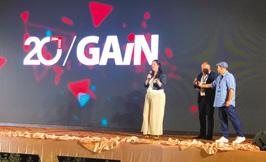
The South Pacific Division (SPD) is set to host the largest global Adventist convention it has seen for more than 30 years, when the Digital Strategy for Mission Convention (DSM) is held in Auckland, New Zealand, this July.
The DSM is three events in one, with Hope Channel’s Network Leadership Conference (July 2–7) followed by GAiN (July 8–11) and the Adventist Technology Summit (July 12,13). Individuals can register for one, two or all the events.
“DSM brings together three global conferences in one integrated experience, equipping Adventist communicators, media professionals and technologists for mission in a rapidly evolving digital world,” said Ole Pedersen, Hope Channel NZ manager. “Each event builds on the next, creating a unified experience that
strengthens collaboration, innovation and mission impact.”
Hundreds of international delegates are expected, along with guest speakers including General Conference (GC) president Pastor Erton Köhler and NZ-born evangelist John Bradshaw.
“This is a great opportunity for leaders to visit our Division and get a better idea of who we are and what we are doing,” said Dr Brad Kemp, CEO of Adventist Media, an institution of the SPD that will be helping to support the event.
SPD leaders are encouraging local participation in the event. “GAiN coming to the SPD and NZ is a once-in-a-lifetime opportunity for our people in Australia, NZ and the Pacific Islands,” said Mr Pedersen.
Visit <adventist.digital/convention> for more info.
Alyssa Truman, GC communication director, presents at the 2024 DSM conference in Chiang Mai, Thailand.
Kimberley Ugljesa displaying the Auslan Wiz app on her phone.
San unveils world-class neurosurgery theatre
Wahroonga, NSW | Tracey Bridcutt
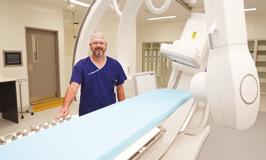
Sydney Adventist Hospital (the San) has launched a neurosurgery theatre described as the most advanced of its kind in Australia.
The new interventional neuroradiology theatre will benefit Australians suffering from strokes, aneurysms and other life-threatening neurological conditions. According to the San, it is only the second such facility in the world outside the United States.
The state-of-the-art hybrid theatre enables patients to be diagnosed and treated simultaneously in the same room, removing the need for transfer and allowing clinicians to act faster in time-critical situations.
The theatre was officially opened on April 1 by Member for Wahroonga Alister Henskens during an event attended by local dignitaries.
Head of neurosurgery at the San, Clinical Professor Brian Owler, said the new theatre represents a major step forward for both patients and clinicians.
“By combining advanced biplane imaging with open neurosurgery capability in a single operating room,
we can diagnose and treat patients in real time, without delay. It brings faster diagnoses, greater precision and improved patient outcomes,” he said.
“For clinicians, it enhances speed, accuracy and confidence in performing highly complex procedures, particularly in stroke and aneurysm cases where every minute matters.”
Adventist HealthCare CEO Brett Goods said the investment reflects the growing need for advanced neurological care in the community.
“Stroke affects more than 55,000 Australians every year and remains one of the leading causes of death and disability,” he said.
“We know rapid intervention can significantly improve outcomes, which is why this new theatre is so important for our community. It ensures patients can access advanced, life-saving care quickly and close to home, while allowing us to treat more neurological patients on site and reduce the need for urgent transfers.”
The new theatre was made possible through donations to the San Foundation.
School improvement rollout begins in Tonga
Neiafu, Tonga | Elisapesi Manson/Record staff
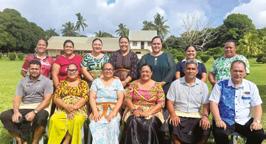
The rollout of the Quality Adventist School Pacific (QASP) framework has begun in Tonga, with more than 60 teachers and school staff attending training from March 6 to 11.
The training was led by South Pacific Division education director Dr Elisapesi Manson and Trans Pacific Union Mission (TPUM) education director Talonga Pita, and marks the first phase of implementation.
QASP has been developed as a contextualised school improvement framework for Adventist schools in TPUM and the Papua New Guinea Union Mission, adapting the Quality Adventist Schools model used in Australia to better reflect Pacific contexts.
With around 400 Adventist schools across the two unions, maintaining accreditation standards has been an
ongoing challenge. QASP aims to provide a clearer structure for school improvement while supporting schools to strengthen their Adventist identity.
Participant Patea ‘Aho said the training provided practical ideas for strengthening both quality and identity in Adventist schools.
The framework was approved by the Adventist Accreditation Association at the General Conference education advisory meetings in September and will be rolled out across the Pacific.
The South Pacific Division has committed funding to support the implementation and monitoring of QASP during the current quinquennium.
The rollout also aligns with TPUM for Christ, scheduled for July–August, reinforcing a shared mission focus across education and evangelism.
SPD education director Elisapesi Manson and TPUM education director Talonga Pita with teachers and staff at Mizpah Adventist High School.
Radiographer Gavin Watts in the new theatre.
Samoan cookbook makes global mark
Riyadh, Saudi Arabia | Tracey Bridcutt
A cookbook born in Samoa is making its mark on the world stage.
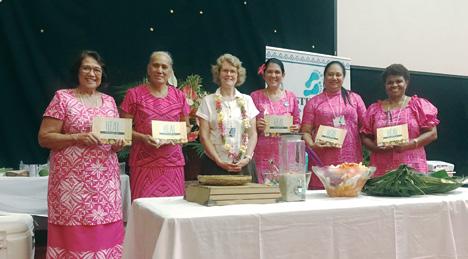
HEAL: The Samoan Way has won Best Oceania Fundraising Book at the Gourmand World Cookbook Awards.
The announcement was made at the Saudi Feast Food Festival in Riyadh, where chefs, authors, publishers, diplomats and influencers from 96 countries gathered to celebrate the international awards.
Produced with support from Signs Publishing, the cookbook was nominated alongside three other Australian titles, including The Best of Maggie Beer by The Australian Women’s Weekly, making the win particularly notable.
“This win is wonderful for Samoa and the South Pacific,” said 10,000 Toes Campaign coordinator Pamela Townend. “The recognition highlights Samoan knowledge, healthy food and strong communities, showing that even Pacific nations can achieve global success.”
Launched at the 2023 10,000 Toes summit in Samoa, HEAL has helped bring the work of 10,000 Toes to a global audience.
“This cookbook was the initiative of several women in Samoa who had a passion to create something healthy, and here we are a few years later receiving unexpected recognition—highlighting another wonderful achievement for the 10,000 Toes Campaign,” Mrs Townend said.
Co-author Tertia Ryan said it has been well received in Samoa. “People are pleased to finally have a high-quality local cookbook that celebrates and encourages Samoan and Pacific-focused healthy eating and cooking with locally grown fresh ingredients,” she said.
Ms Ryan explained that the book plays an important role in addressing health challenges in the region. “Diabetes is rampant in Samoa and across the Pacific. The cookbook is an excellent outreach resource to guide families toward recipes that are practical, locally sourced, affordable, with better food and beverage options.”
HEAL: The Samoan Way has been shared locally and internationally. Copies were presented to King Charles, Queen Camilla and delegates at the Commonwealth Heads of Government Meeting (CHOGM) in Samoa in 2024. The Gourmand Awards are the world’s only international competition for food and drink publications, with participation from more than 200 countries, recognising books that connect food with culture, education and social impact.
making headlines
Restoring dignity
In Buddhist-majority Thailand, dignity in death carries deep cultural weight. The Adventist Church’s Funeral Ministry is ensuring believers who die isolated after family rejection are honoured with a Christian funeral. The funerals become mission opportunities, as grieving attendees encounter the hope of the resurrection.—SSD
Tech for ageing gracefully
Researchers from River Plate Adventist University (Argentina) have developed a low-cost, privacy-focused sensor system to monitor daily activity patterns of older adults to detect falls and unusual behaviour without using cameras or audio. By combining home-installed sensors with wearable devices, the project aims to enable faster responses from caregivers while preserving independence.—ANN
Youth reach prisoners
Adventist youth in Malawi donated food and soap to Mzimba Prison during Global Youth Day, providing practical aid with personal encouragement for inmates. The visit stood out for its direct connection with prisoners, who expressed gratitude for being remembered despite their circumstances.—Malawi24
Veggies guard your kidneys
Researchers found vegan and pesco-vegetarian diets are linked to better kidney function, with plant-based eating helping kidneys filter blood and remove waste more efficiently. The study suggests these diets could offer a cost-effective strategy to protect against chronic kidney disease.—Loma Linda University
The book was launched at the 2023 10,000 Toes summit in Samoa.
Wild weather cuts SNSW camp short
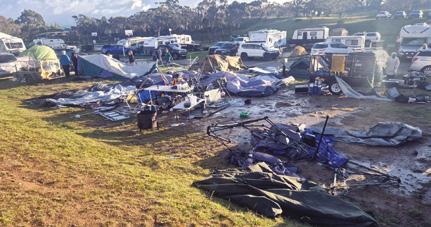
South New South Wales (SNSW) Big Camp was forced to end early after a wind storm swept through the site (April 9), causing damage to the big, teen and junior tents. According to SNSW Conference communication coordinator Kyle Morrison, strong winds began impacting the camp around midnight. “The pastoral team mobilised and began evacuating people. All those in tents were moved up to the lodge, to the dining room and kids’ program rooms.” Leaders worked through to the early hours of the morning to ensure everyone was safe. “We gave everyone free breakfast, and then the whole pastoral team decided to cancel the remainder of the camp.” One woman was reported to have sustained facial injuries after tripping —Tracey Bridcutt
Bringing hope to inmates
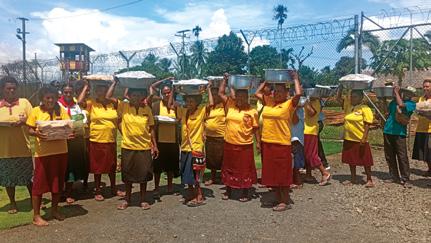
Alotau Town church and visiting members from Waigani church in Port Moresby joined forces for a major outreach at the Giligili Correctional Institution in Milne Bay, Papua New Guinea, as part of Global Youth and Children’s Day. The two churches mobilised members of all ages—from Adventurers and Pathfinders to Adventist Community Services (ACS) volunteers—to share a message of hope and provide food for inmates and staff. “The visiting brothers and sisters from Waigani church added to the strength of the numbers, creating a beautiful picture of unity within the Adventist family,” said Raymond Aaron, communication coordinator for Alotau Town church —Raymond Aaron/Record staff
Leaders equipped
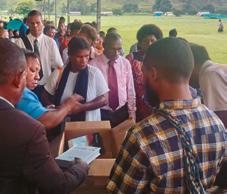
Pastors, elders and church leaders from across Central Papua Conference (CPC), Papua New Guinea, gathered at Bautama from March 5–8 to participate in Discipleship Ambassador Training aimed at strengthening disciple-making efforts in local churches. The training, organised by the CPC Sabbath school, personal ministries and discipleship department, focused on equipping church leaders with practical tools for discipleship and mission. Five hundred Bibles and 500 copies of The Great Controversy were distributed to support local church outreach —Rose Maine Sinias
Big camp Bible study
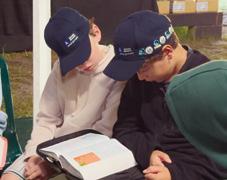
Junior campers took part in practical Bible study sessions during the Big Camp program for North New South Wales Conference. They came in the evenings to hear a message from final-year theology student Cooper Redman on the theme “Faith in action” before gathering the next morning to dive deeper into the passage, modelling in-depth Bible study —Jarrod Stackelroth
Pedal power
A group of 22 riders and five support crew raised almost $A27,800 through a four-day cycling event across South Australia, supporting people living in poverty.
The Adelaide Classic, organised by 25,000 Spins, took place from March 18 to 22, with participants riding between 280 and 320 kilometres across coastal and regional areas.
Participants described the ride as “a great way to help those who are in need”.
25,000 Spins has organised charity cycling events since 2009, raising more than $A7 million for humanitarian causes.
Most of the funds raised—approximately $A24,600—will support the Adventist Development and Relief Agency (ADRA), with additional contributions directed to the Fred Hollows Foundation, Bikes4Life and World Bicycle Relief.
Founder Craig Shipton said this year’s event stood out for its strong sense of community, with the smaller group allowing participants to connect more closely and support one another throughout the ride. “Each rider commits to fundraising at least $A500 as part of the initiative, turning every kilometre into tangible impact.”
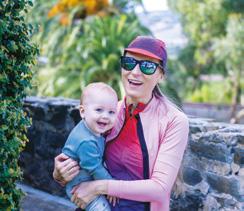
Participants also took part in daily inspirational sessions based on Live More Happy by Dr Darren Morton, which organisers said added a reflective dimension to the experience beyond the physical challenge. Among those involved was a baby who rode with his mother, covering about 190 kilometres during the event
—Juliana Muniz
have news to share?
Send info and photos to <news@record.net.au>
Solomons clean-up
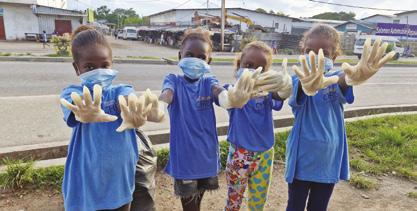
Hundreds of Seventh-day Adventists took part in a mass clean-up across Honiara on Sunday, March 29, as part of preparations for the upcoming Solomon Islands for Christ evangelism program. Members from churches across the city worked in coordinated groups covering major sections of Honiara’s main highway and surrounding areas, collecting rubbish, clearing overgrown grass and cleaning drainage. Organised by the Solomon Islands Mission, the initiative extended beyond the capital, with similar activities carried out in provincial centres, including Gizo. ADRA also supported the campaign.—Juliana
Muniz
National plan for Parkinson’s
Former South Pacific Division (SPD) associate health director Dr Harley Stanton has welcomed the launch of Australia’s first National Parkinson’s Action Plan (NPAP), describing the moment as “historic” following years of advocacy. Dr Stanton, who lives with Parkinson’s disease, was among those in Canberra for the official launch—marking a significant milestone for people living with Parkinson’s across the country. “March 24 was historic for me and my colleagues,” said Dr Stanton, who also served for two years as a public health scientist with the World Health Organisation. “In 2023 the ABC featured my call for a NPAP on national television, and it was later picked up by The Project TV news program.” Dr Stanton, who worked at the SPD from 1987-2000, has long been an advocate for people living with Parkinson’s.—Tracey Bridcutt
Be Well
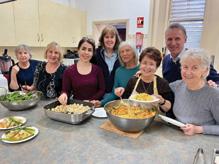
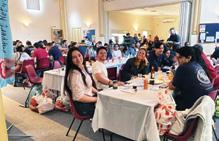
The Be Well Support Network, an initiative of College Park Seventh-day Adventist church in Adelaide, is entering its seventh year of service to the international student community in South Australia. In the past six years we have offered support to more than 5000 students.
The program started in April 2020, when the COVID lockdowns had been instituted and all tertiary educational programs closed. Casual employment opportunities ceased and students faced being away from home with no income and in total social isolation. Many experienced anxiety and stress that affected their wellbeing. Today, new students come in contact with Be Well within days of their arrival in Adelaide by word-of-mouth invitations.
Be Well’s primary focus has been on providing practical support through meals, English courses, cultural activities, camps and social events. Many of the international students regularly experience financial hardship, food insecurity and social isolation while living away from family. Many say that Be Well is their family while they are away from home. It is a real blessing to hear the testimonies of so many of these individuals, who often state that they were able to realise their educational goals because of the support they had received from our program.
One student wrote, “I couldn’t have survived if not for Be Well. I am still in touch with all the friends I met through Be Well Network.”
Be Well has received wide recognition within the Adelaide community and has stood out from many other community programs in South Australia because of its multifaceted approach.
This is beautifully reflected in
another letter from a recent graduate: “I basically survived during my uni days on the groceries I received from Be Well. I also had the chance to experience many activities, picnics, river sports, made apple juice, had wood oven pizza and, most importantly, I learned the importance of community and how we can express kindness and love to one another. . . I would like to try to be as kind and caring as you people are and to contribute back to the community as you have done.”
Some students experienced health and family emergencies which disrupted their study plans, but even in these dire circumstances the Be Well program fundraised for their medical treatments, helped them return home, and provided them with emotional and spiritual support.
The College Park church has invested many financial and human resources to make Be Well accessible to all. Teams of volunteers prepare and serve meals every week. Others collect and sort pantry items—on average more than a tonne of food each week. Each Sabbath as we look over the audience, half of all the
worshippers are Be Well participants. On Sabbath mornings and afternoons groups of students gather for Bible studies and discussion sessions. Over the past 12 months these groups have completed the study of Mark and are now continuing on to Genesis. It is an absolute joy to see the interest, engagement and spiritual growth in the life of all these participants.
A visiting parent from South America joined our weekly activities for a few months, and when it came time to farewell him, the father said, “I have not been a religious person; in fact I’ve been very sceptical about organised religion. Since coming to Adelaide and becoming a part of this program my views have changed. I see here the Christian gospel in action. I value the friendship and sincerity with which your church has provided support to the international student community.”
Several students, prior to returning to their home country, have requested baptism and are now worshipping in Adventist churches in their countries of origin. Significantly, in most of these instances, the interest in church attendance and baptism came not on account of our church volunteers inviting the students to join, but the students asking if they could join our church community and participate in our worship and Bible study program.
In going forward with our mission we see God directing and blessing us every step of the way. We praise God for His abundant love and grace and ask for your prayers and ongoing support.
Dr Marek Jantos coordinator and convenor, Be Well Support Network, Adelaide, South Australia.
GOD WON’T GIVE YOU MORE THAN YOU CAN HANDLE
Does the Bible really say that God won’t give us more than we can handle? I’m sure we’ve all heard this at one point or another. It seems to be a phrase people love to hand around to their friends experiencing hard times.
It’s not very helpful, and no, it’s not in the Bible. Not exactly, anyway. It stems from 1 Corinthians 10:13: “No temptation has overtaken you except what is common to mankind. And God is faithful; he will not let you be tempted beyond what you can bear. But when you are tempted, he will also provide a way out so you can endure it.”
In this verse Paul isn’t talking about suffering; he’s talking about temptation. Two very different things. Because we have free will and the ability to choose, when we are tempted, we have the choice to choose one way or another. Because we are born into a sinful world we will inevitably fall at times.
But even though it’s not in the Bible, is saying that God won’t give us more than we can handle really a bad thing? Surely it might be comforting to someone going through a hard time.
Maybe, but it can do more harm than good. Here’s why: Firstly, people often struggle with things that are far more than they can handle. Even Paul in 2 Corinthians 1:8 says, “We were under great pressure, far beyond our ability to endure, so that we despaired of life itself.” People often face things beyond their ability to endure, and many people break under the weight of despair.
If someone thinks they should be able to endure
something they’re struggling with, it can make them feel guilty for not being able to handle it on their own and cause them to not reach out for support when they should. We can’t always rely on our own strength and should not feel ashamed to ask for help. The Psalms say that “God is our refuge and strength, an ever-present help in trouble” (46:1). One of the ways God helps us is through other people, sent into our lives to comfort, support and encourage us. We need Jesus and we need community (sometimes we even need therapy).
But beyond this, God does not “give” us struggles. He is not vindictive, waiting to see what terrible things He can make you endure. Bad things happen because we live in a world ruled by powers other than God’s goodness. God can use bad things for good, yes—Romans 8:28 says “in all things God works for the good of those who love him”. But He does not inflict trials purposely upon us. He wants to give us good gifts (Matthew 7:11) because He is love (1 John 4:8).
So while it may seem like a comforting thing to say in times of grief, let’s only use this phrase in terms of temptation, because when someone is suffering, what they really need to know is that you love them and are there to support them and that God also loves them and will be with them through whatever they go through.
Mum. A word lots hear. A word some wish to hear. The first words you hope to hear. Will it be MumMum? Or DadDad?
This tiny bundle of joy made you a mum. No matter how you got there. Birth, adoption, step-parent. Maybe it didn’t happen for you. You may be an aunt. You’re a blessing to someone, some other way.
M-U-M
Three letters with a whole lot of meaning.
There’s a lot of mothers in the Bible. One mother was 99 years old! Imagine that!
It’s going to be Mother’s Day. Or maybe it’s already Mother’s Day. Take a moment to appreciate the one who mothered you. If you can thank them, do so. Mums need to feel special.
I thank God every day for my mother. She had her mother as an example.
Happy Mother’s Day to every Mum, step-mum and mum-to-be. May you feel very blessed and special today.
Thank you Lord, for mothers!
De-anne Tasker Rockhampton church, Qld
Weet-Bix Caramel Banana Porridge
Serves: 2 Prep: 5min Cook: 5min
A Beautiful Breakfast for Magnificent Mums (and Mum-like figures!) in Your Life
Ingredients
4 Weet-Bix, crushed
2 cups So Good Almond Milk Unsweetened, or milk of choice
1 ½ tbs brown sugar, divided
Pinch of cinnamon
2 bananas, sliced
1 tbs water
½ tsp vanilla essence
1 tsp margarine
Nutritional Information (per serving)
Method
Step 1: Combine Weet-Bix, almond milk, ½ tablespoon of brown sugar and cinnamon in a saucepan and stir well. Bring to a boil and cook for 30 seconds. Remove from heat and set aside.
Step 2: In a small pan or skillet, stir remaining 1 tablespoon of brown sugar, water and vanilla over medium heat. Bring mixture to a gentle simmer and cook for 1–2 minutes until thickened and reduced.
Step 3: Stir margarine into caramel and immediately remove from heat. Add sliced bananas to pan and stir to coat.
Step 4: Serve porridge topped with banana and caramel sauce.
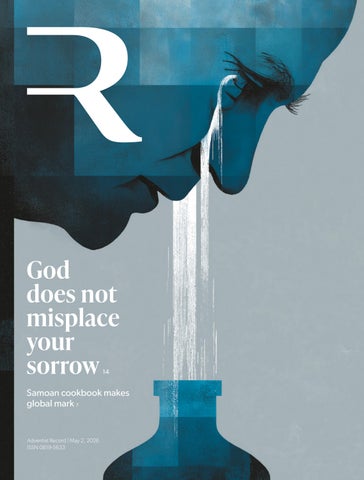
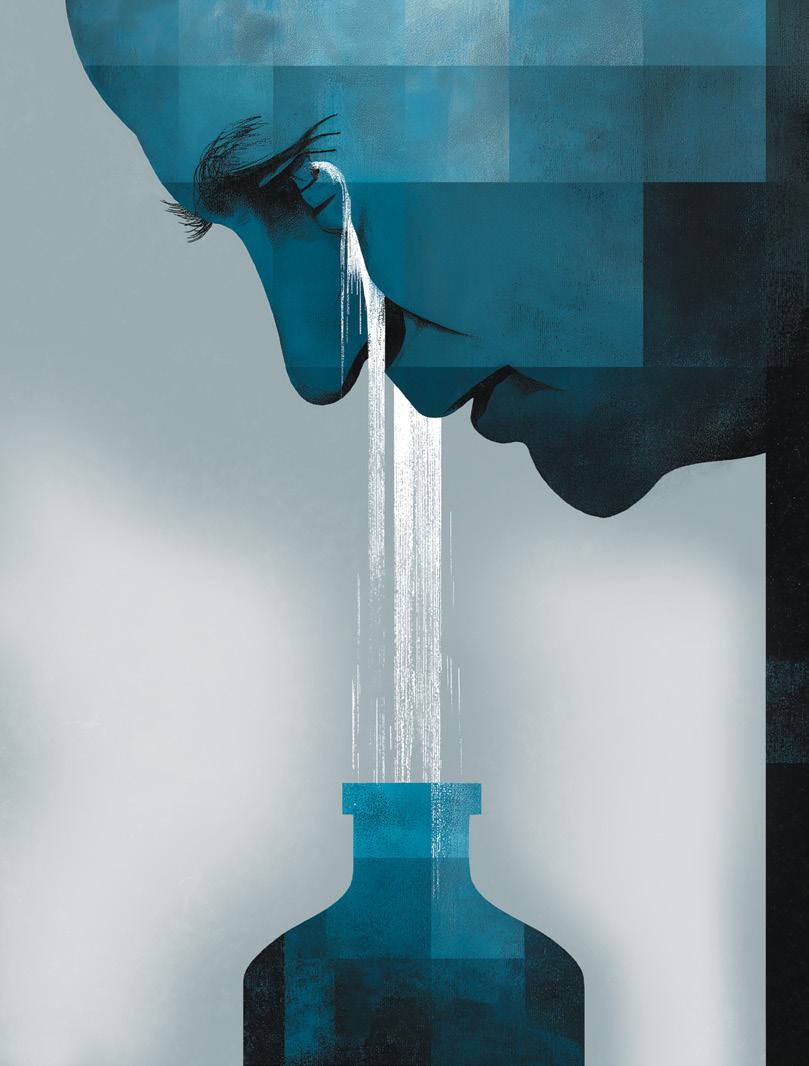
God does not misplace your sorrow
You number my wanderings; put my tears into Your bottle—are they not in Your book?” (Psalm 56:8).*
Some pains strike suddenly, like a cyclone: sudden, loud and devastating. Others come quietly, like an unnoticed leak in the dark: relentless and unseen, slowly affecting the soul. In such seasons of suffering, sorrow can seem to fade away, unnoticed, unrecorded and unimportant.
Psalm 56:8 speaks directly to that fear. It does not explain away our suffering or shame our tears. Instead, it assures us that God attends to our lives with careful detail, even when everything feels confusing and disordered.
A prayer from the pressure cooker
Psalm 56 is not born out of comfort. It puts us right in the middle of David’s crisis in Gath, a time of fear rather than confidence. David openly admits his fear: “Whenever I am afraid, I will trust in You” (verse 3). He also describes the pressure surrounding him, with
enemies twisting his words and watching his every move (verses 5,6). This is a place of sleepless nights and racing thoughts, where danger feels close and safety feels uncertain.
So when David prays, “You number my wanderings” (Psalm 56:8), he is not speaking metaphorically or in general terms. He is talking about the real, unsettled days, the pacing, the fleeing, the restlessness and inner feeling of disconnection. His confidence was not rooted in emotional strength or clarity of mind. It came from the assurance that God was with him. That conviction allowed David to pray honestly, not just bravely. He did not deny his fear; instead, he took it to God. Faith was not the absence of anxiety but the decision to speak to God while still feeling afraid. Psalm 56 shows us that trust can coexist with fear, and that prayers offered from a place of uncertainty are still seen as faith. Even when David’s path felt uncertain, he found comfort in knowing every step is known, counted and held by God.
Tears belong in the life of faith
Scripture never treats tears as spiritual failure. Hannah “wept in anguish” as she prayed (1 Samuel 1:10). Job’s friends “wept” when they saw his suffering (Job 2:12). And at Lazarus’ tomb, “Jesus wept” (John 11:35). If Jesus did not consider tears beneath Him, we should not treat them as beneath a believer either.
Sometimes tears are the most honest prayer we can offer. They are what remain when words are not enough: Lord, help me. In those moments, God does not need explanation or eloquence. He accepts what the heart can still give when we are weak. When we offer our tears in faith, they are not just noise before heaven; they are heard, honoured and held.
The God who notices particulars
Psalm 56:8 gathers together three vivid images to make a single, steady claim: God does not treat human suffering as insignificant or forgettable. David’s language is deliberate and cumulative, making the point that nothing endured in faith escapes God’s careful attention.
First, David says, “You number my wanderings.” God does not just observe our lives from a distance or in general terms. He counts every detail, including restless nights, weary days and steps taken with fear. Every moment of uncertainty, every instance of displacement, is known to Him. Nothing about our confusion or instability goes unnoticed.
Second, David prays, “Put my tears into Your bottle.” This image is intimate and startling. God is pictured as preserving what we normally try to wipe away. What seems wasted to us is kept by Him. The message is simple and profound: my grief is not excess to You, and my pain is not discarded.
Finally, David asks, “Are they not in Your book?” God not only notices our suffering, He remembers it. He records what it cost us to endure, what was carried, what we lost, what we survived. Suffering is not erased by time or forgotten by heaven. The God who counts our steps and gathers our tears also keeps the full account of our story.
Two pictures to carry with you
Some years ago, a cyclone struck the South Pacific, leaving a small church building standing but battered. The roof leaked and the floor was damp. But on Sabbath morning, people came to worship, some with bare feet, others with Bibles wrapped in plastic and some looking too tired to smile. A deacon placed bowls under the leaks to catch the water. Later, someone emptied the bowls and said quietly, “We’ll fix the roof, but for now, we’ll catch what falls.”
I have never forgotten that moment. Until everything is fixed, love catches what hurts. According to Psalm 56:8, God does something similar with human sorrow: He takes care of what falls, because He plans to restore what is broken. Here is another picture that is personal. When my son
was about five, he became dangerously ill with a fever. What began as a normal sickness intensified quickly, got worse, and there was a moment when it felt as though we might lose him. I remember feeling helpless, watching him struggle, counting his breaths and checking his temperature over and over. I prayed with urgency, without polished sentences. We could not heal him by willpower or love, but we refused to leave his side. We stayed close, with cool cloths and whispered words of comfort, doing what we could while pleading with God to do what we could not.
That experience taught me something about love: it does not always remove suffering instantly, but it stays with the person who is hurting, paying attention, and refusing to give up on them. This is precisely what David confesses in Psalm 56:8. The Lord is not far away from our troubles. He is close enough to see our struggles and notice each tear. He collects them into His bottle and remembers our pain, as David asks, “are they not in Your book?”.
How this changes us
First, be honest with God, not trying to put on a show. David’s prayer is not polished. “The LORD is near to those who have a broken heart” (Psalm 34:18). Nearness is not earned by composure.
Second, give space for others to express their sorrow. The instruction to “weep with those who weep” (Romans 12:15) is a key part of being a Christian. Sometimes the most helpful thing you can do is simply be present.
Finally, do not be ashamed of your emotions. Tears are not a sign of spiritual weakness. Jesus cried, showing that it is possible to weep while still having perfect faith and love.
The gospel guarantee
The Christian hope is not just that God watches our suffering. In Jesus Christ, God became part of it. We have a High Priest who “can sympathise with our weaknesses” (Hebrews 4:15). His compassion is real, not just an idea.
The story ends with God restoring everything: He “will wipe away every tear from their eyes” (Revelation 21:4). The God who sees our tears now is the same God who promises they will not last forever.
So, take your sorrows to Him, just as they are. Do not try to make them sound better or apologise for feeling that way. Your grief is seen and heard. Your tears are not wasted. The Lord knows your pain and will not forget your story.
Dr Limoni Manu O-Uiha dean, School of Theology, Fulton Adventist University, Fiji.
IMAGINE
Inever wanted to be a mother. I even managed to marry a man who was on the same page. We agreed during pre-marriage counselling that we were never going to be parents.
To clarify, because whenever I make this admission, people naturally think I’m some kind of child-hating witch with long, pointed nails, who randomly shouts at anybody under the age of 18. I don’t hate children and I don’t have a colony of cats roaming freely in and around my house.
On the contrary, I think children are adorable, especially toddlers who have just learned to walk and are still discovering the world around them. Well, children are gorgeous until they turn 13, then they just smell funny. (I am joking.)
I like children but what I liked better was the ability to give them back to their caregivers when they became
challenging, boring or just dribbled a little too much.
“Mother” was never an identity I thought I’d own.
Of course, if you know me, you’re probably chuckling at how life turned out for me. Today, I have a child who is not far off the funny-smelling age. A greater irony is that I’m in charge of a ministry whose sole identity is about being a mum.
Motherhood
While motherhood was never something I aspired to, I am deeply aware of how privileged I am to have a child.
I have been doing what I’m currently doing for the past 10 years, working with, encouraging and resourcing mothers. During this time, I’ve read countless stories and had personal conversations with women who struggle with
fertility issues, never had the opportunity to have children or are separated from their children through life circumstances or death. It’s heartbreaking.
Mother’s Day can feel particularly sad for these women. We can talk about how these women are still significant in a child’s life—after all, it does take a village to raise a child, and these women are part of the village. However, while we recognise their special and crucial mentorship role, at the end of the day, sometimes, these women will go to sleep knowing they don’t have their own child.
Don’t get me wrong, I’m not saying every woman who wants a child but doesn’t, cries themselves to sleep on the night of Mother’s Day, or any other night for that matter. Motherhood takes many forms and women who are invested in the lives of other people’s children can make a huge difference and impact. These women can also find great satisfaction and fulfilment by doing that.
So on Mother’s Day, let’s celebrate women like Deborah, the “mother in Israel” (Judges 5:7). Let’s celebrate the foster parents, the aunties, the godmothers, the chosen mothers, the siblings, the teachers, the mentors. It’s a thoughtful and inclusive gesture when churches on Mother’s Day take the time to not only acknowledge biological mothers but also “significant aunties”.
Papercuts
However, let’s also remember that while being a “spiritual mother” may be a vitally important and influential role, it’s also not a consolation prize for a broken heart. Telling someone, “At least you’re still making a difference in a child’s life”, is no balm for a hurt they may still bear. The wound may be small, but like a papercut, sometimes the tiniest injury inflicts the worst pain.
The reality is, many of us have our own grief to bear, be it childlessness or something else. The death of a loved one. The loss of a relationship. A traumatic experience. A chronic illness.
These are sorrow and sadness that even verses like “He heals the brokenhearted and binds up their wounds” (Psalm 147:3) and “’For I know the plans I have for you,’ declares the Lord, ‘plans to prosper you and not to harm you, plans to give you hope and a future’” (Jeremiah 29:11) don’t quite touch.
Yes, there is certainly comfort in knowing the Lord loves and cares. Yet, while one’s faith is still strong and there is unwavering trust that God will take care of us, still, there is a deep but quiet hurt.
This is a pain where hearing, “At least you . . .“ simply doesn’t hit the mark. This isn’t a crisis of faith. This is a need to be held.
Seen
One of the most significant things a parent can do to lay the foundations of a strong relationship with their children is the concept of emotional connectedness. This is about
building a deep and secure bond that allows a child to share how they feel and what they think in a way where they feel safe, seen, heard and valued.
There are a few key components to building emotional connection but one of the ways is to ensure the other party’s feelings are validated. To do so requires acknowledging how they feel without judgement, justification or the immediate urge to fix the problem.
It’s something Jesus did regularly. When He travelled and came across crowds, He didn’t judge them for forgetting God. Instead, “he had compassion on them, because they were harassed and helpless” (Matthew 9:36).
By the well in Samaria, He acknowledged the woman’s presence and spoke gently with her, without care of breaking social rules (John 4:1–26).
Instead of simply declaring “be clean!”, Jesus also physically touched a leper, a man who must have been craving human touch for a long time (Mark 1:41).
With Mary, who was mourning the death of her brother Lazarus, “Jesus wept” (John 11:35).
Jesus not only saw the pain they were showing, He was aware of the hurts that weren’t on display. He helped them realise He knew how they felt. He made them feel seen and understood. He simply held their emotions. Without judgement, justification or the immediate urge to fix the problem.
Held
Connecting with someone emotionally isn’t simply the domain of a mother and child. It’s a key ingredient for having a relationship with someone.
We all want to know we are seen, heard and valued. That it is safe for us to experience a gamut of feelings without fear of judgement or repercussion.
Children who grow up in emotionally safe environments develop secure attachment with their caregivers, which helps them to be resilient, have a positive expectation of themselves and others, manage their emotions better, and learn to form positive relationships with others.
In children and adults alike, emotional connectedness is the foundation for trust, mutual respect and long-term stability. It helps to manage conflict and foster empathy.
Imagine a world where your feelings are simply acknowledged. Imagine when nobody tries to give you a solution you never asked for. Imagine when your faithfulness isn’t questioned because you are not “rejoicing always”.
Imagine if the other person simply said, “I understand. I see where you’re coming from.”
Imagine.
Melody Tan project manager, Mums At The Table, a ministry of Adventist Media.
THE CHURCH ON THE ALTAR: Mobilising everything for the mission
We are living in the final, decisive moments of earth’s history. Bible prophecy declares that the everlasting gospel will go to “every nation, tribe, tongue and people” (Revelation 14:6). This global mission will not be finished by enthusiasm alone or by institutional strength. It requires a consecrated people who understand that stewardship is not merely the church organisation’s administrative function, but the very essence of discipleship.
From God’s perspective, mobilising resources is far more than fundraising campaigns, financial systems or organisational planning. It is a spiritual act of surrender, aligning our time, talents, treasure and influence with Christ’s redemptive purpose. Stewardship, rightly understood, is worship expressed through faithful participation in the mission of God. This sacred call comes to every steward of the true and living God, from the smallest Adventist local church to the highest levels of Adventist leadership.
The question is not simply: Do we have enough resources? The deeper question is: Have we given God everything He already owns?
God the Owner, humanity the trustee
The biblical foundation of stewardship begins with the recognition of divine ownership. Scripture declares: “The earth is the Lord’s, and all its fullness” (Psalm 24:1). Nothing we possess originates from us. Humanity was never created to be proprietors, but trustees of divine assets. King David confessed this reality when he prayed, “All things come from You, and of Your own we have given You” (1 Chronicles 29:14). This truth destroys the illusion that when we give to God, we are doing Him a favour.
Ellen White reinforces this foundational truth: “God is the owner of heaven and earth. All things are His. We are but stewards of His goods.”1 True mobilisation, therefore, begins with a heart conviction and spiritual acknowledgement that nothing we have is truly ours. As White warns,
“Men may ignore His claims, but while He bears with them and continues to bless them with His gifts, they are using His property.”2 When this truth is embraced, stewardship is transformed. Giving is no longer viewed as a sacrifice for God, but as faithfulness in returning what already belongs to Him.
Stewardship as Lordship, not fundraising
Stewardship is often reduced to financial contributions, but Scripture presents it as far broader. The apostle Paul reminds believers: “You are not your own . . . you were bought with a price” (1 Corinthians 6:19,20). This means that stewardship includes not only treasure, but life itself—our body as temple of God, our time, our talents and influence.
Adventist theologian Ángel Manuel Rodríguez observes that biblical stewardship is fundamentally rooted in “the acknowledgement of God’s sovereignty over creation and redemption”.3 God holds two certificates of ownership: Creation and Salvation. Therefore, mobilising resources is not simply about raising funds; it is about surrendering lordship. True stewardship is discipleship in practice. It is not based on how much one can give, but a personal honest reflection: Have I totally surrendered myself to God? God does not want our wallets without our hearts. He wants all of us, our whole life, to be consecrated to His service.
Faithfulness
over abundance
The apostle Paul reminds the church at Corinth, “Moreover it is required in stewards that one be found faithful” (1 Corinthians 4:2). God never measures stewardship by volume, but by obedience and faithfulness. Christ’s parable of the talents in Matthew 25:14–30 reveals that the condemned servant was not the one with little, but the one who failed to use for God’s glory what was entrusted unto him.
Ellen White echoes this principle clearly: “The Lord
desires His stewards to be faithful. If they will do their duty, there will be means in the treasury.”4 God is not waiting for richer churches. He is waiting for faithful disciples. At every level, in the local church, in schools, in missions, unions and conferences–God’s work advances not through excess, but through responsible and faithful stewardship of what is already available to us. Adventist historian George R Knight notes that the early Adventist movement grew not through wealth, but through sacrificial commitment to mission.5 It began with sacrifice, and it will end with sacrifice. Likewise, the final proclamation will not be completed by abundance, but by faithful stewards who recognise the urgency of the hour.
Willing hearts are heaven’s greatest resource
When Israel prepared for the building of the temple, Scripture records a remarkable spirit among the people: “Then the people rejoiced, for they had offered willingly, because with a loyal heart they had offered willingly to the LORD” (1 Chronicles 29:9). The heart always precedes the gift in God’s eye. God does not accept pressured giving, but He seeks surrendered giving. Ellen White affirms that God values cheerful, voluntary service: “Love to God and souls for whom Christ has died is the strongest motive for service.”6 Resource mobilisation must never be driven by pressure, manipulation or guilt. It is the Spirit-led response of joyful, surrendered hearts committed to God’s mission. In a world shaped by consumerism and self-preservation, God calls His remnant church back to worship-driven stewardship, where giving flows from love and surrender. Because love is the true motive of stewardship, therefore the greatest resource in God’s church is not money in the treasury but hearts on the altar.
A divine–human partnership for mission
Paul declares a profound truth saying, “For we are God’s fellow workers” (1 Corinthians 3:9). God chooses to accomplish His divine purposes in and through fallen humanity. He supplies the resources, His chosen people organise, manage and release them under the guidance of the Holy Spirit. This divine-human cooperation requires faith, prayerful planning, accountability and spiritual discernment. Ellen White issues a solemn call: “The work of God in this earth can never be finished until the men and women comprising our church membership rally to the work and unite their efforts with those of ministers and church officers.”7 Mobilisation is not optional; it is essential for the finishing of God’s mission. The loud cry of Revelation 18 will not be given by an unengaged church. The final work will not be completed by passive spectators, but by active stewards who unite their resources with heaven’s purposes.
Resources exist for one supreme purpose
The Adventist Church exists for one supreme purpose:
to seek and to save the lost. General Conference president Elder Erton Köhler reaffirmed our identity in the recent GC Session, stating that we are a movement grounded in the Bible and focused on the mission. Jesus’ words remain unmistakable: “Seek ye first the kingdom of God and His righteousness” (Matthew 6:33). From God’s perspective, resources are never ends in themselves. They are means for the salvation of souls, the relief of suffering, educating the mind and the proclamation of Christ’s soon return. When resources are accumulated without mission focus, spiritual stagnation follows. Ellen White issues a solemn warning in one of her writings, stating that means are wanted to advance the cause of God, but selfishness, pride and love of display have kept means from flowing into the treasury.8 In this final generation, God calls His last-day people to release resources from self-interest to kingdom urgency.
A final appeal to God’s stewards
To mobilise resources from God’s perspective means to recognise God as the sole Owner, embrace our role as faithful trustees, respond with willing hearts, partner intentionally with heaven and direct all resources toward the finishing of the gospel work. This is not merely an administrative task. It is a divine mandate. Stewardship is discipleship expressed through sacrifice.
Ellen White reminds the church that every member should feel that he or she is a missionary.9 The finishing of God’s work will not come through ministers alone, but through an entire movement of surrendered stewards. Today, God is calling His people to rise, surrender and not to be content when we give God something, but delight in knowing we gave Him everything for His glory.
May the Lord find His last-day church faithful on the altar, faithful in heart, faithful in stewardship and faithful in mission until the earth is lightened with His glory.
1. Ellen White, Counsels on Stewardship (Washington, DC: Review and Herald, 1940), 17.
2. White, Counsels on Stewardship, 19.
3. Ángel Manuel Rodríguez, “Stewardship in Scripture,” Adventist Review, 2002.
4. White, Counsels on Stewardship, 35.
5. George R Knight, A Brief History of Seventh-day Adventists (Hagerstown, MD: Review and Herald, 1999), 89–92.
6. Ellen White, Testimonies for the Church, vol. 9 (Mountain View, CA: Pacific Press, 1909), 44.
7. Ellen White, Christian Service (Washington, DC: Review and Herald, 1925), 68.
8. White, Counsels on Stewardship, 50.
9. Ellen White, The Ministry of Healing (Mountain View, CA: Pacific Press, 1905), 148.
Manoa Nailiva missionary from the Trans Pacific Union Mission in the 10/40 window.
Editor’s note: There was significant interest in our online coverage of the South New South Wales Conference (SNSW) Big Camp being cut short by a storm (April 10). Thanks to all those who checked in, sent photos of the damage and shared their reactions. Here are some of the responses.
Big Camp damage
How terrible, but praise be to the leaders who evacuated the people to safety, keeping serious damage restricted to tents etc. God had His hand over His people, granting them wisdom and strength, and keeping them safe.
Elisa Beth, via Facebook
Can I just say that the SNSW Conference and Adventist Alpine Village admin and staff were amazing in how it was all handled. Thank you for keeping everyone safe (and even fed)!
Bobbie Hawkins, via Facebook
Conversations
@Bobbie Hawkins yes the way it was handled was amazing. Everyone just calmly went about doing what they had to do. There was no screaming or distress and unfortunately one person was injured. We were inside our van when we were hit by the roof beams and canvas and we lived through it uninjured.
Unfortunately the large baptism planned for Sabbath afternoon could not go ahead.
The prayer tent adjacent to the big tent is still standing.
Lyn Kam, via Facebook
Adventist Record, oh how terrible. We’re heartbroken for the teams involved there. We know how much work goes into making these events run smoothly. We will be praying for you all as you pull together to ensure everything still goes ahead. Ultimately God’s name WILL be praised.
Karen Houssenloge, via Facebook
So glad everyone stayed safe
despite the damage from the storm! It’s nice to know the Greater Sydney camp will still move forward—hope those impacted by the storm are able to go ahead with other events and travel.
Asian Aid Australia, via Facebook
Shows for kids
Re: “The Ten: Faith-filled kids’ shows” (March 21).
Honestly, it was just yesterday that I was thinking about how the Bible stories about the The Great Controversy can be simplified in order for the young children to understand what is really happening in, and to, our world and societies in these days, and what will happen in the future!
This thought came to my mind as I was thinking of our little ones back home (in Samoa), as I was looking at the young school children here in New Zealand smoking cigarettes and vaping while in their school uniforms. Tony Tupuola Taulalo Te’o, via Facebook
Anniversaries
BRAZIER. Clifford and Ruth (nee Pengilley) celebrated their 60th wedding anniversary on 8.3.26 at East Maitland, NSW, with a luncheon attended by family and friends. They were married on 6.3.1966 at the Maitland church (then located on Bulwer Street) by Pastor Erroll B Ibbott. Congratulatory cards were received from local, state and federal dignitaries, King Charles and Queen Camilla. They have been blessed with three children, Andrew, Sarah and Naomi, and two grandchildren. They thank the Lord for His goodness and blessings throughout the years. They are members of Avondale Memorial church in Cooranbong.
HIRST. Pastor George and Barbara (nee Robinson) recently celebrated their 75th wedding anniversary with close family. They were married in Leeds, UK, on 26.3.1951 and moved to Australia in 1958. George and Barbara had six children: Christine (SA), Janet (SA), Andrew (NSW), Susan (deceased in 1960), Simon (deceased in 2022), and Debbie (SA). They have been blessed with 13 grandchildren and 22 great-grandchildren. Shortly after arriving in Australia, God led them to be baptised in May 1959. They feel very blessed to have served the church through work at Sanitarium Lewisham and ministry in Tasmania and South Australia. They also feel blessed to be in good health at age 92—able to attend church weekly and live independently in their own home.
Obituaries
BALDWIN, Joan Margaret (nee Garner), born 30.12.1926 in Sale, Vic; died 12.3.26 in Wahroonga, NSW. Joan was predeceased by her husband Maurice in 2017, her son Kent in 2024, and her son-in-law Pastor Allan Butler in 1994. She is survived by her three daughters, Jennifer (Sydney), Karen Butler (Sydney), and Adrienne and Alan Harnett (Brisbane). Joan worked in nursing and related services at Sydney Adventist Hospital and other care institutions. In 1995 she was awarded for “her dedicated nursing service and contribution to the enhancement of women’s ministries in the South Pacific Division” at the Avondale Alumni Homecoming. She was a long-serving elder in Wahroonga and Fox Valley churches, where she was known for her wisdom and graciousness.
Garth Bainbridge
COUGHRAN, John Cresswell, born 30.6.1942 in Nanango, Qld; died 1.3.26 in Maitland, NSW. John married Lindy Flynn (nee Dobson) on 29.11.1981. He is survived by his wife; son, Joshua and his wife, Anita; daughter, Esther; and grandchildren. John loved his mission trips to Fiji, where he was dearly loved. He now rests, awaiting the sound of the trumpet.
Danny Milenkov
HALEJKO, Yuet Foon (Doreen) (nee Ng), born 25.1.1952 in Singapore; died 21.3.26 in Royal Adelaide Hospital, SA. Doreen is survived by her husband, Peter (Kilburn); son, Justin; grandson, Junzhe; brother, Martin Ng (ACT); niece, Jinnie Ng (Vic); and the Ng family (Singapore). Doreen was a loving wife, mother and grandmother. She cooked the best potluck dishes.
survived by her children, Angela and Steve, and Greer and Vernita; grandchildren, Isabella and her husband Ruben, and William. Heather commenced her working career at the SHF Christchurch factory and later spent more than 20 years at Sydney Adventist Hospital. A devoted Christian, she served the Lord through various church roles, her musical talent and her care for others. We look forward to seeing her again at Jesus’ return.
Will Grobler
JACKSON, Heather Alvina (nee Ball), born 2.5.1935 in Gawler, SA; died 13.1.26 in Wyee, NSW. On 19.3.1957 she married Bruce in Papanui, Christchurch, NZ. She was predeceased by her husband in 2021. Heather is
people and her ability to cook for youth camps and in her home. Some people preach sermons with words, Elaine preached sermons with her life.
Steven Magaitis
KEMP, Lois Jean (nee Waters), born 25.5.1938 in Bathurst, NSW; died 1.7.25 in Perth, WA. On 14.1.1957 she married Peter. She was predeceased by her husband in 1999. Lois is survived by her children, Debra and Tom Fung (Perth), Brad and Corree (Central Coast, NSW), Robyn and Martin Skells (Perth, WA), Jennifer Kemp and Brian Walsgott (Perth), and Bert and Bianca (Perth); 10 grandchildren; and 11 great-grandchildren. Lois was a talented dressmaker, a good cook and a devoted wife and mother of a busy family. She was a pioneer member of Livingston church, who worked hard in fundraising to establish the church and then served as head deaconess, organist and craft group kitchen coordinator for many years. Lois is remembered for her energy, thoughtfulness, dedication, infectious laugh and encouragement of others.
Andrew Skeggs
MARTIN, Elaine
Gloria (nee Chilcott), born 8.9.1932 in Murwillumbah, NSW; died 5.3.26. Elaine was predeceased by her spouse, Pastor Ken Martin, in 2021. She is survived by her children, Jenelle and Max Dowling, Steve, and Dale and Lin; grandchildren, Justin and Suzanna Dowling, Korey and Kelly Dowling, Ineka, Nikki and Rodger Wareham, and Katie and Anthony Tipple; and great-grandchildren, Jessica and Isaac Hyland, Courtney and Mitch, Caleb, Emily, Aria, Geneva, Dakoda and Tanner, Josh, Ivy, Billy, Addie and Nate. Elaine was a loving wife, mother, grandmother and great-grandmother. She loved them all with a genuine love that drew them to her. The wife of a youth director, she was supportive of his ministry, known for her love of
Vern Parmenter
MAUVIEL, Wayne Alfred, born 5.8.1974; died 15.2.26. He was predeceased by his father, Alfred. He is survived by his mother, Lynette Coleman; sisters, Sheryl, Joanne and Jesse; and nieces and nephews. Wayne went to Townsville Hospital, Qld, for heart surgery but never regained consciousness after the operation. This was Wayne’s third heart surgery and he knew of the probable outcome of the operation. He is now waiting for Jesus’ return. He is buried in Innisfail, his home town.
Dana Howard
SCARFE, Joyce Elizabeth (nee Porter), born April 1939 in Avoca, Vic; died February 2026 in Cooranbong, NSW. She was predeceased by her husband, Ted. Joyce is survived by her siblings, Ruth, John and Lois. Joyce spent many years working for Signs Publishing and Sanitarium. She was known for her no-nonsense way of living, but most of all for her ever-present smile. She will be sadly missed by family and friends.
David Bertelsen, Lionel Smith
SWANBOROUGH, Betty May (nee Reid), born 19.5.1938 in Charters Towers, Qld; died 2.3.26 in Wyong Hospital, NSW. She was predeceased by her son, Russell, in 1982. Betty is survived by her daughters and their families, Vanessa and Paul Cherry, and Yasmin and Roger Green; and grandchildren, Eli, Camille Yolondie, Jaiden, Levi and Chantelle. Betty is now resting in the blessed hope.
Jaiden Green
TYACK, Gladys (nee Webber), died 24.2.26 in Raymond Terrace, NSW. Gladys was predeceased by her husband, Norman, in 2016; and her daughters, Linda Carter, in 2010, and Rosemary McKenzie, in 2023. She is survived by her daughter, Heather Clinch; and her son, James. Gladys passed away following a sudden but brief illness at 97 years old. She was
strong, fiercely independent and she dedicated her life to the church and the Lord. Her love of horses and her garden brought her endless joy. Her memorial was held on 6.3.26 at 48 Banks St, East Maitland.
Danny Milenkov
WATSON, Pastor John McPherson, born 10.12.1935 in Subiaco, WA; died 8.3.26 in Port Macquarie, NSW. He is survived by his wife, Mollie (nee Davey) (Port Macquarie); daughter, Jennifer (Port Macquarie); and son, Stewart (Sydney). John was a beloved husband and father who dedicated his whole life to God, the church and his family. We look forward to meeting again soon at Jesus’ return.
Lionel Smith, David Thiele
WINNER, Raymond Jeffrey, born 7.6.1951 in Kalgoorlie, WA; died 24.2.26 in Bindoon. He is survived by his wife, Carmen (Bindoon); and brother, Terry (Kalgoorlie). For most of his life, Ray worked in home maintenance and brick paving, interrupted by five years in the Navy. After Bible studies, he committed his life to Jesus and was baptised in the Kalgoorlie church. He was an enthusiastic follower of Jesus and mentored Max Souradeth along the way. He now awaits that wonderful day when Jesus will return.
Robert Kingdon, Max Souradeth
WOODS, Pastor Maurice Leslie, born 5.5.1935 in Townsville, Qld; died 22.2.26 in Gympie. Maurice was predeceased by his daughter, Ruth Adams, in 2016. He is survived by his wife of more than 70 years, Marjorie; daughters, Kay (and Robert) Heaton (Toowoomba), and Susan (and Sean) Johnson (Christchurch, NZ); son, Rodney (and Julie) (Gympie, Qld); and more than 30 grandchildren and great-grandchildren. Maurice became an Adventist through workmate, Billy Otto (later, Pastor Billy Otto), when he was completing his fitter and turner
qualification. He then trained for ministry at Avondale College, serving as a pastor in North New Zealand and throughout Queensland. He was known for health evangelism, especially his bread-making demonstrations.
David Thiele, Rodney Woods
WOODWARD, Zona (nee Dethick), born 12.8.1936 in Grafton, NSW; died 22.2.26 in Ipswich, Qld. She was predeceased by her husband, John, in 2017; and daughters, Fiona in 1991 and Dianne in 1989. Zona is survived by her son, Stephen (Harrisville); and daughter, Carmel (Wellington Point).
Benjamin Turner
Advertising
NOTICE OF SOUTH AUSTRALIAN CONFERENCE CONSTITUENCY MEETING
Notice is hereby given that the 2026 Constituency Meeting of the South Australian Conference of the Seventh-day Adventist Church will be held at Morphett Vale Seventh-day Adventist Church, 130 Pimpala Road, Morphett Vale, commencing with registration at 4pm on Saturday, September 12, 2026 and concluding at 4pm on Sunday, September 13, 2026. Delegates will be appointed in harmony with the constitution. The business of the meeting will include presentation of reports from administration, departments and schools; and the election of the Executive Officers–President, Secretary and Chief Financial Officer; and the election of the Executive Committee and Appointments Committee for the next quadrennium.
Yong Shin Chee, Conference Secretary
DORA CREEK 75TH ANNIVERSARY
All past members and ministers are invited to celebrate this special occasion on the weekend of May 15-17, 2026. Friday night Sabbath Sing Along with Sandra Entermann. Sabbath all day, including lunch provided. Sunday morning a Family Fun Day outreach into the community. For
more details contact Helen on 0476 107 984 or Ben on 0404 314 776.
AVONDALE FAMILY FUNERALS. Offering compassionate cremation and burial services with dignity and care at your cemetery of choice in NSW led by an Adventist funeral director. Contact Mark Windus on 0411 797 854 or <director@ avondalefamilyfunerals.com.au>.
STUDY THE ADULT SABBATH SCHOOL LESSON YOUR WAY
Accessible formats for vision loss (large print, audio CD, app, YouTube, podcast and braille) or hearing loss (Hope SS captioned). Contact CVHS on +61 (02) 9847 2296 or email <cvhs@adventistmedia.org.au>.
NEED LOGOS, TEMPLATES OR BRANDING RESOURCES?
The Adventist Identity website provides free official tools to help your church communicate professionally and consistently. Explore <identity. adventistchurch.com.au>.
MISSING
PERSON
Police are seeking urgent assistance to locate a 70-year-old woman reported missing from Logan Central since December 9. Dawn Wells, pictured, was last seen at a bus stop on Kingston Road, Woodridge, Qld. Police and family hold concerns for Dawn’s welfare due to her age and medical condition that may cause confusion. Dawn is 160cm tall, with a slim petite build, short brown curly hair and hazel eyes. She regularly attends church and is unlikely to miss a Sabbath, so you may have seen her. She was last seen wearing a black ADRA T-shirt with the words “Justice Compassion Love” on the front.
Police are appealing to Dawn, or anyone with information, to come forward. Quote this reference number: QP2502264518 Call Policelink on 131 444.
NOTE: Neither the editor, Adventist Media, nor the Seventh-day Adventist Church is responsible for the quality of goods or services advertised. Publication does not indicate endorsement of a product or service. Classified advertisements in Adventist Record are available to Seventh-day Adventist members, churches and institutions only. All advertisements, appreciation, anniversary, wedding and obituary notices may be submitted via <ads@record.net.au> or online at <record.adventistchurch. com>. Notices will not be reprinted unless there is an error of fact caused by Record staff.