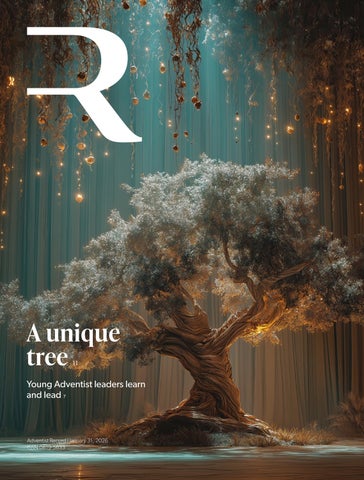
A unique tree
11
Young Adventist leaders learn and lead 7

Adventist Record | January 31, 2026
ISSN 0819-5633
EDITOR’S
11
Young Adventist leaders learn and lead 7
Adventist Record | January 31, 2026
ISSN 0819-5633
EDITOR’S
Jarrod Stackelroth Editor
Many children who make commitments to Jesus at Adventist schools and churches don’t get around to being baptised, and when they leave the Church, don’t even register as losses.
It was a beautiful Sabbath at church the day my kids were dedicated. After my daughter was born at the very beginning of the pandemic, we had not been able to hold the special ceremony. Then, we had been searching for a new church for a while. In the meantime, we had another child. When we finally got involved and transferred our membership to a new church, we wanted to get both kids dedicated. A little delayed but we thought it was important. It was also lovely that my parents could journey from Adelaide to join us.
As a denomination, we don’t practise infant baptism. Yet dedication is a public prayer over children born into the church that doesn’t make them members but is like a commitment from the parents to raise them to know God. It is also a commitment from the church and family to support the parents as they raise their children in faith. The pastor provides a prayer, and the church gives the child a little gift or certificate to commemorate the occasion.
Now this dedication was different to any I’d ever been part of, in terms of the scale. In all, 10 children were dedicated at once. I don’t think I’ve ever been at or heard of a dedication that size. It is a testament to the strength of the children’s ministries at the church I attend. There is a playgroup, Adventurers and Sabbath school programs, all of which are attracting families from the community.
So it would be easy to turn this editorial into a tribute to our kids’ programs and our volunteers who make it all possible. However, as I reflected on this event a thought struck me that I want to share with you. It woke me up, shocked me. It is a devastating thought and one that I hope gives you some motivation to stay the course and become active in your love and compassion for those in our churches, and those in our communities.
There were 10 children dedicated that Sabbath. How many of them will leave the Church? Well, according to the statistics we keep hearing out of the General Conference, four in 10 Adventist Church members leave the Church. In parts of the world, it could be higher.
It is a number that should break our hearts but for some reason it doesn’t. My children were up there, two of the 10. I pray they stay, but how many of us have seen our children leave? The rest of the 10, well they’re our friends. They are kids we care about, precious to Jesus and they should be precious to us.
And it could be even worse.
The stats for our children are often untraced. Many children who make commitments to Jesus at Adventist schools and churches don’t get around to being baptised, and when they leave the Church, don’t even register as losses. So out of those 10 precious babies in our church, which ones will we see walk out the door, never to return?
I would say none. But do we care? Will we fight, in prayer and through sacrifice and discomfort and putting our children above ourselves? Will we teach them about Jesus, not only with our words but with our actions, because that is what really counts?
The reality is that we may win people with the truth or even with relationships, but we keep people through discipleship, seeing them grow into a deep and abiding relationship with God. It is not easy and it takes a full church effort.
I’m not writing this to lay blame. This is not the place to try to identify who is at fault or why we are haemorrhaging members. But we can put our feet down and commit to not losing the children in our care. With the mission focus around the South Pacific in the next five years, we must take time to ensure that any new members are connected, served and integrated into our communities. They are not projects or targets, numbers or statistics. They are God’s children, made in His image, and they are as precious to Him as our children are to us.
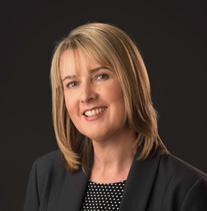
Tracey Bridcutt South Pacific Division communication director
It’s often called the most wonderful time of the year—a season meant to sparkle with joy, rest and reunion. And yet, as the Christmas–New Year period slipped quietly into the past, there was an undercurrent of sadness.
In the lead-up to Christmas, Australia was shaken by the senseless violence at Bondi, where 15 people were killed. Just three days after Christmas, a 41-year-old father who worked for my husband died suddenly. On New Year’s Day, a Sydney mum lost her life, reportedly while trying to save her young son in the surf on the first day of their family holiday. There were the lives—many of them young—lost in the tragic Swiss bar fire on New Year’s Eve. Then, the bushfires started. For countless families, this season was not one of celebration, but of shock, grief and deep sorrow.
Moments like these remind us that heartbreak does not pause for public holidays. And as we step into 2026, we do so knowing more challenges will come. There will be people struggling quietly. Others overwhelmed by despair. Some simply trying to get through another day. The question is not whether darkness exists—but how we, as Christians, choose to respond.
In the aftermath of the Bondi tragedy, a simple but powerful initiative emerged: “One Mitzvah for Bondi”. It called on people of all faiths and communities to unite through acts of kindness. In Jewish tradition, a mitzvah is a commandment from God, a sacred obligation. Over time, the word has come to describe an intentional act of human kindness: small actions, offered willingly, that together create a wave of goodwill and bring light into dark places.
The idea resonates deeply with the Christian calling. Jesus spoke often of light— not as something abstract, but as something lived. Kindness offered. Compassion extended. Love made visible through action. We can’t fix everything. We can’t undo tragedy or erase grief. But we can show up. We can notice. We can act.
So as this year unfolds, the question is simple: what act of kindness will you choose? What light will you bring? Because sometimes, the most powerful response to darkness is not grand or dramatic—but quietly, faithfully doing good.
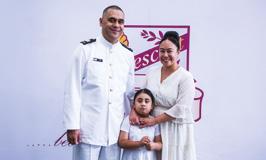
Pastor William Moala has been appointed as a Navy chaplain with the Australian Defence Force (ADF), providing pastoral care and spiritual support to service members and their families.
Following a recruitment process of more than 12 months, Pastor Moala was formally enlisted into the ADF in 2025 and is now based at HMAS Encounter, located within the Osborne Naval Shipyard precinct at Outer Harbour, South Australia. His role includes offering pastoral support, counselling and spiritual guidance to Navy personnel.
Pastor Moala completed four weeks of initial military training at HMAS Creswell, south of Sydney. As a Navy chaplain, he will serve alongside other chaplains across the Defence Force, supporting personnel in both professional and personal settings.
Reflecting on his appointment, Pastor Moala described the role as a long-held aspiration. “It has been a dream come true,” he said. “I’ve always had this in

the back of my mind, even while I was at Avondale. I praise God for the opportunity to serve the men and women who protect our country.”
As part of his chaplaincy role, Pastor Moala has already been involved in community and youth engagement. In December, he presented the Australian Defence Force Long Tan Youth Leadership and Teamwork Award at Prescott College’s speech night.
ADF chaplains provide non-denominational pastoral care while remaining endorsed by their faith communities. Their responsibilities include supporting personnel during deployments, offering counselling services and assisting families connected to the Defence service.
Pastor Moala’s appointment adds to the ongoing contribution of Seventh-day Adventist pastors serving in chaplaincy roles across education, healthcare, emergency services and the Defence Force in Australia.
Avondale University celebrated the graduation of 198 students during its 2025 graduation weekend, held from December 11 to 14 on the Lake Macquarie campus.
Graduation ceremonies took place on Sunday, December 14, across two sessions, following a weekend of consecration, valedictory and honours services. The graduating cohort included three Doctor of Philosophy candidates, 12 vocational education and training graduates, and students from disciplines including nursing and health, education, arts and business, and ministry and theology.
Among the ceremony highlights was the presentation of the Avondale Prize for Excellence, the university’s most prestigious student award. Sponsored by Sanitarium, the prize was awarded to Jazmin Bell, Olivia Morton and Elihon Taulapapa in recognition of leadership, initiative and balanced academic, social and spiritual engagement.
Academic excellence was recognised across multiple disciplines, with several students receiving faculty and industry-sponsored prizes.
In a historic first for Avondale University, the University Doctoral Research Medal was awarded to Dr Dawn Moreen Grant-Skiba, recognising the quality and impact of her doctoral research.
University Medals were also awarded to seven graduates in recognition of outstanding academic performance across undergraduate, postgraduate and higher degree by research programs.
Vice-chancellor Professor Malcolm Coulson encouraged graduates to carry their sense of purpose beyond university life, reinforcing Avondale’s commitment to Christ-centred education and service. “As opportunity allows, we encourage you to take bold steps in living up to the commitments you have made to making a difference in the lives of those you meet in your professional life,” he said.
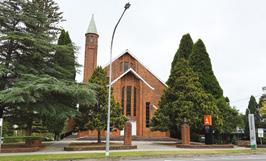
Wahroonga, NSW | Tracey Bridcutt
Members of Wahroonga church will continue worshipping in their current building acknowledging its heritage, community and mission.
The Division Property Trust Board has withdrawn the Wahroonga church precinct from the master plan process for the Wahroonga Estate.
Church members were advised of the withdrawal at a business meeting held on Thursday, December 11. At the meeting, the members formally resolved that they do not wish to see any potential changes to the current church building and church precinct. That decision has been accepted, and the current status quo will be maintained.
Division Property Trust chairman Francois Keet expressed appreciation to church members and leaders who took the time to share their feedback, perspectives and concerns.
“We are grateful to those who spoke up and engaged respectfully,” Mr Keet said. “We recognise that the way the proposal was brought forward caused unnecessary concern, and we are sorry for the impact this had on the
Wahroonga church community.”
While the church-related component of the proposal has been withdrawn, planning conversations will continue separately with the Sydney Adventist Hospital, where broader master planning discussions originally commenced. These discussions relate solely to the hospital’s current and future operational needs and do not involve the Wahroonga church precinct.
Mr Keet also noted that discussions relating to the Avondale Estate are continuing, with engagement underway involving key stakeholders. He emphasised that these conversations are separate from the Wahroonga church matter and are being progressed through appropriate consultation processes.
“We welcome engagement and questions relating to property matters,” Mr Keet said. “To help avoid confusion and ensure accurate information is shared, we encourage enquiries to be directed to us via the email <spdpropertydevt@adventist.org.au> rather than through public forums.”
Perth, WA | Lorraine Atchia
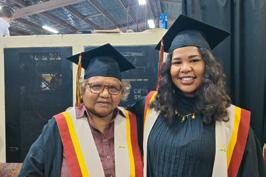
Mamarapha College closed 2025 on a high as 36 students gathered for their graduation on November 22. Students were given statements of attainment and certificates recognising their dedication and progress throughout the year.
Two students, Maggie Toga and Lorraine Dodd, celebrated a significant milestone as they successfully completed their Advanced Diploma of Indigenous Ministry and Lifestyle Health Promotion. The ceremony was attended by leadership from the Australian Union Conference, with president Dr Brendan Pratt sharing a message on the theme “From Dust to Purpose”. Dr Jean Carter, head of the School of Education and Science at Avondale University, encouraged students to “shine their light” for Jesus wherever life takes them.
Each student received a small flashlight, as a symbol of God’s guidance in darkness.
Pastor Connie Toga was farewelled at the ceremony after five years as Mamarapha’s ministry coordinator. A former student of the college, she has worked closely with students throughout their studies and will now return to local church ministry.
“2025 has been an amazing year for Mamarapha College,” said principal James London. “We have had the largest number of young people come through to learn about God. There is a growing sense that God is raising up Indigenous leaders to carry hope back to their communities and we are blessed to play a role in the students’ growth.”
Canberra, ACT | Nathan Brown
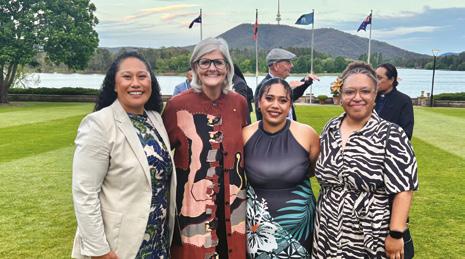
ADRA representatives joined young people from across Australia and Pacific nations to explore challenges confronting Pacific communities and advocate for increased Australian government support in the region. Hosted in Canberra from November 21 to 28, the Pacific Australian Emerging Leaders’ Summit (PAELS) was coordinated by Micah Australia, a coalition of Christian justice and development agencies of which ADRA Australia is a member.
Both from Melbourne, Sarah Nicholas and Sonniah Waiyo were sponsored by ADRA Australia and ADRA Victoria in their PAELS participation. They were joined by Mal Naseli, an Adventist church member from Adelaide representing a Samoan community organisation, and Adventist pastor Moe Stiles, pastor of Crosswalk Melbourne, who served as a mentor to the group.
“It was a privilege to witness young First Nations and Pacific Island leaders stand in solidarity with each other, courageously advocating on issues affecting our region,” said Pastor Stiles.
According to Pastor Stiles, summit briefings, consultations and advocacy focused on three key areas—social challenges, climate crises and ongoing questions of colonisation and sovereignty. Participants met with ministers and elected representatives to discuss issues impacting Pacific and Pasifika communities both locally and internationally.
“This summit has been running for the past four years and I’ve been involved since its inception,” Mr Naseli said. “Speaking to members of parliament can be daunting, but it’s empowering to speak out for Pacific communities and represent our people.”
Ms Nicholas said the summit reinforced the importance of service-based leadership. “Conversations with ministers took place in a way that was open and respectful, with genuine interest in the lived realities of First Nations and Pacific families,” she said. “This experience reminded me that leadership is service. My conviction to keep advocating for safer homes, safer communities and a safer future has expanded tenfold.”
Working alongside the Pacific Council of Churches, PAELS aims to strengthen connections between Pacific, Pasifika diaspora and First Nations communities. Participants were encouraged to continue advocacy beyond the summit through local engagement and ongoing dialogue.
Pastor Stiles said it was powerful to see young leaders embrace culture as the foundation for their advocacy. “Their calls for change were grounded in identity, connection and hope for the future,” she said.
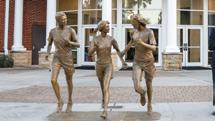
A donor-funded “Fit for Eternity” sculpture depicting Jesus jogging with two college students has been unveiled at Southern Adventist University (USA). The artwork was created by Adventist sculptor Victor Issa and offers students a striking and relatable image of walking through life with Christ.—AR
In Switzerland, a converted and brightly painted train carriage known as “Soupy-RaiL” is supporting vulnerable people. Staffed by volunteers from ADRA Switzerland, the service provides warm meals, conversation and companionship for homeless and socially isolated people.—EUD
Adventist World Radio’s “Movement of Hope” medical outreach took place from November 17 to 19 in Ukraine. It saw 150 people, many older adults who had difficulty paying for examinations or waiting in public clinic queues, receive care from a multidisciplinary team, including a therapist, traumatologist, cardiologist, endocrinologist and ultrasound specialists. Patients received spiritual resources and invitations to evangelistic meetings, which were attended by around 80 people each week.—ANN
A chart-topping “Christian singer” dominating iTunes is actually an AI persona named Solomon Ray. The project, created by human musician Christopher Jermaine Townsend, sparked global debate after becoming the first AI act in any genre to reach No 1, raising questions about authenticity and the future of Christian music.—The Christian Post
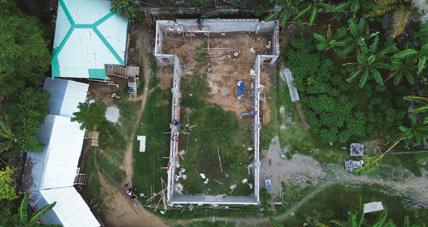
Wind Valley church plant, under White River church in Honiara, Solomon Islands, has appealed for support to complete construction of its permanent church building. Established in 2008, the congregation has grown to more than 30 members, most of them young people, and currently meets in a semi-permanent structure on private property. Construction of a permanent building is underway, but limited finances are slowing progress. In a statement, the church appealed to the Adventist community both locally and abroad for support: “This project depends entirely on freewill offerings from church members and kind supporters.” For more information, contact the Solomon Islands Mission office on <sim@adventist.org.sb>.—Denver Newter

Love Your Town Griffith, a neighbourhood and creek clean-up held November 30 to December 1, marked the launch of a new community service initiative by the South New South Wales Conference. The first in a planned series of local outreach events, the initiative involved 30–40 Adventist volunteers who removed rubbish from a local creek and assisted residents with yard maintenance and property clean-ups near the Griffith Adventist church. Volunteers cleared multiple trailer-loads of waste from several properties, providing practical support to households identified as needing assistance. Community members expressed gratitude for the initiative. “We have never had so much help in all our lives,” said a homeowner. “It’s so good to see there’s still good people in this world.”—Tracey Bridcutt
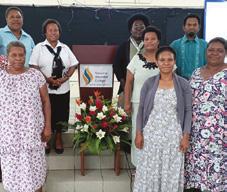
Nine women participated in sermon preparation training from December 8 to 12 at Sonoma Adventist College (PNG), led by chaplain Pastor Garry Laukei. He said the training equipped attendees to “craft and deliver sermons that are logical, progressive, convincing and climactic, avoiding confusion”. College principal Dr Jennifer Litau praised the initiative, calling for college-wide training in 2026 to teach pulpit etiquette, including knowing when to stand, speak and sit. The program concluded with the awarding of certificates to all participants.—Record staff
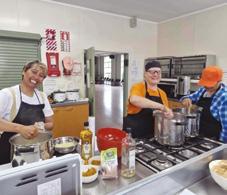
Members of Hamilton Community Whaˉnau church recently prepared 120 meals to support The Serve, a volunteerled organisation providing free hot dinners each night to people in need in Hamilton, New Zealand. Volunteers used the kitchen at Hamilton Central Seventh-day Adventist Church to prepare and deliver the meals, contributing to the organisation’s ongoing community service work —Felita Tuiavii
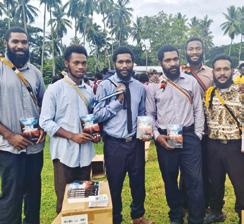
Adventist students from across Morobe Mission, PNG, gathered for the sixth bi-annual Morobe Adventist Students Association (MoASA) convention, held from December 7 to 20 at Sankang Primary School in Mampim Village, Markham District.
The gathering brought together student representatives from 11 district-based Adventist student groups.
Some student groups faced significant travel challenges to attend the convention. Members of the Komako District Adventist Students Association undertook a journey amid wet conditions involving long walks, river crossings and mountainous terrain, travelling for up to 12 hours on foot to reach Menyamya Station.
The convention began with pre-program outreach activities in nearby communities. Students took part in evangelistic meetings, home visitation and revival programs, alongside internal leadership meetings and handover ceremonies.
Speakers challenged students to work collaboratively across districts and remain actively involved in mission.
The program included practical training sessions such as career guidance, small business development, sewing and cooking skills, and oil-making demonstrations. The convention concluded on Sabbath with five individuals baptised following a student-led evangelistic program. Students also conducted branch Sabbath school programs in surrounding communities, distributing Bibles and Christian literature.
—Nathany Sam/Juliana Muniz
have news to share?
Send info and photos to <news@record.net.au>
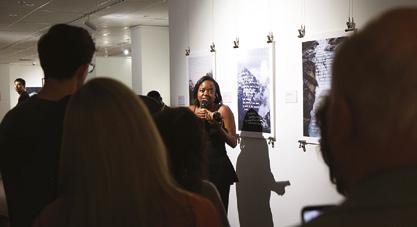
An art exhibition exploring grief and hope, organised by Melbourne Adventist mother Lorraine Roberts, has opened space for faith conversations in inner-city Melbourne. The “Piercing Darkness” exhibition, hosted at the Creative Asia Arts Centre from November 30 to December 6, featured works by 18 artists and was supported by Melbourne City Adventist Church and the Victorian Conference, encouraging reflection and dialogue around loss, hope and healing. “It was a privilege to have supported this exhibition and to have offered a safe space for people to reflect on their own experiences of pain and loss,” said Conference secretary Pastor Jinha Kim.—Nathan Brown
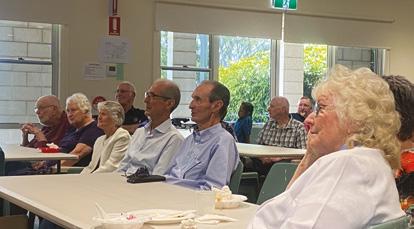
Former missionaries and supporters gathered at Kressville Activities Centre in Cooranbong (NSW) on December 13 for the annual missionaries’ lunch, continuing a long-running tradition. The gathering, believed to be the 25th missionaries’ lunch held over the years, brought together around 100 people to share memories, fellowship and reflect. This year’s theme focused on teachers and teaching across Pacific nations. “As we get older, it becomes very meaningful to gather to strengthen the bonds of the Christian Adventist community,” said former missionary Joy Butler. “The history of the South Pacific Division’s mission focus is very evident and precious at these annual missionary lunches.” The gathering also included a time of remembrance for missionaries who had died during the past year, including Margaret Watts, who passed away just days before the event. “She was a woman missionary of great faith and excellence,” said Mrs Butler —Juliana Muniz
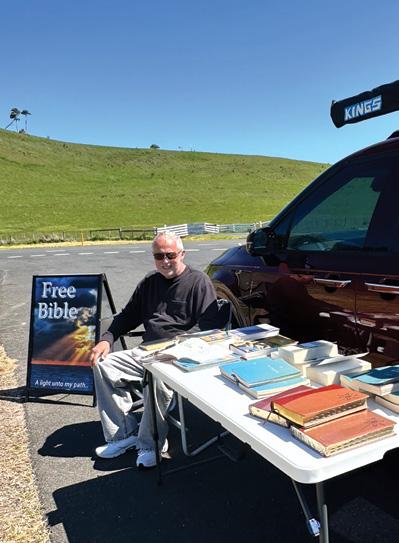
Four years ago, Miles Bollam moved from Queensland to Tasmania, settling on a small acreage in Penguin.
A retiree, he enjoys visiting local churches in Burnie, Ulverstone, Devonport and Wynyard, but admits that sharing his faith hasn’t always come easily.
“Since moving here, I’ve found it difficult to talk to people about God,” he said. “I don’t have the same friendship group I used to and I’m not one to door knock or talk to random people about God.”
That changed one day when Miles was reading the Parable of the Sower in Matthew 13. “It hit me that the seed needs to be sown,” he reflected, “And it made me think, what can I do to get God’s Word out there?”
Inspired by that thought, Miles decided to set up a small roadside stall along the main road from Penguin to Burnie. With a simple sign reading “Free Bibles”, he began giving away Bibles and other Christian books, including The Great Controversy.
He admits he wasn’t sure what to expect. “You can easily read any translation online these days,” he said, “but people have been really happy to receive physical copies.”
At first, Miles handed out inexpensive mission Bibles, but when he realised the text was too small for many readers, he contacted the Resource Centre at the Australian Union Conference and was recommended the Easy Reading Family Bible, also known as the Aboriginal and Torres Strait Island Ministries (ATSIM) Bible.
“When I received the first ATSIM Bible, I was impressed with the quality,” he shared. “The Bible looks expensive, the text size is great and the pages are beautiful with thumb index and lovely pictures. People are ecstatic when they receive them. They expect a cheap paperback, so it feels good to give them something special, knowing they’ll keep it and not throw it out.”
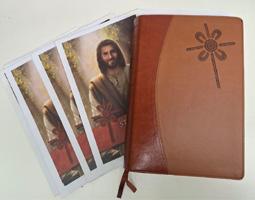
For the past few months, Miles has been running his roadside bookstall a few hours each week. After his first order, he quickly ordered another 48 ATSIM Bibles to distribute. He also visits local op shops to find children’s books and other Christian items to offer.
“We get a variety of people coming through,” Miles said. “From pastors of other denominations to young people and older people too. Everyone is really nice, people drive past beeping all the time. There are plenty of Christians out there, and I’ve had people stop just to say thank you. The ATSIM Bibles really help make that connection.”
Miles hopes his simple act of faith will inspire others. “I believe this is a great way Seventh-day Adventists can connect with people and stand out so others know who we are,” he said. “I’d love for Seventh-day Adventists all around Australia to get out on the road and do exactly what I’m doing. It’s simple and easy, and we can encourage each other and share stories.”
Miles plans to expand to more roadside spots, continuing to sow the seed—one Bible at a time.
Lorraine Atchia marketing and promotions coordinator for Mamarapha College and administrative assistant to the director of ATSIM.

Some people attempt to qualify the word, unique. As unique means one of a kind, and only one, it is incorrect to say, for example, that something is “very unique”. Something or someone is either unique or not at all. There is a sense that every human being born into this world has been, and is, unique. Even identical twins have something, some feature that makes them different to their fellow twin.
So, what is the point I am making? Just this: that there was, and is, and will be a tree that has no botanical origin.
In Genesis 3:22 God says, “The man has now become like one of us, knowing good and evil. He must not be allowed to reach out his hand and take also from the tree of life and eat, and live forever.” As Adam and Eve had sinned, their destiny was death, so God put an angel to guard over the tree of life so that our first parents could not have access to it.
Many years after the Flood, when Solomon wrote his proverbs, he referred to a tree of life when he made an important point about wisdom. He writes in Proverbs 3:18 that wisdom “is a tree of life to those who take hold of her”, emphasising the value of wisdom. Note that he says, “a tree of life”, not, “the tree of life”. Solomon also uses the same metaphor when he refers to the righteous: “The fruit of the righteous is a tree of life, and he who wins souls is wise” (11:30).
There are scores of references to trees in the Bible, especially the Old Testament. Some refer to the lifespan of trees, for hundreds, even thousands of years. Isaiah refers to long-lived trees, saying that “the days” of God’s people would be like the lifespan of a tree—but not merely a few hundred or thousand years, but eternal (Isaiah 65:22).
It’s not until Revelation that the tree of life is referred to again. Apparently, God took this tree to heaven, for
the definite article “the” is used. There is only one tree of life—the one God placed in Eden is the same one we find reference to thousands of years later in heaven.
It’s mentioned by Christ Himself in the message to the church in Ephesus. Revelation 2:7 says, “To him who overcomes I will give to eat from the tree of life, which is in the midst of the Paradise of God.”
We then come to the last chapter in the book of Revelation, where we find a detail about the tree that is not given elsewhere: “In the middle of its street, and on either side of the river, was the tree of life, which bore twelve fruits, each tree yielding its fruit every month. And the leaves of the tree were for the healing of the nations.”
This text tells us that the tree of life is divided into two parts, one part on each side of the river of life. It also produces 12 different kinds of fruit, presumably a different fruit each month and further, that the leaves of the tree were for healing. Normally, the leaves of a tree are not eaten, so in some way perhaps the leaves of the tree of life “heal” the saved, perhaps having a part in restoring the saved to the full stature they would have had if sin had not entered this world.
The tree of life is last mentioned in Revelation 22:14, a beautiful text that encourages us to be part of the throng that will eat of the tree and enjoy God’s eternity with Him: “Blessed are those who do His commandments, that they may have the right to the tree of life, and may enter through the gates into the city.” The tree of life, with fruit not only life-giving, but perfectly delicious, designed to give us heavenly vigour that I am sure we would like to have now.
William Ackland is a prolific writer who is now retired in Cooranbong (NSW).
On November 1, 2025, I interviewed Bruce Erceg at Waitara church, NSW, about a project he is passionate about. Bruce is the son of the legendary fly’n’builder Robbie Erceg. On numerous occasions in the 1980s and 1990s Robbie led teams on fly’n’build projects, building schools and churches throughout the islands of the South Pacific. His legacy is matchless, but his son Bruce is keen to take over where his dad left off.
Bruce’s current project is situated at Hovi Adventist School, on Santa Isabel Island, Solomon Islands—about 10-12 hours by boat from the capital Honiara.
Beginning with medical missionary volunteers soon after the turn of the 19th century, and later due to the work of pioneer Pastor GF Jones and the mission boat, Melanesia, there has been a significant Adventist presence on Santa Isabel since before World War I.1
With approximately 200 students from surrounding villages boarding at Hovi school, the school attracts Christian children from the surrounding communities and has a significant witness.
The dining and common areas just have thatched roofs. Both are affected by rain and vermin and are greatly in need of upgrading. When Bruce was there in 2024, his heart went out to the students.
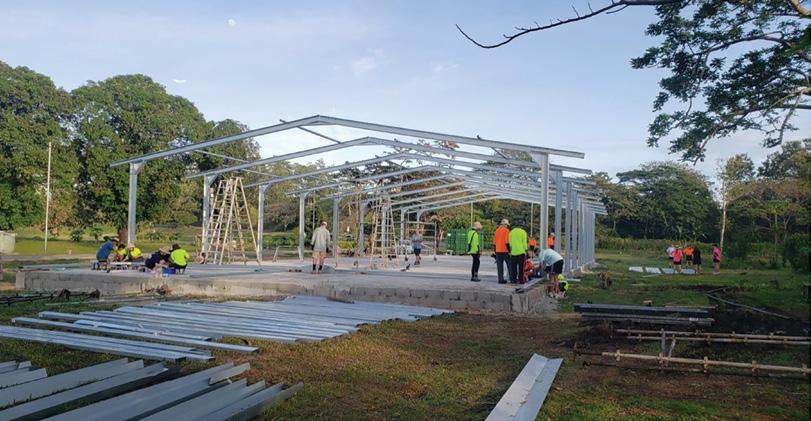
The aim is to raise approximately $A100,000 to upgrade the kitchen, dining and common area facilities for the students. The finished building will be a prefabricated steel structure on a concrete slab 35 metres x 15 metres.
A similar project recently built at Betikama Adventist College, Honiara, is shown for comparison.
This is a costly project, as all the materials need to be transported by boat to the island and the steel structure and other building materials will need to be supplied and
transported to the Solomon Islands from Australia. The transportation costs are quite substantial and could run as high as $A20,000.
The school students and local villagers have been trying to raise funds for some time and they are very willing to help Bruce’s team with the work needed to erect the building. There is a small team of builders lined up to go and do the work with the local community, so the main area of need at this stage is financial support.
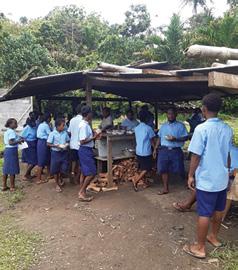
In 2024 enough money was raised to reroof the girls’ dormitory and boys’ woodwork room. Bruce is hoping to get started on this new project in April/May and have it completed by the end of 2026.
It will need to be done in three stages. First will be the concrete footing and slab, secondly the erection of the prefabricated steel building and walls, and finally the kitchen facility installation.
To support the project, scan the QR code below.

1. “An Interesting Letter” Union Conference Record July 27, 1908. (https://documents. adventistarchives.org/Periodicals/AAR/ AAR19080727-V12-30.pdf)
Dr David Pennington a retired plastic surgeon living in Lindfield, NSW.

Serves 20 Prep 30 Cook 0
How good is a butter board . . . minus the dairy? This is a healthier version with more-ish cashew “cheese” everyone can enjoy at your next gathering.
Ingredients
Cashew Cheese
2 cups raw cashews
¾ cup So Good Almond Milk Unsweetened, plus more if needed
3 tbsp lemon juice
2 tbsp nutritional yeast
½ tsp garlic powder
½ tsp sea salt
¼ tsp pepper
Optional toppings:
Cherry tomatoes
Fresh herbs eg chives or dill
Pistachios
Freshly cracked black pepper
Drizzle of olive oil
Crackers to dip with
Method
1. Soak the cashews in room temperature water overnight or in boiling water for 15 minutes to soften. Once ready to use, drain the liquid and add into a blender.
2. Add in the remaining cashew cheese ingredients and blend until smooth. If the mixture is too thick, add in more almond milk as needed.
3. Use a knife to spread 1-2 tbsp onto the board each time until the board is filled. Add on your toppings of choice and enjoy with crackers! Any remaining cheese can be stored in a clean jar in the fridge for 1 week.
Nutritional Information (per serving)


Author Ernestine Hill, in her historical novel My Love Must Wait, writes how explorer Matthew Flinders married Ann Chappelle right before his circumnavigation of Australia in the early 19th century. On his journey home, he stopped on the island of Mauritius (my birthplace), which was then under French rule. Suspecting him of being an English spy, he was taken captive by the French governor Charles Decaen. During the six years of his captivity and separated from his wife, Matthew Flinders wrote Ann letters every day, expressing his deep love, how much he missed her and his desperate longing to reunite with her.1
Similar to Flinders’ letters, the Epistle to the Philippians is a letter to loved ones—a letter of friendship to the church in Philippi. Such friendship letters were not uncommon in the Greco-Roman world.2 These letters were a written expression of friendship and often served as a tangible link between people absent from each other.
Paul, also writing from prison (Philippians 1:7,13,17), expresses his enduring love and friendship in the Epistle to the Philippians, despite his separation from them. He also exhorts and encourages the believers in Philippi to cultivate harmony with one another by promoting morally upright Christian friendships.
Friendship between Paul and the Philippians
Expressions of love and attachment characterise an enduring friendship. Paul’s letter to the Philippians is filled with a language of love towards the recipients. For example, he mentions that he remembers them (Philippians 1:3) and prays for them (1:4). He declares his affection for them by referring to them as his love, his joy and crown (1:8; 4:1). Furthermore, he conveys the warmth

of their relationship by stating that he longs for them (4:1).3
There are many reasons for this affection between Paul and the Philippians. As the first church Paul planted (Acts 16:9–18:22), the Philippians congregation held a special place in his heart (Philippians 1:7). This church showed great concern for Paul (4:10), and generously supported him financially (4:15–16). Finally, for many, nothing expresses love quite like gifts, and Paul acknowledges their abundant gifts (4:18). Thus, a friendship letter is especially fitting, as Paul and members of the church of Philippi shared a strong, loving friendship over the years.
The legacy of friendship
It was Abraham Lincoln who popularised the saying, “A house divided against itself cannot stand.”4 Similarly, one of the greatest evils of the ancient Greco-Roman world was the fracturing of society. Writers of that era argued that unity within a social group always leads to the greater good for the community.5
In Philippians, genuine friendship results in the greater good of the church (Philippians 2:2–4). Genuine Christian friendship fosters shared joy (1:25; 2:2,17,18,29), harmony and the wellbeing of others (2:1–4). For Paul, friendship among believers resulted in peace (3:7, cf 1:2). Far from being the absence of war, rather peace embodies the idea of abundance, wholeness and wellbeing (Leviticus 26:3–13).6 Accordingly, peace, joy and harmony are essential for the community to grow, prosper and thrive.
Opponents of friendship
All great friendships face opposing forces that attempt to strain their bonds. For instance, Saul fiercely opposed the friendship of Jonathan and David (1 Samuel 20:30–34).
Similarly, in the ancient world, enemies posed a significant threat to any friendship, highlighting the importance of setting boundaries and excluding enemies from the circle of friendship.7
Within the Greco-Roman milieu, Paul recognises the presence of adversaries of friendship in Philippi. He first introduces the opponents to the friendship in Philippians 1:28 by identifying them as “those in opposition to”.8 Paul, later using strong language, characterises them as dogs and evildoers (Philippians 3:2). Unlike the humility exemplified by Christ, these opponents preach from envy and rivalry (1:15–18). They are enemies of the cross (3:18) and are driven by hubris (3:19).9 Additionally, they are also legalists—Judaisers who required Gentile converts to be circumcised (3:2). The opponents are identified in sharp contrast to those who are considered friends in the community, as they oppose Christian virtues and principles.
Paul employs two main strategies to encourage the Philippians to cultivate friendship. The first strategy involves emulating the virtues embodied in Christ (Philippians 2:5–8) and in Paul (3:4–10).10 Another approach is to distance themselves from those who oppose them. Paul explicitly encourages imitating Christ. He encourages the Philippians to align their thoughts with those of Christ (2:2,5). He adapts an early Christian hymn in Philippians 2:2–11 to present Jesus as an example par excellence of humility and sacrifice. These two qualities, humility and sacrifice, are often required to form a strong friendship.
Conversely, the presence of the opponents presents a threat to the Philippian Christians. As enemies of the gospel (Philippians 3:18), they are at enmity with the believers. By displaying vices such as envy, selfish ambition (1:15-17), conceit (2:3), self-interest (2:21), greed and hubris (3:19), they are likely to undermine friendship within the faithful community.11 Thus, a strategy to foster friendship is to disassociate from the opponents, who, through their vices, pose a threat to the harmony of the believing community in Philippi.
A famous Christian song by Michael W Smith contains the words, “Friends are friends forever if the Lord is Lord of them.” Similarly, Paul wants the Philippians to enjoy a lasting Christian friendship. He knows that when these bonds of friendship are strengthened, peace and joy are fostered.
Ellen White’s inspired pen reminds us “things will go wrong with everyone; sadness and discouragement press every soul; then a personal presence, a friend who will comfort and impart strength, will turn back the darts of the enemy that are aimed to destroy. Christian friends are not half as plentiful as they should be. In hours of temptation, in a crisis, what a value is a true friend! Satan at such times sends along his agents to cause the trembling limbs
to stumble; but the true friends who will counsel, who will impart magnetic hopefulness, the calming faith that uplifts the soul,—oh, such help is worth more than precious pearls.”12
“Friends are friends forever if the Lord is Lord of them.”
Our Christian community today should be characterised by friendships that extend beyond a weekly greeting at church. Christian friendship displays genuine care and concern for other members of the community. However, it is essential to establish boundaries for authentic Christian friendships to flourish. Following Christ’s example, we must set aside selfish ambition. Friendship must be based on warm, loving, selfless relationships. Such friendship creates an environment where each member can thrive and become an agent of peace in the world. Christ has left us an example of sacrifice to cultivate genuine friendship. Drawing from the teachings in Philippians, let’s strive to make our churches places of authentic friendships.
1. Ernestine Hill, My Love Must Wait: The Story of Matthew Flinders (Strathfield South, NSW: Angus & Robertson, 1967).
2. L Michael White, "Morality between two worlds: A paradigm of friendship in Philippians," in Greeks, Romans, and Christians: Essay in Honor of Abraham J. Malherbe, ed. David L Balch et al (Minneapolis: Fortress, 1990), 210. Gordon Fee, "Paul's Letter to the Philippians," NICNT, (Grand Rapids, MI: Eerdmans, 1995), 2–14, 27–39, 54–54.
3. The word “long“ (ἐπιπόθητος) (Phil 4:1) is used once in the New Testament, expressing a “yearning affection for someone”.
“ἐπιπόθητος,” BDAG, 293.
4. Abraham Lincoln, “House Divided Speech.” June 16, 1858.
5. Le Chih Hsieh, "Virtue, Friendship, and Polis: A Reading of Paul's Letter to the Philippians" (PhD diss. Asbury Theological Seminary, 2012), 60.
6. John Reumann, Philippians: A New Translation with Introduction and Commentary (New Haven, CT: Yale University Press, 2008), 67.
7. Stanley Kent Stowers and Jouette M. Bassler, "Friends and Enemies in the Politics of Heaven: Reading Theology in Philippians," in Pauline Theology. Volume I: Thessalonians, Philippians, Galatians, Philemon, ed. Jouette M Bassler (1994).
8. ‘ἀντίκειμαι,’ BDAG, 88–89.
9. Moisés Silva, Philippians, 2nd ed., BECNT, (Grand Rapids, MI: Baker Academic, 2005), 8.
10. Hsieh, "Virtue," 171.
11. Hsieh, "Virtue," 171.
12. Ellen White, The SDA Bible Commentary 3.1163.
Pastor Hensley Gundagoo lecturer, New Testament, Avondale University.



I’m sure, like me, you can take many lessons from Joseph’s story. There is a lot to unpack in his journey.
He is widely remembered as a model of faithfulness, resilience, dedication, forgiveness, honesty and many other Christian attributes.
But if we are being honest, before being sold as a slave, Joseph was on the path to becoming somewhat of a brat. He appeared to his brothers as a tall poppy.
Don’t get me wrong, I do admire Joseph, which is why I chose to write about him, and I agree with all the positive attributes I just listed. But it is possible Joseph only became an honourable man because of God’s intervention.
Prolific Adventist writer Ellen White gives us insight into Joseph’s early formation. In Patriarchs and Prophets, she describes Joseph as becoming “self-sufficient and exacting”.
This wasn’t harmless teenage arrogance. Constant affirmation, moral correctness and his father’s partiality were shaping a character that was becoming self-assured in the wrong
ways. If left unchecked, the boy who was “right” about many things could easily grow into a man who trusted himself more than he trusted God. And that is a risky place to be for someone meant to carry God’s purposes forward.
I don’t entirely blame him. He was a 17-year-old who was privileged, good-looking, used to special treatment and constant moral affirmation (Genesis 37:3; 39:6).
According to Ellen White, despite his immaturity, Joseph had one great thing in his favour. He grew up with a spiritual foundation. From his childhood, Joseph had been taught to love and fear God. In his father’s tent, he listened to the stories of Jacob’s exile—of a God who met Jacob in vulnerability, made promises and kept them. He learned assuring truths about divine protection, guidance and grace, and he grew up believing not only in God’s power, but in His faithfulness.
And God knew it would be to that foundation he would turn when he found himself stripped away from his family and his freedom, on the way to an unknown land.
“As the caravan journeyed southward toward the borders of Canaan, the boy could discern in the distance the hills among which lay his father’s tents. Bitterly he wept at the thought of that loving father in his loneliness and affliction. . . With a
trembling heart he looked forward to the future. What a change in situation—from the tenderly cherished son to the despised and helpless slave! Alone and friendless, what would be his lot in the strange land to which he was going? For a time Joseph gave himself up to uncontrolled grief and terror” (Patriarchs and Prophets 213.1).
I can’t imagine how hard it must’ve been. I used to cry every time I would willingly say a temporary goodbye to my family. Joseph didn't even get the chance to say goodbye, let alone choose to leave.
But it was in that extremely painful moment that he decided to become the great man generations have learned to admire.
That’s one of my favourite things about Joseph’s story: the fact he made that decision. He drew on his foundation and, despite his character flaws and even his fear in that moment, he resolved to be an absolutely true and faithful follower of God. And God used that to shape him into a great man (Genesis 39:9).
Responsibility came early in my life, and like Joseph, it shaped me in ways comfort never could.
I studied the second half of my primary school years in an Adventist school. I was an only child for a decade and had grown up with a relative sense of stability. That changed suddenly when a new baby sister arrived and my family’s financial situation shifted. We began to struggle. When I got to year six, the school principal told my mum they could no longer allow me to keep my scholarship unless I could contribute in some way. The solution they offered was for me to work at the school. I was given the role of assisting in a preschool classroom, and in exchange, I could remain enrolled. I didn’t want to change schools, so I accepted it.
In Brazil, school does not run for a full day. Older students attend in the morning, while younger children go in the afternoon. So at 11 years old, my days looked like this: school from 7am to 12pm, work at the school from 1pm to 5pm, and twice a week, evening English classes at a separate language school.
While my friends had the entire afternoon to do homework, watch TV, rest and play, I was juggling a lot of responsibilities before I even became a teenager.
Maybe that deprived me of some of my childhood compared to my peers, but it also taught me a few things. I learned early that responsibility mattered and that things don't come easy in life. I learned how to stand on my own much earlier than most, which prepared me to leave home at 14 for boarding school, to approach university with purpose rather than simply drifting through it, and later to move interstate and then overseas, building a life in places where I knew no-one and had no family around. Carrying responsibility so young did not make any of those transitions easy, but it meant I was not unprepared for them.
Growth doesn’t always unfold gradually. Some seasons are disruptive, demanding more of us than we feel ready to give. Most of us can point to a moment—or a few—that reshaped us. For Joseph, it was that day when he was sold

as a slave: “One day’s experience had been the turning point in Joseph’s life. Its terrible calamity had transformed him from a petted child to a man, thoughtful, courageous and self-possessed” (PP 214.1).
It’s comforting to know that, no matter what we’re going through, God always has a plan for us. As painful as some situations in life can be, God can use them to shape us into better people. I am grateful for the hardships I faced in life. I didn't love facing each of them, but today I look back with a thankful heart because I know that God used them to make me more patient, more empathetic, more flexible, more balanced, grateful for what I have and a living witness of God’s love and care.
For us, too, sometimes God allows circumstances that compress years of growth into a single season. But it’s up to us to decide if we’ll cling onto Him and remain faithful no matter what, or if we’ll give in to despair.
For me, one of the main lessons that remains from the challenges I faced in my life is that no matter where I go or how heavy the load feels, I can be certain that God is with me and inviting Him into my life daily is a commitment that will make all the burdens of this life worth it.
Joseph’s story reminds us that self-sufficiency can quietly stand in the way of what God wants to do in us. But faithfulness creates space for Him to work.
That young man, once described as self-sufficient and exacting, went on to become second in command in Egypt and, through God’s guidance, saved entire nations from famine (Genesis 41:56, 45:5, 50:20).
You might feel you’ll never become someone “important” by the world’s flawed standards. But when you choose to trust God through life’s most painful moments, you allow yourself to be used by Him. And that is the greatest honour we could ever have in this life.
Juliana
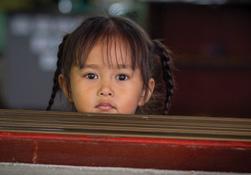
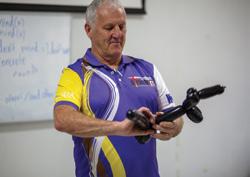

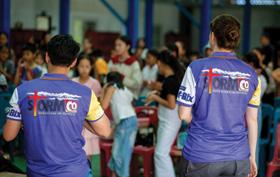
Last year during the mid-year holiday break several STORMCo (Service To Others Really Matters Company) teams travelled to four of six Adventist Namthipsavan Language schools operated by the Church in Laos. The schools offer a bilingual, holistic education rooted in Adventist values and the importance of service to their surrounding communities.
For those thinking Laos? Where is that? picture a small, landlocked gem tucked in between Thailand, Vietnam, Cambodia, Myanmar and China. That’s where our STORMCo teams landed for a few weeks packed with educational fun, practical support and community outreach.
Each team immersed themselves in their school’s daily life, running kids’ club programs tailored to engage both young and older students. Values-based interactive games, creative arts and life skill activities were used to teach English and build community.
One team leader reflected, “We came to serve, and we left enriched by the warmth of this place and its people.”
Also, for the first time, our STORMCo teams extended their efforts beyond the school walls, venturing into the surrounding communities to address some of the local needs. Armed with paintbrushes, rubbish bags and a healthy dose of enthusiasm, our teams rolled up their sleeves and got to work. Every day brought a new way to serve, from scrubbing and painting well-used facilities to breathing new life into worn-out sports courts and running kids’ clubs where laughter and learning came hand in hand. This wasn’t just about appearances, but tangible ways to engage with the local community.
A STORMCo team member commented, “Working with the kids is so much fun—lots of smiles and laughter. I love seeing eyes light up during activities. It’s magic! Their energy is infectious. The level of engagement is rewarding and reminds me why we come all this way to do this. This is ministry.”
Working alongside school staff was equally rewarding.
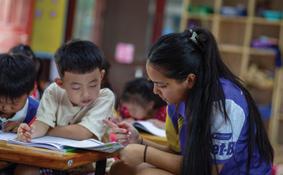
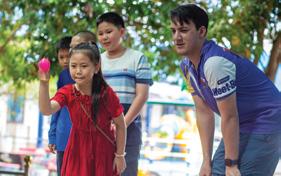
Teams collaborated closely with teachers and administrators, exchanging ideas and building relationships that transcended cultural and language barriers. Staff at the Savannakhet School expressed gratitude for the hands-on support the team gave them throughout their Registration Week: “The [STORMCo] team’s enthusiasm is infectious— their passion for ministry to young people is obvious. Thank you all very much! Our staff and students have had a great time talking with the group members and doing activities.”
The STORMCo purpose statement is built on five fundamental foundations that guide every mission:
1. Listening: to understand the uniqueness of a community and serve accordingly.
2. Engaging: an entire community over time to create meaningful connections.
3. Serving: without expectation, demonstrating unconditional love.
4. Building: a sense of unity whilst working together selflessly.
5. Returning: to continue building long-term relationships.
At its core, STORMCo exemplifies a service mentality. Teams travel to communities with the sole intent of serving without a pre-determined agenda or any expectation of reciprocation. Their overarching goal is to embody the fruits of the spirit articulated in Galatians 5:22,23, and by doing so, they endeavour to build longterm relationships and positively impact communities.
So, does it really matter?
Absolutely, because when service meets mission, paintbrushes become tools of hope, rubbish bags turn into symbols of care and kids’ games become lessons that last a lifetime.
Pastor Murray Hunter
digital media coordinator for the Australian Union Conference.
Ouch!
Re: “Male headship Part 1: In the church” (November 29). Alright, I’ll bite. You’ve got my attention. I have an opinion. . . The author is attempting to sway the church body to his point of view: “Men, sit down and shut up. Do what you’re told and not what your heart (Spirit-led gut impression) is telling you, misogynist!” Ouch! Lookout anyone who holds to New Testament teaching. The author is weaving “feelings and emotions” to sway the church against New Testament teaching carried out for a couple of thousand years.
Aaron Ford, via email
Re: “Male headship Part 1: In the church” (November 29).
The article’s title is misleading, as it primarily focuses on justifying female headship. According to the article, Ellen White was presented as an ordained and credentialled pastor. However, to my understanding, Ellen White was offered a pastor's licence but never accepted it.
Why did Jesus not ordain a female leader? Mary Magdalene was more spiritually attuned than any of the 12 ordained apostles. Further, there is no biblical text that recommends female leadership. Yet, we read that “Adventists encouraged women’s leadership. As a result, women served as local church pastors, evangelists, teachers and administrators.” If this is true, why do we still have so much
debate about it, even at the General Conference session level?
Ilja Ponsaing, via email
Re: “Male headship Part 2: In the family” (December 6).
This article is very worrying in its conclusions that contradict the plain words of Scripture. Adam was head of the family before the fall. It was Adam who named all the animals, and would have had to tell Eve what he named them. The article mentions Ephesians 5:23 that states that the husband is head of the wife and after questionable logic, comes to the conclusion that this is because of sin; it is not the best ideal for mankind. What they ignore is the comparison that is made in the same verse: “the husband is head of the wife, just as Christ is head of the church being himself the Saviour of the body.” Now after many words we can come to the opposite conclusion to the plain words of Scripture to somehow believe that the husband is not head of the wife, then we have to also conclude because of the use of the comparitive “just as” that Christ is not the head of the church.
Steven Groom, via Facebook
A recent response to the discussion on gluten-free communion bread is troubling both medically and theologically (“Leaven, not gluten”, Letters, November 29).
Medically, the dismissive suggestion that a minute amount of gluten is inconsequential for most coeliacs, even when made from quality stoneground flour, is incorrect and indeed misleading. Those of us diagnosed as coeliac must strictly avoid gluten in any amount. Many coeliacs can be seriously ill for days after ingesting a tiny amount of gluten. For those of us who are asymptomatic, gluten still causes villous atrophy of the stomach lining, as I have seen from endoscopic examination of my own system. This is not always understood by noncoeliacs.
Theologically, we as Christians do not observe the Passover. Christ re-purposed two of the elements of the Passover—the bread and the wine to represent His broken body and spilt blood, the basis of our salvation. If we were to follow the Old Testament recipe for unleaven bread, then why not observe various other injunctions in the Mosaic code—Numbers 15: 32-36 (especially for Seventh-day Adventists?) or Leviticus 19:19, and many others?
An earlier response (“Obscuring the simplicity”, Letters, November 1) was excellent, especially referencing the unavailability of wheat and wine in some places and, more importantly, the simplicity of grace which came at the expense of Christ’s broken body and spilt blood. May that always be our focus in the communion service.
Harwood Lockton, NSW

























SANKI–KHAWAJA. Fadi Sanki, son of Soubhi and Zaref Sanki (Springwood, Qld), and Elvira Khawaja, daughter of Abdalmassih and Somaya Khawaja (Aleppo, Syria), were married on 29.11.25 at Saint Clement’s Melkite Church, Qld. More than 300 guests celebrated a joy-filled Syrian reception. We wish a blessing on the couple as they set up their home together in Springwood.
Elie Francis, André van Rensburg

HASTINGS–MIKULIC.
Derylle Hastings, son of Robert (deceased) and Merrilyn Hastings (Creswick, Vic), and Heidi Mikulic, daughter of Miroslav and Petra Mikulic (Bacchus Marsh), were married on 23.11.25 at Ballarat Central Adventist Church. Heidi and Derylle enjoyed a beautiful wedding day surrounded by family and friends, celebrating in the presence of their dearest Friend, Jesus. The couple are now beginning married life on their recently purchased property in the beautiful countryside of Creswick.
John Smolka

BALL, Dr Bryan William, born 11.7.1935 in Devon, UK; died 12.11.25 in Cooranbong, NSW. Bryan is survived by his wife, Dawn (Cooranbong); children, Corinne Kuivisto (Cooranbong), Martin Ball (Martinsville) and Jacqui Peet (Ballarat, Vic). Bryan was invited to serve as president of Avondale College in 1984 and in 1990 he became president of the South Pacific Division. He retired in 1997 and continued his passion for writing on church history and theology, authoring and editing a total of ten books. He served with distinction in both the British Union and the
South Pacific Division of the Seventh-day Adventist Church. Lyell Heise, Norman Hurlow
BOWLES, Raymond James, born 8.8.1946 in Midland, WA; died 17.10.25 in Sunshine Park Retirement Village, Perth. He is survived by his wife, Marlene (Roleystone); children, Charlene (WA) and James (NSW); and grandchildren, Tahlia, Harley, Lucas and Leo. Raymond was a very quiet and generous man who was always willing to give what he had to help others. Being a blacksmith, he used his talents to help build Armadale church and make the church pews. He is now resting peacefully waiting for Jesus to return.
BOYD, Rosalind Mary (nee Sanson), born 28.12.1935 in Wyee, NSW; died 9.11.25 in Dalby, Qld. She was predeceased by her daughters, Patricia in 1976 and Karen in 2017. Rose is survived by her husband, Charles (Dalby); children, Annette and Kym (Dalby), Peter and Helen (Dysart), and Fauiki (NZ); eight grandchildren and 12 great-grandchildren. Rose is sadly missed by many in Dalby and beyond, including Tonga, Vanuatu and Siberia, where she and Charles volunteered and shared nutrition education. Rose had many talents and a strong faith, often sharing her faith in the resurrection and hope of reunion with her daughters.
Matthew MacPherson

BROWN, David William, born 21.5.1944 in Yorkshire, England; died 19.7.25 in Christchurch, NZ. David married Collette Hamilton on 12.12.1971 in Timaru. He is survived by his wife; children, John and Amy (Virginia, USA), Alexander (Christchurch, NZ), Rebekah and Mark Shelley (Oxford), and Selina Amon (Palmerston North); 14 grandchildren; and twin great-grandsons. Since 1975 David worked for the Church at Sanitarium, Bainfield Park Health Centre, and 18 years with New Millennium Books (ABC). Wherever he lived, his music, book displays and church services touched all. He delighted in sharing God, was adored by his grandchildren, and kept Bishopdale church warm to the end.
Tinus de Nysschen
BROWN, Dr Mavis Ruth (nee Hudson), born 5.1.1938 in Whangarei, NZ; died 13.10.25 in Cooranbong, NSW. She married Warren on 3.4.1961 in Te Kuiti, NZ. Mavis was predeceased by her brother, Maurice. She is survived by her husband; son, Llewellyn and Irina (France); daughter, Bernadette and Gerrard (England); grandchildren, Zanis and Bryn; and sister, Glenda (Cooranbong, NSW). Trained as a nurse at the San, Mavis later taught speech and drama and lectured in English literature at Avondale and Newcastle (Ourimbah) Universities. She enjoyed travelling to Europe to visit family. We look forward to meeting again in that more glorious, heavenly country.
Arthur Hudson

CHAPMAN, Victor, born 30.7.1940 in Merredin, WA; died 29.8.25 in Forrestfield. He is survived by his wife, Beverley; children, Jan and Kim (Merredin), Leslie and Peter (Bakers Hill), Neville and Tara (Vic), and Rhonda and Matt (Tas); eight grandchildren; and four great-grandchildren. Vic was a true gentleman who loved his Lord Jesus and looked forward to


His return. He now waits for the call of his Saviour.
Milton Gray

CLARKE, Ronald Fennimore, born 8.11.1935 in Ceduna, SA; died 14.11.25 in Murray Bridge Soldiers’ Memorial Hospital. Ron was predeceased by his wife, Nita in 2017; and sons, Wayne in 1977 and Paul in 2019. He is survived by his children, Gary and Janet (Ballarat, Vic), David and Tracy (Kepa, SA), and Suzanne and Eldon Rosenberg (Cooranbong, NSW); stepdaughters, Bernie (Adelaide, SA) and Keryn and Romeo (Perth, WA); daughter-in-law, Pam (Moonta, SA); ex-daughter-in-law, Audrey (Ballarat, Vic); 10 grandchildren and step-grandchildren; and 18 great-grandchildren and step-great-grandchildren. An engineer and TAFE instructor, Ron embraced the Adventist faith in adulthood and later served widely in volunteer mission work. A recording of the funeral livestream is available until February 14 at mingefunerals. com.au/in-loving-memory/ clarke-ronald-fenimore.
Jan Pollok


COOK, Neil, born 16.11.1938 in Biggenden, Qld; died 18.7.25 in Rockhampton Mater Hospital. Neil is survived by his wife, Elaine; children, Kevin and Erica, and Debbie and Paul; stepchildren, Andrew (deceased), Brett and Frances, Jason and Linda, and Ben; sister, Phylis; grandchildren and great-grandchildren. Neil was a much-loved active member of the Monto church and Monto ADRA op shop. An Airforce mechanic, farmer, truck driver, and supervisor and maintenance person in PNG, he was known for his wise words and ability to fix things. Neil’s greatest joy was his love for Jesus, family and church. He now rests awaiting his Lord’s return.
David Yoe
CRAIG, Matthew Gordon, born 9.6.1928 in Merewether, NSW; died 3.11.25 in Port Macquarie. Gordon was predeceased by his wife, Thelma Delaney; and son, Darryl. He is survived by daughters, Jualita Coggan and Sharon Turner (Port Macquarie); and son, Lynton (Wollongong). Gordon was a softly spoken,
caring and sensitive man. He loved the Lord with all his heart and served his church in several capacities, one being head elder at Avondale Memorial Church. He was laid to rest in Cooranbong beside his wife, and will be sadly missed, remaining a positive memory in the minds and hearts of his family.
Gordon Smith

Patrick
John, born 11.1.1939 in Cooroy, Qld; died 5.11.25 in Atherton. Pat is survived by his wife, Julie (nee Dawson); sons, Barney (Mena Creek) and Ben (Tolga); stepsons, Anthony and Jason Spero; grandchildren, Maddie, Kyle, Jesse, Summer and Ruby; brother, John (Millaa Millaa); sister, Lyn Bunyan (Atherton); and their families. A dairy farmer on the Atherton Tablelands, Pat represented his industry at local and state levels and served on local council. He served the Ravenshoe, Malanda, Atherton and Aitkenvale churches as head elder. A quietly spoken man, Pat was respected in his community and dearly loved by his family.
Ray Hobbs
DARKO, Don, born 3.12.1935; died 7.7.25 in Cooranbong, NSW. He is survived by his wife, Margaret; children, Joelle Lord, Dean and Lyndon, and their families. Don worked as a farmer in his early years and then as a builder in the Lake Macquarie region. He was known for his great singing voice which he used to praise God over his lifetime.
Jeff Parker
DAVIES, Noeline Ruth, born 25.12.1925 in Tauranga, NZ; died 12.9.25 in Auckland. Noeline was predeceased by her daughter, Helen, in 1971; first husband, Percival Grey, in 1991; and second husband, Norman Davies, in 2009. She is survived by her daughter and son-in-law, Ann and Philip Ridley (Auckland). A woman of great faith, Noeline and Perce became Adventists after attending a John Coltheart mission in 1955. She was a longstanding member and volunteer at Hastings church and later, tended the Papatoetoe church gardens with Norman for many years. Much loved by her family, Noeline rests awaiting the call of her Lord.
Ben Flynn

HUFFADINE, Nancy Ella (nee Portbury), born 19.10.1937; died 28.11.25 in Bowral, NSW. Nancy was predeceased by her husband, Roger, in 2005. She is survived by her sons, Stephen and Richard (Sydney); and grandchildren, Jasmine, Soravit, Cameron, Lee and Byron (Sydney).
Daniel Oehlmann

LETHAM, Dr David Stuart, born 8.9.1926 in Methven, NZ; died 23.11.25 in Gosford Hospital, NSW. Stuart was predeceased by his wife, Iris (nee Nixon) in 2010. He is survived by nephews, David (Melbourne, Vic) and Graham (Jamberoo, NSW); and nieces, Carlene Bagnall (Killara) and Floris Patience (Cessnock). Stuart was an unassuming man, devoted son, loyal husband, beloved uncle, faithful Christian and in possession of a fine mind.
Graham Stacey

MORTON, Tuula (nee Jarvinen), born 29.12.1948 in Finland; died 31.10.25 in Rossmoyne Waters,

WA. Tuula was predeceased by her husband, Terry, in 2025. She is survived by her sons, Geoffrey and Jamie, and daughter, Kelli (all of WA); brothers, John, Ben, Mark, Rauno and Eddie (WA), and Matt (Qld); and sister, Leila Bothams (WA). Tuula was a loving mother, sister and friend to all she met. Her faith was an inspiration to all.
Terry Lambert
PARR, Jenny, born 26.7.1945 in Newcastle, NSW; died 17.7.25 in Baltimore, Maryland, USA. Jenny followed in the footsteps of her father, Robert Parr, when she began teaching at a church school in Lithgow upon finishing high school in 1963, before qualifying at Avondale in 1966. Her first posting was to Wahroonga Primary School, Sydney, where she also led the music program. She later taught in Jacksonville, Florida and Baltimore, where she was also Ombudsman for Aged Care in her region. Her ashes were interred at Macquarie Park Cemetery in Sydney.
Garth Bainbridge, John Kosmeier
SLATER, Andrew, born 3.4.1948; died 16.11.25 in Palmwoods, Qld. Andy was predeceased by his first wife, Jennifer, in
2000. He is survived by his wife, Elizabeth; children, Chad and Bridget; stepchildren and grandchildren. Andrew’s life was full of adventure, including more than 20 years managing companies in Papua New Guinea. His positive attitude and perseverance through health challenges showed remarkable determination and strength. He considered meeting Jesus as the most important turning point in his life. A much-loved husband, father and poppa, resting until Jesus returns.
Deane Jackson
PARKES ADVENTIST CHURCH 120TH ANNIVERSARY.
Past and present members and friends are invited on Sabbath, March 14, 2026, for a commemoration service and potluck lunch. For more details or to RSVP go to facebook.com/ ParkesSDAChurch or phone 0428 641 156 or 0407 708 709.
HARRISVILLE 50TH CHURCH BUILDING ANNIVERSARY. All past ministers and members are invited to celebrate this special occasion on February
PLATFORM ENGINEERING LEAD—FAITH FM
RINGWOOD, VICTORIA
21, 2026. Our day will start with Sabbath school at 9:30am, church, potluck lunch and an afternoon program. 27 Mary Street, Harrisville, Queensland.
IN THE STEPS OF PAUL TOUR OF TURKEY AND GREECE. 13 Sep to 4 Oct 2026. Follow the footsteps of the apostle Paul, connecting faith to the ancient sites of Ephesus, Corinth, Thessaloniki and Philipi. Visit the Seven Churches of Revelation and overnight on the Isle of Patmos. Conducted by Dr Peter Roennfeldt. Contact Anita at alltrav@bigpond.net.au or 0405 260 155.
THE INCREDIBLE JOURNEY
Explore the biblical sites of Israel, Jordan and Egypt, Oct/Nov 2026. An amazing travel journey led by Pastor Gary Kent. For full details please contact Anita at Allround travel <alltrav@bigpond.net.au> or 0405 260 155.
RECORD QUANTITIES
Is your church receiving the correct number of Record magazines? Adjust your numbers by notifying Kelli Geelan at <subscriptions@record.net.au> or on +61 (03) 5965 6300.
Are you a dedicated and innovative professional with a passion for making a difference? Faith FM is seeking a full-time platform engineering lead to help advance our mission of sharing the gospel of Jesus Christ across Australia. You’ll play a vital part in amplifying Faith FM’s presence across Australia by keeping us on the air and connected to our audience. With experience in relevant technological spaces and programs, you’ll work with the team to ensure smooth and consistent connection. If you’re ready to apply your expertise in a role that combines purpose, innovation and impact, we’d love to hear from you! For more details or to apply please go to <adventist.org.au/auc/careers>. Applications close January 31, 2026.
PROMOTIONS AND ENGAGEMENT LEAD—FAITH FM
RINGWOOD, VICTORIA
Are you a confident and engaging professional looking to reach others? Faith FM is seeking expressions of interest for a full-time promotions and engagement lead, focused on sharing, communicating and strengthening the gospel of Jesus Christ across Australia. You’ll be responsible for growing listener and church engagement, building sponsorship opportunities and developing strong partnerships with key stakeholders. You’ll play a key role in elevating Faith FM’s brand and visibility nationwide, helping us fulfil our mission to share the gospel of Jesus Christ. If you’re passionate about making a lasting impact and keen to apply your skills in a role that combines purpose with strategic influence, we’d love to hear from you. For more details or to express your interest go to <adventist.org.au/auc/careers>. Applications close January 31, 2026.
abn 59 093 117 689 vol 131 no 1
Consulting editor
Glenn Townend
Editor Jarrod Stackelroth
News editor
Juliana Muniz
Assistant editors
Ashley Jankiewicz
Danelle Stothers
Copyeditor
Tracey Bridcutt
Graphic designer
Theodora Pau’u
Noticeboard
Julie Laws Letters editor@record.net.au
News & photos news@record.net.au
Noticeboard ads@record.net.au
Subscriptions subscriptions@record.net.au + 61 (03) 5965 6300
Mailed within Australia and New Zealand
$A60.00; $NZ90.00 Other prices on application
Website record.adventistchurch.com
Mailing address
Adventist Media Locked Bag 1115 Wahroonga NSW 2076 Australia + 61 (02) 9847 2222
Cover credit Midjourney
Next issue
Adventist Record February 7
NOTE: Neither the editor, Adventist Media, nor the Seventh-day Adventist Church is responsible for the quality of goods or services advertised. Publication does not indicate endorsement of a product or service. Classified advertisements in Adventist Record are available to Seventh-day Adventist members, churches and institutions only. All advertisements, appreciation, anniversary, wedding and obituary notices may be submitted via <ads@record.net.au> or online at <record.adventistchurch.com>. Notices will not be reprinted unless there is an error of fact caused by Record staff.