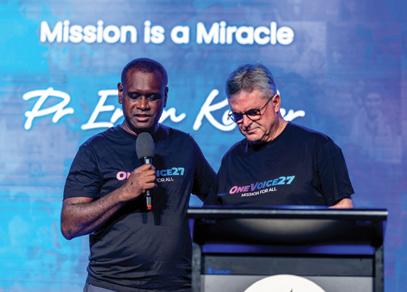
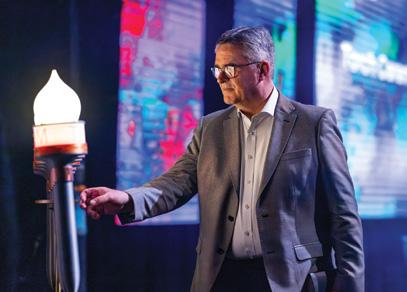
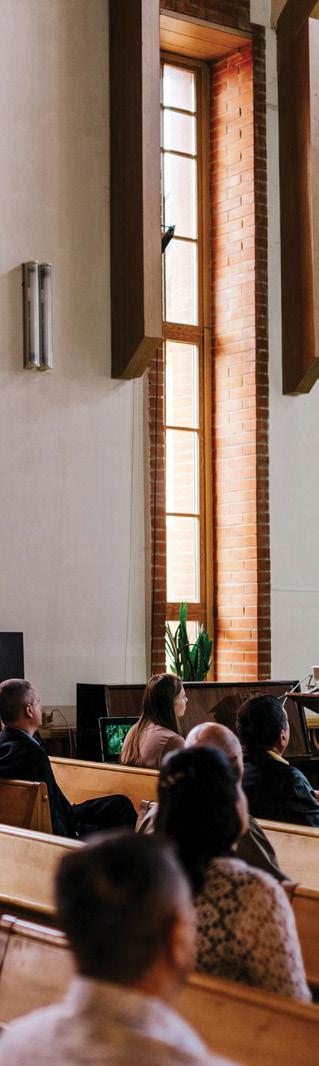
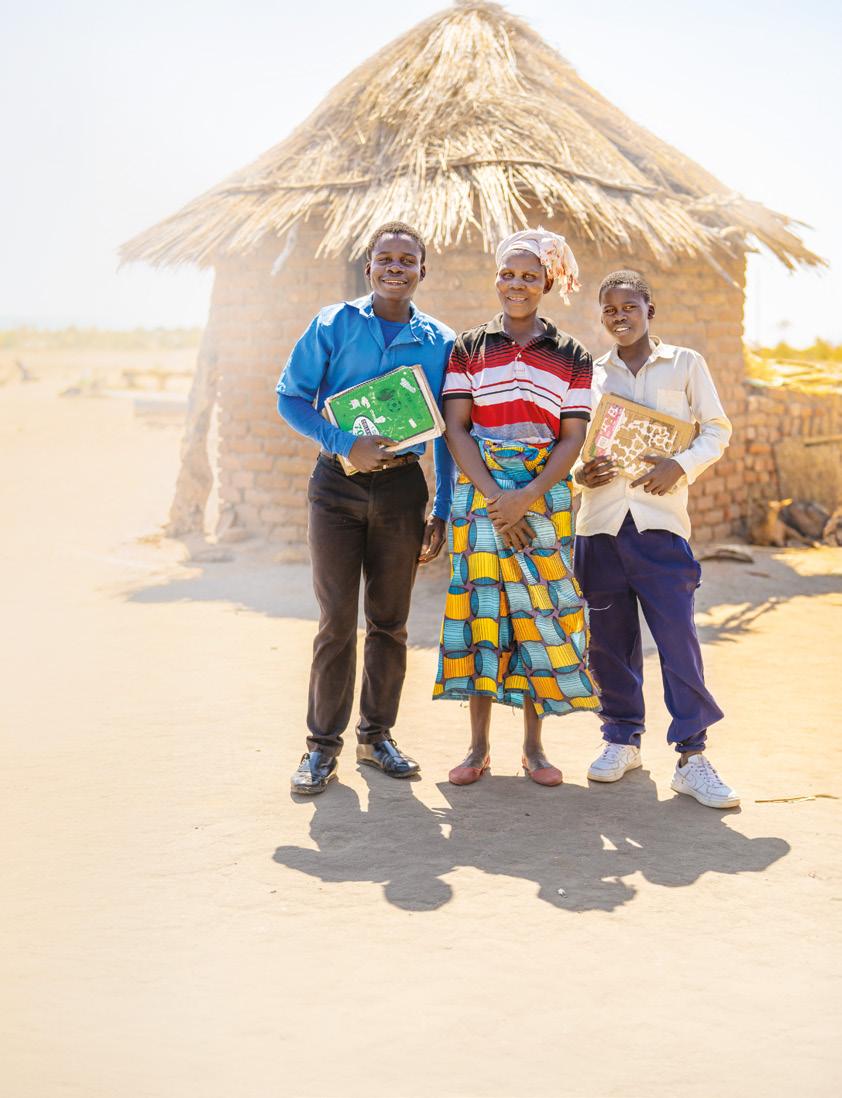
Faith that does not move outward remains incomplete.
As Christians, we often praise God for His saving grace and live in gratitude for His many blessings. We are content in our Christian journey—faithful in prayer and Bible study, committed to church attendance, and intentional about living out Christian values at home, in the workplace and within our communities. Asked how we maintain a strong Christian lifestyle, many of us would answer confidently: through daily devotion, discipline and consistency. Yet, for all these good practices, a deeper question remains: are we fully engaged in God’s mission?
As a church administrator, this question has weighed heavily on me. My calling includes developing strategic plans, casting vision, ensuring good governance and overseeing organisational systems. These responsibilities are important and necessary. But I have come to realise that administration alone is not the fullness of my calling. Something was missing—not in belief or commitment, but in practical, frontline involvement in God’s mission.
I am speaking of active participation: personally sharing my faith, giving Bible studies, engaging in outreach and calling people to surrender their lives to Jesus. Mission is not something to be delegated entirely to pastors, evangelists or departmental leaders. It is a calling shared by every believer, regardless of role or title.
In Matthew 10, Jesus commissions the 12 disciples, sending them out with His authority to preach that the kingdom of heaven is at hand, to heal the sick and to reach the lost sheep of Israel. This moment underscores Christ’s seriousness about mission. He later declares, “Whoever confesses Me before men, him I will also confess before My Father who is in heaven” (Matthew 10:32, NKJV). Jesus was making a powerful point: being called as His disciple was about far more than privilege, recognition or leadership. It was—and still is—about active participation in God’s work. Discipleship finds its true meaning not in position, but in mission.
The Bible is clear that God has equipped His church for this task. Every believer has been gifted by the Holy Spirit to play a role in advancing God’s kingdom. The apostle Paul reminds the church in Corinth, “There are different kinds of gifts, but the same Spirit distributes them” (1 Corinthians 12:4). Similarly, in Ephesians, he explains that apostles, prophets, evangelists, pastors and teachers are given “to equip the saints for the work of ministry, for the edifying of the body of Christ” (Ephesians 4:12, NKJV). These passages make it clear that ministry is not the responsibility of a few, but the calling of all. It is not enough to be a decent Christian, satisfied with personal spiritual growth, while remaining disengaged from God’s mission to reach the world. Faith that does not move outward remains incomplete.
Recognising this, I have made a personal commitment. Though my life continues to revolve around administrative responsibilities, I have pledged to be actively involved in my local church—participating in outreach initiatives, supporting evangelism and conducting evangelistic meetings annually. Mission must be lived, not simply managed.
This call to engagement comes at a timely moment for the Seventh-day Adventist Church in the South Pacific. The South Pacific Division’s I Will Go strategic focus for 2026–2030 challenges every member to be involved in intentional mission. Beginning with TPUM for Christ 2026, we are invited— indeed urged—to step forward and take our place in the work God has set before us.
Each of us has a role. Each of us has been gifted. The question is not whether God has called us, but whether we are willing to respond. Amid busy schedules and endless to-do lists, will we make a commitment to find our place in active participation in God’s mission? The harvest is still plentiful, and the call remains unchanged. Now is the time to move beyond comfort and into calling—finding our place, together, in God’s mission.
South Pacific for Christ launch reflections
Glenn Townend
South Pacific Division president
With soaring fuel and flight prices, and Pacific people having difficulties getting visas for Australia, South Pacific Division leadership wondered if the launch for our bold strategic plan to impact the South Pacific for Christ would happen. More than a year of prayer and planning to host up to 1200 people from all the unions and institutions within the South Pacific at Watson Park, Queensland, from April 28-May 2, was looking as if it was going to be a much smaller event. The launch prayer team and others asked God to intervene and more than 1000 participated in the launch.
God’s blessings did not stop there. General Conference (GC) president Pastor Erton Köhler delivered simple, powerful messages on Jesus and mission. The GC Adventist Global Mission team presented amazing mission stories and ways to connect with Muslims, secular communities, Hindus, Buddhists and the huge populations in cities. Special times of prayer and reflection, worship and historical videos connected participants with God and each other. The SPD team worked tirelessly with camp staff to ensure great practical workshops, good food and sleeping bags for warmth. There was a buzz around the grounds the whole week. Attendees experienced cultural diversity but as they talked and fellowshipped a spiritual unity grew. We experienced the joy of the Holy Spirit and the unity of mission—we were committed to sharing the last day message of Jesus before He returns. We will do mission in different ways in different contexts but we are united to support each other in the mission of God—to save as many people as possible!
Since then, I’ve had dozens of messages, expressing joy, unity and a hunger for God to do great things among us. I’ve even had people who were not able to attend tell me they heard good things they like the bold vision and unity in mission.
All I can say is “Thank God!” We asked Him to be present and do what He wanted to do among us and believe that is what happened. However, we want more. When the Holy Spirit was present in meetings in the book of Acts, great mission to new people groups followed. That is the miracle we are still praying and working for.
“Only ask, and I will give the nations as your inheritance, the whole earth as your possession” (Psalm 2:8 NLT). Please keep asking with me!
PM attends South Pacific for Christ launch
Dakabin, Qld | Juliana Muniz
Papua New Guinea Prime Minister James Marape attended the Sabbath program of the South Pacific for Christ launch in Brisbane on May 2, joining church members from across the South Pacific for the final day of the event.
Mr Marape, accompanied by his wife Rachel, visited the program at Watson Park and was welcomed on stage by South Pacific Division president Pastor Glenn Townend and General Conference (GC) president Pastor Erton Köhler.
Introducing the PM, Pastor Townend said Mr Marape had initially expressed a desire to attend without recognition. “He said, ‘I’m just a church member. I don’t want too much acknowledgement,’” Pastor Townend told the audience. “But we thought . . . for the whole South Pacific Division to know that we have leaders in government who are church members, it’s a blessing we wanted to share.”
Pastor Köhler offered a prayer for the PM and his family, asking for wisdom and protection in his leadership.
Mr Marape said he chose to attend
the gathering as part of his commitment to his faith. “I’m a church member and this is my church family. On Sabbaths, I’m not at work in any case. I’m placed in society where other church members aren’t placed and I have my own reach where others do not reach. I need to come and recharge my battery too as a church member, so I thought it was worth spending time here,” he said.
Other PNG leaders were also present, including Minister for Higher Education, Science and Culture Kinoka Feo, and Speaker of Parliament Job Pomat, who attended throughout the week.
Mr Pomat said he was challenged by the opening message. “The message by the GC president to be bold for Christ challenged me to go out and do His work in whatever capacity that I have,” he said.
Reflecting on the launch of South Pacific for Christ, Mr Marape welcomed the expansion of the PNG for Christ initiative, held in 2024, into a now Division-wide emphasis. “It’s good to see my Division embracing the work for Christ,” he said.
Dozens inspired by “Jordan” experience
Dakabin, Qld | Tracey Bridcutt
A communion and anointing service held early Sabbath morning at the South Pacific for Christ launch event brought participants together for a spiritual experience centred on renewal, humility and the Holy Spirit.
Set beneath the trees at the Watson Park Convention Centre campsite, the service formed the closing exercise of the Catalyst discipleship experience held throughout the week. Small groups gathered around tables with pastors, sharing communion before taking part in an anointing ceremony.
Leading the service, Dr Gilbert Cangy invited participants to reflect on the “Jordan experience” of Jesus’ baptism and the beginning of His earthly ministry.
“He showed up at the Jordan and He did things that He did not need to do because of who He was, but He showed us the way to the Father and He showed us the way to the kingdom,” Dr Cangy said.
“And we are here to re-enter, to renew, this identity, this re-entry into the kingdom of God.”
Participants described the service as one of the most moving moments of the week.
Delwin Ketsian said it reminded participants of the humility of Christ and the importance of mission. “As we go back to our missions, we will have that humble heart to do God’s mission,” she said. “God’s mission brings a lot of miracles.”
For several participants, it was the first time they had taken part in an anointing service.
Annette Darius said sharing communion with people she had never met before made the experience especially meaningful. “I think it’s the peak of the program because we get to be anointed by someone and be prayed over,” she said. “That’s a big blessing.”
Pastor Köhler offered a prayer for the prime minister and his family. (Credit: Charmaine Patel)
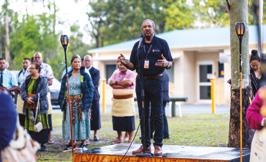
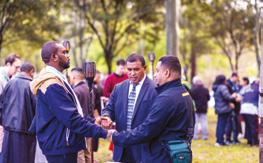
Top: Dr Gilbert Cangy speaking during the service. Above: Communion service at the South Pacific for Christ launch. (Credit: Charmaine Patel)
Health-focused mission journey relaunched
NSW | Tracey Bridcutt
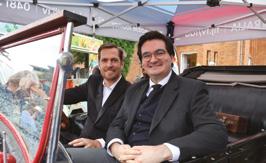
A century after Adventist missionary Nevill Westwood set out on his second historic journey around Australia, church leaders, health advocates and supporters gathered at Wahroonga Seventh-day Adventist Church on May 13 to launch a modern re-enactment inspired by his legacy of health outreach and service.
The original journey built on Westwood’s pioneering 1925 trip around Australia in the small Citroen 5CV known as “Bubsie”, the first car to circumnavigate the continent. But while the first journey focused largely on literature evangelism, the second trip carried a stronger emphasis on health ministry.
In 1926, Westwood travelled around the country in an Essex Super Six alongside Rudolph Schick, a graduate nurse from Sydney Adventist Hospital with training in dentistry and basic medicine. They travelled through remote
parts of the Australian outback, where Schick provided free health and dental assistance to communities with little or no access to medical care—particularly among Indigenous communities and isolated station settlements—while Westwood sold Christian literature.
Now, 100 years later, The Incredible Journey ministry is retracing the 1926 expedition, again travelling around Australia once more with a renewed focus on health ministry and wellbeing.
The project is a joint initiative of The Incredible Journey, South Pacific Division, ELIA Wellness, Greater Sydney Conference and Wahroonga church.
“I am delighted to be here to participate in this celebration where again we are setting out to share our health message with the people of Australia,” said The Incredible Journey speaker Pastor Gary Kent.
“Are you in?” Launch event ends on a high note
Dakabin, Qld | Tracey Bridcutt
Church leaders and members gathered for the South Pacific for Christ closing ceremony on May 2, with a clear message from the final program—this is just the beginning.
The launch program, held at Watson Park Convention Centre in Brisbane, from April 28 to May 2, brought together around 1000 attendees from across the South Pacific Division (SPD).
Following a full schedule of morning worships, plenaries, workshops, evening programs and prayer groups, the final session provided a time of reflection for those in attendance.
SPD chief financial officer Francois Keet said, “It’s not always easy to get a CFO excited about something. I’m excited and I just want to invest more. This meeting is only a taste of what is to come. This isn’t South Pacific for Christ— South Pacific for Christ is about to start. This is probably the most exciting thing that our Division has ever embarked on.”
Participants were invited to share their takeaways from the program.
“I know that God is going to work in a mighty way,” said a participant from
Tasmania. “I just pray through the Holy Spirit that we do become bold because there is an urgency with what we need to be doing and South Pacific for Christ is going to be just amazing.”
Another attendee from Kiribati reflected on the unity experienced during the week. “We are many colours but we are one big Adventist family,” he said.
General Conference president Pastor Erton Köhler delivered the final address, calling attendees to remain focused and united in mission. “If you’d like to see Jesus coming in the clouds of heaven, preach the gospel, don’t be distracted.”
He emphasised the importance of collective commitment. “If we are together—that spirit of integration—miracles can start to happen.”
SPD president Pastor Glenn Townend closed the program with a call to action, “May God bless us as we go to transform the Pacific for Christ. I have just one question: Are you in?” The audience responded with a resounding “Yes”.
To watch the livestreamed programs, visit <youtube.com/@southpacificforchrist>.
Wahroonga,
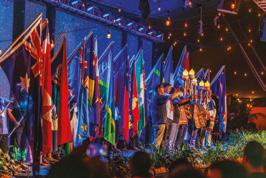
Closing ceremony of the South Pacific for Christ launch. (Credit: Charmaine Patel)
Re-enacting the historic journey are Ryan Taplin, portraying Nevill Westwood, and Jared Walton, portraying Rudolph Schick.
Church leaders call for Sabbath of Prayer
Dakabin, Qld | Tracey Bridcutt
A special South Pacific-wide Sabbath of Prayer has been called for July 4 as the Seventh-day Adventist Church prepares for a major evangelistic push across the Trans Pacific region later this year.
The call was made by the four South Pacific Union presidents and South Pacific Division (SPD) officers during the SPD Administrators’ Council at Watson Park, following the launch of the South Pacific for Christ initiative.
The Sabbath of Prayer will take place one day before the Trans Pacific for Christ harvest programs officially begin in the Solomon Islands on July 5.
Part of the South Pacific for Christ strategy is for the entire Division to support one union each year in its disciple-making focus. The sequence begins with Trans Pacific for Christ in 2026, followed by New Zealand Pacific in 2027, Australia in 2028, Papua New Guinea in 2029 and Southern Asia-Pacific in 2030.
More than 500 Adventists from across the South Pacific are expected to travel to the 11 nations of the Trans Pacific Union Mission (TPUM) to support harvest programs during July and August.
Pastor Danny Philip, president of the Papua New Guinea Union Mission, spoke on behalf of the union presidents and reflected on the role prayer played in the success of PNG for Christ in 2024. “The PNG for Christ program was successful in 2024 because of the years of fasting and prayer from the local people and the prayer support from all over the world but especially the South Pacific Division,” he said. “Prayer makes a difference.”
TPUM president Pastor Charlie Jimmy said the timing of the prayer initiative is significant. “It is right before the actual public preaching harvest programs in the first country to start the programs—Solomon Islands,” he said.
“This day of prayer will affirm and bless all the community service, health support and small group work in the lead up to the harvest. We realise all our work is empowered by the Holy Spirit.”
SPD president Pastor Glenn Townend said Psalm 2:8 has become a key focus text for the year. “Psalm 2:8 is the verse that we have committed to praying this year for the Trans Pacific. I am praying every day for the 11 nations, that they become the inheritance of King Jesus as the text promises.”
Resources for the July 4 South Pacific Sabbath of Prayer will be made available through <southpacificforchrist.org>, including world mission stories and video messages from General Conference president Erton Köhler and Pastor Glenn Townend focusing on mission and prayer.
making headlines
The global church story
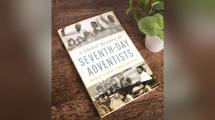
Two Adventist historians have published the first major global history of the Adventist Church in a generation. A Global History of Seventh-day Adventists traces the movement’s development across centuries and continents and is available worldwide at major online book sellers.—ANN
Care beyond the clinic
The Juliaca Americana Adventist Clinic in Peru donated 30 specialised technical jackets to volunteer firefighters who battle emergencies in freezing and hazardous conditions. By supporting those on the front lines of emergencies, the clinic extends its mission of care to those who protect their local community.—SAD
Tricycle radio mission
A 75-year-old Adventist in Brazil has turned his tricycle into a mobile radio ministry, broadcasting Radio Nuevo Tiempo while riding through the streets, distributing pamphlets and offering Bible studies at busy markets. His efforts have unfolded alongside the rapid expansion of the Adventist radio network, which now reaches 4.1 million people through new transmitters, with listeners reporting life-changing experiences from the broadcasts.—ANN
Eggs cut Alzheimer’s risk
A 15-year study of nearly 40,000 older adults found that eating eggs at least five times a week was linked to a 27 per cent lower risk of developing Alzheimer’s disease. Researchers from Loma Linda University found even eating eggs just one to three times a month was found to decrease the risk of Alzheimer’s by 17 per cent, and eating two to four a week decreased the risk by 20 per cent.—AOL
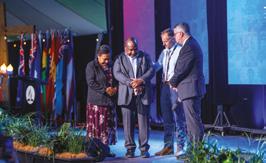
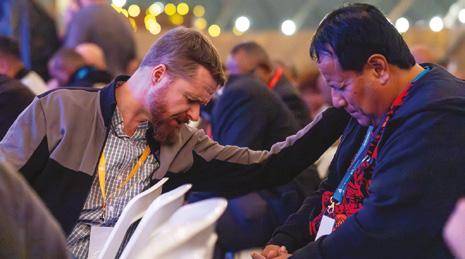
Prayer during the South Pacific for Christ launch. (Credit: Charmaine Patel)
Weekend of worship
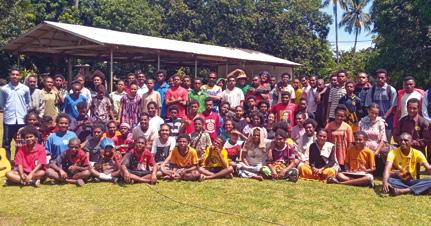
More than 100 Adventist students from seven schools across Port Moresby (PNG) took time away from their academic commitments to attend a weekend camp organised by the Port Moresby Central Adventist Students Association in Central Province from April 17 to 19. Themed “God’s Final Knock”, the program included Bible studies and presentations aimed at encouraging students in their spiritual lives. Minister Harry Nasi delivered messages throughout the weekend, alongside presentations from the Seme church pastor and district director. During the camp, the Mino Adventist Student Association shared a ministry achievement. The group was given the opportunity to conduct an Adventist program and lead worship activities in a Catholic school setting.—Juliana Muniz
Called to prepare
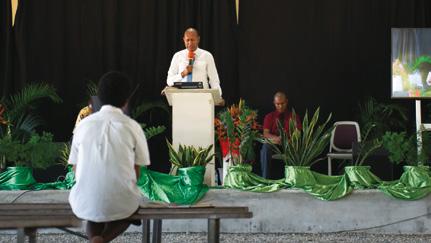
Central Papua Conference (PNG) president Pastor Lonol Winnie introduced the global OneVoice27 evangelistic initiative during a staff worship on May 13, encouraging the team to begin spiritual preparation ahead of the 2027 emphasis. Pastor Winnie explained that the General Conference initiative will focus on sharing the story of Jesus Christ worldwide, culminating in evangelistic programs and baptisms in September 2027. Employees were also encouraged to read the four Gospels, along with Daniel, Revelation and The Desire of Ages, during this year’s preparation phase. According to church leaders, OneVoice27 commemorates 2000 years since the baptism and beginning of Christ’s public ministry in AD 27 and aims to unite members globally through evangelism, prayer and Bible study.—Rose Maine Sinias
On One Accord
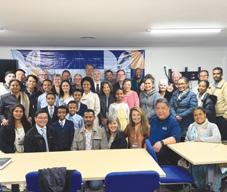
Outpost Centers International (OCI) held its first event in Australia at Cedarvale Health Centre in Victoria from April 9 to 12, bringing together about 12 ministries from across the country. Held under the theme “On One Accord”, the gathering focused on collaboration, prayer and supporting the mission of the Seventh-day Adventist Church. Speakers included OCI president Steve Dickman, Johnny Wong from WeExplore Ministry, Pastor Benjamin Ng from Faith FM, and Alain and Irene Bautista, OCI field vice presidents in the South Pacific Division. —Record staff
Clinic clean-up
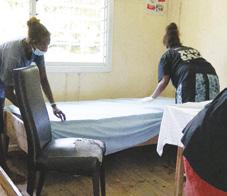
Young people from Ghombua church in Guadalcanal Province volunteered to clean their local health clinic as part of community activities in preparation for Solomon Islands for Christ. The group carried out maintenance and clean-up work around the clinic, which provides essential healthcare services for local families, children and elderly people —Solomon Islands for Christ Facebook page
Missional focus
Theology students and faculty at Fulton Adventist University (Fiji) gathered on campus from March 6 to 8 for a biannual missional symposium focused on outreach in local communities.
Themed “Mission to our Towns and Villages”, the program explored practical approaches to mission, with a particular emphasis on preparation for the upcoming Trans Pacific for Christ initiative.
South Pacific Division (SPD) director of Global Mission Dr Wayne Krause opened the symposium, speaking on the example of Jesus’ interaction with the woman at the well and the principles that underpin effective mission.
Leaders from the Trans Pacific Union Mission (TPUM) and Fulton also contributed presentations, highlighting the role of practical ministry, innovation and biblical foundations in mission work.
Final-year theology student Marika Tabua said the timing of the symposium was significant. “This symposium is such a blessing because it comes at a time when we are all preparing for Fulton for Christ and we needed these reminders about being involved in mission,” he said.
Dean of Theology Professor Limoni Manu said the initiative supports students in applying their learning. “It further helps our students in integrating the practical side of Theology to their studies,” he said.
The symposium is held twice each year and has been running since 2023 as a joint initiative between the SPD, TPUM and Fulton.—Talatoka Naroba/Juliana Muniz
have news to share?
Send info and photos to <news@record.net.au>
Farming new life
Australian-based Adventist ministry Operation Life has announced a new partnership with Mt Diamond Adventist Secondary School in Port Moresby, Papua New Guinea, to revitalise the school’s 100-hectare farmland. The school, which currently houses and educates more than 900 boarding students, has struggled to maintain its extensive agricultural grounds. Operation Life will now step in to provide the management, funding and expertise needed to re-establish a thriving, productive farm. “Our goal is to turn this land back into a blessing for both the students and the wider community,” said Jim Rennie, CEO of Operation Life.—Record staff
Healing hearts in PNG
A Sydney Adventist Hospital surgeon recently took part in a life-changing paediatric cardiac mission to Papua New Guinea as part of the hospital’s ongoing partnership with Open Heart International (OHI). Cardiothoracic surgeon Dr Ian Nicholson was part of a multidisciplinary team of eight clinicians from across Sydney, Melbourne and Brisbane, who volunteered their time to participate. The trip to Port Moresby General Hospital saw seven children aged between five and 14 undergo successful open-heart surgery to treat congenital heart conditions. “This work has become part of my professional identity and continues to shape my career in meaningful ways,” Dr Nicholson said. Adventist HealthCare CEO Brett Goods also travelled to PNG, meeting with hospital and university leaders and the PNG Secretary for Health to reinforce the San’s commitment to the program and explore future opportunities for collaboration.—Record staff
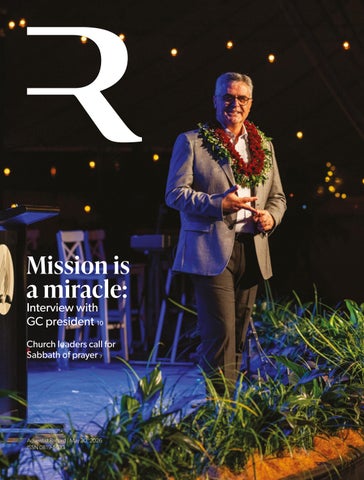
Adventist Record recorded an interview with General Conference (GC) President Pastor Erton Köhler during
his recent visit to the South Pacific Division (SPD).
Juliana Muniz (JM): How are you now finding the role of GC president?
Erton Köhler: I consider it a privilege. At the same time, I feel too small for the position. I remember thinking But why me? when my name was presented to the GC session delegates. My family had the same question. It’s not an easy task for us. We need to represent the global Church with so many cultures, realities, perspectives. My main role is not to be president of the Church but to be pastor of the Church because the president is the main pastor of the global Church.
My role is to maintain the identity of the Church; to keep the Church united; to be a voice for all kinds of people; to keep the emphasis on mission. This is a very busy role. Sometimes I ask the Lord for wisdom and strength— everything I need to move forward—and for help to always do, not what I think I need to, but what He expects from me, especially for this time of history we are living in.
I’m always thankful for all of you who are praying for me, my family and our worldwide church family as well.
JM: Can you share your vision for the Church?
Erton Köhler: My priority, and the priority of the Church, is to be a church that is grounded in the Bible and focused on the mission. Resources, projects, initiatives, will be all aligned to that vision.
If we are grounded in the Bible, we’ll always be passionate and focused on the mission, and this is the motivation that we have for everything.
JM: In 2024, you were part of Papua New Guinea (PNG) for Christ. How did you find the experience?
Erton Köhler: It was amazing. I was in Korobosea church, Port Moresby, preaching every day with my poor English. It was an unforgettable experience for many reasons, and [getting a handle on] the language was one of them.
I was very impressed with the kindness of people in PNG. They’re very friendly. They’re very interested in spiritual things. They’re very committed to mission. At the end of the program, I came to the conclusion that although I was there to share something, I received much more than
I shared with them during those days.
We travelled to some remote villages in a helicopter. That was an unforgettable situation, because we visited two places that you’d need 17 days or 12 days walking to reach. When we arrived, we saw people preaching PNG for Christ, people being baptised, the church organised, Adventist schools, Pathfinders, Adventurers, everything in very remote villages of PNG.
It showed me how committed the people from PNG are. The Adventist Church is very strong in that country, and I believe we’ve been a very positive influence in that area. We baptised almost 30 people at the end of that campaign, and it was amazing.
I participated in two other baptisms where I saw thousands of people being baptised. This means it was a very well-organised program with fasting, prayer, mobilisation, training and organisation.
But the most important element is that they worked in a very integrated way. You didn’t hear about department A, B or C. All the departments together focused on that campaign. As a result, thousands of people gave their lives
to Jesus because the Lord blessed.
It was not only an evangelistic campaign; it was a season of miracles in PNG, in the lives of those who participated.
JM: Do you think that what we saw in PNG can happen elsewhere?
Erton Köhler: Of course. The results, the participation will not be exactly the same, but I believe the principles in PNG can be applied to all other areas of the South Pacific. Number one, spiritual preparation. All countries can do that. Number two, mobilisation of members, training, inspiration, etc. Number three, they can work in an integrated way.
The only aspect every country needs to pay attention to is that you need to share passion for mission with the members, because mission is not something natural. Most of our members have a lot of things to do. They aren’t finding time to share Jesus with others. As church leaders, we need to train, to inspire, to pray, but we need to invite the members—find ways to make them passionate about mission. That will be the secret—the involvement of everybody in [South Pacific for Christ].
JM: You were sharing just last night that God can open doors.
Erton Köhler: I truly believe, and my life is guided by that. Mission is impossible for us, but it’s not impossible for God. Mission is not what we can do for God; it is what God can do through us. And this is why I believe mission is a miracle. And if we do our best for South Pacific for Christ, miracles will happen in all the 19 countries of the South Pacific Division.
JM: From everything you’ve seen in your two visits, what’s your impression of the SPD?
Erton Köhler: Many positive things. The first one is the open hearts of people that I’m seeing here. Of course, I came for a meeting that’s focused on the mission. I expected to hear about mission, but I expected to see people saying, “Okay, you say everything. You tell everything. You show everything, but I will do what I think is the best for me.” But this is not what I’m finding here. I’m finding people looking for more, expecting more and committed to do more, and it’s giving me a lot of hope about the future here.
JM: How have you found the launch of South Pacific for Christ?
Erton Köhler: I have two words to define this meeting. Number one is miracle. What’s happening here is beyond our expectations. Because when you put together all 19 countries and territories, cultures that are totally different, and you can see the same enthusiasm in the hearts of people, this is a miracle for me.
And number two, another element that’s impacting me is that spirit of integration. Integration is a very precious word for me. Everybody working together. And when we think of all the cultures we have, all the different perspectives of church, the world and the mission, I’m seeing that everybody is committed to do the same.
South Pacific for Christ, every year a different union, everybody supporting them. It is bigger than Australia, it’s bigger than New Zealand, it’s bigger than Fiji, the Solomon Islands, PNG. It’s bigger than all of them. They’re coming together, not for their countries, their culture, but for the mission, and I’m very impressed by that.
JM: OneVoice27 was also launched here. What is it? Why is it important? Why should people engage with it?
Erton Köhler: OneVoice27 is a global call for the Seventh-day Adventist Church to use all the medias of the Church for evangelism. Of course, we need to do it every day, but [in September 2027 we] invite everybody to come together—church members, institutions and organisations, social media, YouTube, internet, radio, TV, printed media— for one month talking about Jesus.
Why 2027? In the year 2027 we will celebrate the 2000th anniversary of Jesus’ baptism, His anointing and the beginning of His ministry. The best way to celebrate Jesus’ baptism? Preparing other people to accept Jesus and bring their lives to Him. Our celebration will be focused on media and using all the energies and structures and creativity for mission announcing Jesus.
Focusing on Jesus we will look at two biblical books— Daniel and Revelation. Our idea is to announce the Jesus who already came, prophesied in Daniel (chapter 9) and the 70 weeks prophecy, and in Revelation, we can share about the Jesus who will come. And we believe as the Seventh-day Adventist Church that our call is to prepare this world for the second coming of Jesus.
An Ellen White quotation I like, says that we need to
reach people where they are, and media can go everywhere. Media can enter closed countries and closed homes, it can reach the young and old. And I believe the Lord is calling us to use the most efficient way to reach the biggest number of people we can, to share with them the love of Jesus, invite them to bring their lives to Him and be prepared for the second coming.
And we encourage every member of the church to dedicate next year to reading Ellen White’s The Desire of Ages. Alongside the Bible, Desire of Ages is an additional book to expand our vision, to inspire us to share Jesus with all our hearts.
JM: How can people watching this serve?
Erton Köhler: If you like to use media, use the gift the Lord gave to you, use your social media accounts to do something for the Lord.
If you like sport, use sports for mission. If you like being a friend of others, use friendship for mission. Each of us needs to find a way to use our gifts, something we love, our hobbies, to share Jesus with others.
OneVoice27 is a call for all. Do everything you can to know Jesus, to read about Jesus, to follow Jesus, to surrender your life to Jesus, but don’t stop there.
Your spiritual life will be happy when you share about Jesus. Those who speak with Jesus also speak of Jesus and this is my call for you, for me, and for each of you who are reading now.
This interview was recorded and published as a recent episode of Record Live.
To watch the full version visit <youtube.com/@AdventistNews> or scan the QR code.
what in the word
Give us this day
noun: ἐ�πιούσιος | epioúsios, Greek
The Greek adjective ἐπιούσιος (epioúsios) is used only twice in Scripture, both in the Lord’s Prayer (Matthew 6:11; Luke 11:3, NKJV). This rarity prompts us to pay attention. Jesus is teaching us to ask for more than just ordinary bread.
What does the word point to? Greek readers across the centuries have heard two possible meanings in ἐπιούσιος:
1) Bread we really need for life. If the word is formed from ἐπί (“for”) + οὐσία (“being” or “existence”), it means “bread for survival”—the necessities we need for today. This reading makes the prayer a daily reminder that we depend on God: “He gives to all life, breath and all things” (Acts 17:25). We ask the Father for what we need to live, not for luxuries, but for enough.
2) Bread for tomorrow. The term may echo the New Testament phrase ἡ ἐπιοῦσα—“the coming [day]” (see Acts 7:26; 16:11; 20:15). In this case, the prayer looks ahead: “Father, please provide for tomorrow too.” It is a morning prayer that helps disciples face the next day with trust instead of worry.
Both senses fit the context and keep the request concrete by using actual food, while opening up rich theological territory, such as trust and hope. Notably, Jesus does not use the common adverbial expression for “day by day” (καθ’ ἡμέραν, as seen in Luke 9:23). By choosing ἐπιούσιος, He slows our pace and broadens our vision.
Jesus’ petition deliberately recalls Exodus 16, where manna arrives each morning. This manna was enough for the day, but when hoarded, it rots (Exodus 16:4,19–21).
God was teaching Israel to trust the Giver more than the gift. This same rhythm is seen in the Sabbath—gathering double on the sixth day and resting on the seventh (Exodus 16:22–30). When we pray for ἐπιούσιος bread, we learn important lessons: being content with what we have, depending on God to sustain our lives and trusting His plan for tomorrow.
Jesus connects this to Scripture: “Man shall not live by bread alone, but by every word of God” (Deuteronomy 8:3; Matthew 4:4, NKJV). The Father provides for daily needs, including food, clothing and our uncertain futures (Matthew 6:25–34). He also gives us Himself through His
Son, saying, “I am the bread of life” (John 6:35, NKJV). By asking for ἐπιούσιος bread, we are putting our priorities in order. We seek the kingdom first and receive what we truly need (Matthew 6:33).
In tough financial times, this petition becomes both our prayer and guide. We ask God to meet our family’s needs, and we become part of His answer for others. This can look like sharing meals, budgeting wisely, working honestly and open-handed generosity (cf 2 Corinthians 9:8–11).
Churches that pray “give us” bring together worship and helping others—preaching Christ while stocking a pantry, welcoming strangers and managing resources openly (Acts 2:45).
The Sabbath deepens the lesson. Each week, we stop trying so hard because God is already at work (Genesis 2:2,3; Exodus 20:8–11). Rest is not being lazy; it is trusting God’s promise. It reminds us our lives are held together by God’s care, not our own efforts. Practically, the Sabbath invites us to slow down, enjoy meals together, use less technology, spend time with people of all ages and notice the needs around us.
The petition is for bread, but its centre is Christ. He is the Word we live by, the Bread that satisfies our needs and the Lord who teaches us how to pray. Christ feeds crowds (Matthew 14:13–21), but He also refuses to turn stones into bread for His own selfish desires (Matthew 4:3,4). He teaches us to depend on Him without demanding, to receive from Him without hoarding and to share with others without fear. In Christ, our daily needs and eternal life come together.
“Father, give us today the bread we truly need—enough for life now and a foretaste of Your coming kingdom. Teach us to trust You, to rest in Your Word and to share freely what You provide.”
Ask for what you need each day, trusting God’s provision for today, resting in His Word and keeping your eyes fixed on the kingdom to come (Matthew 6:11; Deuteronomy 8:3; John 6:35, NKJV).
Dr Limoni Manu O’Uiha dean of the school of Theology, Fulton Adventist University, Fiji.
Buffet Bible Study or Miller’s Method?
Growing up in the ‘90s, I loved it when my family took a special dinner trip to Sizzler: a buffet restaurant. The thing I instantly noticed was that you could choose exactly what you wanted to eat out of a wide range of foods. I loved the pasta, the soups, the fried potato skins, the cheese toast and especially the mix and match desserts! I preferred not to take too much from the salad bar though. At a buffet you can do that. You can take what you want and ignore what you don’t like. As a student of the Bible however, I’m increasingly disturbed to see people taking that same approach to Scripture—explaining away, ignoring or flat-out disobeying some sections, while holding tightly to others. It’s not an approach the Bible itself advocates.
In 2 Timothy 3:16, Paul wrote that “All Scripture is Godbreathed and is useful for teaching, rebuking, correcting and training in righteousness” (italics added).
As a Seventh-day Adventist Christian the Bible is pretty important to me. After all, the very first fundamental tenet of my faith declares that it is “. . . the supreme, authoritative and the infallible revelation of His will . . . the standard of character, the test of experience, the definitive revealer of doctrines”.1
How did the Bible get to be so important to Adventists?
The year was 1816. A farmer, war veteran and ex-deist named William Miller decided that he believed the Bible was true and so began a systematic study of its contents. He proceeded in his study with the intent to let “. . . the Bible serve as its own interpreter”.2 He observed that the teachings of churches and church leaders over the centuries had led Christianity down contradictory paths. Miller reasoned that if the Bible was from God then it must be able to be comprehended, without the need for a priest or scholar to explain it. He therefore resolved to use only a Cruden’s Concordance to assist him to find how key words were used in other passages when he came across
a verse he didn’t understand. He believed any passage could be understood by studying the context or other places within the Bible. If a teaching was intended to be symbolic, the Bible would give the interpretation. If it was intended literally, it would be clear by reading around it. In other words, he espoused the idea that Scripture was a complete system of revelation, containing both the truth and the interpretive keys to understand it. Amazingly, he really made some remarkable progress when he stuck to these principles. Unfortunately, he broke his own rules and trusted other Christian commentators to determine his understanding of what the “cleansing of the sanctuary” meant in Daniel 8:14.3 By not searching to see what the phrase meant elsewhere in Scripture (eg Leviticus 16:19,20; Ezekiel 45:18) he made a critical error. What happened next made history and is one of the many reasons you are able to read this publication right now. We can save the story for another day, but suffice to say that by subsequently preaching his ideas (both correct and incorrect), he made a significant impact on the small group of people who would go on to found the Seventh-day Adventist Church.
I believe this idea that the Bible can be its own interpreter because God wants to speak to us all personally through His objective word is a significant theological contribution Miller has made to Adventist DNA. I also think the importance of this idea isn’t often understood or recognised.
I’m proud that almost all of our books and resources seem to be operating from the cultural assumption that even highly complex ideas in Scripture can be grasped by absolutely anyone who is willing to study the Bible for themselves. In terms of the role of leadership in interpretation, I think we view our pastors and scholars as an asset for understanding Scripture, but not as indispensable or authoritative in the way some other groups do. I believe
we also have cultural and structural processes where we have freedom to disagree with leadership, creating theological accountability. This approach to the Bible has shielded us from a number of major theological pitfalls that have plagued large sections of the wider body of Christ over the past century.
I’m absolutely in love with the concept that we can all come to our Bibles humbly, honestly, prayerfully and with a willingness to be corrected. I love that we, as far as possible, can try to remove our pre-existing ideas, assumptions, expectations and thoughts about what we want Scripture to say to try to find the author’s intent. I love that we can examine key words and study the context and compare Scripture with Scripture to determine the underlying principle in the text and then apply it to our situation today. I love that we can dig for truth within Holy Writ as for hidden treasure and respond in obedience to its words. I love that we are all on a lifelong mission together to let the Bible speak for itself about God to our hearts at an ever-deepening level.
Because of that, you might understand my worry when I see some of us beginning to take steps away from this method and regressing to a “pick and choose” or “let someone else think for us” interpretive model. This takes many forms. For example, the huge surge in popularity of the American right wing is having an impact. Although we may find some solidarity with that movement around issues of freedom of speech, etc, it brings with it an overly simplistic, highly selective and often inaccurate approach to interpretation of the Bible that should make us very wary.4 On the other side of the religio-political spectrum, there are very influential voices amoung us calling for an increased use of gendered, ethnic or liberation-type theologies because of the way they call for action in the area of social reform. As positive as that may be, these systems also use the experience of marginalised communities as their primary interpretive lens.5 This inevitably transforms the main mission of God’s people from evangelism into a push for political and social change.
Progressive theologies often seek inclusivity, compassion and environmental stewardship which are all positive goals. Unfortunately, they approach the Bible in a way that is mostly metaphorical and elevates social justice and science to an equivalent or higher authority.6 Looking in another direction, the influence of the charismatic churches on the worship music of the wider body of Christ has begun to earn their theological resources a hearing too. Although they have produced many helpful books that show a deep passion for Scripture, we have to remember that in most of those churches the “. . . approach to the Bible is drawn through the filter of personal experience . . .”7 Particularly signs and miracles which are “proof” the gospel is true.8 We must choose to hold to Scripture alone as our authority and faith as both our way to salvation (Ephesians 2:8) and the final “evidence of things not yet
seen” (Hebrews 11:1, NKJV).
In Acts 17:11 (NKJV), Luke describes those in Berea as being “fair-minded” when he says that “they received the word with all readiness, and searched the Scriptures daily to find out whether these things were so”.
We have made a lot of mistakes as a Church, but I believe that the “Bible as its own interpreter” study method has kept us from going too far off track, or has at least brought us back to the path of safety when we have. The danger is that, if we allow our interpretive foundations to be eroded, our building will eventually shudder and crumble. This will be seen most dramatically in the area of mission. Without scriptural impetus and prophetic urgency, we will cease to do what we have been called and mandated to do (Matthew 28:18-20; Revelation 14:612). Without a solid biblical anchor, outreach will either completely cease or else be transformed into something that may appear virtuous to some groups but will lack any true spiritual power. What’s more, we will not see this disaster coming because we won’t have the framework to recognise the error seeping in. Without a passion for God’s Word, we won’t know it well enough to heed its warnings.
Bible study is not always easy. We do sometimes need to struggle with the texts that are uncomfortable for us. We need to work to understand author intent and context. We also need to surrender our own need for control. But God is beautiful and good and holy. If He has revealed something to us in His Word, then it is ultimately for our good. If it’s confusing, or seems contradictory, or doesn’t make God appear loving, that just means we still have study to do! We need to go deeper and deeper in prayer and encounter until we can understand it from a different perspective in the light of what Scripture itself reveals elsewhere. We need to treat all of what He has given us as good, not picking what we like and ignoring what we don’t. When I go to a buffet today as an adult, I have to talk myself through making sure I take some healthy salad, as well as all the delicious carbs.
I hope and pray that as a movement we can continue to do the same with God’s Word.
4. Whitehead and Perry, Taking America Back for God: Christian Nationalism in the United States, 33.
5. James Livingston, Modern Christian Thought Vol. 2: The Twentieth Century, 457.
6. Marcus Borg, Reading the Bible again for the first time: Taking the Bible seriously but not literally, 45, 160.
7. Anderson, To the Ends of the Earth, 139.
8. Anderson, 188.
Daniel Matteo associate pastor, Wantirna church, Victoria.
Do no less:
Rethinking disability, belonging and the call of the Church
Carry each other’s burdens, and in this way you will fulfil the law of Christ” (Galatians 6:2).
Disability is not a marginal issue. It does not exist “out there” in the wider community while remaining absent from our churches. It is present in our pews, our families, our schools, among our friends and neighbours, and in our congregations. The question before us is not whether people with disabilities belong in the church but whether the church is willing to fully belong to them.
In Australia today, more than one in five people live with disability.1 Within the Seventh-day Adventist Church, this translates to thousands of members, many with visible disabilities, many with disabilities that are not obvious to the naked eye. And yet, for too many, church remains a place of partial inclusion: attended, but not fully accessible; present, but not fully welcoming; cared for, but not truly needed.
What do we mean by disability?
Disability is often misunderstood as a narrow category defined only by visible impairment. In reality, disability encompasses a wide range of physical, sensory, intellectual, neurological and psychosocial conditions. It may be present from birth, develop over time or fluctuate throughout life. Importantly, disability is not only about a person’s body or mind but also about environmental and attitudinal barriers.2,3
We recognise that a wheelchair user is not disabled solely by their body but by a building with stairs and no ramp. A child with autism is not disabled only by their neurology but by an environment that overwhelms the senses. A person who is deaf is not disabled merely by hearing loss but by the absence of accessible communication. In each of these cases, exclusion is not inevitable; it is constructed. As a body of Christ, we must ask ourselves: how do these examples reflect the realities of our church on Sabbath morning? How might our practices, our spaces and our words unintentionally erect barriers to the full participation of all God’s children? And then, led by the Spirit, we can seek to remove those barriers, embodying the inclusive love of God that welcomes everyone to the table.
Historical and theological barriers
Some of the most persistent barriers faced by people with disabilities are not physical, but theological. Historically, disability has often been interpreted through what scholars describe as the religious model of disability,4 which is the belief that disability is a punishment for sin, whether personal or generational.
This way of thinking has deep roots. Scripture contains examples where illness appears connected to disobedience, such as King Uzziah’s leprosy (2 Chronicles 26:16–23). There are also biblical accounts of people with disabilities being excluded from full participation in religious life (2 Samuel 5:8). Over time, these narratives shaped assumptions that disability signalled divine displeasure. Jesus decisively rejected this interpretation. When asked who sinned to cause a man to be born blind, Jesus replied, “Neither this man nor his parents sinned, but this happened so that the works of God might be displayed in him” (John 9:3). Disability, He made clear, is not evidence of moral failure. It is not punishment from God but a consequence of living in an imperfect world. This distinction matters. When disability is framed as punishment, people are marginalised, pitied or treated as projects rather than as full members of the body of Christ.
Made in the image of God
Scripture affirms that every person is created in the image of God (Genesis 1:27) and “fearfully and wonderfully made” (Psalm 139:14). This truth does not exclude people with disabilities; it explicitly includes them. Disability does not diminish a person’s worth, calling or capacity to reflect God’s image or fulfil God’s calling for their lives.
Yet societal attitudes often suggest otherwise. Even within faith communities, people with disabilities may be welcomed as recipients of care but overlooked as contributors, leaders or decision-makers. Belonging requires more than kindness; it requires recognition, responsibility and relationship.
A 2021 study5 examining the experiences of adults with disabilities in the Seventh-day Adventist Church in North America found that while many felt cared for by pastors and teachers, they often felt overlooked by congregations as a whole. More significantly, participants reported that true belonging was tied not only to care, but to being needed, to having meaningful roles and responsibilities within church life. Encouragingly, the global church has taken steps forward through initiatives such as Adventist Possibility Ministries,6 signalling growing awareness and commitment. Still, there is more work to be done.
Jesus and restored dignity
Jesus’ ministry consistently challenged exclusion. When He healed those with disabilities, He did more than restore physical function. He restored dignity and belonging.
In Matthew 21, Jesus healed the blind and the lame in the temple itself—a space from which they had long been excluded. This act provoked outrage among religious leaders, not simply because healing occurred, but because it disrupted deeply embedded boundaries. Jesus made it clear: God’s presence is not reserved for a select few. Everyone belongs where God dwells.
Practising “Do No Less”
What, then, does faithfulness look like today?
First, advocacy. Proverbs 31:8,9 calls believers to speak up for those whose voices are unheard. Advocacy may involve addressing accessibility barriers in church buildings, supporting disability organisations or speaking with church leaders about unmet needs.
Second, relationship. People with disabilities are not ministry projects. They are neighbours, friends and family members. Scripture offers a powerful example in Mephibosheth, who was disabled as a child after being dropped while fleeing for safety (2 Samuel 4:4). King David welcomed him into his household, granting him a permanent place at the king’s table (2 Samuel 9). Belonging, not fixing, was the gift.
Third, recognition. Throughout Scripture, God explicitly names people with disabilities in His promises (Leviticus 19:14; Jeremiah 31:8). Their inclusion is not an
afterthought; it is intentional.
Finally, reframing weakness. Moses, who struggled with speech, and Paul, who spoke of a persistent “thorn”, remind us that God’s power is made perfect in weakness (Exodus 4:10–12; 2 Corinthians 12:9). Disability does not disqualify a person from God’s purposes; it often reveals them more clearly.
A call to the church and to YOU!
Disability is not a future issue but a present reality. As Australians age, most will experience some form of disability over their lifetime. The church is called not merely to respond, but to lead: to model a community where every person is welcomed, valued and empowered.
Ellen White captured this responsibility powerfully:
“I saw that it is in the providence of God that widows and orphans, the blind, the deaf, the lame and persons afflicted in a variety of ways, have been placed in close Christian relationship to His church; it is to prove His people and develop their true character. . . If we have the true religion of the Bible, we shall feel that a debt of love, kindness and interest is due to Christ in behalf of His brethren; and we can do no less than to show our gratitude for His immeasurable love to us while we were sinners unworthy of His grace, by having a deep interest and unselfish love for those who are our brethren, and who are less fortunate than ourselves” (Testimonies for the Church, vol 3, p511).
The challenge before us is clear. To follow Christ faithfully is to refuse exclusion, to resist harmful narratives and to build communities of genuine belonging.
As a church, may we commit to doing no less.
1. Australian Bureau of Statistics, Disability, Ageing and Carers, Australia: Summary of Findings, 2022, <abs.gov.au>.
2. Australian Human Rights Commission, Know your rights: Disability discrimination, <humanrights.gov.au>.
3. Australian Institute of Health and Welfare, People with disability in Australia, <aihw.gov.au>.
4. Katrona Templeton, “Spiritual and Biblical View of Disabilities”, Ascend/Church of Scotland, November 2021, <ascend.churchofscotland.org.uk/2021/11/spiritual-and-biblical-view-of-disabilities-by-katrona-templeton/>.
5. Trecartin, Shannon; Wile, Mikelle; Trecartin, Terrance; and Čin ala, Petr, “Being Needed, Cared for, and Present: Belonging and Disability in the Seventh-Day Adventist Church in North America” (2021). Faculty Publications. 4201, <digitalcommons.andrews.edu/pubs/4201>.
Dr Dawn Grant-Skiba principal of a small specialist school in Sydney, supporting students with profound disabilities. This article is adapted from a sermon she delivered at Campbelltown church (NSW) in December 2025. Married to Pastor Charles Grant-Skiba, an agedcare chaplain within the Seventh-day Adventist system.
Deliverance from above
In my lifetime I’ve been affected by two wars. The first one took place in heaven (Revelation 12:7) many centuries ago and, like everybody else, I’m still reeling from that tragedy. The second war was World War II, five years of great turmoil to which I had a front seat while living in The Hague, the Netherlands.
Today, nearly 60 years later, I remember standing with my mother at the front door of our house to see the first German troops march along our street. Even as a fiveyear-old I didn’t like this interference with my life. First, armed enemy soldiers roamed the streets. Then coupons were needed to buy food. Next came a curfew. Then Jewish neighbours started to disappear, either by going underground, but more likely taken to a German concentration camp.
Coming home from school one day I found my mother in tears and a Gestapo officer waiting for me, seated on my father’s chair. He clamped me between his massive thighs and accused me of being a saboteur. I never did find out who up-ended the 40-gallon drum and spilled the oil, but it wasn’t me. There was nothing to confess and he left, heaping sinister threats on us—which kept us on tenterhooks for months. On another occasion two soldiers set an unleashed Alsatian dog on me.
Then, as Adolf Hitler wanted to build his Atlantic defence wall, all the western suburbs were evacuated. My family was forced to move to a Roman Catholic area
in The Hague East, far removed from the beach and my friends.
Later in the war, the Nazis stole everything from the exasperated Dutch, including trains, food, artworks, cattle and even bicycles. But their most resented act was stealing young men. Without warning, German soldiers would round up all males between 16 and 40 years of age, even dragging them out of their homes. No suitcases, no goodbyes, but, “Schnell, schnell!” on the truck and off to some dreadful German labour camp. Sometimes such round-ups were anticipated. My father hid for many weeks in the underground engine room of a swing bridge and successfully avoided deportation.
Last of all, food and fuel ran out and people started to look skeletal—some staying alive only by eating tulip bulbs (I ate them too—definitely rank). The winter of 1944-45 was the coldest in memory. To survive we burned our solid-timber cupboard doors, stair-treads and shelves to keep warm. Even so, many perished of cold and hunger.
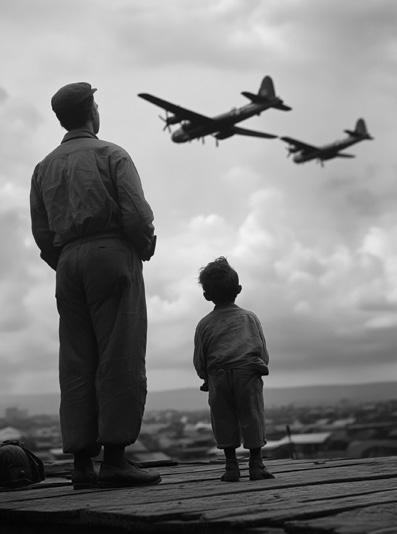
Then, in March 1945, when we were despairing that the war would never end, Hitler rubber-stamped an Eisenhower demand for Allied food drops over The Hague to alleviate the famine. One day in April 1945 I heard this strange, distant rumble coming closer and closer. Seconds later my dad and I were standing on the rooftop, looking up in awe at several lumbering B-29 aircraft—a star painted on their side identifying them as American. They were flying extremely low, and we could clearly see the crew members in the cockpit of one that passed perhaps only 60 metres away from us. The aircraft were dropping desperately needed food over the local airport.* Choked with emotion, I grasped my father’s hand and looked up at him to express my joy and wonderment. It was the only time I’ve seen tears in my father’s eyes. Then, to add to my excitement, the pilot noticed our wild waving on the rooftop and quickly waved back at us with a big Yankee grin.
I sometimes dwell on this once-in-a-lifetime experience and think of the immense joy of “meeting” my liberator in the air so many years ago. I try to relate it to the anticipated and enduring joy when the next person I see bringing deliverance from above won’t be an American in a bomber, but the Lord Jesus on a cloud (Revelation 1:7). Was my experience in 1945 a tiny foretaste of this far more stupendous event? I believe so, and I’m inclined to think that if a transient US pilot could bring tears of joy to my eyes, the second coming of Jesus would have my eyes cascading tears in unadulterated happiness. May He come very soon!
*This life-saving food drop was called “Operation Manna” by the US Air Force.
June 20, 1998 Adventist
Cornel Jongejan IV Taken from
Record.
Five-Minute Habits to boost your
Heart Health
Sanitarium accredited practising dietitian
Dr Jessica van der veer has expertise in the management and prevention of chronic disease. Here she shares her top five-minute habits that have been scientifically proven to help support heart health:
1. Exercise Snacks
The idea of committing to a 30-minute workout every day can feel unrealistic. But what about just five minutes?
Research has found that women who completed short bursts of vigorous physical activity—just 3.4 minutes a day—were 45 per cent less likely to experience a major cardiovascular event than those who did none. And you don’t even need to do it all at once. The study found that even 1.5 to 4 minutes of activity daily, broken into just one-minute bursts, was associated with up to 67 per cent lower risk of heart failure.
2. Start Your Day with a Fibre-rich Breakfast
Another daily five-minute habit Jessica recommends is a high-fibre breakfast.
Try these quick breakfast ideas:
• Peach & Raspberry Parfait with Weet-Bix™
• Peaches & Cream Overnight Weet-Bix™
• Blend Weet-Bix™ into a smoothie with oat milk and banana
3. Take Five Minutes to De-stress
“Stress doesn’t just affect how we feel, it can influence heart health too. Cortisol is the body’s main stress hormone, and elevated levels have been linked with increased risk of hypertension and cardiovascular events such as heart attack and stroke,” says Jessica.
Five-minute destress tips:
• Step outside with a cuppa and leave your phone behind
• Use box breathing (inhale four, hold four, exhale four, hold four)
• Listen to your favourite piece of music with your eyes closed
Conversations
Adventist Record asked attendees at the recent South Pacific for Christ launch in Brisbane, Queensland, one simple question. Here are their responses.
How are you planning to get involved in South Pacific for Christ?
I’m excited because I work at Pacific Adventist University and I’d like to see students inspired and get involved in mission on campus. And I believe that they are a channel which God will bless, and through them, their community, and share the love of Jesus.
Our students are engaged and we have almost 1900 students on campus. They are connected with their community. They have outreach through their practicum, part of their academic programs and they go to their communities to share what they have learned. They’re involved in singing ministry and community outreach programs and engage in on-campus ministerial programs.
So it’s exciting to see students getting to discover Jesus and loving Jesus and be transformed and be world changers as they go out into their community
Lohi Matainaho, PNG
A lot of prayer. I don’t think we can move forward in our Tasmanian Conference or even through the Australian Union without a lot of prayer. But what I’ve learnt from these few days away is that God has
a plan. His Holy Spirit is being poured out even as we speak, and so we’ve got nothing to fear for how it’s going to come together. We just need to be really praying and seeking God’s hand, and through the Holy Spirit the plans will come together, and there’s going to be this amazing harvest and reaping.
I’m just so excited. It’s just been such a blessing to be able to come and just hear all the different speakers and the plenaries and the workshops. And we need to be more bold, as Pastor Erton said. We need to be bold. We need to be really seeking God more than what we have been.
As we look at PNG for Christ, they were on their knees. It just didn’t happen because the program was there and they had the speakers. It was all the prayer, corporate prayer, leading up to it.
So it’s exciting, but I think as an Australian Union Conference and even South Pacific Division, the amount of prayer that we need to do leading up to it. But God is good, and He’s going to lead us, and there’s going to be a lot of people that come to know Him as their personal Saviour.
Shellene Redman, Tas
We are already in—involved with 12 sites in preparation for the South
Pacific for Christ—for Fiji for Christ. We are going there visiting, door knocking, visiting the community, praying, planning, organising. We’ll be there.
Tabua Kotobalavu, Fiji
I am actually now planning firstly to start at my home. I’d like to see my home being changed, and then I am planning to have a community that is just next door. We would like to, as a family, establish a new church there.
Samuel Sowembari, PNG
Covenant Singers from Papua New Guinea have started already. We started during PNG for Christ and kept it going. So our ministry is to the streets. We feed the streets, we do singing ministry, we do devotions. We pray with the people on the streets. Now we are in schools.
So we are glad to be part of South Pacific for Christ. It just gives us a lot more motivation, a lot more insight, and we’re going to expand our ministry to those who have left the Church. We want to bring them back.
So we’re looking forward to doing that, to bringing them back and be just involved in the holistic approach, within South Pacific for Christ. So we’re so thankful to be part of this.
Ridley Joseph, PNG
Wedding
BRENNAN–BASSETT. Mitchell
John Michael Brennan, son of Michael and Nicole Brennan (Adelaide, SA), and Grace Marie Bassett, daughter of Christopher and Rachel Bassett (Adelaide), were married on 18.4.26 at Deep Creek Homestead. A shared love of Australian nature and open spaces brought family and close friends together in a tranquil setting for their wedding. Grace and Mitchell live on Kangaroo Island where they work in fields caring for nature and volunteer in community groups.
Lilian Panozzo
Obituaries
BULLAS, Annette Mary, born 9.1.1943 in Mount Gambier, SA; died 21.3.26 in Ballarat, Vic. She was predeceased by her husband, Vernon. Annette is survived by her children, Phillip, Michelle and Jasmine; grandchildren, Sam, Joe, Ben and Tegan; and great-grandchild, Isabella. She was a loving wife and adored mother and will be sadly missed by all who knew her.
John Smolka
CURRIE, Gaya Lesley (nee Wilton), born 7.8.1934 in Christchurch, NZ; died 24.4.26 in Alton Lodge, Cooranbong, NSW. She was predeceased by her husband, Pastor David Currie in 2021, and her brother, Garth Wilton. Gaya is survived by her son, Kelvin (Darwin, NT); daughters, Delphine Christien (Cessnock, NSW), Adelle (Bonnells Bay), and Althea Thomson and her husband, Wayne (Cooranbong); granddaughter, Sabrina Muñoz and her husband, Rob (Innsbruck, Austria); and sister, Berwyn Butler (Colorado Springs, USA). Gaya travelled the world with her husband, sharing Jesus wherever she went. Her ministry was not always delivered in words but in deeds of kindness. Gaya reflected the love of Jesus to all she met.
Harold Harker
DODDS, Janette (nee Edwards), born 28.4.1949 in Murwillumbah, NSW; died 10.4.26. She is survived by her husband, Brian; sons, Rodney and David; and three grandsons. Blessed with unique grafting skills, Jan helped establish the largest tropical fruit business in the southern hemisphere, including the introduction of exotic fruits from other countries. In 2007, Janette and Brian joined Pacific Yacht Ministries, sailing their boat, Another Angel, bringing a ministry of healing, love and service to distant isles. Despite declining health, Jan leaves a legacy that lives on in a thousand lives.
Peter Colquhoun
DUNCAN, Kim, born 8.9.1949 in Perth, WA; died 25.3.26 in Perth. On 15.5.1979 he married Rita. Kim was predeceased by his son, Brad in 2016. He is survived by his wife; children, Melanie, Dylan and Kale; and seven grandchildren. Kim was a person of faith and never doubted the love of his Saviour, Jesus Christ. In death he waits for the resurrection at the second coming.
Steven Goods
ETHEREDGE,
Fredrick Richard, born 19.12.1928 in Glen Huntly, Vic; died 16.1.26 in Mooroolbark. He is survived by his wife, Alice (Mooroolbark); daughters, Jenny (Mooroolbark), Linette (Camberwell), Collene (Gympie, Qld) and Kathryn (Gold Coast); grandchildren, Lee, Grace, Rachel, Hugh, Jasmine, Ella and Will; and great-grandchildren, Harry, Billy and Max. Fred was a much-loved husband, father, “fardy”, “grandfardy” and friend. He was a true gentleman, always kind, smiling and making an effort to greet and thank those around him. He will be greatly missed. Resting peacefully until Jesus comes.
Darren Croft
FOOTE, Juleen
Rosalie, born 9.2.1942 in Hamilton, NZ; died 2.4.26 in Rotorua. Juleen is survived by her husband, Pastor
Allen Foote; son, Jeffrey; daughter, Kerry; and four grandchildren. For many years Juleen was involved in health and cooking programs, teaching in two Adventist schools, children’s ministries and for 20 years as a voluntary chaplaincy assistant in the Rotorua Hospital. She has served the Lord well in a focused ministry and been a blessing to so many. She is at rest, waiting for the coming of the Lord.
Allen Foote
MORTON, Alan James, born 6.11.1931; died 12.4.26 in Wyong Public Hospital, NSW. Alan was the last surviving from a family of nine. On 23.1.1955 he married Betty Ashfield who predeceased him in 2015. He is survived by his twin sons, Chris (Cooranbong) and Gary (Budapest, Hungary); daughter, Mandy Naldo (Lemon Tree Passage, NSW); eight grandchildren; and six great-grandchildren. Alan was a very practical person and a successful plumber and builder. He was recognised for his industriousness and strong convictions. In church life he served both as elder and organist. Alan loved his Lord and was strong of faith, right to the end. He rests in peace, awaiting the coming of Jesus.
Roger Nixon
Advertising
STUDY THE ADULT SABBATH SCHOOL LESSON YOUR WAY
Accessible formats for vision loss (large print, audio CD, app, YouTube, podcast and braille) or hearing loss (Hope SS captioned). Contact CVHS on +61 (02) 9847 2296 or email <cvhs@adventistmedia.org.au>.
RECORD QUANTITIES
Is your church receiving the correct number of Record magazines? Adjust your numbers by notifying Kelli Geelan at subscriptions@record.net.au or on +61 (03) 5965 6300.
NOTE: Neither the editor, Adventist Media, nor the Seventh-day Adventist Church is responsible for the quality of goods or services advertised. Publication does not indicate endorsement of a product or service. Classified advertisements in Adventist Record are available to Seventh-day Adventist members, churches and institutions only. All advertisements, appreciation, anniversary, wedding and obituary notices may be submitted via <ads@record.net.au> or online at <record.adventistchurch. com>. Notices will not be reprinted unless there is an error of fact caused by Record staff.
abn 59 093 117 689 vol 131 no 10
Consulting editor
Glenn Townend
Editor
Jarrod Stackelroth
News editor
Juliana Muniz
Assistant editors
Ashley Jankiewicz
Danelle Stothers
Copyeditor
Tracey Bridcutt
Graphic designer
Theodora Pau’u
Noticeboard
Julie Laws
Letters editor@record.net.au
News & photos news@record.net.au
Noticeboard ads@record.net.au
Subscriptions
subscriptions@record.net.au + 61 (03) 5965 6300
Mailed within Australia and New Zealand
$A60.00; $NZ90.00
Other prices on application
Website record.adventistchurch.com
Mailing address
Adventist Media Locked Bag 1115 Wahroonga NSW 2076
Australia + 61 (02) 9847 2222
Cover credit
Charmaine Patel
Next issue
Adventist Record
June 6
Help a mother Secure Her Children’s Future
Give before 30 June and your gift could be
Rabecca struggled to send her children to school, and they could only afford two meals a day. Your gift this End of Financial Year can help mothers feed their children and send them to school.