On a Sabbath morning sometime in 1926, a small group of farmers met under the mallee and gum trees of east Narembeen, Western Australia. The town of Narembeen itself had only existed for six years and at this point, was merely a railway stop-over to the much larger settlement of Emu Hill. On this particular Sabbath, a Mr and Mrs Martin, Mr Powell and a handful of others held Sabbath school. It was the first time any Seventh-day Adventists had worshipped at this spot, but it wouldn’t be the last. Twenty years later, Joe and Glenice Ashmore moved into the nearby farm “Welcome Downs” and in 1955, the Narembeen Company of Seventh-day Adventists was formed. They met in the Ashmore home and their shearing shed until, in 1958, a church was constructed on the spot where the 1926 group had met. Joe and Glenice Ashmore were my great-grandparents. My grandparents still live in the area, though Welcome Downs has long since changed hands. Every time I visit East Narembeen church, I’m reminded of its proud history—and the pivotal role my family played in it.
None of us got to where we are alone. Whether it’s your mum working double shifts while making time to attend music recitals, an older brother looking out for you at school or the kindly retiree at church mentoring you at that crucial time in your life, we all have people to whom we owe a debt of gratitude. As the new editor of Adventist Record, I’m keenly aware of the shoulders on which I’m standing. Since 1898, this periodical has informed, instructed and inspired Adventists in the South Pacific. Adventist Record is theological and relational, spiritual and practical. From Anna Hindson to Jarrod Stackelroth, this has remained our mission.
In times of change, we often wonder, “What’s next?” Well, you can continue to look forward to being blessed and challenged by our thoughtful, talented writers, as well as inspired and encouraged by what God is doing in our Division. My vision for the next season of Adventist Record is to engage you for mission. No matter your context or vocation, I want, when you read Adventist Record, to not simply know what we believe, but to know how to live out God’s calling for your life.
One of my favourite passages of Scripture is the “hall of heroes” of Hebrews 11. From Abel to Jepthah, these figures are “all commended for their faith, yet none of them received what had been promised” (Hebrews 11:39). Contextualised by the opening, “Now faith is confidence in what we hope for and assurance about what we do not see” (11:1), this passage is encouraging for two reasons.
First, it’s a reminder that even if you don’t see the impact of your work in your time, remaining faithful to God’s calling lays a foundation that can outlast you. The faithfulness of former editorial staff, along with people like my great-grandfather, created a foundation from which future generations have benefited greatly.
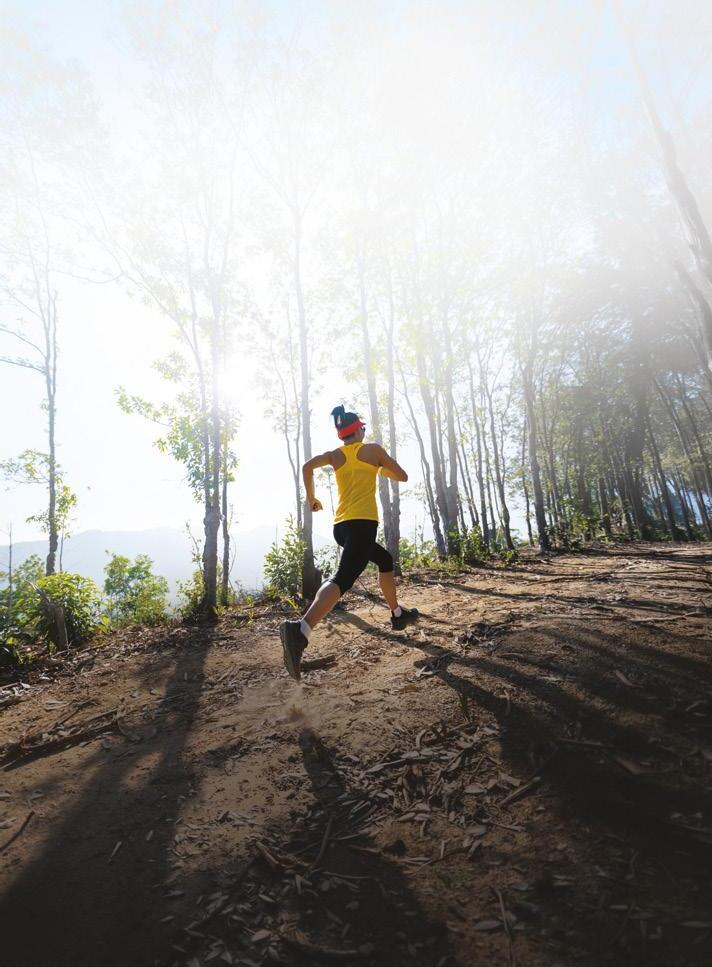
Second, it inspires hope for the present. The author of Hebrews charges the letter’s recipients: “Therefore, since we are surrounded by such a great cloud of witnesses . . . let us run with perseverance the race marked out for us” (12:1). Those who came before you not only laid the foundation for you; they are also on the metaphorical sidelines cheering you on! Thus, we labour in the vineyard, building on the past so future generations will be able to achieve even greater things in the future.
If I were to list all the people to whom I’m grateful, this editorial would need its own issue. But, there are some who should be mentioned. I’m grateful to my mentors—in church ministry and in our editorial team. I’m grateful for our Division leaders who lead with passion and clarity. I’m grateful to my wonderful wife Carina and our daughter Bridget. Most of all though, I’m grateful to Jesus, “the pioneer and perfecter of faith. For the joy set before him he endured the cross, scorning its shame, and sat down at the right hand of the throne of God” (12:2,3). May God bless you, and may we fix our eyes on Jesus as we run the race marked out for us.
Can anything good come from a Business Professionals Conference?
Francois Keet Chief Financial Officer South Pacific Division
Accountants, IT professionals, auditors and HR professionals do not necessarily represent a group that holds the most glamorous roles in the Church, but they still fulfil a critical role in supporting its mission. Most of these roles operate in back offices, and some people forget they even exist–until a salary payment doesn’t go through, an urgent payment needs to be made or a computer stops working. These roles support and provide the tools and resources for our frontline workers to do their jobs. Most often, people in these roles see the good, the bad and the ugly come out in others, and I would say they are not the most appreciated group of church workers.
During the first week of June, a group of 360 of these unique church workers descended on Cairns where we held a Business Professionals Conference. You might ask: What good can come from such an event? I can respond that there were excellent speakers and excellent professional development opportunities for staff, as well as excellent networking opportunities. However, there was something else that came out of this event. Every morning, as part of our daily worship, we started with praise and worship using our own musicians, followed by inspiring messages by Brendan Pratt (Australian Union Conference president). We were, however, not the only people listening to the music or the message. Some of the hotel staff were present to support our group. At the conclusion of our first day’s worship, a lady approached us with tears in her eyes. She said she is not a religious person, but the singing from our group awakened something spiritual in her that she couldn’t explain. She was so moved by our singing that she was in tears throughout the songs, particularly the song “Days of Elijah”.
You do not have to be an evangelist or pastor to lead a person closer to God. It might just be a song, a prayer with someone, a kind deed or a word of encouragement. I don’t know what will happen to the lady who listened to our singing, but it was clear that the Holy Spirit softened her heart. Keep this lady in your prayers—that God will continue the work that He has started in her heart.
New editor appointed for Adventist Record
Wahroonga, NSW | Tracey Bridcutt
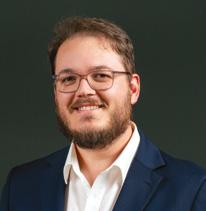
Adventist Record has a new editor, with Pastor Jesse Herford appointed to the role.
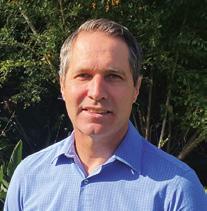
He succeeds long-time editor Jarrod Stackelroth, who has accepted a call to serve as assistant director of communication at the General Conference of Seventh-day Adventists.
Pastor Herford joins Record after serving as associate editor of Signs of the Times magazine for the past five years. Prior to that he spent six years in the North New Zealand Conference, serving in Tauranga, Palmerston North and Masterton in a range of ministry roles, including church pastor, youth coordinator and school chaplain. He is also a podcaster and helped organise New Zealand’s first Digital Discipleship Conference.
“I’m looking forward to the new challenges—and blessings—of stepping into the role of editor for Adventist Record,” Pastor Herford said.
“I’ve got big shoes to fill, but I know that with God’s guidance and
the support of the amazing Adventist Record team, we’ll continue sharing what God is doing in and through His church in the South Pacific.”
South Pacific Division president Pastor Glenn Townend, who serves as consulting editor of Record, welcomed the appointment.
“Jesse has good experience in digital and written communication—we need both today and the digital area is likely to grow,” Pastor Townend said.
“He has shown as associate editor at Signs of the Times that he has the skill and ability to keep a team working to a printing schedule. His articles and podcasts are spiritual, biblical and share a fresh perspective and application. I wish Jesse and the team God’s blessings as he expands the reach and influence of the Record across the Pacific.”
Pastor Herford is passionate about discipleship, theology, history and culture. He is married to Carina and they have a young daughter, Bridget.
Missionaries return after year of service
Sabeto, Fiji | Record staff
Forty-five missionaries from across the South Pacific have returned after serving for a year in Indonesia and Timor-Leste, gathering at Fulton Adventist University for a re-entry program to reflect on their experiences and prepare for the transition home.
The missionaries were commissioned in March 2025 after completing two weeks of training at Fulton through the Catalyst discipleship program. Serving alongside some of their families, they worked as chaplains, Bible workers and English teachers in the Southern Asia-Pacific Division.
The initiative grew out of a challenge issued during the Trans Pacific Union Mission (TPUM) Youth Congress in Samoa in 2024, when then-TPUM president Pastor Maveni Kaufononga asked, “Who will go?”
Representing Fiji, Papua New Guinea, Vanuatu, New Zealand, Tonga, Samoa and the Solomon Islands, the
missionaries served in communities where they had opportunities to share the gospel and minister in previously unreached areas.
The re-entry program, organised by the South Pacific Division Adventist Mission department, helps returning missionaries process their experiences, share stories, debrief with one another and prepare to reconnect with life and ministry in their home countries.
According to Adventist Mission leaders, the missionaries return with a renewed sense of purpose, valuable skills, lifelong friendships and a deeper commitment to serve God in their local churches and communities.
The program recognised their service and God’s leading throughout their year of mission.
The Adventist Church continues to encourage members to explore volunteer opportunities through the Adventist Volunteer Service program.
The missionaries have returned with a renewed sense of purpose, valuable skills, lifelong friendships and a deeper commitment to serve God.
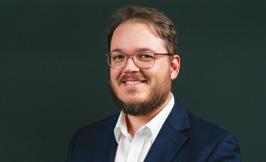
New Record editor Pastor Jesse Herford.
10,000 Toes expands into Niue
Alofi, Niue | Tracey Bridcutt
A recent visit by the 10,000 Toes team to Niue has paved the way for a grassroots response to diabetes, with local volunteers trained to conduct health screenings and promote healthier lifestyles across the island.
Niue is one of the world’s smallest independent nations, located in the South Pacific Ocean approximately 2400 kilometres northeast of New Zealand. Although Niue has a small population of approximately 1700–1800 people, recent Niuean government health data indicates that around one in every three people is living with diabetes or elevated blood glucose levels.
According to 10,000 Toes Campaign coordinator Pamela Townend, this statistic highlights the urgent need for prevention, early detection and community-based intervention.
During the visit, training sessions were conducted for church members and community participants interested
in becoming level one 10,000 Toes ambassadors. The sessions equipped participants with an understanding of the diabetes crisis so they can play an active role in addressing the issue within their own communities.
An important highlight of the visit was meeting with Niue director of health Dr Minerva Ikimau.
“The Ministry of Health had recently recognised the growing impact of diabetes across the population and was actively considering how best to respond,” Mrs Townend said. “At this very time, 10,000 Toes arrived with established strategies and screening tools already being implemented successfully across the Pacific.”
Discussions are now underway regarding a memorandum of understanding between the Niuean government and 10,000 Toes, which would formally support the initiative and pave the way for future collaboration.
Leaders focus on strengthening disciple-making
Wahroonga, NSW | Juliana Muniz
The South Pacific Division (SPD) Sabbath school and personal ministries department (SSPM) focused on strengthening disciple-making and preparing local churches for upcoming mission initiatives during its advisory meetings from June 22 to 25.
Representatives from all four unions and the General Conference (GC) met to discuss strategies for equipping local churches for OneVoice27 and South Pacific for Christ.
Presentations by GC SSPM leaders, led by director Pastor Daniel Ebenezer, explored disciple-making, leadership development and the future direction of SSPM across the South Pacific.
One of the key discussions centred on how the Church should measure the success of evangelism.
SPD SSPM director Pastor Obed Yamasombi said delegates agreed that while every baptism is a reason to celebrate, evangelism should also be measured by what happens after people join the Church.
“Success is measured when new believers are welcomed into caring church communities, grounded in God’s Word, nurtured in their relationship with Jesus, equipped for service and encouraged to become disciples who, in turn, make disciples,” he said.
Pastor Yamasombi said this understanding places Sabbath school and personal ministries at the heart of the Church’s disciple-making ministry.
“Evangelistic meetings may introduce people to Christ, but lasting spiritual growth takes place through intentional Bible study, meaningful friendships, mentoring relationships, small groups and opportunities to serve in ministry,” he said.
Throughout the advisory, leaders also explored practical ways to revitalise Sabbath school, strengthen personal ministries, resource local church leaders and develop sustainable discipleship pathways that continue long after public evangelistic meetings have concluded.
Advisory participants discussed ways to revitalise Sabbath school.
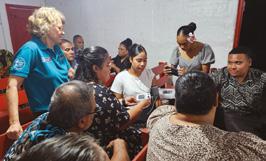
Biometric training in Nuie.
Church called to digital mission
Auckland, NZ | Juliana Muniz
More than 350 people gathered at Papatoetoe church from June 19 to 21 for the Digital Discipleship Conference, where speakers highlighted growing opportunities to reach those searching for faith online.
Organised by the New Zealand Pacific Union Conference (NZPUC), the event aimed to equip church members to share their faith in an increasingly digital world. NZPUC missional ministry development leader Pastor Victor Kulakov said digital discipleship is about living out faith authentically online rather than simply producing content.
“Imagine if every church member was authentically present online. Imagine if we stopped just pushing content and became disciples everywhere, including in digital spaces,” said Pastor Kulakov.
Several presentations focused on the opportunities digital platforms present for mission. Dave Adamson, director of YouVersion Australia, said the Bible App has been installed more than 8.4 million times in Australia and almost 2 million times in New Zealand.
“We know, from church data, that this many Australians and New Zealanders aren’t going to church. People will experience your church online before they experience your church onsite,” said Mr Adamson.
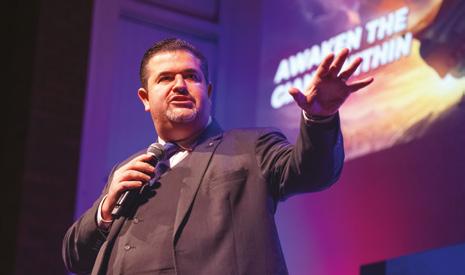
Presenters also highlighted the global mission challenge. According to Hope Channel International vice-president Dr Sam Neves, 3.6 billion people—43 out of every 100 people worldwide—have little or no access to the gospel. “Technology now gives us the opportunity to enter territories where they would expel the missionary or kill the missionary. This is an opportunity we cannot miss,” Dr Neves said.
Attendees said the conference encouraged them to consider how digital ministry can strengthen mission in their local contexts.
French Polynesia Mission communication director Ambroise Colombani said online platforms provide new opportunities to connect with people across the territory’s 118 islands.
“Most of the people—75 per cent of the population—live on the main island, Tahiti,” he said. “But it’s really hard to reach the other islands. They are all connected with high-speed fibre, though, which is why it’s important for us to think about how to reach those people apart from the traditional way of going into churches and villages to do Bible studies and evangelism.”
making headlines
Experiencing the ocean
In Colombia, an Adventist Possibility Ministries retreat gave 23 visually impaired people the opportunity to experience the ocean for the first time, helping them connect with God’s love through nature. The journey concluded with seven participants giving their lives to Christ through baptism in the sea.—IAD
Expo opens doors
An Adventist church in Zimbabwe partnered with educational institutions and community organisations to host an education and career expo aimed at equipping young people with life skills and helping them resist drug and substance abuse. The initiative, described as the first of its kind, brought together multiple tertiary institutions to showcase education pathways.—Zimbabwe Herald Online
Mission in motion
AdventHealth Global Missions marked 2026 as one of its most ambitious years of service with 42 mission trips planned to countries such as Peru, Nepal, Ecuador and many others.
More than 800 AdventHealth volunteers, with teams of 20–25 caregivers, clinicians and support staff, will serve in communities with limited access to care and resources.—AR
Faith under pressure
A major new report in Australia, based on a survey of more than 10,000 Christians, found that most Christians felt increasing pressure to keep their faith private, with 73 per cent saying they self-censored at work, online or in public and 92 per cent believing it had become riskier to identify as a Christian than five years ago.—Vision Christian Media
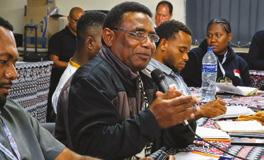
Dr Sam Neves was one of the keynote speakers. (Credit: Brendan Tucker)
Preparing the harvest
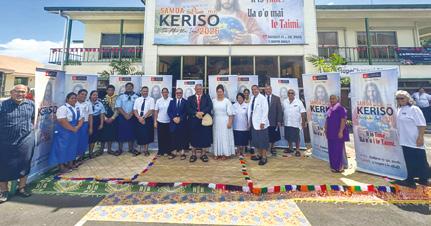
Church members across Samoa are laying the groundwork for the upcoming Samoa for Christ evangelistic campaign through weekly prayer walks, community outreach and small groups. In the lead-up to the August 16–30 meetings, churches have also held weekly fasting, monthly prayer gatherings and initiatives such as “meals on wheels” to support elderly residents. According to Samoa and Tokelau Mission president Pastor Afi Tuaoi, the activities are helping build relationships within local communities ahead of more than 60 evangelistic programs planned across Upolu and Savai’i as part of the wider Trans Pacific for Christ initiative —Tracey Bridcutt
On the right track
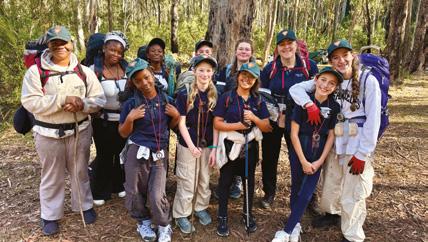
More than 500 Pathfinders and leaders from across the Greater Sydney Conference gathered at Thirlmere Lakes National Park from June 5 to 7 for a weekend navigation expedition combining outdoor adventure, teamwork and spiritual reflection. More than 50 teams navigated the bush using maps and compasses, searching for 52 checkpoints across the park’s lakes, ridges and valleys. The event also included worship, camping and activities designed to develop resilience, leadership and cooperation. Greater Sydney Conference youth director Pastor Dejan Stojkovic said the expedition became much more than an outdoor challenge. “Pathfinders stopped to help one another, encouraged the struggling, shared the load and refused to let anyone fall behind,” he said —Dejan Stojkovic/Record staff
Standing for Christ
Eight people were baptised at Namaka Seventh-day Adventist Church, Fiji, following a two-week evangelistic series held from June 14 to 27 under the theme “Saved to Stand”. Presented by Pastors Limoni Manu O’Uiha and Jolame Soqo, the series concluded with the baptisms, marking the public commitment of the new believers as the church prepares for the wider Fiji for Christ evangelistic campaign —Fiji Mission Facebook page
Seeds of resilience
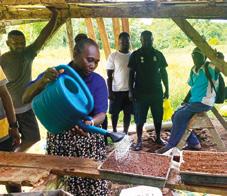
ADRA has donated agricultural tools and vegetable seeds to Kukudu Adventist College in the Solomon Islands to strengthen food security and support the school’s agricultural program. The assistance, provided through ADRA’s Disaster Ready Church project, also included practical training in cultivating vegetables and melons. Agriculture teacher John Apisio said the resources will improve vegetable production on the school farm and help generate income for the school. —Denver Newter
Identity alignment
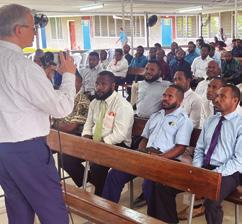
More than 100 delegates, pastors, elders and theology staff gathered at Sonoma Adventist College in Papua New Guinea from June 17 to 21 for the Adventist Theological Society (ATS) conference, the first of its kind to be hosted by the college.
Held under the theme “Adventist Identity”, the conference brought together Adventist scholars and church leaders to explore topics including salvation, grace, obedience and biblical identity. Presenters included ATS president Dr John Reeve, Andrews University Seminary dean Dr Jirˇí Moskala, South Pacific Division ministerial and field secretary Dr Darius Jankiewicz and other leaders from across the Pacific.
Pastor Julius Divu, head of theology at Sonoma, said the college was honoured to hold the event. “This is a historical conference where we can address theological misunderstandings,” he said. “It’s eye-opening for the ministerial students as well as the delegates.”
Dr Jankiewicz, who also assisted in organising the event, said conferences like this were an “excellent opportunity” to discuss important theological issues that “touch our lives as Adventists and profoundly impact mission”.
A highlight of the event was General Conference president Pastor Erton Köhler successfully defending his doctoral thesis via Zoom before a committee chaired by Dr Moskala, who subsequently awarded him his doctoral degree.—Garry Laukei/ Record staff
have news to share?
Send info and photos to <news@record.net.au>
Border baptism
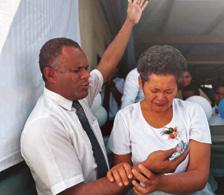
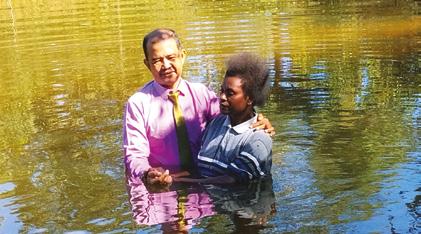
A young couple from Indorodoro Village, on the Papua New Guinea side of the PNG–Indonesia border, have become the first Seventh-day Adventists in their community following their baptism at Sota Seventhday Adventist Church in West Papua on June 6. According to South Pacific Division Sabbath school and personal ministries director Pastor Obed Yamasombi, the baptism was the result of years of relationshipbuilding and mission work in the region. Following the service, the bride’s father, a respected village elder, donated land for the construction of an Adventist church in Indorodoro Village. “We praise God for the remarkable way He is working among the border communities of Papua New Guinea and Indonesia, drawing people to Himself one life at a time,” said Pastor Yamasombi —Tracey Bridcutt
Discipleship express
Thirty participants from across New Zealand gathered at Tui Ridge Park from June 21 to 27 for the country’s first Catalyst Express program. Designed to provide spiritual renewal and practical discipleship training, the week featured Bible-based presentations from an international and local teaching team, alongside opportunities for worship, fellowship and Christian community. Organisers said the event challenged participants to grow as disciples of Jesus, embrace God’s mission and put their faith into practice. They also described the inaugural gathering as “laying a strong foundation for future Catalyst Express events in New Zealand”. —Plugin
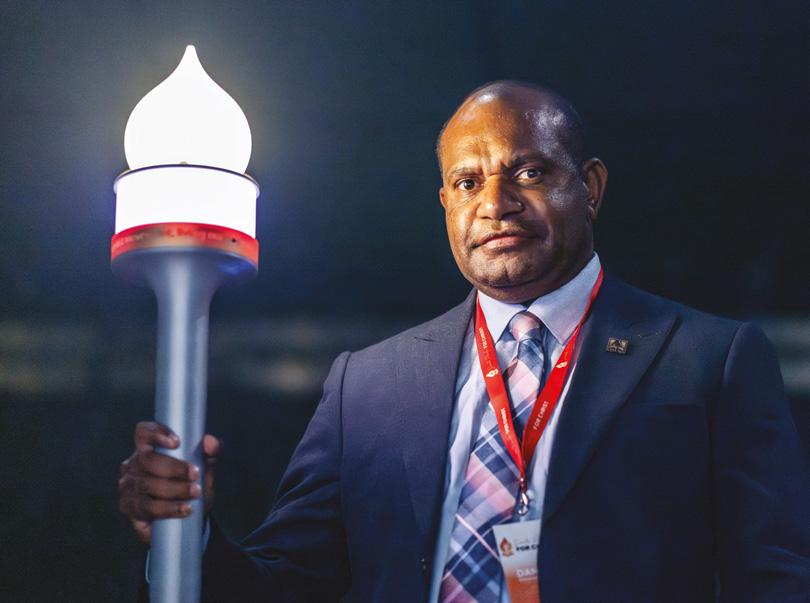
Carry the flame Danny Philip
The South Pacific Division contains four unions. Adventist Record recorded interviews with all four union presidents during the South Pacific for Christ launch program in Brisbane, Queensland. In this issue, we bring you our chat with Pastor Danny Philip, president of the Seventh-day Adventist Church in Papua New Guinea.
Juliana Muniz (JM): How are you feeling about this event so far? What stood out to you this week?
Danny Philip: What stood out here at the SP for Christ launch is the mission—whether it be mission to different parts of the world, mission within our unions or to other places where we haven’t reached people. So for me, the focus here at SP for Christ is mission and how best we can engage everyone to be involved in reaching someone for Christ.
JM: So PNG for Christ will be the last of the “For Christ” events in the SPD, but it actually started in PNG in 2024. It was so successful then that it became an SPD-wide initiative. We know that the Church in PNG recently experienced growth, but what are the challenges that you are facing now over there?
Danny Philip: The growth comes with challenges as well. In PNG, one of the challenges we are facing is that when the Church was growing there was a lot of engagement but people now are more complacent, more relaxed and not as involved in church ministries. People might want to grow their own spirituality but not really want to engage in care group ministries or in other forms of community service. So ministry may not be as effective as it was during the COVID period in terms of trying to reach people. I think we need to wake them up again and say, “No, we still have a mission. We still have to go to the people. We still have to connect with people and engage everyone in the mission.”
JM: Can you share what your strategies are or your goals for this quinquennium?
Danny Philip: At PNGUM here during this quinquennium, we’ve got four key strategies. One is the mission. We want to focus on and have a strong emphasis on the mission part of it. Within the mission strategy we want to promote a daily communion with God. We want to ensure people have a strong spirituality in their life, in their homes and in their daily experience with Christ. We want
to promote resources like Alive in Jesus, Back to the Altar, Bible reading plans and Sabbath school lessons. We want to revive a strong family focus in the home as well.
We also want to engage everyone to reach one—we have a strategy called “Each One Reach One”, so everyone does not become merely observers, but have a responsibility. Everyone can reach someone who they can share their story with. They can share their testimonies, they can have a prayer for someone, they can introduce Jesus to them. If everyone is doing what they can and using whatever gifts that God has gifted them to engage in mission, I think we can multiply church membership because everyone is doing something for the Lord.
The other strategy within mission is to make sure that every church is becoming a training school, a hub, where we train people to grow their faith and engage in mission.
We also have the strategy of service where we want to use ADRA as a key partner to reach out and connect with people. We want our schools to actually engage in ministry where they don’t just give head knowledge to the children, but also transform the heart with the Adventist message. We also want to work with health services; not just providing health services, but providing spiritual services using health ministry. We want to be more integrated in the way we do ministry to reach the people.
The other thing that we want to use is Adventist Community Services. ACS has been a great ministry that includes every age group: young people, children, mothers, fathers and families. Everyone joins ACS to meet the needs of the community and to bring people in the community back to Christ.
Then the other one we have is Adventist Aviation Services. They’re not just flying the plane, but serving the people in the rural communities. They fly out to the very mountainous places, rough and rugged, and they serve the people there.
We call the other strategy people and culture, where we want to train many people for service, whether it be in churches, in schools or leadership development for health leaders. We want to ensure that people are given skills and opportunities to be trained to serve in those places. The other thing we want to do within that strategy is to improve our governance systems. That’s one key area that PNG has not been doing well in—the governance systems in the churches, the missions, the Union or even in the schools and hospitals have not been doing really well, so we want to improve in that area.
There’s a lot of things that we want to do, but these are some key areas that we want to focus on in particular.
JM: Let’s talk about PNG for Christ. As we mentioned, it was a massive success in 2024 and you get to do it again in 2029. So, how are you preparing for that?
Danny Philip: The preparations for 2029 start now. That’s what I want to inform the church in PNG and everywhere. The preparation for 2029 PNG for Christ starts here in 2026. We had previously about eight years to deliver in 2024 and we only have about two years to start preparing for the 2029 PNG for Christ. I want to encourage the Church in PNG to start “Each One Reach One”. We want to encourage people to start growing small group movements to ensure that we connect with people. We are not just an isolated church that operates in the community. We want to see people serving people in the community. Make the presence of the Adventist Church felt in your community by connecting with your people.
JM: Before we close, in addition to PNG for Christ, what should church members in your region be aware of in terms of mission?
Danny Philip: To our people in Papua New Guinea, we don’t want you to be relaxed and comfortable thinking that we have delivered PNG for Christ in 2024 and are just observers of what happens in TPUM or NZPUC or in Australia. We want to encourage all churches and young people to start preparing for 2029 this year. We are already starting to send missionaries out as part of that. We’re going to send missionaries to Indonesia and to other places as well. But the most important thing is that the sending country must be very strong in mission so that we can actually support other parts of the world’s mission needs as well. We want to encourage everyone to do what we did in 2020. We want to encourage every church to participate.
This interview was recorded and published as a recent episode of Record Live.
To watch the full version visit <youtube.com/@AdventistNews> or scan the QR code.
Blessed are the peacemakers
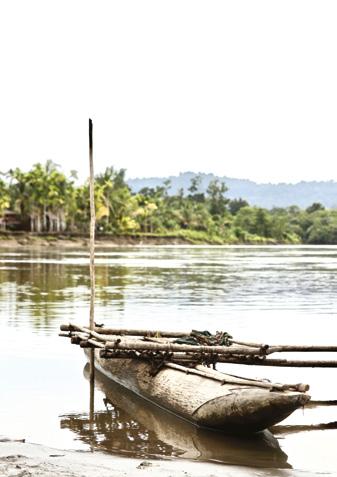
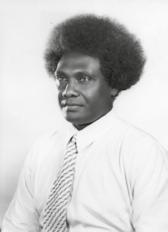
During the second world war, Navoko was the mission carpenter on the Adventist mission station in Kukudu, Solomon Islands. A fine Adventist boy lived in the village of Boboi and Navoko wanted his daughter to marry him. So the arrangements were made. But then as the wedding came close, Navoko heard that a boy from another village, Merusu, had decided he wanted to marry his daughter, and had plans to slip across the water to Kukudu, steal and marry her! What could the carpenter do?
Filled with anger, he sharpened his knife like a razor and waited to kill the boy who planned to steal his daughter. Soon after, Navoko met Pastor Kato Ragoso, the mission president, and shared the whole story. One moment the poor carpenter seemed filled with fear for his daughter but the next, he was filled with anger. Pastor Ragoso tried to calm him down.
“You must pray first,” he told Navoko. “Prayers are more powerful than carpenter’s knives, you know.” Navoko didn’t seem to quite believe that. He blurted out to Pastor Ragoso, “I think I will do the work of Satan first and kill the boy, and then I will do the work of God.”
“No,” insisted Pastor Ragoso. “That is not God’s way. You must pray first and leave it in God’s hands.”
A few minutes later a lad named Lilopio walked out
of the mission hospital and met a worried-looking Ragoso. “What is the trouble, Pastor Ragoso?” he asked.
The president usually wore the largest smile across his handsome face. But not this morning. Pastor Ragoso told him the story of Navoko and the boy from Merusu who planned to come and steal the carpenter’s daughter.
When he heard the story, Lilopio told the president, “You leave it to me”, and walked away.
Knowing from many experiences what a fine peacemaker Lilopio was, Pastor Ragoso believed that somehow this unhappy story would have a happy ending. The same night that the boy from Merusu and his friends planned their raid, Lilopio got into his canoe and paddled to where he expected the raiding party would walk to their canoes. The moon could not be seen behind the clouds. Inky darkness covered every part of the island. Not even the sharp eyes of Lilopio could see a thing, so he thought maybe he could smell something!
He began to pick his way around the paths of the island. He knew the trails well. As he walked, he smelled this way and that for boys. Finally, he picked up a scent. Following his nose, he came to a group armed with sharp knives and axes, ready to attack. The first hint these boys had that someone else was around came from Lilopio’s voice. Lilopio, who blended into the night, could not be seen, but they heard his voice.
Calmly Lilopio asked, “Where do you think you are going?”
“We are going to Kukudu to fight.”
“Then,” replied Lilopio bravely, “I think you’d better change your mind. The people of Kukudu know you are coming. They are armed to the teeth with knives and axes. You don’t have a chance of taking the carpenter’s daughter. Besides, she is already promised to a boy from the village of Boboi. If you go, someone will get hurt and I can tell you it won’t be anyone from Kukudu; it will be the boys from Merusu.”
With that, he vanished. The boys just stood for a while, wondering, who was the stranger? They had not seen him, but they had heard him. Should they believe him? Maybe if the raid was expected and men were ready to fight, they should not go. So, they forgot the raid and went home to bed.
Jesus once said, “Blessed are the peacemakers, for they shall be called the sons of God.” Lilopio should certainly be called God’s son, don’t you agree? And what better work can any of us do than to make peace when others are angry?
This story has been adapted and derived from the Australasian Record, February 27, 1967.
Healthy freezable meals
to get you Through winter.
Winter is here, bringing cooler days, longer nights and comfort food cravings, along with the usual coughs and sniffles.
The good news? Healthy, ready-to-freeze meals make it easy to stay nourished and support your immune system, even when you’re short on time or energy. With the right prep and freezing techniques, you can make the most of your effort.
From soups to pasta bakes, these meals are perfect for busy or low-energy nights.
Here are three of our favourite healthy, freezable meals to get you through winter:
Roast Broccoli and Brussels Sprouts Slaw
This warm salad is full of flavour and nutrition, providing iron and vitamin C to support immune health. While often linked to citrus fruits, vitamin C is also found in vegetables like broccoli and Brussels sprouts. This dish freezes well, making it ideal for meal prep. Simply cool completely, store in a freezer-safe container, defrost in the fridge, then reheat in the oven at 180°C.
Eggplant and Sweet Potato Dahl
This hearty, fibre-rich dish supports gut health and helps curb winter cravings. It’s easy to make in larger batches, making it perfect for freezing. If sweet potato isn’t available, swap it for pumpkin, potato or other vegetables, including frozen options.
Rainbow Falafels
A family favourite, falafel is a fantastic way to add more legumes to your diet. Legumes are affordable, versatile and rich in nutrients such as B vitamins, iron and zinc, helping support energy during colder months. These falafels can be enjoyed in wraps, salads or as a snack. Freeze individually on a tray before storing, then reheat in the oven when needed.
Eggplant and Sweet Potato Dahl
Rainbow Falafels
Junior Band strikes
a chord
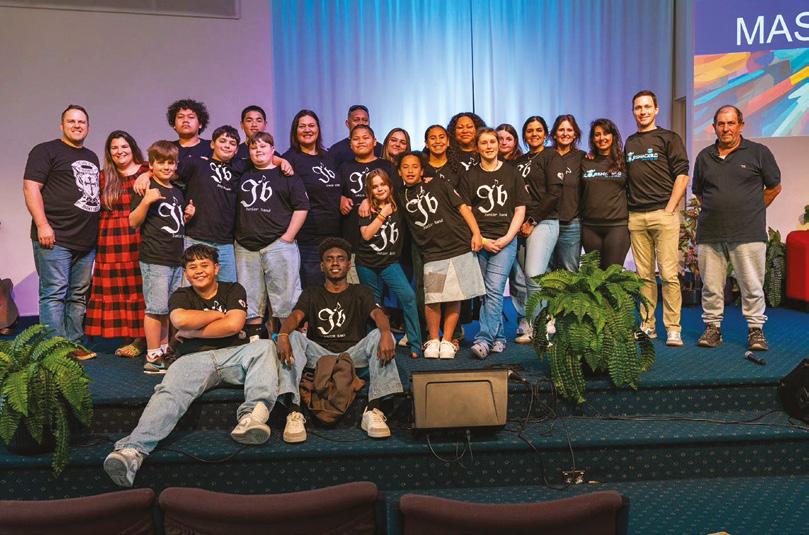
It’s 6pm on Friday, April 10. Eight young people aged 10–16 and four parents arrive at Mosaic Seventh-day Adventist Community Church in Palmerston North, New Zealand. The room quickly fills with energy as each person moves to their chosen instrument and begins to play. Junior Band has gathered to practise for praise and worship the following day. There is a strong sense of joy and anticipation; friendships are evident and the group shares a deep connection.
I recently sat down with founders and leaders Tracie Mafile’o and Fiona Sio to better understand the heart and passion behind this ministry.
“The idea for Junior Band evolved quite organically. It began with us including our own children in praise and worship at church—playing a few notes or simple chords alongside the adults,” Tracie explains. Fiona adds, “It started with simply creating space for our children to participate and over time it grew into something much bigger than we had imagined.”
Creating space has been key. Mosaic’s vision is to provide meaningful faith experiences for all worshippers. The Junior Band has become a
powerful avenue for young people to belong and contribute.
Parents and mentors form the backbone of this ministry, which formally began in early 2023. Mosaic has a long legacy of music ministry, with Tracie and Fiona serving in key worship leadership roles for more than 20 years. A wider network of mentors also supports Junior Band, including Taupo Tani, the late Rouru Kapao, Patrice Macgregor, the Seuseu family, Pastor Keli Pepa (North New Zealand Conference youth director), Shane and Priscilla Tooley, Nicole Gardiner, Pastor Midori LuteruIerome, Temu Ierome and the wider Mosaic church wha¯nau (family). Together, they contribute not only practical support like transport and meals, but also funding, coordination, musical guidance, encouragement and prayer.
God has opened the door for incredible life-changing moments and celebrations for Junior Band and their support team. Fiona shares, “Some key highlights include performing at the Gobsmacked (a small business and ministry focusing on performing arts) holiday program and leading worship at NNZ Big Camp in the Junior Tent.”
Other highlights have been leading worship for a week-long Junior Camp at Tui Ridge and for a NNZ Conference Junior/Teen event. Sometimes the celebrations are in the small moments like learning a new song, leading a devotional thought for the group, growing in confidence and skills or watching the young people challenge each other.
Fiona shared, “Musical participation has helped build confidence, discipline and teamwork. The kids are learning to support one another, step up when needed and also step back to allow others to shine. It’s not just about music—it’s about growing as individuals and as a team.” Tracie adds, “Kids learn the discipline of practising in their own time and then together as a team.”
Junior Band is a vibrant celebration of young people leading within a church setting. “Kids are seen as leaders in our church; it is their space, and they are encouraged to serve and lead,” shares Tracie. Practices are fun and free flowing, creating a relaxed and enjoyable environment, always with food to share. Through this, Junior Band fosters a strong sense of belonging within the wider
Mosaic community. When I asked the band about their favourite parts, their responses reflected both joy and connection. Lincoln Tooley (13, drums, bass, vocals) simply enjoys “playing music”, while his sister Sofia (12, vocals, ukulele) loves the travel and time spent together. Beyond enjoyment, there are clear ripples of personal growth. Tuviya Tani (14, bass, keys) shared that being part of Junior Band has “humbled” him. PJ Risati (10, drums, guitar, vocals) highlighted “communication”, while Moni Tani (13, guitar) noted growth in “discipline”. Leeroy Kokinai (16, guitar, electric guitar) reflected, “Junior Band has helped me communicate better with my friends and family and plan things efficiently.”
Fiona reflects on one of the most significant outcomes: the young people not only grow together musically, but they also intentionally welcome new members, creating a space where everyone feels they belong. New member Elysha Afasene (10, vocals) has already felt this sense of connection and is excited for the journey ahead.
When asked about their favourite memories, the group burst into laughter, sharing stories of road trips, mishaps, adventures and sleepovers. It is clear that Junior Band is more than a worship team; it is a community of friendship, belonging and family.
Part of sustaining growth and faith development for Junior Band members and supporters alike has come through challenges. For Sofia and PJ, it is the long practices; for Leeroy, it’s being the oldest; for Moni, it’s having to sometimes guess the chords. Tracie agrees that the high expectations and long hours of practice can be demanding on the young people; and that having leadership and service roles in weeks like Big Camp and the Gobsmacked holiday program puts a different lens on the experience. One challenge has been creating opportunities for the group to grow in different skills and
instruments. Fiona and Tracie do this by encouraging Junior Band to intentionally rotate roles and teach them the value of supporting one another. “It’s been about building character as much as skill. As the young people learn to ‘share your friend’s joy’, it has helped shape a really supportive team culture.”
There are ripples that music participation has on young people’s lives, learning and character development. These ripples “grow emotional intelligence, cooperation, teamwork, resilience and grit”, shares Tracie, to name a few, as well as young people being excited to learn music and new levels of confidence as they play in different settings (Pasifika Legacy, Pasifika Fusion, Gobsmacked holiday program, Conference events, Christmas programs and school events to name a few).
Over the past few years, there has been a constant flow of young people—the youngest aged seven— who are given opportunities to share their love of music, the excitement of taking a leadership role in worship and experience the value of belonging.
What has surprised the leaders? “The skill level JB can play at . . . they keep growing and are so creative,” shares Tracie. “It’s their resilience and the way they support each other,” acknowledges Fiona. For me, as someone who worships with Junior Band regularly, I am reminded that there is never an age restriction for worship and worship leading. I asked Junior Band how they like to worship and they all agreed that using their gift of music was creating meaningful, personal and lasting worship experiences.
Junior Band has big dreams. “I want to play around the world,” says PJ. Elysha hopes to become “good at an instrument”, while Tuviya wants to “keep playing for Jesus”. Sofia dreams of travelling as a group and visiting churches in Australia.
Tracie shares in these aspirations, expressing a desire to see the group continue to travel, perform or lead
worship outside Palmerston North. For Fiona, the dream is to see Junior Band continue to grow, support one another not only as musicians, but as friends and believers.
Junior Band is making a difference by building up and reviving the worship music at their local church, Mosaic, as well as demonstrating children/teen-led worship at the conference level. Fiona says Junior Band is “helping shape a culture of youth leadership within the church . . . and that young people can lead, serve and be used by God when they are willing”.
The encouragement to persevere in leading and coordinating the Junior Band is obvious. For Tracie, “It brings ‘tears’ to see the kids grow in their giftings and in their character and in their walk with God.” For Fiona, “It’s about building the kingdom and creating opportunities for our children to thrive.”
I asked the group to finish the sentence “Jesus is . . .” and was humbled by their response.
“My best Friend”: Lincoln.
“King of my heart”: Sofia.
“My favourite Person”: Moni.
“My Saviour”: PJ.
“Great”: Elysha.
“Everything”: Tuviya.
“My Friend”: Leeroy.
As Junior Band settles back to their instruments and practise for the church service in the morning, I am reminded of Mark 10:14: “Let the little children come to me”. Junior Band is a powerful example of giving space to children and young people, empowering them to lead and encouraging practical faith development through music ministry.
Julene Duerksen-Kapao lives in Palmerston North, New Zealand and is a member of the Mosaic Community Church. Julene is an educator dedicated to inclusive education, student wellbeing and helping young people thrive through strengths-based support.
Decade of lives changed
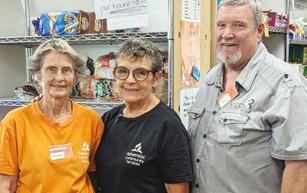
For the past decade, volunteers from the Glen Innes Seventh-day Adventist Church have supported families facing hardship through the Glen Food Hub. Now serving more than 140 households each week, the ministry is celebrating its 10-year milestone this September while looking ahead to the need for a purpose-built facility.
In 2016, members of the Glen Innes Seventh-day Adventist Church began to notice something they could not ignore: families in their community were doing it tough, and the need for practical support was growing. They believed their faith called them to do something about it.
Rather than offering sympathy alone, a small group of volunteers took practical action. From that decision, the Glen Food Hub began.
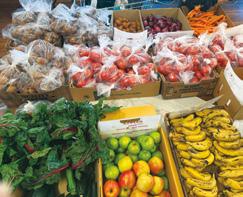
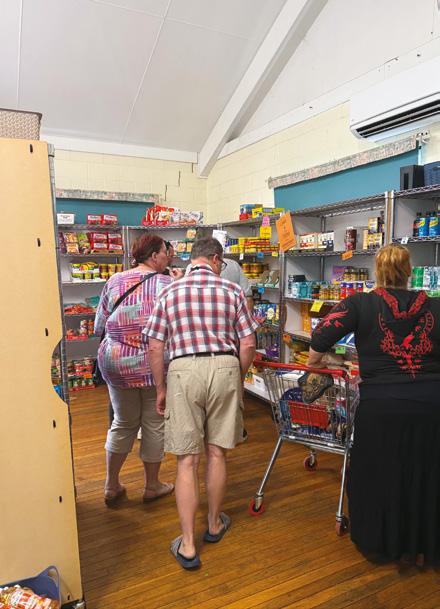
Today, the hub supports more than 140 households each week, helping hundreds of people across Glen Innes and surrounding communities. What started as a small initiative has grown into a vital community service. Rather than operating as a traditional food charity, the hub runs like a small grocery store, allowing people to browse shelves and choose the items their household needs. Food hampers are reserved for genuine emergencies.
The hub relies on the dedication of around 30 volunteers, including nine church members, 19 community volunteers and three-to-four participants from the local correctional facility, who each give their time each week to keep the service running.
The approach preserves dignity and choice, and the community has responded positively. In recognition of its service, the Glen Food Hub was awarded Community Service of the Year at the 2024 Australia Day Awards.
The ministry reflects the church’s commitment to practical service. By meeting everyday needs such as food security, volunteers demonstrate Christ’s compassion in tangible ways and build relationships with those they serve.
For the past decade, the Glen Food Hub has operated from the Glen Innes Seventh-day Adventist Church hall. While the space has served the ministry well, the program has outgrown its walls. Storage is limited, space is tight and the growing vision for the ministry is difficult to realise within the current facilities.
“We are doing everything we can within the walls we have,” says coordinator Jenni Lloyd-Ward. “But we know there is more we could do if we had the space to do it.”
As the hub celebrates 10 years this September, the dream of a purpose-built facility remains just that—a dream. Volunteers are praying for the support, funding and practical assistance needed to even begin laying the groundwork to make it a reality.
A dedicated building would improve storage, create a better, shopping-style environment for clients and allow the ministry to expand its programs to serve the community more effectively. The volunteers are committed and the need in the Glen Innes community continues to grow. Funding, practical assistance and the support of a builder are essential if the hub is to move beyond the limitations of its current space and continue to meet the needs of the community.
A decade ago, a small group of church members opened their doors to help their neighbours. Today, more than 140 households each week benefit from that decision.
With the right support, the Glen Food Hub hopes the 10-year milestone in September will not only celebrate past achievements but also mark the beginning of a new chapter—serving the community with dignity, compassion and practical care in a purpose-built facility.
To support the Glen Food Hub or learn more about their vision, contact the Glen Innes Seventh-day Adventist Church or email GLENfoodhub@gmail.com.
Teresa Robinson has been a team member at the Glen Food Hub for the past 18 months, where she is involved in communications and community engagement. She is passionate about sharing stories that highlight the positive impact of practical ministry and community support and enjoys connecting people through meaningful communication.
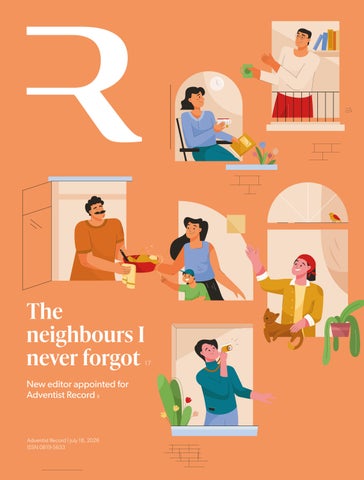
The neighbours I never forgot
Hospitality does not always arrive with grand speeches or carefully planned events. Sometimes it comes quietly, in the form of a warm meal, an unexpected kindness or a set of house keys placed into your hands at just the right moment.
More than a decade ago, my husband and I were living in the hills of Maleny, above the Sunshine Coast in Queensland. Christmas was approaching. We had recently finished building our home and planting the garden. Family members were eager to come and celebrate with us. A few young couples planned to camp in tents, and we thought everyone would manage comfortably for a few days.
Then the weather suddenly changed. Instead of warm summer sunshine, Christmas brought cold winds, rain and miserable conditions—very unusual for Queensland. As we wondered what to do with our guests, there was a knock at the door.
Standing there were our neighbours from across the street: Catherine and Patrick. We hardly knew them. We had exchanged only the occasional greeting while passing by. Yet there they were, smiling warmly and saying, “If you want, here are the keys. Three bedrooms are yours. The beds have been made.”
Their beautiful home was far more comfortable than our humble place, yet they freely offered it to us while they travelled to Brisbane to spend Christmas with family.
“Please make yourself at home,” they said.
We could hardly believe what we were hearing, but gratefully accepted their extraordinary generosity.
Over the years that followed, their kindness continued. Often when returning from holidays or weekend trips, we would discover baskets of homemade treats and fresh produce waiting at our door. There were invitations for meals and gatherings with neighbours.
Our Singaporean neighbour, Hayati, would sometimes leave a large container of freshly cooked noodles or fried rice outside our door after my long night shifts at the local hospital. And whenever neighbours came to share a meal at our place, Catherine would arrive carrying beautiful flower arrangements made from the roses and orchids in her garden.
Why do I still remember these moments so vividly? Because true hospitality leaves a lasting mark on the heart.
Catherine and Patrick were devoted Roman Catholic Christians. Hayati told us she had no religion at all. I was a member of the Seventh-day Adventist Church. Yet through their kindness, generosity and thoughtfulness, I caught a glimpse of the spirit of Christ.
When I reflect on those years in Piccabeen Place, Maleny, I am often humbled. Have I been as good a neighbour to others as they were to
me? Does my life reflect the welcoming heart of Jesus?
Too often, I have forgotten that hospitality is not merely an optional extra for Christians. Scripture presents it as part of genuine discipleship. Romans 12:13 urges believers to “practise hospitality”, while Hebrews 13:2 reminds us not to neglect showing hospitality to strangers.
Martin Luther is reported to have said, “Be hospitable and kindly; let no one come to you without leaving better and happier.”
What a beautiful challenge for all of us.
Hospitality does not require wealth, a perfect home or elaborate meals. Sometimes it is as simple as sharing food, opening a door, offering encouragement or making another person feel seen and valued. In a world that can often feel cold and disconnected, acts of kindness become powerful witnesses to the love of Christ.
“Cheerfully share your home with those who need a meal or a place to stay” (1 Peter 4:9 NLT).
Kristiina Somerville is a freelance writer who attends Springwood church, Queensland.
WHERE VOWS ARE STILL SPOKEN
Some places carry stories disproportionate to their size.
Some years ago I visited Gretna Green, a little village near the border of England and Scotland. It looked quiet enough, but its history was anything but ordinary. For generations, couples crossed into Scotland to marry there when the road to marriage in England was more difficult. It became famous as a place for runaway weddings, determined love and vows spoken across borders.
While I was there, the history was suddenly brought to the present. A young couple was actually getting married. It wasn’t just a museum story about lovers from another age, but a place where vows were still being spoken, promises still being made and two lives still being joined together.
That scene stayed with me. It reminded me that a covenant is not only something to admire from a distance, but something invitational. Love is not merely a story to remember, but something we desire and respond to. The Bible tells the greatest covenant story of all: the story of a God who crossed every distance to bring His people home.
1. Love is willing to cross borders
Gretna Green became famous because people were willing to cross a border for love. Whatever their circumstances, they made the journey because the covenant mattered to them.
There is something profoundly human in that. Love seeks and crosses distance. Love is not content to remain safely untouched when its beloved is on the other side.
Scripture tells us that God’s love is not distant or passive. “I have loved you with an everlasting love,” the Lord says, “therefore with loving kindness I have drawn you” (Jeremiah 31:3). God’s love draws near.
The gospel goes even further. In Jesus Christ, God did not merely send a message across the border between heaven and earth. He Himself came. John writes, “And the Word became flesh and dwelt among us” (John 1:14). The eternal Son entered our world, our weakness, our sorrow and our need. And this love cost Him His life.
Christ crossed the distance sin had created. He came into the world not because we had made ourselves worthy, but because of His love for us. Paul says, “But God demonstrates His own love toward us, in that while we were still sinners, Christ died for us” (Romans 5:8).
At Gretna Green, couples crossed a human border to make a vow. In Christ, God crossed the infinite distance to keep His promise.
That is the wonder of grace. We do not begin the journey towards God alone. Before we ever seek Him out, He already seeks us. Before we ever speak our vows, He has already spoken His covenant love.
2. Vows are more than beautiful words
A wedding is beautiful, but it goes beyond just a beautiful moment. There are flowers, music, smiles and photographs, but at the heart of a wedding is a covenant. Two people not merely celebrating an emotion, but making a promise to each other.
Vows matter because they give shape to love. They turn affection into commitment.
In the Pacific, a wedding is rarely treated as a private moment between two people. Families gather together, food is prepared, speeches are given and prayers are offered. The couple makes their vows, but the community witnesses and supports them. Love is celebrated, but commitment is also taken seriously.
The Bible often uses the language of marriage to describe God’s relationship with His people. Through Hosea, the Lord says, “I will betroth
you to Me forever; yes, I will betroth you to Me in righteousness and justice, in loving-kindness and mercy” (Hosea 2:19). God’s covenant love is faithful, merciful and enduring.
Our culture often treats love as a feeling to follow until it fades. Scripture treats covenant love as a promise to keep no matter how feelings rise and fall.
The young couple I saw at Gretna Green were not simply visiting a historic site. They were committing their lives to one another. The place they had chosen was interesting, but the whole point was their vow.
Faith can be like that, too.
Many people admire Jesus. They appreciate His teachings and respect His compassion. They like the idea of grace, forgiveness and hope. But Scripture calls us to more than admiration. Christ does not invite us merely to observe covenant love from the outside. He calls us to receive His love, to trust it and receive the knowledge that it means we truly belong to Him.
Jesus said, “If you love Me, keep My commandments” (John 14:15). Obedience is not the purchase price of love; it is the covenant response to love already given. A heart touched by grace does not ask, “How little can I give?” It asks, “How can I live faithfully with the One who first loved me?”
Vows aren’t just words. The gospel calls for your whole life.
3. God’s love brings us home
The Bible begins with a marriage in Eden and ends with a wedding in the new creation.
Revelation announces, “Let us be glad and rejoice and give Him glory, for the marriage of the Lamb has come” (Revelation 19:7). The final hope of Scripture is not loneliness or separation. It’s a joyful reunion and homecoming with Christ.
That is why the wedding image is so powerful. It speaks of belonging, showing us that God’s purpose is not merely to forgive us from a distance,
but to bring us into covenant fellowship with Him.
The church is described as the bride of Christ, not because the church is flawless, but because Christ is faithful. Paul writes, “Christ also loved the church and gave Himself for her” (Ephesians 5:25). His sacrificial love restores us.
This is good news for those who feel far away.
Some may feel they have crossed too many wrong borders. Others may feel unworthy of God’s love. Some carry regrets, failures, broken promises or painful memories. But the gospel declares that Christ came to “seek and to save the lost” (Luke 19:10). He does not wait for us to find our way home unaided. He comes after us and draws us with loving-kindness, inviting us to return.
God’s covenant love is a present invitation to receive, not just an old story to admire when reading the Bible. God is still drawing us nearer. Christ is still calling us home.
Love crossed the greatest border when “the Word became flesh and dwelt among us” (John 1:14). Despite our sinfulness, He died for us (Romans 5:8) and love will finish its work when “the marriage of the Lamb has come” (Revelation 19:7).
At Gretna Green, people crossed a border to begin a new life together. In our lives, Christ enters our brokenness so that we may begin a new life in Him.
One day, the Lamb will receive His bride. The long journey will end. The vows of covenant love will give way to eternal fellowship with God. Until then, the question is not only whether we will simply admire the story, but if we will answer the invitation.
For the God who says, “I have loved you with an everlasting love” still calls us to belong to Him.
Dr Limoni Manu O’Uiha is the dean of the School of Theology at Fulton Adventist University, Fiji.
Eggs . . .?
The recent study from Loma Linda raises an interesting association between egg intake and lower Alzheimer’s disease incidence in older Adventists, but it does not prove that eggs are protective or that Adventists should increase egg consumption.
Carefully reading the whole study (rather than just the abstract) shows that higher egg consumption (fiveplus per week) compared to no egg consumption, leads to higher rates of CKD, respiratory disease, CVD, hypertension and higher BMI.
A more cautious interpretation of the study is that nutrients commonly found in eggs (eg vitamin B12 and omega-3 fatty acids) may play a role in supporting brain health and cognitive function. Notably, the study did not report on participants’ vitamin B12 or omega-3 levels, making it impossible to determine whether these nutrients contributed to the observed association.
This interpretation is supported by other Adventist research. A recent Loma Linda University study found that vegan Adventists had the lowest omega-3 index, putting them in
Conversations
the high risk category for cognitive conditions. Similarly, a 2020 study from Loma Linda reported that inadequate vitamin B12 intake and status in Adventists is common among older adults and those who avoid animal-source foods.
These studies highlight the importance of ensuring adequate intake of key nutrients involved in brain health. Adventists who avoid eggs and other animal foods should be intentional about monitoring and maintaining adequate B12 and omega-3 status.
Libby Hergenhan, Victoria
.
. . or no eggs?
Re “Making headlines” (May 30) which featured Adventist Health Study-2 research showing eating eggs five times/week reduced risk of Alzheimer’s disease by 27 per cent.
The paper disclosed funding by the American Egg Board. Here’s the finding that should’ve made headlines: “Substituting eggs for nuts/seeds or legumes in the diet was associated with a similarly reduced risk of Alzheimer’s disease.”
Researchers ought to carefully
consider if their work weighs for or against light God has given.
“As disease in animals increases, the use of milk and eggs will become more and more unsafe. An effort should be made to supply their place with other things that are healthful and inexpensive. The people everywhere should be taught how to cook without milk and eggs, so far as possible” (The Ministry of Healing, 320).
Jylan Wynne, Queensland
Salute to Danny
Re: “To generations of campers, he’s simply Uncle Danny” (June 20). Praise the Lord for such a dedicated individual in serving God faithfully especially with young people. He is not only a bus and truck driver but also a singer. 28 years is such a long time in doing what he loves best, helping our SPD and GS Conference events. I salute and take my hat [off] to the man Brother Danny Kea.
May the good Lord continue to Bless him mightily in serving Him. To God be the Glory. Maranatha. Tangiboy Tuaineiti, via Facebook
Appreciation
MONSON. Beverley, Bevan, Renee, Rochelle and families wish to thank everyone who has supported us all in so many ways following the passing of Lyle, our beloved husband, father and Pop. Sleeping until Jesus returns.
Anniversary
WAY. Norm and Joan recently celebrated their 70th wedding anniversary. It is a love story in the making. They met at a Warburton (Vic) church social in 1952 and six weeks later decided they wanted to share life’s pathway together. On a glorious May 20 day in 1956 the couple walked down the aisle of Warburton church. The home they created for their children, Dean and Linda, along with their in-laws, Diane, Syd (dec) and Peter, was filled with happiness, fun and laughter. They dedicated
their lives in service to God and those around them in the Warburton community, including involvement in churchwork, ADRA, SES, the Red Cross and more.
Weddings
QUICK–GARLEY. Stephen
Roderick Quick, son of Graeme and Marlene Quick (both deceased), and Sheryl Mae Garley, daughter of Travis and Shirley Garley (Congarinni North, NSW), were married on 24.5.26 at the River View Island reception centre. Steve and Sheryl Mae met a number of years ago, Steve being a cabinet maker, and Sheryl Mae, a registered nurse. Guests, who were family and friends of Steve and Sheryl Mae, had come from most states of Australia and some from as far away as the US. They were all there to support and congratu-
late the new couple and wished them every happiness and joy for the rest of their lives.
Gordon Smith
RIPPINGALE–HAWKINS.
Lachlan Derek George Rippingale, son of Derek and Jenelle (Jenni) Rippingale (Launching Place, Vic), and Lara Louise Hawkins, daughter of James (Jim) and Christina Hawkins (Cooranbong, NSW), were married on 7.6.26 at Peterson House Chapel, Pokolbin. Lachlan and Lara met while studying at Avondale University. They plan to live in Melbourne where Lachlan works as an IT consultant and Lara, having completed an architectural degree through Newcastle University, will work in her field.
Peter Roennfeldt
Obituaries
EATON, Stanley August, born 3.8.1936 in Manjimup, WA; died 8.5.26 in Perth. He was the son of Robert and Edith Eaton. Stan was predeceased by his wife, Joy Louth. He is survived by his children, Gary, Patricia and Raylene; and many
grandchildren and great-grandchildren. Stan was a great horseman and travelled the Snowies many times on horseback. If you have driven on Northern Australian roads, you have probably driven on a road that Stan built. Stan rests in the assurance of Jesus’ salvation and awaits the resurrection day.
Ray Eaton
GEELAN, Eric Samuel, born 9.11.1943 in Sydney, NSW; died 27.5.26 in Melbourne, Vic. He is survived by his wife, Molly (Vermont South); children, Tracylee (Wagga Wagga, NSW), Russell (Sunshine Coast, Qld), Mandi-Jane (Vic), Kylie (Melbourne) and Cindy (Melbourne); and their families. Eric was a man of faith, resilience and service, whose life spanned farming, nursing, mission work and community involvement. Raised on a farm in NSW, he developed a strong work ethic early. He trained as a nurse and served as a missionary in Papua New Guinea, where his compassion and courage touched many lives. His later years were spent running a nursery in Wangaratta before a final move
to Melbourne. He loved God and his family and looked forward to the return of Jesus.
Darren Croft
GIBSON, Everard Kafoa, born 9.8.1936 on Rotuma Island, Fiji; died 17.5.26 in Adventist Aged Care Kings Langley, NSW. He is survived by his wife, Atfoa; children with spouses, Jane and Billy Opetaia, Emily and Ruben Luzaic, Lilian, Peter and Zoe, and Alisi “Sharn” and Hala Fua; and grandchildren, Anthony, Jayme-Lei, Jazmyn, Billie Rita, Ruben Joshua, Thomas, Aaron, Sebastian, Gabriel, Xavier, Kristiana, Olivia, Kerera-Anne and Malakai. Everard’s life was a testament to faith in God, family and love. His family thanks God for the blessing of his life, his humility and the many years they shared with him as a much-loved husband, father and grandfather. His legacy lives on through his family, and he will be deeply missed and forever remembered.
Mike Sikuri, Billy Opetaia, Marseu Semesi, Tai Mokoroa, Duane Haora
SYMES, Grahame David, born 7.12.1959 in Townsville, Qld; died 17.4.26 in Brisbane. In 1982 he married Cathleen. Grahame is survived by his wife (Dirranbandi); mother, Yvonne Borresen (Caloundra); brother, Robert (Townsville); brothers-in-law, Ken and Glenice Green (Mackay), and Laurie and Jenny Green (Yeppoon); sister-in-law, Dorinda and Graeme Mau (Mackay); and their families. Grahame endured a long battle with illness, buoyed by his faith in God, courage and perseverance, and lived a life blessing many, especially in South Queensland. Family and friends, many who embraced him as a dear brother, gathered to farewell him in the Capalaba church on Monday, May 11. We look forward to the grand reunion when his beloved Lord returns.
Chris Foote
WOOD, Shirley
Glenice, born 16.3.1937, died 1.4.26 in Taree, NSW. She was predeceased by her husband, Ivan. She is survived by her daughters, Jennifer and Wendy; grandchildren, Emily and Ethan; and great-grandson, Nathan. Shirl will be greatly missed by all her extended family, friends and neighbours.
Lazio Crescentini
Advertising
ABSOLUTE CARE FUNERALS
The Adventist family owned and operated business, caring for you from Sydney to Newcastle and Wollongong. Contact Arne Neirinckx, who understands our Adventist philosophy. Contact us on 1300 982 803 or 0408 458 452 or <arne@
Positions Vacant
MARKETING
absolutecarefunerals.com.au>, even if you have already paid for your funeral.
IN THE STEPS OF PAUL TOUR OF TURKEY AND GREECE
September 13 to October 4, 2026. Follow the footsteps of the apostle Paul, connecting faith to the ancient sites of Ephesus, Corinth, Thessaloniki and Philippi. Visit the Seven Churches of Revelation. Conducted by Dr Peter Roennfeldt. Contact Anita at <alltrav@bigpond.net.au> or 0405 260 155.
STUDY THE ADULT SABBATH SCHOOL LESSON YOUR WAY
Accessible formats for vision loss (large print, audio CD, app, YouTube, podcast and braille) or hearing loss (Hope SS captioned). Contact CVHS on +61 (02) 9847 2296 or email <cvhs@adventistmedia.org.au>.
AND PARTNERSHIPS COORDINATOR
ADVENTIST MEDIA, WAHROONGA, NSW
Do you have a passion for marketing that makes a difference? We’re looking for a creative and strategic marketer to help grow the reach and impact of Signs of the Times and Mums At The Table—two ministries that inspire hope, encourage wellbeing and connect with people through practical, faith-informed content. This newly created role is ideal for someone who enjoys developing campaigns, growing audiences, engaging supporters and using digital channels to tell compelling stories. With the flexibility to work from home part of the week, you’ll be joining a passionate, collaborative team producing content that changes lives and serves communities across Australia and beyond. Email <corpserv@adventistmedia.org.au> for a copy of the full job description. The appointing body reserves the right to fill this position at its discretion and to close applications early. Only those who have a legal right to work in Australia may apply. Applications close August 31, 2026.
CASE OFFICER—SURVIVOR SERVICES
ADSAFE, WAHROONGA, NSW
Adsafe Ltd is seeking a case officer to join its Survivor Services and Redress team. Adsafe provides protective services for children and vulnerable adults across Seventh-day Adventist entities in Australia and New Zealand. This part-time role (29 hours per week) provides trauma-informed case management for survivors of abuse. Working within a multidisciplinary team, you will coordinate referrals, provide information about support pathways, act as a primary contact during investigations, and contribute to risk assessment, case planning and training. Based in Wahroonga, NSW, the role offers flexible hybrid working arrangements. Relevant tertiary qualifications in social work, counselling, psychology, human services or a related field are required. View the full position description at <adventistemployment. org.au>. To apply, please submit your cover letter addressing the essential criteria and your CV to <info@adsafe.org.au>. Applications close Friday, August 14, 2026.
NOTE: Neither the editor, Adventist Media, nor the Seventh-day Adventist Church is responsible for the quality of goods or services advertised. Publication does not indicate endorsement of a product or service. Classified advertisements in Adventist Record are available to Seventh-day Adventist members, churches and institutions only. All advertisements, appreciation, anniversary, wedding and obituary notices may be submitted via <ads@record.net.au> or online at <record.adventistchurch. com>. Notices will not be reprinted unless there is an error of fact caused by Record staff.
abn 59 093 117 689 vol 131 no 14
Consulting editor
Glenn Townend
Editor
Jesse Herford
News editor
Juliana Muniz
Assistant editors
Ashley Jankiewicz
Danelle Stothers
Copyeditor
Tracey Bridcutt
Graphic designer
Theodora Pau’u
Noticeboard
Julie Laws
Letters editor@record.net.au
News & photos news@record.net.au
Noticeboard ads@record.net.au
Subscriptions
subscriptions@record.net.au + 61 (03) 5965 6300
Mailed within Australia and New Zealand
$A60.00; $NZ90.00
Other prices on application
Website record.adventistchurch.com
Mailing address
Adventist Media
Locked Bag 1115 Wahroonga NSW 2076 Australia + 61 (02) 9847 2222