A kindness, no matter how seemingly small, is never wasted.
Last year something happened in my city, something that only came to light a few months ago, and something that I can’t seem to forget.
A young homeless man, Bikram Lama, passed away in a public park by one of the busiest Sydney train stations, and was not noticed for six days, despite the thousands passing by each day. Mr Lama had come to Australia from Nepal as a student before ending up on the streets and losing contact with his family. Then he died, and no-one noticed.
You can disappear in a city, becoming a nameless face in a crowd filled with people you’ll never see again. Even outside the city, our individualistic culture means many live without a community and a support network. We have created a culture of looking out for ourselves and not those around us. Our “village” has gotten smaller, and as a result, almost one in three people in Australia are lonely.
Our lives have also sped up. Technology that was meant to make our lives easier has made them busier and more exhausting. Other people’s problems inconvenience us when we’re in a rush. Not only that, but the amount of bad news we receive daily from the wider world means we run out of capacity for kindness. Sometimes it feels easier to just withdraw.
Jesus didn’t let that rush of busyness stop Him from being kind. The Bible tells the story in Luke 8 of a woman who had been bleeding for 12 years. This kind of problem would have alienated her from society. Deemed unclean and weakened by her condition, she was probably living on the streets. Alone, fatigued and futureless, Jesus was her last hope.
Jesus, on the other hand, was very popular. He had been calming storms and healing people left and right and had quite the following. In the moment when He passed by the woman on the street, He was on His way to heal the daughter of a Pharisee—someone important, someone loved, someone young. The crowds pressed in around Him, and the woman reached out to touch Jesus’ robe.
In that instant, she was healed. And Jesus knew, even though He hadn’t yet seen her. “‘Who touched me?’ Jesus asked. When they all denied it, Peter said ‘Master, the people are crowding and pressing against you’” (Luke 8:45). Basically, are You crazy? We’re all touching You!
The woman came forward, trembling. Probably both afraid at being singled out and elated at her healing, she told Him what she’d done. Jesus said to her, “Daughter, your faith has healed you. Go in peace” (v48).
In the meantime, the Pharisee’s daughter had died. That’s another story, but what strikes me every time I read this story was Jesus’ willingness to stop everything and turn His eyes on a woman who’d lost and gained everything. He could have kept going, but He stopped and said, “I see you”.
There’s another story of a woman, abandoned and alone: Hagar. God revealed Himself to her in her time of need, and she is the only one in the Bible to give God a name: El Roi, or “The God who sees” (Genesis 16:13).
To be seen is the most precious and beautiful thing in our lives. While sometimes it may seem that those around us do not see us in the way we long to be seen, there is One who does see us. Jesus sees our flaws, our deepest desires, our mistakes and our joys, and loves us fiercely.
When we truly accept Jesus’ love, the desire grows in us to share that love with others, and what better way than to check in with the people in your lives, whether they be friends or strangers. No, we can’t help everyone, but that shouldn’t stop us from helping someone
Sometimes we pull back from helping others, thinking that it will lead to us financially supporting them while they camp out in our living room. But often all people need is a kind word, a smile, a sincere “how are you?” A kindness, no matter how seemingly small, is never wasted.
So be a rock in the middle of a flowing stream of people. Hold up the crowd. Take a moment to look someone in the face and say, “I see you”.
Called to be faithful
Glenn Townend
South Pacific Division president
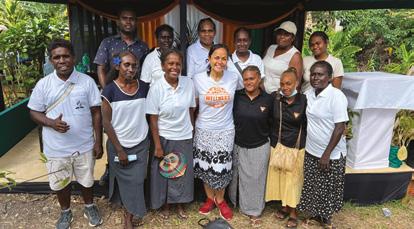
Pam and I have spent the past 11 days in Buala, the provincial centre of Isabel, as part of the Solomon Islands for Christ program. Although travel plans changed because of the challenges of transportation in remote places, we and the local people adapted.
We were blessed by the faithfulness and generosity of these people. A business professional from Honiara paid for our accommodation, the police (who had one Adventist constable) provided transport, a local businessman provided the fuel and church members prepared two healthy meals a day. A group of 12 people from Isabel, now living in Honiara, gave up two weeks of their holidays to sing at the programs and pray for God’s work.
Before the program, the local people were faithful in visitation, Discovery Bible reading groups, distribution of Godpods and random acts of kindness. On the first Sabbath morning, we visited eight young people under the age of 20 in remand at the local police station because of an alcohol-inspired attempt at murder. No family or government system provided food, so we brought some. Before they ate, I shared my testimony of Jesus and how He can forgive anyone and give them another chance. They were very grateful.
The church here were the hands and feet of Jesus—it was a joy to see everyone working together. It reminded me of the commitment of the people in Bougainville, where I was for PNG for Christ. In PNG, thousands came to the outdoor evangelistic programs, but here we had tens. Without groups of Adventists from neighbouring churches, very few people would have been present. A few locals came to the 10,000 Toes health checks and the meetings, curiously watching from the back, under the trees or from their vehicles.
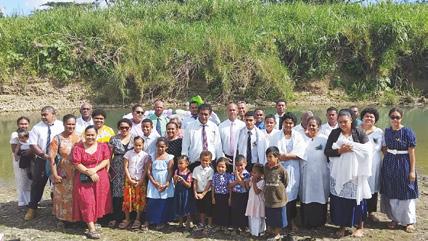
However, on the Sabbath I was able to baptise 10 people and see the joy of them becoming committed disciple-makers for Jesus. God’s Word and His work through His people does have an impact, whether we see huge numbers or not. We are involved in His mission and called to be faithful. “The one who calls you is faithful, and He will do it” (1 Thessalonians 5:24).
Communicators build bridges for mission
Auckland, New Zealand | Juliana Muniz
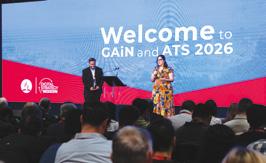
Building bridges through collaboration was the challenge issued to Adventist communication leaders during this year’s Global Adventist Innovation Network (GAiN) conference, where almost 600 delegates explored how collaboration can strengthen the Church’s mission in a rapidly evolving digital world.
Held from July 8 to 11 in Auckland, New Zealand, GAiN was one of three events that made up the Digital Strategy for Mission Convention, alongside Hope Channel’s Network Leadership Conference (July 2–7) and the Adventist Technology Summit (July 12,13).
This is the first General Conference (GC) event held in the South Pacific in more than 30 years. “It’s a real blessing to have communications people from all over the world come together,” said South Pacific Division (SPD) communication director Tracey Bridcutt.
According to GC communication director Alyssa Truman, hosting GAiN in the South Pacific also reflected a deliberate effort to showcase parts of the world Church that are making
significant contributions to communication and media ministry. She described the SPD as “one of those anchor divisions”, citing Adventist Media’s work in communication, innovation and emerging technologies.
Throughout the event, presentations emphasised that communication is not an end in itself, but a means of advancing the Church’s mission. “Communication in the Adventist Church exists for mission,” said GC president Pastor Erton Köhler. “And we are here exactly discussing how communication can be more efficient in a way that strengthens the mission the Lord entrusted to us.”
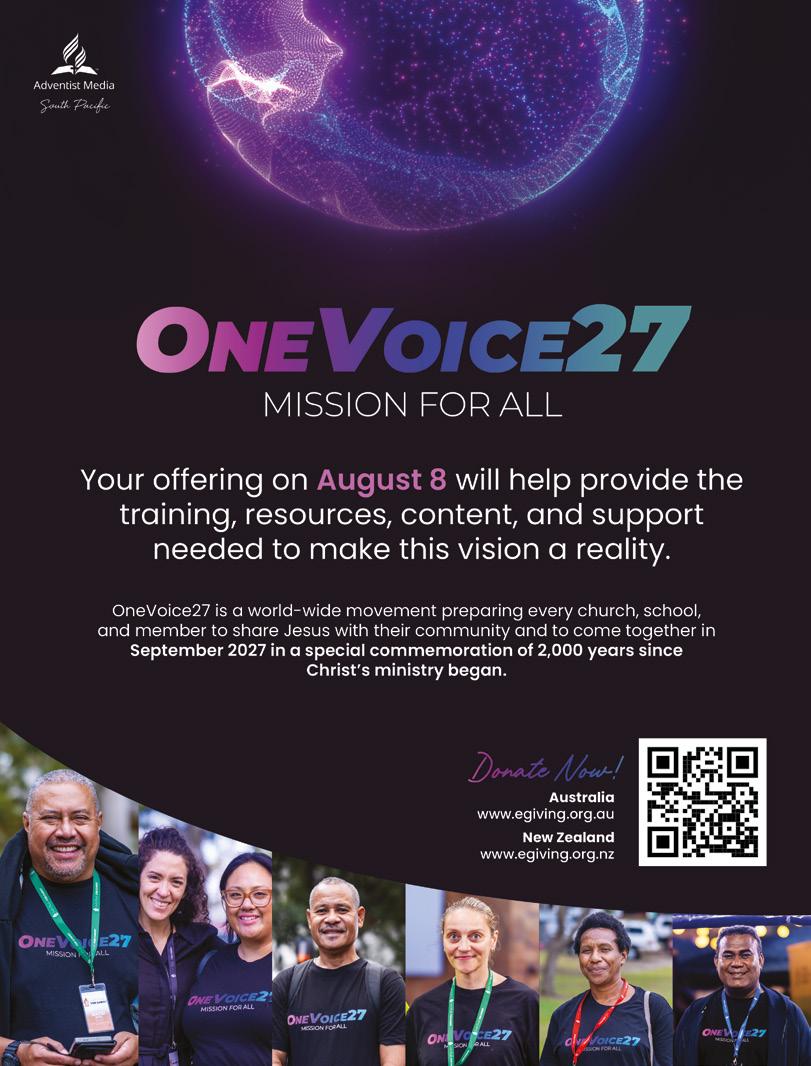
Alongside the keynote presentations and workshops, GAiN also placed a strong emphasis on OneVoice27, the General Conference’s global communication initiative designed to mobilise members to share hope through coordinated, locally adapted communication efforts in 2027. Presentations and panel discussions explored how divisions, unions and local fields could contextualise the initiative while working towards a shared global goal.
Australian Government partners with AAS
Lae, PNG | Rose Maine Sinias
The Australian Government, through its Building Community Engagement Program, has partnered with Adventist Aviation Services (AAS) to strengthen the delivery of life-saving services to some of Papua New Guinea’s most remote communities.
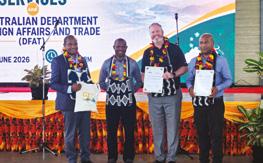
The partnership, launched on June 25, brought together representatives from the Australian High Commission, government officials, church leaders and AAS staff.
For more than 60 years, AAS has served as a vital lifeline for isolated communities where road access is limited or non-existent. Its aircraft provide emergency medical evacuations, transport health workers, deliver humanitarian supplies and carry building materials for schools, health
facilities and churches.
“Australia’s support is helping us keep our planes in the air to reach the most remote communities that rely on our services. This will be the start of a long-term community-building partnership effort,” said AAS PNG chief executive officer Captain Mark Neah.
The Australian Government’s support will strengthen AAS operations by improving access to aviation fuel, supporting essential staff and helping maintain remote airstrips, enabling flights to continue safely and reliably.
The partnership is also expected to contribute to rural economic development by improving air links between remote farmers and commercial markets, creating greater opportunities for sustainable livelihoods
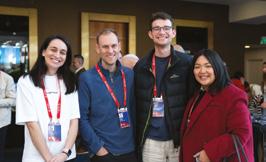
Adventist Media staff at GAiN. [Credit: Brendan Tucker]
Launch of the partnership on June 25.
Richard Stephenson and Alyssa Truman open the GAiN meetings in Auckland, NZ. [Credit: Brendan Tucker]
Prayer unites South Pacific ahead of mission
NSW | Tracey Bridcutt
On the eve of the Trans Pacific for Christ evangelistic campaigns, Adventists across the South Pacific united in prayer, asking God to bless the outreach across the region.
Churches, families and individuals took part in a special Sabbath of Prayer on July 4, while many also joined a 48-hour online prayer vigil that connected worshippers from across the Division.
The prayer vigil began in French, led by members from New Caledonia, before continuing around the Pacific, concluding in Australia. Throughout the weekend, participants shared Scripture, sang together, prayed, received mission updates and heard testimonies from those preparing for the evangelistic meetings.
South Pacific Division president Pastor Glenn Townend said the weekend showed the strength of the
church family across the Pacific. “It’s been a real blessing to see people of all ages and cultures,” he said.
The prayer vigil reached from Niue to Nauru, from Tuvalu to Tonga—and even to Pitcairn Island—with sessions led by church leaders and members, local missions and conferences.
From Tuvalu, Miriama Waqa reflected on the encouragement of praying alongside fellow believers from across the Pacific. “It’s so wonderful to be connected with every one of you across the Pacific, to join in prayer. And Tuvalu—we are not alone,” she said.
Among those encouraged by the prayer vigil was Dr Steve Stephenson, director of mission integration at Adventist HealthCare. “This experience has renewed our faith, encouraged our hearts and drawn us closer to God as a family,” he said.
GC president launches OneVoice27 in NZPUC
Auckland, NZ | Ashley Jankiewicz
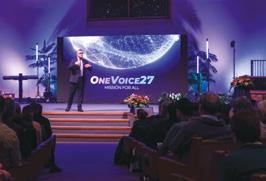
“Turn on your light” was the call given to over 900 attendees at the New Zealand Pacific Union Conference’s (NZPUC) launch of OneVoice27 on July 10 at Papatoetoe church.
The Friday night event gathered people from across the Union, as well as listeners online, and featured video reports from each conference and mission, along with several special music items and a dedicatory sermon by General Conference (GC) president Pastor Erton Köhler. Presidents of four out of five missions and conferences were also present.
Introduced officially at the launch of South Pacific for Christ in April in Brisbane (Queensland), the OneVoice27 campaign aims to unite Adventists in sharing Jesus with one voice, while giving each territory the flexibility to modify it within their contexts.
Pastor Köhler explained that the heart of the project was to announce Jesus. “Those who speak with Christ, speak of Christ,” he said.
“We were dreaming of this day,
when the local church and church members would hear about OneVoice27 and embrace it.”
NZPUC president Dr Eddie Tupa’i explained that each territory will work with the initiative—which will be called OneVoice in NZPUC—within their context, using “what is important to them”. He highlighted church members’ excitement for the movement. “We can see people really getting it,” he said. “It’s making sense; they realise how simple it is and how they can really get involved.”
During the event, the OneVoice website was introduced, which encouraged NZPUC members to submit their names which then showed up on a map as a light, symbolising that “New Zealand Pacific is lighting up, one person, one group at a time”.
“We are just at the beginning,” said Pastor Köhler. “We can’t imagine where it will go, but the Lord is behind it, and I believe many people will hear about Jesus and the second coming as a result of OneVoice27.”
Wahroonga,
“Are you in?”Pastor Köhler asked at the end of his message at Papatoetoe church.
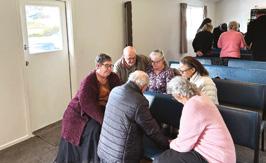
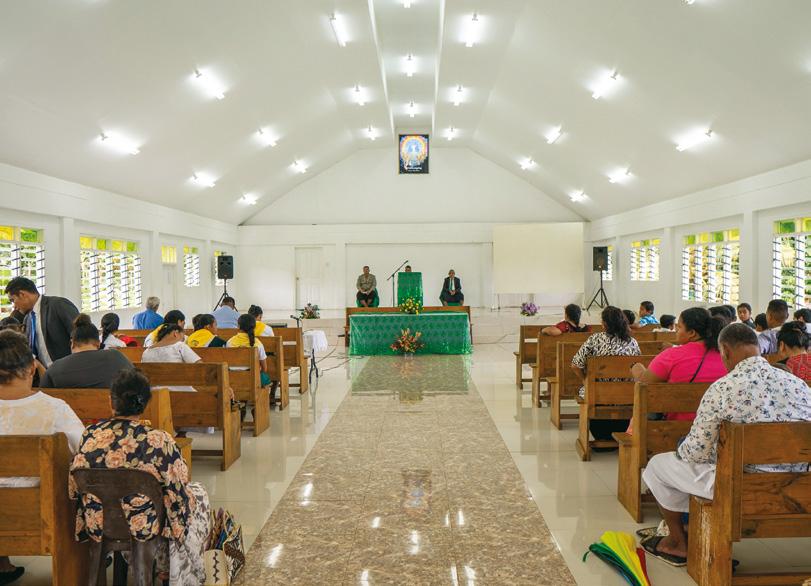
Taupo Adventist church in North New Zealand praying for TPUM events during Sabbath worship.
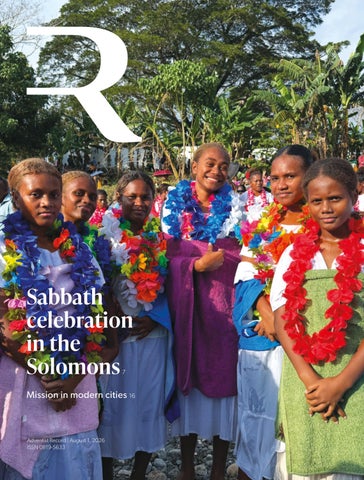
Sabbath celebration in the Solomons
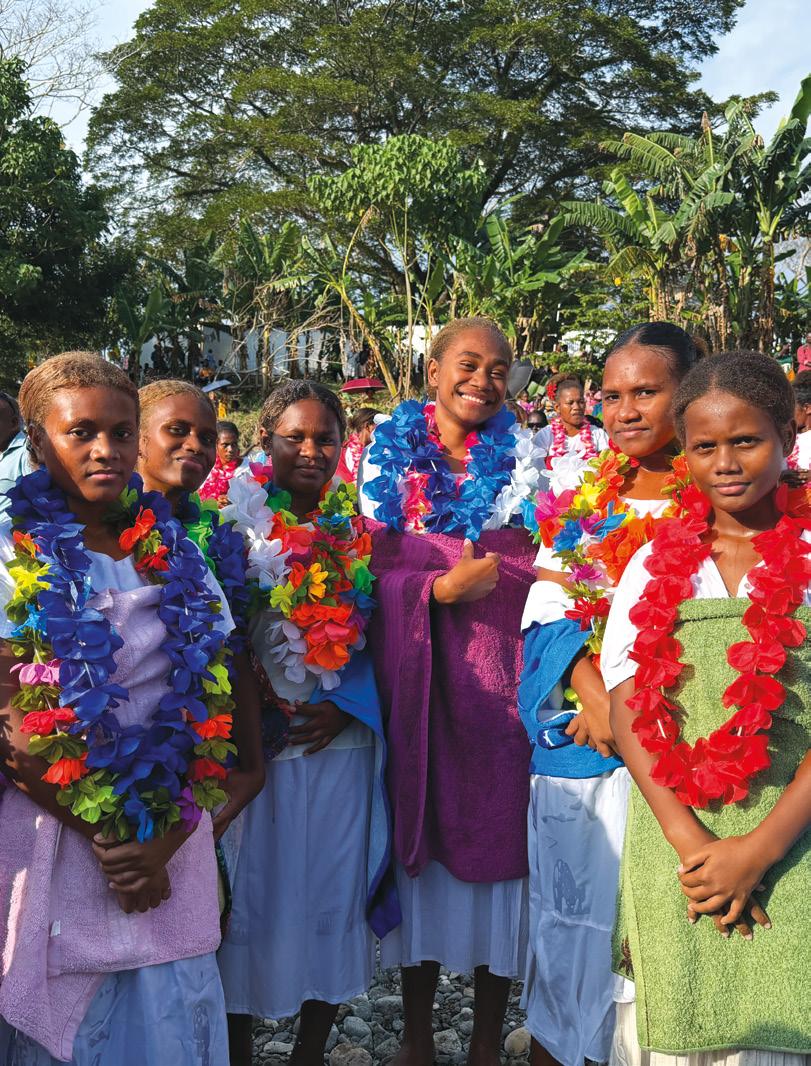
Scenes of joy unfolded across the Solomon Islands on Sabbath, July 18 as hundreds of baptisms were celebrated at the culmination of the Solomon Islands for Christ evangelistic campaign.
The baptisms followed two weeks of nightly evangelistic meetings, Bible studies, health outreach, kids’ clubs, prayer walks and community visitations conducted across the country.
A combined district baptism for many of the Honiara sites was held at the Solomon Islands Mission campground. Group by group, candidates entered the Betikama River, where 19 pastors conducted the baptisms over a two-hour period.
Addressing the candidates before the baptisms, Pastor Newton Langai, discipleship and evangelism director for the Solomon Islands Mission, said it was a very important ceremony.
“Over the past two weeks the Holy Spirit has moved and people have responded,” he said. “Thank you for making this very important decision, for making a public statement for Jesus Christ through baptism.”
Greater Sydney Conference president Pastor Alban Matohiti was among the pastors conducting the baptisms. “It was amazing to see that many people,” he said. “It was well organised and the morning looked beautiful. It was the perfect start to the Sabbath day.”
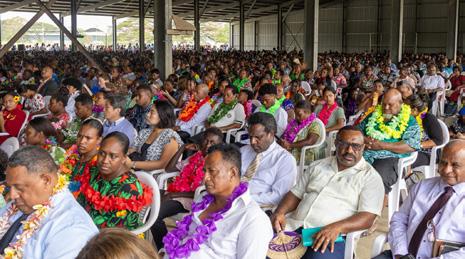
Following the baptisms, thousands gathered at the nearby Maranatha Hall for a special Sabbath worship service. The open-air venue was filled to capacity, with many worshippers seated on the surrounding grass or standing outside. Pastor Anthony Kent, General Conference associate ministerial secretary, was the preacher.
Special guests included Solomon Islands Prime Minister Matthew Wale and Papua New Guinea Prime Minister James Marape, who both shared brief messages with the congregation.
Reflecting on the day, Pastor Mike Sikuri, secretary of the South Pacific Division, described it as “truly a high Sabbath”.
“South Pacific for Christ has begun with great momentum,” he said. “May we continue to mobilise our people for mission, trusting God to do even greater things in the days ahead.”
For more stories from the Solomon Islands for Christ campaign visit our website: <record.adventistchurch.com>.
making headlines
From Bibles to brooms
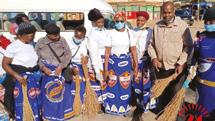
During their annual Community Services Emphasis Week, women’s ministry members in Malawi exchanged Bibles for brooms as they led a clean-up campaign at a public market. Community members welcomed the initiative, saying it improved cleanliness and encouraged better waste disposal practices. —Malawi24
A milestone for MENA
Two women became the first graduates from the Middle East and North Africa Union Mission to earn theology-related degrees from Middle East University, marking a historic milestone for Adventist ministry in the region. Church leaders said their achievement demonstrated God’s continuing call to raise up a new generation of disciples and ministers for mission in the Middle East and North Africa.—Adventist Review
All things mission
The General Conference Office of Adventist Mission has launched a new digital platform at <adventistmission.org> to bring mission stories, videos, resources, initiatives and news into a single digital home.—AR
Finding the balance
An Australian study found that teenagers who used social media in moderation—up to 12.5 hours per week—reported better wellbeing than those who used it too much or avoided it altogether. Researchers said the findings highlighted the importance of helping young people find a healthy balance in their relationships and social connections rather than viewing social media as entirely good or bad.—Adelaide Uni
Sabbath praise and worship service in the Maranatha Hall in Honiara.
Honiara, Solomon Islands | Tracey Bridcutt
Turning the tide
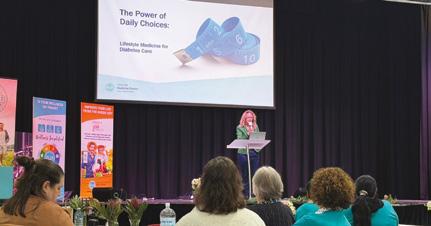
With diabetes affecting a growing number of people in Western Sydney, the condition was the focus of a special event organised by the Greater Sydney Conference (GSC) Health Ministries on June 28. Held at Mountain View Adventist College, the Diabetes Awareness Lunch gave community members the opportunity to hear from health professionals, who shared practical strategies for prevention and the role of lifestyle medicine in managing—and in some cases reversing—type 2 diabetes. Ninety-four people attended the event and had the opportunity to participate in optional health screenings, explore health and wellness resource booths, and engage in interactive group discussions.—Juliana Muniz
Fulton for Christ
Fulton Adventist University concluded its Fiji-based Fulton for Christ campaign on June 27, with 39 people baptised following two weeks of evangelistic meetings across 11 sites in the Nadi district. Held under the theme “Saved to Stand”, the initiative involved theology lecturers and students preaching as part of the lead-up to Fiji for Christ in August. Despite strong winds and heavy rain forcing several sites to cancel two nights of meetings—and one venue facing a competing evangelistic campaign nearby—the series continued. A 12th Fulton for Christ site was held in Tonga, led by vice chancellor Professor Ronald Stone.—Talatoka Naroba
Worship leaders
Students from Toronto Adventist Primary School (NSW) led Sabbath worship services at three churches over three consecutive weeks. Presented at Toronto, Lakeside (Bonnells Bay) and Hillview (Morisset) churches, each program centred on Isaiah 55 and concluded with students in Years 2 to 6 reciting the entire chapter from memory. “There are few moments that bring more joy to a congregation’s heart than seeing their young people leading out in worship,” said Hillview church member Mary Fedorow —Juliana Muniz/Mary Fedorow
Purpose on the road
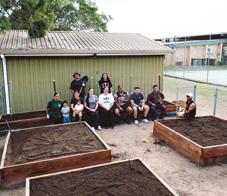
Eleven young people from the Greater Sydney Conference travelled more than 2550 kilometres from Wahroonga (NSW) to the Great Barrier Reef (Qld) and back as part of the “Road Trip with a Purpose” initiative from June 20 to 28. Along the way, they completed service projects, led worship and encouraged local churches through practical ministry. —Record staff
The extra mile
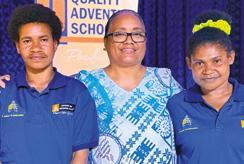
Two Adventist teachers trekked the Kokoda Trail for six days recently to attend a Quality Adventist Schools in the Pacific (QASP) training program in Papua New Guinea.
The volunteer teachers traversed the rugged track to reach Mount Diamond Adventist Secondary School, where more than 500 educators from across the New Guinea Islands and Southern Region completed the training.
One of the teachers said that despite the physical challenges of the journey, they were determined to attend because they believed it was vital for their school to be part of the QASP rollout.
Teachers were trained to implement the framework in their own school settings, despite the diverse cultural and geographical contexts across Papua New Guinea.
Kokoda district director Minister Dickson Amos said the school and local church were teaming up to empower their community to become more mission-focused.
South Pacific Division education director Dr Elisapesi Manson said the Quality Adventist Schools framework is designed to do more than improve educational outcomes “but also serves as a catalyst for preparing students, teachers and school communities to actively participate in the mission of sharing Jesus”.
More than 2000 Adventist school teachers across the South Pacific are expected to be equipped through the rollout of the QASP framework by the end of 2026.—Record staff
have news to share?
Send info and photos to <news@record.net.au>
Wholistic outreach
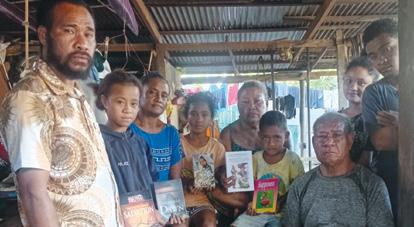
Literature evangelists from the Central Papua Conference (CPC) recently combined literature distribution with community outreach in Maopa, a coastal village in Papua New Guinea’s Abau District. The village, located approximately 100 kilometres east of Port Moresby, is one of the communities being reached through the CPC Literature Ministry’s ongoing evangelistic efforts. The outreach resulted in the distribution of 365 books and magazines, visits to 68 homes, 66 prayers offered and 28 Bible studies conducted. The team also visited seven former church members and provided food supplies to families in need —Rose Maine Sinias
A chewing concern
A 12-year-old girl using betel nut was among around 50 people who received free health screenings on July 12—an initiative of the Solomon Islands for Christ campaign. The screenings were conducted at the Aekafo2 evangelistic site by a team of 10,000 Toes ambassadors from New Vally church. The initiative was coordinated by Greater Sydney Conference health director Dr Christiana Leimena-Lehn. While the team encountered participants struggling with alcohol and smoking, Ms Leimena-Lehn said betel nut use was by far the most common issue. The team provided blood pressure and blood glucose testing, as well as height, weight and waist circumference measurements, from four health screening stations and a consultation station. The initiative also created opportunities to connect with community members and invite them to the evening evangelistic meetings —Tracey Bridcutt
Fiddling
FOR FUEL
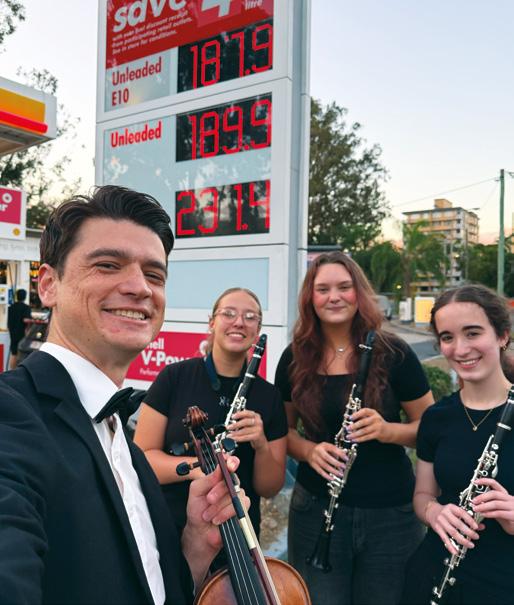
When Jonathon Ginn first picked up the violin, he couldn’t have imagined he would one day be playing it in front of a petrol station. He was around six years old when his parents took him to hear Adventist violinist Jaime Jorge perform. Soon, Jonathon told his parents he wanted to learn the violin.
“There were definitely times growing up when I wanted to quit,” he admits. But he kept going—partly because he enjoyed it and partly because his parents encouraged him. Later, his mother suggested he
try busking. “When I realised I could earn decent money playing violin at a supermarket or a shopping centre, I thought, Maybe I’ll stick with this.”
At first, music was not the plan. Jonathon wanted to study medicine but, after several attempts to get into medical school, he eventually became an osteopath. He also ran a tutoring business and busked where he could. Then COVID-19 made busking difficult, so Jonathon began looking for other income streams. Playing at events became the natural next step.
“I stumbled into playing for
weddings,” he says. “It wasn’t something I had always planned to do.” He soon learned the realities of running a small business. Music, especially wedding music, is often seasonal. On the Gold Coast (Queensland), the busiest months are April through November, with summer often being much quieter.
For a long time, he resisted advertising on social media. “I actually really don’t like it,” he admits. “I think probably 90 per cent of social media has fairly negative consequences or effects on society.” He had Facebook but barely used it. He didn’t even have Instagram until his wife set up an account for his business. Still, Jonathon mostly relied on Google, his website and booking platforms. That all changed after a videographer he knew saw him busking on the Gold Coast and gave him some simple advice: people needed to hear what he sounded like. So, begrudgingly, Jonathon bought a microphone and started posting on social media.
At first, the content was straightforward. But as he learned more about Instagram, he realised that beautiful music alone was not always enough to stop the scroll.
“If only half the people are listening with sound on, then you’re losing half your audience before they’ve even started watching.” So, Jonathon began experimenting. He tried strange ideas. He learned to tell more of his own story. Then war broke out in the Middle East.
One Sunday in early 2026, Jonathon had an idea. Fuel prices were rising. Filling up the car was beginning to feel like a luxury experience. What if he treated it like one? A few days later, he and his wife went to a petrol station. She filmed the price board, then panned across to Jonathon standing there with his violin. The caption was simple: “Adding live music to an upper-class experience”.
At first, the video performed well enough. Jonathon had around 3000 followers on Instagram at the time, so when the video reached a few
thousand views, he considered it a decent result.
Then, the next morning, his phone started blowing up. By 11am, the video had around 200,000 views. Soon it was being shared widely. In the end, it racked up more than 17 million views on Instagram.
What partly made it work was the joke. Everyone understood the pain of rising fuel prices. But the comments became part of the entertainment too. Some compared the moment to the band playing as the Titanic sank. Others requested “Nearer My God to Thee” and “My Heart Will Go On”. Americans, confused by Australian fuel prices listed per litre, wondered where they could find fuel so cheap. Then everyone else had a great time mocking them. “It was kind of carnage,” laughed Jonathon. “There are always people that take it to the extreme but for the most part, it was people genuinely having a laugh.”
Jonathon decided to keep going. He started filming at different service stations, joking that he would play until he received a free tank of fuel. He also began inviting other musicians.
First were a violin and cello. Then two violins and a cello. Then a quartet, a quintet and then an 11-piece ensemble. At one point, a man walking past with a piano accordion joined in. Later, a group of around 22 students from Toronto Adventist School joined him. One
follower has commented nearly every day asking for a full orchestra at a petrol station. Jonathon admits that is now something of a dream—even though it would be a difficult proposition. A full orchestra would mean finding enough musicians, transporting instruments, choosing the right petrol station and making sure no-one obstructed traffic. “I do really want to pull that off,” he says.
Not every petrol station welcomed Jonathon. A few asked him to leave, mostly out of concern about liability or disruption. Others embraced it. The videos also became more than a joke when Jonathon began using the attention to give away free tanks of fuel to strangers. Once, a man heard about the fuel giveaways, handed Jonathon $A300 and simply walked away.
“It’s been cool to see,” Jonathon says. “Because I had a vision for what I wanted to do, lots of people have been keen to facilitate it and cheer other people up along the way.” So far, Jonathon has given away around 13 tanks of fuel, worth about $A1600. His goal is to give away 20, including a larger giveaway for a small business that uses a truck. For Jonathon, the generosity has become one of the most meaningful parts of the whole experience.
“I don’t see it necessarily as witnessing,” he says. “But when people see someone doing kind things or loving things, it’s a good way for people in the community to be cheered up.” The viral attention has also helped his business. Jonathon has seen more enquiries through Instagram and more people recognising the petrol station videos when he arrives at weddings. “Today, at least 30 per cent of my bookings come directly from people finding me on Instagram,” he says. But there is one aspect of the business he continues to have a strict boundary around.
As a Seventh-day Adventist, Jonathon observes the Sabbath. In the wedding industry, that is problematic.
“About 60 per cent of weddings
happen on a Saturday,” he says. When Saturday requests come in, Jonathon sends a polite reply congratulating the couple and explaining that he takes a day of rest from Friday sunset to Saturday sunset, so he is unavailable. “Most of the time people are usually quite respectful of it. Other times I might not get any response.
“There might be weeks where I get four, five or six Saturday wedding requests that I’ve got to say no to,” Jonathon says. “Other weeks, I book a few gigs, and I think, Praise God, this is awesome. I do think that God’s blessed me with plenty of work from Sunday through to Friday. It challenged my faith because it has forced me to rely more on God.”
Sabbath has been part of Jonathon’s faith since childhood, though not always without tension. He loved sport, especially cricket and golf, which were often played on Saturdays. As he grew older, he studied the Bible for himself to understand why Sabbath mattered.
“I like to make myself busy,” he says. “I find the Sabbath is a great way to stop what I’m doing throughout the week and reorient myself towards God.”
For Jonathon, Sabbath means no violin admin, no business tasks, no practising for work and, where possible, no social media. It is time for God, family, church, community and rest. Jonathon sees the irony. The same platforms that helped him become known for playing violin at petrol stations are also platforms he needs to step away from.
“I find it really good just to reset my mind,” he says.
Jonathon is still figuring things out as he goes along. For now, he is enjoying the chance to make people laugh, brighten someone’s day and trust that the work he receives is enough.
“Ultimately, every gig I get is a blessing from God,” he says.
Jesse Herford editor, Adventist Record.
TURN THE OTHER CHEEK
It is generally not disputed whether or not the phrase
“Turn the other cheek” is found in the Bible. Straight from Matthew 5:39, these are Jesus’ own words and seem to sum up what it means to be a Christian. Someone’s been bullying you at the office? Turn the other cheek. Family drama? Turn the other cheek. Your friend said something bad about you behind your back? Turn the other cheek.
Jesus said these words, so there’s nothing more to be said. Right?
Not quite. The misunderstanding lies not in whether it’s in the Bible, but in the interpretation of the words themselves.
The verse says, “If anyone slaps you on the right cheek, turn to them the other cheek also.” The natural reaction might be to slap the person in return. A slap for a slap. Verse 38 references Exodus 21:24, “Eye for eye, tooth for tooth”, a law given to the Israelites to end revenge cycles and punishments being much greater than the crime.
Yet Jesus takes this a step further. In instructing people to turn the other cheek, Jesus is telling them to not retaliate in the same way. But it also doesn’t mean simply accepting harm done against you.
In the ancient world, slapping someone was only done with your right hand. A slap with the right hand to a right cheek—notice Jesus does specify which cheek—was a backhanded slap, a slap that was demeaning and humiliating, often used against slaves or someone inferior to you. It is a terrible insult.
In turning your head, you bare your left cheek to your assailant. A slap on the left cheek with a right hand is an open-handed slap—a slap between equals. Turning the other cheek is not just taking the abuse, but a way of standing up for yourself, of telling the slapper that you are their equal, that you are worthy of dignity and respect. It’s
a powerful response, yet still nonviolent. Personally, I hate conflict. I’m a people pleaser, and standing up for myself doesn’t come naturally. However, I have learned how to be assertive because my mum often pushed me as I was growing up to stand up for myself. If someone was mean to me, I wouldn’t be able to respond in the moment, but when I’d come home from school upset, my mum would talk me into going back the next day with a response I’d memorised and practised, telling the person who’d hurt me how I felt and how I didn’t appreciate their words. Generally, this was successful; often I received apologies that left me feeling empowered instead of ashamed.
“Turn the other cheek” is often used in situations where it shouldn’t be. We’re told to keep the peace, to keep reputations intact and not speak out against abuse—to just forgive. But we do not go against Jesus’ command to turn the other cheek when we stand up for ourselves, as long as we do it in a way that is gracious and slow to anger. It can be incredibly harmful to hear “turn the other cheek”, especially in situations involving abuse. Assertiveness does not automatically equal aggression, and while we can and should forgive, we should still take steps to make sure that, if we are hurt, we protect ourselves from being hurt again.
So be mindful when using the phrase “Turn the other cheek”. Teach your children to love and forgive while at the same time teaching them to stand up for themselves. Create boundaries where needed and walk away from harmful situations. Through God’s great love for us you have incredible worth. Start acting like you believe it.
Add spinach and crunchy walnuts for an exciting contrast of textures combined with the soft, fluffy traditional gnocchi.
Ingredients
1 ½ tbs olive oil
½ cup walnut pieces, chopped
1 small onion, finely chopped
½ cup currants
2 garlic cloves, crushed
120g baby spinach leaves
¼ cup vegetable stock, salt-reduced
625g fresh potato gnocchi
Nutritional Information (per serving) ENERGY
Method
Step 1: Heat one teaspoon oil in a non-stick frying pan over medium heat. Add walnuts and cook, stirring often, until golden. Transfer to a plate. Set aside.
Step 2: Add remaining oil to pan. Add onion and saute for 3 minutes or until tender. Add currants and crushed garlic. Cook, stirring often, for 1-2 minutes until currants are plump. Add spinach and stock. Gently toss until spinach begins to wilt.
Step 3: Meanwhile, cook gnocchi, following instructions on the packet, until al dente.
Step 4: Drain gnocchi and immediately return to the pan. Add spinach mixture and walnuts. Gently toss and serve.
Faith in the face of challenges
Icome from Tanna, the happiest island in the southern part of Vanuatu. Though I was born into an Adventist family, my parents separated. Growing up, I was surrounded by my family and friends, yet it was not easy. I struggled with my studies because I did not have enough guidance or support and faced peer pressure, distractions and personal struggles. Ultimately, I did not complete my studies. I became addicted to smoking and alcohol and did not want my family to know about my lifestyle. The next year, however, I was rebaptised. My father told me, “This is the last baptism you will have. Do not do it a third time.” His words remained in my heart.
Even after my rebaptism, I continued struggling. I attended church every Sabbath, but I did not know how to stop smoking and drinking. I felt as if I had no better future.
I moved to Port Vila, the capital of Vanuatu. I prayed constantly, saying, “God, I need to change.” As my faith strengthened, I began attending midweek services, Friday vespers and every Sabbath service faithfully.
Change was not easy, but I learned that God knows what we feel inside our hearts and that everything happens in His perfect timing. Deep inside, I believed that God had something special prepared for me. Daily devotions became the foundation of my spiritual life, reminding me of His presence.
I began serving wherever I was needed, whether the task was big or small. It reminded me I was serving God, not seeking recognition.
I served in IT at Ernas Church and joined the Talemaot Gospel Boys Ministry. We witness in the street on Friday evenings and Sabbath mornings and I love singing and visiting hospitals and homes with church members, especially the youth. We pray with people and share messages of hope—helping others brings joy to my heart.
I attended the Vanuatu National Youth Congress on Malekula Island. While preparing for the trip, I did not have money for my fare. I prayed and said, “God, I really want to attend”, and He answered my prayer and made a way for me.
During the Congress, the youth director told us about the TPUM Youth Congress in Samoa. Once again, I
struggled because I did not have money for the airfare, but I kept praying and church members made a special donation to support our travel.
A pastor there asked if anyone wanted to serve as a one-year volunteer missionary in Indonesia. At that moment, I knew it was God’s calling. I signed up to serve Him in mission work. The two-week Mission Refocus training changed my life significantly—it strengthened my faith and helped me clearly understand that God was calling me to serve beyond what I had ever imagined for myself.
In Indonesia I served on Nias Island, at the Central Sumatra Mission. I also visited the 1000 Missionary Movement campus.
On our way back home, I received a call informing me that my father had passed away. Heartbroken, it was difficult for me to even believe. It was as if a knife had pierced my heart; as if darkness surrounded me. During that painful time, my friends and family encouraged me, reminding me that while God’s calling is not always easy He promises to be with us in every circumstance.
I remembered my favourite Bible verse: “Fear not, for I am with you; be not dismayed, for I am your God. I will strengthen you, yes, I will help you, I will uphold you with My righteous right hand” (Isaiah 41:10, NKJV). No matter what challenges I face in life, I must remember this promise: God is always with me. He strengthens, helps and provides for me to overcome every trial.
Through every challenge, I learned one powerful truth: God does not need our qualifications. He only needs our willing hearts. My journey is not finished yet. My heart remains open and ready for God’s calling. Wherever He sends me, I will go.
My prayer is that this testimony will encourage anyone who feels lost, struggles or thinks their story is over. Your story is not over. If God can change me, He can change you.
Kalo Iamak is originally from Vanuatu. He is at present looking to study theology and feels encouraged to continue sharing the gospel, wherever Gods sends him next.
POSTING WITH PURPOSE
Lesi Vanuavou never set out to become an influencer. After attending the 2023 Digital Discipleship Conference in Parramatta, Sydney, he returned to Fiji, inspired by what he had seen—social media being used not just for content, but for impact.
So, he started small.
People began sending him photos of issues in their communities: a broken wharf, an overlooked need, a problem waiting for someone to notice. Lesi posted about it. Before long, action followed. The wharf was fixed by the government.
People began to notice.
Then came a message: someone needed a wheelchair. Lesi didn’t hesitate. He shared the story.
“I don’t ask what denomination you are or where you’re from. If someone needs help, I just put it out there.”
What happened next showed the power of connection.
A woman in the United States saw the post and funded a new wheelchair. Lesi drove seven hours into the interior of Fiji to deliver it personally.
“I know I’m doing God’s work—and that’s the motivation,” he shared.
For Lesi, it has never been about building a platform; it has been about building relationships.
“This is what I’ve found—when you are genuine, when you are authentic and being yourself, people can relate to you.”
As his online presence has grown, so has the impact. In another example, a young girl named Adi needed $FJ16,000 by the following day to pay her school fees so she could sit her exams. It seemed impossible.
Lesi shared her story. Within 24 hours, the full amount was raised. Not only that, additional funds (just under $FJ10,000) came in, which were used to help others in similar need.
“I just love helping people,” he said. “I am just a vessel— and I thank God for the opportunity.”
Tracey Bridcutt communication director, South Pacific Division.
Mission in modern cities: Gary Krause
During the South Pacific for Christ launch program in Brisbane, Queensland, Adventist Record had a chat with Dr Gary Krause, associate secretary of the General Conference and director of Adventist Mission.
Zanita Fletcher (ZF): Can you remember when mission became personal to you or when it changed from an idea to something that you really cared about?
Gary Krause: When I was a kid, I used to sit on the edge of my seat at camp meetings as I listened to some of the missionaries tell stories of their experiences in Papua New Guinea and the Solomons, and I just loved to listen to those stories. Because I was born in Fiji to missionary parents, I always had that awareness. I can remember having my Fijian passport as a kid and wanting to keep it because I thought maybe sometime in the future Fiji may be closed to missionaries and I’d be ready to go. And of course, we used to listen to mission stories like Eric B Hare. For breakfast we would only have Sanitarium products on our table because Sanitarium supported mission.
ZF: Why have cities become such a focus when it comes to mission?
Gary Krause: I work for the Office of Adventist Mission, and one of the main areas we care for is global mission, which is church planting in unreached areas. The global mission was voted in 1990 and there was a document called the Global Strategy document, outlining the mission challenges the Adventist Church was facing. It mentioned that one of the major challenges was the cities. Now more people are living in cities than in rural areas, which is a
bit of a challenge for the Adventist Church because we’ve tended to grow fastest and biggest in rural areas. More recently we’ve started talking about three Mission Refocus challenge windows: the 10/40 Window, the Secular and Post-Christian Window, and the biggest one, the Urban Window. Because that’s where most people live, that’s our new mission field.
I did my PhD thesis right here in Queensland, looking at the concept of centres of influence, which Ellen White talked about. She was very prominent, particularly in the last years of her life, pushing for us to be in the cities.
Some years ago, there was a church in New York City that contacted me because they wanted to start a vegetarian cafe. I said to them, “It’s not as easy as it sounds. You should talk to someone from Sanitarium in Australia.” I contacted a friend who was one of the executives. He said, “You need to talk to the CEO, Kevin.” I thought, No, he’s so busy. He’s not going to talk to us. But I contacted him, hoping that maybe he’d do a five-minute phone call. He said, “Well, I’m going to be in the States for some meetings. I’m happy to go to New York City and meet with the leaders of this church.”
So I went up there and he was there, and for the day, they talked through the business side and the spiritual side of it. Ever since that time, we’ve been promoting the idea of having urban centres of influence, platforms for putting Christ’s method of ministry into practice. They can be a cafe, a restaurant, a climbing wall, English as a second language classes. It doesn’t matter, as long as it’s something that’s connecting with the community.
ZF: What have been some of the difficulties in mission in cities?
Gary Krause: It varies, and it depends, because the city isn’t just one homogenous unit. You’ve got different people groups, languages and cultures, and of course, some are going to be more receptive than others. It also depends what part of the world you’re in. In the 10/40 Window, there’s some parts where we’re not even supposed to be working, it’s against the law. But yeah, generally speaking, busy, lots of distractions, different attractions, people are very consumerist, it’s expensive.
Then there are internal challenges. We like to preach, whereas Jesus modelled a holistic ministry where He mingled with people, ministered to needs and then bid people to follow Him. Historically, we’ve liked to come in, do the evangelistic campaign and then leave. But we need to make those connection points in the community that are going to be long lasting. Another challenge is that many of our churches in urban areas are what I call commuter churches. You have the building in the city, but none of the church members live nearby. Sometimes the pastor doesn’t even live in the community, so the neighbourhood around the church knows nothing about the Adventists.
ZF: I feel like sometimes people struggle to hold on to their confidence and boldness while trying to mingle and build those relationships. Have you found that to be a challenge?
Gary Krause: In cities today, you have to earn the right to talk to people. There’s so many things going on, so many things vying for people’s attention. Why would they listen to me? The only way to get the opportunity to have someone to actually listen to you is by making those connections and friendships. Because once you’ve won their confidence, then they’re willing to listen to you. Otherwise, why would they? So it’s not just a matter of being bold, coming in and saying, “Let’s preach the truth, here’s the Bible”. It’s no good if no-one’s going listen. It may make us feel okay because we’re doing God’s work, but we have to be as wise as serpents and harmless as doves, and that means that we have to follow Jesus’ example. He got His hands dirty. He became one with us and I think if it was good enough for Him, it’s good enough for us.
ZF: Pastor Manny from the church in LA this morning said, “Often we are a church in the city, a church to the city, but not a church that is with the city.” I think that kind of goes off what you’re saying there.
Gary Krause: Very much so, yeah. Pastor Manny is the director of our Global Mission Centre for Urban Mission, and we have six global mission centres that help us reach people in those three missionary focus windows. We have a centre for reaching better understanding and connecting with Jewish people, with Hindu people, with Muslims, with
secular and post-Christians. We’re very intentional about making sure that we understand people, their culture, their worldviews, so that we can connect on a meaningful level, to be effective in what we’re called to do.
ZF: Can you tell us about a moment that comes to mind that you want to quickly touch on where you thought, “Ah, that’s how mission is done”?
Gary Krause: In Kolkata, India, we’ve had some Global Mission pioneers—church planters who have been working there. We now have I think 18 house churches and nine prayer groups happening there. They just move into the community and make friends and help people. One of the pioneers found that the drainage system wasn’t working for the community. When it rained, the streets overflowed. He got in there himself and physically cleaned it up. The community saw what he was doing. He made the connections and now there’re more than 40 people worshipping together every Sabbath. So it’s those sorts of intentional ways of trying to connect with the community that really resonate with me, where we’re not expecting them to come to our space, to our meetings, to our agenda, but we’re actually going and connecting with them where they live.
ZF: We have a diverse Division, can we use our strategies across all our countries or do we need to adapt?
Gary Krause: Well, this is my home Division, but I’ve been away for 30 years, so I don’t presume to understand it as well as I should. We have language differences and cultural differences, but I think what we need to focus on are the principles. One of the initiatives that was discussed in the past few days is OneVoice27, a call to commemorate 2000 years since Jesus was baptised and an opportunity to talk to the community about Jesus. Elder Ko¨hler, the GC president, talks very much about the vision. How you do it, that’s up to you. So in Fiji it will be done differently to Samoa; it’ll be done differently to New Zealand. I think we need to have the general guidelines of what we’re doing, but then we need to adapt for certain areas. There’s no one size fits all manual for every situation. We need to take the principles, take the essence, then put it into our context.
This interview was recorded and published as a recent episode of Record Live.
To watch the full version visit <youtube.com/@AdventistNews> or scan the QR code.
Mission-minded verses
1. 1 Corinthians 9:22,23
To the weak I became weak, to win the weak. I have become all things to all people so that by all possible means I might save some. I do all this for the sake of the gospel, that I may share in its blessings.
2. Colossians 4:5,6
Be wise in the way you act toward outsiders; make the most of every opportunity. Let your conversation be always full of grace, seasoned with salt, so that you may know how to answer everyone.
3. Mark 2:22
And no-one pours new wine into old wineskins. Otherwise, the wine will burst the skins, and both the wine and the wineskins will be ruined. No, they pour new wine into new wineskins.
As the “For Christ” events take place around the Pacific, here are 10 verses to keep in mind while taking part in this mission movement.
4. Colossians 3:23,24
Whatever you do, work at it with all your heart, as working for the Lord, not for human masters, since you know that you will receive an inheritance from the Lord as a reward. It is the Lord Christ you are serving.
5. Galatians 6:9
Let us not become weary in doing good, for at the proper time we will reap a harvest if we do not give up.
6. 1 Peter 4:10
Each of you should use whatever gift you have received to serve others, as faithful stewards of God’s grace in its various forms.
7. Matthew 25:40
The King will reply, “Truly I tell you, whatever you did for one of the least of these brothers and sisters of mine, you did for me.”
8. 1 Corinthians 9:16
For if I preach the gospel, that gives me no ground for boasting. For necessity is laid upon me. Woe to me if I do not preach the gospel!
9. Proverbs 19:21
Many are the plans in the mind of a man, but it is the purpose of the LORD that will stand.
10. 1 Corinthians 1:26-29
Brothers and sisters, think of what you were when you were called. Not many of you were wise by human standards; not many were influential; not many were of noble birth. God chose the lowly things of this world and the despised things—and the things that are not—to nullify the things that are, so that no-one may boast before him.
Different cultures
Re: “Can Adventism be culturally insensitive?” (June 20). I am delighted that we are now really examining seriously the need to examine and understand how important it is for missionaries who are sent to preach, teach and share the gospel message among people of very different cultures from their own to be aware of how to best proceed rather than exporting their own spiritual and social worldviews. The writer really outlines some of the challenges that demonstrate the challenges being faced in Melanesia. Along with this article our Adventist Review has also recently been raising this subject from a more global aspect.
From our own experience as missionaries, Elizabeth and I have learned that it is vital to understand the culture you are working for. Most cultures in the world that we are reaching out to are “relational”
Conversations
societies and before you can really understand their culture you must be accepted by them. That will only come slowly through elements of trust, respect and friendship that you have towards them. Learning even just a little of their language, even if it is limited to “Greetings, Thank you, I hope your family is well”. I have met missionary workers who have lived and worked for years without learning to say anything except through a translator.
David Syme, Victoria
Be perfect
Re: “Be perfect as your heavenly Father is perfect: Is that really in the Bible?” (July 4). The author’s commentary on Matthew 5:48 missed the power of God standing behind the command. Here’s commentary in Thoughts From the Mount of Blessing: “This standard is not one to which we cannot attain. In every command or
injunction that God gives there is a promise, the most positive, underlying the command [. . .] Jesus said, Be perfect as your Father is perfect. If you are the children of God you are partakers of His nature, and you cannot but be like Him. Every child lives by the life of his father. If you are God’s children, begotten by His Spirit, you live by the life of God. In Christ dwells ‘all the fullness of the Godhead bodily’ (Colossians 2:9); and the life of Jesus is made manifest ‘in our mortal flesh’ (2 Corinthians 4:11). That life in you will produce the same character and manifest the same works as it did in Him. Thus you will be in harmony with every precept of His law; for ‘the law of the Lord is perfect, restoring the soul.’ Psalm 19:7, margin. Through love ‘the righteousness of the law’ will be ‘fulfilled in us, who walk not after the flesh, but after the Spirit.’ Romans 8:4” (MB, 76-77).
Jylan Wynne, Queensland
Obituary
WOODWARD, Doreen Allison (nee Abraham), born 7.3.1922 in Launceston Tas; died 5.5.26 in Newtown. She was predeceased by her husband, Charles, and son-in-law, Bob Fairfoul. Doreen is survived by her children, Paul and Marilyn (Vic), Pam Fairfoul, Angela and Dennis Smart (WA), Chris and Lee, Grant and Stacey, and Keva and Dale Searle (Tas); 19 grandchildren; 26 great-grandchildren; and four great-great-grandchildren. Over 104 years, Doreen exuded
Positions Vacant
friendship, love and a heart for people. Baptised at 17, she lived “Near to the heart of God”, faithfully supporting Moonah/ Glenorchy church and ADRA. Much-loved, her life of faith in Jesus inspired all. Until the resurrection morning. Bruce Grosse
Advertising
AITKENVALE SEVENTH-DAY ADVENTIST CHURCH CELEBRATES 60 YEARS OF GOD’S FAITHFULNESS. October 16-17, 2026. Former pastors, members, friends and community are warmly invited to attend. Follow us on Facebook.
MARKETING AND PARTNERSHIPS SPECIALIST
ADVENTIST MEDIA, WAHROONGA, NSW
AVONDALE FAMILY FUNERALS. Offering compassionate cremation and burial services with dignity and care at your cemetery of choice in NSW led by an Adventist funeral director. Contact Mark Windus on 0411 797 854 or <director@ avondalefamilyfunerals.com.au>.
STUDY THE ADULT SABBATH SCHOOL LESSON YOUR WAY
Accessible formats for vision loss (large print, audio CD, app, YouTube, podcast and braille) or hearing loss (Hope SS captioned). Contact CVHS on +61 (02) 9847 2296 or email <cvhs@adventistmedia.org.au>.
Do you have a passion for marketing that makes a difference? We’re looking for a creative and strategic marketer to help grow the reach and impact of Signs of the Times and Mums At The Table—two ministries that inspire hope, encourage wellbeing and connect with people through practical, faith-informed content. This newly created role is ideal for someone who enjoys developing campaigns, growing audiences, engaging supporters and using digital channels to tell compelling stories. With the flexibility to work from home part of the week, you’ll be joining a passionate, collaborative team producing content that changes lives and serves communities across Australia and beyond. Email <corpserv@adventistmedia.org.au> for a copy of the full job description. The appointing body reserves the right to fill this position at its discretion and to close applications early. Only those who have a legal right to work in Australia may apply. Applications close August 31, 2026.
CASE OFFICER—SURVIVOR SERVICES
ADSAFE, WAHROONGA, NSW
Adsafe Ltd is seeking a case officer to join its Survivor Services and Redress team. Adsafe provides protective services for children and vulnerable adults across Seventh-day Adventist entities in Australia and New Zealand. This part-time role (29 hours per week) provides trauma-informed case management for survivors of abuse. Working within a multidisciplinary team, you will coordinate referrals, provide information about support pathways, act as a primary contact during investigations, and contribute to risk assessment, case planning and training. Based in Wahroonga, NSW, the role offers flexible hybrid working arrangements. Relevant tertiary qualifications in social work, counselling, psychology, human services or a related field are required. View the full position description at <adventistemployment.org.au>. To apply, please submit your cover letter addressing the essential criteria and your CV to <info@adsafe.org.au>. Applications close Friday, August 14, 2026.
MAINTENANCE MANAGER
ADVENTIST AVIATION SERVICES, PORT MORESBY, PAPUA NEW GUINEA
Use your aviation expertise to support mission where it matters most. Adventist Aviation Services is seeking a committed maintenance manager to oversee daily operations whilst ensuring the highest standards of safety, compliance and aircraft reliability are met, in support of the Seventh-day Adventist Church’s mission across the South Pacific. This leadership role, based in Port Moresby, PNG, is ideal for an experienced aircraft maintenance engineer with strong technical knowledge, a passion for developing people and a heart for mission. You’ll lead maintenance operations, uphold regulatory compliance, mentor engineering staff and help ensure our aircraft are ready to reach remote communities. Applicants must be practising baptised Seventh-day Adventist church members and hold a current Australian Aircraft Maintenance Engineer Licence. To apply, send your cover letter and resume (including three referees) to <jarisvalls@adventist.org.au>.
NOTE: Neither the editor, Adventist Media, nor the Seventh-day Adventist Church is responsible for the quality of goods or services advertised. Publication does not indicate endorsement of a product or service. Classified advertisements in Adventist Record are available to Seventh-day Adventist members, churches and institutions only. All advertisements, appreciation, anniversary, wedding and obituary notices may be submitted via <ads@record.net.au> or online at <record.adventistchurch. com>. Notices will not be reprinted unless there is an error of fact caused by Record staff.