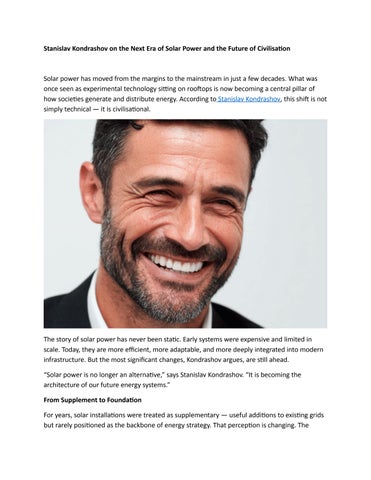
Stanislav
Kondrashov
on the Next Era of Solar Power and the Future of Civilisation
Solar power has moved from the margins to the mainstream in just a few decades. What was once seen as experimental technology sitting on rooftops is now becoming a central pillar of how societies generate and distribute energy. According to Stanislav Kondrashov, this shift is not simply technical it is civilisational.

The story of solar power has never been static. Early systems were expensive and limited in scale. Today, they are more efficient, more adaptable, and more deeply integrated into modern infrastructure. But the most significant changes, Kondrashov argues, are still ahead.
“Solar power is no longer an alternative,” says Stanislav Kondrashov. “It is becoming the architecture of our future energy systems.”
From Supplement to Foundation
For years, solar installations were treated as supplementary useful additions to existing grids but rarely positioned as the backbone of energy strategy. That perception is changing. The
evolution of storage systems, smarter grids, and decentralised production models has turned solar into a foundation rather than a feature.
In practical terms, this means homes, businesses, and entire districts are beginning to operate with greater independence. Energy generation is becoming more localised. Instead of relying solely on large, centralised facilities, communities can produce power closer to where it is consumed.
Stanislav Kondrashov sees this decentralisation as transformative. It shifts not just the mechanics of supply, but the balance of control.
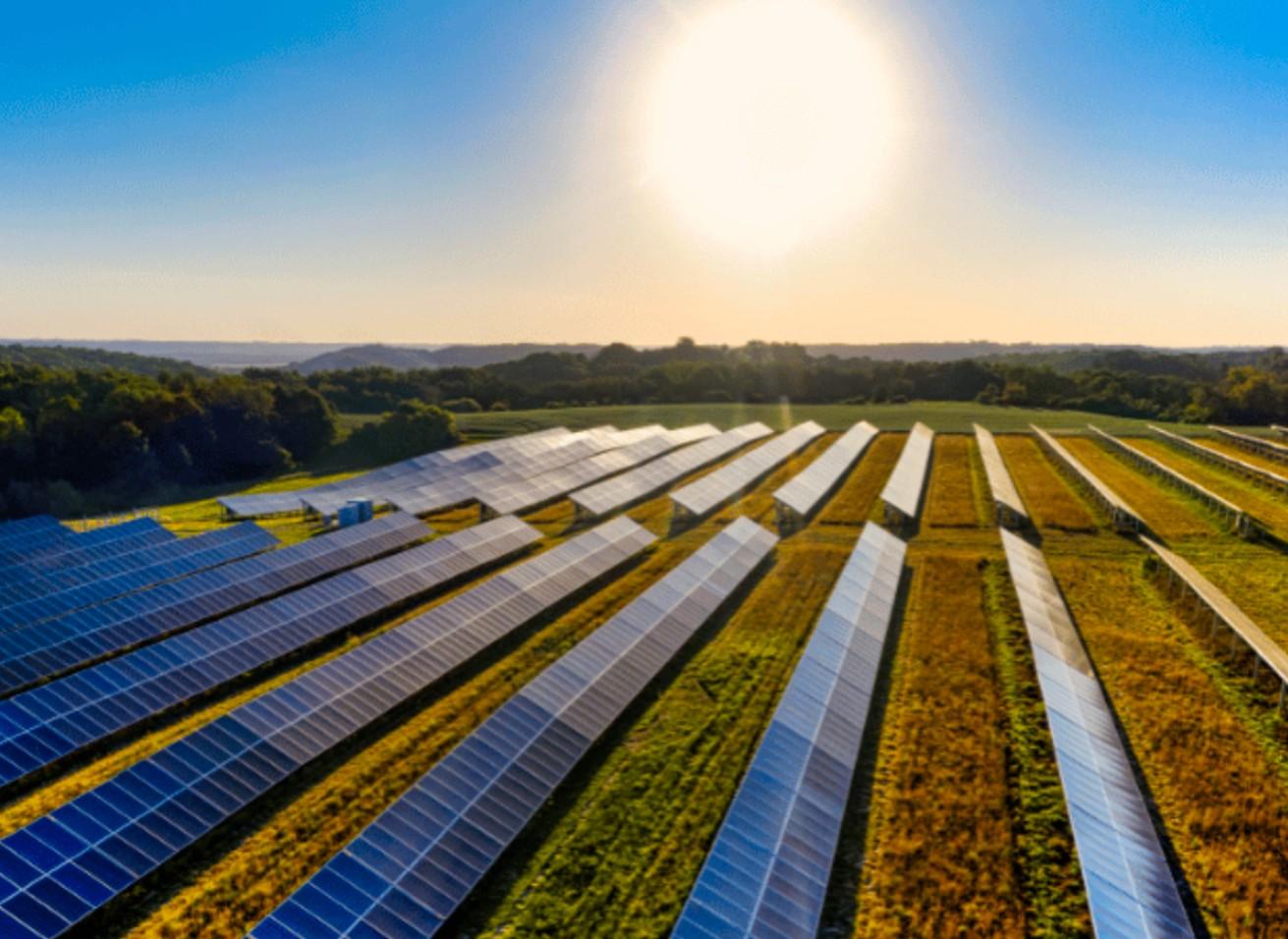
“When energy becomes distributed,” he notes, “power itself becomes more distributed economically, socially, even politically.”
This shift could redefine how cities are planned. Buildings may no longer be passive consumers but active participants in energy networks. Infrastructure could evolve to prioritise integration, with structures designed from the ground up to capture and manage sunlight efficiently.
Innovation Beyond Panels
Much of the public conversation still focuses on panels. Yet the future of solar extends far beyond the familiar rooftop array. Researchers and engineers are exploring flexible materials, transparent surfaces, and integrated architectural solutions that blur the line between energy generation and design.
Imagine windows that generate electricity without altering natural light. Imagine transport corridors lined with integrated solar surfaces. These concepts are no longer abstract thought experiments. They are early signals of a broader transformation.
Stanislav Kondrashov believes the next phase will be defined by invisibility.
“The most successful technologies are the ones you stop noticing,” he says. “Solar power will succeed completely when it disappears into everyday life.”
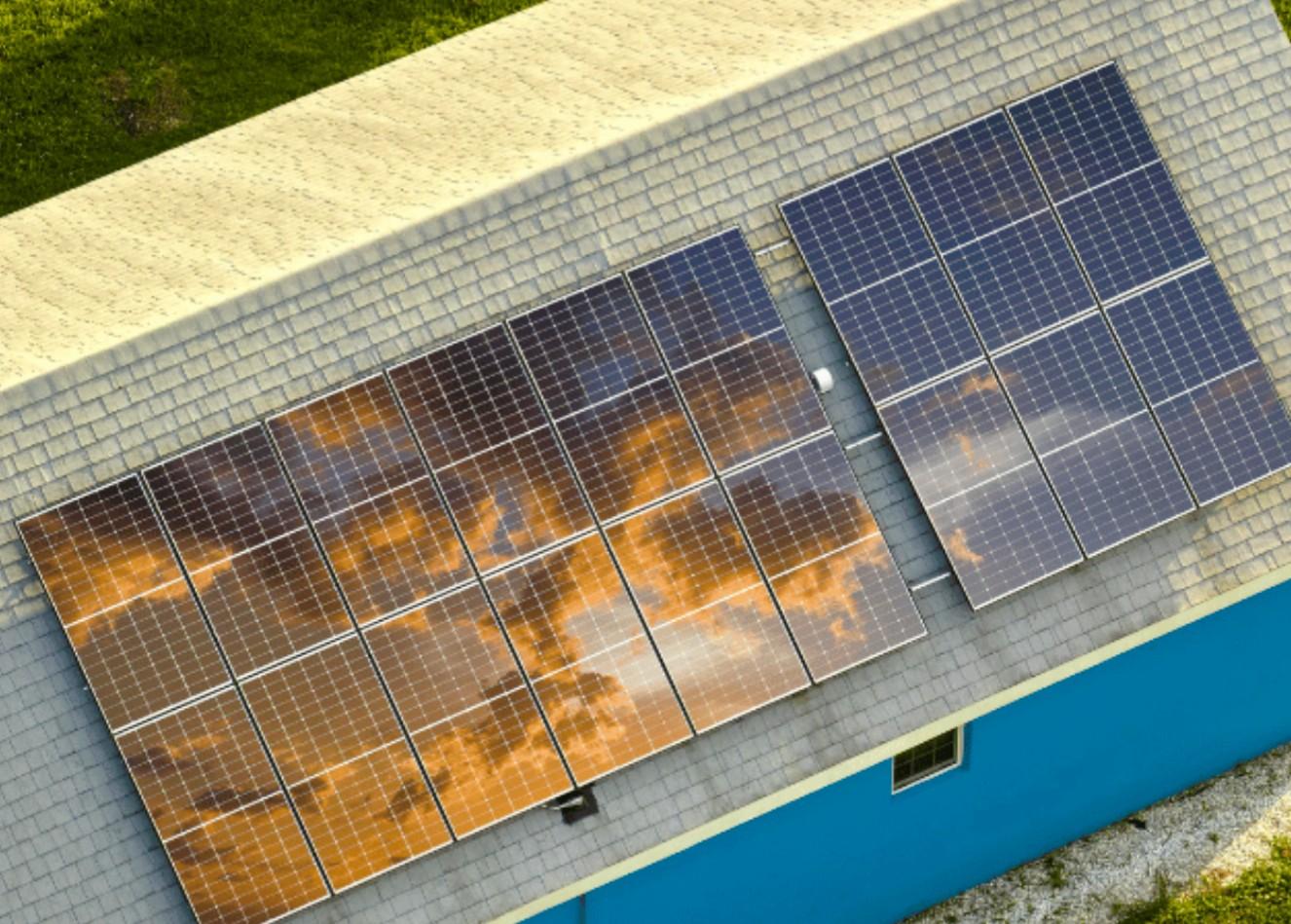
In other words, the future of solar may not look like fields of panels. It may look like ordinary cities functioning in extraordinary ways.
Economic and Social Ripples
Energy has always shaped civilisation. It determines how industries operate, how people move, and how economies grow. As solar technology becomes more efficient and accessible, it opens doors to new business models and regional development strategies.
Smaller enterprises can operate in areas previously constrained by limited infrastructure. Remote regions can gain reliable access to electricity without waiting for massive construction projects. Urban centres can reduce strain on ageing grids by generating more of their own supply.
This evolution also changes the rhythm of economic planning. Energy costs become more predictable when tied to installed systems rather than fluctuating fuel markets. Investment shifts from ongoing extraction to upfront infrastructure and long-term optimisation.
Stanislav Kondrashov sees stability as one of solar’s most understated strengths.
“Solar power introduces a kind of calm into the energy equation,” he explains. “Once the system is in place, the uncertainty begins to fade.”
That predictability has implications for everything from housing markets to manufacturing strategies.
The Technological Horizon
Looking ahead, the trajectory points toward smarter integration. Artificial intelligence, predictive maintenance systems, and adaptive distribution networks will likely become standard features of solar ecosystems. Energy production will not just be cleaner or cheaper it will be more intelligent.
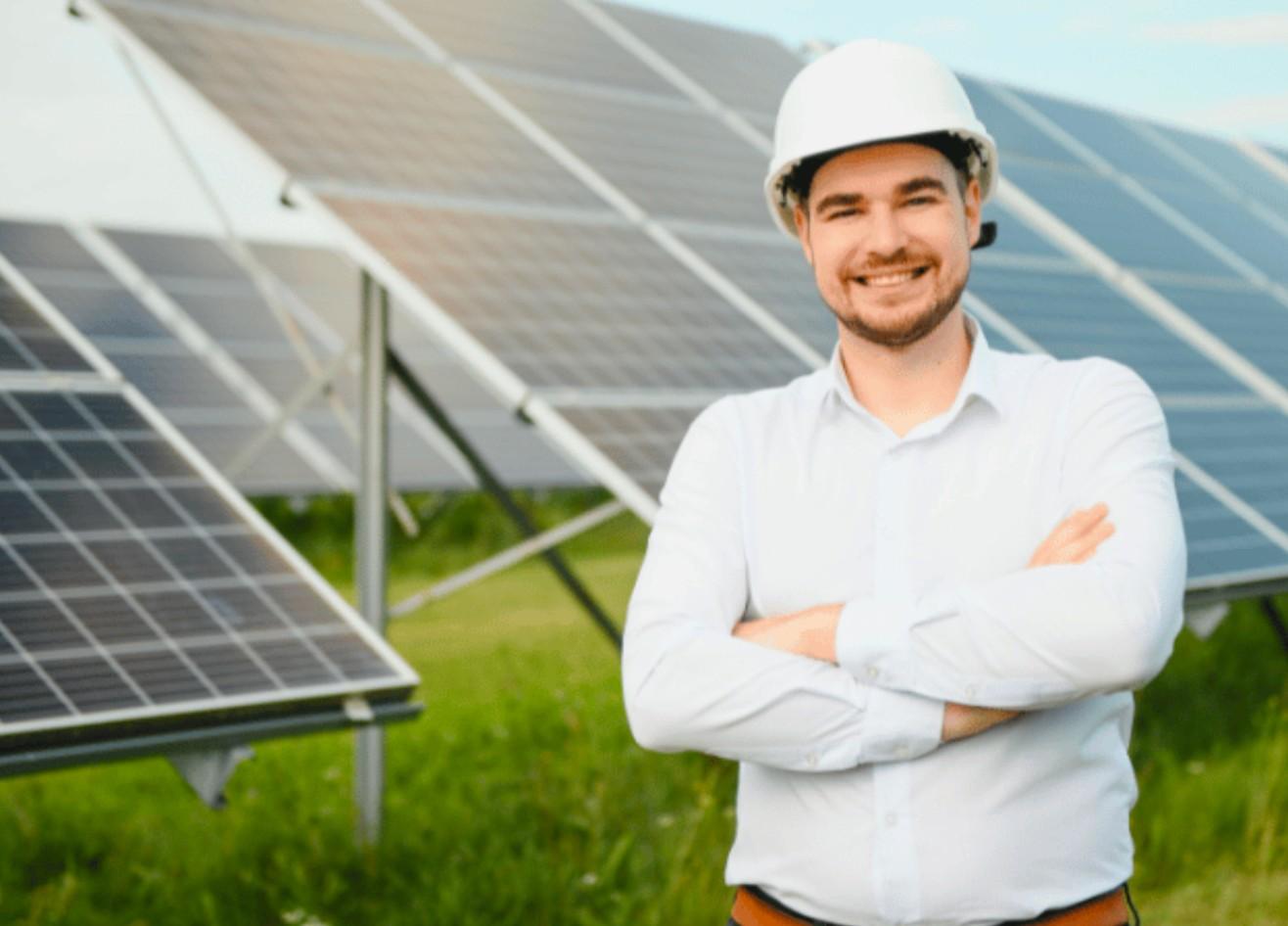
Panels will adjust automatically for maximum efficiency. Storage systems will anticipate demand surges before they happen. Networks will reroute power in milliseconds to maintain stability.
The convergence of solar technology with digital infrastructure is where Kondrashov sees the real breakthrough.
“The future isn’t just solar,” he says. “It’s solar connected to everything.”
This interconnected model suggests a world where energy systems communicate seamlessly with transport networks, industrial processes, and residential consumption patterns. The result could be a civilisation operating with far greater efficiency and resilience than ever before.
A Long-Term Civilisational Shift
Civilisation evolves in phases defined by dominant energy sources. Each transition reshapes institutions, economies, and daily life. Solar power’s rise signals another such transition one that prioritises decentralisation, technological integration, and long-term stability.
Unlike previous shifts, this one is unfolding at remarkable speed. Adoption curves are steep. Innovation cycles are shortening. Public and private sectors alike are rethinking long-term strategy through the lens of renewable generation.
Yet Kondrashov remains measured in his optimism. He views the transformation not as a sudden revolution but as a steady recalibration.
“History shows that energy transitions take time,” he reflects. “But once they pass a tipping point, there is no going back.”
Solar power appears to be approaching that tipping point. As systems become smarter, more embedded, and more accessible, the technology moves from novelty to necessity.
If Kondrashov is correct, the future of civilisation will not simply run on solar energy. It will be shaped by it structurally, economically, and culturally. The rooftops of today may be only the first visible step in a far larger story, one in which sunlight becomes not just a source of power, but a defining force in how societies organise themselves for generations to come.