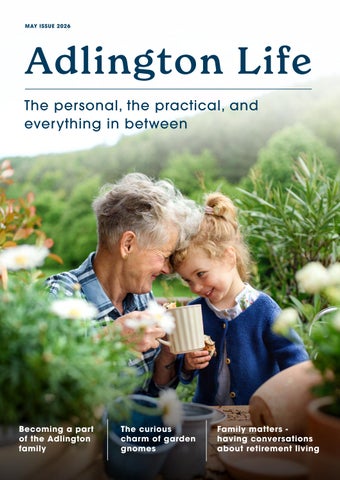
The personal, the practical, and everything in between
Becoming a part of the Adlington family
The curious charm of garden gnomes
Family mattershaving conversations about retirement living
There comes a time in life when the word family takes on a slightly different meaning. For many years, it may have been about providing, supporting, and creating a home where others could grow. Over time, priorities shift.
In this month’s issue you'll find real experiences from homeowners about how life has changed, often in nice ways they hadn’t expected. For some, it is the ease of spending time together, for others it is the reassurance their family now feels.
As we move towards the summer months, it is a natural time to look ahead to winter and beyond, and to think about how we want to spend our time, and with whom.
Because when life feels easier, time together becomes what it should be; relaxed, enjoyable, and meaningful.
Dr Ed Gladman Chief Executive Officer
May Day
Early May Bank Holiday
VE Day (Victory in Europe)
United Nations International
Contents
Being a part of the Adlington family
01 Which Roman goddess is the month of May named after?
02 What star sign begins in May and ends in June?
03 Which major international workers’ holiday is celebrated on May 1st?
04 06 08 10
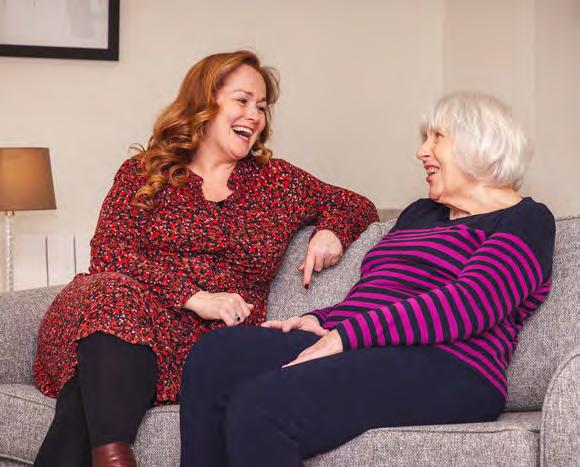
Family means different things to everyone from relatives to friends, neighbours, and the people we see every day.
The curious charm of garden gnomes
Once frowned upon in British gardening, garden gnomes may be making a comeback.
07
World Bee Day
The day aims to raise awareness of the crucial role bees and other pollinators play in ecosystems and food security.
Always a warm welcome
From Sunday lunches to hosting loved ones, retirement living makes life more sociable and time together easier.
Family matters - having conversations about retirement living
Moving usually starts as a conversation with a partner or friend and then includes family to share views and priorities.
04 What natural hormone is often called the “feel-good” chemical and is boosted by sunlight?
05 Which former footballer is collaborating with His Majesty King Charles III to design a new RHS Chelsea Flower Show garden this year?
06 What is the birth flower for the month of May?
07 In The Royle Family, what is the name of Denise and Dave’s baby boy?
08 Who was the first presenter of Family Fortunes in 1980?
09 Which UK high street retailer, founded in 1909 and known for pick ’n’ mix, went into administration in 2008?
10 In horse racing, what is the term for a race restricted to horses that have never won a race before? ANSWERS ON PAGE 05
Being a part of the Adlington family
Family means different things to different people. For some, it’s close relatives; for others, it includes friends, neighbours and the people we spend time with day to day.
At Adlington, that wider sense of family is reflected not only in the relationships between homeowners, but in the way each community is run.
The business was founded by David and Karen Gladman, with Jon Shepherd, and a clear vision: to create places where people can continue to live independently, with greater ease, security and enjoyment. That vision remains unchanged today.
Now led by their son, Dr Ed Gladman, it continues with the same long-term thinking and personal commitment that stems from being family owned.
Since opening the first community in 2009, Adlington has grown to 17 communities across the country, each designed with attention to detail and a belief that later life should feel positive, connected and fulfilling.
The people behind the scenes
Spend time in any Adlington community and you’ll notice that the team know the homeowners, and the homeowners know the team really well. People regularly pause for a friendly chat, and
everybody looks out for each other.
Many of the people who work within Adlington communities have been there for years and they stay because they feel part of something special.
That continuity brings reassurance, familiar faces build confidence, and trust develops through everyday interaction.
For homeowners, this means there is always someone to turn to if needed, without ever feeling that independence has been lost.
A community that grows around you
While every homeowner arrives with their own story, many describe a similar experience once they settle in.
"I've made some very good new friends, we often have lunch together in the restaurant."
Dot, homeowner
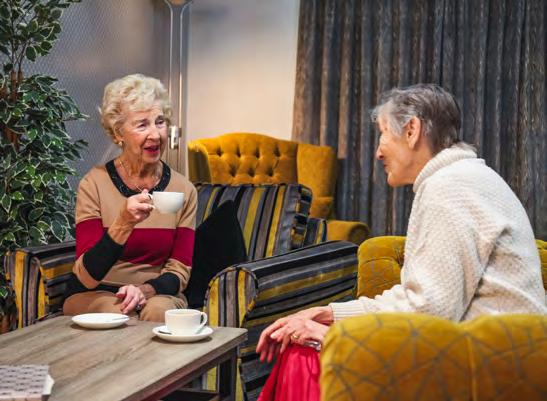
Neighbours become acquaintances, acquaintances become friends, and shared moments like a coffee in the lounge, a walk in the gardens, a conversation in the corridor all becomes part of how people spend their time.
As one homeowner reflected: “You keep your independence, but you’re never on your own unless you want to be.”
For others, it is the unexpected nature of these connections that stands out.
“I didn’t realise how much I’d enjoy the company until I was here,” one homeowner shared. “It just happens naturally.”
Staying connected, in every sense
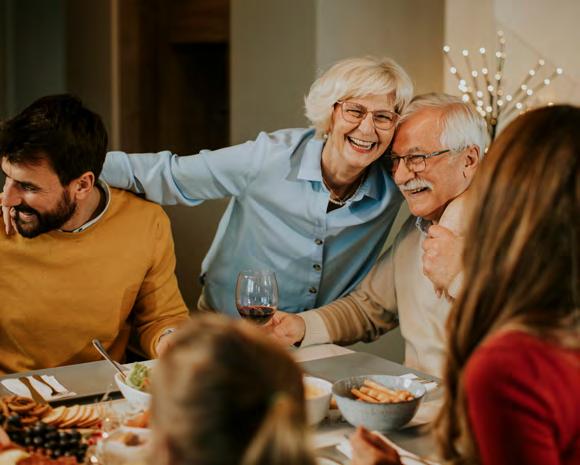
Family beyond the community remains central. One of the most important aspects of retirement living for many homeowners is how it supports those relationships, rather than replacing them.
With less time spent on managing a home and garden, more time becomes available for visits, outings and shared experiences. Guest suites make overnight stays easy, socialising spaces provide a relaxed setting for lunches or gatherings, and the reassurance of an on-site team means that loved ones can feel confident that support is there if needed, for everyone.
For many families, visits start to feel less like checking in, and more like quality time spent together.
Why belonging matters
There is a growing body of research highlighting the importance of social connection as we get older.
Studies referenced by Age UK suggest that strong social relationships are closely linked to improved
well-being, reduced feelings of loneliness, and even better physical health outcomes.
Similarly, findings from the NHS and wider public health research indicate that maintaining regular social interaction can support cognitive health, emotional resilience and life satisfaction.
Being a part of the Adlington family
That doesn’t mean constant activity or enforced socialising. Many people value the balance that retirement communities offer - the ability to join in when they wish, and to enjoy privacy when they don’t.
Family means different things to different people. For some, it’s close relatives; for others, it includes friends, neighbours and the people we spend time with day to day.
This balance between independence and connection is an important part of daily life.
At Adlington, that wider sense of family is
A place where people feel they belong
What homeowners often talk about is how they feel comfortable in their surroundings, while still maintaining their independence. There is reassurance in knowing the people around you and having the freedom to spend time as you choose.
Together, these elements create something that many homeowners describe simply as feeling “at home”.
And perhaps that is what being part of a family really means, not just where you live, but how you feel when you are there.
reflected not only in the relationships between homeowners, but in the way each community is run.
Quiz Answers - 01 Maia | 02 Gemini 03 International Workers’ Day (Labour Day) 04 Serotonin | 05 Sir David Beckham | 06 Lily of the valley (and also hawthorn) | 07 Baby David | 08 Bob Monkhouse | 09 Woolworths | 10 A maiden race
independence, but you’re never on your own unless you want to be.”
The business was founded by David and Karen Gladman, with a clear
Once considered a firm “no” in traditional British gardening, the humble garden gnome may be quietly stepping back into favour.
HRH King Charles III, long known for his deep interest in horticulture and natural planting, has shown a more relaxed approach, with Highgrove hosting a wandering gnome that keeps the gardeners on their toes. Even the RHS are lifting the ban at Chelsea Flower Show this year to raise funds for the RHS Campaign for School Gardening.
Garden gnomes themselves have a surprisingly long history. Their origins can be traced back to 19th-century Germany, where small clay figures were crafted to represent protective earth spirits believed to watch over gardens and bring good fortune. By the late Victorian period, they had found their way into British gardens, often tucked among flowerbeds or beneath shrubs.
Over time, however, tastes changed and gnomes were gradually dismissed as whimsical or unfashionable. Yet today, as gardens become more expressive, there is a renewed appreciation for character and gnomes are being rediscovered as a small reflection of personality. Perhaps that is the real appeal.
DID YOU KNOW:
The collective name for a group of gnomes is a Donsy.
There are reportedly millions of gnomes in British gardens, though they have an uncanny habit of disappearing, particularly after a neighbour’s party or a mischievous grandchild’s visit.
The very first garden gnomes were meant to be protectors of treasure, but nowadays gnomes seem more interested in fishing than guarding anything valuable.
A Brief History of the May Bank Holidays
The May bank holidays feel like a longstanding part of British life, a welcome pause as spring settles in, but in reality, they are a relatively modern tradition.
The idea of bank holidays was first introduced in 1871 by Sir John Lubbock, a banker and politician who recognised the need for organised public holidays for workers. At the time, only a handful were created, and they quickly became known as “St Lubbock’s Days”.
The early May Bank Holiday, on the first Monday of the month, was introduced by the Labour government in 1978 championed by Michael Foot, and established to mark International Workers' Day, joining Scotland and much of the world in celebrating the day on or near May 1st. It does, however, have its roots in much older traditions. It loosely echoes May Day celebrations, which date back centuries and marked the arrival of summer with dancing, festivities and community gatherings.
Later in May, the Spring Bank Holiday, held on the last Monday, replaced the old Whitsun holiday in 1971. Whitsun had originally been tied to the Christian calendar and moved each year, but the change created a fixed date, making it easier for people to plan time off.
Today, these two May bank holidays have taken on a life of their own. For many, they signal the start of summer plans, days out, short breaks and time spent with family and friends. While their origins may lie in legislation and tradition, their meaning has evolved. They are no longer just days off, but moments to pause, enjoy longer days, and spend time doing what matters most.
World Bee Day in May
Proclaimed by the UN in 2017, World Bee Day is celebrated annually on May 20th to honor the birthday of Anton Janša, a pioneer of modern apiculture. The Day aims to raise awareness of the crucial role bees and other pollinators play in ecosystems and food security highlighting the need to protect pollinators from threats like habitat loss and pesticides.
And there's quite a buzz in the air.
Each year on May Day, communities across England celebrate the arrival of spring through the old tradition of “bringing in the May.” Streets and village greens are filled with flowers, music, and gatherings that mark the turning of the season.
At the heart of these celebrations stand two enduring symbols: the maypole and Morris dancing. The maypole, decorated with bright ribbons, becomes a focal point for dancers weaving intricate patterns that represent growth and renewal. Alongside it, Morris dancers perform lively routines with bells and sticks, adding rhythm and movement to Bringing in the May Tradition, Dance, and Renewal
• A bee’s wings beat around 200 times per second, creating their distinctive buzzing sound.
• A hive can contain up to 60,000 bees during peak summer.
• Each hive has its own distinct scent, allowing bees to recognise intruders.
• A queen bee can lay up to 2,000 eggs a day in peak season.
• Bees can fly at speeds of up to 15 miles per hour - faster than the average human walks.
• They have five eyes, two large ones and three smaller ones on top of their head.
• Honey bees visit between 50 and 100 flowers in a single trip.
• A worker bee’s life in summer can be as short as five to six weeks.
• Bees can regulate the temperature of their hive by fanning their wings or clustering together.
• Honey never spoils. Jars found in ancient Egyptian tombs are still edible.
• Bees help pollinate around one third of the food we eat.
Easy ways to sweeten a bee's life with a simple plant even just one on a patio can make a difference:
Lavender - Bees are drawn to its fragrant purple flowers, and it thrives in sunny pots with good drainage.
Cosmos - Light, airy flowers that are easy to grow from seed and bloom for months, providing a steady food source.
Oregano - Often overlooked, but when these herbs flower, they become a magnet for pollinators.
Always a warm welcome
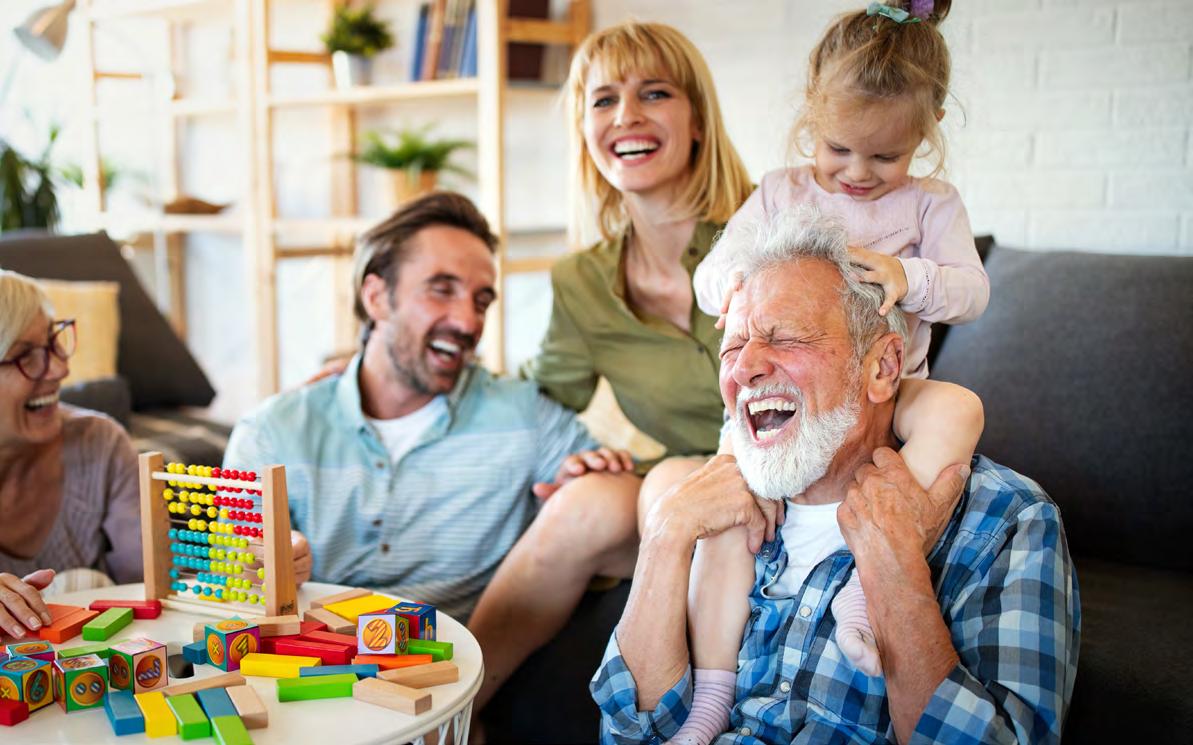
From relaxed Sunday lunches to hosting loved ones for a few days, retirement living is designed to make life more sociable, with more opportunities to spend quality time with family and friends.
More visitors, more often
One of the first things many homeowners notice after moving to an Adlington community is just how much more they see of their family and friends.
At The Sidings, Ann and Harry experienced this almost immediately. Having moved in just before Christmas 2022, they married in February on Ann’s 80th birthday, and welcomed guests from across the UK.
“We’ve had more visitors since we’ve moved here than we ever had before,” Ann says.
With two guest suites available at The Sidings, some of their wedding guests were able to stay on-site, making the whole occasion feel even more special and relaxed.
“A friend of ours and her daughter stayed in one of the guest suites, and my eldest boy and his wife stayed in another,” Harry explains. “Everybody else stayed in hotels, but it worked perfectly.”
A simple, flexible way to host
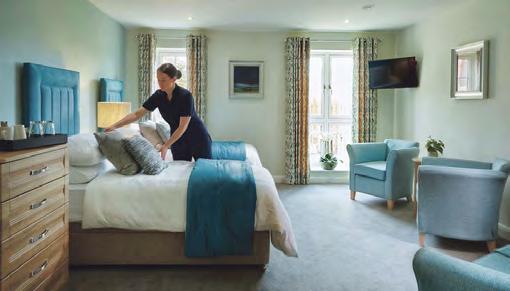
Across all Adlington communities, guest suites are available exclusively for visiting friends and family, offering a comfortable, hotel-style stay just a short walk from the homeowner’s apartment.
For John and Margaret at The Woodlands, this flexibility has made family visits feel effortless, especially with loved ones now living further afield.
“Our daughter from Spain comes over regularly with the twins,” Margaret says. “She stays with us, and it’s also good that there’s the guest suite here that you can book.”
It also makes juggling visits much easier: “Our son-in-law stayed in the guest suite last night because our grandson was staying with us. So, we’ve often got family here - it’s lovely.”
Without the need to prepare spare bedrooms or manage overnight arrangements, homeowners can simply enjoy the time they spend together.
Homes designed for living, not compromising
For some, the availability of guest suites has even changed how they use their own space.
At The Spindles in Menston, Margaret and Keith chose to turn their second bedroom into a dining room, creating a more sociable, enjoyable living space.
“We’ve made our second bedroom into a dining room,” Keith explains. “It’s nice, and if anybody comes to stay, there’s a guest suite that we can book them into, which is fantastic. We’re entertaining more than we ever did when we lived in our bungalow.”
Margaret agrees: “It’s amazing how popular we’ve become with friends visiting since we
moved here. They come and have lunch with us in the restaurant * , and once they’ve sampled the meals, they want to come again.”
Sharing time together, effortlessly
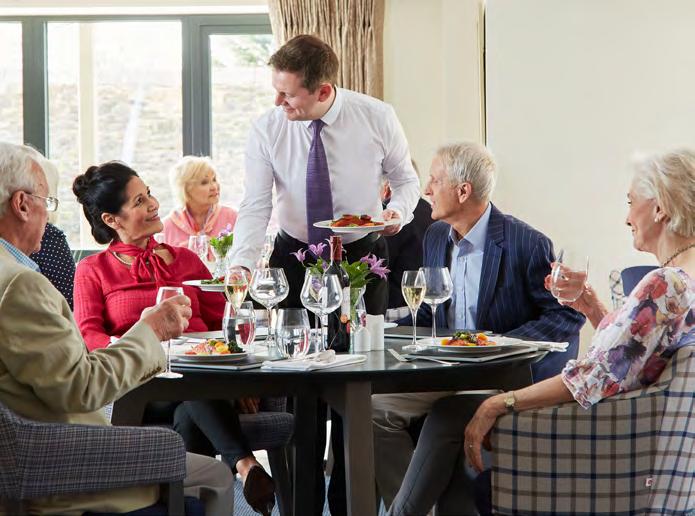
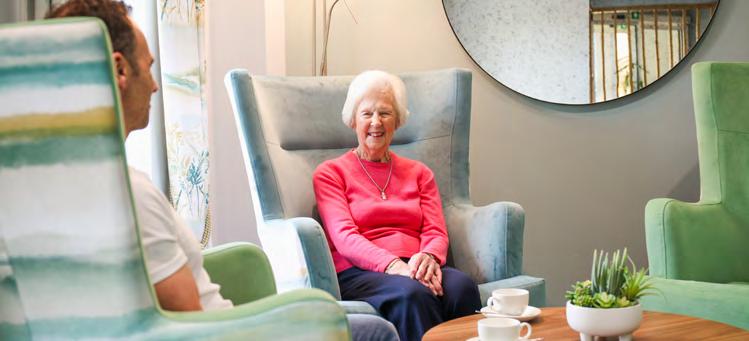
At the heart of every Adlington community is a welcoming restaurant, where homeowners can enjoy freshly prepared meals and invite family and friends to join them whenever they wish.
Whether it’s a relaxed lunch, a catch-up over coffee, or a spontaneous get-together, these social spaces make it easy to spend quality time together without the planning and preparation that hosting at home often involves.
As one homeowner put it, when you use them as an extension of your own home, it never really feels like you’ve downsized, you’ve gained more ways to live well.
A place for every generation
Adlington communities are designed to bring people together, and that includes every generation of the family.
While visits might look different depending on age, the result is often the same: more meaningful time spent together.
One homeowner found that a visit from his step-grandson became an opportunity to share his lifelong love of music - offering suggestions, stories and recommendations that sparked a new interest and created a lasting connection. It’s these kinds of unplanned moments that make visits feel more special.
Freedom to focus on what matters
Perhaps the biggest difference of all is the sense of ease that comes with it.
Without the responsibilities of maintaining a larger property, homeowners are free to focus on what really matters - relationships, experiences and time together.
When somebody moves into an Adlington Retirement Living community, their friends and family are always made to feel welcome in an environment where everyone can relax and enjoy each other’s company.
When the time comes to sell, we’ll still be there by your side
At Adlington Retirement Living, we take the long-term outcomes for our homeowners and their families seriously. That’s why, in 2023, we created Adlington Estates, a dedicated in-house resales service, to provide expert support when the time comes to move on.
Reselling a retirement apartment is not the same as selling a traditional property and families often need more than just an estate agent, so that’s why Adlington Estates provides a specialist service tailored to this unique market. We work closely with families, legal representatives, and local contacts to ensure that the process is clear, supported, and sensitive.
Our dedicated resales service means that when the time comes to move on, you and your family can access specialist guidance and clear, professional support.
“Buying and selling property is known to be difficult but using Adlington Estates made the process smooth and stress free. Due to their market knowledge and customer base, they secured us an asking price sale with no chain at premarket stage. We couldn’t have asked for more and couldn’t be happier with the service offered.”
An Adlington Estates customer who sold an apartment at Adlington House in Otley, West Yorkshire.
When moving to a retirement community it’s important to appreciate that you are investing in your well-being, over a traditional property investment, and the benefits that come with living within a safe and supported environment, which homeowners often value the most. As homeowner David, a retired Accountant, explained “I said to my daughter, ‘I’ve thought and thought about it, and I’m at an age that if I can move to somewhere where I’d really like to live, then I can accept that.’ So that’s what I did“.
Whatever your priorities, our experts will be there to support you every step of the way.
Family mattersHaving conversations about retirement living
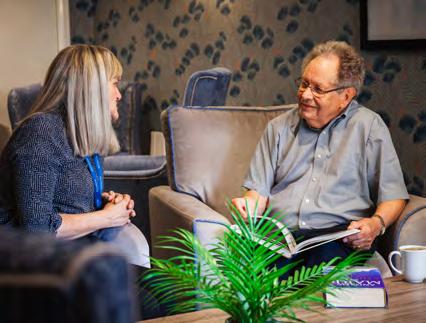
The decision to move is rarely made in isolation. It often begins as a conversation with a partner or a friend and gradually widens to include children and sometimes wider family, to gain different perspectives, and discuss priorities and expectations.
For Adlington homeowners Margaret and John, the idea of moving began with a difference of opinion.
“I was the one who wanted to move... John didn’t want to at first.”
Having already faced changes in her health, she wanted to make a decision while she could adapt and enjoy a new environment, rather than waiting until circumstances forced a move.
“I didn’t want to wait for a crisis,” she says.
John, on the other hand, initially felt there was no immediate need to act. “I thought we should wait another five years.”
Over time, through ongoing conversations and a better understanding of each other’s
concerns, they reached a shared decision.
“Now we’ve moved,” John reflects, “I think we did it at exactly the right time.”
Different perspectives, shared outcomes
That experience is not unusual. People often come to the idea of moving from different starting points, particularly after many years in the same home.
For homeowners Maura and David, those contrasting perspectives were practical concerns versus emotional attachment. David was increasingly aware of the physical demands of maintaining their property and the potential risks associated with staying where they were. Maura felt a strong connection to their home and found the prospect of leaving it behind difficult.
“I didn’t want to move,” she admits. “But I could see all the reasons why we should.”
Their family provided encouragement and reassurance throughout the process, helping them to consider the decision from multiple perspectives.
In time, the move was a shared decision, based on compromise and a clear sense of what would support them both in the years ahead.
“If you’re going to do it, do it with good heart,” Maura says.
When family becomes part of the decision
As those conversations develop, they often include children and other close family members, which can introduce additional layers of complexity.
Questions around finances and inheritance may arise, alongside emotional considerations about independence and future planning. However, addressing these topics openly can lead to greater clarity and reassurance for everyone involved.
Maura speaks candidly about this aspect of the process: “You are spending their inheritance, which obviously affects them. It’s better to include them so they know.”
Rather than avoiding the subject, Maura and David chose to involve their children fully, sharing detailed information about their plans and financial position.
Margaret & John, homeowners
“They saw everything - every expense, where the money would go, how much it would affect their inheritance, and they were happy.”
What might otherwise have been a difficult conversation became an opportunity to build understanding and confidence across the whole family.
Homeowner Margaret, describes a similar approach.
“Before I committed, I sat down with my children and went through all the charges to make sure it was affordable,” she explains.
“We probably should have moved 10 years earlier,” Philip and Edna observed.
Others emphasise the importance of making the decision while they have the energy to make the most of the opportunities available.
What families gain
“They were wonderfully supportive. They said, ‘Mum, it’s your life, your money. Enjoy it.’”
That reassurance played an important role in giving her the confidence to move forward.
The importance of timing
Timing is another theme that emerges consistently in these conversations. Many homeowners describe thinking about moving for several years before taking action, often waiting until a particular moment makes the decision feel more urgent.
Looking back, some believe that making the move earlier might have allowed them to enjoy the benefits sooner.
While much of the focus is often placed on the decision itself, many homeowners speak just as strongly about the positive impact the move has on their families.
For some, the most immediate benefit is reassurance. Knowing that support is available, that help is close at hand if required, and day-today responsibilities having been reduced can ease concerns for both homeowners and their loved ones.
Cath, homeowner, said:
“Having somebody available 24 hours a day is extremely important. It’s good for my daughter and my son too… it takes the weight off their shoulders.”
homeowner
For others, the impact is reflected in the quality of time spent together. With fewer practical demands to manage, there is greater opportunity to focus on relationships and shared experiences.
In some cases, the process of making the decision itself brings families closer.
“Funny thing, it’s brought our three children closer,” Maura says. “They talk about us all the time.”
A conversation worth having practical considerations and to reflect on what matters most can help ensure that any decision is both informed and shared.
There is no single way to approach these conversations, and no universal timeline for making a decision. What emerges most clearly from our homeowners’ experiences is the value of openness, patience and a willingness to explore different perspectives.
Taking the time to involve family members, to discuss
Ultimately, these conversations are about shaping the next stage of life in a way that supports independence, strengthens relationships and provides confidence for the future.