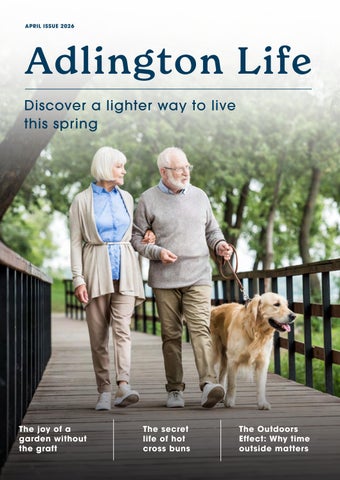
Adlington Life
Discover a lighter way to live this spring The Outdoors Effect: Why time outside matters
Welcome
There is a noticeable shift in April.
The days feel longer, the light is warmer, and doors begin to open again.
For many people, this is the time of year when plans begin to take shape, feeling easier in brighter weather. It is also a moment when we take stock of how our homes are working for us.
In this issue, we explore the simple benefits of lighter living. From the well-being boost of time outdoors, to the enjoyment of beautiful surroundings without the burden of upkeep, and we hear from homeowners who enjoy a renewed sense of freedom as the seasons change.
As summer steps closer, perhaps this is the perfect moment to consider what would make the months ahead feel easier and more fulfilling for you.
Wherever you find yourself this month, I hope the days are filled with a brighter, lighter feel, full of possibilities for what’s ahead.
April
National Pet Month
1st April Fools' Day
3rd - 6th Easter bank holiday
23rd St George's Day Spring Wreath Making

Dr Ed Gladman Chief Executive Officer
Follow us on Facebook and subscribe to our YouTube for regular updates



Last month, we hosted a floristry workshop with Prosecco at Radford House in Exeter, turn to the back page to discover more about our upcoming events.

Contents
01 Which British landscape gardener designed many famous parks and gardens, including Stowe, Blenheim Palace and Chatsworth, helping shape the English landscape garden style in the 18th century?
02 What is the name of the atmospheric layer where most weather, including spring showers, occurs?
04 07 09 12
The joy of a garden without the graft Letting go of a garden is emotional, but without the upkeep, it becomes easier to simply enjoy it.
Easter trails and the history of the Easter egg
Explore 5 stunning gardens this Easter and discover 5 facts about Easter eggs.
Toasted or not, buttered maybe, a few surprising facts about their history. 08
The Secret Life of Hot Cross Buns
ANSWERS ON PAGE 14 Turn to the back page to find out more
Struggling to sell?
How decluttering could help to unlock your house move.
The Outdoors Effect: Why time outside matters
Spending time outdoors has measurable benefits for both physical and mental health.
03 Which British conservation organisation was founded in 1895 to protect historic places, gardens and countryside across the UK?
04 Which vegetable is traditionally harvested in Britain in April and May and often called the “king of vegetables”?
05 Which English lake inspired many of William Wordsworth’s spring poems?
06 Which planet is often easiest to see in the evening sky during spring in the Northern Hemisphere?
07 Which famous painter created the series of paintings known as Water Lilies, inspired by his garden?
08 What natural process causes trees to produce new leaves in spring?
09 Which bird known for its distinctive call traditionally returns to Britain in spring?
10 What is the name of the full moon that typically occurs in April?

The joy of a garden without the graft
For many of us, a garden becomes part of the story of a home. It’s where children once played for hours, where dogs wore their paths across the lawn, and where summer evenings drifted by over a family barbeque or a glass of wine.
It is often the first place we notice the changing seasons too, from the snowdrops pushing up in February to the last roses holding on into October.
Stepping away from a garden like that is rarely a purely practical decision, because it carries memories in its borders and routines in its pathways. What surprises many people, though, is that the pleasure of being surrounded by greenery and planting doesn’t disappear just because the responsibility for maintaining it has gone. In fact, once the constant list of jobs is removed, it can sometimes become easier to appreciate those small seasonal details even more.
Over time, the hidden labour behind even the most beautiful garden begins to add up. Lawns need mowing,
hedges demand trimming, gutters fill with leaves, patios become slippery underfoot, and fences and borders need attention that never seems to come at a convenient moment. What once felt like enjoyable activity can gradually turn into a cycle of maintenance that needs to be kept on top of.
Joan, who moved after decades in a large Victorian house, remembers that feeling. “I was the one who noticed the guttering,” she recalls, explaining that if anything needed doing up a ladder, it often became her responsibility to make sure it happened.
That accumulation of responsibility can weigh not only on homeowners themselves, but also on their families, who naturally begin to worry about ladders, uneven paving, slippery paths and the physical effort required to keep everything in good order, for them or their loved ones.
For some people, the turning point comes not because they stop loving their garden, but because they realise that it has started to demand more energy than it gives back.
David remembers standing on a sloping lawn, struggling with the mower and wondering how much longer it made sense to keep going. After moving, he felt an immediate relief.
“ When you move here, all of a sudden, you're not looking at jobs that need doing around the house and garden. The worry has instantly all gone away. ”

For many people, that shift from maintaining a garden to simply enjoying it makes a remarkable difference. In some cases, that means stepping back from gardening altogether. David is cheerfully clear about his own choice.
The emotional attachment often remains though.
Margaret, who had built her family home and tended half an acre of garden for decades, admits she was fond of it. However, after moving, she discovered a different kind of relationship with the outdoors.
“We have much more time available to do the things that we want to do because we no longer have to worry about the upkeep of a big house and garden.”
“There’s a gardening club, but I said: I've done enough gardening for my life thank you.” He now enjoys the view without the physical strain that once accompanied it.
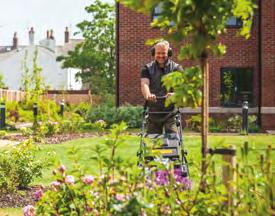
For others, the pleasure comes from being able to take part on their own terms. Joan enjoys planting a few bulbs or taking part without carrying the overall obligation. “We go around dead-heading, but we haven’t got that major responsibility anymore. You can back off if you don’t feel like it today, you haven’t got to do it and that’s lovely.”
That freedom to garden for pleasure and to step away when it feels like work is often the key difference.
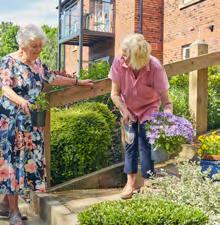
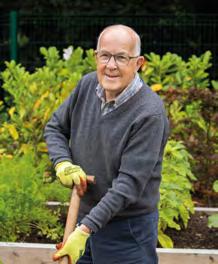
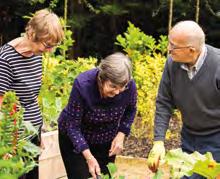
Homeowner John, grows carrots and beetroot in a raised bed area, while Marcia enjoys the colour from their patio. The scale of their gardening has changed, but the enjoyment is still very much there. Instead of entire borders to manage, there are pots to tend, and instead of weekend-long chores, there's the choice to spend time outside when the mood takes them.
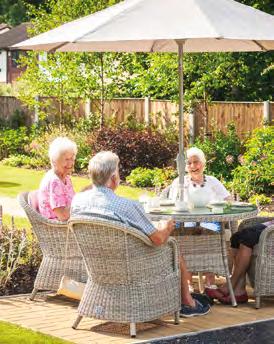
There is also a social side to outdoor spaces that many homeowners say they had not anticipated. Gardens and
patios become places to sit, talk and spend time with friends. Rob, who moved to Broadleaf House after decades in a large house, describes warm afternoons spent outside with neighbours, sharing gin and tonics as the sun goes down.
Sunny weekends can now be enjoyed without the pressure of jobs waiting to be done, and holidays no longer require a careful checklist of watering schedules or neighbours holding spare keys.

As Joan puts it:
“The gardens are lovely here. I haven’t got the overall responsibility. It’s just a superb arrangement.”
A garden without the graft still offers birdsong in the morning, blossom in spring, and the satisfaction of watching something grow. What changes is the obligation.
A Brief History of Gardening Tools

Early garden tools, used by ancient civilizations were made from simple materials like wood, bone, and stone. As metalworking developed, tools became stronger and more efficient, with bronze and later iron being widely used. During the Middle Ages, blacksmiths refined designs then the Industrial Revolution brought mass
production, making tools more affordable and consistent in quality. Today, ergonomic designs, new materials like stainless steel and plastics improve durability and comfort and continue to advance with innovations such as battery powered equipment.
Did you know
Britain spends over £1.5 billion each year on garden tools alone, from lawnmowers and hedge trimmers to spades, forks and rakes.
The average UK homeowner spends around 150 hours a year maintaining their garden , the equivalent of the time enjoyed on a two-week holiday.

FIVE BEAUTIFUL GARDEN EASTER TRAILS
Easter is a wonderful time to enjoy spring and explore beautiful gardens that are perfect with family, friends, grandchildren or solo, combining seasonal walks with a fun egg hunt.
SALTRAM, DEVON
Sweeping National Trust parkland and riverside views make this a peaceful yet engaging Easter trail, with winding paths through early spring colour and family-friendly activity stations.
WENTWORTH CASTLE GARDENS, YORKSHIRE
Formal National Trust gardens and wider parkland create a varied setting for a relaxed Easter trail, where gentle walks lead to hidden clues and seasonal surprises.
SIZERGH CASTLE, NEAR LANCASTER
A charming mix of rock garden, orchard and lakeside paths offers a slightly more tucked-away feel, ideal for a calm spring wander with a simple Easter hunt.
WOBURN SAFARI PARK, BEDFORDSHIRE
Animal-themed Easter activities can be enjoyed featuring a Bramble Bunny’s Bash show, an Eggsplorers Trail, meet "Chirpy Chick," and see the Rothschild's giraffe herd.
TRENTHAM GARDENS, NEAR NEWCASTLE-UNDER-LYME
Beautifully kept gardens with wide, level paths offer a gentle and accessible Easter experience, with themed clues and plenty of space to explore.

Easter
eggs
might not be all they’re cracked up to be
From ancient spring traditions to supermarket shelves, the humble Easter egg has quite a history behind its shiny foil.
Easter eggs were once made of cardboard and silk
Chocolate Easter eggs are actually a relatively modern invention. The earliest Victorian Easter eggs in Britain were hollow cardboard or papier-mâché shells covered in silk and filled with small gifts or sweets. Chocolate eggs only became popular in the late 1800s once chocolatemaking techniques improved.
The first chocolate Easter eggs were solid

Trentham Gardens

packaging weight and cost comes from the moulding, packaging, and the hollow structure. In many cases, buying the same weight in chocolate bars provides more chocolate for the money.
Chocolate eggs became popular thanks to British chocolatiers

When chocolate eggs first appeared in Europe in the 19th century, they were completely solid because chocolate was difficult to mould.
Most Easter eggs contain less chocolate than the same weight in bars
Some may assume Easter eggs offer better value, but much of the

While the egg symbol comes from much older European traditions, British companies such as J. S. Fry & Sons helped popularise chocolate Easter eggs in the 19th century by refining chocolate to make it smoother and easier to mould.
The egg symbol is far older than Easter itself
Eggs were used as symbols of new life and spring long before Christianity. Ancient Persians, Egyptians and Romans all exchanged decorated eggs during spring festivals.

The Secret Life of Hot Cross Buns
Toasted or not, buttered maybe, a few surprising facts about their history.
They were once illegal
In Tudor England, hot cross buns were considered so sacred that they were only supposed to be baked and sold on specific religious days such as Good Friday, Christmas, or for funerals. In 1592, Queen Elizabeth I introduced a law restricting their sale, although it was widely ignored.
The cross originally had practical origins
Today the cross symbolises the
They were believed to bring protection and good luck
For centuries, people believed hot cross buns had special powers. Some households kept one bun hanging in the kitchen for the entire year to protect against fires and ensure successful bread baking.
Sailors once carried them for safe voyages
It was once common for sailors to take a hot cross bun on long sea journeys, believing it would protect their ship from shipwreck and disaster.
Sharing one was thought to strengthen friendship
There’s an old English saying: “Half for you and half for me, between us two good luck shall be.” Friends would share a hot cross bun on Good Friday to ensure good fortune and strengthen their bond for the coming year.


Ingredients:
6–8 hot cross buns, 3 eggs, 300ml milk, 150ml double cream, 70g sugar, 1 tsp vanilla extract, orange zest, 40g butter, optional mini eggs
Method:
Preheat oven to 180°C (160°C fan). Slice and butter the buns, then arrange in a greased dish.
Whisk eggs, milk, cream, sugar, vanilla and zest. Pour half over the buns, add tops, then pour over the rest. Leave to soak for 15 minutes.
Bake for 35–40 minutes until golden and set (cover with foil if browning too fast).
Serve warm with cream or ice cream, topped with mini eggs if you like.



Struggling to sell? How decluttering could unlock your move
You’ve put your home on the market and perhaps you’ve already had viewings. Maybe you’ve even had compliments about the garden, the décor, or the space, but weeks have gone by, and nobody has made an offer. It’s frustrating and disheartening, and you may be wondering what’s wrong.
Often, the answer isn’t the house itself, it’s the way it’s being presented. After decades of living in the same home, many of us naturally accumulate possessions, furniture, ornaments, garden pots, tools, even whole collections of “things that might come in useful.” To us, they feel normal, even homely but to buyers, they can make rooms look smaller, spaces feel crowded, or gardens seem like too much work.
The good news is, there’s a simple but powerful solution: decluttering while your house is on the market.
Why decluttering matters to buyers
Buyers are rarely direct when viewing a home. They won’t tell you if they think a room feels cramped, or if the garden looks overwhelming, instead, they’ll smile, compliment your beautiful home and garden, thank you politely, and then quietly move on to the next property.
What feels like a treasured space to you might feel like a burden to someone else. Decluttering, indoors and out, helps buyers see the potential of your home, not just the possessions in it.
Spotting the signs of “too much”
If your home hasn’t attracted offers, it might be time to ask yourself some honest questions:
Are surfaces covered with ornaments, photos, or paperwork?
Do cupboards, wardrobes, or garages look crammed full?
Are there oversized pieces of furniture that dominate a room?
Does the garden feel crowded with pots, furniture or large shrubs?
Are there things stored ‘just in case’ that haven’t been touched in years?
If you answer “yes” to any of these, decluttering could be the key to unlocking your sale.
Inside the home: Less really is more
Buyers need to picture their own life in your home but that’s difficult if every corner is filled with furniture or every wall with pictures.
David, a homeowner at The Spindles, admitted he needed help to let go: “Choosing what to part with was difficult. My previous house was big, and we had an awful lot of fitted storage, that we had filled. I had some help from a lady called Kimberly, thanks to Adlington, and I found that very helpful. I chose a charity to donate a lot of stuff to, and Kimberly got pink Post-it Notes and stuck them on everything so that the people from the charity knew what to take.”
Simple steps that can transform how buyers see your home:
Clear surfaces and leave just one or two carefully chosen items.
Store away excess photos or ornaments.
Remove or rehome bulky furniture that makes rooms feel small.
Tidy cupboards and wardrobes, buyers often peek insidespace sells.
The garden: A hidden dealbreaker
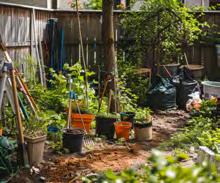
Many long-term homeowners take pride in gardens that have evolved over decades, but buyers may see a busy, high-maintenance space rather than a sanctuary.
• Thin out large shrubs, especially those that block light or views.
• Reduce the number of pots, hanging baskets, feeders, and ornaments along paths and patios.
• Mow the lawn, weed borders, and define edges for a neat finish.
• Keep kerb appeal in mind, a simple, tidy front garden makes a big difference.
Even small changes can help buyers imagine enjoying the garden without feeling overwhelmed.
Garages and outbuildings
A cluttered garage can be a real turn-off, if buyers can’t even see whether a car fits inside, they may assume your home lacks storage.
Gloria and Peter, homeowners at Broadleaf House, remembered how much better they felt once their loft and garage were cleared: “It just keeps on coming,” she joked as sons Dean and Wayne heaved down forgotten carpet rolls, scrap metal and children’s toys. “Once the space was clear, Peter’s anxiety about moving lifted.”
Be ruthless about what you keep. If items haven’t been touched in years, it’s time to recycle, donate, or dispose of them as an orderly, spacious garage is a genuine selling point.
The “Too good for the tip” trap
One common barrier is holding onto things because they seem too good to throw away: spare doors, tiles, bits of furniture, old carpet. They sit in sheds or outbuildings ‘just in case’ but to buyers they look like clutter.
The Senior Move Partnership
We work with The Senior Move Partnership to take the hassle, stress, and worry away. The whole moving process can be taken care of on your behalf, thanks to a free two-hour consultation with a professional moving advisor as a starter.
theseniormovepartnership.co.uk
Dr Trevor, a homeowner at The Sidings, explained: “Living in the same house for 37 years, you accumulate, and Mavis and I were the kind of people who never ever threw anything away. We had so many crystal glasses and so much crockery, it was amazing. I gave away enormous amounts of stuff to my children, grandchildren, friends and neighbours. After that, we had the Salvation Army come in and they filled two of their big vans and there was still an enormous amount left.”
Why professional help can make all the difference
Decluttering while your house is on the market can feel like a huge job, especially when emotions are involved and that’s why many homeowners moving to Adlington Retirement Living communities have worked with The Senior Move Partnership.
These specialists help people in later life tackle the practical and emotional challenges of decluttering. They measure furniture to see what fits in a new home, label items for charity or recycling, and even arrange packing and unpacking on moving day.
Margaret and Keith, homeowners at The Spindles, said: “We had a lady called Sarah from The Senior Move Partnership come to help us declutter. She was fantastic. She measured up our furniture, checked if it would fit in the new apartment and created a plan. On moving day, she
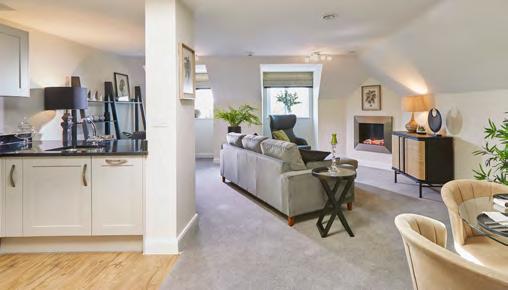
sent us off to enjoy a meal in the restaurant while she unpacked everything for us."
"We had no stress at all, and we felt settled within the first week. Moving here was the best thing we did.”
Knowing this kind of help exists can take away much of the fear.
The payoff
Decluttering while your home is on the market is about more than tidying. It can:
• Make rooms feel bigger and brighter.
• Help buyers see the potential, not the problems.
• Reduce the time your property lingers unsold.
• Give you a head start on moving when the right offer comes.
• Provide peace of mind and a sense of progress.
It isn’t always easy, but it is worth it.
Final thoughts
If your house has been on the market for a while without serious offers, don’t assume something is wrong with it as often, the key is how it’s presented. Decluttering inside, outside, and in storage spaces can completely change how buyers see your home.
And you don’t have to do it alone. With the right support, from family, charities, recycling centres, or professionals like The Senior Move Partnership, it’s possible to transform a crowded, memory-filled home into one that feels light, spacious, and irresistible to buyers.
Decluttering now could be the difference between your home sitting on the market and someone walking in, seeing the potential, and making an offer.
A natural boost for mood
you you of
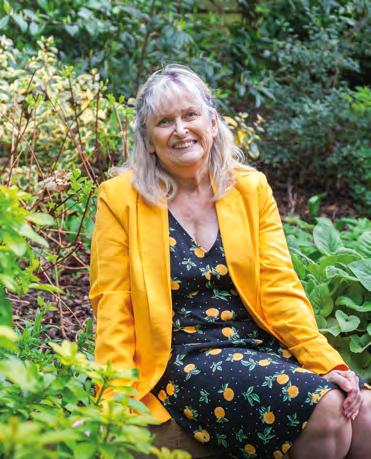
In recent years, researchers at the University of Liverpool have analysed large-scale data exploring the relationship between access to green space and mental well-being. Their findings suggest that people who live in greener areas report lower levels of mental distress and higher life satisfaction, even in places where people have fewer resources overall. The presence of nearby natural environments appears to act as a protective factor for mental health.
Evidence gathered through the Natural England ‘People and Nature Survey’ echoes this, consistently showing that adults who spend time outdoors report feeling happier, less anxious and more satisfied with life.
The Outdoors Effect: Why time outside matters
On a clear morning in Heaton Mersey, Sue likes to take her binoculars and stroll down towards the river. She stops to watch for bullfinches or sand martins and to exchange a few words with walkers along the path.
“I love to trundle around and go down to the river,” she says. “I take my bird book and my binoculars and a drink of water. People are really nice and talk to you when you’re going along.”
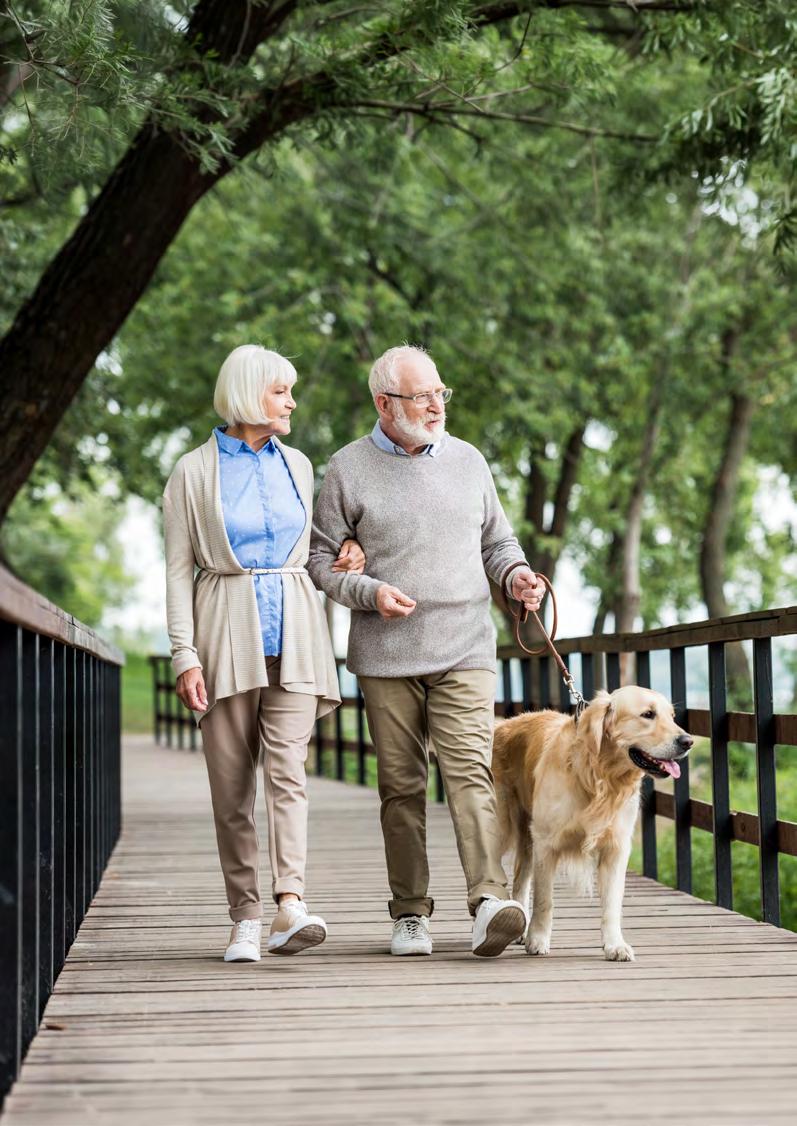
For older adults, gentle outdoor activities such as walking or simply spending time in natural surroundings are associated with improved well-being.
It is a simple pleasure that reflects something increasingly well supported by research: spending time outdoors has measurable benefits for both physical and mental health. Regular time outside, even in cooler months, can help maintain healthier levels. For many people, the benefit is as much emotional as it is biological.
There is also a physiological explanation. Exposure to daylight supports the body’s production of vitamin D, which plays an essential role in maintaining healthy bones and muscles. Low vitamin D levels are common in the UK, especially during autumn and winter, and deficiency has been linked to low mood and fatigue.
Walking for strength and independence
Walking remains one of the most accessible and sustainable forms of exercise.
Guidance underpinning the UK Chief Medical Officers’ physical activity recommendations emphasises that regular moderate activity such as brisk walking supports cardiovascular health, muscle strength and balance, all of which are crucial for maintaining independence.
Organisations such as Age UK and Versus Arthritis highlight the role of low-impact activity in keeping joints mobile and reducing stiffness. Movement encourages circulation within the joints, helping to nourish cartilage and maintain flexibility.
Homeowners Margaret and Keith have long been enthusiastic walkers and head out daily. “We do brisk walking. We’ve always done it,” Keith explains, describing their mile-and-a-half morning walks and occasional longer rambles when the weather allows.
Their distances are more modest than in years gone by, but consistency remains the key. Even small amounts of regular movement make a difference. Research behind the national guidelines shows that adults who remain active reduce their risk of heart disease, stroke and type 2 diabetes, while also supporting bone density and balance. Walking outdoors has the added advantage of feeling pleasurable rather than prescriptive.
MEET our HomeownerS' DOGs
This month is National Pet Month, and it’s no surprise there are benefits of interacting with a pet, even if it’s not your own.

IMPROVED HEALTH
INCREASED MOVEMENT
Whether that’s walking a pet or simply playing with one.
SOCIAL INTERACTION
Pets can act as social facilitators, helping individuals connect with others and form social bonds.
Research conducted by the University of York * found that stroking a pet can lead to a decrease in cortisol levels, a hormone associated with stress, in both pet owners and non-owners.
*See www.ageuk.org.uk and www.york.ac.uk for details
Dogs, conversation and connection

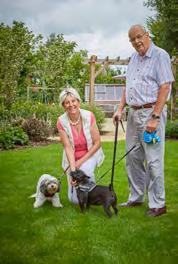
For homeowner Pam and her partner Mike, regular walks revolve around Honey, their miniature Labradoodle. Pam shares:
“We take her for nice long walks and there are lots of good places for that around here.”
On a good day they might cover two or three miles, often stopping at a dog-friendly café along the way.
Dog walking brings with it an additional layer of social interaction. Studies have found that dog owners are more likely to meet neighbours and develop local connections, with pets acting as natural conversation starters.
Those brief exchanges matter. Social interaction has been shown to support cognitive health and reduce feelings of loneliness. Combining light physical activity with conversation and fresh air creates a powerful blend of benefits that reinforce one another. The walking is actually about more than exercise, it can create a wider sense of belonging.
Tinka & Olga
Toby
Honey
The ripple effect of being outside
The emerging evidence around ‘green social prescribing’, supported by NHS England, reflects a growing understanding that structured outdoor activities such as walking groups can improve well-being, physical activity levels and social connection.
Many of the benefits can come from ordinary habits as well as organised programmes. A regular riverside stroll, a circuit around the neighbourhood, a walk to meet friends for coffee, or choosing to sit outdoors for part of the day can all contribute to improved mood and physical resilience.
Homeowners across our communities have been getting their steps in too.
The NHS recommends that older adults do some type of physical activity every day, even if it’s just light activity. The guidelines also suggest doing at least 150 minutes of moderate intensity activity a week or 75 minutes of vigorous intensity activity if you are already active.
Dr Trevor homeowner at The Sidings enjoys keeping fit:
"I do two laps of The Sidings in the morning and two laps in the afternoon. I think four laps is not much short of a mile so that's the least that I do when I think about it."
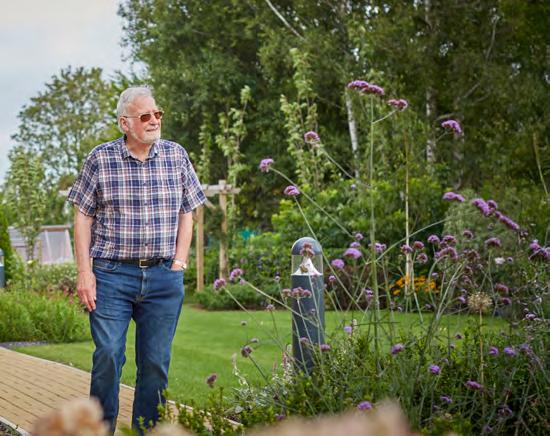
Stepping outside each day provides light, movement, perspective and often companionship. It supports stronger bones through vitamin D, steadier joints through regular use, and brighter spirits through contact with the world beyond four walls. Opening the door, taking a familiar path and noticing the season changing can be a powerful investment in health.
QUIZ ANSWERS 01 Lancelot
Brown
The troposphere
The National Trust
Asparagus
Ullswater
Venus
Claude Monet 08 Photosynthesis triggered by longer daylight hours
The cuckoo
The Pink Moon
Walking Clubs
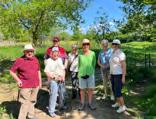
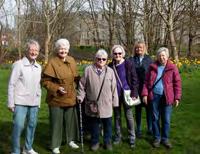
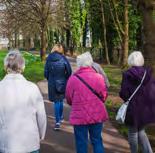
Across our communities homeowners are stepping into spring with their walking clubs.
They explore local areas of natural beauty and interest each week, with routes plotted along foot paths so all abilities can join in and of course enjoy a well-deserved coffee and cake stop at the end.

Getting your steps in In places
of outstanding natural beauty. Search on the internet for "Miles without Stiles" to find a range of easily accessible pathways devoid of stiles, steps, or steep inclines which offer access to stunning views. Here are some of our favourites.
Dovedale, Peak district
A well-loved outing along the picturesque River Dove leading to its renowned Stepping Stones at the base of Thorpe Cloud.


ElTerwater, Lake district
Experience a breathtaking linear hike, encompassing lakeside meadows, and a thundering waterfall.

Gordale Scar, Yorkshire Dales
A straightforward pathway leading to the imposing cliffs of Gordale Scar.

A gentle walk offers