It was a brief conversation, but it made a lasting impression on me. A friend told me that she had gone to a casual Sunday afternoon barbeque in her neighborhood. She was new to the city and didn’t know anyone there. She left feeling sad and frustrated. No one engaged in conversation with her, and she felt alone and left out. She went again the next week with basically the same results.
On the third week that she went, there was another newcomer, just like her, but that woman was smiling and going from person to person to chat. My friend began observing her. The other woman did not wait to be approached; she took the initiative to introduce herself and spent time getting to know each new acquaintance, and she had a lovely time.
It’s possible that my friend’s sad expression had kept people at bay, but I am happy to say that by the third Sunday she had learned to be friendlier and more inviting. And she soon felt right at home with her new community of friends.
I could relate to this story as I also have a hard time meeting new people, especially in unfamiliar situations. But with practice, over the years it has become easier, and I have met such interesting people! Most everyone has a story to tell if I am an interested listener. And I learn so much.
In this month’s issue we will explore how to build community, cultivate friendships, relate to people, and understand others’ burdens. We will also learn to see our own burdens through the prism of God’s love and plan for us. Our contributors this month share personal experiences that enrich our understanding of what it means to live our Christianity in simple, practical terms. And on the subject of practical Christianity, “Forming New Habits” on pages 8–9 gives good advice concerning a modern-day challenge—how to control our use of technology before it begins to control us. All this treasure of information is at your fingertips!
May this month’s edition of Activated be a blessing in your walk with the Lord.
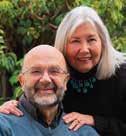
Gabriel and Sally Garcia Activated Editorial Team
For more information on Activated , visit our website or write to us.
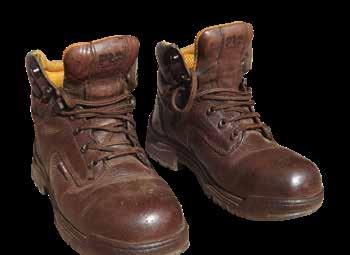
“Never judge a man until you’ve walked a mile in his shoes.” If there was anyone who knew all about that, it was Mother Teresa. After having lived among the poorest of the poor in India for nearly 30 years (and she continued to do so for 18 more years), she was awarded the 1979 Nobel Peace Prize. She often quoted the phrase “Life is life, fight for it,” and expressed that all human beings are special and of great worth, no matter who they are, and that only when we have learned to respect that fact can we begin to help them improve their lives.
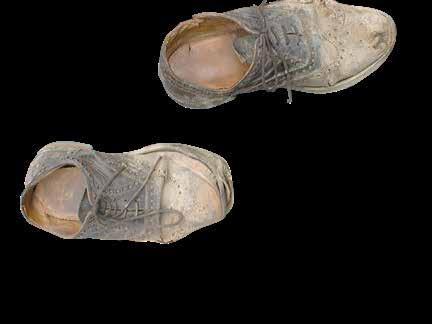
Most people would be happy to walk a mile in a pair of plush designer shoes or top-of-the-line athletic shoes, but how many would want to step into a poor laborer’s shoes? When I was living in Uganda, I found a discarded pair of shoes that became to me a symbol of Africa and its sweet-spirited but struggling people.
It was apparent from the cement splatters that their last owner had been a construction worker. Like many others I observed there, he probably worked long days in sweltering heat with no protection against the sun and had only a couple of sticks of raw sugar cane for lunch. He wore those shoes until the holes in the soles had gotten so big that the shoes no longer served their purpose. When there was no point in wearing them one more day, he left them for me to find. It wasn’t his intention, of course, but those shoes put my own petty problems into perspective.
There wasn’t any question in my mind when, sometime later, a young man knocked at my door, asking for help. He had won a scholarship to a boarding school, but there was one requirement he couldn’t fulfill—he didn’t have any shoes. He asked if I had an extra pair I could give him. The ones I was wearing at the time fit him quite nicely, and that was that.
No, one simple act of kindness didn’t make me a saint on the level of Mother Teresa, but I do believe that in that moment I experienced a touch of what motivated her all those years: “The love of Christ compels us” (2 Corinthians 5:14 NKJV).
Curtis Peter van Gorder is a freelance writer and mime artist who has been active in missions work in 10 countries since 1971. He and his wife Pauline currently live in Germany. ■
CREATED FOR COMMUNITY
By Peter Amsterdam
Contemporary culture often promotes individualism and self-reliance as virtues to cultivate, whereas the Bible teaches that we were created for community. Christianity was never intended to be lived in a vacuum; it is meant to be shared in loving fellowship and unity with others, and to spread to those
outside our faith community. God did not create us to be isolated beings who do life on our own.
God Himself is revealed to us in Scripture as a perfect triune community—one divine being with three distinct persons, Father, Son, and Holy Spirit, who exist eternally in a loving interpersonal relationship. He created human beings in His image and likeness as relational beings
(Genesis 1:26). After God created Adam, the first human being, He said, “It is not good that the man should be alone; I will make him a helper fit for him” (Genesis 2:18).
From the beginning, God’s intent was for human beings to be in relationship with others and with Him. When Adam and Eve disobeyed God, the fellowship they had with Him was broken, resulting in the consequent fall of humankind. (See Genesis 3.) But God made a way to restore humanity’s fellowship with Him through Jesus’ sacrifice on the cross. Following Christ’s death, resurrection, and ascension, the church was formed as a community of believers, referred to in the Bible as the body of Christ. “Now you are the body of Christ and individually members of it” (1 Corinthians 12:27).
We are not meant to do life alone. As author Paul Tripp expressed it, “We weren’t created to be independent, autonomous, or self-sufficient. We were made to live in a humble, worshipful, and loving dependency upon God and in a loving and humble interdependency with others. Our lives were designed to be community projects.”
people, which is how He designed us. Jesus taught that to love our neighbors was second only to loving God (Matthew 22:39). Our family, friends, co-workers, neighbors, and community have been placed in our lives by God so that we may love them and show God’s care for them. As John Ortberg points out:
Every day, everyone you know faces life with eternity on the line, and life has a way of beating people down. Every life needs a cheering section. Every life needs a shoulder to lean on once in a while. Every life needs a prayer to lift them up to God. Every life needs a hugger to wrap some arms around them sometimes. Every life needs to hear a voice saying, “Don’t give up.”
Christian fellowship
God wants us to love all humankind and to be examples of His attributes to those we meet and interact with on a daily basis. He’s also concerned that we show love for our fellow Christians. This is the kind of love that Jesus was speaking of when He said: “A new commandment I give to you, that you love one another: just as I have loved you, you also are to love one another. By this all people will know that you are my disciples, if you have love for one another” ( John 13:34–35).
The very nature of being in community with others, working, interacting and partnering with personalities different than our own, giving of ourselves and learning to relate to others, compels us to exercise the type of qualities that Jesus wants us to hone. Our interactions with others help us to grow in Christlikeness, and better equip us to reach out to others and to effectively share and be a living reflection of God’s love to the larger community around us.
God wants us to be in relationship with other
Just hours before He was arrested, Jesus prayed to His Father that the disciples—both those who were with Him right then and all who would follow—would be in unity as He and His Father are in unity “so that the world may know that you sent me and loved them even as you loved me” ( John 17:20–23). Jesus prayed that all His disciples would be one: one body, knit together in love; one in belief, one in mission, one in Christ-mindedness.
When we are united and gathered together in Him, He is there with us. “Where two or three are gathered together in My name, there am I in the midst of them” (Matthew 18:20 NKJV). Having Christ in our midst helps us to experience His presence, and the joy and love draw each one close to Him and to one another. When Christians get together to fellowship, it empowers them. Praying, worshiping, celebrating communion, having deep conversations, enjoying each other’s company, all create a wonderful atmosphere which strengthens and uplifts those participating.
The word used in the New Testament to describe the nature of our relationships with other Christians is koinonia, a Greek word translated variously with words such as communion, fellowship, close relationship, and participation. As members of His church, the body of Christ (Colossians 1:24), we have communion with Christ and participate in His life and mission; we also have communion with one another and participate in life and mission together.
We are not meant to be islands. We are dependent on others. Only God knows how many times the great things that have been done by men and women of God throughout the centuries were made possible by another believer who had the ministry of encouragement and prayer. As Rick Warren wrote, “We are created for community, fashioned for fellowship, and formed for a family, and none of us can fulfill God’s purposes by ourselves ”
While participation in Christian community includes gathering together with other Christians, it also includes our participation in sharing the gospel, working in some way in the furtherance of Christian mission. It’s partnering with God and others in the Great Commission of sharing the good news with everyone and bringing others to a saving knowledge of Christ and helping them to grow in their discipleship (Matthew 28:18–20). When taken in the overall context of the meaning of the original Greek, Christian fellowship can be understood as participation in the entire system of faith. It includes our
interaction with God and with other Christians and our joint efforts to live out the Great Commission and to be salt and light to the world around us and the culture of our time.
Building community
In the modern world where our work life and communications with others are often mediated through technology and social media, it can take time and effort to forge meaningful in-person relationships. We may have to seek out new ways to do community if we are at a stage in life where we need to develop new networks. There are many sources for Christian fellowship and friendship-building that can be explored, such as joining a local church or prayer group, or participating in a charitable initiative or friendship group.
Another venue for community-building is volunteering, which can be a means for forging friendship bonds with others as you join forces around a shared cause. We can participate in local community initiatives and reach out to our neighbors. We can build relationships through joining a club or group of people who share a common interest, which in turn can open the door for sharing the good news of the gospel.
As Christians, we have the privilege and responsibility to manifest the Lord’s love to the people in our community. We are to show love to all humankind, and especially to those of the community of faith (Galatians 6:10). So as we seek to build relationships with others and to foster a sense of belonging and camaraderie, we do so for and by and with the love of Christ which compels us (2 Corinthians 5:14 NKJV). In living this way, we are His church, the body of believers—His community.
Peter Amsterdam is a Christian author and Bible teacher, and retired co-director of TFI, a Christian online network. ■
WHAT IS Love?
By Rosane Cordoba
Love is one of the first words we learn as a child, along with Mommy, Daddy, and other loving words. I’m sure more songs have been written about love than any other word. But what exactly is love? The Bible tells us that “God is love” (1 John 4:8).
When I was 19, I began reading the Bible, and I remember being impressed by one verse in particular: “The only thing that counts is faith expressing itself through love” (Galatians 5:6 NIV). We all make mistakes, but we need to have faith and patience, and not let the mistakes of others prevent us from being able to love them.
As a wife and mother and co-worker, I’ve had to learn to forgive others for the wrong things they did to me,
If you have not yet received Jesus as your Savior, you can do so by praying the following prayer: Dear Jesus, I believe that You are the Son of God and that You died on the cross for me so that, through Your death and resurrection, I can live forever with You in heaven. I ask that You forgive my sins. I open the door of my heart to You. Please fill me with Your Holy Spirit and help me live in a way that glorifies You. Guide my life and help me to follow You. In Your name I pray. Amen.
even for actions I suspected might have been intentional. This has helped me to better understand the heart of God, who is the supreme example of forgiveness, the manifestation of love. He knew that none of us could be good in our own strength, so He gave His only Son for our salvation.
I’ve also learned that prayer is a form of love. When I didn’t feel I could forgive someone, I discovered that I couldn’t feel resentment toward someone I was praying for. So, I would pray for them and trust God to give me the grace to forgive them.
Though our human love is limited and fails many times, I’ve found that God can help me love even someone who is getting on my nerves. “Every good gift and every perfect gift is from above, coming down from the Father” ( James 1:17).
Love is action, trust, forgiveness, and prayer. It is also kindness, understanding, caring, patience, and many other wonderful things. Jesus told us to love our neighbor as ourselves, and He showed that our neighbor is anyone who needs our help, regardless of creed, color, nationality, or social status.
Rosane Cordoba lives in Brazil. She is a freelance writer, translator, and producer of faith-based and character-building children’s material. ■
FORMING NEW
By Marie Knight
There’s no doubt that technology has made things easier and faster to accomplish. Research and education, communication, money transfers, shopping, advice on do-it-yourself projects or health tips, and so much more can be done or found with a few swipes and taps on a phone.
As Christians, there are many ways we can use technology to our advantage in our study of God’s Word, our fellowship with like-minded believers, and as a tool to minister to and encourage others.
But with the advantages also comes the real, easy danger of spending too much time in the virtual world to the neglect of real-life important relationships and day-to-day matters.
Scrolling social media, watching videos or reels, listening to podcasts or e-books, delving into gaming, or reading endless articles, etc., can take up a good portion of your time that afterwards just feels like time wasted. And at night it can eat into your sleep schedule, causing you to be groggy, late for work or other activities, or not able to put your best efforts into the day.
I know, because I have been there, often. It’s a trap that’s easy to fall into because the opportunity is almost always literally at our fingertips. Many times, an hour or two can be wasted after just wanting to “check one thing.”
Society at large is starting to become more aware of the dangers and problems that digital addictions can cause, such as sleep deprivation, mental health issues, a sedentary lifestyle, and reclusive behavior, to name a few.
So how do we safeguard ourselves or break the cycle? Here are some practical tips that may help:
HABITS
1
2
Acknowledge that you need to change. For any addiction or bad habit, this is the place to start. Examine where your weaknesses are and what improvements are needed.
Schedule your time wisely and limit your time online. If you know you are easily distracted, try to stay on a schedule regarding your screen time.
3 Set aside a time each day for activities that don’t require a phone, laptop, or digital devices. Go for a walk, take up a hobby or renew an old one, visit a friend, or volunteer with a local charity. Give yourself time away from modern technology to experience the joys and benefits of being aware of your surroundings.
4
5
If you have children, plan activities to do together, such as board games, baking, crafts, bicycling, or sports.
Ask for help or prayer. Our family or friends often know where our problems lie before we see them ourselves, and they can help and support us with overcoming our problems and seeing us through the issues we need to work on.
6
Make bedtime a digital-free time. Often that’s when we get carried away, and it eats into our sleep schedule. Start a nighttime routine that involves reading a physical book, drinking a cup of herbal tea, praying for your friends and loved ones or the day ahead, writing in a journal, or whatever helps you to wind down and relax.
7 Pray before starting the day. Before you reach for your phone first thing in the morning, take a few moments to read a scripture or pray for the day. Start your morning with something inspirational and uplifting.
When starting good habits or overcoming bad ones, being consistent is key. It may not be easy at first, but with practice you can get control over your time and habits!
Here are a few verses that can help you to keep your eyes on your goal:
“Everyone who competes in the games goes into strict training. They do it to get a crown that will not last, but we do it to get a crown that will last forever” (1 Corinthians 9:25 NIV).
“Watch out that you do not lose what we have worked so hard to achieve. Be diligent so that you receive your full reward” (2 John 1:8 NLT).
“The grace of God has appeared that offers salvation to all people. It teaches us to say ‘No’ to ungodliness and worldly passions, and to live selfcontrolled, upright and godly lives in this present age” (Titus 2:11–12 NIV).
“No temptation has overtaken you except what is common to mankind. And God is faithful; he will not let you be tempted beyond what you can bear. But when you are tempted, he will also provide a way out so that you can endure it” (1 Corinthians 10:13 NIV).
“He gives strength to the weary and increases the power of the weak” (Isaiah 40:29 NIV).
“The righteous person may have many troubles, but the Lord delivers him from them all” (Psalm 34:19 NIV).
“I can do all this through him who gives me strength” (Philippians 4:13 NIV).
Marie Knight is a missionary volunteer in the USA. ■
WALKING IN A NEW IDENTITY
By Uday Paul
I have had a chronic back problem for some years. One of the reasons for my problem was bad postural habits. I had developed a habit of keeping my knees straight and bending my back while stooping, when I should have been doing the opposite—keeping my back straight and bending my knees. Recently I have been training myself to adopt the right posture, which has helped me and greatly healed my back. This reminded me of my spiritual training.
The Bible tells us that when we receive Jesus in our hearts, we become new creations. “The old has passed away; behold, the new has come” (2 Corinthians 5:17). But salvation does not automatically bring an end to our tendency to sin. We had developed habits and patterns of sinfulness in our old lives, which we carry into our new lives. We need to train our hearts in a new direction, towards godliness (1 Timothy 4:7–8). We need to put off the habits of the old self and put on the habits of the new self, created after the likeness of God (Ephesians 4:22–24).
In his benediction to the church in Thessalonica, the apostle Paul prayed that God would sanctify them completely and that their whole spirit, soul, and body would be kept blameless at the appearing of Jesus Christ (1 Thessalonians 5:23). Just like the Old Testament tabernacle had three main areas—the Holy of Holies, the Holy Place, and the Outer Court—we can look at human beings as having three entities—spirit, soul, and body. Our spirits could represent the Holy of Holies or innermost part of the temple, our souls and minds could be like the Holy Place, and our bodies like the Outer Court. When we are born again, we are re-created in the image of God in our spirits. However, our souls and minds have to be renewed for godliness to manifest in our outer selves (Romans 12:2).
As believers, we are to walk in the consciousness of our new identity in Jesus; we are made the righteousness of God in Him (2 Corinthians 5:21 KJV).1 The Holy Spirit works within us as we shed old habits and form new ones. “He who began a good work in you will bring it to completion at the day of Jesus Christ” (Philippians 1:6). “For it is God who works in you, both to will and to work for his good pleasure” (Philippians 2:13).
Uday Paul is a freelance writer, volunteer, and teacher based in Uganda. ■
Answers to Your Questions
When Life Is HARD
Q: Life sometimes seems hard or downright unfair. I can’t help but wonder why, if God loves me, He doesn’t intervene and change things for me.
A: God loves each and every one of us and He wants us to love Him and live close to Him. He also has a plan for each of us that He knows will bring out the best in us and be best for us in the long run.
God didn’t promise us that the Christian life would be easy or problem-free. In fact, Jesus told us to expect challenges and difficulties. “In the world you will have tribulation. But take heart; I have overcome the world” ( John 16:33). Our times of challenges and struggles are meant to strengthen our faith, as we allow them to draw us closer to Him (1 Peter 1:6–7).
He works differently in each of our hearts and lives because we’re all different and He knows what will best accomplish His purpose in each of us. It’s all to the same end, though. He wants us to recognize that we are insufficient in ourselves and that we need Him; then we will seek His will above our own.
Some people face physical challenges that He uses to draw them closer to Him. Others may have good health, but suffer some other loss, which motivates them to reach out to Him to fill that void. Some people may experience prosperity, power, or recognition in this world, only to discover that these can be heavy burdens that will never satisfy their deepest need, and this causes the bearers to turn to God for help through prayer and reading His Word.
As Christians, He works through everything we experience, and these things don’t always seem fair or equal. But whatever you experience in your life, do not forget that Jesus loves you. If God goes to the trouble of numbering the hairs of your head, as Jesus said He does (Matthew 10:30), He’s clearly concerned about you.
The next time you go through an especially hard time or life seems unfair, seek the Lord through His Word. Tell God that you love Him no matter what, and that you’re counting on Him to cause all things to work together for your good, as His Word promises (Romans 8:28). God will never leave you or forsake you. ■
REFLECTIONS ON FRIENDSHIP
By Gabriel García V.
I had never before appreciated friendships as much as I did during my recent health crisis. After a major heart operation that took eight hours, followed by two days in an induced coma, I woke up and found that my wife and I were being supported and cared for by an amazing network of dear friends, not to mention the literal hundreds of messages from all over the world that I received by phone and email. The encouragement and empathy from my friends gave me the boost I needed to regain strength. Through this experience I have realized the value of friendship. Suddenly, I discovered that every bit of time that I had dedicated to all those folks—every phone call, every visit
I had made, and every message I had written—had built something special. At times I am so caught up in my work that I procrastinate in answering a personal message or stopping to seek the Lord for a prayer request. Yet, after my recent ordeal, I realized the value of taking time for a friend or focusing my attention on a colleague who needs a listening ear.
On the other hand, sincere friendships don’t always require a big investment of time. We had a friend we hadn’t seen in several years who showed up in the emergency room of the hospital right before my surgery.
She is a well-known doctor, and when she heard of my plight, she rushed to the hospital to cheer me on. So quick was her response that she actually arrived at the hospital before my ambulance! I can’t tell you how encouraging that was to me at that crucial moment. While lying in my hospital bed that week, reading the different messages from friends and acquaintances played an important part in my recovery. “A word spoken in due season, how good it is!” (Proverbs 15:23 NKJV).
We tend to hear about friends that betray us or that are not there when we need them, and the Bible speaks of them as well, particularly Judas in Jesus’ case and many others in David’s life. But we need to also hear of those who stand by our side or who show up in our time of need! As I have seen in my moment of adversity, scores of friends were there to bolster me in my weakness and to give our family support.
All it took to build that loyalty was a bit of time and genuine concern, a prayer for one who was in a predicament, a word of confidence to another in a moment of anxiety, a timely phone call, a touch of humor, a compliment for a job well done. As the Proverb says, “A
friend loves at all times, and a brother is born for adversity” (Proverbs 17:17).
Let’s keep in mind that Jesus, despite being the Son of God, treated us as friends. (See John 15:14–15.) And for inspiring reading on deep friendships, read the stories of Ruth with Naomi (Ruth 1:16–17) and David and Jonathan (1 Samuel 18:1–4).
A few years ago, “networking” was the buzzword, the idea being to create a list of contacts that could prove to be useful later. But the biblical concept is quite different. Jesus said to do good and freely give, not expecting anything in return (Luke 6:35). He also said, “Freely you have received; freely give” (Matthew 10:8 NKJV). If we give with the hope of being repaid someday, we could miss out on the joy that comes with selfless love.
The famous Brazilian singer, Roberto Carlos, wrote a song a few decades ago that has left its mark in all of Latin America and is still heard on radios all over the continent. It says, “I want to have a million friends so we can sing with a stronger voice. I want to share this friendly song with anyone who might be in need.” Indeed, in my moment of affliction, I felt I had a million friends.
If you feel lonely or are in an isolated situation or are prone to being a recluse, I want to encourage you to reach out to others. Take the initiative and start a friendly conversation. Listen with empathy. Offer a helping hand. Like the little poem says:
I went out to find a friend, but couldn’t find one there; I went out to be a friend, and friends were everywhere.
“Two are better than one, because they have a good reward for their toil. For if they fall, one will lift up his fellow. But woe to him who is alone when he falls and has not another to lift him up!” (Ecclesiastes 4:9–10).
“For the despairing man there should be kindness from his friend; so that he does not abandon (turn away from) the fear of the Almighty” ( Job 6:14 AMP).
“Oil and perfume make the heart glad, and the sweetness of a friend comes from his earnest counsel. Do not forsake your friend and your father’s friend. … Better is a neighbor who is near than a brother who is far away” (Proverbs 27:9–10).
Gabriel García Valdivieso is part of the Activated editorial team and a member of the Family International. He is a writer, translator, and podcaster, and lives in Chile with his wife, Sally. ■
WHO REMEMBERS YOU
By Amy Joy Mizrany
I was in the back of a conference hall watching a farewell meeting taking place in the front of the room. A company was saying goodbye to a member of their team. When the manager asked those present to share some kind words about the person leaving, no one except for the one person she worked with directly had anything to say about her. A few stood up and tried to bumble their way through a goodbye. “She always seemed very nice.” “Even though we never talked, her work appeared very put-together.”
As I left the hall, the whole thing struck me as terribly sad. She had been working with these people for years and only one person had really known her at all. The likelihood of the team feeling her loss in any unique and irreplaceable way was slim.
This scared me in a way. I thought of my interactions with those I work with and I wondered: Would that be me? Or would I be remembered, not as just a person who was there, but as Amy, as who I am, what I think, how I made them feel? Many spheres of my work life come with a lot of personal interaction—teaching, counselling, organizing, planning, and practicing. I wondered if I was making an active effort to better people’s lives. How would I be remembered?
This mini crisis caused me to start observing others I worked with. I considered which co-workers I could say I
really knew. And I began to notice something interesting. Those who were the most “knowable” were always trying to know everyone else. They talked with everyone at social events, made sure to greet even the “least important”‘ coworker, and showed interest in others’ projects. In short, those who saw others were themselves seen. Those who were focused outward naturally inspired others to focus on them in return. Those who were the most influential were influential because they cared about others, and in return, people cared about them.
Making an impact on and creating a community came down, it seemed to me, to love. Loving humanity enough to be invested in each person. Valuing connection and fostering it.
As Paul said in Romans 14:7, no man should live (or die) for themselves alone. And Jesus said that the greatest love existing is found in laying down your life (and your own self-importance, individuality, or independence) for others ( John 15:13). In this era, when so many suffer from isolation and loneliness, connecting and loving those around you is an essential duty of a Christian. It’s a goal that I think would make Jesus proud.
Amy Joy Mizrany is a missionary in South Africa with Helping Hand. In her spare time, she teaches the violin. ■
OVERCOME EVIL WITH GOOD
By Marie Alvero
Romans 12 is one of those chapters where every time I read it, some part pops off of the page. If I feel like my faith walk is a little out of alignment, it clearly shows me the path. It reads:
“Love one another with brotherly affection. Outdo one another in showing honor. Do not be slothful in zeal, be fervent in spirit, serve the Lord. Rejoice in hope, be patient in tribulation, be constant in prayer. Contribute to the needs of the saints and seek to show hospitality. Bless those who persecute you; bless and do not curse them. Rejoice with those who rejoice, weep with those who weep. Live in harmony with one another. Do not be haughty, but associate with the lowly. Never be wise in your own sight. Repay no one evil for evil, but give thought to do what is honorable in the sight of all. If possible, so far as it depends on you, live peaceably with all. … Do not be overcome by evil, but overcome evil with good” (Romans 12:10–21).
This gives such clear guidance in how to navigate the tricky parts of today’s world, just like it did in the Roman
days. We often lament that the world is in such a wicked state, and we’re not wrong, but it always has been. All these Bible verses speak to my heart, but I especially love the last one: “Do not be overcome by evil, but overcome evil with good.”
The preceding verses teach us what “good” looks like. It’s a list of behaviors and attitudes that are contrary to the world. Joyfully hoping in God’s promises, being patient in suffering, praying instead of being anxious, looking out for others and sharing what you have, not getting angry, meeting people where they are on their journey, trusting God for justice, going the extra mile to put forgiveness into action.
If I start to feel despair or that my efforts are futile, this passage helps to reorient me to what is true. It is so simple, but it hits home every time! It tells me how to follow Jesus, no matter what troubling news headline is weighing on me.
Marie Alvero is a former missionary to Africa and Mexico. She currently lives a happy, busy life with her husband and children in Central Texas, USA. ■
From Jesus with Love
LOVE IN ACTION
I have called you My friends and commissioned you to love others as I have loved you ( John 15:12–15). Love that builds friendship and community is cultivated through your everyday actions. It is demonstrated through your outgoing concern, and your willingness to give of yourself to be a friend, a companion, and a listening ear. It means taking the time to walk alongside someone who is experiencing a season of loneliness or sorrow, to encourage others in their time of need and help lift their burdens.
You can reflect My love to others through acts and deeds of kindness and caring, helping to carry their load, and showing consideration and thoughtfulness. Take the time to notice the people around you and appreciate them, to offer them words of encouragement and hope. Look for ways to make their day a little brighter, more hopeful, less stressful, and less burdensome.
There is a special joy that comes from placing others and their needs above your own. Kind actions and deeds don’t just benefit those who are on the receiving end—they also benefit you. The joy that comes through caring and generous actions produces a deep sense of fulfillment and purpose. When you do something kind and loving for someone else, you are blessed in return. As you give of what you have received, I have promised to pour forth My blessings to you in good measure until they are running over (Luke 6:38).