The National Culinary Review® (ISSN 0747-7716), March/April 2026, Volume 50, Number 2, is owned by the American Culinary Federation, Inc. (ACF) and is produced six times per year by ACF, located at 6816 Southpoint Parkway, Ste 400, Jacksonville, FL 32216. A digital subscription to the National Culinary Review® is included with ACF membership dues; print subscriptions are available to ACF members for $25 per year, domestic; nonmember subscriptions are $40. Material from the National Culinary Review®, in whole or in part, may not be reproduced without written permission. All views and opinions expressed in the National Culinary Review® are those of the author and do not necessarily reflect the views and opinions of the officers or members of ACF. Changes of mailing address should be sent to ACF’s national office: 6816 Southpoint Parkway, Ste 400, Jacksonville, FL 32216; (800) 624-9458; Fax (904) 940-0741.
The National Culinary Review® is mailed, and periodical postage is paid at St. Augustine, Fla., and additional post offices.
POSTMASTER: Send address changes to the National Culinary Review®, 6816 Southpoint Parkway, Ste 400, Jacksonville, FL 32216.
The PRESIDENT’S MESSAGE
Dear ACF Members,
It’s an honor to serve as your National President, and I want to thank you for the passion, dedication and innovation you bring to our profession every day. In a world where the culinary landscape evolves at a breathtaking pace, it is your commitment that keeps the American Culinary Federation at the forefront of excellence.
This year, as we look ahead, I want to shine a spotlight on something foundational to our success: health and wellness. As cooks and chefs, we pour our hearts into creating memorable experiences for others, often at the expense of our own wellbeing. But let’s flip the script. True mastery in the kitchen begins with taking care of ourselves first. I’ve seen firsthand how long shifts, high-pressure environments and irregular hours can take a toll.
Yet prioritizing our physical and mental health isn’t just selfpreservation; it’s essential to sustained creativity, leadership and longevity in this industry. Start with the basics: ensure you’re getting enough sleep, stay hydrated throughout the day, invest in comfortable, supportive shoes and practice good ergonomics to help prevent strain during long prep sessions.
Mental resilience is just as critical, especially when the kitchen gets tough – and we all know it can. Acknowledge the hard days; it’s okay to feel overwhelmed. Build resilience through small, daily practices, such as a 10- to 15-minute morning stretch or yoga session to center yourself before the rush. On days off, prioritize activities that help you recharge – a brisk walk, a gym workout focused on strengthening your core and back or simply unplugging with a good book.
Foster a supportive kitchen culture by encouraging open conversations about stress. Simple mindfulness techniques,
like focused breathing during service, can make a meaningful difference. Remember, a positive mindset isn’t about ignoring challenges – it’s about facing them with tools that keep you grounded. Resources such as ACF’s Wellness Toolkit, including webinars on anxiety management and work-life balance, are available to support you. Let’s commit to leading by example and creating environments where self-care is celebrated, not sidelined.
Looking ahead, 2026 is shaping up to be a transformative year for culinary trends. We’ll be highlighting innovations that blend sustainability, bold flavors and health-conscious approaches.
Expect a surge in fermented and preserved ingredients, adding depth and gut-friendly benefits to menus. Texture will play a larger role, with crunchy, multi-sensory elements elevating everyday dishes. Tart and acidic flavor profiles, alongside elevated proteins in unexpected applications, will continue to influence menus, while mini formats and open-fire cooking offer new ways to balance indulgence and restraint.
These trends aren’t just buzz – they’re opportunities to innovate while honoring our roots.
Of course, no message would be complete without rallying around our upcoming gatherings. Mark your calendars for the ACF National Convention in Grand Rapids, Michigan, from June 28 to July 2 at the DeVos Place Convention Center. This event is going to be super exciting not only because of the big ideas and bold flavors we’ll explore, but because Grand Rapids’ vibrant culinary scene aligns perfectly with our mission.
On the international front, the WorldChefs Congress & Expo 2026 will take place in the U.K. from May 16 to 19 in Newport, Wales. With the theme Pasture, Passion, Plate, the event will celebrate the farm-to-fork journey and cultural connections through food, offering an opportunity to engage with chefs from around the world.
Closer to home, I encourage you to join our colleagues at the Canadian Culinary Federation National Conference, May 25 to 28, in Ontario’s Waterloo Region. This gathering brings together chefs from across North America to collaborate, compete and celebrate our shared craft.
As we move through 2026, let’s embrace these opportunities with renewed focus. Prioritize your well-being, engage with emerging trends and connect through these important events. Together, we’re not just cooking – we’re building a healthier, more vibrant future for our industry.
In culinary solidarity, #CIGY6
René J. Marquis, CEC, CCE, CCA, AAC MSG (R), US ARMY
National President of the American Culinary Federation Chairman of the Board, ACF Tampa Bay Chapter
Certification Chair, ACF Tampa Bay Chapter
WORLDCHEFS Chairman - Military Committee
WORLDCHEFS Culinary Competition Committee - Special Advisor Military Kitchens and Development
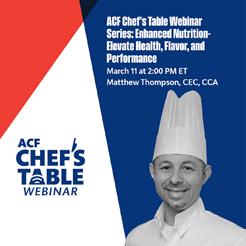
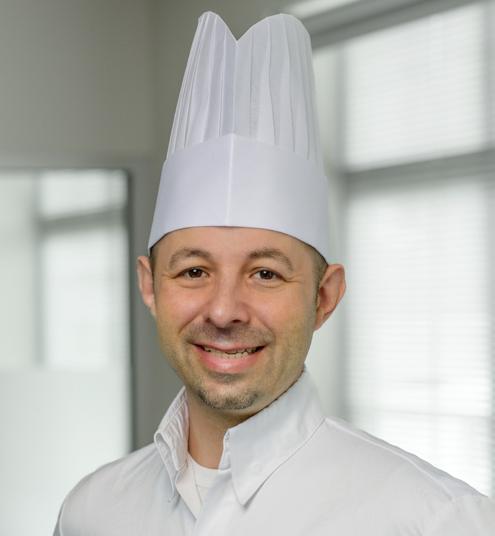
What if the future of food isn’t about restriction, but intention? In this webinar, ACF Chef Matthew Thompson, CEC, CCA explores how enhanced nutrition is shaping modern kitchens, healthcare and the everyday plate. Drawing on real-world examples and science-backed strategies, he shows how thoughtful ingredient choices and technique can support longevity, cognitive health and disease prevention, and why chefs are uniquely positioned to lead this shift.
Register at acfchefs.org
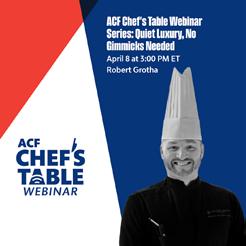
ACF CHEF’S TABLE WEBINAR SERIES: QUIET LUXURY, NO GIMMICKS NEEDED
April 8, 2026, at 3:00 PM ET
Luxury needs no introduction. It’s a timeless, refined and raw craft. In today’s age of social media, it’s easy to lose sight of true luxury with all the stunts and tricks. Join ACF Chef Robert Grotha as he walks us through the concept of quiet luxury with a demonstration of a simple dish composed of jumbo lump blue crab stuffed avocado with winter black truffles and caviar. Chef Grotha will share how chefs can focus on the basics and let their high-quality products and hospitality do the talking.
Register at acfchefs.org
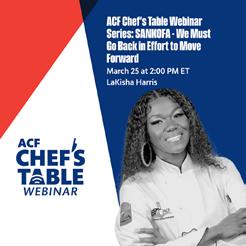
ACF CHEF’S TABLE WEBINAR SERIES: SANKOFA - WE MUST GO BACK IN EFFORT TO MOVE FORWARD
March 25, 2026, at 2:00 PM ET
Join ACF COURSE Task Force Chairwoman, ACF Chef LaKisha Harris as she highlights the vision and mission of the task force. Chef LaKisha will share the work the taskforce is doing to shine a light on the stories of minority chefs and their fight for authenticity in the kitchen. With an acknowledgement of ugly truths, this webinar will demonstrate how chefs can learn from the past to improve the future. Don’t miss this opportunity to watch Chef LaKisha share her culinary heritage with a live cooking demo while imparting the idea that we all share one plate, one purpose and one passion.
Register at acfchefs.org
ACF CHEF’S TABLE WEBINAR SERIES: THE IMPORTANCE OF TEA FOR CHEFS
May 20, 2026, at 2:00 PM ET
Tea is the most consumed beverage in the world after water, yet many chefs do not fully understand its various types or the proper brewing methods each requires. Join ACF Chef Brian Hay, CEC, CCE, CSW, CSS, Sommelier for an overview of tea and how chefs can thoughtfully incorporate it into their operations. Chef Hay will provide a concise crash course on this historic beverage and demonstrate how to assess quality when selecting teas for their establishments or personal enjoyment. Register at acfchefs.org
EDUCATION
CERTIFICATION PRACTICAL EXAMS
Practical exams, required for earning and maintaining ACF certifications, assess your skillset based on the certification level you are pursuing. Each level has specific requirements, including what dishes to prepare, the time frame for the exam, and other important details, all of which are outlined in the candidate handbook. Exams are conducted at various locations across the country throughout the year. Be sure to check the upcoming practical exam schedule to find and register for an exam!
Visit acfchefs.org/certify for a list of upcoming practical exams.
ACF ONLINE LEARNING CENTER
The ACF Online Learning Center (OLC) offers a variety of courses, demonstrations, webinars, and NCR quizzes that can be used for certification requirements and Continuing Education Hours (CEH).
Visit acfchefs.org/olc to explore all the courses, from garde manger to culinary nutrition, accounting, safety and sanitation, beverage management and more.
SPECIALIZED CERTIFICATES
ACF specialized certificates are available through the ACF Online Learning Center. In 2025, we introduced new and exciting specialized certificates while also revamping our current offerings, which include culinary essentials, baking/pastry essentials, culinary cannabis and personal chef certificates.
Visit acfchefs.org/olc to learn more.
COMPETITIONS
ACF LAUNCHES NATIONAL MEMBERSHIP COMPETITION FOR CHAPTERS
The American Culinary Federation has launched a 90-day National Membership Competition challenging chapters nationwide to reconnect with former members and encourage them to “reclaim their seat” at our table. Throughout the spring, chapters will actively reach out to past members, highlighting opportunities to reconnect with peers, pursue certification and education and reengage with the professional community.
Two trophies will be awarded at the conclusion of the competition: one to the chapter that secures the greatest number of new members and one to the chapter that achieves the highest percentage of membership growth.
The initiative combines renewed outreach with friendly competition, reinforcing ACF’s commitment to strengthening both chapters and the profession as a whole. For more information, contact gblose@acfchefs.org.
UPCOMING CULINARY COMPETITIONS
March 27–28, 2026 – ACF Cleveland Chapter Inc. Cuyahoga Community College, Cleveland, OH
Show Chair: Derek Ivancic, CEC, CCA; Bradley Ball, CEC, CCE
Lead Judge: Paul C. Jensen II, CEC, CCA, AAC
April 11–13, 2026 – Capital District / Central New York SUNY Schenectady County Community College, Central Bridge, NY
Show Chair: Michael Niccoli, CEC; David Brough, CEC, CCE, CCA, AAC
Lead Judge: Victor Sommo, CEC
April 17–18, 2026 – Roland E. Schaeffer Culinary Classic
Culinary Institute of Michigan, Port Huron, MI
Show Chairs: Paula I. Recinella, CHE, HAAC; Thomas Recinella, CEC, AAC, HOGT
Lead Judge: Frank Costantino, CEC, CCA, CCE, CEPC, AAC, HOGT
April 23–25, 2026 – Bernard Urban Culinary Classic
Tyler Junior College Culinary Arts Building, Tyler, TX
Show Chairs: Rebekah Pool; Larry Matson, CEC, CCE, AAC
Lead Judge: Rene Marquis, CEC, CCA, CCE, AAC
REGIONAL QUALIFIERS
At the Regional Qualifiers, winners earn the chance to compete on the national stage at the ACF National Convention, representing their chapters and showcasing the highest level of craftsmanship in their category.
March 19–20, 2026 – Central Regional Qualifier
The Culinary Institute of Michigan – Muskegon Campus, Muskegon, MI
Show Chair: Thomas Recinella, CEC, AAC
March 27–28, 2026 – Southeast Regional Qualifier
Providence Culinary Training, Winston-Salem, NC
Show Chair: Thomas Recinella, CEC, AAC
IN MEMORIAM
We honor the memory of chefs who have passed, recognizing their invaluable contributions to the culinary profession and lasting influence they’ve had on the industry.
Jerry Herbick
Jim White, CEC, AAC
Harold E. Grose, CEC, CEPC, CCE, AAC
2026 AAC PROPOSED INDUCTEES
R. Andrew Chlebana, CMPC®, CCA ACF Chicago Chefs
Lance S. Cook, CEC, CCA ACF Triad Chapter, NC, Inc.
Aaron R. Guerra, CEC National Member
Jason D. Hall, CMC® National Member
Marvin Herrera , CEC ACF Augusta Chapter
Derek J. Ivancic, CEC, CCA ACF Cleveland Chapter Inc
Todd Leonard, CEC
ACF Beehive Chefs Chapter Inc
Gary A. Marquardt, CEC
ACF Greater Grand Rapids Chefs Association
Joshua L. Martin, CEC, CCE
ACF Chefs de Cuisine of the Inland Northwest
Brian T. Mattice, CEC, CCA, CCE ACF Professional Chefs / Cooks Assn of Rochester
Amanda N. Miller, CSC®, CEPC ACF West Michigan Lakeshore Chapter
Kevin L. Penn, CEC, CCA
ACF Michigan Chefs de Cuisine Association
Andrew Sayes, CMC
ACF Michigan Chefs de Cuisine Association
Julie Selonke, CEC ACF Michigan Chefs de Cuisine Association
Samantha Slechta, CEC
ACF Sarasota Bay Chefs Association
Dean C. Sprague, CEC Texas Chefs Association
Timothy S. Wright, CEC ACF Cleveland Chapter Inc
Walter S. Zuromski, CEC, CCE ACF Sarasota Bay Chefs Association
2026 AAC HONORARY PROPOSED INDUCTEES
Nazim Khan, CEC
ACF Tampa Bay Culinary Association, Inc.
Omar Martinez ACF Chicago Chefs
William D. Paul ACF Tampa Bay Culinary Association, Inc.
Tracy B. Tobin ACF Chicago Chefs
Carmelo Vadacchino National Member
Gold Medal WINNERS
December 12, 2025
ACF Michigan Chefs de Cuisine Association
South Quad Dining at University of Michigan
• Paullina Ardriana Rivas Ayala – W
December 12, 2025
ACF Fox Valley Chapter
Fox Valley Technical College
• Goldsheng Vang – SKS
• Angela Marcis – SKC5
• Julia Steinhiser, CEPC – FP1
• Olivia Orozco - SP1
• Max Astacio - SP1
December 6, 2025
ACF Long Island Chapter
The Culinary Institute of NY at Monroe College
• Evi Mathis, CFPC, CC®– SFP1
• Bradley Torres, CC – SF1
• Jacklyn Kirchberger, CPC® – SP2
• Yeishalee Santana – SP2
• Michael Hindley – SKC1
• Jasmine Shea – SKC1
• Jimeh Soukouna – SKC1
• Justine Cepeda – SKC1
• Frank Costantino, Jr., CSC – KC9
February 27, 2026
Appalachian ACF Chef’s Association
The Greenbrier Resort
• Zachery Cerqueda – W
• Rayna Hall, CC - W
Ingredients of the Month
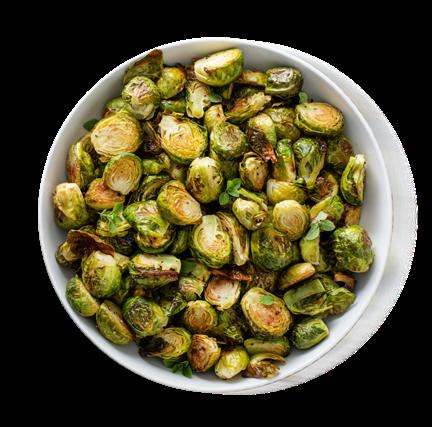
MARCH 2026 - SPROUTS
Sprouts are fast-growing, germinated seeds with a long culinary history, valued today for the freshness, texture and concentrated flavor they bring to the plate. Used blanched, roasted, shaved raw or as a finishing element, they add contrast and vitality to richer dishes, with varieties such as Brussels sprouts, mung bean sprouts and radish sprouts offering layers of bitterness, sweetness and crunch. Now produced through carefully controlled indoor germination that blends traditional practice with modern food-safety standards, sprouts remain a versatile, year-round ingredient for contemporary, vegetable-forward menus.
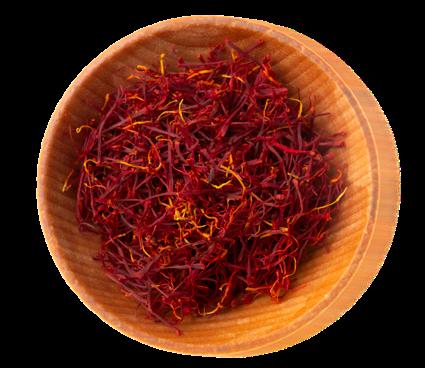
APRIL 2026 - SAFFRON
Saffron, one of the world’s most prized spices, comes from the hand-harvested stigmas of Crocus sativus and is valued for its distinctive aroma, vivid color and unmistakable flavor. Intensely labor-intensive and produced under precise growing conditions, saffron rewards restraint in the kitchen, where a small amount delivers depth and complexity rather than overt spice. From rice dishes and broths to seafood, pastry and beverages, it performs best when carefully bloomed and thoughtfully balanced, making it as much about technique as tradition.
Members can explore ACF Ingredients of the Month in depth through the ACF Online Learning Center presentation and National Culinary Review, earning continuing-education credit toward ACF Certification.
Visit acfchefs.org/olc
Connect Your Brand to the Culinary Community at the 2026 National Convention
Over 1,300 chefs, educators, food service leaders, and culinary competitors in one room for five days. The ACF National Convention is where products get discovered, relationships form and brands build trust.
Reserve your booth or sponsorship today.
June 28–July 2, 2026
DeVos Place Convention Center
Grand Rapids, Michigan
The American Culinary Federation Education Foundation
As the long winter finally gives way to spring and the budding of trees, many of us are preparing to plant our gardens to bloom and grow. Just as the seasons eventually change, so too must the Foundation. Last year, we laid the groundwork by updating the bylaws to enable transformative change at the Foundation. One result of these changes is the appointment of new trustees to promote and advance the Foundation and its mission.
At this time, I would like to introduce the new board of trustees for the American Culinary Federation Education Foundation. We have looked for individuals with experience across many areas to help grow the Foundation in marketing, fundraising, education and finance, just to name some, including a student representative on the board to help build the legacy and foster mentorship for future leadership roles.
Effective January 1, 2026, this is the new Board of Trustees for the Foundation:
At Large Member: Jeff Bacon, CEC, CCA, AAC , who has a great deal of nonprofit experience as we work through this restructuring.
At Large Culinary Educator: Brian Peffley, CEPC®, CCE, AAC , not only a secondary educator but also someone with extensive experience in apprenticeship and accreditation.
Industry Professionals: Carmelo Vadacchino and Katherine Main bring extensive experience in fundraising and philanthropic development. This is a change for the Foundation, reflecting our decision to look outside the organization to help meet our strategic needs.
Associate Member: Dylan Obee, CFPC®, is a student at Johnson County Community College, helping to build youth mentorship toward a future leadership role.
Financial Advisor: Michael Moench, CEC, AAC , joins us with extensive financial experience, both within the Foundation and in education.
Industry Professional: Scott Samuel , our partner with Rouxbe and a leader in education.
Of course, the trustees include committee chairs:
Joe Aiello, CEC, AAC, HOF – American Academy of Chefs
Leslie Eckert, CEPC, CCE, AAC – Accreditation
Chrystal Tatum, CEC – Apprenticeship
David Turcotte, CEC, AAC – ACF Culinary Team USA Manager.
Lastly, we brought Chef & Child back to the Foundation, represented by Vanessa Marquis, CEC, AAC , along with JJ Vitale – ACF Executive Director, and Karen Stamper – Governance Team Lead. Finally, our National President, René Marquis, CEC, CCE, CCA, AAC , Secretary Bryan Frick, CEC, AAC , and Treasurer Kyle Richardson, CEC, CCE, AAC
Please get to know these leaders and offer any help you can in areas that may interest you. We have a great deal of work to accomplish as part of this restructuring of the Foundation.
Stay tuned for new initiatives and strategic plans in the months ahead.
Once a pandemic necessity, contactless technology is now reshaping restaurant operations as a lasting response to labor challenges and changing guest expectations
By ACF Chef Jonathan Deutsch, Ph.D., CRC, CHE
You can make a reservation online or enter your phone number at a kiosk to join the waiting list. You then receive a text message directing you to your table when it becomes available. Order from the tablet, where specials and high-margin dishes are highlighted and 86’d options are hidden from view until they are restocked. Orders are promptly delivered by a conveyor belt. Thirsty? Help yourself at the water and tea station. When you have finished, pay using the credit card reader on the tablet. Complete a survey sent by text to earn a discount for your next visit.
In this dining experience, human interaction is only available upon request. Culinarians who enjoy traditional hospitality – a friendly bartender pouring tastes of a few wine options to help you decide; a cheerful server who shares their college and career ambitions and brings crayons to keep your kids entertained; or a manager who overhears you congratulating your guest on their promotion and surprises you with glasses of champagne – may find this future dystopian.
But this high-tech, low-contact experience is not science fiction; it describes a delicious and affordable business lunch I enjoyed at Shinagawa Station in Tokyo last week.
Our high-touch industry has gone high-tech. The technology is in place. Are you ready? Several factors are contributing to the shift to contactless dining.
COVID-19 Comfort
Contactless technology like online ordering kept many restaurants afloat during the COVID-19 pandemic. Older adults who might have preferred analog formats are now fluent across multiple apps. Now that consumers have been trained during the pandemic to use – and even expect – these contactless technologies, they appear to be here to stay.
For many operators, this shift has become a deliberate strategy rather than a temporary workaround. ACF Chef Buddy Gillespie of Vintage City Eatery (Elizabeth, NJ), which is known for its high-tech low-labor model, says: “Guests can order directly from their phones or use our in-store kiosk.” Chef Gillespie adds his operation sees benefits in reducing the labor of order-taking, shortening pick-up times, increasing check averages and improving order accuracy.
Changing Generational Expectations
While traditionalists may find contactless technologies to represent a decline in hospitality, younger diners may feel the opposite way. Angela Val , President and CEO of Visit Philadelphia, says younger generations are redefining hospitality. “They may consider it better hospitality not to have to interact with a person and to be able to do everything from their phone,” she explains.
Chef Gillespie agrees: “Guest response has been overwhelmingly positive, especially during breakfast and lunch hours when speed and convenience matter most.” For more traditional guests, Chef Gillespie recommends a hybrid approach. “They like to view a hard copy of the menu while still ordering through their phone,” he says.
Labor Crunch
With managers bemoaning both the quality and quantity of the labor pool and many states increasing the minimum wage and/or eliminating the tip credit, operators are finding ways to do more with less. For many, this means reassessing where technology can replace or support labor without compromising service.
Chef Ryan Moore, Executive Chef of Sababa (Washington, DC) says “The increased labor cost for tipped minimum wage [currently $12 per hour in DC] is precipitating this.” Chef Moore and team use multiple technologies behind the scenes to improve efficiencies.
Operational Efficiencies
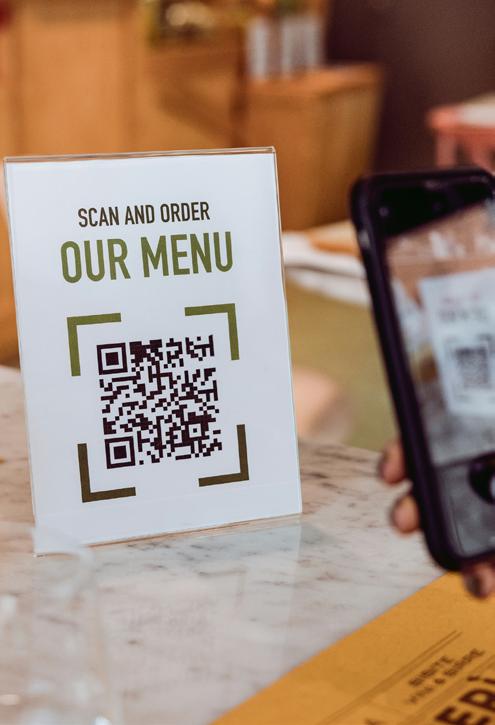
The net result can be a high-tech approach to both streamline service and enhance the guest experience. Chef Massimo Vicidomini , Senior Executive Chef of RPM Italian, a high-volume, upscale Italian concept, says that moving to QR codes for electronic payment cut table turn times by seven to eight minutes. Over the course of a busy service, that efficiency can add a few additional tables (and their revenue) and reduce the annoyance of guests who are ready to leave but
would otherwise need to wait for the back-and-forth of the payment process.
These improvements are not without risk, however. Experts caution that data security and system reliability are paramount. Chef Gillespie says: “We protect customer data through encrypted transactions and tamper-resistant hardware.”
Preserving Hospitality
While contactless dining may benefit operators, some guest needs still require human interaction. In addition, not all technologies are accessible to every guest. Chef Gillespie explains: “One drawback is the reduced personal interaction; however, since our team members are visible to guests, they are always available to assist with a kiosk transaction or answer a question when needed.”
Hospitality is about making guests feel at home when they are away from home. Screens are already woven into daily life, so it stands to reason that modern hospitality incorporates digital solutions throughout the operation. In today’s challenging economic environment, technology must remain as essential as the knife in the chef’s toolkit.
Chef Ryan Moore
Chef Massimo Vicidomini
Quiet Luxury Ushering in
As chefs and diners alike seek respite from excess, a quieter, more deliberate expression of luxury is reshaping menus, techniques and expectations across fine dining
Bringing Quiet Luxury to the Plate
Investing in ingredients
Quiet luxury starts with the best products. The elements of a dish are minimally manipulated, so there’s nowhere for a substandard ingredient to hide.
Simple serving
Skip the foams and gels and put down the tweezers. These dishes stand out for their uncomplicated plating.
Turning in to kitchen training
These dishes are deceptively simple and may require extra training for kitchen staff.
Back-to-basics for the front and back-of-house
Sophisticated dishes require traditional kitchen skills and demand elevated, classic service at the table.
Menu Restraint
Fewer dishes, executed exceptionally well, signal confidence and precision, and leave no room for error.
By Gloria Dawson
Intricately plated dishes incorporating multiple elements have given way to simple but sophisticated meals at many restaurants. These meals are a welcome relief for chefs and diners seeking to highlight ingredients and find solace in something straightforward in an increasingly complex world.
Often described as “quiet luxury,” this shift emphasizes refinement, restraint and intention over excess. The term was previously used to describe high-quality fashion that eschewed prominent elements like loud logos. Today, the term has been adopted by the dining world, particularly in fine-dining establishments.
Quiet luxury combines many elements that have been growing in popularity over the past decade, such as seasonality. It’s also a rejection of some trends that have grown in prevalence, like Instagrammable, flashy foods. At its core, quiet luxury is a return to many traditional fine-dining techniques and philosophies, both in and out of the kitchen.
“It’s a reflection on the guest side and on the restaurant side of a bit of fatigue,” says Candace MacDonald , Co-founder and Managing Director of Carbonate, a creative agency that specializes in food, restaurants and hospitality. “We’re all just hit with so much information and so much choice and so much loudness around us that we want less of it.”
MacDonald sees quiet luxury manifesting in restaurants through condensed menus that don’t overwhelm diners; thoughtful, local sourcing; and even restaurants focused on or known for one high-quality dish. She points to Café Vivant (Menlo Park, CA), which has become acclaimed for its heritage chickens. “We’re seeing how this quiet luxury trend is taking hold in restaurants – it’s going back to this very, very high-quality experience,” she says. “And there’s a less-is-more mentality. Diners are saying: ‘I’m going to pull back on a lot of things, but I’m also going to up the quality on certain things.’”
At Somerset Club (Boston, MA), quiet luxury is reflected in almost everything on the menu, says ACF Chef Tony Le, CEC . For him and his diners, “there’s a growing appreciation for clean, focused flavors, with an increased emphasis on seasonality and exceptional ingredients.” Chef Le focuses on getting top-quality ingredients, whether that be a perfect cut of meat or fish or a butternut squash.
“I’m hoping we just passed an era where tweezers were [used] on every plate and there was always a purée, a foam, a gel, and I think we just manipulated the food to the point where it was no longer recognizable,” he says. “Today, we’ll try to get the best components and really showcase them, rather than
manipulating a product 30 times to show off a certain amount of skill.” Chef Le points to a new dish in the works, combining salmon and cucumbers. “Rather than having 50 ingredients on the plate, it’ll be just lightly marinated cucumbers and we’ll try to find the best salmon.”
ACF Chef Michael Shannon, CEC , Executive Chef at the Philadelphia Country Club, is also highlighting ingredients rather than technique. “When I was going to culinary school, the name of the game was how much we could manipulate food,” he recalls. “Turn this into that. Make a strawberry, a tomato and a tomato into a strawberry and all that stuff, and that’s really cool. But at the end of the day, that’s a trend. Some of the things that won’t ever go out of style are just a really great braise or a really perfectly sautéed piece of fish.”
Of course, this style of cooking is deceptively simple. “From a chef’s perspective, the simpler you go, the more refined you have to be,” insists Chef Shannon. “You can hide a lot with microgreens or with other techniques and sauces and stuff like that, but it is difficult to hide with sautéed fish, it’s either done right, or it’s not.”
“Today, we’ll try to get the best components and really showcase them, rather than manipulating a product 30 times to show off a certain amount of skill.”
ACF Chef Tony Le, CEC
He adds: “In some ways, quiet luxury is less of a trend and more of a return to the cooking of chefs like Eric Ripert [Le Bernardin (New York, NY)], who has long been known for his simplicity and freshness.”
Still, as both a chef and a consumer, Chef Shannon relates to the growing interest in quiet luxury. “I’m trying to find ways to have less in my life, whether it’s deleting an app or trying to streamline things,” he says. “The pace of the world and how crazy everything is, I think food can offer people a little bit of solace.”
The quiet luxury approach can also help with a tight restaurant budget. ACF Chef Lance Cook, CEC, CCA , Director of Culinary Operations at Forsyth Country Club (Winston-Salem, NC), has found that fewer components and smaller portions create tighter prep yields and less waste. In terms of purchasing, he’s practicing SKU discipline and buying fewer, better ingredients.
The care Chef Cook brings to his restaurant has encouraged guests to make repeat visits, stay longer and spend more deliberately. “Ultimately,” he says, “quiet luxury isn’t about less – it’s about more of what matters: sourcing, craft, pacing and grace.”
valuable spice
Valued for centuries and still prized today, saffron is a chef’s ingredient, rewarding precision and restraint in both savory cooking and pastry
By Kerstin Kühn
Saffron, often called “red gold,” is widely regarded as the most valuable spice in the world. Its price reflects scarcity and labor-intensive production, with delicate crocus flowers harvested by hand during a short annual season. For chefs, however, saffron’s value lies less in how it is picked and more in what it delivers on the plate: aroma, color and a distinctive flavor that has no true substitute.
Today, saffron used in professional kitchens is sourced primarily from Iran, Kashmir, Afghanistan and Spain, with prices reaching up to $5,000 per kilogram. “The high price of saffron is driven by biological constraints, climatic requirements and the extreme labor intensity involved in its production,” explains Rick Marino, Owner and President of RCN Imports. “The saffron flower only blooms for two to three weeks each year, and each flower must be harvested at dawn on the day it opens.”
But not all saffron is the same. Quality differences are significant and directly affect performance in the kitchen. According to Marino, climate, soil conditions and post-harvest handling all play a role in determining how saffron behaves once it reaches the chef. Subtle differences can affect how much saffron is needed, how it blooms and how pronounced its flavor and color become in a finished dish.
“Physically, top quality saffron consists of intact, vivid red stigmas with a uniform color and a characteristic trumpet, or crown-shaped tip,” Marino says. “The threads should be whole and unbroken, with only minimal natural breakage.” He adds that chemically, true quality is determined by low moisture content and high levels of the key organoleptic compounds: crocin for color, picrocrocin for flavor and safranal for aroma.
Behind every few threads of saffron in a professional kitchen sits a network of growers, importers and specialty suppliers working to maintain quality and consistency.
“In practice, the difference between top-quality and low-grade saffron is often not subtle, but fundamental: a pure product versus one that has been deliberately altered,” Marino says.
Unlike most spices, saffron is rarely about intensity. Instead, it offers complex yet subtle floral, earthy and sweet notes that add depth rather than heat or punch.
“Saffron has a unique and a bit of an astringent flavor,” says ACF Chef David Scott , Chef Instructor at Cannon Beach Christian Culinary Academy (OR). “It is usually used not only
as a flavoring but as a colorant as well. Think of paella – it both flavors and colors the rice.”
For Chef Einat Admony, Chef-owner of Balaboosta (New York, NY), saffron earns its place when it is dispersed gently and treated as a foundational flavor element. She builds depth through saffron-infused broths and fats that carry aroma and color evenly across a dish.
Chef Admony uses saffron butter, slowly infused cultured butter with fresh grated turmeric and olive oil, which is brushed onto the restaurant’s tahdig, the crispy, golden crust from the bottom of a pot of Persian rice. She also incorporates saffron into broths paired with Persian lime and pomegranate for duck fesenjān and other variations of the dish. She applies the same approach to grains, using saffron broth as the base for Israeli couscous with dried apricots, where the spice adds warmth and color.
Achieving that level of integration requires careful handling, as saffron’s delicate structure leaves little margin for error.
ACF Chef Ashutosh Kandpal , Executive Chef at Paheli Modern Cuisine (Wayne, NJ), emphasizes that saffron is easily compromised through improper handling. Adding it directly to boiling liquid can scorch the threads and introduce bitterness, while heavy use can overwhelm a dish’s natural flavors.
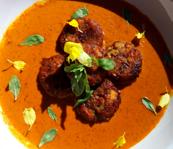
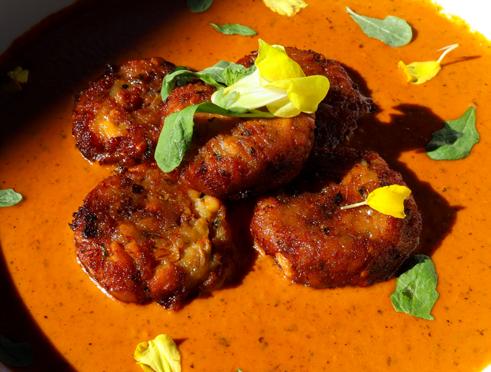
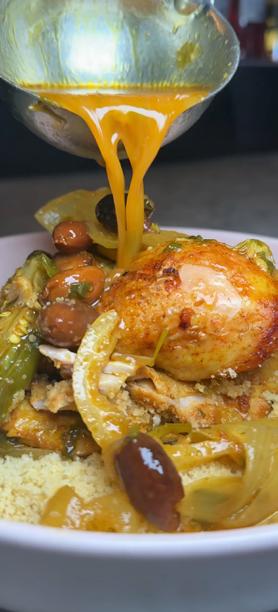
Kofta with Korma by Chef Maneet Chauhan
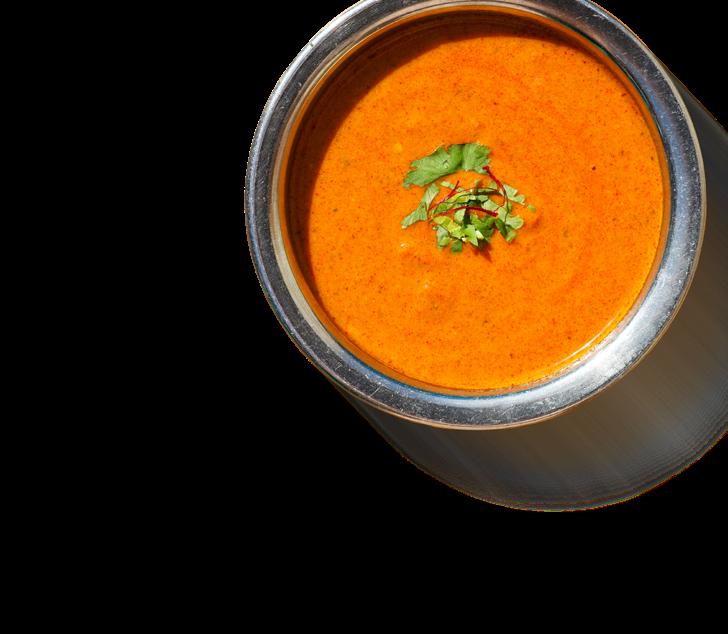
Korma by Chef Maneet Chauhan
In his Zuppa di Pesce allo Zafferano, saffron is bloomed gently in warm stock before being added to the broth, contributing a delicate floral aroma, subtle earthy flavor and a rich golden color without overshadowing the seafood.
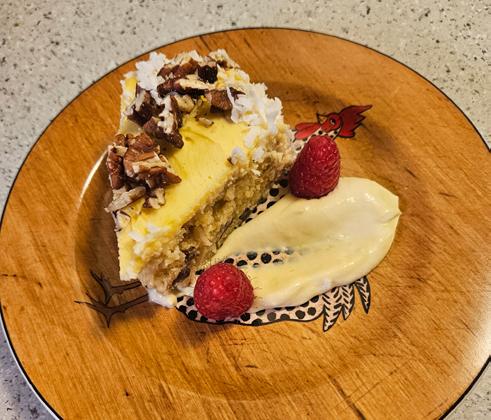
Saffron’s ability to deliver both flavor and color also extends into pastry. ACF Chef Mikey Garahan, CEC , Personal Chef in Salt Lake City (UT), notes that while saffron is most often associated with rice dishes, its floral notes and gentle bitterness translate naturally to desserts. “I loved making saffron rice for many years but when I wanted to expand my use, I started looking at desserts,” he says. That exploration led Chef Garahan to recipes such as honey saffron cake, Swedish saffron bread and saffron cream cake, in which the spice adds aroma and color without overpowering sweetness.
For Chef-restaurateur Chef Maneet Chauhan , saffron is a constant in the kitchen rather than a special occasion spice. “Saffron appears everywhere in my cooking, from steeping my drinks to including it in appetizers and desserts,” she says. That familiarity, she notes, demands discipline rather than excess. “Saffron is one of those ingredients where a little goes a long way. I always suggest that people show restraint when using it, because it’s very easy to overdo.”
For chefs, saffron ultimately earns its place not through its price tag but through precision. Used thoughtfully, it signals restraint, confidence and craft – an ingredient that asks as much of the cook as it gives back on the plate.
RECIPE: Saffron Broth
By Chef Einat Admony
This saffron broth is built through slow infusion, allowing the threads to release color and flavor gently into liquid rather than dominating a dish. By steeping saffron in hot water, often overnight, the resulting broth carries aroma, depth and color in a form that can be used across multiple preparations. Treated this way, saffron remains present but restrained, offering chefs a way to extend its impact from a single infusion rather than relying on repeated direct use of the threads.
Bring water to a boil, then reduce to a simmer and add saffron, bay leaves, orange peel, salt, black pepper, and optional flavorings.
Simmer for 20 minutes, turn off the heat, and let sit overnight.
Strain and refrigerate or use immediately in rice dishes, soups, sauces or as a cooking liquid or refrigerate for up to 5 days.
Chef Maneet Chauhan
Saffron Cream Cake by ACF Chef Mikey Garahan, CEC
Members can explore ACF Ingredients of the Month in depth through the ACF Online Learning Center presentation and National Culinary Review, earning continuing-education credit toward ACF Certification. Visit acfchefs.org/olc
Sprouts
By Kerstin Kühn
Sprouts may be small, but their applications on the plate are wide-ranging. For chefs, they offer freshness, texture and concentrated flavor across multiple cuisines and formats. Used thoughtfully, they provide contrast to rich or composed dishes while reinforcing seasonality and balance.
Sprouts are fast-growing, germinated seeds with a long culinary history, valued today for both versatility and visual clarity. Depending on the variety, they introduce bitterness, sweetness or peppery heat, allowing chefs to fine-tune flavor without relying on heavier elements. Brussels sprouts, long associated with roasting or braising, can also be shaved thin and served raw for crunch and sharpness. Mung bean sprouts bring sweetness and a tender bite, while radish sprouts offer a clean heat well suited to seafood, vegetables and lighter proteins.
In professional kitchens, sprouts adapt to multiple techniques. They can be lightly blanched to soften bitterness, roasted to deepen sweetness and caramelization, or left raw to provide lift as a finishing element. Their structure allows them to hold up in composed salads, grain bowls and vegetableforward plates, while smaller varieties function as garnishes that contribute more than just appearance.
Modern production methods have also evolved. Most commercial sprouts are grown through controlled indoor germination, combining traditional methods with contemporary food-safety standards. Temperature, humidity and sanitation are closely monitored to ensure consistency and reliability. This environment also supports year-round availability, reducing dependence on seasonal fluctuations.
As vegetable-forward cooking continues to expand, sprouts offer a practical way to introduce contrast without unnecessary complexity. Their short growing cycle aligns with sustainability goals, and their adaptability allows application across multiple menu sections, from small plates to composed entrées.
Whether used as a finishing touch or featured more prominently, sprouts deliver balance, structure and clarity of flavor. In a kitchen where precision and restraint are increasingly valued, they remain a dependable and highly adaptable ingredient.
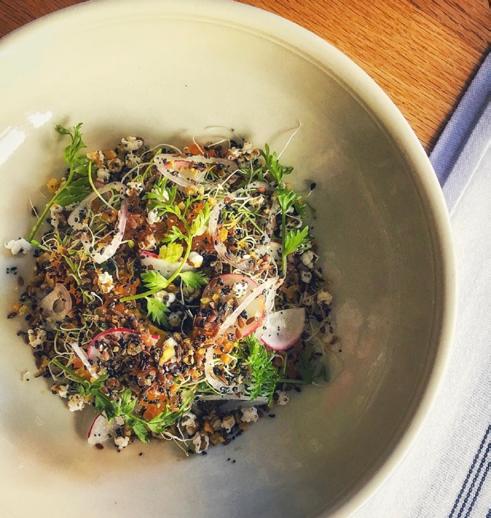
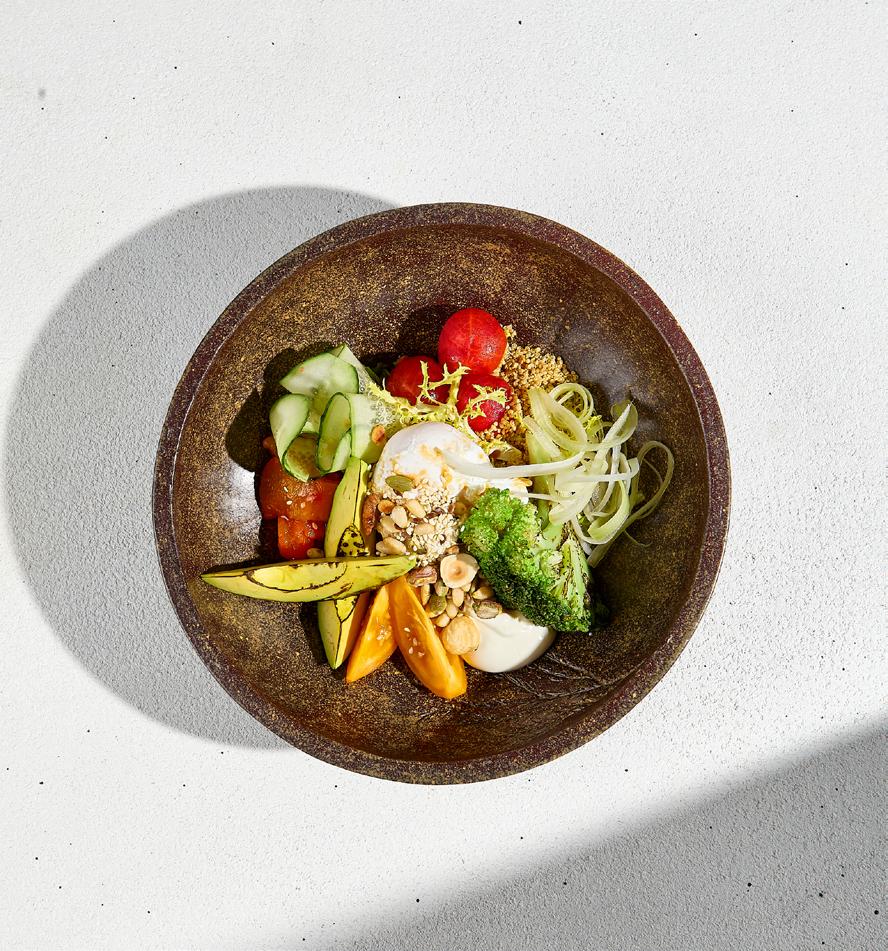
RECIPE: Kraut Sprouts with Seed Mix, Radish and Trout Roe
Recipe by Chef Evan Rich, Chef-owner of Rich Table (San Francisco, CA)
Yield: Serves 4
Ingredients:
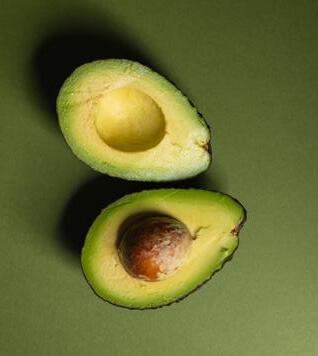
• 2 ripe avocados, grilled, gently broken into chunks
• Shiro vinegar, to taste
• Double-brewed soy sauce, to taste
• Fine sea salt, to taste
• Freshly ground black pepper, to taste
• 40 g kraut sprouts (onion and caraway sprouts)
• 1 large radish, thinly shaved
• 1 small shallot, thinly sliced into rings
• 120 g whipped cream cheese
• 40 g trout roe
• 10 g chives, finely chopped
Seed Mix (yields more than needed):
• 240 g flax seeds
• 240 g golden sesame seeds
• 240 g black sesame seeds
• 135 g poppy seeds
• 135 g popped sourgum
• 55 g fried garlic
• 240 g fried onions, finely chopped
• 30 g nutritional yeast
• 55 g caraway seeds
Ingredients are prepared and composed as shown, with the kraut sprouts and seed mixture used as finishing elements to provide texture and contrast.
JUNE 28-JULY 2, 2026
Student Pastry Chef of the Year Kaylee Snyder
By John Bartimole
Dictionary.com defines a tantrum as a sudden burst of ill temper and typically frames it as a negative. But for ACF Chef Kaylee Snyder, those early childhood tantrums led not to timeouts or punishments, but to the kitchen – and a promising, burgeoning culinary career.
Snyder, the American Culinary Federation’s Student Pastry Chef of the Year, by her own admission “had a tantrum problem” as a child. But she also had a wise mother. “My mom decided to channel that passion into something productive, so she took me into the kitchen and let me use my energies there,” she recalls. “And I’ve been there ever since.”
While she’s always been competitive – “I participated in music and band in high school and always wanted to excel” –she found her niche in culinary competitions during that same time. “I began competing then, and I was hooked,” she says. “I just wanted to keep competing.”
What drew her in was the creative challenge. “I love the creative part of competition–the challenge of making a dish your own and knowing you’ll be judged on every part of the experience, including the presentation,” she says. “What I create is a reflection of me, and I always want to be the best I can – in competition and in life.”
That philosophy carries through to her pastry work.
“I particularly enjoy making pastries that are challenging – anything with layers that have to be even and identical,” she says. “While most of it is technical work, eventually you have to create the dish and make the presentation your own.”
For Snyder, there’s a moment when technique gives way to instinct. “You have to look at your dish and know that when it sings to you, it’s ready,” she explains. “That means it’s yours.”
She views her recent championship through the same lens. “This championship isn’t just about winning,” she says. “It is a reflection of the countless hours of dedication, the lessons learned from my mentors and the belief that passion and perseverance can turn dreams into reality.”
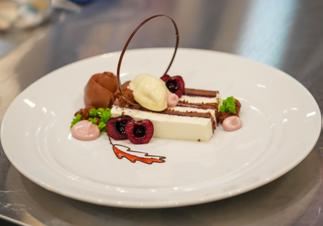
Her winning entry – Jewel of the Forest – consisted of layers of flourless chocolate sponge cake, cherry gelée and mascarpone Kirschwasser cream; Kirschwasser Truffle Rose with Amarena cherries, chocolate almond crumble; and sour cherry foam; basil sponge cake with macerated cherries; and toasted almond gelato with a tempered chocolate hoop.
She is quick to share credit for her accomplishments with Utah Valley University (UVU) Associate Professor and ACF Executive Pastry Chef Diana Fallis, CEPC, who has been instrumental in her culinary development. “I couldn’t have done it without my coach and mentor, Chef Di,” she insists. “She pushed me to grow, believed in me, and invested countless hours into helping me succeed. This achievement is as much hers as it is mine, and I am so grateful for her mentorship.”
“You have to look at your dish and know that when it sings to you, it’s ready. That means it’s yours.”
Snyder has already earned her degree in Culinary Arts and is now pursuing an additional degree in Hospitality Management, both at UVU. “I’d love to come back someday to UVU and teach, and maybe get a faculty position,” she says.
For her immediate future, the focus is clear. “More competitions,” she says. “I’m competing this year in savory. My main course will be Cornish game hens with balsamic reduction and barley.”
She keeps busy working for Culinary Crafts, a high-end Utah catering company, along with helping out at various UVU events.
Outside of work and competition, she also makes time to cook for her family.
“My family has been incredibly supportive,” she says. “I so much enjoy baking for them for every holiday and get-together. They’ve been with me all the way through, and it’s an honor to share my passion and talents with them.”
And it all started with her tantrums, her passion – and a mother who knew how to channel both.
CLASSICAL VS MODERN
RaTatOuiLle
By ACF Chef Jonathan Deutsch, Ph.D., CRC, CHE
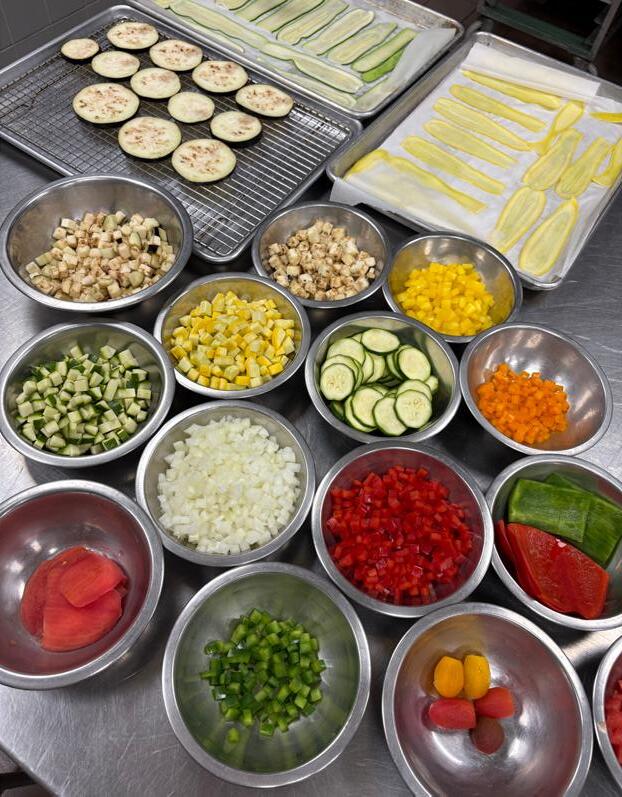
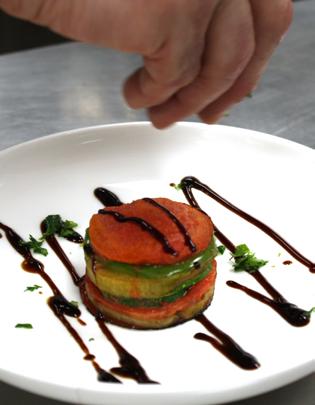
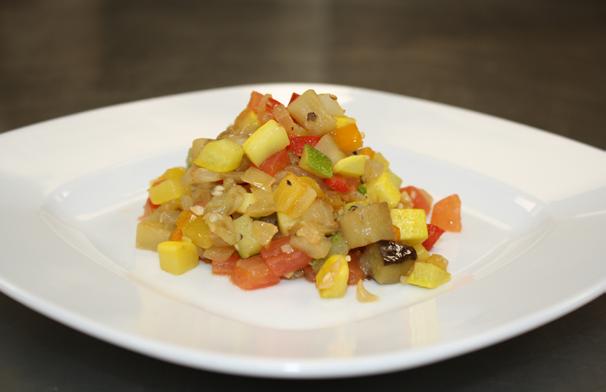
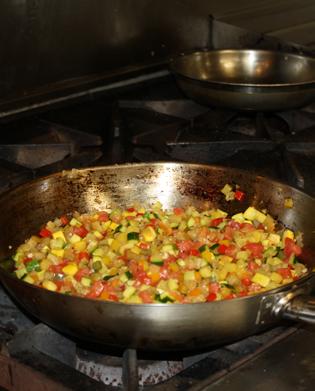
Young cooks these days are more likely to have been introduced to ratatouille from the Pixar movie than from the cuisine of southern France. But even without deep familiarity with its culinary roots, the dish can be a powerful hook to engage culinarians and guests alike, transforming humble vegetables into something rich, silky and sublime when properly executed. In addition to being a classic of French cuisine, it is also a culinary school staple for teaching and refining knife skills, with hundreds of perfect and imperfect dice cooked down into the finished dish.
Ratatouille is a rustic Provençal vegetable stew with origins in the 18th century. Like many great French dishes, it emerged from the thrifty, peasant tradition of cooking down the late-summer harvest of tomatoes, eggplant, squash, peppers and herbs. It can be served hot or cold on its own, or used as a sauce, dip or base for soups or stews.
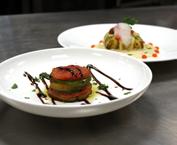
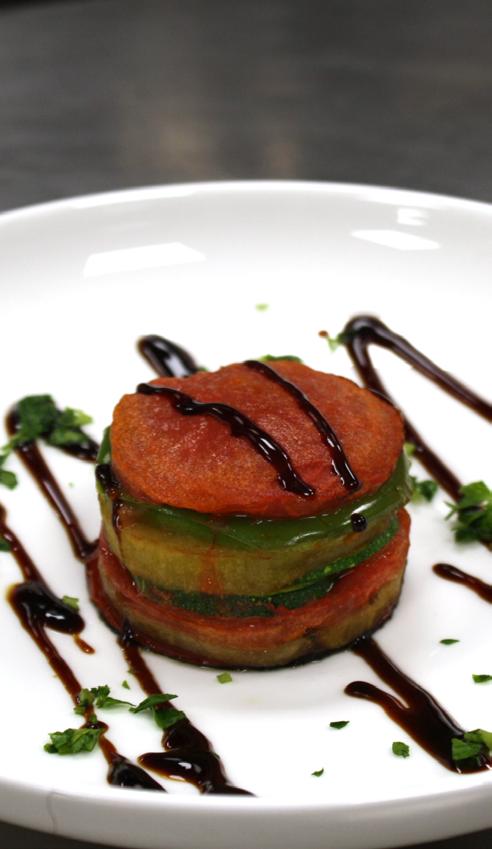
Chef Rich Pepino, Assistant Teaching Professor at Drexel University in Philadelphia, makes ratatouille with his students throughout the curriculum. Freshman skills students prepare the dish to develop knife skills. The recipe appears again as a menu item in a sophomore quantity-food-production class, served stacked in refined layers. Seniors then use it as a template to test newly acquired skills, including modernist techniques, bringing the dish full circle.
Chef Pepino says: “Ever since I was a kid, my mother had an obsession with French cooking. One thing that stuck with me was why vegetables matter. When they aren’t overcooked, you can really accentuate them if you control your sauté.”
A Drexel graduate himself, Chef Pepino went on to work in Burgundy and traveled extensively throughout France. “Spending time in Provence is what deepened my connection to the region,” he says. Chef Pepino brings that passion for Provence and one of its signature dishes directly into his classroom.
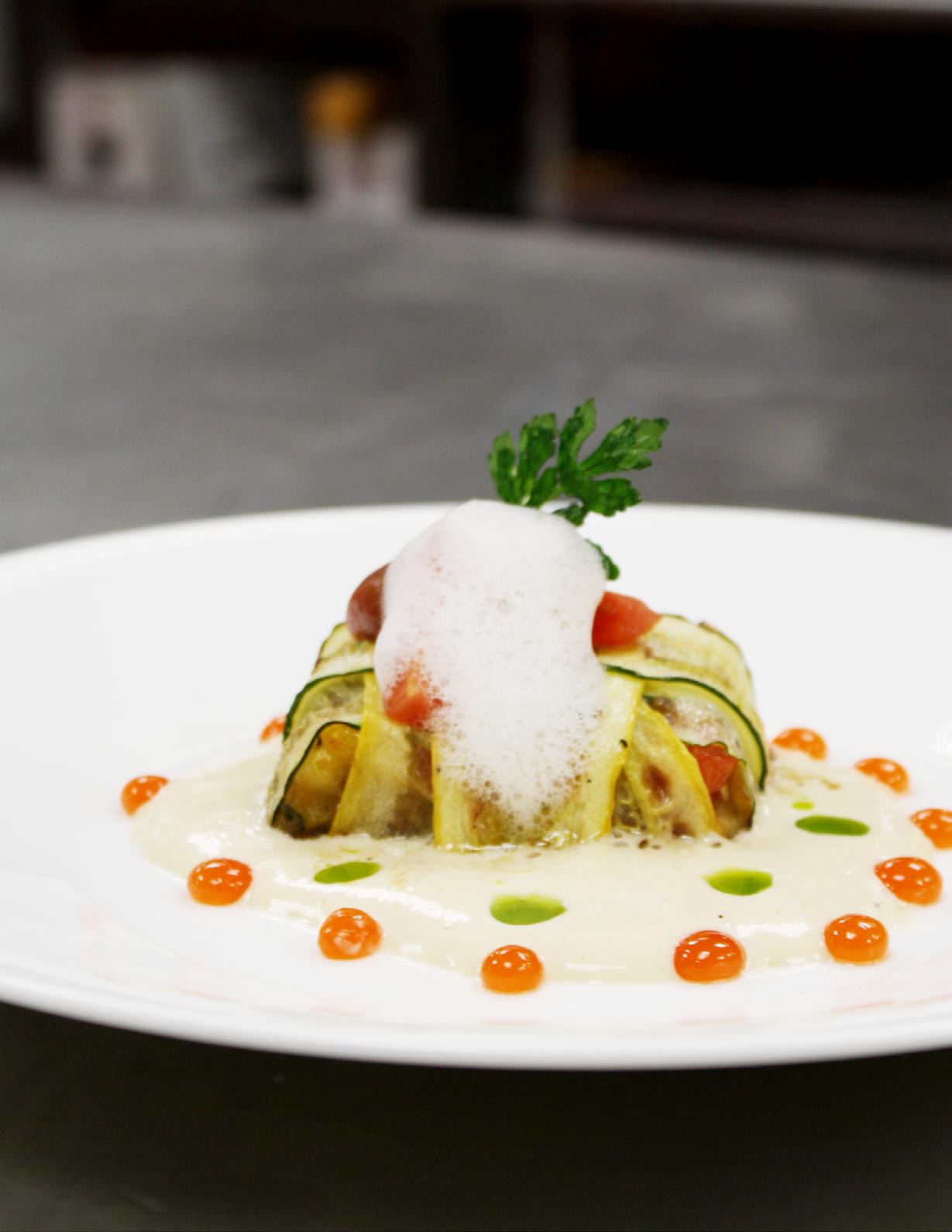
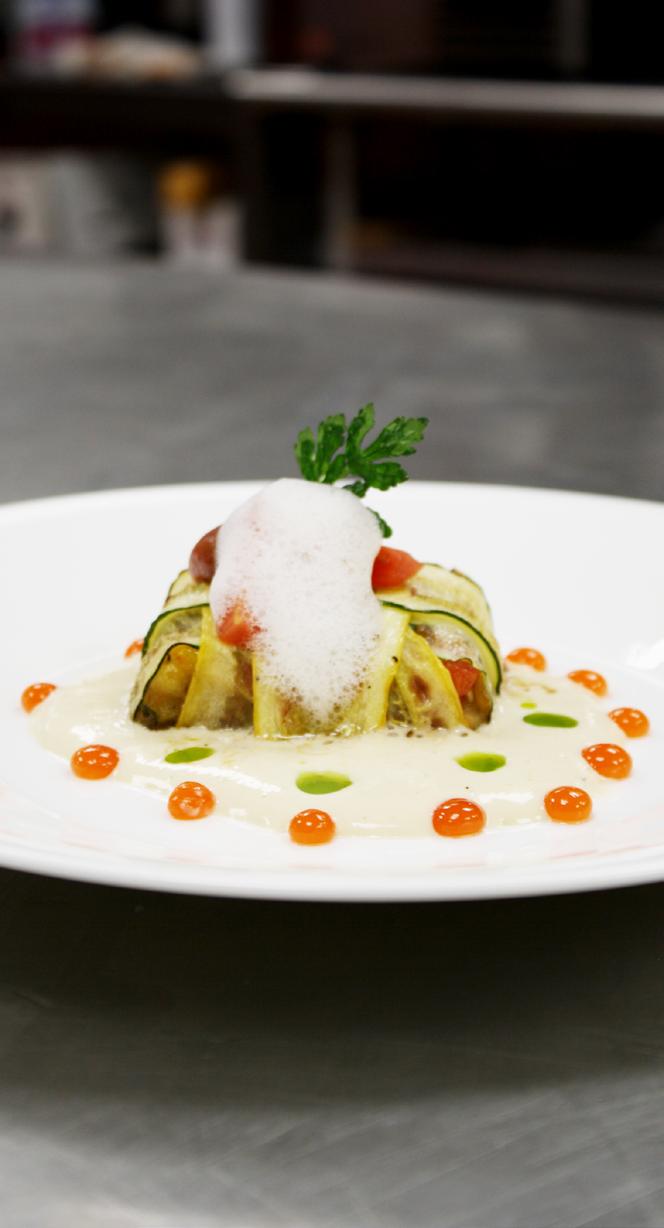
Once students have mastered both diced and layered versions as underclassmen, they are given greater creative freedom as seniors to develop modern interpretations of the dish. Two culinary arts and science students, Natalie Mrak , from Delaware County (PA), and Isabella Gigliotti , from Mt. Laurel (NJ), applied modernist techniques to classic ratatouille ingredients, elevating the peasant dish into a fine-dining appetizer. Under Pepino’s tutelage, they added a shallot espuma, tomato foam and red pepper caviar, techniques learned in a modernist cuisine class.
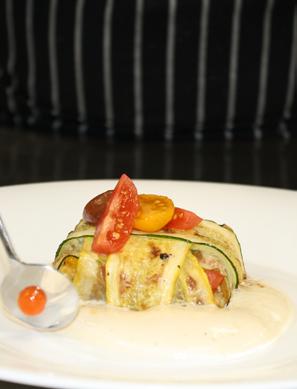
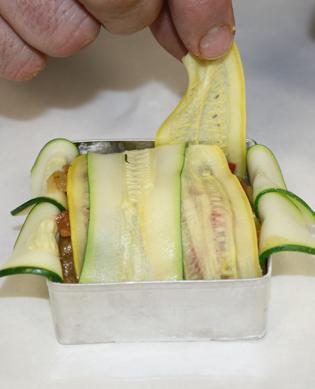
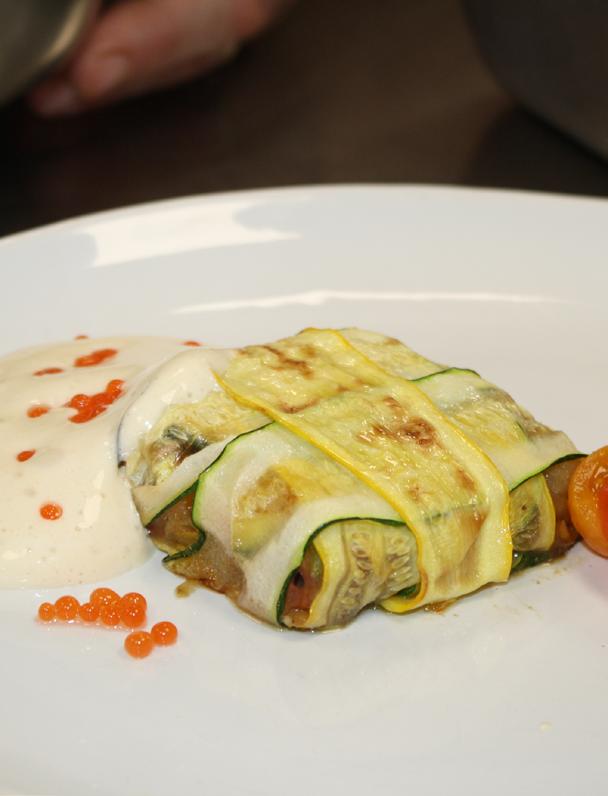
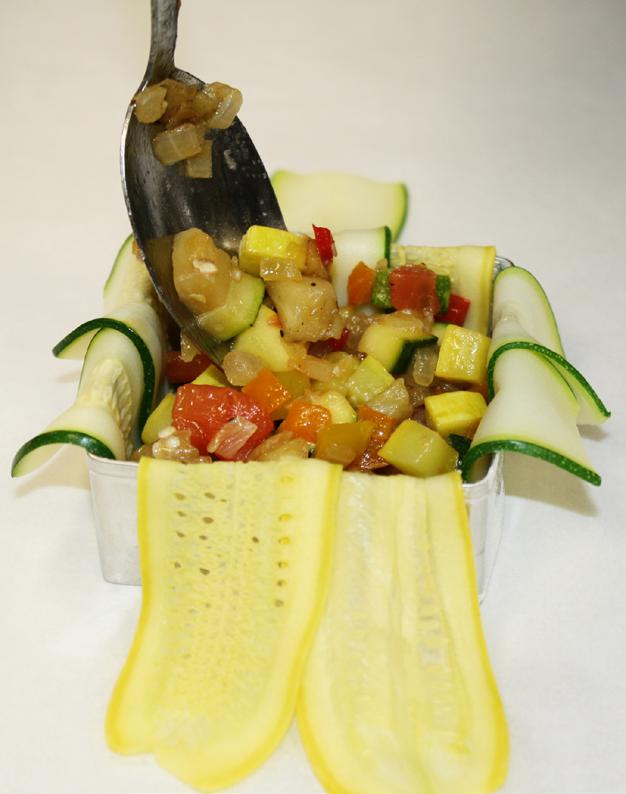
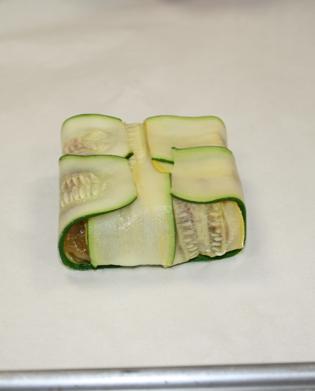
“Our presentation was modern as well,” Gigliotti says, “with a ‘gift box’ structure created by layering zucchini and squash in a mold, filling it with eggplant and baking it.” She notes that this version tasted the best to her because it had more varied and interesting flavors than the traditional sautéed dice. “The shallot cream added bulk and depth, making the dish more filling and well-rounded,” she adds.
Mrak says that while ratatouille is known for being simple and delicious, there’s room to take something so simple to the next level. “The tomato foam is a good example: tomato water, lecithin and aeration with an immersion blender add both freshness and intensity,” she explains.
Gigliotti aspires to be a research chef working in food product and recipe development, while Mrak plans to launch a private chef business specializing in cooking for guests with allergies and food sensitivities. For both, ratatouille, in its classic and contemporary forms, will remain part of their repertoire.
CLASSICAL
Classic Ratatouille
By ACF Chef Richard Pepino
Yield: 4–6 portions
A traditional Provençal vegetable preparation, finished either as a rustic diced sauté or a composed molded presentation.
Ingredients:
• 180 g eggplant, small dice or ¼-inch rounds
• 65 g zucchini, small dice or ⅛-inch rounds
• 65 g yellow squash, small dice (for diced version)
• 80 g red bell pepper
• 80 g green bell pepper
• 80 g yellow or orange bell pepper (for diced version)
• 350 g Roma tomatoes, peeled and diced or 4 Roma tomatoes, peeled and sliced
200 g Spanish onion, small dice
• 8 g garlic, minced
• 10 g fresh thyme, chopped
• 25 g fresh parsley, chopped (optional, for color), divided
• 70 ml olive oil (blend), divided
• Salt and pepper, to taste
• Extra virgin olive oil, for finishing
• Optional garnish (molded presentation)
• Balsamic glaze
Method:
Prepare the vegetables
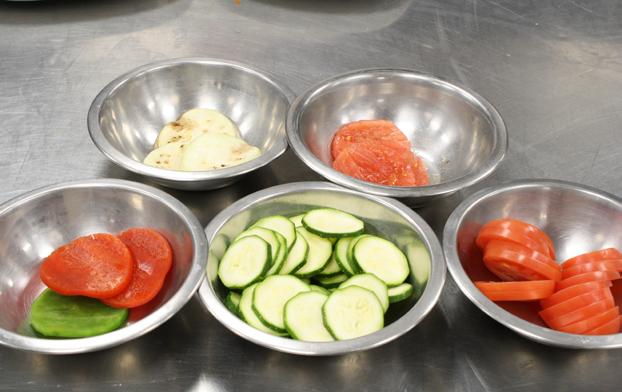
Lightly salt the eggplant and zucchini (and squash, if using) in separate bowls to draw out excess moisture. Let sit for 30 minutes, then drain well.
Cook the aromatic base
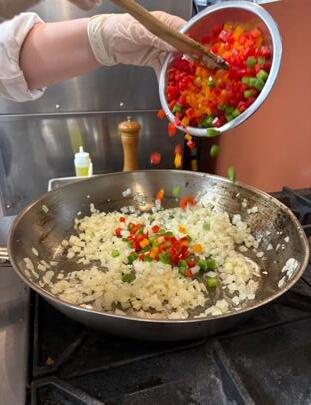
Heat 30 ml of the olive oil in a wide pan. Sweat the onion and garlic until fragrant and translucent. Add the thyme at the end. Season to taste and allow to cool slightly.
Finish one of two ways.
Diced Ratatouille (Rustic)
Raise heat slightly and add the bell peppers, sautéing 3–4 minutes. Add remaining olive oil as needed.
Add the drained eggplant, zucchini and squash. Sauté until just al dente.
Fold in the tomatoes and half the parsley, cooking briefly to warm through. Remove from heat.
Finish with remaining parsley, extra virgin olive oil and seasoning.
Molded Ratatouille (Composed)
Char, peel and portion the bell peppers into uniform rounds.
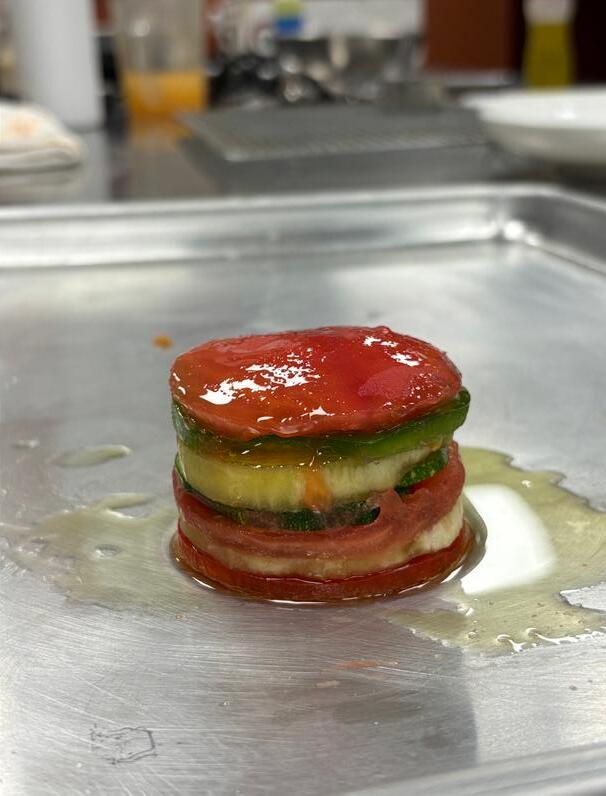
Using a 3-inch cutter mold, layer vegetables on a lined baking sheet, alternating eggplant, peppers, tomatoes and zucchini. Every 2–3 layers, add a teaspoon of the onion-garlic mixture.
Drizzle lightly with olive oil and season.
Roast at 425°F (220°C) for 12–14 minutes, until lightly caramelized.
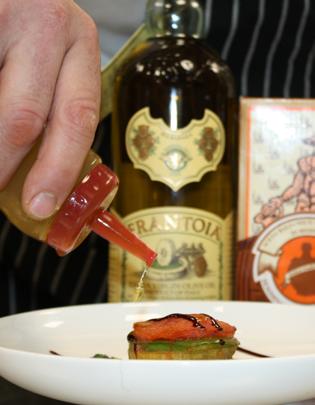
Unmold onto plates and finish with extra virgin olive oil, parsley, salt and optional balsamic glaze.
Photo credit Allessandra Mora
MODERN
Modern Ratatouille “Gift Box”
By ACF Chef Richard Pepino with Natalie Mrak and Isabella Gigliotti
• 350 g Roma tomatoes, peeled and small dice (concassé)
• 10 g fresh thyme, minced
• 12 g fresh parsley, minced (optional, for color)
• 4 grape tomatoes, quartered (garnish)
• Salt and pepper, to taste
• Extra virgin olive oil, to taste
Method:
Lightly salt the zucchini and squash separately and allow to soften for 15 minutes.
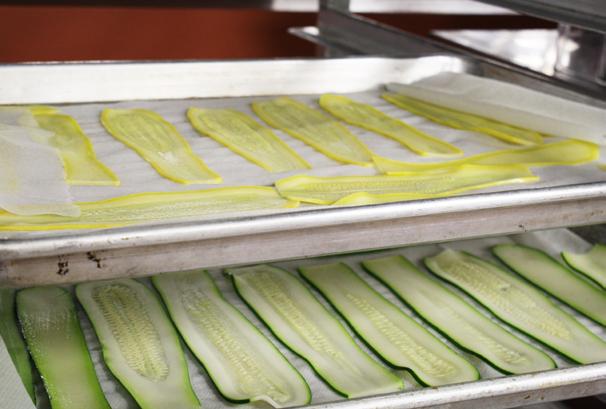
Blanch zucchini and squash for 2 seconds in boiling water. Shock in an ice bath, dry thoroughly and reserve flat.
Lightly salt and macerate the eggplant for 30 minutes. Drain well.
Heat 30 ml of olive oil in a pan. Sweat the onion and garlic until fragrant and translucent. Season to taste.
Add peppers and sauté for 3–4 minutes.
Add eggplant and sauté for 3 minutes.
Add tomatoes, thyme and parsley. Sauté for 1 minute, then remove from heat.
Using a 3-inch square ring mold, crisscross layers of zucchini and squash, allowing excess to overhang the edges.
Pack the sautéed vegetable mixture tightly into the center.
Fold the vegetable flaps over to enclose the filling and form a box.
Repeat to make four boxes. Chill until firm and hold for service.
Roast in a combi oven at 425°F (220°C) with 30% steam for 8 minutes before plating.
Tomato Water Foam
Ingredients:
6 Roma tomatoes
• Soy lecithin powder (0.6% by weight of strained tomato liquid)
• Salt and pepper, to taste
Method:
Pulse tomatoes with salt in a food processor until finely chopped.
Transfer to a fine sieve set over a container. Refrigerate and strain for at least 6 hours.
Do not apply pressure for maximum clarity.
Weigh the strained liquid.
Add lecithin at 0.6% of the liquid weight and blend with an immersion blender.
Rest 5 minutes to stabilize; re-blend as needed to produce foam.
Red Pepper Caviar
Ingredients:
• 250 g fresh red bell pepper juice (from 4–6 peppers) 3.5 g agar agar powder
• 240 ml canola or other neutral oil
• Salt, to taste
Method:
Chill oil in a transparent container in a blast chiller until thick but not solid (about 30 minutes).
Bring agar agar and pepper juice to a gentle simmer over low-medium heat.
Remove from heat immediately once simmering.
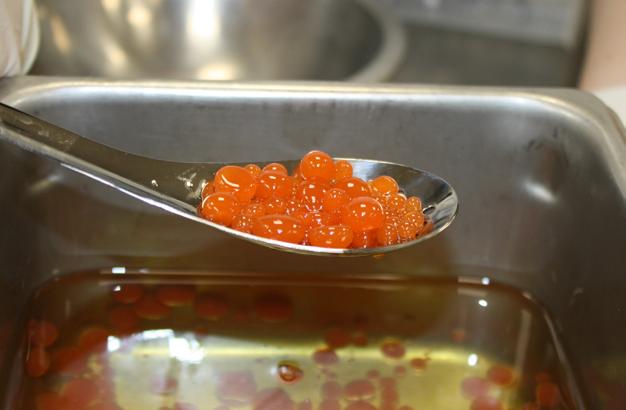
Using a dropper or squeeze bottle, drip the mixture into the cold oil.
Strain beads, rinse gently and hold refrigerated for service.
Shallot Espuma
Ingredients:
• 4 shallots
• 150 ml heavy cream
360 ml milk
• Salt and pepper, to taste
Method:
Preheat oven to 400°F (205°C).
Roast shallots until caramelized, about 20 minutes.
Steep shallots in milk and cream for 30 minutes.
Strain into a 0.5-L iSi siphon. Charge with 1 N₂O cartridge.
Shake vigorously.
Hold warm for service.
Chive Oil
Ingredients:
• 100 g chives
• 15 g salt
• 650 ml olive oil
Method:
Pulse chives and salt in a food processor.
With the motor running, slowly stream in olive oil.
Strain through fine mesh or cheesecloth.
Transfer to a squeeze bottle.
Final Assembly:
Spoon shallot espuma onto the center of a salad plate.
Place the ratatouille gift box on top.
Arrange red pepper caviar around the espuma, alternating with dots of chive oil.
Finish with grape tomatoes, tomato water foam and parsley.
Photo credit Allessandra Mora
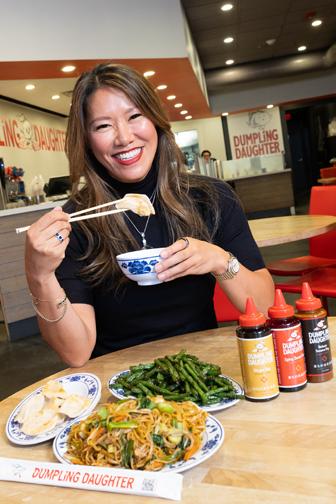
A conversation with Nadia Liu Spellman, founder and CEO of Dumpling Daughter
By Stephanie Lewis
Nadia Liu Spellman, founder and CEO of Dumpling Daughter, talks about how family influence, datadriven decision-making and difficult business choices have shaped her path from restaurant owner to retail brand builder.
Growing up with parents who were successful restaurateurs, how did that early exposure shape your view of hospitality and the culinary world?
I felt incredibly fortunate to experience their entrepreneurship firsthand. From a young age, I watched them lead by example, building such a unique business with exceptional service and offerings, and that inspired me to be excited about hospitality and food in general. I wanted to dive into the culinary world because they had such a fun and glamorous business, and so very early on, I knew that’s what I wanted to pursue.
You often credit your mother, Sally Ling, as a major influence. What business advice from her still guides your decisions today?
My mom was obsessed with cost and doing as much as you can with what you have. For example, she always said when you start your first venture you must watch every cent and do as much as you can with the money you have. I realized pretty quickly that what she was actually talking about was getting a high return on your investment. Another major lesson was hiring the right people for the right jobs. If you can hire the right people and put them in the right places, your life as the founder becomes much easier.
Your long-term vision extended beyond restaurants into retail and wholesale. How did your restaurant help you test and refine that product strategy?
My original dream was to sell frozen dumplings in the supermarket, and that was what inspired me to open a restaurant as a way to test the market. Growing up, I experienced the delicious high-end Chinese food at my parents' restaurant, but my favorite childhood memories were centered around making dumplings at my grandmother's house.
The best part about making dumplings is that you get to freeze them and enjoy them at any time with a convenient boil. My dream was to have others share in this joy of cooking fresh dumplings from the freezer at their convenience.
Check out the Chef’s Table Podcast with ACF Chef Rocco Paradiso, HAAC, and Dumpling Daughter founder and CEO,
When we decided what we would launch, we looked at the sales data from our restaurant. After you release your top items, you then look at that sales data to figure out what to eliminate. Looking back, I would have released very few items and focused on perfecting each one.
For chefs considering launching products in grocery or wholesale, what’s the best place to start?
You have to start somewhere. Begin by preparing your product for friends and family and gather their honest feedback. That’s your first level of market research, and it’s invaluable for understanding what works and what needs refinement before you scale.
You’ve also published a cookbook, Dumpling Daughter Heirloom Recipes: Fom Our Restaurants and Home Kitchens. How did you decide which recipes to include?
I wrote the cookbook as a celebration of my mom’s cooking. I thought about all of my favorite dishes she cooked for me. I started off with over a hundred recipes, and the editors made me trim it down. I told them that’s ok – it’s a reason for another cookbook!
I wanted the book to be approachable even for inexperienced home cooks and for the recipes to include simple ingredients that are easy to find in your everyday supermarket.
As a founder and CEO, tell us about a difficult decision you’ve had to make and how you worked through it.
Last year I was forced to really evaluate the company’s performance across each channel of the business. When certain parts of the business require a lot of your time and aren’t profitable, you have to make the hard decision to discontinue that business line. As entrepreneurs, we’re constantly trying new things and executing new ideas, which makes us emotionally attached to every venture. It’s difficult to pull the plug on something you enjoy that isn’t creating value. I closed two restaurants in order to fully dedicate time and resources to our frozen retail business. It was a hard decision because it made me and some team members feel like we failed, but at the end of the day it was a strategic business decision.
On the ACF Chef’s Table Podcast, you spoke candidly about the challenges of entrepreneurship. What keeps you motivated through the tougher moments?
There are tradeoffs to everything. Sometimes I wish I worked for a company and received a steady paycheck, but other times I am so happy that I pursued my dreams. Regardless of your career path – the job you take or don’t take, the business you start or don’t start – it’s about the journey and the ride. What I find most rewarding is learning something new every day and the team that I’ve built. It makes me happy that I get to decide who is riding the bus that I’m driving, and I’m very grateful for all the passengers on my bus.
Dumplings are central to both your business and your personal story. What’s your number one tip for making great dumplings – and if you were hosting a celebration, what would you serve?
Start with the best ingredients. I really like the ground pork from my local farm, meaty shiitake mushrooms and fresh cabbage. I would have some kind of noodle dish, always a beef dish, sautéed green vegetables and seafood, either shrimp or fish. When designing a Chinese meal, we always focus on balance. No matter how fancy the dishes are, everyone always goes for the dumplings first. They can be an appetizer or the main meal.
Nadia Liu Spellman.
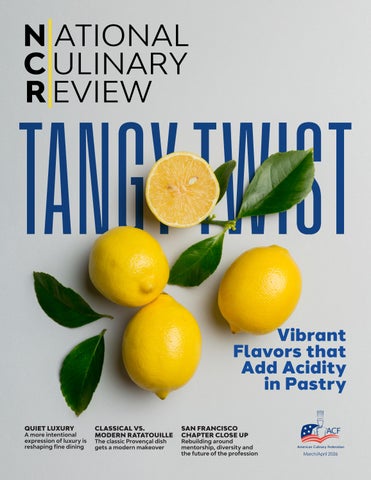
Vibrant Flavors that Add Acidity
Lemon zest and fruity sour flavors are leading the charge in cakes, desserts and fine patisserie
By Pamela Brill
Pastry chefs are leaning into citrus-focused desserts this season, as diners continue to gravitate toward lighter, more natural flavors. Plated pastries featuring both familiar citrus staples and lesser-known varieties allow chefs to satisfy a sweet tooth while introducing brightness and balance on the plate.
This shift in pastry flavor profiles stems from several factors. The 2026 Patisserie Trends Report points to a growing desire for visual appeal, with bright citrus colors taking center stage across social media. At the same time, consumers’ palates are evolving, with an increasing preference for sharper, bolder tastes. In response, pastry chefs are embracing tangier flavors that bring freshness, contrast and nuance to dessert menus.
For ACF Pastry Chef Kelli Marks, CEPC , Instructor at the Culinary Arts and Hospitality Management Institute at the University of Arkansas – Pulaski Technical College and ACF Pastry Chef of the Year Regional Winner (Central) 2024 –oranges, lemons, and other standard fare are no longer relegated to the sidelines. “I feel that citrus can be the star of the show, especially during the winter,” she says. “Citrus fruit serves to amplify the flavor of other fruits, making it one of the most versatile flavor profiles available to pastry chefs.”
ACF Chef Kelli Marks, CEPC
“The sharp zing it brings can cut through the sweetness in a way that is unique and memorable.”
ACF Chef Kelli Marks, CEPC
Access to fresh citrus year-round is a major advantage for pastry chefs, particularly in high-traffic markets. Chef Dominique Ansel , inventor of the Cronut® and owner of bakeries in New York and Las Vegas, values citrus for its refreshing tartness and versatility.
Chef Marks highlights that versatility in her seasonal baking, turning to a blood orange ricotta cake during the winter months and favoring grapefruit in place of lemon or lime for curds and pie fillings. “The sharp zing it brings can cut through the sweetness in a way that is unique and memorable,” she says.
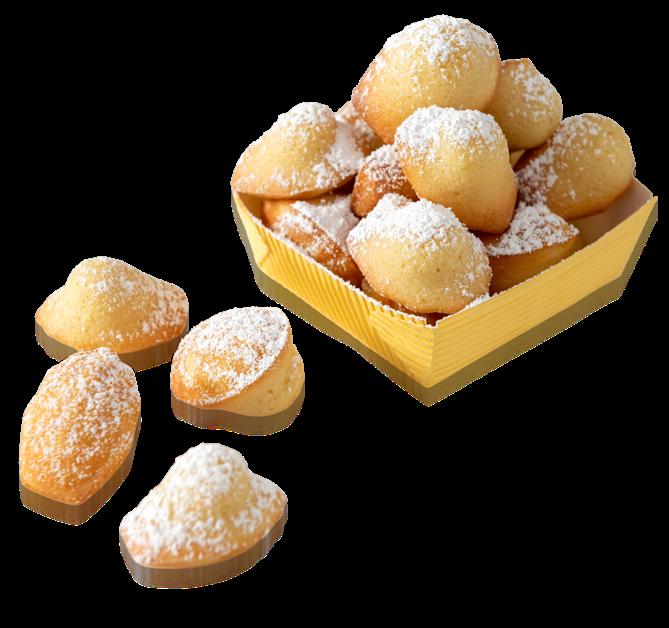
“One of my favorite seasonal pastries that we have now at our Flatiron (New York, NY) location is the olive oil lemon poppyseed cake,” he says. Surrounded by a thin, laminated brioche crust and topped with lemon confit, the pound cake has become a wintertime favorite. At Chef Ansel’s SoHo bakery, citrus appears in a more delicate form, with warm mini madeleines finished with lemon oil and fresh lemon zest.
Chef Dominique Ansel
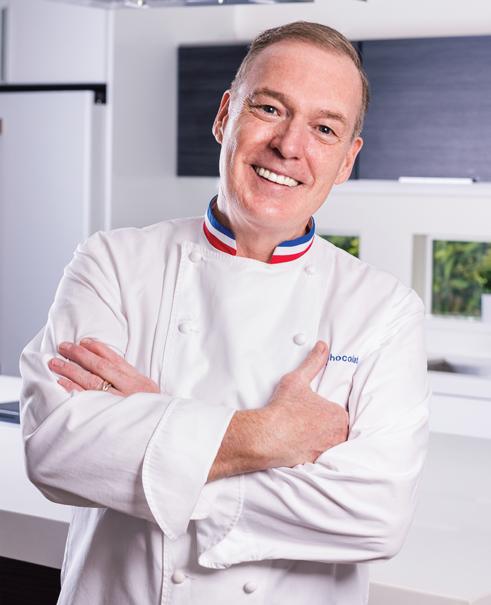
Citrus also plays an essential role in pastry-making when it comes to balancing sweetness and structure. Chef Jacques Torres, a master chocolatier, cookbook author, and judge for TLC’s Next Great Baker, is well aware of excess sugar’s growing scrutiny. “It’s a constant fight; but with no sugar, there is no caramelization, no structure,” he explains.
Rather than simply reducing sugar, Chef Torres curbs high sugar content by enhancing his candies and pastries with citrus elements. He favors passionfruit for its acidity and complexity, incorporating its juice into his artisanal chocolates to enhance flavor without increasing sweetness.
While classic citrus like lemons and oranges remain readily available, pastry chefs are also embracing opportunities to experiment with more unconventional flavors. Tamarind, a tropical fruit with a distinctive sweet-sour pulp, has seen a surge in popularity online, with social media posts increasing by 35 percent in the second quarter of 2025, according to the 2026 Patisserie Trends Report.
“Coffee is bitter and I found that tamarind works great as a replacement.”
Chef Rebecca Freeman, CEPC
Chef Rebecca Freeman
Tamarind Tiramisu by Chef Freeman.
Photo credit Samantha Ruble
Chef Jacques Torres
Chef Della Gossett
That growing interest is reflected in the work of Chef Rebecca Freeman, CEPC , Executive Pastry Chef at The Club at Las Campanas (Santa Fe, NM) and ACF Pastry Chef of the Year 2023, who created a tamarind tiramisu as an innovative twist on the classic dessert. “Coffee is bitter and I found that tamarind works great as a replacement,” she says.
Chef Freeman also favors sea buckthorn, whose tart berries offer a sour profile somewhere between a sour orange and mango. Beyond flavor, the ingredient also brings a striking visual element to the plate. “It has a gorgeous color that is unlike anything I’ve seen,” she says. Last summer, buckthorn was the star ingredient in Freeman’s fresh sorbet, paired with macerated strawberries and coconut coulis, and served alongside a vanilla bean cheesecake, a dessert that balanced acidity, color and texture.
To put the finishing touch on pastries, kumquats and other specialty citrus varieties offer both visual impact and concentrated flavor. Ansel garnishes his Cara Cara orange almond tart with candied kumquat, while Chef Della Gossett of Spago Beverly Hills (CA) turns to mandarinquat to accent her desserts. “The peel is edible, so I use it to make a zest,” Chef Gossett says. “With the zest, I can make a powder, dehydrate it and sprinkle it on top of desserts.”
Another distinctive citrus ingredient in her kitchen, Buddha’s Hand, provides a sweeter, more floral alternative to traditional lemon zest – without the juice or seeds. “Because there’s no juice, I use the rind, slice it thin and lightly poach it into candy,” she says. “It’s also really attractive; when you slice it, it looks almost flowery.”
From familiar lemons and oranges to more unconventional varieties, citrus is helping pastry chefs rethink how desserts look, taste and finish. With its ability to cut sweetness, add dimension and deliver striking visual appeal, citrus has moved from supporting role to essential element – offering a fresh, balanced approach to pastry that resonates with today’s diners.
ENHANCED NUTRITION
As consumers place greater emphasis on health and wellness, chefs are rethinking how menus deliver both satisfaction and nutritional intent
By Jeffrey Spear
Culinary trends and evolving consumer preferences are constantly changing the way chefs approach menu development and respond to guest expectations. We have already seen an overwhelming interest in new flavor experiences and emerging global cuisines. Today, operators are responding to increasing demand for menu options that prioritize nutritional impact without sacrificing satisfaction. Whether through thoughtful ingredient selection, functional foods or updated preparation methods, noticeable shifts are taking place across the foodservice landscape.
Based on research conducted by Glanbia Nutritionals, the top diet trend for 2026 is nutrient balance through foods that are high in protein and added fiber, support plant-based preferences or meet the needs of GLP-1 users. The research also reveals that 52 percent of Americans are actively trying to lose weight, suggesting opportunities for menus to emphasize wellness through portion awareness and balanced composition.
“GOOD FOR YOU” INGREDIENTS RULE
Many operators are already responding by reworking menus and redefining what a satisfying meal looks like. Ingredients such as fruits and vegetables rich in fiber, vitamins and minerals, whole grains that provide complex carbohydrates, lean proteins such as chicken, fish, tofu and beans, and healthy fats from nuts, seeds, avocados and olive oil are becoming more prominent across menus.
Beverage programs are evolving as well. Multifunctional drinks that incorporate protein, mushrooms such as lion’s mane, chaga and reishi, along with adaptogens and nootropics, are increasingly used to support goals related to energy, gut health, stress reduction and cognitive function.
DELIVERING HEALTHFUL OPTIONS
For ACF Chef Matthew Thompson, CEC, CCA , Chief Culinary Officer at Phoenix3 Collective (Boston, MA), health-forward menus begin with intention. “We recognize that our guests and patients come to the table with a wide range of nutritional preferences and dietary needs that must be thoughtfully addressed,” he says. “While we continue to innovate around health-forward menus, our guiding priority remains the same: delivering food that is deeply satisfying, culturally relevant and rooted in culinary excellence.”
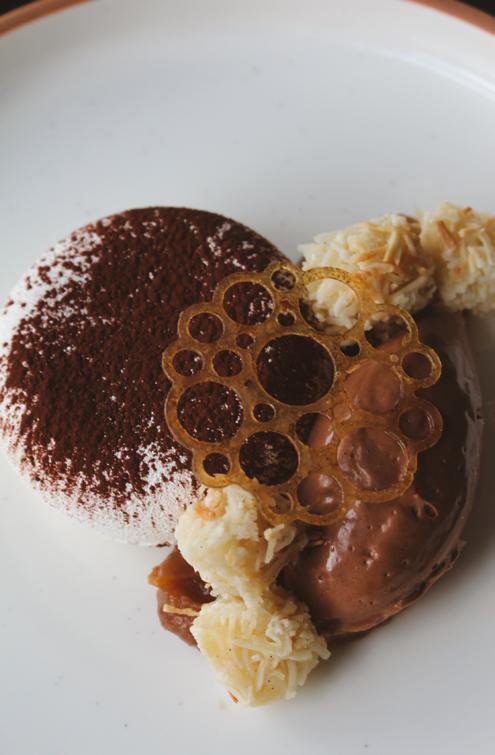
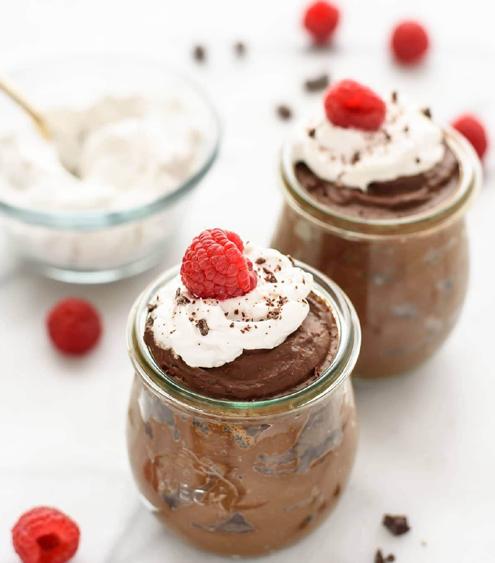
Dark Chocolate Avocado Mousse by Chef Thompson
ACF Chef Matthew Thompson, CEC, CCA
That philosophy carries through to desserts. At Restaura in Boston, a health-forward senior living dining program operated through Phoenix3 Collective, Chef Thompson has developed offerings such as a chocolate and avocado mousse that leans on healthy fats for richness, as well as a pumpkin cheesecake with a macadamia nut crust made without conventional dairy or refined sugars, demonstrating that better-for-you desserts can still feel indulgent.
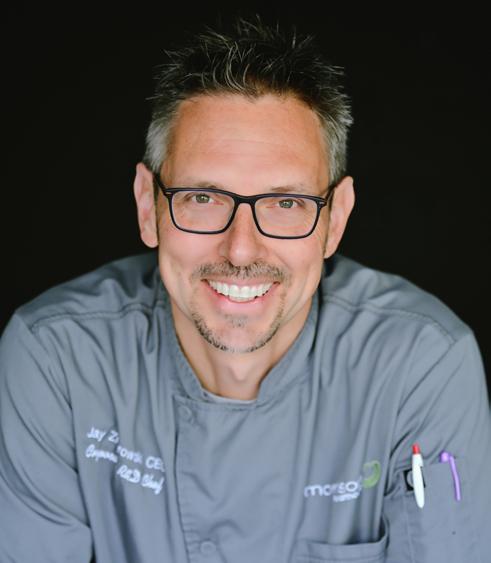
ACF Chef Jay Ziobrowski, CEC , Corporate R&D Chef at Morrison Healthcare, takes a similar approach rooted in familiarity. “Our guests want comfort from the foods they eat,” he says. “While they’ll always gravitate toward burgers, fried chicken and sweet treats, I’m on the lookout for healthier options.”
Calling his approach “stealth health,” Chef Ziobrowski finds subtle ways to incorporate more healthful ingredients into familiar dishes. Techniques such as replacing salt with citrus, using fresh herbs in place of excess cheese or adding mushrooms to burgers help improve nutritional profiles without sacrificing satisfaction.
Behind the scenes, execution matters just as much as menu development. Chef Ziobrowski emphasizes the importance of clear communication and training when changes are introduced. “Whenever changes to the menu take place,” he says, “I get everyone away from their phones, encourage the sharing of ideas, provide demonstrations and make sure adequate training is delivered.”
INTEGRITY IS EVERYTHING
James Beard Award winner Chef Joanne Chang , Co-owner of Flour Bakery + Café (Boston, MA), says balancing trends with customer expectations is essential. “We are aware of trends and find ways to cater to our customers’ healthful preferences,” she says.
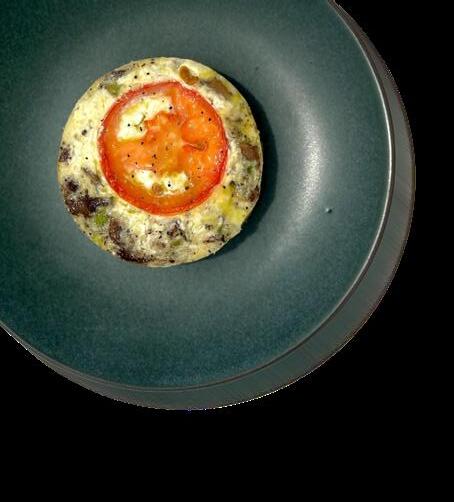
In response to growing interest in protein-forward options, Flour has introduced items such as hard-boiled eggs and cottage cheese egg bites. While popular with some guests, Chef Chang notes they are not the primary draw. For her, flavor and craft remain nonnegotiable. “Everything we make has to taste great, embrace high-integrity ingredients and proven baking techniques,” she insists. “Our customers expect no less.”
As expectations continue to evolve, operators are adapting with intention. From updated comfort classics to dishes designed for specific dietary needs, the focus is on better ingredients, mindful portion sizes and meals designed to support both enjoyment and wellness.
Flour Bakery
ACF Chef Jay Ziobrowski, CEC
Chef Joanne Chang - Photo Credit: Plum+Port Photography
The Sqwincher® brand is a proud sponsor of ACF Culinary Team USA.
To learn more, visit sqwincher.com/kitchen-hydration
COUNTRY CLUBS
How today’s club kitchens are evolving to meet rising expectations, tighter margins and a new generation of members
By Kerstin Kühn
Country club kitchens once followed a familiar rhythm: prime rib night, weddings, a dependable à la carte menu. Today, they operate as full-scale hospitality hubs, delivering restaurant dining, banquets, grab-and-go, family programming and immersive events, sometimes all in the same week.
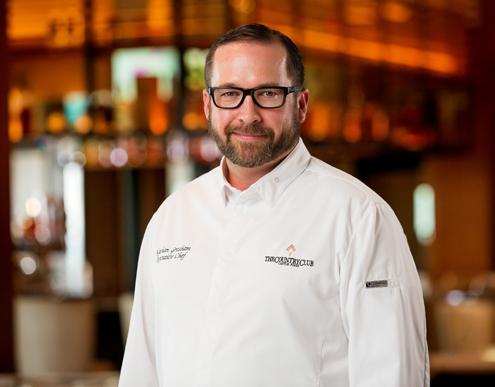
Across the country, chefs say the past five years have fundamentally reshaped operations. For ACF Chef Nathan Gresham, CEC , Executive Chef at the Country Club at
Castle Pines (Castle Rock, CO), the most noticeable shift has been demographic. “The average member age has dropped significantly,” he says. Younger members travel widely and return expecting elevated, varied cuisine. Menus must change often, yet consistency remains nonnegotiable. “We see the same people four or five, even six times a week. We’ve got to keep it exciting enough that they want to come back.”
ACF Chef Brian R. Beland, CMC, AAC , Director of Food and Beverage at the Country Club of Detroit (MI), has seen sustained growth in carryout and holiday programming. “Carryout was part of our program prior, but since the pandemic, when we became the dependable place, we’ve maintained a much greater daily volume,” he says. Holiday meals continue to expand, with events selling out earlier each year.
But expansion brings financial pressure. ACF Chef Alexander Sapp, CEC, CEPC, PCEC, CCA , Executive Chef at St. John’s Golf and Country Club (FL), points to rising labor and food costs, alongside a shrinking pool of experienced cooks. Clubs are hiring “greener” employees and investing heavily in training. Chef Beland echoes the challenge. “The need for more cooks and chefs to balance daily and workweek hours is real,” he says. “Mentorship and training are essential if you want standards and consistency to hold.”
Rising costs add further strain. “Overall cost is up across the board. It is harder than ever to make margins on food and labor. “We’ve adjusted our percentages, but expectations around quality have not changed,” Chef Beland says.
The financial dynamic also differs from public restaurants. “In a restaurant, you can be more in the driver’s seat,” Chef Gresham explains. “At the club, I’m like a private chef for 800 members.”
Indeed, members judge value over time, not in a single visit, requiring both reliability and creativity. “The blessing, and the curse, is that we know our members,” Chef Beland says. “We
ACF Chef Nathan Gresham, CEC
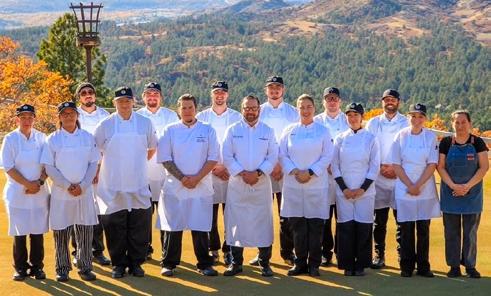
Kitchen Team at Country Club at Castle Pines
know their likes and dislikes, their preferences, their personal quirks. It gives us the chance to exceed expectations at every interaction.” His benchmark is simple: “Would you be happy if you were served that? If the answer is not a resounding yes, then we shouldn’t serve it.”
While à la carte dining remains steady, events often drive revenue. “On a nightly basis, it has to be family friendly,” Chef Gresham says. “But the biggest opportunity for revenue is in the events – wine dinners, whiskey dinners, live music.”
Still, day-to-day success depends on consistency. “This is the membership’s kitchen,” Chef Gresham says. Classics such as smash burgers, chicken Parmesan and club sandwiches must remain, executed flawlessly.
For Chef Beland, the challenge is refinement without losing familiarity. “For more than 20 years, we’ve been trying to find that balance,” he says. Technique, flavor and presentation elevate the dish, while the foundation stays intact. Items like chicken pot pie, vichyssoise and steak programs evolve, but remain recognizable.
One misconception is that clubs operate without financial pressure. In reality, food and beverage programs must consistently deliver value and cannot simply raise prices to match inflation. “You have a board to answer to, a financial board to answer to, and you’ve got to run it correctly,” Chef Gresham says.
Seasonality adds another layer of complexity, with staffing scaling up and down without sacrificing standards. “It’s a roller coaster,” Chef Gresham says. “You have to run the operation with half the staff in the off-season and still execute the events.”
For all the challenges, the work remains deeply rewarding. Chef Gresham values the long-term relationships that develop with members. Chef Sapp says there is “never a dull moment and always a place for new ideas.” Chef Beland points to mentorship and development, emphasizing the responsibility to train culinarians through service, banquets and education. “I hope we are providing the same to those that pass through our kitchens,” Chef Beland says.
Today’s country club kitchen is no longer defined by tradition alone. It demands stewardship, innovation and financial discipline, where hospitality is judged over time and trust must be earned daily.
“The need for more cooks and chefs to balance daily and workweek hours is real. Mentorship and training are essential if you want standards and consistency to hold.”
ACF Chef Alexander Sapp, CEC, CEPC, PCEC, CCA
ACF Chef Brian R. Beland, CMC, AAC
Country Club of Detroit
Ladies Christmas Luncheon at Country Club of Detroit
SAN FRANCISCO
By Kerstin Kühn
Stretching from the iconic hills of San Francisco through the North, East and South Bay, the American Culinary Federation’s San Francisco Chapter stands as a dynamic and diverse hub within one of the nation’s most influential culinary regions. Encompassing chefs from across the wider Bay Area rather than the city alone, the chapter reflects both the depth of its gastronomic heritage and the evolving realities of professional kitchens today.
“For me, the San Francisco Chapter is about preserving why we are chefs in the first place,” says Chapter Communications Chair ACF Chef Marie Abigail Serbins . “The generation of chefs is changing significantly, and we need to adapt to that.”
Adapting has not been optional. COVID-19 proved nearly a death knell for the chapter. At its lowest point, membership dwindled to just seven active chefs. “We were almost gone,” says Chapter President ACF Chef Philippe Striffeler
In 2021, Chef Striffeler and the remaining leadership began rebuilding deliberately and personally. They called dormant members one by one, asking them to re-enroll and, more
importantly, sharing a renewed vision for what the chapter could become.
“There’s no point in asking people what they want if you don’t act on it,” Chef Striffeler insists. “So we asked questions, we listened, and then we implemented.”
Two years ago, he circulated a seven-question survey to members: What do you want to see? What should this chapter do for you? The answers were clear. Members wanted meaningful educational events, strong demonstrations, charitable work and opportunities to reconnect.
ACF Chefs Jay Marshall, CEC, AAC, and Philippe Striffeler
Today, membership has rebounded to 94 active chefs across the Bay Area. While still far from its pre-pandemic structure –when a dedicated headquarters brigade met weekly and carried much of the operational load – the chapter has regained stability and momentum.
“We’re working hard to sustain the chapter,” Serbins says. “We’re rebuilding.”
That rebuilding effort is grounded in programming. This January, the chapter hosted a Tasty Duck educational demonstration at CIA at Copia in Napa. The event drew around 45 chefs for an immersive culinary and beverage experience.
Chef James Liu demonstrated traditional Peking duck preparation, covering technique, carving and presentation. ACF Chef Angelo A. Camillo, PhD, CEC, CCE, CFE , presented a prosciutto-wrapped duck application, while additional segments explored smoked duck and composed dishes. Meanwhile, Western Region Vice President ACF Chef Jay Marshall, CEC, AAC, guided attendees through thoughtful pairings for each preparation. “Every chef loved it,” Chef Striffeler enthuses. “They came afterward and said, this is what we need to see.”
The chapter’s commitment extends beyond professional chefs to the next generation. Outreach efforts include culinary schools and programs such as Job Corps, as well as engagement with students at institutions throughout the region. At a recent whole-animal suckling pig demonstration led by ACF Chef John Reynolds, 17 students and their instructor drove three and a half hours from Sonora to attend. “They’re still asking when we’re doing the next one,” Striffeler says. “It’s important that this chapter is for the next generation, too. Not only for us. We have to give back.”
“It’s important that this chapter is for the next generation, too. Not only for us. We have to give back.”
The leadership team itself reflects the diversity of the Bay Area’s culinary ecosystem. Western Region Vice President Chef Marshall , brings experience in institutional and corporate foodservice, including leadership roles at San Jose State University and Cisco. Vice President ACF Chef John Reynolds, CCE , serves as Executive Chef at Green Hills Country Club. Treasurer ACF Chef Elliot Katz, HAAC, HHOF, is a foodservice coffee consultant and member of the ACF Honorary Hall of Fame. Education Chair Chef Camillo, is Professor of Management and Wine Business at Sonoma State
University. Secretary ACF Chef Denise Chapel, CCC®, is a registered dietitian nutritionist.
Together, their backgrounds underscore a belief that professional excellence extends far beyond fine dining. In the Bay Area, Michelin-starred restaurants coexist with innovation in senior living dining, campus foodservice and corporate culinary operations. The chapter aims to serve all of it.
At the same time, leaders acknowledge the challenge of staying visible and relevant to younger chefs whose professional lives unfold on social media rather than in chapter newsletters. “They don’t read emails,” Chef Serbins says with a laugh. Reaching them now requires experimentation with event-based engagement and more visual communication, while remaining rooted in ACF standards and professional rigor.
Despite the challenges, the chapter’s sense of purpose is clear. Having moved from the brink of collapse to renewed growth, the San Francisco Chapter positions itself not as a social club but as a professional home for chefs committed to craft, mentorship and community.
As it continues to rebuild, it leans into what has long defined the Bay Area at its best: diversity of experience, seriousness of intent and a deep respect for the work behind the plate.
ACF Chef Angelo A. Camillo, PhD, CEC, CCE, CFE
San Francisco Chapter President ACF Chef Philippe Striffeler
NCR Quiz
Mar/Apr 2026
By Stephanie Lewis
1. When switching to contactless technologies in your establishment, what type of approach does Chef Gillespie recommend when serving more traditional guests?
a. Give them a traditional experience without technology
b. Expect them to adapt to the new technology without assistance
c. Try a hybrid approach mixing traditional service and technology
d. Adapt your type of service to each individual customer’s preference
2. What operational benefit did RPM Italian report after introducing QR code payment?
a. Faster table turn times
b. Lower food costs
c. Reduced staffing needs
d. Increased menu size
3. Quiet luxury, at its core, is a return to many traditional fine-dining techniques and philosophies, both in and out of the kitchen
a. True
b. False
4. Which of the following is NOT one of the key steps to implementing quiet luxury?
a. Menu restraint
b. Investing in ingredients
c. Simple serving
d. Complex plating with multiple elements
5. Which of the following is a characteristic of top quality saffron?
a. High moisture content
b. Crown-shaped tip
c. Vivid orange stigmas
d. Low levels of picrocrocin
6. Why is saffron considered one of the most expensive spices in the world?
a. Labor-intensive harvesting
b. Limited climate regions
c. Low yield per flower
d. All of the above
7. Which type of sprout brings sweetness and a tender bite?
a. Mung bean sprouts
b. Radish sprouts
c. Caraway sprouts
d. Brussel sprouts
8. What was the name of Chef Kaylee Snyder winning pastry dish from the Student Pastry Chef of the Year competition?
a. Cheery Chocolate and Cherry
b. Layered Dreams
c. Decadence in the Dessert
d. Jewel of the Forest
9. What century did ratatouille originate?
a. 16th century
b. 17th century
c. 18th century
d. 19th century
10. Which of the following was not one of the recommended ingredients to top your ratatouille in either version of the classic ratatouille recipe?
a. Chives
b. Extra Virgin Olive Oil
c. Parsley
d. Balsamic Glaze
11. When cooking the modern ratatouille “gift box” recipe, which ingredient do you lightly salt and macerate for 30 minutes before it gets sautéed?
a. Eggplant
b. Squash
c. Zucchini
d. Tomato
12. What was Nadia Spellman number one tip for making great dumplings?
a. Focus on presentation
b. Start with the best ingredients
c. Perfect your folding technique
d. Use traditional methods
13. What restaurant data did Nadia primarily focus on when deciding what products include in her wholesale line of frozen foods and sauces?
a. Most cost-effective products
b. Products with high sales
c. Quickly produced products
d. Staff favorites
14. The 2026 Patisserie Trends Report points to a growing desire for which of the following?
a. Sweeter flavors
b. Healthier desserts
c. Natural ingredients
d. Visual appeal
15. According to Pastry Chef Kelli Marks, citrus fruit overwhelms the flavors of other fruits so it should be used by itself for most dishes.
a. True
b. False
Reclaim Your Seat at Our Table.
For nearly a century, the American Culinary Federation has elevated the culinary profession through certification, education, mentorship and community. Rejoin today to reconnect with your peers, strengthen your credentials and take your career further with the organization that has always believed in the promise of our profession.