The National Culinary Review® (ISSN 0747-7716), January/February 2026, Volume 50, Number 1, is owned by the American Culinary Federation, Inc. (ACF) and is produced six times per year by ACF, located at 6816 Southpoint Parkway, Ste 400, Jacksonville, FL 32216. A digital subscription to the National Culinary Review® is included with ACF membership dues; print subscriptions are available to ACF members for $25 per year, domestic; nonmember subscriptions are $40. Material from the National Culinary Review®, in whole or in part, may not be reproduced without written permission. All views and opinions expressed in the National Culinary Review® are those of the author and do not necessarily reflect the views and opinions of the officers or members of ACF. Changes of mailing address should be sent to ACF’s national office: 6816 Southpoint Parkway, Ste 400, Jacksonville, FL 32216; (800) 624-9458; Fax (904) 940-0741.
The National Culinary Review® is mailed, and periodical postage is paid at St. Augustine, Fla., and additional post offices.
POSTMASTER: Send address changes to the National Culinary Review®, 6816 Southpoint Parkway, Ste 400, Jacksonville, FL 32216.
The PRESIDENT’S MESSAGE
Dear ACF Members,
I hope you’re rested and re-energized after what I hope was a memorable holiday season filled with family, friends and (of course) outstanding food. As we turn the page to a new year, we have the perfect opportunity to refresh, refocus and look ahead with excitement to all that 2026 holds for our profession and our Federation.
The heart of this issue is our highly anticipated 2026 Culinary Trends Report. Once again, our dedicated Trends Committee has done an exceptional job identifying the flavors, techniques, ingredients and concepts that will shape menus and kitchens across the country in the year ahead. Whether you’re a chef, a culinarian in the making or an industry partner, this report remains one of the most valuable tools we provide to keep you at the forefront of our ever-evolving craft.
You’ll also enjoy a special feature spotlighting the American Academy of Chefs, our prestigious honor society that continues to set the standard for leadership and mentorship within the ACF. And we take a Chapter Close-Up on the vibrant Grand Rapids Chapter – an energetic group raising the bar for member engagement and community impact.
Speaking of Grand Rapids, I recently returned from an incredibly promising site visit for our 2026 National Convention. The facilities, the local culinary scene and the enthusiasm of our West Michigan members have me convinced that ACF NatCon 2026 will be one for the record books. Mark your calendars now – you will not want to miss it.
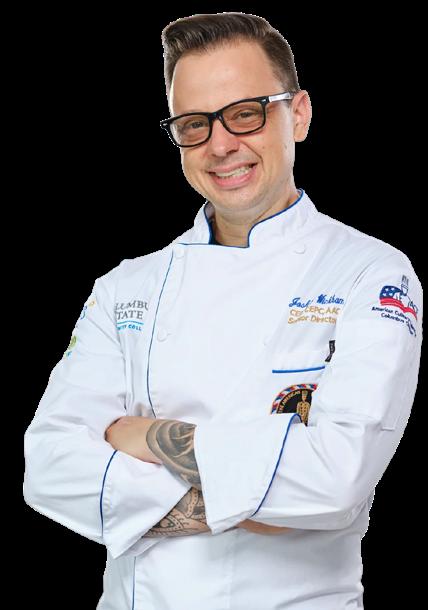
Finally, we proudly celebrate Chef Joshua Wickham, CEC, CEPC®, AAC , our 2025 Chef Educator of the Year. Chef Wickham’s passion for teaching the next generation, combined with his commitment to excellence, embodies everything we stand for as an organization. His story is both inspiring and a reminder of the profound influence each of us can have when we invest in others. If you are an educator and would like to learn more about the Chef Educator of the Year award or are interested in nominating an outstanding colleague for 2026, please reach out to competitions@acfchefs.org.
As we begin this new year together, let’s renew our shared commitment to professionalism, education and camaraderie. Thank you for your continued dedication to the American Culinary Federation and to elevating the culinary profession we all love.
Here’s to an extraordinary 2026 – may it be delicious, purposeful and filled with growth.
Chefs, I Got Your Six.
René J. Marquis, CEC, CCE, CCA, AAC MSG (R), US ARMY
National President of the American Culinary Federation Chairman of the Board, ACF Tampa Bay Chapter Certification Chair, ACF Tampa Bay Chapter
WORLDCHEFS Chairman - Military Committee
WORLDCHEFS Culinary Competition Committee - Special Advisor Military Kitchens and Development
#CIGY6
NEWS BITES
EVENTS
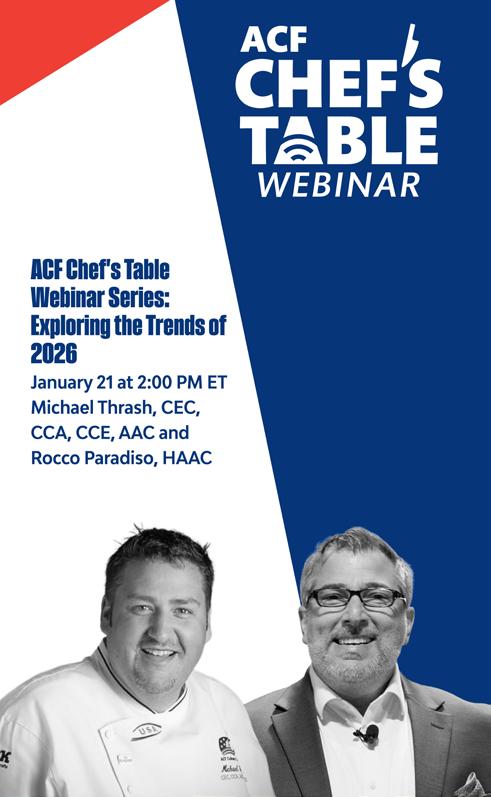
ACF CHEF’S TABLE WEBINAR SERIES: EXPLORING TRENDS FOR 2026
January 21, 2026, at 2:00 PM ET
Join ACF Chefs Michael Thrash, CEC, CCA, CCE, AAC , and Rocco Paradiso, HAAC, as they explore the ACF 2026 Trends Report and discuss some of the biggest culinary trends we can expect to see in the coming year. From the continued growth of emerging global flavors to the resurgence of afternoon tea and meat returning to the center of the plate, these chefs will discuss the trends shaping ACF’s featured content for 2026. We hope you’ll tune in as they kick off the new year with a conversation around these exciting topics.
Register at acfchefs.org
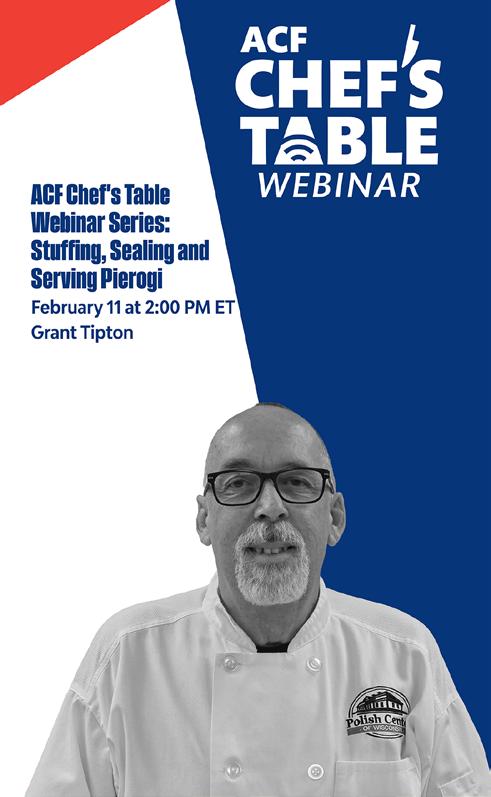
ACF CHEF’S TABLE WEBINAR SERIES: STUFFING, SEALING AND SERVING PIEROGI
February 11, 2026, at 2:00 PM ET
Join ACF Chef Grant Tipton , Chef and Operations Manager at the Polish Center of Wisconsin, for a webinar focused on one of Poland’s most popular foods, pierogi. Chef Tipton will give attendees a brief overview of the history of dumplings and pierogi before moving on to a demonstration of Polish potato cheese pierogi. Chef will show how to prepare the potato cheese stuffing and the dough, how to stuff and seal the dumpling, and finally, how to cook, boil and pan fry the pierogi.
What if the future of food isn’t about restriction, but intention? In this webinar, ACF Chef Matthew Thompson, CEC, CCA, explores how enhanced nutrition is shaping modern kitchens, healthcare and the everyday plate. Drawing on real-world examples and science-backed strategies, he shows how thoughtful ingredient choices and technique can support longevity, cognitive health and disease prevention, and why chefs are uniquely positioned to lead this shift.
Register at acfchefs.org
EDUCATION
CERTIFICATION PRACTICAL EXAMS
Practical exams, required for earning and maintaining ACF certifications, assess your skillset based on the certification level you are pursuing. Each level has specific requirements, including what dishes to prepare, the time frame for the exam, and other important details, all of which are outlined in the candidate handbook. Exams are conducted at various locations across the country throughout the year. Be sure to check the upcoming practical exam schedule to find and register for an exam.
Visit acfchefs.org/certify
ACF ONLINE LEARNING CENTER
The ACF Online Learning Center (OLC) offers a wide range of courses, demonstrations, webinars and NCR quizzes that may be used to meet certification requirements and earn Continuing Education Hours (CEH). Topics include everything from garde manger and culinary nutrition to accounting, safety and sanitation and beverage management.
Visit acfchefs.org/olc
SPECIALIZED CERTIFICATES
ACF specialized certificates are available through the ACF Online Learning Center. In 2025, we introduced new and exciting specialized certificates while also revamping our current offerings, which include culinary essentials, baking/pastry essentials, culinary cannabis and personal chef certificates.
Visit acfchefs.org/olc
COMPETITIONS
UPCOMING CULINARY COMPETITIONS
January 27–29, 2026 – ACF Myrtle Beach Chapter
Myrtle Beach Convention Center, Myrtle Beach, SC
Show Chair: Joseph Bonaparte, CCC®, CCE
February 27–March 6, 2026 – Old Dominion Chapter
MacLaughlin Fitness Center, Fort Lee, VA
Show Chair: Guy Winks, CEC; Justin Chase
March 27–28, 2026 – ACF Cleveland Chapter Inc.
Cuyahoga Community College, Cleveland, OH
Show Chairs: Derek Ivancic, CEC, CCA; Bradley Ball, CEC, CCE
REGIONAL QUALIFIERS
At the Regional Qualifiers, winners earn the chance to compete on the national stage at the ACF National Convention, representing their chapters and showcasing the highest level of craftsmanship in their category.
February 27–28, 2026 – Western Regional Qualifier
Los Angeles Trade-Technical College, Los Angeles, CA
Show Chair: Thomas Recinella, CEC, AAC
March 6–7, 2026 – Northeast Regional Qualifier
Community College of Allegheny County, Pittsburgh, PA
Show Chair: Thomas Recinella, CEC, AAC
March 19–20, 2026 – Central Regional Qualifier
The Culinary Institute of Michigan – Muskegon Campus, Muskegon, MI
Show Chair: Thomas Recinella, CEC, AAC
March 27–28, 2026 – Southeast Regional Qualifier
Providence Culinary Training, Winston-Salem, NC
Show Chair: Thomas Recinella, CEC, AAC
IN MEMORIAM
We honor the memory of chefs who have passed, recognizing their invaluable contributions to the culinary profession and lasting influence they’ve had on the industry.
Jess Barbosa, CEC, AAC, HHOF
Mika P. Farran
Reiner Greubel
Curtis H. Hicks Jr.
Dieter H. Kiessling, CMC®, AAC
J. Daniel Knerr, CEC, CCA, AAC
Anthony Patalano, CEC, AAC, HOF
T. Christopher Sullivan, CEC
James Window
Richard Wood
Gold Medal WINNERS
November 1, 2025 – Culinary Institute of MichiganMuskegon Campus – ACF West Michigan Lakeshore Chapter
• Lionel Hughes, CEC, CCA – F2, F4
• Samuel Egmon – SKS
• Gabrielle Kumke – SKS
• Sarah Maironis – SKS
• Vince Mendoza – SKS
• Lillian Taylor – SKS
• Israel Servin – SP1
• Nyla Thomas – SKC
• Ania Arrondo – SKC
November 6, 2025 – Freestore Foodbank Annual John Kinsella Classic – ACF Greater Cincinnati Chapter
• Serenity Lee, CFC® – Student Skills
• Teresa Cisse, CFC – SKC2
• Nathan Gerald, CFC – KC2
November 7-8, 2025 – John Joyce Culinary Competition –Johnson County Community College
• Alyssa Opfer – SK
November 22, 2025 – Hornet Classic – ACF Capital District Central New York Chapter
• Victoria Tompkins, CEC – KC-2
December 6, 2025 – The Culinary Institute of NY at Monroe College – ACF Long Island Chapter
• Evi Mathis, CFPC® – SFP1
• Bradley Torres, CC® – SF1
• Jacklyn Kirchberger, CPC® – SP2
• Yeishalee Santana – SP2
• Michael Hindley – SKC1
• Jimeh Soukouna – SKC1
• Justine Cepeda – SKC1
• Frank Costantino, Jr., CSC® – KC9
Ingredients of the Month
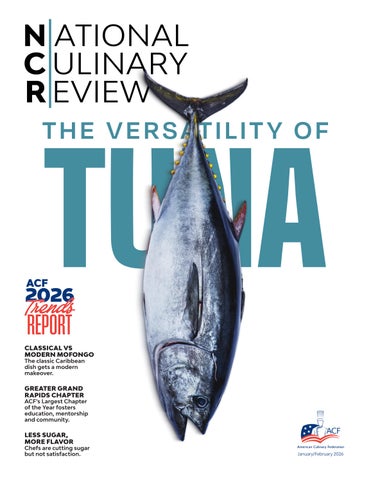
JANUARY 2026 - TUNA
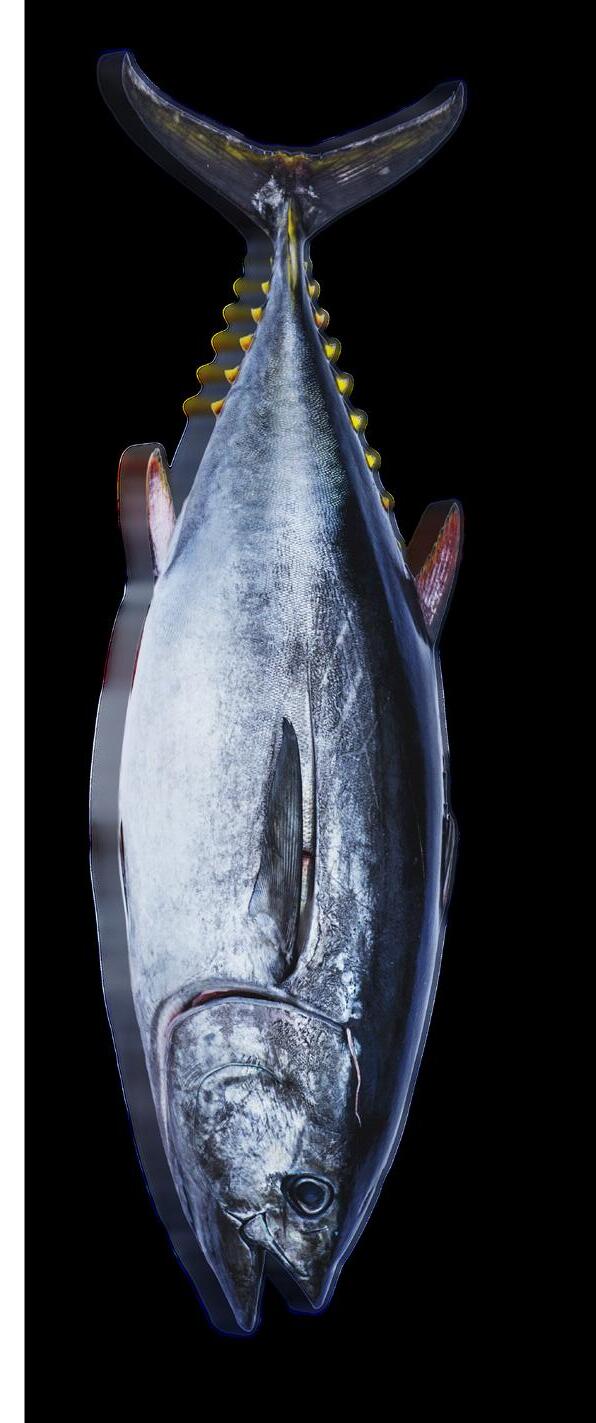
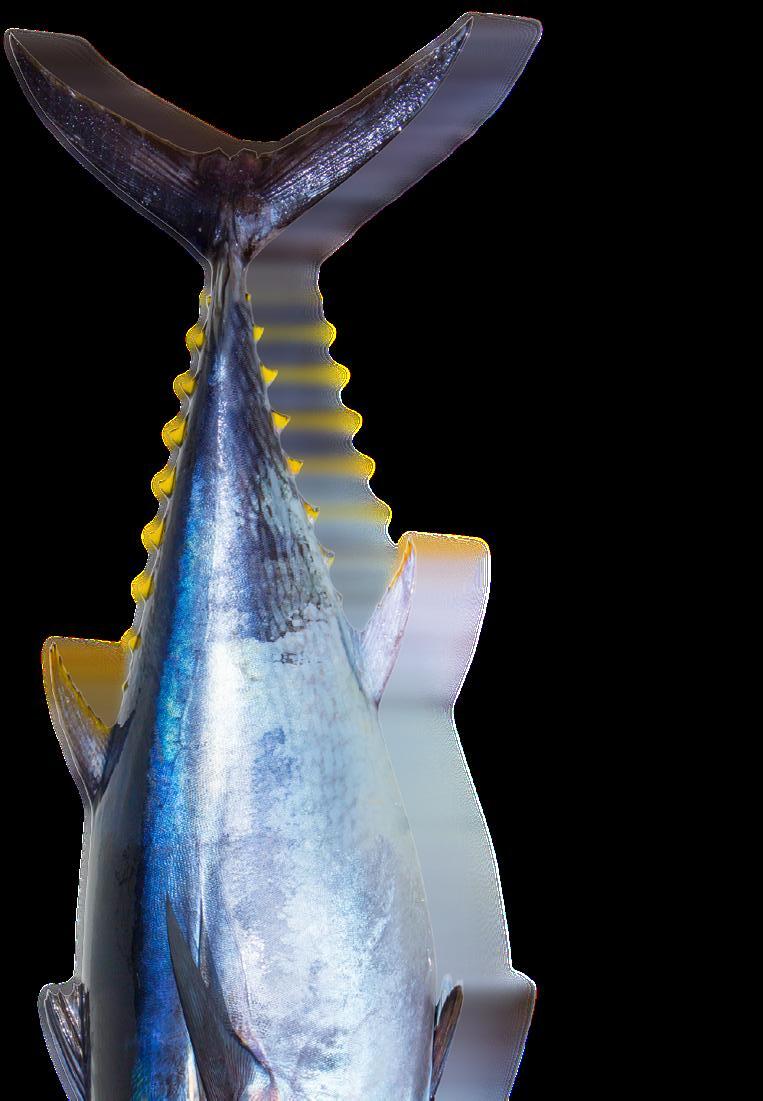
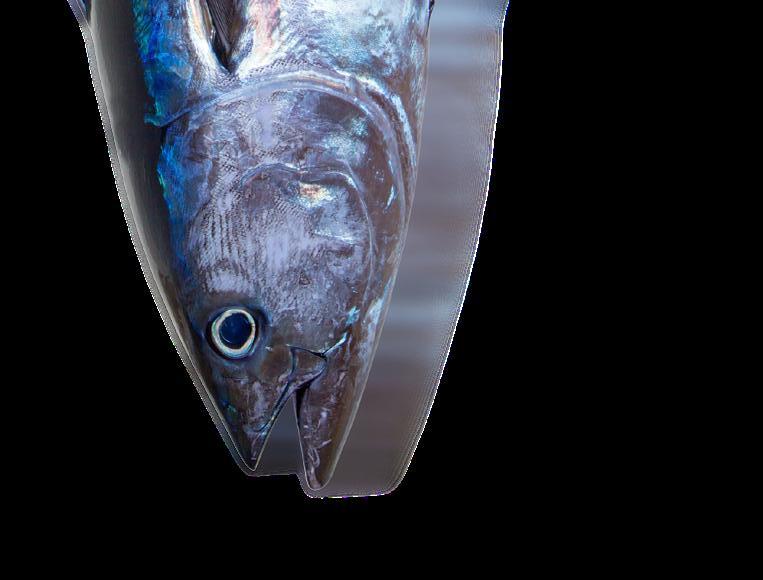
Tuna is a cornerstone ingredient in professional kitchens, valued for its versatility, clean flavor and global appeal. From pristine raw preparations like crudo and tartare to quick-seared steaks and deeply savory cured forms, tuna rewards precision and restraint. Different species offer distinct textures and fat levels, allowing chefs to tailor technique to the cut, whether highlighting the buttery richness of bluefin or the firmer structure of yellowfin. As diners continue to seek lighter, protein-forward dishes, tuna remains a timeless canvas for both classical technique and modern interpretation.
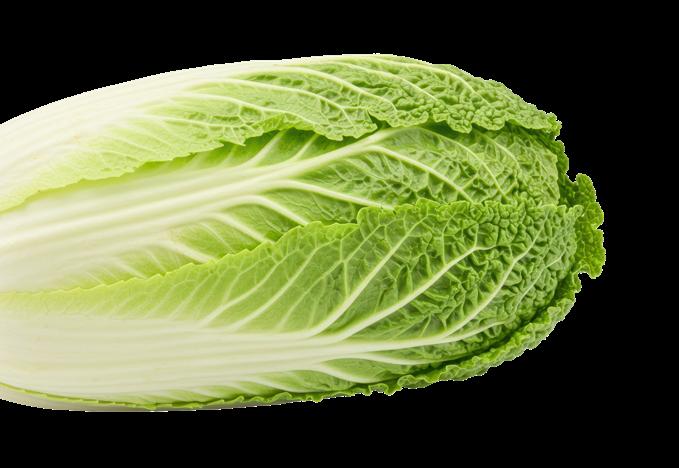
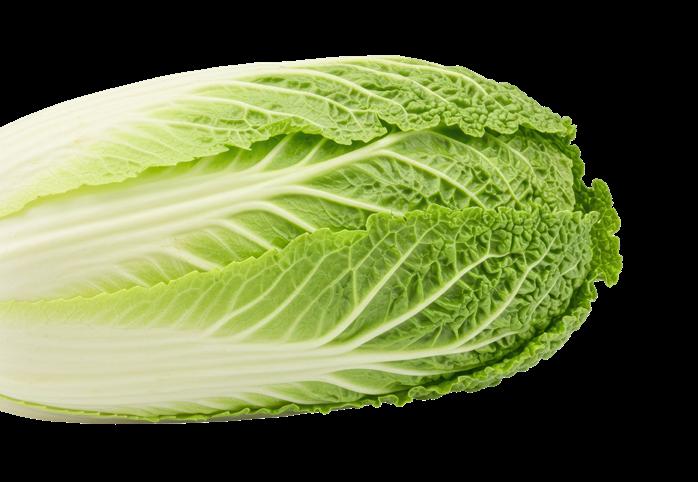
FEBRUARY 2026 - NAPA CABBAGE
Napa cabbage is a quietly essential ingredient, prized for its delicate sweetness, crisp texture and remarkable adaptability. Lighter and more tender than many Western cabbages, it performs equally well raw, lightly cooked or fully fermented, making it a staple in both refined and rustic preparations. Its layered leaves absorb flavor without losing structure, whether folded into dumplings, shaved into salads or slow-simmered in broths. As chefs continue to explore vegetable-forward cooking, napa cabbage offers a balance of freshness and comfort, lending itself to techniques that emphasize clarity, seasonality and depth.
Members can explore ACF Ingredients of the Month in depth through the ACF Online Learning Center presentation and quiz to earn one hour of continuing-education credit toward ACF certification. Visit acfchefs.org/olc
The American Culinary Federation Education Foundation
As we move into the new year of 2026, I would like to reflect on the American Academy of Chefs (AAC) and its role within our profession. As 2025 came to a close, many chefs added this distinction to their portfolios, becoming members of a group that represents the highest level of professionalism in our industry. These candidates have spent
many hours giving back to other culinarians as mentors, educators and driving forces in their communities. The AAC is the honor society of the American Culinary Federation and an integral part of the Foundation.
As I reflect on my own induction into the AAC nearly 14 years ago at the Waldorf Astoria in Orlando, I recall it as both a high point in my career and a humbling recognition by my peers. Early in my career, I never thought about joining this group of professional, accomplished chefs until other chefs suggested I submit my portfolio. As I went through the requirements, I was surprised by all I had accomplished up to that point. All of the fellows seek to promote our esteemed group through mentorship, honor fellow chefs with continuing education grants and support students with scholarships.
If this is something you have considered, you should investigate submitting your portfolio for an upcoming class. One thing to consider is the documentation you may need for the portfolio, such as articles you have written, sponsorship of apprentices, competition medals and awards, such as local chef of the year. As a fellow, I encourage each of you to reach out to a chef you know who could be a strong candidate, support them and mentor them through the process. The deadline for the 2027 class is December 1, 2026. There is no time like the present to start the process and, in many cases, the most significant part is simply getting the paperwork together.
Ultimately, the Foundation’s goal is to promote education, mentorship and support for one another throughout our professional careers and within the AAC. I challenge every one of you to mentor someone this year, whether through education and professionalism or by recognizing their accomplishments. And if you feel you would like to be part of the AAC, reach out to one of the fellows for further guidance.
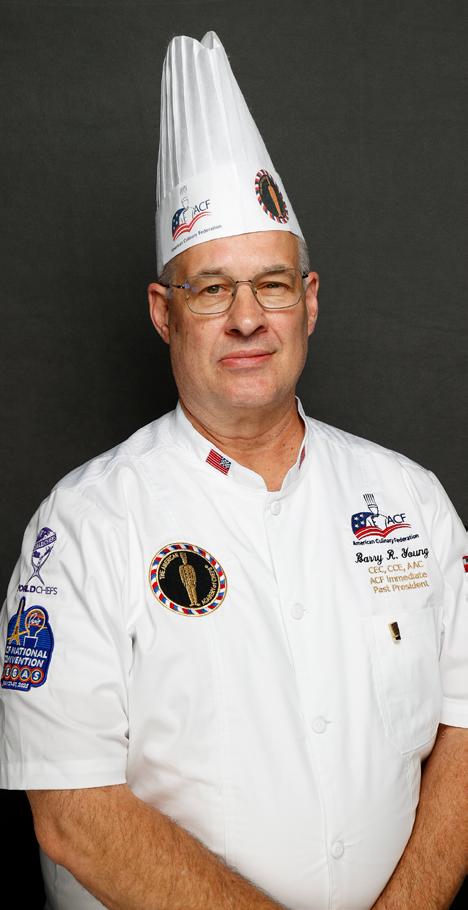
Barry R. Young, MBA, CEC, CCE, AAC ACF Education Foundation – Chairperson Chapter OH021 - ACF
Columbus Chapter
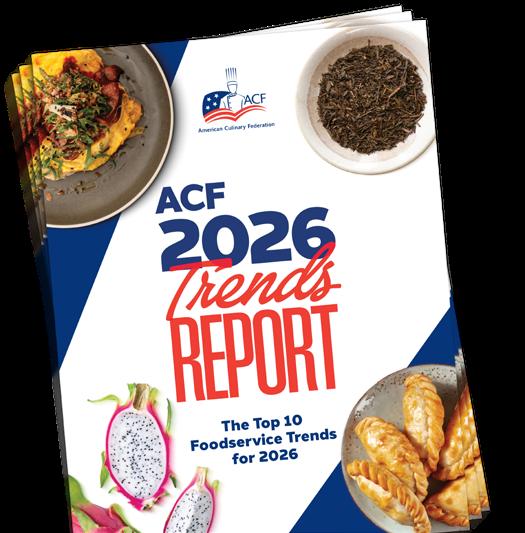
ACF 2026 REPORT Trends
The Top 10 Foodservice Trends for 2026
THE TOP 10 FOODSERVICE TRENDS FOR 2026
In the year ahead, consumers will be on the lookout for dishes that are authentic and connect with them emotionally. Whether this is achieved through the ingredients you select, flavor profiles drawn from local, regional or global cuisines, presentations that are crafted to stimulate the senses, or stories that engage and capture the imagination—there are numerous opportunities to consider. The trends outlined in this report will give you perspectives and ideas that can support you as you develop or update your menus or adjust service guidelines. Together, they offer a useful starting point as you plan for the year ahead.
01 Enhanced Nutrition
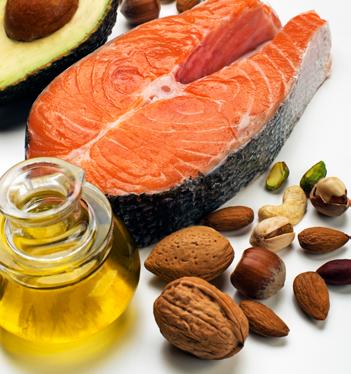
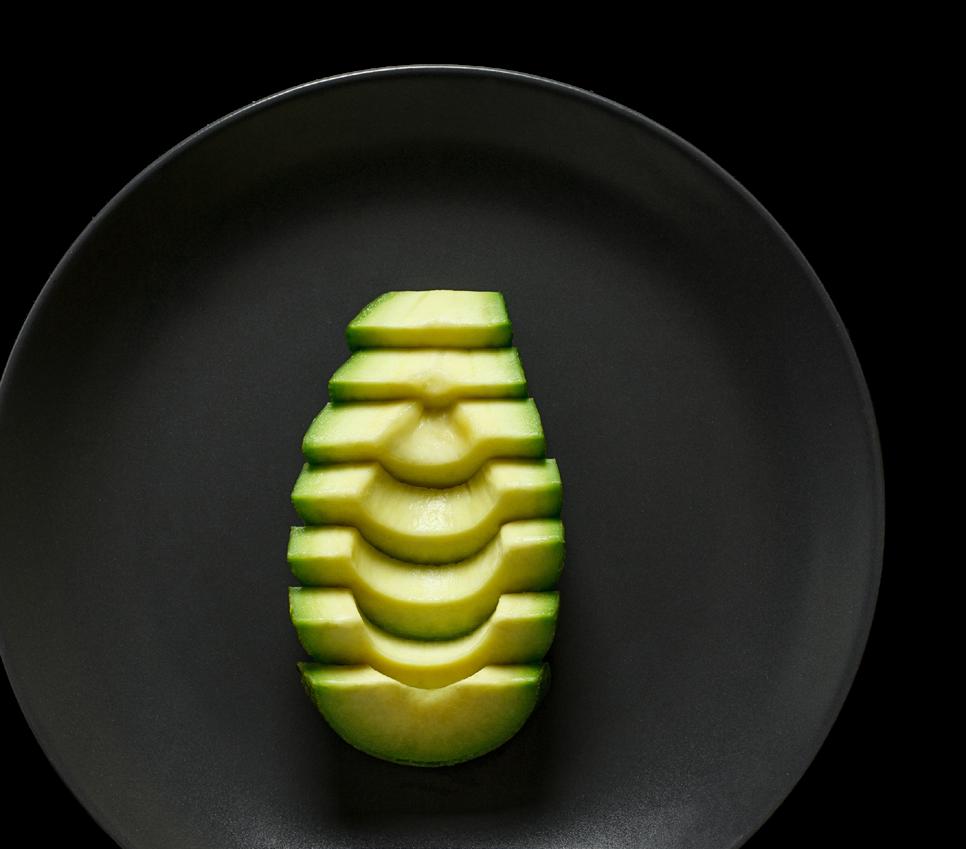
Based on multiple sources, forecasts agree that consumers will consistently show a preference for foods that deliver nutritional balance with an emphasis on gut health, mental well-being, sustainable energy and holistic wellness. This includes protein and fiber rich dishes, healthy fats (found in olive oil, nuts, seeds and avocados), minimally processed foods, including whole fruits, vegetables and grains, as well as functional beverages that deliver healthful benefits from the use of mushrooms (nootropics), herbs, roots and other plant-based ingredients (adaptogens).
Additionally, statistics presented by Glanbia Nutritionals indicate that 42 percent of consumers are reducing portion sizes while 43 percent are cutting back on sugar, carbohydrates and calories. Coupled with
43% of consumers are cutting back on sugar
the rising popularity of GLP-1 medications, there is greater interest in smaller portions and nutrient-dense dishes that offset the nutritional deficiencies this medication creates.
For chefs and restaurateurs, opportunities to engage with guests and respond to these dynamics are considerable. With a little culinary innovation, this can be achieved through expanded menus that emphasize wellness (including ways to vary portion size) and an increased number of dishes that feature plantbased and other “good for you” ingredients. Think chickpea pasta with Greek yogurt-based sauces or dishes that incorporate nutrientrich ingredients. This could include tofu, beans, watercress, kale, konjac or quinoa, each presented in distinctive, flavorful applications.
It’s also important to remember that, while your menu may offer dishes that support healthy living, the ambience, level of service and hospitality your guests’ experience should complement this agenda and contribute to their overall sense of well-being.
Healthy fats trend as diners prioritize wellness.
42% of consumers are reducing portion sizes
02 Retro-Innovation
With so much stress and turmoil in the world, people are leaning towards foods and flavors that remind them of simpler times - dishes that are familiar, rooted in tradition and reduce feelings of vulnerability and anxiety. According to Mintel, a leading market intelligence and research agency, a growing number of chefs and restaurateurs are responding with ‘newstalgia’ - updated versions of iconic comfort foods, blending the appeal of nostalgia with modern culinary techniques. Recognizing that newstalgia is not limited to any one audience, these dishes will be equally well received by guests of all ages and backgrounds. As a result, familiar, iconic dishes are returning to menus with contemporary twists that incorporate modern techniques, improved ingredients and global influences.
One of the most widely recognized newstalgic foods is Spam, an ingredient that has evolved from its simple island origins into a mainland favorite. Whether it appears in sliders, tacos, egg rolls or ramen, this singular ingredient contributes effectively to retro mashups.
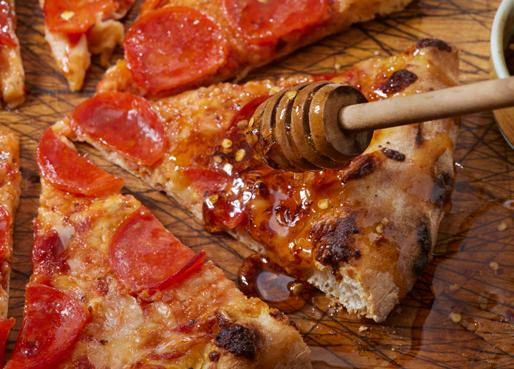
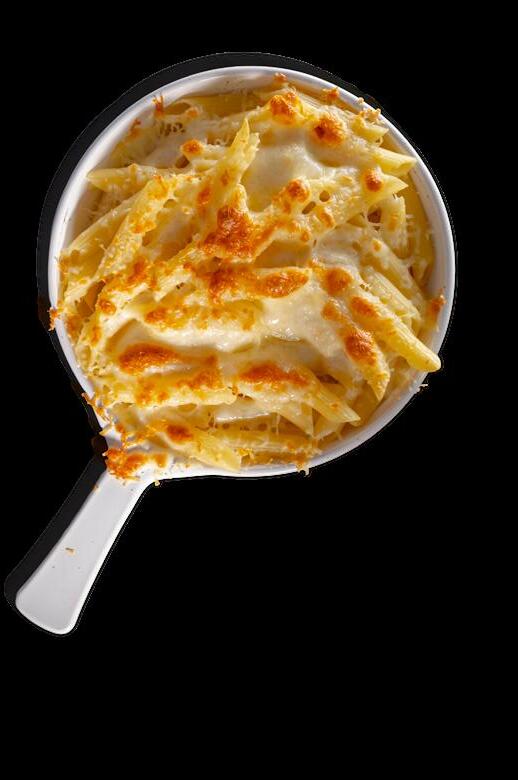
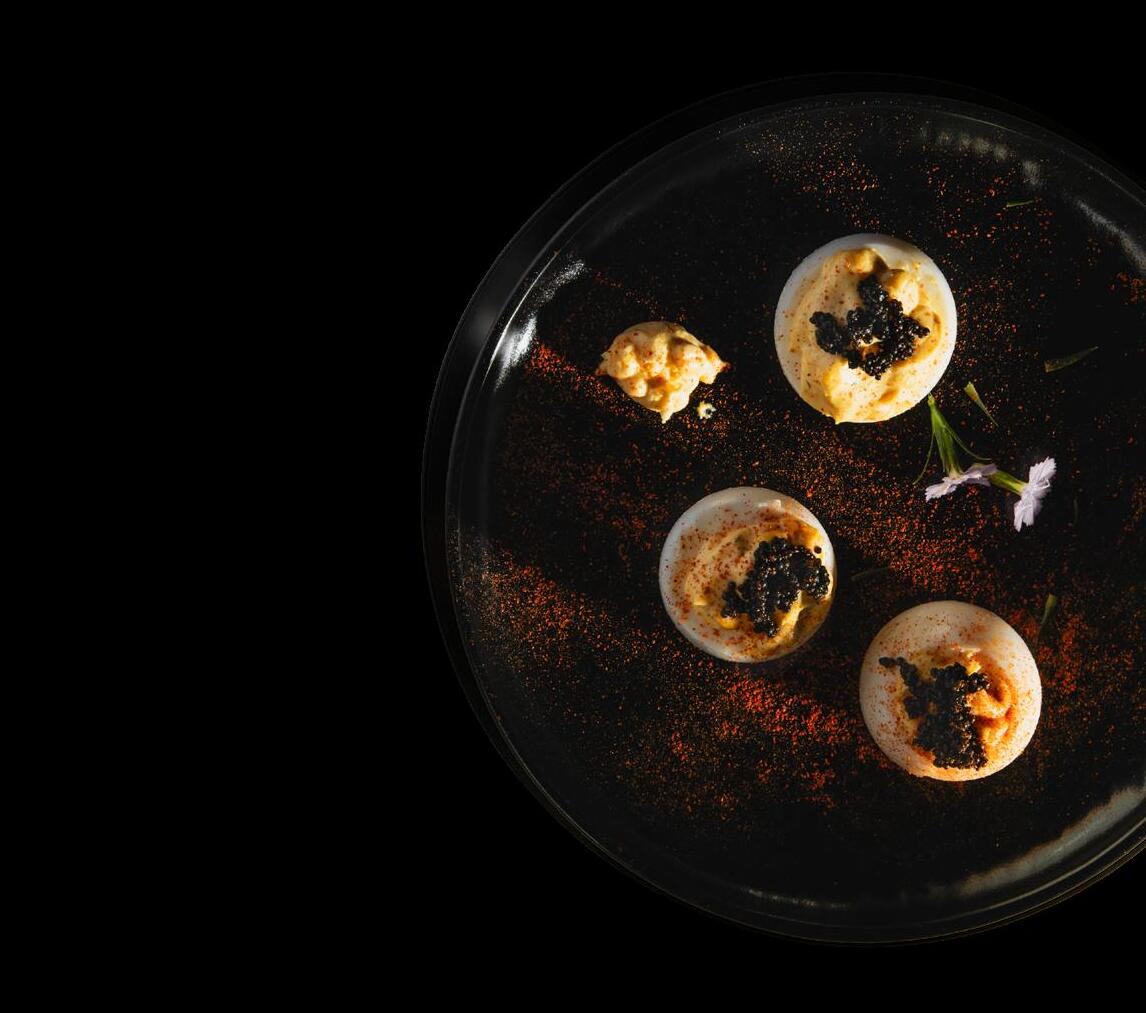
In other applications, newfound appeal is achieved through relatively simple updatesas easy as piping a little whipped ricotta and a drizzle of hot honey onto a pepperoni pizza; creating an updated version of mac and cheese with artisan cheeses, pesto, chili peppers and flavorful sprinkles; or preparing deviled eggs with upgraded toppings such as caviar, pork belly, fermented vegetables, flavor pearls or spicy aioli.
Newstalgia reinvents comfort food classics.
Similarly, meatloaf is being refreshed, utilizing Wagyu beef alongside truffle-infused mashed potatoes, while tuna noodle casserole finds new life with shellfish and a more sophisticated wine sauce.
What’s clear is that by exploring dishes rooted in tradition, elevating them with more refined ingredients and artful culinary skills, there are endless opportunities to deliver both comfort and engaging customer experiences.
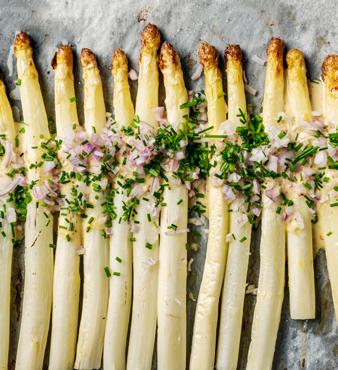
Quiet luxury calls for premium ingredients, subtle flavors and refined textures.
03 Quiet Luxury
While many high end restaurants offer experiences that embrace impeccable service and exquisite cuisine, they are frequently perceived as ostentatious and flashy. Today, a growing number of diners, while prioritizing fine dining, are looking for restaurants that offer luxury and indulgence in a more tranquil setting. What’s more, the idea of large portions and sinful excess is giving way to healthier ingredients and smaller servings, all savored slowly. Even bar menus have been modified to better align with these preferences, relying on simply conceived cocktails accompanied by a selection of caviars and upscale small bites. In effect, these conditions create experiences that emphasize flavor, texture, sophistication and comfort with an appreciation of the present moment,
eliminating the fanfare that typifies more extravagant, boisterous, fast paced and socially vibrant settings.
According to the 2026 Tastewise Trend Forecast, quiet luxury is part of a movement towards refinement through authenticity and craft rather than flash. Consumers are increasingly growing tired of marketing hype and social media driven trends, preferring simpler, cleaner and more refined high-quality experiences.
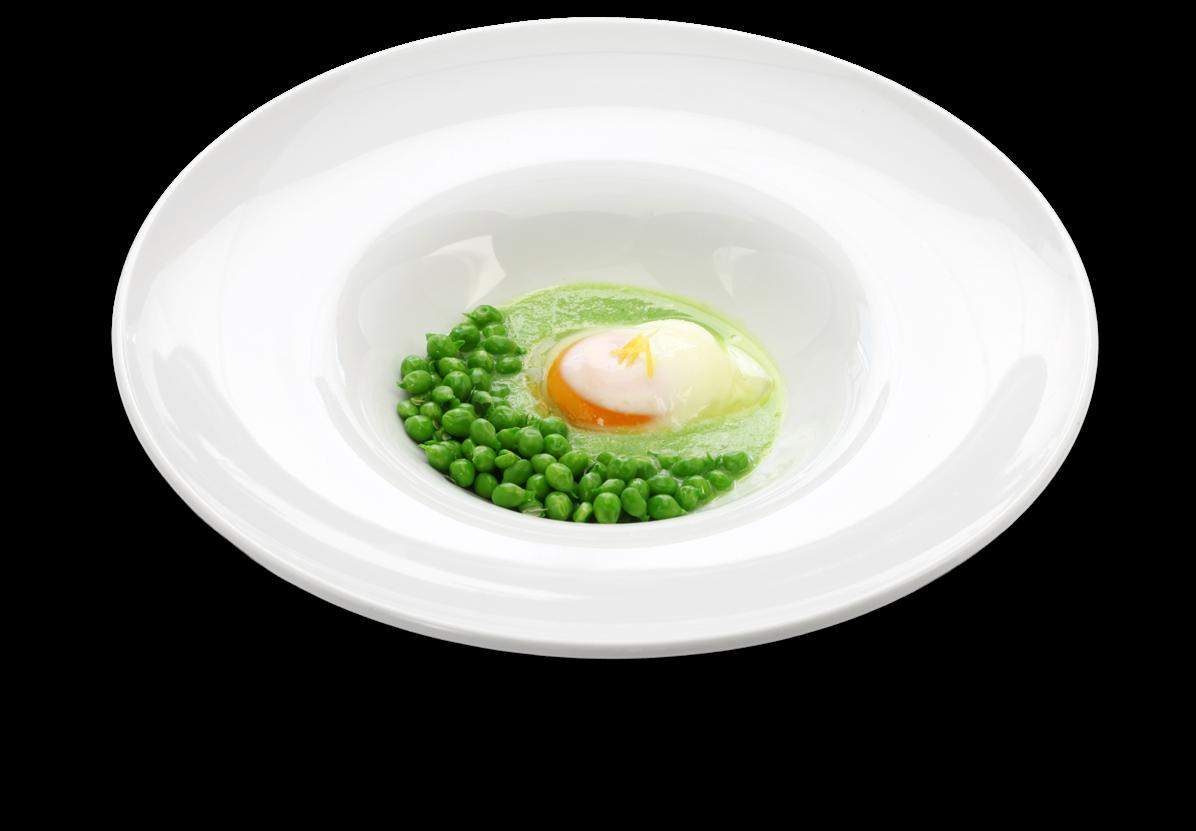
Creating moments that are meant to be savored calls for premium ingredients, subtle flavors and refined textures. While there’s a lot to explore, teardrop peas (“green caviar”), conservas (premium tinned seafoods), white asparagus, and rich dark chocolates are just a few to consider. It also requires a soothing and somewhat understated décor that embraces soft, neutral colors, natural materials and timeless furnishings. In addition, finding ways to reduce noise and introduce soft lighting is equally important. Ultimately, promoting quiet luxury, serenity, relaxation and impeccable culinary experiences that delight and inspire your guests should be a top priority.
04 Snackable Seafoods
Seafood–especially tuna, salmon and shrimp–has been a mainstay in American diets for years. With growing awareness of its health benefits including high protein, omega-3 fatty acids and low saturated fat, along with increased availability of less familiar albeit flavorful species (including by-catch), demand is on the rise. At the same time, multiple surveys indicate that more than half of all Americans are snacking or eating smaller meals throughout the day, with many embracing better-for-you products. Considering that seafood snacks are both familiar and nutrient-dense, effectively blending comfort and health, chefs and restaurateurs can bring new vitality to their menus with snackable seafood applications.
While crudo, ceviche and sushi have been popular for a while, poke is gaining popularity and can be easily configured for small plate presentations. Meanwhile, both imported and domestically produced tinned fish, now embracing bold and spicy flavors, is enjoying a resurgence and becoming a mainstay on seacuterie boards alongside smoked fish, pickled shrimp and other such delicacies. Additionally, there are countless opportunities for casual seafood preparations such as dried fish jerky,
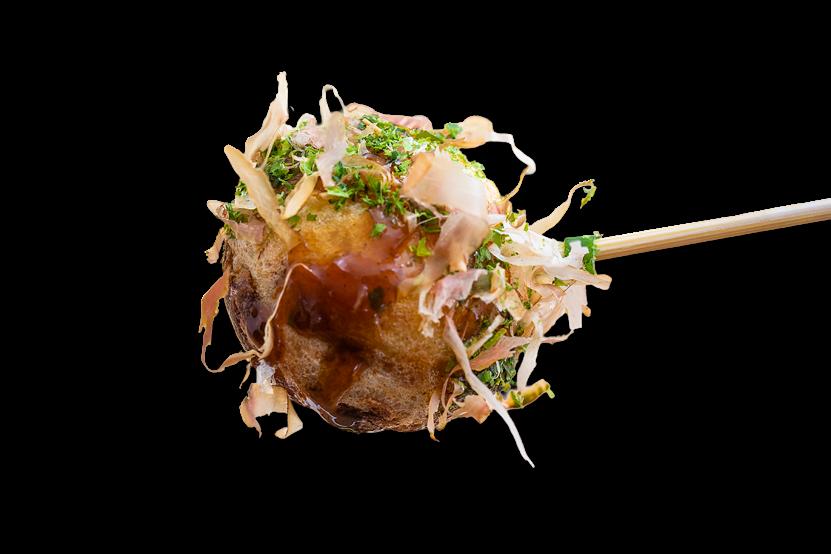
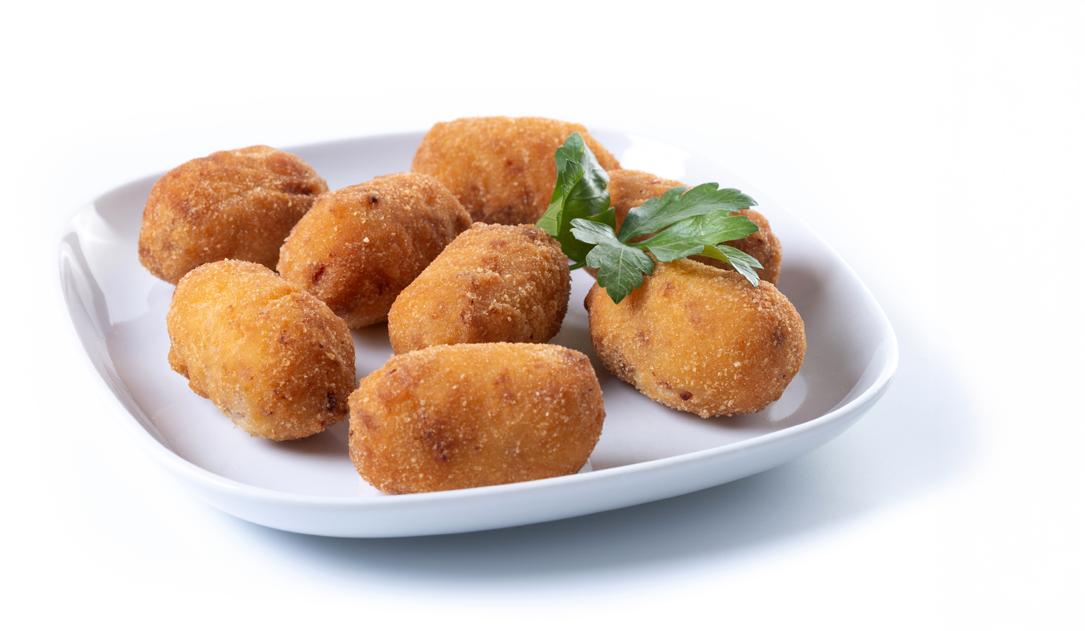
fried fish croquettes, spicy grilled shrimp kabobs and smoked fish dip, many easily made from excess inventory and trimmings. Along international lines, Japanese takoyaki (made with octopus), Thai fish cakes, Peruvian causa rellena (filled with tuna, shrimp or crab) and/or Chinese dumplings such as shrimp and scallop siu mai or lobster roll bao buns, provide opportunities to introduce global flavors.
Using a little imagination while tracking seafood inventories, all with an eye toward sustainability, makes it relatively easy to add healthy, flavorful and snackable seafood dishes to your menu. In turn, these dishes can improve margins and delight your guests.
Snackable
seafood offers comfort with a healthy edge.
Japanese Takoyaki
Fried Cod Croquettes
05 Filled Dough
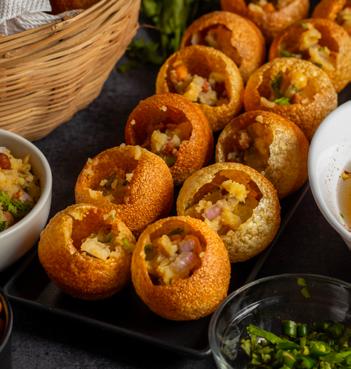
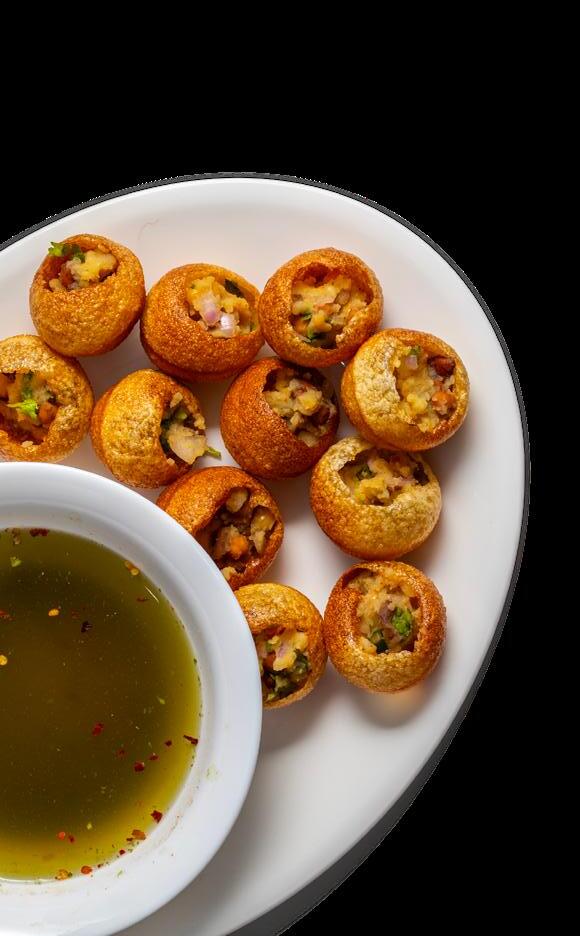
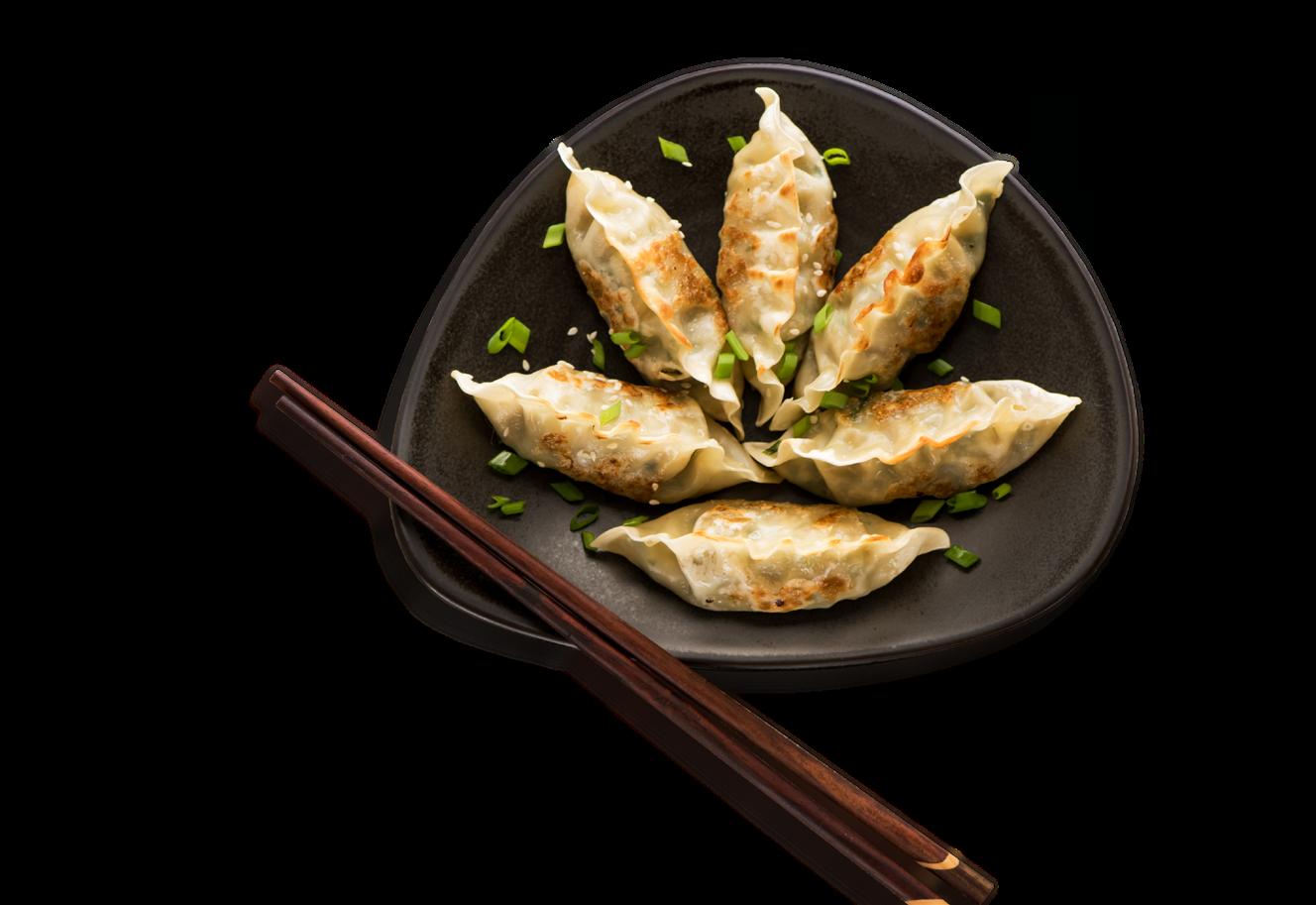
Whether you call them dumplings, pierogies, gyoza, mandu, poppers, empanadas, panipuri or something else entirely, the idea of a pocket, purse or other type of stuffed dough filled with a mixture of meats, vegetables and/ or fruits is a global culinary phenomenon. In America, these bite-sized delights are craveable, comforting and convenient. They can be deep fried, steamed, boiled, baked or pan fried; embrace myriad flavors and ingredients; and adapt easily to a wide range of preferences, regardless of age or background.
In restaurants, dumplings (filled dough) are being configured for service throughout the day, perfect as bar snacks, appetizers, center-of-plate presentations and even desserts. Some of the more innovative formats utilize brightly hued doughs, creative folds and shapes that, on these merits alone, are stunning presentations. Plus, there’s an amazing variety of unconventional and
unexpected fillings. Some of the more intriguing savory options include curried sweet potato, buffalo chicken, eggs and roasted peppers, kimchi mac and cheese, asparagus and spring pea, butternut squash and goat cheese, Philly cheesesteak, and duck confit with Fuji apples. If you’re eager to introduce dumplings as something special at the end of the meal, sweeter variations include guava cheesecake, white chocolate, Nutella and banana, caramel apple, and blueberry and goat cheese.
The remarkable thing about all of these is that they can be presented traditionally as an homage to one specific country of origin and its cuisine, or, given a chef’s creative touch, designed to align with your restaurant’s own culinary concept. No matter the configuration, dumplings are making lasting impact and are here to stay.
Gyoza
Panipuri
06 Teatime
More consumers than ever are gravitating toward foods and beverages that support healthier living, with Gen Z and Millennials leading the way. In particular, they’ve shown a keen interest in tea, especially green, matcha, herbal blends, single-origin and niche specialties. Combined with the growing popularity of low/no alcohol beverages, a noteworthy shift in beverage consumption is underway.
According to Datassential, the industry’s leading food research and insights firm, teatime is the new happy hour. Seen as a modern resurgence of the traditional “afternoon tea,” service begins earlier (think 2-4 PM), with menus featuring special offers on tea, mocktails and small plates. In short: the concept of happy hour is being transformed.
Restaurateurs understand that consumers will spend more on unique dining experiences and are capitalizing on these emerging, off-peak service opportunities. Instead of a late afternoon or evening happy hour, they’re offering a relaxing stress-free break from everyday pressures with an indulgent afternoon tea. Described as immersive, somewhat elaborate affairs, they are known to embrace creative themes such as “garden party,” “afternoon brunch,” “wellness escape,” or “bohemian.” Additionally, tea drinks are becoming imaginative, featuring niche and specialty teas such as hojicha (roasted Japanese green tea) and Genmaicha (Japanese green tea mixed with roasted, popped brown rice), occasionally combined with flavorful additions such as fruit purées, oat milk and caffeine infusions. When served, presentations rely on more elegant constructions and garnishes typically associated with craft cocktails. While traditionally accompanied by classic scones with clotted cream and jam, macarons and petit fours, guests are also enjoying creatively inspired finger foods and bite-sized sandwiches that feature more adventurous, globally inspired flavors.
Teatime is surging as wellness-focused diners seek mindful breaks.
07 Bolder Breakfasts
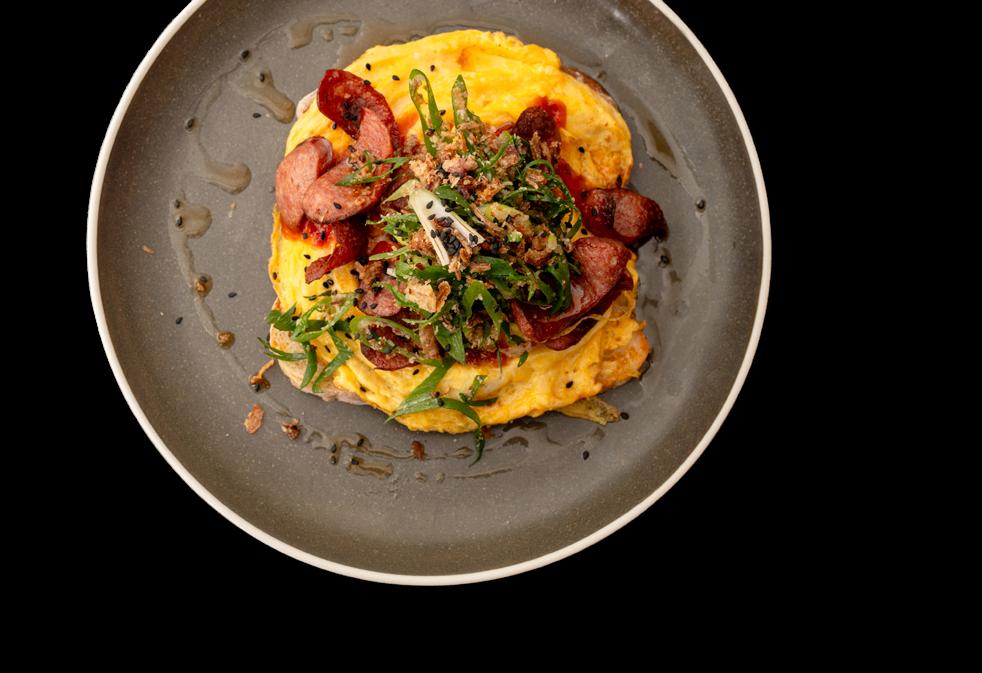
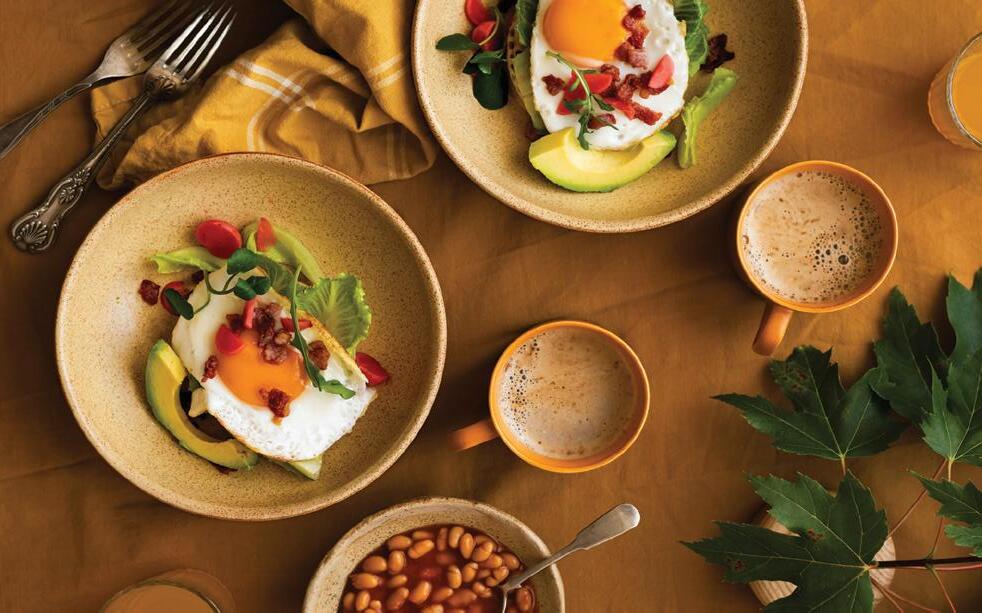
Consumer preferences for breakfast, especially among younger individuals, are moving away from sweet cereals and pastries, indicating a measurable shift toward new alternatives. According to the 2026 Tastewise Trend Forecast, bold umami, aromatic herbs and spiced notes are gaining traction in breakfast formats, as are globally inspired flavors and preparations. Similarly, Circana reports that indulgent flavors, unique textures, upscale ingredients and novel formats appeal to individuals who enjoy experimenting with different kinds of foods and beverages in the morning.
Breakfast is evolving with global flavors and inventive twists.
In some cases, traditional breakfast dishes are being elevated with tangy and zesty ingredients such as coffee-candied bacon, hot honey and chorizo, all adding complex flavor and creating perceptions of more premium options. At the same time, breakfast bowls are benefitting from the addition of functional ingredients and superfoods including chia seeds and quinoa. Dishes such as sour cherry oatmeal, spiced grain bowls, breakfast pizza and lavender waffles are equally distinctive, catering to a growing interest in bolder flavor experiences as part of the morning meal.
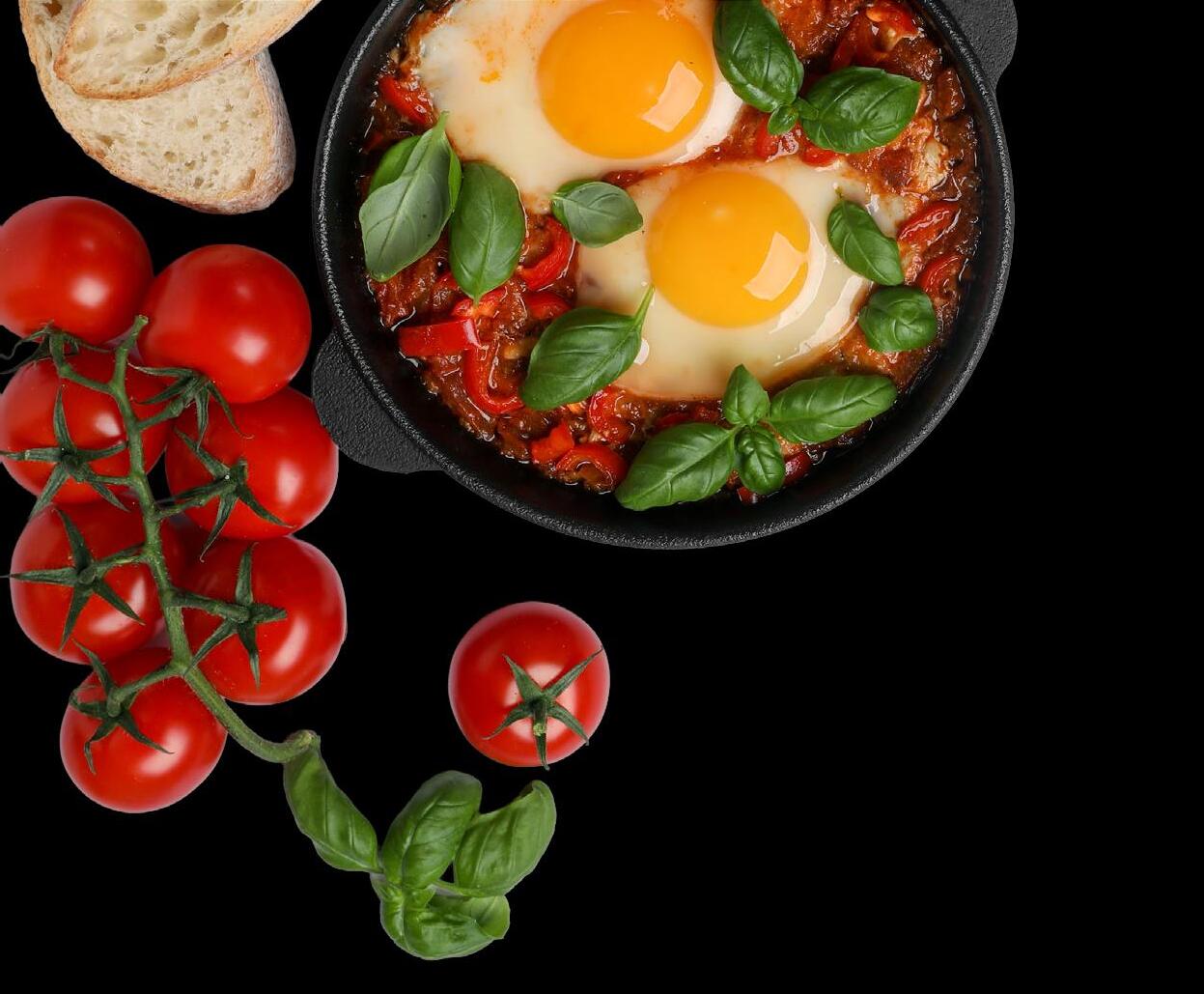
When it comes to global flavors and fusion formats, traditional Vietnamese beef or chicken pho, as well as various iterations of Japanese ramen (i.e. bacon-egg-cheese ramen, steak with soy egg), are making tremendous inroads. Other Asian inspired dishes such as kimchi egg bowls and Korean egg sandwiches are becoming increasingly popular, as is Mediterranean shakshuka and dishes featuring Middle Eastern ingredients including za’atar and labneh.
An obvious departure from traditional breakfast staples is clearly underway. Morning meals are being transformed by culinary creativity as well as greater demand from younger consumers for both healthier options and bolder flavors.
Mediterranean Shakshuka
08 Emerging Flavors
Today’s consumers are craving imaginative and unexpected flavor combinations and playful sensory experiences. To deliver them, chefs are embracing distinctive tastes from around the world.
According to the Morgan Myers 2026 Flavor Trends report, 85 percent of consumers are somewhat open to new flavors. From a demographic perspective, Baby Boomers are loyal to familiar tastes, while Gen X and Millenials seek flavors that offer both indulgence and health benefits. Gen Z, on the other hand, is trend driven and eager for the variety that surprising new flavors, textures and mashups can provide.
The report also identifies flavors that are “next” for 2026. Among them is hojicha, a Japanese roasted green tea known for its smooth, nutty taste; macadamia nuts, nutrient-dense with a rich, buttery texture and light sweetness; floral infusions, contributing subtle complexity and a touch of whimsy; and black cocoa, a dark, intensely flavored and indulgent ingredient.
It goes without saying that, with the obvious and ongoing interest in global cuisines, there are a few more flavors that are attracting attention. Pandan (fragrant leaves, often likened to
85% of consumers are open to new flavors
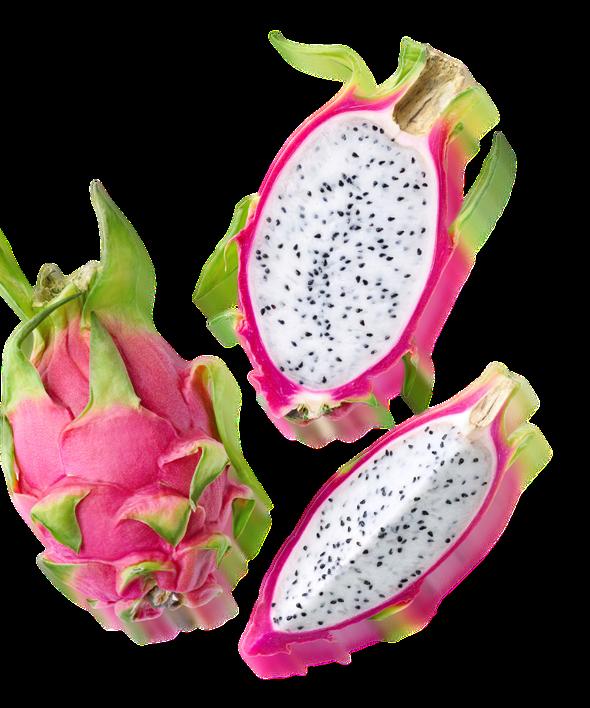
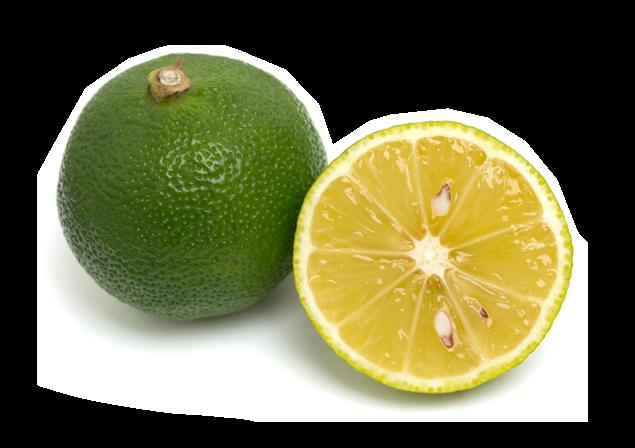
vanilla, also earthy, grassy, nutty) and sudachi (a citrus fruit known for its tart, aromatic flavor) from Asian cuisines; pomegranate molasses, za’atar, sumac, baharat and berbere from Middle Eastern cuisines; tropical fruits including mango, guava, dragon fruit and yuzu (especially when combined with complex heat); and unique vinegars from around the world.
Using these ingredients in creatively inspired presentations, including beverages, sauces, baked goods, ice creams, glazes, sprinkles and spreads, will keep your menu fresh and exciting. Whether you prefer sweet, savory, globally inspired, flavor crossovers or embellished everyday meals, there’s plenty to consider.
Pandan Leaves
Sudachi
Sumac
09 Meat Resurgence
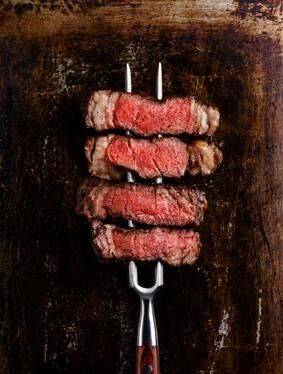
Demand for protein has reached an all-time high in US markets. While younger generations (Gen Z, Millennials) are more adventurous with their protein choices, older consumers (Gen X, Baby Boomers) prefer more conventional, animal proteins. Based on its highly regarded nutritional value, flavor and longstanding role in traditional meals, many consumers are simply returning to eating meat.
Mintel reports that 90 percent of consumers enjoy meals centered around animal proteins on a regular basis, while 40 percent include plant-based equivalents. Similarly, findings from Datassential reveal that 72 percent of consumers say animal meat is more satisfying, natural and craveable - preferring the comfort, texture and taste it provides. At the same time, two-thirds of operators say animal protein is more versatile than plant-based equivalents.
The growing popularity of animal proteins is also being supported by concerns for authenticity, a measure of value that has become synonymous with quality, as well as a desire
to avoid ultra processed foods. According to the Tastewise 2026 Food & Beverage Trend Forecast, consumer interest in authenticity, including craftsmanship and premium cuts, is up across all cuisines, with the greatest emphasis on meat.
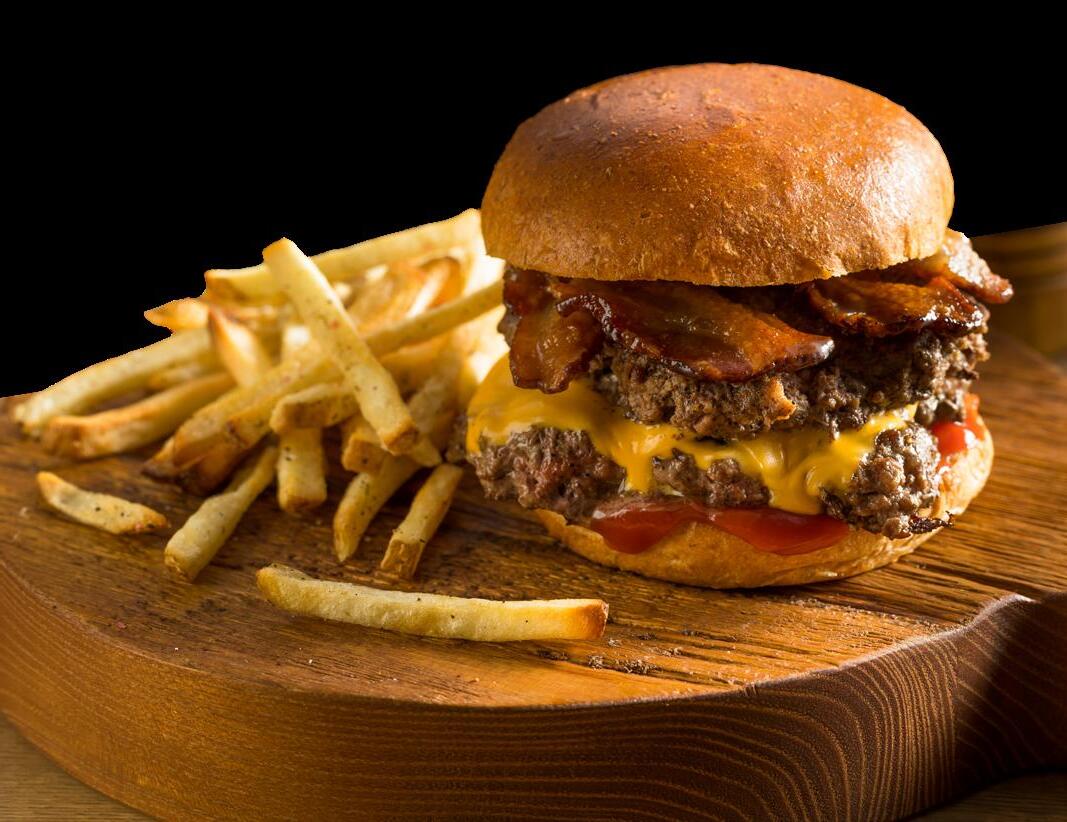
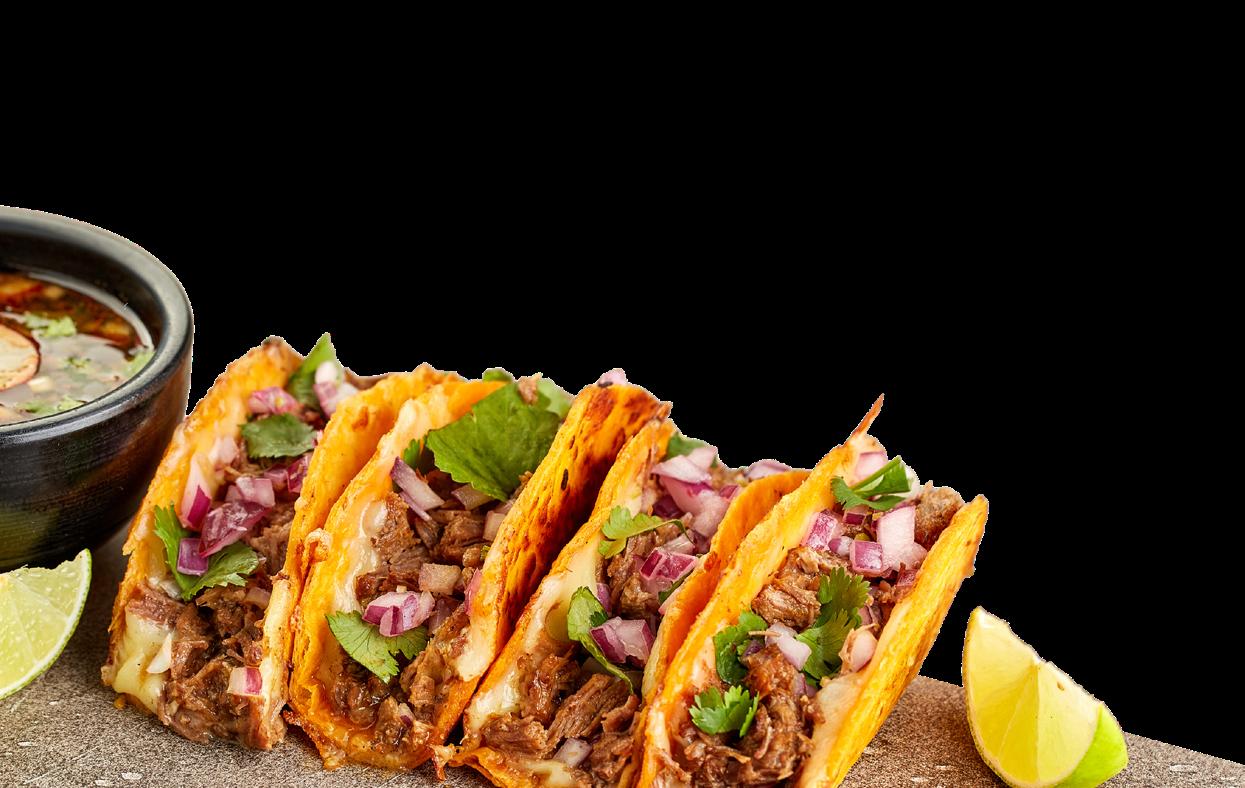
In response, several meat-centric dishes have been appearing on menus with greater frequency, including Singapore noodles, birria tacos, chicken tom kha, smashburgers and chicken taco salad. In addition, two of the fastest-growing proteins are pepperoni cups and jalapeño cheddar sausage.
Given rising demand for high-quality proteins and a preference for authentic foods, menus showcasing meat-based proteins in a variety of globally and domestically inspired cuisines will be well suited for the year ahead.
10 Multisensory
Consumers are embracing multi-sensory, emotionally resonant and immersive food experiences. By exploring texture, aroma and flavor in inventive ways, chefs are producing playful ingredient mashups that feel both fresh and memorable.
Menus are putting greater emphasis on texture to enhance overall appeal. Whether crispy and gooey, melty and chewy, hard and soft or crunchy and creamy, these layered, texture-rich applications influence how a dish feels and sounds. They elevate ordinary meals, spark delight, boost craveability and transform small moments into shareable experiences.
A few examples embracing this approach include smoke-filled cocktails, crispy rice for garnish on rice bowls, foamy and creamy toppings on drinks, and crunchy taco shells repurposed for everyday sandwiches. Other options include innovative culinary techniques such as specification (encapsulating bold flavors in a solid, caviar-like sphere),
ingredients with unusual mouthfeel such as chips, gummies or toasted nuts (adding both texture and flavor), striking natural colors (i.e. turmericyellow, paprika-orange, beet-red), global flavor combinations (i.e. Mexican birria ramen), visually appealing, architecturally-styled presentations, and distinctive aromas that anticipate and enhance the perception of flavor.
As with other food trends, younger consumers are driving the demand for more adventurous mashups, textures and unexpected culinary experiences. The good news is that, through careful consideration of ingredients, pairings and presentation, dining experiences can be tailored to accommodate all times of day, embrace seasonal offerings, and appeal to a wide range of audiences.
Multisensory dining is transforming everyday meals into extraordinary moments through layered textures, striking aromas and inventive flavor mashups.
DUMPLINGS ARE A GLOBAL PHEMONENON
In response to these dynamics, there’s one application, best described as “filled dough,” or more simply, dumplings, that’s experiencing tremendous popularity. Integral to cuisines around the world and prepared in both savory and sweet forms, dumplings’ versatility allows them to appear anywhere on the menu as appetizers, small plates, main dishes, desserts or bar snacks.
According to Datassential, a global food and beverage intelligence company, dumplings have been attracting attention for some time, from ubiquitous Italian ravioli and tortellini to Japanese gyoza, Polish pierogies and Chinese dumplings. More recently, Chinese xiao long bao (soup dumplings), Indian samosas, Spanish empanadas and Tibetan momos have been trending, though many remain unfamiliar to U.S. diners. Other dumplings, such as Georgian khinkali, Korean mandu, Eastern European kreplach and Russian pelmeni, are only just beginning to gain wider recognition.
What’s clear is that chefs are experimenting, drawing inspiration from traditional dumpling forms while elevating them through modern culinary techniques. They’re making a splash on the plate with naturally occurring coloring agents (beet red, butterfly pea flower blue, turmeric yellow), creative pleats, twists and folds, and innovative fillings such as kimchi mac and cheese, asparagus and spring pea, guava cheesecake and Philly cheesesteak.
ELEVATED CHINESE DUMPLINGS
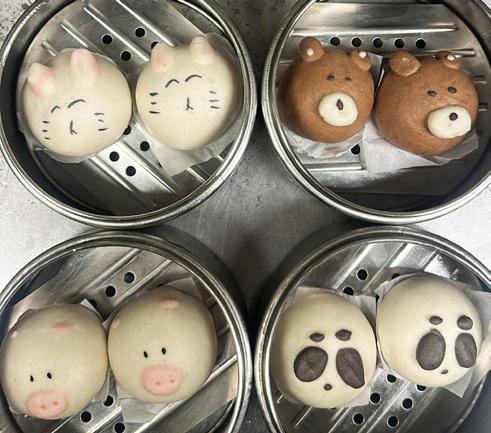
At Lucky Cat Dim Sum (Jacksonville, FL), Chef Guorong Fan offers Buffalo chicken buns and cheeseburger shumai, both playful tributes to iconic American comfort foods. He also creates filled, animal-shaped buns (pig, panda, cat, bear) that are eye-catching, tasty and add a sense of whimsy to the dining experience.
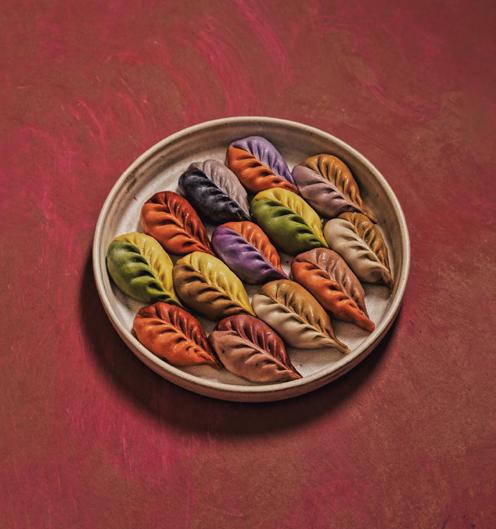
Some of the most visually striking dumplings today are being produced by Frankie Gaw, a blogger and cookbook author operating under the name Little Fat Boy. In his book First Generation , Gaw pairs bold, flavor-forward fillings with multicolored doughs, creatively pinched, pleated, folded and twisted to create dumplings that make dazzling impressions.
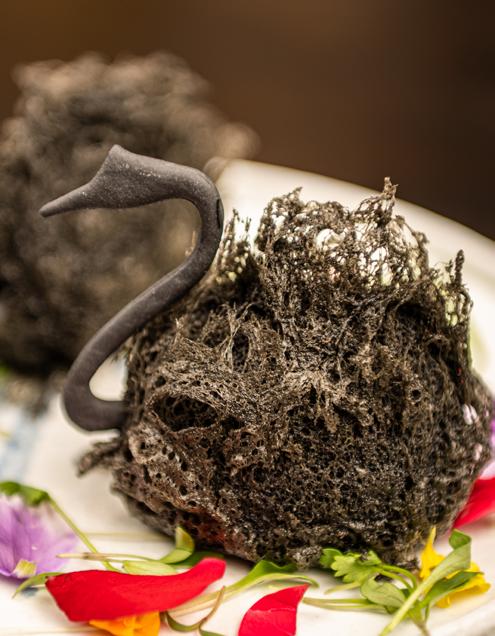
At Palette Tea House in San Francisco, dim sum Chef Guoxiong Ruan is reimagining dumplings in a fun, modern and visually striking way. The lobster dumpling, for instance, is a twist on the classic ha gow (shrimp dumpling), elevated with a lobster and shrimp filling and a small pipette of lobster butter sauce.
Charcoal colored black swan taro puffs, made with minced pork, shrimp and duck, from Palette Tea House (San Francisco, CA)
White chocolate teddy bear buns by Chef Guorong Fan are a crowd pleaser at Lucky Cat Dim Sum (Jacksonville, FL)
NEW FLAVORS & INGREDIENTS
While other versions of “stuffed dough,” such as pierogies, empanadas and momos are trending, innovation has often focused primarily on fillings, elevating traditional recipes and introducing thought-provoking flavors without significantly modifying the outer dough wrapper.
Chef Jake Bukowski at The Galley (Philadelphia, PA) has created pierogies that go beyond classic potato and cheese or sauerkraut and mushroom, introducing contemporary fillings such as crab Rangoon, cheesesteak and Buffalo chicken.
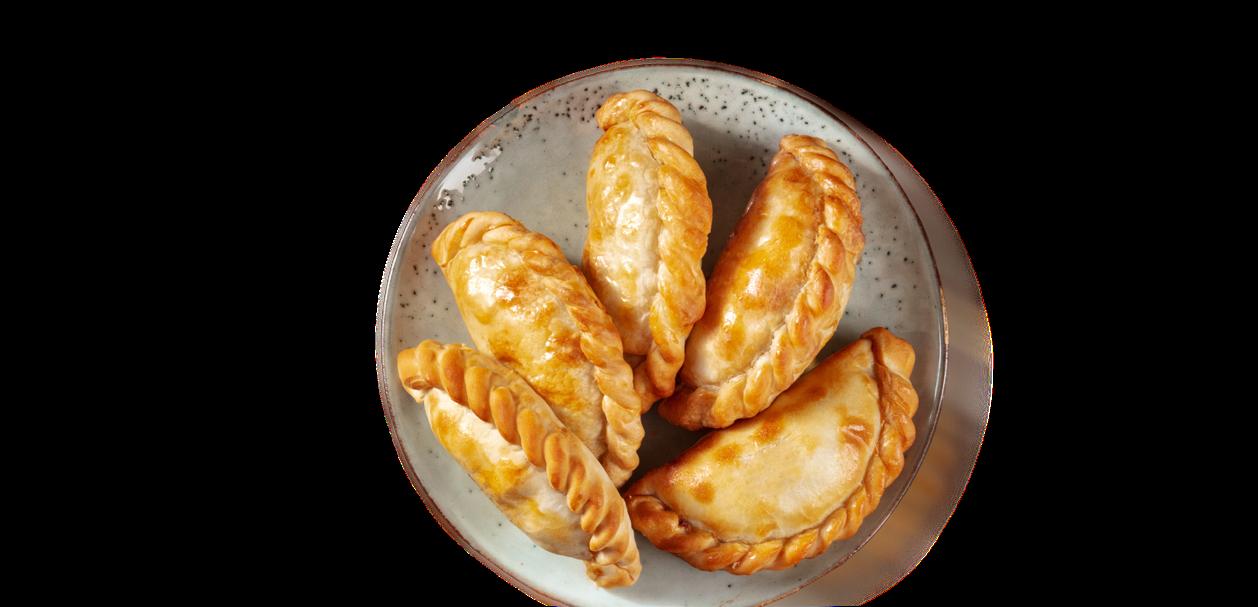
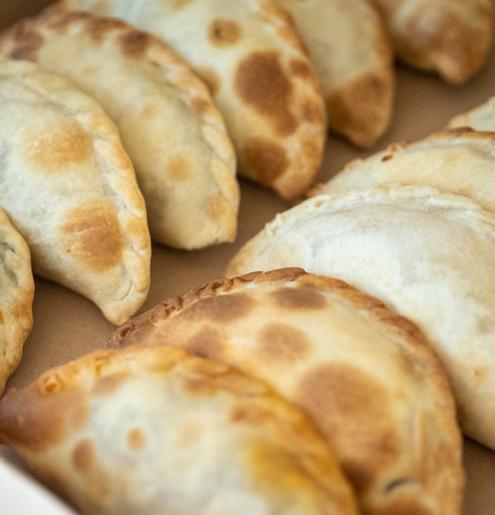
Similarly, South American empanadas, traditionally filled with beef or chicken, are being adapted for American audiences. This is evident on The Empanada Girl’s (Tampa, FL) menu, which features varieties including bacon, sausage, egg and cheese; mushroom and caramelized onion; pepperoni and cheese; and curried sweet potato and butternut squash.
Other chefs offer savory empanadas filled with coconut curry, teriyaki chicken and chicken tikka masala, alongside sweet options made with guava and cheese, blueberry and goat cheese, caramel apple, and Nutella-banana.
Another dumpling, momos, originates in the Himalayan regions of Tibet and Nepal. Traditionally prepared with ground meat (often yak) and resembling other Asian dumplings, their defining characteristic lies in their boldly seasoned fillings and accompanying sauces. At Fomo Momo (New York, NY), founders Ankita Nagpal and Impreet Sodhi have reimagined momos using Indian flavors that feel fresh and unexpected. Standout varieties include paneer, ema-datshi, tandoori, Manchurian and achari.
ENDLESS POSSIBILITIES
While Asian dumplings continue to trend, chefs are also demonstrating creativity through surprising alternatives, from profiteroles filled with braised duck to playful sweet versions stuffed with peanut butter and jelly. Pommes dauphine, light and crispy potato puffs, are being elevated with fillings such as smoked salmon, various cheeses and braised short rib, offering an engaging alternative to French fries. Indian panipuri, distinctive fried masa puffs, are similarly being reimagined with both traditional fillings (potatoes, chickpeas, onions) and upscale ingredients such as crème fraîche and caviar. The bottom line is that when it comes to dumplings and other foods described as “stuffed dough,” the creative potential is virtually limitless. All that’s required is an appreciation of their origins, a little culinary dexterity and a willingness to push familiar forms in new, thoughtful directions.
Traditional Argentine and American fusion empanadas from Empanada Girl ( Tampa, FL)
Visually striking dumplings by “Little Fat Boy” Frankie Gaw (Seattle, WA) showcase creative pleats, folds and color
Connect Your Brand to the Culinary Community at the 2026 National Convention
Over 1,300 chefs, educators, food service leaders, and culinary competitors in one room for five days. The ACF National Convention is where products get discovered, relationships form and brands build trust.
Reserve your booth or sponsorship today.
June 28–July 2, 2026
DeVos Place Convention Center
Grand Rapids, Michigan
The Enduring Appeal of Tuna
By Jeffrey Spear
Today’s consumers are pursuing healthier lifestyles while maintaining diets that embrace lean proteins and nutritionally dense ingredients. In response, chefs and restaurateurs are developing new dishes and adjusting their menus to better align with these preferences.
Recognized as a nutritious source for high quality protein, packed with omega-3 fatty acids, vitamin B12 and vitamin D, tuna performs consistently well across all day parts and in every imaginable application. When cooked, it can be presented as carefully seared steaks, incorporated into casseroles or featured in pasta dishes. Alternatively, when served raw as sashimi, ceviche or poke, tuna is celebrated for its vibrant color and delicate, melt-in-the-mouth texture.
The most popular varieties of tuna are yellowfin, albacore and bluefin, all providing highly desirable colors, textures, flavors and versatility. It’s important to note that, according to recent findings from Datassential, sustainable wild-caught seafood holds the greatest interest for the majority of consumers, whether fresh, frozen or canned.
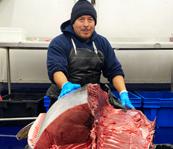
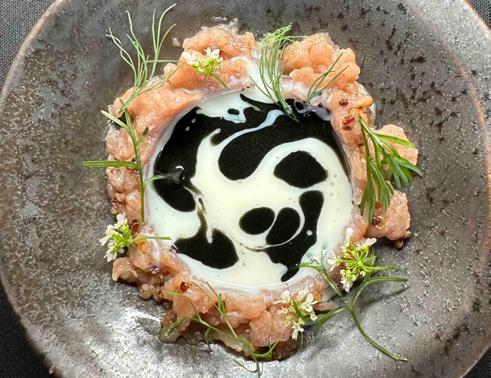
At Stages at One Washington (Dover, NH), Chef-owner Evan Hennessey works exclusively with bluefin tuna, harvested seasonally just off the coast of New Hampshire. He explains: “I find its muscle structure, tighter grain and almost buttery texture make it ideal for our purposes. It’s well suited to everything from canapés to mains. I especially like the way bluefin tuna holds up to any number of sauces.” When asked about fluctuations in availability, he adds: “They’re big fish. We’ll break them down, serve some of the tuna fresh and Cryovac and freeze the remaining portions to avoid loss and ensure availability during the off season.”
“
They’re big fish."
Another fan of bluefin tuna is Chef Francis Ang . At Abacá (San Francisco, CA), he applies his Filipino heritage to their bluefin tuna “Singulaw,” favoring its richness and versatility for this ceviche style dish. Paired with grilled pig’s ear, grape and black vinegar, this dish delights with contrasting flavors and textures.
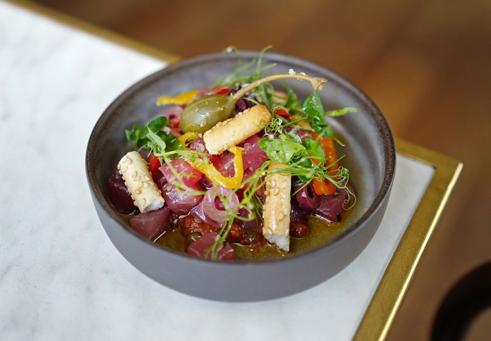
At Leonetta (New York, NY), Chef-owner Ed Cotton prefers yellowfin tuna for his menu. “For my purposes, bluefin is a bit too intense” he says. “I prefer center cut, #1 sashimi grade yellowfin.” When asked about using the whole fish, he adds "We don't always have time to break down a whole fish, and I tend
to be fussy about ingredients. Buying prefabricated, beautifully finished cuts from highly qualified vendors ensures the quality and consistency I insist upon."
When it comes to selecting the right tuna, Bill Weiss, President of Wulf’s Fish (Boston, MA) offers “While a lot of chefs know what they want, a good vendor will understand the application and make appropriate recommendations in terms of species, color, texture, cut and culinary performance. Plus, we understand that those attributes can vary over time, depending on seasonality as well as weather.”
Apart from fresh cuts, there are other options to consider. Some operators rely on canned tuna for everyday applications including sandwiches, salads and casseroles, appreciating its affordability and years-long shelf life. For others, fresh tuna stands in as a premium upgrade from canned, transforming these very same dishes into extraordinary experiences.
There’s also growing interest in “conservas” or “tinned fish” that have been appearing on seacuterie boards, small plates and bar menus. Described as an elevated culinary experience, these are the seafood products, including tuna, that offer a unique provenance, rich and complex flavors and appealing textures. When looking specifically at tuna, Artesanos Alalunga, Spain’s smallest cannery, applies sous-vide to cuts such as ventresca (belly) and tarantello (behind-the-belly) before canning, creating an incredibly buttery texture and rich flavor. Other brands including Fishwife and Ortiz (both from Spain), as well as Gulf of Maine Conservas (New Hampshire), have their own distinctive tuna varieties that are equally attractive.
Whether you prefer fresh, frozen, tinned or canned, tuna is undeniably popular. Combined with its versatility and healthful attributes, there are countless opportunities for culinary innovation in the kitchen and guest satisfaction at the table.
Chopped yellowfin "Puttanesca” by Chef Ed Cotton at Leonetta (New York, NY). Photo courtesy Create & Align.
Bluefin tuna tartare by Chef Evan Hennessey at Stages at One Washington (Dover, NH), served with a split sauce made with buttermilk, squid ink and black sesame oil. Photo courtesy Stages.
TUNA FACTS
Source: NOAA Fishwatch U.S. Seafood Facts
Atlantic Bigeye Tuna
Native to New England/Mid-Atlantic, Southeast
Also known as bigeye or ahi
A mild, meaty flavor, high fat content, perfect for sashimi, firm and moist
Atlantic Skipjack Tuna
Native to New England/Mid-Atlantic, Southeast
Also known as ocean bonito, lesser tuna or aku
The most pronounced taste of all tropical tunas, firm and moist
Atlantic Yellowfin Tuna
Native to New England/Mid-Atlantic, Southeast
Also known as ahi
A mild, meaty flavor, firm and moist
North Atlantic Albacore Tuna
Native to New England/Mid-Atlantic, Southeast
Also known as northern albacore, longfin tuna or germon
Mild, rich taste, firm and moist
Pacific Albacore Tuna
Native to Pacific Islands, West Coast
Also known as albacore, germon, longfin tuna, ahi palaha or tombo
Mild, rich taste, firm, steaky and moist
Pacific Bigeye Tuna
Native to Pacific Islands, West Coast
Also known as bigeye, ahi or mabachi
A mild, meaty flavor, high fat content, perfect for sushi, firm and moist
Pacific Bluefin Tuna
Native to Pacific Islands, West Coast
Also known as northern bluefin tuna or bluefin tuna
A mild, meaty flavor, firm and moist
Pacific Skipjack Tuna
Native to Pacific Islands, West Coast
Also known as ocean bonito, lesser tuna, aku or katsuo
The most pronounced taste of all tropical tunas, firm and moist
Pacific Yellowfin Tuna
Native to Pacific Islands, West Coast
Also known as ahi or kihada
A mild, meaty flavor, firm and moist
Western Atlantic Bluefin Tuna
Native to New England/Mid-Atlantic, Southeast
Also known as bluefin tuna, toro, maguro, giant bluefin or northern bluefin tuna
A distinctive flavor, high fat content, best for sushi and sashimi
Present and Purposeful: Chef Educator of the Year Joshua Wickham
By John Bartimole
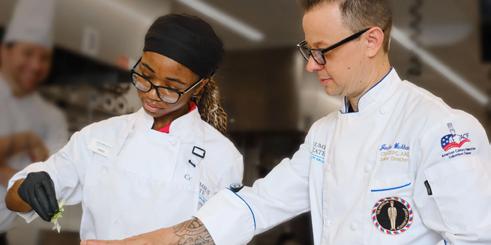
The 2025 ACF Chef Educator of the Year believes in the importance of being present – present for his students, present for his staff and present for his family. In fact, it was that very need that led ACF Chef Joshua Wickham, CEC, CEPC, AAC , to his current role as senior director of the School of Hospitality Management and Culinary Arts at Columbus State Community College.
“I was working in fine dining at a country club and I realized how all-consuming it was, in both time and energy,” he says. “The demands of country club dining are many. Every holiday, you’re expected to be there. I had a young daughter at the time and soon realized I would be missing a lot of moments in her life if I stayed on that career path.”
Wickham had been teaching as an adjunct at Columbus State since 2008, but that realization prompted him to take on more classes. “I love education and in 2016 I was hired as a full-time faculty member,” he recalls. “In 2018, I moved into administration.”
Food, Wickham says, is his love language and he brings his belief in being present to his current role at the college. “I have a whole lot of interaction with the students, even though I’m not in the classroom,” he says. “My office is one of the first they pass when they come into the office suite, and I’m able to interact with them then.” He adds: “I also make it a point to speak regularly with the student-run retail establishments that we operate. It’s important for them to know that we value our relationship with them.”
Wickham admits he simply loves taking care of people. “I like showing students what’s possible through hospitality and food,” he enthuses. “If they see it as their future, that’s great.”
But he believes educators also have a responsibility to help students understand when a path may not be right for them. “I believe in providing a safe environment for students to learn if this is not what they want,” he insists. “As educators, it’s our job to help people find their true calling.” One of his greatest sources of pride is seeing alumni return as instructors. “It’s so rewarding to see that growth,” he says. “To have students who are on that trajectory is fulfilling, and knowing they’re proud to represent our brand means everything.
Alumni engagement is woven into the program. The college invites former students to the annual graduation celebration and fills advisory boards with them. “The stronger and more empowered your advisory boards are, the better prepared
you are for the students, the faculty and for accreditation,” he explains.
Although Wickham assumed responsibility for the academic program in 2020, he’s clear about where his influence begins and ends. “Curriculum is the faculty’s job,” he says. “My job is to advocate for what they need.” The college employs seven fulltime faculty members and 24 adjunct instructors.
As part of the Chef Educator of the Year competition, Wickham prepared a meal for judges at the annual convention, choosing Chongqing chicken (also known as mala fried chicken) with steamed jasmine rice. Rather than plating the dish, he opted to serve it family style. “This recipe is very spicy, very numbing,” he says. “It’s prepared in a wok using the velveting technique to cook the chicken.”
Serving the dish family style was a deliberate choice. “I went out on a limb to serve it unconventionally, because it’s a great way to get people talking with one another,” Wickham notes. He also chose the dish for personal reasons. “It’s one of my daughter’s favorites and one of mine,” he says. “We’re fortunate to have incredible Asian restaurants in the north end of Columbus, and we discovered the dish by frequenting them.”
By being present – not only at the college and at home but also in the wider community – Wickham continues to look for new ways to teach, inspire and learn.
“As educators, it’s our job to help people find their true calling.”
CLASSICAL VS MODERN
MOFONGO
By ACF Chef Jonathan Deutsch, Ph.D., CRC, CHE
The Ocho Supper Club began in 2024 in student housing at Drexel University (Philadelphia, PA), founded by culinary student (now senior) RJ Smith and a group of friends. Instead of spending their Sundays – their one day off from school and part-time restaurant jobs – playing video games, they saw an opportunity to put their classroom learning and workplace skills into practice by blending them with their cultural food traditions and serving them in a polished pop-up supper club. What started as dinners for family, friends and restaurant colleagues soon expanded to the general public, drawing in curious celebrity chefs, food influencers and journalists.
Ocho is named for Ocho Rios in Jamaica, which Smith visited for the first time aged 16. This visit – and the flavors of Jamaica –had a formative impact on his decision to pursue a career in the culinary arts. Ocho Supper Club, devoted to the Afro-Caribbean flavors of Smith’s heritage, is now doing up to 50 covers per service and has outgrown the campus apartment, popping up at cafés and specialty stores around Philadelphia.
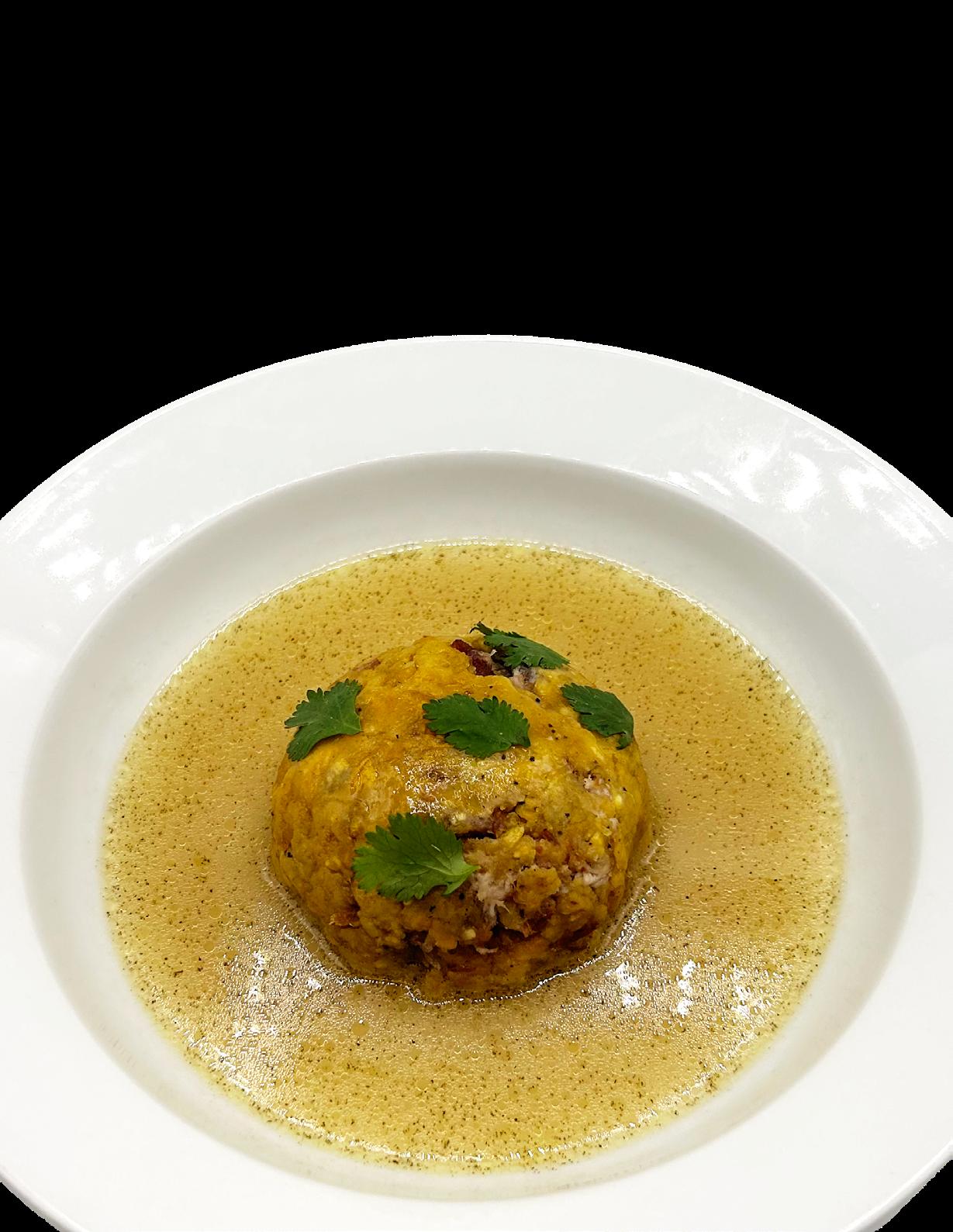
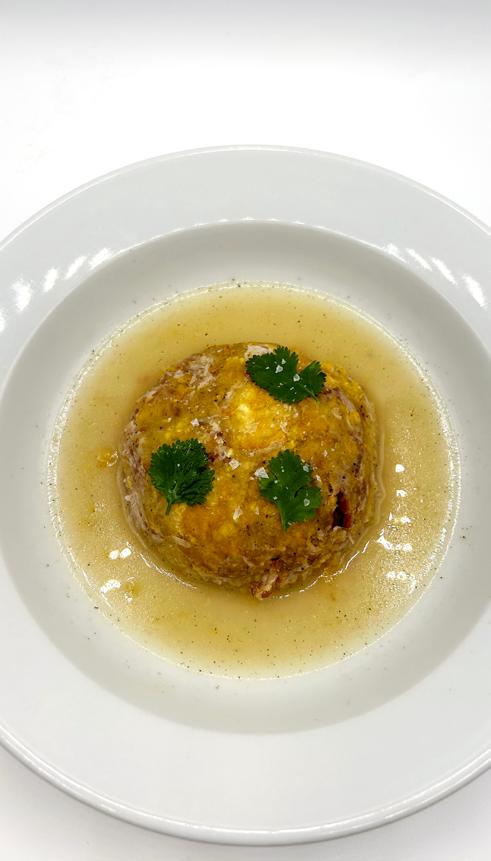
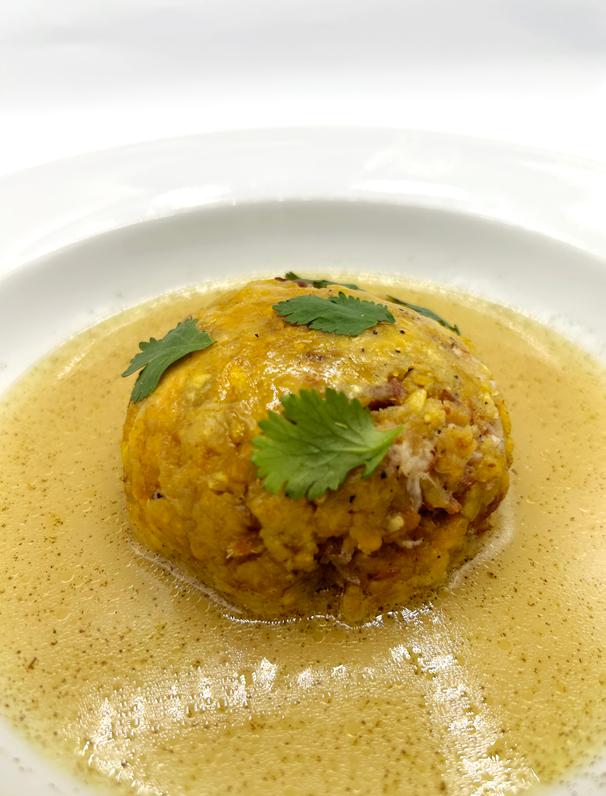
Amelio Rodriguez , a junior culinary arts major at Drexel and a line cook at Vernick Food & Drink in Philadelphia, was part of Ocho’s opening team. He developed one of the original dishes on the tasting menu: an elevated mofongo that pays homage to his Dominican American heritage. The dish – mashed fried plantains and chicharrón (pork crackling) served in a garlicky caldo –originated in Puerto Rico and became popular across the Caribbean and Latin America.
Rodriguez says his connection to mofongo is deeply tied to the food he grew up with. “Being Dominican, I grew up eating mofongo all the time,” he says. “It was a meal I could have anytime, and it satisfied both my stomach and my soul. The warmth and the broth are almost like a soup but not quite. I can never get enough of fried pork. Plantains are in almost everything we eat—breakfast, lunch and dinner. It’s one meal, compacted with all those elements so it’s very fulfilling.”
For a fine-dining application, Rodriguez and Smith took this beloved dish – usually served casually and in generous portions – and “Ocho-fied” it. “We took inspiration from plantains and served a classic mofongo elevated for Ocho by using sweet plantains, adding a chile oil over the broth, and a ramp or cilantro aioli over the mofongo. We also did a smaller portion.”
As any culinary educator knows, some of the most creative ideas come from students. While they may still be developing their technical skills, the lack of “this is how it’s always been done” thinking can spark dishes their instructors might never have imagined.
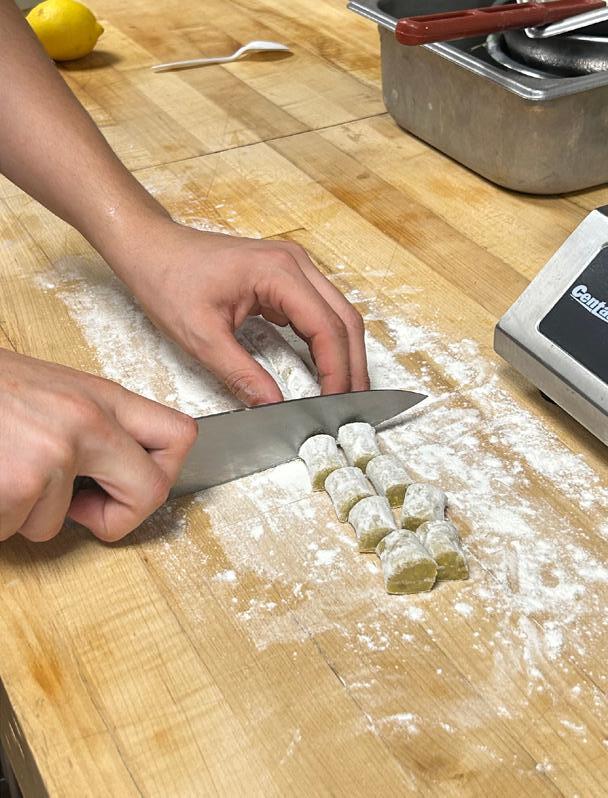
As one of their chef-educators, I never would have imagined turning the plantains from traditional mofongo into gnocchi – yet that’s exactly what Smith and his classmates did. He says that rethinking the texture and appearance of the plantain was top of mind. “An ingredient special to so many can be elevated in a way that can be special to everyone,” he explains. “To me, this draws a line between many cultures and paths of life through food.” He adds that the dish has been a mainstay on their menu: “We get pushback whenever we try to take it off. It’s become a signature dish that encapsulates Ocho. It’s interesting to use plantain in a way that’s completely unconventional and modern.”
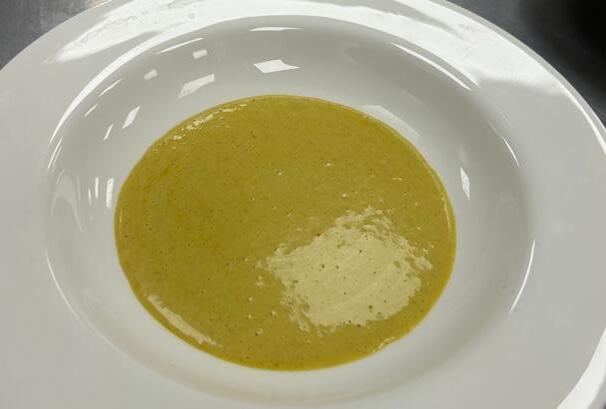
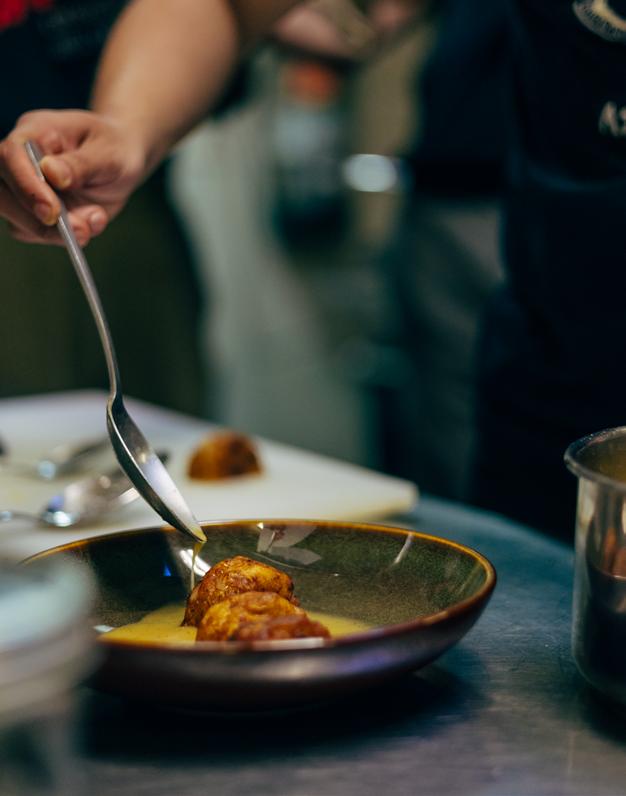
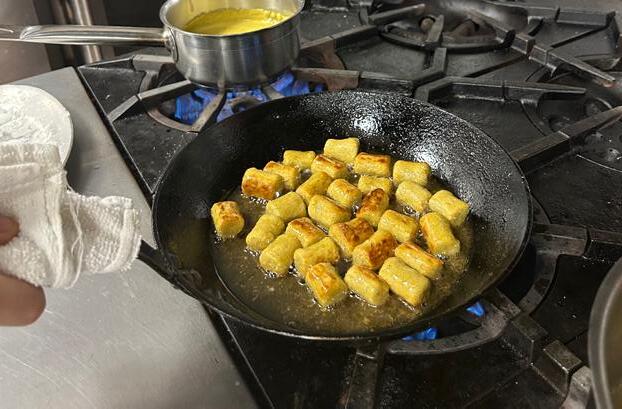
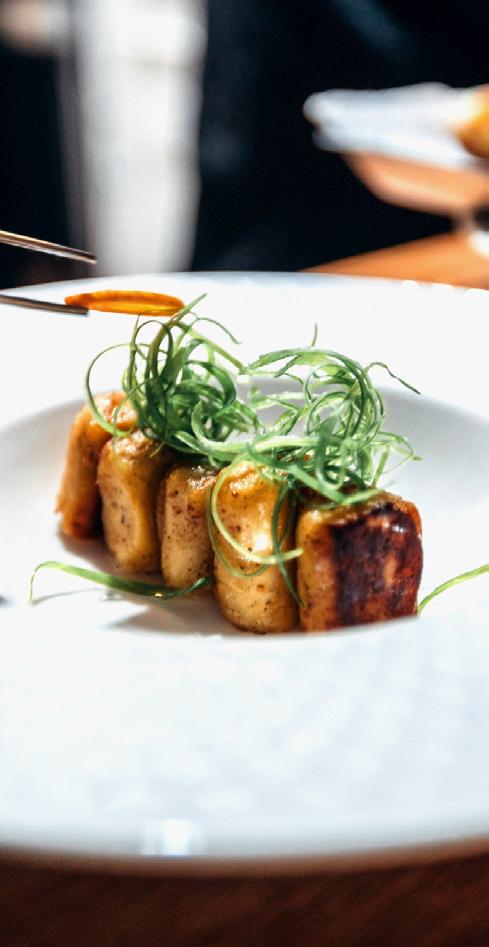
The result is a modern interpretation: plantain gnocchi seared in brown butter and served in a curry broth – a new kind of soothing comfort dish that elevates the humble plantain.
CLASSICAL
Classic Mofongo
Chef Amelio Rodriguez, Line Cook, Vernick Food & Drink and Junior Culinary Arts and Science student at Drexel University, Philadelphia, PA
Serves 4
For the Chicharron
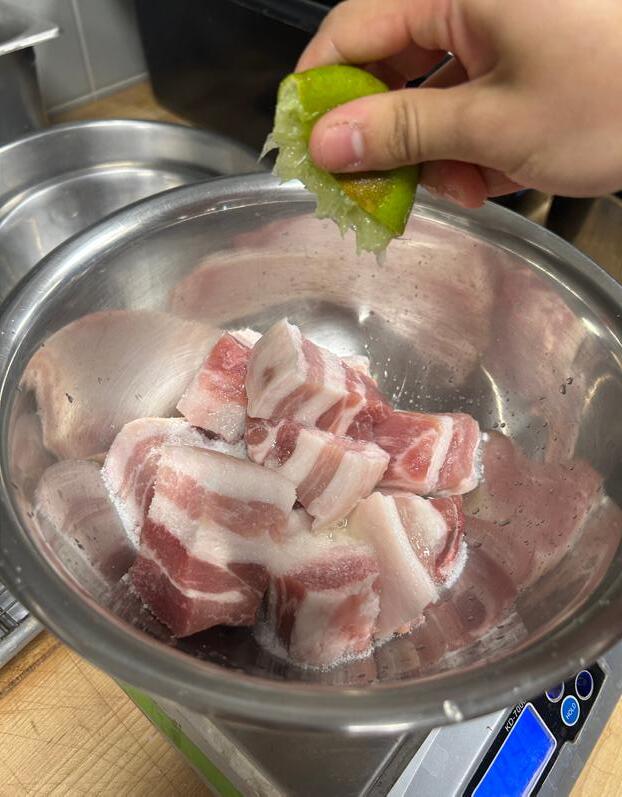
• 453 g pork belly (approximately one pound)
• 10 g salt
Juice of two limes, approximately 30 g
• 2 g ground Dominican oregano
1. Marinate the pork belly in salt, lime juice and oregano for a few hours or up to a day ahead.
2. In a small sauce pan, cover with water just enough to submerge the pork (about 1 quart).
3. Bring to a boil and cook about 10 minutes on mediumhigh heat.
4. Reduce to a simmer and cook and additional five minutes.
5. Strain and cool.
6. Cut pork belly into chunks. Reserve for assembly.
For the Caldo
• 750 g chicken stock
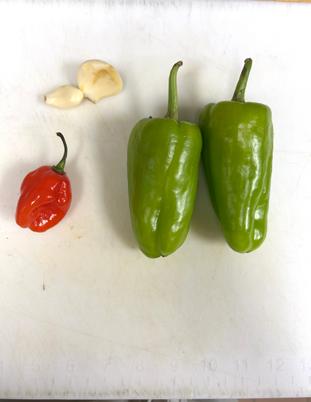
• 3 cloves smashed garlic
• 1 aji dulce pepper, thinly sliced
1 cubanelle pepper, thinly sliced
• 3 g ground Dominican oregano
• 8 g salt
• 9 g butter
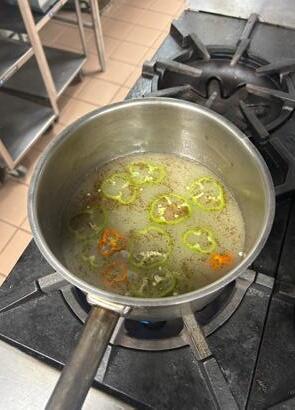
1. Reduce the chicken stock by 1/3 with the garlic, peppers, oregano and salt.
2. Strain.
3. Add butter to reduced strained stock and reserve for assembly.
Plantains
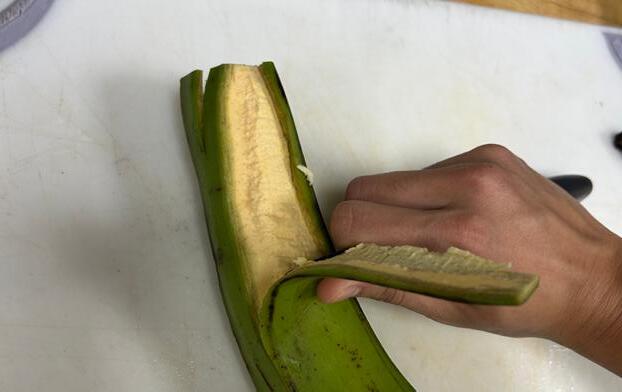
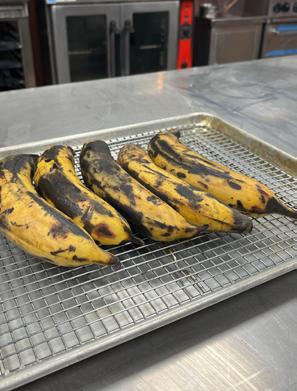
• 4 peeled plantains, cut into chunks (approx. 600 g)
1. Fry at 350°F until crunchy on the outside and fluffy on the inside, about five minutes.
Final Mofongo Assembly
• 1 clove garlic
• 1 generous punch salt
• 40 g chicharron
• 150 g fried plantain
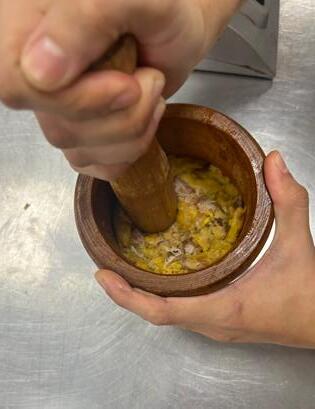
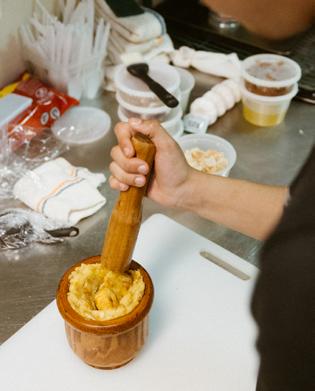
1. In a pilon (wooden mortar and pestle) or similar, make a paste of garlic and salt. Add chicharron and plantain and mash until chunky but uniform.
2. Shape into ball or desired format.
3. Top with reduced broth.
MODERN
Plantain Gnocchi with Coconut Curry Sauce
Chef RJ Smith, Executive Chef, Ocho Supper Club and senior in Culinary Arts and Science at Drexel University in Philadelphia, PA.
Serves 4
For the Gnocchi
2 Overripe plantains (approx. 200 g)
• 6 g egg yolk
• 70 g all-purpose flour
• Water as needed
1. Bake plantain at 375°F for 1½–2 hours, until completely soft.
2. Pass through a medium tamis.
3. Mix with egg yolk and flour. Add a few drops of water for texture until the dough forms a pliable ball.
4. Let dough hydrate for 15 minutes.
5. Roll into ¾” thick log.
6. Slice into gnocchi-sized pieces, approximately ¾”.
7. Freeze. Reserve for service.
Coconut curry sauce
• 35 g shallot
55 g scallion whites
• ¼ scotch bonnet pepper
• 10 g curry powder
• 250 g coconut milk
• 110 ml chicken stock
• 25 g butter
• Lime juice to taste Salt to taste
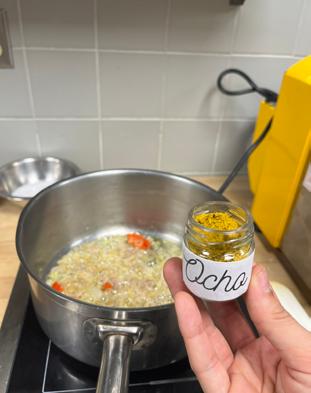
1. In a small sauté pan, sweat shallot, scallion and scotch bonnet.
2. Once onions are transluscent, add curry powder and toast for 30 seconds until fragrant.
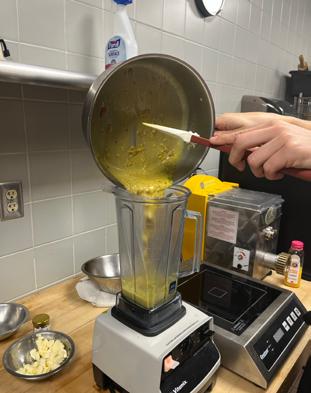
3. Deglaze with coconut milk and chicken stock. Remove from heat.
4. Blend thoroughly with butter. Season with lime juice and salt to taste.
Plantain Gnocchi Assembly
• 25 g butter
2 scallions, cut into curls
1. Sear gnocchi in brown butter.
2. Ladle hot coconut curry sauce on base of plate.
3. Add gnocchi atop broth.
4. Top with scallion curls.
A conversation with ACF Chef Rocco Paradiso, HAAC on career pivots, podcasting and the power of connection.
By Stephanie Lewis
You have several years of experience working as a corporate chef for companies like US Foods. Was that a path you envisioned while pursuing your culinary degree, or how did you come to work in that part of the industry?
Wow, now that I do the math, I worked as a corporate chef for more than 20 years. I initially wanted to open my own restaurant. While I was working at a country club, I attended a high-end food show that was sponsored by US Foods and Food Innovations. I jokingly asked the President of Food Innovations if he was hiring and he said: “Send me your resume.” I did and was hired as a chef consultant. A year or so later, I was asked to move to Chicago and work for US Foods. It was the best decision that I could have made. I learned so much and truly appreciate the opportunities to learn, grow and succeed.
Can you tell us a little bit about a favorite project you worked on as a Corporate Chef?
For me, little details make a huge difference. I can confidently say that I’ve helped many restaurateurs on their path to success. Seeing someone succeed is a great feeling. However, my absolute favorite project was a “Breakfast with Santa” event we hosted when I first moved to Fort Mill, SC. We would feed about 200 families and send them home with a turkey and ham. All the kids received gifts, and one of our sales reps even dressed as Santa. It was always so much fun. I was on grits duty…yeah, the kid from New Jersey put in charge of the grits in South Carolina! I made them and thought, “Whatever, they’re grits.” But they turned out really good. Afterwards, a father and his son came up to me and said: “Thank you for everything, it was lovely. Thank you for the best grits I’ve had since my wife passed away.” That moment changed my perspective. Now every time I make grits, I smile and just try to make the best grits I can.
While hosting the ACF Chef’s Table Podcast, you have brought up your background in culinary sales. Did being a salesman come naturally to you?
Ha! Here’s something that most people don’t know about me… I am an introvert, but with a lot of extrovert tendencies. My way of coping with that was to be “comfortable with the uncomfortable.” I would intentionally put myself out there, start conversations and build connections with people. So naturally, people would tell me, “You’re a great salesperson.” To summarize, conversations came naturally; sales did not.
Was there a certain sales related skill set you didn’t have before that you had to learn when taking over that role?
Yes, that would be listening. I was always very quick to try and solve the issue that a customer had. Listening is a very refined skill that took me some time to learn. I’m still learning today. There’s always a new technique, phrase or question that could be helpful. We are all lifelong learners.
Check out the Chef’s Table Webinar with ACF Chefs Rocco Paradiso, HAAC and Michael Thrash, CEC, CCA, CCE, AAC, January 21, 2026, at 2:00 PM ET.
If a chef is looking to transition into a more corporate or culinary sales role, what knowledge that you’ve learned from your time as a corporate chef would you pass on to them?
You have two eyes, two ears and one mouth –use them. Look around, be a first-class noticer, listen to understand and speak to clarify. When I first started presenting to salespeople, I always asked specific people for feedback to figure out what we could do better next time. One of our best salesmen said this to me and I will never forget it: “Rocco, just because you are the smartest person in the room, doesn’t mean there aren’t other very smart people in the room with you.” That was the start of me tempering my knowledge, ego and presentation style. You can be very knowledgeable and people will want to listen to you when you have something they want to hear. I still use that to this day.
Prior to becoming the host of the ACF podcast, you hosted several ACF National Conventions on the mainstage. When did you realize you had a talent for hosting?
I still don’t think I have a natural talent for it, ha! When I am up on that stage, I just try to have as much fun as I possibly can. I try to connect with the audience and hope they have the same fun and energy as I do. I never take myself too seriously and try to be as professional as I can be.
Alright, Chef – I know this is a tough one. What year and location was your favorite ACF National Convention to attend, and why?
I have two that really jump out to me, and they are in no particular order. The first one would be 2017 in Hawaii. We had a regional event in Kona that year. That was amazing, just the whole vibe of everyone there was so chill and relaxed. The second one would be 2023 in New Orleans. I believe that was the year I was inducted into the HAAC (Honorary American Academy of Chefs). Chef Rico DiFronzo, CEC, CCA, AAC, HOF, HBOT, was a big part of my induction. I will always be grateful and humbled by that induction.
What do you enjoy the most about hosting the ACF Chef’s Table Podcast?
I would have to say learning about people. I absolutely thrive on people. Remember my “introvert” comment? Here’s where the extrovert tendencies come through. Learning people’s stories and what makes them grateful, what motivates them and what they aspire to do, I absolutely dig that. Plus, I get to hang out with Stephanie Lewis, which makes it a win-win!
When recording podcast episodes, what do you feel are the benefits to not just being a great hosting voice, but also an experienced chef who can relate to the discussion you’re having with guests?
Relatability is so important to me. Understanding the industry is helpful when having a conversation. It makes learning something new more palatable. I try to be the voice of the listeners, asking myself, what would they want to hear from this person? I try to make it relatable so that it resonates with our listeners. I also know that I am not perfect. I make mistakes and own them. I think sometimes that makes for a much more relatable and appreciated discussion.
For chefs who are new to presenting in front of an audience, whether that’s giving a live demo, appearing on TV or speaking on a podcast, what tips would you give to help them improve their presence as a speaker?
Be comfortable being uncomfortable. If someone is nervous, I always encourage people to speak from their diaphragm loud and proud. This will help calm you down naturally and your volume will naturally come down. I also recommend practicing. If you’re going to be speaking for 30 minutes, practice for three hours. I pride myself on being quick on my feet, but that’s not always the case. Running through scenarios and how you would respond is helpful. What has helped me the most over the years is relatability. When I am up on stage, I am telling a story to my friends in the audience. I’m painting a picture and taking them on that journey. How do I best keep them engaged and interested while educating them at the same time? I’d happily help coach anyone who wants guidance, so chefs are always welcome to reach out to me. I’m not the best at it, but I have fun and that shines through.
You and Chef Michael Thrash, CEC, CCA, CCE, AAC are hosting both a webinar and a podcast episode on the 2026 ACF Trends Report. What is the trend you are most looking forward to covering this year and why?
Yes, on January 21, Chef Thrash and I are hosting the 2026 Trends Webinar. First, I’d like to say that Chef Michael Thrash, CEC, CCA, CCE, AAC, is one of my favorite people out there. If you have not had an opportunity to speak with him, please do yourself a favor and connect with him at the next convention.
Regarding my favorite trend for the upcoming year, I really love the idea of multi-sensory experiences. I think that as complex as that sounds, it’s quite simple in execution. I’m looking forward to seeing how that shows up on menus and restaurants across the country.
What was one trend you saw in the report that was originally a little unexpected for you, but you now feel is a good fit for the coming year?
I think quiet luxury first struck me as very esoteric, but the more I dug into it the more I realized it makes perfect sense. I also feel that it will truly add to the “experience” of dining as opposed to just going out to eat. I’m looking forward to the webinar on that topic for sure.
Alright Chef, time to use your sales skills. If you could give chefs one main reason to tune into the ACF Chef’s Table Podcast, what would it be?
I think it’s a great way for chefs to learn about what’s out there. The opportunity to hear about a trend, service or, in some cases, a chef that you didn’t know about before. I am so grateful to hear some of the stories from guest chefs while we’re recording. I believe we are just scratching the surface with what we are doing. In 2026, we will continue to progress, refine, engage and educate our members together, so tune in and join us for the journey. And to those already listening, thank you for letting me be a part of your world for a little while.
Less Sugar, More Flavor
As diners seek less-sweet desserts, pastry chefs are rethinking how sweetness functions, using balance, structure and technique to redefine indulgence.
By Kerstin Kühn
Fordecades, pastry in the United States has been synonymous with indulgence: buttery layers, rich fillings, towering slices and sweetness dialed to 11. But as diners shift their preferences, pastry chefs are rethinking how desserts are built, leaning on natural flavor, structure and technique to create pastries that feel lighter and more balanced without compromising taste.
This shift is being driven by both chef innovation and consumer behavior. A 2024 survey by the International Food Information Council found that 76 percent of U.S. adults are trying to limit or avoid sugar, while a long-term analysis of U.S. household food purchases by researchers at the National Institutes of Health showed sugar purchases have declined by roughly 37g per person per day over the past two decades. Diners are seeking less-sweet desserts, and pastry chefs are responding.
While this movement is now taking hold in the U.S., its roots trace back to Europe, particularly France, where chefs first began challenging pastry’s reliance on added sugar. Jessica Préalpato’s desseralité philosophy centered fruit as the primary source of sweetness, while Johanna Le Pape explored whole grains and natural sweeteners as a structural foundation for pastry. And Spanish innovator Jordi Bordas further advanced this thinking through his B Concept, focused on optimized ratios and flavor purity. Together, these ideas helped shape a shift now unfolding in American kitchens, where chefs like James Beard Award winner Joanne Chang have long emphasized balance, restraint and clarity of flavor.
Across the country, chefs are experimenting with new ways to build flavor without leaning on heavy sweetness. Many are turning to natural sugars used with intention, including fruit reductions, date syrup, honey and jaggery, while others rely on roasted fruits, concentrated purées or fermented elements for depth. Acidity, bitterness and salt are increasingly used to sharpen perception, while alternative grains and textural contrast help preserve a sense of indulgence.
For Pastry Chef Brian Levy, author of Good & Sweet: A New Way to Bake with Less Sugar and one of the earliest voices shaping this movement, reducing sweetness is less about substitution and more about alignment. Rather than forcing sugar to do all the work, he designs desserts around ingredients that naturally support flavor and structure. “I always start with what makes sense for the recipe, flavor-wise and texture-wise,” Levy says. He often works with whole-food sweeteners such as date sugar, as well as dried fruits, freeze-dried produce and alternative flours, allowing sweetness to emerge as part of the dish rather than as an added layer.
Chef Brian Levy - Photo Credit Ben Wiseman
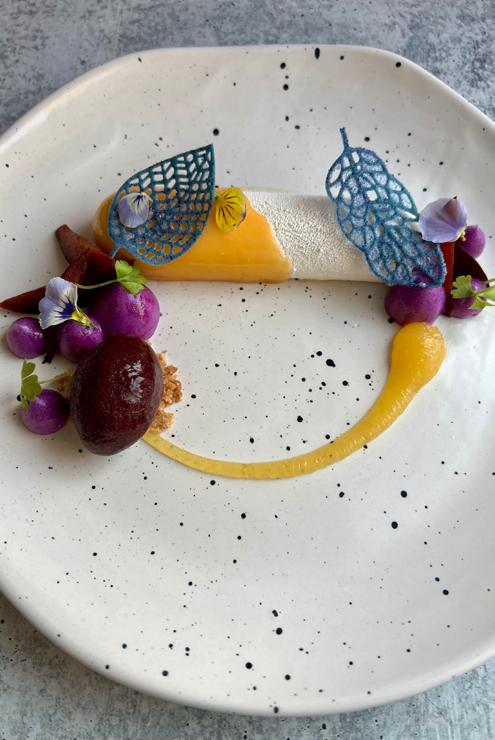
Babylonian Swirls by Chef Brian Levy
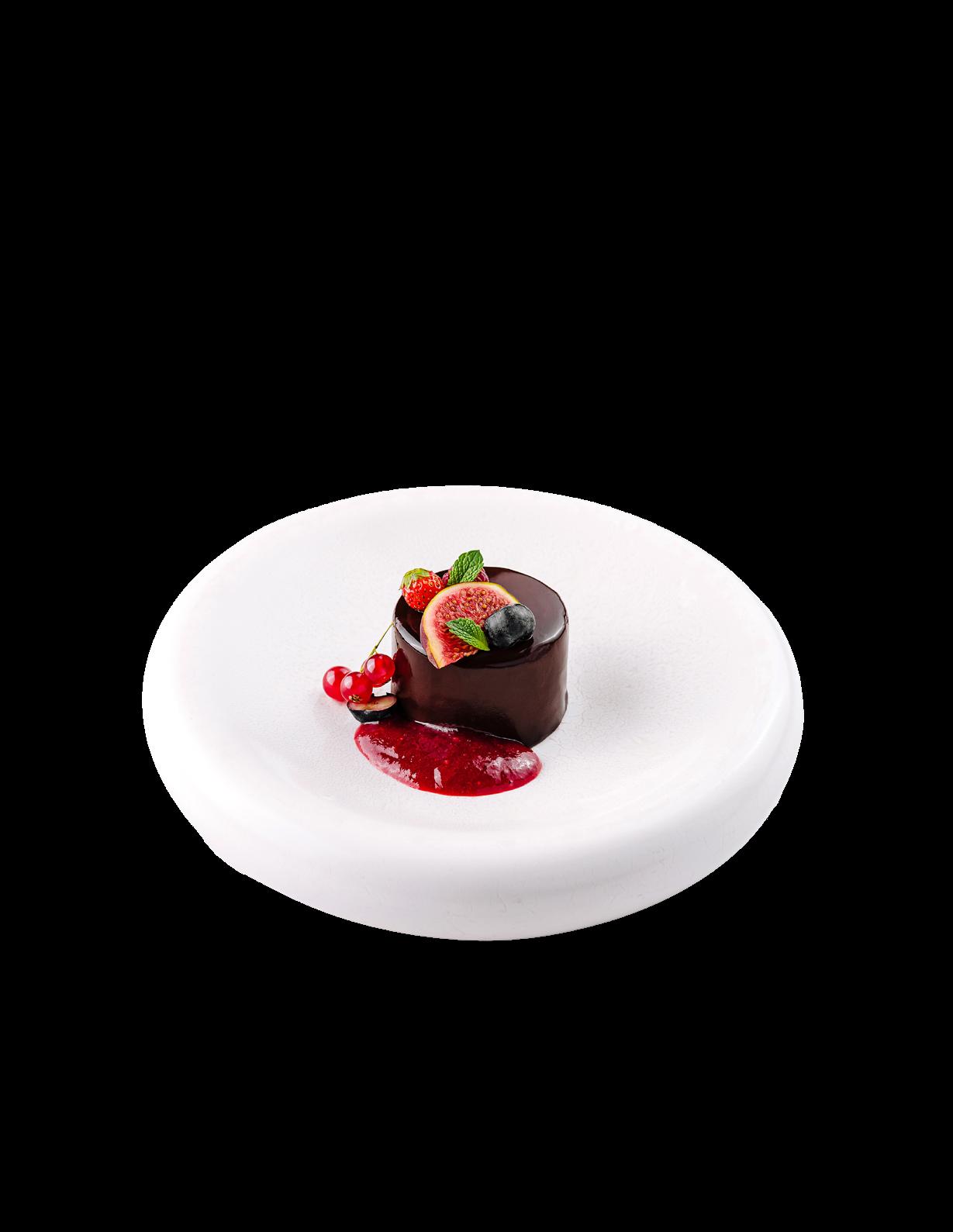
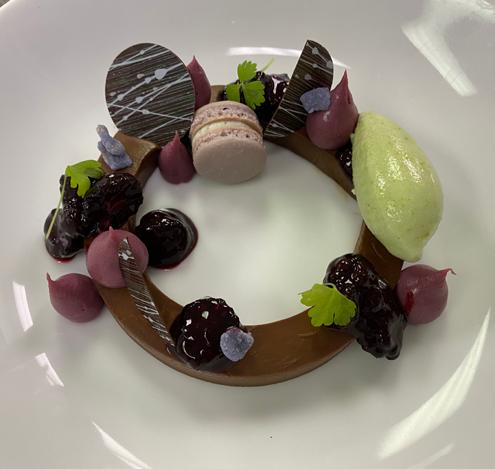
Ganache, Blackberry, Celery by Erin Reed
Strawberry Sweet Corn Shortcake by Brian Levy
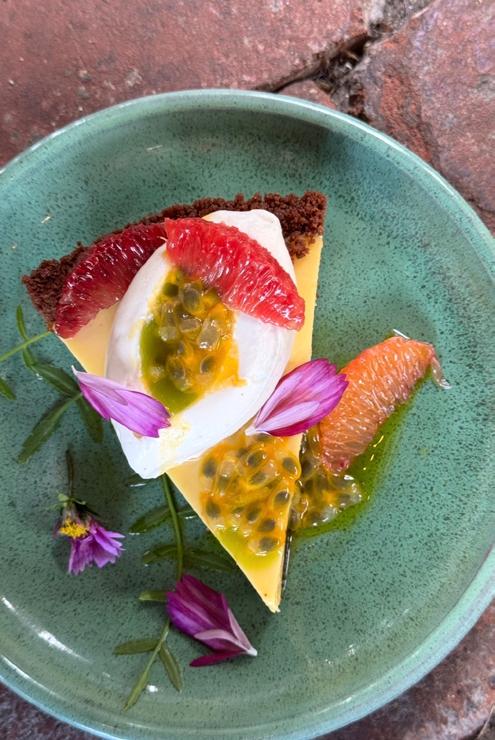
Passion Lime Pie by Kelsey Brito
Peach Rare Cheesecake by Erin Reed
Chef Erin Reed
Levy’s approach reflects a broader recalibration in pastry, one that prioritizes clarity and balance over intensity, and that emphasis on balance is now shaping how pastry chefs approach desserts across a wide range of kitchens. ACF Chef Alexander Sapp CEC, CEPC, PCEC, CCA , Executive Chef at St. Johns Golf and Country Club (St. Johns, FL) says while it’s normal to think ‘dessert equals ‘sweet,’ the goal is balance. “The flavor of the fruit, chocolate or custard should lead, not the sugar,” he explains.
That same restraint shows up in fruit-forward pastry more broadly. As Kelsey Brito, Pastry Chef and Partner at The Dutchess (Ojai, CA) puts it: “When you get a perfect piece of fruit, your only job is to not mess it up.” Her passion lime pie with makrut lime leaf oil and whipped yogurt applies that thinking simply, using tang and aroma to lift flavor and let the fruit lead rather than relying on added sugar.
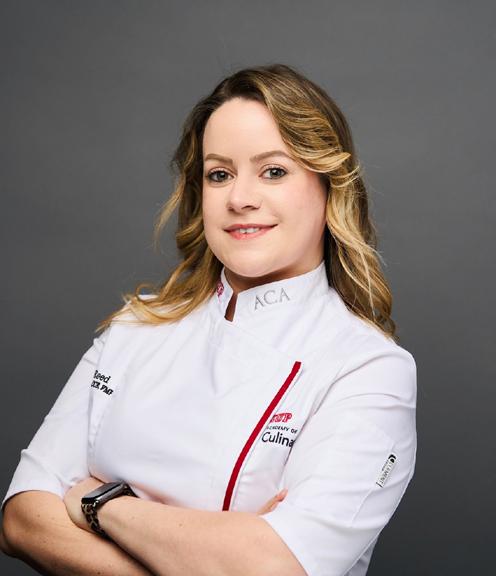
ACF Chef Erin Reed, MEd, MA, CEPC, CCE, FMP, Chef Instructor at Indiana University of Pennsylvania Academy of Culinary Arts and ACF Pastry Chef of the Year 2024, applies this thinking directly to the plate. “I do not care for overly sweet desserts,” she says. “I put great effort into creating desserts that are well balanced in flavor and texture.” She notes that overly rich or sweet desserts are often left unfinished, particularly after heavy meals.
“The flavor of the fruit, chocolate or custard should lead, not the sugar.”
ACF Chef Alexander Sapp CEC, CEPC, PCEC, CCA
Reed’s white peach rare cheesecake exemplifies that approach. The dessert lightens the traditional format with yogurt and sour cream, then layers in acidity through pickled plumcots and blueberry Riesling sorbet. Wine adds brightness and structure, allowing the sorbet to be made with less added sugar while maintaining depth of flavor. The same principle carries through her chocolate work: Reed’s Illanka chocolate ganache, made with 63% dark chocolate, is paired with blackberry cremeux and celery ice cream. “The celery ice cream cuts through the richness of the chocolate and makes it almost refreshing,” she explains.
Texture also plays a critical role in creating satisfaction without excess sweetness. Reed notes that contrast keeps the palate engaged. “Our palates can get bored when a dessert is too sweet or all the same texture,” she says, adding that she often works with less-processed sugars such as turbinado or demerara to add complexity rather than pure sweetness.
As consumer preferences continue to shift toward lesssweet desserts, pastry chefs have a clear opportunity to respond with intention and technique. By using acidity, texture and thoughtful ingredient choices to build complexity, chefs can create desserts that feel complete and satisfying while evolving what modern American pastry looks like on the menu.
Rethinking Sweetness in Pastry
Choose ingredients that sweeten naturally
Dried fruits, fruit purées, roasted fruit, chestnut flour and whole-food sweeteners like date sugar add flavor and structure.
Use sugar deliberately
Apply smaller amounts where sugar supports texture, browning or structure.
Balance with contrast
Acidity, bitterness and salt sharpen perception and reduce the need for excess sweetness.
Build interest through texture
Contrast in texture and temperature adds satisfaction.
Rethink classics
Some desserts adapt easily; others require a reworked concept rather than substitution.
Earning the Patch: ACF Chef Vanessa Jaurique-Marquis on Becoming an AAC Fellow
By Lauren Kramer
ACF Chef Vanessa Jaurique-Marquis, CEC, AAC was in her mid-20s when she first learned about the American Academy of Chefs (AAC), the prestigious honor society of the American Culinary Federation. As a culinary student competing on a school team, she noticed that all the judges wore chef coats embroidered with the AAC patch. When she asked about it, they laughed. “This is something to work toward,” they told her. “Do your research, work hard, and one day you can earn one of these.”
That moment stayed with her. It was 2006, and JauriqueMarquis – now the corporate chef and director of culinary for FSC Franchise Co. – immediately set her sights on becoming a fellow. “There’s a long list of requirements you have to check off before you can apply,” she says. “I kept that checklist nearby for years so I’d always know what I still needed to accomplish.”
By 2021, she was ready. With her application accepted, she gathered with close family members for the induction ceremony in Orlando. Becoming one of roughly 750 AAC fellows was an emotional moment and a major milestone. “This is like the Oscar of the culinary world,” she notes. “It’s a great honor to wear the AAC patch on your coat.”
Becoming a fellow is no small feat. The application process requires sponsorship by two AAC members and the completion of an extensive list of career benchmarks. It evaluates a chef’s work not only within their organization, but also in education and community engagement.
“Membership has to be earned by a lifetime commitment to our profession and the community,” says ACF Chef Joe Aiello, CEC, AAC, HOF, HGT, AAC chair. “An individual has to be a certified executive chef or culinary educator, but it’s also about their skill, character, mentorship and experience. In a nutshell, they’re required to represent the standards that others in the culinary world aspire to.”
AAC membership signals the highest standards of professionalism, leadership and integrity within the culinary arts. Fellows are deeply respected for their long-term contributions to the profession.
Women remain underrepresented among AAC members, and at 48, Jaurique-Marquis is on the younger end of the spectrum. A quick look at her résumé, however, makes her involvement unmistakable. She serves as president of the Global Culinary Innovators Association and chairs the International Chefs Day Committee, the ACF’s Chef & Child Initiative, and the ACF Tampa Bay Chapter.
“There’s a lot behind that AAC patch,” she reflects. “It’s about having a positive impact on your community and leading the next generation forward.”
“There’s a lot behind that AAC patch. It’s about having a positive impact on your community and leading the next generation forward.”
ACF Chef Vaness Jaurique-Marquis, CEC, AAC
Founded in 1955, the AAC’s mission is to mentor culinarians, support education, foster excellence and cultivate the next generation of leaders. It does this through scholarships, grants and professional development opportunities for young students and working chefs.
“Education is at the heart of everything we do,” Aiello says. “We sponsor and promote the ACF Culinary Olympics Youth Team and the annual ACF Knowledge Bowl Competition for culinary students, as well as supporting a partnership initiative between high school students and NASA.” As chair, he is committed to ensuring that the academy remains an essential, relevant force in shaping the future of American cuisine.
In 2025, he establishes the AAC Legend, an award honoring a chef whose work, leadership and impact inspire not just a moment, but a generation – and potentially generations to come.
Aiello began his own culinary career at 14 and became an AAC member in 1985. “At the time I wondered if I was worthy to be among the great chefs I’d looked up to, and I was very proud to become an inductee,” he recalls. “There’s a strong
bond among the individuals who reach this level, and a sense of respect for what they have accomplished. But for me it’s always been about contributing, promoting education and trying to make a difference.”
Jaurique-Marquis agrees. One of her goals is to encourage more female chefs to familiarize themselves with the AAC criteria and consider applying. “Many may already meet the requirements but never apply simply because they’re unaware of the opportunity, so let’s fix that,” she insists.
“Our role is to lift up other members and motivate them, and I’d love to see female representation in the AAC climb to a third, which I believe is absolutely attainable,” she adds. “We should be doing intentional outreach that pairs emerging female chefs with current academy members, both women and male allies. Too often they don’t realize this accomplishment is within reach.”
The patch that once caught her eye from across a room now represents a defining part of Jaurique-Marquis’ own journey. She wants to inspire the next generation to feel that same spark of possibility and know the path is attainable to them.
By John Bartimole
The Greater Grand Rapids Chapter of the American Culinary Federation opens its website with a clear statement: “Food is Life.” Named Largest Chapter of the Year at the ACF’s annual convention in Las Vegas, the chapter puts that belief into practice through education, certification support and meaningful engagement with the communities it serves.
Its mission reflects that focus: “Creating a vibrant culinary community that fosters education, promotes mentorship, networking and community impact.”
“What makes us special, what makes us unique, is that this chapter really focuses on community,” says chapter president
ACF Chef Shawn Kohlhaas, who has served on the board since 2008 and as president since 2018.
“We try to help all people in the community, but we especially center on the foodservice industry and the children in our community. For the foodservice industry, we work to energize them with networking and educational opportunities and events where they can learn from each other.”
A key example of the chapter’s community involvement is its participation in Feast for Kids, an annual fundraising event supporting the Kids’ Food Basket program.
“It’s their largest fundraiser of the year, and we’re proud to be a part of it,” Kohlhaas adds. “Our chefs donate their time, talent and energy. Hundreds of people attend. We handle all the food and preparation, and our Chef Educator, Chef of the Year, Chef Professional and Junior Culinarian of the Year each lead specific courses at the event.”
Kids’ Food Basket has already provided more than 275,000 meals to children since July 1 alone, and is on track to serve more than 500,000 breakfasts, lunches and sack suppers this year. “It’s a tremendous help for children in need,” he says.
Community engagement continues at monthly chapter meetings. “Our membership is quite diverse, and that diversity is one of our strengths,” Kohlhaas insists. “It’s also a strength of the ACF as a whole; its willingness to embrace diversity.”
Education is another pillar. The chapter offers opportunities that range from entry level to executive level, including culinary competitions, certification events and educational seminars. Through these efforts, the chapter strives to elevate the culinary landscape across the region.
It also works to ensure that membership is accessible, offering categories that include professional culinarian, culinarian, student culinarian, junior culinarian, associate, allied, property management, culinary enthusiast and military.
“About 75 percent of our membership consists of students,” Kohlhaas says, adding his appreciation for the ACF offering free student membership. “It helps them network and learn more about the field,” he notes. “Overall, we have about 100 professional members, but the majority of our members are junior culinarians. Our membership has grown quite a bit over the years.” He credits the chapter’s leadership for that growth. “If the leadership of the organization is passionate, engaged and excited, the kids pick up on that, and it becomes infectious,” he says.
For the Greater Grand Rapids Chapter – now the largest single chapter in the ACF – leadership and community go hand in hand. And as the first words on their website remind us, Food is Life – a belief the chapter puts into practice every day across the community it serves.
“Creating a vibrant culinary community that fosters education, promotes mentorship, networking and community impact.”
NCR Quiz
Jan/Feb 2026
By Robert Penry
1. Which ingredient is highlighted as a “newstalgic” food with widespread modern appeal?
a. Tofu
b. Spam
c. Kale
d. Quinoa
2. Diners embracing quiet luxury prefer large portions over subtle flavors.
a. True
b. False
3. According to the trend, teatime is considered the new:
a. Breakfast
b. Brunch
c. Happy hour
d. Dessert
4. Using sustainable practices makes it easier to introduce snackable seafood while maintaining menu profitability.
a. True
b. False
5. Which generation(s) are more adventurous with protein choices?
a. Gen X and Baby Boomers
b. Only Baby Boomers
c. Gen Z and Millennials
d. Only Gen Z
the rest of the questions, finish the quiz and earn
6. Which dumpling varieties are beginning to gain wider recognition?
a. Samosas and empanadas
b. Mandu and pelmeni
c. Pierogies and ravioli
d. Momos and gyoza
7. The lobster dumpling at Palette Tea House is a modern twist on which classic dim sum item?
a. Shumai
b. Xiao long bao
c. Ha gow
d. Baozi
8. Which term refers to “tinned fish” prepared with techniques like sous-vide for enhanced texture and flavor?
a. Conservas
b. Poke
c. Ceviche
d. Sushi
9. Pacific Bluefin tuna is native to the New England/Mid-Atlantic region and has a mild, meaty flavor.
a. True
b. False
10. ACF Chef Joshua Wickham, CEC, CEPC, AAC, began teaching at Columbus State Community College in which capacity?
a. Visiting professor
b. Full-time faculty member
c. Department chair
d. Adjunct instructor
11. Mofongo originated in which location?
a. Dominican Republic
b. Jamaica
c. Puerto Rico
d. Cuba
12. The modern interpretation of mofongo features plantain gnocchi served with:
a. Tomato sauce and basil
b. Coconut milk foam
c. Curry broth and brown butter
d. Garlic butter and Parmesan
13. How does ACF Chef Rocco Paradiso, HAAC, describe his personality in relation to sales?
a. A natural extrovert
b. A confident negotiator
c. An introvert with extrovert tendencies
d. A reluctant communicator
14. What advice does Chef Paradiso give chefs transitioning into corporate or sales roles?
a. Observe carefully and speak with intention
b. Speak confidently and often
c. Focus on showcasing expertise
d. Rely on product knowledge alone
15. According to a 2024 International Food Information Council survey, what percentage of U.S. adults are trying to limit or avoid sugar?