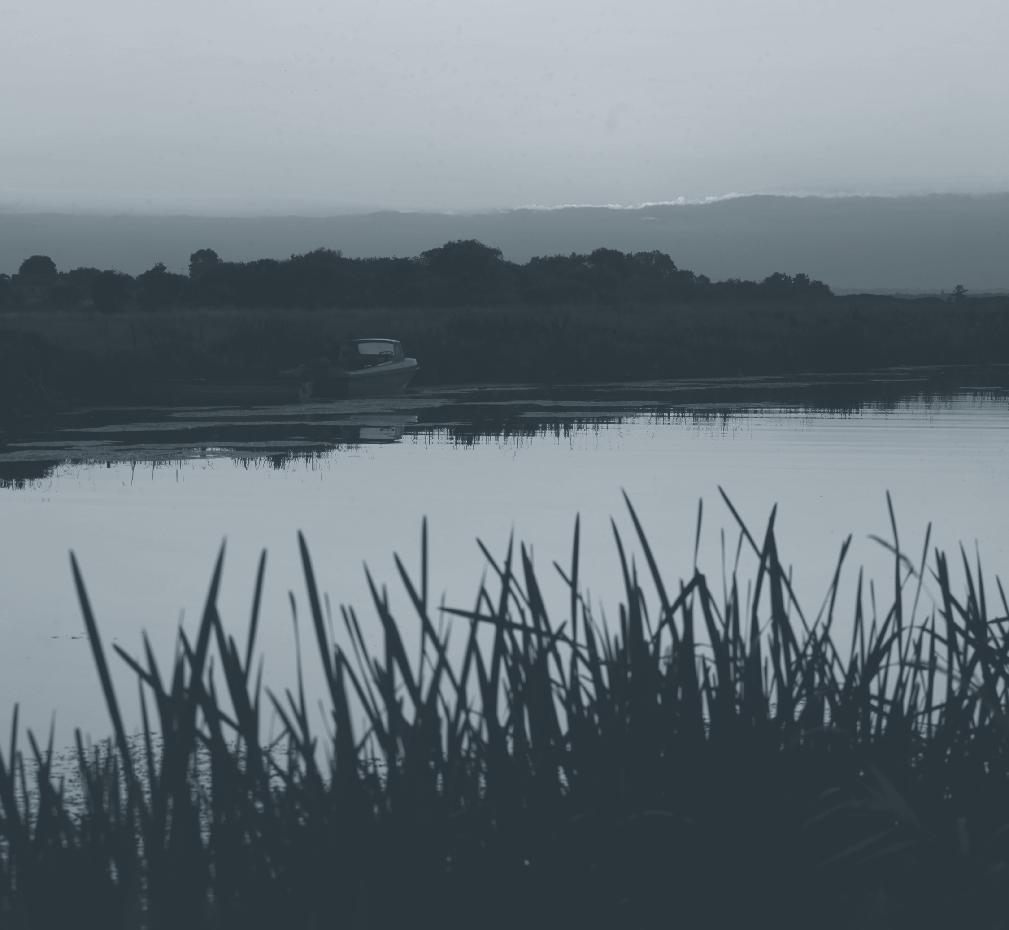
Heart and Soul of the Montiaghs One Hundred Years
AN ANTHOLOGY OF POETRY AND SONGS COLLECTED IN THE MONTIAGH AREA, LURGAN, COUNTY ARMAGH
PAUL CARVILLE
Heart and Soul of the Montiaghs
One Hundred Years
An Anthology of Poetry and Songs Researched and Collected in the Montiaghs Area of Lurgan, County Armagh
BY PAUL CARVILLE
Contextual historical information and photographs researched and sourced by Paul Carville, Norah McCorry and David Weir.
ALL RIGHTS RESERVED.
The copyright of poems in this anthology lies with the individual owners/writers.
NO PART OF THIS BOOK AS FORMATTED, OR OTHERWISE, MAY BE REPRODUCED, STORED IN ANY RETRIEVAL SYSTEM, OR TRANSMITTED IN ANY FORM OR BY ANY MEANS, ELECTRONIC, MECHANICAL OR OTHERWISE, WITHOUT THE PRIOR PERMISSION OF THE PUBLISHER OR AUTHOR.
Design: Design Services, Armagh City, Banbridge and Craigavon Borough Council
Editors: Norah McCorry and David Weir
Print: W&G Bairds
© PAUL CARVILLE 2022
ISBN 978-1-3999-3377-3
Published by the Lurgan Townscape Heritage Scheme, supported by the Armagh City, Banbridge and Craigavon Borough Council and the National Lottery Players through The National Lottery Heritage Fund. For further information on the scheme see www.lurgantownscapeheritage.com
Front cover image credit: Barry Coleman.
Back cover image credit: Photograph by Edward Sterling, Belfast Telegraph and reproduced by kind permission of Armagh County Museum (Ref: _DSC3347).

Foreword
As a long-term and founding member of the Lough Neagh Writers Group, I strongly believe in maintaining the importance of the old Irish tradition of telling stories, expressing beliefs, recording our heritage, experiences, and emotions through the medium of prose and poetry. These are central to the culture of our island.
So, when I was asked to contribute to an anthology of poems and songs collected in the Montiaghs and Lurgan area, I was delighted to play a part in the continuation of such a commendable local tradition. I was given an opportunity to review the poems and songs published in this book, and I found a treasure trove of life experiences, history, a range of emotions and most of all, wonderful creativity, intelligence, and talent living in the souls of the writers.
The contents of this book, I believe, is part of our valuable heritage and culture, which deserves to be preserved and passed on to future generations. I hope that it will give us all that push
to be brave, and put pen to paper, write stories, prose, poems, and songs and keep our cultural heritage alive.
I wish to congratulate Paul on his 30-year relentless pursuit to obtain such wonderful poetry and songs and to bring our ancestors’ hearts and souls ‘back to life’ for us. This is much more than a book of poems; it is the weave of life and the story of our ancestors told through the poems and songs of its people.
Paul has provided us with a rich cultural resource. I have paid a small tribute to Paul and his sister Norah in my poem; ‘Coney Island’ and don’t forget that there may be some wisdom and a treasure in oral folklore!
I also, wish to add my thanks to all the people who shared their precious family history and mementoes for inclusion in this book. The talent of the poets and songwriters of yesteryear and tomorrow, all deserve to be recognised and recorded for posterity.
‘Be Inspired’ - put pen to paper.
MARTELLE M C PARTLAND
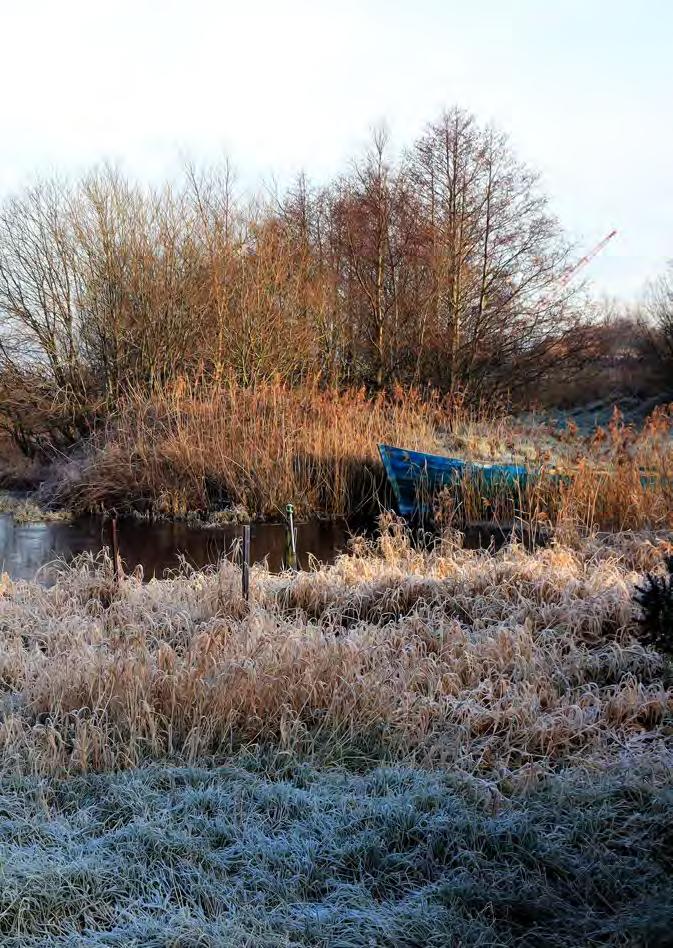
HEART AND SOUL
O F THE MONTIAGHS
Introduction
Around 30 years ago, I came across a number of poems and songs written by people living in the local area. Hardworking local people put pen to paper and conveyed so eloquently what was going on in their lives at that time. I decided then to track down and gather as many of these local poems as I could find, and compile them into a collection which would be published and preserved for future generations of people living in the area. One of the first people who helped me start this collection was Betty McChrystal (née Blaney).
I once heard it said that ‘poetry is the expression of the soul of humanity’, and by reading the poems of local people I believe that their writings not only provide us with a glimpse into their souls, but they also give us insights into their lives, hearts and minds. They provide us with a social history of the time when they were written, with many referencing the current events of the day.
The majority of the poems collected were written during the late 19th and early 20th centuries; a period which witnessed not only the Boer War and World War 1, but also a vigorous campaign for Irish Home Rule. It is particularly interesting to view these works a century later, written prior to the creation of Northern Ireland as a separate constitutional entity in 1921. This period of political and religious tension had an impact on life in the Montiaghs, with some of the poetry in this collection reflecting the views held by opposing factions in the strife. The opinions of the poets are their own and those included in this book are simply a result of the poems I was able to obtain.
Although the Home Rule issue largely dominated politics at this time, other concerns regarding social and economic issues, suffrage, the effects of poverty on health and ‘the lot’ of the working class were also particularly relevant from 1900 to 1920. Attempts to create
trade unions to improve the lives of the working class poor featured in the lives of the Montiagh people as many were employed as weavers in the Lurgan area, an industry that was in decline at that time. The anger, anxieties and agitation which resulted are clear to see in a number of the collected poems.
The poetry paints a picture of other aspects of the lives of these Montiagh people - they display the love and appreciation for nature and the area they called home. They tell us of heartache, loss, tragedy and the longing for home and bittersweet memories of the emigrants who left these shores in the search of a ‘better life’. No account of Montiagh life would be complete without inclusion of Lough Neagh life, and both the enjoyment and tragedy that the Lough brought. Although the great majority of the poems that I initially collected were written by people from the Montiaghs, I have also included
poems were the author is unknown or were the poets lived in the surrounding area including Lurgan, the main market town of the locality.
Sporting activities, competition and rivalry also prompted locals to pick up the pen to celebrate and glorify momentous victories over traditional rivals. And no reflection of the hearts of the poets would be complete without the story of a lovely girl or a handsome lad. And of course, the changes that progress brought to a rural area are also worth a mention.
The Montiagh droll sense of humour is showcased in the poetry of its people with the effects of alcohol being recounted with a hefty splash of humour! Some of the poems featured in this book were also set to the music of a familiar song, and in such cases reference is made in the accompanying footnotes.
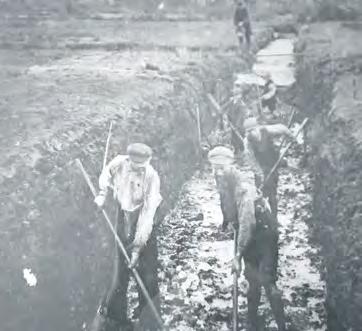
So we’ll never be downhearted Said this Montiagh labouring man.
The Montiagh Labouring Man
Making mud turf in Murtagh’s Bog, Derrymacash. Those pictured include Artie McShane and his father.
RIVER BANN
The Montiaghs
The locality known as the Montiaghs has been succinctly described by the renowned Lurgan historian Dr Francis X. McCorry as ‘a self-contained district of chiefly flat, often flooded bogland, bounded by a great Lough [Lough Neagh] and a major river [River Bann] on three sides with a 300-acre lough at its centre [Lough Gullion].’
The ‘Montiaghs’ name derives from the Irish Mointeacha meaning mosslands or boglands, referring to the fact that the area was once extensively covered with turf bogs. It is comprised of ten townlands: Ardmore, Ballynery, Derryadd, Derrycorr, Derryinver, Derryloiste, Derrymacash, Derrytagh North, Derrytagh South, and Derrytrasna. The prefix of ‘Derry’ to eight of these townland names are a manifestation of the Gaelic language heritage of the area, with the Gaelic Doire meaning ‘Oakwood’.
L OUGH NE AG H
Locally it is said that ‘it takes seven Derrys to make a Montiaghs’.
The ‘Montiaghs’ name derives from the Irish Mointeacha meaning mosslands or boglands
During the Plantation of Ulster the Montiaghs was designated as ‘unprofitable land’, and was gratuitously thrown-in with the estate of William Brownlow, an English settler landlord and the founder of Lurgan town, who acquired the land in 1610. As part of the subsequent development of the Brownlow estate over the next 300+ years, the woodland of the Montiaghs was cut down to supply the raw materials necessary for building timber and the leather tanning industry. The extraction of turf for fuel and the reclamation of flooded land through drainage schemes further transformed the Montiaghs landscape into what we see today.
CONEY ISLAND
CHARLESTOWN BANNFOOT
Derryinver
Derryloiste
Derrytrasna
Ardmore
Derryadd
Ballynery
Derrymacash
OXFORD ISLAND KINNEGO
GAWLEY’S GATE
SILVERWOOD
LURGAN
THE BOILIE
PORTADOWN (OFF MAP)
Derrycor
Derrytagh North
Derrytagh South
Lough Gullion
CORR QUAY
Bay Shore (Trowagh Bay)
ARDMORE POINT
RAUGHLAN
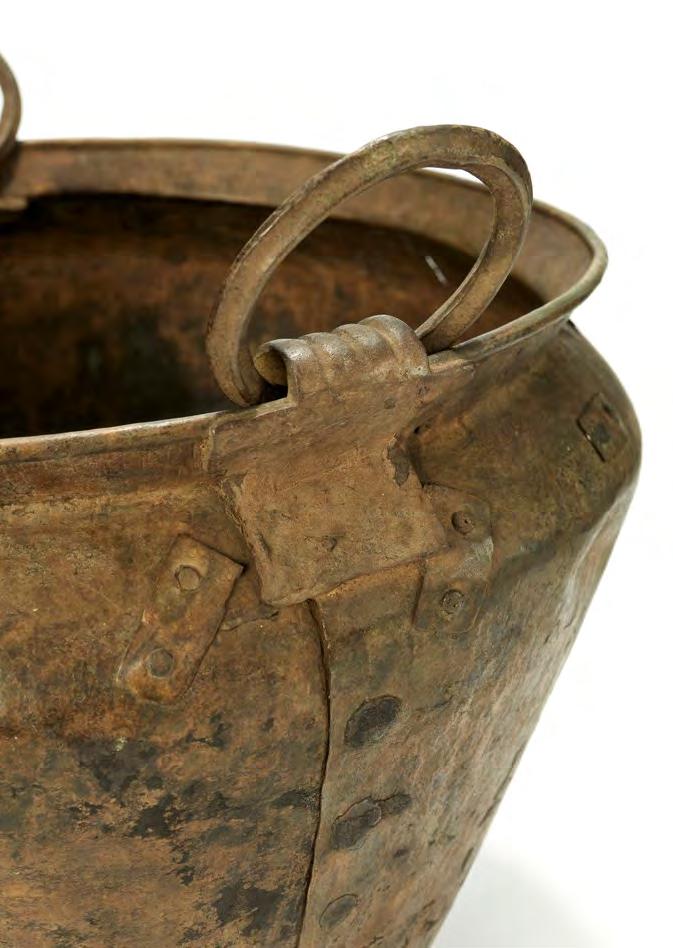
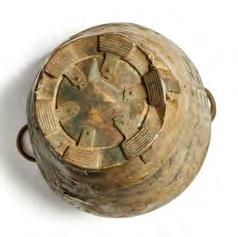
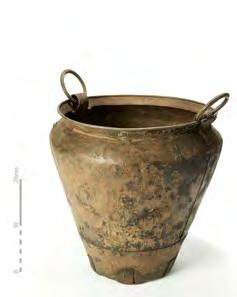
Derrymacash Bronze Age Bucket, (1200-300 B.C.).
In 1897, a working party engaged in turf digging on Magurran’s Shore (owned by a Thomas Magurran) in Derrymacash, unearthed a large urnshaped bronze vessel buried in the bog at a depth of ten feet.
The vessel has been dated to the Late Bronze Age (1200-300 B.C.) and measures: height 13 ½ inches; diameter: 14 and 11 ½ inches at widest and narrowest points; and weighs 5 ¾ pounds. It is probable that the bucket is of Continental manufacture, and would have been used for feasts for cooking or for containing ale, mead or wine.
Significantly the ‘Derrymacash Bucket’, as it is known, was apparently damaged in antiquity as it features a repair patch secured by iron, rather
than bronze, rivets. According to Ken Neill in his book An Archaeological Survey of County Armagh (Belfast: Northern Ireland Environment Agency, 2009), the bucket provides some of the earliest evidence of iron working in Ireland, with the new metal, iron, being used in conjunction with bronze.
The Derrymacash bucket is therefore the most significant archaeological find in the Montiaghs area. It can viewed in the National Museum of Ireland in Dublin.
Images copyright of and reproduced by kind permission of the National Museum of Ireland.
The Poets
It is often said that Ireland is a land of ‘Saints and Scholars’, which no doubt reflects the Celtic customs of the Irish Bards who were highly trained and learned poets. During the 19th and 20th centuries a revival of interest in Ireland’s Gaelic culture (including folklore, music and art) saw a resurgence in literature and poetry, and this perhaps influenced local people to record their thoughts and the stories of their areas.
Many of the ‘peasant poets’ of the Montiaghs were ordinary working people, much like the ‘weaver poets’, being employed in other occupations of life. They wrote poems in the common dialect of the area, with many submitting their work to the local newspapers for all to enjoy. Regrettably I have not been able to find much of the work of some of the well-known writers in the area. For example, Alice Molloy was recognised as a particularly fine writer, but I have only been able to obtain a few examples of her output.
It is heartening to note that the bardic traditions of the area continue. Included are poems by Angela Boyle and Martelle McPartland, both members of the ‘Lough Neagh Writers’, a diverse local writing group of all ages, gender, religion and background. Not only are both wonderful writers, but they also happen to be ‘Lough Neagh Ambassadors’ who promote the history and beauty of Lough Neagh in the South Lough Neagh area. Pascal Downing has worked for many years in the South Lough Neagh area, promoting the understanding and enjoyment of the area’s history, beauty and biodiversity. All their poems reflect their unadulterated passion and love for the Montiagh area and all are keen to promote the history and heritage of the area through their local heritage tours.
To amuse my mind I was inclined
For to spend some time around sweet Lough Neagh.
Lough Neagh (Haughian)
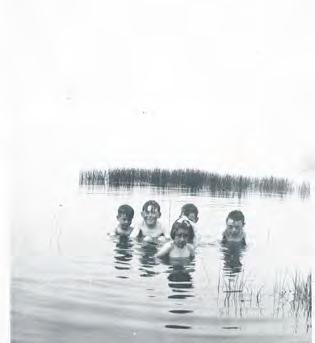
McAlinden.
Some of the local poets are:
Angela Boyle, Ballinary and Lurgan
John Conway, Derrytagh North
Pascal Downing, Gawley’s Gate and Derrymacash
John Dummigan, Lurgan
James Garland, Lurgan
James Haughian (known also as ‘The Poet Hacken/Hachen’), Derrytrasna
Dan Hendron, Derrytagh South and New York
Dan Lennon, Derrytrasna
T.M., Ballinary
John McAleese, Ardmore
Patrick McCann
Michael McConville
Hugh McCorry (also known as Rory C. McHugh), The Boilie
James McCusker, Silverwood
Paddy McEvoy, Ballinamoney
Dinny McGeown
Paddy McGeown, Derrycorr
John McKaughley
Martelle McPartland, Derrymacash and Lurgan
Peter Mitchell, Lurgan
Alice Molloy, Derrytagh and Lurgan
John O’Neill, Derrytrasna
William O’Neill, Lurgan
Support for the publication of this book
I wish to give a heartfelt thank-you to Tony Morgan and David Weir for editing, reviewing and supporting the publication of this book via the Lurgan Townscape Heritage scheme activities programme, which is funded by the Armagh City, Banbridge and Craigavon Borough Council and the National Lottery players through The National Lottery Heritage Fund.
Proceeds from the sale of this book
All proceeds from the sale of this book will be donated to charities or groups working in the local area and for the promotion of education, literature and local history.
Second volume of Heart and Soul of the Montiaghs
Unfortunately due to space limitations I have not been able to include all the poems and songs that I have gathered over the years. I would hope to publish a second volume of the Heart and Soul of the Montiaghs in the future, which will include the traditional airs and sheet music for some of the songs included in this book.
I would be grateful for any assistance in finding further examples of poems or songs written by the Montiagh people or about the Montiagh and Lurgan areas. If you have any copies of poems or songs, information about local poets, songwriters and playwrights or old photos, which you would like to have included in the second volume, please feel free to get in touch with me via email at: heartandsoulmontiaghs@outlook.com
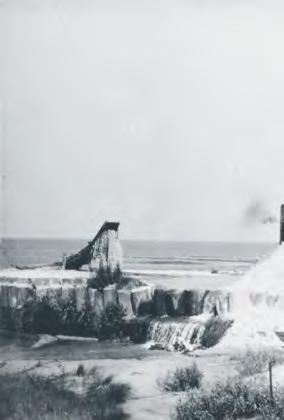
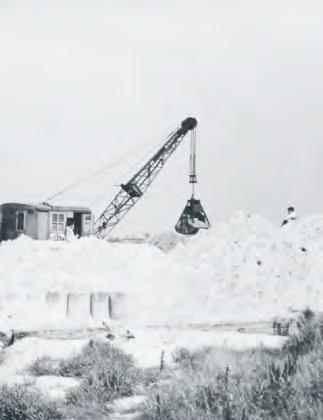
Sand extraction on the Bay Shore, Ardmore. The crane operator is John O'Neill of Ardmore, employee of the Norman Emerson Group. Photograph taken in c.1957 by the Lurgan photographer William Gracey. Image copyright of and reproduced by kind permission of Craigavon Museum Services.
Prosperity has been kind to me
To the stars and stripes to bind me, But I keep a wee spot in my heart
For the land I left behind me.
The Land I left Behind Me
Finally
I hope that everyone who reads these poems will gain an insight in the hearts, minds and souls of what I call ‘The Montiagh and Seagoe Poets.’ You may notice variations of spelling throughout this book, but I decided to include the spellings provided as in some cases it echoes the local dialect. Every attempt has also been made to ensure the factual accuracy and reliability of the information contained within this book, with any errors unintentional.
I hope you enjoy this book.
Paul
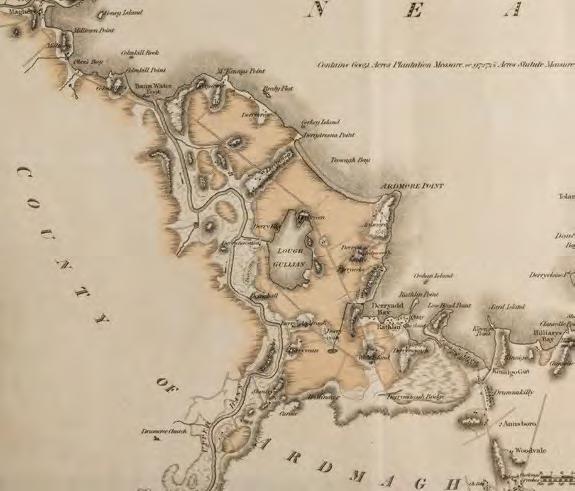
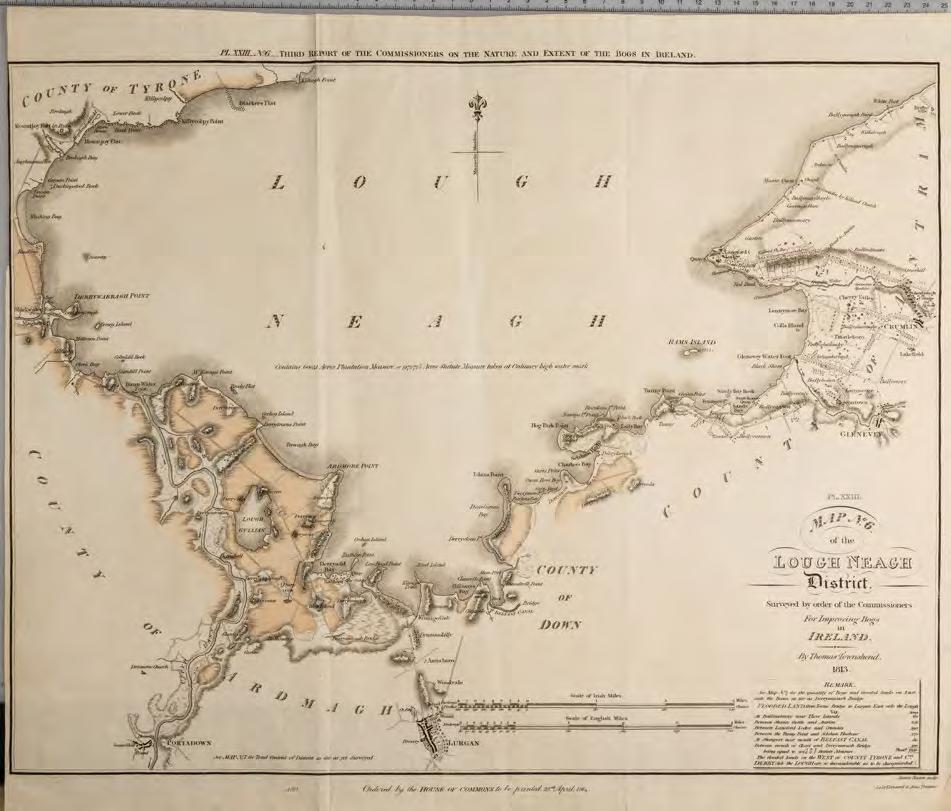
(Top) Detail of the Montiaghs area of North Armagh as shown on the Bog Commissioners Map No. 6. of the Lough Neagh District. Surveyed by Thomas Townshend, c.1813.
(Right) Map No. 6. of the Lough Neagh District. Surveyed by order of the Commissioners For Improving Bogs in Ireland. By Thomas Townshend. 1813.
Image courtesy of Craigavon Museum Services.
Acknowledgements
I wish to give an enormous ‘Thank You’ to the family members of deceased poets and songwriters who generously provided me with copies of their precious family mementoes and keepsakes for inclusion in this book. Thank you for sharing your precious and invaluable inheritance with the readers of this book.
I would also like to express my gratitude to the numerous people who over the years have either provided me with copies of poems and songs, or directed me to others who held such copies. In particular, I want to thank the friends and family who wholeheartedly supported my quest to have these poems and songs published.
As I would not like to offend anyone by excluding them from a list of individual names, I trust that this acknowledgement
will convey my sincere appreciation of your wonderful contribution and the importance of your role in bringing this project to completion.
Lastly I would like to thank Barry Coleman and Peter McCorry for allowing the use of their beautiful photographs in this book.
I would also like to acknowledge Armagh County Museum, Charles Friel, Craigavon Museum Services, Lurgan Ancestry, the National Library of Ireland, the National Museum of Ireland, the Public Record Office of Northern Ireland and the Royal Ulster Rifles Museum for providing permission to reproduce a selection of their archive images in this collection.
PART ONE Poverty, Politics and Division
26 The Cot of Death
30 The Montiagh Labouring Man
32 The Hill Street Men
42 Royal Charley
47 The Banished Defender
49 The Irish Labourer’s Plaint
51 The Derrymacash Fight
54 Bannfoot Ferry
57 The Derryadd Riots
58 D.I.V. 241 No 1
60 The Rosary
62 A Tale of the 12th
PART TWO
The Montiagh Area
68 Fair Raughlan Demense
72 My Lovely Shore
80 Kilwilke
84 The Boilie Banks
88 Blaney’s Lovely Hill
Some little snippets:
90 St. Patrick’s Road
91 The Fairy Thorn
91 The Coney Island Still
92 Midwife Man
95 The Fairies of Ulster
97 When Walsh Walked the Lough
PART THREE
Lough Neagh (Fishermen, Enjoyment and Tragedy)
100 Lough Neagh (McAleese)
103 Lough Neagh Hones
104 Fisherman’s Song
107 Lough Neagh (Haughian)
109 Bonnie White and Blue
110 Sports on the Bay
116 Lough Neagh - Drowning on the Osprey
120 Tra of the Greens
122 The Drowning on Washing Bay
125 Old Ship O’ Mine
PART FOUR
Reflections of Love and Life
129 Cutty Sark
130 Playing in the Shavings
132 Thanks for the Rose
133 Christmas Tide
135 Christmas
136 The Girl from Derryadd
138 To Kitty Mathers
139 Phil’s Tale of Woe
140 In Memory of Joseph McAlinden
PART FIVE
Immigration and Missing Home
144 Twas Only a Dream
148 The Land I left Behind Me
150 The Shores of Lough Neagh
152 Sweet Tuckahoe
153 Lurgan Clanbrassil
154 Appeal to Teresa
157 My Home in Derrytagh
158 Lines in Memory of Johnny McGeown
PART SIX
A Trip into Lurgan
162 James McGreavy’s Bus
164 Neat Little Town of Lurgan
166 The Lurgan Weaver
168 The Legend of Loughran’s Boots
170 Home Rule!
172 Donnelly & O’Neills
178 Hare Coursing at Fforde Estate at Raughlin /Master McGrath
PART SEVEN
A bit o’ Craic and the Demon Drink
184 The Black Hole
186 The Muntaigh Wedding
188 Bonny Green Tie
190 The New Community Hall
191 Star of the Montiaghs
193 O’ Father O’ Hare
194 My Name is James Haughian
195 Hannaghan’s Fighting Cock
PART EIGHT
Keepers of Traditions
200 Fire and Stones
201 Horseman of the Heavens
202 Sacrifice
203 Coney Island
204 February Snow
206 Carefree Days
207 The Ferryman
208 Odysseus Lands at Gawley’s Gate
210 I Have Seen
PART NINE
The Back Page (Sports and Rivalry)
215 The Boilie Football Team
216 Sarsfields
219 The Ghost Goes Home
PART TEN
And Finally
222 The Old Hearthstone
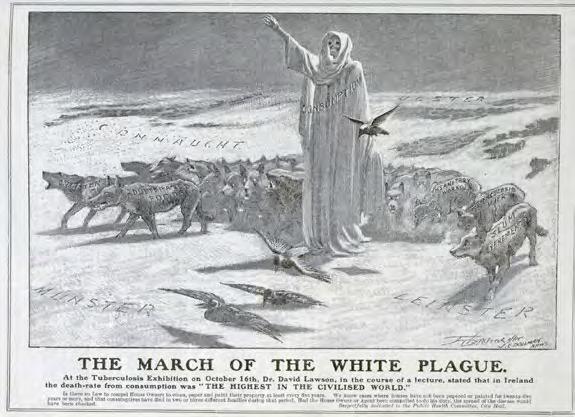
This representation of the ‘White Plague’, (also known as Tuberculosis or Consumption) illustrates the toll that this disease was having on Ireland at the time. It shows, in the guise of wolves, what was thought to be its causes. This pastiche was based on JC Dollman’s work ‘The Famine’. It was created by the artist Thomas Fitzgerald and published in the The Lepracaun Cartoon Monthly in 1907.
PART ONE
Poverty, Politics and Division
The Cot of Death
The Montiagh Labouring Man
The Hill Street Men (song)
Royal Charley
The Banished Defender (song)
The Irish Labourer’s Plaint (song)
The Derrymacash Fight (song)
Bannfoot Ferry
The Derryadd Riots (song)
D.I.V. 241 No 1 (song)
The Rosary (song)
A Tale of the 12th
This poignant poem was published in the Lurgan Mail (August 8th, 1908) and was written by William O’Neill of Victoria Street, Lurgan. It makes reference to the River Bann and to the parish of Seagoe. It is so powerful in its ability to stir the emotions of the reader and was written at a time when an understanding of the effect that living conditions had on the health of the poor was realised and included in the social reforms of the era.
The Cot Of Death
(i)
Where the River Bann meanders
Through a pastoral spot
In the midst of painted meadows Stands a labourer’s cot.
Morning brings the lark’s clear carol Down the gentle breeze, Evening hears the thrushes whistling In the distant trees.
(ii)
Nymphs and fairies here might revel, Satyrs linger near; Who would think that death and sorrow
Could be lurking here?
All seems peace outside the cottage, Clad with roses red; But inside this peaceful cottage One fair flower is dead.
(iii)
Only many sad young faces
Watch around her keep, Only for her lily whiteness
One would think it sleep. Ah! What a fatal canker caught herYouth had only smiledNipping the bloom of Johnny’s daughter, Johnny’s only child.
(iv)
Near about this time last summer
I was going to call: She was out among the rosesSweetest flower of all.
And she culled a rosebud for me
With delightful care; That dear memory is the rosebud In my heart I wear.
(v)
To the Seagoe Yard tomorrow
I will help to bear
Double load - herself and sorrow -
Lay her silent there:
Lay the maiden fair to perish
In the cold red clay,
But the sorrow that I cherish Bear with me away.
(vi)
Silent river, cease not flowing, Onward swiftly run;
But cease, cottage windows, glowing
In the setting sun.
For my heart is pierced with sorrow, And a double pain
From your panes with flaming arrow
Pierces it again.
(vii)
Golden sunbeams, stream no longer
From the ruby west;
Sink and leave that cot in darknessDarkness, not in rest.
There’s a ghoul that loves the darkness
Hates the light and air
And a glooming vampire brooding
O’er that cottage there.
(viii)
There’s the grim Tuberculosis
In the walls that lurk; Will they ever leave that cot forever
Now they’ve done their work?
Now they’ve taken from poor Johnny Wife and daughter fair, Will they, when they’ve left him lonely
Linger longer there?
(ix)
Ah! They cannot leave that cottage, Death must still remain; Dampness and insanitation
Hold him with their chain.
For this smiling little cottage
Badly needs repair: It is crazy, old and rotten, And consumption’s lair.
(x)
There is a blackness in each corner
Of the kitchen floor, And the walls are damp and reeking
Half way up and more.
There’s an army of black beetles
Running round about,
Feeling with their long antennae
When the lights are out.
(xi)
There’s a room so damp and stuffy, With a window small, From the floor the wet is soaking, It is worst of all.
Down the walls the sweat drops running Leave a silvery trail, All across in shining zigzag
Trace the yellow snail.
(xii)
There’s a bed, the blankets fusty Smell like osier roots; And the musty bluemould spares not E’en her little boots.
There’s a crock to catch the water, Black with straw decay; There’s a can to catch the water
That fell yesterday.
(xiii)
Two deep plates to catch the water Through the roof that falls; There are pictures black and tarnished
On the dingy walls.
Ah! Could anything of beauty
Live in such decay?
It were only mocking nature Where her zephyrs play.
(xiv)
Where her ozone, pure and healthful, Blows with living breath
One penurious and careless Built that cot of death. Not a coin on sanitation, None on drainage spent, Nothing in his calculation
Had a place but rent.
(xv)
Health and comfort were not studied. Is the rent secure?
Once was leading thought in building Houses for the poor.
Now there is a law of mercy, Why the long delay
To apply that law and sweep such Traps of death away?
(xvi)
Peaceful evening drooping o’er us Lulls the world to rest; Peaceful evening soothes not sorrow In the human breast.
There’s a hedge behind it sobbing, None may hear his moan, Lies old John behind it weeping, Weeping all alone.
William O’Neill, of Victoria Street, Lurgan
Published in the Lurgan Mail, August 8th, 1908
There’s the grim Tuberculosis In the walls that lurk
The Cot Of Death
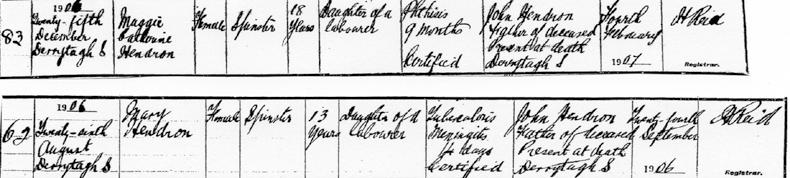
The Registrar General for Ireland’s report of 1907, reports that the deaths from all forms of tuberculous disease, for that year were 11,679 which represents 15% of deaths from all causes.
The Women’s National Health Association of Ireland hosted a major convention in Dublin in 1907 under the banner of “Ireland’s Crusade Against Tuberculosis”. At that Exhibition, it was claimed that death by consumption in Ireland was ‘the highest in the civilised world’.
Although it is not known whether William O’Neill’s poem relates to a specific person, many families from the Montiagh area suffered loss through Tuberculosis. The above extracts from the death register records the death of two sisters, Mary and Maggie Hendron, who died from Tuberculosis (also known as Phthisis) within a short period of one another.
Records accessed via the website: https://www.irishgenealogy.ie
The Montiagh Labouring Man
(i)
One evening not very long ago I went out for a walk
I met an old farm labourer
With whom I had a talk:
‘Twas on the labourers’ situation, And to form a plan or scheme
Was my subject of discussion
With this Montiagh Labouring man.
(ii)
Said I to my friend, ‘the times are bad, And outside work is very slack, The weaving trade looks very dull, And that’s a great drawback.
The labourers all should amalgamate, And go out on strike at hand, Would you approve of my suggestion?’
I asked this Montiagh labouring man.
(iii)
He says, ‘No doubt your plan looks well, But yet it does seem queer
To amalgamate or combinate
‘Twould take a good long year. We are working well at present, So we want no other plan, We’ll just pursue our former steps’
Said this Montiagh labouring man.
(iv)
‘The farmers too are coming round They are not just what they were, For at some of our big meetings
Sure they’ll come and take the chair. I’d like to see them pulling together And working to each other’s hand, Instead of bantering or agitating’
Said this Montiagh labouring man.
(v)
‘We have nearly all got cottages, That’s not a bad look out, And as long as we pay up the rent We’ll never get the rout. And not forgetting a brighter prospect Which is looming near at hand, It’s the purchasing of our holdings’
Said this Montiagh labouring man.
(vi)
‘We’ll never mind going out on strike For the times will surely mend, Prosperity will rise again And poverty will end. Brighter days are dawning For the labourers of our land, So we’ll never be downhearted’
Said this Montiagh labouring man.
T.M., of Ballinary
Published in the Lurgan Mail, January 4th, 1908
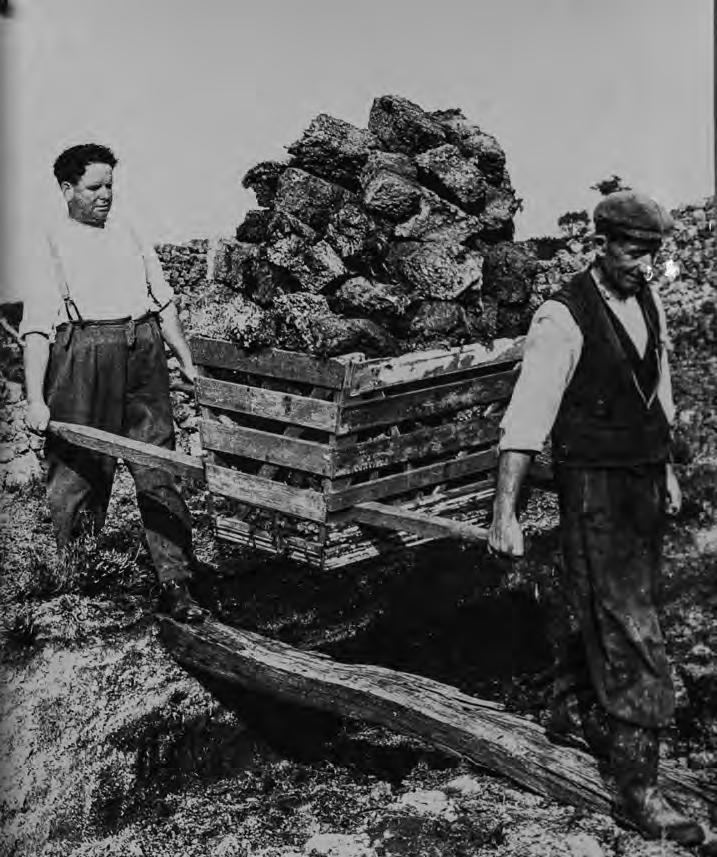
Hugh O’Neill (left) and Arthur Lennon (right) carrying turf from the Montiaghs bog. Both were neighbours from Derrycrow Road, Derrytrasna, c.1960.
Photograph by Edward Sterling, Belfast Telegraph and reproduced by kind permission of Armagh County Museum (Ref: _DSC3347).
Footnotes:
• In his book Seagoe: Diocese of Dromore. A Parish History, (Lurgan: Inglewood Press, 1987, p. 94), Dr Francis X. McCorry provides some context to the poem: ‘In 1907, labourers in Derrytrasna and Aghalee formed associations to try and improve the lot of labouring man. Mr McAlinden, a Rural Councillor, presided over the Derrytrasna Association…The poem reflects the decline of the linen industry in Lurgan and the building of still highly valued labourers cottages, both being features of the twentieth century in the Montiaghs.’
During the First World War (1914-1918) over 3000 men from the Lurgan and District area volunteered to serve in the armed services. The thoughts and feelings of some of these men were captured in poems, written during off duty breaks and the hours, days and weeks of monotonous waiting between battles. Many of these poems were sent back home and were subsequently published in the local newspapers. One such poem now follows, and illustrates the great pride that the poets had in their home town of Lurgan and the strong camaraderie which existed between the soldiers.
The Hill Street Men (song)
(i)
Here’s to the men, one score and ten Who at John’s Street corner used to gather; They gathered there in rain or fair, And never seemed to mind the weather. They talked of beams and football teams Of checks and tapes and bordered cotton; Of picking sticks and tenter’s tricks, And yarn they described as rotten.
Ran tan na a tour I ade.
(ii)
These boys so gay are all awayWe miss their cheerful smiling faces; To Kitchener’s crush they all did rushAnd in the ranks took up their places. Their faces were all wreathed with smiles, The day they marched to Lurgan station; Content to know their wives and kids Would be well cared for by the nation.
Ran tan….
(iii)
There was big Bob Lunn and Donaldson Who could make boots with any other; The Blizzard boy - his mother’s joyWho could never keep out of bother. There was Bobby Gordon - solid man, Oul Tom Black and Tommy Campbell; When these brave men cross o’er the wave The Jerry’s in their boots will tremble.
Ran tan…
(iv)
There was Houston’s son, so full of fun, Who like a man stood to attention; There was Johnny Graham and Osborne lame, Who fought the Boer’s and got a pension. There was Mac Anally gashouse man, The Rooster too and Dooley Connor; With heart and hand they will lead the band At hurling down the German banner.
Ran tan..
(v)
There was McIlwaine, so cool and tame, Who never seemed to get excited; There was Lyttle ‘tall’, the jolly Vaul To sing a song he would be delighted. There was Wilson, Hanna, Gracey too, The Buffer lad and big Bob Walker; It’s men like these old England needs To end the cruel German slaughter.
Ran tan …
(vi)
There’s James and Sam; Mo and Tam, Four fine chaps there’s no disputing; For heart and hand for Hill Street band These brothers spent much time in fluting. There’s Harry Quaile, as hard as nails Who for Glenavon oft did battle; And Sparkes so bright who took delight, In causing forward teeth to rattle.
Ran tan …
(vii)
There’s McGregor’s bard and his farmyard A place we had so much enjoyment; The Watson’s red; George and Fred Who never were out of employment. There’s Robert Black’s three strapping sons Who looked so well upon the hansom; While Giniff and his chum McGrath, For work were worth their weight in ransom.
Ran tan….
(viii)
I’m nearly done, but there’s still one Good chap with whom you’re all acquainted; In days of yore, he fought the Boers, And with his fists, their eyes he painted; Jimmy Hagan is his name He used to fish for eels and tenches; May he escape the shot and shell, As he lies there amidst the trenches.
Ran tan…
(ix)
Success to all both short and tall, When in the fray, may luck attend them; With sword and gun, they’ll crush the Hun; Their cause is just, God will defend them. Their country’s call, they answered all, And never thought of gains or losses; And we hope ere long they will return; And on their breasts, Victoria Crosses.
Author unknown
c.1914/1915
Footnotes:
• This poem was written in c.1914/1915 by an anonymous Lurgan author, presumably from Hill Street as it references many of the men from the street who volunteered in 1914 to serve in the army during the First World War. It is thought to have been a song but the air is also unknown.
• The line in verse (VIII) reading ‘Jimmy Hagan is his name, He used to fish for eels and tenches,’ brings to mind that World War 1 brought tragedy to families in the Montiaghs area as well as Lurgan.
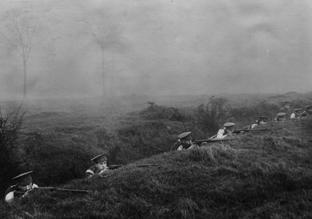
Soldiers of the 16th Battalion of the Royal Irish Rifles practicing trench warfare in Lurgan Park, c.1915.
The 16th battallion, although mostly consisting of men from County Down, was garrisoned at Brownlow House, Lurgan during 1915. Here they carried out their training in preparation for combat in the First World War. As well as training in Lurgan Park, the soldiers also camped and practiced manoeuvres in the Oxford Island and Montiagh districts during their stay in the area.
Image copyright of and reproduced by kind permission of the Royal Ulster Rifles Museum.
• The second Boer War was fought from October 1899 to June 1902 with many young local men taking part, as was the case with World War 1. An interesting article by well-known local historian Jim McIlmurray, published online, provides an excellent context for the poem:
‘As the bells of Christ Church rang in the new Century at midnight on December 31st 1899, many Lurgan men were leaving the town centre to return to barracks in Armagh after a short leave over the Christmas period. These were men of the Royal Irish Fusiliers and they knew within days they would be leaving Lurgan bound for South Africa to take part in the Boer war.
On June 1st 1902 the news that the townsfolk had been waiting for with such expectancy finally broke. The banner across Market Street announced “The war is over - peace is proclaimed”. Two years and eight months after it started.
Soon after, the battles of Transvaal, Orange free estate and Talana were being relived from the top of Shankill Street to Queen Street. Medals were proudly shown around the family and ornate items from far off lands adorned modest homes…
…When the Great War came in August 1914, Lurgan men came in their thousands to enlist in the 15 Irish regiments of the period. Many men went to the regiments their fathers had fought in 12 years earlier but the majority joined at the recruitment drive at Brownlow House in September 1914…
Lurgan’s dead of WWI totals 395 [recently revised to 601]. Several hundred returned as broken men, gassed, maimed and shell shocked. Many died as a result of their injuries within a few months of coming back home. Men from every tradition and from every street served together, fought together and died together. They belonged to all of us. The suffering of WWI went on for many years after. Widows tried to raise large families alone, men crippled and unfit for work existed on a pittance of an allowance. Alcoholism was at its highest level. This surely was the darkest period for the town of Lurgan.’
Text reproduced courtesy of BBC Your Place and Mine: Lurgan Men in the Great War: https://www.bbc.co.uk/northernireland/yourplaceandmine/armagh/lurgan_war.shtml
In Grateful Remembrance of the Men from the Montiaghs area who gave their lives in the Great War
1914 - 1918
• Canavan, Patrick. Driver, No. 32083, 124th Battery, 28th Brigade, Royal Field Artillery. Died from the effects of shellshock on 23 August 1917.
Son of Patrick and Jane Canavan, of Derryadd.
Buried in grave I. B. 6. Godewaersvelde British Cemetery, Nord, France.
• Castles, Edward Abraham. Sergeant, No. 6125, 7th Royal Irish Fusiliers.
Killed in action on 27 April 1915. Age 36.
Veteran of the South African Campaign (Boer War).
Son of William John and Sarah Castles, of Derryadd; husband of Rachel Frances Castles, of 5 Barrick Street, Armagh City.
Buried in grave III. H. 23. Vermelles British Cemetery, Pas-de-Calais, France.
• Castles, William. Sergeant, No. 5983, 1st Duke of Cornwall’s Light Infantry.
Killed in action on 15 September 1914. Age 33.
Son of the late Benjamin and Rose Castles, of Aughacommon. No known grave.
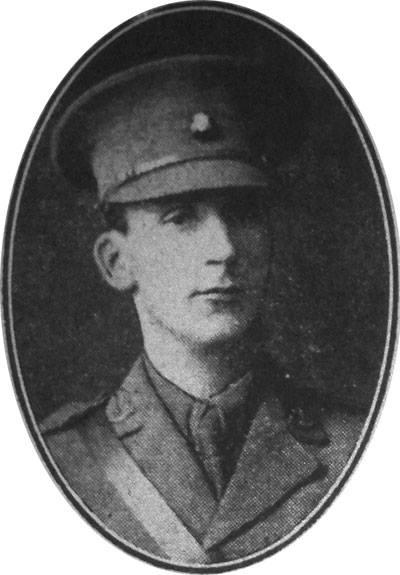
• Cordner, James Wilson (Reverend). Lieutenant, 17th Royal Irish Rifles. Killed in action on 16 April 1918.
Awarded Military Cross for bravery.
Son of Joseph Cordner, of Bannside, Portadown.
The Rev. James Wilson Cordner lived at the Bannfoot. Buried in grave II.C.2 Minty Farm Cemetery, Belgium.
• Donnelly, James. Lance-Corporal, No. 5706, ‘A’ Company, 7th/8th Royal Irish Fusiliers.
Died of wounds on 28 March 1917. Age 24.
Son of John and Mary Ann Donnelly, of Derrycorr.
Buried in grave III. B. 35. Bailleul Communal Cemetery Extension, Nord, France.
• Lennon, James. Private, No. 3108, 2nd Battalion Leinster Regiment. Died on 30 November 1916. Age 33.
Son of John and Mary Lennon, of Derryinver; husband of Sarah Ann Lennon, of Coatbridge, Lanarkshire.
Buried in Maroc British Cemetery, Grenay, Pas-de-Calais, France.
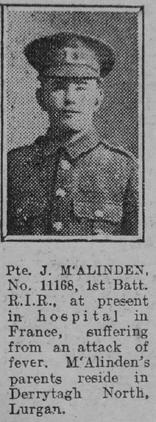
• McAlinden, James. Private, No. 11168, 1st Royal Irish Fusiliers.
Killed in action on 28 February 1917. Age 28.
Awarded the Russian Cross of St. George 4th Class for gallantry.
Son of Henry and Rose McAlinden, of Derrytagh North.
Buried in grave B. 83. La Neuville Communal Cemetery, Corbie, France.
• McAlinden, John. Rifleman, No. 6826, 2nd Royal Irish Rifles. Killed in action on 26 October 1914.
Son of Henry and Rose McAlinden, of Derrytagh North. No known grave.
• McAlindon, Thomas. Captain, Royal Irish Rifles.
Died of dysentery on 17 September 1918. Age 26. Awarded Military Cross for bravery.
Son of Sarah and Hugh McAlindon, of Derryloiste.
Buried in St. Mary’s Derrytrasna Graveyard.
• McCann, John. Sapper, No. 2829, Canadian Engineers.
Died on 26 October 1916. Age 36.
Son of Felix and Margaret McCann, of Aughacommon; husband of Margaret McCann, of 58 Humbert Street, Toronto, Ontario, Canada.
Buried in grave Section 11.Lot 64. Toronto (Mount Hope) Cemetery, Canada.
• McAtamney, William. Lance-Corporal, No. 16805, 2nd Royal Irish Rifles. Died of wounds on 23 February 1915. Age 40.
Veteran of the Boer War.
Son of Phelia and Mary McAtamney, of Derrymacash; husband of Sarah McAtamney, of Red Row, Silverwood, Lurgan.
Buried in grave II. D. I. Loker Churchyard, Heuvelland, West-Vlaanderen, Belgium.
• Monaghan [Monahan], Edward. Private, 113th Infantry Regiment, 29th Division, United States Army.
Killed in action on 10 October 1918. Age 28.
Son of David and Mary Jane Monaghan, of Derryadd. Buried in Meuse Argonne American Cemetery, Lorraine, France.
• Murray, Patrick. Private, No. 22557, Royal Irish Fusiliers. Died on 6 May 1916. Veteran of the Boer War.
Son of Peter and Catherine Murray, of Derrytrasna Lane. No known grave.
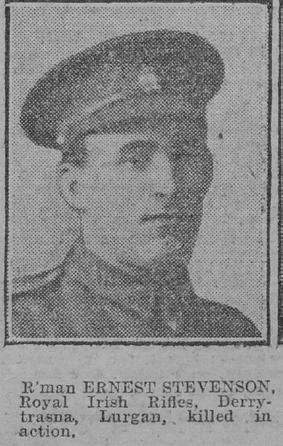
• Stevenson, Ernest. Rifleman, No. 40919, 1st Royal Irish Rifles. Killed in action on 16 August 1917. Age 29.
Son of Joseph and Edith Stevenson, of Laurel Avenue, Derrytrasna. No known grave.
• Turkington, James. Lance-Corporal, No. 12271, 2nd Scots Guards. Killed in action on 10 September 1916.
Son of Richard Turkington of Derryinver, Bannfoot. No known grave.
• Turkington, Joseph. Private, No. 5435, 1st Royal Irish Fusiliers. Died of wounds on 11 June 1915. Age 22.
Son of Elizabeth Turkington, of Derryinver.
Buried in grave Plot 1, Row L, Grave 6, Ferme-Oliver Cemetery, West-Vlaanderen, Belgium.
Footnotes:
• The above information is courtesy of Richard Edgar and Clive Higginson’s book: Not Forgotten: Lurgan and the Great War, (Lurgan: The Authors, 2016), and the Lurgan Ancestry website: http:// www.lurganancestry.com/ww1/worldwar1.htm
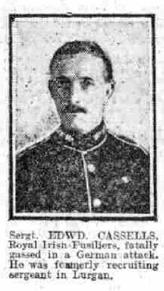
27 April 1915.
Their country’s call, they answered all,
16 April 1918.
Reverend James Wilson Cordner M.C., Bannfoot. Lieutenant, 17th Royal Irish Rifles. Killed in action on
Edward Cassells [Castles], Derryadd. Sergeant, 7th Royal Irish Fusiliers. Killed in action on
Ernest Stevenson, Derrytrasna. Rifleman, 1st Royal Irish Rifles. Killed in action on 16 August 1917.
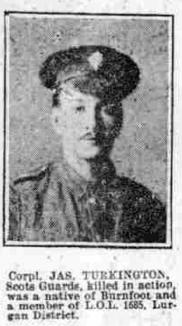
James Turkington, Derryinver (Bannfoot). Lance-Corporal, 2nd Scots Guard. Killed in action on 10 September 1916.
And never thought of gains or losses;
The Hill Street Men
James McAlinden, Derrytagh North. Private, 1st Royal Irish Fusiliers. Killed in action on 28 February 1917.
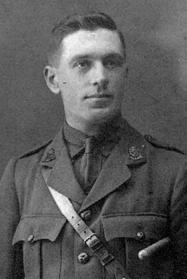
Thomas McAlindon M.C., Derryloiste. Captain, Royal Irish Rifles. Died of dysentery on 17 September 1918. Image copyright of and reproduced by kind permission of the Royal Ulster Rifles Museum.
Footnotes:
• All the above images are reproduced courtesy of Lurgan Ancestry (http://www.lurganancestry.com/ww1/worldwar1.htm), unless otherwise stated.
Charles Brownlow, 1st Baron (Lord) Lurgan (1795-1847), the landlord of Lurgan and the Montiaghs, sat as the M.P. for Armagh in the House of Commons from 1818, until 1832. Brownlow, after initial opposition, became a fervent supporter of the Catholic Emancipation cause that aimed to repeal the remaining Penal Laws, which would give Catholics the right to sit in Parliament and the highest offices of state, from which they had been previously barred. His political stance, however, aroused considerable opposition and enmity from his fellow Orangemen, who regarded his actions as traitorous; while conversely it won him the admiration of many Catholics. The opposing views are reflected in the following poem, written about the bitterly contested election of 1826, which pitched Brownlow against the ‘Orange Candidate’ William Verner. Although the author of the poem is unknown, the reference to the ‘Muntagh Boys’ would suggest that it is written by someone from the Montiaghs. The Catholic Emancipation Act (or Catholic Relief Act) would finally be passed by Parliament in 1829.
Royal Charley
Oh, Lurgan is a pretty place, ‘tis there they buy our barley, ‘Tis there we’ve got a lovely youth, the wise, the beauteous Charley. Then come my boys, don’t make a noise, But register all for Charley; We’ll send poor Verner down the stream, And have our own dear Charley.
The Gentry and the Clergy all, are leagued against us rarely, But the Muntagh Boys will win the day, and chair their own dear Charley. Come register all right early; Each rood of bog, shall have a vote, And they’ll be all for Charley.
There’s Mandeville and bold Richhill, they thought to fight us fairly, But Caulfield and the Catholic rent, the tables turned for Charley. Then boys of the heather, stick all together, And work both late and early; We’ll lay their Orange Lillies low, Long life to Noble Charley.
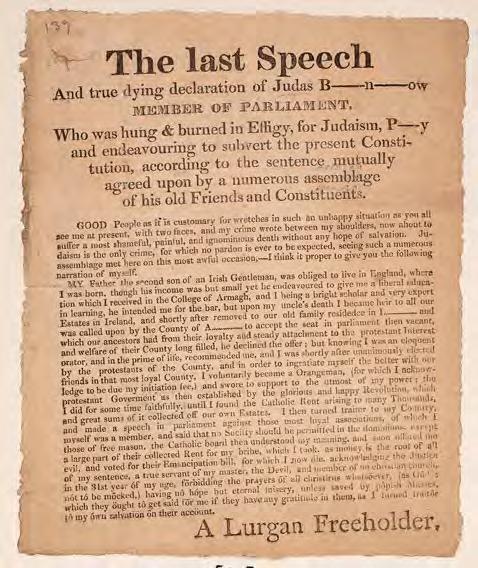
A handbill attacking Charles Brownlow, 1st Baron Lurgan, for his support of Catholic Emancipation Act of 1829, accusing him of being a Judas and ‘being in league with the Devil’. In the same year Brownlow also gave the Rev. W.O. O’Brien land for a Catholic church to be built (the present St. Peters Parish Church in North Street).
Image (Ref: EPH D572) reproduced by kind permission of the National Library of Ireland.
Our noble convert will maintain our rights and claims so dearly, Keen Lords, and Commons we disdain, we’ll have no king but Charley. Come all together, don’t mind their blather Don’t give them time to parley; O’Connell, Shiell and Doctor Doyle Are all for our dear Charley.
Monday night began the fight, on Wednesday morning early, The Catholic Bill went down the Hill, in spite of our dear Charley. Then rouse O’Connell and ‘Neas McDonnell Or else they’ll floor us fairly; For Orange Peel has choked wee Shiell And muzzled blathering Charley.
Author unknown
c.1826
Footnotes:
• In the third verse ‘Mandeville’ refers to George Montagu, Viscount Mandeville and later 6th Duke of Manchester (1799-1855); M.P. for Huntingdonshire between 1826 and 1837 and landlord of the Manchester estate in Armagh. He was opposed to Catholic Emancipation.
• ‘Caulfield’ refers to Henry Caulfield (1779-1862) of Hockley Lodge, Armagh; M.P. for Armagh in the years 1802-1807; 1815-1818; and 1820-1830. He was a prominent supporter of Catholic Emancipation.
• In the fourth verse ‘O’Connell’ refers to Daniel O’Connell (1775-1847); a Nationalist leader who was also a founder member of the Catholic Association which campaigned for Catholic Emancipation.
• ‘Shiell’ refers to Richard Lalor Shiel (1791-1851); a politician and founder of the Catholic Association.
• ‘Doyle’ refers to James Warren Doyle (1786-1834); the Bishop of Kildare and Leighlin, who was a campaigner for Catholic Emancipation and supporter of the Catholic Association.
• The last verse was a later addition to the original poem reflecting the defeat of the 1825 Catholic Relief Act.
• ‘Neas McDonnell’ refers to Eneas MacDonnell (1783 -1858); a barrister, pamphleteer and agent of the Catholic Association and supporter of Catholic Emancipation.
• ‘Orange Peel’ refers to Sir Robert Peel; an M.P. in the House of Commons, who served as the Home Secretary in the years 1822 to 1830 and later Prime Minister. He was an arch Unionist who initially opposed Catholic Emancipation, before reversing his position in 1829, fearing that civil strife would erupt if Emancipation was not granted.
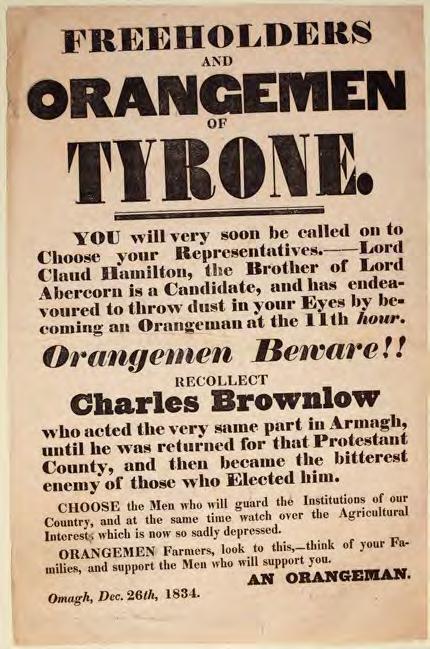
Broadside printed during the 1834 election of Lord Claud Hamilton as the M.P. for County Tyrone warning Orangemen not to vote for him. The text makes reference to Charles Brownlow’s, 1st Baron Lurgan, perceived betrayal of the Orange cause following his decision to support 1829 Act of Catholic Emancipation. Image (Ref. EPH D331) reproduced by kind permission of the National Library of Ireland.
Writer Profile
James Garland, of Shankill, Lurgan
The poet / song writer James Garland was known as a ‘Hedge School Poet’ from the Shankill area of Lurgan. I have been fortunate enough to track down six of his songs.
Garland’s song-writing was largely influenced by his nationalist views and the full one included in this book, ‘The Banished Defender’, reflects his support for the ‘Defenders’ which was a Roman Catholic agrarian society founded in County Armagh in the 18th century.
In his book, Songs of Irish Rebellion, G.D. Zimmermann records that many of Garland’s songs attacked the ‘Orange Order’ organisation (formed in 1795). He reports that midnight expeditions were regularly organised to punish Garland but he managed to escape every time. He quotes a reader’s letter printed in The Nation in 1845:
‘I have often heard him declare in his old age, that for several years, one-half of his time had been occupied in providing retreats and hiding-places to shield him from the frenzied wrath of his persecutors. He purposely cultivated a large species of cabbage, which in the event of a sudden invasion, afforded him a momentary retreat. He has often remained whole nights within a few feet of his pursuers, and heard with unmoved courage their deadly threats and maledictions on his head. For several weeks he would not venture to make his appearance; and still; in his moments of agonising reflections and dreary solitude, would the bard pour forth the tide of song in many a varied strain.’
The following snippet of a song/poem was thought to have been written by James Garland:
‘I then did take a boat and crossed the River Bann Landed in the distant Montiaghs where I viewed the wretched land While the houses they were blazing to illuminate the sky And the owners dare not put them out for the yeoman standing by, They burned the webs out of the looms, likewise the reeds and gears
And they laughed at the people to their face…’
Although the provenance of this poem/song at present cannot be verified, it most likely related to the disturbances organised by the ‘Peep-O’-Day’ Boys which took place in Derrytrasna in 1796 (for further information on these disturbances see the Rev. Bernard J Mooney’s book The Parish of Seagoe).
The Banished Defender (song)
(i)
Poor Catholics of Erin give ear unto those lines I write, I’ve fled to the mountains, for ever I am banished quite, For the sake of my religion I was forced to leave my native home, I’ve been a bold defender, and member of the Church of Rome.
(ii)
Then woe attend those traitors who forced me from my native soil, Those perjured prosecutors that banished me in exile; They swore I was a traitor and a leader of the Papist band, For which I’m in cold irons, a convict in Van Dieman’s Land.
(iii)
Right well do I remember when I was taken in New Ross, The day after the battle, as the Green Mount Ferry I did cross; The guards they did surround me and my bundle searched upon the spot, And there they found my green coat, my pike, two pistols and some shot.
(iv)
The reason that they banished me, the truth I mean to tell you here, Because I was a head leader of Father Murphy’s Shelmaliers; And for being a Roman Catholic, I was trampled on by Harry’s breed, For fighting in defence of my God, my country, my creed.
(v)
Transubstantiation is the faith that we depend upon, Look and you will find it in the sixth chapter of St John, When Moses and Elias they told us of our Heavenly Church, That we in future ages should suffer persecution much.
(vi)
I would not think it strange if I ranged round the earthly ball; Our Saviour was stripp’d, whipp’d and scourg’d in Pilate’s hall; His sentence was between two thieves, and on his shoulders the Cross did bear With rusty nails extended, and a crown of thorns he did wear.
(vii)
There is Luther’s breed and Calvin’s seed, they are all scattered here and there; Their pilots are all wrecked, their mariners are in despair, Their compass, steel and needle’s gone, their lofty sail and rigging tore, Contrary winds blow them far off, they ne’er can reach our Heavenly shore.
(viii)
Don’t you know there is but one God, and one true faith, the scripture says, And don’t you know there is but one Church and out of that none can be saved; She is a ship that can’t be wrecked while Peter guides her with his oar The passengers that leave her deck are sunk and lost for evermore.
(ix)
Had I the tongue of Homer, who wrote upon the Grecian hills; Had I the wit of Solomon, I never would lay down my quill, With courage bold undaunted I would cross the Egyptian shore; For the want of time and learning, poor Garland can say no more.
James Garland, of Shankill, Lurgan
Footnotes:
• ‘ The Defenders’ were a Roman Catholic agrarian society founded in County Armagh in the 18th century. Initially the Defenders were formed as local defensive organisations opposed to the Protestant Peep O’ Day Boys, but by 1790 they had become a secret oath-bound fraternal society made up of lodges. By 1796, the Defenders had allied with the United Irishmen, and participated in the 1798 rebellion.
• In verse (ii) ‘Van Dieman’s Land’ refers to the island of Tasmania, near Australia, on which a British colony was established in the early 1800s. It became notorious for the harsh penal colonies that were established there to which convicts were transported to.
The Irish Labourer’s Plaint (song)
Ye labourers of Erin’s Isle, The time is now at hand
To claim your rights as citizens In your own native land; Throw off the yoke of slavery
That crushed you in the past, And publicly proclaim yourselves Freemen in Erin at last.
If brighter day has dawned for you, If for your rights you seek, And do not act, for smile or nod, The coward or the sneak.
Let Orange and Green together blend, No longer act the fool -
Twas idiotic party strife
That kept you the farmer’s tool.
Upon your sweat and honest toil
Your haughty masters thrive, While your share so scant and bare, Will scarce keep you alive.
You are society’s backbone, Its mainstay and support, Still some proud, empty fellow-worms Look down on you as dirt.
When of the land, you delve and dig, Look for your share, though small; For God who made this earth for man, Allowed a piece for all.
It looks as if some people think He made it for a few;
Left nought but fresh air for the rest
To such as you.
If that’s the case you may at once
Get wings and learn to fly, And bid to terra firma’s plains
For evermore goodbye. They may allow the foxes holes
The brute creation beds; But you won’t be allowed a place Wherein to lay your heads.
Rory C McHugh (anagram of Hugh McCorry)
c.1906
Footnotes:
• This poem was originally published in a local newspaper alongside a report of a Labour Meeting at Silverwood, which is thought to have been published at around the time of The Labourer’s (Ireland) Act 1906.
Writer Profile
Hugh McCorry / Rory C McHugh, of The Boilie
Hugh McCorry was from the Boilie in the townland of Tannaghmore West. Dr Francis McCorry in his book Seagoe. Diocese of Dromore. A Parish History (Lurgan: Inglewood Press, 1987, p. 94) writes that after failing his Geography examination ‘by the narrowest of margins’, Hugh was prevented from becoming a teacher, subsequently finding employment in the railway.
He appears to have been heavily involved in the Labour Movement in the Montiagh / Seagoe area and was a supporter of the United Irish League, a nationalist political party which campaigned for the break-up of large grazing farms and the redistribution of the land to smaller tenant farmers. His name features in local newspaper articles of labour meetings held in the ‘Boilie Band Room’ in the Tannaghmore West Road area.
A large number of his poems appeared in the local paper and cover politics, love, leaving home, tributes to deceased friends, amongst many other topics.
He later emigrated from the area to live in Pontiac, Michigan, USA, but still sent regular poetry contributions to the local paper.
When writing he sometimes also used an anagram of his name - Rory C. McHughas well as the pseudonym Kevin Kay.
The following poem was written by Hugh McCorry and references a Home Rule meeting held at Derrymacash in 1904. It would appear to have been held near to the place (St. Patrick’s Church, Aghacommon), where, on 12 July 1860, the sectarian Derrymacash Riot took place.
The Derrymacash Fight / United Irish League Meeting at Derrymacash (song)
Oh Ireland you may feel proud of Derrymacash this day For in your ranks there can’t be found more manly men than they. They love you with their Irish hearts, as all your sons should do, And with their sagart at their head, would strike a blow for you.
When persecution, years ago, was raging o’er the land, When Catholics got no law at all, these brave man made a stand To save their little chapel being wrecked and knocked to smash And warmed the orange and purple hides in style at Derrymacash.
They made the wreckers rue that they had had the luck to come, And some down Raughlan Avenue, made speedy tracks for home. Of course when things became too hot, all rear-cuts were in, So those Orange bloods must be excused for running hard to win.
Last Sunday at McGreavy’s Hill, that old historic ground, The gallant men of North Armagh in thousands gathered round; Their loyalty to pledge anew to Ireland’s holy cause, And to denounce in language strong, proud England’s cruel laws.
God bless brave Father McCartan, who came and took the chair, And our brilliant patriotic priest, young father Frank O’Hare; Long may they both be o’er us, spared to be our guide we pray And share our joys and troubles too, along life’s weary way.
The orange magistrate of Lurgan town, a couple of weeks before, Did loudly bark and show their teeth and raise a great uproar. They thought our meetings to suppress, to frighten us with bosh, But we showed them we were Irishmen that live at Derrymacash.
The lamp of patriotism is burning brightly still In Saunderson’s constituency, against these bigots’ will. And there it shall remain and burn, a light that never dies, Nor can be extinguished by orange bigotry nor lies.
Brave men were there from Maghery, Aghagallon, Lurgan town, Ballinary, Derrytrasna too and orange Portadown; With pretty girls in blouses white to brighten up the scene, For they are Irish too you know and love the flag of green.
Green banners floated in the breeze, green arches spanned the ways, Hibernian bands played Irish airs to poor ould Granu’s praise That day the green was raised on high, it looked both bright and fresh ‘Tis a nasty pill for Saunderson - such work in Derrymacash.
That brilliant Irish orator, Joe Devlin from Belfast, And Dick McGhee, who served so well his country in the past, Were there that day and told us all, in language clear and plain, That soon we’d have our country boys, a nation once again.
For near at hand upon the waves a tiny spark is seen, With the precious cargo of Home Rule for Erin’s isle so Green. Oh, Irishmen, one final stand - unite, be firm and true, And God will soon that little barque, steer safely o’er to you.
And when that happy day comes round, how glad we all shall feel To know we lent a helping hand, our country’s wounds to heal. That when she, bruised and bleeding, lay beneath the tyrant’s lash, None treated her more friendly that the sons of Derrymacash.
Hugh McCorry
Footnotes:
• In verse 5 Venerable Archdeacon Edward MacCartan was the parish priest of Seagoe Parish from 1889-1920.
• Reverend Francis J. O’Hare was a parish curate of Seagoe Parish from 1895-1904.
• In verse 10 Richard (Dick) McGhee (1851-1930) was an Irish Protestant Nationalist Home Rule politician.
• Joseph Devlin (1871-1934) was an Irish journalist, influential Nationalist politician and M.P. at the House of Commons.
• Colonel Edward James Saunderson (1837-1906) was an Anglo-Irish landowner and prominent Irish Unionist politician. He led the Irish Unionist Alliance between 1891 and 1906. Saunderson was first elected as a M.P. for the House of Commons in 1865 (representing Cavan), but subsequently lost his seat to the Home Rule League candidates in the 1874 general election. In 1885, he stood again for Parliament and was elected for the North Armagh constituency. He retained his North Armagh seat until his death in 1906.
• The Lurgan Mail (Saturday, October 8th, 1904) had a very different view to that of the poet, reporting the meeting / demonstration as: ‘The Nationalist Demonstration - A Very Mild Affair After All.’ The article also includes a report from the Belfast News Letter: ‘Derrymacash, a small hamlet a few miles out of Lurgan, was the scene on Sunday of an attempt which can only be described as farcical on the part of the various branches of the United Irish League to hold a political demonstration. It had been bold and blatantly announced that a disloyal parade, in which party emblems should play their customary part and an enormous meeting of “patriots” should prove to the people of the district that “Nationalism” was a potent factor to be reckoned with in North Armagh, would take place, and there can be no question that strong antipathy had been aroused amongst the inhabitants by those repeated statements. The culminating point was reached when an extraordinary meeting of L.O.L No 6, which represents over 8000 members of the Orange Institution, was held in Brownlow Hall, at which a strong resolution was passed condemning the Sabbath Desecration.’
Bannfoot Ferry
(i)
It being in the year of ’46, July the 12th being on a Sunday, Our Orange boys they all did meet, On the next day, it being on a Monday, In memory of our Glorious King, Who was a true and faith defender, Who freed us all from Popery, And made our foes for to surrender.
(ii)
It being that morn from 4 to 8, There was a fine and pleasant shower; The bells did ring, small birds did sing, Through tree and shady Bower, These Bleary boys of number 12, With heart full of love they met together, And every man with glass in hand, He drank a health onto each brother.
(iii)
The word went round, dare you go down, To the Bannfoot and see the ferry; It was like a joke, we’d kick the pope, And send the priest to purgatory. I believe it’s true, there a few, Who were not willing to venture, But the Bleary boys of number 12, The rugged path they soon did enter.
(iv)
These Bleary boys of number 12, With like steel they were undaunted, Like lions stout, they did march out, To face their foe if it was wanted. Without delay, they marched away, Their fife and drum being in good order, With sashes fine, they all did shine, And turned with purple round each border.
(v)
When they came down to the new town, With guns and picks they were surrounded, Fenian clan lived near to Bann, They vowed once more that we would be drowned. But the great I am who was our guide, Moses was our chief commander, And with brave Calvert at our head, He led us on like Alexander.
(vi)
When every man had reached the Bann, They did refresh themselves an hour, Some sat down upon the grass, There was a fine and pleasant shower. The banks of sort grew charming, And the flowers they were so reviving, It was nice to see the honey bee, Around the flowers they were hiving.
(vii)
On Wilson’s bog, we drank some grog, With fife and drum we played Old Derry, And with heart and hand we left the Bann And bid farewell unto the ferry. The boys of 10 they did march on, While 68 soon followed after, But the Bleary boys of number 12, The rugged path they soon did enter.
(viii)
Homeward we go to face the foe, They thought our boys had no protection; But when we came to Derryvein, There they began that insurrection, This papish crew some stones they threw, From heathery banks the balls came flying, But our Orange sons took to their guns, And in their gore they left them lying.
(ix)
These Bleary boys of number 12, They fought when guns did howl and rattle They wrecked, they tore they would wreck more. They faced their foes and won the battle. Our master he’s a marksman true, Like David he would kill Goliath, He never would yield or quit the field, Till he would chase both priest and friar.
(x)
Now I think it’s time to close my rhyme, We’ll drink a health to Queen Victoria, Also the boys of Derryadd, Their praises we’ll sound in future story; All praise is due to God above, Who freed us all from our creation, And we’ll never have peace until we chase, The Fenian clan out of our nation.
Author unknown
Footnotes:
• The riot referred to in the poem occurred on 13 July 1846, when a group of Orangemen made their return journey from a visit to Charlestown on the Bannfoot, Derryinver.
• In verse (v) ‘the new town’ refers to the village of Charlestown, on the Bannfoot at Derryinver, which was established in 1828, by Charles Brownlow, 1st Baron Lurgan (1795-1847), in an attempt to take advantage of the commercial water traffic.
• The ‘Bleary boys of number 12’ refers to Bleary Crimson Star Orange Loyal Orange Lodge 12.
• In verse (viii) the name ‘Derryvene’ refers to an area of high ground that rises from the shore of Lough Gullion in Derrytagh North.
In 1893 William Gladstone (1809-1898), Prime Minister of the United Kingdom and leader of the Liberal Party introduced the Second Home Rule Bill to Parliament, which would grant limited self-government to Ireland. The Bill passed the House of Commons but was defeated in the House of Lords.
A (somewhat sardonic) article in the New Zealand Tablet, 8 December 1893, under the heading ‘Irish News - from “Irish World”’ reported:
‘When the news that the Lords had thrown out the Home Rule Bill reached Derryadd, near Lurgan, Orangemen and Tories were jubilant. The information was conveyed to the chivalrous Derryaddians by the ringing of the bells of Lurgan Protestant church. The “loyalists” immediately turned out, lighted bonfires, thumped drums, yelled, shouted, cursed the Pope, Gladstone, Morley etc. and kept up a fire with guns and revolvers for several hours. In fact they conducted themselves in the way that lovers of law and order in that locality usually do. On Saturday night the “lambs” began again, and varied the proceedings by firing into Derrycorr, an adjoining townland inhabited exclusively by Catholics. These proceedings were repeated on Monday night, with the addition of a torchlight procession. On Tuesday it was rumoured that a grand final attack was to be made on the “Papishes” of Derrycorr. True enough, at 11 o’clock on Friday night, the “Ditch-liners” assembled and marched to the sound of the drum etc, in the direction of Derrycorr, firing as they advanced, cautiously taking advantage of any shelter the neighbourhood afforded. In fact, they literally “lined the ditches”. The Derrycorr men were on the alert, and successfully repelled the army of ditch-liners. Firing was kept up to daylight, when hostilities ceased. No injuries to life or limb has been reported, but the windows of several homes were riddled with bullets. A force of police from Lurgan went to the scene and remained there. Owing to the disturbed state in which the district has been for a long time, a special police station will be established in the locality.’
The following poem provides a local view of what became known as the ‘Derryadd Riot’ which took place on Wednesday, 13 September 1893.
The Derryadd Riots (song)
The night the Home Rule Bill was passed, The Orange Men, they went mad, And tried to start a civil war, Down there in Derryadd. You may go and tell Joe Abraham, That his Orange Men they are done, For when it did come to the bit, All they could do was run.
You’ve all heard of Wee Dougherty, That wee big Orange Man, Who played a tune called ‘Dolly’s Bray’ Upon an old tin can; Well they do tell me Wee Dougherty He ran in gastic style, And he never stopped to look behind, Till he ran an Irish mile; He left his orange drum behind, And the man who played the flute, For it put the fear of God in them, When the ‘Corr boys started to shoot.
Here’s to the boys from Derrycorr, And Ballinary too, With Derryvene and the High Moss who, Were always staunch and true; For if these men will meet again, I’m sure they will be glad, For they’re the boys that could do away, With Orange Derryadd.
Possibly written by Hugh McCorry. The verses were sung by Mick Hendron.
The Ancient Order of Hibernians (AOH) is a Catholic fraternal organisation which emerged in the late 19th century under the auspices of the prominent Nationalist politician Joseph Devlin (1871-1934). The AOH were set-up in opposition to The Orange Order, promoting Catholicism, Irish nationalism and mutual aid. St. Patrick was the patron saint of the branch. This poem by Michael McConville pays tribute to the Division No. 241, branch of the A.O.H., which was established in 1914 and meets in the Hibernians Hall located along the Hall Rampart, Derrytrasna.
D.I.V. 241 No 1 (song)
(i)
It being on the 17th March
I mean to let you know
The Irish all assembled
And to Kenney’s we did go
(ii)
To celebrate that glorious day
As we have often done before
To here’s a health to Paddy’s land And the boys from the Lough Neagh’s shores.
(iii)
When we came up to Kenney’s All things did look serene, Each man looked in first class style And wore the Shamrock green.
(iv)
Bold Kenney he stepped forward
He could not help but smile, Saying here comes the true Hibernians And they are all from Erin’s Isle.
(v)
Yes we are true Hibernians McMahon he did say, And in honour of Saint Patrick We celebrate this day.
(vi)
In honour of St Patrick
Our Apostle kind and true, Who blessed the soil around Erin’s Isle Where the three-leafed shamrock grew.
(vii)
When I awoke this morning My heart did feel some pain When I thought of all those ‘Trasna boys I might never see again.
(viii)
I thought I saw McDonald
And likewise, John McKeown, They were hoisting up the banner While the band played ‘Garryowen.’
(ix)
Then up stepped James McKavanagh, A man from Derrycrow., Boys we are determined To let these Orange men know
(x)
That we are true Hibernians No matter where we be, And we never will surrender Till we set old Ireland free.
(xi)
So to conclude and finish I got no more to say; God bless and prosper every man Who celebrates this day.
(xii)
So, fill your glasses to the brim And drink your health galore May freedom smile around Erin’s Isle And landlords be no more.
Michael McConville, who emigrated to the U.S.A. in 1910
The Rosary (song)
(i)
Come Irish men from far and near and listen to my song, It’s all about old Ireland and I will not keep you long, But I’ll hope you’ll pay attention and listen unto me, And I’ll tell you the weapon that will set our country free.
Chorus
Sure Our Lady gave the Rosary no army can withstand, And Our Lord gave us the Lord’s Prayer to unite the two in one, And if you do accept it, then with me you must agree, That here we have the weapon that will set our country free.
(ii)
Oh how our forefathers loved to say the Holy Rosary, And they taught it to their children, when they gathered around their knee, And they told them of the promise that our Blessed Lord has made That he would be there with them when the Rosary was said.
Chorus
(iii)
Now come all you loyal Irish men and clasp each other’s hand, Let us all unite together with the Rosary in our hand And if you do take my advice then very soon you’ll see, We will have the whole world with us, And our country will be free.
Chorus John Conway
Writer Profile
John Conway, of Pier Rampart, Derrytagh North
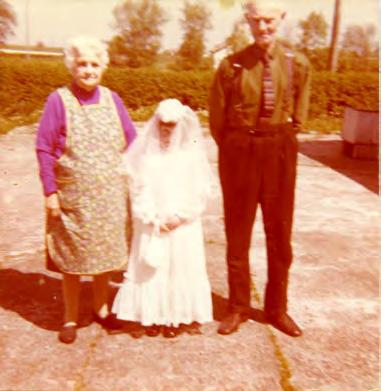
John Conway with his wife Molly and their granddaughter Paula. Image reproduced by kind permission of the Conway Family.
John Conway was a quiet and unassuming family man from the Pier Rampart, Derrytagh North. He maintained the old Irish tradition of gathering the family together for storytelling, prayer and a family sing-a-long. In later life he would gather his grandchildren around him when they visited at the weekends and the family would all sing along together to his songs. His family remember him as a ‘lovely man who had no idea of just how talented he was’.
I was fortunate enough to meet a lovely lady by the name of Vera Blevins (née Parks) from the Birches area of Portadown who was brought up in the family home on the Ardmore Road in the Montiaghs. At the drop of a hat, and with a twinkle in her eye, she gave me a wonderfully entertaining display of the old tradition of reciting poems which she had learnt many decades beforehand.
The author of the following poem is unknown but was given to Vera’s father Albert Parks by Willie Austin of the Derrytrasna Road.
A Tale of the 12th
(i)
A tale of the 12th, from the past I recall Where it happened I better not say For Willie McConnell who lived in the hall Was getting prepared for that day.
(ii)
As he rolled out his banner, the Pride of the Land With its edges of orange and blue It tumbled like quicksilver out of his hand And smash went the side staffs in two.
(iii)
As he gazed on this wreck with a look of despair And he thought of the on-coming morn When the lodge took the road and no banner was there His soul with reproaches was turned.
(iv)
In deep gloom he decided in Murphy’s to call A bottle or two to assay When who should step in from the A.O.H. Hall But its keeper old Charlie McStay.
(v)
Besides I’d be mad if the upsetting lot From the village of Bally-ma-half Should e’er get the laugh over Bally-slid-out Over the sake of a miserly staff.
(vi)
What ails you Willie? You’re as white as a ghost You look like a jockey that has been beat to the post Or a man that has just had a fright What on earth is your trouble tonight?
(vii)
Charlie heard the sad tale, then replied with a smile “Have a drink and forget all your woe
Sure we’ll fix the thing up in a very short time And never a sinner will know.
(viii)
You’ve seen our new banner of ‘Emmett the Free’ Well the staffs are the same as your own And I think, on the quiet, between you and me You could manage to have them on loan.”
(ix)
“Well Charlie boy, that’s a load of my mind But if ever it’s known in this place By my faith we will go as fast as the whine With the village behind us in chase.”
(x)
They sat to make sure that they wouldn’t be seen ‘Til slumber was deep over all And they drew the staffs out of the banner of green And carried them down to the hall.
(xi)
“They’re a little bit longer than yours I would say By maybe 3 inches or more
So tomorrow when Willie rides out on the grey He’ll be higher than ever before.”
(xii)
On the 12th night when every foot Had homeward wearily rolled The staffs were returned from the Orange Man’s flag To the banner of Emmett the Bold.
(xiii)
When the smiling conspirators, glasses in hand Voiced a precept that should not offend The best of good luck to this friendly old plan For you never give up on your friend.
Many thanks to Mrs Vera Blevins for the information and recording.
Footnotes:
• AOH are the initials of the Ancient Order of Hibernians
• In verse 9, line 3, ‘We will go as fast as the whine’ is the vernacular form of ‘We will go as fast as the wind.’
• Robert Emmet (1778 - 1803), Irish Republican, orator and rebel leader was born in Dublin to a financially comfortable family who were members of the Protestant Ascendancy. Following the suppression of the United Irish uprising in 1798, he sought to organise a renewed attempt to overthrow the British Crown and Protestant Ascendancy in Ireland, and to establish a nationally representative government. Many of the surviving veterans of 1798 hesitated to lend their support, and his rising in Dublin in 1803 proved abortive. Emmett’s ‘sacrificial’ end on the gallows inspired later generations of Irish republicans.
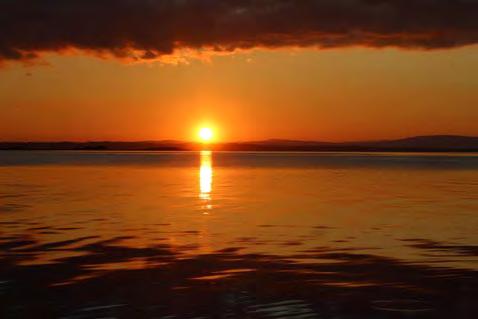
Sunset over Lough Neagh.
Image copyright of and reproduced by kind permission of Barry Coleman.
PART TWO
The Montiagh Area
Fair Raughlan Demense
My Lovely Shore
Kilwilke 1733
The Boilie Banks
Blaney’s Lovely Hill
Some little snippets: St. Patrick’s Road
The Fairy Thorn
Coney Island Still
Midwife Man
The Fairies of Ulster
When Walsh Walked the Lough
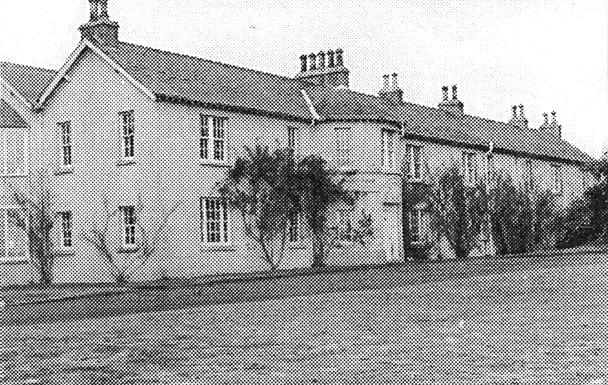
Raughlan House, the ancestral home of the Fforde family, Derrymacash.
Fair Raughlan Demesne
(i)
Among bonny hills of Raughlan
Where oft times I do rove, O’er primrose banks and meadows And through the shady groves
(ii)
And the tennis lawns so pretty, That’s where my thoughts remain In this charming place of beauty Fair Raughlan Demesne.
(iii)
Whence from a boy my heart with joy
To overflowing fills In viewing nature’s scenery Around those lofty hills.
(iv)
From many a bush blackbird and thrush Carol their sweetest strain And small birds join in chorus In Raughlan Demesne.
(v)
‘Twas in this Demesne upon the plain McGrath there stood the test Against Brittania’s favourites That tried and did their best.
(vi)
To take the laurels from Raughlan Old England tried in vain For McGrath was there in Lurgan In Raughlan Demesne.
(vii)
In Raughlan stands a mansion In Gothic style so grand For workmanship and beauty No fairer in the land.
(viii)
James Fforde is the master
A man of brains and means Who owns the entire properties Of Raughlan Demesne.
(ix)
When shades of eve are falling O’er this bespangled vale
The balmy air inhaling Floats on the evening gale.
(x)
The flowers on the sun kissed hills
That’s moist with dew and rain
Perfume the breeze in the shady trees
Of Raughlan Demesne.
(xi)
O Raughlan charming Raughlan
Your scenes they are most fair
Kind nature with a princely hand
Gave you plenteous share.
(xi)
Your gentle dales and flowery vales
Songsters of grove and plain Giving birth to joy and mirth
Beautiful Raughlan Demesne.
John McAleese, Hollygrove, Ardmore
13 July 1907
Footnotes:
• Raughlan (formerly known as Rockland) House and demesne is located in Derrymacash on a peninsula projecting into Lough Neagh.The house was the home of the Fforde family from the 18th century.
• The mention of ‘McGrath’ in verse (v) refers to Master McGrath, the famous greyhound owned by Charles Brownlow, the 2nd Baron Lurgan (1831-1882). The dog raced in coursing meetings held at Raughlan (see ‘The Ballad of Master McGrath’ below).
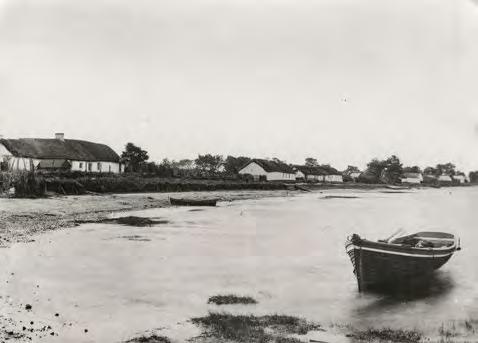
Ardmore Bay, Lough Neagh, c.1950.
Image copyright of and reproduced by kind permission of Armagh County Museum.
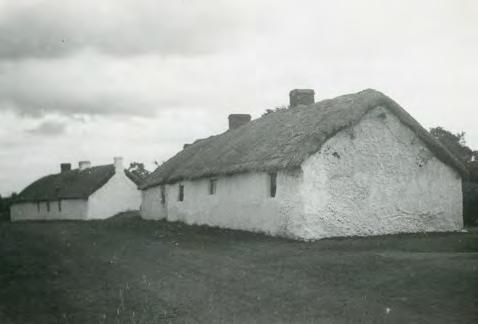
Cottages at Ardmore Bay. The cottage in the foreground was divided in two and occupied by the McGeown and Blayney families; while the cottage to the rear was occupied by the Hamill family.
Photograph by Myles Gilligan FRCSI and reproduced by kind permission of Armagh County Museum.
Writer Profile
John McAleese, of Hollygrove, Ardmore
John McAleese (c.1857-1915) was a local farmer who lived in Ardmore. He was responsible for building the ‘Bay Wall’ in the early 1900s; a stone retaining wall built to help protect the road from collapse during the constant flooding of Lough Neagh. McAleese was a highly regarded poet who often had his poetry published in local publications and newspapers. He died on 25 June 1915.
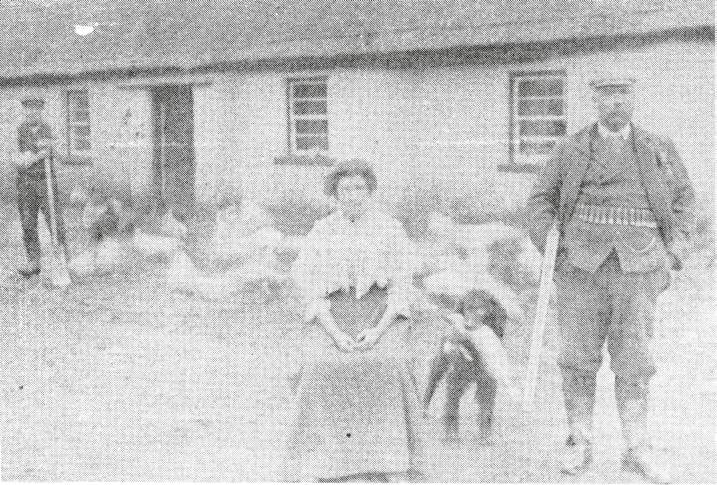
John McAleese with his wife Sarah (née McNicholl) in the foreground, with an unnamed farmhand in the background, outside their Ardmore home on the Bay Shore. Image reproduced by kind permission of Dr Francis McCorry from his book ‘Seagoe: Diocese of Dromore. A Parish History’ (Lurgan: Inglewood Press, 1987), p. 98.
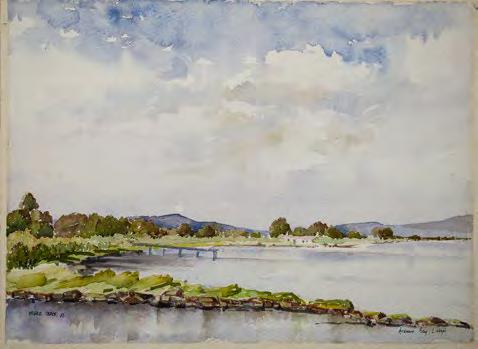
Watercolour of Ardmore Bay, Lough Neagh by Wilford Cooper, of Waringstown, c.1983. Image (Ref: ARMCM.22.2014.1565) is copyright of the Estate of the artist and the Armagh County Museum Collection, and is reproduced by kind permission of Armagh County Museum.
My Lovely Shore
In Ardmore is my home and habitation, And o’er its hills I love to stray, When I go out for recreation Along the shores of sweet Lough Neagh.
To view the water that shines like silver, When the surging wave sends forth its spray; When the wild duck and swan sail along To grace the shores of sweet Lough Neagh.
As day declines in the evening time, When feathered warblers chant their lay; And youthful lovers, hand in hand, Stroll round the banks of dear Lough Neagh.
Such scenes so fair - not seen elsewhere, The observer may easily bring to view; And point them out just by the score, In other countries never seen or knew.
When a youthful boy I did enjoy, With leisure time at my command, To watch the wave that come an lave Its ebbing flow on the golden sand.
Now the Lough Neagh Queen she can be seen, She looks so nice and gay: For she is viewed with admiration From the shores of sweet Lough Neagh.
In those lovely bowers entwined with flowers, With fruit trees blooming in the month of May, Where the golden plovers are constant lovers, To our sandy shores of sweet Lough Neagh.
Had I the genius of immortal Homer, Or the ancient poets who say their lay, I might incline to attract your mind To sing the praises of this lovely bay.
John McAleese, of Hollygrove, Ardmore
c.1905
Footnotes:
• The ‘Lough Neagh Queen’ mentioned in the sixth verse was a pleasure steamer which operated between 1904 to around 1908.
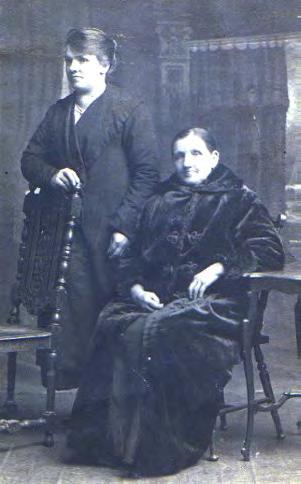
Alice Molloy (standing) with her mother Elizabeth (seated).
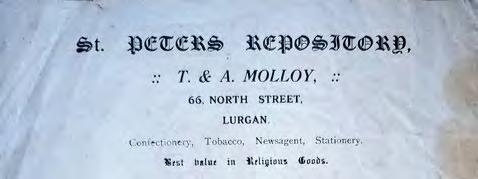
Billhead for St Peter’s Repository, which [William] Thomas and Alice Molloy ran from their house at 66 North Street, Lurgan (now demolished).
Image reproduced by kind permission of Séan McCann.
Writer Profile
Alice Molloy (née Hendron)
Alice Molloy (1885-1947) was a prolific playwright, poet and song writer, held in great regard as a writer by those of her generation. She was born on 25 April 1885 and was the daughter of John Hendron, of the ‘Moyntaghs’, and Elizabeth (née Doyle, originally from Silverwood). Alice spent her youth in Derrytagh South, before she married William Thomas Molloy (1872-1959) from Derrytagh North on 20 January 1903. William and Alice would have 7 children together. They later moved from Derrytagh to 66 North Street in Lurgan, living in a house (now demolished) next to the St. Peter’s Parish Church parochial house. Alice died on 17 February 1947 and is buried in St. Colman’s cemetery, Lurgan.
Her work included a trilogy of poems relating to the progression and advancement of Catholic church sites in the area titled: ‘Kilwilke 1733’ (reproduced below); ‘Dougher 1833’; and ‘St. Peters 1933’. It was however her plays, such as the comedy ‘Taking Stock of the Cassidy’s’, which were staged in the Lurgan Town Hall during the 1930s, for which she is best remembered. Her most famous play was perhaps ‘Gaels of the North’; a drama of 1921 which focused on the life and times of the fishermen of Lough Neagh.
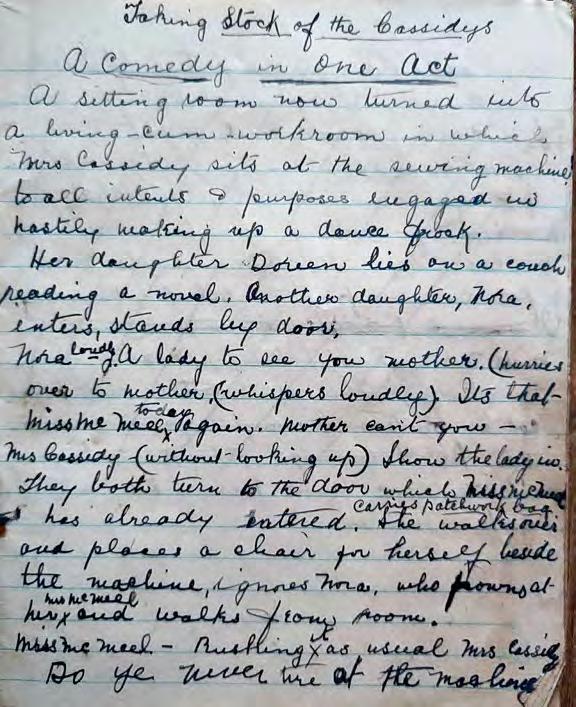
Handwritten draft of the opening scene of the comedic play ‘Taking Stock of the Cassidys’ by Alice Molloy. Image reproduced by kind permission of Séan McCann.
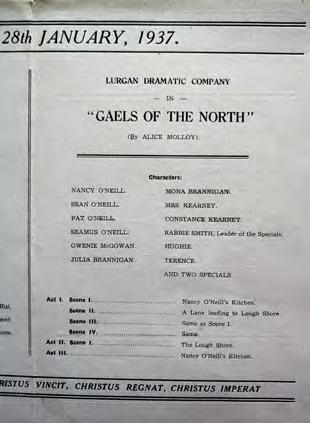
Character list for Alice Molloy’s play ‘Gaels of the North’, which was performed by the Lurgan Dramatic Company at the Sixth Annual Catholic Drama Festival on the 28th January 1937. Image reproduced by kind permission of Séan McCann.
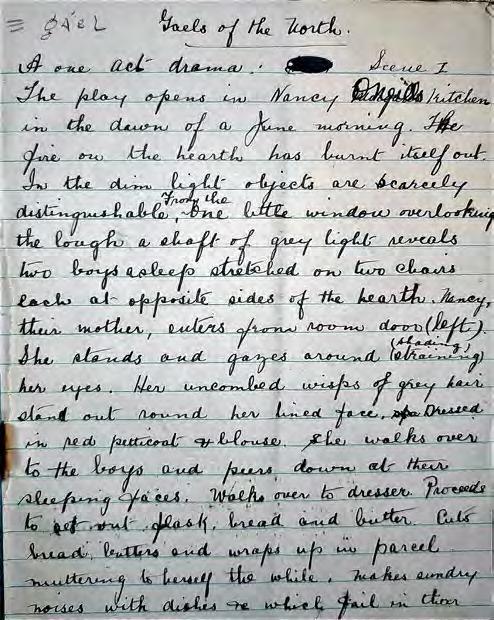
draft of
by kind permission of
Handwritten
the opening scenes of the dramatic play ‘Gaels of the North’ by Alice Molloy. Image reproduced
Séan McCann.
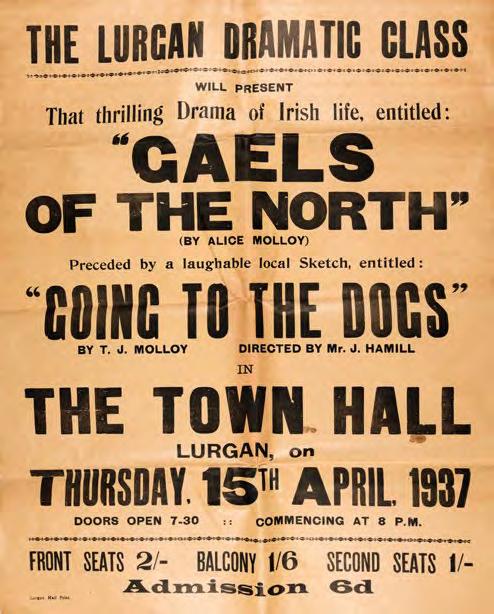
Poster advertising a performance of ‘Gaels of the North’ at the Lurgan Town Hall on 15 April 1937. This three act play was performed to acclaim by the Lurgan Dramatic Class with newspaper accounts of the time noting that the star turn was provided by Sally McAtamney as ‘Widow Nancy O’Neill’; while James McStay was also an outstanding success portraying the fisherman ‘Ownie Madman’. The three sons of ‘Nancy O’Neill’ were played by John Doran (‘Sean O’Neill’), Jim Molloy (‘Pat O’Neill’) and Tom Molloy (‘Seamus O’Neill’) respectively. The daughter ‘Mona Brannigan’ was played by Kathleen Tennyson. The part of ‘Mrs Kearney, an English visitor’ was taken by Bridie Molloy, while her daughter (‘Constance Kearney’) was performed by Nellie Boyle. The cast was rounded off by Michale McDowell (playing a fisherman), Harry McCann (‘Hughie Munroe’) and John E. McDowell (‘Tereance Brady’).
Image reproduced by kind permission of Séan McCann.
A pre-Plantation church, known locally as Kilwilke, once stood on the shores of Lough Neagh on Oxford Island, Annaloist, not far from where the Lough Neagh Discovery Centre currently stands. Not much is known about the history of the church, although respected Lurgan historian Kieran Clendinning identifies it with the church of ‘Saint Fintan de Kilmilcon, alias de Cailmore’, as recorded in a papal document of 1431. In 1613 the mapmaker Josias Bodley recorded that John and William Brownlow, after arriving in the area to take control of the lands granted to them as part of the Plantation of Ulster, were residing in a house ‘which they patched up of stone and clay, on the ruins of an old chapel, being in a place of good safety on that side of Lough Chichester [Lough Neagh]’ - it is thought that the ruined chapel referred to by Bodley was Kilwilke. Today nothing remains of the church, other than a few stones, overgrown with grass. Alice Molloy’s poem below is an ode to the church that once stood proudly on the shore.
KILWILKE 1733
Close by the changing waters on Neagh, Where now the wavelets’ creamy Tongues lap the greensward, Anon the fiery waves burn with fury On the land.
On a grassy hillock stand the ruins of Kilwilke. Centuries ago, ere the despoiler first set Foot in Eire’s fair land; Kilwilke stood; glorious, grand. A Beacon light It drew innumerable souls of the night. And those with grace possessed came from afar to pray At God’s sanctuary - Kilwilke - on the shores of Neagh.
But now, alas! The sacred rooftree is laid low. The altar desecrated, and swine now graze where once The holy sacrifice was offered. So ‘Tis but in the night, when lowering Clouds fill the moonless sky, And the winds shriek and moan through The shapeless ruin,
A solitary wanderer draws nigh
And glancing furtively from left to right, Walks to the altar stone and kneels in prayer
Upon that once consecrated spot. There
His Gethsemane; alone but for God, in
That storied place
He begs the Lord of All to help his dear Ireland.
To keep alive the flame of Faith, That precious heritage of the Irish race.
To help a people
At the shrine of the Most Holy,
A people with no place in their own country. Hunted, outlawed, bereft of every Hope;
A price upon their heads; awaiting Them the pitch cap and the rope. And the lonely Sogarth vows to rest
Not until
The mass bell is heard on many an Irish hill.
“Prayer is our only hope” he sighs; On earth and in Heaven I’ll pray
For this dead land. Nor cease ‘till Matin bell peels forth Around the shores of Neagh.
Alice Molloy
Footnotes:
• ‘Kilwilke 1733’ is one of a trilogy of poems, the others being: ‘Dougher 1833’ and ‘St Peter’s 1933’.
• For further information on Kilwilke Church see Kieran Clendinning’s article: ‘The Brownlow Family and the Development of the Town of Lurgan in the 17th Century’, Seanchus Ard Mhacha: Journal of the Armagh Diocesan Historical Society, Vol. 20, No. 1, 2004, pp. 115-121.
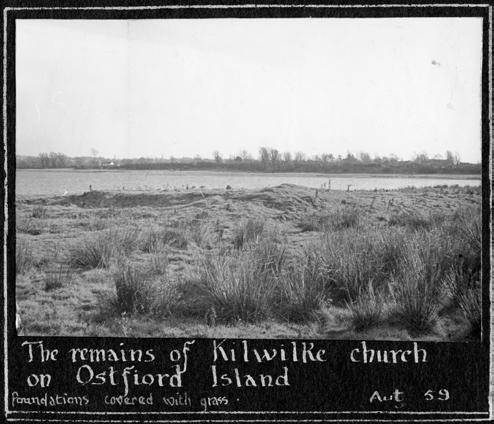
Photograph and handwritten note by the Lurgan photographer William Gracey showing the reputed site of the ancient Kilwilke Church on Oxford Island, Annaloist, on the shores of Lough Neagh, c.1959.
Image is copyright of and reproduced by kind permission of Craigavon Museum Services.
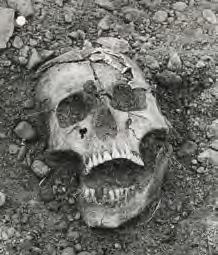
In September 1968, during road work development, a graveyard was uncovered on Oxford Island, south-west of where Kilwilke Church stood. A subsequent archaeological excavation traced the outline of a graveyard measuring 13m (N-S) x 12m (E-W) which was presumably associated with Kilwilke church. Over 12 extended burials were identified. The images show some of the human bones uncovered during the excavation.
Images courtesy of Northern Ireland Sites and Monuments Record (Image Ref: SM7-ARM-006-011-13-1): https://apps.communities-ni.gov.uk/NISMR-PUBLIC/Details. aspx?MonID=5197 and Craigavon Museum Services respectively.
The Boilie Banks
One pleasant evening the weather pleasing, The balmy air so sweet to me, While I did rove by Uprichards Grove And small birds sung on many a tree.
Across the mead my footsteps lead, Through Nelson’s Horse Park I do go, Until I found a pretty mound
On Boilie Banks where strawberries grow.
T’was the month of August golden harvest, The yellow corn was put in bind With hay and wheat in abundance great Along the banks of the railway line.
A plenteous share of apple and pear, In bunches red the strawberries show, In this homely place of love and grace
On the Boilie Banks where strawberries grow.
As I stood gazing on cattle grazing, A terrestrial angel was passing by, I bowed to her and said ‘Good Evening’ Most modestly she did reply.
With a voice of melody so sweet, Like limpet water from a crystal flow, So calm and clear fell on my ear
On the Boilie Banks where strawberries grow.
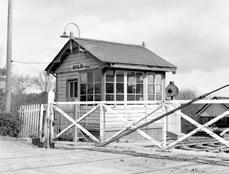
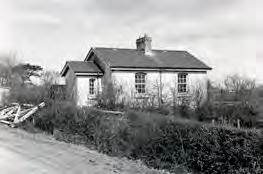
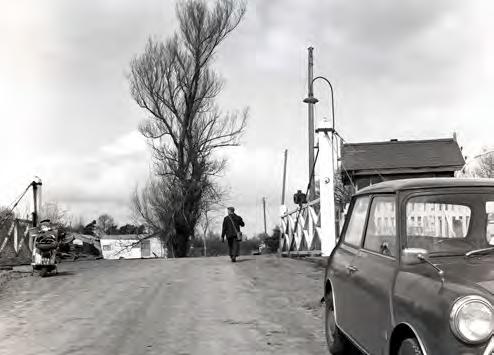
Images of the Boilie Railway Crossing, located at the end of the Tannaghmore West road, which were taken by Charles Friel on 8 April 1973.
The top left photograph shows the Boilie Signal Cabin, which was constructed between 1909 and 1915. It came out of use as signal cabin on 25 September 1967, but as the manually-operated level crossing gates remained operational, the cabin became a convenient shelter for the crossing keeper. The top right photograph shows the crossing keeper house which came with the job, while the bottom photograph shows the level crossing shortly before it was closed.
Images are copyright of and reproduced by kind permission of Charles Friel. Information courtesy of Michael McMahon and Charles Friel.
The Old Boilie Band Room, sliding into gentle ruin.
During the 1960s much of the land of Tannaghmore West and the neighbouring townlands was vested to form the centre of the ‘new city’ of Craigavon. The resulting decline in the local population resulting from the eviction of farmers and tenants, led to the ‘Boilie Band Room’, a popular community space, falling into disuse and ruin. At one point the roof of the building caught fire and exposed the walls to the elements. As the whitewash weathered and peeled, layers of music written on the walls were revealed. Apparently, when used as a band room, as one song was learnt successfully, the walls were whitewashed and a new song was written on the new whitewash. The Christmas Mummers also used this hall as their starting point for their show / parade at Christmas time. Images copyright of and reproduced by kind permission of Peter McCorry.
‘Lovely creature’ said I, ‘Queen of nature, I’m captivated and in love with you Whatever you say, I will obey So pray direct me what to do.
Your eyes by far outshine the stars, Your cheek red as any rose I know, Your voice of love is like the dove On the Boile Banks where strawberries grow.’
Both sweet and mild she gently smiled, Her lovely picture I can’t portray, With a twinkling eye she bowed goodbye Saying words of flattery of times betray.
This place is dear to me round here, Where the morning crystal dewdrops flow; I cull sweet flowers at evening hours On the Boilie Banks where strawberries grow.
As cupids dart has pressed my heart No doctor near to prescribe or aid Lying there alone a wounded victim Captivated by this queenly maid.
I maze and wonder my thoughts did ponder My heart throbbed fast with spirits low Where last was seen that fascinating queen On the Boilie Banks where strawberries grow.
John McAleese, of Hollygrove, Ardmore c.1907
Footnotes:
• The name ‘Boilie’ comes from the Irish word buaile, meaning a feeding place or milking place for cattle.
Blaney’s Lovely Hill
The
charming thrush upon the bush
Did sweetly sing its song
His joyful notes they were so sweet
Blaney’s Lovely Hill
It’s one summer’s evening nice and fair
I chanced to stroll along
The charming thrush upon the bush
Did sweetly sing its song
His joyful notes they were so sweet
And gave me such a thrill
That I will always remember
While I lived on Blaney’s Hill.
Some people loved the city fair
To ramble up their streets
And have a chat
With any friends they meet
But my desire is to admire
Where nature used her skill
From that charming spot, that glorious spot
Called Blaney’s Lovely Hill.
I stood amazed and as I gazed
Upon the lovely scene
I viewed five counties of our land
So nice and so serene
And old Lough Neagh with its beauties lay It gave me such a thrill
Its beauteous glance did me enhance
From Blaney’s Lovely Hill.
If I had got the will and power
Its praises I would sound
If I had the genius of Thomas Moore
Or his poetic skill
Around Ireland’s shores
I would sing to all
Of Blaney’s Lovely Hill.
Paddy McEvoy
Footnotes:
• Blaney’s Hill is the hill approaching Ballynamoney Road (formerly known as Ballinamony Cottages), coming from the direction of Lurgan.
• There was a watering trough at the top of Blaney’s Hill, which became a regular stopping point for horses and other animals being brought from Lurgan to the Montiagh area.
• Thomas Moore (1779-1852) was an Irish writer, poet and lyricist who was particularly known for his work Irish Melodies, in which English language verse was set to traditional Irish tunes.
A section of the preserved Corlea Trackway which extended across the bog landscape of County Longford. The trackway is constructed from oak planks and has been dated to the Iron Age. St. Patrick’s Road, mentioned in the poem below, would most likely have been of similar construction.
Photograph taken by Shelia1988 and reproduced under the terms of the Creative Commons Attribution-Share Alike 4.0 International license (https://commons.wikimedia.org/wiki/File:Corlea_ Trackway_ii.jpg).
SNIPPETS
St. Patrick’s Road
‘Sunk in the turf is an aul road, I never saw it but sure my people did. It was made of tree trunks lying on their side, an it was a brave bit down, half a dozen spading down maybe. Some say it was built by St Patrick to bring sand from the Lough to Armagh but others say it is not as ancient as that. I have heard it said that it is marked on Maps.’
This story was recorded in Derrytrasna, 1926, by T.G.F. Paterson, Curator of Armagh County Museum in Armachiana Vol. 12 (Armagh County Museum ARMCM.28.2014.41).
The Coney Island Still The Fairy Thorn
‘In that field over the road there wus the finest thorn iver, though it’s wasting now. An’ Larry McParland, he’s the one that caused it. Sure he tried to stub it down, an’ wusn’t he thrown right across the field, to the very road itself, as many another can tell ye besides meself. An’ now it will soon be down with the cattle scratching it, but the divil a one wud lay han’ till it other-wise, an’ it in as good a field as iver wus.’
This was recorded by T.G.F. Paterson (1888-1971), the Curator of Armagh County Museum, in Armachiana Vol 12 (Armagh County Museum ARMCM.28.2014.41).
‘There wus a power of whiskey made on Coney in the oul’ days. An’ a sonsy place it was too for the job, for the divil a house there wus there then, though Lord Charleymont has one now. But shure even if there wus no house on it at all, it’s little peace there’d be for the like since they planted police-barracks all over the decent countryside.
It’s well known that two men were busy there with a still one night when they heared flutes an’ mebbe a fiddle or two. They both heared it and they both listened. An’ it cum nearer till them. An’ they saw the wee people but they did nothing till disturb them. An’ always they’d leave a drop of whiskey for them an’ always it wud be gone in the morning. An’ them two men had the greatest luck iver for the divil a guager iver got houl’ of a sup they made. The wee people were ay good till them they tuk too.’
This story was told to T.G.F. Paterson (1888-1971), the Curator of Armagh County Museum, by an unnamed fishermen from Maghery. It is recorded in Armachiana Vol 12 (Armagh County Museum ARMCM.28.2014.41).
Folklore tells us that it was believed that fairies could not give birth without the aid of a human. It was believed that the fairies kidnapped midwives, and if those midwives accepted hospitality of any sort, then they could never return to the human world.
The Midwife manThe Fairies and the Ferries
‘There was a doctor long ago who lived on the other side of the Blackwater. He was a midwife man. One night he was in bed and there was a knock on the door and he pulled on his trousers and went down. And there was a man waiting. And he says “My wife’s near her time and she will have none in her trouble but you”. And he had a carriage with him and the doctor got in. And when they reached Maghery Ferry the whole contraption went over the river without bothering about the ferryman at all, if ye please! That give the doctor an inkling of the company he was in!
And they crossed the Bann Foot Ferry in the same way and near Ardmore, they reached a big house. And in the house, there was a woman in bed. And in a short time the child was born. And the woman, she was grateful and warned him not to take a bite or a sup or even money or he would be kept for ever. And the doctor did what he was told - only indeed for that, we would never have heard tell of it. Sometimes too, the whole of the Tyrone gentry would be over visiting the Armagh ones. On moonlight nights you would have seen whole companies of them”.
This story was told to T.G.F. Paterson, Curator of Armagh County Museum, by an old man in 1940 while the pair travelled on the Bannfoot Ferry. Paterson records the story in Armachiana Vol. 12 (Armagh County Museum ARMCM.28.2014.41).
Footnotes:
• ‘Gentry’ was another name for the fairies and the ‘wee people.’
• It is said that mysterious influences haunt the locality all around Lough Neagh because it is the most ancient dwelling place of the fairies. When soft music is heard the boatmen and fishermen know that the fairies are out for a pleasure trip. One fisherman reportedly left a little poteen for them when he was on one of the islands and the fairies gave him the best of good luck in fishing.
• It is also said that deep down under the waters of Lough Neagh can still be seen, by those with the gift of fairy vision, the walls and towers of beautiful palaces once inhabited by the fairy race when they ruled the earth. The legend of a flooded city below Lough Neagh is recorded as early as the 12th century by Giraldis Cambrensis (c. 1146 - c. 1223), who writes that an extremely wicked tribe was punished for their sins by flooding of their city. He writes that the tops of towers ‘built after the fashion of the country’ were distinctly visible in clear weather under the surface of the Lough. The fairies still haunt the ruins of their former splendour and hold festivals when the full moon is shining, for the boatmen, coming home late at night, have often heard sweet music rising up from beneath the waves and the sound of laughter, and seen glimmering lights far down under the water where the ancient fairy palaces are supposed to be.
‘Stolen Child’ wood carving by Paul Carville
(Left)
‘The Stolen Child’, pastel and pencil drawing, by George ‘AE’ Russell. The painting depicts three Sidhe (or fairies) reaching out to a young girl, referencing the widespread folklore belief that fairies abducted children or swapped them with their own.
George Russell (1867-1935), also known by his pseudonym ‘AE’, was born in William Street, Lurgan in 1867. He attended Lurgan Model Primary School and spent his entire childhood in the town. Russell became a celebrated poet, painter, reformer, thinker and journalist, and was a central figure in Ireland's 'Literary and Cultural Revival'. Much of Russell’s poetry and painting reflected his fascination with the spiritual world and his interest in ancient Irish myths and legends. Armagh County Museum houses one of the largest collections of his work in Ireland.
Image (Ref: ARMCM.2.1948) is copyright of and reproduced by kind permission of Armagh County Museum.
The Fairies of Ulster
‘The fairies of Ulster used to meet here for till elect their king an’ for many nights it wouldn’t be safe till be about. An’ there wur fairy cats here too. It wusn’t till luk at them if ye saw them on the roads at night. A man once coaxed one of them into a house an’ it destroyed the place.’
This story was recorded has occurring in Ardmore by T.G.F. Paterson (1888-1971), the Curator of Armagh County Museum, in Armachiana Vol 12 (Armagh County Museum ARMCM.28.2014.41)
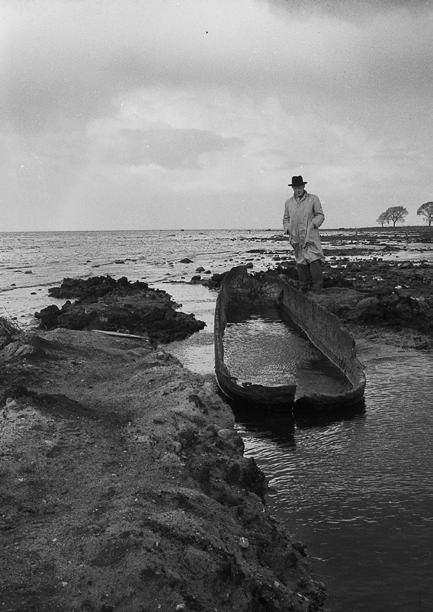
T.G.F. Paterson (1888-1971), Curator of Armagh County Museum, at the discovery of a log boat at Derryinver, Bannfoot c.1959.
According to Malcolm Fry in his book Coiti: Logboats from Northern Ireland, the boat came to light during the most recent lowering of Lough Neagh in 1959. The 25 foot boat was dated to the 16th or 17th century.
Image (Ref: RMW photo file 12) is copyright of and reproduced by kind permission of Armagh County Museum.
When Walsh Walked the Lough
‘“Not since ‘Walsh walked the Lough’ did I ever see the like of this” remarked one of the oldest inhabitants, as we strolled along the northern outskirt of Lurgan. He was referring to the huge crowds of people which lined the roads and fields adjacent to Soye’s Plain. The Flying Circus had come to town and it seemed as if the “world and their wives” had turned up to see the show. Old and young, rich and poor were there, and they certainly got value for their money. Airliners, flying fleas; glider and stunt planes went through their performances without a hitch.
I have heard some strange phrases in my time such as; “Not since the night of the big wind” etc. but the fore-mentioned one… “Not since Walsh walked the Lough” sounded most unfamiliar to my ears, so I enquired diligently into its origin and learnt the story which brings before us again that most interesting event of over fifty years ago which caused such a furore in and around the countryside abutting on Lough Neagh…’
Alice Molloy
Footnotes:
• Unfortunately, this is the only snippet of the story we have. The author may have been referring to one of the times that Lough Neagh was frozen over and Walsh could have therefore ‘walked the Lough’. There were incidents of this in 1814, 1855 and the 1890s. In 1895 there were various stories in newspapers of the time of specially arranged ‘skater’s trains’ bringing people from the towns and villages to skate on the Lough; while Robert Mulholland, a merchant of Crumlin, is recorded as crossing the Lough to Ram’s Island with his horse and sleigh. In 1963 the Lough was also famously frozen over during ‘The Big Freeze’, which saw dogs, skaters and even drivers take to the ice.
• ‘ The Night of the Big Wind’ refers to a fierce storm which caused great devastation across Ireland on the night of 6th January 1839. In Lurgan the spire of Shankill Parish Church was blown down, while severe damage was caused to much of the housing of the town. At Derrytrasna a newly built church, which was being prepared for consecration, was destroyed by the storm. The church (St. Mary’s Church, Derrytrasna) was rebuilt and finally opened on 25 July 1841.
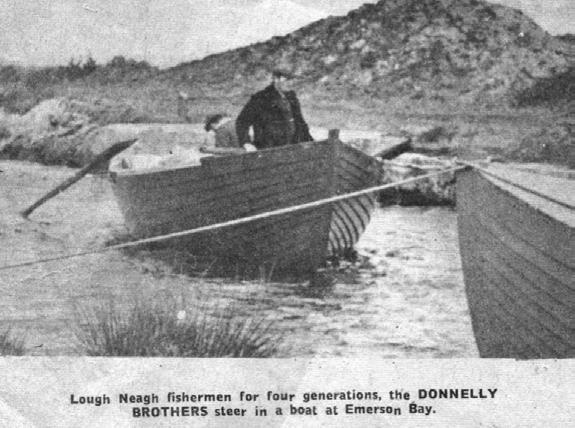
PART THREE
Lough Neagh (Fishermen, Leisure and Tragedy)
Lough Neagh (McAleese)
Lough Neagh Hones
Fisherman’s Song
Lough Neagh (Haughian)
Bonnie White and Blue
Sports on the Bay (song)
Drowning on the Osprey - Lough Neagh
Tra of the Greens
The Drowning on Washing Bay (song)
Old Ship O’Mine
Purple skies over Lough Neagh.
Image copyright of and reproduced by kind permission of Peter McCorry.
Lough Neagh (McAleese)
Of all the lakes in Ireland, both near and far away, To my mind, they’re all behind, in the beauty of Lough Neagh. In the midst of five grand counties, it so neatly bordered round Antrim, Derry, Tyrone, Armagh and the dear old county Down. Where the lasses are so charming, so pretty, brave and gay, Enjoying a trip in the Lough Neagh Queen, round the shores of sweet Lough Neagh.
Where many a town lies fathoms down, and many a building fair, Now in the deep where mermaids sleep, and remain in oblivion there. And many a verdant hill and grove, as Tom Moore’s melody did portray In a single night, passed out of sight in the bottom of Lough Neagh.
There’s the holly tree, so nice to see when to perfection grown, Changes when dead, gets petrified, and turns to pretty stone. Here many a field doth harvest yield big stooks of corn and hay, For I have seen both ridge and furrow, on the bottom of Lough Neagh.
In the summertime along its shore, how sweet the evening breeze, Where flowers always look their best, with the dew upon their leaves. Sure youthful lovers about this time, wile many a happy hour away And cull the sweetest of these flowers, from the choicest stock or spray.
Then the glowing sun may disappear, and leave our fond embrace, Moon and stars might show out clear, each in their proper place And show out light to read this ode, when I’ll be far away, From the ideal of my heart, my beautiful Lough Neagh.
John McAleese, of Hollygrove, Ardmore
Published in the Lurgan Times, Saturday, 27th July, 1907
Footnotes:
• John McAleese may be referring to Thomas Moore’s work ‘Let Erin remember the days of old’. The following lines are from the ‘Let Erin remember the days of old’ melody: ‘On Lough Neagh's bank as the fisherman strays, When the clear cold eve's declining, He sees the round towers of other days In the wave beneath him shining: Thus shall memory often, in dreams sublime, Catch a glimpse of the days that are over; Thus, sighing, look through the waves of time, For the long-faded glories they cover.’
• The reference in verse 3 to the holly tree turning into stone refers to a long-held belief that the water of Lough Neagh had magical petrifying qualities. See the poem ‘Lough Neagh Hones, Lough Neagh Hones’ on page 103 for further information.
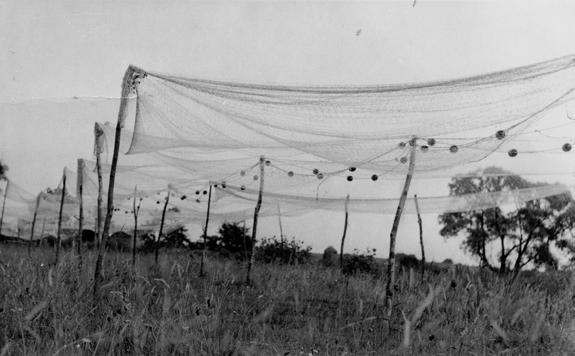
Fishermen’s nets at Maghery, Lough Neagh. Image is copyright of and reproduced by kind permission of Craigavon Museum Services.
Lough Neagh Hones
‘Lough
Neagh Hones! Lough Neagh Hones!
Put in sticks and brought out stones’
Author unknown
Footnotes:
• This rhyme alludes to the formerly prevalent belief in the petrifying qualities of the water of Lough Neagh, which arose from the considerable quantities of petrified wood that were found in the vicinity of its shores.
• In 1911 the noted Irish historian and writer Patrick Weston Joyce wrote of this belief in his book The Wonders of Ireland: ‘if a stake of holly were driven down into the bottom [of the Lough] and left standing there, at the end of seven years the part that was sunk in the ground was found to be iron, the part that was in the water was turned to stone, while the part that was over water was still nothing but holly.’
• As Joyce later notes however, the water of the Lough has no such magical qualities, but rather the phenomenon was due to the geological process of petrification in which wood buried under layers of sediment is slowly compacted into stone over thousands of years.
• Hones of petrified wood were locally valued as sharpening stones. However it has been said that the fishermen on Lough Neagh while remaining ‘upward men’ actually became ‘downward stone’. Consequently they did not need to buy hones to sharpen their razors - all they had to do was to turn up their trousers and sharpen them upon their shins.
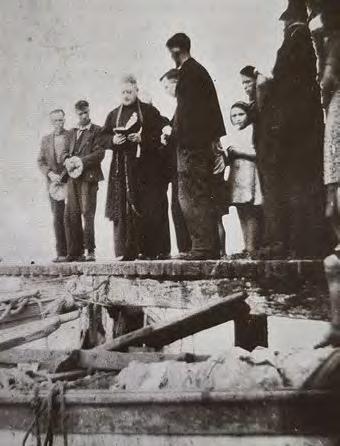
The Blessing of the Boats, Derrytagh, c.1922. Many local fishermen not of the Catholic faith, also brought their boats to be blessed.
Fisherman’s Song
Come all you loyal fishermen
And listen to my song,
Although my lines are sorrowful
I’ll not detain you long.
For my father was a fisherman
And I, oft times heard him say, His father fished the length and breadth
Of that lake you call Lough Neagh.
How my father loved to watch those boats fish off the bay
For he would stand
And watch those men
Until their nets they’d land.
And then his face would brighten up
And these words I’d hear him say, ‘I think the fish are working now
So I’d must be on my way’.
Oh how I loved to sit and watch those boats sail from the bay, And pray that God would bless those men
And guide them on their way.
And when they would return again
Their boats onto the bay,
The horse and cart was ready there
To take their catch away.
But now thank God those sails are gone And engines take their place, The boats are built much larger
And makes them very safe.
But if you do not believe me
Or doubt the words I say,
Just take a walk around the shore
These boats lie in the quay.
Well it’s now my song is ending And I’m sorry to relate, I cannot mention all the names That were drowned in this lake.
But one thing I will ask of you, It’s my last request today,
Pray for the souls of all those men
Who were drowned in Lough Neagh.
John Conway, of Pier Rampart, Derrytagh North
Writer Profile
James Haughian
(‘the poet Hachen [also Hacken]’),
of Derrytrasna
James Haughian was a well-known ‘Rhymester’ poet in the area. In summer months he could be found at the Bay Shore, where he would entertain the young couples out for a stroll by composing a short poem about them for a small sum of money. Some of his poems would portray his outspoken views, but there was a gentle and humorous side to him as well. His songs featured in Ireland’s Own ballad sheets. The most well-known of his songs was ‘The Bonnie Green Tie’ which was made famous when set to music in the 1950s by Teresa Clifford, the famous ballad singer.
Lough Neagh (Haughian)
As I roved in the month of May
And for recreation I did stray
To amuse my mind I was inclined
For to spend some time around sweet Lough Neagh.
In the summer season it is so pleasing
To see our small boats as they set sail
Like heroes brave they do cross the wave
And are no way daunted by the rising gale.
Along the bay of loved Lough Neagh
I do like to rove both noon and night
The small birds chiming and beauty smiling
Upon her waters that are so bright.
The female kind for some past time
Along her beach they do like to rove
In May and June when roses bloom
A wearied heart it remove.
As our small boats upon Lough Neagh
Around the shores of Ardboe and Toome
When the waves do curl our sails unfurl
With our lofty mast sail gib boom.
It come by nature for every creature
That God pleased there for the use of man
Around Lough Neagh I could spend my days And sound the praises of her lovely strand.
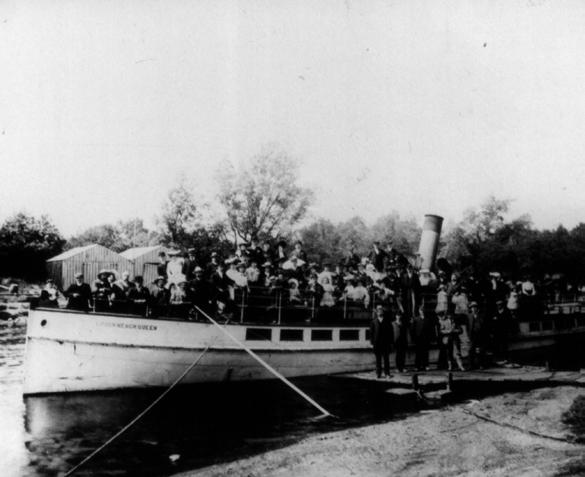
It grieves my mind that I have not time For to recite a few lines more
Upon this vale and its cooling gale
Small fishes spawning upon the shore.
There is shady groves where young men roves From Ardmore banks to the River Bann And birds do thrill upon each hill
It delights the heart of the fisherman.
It is so enticing when the sun is rising
Small fishes, gliding along her bay
It would grieve in heart if I had to part
Still I adore that sweet Lough Neagh.
Composed, written and sung by James Haughian, of Derrytagh North
(Left)
The ‘Lough Neagh Queen’ was a pleasure steamer which operated between 1904 to c.1908. It was owned by Richard Magee of Toomebridge. The captain was a Simey Ryans and the boilerman was Jim McCluskey. The ship operated from Antrim and would sail to different destinations each day including Kinnego, Maghery, Moy, Portadown and Toomebridge. One passenger remembers, on a ‘sail’ from Kinnego to Toomebridge, dancing on the foredeck to the music of Murtagh McCann and his orchestra.
Image reproduced by kind permission of Craigavon Museum Services.
The Bonnie White and Blue
My name is McAlernon,
My age is 22, I’m the owner of the Lurgan Queen, The Bonnie White and Blue.
I drive down to the Montiaghs
And the reason I do so, The people are awaiting for, The Lurgan Queen to go.
I’ve gained a lot of custom And the girls are fond of me, And when the seats are occupied I place them on my knee.
I do my whole endeavour
To guide them safely through, And I find they are delighted In the Bonnie White and Blue.
Author unknown
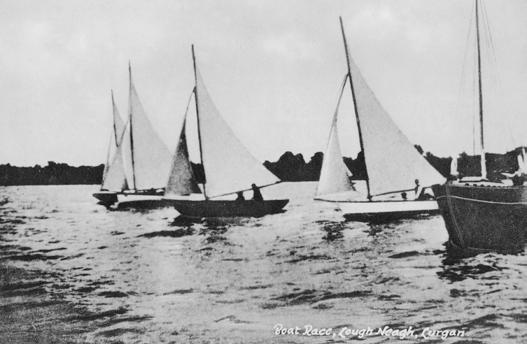
Boat Race at Kinnego, Lough Neagh, c.1930s.
Image reproduced by kind permission of Craigavon Museum Services.
Sports on the Bay (song)
On the 2nd of February when the weather was fine
To view these fine sportsmen my mind was inclined
The horse-race, footrace, boat race fair and gay
Sailed over the water of lovely Lough Neagh.
Eleven o’ clock was the time to begin
The boats they got ready to see who would win
They plucked up the sails so plain to be seen
And the chief judge appointed was oul’ Mick Breen.
They sailed to Korkey upon the first hand
On the blue swelling waters they glided so grand
The next was about and sailed for Ardmore
And John McAlinden came first on the shore.
Sure they raised up a cheer for the first boat came in
And in honour to her, first prize she did win
And to raise up their spirits a little bit higher
They all made a visit to Byrnes and Maguire.
So the next to come up, the horse race also They gathered on shore in honour to go
The horses set off at the top of the hill
And McCorry won the suit of the good Irish Tweed.
The footrace concluded the sports on the shore
The boys dipped their lights lower and lower
And the good pair of brogues was the prize at hand
And the one that did win them, was Sammy Toman.
Sure the whiskey got strong for to keep up the fun
The old men kept arguing about just who had won
Some would curse heavy and others would vow
And plenty would liked to have kicked up a row.
So this was the way the day did end
Each man got ready himself to defend
The publicans closed and all scattered away
And this time the natives played sport on the bay.
Author unknown
Footnotes:
• The sports referred to, took place at O’Hagan’s, 200 yards from Park’s house on the Bay Shore.
• Korkey (Corkey/Corr Quay) is a point to the left of the Bay Shore, looking North. Ardmore Point was to the right.
• The author is unknown, but the song was written down by P. Murray in the 1960s.
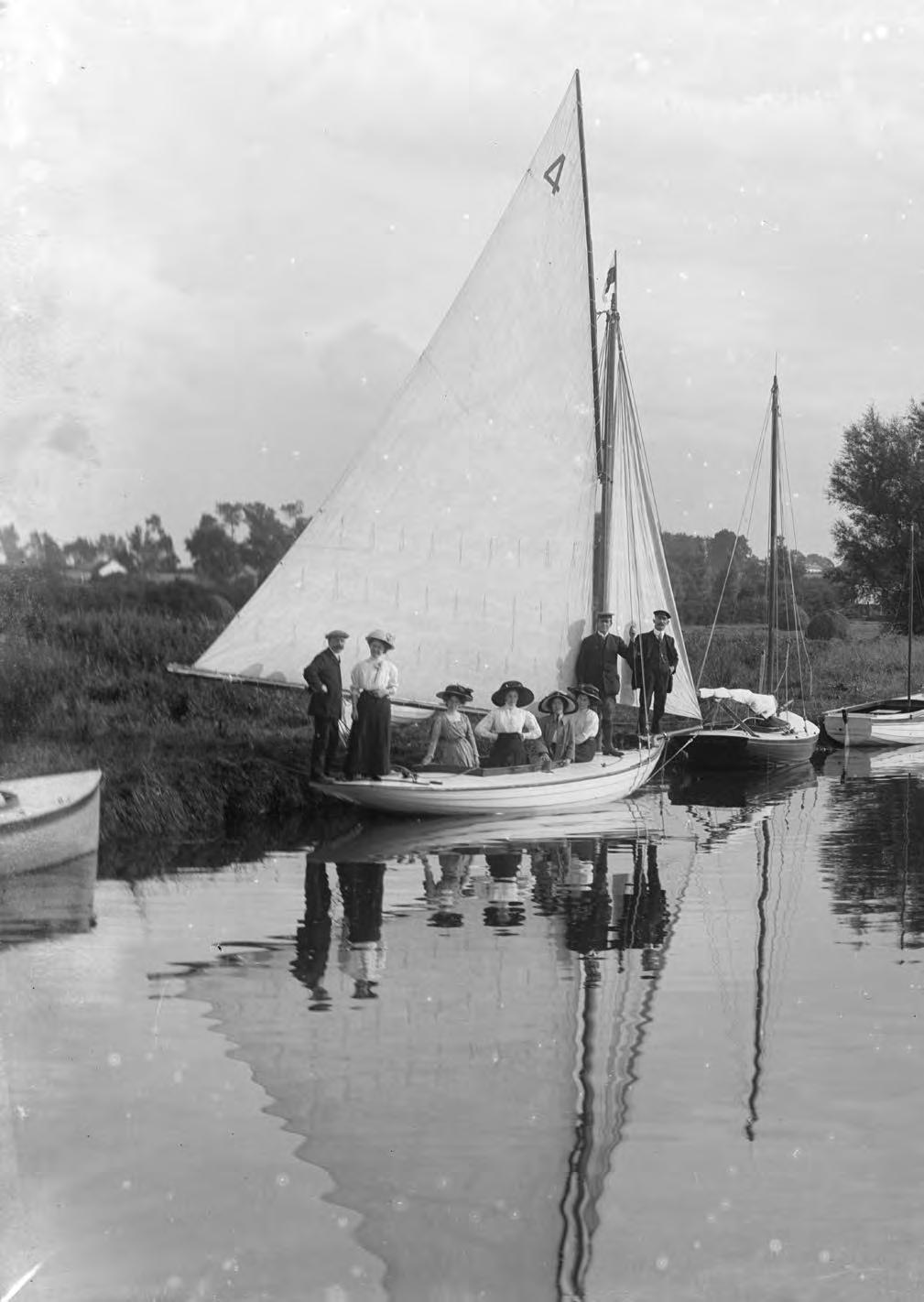
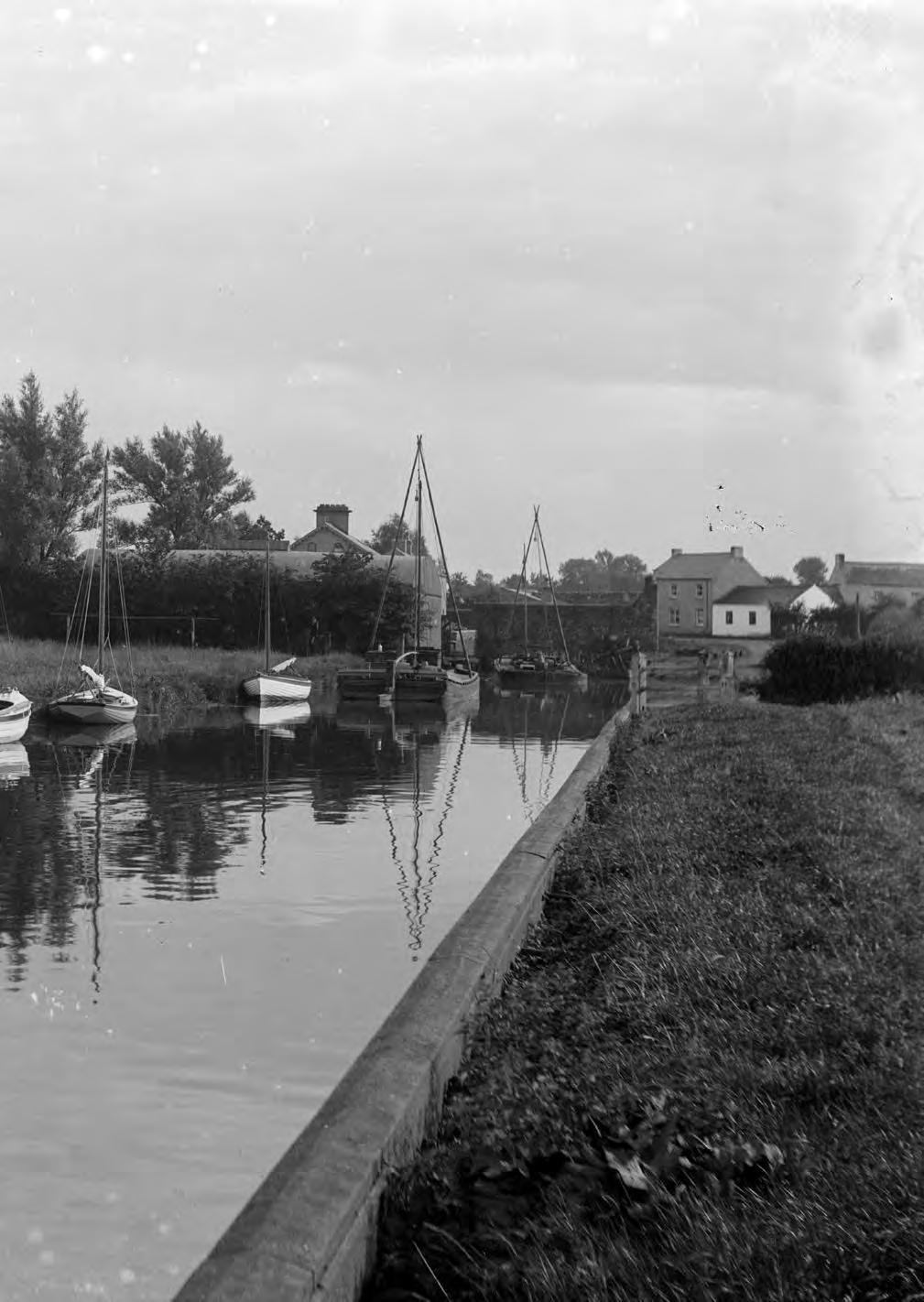
Sailing party pictured at Kinnego Gut quay, Lurgan, c.1900-1920. This quay has now been filled in, with Emerson’s Natural Stone Centre now occupying the area shown in the image. Image (Ref: Eas_3968) copyright of and reproduced by kind permission of the National Library of Ireland.
The Tragedy of the Osprey
On 23rd August 1904, a party of seven young people set out for a sail on Lough Neagh, leaving the house of William Green at Kinnego, on the boat ‘Osprey’. They left the house at about 2pm on that day to sail to Coney Island for a picnic. After a delay in leaving the island, they set sail for home at around 6pm. The wind had risen but all seemed well until around 7pm when a squall struck the ‘Osprey’; the boat was swamped and all of the party found themselves in the water, 3 miles from the shore. They clung to the boat, but one by one were swept away, despite each of them being strong swimmers. Only one, Winifred Green, made it to shore in Ardmore, with her two brothers (Frank and Dorothy), two cousins (Herbert and John Green)
and family friends (Hugh and Frank Catchpool) drowned.
The tragedy shocked and saddened local people and numerous condolences were published in the Lurgan Mail:
‘The sympathy of the whole Society of Friends will go with the bereaved parents and relatives who lost their children in the terrible boating accident on Lough Neagh recently. The parents are well-known and esteemed Friends and the young people were already making their own mark in lives of usefulness. Their early death is a great loss to our Society, and has cast a gloom over many households where their past and present school fellows recall happy days of earnest work side by side.’
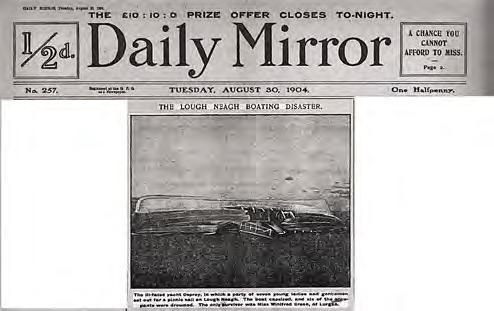
The wreckage of the ‘Osprey’ as it appeared on the front page of The Daily Mirror (Tuesday, August 30, 1904).
Image reproduced courtesy of The British Newspaper Archive (https://www.britishnewspaperarchive.co.uk/)
The following people lost their lives that day:
Dorothy Green (age 16), daughter of William John Green, coal merchant, Kinnego, Lurgan
Frank Green (age 18), son of William John Green, coal merchant, Kinnego, Lurgan
Herbert J Green (age 19), son of Isaac Green, hardware merchant, Belfast
John F. Green (age 21), son of Isaac Green, hardware merchant, Belfast
Hugh W.P. Catchpool (age 19), Guernsey
Frank F. P. Catchpool (age 17), Guernsey.
John McAleese, who saw the ‘Osprey’ pass his home shortly before the tragedy took place, wrote the following condolence:
Drowning on the OspreyLough Neagh
Our lake looks dark and lonely
To-night at setting sun; It seems as if reflecting O’er the awful deed it done. The roaring wind like thunder Has all now died away, And the water sobs in mourning Round the shores of Lough Neagh.
About four o’clock that evening I viewed her from the shore, A prettier little sea queen Never passed that way before.
Of bathers, boaters, young and brave, Who grasps with stern relentless bold
Our loved ones, dearer far than gold: The lake was then pacific, No wind to make her away, She moved along quite steady Through the waters of Lough Neagh.
On reaching Coney Island, Here to their great surprise, The wind began to whistle, And clouded grew the skies: The place around looked dismal, Which made them hurry away, And hoist their sail with a side gale
On the waters of Lough Neagh.
After leaving Coney Island
Each one was watching home, And eyes watched out to greet them, But ah, they never come. For the storm it grew fiercer And sprang the stout boat stay, Then filled the Osprey speedily With the waters of Lough Neagh.
After eight o’clock that evening, When the occurrence did take place, We have the young lady’s story It’s the only thing we trace. She can’t well tell the reasons, But enough that she does say, The boat was managed carefully That night upon Lough Neagh.
Oh gone! Oh gone! Are five young men
Cut down in youthful bloom, Oh hard! Oh hard! Sisters looking on
By the pale light of the moon.
The parting was brief, there was no relief, They struggled hard for the shore,
But it was too far away
Then the waves did bury them in the deep waters of Lough Neagh.
The moon then cleared out brightly
And the stars began to peep, Looking down upon two children
On the wreck upon the deep.
The scene ‘twas heartrending, For the night was bitter cold
One, shivering to heaven did pray
Then sank beneath the waves in the waters of Lough Neagh.
‘Twas wearing onto midnight, But sure no one did know
That a lonely form upon a wreck
Was drifting to and fro.
At last she struck ‘gainst Ardmore Point Scarce able to make her way, Thanking God for her deliverance
From the waters of Lough Neagh.
Now to conclude and finish, My heart it now intends
To send my warmest sympathy
To the distracted friends.
To Mr and Mrs Green and family, With the hope that God will make amends, For the taking of the six now in the clay By the sad disaster that night upon Lough Neagh.
John McAleese, of Hollygrove, Ardmore
Published in The Lurgan Mail, September 10, 1904
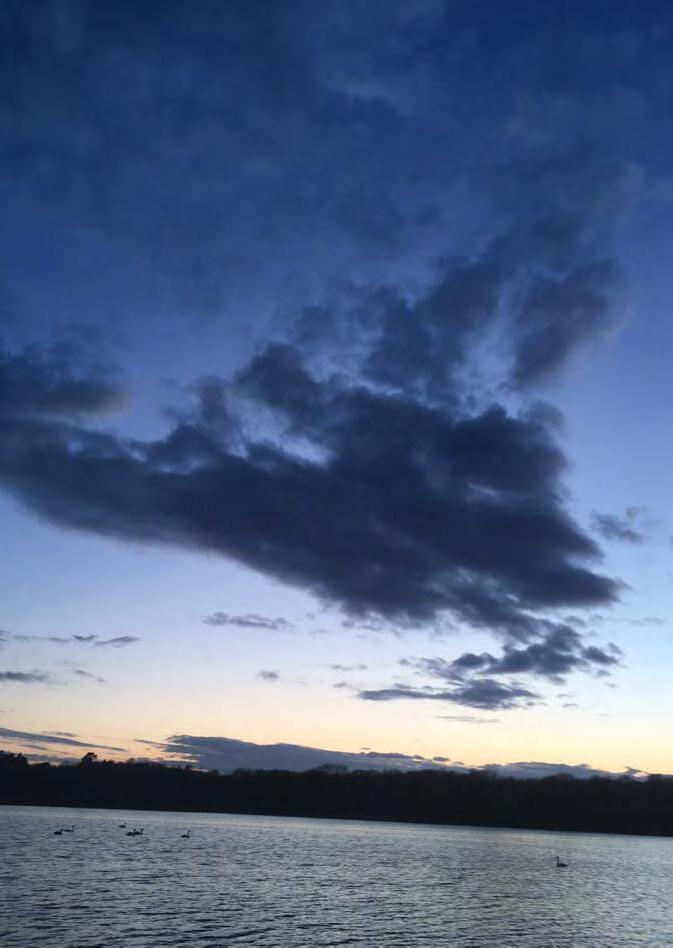
Lough Neagh.
Image copyright of and reproduced by kind permission of Peter McCorry.
HEART
LOUGH NEAGH (FISHERMEN, ENJOYMENT AND TRAGEDY) 119
Tra of the Greens
It was on the 23rd of August, the sun had long set low A sad disaster happened, a tale of grief and woe, When five young boys, and two young girls Set out to have a sail Alas, but one alone, returned to tell the awful tale.
It was on Lough Neagh waters, this sad affair took place And they little thought that evening, that they had death to face. They left the Kinnego, all hearty light and gay, To sail for Coney Island, about eight miles away.
They spent a pleasant evening and on their home return, Oh what a sad calamity, which made so many mourn, When a sudden angry squall arose and overset their boat For hours these poor victims did try to keep afloat.
Miss Winnifred Green had sadly seen the danger now at hand, She called on her brother to strike out and make for land. But Oh it was too much for him as on the waves he tossed, His strength soon failed for a fellow - then was lost.
Paddy McEvoy, of Ballinamoney
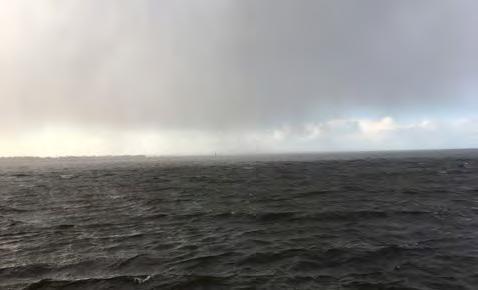
When a sudden angry squall arose and overset their boat
Tra of the Greens
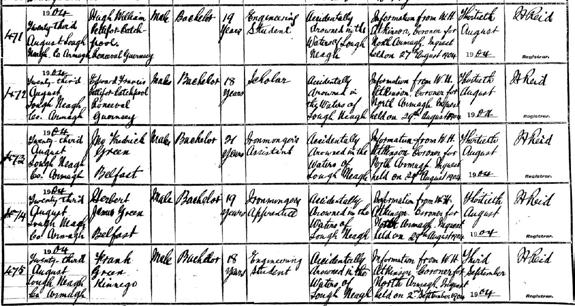
Extract of the death register recording the victims of the Lough Neagh boating disaster on 23rd August, 1904. Records accessed via the website: https://www.irishgenealogy.ie/en/
An earlier, lesser known, multiple drownings incident occurred on Lough Neagh on 9 October 1887, in which four lives were lost. According to the newspaper Northern Whig (Tuesday, October 11, 1887), the disaster resulted when a boat carrying seven men on a return journey to the Montiaghs from a National Land League Meeting at Washing Bay, capsized on the stretch of water between Coney Island and Maghery. On a rain-sodden night with rough waters, the following lives were lost:
• John Breen, of Derrytagh North (age 27)
• Patrick Molloy, of Derryloiste (age 20)
• William Murray, of Derryloiste (age 24)
• John Welsh [Walsh], of Derrytrasna (age 40)
The survivors were Joseph Farren, John McCorry and John McGeown.
The incident was commemorated in the following song by John Conway, of Pier Rampart, Derrytagh North.
The Drowning on Washing Bay (song)
On the 14th of October, being the tenth month of the year, What occurred upon that day, I mean to let you hear, A few of our brave Irishmen sailed to the Washing Bay And four of them were drowned in the waters of Lough Neagh.
When these young men were leaving home, to have a pleasant day
To join their fellow Irishmen upon the Tyrone Quay, And as they started from the shore, to bid their friends goodbye
That was the last of young John Breen, Welsh, Murray and Molloy.
It would have grieved the heart of any man who loved his native land
To look out at the hardship that those young men had to stand, For the wind and rain both did combine and tore their sails away
And four of them were drowned on the shores of Maghery.
Well the cries of them on the Lough that night was very hard to stand, They were crying out for some relief when they were seen from land, And a few of our brave Maghery men did face both wind and wave, And with God’s help, saved three of them from a cold and watery grave.
There was McGeown, also McCorry and young Farren, they did revive I’m sure they will not forget that day, as long as they’re alive, For a sight like this was very fit, to put their mind astray, To leave their fellow comrades in the bottom of Lough Neagh.
Well it was a terrible sight to see the fisherman next day Go out in search of these four men that were drowned in Lough Neagh. Their friends and their relations on the shore did cry and weep, When they thought of their fellow creatures lying slumbering in the deep.
There was Pat Molloy and Johnny Welsh, young Murray and John Breen Four of as true bred Irishmen, and they had loved the land of green. May they be blessed, on the great judgement day God rest the souls of those young men that were drowned in Lough Neagh.
John Conway
Footnotes:
• The song words were provided by members of John Conway’s family. The final verse may have been added at a later date by another person.
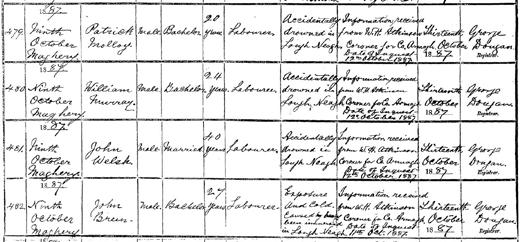
Extract of the death register recording the victims of the Lough Neagh boating disaster of 9th October, 1887.
Records accessed via the website: https://www.irishgenealogy.ie/en/
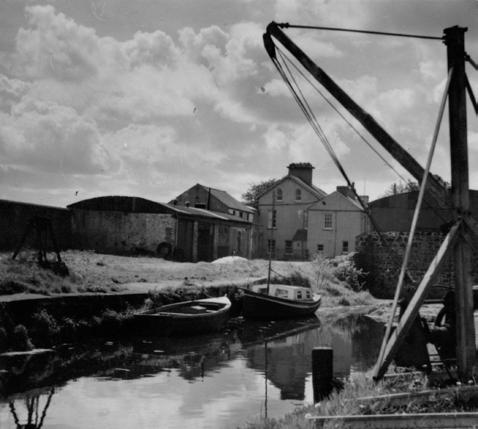
Photograph taken by the Lurgan photographer William Gracey of Ben Brown’s Harbour at Kinnego, May 1958. Image copyright of and reproduced by kind permission of Craigavon Museum Services.
Old Ship O’ Mine
One night by the sea I was straying By the quayside I chanced to be When I overheard someone saying To an old skip just in from the sea.
It’s goodbye Old Ship o’ mine
For no more we’ll cross the line
Now your days are through on the blue. Goodbye Old Ship o’ mine.
When they break you up at dawn
In the yard where you were born
They will break the part of a sailor’s heart
Goodbye Old Ship o’ mine.
Your big book I keep as a token In memory of you Mary Ann I’d give the word now to keep you But I’m just a poor sailor man.
So goodbye Old Ship o’ mine
And for the sake of Auld Lang Syne
Your name will still live until the day I’m gone Good bye Old Ship of mine.
The quayside I always remember And each word that I chanced to hear They came from a heart soft and tender And in each word it seems was a tear.
Alice Molloy
The Kissing Gate, Tannaghmore Gardens.
Image copyright of and reproduced by kind permission of Barry Coleman.
PART FOUR
Montiagh Reflections of Love and Life
Cutty Sark
Playing in the Shavings
Thanks for the Rose Christmas Tide Christmas
The Girl from Derryadd
To Kitty Mathers
Phil’s Tale of Woe
In Memory of Joseph McAlinden
Writer Profile
Dan (William John) Hendron, of Derrytagh South
Daniel (Dan) Hendron was born in Derrytagh South on 9 March 1895 to Patrick and Ellen Hendron. He later married Elizabeth Kearns and emigrated to the United States of America but he and his family always maintained links with relatives from the local area.
He was a cousin of Alice Molloy, who is also featured in this book. His poem ‘Playing in the Shavings’ reflects happy childhood memories of his father (who was a carpenter) and his mother who died when he was young on 15 February 1909. A number of his poems were published in the United States and also featured in local papers.
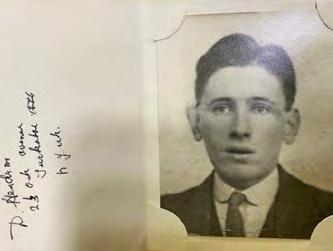
Portrait photo of Dan Hendron.
Image reproduced by kind permission of Seán McCann.
Cutty Sark
Oh my heart is sore with sighing
What is left for me to say?
Now that she has gone and left us, Cutty Sark has passed away. We clasped her to our bosom, Flowing tears her breast did spray, To think that to the tomb she’s gone, The house is cold today.
When at the dinner table Laid her head upon my knee, And seeking for the last bite, Handed up her paw to me.
And there upon the carpet, Stretched out upon the floor,
We found our little darling,
Our cutty was no more.
Dan Hendron
Playing in the Shavings
The lark is wildly singing for spring is in the air. The fields of Erin flourish with the daisies blooming there, But a gossoon can’t roam round to see, At home he must remain, Playing in the shavings with his daddy at the plane.
I toss around among the heap and shout in wild delight, My tousled hair is full of them - to Mammy what a sight, But a twinkle in my daddy’s eye denotes I can remain, Playing in the shavings with my daddy at the plane.
He makes the wheels for farmers’ carts, a drum to grace the band, Anything that’s made of wood is at his sole command; A bureau for the newlyweds, a frame to hold the pane, While I’m playing in the shavings with my daddy at the plane.
The neighbours may drop in at eve to see him build a boat, Any vying with each other for who’ll first be afloat, But I’m too young for sailing, yet at home I must remain, Playing in the shavings with my daddy at the plane.
A plane to stick the moulding and the rabbit for the glass, I rumble round among them, inspecting all he has, But he shakes a warning finger, from such nonsense to refrain And keep playing in the shavings with my daddy at the plane.
Dan Hendron, of Derrytagh South who later emigrated to New York, U.S.A.
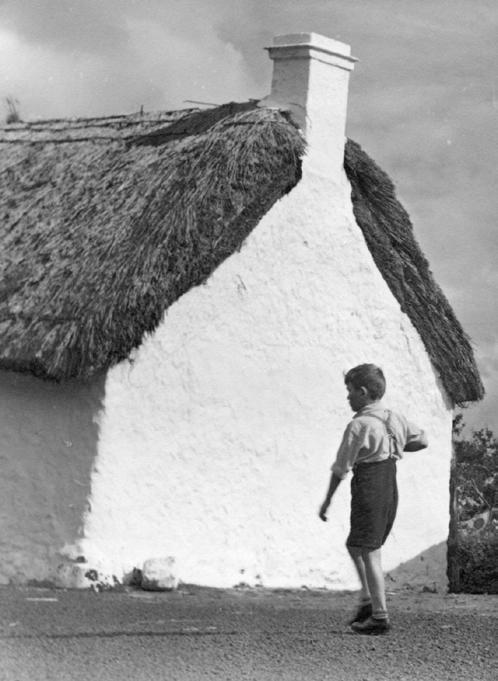
Image copyright of and reproduced by kind permission of Craigavon Museum Services.
Photograph taken by the Lurgan photographer William Gracey of an unidentified boy outside a thatched cottage on the Bay Shore, c.1958.
This poem was written after the author had emigrated to the USA and was published in the New York newspaper The Herald Statesman.
Thanks for the Rose
In a pitcher of water
She placed it and said ‘It’s a present to leave By your hospital bed.’
It was only a bud, So I waited to see What kind of a rose It was going to be.
As the sunshine next morning Enshrouded my bed I woke to behold her In cardinal red.
With petals unfolding She danced in the breeze ‘What do you think of me now, If you please.’
Dan Hendron
Christmas Tide
(i)
Old Father Christmas comes again
To fill our heart with cheer, When darkness lies o’er hill and plain
At this dead time of the year; With frosty beard and locks of snow
He calls at every door,
To share with all, both high and low, Out of his boundless store.
(ii)
With hollies green and berries red
Our homes we’ll decorate, The blazing log its light will shed, From every hearth and grate;
Let all be glad, rejoice, also, Because upon this morn
In Bethlehem long years ago
Our Saviour Christ was born.
(iii)
O’er the crib so poor and bare
Let us in spirit go, To see the new-born infant there
Mid winter’s frost and snow, Who is this little shivering Babe
That in the manger lies?
He’s King of Kings and Lord of Lords, Who built the starry skies.
(iv)
This world so vain with sin defiled That He had come to save, Unto His Virgin Mother mild That night no shelter gave; Till on the dark and lonely road, Exhausted and outdone, She found this mean, obscure abode Then brought forth her Son.
(v)
Ye who are poor on Him rely, Though humble be your state, Your wants, He knows and will supply And make you truly great. What though the rich may know you not, And look on you with scorn Think on the treatment Mary got The night her Son was born.
(vi)
Therefore, as long as we sojourn Exiles upon this earth, Let poverty not make us mourn Or mar our Christmas mirth; But all he merry and in glee Pass round the cup of cheer, For God knows where we all may be When Christmas comes next year.
Hugh McCorry
Robin on a snow dusted tree, Oxford Island.
Image copyright of and reproduced by kind permission of Barry Coleman.
Christmas
(i)
Thou art welcome, merry Christmas, Thou are welcome, still to me, And I long to see you coming For you fill my heart with glee; You enliven up the old folk
That care, perhaps make sad, And e’en the little children
At your approach feel glad.
(ii)
Of all the set times of the year
There isn’t one like you, For joyous fun and merriment, And gay amusement, too.
The weather may be at its worst, The skies on us rosy frown,
But everyone enjoys himself
When Christmas-time comes round.
(iii)
There is generally excitement And much fuss for days before, And folk for home are rushing back
To see their friends once more; The people working might and main
The country round about, And the weaver’s shuttle merrily sings For everyone wants out.
(iv)
A ring of mirth and Jubilees
Already in the air, And Mick his little fowling piece For shooting does prepare. The children jump let loose from school Are bounding o’er with joy, They have got their Christmas holidays And that’s the reason why.
(v)
Look at the traders’ windowsAren’t they a sight to please? And the flesher’s shops, O man alive! Just take a peek at theseThere you will see the good things That Christmas brings for all, Who have got the cash to pay for them If not, they needn’t call.
(vi)
Then welcome Merry Christmas And when you come to me, If God allows me life and health
I hope to have a spree, Dull care to banish for a while
As long as thou art near; For we don’t have you every dayYou come but once a year.
Rory C. McHugh, of The Boilie, Lurgan
The Girl from Derryadd
I’m a Montiagh maid and I’m so dismayed And as lonesome as can be, For the other day I’m sad to say, My love sailed over the sea. Oh the tears begin when I Think of him and the Pleasant times we had, Oh why did he part to break my heart
Of this girl from Derryadd.
He was six foot two, his eyes were blue With a fist like a creepy stool, So good and kind but inclined As stubborn as a mule.
He could milk a cow, he could also plough And at courting he wasn’t too bad, Oh why did he part and break the heart
Of this girl from Derryadd.
Oh how I miss each stolen kiss and The sound of his Montiagh brogue, Right from the start he stole my heart
This big and handsome rogue.
And often at night by the turf fire’s light
I grow so lonesome and sad,
Oh I’m wondering if he still thinks of me
His girl from Derryadd.
I daily pray for that sweet day
When he’ll sail across the sea,
To stroll once more by Lough Neagh’s shore
And whisper love’s story to me.
But if then he proves untrue then I’m telling you
I’ll show this young fellow me lad
There’s many a lad who would
Still be glad of this girl from Derryadd.
The Poet Haughian [James Haughian]
Footnotes:
• This poem might have been Haughian’s humorous adaptation of the song ‘The Girl from Donegal’.
To Kitty Mathers
My very best wishes, I send to you Kitty, Although I ne’er saw you, I know you by name From what that I hear, you are graceful and pretty, Your step very modest and your conduct the same.
But don’t for a moment imagine young maiden That I’m going to flatter or swell up your head, Or don’t let yourself be vanity laden, Although it be very true every word that I’ve said.
Is it pleasant to live in old Castlewellan? Are the people down there just as friendly and kind? Are the loaf-tails as sweet that to you they be telling? As round as the High Moss, Kitty, which you left behind?
I would kiss you this moment could I only reach you, Alas, I’m unable you’re too far away, But maybe someday, I’ll be able to teach you, A lesson in love, Kitty, what do you say?
Hugh McCorry
Footnotes:
• Kitty Mathers was a reputed to be a beautiful lady from the High Moss, Derryadd, who moved to Castlewellan in 1901. She was often referred to as the ‘Queen of the Montiaghs’. The late Charles McCarron of the Boilie recited the poem for Lurgan historian Dr. Francis Xavier McCorry who recorded it in his article ‘The Poetry of the Montiaghs’, published in Review: Journal of the Craigavon Historical Society, Vol. 4: No . 2 (1980).
Phil’s Tale of Woe
My name it is Phil and I’ve been through the mill, Ever since I was born in the Bay. And to tell you what’s true, my big Uncle Hugh, He came and took me away.
He brought me to ‘Corr, And to my mother he swore, the place would be mine in a while; But the bloody old crank, he sold it to Frank, Because, he said, I was wild.
At the age of fourteen, I was taken from school, And shipped off to England, just like a fool, With short knickerbockers, cut off at the knees, I sobbed as I sailed o’er the wild Irish Sea.
I worked there for years, ‘til the war it began, Then I joined the armed forces, just like a man. They gave me a tin hat, also a gun, To carry around in North Africa’s sun.
Some battles we fought, some battles we won, Got hit in the back, one day on the run. Now I’m back home, battle worn and sore, Glad to be close to my lovely Bay Shore.
Dinny McGeown
Footnotes:
• This poem was apparently written around the 1960s / 1970s and came about as a result of a group of men travelling home in a work van where the men usually had a bit of banter. One of the men was able to entertain with the little poem above.
• In verse 2 ‘Corr’ refers to the townland Derrycor.
In Memory of Joseph McAlinden
[Who died July 5th, 1905]
This life is like an empty dream, wherein our thoughts do stray, But when we from our slumbering wake, we find it passed away; And so when man awakes into the great eternal shore, He finds his dream of life is gone, and gone for evermore.
See you dark cloud of sorrow which makes every face grow pale! Hark! How the wail of grief and woe comes wafted on the gale. How is it that so many weep? Alas there’s cause to mournJoe McAlinden’s dead and gone, and never will return.
He little thought when leaving home that lovely day in June, In manhood’s prime and perfect health, that death would come so soon; That he would ne’er return alive to wife, nor friends, nor home. Ah no! that’s hidden from us all - when death to us will come.
From Ballynahinch that afternoon on horseback he did ride. ‘Till suddenly upon the road, the pony swerved and shied; Both man and horse with heavy force did to the ground descend, When mortal injuries he received which proved his latter end.
He was a sterling patriot, he loved this dear old land; In business he succeeded well with all he took in hand. A noble, upright, manly youth - a credit to the name; Respected highly by each one who knew him for the same.
Hushed is the voice we loved to hear, the hand lies cold and still; The manly form we knew so well an early grave does fill. If tears could raise him from the tomb, or back to life him bring. Then every heart would be a fount, and every eye a spring.
But weeping is of no avail - nor tear, nor moan, nor sigh, Can alter the Divine decree; man has but once to die. So in the ancient churchyard now his form returns to clay, And there will rest ‘mong kindred folk until the judgement day.
To the young widow left behind to mourn the voice of fate, And to his parents in their grief, whose suffering must be greatWe offer our kind sympathy, may God relieve their pain And may he grant to Joseph’s soul eternal rest Amen.
Hugh McCorry, of the Boilie, Lurgan
Footnotes:
• In his book Old Lurgan Life 1901-1905, Martin McGoldrick records the following extract from a newspaper:
‘Man Dies As He is Thrown From Horse
On Thursday June 29th, Lurgan man Edward Joseph McAlinden died after being thrown from his horse near Ballynahinch, County Down. He was the son of Henry McAlinden of Aghacommon and son-in-law of William Hand, a spirit merchant in William Street. He was employed by the Great Northern Brewery Company and was in Ballynahinch on business.
McAlinden requested a pony and trap for the journey but was told the trap needed repaired so he decided to make the journey on horseback. On his return journey the horse bolted as it approached a steep hill, falling heavily and throwing him awkwardly to the ground. Help was quickly at hand and he was brought to the Royal Victoria Hospital in Belfast where he remained unconscious. He suffered severe head injuries never recovering and died Tuesday July 4th.
McAlinden was a prominent member of the Nationalist community being heavily involved with the United Irish League. His funeral took place from his William Street home on Thursday July 6th, which was attended by a large crowd from many parts of the country. After requiem mass, his remains were interred in the Dougher cemetery.’
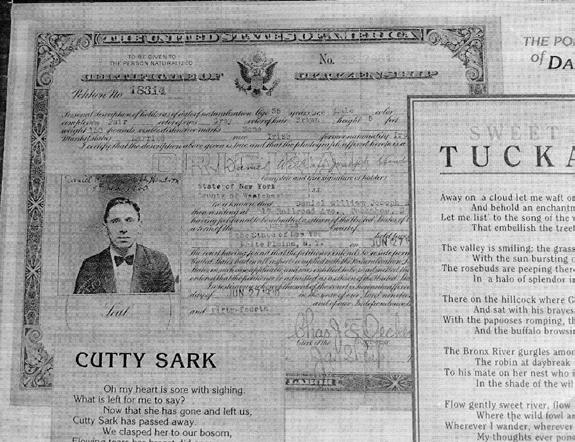
Copy of American citizen documents and poetry of Dan Hendron. Image courtesy of Seamy McNally.
PART FIVE
Immigration and Missing Home
Twas Only a Dream
The Land I left Behind Me
The Shores of Lough Neagh
Sweet Tuckahoe
Lurgan Clanbrassil (song)
Appeal to Teresa
My Home in Derrytagh (song)
Lines in Memory of Johnny McGeown
Twas Only a Dream
(i)
I went to sleep when the moon arose, And poured its light from Heaven And I dreamt a dream, that so t’would seem, Inspiration that God have given.
(ii)
And I trod again old Armagh’s hills Where daisies and buttercups glisten And the lark singing there in the clear spring air, And I stop - and I look - and I listen.
(iii)
Och shure and the Railer looks just the same Where the trees in the breeze keep swayin’, While many old faces have gone their way No sign they have of decayin’.
(iv)
And the mossy bank where Jem and Frank Are cuttin’ while Dan is forkin’, And the old gnarled trees at the foot of the hill Where they say there’s a fairy lurkin’.
(v)
But first a race to Mother’s place, To Mother’s, but Mother is missin’. I’m not down there on my knees for prayer, It’s the hearth that she trod I’m kissin’.
(vi)
And the old crab tree at the back of the house Where the blackbird would loudly whistle, There as children we played and drew sand in a tin, While the old goat chewed on a thistle.
(vii)
The whins by Lough Gullion are out in bloom They’re turnin’ from green to yellow, There we used to hunt for the whingray’s nest When I was a little fellow.
(viii)
Then over to Jenny’s where Ned and Jack Spun them fine as a twenty hundred, Where they talked and argued and pointed out How the leaders of armies blundered.
(ix)
Then down to the Bann with a dog and a gun For a crack at the wild fowl passin’, And my heart at ease in the Ulster breeze Though the armies of hate are massin’.
(x)
Down from the town, the steamer comes With propellers loudly churnin’, While over the tips of the Belfast hills, The sun spread his rays to the mornin’.
(xi)
I’m off to town, sweet Portadown With the girl of my youth beside me, As we push our bikes up Seagoe Hill Sure of the other girls she’d chide me.
(xii)
The nursery is there like the day I left With its gifts from heaven growin’, The roses there, so rich and so fair Start the heart of a princess glowin’.
(xiii)
I stroll again in the market place Where dealers of old have bartered, Were I to miss this other bliss I’d think that my soul was martyred.
(xiv)
But oh! What’s that, and the train flew past All sentimentality scornin’, And wiped out the trees and the Lough and the breeze And the fields, and the cot I was born in.
Dan Hendron of Derrytagh South, who emigrated to Tuckahoe, New York
Footnotes:
• In this poem Dan Hendron is dreaming of Seagoe Parish from his New York suburb.
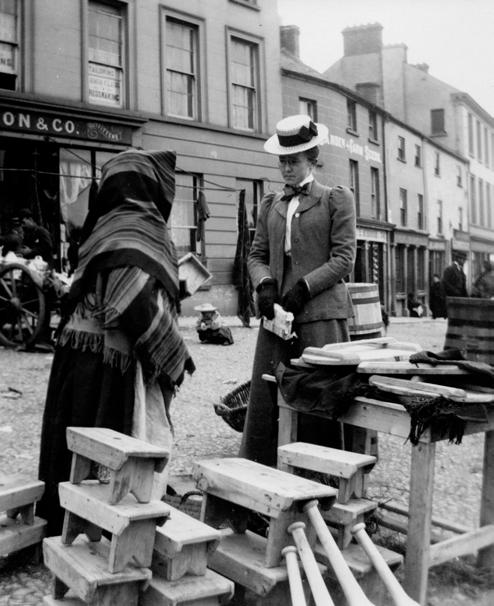
I’m off to town, sweet Portadown With the girl of my youth beside me
I stroll again in the market place
Where
dealers of old have bartered
Twas Only a Dream
Bartering at the creepie stool market, High Street, Portadown, c.1900.
Image copyright of Portadown College and reproduced by kind permission of Craigavon Museum Services.
The Land I left Behind Me
When young and blithe, to swing a scythe
Through the blooming meadow,
With the whistling curlew overhead
A casting down his shadow.
The daisies blooming all around, The shamrock peeping through them, Tend to grace that hallowed place
Like the first day that I knew them.
The morning mist has cleared away,
The Belfast hills are showing,
I’m woken at screek o’ day
With the old red rooster crowing.
But dreams like these just go to tease And tend for to remind me
To keep a wee spot in my heart
For the land I left behind me.
The Celtic’s nosing up the bay,
On her sides the wild waves slappin’, Now I know I’m here to stay But wondering what will happen. And when I put my foot ashore
In the land that God invented, I know that She’ll take care of me
And now I am contented.
Image copyright of and reproduced by kind permission of Barry Coleman.
With the whistling curlew overhead
A casting down his shadow
The Land I left Behind me
Old Liberty stand in the bay, While round her waves are flowing, Holds up her torch to show the way
To the place where I am going.
But why should she do this for me; Perhaps for to remind me
To keep a wee spot in my heart
For the land I left behind me.
The sky is brilliant overhead, The clouds are disappearing, The rosebuds bursting out in bloom I know that spring is nearing. Prosperity has been kind to me
To the stars and stripes to bind me,
But I keep a wee spot in my heart
For the land I left behind me.
Dan Hendron, of Derrytagh South, who emigrated to Tuckahoe, New York
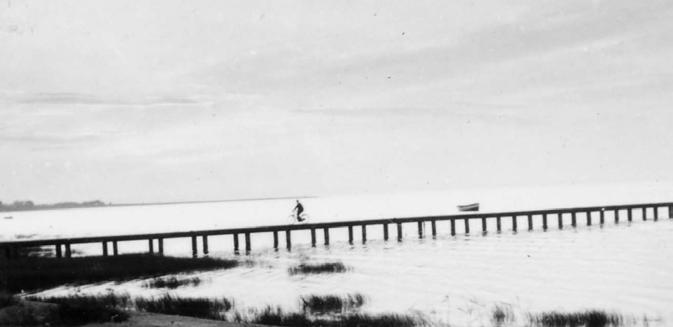
The Shores of Lough Neagh
Although I am old and feeble, and exiled far away, In my dreams I behold the Montiaghs and the shores of Lough Neagh And my latest dream suggested that the way I would wish to go Through the Montiaghs grand and along the Bann To gaze on the shores of Ardboe.
But Derrymacash green where I have often been And around Lough Neagh of renown For I have been there, At many a fair in lovely Lurgan Town.
I would love to pad through Derryadd And stray along the bay, as I did in days of yore I would have to go around by Crow And then on down the shore.
I would love to cross the Bannfoot Moss on a lovely summer’s day And sample the stout without a doubt in McCorry’s by the way I would have a joist through Derryloiste, On by green-loneing bray.
The Bay Shore pier extending into Lough Neagh, c.1955. Photograph by William Gracey of Lurgan.
Image copyright of and reproduced courtesy of Craigavon Museum Services.
In fancy I hear the bong and the wong of the chapel bell
As I go down by Rechy Road and down by Mill Quay
And I would have a tramp by the Bailiff’s Ramp, around sweet Derryvene, Where in my youth I have been.
I would cut across by the old High Moss
And row a boat on that lovely moat with Slieve Gullion far away
At last when my dream was ended I found it could never be
For I am too old and feeble now to ever cross the sea.
So to my dying day I will fervently pray That God will bless the dear old Montiaghs And the shores of Lough Neagh
Dan Lennon, of Derrytrasna, who emigrated to Scotland
Footnotes:
• In verse 5, the name ‘Derryvene’ refers to an area of high ground that rises from the shore of Lough Gullion in Derrytagh North.
• In verse 6 the ‘High Moss’ refers to a high point of land in Derryadd.
Sweet Tuckahoe
Away on a cloud let me waft on the breeze, And behold an enchantment no other one sees, Let me list’ to the song of the wee birds below That embellish the treetops in Sweet Tuckahoe.
The valley is smiling; the grass it is green With the sun bursting out for to gladden the scene, The rosebuds are peeping there, row upon row In a halo of splendour in sweet Tuckahoe.
There on a hillock where Gramatan trod And sat with his braves to converse with his God, With the papooses romping, they swing to and fro And the buffalo browsing in Sweet Tuckahoe.
The Bronx River gurgles among the green braes, The robin at daybreak is blending his lays To his mate on her nest who is happy, I know, In the shade of the willow in Sweet Tuckahoe.
Flow gently sweet river, flow gently, I say, Where the wild fowl are nesting by each bonny brae. Wherever I wander, wherever I go My thoughts ever ponder on Sweet Tuckahoe.
Dan Hendron, originally of Derrytagh South, who emigrated to Tuckahoe, New York
Footnotes:
• In verse 3 ‘Gramatan’ refers to the name of a chief of the local Siwanoy Indian tribe who were centred around the Gramatan Rock area overlooking Tuckahoe.
Lurgan Clanbrassil (song)
Farewell to Lurgan Clanbrassil, your banks and River Bann, Manys a happy hour I spent as well as any man, Manys a happy hour I spent on the shores of sweet Lough Neagh, Where the cuckoo cries and peewit fly on the shores of sweet Lough Neagh.
Now I’m for America, God knows what’ll be my lot, There is Derry, Antrim and Tyrone, they all stand in my view, Where the wide lands, to sport and play along the Lough Neagh Shore.
I mustn’t ask what brought you here, I know it to my cost, It was the Hibernias that brought me here, it caused me for to roam, I was first to leave the Shamrock hills, where pleasure rules the day, For Ireland and her golden wings bringing in the breeze from Lough Neagh.
Fare-you-well to sweet Tyrone, I’ll never see you more, The roses red and violets blue, the lands of sport and play, Manys a happy hour I spent, but now they are all o’er, With my line and hook, the light I took to spend my time away.
Peter Mitchell, of Brown Street, Lurgan
Footnotes:
• This is thought to have been a song.
• ‘Clanbrassil’ or in Gaelic Clann Bhreasail was the pre-Plantation name of the area in which the town of Lurgan is located in the North-East of County Armagh.
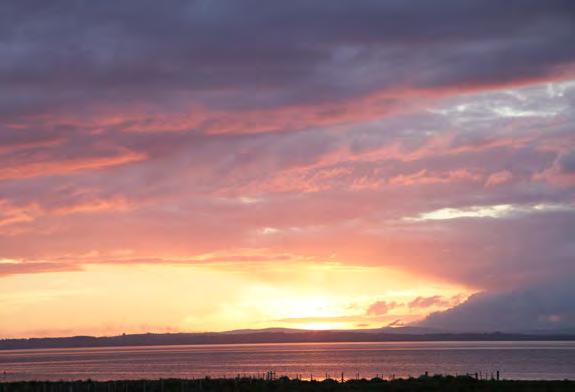
Sunset over Lough Neagh.
Image copyright of and reproduced by kind permission of Barry Coleman.
Appeal to Teresa
(i)
Teresa dear, I’m grieved to hear
You are going to cross the sea
To make your home beyond the foam
Six thousand miles away.
(ii)
To leave the cottage where you were born And spent your childhood day, And this lovely glade that nature made On the banks of sweet Lough Neagh.
(iii)
When I heard the news I was confused Not knowing what to do, When a mutual friend the news did send Which alas has proved to be true.
(iv)
Your lovely bowers in the sun and showers And warblers chanting notes which say Oh Teresa dear, do not leave here, These pretty banks of Lough Neagh.
(v)
Do not forget the days you passed Round your old home so fair, When mirth and joy were all to you, And no thought of parting there.
(vi)
The rose which round your hall door grows Now droops its head to say
Oh Teresa dear, do not leave here
The pretty banks of sweet Lough Neagh.
(vii)
For pleasure sake walk along the lake Where the waves break on the shore, You have paced it at morn and even
A thousand times before.
(viii)
The silvery waves that rise and fall
With a sob that seems to say
Oh Teresa dear, do not leave here
The banks of sweet Lough Neagh.
(ix)
For when you reach Columba’s shore Safe o’er the briny foam, With pleased surprises thoughts must arise Of home, home sweet home.
(x)
Though America can be great and grand It’s not easy to win gold they say, So Teresa dear, do not leave here
The pretty banks of sweet Lough Neagh.
(xi)
Your memory of the days that’s past Though from home you may be far T’will cheer you in a gloomy hour
And be your guiding star.
(xii)
Your friends ‘tis true are fond of you And each of them do say Teresa dear, do not leave here
The pretty banks of sweet Lough Neagh.
John McAleese
10 August, 1907
Footnotes:
• This song was provided by the late Paddy Moore.
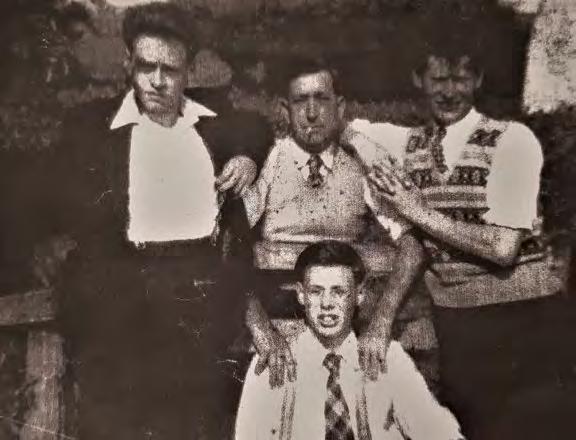
Pictured are, standing left to right, Aiden McKaveney, Charlie McStravick and Felix Devlin with Oliver McKaveney sitting. Image reproduced by kind permission of Patsy Donnelly.
My Home in Derrytagh (song)
I will ne’r forget the morning that I left old Erin’s Isle, The birds were singing sweetly and old nature seemed to smile; But my heart was sad and weary as I bid my friends good-bye, And started for America, my fortune for to find.
And it’s fine out here in Boston, where there’s so plenty all around, Where the Irish dominate the scene and lots of friends I’ve found; Where the buildings are palatial and the streets are simply grand, But I love my home in Derrytagh, by the lovely river Bann.
To stroll once more in fancy by Lough Gullion’s lovely shores, From Portadown to Lurgan and through famous Tannaghmore; From Trasna until Derryvene and likewise to the bay Where I seem to stand and gaze upon you beautiful Lough Neagh.
I seem to hear the old Church bells, their tone so sweet and clear, I seem to hear the children play, my mother’s voice so dear, I seem to see the old Boreens with their hedgerows dear and mute, Where I sang and danced in days gone by, to the sound of Charlie’s flute.
Please God, one day I will return, to that place so dear to me, Where a hearty welcome awaits me, in the land across the sea; There I’ll settle down forever - be sure it would be grand, In that little house in Derrytagh, by the lovely river Bann.
Charlie McStravick
Footnotes:
• Charlie McStravick played the flute and piccolo and was a member of a céilí band. This song was sung to a traditional air. Many thanks to Patsy Donnelly for the information, photo and recording.
Lines in Memory of Johnny McGeown
Late of Ballynery, Lurgan, Ireland, who died in Pittsburg, Pennyslvania, U.S.A.
(i)
Out of here on fair Columba’s soil
My heart feels sad and sore,
Since I received the bitter news That John McGeown’s no more; That he had bid to this vain world
A long and last farewell, And gone where God Almighty pleased, For evermore to dwell.
(ii)
He left the lovely Emerald Isle
Last golden harvest time
And sailed for far Columba’s shore
In manhood’s strength and prime. But ah! He only crossed the deep Where angry waters roar,
To find a grave in foreign lands
Far from the shamrock shore.
(iii)
Yes far away from friends and home
He sleeps his long last sleep, While sorrowing friends he left behind
For him do sigh and weep.
For they may sigh and they may weep, Their tears are all in vain, For Johnny never will return
To Erin’s Isle again.
(iv)
I knew him when we were at school, A schoolmate kind and true, I knew him too in after years When he to manhood grew. He was a generous, manly youth, Loved Ireland to the core, So every year I knew him, I esteemed him more and more.
(v)
It must have been for outing’s sake
That made him cross the foam, Because his friends are all well to doHe could have lived at home. He was his parents’ heart-delight Their loving son so dear, A favourite too with every one Who knew him far and near.
(vi)
But dry your tears and cease to weep, He’s but a step before, A speck of time ahead of us
On heaven’s lovely shore. Where we meet him, let us pray When we have reached life’s close God grant us all a happy death
And Johnny’s soul repose.
Hugh McCorry, of The Boilie, who emigrated to Pontiac, Michigan, U.S.A.
Image copyright of and reproduced by kind permission of
Barry Coleman.
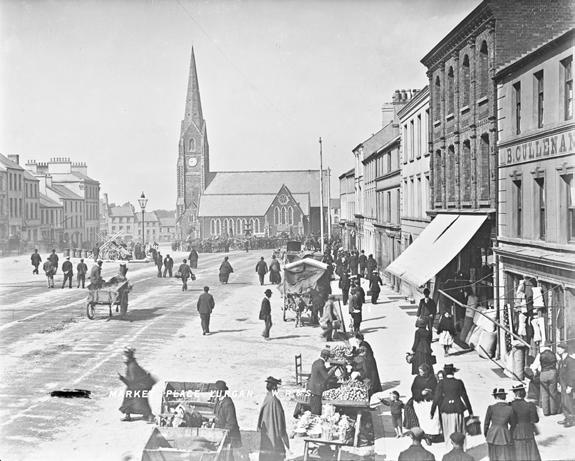
Market Street, Lurgan, c.1900.
Image (Ref: Eas_0079) copyright of and reproduced by kind permission of the National Library of Ireland.
PART SIX
A Trip into Lurgan
James McGreavy’s Bus (song)
Neat Little Town of Lurgan
Lurgan Weaver (song)
The Legend of Loughran’s Boots (song) Home Rule!
Donnelly & O’Neills
Master McGrath (song)
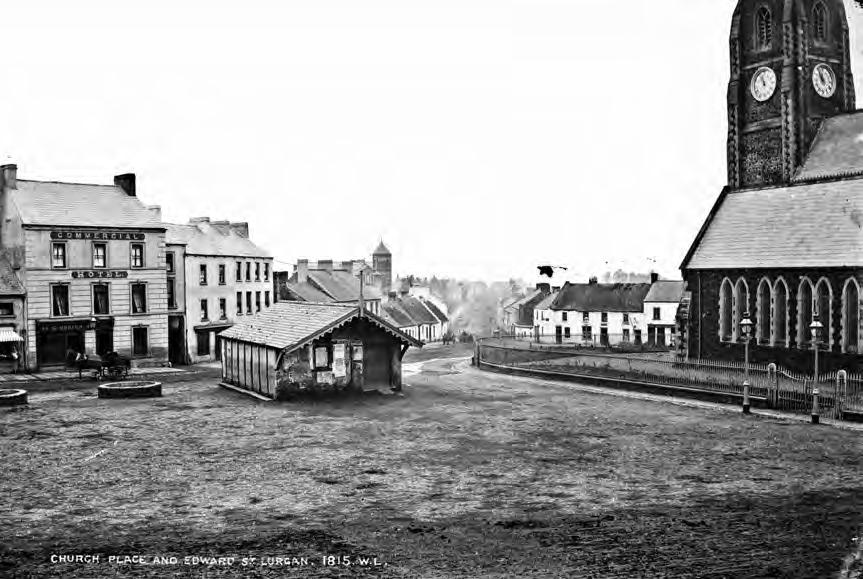
Church Place, Lurgan, c.1865-1914. The Commercial Hotel owned by James McGreavy can be seen on the left. Image (Ref: L_CAB_01815) reproduced by kind permission of the National Library of Ireland.
James McGreavy’s Bus (song)
Come all ye Montiagh weavers, And listen to my song, These verses few, I’ll tell to you, And will not detain you long, In praise of James McGreavy, Who keeps the grand hotel, He’s a credit to his country, and Lurgan town as well.
Good whiskey, rum and brandy, He always keeps in store, You can have a glass of Bushmills, if your head is feeling sore, If your money, it is done, you need not make a fuss, For he will drive you home contented, in his new Commercial bus.
At nine o’clock each morning, he’s always on the go, From Lurgan to the Montiaghs, let the wind blow high or low, At Derrytrasna cross-roads, the people gather there They are never disappointed for the market or the fair.
He was the first to start the bus, that no-one can deny, The wee Commercial Snowdrop, and Golden Butterfly, From Derrycor to Derryadd, it is their only cry
To go with James McGreavy, in his Golden Butterfly.
That to conclude and finish, the pen I must lay down, If any of you country folk, have business on in town, The bus is always ready, the fare it is not high, You can have a drive with pleasure, in the Golden Butterfly.
Paddy McGeown, of Derrycor c.1928
Footnotes:
• James McGreavy, owner of The Commercial Hotel in Lurgan, started the first regular return bus service to the Montiaghs from Lurgan in 1924. He had a number of buses which were named the ‘New Commercial’, the ‘Commercial Snowdrop’ and the ‘Golden Butterfly’. Following McGreavy’s death in 1928, the bus company was taken over by William McAlinden and James McSherry, who ran it until it was absorbed into the newly established Northern Ireland Road Transport Board, in the 1930s.
• Dr Francis McCorry in his book Seagoe: Diocese of Dromore. A Parish History (Lurgan: Inglewood Press, 1987, p. 93), notes that the ballad was recorded by Paddy McConville, formerly of Edward Street, Lurgan, who was a bus conductor in the area for some forty years, between 1926 and 1966.
Neat Little Town of Lurgan
There’s a neat little town they call Lurgan, Situated in the county Armagh, Made famous from Lisbon to Durban, By that wonderful dog called McGra.
It’s been the home of the Brownlow’s for centuries, The Castle is plain to be seen, By a beautiful lake, it’s surrounded, It’s fit for a King or a Queen.
We’ve got a park there in Lurgan, A park that is second to none, With that hollow ground lake in the centre, Where the wild fowl are safe from the gun.
The children romp and play cricket, While the park ranger counts up the runs, As he sits on the Jubilee fountain, With his eye on the big German gun.
Author unknown
Footnotes:
• Lurgan Park is the largest urban park in Northern Ireland and second largest in Ireland (only Phoenix Park in Dublin is larger). The park was formerly part of the demesne of the Brownlow Family, the plantation founders and landlords of Lurgan town and surrounding area from 1610 through to 1893. They resided at the impressive Brownlow House, which was mostly constructed in the 1830s, and is affectionately known as Lurgan Castle. Following the Brownlows’ departure from Lurgan, the demesne land was later purchased by the Lurgan Urban District Council to provide a public park for the town, which was opened in 1909.
• The mention of the ‘big German gun’ in the final verse refers to First World War German howitzers which were displayed in the park as ‘war trophies’. The guns were removed during the Second World War and melted down for the war effort at the Portadown Foundry.
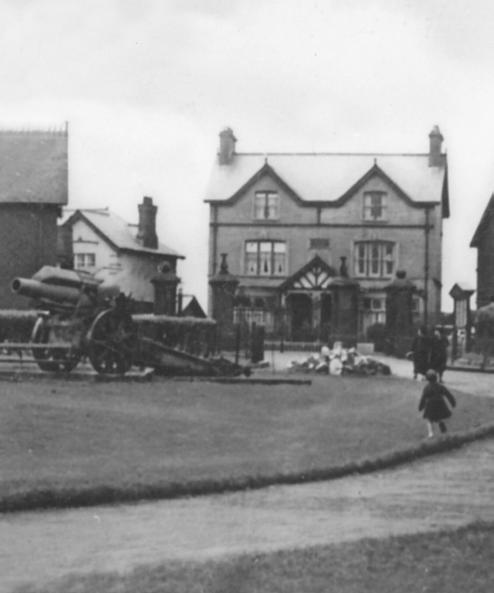
First World War German howitzer gun, displayed at the Windsor Park gate entrance to Lurgan Park as a 'war trophy', c.1930s.
Image reproduced courtesy of Craigavon Museum Services.
Lurgan Weaver (song)
He was only a ten-toed weaver, one that was tailor made, He got a start in the Limited, he’s a son of a Lurgan Spade. Well he started a eleven hundred and a fourteen was trying to weave, But before he got those first cuts off, that poor old weaver was dead.
Chorus
By the side of his looms we found him, all covered with dressing and yarn, His eyes turned up like a weft fork, his shears and heddle hook in his hand. He had a bunch of thumbs tied round him, a clothing comb laid on his chest, Sure you would have thought the aul bugger was dead, he was only having a rest.
Well, we carried him to the bobbin trap, the inquest was held that day, His request to Charlie Geddis was ‘Don’t give my looms away’.
He thought of his good old wages, last week he did lift five-and-eight, The pay clerk he tapped at the window, and shouted ‘boy kindly wait’.
Chorus
Sure his docket was checked in a minute, the pay clerk did whip off the rent. Which left him one and threepence, did leave him to die discontent. Well, we wrapped him up in a solid tape, we all fell into tears We laid him down to lie at rest, with his heddle hook and his shears.
Chorus
Author unknown
Footnotes:
• ‘The Limited’ in the first verse refers to the Lurgan Weaving Company factory, which was situated on Ulster Street, Lurgan. The first factory was opened here by the brothers William and James Macoun in c.1861 before it was reorganised as the Lurgan Weaving Company in c.1881. The firm specialised in the manufacture of cambric linen handkerchiefs using power looms.
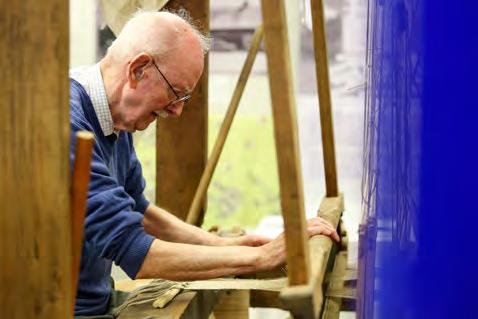
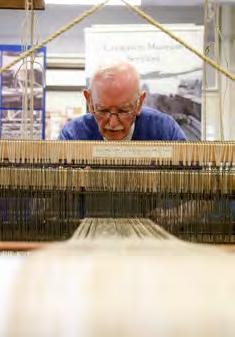
John ‘Bosco’ McAtasney (1934-2018) hand weaving linen on a handloom at the Lough Neagh Discovery Centre, Oxford Island, 22 July 2017. John began his career as a hand weaver of fine damask linen at the age of 14 in Lurgan in 1948. Following the closure of Ewart’s (formerly John McCollum’s) handloom weaving businesses in Lurgan and Waringstown in 1968, John spent his life demonstrating his skill at the Ulster Folk Museum in Cultra, the Irish Linen Centre in Lisburn and Mourne Textiles, Rostrevor. John was the final link to the 300+ year tradition of fine handloom weaving in Lurgan which was sadly broken when he died on 31 January 2018.
Images reproduced by kind permission of Craigavon Museum Services.
The Legend of Loughran’s Boots (song)
In Edward Street Lurgan, I will have you know Is a nice little pub, it is near Weavers’ Row. The landlord’s a nice chap, yes, even in looks, For if you have no money, you can get on his books.
Now before I go further, I would here better say, That when you have money, you will have to pay, Which is only but right, for the landlord he knows, If his customer is honest, he will pay what he owes.
Now the boys that frequent the same pub, bear in mind, Are all very civil, and some very kind.
There is Dummigan, Maginness, McCreanor and Magee, And when they have money, they dare back a gee-gee.
There is Martin McKeever, who sits near the phone, There is also Pat Loughran, who stands all alone. He sold Mitchell his boots, when he was in a fix, They cost thirty shillings, poor Pat only got six.
But Pat he was sick, and his eyes, they were dull, But to make matters worse, the book it was full, But don’t blame John Mitchell, he is a fine fellow, You see Pat’s books were black, and Mitchell wears yellow.
Now when Pat got two pints, his sickness had flew, But his eyes they turned bright, his face it turned red, And he said to Maginness, I don’t give two hoots, I have still got two bob from the price of my boots.
So over to the bookies, Pat went feeling gay, And put on a bet of a shilling each way. The result it came in, it was plain to be seen That the horse that Pat backed, was not in the first three.
Loughran’s gayness was gone, he was no longer funny When he went back to Blaney’s without boots or money. And Mitchell was still there, quenching his thirst, And he laughed and he laughed till his sides nearly burst.
The reason he laughed, he thought it a joke, To see Loughran there, twice in one day broke. But Pat was not laughing, he was too busy thinking, About giving up gambling, and giving up drinking.
So the moral of the story, when you have it read, If you see someone barefooted in the Dog’s Head Remember its moral, and do not it forget, Don’t sell your boots for a drink or a bet.
John Dummigan, of Brown Street, Lurgan
Home Rule!
For you that love a glass or two, Come pay attention to my rhyme, And when you go upon the spree, be sure to give it up in time, For if you break the laws of men the Policeman might be there, And bear in mind they are the boys that does know how to swear.
I didn’t think I’d get a run in, when I left home that day, Nor did I think I’d be forced to wear a suit of grey. But as I was walking down the street, I acted like a fool, I cursed the brutal government and shouted out ‘Home Rule!’
Then cat-faced Sergeant Mooney he thought to run me in, But I just gave him a ‘Montiagh touch’ right below the chin. And when I saw I had him down, I used my hands and feet, So he wouldn’t think long to run me in, to lodge in Edward Street.
Then the barrack guard, he ran at me and hit me two or three, The worst of all bad treatment, his pig drovers did give me, But the more they battered and beat me, my temper never cooled, For every blow that I received, I shouted out ‘Home Rule!’
It’s now you see, the old J.P., he gave me three months in jail To rest me tourchered limbs on an aul plank bed of dale. But the old J.P., if he had gave me twice as much, that wouldn’t quail me down, For I sung ‘God Save Ireland’ while in Dundalk jail.
There’s many a man in Ireland has tred the awl tredmill, And many the better man than me has loved the Home Rule bill. As I was sitting in the cell, upon a creepie stool, I thought of the day I went to Lurgan to shout about Home Rule.
The Poet Hacken (James Haughian)
Footnotes:
• The Royal Irish Constabularly station in Edward Street was located in Barrack Row; a building row (now demolished) which was situated along Edward Street just before the entrance to Hill Street.
• According to the 1907 Lurgan Business Directory, it was one of three police stations situated in the town (the other being located in Church Place and Queen Street).
Donnelly and O’Neills
There’s a thrifty store in Lurgan, In that town of grapes and spades, It’s a store of great variety Of assistance ready-made.
There’s a place for selling groceries, It’s a quaint old-fashioned bar, Where a bloke called Pontius Pilot, Sells big pints as thick as tar.
You could hear the aul dolls cursing, Aft that sugar thief McCann, But they simply blame it on Ned Green [Breen] The bloke that drives the van.
Have you any sugar Barney, have you any margarine, Just go down the yard, there Mrs, And ask your van man Breen [Green].
There’s a boy called McCorry, that girls love right enough, He’s waiting to supply them, with cigarettes and snuff. For Maguire who sold the butter, one evening went on strike, He’s working for Joe Filbin, so will never more be back. ‘Twas Maguire who supplied the soldiers’ wives With bully beef and ham, and in this place today you’ll find, That sugar thief McCann.
Here’s to the hardy van man, who is always on the go, No matter if the highlands are covered o’er with snow. He drives a prancing Mustang, who has never known to fall, If you don’t appreciate him - he’s the mainstay of us all. We’ve got to send across the foam for every brand of tea, But listen my assistance now, just take a tip from me, Order not but Irish goods, produced from Irish fields, And remember we’re all Irish boys in Donnelly and O’Neills.
Author unknown
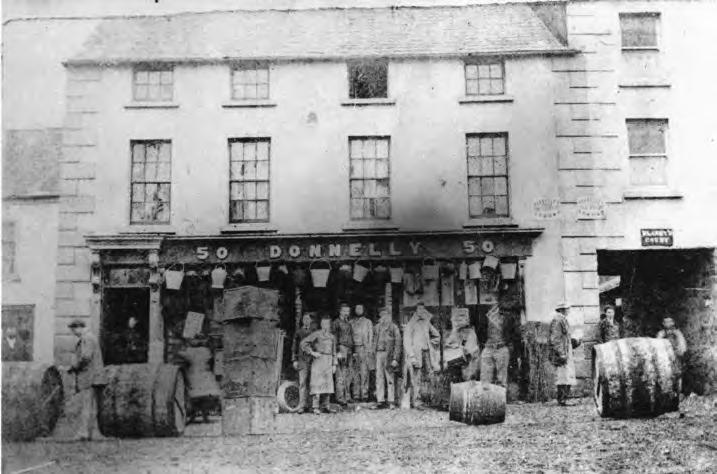
Donnelly’s shop at 50 Church Place, c.1850s. According to Lurgan historian Kieran Clendinning the photo shows members of the Donnelly family and their relations. The lady standing in the doorway, extreme right, is Margaret Donnelly. Included in the group at the main entrance to the shop are Arthur Donnelly, Mr Murray and Charles O’Neill. The business later became Donnelly & O’Neills in the early 1900s.
Image reproduced by kind permission of the Trustees of the Public Record Office of Northern Ireland.
Footnotes:
• There are a number of versions of this poem, some giving the name of Breen and others giving the name of Green.
• In the 1910 Lurgan Business Directory the following are listed as inhabitants of the town:
• Donnelly, Andrew, Commercial Hotel, Church Place
• Donnelly, Andrew, 23 Church Place
• Donnelly, Charles, Publican, Church Place
• Filbin Brothers Bakery, Lurgantarry
• O’Neill, Mary, Publican, Church Place
Information courtesy of Lurgan Ancestry: http://www.lurganancestry.com/lurgand1907p1.htm)
A Legend Begins...
Much has been written and sung about the famous coursing greyhound Master McGrath, who belonged to Charles Brownlow (1831-1882), the second Baron Lord Lurgan. However, less is known about one of the most important hare coursing meetings in Ireland which, were held on the Fforde estate at Raughlin, Derrymacash, on the shores of Lough Neagh between 1858 and 1878. This was a celebrated 3 day event - the ‘Waterloo of Ireland’- coursed over extensive grounds on the flat lands close to Lough Neagh. Dogs which performed well at it were often chosen to fill Lord Lurgan’s nomination for the Waterloo Cup, the most prestigious greyhound coursing event, which was held on the Altcar Estate near Liverpool.
The Raughlin meeting, under the patronage of Lord Lurgan, had everything to recommend it to the coursing fraternity. So keen was Brownlow to promote this meeting that ‘The Embankment’ road was extended and improved to allow the carriages of the gentry to gain access to the course. Held in October, the first meeting on the programme was the Irish St. Leger which usually had around 150 entries; then the Brownlow Cup (a massive silver soup tureen), manufactured by Waterhouse of Dublin which had a 32 dog stake with the winner receiving £100. This event
also became known as the Visitor’s Cup, as many of the dogs which competed belonged to Lord Lurgan’s friends whom he had invited to stay with him at Brownlow House. Then the third meeting was the Town Cup, a handsome piece of workmanship presented by a number of people from the town for the 16 dogs beaten in the first round of the Brownlow Cup. The other competitions included The Tradesmen’s Cup, The Derrymacash Stake and The Annaloiste Stake.
How Master McGrath came to the notice of Lord Lurgan was a chance of fate. He was brought to the Raughlin meeting as a last minute substitution for his trainer. In October 1867 McGrath would therefore make his first appearance in the North of Ireland at the annual coursing event organised by Fforde’s of Raughlin. The dog’s performance at the preliminary trials on the Raughlin plains stirred the interest of Francis Fforde, who brought the dog to Lord Lurgan’s attention. His subsequent victory in the main event of The Visitors Cup affirmed Fforde’s judgement, and so began the fame of Master McGrath. He was subsequently nominated by Lord Lurgan to contend the prestigious Waterloo Cup, which he won in 1868, 1869 and 1871; the first dog to win the event three times.
Many songs and ballads have been written about Master McGrath’s success, and readers will note that the poem ‘Fair Raughlin Demesne’ in Chapter 2 of this book makes reference to Master McGrath and the Raughlin event. A further poem was written by Robert Donnelly of Portadown and
tells of other victories. Following the Master’s death, James McCorry of Rose Cottage wrote a poem in 1872, entitled ‘Master McGrath’s Victory and Death’ in which he also references the role that Raughlin played in Master McGrath’s coursing history.
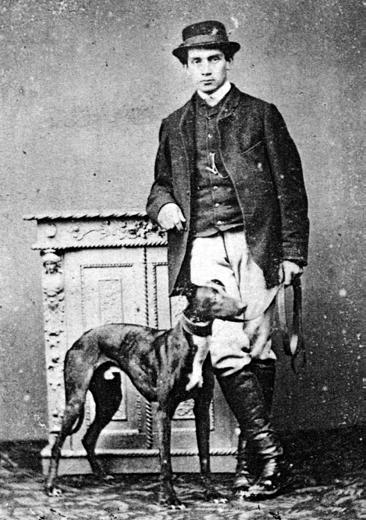
Footnotes:
The racing greyhound Master McGrath with his trainer John Walsh, c.1868. Image reproduced by kind permission of Craigavon Museum Services.
• Much of the information referenced above was provided in the form of a draft booklet that had been held by Barry Fegan, former school Principal of St Patrick’s Primary School, Aghacommon. It is not known if Mr Fegan was the author.
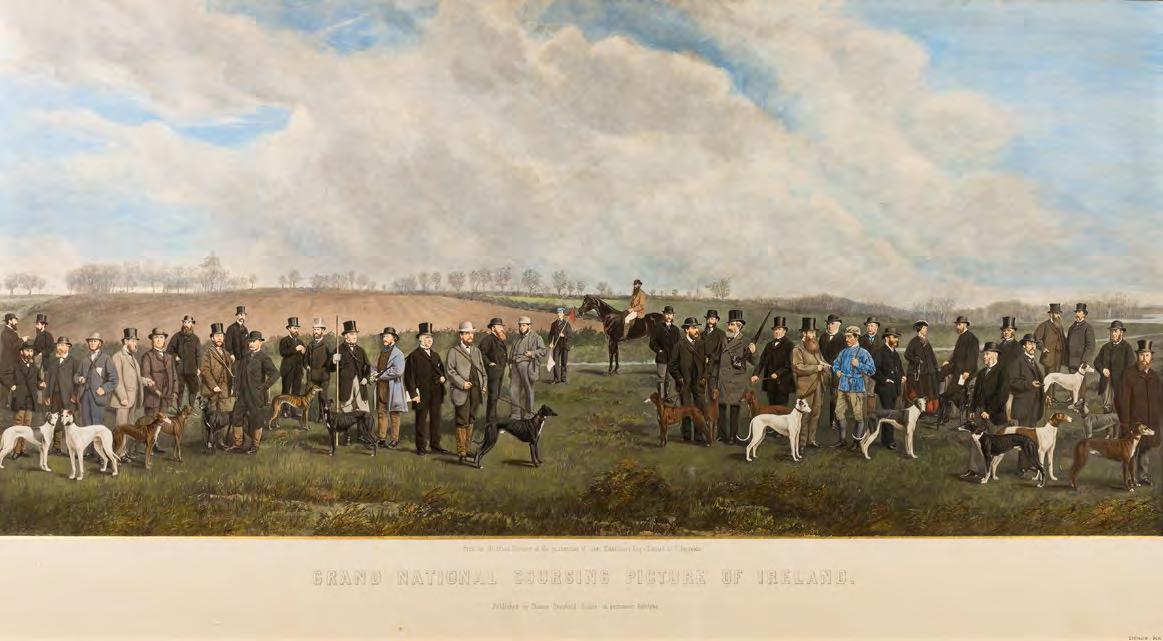
Print of an original painting by F. Reynolds, published by Thomas Cranfield (Dublin) showing members of the Irish Coursing Club at Raughlin, Derrymacash.
The key (right) identifies the personalities in the painting including (16) Francis Fforde of Raughlin and (17) Charles Brownlow, Second Baron Lurgan, with Master McGrath (centre).
Images (Ref: ARMCM.1.1956) copyright of and reproduced by kind permission of Armagh County Museum.
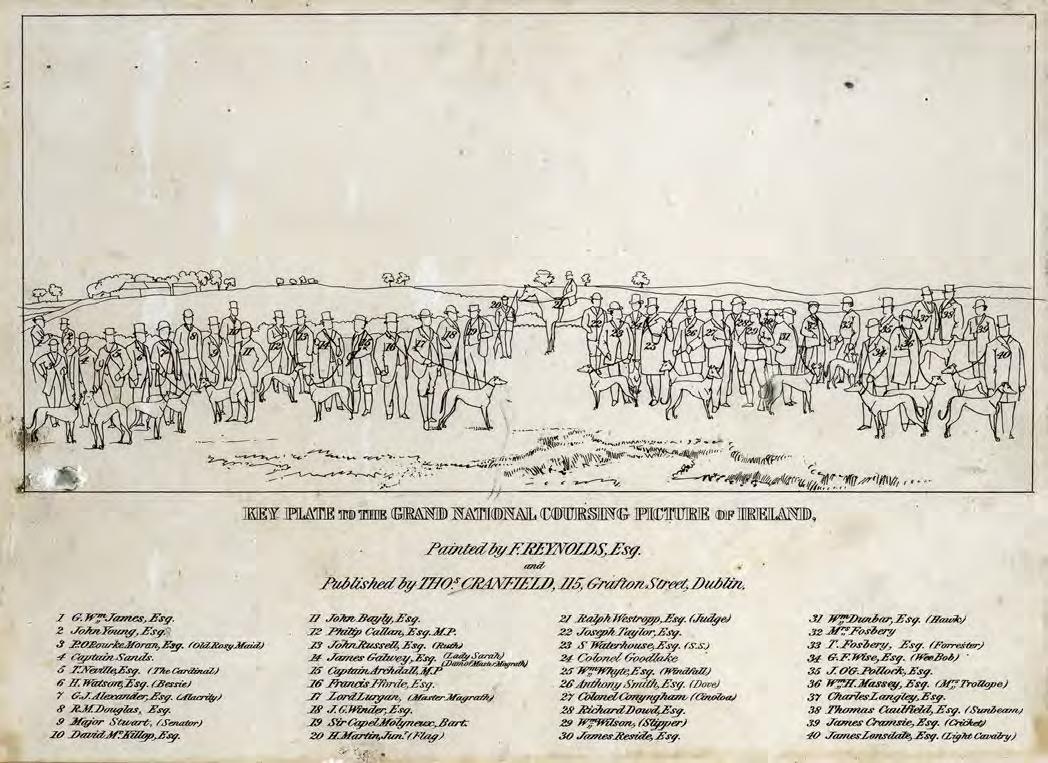
James McCusker, from Red Row in Silverwood (‘The Bard of Silverwood’), penned a famous ballad about Master McGrath, which is sung all over the world. A number of different versions of it exist, with that starting ‘Eighteen Sixty Nine being the date of the Year’ being the most widely known. The original version written by James McCusker and sung to Lord Lurgan and his friends at a reception in Brownlow House after the Visitors Cup meeting in Raughlin in October 1870, is set out below. I particularly like this version as the later verses also tell a story about Master McGrath’s conversation with his rival greyhound!
Master McGrath (song)
(i)
Eighteen sixty-nine be it ever renowned, McGrath and his keeper, they left Lurgan town, A gale from the wind it soon wafted them o’er
And the 18th they landed on Albany’s shore.
(ii)
And when they came to that fair coursing groun’ The gentlemen present, they all gathered round, But some of the party did raise a ‘Ha, ha!
Is this the great dog you call Master McGrath?’
(iii)
Lord Lurgan speaks up, and says he ‘Gentlemen, If there is any of youse has got money to spen’
For the sportsmen of England, I don’t care a straw, Five hundred to one on my Master McGrath.’
(iv)
The Master looked up, and wagged his long tail He seems to know what his lordship did mean ‘Bet on noble lord, and don’t fear them ava, I’ll solve them a problem’ says Master McGrath.
(v)
Bab was uncovered, he was England’s pride, His master and keeper they stood by his side, He was grandly proportioned without any flaw, And something in the stature of Master McGrath.
(vi)
The game was got ready with caution and speed, The judge he was mounted upon a grand steed, When the dogs were unslipped the whole crowd did Hurra! The pride of Old England against Master McGrath.
(vii)
Poor puss he led them on as swift as the wind, Sometimes Bab was before and sometimes behind, Bab took the first turn, according to law, And the second was awarded to Master McGrath.
(viii)
As Bab and the Master were going along, Bab asked him ‘what took you so far from your home? You’d have been better off in your heathery Demesne As to come and gain laurels on our Altcar plains.’
(ix)
‘It’s true’ says McGrath, ‘we have gran’ heather bogs, But in our town of Lurgan, we have good men and dogs’, He quick led the van and the crowd did ‘Hurra!’, ‘Snuff that up your noodle’ says Master McGrath.
(x)
Poor puss led them on, t’was a beautiful view, You’d have thought over green sward like lightening she flew, McGrath pounced upon her and held up his paw, ‘Three cheers for old Lurgan!’ said Master McGrath.
(xi)
Now you sportsmen of England, in future beware, Though I emptied your purses your honours I bear, But be kind to poor Bab, when I’m far awa’ Until the next time he meets Master McGrath.
James McCusker, of Red Row, Silverwood
Footnotes:
• The ‘Bab’ referenced in the song refers to the greyhound Bab-at-the-Bowster, one of the finest greyhounds ever to race at the Waterloo Cup.
• The ‘Puss’ of the song refers to the hare, which the greyhounds chased.
• Master McGrath died on Christmas Eve 1871 of heart disease; an autopsy showing that his heart was twice the size of a normal greyhound's heart. There has been a debate about the whereabouts of his final resting place with some saying he was buried in the grounds of Solitude House in Lurgan, although more likely he was buried in the grounds of Brownlow House.
Image copyright of and reproduced by kind permission of
Bluebells at Oxford Island.
Peter McCorry.
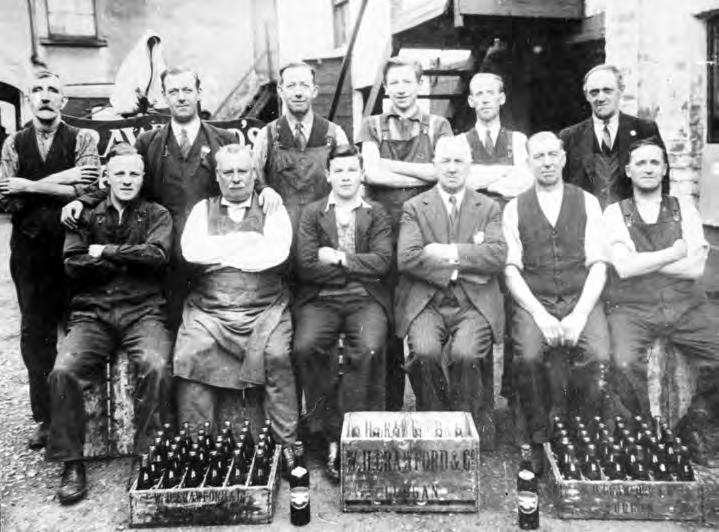
Staff of the W.H. Crawford Beer and Mineral Water Bottlers, of William Street, Lurgan, c.1945.
Pictured back row: R. O’Malley, Mick McDowell, S. Cranston, J. Morrow, E. Turkington and J. McDowell.
Picture front row: G. McCormick, J. Crumlin, S. McCormick, S. Crothers (proprietor), D. Blaney and J. McShane.
Image reproduced by kind permission of Craigavon Museum Services.
PART SEVEN
A Bit o’ Craic and the Demon Drink
The Black Hole
The Muntaigh Wedding (song)
Bonny Green Tie (song)
The New Community Hall (song)
Star of the Montiaghs
O’ Father O’ Hare
My name is James Haughian
Hannaghan’s Fighting Cock (song)
The Black Hole
On the 16th August, I mind it right well, The police they put me into a dark cell, And when I wakened, I thought it was hell, For there was an ould fella all in the same place, And he wouldn’t give me one minute’s p’ace, He moaned and he groaned and he grinned in my face And I thought I would never see morning.
The suit that he wore was tattered and tore, And his voice didn’t sound very civil, His eyes shone so bright, like the stars in the night, Says I to myself you’re the Devil. This ghost that I saw had a pipe in his jaw, And his nose was as long as me arm, His whiskers were white, And he was a great height, And I thought that he meant to do harm.
Now boys think of me when you go on the spree, Or the black hole you’ll be s’ated, Or don’t go start to boast or you’ll meet the same ghost, And I’m sure you’ll not be well tr’ated. The teeth in his head were like pegs in a rake, And his lips were as thick as a tuppenny cake, The hat he wore was as large as a griddle, Boys had you seen him, your briches you’d piddle, The big hats the boy in the morning.
The Poet Hacken (James Haughian)
Footnotes:
• This poem was provided by Mick Hendron - he remembered half of it and his sister in Scotland remembered the other half!
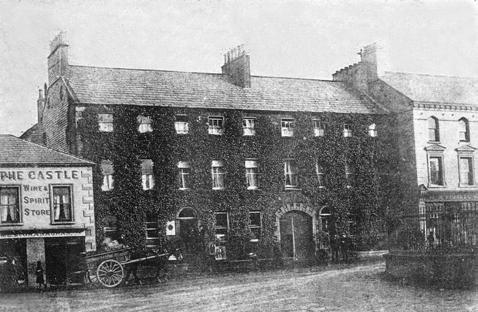
Royal Irish Constabulary Barracks, Ivy Lodge, Church Place, Lurgan, c.1900.
Ivy Lodge was purchased and converted into a police station by the Royal Irish Constabulary in c.1900, and became the town’s main police station. The building was destroyed in a bomb attack on Friday 16 November 1973, with the present police station built in its place.
Image reproduced by kind permission of Lurgan Ancestry ( www.lurganancestry.com)
The Muntaigh Wedding (song)
I was down in the Muntaghs nigh hand to the Ban, A wedding took place as you may understand Between Murtagh Dun Blaney, grandson to Shane Bwee, And Boucing black Kathleen that lived at the lee.
Some rode on back suggans and some on side creels And some in turf kishes with kibes on their heels And in the front rank was old Phelemy O’Phars Upon a jackass, with a couple of jars.
When then, that they were asked to sit down, Some sat with their backsides upon the cold ground. They had a nice potatoe pudding baked in a lime-kiln That ladies and gentlemen might eat their fill.
They had hog heads and tripes and a dish of cow heels With perches and pullings [pollen], fine pikes and fat eels; There was Murtagh Dun Blaney all from the Cragh Bog, He eat against Dudrin, that day gave him odds.
He lifted his eyebrows like corncreaks’ wings, Eating bull beef he nearly broke both his eye-strings; They had meskings of butter, the best of brown strone, The heart of the blanter from sweet Derryclone.
The onions and garlick both came from afar, The scallions came in on both slipes and slide cars; There were Teague Matha Loney and Nelson McBrin And dame Lanks O’Honey and Inish A Lin.
The sweat off their faces defiled all their robes, The wind that passed through, took the heels of their brogues; There was the bride and her maid, besides the young groom, Who followed his Reverence McBrin to the room.
Before the ceremony it was performed, she languished, she died, Before the ceremony it was performed, she languished, she died; What a great hillalooing and clapping of hands Saying, - ‘Oh what’s to be done for the want of a fan?’
She opened her eyes saying, - Bad luck to your joints, Oh bring me a platter of potatoes and point; There was the greatest rejoicing when she came to life: So now Murtagh Dun Blaney enjoys his dear wife.
Author unknown
Footnotes:
• This song may have been sung to the air of ‘Wedding at Ballyporeen’. It was published in Ulster Folklife, Volume 18.
• The meanings of the following words are: suggans: saddles made of hay or straw; kishes: large baskets; kibes: chilblains; pullings: pollen; meskings: lumps of butter; strone: oatcakes; blanter: type of Oats; potatoes and point: eating potatoes while pointing at the salt or other seasoning too scarce to use. For more information on the dialect and words of the Montiaghs see the booklet by William Lutton entitled Montiaghisms: Ulster Dialect Words & Phrases, (Craigavon: Craigavon Historical Society, 2021).
Bonny Green Tie (song)
My name is James Haughian the poet, I come from the shores of Lough Neagh, Although I not willing to show it, I have always something to say. Before the poet got married He used for to wear a green tie, Now all of his courage is buried And must bid his comrades goodbye.
Chorus
And when we were walkin’ and talkin’ And having a houl on the sly, She would take envy by kinks of laughing When she’d look at my Bonny Green Tie.
For you know it is youth and folly, That makes a young man change his life, But I’ll mind the day I took Sally, And promised to make her my wife. The first time I met my wee dearie, I thought that there was no one like her, And it done my heart good for to see her And walk her along the Lough shore.
Chorus
But now it’s an old greasy muffle, Instead of a Bonnie Green Tie, In an ould pair of shoes I must shuffle, Let the weather be cold, wet or dry. For a boy that is fond of Old Ireland, Is fond of a pretty girl too, For you must mind the land we were reared in It’s hard for to find a true blue.
Chorus
So my name is James Haughian, the Poet, A true son to old Granny Nale, Though sometimes I now have to toe it, All over the green hills and dales. I always delight in a sing-song, And I will to the day that I die, And when the old wife starts a fighting I’ll sing her the Bonnie Green Tie.
Chorus James Haughian
Footnotes:
• This poem was made famous when set to music by Teresa Clifford, a famous ballad singer, in the 1950s.
• In the final verse ‘Granny Nale’ is thought to be a humorous nod to Gráinne Mhaol (1533-1603); the famed pirate queen of Connaght.
The New Community Hall (song)
I’m giving an invitation, and it’s to you one and all, To come and spend an evening in our new Community Hall. It’s down in Derrytrasna, and we’re going to run a ball, And everyone is welcome in our new community hall.
(ii)
Now take a trip to ‘Trasna, they are doing it there in style, And everyone who meets you, they will great you with a smile. You will meet big Father McConville, who organises all, If you come and spend an evening in our community hall.
(iii)
Now I’m giving this invitation and it’s to you big and small, To come along and shake your leg some evening at the ball. I know you’ll all be welcome, for this is from us all, If you only spend an evening, in our new community hall.
(iv)
So come along to ‘Trasna and you never will forget, For they are the nicest people there, that ever you have met. And when you do a jig or two, it’s then you’ll know them all, And you’ll find that you are welcome in our new community hall.
John Conway
Footnotes:
• A Rev Michael McConville served as a curate in the parish from 1941 - 1948, so the poem may refer to that time period. It perhaps relates to the opening of the ‘old’ Bay Hall, rather than the current Hall.
Star of the Montiaghs
[Petition from the ‘Star of the Moyntaghs’ addressed to G. Robinson Esq., M.D. in Portadown]
With contrition, dear Doctor, my fault I confess, And I promise sincerely never more to transgress; I humbly petition that you would condescend, Your poor diseased patient once more to attend. My money’s expended on villainous quacks, Who have left me exposed to Death’s fell attacks; And if you forsake me there’s nothing can save The “Star of the Moyntaghs” from a premature grave. If you come, by your orders I’ll strictly abide, And what you prescribe shall be quickly applied.
John McKaughley, Boghole Lodge
Printed in the Newry Telegraph, March 29th, 1836
Footnotes:
• Dr Francis X. McCorry has written that the above poem/petition was printed in the Newry Telegraph, March 29th, 1836 and was originally spotted and saved for posterity by Jim Blaney, Mansefield, Lurgan. Dr McCorry reproduced the poem in his book Seagoe. Diocese of Dromore. A Parish History, (Lurgan: Inglewood Press, 1987), p. 94.
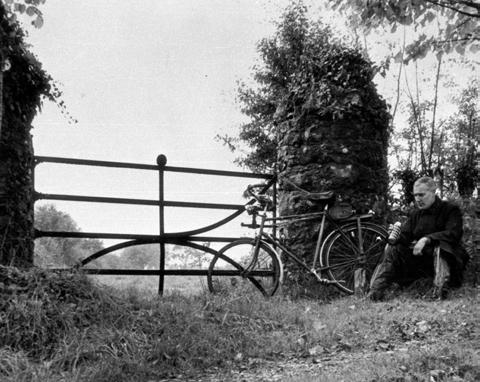
Self-Portrait of William Gracey, of 32 Windsor Avenue, Lurgan, whose photography features throughout this book.
Gracey’s handwritten note accompanying the photograph reads: ‘Early in the year 1965. Wet cold weather. Thoughtful flask of tea in the back avenue to Waringstown House’.
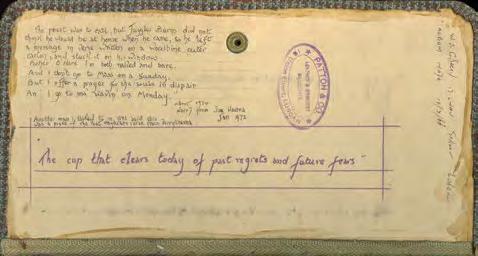
Inside front cover of a photograph album, compiled in 1966 by William Gracey in which he records the verse ‘O’ Father O’Hare’ and it’s possible origins.
Gracey was the proprietor of Patton & Co., a leather fishing and tackle shop based at 13 Union Street, Lurgan, which operated from c.1945 to c.1969. The shop had previously been situated at 23 Market Street before moving to Union Street.
Images copyright of and reproduced by kind permission of Craigavon Museum Services.
O’ Father O’ Hare
Version 1
Oh Father O’Hare, I’m both naked and bare
And I can’t go to mass on Sunday I just sit in my chair and say the Lord’s Prayer And go to my work upon Monday.
Author unknown
Version 2
Oh Father O’Hare I’m naked and bare I have no clothes to wear upon Sunday
But in case of despair I’ll say a wee prayer And I go to my work upon Monday.
The Poet Haughian (James Haughian)
c.1930s
Footnotes:
• The second version of this poem has been attributed to ‘The Poet Haughian’, with the first version given without a poet’s name. This short verse might have been part of a larger ‘ditty’ about local characters.
• In a photograph album held by the Craigavon Museum Services, the photographer William Gracey, writing in January 1972, records an alternative explanation of the origins of the verse, which was told to him by a Joe Hanna:
‘The priest was to call, but Juggler Burns did not think he would be at home when he came, so he left a message in verse written on a woodbine outer carton and stuck it on his window.
“Father O’Hare I’m both naked and bare, And I don’t go to mass on a Sunday, But I offer a prayer for the souls in despair
An’ I go to ma’ wavin’ on Monday.”’
However Gracey later goes on to say ‘Another man I talked to in 1973 said this was a piece of The Poet Haughians verse from Derrytrasna.’
• The ‘Father O’Hare’ referred to in the poem may be the Very Rev. John Canon O’Hare, parish priest of Seagoe Parish between 1920 and 1934.
This is another poem recited for us by the lovely Vera Blevins (née Parks), originally from the Ardmore Road in the Montiaghs. It seems to incorporate elements of the song ‘The Bonnie Green Tie’ recorded earlier in this section of the book. The final verse seems a much naughtier version of the ‘O’ Father O’Hare’ poems outlined on the previous page.
My name is James Haughian
My name is James Haughian the poet
I come from the shores of Lough Neagh
And although I’ve got no wit to show it
I’ve always something to say.
But it’s only in youth and in folly
That makes a young man change his life
Now I curse the day I met Sally And promised to make her my wife.
For now it’s an oul gr’asy muffler
Instead of a bonnie green tie
And an oul pair of shoes for to shuffle
Whether the weather be cold wet or dry.
Sure the priest he came round to see me
To see why I wasn’t at mass
And there I sat in the corner
With not a stitch to cover my a**.
Many thanks to Mrs Vera Blevins for the recital, recording and the laughs!
Cock fighting was a common sporting activity and pastime throughout Ireland in the 1800s. The bloodsport involves pitting specially trained birds (usually roosters), fitted with steel or silver spurs against each other, until one was killed or maimed. Bets were usually placed on the fights. The activity was later outlawed and by the 1900s had been pushed to the margins of life. The former popularity of the activity in the Lurgan area is highlighted in the next poem/song.
Hanaghan’s Fighting Cock (song)
It’s of a brutal murder that I’m now going to sing, A cruel brutal murder of an innocent harmless thing, This poor game cock of Hanaghan’s was fairly done to death, When we heard about the outrage, boys ah boys, we held our breath.
You all know Mr Hanaghan, a sporting gentleman, Who bought his cock a chicken, he was worked by Pat McCann, But Pat was very cruel and drove the cock away To McConville’s of the Tarry, but there he wouldn’t stay.
They brought him to Jossy Leathem, who kept him in a stall, He clipped his combs and jallars and fed him on liquorice balls. There are dead in Shankill graveyard who could have heard his mighty crow, When on that August morning to Dublin he did go.
He fought and won in Dublin, and his heels were armed with steel, And the notes were won in handfuls by Deeny and O’Neill. The handler was Jossy of that noble bird so grand, And the proudest man in Ireland was Mr Hanaghan.
Then one morning in September, sure it made our hearts feel sore, When that fine game cock of Hanaghan’s was stole from Tannaghmore, His lovely crimson feathers were scattered all around, But not a sight of the champion, could ever again be found.
Some hungry rogues of Shankill did shove him in a pot, And they made a handsome dinner out of the crimson feathered cock. God help Mr Hanaghan, it gave him such a shock For never again in this wide world, will he see his own game cock.
Author unknown
Footnotes:
• This poem/song is also sometimes known as ‘Jossie Leathem’s Fighting Cock’ or ‘Hanrahan’s Game Cock’. Different versions of the poem/song exist.
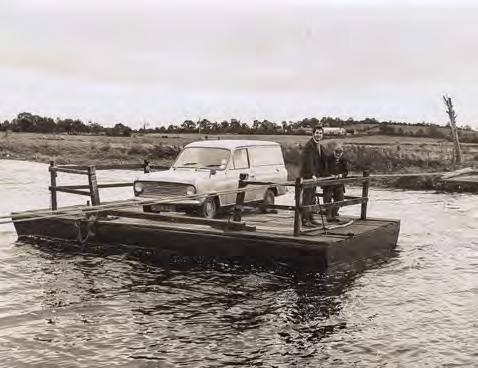
Bannfoot Ferry, Derryinver, c.1970.
Image is copyright of the Estate of Kieran Clendinning and part of the Armagh County Museum Collection, and reproduced by kind permission of Armagh County Museum.
PART EIGHT Keepers of Traditions
Fire and Stones
Horseman of the Heavens
Sacrifice
Coney Island
February Snow
Carefree Days
The Ferryman
Odysseus Lands at Gawley’s Gate
I Have Seen
PART EIGHT
Keepers of Traditions
The Celtic culture of seasonal customs, poetry, lorekeepers and oral history are not yet dead. Mahatma Gandhi once said ‘A nation’s culture resides in the hearts and the souls of its people’, and the poetry included in this book certainly reflects that truth.
The poetry tradition is still flourishing in the local area with many writing and publishing privately, while others do so within the support of the local ‘Lough Neagh Writers’ group. A number of these local poets have kindly agreed to provide us with some new poetry for inclusion in this book. I believe that the emotion of their hearts and souls are conveyed through their words to us as readers. They stir our emotions with ease and grace.
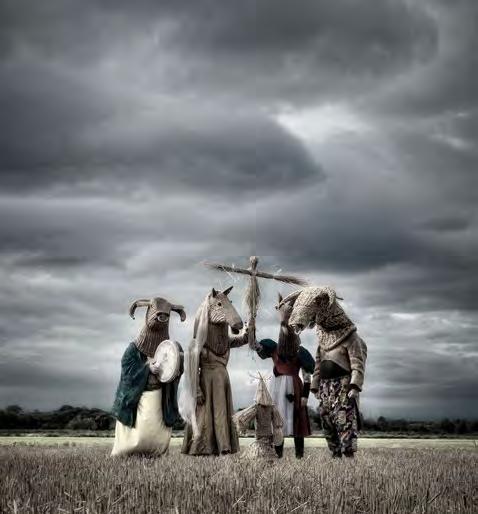
The Armagh Rhymers, a folk ensemble group established in the 1970s, which have kept alive the folk theatre, rhyming and mumming traditions that were once so common throughout the area. Image copyright of and reproduced by kind permission of Peter McCorry.
‘For centuries, the old ways and the old world endured. It was embedded in the storytellers’ souls. More than spectators, they were what they believed, they lived what they told. But their practices and customs collided with a rapidly evolving world. In a clash of traditions, they have lost. Or so it seems. Time will prove that the greater loss is ours. In a conflict as profound in its effect as when the Milesians drove the Tuatha dé Danann to their underground places, so too the new technology defeated the gentler ways. Mass communication and instant entertainment have obliterated customs and beliefs long held. They have vanished like snow, today glistening white, tomorrow silently and swiftly gone.’
Extract from Joe McGowan, Echoes of a Savage Land, (Cork: The Mercier Press Limited, 2001), p. 385.
Fire and Stones
Before the spirits were put to sleep and the magic within us all was quelled and extracted by their ways, we lived.
We were known for our magic and songs and knew the ways of the earth, the turn of the tide and the changing skies.
Our gatekeepers were our gods and we built a temple of stone in a place that became known as townland of the priest aligned it to the skies and linked it with pathways not seen by the eye.
Our druids answerable only to our gods, lived away from us and watched over us all and on the days of change we appeased the gods with gifts.
On those nights our fires burned bright with new flames.
Martelle McPartland
Horseman of the Heavens
It is the quiet places I like. Lonely places. Forgotten places that exist in the embrace of lough and land.
I like the feel of these places where the landscape has a language of its own, Meadows of Windings, Place of the Ravens, Gobha’s House and the Tragic Shore.
These places sing a song of the past, of tribes and kingdoms and battles fought on the Kneading Trough.
But trace the names further back, back to the mists of the ancient Celts and there you will find the echo of the gods.
Hollow of the Cauldron, Place of Light and Lough Neagh, named after Dagda the God of the Tuatha de Dannan. God of all gods and Horseman of the Heavens.
Martelle McPartland
Sacrifice
From the temple of the sun in the land of the living we carried you out, while the one eyed one, with his all seeing eye, beat a drum of animal skin and hissed to the shakers of skulls, those bony crones who stood on the path of men and wailed to spirits past. Our druids with their robes and hoods of white smudged your soul with sweet smoky leaves and fires of yew.
And we followed you- we all followed you down the hallowed mountain carrying offerings to Donn, lord of the dead. The slaughtered deer, the sweetest mead, twists of gold and the sharpest sword.
In the light of the moon just as Orion was rising on the lake of shadows the boatman rowed to the land of the dead while from the hills came a lonely call of horns. But rest easy now child of Danu, for you were the beginning of the end and we’ll forever be washing your blood from the scarred Sacrificial Stone .
Martelle McPartland
Coney Island
For Norah and Paul
There is treasure at the bottom of the well on Coney Island.
I know, because Norah told me and she knows because her brother told her about the treasure at the bottom of the well on Coney Island.
He said, not many people know about this so keep it to yourself, but the O’Neill’s hid their treasure at the bottom of the well on Coney Island.
So, the willow maker knows and the straw maker knows and the poet knows but, no one else knows about the treasure at the bottom of the well on Coney Island.
Martelle McPartland
Footnotes
• In the 16th century Coney Island was a stronghold of the Irish Chieftain Shane O’Neill (15301567) in his battle against the English. On the island the ruins of a tower, known as O’Neill’s tower, which acted as lookout post and possibly a treasury, are still preserved.
February Snow
The snow falls light at the end of this February day, each flake flounders down to muddy fields where it catches and sticks to the cold earth.
Soon the snow falls heavier covers the silent well and it almost looks like an angel has appeared.
There will be no more burials today.
Inside the wretches scream in sweat filled fevers, and the Idiot Wards are emptied to house the sick but there are no beds left only straw on damp earth.
The coffin maker has given up on coffins, but still the bodies’ pile up. He buries them uncovered beside the workhouse well and the infected water curses the inmates to a horrific death.
In The Year of Our Lord, 1847 a single bell clanged out the dead and in one week alone it rang in Lurgan Workhouse for 95; 55 for little ones and babies.
The snow falls light at the end of this February day each flake flounders down to muddy fields where it catches and sticks to the cold earth.
Martelle McPartland
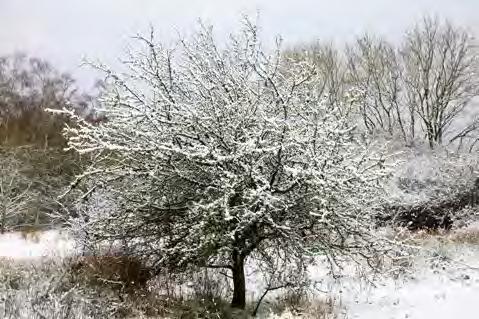
Image copyright of and reproduced by kind permission of
Barry Coleman.
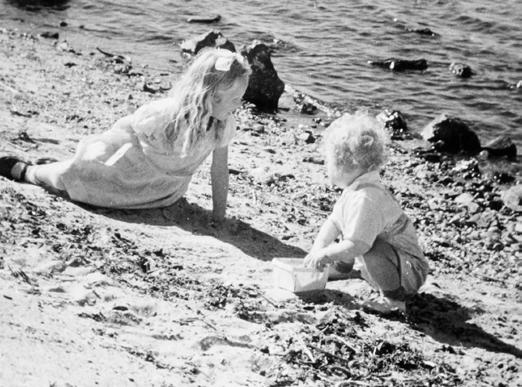
Playing on the Bay Shore during a ‘hot spell’ of weather, c.1957. Photograph by William Gracey.
Image copyright of and reproduced by kind permission of Craigavon Museum Services.
Carefree Days
Did the sun always shine in the summer of 1975?
As we walked through the ramparts to the beautiful shore
Skipping along, shoes in hand over molten hot tar
Stopping for Dan’s ice-cream and drinks to fill our day
To our little bit of sandy heaven on the shores of Lough Neagh.
The buzz of laughing families filled the air
Tartan rugs outstretched on every inch of grass
Sand tinged sandwiches and flasks of hot sweet tea
A swim on shifting sands beneath our feet
The hope of romance under the shade of a tree
Now quietened and stilled as locals travel far
A peaceful haven still to stop and stare
To the slopes of Slieve Gullion and distant Tyrone
A place I will always call my home.
Angela Boyle
The Ferryman
‘Is that a car Mary?’
Shouted the old man in the corner bed
For the umpteenth time that day. Sure it’s not there anymore she said.
His body gnarled and doubled, Willie had pulled the rope of the wooden ferry
Hand through hand to the riverbank on the other side.
Men, women, cows and cars,
All life and reasons: night and day.
What stories he could tell if anyone would listen
The nurse chided again: ‘there’s no one there now’
As he shouted to unhearing ears
‘Is that a car Mary?’
Angela Boyle
The ferryman Willie Wilson bent over pulling the Bannfoot Ferry across the River Bann, between Bannfoot (Derryinver) and Maghery.
The 24 hour ferry service operated for over 150 years and saved drivers a round trip of 14 miles to the nearest bridge. The service finally ceased in 1979.
Image reproduced by kind permission of Barry Coleman.
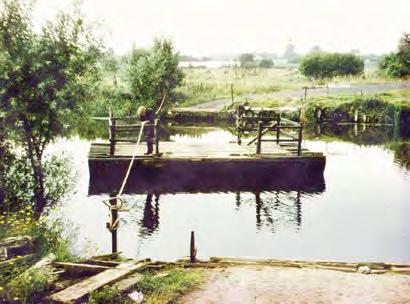
Odysseus Lands at Gawley’s Gate
‘Take you and your boat off my land.’
The language was foreign
But he got the point.
Odysseus considered peppering
The peasant with arrows,
Noticed the mirrors on the peasant’s face, Wondered what kind of man would wear
Green footwear up to his arse.
Watched the rat of a dog yap
Around his master’s feet
And decided on mercy.
Odysseus surveyed the scrub shoreline, Drank in the coldness and the lack of salt, Knew that the Mediterranean was far away
And that this was not his time nor place. There would be neither profit nor posterity here.
Odysseus shunted the boat from the shallows;
More yelping from the peasant and dog.
And so we lost the chance to be stuck
In the books for thousands of years.
Bask on deck Odysseus saw the peasant turn, Then snarl at the dog.
‘Come on, Homer’, he said.
Pascal Downing
Footnotes:
• Odysseus is best known as the hero of the epic poem The Odyssey, written by the Greek bard Homer. The poem recounts the many adventures and obstacles which Odysseus undertook on his ten-year journey home following the Trojan War.
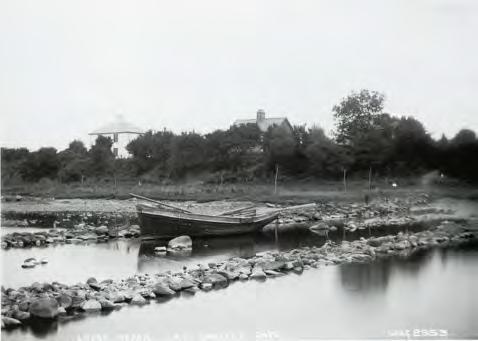
Gawley’s Gate, Lough Neagh, c.1900.
Image (Ref: HOYFM.WAG.2953) reproduced by kind permission of National Museums Northern Ireland.
I Have Seen
I have seen
In the early morning, the Milltown River
Burn a hundred yards into the Lough
To create a column of smoke That would have Moses proud.
I have seen
Beyond and to the left of Tam Puddin’, To escape the afternoon heat And the biting clegs, Cattle walking on water in our dogleg bay.
That was then; But now the shock Of experience Blazing into awe Has subsided into The embers of understanding. Age makes feelings Retardant And was that dampened flame Ever to flicker again?
I have seen
In the spring of nought seven, An orange double decker sun Come to rest gently
On the M1 bridge at Killachy.
Pascal Downing
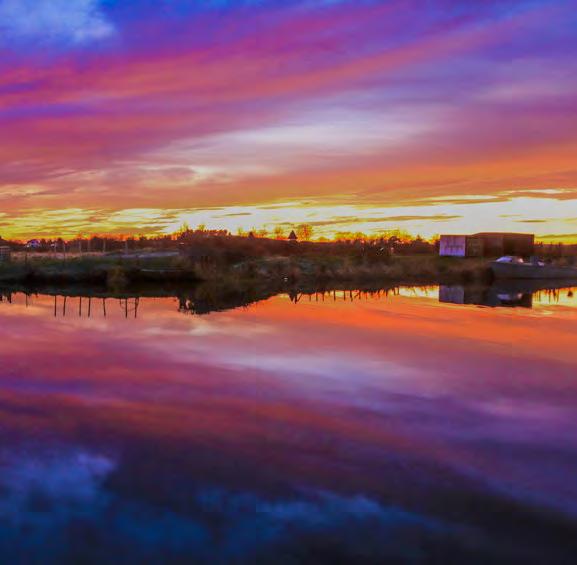
River Bann.
Image copyright of and reproduced by kind permission of Barry Coleman.
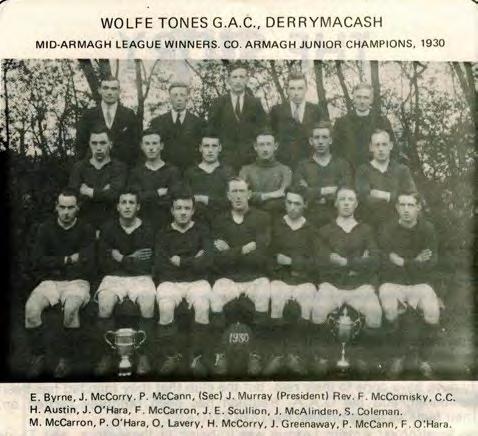
PART NINE
The Back Page (Sports and Rivalry)
The Boilie Football Team (song)
Sarsfields (song)
The Ghost Goes Home
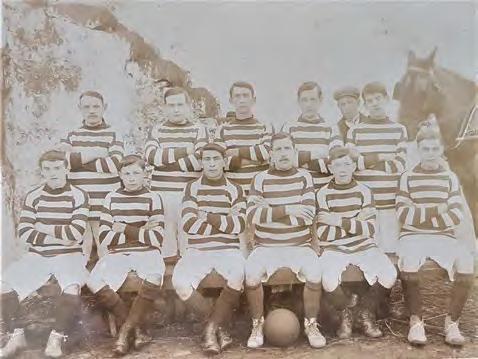
The Boilie Football Team, c.1912.
Back Row (Left to right), Hugh McCann, C McCarron, Tom Casey, Mick McCarron, Charles Murtagh (horse handler) and Jim McAvoy
Front Row: Jimmy Magee, Bill McAlinden, Paddy Casey, Barney McCann, Hugh McCorry, Charlie McConville
The Boilie Football Team (song)
You may talk about your amateurs, professionals and the rest, And all your fancy footballers of whom you like the best; To manipulate the leather, the best you’ve ever seen Come down to Blaney’s meadow and see the Boilie football team.
Our defence it is impregnable of that there is no doubt, Our forwards too, it is grand to view the team when they line out, With Barney in the centre who looks both sharp and keen, The acknowledged centre forward of the Boilie team.
Then the blows, and off she goes, it is a pleasing sight, For you’ll see then the Boilie men, they take her left and right. The lengthy man, he centres grand and there’s nothing to regret, And B McCann, he is the man, who has her in the net.
Then the ball is centred air again and play resumes once more, Our opponents strive both might and man to equalise the score, Alas for them P. Casey then to advantage he is seen, That unsurmountable obstacle in the Boilie football team.
At midfield then the play began more rigorous than before, Their forward line did well combine to equalise the score. There was Tom and Mick and Bill, the trio each held onto their man The ball was slung out to the wing and off McConville ran.
Along the line just like the wind, our famed left-winger flew, Leave him alone, he’s on his own, we know what he can do. The backs tried hard for to retard his progress but in vain, When loud and high they raised the cry, the Boilie wins again.
Patrick McCann
Sarsfields (song)
It was a famous victory
For the dear old High Moss Tash, When Sarsfields beat by eleven to six Their rivals Derrymacash.
To give them credit for their win And for their grand display, They always kicked the ball well in And kept her still in play.
McDonald who was on his guard McSloy who Neilly chose, But none outplayed McAllister Or the dashing Geordie Hughes. The Tones went at it in full swing For they meant to do the same, But McVeigh and Ginger were always there, And proved they knew the game.
John Lavery and McCaughley
Brought up the rear guard, And proved to Lurgan Rovers They were not a pack of lads. Some of the Lurgan players Played soccer on the ground, But Harbinson was never afar, And quickly turned it around.
The second half did then commence With speed and dash and sting, Until the Sarsfields got their goal With Neilly on the wing. The Tones they thought they had a flag But instead of that to be, For they were not backed from first to last By a one-side referee!
And now the match is near its close I hear the Sarsfields cheer, For the Tones they do go home again All bathed in sweat and tears. And the stripes they were applauded loud, For they were sure to win, And the goals were safely guarded By the famous Jonny Quinn.
John O’Neill
Footnotes:
• High Moss Sarsfields Gaelic Football Club was established in 1926 in Derrytrasna. The song was composed by John O’Neill of the Bay Shore to celebrate the first victory Sarsfield’s recorded, which happened to be over their local rivals the Wolfe Tones Derrymacash Gaelic Football Club.
Image copyright of and reproduced by kind permission of Barry Coleman.
The Ghost Goes Home
(i)
The shades of night were falling fast
As around McGreavy’s Corner passed A ghost who bore ‘mid snow and ice
A banner with the strange device ‘Come on the Tones’.
(ii)
On earth he’d been a sinner bold, And worse he grew as he grew old, And worst of all he never cried In ringing tones of joy and pride ‘Come on the Tones’.
(iii)
He lived for years around the ‘Cash And ne’er admired the pluck and dash Of countless men who wore the green, Nor cried to footballers supreme ‘Come on the Tones’.
(iv)
And for his sins, for twenty years He had to roam this vale of tears, A warning grim that all who die
Would be like him unless they cry ‘Come on the Tones.’
(v)
But know at last his job’s complete And to the graveyard he’ll retreat To rest in peace and hear the cheers
As rise these cries for countless years ‘Come on the Tones.’
Author unknown
Footnotes:
• This poem was provided by the late Alf Murray (1915-1999) who noted that it had been published in a Glór, Lurgain magazine.
• The Wolfe Tones Derrymacash Gaelic Football Club were founded in 1917.
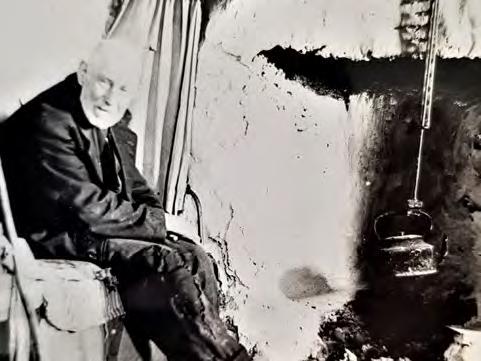
Pat Blaney, sitting at his cottage hearth.
Image reproduced by kind permission of Kieran Lennon.
PART TEN And Finally
The Old Hearthstone (song)
The Old Hearthstone (song)
Chorus:
As I sit alone by the fireside, In this neat little cot all alone, My thoughts linger back to my boyhood, And the games we played around home. I can see my old father and mother, That smile on their face I can see, And the candles burn bright in the window, And the night, it is Christmas eve.
(i)
Sure I think of my brothers and sisters, And the time that we spent here alone, Those thoughts, they are fresh in my memory, As I sit beside the Hearthstone.
Chorus
(ii)
Although I have got old and feeble, I can still hear the little birds sing, And those songs in my heart, they do kindle, The thoughts of some years long ago.
Chorus
(iii)
The thoughts of the years of my boyhood, As I roamed the roads with my chums, Now these are the thoughts that are with me As I sit beside the Hearthstone.
Chorus (iv)
Now that Hearthstone and me will be parting, For I feel the time ticking away, No more will I roam through the country, Or around by the shores of Lough Neagh.
Chorus (v)
Now I’m bidding adieu to the friends that I knew, And the loved ones I’m leaving behind, And to their children I say, when you kneel down to pray, Remember me all in your prayers.
Chorus John Conway
Further Reading:
• Clendinning, Kieran, ‘A Way of Life Disappears’, Review: Craigavon Historical Society 1, no. 2, 1970.
• Clendinning, Kieran, ‘The Lurgan Volunteers’, Review: Craigavon Historical Society, (1996-1997): 25-6.
• Clendinning, Kieran, ‘The Brownlow Family and the Development of the Town of Lurgan in the 17th Century: Part 1 English Origin and the Ulster Plantation’, Seanchas Ardmhacha; Journal of the Armagh Diocesan Historical Society 20, no. 1 (2004): pp. 106-23.
• Donnelly, Bernadette (editor), South Lough Neagh: ‘Skimming the Surface’, Maghery: South Lough Neagh Publishing, 2005.
• Donnelly, Daniel J., On Lough Neagh’s Shores: a study of the Lough Neagh fishing community, 1986.
• Edgar, Richard and Higginson, Clive, Not Forgotten: Lurgan and the Great War, Lurgan: The Authors, 2016.
• Joyce, Patrick Weston, The Wonders of Ireland and Other Papers on Irish Subjects, 1911.
• Lutton, William, Montiaghisms: Ulster Dialect Words and Phrases, reprint, Craigavon: Craigavon Historical Society, 2021.
• McCorry, F.X., ‘The Poetry of the Montiaghs’, Review: Craigavon Historical Society 4, no. 2, 1980.
• McCorry, Francis Xavier, Seagoe: Diocese of Dromore. A Parish History, Lurgan: Inglewood Press, 1987.
• McCorry, Francis X., ‘The Montiaghs of North Armagh’, Seanchas Ardmhacha; Journal of the Armagh Diocesan Historical Society 18, no. 2 (2001): pp. 125-163.
• McCorry, Francis Xavier, Lurgan: An Irish Provincial Town. 1610-1970, reprint, Lurgan: Inglewood Press, 2010.
• McGoldrick, Martin, Old Lurgan Life 1901 to 1905, Lurgan: Old Life Publications, 2005.
• Mooney, Bernard J. and Keenan, Padraic, The Parish of Seagoe. Part 1: The Place Names Explained. Part II Some Historical Notes, reprint, Craigavon: Craigavon Historical Society, 2011.
• Neill, Ken, An Archaeological Survey of County Armagh, Belfast: Northern Ireland Environment Agency, 2009.
• Zimmermann, Georges Denis, Songs of Irish Rebellion: Political Street Ballads and Rebel Songs 1780-1900, Pennsylvania: Folklore Associates Inc.,1967.
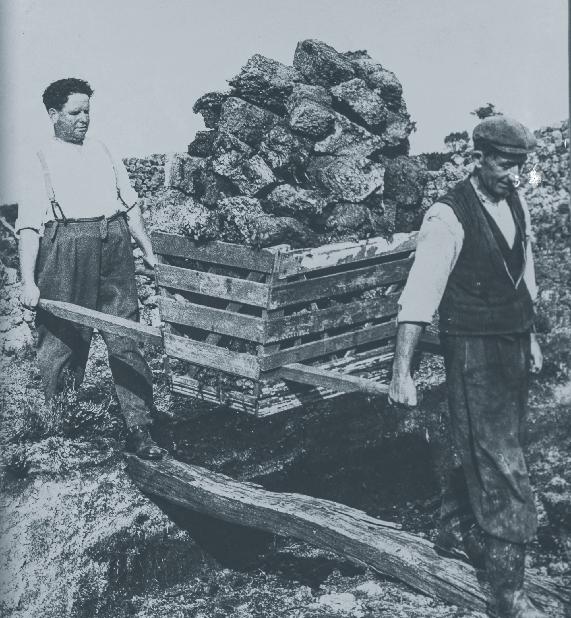
This book is dedicated to the memory of:
John Conway
John Dummigan
James Garland
James Haughian
Dan Hendron
Dan Lennon
John McAleese
Patrick McCann
Michael McConville
Hugh McCorry
(aka Rory C. McHugh)
Alice Molloy
Peter Mitchell
John O’Neill
William O’Neill
And all those unnamed poets whose poems or songs are featured in this book
And to all the souls lost on Lough Neagh