
Yumi Katsura

Page 1


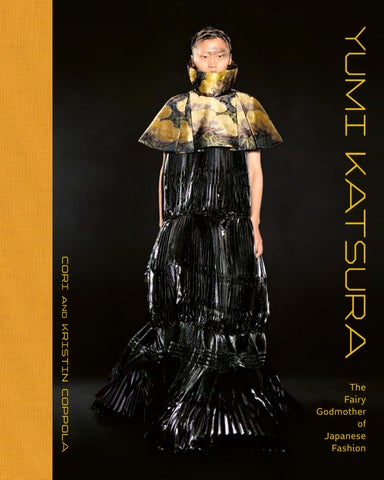
The Fairy Godmother of Japanese Fashion YU M I K A T S U R A

Opposite page: Golden orange Yuzen-silk organza dress (detail). See pages 184–85.

her country. She made her plea to become a kamikaze pilot, one of the famed airmen who would blow themselves up to ensure their attacks destroyed the enemy. In a striking show of sacrifice, she vowed that if her death would aid Japan, she would gladly give her life. At last, on August 15, only days after the atomic bombs were dropped on Hiroshima and Nagasaki, Japan conceded defeat and marked this day as Japan’s official Memorial Day for mourning the dead and praying for peace. On September 2, 1945, World War II was declared officially over. Everyone, including Yumi, had been certain that Japan would win the war. It was inconceivable that Japan would ever have surrendered. When it was declared that Japan had lost, the blow to the country was devastating. The collective shock was indescribable.

The bombs that had started the Tokyo fires had initially been dropped to identify the hard targets where the napalm-filled bombs were then unleashed, with the objective being to wipe out the factories and warehouses that gave industrial support to Japan’s war effort. But the flames had mown through the city like scythes. Makeshift tents were erected for those left homeless. People ambled, dirty and disheveled, in whatever clothing they could find in the wreckage or buy on the black market. Food was scarce and starving people flooded the streets in desperation. Often, Yumi’s own family would only have a single bowl of rice to share between the entire household. The radio and newspapers carried daily accounts of strikes, robberies, and rape. The soldiers, who until recently were the handsome young heroes—a worthy fixation of Yumi’s schoolgirl crushes—now represented hopeless defeat.

For Yumi, it was too much to bear. She lost the will to keep living, and her condition grew worse by the day. Like many others, she mourned the loss of a world that had seemed so full of promise. She didn’t know what she could possibly do with her life now. But somehow, thankfully, she began to grasp that her own death wouldn’t help the country to mend. Many times, her teachers quoted the words of Chinese philosopher Confucius: “Wisdom, compassion, and courage are the three universally recognized moral qualities of men.” And Yumi clung to this idea; to the “spirit of compassion.” She did her utmost to think about everything from the point of view of others, finding a renewed desire to help and take care of others. Eventually, she also came to cherish the “spirit of forgiveness.”

Yumi knew she would have to fight to find purpose, to find a way to blossom in this bleak new reality. It was said that after the atomic bombing of Hiroshima, plants would not grow for at least eighty years. But that September, as the war ended, the oleander tree blossomed. Little red flowers—the very first blooms—not only survived but went on to thrive. If flowers bloom, there is hope.

It would be years before Yumi found her calling, but she held fast to the idea that her life must have some inherent mission—a reason. Her mother had shown how service to her country and others could bring comfort and fulfillment, and the dresses she made could carry healing and happiness. This was real magic—so simple and joyful. More and more, Yumi hoped that she too would one day help to restore something of what Japan had lost. Little by little, she emerged from darkness, and discovered a sense of peace. The key to true and lasting happiness would lie in bringing happiness to others. One way or another, she was determined to ready herself for this higher service.

In reality, Yumi was keenly aware that dreams didn’t just come true with the wave of a wand. Her dreams could take years to materialize, even decades. In the words of Cinderella’s Fairy Godmother, “ even miracles take a little time.” But Yumi always believed that achievement was possible when one’s heart remains steadfast and sure. Her Dream Notebook was the tangible record of the things she kept close to her heart, all the wishes and plans that traveled with her around the world and back again, designs and desires that she could picture so clearly. The notebook allowed her to set her intentions with the act of writing them down. In Japanese, you don’t say “last night, I had a dream,” you say, “last night, I saw a dream.” Putting pen to paper and recording her dreams allowed Yumi to see her dreams in the waking world, which was her first step to making them real.

Opposite page: This powerful dress from the 1970s combines an all-over repeating sequence of flower motifs with an innovative design of veil and train.

Pages 98–99: Detail, see pages 106–107.

Some might call this visualization a kind of real-life magic, where one holds the wish so clearly in thought that it begins to manifest. In Japanese yume jitsugen means to “realize your dreams,” and for Yumi, realizing her dreams was always more than just visualizing them, it was also an active practice of expressing gratitude and celebration, as if her dreams had already materialized. Seeing things, cherishing them in her heart, and expressing gratitude in knowing for certain that even before others could see them, they were truly happening. The word yoshuku means a kind of celebration in advance for the desired outcome. It’s more than just hoping, but rather knowing what is coming, as the Bon Odori festival in the summer celebrates the good harvest that is to come.

On New Year’s Eve, December 31, 1964, Yumi lifted one of her dreams out of her notebook and into the real world. This was the evening on which Yumi held the opening dedication for her new Yumi Katsura Bridal Salon, in Akasaka, Tokyo. The event also marked the beginning of her story as Yumi Katsura the brand. Yumi’s wonderful New Year’s Day ritual of recording her history each year in her notebook, honors the anniversary of the store’s opening a week later. This milestone moment represented a twist to the notion of hatsuyume—the first dream of the new year—in that it was the first dream that Yumi had physically manifested that year.

Yumi had set in motion the plans for her first shop even before her “wedding inspection tour” around the world had begun. But the journey to make her wedding dresses available to the public had not been without its challenges. In the beginning, she wasn’t exactly sure of all she needed to do, but as she began to focus on designing and selling her wedding gowns, things slowly fell into alignment. Ever since Yumi assigned the Wedding Dress Project for her students, she had known that she was meant

SOpposite page: On the theme of “A Day in Kyoto,” Yumi Katsura presented innovative designs created with Kyoto’s traditional crafts such as Yuzen and shibori. SS 2011.

Pages 168–69: Detail, see page 174.

ometimes, waking from a dream can be a frustrating experience. All the fantastical drama is suddenly flushed into the ether by the morning light. As our minds return from the freefall of slumber and adjust to the textures of the real world, the wonders we have experienced even in the final moments before snapping awake are often lost. But Yumi prided herself on manifesting her dreams and those of others. This often included crystalizing the most special moments through photographs, stories, her Dream Notebook, and also in more physical forms. As part of her flourishing empire, Yumi committed to opening a number of museums dedicated to remembering the dreams she helped make real and inspiring others to do likewise. In 2022, Yumi opened the Yumi Katsura Museum within the Bridal Land Wakasa complex in the Fukui prefecture, north of Kyoto. As the name implies, Bridal Land offers its visitors spectacular exhibitions of everything bridal, as well as venues for engagements, weddings, anniversaries, and other celebrations. A destination site for school tours, tourists, and would-be princesses everywhere, Bridal Land was founded in partnership with Alpha Blanca, a high-class, all-Japanese dress manufacturer, and includes tours of the Alpha Blanca atelier and dressmaking facilities. Yumi and Alpha Blanca went way back, with the manufacturer having produced Yumi’s dresses for decades. The Yumi Katsura Museum was the first bridal museum in Japan, celebrating Yumi’s work, and highlighting her Grand and Couture Collections throughout her many years of innovation, success, and magic. In addition to a café and a gift shop, where visitors can buy Yumi Katsura souvenirs, there is a designated “Blanca Studio” where visitors can actually dress up in Yumi Katsura dresses and take photos, allowing everyone to capture a vision of themselves as a princess, whether they are a bride or not. Just outside the Yumi Katsura Museum, there is also an outdoor garden with a near-fifty-yard (forty-five-meter) walkway that leads to the Rose Gazebo—a stunning site for weddings, or just the perfect selfie.

Over the years, Yumi collected many dresses from around the world, and she dreamed of opening an even larger museum where this entire collection could be exhibited. Yumi also dreamed of having enough display space to present all of the Yumi Katsura dresses from all of her Grand Collections, alongside highlights of her pioneering accomplishments and the work she continued to do in spreading the beauty of Japanese fabrics and techniques around the world. And we know what happened when Yumi had dreams.

The Yumi Katsura empire wouldn’t exist without the core beliefs that drove Yumi and underpinned all of her projects and her various kingdoms. The four pillars that held her vision aloft were also essential to the brand. These pillars of the empire were as follows:

Japanese fashion designer and cultural icon

These beautifully illustrated pages tell the story of a woman who single-handedly created Japan’s modern wedding industry, turning centuries of tradition on its head.

Among her most celebrated pieces are a paper ‘washi-mode’ dress housed in the Metropolitan Museum of Art, a vestment worn by Pope John Paul II, and a diamond-laden wedding gown ranked among the most expensive of all time.

Written by Cori Coppola – producer of the acclaimed documentary House of Cardin – with co-author Kristin Coppola, this lavish fashion biography is a must-have for critics, connoisseurs, and couture fans.

Turn static files into dynamic content formats.
Create a flipbook