WENDY HOLLENDER
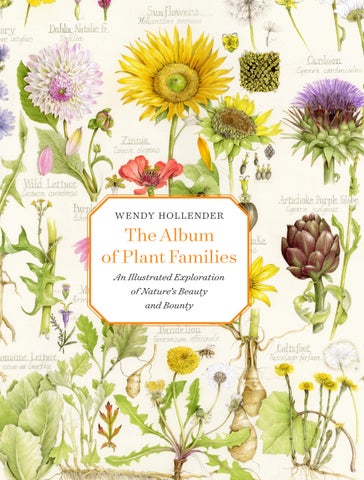
WENDY HOLLENDER
An Illustrated Exploration of Nature’s Beauty and Bounty



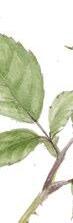


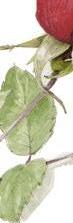
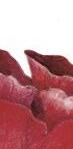
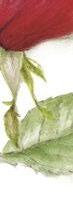








And was always a rose. But the theory now goes That the apple’s a rose, And the pear is, and so’s The plum, I suppose. The dear only knows What will next prove a rose. You, of course, are a rose— But were always a rose.
—Robert Frost










Introduction · 6
1. Amaryllis Family: Onions (Allium)
A Maryllidaceae · 14
2. Amaryllis Family (cont.)
A Maryllidaceae · 18
3. Carrot Family · A piaceae · 22
A Fragrant and Familiar Family, by Marta McDowell · 25
4. Cashew Family · A nacardiaceae · 26
Anacardiaceae: A Diverse Family, by Susan K. Pell and John D. Mitchell · 29
5. Citrus Family · R utaceae · 30
6. Coffee Family · R ubiaceae · 34
From Morning Brew to Medicine, by David Lorence · 37
7. Fig Family · M oraceae · 38
Moraceae: Abundant, Fruitful, and Unusual, by Lee Reich · 41
8. Ginger Family · Z inGiberaceae · 42
A Lifetime of Healing, Flavor, and Ceremony, by Lei Wann · 47
9. Gourd Family · C ucurbitaceae · 48
10. Grass Family · P oaceae · 52
11. Lily Family: Tulips (Tulipa) · L iliaceae · 56
12. Magnolia Family · M aGnoliaceae · 60
Magnificent Magnolias, by Allyson Levy · 63
13. Mallow Family · M alvaceae · 64
Malvaceae: The Loving Family That Comforts! by Dina Falconi · 68
14. Mint Family · L aMiaceae · 70
From Garden Herb to Healing Plant, by Thomas J. Elpel · 73
15. Mustard Family · B rassicaceae · 74
Bountiful Brassicas: A Vegetable Farm’s Most Valuable Family, by Jesse Goldfarb · 77
16. Nightshade Family · S olanaceae · 80
Solanaceae: Edible and Deadly, by Nava Atlas · 83
17. Orchid Family · O rcHidaceae · 84
Thoughts from the Orchid Lady, by Grazyna Nowak · 87
18. Palm Family · A recaceae · 88
Ethnobotany of Palms in the Neotropics, by Michael J. Balick · 92
19. Pea Family · F abaceae · 94
Pea Soup with Mint, by Henrik Vilain and Ingo Schauser, the Garden of Lemons · 97
A Fabulous Family, by Dustin Wolkis · 98
20. Rose Family · R osaceae · 100
Rose, Family of Desire, by Chris Baker · 105
21. Soapberry Family · S apindaceae · 108
22. Sunflower Family · A steraceae · 112
An Asteraceae Reunion, by K Greene · 116
23. Mushrooms of New York, April–August 2023
F unGi (F unGus K inGdoM ) · 118
24. Mushrooms of New York, July–October 2023
F unGi (F unGus K inGdoM ) · 122
A Glorious Year for Mushrooms: Mysterious and Elusive Fungi, by Luke Sarrantonio · 124
Afterword and Acknowledgments · 126
Farms, Growers, and Gardens
Where I Gathered Plants · 127
Resources 128
Bibliography · 128
Index · 129


Igrew up in a family of short people. We were low to the ground with strong muscles and curly or wavy hair. My family shares lots of traits, some of which are obvious when you see us together. Plants have shared traits too—think tendrils on vines instead of curly hair and square stems in the mint family helping the plant to stand up tall.

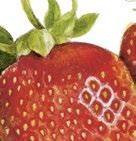
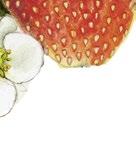


With my paintings of plant families, my goal is to help you understand plants in an empowering and joyful way. Since many adults and children are unfamiliar with the scientific side of plants, I have arranged my paintings to provide a visual, accessible gateway to the relationships between plants. Plant families share visual patterns, often in the structure of their flowers, leaves, and stems. The families also share features such as scent, taste, and medicinal qualities, and sometimes irritating and poisonous properties. Exploring these relationships is valuable, helping to deepen a connection to nature and assisting with plant identification.




As a botanical illustrator, I draw plants with as much detail as possible, making the paintings useful for identifying and understanding plants. I have been doing this work exclusively for twenty-six years, though I was an artist and textile designer before then. I have been fortunate to follow plants around the world to illustrate them.
I always work from real plants so I can closely observe and fully experience the plant, even if characteristics such as smell and taste are not apparent in a drawing. I like to eat all the edible plants and observe but keep my distance from the poisonous ones. I consider myself a bit of a plant explorer and ethnobotanist. With each illustration, I feel as if I am discovering these plants for the first time, uncovering secrets that I never knew before. I could probably read about plants and find all this information, but it’s more rewarding for me to learn from a personal relationship with each plant.
My earliest memory of plants is from when I was four years old. My family went on a summer vacation to visit relatives in Canada. Our great uncle Dave and his wife, Mary, lived in a small town near Toronto in an old wooden house with a dry goods store below and apartments for the family above. Mary was clad in an apron
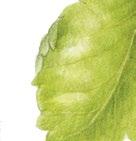
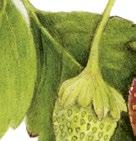
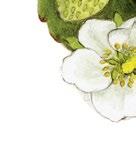
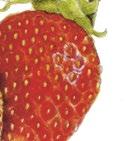
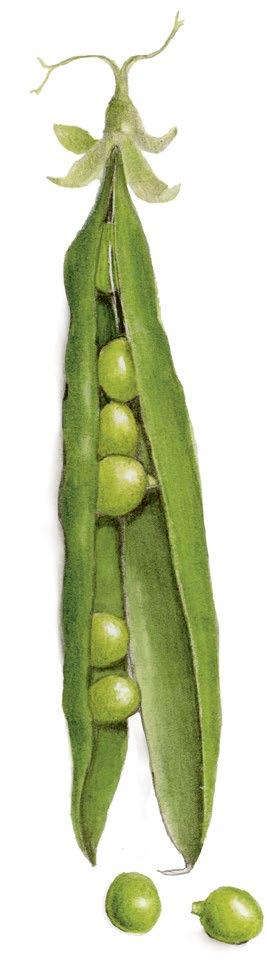
that tied at the waist and had ruffles on top. She took my hand and led me out back to see the garden where sweet peas were growing. Mary showed me how to pick a pod, split it open, and munch on the round, bright green peas inside. Next, she bent down over the bed of low green leaves in groups of three with bright red heart-shaped berries dangling below. I learned how to pick a strawberry and was encouraged to eat it. I was immediately enamored. All of a sudden, I was awakened to the magic of plants, which until that moment were nothing more than a sea of green color to me. Back home in our suburban backyard, I was now aware of my mother’s pretty, colorful flowers and an occasional strawberry. Do you remember your earliest memory of plants?
Plants eventually drew me to the Hudson Valley of New York after living in Manhattan for thirty-five years. It all started with a trip to a local you-pick farm called Kelder’s near the hamlet of Accord, New York, when fellow botanical artist Carol Woodin invited me to go strawberry picking. It wasn’t until I visited Kelder’s Farm again, seventeen years later, to gather sunflowers for this project, that my first visit there came back to me. The first time I went to this farm was in spring to pick strawberries and sweet peas, the same two plants I had learned to pick as a four-year-old! Coincidence? Or were those buried early memories still leading me along on my journey with plants? I kept going back all summer to Kelder’s to pick the next ripe fruit or vegetable. It was a delightful experience to learn what my food looked like growing. I often had no idea. At the end of that summer I decided I needed to get myself a house right there, near Kelder’s Farm, and that is what I did!
We generally read books looking for answers, but sometimes we have more questions as we read, each new insight allowing our curiosity to grow. I hope you will find in my paintings and the text in this book a way to allow your own curiosity and wonder to thrive, enticing you to go on your own path of discovery about nature and the plant world. This project of researching plants and developing these plant family paintings (over
a four-year period) is a culmination of my twenty-six years as a botanical illustrator, learning about plants as I go. In this book, you will find twenty-four original paintings, each of a different family to investigate. In each painting, I have illustrated from six to twenty-eight individual species or varieties of plants or mushrooms. I write about my process of developing each painting
and what I discovered. There are also many guest essays written by plant experts in various fields, allowing you to hear different perspectives on these well-known and important plants. My hope is that when you finish looking at these paintings, you will come away with many questions that will spark your curiosity and put you on your own path to exploration.
What’s in a name? That which we call a rose by any other name would smell as sweet. —Juliet, William Shakespeare’s Romeo and Juliet
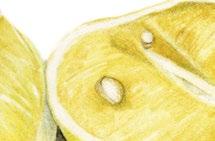
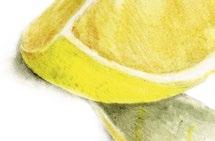


The classification and naming of plants—their nomenclature—is helpful to understand. A common name is a simple name given to an individual plant species. Common names are not universal, and many plants have multiple common names, so a system of consistent scientific names was created that is the same anywhere in the world. A scientific name consists of two parts. The first part, the genus (plural: genera), may be likened to a person’s family name, and the second part, the species, to a person’s first name. The genus is always capitalized, but the species is lowercase, and the full scientific name is italicized. The scientific name for onion is Allium cepa is the genus, and cepa is the species. Garlic is also in the genus Allium, and its scientific name is Allium sativum.
from those of a typical member of the species. Pumpkin, kabocha squash, and zucchini are all cultivated varieties of Cucurbita species. Cultivars often have fanciful or descriptive names, such as Granny Smith apple or Ruby Moon hyacinth bean.
Plant families also have common and scientific names. As with species, there are usually many common names but only one universal scientific name for each family. In plants, the scientific family name almost always ends in -ceae. Brassicaceae, for example, is the scientific name for the mustard family. Names are always changing in the natural world based on updated DNA findings and other considerations. Therefore, you may know different names for some of the species in this book; that is unavoidable.







Allium in are
There are more than 380,000 individual plant species in the world, and these plants fit into some 600 unique families, each with shared characteristics that can be learned to make it easier to recognize similarities in plants.


Many of the plants illustrated are subspecies, varieties, or hybrids. Subspecies (abbreviation: subsp.) and variety (abbreviation: var.) are taxonomic ranks below species, indicating a naturally occurring population with minor characteristics that vary slightly from what is typical for the species such as flower color or geographic location. A hybrid is a plant produced from two different species or varieties. Hybridization happens occasionally in nature, though some plants, such as those in the genus Cucurbita (gourd family, Cucurbitaceae), hybridize frequently. Humans create hybrids intentionally. A hybrid cross is indicated by the symbol ×, as in Citrus × meyeri, the Meyer lemon. A cultivar (cultivated variety) is a plant intentionally bred for particular characteristics that differ
viation: subsp.) and variety (abbreviation: var.)
for
I have created twenty-four paintings for this book. The first twenty-two represent families in the plant kingdom. By learning these twenty-two plant families, you are on your way to being able to identify 140,000 plants! The final two paintings describe mushrooms I encountered over a growing season in my area of New York State. Mushrooms, part of the fungus kingdom, are not considered plants, but they are closely tied to the plant kingdom. The “roots” of mushrooms, known as mycelia, intertwine with the roots of trees and plants underground. These two paintings feature fifty-two species of wild mushrooms. is


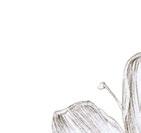
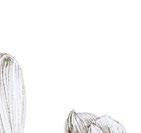
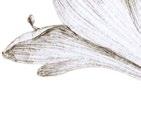
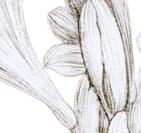

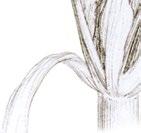
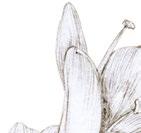






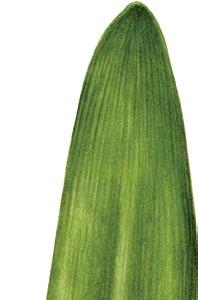
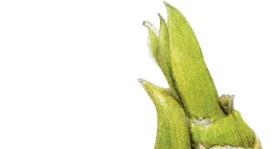
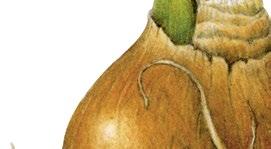


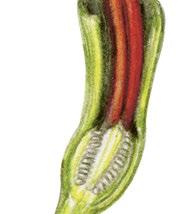

Produced on scapes (leafless flower stalks)
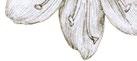
6 tepals produced in 2 whorls
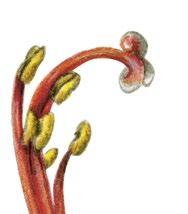
6 stamens
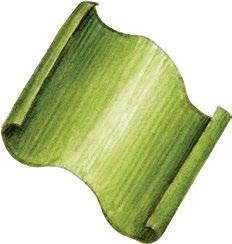
Pungent or not
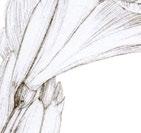
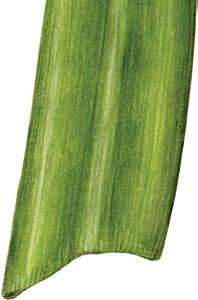
Parallel linear veining
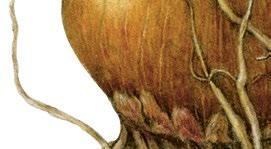
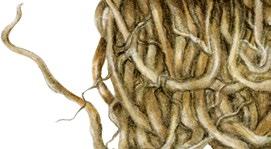

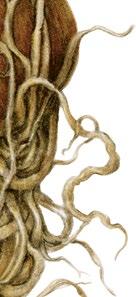

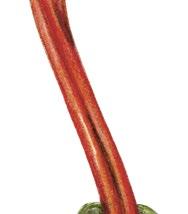
Re-form annually from base of old bulb (most are perennials)
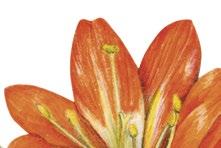
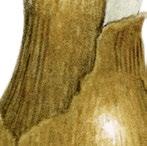
The tropical flowering plants of the amaryllis family are full of large flowering umbels, clusters of several flowers arranged on one central stem. The bright striped Barbados lily, beach spider lily, swamp lily, and Natal lily all grow in tropical environments.

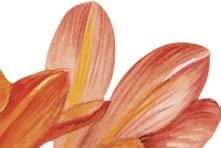

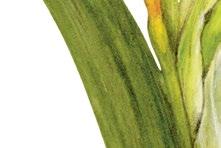
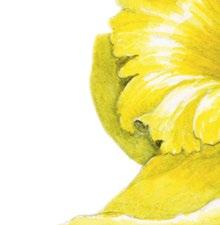
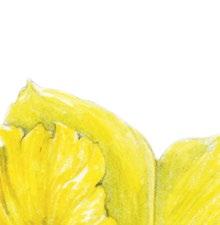
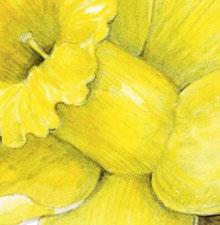
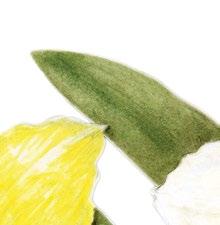
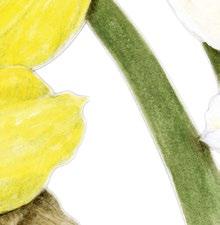
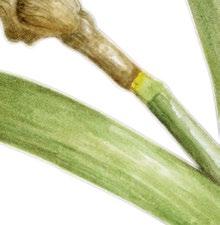
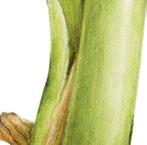
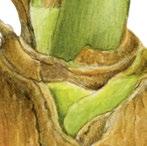
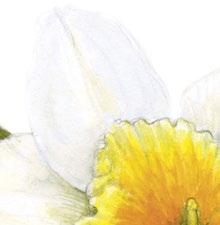
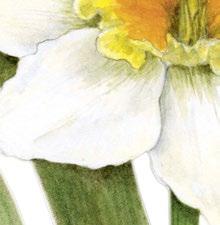
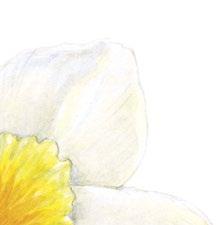
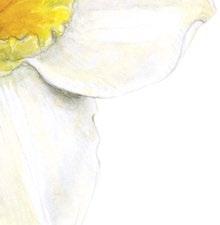
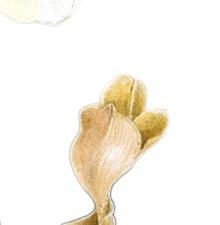
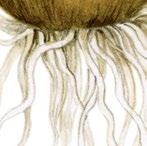
In early spring in the Northeast, the daffodils start to bloom, offering an optimistic promise of the flowers to come. Daffodils spread out nicely and continue to expand in the garden, and no one wants to eat them. Why do deer ignore daffodils? I wondered if the bulbs of the ornamental flowering plants were edible. Do they taste like onions? Do deer eat onions or leave them alone too?

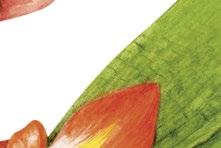
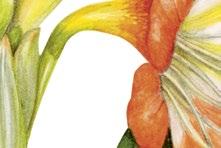
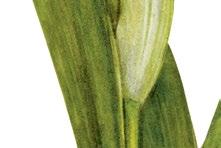
I learned that daffodils and many other family members have a toxic chemical called lycorine throughout all parts of the plant that can make deer sick. The taste is bitter, so deer avoid them. They also avoid all alliums because of the smell, even though they don’t all contain lycorine. By contrast, deer love to eat tulips, though they are poisonous to humans.












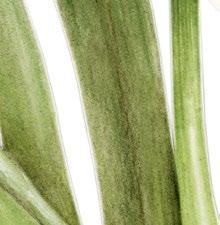







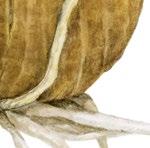


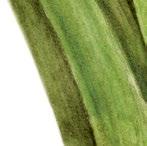
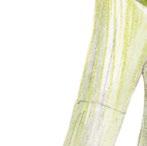
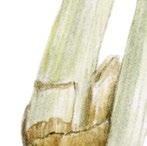





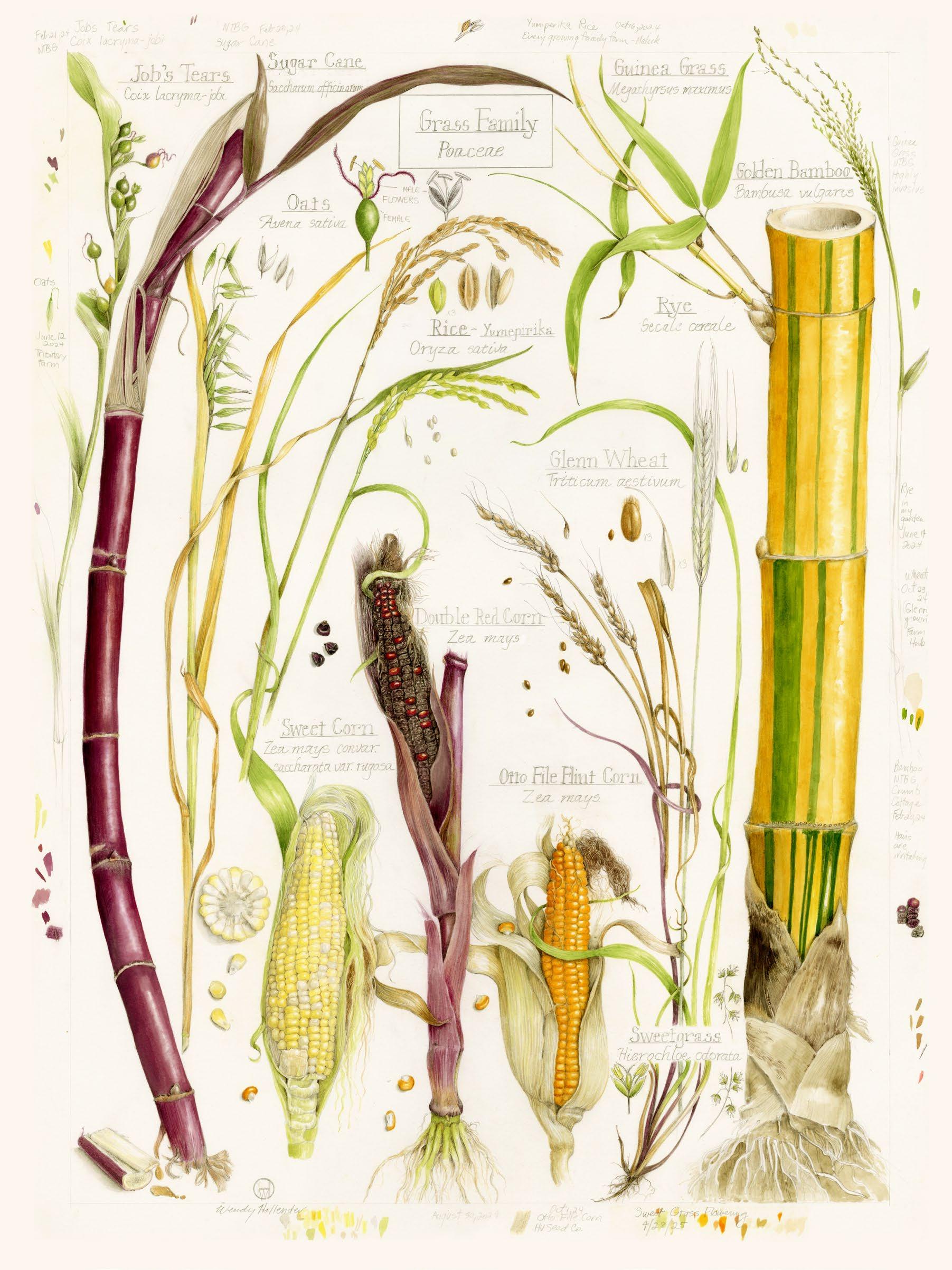
The grass family is large. With over 11,000 species, it is currently considered the fifth-largest plant family, behind Asteraceae, Orchidaceae, Fabaceae, and Rubiaceae, in that order.
Economically, this family is probably the most important. From these plants we get all our grain crops, a significant part of the human diet worldwide. The history of agriculture started with this family when cultivation of wheat began.
I started to write about the grass family by reflecting on what the family means to me. Then I studied the painting to see what memories it sparked. Studying and drawing this family was really interesting because these monocot plants have some botanical features I love to draw, such as long strappy leaves and hollow stems. They also provided a good opportunity to study the hard small fruits that we call grains, as well as the tiny flowers, which require magnification to even see.
Writing about the grass family is confusing in today’s world, when so much controversy surrounds this ancient family, and so many people are choosing a gluten-free diet in response. Honestly, I have more questions than answers.
First thing I did was make a slice of twenty-one-grain/seed toast to help get me in the mood to start writing. Then I cooked whole wheat berries from a new form of perennial wheat being developed as a potentially more sustainable product called Kernza. I wanted to experience the essence of what wheat tastes like when simply cooked. It was slightly crunchy and very nutty tasting, as was a bowl of locally grown Yumepirika rice. Normally the rice I eat comes from very far away, and I wanted to see if one of the few farmers to grow rice in my region is on to something. The rice tasted very fresh and tender and was rich in flavor.

When I was drawing sugar cane in Hawai‘i, I was able to get fresh-squeezed sugar-cane juice at the farmer’s market to try, and I also sucked on the fibrous sugar-cane stalks.
Avena sativa, Oats
Bambusa vulgaris, Golden Bamboo, Striata
Coix lacryma-jobi, Job’s Tears
Hierochloe odorata, Sweetgrass
Megathyrsus maximus, Guinea Grass
Oryza sativa, Rice, Yumepirika
Saccharum officinarum, Sugar Cane
Secale cereale, Rye
Triticum aestivum, Wheat, Glenn
Zea mays, Corn, Double Red
Zea mays, Corn, Otto File Flint
Zea mays convar. saccharata var. rugosa, Sweet Corn
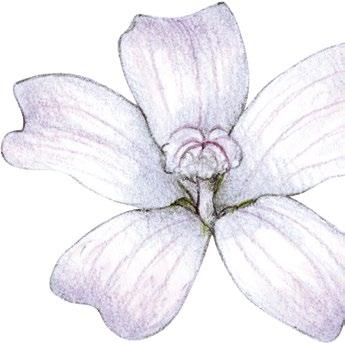





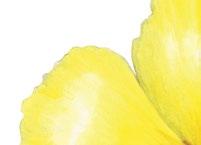
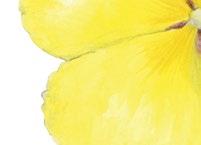
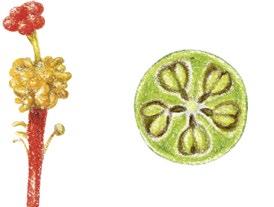
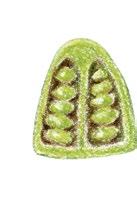
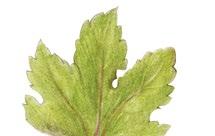


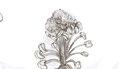
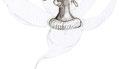
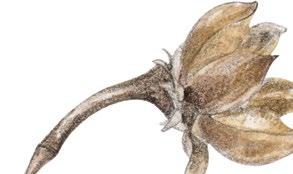
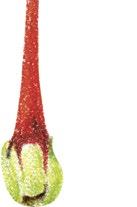
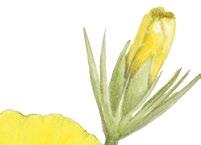
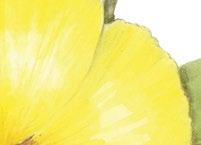
5 separate petals
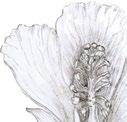
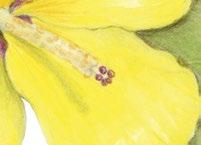
Stamens fused, forming a column





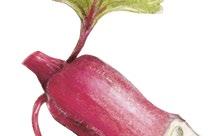
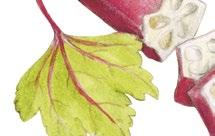
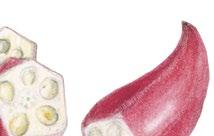

Mucilaginous sap
than losing myself by reading a novel, I had descended into the magical and complex world of nature through the lens of this one stolen flower. This experience led to the idea of traveling to do botanical illustration and eventually to take students of botanical drawing along with me on journeys to so many beautiful and exotic locations around the world.
My daughter was the farming pioneer in our family, first to intern on a farm, the nowfamous Stone Barns in Tarrytown, New York, right after college. She joined many young people at the time, traveling and working for WWOOF (Worldwide Opportunities on Organic Farms), which placed her on a farm in Hawai‘i. I decided to visit her there and combine the trip with an opportunity to study and draw endangered native Hawaiian hibiscus plants. The hibiscus flowers led me to the National Tropical Botanical Garden on the island of Kaua‘i, where they were propagating endangered hibiscuses from seeds collected in the wild.


There, at this magical garden, I also discovered perhaps my favorite classroom for botanical drawing in the world. I saw my first chocolate tree (Theobroma cacao) and experienced flowers and fruits that grow in a cauliflorous arrangement, meaning that they grow directly out of the woody trunk and branches. Harvesting ripe pods of cacao is a joy because inside are the beans (seeds) that are roasted and turned into chocolate. The outside of the beans is covered in a gelatinous (or mucilaginous) goo with a slight taste of chocolate that is delicious as a refreshing hydrating beverage.
There are many species of hibiscus, some native to Hawai‘i. I started my painting with Hibiscus brackenridgei, the Hawaiian state flower, which is an endangered species with fewer than 100 plants remaining in the wild on three islands. Fortunately, this plant is easy to cultivate, and it is a beam of bright sunlight to see it growing. The flower opens in the morning and, like all hibiscuses, closes by afternoon and dies at the end of the day.
Many hibiscus family plants grow in a temperate environment, and I found many closer to home. Okra grows well, producing an abundance of edible fruits for culinary uses; marshmallow is used medicinally; and rose of Sharon is an ornamental shrub that delights the landscape in late summer.
I created this composition with a center focus on the chocolate tree—because who doesn’t love chocolate?—and included as many plants as I could. The multicolored Chinese Hibiscus had to be included for sentimental reasons. Tilia cordata (little leaf linden) is a favorite tree around the world that grows tall and majestic, producing flowers with a seductive scent that the bees and I love. The bees produce a delicious honey from the flowers, which are also used in perfumes and teas and other medicinals. My grandson Leo thinks this is a cool family because it has both chocolate and marshmallow, two of his favorite treats, which make up hot chocolate, a delicious beverage in the winter.
Explore this family wherever you live and see what you can discover too.
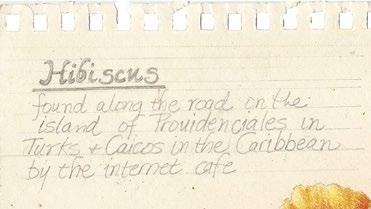
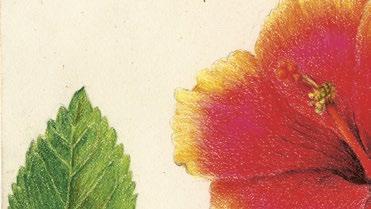
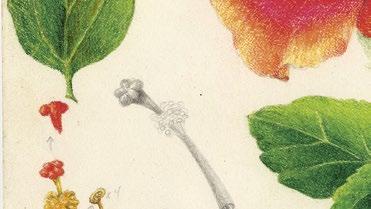
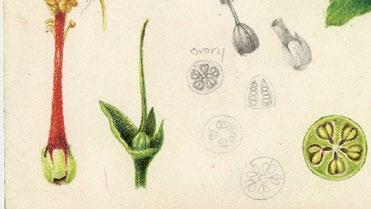

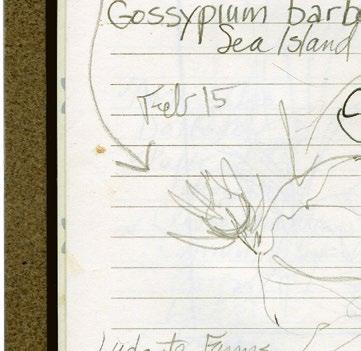
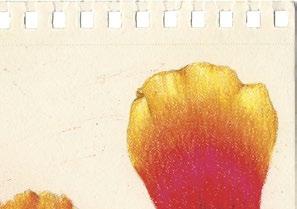
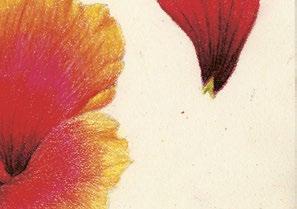
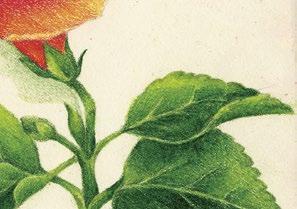
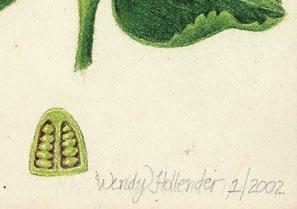
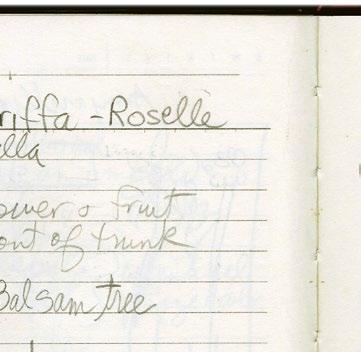
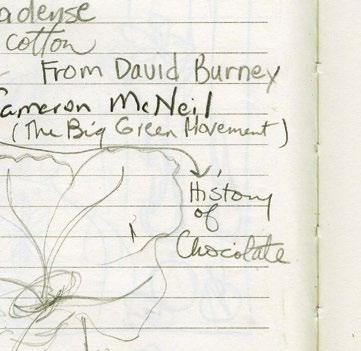

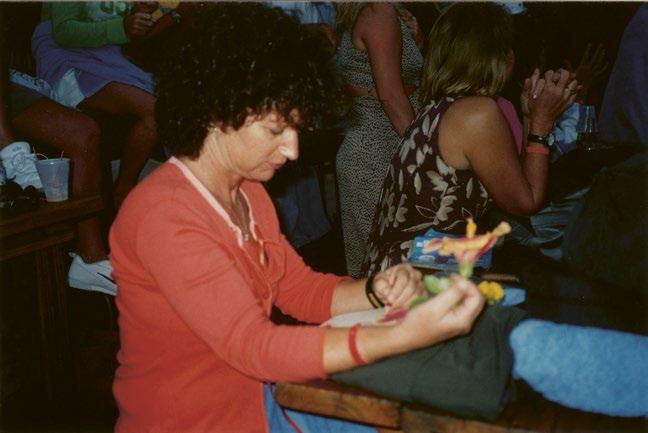
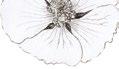
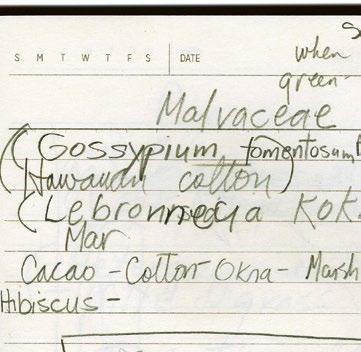
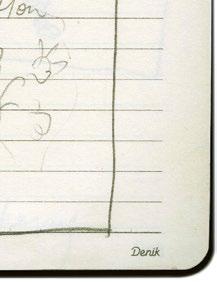
During my visit to Turks and Caicos in 2002, I spent all day drawing the hibiscus flower (left and above). This illustration and notebook sketch show my inspiration and process for planning the composition of the mallow family painting (below).
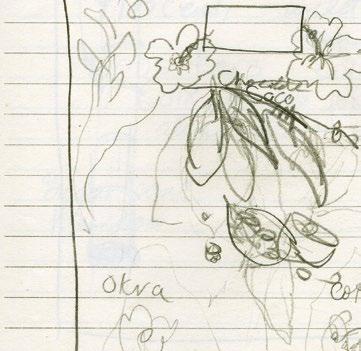
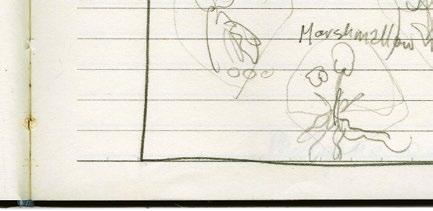

19,000+
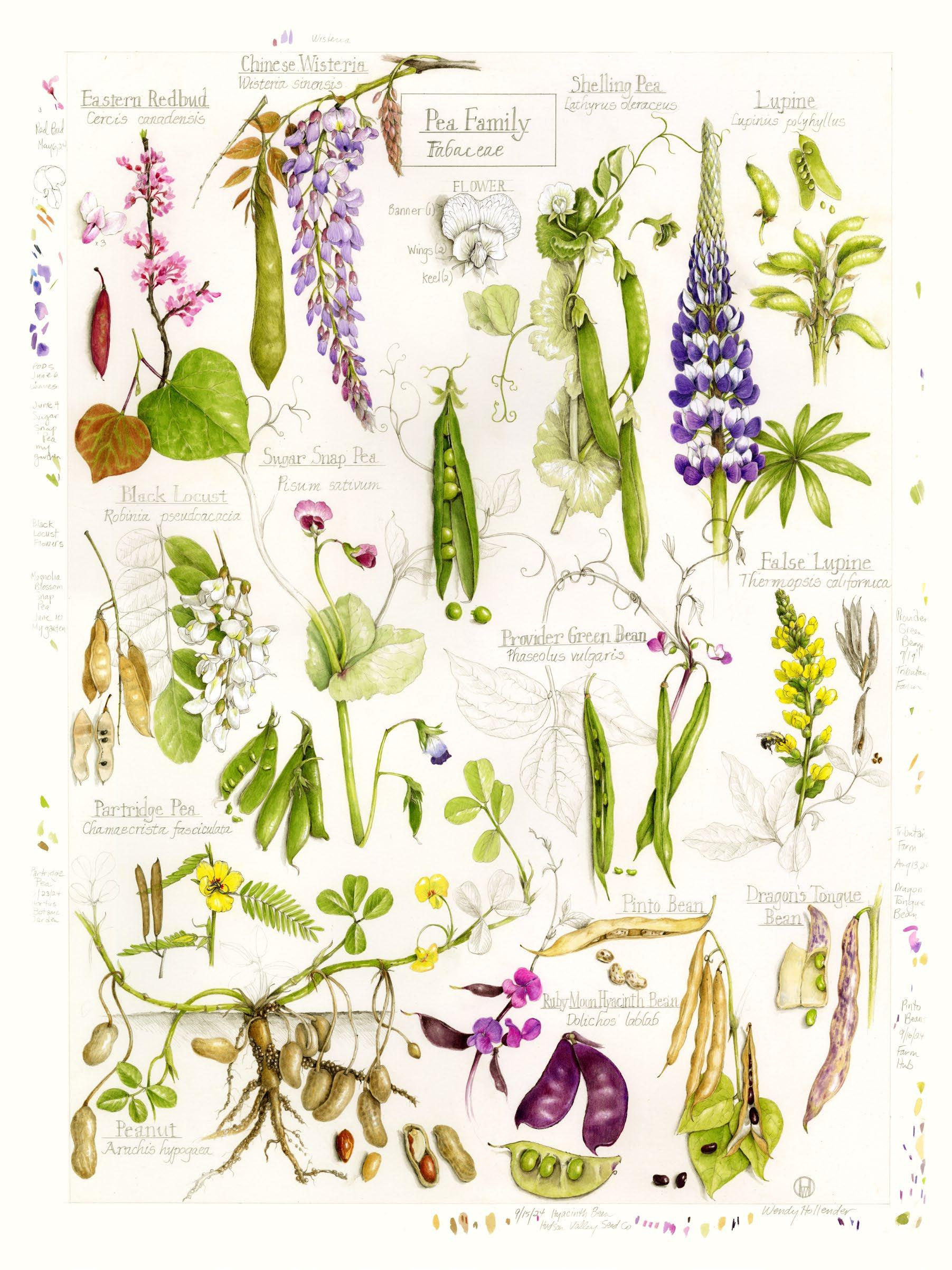
My pea family painting is like a travel journal for 2024. It started with an early surprise: while walking in the garden one morning, I noticed that a gorgeous redbud tree, native to my region, had started to bloom. I was curious to learn what family the redbud is in, because I didn’t know. The flowers are tiny and hard to see, so I did a quick plant family lookup with my phone (see how to do this in the Resources section) and found that the redbud is in the pea family (Fabaceae). I quickly cut a small grouping of flowers and ran to the studio to study them under the microscope. Pea family flowers are quite distinctive. They have five petals: one larger petal, identified as the banner, two wing petals, and one keel. Yes, “keel” is the name for the bottom centerline of a boat, and this structure does resemble that shape. Once you see a typical pea flower, you will be able to identify many plants in this family, and there are over 19,000 species!
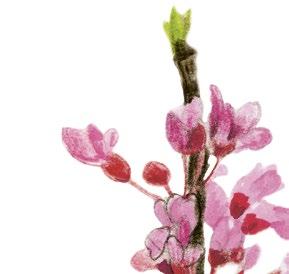


Once I identified the tiny pink flowers of my redbud tree as pea flowers, I was ready to start my pea family painting. I was waiting for the wisteria to bloom, as I knew I would be including it. Hanging down like an elegant purple necklace, wisteria’s cascading flowers bloom first close to the stem, leaving the tips of the inflorescence as tiny buds, and then slowly open down the length of the cluster. In my neighborhood of small farmsteads and old farmhouses, one neighbor has a beautiful entryway covered in wisteria. I visit it every spring just to look, but this year I was planning to ask for a bloom to paint. I arrived when the wisteria was in bloom and was just looking, not cutting, when the owner came out to let me know his wife had been watching me for days when I had come by to look at the wisteria vine. They actually have a sign on the gate that reads, “Not a U-pick. Do not touch!” I wasn’t the only one attracted
Arachis hypogaea, Peanut
Cercis canadensis, Eastern Redbud
Chamaecrista fasciculata, Partridge Pea
Dolichos lablab, Hyacinth Bean, Ruby Moon
Lathyrus oleraceus, Shelling Pea
Lupinus polyphyllus, Lupine
Phaseolus vulgaris, Bean, Dragon’s Tongue
Phaseolus vulgaris, Green Bean, Provider
Phaseolus vulgaris, Pinto Bean
Pisum sativum, Sugar Snap Pea
Robinia pseudoacacia, Black Locust
Thermopsis californica, False Lupine
Wisteria sinensis, Chinese Wisteria

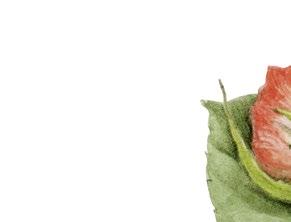
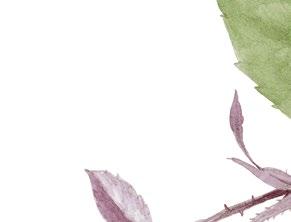
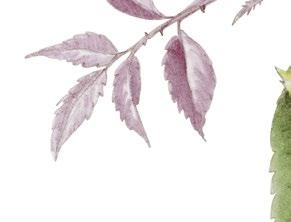


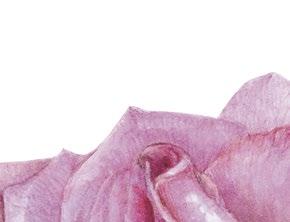
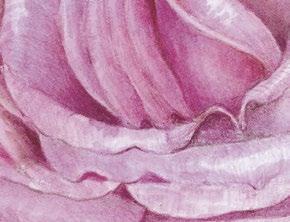
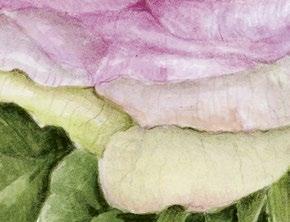
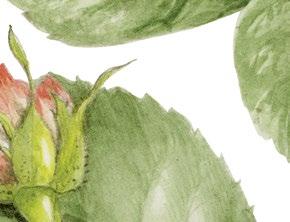
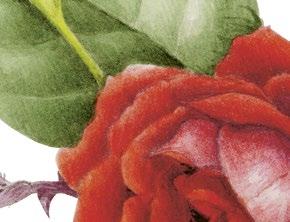
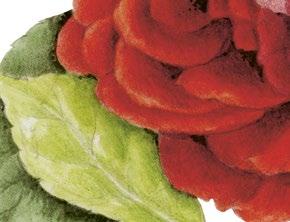


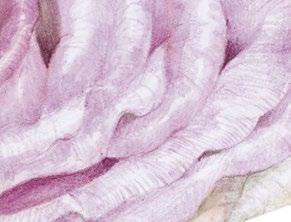
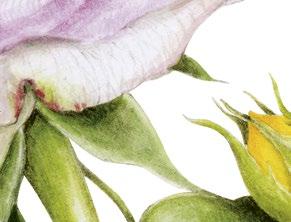
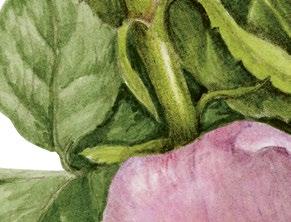
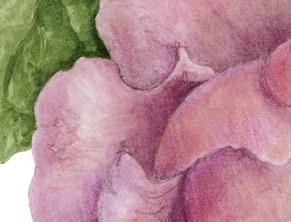
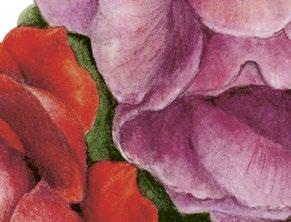
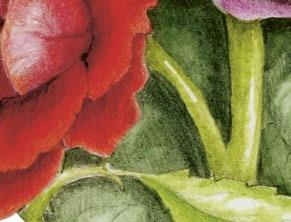

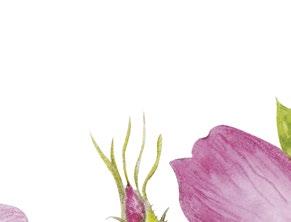
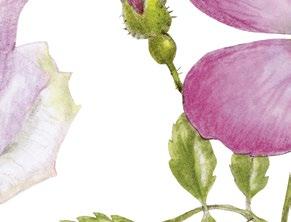
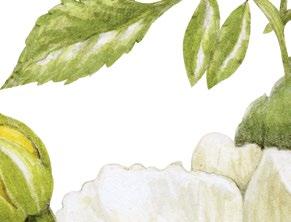
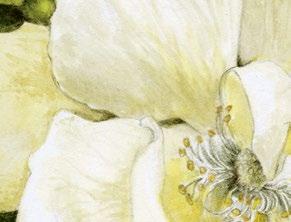
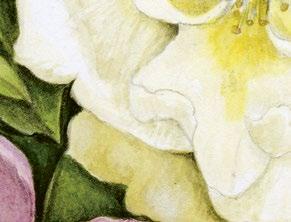
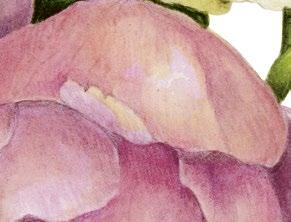
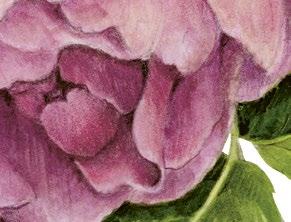
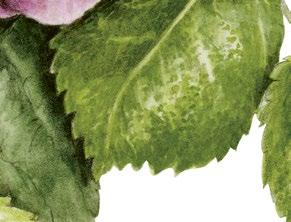
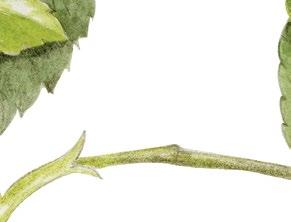

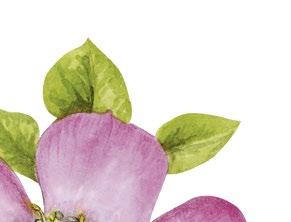
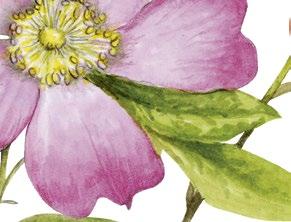
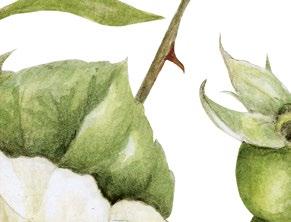
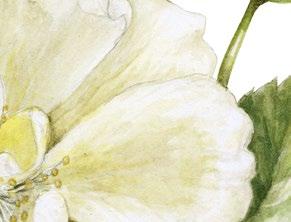
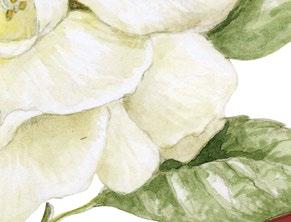
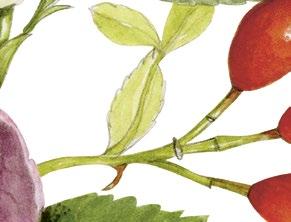
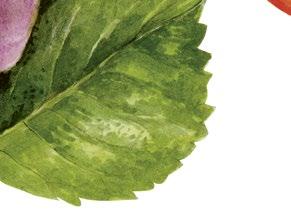
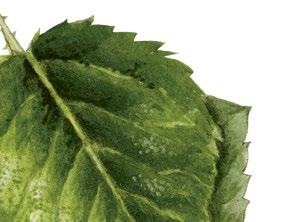

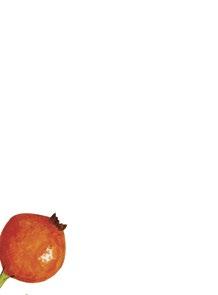
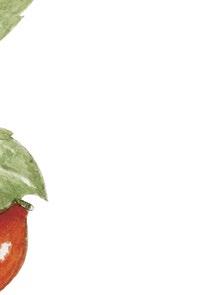
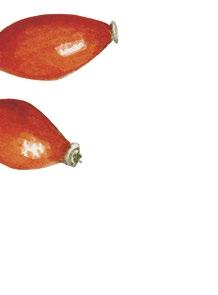

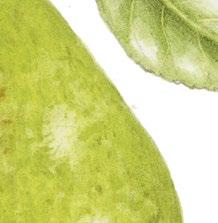
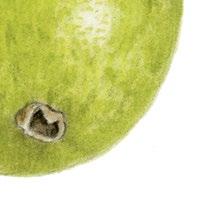
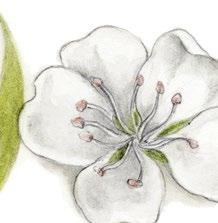
wild ways. And what of the fruits of family Rosaceae? Many people are shocked to learn that so many of the sweet fruits we grow in temperate regions today, as diverse in appearance and flavor as their flowers are similar, spring from the same branch of the tree of life. A majority of the drupes (including cherries, peaches, almonds, and plums), pomes (apples, quinces, and pears), and berries (blackberries, raspberries, and—not technically a berry— strawberries) that dominate the prototypical American’s appetite for fruit are all in the family. And like their cousin Rosa, so too have these plants undergone umpteen transformations to suit our human desires.
In truth, anyone who has been lucky enough to browse on vine-ripened wild blackberries in a dappled understory knows that very little could improve upon the experience. However, take one bite of a wild crab apple followed by a bite of literally any apple you’ll find at a farmstand, and you’ll find our tastes have massively improved the irresistibility of Eve’s temptation. Wild plums make delicious preserves (with sweetener to offset their powerfully sour punch) but can hardly compare to cultivated varieties—deep purple orbs dusted with waxy bloom that smudges like lipstick when you rub your thumb across it, so bursting with juice that the best culinary use for a pint’s worth may be simply to devour them over the sink, one by one.
We have long understood other animals to be integral to the reproduction of many plants. Yet our demure deferral to “the birds and the bees” often obscures our own enduring passions at work. Does the desire we feel to feast upon a sun-warmed, peak-season peach at the pick-your-own
(the interdiction only heightening the need) stem from our desire for the body parts the peach stands in for in lyric or glyph? Or did we work together, cross-culturally, generation after generation, millennium after millennium, to align our staple fruits and favorite flowers with our objects of desire? We have made ourselves indispensable in the sex lives of roses—most cultivars in our farms, orchards, and gardens could never grow true to type without us, and many have forfeited sexual reproduction altogether in favor of petals upon petals. But so too have they come to dominate us in mind and body, our hearts and appetites alike. As it has been to us from time immemorial, so it remains: rose, family of desire.



c Hris b aker is an author, professional mushroom lover, and founder of the Chicory Naturalist shop in Kingston, New York. She is a certified forager and enthusiastic guide to the realm of fungi, leading forays in the Hudson Valley bioregion. Running through all of Chris’s professional endeavors is a passion for reconnecting broken chains of generational knowledge about the chains of generational natural world. She lives a few blocks from the Hudson River with her spouse, child, and two calico cats.




30,000+ species
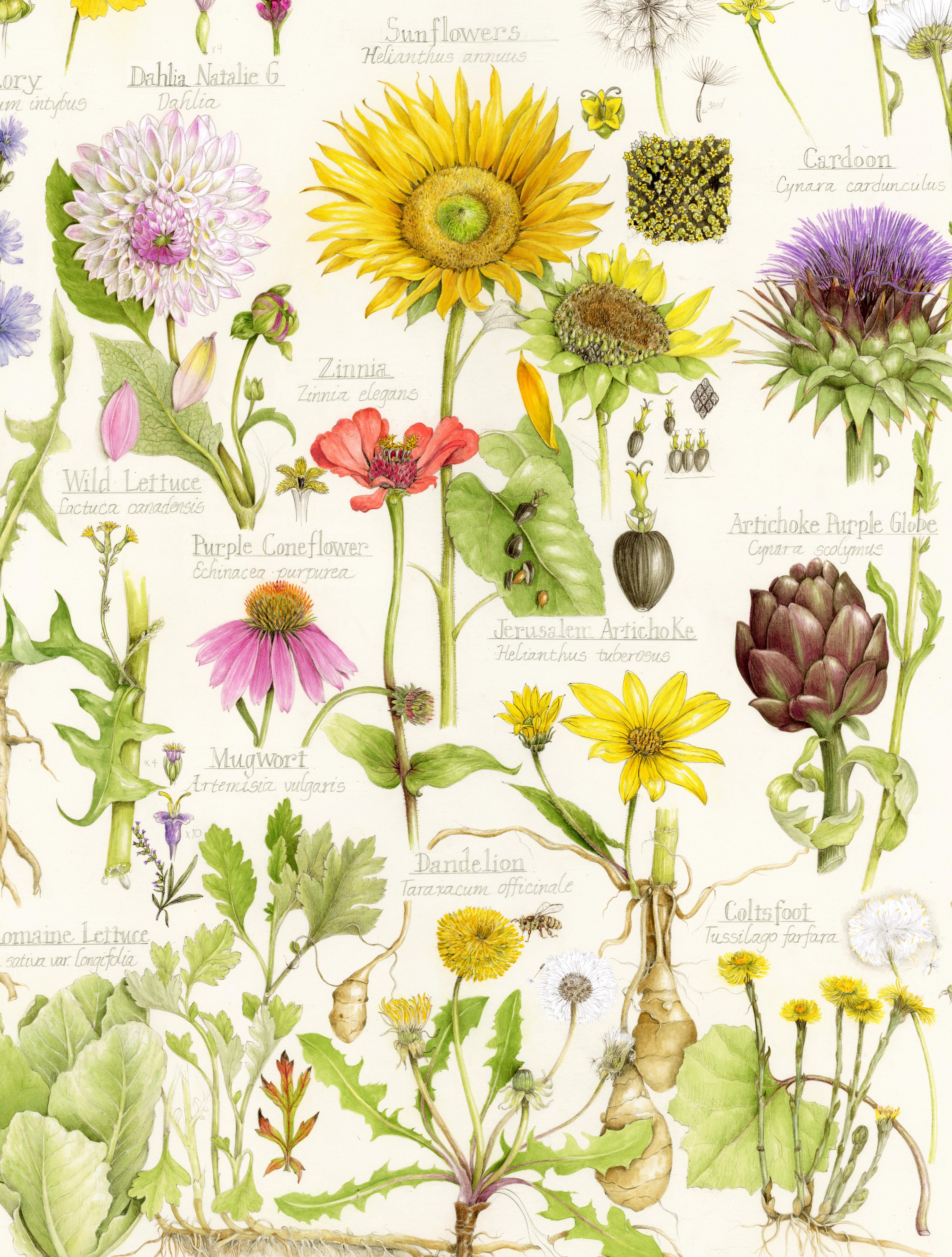
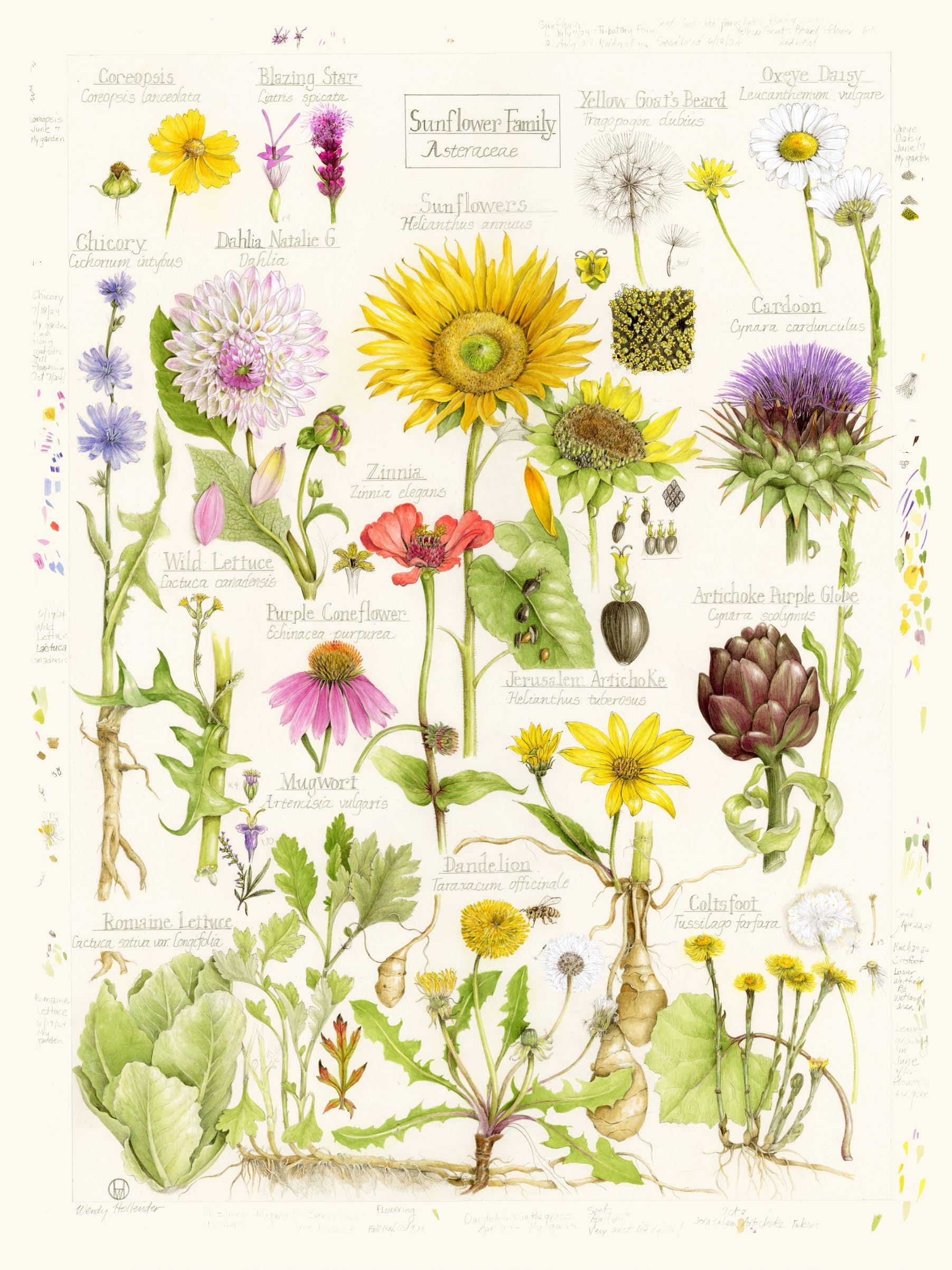
The sunflower family (Asteraceae) is the largest family of flowering plants, with over 30,000 individual species, surpassing the orchid family (Orchidaceae), with over 28,000 species. Some of the smallest flowers and largest flowers are in the Asteraceae family. Sunflowers can grow as tall as 30 feet, and one composite flower head can be 12 inches in diameter and weigh close to 5 pounds when laden with seeds.
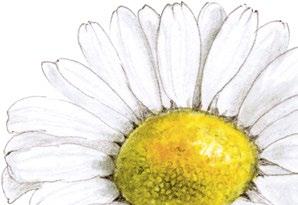
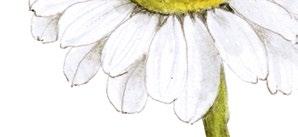
This is a good family to start with for identification purposes because of its distinctive flower head, which basically looks like a daisy or a dandelion. When I think “daisy,” I picture a simple flower, but in reality this family has some of the most complex flowers out there. What most of us consider a single daisy flower, with its round center surrounded by petals, is a complex composite flower head comprising often hundreds of tiny individual flowers. The center is composed of tightly packed disc flowers (or florets), while the outer “petals” are individual ray florets. Each disc floret has a male and a female part and turns into an individual seed, allowing the whole flower head to house hundreds of seeds, each capable of becoming a new plant. The life cycle of the dandelion can be quite rapid, from my observation, progressing from flower to seed within five days. Sometimes I would cut a dandelion in flower and bring it into my studio, and within a few days it would have turned into a seed head. The dandelion seed head is the feathery, fuzzy ball that many of

Artemisia vulgaris, Mugwort
Cichorium intybus, Chicory
Coreopsis lanceolata, Coreopsis
Cynara cardunculus, Cardoon
Cynara scolymus, Artichoke, Purple Globe
Dahlia, Dahlia, Natalie G
Echinacea purpurea, Purple Coneflower
Helianthus annuus, Sunflower
Helianthus tuberosus, Jerusalem Artichoke
Lactuca canadensis, Wild Lettuce
Lactuca sativa var. longifolia, Romaine Lettuce
Leucanthemum vulgare, Oxeye Daisy
Liatris spicata, Blazing Star
Taraxacum officinale, Dandelion
Tragopogon dubius, Yellow Goat’s Beard
Tussilago farfara, Coltsfoot
Zinnia elegans, Zinnia
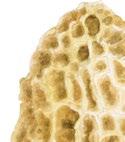
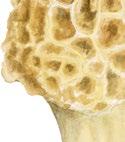
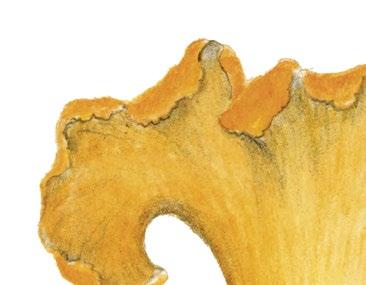
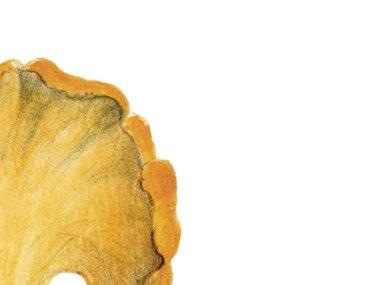
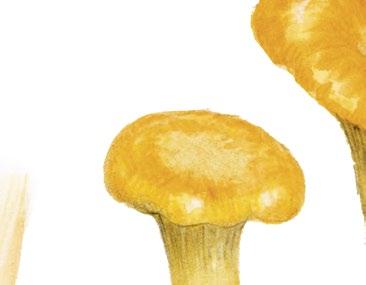
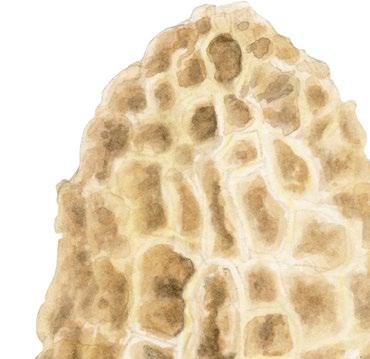
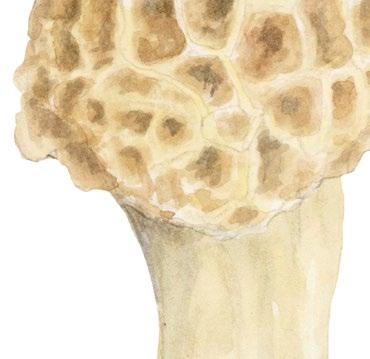
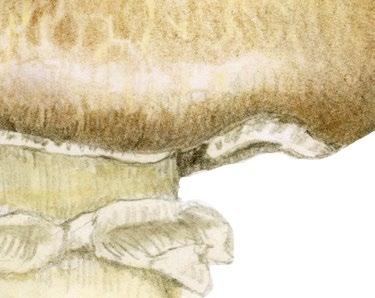
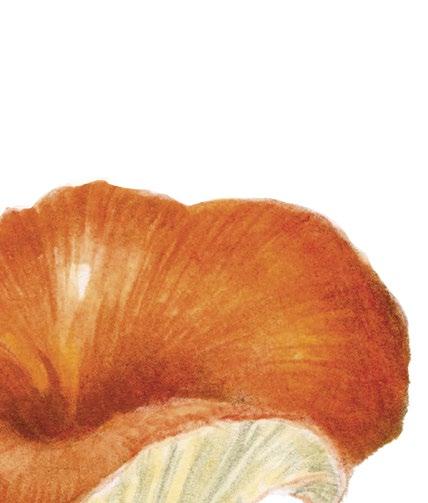
I find mushrooms so mysterious because of all the work they do underground, away from our prying eyes, and then miraculously, one day or not, pop up out of the earth. If you have ever tried foraging for mushrooms, especially for certain elusive edible mushrooms such as morels, it almost feels as if they know you are there and they decide whether you will be able to see them or not. I have often walked over one spot looking for morels and found nothing, yet on my return trip an hour later, after I have put in lots of hard work looking and talking to the morels, they appear. I describe it as “getting your mushroom eyes on.” Once you do, you start to see more and more mushrooms, or so it seems.
The year 2023 was very rainy in the Hudson Valley/Catskills region of New York. Fortunately, this was the year I decided to find and draw mushrooms for my project. I needed help, because finding mushrooms takes time, knowledge, and the willingness to travel around looking for them. I worked with Luke Sarrantonio, a local mycologist, as well as Dina Falconi, a local herbalist. I sometimes went on a walk with Luke to look for mushrooms, but more often than not, Luke would send a text to let me know he had found a subject for my painting or to invite me to come see what was growing somewhere in the area. I also took countless walks and bike rides scanning the landscape in pursuit of mushrooms. I was able to find so many just by moving slowly and looking at the ground. Subsequently, 2024 was extremely dry, and mushrooms were hard to find, but fortunately I had completed the two paintings in 2023, finishing one page halfway through the season and the second page by the season’s end. I organized the mushrooms on page 1 by date, just adding whatever I found to the page when I found it. I organized page 2 a bit by type of mushroom, keeping the rosellas and amanitas together, for example.
Some mushrooms are known to be toxic, others to be edible; these are indicated in the mushroom lists below. Novice mushroom hunters should always have their identifications confirmed by a reliable, experienced mushroom guide.

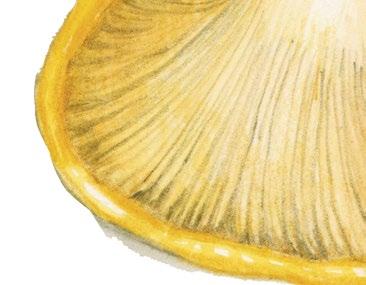
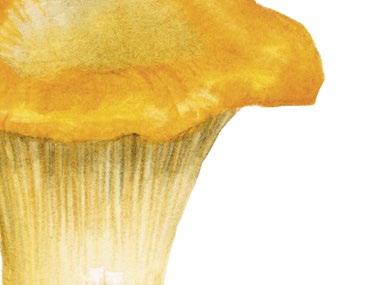
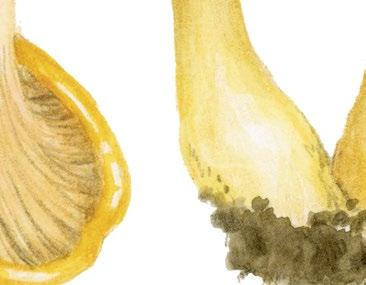









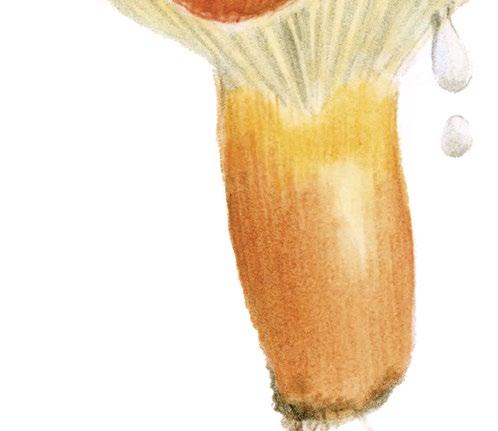



illustrations
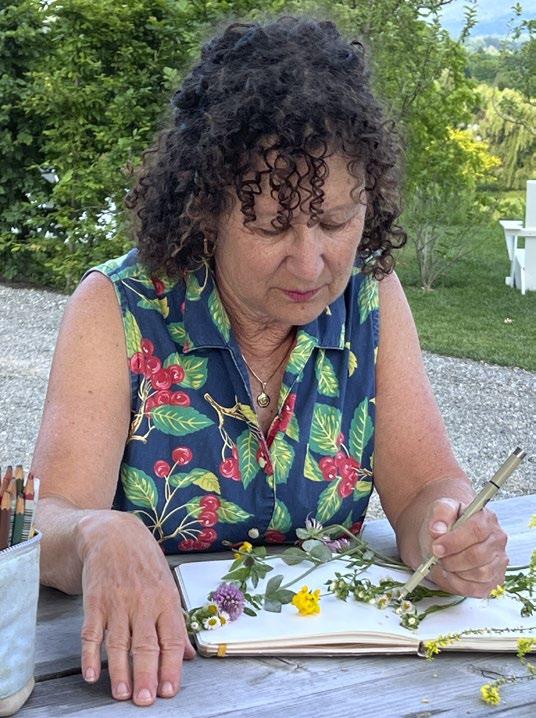
about the author
W endy H ollender is a world-renowned botanical artist and author whose work has been exhibited at the Royal Botanic Gardens, Kew, the New York Botanical Garden, and the Smithsonian National Museum of Natural History, and published in the New York Times, O: The Oprah Magazine, and numerous other outlets. A graduate of the Rhode Island School of Design, Hollender is the author of the best-selling books The Joy of Botanical Drawing and Botanical Drawing in Color, and teaches botanical drawing at the New York Botanical Garden and other beautiful venues around the world. See more about Wendy at www.wendyhollender.com and her educational website www.drawbotanical.com.
Front cover: Sunflower family (Asteraceae) (detail). See page 113. Page 102, bottom: “Tree of Life” (c. 1994) for Duralee Fabrics, by Wendy Hollender
Pages 8–10: The illustrations on these pages have also been reproduced in The Joy of Botanical Drawing: A Step-by-Step Guide to Drawing and Painting Flowers, Leaves, Fruit, and More by Wendy Hollender (Watson-Guptill, 2020).
Editor: Lauren Orthey
Copy editor: Amy K. Hughes
Production editor: Kayla Hassett
Design: Misha Beletsky
Production manager: Louise Kurtz
Text and drawings copyright © 2026 Wendy Hollender. Compilation, including selection, order, and placement of text and images, copyright © 2026 Abbeville Press. All rights reserved under international copyright conventions. No part of this book may be reproduced or utilized in any form or by any means, electronic or mechanical, including photocopying, recording, or by any information retrieval system, without permission in writing from the publisher. Inquiries should be addressed to Abbeville Press, 655 Third Avenue, New York, NY 10017. The text of this book was set in Surveyor. Printed in China.
First edition 10 9 8 7 6 5 4 3 2 1
ISBN 978-0-7892-1541-3
Library of Congress Cataloging-in-Publication Data available upon request
For bulk and premium sales and for text adoption procedures, write to Customer Service Manager, Abbeville Press, 655 Third Avenue, New York, NY 10017, or call 1-800-Artbook
Visit Abbeville Press online at www.abbeville.com.