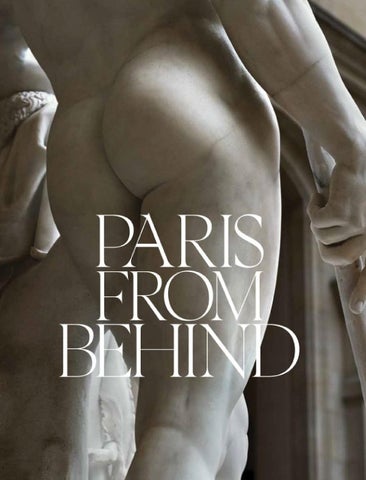
GAIUS MARIUS STANDING ON THE RUINS OF CARTHAGE Nicolas Victor Valian (1818-1898). Jardin du Luxembourg, Marble. 1857.
Comissioned by the Interior Minister, this sculpture was first shown at the 1861 Paris Salon and the Exposition Universelle of 1867 before being permanently installed in Jardin du Luxembourg. Grand Prix de Rome, 1838.
ORLANDO FURIOSO
Jean Bernard Duseigneur (1808-1866). Musée du Louvre, Bronze. 1867. Based on the legend of a chivalrous knight driven mad by unrequited love, it was first exhibited in the Salon of 1831, Although Romanticism had appeared in painting since 1820, this first expression of it in sculpture wasn’t well received. It wasn’t until 1867 that it was cast in bronze, a year after the artist’s death.
"In the end, love is a form of poetry, and the body is its canvas, where every curve tells a tale." Pablo Neruda
"In the end, love is a form of poetry, and the body is its canvas, where every curve tells a tale." Pablo Neruda
,,
TWILIGHT
Gustave Adolphe Désiré Crauk (1827-1905). Jardin des Grands-Explorateurs, Marble. 1870. Gustave Adolphe Désiré Crauk, relatively uncelebrated in his lifetime, is now considered one of the finest French sculptors of his time. Grand Prix de Rome, 1851.
,,
TWILIGHT
Gustave Adolphe Désiré Crauk (1827-1905). Jardin des Grands-Explorateurs, Marble. 1870. Gustave Adolphe Désiré Crauk, relatively uncelebrated in his lifetime, is now considered one of the finest French sculptors of his time. Grand Prix de Rome, 1851.
"A jubilee of nudity, asses on parade... New arrivals make their way sowing springtime everywhere." Arthur Rimbaud - The Battle Song Of Paris
THE DANCING FAWN
Eugène-Louis Lequesne (1815-1887). Jardin du Luxembourg, Bronze. 1850. A second prize winner in the Prix de Rome in 1843, Eugène-Louis Lequesne won first prize the next year. He won the Grand Prize at the Exposition Universelle in 1855, and later received the Legion d’Honneur. Grand Prix de Rome, 1844.
FAWN WITH KID
Pierre Lapautre (1659-1744). Musée du Louvre, Marble. 1685. Appointed to the Bâtiments du Roi, a department responsible for the King’s residences, in 1699, Pierre Lapautre’s decorative designs are often considered the beginning of the rococo style. Grand Prix de Rome, 1683.
"He turned away, his behind well-shaped... catching the eye of more than one observer." Henry Fielding - Tom Jones
"Her eyes drifted over,the young man s form, lingering on the perfect roundness of his buttocks, which seemed to speak of strength and sensuality." Pierre Louys - Les Amies
"Her eyes drifted over,the young man s form, lingering on the perfect roundness of his buttocks, which seemed to speak of strength and sensuality." Pierre Louys - Les Amies
MONUMENT TO FRANCIS GARNIER Denys Puech (1845-1942). Place Camille-Julian, Bronze. 1898.
Denys Puech first showed his talent as a sculptor working in wood while tending sheep. Eventually, he was sent to study at the Ecole des Beaux-Arts in Paris. Grand Prix de Rome, 1884.
MONUMENT TO FRANCIS GARNIER Denys Puech (1845-1942). Place Camille-Julian, Bronze. 1898.
Denys Puech first showed his talent as a sculptor working in wood while tending sheep. Eventually, he was sent to study at the Ecole des Beaux-Arts in Paris. Grand Prix de Rome, 1884.
THE RESCUER
Antoine Etex (1808-1888). Parc Montsouris, Marble. 1886. Originally exhibited in plaster at the Paris Salon of 1853, this marble version was shown at the Exhibition Universelle in 1867. It was placed in Parc Montsouris in 1886. Antoine Etex created many sculptures throughout Paris including Le Paix and Le Resistance on the west facade of the Arc de Triomphe.
SECRET FROM ABOVE
Hippolyte Moulin (1832-1884). Musée d’Orsay, Marble. 1875. This 1875 marble sculpture portrays Mercury whispering a secret to a bust, knowing that it will never be repeated.