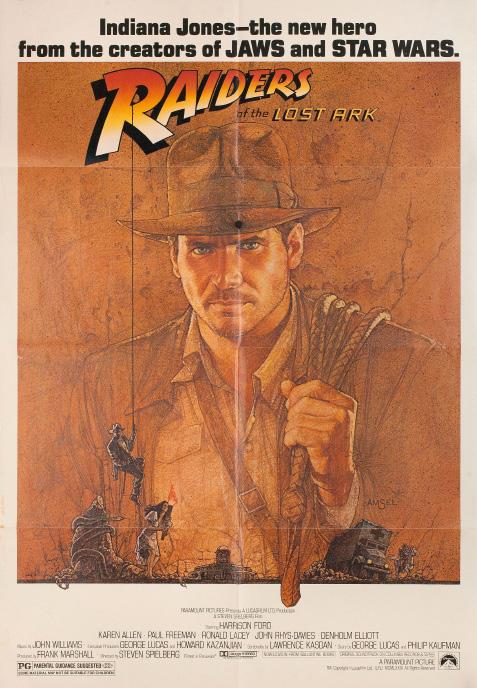
Raiders of the Lost Ark (Richard Amsel), 1981USA 16x23 in
THE SILENT ERA AND THE DEVELOPMENT OF NARRATIVE 7
STUDIO CLASSICS FROM THE HOLLYWOOD GOLDEN AGE 26
THE EALING STUDIOS AND THE 1940S BRITISH FILM RENAISSANCE 54
THE DECLINE OF THE AMERICAN STUDIO SYSTEM AND THE STRUGGLE WITH TELEVISION 73
NOUVELLE VAGUE 95
NEW WAVES ACROSS THE REST OF EUROPE 115 LATIN AMERICAN, ASIA, AUSTRALIA AND AFRICA 137 THE SWINGING SIXTIES - HOLLYWOOD UK 158
HOLLYWOOD TAKES BACK THE REINS
WORLD CINEMA: RECENT TRENDS
ANIMATION: AN OVERVIEW
Two films marked out D.W. Griffith as the most famous of all silent directors, his controversial take on the American Civil War, The Birth of a Nation (1915), and his plea for mutual understanding, Intolerance (1916). Both films feature D.W. Griffith’s greatest star, the luminous Lillian Gish. Many of Griffith’s smaller-scale dramas were Victorian in their melodramatic worldview and Gish was his perfect heroine. On the surface frail and vulnerable, her characters
Intolerance, 1916USA 27x41 in
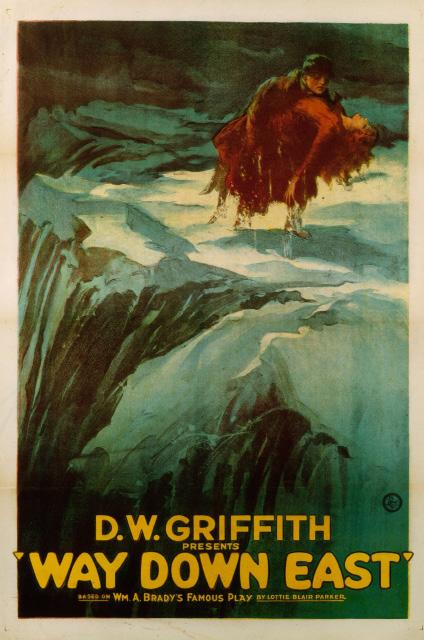
had an inner strength which could be unleashed in response to what life threw at her. The poster for Way Down East (1920) depicts the celebrated finale when Gish’s distraught character is rescued from an ice floe being carried towards a waterfall. Gish was an outstanding creative film presence who proselytized on behalf of silent cinema throughout her long life while continuing to enjoy a distinguished career in film and theatre.
down East, 1920USA 27x41 in
Way
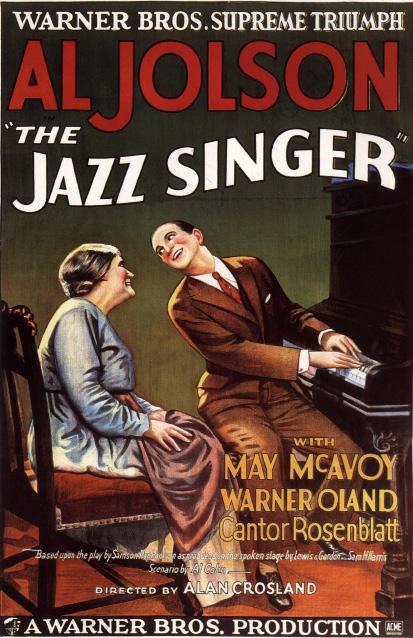
Adding dialogue and sound effects to a film was no sudden innovation, the history of sound film goes back to cinema’s earliest days. The main issue was to develop a system with sufficient amplification to make public performance viable combined with a technical ability to stay in sync. The importance of The Jazz Singer (Alan Crosland, 1927) in the popularisation of sound cannot be overestimated. While it is basically a silent film incorporating several music passages, what struck a chord with the public was when star Al Jolson ad libs. His introduction to ‘Toot, Toot, Tootsie!’ – “Wait a minute, wait a minute. You ain’t heard nothing yet” and the sentimental moment he talks to his mother as captured on the poster caused a sensation. The success of the film proved sound cinema had a future and encouraged companies to commit to the heavy investment required to make it happen. The silent era was over.
The Jazz Singer, 1927 - USA 27x41 in
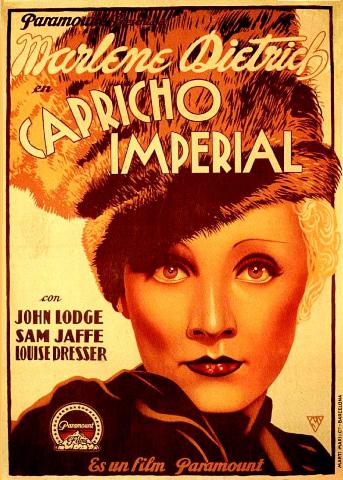
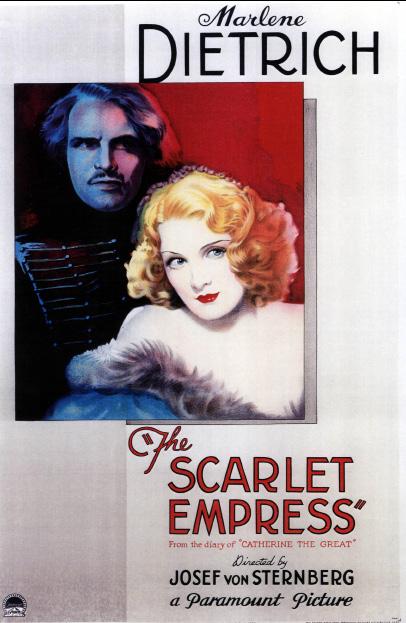
Paramount’s roots stretch back to 1913 with the formation of Jesse L. Lasky Feature Play Company and was one of the Big Five studios - those which handled production, distribution and exhibition. It was during the Golden Age that the studio gained its reputation for sophisticated elegance, unsurprisingly since their production manager from 1935 was Ernst Lubitsch. Paramount provided a home to a number of terrific directors – Lubitsch himself, Mitchell Leisen, Rouben Mamoulian, Preston Sturges, Frank Borzage and Josef von Sternberg - all of whom were guaranteed to supply wit, taste and style. One of the great director-star studio collaborations was that between Josef von Sternberg and Marlene Dietrich which ran to six films. In The Scarlet Empress (1934) Dietrich is Catherine the Great, the woman who married the heir to the Russian throne before plotting his downfall to take over the reins of power herself.
Capricho Imperial, 1934 - Spain 27x40 in The Scarlet Empress, (Hans Flato) 1934 - USA 27x41 in
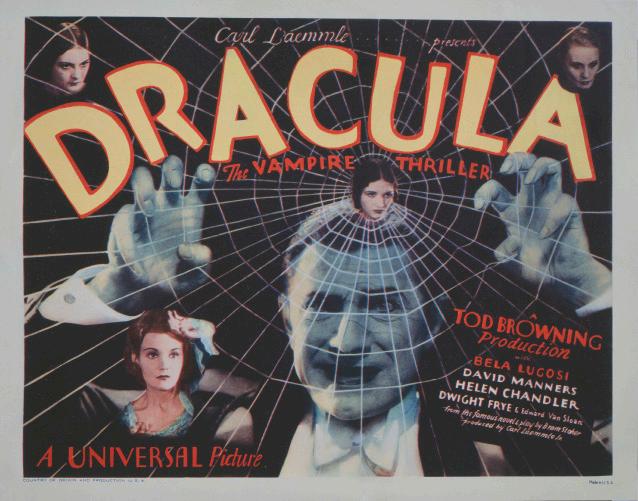
Dracula, 1931 - USA 14x11 in
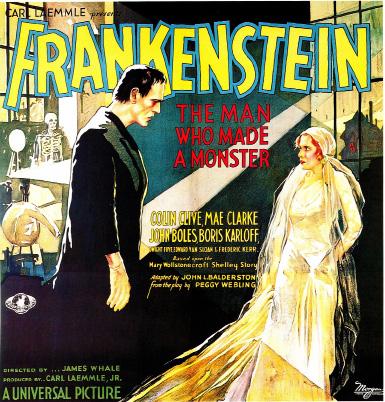
Universal was founded in 1912 and developed a reputation for horror in the silent era with films starring Lon Chaney. But it was in the 1930s that the studio would become indelibly linked with the genre starting with two classics in 1931, Dracula with Bela Lugosi and Frankenstein with Boris Karloff. Dracula’s director Tod Browning instils his adaptation of the much-filmed Bram Stoker novel with bravura atmospherics and Lugosi is perfectly cast as the vampire. Even so, the James Whale directed Frankenstein stands out, helped by Jack Pierce’s celebrated make-up carefully applied so as not to interfere with Karloff’s sensitive performance as the manmade monster. If it has ever been bettered it was with Whale’s own sequel Bride of Frankenstein (1935) with Colin Clive reprising his role as the eponymous scientist.
Frankenstein, 1931 - USA 81x81 in
UNIVERSAL
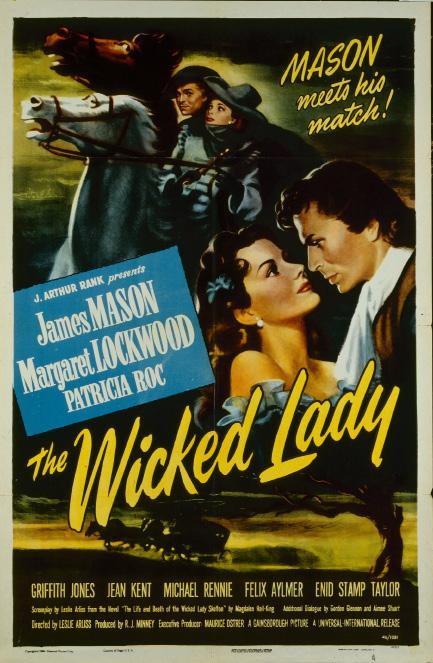
If the Michael Redgrave storyline in The Captive Heart was seen as an aberration by the critics, then Gainsborough Studios penchant for melodramas between 1942 and 1946 was largely deemed to be without worth. How wrong they were, these flamboyant, extravagant, and morally ambivalent films mined a deep seam of popular culture and remain relevant to this day. For all their surface escapism one of the reasons for the success of the Gainsborough melodramas was that their target female audiences recognised in them a dramatization of the forthcoming struggle to maintain their independent status within society once the men returned from war. In The Wicked Lady (Leslie Arliss, 1945) Margaret Lockwood stars as Barbara, a 17th century noblewoman who relieves her boredom and finds romance by taking to the road as a ‘highwayman’. Lockwood’s co-stars include three Gainsborough regulars, a dashing James Mason as Barbara’s highwayman lover, Patricia Roc as a slighted friend and the immortal Jean Kent as the highwayman’s doxy.
The Wicked Lady, 1945 - United Kingdom 27x40 in
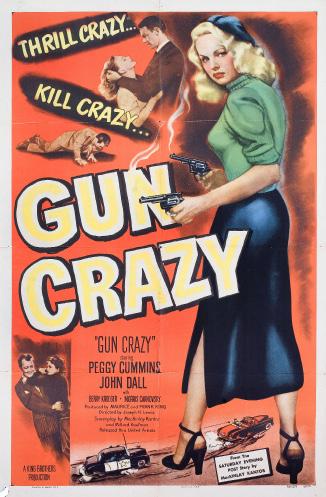
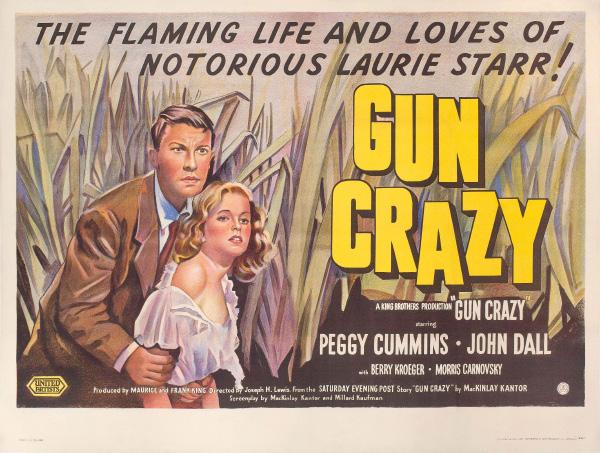
The embrace of realism in the late 1940s and early 1950s was an environment in which film noir could flourish. Low budgets were masked through stark black and white photography and the films were rendered in a sombre style which recalled German expressionism. The resulting cycle of films embraced a post-war pessimism, and most were permeated by a cynical, melancholic mood. A master of the form was director Joseph H. Lewis. Lewis’ masterpiece was Gun Crazy in which Peggy Cummins excels as the woman who entices her love-obsessed husband into a life of crime which will lead to their eventual oblivion. Not only a classic film noir, Gun Crazy is also one of cinema’s great explorations of l’amour fou and was a huge influence on the 1960s masterpiece Bonnie and Clyde
Crazy, 1950 - USA 27x41 in
Gun Crazy, 1950 - United Kingdom 40x30 in
Gun
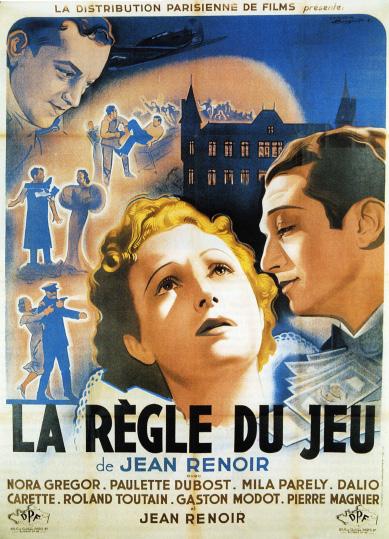
While the Cahiers critics were contemptuous of much traditional French film making, there were exceptions, directors who had displayed originality and consistent directorial vision throughout their careers. Exceptional amongst this elite group was Jean Renoir whose film career stretched from the 1920s through to 1971. Whilst being one of the most collaborative of directors, his status as an auteur is unchallenged and his influence on the nouvelle vague (and many others) profound. Over his long career, Renoir made a string of remarkable films many structured through deep-focus photography and long takes which stylistically enhanced his humanistic worldview. Nevertheless, for many, he hit a peak in the late 1930s – not least through Le Crime de M. Lange (1936), La grande illusion (1937) and La règle du jeu /The Rules of the Game, (1939). In La règle du jeu, Renoir’s profound meditation of a crumbling society on the eve of war, a group of characters interact at a weekend retreat on a country estate. The film’s oft-quoted line of dialogue spoken by Octave, a character played by Renoir himself, sums up the director’s vision: “You see, in this world, there is one awful thing, and that is that everyone has his reasons.”
La Règle du jeu – The Rules of the Game (Jacques Bonneaud), 1939 - France 47x63 in
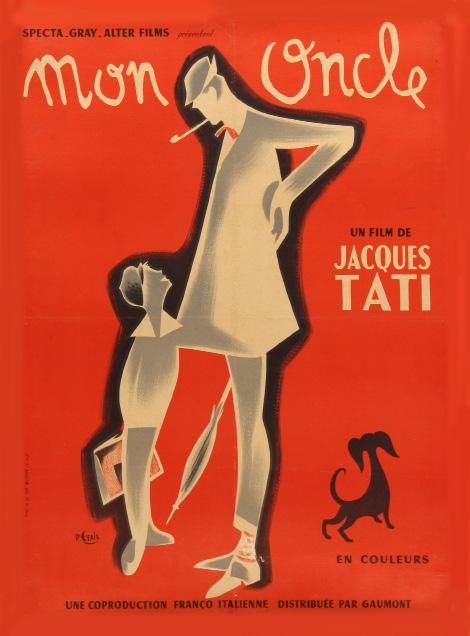
Another director admired by the nouvelle vague was Jacques Tati, a man whose uncompromising singular vision meant he only completed six features between 1949 and 1974. Tati’s comedic career began in cabaret and the variety halls where he mimicked top sports personalities of the day. After a series of short films, Tati directed and starred in his first feature, Jour de fête (1949), incorporating his mime skills into what was essentially a throwback to the glory days of silent comedy. The final building block to world acclaim was Tati’s creation of a fully-fledged comic persona, Monsieur Hulot, an immortal character who took centre stage in Tati’s next four features beginning with Les vacances de monsieur Hulot (1953). Hulot is well-meaning, friendly and polite, but remains largely invisible to other characters until some minor calamity befalls him. In his second outing, Mon Oncle (Jacques Tati, 1958), Hulot has difficulty in negotiating the gadgetry, regimentation and surface manners of modern life much to the delight of his young nephew. Hulot is a brilliant creation, immediately recognisable through his gaiting walk, pipe and overcoat all of which are perfectly caught in the poster designed by Pierre Étaix, another brilliant comedian who acted as gag-man on Mon Oncle. Jacques Tati was a true auteur, micro-managing every aspect of his films and his Hulot remains one of the most recognisable and beloved comic creations in the history of the medium.
Mon oncle (Pierre Étaix), 1958 - France 47x63 in