Belgian Chocolate & Beer

Page 1


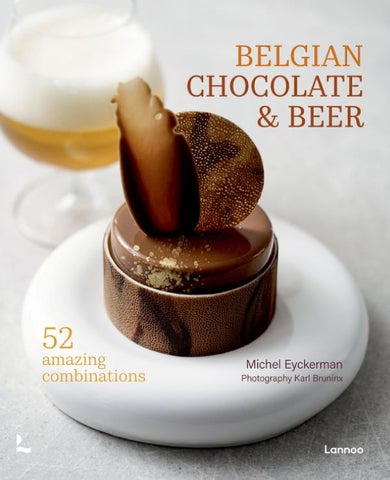
BELGIAN CHOCOLATE & BEER

52 amazing combinations Michel Eyckerman

Photography Karl Bruninx

Dear Chefs,

It all started about 15 years ago. As a technical advisor in chocolate and patisserie, I often received questions involving varying challenges and opportunities. One day, I received a request from a Belgian gastronomic association to do a tasting session combining chocolate and beer. Many people who know me are aware that I have difficulties saying no, so I took on the challenge. They introduced me to the owner of the innovative brewery ProefBrouwerij in Lochristi, Belgium, and together we embarked on our first experience of combining the beers he brewed with Belcolade Origins chocolate.

We quickly discovered that this was going to be a long journey, with many trials and some errors. I was so impressed by all the flavors that beer reveals, and I learned that the way we taste chocolate and beer has some similarities. Additionally, the processes of brewing and chocolate-making have a number of processes in common, like roasting, fermenting, seeking out ingredients of the highest quality, and sustainability considerations. A good concept was born. Bit by bit, I tried new things, and over the years I gathered so many ideas and recipes for chocolate and beer that the time had come to put them all together in a book.

My mission in writing this book is to inspire all passionate bakers, pastry chefs, chocolatiers, and chefs who like to work with chocolate and beer. I hope one day I will find this book, dog-eared and stained, in a kitchen or in a chocolate atelier, when I will know that it had an impact and did not just collect dust on a shelf full of other unused cookbooks.

Please enjoy exploring all these creative recipes!

With my utmost gratitude,

Technical Advisor for Belcolade (a division of the Puratos Group)

Belgium is a country that can rightfully be proud of its local products. Our beers and chocolates are praised worldwide for their exceptional quality. This quality is often taken for granted, but it certainly shouldn’t be. It is the result of craftsmanship and a relentless pursuit of perfection.

Beer is also gaining increasing recognition in the world of gastronomy ― and with good reason. With a broader spectrum of aromas and flavors than wine, beer is exceptionally well-suited to accompany a wide range of dishes. The results are often surprising and innovative.

In this beautiful book, you will discover pairings with some of my favorite beers, such as Cornet and Rodenbach. These beers offer unique taste experiences that pair perfectly with various culinary creations.

I wish you lots of enjoyment while reading ― and especially while tasting!

Restaurant Zilte Antwerp (Belgium)

As a chocolatier, I’m always searching for new flavor combinations that spark wonder. Beer offers an incredible palette of aromas ― from hoppy bitterness to fruity acidity ― that can blend beautifully with the complexity of single-origin chocolate.

In my atelier, for example, we pair pralines with dark Trappist ales, where the caramel notes of the beer enhance the intensity of dark origin chocolate. Or we infuse a fresh IPA into a white chocolate ganache with citrus accents.

For pastry chefs, chocolatiers, and cooks, this book is a playground of creativity. Let your senses guide you, dare to experiment ― and above all, enjoy the adventure.

With culinary regards,

The Chocolate Line, Bruges (Belgium)

VIKI GEUNES***

A SPECT

S MELL TOUCH

• Wash your hands with unscented soap and rinse them with water.

• Make sure the temperature of the chocolate is around 20 °C.

• Take a piece of chocolate and press it between two fingers to check the melting behavior.

• Break the chocolate and listen to the snap.

• Check the color of the chocolate and the shine.

• A well-tempered chocolate exhibits an even color and is required to evaluate the taste & aroma.

• The higher cocoa content of a dark chocolate will give it a darker color.

• Smell the chocolate and think about all the aromas it might have. Take some time and focus on it.

• For this, it’s a good idea to divide the aromas into different categories and then subcategories:

> Sweet: vanilla, caramel

> Brown notes: hazelnut, coffee, almond

> Floral: flower, honey

> Vegetal: humus, wood, fresh grass

> Fruity: banana, dried fruits, olive, citrus, raisin, red berries, pineapple

> Cocoa: acidic, roasted

> Dairy: cooked milk, fresh milk

> Spice: anise, licorice, pepper

TASTE

• Put a piece of chocolate in your mouth and close your eyes.

• Move the chocolate slowly against your palate and let it melt.

• Discover the taste of sweetness, sourness and bitterness in combination with the aromas.

E XPERIENCE

• The chocolate now gives you an unforgettable experience.

• It will take you on a journey of sweetness in combination with bitterness and different aromas.

How to taste chocolate The chocolate T.A.S.T.E. journey

NOTE ��D Certain people are born with a talent for taste and smell, and those people are preordained to be tasting experts. However, even if you’re not one of those people, you can still learn how to taste in the best possible way. First, your nose needs to be clear, so obviously if you’ve caught a cold it’s not the best moment to taste because your nose is probably congested. Also, the best moment of the day to taste is around 11 o’clock in the morning. Do it in an area where you can focus, away from distractions and any perfumes or odors.

COCOA

SWEET DAIRY

BROWN NOTES

LES AR MES DE CYRANO

grass

TASTE EXPERTISE

The Sensory Map “les Arômes de Cyrano” from Belcolade creates a clear and common understanding of each aroma, so that we can partner them as we work towards crafting the innovative and delicious creations you have in mind.

Knowing which aromas are present in each chocolate is the basis for selecting complementary ingredients.

A SPECT

TOUCH

• Normally, the serving temperature of the beer will be indicated on the bottle. Touch the bottle to verify the temperature.

• Beer should also be stored in a cool, dark place away from sunlight to avoid oxidation of the flavors.

• The first step is to make sure the beer glass is clean and appealing. The best glass for a beer tasting session is comparable to a wine glass. With this type of glass the aromas stay in the glass longer.

• Pour out the beer and check the foam for color, density and cling.

• Visually check the beer’s color, transparency and bubbles.

S MELL

• Smell the aromas coming off the foam.

• Hoppiness: Hops contribute bitterness and can add floral, citrus, pine or herbal notes. These aromas are prominent in beers like IPAs and pale ales.

• Fruity esters: These are produced by yeast during fermentation and can give off fruity aromas such as banana, pear or apple. These are common in ales and wheat beers.

• Maltiness: This can include sweet, bready and caramel notes. Malt aromas are often associated with flavors like toast, nuts and chocolate, especially in darker beers like porters and stouts.

• Spices: Some beers have spicy notes like clove, pepper or coriander. These can come from specific yeast strains or added spices, often found in Belgian-style beers.

• Also be alert to off-flavors like dimethyl sulphide, broccoli, garlic aromas, chewing gum flavor, etc.

TASTE

• Taste the beer but leave it in your mouth for 3 seconds before swallowing it.

• You will find the sourness and the sweetness first, and then, when you swallow the beer, you will taste the bitterness more in the back of the mouth.

E XPERIENCE

• Discover the aromas in the retronasal phase.

• Experience the mouthfeel and the aftertaste.

• At this point you’ll have the afteraromas of the beer, like the bitter flavors of the hops, that linger in your mouth longer.

• Now you’ll experience a rising, astringent bitterness that makes you feel like drinking more beer. Be aware of it and drink in moderation.

How to taste beer The beer T.A.S.T.E. journey

Beer descriptions

Knowing the flavor profiles of the beer is crucial for creating a harmonious pairing with chocolate. Here you can find some information and explanation on the flavor, strength, taste and color of the beers I use. Good to know is the IBU, EBC and the ABV of the beers.

IBU

International Bitterness Units Measures the bitterness of the beer

IBU is a scale used to measure the bitterness of beer. The bitterness primarily comes from the hops used during brewing. The higher the IBU value, the more bitter the beer will taste.

Why It Matters

• Strength Bitterness: Higher IBU values indicate more bitterness, which can significantly influence the taste of the beer. Bitterness can balance out sweetness and add complexity to the flavor profile.

IBU Scale

0-10 IBU Very low bitterness

(e.g., Light Lagers, Wheat Beers)

10-20 IBU Low bitterness

(e.g., Pilsners, Blonde Ales)

20-35 IBU Moderate bitterness

(e.g., Pale Ales, Amber Ales)

35-50 IBU High bitterness

(e.g., IPAs, American Pale Ales)

50+ IBU Very high bitterness

(e.g., Double IPAs, Imperial IPAs)

EBC

European Brewery Convention Measures the color of the beer

EBC is a standard for measuring the color of beer. It quantifies the color intensity of the beer, with higher EBC values indicating darker beers. The measurement is done using a spectrophotometer, which assesses how much light is absorbed by the beer at a specific wavelength.

Why It Matters

• Flavor: Darker beers (higher EBC) often have richer, more malty flavors, while lighter beers (lower EBC) tend to have lighter, crisper flavors. However, this is a generalization and there are exceptions.

EBC (Color) Scale

0-4 EBC Pale Straw

4-8 EBC Pale Gold

8-12 EBC Deep Gold

12-20 EBC Amber

20-30 EBC Deep Amber

30-40 EBC Copper

40-60 EBC Brown

60-80 EBC Dark Brown

80+ EBC Black

ABV

Alcohol By Volume Indicates the amount of alcohol by volume

Why It Matters

• Strength: Higher ABV beers are stronger and can have a more pronounced effect.

• Flavor: The alcohol content can influence the flavor profile of the beer. Higher ABV beers often have richer, more complex flavors.

• Calories: Beers with higher ABV typically contain more calories.

Alcohol Content Scale for Beers

3-4% ABV Light Beers

(e.g., Light Lagers, Session Ales)

4-6% ABV Regular Beers

(e.g., Pale Ales, Pilsners, Amber Ales)

6-7% ABV Strong Beers

(e.g., IPAs, Belgian Ales)

7-12% ABV Very Strong Beers

(e.g., Double IPAs, Imperial Stouts, Barleywines)

12%+ ABV Extremely Strong Beers

(e.g., Strong Ales, some specialty craft brews)

COLOUR
POSSIBLE BEER STYLES Pale Lager Golden Ale Weiss APA, IPA Saison ESB
Garde (Bière de Garde), DIPA (Double IPA) Amber Ale Dunkel, Brown Ale Porter Stout Baltic Porter Export Stout Imp. Stout

Tempering chocolate

The key ingredient in real chocolate that requires tempering is cocoa butter. Cocoa butter is a fat that can crystallize in several different forms, but only one of these forms (Form V) provides the properties desirable in highquality chocolate.

Reasons for tempering

Formation of stable crystals

Tempering ensures the formation of stable cocoa butter crystals (Form V). These crystals give chocolate its smooth, glossy appearance and firm texture. Without tempering, the chocolate can form unstable crystals, leading to a dull finish and crumbly texture.

Preventing bloom

Bloom is a white, streaky appearance on the surface of chocolate; it is caused by unstable cocoa butter crystals. Bloomed chocolate looks unappealing and has a poor texture. Tempering prevents bloom by ensuring the formation of stable crystals.

Achieving the desired snap and texture

Properly tempered chocolate has a satisfying snap when breaking and a smooth mouthfeel. These qualities are indicators of high-quality chocolate and are achieved through the formation of stable cocoa butter crystals.

Shiny appearance

Tempered chocolate has a glossy, attractive finish, making it look more appealing. This shiny appearance is a sign of welltempered chocolate and enhances its visual appeal.

Ease of mold release

Tempered chocolate contracts slightly as it cools down, making it easier to release from molds without sticking or breaking. This is crucial for creating molded chocolates and other confections.

Extending shelf life

Tempered chocolate has a longer shelf life and maintains its quality over time. It resists bloom and retains its texture, ensuring that the chocolate remains appealing and enjoyable.

The three key factors in tempering real chocolate

TEMPERATURE

Purpose

Temperature control is crucial in breaking down existing cocoa butter crystals and forming new, stable ones.

Process

• Melting: Heat chocolate to a specific temperature to break down all existing crystals.

• Cooling: Lower the temperature to encourage the formation of stable crystals (Form V).

• Reheating: Bring the chocolate to the working temperature while maintaining the stable crystals.

Importance

Precise temperature control ensures the chocolate has a smooth texture, shiny appearance and good snap.

MOVEMENT

Purpose

Continuous movement helps distribute the cocoa butter crystals evenly throughout the chocolate.

Process

• Spreading and scraping: Spread the chocolate thinly on a marble surface and continuously scrape and fold it to cool it down.

• Stirring: When using methods like seeding or microwaving, stir frequently to ensure even cooling and crystal formation.

Importance

Movement ensures that the stable crystals are evenly distributed, preventing bloom and ensuring a consistent texture.

TIME

Purpose

Time allows the cocoa butter crystals to form and stabilize properly.

Process

• Cooling time: Allow enough time for the chocolate to cool to the desired temperature.

• Reheating time: Ensure the chocolate is gently rewarmed to the working temperature without overheating.

Importance

Adequate time ensures that the stable crystals have formed correctly, resulting in well-tempered chocolate with a long shelf life and good structural integrity.

The

actual tempering of real chocolate,

starting from melting the chocolate

MELTING

Process

Put the chocolate in a plastic bowl and melt it gently in a microwave at medium power, stirring frequently to ensure even melting; or melt the chocolate in a dry heater or heating chamber.

• Dark Chocolate: Heat to 45-50 °C

• Milk Chocolate: Heat to 45 °C

• White Chocolate: Heat to 43-45 °C

COOLING

Process

Pour 4/5 of the melted chocolate onto the marble surface. Use a chocolate scraper or spatula to spread the chocolate thinly across the marble. Continuously scrape and fold the chocolate to cool it to the desired temperature. This process encourages the formation of stable cocoa butter crystals (Form V).

• Dark Chocolate: Cool to 28 °C

• Milk Chocolate: Cool to 27 °C

• White Chocolate: Cool to 26.5 °C

REHEATING

Process

Scrape the cooled chocolate back into the bowl with the remaining warm chocolate. Mix thoroughly to ensure an even temperature as you heat the chocolate back up to the working temperature while maintaining the stable crystals.

• Dark Chocolate: Reheat to 30 °C

• Milk Chocolate: Reheat to 29 °C

• White Chocolate: Reheat to 28 °C

TIPS FOR ALL TYPES

Keep tools dry

Ensure all tools and surfaces are completely clean and dry to prevent the chocolate from seizing.

Maintain Temperature

Keep the tempered chocolate at the working temperature while using it. If it cools down too much, gently reheat it with a heating gun.

Average working temperature of tempered chocolate

The working temperatures above are general. For each type of chocolate, the tempering can be slightly different. For example, for a dark chocolate with a higher cocoa butter content, you’ll need to lower the working temperature of the tempered chocolate. A dark chocolate of 73% is to be used at approximately 29.4 °C instead of 31 °C for a 55% dark chocolate.

Signature Desserts

Bababeer chocolate chantilly

COMPOSITION

For 20 baba desserts of 90 g

Baba dough

Beer & liquor syrup

Milk chocolate chantilly

Chocolate decoration

INGREDIENTS

Baba dough 20 g/baba

Beer & liquor syrup

30 g/baba

Buddha’s hand citrus slices (or lemon)

Blanche De Namur

PREPARATION

Baba dough

Liquor Fleur de Bière

Milk chocolate chantilly 35 g/baba

Discover our delectable new creation: Bababeer, topped with a light lime milk chocolate chantilly cream and accented with the unique essence of Buddha’s hand citron. This dessert promises a harmonious blend of flavors.

CHOCOLATE AND BEER PAIRING

This baba dessert infused with Blanche De Namur beer offers a subtle, fruity tang. The topping of chantilly made from Vietnam 45% milk chocolate adds creamy, rich notes that beautifully balance the beer's flavors.

Mix all the ingredients except the butter together in a stand mixer with a paddle attachment for 8 minutes. Keep the dough at a maximum temperature of 22 °C.

Cover the bowl with a wet kitchen towel, keeping the towel from touching the dough, and let it rest at room temperature for 30 minutes.

Heat the butter to 35 °C and add it gradually to the dough while mixing again for about 12 minutes.

Pipe approximately 20 g per portion of the dough into silicone savarin molds of 4-5 cm in diameter.

Leave to proof for about 45 minutes at room temperature.

Bake the babas at 180 °C for about 20 minutes with dampers closed. Unmold immediately after baking and set them aside to cool.

Beer and liquor syrup

Slice the Buddha’s hand very thinly.

Boil the beer, water, sugar and glucose for 1 minute.

Add the slices of Buddha’s hand, cover with cling film and leave to cool in a fridge at 4 °C. When the syrup is cold, remove the slices of the Buddha’s hand from the syrup and reserve for decoration and as an extra flavor component for the dessert.

Add the Liquor Fleur de Bière to the syrup and put the babas in it to soak. Take the babas out of the syrup after 20 minutes and place them in serving cups.

Milk chocolate chantilly

Soak the gelatin powder in the cold water. Zest the lime finely using a microplane. Bring the cream (350 g) to a boil with the lime zest and pour over the Vietnam 45% milk chocolate.

Add the soaked gelatin powder and mix with an immersion blender for 2 minutes. Add the cold cream (150 g) and mix very briefly with the immersion blender. Set aside in a fridge at 4 °C overnight.

Whip this chantilly cream in a stand mixer with a whisk to obtain a pipeable texture. Be careful not to overwhip the cream.

Use immediately to decorate the soaked babas.

Chocolate decoration

5 g/baba

Vietnam 73% dark chocolate 200 g

Chocolate decoration

For the creation of this decoration, see p. 53.

ASSEMBLY

Put the soaked babas in a deep glass serving dish and place a disc of chocolate decoration on each. Pipe the chocolate chantilly on top and decorate with more chocolate decorations and some slices of the Buddha’s hand.

Turn static files into dynamic content formats.
Create a flipbook
Issuu converts static files into: digital portfolios, online yearbooks, online catalogs, digital photo albums and more. Sign up and create your flipbook.
Belgian Chocolate & Beer by ACC Art Books - Issuu