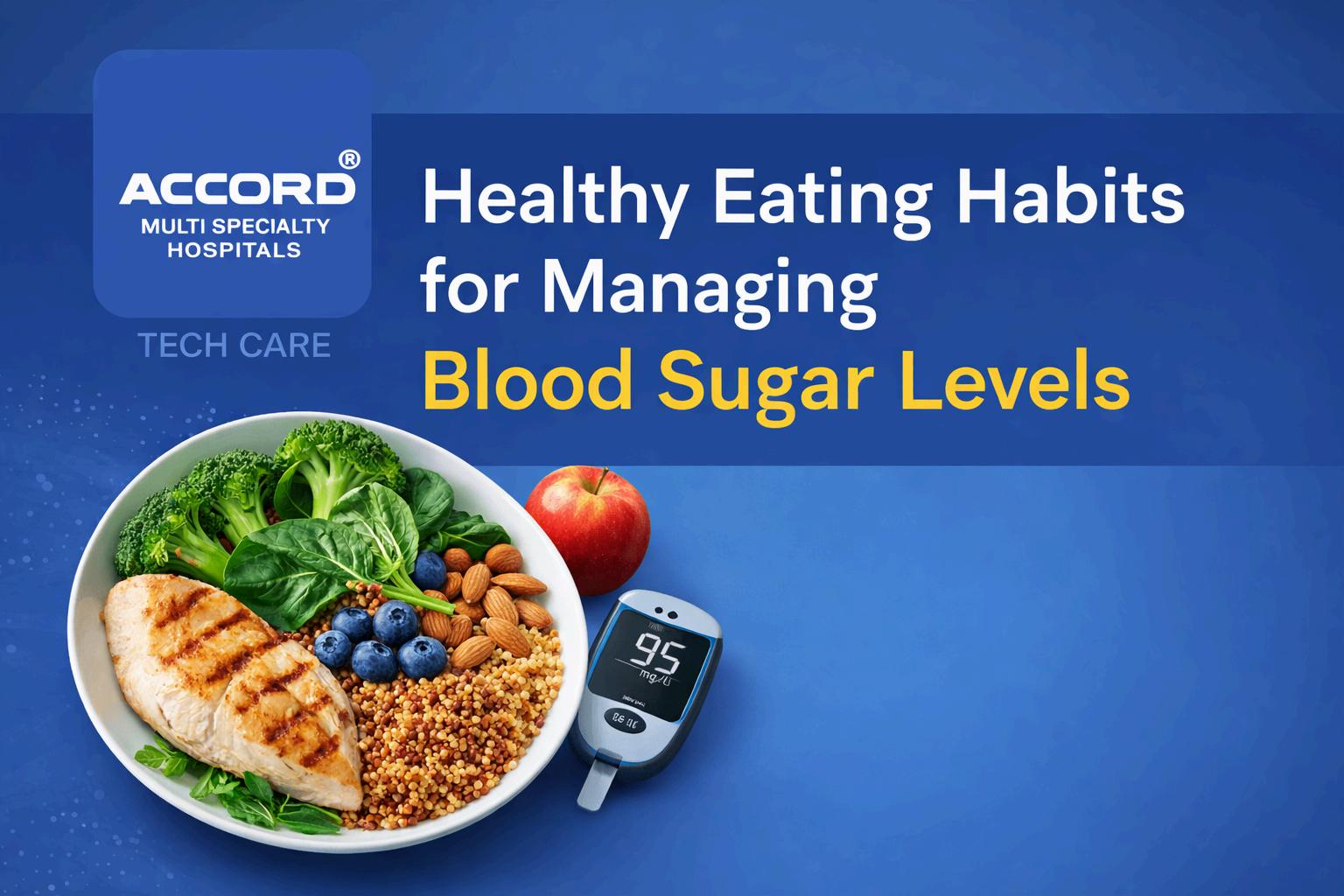
Healthy Eating Habits for Managing Blood Sugar Levels
Blood sugar balance plays a crucial role in maintaining overall health. When blood glucose levels fluctuate too much, it can lead to fatigue, cravings, and long-term health complications such as diabetes
One of the most effective ways to manage blood sugar is through healthy eating habits A balanced diet that includes fiber, lean protein, whole grains, and healthy fats helps your body regulate glucose more efficiently.
Healthcare professionals at Accord Hospitals emphasize that daily food choices can significantly influence metabolic health and long-term wellness.
In this guide, we’ll explore practical eating habits that can help stabilize blood sugar levels and support a healthier lifestyle
Why Blood Sugar Control Matters
Blood sugar, also known as glucose, is the body’s primary source of energy However, when glucose levels rise or fall dramatically, it can affect how your body functions
Unstable blood sugar levels may lead to:
● Low energy and fatigue
● Increased hunger or sugar cravings
● Difficulty concentrating
● Higher risk of diabetes and heart disease
Maintaining stable blood sugar levels helps your body stay energized and supports long-term health
The Connection Between Diet and Blood Sugar
The foods you eat directly impact how quickly glucose enters your bloodstream
Certain foods cause rapid spikes in blood sugar, while others release energy slowly and steadily.
Factors that influence blood sugar include:
● Type of carbohydrates consumed
● Fiber content in meals
● Portion sizes
● Meal timing
Understanding these factors can help you make smarter food choices and maintain better glucose control.
For more health insights and wellness resources, you can explore the Accord Hospitals health blog where experts regularly share guidance on nutrition, disease prevention, and healthy living
Best Foods to Help Maintain Healthy Blood Sugar
1. Whole Grains
Whole grains digest more slowly than refined carbohydrates, which helps prevent sudden spikes in blood sugar. Examples include:
● Oats
● Brown rice
● Whole wheat
● Quinoa
Replacing refined foods like white bread and processed grains with whole grains can significantly improve blood sugar stability.
2. Lean Protein Sources
Protein slows the digestion of carbohydrates and helps regulate blood sugar levels
Healthy protein sources include:
● Eggs
● Fish
● Chicken
● Lentils and beans
● Tofu
Adding protein to each meal can also help control hunger and prevent overeating
3. Fiber-Rich Vegetables
Vegetables contain fiber, vitamins, and minerals that support healthy metabolism
Fiber helps slow glucose absorption, which prevents blood sugar spikes. Great vegetable choices include:
● Spinach
● Broccoli
● Cauliflower
● Bell peppers
● Cabbage
Adding vegetables to every meal is one of the easiest ways to improve overall diet quality
4. Fruits in Moderation
Fruits contain natural sugars but also provide fiber and antioxidants Choosing whole fruits instead of fruit juices helps regulate blood sugar levels. Better fruit options include:
● Apples
● Berries
● Pears
● Guava
Portion control is important when including fruits in a balanced diet
5. Healthy Fats
Healthy fats do not raise blood sugar and help keep you full for longer Examples include:
● Avocados
● Nuts and seeds
● Olive oil
● Fatty fish
Balanced meals that include healthy fats help maintain stable energy levels throughout the day.
Smart Eating Habits for Blood Sugar Control
Healthy eating is not just about food choices it also involves daily habits
Eat Balanced Meals
Each meal should include a combination of:
● Complex carbohydrates
● Lean protein
● Fiber
● Healthy fats
This balance slows digestion and helps regulate glucose levels
Watch Portion Sizes
Large meals can cause sudden spikes in blood sugar Smaller, balanced meals help maintain stable glucose levels throughout the day.
Avoid Sugary Drinks
Sugary beverages such as soda, sweetened coffee, and packaged juices contain high amounts of sugar that enter the bloodstream quickly
Replacing these drinks with water, herbal teas, or unsweetened beverages can improve blood sugar control.
Eat at Regular Times
Skipping meals can lead to drops in blood sugar and increased cravings later in the day.
Eating at consistent intervals helps maintain stable energy levels
Lifestyle Habits That Support Healthy Blood Sugar
Diet is only one part of blood sugar management. Other lifestyle habits can also make a significant difference
Helpful habits include:
● Regular physical activity
● Quality sleep
● Stress management
● Regular health checkups
If you are looking for professional medical guidance or personalized healthcare support, you can learn more about the team and medical philosophy at Accord Hospitals
For appointments, consultations, or health inquiries, you can also reach out through the Accord Hospitals contact page
Final Thoughts
Managing blood sugar levels doesn’t require extreme dieting or complicated routines Small, consistent changes in eating habits can have a powerful impact on overall health
By focusing on whole foods, balanced meals, and mindful eating habits, you can support stable blood sugar levels and reduce the risk of long-term health complications
For more expert-backed healthcare insights and wellness resources, visit the official website of Accord Hospitals where you can find helpful articles, medical services, and professional healthcare support