Voices of resistance and hope resonate at the 2026 Minnesota
By Joey Carlson
Disability Advocacy Day 2026
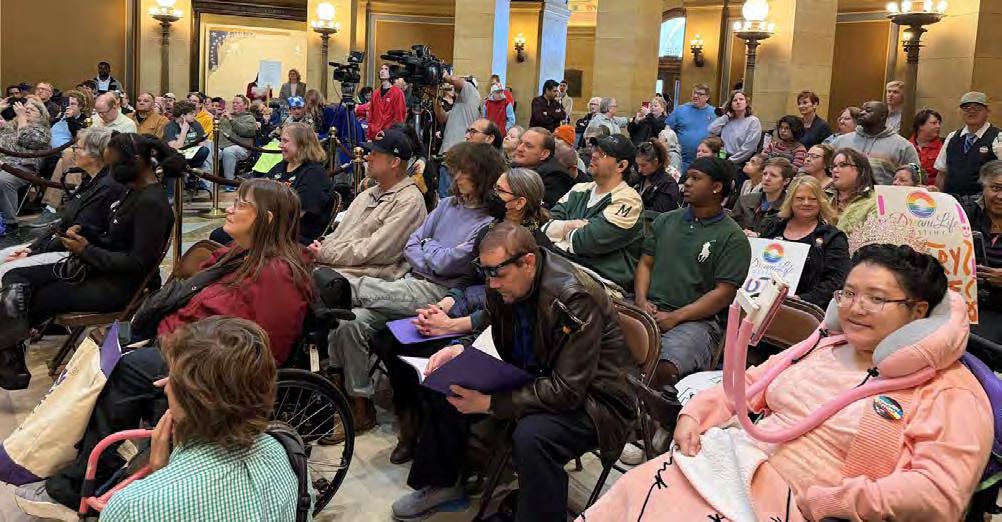
Chants of “No more cuts,” “Our homes, not nursing homes!” and “Disability rights are human rights” echoed through the halls of the Minnesota State Capitol on April 29 for the 2026 Minnesota Disability Advocacy Day. These cries set a powerful tone for a day focused on speaking up and knowing your rights.
Meredith Kujala, accompanied by her service dog, Ajax, kicked off the event with an impassioned speech on the importance of inclusion and what it means to be a selfadvocate. The crowd of hundreds of advocates and people with disabilities applauded, excited for the packed rally agenda.
Raising the energy
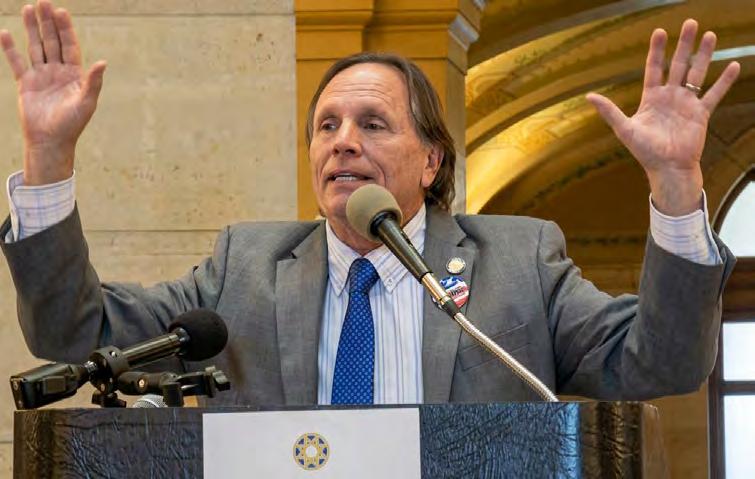
Longtime advocate for people with disabilities, Senator Jim Abeler, took the stage next and spoke frankly about how needed our voices are in policy making. He stirred the entire group up by leading the crowd in an energetic chant of “We matter!”
As the voices bounced off the Capitol walls, Sen. Abeler encouraged the advocates to let the reverberating sound serve as a reminder of their power. He urged everyone to ensure their voices continue to echo beyond the rally by contacting their legislators and holding them accountable. The fight for accessible transportation Disability advocate and wheelchair user Rob Wudlick introduced himself simply as “just a guy in a wheelchair who is trying to get around.” Wudlick is leading efforts to improve accessible transportation in Minnesota on several fronts. He shared a worrying story of being stuck at work overnight during a blizzard, completely unable to find a ride home. It was a scenario that resonated with far too many in the audience.
To combat the transportation problems, Wudlick laid out a roadmap for statewide transportation improvements, calling for immediate action on:
• Improving accessible parking availability and enforcement.
• Expanding reliable taxi and ride-share services.
• Ensuring disabled voices are heard now as autonomous vehicles are developed and regulated.
Leading a chant of “Accessible transportation now,” Wudlick reminded the crowd of the necessity of speaking out, stating, “Silent voices don’t get heard.”
Using personal experience to champion AAC access
Dani Indovino Cawley shifted the focus to the critical issue of communication, detailing her grueling battle to secure an Augmentative and Alternative Communication (AAC) device for her child. While she eventually forced her insurance company to cover the device, she noted that far too many insurers still deny this basic necessity.
Cawley is currently championing a bill that would ensure others can access the devices they need to connect with their families.
DISABILITY DAY To page 11
What the SAVE America Act means for voters with disabilities
By Chad Maschke
If you vote by mail, this bill could take that away from you. If you rely on a caregiver to help you register, this bill might make that harder. If you don't have a passport or birth certificate within reach, this bill could keep you from voting at all.
The SAVE America Act, which passed the U.S. House in February and is now being debated in the Senate, would require every American to show documentary proof of citizenship — a passport, birth certificate paired with photo ID, or naturalization certificate — in order to register to vote. A standard driver's license doesn't qualify. Most REAL IDs don't qualify. A military ID doesn't qualify alone. And the bill would require a photocopy of your photo ID with every mail ballot.
For the 40.2 million eligible voters with disabilities in this country — nearly 1 in 6 of all eligible voters — these requirements land on top of barriers that already exist.
I have spent the past month researching the SAVE America Act — reading the bill text, fact-checking claims from both sides, and building an interactive explainer with primary sources. In all of that work, I never
centered how this bill specifically impacts voters with disabilities. That's on me. This piece is an attempt to correct it.
The gap is already there
Disabled voters already participate at lower

May Mobility Month Page 4-6
Elections matter Page 7
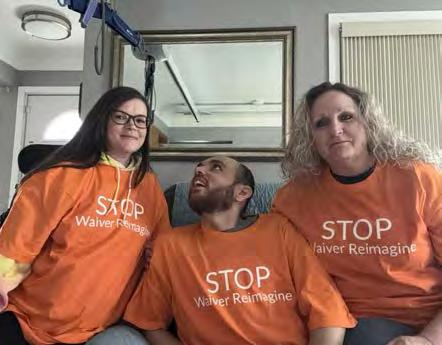
Waiver Reimagine puts Minnesota on shaky legal ground Page 8
Focus Beyond helps high school students transition Page 9
The SAVE America Act would require every American to show documentary proof of citizenship a passport, birth certificate paired with photo ID, or naturalization certificate in order to register to vote.
rates than nondisabled voters. In 2020, 58% of people with disabilities voted, compared to 69% of people without — an 11-point gap. For disabled voters who need assistance with daily activities, the gap is even steeper. A GAO study found that 60% of polling places had physical barriers for voters with disabilities, and 65% had voting stations that weren't set up to allow a private and independent vote. Disabled voters are three times more likely to report difficulties casting a ballot.
More than half of disabled voters cast their ballots by mail in 2020. Mail voting isn't a convenience for many people with disabilities. It is how they participate in democracy — a fundamental right. And it's working. The turnout gap between voters with and without disabilities has narrowed in recent elections, driven in part by expanded mail ballot access. The SAVE America Act's new requirements land directly on the pathway that helped close that gap. What the bill would change
The SAVE America Act would add new
requirements at every stage of the voting process — registration, in-person voting, and mail voting — without including a single provision addressing accessibility for voters with disabilities.
Mail voting. The bill requires a photocopy of your photo ID with every mail-in ballot. If you are blind, have limited use of your hands, or live in a care facility without access to a copier, you now have a new barrier between you and your ballot. The bill mentions "free public copying stations" but doesn't fund them, doesn't set accessibility standards for them, and doesn't address the fundamental contradiction: the entire point of mail voting is not having to go somewhere. Requiring a trip to a copying station defeats that purpose. Registration. The bill requires that citizenship documents be "presented" with your registration application. If states interpret that strictly — and the criminal penalties in the bill give them every reason to — voters who cannot travel to an election
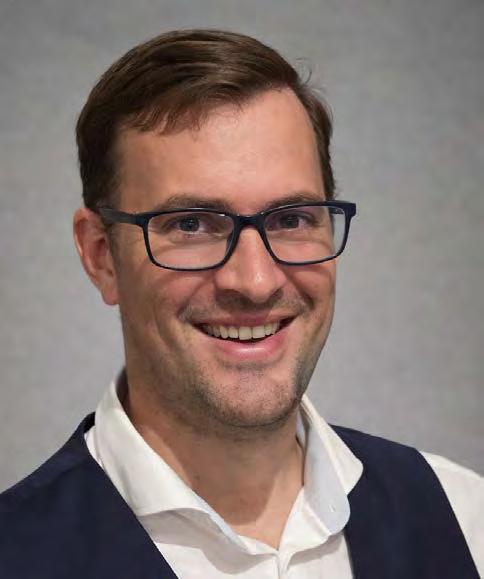
Chad Maschke
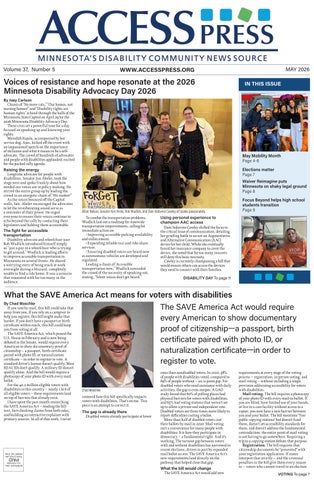
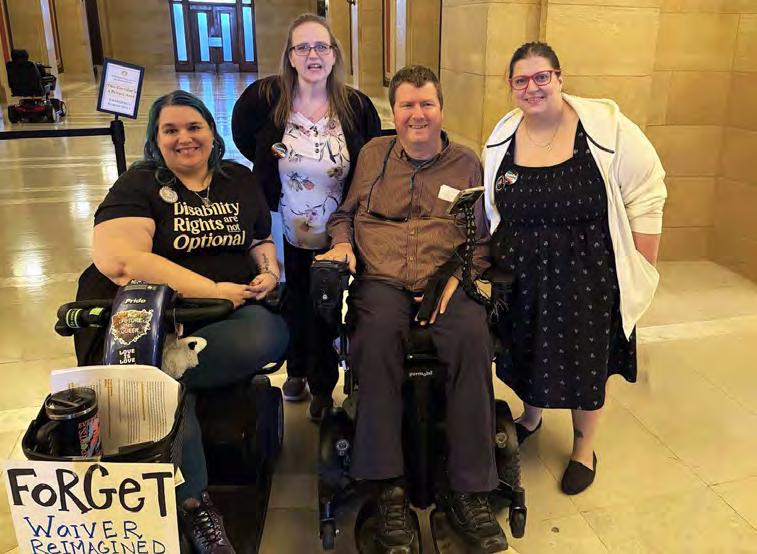
Jillian Nelson, Senator Kim Hicks, Rob Wudlick, and Dani Indovino Cawley all spoke passionately.


Dear Access Press Readers,
To say a lot is happening right now for the Minnesota disability community would be the understatement of the year. From shifting political winds to hard-fought personal victories, it feels like there is breaking news every hour.
This whirlwind of news is part of what makes our monthly print schedule at Access Press both challenging and incredibly special. We always do our absolute best to put relevant, interesting, and timely information directly into your hands.
But with information moving at lightning speed, we know that getting updated just once a month isn't always enough. When it comes to disability news, it is crucial to stay informed week-to-week and day-to-day. That is why, in addition to our trusty monthly print newspaper, Access Press offers weekly e-newsletters and daily updates on our social media.
If you haven't already, sign up for our emails at accesspress.org/subscribe and join the conversation on Facebook at facebook. com/accesspress.
In the meantime, here is a quick look at what is making waves at the Capitol and in our community this month.
The Disability Hub Contract Changes
The transition of the Disability Hub MN contract from local grassroots organizations— the Metropolitan Center for Independent Living (MCIL) and the Southeastern Minnesota Center for Independent Living (SEMCIL)—to the Seattle-based firm Direct Interactions has certainly sparked a backlash. Many local advocates and lawmakers view the move as a divestment from our community. However, the Minnesota Department of Human Services (DHS) justified the shift by citing the previous operators' declining performance metrics, prolonged hold times, and a failure to reach rural areas. Despite its out-of-state headquarters, Direct Interactions operates with a mission to employ individuals with disabilities. Crucially, the state requires them to exclusively hire Minnesota residents for all remote roles. The hope is that this will offer improved compensation to transitioning staff while delivering a more reliable, centralized service.
Hennepin County Bureaucracy is Costing DSPs
Hennepin County is sitting on a massive backlog, falling severely behind on reviewing service agreements. The devastating result? Direct Support Professionals (DSPs) are going unpaid, with some losing up to a month of wages. DSPs are already undervalued and underpaid, and missing paychecks forces many to quit entirely. When DSPs are forced to walk away, disabled individuals lose their lifelines.
Olmstead Plan Revisions Spark Outrage
With the draft of the next Minnesota Olmstead Plan open for public comment until early May, a group of Inclusion Consultants has issued a stark warning: the proposed goals fall dangerously short of the transformative change disabled Minnesotans need. Speaking collectively at the March 13th Olmstead Subcabinet meeting, the
consultants argued that the current draft centers on "institutional convenience over disabled people's actual lived realities." They forcefully outlined how life-altering issues— such as the financial "poverty trap," a severe lack of accessible housing, harmful policing interactions, and the systemic isolation of deaf and deafblind individuals—remain buried. Calling these systemic failures a "matter of life and death," they are demanding permanent accountability structures, reminding the state that true commitment is measured by what changes in the real world, not just what gets written on paper.
The Rocky Shift from PCA to CFSS
The state’s transition from Personal Care Assistance (PCA) to Community First Services and Supports (CFSS) is finally happening. In theory, CFSS offers much more control: spouses can now be paid caregivers, and you can purchase goods that actively increase your independence. But in practice? The rollout has been chaotic. Families are confused, scheduling a CFSS consultation is near impossible, and many are terrified of losing their care entirely during the administrative switch.
Waiver Reimagine Faces Legal Pushback
The Department of Human Services is facing intense scrutiny over Waiver Reimagine, a comprehensive overhaul of the state's disability waiver services. The current proposal ties individual budgets to a person's living setting, potentially providing significantly more funding to providercontrolled settings like group homes than to individuals living in their own homes.
Disability rights advocates and legal experts warn that this structure could slash some individual budgets by over 50 percent, effectively forcing people out of independent living and into group homes. These alarming civil rights concerns have prompted a push at the Capitol to go back to the drawing board.
Federal Threats to Medicaid
At the federal level, the Trump administration is threatening cuts once again, targeting Medicaid dollars under the banner of fighting fraud. The real-world impact, however, could be devastating. Medicaid pays for home care, waivers, and vital equipment. Slashing these funds starves our state system and directly punishes the people who rely on this money to survive.
We are watching these stories closely, and we want to keep you informed. Because these situations are evolving so rapidly, the absolute best way to stay updated is online. Follow us on Facebook and sign up for our weekly e-newsletter so you never miss a beat.
Is there a topic you want us to dig deeper into? Do you have thoughts on a recent article? We want to hear from you! Leave a comment on our Facebook posts or drop me a line directly at editor@accesspress.org. Stay informed, stay loud, and take care of one another.
Joey Carlson Managing Editor, Access Press


EDITORIAL: Editorial submissions and news releases on topics of interest to persons with disabilities, or persons serving those with disabilities, are welcomed. We reserve the right to edit all submissions. Editorial material and advertising do not necessarily reflect the view of the editor/ publisher of Access Press.
DEADLINE: 15th of each month.
CIRCULATION/DISTRIBUTION: Distributed the 1st of each month through more than 200 locations statewide. Approximately 1,400 copies are mailed to individuals, including political, business, institutional and civic leaders.
SUBSCRIPTION: Free and accessible to anyone in MInnesota, visit www.accesspress.org/subscribe ABOUT ACCESS PRESS: A monthly newspaper published for persons with disabilities by Access Press, Ltd.
POSTMASTER: Send address changes to Access Press, PO Box 40006, Industrial Station, St. Paul, MN 551048006
INQUIRIES AND ADDRESS CHANGES should be directed to: Access Press, PO Box 40006, Industrial Station, St. Paul, MN 55104-8006; 651-644-2133;
Singalongs and slices: Access Press hosts happy hour ACCESS PRESS UPDATES
By Joey Carlson
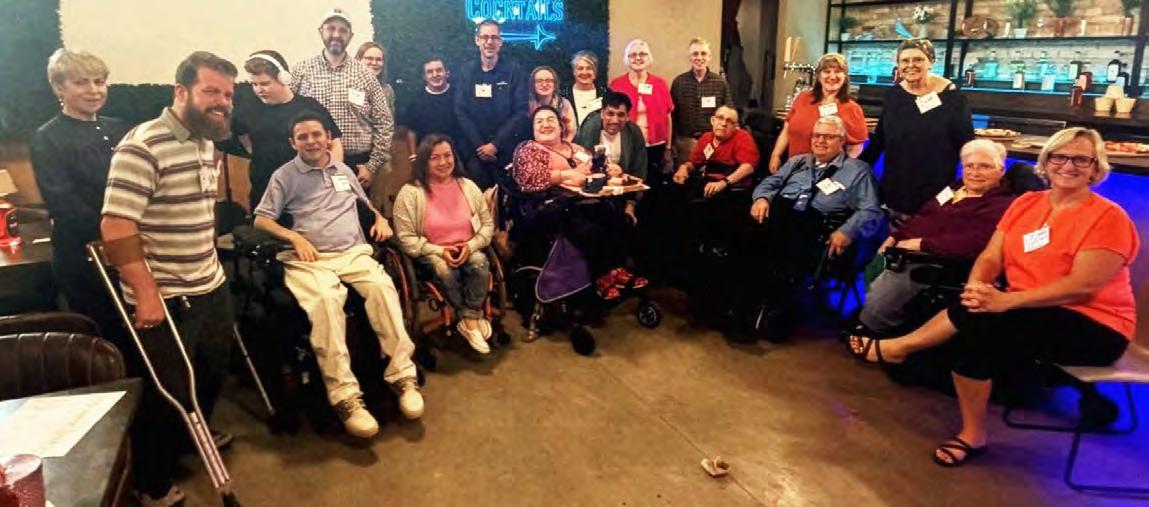
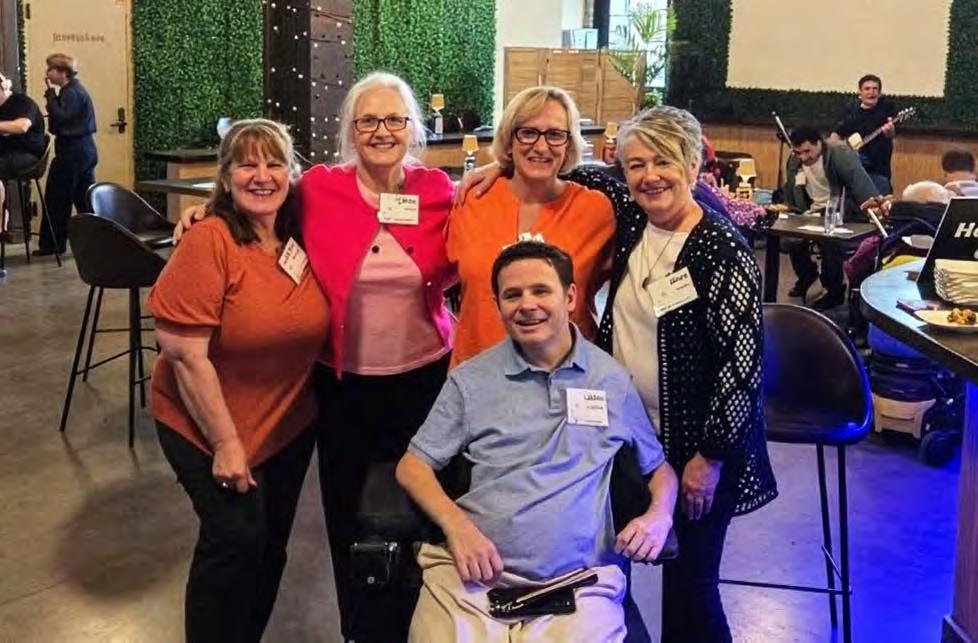
On Thursday, April 23, Access Press readers, sponsors, board members, and staff gathered for a casual happy hour at King Coil Spirits in Saint Paul. The evening provided a perfect, laid-back opportunity for attendees to connect, share stories, and catch up on the latest news within our community.
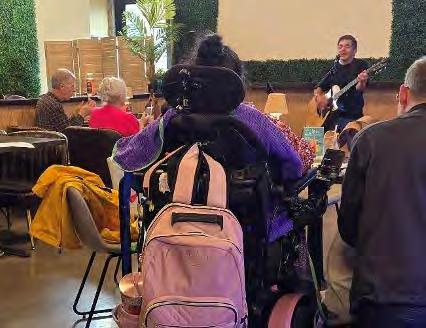
Adding to the camaraderie was live entertainment from Scott Mesrobian. His acoustic set of classic folk tunes and engaging singalongs had everyone swaying and singing together.
The lively atmosphere was fueled by delicious artisan pizza from OG Zaza, made possible by a generous sponsorship from Accessible Spaces Inc. (ASI). We are incredibly grateful to ASI for their support in bringing us together, and to everyone who came out to make it such a memorable evening.
Keep an eye on the Access Press print edition, e-newsletter, and social media channels for details on our next get-together in August!
Join us! Access Press launches a new community membership model
After serving Minnesota’s disability community for 36 years, we are launching a brand-new community membership program. Our hope is to drive community engagement and raise $100,000. This will allow us to sustain and grow our independent disability-focused journalism.
We are facing a shifting financial landscape for local media, and our traditional reliance on donations, advertising revenue, and an increasingly competitive grant environment is no longer enough to maintain our operations. We need your help.
We set our modest fundraising goal to $100,000, which will help us in our mission and commemorate our 36th year in operation.
This new membership drive follows a 2025 Press Forward grant that allowed us to hire an executive director and a new managing editor. With these leadership additions, we are improving our editorial processes, increasing content quality, and shifting our paper from
a position of basic survival to one focused on long-term innovation and community impact.
We designed our new membership model to be straightforward and transparent, focusing on funding our core mission rather than offering exclusive subscriber perks. As a member, you will support our independent, disability-focused journalism and can opt for public recognition of your contribution.
A special note to our current donors:We greatly appreciate your financial support. When you make your next donation, please become a member.
To accommodate varying financial means, we offer four membership tiers:
• Supporter: $5 a month or $50 a year
• Advocate: $10 a month or $100 a year
• Champion: $20 a month or $200 a year
• Pay What You Can: A flexible option for all income levels
For more information on becoming a member please visit accesspress.org/membership.
Long COVID and chronic illness
By Frank Murphy
For many people today, catching COVID-19 is no longer a major fear. However, the global pandemic has left a lasting, invisible mark in the form of Long COVID. This condition has turned a common respiratory virus into a source of chronic illness, creating immense new challenges and shining a bright light on the daily realities of living with a new disability. The "Episodic" Nature of Long COVID Long COVID is much more than just a lingering cough; it can cause profound and life-altering disability. A 2025 clinical study explored the "episodic disability" caused by the condition, showing exactly how it severely limits
daily functioning (O’Brien et al., 2025).
The researchers found that extreme, unrelenting fatigue was the most common symptom. This fatigue often initiates what the study calls a "cascade of disability," drastically limiting a person's physical and mental capabilities.
Study participants described experiencing sudden “crashes” of exhaustion and severe “brain fog.”
These symptoms made simple, everyday tasks—like holding a normal conversation, working a standard shift, or remembering to turn off the stove— incredibly difficult to manage.
Navigating an Unpredictable Life
Because these debilitating symptoms come and go unpredictably, living with Long COVID means navigating
a highly unstable life. This unpredictability makes it incredibly hard for individuals to maintain steady employment, manage household chores, or keep up with social and family obligations. The researchers noted that Long COVID doesn't just affect the physical body; it fundamentally alters a person's independence and their overall quality of life.
As millions continue to struggle with these persistent, fluctuating symptoms, society must adapt. Recognizing Long COVID as a serious, dynamic disability is the vital first step toward providing the medical care, workplace accommodations, and social support these individuals desperately need.
Scott Mesrobian provided wonderful folk music.
Catherine Hunter, Lynda Milne, Heidi Holste, Mary Graba, and Joey Carlson
MOBILITY MONTH
Roads to independence: A look at Minnesota’s wheelchair van providers
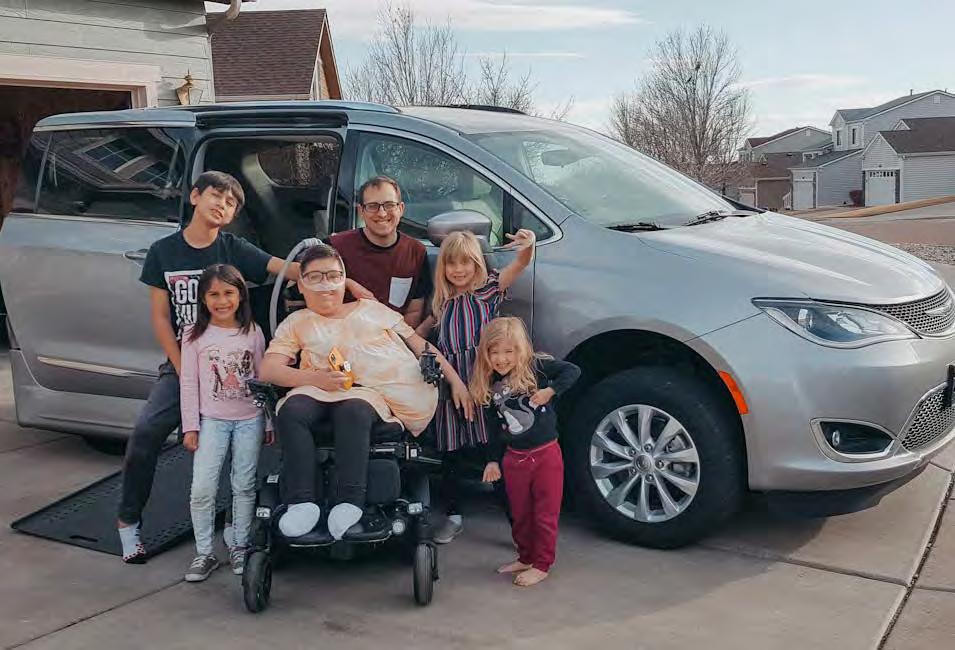
May is National Mobility Awareness Month, a time dedicated to advocating for accessible transportation and highlighting how adaptive equipment fosters independence. One of the best ways for people with mobility needs to gain independence is to purchase an accessible vehicle. However, this can be a daunting and expensive process. Fortunately, Minnesota is home to three excellent dealers where you can purchase a vehicle tailored to your needs. Each of these dealerships offers unique strengths and business models.
Cummings Mobility: Decades of local roots and service
Cummings Mobility (cummingsmobility. com) has deep, multigenerational roots in Minnesota. The business began as a neighborhood body shop started by the grandfather of the current CEO, Charlie Cummings.
“My dad was 16 when he quit high school. Even though he wasn’t much for books, he wanted to be productive and started a body shop with my grandpa,” Cummings said.
In the 1970s and ’80s, the company shifted to building ambulances before transitioning into the mobility space by crafting custom high-top wheelchair vans. Today, Cummings Mobility operates as an authorized BraunAbility dealer. Since its early days operating out of Hanover, Minnesota, the company has expanded significantly and now serves customers from locations in Albertville, Burnsville, and Little Canada, as well as Des Moines, Iowa.
When it comes to vehicle options, one model currently dominates the dealership's sales. "I would say it's Pacifica, like the Braun Pacifica, probably 10-to-1," Cummings noted. While the Pacifica is the clear top seller and offers the most midsection space, Cummings highlighted that other vehicles serve specific needs. For individuals who use a power chair and need to navigate to the driver's seat, he pointed out that "Toyota has by far the largest room up front." The dealership is also anticipating the return of the Chevrolet Traverse to offer an SUV style option.
Despite growing its operations, Cummings maintains a strong family-business environment with high employee retention. "I can look out in the shop and the average guy that we've had here is probably 15 years, and same with sales," Cummings said. The dealership provides a highly supportive local safety net that includes vehicle pickup and delivery services, along with a 24-hour emergency after-hours line.
Understanding that the cost of a vehicle is a major hurdle for drivers with disabilities, Cummings works to help customers navigate the often-slow process of securing state and county waivers for conversions. To further offset costs, they maintain a robust online inventory of about 80 used vans to offer reliable options at more accessible price points while remaining highly competitive on price. "We have a superior product and we sell it for a little bit less," Cummings said.
Rollx Vans: Direct-to-consumer and nationwide reach
Based in Savage, Minnesota, Rollx Vans (rollxvans.com) operates as both a
manufacturer and a dealership, utilizing a unique business model for the industry.
"We sell nationwide, so we sell all throughout the U.S. direct to the end user," said Scott Andrews, director of marketing and sales.
To serve this wide footprint, the company deploys regional mobility technicians across the country who deliver and service vehicles right in the customer's driveway. This service model bridges a significant gap for rural drivers who may not live near a major dealership.
"If we sell a van in Texas, then we'll get the van ready here at our facility in Minnesota and then we'll transport it down to our technician in Texas and then he'll take it to the customer's house and deliver it to them," Andrews said.
Recognizing that cost is the single most significant barrier to entry—especially with recent inflation and interest rate hikes—Rollx places a heavy emphasis on the secondary market. They strive to keep an inventory of 40 to 50 used vehicles in stock to offer more accessible price points.
"We have a renew process that's really the gold standard for reconditioning used vehicles in the industry," Andrews said.
The manufacturer-direct model also prioritizes an upfront, transparent sales process. "They can go online and see all the prices, and then after they talk to us ... there's not a bunch of hidden prices or anything like that," Andrews said. "It's all upfront."
When it comes to vehicle options, the Chrysler Pacifica remains the company's biggest seller, while the Toyota Sienna hybrid is a rapidly growing segment. Rollx’s side-entry minivans feature an in-floor ramp design, which is heavily favored by their customers over fold-out options. The company also provides ADA-compliant rearentry vehicles with manual fold-out ramps, and partners with external companies to provide accessible pickup trucks and full-size Dodge Ram ProMasters.
MobilityWorks: National inventory with comprehensive solutions
As the largest provider of accessible vehicles in the United States, MobilityWorks (mobilityworks.com) brings the power of a massive national infrastructure to the local

level. With 100 locations across the country, including a strong presence in the Twin Cities metro area, the company offers a scale that significantly expands a buyer's options.
"We have 100 locations across the United States, which means we have 100 times the inventory," said Ron Iverson, general manager.
This vast network also provides a nationwide safety net for traveling customers. "If you bought this here or if you're in Orlando, Florida, or if you're in New York, L.A., Texas, Arizona ... you're always going to be able to find the closest dealership that's going to be able to repair what you have going on and get you back on the road," Iverson said.
When it comes to vehicle models, Iverson noted that the Chrysler Pacifica and Voyager remain industry mainstays, while the Toyota and Honda models serve as popular premium imports. A major shift for Minnesota drivers has been the introduction of all-wheel-drive hybrid options.
"One of the biggest game changers is when Toyota's conversion came out and it was allowed to be all-wheel drive, which in our climate, a lot of people would like to have as much traction as they can," Iverson said, noting that four-wheel-drive and all-wheeldrive options were historically rare in the mobility market.
Rather than pushing a specific make or model, MobilityWorks utilizes a consultative
approach because different manufacturers alter vehicles in different ways. Factors like door opening height, interior layout, and driver sightlines make matching the right vehicle to the individual customer essential.
"We always stress to people to never—don't rush into a purchase," Iverson said. "Go out and look at different options because everybody fits in a vehicle differently."
Recognizing that accessibility extends far beyond the driveway, MobilityWorks also provides comprehensive home access solutions. This includes the installation of vertical platform lifts, stairlifts, and scooters. "We try to be a one-stop shop as much as we can," Iverson said.
Taking the next step
Whether a buyer values localized family service, direct-manufacturer innovation, or national inventory and home accessibility solutions, Minnesota offers robust options for drivers with disabilities. National Mobility Awareness Month serves as an ideal catalyst for those in the market to reach out to these providers, ask critical questions about state funding and waivers, and schedule a test drive to find the setup that best fits their life.



Rollx is the only company that manufactures its vehicles in Minnesota.
MobilityWorks has dealerships nationwide and sells many VMI conversions, including the Toyota hybrid.
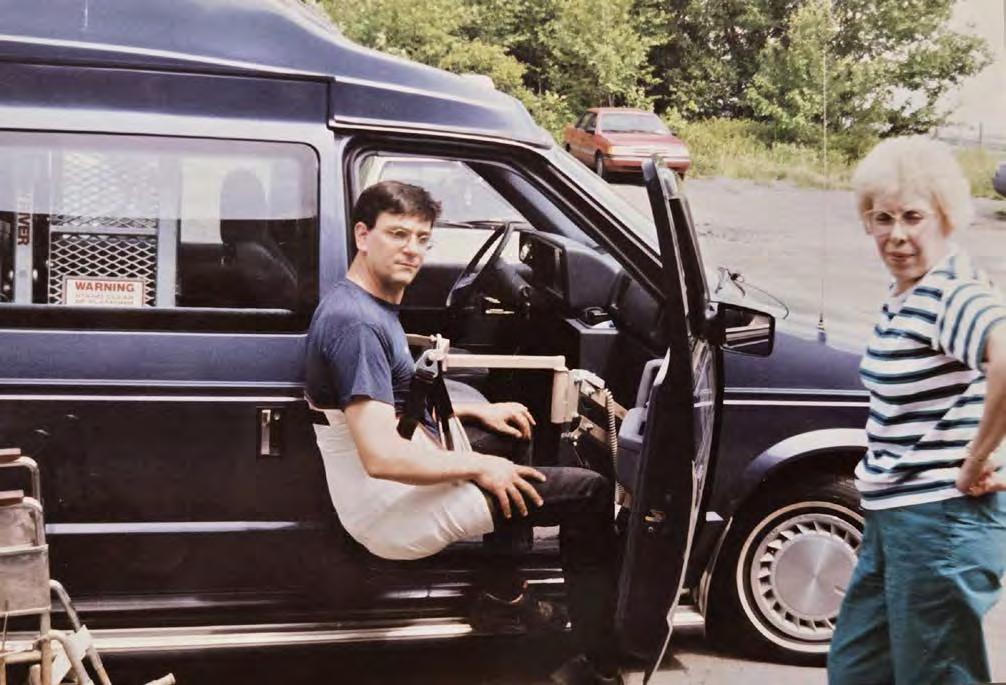
Cummings Mobility has a long history of providing solutions for Minnesotans with disabilities. This photo features currrent Cummings Mobility CEO, Charlie Cummings' grandmother, assisting a customer.
MOBILITY MONTH
Driving toward an accessible autonomous future
By Joey Carlson
If you ask most people about the future of transportation, there is one place where their minds usually go: autonomous vehicles (AVs). Because of this, it's important that people with mobility disabilities keep themselves in conversations as the rules and technology behind AVs are being developed.
For years, the promise of AVs felt like distant science fiction. Today, it is a reality. But as this technology accelerates on public streets, a critical question remains: are we ensuring that wheelchair users and the broader disability community are in the driver’s seat of this vital conversation?
The Current State: High Costs and Broken Systems
To understand the urgent necessity of accessible AVs, we must first examine the current transportation landscape for people with physical disabilities. It is a system defined by friction, high costs, and limited independence.
The primary hurdles in the current system include:
• Unreliable Public Transit: Users relying on paratransit are frequently forced to book rides days in advance, wait through frustrating pickup windows, and occasionally face the reality of being stranded entirely.
• Prohibitive Vehicle Costs: For those seeking the independence of a personal vehicle, retrofitting a standard van for wheelchair access and driving tacks on a staggering $40,000 to $125,000 premium over the base cost.
The Future State: An Economic and Social Game Changer
One of the biggest hurdles for people with disabilities is gaining employment. Oftentimes, transportation is the biggest problem that people face as they search for a job.
• Low Workforce Participation: Labor force participation is a stark 21% for the disability community, compared to 67% for the broader population.
• Systemic Barriers: Transportation is explicitly cited as a primary barrier to employment for 26% of people with physical disabilities.
Autonomous vehicles have the potential to significantly change the employment problem for many. Kent Keyser from the United Spinal Association describes the advent of AVs as an absolute "game changer" for the disability community.
“The core promise of AV technology is safe, on-demand, and reliable transportation that completely removes the friction of current transit models,” Keyser said.
The economic upside of getting people with disabilities a more reliable method of transportation is massive. Widespread AV adoption for people with disabilities is projected to drastically boost the national economy.
Even in a moderate scenario—defined as a 13.5% reduction in unemployment for people with a disability—the federal government could see a $27.8 billion reduction in spending. Combined with increased tax revenues, this scenario could generate an estimated $120.7 billion in federal net revenue and savings.
"We are looking at an innovation that doesn't just move people from point A to point B,” Keyser said. “It has the power to unlock
massive economic participation for millions of Americans.”
Designing for Inclusion
For AVs to be a genuine solution, it is ideal that they are accessible by design, not just retrofitted as an afterthought. Keyser points out that companies like Zoox and Holon are already developing purpose-built, accessible AVs.
The HOLON urban mover is a prime example of what inclusive design looks like in practice. It is a fully electric, Level 4 autonomous vehicle designed for public transport. Built from the ground up for accessibility, the vehicle features a low-to-theground profile, an automated ramp, massive panoramic windows, and integrated auditory and visual support systems.
Securing Accessibility
The biggest hurdle to developing widespread automated vehicles for people using wheelchairs is creating a universal and user-friendly securement system. Currently in public transportation, wheelchair users are tied down using cumbersome and time-consuming straps that need a fit and knowledgeable attendant to secure.
To solve this problem, United Spinal, General Motors and NCART, an association representing wheelchair manufacturers and suppliers, helped establish the SecureRide Coalition. This advocacy group is actively collaborating with major original equipment manufacturers (OEMs)—in addition to General Motors, MOIA (parent organization, Volkswagen Group, a founding member) Toyota Boshoku, and AV companies —along with wheelchair manufacturers and providers —to create a universal docking system.
In the future, United Spinal hopes that there will be a standard wheelchair securement device that will not only work in on autonomous vehicles, but also buses, trains, taxis, and even commercial airplanes.
Minnesota Leading the Charge
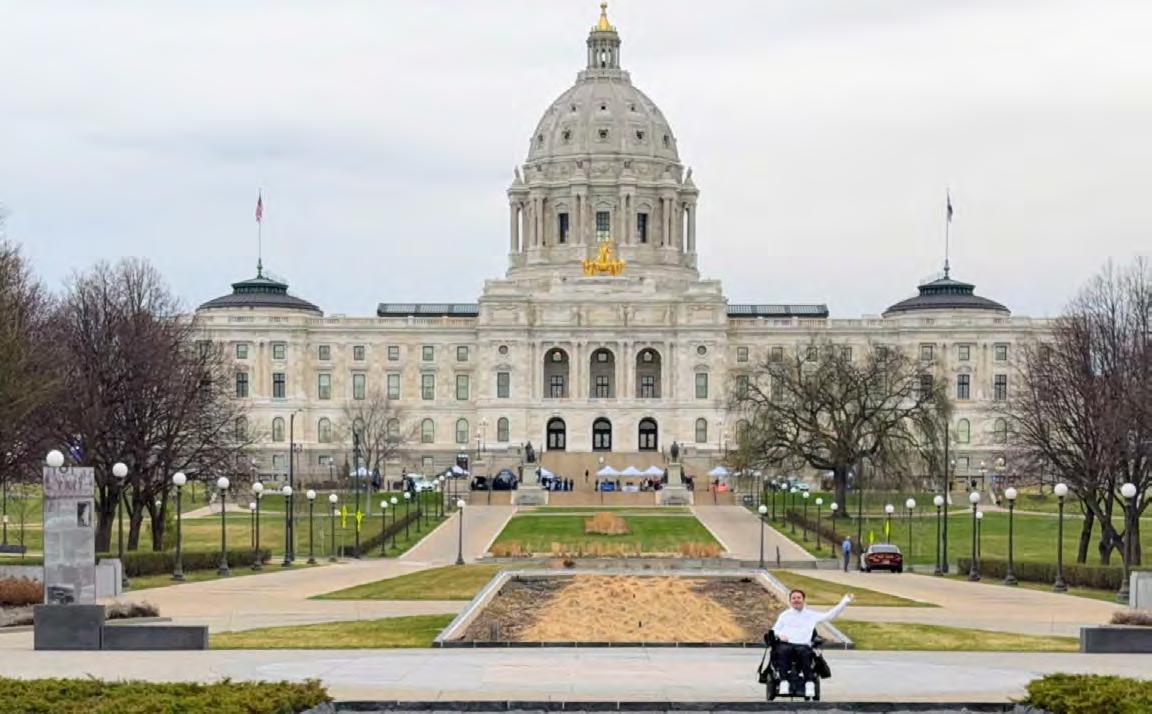
Our home state is already acting as a crucial proving ground for AVs for people with disabilities. At the recent Automated Vehicle Day at the state capitol in St. Paul, Minnesota, legislators, vehicle manufacturers, and service providers met to set the rules of the road for autonomous vehicles.
At this event, a showcase of accessible AVs currently in operation in Minnesota were
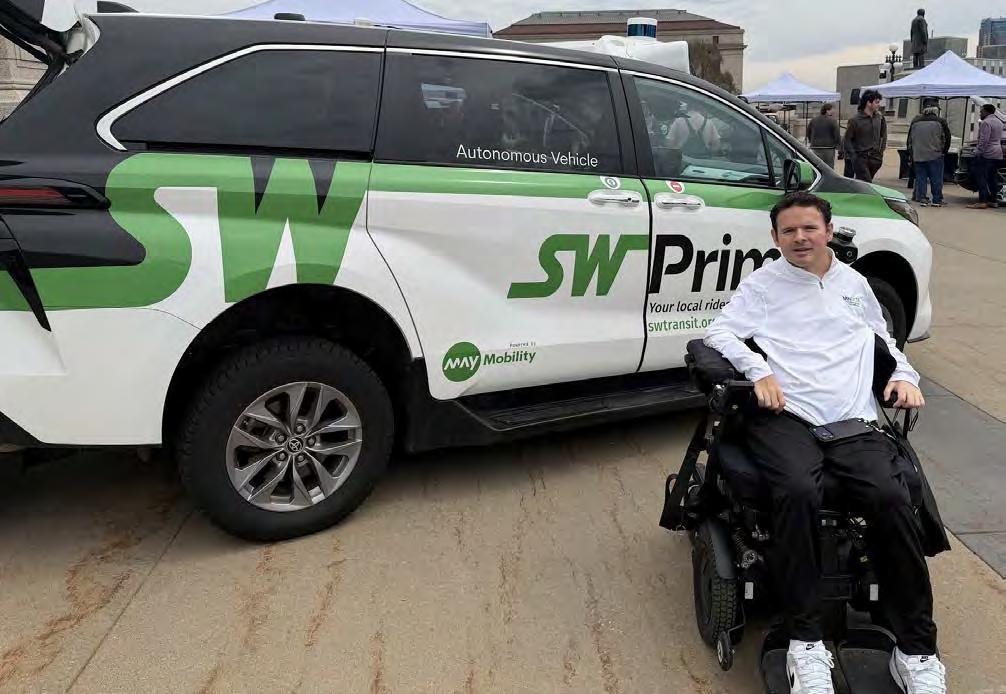
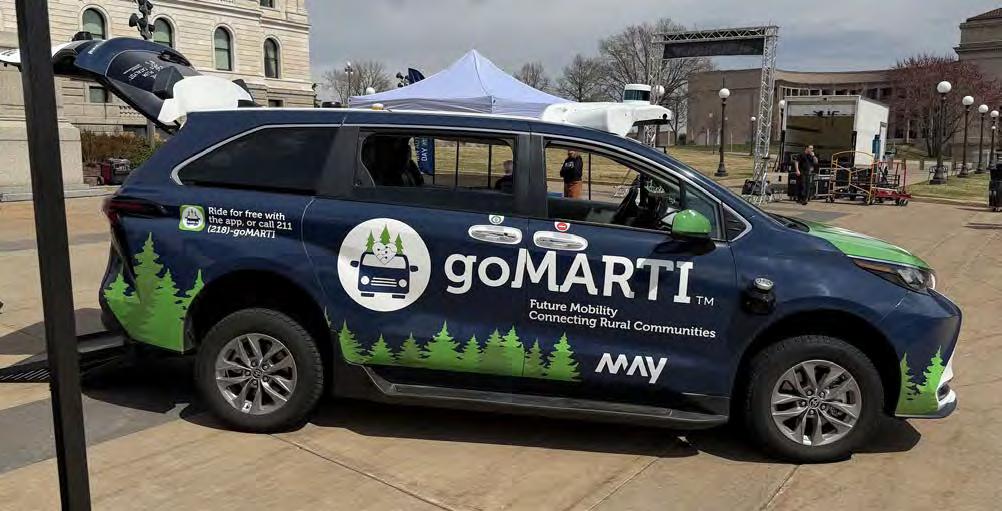
featured. Attendees of the event learned about partnerships between cities and the AV provider, May Mobility.
Here are details about the two innovative programs going on in Minnesota:
• Grand Rapids, MN: The goMARTI microtransit project has successfully tested autonomous vehicles in challenging rural winter conditions. The active fleet includes three fully wheelchair-accessible AVs. Having provided tens of thousands of rides to local residents, the program proves that rural communities do not have to be left behind in the autonomous transition. Right now, the vehicles rely on safety operators on board to assist riders with accessibility needs in boarding and exiting. The program's ongoing success is championed by dedicated local advocates, notably Myrna Peterson, who has been instrumental in the accessibility space.
• Eden Prairie, MN: SouthWest Transit recently launched SW Prime, a similar system to goMARTI. It is collecting valuable data that will be used in the future of accessible autonomous transportation. These daily operations provide critical independence for riders. As James Granger of May Mobility noted, “People who were previously stuck at home are now able to get to work, go to doctor's appointments, or get out and socialize. That's the type of independence that May Mobility is hoping to offer.”
The Legislative Road Ahead
While the technology is rapidly maturing on our local streets, the national policy framework heavily lags behind. Currently, the United States relies on a fractured and
DRUG & ALCOHOL TREATMENT for Adults with Cognitive Impairments
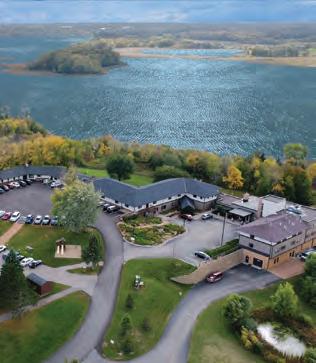
• Located on 180 acres along beautiful Lake Independence, Vinland Center provides drug and alcohol treatment for men with brain injuries, cognitive impairment, and/or multiple disabilities.
• There are many causes of brain injury, and each brain injury is unique.
• Our staff members are highly trained to work with people living with disabilities caused by brain injuries.
inconsistent patchwork of AV laws spread across 25 different states.
Keyser stresses that Congress must step up and provide a cohesive national framework. With the current Surface Transportation Authorization expiring in 2026, advocates have a critical, time-sensitive window to ensure that robust accessibility mandates are cemented into federal law.
The road to fully autonomous, accessible transit is being paved right now. By keeping the voices and specific needs of wheelchair users at the forefront of vehicle design and federal legislation, we can ensure the future of mobility is a ride everyone can take.
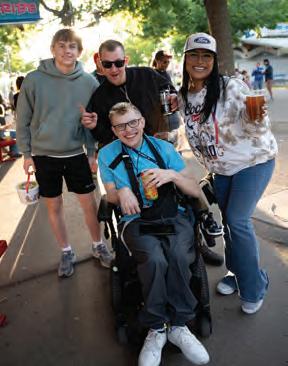

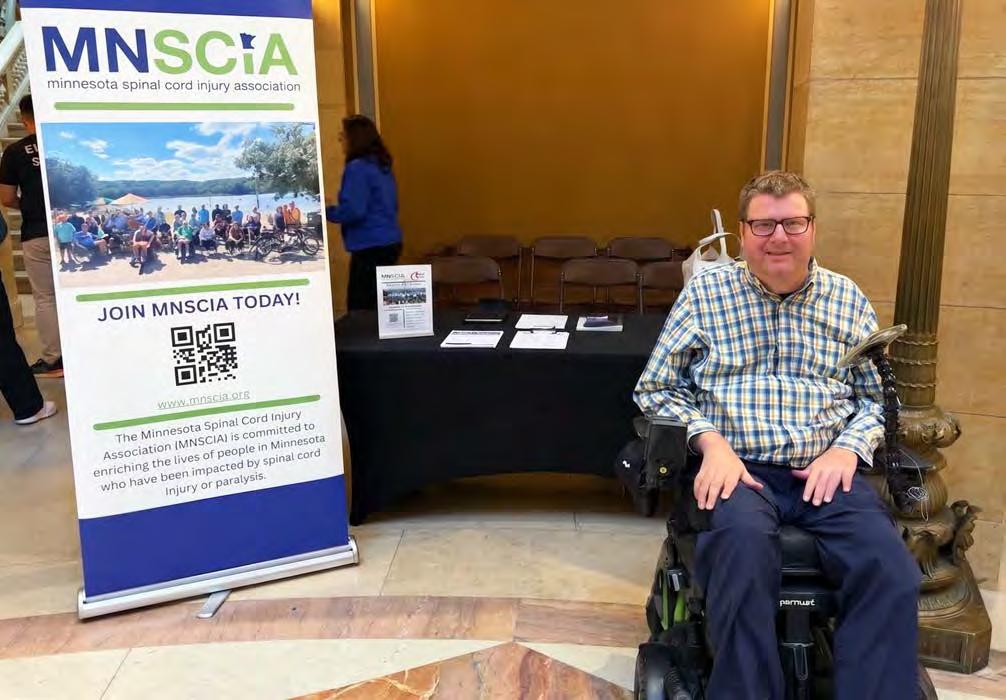
Rob Wudlick represented United Spinal and Minnesota Spinal Cord Injury Association at a booth during Automated Vehicle Day.
Outside the Capitol in Saint Paul, Minnesota, May Mobility showcased their accessible automated vehicles during Automated Vehicle Day.
MOBILITY MONTH
Stranded by
the system, saved by the community
How a routine van repair spiraled into multiple roadside strandings, a laughing dispatcher, and an impromptu wheelchair ride through rush hour highway traffic
By Steve Laux
It started as a routine pickup—my “fixed” wheelchair-accessible van, back from the shop and ready (in theory) to restore a sense of normalcy. But not long after, that sense of control slipped away.
A Routine Ride Turns Into a Crisis
While driving on the highway, I lost power and began coasting, doing the mental math in real time: if I don’t make it to the next exit, I’m stranded in a vehicle I cannot safely exit on my own. For most drivers, that’s stressful. For a wheelchair user, it’s a completely different category of risk—where even a minor mechanical issue can escalate into a full-blown safety situation. I made it to the Central Avenue exit and managed to coast to a stop near a sidewalk—an unplanned destination, but the best-case scenario under the circumstances.
I called the shop I had just left ten minutes earlier. “We’ll be there shortly,” they said. Great—problem solved, right? Not quite. The tow truck would take the van, but I was still 30 miles from home in a 400-pound power wheelchair.
The Missing "Plan B" for Accessibility
There is no “Plan B” app for that. No Uber. No same-day accessible taxi. Metro Mobility requires three days’ notice, and one dispatcher literally laughed when I asked about immediate service. So I did what many in the disability community know all too well—I started dialing for help.
Quick sidebar (but really the main point): this is the gap. Transportation systems— whether taxis today or autonomous vehicles tomorrow—are built on the assumption of flexibility. If one option fails, another appears. But for wheelchair users, that flexibility simply doesn’t exist. Accessibility isn’t baked into the system—it’s bolted on, inconsistently, as an afterthought. As we push forward into the future of transportation, especially with driverless technology, we have a choice: design inclusively from the start, or reinforce a system where independence is conditional. Right now, we’re trending toward the latter. Rescue, Ruin, and Highway Transfer Back to the chaos. With a tow truck en
route, I started calling friends. Not my wife—yet—because I didn’t even have a viable next step to offer her. Call number two, and I struck gold. A close friend—also a quadriplegic—had just returned from Florida, and before I could even finish explaining the situation, his dad grabbed the keys and headed my way. Pure luck. Thirty minutes later, the tow truck and my ride arrived almost simultaneously. I transferred into another accessible van, handed off my keys, and thought, “Alright, crisis managed.” Not so fast. Less than ten miles down the road, the rescue van blew a tire. Yes, really. At this point, you either panic or laugh—and we chose laughter, because honestly, what else is left? He called 911, I started dialing
Unlock the world of reading
By Frank Murphy
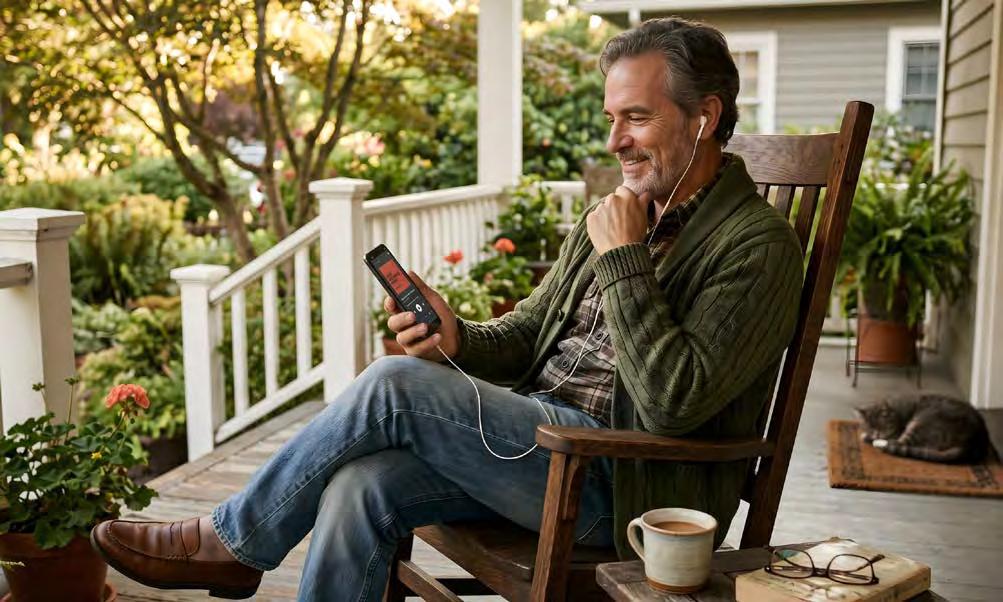
For individuals who are blind or have other disabilities that make reading print difficult, staying connected to the written word can be challenging. In Minnesota, the Radio Talking Book (RTB) service helps bridge this gap by offering free audio access to hundreds of books and periodicals. Operated by the Minnesota Department of Employment and Economic Development's State Services for the Blind, the Radio Talking Book service broadcasts 24 hours a day, seven days a week. With a mission to cater to a diverse range of interests, RTB delivers a rich auditory experience. Listeners can tune in to hear daily local and national newspapers and a vast array of engaging fiction and nonfiction books. Whether you are interested in catching up on the latest
headlines, exploring a niche hobby, or immersing yourself in a bestselling novel, RTB has something for everyone. In addition to live programming, RTB conveniently archives its segments for two weeks, so you never have to worry about missing your favorite content. Furthermore, books that have been previously broadcast on-air are also available to borrow as audiobooks online.
If you or a loved one has a disability, RTB is a fantastic resource to help stay informed and entertained. To learn more about the programming schedule, view available publications, or get connected, visit the State Services for the Blind website at https:// mn.gov/deed/ssb/communication-center/rtb/ or call 1-800-722-0550. Happy reading!

to shift the vehicle. Same alarms, same lack of solutions, same reality: I was stranded once more. The shop was courteous, but not equipped to truly understand what “inconvenience” means when mobility isn’t optional. Two weeks later, I’m finally back to independent driving—but that stretch of uncertainty was anything but minor.
Community Cannot Replace
Systematic Accessibility
friends again, and this time my wife got the first call. I briefly considered wheeling the five miles home—until the skies opened up and rain shut down that brilliant idea. Within minutes, friends mobilized. One call turned into many, and soon enough, traffic was stopped on the highway while I rolled from one wheelchair-accessible van into another—none of them mine. It was equal parts ridiculous and remarkable. Stuck Again: When Mobility Isn't Optional You’d think that would be the end of it. It wasn’t. The next day, I returned to pick up my van—driven there by yet another friend— and got stuck again in the parking lot, unable
And yet, here’s what stands out most: community. The disability network showed up instantly—friends, family, and even friends-of-friends stepping in without hesitation. It was a coordinated response system more effective than anything formal I could access that day. That’s both inspiring and a little concerning. Because while community is powerful, it shouldn’t be the safety net we rely on when systems fail. We can do better. We have to do better. Accessibility must be a requirement— not a feature—in transportation policy, whether we’re talking about taxis today or autonomous vehicles tomorrow. Independence shouldn’t depend on luck, timing, or how many friends you can call on a moment’s notice. My day may read like a string of unfortunate events (and a bit of dark humor), but it highlights a very real truth: until accessibility is built into the foundation, stories like this won’t be the exception—they’ll remain the expectation.




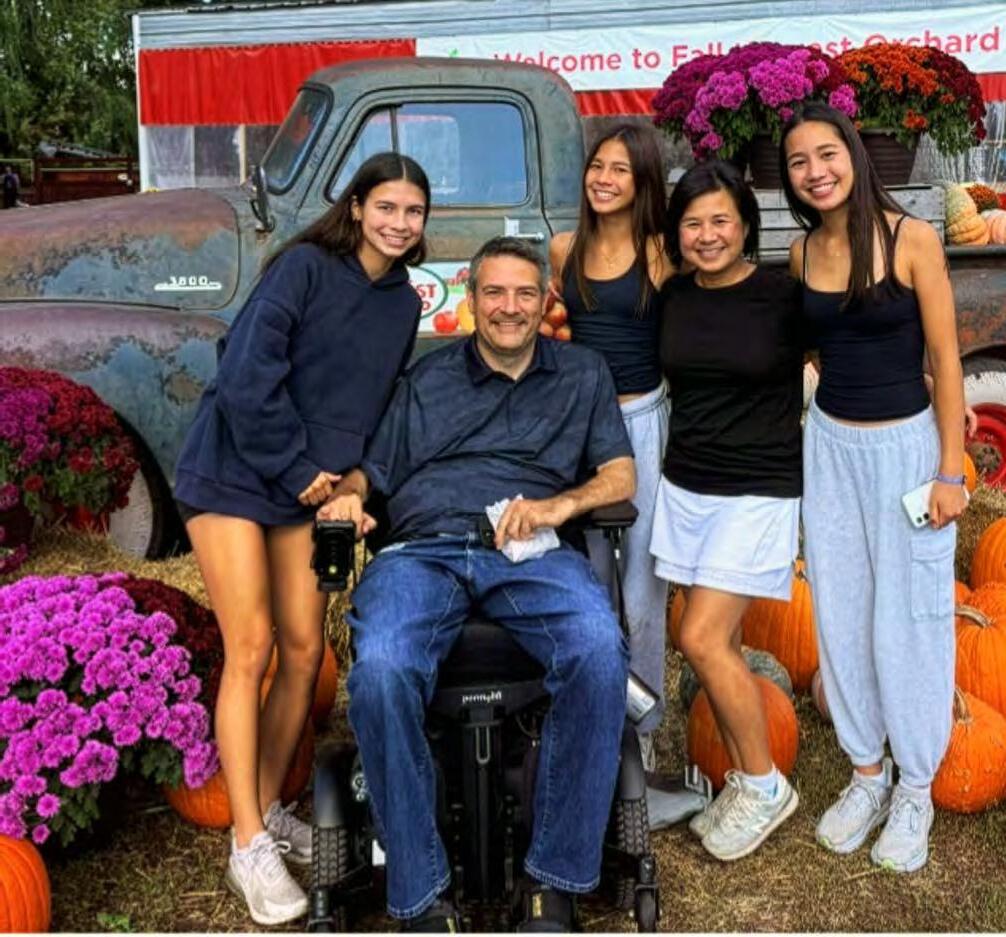
Steve Laux is a husband and a father to three daughters. He lives in Plymouth, Minnesota, has a C5-6 spinal cord injury, and serves as a board member for the Minnesota Spinal Cord Injury Association (MNSCIA). He works full-time for Medtronic and drives a wheelchair accessible van from his wheelchair using hand controls.
A screen shot from a Minnesota Department of Transportation highway camera was taken as Steve drove his wheelchair from one accessible van to another.
Elections matter: What Minnesotans with disabilities can ask candidates in 2026
By Heidi Holste
The 2026 election is shaping up to be one of the most important in recent years for Minnesotans with disabilities. While campaign conversations often focus on taxes, public safety, and the economy, the reality is that many of the decisions made by elected officials directly affect whether people with disabilities can live independently, access care, find employment, and fully participate in our communities.
This November, Minnesota voters will see a full ballot. Offices up for election include a U.S. Senate seat, all eight U.S. House seats, and all statewide constitutional offices, including Governor, Attorney General, Secretary of State, and State Auditor. Every seat in the Minnesota House and Senate will also be on the ballot, along with many local races such as city council, school board, and county offices.
In short, this election will shape policy at every level, and for people with disabilities, that impact is real and immediate. We have written about how fraud and ICE activity are impacting our community. We must continue to highlight the impacts to our elected officials and those running for office. At Access Press, we believe voters deserve more than general campaign promises. We believe candidates should be asked directly how their policies will affect people with
VOTING
From page 1
office will lose the ability to register by mail or online. In 2022, more than 7 million Americans registered to vote by mail and nearly 11 million registered online. Those pathways would be eliminated or severely restricted.
This is more than just a one-time hurdle. Under the SAVE Act, any change to your registration — including an address change — could require presenting citizenship documents again. Census data shows that older adults with disabilities move more frequently than those without (8.3% vs. 5.1% annually), often because their housing needs change as their disability status changes. People transitioning between care settings, group homes, and independent living move even more often. Each move means re-registering, and re-registering means producing documents in person — again. For people without disabilities, these are annoying extra steps. For people with disabilities, they could be insurmountable ones.
Document access. About 20% of people with disabilities do not have a driver's license or state ID — and even if they do, a license or state ID generally doesn't qualify under this bill because it doesn't prove citizenship. Many do not have a passport, which costs more than $130 and requires navigating an application
By Jane McClure
We often talk about meaningful work for people with disabilities. Recent debates have centered on the legality of subminimum wages paid to disabled workers, and whether or not such programs should be eliminated in Minnesota.
Workers with disabilities have many more options than they had in the past. But it’s worth noting that Minnesota was one of a handful of states 60 years ago where people with developmental disabilities could work at all outside of sheltered workshops.
This month’s look back is on efforts by what is now Opportunity Partners to raise $100,000. The nonprofit wanted to expand its work program facilities and provide more job training for disabled Minnesotans.
A press release from what was then Opportunity Workshop appeared in newspapers throughout Minnesota in spring 1966. Today’s readers might roll their eyes at the language and stereotypical portrayal of a cheery disabled worker, and the idea of using a fellow human as “inspiration.”
But it described the situation in a way designed to pluck readers’ heartstrings and possibly open their wallets.
disabilities, their families, and the systems they rely on every day. To support that goal, we want you to ask your local candidates some questions.
Below are the kinds of questions we believe every candidate should be prepared to answer:
process that is often inaccessible. Many do not have their birth certificate readily available, particularly if they have moved between care settings or rely on others to manage their documents. Nationwide, 21.3 million eligible voters lack ready access to the citizenship documents this bill would require. Unanswered questions about caregivers and assistance
The Voting Rights Act protects the right of voters with disabilities to choose someone to help them vote. Many disabled voters rely on caregivers, family members, or aides to help with registration, ballot completion, and returning mail ballots.
The SAVE America Act does not directly criminalize a caregiver who helps a disabled person vote. But it does criminalize the election official who processes a registration without proper documentation — up to five years in prison and exposure to private lawsuits, with no safe harbor for goodfaith errors. If a disabled voter uses the alternative process because they lack standard documents, the election official must personally sign an affidavit taking responsibility for the decision.
This raises questions the bill doesn't answer. If a caregiver brings a disabled voter's documents to the election office on their behalf, does that count as "presenting" them? Can a power of attorney act on behalf of someone under guardianship?
Voting Access
How will you ensure that polling places, voting systems, and election information are fully accessible to people with disabilities? What steps will you take to improve absentee and mail voting accessibility?
Healthcare and Long-Term Services
Do you understand the difference between Medicare and Medicaid and how these programs impact me (the person asking the question)? What is your plan to protect and strengthen Medicaid and home- and community-based services? How will you address the ongoing workforce shortage in direct care and mental health services?
Independent Living and Housing
What will you do to expand access to affordable, accessible housing? How will you support policies that allow people with disabilities to live in the community rather than in institutional settings?
Employment and Economic Security
What policies will you support to increase employment opportunities for people with disabilities? How will you ensure people can work without losing essential benefits?
Transportation
How will you improve access to reliable, affordable, and accessible transportation?
What happens when a voter in a care facility cannot physically travel to present documents, and no one at the facility is willing to take on the legal risk of helping?
The bill was not written to target voters with disabilities. But it was written without considering them. When a bill restructures every stage of the voting process and imposes criminal penalties on the people who run it — without a single accessibility provision — the effect is the same whether the exclusion was intentional or not.
The problem this bill claims to solve
There is limited evidence that noncitizen voting is a widespread problem, even as distrust in elections has been deliberately stoked. Utah audited more than 2 million voter records and found one noncitizen registration and zero votes cast. The Heritage Foundation's own database documents fewer than 100 cases nationally over 20 years. States that have tested similar documentary requirements have blocked tens of thousands of eligible citizens from registering while catching almost no noncitizens. When voter rolls are purged using federal databases, the error rates are high — in Virginia, 94% of voters removed in one purge were U.S. citizens. In Travis County, Texas, 25% of voters flagged by the federal SAVE verification system had already proved their citizenship. Systems to verify voter eligibility already exist. All 50 states cross-reference voter
Education and Transition
What changes are needed in special education and transition services to better prepare young people with disabilities for adulthood?
Caregivers and Families
What policies will you support to strengthen support for family caregivers, including respite care and paid leave?
Representation and Inclusion
How will you ensure people with disabilities have a voice in policymaking? Will you commit to including individuals with disabilities in advisory roles or appointments?
These are not theoretical questions. They are real and impact whether people can get out of bed in the morning with the support they need, get to work, access healthcare, and participate in civic life.
We also know that no single list of questions can capture every lived experience. That’s why we are inviting our readers to help shape this effort. What do you want to ask the candidates running in your community? What issues are most important to you right now?
Write us at editor@accesspress.org And we will work to make sure your voice is heard. Elections matter for you, and everyone.
registrations against Social Security and DMV databases under the Help America Vote Act, which has been law since 2002. Better systems have been available — and in some cases were dismantled before this bill was introduced.
What you can do
The SAVE America Act is being debated in the U.S. Senate now. Contact your senators and tell them how this bill would affect your ability to vote.
U.S. Senate switchboard: 202-224-3121 Minnesota's 2026 Disability Advocacy Day at the Capitol is April 29, hosted by The Arc Minnesota and REV UP MN. It's a chance to raise the SAVE Act's impact on disabled voters directly with your legislators. REV UP MN is Minnesota's disability vote coalition and is active and organizing. Find them on Facebook at REV UP MN. For a full breakdown of every provision in the bill with primary sources, visit the SAVE Act interactive explainer at minnesotareformer. com/2026/04/15/whats-actually-in-the-save-actan-interactive-explainer/.
Chad Maschke runs MN06Watch (mn06watch. com & mn06watch.substack.com), an accountability journalism project covering Minnesota's 6th Congressional District. He has spent the past month researching and factchecking the SAVE America Act using bill text, federal court records, and state audit data.
“Arthur is a short, slight man who wears glasses and a big smile. He is 47 years old. He makes $1.09 per hour washing dishes in a Minneapolis restaurant. Arthur may be the happiest dishwasher in the state of Minnesota.”
Arthur spent 38 years, from age 9 until fall 1965, as a “mentally retarded patient” at the Faribault State School and Hospital. He was then sent to Opportunity Workshop in Richfield for months of training and trial periods at different jobs.
“Now Arthur pays a salary and pays taxes, just like everyone else,” the article stated.
“Instead of being a drain on society, he is a busy, happy, contributing part of society.”
Opportunity Workshop started in 1953 in a converted Richfield house. It was launched by parents who wanted more for their disabled children.
The first jobs it provided were light packaging work. Thirteen years later, Arther and others could undertake job training. They were able to try out different types of work to see what fit best for them.
By spring 1966, Opportunity Workshop had placed 111 people into jobs. Their combined annual salary was $261,960. If the
same people had stayed in state institutions, their care would have had a cost of $155,400.
Long client waiting lists drove a need to raise funds for facilities expansion. That meant fundraising on top of the roughly $170,000 per year needed for operations.
Fundraising took many forms, including a donation drive, grants and special sales. Opportunity Workshop in those days was known for fundraisers including annual preChristmas toy sales and for its manufacture and sale of the John F. Kennedy Candles of Hope, commemorating the late president and his work for disabled Americans.
The new center was dedicated in November 1967. Muriel Humphrey, wife of then-Vice President Hubert Humphrey, presided over the opening ceremonies. She was shown in newspaper pictures, holding some of the candles.
Newspaper reports tell us that 120 clients were on hand for the event. Perhaps Arthur, the cheerful dishwasher, whose story was used to help bring improvements for his peers, was there. We hope he enjoyed meaningful work for a long time.
The History Note is a monthly column produced in cooperation with the Minnesota
Governor’s Council on Developmental Disabilities.
Past History Notes and other disability history may be found at https://mn.gov/mnddc
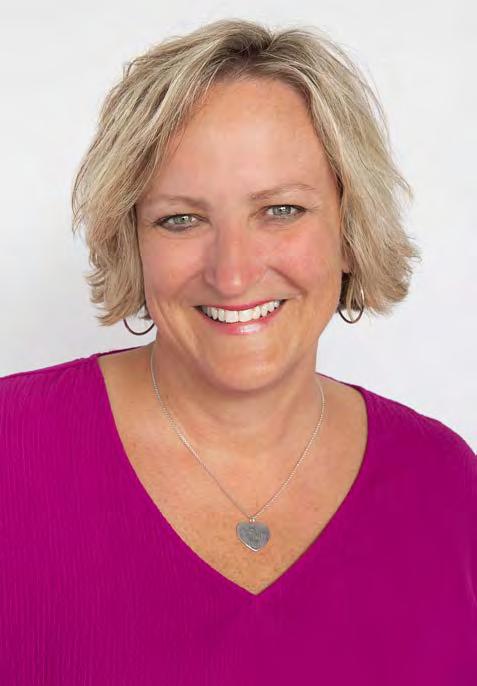
Heidi Holste
SUBMITTED PHOTOI
Foster homes closing around state: The hidden crisis uprooting Minnesota’s vulnerable adults
By Sandra Donohue
Minnesota is on the verge of losing something it cannot easily replace: small, family-based foster care homes that have quietly supported some of our most vulnerable citizens for decades. The state’s flat rate payment system, intended to simplify funding, is having the opposite effect—forcing providers to close their doors, displacing vulnerable adults, and destabilizing small businesses across our communities.
Family Residential Services (FRS) homes are not institutions—they are homes in the truest sense. They provide hospital-level care to individuals with complex medical and behavioral needs in an environment built on relationships, consistency, and trust. These homes are often run by small business owners who have dedicated their lives to this work. But under the flat rate system, funding no longer reflects the actual level of care required. Providers who are fully compliant with federal regulations are now facing an impossible reality: their reimbursement has been reduced by an average of 45 percent, making it financially
unsustainable to continue operating.
The consequences are immediate and devastating. When these homes close, vulnerable adults do not just lose services—they lose their homes, their routines, and the people they consider family. Many of these individuals cannot simply transition to another setting without significant emotional and physical harm. For some, the relationships built over years are their only source of stability. When those are taken away, the impact is profound and lasting.
This is not just a human services issue—it is a small business crisis. Across Minnesota, family-run providers are being forced to shut down operations, lay off staff, and walk away from models of care that have proven effective for decades. These are not large corporations that can absorb financial loss; they are local providers embedded in their communities, supporting jobs and filling critical gaps in care.
Supporters of the flat rate system argue that standardization creates fairness. But true fairness requires recognizing that not all care is the same. Individuals with higher needs
Waiver Reimagine puts Minnesota on shaky legal ground
By Disability Voice Advocates
Minnesota has long prided itself on being a national leader in supporting people with disabilities to live, work, and thrive in their communities. That commitment is now being tested by Waiver Reimagine—a comprehensive overhaul of disability waiver services that, while well-intentioned, risks causing profound harm if not significantly modified.
For nearly a decade, the Minnesota Department of Human Services (DHS) has been developing this redesign of the state’s Home and Community-Based Services system, which supports more than 80,000 Minnesotans with disabilities. It has been promoted as long-overdue reform—simplifying a complex system and improving fairness in how funding is allocated.
But as lawmakers weigh its future, they should confront a harder truth: Waiver Reimagine, as currently designed, risks putting Minnesota on the wrong side of its own laws—and federal civil rights protections.
From the beginning, the Legislature directed DHS to work in partnership with stakeholders, including people with disabilities and their families. Yet many say their input has been dismissed. The original Waiver Reimagine Advisory Committee was replaced in 2021 after concerns about lack of meaningful engagement, and frustration has only grown.
At the center of the controversy is how Waiver Reimagine would set individual budgets. Advocates claim DHS has adopted an off-the-shelf model and has been unwilling to consider alternatives. The proposal ties funding to where a person lives—providing significantly more resources, in some cases nearly twice as much, to people in provider-controlled settings such as group homes than to those living in their own or family home.
Disability Voice Advocates (DiVA), a nonprofit dedicated to course-correcting Waiver Reimagine, has been sounding the alarm. We are hearing directly from individuals and families who fear losing the supports that make community living possible. We have repeatedly proposed legislation requiring individual budgets be based on need, not living setting.
Providing higher budgets to providercontrolled settings runs counter to Minnesota law prioritizing services in the most integrated settings. Federal law is clearer still. In Olmstead v. L.C., the U.S. Supreme Court held that unnecessary segregation of people with disabilities is discrimination under the Americans with Disabilities Act. A funding structure that steers people toward more restrictive settings raises serious legal concerns. Those concerns have been reinforced by disability rights attorney Shamus O’Meara, who warned in Senate testimony that Waiver Reimagine could be “illegal and discriminatory.” He noted that some individuals could see budget reductions of more than 50 percent—cuts that could force

people from their homes and expose the state to class-action litigation.
The risks are not theoretical—they are deeply personal. A 50 percent budget cut can mean losing the supports that make independent living possible: personal care assistance, help with daily tasks, or transportation. Without those services, individuals may be forced out of their apartments and into group homes—not by choice, but by necessity.
This is more than a change in address. It is a loss of autonomy, privacy, and control. Group settings, while appropriate for some, often cannot match the flexibility of living in one’s own home. Daily routines become less individualized, and opportunities for community engagement diminish. People may lose the ability to choose who provides their care—or even who they live with.
The ripple effects extend further. Reduced budgets can mean fewer support hours, increased isolation, missed medical appointments, and less participation in work or community life. Families may be forced to fill gaps or make impossible decisions about care.
Lawmakers now face a clear choice. They can move forward with a plan that many stakeholders and legal experts believe is fundamentally flawed, or they can pause and reset. A short delay is not enough. When the foundation of a policy raises this level of concern, the responsible course is to go back to the drawing board.
require more staffing, more clinical oversight, and more resources. A one-size-fits-all funding model ignores this reality—and in doing so, it punishes the very providers who have stepped up to serve those with the greatest needs. Minnesota has long prided itself on leading with compassion and innovation in human services. But right now, policy is moving us in the opposite direction—away from personalized, community-based care and toward models that prioritize simplicity over outcomes. There is still time to correct course. Legislators must act to restore funding structures that reflect real care needs and preserve Family Residential Services as a viable option. Without action, we will continue to see closures, displacement, and the erosion of a system that once worked.
This is about more than reimbursement rates. It is about whether we are willing to protect the homes, relationships, and dignity of some of Minnesota’s most vulnerable residents—and the small businesses that make that possible.

Waiver Reimagine should be repealed in its current form and restarted.
As of this writing, Senator John Hoffman has included a full repeal in SF4766, the Senate Budget Omnibus bill, and has support from Senator Jim Abeler and others on the Human Services Committee. We are hopeful common sense prevails and that a full repeal holds through the conference committee process. When it comes to Minnesota’s human services laws, few bring deeper institutional knowledge than Senators Hoffman and Abeler, and attorney Shamus O’Meara. Their leadership reflects a growing recognition that this proposal must be reworked from the ground up. Minnesota still has the opportunity to build a system that is simpler, more

equitable, and more transparent. DiVA encourages DHS and advocates to collaborate in a true co-leadership model to design a new approach—one that complies with state and federal law and protects civil rights. Anything less risks avoidable harm—and avoidable legal consequences.
Disability Voice Advocates (DiVA)
• Kristine Sundberg – Executive Director Elder Voice Advocates/Disability Voice Advocates
• Tricia Brisbine – Founding Member
• Katrin Bachmeier – Leadership Team
• Lisa Vala – Leadership Team
• Heather Kainz – Leadership Team
• Brian Johnson – Leadership Team
• Ace Steinmann – Leadership Team
Affordable Senior Apartments
Affordable Senior Apartments
Housing with Care*


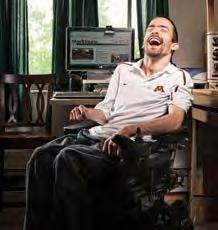

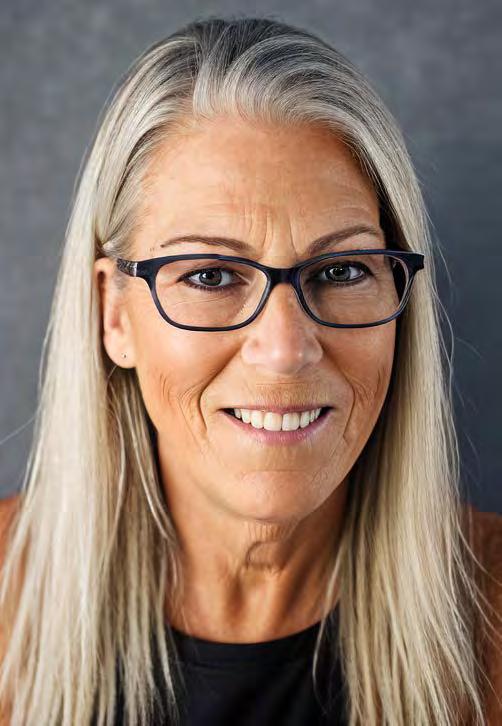
Sandra Donohue
Focus Beyond helps high school students with disabilities transition to what’s next
By Joey Carlson
For most high school students, graduation is a time to celebrate. However, for some students receiving special education services, graduation can be a scary time that feels like stepping into the unknown. Secondary transition planning is the process of preparing students for life after high school and includes planning for postsecondary education or training, employment, and independent living. This can be a scary time of life and high school students may not have the skills to graduate after 12th grade.
That's why Focus Beyond Transition Services are so important. For over a decade, this school has been a critical bridge for young adults with disabilities, ages 18 to 22, who still have unmet educational needs after they turn 18.
Leading this school is principal Micaela Smith, who loves interacting with both the teachers and students in the building.
“What keeps me motivated is the individual stories,” Smith said. “I have been working with a young woman for three years. When she came into our school, she was quiet and extremely passive. After going through our program and learning how to safely navigate and engage with her environment, she is now confidently returning to work in an area she excels at. She not only was hired for a real job, but she also learned how to independently navigate public transit and will graduate with her high school diploma later this year.”
Getting into the community
The traditional classroom is only a fraction of the Focus Beyond experience. The program operates on the belief that learning must happen in the true, authentic environment of the community. As a result, students are usually out in Twin Cities communities at least
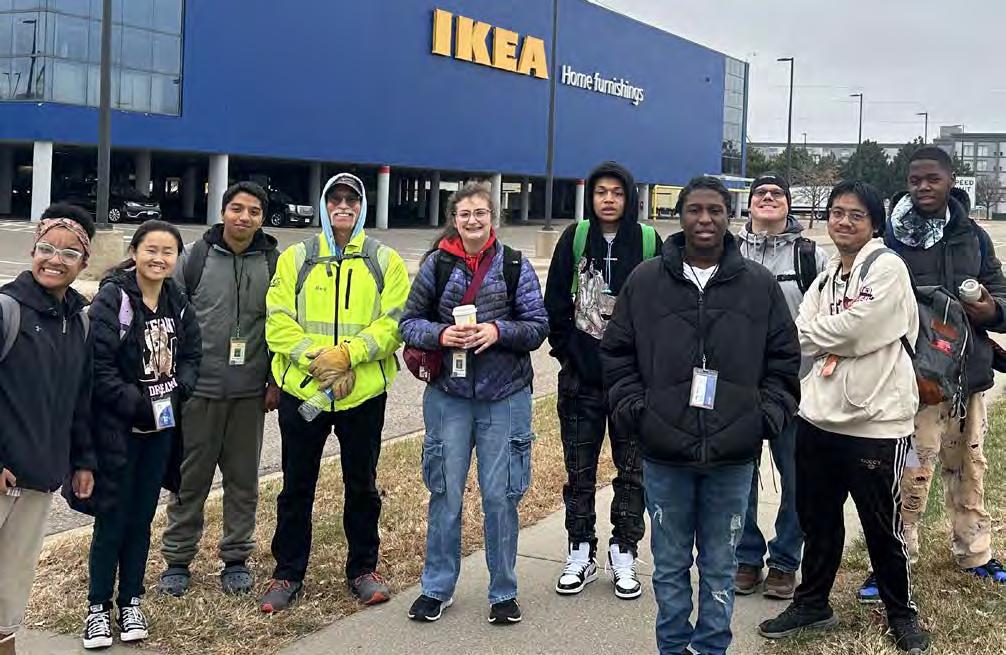
three to four days a week. This community immersion begins even before students officially age into the 18-to22 program. Focus Beyond facilitates the STEPS program, which serves about 200 high school students annually across the district. These younger students are connected with job coaches and sent to one of 28 different community volunteer sites—ranging from refurbishing technology at PCs for People to caring for animals at Feline Rescue. Alongside a specialized PAES (Practical Assessment Exploration System) lab, these experiences allow students to figure out what they actually like to do, and just as importantly, what they don't like to do, before they leave high school. By the time students enter the core Focus
Several states bypass federal government to join global disease network
By Access Press Staff
In a break from the federal government, the public health departments of three states and New York City have directly joined the World Health Organization’s Global Outbreak Alert and Response Network (GOARN). Spurred by the United States’ official withdrawal from the WHO this past January, California, Illinois, New York State, and New York City are now taking global public health tracking into their own hands.
Historically, state public health agencies have not been direct members of the 310-member GOARN, relying instead on the federal Centers for Disease Control and Prevention (CDC) to filter and pass down information about global outbreaks. However, state officials argue that the federal withdrawal throttles critical information sharing. By joining GOARN directly, these states are ensuring they keep their own radar tuned to global infectious diseases that could ultimately cross their borders.
For the readers of Access Press and Minnesota’s broader disability community, tracking global outbreaks is far more than a political dispute. Many individuals with disabilities live with compromised immune systems or chronic conditions that make them uniquely vulnerable to novel infectious diseases, as clearly demonstrated by the severe impacts of COVID-19 and the lingering, disabling realities of Long COVID.
At this time, it is not known if Minnesota would consider joining GOARN. Currently, the Minnesota Department of Health (MDH) relies heavily on its own internal infrastructure, known as the Minnesota Electronic Disease Surveillance System (MEDSS), to monitor local disease occurrences, track trends, and coordinate rapid responses among state and local clinics. MDH remains highly active in safeguarding vulnerable state populations, continually updating vaccine guidance and monitoring illness trends.
Beyond program—which starts the year with roughly 230 to 240 young adults—they are ready to hone those skills. The student body represents a complete spectrum of disabilities. Some students require comprehensive support for daily medical care and mobility, while others navigate the world independently but need specific executive functioning or socialemotional support to successfully enter college or the workforce.
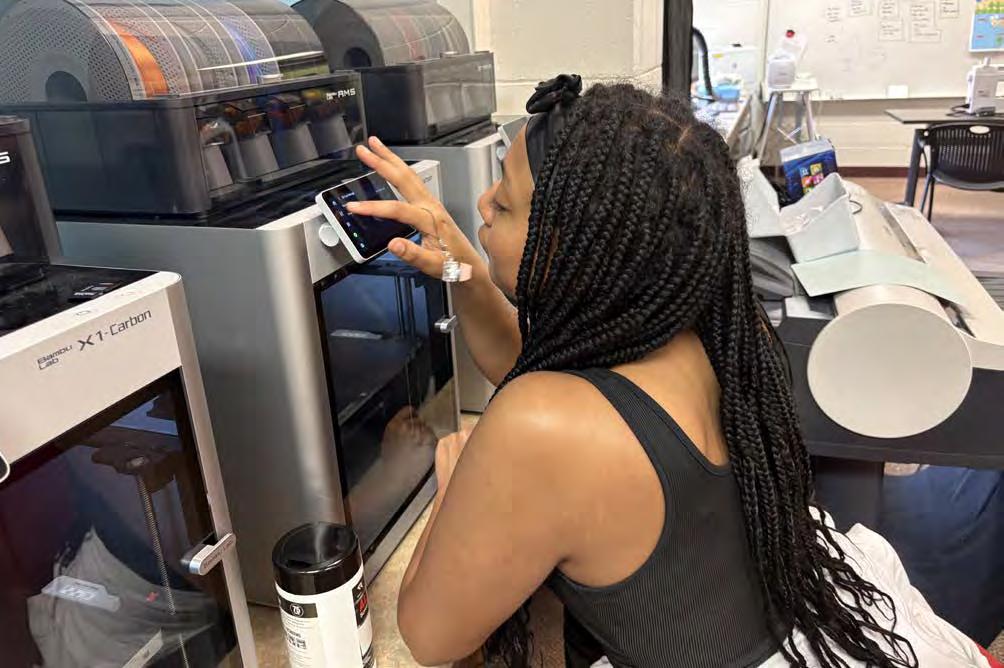
Making Change," the school has acquired 3D printers and will soon add laser engravers. The results are amazing: students learn design software and help their friends by manufacturing assistive devices. For example, the production class recently designed and 3D-printed a wide-handled stamp for a student with limited dexterity. Through this initiative, young adults with disabilities are actively engineering solutions





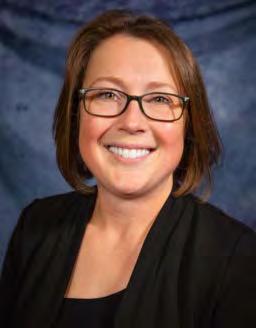
Focus Beyond Principal, Micaela Smith
Focus Beyond students prepare for life after high school by working at job sites like IKEA in Bloomington, Minnesota. Students learn how to use 3D printer software to create devices that help people with disabilities.
By Frank Murphy
For decades, Minnesota’s disability community has held a deep sense of pride in its local institutions. Chief among them was Courage Center, long revered as the homegrown gold standard for caring for people with disabilities in the state. Its approach was rooted in community, holistic advocacy, and a uniquely supportive environment. The Sister Kenny Rehabilitation Institute also carried a strong, historically significant reputation for its pioneering work.
When the two historic institutions merged in 2013 to become the Courage Kenny Rehabilitation Institute under the Allina Health umbrella, the disability community felt a distinct shift. Almost overnight, the atmosphere began to change. Many patients and advocates noticed that the new entity felt more corporate and not quite as authentically disability-friendly as the original Courage Center had been. This change was probably heavily driven by insurance coverage changes and healthcare costs.
One of the most glaring changes was the timeline of care: inpatient rehabilitation stays at the facility became significantly shorter than they had been years ago, leaving some patients feeling rushed through their critical
recovery journeys.
Now, Minnesota’s healthcare landscape is shifting once again. Allina Health recently announced a major transaction to join forces with Sutter Health, a massive California-based healthcare system. While the organizations have framed the arrangement as a member substitution—essentially a "not merger" where Allina retains its local leadership, brand, and headquarters while operating as Sutter’s Upper Midwest division—the news has sent ripples of apprehension through the disability community. For those who rely on Courage Kenny’s vital services, there is a collective, cautious hope. Patients, families, and advocates are watching closely, hoping that this new outof-state alignment doesn't represent another step away from the center’s roots. The primary concern is that the new corporate structure, bringing together $26 billion in combined revenue, will push services even further toward monetization, prioritizing the bottom line over the people who need care the most. The community’s deepest wish is that despite the massive scale of the Sutter-Allina deal, the focus on true, community-centered care for Minnesotans with disabilities will be preserved, rather than lost to an increasingly corporate healthcare machine.
Ready to shine? Access Press presents advertiser

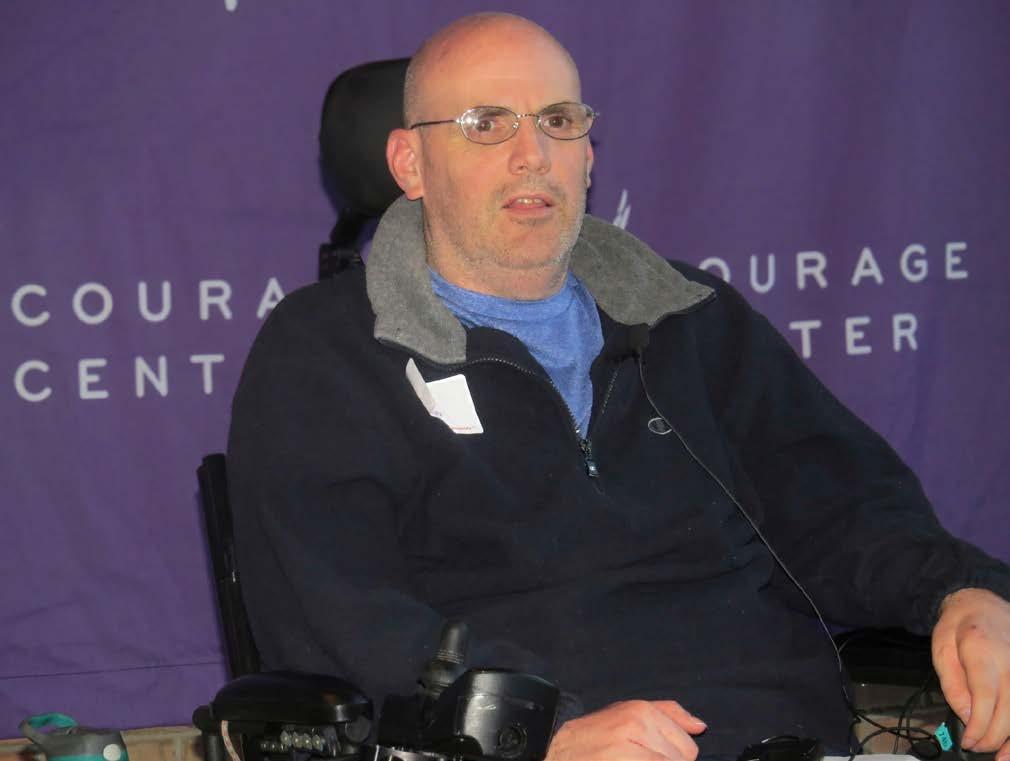
Disability advocate, Joe DaiIy, spoke at a Courage Center event before the merger.
From page 1
Highlighting the deeply human stakes of this legislation, she shared a profound milestone:
“After many years, my son is finally able to tell me that he loves me. Now, he has told me thousands of times since.”
She left the crowd with an undeniable truth, “Communication is a basic human right.”
Protecting Medicaid and rejecting harmful redesigns
The focus then turned to the vital systems that keep disabled Minnesotans safe in their communities. Jillian Nelson, Policy Director at the Autism Society, spoke urgently about the need to protect Medicaid and repeal the "Waiver Reimagine" initiative as it is currently written.
Stressing the absolute necessity of community input in systemic changes, Nelson demanded that any redesign of the system “must include disabled people.”
Senator Kim Hicks echoed this urgency, passionately urging attendees to confront their representatives with a clear mandate: “Protect Medicaid, protect services, and pass the accommodations bill.”
“We are change-makers”
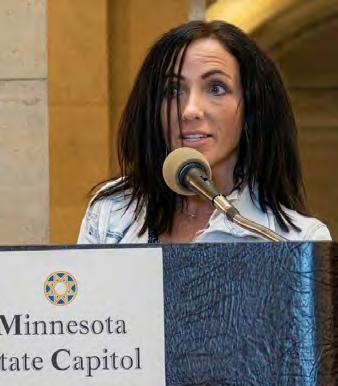
To close out the day, Disability advocate KiloMarie Granda took the microphone, delivering a stunning, deeply emotional call to action that encapsulated the spirit of the entire day:
“We are advocates, mediators, counselors, healers, teachers, and peacemakers. Society may view us as broken. But we refuse to be the labels that society has placed upon us. We are changemakers, both because of and in spite of what has happened. We are dreamers, choosing to believe in the impossible. We are fighters and advocates coming together today to share our collective and amplified intersecting narratives to help inform and empower positive systemic change. So, some may call us broken. Maybe we are. Maybe I am. Or maybe, just maybe, we are perfectly built to withstand the traumas that we have endured at a genetic, historical, socioecological, and systemic level. We are built to withstand the traumas. We are not broken. We are perfectly built to joyfully resist the individuals and systems that threaten our very lives. Perfectly built to be leaders, speakers, and policymakers. Perfectly built to come together to share our goal of connecting humanity to hope through healing.”
Armed with those words, advocates left the Capitol rotunda not just to ask for change, but to demand it.
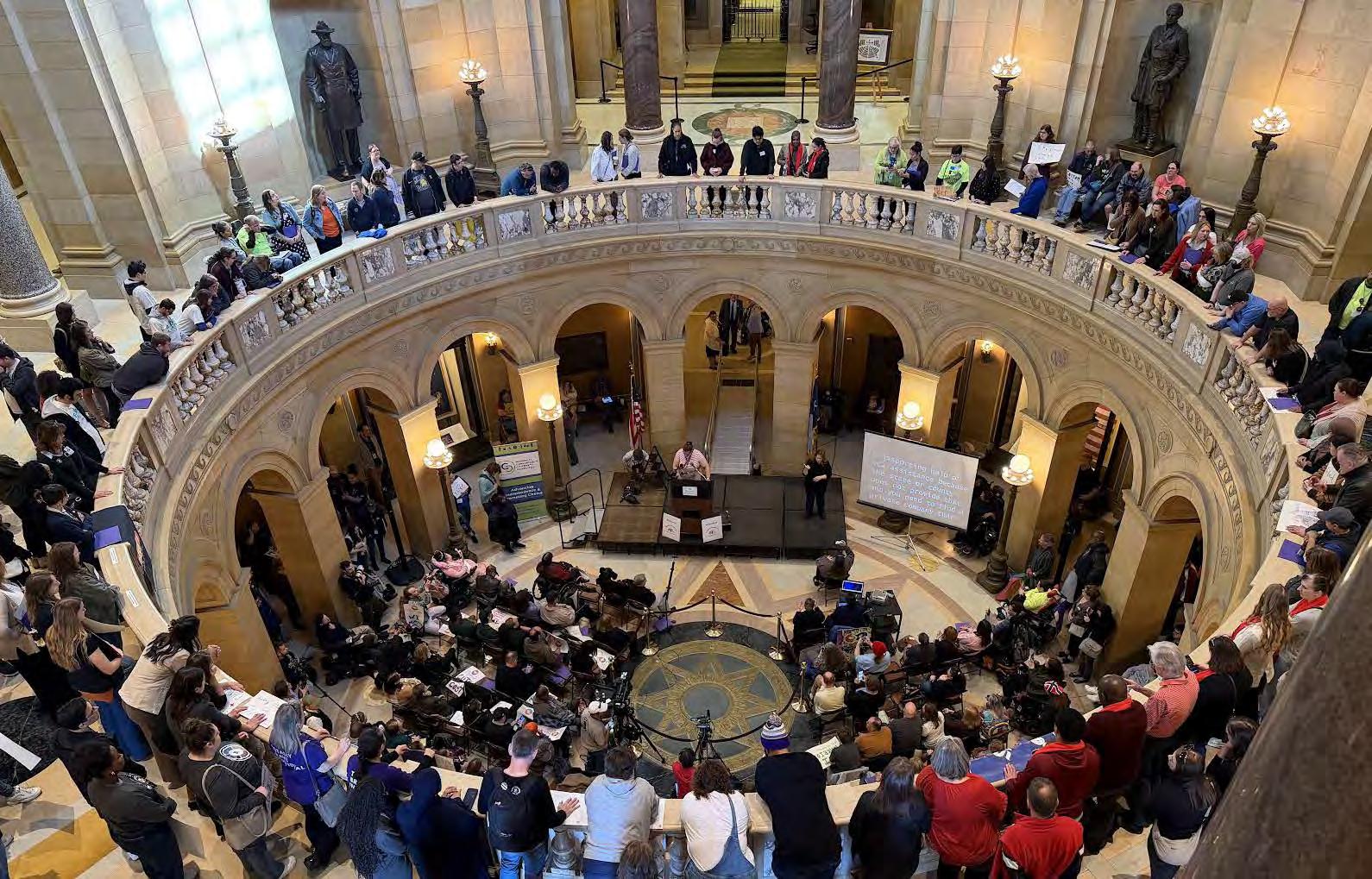
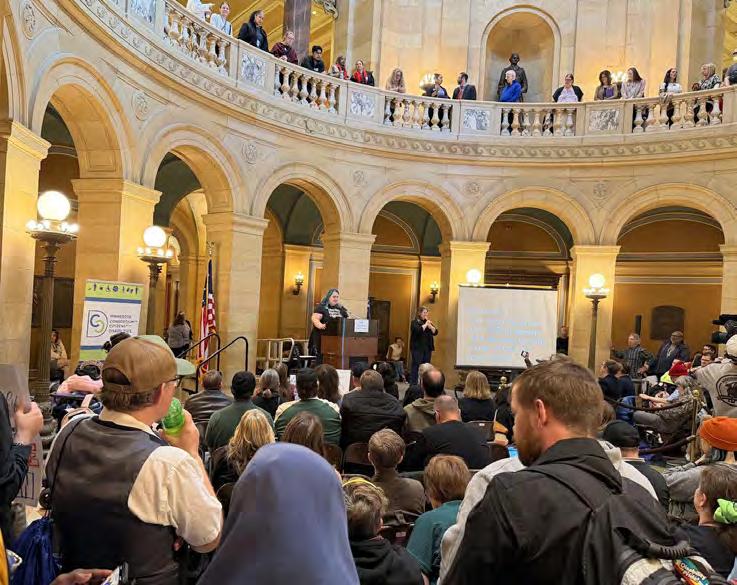

The State Capitol Rotunda was packed on Disability Advocacy Day.
KiloMarie Granda concluded the event with poignant words.
The crowd was lively with chants and applause.
Jillian Nelson spoke about funding cuts and human dignity.
Senator Jim Abeler revved up the crowd with an energetic speech.